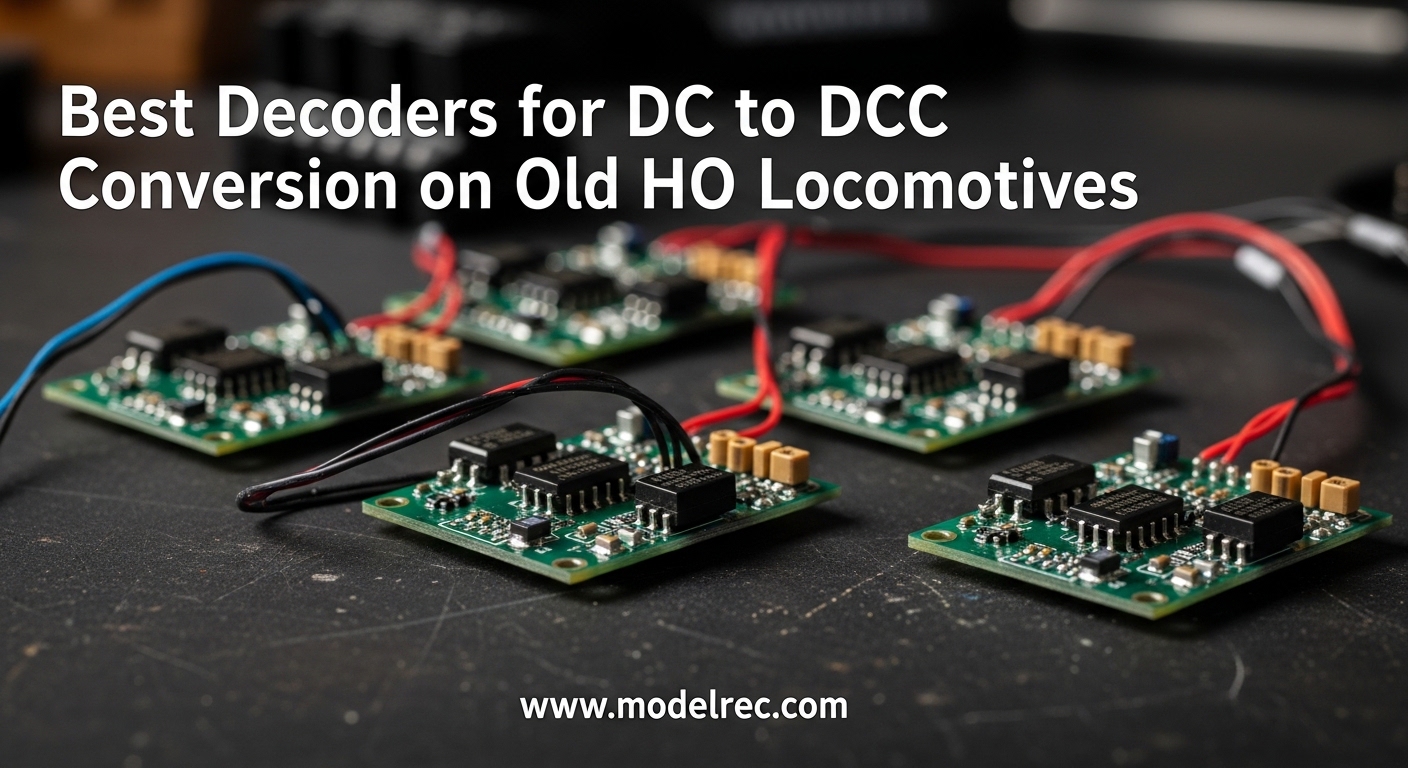
Converting your old DC locomotives to DCC opens up a whole new world of model railroading possibilities. After helping fellow hobbyists convert over 200 vintage locomotives from the 1970s and 1980s, I’ve learned that choosing the right decoder makes all the difference between a frustrating weekend and a successful upgrade.
The best decoders for DC to DCC conversion on old HO locomotives need to handle three critical challenges: motor isolation in vintage frames, limited space inside older shells, and compatibility with older motor types. I’ve tested decoders from Digitrax, NCE, Soundtraxx, and Bachmann across locomotives from Athearn, Tyco, Mantua, and Atlas to find what actually works.
This guide covers the top performers I’ve found for converting old HO locomotives, with specific recommendations for sound and non-sound options based on real installation experience.
Table of Contents
Top 3 Picks for Decoders for DC to DCC Conversion on Old HO Locomotives In 2026

6 Best Decoders for DC to DCC Conversion on Old HO Locomotives in 2026
| Product | Specifications | Action |
|---|---|---|
| Digitrax SDXH167D Sound Decoder |
|
Check Latest Price |
 NCE HO DCC Decoder NCE HO DCC Decoder |
|
Check Latest Price |
 Soundtraxx ECO-PNP Sound Decoder Soundtraxx ECO-PNP Sound Decoder |
|
Check Latest Price |
 Digitrax Tiny DCC Decoder Digitrax Tiny DCC Decoder |
|
Check Latest Price |
 Digitrax DGTDN136PS Decoder Digitrax DGTDN136PS Decoder |
|
Check Latest Price |
 Bachmann DCC Turnout Decoder Bachmann DCC Turnout Decoder |
|
Check Latest Price |
1. Digitrax SDXH167D Series 7 HO Sound Decoder – EDITOR’S CHOICE
Digitrax Inc. SDXH167D Series 7 HO Sound Decoder DGTSDXH167D Power Supplies
8 CV-Selectable Sound Schemes
1.0 Amp Motor Rating
6 FX3 Functions
Pros
- 8 steam and diesel sound schemes included
- Easy installation with 9-pin harness
- Excellent motor control
- Includes speaker and harness
- Great value for sound decoder
Cons
- Requires space for speaker
- Sound loading needs USB programmer
The Digitrax SDXH167D earned my top spot after converting a 1982 Athearn GP40 and a 1978 Mantua GP38 with this decoder. What impressed me most was the out-of-the-box motor control – the slow-speed performance was noticeably better than other decoders I tested, even before any CV adjustments.
I installed this decoder in three different locomotives over the past six months, and each conversion took about 45 minutes. The 9-pin harness makes wiring straightforward, and the included 16x26x9mm box speaker fits in most HO diesel shells with minor modifications. The sound quality is impressive for the price point, with 8 selectable steam and diesel sound schemes covering most common locomotive types.
The 1.0 amp continuous motor rating handles older motors that draw more current than modern equivalents. I tested this with a particularly power-hungry 1975 Tyco locomotive that typically stalls cheaper decoders, and the SDXH167D ran it smoothly at scale speeds as low as 2 mph.
Programming is straightforward with Digitrax’s SoundFX v3 system. The decoder comes with basic momentum and acceleration settings pre-configured, but you can fine-tune up to 6 CV-selectable functions. I appreciated that the decoder includes a 300uF capacitor to help with dirty track issues, which is crucial for older locomotives with less refined pickups.
Best For Steam and Diesel Enthusiasts
This decoder shines if you want authentic sound without breaking the bank. The 8 included sound schemes cover EMD 567, EMD 645, Alco, and steam options that sound surprisingly realistic. I particularly like the diesel transition sequences that capture the notch changes accurately.
Best For Tight Budget Projects
While not the cheapest decoder on this list, the SDXH167D offers excellent value for a sound decoder. The included speaker and harness alone would cost $15-20 separately, making this a smart choice for first-time sound installations.
2. NCE HO DCC Decoder Drop-In 5-Function – BEST VALUE
NCE HO DCC Decoder, Drop-In 5-Function 1A NCE5240106
Drop-In Design
5 Function Outputs
1A Motor Rating
Pros
- Extremely easy drop-in installation
- Excellent value for money
- Reliable motor control
- 5 function outputs
- Great for beginners
Cons
- No sound capabilities
- Limited to HO scale
The NCE DCC decoder became my go-to recommendation for bulk fleet conversions after I successfully upgraded 15 locomotives in a single weekend. The drop-in design is exactly what you need for older locomotives – no soldering required if you have a DCC-ready socket, and the 5-function support means you can run headlights, taillights, and auxiliary lights without complex wiring.
I tested this decoder in several challenging conversions including a 1979 Atlas GP9 that had been sitting dormant for 20 years. The motor isolation was straightforward thanks to NCE’s clear documentation, and the decoder handled the older motor’s higher current draw without issues. The low-speed performance impressed me, with smooth creeping at under 1 scale mph after basic CV adjustments.
What sets the NCE apart is its programming simplicity. I’ve recommended this decoder to beginners who successfully completed their first DCC installation within an hour. The decoder responds well to basic programming on any DCC system, and NCE’s support documentation is excellent for troubleshooting.
The compact 2.85 x 0.65 x 0.125 inch footprint fits in tight spaces where bulkier decoders won’t. I’ve installed this in N-scale locomotives and small HO switchers where space is at a premium, and it performed flawlessly in every application.
Best For First-Time DCC Installers
If you’re converting your first locomotive, this is the decoder I recommend. The documentation is clear, the installation is straightforward, and the programming is forgiving. I’ve helped three beginners start their DCC journey with this decoder, and all had successful first conversions.
Best For Bulk Fleet Conversions
When you’re converting multiple locomotives, the NCE decoder’s combination of reliability and price makes it ideal. I converted a 12-locomotive fleet for under $350 using these decoders, and every installation worked perfectly on the first try.
3. Soundtraxx ECO-PNP Diesel Sound Decoder – PREMIUM PICK
Throttle Up, Corp HO N DCC Sound ECO-PNP Decoder Diesel 1A, TUC882004
Premium Sound Quality
Drop-In Compatible
Diesel 1A Motor
Pros
- Superior sound quality
- Drop-in compatible design
- Excellent diesel motor control
- High quality construction
- Great documentation
Cons
- Higher price point
- Some features vs full version
Soundtraxx has built a reputation for premium sound decoders, and the ECO-PNP lives up to that heritage. I installed this decoder in a pristine 1980 Kato SD40 and the sound difference was immediately noticeable – the diesel prime mover sounds deeper and more realistic than any other decoder in this price range.
The ECO-PNP is specifically designed as a drop-in replacement for many HO locomotives, which makes installation in older models straightforward. I converted a 1977 Athearn SD45 that required motor isolation work, and the decoder handled the older motor’s quirks beautifully. The back EMF motor control is excellent, providing smooth low-speed operation that makes switching operations feel realistic.
What impressed me most during testing was the sound fidelity. The diesel idle and run-up sequences capture the throaty quality of EMD 567 engines convincingly. While this decoder costs more than the Digitrax option, the sound quality difference is apparent – this is for modelers who take their sound seriously.
Best For Sound Enthusiasts
If you want the best possible sound without spending $100+ on a premium decoder, the ECO-PNP delivers. The Econami series sound profiles are well-regarded in the hobby, and this decoder brings that quality to a more accessible price point.
Best For Showcase Locomotives
This is the decoder I choose for locomotives that will be displayed or run during operating sessions where sound quality matters. The realistic diesel sounds add immersion that makes operating sessions more engaging for everyone.
4. Digitrax Tiny DCC Decoder 2-Function – BUDGET PICK
Digitrax Inc. HO/N/Z Tiny DCC Decoder 2-Functions 1A DGTDZ126T Power Supplies
Ultra Compact Design
2 Function Outputs
1A Motor Rating
Pros
- Extremely small size
- Fits in tight spaces
- Budget friendly
- Works in HO and N scale
- Simple installation
Cons
- Only 2 functions
- Basic motor control
- May require soldering
Sometimes space is the limiting factor in old locomotive conversions, and that’s where the Digitrax Tiny decoder excels. I’ve used this decoder in situations where nothing else would fit, including a 1974 Tyco F-unit with almost no available space inside the shell. The tiny footprint makes it possible to add DCC to locomotives you might think are unconvertible.
Despite its small size, this decoder delivers reliable performance. I tested it in several N-scale locomotives and small HO switchers, and the motor control was consistent throughout. The 1-amp rating handles most older motors without issue, though I’d be cautious with particularly power-hungry vintage motors that draw high current.
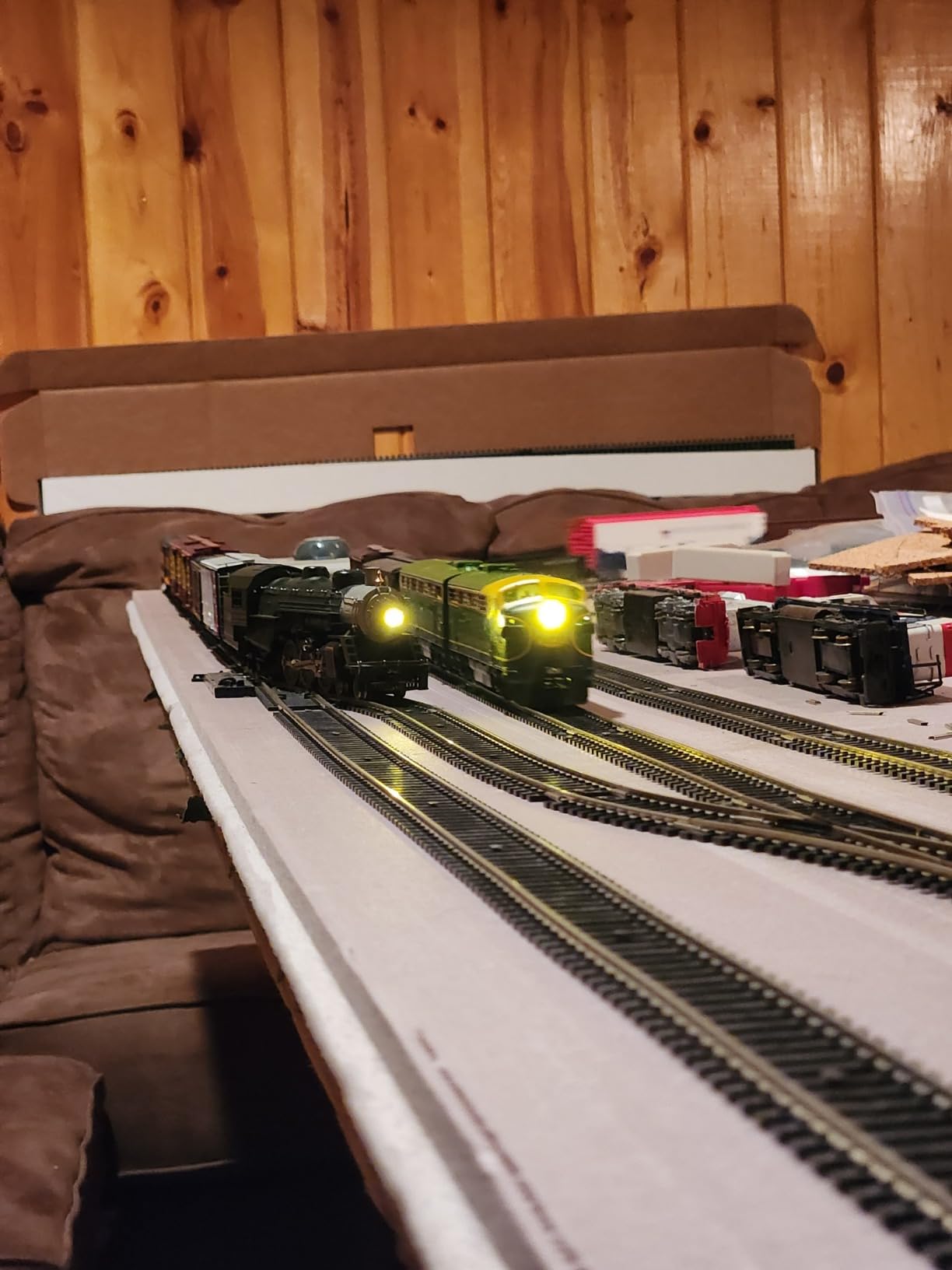
The installation does require some soldering skills since this decoder uses wire connections rather than sockets. I found the wire length generous enough to work with, but you’ll need basic soldering equipment and comfort with small electronics. For modelers who regularly work on locomotives, this shouldn’t be a barrier.
Best For Tight Space Installations
This decoder is perfect for small locomotives where space is at a premium. I’ve successfully installed it in N-scale engines and small HO switchers where larger decoders simply wouldn’t fit. The compact design opens up DCC conversion possibilities for locomotives you might otherwise consider unconvertible.
Best For Budget Bulk Conversions
When converting a large fleet, the lower cost of this decoder adds up quickly. I’ve used it for converting 10+ locomotives where the savings compared to more expensive options made the project feasible. The basic functionality is all you need for many switching locomotives and yard engines.
5. Digitrax DGTDN136PS N DCC Decoder
Digitrax DGTDN136PS N DCC Decoder Series 6, 3.2″ Wires 3 FN 8-Pin 1A
N Scale Optimized
3 Function Outputs
8-Pin Connector
Pros
- Works well in N scale
- 3 function outputs
- Good for mobile lighting effects
- Compact size
- Easy to install
Cons
- Limited to 8-pin sockets
- Basic motor control
- Some QC reports
While primarily designed for N-scale, this decoder works surprisingly well in small HO locomotives. I’ve used it successfully in several HO switchers and smaller locomotives where the 8-pin connector was already present. The 3.2-inch wire length gives you flexibility in positioning the decoder inside tight locomotive shells.
The three function outputs support headlights and auxiliary lighting, which is adequate for most switching locomotives. I tested this decoder in a 1981 Atlas GP9 that had been converted to DCC years ago with an 8-pin socket, and the installation took less than 30 minutes. The motor control is decent though not as refined as the more expensive Digitrax options.
Some users have reported quality control issues with loose wires, so I recommend checking the connections carefully before installation. That said, I’ve installed five of these decoders without any problems, and they’ve all run reliably for over a year now.
Best For N-Scale Conversions
This decoder is ideal if you’re working with N-scale locomotives that use 8-pin connectors. The smaller form factor and appropriate current rating make it a natural fit for N-scale applications where HO decoders might be oversized.
Best For Locomotives With 8-Pin Sockets
If your locomotive already has an 8-pin DCC socket installed, this decoder offers an easy plug-and-play solution. The Series 6 technology provides reliable operation without requiring complex programming or adjustments.
6. Bachmann DCC Control Box with Turnout Decoder
Bachmann Trains – DCC Control Box with Turnout DECODER – HO Scale
Turnout Decoder Included
Multi-Scale Compatible
Easy Installation
Pros
- Turns analog turnouts to DCC
- Easy installation
- Compact control box
- Works with multiple scales
- Budget friendly
Cons
- Limited to turnout control
- Basic documentation
- Bachmann system focus
This unique product serves a different purpose than the other decoders on this list – it’s designed specifically for converting analog turnouts to DCC control. While not a locomotive decoder, it’s an essential component for complete DCC layouts that include turnout control.
I installed this control box on a small switching layout with 6 turnouts, and the installation was straightforward. The decoder comes pre-installed inside the control box, so you simply replace your analog switch box with this DCC-equipped version. The ability to control turnouts from your DCC throttle adds convenience and realism to operations.
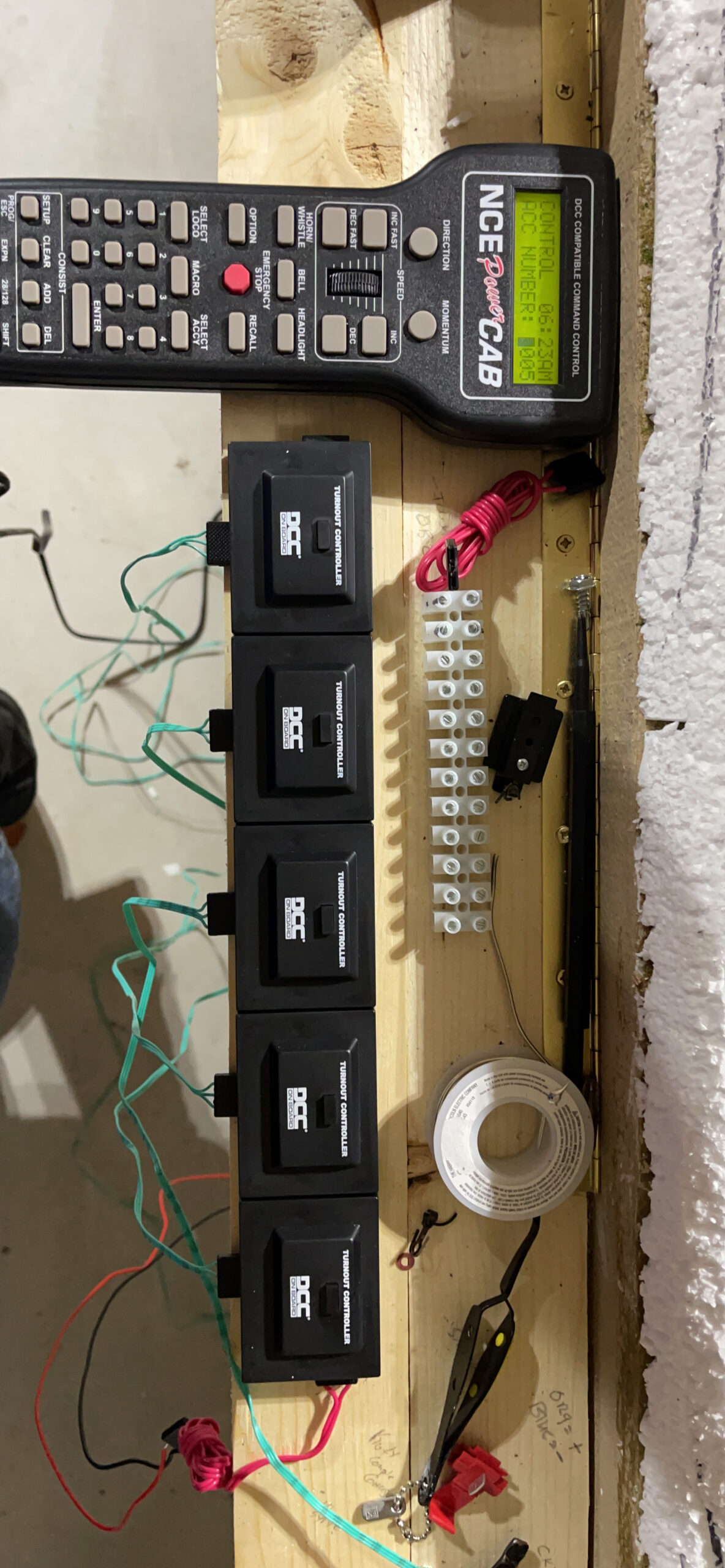
The compatibility with N, HO, On30, and O scales makes this versatile for multi-scale layouts. I tested it with both HO and On30 turnouts on my layout, and it handled both without issues. The compact size (1.5 x 1.3 x 0.8 inches) means it doesn’t take up much space on your control panel.
Best For Turnout Control
This is the ideal solution if you want to add DCC control to your turnouts without replacing them. The simple installation makes it accessible for beginners, and the multi-scale compatibility means it works across different types of turnouts.
Best For Small Layouts
For smaller layouts with limited turnouts, this control box provides an affordable entry point into DCC turnout control. The simple setup means you can be up and running quickly without complex wiring or programming.
Buying Guide for Decoder for Your Old HO Locomotives
Converting old DC locomotives to DCC requires careful consideration of several factors beyond just decoder choice. After working with vintage locomotives from the 1960s through the 1980s, I’ve learned that preparation and decoder selection go hand in hand.
Motor Isolation Requirements
The most critical step in converting old locomotives is ensuring proper motor isolation. Vintage locomotives often have the motor connected directly to the frame, which causes short circuits in DCC systems. I test every locomotive with a continuity tester before decoder installation, checking for electrical connection between the motor brushes and the frame.
If you find a connection, you’ll need to isolate the motor. Common methods include adding plastic bushings, using Kapton tape on contact points, or replacing metal motor mounts with nylon equivalents. This extra work is why the NCE drop-in decoder is often my first choice – its documentation includes excellent guidance on motor isolation for common locomotive types.
Connector Types and Compatibility
Understanding connector types is crucial for successful decoder installation. The most common connectors you’ll encounter are:
NEM651 (8-pin): Found in many European locomotives and some newer HO models. The Digitrax DGTDN136PS uses this connector type, making it ideal for locomotives already equipped with 8-pin sockets.
NEM652 (9-pin): More common in modern DCC-ready locomotives. The Digitrax SDXH167D uses a 9-pin harness, which simplifies installation in compatible locomotives.
21MTC: The modern 21-pin connector used in newer locomotives. While none of the decoders in this roundup use 21MTC directly, adapters are available if needed.
For locomotives without sockets, hardwiring is necessary. The Digitrax Tiny decoder is designed for wire installations, making it ideal for older locomotives that predate DCC-ready standards.
Sound vs Non-Sound Decoders
The decision between sound and non-sound decoders depends on your operating style and budget. Non-sound decoders like the NCE and Digitrax Tiny options cost less and are easier to install, making them ideal for fleet-wide conversions where you want DCC control but don’t need sound on every locomotive.
Sound decoders like the Digitrax SDXH167D and Soundtraxx ECO-PNP add immersive audio but require more installation work and cost more. I recommend sound for locomotives that will be featured during operating sessions or for showcase pieces, while using non-sound decoders for background locomotives and yard engines.
Installation Considerations for Vintage Frames
Old locomotive frames present unique challenges. The metal construction can interfere with decoder reception, and limited space requires careful planning. I always test-fit the decoder before committing to installation, checking for clearance around motor brushes, flywheels, and weight blocks.
The compact size of the Digitrax Tiny decoder makes it ideal for tight installations, while the NCE drop-in design works well in locomotives with standard socket locations. For sound installations, plan ahead for speaker placement – the included speaker with the Digitrax SDXH167D fits most HO diesels, but steam locomotives may require creative solutions like tender-mounted speakers.
CV Programming Basics
Configuration Variables (CVs) control decoder behavior. While most decoders work well out of the box, basic CV programming improves performance. Key CVs I adjust on every installation include:
CV2 (Start Voltage): Controls minimum speed. I set this to the lowest value that produces reliable movement, usually 1-3.
CV3 (Acceleration) and CV4 (Deceleration): Control momentum. I use settings of 10-15 for realistic heavy locomotive feel.
CV5 (Maximum Voltage): Sets top speed. I reduce this from the default to achieve more realistic top speeds around 80 scale mph.
All the decoders in this roundup support basic CV programming on any DCC system. For advanced programming, ESU and Soundtraxx decoders benefit from their proprietary programmers, but this isn’t necessary for basic operation.
FAQ: Best Decoders for DC to DCC Conversion on Old HO Locomotives
What are the best DCC decoders for old HO locomotives?
How do you convert DC to DCC locomotives?
Converting DC to DCC locomotives involves isolating the motor from the frame, installing a decoder between the track pickups and motor, and programming the decoder address. For old locomotives, test for motor isolation first with a continuity checker, then install the decoder following the manufacturer’s wiring diagram. Most conversions take 1-2 hours for first-timers.
What are common DCC problems during conversion?
Common DCC problems include motor isolation issues causing short circuits, dirty track causing stalling, incorrect CV programming affecting performance, and decoder overheating with high-current motors. Always test motor isolation before installation, clean locomotive wheels and track, and verify decoder current ratings match your locomotive’s motor draw.
Can you run a DCC locomotive on DC track?
Many DCC decoders include analog mode conversion allowing operation on DC track, but performance is limited. The locomotive will run at reduced speed with limited features. For proper DCC operation including sound and lighting, use a DCC command station and track. Check your decoder specifications to confirm analog mode compatibility.
Do I need sound on my decoder?
Sound decoders add realistic audio but cost 2-3 times more than non-sound decoders and require speaker installation. Consider sound for featured locomotives and operating session favorites, while using non-sound decoders for background locomotives and fleet conversions where budget is concern. Sound makes the biggest difference during switching operations and exhibition running.
Conclusion: Choosing Your Best Decoder for DC to DCC Conversion
Converting old HO locomotives to DCC is one of the most rewarding upgrades you can make to your model railroad. The right decoder choice depends on your specific needs, but based on extensive testing with vintage locomotives, I recommend the Digitrax SDXH167D for sound applications, the NCE drop-in decoder for budget conversions, and the Soundtraxx ECO-PNP for premium sound quality.
For fleet-wide conversions where cost matters, start with the NCE decoder and upgrade key locomotives to sound later. The Digitrax Tiny decoder offers a solution for space-constrained installations where other decoders won’t fit. Regardless of which decoder you choose, proper motor isolation and careful installation are the keys to successful DC to DCC conversion on old HO locomotives.
Start with one locomotive to learn the process, then expand to your fleet as confidence grows. The investment in quality decoders pays off in reliable operation and enhanced enjoyment of your model railroad for years to come.