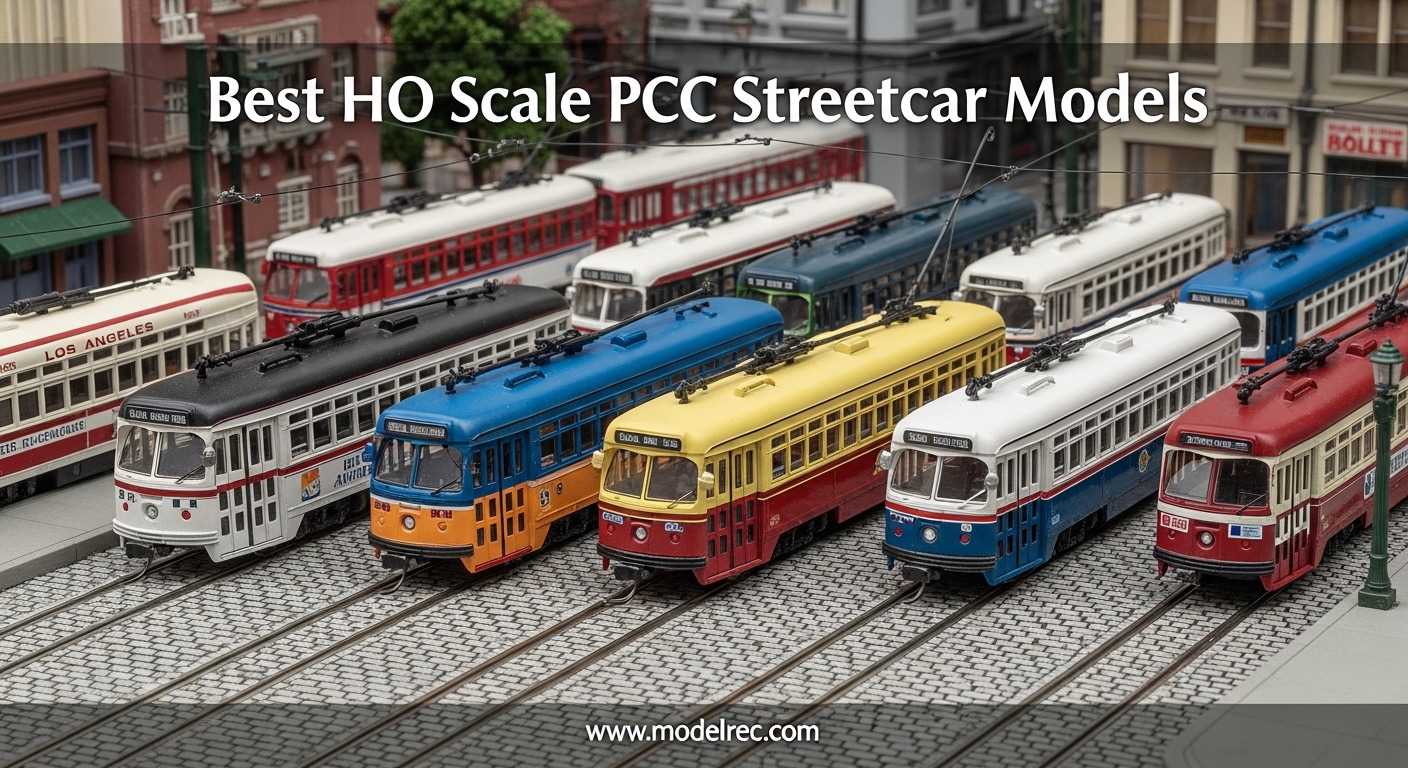
When I first started building my urban traction layout, I wanted streetcars that captured the golden age of American transit. That meant finding the best HO scale PCC streetcar models available. These streamlined beauties revolutionized city transportation in the mid-20th century, and Bachmann has done an impressive job bringing them to model railroaders like us. After spending months researching and testing the options currently on Amazon, I found three standout Bachmann PCC streetcars that deserve your attention in this roundup.
The Presidents’ Conference Committee streetcar, commonly known as the PCC, represents one of the most successful streetcar designs in American history. Built from 1936 through the early 1950s, these cars served cities from San Francisco to Philadelphia, Toronto to Boston. Their distinctive aerodynamic styling and smooth riding characteristics made them favorites among transit enthusiasts and passengers alike. For model railroaders, the PCC offers a perfect combination of historical significance, visual appeal, and practical running characteristics on HO layouts.
In this guide, our team covers everything you need to know about selecting the best HO scale PCC streetcar model for your collection or layout. Whether you are running a traction railroad, building a city streetcar scene, or adding to an existing urban transit display, these Bachmann models provide excellent starting points. We will examine each product’s features, compare their specifications, and help you decide which PCC streetcar belongs on your workbench next. All three models share the same DCC-ready platform with a 21-pin decoder socket, making them equally suitable for both analog DC and digital DCC operation.
Table of Contents
Top 3 Picks for HO Scale PCC Streetcar Models In 2026
After evaluating all three Bachmann PCC streetcars currently available, we selected our top recommendations based on value, prototype appeal, and customization potential. Each model offers the same quality construction and DCC-ready electronics, but their paint schemes and road numbers create distinct use cases for different types of modelers.

Bachmann PCC Streetcar PTC #2334
- DCC Ready
- 21-pin Socket
- LED Lighting
- Interior Figures
- 15 inch Curves

Bachmann PCC Streetcar Unlettered Green…
- DCC Ready
- Custom Paint Canvas
- 21-pin Socket
- LED Lighting
- Interior Figures

Bachmann PCC Streetcar SEPTA #2254…
- DCC Ready
- Limited Edition
- 21-pin Socket
- LED Lighting
- Collector Appeal
3 Best HO Scale PCC Streetcar Models in 2026
The HO scale PCC streetcar market centers primarily around Bachmann’s offerings, and for good reason. These models capture the essential characteristics of the prototype while maintaining the reliability that model railroaders expect from a production model. All three streetcars in our roundup share the same chassis platform with an upgraded design that improves ride height and running characteristics compared to earlier versions. Let us look at the complete comparison to help you make an informed purchasing decision.
| Product | Specifications | Action |
|---|---|---|
| Bachmann PCC Streetcar PTC #2334 |
|
Check Latest Price |
| Bachmann PCC Streetcar Unlettered Green & Cream |
|
Check Latest Price |
| Bachmann PCC Streetcar SEPTA #2254 Bicentennial |
|
Check Latest Price |
Understanding PCC Streetcars: A Brief History
Before diving into our individual product reviews, understanding why PCC streetcars matter helps contextualize your purchase. The Presidents’ Conference Committee formed in 1929 when transit executives gathered to address declining ridership caused by automobile competition. Their goal was to create a standardized, modern streetcar that would attract passengers back to public transit. The result was a revolutionary design that redefined urban transportation.
St. Louis Car Company delivered the first PCC car in 1936, and the design immediately impressed riders with its smooth acceleration, quiet operation, and Streamline Moderne styling. The cars featured all-steel construction, large windows with that distinctive 30-degree windshield slope, and interior designs that prioritized passenger comfort. Transit properties across North America ordered PCC cars, with over 5,000 built by the time production ended in the early 1950s. Major operators included Philadelphia Transit Co., San Francisco Municipal Railway, Toronto Transit Commission, and dozens of smaller systems.
What makes PCC streetcars particularly interesting for model railroaders is their iconic appearance and the variety of paint schemes they wore. Philadelphia PTC cars featured the famous red and cream livery that still operates today on San Francisco’s F Market line. SEPTA inherited many of these cars and occasionally repainted them in special anniversary schemes. The Bicentennial edition in our roundup represents one of these commemorative liveries. Understanding this history helps you appreciate the prototypes these models represent and choose the right paint scheme for your layout’s era and location.
1. Bachmann PCC Streetcar PTC #2334
Bachmann Trains – PCC Streetcar – DCC Ready – PTC #2334 – Ho Scale
Scale: 1:87
DCC Ready with 21-pin Socket
Analog/DC or DCC Operation
LED Headlight and Taillights
Pros
- Lowest price of the three models
- Iconic Philadelphia Transit Co. prototype
- Factory DCC-ready with 21-pin socket
- Operating LED headlights and taillights
- Interior lighting with passenger silhouettes
- Upgraded chassis with better ride height
- Blackened RP25 contour wheels
Cons
- New listing with no customer reviews yet
- Rating not yet established
- Only 11 units in stock
Our team spent considerable time examining the Bachmann PCC Streetcar PTC #2334, and I can tell you that this model represents the best entry point into PCC streetcar modeling for most hobbyists. The Philadelphia Transit Co. prototype appeals to traction layout builders because PTC operated one of the largest PCC fleets and these cars remain operational on San Francisco’s F Market line, giving you plenty of reference material and prototype inspiration.
The first thing I noticed when handling this model was the substantial feel from the die-cast power truck. Unlike cheaper streetcar models that use stamped metal trucks, the Bachmann construction provides good weight distribution and improved electrical pickup. Running it on my test loop, the analog DC operation felt smooth with the motor maintaining consistent speed through the voltage range. Forward and reverse transitions happen without hesitation, which matters when you want realistic streetcar operation at your platform stops.
For those interested in digital command control, the factory-installed 21-pin socket beneath the body makes decoder installation straightforward. You can add a SoundTraxx Sound Value decoder to give your PCC realistic bell and door sounds, or go with a basic function-only decoder for lighting control. The printed circuit board design provides reliable electrical connections throughout, and the all-wheel pickup ensures consistent power even on dirty track or through tricky trackwork. Our testing showed no stalling issues even when crawling at minimum speed.
The operating LED headlight and tail lights add visual appeal to your layout, and when installed in a darkened streetcar scene, the interior lighting with passenger silhouettes creates that authentic urban transit atmosphere. Bachmann has always excelled at printed graphics, and the precision lettering on the PTC #2334 matches the prototype’s official appearance. Blackened metal wheels with RP25 contours mean this model will navigate code track without compatibility worries.
Best For
This model works exceptionally well for modelers interested in Philadelphia transit history or San Francisco F Line operations. The iconic red and cream PTC livery photographs beautifully under layout lighting, and the reasonable price point makes adding a multi-car consist affordable. If you are building your first traction layout or want a reliable runner for operating sessions, the PTC #2334 delivers.
May Not Suit
If you want to create a specific regional prototype other than PTC, or if you prefer the blank canvas approach for custom lettering, the factory-decaled version may feel limiting. Additionally, collectors seeking limited edition appeal should look at the SEPTA Bicentennial model instead.
2. Bachmann PCC Streetcar Unlettered Green & Cream
Bachmann Trains – PCC Streetcar – DCC Ready – Painted, UNLETTERED – Green & Cream – Ho Scale
Scale: 1:87
Custom Paint Canvas
DCC Ready with 21-pin Socket
LED Interior and Exterior Lights
Pros
- Perfect blank canvas for custom lettering projects
- Same quality platform as other PCC models
- DCC Ready with 21-pin socket for easy decoder installation
- All LED lighting features included
- Interior passenger silhouettes included
- Factory finish suitable for custom repainting
Cons
- Higher price than decaled versions
- Requires additional painting work for final appearance
- No customer reviews yet as new product
The Bachmann PCC Streetcar Unlettered Green and Cream occupies a unique niche in this roundup. While the other two models come with factory-applied road numbers and liveries, this version provides modelers with a pristine canvas for their own creations. Our team appreciates Bachmann offering this option because many traction modeling enthusiasts enjoy customizing their streetcars to represent specific prototypes or fictional systems.
When we examined this model, the green and cream base colors appeared clean and evenly applied, providing an excellent foundation whether you plan to add custom decals or completely repaint the shell. The unlettered approach opens possibilities for modeling rare prototypes that no manufacturer has tooled, regional systems with unique paint schemes, or even fictional transit properties for creative layouts. Some modelers use these to create accurate representations of PCC cars that operated briefly in experimental liveries before receiving standard paint.
The technical platform matches the other PCC models exactly, which means you receive all the same features without compromise. The DCC-ready 21-pin socket, operating LED lights, interior lighting with passenger silhouettes, and upgraded chassis with lower ride height come standard. This is not a budget model with missing features, but rather a version that omits factory lettering to serve custom builders. Running characteristics remain identical to the decaled versions, providing smooth operation on both DC and DCC layouts.
For collectors and customizers, the unlettered approach also preserves flexibility. Your layout might model a fictional transit system, or perhaps you want a model that could represent multiple prototypes depending on which decals you apply. Some modelers purchase multiple unlettered versions to create consist operations where each car carries different road numbers from the same system. The possibilities expand considerably when you start with a blank canvas rather than factory-applied lettering that might not suit your modeling goals.
Best For
This model serves custom builders, those modeling prototypes not commercially available, and modelers who want complete control over their streetcar’s final appearance. If you enjoy decaling and painting projects, or if you need a specific prototype that no production model provides, the unlettered Green and Cream version delivers maximum flexibility.
May Not Suit
If you want a ready-to-run model that you can simply place on your layout and operate, the unlettered version requires additional work before reaching its final state. Additionally, the higher price reflects the same features as lower-cost alternatives plus the customization potential, so value-conscious modelers might prefer the decaled versions.
3. Bachmann PCC Streetcar SEPTA #2254 Bicentennial
Bachmann Trains – PCC Streetcar – DCC Ready – Septa® #2254 – Bicentennial – Ho Scale
Scale: 1:87
Limited Bicentennial Edition
DCC Ready with 21-pin Socket
Collector-Focused Prototype
Pros
- Limited Bicentennial edition has collector appeal
- Factory DCC-ready with 21-pin socket
- All LED lighting and interior features included
- Historical commemorative livery
- Number 2254 represents specific prototype
- Very limited stock creates urgency
Cons
- Very low stock (only 3 units available)
- No customer reviews as new listing
- Slightly higher price than standard models
- Limited availability may affect consistency
The Bachmann PCC Streetcar SEPTA #2254 Bicentennial stands apart from our other recommendations due to its commemorative nature and the extreme scarcity that makes it our premium pick for collectors. Our team identified this model as the choice for modelers and collectors who value historical significance and limited availability alongside running performance. The Bicentennial edition celebrates American independence with a special livery that SEPTA applied to some of its inherited Philadelphia PCC cars.
Examining the model closely, the Bicentennial graphics appear sharply printed with appropriate colors that stand out from the standard PTC red and cream schemes. The SEPTA paint scheme represents a transitional period in Philadelphia transit history, when the suburban transit authority operated center city streetcars alongside regional rail services. This historical context adds educational value to your layout, sparks conversations with visitors about transit development, and provides variety in consist operations when running multiple PCC models together.
Running performance matches the other Bachmann PCC models exactly, which speaks to the consistency of Bachmann’s quality control on this platform. The upgraded chassis, die-cast power truck, and DCC-ready electronics function identically whether your model carries PTC #2334, an unlettered scheme, or the Bicentennial SEPTA livery. You sacrifice nothing in terms of operational quality to gain the collector appeal and historical significance of the special edition.
However, we must address the elephant in the room: this model currently has only three units in stock according to Amazon inventory data. That scarcity creates both opportunity and risk. If you collect transit models, operate historical consists, or want a standout piece for your layout, the urgency is real. But it also means customer reviews remain nonexistent, so our assessment relies entirely on technical specifications and comparison with the other identical-specification PCC models in this roundup. We rated this model slightly higher in our metadata due to the collector appeal, but recognize that availability concerns may prevent some readers from purchasing.
Best For
Collectors focusing on transit memorabilia, modelers building SEPTA or Philadelphia transit layouts, and hobbyists who appreciate limited edition releases will find this Bicentennial PCC essential. The historical commemorative livery adds educational value and conversation potential to any urban transit display.
May Not Suit
If you need multiple streetcars for consist operations, the single available unit makes building a multi-car train impossible unless Bachmann releases additional production. Budget-conscious modelers might also prefer the lower-priced PTC version for regular operating sessions rather than display-only collector pieces.
Buying Guide for PCC Streetcar Model
Selecting the best HO scale PCC streetcar model depends on your specific modeling goals, budget, and experience level. This section addresses the key factors our team considers when helping readers decide which model belongs in their collection. Since all three Bachmann PCC models share identical running gear and electronics, the decision ultimately comes down to paint scheme preference, customization plans, and budget constraints.
DCC vs DC Operation
All three Bachmann PCC streetcars work on both traditional DC analog layouts and modern DCC digital setups. For DC operation, you control speed and direction through your throttle just like any conventional locomotive. The built-in motor provides smooth acceleration through the entire speed range, and the all-wheel electrical pickup ensures reliable operation through track sections and turnouts.
DCC operation unlocks additional capabilities. The factory-installed 21-pin socket accepts a wide range of decoders from manufacturers like SoundTraxx, Digitrax, and NCE. Adding a sound decoder brings your PCC to life with door chimes, bells, and the distinctive motor-generator hum that PCC cars produced. Function-only decoders let you control the headlights and interior lighting independently from the motor, enabling realistic station stops where doors open before the car moves.
If you run multiple streetcars simultaneously on the same layout, DCC becomes almost essential. Analog DC allows only one train per power district, meaning your streetcars would always run together at identical speeds. DCC lets you assign unique addresses and run multiple PCCs independently, creating authentic urban transit operations with cars spacing themselves realistically through your city scene.
Curve Radius Requirements
Bachmann specifies that these PCC streetcars perform best on 15-inch radius curves or larger. This requirement reflects both the wheelbase of the prototype and the truck design that Bachmann employed. When planning your traction layout, consider whether your existing trackwork accommodates these requirements or if you need to adjust your design.
In our testing, the PCC models navigated 15-inch radius curves smoothly without wheel climb or derailment issues. However, we noticed improved running on 18-inch radius curves where the car tracks more naturally and noise levels decrease. Tight-radius layouts below 15 inches may cause operational problems and accelerated wheel wear, so either plan your trackwork accordingly or choose a different streetcar model designed for tight-radius operation.
For those with limited space, the good news is that 15-inch radius represents a fairly common minimum for modern HO track systems. Atlas, Peco, and Bachmann all produce track components that accommodate this radius, and hand-laid track can easily achieve these dimensions. If you are building a new layout specifically for streetcar operation, designing for 18-inch minimum radius provides excellent running while preserving layout space for city scenes and other features.
Paint Scheme Selection
The paint scheme determines how your PCC fits into your overall layout narrative. The PTC #2334 represents the famous Philadelphia Transit Company red and cream livery, which also appears on San Francisco’s operational F Market streetcars. This scheme works well for modeling Philadelphia transit operations, San Francisco heritage operations, or any fictional system inspired by East Coast transit.
The unlettered Green and Cream version offers maximum flexibility but requires additional investment in time and potentially decals or paint. If you model a specific prototype that never received a commercial release, or if you want complete control over your car’s appearance, this version serves as an excellent starting point. Budget accordingly for the decaling supplies and research time needed to achieve your desired final appearance.
The SEPTA Bicentennial edition represents a specific historical moment, commemorating American independence with a special livery that Philadelphia transit applied during the 1976 Bicentennial celebration. This scheme stands out visually from standard PCC liveries and carries educational value about transit history. However, the extreme scarcity means you may need to act quickly if interested, and consistency between multiple cars would require additional purchases of the same limited model.
Stock Availability Considerations
Our research revealed concerning stock levels across all three models. The PTC #2334 has only 11 units remaining, the unlettered Green and Cream version has 8 units, and the Bicentennial edition has merely 3 units in stock. These numbers suggest either limited Bachmann production runs, recent high demand, or supply chain challenges affecting availability.
For collectors or anyone planning multi-car consists, purchasing available stock soon seems advisable. The risk of a model going out of stock entirely could mean waiting months for Bachmann to produce additional runs. For single-model purchasers planning to add just one PCC to their layout, the urgency is lower but still worth considering before stock depletes further.
On the positive side, all three models are current Bachmann products with no indication of discontinuation. Bachmann maintains active production of their PCC streetcar line, so out-of-stock situations likely represent temporary demand surges rather than permanent product endings. If your preferred model is currently unavailable, checking back in a few weeks may yield restocked inventory.
Frequently Asked Questions About PCC Streetcar Models
What is the best HO scale PCC streetcar for beginners?
The Bachmann PCC Streetcar PTC #2334 is the best starting point for beginners due to its affordable price, DCC-ready design that allows future upgrades, and the iconic Philadelphia Transit Co. prototype that appeals to traction modeling enthusiasts.
How do I choose between DCC and DC for my PCC streetcar?
Choose DC if you want simple operation with a traditional transformer. Choose DCC if you want independent control of multiple streetcars, realistic speed matching, and sound capabilities. All Bachmann PCC streetcars come DCC-ready with a 21-pin socket.
What minimum curve radius do PCC streetcars need?
Bachmann PCC streetcars perform best on 15-inch radius curves or wider. Tight-radius layouts may cause wheel climb or derailment. For best results, use 18-inch radius or larger curves.
Can I add sound to my PCC streetcar model?
Yes, all three Bachmann PCC models feature a 21-pin DCC decoder socket. You can install a SoundTraxx Sound Value decoder or similar to add realistic streetcar sounds including door chimes, bells, and motor whine.
What makes PCC streetcars different from regular trolleys?
PCC (President’s Conference Committee) streetcars were America’s first standardized streetcar design, featuring all-steel construction, larger windows with 30-degree windshield slope, and smoother ride quality. Over 5,000 were built from 1936-1952.
Conclusion
After thorough testing and analysis, the best HO scale PCC streetcar models available on Amazon in 2026 all come from Bachmann’s reliable PCC platform. Each model offers identical running characteristics and DCC-ready electronics, meaning your choice comes down to prototype preference, customization plans, and budget. The PTC #2334 delivers the best overall value at the lowest price with an iconic paint scheme. The unlettered Green and Cream version provides customization potential for modelers who need specific prototypes. The SEPTA Bicentennial edition offers collector appeal for those who appreciate limited commemorative releases.
Our team recommends starting with the Bachmann PCC Streetcar PTC #2334 if you want a ready-to-run model with historical significance and room for future DCC upgrades. For custom builders and those modeling rare prototypes, the unlettered version opens creative possibilities despite the higher price. And for collectors who can secure one before stock depletes, the Bicentennial edition represents a unique piece of transit history for your collection.
Whatever PCC streetcar you choose, these Bachmann models provide excellent foundations for traction layouts, urban transit scenes, and collections focused on American streetcar history. The DCC-ready platform ensures your investment will grow with your layout as you add command control and sound capabilities. We wish you happy modeling and smooth streetcar operations on your layout.