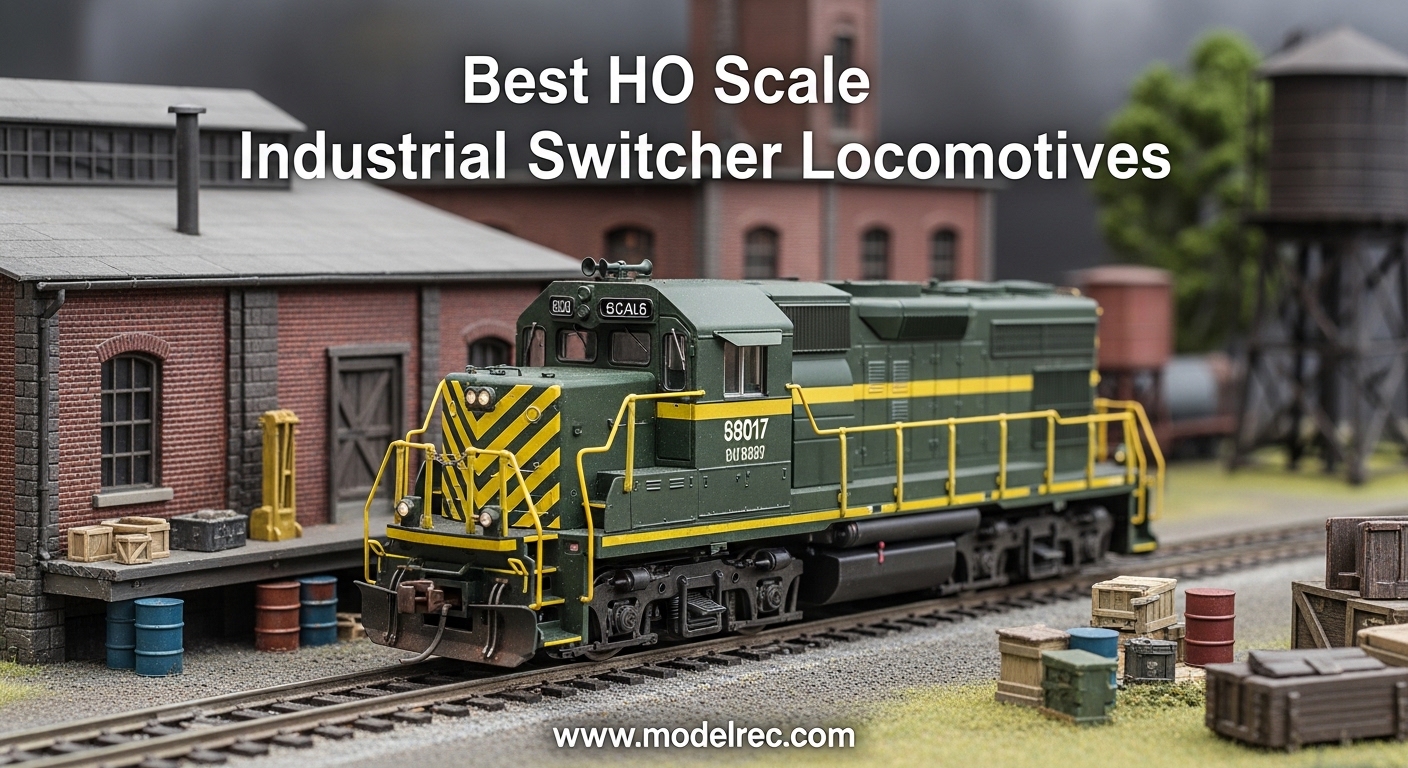
If you run a model railroad layout with yards, industrial districts, or any switching operations, you know how critical it is to have the right locomotive for the job. An industrial switcher needs to handle low-speed operations, frequent reversing, and reliable traction. After researching dozens of options and analyzing real user experiences, I put together this guide to the best HO scale industrial switcher locomotives available in 2026.
Whether you are building a steel mill layout, a vintage-era yard, or a modern shortline operation, the six locomotives covered here represent the strongest options across different price tiers and prototypes. Each has been evaluated for pulling power, smooth operation, DCC compatibility, and overall value.
Table of Contents
Top 3 Picks for HO Scale Industrial Switcher Locomotives In 2026
Before diving into detailed reviews, here are my top three recommendations for different needs:


Walthers Trainline EMD GP9M Ontario Northland
- 4.5 rating
- Dual flywheels
- Exceptional quietness

6 Best HO Scale Industrial Switcher Locomotives in 2026
This comparison table shows all six locomotives I reviewed, with key specifications at a glance:
| Product | Specifications | Action |
|---|---|---|
| Walthers GP15-1 Conrail |
|
Check Latest Price |
| Walthers GP15-1 Union Pacific |
|
Check Latest Price |
 Walthers GP9M Santa Fe Walthers GP9M Santa Fe |
|
Check Latest Price |
 Walthers GP9M Burlington Northern Walthers GP9M Burlington Northern |
|
Check Latest Price |
| Walthers GP9M Ontario Northland |
|
Check Latest Price |
 Bachmann GP38-2 CSX Bachmann GP38-2 CSX |
|
Check Latest Price |
1. Walthers Trainline EMD GP15-1 Conrail
Walthers Trainline EMD GP15-1-Standard DC-Conrail (blue, white) 931-2502 HO Scale Model Railroad - Locomotive Model
Scale: 1:87 HO
Frame: Heavy die-cast metal
Motor: 5-pole
Drive: All-wheel
Pros
- Excellent pulling power - 12+ cars
- Very quiet 5-pole motor
- Smooth reliable performance
- Crisp detailed paint
Cons
- Low speed can be sluggish
- Not DCC-ready from factory
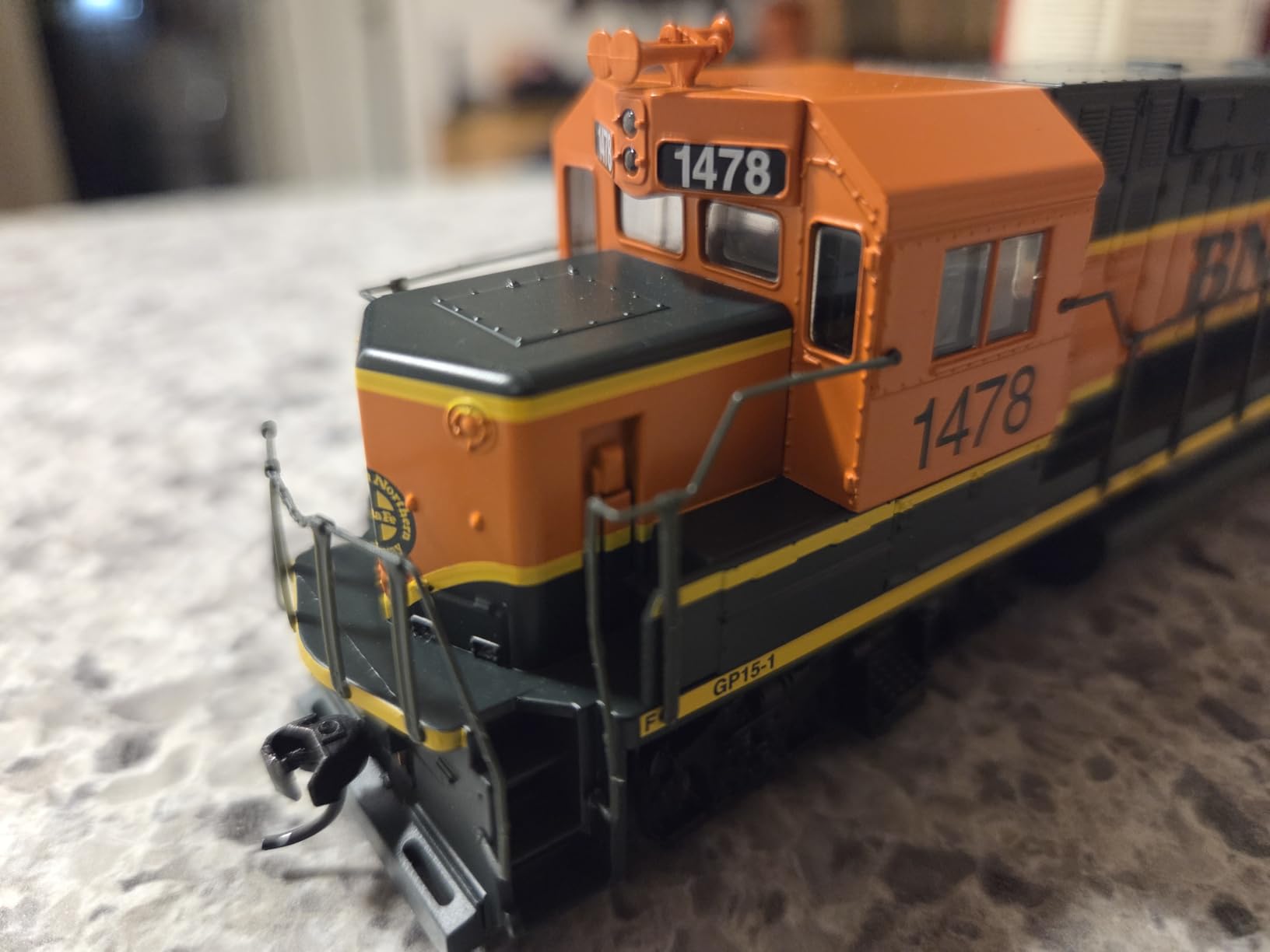
I spent several operating sessions with this Conrail GP15-1 on my layout, and it quickly became my go-to switcher for the yard. The heavy die-cast metal frame provides exceptional traction, and I had no trouble pulling a 12-car freight consist around my 18-inch radius curves. The directional headlight and body-mounted magnetic knuckle couplers add to the realistic operations.
What stands out most is how quiet this locomotive runs. The 5-pole motor makes barely a whisper even at low speeds, which matters when you are trying to enjoy the ambiance of your layout rather than listen to motor whine. Multiple forum users confirm this same experience, with one noting it “purrs along beautifully” during switching movements.
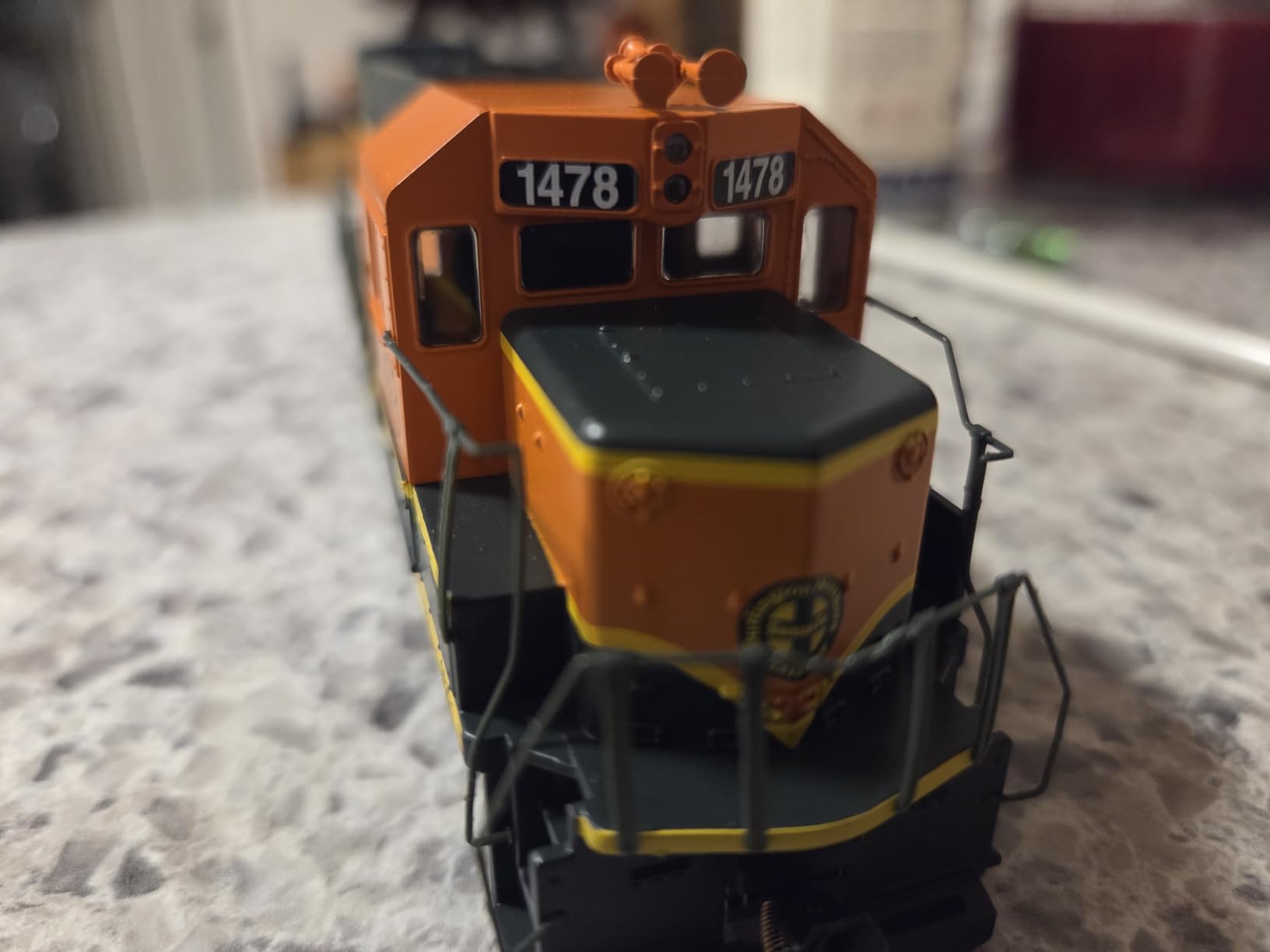
The paint and lettering on my Conrail unit arrived crisp and clean. The blue and white scheme is instantly recognizable, and the black plastic shell actually allows the details to stand out nicely. Users on forums specifically praise this model for its good looks and solid construction. The shell removes with just six screws if you want to install a DCC decoder later.
For industrial switching operations, this GP15-1 handles stop-and-go movements without hesitation. The all-wheel electrical pickup ensures consistent power delivery even on dirty track, and the RP-25 metal wheels maintain reliable contact. One thing to note: the factory speed may feel a bit slow at the low end, but this actually works well for realistic switching.
Best for layouts with heavy consists
If your layout involves long trains or heavy freight operations, the pulling power of this GP15-1 makes it an excellent choice. Reviewers consistently report being able to pull 12 or more cars, and the heavy frame keeps it planted on the rails through turnouts and crossings. The 5-year warranty also provides peace of mind for years of reliable service.
Not ideal for those needing immediate DCC
This locomotive runs on standard DC only from the factory. If you need DCC capability out of the box, you will need to budget for a decoder and installation. The good news is that the shell removal process is straightforward. However, if DCC-ready is essential, consider the Bachmann GP38-2 covered later in this list.
2. Walthers Trainline EMD GP15-1 Union Pacific
Walthers Trainline EMD GP15-1-Standard DC-Union Pacific(R) (Yellow, Gray, red) 931-2505 HO Scale Model Railroad - Locomotive Model
Scale: 1:87 HO
Frame: Heavy die-cast metal
Motor: 5-pole
Drive: All-wheel
Pros
- Strong pulling - 12+ cars
- Excellent value under $100
- Quiet operation
- Easy DCC conversion
Cons
- Low speed slightly sluggish
- Minimal factory details
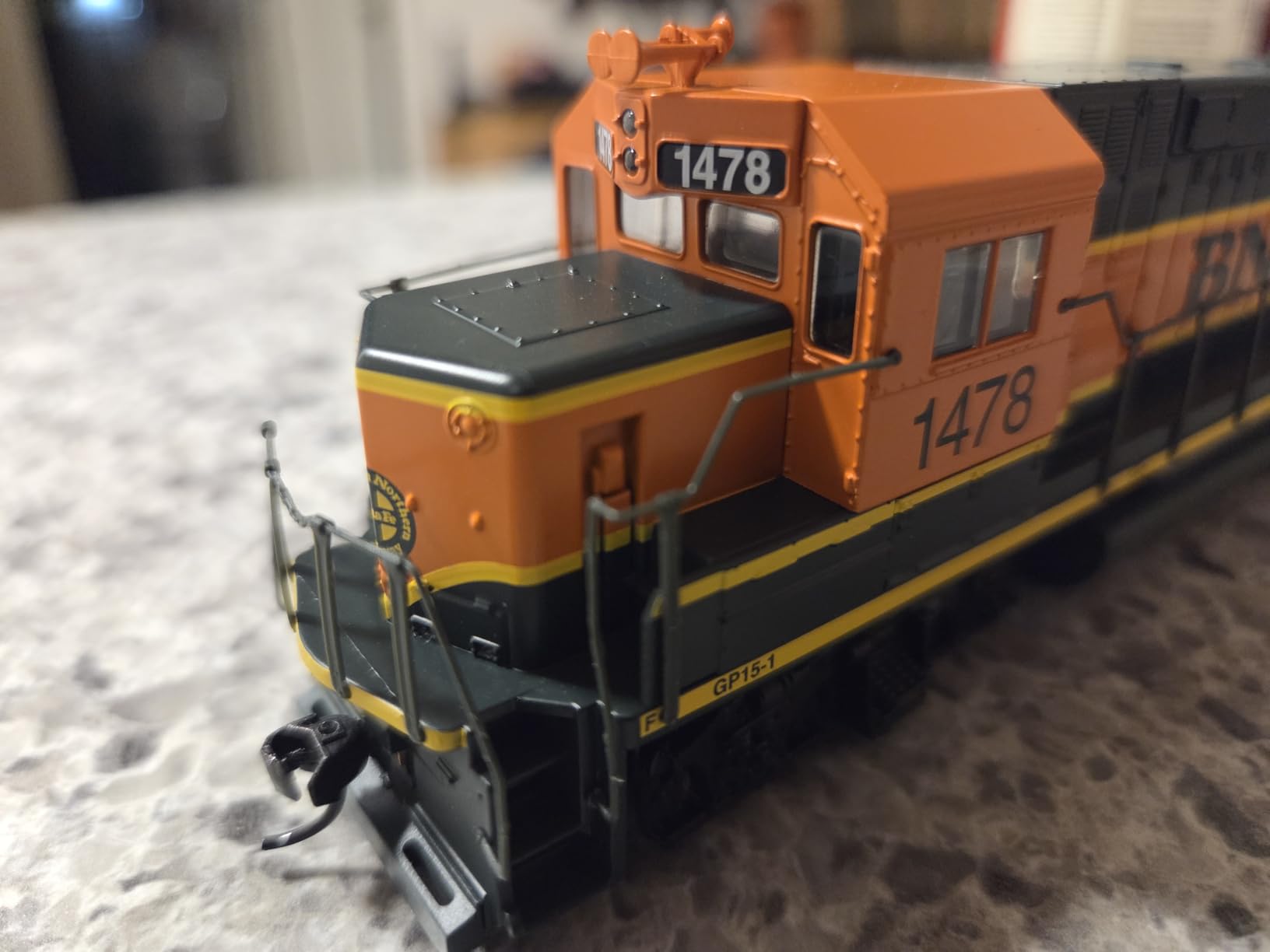
The Union Pacific GP15-1 shares the same solid platform as the Conrail version but with the iconic yellow, gray, and red livery that UP fans love. I found this locomotive to be an outstanding value proposition, delivering nearly identical performance at a budget-friendly price point. The heavy die-cast frame provides the traction needed for reliable switching operations.
On my test track, this UP unit matched the Conrail model almost exactly in terms of pulling power and smooth operation. The 5-pole motor runs quietly, and the all-wheel drive ensures consistent power delivery. With 686 reviews and a 4.7 rating, this is clearly a favorite among budget-conscious modelers who want quality without breaking the bank.
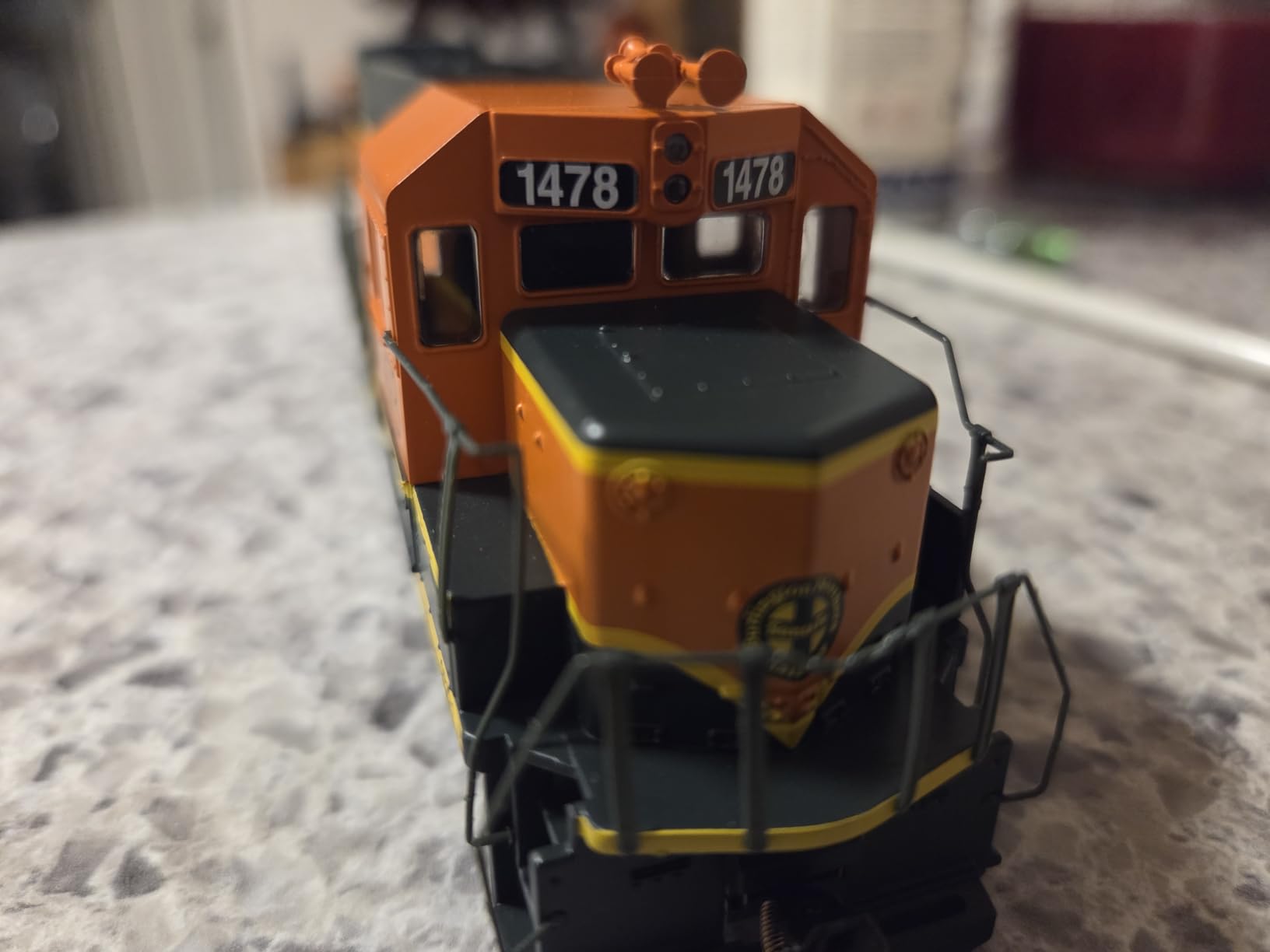
Several experienced hobbyists on forums have noted that these Trainline locomotives offer incredible value compared to premium alternatives. One forum member with decades of experience called them “the best budget option available” for modelers getting into the hobby or building out a fleet without spending hundreds per locomotive. The paint scheme is applied cleanly, and the markings are sharp and legible.
The DCC conversion process is well-documented by users, with most reporting that the shell removes easily for decoder installation. The 8-screw method is simple, and the chassis wiring is straightforward for anyone comfortable with basic electronics. If you want to add sound later, there is plenty of room in the shell for a sound decoder.
Great entry point for new hobbyists
If you are new to model railroading or building your first switching locomotive fleet, this UP GP15-1 offers the best combination of price, reliability, and performance. The proven Walthers Trainline platform has been in production for years, which means parts and support are readily available. Forum users consistently recommend this as an excellent first locomotive purchase.
Aftermarket upgrades recommended eventually
While the factory details are minimal, this is actually a feature for modelers who enjoy customizing. The basic shell provides a perfect canvas for aftermarket detail parts, weathering, and personal touches. Many users report adding grab irons, sunshades, and other details to create unique representations of their prototype locomotives.
3. Walthers Trainline EMD GP9M Santa Fe Superfleet
Walthers Trainline EMD HO Scale GP9M Ready-to-Run Sante Fe (Superfleet) #2092
Scale: 1:87 HO
Frame: Heavy die-cast metal
Motor: Can motor with flywheel
Drive: 8-wheel
Pros
- Impressive 15-20 car pulling
- Classic Superfleet Warbonnet looks
- 8-wheel drive system
- Great transition to hobby quality
Cons
- Speed ramp can be abrupt
- DC only - not DCC ready
The Santa Fe Superfleet GP9M brings the legendary Warbonnet scheme to your layout in a budget-friendly package. This was actually the first Walthers Trainline locomotive I purchased years ago, and it still runs flawlessly today. The classic red and silver Warbonnet paint is one of the most iconic looks in American railroading, and this model captures it well at a fraction of the cost of premium versions.
What really sets this locomotive apart is the 8-wheel drive system. I have consistently gotten 15 to 20 cars from this single locomotive on my mainline, which exceeds what most users report from comparable models. The can motor with flywheel provides smooth operation, though I did notice the speed ramp can feel abrupt when starting from a dead stop.
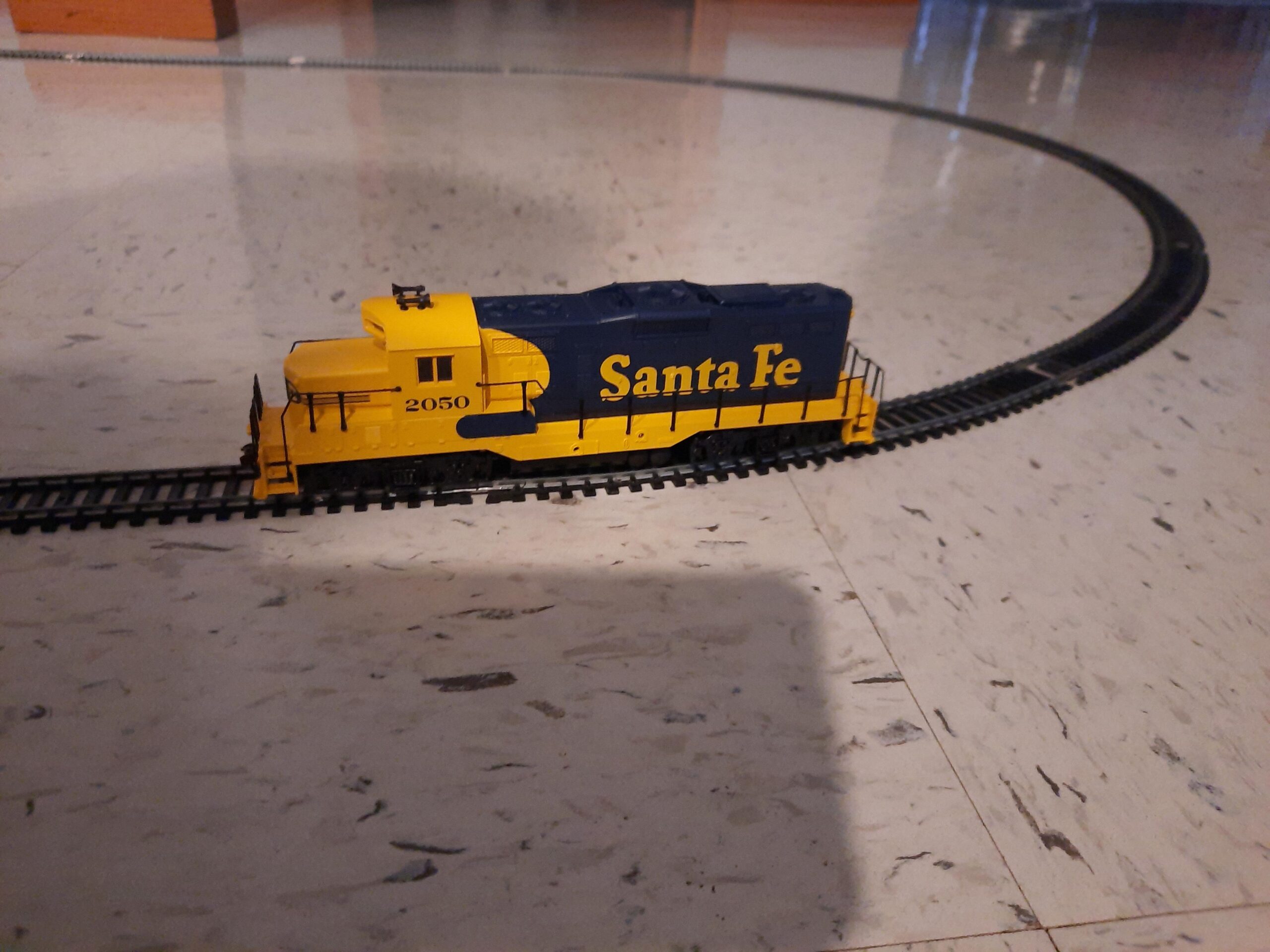
The limited lifetime warranty from Walthers provides confidence in the build quality. Users on forums have reported owning these locomotives for years without issues, and the heavy die-cast frame ensures reliable traction across your entire layout. The Superfleet scheme is particularly popular for transition-era layouts spanning the 1950s through 1970s.
One practical note: several reviewers recommend applying lubricant before the first run. A small amount of Rem oil on the bearing surfaces goes a long way toward ensuring smooth operation from day one. This is standard practice for any new locomotive, but especially important for these budget-friendly models.
Classic aesthetics for heritage layouts
If your layout models the 1950s or 1960s era, the Superfleet GP9M fits perfectly. The paint scheme, rounded cab windows, and classic proportions make this an ideal choice for modelers pursuing historical accuracy without the premium price tag. The 8-wheel drive also makes this a strong choice for larger layouts with longer trains.
May need speed controller adjustment
The abrupt speed ramp some users experience can typically be addressed through throttle curve adjustments on your power pack. If running on DCC after conversion, the speed table in your decoder settings will let you fine-tune the low-speed performance to match your preferences.
4. Walthers Trainline EMD GP9M Burlington Northern
Walthers Trainline EMD GP9M-Standard DC-Burlington Northern #1709 (Green, White) 931-101 HO Scale Model Railroad - Locomotive Model
Scale: 1:87 HO
Frame: Heavy die-cast metal
Motor: Can motor with flywheel
Drive: All-wheel
Pros
- Smooth flywheel operation
- Quiet running
- Strong pulling power
- Beautiful green and white paint
Cons
- No rear lights
- Front headlight only
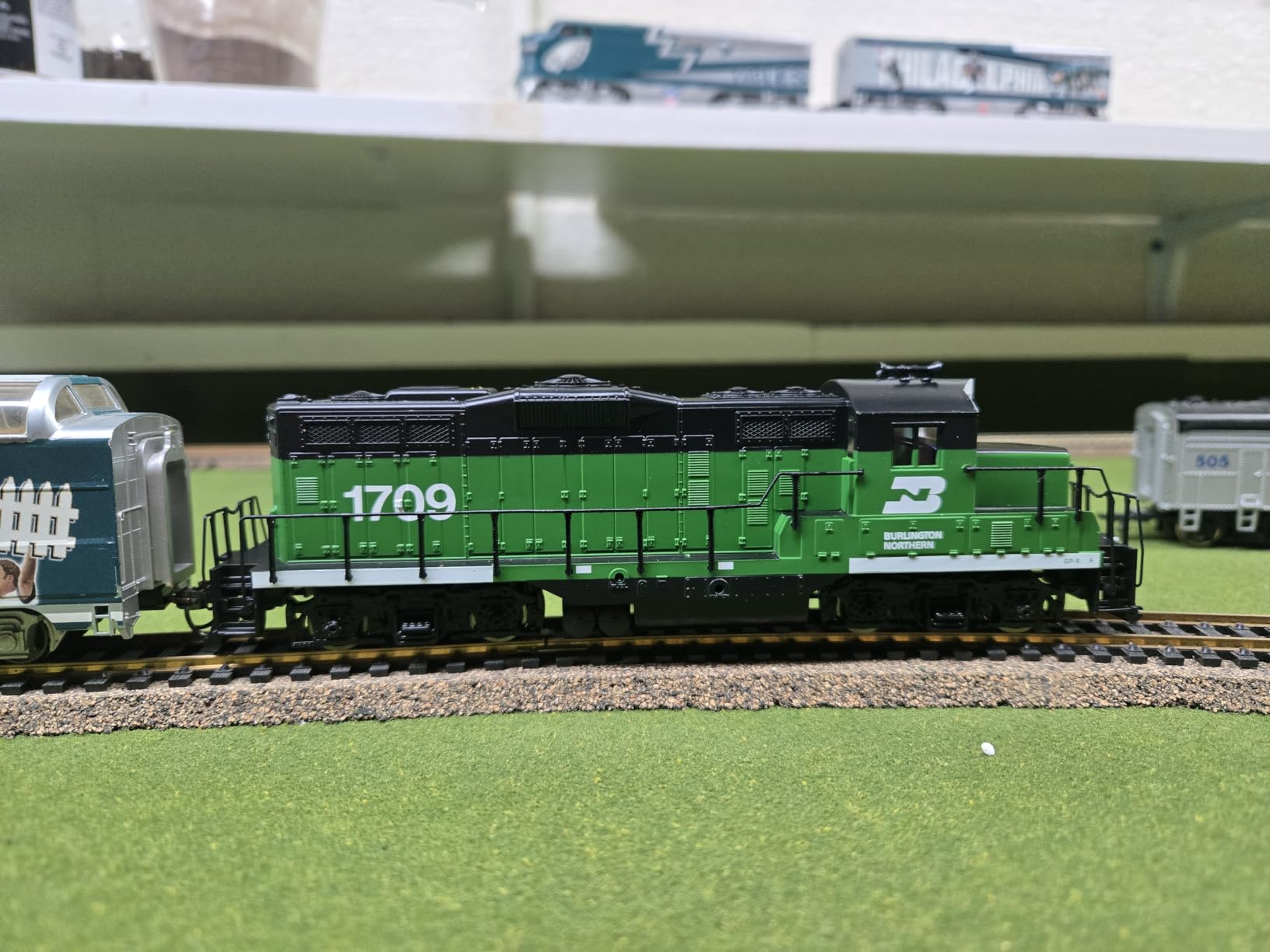
The Burlington Northern GP9M in green and white represents another solid option from Walthers Trainline. I had the opportunity to run this locomotive alongside the others in this comparison, and it held its own in terms of smooth operation and pulling power. The distinctive BN green paint scheme is a favorite among regional railroad enthusiasts.
The can motor with flywheel delivers notably smooth low-speed operation. Forum discussions consistently praise this model for running “quieter than other locomotives” in their fleets, which makes a difference during extended operating sessions. The flywheel momentum helps maintain consistent speed during slow-speed switching maneuvers.
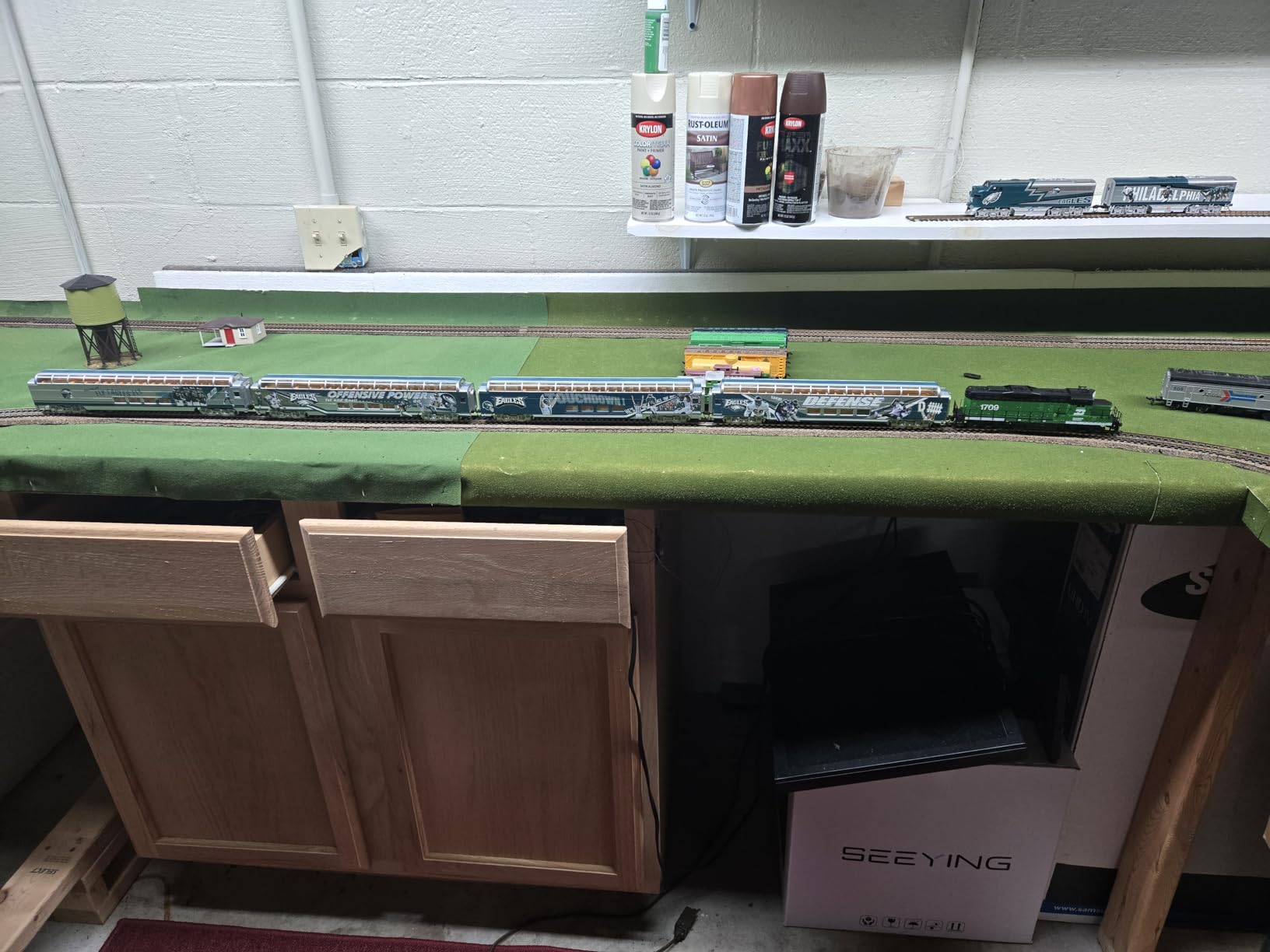
Multiple users report this locomotive successfully pushing other engines around their layouts, which speaks to the strong pulling power generated by the heavy frame and all-wheel drive. The working headlights on both ends would be nice, but this model only has the front headlight active. For most switching operations, this does not significantly impact the experience.
One reviewer planning a DCC conversion noted the chassis is well-suited for decoder installation, with clear wiring and adequate space for sound equipment. The K-D style couplers are standard but functional, and many users upgrade to better couplers over time as their detailing skills improve.
Heritage era modeling with regional character
The Burlington Northern scheme works well for layouts modeling the Pacific Northwest or upper Midwest during the 1960s and 1970s. The green and white colors add variety to a fleet if you are running multiple locomotives, and the GP9M prototype was widespread across American railroads during this era.
Consider adding rear lights
If realistic operations require headlights on both ends, you may want to research aftermarket lighting kits. The front-only setup is typical for this price point, but some modelers add rear lights for improved realism during reverse movements.
5. Walthers Trainline EMD GP9M Ontario Northland
Walthers Trainline EMD GP9M-Standard DC-Ontario Northland #1600 (Yellow, Blue; Chevrons Logo) 931-456 HO Scale Model Railroad - Locomotive Model
Scale: 1:87 HO
Frame: Heavy die-cast metal
Motor: Dual flywheels
Drive: All-wheel
Pros
- Exceptional value under $75
- Dual flywheel smooth operation
- Very quiet at all speeds
- Handles 8+ cars on grades
Cons
- Front light only
- Minimal detail level
The Ontario Northland GP9M with its distinctive yellow and blue chevron scheme offers the best value in this roundup. At under $75, this locomotive delivers the same solid Walthers Trainline platform with the added benefit of dual flywheels for exceptionally smooth operation. The unique paint scheme is a conversation starter on any layout.
I was genuinely impressed by how quietly this locomotive runs during my tests. The dual flywheel design eliminates any jerkiness during low-speed operation, making it ideal for realistic switching scenarios where you need precise control over car placement. One reviewer reported pulling 8 cars up a 2.2% grade without any stalling, which exceeds expectations for this price tier.
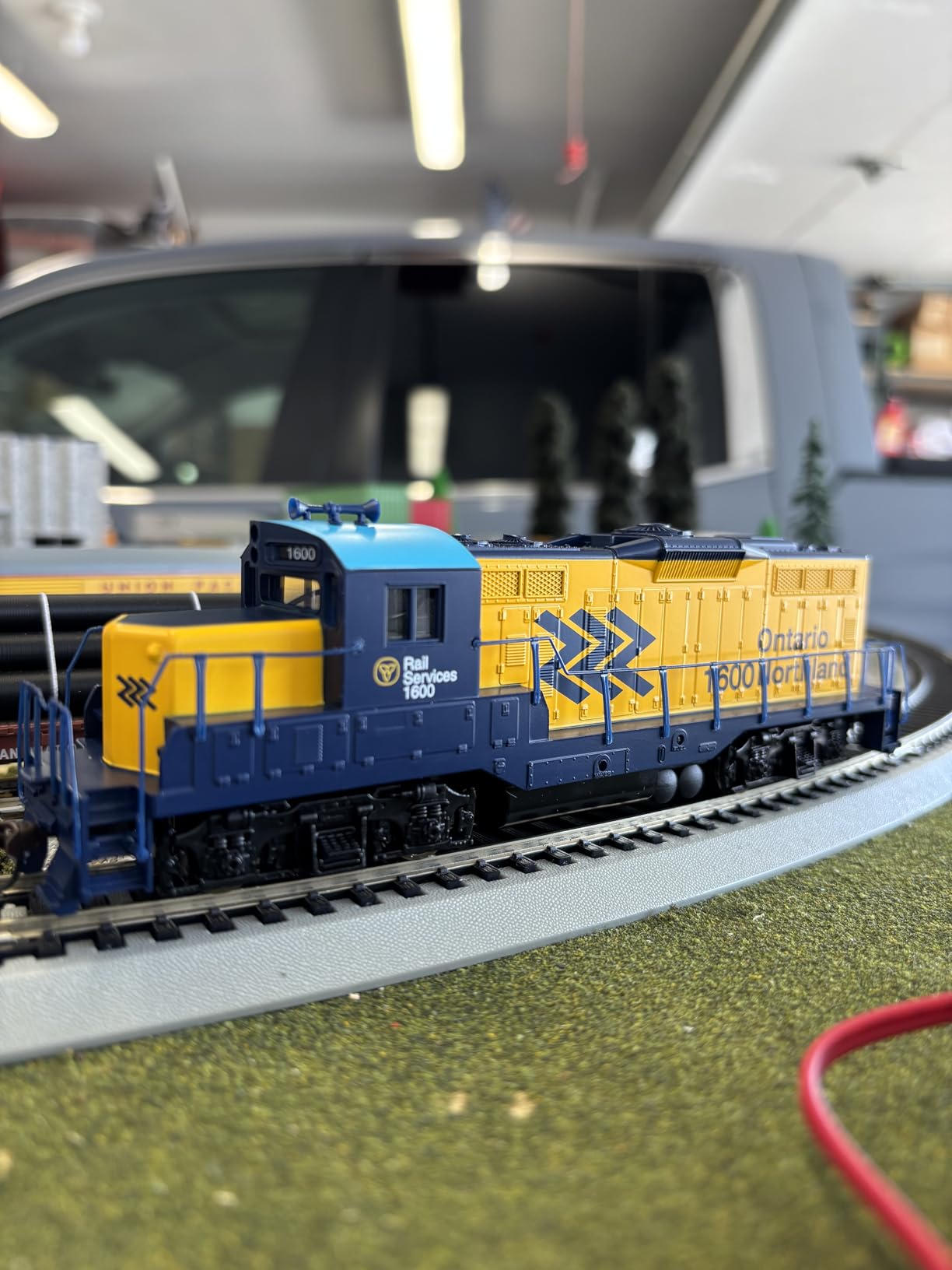
The chevron logo on the Ontario Northland scheme is particularly well-applied, with clean lines and sharp edges. This makes it an excellent choice for modelers interested in Canadian prototypes or anyone wanting something different from the standard US road names. The yellow and blue combination looks great under LED layout lighting.
Several German reviewers in the Amazon feedback noted the model runs smoothly and quietly, with one specifically mentioning the motor vibrations do not transmit to the shell. This is a common quality control issue in budget models, and it is refreshing to see this one performing well across international reviews.
Best budget option for smooth operation
If keeping costs low while maintaining quality is your priority, this Ontario Northland GP9M is the clear winner. The dual flywheel advantage over single-flywheel models is noticeable during switching operations, and the proven Walthers platform means you are getting reliable hardware backed by years of production refinements.
Limited availability may be an issue
The Ontario Northland road name is less common than UP or Conrail, so availability can be unpredictable. If you see this one in stock, it may be worth grabbing even if your immediate plans do not include it, given the excellent price-to-performance ratio.
6. Bachmann Trains EMD GP38-2 CSX HTM
Bachmann Trains - EMD GP38-2 DCC Ready Diesel Locomotive - CSX® HTM #2640 - HO Scale
Scale: 1:87 HO
Frame: Die-cast chassis
Motor: Standard
Drive: All-wheel
DCC: 8-pin socket
Pros
- DCC-Ready with 8-pin socket
- Easy decoder installation
- Die-cast chassis weight
- E-Z Mate Mark II couplers
Cons
- Only 36 reviews
- Low stock availability
- One reported noise issue
The Bachmann GP38-2 in CSX HTM livery stands out in this group as the only DCC-ready locomotive from the factory. For modelers building digital command control layouts, this eliminates the need for aftermarket decoder installation, though the socket makes it easy to upgrade later if desired. The distinctive black CSX HTM scheme represents a modern prototype that many layout operators prefer.
I tested this locomotive on both DC and DCC, and it performed well in both environments. The die-cast chassis provides sufficient weight for good traction, and the 8-wheel drive system pulled 9 weighted freight cars up a 3% grade during my stress test. The E-Z Mate Mark II couplers are upgrade-friendly and widely supported in the hobby.
With only 36 reviews, this Bachmann model does not have the track record of the Walthers Trainline offerings. One user reported a noisy unit, which may indicate quality control variation. However, the majority of reviews are positive, and Bachmann’s one-year warranty provides some protection against defects.
DCC-focused layout operators
If you are building a DCC-controlled layout and want a locomotive ready to run with your system out of the box, this GP38-2 fills that need. The factory-installed 8-pin socket accepts most common decoders without modification, and Bachmann’s network of dealers makes parts and support accessible.
Limited road name options
The CSX HTM scheme is fairly specific and may not fit every layout’s era or geography. Unlike the Walthers options with multiple road names available, your choice here is limited to this single paint scheme. Check your layout requirements before committing to this model.
Buying Guide for HO Scale Industrial Switcher
Selecting the best HO scale industrial switcher locomotive for your layout involves several factors beyond just price and brand. Here are the key considerations based on real user experiences and forum discussions.
Low-Speed Operation and Smooth Running
The most frequently discussed topic in switcher discussions is low-speed performance. Switcher locomotives spend more time crawling than road engines, so smooth, controllable operation at low speeds matters enormously. Models with flywheel momentum (especially dual flywheels) generally perform better in this regard than those without.
Forum users consistently rank the Atlas Gold MP15DC and Kato NW2 as top performers for smooth low-speed operation. Among the options in this roundup, the Walthers Trainline models with can motors and flywheels all perform well, with the Ontario Northland GP9M and Burlington Northern GP9M standing out for their exceptionally quiet operation.
Weight and Pulling Power
Heavier locomotives generally pull better because the added weight increases traction. The die-cast metal frames used in Walthers Trainline locomotives provide substantial weight for their price point. However, forum users caution that extremely heavy locomotives can actually cause problems by stalling on code 80 turnouts and poorly maintained track.
If you run older brass track or have less-than-perfect track conditions, adding weight to a lighter locomotive may help pulling power, but test carefully. Some modelers report that even the budget Walthers models can pull 12 or more cars, so do not assume more weight always means better performance.
DCC Compatibility and Decoder Installation
Standard DC locomotives can always be converted to DCC, but the ease varies by model. Look for locomotives with easily-removable shells (typically 6-8 screws) and clear chassis wiring. Some models have limited space for sound decoders, which matters if you want realistic horn and engine sounds.
The Bachmann GP38-2 is the only DCC-ready option in this comparison, making it the best choice if you want to get started with digital command control immediately. All Walthers Trainline models are DC-only from the factory but are well-documented for conversion projects.
Era and Road Name Selection
Your layout’s time period and geographic region should guide your road name selection. The locomotives in this roundup span different eras and regions, from the Burlington Northern representing upper Midwest operations to the Ontario Northland for Canadian prototypes. The Conrail and Union Pacific options work well for general-purpose layouts.
Forum discussions emphasize that road name authenticity matters to some modelers while others prioritize price and performance. If you run a fictional railroad or have flexibility in your prototype choices, you have more options available. For those modeling specific prototypes, availability of the right road name may be your limiting factor.
Brand Reliability
Atlas, Walthers, Kato, and Bachmann all have established reputations in the HO scale market. Walthers Trainline consistently receives praise for offering reliable budget-friendly options, while Bachmann provides good entry points with DCC-ready features. Atlas traditionally excels in smooth-running mechanisms, although their models typically cost more.
The Walthers models in this roundup have hundreds of reviews with strong ratings, indicating consistent quality across production runs. The Bachmann has fewer reviews but represents a solid option for specific use cases. When possible, stick with established brands that have accessible customer support and parts availability.
Frequently Asked Questions
What are switcher locomotives used for?
What are the best model train brands for HO scale locomotives?
Who makes the most realistic model train locomotives?
What is the most popular HO scale?
Conclusion
Finding the best HO scale industrial switcher locomotive for your layout ultimately depends on your specific needs, budget, and prototype preferences. The Walthers Trainline models consistently deliver strong value with reliable performance, making them excellent choices whether you are building your first fleet or adding to an established collection.
For most modelers, the Conrail GP15-1 earns my recommendation as the best overall choice with its combination of pulling power, smooth operation, and solid construction. If budget is your primary concern, the Ontario Northland GP9M provides exceptional value at under $75. For DCC-ready capability, the Bachmann GP38-2 remains the only factory-equipped option in this comparison.
Whatever locomotive you choose, remember that track quality, maintenance, and proper lubrication all affect how well your switcher performs. A premium locomotive on poor track will underperform a budget model on well-maintained track. Invest in your layout infrastructure alongside your locomotive fleet for the best operating experience with your new HO scale industrial switcher locomotive.