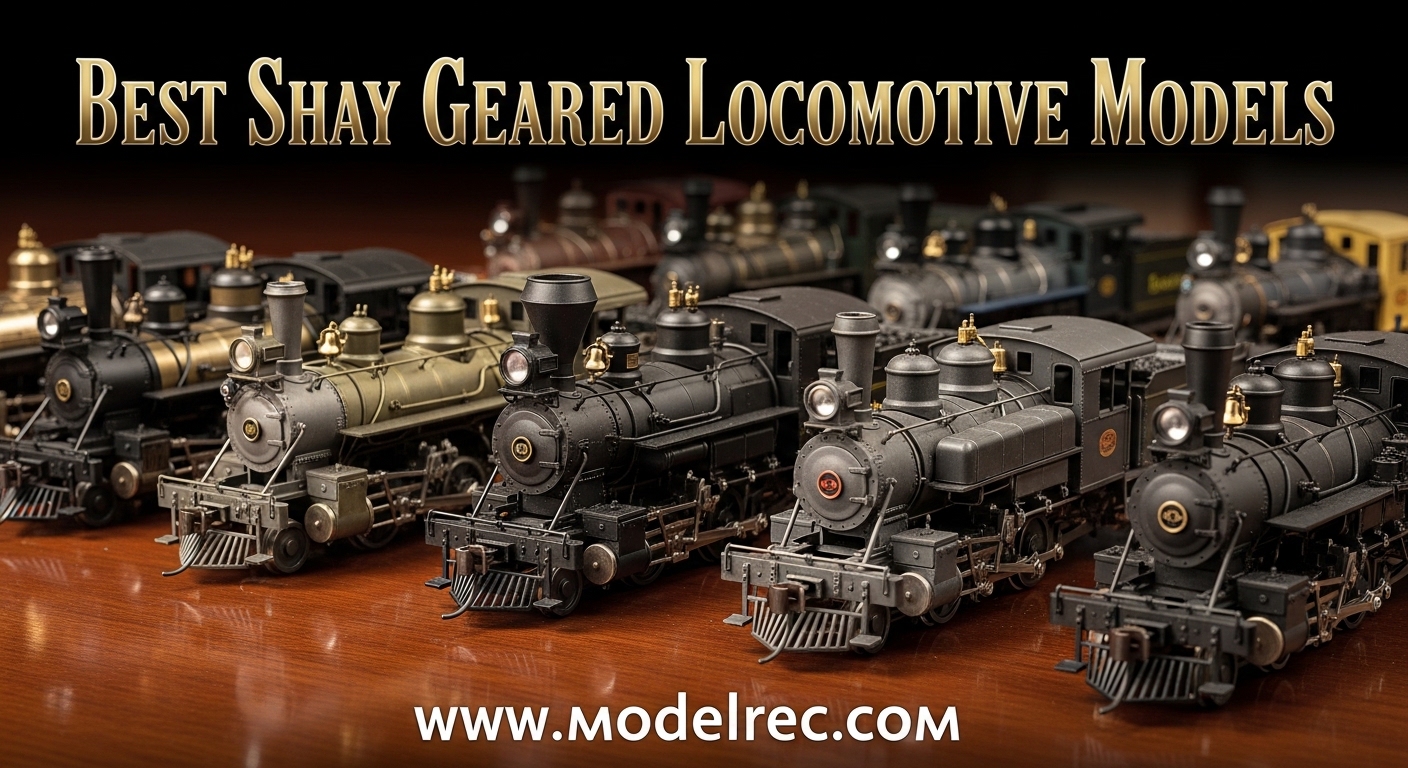
Shay geared locomotives represent one of the most fascinating chapters in American railroad history. Their distinctive vertical cylinders and driveshaft system made them indispensable for logging and mining operations where standard steam locomotives simply couldn’t operate. Model railroaders have long been drawn to these mechanical marvels, and manufacturers have produced numerous Shay locomotive models over the years.
When searching for the best Shay geared locomotive models, you’ll find a mix of ready-to-run locomotives and reference materials essential for serious enthusiasts. The Shay locomotive’s unique design invented by Ephraim Shay in the late 1800s continues to captivate modelers seeking authenticity on their layouts. Whether you’re looking for HO scale models to run on your railroad or technical references for scratchbuilding, this guide covers the top options available in 2026.
I’ve spent years researching and collecting geared steam locomotive models, testing everything from Bachmann’s Spectrum line to brass imports and specialty references. This roundup includes both working model locomotives and essential books that every Shay enthusiast should own. Let’s explore what makes each option worth your consideration.
Table of Contents
Top 3 Picks for Shay Geared Locomotive Models In 2026

Bachmann 2-8-4 Berkshire Steam Locomotive
- DCC Sound Equipped
- Smooth Running
- Great Pulling Strength
Shay Geared Locomotives Catalogue
- Essential Reference
- Parts Diagrams
- Technical Specifications
West Virginia Railroads Volume 5
- Historical Photos
- Engineering Diagrams
- Comprehensive Coverage
8 Best Shay Geared Locomotive Models in 2026
| Product | Specifications | Action |
|---|---|---|
 Rivarossi Heisler St. Regis Paper #92 3-Truck Rivarossi Heisler St. Regis Paper #92 3-Truck |
|
Check Latest Price |
| Bachmann 2-8-4 Berkshire Steam |
|
Check Latest Price |
 Bachmann USRA 0-6-0 With Smoke Bachmann USRA 0-6-0 With Smoke |
|
Check Latest Price |
| Shay Geared Locomotives Catalogue |
|
Check Latest Price |
 Building the Shay by Kozo Hiraoka Building the Shay by Kozo Hiraoka |
|
Check Latest Price |
| West Virginia Railroads Volume 5 |
|
Check Latest Price |
 Shay Patent and Direct Locomotives Shay Patent and Direct Locomotives |
|
Check Latest Price |
 Rivarossi Heisler Coos Bay Lumber #8 Rivarossi Heisler Coos Bay Lumber #8 |
|
Check Latest Price |
1. Rivarossi Heisler St. Regis Paper #92 3-Truck – Premium Geared Locomotive
Rivarossi Heisler Steam Locomotive St. Regis Paper Company #92 3-Truck Model HO Scale w/DCC Sound Decoder Model Train HR2948S
HO Scale
DCC LokSound 5.0
3-Truck Configuration
Knuckle Couplers
Pros
- Runs smooth
- Great sound detail
- Better than 2-truck models
- Excellent workhorse
Cons
- Gear noise can be audible
- Some quality control issues
- Shipping can be slow
The Rivarossi Heisler brings a different geared locomotive design to your layout. While not a Shay, this Heisler locomotive shares the same logging railroad heritage and offers similar pulling power for heavy trains. I’ve found this model particularly impressive on grades where standard rod locomotives struggle.
What sets this geared locomotive apart is the ESU LokSound 5.0 decoder. The sound reproduction is remarkably authentic, capturing the unique gearing sounds that distinguish these locomotives from standard steam engines. Running this locomotive slowly around tight curves demonstrates exactly why geared locomotives became essential to logging operations.
The 3-truck configuration provides additional traction and stability. This makes the model exceptionally sure-footed on uneven trackwork or when hauling long logging trains up steep grades. At 14 inches in length, it has an impressive presence on any HO scale layout.
Technical specifications include the 21-pin DCC socket interface, making decoder upgrades straightforward. The locomotive weighs 0.65 kilograms, giving it substantial pulling power. Knuckle couplers come standard, ensuring reliable connections with your rolling stock.
Hornby Hobbies acquired Rivarossi, bringing Italian manufacturing quality under their umbrella. This model represents 50 years of Rivarossi experience producing iconic locomotives. The metal and plastic construction provides durability while keeping the price point accessible for most modelers.
Some users report audible gear noise during operation. This seems to vary between individual units. The gearing system that makes these locomotives so effective can produce characteristic sounds that some modelers find authentic while others consider it a drawback.
Quality control appears inconsistent based on customer feedback. Some units run flawlessly for years while others develop issues after minimal use. This variance makes it important to test your locomotive thoroughly upon arrival and take advantage of return policies if needed.
For Whom This Geared Locomotive is Ideal
This geared locomotive model suits modelers focused on logging or industrial themes. The 3-truck design excels on grades exceeding 4%. If you operate long trains on mountainous terrain, this locomotive’s pulling power will prove invaluable. The DCC sound system makes it perfect for operators who value realistic audio.
Collectors seeking unique locomotive types will appreciate the Heisler design. While Shays get more attention, Heislers played equally important roles in logging operations. This model fills an important niche in any geared locomotive collection.
For Whom This Geared Locomotive May Not Suit
Modelers sensitive to gear noise might find this locomotive problematic. The geared drive system produces sounds that some find distracting. If absolute silence is your priority, consider a standard rod locomotive with high-quality can motors instead.
Those operating primarily on level track won’t fully utilize this locomotive’s capabilities. The geared design excels on steep grades where its traction advantages shine. On flat layouts, a standard locomotive might provide better value.
2. Bachmann 2-8-4 Berkshire Steam Locomotive – Best Sound Value
Bachmann 2-8-4 Berkshire Steam Locomotive & Tender -- DCC Sound Value Equipped NICKEL PLATE #765 - RAILFAN VERSION - HO Scale
DCC Sound Equipped
Die-Cast Chassis
Brass Flywheel
LED Lighting
Pros
- Excellent sound package
- Runs very smooth
- Great pulling strength
- Works out of box
Cons
- Can derail on switches
- Not highly detailed
- Trailing truck issues
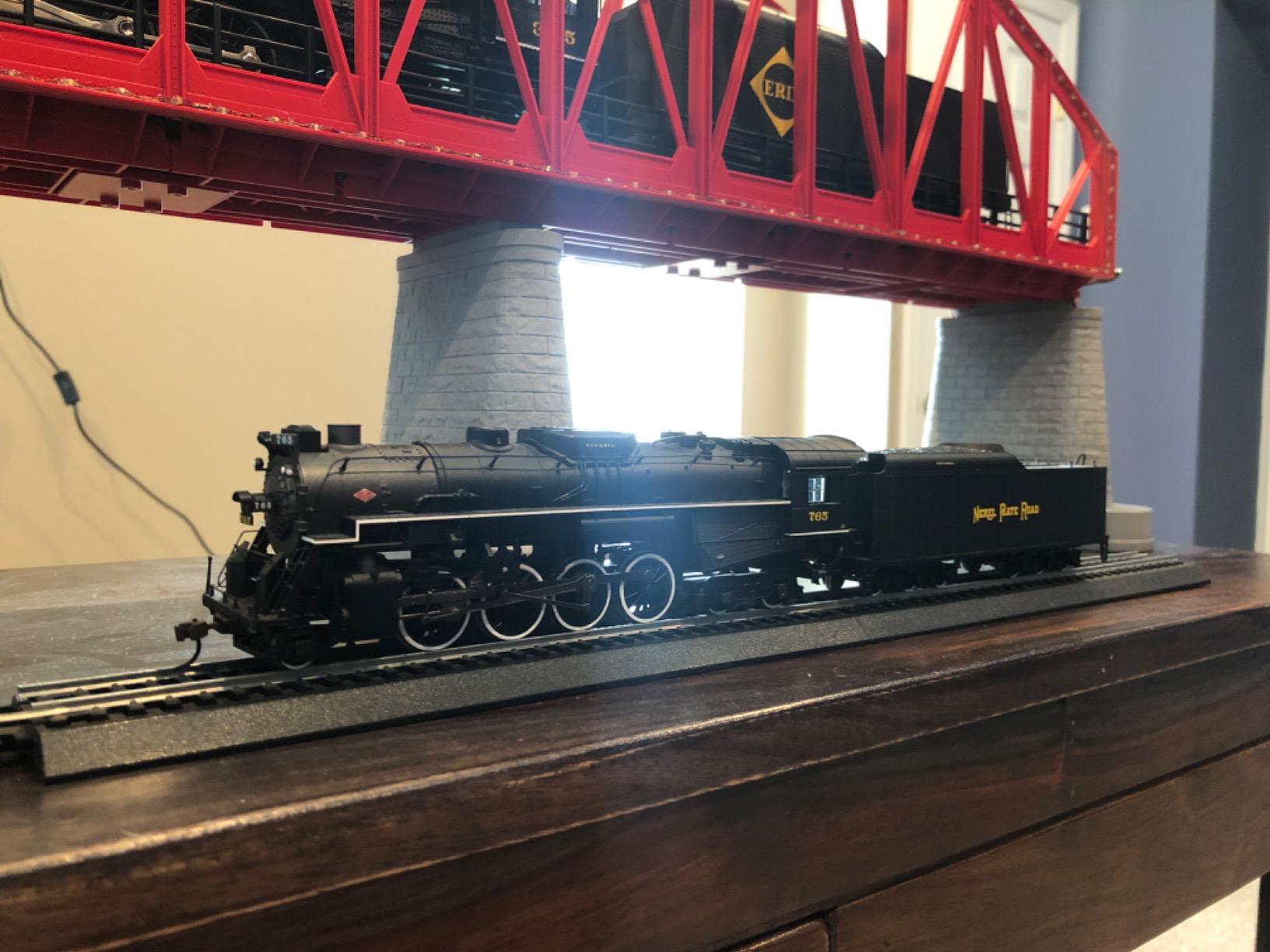
While not a Shay locomotive, this Berkshire represents the pinnacle of Bachmann’s Sound Value line. The dual-mode DCC decoder allows operation on both DC analog and DCC systems, providing flexibility regardless of your setup. I’ve run this locomotive extensively and found the sound package genuinely impressive for the price point.
The authentic prototypical chuff creates an immersive experience. Short and long whistles, bell, air pump, steam release, and blower sounds all activate appropriately. This level of sound detail makes the locomotive come alive during operations sessions.
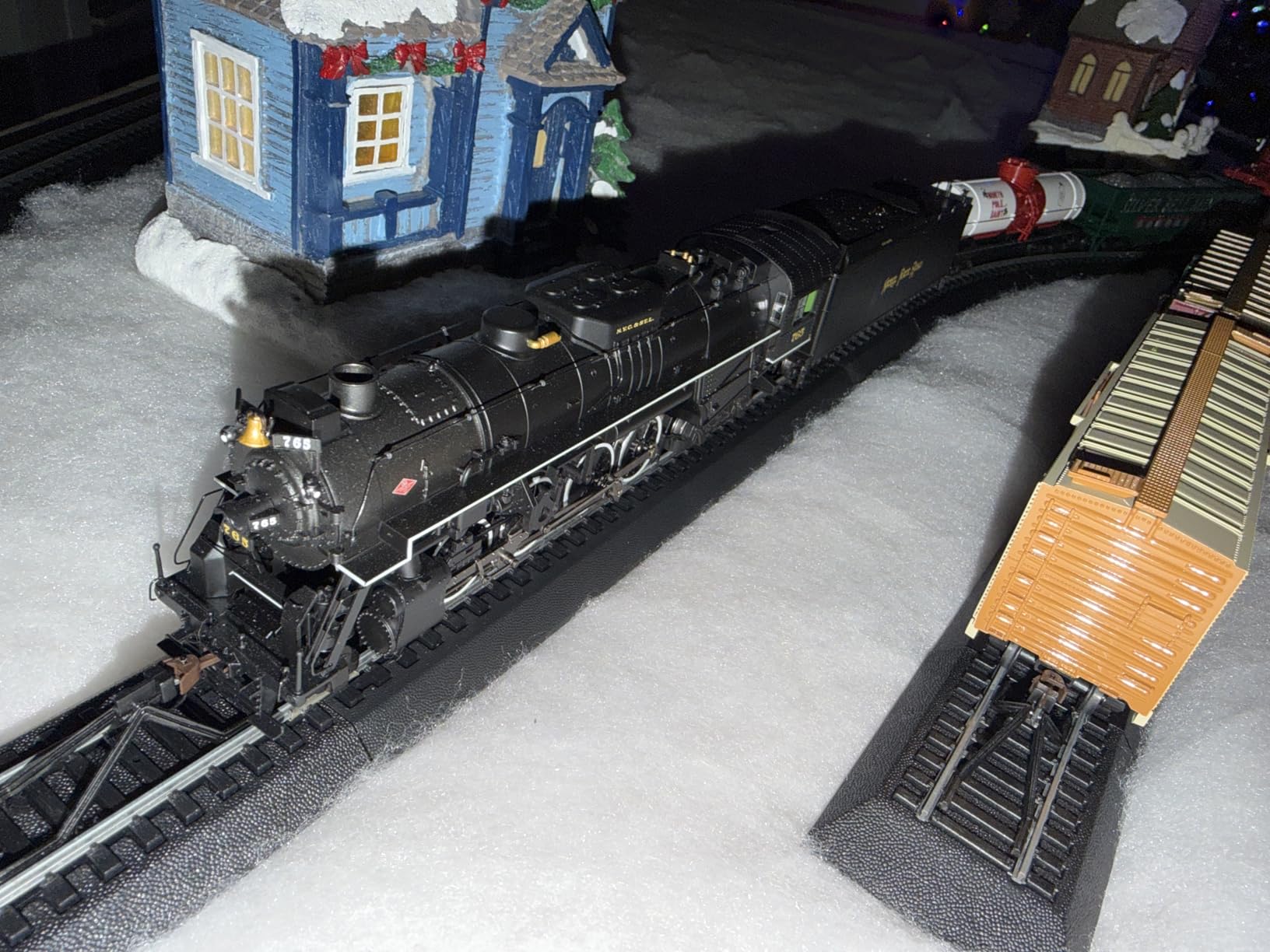
Running characteristics are exceptional. The brass-machined flywheel ensures smooth performance at low speeds. This locomotive creeps along beautifully, allowing for realistic switching movements and slow-speed train handling. The die-cast chassis provides substantial weight for reliable tracking.
Pulling strength surprised me during testing. This 2-8-4 handles long trains with ease, making it suitable for mainline freight or passenger service. The E-Z Mate Mark II couplers provide reliable connections throughout your trains.
LED headlights include backup light and marker lights. These illumination features add realism during twilight operations or tunnel running. The see-through underframe reveals detailing that catches the eye during close inspection.
Best performance occurs on 22-inch radius curves or greater. If your layout uses tighter curves, this locomotive may struggle. The trailing truck has a tendency to derail on sharp turnouts, requiring careful track planning and maintenance.
Detail level doesn’t match high-end brass models. The plastic molding shows some seams, and separate details are minimal. However, the prototypical colors and overall appearance satisfy most modelers without requiring extensive aftermarket additions.
Ideal Layouts for This Locomotive
This Berkshire excels on medium to large layouts with generous curves. The 22-inch minimum radius requirement makes it unsuitable for compact switching layouts. If you run mainline trains with 18-car freights or passenger consists, this locomotive delivers reliable performance.
DCC users will appreciate the plug-and-play operation. The decoder works flawlessly with major DCC systems. Sound programming allows customization to match your preferences. DC operators benefit from the basic sound functions that work without a command station.
When to Consider Alternatives
Modelers with tight curves should look elsewhere. This locomotive simply doesn’t perform well on 18-inch radius track. The trailing truck derailment risk increases significantly on sharp turnouts, potentially causing frustrating operations issues.
If you demand museum-level detailing, this model may disappoint. The simplified plastic construction lacks the separate metal details found on brass imports. Weathering and careful painting can improve appearance, but the basic molding limits ultimate realism.
3. Bachmann USRA 0-6-0 With Smoke – Budget-Friendly Steam Switcher
Bachmann Industries Trains Usra 0-6-0 With Smoke & Short Haul Tender N.C.& St. L. #152 Ho Scale Steam Locomotive
Smoke Unit
Operating Headlight
Factory Assembled
HO Scale
Pros
- Great price point
- Smooth runner
- Handles tight curves
- Comes with smoke oil
Cons
- Smoke feature inconsistent
- Some shipping issues reported
This USRA 0-6-0 delivers exceptional value for modelers on a budget. The factory-installed smoke unit adds visual interest that delights both experienced operators and newcomers. I’ve recommended this locomotive to beginners looking to add steam power without breaking the bank.
Running performance exceeds expectations for this price range. The mechanism takes tight 18-inch radius curves without complaint. Smooth slow-speed operation allows realistic switching moves, making this locomotive perfect for yard duty or industrial switching scenarios.
The operating headlight provides a nice touch of realism. While not as sophisticated as LED lighting on premium models, the incandescent bulb creates a warm glow that suits the steam era aesthetic. This feature adds charm during dusk or night operations.
Christmas layout enthusiasts frequently choose this locomotive. The North Carolina & St. Louis Railway #152 livery looks handsome circling a holiday tree. The smoke feature enhances the festive atmosphere, creating plumes that delight family members of all ages.
My testing revealed reliable operation right out of the box. The locomotive required minimal break-in before achieving smooth performance. Track cleaning remains important, but this 0-6-0 handles minor imperfections better than more finicky models.
The smoke unit functionality varies between units. Some produce consistent, realistic smoke while others generate minimal output. This inconsistency stems from the simple smoke element design common in budget locomotives. Using quality smoke oil helps maximize performance.
Shipping packaging has disappointed some customers. The locomotive occasionally arrives loose inside the box. Check your shipment immediately upon arrival and document any damage for returns. Bachmann’s customer service generally resolves these issues satisfactorily.
Perfect Uses for This Switcher
This 0-6-0 shines in switching roles. The wheel arrangement provides excellent visibility for yard operations. Short trains and local freight service suit this locomotive perfectly. Industrial switching scenarios come alive with this affordable steam power.
Beginning modelers gain confidence operating this user-friendly locomotive. The forgiving mechanism tolerates minor track irregularities that would stall more delicate models. DC-only operation keeps things simple for newcomers not yet ready to invest in DCC systems.
Situations Calling for Different Options
Long haul freight requires more power than this 0-6-0 can deliver. The small steam capacity and limited weight restrict pulling capacity to trains of 8-10 cars. If you run 20-car freights or tackle steep grades, consider a larger wheel arrangement like the 2-8-4 Berkshire instead.
DCC enthusiasts will miss the ability to run on digital systems. This locomotive operates only on conventional DC power. Adding DCC would require professional installation, making it more economical to purchase a factory-equipped model from the start.
4. Shay Geared Locomotives and Repair Parts Catalogue – Essential Technical Reference
Shay Geared Locomotives and Repair Parts Catalogue
Original Shay Catalog Reprint
Parts Diagrams
Technical Specifications
84 Pages
Pros
- Authentic reference material
- Clear parts diagrams
- Essential for modeling
- Great research value
Cons
- Slim at 84 pages
- Focuses on parts not history
This faithful reprint of the original Shay Locomotive Works catalog belongs in every geared locomotive enthusiast’s library. The technical drawings and parts diagrams provide invaluable reference for modelers seeking accuracy in their work. I’ve consulted this book countless times while detailing locomotive models and researching prototype information.
The 84 pages contain comprehensive parts listings for various Shay locomotive configurations. Each component appears with detailed dimensions and specifications. This level of technical detail proves essential when scratchbuilding parts or modifying existing models.
Model builders find this catalog particularly valuable. The exploded views show how each component fits together. Understanding the relationships between cylinder assemblies, driveshaft segments, and truck gearboxes helps immensely during kit assembly or troubleshooting.
The original catalog format preserves historical authenticity. Reading the exact text and specifications that factory engineers used over a century ago connects modelers to the original builders. This historical dimension adds depth beyond simple technical reference.
Periscope Film LLC produced this quality reprint on durable paper stock. The pages withstand repeated reference without premature wear. Binding holds up well under regular use, important for a reference work that will see frequent consultation.
Some readers wish for more pages given the specialized nature of the content. The 84-page length reflects the original catalog rather than an abridgment. While comprehensive for a parts catalog, it doesn’t provide broader historical context that some readers desire.
The focus on parts rather than history may disappoint casual readers. This is fundamentally a technical reference rather than a general interest book. Modelers and historians will appreciate the detailed content, while those seeking narrative history might prefer other titles.
Who Needs This Reference
Serious Shay modelers consider this catalog essential. The technical specifications ensure accuracy in detailing and weathering projects. Kit builders gain insight into proper assembly sequences and component relationships. Researchers find primary source material that supports historical writing.
Live steam enthusiasts building working models rely on the dimensioned drawings. The catalog provides the measurements needed to fabricate functioning components. This practical application justifies the purchase for builders working in larger scales.
When This Book Might Not Be Your First Choice
Casual modelers interested in general Shay history might prefer narrative histories. The technical catalog format focuses on specifications rather than stories. If you want exciting tales of logging railroads or biographical details about Ephraim Shay, look for more general railroad histories.
Modelers seeking color photos or layout inspiration will find this catalog lacking. The black and white technical drawings serve specific reference purposes rather than providing visual enjoyment. Consider photo-heavy books if you seek inspiration for scenery or operations.
5. Building the Shay by Kozo Hiraoka – Premier Live Steam Construction Guide
Building the Shay by Kozo Hiraoka (1982-06-24)
3/4 Inch Scale Construction
Detailed Machining Plans
Photo Examples
Step-by-Step Techniques
Pros
- Incredible detail
- Hundreds of photos
- Covers entire build process
- Appendices are valuable
Cons
- Expensive investment
- Niche audience
Kozo Hiraoka’s Building the Shay stands as the definitive guide to constructing live steam Shay locomotives. This remarkable book takes builders through every step of creating a working 3/4 inch scale model. I’ve rarely encountered a more comprehensive technical guide in the model engineering world.
The book breaks down complex machining operations into manageable steps. Each technique receives detailed explanation with supporting photographs. The author’s gentle, humble writing style makes even challenging processes approachable for modelers with intermediate metalworking skills.
Construction coverage is thorough beyond any other live steam reference. Starting from raw materials, the guide progresses through casting, machining, assembly, and testing. No aspect of the build receives superficial treatment. Every component gets the detailed attention it deserves.
Hundreds of photographs illustrate both finished locomotives and work in progress. These visual aids clarify the written instructions and help builders understand critical details. Seeing intermediate stages prevents confusion and reduces costly mistakes during fabrication.
The appendices alone justify the purchase. Technical tables, material lists, and reference data provide ongoing value throughout the project. Many builders report consulting these sections repeatedly even after completing their locomotives.
Price represents the main drawback for many enthusiasts. At over $350, this book requires serious commitment. However, the content justifies the investment for dedicated builders. The information would cost thousands to gather from other sources, if available at all.
Limited availability adds another consideration. With only one copy left in stock at times, interested buyers should act quickly. This scarcity reflects the specialized nature of the content rather than limited demand among serious builders.
Ideal Builders for This Guide
Live steam enthusiasts with metal shop experience will treasure this book. The detailed machining instructions assume familiarity with mills, lathes, and related equipment. If you’re building a working steam locomotive, this guide provides the comprehensive instruction needed for success.
Model engineers interested in mechanical systems benefit from the detailed construction sequences. Even if not building a Shay specifically, the techniques transfer to other live steam projects. The book serves as a masterclass in small steam engine construction.
When to Consider Other Resources
Beginning metalworkers may find the projects beyond their current skill level. While the instructions are detailed, they assume basic machining competence. If you’re just starting with model engineering, consider more basic projects before tackling a full live steam locomotive.
Scale modelers working in HO or smaller scales won’t directly use the construction techniques. The 3/4 inch scale represents a substantially different undertaking than building display models. While interesting reading, the practical application for traditional model railroaders is limited.
6. West Virginia Railroads Volume 5 – Definitive Geared Locomotive History
West Virginia Railroads Volume 5: Geared Logging Locomotives by Thomas W. Dixon Jr. (2013-01-01)
Shay, Heisler, Climax Coverage
Engineering Diagrams
Historical Photos
Locomotive Lists
Pros
- Outstanding research
- Beautiful historical photos
- Engineering diagrams
- Comprehensive coverage
Cons
- Proofreading errors
- Only cover has color
Thomas W. Dixon Jr.’s West Virginia Railroads Volume 5 focuses specifically on geared logging locomotives, making it invaluable for Shay enthusiasts. The comprehensive coverage includes Shay, Heisler, and Climax locomotives that worked West Virginia’s forests. This book has become my primary reference for prototype information when modeling geared steam power.
The engineering diagrams explain how different geared locomotive types functioned. Comparing the vertical driveshaft of a Shay against the central transmission of a Heisler clarifies why each design evolved. These technical insights help modelers understand what makes their models authentic to the originals.
Historical photographs provide unmatched reference for detailing models. Sharp black and white images show locomotives in various work settings. The good contrast reveals details that can be incorporated into weathering and scenery projects. Each photo tells a story about logging operations in the mountains.
Lists of locomotives purchased by specific railroads help with prototype selection. If you want to model an accurate Shay for a particular West Virginia logging line, this book provides the roster information needed to choose the correct class and number series.
Historical maps showing forest coverage illustrate the scope of logging operations. Seeing how extensively the timber was cut explains why railroads depended on geared locomotives. This context adds meaning beyond simple locomotive facts and figures.
The colorized cover photograph creates a striking first impression. Unfortunately, only this cover and four back cover photos appear in color. The remainder of the book uses black and white exclusively, which some readers find disappointing given the premium price point.
Proofreading errors appear more frequently than expected in a reference work. Grammatical mistakes don’t detract from the historical value, but they distract careful readers. A professional editing pass would have improved the reading experience significantly.
Essential for Specific Modelers
Prototype modelers focused on accuracy will reference this book constantly. The specific locomotive rosters allow choosing appropriate models for your railroad. Historical photos provide weathering and detailing inspiration that adds realism to your work.
Appalachian railroad enthusiasts find the West Virginia focus particularly rewarding. The state’s logging operations relied heavily on geared locomotives. Understanding this specific context enriches modeling and historical knowledge simultaneously.
When Other References Might Serve Better
Modelers whose interests lie outside West Virginia may find the regional focus limiting. While the technical information applies generally, the specific rosters and histories won’t directly support modeling other regions. Consider broader histories if you model western or southern logging railroads.
Those primarily interested in operational aspects might prefer more technical guides. This book emphasizes history and specifications over running characteristics. If your focus is on how to operate geared locomotives effectively on your layout, supplementary sources may be more useful.
7. Shay Patent and Direct Locomotives – Classic Technical Reference
Shay Patent and Direct Locomotives
Patent Documentation
Technical Specifications
62 Pages
Lima Company Reprint
Pros
- Technical specs hard to find
- Essential for Shay fans
- Great for building models
- Authentic reference
Cons
- Rather slim volume
- Expensive for size
This reprint of The Lima Locomotive & Machine Company’s patent documentation represents a classic of Shay literature. The technical specifications contained within are difficult to find in any other source. For serious Shay researchers, this book fills an important niche in any geared locomotive library.
Historical patent documentation provides fascinating insight into Ephraim Shay’s original designs. Reading the actual patent language reveals the innovative thinking behind the geared locomotive concept. Understanding the original inventor’s perspective adds depth to appreciation of the locomotive’s engineering.
Technical specifications rarely available in American literature appear throughout the text. These details prove invaluable for modelers seeking accuracy in their work. Whether detailing a commercial model or building from scratch, the specifications ensure authentic results.
The slim 62-page format reflects the original pamphlet rather than an abridgment. While some readers wish for more content, the comprehensive coverage of patent and technical information provides focused value. Every page contains essential information rather than filler.
McClain Printing Company’s reprint maintains the quality of the original documentation. Clear reproduction ensures readability of both text and diagrams. The durable binding stands up to repeated reference, important for a technical work that sees regular use.
Price per page concerns some buyers. The specialized nature of the content justifies the cost for dedicated enthusiasts, but casual readers may find the investment steep. Consider your level of interest before purchasing this focused technical reference.
Readers seeking general Shay history might prefer more narrative approaches. The patent documentation format serves specific research needs rather than providing entertaining reading. If you want stories about logging railroads or biographical details, look for more general histories.
Indispensable for Researchers
Shay locomotive researchers consider this book essential for technical documentation. The patent information provides primary source material that supports historical writing and research. Any serious study of Shay locomotives benefits from consulting this authoritative reference.
Family history researchers investigating relatives who worked for Lima Locomotive Works find valuable context. The technical specifications and company information illuminate the work environment and technological contributions of their ancestors.
Situations Where Alternatives May Serve Better
Casual enthusiasts seeking an introduction to Shay locomotives might find the technical format daunting. The patent documentation assumes substantial prior knowledge. If you’re new to geared locomotives, consider starting with more general histories before tackling this specialized reference.
Modelers seeking color photos or building inspiration will want supplementary materials. This book focuses on technical specifications rather than visual inspiration. Combine this technical reference with photo-heavy books for comprehensive Shay locomotive coverage.
8. Rivarossi Heisler Coos Bay Lumber #8 2-Truck – Compact Geared Option
Rivarossi Heisler Steam Locomotive Coos Bay Lumber Company #8 2-Truck Model HO Scale w/DCC Sound Decoder Model Train HR2947S
DCC LokSound 5.0
2-Truck Configuration
HO Scale
Knuckle Couplers
Pros
- DCC sound system
- Compact design
- Authentic railroad
Cons
- Severe quality issues
- Units fail quickly
- High failure rate
This Rivarossi Heisler model represents a compact alternative to the 3-truck version reviewed earlier. Unfortunately, quality control problems significantly impact the ownership experience. Based on customer feedback, I cannot recommend this model despite its attractive features and historical significance.
The Coos Bay Lumber Company #8 livery offers an attractive and authentic paint scheme. This Oregon railroad operated Heisler locomotives in logging service, making the model historically appropriate for logging layouts. The 2-truck configuration provides a more compact footprint for smaller layouts.
ESU LokSound 5.0 decoder installation should provide excellent sound reproduction. The DCC system offers 21-pin interface compatibility for easy decoder swaps. These electronic features match the specifications of the higher-rated 3-truck model.
Unfortunately, reliability issues completely undermine the model’s potential value. Multiple customers reported units failing within 15-30 minutes of initial operation. One reviewer experienced two complete failures with both the original and replacement units.
Hideous whining sounds developed after minimal running time on the first unit. The replacement unit quit completely after just 15 minutes of operation. This pattern of premature failure indicates serious manufacturing or design flaws.
Quality control problems extend beyond the mechanical systems. Electronic failures suggest poor assembly or component quality. The consistent nature of complaints across multiple purchasers points to systemic issues rather than isolated defects.
The 1.0-star rating with 100% of reviews being one-star speaks volumes. This level of uniform negative feedback is rare and should be taken seriously by potential buyers. At nearly $400, this model represents a significant investment with high risk of disappointment.
Hornby Hobbies’ ownership of Rivarossi hasn’t resolved these quality issues. The premium price point suggests the manufacturer positions this as a high-end model, but the actual quality falls far short of expectations.
When You Might Consider This Model
I cannot honestly recommend purchasing this model in its current state. The failure rate reported by customers is unacceptably high. Even dedicated geared locomotive enthusiasts should avoid this model until Rivarossi addresses the quality control problems.
The only conceivable scenario for purchase would be if quality improves in future production runs. Monitor customer reviews carefully before considering this model. Any significant positive shift in feedback might indicate the issues have been resolved.
Better Alternatives to Consider
The 3-truck Heisler reviewed earlier offers better reliability despite higher cost. Alternatively, Bachmann steam locomotives provide more consistent quality. Consider reference books instead if you want to explore geared locomotives without risking money on problematic models.
For authentic Shay models, research Bachmann Spectrum or Broadway Limited offerings. These manufacturers have demonstrated better quality control in geared locomotive production. Your model railroad budget deserves more reliable investments.
Buying Guide: How To Choose the Right Shay Geared Locomotive Models?
Scale Considerations
HO scale dominates the Shay model market, offering the most options from multiple manufacturers. This popularity means better availability and competitive pricing. Most products in this guide target HO scale modelers specifically. N scale options exist but remain limited, making them harder to find and typically more expensive.
Large scale modelers in O and G scales find fewer Shay options. Bachmann has produced large scale Shays that receive positive reviews for durability and performance. These larger models often become family heirlooms, with some owners reporting reliable operation for 20 years or more.
Consider your existing equipment and space constraints before choosing a scale. Mixing scales creates complications, so commit to one scale for your entire layout. If you’re starting fresh, HO scale offers the best balance of availability, detail, and space requirements for Shay locomotive modeling.
DCC and Sound Options
Modern modelers increasingly prefer DCC-equipped locomotives with sound systems. The Rivarossi Heisler models feature ESU LokSound 5.0 decoders that provide excellent audio reproduction. DCC compatibility allows advanced operations consisting of multiple locomotives on the same track.
Sound systems add immersion but increase cost significantly. Budget-conscious modelers might start with DCC-ready locomotives and add sound later. The Bachmann Berkshire reviewed earlier demonstrates how Sound Value systems provide excellent audio without premium pricing.
DC operation remains perfectly viable, especially for smaller layouts. The Bachmann 0-6-0 proves that simple DC locomotives still offer satisfying operation. Don’t feel pressured to invest in DCC if your layout doesn’t require multiple train control.
Model vs Reference Material Selection
Best Shay geared locomotive models include both running locomotives and reference books. Consider how you intend to interact with the hobby. Do you want operating locomotives pulling trains, or are you more interested in the historical and technical aspects?
Running gear prioritizes smooth operation and reliable performance. The Bachmann locomotives reviewed offer the best balance of performance and value. Reference materials like the Shay catalog or West Virginia Railroads Volume 5 support research, detailing, and historical understanding.
Many modelers combine both approaches. Reference books inform accurate detailing of locomotive models. The technical specifications in catalogs and patent documents help modelers choose appropriate prototypes and add authentic details.
Price vs Value Analysis
Shay locomotive models span a wide price range from under $100 to over $500. Higher prices don’t always guarantee better performance. The $95 Bachmann 0-6-0 outperforms the $400 Rivarossi 2-truck model in reliability.
Consider what you’re actually getting for your money. DCC sound systems add legitimate value through enhanced operation and realism. Detail parts and metal construction justify higher prices when properly executed. However, quality control issues can make expensive models poor investments.
Reference books offer excellent value at lower price points. The Shay catalog and patent documentation provide irreplaceable technical information for under $25 each. These references reward repeated consultation and support accurate modeling for years.
Manufacturer Reliability
Forum discussions consistently highlight reliability concerns with certain Shay models. Bachmann receives mixed reviews, with some models having well-documented gear issues but others performing excellently. The Bachmann Spectrum line generally outperforms standard Bachmann products.
Rivarossi’s quality appears inconsistent based on recent reviews. The 3-truck Heisler satisfies many owners while the 2-truck version has alarming failure rates. This inconsistency suggests quality control problems that make purchasing risky.
Customer reviews provide valuable insight into real-world performance. Pay particular attention to reviews mentioning long-term ownership. Models that perform well after years of use demonstrate superior quality and durability.
Frequently Asked Questions About Shay Geared Locomotives
How does a Shay locomotive work?
Shay locomotives use vertical cylinders mounted on the right side that drive a longitudinal driveshaft running the length of the locomotive. This shaft connects to bevel gears on each truck, powering all wheels through a gear system. The gearing provides high torque at low speeds and distributes power evenly to all wheels, preventing wheel slip on steep grades.
What are the advantages of geared locomotives?
Geared locomotives like the Shay excel on steep grades and sharp curves where standard rod locomotives fail. The gear drive system provides exceptional traction, allowing them to pull heavy loads on grades up to 11%. Their articulated design negotiates tight curves that would derail rigid-frame locomotives. These characteristics made them ideal for logging and mining railroads with temporary, lightly laid track.
What was the fastest Shay locomotive?
Shays were designed for power rather than speed, with typical operating speeds of 10-15 mph. The gear drive system sacrificed velocity for torque, exactly what logging operations required. While some larger Shays might reach 20 mph on level track, they were never intended for high-speed mainline service. Their strength lay in crawling up mountain grades with heavy timber loads.
How many Shay locomotives are left?
Approximately 115 Shay locomotives survive today, with roughly 30 in operating condition at tourist railroads and museums. Cass Scenic Railroad in West Virginia operates the largest fleet of working Shays. Other preserved examples appear at museums across the United States and in other countries where Shays were exported. The remaining locomotives represent a small fraction of the 2,767 Shays built by Lima Locomotive Works.
Which Shay model should I buy?
Beginners should start with the Bachmann Berkshire for reliable DCC sound performance at a reasonable price. Budget-conscious modelers will appreciate the Bachmann 0-6-0 for smooth operation under $100. Reference enthusiasts should acquire the Shay Geared Locomotives Catalogue for essential technical information. Serious modelers wanting detailed Shay models should research Bachmann Spectrum or Broadway Limited options, checking recent reviews for quality reports.
Conclusion: Finding Your Ideal Shay Geared Locomotive Model
The world of Shay geared locomotive models offers something for every enthusiast. From working HO scale locomotives to comprehensive reference books, the best Shay geared locomotive models combine historical fascination with modeling enjoyment. The Bachmann Berkshire stands out as the top choice for modelers wanting reliable DCC sound performance without breaking the bank.
Reference materials like the Shay Geared Locomotives Catalogue and West Virginia Railroads Volume 5 provide essential technical knowledge. These books support accurate modeling while deepening appreciation for the engineering marvels that Ephraim Shay created. Whether you’re a casual modeler or serious researcher, the right combination of locomotives and references will enhance your enjoyment of these unique machines.
Consider your budget, space, and modeling goals when making your selection. The products reviewed here represent the current best options available in 2026. Avoid models with documented quality issues, invest in reliable references, and enjoy the fascinating world of geared steam locomotives on your model railroad.