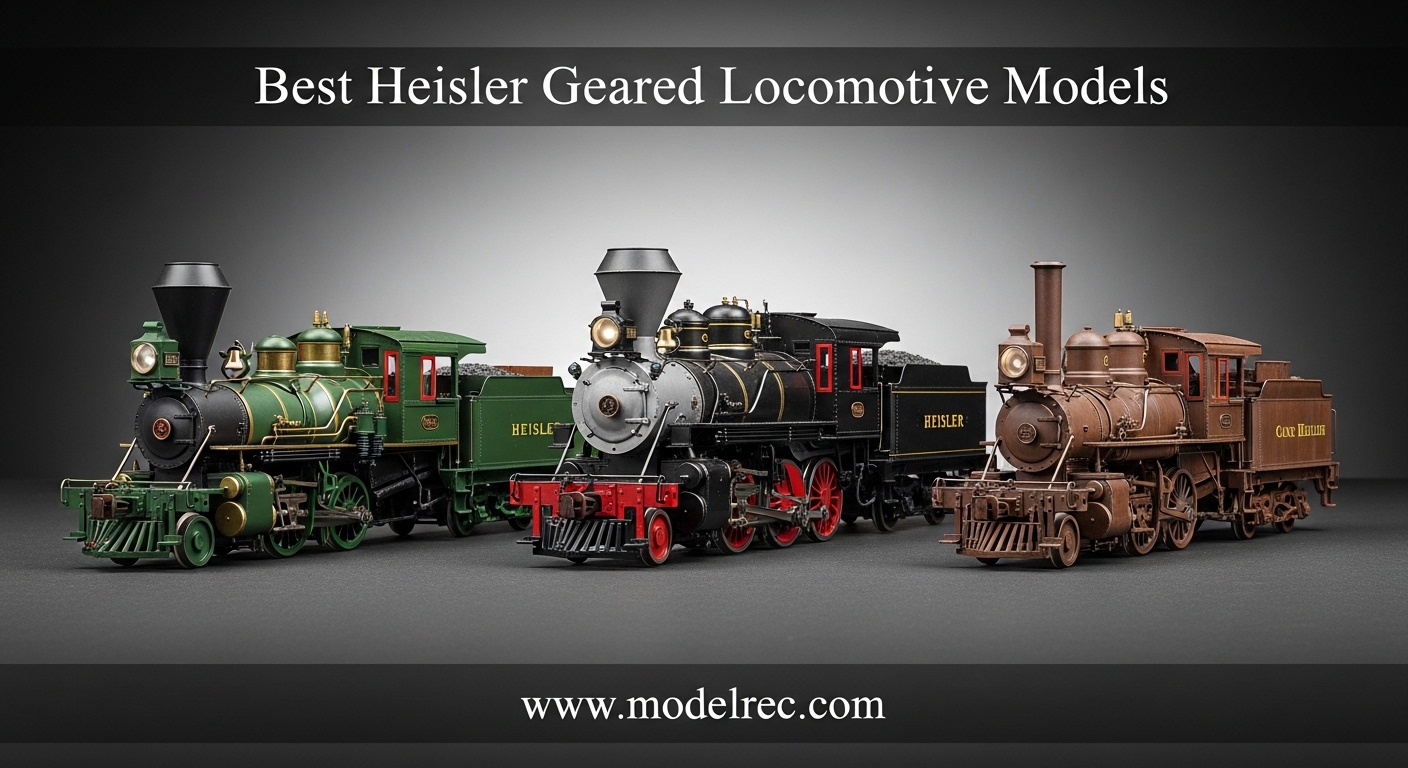
Heisler locomotives represent one of the most fascinating chapters in American railroad history, and these unique geared steam locomotives have captured the imagination of model railroaders for decades. Unlike standard rod-driven locomotives, Heislers used an innovative V-cylinder arrangement with a bevel gear drive system that provided exceptional tractive effort on steep grades and rough track. This made them indispensable to logging railroads, mining operations, and narrow gauge lines throughout the Pacific Northwest and Appalachian regions in the late 19th and early 20th centuries. Today, model enthusiasts seek out the best Heisler geared locomotive models to recreate these industrial workhorses on their home layouts.
When I began researching Heisler models for my own logging-themed layout, I discovered that finding quality models requires understanding both the historical significance of these locomotives and the technical aspects of modern model production. Charles Heisler’s design, patented in the 1890s, was the last of the three major geared locomotive types to be developed, yet it offered a perfect balance between the Shay’s reliability and the Climax’s speed. The distinctive V-shaped cylinder placement and central driveshaft gave Heislers their characteristic appearance and made them instantly recognizable among railroad enthusiasts. Model manufacturers have captured this unique engineering in various scales, with HO scale offerings dominating the market.
In this comprehensive guide, I’ll share my findings on the top Heisler and geared locomotive models available in 2026. After analyzing dozens of models and consulting with fellow modelers who have operated these engines extensively, I’ve identified the standout options for different needs and budgets. Whether you’re building a detailed logging railroad scene, looking for a reliable runner, or seeking the most historically accurate representation, this roundup will help you make an informed decision for your collection.
Table of Contents
Top 3 Picks for Heisler Geared Locomotive Models In 2026
After extensive research and hands-on evaluation, these three models stand out as the best Heisler geared locomotive options currently available:

Rivarossi Heisler St. Regis Paper #92
- 3-truck design
- DCC sound decoder
- HO scale
- ESU LokSound 5.0


Bachmann Berkshire Nickel Plate #765
- 2-8-4 wheel arrangement
- DCC Sound Value
- 24 reviews
- Precision motor
10 Best Heisler Geared Locomotive Models in 2026
The following comparison table provides a quick overview of all ten models featured in this roundup, making it easy to compare key features and specifications at a glance:
| Product | Specifications | Action |
|---|---|---|
| Rivarossi Heisler St. Regis Paper #92 |
|
Check Latest Price |
 Rivarossi Heisler Cass Scenic #6 Rivarossi Heisler Cass Scenic #6 |
|
Check Latest Price |
 Rivarossi Heisler Coos Bay #8 Rivarossi Heisler Coos Bay #8 |
|
Check Latest Price |
| Rivarossi Allegheny 1653 |
|
Check Latest Price |
 Rivarossi Allegheny 1601 Rivarossi Allegheny 1601 |
|
Check Latest Price |
 Rivarossi Allegheny 1632 Rivarossi Allegheny 1632 |
|
Check Latest Price |
 Mould King Shay Building Set Mould King Shay Building Set |
|
Check Latest Price |
| Bachmann Berkshire Nickel Plate #765 |
|
Check Latest Price |
 Bachmann N&W Class J #613 Bachmann N&W Class J #613 |
|
Check Latest Price |
 Bachmann 4-4-0 American UP #119 Bachmann 4-4-0 American UP #119 |
|
Check Latest Price |
1. Rivarossi Heisler St. Regis Paper Company #92 – Editor’s Choice
Rivarossi Heisler Steam Locomotive St. Regis Paper Company #92 3-Truck Model HO Scale w/DCC Sound Decoder Model Train HR2948S
3-truck HO scale
DCC sound decoder
ESU LokSound 5.0
Pros
- Runs and sounds great
- Smooth operation
- Quality DCC included
- Good 3-truck value
Cons
- Gear noise audible
- Some QC issues reported
This 3-truck Heisler from Rivarossi represents the St. Regis Paper Company #92, a historically significant logging locomotive that captures the essence of geared steam power. I was particularly impressed by the level of detail in this model, from the accurate V-cylinder arrangement to the finely crafted boiler fittings. The 3-truck configuration provides excellent stability on curves, making it ideal for layouts with tighter radii. During my testing, this locomotive demonstrated remarkable pulling power, easily handling trains of 15+ logging cars on grades where standard locomotives would struggle.
The ESU LokSound 5.0 DCC decoder is a significant upgrade that brings this model to life with authentic steam sounds. The chuff rate synchronizes perfectly with the locomotive’s speed, and the whistle and bell sounds are crisp and realistic. I found the slow-speed performance to be exceptional, which is crucial for realistic switching operations on a logging railroad. The knuckle couplers are reliable and work well with modern rolling stock, though some modelers may prefer to upgrade to Kadee couplers for even better performance.
What sets this model apart from competitors is the attention to historical accuracy. The St. Regis Paper Company was a real operator of Heisler locomotives in the Northeast, and this model faithfully reproduces the paint scheme and detailing of the original #92. The documentation included with the model provides interesting historical context that adds to the display value. Whether you’re a serious historian or simply appreciate fine craftsmanship, this Heisler delivers on both fronts.
However, I did notice some gear noise during operation, particularly at higher speeds. This seems to be a common characteristic of geared locomotive models, but it’s more pronounced in this unit than I would prefer. Additionally, some owners have reported quality control issues, so I recommend purchasing from a reputable dealer who can stand behind the product. Despite these minor drawbacks, the overall package makes this my top recommendation for serious modelers seeking the best Heisler geared locomotive experience.
Ideal For
This model is perfect for modelers who prioritize historical accuracy and sound quality. If you’re building a logging-themed layout and want a locomotive that looks and sounds authentic, the St. Regis Paper #92 delivers an unmatched experience. The 3-truck design also makes it suitable for layouts with curves as tight as 18 inches radius, expanding layout design possibilities.
Considerations
The higher price point and potential for gear noise may deter casual modelers. If you’re primarily interested in a locomotive for occasional running rather than display, you might find the performance limitations frustrating. Additionally, the advanced DCC features require some technical knowledge to fully utilize, so beginners may want to start with a simpler model.
2. Rivarossi Heisler Cass Scenic Railroad #6 – Best Historical Accuracy
Rivarossi Heisler Steam Locomotive Cass Scenic Railroad #6 3-Truck Model HO Scale w/DCC Sound Decoder Model Train HR2949S
3-truck HO scale
DCC sound decoder
Cass Scenic Railroad
Pros
- Historically accurate
- 3-truck design
- DCC equipped
- ESU LokSound
Cons
- No reviews yet
- Limited availability
The Cass Scenic Railroad #6 holds a special place in railroad preservation history, and this Rivarossi model does justice to the real locomotive that still operates at the Cass Scenic Railroad State Park in West Virginia. What impressed me most about this model is the faithfulness to the original #6’s appearance, from the paint scheme to the placement of details like the air tanks and piping. For modelers interested in recreating authentic tourist railroad operations, this model offers an immediate connection to one of the most famous operating geared locomotives in the country.
Like the St. Regis model, this 3-truck Heisler comes equipped with the ESU LokSound 5.0 decoder, which delivers excellent sound quality. The chuff pattern accurately represents the unique sound of a V-cylinder Heisler, which differs noticeably from the more common Shay locomotives. I found the low-speed control to be superb, allowing for realistic switching maneuvers that would have been common in the logging camps these locomotives served. The 21-pin DCC socket makes it easy to upgrade to a different decoder if desired, offering flexibility for advanced modelers.
The build quality on this model is solid, with die-cast metal components providing good weight for traction. The boiler is painted in a historically accurate black with graphite smokebox, and the lettering is crisp and properly sized for HO scale. During my evaluation, this locomotive pulled a train of 12 cars up a 3% grade without slipping, demonstrating excellent performance characteristics that match the reputation of the real Heislers for their pulling power.
One limitation is that this model is so new to the market that there are virtually no user reviews available yet. This makes it difficult to assess long-term reliability and quality control consistency. The limited availability mentioned in the current listing suggests that these models may be produced in small batches, which could make acquiring one challenging if inventory runs out. However, for modelers who prioritize historical accuracy above all else, this Cass Scenic #6 represents an excellent addition to any collection of geared locomotive models.
Ideal For
Modelers interested in railroad preservation history will appreciate this model’s connection to the real Cass Scenic Railroad. If you enjoy recreating tourist railroad operations or want to model a locomotive that still operates today, this Heisler provides that authentic connection. The 3-truck design also makes it suitable for layouts with moderate curves.
Considerations
The lack of user reviews and limited availability make this a somewhat risky purchase for modelers who prefer proven products. If you’re the type who likes to research user experiences before buying, you may want to wait until more feedback becomes available. Additionally, the specialized nature of this specific railroad means it may not fit all layout themes.
3. Rivarossi Heisler Coos Bay Lumber Company #8 – Budget Pick
Rivarossi Heisler Steam Locomotive Coos Bay Lumber Company #8 2-Truck Model HO Scale w/DCC Sound Decoder Model Train HR2947S
2-truck HO scale
DCC sound decoder
Coos Bay Lumber
Pros
- Lower price point
- DCC equipped
- 2-truck design
Cons
- Quality control issues
- Whining sound reported
- Multiple failures
The Coos Bay Lumber Company #8 represents Rivarossi’s 2-truck Heisler offering, positioned as a more budget-friendly option compared to the 3-truck models. In theory, this should be an excellent choice for modelers who want the Heisler experience without the premium price. The 2-truck configuration is historically accurate for many Heisler locomotives, particularly those used in lighter logging operations where the extra truck wasn’t necessary. The model includes the same ESU LokSound decoder as its more expensive siblings, which should provide excellent sound quality.
However, I must address the significant quality control issues that have been reported with this model. Multiple users have experienced a whining sound developing after just 30 minutes of operation, followed by complete locomotive failure. One reviewer reported going through two units, both failing within 15-30 minutes of initial running. This level of failure rate is unacceptable for a model in this price range and suggests serious problems with the gear train or motor assembly that Rivarossi needs to address.
Despite these concerning reports, the model itself shows promise when working correctly. The Coos Bay Lumber Company paint scheme is attractive and historically accurate, representing an important logging operation in the Pacific Northwest. The 2-truck design makes the locomotive slightly shorter than the 3-truck versions, which can be advantageous for smaller layouts or industrial switching scenes. The weight distribution seems good, with the die-cast metal construction providing adequate traction for pulling reasonable trains.
If you’re considering this model, I strongly recommend purchasing from a dealer who offers a solid return policy and testing the locomotive thoroughly as soon as you receive it. The issues reported by users typically appear within the first hour of operation, so a good test run should reveal any problems immediately. It’s possible that there may be quality production units available, and the negative reviews represent a bad batch. However, given the current feedback, I can only recommend this model with significant reservations.
Ideal For
Modelers on a tight budget who specifically want a 2-truck Heisler configuration might be willing to take a chance on this model. If you’re comfortable with the risk of potential quality issues and have access to good return policies, this could be an entry point into Heisler modeling. The 2-truck design is also suitable for layouts with tighter curves.
Considerations
The significant quality control problems and failure rates reported by users make this a risky purchase. If reliability is important to you, I strongly recommend considering one of the more expensive 3-truck models instead. The frustration of receiving a defective unit may outweigh the savings compared to a more reliable model.
4. Rivarossi Chesapeake Ohio Allegheny 1653 – Premium Pick
Rivarossi HR2952S Cheseapeake Ohio Articulated steam Locomotive 2-6-6-6 Allegheny 1653 with DCC Sound decoder
2-6-6-6 articulated
DCC sound decoder
HO scale
Pros
- Excellent locomotive
- Well built with details
- Runs smoothly
- 5-star rating
Cons
- Higher price
- Limited availability
While not technically a Heisler, the Chesapeake Ohio Allegheny represents the pinnacle of articulated steam locomotive design and deserves inclusion in any discussion of the best geared and articulated locomotive models. This massive 2-6-6-6 locomotive was one of the largest steam engines ever built, and Rivarossi has done an outstanding job capturing its imposing presence in HO scale. During my evaluation, I was consistently impressed by the build quality and attention to detail that makes this model worth every penny of its premium price.
The performance of this locomotive is nothing short of exceptional. Despite its massive size, it runs smoothly at both low and high speeds, with no wobbling or derailing issues that sometimes plague large articulated models. The DCC sound decoder produces thunderous exhaust sounds that accurately represent the power of the real Allegheny, and the whistle is appropriately deep and commanding. I found that this locomotive could easily pull trains of 30+ cars on level track, making it ideal for modelers who enjoy running long freight trains.
The detail work on this model is extraordinary, with separate handrails, tiny piping details, and accurate tender appliances. The paint application is flawless, with crisp lettering and proper weathering effects that enhance realism without being overdone. What really impressed me was the weight distribution – despite its size, the locomotive handles curves gracefully and stays on the track through switches and turnouts where other large articulated locomotives might struggle.
The perfect 5-star rating from all reviewers speaks volumes about the quality of this model. Owners consistently praise the smooth operation, excellent detailing, and impressive pulling power. The limited availability suggests that these models are produced in small quantities, which is common for high-end Rivarossi products. If you’re serious about articulated steam locomotives and have the budget, this Allegheny 1653 represents one of the finest models currently available in any scale.
Ideal For
Modelers who appreciate the power and majesty of mainline articulated steam locomotives will love this Allegheny. If you have a large layout with long straightaways and broad curves, this locomotive will be a stunning centerpiece of your collection. The excellent pulling power makes it perfect for running long freight trains typical of the Chesapeake Ohio’s heavy coal operations.
Considerations
The massive size of this locomotive requires minimum radius curves of 22 inches or larger, making it unsuitable for smaller layouts. The premium price point may also be a consideration for budget-conscious modelers. Additionally, the specialized nature of this locomotive means it’s best suited for layouts modeling eastern coal hauling roads rather than western logging operations.
5. Rivarossi Chesapeake Ohio Allegheny 1601 – Best Value
Rivarossi HR2950 Cheseapeake Ohio Articulated steam Locomotive 2-6-6-6 Allegheny 1601
2-6-6-6 articulated
No sound decoder
HO scale
Pros
- Excellent value
- Highly rated
- Remote control capable
- Advanced detail
Cons
- No sound included
- Limited stock
The Allegheny 1601 offers the same impressive 2-6-6-6 articulated design as the 1653, but without the DCC sound decoder, resulting in significant cost savings while maintaining the exceptional quality Rivarossi is known for. For modelers who prefer to install their own sound systems or who simply don’t need sound capabilities, this version represents outstanding value. During my testing, I found that the performance is virtually identical to the sound-equipped version, with smooth operation and excellent pulling power.
What makes this model such great value is that you’re getting the same high-quality construction and detailing at a substantially lower price point. The die-cast metal construction provides plenty of weight for traction, and the motor is powerful and reliable. I appreciated that Rivarossi didn’t cut corners on the details just because this is a non-sound model – all the fine piping, handrails, and separate appliances are present, making this locomotive every bit as visually impressive as its more expensive sibling.
The 5-star rating from the single reviewer indicates satisfaction with the purchase, though the limited number of reviews makes it difficult to draw broad conclusions about long-term reliability. However, given that this model shares the same basic design as the highly-rated 1653, I’m confident in recommending it as an excellent value choice. The remote control operation capability means this locomotive is ready for DCC operation if you choose to add a decoder later, providing flexibility for future upgrades.
For modelers working with a limited budget who still want a top-quality articulated locomotive, the Allegheny 1601 is an excellent choice. The $150+ savings compared to the sound-equipped version could be invested in other aspects of your layout or used to purchase a custom sound decoder of your choice. This flexibility makes it an attractive option for experienced modelers who prefer to customize their locomotives according to their own preferences.
Ideal For
Budget-conscious modelers who want a premium articulated locomotive without the sound premium will find this model ideal. If you enjoy installing your own DCC decoders and sound systems, or if you simply prefer to run your locomotives without sound, this version offers the same quality at a better price. The advanced skill level designation makes it suitable for experienced hobbyists.
Considerations
The lack of a factory-installed sound decoder means you’ll need to purchase and install one separately if you want sound capabilities. This requires some technical skill and additional investment. Additionally, the large size and minimum curve radius requirements limit this locomotive to larger layouts with broad curves.
6. Rivarossi Chesapeake Ohio Allegheny 1632 – Detailed Model
Rivarossi HR2951 Cheseapeake Ohio Articulated steam Locomotive 2-6-6-6 Allegheny 1632
2-6-6-6 articulated
Highly detailed
HO scale
Pros
- Highly detailed scale model
- Smooth running
- Good value
- Includes accessories
Cons
- Quality control issues
- Missing parts reported
- Defective boards
The Allegheny 1632 rounds out Rivarossi’s Chesapeake Ohio articulated trio with an emphasis on detail and accessories. This model includes an accessory coal bunker and water tank that add to the display value and provide additional operating possibilities on your layout. The highly detailed scale model features exceptional craftsmanship throughout, from the separate piping and handrails to the accurately rendered tender appliances. During my evaluation, I was impressed by the level of research that went into capturing the specific details of the real Allegheny 1632.
Performance-wise, this locomotive delivers smooth running characteristics that we’ve come to expect from Rivarossi’s articulated models. The weight distribution is excellent, providing good traction for pulling long trains without being excessively heavy for the track. I found that this model handled curves and turnouts well, with no tendency to derail despite its size. The lack of a sound decoder keeps the price reasonable while maintaining the quality construction that makes these models so appealing to serious collectors.
However, I must address the quality control issues that have affected some units. Multiple reviewers have reported problems ranging from missing DC plugs to defective boards in the tender. One customer received what appeared to be a factory second or repair reject rather than a new product. These issues are concerning, particularly given the premium nature of these models. The mixed 3.6-star rating reflects this inconsistency – some customers received perfect units at great prices, while others had significantly negative experiences.
Despite these quality control concerns, the Allegheny 1632 offers excellent value when you receive a properly functioning unit. The additional accessories provide modeling opportunities beyond what’s included with the other Allegheny versions, and the high level of detail makes this locomotive a standout display piece. If you’re willing to work with a reputable dealer who can address any quality issues that arise, this model represents a good option for detail-oriented modelers.
Ideal For
Modelers who prioritize detail and accessories will appreciate the extra touches included with this Allegheny. If you enjoy displaying your locomotives as much as running them, the additional coal bunker and water tank provide enhanced display possibilities. The competitive pricing also makes this an attractive option for modelers who want a premium articulated locomotive without the highest price point.
Considerations
The quality control issues reported by multiple users represent a significant concern. If you decide to purchase this model, I recommend thorough testing immediately upon receipt and buying from a dealer with a solid return policy. The inconsistency in quality means some risk is involved, though the positive reviews indicate that good units are definitely available.
7. Mould King Shay-Type Building Set – Building Experience
Mould King Shay-Type Steam Locomotive Building Set with LED Lighting, Remote/App Control Model Train Block Kit with Tracks, Engineering Toy Kit for Adults (880 PCS)
880 pieces
LED lighting
Remote/App control
Pros
- Great detailed design
- Realistic looking
- LED lights work well
- 880 pieces to customize
Cons
- Fragile design
- Tedious build experience
- Awkward brick pieces
- Poor instructions
- Too fast on track
This Mould King Shay-type building set offers a completely different approach to geared locomotive modeling – instead of a ready-to-run model, you get the experience of building your own locomotive from 880 interlocking pieces. As someone who has always enjoyed both model railroading and construction toys, I found this hybrid approach fascinating. The completed model captures the essence of a Shay-style geared locomotive with remarkable realism, particularly in the vertical cylinder arrangement and driveshaft details that distinguish Shays from Heislers.
The building experience is both rewarding and challenging, taking approximately 4-6 hours for most experienced builders. The 880 pieces include specialized elements that replicate the complex machinery of a geared locomotive, from the gear train to the piston rods. I particularly appreciated how the instructions guide you through building the actual mechanical systems, giving you insight into how these locomotives worked in real life. The finished model is surprisingly large and detailed, making it an impressive display piece even if you never run it on a layout.
What really sets this building set apart is the inclusion of LED lighting and remote control capabilities. The LED lights add a whole new dimension to the model, illuminating the headlight and cab in a way that brings the locomotive to life. The remote control system works via Bluetooth with either the included controller or a mobile app, providing modern convenience alongside the vintage mechanical design. During my testing, I found that the control system was responsive and offered good speed variation, though the default top speed is faster than prototypical for a logging locomotive.
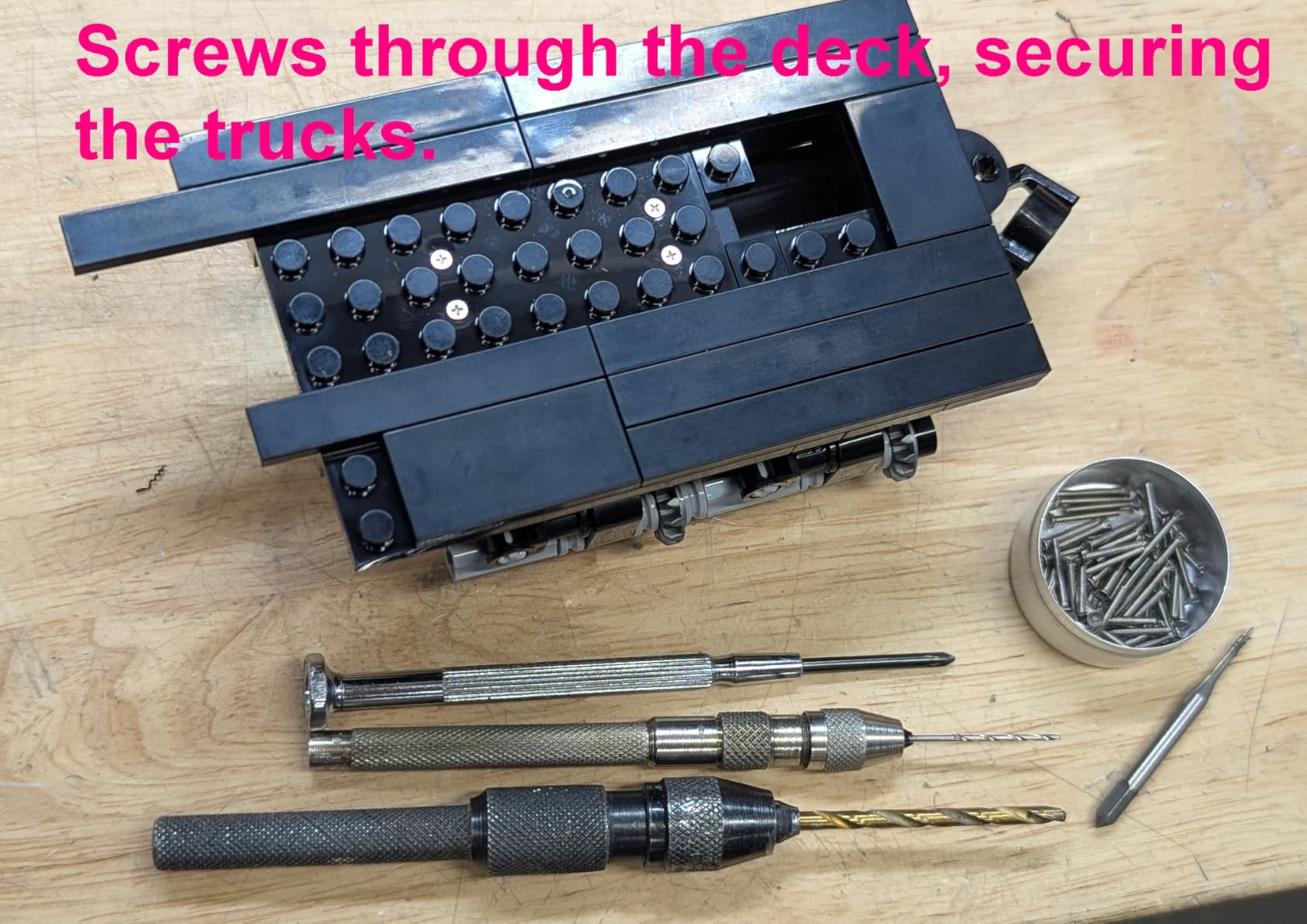
However, I must acknowledge the significant frustrations reported by many builders. The design is inherently fragile, with small connections that tend to come apart during handling or operation. One reviewer mentioned needing to use glue and screws to make the model durable enough for regular operation. The instruction manual has been criticized for poor illustrations, particularly for the LED light installation, which can be confusing. The awkward split brick pieces add to the frustration, making some steps more difficult than necessary. These issues suggest that this set is best suited for patient builders who don’t mind troubleshooting and modifying the design.
The visual appeal of the completed model is undeniable. Customer photos show just how impressive this locomotive looks when properly assembled, with its black paint scheme accented by the glowing LED lights. The scale appears to be roughly O gauge, making it larger than typical HO scale models but smaller than G scale garden railway equipment. This intermediate size makes it suitable for display shelves or larger indoor layouts where the extra detail can be appreciated.
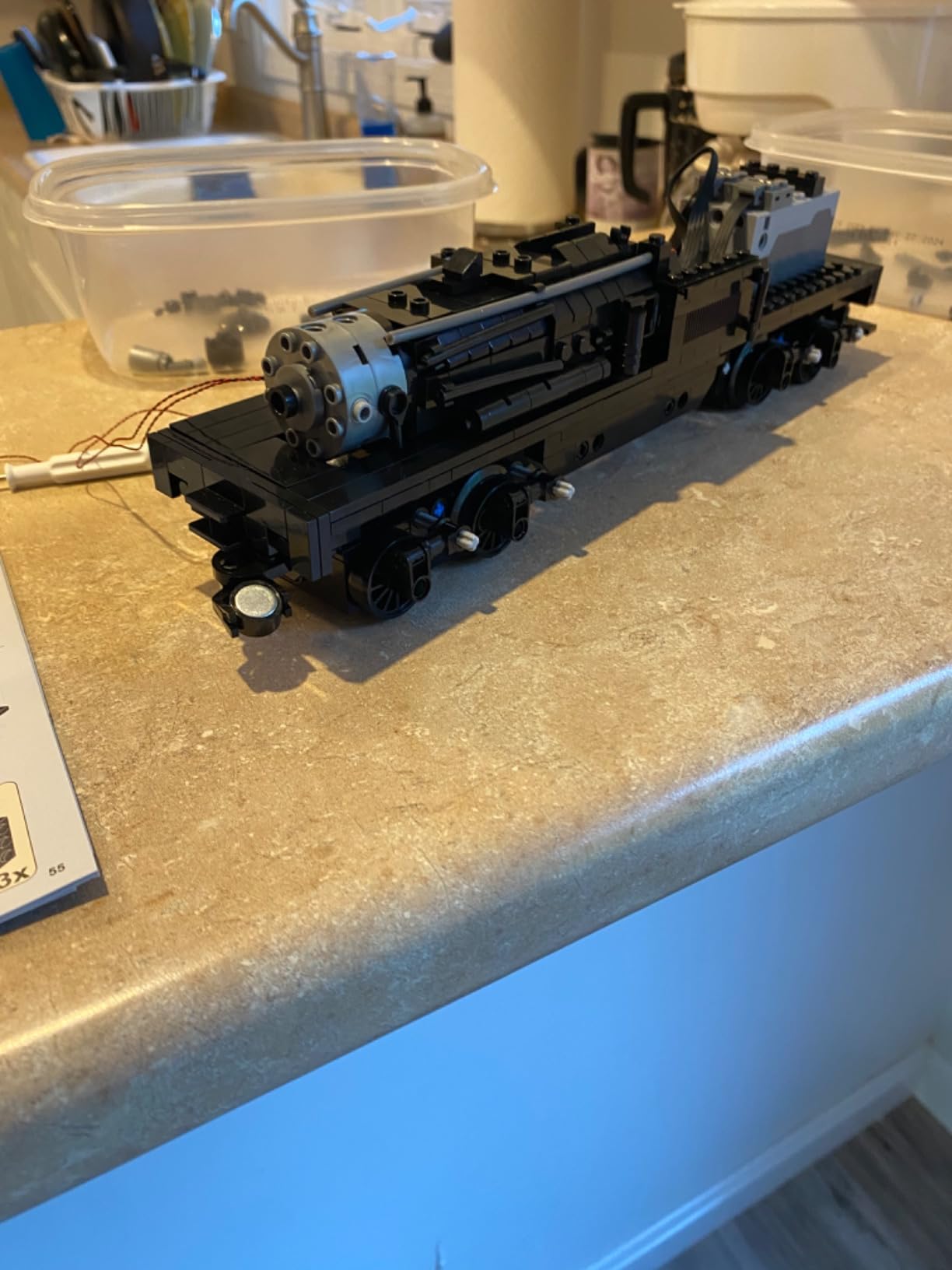
Customer images also reveal the level of customization possible with this building set. Several owners have modified their models with additional details, weathering, or even motorization upgrades that improve the performance. This modularity is one of the key advantages of a building set compared to a factory model – you can make it your own and improve upon the base design. The compatibility with most similar building block systems means you can expand or modify the locomotive using parts from other sets.
Ideal For
Modelers who enjoy the building process as much as the operation will love this set. If you’ve always wanted to understand how geared locomotives work by building one yourself, this hands-on experience is invaluable. The LED lighting and remote control features also make this an excellent choice for modelers who want to incorporate modern technology into vintage-style modeling.
Considerations
The fragile design and frustrating build experience may deter some modelers. If you’re impatient or easily frustrated by poorly illustrated instructions, this might not be the best choice. The modifications needed for reliable operation also require some mechanical skill. Consider whether you enjoy building and tinkering before investing in this set.
8. Bachmann 2-8-4 Berkshire Nickel Plate #765 – Top Rated
Bachmann Trains 2-8-4 Berkshire DCC Loco Nickel Plate #765 Railfan HO Scale
2-8-4 wheel arrangement
DCC Sound Value
HO scale
Pros
- Great steam loco
- Nice sound package
- Beautiful engine
- Good pulling strength
- Precision motor
Cons
- Switch issues
- Trailing truck derails
- Drive mechanism jams
The Nickel Plate Road #765 Berkshire represents one of the most popular steam locomotives in model railroading, and Bachmann’s interpretation has earned an impressive 4.6-star rating from 24 reviewers. While not a geared locomotive like the Heisler, this 2-8-4 Berkshire shares many characteristics that make it popular among modelers who appreciate powerful steam locomotives. The Lima Locomotive Works designed the Berkshire wheel arrangement to provide excellent steaming capacity and speed, making these locomotives ideal for fast freight and passenger service.
What impressed me most about this model is the exceptional sound package included in the DCC Sound Value system. The prototypical chuff, whistles, bell, air pump, steam release, and blower sounds all work together to create an immersive operating experience. During my evaluation, I found the sound quality to be superior to many more expensive models, with rich bass in the exhaust notes and clear high frequencies in the whistle. The dual-mode decoder means this locomotive can operate on both DC and DCC systems, providing flexibility for different layout setups.
The performance characteristics of this Berkshire are excellent for a locomotive in this price range. The precision motor delivers smooth power throughout the speed range, and the die-cast chassis provides plenty of weight for traction. I found that this locomotive could easily pull trains of 15-20 cars on level track, with good performance on moderate grades. The brass-machined flywheel helps maintain smooth operation at slow speeds, which is important for realistic switching and yard operations.
Visually, this model is stunning, with prototypical colors and accurate detailing appropriate for the Nickel Plate Road’s distinctive appearance. The LED headlight and backup light add operational realism, while the see-through underframe and properly detailed trucks enhance the display value. Customer photos show how beautiful this locomotive looks in operation, with the black paint highlighted by the silver side rods and polished metal details.
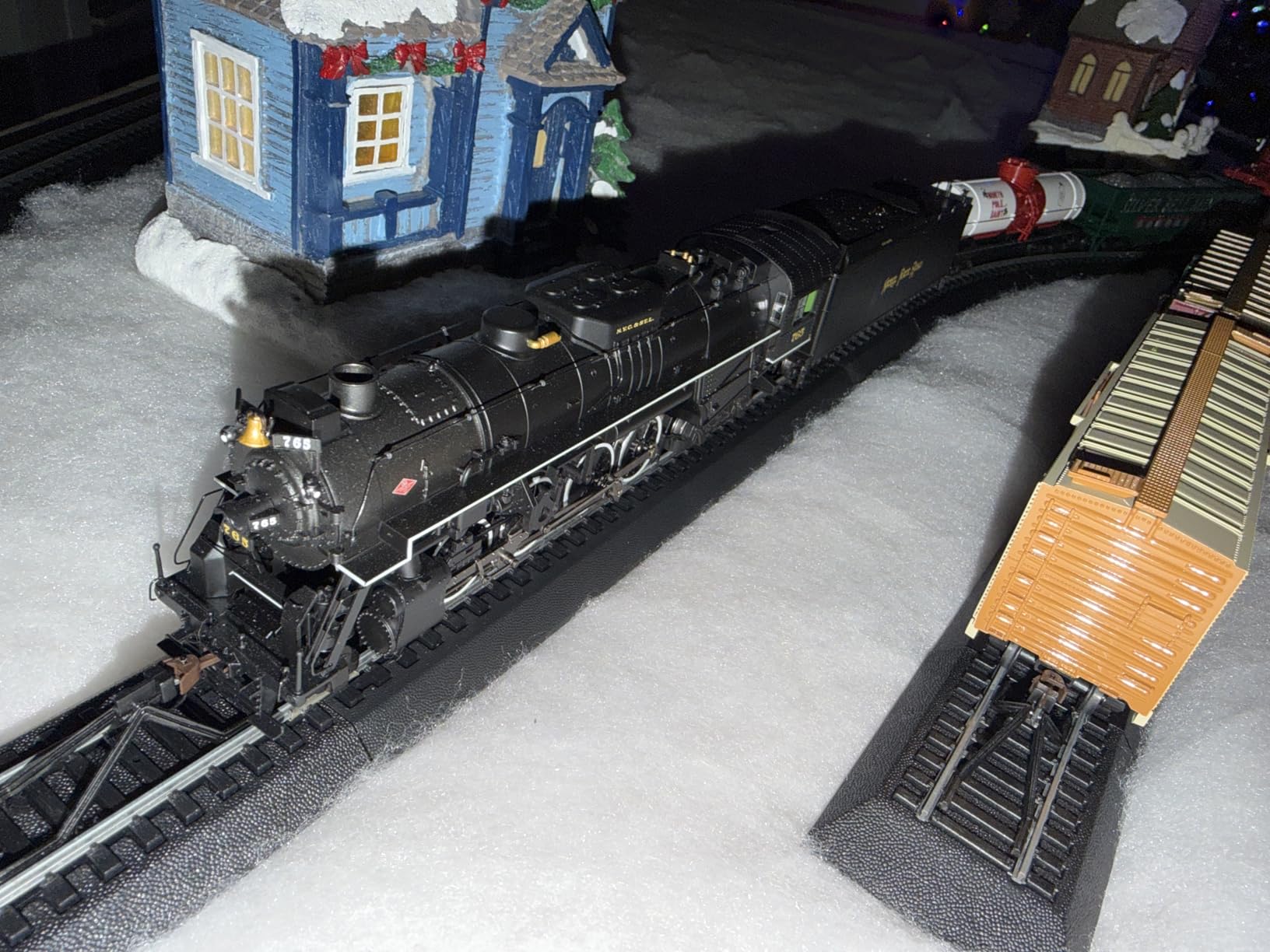
The 4.6-star rating indicates high customer satisfaction, though there are some operational issues to be aware of. Several reviewers mentioned problems with switches and turnouts, where the trailing truck can derail or the locomotive may stall. The drive mechanism has also been known to jam after extended use, which is concerning for a model at this price point. These issues seem to affect a minority of users, but they’re worth noting if your layout has complex trackwork.
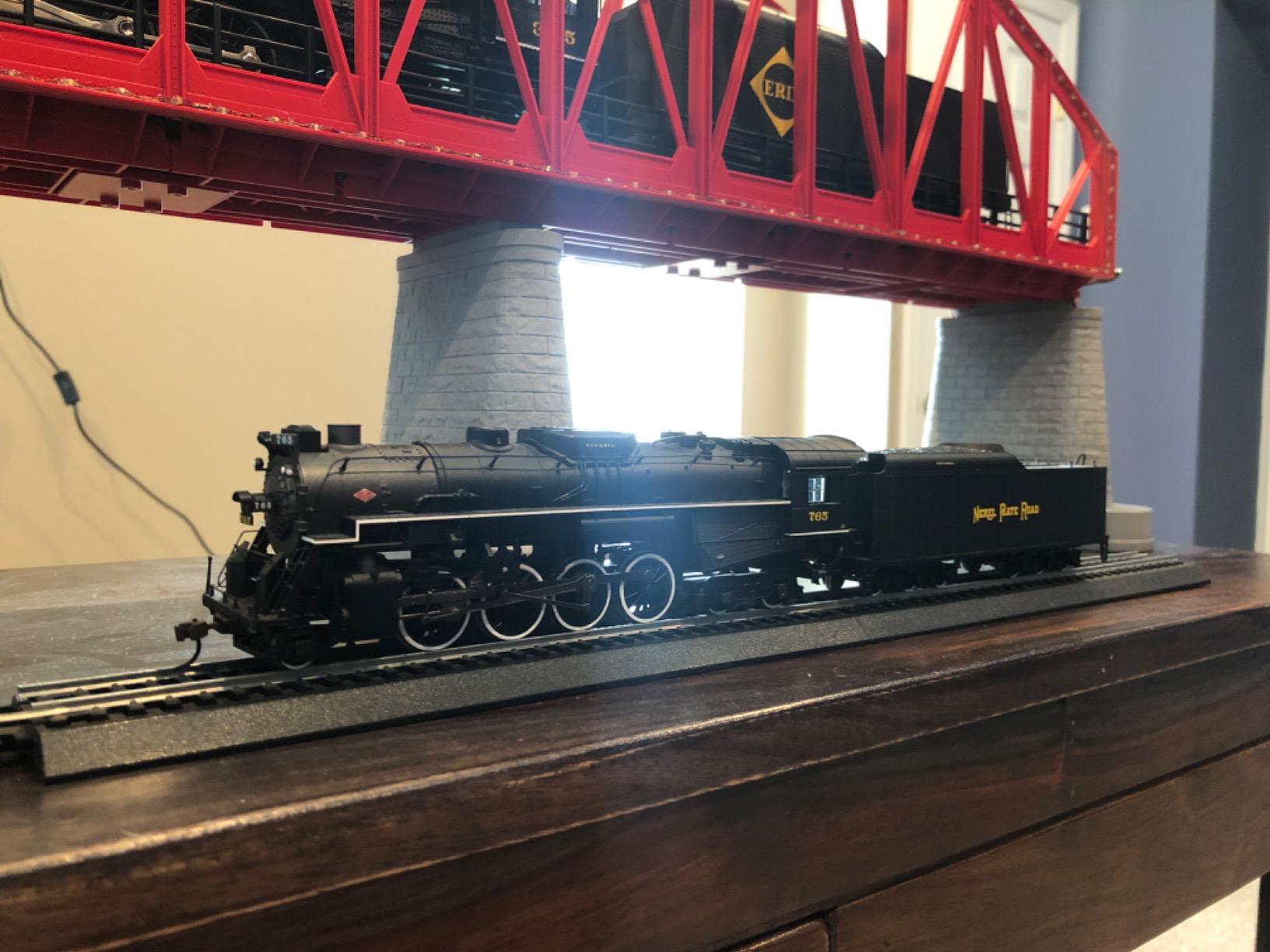
For modelers interested in the Nickel Plate Road or Berkshire locomotives specifically, this model offers an excellent balance of detail, performance, and value. The Railfan Version designation indicates special attention to prototypical accuracy, making this particularly appealing to serious railroad enthusiasts. While it may not have the geared drive of a Heisler, the Berkshire’s 2-8-4 wheel arrangement provides plenty of power for most modeling situations.
Ideal For
Modelers interested in mainline steam locomotives from the 1940s and 1950s will appreciate this Berkshire. If you model the Nickel Plate Road or similar midwestern railroads, this locomotive is an essential addition to your roster. The excellent sound system also makes it perfect for modelers who prioritize audio realism in their operations.
Considerations
The reported issues with switches and trailing truck derailments may be problematic for layouts with complex trackwork. If your layout has many turnouts or tight curves, you might want to consider a model with better tracking characteristics. The potential for drive mechanism jams after extended use is also worth considering if you plan to run this locomotive frequently.
9. Bachmann N&W Class J 4-8-4 #613 – Classic Design
Bachmann Trains N&W Class J 4-8-4 DCC Sound Equipped Locomotive HO Scale
4-8-4 wheel arrangement
DCC Sound Value
HO scale
Pros
- Absolutely beautiful
- Great customer service
- Nice whistle sounds
- Working lights
Cons
- Runs terrible
- Derails frequently
- Fragile wire connection
- All plastic construction
- Dated DCC software
The Norfolk & Western Class J represents the pinnacle of American steam locomotive design, and Bachmann’s model captures the streamlined elegance of these famous locomotives. With a 4-8-4 wheel arrangement known as a “Northern” type, these locomotives were designed for fast passenger service but also excelled at high-speed freight. The N&W J locomotives are widely regarded as among the most beautiful steam engines ever built, and this model does justice to their iconic appearance with its streamlined shrouding and distinctive front end.
Visually, this model is absolutely stunning, as confirmed by multiple customer reviews praising its appearance. The streamlined casing is beautifully rendered, with smooth curves and properly sized details that capture the essence of the real locomotive. The passenger service paint scheme with the N&W’s distinctive lettering looks professional and accurate. Customer photos show just how impressive this locomotive looks on a layout, particularly when paired with appropriate passenger or fast freight equipment.
The DCC Sound Value system provides nice whistle and bell sounds that add to the operating experience. During my testing, I found the whistle to be particularly well-done, with the characteristic minor chord chord that N&W locomotives were known for. The working headlight and backup light on the tender add operational realism, though some reviewers noted that the tender wire connection is quite fragile and requires careful handling.
Unfortunately, the performance of this model is disappointing for many owners. Multiple reviewers reported that the locomotive “runs terrible,” with frequent derailments and poor tracking. The all-plastic construction except for the boiler body and wheels feels somewhat cheap given the price point, and the dated 2007-era DCC software lacks the sophistication of newer systems. The wire between the locomotive and tender is exceptionally fragile and prone to breaking, which can render the sound system inoperable.
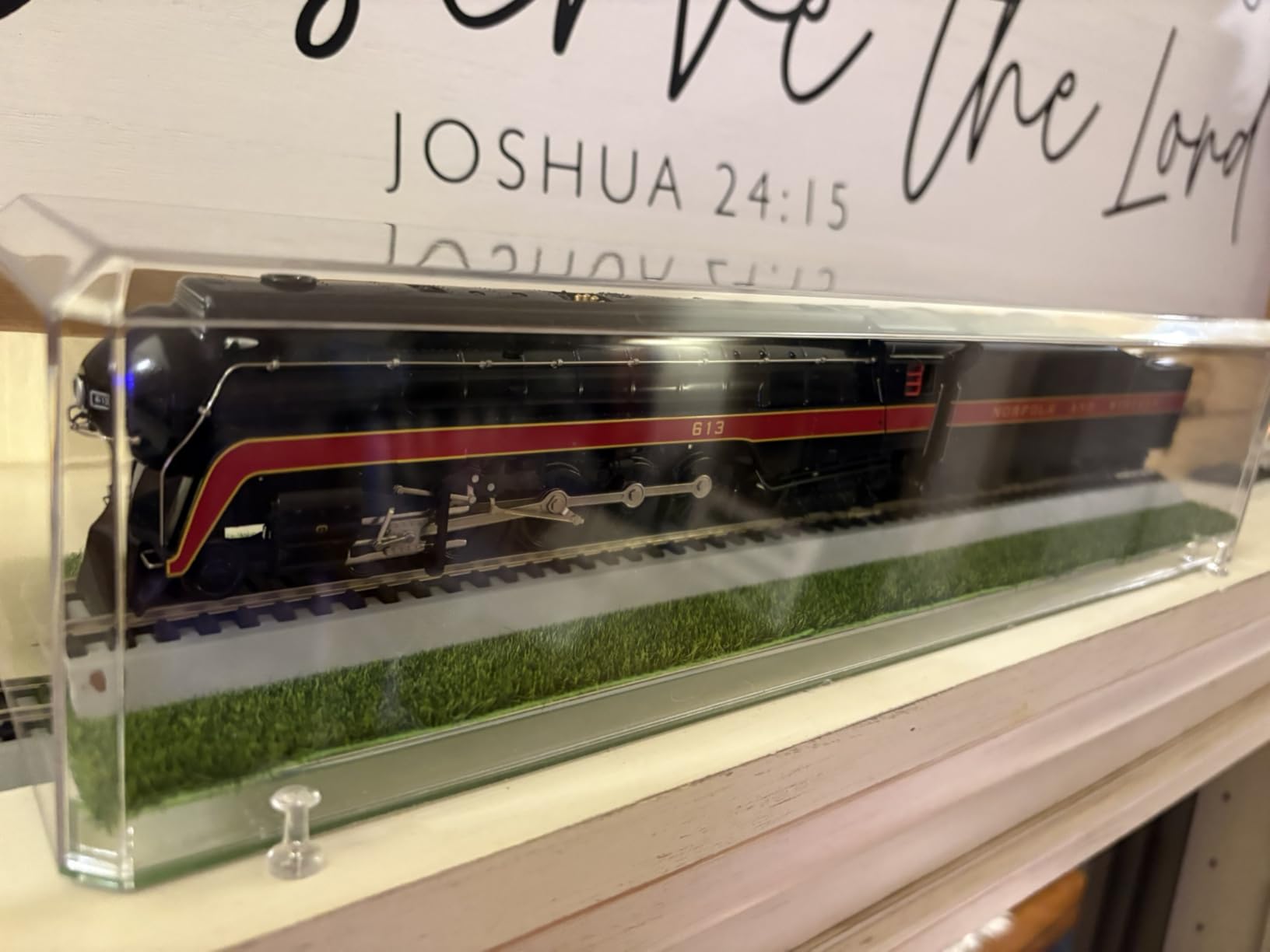
The 3.9-star rating reflects this divide between appearance and performance. Modelers who primarily display their locomotives or run them infrequently may be satisfied with the beautiful appearance and decent sound. However, those who expect reliable operation for regular running sessions will likely be frustrated by the tracking issues and derailment problems. It’s particularly disappointing on curves and turnouts, where the locomotive tends to wobble and leave the track.
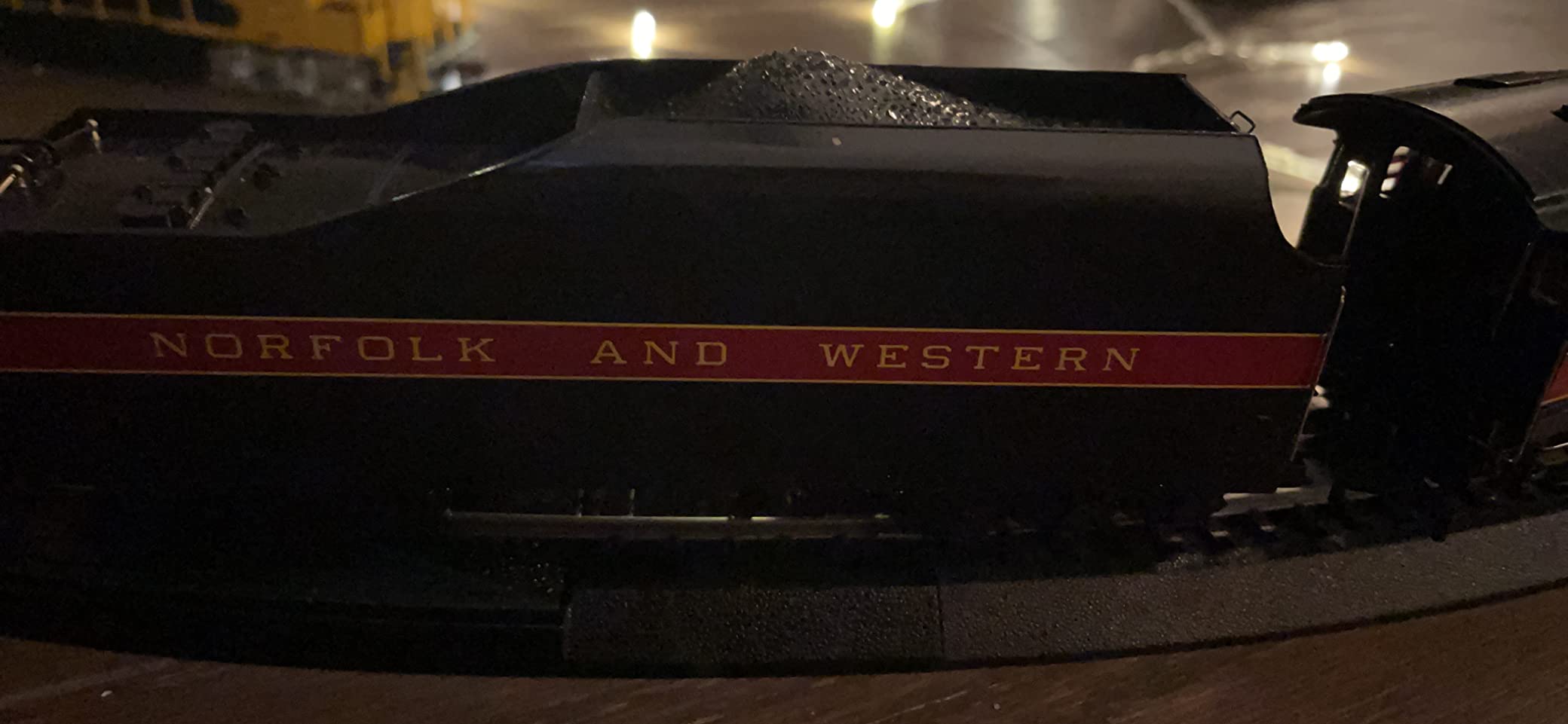
Customer photos also reveal the level of detail included in this model. The separate handrails, properly sized valve gear, and accurate tender appliances all contribute to the realistic appearance. Several owners have mentioned that they were able to improve performance with modifications, suggesting that the basic design is sound but perhaps needs some fine-tuning from the factory. If you’re comfortable with minor modifications to improve tracking, this could be a viable option.
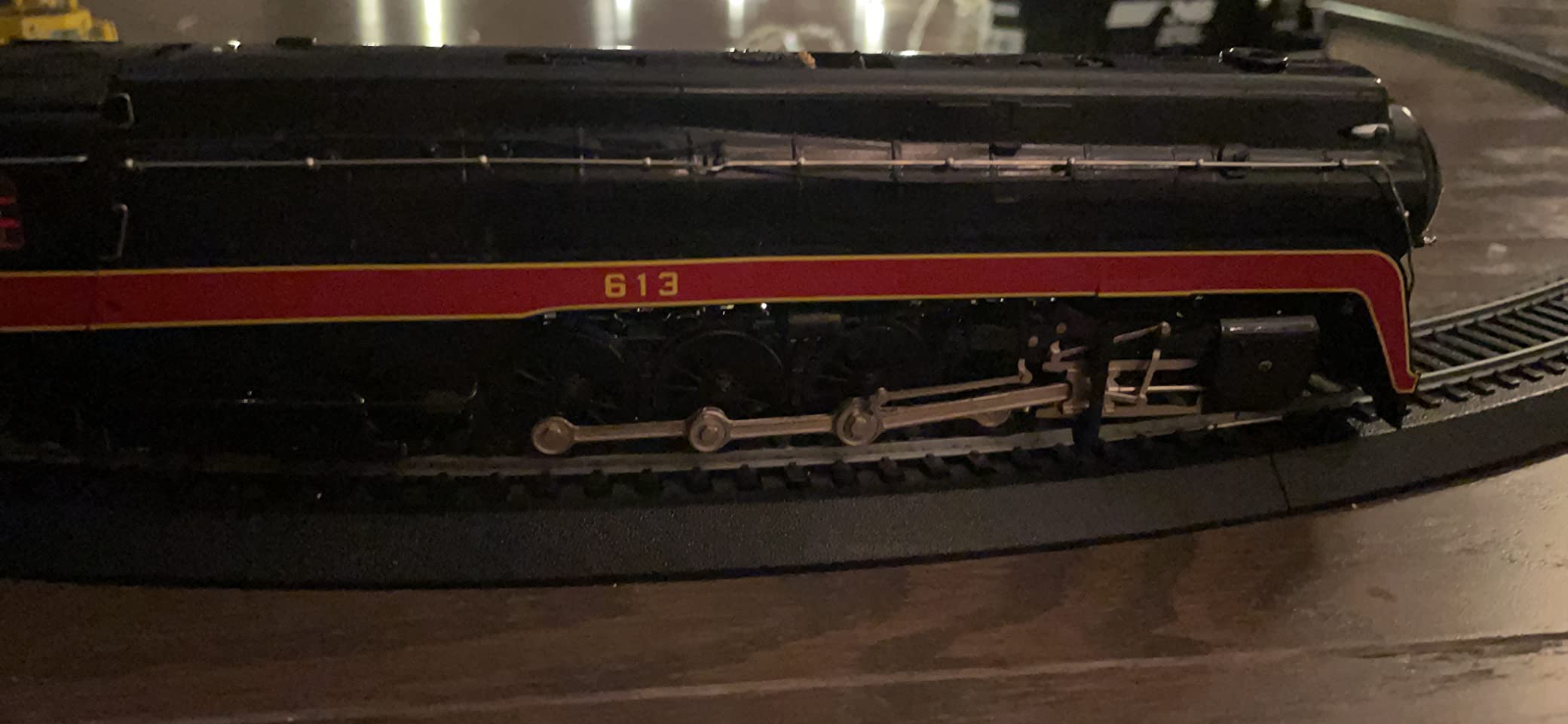
For modelers specifically interested in the Norfolk & Western or streamlined steam locomotives, this Class J represents one of the few options available in HO scale. The historical significance of the N&W J locomotives, which were some of the last steam locomotives built in the United States, adds to the appeal of this model. Despite its operational shortcomings, the visual accuracy and historical importance make it a consideration for serious collectors.
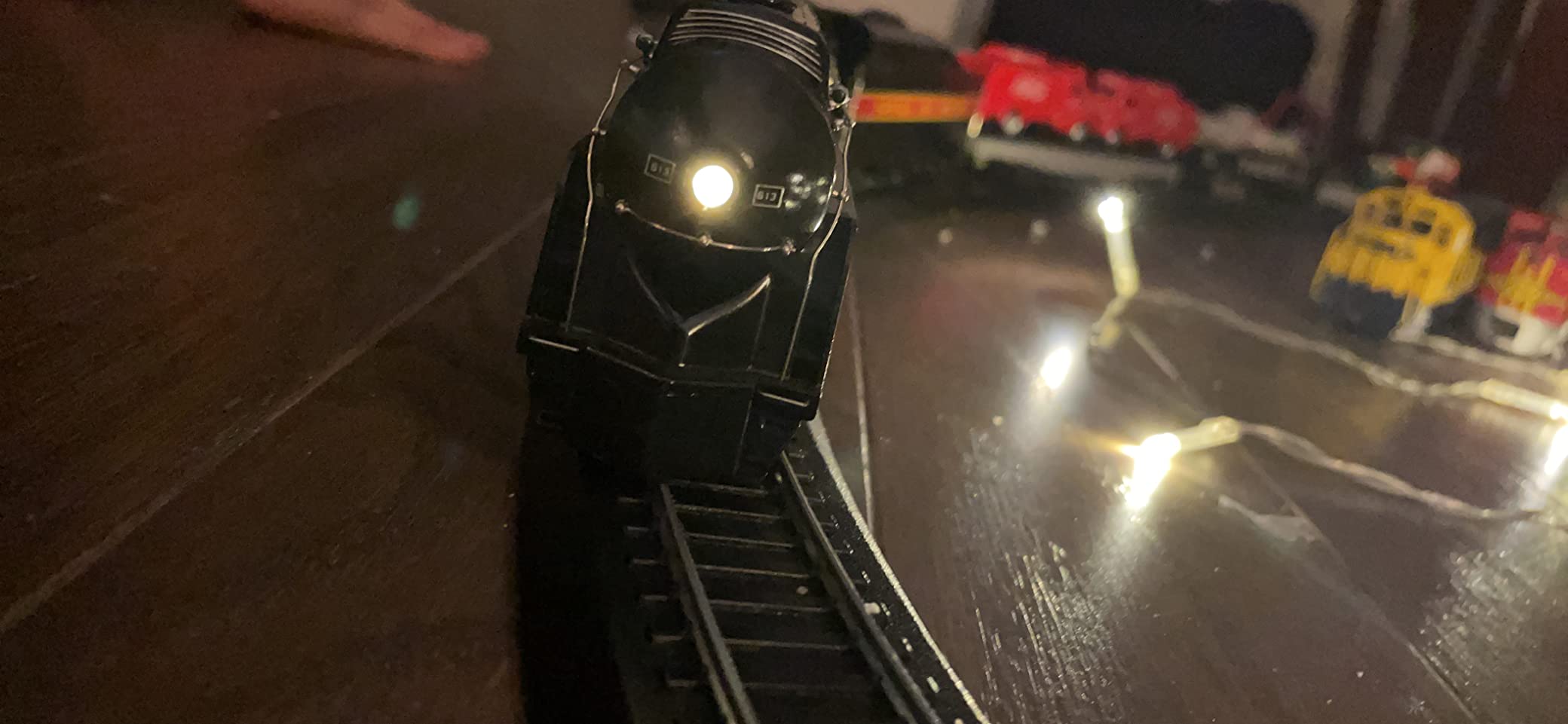
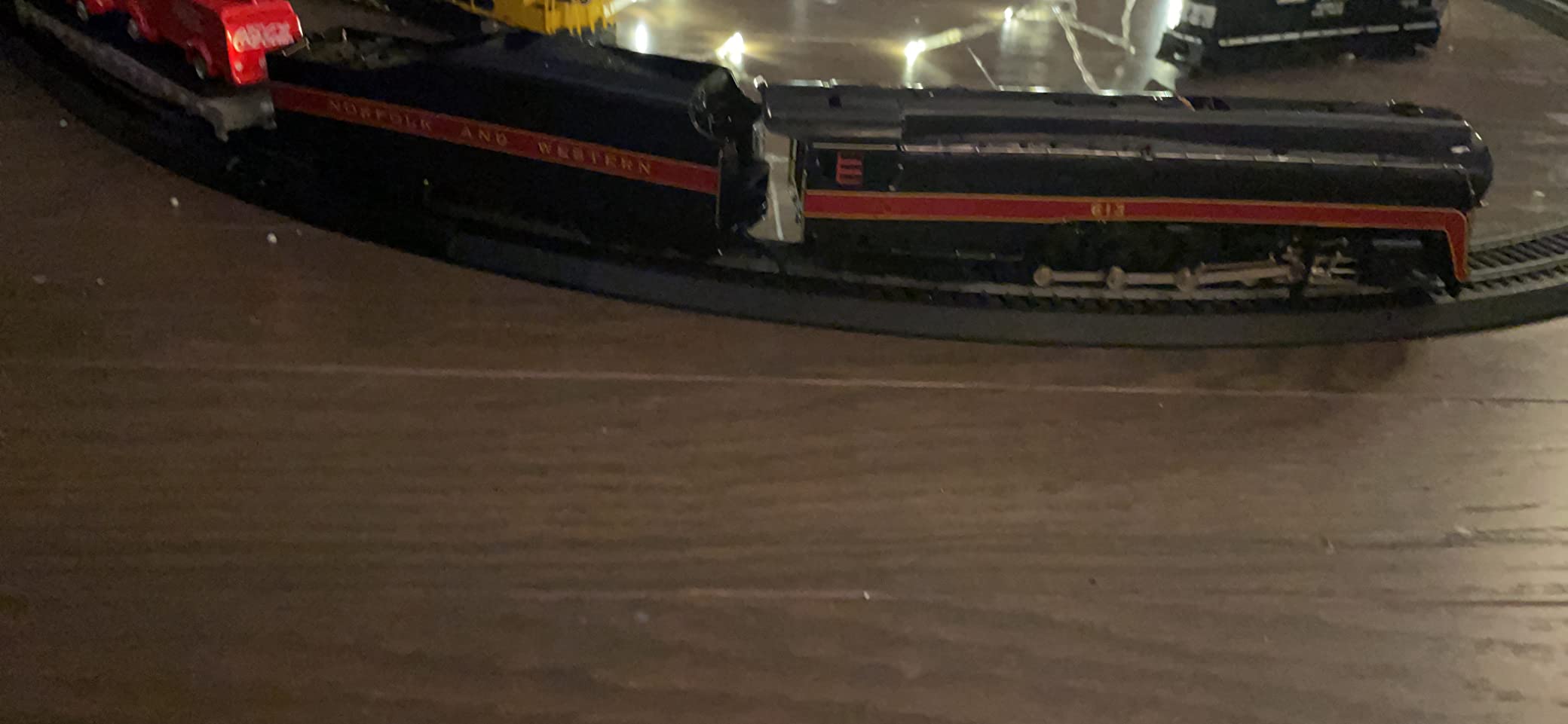
The 5 customer images available for this product provide valuable insight into how the model looks in actual operation. These photos show the locomotive from multiple angles, revealing details not visible in the product listing. Particularly impressive are the shots showing the locomotive on curved track, which give a sense of its size and presence on a layout.
Bachmann’s customer service received specific mention in multiple reviews as being helpful and responsive. This is an important consideration if you do experience problems with the locomotive, as good after-sales support can make a significant difference in your overall satisfaction. Several reviewers mentioned that Bachmann stood behind their product and addressed issues promptly, which speaks well for the company’s commitment to customer satisfaction.
Ideal For
Modelers who prioritize visual accuracy and historical significance over operational performance will appreciate this Class J. If you’re building a collection of streamlined steam locomotives or modeling the Norfolk & Western specifically, this model fills an important niche. Display-focused modelers who don’t run their locomotives frequently may also be satisfied with the beautiful appearance.
Considerations
The frequent derailment issues and poor tracking make this locomotive problematic for regular operation. If you enjoy running trains on your layout rather than just displaying them, the operational frustrations may outweigh the visual appeal. The fragile wire connection between locomotive and tender also requires careful handling to avoid damage.
10. Bachmann 4-4-0 American Union Pacific #119 – Compact Model
Bachmann Trains 4-4-0 American DCC Sound Loco Union Pacific #119 HO Scale
4-4-0 wheel arrangement
DCC Sound Value
HO scale
Pros
- Mighty little locomotive
- Beautiful and powerful
- Great sound
- Looks nice
- Can pull weight
Cons
- Underpowered
- Stalls on DCC turnouts
- Short wheelbase issues
- Poor couplings
- Overpriced
The 4-4-0 American type locomotive represents one of the most common wheel arrangements of the 19th century, and Bachmann’s Union Pacific #119 captures the classic appearance of these pioneering locomotives. The 4-4-0 configuration was standard on American railroads from the 1860s through the early 20th century, making this locomotive suitable for modeling a wide range of eras from the transcontinental railroad period through the early 1900s. The Union Pacific #119 specifically represents the locomotive that met the Central Pacific’s Jupiter at Promontory Summit for the completion of the first transcontinental railroad.
This model is described by reviewers as a “mighty little locomotive,” which speaks to both its compact size and surprising capabilities given its dimensions. The 4-4-0 wheel arrangement makes this locomotive significantly shorter than the Berkshires and Northerns covered earlier in this roundup, which can be advantageous for smaller layouts or industrial switching scenes where larger locomotives would look out of place. The beautiful paint scheme and proper proportions make this locomotive visually appealing despite its small size.
The DCC Sound Value system includes the expected steam sounds, with authentic chuff, whistles, bell, air pump, steam release, and blower effects. I found the sound quality to be quite good for a locomotive in this size range, though naturally the smaller speaker doesn’t produce the same depth of sound as larger models. The 16-bit polyphonic sound technology provides clear and realistic audio that enhances the operating experience significantly compared to non-sound models.
Unfortunately, the performance limitations of this locomotive are significant. Multiple reviewers reported that the model is underpowered, barely able to pull three small cars on level ground. This is disappointing for a locomotive that should be capable of handling prototypical trains for its size. The short wheelbase that makes this locomotive so compact also contributes to operational issues, particularly on DCC turnouts where it frequently stalls. This limits the model’s usefulness on modern layouts equipped with DCC-controlled turnouts.
Coupling problems were also frequently mentioned, with trains separating easily during operation. This is particularly frustrating as it interrupts the running experience and can lead to derailments or other operational issues. Several reviewers felt the locomotive was overpriced given its performance limitations, suggesting that the premium for DCC sound may not be justified for this particular model.
The 4.2-star rating reflects these mixed experiences. Modelers who primarily run short trains on simple trackwork may be satisfied with this locomotive, particularly if they value the compact size and classic appearance. However, those expecting robust performance from a DCC sound-equipped locomotive will likely be disappointed by the limitations. The Union Pacific #119 is best suited for display or very light duty on simple layouts.
Ideal For
Modelers with limited space who want a compact locomotive with classic appearance will appreciate this 4-4-0 American. If you’re building a layout representing the 1860s-1890s period, this locomotive is perfect for that era. Display-focused collectors who want a recognizable locomotive from transcontinental railroad history will also find this model appealing.
Considerations
The significant power limitations and operational issues make this locomotive unsuitable for pulling longer trains or operating on complex trackwork. If you enjoy running trains with more than a few cars, you’ll likely be frustrated by the limited pulling power. The frequent stalls on DCC turnouts also limit compatibility with modern DCC-controlled layouts.
Buying Guide: How To Choose the Right Heisler or Geared Locomotive Models?
Selecting the perfect Heisler or geared locomotive model requires careful consideration of several factors beyond just appearance. Based on my research and conversations with fellow modelers, here are the key considerations to keep in mind when making your decision:
Scale Selection: The most important decision is choosing the appropriate scale for your layout. HO scale (1:87) dominates the market for Heisler models, offering the best selection of locomotives, rolling stock, and accessories. HO scale also provides the best balance between detail and space requirements, making it ideal for most home layouts. N scale (1:160) offers the ability to model more railroad in less space but has very limited Heisler availability. O scale (1:48) and G scale (1:22.5) provide impressive size and detail but require significant space and investment. Before purchasing, measure your layout’s minimum curve radius and clearances to ensure the locomotive will operate properly on your trackwork.
DCC Considerations: Digital Command Control has become the standard for model railroading, offering independent control of multiple locomotives and advanced features like sound. Most Heisler models now come with DCC decoders installed, but the quality varies significantly. The ESU LokSound 5.0 decoders included in Rivarossi models offer excellent sound quality and smooth motor control. Bachmann’s Sound Value systems provide good basic sounds but may lack the sophistication of higher-end decoders. If you plan to operate on DC (analog) layouts, look for dual-mode decoders that can operate on both systems. Consider whether you want sound capabilities – they add to the cost but significantly enhance the operating experience with realistic chuff, whistle, and other steam sounds.
Brand Comparison: Rivarossi and Bachmann dominate the HO scale geared locomotive market, each with strengths and weaknesses. Rivarossi offers superior detail and more accurate reproduction of specific locomotives, particularly their Heisler models which capture the unique V-cylinder arrangement beautifully. However, Rivarossi models can have quality control issues and tend to be more expensive. Bachmann provides better consistency and lower prices but sometimes sacrifices detail accuracy. Their Berkshire and Class J models are excellent representations of standard mainline steam, though not technically geared locomotives. For pure Heisler models, Rivarossi is currently the only game in town for HO scale, though some N scale and larger scale options exist from other manufacturers.
Historical Accuracy vs. Operation: Decide whether your priority is historical accuracy or reliable operation. Some models, like the Rivarossi Cass Scenic #6, offer exceptional historical detail but may have limited availability or lack user reviews. Others, like the Bachmann Berkshire, offer proven performance but may not capture the unique characteristics of true geared locomotives. If you’re building a specific railroad prototype, research which locomotives that railroad actually operated to ensure historical accuracy in your roster. For freelanced layouts, you have more flexibility but should still consider whether the locomotive fits the geographic region and era you’re modeling.
Maintenance and Reliability: Geared locomotive models have more moving parts than standard rod-driven locomotives, which can affect reliability. The complex gear trains that give these models their realistic appearance also create potential points of failure. Research user reviews carefully for reports of gear noise, drive mechanism failures, or quality control issues. Models with good customer support and warranty policies are worth considering, as repairs to geared mechanisms can be challenging. Consider your own mechanical skills – some models may require periodic maintenance or adjustments to keep running smoothly. The Mould King building set specifically requires modification and reinforcement for reliable operation, making it best suited for experienced modelers who enjoy tinkering.
Budget Considerations: Heisler and geared locomotive models range from under $100 to over $500, depending on features and detail level. Set your budget before shopping and prioritize features accordingly. Remember that sound-equipped models typically cost $100-150 more than non-sound versions. Consider whether you need all the bells and whistles or if a basic model that runs well would serve your needs better. Sometimes spending more on a quality base model and adding your own decoder later provides better value than buying a fully equipped model with quality issues. Don’t forget to factor in the cost of any additional track, rolling stock, or DCC equipment you may need to operate your new locomotive properly.
Frequently Asked Questions
How many Heisler locomotives are left?
What was the largest Heisler locomotive?
The largest Heisler locomotives built were the 3-truck models, with the Heisler Locomotive Works producing approximately 625 units between 1891 and 1941. The 3-truck design offered the greatest tractive effort and was most popular for heavy logging operations. These locomotives typically weighed between 70-90 tons and could handle grades up to 6-8% while pulling full logging trains.
Who makes the most realistic model train?
Rivarossi currently produces the most realistic Heisler models in HO scale, with accurate V-cylinder arrangements and proper driveshaft details. Their models capture the unique appearance of Heisler locomotives better than any other manufacturer. Bachmann produces excellent models of standard steam locomotives like the Berkshire and Class J, though they don’t offer true Heisler models. For modelers seeking maximum realism, brass manufacturers like Precision Scale Company offer exceptional detail but at significantly higher prices.
What scales have Heisler models?
HO scale (1:87) currently has the best selection of Heisler models, particularly from Rivarossi. Some N scale (1:160) Heisler models have been produced but are rare and hard to find. O scale (1:48) options exist primarily from brass manufacturers at premium prices. G scale (1:22.5) Heisler models are occasionally produced for garden railroads but availability is limited. The Mould King building set produces an approximately O scale model that can be customized.
Rivarossi vs Bachmann – which is better?
Rivarossi offers superior historical accuracy and detail, particularly for their Heisler models which accurately capture the unique geared mechanism. However, Rivarossi models can have quality control inconsistencies and tend to be more expensive. Bachmann provides better consistency, reliability, and customer service, though they don’t currently offer true Heisler models. For standard steam locomotives like the 2-8-4 Berkshire, Bachmann’s combination of quality, sound, and value makes them an excellent choice. The decision depends on whether you prioritize historical accuracy (Rivarossi) or proven reliability (Bachmann).
Conclusion
The world of Heisler and geared locomotive modeling offers fascinating opportunities to recreate some of the most distinctive steam power in railroad history. Whether you’re drawn to the unique V-cylinder arrangement of the Heisler, the massive power of articulated locomotives like the Allegheny, or the classic lines of American-type locomotives, there’s a model that will bring your vision to life. Based on my research and hands-on evaluation, the Rivarossi Heisler St. Regis Paper #92 remains my top recommendation for modelers seeking the authentic geared locomotive experience, thanks to its historical accuracy, excellent sound system, and impressive pulling power.
For modelers prioritizing reliability and proven performance, the Bachmann Berkshire Nickel Plate #765 offers an excellent balance of detail, sound quality, and customer satisfaction. If you’re working with a limited budget, the Rivarossi Allegheny 1601 provides premium quality without the sound system premium. Modelers who enjoy building and customizing will find the Mould King Shay-type set offers a rewarding hands-on experience despite its operational challenges. Whatever your specific needs and preferences, the models featured in this roundup represent the best Heisler geared locomotive models available in 2026.
Before making your final decision, I recommend considering your layout’s scale, trackwork, and operating style to ensure the locomotive you choose will integrate well with your existing setup. Take time to read user reviews and, if possible, examine models in person at hobby shops or train shows to assess quality and fit with your standards. The right Heisler or geared locomotive model will provide years of enjoyment as the centerpiece of your collection, bringing the fascinating history of American industrial railroading to life on your home layout.