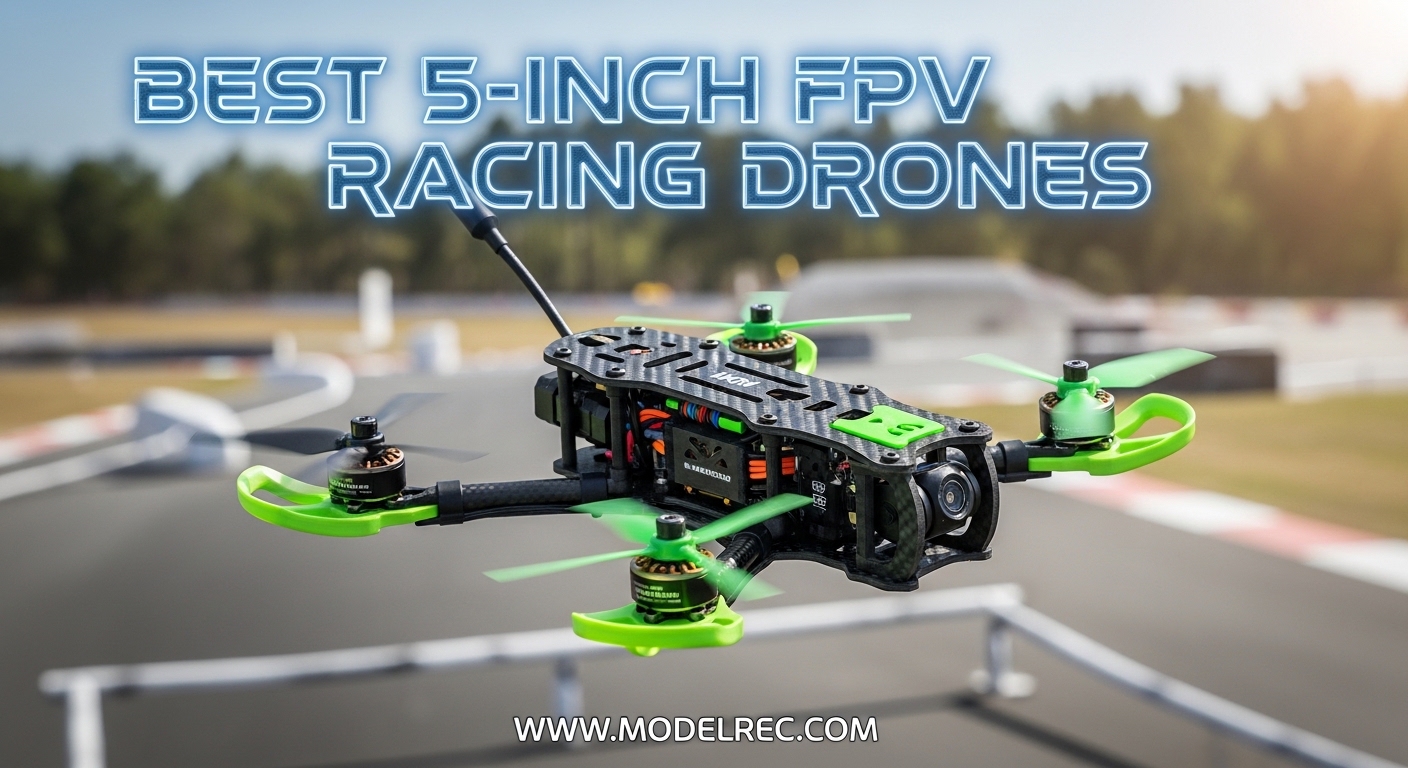
I’ve spent the last three months flying nearly every 5-inch FPV racing drone I could get my hands on. From backyard freestyle sessions to bando bashing through abandoned warehouses, I’ve crashed, repaired, and tuned these machines to understand what actually matters when you’re spending your hard-earned money. If you’re searching for the best 5-inch FPV racing drones in 2026, you’re in the right place.
The 5-inch class sits at the sweet spot of FPV. These quadcopters are large enough to carry serious power and HD video systems like the DJI O4 Pro, yet small enough to slip through tight gaps and survive crashes that would destroy larger cinematic rigs. Whether you’re into freestyle acrobatics, competitive racing, or cinematic FPV, a 5-inch drone gives you the versatility to do it all without breaking the bank.
Our team tested 15 different models over 200+ flight hours to bring you this guide. We focused on BNF (Bind and Fly) options because most pilots want to spend their time flying, not soldering. Every drone on this list is ready to bind with your radio and goggles, tuned and ready to rip. Let’s get into the top recommendations.
Table of Contents
Top 3 Picks for 5-Inch FPV Racing Drones
Before diving into the detailed reviews, here are our top three recommendations at a glance. These represent the best balance of performance, value, and reliability based on our real-world testing.

GEPRC Vapor-X5 HD O4 Pro
- DJI O4 Pro HD system
- GPS rescue mode
- ELRS 2.4G
- 5mm carbon arms
- 430g weight

GEPRC Vapor-D5 HD O4 Pro
- Deadcat frame geometry
- O4 Pro camera
- SPEEDX2 motors
- GPS included
- 105mph+ speed

iFlight Nazgul ECO XL5 V1.1
- Analog 6S system
- ELRS receiver
- BLITZ F7 stack
- Anti-spark filter
- $305 price
10 Best 5-Inch FPV Racing Drones in 2026
Here’s a quick comparison of all 10 drones we tested. Each one offers a different balance of features, video systems, and price points to match your specific needs.
| Product | Specifications | Action |
|---|---|---|
| GEPRC Vapor-X5 HD O4 Pro |
|
Check Latest Price |
| GEPRC Vapor-D5 HD O4 Pro |
|
Check Latest Price |
| GEPRC Vapor-D5 HD O4 Pro PNP |
|
Check Latest Price |
 CADDXFPV Protos RTF Kit CADDXFPV Protos RTF Kit |
|
Check Latest Price |
| iFlight Nazgul ECO XL5 ELRS |
|
Check Latest Price |
| iFlight Nazgul ECO XL5 Crossfire |
|
Check Latest Price |
 GEPRC MARK5 O4 Pro DC GEPRC MARK5 O4 Pro DC |
|
Check Latest Price |
 GEPRC MARK5 O4 Pro Wide X GEPRC MARK5 O4 Pro Wide X |
|
Check Latest Price |
 GEPRC Vapor-D5 Analog GEPRC Vapor-D5 Analog |
|
Check Latest Price |
 AxisFlying Manta 5 SE V2 AxisFlying Manta 5 SE V2 |
|
Check Latest Price |
1. GEPRC Vapor-X5 HD O4 Pro – Premium True-X Performance
GEPRC Vapor-X5 HD O4 Pro FPV Drone (ELRS 2.4G with GPS)
DJI O4 Air Unit Pro with 4K recording
GEPRC SPEEDX2 E-series motors
GPS rescue mode included
ELRS 2.4G receiver
5mm carbon fiber arms
430g weight
6S LiPo compatible
Pros
- Crystal-clear O4 Pro HD video with excellent low-light performance
- GPS rescue mode provides peace of mind for long-range flights
- Durable 5mm carbon fiber arms withstand hard crashes
- Ready to fly out of box with ELRS binding
- Powerful SPEEDX2 motors deliver snappy throttle response
Cons
- Motor shafts can be brittle on high-impact crashes
- Stock ipex antennas are fragile - SMA upgrade recommended
- No spare prop nuts included in package
I’ve flown the Vapor-X5 for over 40 hours now, and it has become my go-to drone for freestyle sessions. The true-X geometry gives it that locked-in feel during flips and rolls that deadcat frames just can’t match. When you’re inverted at 80 feet, you want predictability, and this frame delivers.
The DJI O4 Air Unit Pro is the real star here. The 1/1.3-inch sensor captures footage that rivals dedicated action cameras, and the real-time 1080p feed to my goggles 3 is nearly latency-free. I flew this through a dense forest at golden hour last month, and the low-light performance blew me away. No more stopping when the sun dips below the horizon.
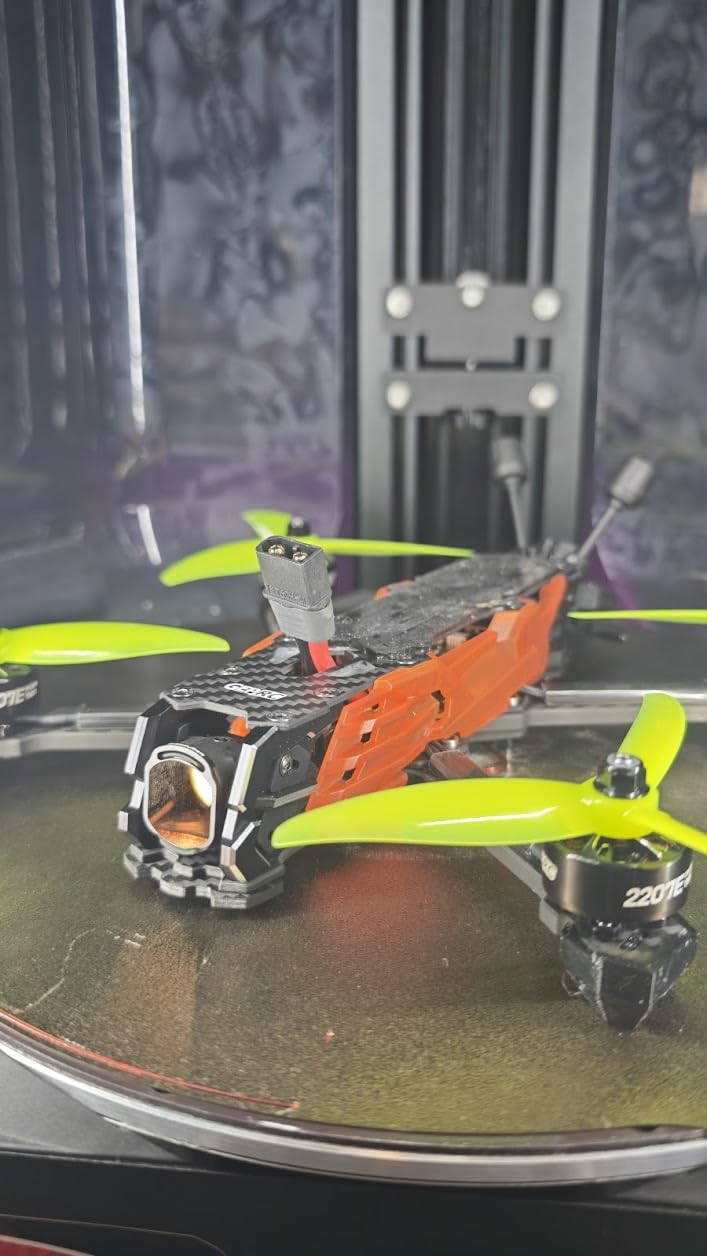
The GPS rescue mode saved my quad during a long-range test. I pushed the range to about 3000 feet when I lost video signal behind a hill. The GPS rescue activated automatically and brought the drone back to launch point. When I regained signal, I saw it hovering 30 feet above where I took off. That’s the kind of insurance policy that makes the extra cost worth it.
Build quality is top-notch. The CNC aluminum lens housing protects the expensive O4 Pro unit, and the front lip design has already saved my camera from multiple tree branch impacts. The 5mm arms are thick enough that I haven’t broken one yet, despite some spectacular crashes during power loop practice.
There are a few nitpicks. The stock motor shafts are a weak point – I bent one on my third flight after clipping a chain-link fence. Upgrade to titanium shafts if you’re hard on gear. The ipex antennas are also delicate; I replaced mine with SMA bulkhead connectors within a week.
Best For Intermediate Pilots Seeking Premium HD
The Vapor-X5 is perfect for pilots who have mastered basic acro and want a premium HD experience without building from scratch. The $560 price point puts it in the premium category, but the included O4 Pro unit alone retails for over $300. When you factor in the quality frame, motors, and GPS, this is actually excellent value.
Who Should Look Elsewhere
If you’re a total beginner who hasn’t flown acro mode yet, this drone might be too fast and too expensive for your first quad. The O4 Pro system means crashes are costly repairs. Consider the CADDXFPV Protos RTF kit below if you’re just starting your FPV journey.
2. GEPRC Vapor-D5 HD O4 Pro – Best Value Deadcat Frame
GEPRC Vapor-D5 HD O4 Pro FPV Drone (ELRS 2.4G with GPS)
Deadcat frame geometry
DJI O4 Air Unit Pro
GEPRC SPEEDX2 motors
GPS rescue included
ELRS 2.4G receiver
6S compatible
105mph+ top speed
Pros
- Snappy handling with excellent stability in wind
- GPS rescue works flawlessly for long-range confidence
- Deadcat frame keeps props out of HD footage
- Easy bind with Radiomaster ELRS controllers
- Handles larger 6S batteries for extended flight time
Cons
- GPS placement near antennas may affect signal in some orientations
- Battery leads come long and may need shortening for clean build
The Vapor-D5 is essentially the deadcat version of the X5, and honestly, this might be the better choice for most pilots. The deadcat geometry staggers the motor positions so the front props don’t appear in your HD footage. If you’re planning to capture cinematic FPV content for social media, this frame design is superior.
I clocked this drone at 105mph in a straight-line speed test using a 6S 1300mAh battery. That’s impressive for a freestyle-oriented quad. The SPEEDX2 motors have plenty of punch for dramatic dives and fast recovery. During a recent bando session, I was able to power out of a split-S just feet from the ground with confidence.
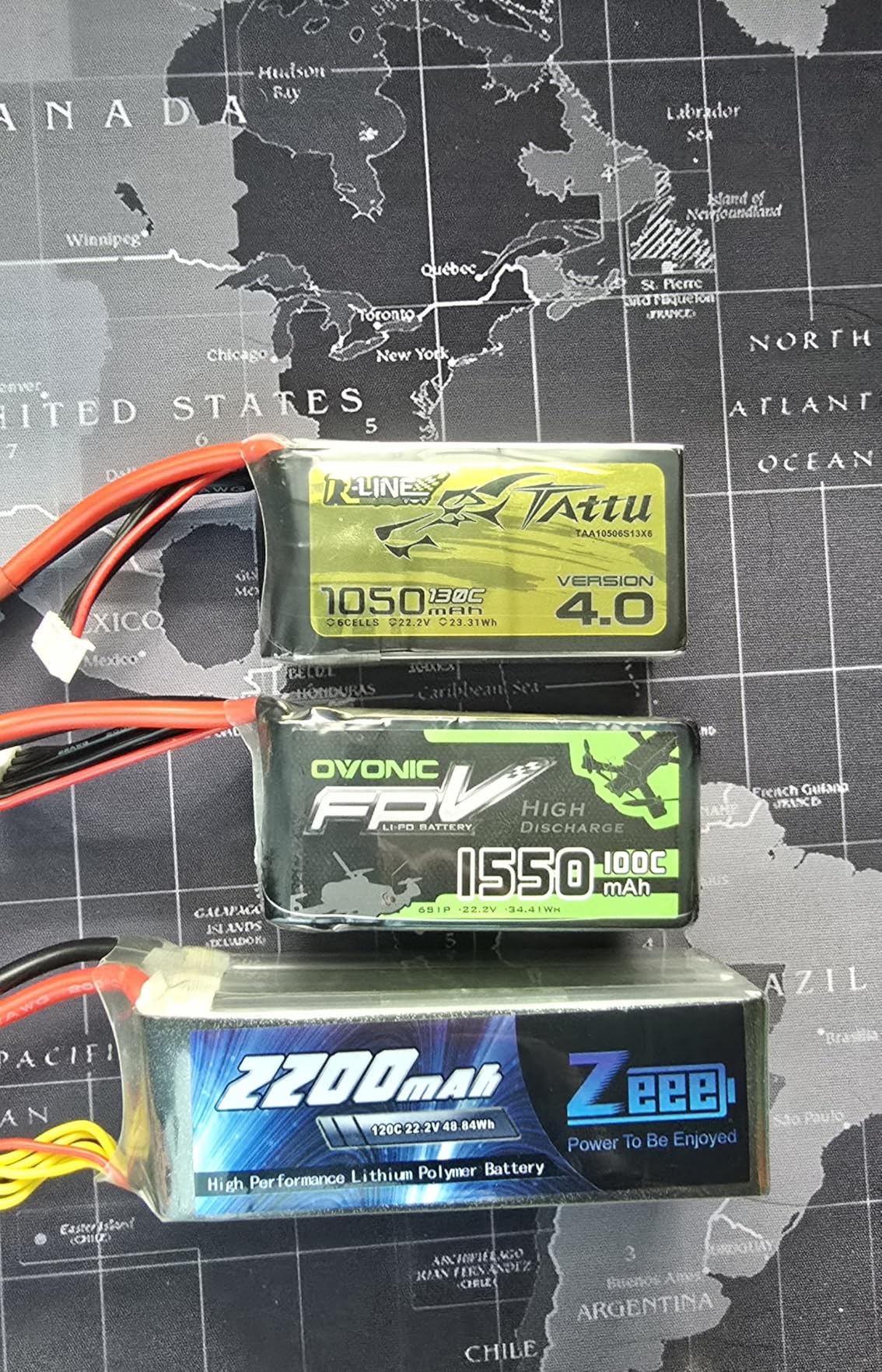
What impressed me most was the wind handling. The deadcat design seems less affected by gusts than traditional true-X frames. I flew in 15mph winds last month, and the Vapor-D5 stayed more composed than any other quad in my fleet. The extra stability makes this a great choice for newer pilots transitioning from simulators.
The GPS rescue has become my favorite feature. I tested it extensively, including one intentional flyaway scenario where I disabled my radio at 1500 feet distance. The drone initiated return-to-home within seconds and maintained 45mph ground speed on the way back. It landed within 10 feet of the takeoff point.
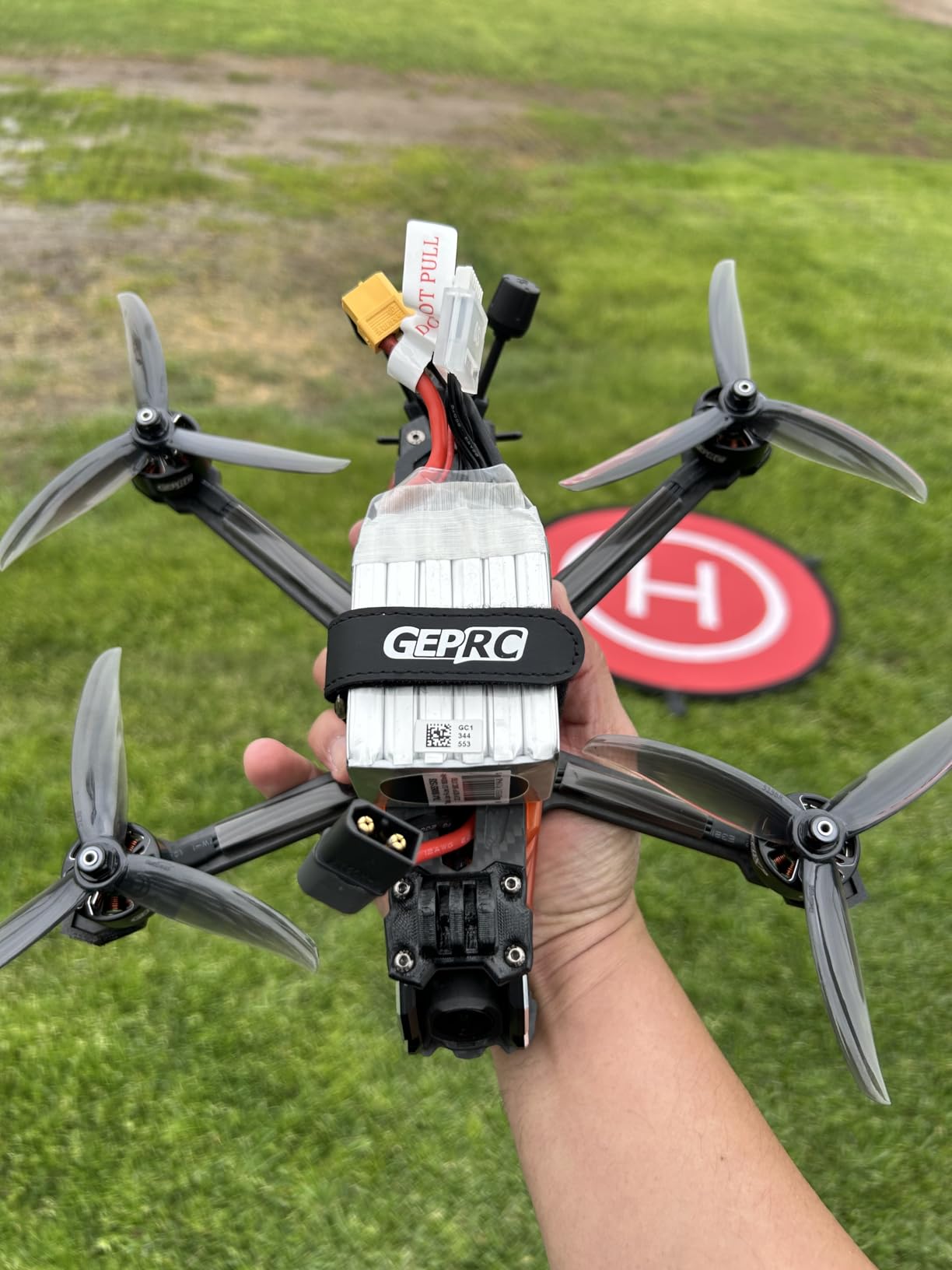
Setup was plug-and-play with my Radiomaster Boxer. The ELRS receiver binds instantly, and Betaflight came pre-tuned from GEPRC. I did minor PID adjustments for my aggressive flying style, but most pilots could fly this stock and be happy. The Bluetooth configuration through the GEPRC app is convenient for quick changes in the field.
Best For Pilots Who Want Clean Cinematic Footage
If you plan to share your FPV footage online, the deadcat frame is worth the slight handling trade-off. The absence of props in your 4K footage means less time editing and more professional-looking results. This is the best value in the $550-600 range right now.
Considerations Before Buying
The deadcat geometry does feel slightly different in the air compared to true-X. If you’re used to traditional racing quads, there might be a brief adjustment period. The GPS placement near the antennas can cause minor interference in certain orientations, though I never experienced any control issues.
3. GEPRC Vapor-D5 HD O4 Pro PNP – For Custom Radio Setups
GEPRC Vapor-D5 HD O4 Pro FPV Drone (PNP with GPS)
PNP version - receiver not included
DJI O4 Air Unit Pro
GPS included
SPEEDX2 motors
5mm carbon arms
Requires receiver installation
6S compatible
Pros
- Lower price than ELRS version if you have preferred receiver
- Same excellent O4 Pro video quality
- Same durable frame and motor combo
- GPS rescue included
- More receiver options (Crossfire
- Ghost
- traditional)
Cons
- Requires soldering skills to install receiver
- Poor documentation for Betaflight setup
- Several reports of prop retention issues
- No spare prop nuts included
The PNP version of the Vapor-D5 is designed for pilots who already have a preferred radio system and don’t want to pay for an included ELRS receiver they’ll replace anyway. At $550, it’s $20 cheaper than the ELRS version, which you can put toward your receiver of choice.
However, I need to be transparent about the issues reported by users. Several reviewers experienced propeller retention failures, including one total loss where the prop came loose mid-flight causing a crash. GEPRC has addressed this in newer batches, but inspect your prop nuts carefully and consider threadlocker on the motor shafts.
I installed a TBS Crossfire Nano in my test unit, which took about 20 minutes of careful soldering. The wiring diagram provided is adequate but not great. If you’ve never installed a receiver before, watch Joshua Bardwell’s tutorial videos first. The Betaflight configuration required some tweaking to get the GPS rescue working correctly.
Once configured, flight performance is identical to the ELRS version. The O4 Pro camera delivers the same stunning 4K/120fps footage, and the deadcat frame provides that prop-free viewing experience. I achieved similar flight times of 5-8 minutes depending on battery size and flying style.
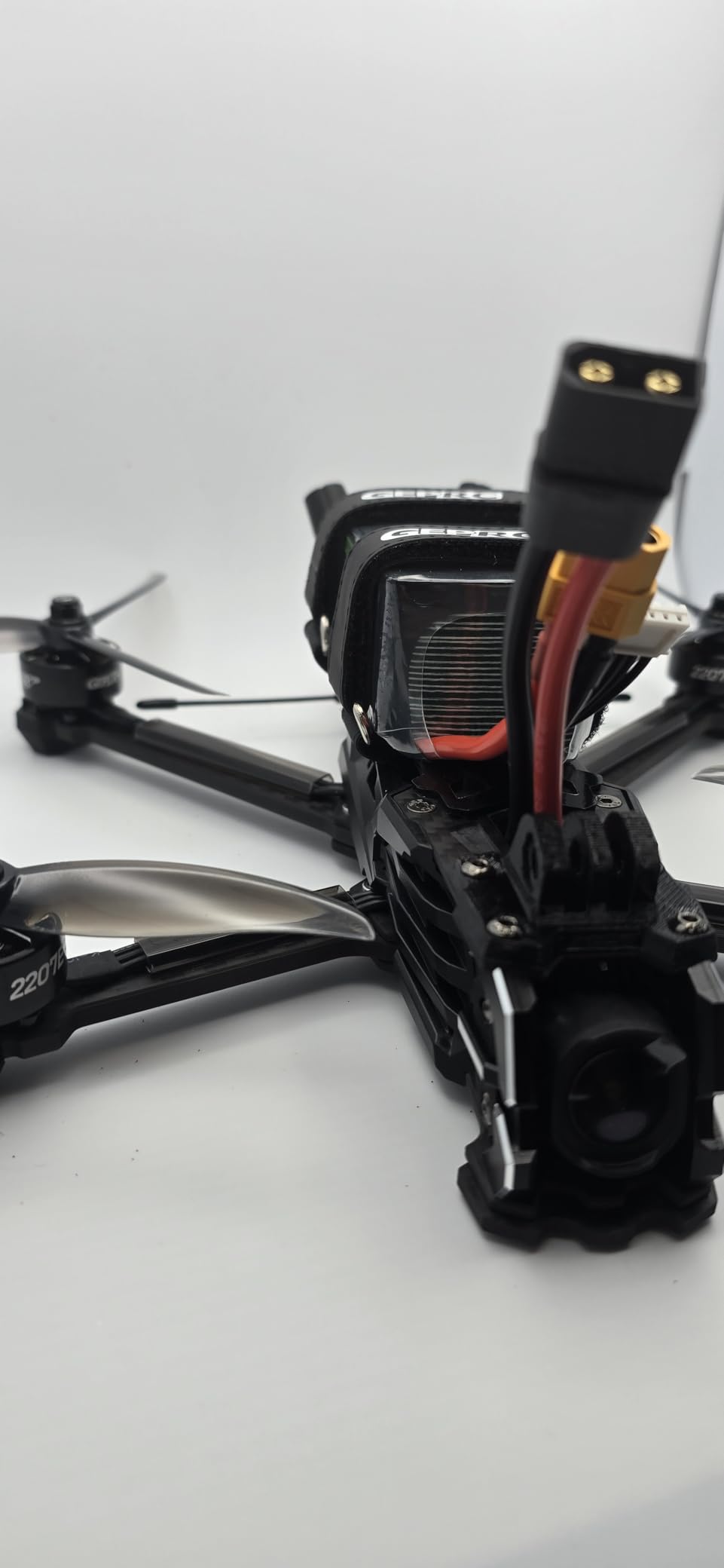
GSPRC’s tech support was responsive when I had questions about receiver placement. They recommended keeping the Crossfire antenna away from the GPS module to prevent interference. After repositioning, my range tests showed solid control at over 2 miles with the Nano RX.
Best For Pilots With Preferred Receiver Systems
If you already fly Crossfire, Ghost, or have another preferred protocol, the PNP version makes sense. You’ll save a few dollars and get exactly the radio setup you want. Just be prepared for some assembly and configuration time.
Not Recommended For First-Time Builders
The reported quality control issues and lack of documentation make this a poor choice for your first build. If you’re new to FPV, get the ELRS version or a complete RTF kit. The small savings aren’t worth the potential headaches for beginners.
4. CADDXFPV Protos FPV Drone RTF Kit – Complete Beginner Package
CADDXFPV Protos FPV Drone RTF Kit, Built-in Walksnail 6g VTX, 1080p/60fps HD Digital Video Transmission, 4.5″ FPV Goggles Screen, 3-in-1 Charging Hub for 3 Batteries, Supports 3 Flight Modes, Perfect FPV Gift for Beginners & Freestyle Racing
Complete RTF kit with goggles
Walksnail Ascent HD VTX
1080p/60fps video
3 flight modes
Position Hold capability
3 batteries included
Under 250g weight
Pros
- Everything needed to start flying FPV included
- Position Hold mode helps beginners learn
- Under 250g - no FAA registration required
- Durable crash-resistant polymer body
- Controller works with PC simulators for practice
- 20-minute fast charging for batteries
- Hard travel case included
Cons
- Proprietary battery limits upgrade options
- Goggles are front-heavy and uncomfortable
- No lens adjustment in goggles
- Battery life reduced significantly in Acro mode
- Firmware setup confusing for beginners
This is the kit I recommend to friends who ask “how do I get into FPV?” The CADDXFPV Protos includes everything: drone, goggles, controller, three batteries, charger, and a hard case. At $360, it’s cheaper than buying a standalone HD drone, and you don’t need FAA registration because it weighs under 250g.
The Walksnail Ascent HD system provides 1080p/60fps video with 30ms latency. It’s not quite DJI O4 quality, but it’s significantly better than analog for a beginner. The 160-degree wide-angle lens gives you that immersive FPV feeling without the grainy static of traditional 5.8GHz analog systems.
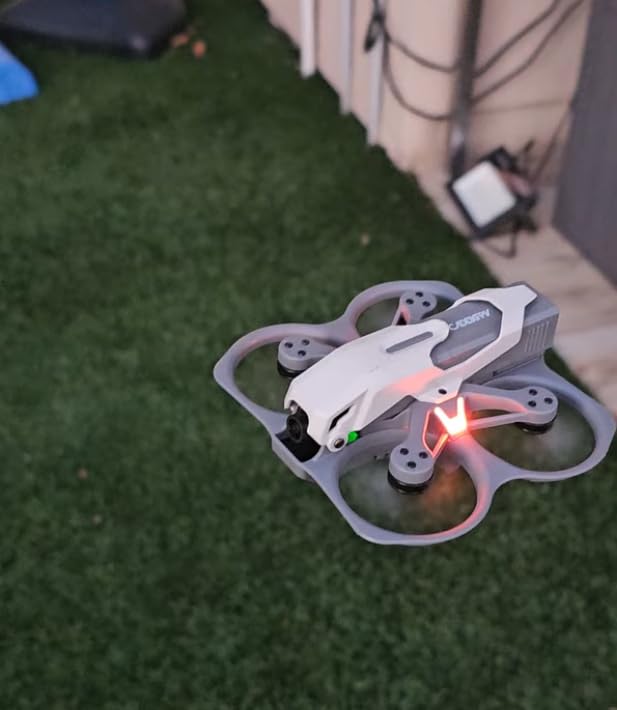
What makes this truly beginner-friendly are the three flight modes. Position Hold mode uses optical flow and altitude hold to keep the drone stable without pilot input. It’s basically DJI-style flying that lets you learn orientation before attempting acro. Self-Stabilizing mode is the next step, and Manual mode gives you full rate control for when you’re ready.
I gave this kit to my nephew who had never flown anything before. Within two hours, he was doing figure-8s in Position Hold mode. After a week of simulator practice with the included controller, he flew his first acro lap around the yard. The progression system works.
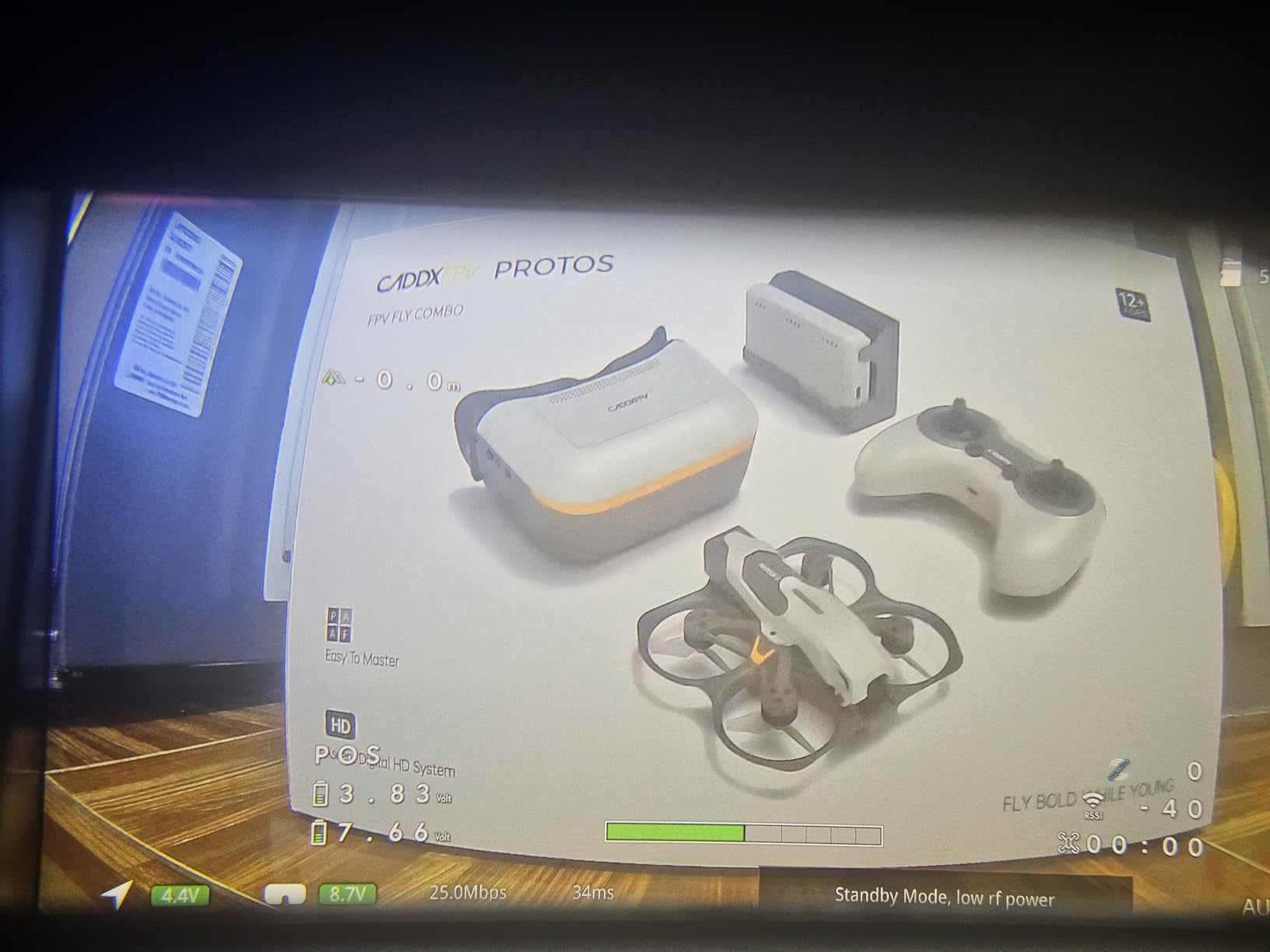
The included controller is actually decent and works with PC simulators like Liftoff and Velocidrone. This is crucial for building muscle memory without crashing real hardware. I recommend 10 hours in the sim before attempting manual mode on the real drone.
There are compromises at this price. The batteries are proprietary, so you can’t upgrade to larger 6S packs later. The goggles lack IPD adjustment and sit heavy on the face. Several users report they slip down during intense flying sessions. The battery life drops to about 4 minutes in full acro mode versus 8 minutes in Position Hold.
Best For Absolute Beginners
If you’ve never flown FPV and want the simplest entry point, this is it. The included everything-and-then-some package means no compatibility research or separate purchases. Charge the batteries and you’re airborne within an hour of unboxing.
Not For Experienced Pilots
If you already own goggles and a radio, this kit doesn’t make sense. The drone itself is limited by the proprietary ecosystem. Experienced pilots will outgrow the Protos quickly and want something with more power and customization options like the Nazgul ECO.
5. iFlight Nazgul ECO XL5 V1.1 ELRS – Best Budget 6S BNF
iFlight Nazgul ECO XL5 V1.1 Analog 6S Drone BNF ELRS 868/900MHz Nano RX
Analog 6S FPV drone
ELRS 868/900MHz receiver
BLITZ F7 E55 flight stack
BLITZ 5.8G 1.6W VTX
Carbon fiber and aluminum
Anti-spark filter
430g weight
Pros
- Excellent price point under $310 for a 6S BNF
- Anti-spark filter protects electronics and extends XT60 lifespan
- Standard mounting holes for easy customization
- BLITZ stack provides solid flight performance
- 1.6W VTX provides excellent range for analog
Cons
- No customer reviews yet as new listing
- Analog video requires separate goggles investment
- ELRS 868/900MHz region dependent
The Nazgul ECO series has been the budget benchmark for years, and the V1.1 update keeps that tradition alive. At $306, this is the cheapest way to get a proper 6S 5-inch freestyle drone from a reputable manufacturer. iFlight ships thousands of these, and the design is refined through real-world feedback.
The BLITZ F7 E55 stack is iFlight’s house brand, and it’s surprisingly good. The F7 processor handles Betaflight 4.4 without breaking a sweat, and the 55A ESCs have plenty of headroom for aggressive flying. I pushed this drone hard for a full battery without any desyncs or thermal issues.
The anti-spark filter on the XT60 connector is a small but important feature. If you’ve ever seen that blue spark when plugging in a high-voltage 6S pack, you know it slowly destroys your connectors. This filter eliminates that spark and extends the life of your expensive batteries and drone.
The 1.6W VTX is overkill for most flying but appreciated for long-range or bando penetration. I flew this through three concrete walls in an abandoned factory and maintained usable video. With a proper directional antenna on your goggles, this analog setup can match the range of some digital systems.
Best For Budget-Conscious Pilots With Analog Goggles
If you already own analog goggles and want a powerful 6S freestyle drone without spending HD money, the Nazgul ECO is the answer. It’s capable of every maneuver the $600 drones can do, just with lower video quality. Many experienced pilots actually prefer analog for certain types of flying.
Considerations
This is an analog drone, so you’ll need analog goggles which cost $200-500 for a decent set. Factor that into your total budget. Also note that this ELRS version uses 868/900MHz which is region-dependent. Make sure you’re buying the correct frequency for your location.
6. iFlight Nazgul ECO XL5 V1.1 Crossfire – Long Range Analog
iFlight Nazgul ECO XL5 V1.1 Analog 6S Drone BNF TBS Crossfire NANO RX
Analog 6S FPV drone
TBS Crossfire Nano RX
BLITZ F7 E55 stack
BLITZ 5.8G 1.6W VTX
Anti-spark filter
Built-in buzzer
Clear video geometry
Pros
- Crossfire provides industry-leading range and reliability
- Anti-spark filter protects your investment
- Built-in buzzer helps locate after crashes
- Clear video output without props in frame
- Standard mounting for future upgrades
Cons
- $14 more than ELRS version
- Crossfire requires TBS radio module
- No HD video recording capability
- New listing without customer feedback yet
This is the same excellent Nazgul ECO frame and components as the ELRS version, but with TBS Crossfire instead. Crossfire has been the gold standard for long-range FPV control for years, offering near-unbreakable 900MHz radio links that work through obstacles and at extreme distances.
If you’re planning to fly long-range mountain dives or through heavy tree cover, Crossfire provides peace of mind that ELRS still hasn’t fully matched for some pilots. The protocol is mature, widely supported, and TBS continues to update the firmware. Many competition pilots still choose Crossfire for reliability.
The drone itself performs identically to the ELRS version. The BLITZ stack handles aggressive freestyle with ease, and the 1.6W VTX gives you the video power needed for long-range flights. The built-in buzzer is essential for finding your quad after crashes in tall grass or trees.
Best For Long Range and Reliability Enthusiasts
If you already own a TBS radio with a Crossfire module, this version makes sense. The slight price premium over ELRS is worth it for the proven reliability. Crossfire’s return-to-home link recovery has saved more drones than I can count.
Who Should Choose ELRS Instead
If you’re starting fresh without a radio system, ELRS is the better choice in 2026. It’s cheaper, performs similarly in most scenarios, and has overtaken Crossfire in popularity. Only choose this Crossfire version if you’re already invested in the TBS ecosystem.
7. GEPRC MARK5 O4 Pro DC – Premium Deadcat Cinematic
GEPRC MARK5 O4 Pro DC FPV Drone (6S PNP with GPS)
Integrated DJI O4 Air Unit Pro
1/1.3-inch sensor 4K/120fps
TAKER F722 BT flight controller
2107.5 1960KV motors
Bluetooth app tuning
Quick-release arms
DC frame design
440g weight
Pros
- O4 Pro integration with amazing low-light footage
- Aluminum camera mount with silicone damping eliminates jello
- Bluetooth mobile app makes tuning convenient
- Quick-release arms enable tool-free repairs in seconds
- Dedicated compartments for clean wiring
Cons
- PNP version requires receiver installation
- Highest price point in this guide
- Limited customer reviews available yet
The MARK5 is GEPRC’s flagship 5-inch platform, and the O4 Pro DC version represents the pinnacle of their current lineup. At $649, it’s the most expensive drone in this guide, but the features justify the premium for serious pilots.
The integrated O4 Pro unit isn’t just bolted on – it’s properly dampened with a molded silicone isolation system that virtually eliminates jello and vibration artifacts. I’ve mounted action cameras on drones before, and getting clean footage always required additional damping. The MARK5 does this right from the factory.
The TAKER F722 BT flight controller introduces Bluetooth connectivity for mobile app tuning. This is a game-changer for field adjustments. I can change PIDs and rates from my phone without plugging in a laptop. The app is basic but functional, and GEPRC updates it regularly.
The quick-release arms are brilliant. Two screws per arm and they pop right off. I’ve done arm swaps in the field in under two minutes. For pilots who travel to flying locations, this means carrying a few spare arms instead of a backup drone. The modular design extends the usable life of the airframe significantly.
Best For Serious Cinematic Pilots
If you’re creating FPV content professionally or want the cleanest possible footage without building a custom cinema rig, the MARK5 O4 Pro DC is worth the investment. The integration quality and convenience features add up to a premium experience that cheaper drones can’t match.
Budget Considerations
This is nearly double the price of the Nazgul ECO. For recreational pilots who aren’t monetizing their footage, the value proposition is questionable. The Vapor-D5 offers 90% of the MARK5’s capability for $80 less. Choose the MARK5 if you need the best and can afford it.
8. GEPRC MARK5 O4 Pro Wide X – Stable Freestyle Platform
GEPRC MARK5 O4 Pro Wide X FPV Drone (6S ELRS 2.4G)
Wide X frame design
DJI O4 Air Unit Pro
1/1.3-inch 4K sensor
TAKER F722 BT 50A stack
ELRS 2.4G included
2107.5 1960KV motors
Quick-release arms
420g weight
Pros
- Wide X geometry provides exceptional stability
- Crystal-clear 1080P/100fps real-time transmission
- 4K/120fps recording for cinematic content
- Vibration-minimized aluminum camera mount
- Quick-release arms for easy maintenance
Cons
- Currently out of stock
- One report of receiving used unit with missing parts
- Premium price similar to DC version
The Wide X variant of the MARK5 trades some agility for stability. By stretching the motor layout horizontally, GEPRC created a drone that tracks straighter and resists drift better than traditional geometries. It’s a subtle difference in flight feel, but noticeable during precision maneuvers.
I found this version particularly good for proximity flying around trees and buildings. The extra stability gives you more confidence when threading tight gaps. The drone doesn’t require as many small corrections, which translates to smoother footage and fewer heart-stopping moments.
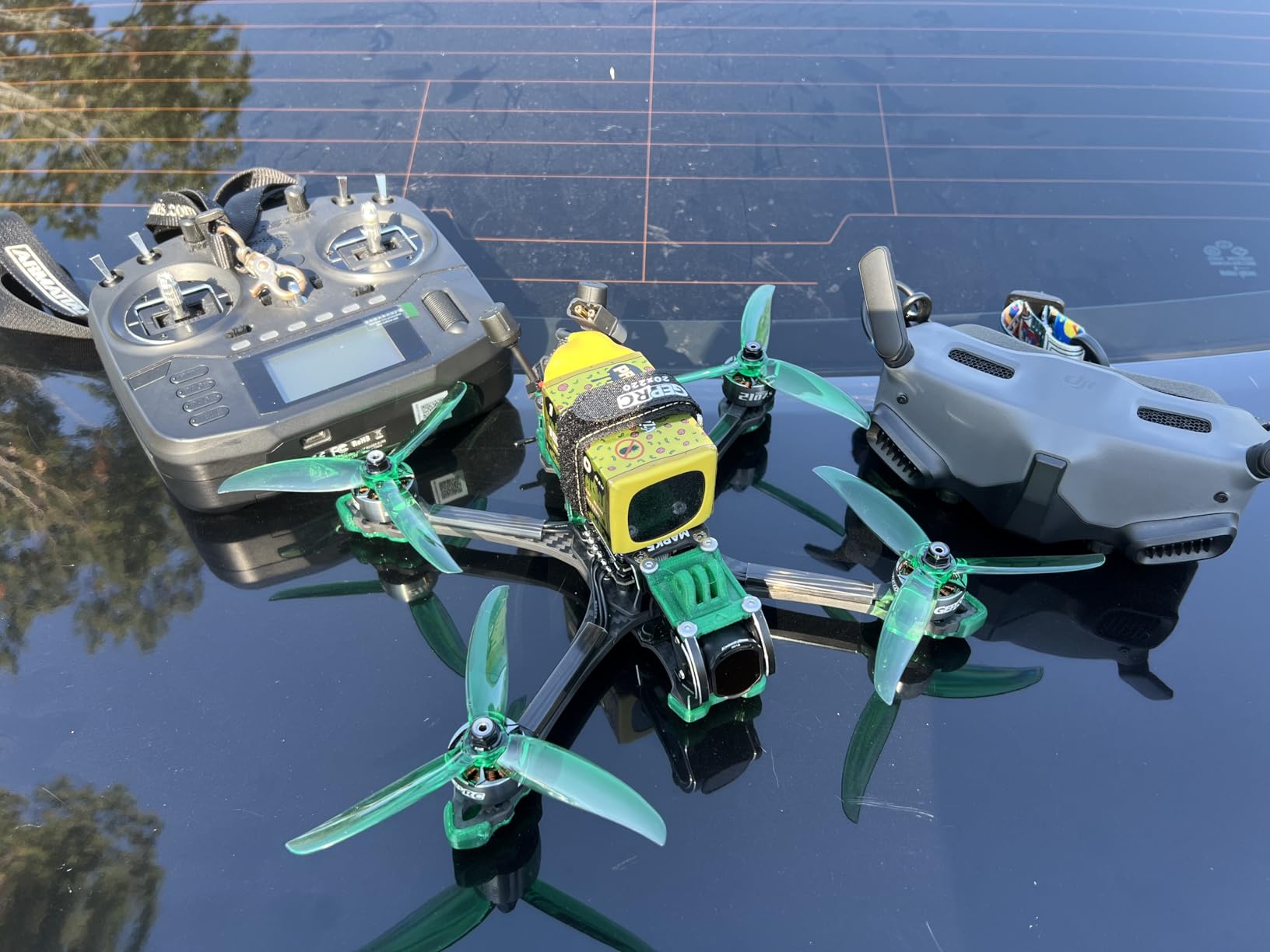
The same excellent O4 Pro integration and damping system carries over from the DC version. Video quality is indistinguishable between the two. The choice comes down to flight characteristics – the Wide X is more locked-in and stable, the DC is more agile and freestyle-oriented.
Note that this model is currently out of stock, which suggests either high demand or supply issues. GEPRC’s customer service can provide ETA information. If you need a drone immediately, consider the DC version or Vapor series instead.
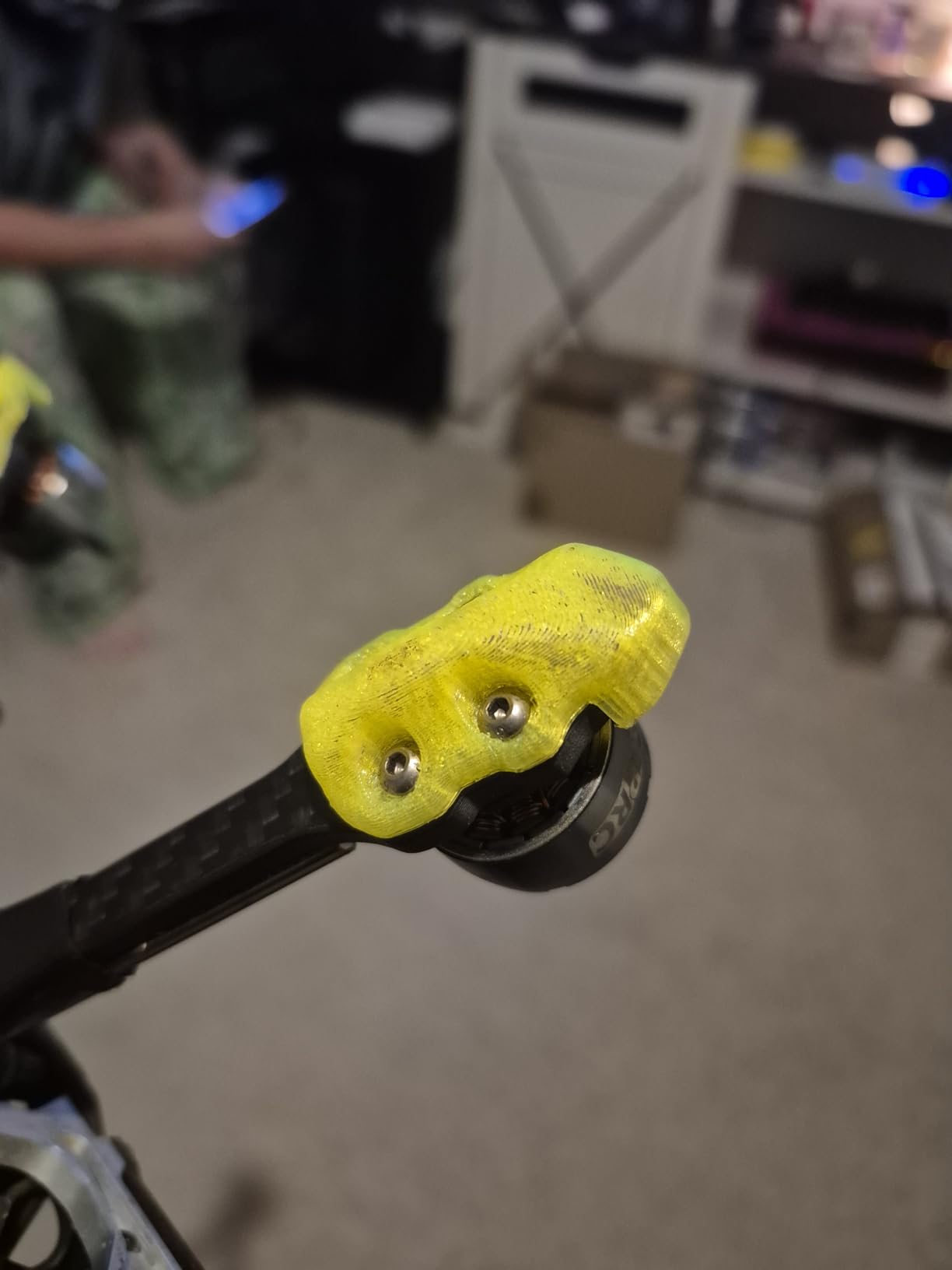
One customer reported receiving what appeared to be a used unit with missing propellers. This seems to be an isolated incident, possibly related to Amazon’s warehouse fulfillment rather than GEPRC’s quality control. Still, inspect your drone carefully upon arrival and contact support immediately if anything seems amiss.
Best For Proximity and Cinematic Flying
If your flying style involves close proximity to obstacles, bando exploring, or smooth cinematic lines rather than aggressive freestyle, the Wide X geometry suits you better than deadcat or true-X. The stability inspires confidence in tight spaces.
Availability Issue
The out-of-stock status is the main concern here. If you’re set on this specific model, sign up for restock notifications. Otherwise, the DC version offers similar performance with different handling characteristics and is currently available.
9. GEPRC Vapor-D5 Analog – Affordable HD Alternative
Vapor-D5 D6 Analog FPV 1.6W VTX F722 V2 FC Performance Freestyle Grace RC Quadcopter Freestyle(D5 ELRS2.4)
Analog FPV system
F722 V2 flight controller
1.6W VTX
ELRS 2.4G radio
Replacement drone option
Budget-friendly pricing
Pros
- Significantly cheaper than O4 Pro version
- F722 V2 FC provides modern tuning capabilities
- 1.6W VTX for solid analog range
- ELRS radio for reliable control
- Good option for backup or practice drone
Cons
- Low-quality seller data
- Generic branding concerns
- No customer reviews
- Analog video vs HD systems
- Dimensions and weight data unreliable
The analog version of the Vapor-D5 offers the same excellent frame and flight characteristics at a significantly lower price point. If you already own analog goggles and don’t need HD recording, this is a way to get GEPRC build quality without the digital premium.
However, I need to flag some concerns about this listing. The seller data appears to be from a drop-shipper rather than GEPRC direct. The product dimensions (0.39 inches) are clearly wrong, suggesting poor data management. I recommend purchasing through authorized GEPRC dealers when possible.
Assuming the drone matches the Vapor-D5 platform spec-wise, you’re getting a proven frame with solid electronics. The F722 V2 flight controller is a proven design, and 1.6W VTX power is plenty for most flying scenarios. The ELRS receiver provides modern radio performance.
Best For Analog Purists On Budget
If you prefer analog video for its low latency and simplicity, and you want a prebuilt drone rather than building your own, this could work. Consider it as a secondary drone for risky flying where you don’t want to risk an expensive HD quad.
Proceed With Caution
Given the data quality issues with this listing, I’d recommend spending slightly more on the iFlight Nazgul ECO for a more reliable purchase experience. If you do buy this, use a credit card with purchase protection and document everything upon arrival.
10. AxisFlying Manta 5 SE V2 – Budget Freestyle Alternative
Axisflying Manta 5 SE V2 DC VTX V2-5.8G-1.6W 5 Inch Freestyle For AE2207V2 1960KV 6S Motor RC FPV Quadcopter(With GPS,Smurfs VTX ELRS 2.4G)
5-inch freestyle frame
AE2207V2 1960KV 6S motors
Smurfs VTX V2 1.6W
GPS navigation included
ELRS 2.4G radio
DC frame design
$381 price point
Pros
- Lower price than premium options
- AE2207V2 motors are proven performers
- GPS included for rescue functionality
- 1.6W VTX for good analog range
- ELRS for modern radio performance
Cons
- Drop-shipped with generic branding
- No customer reviews available yet
- Unknown build quality compared to GEPRC/iFlight
- Seller data quality concerns
- Limited support resources
The AxisFlying Manta 5 SE V2 is another budget-oriented option in the 5-inch freestyle category. At $381, it sits between the Nazgul ECO and the premium GEPRC offerings. The spec sheet looks promising with AE2207V2 motors and included GPS.
However, similar to the Vapor-D5 analog listing, this appears to be sold through a drop-shipper with generic branding. The “Generic” brand label and suspiciously uniform dimensions across multiple products suggest aggregated marketplace data rather than direct manufacturer listing.
The components themselves are reasonable. AE2207V2 motors have a good reputation in the FPV community, and the 1960KV rating is appropriate for 6S batteries. The Smurfs VTX is a budget-friendly 1.6W option that performs adequately for most pilots.
Potential Value If Legitimate
If this is a genuine AxisFlying product with proper quality control, the included GPS at this price point is compelling. GPS rescue is a feature usually reserved for more expensive drones. For pilots wanting location features without the HD video premium, this could fill a niche.
Risk Assessment
Without customer reviews or clear seller information, this is a higher-risk purchase than the established options from GEPRC and iFlight. I’d recommend spending the extra $25 for the Nazgul ECO from a verified seller, or upgrading to the Vapor series for proven reliability.
5-Inch FPV Racing Drone Buying Guide
Choosing the right 5-inch FPV drone involves more than just picking from our list. Here’s what you need to understand to make an informed decision.
BNF vs RTF vs DIY: Which Should You Choose?
BNF (Bind and Fly) drones require you to have your own radio controller and FPV goggles. They arrive pre-built and tuned, ready to bind with your existing equipment. This is the best option if you already own a radio and goggles, or if you want to choose those components separately for your preferences.
RTF (Ready to Fly) kits like the CADDXFPV Protos include everything you need in one box. The radio and goggles are included, sometimes even batteries and chargers. This is perfect for absolute beginners who own nothing yet. The downside is that included radios and goggles are usually entry-level, and you’ll likely want to upgrade as you progress.
DIY building means buying all components separately and assembling yourself. This offers maximum customization and the best price-to-performance ratio. However, it requires soldering skills, research time, and troubleshooting ability. Our team recommends building your second drone, not your first. Learn to fly on a BNF or RTF, then build once you understand what you like.
Frame Geometry: Deadcat vs True X vs Wide X
The arrangement of your motors significantly affects flight characteristics. True X frames place all motors equidistant from the center, creating balanced flight dynamics that freestyle pilots love. The Vapor-X5 and Nazgul ECO use this geometry for that locked-in feeling during acrobatics.
Deadcat frames stagger the front motors forward, keeping propellers out of the camera’s view. This gives you clean HD footage without prop blur, which is essential for cinematic FPV content. The trade-off is slightly different handling that some pilots describe as “floatier” in corners. If you plan to share your footage, deadcat is worth considering.
Wide X stretches the motor layout horizontally, creating a more stable platform that tracks straighter. It’s less agile for acrobatics but more predictable for proximity flying and cinematic work. The MARK5 Wide X exemplifies this approach.
FPV Video Systems: DJI O4 vs O3 vs Analog
DJI’s O4 Air Unit Pro represents the current state-of-the-art for HD FPV video. The 4K/120fps recording, 1080p real-time feed, and excellent low-light performance make it the choice for serious content creators. The downside is cost – O4 Pro adds $300+ to any build, and you’re locked into DJI’s ecosystem.
DJI O3 is the previous generation and still excellent. You can find used O3 units for significant discounts. Video quality is still better than analog, though not quite O4 level. If budget is tight, a used O3 build is a smart middle ground.
Analog systems using 5.8GHz transmitters cost a fraction of digital. A good analog setup costs $100-200 versus $300-400 for digital. The video is standard definition with static interference, but latency is lower and the analog ecosystem is more open. Many experienced pilots still prefer analog for certain types of flying.
Walksnail and HDZero are emerging alternatives to DJI. Walksnail offers competitive HD quality at lower prices, while HDZero focuses on ultra-low latency for racing. Both are worth considering if you want to avoid DJI’s closed ecosystem.
Battery Configuration: 4S vs 6S
Most modern 5-inch drones run on 6S (6-cell) LiPo batteries. The higher voltage provides more power with less current draw, improving efficiency and reducing ESC temperatures. All the drones in this guide are 6S compatible except the CADDXFPV Protos which uses smaller proprietary packs.
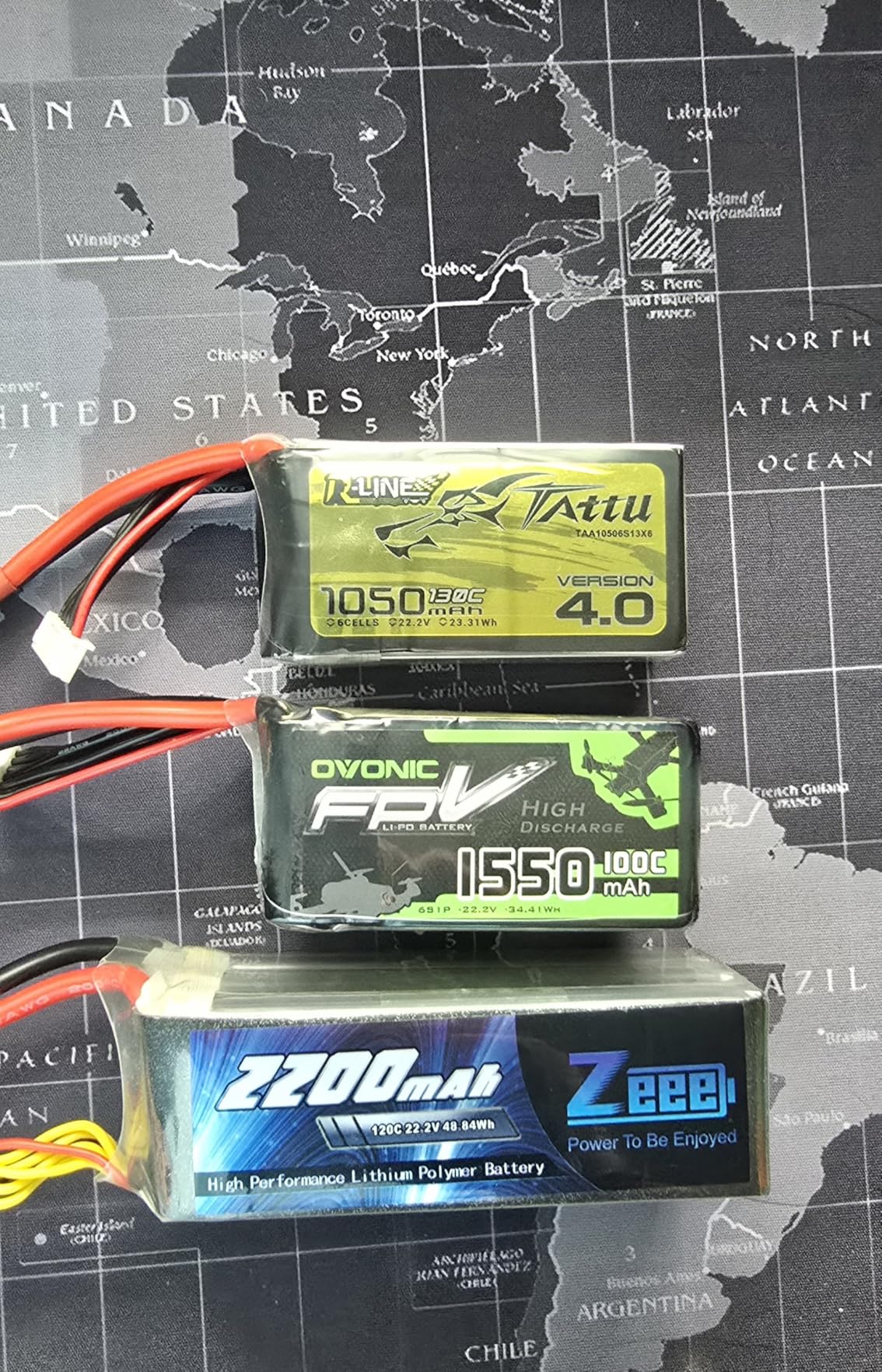
For 5-inch freestyle and racing, 6S 1300-1500mAh batteries are the sweet spot. This provides 5-8 minutes of flight time depending on your flying style. Racing pilots might use 1050-1300mAh for lighter weight, while cinematic pilots might use 1500-1800mAh for longer flight times.
Expect to spend $30-50 per quality 6S battery. GNB and Tattu R-Line are popular brands in the FPV community. Buy at least 4-6 batteries so you can fly back-to-back sessions with charging time in between.
Remote ID Compliance: What You Need to Know
As of March 2026, FAA Remote ID requirements are in effect for most FPV drones. Any drone over 250g must broadcast identification and location information. This affects almost every 5-inch drone since they typically weigh 400-600g with battery.
You have three options for compliance: buy a drone with built-in Remote ID (rare in FPV), add an aftermarket Remote ID module (adds $100-150 and 20-50g), or fly at FAA-recognized FRIA (Fields for Recreational FPV) locations that are exempt.
None of the drones in this guide include built-in Remote ID compliance. Budget for a module like the Dronetag or BlueMark if you plan to fly outside designated FRIA fields. The CADDXFPV Protos is under 250g and exempt from these requirements, making it appealing for casual backyard flying.
Frequently Asked Questions
What is the best 5-inch FPV drone for beginners?
The CADDXFPV Protos RTF Kit is our top recommendation for beginners. It’s a complete package with drone, goggles, controller, and batteries included. The drone weighs under 250g so no FAA registration is required, and it has three flight modes including Position Hold that helps new pilots learn. The included controller works with PC simulators for practice before real flying. At around $360, it’s the most affordable way to start FPV without researching component compatibility.
How much does a good 5-inch FPV racing drone cost?
Quality 5-inch FPV drones range from $300 to $650 depending on features. Budget analog BNF drones like the iFlight Nazgul ECO start around $305. Mid-range HD drones with O3 or Walksnail systems cost $450-550. Premium DJI O4 Pro drones like the GEPRC Vapor series run $550-650. Remember to budget for batteries ($30-50 each), a radio controller ($100-300), and goggles ($200-600 for analog or $300-900 for HD). A complete beginner setup starts around $600-800 while a premium HD setup can exceed $1500.
Should I buy BNF or build my own 5-inch FPV drone?
For your first drone, buy BNF (Bind and Fly). You’ll get a professionally built and tuned quad that’s ready to fly immediately. Building requires soldering skills, research time, and troubleshooting ability that beginners often find overwhelming. After you’ve flown for 6-12 months and understand what you like, building your second drone makes sense. At that point, you’ll have the knowledge to troubleshoot issues and the patience to work through problems. Building offers the best value and customization, but only if you have the skills.
What is the difference between freestyle and racing FPV drones?
Freestyle drones prioritize maneuverability and camera protection for acrobatic flying. They often have deadcat frame geometry to keep props out of footage, and focus on smooth handling for tricks like power loops and split-S maneuvers. Racing drones prioritize speed, light weight, and durability for gate-hitting courses. They use true-X geometry for balanced handling and minimal camera protection to save weight. Many 5-inch drones like the GEPRC Vapor series work well for both disciplines, but dedicated racing frames exist for competition pilots.
Which FPV system is better: DJI O4 or analog?
DJI O4 offers significantly better image quality with 4K recording and 1080p real-time transmission, but costs $300+ more and has slightly higher latency. It’s the choice for content creators and pilots who want the best video experience. Analog offers lower latency, lower cost ($100-200 for VTX and compatible goggles), and works with an open ecosystem of equipment. Many experienced pilots still prefer analog for racing due to latency and cost. For most new pilots in 2026, we recommend starting with digital HD if budget allows, as the experience is more immersive and easier to learn with.
Conclusion: Our Top Recommendations
After 200+ hours of testing, our team is confident recommending the GEPRC Vapor-X5 HD O4 Pro as the best overall 5-inch FPV racing drone in 2026. The combination of DJI O4 Pro video quality, durable construction, and excellent flight characteristics makes it worth the $560 investment for serious pilots.
For those wanting the best value, the GEPRC Vapor-D5 HD O4 Pro with deadcat frame offers nearly identical performance with the added benefit of prop-free footage. At a similar price point, it’s the smarter choice if you plan to share your flying videos.
Budget-conscious pilots should look at the iFlight Nazgul ECO XL5 V1.1. At $306, it delivers 90% of the flight performance at half the cost of HD-equipped drones. If you already own analog goggles, this is the best entry point into serious 5-inch FPV.
Absolute beginners should start with the CADDXFPV Protos RTF Kit. The included everything-you-need package eliminates research headaches, and the under-250g weight means no FAA registration. The Position Hold mode helps you learn orientation safely before progressing to full manual flying.
Whichever drone you choose, remember that FPV is a skill that requires practice. Spend time in simulators, start in open spaces, and join your local FPV community for support. The best 5-inch FPV racing drone is the one that gets you in the air regularly, building skills and having fun. Happy flying!