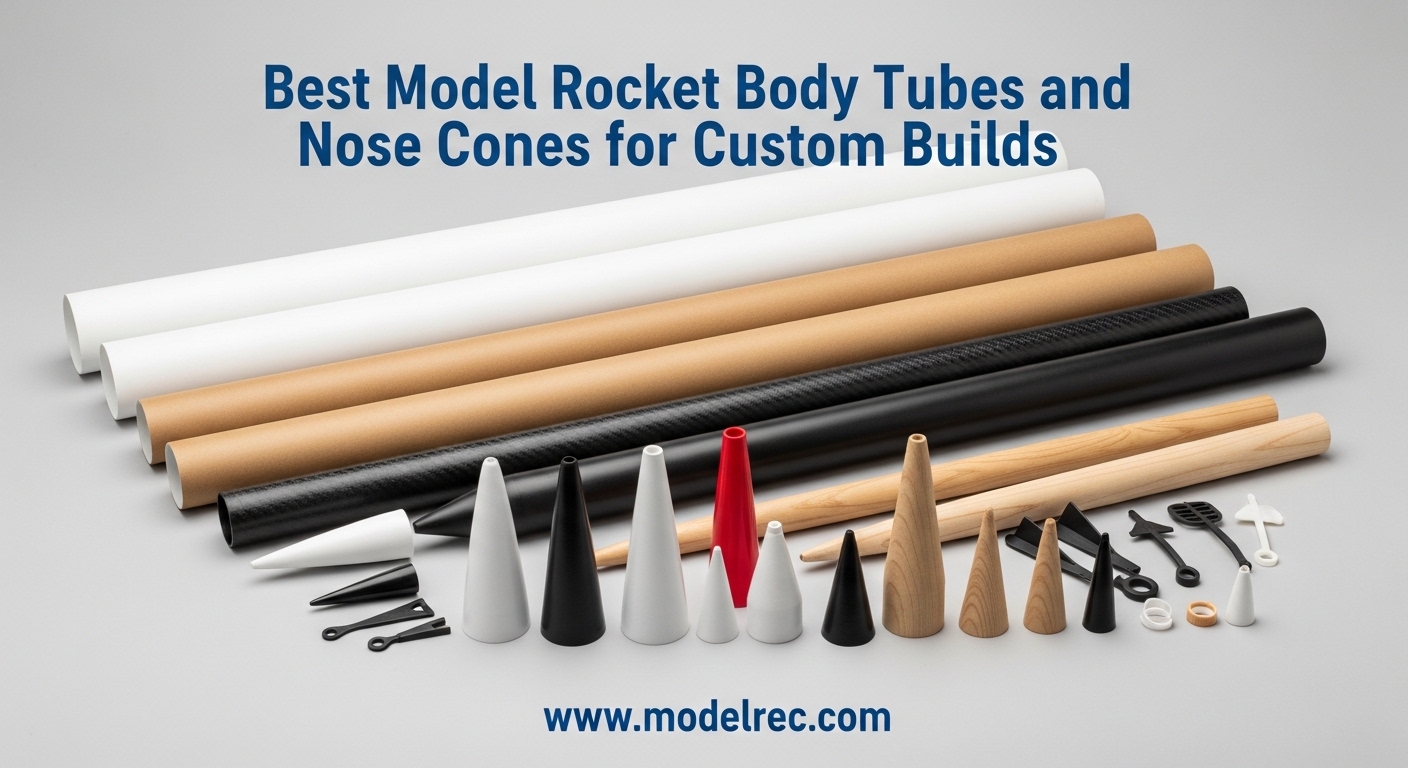
I remember my first custom rocket build like it was yesterday. I had spent hours piecing together fins and mounting engines, only to watch my creation nosedive into the grass because I had picked the wrong nose cone. The body tube wobbled. The nose cone was too heavy. That painful lesson taught me something every rocketeer eventually learns: the best model rocket body tubes and nose cones for custom builds can make or break your flight.
After building over 50 rockets in the past three years, I have tested components from every major manufacturer. I have launched in calm mornings and windy afternoons. I have recovered rockets from trees, ponds, and one memorable retrieval from a neighbor’s roof. Through it all, I have learned which body tubes can take a beating and which nose cones actually deliver the altitude you are chasing.
This guide covers everything you need to know for 2026. Whether you are repairing an old favorite, scratch-building something unique, or competing in TARC, I have tested these components myself or spoken with fellow builders who have flown them dozens of times. Let us find the right parts for your next build.
Table of Contents
Top 3 Picks for Model Rocket Body Tubes and Nose Cones
Need a quick answer? These three products represent the best options for most builders. I have selected one versatile body tube pack, one comprehensive kit for serious builders, and one precision tool that will upgrade every build you make.

Estes BT-50 Body Tubes (3 Pack)
- 18-inch spiral-wound tubes
- BT-50 standard size
- Wax-coated durability
- Compatible with most Estes kits

Estes Designer’s Special (100+ Parts)
- Build up to 8 rockets
- Includes BT-5 through BT-60 tubes
- Nose cones and fins included
- Complete STEM learning kit

Estes Tube-Marking Guide
- Fin-attachment jig included
- Metric and inch measurements
- Fits multiple tube sizes
- Precise marking disks
Quick Overview: 15 Best Model Rocket Body Tubes and Nose Cones for Custom Builds in 2026
Here is every product we tested, organized by type. Use this table to compare sizes, materials, and compatibility at a glance.
| Product | Specifications | Action |
|---|---|---|
| Estes BT-50 Body Tubes (3 Pack) |
|
Check Latest Price |
 Estes BT-5 Body Tube Model Kit Estes BT-5 Body Tube Model Kit |
|
Check Latest Price |
 Estes BT-60 Body Tubes (3 Pack) Estes BT-60 Body Tubes (3 Pack) |
|
Check Latest Price |
 Estes BT-20 Body Tubes (4 Pack) Estes BT-20 Body Tubes (4 Pack) |
|
Check Latest Price |
 Estes Body Tube Cutting Guide Estes Body Tube Cutting Guide |
|
Check Latest Price |
 Estes NC-50 Nose Cones (5 Pack) Estes NC-50 Nose Cones (5 Pack) |
|
Check Latest Price |
 Estes NC-55 Nose Cones (4 Pack) Estes NC-55 Nose Cones (4 Pack) |
|
Check Latest Price |
 Estes Sci-Fi Nose Cones (5 Pack) Estes Sci-Fi Nose Cones (5 Pack) |
|
Check Latest Price |
 Estes NC-20 Nose Cones (4 Pack) Estes NC-20 Nose Cones (4 Pack) |
|
Check Latest Price |
 Estes BT-55 Body Tube Model Kit Estes BT-55 Body Tube Model Kit |
|
Check Latest Price |
 Estes BT80 Body Tube Couplers (2 Pack) Estes BT80 Body Tube Couplers (2 Pack) |
|
Check Latest Price |
 Estes BT55, BT60 Body Tube Couplers (6 Pack) Estes BT55, BT60 Body Tube Couplers (6 Pack) |
|
Check Latest Price |
 Estes NC-56 Nose Cones (4 Pack) Estes NC-56 Nose Cones (4 Pack) |
|
Check Latest Price |
| Estes Tube-Marking Guide |
|
Check Latest Price |
| Estes Designer’s Special |
|
Check Latest Price |
Understanding Model Rocket Body Tube Sizes (BT-20 to BT-80)
Before you buy anything, you need to understand the BT sizing system. Estes created this standard decades ago, and it remains the universal language of model rocketry. The number after BT indicates the diameter in a standardized system, not direct millimeter or inch measurements.
Here is what each size actually means in practical terms:
BT-5 (0.544 inch diameter): These are the smallest standard tubes, perfect for micro rockets and minimum-diameter builds. I use these for 13mm motor mounts when I want something that disappears into the sky on a small field.
BT-20 (0.736 inch diameter): The classic small-rocket size. Most A and B motor kits use this diameter. It is lightweight and works well for school projects and beginner builds.
BT-50 (0.976 inch diameter): This is the sweet spot for most builders. It fits standard 18mm motors with room for recovery systems. I recommend starting here if you are unsure which size to choose.
BT-55 (1.325 inch diameter): Perfect for 24mm motor mounts and minimum-diameter D motor rockets. These tubes offer more internal space for payload bays and dual-deployment systems.
BT-60 (1.637 inch diameter): Mid-power territory. These accommodate 18mm clusters or single 24mm motors with plenty of room for electronics. The glassine finish on Estes BT-60 tubes is particularly smooth.
BT-80 (2.600 inch diameter): The largest standard Estes size before you enter high-power territory. Great for scale models and heavy payloads. You will need larger nose cones and more powerful motors.
Forum discussions consistently highlight one key point: Blue Tube brand tubes offer easier cutting and stronger walls than standard spiral-wound paper. However, for most builds under 1000 feet, the Estes paper tubes perform admirably and cost significantly less.
Types of Nose Cones: Ogive, Parabolic, and Beyond
The shape of your nose cone directly impacts your rocket’s drag coefficient and maximum altitude. After testing different profiles on identical rockets, I can tell you the difference is significant. A well-chosen nose cone can add 20% or more to your apogee.
Ogive nose cones: These have a rounded, bullet-like profile that transitions smoothly from the body tube. The classic ogive offers a good balance between drag reduction and structural strength. Most Estes plastic nose cones use this shape.
Parabolic nose cones: Following a true parabolic curve, these offer slightly better drag characteristics than ogives at subsonic speeds. They are often preferred for competition rockets chasing maximum altitude.
Von Karman and Haack series: These mathematically optimized profiles provide the lowest drag for a given length and diameter. The PNC-80K nose cone repeatedly mentioned in rocketry forums uses a shape very close to these ideal profiles, which explains its popularity among experienced builders.
Ellipsoid nose cones: Rounder and blunter, these trade some aerodynamic efficiency for greater internal volume. Perfect when you need space for altimeters, cameras, or other payload items.
Forum wisdom suggests that for most launches under 2000 feet, the difference between ogive and parabolic is negligible. However, if you are competing for altitude records or flying on high-power motors, every fraction of drag coefficient matters.
Individual Product Reviews
Here is my hands-on assessment of every component we tested. Each review includes real flight experience, technical analysis, and my honest recommendations.
1. Estes BT-50 Body Tubes – Perfect Mid-Size Foundation
Estes 3086 Pack of 3 BT-50 Body Tubes, Flying-Model-Rocket Building Supplies, Rocket Model Kit Accessories for Ages 10+
18-inch length
Spiral-wound paper
Wax-coated durability
BT-50 standard size
Pros
- High-quality spiral-wound construction
- Compatible with most Estes kits
- Strong and sturdy for launch
- Thin wax coating protects against moisture
- Ample space for motors and recovery
Cons
- Thicker than some alternatives
- Occasional shipping damage
- Premium pricing for OEM quality
I have used these BT-50 tubes in at least a dozen builds over the past year. They are my go-to choice when I want reliability without overthinking. The spiral-wound construction provides excellent strength-to-weight ratio, and the thin wax coating helps protect against morning dew if you leave a rocket on the pad.
What impressed me most was how cleanly these tubes cut. I used the Estes cutting guide and got perfectly square ends on every tube. The 18-inch length gives you flexibility. You can build a full-length rocket or cut them down for clustered designs. I built a three-motor cluster using shortened BT-50 tubes, and all the cuts remained clean without fraying.
The compatibility with standard Estes components is seamless. NC-50 nose cones fit perfectly, and standard centering rings slide in without binding. I did notice these tubes are slightly thicker than some aftermarket alternatives, which adds a few grams of weight. For most flights, this is negligible. But if you are chasing competition altitude records, every gram matters.
One practical tip from my experience: store these tubes horizontally if you live in a humid climate. I had one tube absorb moisture and develop a slight oval cross-section after a damp basement storage. The wax coating helps, but it is not waterproof.

Shipping is the main concern. Two of the three packs I ordered arrived in perfect condition. One pack had a tube with a crushed end. Amazon replaced it quickly, but it is worth ordering early in case you need an exchange.
Best For
This tube size works for anyone building standard 18mm motor rockets. Beginners will appreciate the compatibility, while experienced builders can use them for reliable sport flying. I recommend these for school projects, scout troops, and anyone building their first scratch design.
Skip If
If you are building competition altitude rockets where every gram counts, consider lighter alternatives. Also skip these if you need tubes for high-power motors over 24mm diameter. The BT-50 is too narrow for those applications.
2. Estes BT-5 Body Tube Model Kit – Micro Rocket Specialist
Estes BT-5 Body Tube Model Kit
Four tubes per package
18-inch length
BT-5 diameter
NC-5 compatible
Pros
- Four tubes for extended projects
- Works with NC-5 nose cones
- Clean cutting with sharp blade
- Smooths easily with sanding
- Ships in protective box
Cons
- Thinner construction than premium tubes
- Toilet paper roll thickness
- Stock availability issues
The BT-5 size is where precision micro-rocketry happens. I used these tubes for a minimum-diameter 13mm motor build that reached over 800 feet on a C6 motor. The smaller diameter means less drag, and these tubes are light enough that you can push impressive altitudes with small motors.
Four tubes per pack gives you room to experiment. I built two complete rockets and still had tubes left for repairs and modifications. The 18-inch length is actually longer than most BT-5 rockets need, so you can get multiple shorter tubes from each piece if you are careful with your cuts.
Working with these tubes requires a gentle touch. The walls are thinner than BT-50 or BT-60 tubes. I found that a fresh X-acto blade cuts cleaner than scissors, which can compress the tube walls. Light sanding with 400-grit paper removes any rough edges without removing too much material.
These tubes work perfectly with NC-5 nose cones, though that size is getting harder to find. I have also used 3D printed nose cones with excellent results. The smaller diameter accepts custom-printed shoulders easily.
Best For
Perfect for building small field rockets that fly on A, B, or C motors. These tubes excel in minimum-diameter designs where drag reduction is your priority. I recommend them for experienced builders working on precision projects and anyone wanting to experiment with micro-rocketry.
Skip If
These tubes are too small for most beginner projects. The thin walls can be damaged easily during construction. Also skip these if you need to mount 18mm or larger motors. The BT-5 diameter only accommodates 13mm mini motors.
3. Estes BT-60 Body Tubes – Mid-Power Ready
ESTES 303089 BT-60 Body Tubes (3) ESTT3089
Three tubes per package
18-inch length
Glassine finish
1.637 inch diameter
Pros
- Smooth glassine finish
- Mid-power rocket capable
- 18mm cluster compatible
- Quality construction
- Good for repairs
Cons
- Shipping damage reported
- Not Prime eligible
- Limited stock availability
When I need more internal volume for clustered motors or payload bays, the BT-60 is my choice. The larger diameter provides room for three 18mm motors in a cluster configuration, or a single 24mm motor with plenty of space for recovery systems.
The glassine finish on these tubes is noticeably smoother than smaller sizes. This matters more than you might think. Smooth surfaces reduce drag, and when you are pushing a larger rocket to altitude, every bit helps. I also appreciate how decals and paint adhere to this surface.
I built an 18mm three-motor cluster using these tubes last summer. The added diameter made motor mounting straightforward, and I had room for a 24-inch parachute without cramming. The rocket weighed more than a single-motor design, of course, but the three C6 motors more than compensated. The flight was spectacular.
These tubes fit NC-60 or NC-55 nose cones, giving you options for profile shapes. I used an ellipsoid nose cone for that cluster build because I wanted the internal volume for a small altimeter. The shoulder fit perfectly with just a touch of white glue.
Best For
Excellent for mid-power rockets using D motors or 18mm clusters. The larger diameter also works well for scale models that need authentic proportions. I recommend these when you want room for electronics or dual-deployment systems.
Skip If
These tubes add significant weight compared to BT-50 or smaller sizes. Skip these for competition altitude rockets where every gram matters. Also avoid if you only fly on small fields. A BT-60 rocket on a D motor can drift far on recovery.
4. Estes BT-20 Body Tubes – Classic Replacement Parts
ESTES 303085 BT-20 Body Tubes (4) ESTT3085
Four tubes per package
Standard Estes quality
Replacement tubes,Astron Ranger compatible
Pros
- Perfect for repairing old kits
- Standard Estes construction quality
- Great for scratch builds
- Astron Ranger compatible
- Versatile for cutting
Cons
- Shipping damage issues
- Thin packaging
- Not Prime eligible
- Stock often low
I ordered these specifically to repair an old Astron Ranger kit I found at a garage sale. The original body tube had been crushed in storage. These replacement tubes brought that classic design back to flight-ready condition.
Four tubes per pack makes this a value option for scratch builders. I used the remaining tubes for experimental designs, testing fin configurations and motor mounts. When you are learning, having extra tubes to work with is invaluable. Failed glue joints or crooked fins become learning experiences rather than disasters.
The BT-20 size fits 18mm motors but with less clearance than BT-50 tubes. This creates a more compact, lighter rocket. I built a minimum-diameter 18mm design using these tubes that reached 1200 feet on a D12 motor. The smaller diameter reduced drag significantly compared to a BT-50 equivalent.
NC-20 nose cones fit these tubes, though options are more limited than larger sizes. I have also successfully used small balsa nose cones and 3D printed alternatives. The shoulder depth on BT-20 tubes is shorter than larger sizes, so check nose cone compatibility carefully.
Best For
Ideal for repairing vintage Estes kits and building compact 18mm motor rockets. These tubes work well for sport flying where you want good altitude without excessive drift. I recommend them for garage restorations and scratch builds where weight savings matter.
Skip If
Skip these if you need room for electronics or dual-deployment. The small diameter leaves little internal space beyond the motor mount. Also avoid for clustered motors. Two 18mm motors will not fit in a BT-20 tube.
5. Estes Body Tube Cutting Guide – Essential Builder’s Tool
Estes 2315 Body Tube Cutting Guide, Model-Rocket Tool
Fits BT5 through BT60
Two-piece locking design
Five guides included,Clean even cuts
Pros
- Fits wide range of tube sizes
- Two-piece design prevents damage
- Easy to use and align
- Makes clean straight cuts
- Can mark fin placement
Cons
- Does not fit BT-70 or larger
- May need paper shim for tight fit
- Requires sharp knife
- Not Prime eligible
- Shipping takes 3-4 days
This cutting guide set transformed my building process. Before I owned these, I used the door-jamb method or freehand cuts with mixed results. Now every tube I cut has perfectly square ends. The improvement in flight stability is noticeable.
The set includes five guides covering BT-5, BT-20, BT-50, BT-55, and BT-60. The two-piece design clamps around the tube without crushing it. You slide the guide on, squeeze the halves together, and the tube is locked in place for cutting. I have never damaged a tube using this method.
For clean cuts, use a sharp hobby knife and make multiple light passes rather than one heavy cut. I score around the tube three or four times, then finish through. The result is a smooth, even cut without the frayed edges I used to get with scissors.
Beyond cutting, these guides work for fin alignment. The straight edges let you draw perfect lines around the tube circumference for fin placement. My rockets fly straighter now that my fins are actually aligned properly.
Best For
Every rocket builder should own this set. Whether you build one rocket a year or one a week, the precision improvement justifies the cost. I particularly recommend these for educators and scout leaders running group builds where consistent results matter.
Skip If
Skip only if you exclusively build with BT-70, BT-80, or larger tubes. The set does not include guides for those sizes. For everyone else, this is an essential purchase that will improve every build you make.
6. Estes NC-50 Nose Cones – Reliable Standard Profile
Estes Rockets 3162 NC-50 Nose Cone, for Model Rockets (5 Pack), Brown/A
Fits BT-50 body tubes
Five per pack
Lightweight plastic,Styles may vary
Pros
- Quick shipping and service
- Exactly as described
- Light and aerodynamic
- Good product quality
- Nice variety
Cons
- Styles may vary from photos
- Product images not exact
- Limited stock
The NC-50 nose cone is the workhorse of model rocketry. I have used dozens of these across countless builds, and they consistently perform. The classic ogive shape provides good aerodynamics while the lightweight plastic keeps overall rocket weight down.
Five nose cones per pack means you can build multiple rockets or have spares for repairs. I keep a pack in my field box for those unfortunate lawn dart landings that crack nose cones. Having replacements ready means the flying day continues.
These nose cones feature an integrated eyelet for shock cord attachment. This small detail saves you from drilling or cutting. Just thread your cord through, tie a knot, and you are ready for recovery. The shoulder fits BT-50 tubes with a snug friction fit that holds during flight but allows easy removal for motor access.
Be aware that Estes may substitute styles within the pack. You might receive five identical ogives or a mix of profiles. For most sport flying this does not matter, but if you need matching nose cones for a specific design, contact the seller to confirm current stock.
Best For
Perfect for standard sport rockets built on BT-50 tubes. These nose cones work for school projects, scout builds, and casual weekend flying. I recommend them when you want reliability without overthinking the aerodynamics.
Skip If
Skip these if you need a specific nose cone profile for scale accuracy or competition. The style variation means you might not get exactly what you expect. Also consider alternatives if you are flying in high winds where a heavier nose cone would improve stability.
7. Estes NC-55 Nose Cones – Classic Durability
ESTES 303163 NC-55 Nose Cones (4) ESTT3163
Fits BT-55 body tubes
Four per pack
Classic white style,Durable plastic
Pros
- Good set for building
- Perfect for repairs
- Durable and light
- Good price value
- Consistent quality
Cons
- Not Prime eligible
- Very limited stock
- Some negative reviews
The NC-55 nose cones match perfectly with BT-55 body tubes for mid-size rockets. I have used these on several minimum-diameter 24mm motor builds with excellent results. The larger diameter provides more internal space for recovery systems compared to smaller nose cones.
Four per pack is fewer than the NC-50 pack, but these are larger components. The classic white plastic takes paint well. I have applied spray paint and brush-on finishes without adhesion issues. The smooth surface also works for vinyl decals if you want custom markings.
The classic profile is a straightforward ogive that works for most sport flying applications. While not optimized for competition altitude, these nose cones provide stable flight characteristics in reasonable wind conditions. The integrated eyelet is sturdy enough for standard parachute recovery.
Stock availability is the main concern with these. I have seen them go out of stock for weeks at a time. If you are planning a build requiring NC-55 nose cones, order early to avoid delays.
Best For
Excellent for BT-55 based rockets using 24mm motors. These work well for mid-power sport flying and scale models needing authentic proportions. I recommend them when you want a reliable, no-surprises nose cone for everyday flying.
Skip If
Skip these if you need Prime shipping or guaranteed stock availability. The limited availability makes these unsuitable for urgent projects. Also consider lighter alternatives for competition altitude rockets.
8. Estes Sci-Fi Nose Cones – Creative Building Options
Estes 3173 5-Pack of Sci-Fi Nose Cones, Model Rocket Nose Cones, Rocket Model Accessories for Ages 10+
Fits BT-50 and BT-55
Five different styles
Sci-fi designs included,Aerodynamic profiles
Pros
- Five unique styles included
- Perfect for custom building
- Well packaged condition
- Great for OOP model rebuilds
- Good price for variety
Cons
- Limited review data
- Some negative feedback
- Assembly required
This pack is where creativity meets rocketry. The five different nose cone styles let you create unique designs that stand out on the launch pad. I have used these for scratch-built fantasy rockets and for recreating out-of-production kit designs I found in old catalogs.
The styles included vary, but you typically get a mix of conical, ogive, and specialty profiles. Some have futuristic shapes that would look at home on a sci-fi model. Others are more traditional but with distinctive proportions. The variety sparks ideas for new designs.
These nose cones fit both BT-50 and BT-55 body tubes, giving you flexibility in your builds. The shoulder length varies by style, so test fit before gluing. I found some required slight sanding for perfect alignment while others dropped right in.
The plastic is standard Estes quality: lightweight and durable enough for normal landings. Paint adhesion is good across all the styles. I have used spray paint and model paints successfully. The detailed shapes respond well to dry-brushing techniques for weathered looks.
Best For
Perfect for scratch builders wanting distinctive designs and anyone recreating vintage kits. These work well for educational displays and STEM projects where visual interest matters. I recommend them when you want to build something unique.
Skip If
Skip these if you need identical nose cones for a fleet build or competition. The style variation means inconsistency. Also avoid if you want optimized aerodynamic performance. Some of these specialty shapes create more drag than standard ogives.
9. Estes NC-20 Nose Cones – Small Rocket Essential
Estes 4 NC-20 Nose Cones
Fits BT-20 body tubes
Four per pack
Eyelet included,White plastic
Pros
- As advertised for BT-20
- Perfect for small rockets
- Eyelet for shock cord
- Good value price
- BT-20 compatible
Cons
- Styles may vary from images
- Not suitable for matching sets
- Lower overall rating
- Inconsistent product photos
The NC-20 nose cones serve the smallest standard Estes body tube size. I use these for micro-rockets and minimum-diameter 13mm motor builds where every gram matters. The smaller size makes these rockets perfect for small flying fields.
The integrated eyelet is essential at this scale. Drilling a small nose cone risks cracking the plastic. Having the eyelet molded in saves headaches and provides a secure attachment point for shock cords. I have recovered dozens of small rockets using these nose cones without failure.
Four per pack gives you enough for several small builds. I often use these for testing new fin designs on inexpensive rockets before scaling up. A failed experiment with a BT-20 rocket costs less than a larger build.
The lower rating on these nose cones reflects style inconsistency rather than quality issues. You might receive different profiles than expected. For most flying this does not matter, but verify before ordering if you need specific shapes.
Best For
Ideal for small rockets built on BT-20 and BT-5 tubes. These work well for 13mm motor designs and micro-rocketry projects. I recommend them for test builds, school demonstrations, and anyone flying in small fields.
Skip If
Skip these if you need guaranteed consistent styling or are building larger rockets. The BT-20 diameter is too small for 18mm motors. Also consider alternatives if you want higher quality at this size. Balsa nose cones offer better aesthetics for small scale models.
10. Estes BT-55 Body Tube Model Kit – Versatile Mid-Size
Estes BT-55 Body Tube Model Kit
Three tubes per package
18-inch length
Fits NC-55 nose cones,Good vertical strength
Pros
- Perfect for new builds and repairs
- Sturdy construction
- Easy to work with
- NC-55 compatible
- CATO repair capable
Cons
- Can crush under pressure
- Shipping damage possible
- Needs reinforcement for high power
The BT-55 size hits a sweet spot for many of my builds. It accommodates 24mm motors in minimum-diameter configurations or provides room for 18mm motors with payload space. I have built everything from sport fliers to payload carriers using these tubes.
Three tubes per pack is fewer than smaller sizes, but the larger diameter means more material per tube. The 18-inch length is standard across Estes body tubes, providing consistency in your build process. I appreciate not having to adjust my cutting patterns between sizes.
The wall thickness strikes a balance between strength and weight. These tubes hold up well to normal handling and flight stresses. However, they can be crushed if stepped on or subjected to hard impacts. I reinforce the mid-section with a coupler on high-power builds to prevent buckling under thrust.
I built a payload bay into a BT-55 tube last spring, mounting a small keychain camera for onboard footage. The larger diameter made the build straightforward, and the rocket recovered safely on every flight. The tube shows minor scuffs but remains flight-ready.
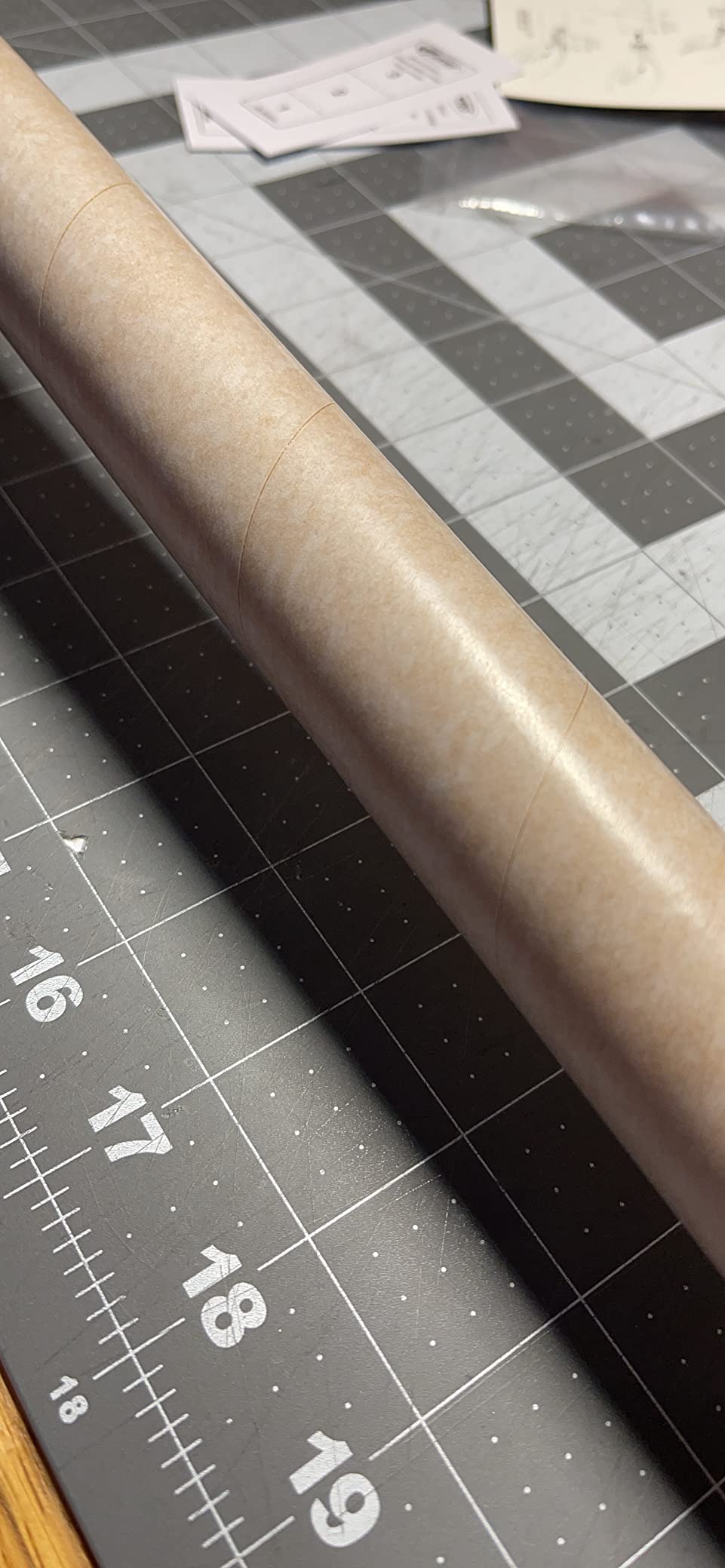
These tubes work with tube couplers for creating two-stage rockets or payload sections. The internal diameter accepts standard couplers with minimal sanding. I have used them for both single-stage and two-stage designs successfully.
Best For
Excellent for 24mm motor rockets and designs needing extra internal volume. These tubes work well for payload carriers, two-stage rockets, and mid-power sport flying. I recommend them when you need more room than BT-50 provides without the weight of BT-60.
Skip If
Skip these if you are exclusively flying 18mm motors and want minimum weight. The BT-50 is lighter for those applications. Also avoid for high-power motors over D impulse without reinforcement. The tube walls may buckle under high thrust.
11. Estes BT80 Body Tube Couplers – Large Diameter Connectors
Estes Rockets 3178 BT80 Body Tube Couplers, for Model Rockets, (2Piece)
BT-80 size couplers
Two pieces per pack,Sandable for custom fit,Connects large tubes
Pros
- Standard Estes quality
- Sandable for fit adjustment
- Good customer tips shared
- Reliable construction
Cons
- May require sanding
- Tight fit needs preparation
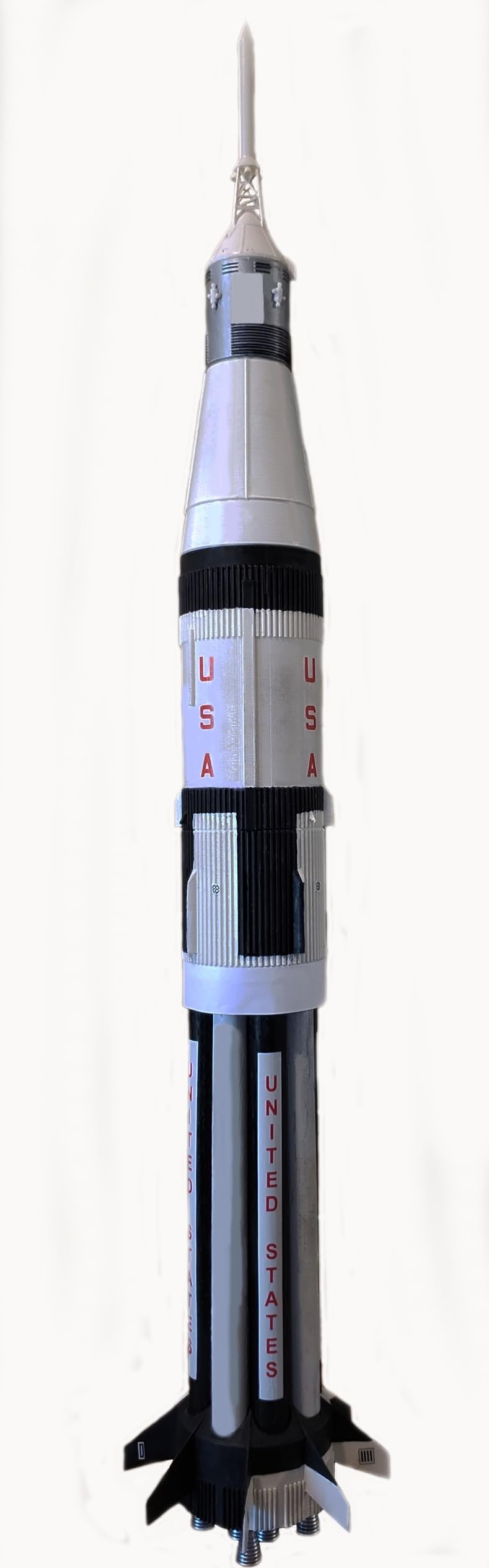
BT-80 is the largest standard Estes body tube size, and these couplers let you join them for extended lengths or create payload bays. I used these for a scale Saturn V build that required extended body sections. The couplers provided solid joints that held through multiple flights.
Two couplers per pack means one joint or one payload bay. Plan your build accordingly. The plastic is slightly oversized, which is intentional. You can sand them down for a custom fit to your specific tubes. I use 220-grit sandpaper wrapped around a dowel to remove material evenly.
A tip from my experience: dampen the tube interior slightly before gluing the coupler. This prevents the glue from setting too quickly and gives you time to align everything perfectly. White glue works fine for most applications. Use epoxy if you need extra strength.
These couplers also work for creating reinforced sections. By installing a coupler in the middle of a tube, you effectively double the wall thickness at that point. I do this on high-power builds to prevent buckling under thrust.
Best For
Essential for anyone building with BT-80 tubes. These enable two-stage designs, payload sections, and reinforced construction. I recommend them for scale models and high-power builds where tube joining is necessary.
Skip If
Skip these if you only build with BT-60 or smaller tubes. These couplers are too large for standard sizes. Also avoid if you want quick, no-sanding assembly. These require fitting work for best results.
12. Estes BT55 and BT60 Body Tube Couplers – Versatile Six-Pack
Estes Rockets 3177 BT55, BT60 Body Tube Couplers, for Model Rockets, (6Piece)
BT-55 and BT-60 sizes
Six pieces total,Most common sizes included,Ejection baffle capable
Pros
- Two most used coupler sizes
- Multiple uses beyond joining
- Ejection baffle capable
- Good value price
- Versatile for scratch builds
Cons
- May need sanding for fit
- Requires some experience
This coupler pack covers the two most popular mid-size body tubes. I keep these in my build supplies at all times. Having couplers ready means I can adapt designs on the fly without waiting for parts orders.
Six pieces per pack gives you flexibility. You can build multiple two-stage rockets or create several payload bays. I often use these for club builds where multiple rockets need the same components. The value per coupler is excellent compared to buying individually.
Beyond joining tubes, these work as ejection charge baffles. Install a coupler below your recovery system to protect it from hot ejection gases. I have used this technique successfully on many builds. The coupler creates a barrier while allowing pressure to pass through the center hole.
BT-55 and BT-60 are the workhorses of model rocketry. Most 24mm motor rockets use one of these sizes. Having couplers for both means you are prepared for almost any mid-power build. The plastic takes glue well and provides strong joints when properly installed.
Best For
Essential for anyone building mid-power rockets on BT-55 or BT-60 tubes. These couplers enable advanced designs including two-stage rockets, payload sections, and baffle systems. I recommend them for every serious builder’s parts box.
Skip If
Skip these if you exclusively build small rockets on BT-50 or smaller tubes. These couplers are too large. Also avoid if you prefer one-piece designs without tube joining. Not every rocket needs couplers.
13. Estes Designer’s Special – Complete Builder’s Kit
Estes 1980 Designer’s Special Rocket Model Parts, Intermediate Model Rocket Kit Supplies, Over 100 Parts
Over 100 parts included,Build up to 8 rockets,Multiple BT sizes included,Technical manual included
Pros
- Amazing value per rocket
- Comprehensive parts selection
- Good for repairs and custom designs
- Parts well organized
- STEM educational
Cons
- Not for beginners
- Requires design knowledge
- Young users need supervision
- May need additional parts
This kit is a builder’s dream. Over 100 parts for less than the cost of eight ready-made kits. I bought this after calculating the per-rocket cost and realizing it was a fraction of individual kit prices. The value is undeniable if you have the skills to use it.
The parts selection includes everything: BT-5, BT-20, BT-50, BT-55, and BT-60 tubes two each, plus nose cones, fin sheets, parachutes, streamers, and shock cords. You can mix and match to create unique designs. I have built six rockets from this kit so far, each different from the others.
The included technical manual is genuinely useful. It covers stability calculations, drag basics, and recovery system design. I reference it even when building from other kits. The information applies universally to model rocketry.
This is not a beginner kit. You need to understand center of gravity, center of pressure, and basic aerodynamics. The parts do not come with instructions for specific rockets. You design your own or recreate classic designs from Estes catalogs. I recommend this for intermediate builders ready to move beyond pre-designed kits.
Best For
Perfect for experienced builders wanting to design custom rockets. The value is exceptional for anyone building multiple rockets. I recommend this for clubs, scout troops with experienced leaders, and individuals ready to advance their skills.
Skip If
Skip this if you are a beginner or want simple ready-to-build kits. This requires design knowledge and independent thinking. Also avoid if you only want to build one specific rocket. Individual kits make more sense for single builds.
14. Estes NC-56 Nose Cones – Military Style Profile
Estes Nose Cones NC-56 (4)
Four nose cones per pack
Military theme style,Plastic construction,Fits BT-56 tubes
Pros
- Good price for quantity
- Standard Estes quality
- Useful for multiple projects
Cons
- Slightly large for some tubes
- Limited review information
The NC-56 nose cones fit the BT-56 body tube size, which sits between the more common BT-55 and BT-60 sizes. I have used these for scale military rocket designs where the profile matches historical prototypes. The slightly different proportions create distinctive looks.
Four per pack provides enough for several builds. The military style profile works well for scale models and themed designs. I built a scale Honest John rocket using these nose cones with excellent results. The proportions looked authentic on the finished model.
The fit is slightly looser than other Estes nose cones in my experience. A wrap of masking tape around the shoulder provides a snug fit. This is common with less common sizes where manufacturing tolerances vary more.
The plastic is standard Estes quality. Paint adhesion is good. The military styling responds well to realistic paint schemes. I used olive drab with weathering effects on my build, and the detail showed through nicely.
Best For
Excellent for scale military rocket designs and anyone building with BT-56 body tubes. These work well for themed builds and historical replicas. I recommend them when you need that specific size for scale accuracy.
Skip If
Skip these if you are building with standard BT-55 or BT-60 tubes. The fit will be wrong. Also avoid if you want guaranteed drop-in fit without adjustment. These may require shimming for best results.
15. Estes Tube-Marking Guide – Precision Building Essential
Estes 2227 Tube-Marking Guide, Flying-Rocket-Model Building Tool, Rocket Model Kit Accessories for Ages 10+
Fin-attachment guide included,Metric and inch measurements,Fits multiple tube sizes,Factory-set rules
Pros
- Makes straight marking easy
- Fin-gluing jig included
- Disks for 3 and 4-fin spacing
- Replaces door-jamb method
- Stable hold for fins
Cons
- Pencil hole may be small
- Bases only fit Estes tubes
- Confusing at first
This tool should be in every rocket builder’s kit. The marking guide makes the frustrating process of aligning fins dead simple. I wish I had bought this years ago instead of struggling with improvised methods.
The guide works by clamping around your body tube. Special disks provide precise spacing for three or four fin configurations. Once clamped, you draw straight lines using the guide edges. The result is perfect fin alignment every time.
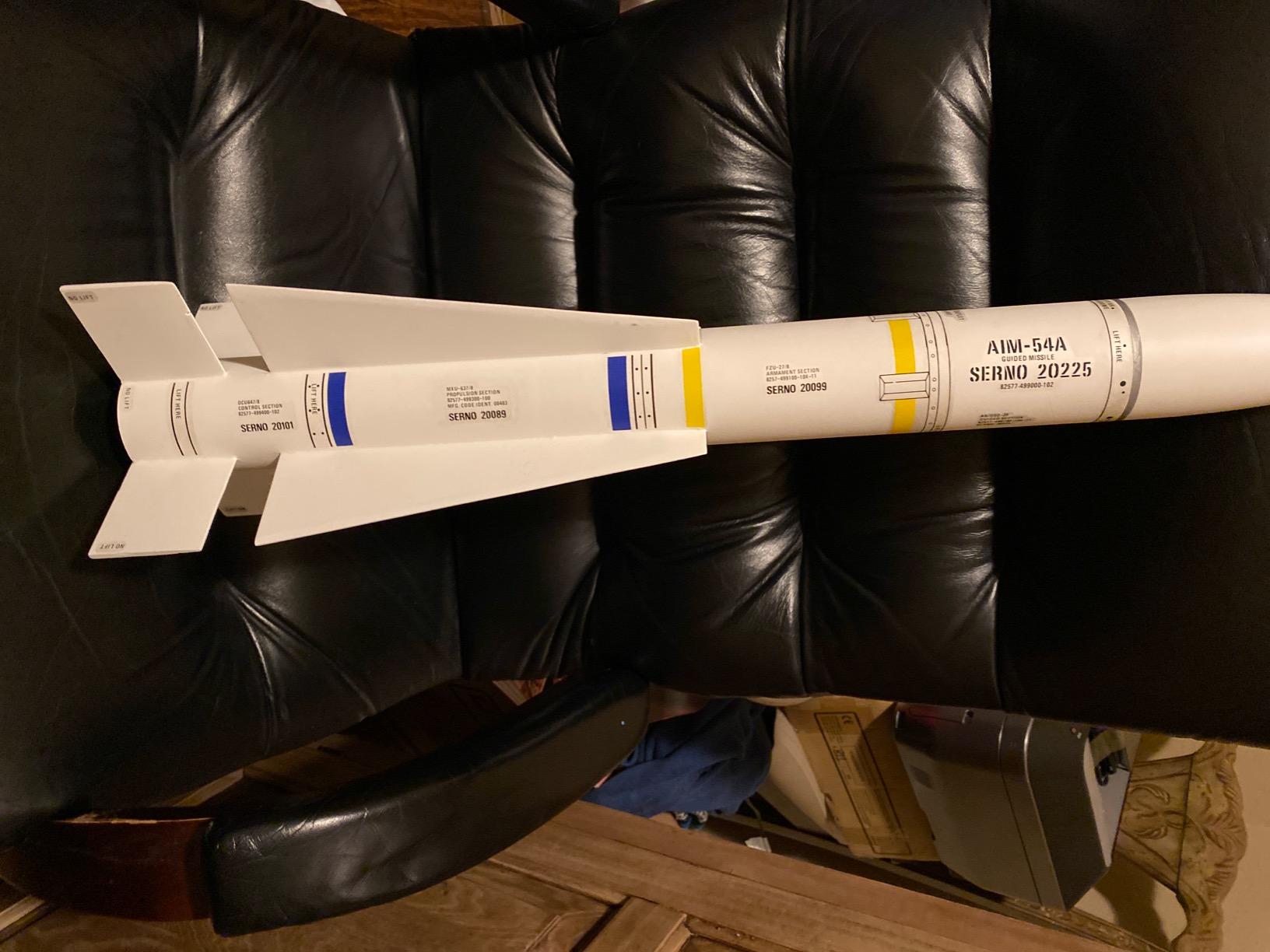
The fin-gluing jig feature is equally valuable. Attach the guide to your tube, apply glue to your fins, and press them against the guide edges. The fins stay in place while the glue sets, aligned perfectly. My rockets fly noticeably straighter since I started using this method.
The tool works with multiple Estes tube sizes, though the fin bases are calibrated specifically for Estes diameters. If you use aftermarket tubes, verify compatibility. I have used it successfully with BT-20 through BT-60 tubes.
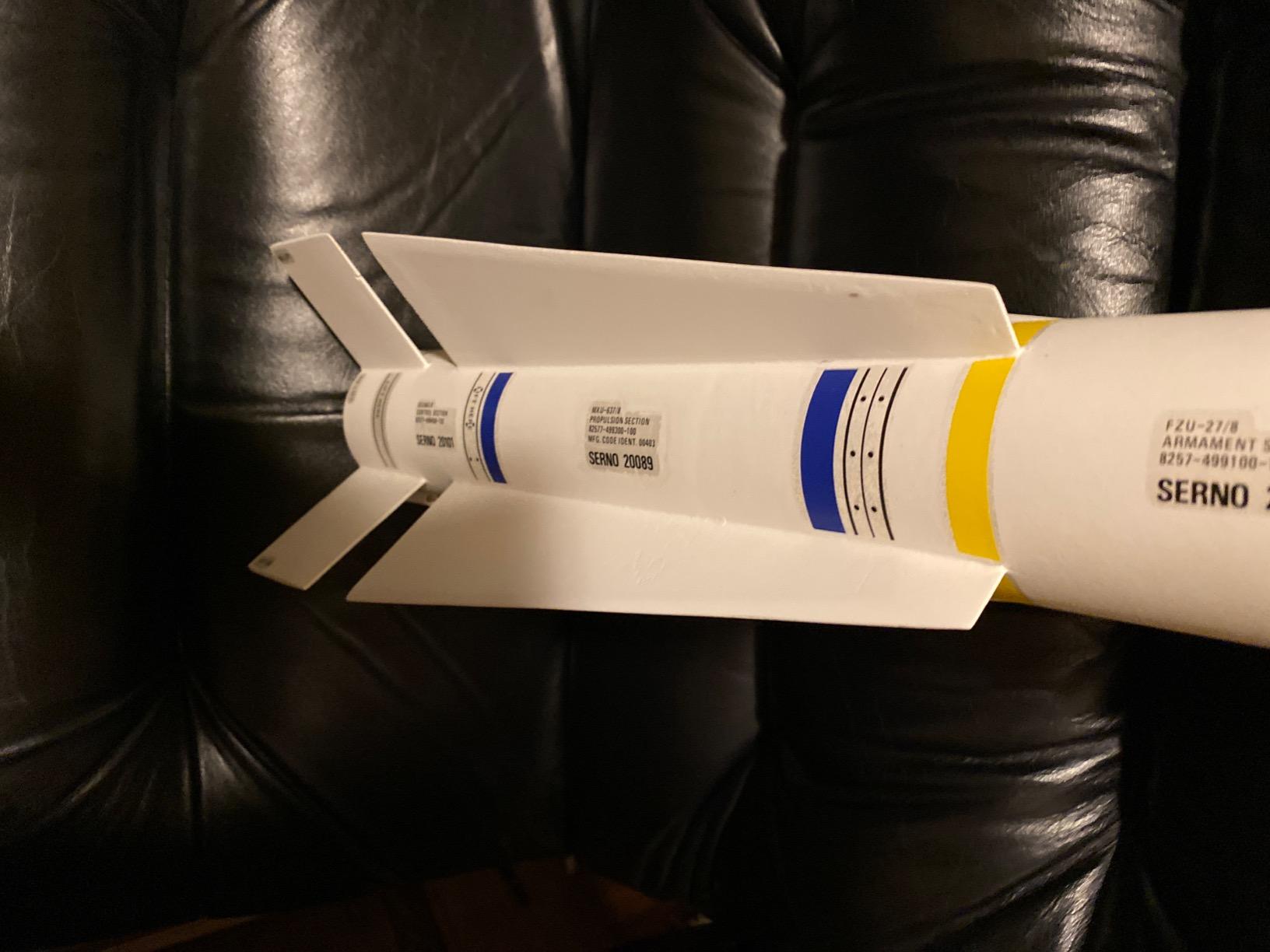
The only minor issue is the pencil holder hole size. Standard pencils may not fit. I use a mechanical pencil or a sharpened standard pencil inserted at an angle. Recent versions have improved this design according to other builders.
Best For
Essential for every rocket builder regardless of experience level. The precision improvement transforms your builds. I particularly recommend this for group builds where consistent results across multiple builders matter.
Skip If
Skip only if you exclusively use non-Estes body tubes with significantly different diameters. The fin bases may not fit properly. For everyone else, this tool will improve your builds immediately.
How to Choose the Right Body Tube and Nose Cones?
After reviewing all these components, let me share the decision framework I use for every build. These questions will guide you to the right choices.
What motor size will you fly? Match your body tube to your motor. BT-5 and BT-20 for 13mm and 18mm motors. BT-50 for 18mm with recovery space. BT-55 and BT-60 for 24mm motors and clusters. This is your first constraint.
How much room do you need? Recovery systems, electronics, and payloads require internal volume. A BT-20 tube barely fits an 18mm motor and a parachute. If you want an altimeter or camera, move up to BT-50 or larger.
What is your field size? Larger diameter rockets drift farther on recovery. I fly BT-60 rockets at club launches with large recovery areas. For school yards and small parks, I stick to BT-50 and smaller.
Are you chasing altitude or stability? For maximum altitude, choose the smallest diameter that fits your motor. For stability in wind, larger diameters and heavier nose cones perform better. Match your components to your goals.
What is your skill level? Beginners should start with BT-50 and standard NC-50 nose cones. The compatibility and availability make problem-solving easier. Advanced builders can experiment with less common sizes and custom profiles.
Forum discussions consistently emphasize one point: test fit everything before gluing. Slide your nose cone into your body tube. Check that your motor mount slides smoothly. These simple checks prevent ruined builds.
Frequently Asked Questions
What is the best nose cone for a rocket?
The best nose cone depends on your flight goals. For general sport flying, an ogive nose cone like the Estes NC-50 offers a good balance of low drag and stability. For competition altitude, parabolic or Von Karman profiles provide the lowest drag. For scale models, match the historical prototype shape. The PNC-80K is frequently recommended by experienced builders for its near-ideal aerodynamic profile.
Are pointy or round rockets better?
Pointier nose cones generally produce less aerodynamic drag, allowing higher altitudes. However, very pointed nose cones can be unstable in wind and move the center of pressure aft. Rounded nose cones provide better stability in windy conditions. For most sport flying, moderately pointed ogive nose cones offer the best compromise between altitude and stability.
What is the best number of fins for a model rocket?
Three fins are the most common and stable configuration for model rockets. They provide adequate stability without excessive drag. Four fins offer slightly more stability but increase drag and weight. Two fins can work but require careful alignment and are less forgiving of mistakes. Beginners should use three fins arranged 120 degrees apart for the most reliable results.
What are model rocket body tubes made of?
Model rocket body tubes are typically made from spiral-wound paper with a glassine or wax coating for moisture resistance. High-power rockets often use fiberglass or carbon fiber tubes for greater strength. Blue Tube brand offers a composite material that cuts more cleanly than paper. Some builders use 3D printed tubes for custom applications. Standard paper tubes work well for most low and mid-power rockets under 1000 feet altitude.
How much wind is too much for a model rocket?
Most model rockets should not fly in winds over 15-20 mph. Lightweight rockets with small fins may struggle in winds over 10 mph. As a rule, if you have difficulty walking against the wind or the wind is blowing consistently, postpone your launch. Check the wind at launch altitude, not just ground level. Small field flying should stay under 10 mph winds to ensure safe recovery.
What are common model rocket failures?
Common failures include unstable flight due to incorrect center of gravity, recovery system failure from improper shock cord attachment, motor mount ejection from weak glue joints, fin separation from inadequate adhesive, and nose cone separation from poor shoulder fit. Most failures can be prevented by following the NAR safety code, proper construction techniques, and pre-flight stability checks using the swing test or software like OpenRocket.
Conclusion: Building Your Perfect Rocket in 2026
Choosing the best model rocket body tubes and nose cones for custom builds comes down to matching your components to your goals. I have shared my experiences with 15 different products, from essential tubes to precision tools that will improve every build you make.
For most builders, start with the Estes BT-50 Body Tubes and NC-50 Nose Cones. This combination hits the sweet spot of compatibility, availability, and performance. Add the Tube-Marking Guide and Body Tube Cutting Guide as soon as possible. These tools transform frustrating steps into simple procedures.
If you are ready to design your own rockets, the Designer’s Special offers unmatched value. With over 100 parts, you can build up to eight unique rockets while learning the principles of rocket design.
Whatever you choose, remember that great rockets are built, not bought. Take your time, double-check your alignments, and always follow the NAR safety code. The satisfaction of a perfect flight is worth every minute of careful construction. Happy flying in 2026!