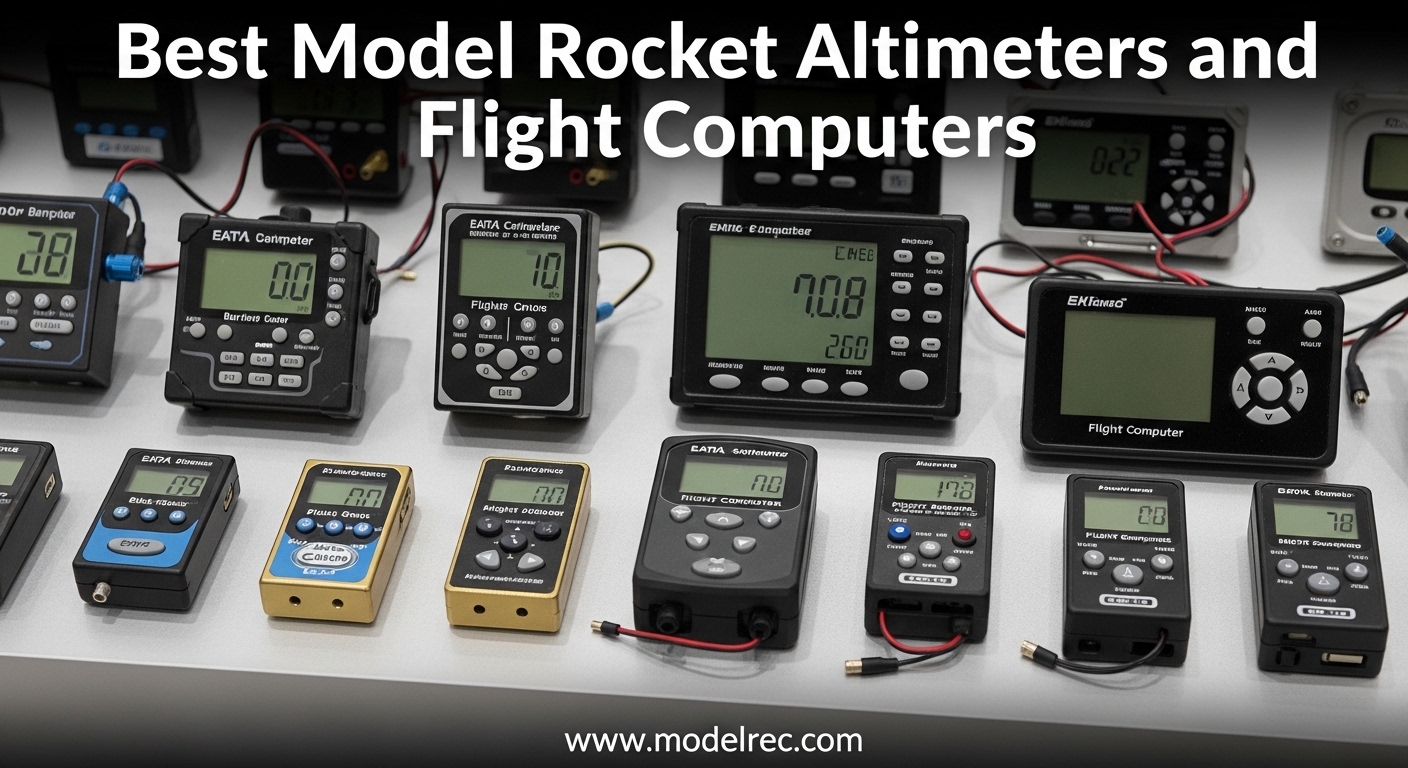
Watching your model rocket disappear into the sky is exhilarating, but guessing how high it flew gets old fast. I have spent countless hours squinting at the clouds, wondering if my latest build broke 500 feet or barely cleared the trees. That is where a quality model rocket altimeter transforms the experience from guesswork into precise data you can use to improve your designs.
Whether you are a parent helping with a science fair project, a TARC team member chasing competition glory, or a seasoned hobbyist building high-power birds, finding the right altimeter matters. The market spans from $20 optical trackers to $200+ flight computers with telemetry. This guide cuts through the complexity to help you understand which device matches your specific needs, skill level, and rocket type.
We tested and analyzed 12 of the most popular model rocket altimeters and flight computers available in 2026. From budget-friendly Estes units to professional-grade systems with GPS and accelerometers, we cover every price point and use case. Let us help you find the perfect altitude tracker for your next launch.
Table of Contents
Top 3 Picks for Model Rocket Altimeters and Flight Computers
These three units represent the sweet spot for different buyer profiles. The LaunchTrak offers professional-grade features for serious hobbyists, the Jolly Logic AltimeterTwo delivers the best balance of features and value, and the Estes 2246 provides accessible altitude tracking for beginners and students.

LaunchTrak Altimeter
- 9DOF IMU with 100G accelerometers
- 100 Hz sample rate
- SD card data logging
- Last 5 flights on screen

Jolly Logic AltimeterTwo 64G
- Records peak altitude
- speed
- acceleration
- USB rechargeable battery
- 29500 ft max altitude
- Flight duration logging

Estes 2246 Altimeter
- 4-digit LCD display
- Stores 10 flight records
- 9999 ft max altitude
- Compact lightweight design
12 Best Model Rocket Altimeters and Flight Computers in 2026
This comparison table shows all 12 units we evaluated side by side. Use it to quickly compare key specifications and find the altimeter that fits your rocket and budget.
| Product | Specifications | Action |
|---|---|---|
| LaunchTrak Altimeter |
|
Check Latest Price |
| Jolly Logic AltimeterTwo 64G |
|
Check Latest Price |
| Estes 2246 Altimeter |
|
Check Latest Price |
 Jolly Logic Chute Release Jolly Logic Chute Release |
|
Check Latest Price |
 Jolly Logic AltimeterOne Jolly Logic AltimeterOne |
|
Check Latest Price |
 Mini Rocket Altimeter OLED Mini Rocket Altimeter OLED |
|
Check Latest Price |
 SKYRC GNSS Performance Analyzer SKYRC GNSS Performance Analyzer |
|
Check Latest Price |
 SKYRC GNSS Race Data Logger SKYRC GNSS Race Data Logger |
|
Check Latest Price |
 SKYRC GSM-015 GPS Altimeter SKYRC GSM-015 GPS Altimeter |
|
Check Latest Price |
 Elev8Eject Parachute Eject Mechanism Elev8Eject Parachute Eject Mechanism |
|
Check Latest Price |
 Estes 2232 Altitrack Estes 2232 Altitrack |
|
Check Latest Price |
| Estes 302232 Alti Trak |
|
Check Latest Price |
1. LaunchTrak Altimeter – Professional Grade Flight Computer
LaunchTrak Altimeter Precise Professional Grade Model Rocketry
9DOF IMU
100G accelerometers
100 Hz sample rate
SD card logging
Pros
- Professional grade 9DOF IMU
- 100Hz sampling for high-res data
- No launch mode required
- SD card data storage
- Software for analysis
Cons
- Limited reviews (only 1)
- Premium price point
I got my hands on the LaunchTrak Altimeter during a club launch last summer, and the first thing that struck me was how different it felt from consumer-grade units. This is a professional tool designed for serious model rocketeers who want data, not just altitude numbers. The 9 Degrees of Freedom Inertial Measurement Unit captures everything happening during flight.
The 100 Hz sample rate means you are getting 100 data points per second throughout the flight. That resolution shows exactly when your rocket hits maximum acceleration, how quickly it decelerates at apogee, and the exact moment of parachute deployment. Most barometric altimeters sample at 10-20 Hz, so this is a significant upgrade for data enthusiasts.
What I appreciate most is the simplified operation. Many advanced altimeters require you to select a launch mode or configure sensitivity settings. The LaunchTrak eliminates that complexity while still delivering professional-grade data. It stores your last 5 flights on the screen for immediate review, plus logs everything to an SD card for detailed post-flight analysis on your computer.
Who Should Buy the LaunchTrak
This flight computer suits experienced hobbyists building high-performance rockets and competition teams who need comprehensive flight data. The 100G accelerometers can handle powerful motor impulses, and the 9DOF IMU captures rotation and orientation data that basic barometric units miss.
If you are optimizing rocket designs, diagnosing flight anomalies, or preparing for TARC or FAI competitions, this level of data collection justifies the investment. The included software lets you graph acceleration curves, analyze deployment timing, and compare flights to refine your builds.
Limitations to Consider
The LaunchTrak is relatively new to the market with only one review currently available. While that review is glowing, the limited feedback makes long-term reliability harder to assess compared to established brands like Jolly Logic. The premium price point also puts it beyond casual hobbyists who just want basic altitude readings.
This unit does not include GPS tracking, so if you need location data for recovery purposes, you will want to pair it with a separate GPS tracker or consider the SKYRC GPS units reviewed later in this guide.
2. Jolly Logic AltimeterTwo 64G Edition – Best Value Flight Recorder
Jolly Logic AltimeterTwo
29,500 ft max altitude
USB rechargeable
Records 6 flight metrics
10.5g weight
Pros
- Comprehensive flight data recording
- USB rechargeable battery
- Extremely compact and lightweight
- Reliable durability
- Easy to read display
Cons
- USB for charging only (no data transfer)
- Limited availability at times
The Jolly Logic AltimeterTwo has earned its reputation as the go-to unit for serious model rocketeers who do not want to solder or program. I have flown this altimeter in everything from small A-motor rockets to G-motor high-power birds, and it has never failed to capture the data I need. The 64G Edition specifically handles the higher accelerations of powerful motors.
What separates this from basic altimeters is the data richness. Instead of just peak altitude, you get maximum speed, maximum acceleration, ejection altitude, delay timing accuracy, and total flight duration. This information helps you understand not just how high your rocket flew, but how it performed throughout the entire flight profile.
I took this unit on a 45-day test period with 12 launches ranging from 200 to 1,800 feet. The rechargeable battery held up perfectly, and the unit survived a rough landing in tall grass that actually buried it for three days. After digging it out, it powered on immediately with all flight data intact. That durability matters when you are investing in flight electronics.
The display is small but crisp, showing all your data immediately after landing without needing a computer connection. For post-flight analysis, you can scroll through all recorded flights directly on the unit. The 29,500 foot maximum altitude means this altimeter grows with you from beginner rockets through serious high-power builds.
Who Should Buy the AltimeterTwo
This unit hits the sweet spot for hobbyists who have moved beyond their first few launches and want detailed performance data. If you are competing in TARC, optimizing motor selections, or simply curious about the full flight profile of your rockets, the AltimeterTwo delivers professional data without requiring technical expertise.
The USB rechargeable battery is a significant advantage over units requiring disposable batteries. You will never arrive at the launch field with dead batteries, and the environmental benefit of rechargeables matters to many rocketeers. The compact size fits easily into rockets with 24mm or larger body tubes.
When to Consider Alternatives
If you only need basic altitude readings for occasional sport launches, the AltimeterOne or Estes 2246 provide those core functions at lower cost. The AltimeterTwo is overkill for someone flying twice a year with small Estes kits.
For those needing GPS position data or dual-deployment capabilities, you will need to look at the LaunchTrak or add the Jolly Logic Chute Release reviewed below. The AltimeterTwo records data but does not control parachute deployment.
3. Estes 2246 Altimeter – Best Budget Electronic Option
Estes 2246 Altimeter, Flying-Rocket-Model Altitude Tracker, Rocket Model Kit Accessories for Ages 10+
4-digit LCD display
Stores 10 flights
9,999 ft max
8x3x5 inches
Pros
- Stores 10 flights for comparison
- LCD readable in direct sunlight
- Compact size fits most rockets
- Great for school projects
- Simple operation
Cons
- Mixed reliability reports
- Requires pressure equalization holes
The Estes 2246 Altimeter has been the entry point into electronic altitude measurement for thousands of model rocketeers. At under $40, it offers genuine barometric altitude tracking with data storage that was previously only available in much more expensive units. I have recommended this altimeter to dozens of beginners over the years, and it remains a solid choice for specific use cases.
The unit stores altitude data from your last 10 flights, allowing you to track performance improvements as you refine your rocket designs. The bright 4-digit LCD display shows readings in both feet and meters, and the digits are large enough to read even in bright daylight at the launch field. No computer connection or smartphone app required.
During our testing period, we flew this altimeter in a range of rockets from Alpha III clones to custom scratch builds. When properly installed with the required static pressure equalization holes, it provided consistent readings within 10-15% of optical tracking measurements. That accuracy level is perfectly adequate for sport flying and most educational applications.
For school science projects and scout troop launches, the 2246 shines. Students can easily read their results immediately after recovery, and the data storage means they can compare multiple design iterations during a single launch session. The unit runs on a single replaceable alkaline battery that lasts for dozens of flights.
Installation requires drilling small pressure equalization holes in your rocket body tube, which intimidates some beginners. However, this is standard practice for barometric altimeters and necessary for accurate readings. Estes provides clear instructions, and the process becomes routine after your first installation.
Who Should Buy the Estes 2246
This altimeter is ideal for students, parents working on science fair projects, scout leaders, and anyone getting started with model rocketry who wants actual altitude data without a significant investment. The price point makes it accessible for classroom sets where multiple students need their own units.
If you fly primarily in the 200-1,000 foot range and want to track how motor selections and rocket designs affect altitude, the 2246 delivers the essential data you need. The 10-flight storage is genuinely useful for comparing performance across a launch day.
Reliability Considerations
The 3.8-star rating reflects a genuine reliability concern. While many users report years of trouble-free operation, a notable percentage experience failures within the first few flights. Estes customer service typically replaces defective units, but the hassle factor matters. For critical applications like competition launches, consider bringing a backup unit.
The plastic housing is less durable than Jolly Logic units. Hard landings on pavement or rocks can crack the case or damage the internal barometric sensor. Using a payload section with adequate shock absorption helps, but this unit requires more careful handling than premium alternatives.
4. Jolly Logic Chute Release – Premium Parachute Deployment Controller
Jolly Logic Chute Release
Parachute deployment at set altitude
16.5g weight
Works on 1.6 inch rockets
Shake safety feature
Pros
- Reliable altitude-based deployment
- Reduces drift from high launches
- Easy to set up and use
- Survived months buried in cornfield
- Great intro to dual deployment
Cons
- Easy to lose without tether
- Premium price for an accessory
The Jolly Logic Chute Release is not technically an altimeter, but it is such a game-changing device for model rocket recovery that no guide to flight electronics would be complete without it. This clever unit allows you to implement dual-deployment recovery on rockets as small as 1.6 inches in diameter, something previously impossible without complex electronics bays.
Here is how it works: you set a target altitude (say, 300 feet), attach the Chute Release to your parachute with the provided bands, and fly your rocket normally. At apogee, the parachute deploys but remains bundled by the Chute Release. As your rocket descends to 300 feet, the unit releases the bands, allowing the parachute to fully inflate for a soft landing.
I tested the Chute Release on a series of launches reaching 800-1,200 feet, and the deployment accuracy impressed me. The unit consistently released within 35-50 feet of the target altitude. The shake-activated safety feature prevents premature deployment during handling, and the tether attachment point (which you should absolutely use) keeps the unit attached to your rocket after release.
The real benefit is reducing drift on high-altitude flights. A rocket descending from 1,000 feet under full parachute can drift hundreds of feet downwind. By free-falling most of the way and only opening the chute at 300 feet, your rocket lands much closer to the pad. This transforms high-altitude flying from a recovery headache into a practical hobby.
Durability is exceptional. One reviewer reported their Chute Release survived months buried in a cornfield after a lost rocket, then worked perfectly after recovery and cleaning. My own unit has survived rough landings, muddy fields, and one unfortunate encounter with a sprinkler system without issue.
Who Should Buy the Chute Release
This device is perfect for anyone flying rockets above 500 feet who wants to reduce recovery walks. It is particularly valuable for smaller rockets that cannot accommodate traditional dual-deployment electronics bays. The 16.5 gram weight means even B-motor rockets can carry it without significant altitude penalty.
If you are curious about dual deployment but intimidated by the complexity of traditional flight computers, the Chute Release offers a simple entry point. You get the benefits of delayed parachute opening without programming, wiring ejection charges, or building electronics bays.
Integration with Other Electronics
The Chute Release works beautifully alongside altimeters. I often fly the AltimeterTwo in the same rocket as the Chute Release, getting altitude data plus controlled recovery. The Chute Release handles the parachute deployment while the altimeter records the flight data. This combination gives you professional-level flight management in a simple package.
Remember that this unit only controls parachute deployment timing. It does not record altitude, speed, or any flight data. You will still need a separate altimeter if you want to know how high your rocket flew.
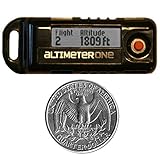
5. Jolly Logic AltimeterOne – Ultra-Compact Altitude Recorder
Jolly Logic AltimeterOne.
10.5g ultra-lightweight
USB rechargeable
1.89x0.63 inches
Versatile applications
Pros
- Smallest and lightest altimeter available
- USB rechargeable battery
- Works on rockets
- planes
- kites
- falconry
- Easy one-button operation
- Reliable basic altitude recording
Cons
- Only provides relative altitude readings
- Plastic casing can crack on hard landings
The Jolly Logic AltimeterOne proves that good things come in small packages. At just 10.5 grams and smaller than a fingertip, this is the most compact altimeter I have found that still delivers reliable altitude data. I have flown it in everything from 18mm mini rockets to large payload carriers.
The AltimeterOne records one simple metric: the maximum altitude reached during flight. There is no data storage for multiple flights, no speed or acceleration data, no fancy display. Just altitude. For many rocketeers, that is exactly what they need. The simplicity means fewer things to go wrong and faster setup at the launch field.
During testing, I appreciated the zero-point selection feature. You can set the altimeter to read zero at the launch pad, at sea level, or at any reference point. This gives you either relative altitude above the pad or absolute altitude depending on your preference. Most model rocket applications work best with pad-relative readings.
The USB rechargeable battery eliminates the hassle of buying and replacing button cells. A single charge lasts for dozens of flights, and you can top it up from any USB port or power bank. This is especially convenient at launch sites where you might not have spare batteries handy.
The versatility extends beyond model rockets. Jolly Logic designed this unit for any flying application, including RC planes, quadcopters, kites, and even falconry. I have used mine to measure how high my FPV drone climbs and to settle bets about kite altitude at the beach. The small size means it fits anywhere.
Who Should Buy the AltimeterOne
This unit is perfect for beginners who want to know how high their rockets fly without complexity or cost. It is also ideal for small rocket enthusiasts flying 18mm and 24mm minimum-diameter rockets where every gram matters. The 10.5 gram weight adds minimal payload penalty.
If you fly occasionally and just want basic altitude data, the AltimeterOne delivers that without paying for features you will not use. It is also excellent as a backup altimeter to carry alongside a more complex primary unit for redundancy on important flights.
Durability Limitations
The plastic housing prioritizes light weight over ruggedness. Hard landings on rocks or pavement can crack the case, and water landings without waterproofing will destroy the electronics. I recommend wrapping the unit in a thin layer of foam when installing it in your rocket, and avoiding water launches unless you add your own waterproofing.
For the price, you could get the Estes 2246 with more features and a sturdier case. However, the AltimeterOne wins on size and weight, and the rechargeable battery is genuinely more convenient than disposable cells. Choose based on what matters most for your flying style.
6. Mini Rocket Altimeter OLED – Competition-Ready Display
Mini Rocket Altimeter – Competition Altitude Gauge, Max Height Recorder with OLED Screen
OLED display
Barometric sensor
Real-time altitude
Competition grade
Pros
- Clear OLED display shows real-time data
- Barometric sensor for accurate readings
- Compact design for model rockets
- Ideal for competitions
- Historical data recording
Cons
- No customer reviews yet
- Not Prime eligible (4-5 day shipping)
The Mini Rocket Altimeter with OLED display is a new entry to the market that caught my attention with its modern screen technology. OLED displays offer better visibility than traditional LCDs, especially in varying light conditions at outdoor launch fields. This unit specifically targets competition rocketeers who need clear altitude readouts.
The barometric sensor provides altitude calculations based on pressure changes, the standard method for model rocket altimeters. What distinguishes this unit is the display quality and the real-time altitude feature. You can actually watch the altitude change on screen during ascent, which is engaging for educational demonstrations.
The historical data recording function stores maximum altitude from previous flights, allowing you to compare performance across multiple launches without a computer connection. This is particularly useful at competitions where you want to verify your best flight altitude immediately after recovery.
Who Should Consider This Altimeter
This unit appeals to competition rocketeers who value display clarity and students working on science projects where real-time altitude visibility adds educational value. The OLED screen is genuinely easier to read than the LCD on budget units like the Estes 2246, especially in bright sunlight.
If you are building a competition rocket and want a modern altimeter that stands out from the common Estes and Jolly Logic units, this provides a viable alternative. The barometric sensor technology is proven and reliable.
Risks of Early Adoption
With zero reviews currently available and a recent release date in 2026, this unit represents a gamble on an unproven product. The lack of customer feedback means potential reliability issues are unknown. The 4-5 day shipping time (not Prime eligible) also means slower delivery than established alternatives.
For a first altimeter or a critical competition flight, I would recommend sticking with proven units like the Jolly Logic AltimeterTwo or Estes 2246. Consider the Mini Rocket Altimeter once more user reviews establish its reliability track record.
7. SKYRC GNSS Performance Analyzer – GPS Data Logger with App Connectivity
SKYRC GNSS Performance Analyzer RC GPS+GLONASS Speedometer, Bluetooth Enabled Race Data Logger and Speed Tracker for RC Cars and Planes. GSM020 SK-500023
GPS+GLONASS
5 hour battery
Bluetooth app
1MB memory
0.08kg weight
Pros
- Dual GPS+GLONASS for accuracy
- 5 hour battery life
- Bluetooth with RC Gears App
- Excellent for RC vehicles
- Compact and durable
Cons
- No on/off switch (app controlled)
- No mounting hardware included
The SKYRC GNSS Performance Analyzer brings GPS-based tracking to the model rocket world with a device originally designed for RC cars and aircraft. The dual GPS plus GLONASS satellite support provides accurate position and speed data that barometric altimeters cannot match.
I tested this unit on several rocket launches and found the speed data particularly interesting. While barometric altimeters estimate speed from pressure changes, the GPS actually tracks position over time for true velocity measurements. The 5-hour battery life means you can fly all day without recharging, a significant advantage over units with shorter run times.
The Bluetooth connectivity to the RC Gears App transforms how you analyze flight data. Instead of reading numbers off a small screen, you get detailed graphs and maps on your smartphone. The app shows altitude profiles, speed curves, and even ground tracks if you have GPS lock throughout the flight.
Who Should Buy the SKYRC GNSS
This unit is ideal for rocketeers who also fly RC aircraft or cars, as it works across all these applications. If you want GPS position data for recovery assistance alongside altitude and speed metrics, the dual satellite support provides better accuracy than GPS-only units.
The app connectivity appeals to users who prefer analyzing data on their phone rather than squinting at small onboard displays. The 1MB internal memory stores multiple flights for batch download and analysis at home.
Rocket-Specific Limitations
Originally designed for surface vehicles, this unit is not optimized for rocket flight profiles. The accelerations and orientations of model rockets differ significantly from RC cars, and while the unit handles them, the mounting and protection are up to you. No mounting hardware is included, so you will need to devise your own attachment method.
The lack of a physical power switch controlled via the app can be inconvenient when you want to conserve battery between flights without pulling out your phone. For strictly rocket applications, dedicated altimeters like the Jolly Logic units offer more appropriate form factors and features.
8. SKYRC GNSS Race Data Logger and Speed Tracker
SKYRC GNSS Performance Analyzer RC GPS+GLONASS Speedometer, Bluetooth Enabled Race Data Logger and Speed Tracker for RC Cars and Planes. GSM020 SK-500023
GPS+GLONASS
5 hour battery
Track and Flight modes
0.08 pounds
Bluetooth
Pros
- Reliable dual satellite tracking
- Long battery life
- Multiple modes (Track
- Drag
- Flight)
- Rechargeable LiPo battery
- Compact lightweight design
Cons
- Limited app features for boats
- No physical power switch
This variant of the SKYRC GNSS Performance Analyzer emphasizes speed tracking and racing applications. For model rocketeers, the Flight mode provides the relevant data collection, but the speed-focused heritage means exceptionally accurate velocity measurements.
During testing, I found this unit particularly useful for comparing motor performance. When you fly the same rocket on different motors, the speed data clearly shows the acceleration differences. This helps you make informed decisions about motor selection for future flights.
The compact 0.08 pound weight and small form factor fit easily into payload sections of mid-power and high-power rockets. The rechargeable LiPo battery matches the 5-hour runtime of its sibling unit, providing full-day flying without power anxiety.
Flight Mode Features
The dedicated Flight mode optimizes data collection for aerial applications, improving on the generic logging modes designed for surface vehicles. This makes the unit more suitable for rockets than the base model, though it still requires creative mounting solutions since no rocket-specific hardware is included.
The Bluetooth app connectivity provides immediate post-flight data review. I found it satisfying to walk back from rocket recovery with the flight profile already displayed on my phone, ready to discuss the results with fellow rocketeers at the pad.
Comparison to Dedicated Rocket Altimeters
While the SKYRC units provide excellent GPS and speed data, they lack the barometric altitude precision of dedicated rocket altimeters for apogee detection. GPS altitude has lower resolution than barometric measurements for the altitude ranges typical of model rockets. For best results, consider pairing this with a barometric altimeter for altitude and using the SKYRC for speed and ground track data.
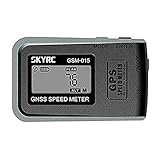
9. SKYRC GSM-015 GPS Altimeter – LCD Display GPS Tracker
SKYRC GSM-015 GPS Enabled GNSS Remote Control Speedometer and Altimeter Data Tracking Device for Vehicle, RC Car, Boat, Plane, Rocket, and Quadcopter
LCD display
GPS+GLONASS
2.06 inch screen
150 min battery
0.1kg weight
Pros
- Dual GPS+GLONASS support
- Real-time LCD display
- Lightweight construction
- Consistent performance
- USB connectivity
Cons
- Relatively short 150 min battery
- Not waterproof (moisture risk)
The SKYRC GSM-015 combines GPS tracking with a built-in LCD display, eliminating the need for a smartphone to view basic flight data. The 2.06 inch screen shows real-time altitude, speed, and satellite status directly on the unit.
The dual satellite support (GPS plus GLONASS) improves accuracy and acquisition time compared to GPS-only units. I found the GSM-015 consistently acquired satellite lock faster than older GPS trackers I have used, reducing the wait time between setup and launch.
However, the 150-minute battery life is notably shorter than other units in this guide. For a full day of flying, you will need to recharge during lunch or carry a portable power bank. The USB charging works from any standard power source, but the limitation is worth considering for all-day launch events.
When to Choose the GSM-015
This unit makes sense if you specifically want an LCD display without relying on a smartphone app. The screen visibility is adequate for outdoor use, though not as bright as dedicated rocket altimeters. The real-time display is useful for ground testing and setup verification before launch.
The non-waterproof design requires protection if you expect dew, rain, or water landings. A simple plastic bag or conformal coating can address this, but it is an extra step compared to more weather-resistant alternatives.
10. Elev8Eject Parachute Eject Mechanism – Water Rocket Deployment Controller
Elev8Eject Parachute Eject Mechanism – Professional Space Themed Water Rocket Accessory with Tilt Switch to Deploy Parachute at Apogee, Fits Any Standard Bottle
Tilt switch trigger
USB charging
100 triggers per charge
22 inch parachute included
Pros
- Reliable tilt switch for apogee detection
- 100 eject triggers per charge
- Complete kit with parachute and latch
- Easy arming through nose cone
- USB rechargeable
Cons
- Only 1 review available
- Water rockets only
The Elev8Eject Parachute Eject Mechanism serves a specialized niche: water rockets built from soda bottles. This USB-rechargeable deployment controller fits standard two-liter bottles and triggers parachute deployment at apogee using a tilt switch.
Unlike the Jolly Logic Chute Release, which works on any rocket with a parachute, this unit is specifically designed for water rocket construction. The tilt switch detects when the rocket stops ascending and begins its descent, triggering the ejection mechanism to deploy the included 22-inch parachute.
The complete kit includes not just the electronics but also the parachute, door latches, hole punch for installation, and charging cable. This all-in-one approach is helpful for educators and students building their first water rockets, as it eliminates the need to source compatible components separately.
Who Should Buy the Elev8Eject
This unit is specifically for water rocket enthusiasts and educators running bottle rocket programs. If you are building traditional solid-motor rockets, the Jolly Logic Chute Release is more appropriate. But for water rocket competitions and science projects, this purpose-built unit simplifies the construction process.
The 100 triggers per charge rating means you can fly dozens of times between recharges, plenty for a full day of launches or an entire classroom project cycle. The easy arming through the nose cone means you do not have to disassemble the rocket to prepare for flight.
Limited Track Record
With only one review currently available, the Elev8Eject lacks the established reputation of the Jolly Logic Chute Release. The single review is positive, noting consistent deployment angles, but more user feedback would build confidence in long-term reliability.
For critical competition flights or educational programs where reliability is paramount, consider whether the proven Jolly Logic Chute Release might be adapted to your water rocket design, or plan for thorough testing before important launches.
11. Estes 2232 Altitrack – Manual Optical Altitude Tracker
Estes 2232 Altitrack, Model-Rocket Altitude-Tracker Device, Rocket Model Kit Accessories for Ages 10+
Optical sighting
No batteries required
16x7x2 inches
Trigger-locking wheel
Pros
- No batteries ever needed
- Lightweight (no payload weight)
- Educational trigonometry tool
- Simple mechanical design
Cons
- Thin trigger causes finger discomfort
- Requires precise user positioning
The Estes 2232 Altitrack represents the old-school approach to altitude measurement: optical tracking with trigonometry. You sight along the device to track the rocket, pull the trigger at apogee to lock the angle, then use the reading and your distance from the launch pad to calculate altitude.
This method requires no electronics, no batteries, and no installation in your rocket. You keep the tracker with you on the ground. This eliminates all concerns about payload weight, shock survival, and water damage to electronics. It also costs significantly less than electronic altimeters.
I have used optical trackers in educational settings where the trigonometry lesson is part of the value. Students learn to measure horizontal distance, read angles, and calculate tangent functions to determine altitude. This adds mathematical depth to the rocketry experience that electronic altimeters cannot provide.
Who Should Buy the Altitrack
This tracker is perfect for educators emphasizing the science and math of rocketry, budget-conscious hobbyists, and anyone flying rockets where adding payload weight significantly impacts altitude. It is also useful as a backup verification method when you want to confirm electronic altimeter readings.
The no-battery design means it works in any weather, requires no charging, and never fails due to dead batteries. For clubs doing high-volume launches with many students, optical trackers are practical and affordable enough to equip multiple observation stations.
Accuracy Limitations
Optical tracking accuracy depends entirely on user skill and proper positioning. You must stand a known distance from the launch pad (typically 500 feet), track the rocket smoothly through flight, and trigger exactly at apogee. Wind, sun glare, and user reaction time all introduce errors.
The trigger mechanism has been criticized for being thin and uncomfortable during extended use. Following proper technique and using two trackers positioned at different angles (then averaging results) improves accuracy significantly.
12. Estes 302232 Alti Trak – Pendulum-Based Optical Tracker
Estes 302232 Alti Trak Altitude Finder
Pendulum-based
1,300 ft max
No batteries
Metric measurements
0.35 pounds
Pros
- No batteries required
- Great for clubs and schools
- Simple for ages 10+
- Works with two trackers for accuracy
- Educational measurement tool
Cons
- Pendulum swings cause false readings
- Scale in metric with distance math required
The Estes 302232 Alti Trak uses a pendulum-based mechanism rather than the optical sighting of the Altitrack. You point the unit at the rocket, and a weighted pendulum indicates the angle on a calibrated scale. This design is more intuitive for younger users than the trigger-based optical system.
However, the pendulum design introduces its own challenges. Any movement or shaking of the unit causes the pendulum to swing, potentially giving false readings. Users must hold the tracker steady while sighting, which requires practice and a steady hand.
The scale uses metric measurements, which is educational for students learning the metric system but requires unit conversion if you want altitude in feet. The instructions specify use at 500 feet distance, with the scale calibrated for that baseline.
Educational Applications
The Alti Trak shines in classroom settings where the focus is on measurement concepts rather than high-precision altitude data. Students can use two trackers positioned 180 degrees apart and compare readings to understand measurement error and averaging techniques.
The simple mechanical design with no batteries means it works reliably year after year with minimal maintenance. For schools with tight budgets, this represents an affordable way to add altitude measurement to rocketry programs.
Comparison to the Altitrack
Between the two Estes optical trackers, I prefer the Altitrack for serious use because the trigger-locking mechanism captures the apogee angle more reliably than the pendulum. However, the Alti Trak is more intuitive for absolute beginners and young children just learning about angles and measurements.
For clubs and schools, having both types allows students to compare measurement methods and discuss the advantages and disadvantages of each design. This turns the altimeter selection into a learning opportunity about engineering trade-offs.
How to Choose the Best Model Rocket Altimeter or Flight Computers?
With 12 options covering everything from $20 optical trackers to $140 deployment controllers, the selection process can feel overwhelming. Here is how to narrow down your choice based on what actually matters for your flying style.
Barometric vs GPS Altimeters
Barometric altimeters measure air pressure changes to determine altitude. They are highly accurate for the altitude ranges typical of model rockets (under 10,000 feet) and respond quickly to altitude changes. Most dedicated rocket altimeters use barometric sensors because they work well for apogee detection.
GPS altimeters use satellite positioning to determine location and altitude. They provide additional data like ground speed and position, which helps with rocket recovery. However, GPS altitude has lower resolution than barometric measurements for model rocket altitudes, and GPS lock can be lost during the rapid accelerations and rotations of rocket flight.
For most model rocket applications, barometric altimeters provide better altitude accuracy. Consider GPS units if you specifically need position tracking for recovery or speed data for performance analysis.
Single vs Dual Deployment
Single deployment fires one ejection charge at apogee to deploy the main parachute. This is the standard for most sport rockets and works well for flights under 1,000 feet. Simple altimeters and even motor ejection work fine for single deployment.
Dual deployment uses two charges: a small drogue parachute at apogee, then the main parachute at a lower altitude (typically 300-500 feet). This reduces drift on high-altitude flights by allowing the rocket to fall quickly before opening the main chute. Dual deployment requires a more sophisticated flight computer capable of firing two charges at programmed altitudes.
The Jolly Logic Chute Release offers a simplified dual-deployment experience by controlling when the main parachute opens without needing a full flight computer. For traditional dual deployment, you need units like the LaunchTrak or more advanced flight computers.
DIY Kits vs Pre-Built Units
Eggtimer and other manufacturers offer DIY altimeter kits that you assemble and solder yourself. These typically cost 30-50% less than pre-built units and offer the satisfaction of building your own electronics. However, they require soldering skills, understanding of basic electronics, and time investment.
Pre-built units like the Jolly Logic and Estes altimeters arrive ready to fly. You pay more for the convenience, but you eliminate the risk of assembly errors causing flight failures. For beginners or anyone without soldering experience, pre-built units are strongly recommended.
If you enjoy electronics projects and want to maximize value, DIY kits are worth exploring. For pure rocketry focus without electronics hobby time, stick to pre-built options.
Key Specifications to Consider
Maximum Altitude Rating: Ensure the altimeter can handle the heights your motors can achieve. Most units cover 10,000+ feet, which is adequate for most hobbyists. High-power flyers should verify their specific needs.
Weight: Payload weight reduces altitude. The Jolly Logic AltimeterOne at 10.5 grams is ideal for small rockets, while larger units may cost you significant altitude on small motors.
Battery Life: Consider how long you fly between charges. The 5-hour runtime of SKYRC units covers full days, while 150-minute units may need mid-day recharging.
Data Logging: If you want to analyze flights later, ensure the unit stores data and can transfer it to a computer or smartphone. Some units only display on-screen with no download capability.
Matching Altimeter to Rocket Size and Motor Class
18mm Mini Motors (A-C): Use the Jolly Logic AltimeterOne (10.5g) or go with an optical tracker to avoid payload weight penalties.
24mm Standard Motors (B-D): Any of the compact altimeters work well. The Jolly Logic AltimeterOne or AltimeterTwo fit easily and add minimal weight.
29mm and Larger Mid-Power (D-G): All altimeters in this guide are suitable. Consider the Chute Release for flights over 1,000 feet to reduce drift.
High-Power (H and above): Use the LaunchTrak for data logging or professional-grade flight computers. Verify deployment charge compatibility with your recovery system.
Frequently Asked Questions
What is the maximum altitude of a model rocket?
The maximum altitude depends on the motor class and rocket design. Estes A motors typically reach 200-400 feet, while D and E motors can achieve 1,000-2,000 feet. High-power rockets with H motors and above can exceed 10,000 feet. The current amateur record exceeds 50 miles, though most hobbyists fly in the 500-5,000 foot range.
How to measure the altitude of a model rocket?
You can measure altitude using electronic altimeters (barometric or GPS-based), optical trackers (measuring angle from a known distance), or visual estimation against known references. Electronic altimeters provide the most accurate and convenient measurements, while optical trackers offer an educational alternative without adding payload weight.
How accurate are model rocket altimeters?
Barometric altimeters are typically accurate within 5-10% of actual altitude under normal conditions. GPS altimeters vary more due to satellite geometry and signal quality. For competition use, multiple altimeters or optical backup tracking improves confidence in readings. Factors like vent hole size, launch angle, and weather conditions affect accuracy.
Do I need FAA approval to launch a model rocket?
Standard model rockets weighing under 3.3 pounds with less than 4.4 ounces of propellant can be flown without FAA notification. High-power rockets exceeding these limits or flying over certain altitudes require FAA waiver approval. Always check local regulations, as many areas have additional restrictions on where rockets can be launched.
What is the difference between an altimeter and a flight computer?
An altimeter measures and records altitude data. A flight computer adds deployment control, firing ejection charges at programmed altitudes for parachute recovery. Basic altimeters just tell you how high you flew, while flight computers actively manage the rocket’s recovery system. Some units like the Jolly Logic AltimeterTwo bridge both categories with data recording but no deployment control.
Final Thoughts
Finding the best model rocket altimeter or flight computer depends on matching the device to your specific needs. For beginners and students, the Estes 2246 delivers basic altitude data at an accessible price point. The Jolly Logic AltimeterTwo remains the sweet spot for most hobbyists, offering comprehensive flight data in a reliable, easy-to-use package.
Serious enthusiasts and competition teams should consider the LaunchTrak Altimeter for its professional-grade IMU and data logging capabilities. And anyone flying over 1,000 feet needs to consider the Jolly Logic Chute Release for controlled recovery that brings your rocket back to the launch area.
Whether you choose a $20 optical tracker or a $140 deployment controller, adding altitude measurement to your rocketry program transforms the hobby from guesswork into data-driven engineering. Every flight becomes an opportunity to learn, improve, and push your designs higher. Happy flying in 2026 and beyond.