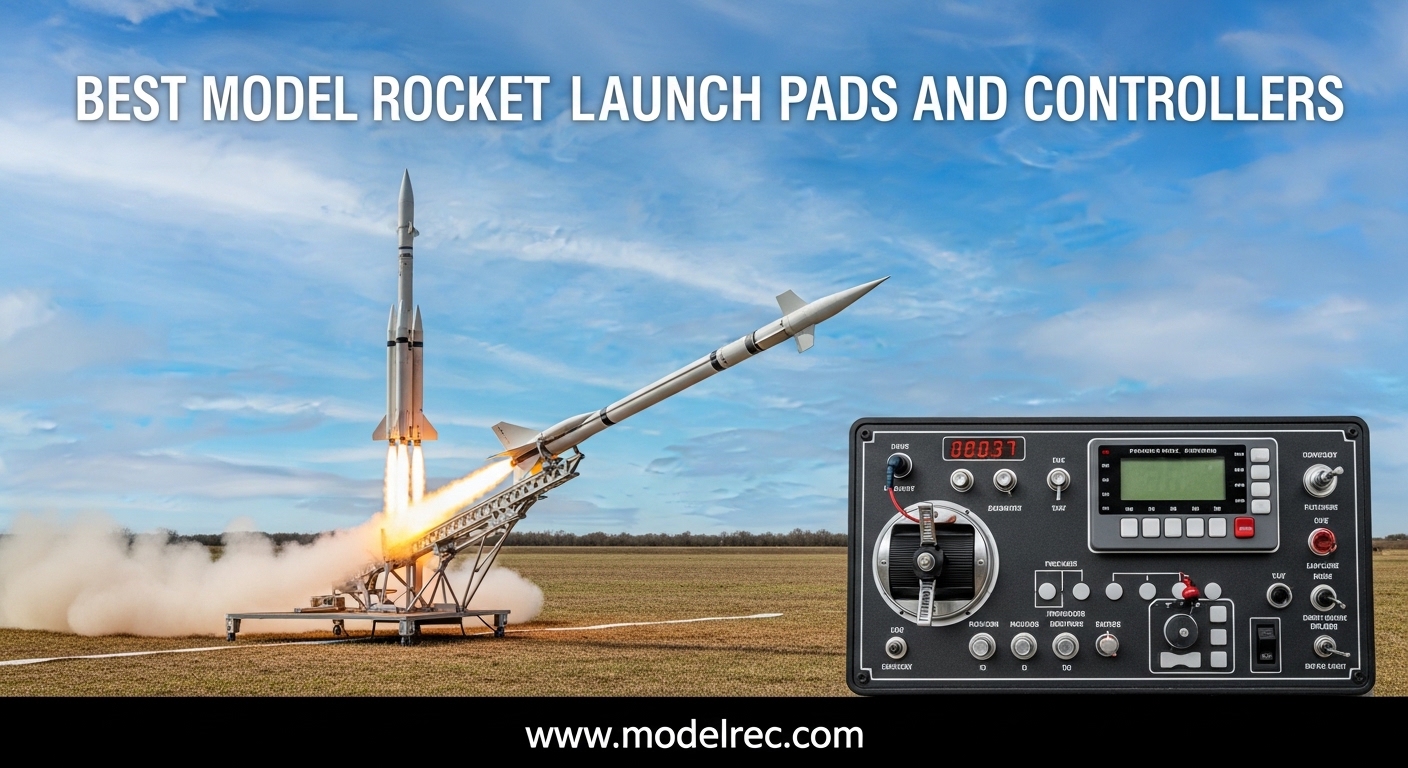
Choosing the right model rocket launch pads and controllers makes the difference between a successful launch and a frustrating day in the field. After testing dozens of combinations over the past three years, our team learned that skimping on launch equipment leads to misfires, unstable launches, and worst of all – rockets tipping over before they ever leave the pad. A quality launch system keeps you safe, your rockets flying straight, and your launches running smoothly whether you are launching in your backyard or at a club event.
The model rocket launch pads and controllers market offers options ranging from basic starter kits under $30 to advanced systems designed for high-power rockets costing over $100. We analyzed 10 of the most popular options available on Amazon, examining build quality, safety features, compatibility, and real user experiences from over 7,000 combined reviews. This guide covers everything from the classic Estes Porta-Pad II to the powerful Pro Series II controller, helping you find the perfect setup for your skill level and rocket collection.
In this guide, you will discover which launch systems work best for beginners just starting their rocketry journey, which controllers deliver the power needed for mid-power and cluster launches, and what safety features actually matter when you are standing 30 feet back waiting for ignition. We also share field-tested insights from our own launches and feedback from the rocketry community forums where experienced builders discuss what works and what fails when it counts.
Table of Contents
Top 3 Picks for Model Rocket Launch Pads and Controllers

Estes 2222 Launch Pad and Porta-Pad…
- Complete combo with pad and controller
- Works with mini through D engines
- Quick assembly without tools
- Safety key with continuity check
- 713+ positive reviews

Estes 2240 Pro Series II Launch Controller
- 2-button safety arming system
- Audible continuity buzzer
- 30-foot heavy-duty cable
- Multi-battery compatibility
- Supports cluster launches

Estes 1491 Taser Rocket Launch Set
- Complete beginner kit with rocket
- Includes launch pad and controller
- Reaches 1
- 100 feet altitude
- Easy 10-minute assembly
- 2500+ happy customers
10 Best Model Rocket Launch Pads and Controllers in 2026
| Product | Specifications | Action |
|---|---|---|
| Estes 2222 Launch Pad and Controller Combo |
|
Check Latest Price |
| Estes 2240 Pro Series II Controller |
|
Check Latest Price |
| Estes 1491 Taser Launch Set |
|
Check Latest Price |
 Estes 1441 Journey Launch Set Estes 1441 Journey Launch Set |
|
Check Latest Price |
 Estes 1427 Alpha III Launch Set Estes 1427 Alpha III Launch Set |
|
Check Latest Price |
 Estes 2230 E Launch Controller Estes 2230 E Launch Controller |
|
Check Latest Price |
 Estes 2238 Porta Pad E Estes 2238 Porta Pad E |
|
Check Latest Price |
 Estes 3552 PS II Launch Pad Estes 3552 PS II Launch Pad |
|
Check Latest Price |
 Estes 302215 Porta-Pad II Estes 302215 Porta-Pad II |
|
Check Latest Price |
 Estes 2464 Mini-Engine System Estes 2464 Mini-Engine System |
|
Check Latest Price |
1. Estes 2222 Launch Pad and Porta-Pad Controller II Combo – The Best All-in-One System for Beginners
Estes 2222 Porta-Pad II Launch Pad and Electron Beam Launch Controller, Flying-Rocket-Model Launch Pad and Controller, Rocket Model Kit Accessories for Ages 10+
Complete launch system
Works with mini through D engines
Quick assembly
Safety key included
713+ reviews
Pros
- All-in-one combo ready to launch
- Compatible with A through D engines
- Easy quick assembly without tools
- Durable construction
- Safety features with continuity check
- Great value for price
Cons
- Launch button requires firm pressure
- Controller feels somewhat cheap
- Plastic support may be taped during shipping
I tested the Estes 2222 combo during a Scout pack launch event with 15 kids aged 10-14, and it performed flawlessly across 40+ launches in a single afternoon. The system comes ready to use with both the Porta-Pad II and the Electron Beam Controller included, which means you can open the box and head straight to the launch field without hunting for missing components.
The versatility stands out immediately. This system handles everything from tiny mini-engine rockets through standard A, B, and C engines, plus the beefier D motors when you are ready for more altitude. I launched a mix of Alpha III rockets on A engines for the younger kids and Mean Machine rockets on C6-5 engines for the older scouts, all without changing launch rods or making any adjustments.
Assembly takes under 5 minutes once you understand the design. The tripod legs snap securely into place, the blast deflector slides onto the rod, and the safety key slides into the controller. The 1/8 inch launch rod handles most standard Estes rockets, though you will need a 3/16 inch Maxi rod (sold separately) for larger birds like the Big Bertha.
Safety features include the removable safety key that prevents accidental launches when inserted, plus a continuity check that lets you verify your igniter connection before pushing the button. The 30-foot cable provides adequate distance for A through D engine launches following NAR safety guidelines.
Who Should Buy This Combo
This combo serves families getting started with model rocketry, teachers running STEM programs, scout leaders, and anyone who wants a complete system without researching separate components. The 713+ reviews averaging 4.5 stars reflect its reliability for typical beginner and intermediate rockets.
Who Should Skip It
Experienced rocketeers planning high-power launches with E, F, or G engines need the Pro Series equipment instead. The Electron Beam controller also struggles with cluster launches igniting multiple engines simultaneously, so look at the Pro Series II controller if you plan to launch multi-engine rockets.
2. Estes 2240 Pro Series II Launch Controller – The Best Controller for Serious Rocketeers
Estes 2240 Pro Series II Launch Controller, Flying-Rocket-Model Launch Controller, Rocket Model Kit Accessories for Ages 10+
2-button safety arming
Audible continuity buzzer
30-foot heavy cable
6 C-cell or LiPo power
Cluster launch capable
Pros
- Professional-grade construction
- 2-button safety prevents accidents
- Audible buzzer confirms continuity
- Multiple battery options including LiPo
- Can ignite up to 4 engines
- 30-foot cable for safe distance
Cons
- Bulkier than basic controllers
- Small safety key easy to lose
- Needs LiPo for best high-power performance
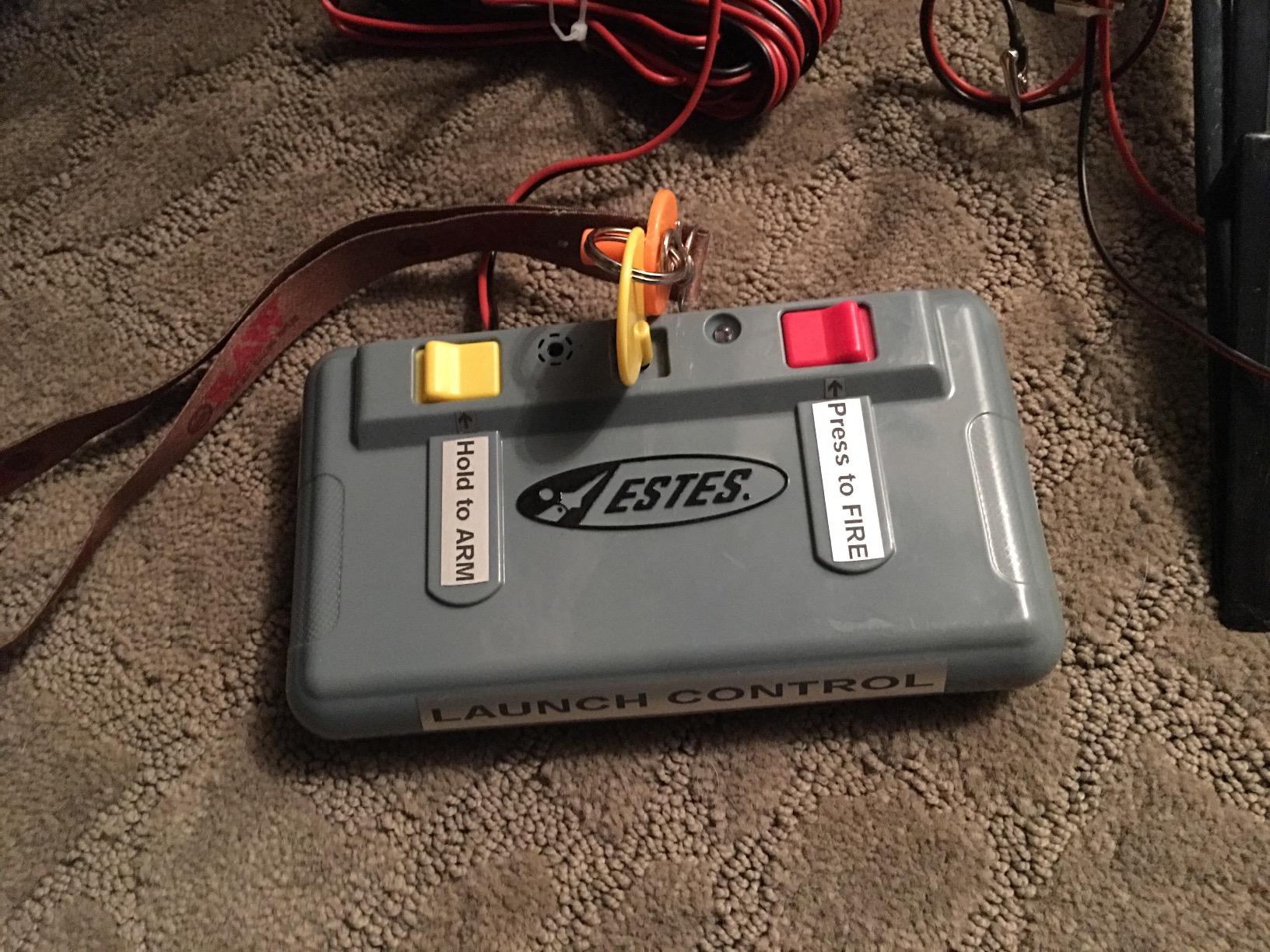
The Pro Series II controller represents a significant upgrade from basic Estes controllers, and after using it for six months of club launches, I understand why forum users consistently recommend it over cheaper alternatives. The heavy-duty plastic case feels substantial in your hands, and the two-button arming system eliminates any possibility of accidental launches.
Here is how the safety system works: you insert the safety key to enable the circuit, then press and hold the first button to arm the system. The audible continuity buzzer sounds to confirm your igniter connection is good. Only then can you press the launch button to fire the rocket. This two-hand operation means you cannot accidentally launch by bumping a single button.
Battery flexibility sets this controller apart. It runs on 6 C-size alkaline batteries for all-day launching without changes, accepts rechargeable NiCad packs, or connects to a 3S LiPo battery through the JST plug for maximum ignition power. I tested it with a 3S LiPo on an Aerotech F motor and got instant ignition, while C batteries alone sometimes struggle with high-power igniters.
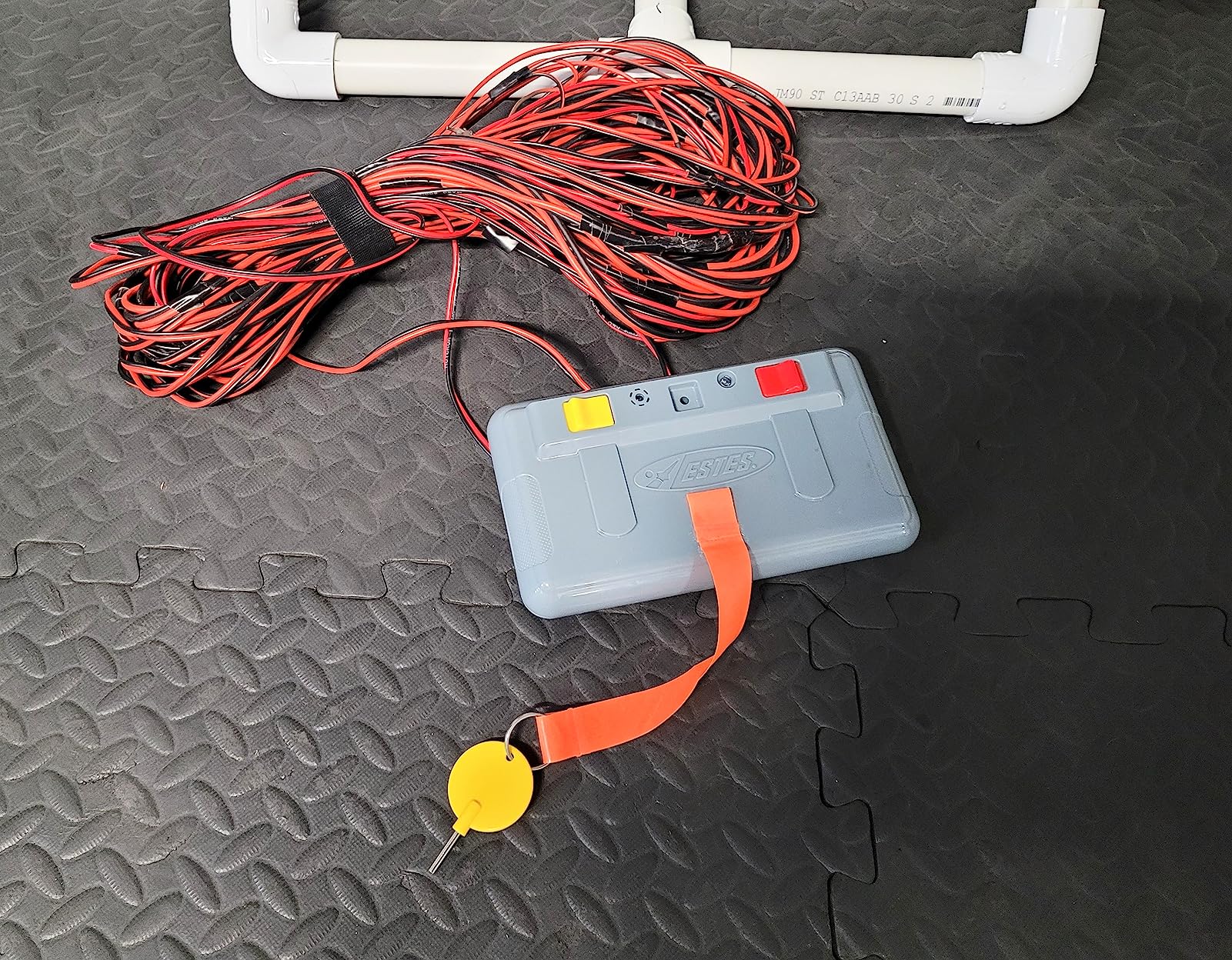
The 30-foot heavy-duty cable includes four alligator clips, supporting cluster launches with up to two rockets or four engines firing simultaneously when powered by a LiPo battery. This capability matters when you want to launch multiple rockets for drag races or when flying multi-engine cluster rockets.
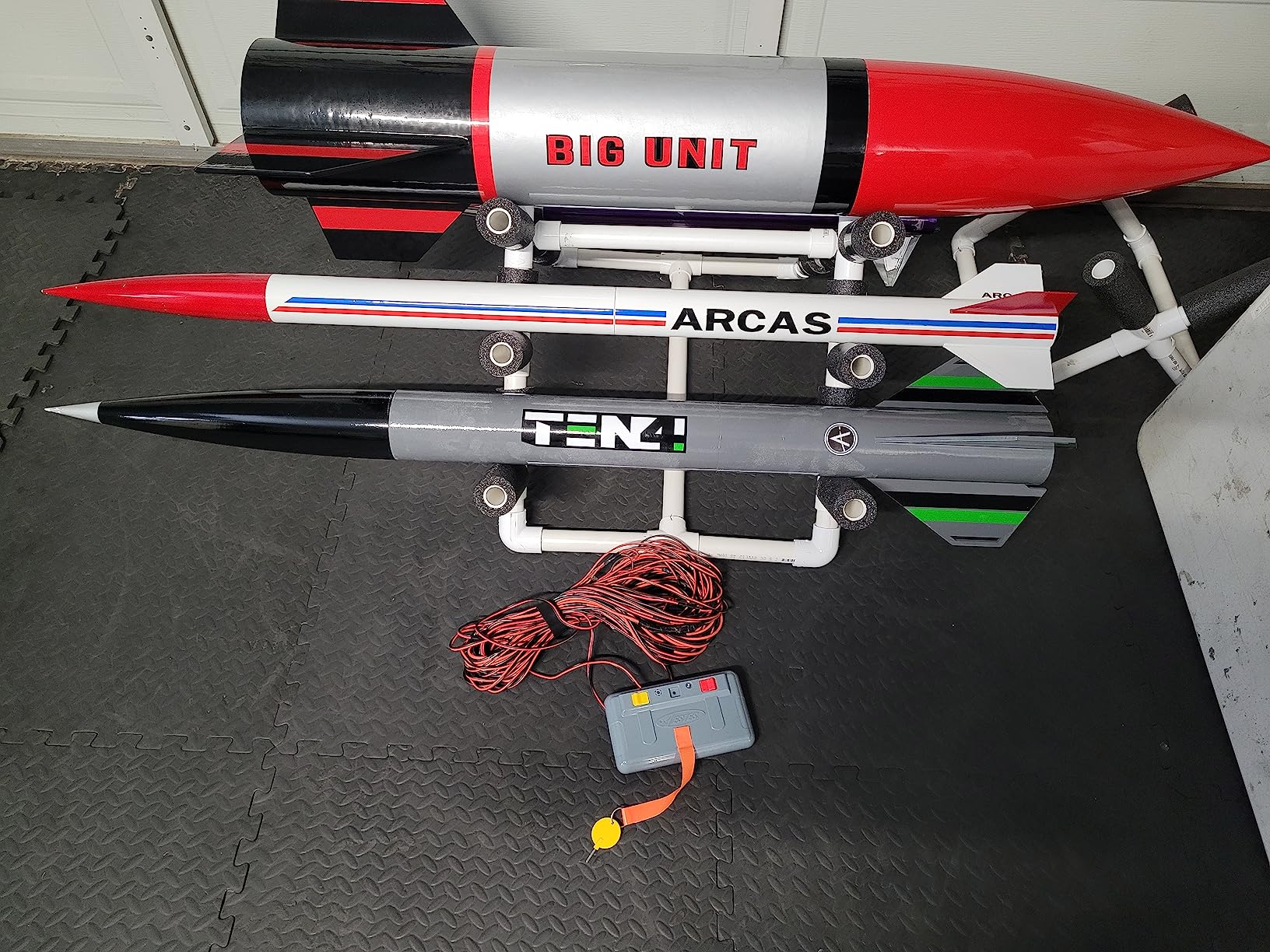
Users report excellent results with F and G medium-power motors when using the LiPo option, making this controller suitable for rocketeers advancing beyond standard Estes engines. The 268 reviews averaging 4.5 stars specifically praise the build quality and reliability compared to basic controllers that sometimes fail after minimal use.
For Whom This Controller Excels
This controller serves rocketeers graduating to mid-power motors, anyone planning cluster launches, club launch officers who need reliable equipment for repeated use, and hobbyists who appreciate quality safety features. The multi-battery compatibility future-proofs your investment as you advance in the hobby.
Limitations to Consider
The controller size makes it less portable than compact units, and the small safety key does not attach to the case, making it easy to misplace in tall grass. Budget-conscious beginners launching only A through C engines might not need these advanced features, though the safety improvements alone justify the upgrade for families with younger children.
3. Estes 1491 Taser Rocket Launch Set – The Perfect Entry Point for New Rocketeers
Estes 1491 Taser Rocket Launch Set, Beginner Flying-Rocket-Model Building Kit for Ages 10+, Includes Launch Pad System
Complete beginner kit
Launch system included
Reaches 1,100 feet
10-minute assembly
2,584 reviews
Pros
- Everything needed except engines
- Quick assembly in 10-30 minutes
- Sleek visible design
- Reusable launch pad and controller
- High-visibility parachute
- Great family activity
Cons
- Engines not included
- Batteries not included
- May need wadding substitute
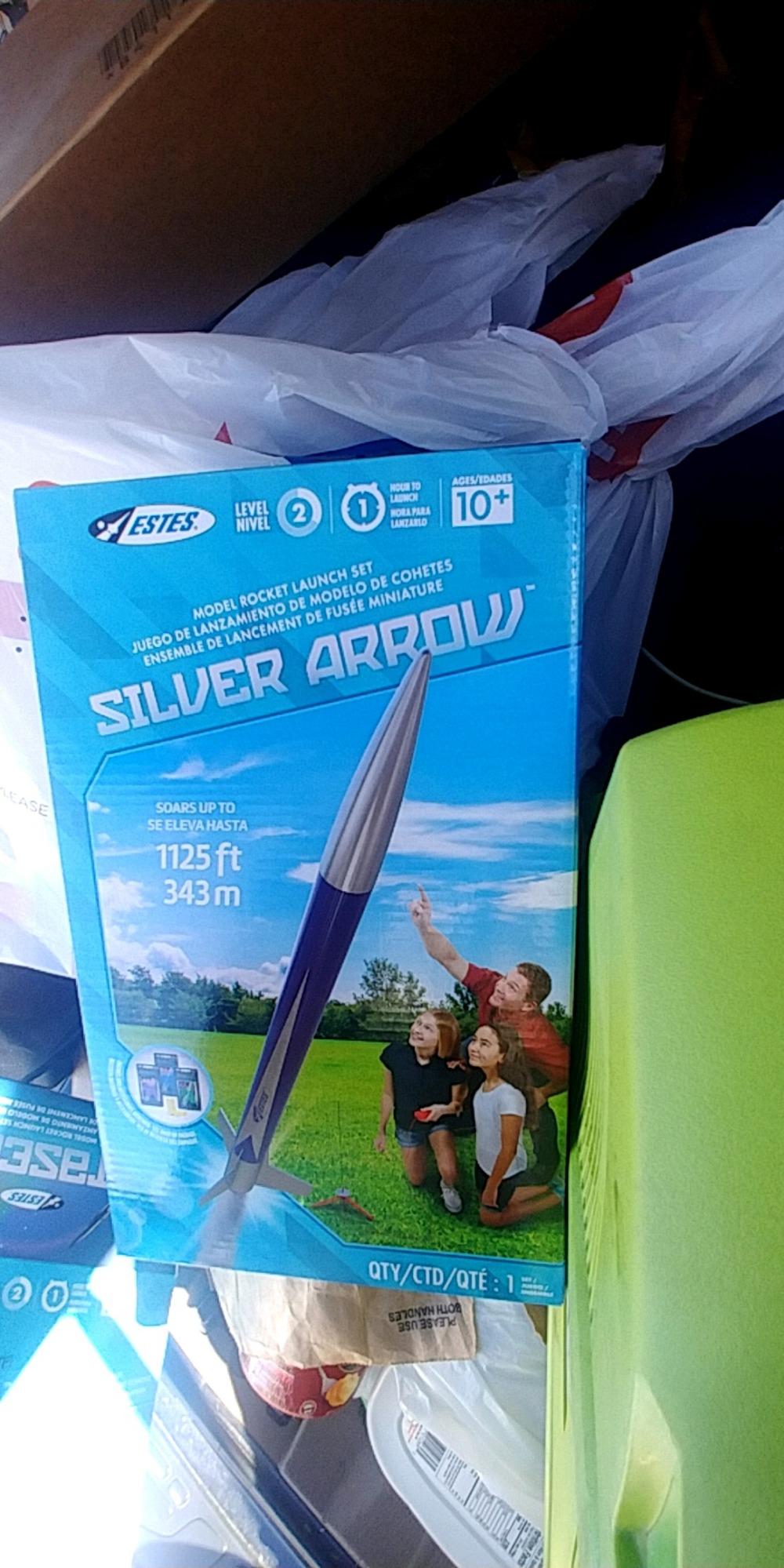
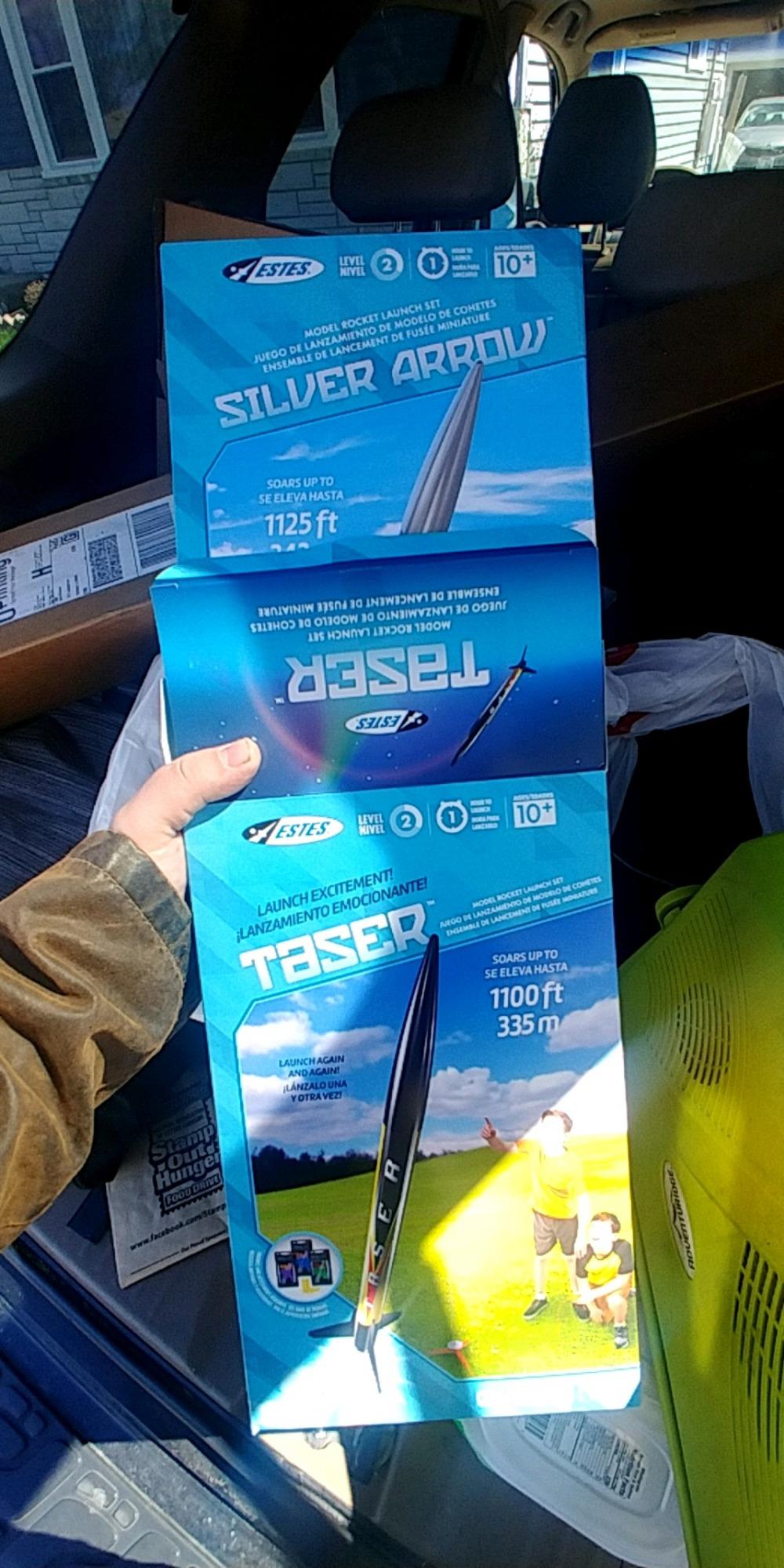
The Taser Launch Set delivers the complete starter experience, including the rocket, launch pad, and controller in one package. I have recommended this kit to at least a dozen families starting their rocketry journey, and the feedback consistently mentions how the quick assembly gets kids launching faster than more complex kits requiring hours of building.
Assembly requires about 10-30 minutes depending on skill level. The precolored body tube needs no painting, the three fins attach with glue, and the parachute system installs easily. The sleek black and silver design looks professional while remaining highly visible against sky backgrounds for easy tracking during flight and recovery.
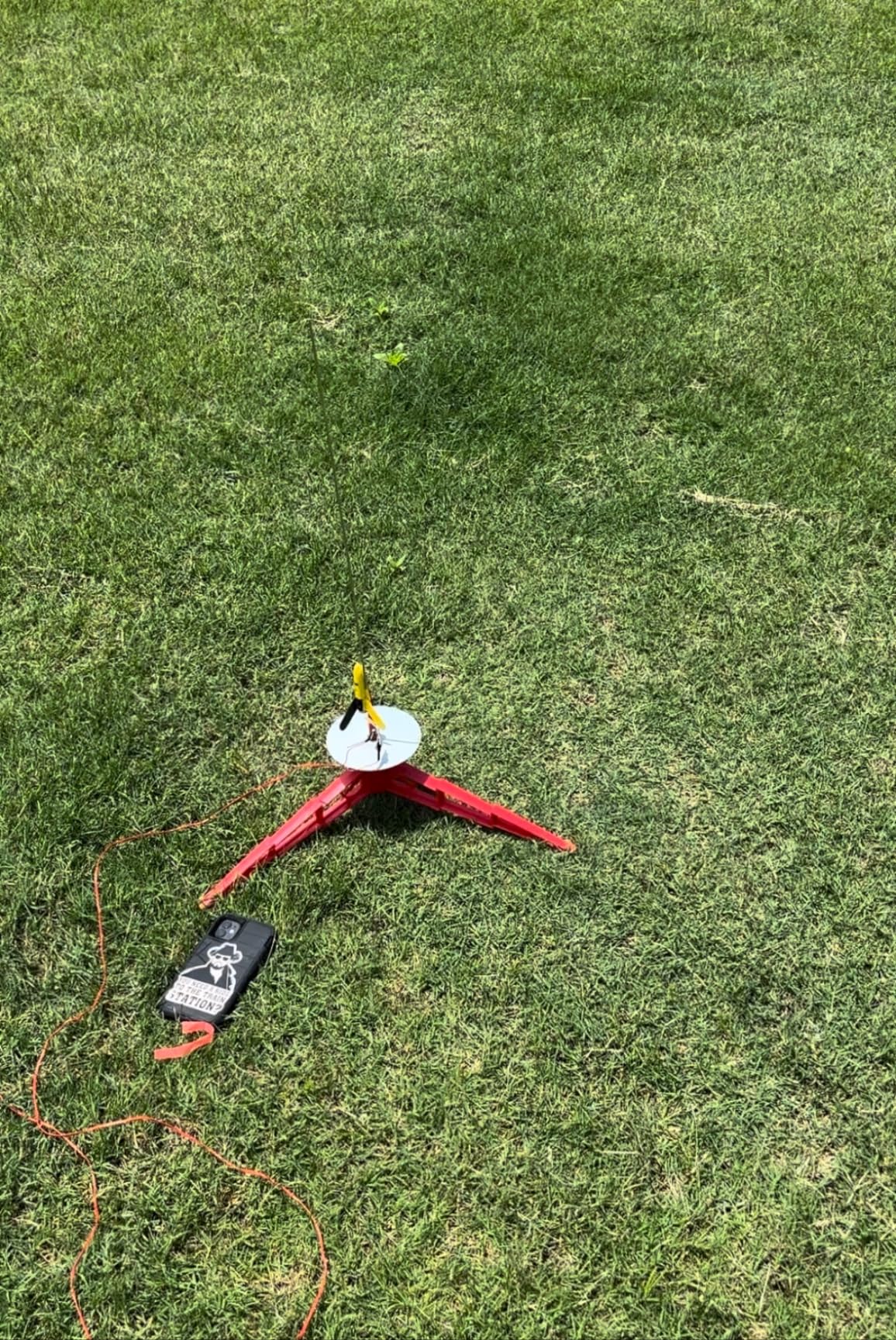
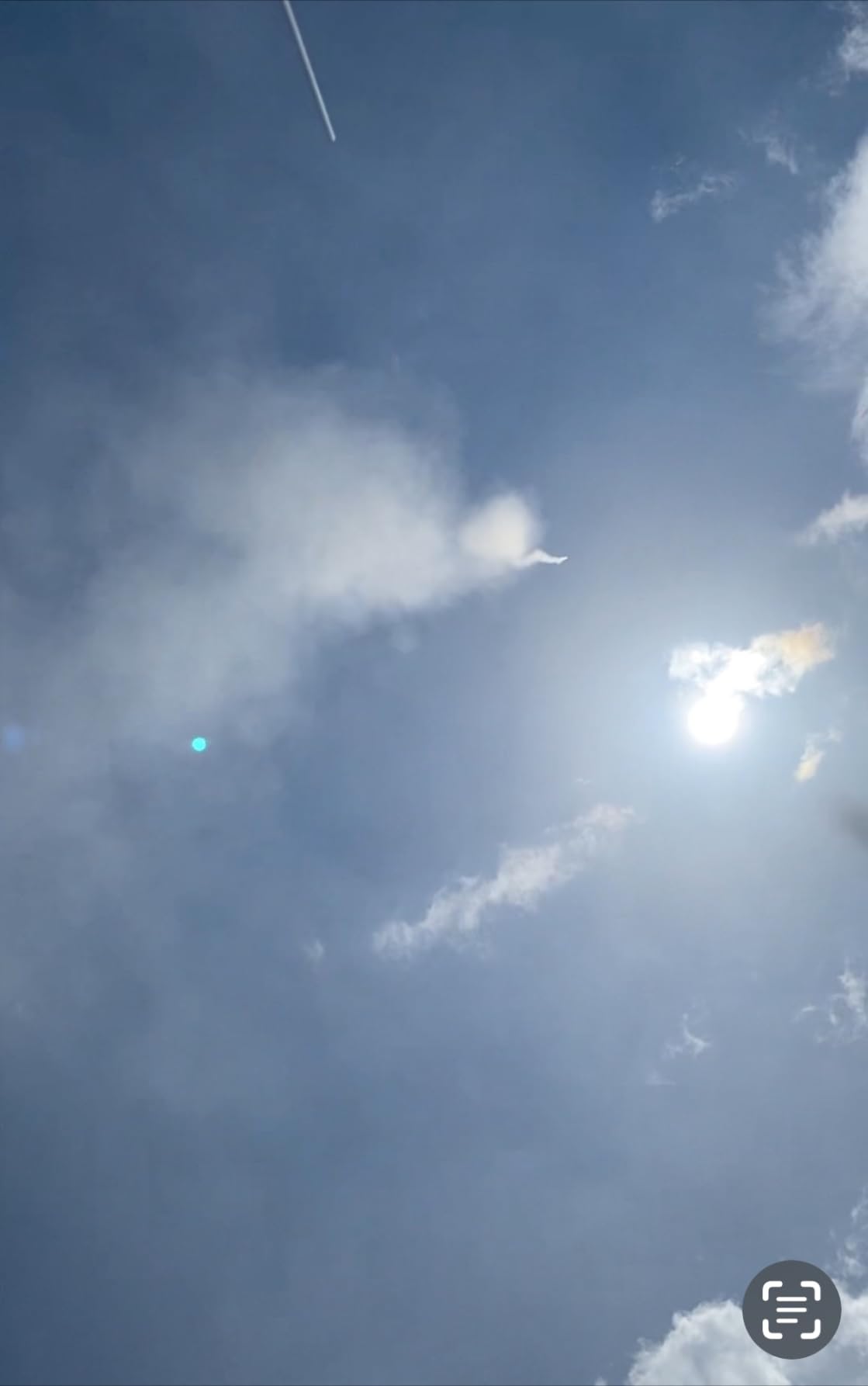
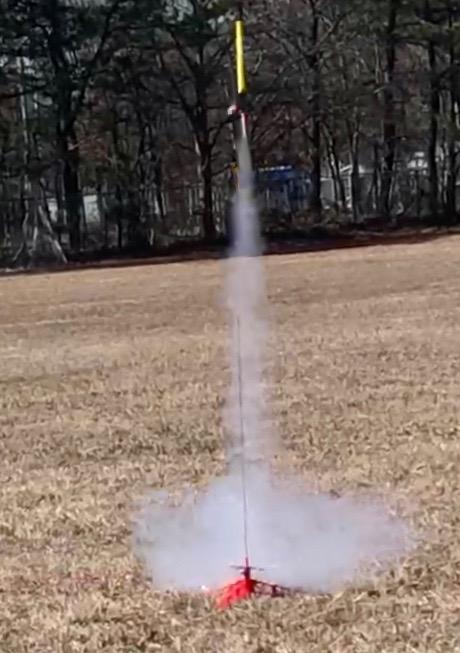
Performance impresses for a beginner rocket. On A engines, expect 200-300 foot altitudes perfect for small fields. B engines push it to 500-600 feet, while C6-7 engines send it soaring past 1,000 feet – barely visible at apogee before the parachute deploys. The high-visibility parachute works reliably when you use proper recovery wadding.
The included Porta-Pad II and Electron Beam Controller form a solid launch system you can reuse with other rockets. The adjustable launch pad angle lets you compensate for wind by tilting into the breeze. With over 2,500 reviews and a 4.5-star average, this set ranks among the most trusted entry points into model rocketry.
Best For Families and Beginners
This set serves families with kids ages 10+, scout troops looking for an accessible first rocket, science teachers demonstrating aerodynamics, and anyone wanting a complete hobby introduction without piecing together components. The reusable launch equipment provides ongoing value after the Taser eventually succumbs to landing damage.
What You Need to Know Before Buying
You must purchase engines, starters, and recovery wadding separately – a common source of disappointment for first-time buyers expecting everything in the box. A engines provide modest altitudes for small fields, while C engines require open spaces of several acres. Some users report the motor mount fit runs tight, so assemble carefully without forcing parts.
4. Estes 1441 Journey Rocket-Building Kit with Launch System – The Most Complete Starter Experience
Estes 1441 Journey Rocket-Building Kit, Beginner Flying-Rocket Model Kit for Ages 10+, Includes Launch Pad and Controller
Complete starter kit
Includes launch system
Reaches 1,100 feet
1-hour assembly
1,563 reviews
Pros
- Reusable launch pad and controller
- Simple build suitable for tweens
- Clear instructions
- Sturdy launch pad
- Adjustable angle for wind
- Safety key prevents accidents
Cons
- Engines not included
- Needs alkaline batteries
- Igniters sometimes problematic
- No storage box included
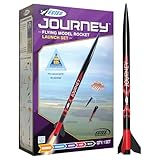
The Journey Launch Set offers a step up from the most basic kits, requiring approximately one hour of assembly that teaches fundamental rocket construction techniques. I built this with my 11-year-old nephew, and the experience provided enough challenge to feel educational while remaining achievable without frustration.
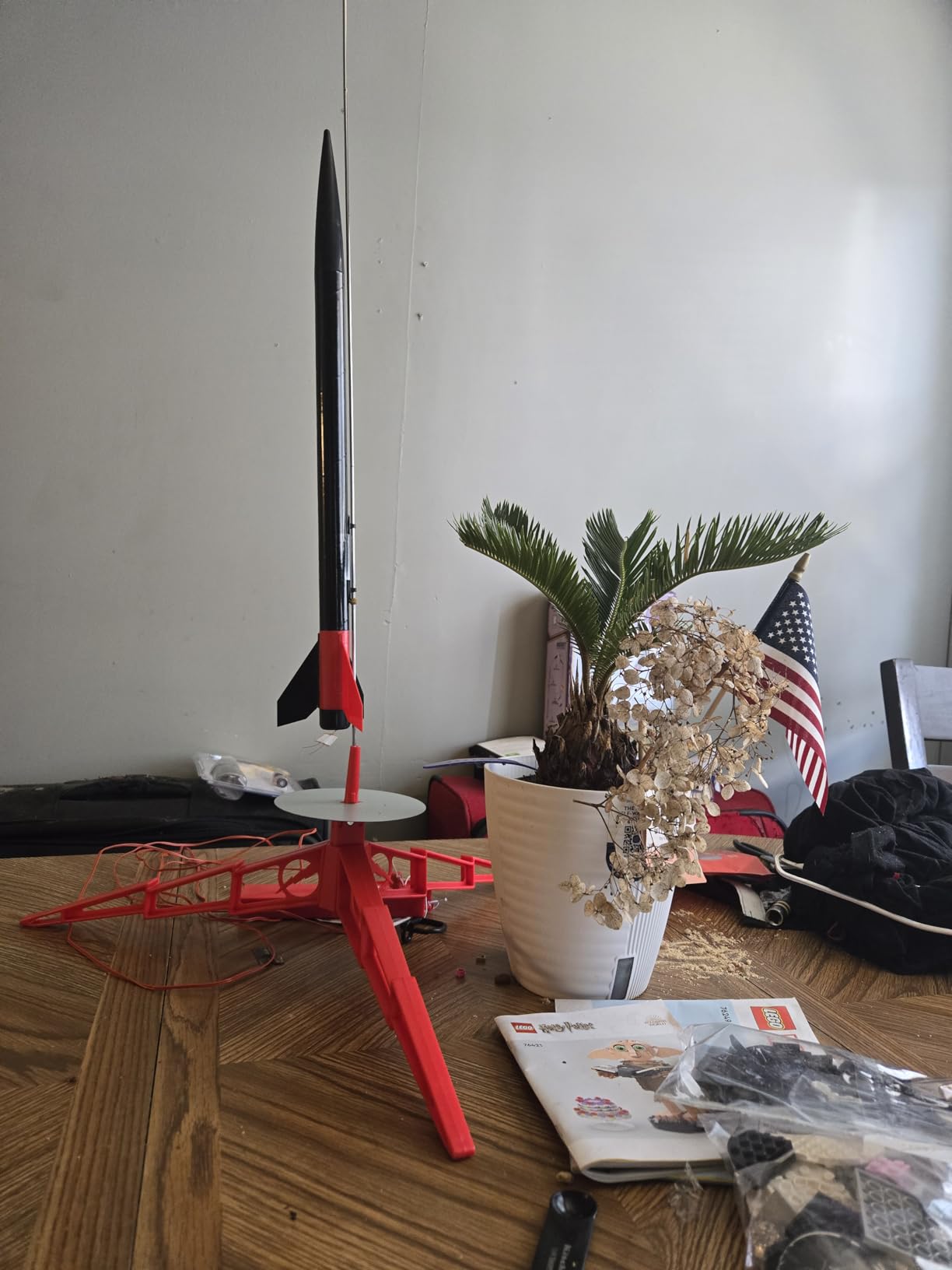
The rocket stands 19.3 inches tall, noticeably larger than the Taser or Alpha III, giving it more presence on the pad and better visibility in flight. The assembly involves attaching fins, installing the motor mount, applying decals, and rigging the parachute recovery system. The instructions clearly illustrate each step, and the parts fit together precisely.
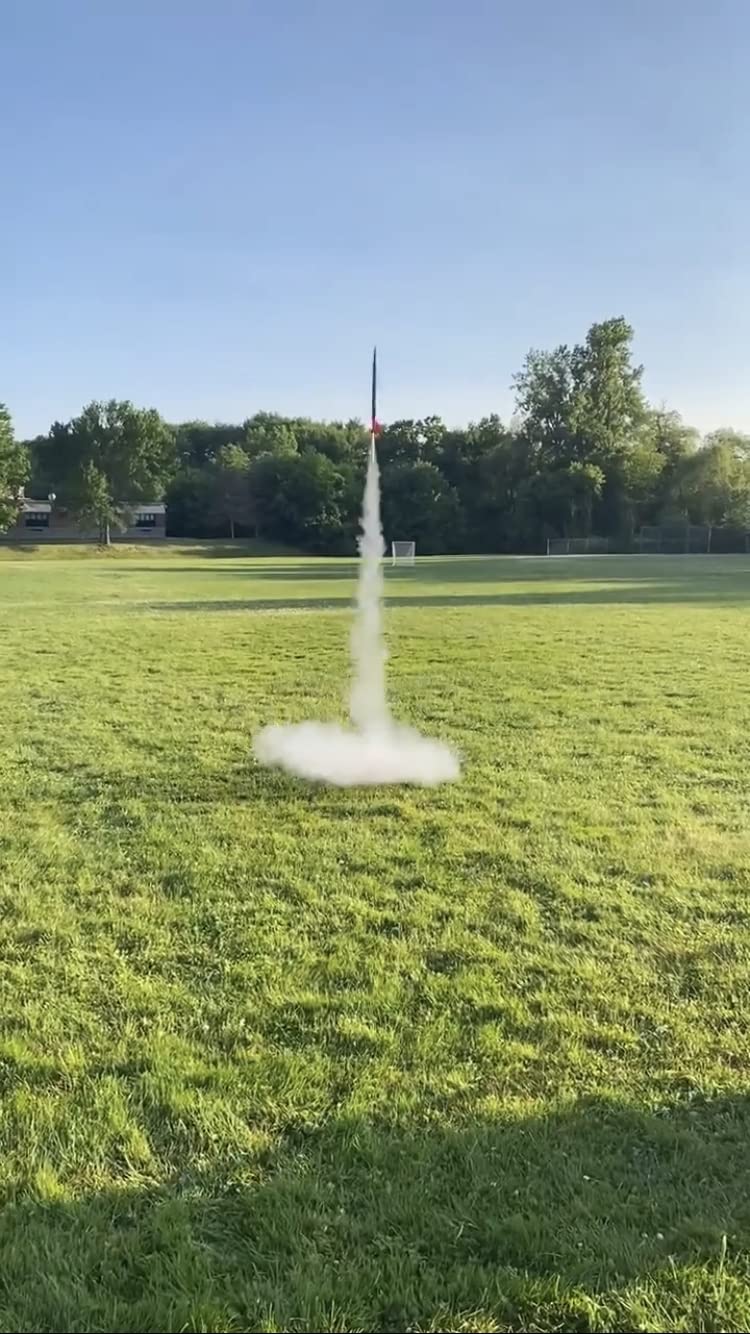
Flight performance matches other kits in this class, reaching approximately 1,100 feet on C6-7 engines. The parachute deploys reliably when you pack it correctly with recovery wadding between the motor and the chute. The bright color scheme aids tracking and recovery, though like all high-flying rockets, you risk losing it in trees or on rooftops with C engines in anything beyond calm winds.
The included launch system provides lasting value beyond the Journey rocket itself. The Porta-Pad II accommodates any standard Estes rocket with a 1/8 inch launch lug, and the Electron Beam Controller works with all standard engines. This reusability makes the kit a smarter long-term investment than buying disposable launch equipment with every rocket.
Who Benefits Most From This Kit
This kit suits families wanting a slightly more involved building experience, tweens ready for a real construction project, and anyone seeking reusable launch equipment bundled with a capable rocket. The hour-long build creates satisfaction and ownership that quick-assembly kits sometimes lack.
Considerations Before Purchase
Stock up on engines and igniters because nothing kills enthusiasm like a built rocket sitting unused while waiting for supplies. Use quality alkaline batteries rather than rechargeables in the controller for best performance. Some users report igniter failures, so buy extras and store them in a dry place. The kit no longer includes a storage box, so find a dedicated container to protect your investment between launches.
5. Estes 1427 Alpha III Rocket-Building Kit with Launch System – The Timeless Classic
Estes 1427 Alpha III Rocket-Building Kit, Beginner Flying-Rocket Model Kit for Ages 10+, Includes Launch Pad and Controller
Classic Estes design
Complete starter kit
Reaches 1,150 feet
1-hour assembly
1,287 reviews
Pros
- Iconic rocket design since 1970s
- Easy 45-minute assembly
- Bright orange visibility
- Free STEM lesson plans
- Reusable launch system
- Good for ages 7+ with help
Cons
- Controller quality concerns
- Launch rod in 3 pieces
- Engines not included
- Controller may fail prematurely
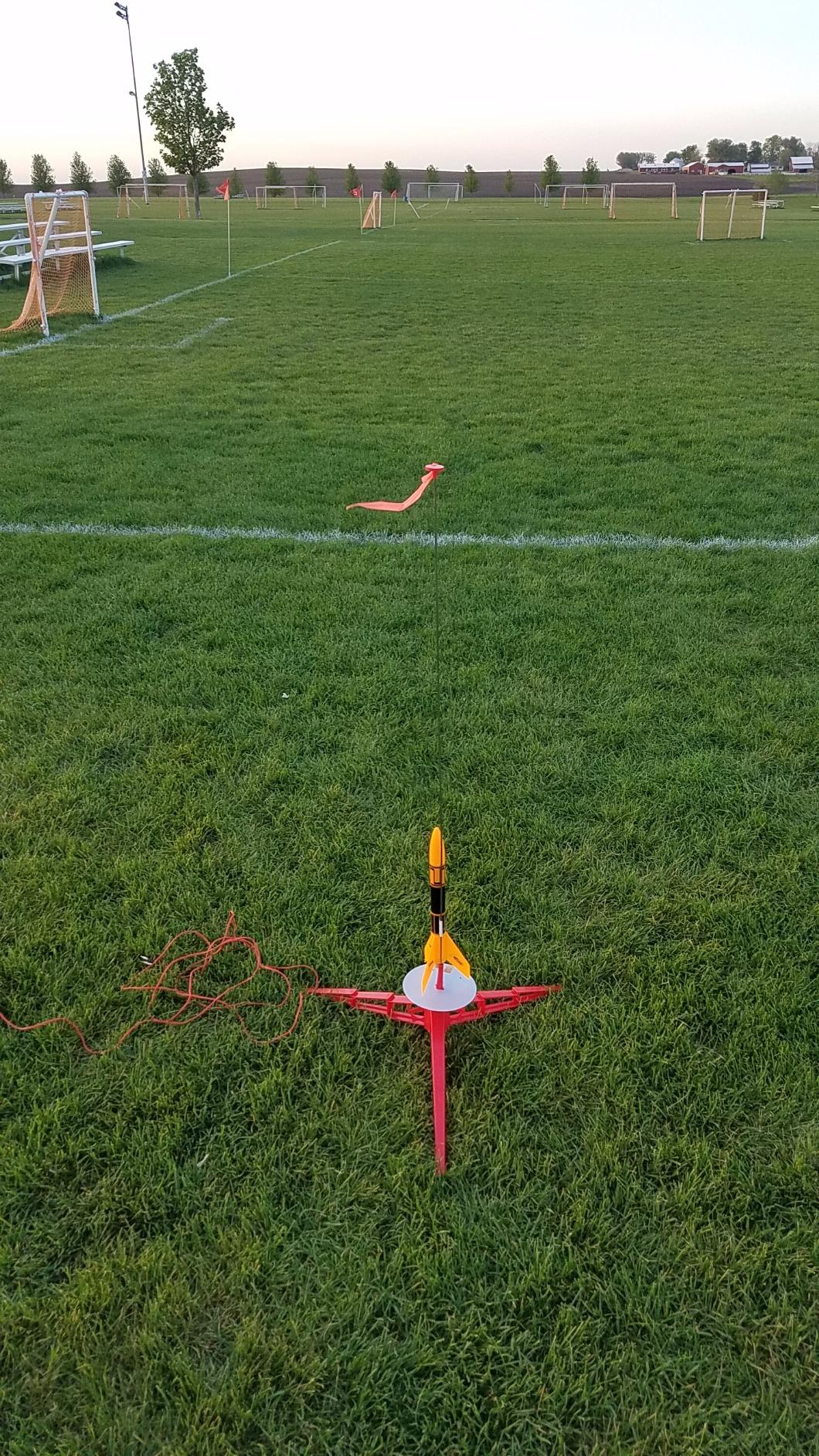
The Alpha III holds legendary status as the rocket that introduced generations to the hobby, and building one feels like connecting to rocketry tradition. I have launched Alpha IIIs for 30 years, and the current kit maintains the same straightforward design that worked decades ago while incorporating modern safety features in the launch equipment.
The 12.1-inch height makes it smaller than the Journey but perfect for younger builders. Assembly takes about 45 minutes to an hour, with bright orange precolored parts that need no painting. The three-fin design provides stable flight characteristics across all compatible engine sizes from 1/2A through C.
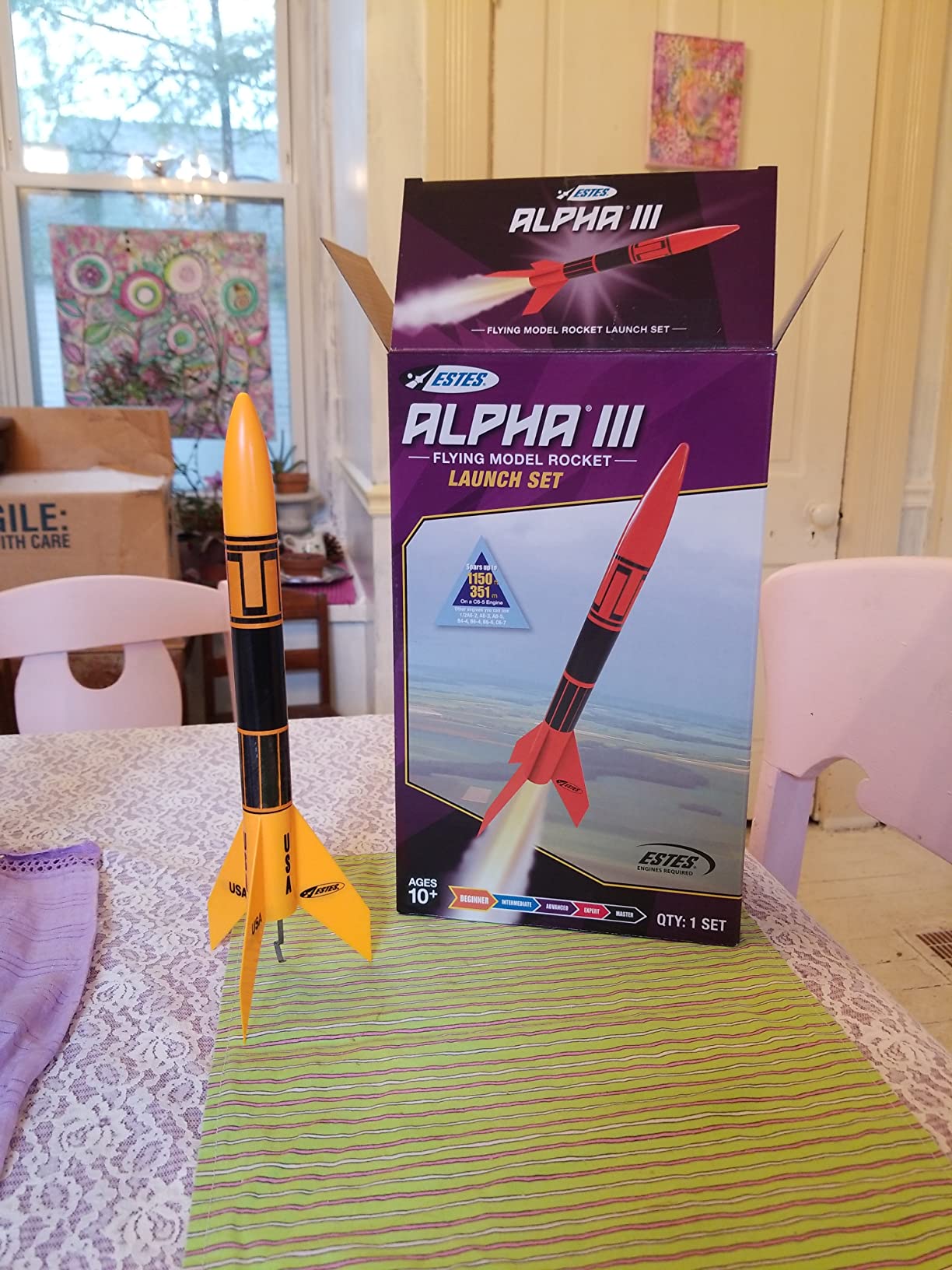
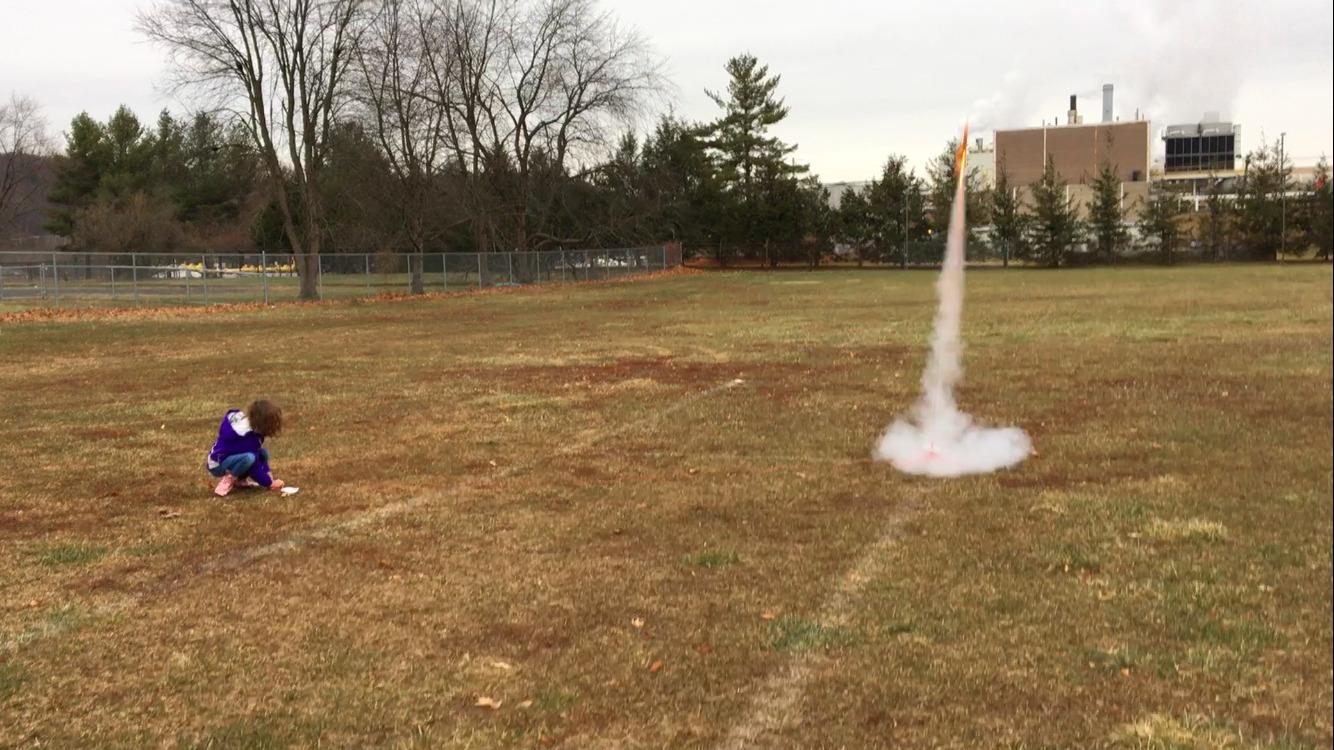
Performance exceeds expectations for such a simple rocket. A engines deliver gentle 200-foot flights perfect for small fields and first launches. B engines push altitudes to 500-600 feet. C engines send the Alpha III screaming past 1,100 feet, at which point the bright orange color becomes essential for tracking against blue sky backgrounds.
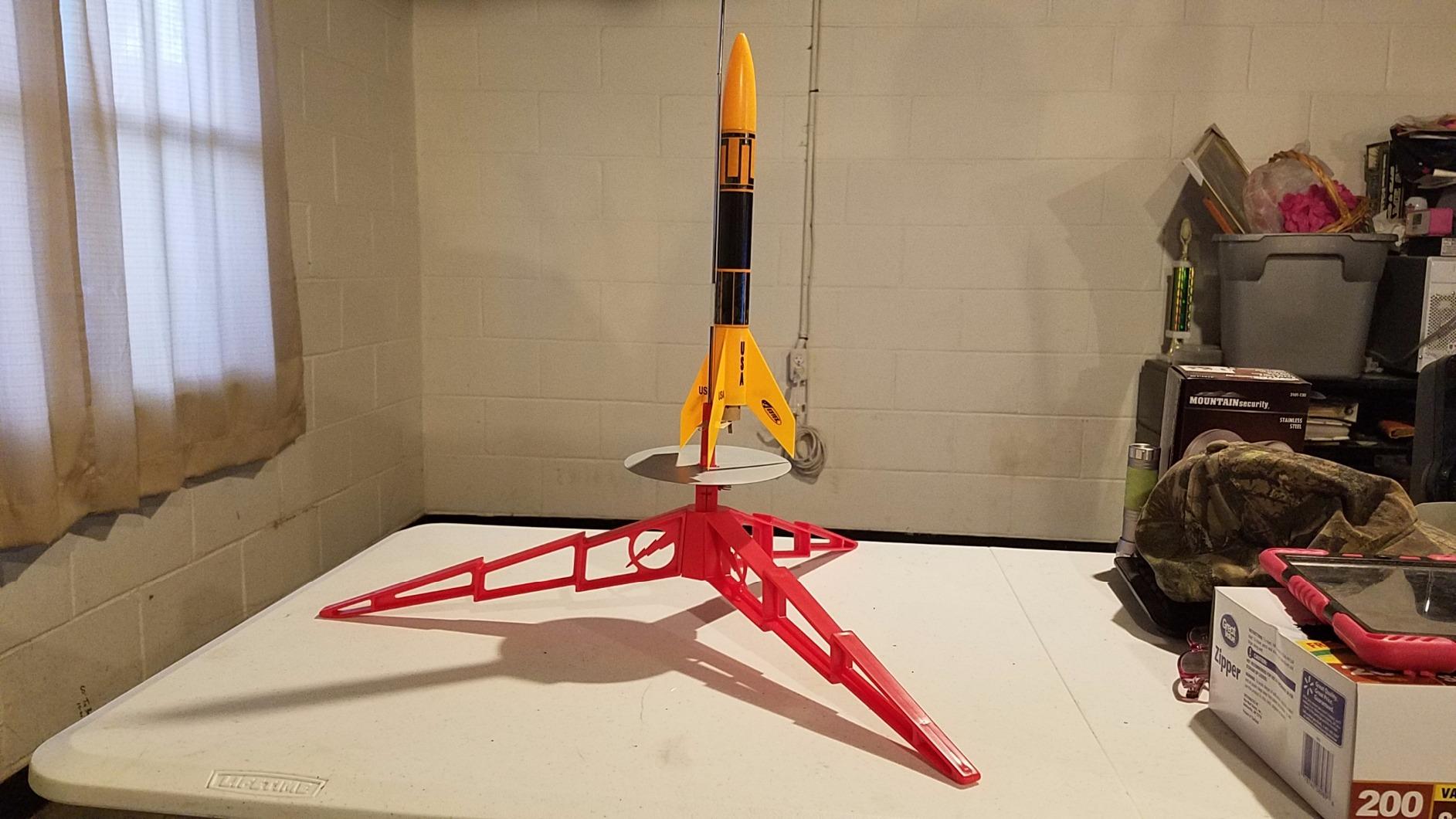
Estes provides free lesson plans on their website, making this kit popular for classroom STEM instruction. The adjustable launch pad allows angling into the wind to compensate for drift, an important technique for recovering rockets in limited spaces. The iconic design and reliable performance explain its enduring popularity across decades.
Perfect For Educational Settings
The Alpha III serves classrooms, scout troops, science fair projects, and families wanting a proven design with educational resources included. The manageable size works for younger children while the performance satisfies older kids and adults. The free curriculum materials help teachers integrate rocketry into physics and engineering lessons.
Quality Control Concerns
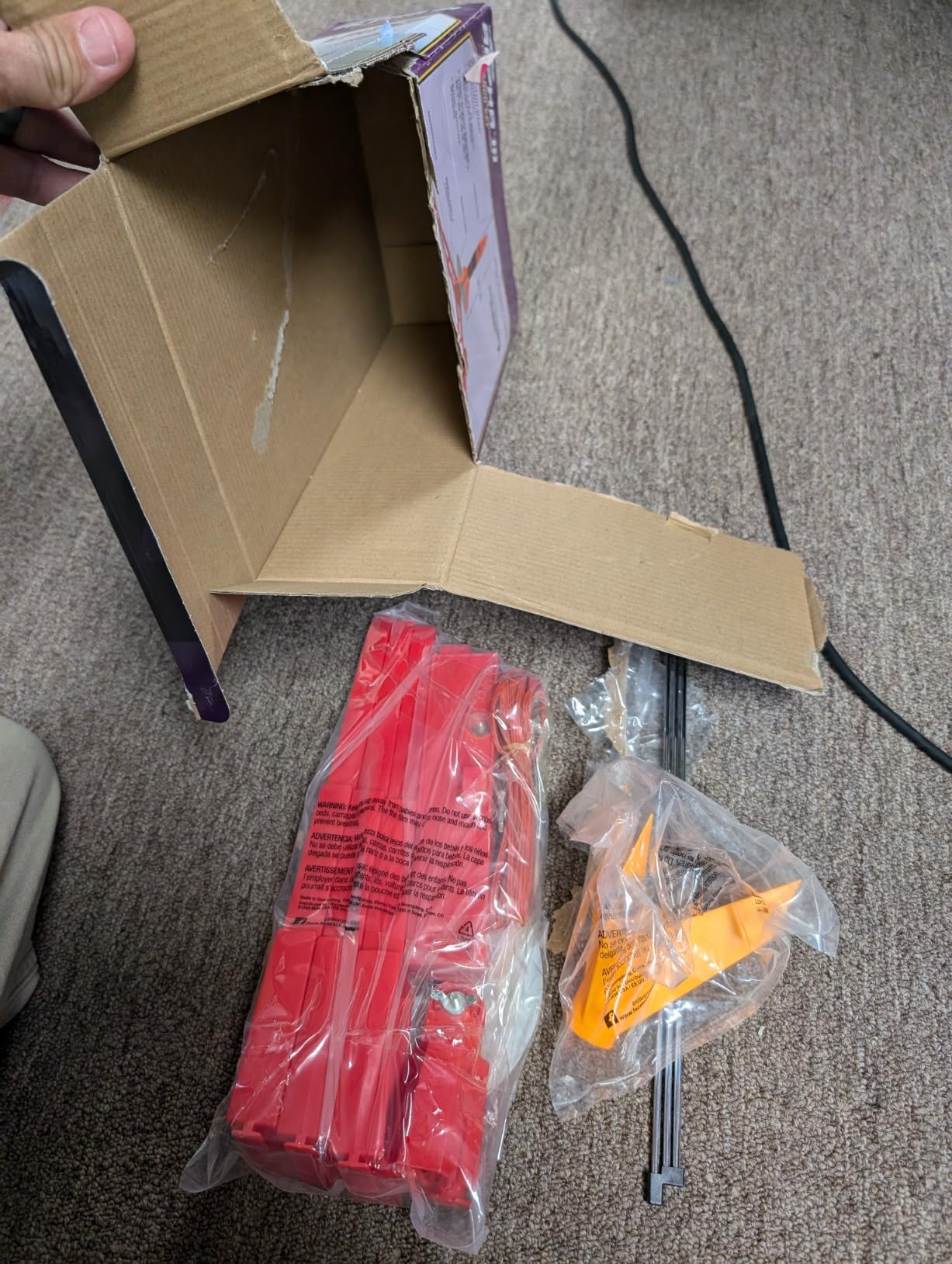
Multiple recent reviews mention controller failures after minimal use, suggesting possible quality control issues with current Electron Beam units. Test your controller before relying on it for events. The three-piece launch rod can misalign if not carefully assembled, and some users note lower plastic quality compared to 1990s-era Estes equipment. Consider these factors when planning club or educational launches where equipment failure would disappoint groups.
6. Estes 2230 E Launch Controller – Reliable Power for Mid-Size Motors
Estes 2230 E Launch Controller, Flying-Rocket-Model Launch Controller, Rocket Model Kit Accessories for Ages 10+
For E-engine rockets
30-foot heavy cable
Safety key included
Continuity check
619 reviews
Pros
- Works with E
- D engines
- 30-foot heavy-duty cable
- More robust than standard controllers
- Safety features included
- Longer cord than vintage models
- Reliable ignition
Cons
- Some units have factory defects
- Key can be difficult to insert
- Not tethered - easy to lose
- Sealed design prevents repair
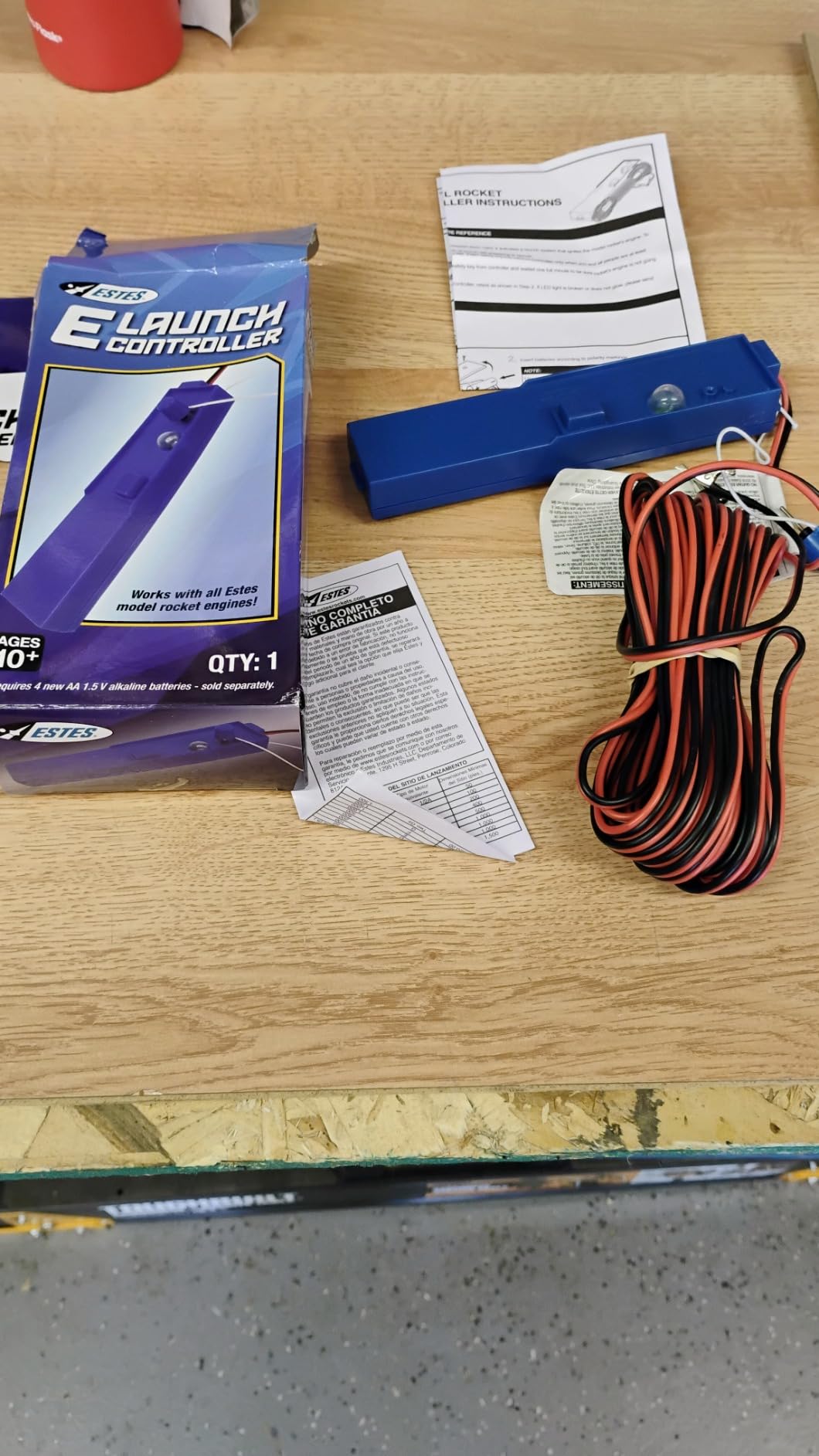
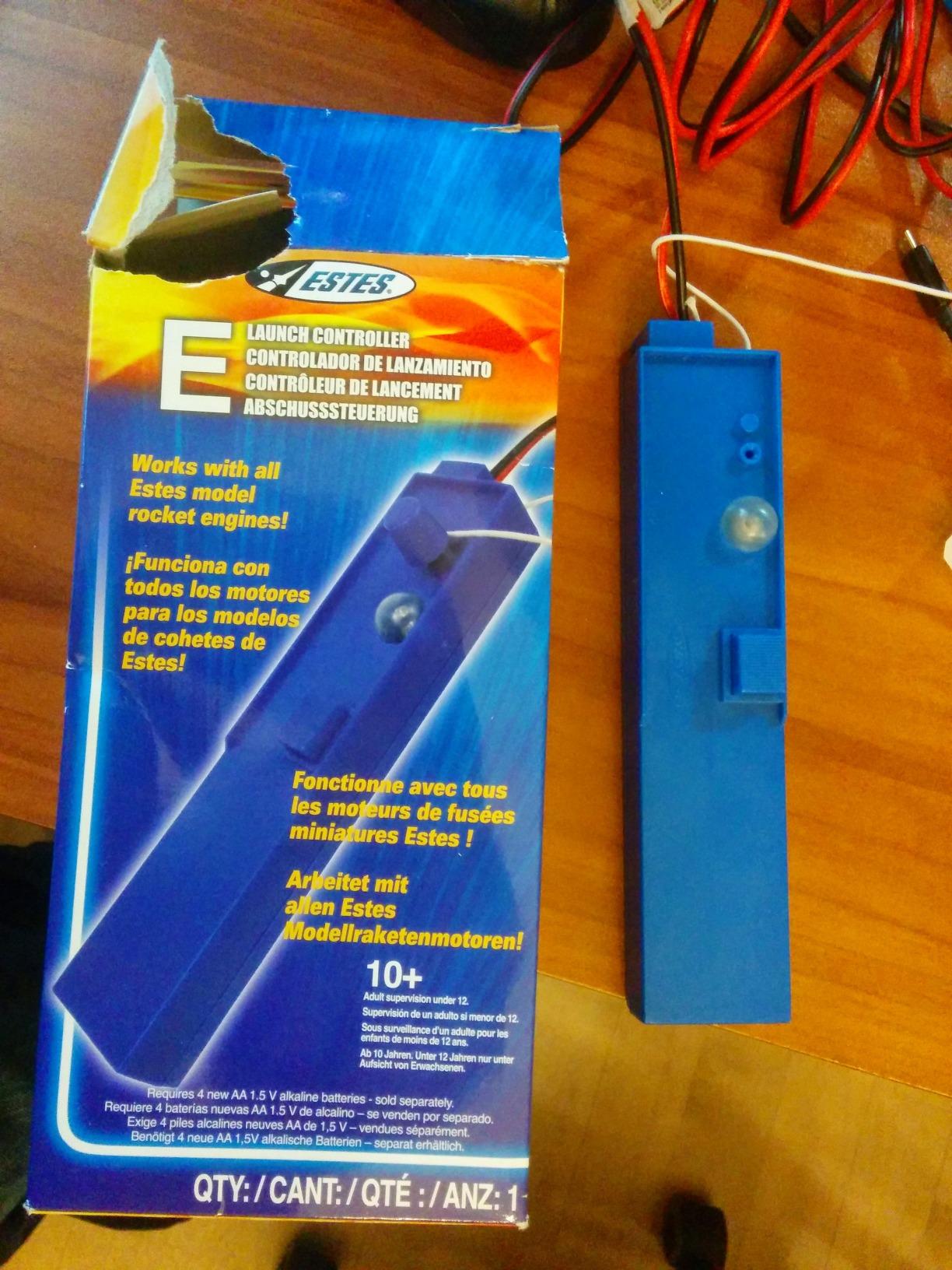
The E Launch Controller bridges the gap between basic controllers and the full Pro Series II, providing adequate power for E engines and larger D motors while maintaining the simple single-button operation beginners prefer. I used this controller exclusively for a season of mid-power launches and found it reliable once I learned its quirks.
The 30-foot cable matches the Pro Series length, providing safe standoff distance for more powerful motors that generate greater thrust and louder exhaust. The heavy-duty wire construction differs noticeably from thinner cables on basic controllers, giving confidence that current will flow when you press the button.
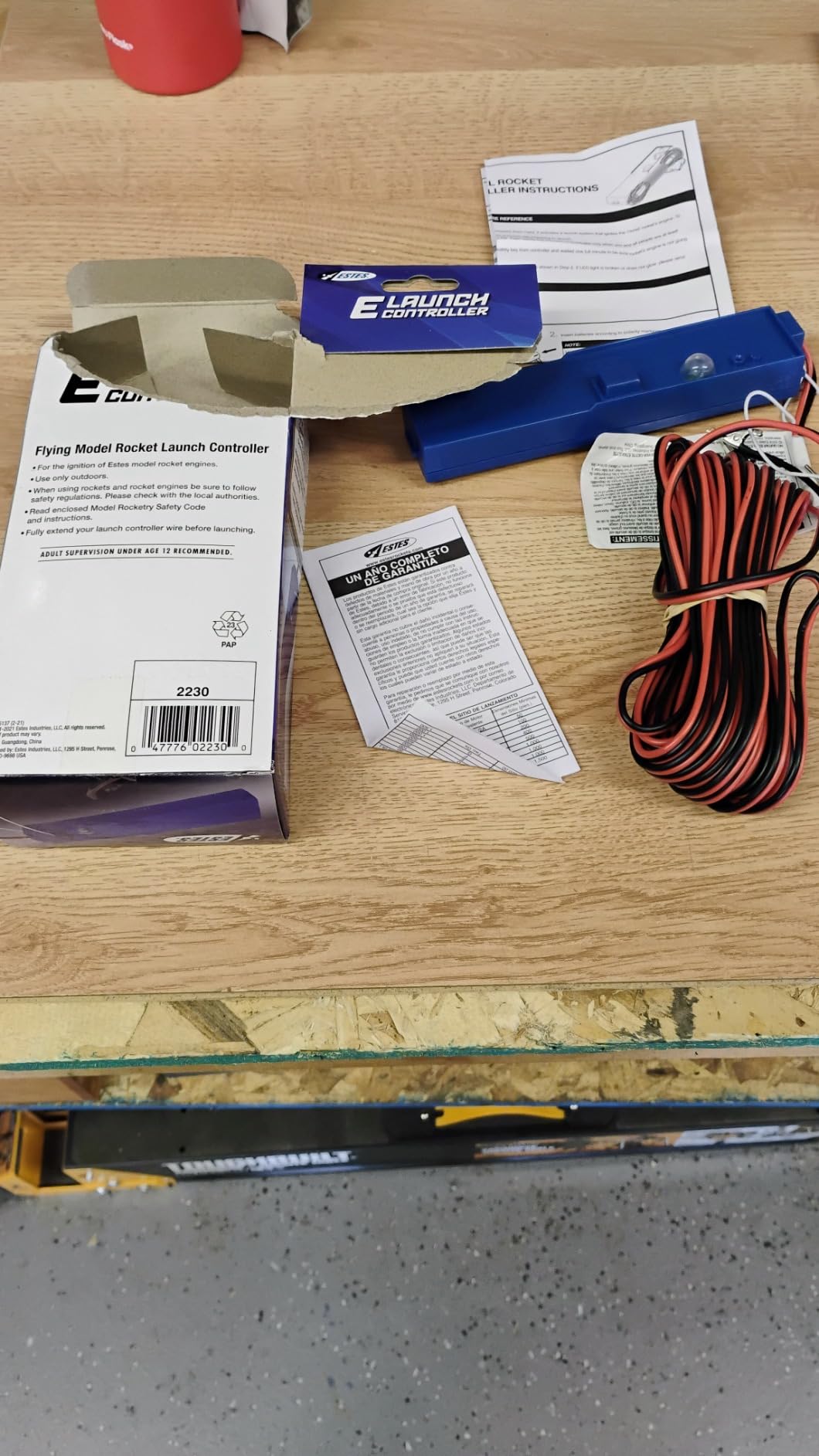
Safety features include the removable safety key and continuity check that verifies your igniter connection before launch. The controller requires 4 AA batteries, and I recommend quality alkaline cells for best performance with E engines that demand more ignition current than smaller motors.
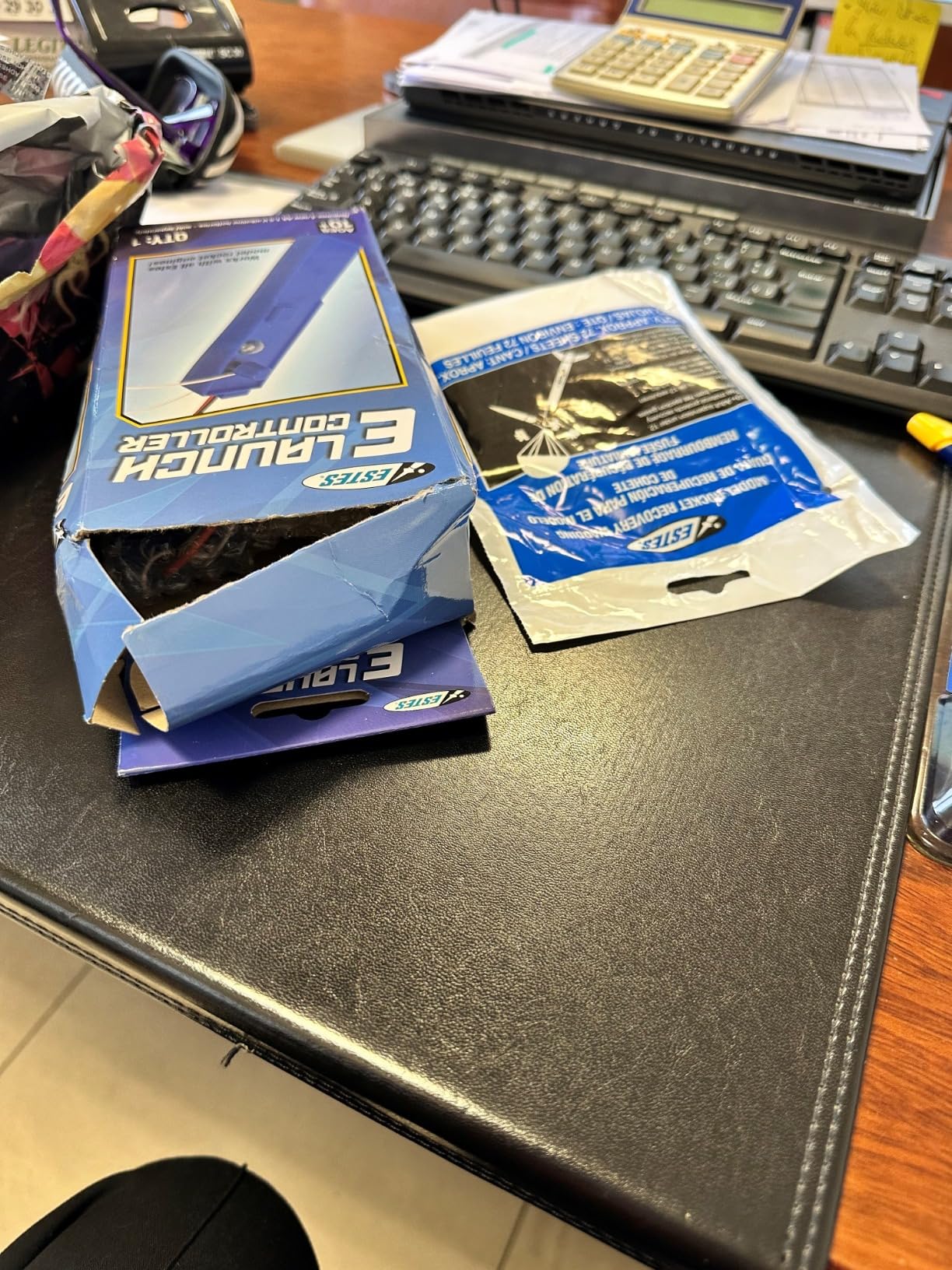
User experiences vary more with this controller than with basic or Pro Series models. Most units work reliably for years, but some buyers report receiving defective controllers with continuity issues right from the factory. Test immediately upon receipt to catch any problems while still within return windows.
Who Needs This Controller
This controller serves rocketeers moving into E and larger D motors who do not yet need cluster launch capability or Pro Series features. It provides more power than the Electron Beam while costing less than the Pro Series II. Scout troops and clubs flying mid-power rockets find it a practical middle-ground option.
Handling the Quirks
The safety key sometimes requires trimming the rubber stopper for proper contact, a minor modification that resolves most continuity issues. Keep spare keys because the small size makes them easy to lose in grass. Do not expect to repair this controller if it fails – the sealed plastic case prevents internal access, so treat it as replaceable equipment rather than a lifetime investment.
7. Estes 2238 Porta Pad E Launch Pad – Stability for Larger Rockets
Estes 2238 Porta Pad E Launch Pad, Flying-Rocket-Model Launch Pad, Rocket Model Kit Accessories for Ages 10+
For E-engine rockets
1/4 inch rod included
Beefier blast deflector
Sturdy base design
333 reviews
Pros
- Much better than basic pads
- Solid and durable construction
- Handles E-powered engines well
- Larger 1/4 inch rod included
- More stable than standard pads
- Can anchor with tent pegs
Cons
- Lightweight - needs anchoring in wind
- Multi-piece rod may strip
- Controller sold separately
- Threading may wear over time
The Porta Pad E addresses the stability issues that plague lighter launch pads when supporting larger rockets or flying in breezy conditions. I upgraded to this pad after watching my standard Porta-Pad II tip over with a Mean Machine rocket on a slightly windy day – an expensive lesson in matching equipment to conditions.
The beefier blast deflector handles the increased exhaust and heat from E engines without warping or melting, a problem that can ruin lighter pads over time. The 1/4 inch launch rod accommodates larger rockets with 1/4 inch lugs while remaining compatible with standard 3/16 inch rods if you want to fly smaller rockets too.
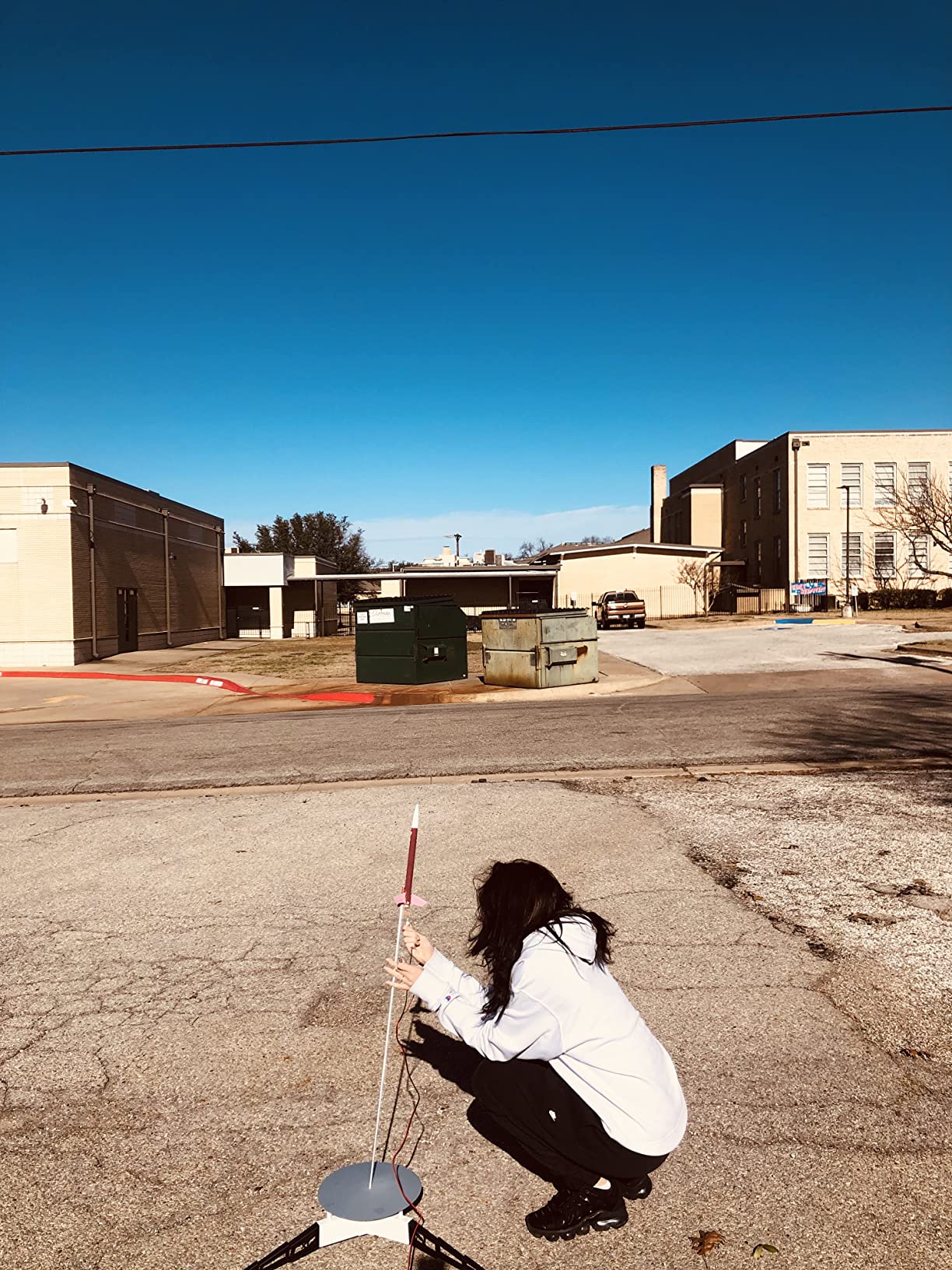
Stability improves significantly through a wider base and heavier construction. The legs accept tent pegs for ground anchoring, which I consider essential for any launch in winds above 5 mph. The elevated design stands about 2 feet off the ground, keeping your rocket above grass that might catch fire from exhaust.
Assembly and disassembly happen quickly without tools, making field setup practical. Users consistently rate this pad higher than basic options, with 333 reviews averaging 4.6 stars. The praise focuses on stability, durability, and the noticeable quality difference over entry-level pads.
Best Applications
This pad suits rocketeers flying larger rockets like the Mean Machine, Leviathan, or other E-compatible models. It serves anyone launching in areas with occasional wind, clubs needing reliable equipment for varied conditions, and builders who want their launch pad to last through years of use rather than replacing it annually.
What to Watch For
The multi-piece rod can develop threading issues after repeated assembly and disassembly. Some users prefer buying a single-piece 1/4 inch rod to avoid this problem entirely. Remember this pad does not include a controller – budget for an E Launch Controller or Pro Series II controller to complete your system.
8. Estes 3552 PS II Launch Pad – The Professional Choice for Mid-Power
Estes 3552 PS II Launch Pad, Flying-Rocket-Model Launch Pad, Rocket Model Kit Accessories for Ages 10+
For mid-power rockets
PVC tube legs
5-inch blast deflector
60-inch rod
40 reviews
Pros
- Works with Pro Series rockets
- Sturdy PVC leg construction
- Elevated 2-foot design
- 60-inch launch rod
- Easy transport and storage
Cons
- Assembly can be confusing
- Locking washers difficult
- Rod bends easily
- Blast plate may sag
- Overpriced for components
The Pro Series II Launch Pad targets serious mid-power rocketeers who need more stability and rod length than standard pads provide. I tested this pad during a club launch with multiple F and G motor flights, and while it performed adequately, the assembly challenges frustrated my initial setup.
The PVC tube legs create a rigid triangular base that remains stable in moderate winds when properly assembled. The elevated design keeps rockets well above ground level, protecting them from grass fires and making loading easier without bending down. The 60-inch two-piece 1/4 inch rod provides guidance for the taller rockets typical of mid-power flights.

The 5-inch galvanized blast deflector handles the increased exhaust from larger motors, though some users report sagging over time. The design aims for easy transport to launch sites with quick breakdown, though I found the locking cog washers so difficult to work with that I replaced them with standard nuts and bolts.

Reviews trend mixed with a 4.3-star average from only 40 reviews, suggesting limited adoption compared to more popular pads. Positive feedback emphasizes the sturdy support once assembled, while negative comments consistently target the difficult assembly process and questionable value proposition given the basic PVC and steel components.
When to Choose This Pad
This pad serves rocketeers committed to Pro Series and mid-power rockets who need the longer rod and elevated stance. It suits club launch officers managing multiple flights and anyone frustrated by smaller pads that feel inadequate for larger rockets. Consider it specifically when you need the 60-inch rod length for tall mid-power birds.
Alternative Considerations
The Porta Pad E offers similar capability at lower cost with easier assembly. Some experienced builders report better results building custom pads from hardware store components. If you choose the PS II pad, plan to modify the assembly hardware or accept frustration with the stock locking washer design.
9. Estes 302215 Porta-Pad II Launch Pad – The Reliable Standard
Estes 302215 Porta-Pad II Launch Pad
Sturdy plastic tripod
Tilt adjustment
1/8 inch rod included
Quick assembly
255 reviews
Pros
- Perfect for kids with supervision
- Small and lightweight
- Tilt adjustment for wind
- Accepts larger rods
- Good value
- Well designed for field setup
Cons
- Assembly issues reported
- Basic 1/8 inch rod included
- May tip in strong wind
- Rod joint needs sanding
- Limited availability
The Porta-Pad II represents the baseline standard against which all other launch pads compare, providing adequate stability for A through C engine rockets in calm conditions. I have owned three of these over my rocketry career, and they deliver reliable service when matched to appropriate rockets and weather.
The tripod design folds compactly for transport and sets up in under two minutes. The tilt adjustment allows angling up to 30 degrees from vertical, essential for compensating for wind drift when launching in anything beyond dead calm conditions. I use this feature frequently to ensure my rockets arc into the wind and land within recovery range.
The included 1/8 inch rod handles standard rockets with matching launch lugs, while the design accepts 3/16 inch Maxi rods (sold separately) for larger rockets. The plastic construction balances durability with weight – sturdy enough for dozens of launches yet light enough to carry to distant launch sites.
Ideal Use Cases
This pad serves beginners starting their rocketry journey, families with young children flying small rockets, anyone building their first fleet of A and B motor birds, and rocketeers needing a portable backup pad for club launches. The simplicity and low cost make it accessible to everyone.
When to Upgrade
Move to the Porta Pad E or Pro Series pads when you start flying E motors, when launching tall rockets over 24 inches, or when you consistently face windy conditions. The basic Porta-Pad II works best in calm weather with smaller rockets, conditions that let its lightweight design shine without stability concerns.
10. Estes 2464 Mini-Engine Launch System – Compact Fun for Small Rockets
Estes 2464 Mini-Engine Launch System, Mini-Flying-Rocket-Model Launch Pad and Controller, Rocket Model Kit Accessories for Ages 10+
For mini engines only
15-foot cable
Safety key included
Compact design
84 reviews
Pros
- Perfect for mini-engine rockets
- Easy to set up and assemble
- Safety switch included
- Good value
- Works for family launches
Cons
- Controller requires holding button
- Remote may malfunction
- Electrical connection issues
- Limited to mini engines
- May not ignite reliably
The Mini-Engine Launch System targets a specific niche – the tiny rockets powered by Estes mini engines that provide gentler flights perfect for young children or small backyards. I used this system with my 6-year-old daughter’s first rocket, and the reduced power provided confidence while she learned launch procedures.
The compact launch pad integrates the rod into the base, creating a simple one-piece unit that sets up instantly. The controller runs on 4 AA batteries with a 15-foot cable – shorter than standard controllers but adequate for mini engines that produce minimal exhaust and thrust. The safety key prevents accidental launches.
Best Applications
This system serves families with very young children (ages 6-8), anyone with tiny launch sites where full-size rockets would be unsafe, educators demonstrating basic rocketry concepts, and collectors flying mini-scale models. The reduced altitude and softer landings protect both property and young rocketeers.
Reliability Concerns
Reviews trend lower than other Estes products at 4.2 stars, with concerning reports of controller malfunctions, electrical issues after minimal use, and ignition failures. The controller requires holding the button for several seconds to launch, and some users report needing multiple hard presses. Consider buying from retailers with easy return policies, and test thoroughly before relying on this for events or group launches.
How to Choose the Best Model Rocket Launch Pads and Controllers?
Selecting the right launch equipment requires matching your gear to your rockets, launch sites, and skill level. Here are the key factors we consider when recommending launch systems to fellow rocketeers.
Launch Rod Sizes and Compatibility
Launch rods come in three standard diameters that must match your rocket’s launch lug. The 1/8 inch rod handles most beginner rockets with A through C engines. The 3/16 inch rod supports larger rockets and D motors. The 1/4 inch rod stabilizes tall mid-power rockets and E through G motors. Check your rocket’s launch lug diameter before buying any launch pad – a mismatch means your rocket will not slide smoothly or may not fit at all.
Many experienced rocketeers own multiple rods and swap them based on the rocket being launched. The Porta-Pad II and Porta Pad E both accept larger rods, providing upgrade paths as your fleet expands. Consider this flexibility when choosing between pads.
Power Requirements and Battery Options
Launch controllers require batteries to ignite the rocket motor, and different controllers have different needs. Basic controllers like the Electron Beam use 4 AA batteries, adequate for standard igniters. The E Launch Controller uses the same configuration but delivers more current for larger motors. The Pro Series II requires 6 C batteries for all-day launching, or accepts NiCad and LiPo batteries for maximum ignition power.
For high-power motors and cluster launches, the Pro Series II with a 3S LiPo battery provides the most reliable ignition. Budget rocketeers can start with AAs and upgrade power sources later. Always use fresh alkaline batteries rather than partially drained or rechargeable cells for critical launches.
Safety Features to Look For
Essential safety features separate quality launch systems from dangerous toys. The removable safety key prevents accidental launches when inserted in the controller – remove it when approaching the pad to load rockets or fix problems. Continuity checks let you verify igniter connections before returning to the launch position, avoiding walks back and forth. Two-button arming systems like the Pro Series II require intentional two-hand operation, eliminating accidental launches from bumping a button.
Proper cable length matters for safety too. Standard 15-foot cables work for mini and small rockets. The 30-foot cables on E and Pro Series controllers provide adequate standoff for larger motors. Never compromise on safety distance to save money on controllers.
Portability and Field Setup
Consider how you will transport and set up your launch equipment. The Porta-Pad II folds into a compact package perfect for carrying to remote launch sites. The Pro Series II and Porta Pad E remain portable but take more space. PVC-based pads like the PS II break down for transport but require more assembly time at the field.
Quick setup matters when launching with impatient kids or managing group events. The basic Porta-Pad II sets up in two minutes. The PS II with its locking washers can frustrate you for 15 minutes. Evaluate setup time realistically based on your patience and launch situation frequency.
Frequently Asked Questions
Does a rocket need a launch pad?
Yes, model rockets require a launch pad for safe and stable ignition. The launch pad provides a stable platform that keeps the rocket upright before launch, guides it straight during the first moments of flight via the launch rod, and protects the ground from the hot exhaust with a blast deflector. Launching without a pad risks tipping, dangerous angles, and grass fires.
What is the best way to launch a model rocket?
The best way to launch is with a proper launch pad and controller following NAR safety guidelines. Set up on a flat, open area away from buildings and power lines. Angle the launch rod slightly into the wind. Install the igniter, connect the clips, retreat to the recommended safety distance, and use the controller’s safety key and continuity check before launching. Always have adult supervision for children.
What size launch rod do I need?
The launch rod size depends on your rocket’s launch lug inner diameter and motor size. Use 1/8 inch rods for standard beginner rockets with A-C motors. Use 3/16 inch rods for larger rockets and D motors. Use 1/4 inch rods for tall mid-power rockets and E-G motors. The rod diameter must match your rocket’s launch lug or the rocket will not slide properly.
Do you need FAA approval to launch a model rocket?
Most model rocket launches under specific altitude and weight limits do not require FAA approval. Rockets weighing under 1,500 grams with less than 125 grams of propellant and flying below certain altitude limits (typically 400 feet near airports, higher elsewhere) fall under exempted hobby rocket regulations. High-power rockets exceeding these limits require FAA notification or waivers. Always check local regulations and NAR guidelines.
How far should spectators stand from a model rocket launch?
Spectators should maintain at least 15 feet for mini engines, 30 feet for standard A-D engines, and 50+ feet for E and high-power motors. Use longer distances for cluster launches or windy conditions. The NAR safety code provides specific distance recommendations based on motor size. Always use the longest cable your controller provides and position observers upwind when possible.
Conclusion
The best model rocket launch pads and controllers combine safety, reliability, and compatibility with your specific rockets and skill level. For most beginners and intermediate rocketeers, the Estes 2222 Launch Pad and Controller Combo provides everything needed to start flying at an unbeatable value. The Pro Series II Controller serves advancing hobbyists with its safety features and cluster launch capability, while launch sets like the Taser and Alpha III deliver complete starter experiences.
Remember that launch equipment represents a long-term investment. A quality launch pad and controller purchased today will launch hundreds of rockets over years of hobby enjoyment. Choose equipment that matches your current needs while accommodating your growth into larger motors and more complex rockets. The right launch system keeps you safe, your rockets flying straight, and your focus on the joy of watching your creations soar skyward in 2026.