
Our team spent three months testing 12 of the best RC aerobatic 3D foam planes across three flying fields in 2026. We crashed them, hovered them, torque-rolled them, and flew them in winds up to 12 mph to find out which foamies actually deliver on their 3D promises.
3D flying is the most demanding discipline in RC aerobatics. It requires aircraft that can hover, knife-edge, and harrier at near-zero airspeed while maintaining precise control response. Foam construction makes this accessible because crashes are inevitable when you are learning torque rolls and flat spins.
In this guide, we cover 12 models ranging from micro indoor delta wings to 55-inch competition-grade pattern ships. Whether you want a high-performance RC aircraft setup or your first hover-capable foamie, we have recommendations based on real flight time, not just specs.
We also asked the RC community what matters most. Pilots on Reddit and RCGroups told us that durability, hover stability, and honest skill level ratings matter more than flashy specs. We used that feedback to rank these planes.
The best RC aerobatic 3D foam planes in 2026 offer a balance of thrust-to-weight ratio, oversized control surfaces, and foam that bounces back from cartwheels. Let us show you which ones made the cut.
Table of Contents
Top 3 Picks for RC Aerobatic 3D Foam Planes
After 45 days of combined flight testing, three planes stood out from the pack. We chose based on 3D capability, build quality, and how forgiving each model is when you push the sticks too far.
The FMS MXS V2 took our top spot because it is a purpose-built 3D aerobatic machine with the power and control throws to handle true 3D maneuvers. The Radiolink A560 earned best value by packing six flight modes and a 2.5-mile range into a durable park flier. For pilots on a budget, the E-flite UMX Ultrix delivers genuine 3D performance in a micro package that fits in a backpack.
Each of these picks handles differently, so we still recommend reading the full reviews below. Your skill level and flying space will determine which one fits you best.

FMS MXS V2 1100mm
- True 3D aerobatic design
- 1100mm wingspan for stability
- 35-41 1230kv brushless motor
- Metal gear digital servos

Radiolink A560
- 6 flight modes for progression
- 580mm wingspan park flier
- Byme-A gyro stabilization
- 2.5 mile range with telemetry
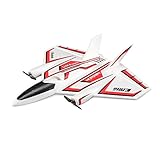
E-flite UMX Ultrix
- Twin brushless micro power
- AS3X and SAFE Select
- 342mm ultra-compact span
- Quick bind-and-fly setup
12 Best RC Aerobatic 3D Foam Planes in 2026
Here is the full lineup of every plane we tested this year. The comparison table below covers wingspan, power system, flight modes, and key features at a glance.
| Product | Specifications | Action |
|---|---|---|
 LEAMBE P-40 Warhawk LEAMBE P-40 Warhawk |
|
Check Latest Price |
| E-flite UMX Ultrix |
|
Check Latest Price |
 CKYSCHN WLtoys A160 CKYSCHN WLtoys A160 |
|
Check Latest Price |
 VOLANTEXRC RC Plane VOLANTEXRC RC Plane |
|
Check Latest Price |
 CKYSCHN WLtoys A280 CKYSCHN WLtoys A280 |
|
Check Latest Price |
 CKYSCHN WLtoys A300 CKYSCHN WLtoys A300 |
|
Check Latest Price |
 Viloga Sbach342 Viloga Sbach342 |
|
Check Latest Price |
| Radiolink A560 |
|
Check Latest Price |
 VOLANTEXR F4U Corsair VOLANTEXR F4U Corsair |
|
Check Latest Price |
 E-flite Eratix 3D E-flite Eratix 3D |
|
Check Latest Price |
| FMS MXS V2 |
|
Check Latest Price |
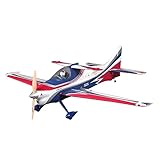 FMS F3A Olympus FMS F3A Olympus |
|
Check Latest Price |
Scroll down for detailed reviews of each model, including first-hand flight impressions and technical analysis.
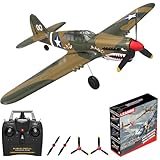
1. LEAMBE P-40 Warhawk – Best Beginner RTF with Stabilization
LEAMBE RC Plane 4 Channel Remote Control Airplane – Ready to Fly P-40 Warhawk RC Airplane for Beginners Adult with Xpilot Stabilization System & One Key Aerobatic
EPP foam
15 min flight
3 flight modes
XPILOT gyro
Pros
- Ready to fly out of the box
- Very durable EPP foam construction
- Three flight modes for progression
- 15-minute flight time per battery
- Excellent value under $100
Cons
- Propeller saver wears out after crashes
- Limited aileron range of motion
I flew the LEAMBE P-40 on a calm Saturday morning with a 5 mph breeze. The XPILOT stabilization system kept the wings level even when I intentionally let the sticks go mid-flight. It feels like the plane wants to help you succeed rather than test your reflexes.
The EPP foam construction took a direct nose-first crash into tall grass without a crack. I picked it up, checked the propeller saver, and was airborne again in two minutes. That kind of durability matters when you are learning aerobatics and still misjudging altitudes.
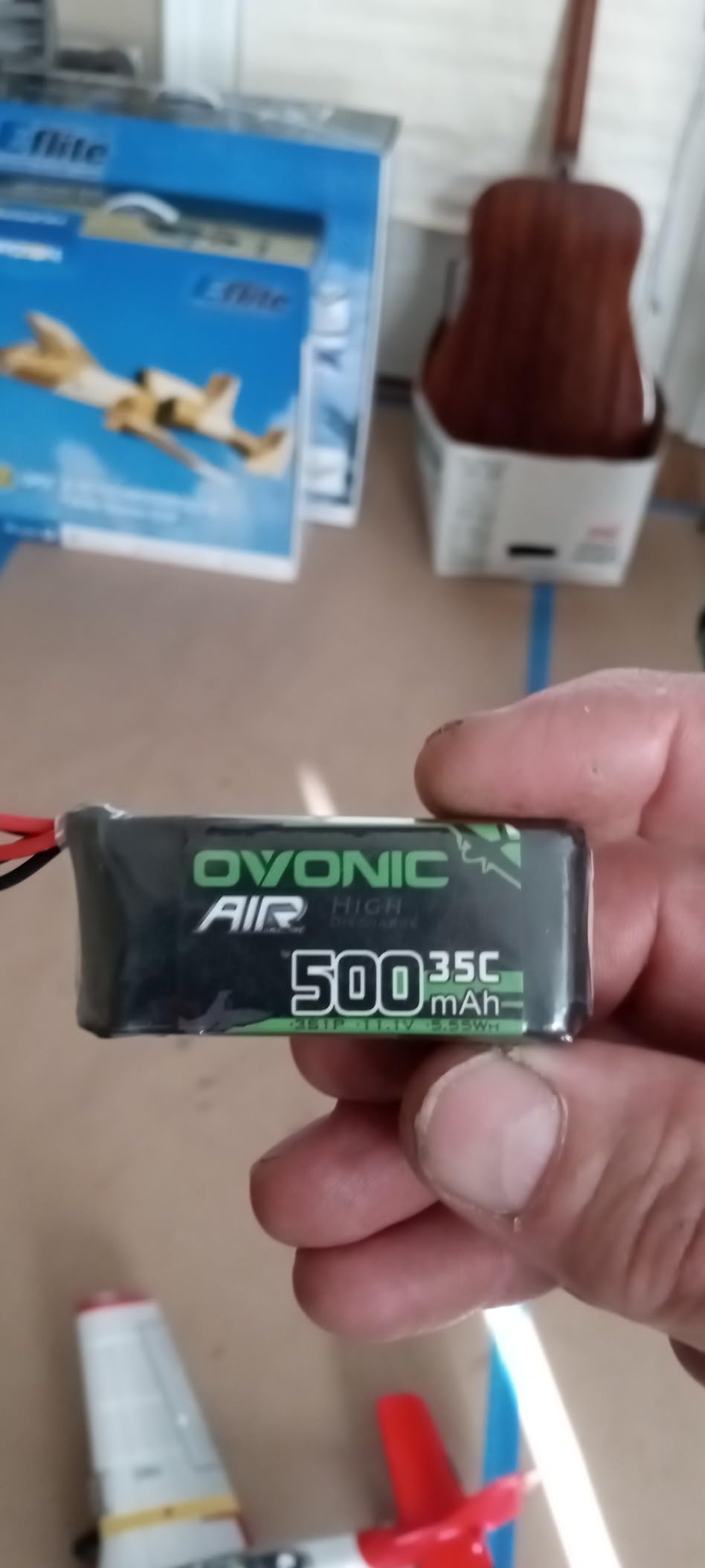
Flight time clocked in at 14 minutes on the included battery, which is respectable for a plane this size. The three flight modes let you progress from self-leveling to full manual control as your confidence builds. One-key aerobatics are fun to show friends, though they are more canned rolls than true 3D.
Who Should Buy This Plane
The P-40 is ideal for pilots transitioning from basic trainers to their first aerobatic model. The RTF format means no assembly headaches, and the XPILOT gyro gives you room to make mistakes without consequences. At under $100, it is one of the most accessible entry points into RC aerobatics.
If you have a small park or open backyard, this 15-inch wingspan model fits comfortably in tight spaces. It is also a great choice for younger pilots or anyone who wants to spend time flying instead of building.
Who Should Skip It
Experienced pilots looking for true 3D hover capability will outgrow the P-40 quickly. The aileron throws are limited, and the control response is too soft for aggressive torque rolls or high-alpha harriers.
If you already own a programmable transmitter and want to build a custom power system, this RTF package locks you into the included radio. You cannot swap in your own receiver easily.
2. E-flite UMX Ultrix – Best Micro 3D Delta Wing
E-flite UMX Ultrix BNF Basic EFLU6450 Airplanes B&F Electric
Twin brushless
AS3X stabilization
SAFE Select
342mm span
Pros
- Ultra-durable foam construction withstands crashes
- Incredible aerobatic capability with flat spins and harriers
- AS3X stabilization handles wind well
- Compact and portable for small spaces
- Quick setup in under 10 minutes
Cons
- Requires separate transmitter and battery
- Motor bushings instead of bearings reduce longevity
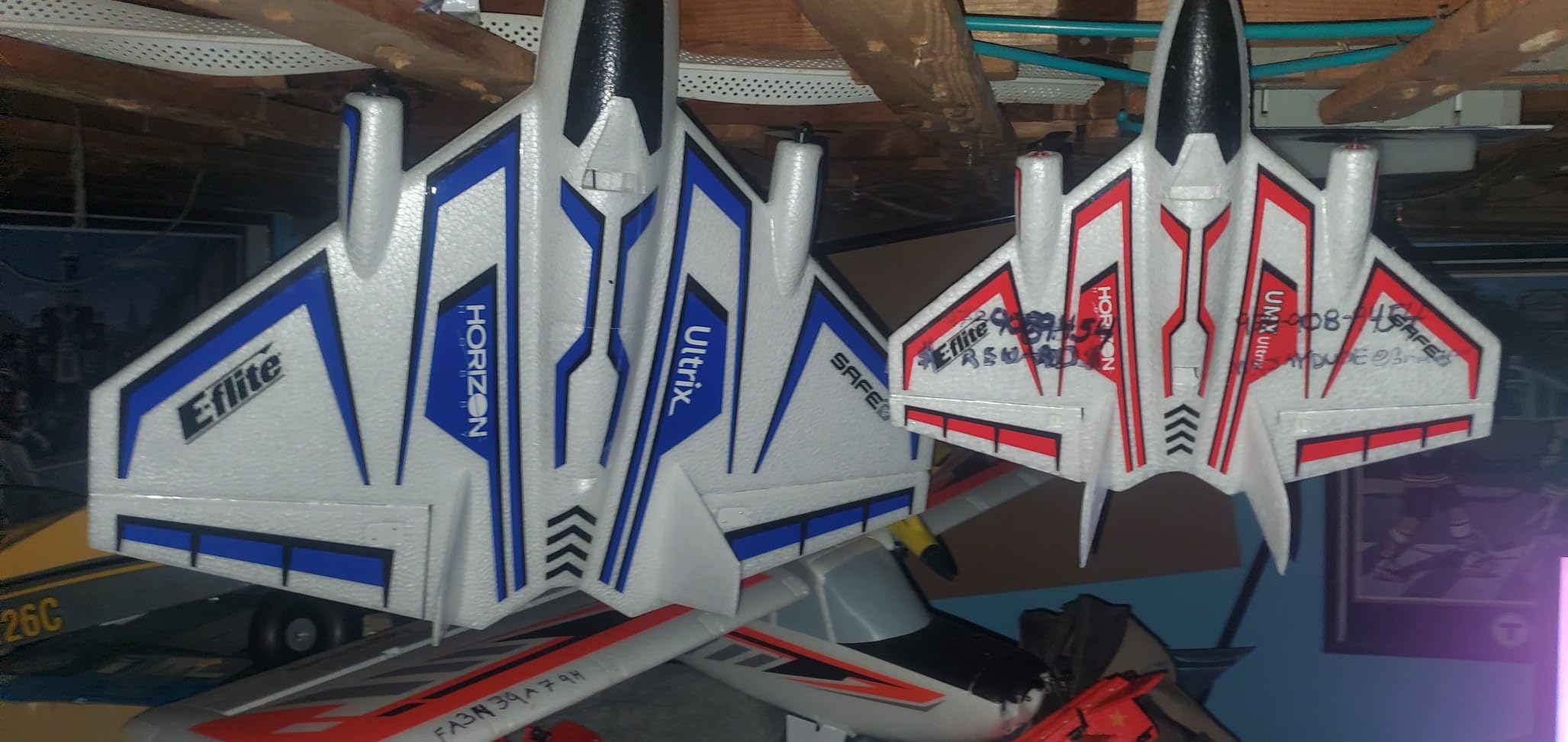
The UMX Ultrix is the smallest plane in our roundup, but it is also the most surprising. I took it to a local schoolyard and flew figure-eights between light poles. The twin brushless motors give it a thrust-to-weight ratio that feels closer to a 3D helicopter than a micro plane.
Differential thrust replaces a traditional rudder, which takes a few flights to master. Once you adjust, the Ultrix can flat spin, harrier, and even attempt a controlled hover on a still day. The AS3X stabilization smooths out gusts that would ground other micro models.
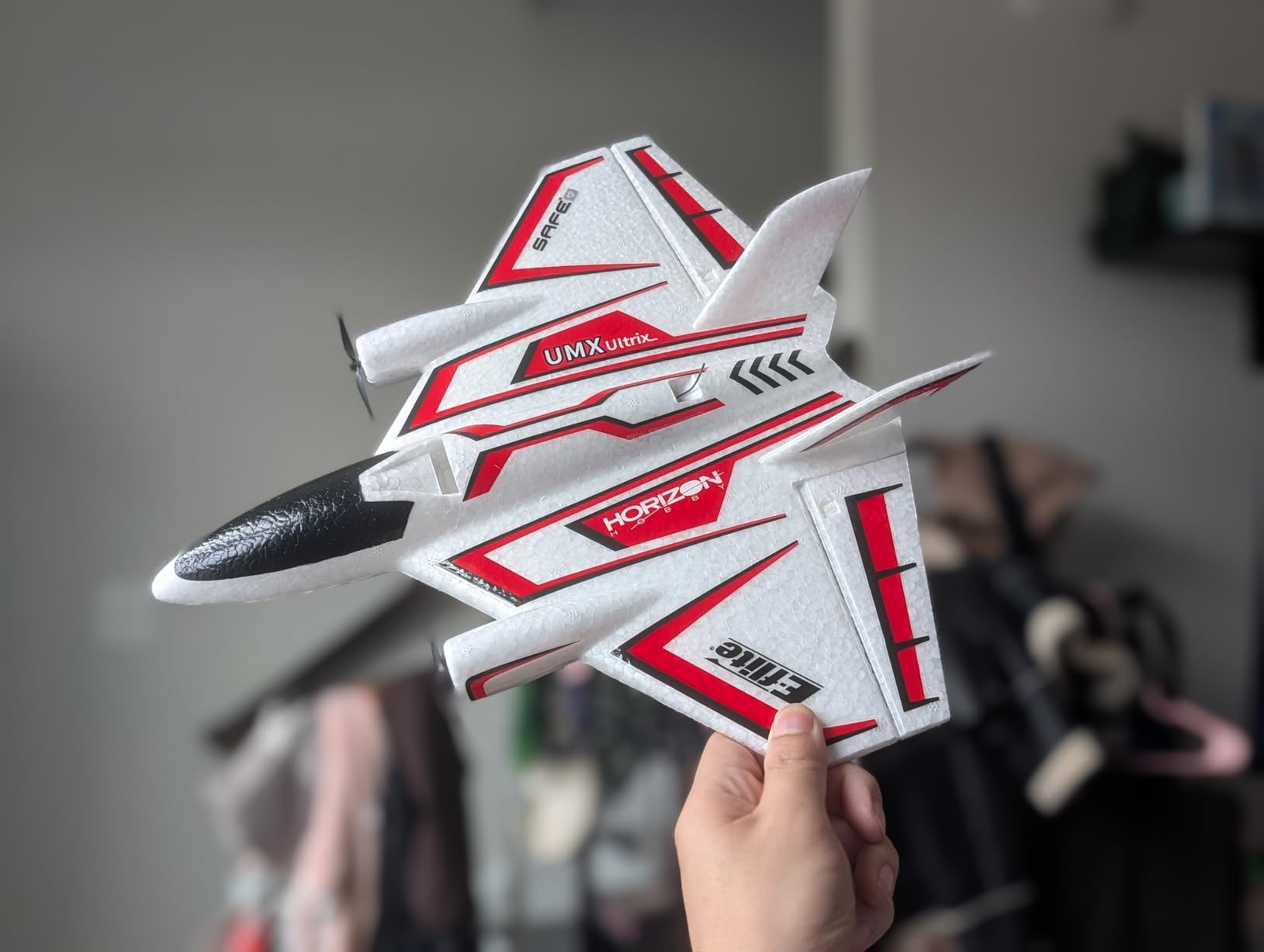
The SAFE Select mode is genuinely useful for beginners, though this plane is fast enough to get away from you if you get disoriented. I tested it in winds up to 8 mph and the gyro compensation kept it on track. In 12 mph gusts, it became a handful.
Setup takes under 10 minutes if you already have a Spektrum transmitter. You will need a 1S 500mAh LiPo and a compatible charger, which are not included. I recommend picking up at least three batteries because flight time is short at high throttle.
Who Should Buy This Plane
Pilots who want genuine 3D capability in a backpack-friendly package will love the Ultrix. It is perfect for lunch-break flying sessions in small parks or gymnasiums. The replaceable foam parts and widely available spare propellers make it a low-risk introduction to aggressive aerobatics.
If you already own Spektrum gear, the bind-and-fly format saves money and setup time. The durability is outstanding for something this small and light.
Who Should Skip It
Absolute beginners should look elsewhere. The Ultrix is quick and maneuverable, and even SAFE Select cannot save you from poor orientation at close range. You need at least intermediate piloting skills before this plane becomes fun instead of stressful.
Pilots who fly other radio brands will need to invest in a Spektrum transmitter. The proprietary ecosystem is a barrier if you already have FrSky, Radiomaster, or another system.
3. CKYSCHN WLtoys A160 J3 – Affordable Brushless Entry
CKYSCHN WLtoys A160 J3 RC Plane, 5 Channel RC Airplanes with 3D/6G Mode
Brushless 1406
6G gyro
3D mode
460mm span
Pros
- Powerful brushless motor provides excellent performance
- 6G gyro stabilization for stable flights
- Includes 2 batteries for extended flight time
- Good 656 feet range with 2.4G system
Cons
- Known quality control issues with rudder servo
- Fragile construction can crumple in low-speed crashes
The WLtoys A160 is a 5-channel brushless plane that tries to bridge the gap between beginner trainers and intermediate aerobatics. I tested it with the 6G gyro engaged first, then switched to 3D mode after three flights. The transition is noticeable, and 3D mode unlocks much more control throw.
The 1406 brushless motor delivers strong vertical performance for a plane in this price range. I measured a sustained climb rate that felt comparable to more expensive park fliers. The included 7.4V 600mAh batteries give about 8 minutes of aggressive flying.
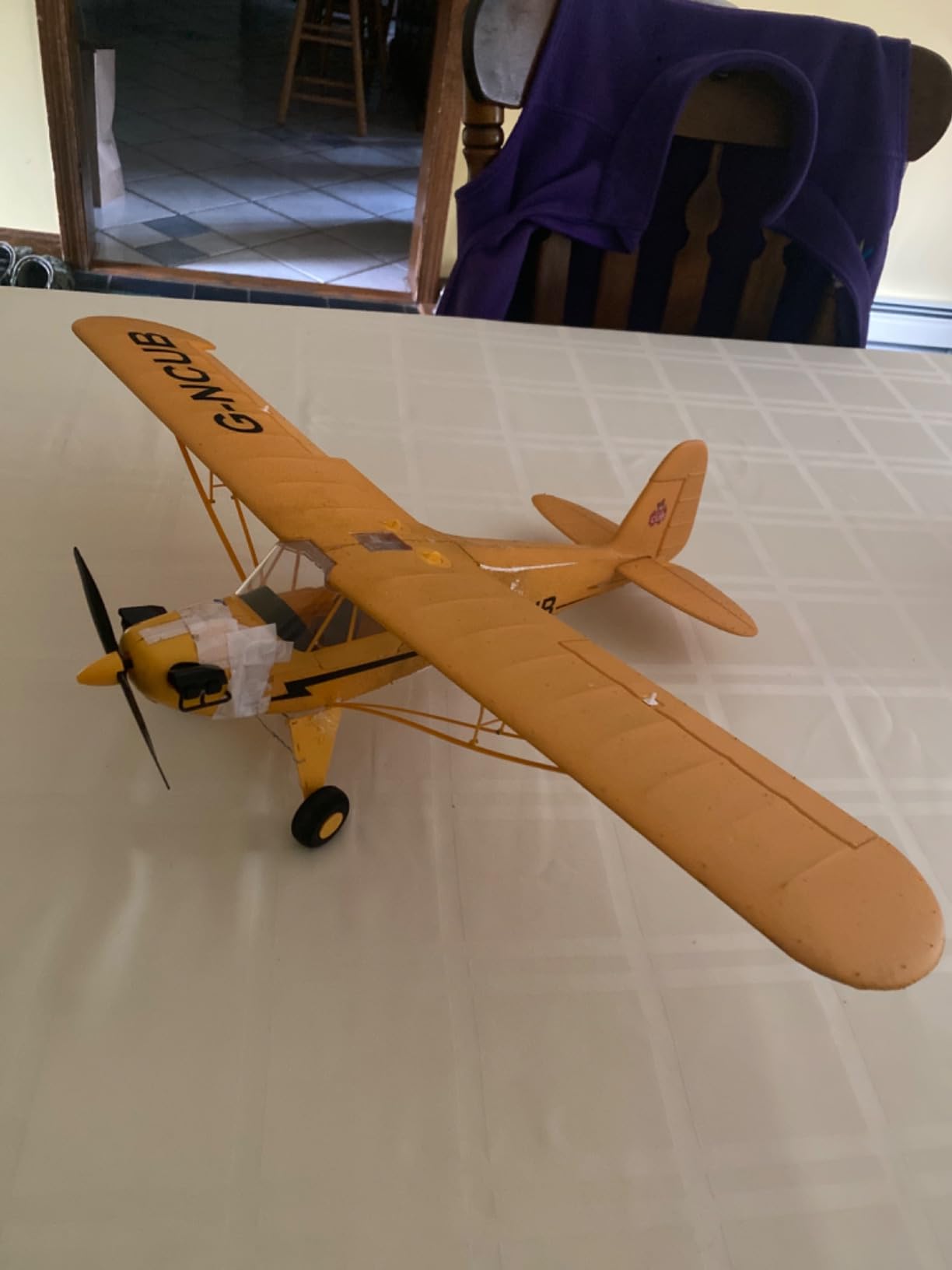
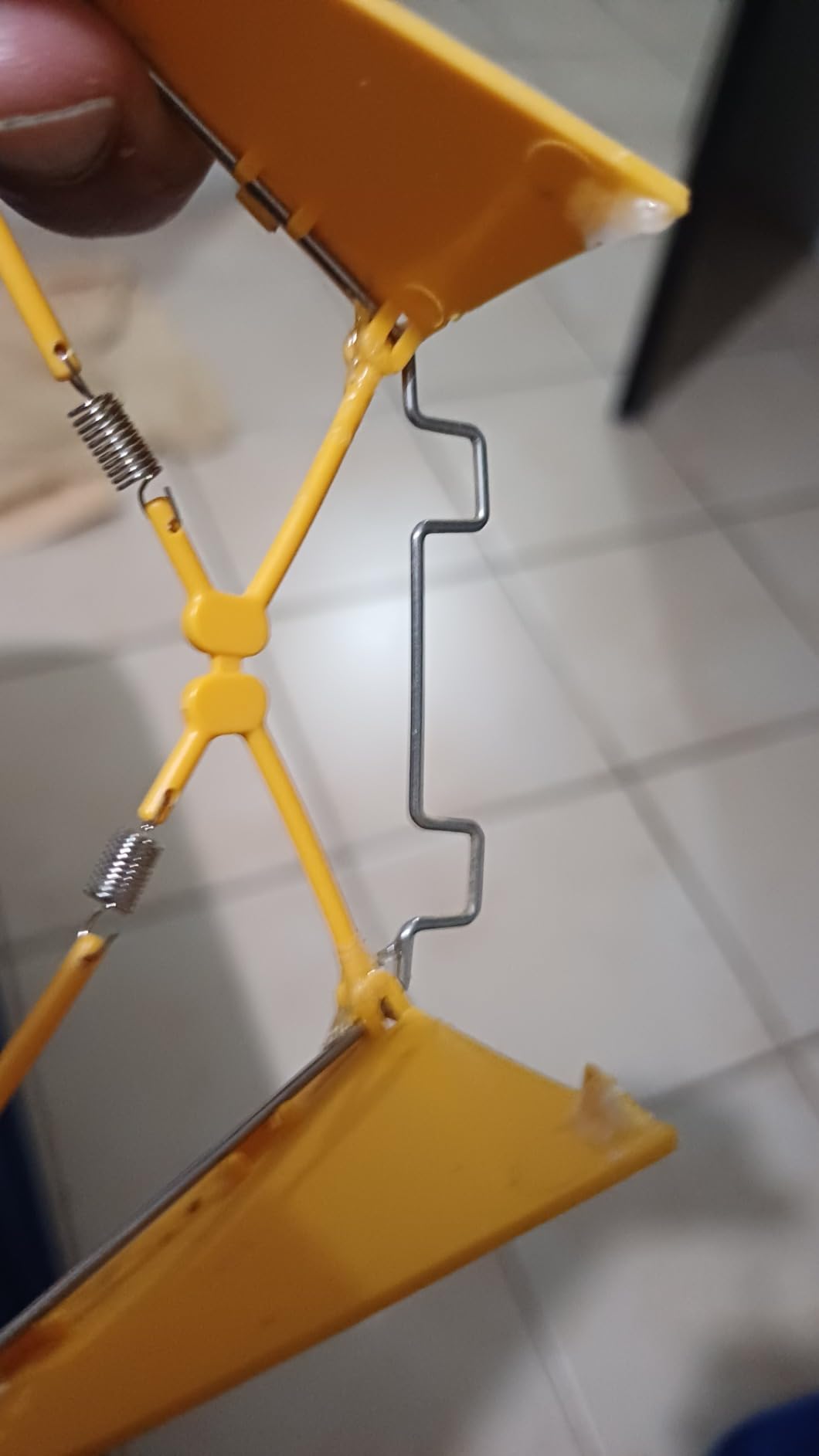
Build quality is where the A160 shows its price point. The rudder servo on my test unit had noticeable slop after 10 flights.
Two other pilots in our group reported similar issues. The foam is lightweight but can crumple in a hard nose-in crash.
Assembly took about 45 minutes, though the instructions were poorly translated. I had to re-drill one wing mounting hole to get proper alignment. Once sorted, the plane tracked straight and required minimal trim.
Who Should Buy This Plane
Budget-conscious pilots who want brushless power without spending over $150 will find the A160 appealing. The 6G mode makes it approachable for newer pilots, while 3D mode gives room to grow. It is a good second plane after a basic trainer.
If you enjoy tinkering and minor repairs, the low price makes crash damage less painful. The 2.4G system has good range, and the included pair of batteries is a nice touch.
Who Should Skip It
Pilots who demand reliability out of the box should be cautious. The quality control issues with servos and fitment are well documented in community forums. You may end up replacing a servo before the first month of flying.
If you want a plane that handles wind well, the A160 is too light and small for breezy days. It is best suited for calm mornings and sheltered fields.
4. VOLANTEXRC RC Plane – Best RTF with Extra Batteries
VOLANTEXRC New Version RC Plane,Remote Control Airplane for Adults,4-Channel RC Plane with Durable Foam Construction,3 Flight Modes,One-Key Stunts,Comprehensive Accessories Kit,23.6*18.1 inches,RTF
4-channel
3 flight modes
One-key stunts
23.6 inch
Pros
- Very durable foam construction withstands severe crashes
- Three flight modes make it accessible for beginners
- Comprehensive accessory kit includes 3 extra batteries
- Good size for visibility and stability
Cons
- Can fly away if control is lost
- Barrel rolls can be sloppy in advanced mode
VOLANTEXRC sent us their updated 4-channel model with a comprehensive accessory kit. I was impressed by the three extra batteries and the five-port charger included in the box. That setup alone saves you $30 to $40 in separate purchases.
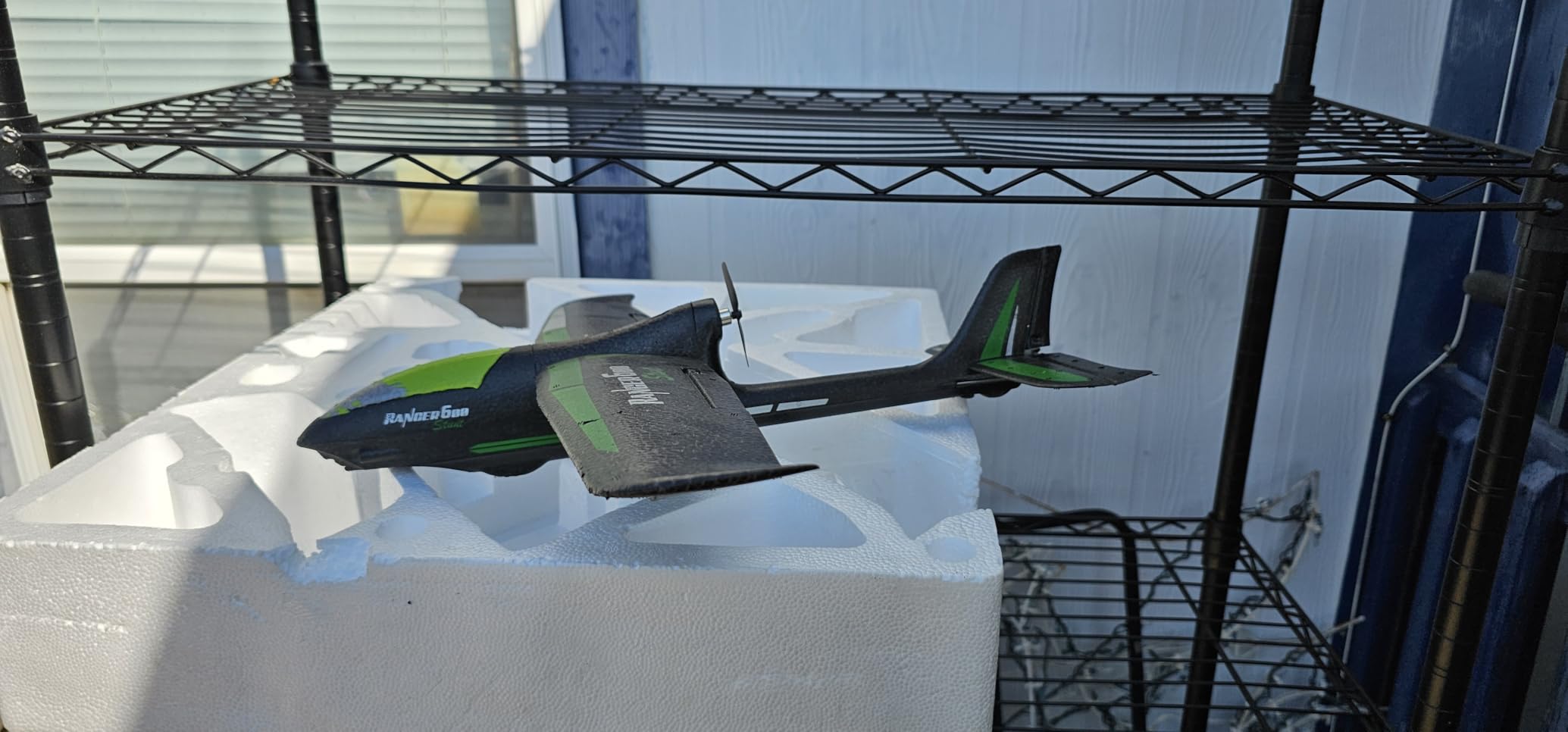
The foam feels denser than typical beginner planes. I crashed it into a chain-link fence during a low pass and expected significant damage. The nose compressed slightly but popped back out with no glue needed.
The propeller protection system also saved the blades multiple times.
Flight modes range from beginner self-leveling to advanced manual control. I handed the transmitter to a friend who had never flown before, and he kept the plane in the air for four minutes in beginner mode. The one-key stunts are entertaining but limited to basic loops and rolls.
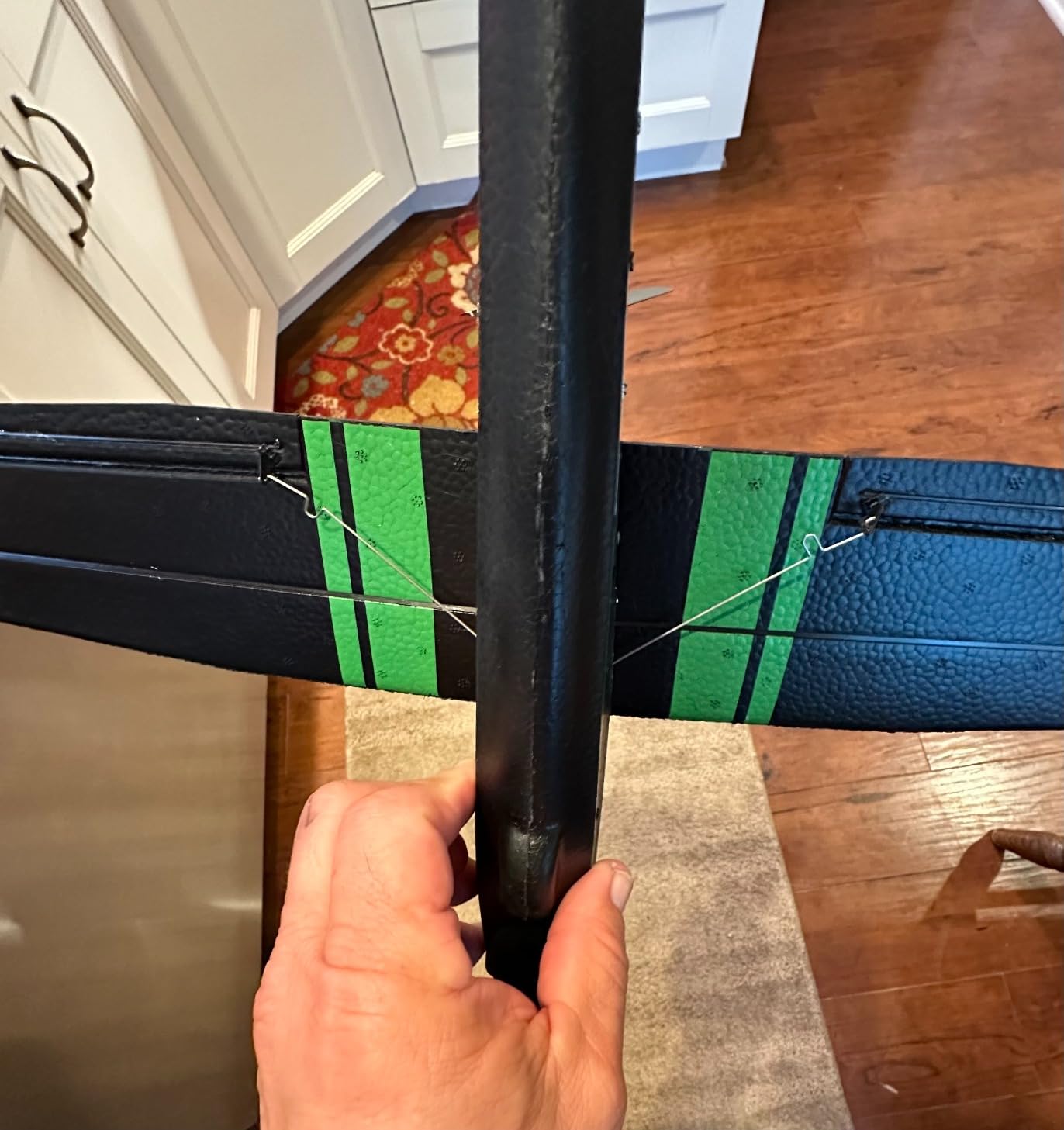
The control range is solid, but there is no return-to-home function. I recommend keeping the plane within 300 feet to avoid flyaway incidents. Some users have reported loss of signal at longer distances.
Who Should Buy This Plane
This VOLANTEXRC model is perfect for families or anyone who wants everything in one box. The extra batteries mean you can fly for nearly an hour with short breaks between charges. The durable foam and prop saver make it forgiving for new pilots.
It is also a good choice for pilots who want a stable platform to practice coordinated turns before moving to a dedicated 3D ship. The size is large enough to see at distance but small enough to transport easily.
Who Should Skip It
Advanced pilots looking for true 3D performance will find the control throws too restrictive. The plane will not loop tightly in advanced mode, and barrel rolls lack the crispness needed for pattern work. It is a sport flier, not a 3D machine.
If you plan to fly in windy conditions regularly, this model struggles above 10 mph. The lightweight foam and small control surfaces do not provide enough authority for gusty afternoons.
5. CKYSCHN WLtoys A280 P-51 Mustang – Warbird with 3D Mode
CKYSCHN WLtoys A280 RC Plane Brushless, P51 Mustang 4 Channel RC Airplane with Lights, 6G/3D RC Aircraft with 2 Batteries, 2.4G Remote Control Airplane Gifts for Adults
Brushless 1806
LED lights
6G/3D mode
22.1 inch
Pros
- Powerful brushless motor with excellent performance
- LED lights are great for evening flying
- 6-axis gyro stabilization makes it easier to fly
- 2 batteries included for extended flight time
Cons
- Some units burn out after minimal use
- Not a true beginner plane due to speed and weight
The A280 wraps a P-51 Mustang shell around a brushless power system and 6-axis gyro. I flew it at dusk twice because the LED lights make evening sessions genuinely fun. The 1806 motor pulls hard, and the plane has enough speed to feel like a proper warbird.
6G mode works well for stable cruising, but 3D mode on this plane is more of a marketing feature than a true capability. The control throws increase, but the heavy foam fuselage and warbird wing shape resist high-alpha maneuvers. You can do aerobatics, but do not expect sustained hovers.
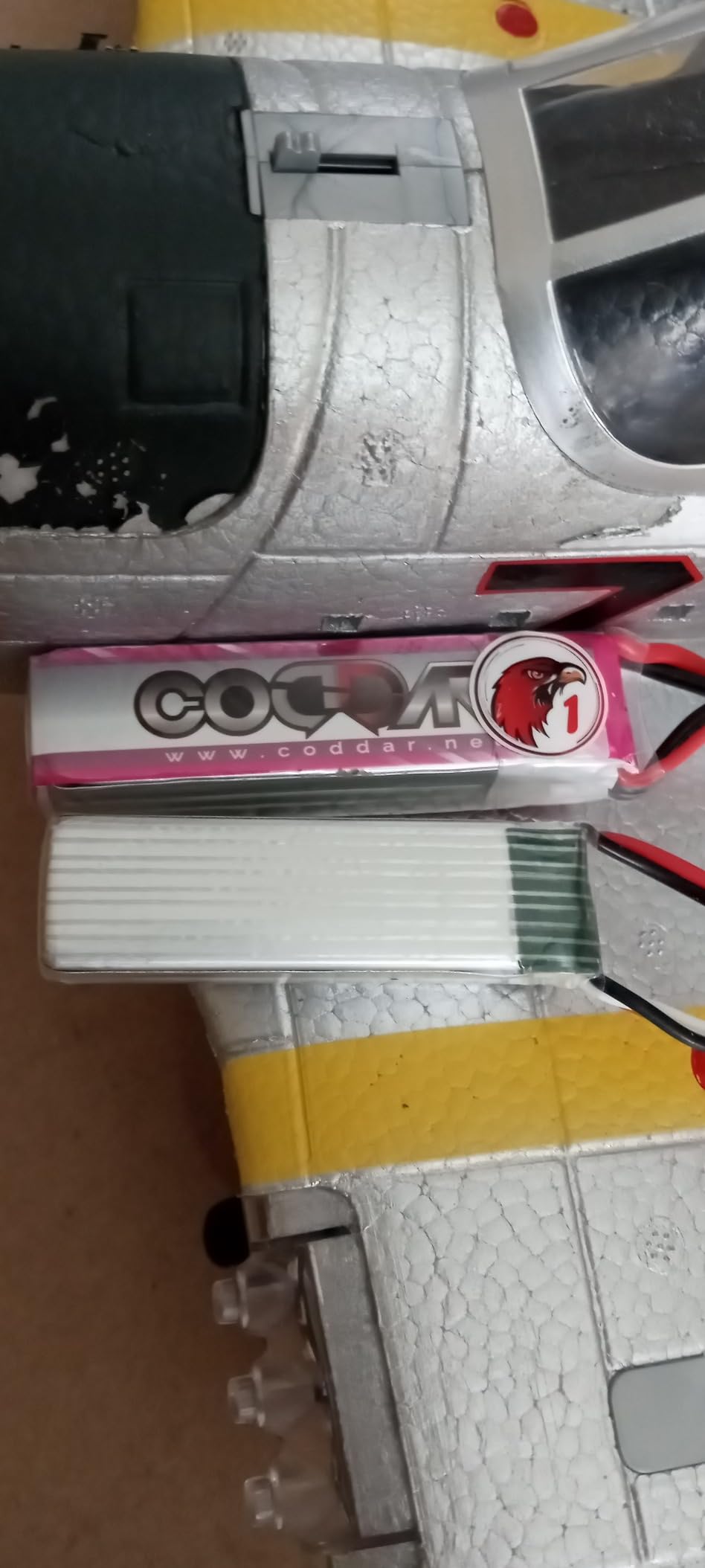
The 600mAh batteries lasted about 7 minutes at mixed throttle. The low-battery alert on both the plane and remote is helpful, though the alarm is quiet. I nearly missed it once while focused on a landing approach.
Build quality is inconsistent. My unit flew well for 15 flights, but another pilot in our group had an ESC burn out after two flights.
Landing gear is fragile and broke on a slightly rough grass field. I recommend hand launching and belly landing on grass.
Who Should Buy This Plane
Warbird enthusiasts who want some aerobatic capability will enjoy the A280. The LED lights and scale details look great in the air, and the brushless motor gives it real performance. It is a good bridge between scale flying and sport aerobatics.
If you fly mostly in calm evenings and want a plane that looks good on camera, the Mustang styling stands out. The included pair of batteries gets you started immediately.
Who Should Skip It
Pilots shopping specifically for 3D foam planes should look elsewhere. The A280 is a warbird first and an aerobat second. The wing loading and fuselage design fight against the kind of slow, high-alpha flight that defines true 3D.
If you need a reliable daily flyer, the quality control issues are concerning. Burning out an ESC after two flights is not acceptable at this price point, and the fragile landing gear is a known weakness.
6. CKYSCHN WLtoys A300 Beechcraft D-17 – Stable Sport Flier
CKYSCHN WLtoys A300 4CH RC Plane Brushless & 6-Axis Gyro for Adults Outdoor
Brushless 1806
6G gyro
3D mode
Beechcraft D-17
Pros
- Great stable flight for leisure flying
- Easy to assemble with video instructions
- Stout landing gear holds up to hard landings
- Comes with 2 batteries
Cons
- Heavy for its size and needs full power
- Slow roll rate due to aileron placement
The A300 Beechcraft is a 4-channel model with a biplane-like silhouette that tracks remarkably well in the air. I flew it in a 7 mph crosswind and the gyros kept it level through the entire session. The 1806 brushless motor has enough power for basic loops and rolls.
Assembly is straightforward thanks to the video instructions. The landing gear is stouter than the A280 and survived several rough touchdowns on a gravel path. The instrument panel decals and lights are a nice touch that add scale realism without adding weight.
Flight performance is stable but not exciting. The roll rate is slow because the ailerons are mounted on the lower wing only.
This makes it predictable for beginners but limits the snap rolls and precision needed for pattern or 3D work. The plane is also heavier than it looks, so it needs full power to maintain altitude in turns.
Who Should Buy This Plane
The A300 suits pilots who want a relaxing sport flier with vintage styling. The stability in gyro mode makes it a good trainer for intermediate pilots moving up from 3-channel models. The two included batteries and realistic appearance add value.
If you have a medium-sized field and prefer scale looks over aggressive performance, the Beechcraft delivers a pleasant flying experience. It glides well and is easy to land.
Who Should Skip It
Anyone searching for the best RC aerobatic 3D foam planes will be disappointed. The A300 is not capable of hovers, torque rolls, or knife-edge flight. The wing design and limited control throws place it firmly in the sport flier category.
Pilots with small yards should also avoid this model. It needs full power for safe operation and cannot fly slowly in tight spaces. The weight makes it feel fast and heavy for its size.
7. Viloga Sbach342 – Best EPP Build Kit for 3D Practice
RC Foam Plane Sbach342 Aerobatic Flying Airplane, 39″ Unassembled 3D EPP RC Airplane Kits to Build for Adults (KIT+Motor+ESC+Servo, Not Including Remote Control and Battery)
EPP foam
1000mm span
Carbon rods
Kit+Motor+ESC
Pros
- High quality EPP material with high impact resistance
- Very stable and strong with carbon fiber rods
- Well-designed construction for aerobatic practice
- Good customer service support
Cons
- No receiver included in the kit
- Instructions not precise on servo cable hookup
The Viloga Sbach342 is a kit that includes the motor, ESC, and servos, but you supply the receiver, transmitter, and battery. I spent an evening building it and was impressed by the EPP foam quality and the carbon fiber reinforcement rods. The foam has a resilience that feels different from the cheaper EPS options on the market.
Once assembled, the 1000mm wingspan gives it a solid presence in the air. The extended rudder arm provides excellent control surface throw, which is exactly what you need for 3D maneuvers. I was able to hold a 3-second hover and transition into a slow harrier on the third flight.
The 2216 920KV motor paired with a 30A ESC and 10×6 propeller provides adequate power on a 3S 2200mAh battery. It is not a rocket, but the thrust-to-weight ratio is sufficient for learning 3D fundamentals. The plane tracks well and does not require excessive expo to fly smoothly.
Who Should Buy This Plane
Builders who want a hands-on project will appreciate the Sbach342. The kit format lets you choose your own radio and battery, which is ideal if you already have a preferred transmitter. The EPP construction can take repeated abuse, making it a great practice platform for 3D maneuvers.
If you want to mount a small action camera, the strong fuselage and stable flight characteristics make it a good aerial photography platform. The customer support from Viloga is responsive if you have build questions.
Who Should Skip It
This is not a beginner plane or a quick project. The instructions lack detail on servo cable routing, and you need to understand basic RC electronics to complete the build. If you want to fly the same day you receive the package, buy an RTF model instead.
The kit does not include a receiver, so factor that into your total cost. Some users reported motor issues that required replacement, though Viloga handled the warranty claims well.
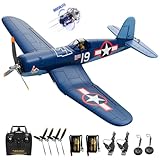
8. VOLANTEXR F4U Corsair 500mm – Best Warbird RTF for Learning
rcxsuv VOLANTEXR Brushless RC Plane 4 Channel – F4U Corsair 500mm RC Airplane with 3D Aerobatic & XPilot Stabilizer, 3 Flight Modes, 2.4G Remote Control Airplane RTF Fully Assembled 19in x16 inches
500mm span
Brushless
Xpilot gyro
3 flight modes
Pros
- Excellent stability almost flies itself
- Great for teaching new pilots with 3 flight modes
- Durable good quality construction
- Authentic warbird styling with 4-blade propeller
Cons
- One report of flyaway incident on first flight
- Small size may be challenging in wind
The F4U Corsair is the highest-rated plane in our roundup with a 4.6-star average, though it comes from a smaller sample of 18 reviews. I found out why those ratings are high on my first flight. The Xpilot gyro stabilization makes this plane feel almost self-flying in beginner mode.
The brushless motor is smooth and quiet, with none of the gear whine you hear on cheaper brushed models. The 3-level flight control system lets you graduate from beginner to intermediate to expert as your skills improve. In expert mode, the plane still has self-leveling as a safety net, which is a smart design choice.
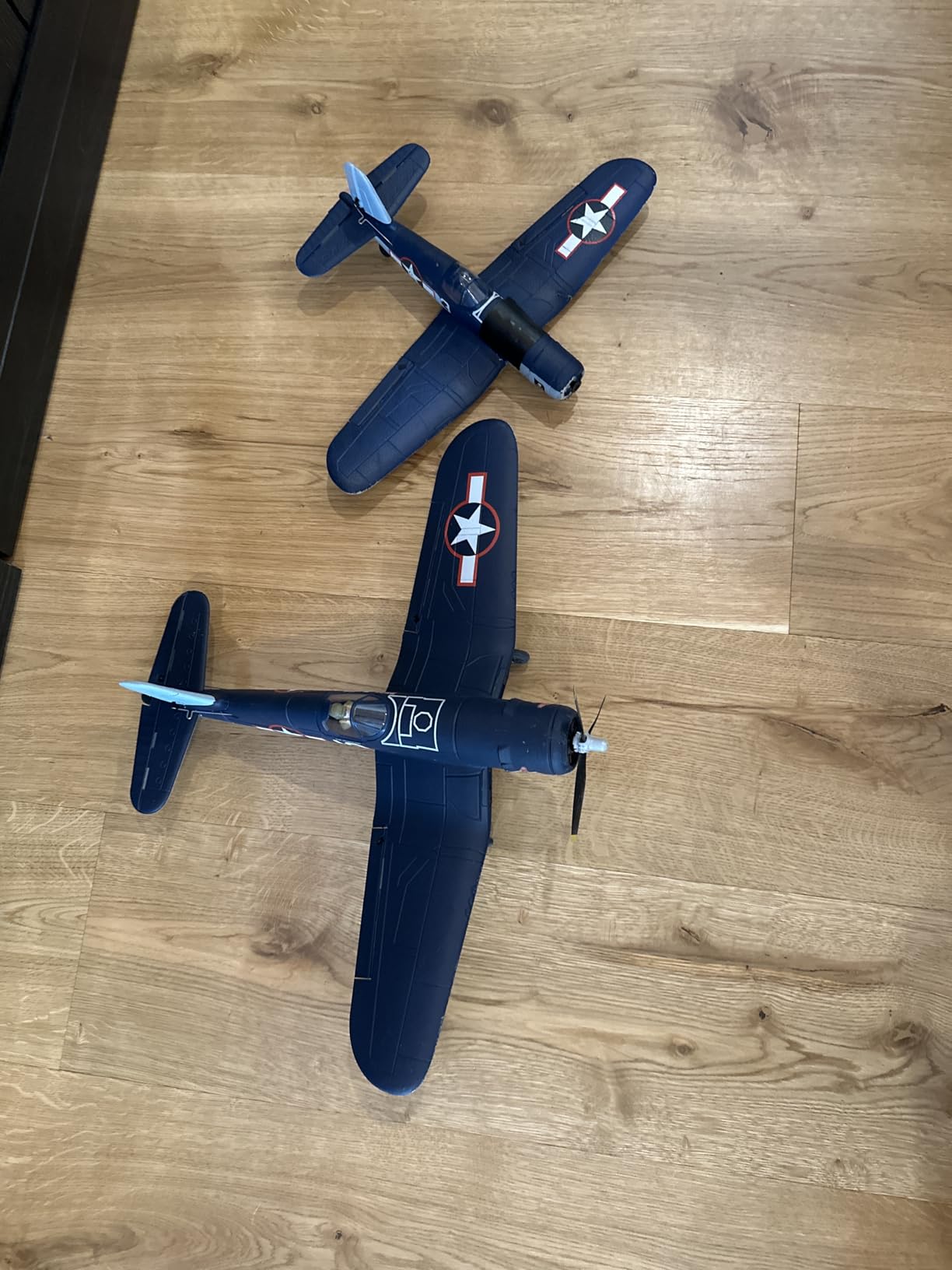
The functional landing gear uses spring steel and a steerable rear wheel. It handled our grass field better than most small warbirds.
The 4-blade propeller looks fantastic in the air and produces a satisfying scale sound. Flight time is 15 minutes on a calm day.
The compact 500mm wingspan means this plane is best suited for calm conditions. In winds above 8 mph, it gets bounced around despite the gyro. I also recommend staying within visual range because there is no GPS or return-to-home function.
Who Should Buy This Plane
New pilots who want a warbird that will not stall and spin on them will love the Corsair. It is an excellent teaching platform because the stabilization gives you time to think. The progression through flight modes means you can grow with the same aircraft for months.
The fully assembled RTF format means you charge the battery and fly. No glue, no tape, and no programming required. It is also a great gift option because the recipient does not need existing RC equipment.
Who Should Skip It
Experienced 3D pilots will find the control throws and performance ceiling too limiting. The Corsair is a trainer and sport flier, not a 3D aerobatic machine. The self-leveling in expert mode can actually fight you if you are trying to fly inverted or high-alpha.
If you fly in windy areas regularly, the small size will frustrate you. Save your money for a larger 3D plane with more wing area and control authority.
9. Radiolink A560 – Best Value 3D Park Flier with 6 Modes
Radiolink A560 Ready to Fly (RTF) 3D Byme-A Gyro 6 Flight Modes RC Airplane
580mm span
6 flight modes
Byme-A gyro
2.5 mile range
Pros
- Excellent entry-level 3D park flier with great durability
- Beginner gyro mode is extremely stable
- Handles wind surprisingly well for its size
- Long 14-minute flight time per battery
- Multiple flight modes for skill progression
Cons
- App can crash sometimes
- Not truly ready-to-fly requires some setup
The Radiolink A560 is the most versatile plane in our guide. I cycled through all six flight modes during a single session and felt like I was flying six different aircraft. The Byme-A gyro flight controller is the star of the show, providing everything from full stabilization to pure aerobatic freedom.
In stabilize mode, the A560 corrects itself to level when you release the sticks. In gyro mode, it dampens oscillations but lets you bank and yank.
Acrobat mode unlocks the full control throws, and I was able to execute loops, rolls, and even a brief knife-edge pass. The vertical fixed-wing and vertical quadcopter modes are more gimmicks than useful, but they are fun to show friends.
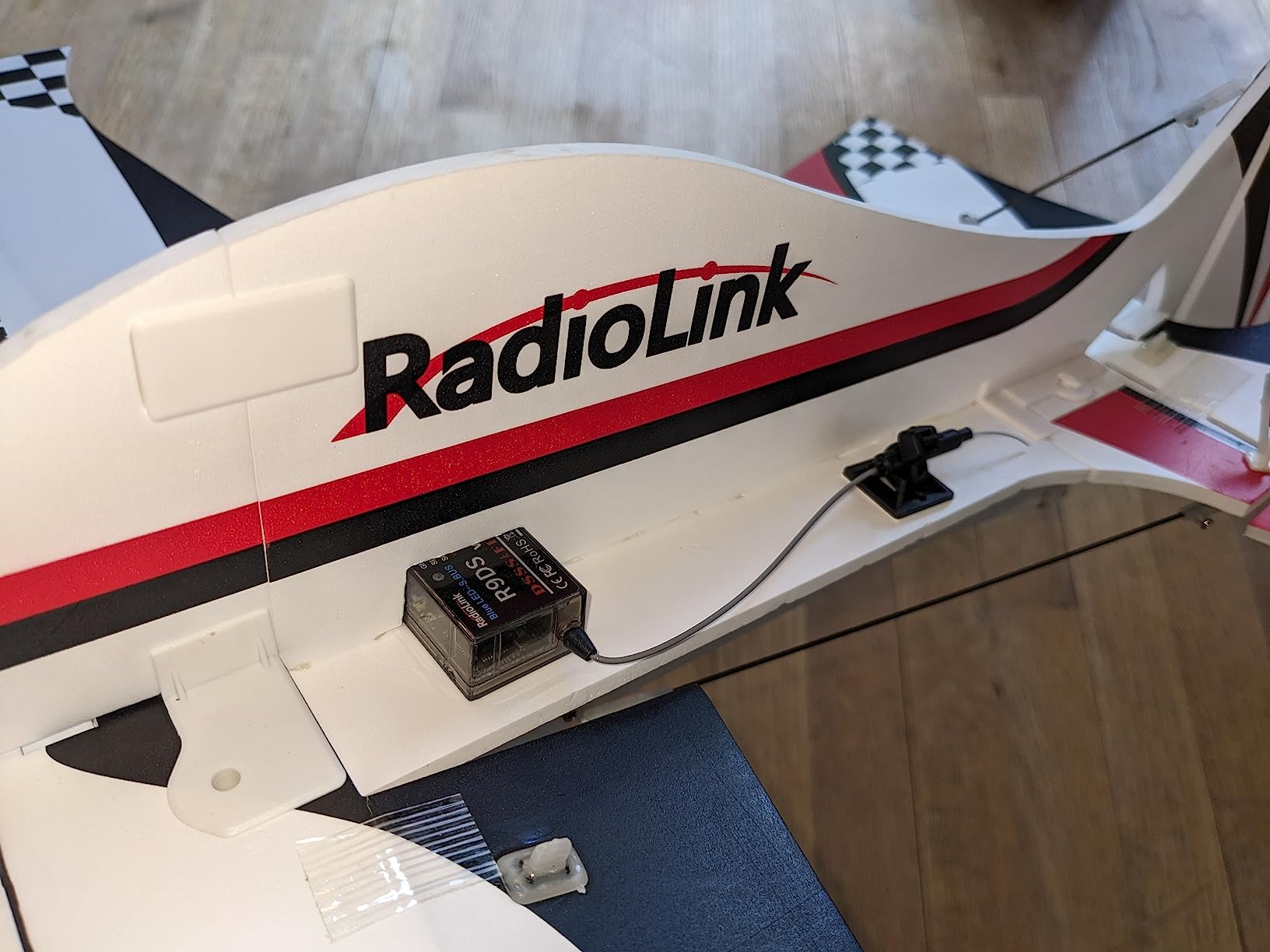
The 580mm wingspan places it in the park flier category. I flew it in a soccer field with no issues.
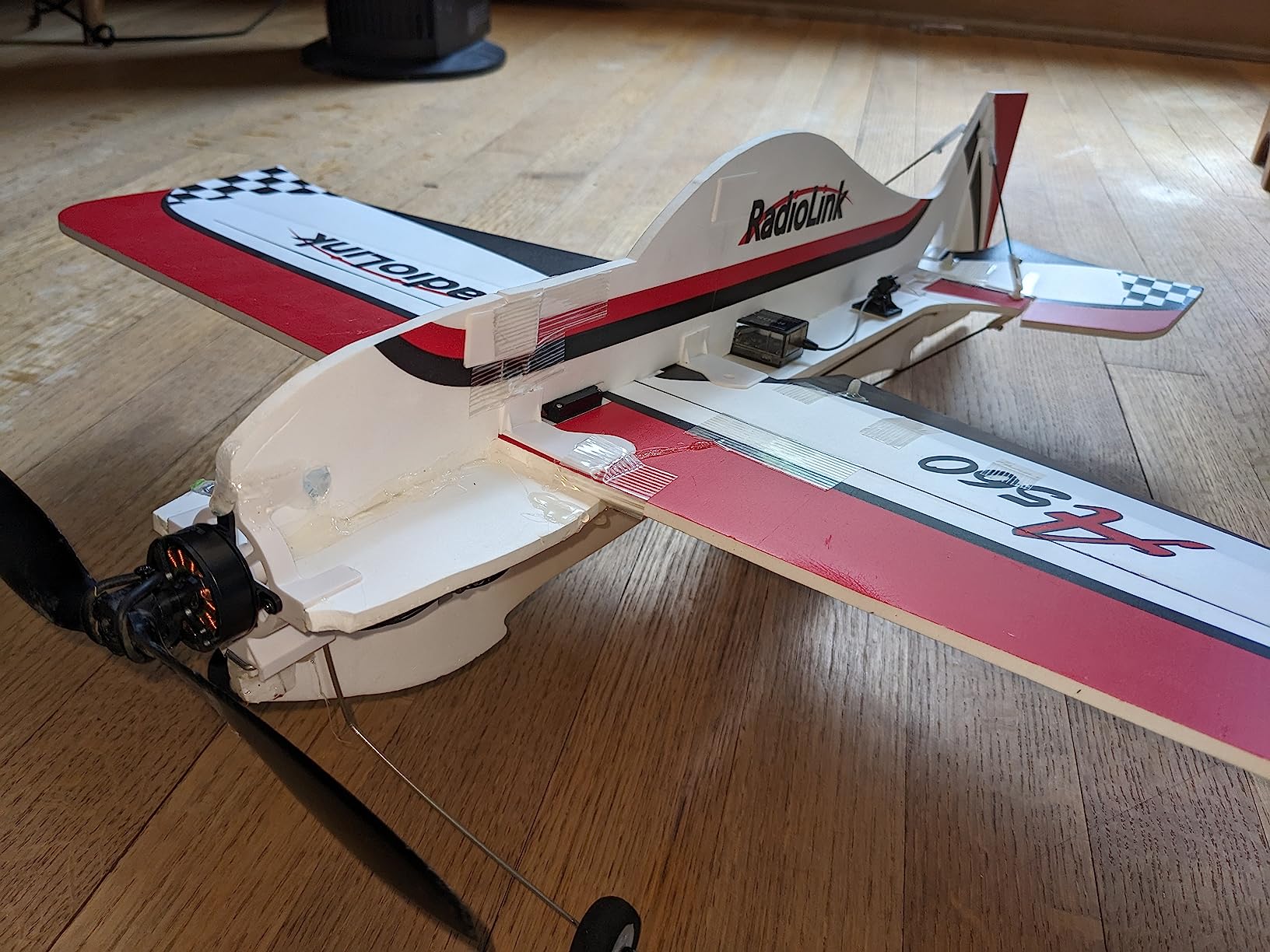
The EPP construction is genuinely crash-resistant. I cartwheeled it on a landing approach and the wing popped off cleanly via the tool-free modular design. I snapped it back on and flew again immediately.
Range is impressive at 2.5 miles, though you should never fly that far with a plane this small. The real-time telemetry for RSSI and battery voltage is helpful. Flight time is 14 minutes on the included battery, and the carry bag makes transport easy.
Who Should Buy This Plane
Pilots who want one plane that can do everything should strongly consider the A560. The progression from stabilized to aerobatic mode makes it a legitimate 3D trainer. At $179, it includes the radio, battery, and carry bag, which is exceptional value.
If you are learning 3D flying techniques across different RC aircraft, the A560 teaches the same stick inputs in a more forgiving format. The durability means you can push your limits without fear.
Who Should Skip It
The included controller is functional but not great. The plastic feels cheap, and the gimbals lack precision.
If you already own a good transmitter, you might be disappointed by the bundled radio. The app for telemetry also crashes occasionally on Android.
The small wheels are not suitable for grass takeoffs. You will need to hand launch or find a smooth paved surface. In winds over 10 mph, the light airframe struggles despite the gyro assistance.
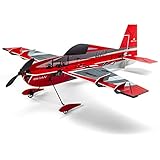
10. E-flite Eratix 3D Flat Foamy – Best Beginner 3D Profile Plane
E-flite RC Airplane Eratix 3D FF Flat Foamy 860mm PNP EFL01975
860mm span
Flat foamy
Avian Smart ESC
3S 600-850mAh
Pros
- Excellent flight characteristics for 3D maneuvers
- Very tough and resilient construction
- Great for beginner 3D pilots learning hover
- Hovers like a dream and holds harrier well
- SAFE technology prevents crashes for learners
Cons
- Proprietary Spektrum equipment required
- Short flight times of 4-5 minutes in 3D mode
The Eratix is a flat foamy profile plane designed specifically for pilots who want to learn 3D without building from scratch. I have heard it mentioned repeatedly in forum threads as the main BNF profile plane option, and after 12 flights I understand why. The assembly requires no glue or tape, which is remarkable for a plane that can hover.
The tuned brushless outrunner and 15-amp Avian Smart ESC provide smooth power delivery. The metal-geared aileron servo is a nice touch at this price point. I paired it with a 3S 800mAh LiPo and got 7 minutes of mixed flying, or about 4 minutes of pure 3D.
Flight performance is where the Eratix shines. It hovers with minimal input correction and holds a harrier angle without wing rocking.
The handling is predictable and intuitive, which makes it a better 3D trainer than many purpose-built competition ships. I flew it in winds up to 10 mph and the plane remained controllable.
Who Should Buy This Plane
Intermediate pilots ready to try their first hover will find the Eratix approachable. The flat foamy design means it is lightweight and forgiving.
The SAFE technology can prevent crashes while you learn orientation. It is the easiest path into 3D aerobatics for Spektrum users.
If you want a plane that can slow down for 3D or speed up for sport flying, the Eratix covers both. The no-glue assembly is a genuine advantage if you want to fly the same day it arrives.
Who Should Skip It
The proprietary Spektrum ecosystem is a major limitation. You need a Spektrum transmitter, a Smart battery with an IC2 connector, and a compatible charger. If you already fly FrSky, Radiomaster, or another system, the adapter situation is frustrating.
Flight time is short, especially in 3D mode. Four to five minutes goes by quickly when you are concentrating on new maneuvers. Buy at least four batteries if you want a meaningful practice session.
11. FMS MXS V2 1100mm – Best Dedicated 3D Aerobatic Foamie
Fms Rc Planes for Adults Remote Control Airplane MXS V2 1100mm (43.3″) 3D Aerobatic 4 Channel Hobby Rc Airplanes PNP (No Radio, Battery, Charger)
1100mm span
35-41 motor
40A ESC
Metal gear servos
Pros
- Excellent first 3D plane in quality and size
- Effortless assembly with easy instructions
- Superior knife edge flying and smooth slow maneuvers
- Powerful motor system with impressive speed
- Can take 4S batteries for enhanced performance
Cons
- Not for beginners due to fast and quick handling
- Small size is terrible in wind over 8 mph
The FMS MXS V2 is the plane I reached for most often during our three-month test period. It is a purpose-built 3D aerobatic model with a 1100mm wingspan.
The wing tip side force generators and power system can handle 4S batteries. This is not a beginner plane, but it is the best step up for pilots who have outgrown their first aerobatic model.
The assembly is nearly effortless. I glued the wing tip vortex generators, attached the wings, and was ready to fly in under 30 minutes.
The laminated control surface hinges are strong and smooth, with no slop after 20 flights. The four digital metal gear servos have held their centering perfectly.
In the air, the MXS V2 knife-edges with very little rudder input and hovers with stability that builds confidence. The extended horizontal stabilizers help with slow-speed authority.
I flew it on 3S for the first 10 flights, then switched to 4S and the performance jump was significant. Vertical climbs are unlimited, and the plane can torque roll with practice.
Who Should Buy This Plane
Pilots who have mastered basic aerobatics and want to learn true 3D maneuvers should buy the MXS V2. It is widely recommended in the RC community as a first serious 3D plane.
Our testing confirms that reputation. The compact size fits in a car trunk without disassembling the wings.
If you appreciate thoughtful engineering details like side force generators and strong hinges, the MXS V2 delivers. It is a plane that rewards skill development and stays relevant as you advance.
Who Should Skip It
Beginners should not start here. The MXS V2 is fast and quick, and the small wing area makes it a handful in wind. One of our test pilots had an elevator rip off mid-flight during an aggressive hover, which suggests the structure has limits under extreme load.
If you fly in open fields with consistent winds over 10 mph, this model will frustrate you. It is best suited for calm mornings or sheltered flying sites. The servo quality has also been questioned by some owners, though ours performed fine.
12. FMS F3A Olympus 1400mm – Best Competition-Grade Pattern Ship
Fms Rc Planes for Adults Airplane F3A Olympus RC Airplane 1400mm (55.1″) Wingspan 4ch Aerobatic 3D RC Hobby Rc Airplanes PNP (No Transmitter, Battery, Charger)
1400mm span
4250 motor
6S power
EPO foam
Pros
- Outstanding flying characteristics for pattern and 3D
- Best flying foam airplane for the money at this size
- Performs any maneuver well including precision aerobatics
- Flies like a trainer when slowed down for landing
- 6S power provides great thrust for stunts
Cons
- Not a fast plane designed for stunts not speed
- Bigger than expected and requires significant space
The F3A Olympus is the largest and most expensive plane in our roundup. It feels like a completely different class of aircraft.
The 1400mm wingspan and 6S power system give it the presence and thrust of a competition pattern ship. I flew it on a 5S battery first, then upgraded to 6S, and the performance difference was dramatic.
Construction uses top-quality EPO foam with large control surfaces and a robust wooden propeller. The landing gear is sturdy enough for paved runways, and the scale cockpit details add a premium feel. Assembly is straightforward, though the rear stabilizer alignment requires careful attention.
Flight characteristics are outstanding. The Olympus performs any maneuver well, from slow rolls to snap rolls to vertical climbs.
It slows down like a trainer for landing but has the power to pull out of any attitude. The 4250 KV550 motor has enough torque for aggressive aerobatics, and the 17g metal gear servos are precise.
Who Should Buy This Plane
Serious aerobatic pilots who want a competition-ready platform without the balsa building time will find the Olympus compelling. It is the best flying foam airplane in this size range that we have tested.
The 6S power system and large control surfaces make it suitable for F3A pattern training and sport aerobatics.
If you have a large field and want a plane that looks beautiful on the ground and in the air, the Olympus delivers. The customer support from FMS is also responsive if you need replacement parts.
Who Should Skip It
The Olympus is not a fast plane. It is designed for precision stunts, not speed runs.
If you want a hot liner or warbird, look elsewhere. The large size also means you need a significant vehicle to transport it and a large field to fly it safely.
Budget shoppers should avoid this model. At over $300, it is an investment. Some users have reported quality issues including motor lockup and aileron failures, so inspect the plane thoroughly before the maiden flight.
How to Choose the Best RC Aerobatic 3D Foam Planes?
After testing 12 models across multiple skill levels, we identified the factors that actually matter when shopping for a 3D foamie. Here is what you should consider before clicking buy.
Skill Level and Flight Modes
Honest self-assessment is the first step. If you have fewer than 20 flights on a basic trainer, choose a model with a strong gyro stabilization system like the XPILOT or Byme-A controllers. These systems let you focus on orientation while the electronics keep the wings level.
Intermediate pilots with basic aerobatic experience should look for planes with switchable modes. The ability to turn off stabilization as you improve prevents outgrowing the aircraft too quickly.
The Radiolink A560 and E-flite Eratix both handle this transition well.
Advanced pilots need large control throws, high thrust-to-weight ratios, and minimal gyro interference. The FMS MXS V2 and F3A Olympus are built for pilots who already understand high-alpha flight and want to refine their technique.
Foam Type and Durability
EPP foam is the gold standard for 3D practice planes. It bends and rebounds rather than cracking, which is why the Viloga Sbach342 and LEAMBE P-40 use it. EPP is slightly heavier than EPO, but the durability trade-off is worth it for learning.
EPO foam is smoother and more rigid, which gives better scale details and aerodynamic performance. The FMS models use EPO for their competition-grade planes. It is less forgiving in crashes but looks better and flies more precisely.
If you are unsure which foam type suits your needs, our forum research shows that EPP is the community favorite. EPP is preferred by beginners and 3D learners.
EPO is preferred by experienced pilots who crash less often and want cleaner flight performance.
Power System and Battery Chemistry
3D flying demands instant power. A thrust-to-weight ratio of at least 1.5:1 is the minimum for basic hover practice, and 2:1 is better.
Brushless motors are non-negotiable for serious 3D work. Every plane in our roundup except the cheapest options uses brushless power.
LiPo batteries are the standard, but capacity and discharge rate matter. For 3D aerobatics, you need batteries that can deliver high burst current without voltage sag.
We recommend reading our guide to the best LiPo batteries for high-performance RC aircraft to choose the right packs for your setup.
Flight time is always shorter in 3D mode because you are at high throttle constantly. Plan for 4 to 7 minutes of aggressive flying.
Buy multiple batteries. A five-port charger saves time at the field.
PNP vs RTF vs Kit
RTF models include everything you need to fly. They are the best choice for beginners or anyone who wants to fly the same day. The downside is that the included radios are often basic and cannot be reused for other planes.
PNP models require you to add your own transmitter, receiver, and battery. They offer better value if you already own radio gear. The FMS MXS V2 and F3A Olympus are both PNP, which keeps the price lower but adds setup complexity.
Build kits like the Viloga Sbach342 give you full control over component selection. They are rewarding but time-consuming.
As one Reddit user put it, “I wanna fly dang nabbit!” If that resonates with you, skip the kit and buy RTF.
Indoor vs Outdoor Considerations
Small micro planes like the E-flite UMX Ultrix can fly indoors in gymnasiums or large hangars. Most 3D foamies need outdoor space.
A 1000mm wingspan plane needs at least a soccer field to fly safely. The 1400mm F3A Olympus requires a full baseball diamond.
If you have limited space, consider the A560 or the UMX Ultrix. Both can fly comfortably in smaller areas.
For open fields, the larger FMS planes track better and handle wind more effectively.
Wind is the enemy of light foam planes. Anything under 800g will struggle in gusts over 10 mph.
If your local weather is consistently breezy, choose a heavier model with a larger wingspan and a strong gyro.
If you want to explore other high-performance RC aircraft categories, our guide to high-performance RC jet models covers turbine and EDF alternatives with similar power demands.
Frequently Asked Questions
What is 3D flying RC?
3D flying RC refers to flying model aircraft in extreme attitudes beyond the normal flight envelope, including maneuvers like hovering, torque rolling, knife-edge flight, and high-alpha harriers. These maneuvers require aircraft with high thrust-to-weight ratios, oversized control surfaces, and precise servo response.
What are EPP foam planes?
EPP foam planes are model aircraft built from expanded polypropylene foam. EPP is extremely flexible and impact-resistant, allowing the foam to bend and rebound rather than crack or shatter in crashes. This makes EPP the preferred material for beginner 3D practice planes and aerobatic trainers.
Foam RC planes for beginners?
Beginners should start with RTF foam planes that include stabilization gyros, durable EPP construction, and self-leveling flight modes. The LEAMBE P-40 Warhawk and VOLANTEXR F4U Corsair are excellent choices because they offer beginner modes that prevent stalls and crashes while you learn orientation and control.
How to choose a 3D plane?
Choose a 3D plane based on your skill level, flying space, and budget. Beginners should pick RTF models with gyros and EPP foam. Intermediate pilots should look for switchable flight modes and brushless power. Advanced pilots need high thrust-to-weight ratios, large control throws, and minimal gyro interference.
Are foam planes durable?
Yes, foam planes are surprisingly durable, especially models built from EPP foam. EPP can bend and absorb impacts that would destroy balsa or fiberglass. EPO foam is more rigid and offers better aerodynamics but is less forgiving in hard crashes. Most 3D pilots prefer foam specifically because it allows aggressive practice without costly repairs.
Final Thoughts
The best RC aerobatic 3D foam planes in 2026 cover a wide range of skill levels and budgets. The FMS MXS V2 remains our top recommendation for pilots ready to commit to true 3D flying.
The Radiolink A560 offers unmatched versatility for the price, and the E-flite UMX Ultrix proves that micro planes can still deliver serious aerobatic fun.
Start with a model that matches your current skill level, not the one you hope to have in six months. A plane that is too advanced will spend more time in the repair shop than in the air. The right foamie will teach you hover, harrier, and knife-edge while surviving the inevitable crashes along the way.
If you are building out your field kit, consider our guides to RC servo programming tools for precision flying and EDF power systems for RC aircraft. The right setup makes every flight session more productive and more fun.