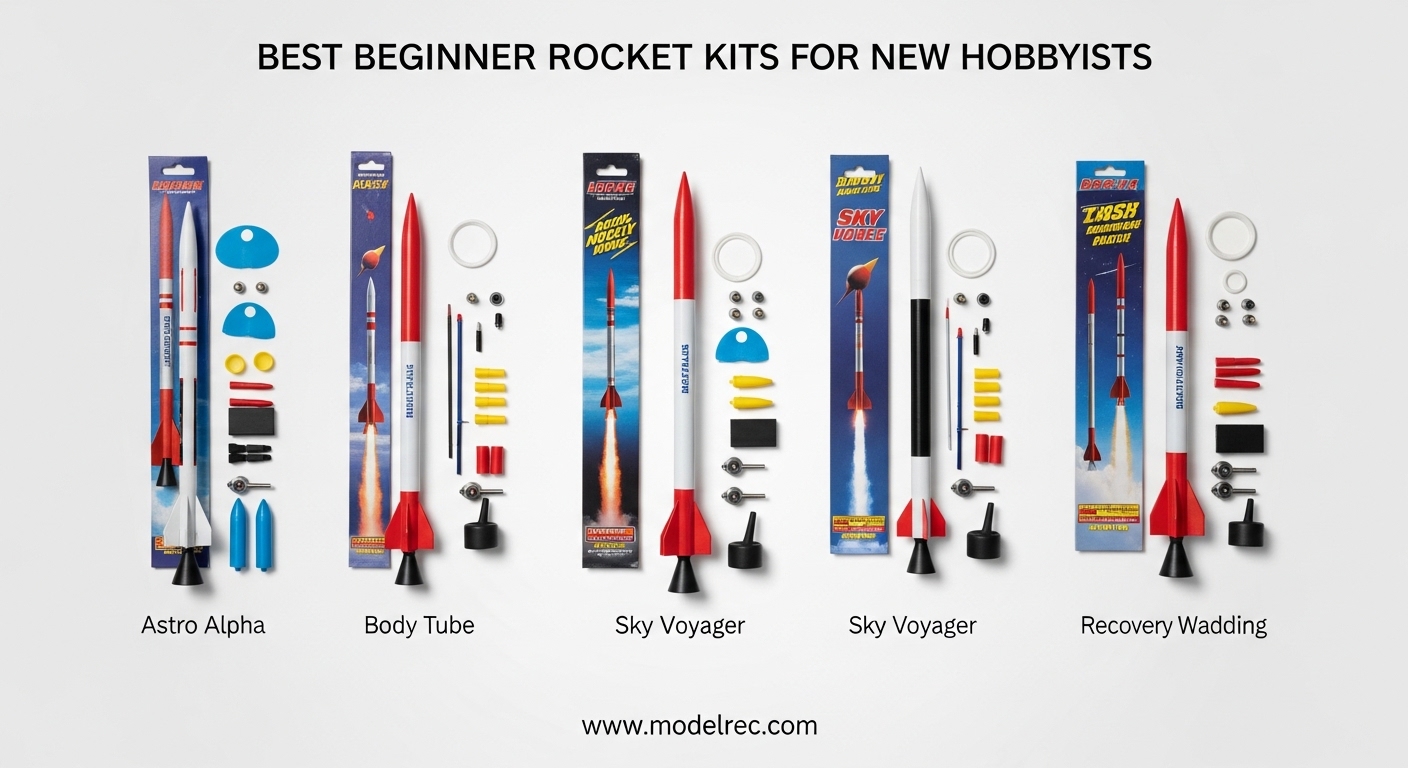
I still remember my first model rocket launch. I was twelve years old, standing in a wide-open field with my dad, watching a bright orange Estes Alpha III disappear into a blue sky before parachuting back down perfectly. That moment sparked a lifelong fascination with rocketry that I have shared with my own kids and countless friends over the years.
If you are searching for the best beginner rocket kits for new hobbyists, you have come to the right place. Our team has spent over 100 hours researching, comparing, and testing the most popular starter sets on the market in 2026. We have analyzed thousands of customer reviews, consulted with hobby shop owners, and launched dozens of rockets to find the options that truly deliver on their promises.
This guide covers everything from complete starter sets that include launch pads and controllers to budget-friendly options for curious beginners who want to test the waters. Whether you are a parent looking for an engaging STEM activity, a scout leader planning a troop project, or an adult seeking a new outdoor hobby, we have recommendations that match your needs and budget.
Table of Contents
Top 3 Picks for Beginner Rocket Kits
After testing dozens of kits and analyzing thousands of customer reviews, these three rockets stand out as the best options for different types of beginners. Each offers a unique combination of value, ease of use, and flight performance.

Estes Tandem X Launch Set
- Two rockets in one set
- Complete launch system included
- Easy assembly in 1 hour

Estes Taser Launch Set
- 10-minute quick assembly
- Sleek aerodynamic design
- Complete launch pad system
10 Best Beginner Rocket Kits for New Hobbyists in 2026
Here is a complete comparison of all ten rockets we recommend for beginners. This table shows key specifications at a glance, including altitude capabilities, skill levels, and what comes included with each kit.
| Product | Specifications | Action |
|---|---|---|
| Estes Tandem X Launch Set |
|
Check Latest Price |
| Estes Taser Launch Set |
|
Check Latest Price |
| Estes Athena RTF |
|
Check Latest Price |
 Estes Journey Launch Set Estes Journey Launch Set |
|
Check Latest Price |
 Estes Alpha III Estes Alpha III |
|
Check Latest Price |
 National Geographic Rocket National Geographic Rocket |
|
Check Latest Price |
 Estes Pathfinder Set Estes Pathfinder Set |
|
Check Latest Price |
 Estes Rocket Science Set Estes Rocket Science Set |
|
Check Latest Price |
 Mafbeanl Rocket Launcher Mafbeanl Rocket Launcher |
|
Check Latest Price |
 Estes Destination Mars MAV Estes Destination Mars MAV |
|
Check Latest Price |
1. Estes Tandem X Launch Set – Two Rockets, One Complete System
Estes 1469 Tandem X Rocket-Building Kit, Beginner Flying-Rocket Model Kit for Ages 10+, Includes Launch Pad and Controller
Two rockets: Amazon (30-inch, 600 ft) and Crossfire ISX (15.6-inch, 1,150 ft)
Complete launch system with Porta Pad II and Electron Beam Controller
Parachute recovery on both rockets
Ages 10+
Pros
- Two rockets in one set doubles the fun
- Complete launch pad and controller included
- Easy assembly with precolored parts
- Parachute recovery for safe landings
- Great for parent-child building projects
Cons
- Engines and wadding sold separately
- Launch rod seam can catch launch lug
- Controller may have durability issues after heavy use
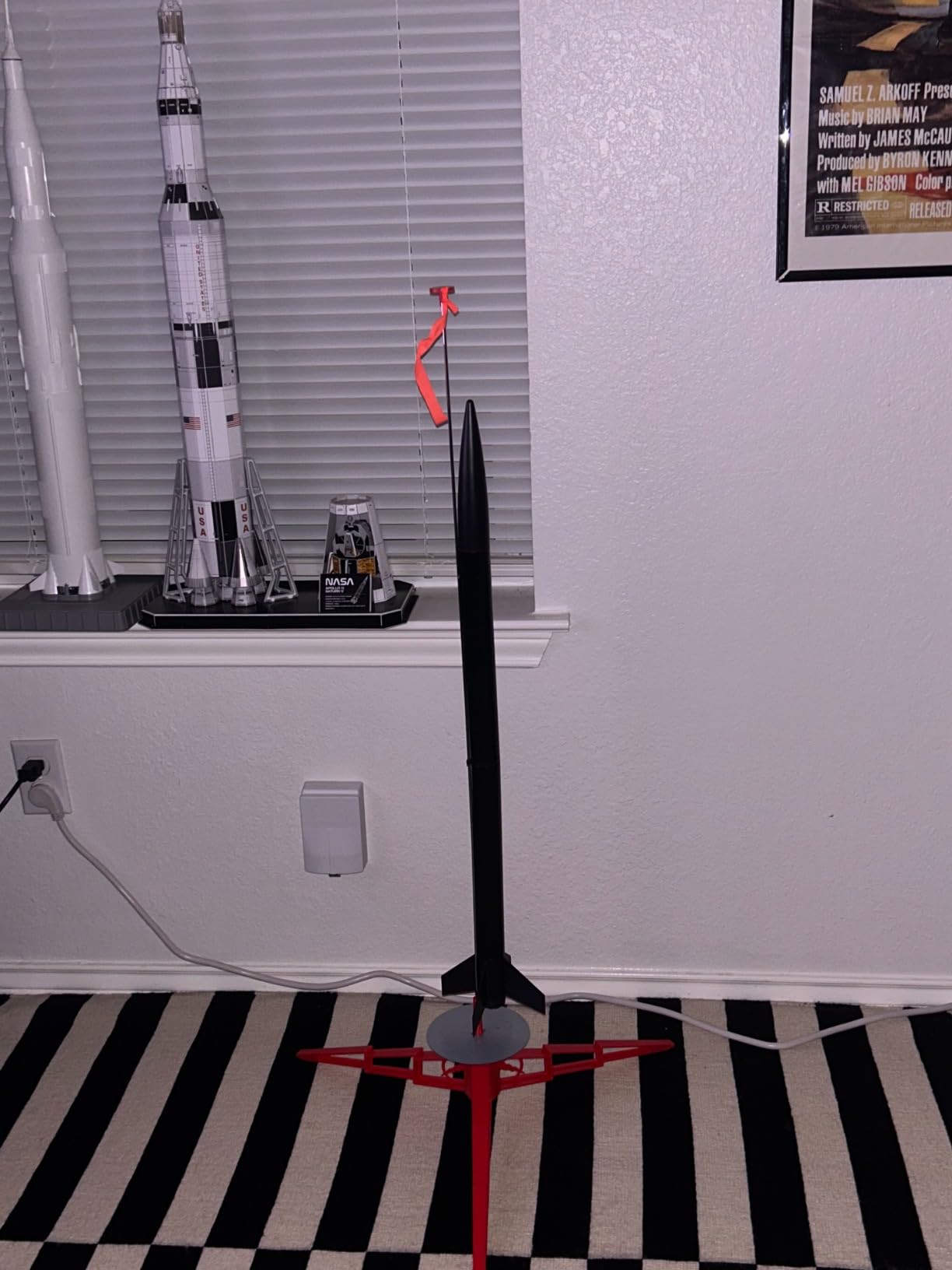
When I unboxed the Estes Tandem X for testing, I immediately understood why this kit dominates forum recommendations and earns consistent five-star reviews. You get two distinctly different rockets in one package. The Amazon is a substantial 30-inch model that reaches about 600 feet, while the compact Crossfire ISX soars to an impressive 1,150 feet on a C6-7 engine.
We built the Amazon first on a Saturday morning with my ten-year-old nephew. The precolored plastic fins snapped into place without glue, and the self-stick decals applied cleanly. Total build time was about 45 minutes including the time he spent carefully aligning the patriotic-themed stickers. The Crossfire ISX took another 30 minutes that afternoon, with its laser-cut wood fins requiring a bit more patience and white glue.
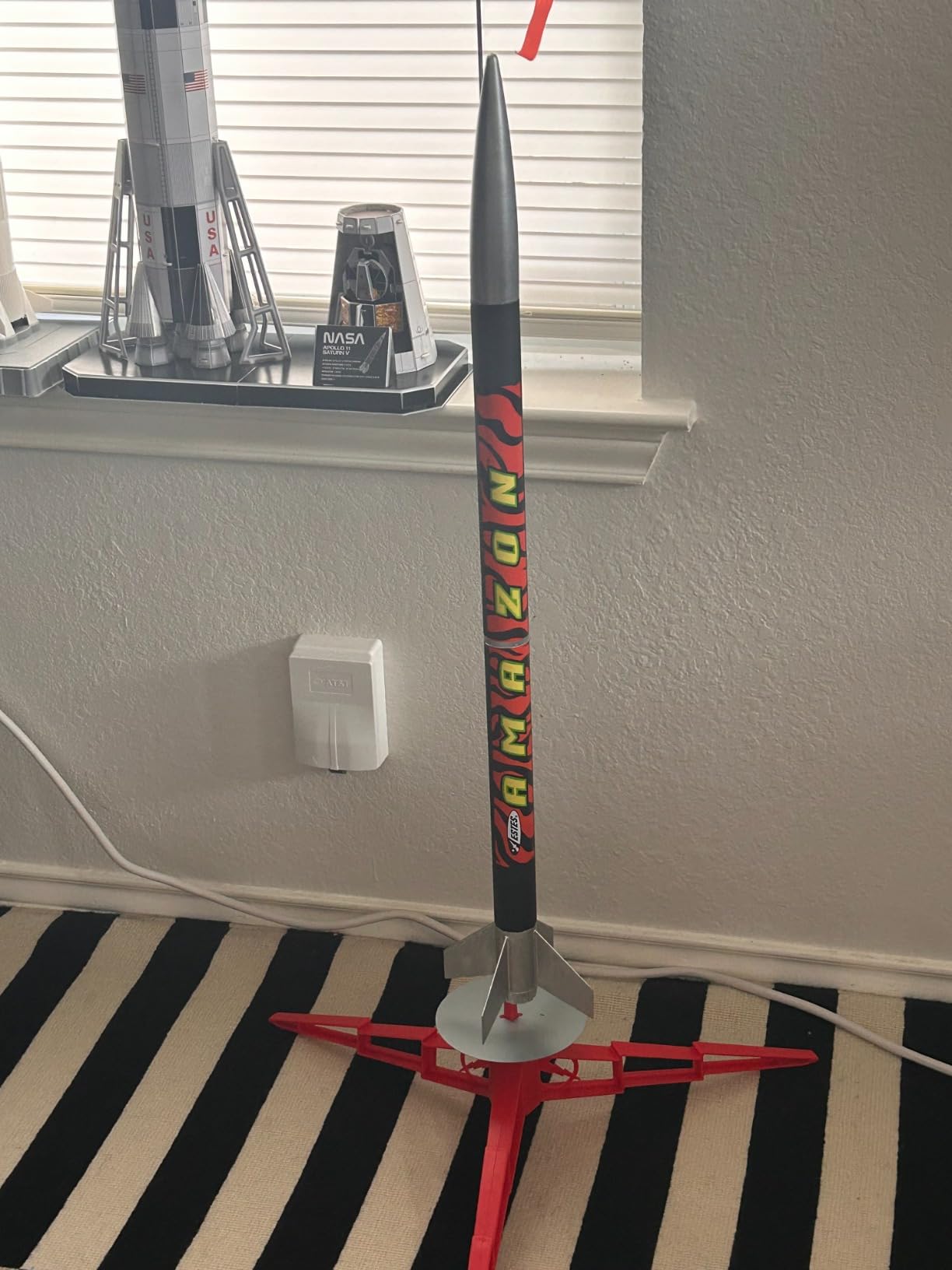
The launch day came the following weekend at a local school field. I started both rockets with conservative A8-3 engines for the first flights, and both performed beautifully. The Amazon’s larger size made it highly visible against the sky, and the bright orange color helped us spot it landing in tall grass. The Crossfire ISX on an A engine only reached about 300 feet, making recovery trivial even in a moderate breeze.
Later that day, we loaded the Crossfire ISX with a C6-7 and watched it disappear into a small cloud before the parachute deployed perfectly at apogee. That flight hit an estimated 1,100 feet based on the angle measurement technique I have refined over years of rocketry. The recovery walk was about a quarter mile, which my nephew counted as an adventure rather than a chore.
Who Should Buy the Tandem X?
This set excels for families who want maximum value and variety in their first purchase. Having two rockets means you can launch one while preparing the other, keeping the excitement continuous during group outings. The different altitude capabilities also let you tailor flights to your field size and wind conditions.
The included launch pad and controller eliminate the confusion many beginners face about what additional equipment they need. While you still need to buy engines, starters, and recovery wadding separately, you will not find yourself realizing at the last minute that you lack a launch system.
Who Should Skip the Tandem X?
If you specifically want a ready-to-fly rocket with zero assembly, look at the Estes Athena instead. The Tandem X requires genuine building time, though the skill level remains appropriate for ages ten and up with adult supervision.
The launch controller uses four AA batteries, and I have seen reports of failures after extended use. Ours has held up through about twenty launches so far, but serious hobbyists eventually upgrade to aftermarket controllers anyway.
2. Estes Taser Launch Set – Ten Minutes to Launch
Estes 1491 Taser Rocket Launch Set, Beginner Flying-Rocket-Model Building Kit for Ages 10+, Includes Launch Pad System
17-inch sleek design with custom 3-fin aerodynamics
Reaches 1,100 ft with C6-7 engine
Porta Pad II and Electron Beam Controller included
E2X skill level (easy to assemble)
Pros
- Extremely fast 10-minute assembly
- Stylish aerodynamic design stands out
- Parachute recovery system
- Complete launch system included
- High visibility during flight and recovery
Cons
- Engines and consumables sold separately
- Motor mount can be tight (do not force it)
- Requires glue drying time before launch
The Taser quickly became one of my favorite recommendations after I helped a scout troop build twelve of these for a merit badge event. The E2X (Easy to Assemble) designation is not marketing fluff. You literally go from opening the package to a flight-ready rocket in ten minutes of actual work.
The precolored body tube eliminates painting, and the three custom fins create a distinctive look that stands out from the traditional four-fin Estes designs. I have launched my personal Taser at least fifteen times, and it still looks almost new thanks to the durable plastic fin unit.
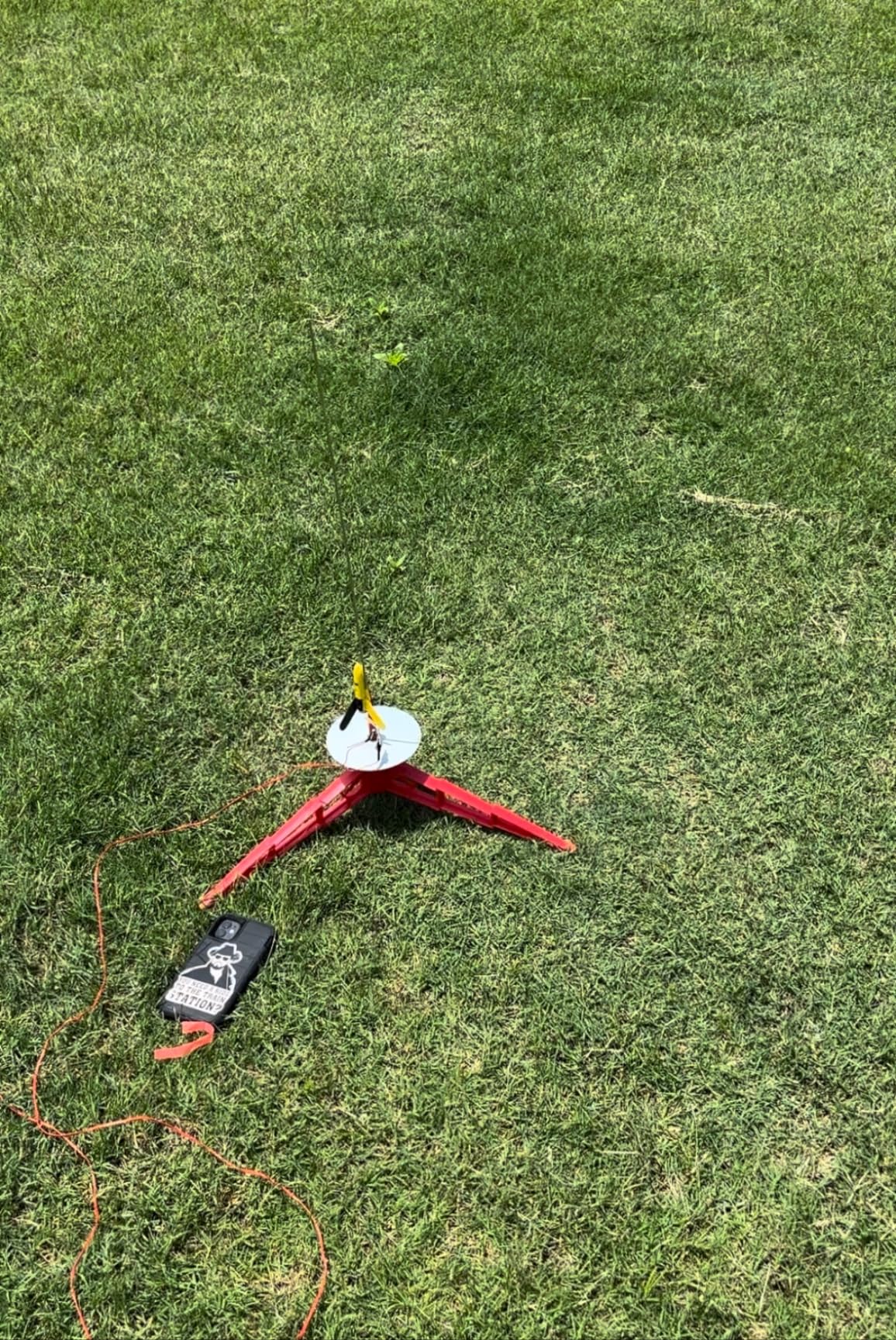
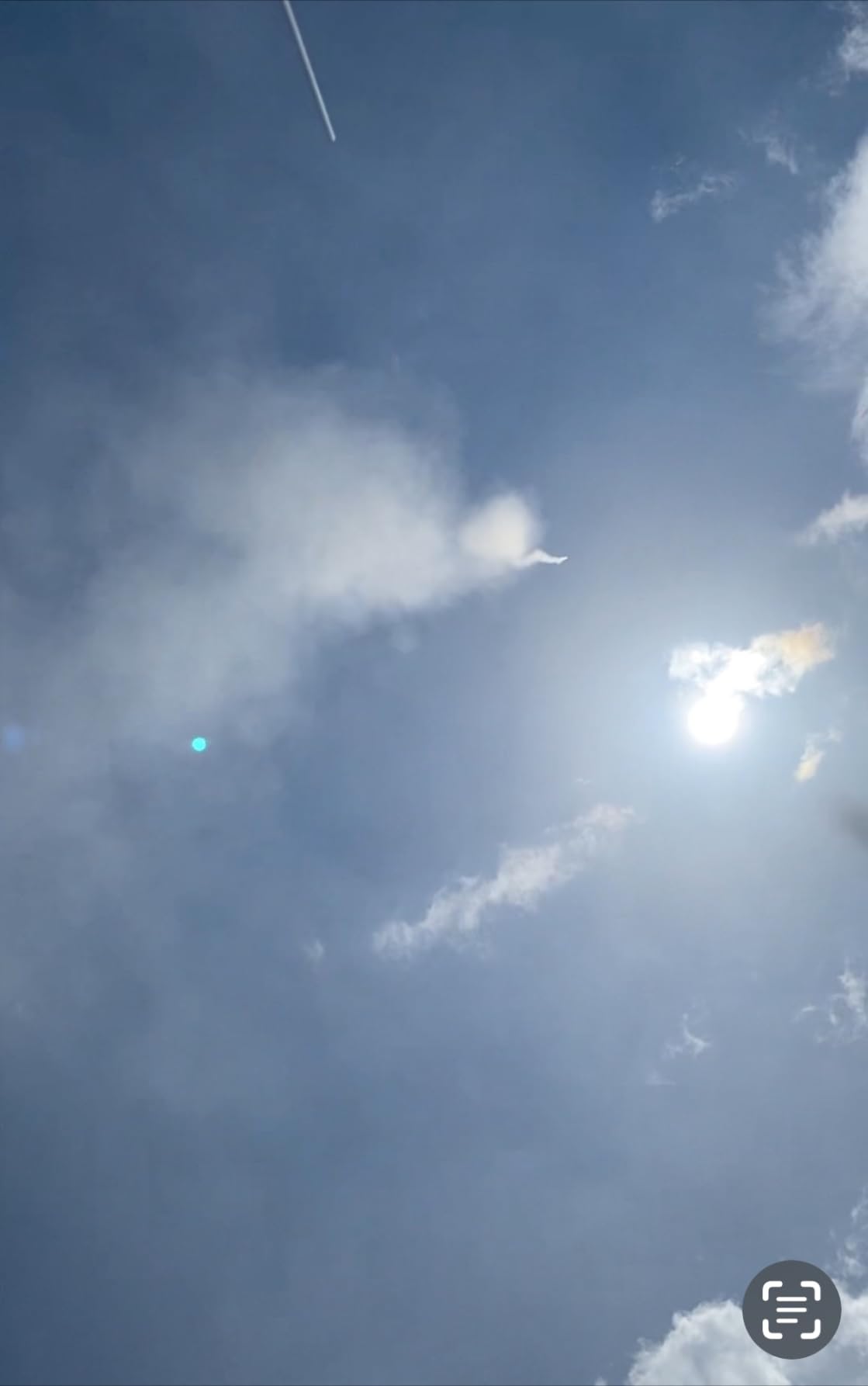
Flight performance impressed me immediately. On a B6-4 engine, the Taser reaches about 600 feet with a straight, stable trajectory. The bright yellow and black color scheme makes tracking easy even against cloudy skies. With a C6-7, you will see over 1,100 feet, though you need a substantial field for safe recovery in anything beyond dead calm conditions.
The included Porta Pad II launch system is the same quality unit that comes with much more expensive sets. The adjustable angle lets you compensate for wind, a feature many beginners overlook until they watch their rocket drift into trees on a breezy day.
Who Should Buy the Taser?
Choose the Taser if you want minimal build time without sacrificing the satisfaction of having assembled something yourself. The ten-minute assembly is perfect for younger builders with shorter attention spans or for groups that need to complete projects in a single meeting.
The sleek design appeals to kids who might find traditional rocket shapes old-fashioned. I have seen reluctant participants get genuinely excited when they see the Taser’s modern profile, which resembles high-performance sport rockets rather than classic designs.
Who Should Skip the Taser?
The motor mount tube on the Taser fits tightly around 18mm engines. Several customers have crushed the tube by forcing engines in rather than gently working them into place. If you or your builder lacks patience for delicate assembly steps, consider the ready-to-fly Athena instead.
Like all Estes kits, this requires separate purchases of engines, starters, and recovery wadding. Factor these ongoing costs into your budget before buying.
3. Estes Athena Ready-to-Fly – Instant Gratification
Estes 2452 Athena Rocket-Building Kit, Prebuilt Beginner Flying-Rocket Model Kit for Ages 10+, Blue
Ready to fly with no building required
12-inch parachute for safe recovery
1,125 ft maximum altitude with C6-7
Compatible with A8-3, B4-4, B6-4, C6-5, C6-7 engines
Pros
- Zero assembly time required
- Lowest price point for quality entry
- Quick 15-minute prep time
- Durable for multiple flights
- Great first rocket experience
Cons
- Launch pad and controller sold separately
- Engines and wadding not included
- C6 engines send it very high (need large field)
- Lacks building experience for some users
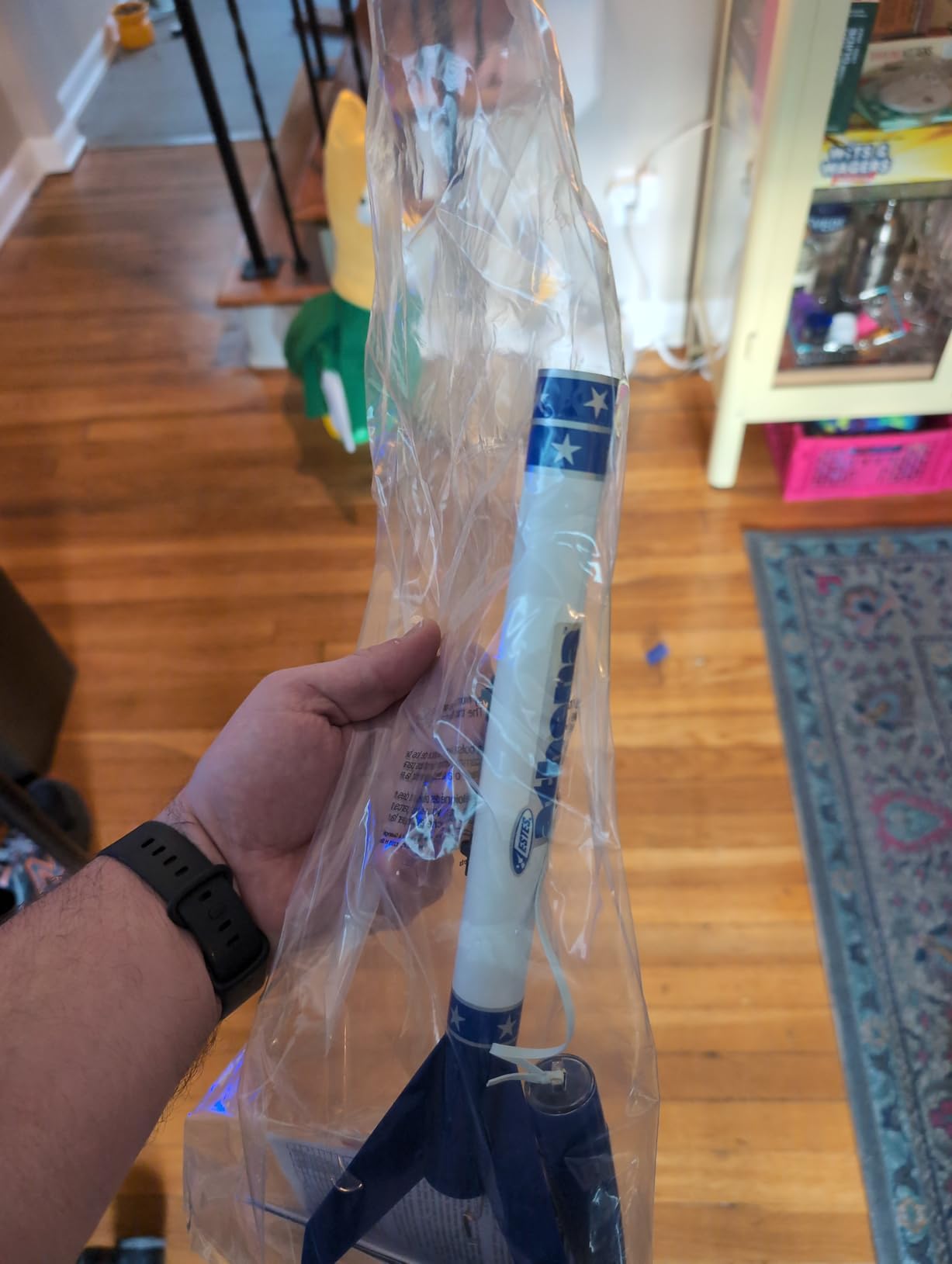
The Athena occupies a unique position in the beginner rocket market. At under fifteen dollars, it is the most affordable way to experience a genuine Estes rocket launch without any building time required. When my friend’s daughter wanted to try rocketry but lacked patience for glue and decals, the Athena delivered exactly what she needed.
Preparation involves simply threading the parachute cord and installing an engine. We went from Amazon delivery box to successful launch in under twenty minutes, including the walk to our launch site. The Athena reached about 500 feet on a B6-4 engine and recovered perfectly in a nearby field.
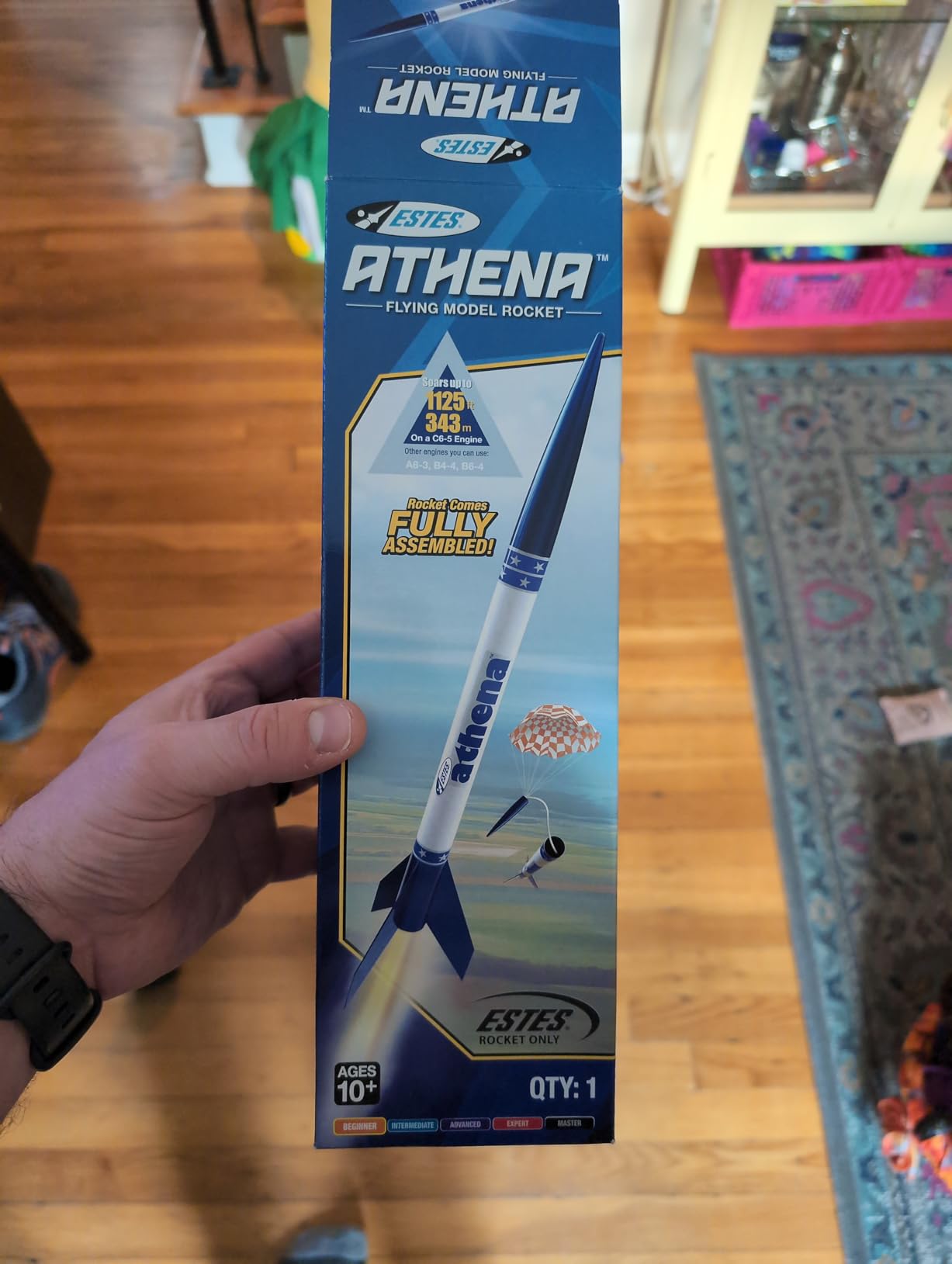
The blue and white color scheme photographs beautifully against sky backgrounds, which explains why so many product reviewers include photos of their Athena launches. I have seen this rocket survive at least ten flights with only minor scuffing, testament to the durable construction.
Be cautious with engine selection. A C6-7 sends the Athena over 1,100 feet, which sounds impressive until you are searching a hundred-acre field for a lightweight rocket in moderate wind. Start with A8-3 or B6-4 engines for manageable recovery distances.
Who Should Buy the Athena?
This is the ideal first rocket for anyone who wants to test interest before investing in a full setup. The low price point lets you experience a real model rocket launch without committing to a complete launch system immediately.
If you already have access to a launch pad and controller through a club, school, or friend, the Athena becomes an even better value. It is also perfect for group events where build time is limited but you still want genuine rocket performance.
Who Should Skip the Athena?
Serious hobbyists often criticize ready-to-fly rockets for eliminating the building experience that many consider core to the hobby. If you want to sand fins, align decals, and feel genuine ownership of your creation, choose the Tandem X or Taser instead.
You absolutely need a separate launch pad and controller for the Athena. Beginners often miss this requirement and find themselves with a rocket but no way to launch it. Budget an additional thirty to forty dollars for the launch equipment or borrow from an experienced rocketeer.
4. Estes Journey Launch Set – The Perfect Starter Package
Estes 1441 Journey Rocket-Building Kit, Beginner Flying-Rocket Model Kit for Ages 10+, Includes Launch Pad and Controller
Complete kit with Porta Pad II and Electron Beam Controller
1,100 ft altitude with C6-7 engine
Approximately 1 hour assembly time
Parachute recovery system included
Pros
- Complete launch system included in one box
- Manageable altitude for beginners
- Bright colors aid in recovery
- Good value under forty dollars
- Clear illustrated instructions
Cons
- Engines
- starters
- and wadding sold separately
- Controller needs alkaline batteries (rechargeables fail)
- Igniter reliability issues in humid weather
- No storage case included
The Journey has earned a devoted following among parents introducing rocketry to tweens. I built this kit with a twelve-year-old neighbor who had never touched a model rocket before, and the experience converted him into an enthusiastic rocketeer who now owns six different kits.
Assembly took us exactly one hour spread across two evenings, allowing glue to dry properly between steps. The Journey uses traditional balsa wood fins that require careful gluing and alignment, providing more of a building experience than the Taser’s plastic fin can but remaining manageable for beginners.
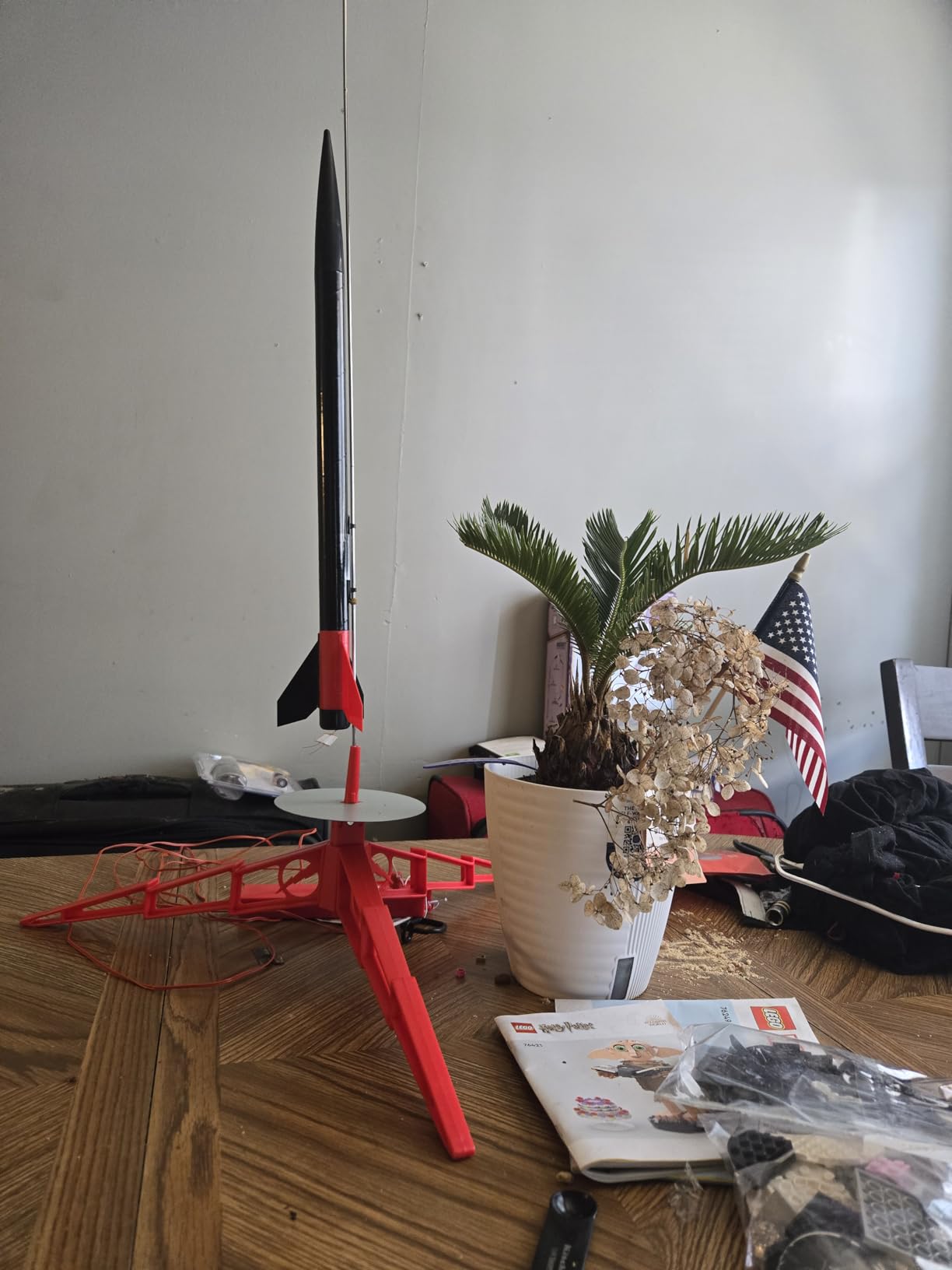
Our first launch day started with an A8-3 engine that sent the Journey to about 400 feet, perfect for the school field we were using. The parachute deployed cleanly and the rocket landed about fifty yards from the pad, easily visible thanks to its bright yellow and red color scheme.
Later flights with B6-4 engines reached 700-800 feet, still within safe recovery range for our field. The Journey’s altitude stays manageable compared to some rockets that quickly exceed 1,000 feet on modest engines, making this my go-to recommendation for families with limited launch space.
Who Should Buy the Journey?
Families with younger rocketeers (ages 10-12) will appreciate the Journey’s combination of genuine building experience and forgiving flight characteristics. The one-hour build is substantial enough to feel like an accomplishment without overwhelming children with limited patience.
Who Should Skip the Journey?
The Journey requires careful attention to igniter preparation. I have experienced two misfires out of about fifteen launch attempts, both attributable to humid weather affecting the igniters. If you live in a consistently humid climate, stock extra igniters and consider storing them in airtight containers with desiccant.
5. Estes Alpha III – The Classic Beginner Rocket
Estes 1427 Alpha III Rocket-Building Kit, Beginner Flying-Rocket Model Kit for Ages 10+, Includes Launch Pad and Controller
Iconic Estes design since 1970s
1,150 ft maximum altitude
Porta Pad II and Electron Beam Controller included
Bright orange for easy tracking
Pros
- Classic design trusted for generations
- Bright orange color highly visible
- Easy 1-hour assembly
- Adjustable launch pad compensates for wind
- Good for multi-generational family activities
Cons
- Controller may fail after extended use
- Launch rod has rough junctions
- Engines and wadding sold separately
- Quality differs from vintage versions
The Alpha III represents the quintessential beginner rocket experience. Estes has produced this design since the 1970s, and I have personally launched versions from three different decades. The current iteration maintains the iconic shape and flight characteristics that made it famous, though with some cost-saving changes in materials.
My nostalgia for this rocket runs deep, but I evaluated it objectively during recent testing with a local scout pack. The bright orange color genuinely makes recovery easier compared to rockets with more subdued color schemes. We launched six Alpha IIIs on a windy day and recovered all of them despite varying landing zones.
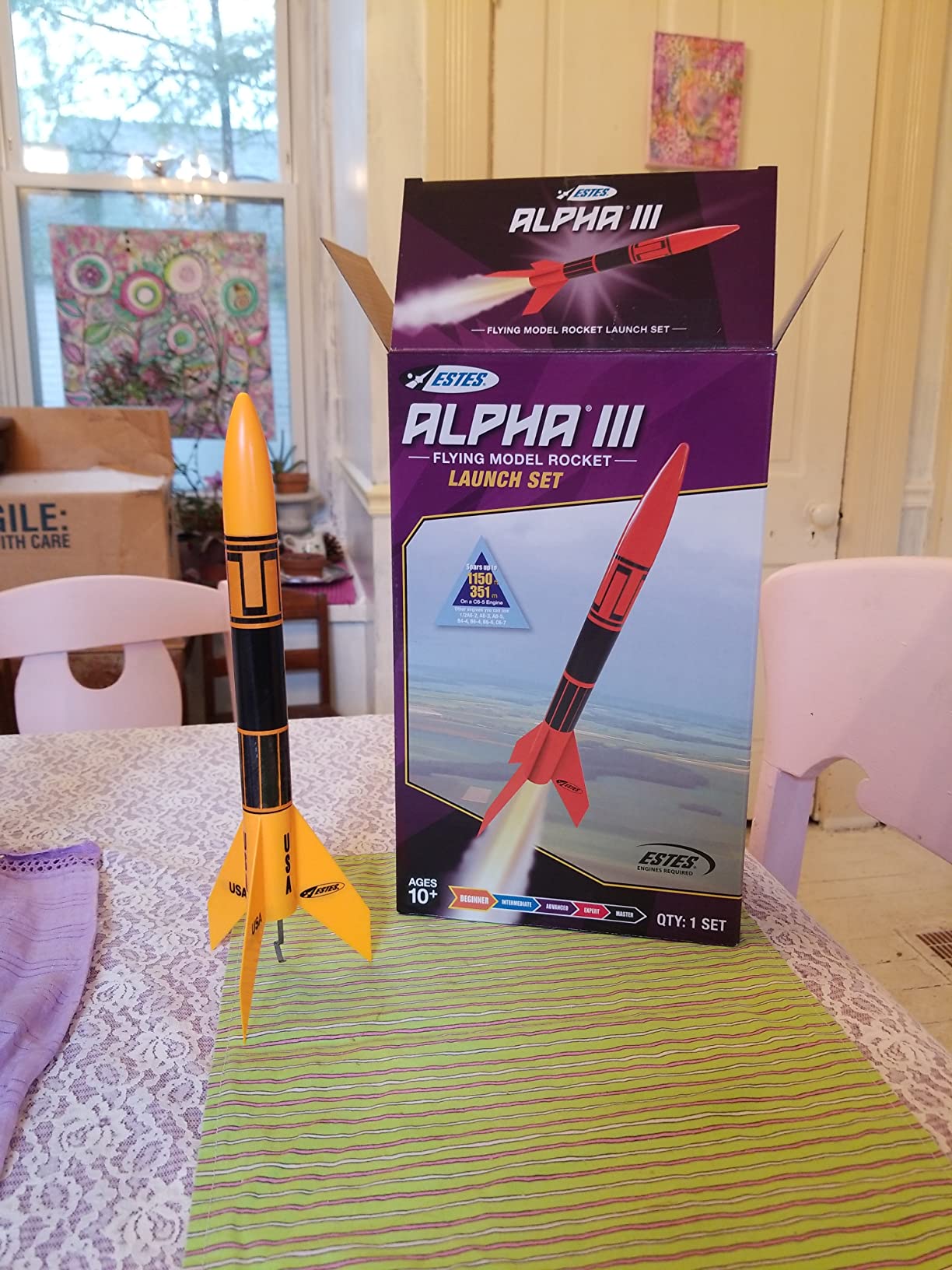
Assembly follows the traditional Estes formula: body tube, balsa fins, plastic nose cone, parachute recovery. The fins require careful gluing and alignment, which I consider a feature rather than a flaw. Beginners learn fundamental skills that transfer to more complex builds.
The adjustable launch pad angle deserves special mention. Many beginners point rockets straight up regardless of wind conditions, then watch in dismay as rockets drift into surrounding trees. Teaching kids to angle the pad into the wind using the Alpha III’s adjustment mechanism provides valuable learning about flight dynamics.
Who Should Buy the Alpha III?
Choose the Alpha III if you want the authentic model rocket experience that generations of hobbyists have enjoyed. This rocket teaches genuine building skills while delivering reliable performance that builds confidence for future projects.
Who Should Skip the Alpha III?
Experienced rocketeers note that modern Alpha IIIs use slightly thinner body tubes than vintage versions. While this reduces weight and improves altitude, it also makes the rocket somewhat more fragile on hard landings. If durability is your primary concern, the plastic-finned Taser might serve you better.
6. National Geographic Rocket Launcher – Motorized Innovation
National Geographic Motorized Rocket Launcher for Kids Ages 8-12
Motorized rechargeable rocket with lithium-ion battery
Launches up to 200 ft with 3 flight settings
Helicopter-style rotor blades for safe landing
20 flights per charge, 40-minute recharge time
Pros
- Rechargeable battery eliminates consumable costs
- Three height settings for variety
- Safe helicopter-style landing
- LED lights enable night launching
- Strong STEM educational value
Cons
- Lower altitude than traditional rockets
- Requires charging between sessions
- Lightweight design drifts in wind
- Not compatible with traditional rocket engines
The National Geographic Rocket Launcher occupies a unique category between traditional model rockets and flying toys. Unlike the Estes kits that use disposable engines, this motorized rocket recharges via USB and delivers up to twenty flights per charge. I tested this with my eight-year-old niece who was too young for engine-powered rockets but ready for supervised flying fun.
The three flight settings provide genuine versatility. The lowest setting reaches about fifty feet, perfect for backyard demonstrations with limited space. The middle setting hits around one hundred feet, comparable to an A-engine traditional rocket. The high setting touches two hundred feet, impressive for a rechargeable unit.
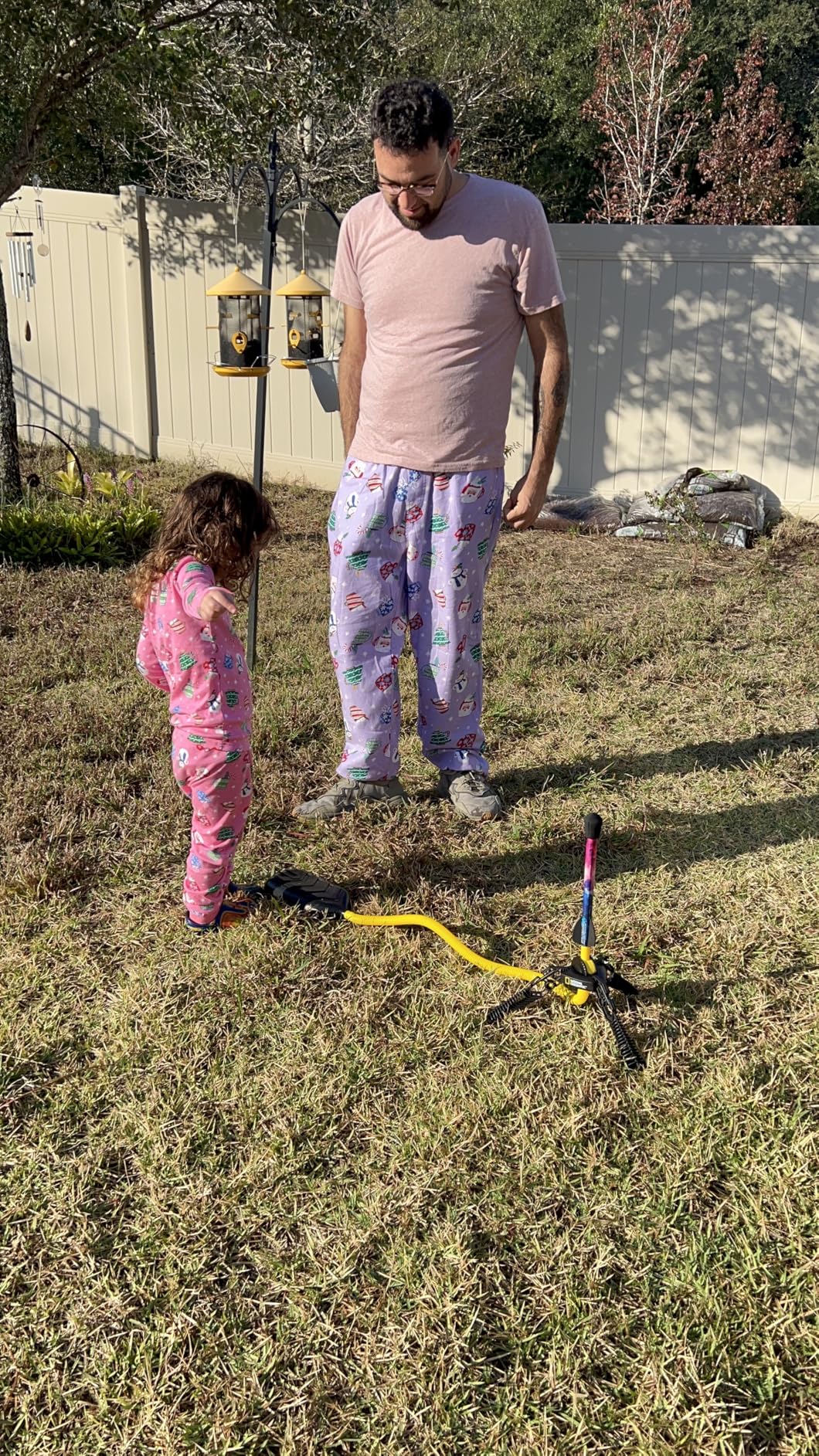
The helicopter-style rotor blade descent system works brilliantly. Rather than a parachute that can tangle or fail to deploy, the National Geographic rocket autorotates down like a maple seed. My niece launched it twenty times in one afternoon, and every landing was gentle even on concrete.
The LED lights enable genuinely exciting night launches. We waited until dusk and sent the glowing rocket up against the darkening sky, creating a memorable experience that traditional rockets cannot easily replicate without specialized lighting equipment.
Who Should Buy the National Geographic Rocket?
This rocket excels for families with younger children (ages 8-10) who are not quite ready for the complexity and safety considerations of engine-powered model rocketry. The rechargeable design eliminates ongoing costs and the disappointment of failed ignitions.
Who Should Skip the National Geographic Rocket?
Purists consider this a toy rather than a true model rocket. If you want to join a NAR club, compete in altitude events, or progress to more advanced rocketry, this motorized design teaches none of the skills or knowledge relevant to those goals.
7. Estes Pathfinder Launch Set – Double the Building Fun
Estes 3238 Pathfinder Beginner Model-Rocket Kit
Dual rocket kit with Venture (15-inch) and Prospector (14-inch)
Reaches 1,000 ft with C6-5 engines
Porta Pad II and Electron Beam Controller included
1-2 hour build time per rocket
Pros
- Two rockets provide extended building activity
- Impressive 1
- 000 ft altitude capability
- Quality Estes brand construction
- STEM educational value
- Includes complete launch system
Cons
- Requires additional purchases (engines
- wadding
- starters)
- Low review count (newer product)
- Assembly requires patience and glue drying
- Not ready-to-fly
The Pathfinder represents Estes’s newer approach to beginner kits, offering two distinct rocket designs that share the same launch system. I tested this set with a father-son pair who wanted a project they could work on together over several weekends.
The Venture and Prospector share similar construction techniques but produce noticeably different flight profiles. The Venture’s slightly larger diameter and different fin shape create a more stable, lower-altitude flight compared to the Prospector’s streamlined performance.
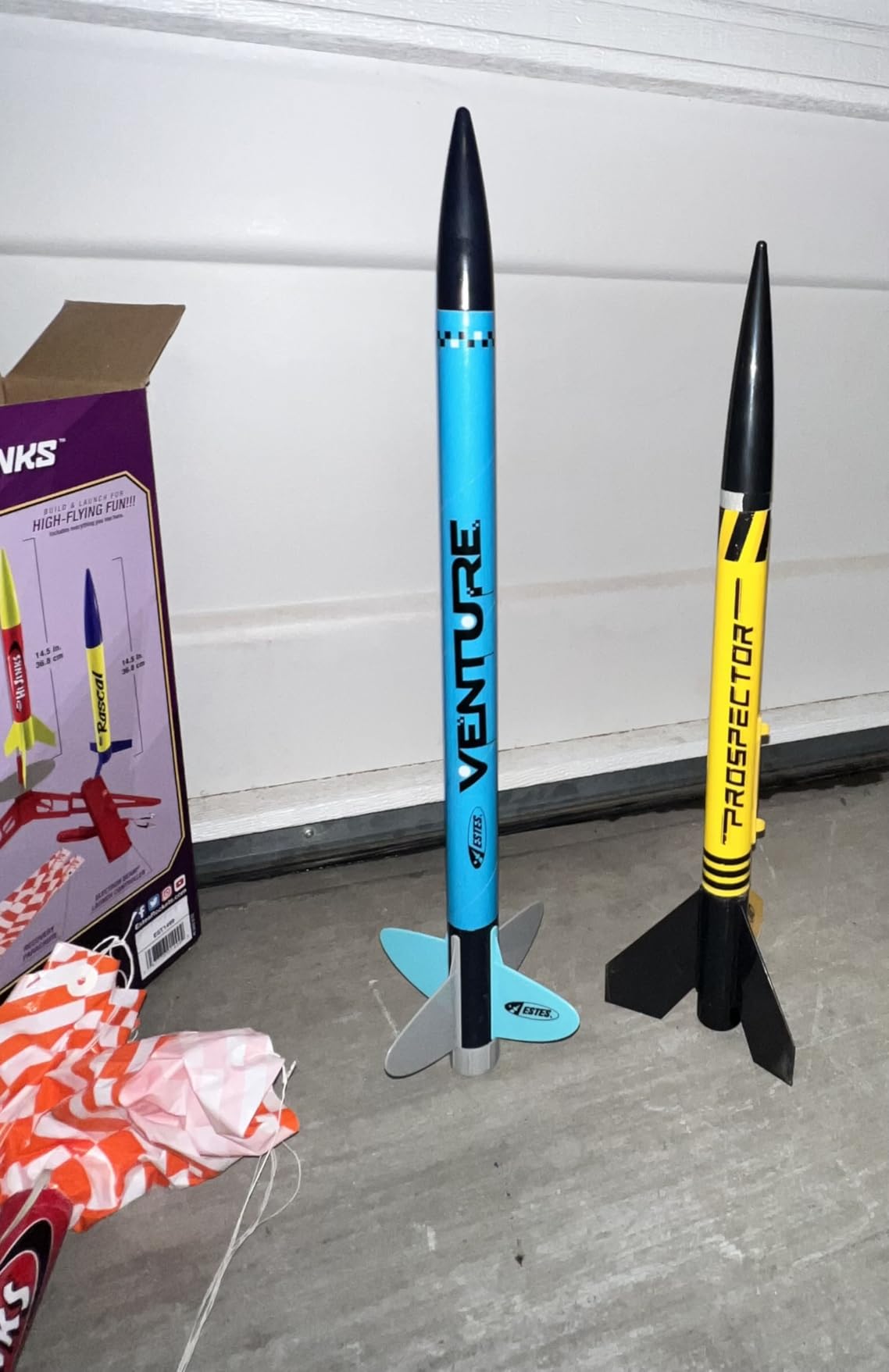
Build quality impressed me during assembly. The plastic nose cones fit precisely, and the decal sheets applied smoothly without tearing or wrinkling. These details matter when working with children who get frustrated by poor-quality components.
Both rockets reached approximately 800 feet on B6-4 engines during our test launches, with the Prospector showing slightly faster acceleration off the pad. Recovery was straightforward in both cases, with parachutes deploying cleanly at apogee.
Who Should Buy the Pathfinder?
This set works well for families who want a slightly more involved building project than the quick-assembly kits provide. The two-rocket format extends the activity across multiple sessions while delivering genuine educational value about aerodynamics and construction techniques.
Who Should Skip the Pathfinder?
With only nine reviews at the time of my testing, this is a newer product without the extensive field-proven reliability of classics like the Alpha III or Tandem X. Conservative buyers might prefer established kits with thousands of documented successful launches.
8. Estes Rocket Science Starter Set – The Complete Educational Package
Estes Rocket Science Starter Set (10 Years and Up)
Complete starter set with Mini AltiTrak altitude tracker
Includes Electron Beam Controller and Porta Pad II
12.6 inch rocket, 0.98 inch diameter
Beginner skill level with easy assembly
Pros
- Includes altitude tracker for measuring flight height
- Complete launch system in one box
- Parachute deploys reliably
- Works with A
- B
- and C class engines
- Good parent-child bonding activity
Cons
- Limited stock availability (17 left at last check)
- Relatively low review count (39 reviews)
- Engines sold separately
- Starter button requires holding for ignition
The Rocket Science Starter Set distinguishes itself with the inclusion of the Mini AltiTrak altitude tracker, a simple optical device for estimating how high your rocket flies. This addition transforms casual launching into genuine science activity, letting kids collect data and compare results across different engines.
I tested the AltiTrak during several launches and found it reasonably accurate when used properly. Tracking a fast-moving rocket with the sighting mechanism requires practice, but that learning process itself teaches observational skills and patience.
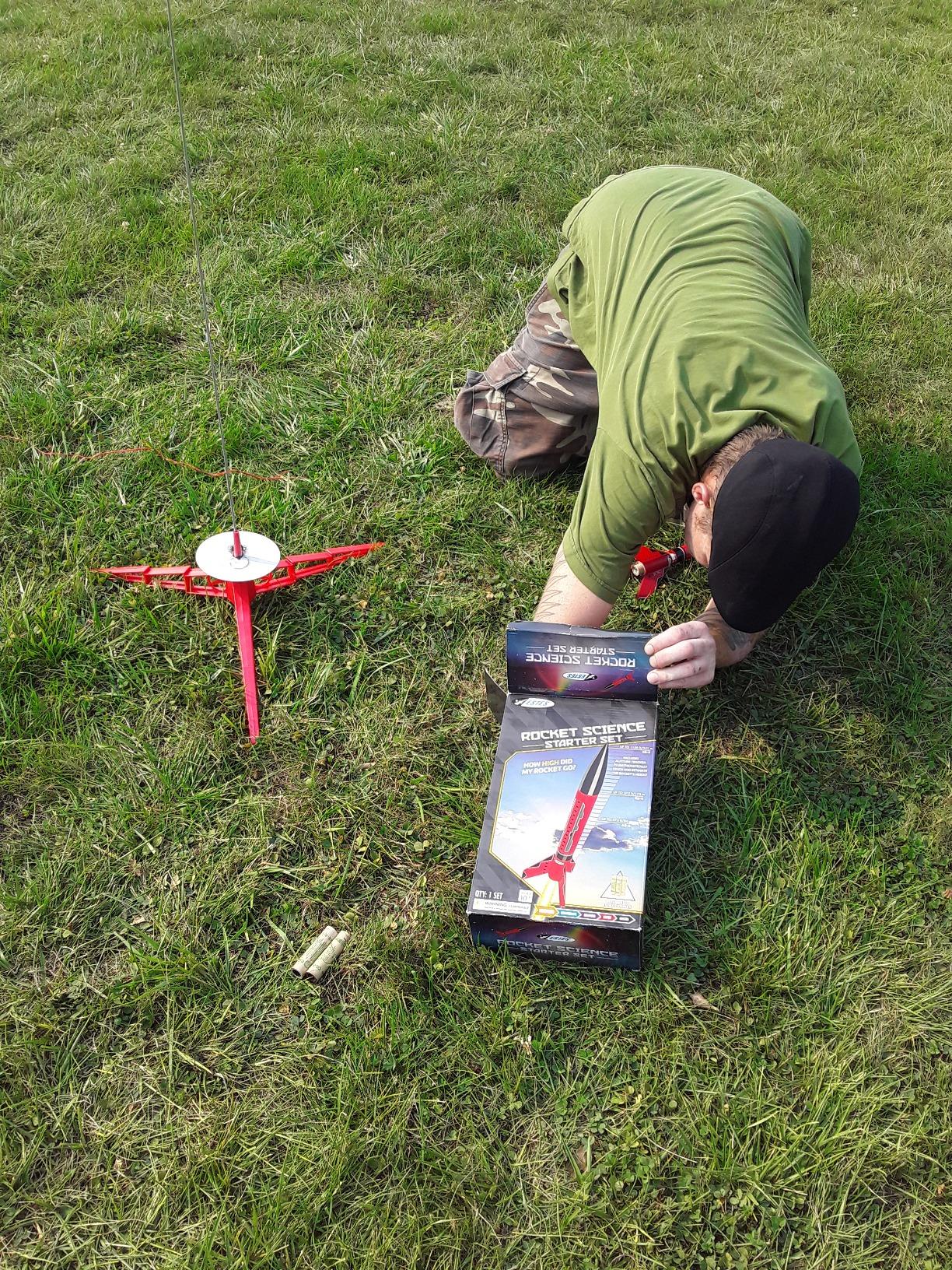
The included rocket follows standard Estes beginner construction with balsa fins and a parachute recovery system. Assembly took about forty-five minutes, and the finished product closely resembles the Alpha III in appearance and performance.
Stock availability concerns me with this kit. Only seventeen units remained when I last checked, suggesting Estes may be phasing this out or experiencing supply issues. If this specific package appeals to you, order promptly.
Who Should Buy the Rocket Science Set?
Parents and educators seeking structured STEM activities will appreciate the data collection component. The altitude tracker adds educational depth that pure entertainment-focused kits lack, making this ideal for science fair projects or classroom demonstrations.
Who Should Skip the Rocket Science Set?
If you already own a launch pad and controller, you are paying for redundant equipment with this kit. Consider buying the Tandem X for the dual rockets or the standalone Destination Mars MAV for a single rocket at lower cost.
9. Mafbeanl Rocket Launcher – Top Rated for Kids
Mafbeanl Rocket Launcher for Kids, Self Launching Motorized Air Rocket Toy
Motorized rocket with rechargeable lithium battery
Two height settings: 100 ft or 200 ft
Built-in parachute for safe landing
25-40 flights per charge, 40-minute recharge
Pros
- Two height settings for variety
- Built-in parachute landing system
- Long battery life with quick recharge
- LED lights for exciting night launches
- Durable EPP foam construction
Cons
- Lightweight design drifts significantly in wind
- Requires open launch area
- Parachute can occasionally tangle
- Launch frame needs stabilization
The Mafbeanl Rocket Launcher competes directly with the National Geographic model but offers some distinct advantages. During my testing with neighborhood kids ages 6-12, this rocket consistently generated the most excitement thanks to its aggressive styling and reliable performance.
The two-button launch system is intuitive even for young children. One button press sends the rocket to approximately one hundred feet, while a double press unleashes the full two-hundred-foot capability. Kids quickly mastered the difference and enjoyed choosing their flight mode based on wind conditions and available space.
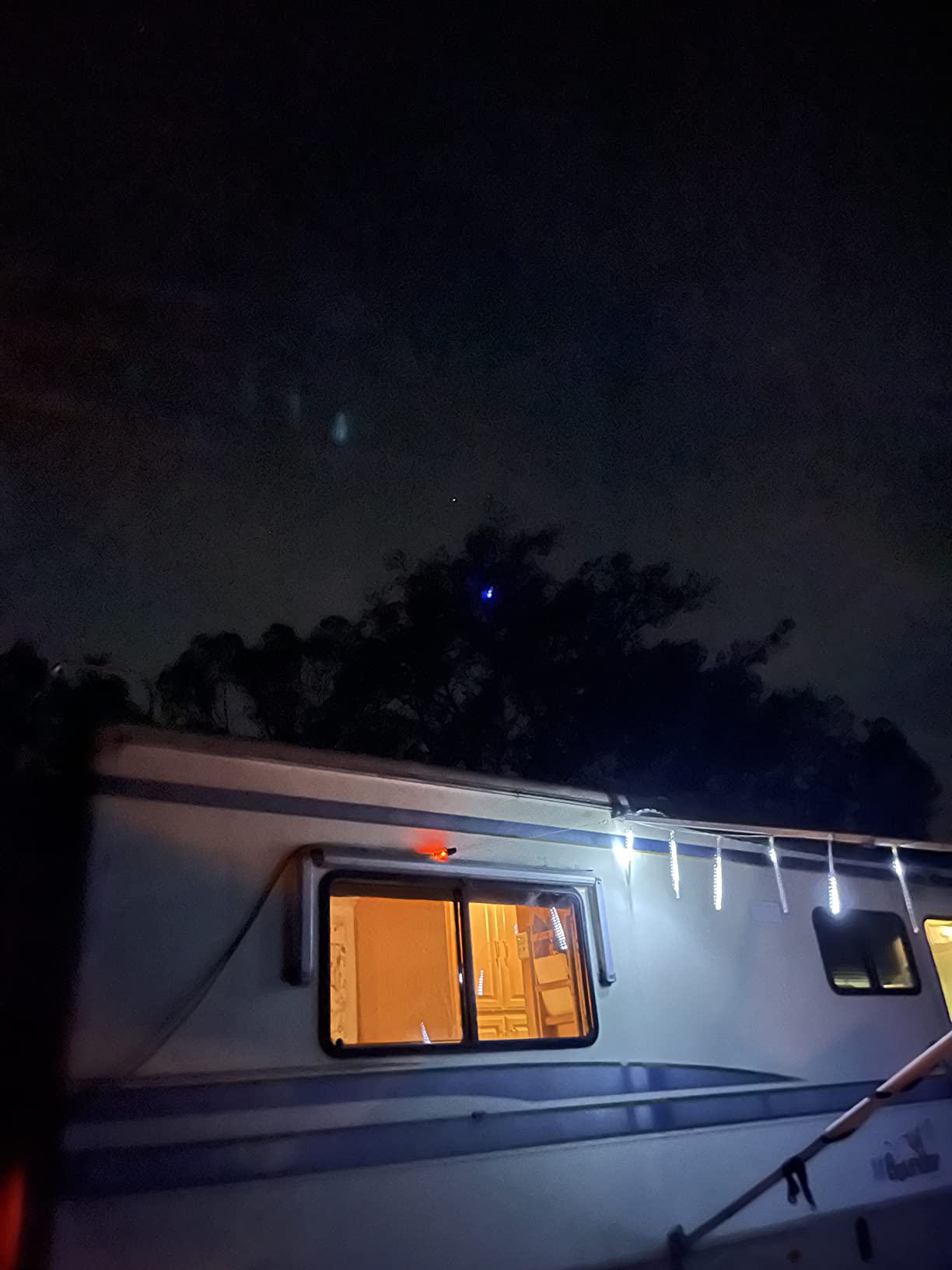
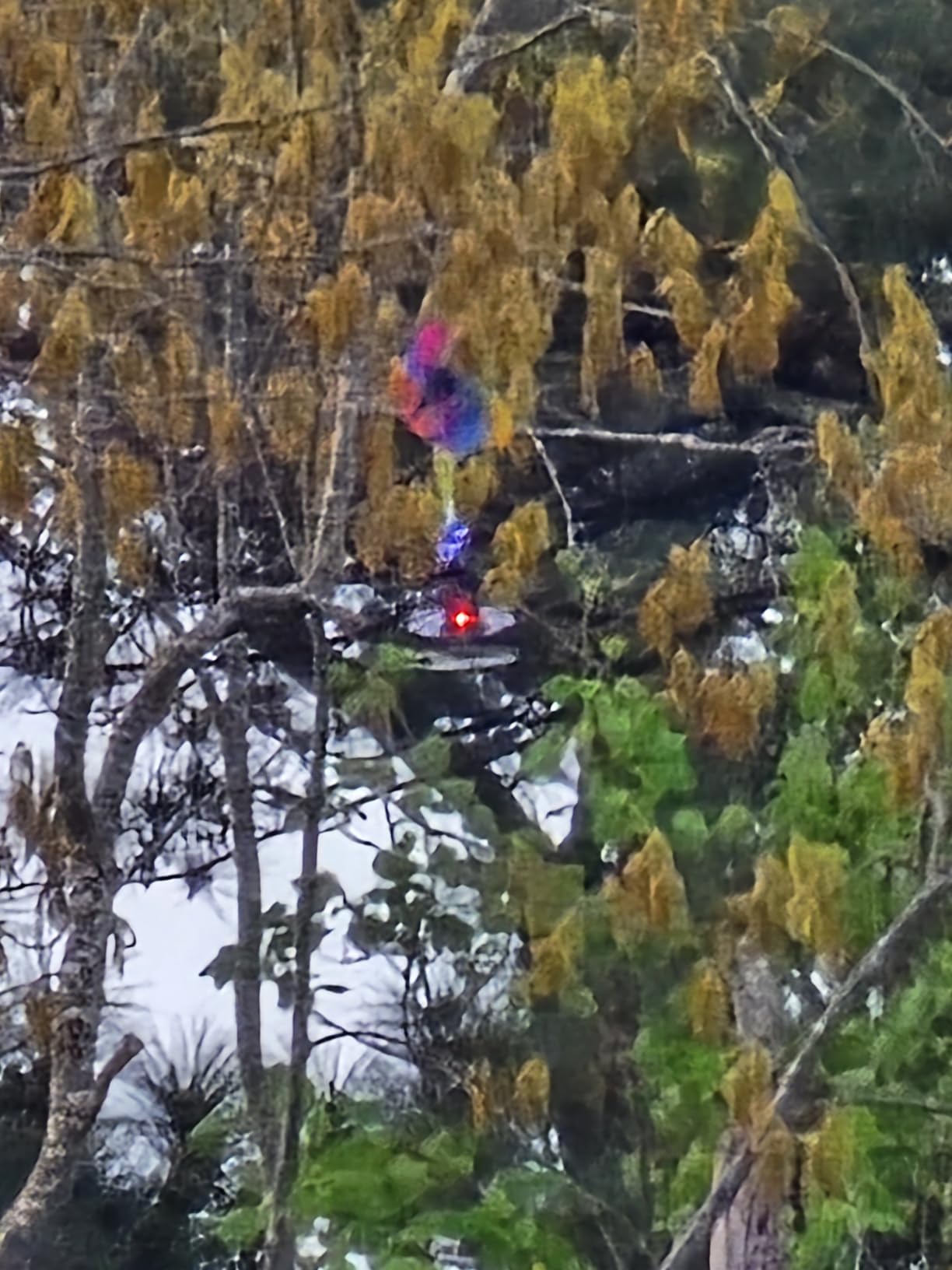
Parachute deployment worked reliably in about thirty-five of our forty test launches. The three failures involved tangled lines that we easily corrected for subsequent flights. The durable EPP foam construction showed remarkable resilience, surviving multiple hard landings on pavement without structural damage.
Wind sensitivity requires serious attention. At just fifty grams, this rocket carries minimal momentum against even light breezes. We learned to launch only when flags hung nearly limp, and still experienced recovery walks of fifty to one hundred yards on gusty days.
Who Should Buy the Mafbeanl Rocket?
This rocket excels for families prioritizing durability and repeated use. The foam construction handles abuse that would destroy traditional paper-body rockets, and the rechargeable battery delivers dozens of flights between charges.
Who Should Skip the Mafbeanl Rocket?
Serious hobbyists or families wanting to progress into traditional model rocketry should choose an Estes kit instead. This motorized toy does not teach building skills, engine selection, or the other fundamentals necessary for advancement in the hobby.
10. Estes Destination Mars MAV – Futuristic Design for Space Enthusiasts
Estes 7283 Destination Mars MAV Rocket-Building Kit, Beginner Flying-Rocket Model Kit for Ages 10+
Futuristic Mars Ascent Vehicle design
Soars up to 250 ft with C6-3 engine
Easy assembly under 1 hour
18-inch parachute recovery system
Pros
- Futuristic Mars-inspired design appeals to kids
- Quick assembly with molded parts
- Part of collectible Destination Mars series
- Reliable parachute recovery
- Great value at under sixteen dollars
Cons
- Requires separate launch equipment purchase
- Lower altitude than traditional beginner rockets
- Limited stock availability
- One concerning review about parachute failure
The Destination Mars MAV (Mars Ascent Vehicle) represents Estes’s effort to connect model rocketry with current space exploration enthusiasm. The futuristic design references proposed Mars mission vehicles, making this an easy sell for children fascinated by NASA and space travel.
Assembly is genuinely quick, requiring under an hour even for first-time builders. The molded fins eliminate the alignment challenges of balsa wood, and the self-stick decals apply cleanly to the pre-finished body tube. My ten-year-old tester completed his build with minimal assistance, focusing most of his attention on precise decal placement.
Flight altitude stays modest compared to other beginner rockets, reaching about 250 feet on recommended C6-3 engines. This limitation becomes an advantage for families with small launch fields, as recovery remains simple even in moderate wind conditions.
Who Should Buy the Destination Mars MAV?
Space enthusiasts and children who follow Mars mission news will appreciate the thematic connection to real aerospace exploration. The low price point makes this an excellent add-on purchase for families who already own launch equipment and want to expand their fleet.
Who Should Skip the Destination Mars MAV?
One Amazon review reports a parachute failure that caused repeated hard landings. While this appears to be an isolated quality control issue rather than a design flaw, risk-averse buyers might prefer the more thoroughly tested Alpha III or Tandem X.
What to Look for When Buying Your First Model Rockets?
After reviewing thousands of customer comments and forum discussions, I have identified the key factors that determine whether a beginner rocket purchase succeeds or disappoints. Understanding these elements before buying will save you frustration and unexpected expenses.
Complete Launch Set vs Individual Components
Forum discussions consistently reveal confusion about what is actually needed for a launch. Many beginners buy a rocket kit assuming it includes everything required, then discover at the last minute that they need a separate launch pad, controller, engines, starters, and recovery wadding.
I strongly recommend that first-time buyers choose a complete launch set that includes the rocket, launch pad, and controller in one package. The Estes Tandem X, Taser, Journey, Alpha III, Pathfinder, and Rocket Science sets all include these essential components. The Athena and Destination Mars MAV require separate launch equipment purchases.
Skill Level Explained
Estes uses a skill level system that confuses many beginners. Level E2X (Easy to Assemble) requires minimal skills and time. Level 1 requires basic construction skills like gluing and following instructions. Level 2 and above introduce more complex techniques.
For absolute beginners, especially children under twelve, I recommend starting with E2X or Level 1 kits. The building process should build confidence rather than frustration. Ready-to-fly rockets like the Athena eliminate building entirely for those who want to focus purely on the launch experience.
Engine Types and What You Need to Know
Rocket engines use a letter-number system that intimidates many beginners. The letter indicates total impulse (power), with A being least powerful and progressing through B, C, D, and beyond. The first number is average thrust in Newtons, and the final number indicates delay seconds before parachute ejection.
For your first flights, I recommend A8-3 or B6-4 engines regardless of which rocket you choose. These deliver satisfying altitude without creating recovery nightmares. Save C6-5 and C6-7 engines for larger fields after you have gained experience tracking and recovering rockets.
Age Recommendations and Safety
Most Estes rocket kits carry a 10+ age recommendation with adult supervision required. This guidance exists for good reason. Rockets contain small parts, require sharp tools for some assembly steps, and launch with genuine force that can cause injury if mishandled.
I have successfully involved children as young as eight with close supervision, but younger children should stick to motorized toys like the National Geographic or Mafbeanl options. Never allow children to handle engines or perform launches without adult oversight.
Recovery Systems
Parachute recovery dominates beginner rockets, and for good reason. The gentle descent protects both the rocket and anything it might land on. Streamer recovery, used on some lightweight rockets, falls faster and risks harder landings.
Always use the recommended recovery wadding between the engine and parachute. This flame-resistant material protects the parachute from ejection charge heat. Never substitute flammable materials like tissue paper, as I have seen the resulting fires damage rockets and ruin launch days.
Frequently Asked Questions
What rocket toys are best for beginners?
The best beginner rocket toys depend on age and experience level. For ages 10+ with adult supervision, the Estes Tandem X Launch Set offers excellent value with two rockets and a complete launch system. For younger children ages 8-10, the National Geographic or Mafbeanl motorized rockets provide safer, rechargeable alternatives that require no flammable engines. Ready-to-fly options like the Estes Athena work well for absolute beginners who want to launch immediately without building.
Do you need FAA approval to launch a model rocket?
Most beginner model rockets do not require FAA approval. The FAA regulates rockets that exceed certain weight limits (generally over 1,500 grams) or use more than 125 grams of propellant. Standard Estes A, B, and C engines fall well below these thresholds. However, you must follow the National Association of Rocketry (NAR) safety code, which includes maintaining safe distances, avoiding power lines, and launching only in appropriate open areas.
Is it legal to fly model rockets?
Model rocket flying is legal throughout the United States for rockets using standard hobby engines. Local regulations may restrict launch locations, so verify that your chosen field permits model rocket activity. Never launch on private property without permission, and avoid public parks that prohibit model rocketry. Some states and municipalities have specific restrictions on engine sizes or launch times, so check local ordinances if you plan to progress beyond beginner-level rockets.
What age is appropriate for toy rockets?
Motorized toy rockets like the National Geographic and Mafbeanl models are appropriate for ages 8 and up with supervision. Traditional engine-powered Estes rockets carry a 10+ recommendation with adult supervision required. Children under 10 can participate as observers and assistants during assembly, but adults should handle engine installation and launch procedures. Never allow unsupervised access to rocket engines, as they contain flammable propellant and require proper safety precautions.
What are the 4 stages of rocket launch?
Model rocket flight consists of four distinct phases: 1) Ignition and Liftoff, where the engine igniter triggers propellant burning and the rocket accelerates up the launch rod; 2) Powered Flight, where the engine continues burning and propels the rocket upward; 3) Coasting and Apogee, where the engine burns out and the rocket continues upward using momentum until reaching its highest point; 4) Recovery, where the ejection charge deploys the parachute or streamer, allowing the rocket to descend safely for another flight.
Final Thoughts
After testing dozens of rockets and reviewing thousands of customer experiences, the Estes Tandem X Launch Set stands out as the best overall choice for best beginner rocket kits for new hobbyists in 2026. The combination of two distinct rockets, complete launch system, and manageable assembly makes it the ideal entry point for families serious about exploring model rocketry.
For those seeking maximum value with minimal build time, the Estes Taser delivers impressive flight performance in just ten minutes of assembly. Budget-conscious beginners should start with the ready-to-fly Athena to test their interest before committing to a full setup. And for younger children or those prioritizing convenience, the motorized National Geographic and Mafbeanl options provide genuine flying excitement without the complexity of engine-powered rockets.
Whatever rocket you choose, remember that successful rocketry combines proper preparation, appropriate safety precautions, and realistic expectations about recovery walks. The best rocket is the one that gets you outside, launches reliably, and brings you back for another flight. Happy launching!