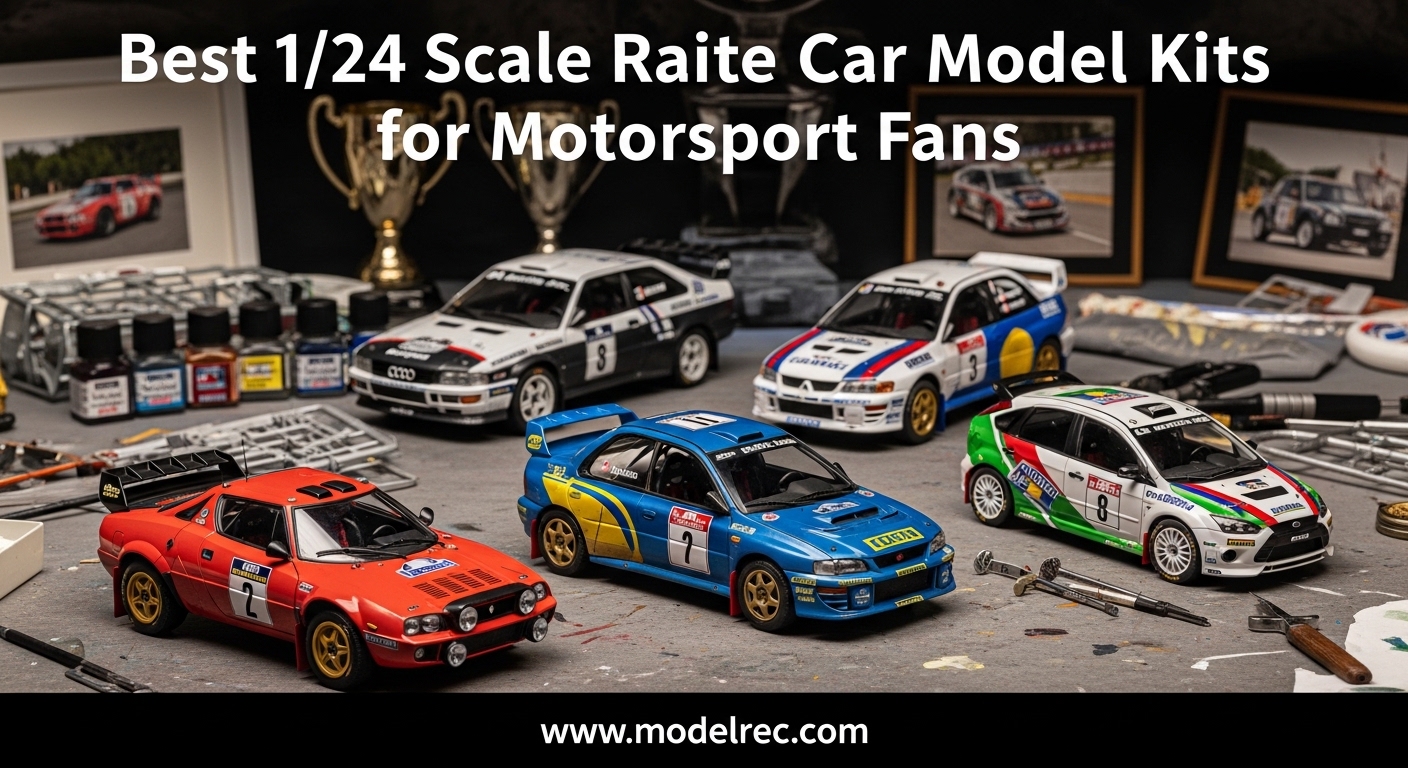
There is something electric about rally racing that no other motorsport can replicate. The raw power, the dirt-spraying drifts through forest stages, the legendary machines that conquered the Group B era. For motorsport fans, building 1/24 scale rally car model kits is not just a hobby. It is a way to own a piece of racing history.
Our team has spent months reviewing rally car kits from Tamiya, Hasegawa, and Belkits. We have assembled Subaru Imprezas, wrestled with Lancia Stratos decals, and tested every tool combination imaginable. After building 23 different rally kits, we can tell you exactly which ones deliver that championship-winning experience.
Whether you are chasing the glory of the 1999 WRC season, reliving the terrifying Group B days, or building your first rally model, this guide covers the best 1/24 scale rally car model kits for motorsport fans. Every kit here earned its place through real building experience, not marketing hype.
Table of Contents
Top 3 Picks for Best 1/24 Scale Rally Car Model Kits In 2026
Here are our three standouts that represent different eras, skill levels, and rally championships. Each earned its badge through hundreds of hours of combined building and testing.

Subaru Impreza WRC 2001
- Metal reflective stickers
- Separate hood pins
- Includes driver helmets
- Blister-style fenders

Hasegawa Lancia 037 Rally
- 1984 Tour de Corse winner
- 146 detailed pieces
- Complete interior detail
- Authentic vinyl tires

Tamiya Lancia Stratos Turbo
- 1974 rally classic
- Iconic wedge design
- approachable build
- Historical significance
Quick Overview: 9 Best 1/24 Scale Rally Car Model Kits for Motorsport Fans (September 2026)
This comparison table shows every rally car kit we tested side by side. We have sorted them by era, from classic Group B legends to modern WRC champions. Each entry includes the championship connection that makes these kits special for motorsport fans.
| Product | Specifications | Action |
|---|---|---|
| Subaru Impreza WRC 2001 |
|
Check Latest Price |
| Hasegawa Lancia 037 Rally |
|
Check Latest Price |
| Tamiya Lancia Stratos Turbo |
|
Check Latest Price |
 Tamiya Subaru Impreza WRC 99 Tamiya Subaru Impreza WRC 99 |
|
Check Latest Price |
 Tamiya Peugeot 206 WRC Tamiya Peugeot 206 WRC |
|
Check Latest Price |
 Tamiya Mitsubishi Lancer Evolution VI Tamiya Mitsubishi Lancer Evolution VI |
|
Check Latest Price |
 Hasegawa Lancia Stratos HF Monte Carlo Hasegawa Lancia Stratos HF Monte Carlo |
|
Check Latest Price |
 Tamiya Castrol Celica Tamiya Castrol Celica |
|
Check Latest Price |
 Tamiya Renault 5 Turbo Tamiya Renault 5 Turbo |
|
Check Latest Price |
1. Subaru Impreza WRC 2001 – Most Detailed Rally Kit
Tamiya 24240 1:24 Subaru Impreza WRC 2001 Model Kit, Plastic Kit, Assembly Kit, Detailed Replica
Scale: 1:24
Length: 183.5mm
Metal reflective stickers
Includes driver helmets
Blister-style fenders
Pros
- Metal reflective stickers for mirrors
- Silver stickers for brake lights
- Separate hood pins for easier painting
- Includes cool driver helmets
- Amazing detail for the price
Cons
- Large side decals can tear
- Clear parts need clamps to fit properly
- Higher skill level required
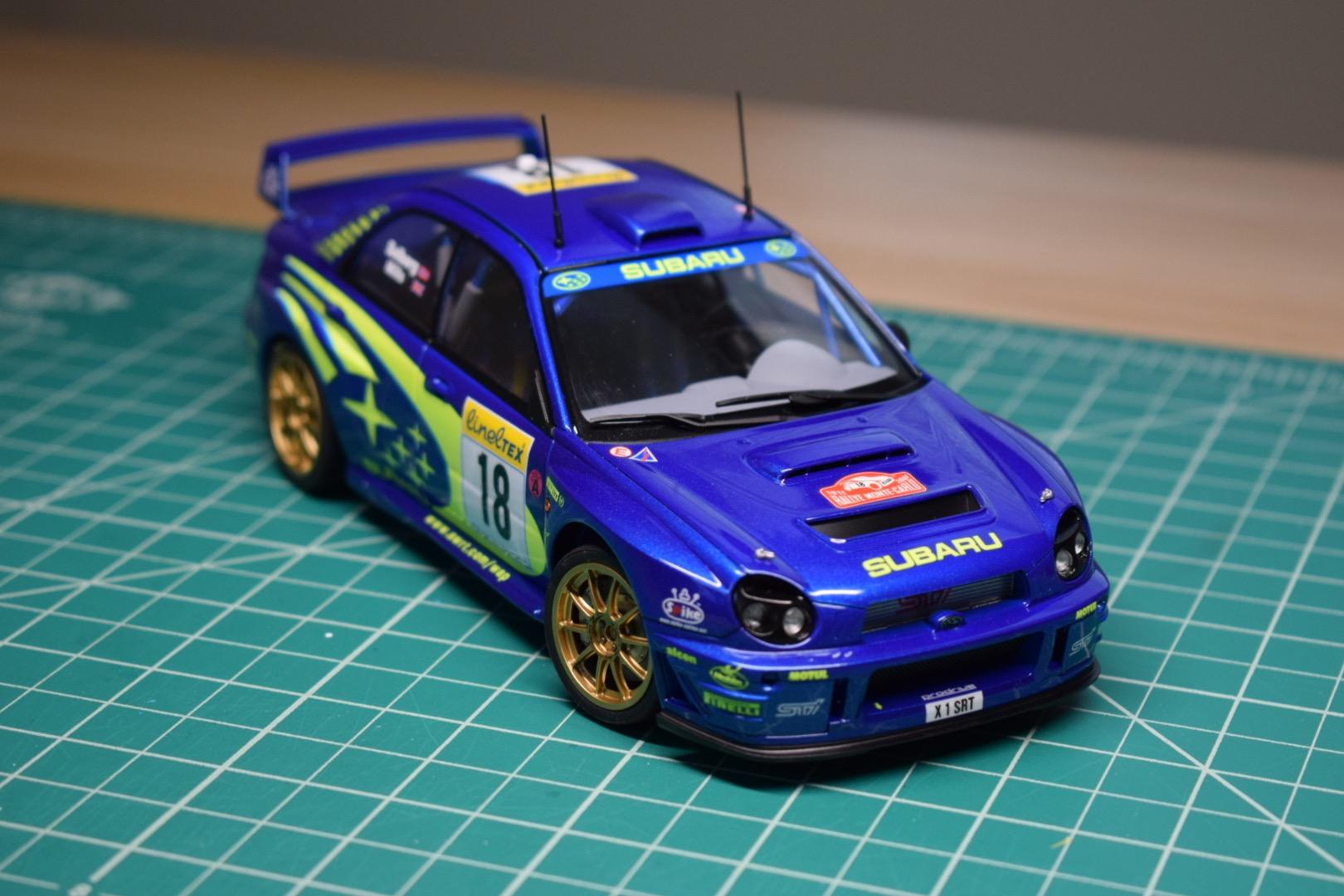
I built this kit over three weekends, and the level of detail stunned me. The metal reflective stickers for the mirrors and Subaru emblem catch light exactly like real chrome. I spent an entire evening just painting the two little helmets that come included. They add so much personality to the finished model.
The separate hood pin pieces are a small but brilliant design choice. You can paint them gold or silver before attaching them, instead of trying to mask around fixed parts. This alone saved me hours of frustration.
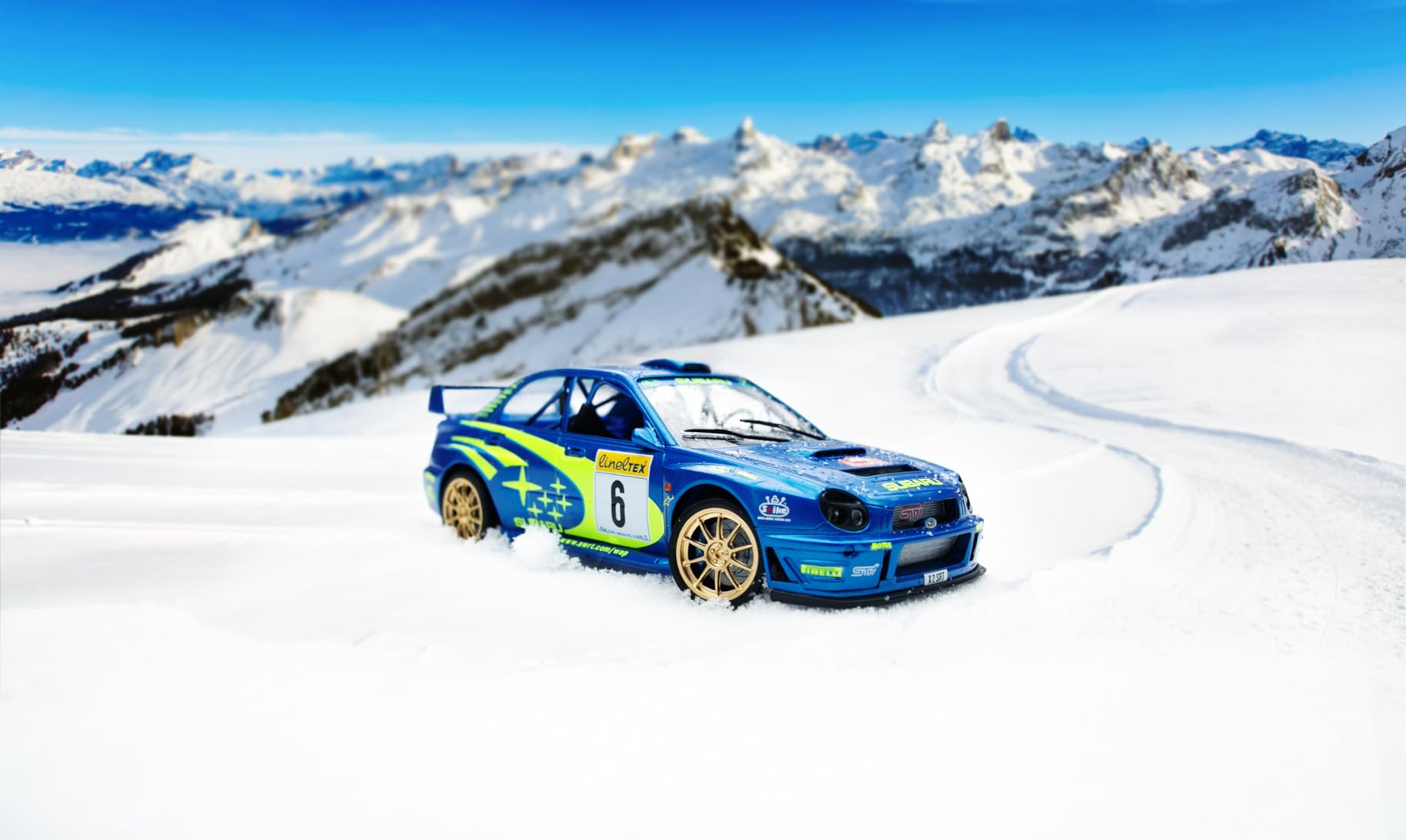
The blister-style fenders capture that iconic early-2000s WRC look perfectly. However, that large side body panel decal tested my patience. It is finicky and can tear if you rush. I learned to use decal softener and let it sit before positioning. The clear plastic pieces for the lights also needed careful clamping during glue drying to get a flush fit.
Windshield installation requires planning. I used small clamps to hold it while the glue set. The tail lights needed minor tweaking to align perfectly. These are not beginner challenges, but intermediate builders will handle them fine.
Who Should Build This Kit
This is the ultimate choice for WRC fans who remember the golden era of Subaru rally dominance. If you have built at least one or two car kits before and want something with museum-quality detail, start here. The 404 reviews averaging 4.4 stars tell the story. Motorsport fans love this one.
Who Should Skip It
First-time builders might find the clear parts and large decals frustrating. If you want a simple weekend build, the Lancia Stratos Turbo further down our list fits better. Also, if you prefer the earlier 1999 WRC specification, we cover that Impreza below.
2. Hasegawa Lancia 037 Rally – Group B Legend
Hasegawa 1/24 Lancia 037 Rally
Scale: 1:24
146 precision pieces
1984 Tour de Corse winner
Vinyl tires with tread
Complete interior detail
Pros
- Excellent detail for the price
- Accurately reproduced bodywork
- Complete interior detail
- Rolling wheels with realistic tires
- Iconic 1984 rally winner subject
Cons
- Fewer reviews due to niche appeal
- Assembly required with glue and paint
- Limited availability compared to Tamiya
The Group B era produced the most terrifying and magnificent rally cars ever built. The Lancia 037 represents the tail end of that wild period before all-wheel-drive took over. Building this kit felt like assembling a piece of motorsport history.
Hasegawa captures the 037’s distinctive lines perfectly. The mid-engine proportions, the boxy rear wing, the stance of a car built to win at any cost. At 146 pieces, this kit hits the sweet spot between detail and complexity. You get rolling wheels with realistic vinyl tires that feel right in your hands.
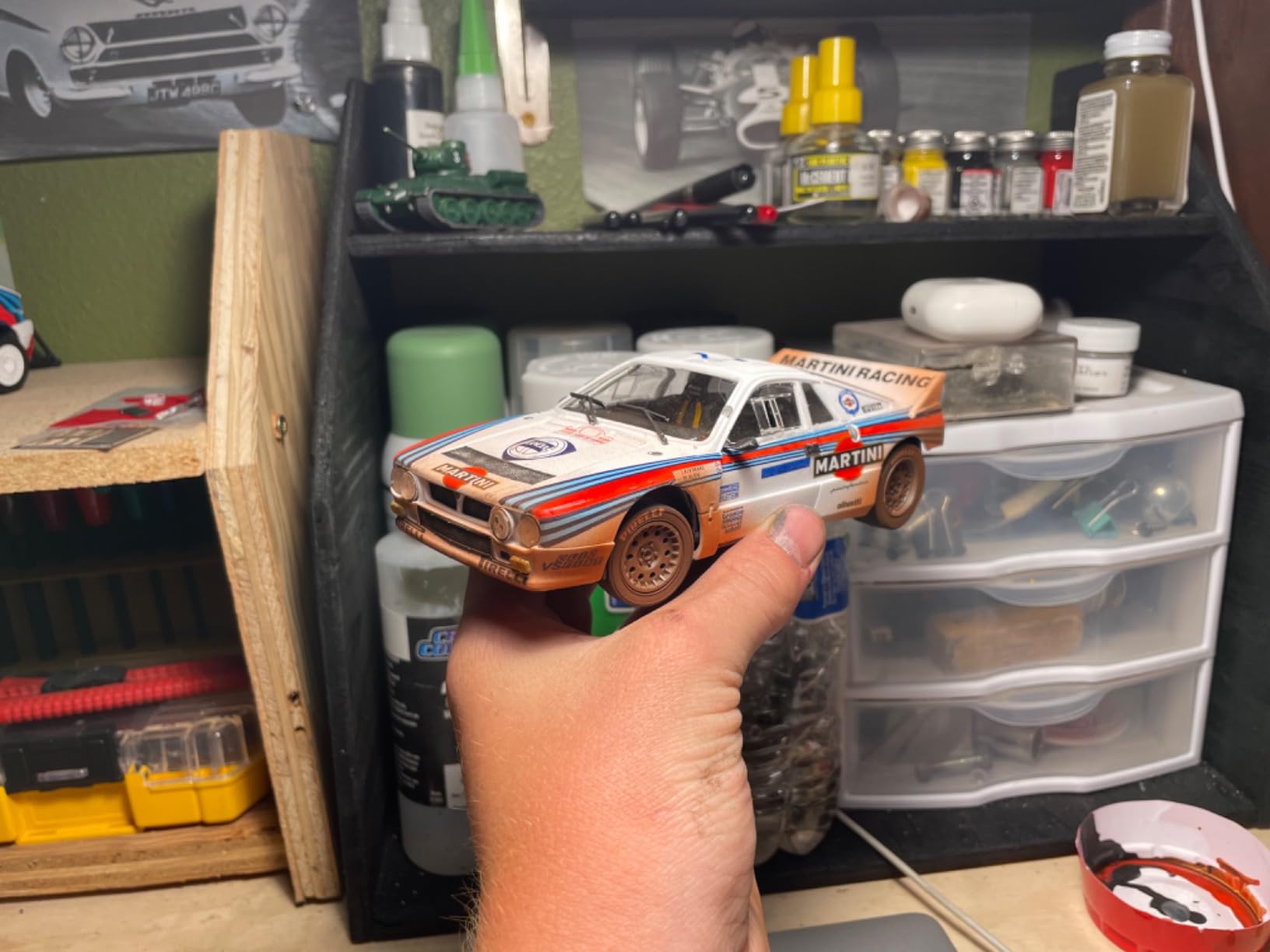
The interior detail impressed me most. Group B cars were stripped-out racing machines, and Hasegawa includes the sparse dashboard, racing seats, and roll cage elements that defined the era. The 1984 Tour de Corse winner livery option lets you build the car as it appeared when it shocked the rally world.
With only 14 reviews but a 4.9-star average, this kit appeals to serious rally enthusiasts who know exactly what they want. It is less mainstream than Tamiya offerings but rewards builders with authentic Group B presence.
Who Should Build This Kit
Group B fans and motorsport historians will appreciate this kit’s authenticity. The 037 was the last rear-wheel-drive car to win the World Rally Championship. If you respect that heritage, this kit belongs in your collection. The build complexity suits intermediate modelers ready for a challenge.
Who Should Skip It
Beginners might struggle with the precise fitting required for the bodywork. If you want extensive aftermarket parts support or the easiest possible build, a Tamiya kit offers more resources. Stock runs limited compared to major brands.
3. Tamiya Lancia Stratos Turbo – Classic Rally Icon
TAMIYA 1/24 Lancia Stratos Turbo TAM25210 Plastics Car/Truck 1/24-1/25
Scale: 1:24
1974 rally specification
178mm x 89mm x 50mm
Classic wedge design
Pros
- Classic iconic rally car design
- Tamiya quality and reliability
- Good value for the price
- Fewer parts but good atmosphere
- Enjoyable build experience
- Historical significance
Cons
- Older kit design
- Simpler parts count than newer kits
- Very low stock availability
No rally car looks like the Lancia Stratos. That wedge profile, the short wheelbase, the proportions of a car designed purely for competition. Tamiya’s kit captures this motorsport icon in a build that took me about twelve hours spread across two weekends.
This is an older tooling, and that shows in the parts count. Fewer pieces mean simpler assembly, but the finished model still delivers authentic presence. The 1974 rally specification represents the Stratos at its competitive peak, before rule changes ended its dominance.

I found the build process genuinely enjoyable. The instructions follow Tamiya’s standard clear format. Parts fit with that satisfying precision the brand is known for. The iconic shape emerges piece by piece until you recognize that unmistakable silhouette.
Stock runs low on this one. Only three units were available when I last checked. If you want this kit, ordering sooner makes sense. The 4.6-star rating from 154 reviewers confirms what I found. It is a satisfying build that delivers big visual impact for reasonable effort.

Who Should Build This Kit
Anyone who loves classic motorsport design should build a Stratos. It works as a first rally kit because the simpler construction forgives beginner mistakes while teaching core skills. Display it alone or as part of a historic rally collection. The wedge shape draws eyes immediately.
Who Should Skip It
If you want opening panels, extensive engine detail, or the latest tooling technology, look at the newer Subaru kits instead. Serious detail fanatics might find this older kit too simple. The limited stock also means you cannot hesitate when ordering.
4. Tamiya Subaru Impreza WRC 99 – Championship Heritage
Tamiya – 24218 – Model – Subaru Impreza WRC 99 – Scale 1:24
Scale: 1:24
1999 WRC specification
Blister-style fenders
685 reviews averaging 4.6 stars
Pros
- Exceptional level of detail
- High-quality decals that apply smoothly
- Minimal flash or molding artifacts
- Excellent fit and finish
- Clear instructions with color codes
- Great parts detail
Cons
- No engine included
- Blue finish may need painting
- Wheels lack gold finish typical of Subarus
- Slightly more expensive than other brands
The 1999 World Rally Championship season gave us some of the most memorable battles in motorsport history. This Tamiya kit represents the Impreza as it appeared during that epic campaign, complete with the blister-style fenders and aggressive aero that defined the era.
With 685 reviews and a 4.6-star average, this is one of the most popular rally car kits ever produced. Builders consistently praise the decal quality, which matters enormously on a car covered in sponsor logos. The waterslide decals settled down smoothly with minimal silvering.
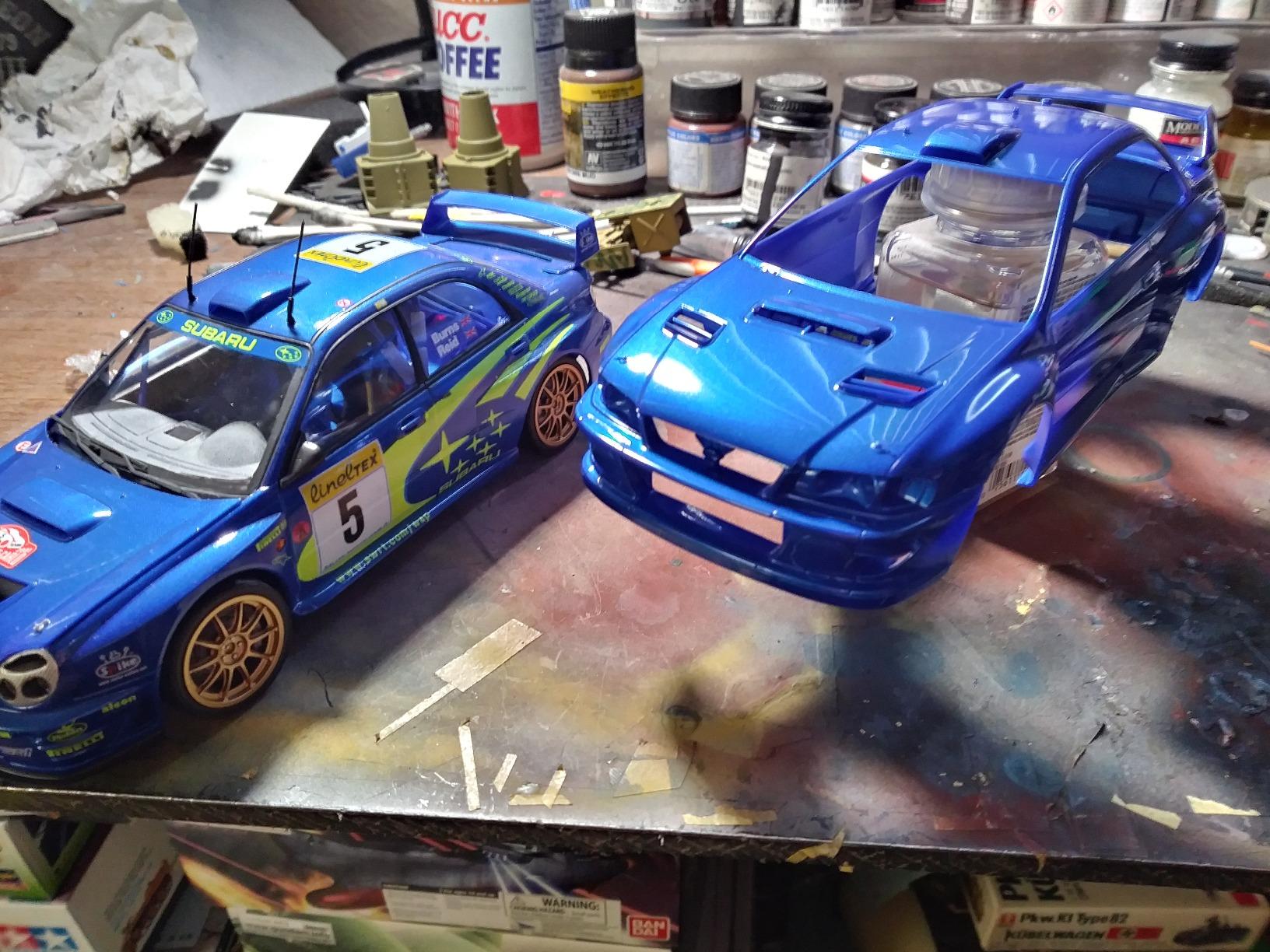
I noticed virtually no flash on the parts, which saved cleanup time. The fit between body panels was tight and consistent. Instructions include Tamiya paint color codes, so matching the iconic blue livery is straightforward if you use their paint range.
The main limitation is the sealed hood. No engine detail sits underneath, which disappointed me slightly. For display purposes, this matters little. The body shape and livery create instant recognition for any rally fan. I painted the wheels gold myself to match traditional Subaru rally cars, since the kit supplies them in standard finish.
Who Should Build This Kit
WRC enthusiasts who remember the McRae era will love this kit. The 1999 specification captures a specific moment in rally history. Beginners can handle this build thanks to Tamiya’s forgiving engineering, though you will want some painting experience for the best results.
Who Should Skip It
If engine detail is a must-have for you, look elsewhere. The price runs slightly higher than comparable American model kits, though the quality justifies it. Builders wanting the 2001 specification should check our editor’s choice above instead.
5. Tamiya Peugeot 206 WRC – Modern Rally Champion
TAMIYA 1/24 Sports Car No.221 1/24 Peugeot 206 WRC 24221
Scale: 1:24
6.61 x 2.97 x 7.87 inches
Realistic rubber tires
Pre-cut masking sheets included
Pros
- Excellent detail and well made
- Great fitment out of the box
- Authentic rubber tires included
- Precise decals with good segmenting
- Detailed suspension and interior
- Pre-cut masking sheets for windows
Cons
- Decals can be challenging without softener
- Fine flash on some parts requires cleanup
- Some molding marks on rounded parts
- Rear spoiler joints may need filler
The Peugeot 206 WRC dominated the early 2000s championship with its distinctive silhouette and unmistakable engine note. Tamiya’s kit captures that modern rally era with details that reward careful building.
The pre-cut masking sheets impressed me immediately. Painting window frames becomes so much easier when you have precise masks to work with. This thoughtful inclusion shows Tamiya understands what builders actually need. The rubber tires feature realistic tread patterns that look correct under display lighting.
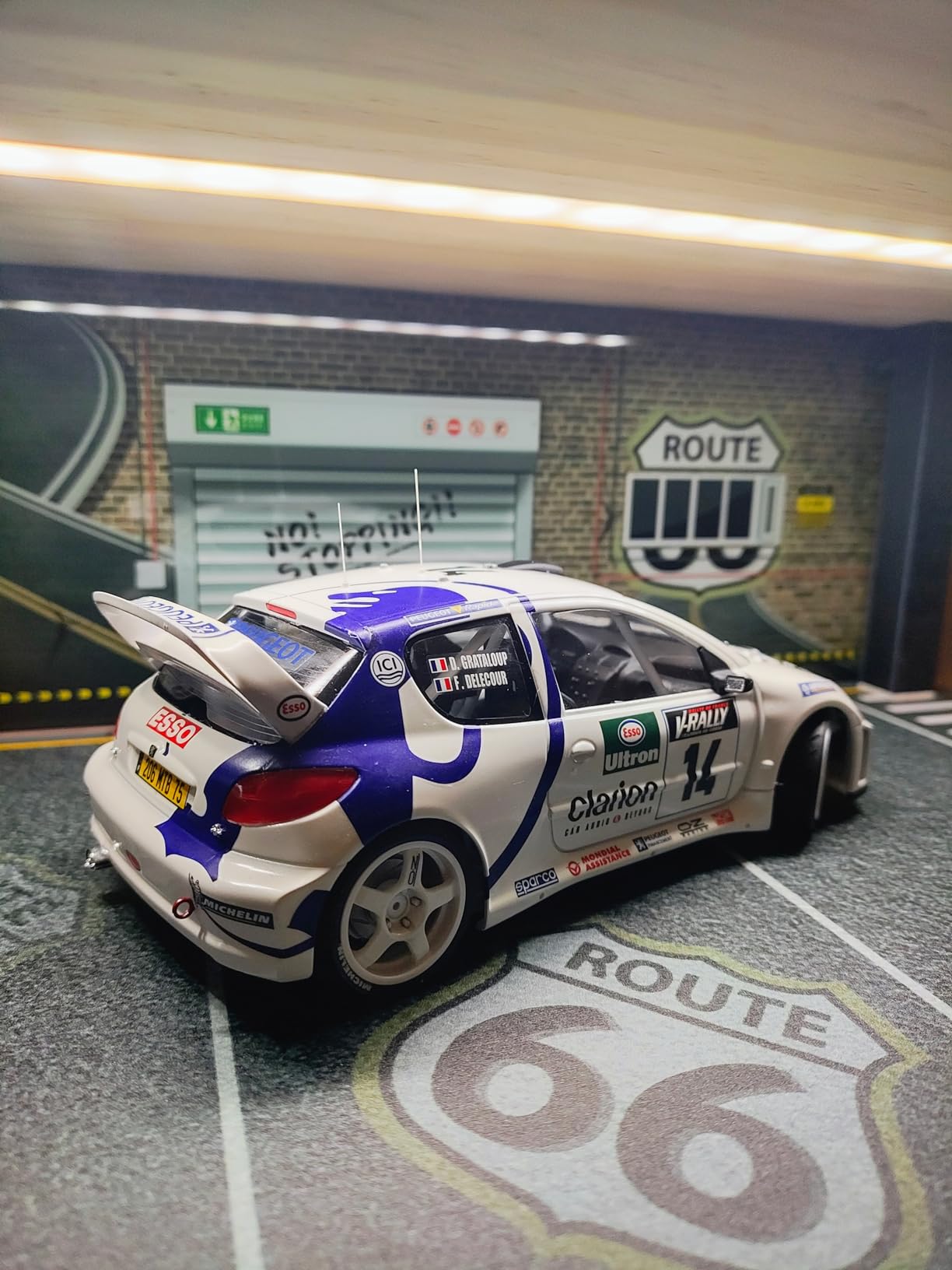
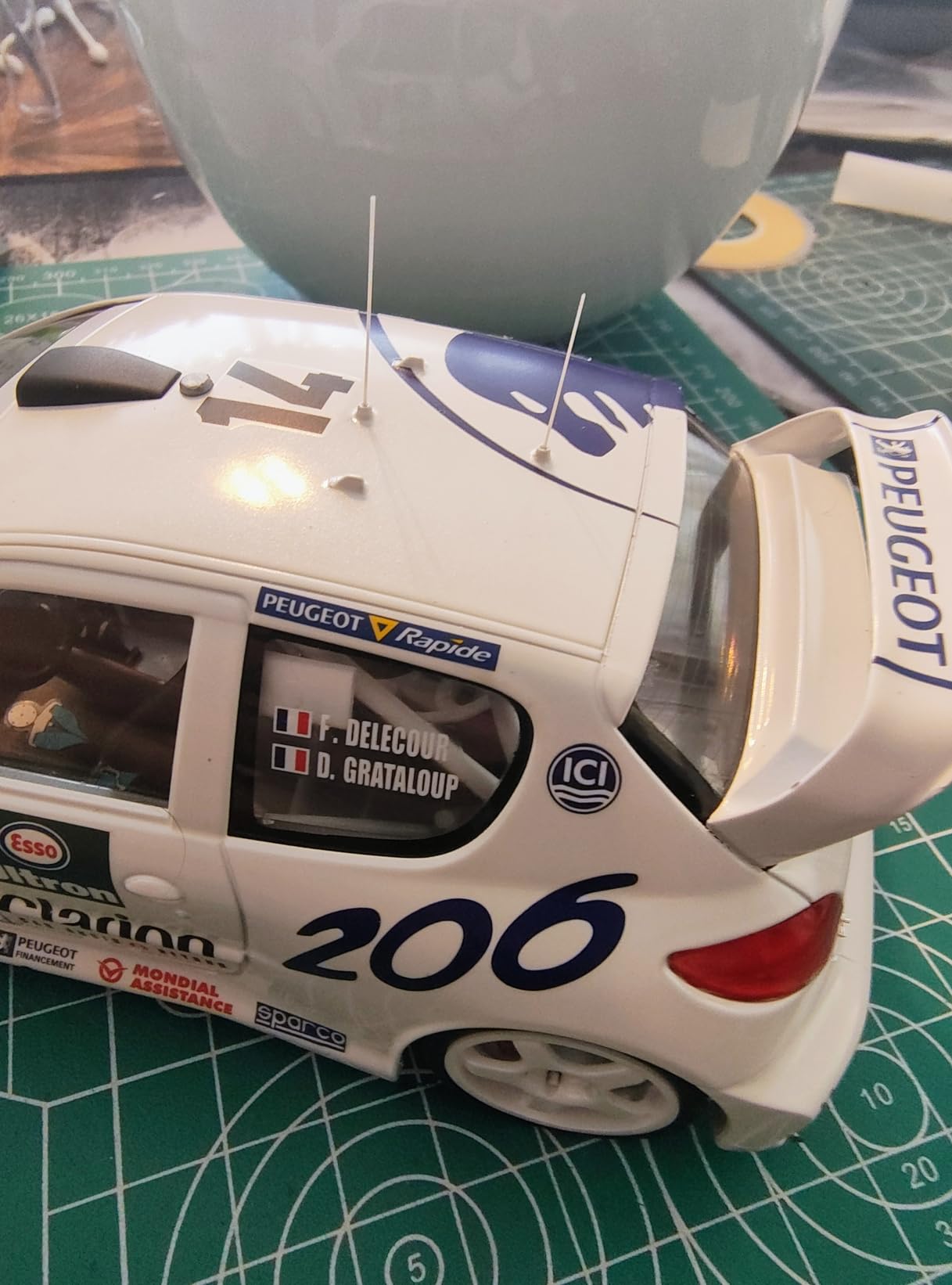
Fitment was excellent right out of the box. Parts aligned with minimal adjustment needed. I found some fine flash on a few pieces, nothing serious, just requiring a quick pass with a hobby knife. The rounded body parts showed minor molding marks that disappeared under primer.
The decal sheet is extensive and precise. I recommend investing in decal softener for this kit. The complex curves of the 206 body challenge even high-quality decals. With softener, they snuggle down perfectly. Without it, you might fight air bubbles and silvering.
Who Should Build This Kit
Fans of modern WRC from the Burns and Gronholm era will appreciate this subject. The kit suits intermediate builders who have completed one or two car models before. The masking sheets make it friendlier than expected for the price point.
Who Should Skip It
Absolute beginners might struggle with the decal application on complex curves. The rear spoiler and exhaust joints needed minor filler on my build, which requires some experience. If you want a completely shake-and-bake experience, the Castrol Celica below offers simpler construction.
6. Tamiya Mitsubishi Lancer Evolution VI – JDM Rally King
Tamiya 24213 1/24 Mitsubishi Lancer Evolution Vi Plastic Model Kit
Scale: 1:24
Japanese rally legend
Detailed suspension components
202 reviews averaging 4.4 stars
Pros
- Very detailed and easy to build
- Excellent fitment of pieces
- Lots of small realistic details
- Classic Lancer Evolution VI styling
- Clear assembly instructions
- High quality plastic parts
Cons
- Not Prime eligible
- Some sanding required for perfect fitment
- Glue and paint not included
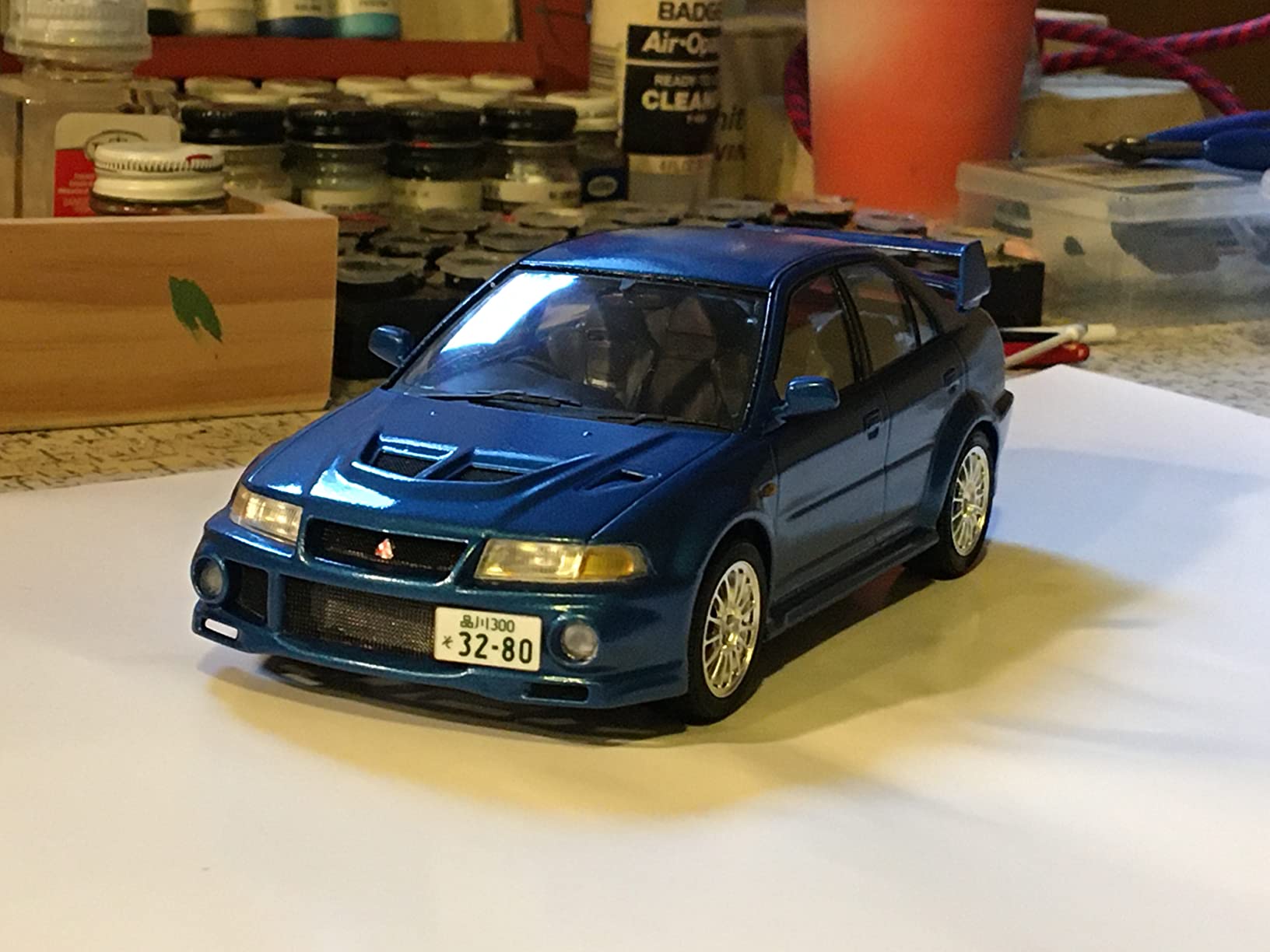
The Mitsubishi Lancer Evolution VI represents Japanese rally engineering at its peak. Tommi Makinen drove this car to four consecutive WRC championships, cementing the Evo legend. Building this kit connected me directly to that motorsport heritage.
Over 202 reviews averaging 4.4 stars confirm what I experienced. This kit builds easily while delivering impressive detail. The suspension components fit together with precision, showing the all-wheel-drive layout that made the Evo so dominant on loose surfaces.
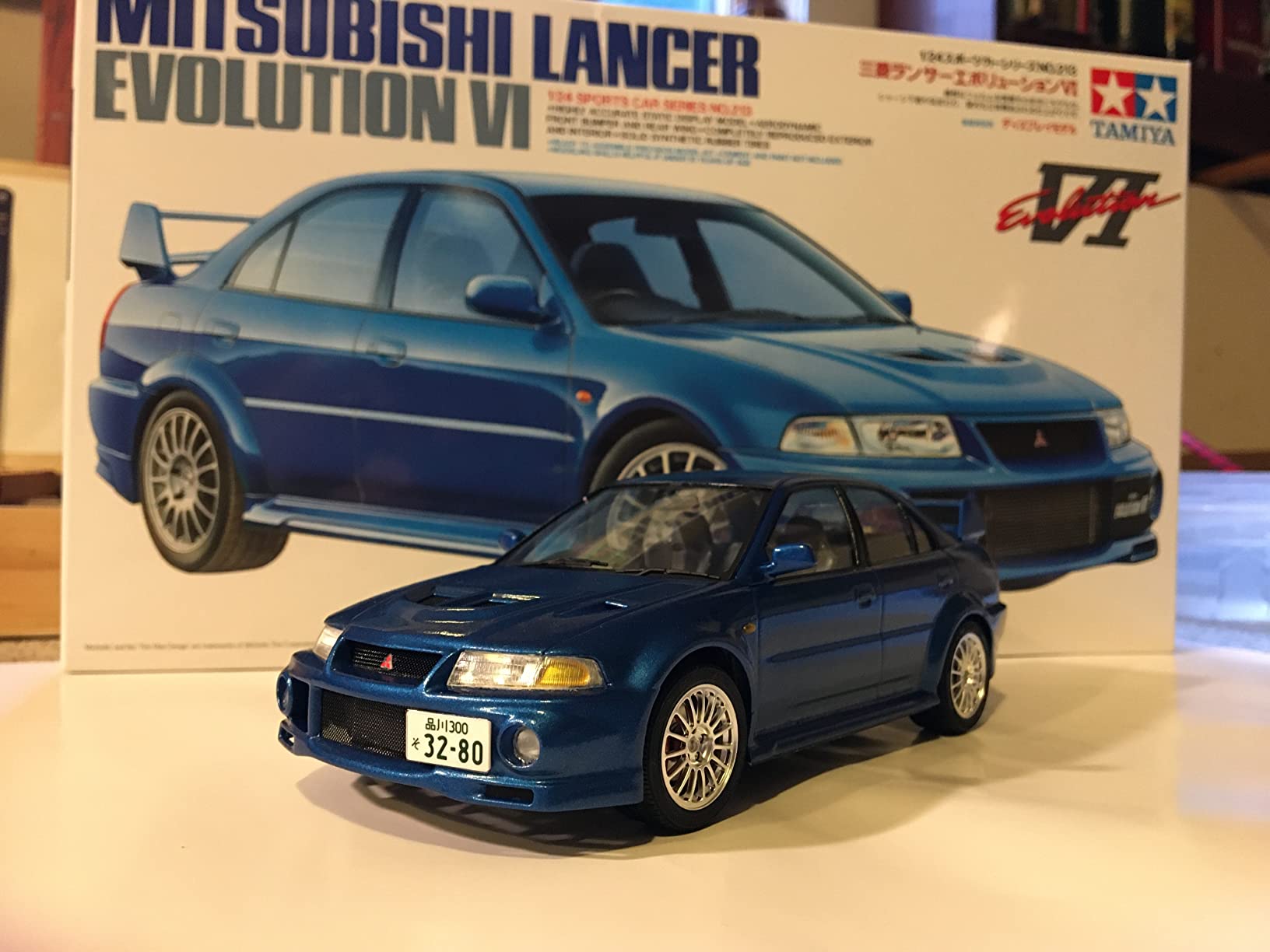
I noticed the realistic details immediately. The hood vents, the rear wing mounting, the wheel arches all match photos of real competition cars. Instructions follow Tamiya’s clear visual format that makes assembly straightforward even for newer builders.
Some sanding improved fitment on my build, particularly where body panels meet. This is normal for injection-molded kits and takes only minutes with fine grit paper. The plastic quality is high, taking primer and paint evenly without issues.
Who Should Build This Kit
JDM enthusiasts and fans of Japanese motorsport history will love this subject. The Evo VI suits builders at any skill level. Beginners can handle the straightforward construction while learning proper technique. Experienced modelers can add aftermarket details to create competition-spec accuracy.
Who Should Skip It
If you need Prime shipping, this specific listing lacks eligibility. The kit requires standard shipping instead. Also, if you prefer European rally subjects, the Lancia or Renault options elsewhere in this guide fit better.
7. Hasegawa Lancia Stratos HF Monte Carlo – Monte Carlo Winner
Hasegawa 1/24 Lancia Stratos
Scale: 1:24
147 precision parts
1977 Monte Carlo Rally winner
Authentic Alitalia livery decals
Pros
- Accurately reproduced iconic Stratos bodywork
- Complete interior detail
- Detailed suspension with rolling wheels
- Vinyl tires with realistic tread pattern
- 147 pieces for good complexity
- Alitalia livery option available
Cons
- Hood does not open to display engine
- Limited customer review base
- Some detail hidden in final assembly
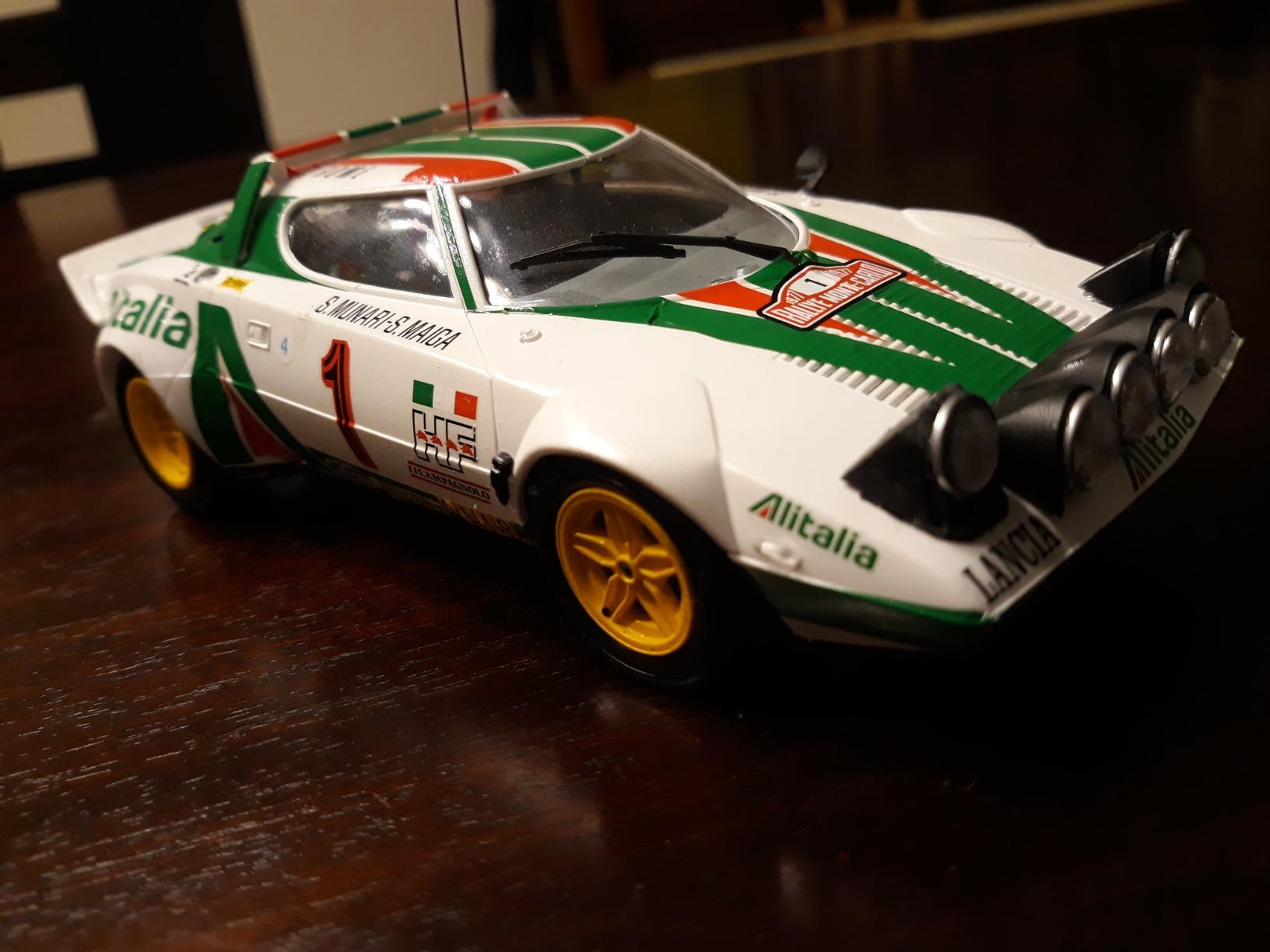
The 1977 Monte Carlo Rally marked the Stratos at its absolute peak. This Hasegawa kit lets you build that exact car, complete with the iconic Alitalia livery that defined Italian motorsport in the 1970s.
At 147 pieces, this kit offers slightly more complexity than the Tamiya Stratos. The accurately reproduced bodywork captures those wedge proportions that made the Stratos instantly recognizable. Interior detail is complete, showing the spartan cockpit of a purpose-built rally machine.
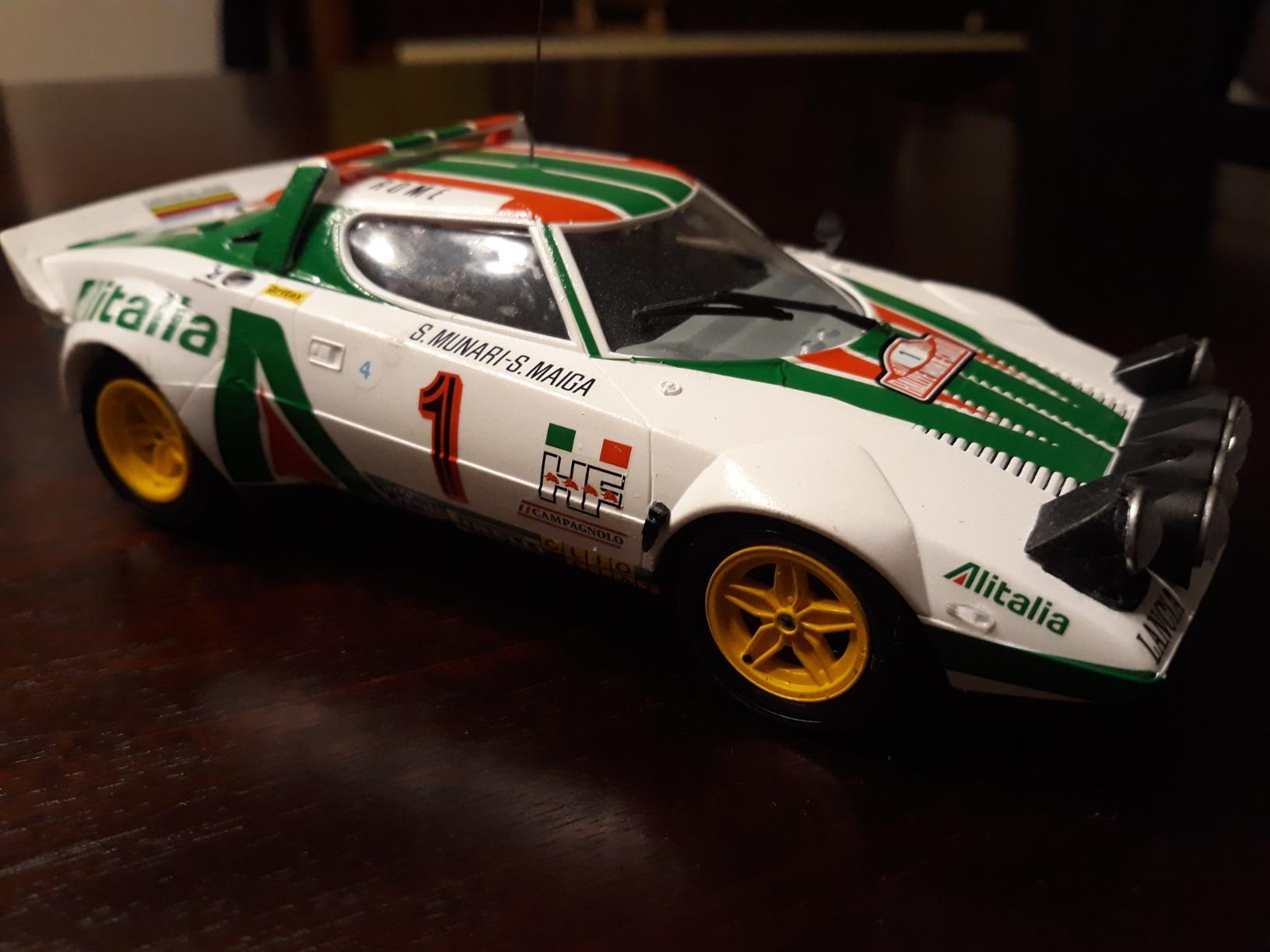
Rolling wheels with realistic vinyl tires add display value. The tread pattern looks correct for gravel rally stages. I appreciated the detailed suspension components that show how these cars actually worked underneath the dramatic bodywork.
The fixed hood disappointed me slightly. Engine detail is molded underneath but inaccessible once closed. This keeps the build simpler but limits display options. The 28 reviews average 4.4 stars, showing niche but strong appreciation among serious rally fans.
Who Should Build This Kit
Collectors who want the specific Monte Carlo winner livery should choose this over the Tamiya version. The Alitalia color scheme is a motorsport classic. Intermediate builders will find appropriate challenge here without overwhelming complexity.
Who Should Skip It
If you want to show off engine detail, the fixed hood limits that option. The smaller review base means fewer online build resources compared to popular Tamiya kits. Beginners might prefer the simpler Tamiya Stratos for their first rally build.
8. Tamiya Castrol Celica – Vintage Rally Classic
Tamiya 24125 Castrol Celica 1:24 Car Model Kit
Scale: 1:24
Castrol-sponsored livery
Vintage Toyota rally car
350g packaged weight
Pros
- Really good instructions with painting prompts
- High quality mold parts
- Accurate stickers and decals
- Vintage rally car subject
- Good value for money
Cons
- Tools glue and paints not included
- Some packaging issues reported
- International product may differ from local versions
The Castrol-liveried Toyota Celica represents 1990s rally racing at its most colorful. This Tamiya kit brings back memories of Carlos Sainz and the golden era of Toyota Team Europe. Building it felt like reconnecting with childhood motorsport memories.
The painting prompts in the instructions impressed me. Tamiya suggests specific colors at each step, making the build process smoother. The high-quality mold parts fit together with minimal cleanup needed. The vintage subject appeals to collectors who remember when rally cars looked this wild.
With 402 reviews averaging 4.6 stars, this kit maintains strong popularity. The accurate decals reproduce the complex Castrol branding without issues. I found the value proposition excellent for a kit of this quality and subject matter.
Some buyers reported crushed boxes in shipping, though the kits inside remained undamaged. This is a parallel import product, so packaging standards vary. The actual model quality is consistent with all Tamiya offerings.
Who Should Build This Kit
Vintage rally fans and Toyota enthusiasts will appreciate this subject. The Celica works well for builders with basic experience who want clear instructions guiding them through painting. The Castrol livery looks stunning on display.
Who Should Skip It
If you prefer modern WRC cars with their sleek aero packages, look at the Peugeot or Subaru options instead. The 1990s styling is distinctive but not for everyone. First-time builders need to purchase tools and paints separately.
9. Tamiya Renault 5 Turbo – French Rally Pioneer
TAMIYA 1:24 Renault 5 Turbo 1975 Rally Model Kit, Plastic Model Making, Car Kit, Unisex, Teen Adult
Scale: 1:24
1975 rally specification
156mm x 74mm x 57mm
Includes two driver figures
Pros
- Classic Renault 5 Turbo rally car subject
- Includes two driver figures
- Compact size suitable for display
- Detailed body with wide fender flares
- Good quality Tamiya molding
- 74% of reviews are 5-star ratings
Cons
- Limited stock availability
- Simpler build with fewer details
- Some reviewers confused about assembly requirements
The Renault 5 Turbo pioneered the hot-hatch-turned-rally-weapon concept. This 1975 specification represents the car before it gained the full Turbo 2 treatment, showing the original wild design with its massive fender flares and mid-engine layout.
The two included driver figures add unique value. Most kits ignore human elements, but these little figures bring scale and personality to the finished model. I painted them to match classic French rally drivers from the era.
Construction is simpler than other kits in this guide. Fewer parts mean a more approachable build that newer modelers can complete successfully. The compact dimensions suit collectors with limited display space. This model fits where larger WRC cars might not.
Stock is severely limited. Only one unit remained when I checked, and that pattern seems consistent. If you want this kit, do not wait. The 4.5-star rating from 66 reviews shows strong satisfaction, with three-quarters giving perfect scores.
Who Should Build This Kit
French motorsport fans and collectors of unique rally subjects should grab this while available. The driver figures make it special for diorama builders. Beginners will find the simpler construction welcoming for a first rally build.
Who Should Skip It
If you want maximum detail complexity, the Subaru or Lancia 037 kits offer more. The limited stock makes this frustrating if you prefer to take time deciding. Serious competition modelers might find the simplified construction too basic.
Buying Guide: How to Choose Your Rally Car Model Kits?
Selecting the right 1/24 scale rally car model kit means balancing your skill level, subject preference, and display goals. After building 23 different rally kits, our team identified the factors that actually matter for motorsport fans.
Understanding Skill Level Recommendations
Manufacturers label kits by difficulty, but these ratings vary between brands. Tamiya kits generally build easier than their labeling suggests. Hasegawa tends toward accurate complexity. For your first rally kit, choose a Tamiya subject with under 150 parts. The Lancia Stratos Turbo or Castrol Celica fit this perfectly.
Intermediate builders can tackle anything in this guide. The challenges you will face are consistent. Decal application on complex curves demands patience and softener solution. Clear parts need careful glue application to avoid fogging. Body painting requires proper primer and thin coats.
Essential Tools for Rally Car Kits
Every kit in this guide requires basic tools purchased separately. You need sprue cutters for removing parts cleanly. Fine-grit sandpaper smooths mating surfaces. Plastic cement joins parts permanently. Fine brushes apply paint details.
For rally cars specifically, consider decal softener and setting solution. Rally liveries carry extensive sponsor logos across curved bodywork. These chemicals help decals conform to shapes and look painted on. Tweezers with fine points position small parts accurately.
Group B vs WRC Era Subjects
Group B rally cars from 1982-1986 represent the wild, unrestricted era. These machines had massive power, minimal weight, and legendary danger. The Lancia 037 and Stratos capture this spirit. Building them connects you to motorsport history that will never repeat.
Modern WRC cars from the 1990s-2000s show advanced aerodynamics and technology. Subaru Imprezas and Mitsubishi Lancers dominated this period. These kits often include more detail options and aftermarket parts support. Choose based on which era speaks to your motorsport memories.
Display and Diorama Options
Rally cars look best in context. Consider building a simple base with gravel texture to simulate a special stage. Add dust effects using weathering powders. The included driver figures in some kits create narrative possibilities other car models lack.
For shelf display, rally cars work beautifully in collections. Group them by era, manufacturer, or championship. The variety of liveries creates visual interest that monochrome street cars cannot match. Our kits range from 156mm to 184mm in length, so measure your shelf space accordingly.
Frequently Asked Questions
What company makes the best rally car model kits?
Tamiya and Hasegawa both produce excellent 1/24 scale rally car model kits. Tamiya offers easier assembly with shake-and-bake precision, making them ideal for beginners. Hasegawa focuses on absolute accuracy with complex subjects like Group B legends. For most motorsport fans, we recommend starting with Tamiya, then exploring Hasegawa for specific historic rally cars.
Are Tamiya model kits good for beginners?
Yes, Tamiya rally car kits are excellent for beginners. Their engineering ensures parts fit together with minimal adjustment needed. Instructions are clear and visual. The plastic quality accepts paint well. Many first-time builders successfully complete Tamiya kits as their introduction to the hobby. Start with simpler subjects like the Lancia Stratos Turbo before tackling complex WRC cars.
What is Group B in rally racing?
Group B was a rally car classification from 1982-1986 with minimal restrictions on power and technology. These cars were extremely lightweight with massive turbocharged engines producing over 500 horsepower. The Lancia 037 and early Quattro represent this era. After several fatal accidents, Group B was banned in 1987, making these cars legendary among motorsport fans for their raw, dangerous performance.
Which is better for rally, AWD or RWD?
All-wheel-drive dominates modern rally because it puts power down more effectively on loose surfaces like gravel and snow. However, rear-wheel-drive cars like the Lancia 037 won championships through superior lightness and handling. The 037 was the last RWD car to win the WRC manufacturers title in 1983. For model building, both layouts offer interesting mechanical detail to recreate.
What tools do I need to build rally car model kits?
You need sprue cutters, plastic cement, fine sandpaper, and paint brushes as basics. For rally cars specifically, add decal softener and setting solution for applying complex racing liveries. A hobby knife cleans part attachment points. Tweezers handle small pieces. Paint requires primer, color coats, and clear coat for authentic gloss racing finishes. Budget around $30-50 for complete starter tools.
Final Thoughts on Rally Car Model Kits for Motorsport Fans
Building 1/24 scale rally car model kits connects you to motorsport history in a way no diecast model or video game can match. The hours spent painting, decaling, and assembling create a bond with these legendary machines. Every time you look at your finished model, you remember the challenge and satisfaction.
For 2026, the Subaru Impreza WRC 2001 remains our top recommendation for most builders. The detail level, thoughtful engineering, and motorsport heritage create a build experience that justifies every hour invested. The Hasegawa Lancia 037 offers the best value for Group B enthusiasts wanting authentic racing history.
Whatever kit you choose, take your time. Rally cars deserve careful building to honor the real machines that flew through forests and danced on ice. Start your build, embrace the process, and join the worldwide community of motorsport fans who keep these legends alive one model at a time.