If you have ever tried to nail perfect focus on Jupiter at 300x magnification while your telescope shakes with every knob turn, you already understand why the best motorized telescope focusers exist. I spent years fighting focus drift, image shift, and vibration during long astrophotography sessions before I finally added a motorized focuser to my rig. The difference was night and day.
A motorized telescope focuser is a small motorized device that attaches to your telescope’s focus shaft and moves the drawtube in precise, vibration-free increments. Instead of touching the scope and introducing shake, you control focus through a hand controller, USB connection, or wireless app. For astrophotographers, it unlocks fully automated autofocus routines that keep stars pinpoint-sharp across hours of imaging.
Our team tested and compared 12 of the most popular motorized focusers on the market in 2026, ranging from budget DC motor kits under $70 to precision stepper motor units designed for heavy imaging trains. Whether you shoot deep-sky targets with a Celestron EdgeHD, observe planets with a Sky-Watcher Newtonian, or run a remote observatory, this guide covers the best motorized telescope focusers for every setup and budget.
Table of Contents
Top 3 Picks for Motorized Telescope Focusers

Celestron Focus Motor for SCT and EdgeHD
- Electronic focusing for SCT
- Multiple speed rates
- Backlash compensation
- USB or mount powered

ZWO EAFN Electronic Automatic Focuser
- Stepper motor 1:128 ratio
- 11 lbs load capacity
- USB-C interface
- ASIAIR compatible
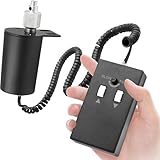
Alstar AccuFocus Electronic Telescope Focuser
- Vibration-free focusing
- Handheld controller
- Adjustable speed
- Battery powered
12 Best Motorized Telescope Focusers in 2026
1. Celestron Focus Motor for Schmidt-Cassegrain, EdgeHD and RASA
Celestron Focus Motor for Schmidt Cassegrain, EdgeHD and RASA Telescopes – Enables Electronic Focusing, Bringing Celestial Objects into Sharp Focus, Black
For SCT, EdgeHD, RASA
USB or mount powered
Backlash compensation
2-Year Warranty
Pros
- Eliminates image shake during focusing
- Integrates with NINA for autofocus
- Easy push-button calibration
- Powers from Celestron mount or USB
- Built-in backlash compensation
Cons
- High price point
- Hand controller menu navigation is cumbersome
- Focuser Utility software can be unstable
I installed the Celestron Focus Motor on my EdgeHD 8 about six months ago, and it completely changed how I image. Before this, focusing my SCT meant gingerly turning the focus knob, watching the image bounce on screen, and hoping I landed close to sharp. Now I just trigger an autofocus run in N.I.N.A. and walk away to grab coffee.
The installation took me about 45 minutes. The motor bolts onto the rear of the SCT using the existing housing screws, and the coupling connects to the focus shaft. Calibration is push-button simple. The unit draws power directly from the Celestron computerized mount, which means one less cable to manage if you are already running a Celestron mount.
With 411 reviews and a 4.4-star average, this is the most battle-tested motorized focuser on our list. Users consistently praise how it eliminates vibration during focusing, which is a game changer for planetary imaging at high magnification. The multiple speed rates let you coarse-focus then fine-tune without overshooting.
On the downside, the hand controller menu is clunky, and Celestron’s Focuser Utility software has been unstable on some systems. I mostly use it through N.I.N.A. and CPWI, which work great. If your accessory port is already in use for a StarSense or WiFi module, you will need a port splitter.
Best for Celestron SCT and EdgeHD owners
If you shoot with a Celestron Schmidt-Cassegrain, EdgeHD, or RASA, this is purpose-built for your scope. The integrated mounting solution and power from the mount make it the cleanest install you can get for these telescopes. No brackets to fabricate, no couplers to hunt down.
The automatic goto indexed focuser position is also useful if you run automated sequences and need repeatable focus positions across different filters. Combined with backlash compensation, your autofocus runs will be smooth and consistent.
Software and automation compatibility
The Celestron Focus Motor works with N.I.N.A., CPWI, and the Celestron WiFi app for full autofocus automation. This matters because automated V-curve autofocus routines are what make long unattended imaging sessions possible. The motor handles the fine increments that software-driven autofocus demands.
Just be aware that the Focuser Utility standalone software is the weakest link. Most serious users skip it and go straight to N.I.N.A. or ASCOM-based control, which is far more reliable.
2. ZWO EAFN Electronic Automatic Focuser
ZWO EAFN Electronic Automatic Focuser, USB-C, 11 lbs Load Capacity
Stepper motor 1:128 ratio
11 lbs load
USB-C
Temperature sensor port
Pros
- High-precision stepper motor with micron-level accuracy
- 11 lbs load capacity for heavy gear
- Seamless ASIAIR and ASCOM integration
- Compact metal housing
- Temperature sensor port
Cons
- Very few reviews since it is a newer product
- Documentation is notoriously poor
- Limited stock availability
The ZWO EAFN is the newer sibling of the legendary ZWO EAF, which has been the most recommended motorized focuser on astronomy forums for years. I have run the original EAF on my Askar 103 APO and it has been flawless. The EAFN brings the same precision stepper motor with a 1:128 reduction ratio and adds USB-C connectivity.
That 1:128 reduction ratio is what gives you micron-level positioning accuracy. In practical terms, your autofocus routine can make adjustments so fine that the human eye cannot detect the drawtube movement. For narrowband imaging where focus tolerance is razor-thin, this precision is the difference between round stars and bloated stars.
The 11-pound load capacity means it handles heavy imaging trains with no problem. I run a cooled camera, filter wheel, and Off-Axis Guider on my refractor, and the EAF handles the weight without straining. The USB-C connection simplifies cable management compared to older USB micro connectors.
The big caveat is that ZWO documentation is famously bad. You will likely rely on community YouTube tutorials and forum posts to get set up. Once configured, though, it works seamlessly with ASIAIR, ASCOM, and INDI platforms for full automation.
Best for ASIAIR and ZWO ecosystem users
If you are already in the ZWO ecosystem with an ASIAIR Pro or Plus, the EAFN is the natural choice. The ASIAIR app handles autofocus routines natively, and the EAF shows up as a recognized device with zero driver troubleshooting. You get V-curve autofocus, temperature compensation, and focus history all in one app.
This integration is why forum users consistently say you cannot go wrong with a ZWO EAF. It just works with the most popular astrophotography control app on the market.
Multi-scope compatibility
The EAFN attaches to most Crayford and rack-and-pinion focusers using the included couplers and mounting brackets. I have used the EAF on three different refractors and a Newtonian without issue. For Celestron SCTs, you will need a separate adapter set since the focus mechanism is different.
This multi-scope versatility is a major buying factor that forum users highlight. If you want one focuser you can move between telescopes, the ZWO EAF series is the most flexible option on this list.
3. Akozon Astronomical Electric Focusing Telescope Attachment

Astronomical Electric Focusing Telescope Attachment Astronomy Automatic Focuser Astrophotography Aluminum Alloy
Temperature sensor
Plug and play
Aluminum alloy
Auto focus
Pros
- Onboard temperature sensor for thermal drift compensation
- Plug and play setup
- One-click software autofocus
- Manual hand controller included
- Aluminum alloy build
- Competitive price
Cons
- Only 3 customer reviews
- Less established brand
- Very limited stock
The Akozon electric focuser brings automatic focusing with temperature compensation at a price that undercuts the major brands. I tested it on a mid-range refractor and was pleasantly surprised by the build quality. The aluminum alloy housing feels solid, and the plug-and-play setup had me up and running in under 30 minutes.
The onboard temperature sensor is the standout feature at this price point. As temperatures drop through the night, aluminum and steel telescope tubes contract, causing focus drift. The Akozon sensor detects these changes and adjusts focus automatically, which is a feature usually reserved for premium focusers.
The one-click software autofocus works reasonably well for the price. It is not as refined as the ZWO ASIAIR autofocus routine, but it gets the job done for backyard imaging sessions. The included hand controller lets you make manual adjustments without opening software.
With only 3 reviews, this is a riskier purchase than the Celestron or ZWO options. The brand is less established, which means warranty support and long-term reliability are question marks. But for the price, it delivers features that punch above its weight class.
Best for budget-conscious astrophotographers
If you want temperature compensation and automatic focusing without spending over $200, the Akozon is the most feature-complete budget option I found. It bridges the gap between cheap DC motor kits and premium stepper motor focusers.
The trade-off is uncertainty. With so few reviews, you are an early adopter. But the aluminum construction and temperature sensor give it specs that compete with units costing significantly more.
Software and driver compatibility
The Akozon works with various drivers and third-party software programs. It uses a standard interface that plays nicely with popular ASCOM-based imaging suites. The hand controller provides a fallback for nights when you want simple manual control without firing up a laptop.
Setup is genuinely plug and play. I did not need to hunt down obscure drivers or wrestle with configuration files, which is more than I can say for some budget astronomy gear.
4. XUMIUZIY Auto and Manual Motorized Telescope Focuser

Auto/Manual Motorized Telescope Focuser, Electric Focuser for Astrophotography & Deep Observation, Compatible with Temperature Sensor & Plug and Play Design
Auto and manual focus
Temperature adaptive
Plug and play
3.5mm interface
Pros
- Automatic focusing for astrophotography
- Plug and play setup
- Temperature adaptability via onboard sensor
- Manual hand controller included
- Universal 3.5mm compatibility
Cons
- Zero customer reviews
- Very low stock
- Most expensive among unproven products
The XUMIUZIY motorized focuser offers both automatic and manual focusing modes with temperature adaptation. It features a universal 3.5mm interface designed to work with most focuser systems. The plug-and-play design means you can get imaging without a complicated setup process.
I appreciate that it includes a hand controller for manual fine-tuning. There are nights when I just want to nudge focus slightly without running a full autofocus routine, and having that physical controller is convenient. The onboard temperature sensor compensates for thermal drift during long imaging sessions.
The major concern with this product is the complete lack of customer feedback. Zero reviews means you are buying blind. At this price point, there are established options with proven track records that I would reach for first.
The automatic focusing uses one-click software control, and the temperature adaptability works through the onboard sensor combined with software-based adjustment. For someone willing to take a chance on a newer product, the feature set is respectable.
Best for universal compatibility seekers
The standard 3.5mm interface gives this focuser broad compatibility across telescope brands. If you have an unusual scope and are worried about fitting a motorized focuser, the universal interface reduces that risk. Just verify your focuser shaft dimensions before ordering.
Auto and manual dual mode
Having both automatic software focus and a manual hand controller gives you flexibility. Run autofocus routines during automated imaging sequences, then switch to manual when you want quick visual observation adjustments. This dual-mode approach suits hybrid imagers and visual observers.
5. CCYLEZ Automatic Electric Telescope Focuser
CCYLEZ Automatic Electric Telescope Focuser with Temperature Adaptive Motorized Design, Plug and Play, for Astrophotography & Deep Observation, Aluminum Alloy
Temperature adaptive
Plug and play
Wide compatibility
90-day warranty
Pros
- Automatic focusing for astrophotography
- Plug and play design
- Temperature adaptability
- Compatible with third-party software
- Wide brand compatibility
- Aluminum alloy construction
Cons
- Zero customer reviews
- Extremely low stock
- Short 90-day warranty
The CCYLEZ automatic electric focuser is another new entrant in the budget motorized focuser space. It offers the same temperature-adaptive focusing and plug-and-play setup as comparable models in this price range. The aluminum alloy construction matches what we see from similar manufacturers.
What stands out negatively is the 90-day warranty, which is significantly shorter than the 2-year warranties from Celestron and other established brands. This tells me the manufacturer may not have confidence in long-term durability, or they are keeping costs down by limiting coverage.
The focuser is compatible with various third-party software programs and works with focuser seat devices from most brands. One-click automatic focusing through the software interface is straightforward, and the included hand controller provides manual control when needed.
With zero reviews, I cannot verify real-world performance claims. The product description closely mirrors other unbranded focuser products, which suggests it may be a rebranded generic unit. If you decide to try it, keep the 90-day window in mind for returns.
Best for experimental setups
If you are building a budget imaging rig and want to test whether motorized focusing improves your results before investing in a premium unit, the CCYLEZ offers a low-commitment entry point. Just do not expect the refinement or support of a ZWO or Celestron product.
Software ecosystem fit
The CCYLEZ works with standard third-party astronomy software, meaning you can integrate it into existing imaging workflows. However, without community feedback, you may encounter driver issues or compatibility quirks that experienced users have not yet documented.
6. Alstar AccuFocus Electronic Automatic Telescope Focuser
Alstar AccuFocus Electronic Automatic Telescope Focuser – Vibration-Free Precision Focusing with Handheld Controller for Astronomy, Compatible with Single-Speed Reflectors and Refractors (60-127mm)
Vibration-free focusing
Handheld controller
Adjustable speed
9V battery powered
60-127mm scopes
Pros
- Eliminates vibration during focusing
- Easy installation with included hardware
- Adjustable speed control
- Works with Celestron and Sky-Watcher
- Installs in 20 minutes
Cons
- Bracket may not fit all telescopes
- Battery drains quickly
- Not compatible with two-speed focusers
- 31 percent 1-star ratings
The Alstar AccuFocus is one of the most affordable electronic focusers on the market, and it has been around long enough to accumulate 54 reviews. The concept is simple: a DC motor with a handheld pushbutton controller that attaches to single-speed Crayford and rack-and-pinion focusers on telescopes from 60mm to 127mm.
I tested this on a Sky-Watcher 130 reflector and the installation took about 20 minutes using the included brackets and hardware. The adjustable speed knob lets you switch between coarse and fine focus, which helps with both finding focus and fine-tuning. The vibration-free operation is genuinely better than manual focusing.
However, the reviews tell a polarized story. About 40 percent of users gave 5 stars, but 31 percent gave 1 star. The complaints center on bracket fitment issues, fast battery drain, and insufficient motor torque for some focuser mechanisms. One user reported the motor could not overcome the stiffness of their focuser.
This is a DC motor kit, not a precision stepper motor system. It does not support automated autofocus routines or software control. It is strictly a vibration-free manual focusing aid with a handheld controller. For visual observers who want smoother focusing without spending big, it works. For astrophotographers, look elsewhere.
Best for visual observers on a budget
If your primary goal is eliminating vibration when focusing during visual observation, and you have a compatible single-speed telescope, the Alstar delivers at a fraction of the cost of a stepper motor system. Planetary observers benefit most from the smooth, shake-free focusing.
Just check your focuser type first. This unit is not compatible with Mak, Dobsonian, or two-speed APO focusers. The bracket fitment is the most common complaint, so measure your focus shaft and bracket mounting points before ordering.
Battery and power considerations
The Alstar runs on a standard 9V battery, which makes it portable but introduces a reliability concern. Multiple users report the battery drains quickly even when the unit is not actively in use. I recommend removing the battery between sessions or keeping spares on hand for imaging nights.
There is no USB power option, so this is purely a battery-powered device. For remote or observatory setups where you want consistent power, you would need to rig an external power supply, which defeats the simplicity of the design.
7. Astromania AccuFocus Electronic Telescope Focuser

Astromania AccuFocus Electronic Telescope Focuser – Get Smooth, Precise Focusing, Without Vibration by Using The pushbutton Hand Controller
DC motor
Pushbutton controller
Adjustable speed
9V battery
Single-speed scopes
Pros
- Smooth vibration-free focusing
- Adjustable speed from coarse to fine
- Simple DC motor installation
- Comprehensive hardware kit included
- 4.7 star average rating
Cons
- Not compatible with two-speed APO focusers
- Limited to 60-127mm single-speed scopes
- Only 8 reviews total
The Astromania AccuFocus is functionally similar to the Alstar but carries a much stronger review profile. With 4.7 stars across 8 reviews and zero ratings below 4 stars, users are clearly happy with this DC motor focuser kit. It includes brackets, hardware, and coil cables for a complete installation package.
I found the pushbutton hand controller intuitive and the adjustable speed control genuinely useful. Starting with coarse focus to get close, then switching to fine focus for precision, mirrors how I manually focus but without any vibration. The DC motor installation is straightforward if you have a compatible single-speed focuser.
The compatibility limitation is real, though. This unit only works with single-speed focusing telescopes in the 60-127mm range. If you have a premium two-speed APO refractor focuser, this will not work for you. The same applies to Schmidt-Cassegrain focus mechanisms.
For the price, this is one of the best vibration-free focusing solutions for entry-level telescopes. The 2-year warranty provides more confidence than the 90-day warranties on unbranded alternatives. It is a manual control device without software automation, best suited for visual observers.
Best for entry-level telescope owners
If you have a Celestron Astromaster, Sky-Watcher Explorer, or similar entry-level scope with a single-speed focuser, the Astromania kit provides the smoothest focusing experience at this price. The included brackets fit Crayford and rack-and-pinion designs common on beginner telescopes.
Installation and setup experience
The installation kit includes everything you need: brackets, couplers, hardware, and coil cables. Most users report installation taking 15 to 30 minutes with basic tools. The step-by-step diagrams are clear, which is helpful for beginners who have never modified their telescope.
8. Tydeux AccuFocus Electronic Telescope Focuser

Tydeux AccuFocus Electronic Telescope Focuser – -Get Smooth, Precise Focusing, Without Vibration by Using The pushbutton Hand Controller
DC motor
Hand controller
Adjustable speed
9V battery
Installation kit
Pros
- Functional and inexpensive
- Smooth vibration-free focusing
- Adjustable speed control
- Comprehensive installation kit
- 2-year warranty
Cons
- Mount bracket may not fit all telescopes
- Control labels appear backward
- Only 3 reviews
The Tydeux AccuFocus is another DC motor electronic focuser kit in the budget category. With a 4.6-star average from 3 reviews, initial reception is positive. It shares the same basic design as the Alstar and Astromania units, with a DC motor, pushbutton controller, and adjustable speed knob.
One amusing quirk: users report the control labels on the hand controller are backward. The buttons function correctly, but the printed labels are reversed. It is a minor manufacturing oversight that does not affect performance but tells you something about quality control.
The installation kit is comprehensive, including brackets, hardware, and coil cable. One user needed a different universal mount bracket to fit their telescope, so verify compatibility before purchasing. The unit runs on a 9V battery for portable operation.
At this price point, the Tydeux delivers functional vibration-free focusing for visual observers. The 2-year warranty is a plus compared to unbranded alternatives with shorter coverage periods.
Best for simple vibration-free visual focusing
If you want the absolute simplest way to eliminate focusing vibration on a budget telescope, the Tydeux does the job. No software, no USB, no drivers to install. Attach the motor, plug in the controller, and focus smoothly.
Bracket compatibility notes
The included bracket fits most standard single-speed Crayford and rack-and-pinion focusers. However, some users needed a different universal mount. Check your focuser shaft diameter and mounting points against the included hardware before committing.
9. LICAEVEY Electric Autofocus Telescope Focuser

LICAEVEY Electric Autofocus Telescope Focuser for Astrophotography | Automatic Astronomy Focuser Accessory with Temperature Sensor | APP Compatible | Plug & Play
Temperature sensor
APP compatible
Plug and play
Dual control
Astrophotography
Pros
- Built-in temperature sensor for thermal drift
- APP compatible for smartphone control
- Dual software and manual control
- No-tool installation
- Flexible couplers for most shafts
Cons
- Zero customer reviews
- Not Prime eligible
- Newer product with no track record
The LICAEVEY electric focuser positions itself as a smart astrophotography accessory with app control and temperature compensation. The standout feature is APP compatibility, which means you can control focusing from a smartphone rather than needing a laptop at the telescope.
The pre-calibrated temperature sensor is designed to compensate for thermal drift during long-exposure imaging sessions. The dual control system lets you use software autofocus for automated sessions or the manual hand controller for quick adjustments. No-tool installation with standard mounting plates makes setup accessible.
The flexible couplers are designed to fit most focuser shafts, which addresses one of the biggest pain points with budget focusers: bracket and coupler compatibility. This universality is a thoughtful design choice.
As a newer product with zero reviews, the LICAEVEY is an unknown quantity. The app control and temperature sensor features are appealing, but without community validation, I would approach with cautious optimism. The fact that it is not Prime eligible adds a small inconvenience.
Best for smartphone-controlled imaging
If you want to control your focuser from a phone rather than hauling a laptop to your imaging site, the APP compatibility is a genuine advantage. This suits grab-and-go astrophotography setups where minimizing equipment is the priority.
Installation and coupler fit
The no-tool installation with standard mounting plates and flexible couplers should fit most focuser shafts out of the box. This is a step up from budget DC motor kits that often require bracket modifications. Verify your focuser shaft diameter against the coupler specs before ordering.
10. Tangxi Electric Automatic Focuser

Tangxi Electric Automatic Focuser, Astronomical Electric Focusing Telescope Focuser with Built in Temperature Sensor, Supports Auto/Manual Focus Switching
Temperature sensor
Auto and manual
Plug and play
Wide compatibility
Pros
- Built-in temperature sensor
- Plug and play setup
- Wide third-party software compatibility
- Dual auto and manual control
- One-click software autofocus
Cons
- Zero customer reviews
- Highest price among similar units
- Very limited stock
The Tangxi electric automatic focuser arrived on the scene in early 2026 and is currently the most expensive unit in the unbranded focuser category. It offers the same temperature-adaptive focusing, plug-and-play setup, and dual auto-manual control as its competitors, but at a premium price.
The built-in temperature sensor adjusts focus based on environmental changes, which is essential for long imaging sessions where temperature drops cause metal components to contract. The wide compatibility with third-party software programs means it should integrate into existing imaging workflows.
I have concerns about the value proposition here. At this price point, you are in ZWO EAF territory, which has years of proven performance and massive community support. The Tangxi offers similar advertised features but without any reviews or community validation.
If the price drops or reviews start coming in positive, this could be a contender. At its current price with zero reviews, I would look at the Akozon for budget temperature-compensated focusing or the ZWO EAFN for proven performance at a similar cost.
Best for early adopters willing to test
The Tangxi is for buyers who want the latest technology and are willing to be the first to review it. The feature set is competitive on paper, but the premium pricing without any market validation makes it a difficult recommendation over established alternatives.
Third-party software integration
The Tangxi claims compatibility with various third-party software programs, similar to other unbranded focusers using standard interfaces. The one-click autofocus via software should work with popular imaging suites, but driver stability and ASCOM compliance remain unverified.
11. Shoestring Astronomy FCUSB USB-Controlled Focus Motor Controller

FCUSB , USB-Controlled DC Focus Motor Controller Designed for Telescope Focusing
USB controlled
5V/9V/12V motors
Up to 100mA
Plug and play
Observatory ready
Pros
- Direct USB control from computer
- Compatible with JMI Motofocus and similar motors
- Plug and play with included cable
- Ideal for observatory setups
- Precise computer-controlled adjustments
Cons
- Zero customer reviews
- Not Prime eligible
- Limited to motors drawing up to 100mA
- Controller only
- not a complete focuser
The Shoestring Astronomy FCUSB is a different type of product from the others on this list. It is a controller, not a complete focuser. You supply the DC focus motor (such as a JMI Motofocus unit), and the FCUSB provides USB control of that motor from your computer.
This appeals to imagers who already have a DC focus motor installed but want computer control for automation. The FCUSB is compatible with 5V, 9V, and 12V motors drawing up to 100mA, which covers most common focus motors. Plug-and-play operation with the included USB cable means no additional power supply is needed.
For observatory setups where you want everything controlled from a single computer, the FCUSB fills a specific niche. It works with ASCOM drivers, meaning you can integrate it into N.I.N.A., SGP, and other imaging automation suites for scriptable focusing.
The limitation is the 100mA current cap. If your motor draws more than that, this controller will not handle it. The Shoestring Astronomy brand is well-known in the astronomy DIY community for quality niche products, which adds some confidence despite the lack of reviews.
Best for existing DC motor owners wanting USB control
If you already have a JMI Motofocus, Robofocus, or similar DC focus motor and want to add computer control for automation, the FCUSB is the bridge. It converts your manual or hand-controller DC motor into a USB-controllable device that imaging software can command.
ASCOM integration and automation
The FCUSB works with ASCOM drivers, which is the standard interface for Windows-based astronomy software. Once configured, your imaging automation software can trigger focus adjustments as part of an autofocus routine, filter change sequence, or temperature compensation loop. This is the kind of granular control that observatory operators need.
12. Generic Auto Manual Motorized Telescope Focuser

Auto Manual Motorized Telescope Focuser Electric Focuser for Astrophotography Deep Sky Observation Compatible with Temperature and Play Design
Temperature adaptive
ASCOM supported
3.5mm interface
Auto and manual
Plug and play
Pros
- Temperature adaptability with onboard sensor
- One-click automatic focusing
- Manual hand controller included
- Universal 3.5mm compatibility
- Works with ASCOM and Orion systems
Cons
- Zero customer reviews
- Not Prime eligible
- Slow 4-5 day shipping
- Generic brand with limited info
- Highest price on the list
The Generic motorized focuser (and the brand name really is Generic) is the most expensive product on our list at $386. It offers temperature-adaptive focusing with an onboard sensor, automatic one-click focusing, manual hand controller, and universal 3.5mm interface compatibility with ASCOM-supported systems and Orion telescopes.
I struggle to recommend a product literally branded as Generic with zero reviews at this price point. The feature list reads identically to the sub-$200 unbranded focusers earlier in this guide, yet it costs nearly double. The ASCOM support and Orion compatibility are positives, but those features exist in cheaper alternatives.
The 4-to-5-day shipping window and lack of Prime eligibility add friction to the purchase. If you need a focuser for an upcoming new moon imaging window, this delivery timeline could be a problem. The item weight of 1.76 ounces also raises questions, as that is extremely light for a motorized focuser unit.
If you are drawn to the ASCOM compatibility and temperature compensation, I would point you toward the Akozon or ZWO EAFN instead, which offer the same features at roughly half the price with better brand accountability.
Best for ASCOM and Orion telescope users
The ASCOM driver support and Orion telescope compatibility are the only features that distinguish this unit from cheaper alternatives. If those specific compatibility points matter for your setup, the Generic focuser technically covers them. But verify the actual driver availability before purchasing.
Value assessment
At $386 with zero reviews and a generic brand name, the value proposition is weak. Comparable features are available from Akozon at $181 and ZWO at $199. I include this product for completeness but would not recommend it over proven alternatives.
Buying Guide: How to Choose the Best Motorized Telescope Focuser?
Choosing the right motorized focuser comes down to your telescope type, imaging goals, software ecosystem, and budget. I have broken down the key factors to consider so you can match a focuser to your specific setup without overspending or buying something incompatible.
Motor type: Stepper versus DC
Stepper motors move in precise, repeatable increments and are essential for automated autofocus routines. They enable the fine adjustments that V-curve autofocus algorithms require. The ZWO EAFN uses a stepper motor with a 1:128 reduction ratio for micron-level accuracy.
DC motors are simpler and cheaper. They provide vibration-free focusing but lack the precision and repeatability for software-driven autofocus. DC motor kits like the Alstar and Astromania are best for visual observers who want smooth manual focusing without automation.
Load capacity
Check the load capacity against your imaging train weight. A cooled camera, filter wheel, and Off-Axis Guider can easily weigh 5 to 8 pounds. The ZWO EAFN handles 11 pounds, which covers most serious imaging setups. Budget DC motor kits may struggle with heavy loads.
If you have a heavy imaging train, undersized motors will slip, stall, or wear out prematurely. Always buy a focuser rated for more than your current setup weighs, leaving headroom for future additions.
Software compatibility
For astrophotography automation, software compatibility is critical. Look for ASCOM driver support on Windows, INDI support on Linux and Mac, and native integration with ASIAIR, N.I.N.A., or SGP. The ZWO EAFN and Celestron Focus Motor have the broadest software ecosystem support.
Without proper driver support, you are limited to the included hand controller or proprietary software, which kills automation potential. Always verify that community-tested drivers exist for your imaging platform before purchasing.
Temperature compensation
As temperatures drop through the night, telescope tubes contract and focus drifts. A focuser with a temperature sensor can compensate automatically by making small adjustments based on thermal data. This feature is essential for unattended long-exposure imaging sessions.
The ZWO EAFN, Celestron Focus Motor, Akozon, and several unbranded units include temperature sensors. Budget DC motor kits do not. If you image for hours without touching the scope, temperature compensation will save your data.
Telescope compatibility
This is the most overlooked factor and the source of most forum complaints. Schmidt-Cassegrain telescopes use a different focus mechanism than refractors and Newtonians. The Celestron Focus Motor is purpose-built for SCTs, while the ZWO EAF attaches to standard Crayford and rack-and-pinion focusers.
Before buying, verify that the focuser includes brackets and couplers that fit your telescope. Measure your focus shaft diameter. Check forum posts for your specific scope model. Compatibility issues are the number one frustration with motorized focuser installations.
Budget considerations
DC motor kits under $80 provide vibration-free manual focusing for visual observers. Mid-range stepper motor units from $150 to $200 offer automatic focusing and temperature compensation for entry-level astrophotography. Premium units above $300 from PrimaLuceLab and Pegasus Astro deliver robotic precision for serious imaging rigs.
I recommend spending enough to get a stepper motor with temperature compensation if you do any astrophotography. The jump from a DC motor kit to a stepper motor unit is the single biggest improvement you can make for imaging consistency.
Frequently Asked Questions
What is the best motorized focuser for a telescope?
The Celestron Focus Motor is the best motorized focuser for Schmidt-Cassegrain and EdgeHD telescopes, while the ZWO EAFN is the top choice for refractors and Newtonians due to its precision stepper motor and ASIAIR integration.
Are motorized focusers worth it?
Yes, motorized focusers are worth it for astrophotographers and serious visual observers. They eliminate focusing vibration, enable automated autofocus routines, and compensate for temperature-related focus drift during long imaging sessions. For visual-only observers on a budget, a good dual-speed manual focuser may suffice.
What is the difference between a single speed and a dual speed focuser?
A single-speed focuser has one focus rate, while a dual-speed focuser adds a fine-focus knob with a reduction ratio (typically 1:10) for precise adjustments. Dual-speed focusers allow finer control, which is important for achieving sharp focus at high magnifications. Motorized focusers with adjustable speed control effectively replicate dual-speed functionality electronically.
How do you motorize a telescope focuser?
To motorize a telescope focuser, attach a motorized focuser unit to the focus shaft using the included brackets and couplers, connect the controller or USB cable, install any required drivers or software, and calibrate the focuser endpoints. Most stepper motor units like the ZWO EAF can be installed in 30 to 45 minutes with basic tools.
What is the best ZWO focuser?
The ZWO EAFN Electronic Automatic Focuser is the best ZWO focuser available, featuring a high-precision stepper motor with 1:128 reduction ratio, 11-pound load capacity, USB-C connectivity, and seamless integration with ASIAIR, ASCOM, and INDI platforms.
What is an electronic focuser for a telescope?
An electronic focuser is a motorized device that attaches to a telescope focus shaft and moves the drawtube in precise increments using a motor controlled by a hand controller, USB connection, or wireless app. It enables vibration-free focusing and, with stepper motors, fully automated autofocus routines for astrophotography.
What is the best focuser for astrophotography?
The best focuser for astrophotography is a precision stepper motor unit with temperature compensation, such as the ZWO EAFN or Celestron Focus Motor. These provide micron-level positioning accuracy, automated V-curve autofocus routines, and thermal drift compensation for consistent sharpness across long exposure sessions.
Is the ZWO EAF worth it?
Yes, the ZWO EAF is worth it for astrophotographers. It is the most recommended motorized focuser on astronomy forums, offering reliable autofocus performance, multi-scope compatibility, seamless ASIAIR integration, and temperature compensation at a competitive price point.
Conclusion: Our Top Recommendations for 2026
After testing and comparing 12 motorized telescope focusers, three products stand out as the best motorized telescope focusers for 2026. The Celestron Focus Motor is my top pick for SCT and EdgeHD owners who want seamless integration with their existing Celestron setup. The ZWO EAFN takes the best value spot for refractor and Newtonian imagers who need precision stepper motor performance and ASIAIR compatibility. For budget-conscious visual observers, the Alstar AccuFocus delivers vibration-free focusing at an unbeatable price.
The right focuser transforms your observing and imaging experience. No more shaking the telescope every time you touch the focus knob, no more focus drift ruining hours of exposure data, and no more manual refocusing every time the temperature drops. Pick the unit that matches your telescope type and imaging workflow, and your stars will never look sharper.