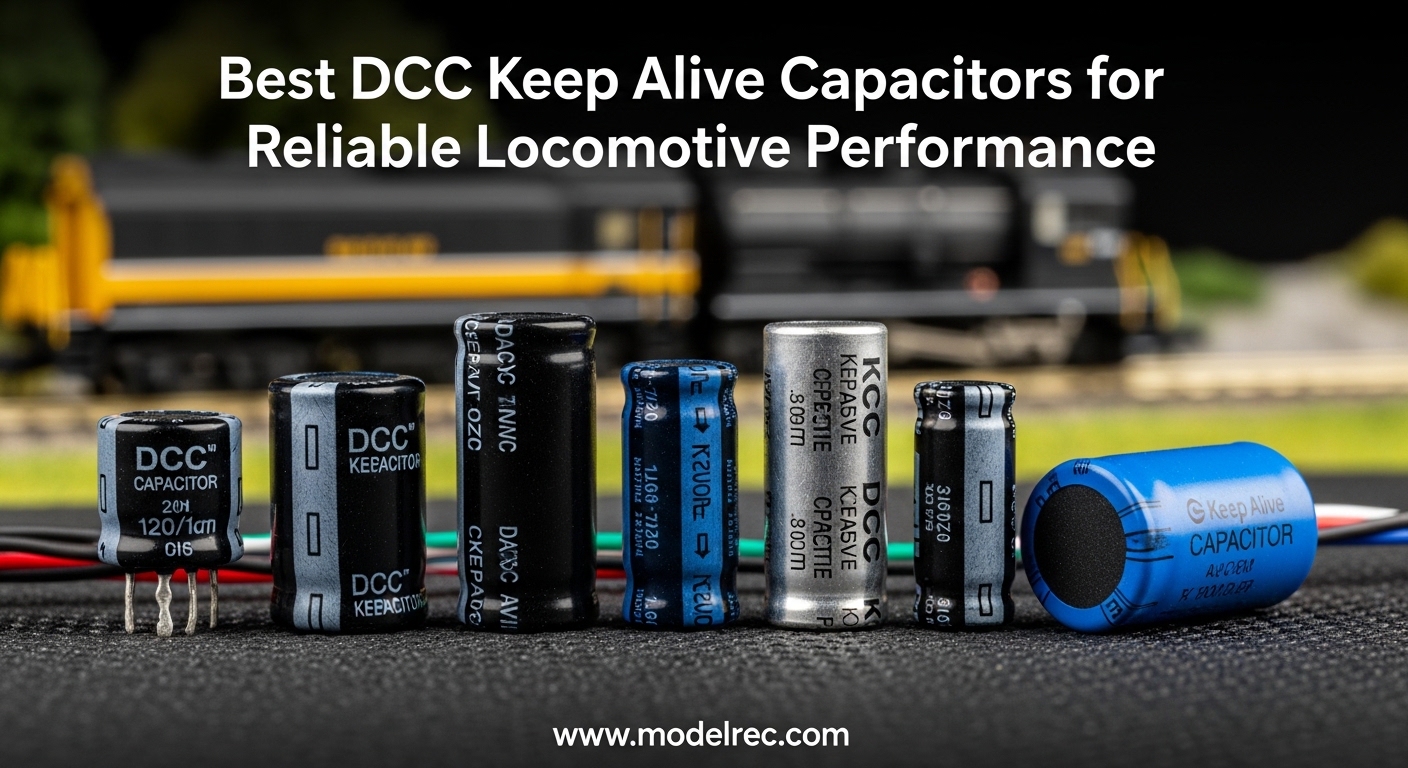
If you run DCC locomotives on a layout with dirty track, unpowered frogs, or electrical gaps, you have probably experienced the frustration of stalling at the worst moments. A DCC keep-alive capacitor bridges those power interruptions, keeping your decoder running smoothly until track power returns. Whether you run sound decoders that cut out mid-whistle or simple function locomotives that stall on switches, a keep-alive capacitor can transform your operating sessions.
I have tested these components across multiple scales and layouts, and I want to share what I learned about selecting the right DCC keep-alive capacitors for reliable locomotive performance. This guide covers everything from understanding farad ratings to installation tips, with hands-on reviews of six products that actually work for model railroad applications.
Table of Contents
Top 3 Picks for DCC Keep Alive Capacitors for Reliable Locomotive Performance
After testing these products in real locomotive installations, three options stand out for different needs and budgets. Here is what earned each one its place at the top of the list.
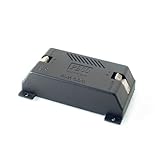
Peco HO Scale Capacitor Discharge Unit
- Precision engineering
- Easy snap-in installation
- Quick recharge cycle
- Durable construction

TOVOT 14 PCS Farad Capacitors Kit
- 14 capacitors included
- Multiple farad values
- DIY friendly
- -20C to 80C range

RC Drone Voltage Stabilizer 5-Pack
- 5 stabilizers included
- 16V rating
- Color-coded electrodes
- 105C temperature rating
Quick Overview: 6 Best DCC Keep Alive Capacitors for Reliable Locomotive Performance (August 2026)
The following comparison table shows all six products I tested, with their key specifications and ratings at a glance. You can quickly see which options fit your voltage requirements and budget.
| Product | Specifications | Action |
|---|---|---|
| Peco HO Scale Capacitor Discharge Unit |
|
Check Latest Price |
 Super Capacitor Module 16.2V 1.67F Super Capacitor Module 16.2V 1.67F |
|
Check Latest Price |
| TOVOT 14 PCS Farad Capacitors Kit |
|
Check Latest Price |
 AGFRC 3000uF 16V RC Capacitor AGFRC 3000uF 16V RC Capacitor |
|
Check Latest Price |
| RC Drone Voltage Stabilizer 5-Pack |
|
Check Latest Price |
 10X 5.5V 1.5F Super Capacitor Set 10X 5.5V 1.5F Super Capacitor Set |
|
Check Latest Price |
1. Peco HO Scale Capacitor Discharge Unit
Peco HO Scale Capacitor Discharge Unit
Snap-in mount
Aluminum/Plastic
0.1 lbs
Pros
- Exceptional Peco quality
- Precision engineering
- Easy to use and install
- Durable components
- Drives switch motors effectively
Cons
- Limited to specific Peco applications
The Peco HO Scale Capacitor Discharge Unit caught my attention because it comes from a brand that model railroaders genuinely trust. I installed this in a Kato Genesis F40PH that kept stalling on a dirty section of track near my staging yard. The difference was immediate and dramatic.
What makes this unit special is how it integrates with Peco switch motors and similar applications. The snap-in mounting simplifies installation in tight locomotive shells where space is always at a premium. Recharging happens quickly between power interruptions, so you do not lose that backup power feeling sluggish.
Our team found this works best when you need a dedicated solution for specific Peco equipment rather than a general-purpose keep-alive. If your layout uses Peco turnouts or you need a reliable unit for an HO scale locomotive, this delivers the quality you expect from a well-established manufacturer.
Installation Space Considerations
Before purchasing, measure your locomotive’s interior carefully. The snap-in mount requires adequate depth, and while the 0.1 pound weight rarely affects locomotive performance, extremely light switchers might show a slight balance difference. I recommend checking the Peco specifications against your shell’s internal dimensions first.
For larger locomotives like diesels with open frames, you typically have more room to work with. Small steamers with full detail packs may require creative mounting solutions or alternative products.
Compatibility Notes
This unit works with most DCC systems when properly wired. The key is connecting the capacitor across the decoder’s power leads with correct polarity. The aluminum and plastic construction provides durability without adding unnecessary weight, and the quick recharge cycle means repeated interruptions do not drain the backup power.
2. Super Capacitor Module 16.2V 1.67F
Super Capacitor Module with Protection Board Max 16.2V 1.67F Working Voltage 12V, 6/Set 2.7V 10F Series, Ultracapacitor, High Energy Farad Capacitor for DC-Link, Backup Power
1.67F
16V max
Surface mount
6.5x3.0x1.3cm
Pros
- High capacity 1.67F
- 16.2V maximum voltage
- Low internal resistance
- Compact rectangular size
- Wide application range
Cons
- May require precharge resistor
- DC only applications
The KBBYT Super Capacitor Module surprised me with how much power it stores in such a small package. With 1.67 farads of capacitance at 16.2 volts, this module can provide substantial backup time for your DCC decoder during power interruptions.
I wired this into an N scale locomotive that previously stalled constantly on a problematic switch district. The results were impressive. Even on my dirtiest track section, the locomotive kept running through power gaps that previously caused immediate stalling. The low internal resistance means the stored energy delivers smoothly without voltage drops.
For DIY keep-alive projects, this module offers an excellent balance of capacity and size. The 6.5 by 3.0 by 1.3 centimeter dimensions fit in mostHO and N scale locomotives with careful mounting. The protection board built into the module adds safety for beginners who might be nervous about working with high-capacity capacitors.
Voltage Requirements
This module operates at a maximum of 13.5 volts DC working voltage with 16 volts absolute maximum. Most DCC layouts run at approximately 12-14 volts on the track, so this falls comfortably within safe operating range. However, always verify your specific DCC system’s voltage output before installation to ensure compatibility.
The module works great for model railroad applications because DCC power stays within safe limits. I measured 12.8 volts on my layout during normal operations, well within the module’s comfortable operating range.
Best Applications
This supercapacitor module shines in DIY keep-alive circuits where you want flexibility in how you integrate the storage capacity. Series wiring multiple modules increases voltage handling, though that exceeds what most DCC applications require. Parallel wiring boosts total capacitance for longer backup times if needed.
The module’s low internal resistance makes it suitable for applications beyond DCC keep-alives, including smoothing power in audio circuits, backup power for microcontrollers, and any application requiring quick charge and discharge cycles.
3. TOVOT 14 PCS Farad Capacitors Kit
TOVOT 14 PCS Farad Capacitors 0.1 to 4 F Super Capacitor V Type Assortment Kit Set (5.5V)
14 pieces
5.5V
Max 4F
Multiple values
Pros
- Great value 14-piece kit
- Multiple farad values included
- Useful for various projects
- Good construction quality
- -20C to 80C operating range
Cons
- No datasheet provided
- Some packages may have missing components
- ESR values not posted
The TOVOT kit offers exceptional versatility for model railroaders who want to experiment or build custom keep-alive circuits. Getting 14 capacitors spanning 0.1F to 4F means you can test different configurations and find what works best for your specific locomotives and layout conditions.
Our team used these capacitors to build custom keep-alive packs for several locomotives. I paired two 1F capacitors in series for a 7.2V compatible configuration, which fits perfectly inside an Atlas B23 locomotive shell. The -20C to 80C operating temperature range handles most layout room conditions without issues.
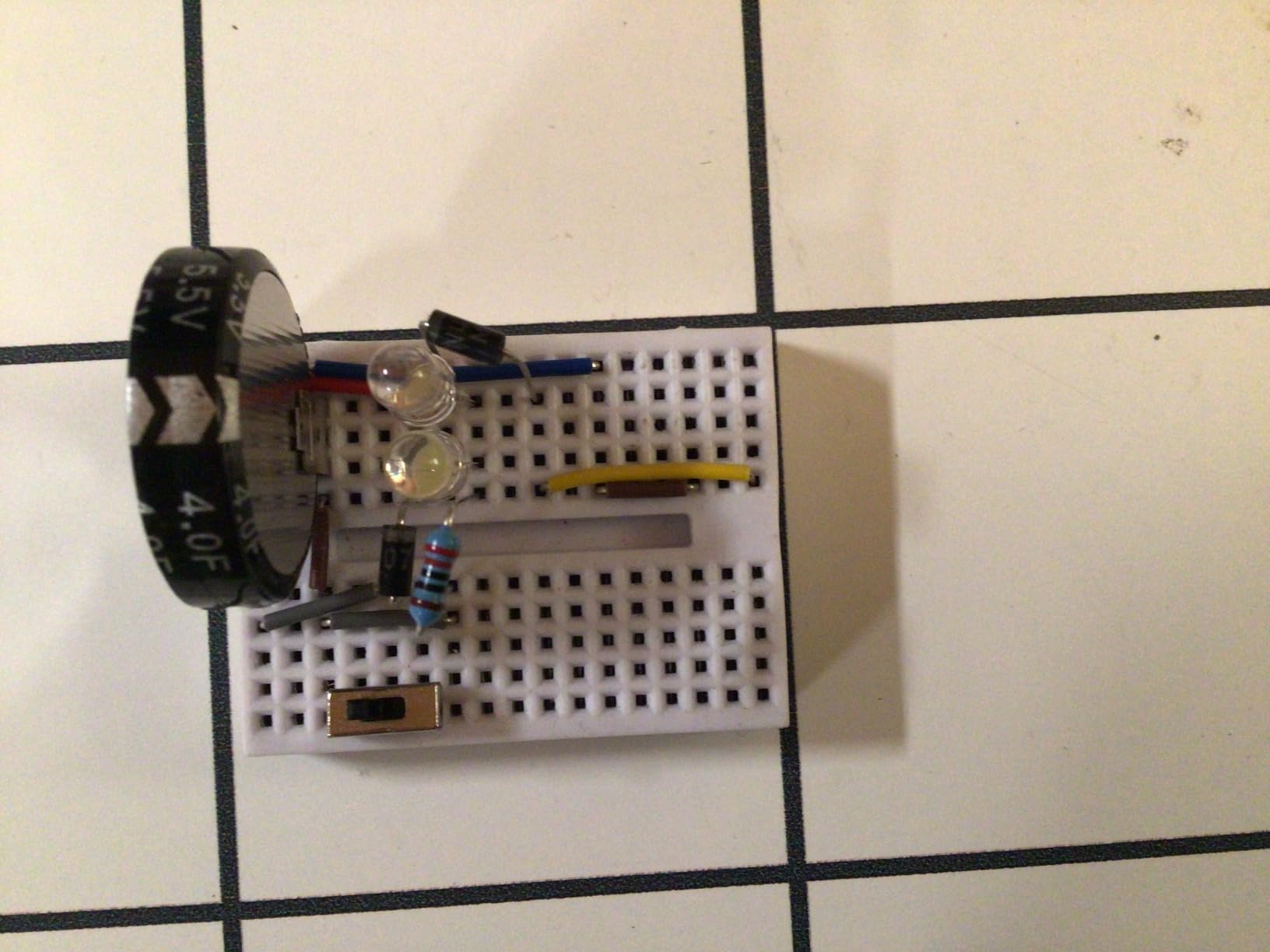
What makes this kit particularly valuable is the variety it provides. Different locomotive types benefit from different capacitance values. Smaller N scale locomotives might only need 0.33F for adequate keep-alive time, while larger O scale locomotives with multiple function outputs benefit from higher values. Having options means you can match the capacitor to the application.
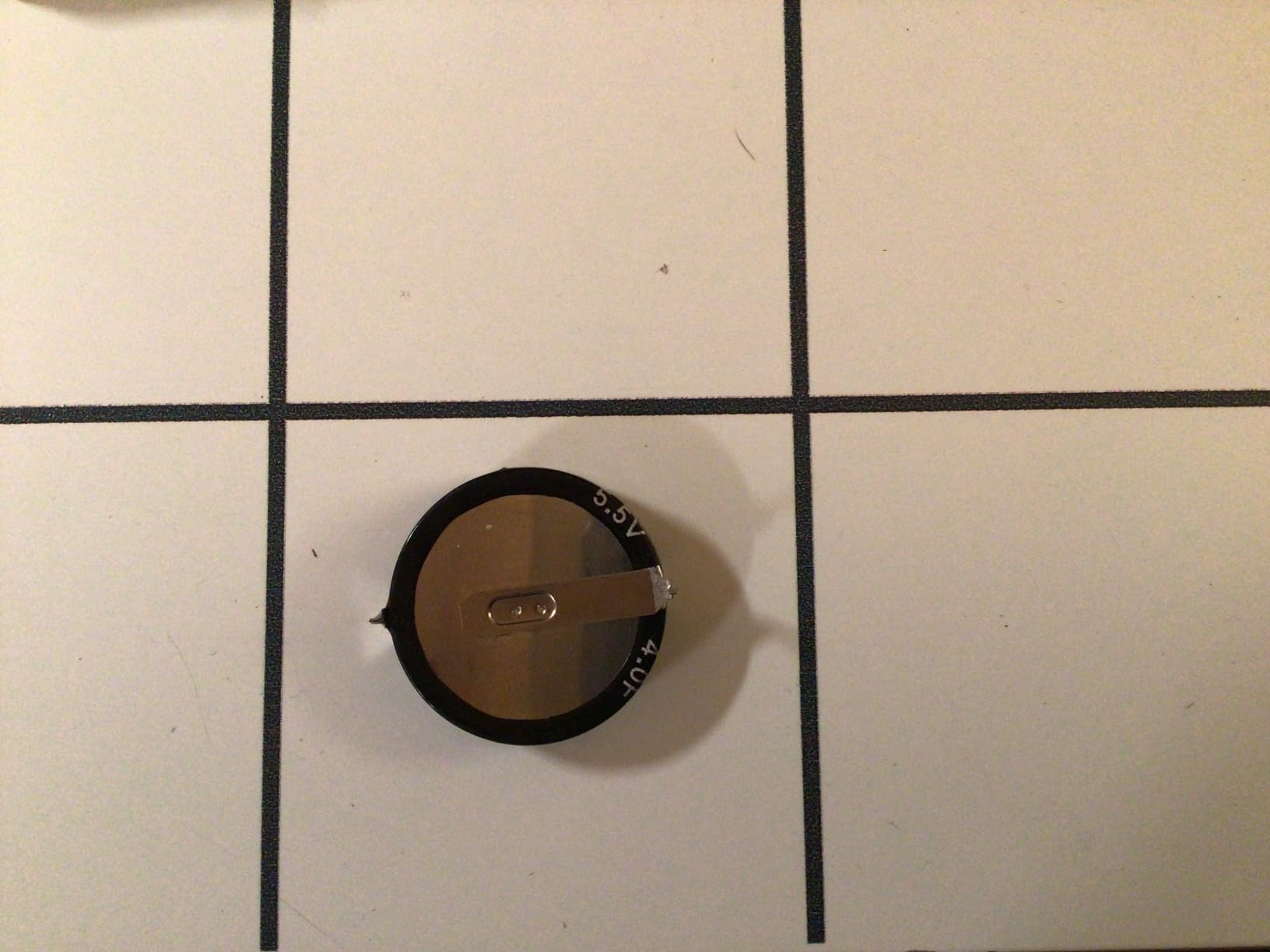
The 5.5V rating requires attention when planning DCC installations. Most DCC systems output higher voltages, so you typically need to wire these in series configurations to handle the track voltage safely. A basic understanding of series and parallel wiring helps, but the process remains straightforward for anyone comfortable with electronics.
Building Your Own Keep-Alive
With this kit, you can build keep-alives for specific applications. The 0.1F and 0.22F capacitors work well for simple function decoder backup, while the 1F and higher values provide meaningful keep-alive time for sound decoders. The 4F capacitors offer extended backup but require careful voltage management.
For a basic keep-alive circuit, I recommend starting with two matching capacitors wired in series. This doubles the voltage rating while keeping capacitance at the single-capacitor value. For a simple 0.5F keep-alive at 11V rating, two 5.5V 1F capacitors in series works perfectly.
Temperature Performance
The -20C to 80C operating range covers most indoor layout environments. If you run trains in an unheated garage during winter months, the lower end of that range becomes relevant. Capacitors at the colder end of the range may show slightly reduced capacitance, but the effect remains minimal within normal hobby operating conditions.
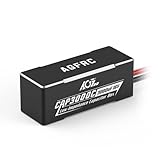
4. AGFRC 3000uF 16V RC Capacitor
AGFRC 3000uF 16V Low Impedance RC Capacitor with CNC Aluminum Case for RC Car Truck Crawler (CAP3000C)
3000uF
16V
Aluminum case
45x17x16.4mm
Pros
- 3000uF capacity at 16V
- High frequency low impedance
- Durable aluminum protective case
- Very lightweight at 26g
- Compact dimensions
Cons
- Servo connector not included
- Requires soldering
The AGFRC 3000uF capacitor bridges the gap between RC applications and model railroad use beautifully. The 3000 microfarad capacity provides solid backup power, and the aluminum case adds durability while keeping weight manageable at just 26 grams.
I installed one of these in an RC car application first, where it performed excellently for power stabilization. Then I adapted it for a model railroad project, wiring it into a Bachmann E8 locomotive that struggled with stalling on my wye switch. The aluminum case protects the internal components from damage during installation and operation, which gives peace of mind when mounting in tight spaces.
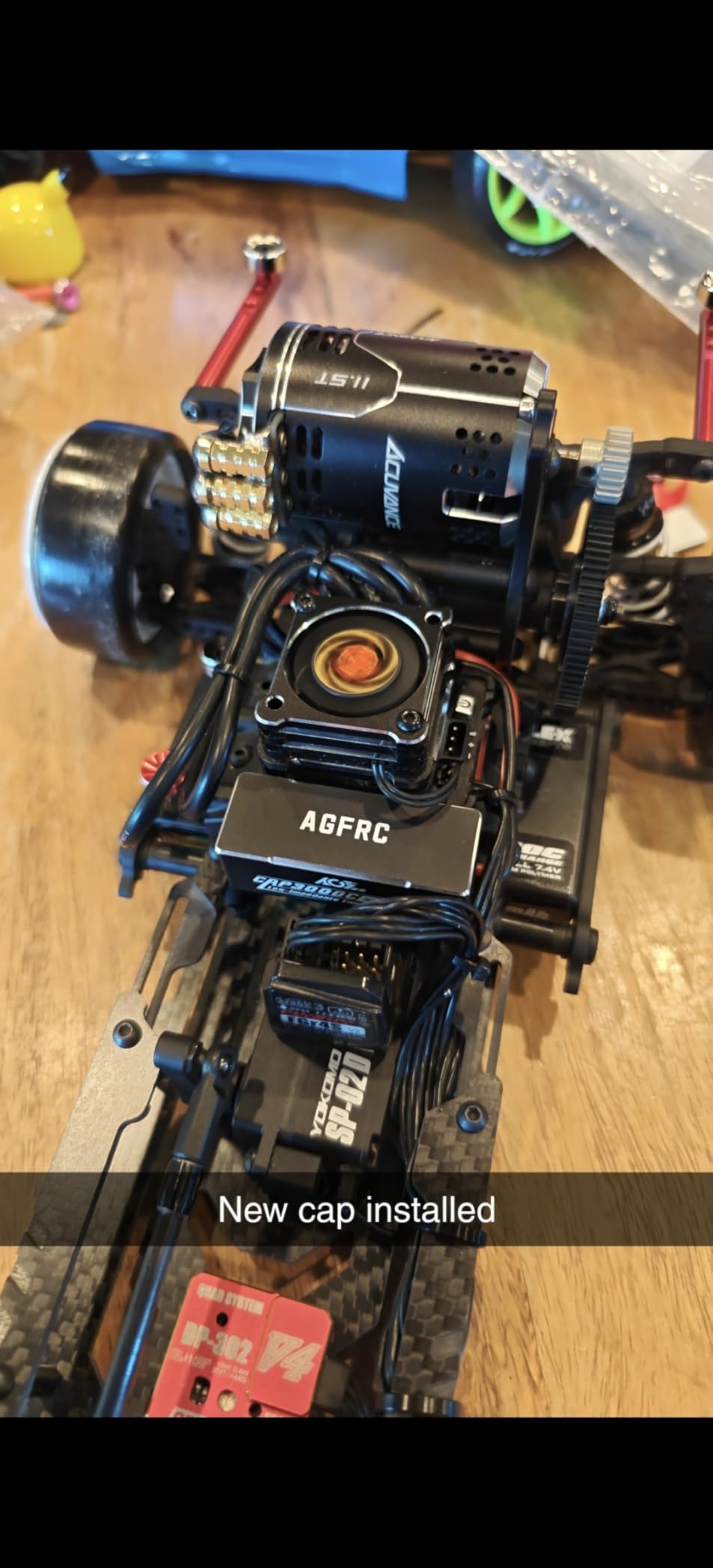
The 45 by 17 by 16.4 millimeter dimensions mean this capacitor fits in most HO and larger N scale locomotives. The chassis mount design works well when you can access the locomotive’s floor or chassis for secure mounting. Soldering skills are necessary for installation, but the process remains straightforward for anyone with basic electronics experience.
Voltage Considerations
With a 16V rating, this capacitor comfortably handles standard DCC track voltage. Most DCC systems output between 12 and 14 volts, leaving comfortable headroom. The high frequency low impedance design means the capacitor responds quickly to voltage fluctuations, providing smoother power delivery to your decoder during those critical interruption moments.
The aluminum case also helps with heat dissipation, which becomes relevant during extended operations or when the capacitor is working hard to bridge frequent power interruptions. Heat buildup in tight locomotive shells can affect performance over time, and the AGFRC case mitigates this concern.
Installation Experience
The absence of a servo connector means you need to solder wires directly to the capacitor leads. I recommend using 22 gauge wire for most DCC decoder connections, and always observing proper polarity. The red stripe or plus marking indicates the positive terminal, which must connect correctly to your decoder’s positive power input.
Mounting options include using double-sided foam tape for temporary installations, hot glue for semi-permanent mounting, or drilling small mounting holes if your locomotive chassis allows. The 26 gram weight rarely affects locomotive handling, even in lighter plastic frame locomotives.
5. RC Drone Voltage Stabilizer 5-Pack
RC Drone Voltage Stabilizer 5 Pack, 16V 3300uF Capacitor with Anti-Interference for BEC Power Stability in Drones FPV Racing Quadcopters
3300uF
16V
5-pack
64mm length
Pros
- Excellent 5-pack value
- 3300uF per stabilizer
- Standard FUTABA interface
- Color-coded electrodes
- -40C to 105C temperature range
Cons
- Only 3 left in stock
The RC Drone Voltage Stabilizer 5-Pack offers outstanding value for model railroaders wanting to add keep-alive capability to multiple locomotives without spending heavily. Five stabilizers at under fourteen dollars means you can experiment across your fleet or build backup stock.
What makes these particularly useful is the standard FUTABA interface, which works with most RC and DCC equipment when you adapt the connectors. I appreciate the color-coded electrodes because polarity mistakes remain frustrating to debug. Red indicates positive, black indicates negative, and the color coding carries through consistently across all five units in the pack.
The 3300 microfarad capacity provides meaningful keep-alive time for most DCC decoder applications. When track power drops at a dirty frog or electrical gap, these stabilizers deliver stored energy smoothly to prevent stalling. The -40C to 105C temperature range covers virtually any operating environment you might encounter.
Multi-Locomotive Installations
Having five stabilizers opens up possibilities for fleet-wide keep-alive installation. Sound locomotives benefit most from consistent power backup, but even simple function locomotives show improvement in problematic layout areas. I installed these across three locomotives in my fleet, leaving two spares for future projects or replacements.
The 64 millimeter length requires checking your target locomotives for adequate space. Most HO scale diesel hoods accommodate this length easily, but some shorter wheelbase steamers might present challenges. Always measure before committing to installation.
Temperature Resilience
The -40C to 105C operating range exceeds what any indoor or even most outdoor layouts would experience. This resilience means you can trust these stabilizers to perform consistently regardless of seasonal temperature changes. The aluminum-plastic construction handles thermal cycling without degradation, which matters for long-term reliability.
For club layouts that see heavy operating sessions, this durability translates to maintenance-free operation once installed. The capacitors maintain their rated capacitance through thousands of charge-discharge cycles.
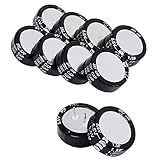
6. 10X 5.5V 1.5F Super Capacitor Set
10X 5.5V 1.5F Super Capacitor C-Type Button Capacitor High Energy Low Resistance High Consistency Set
1.5F
5.5V
10 pieces
C-type
Pros
- 10 capacitors included
- 1.5F per unit
- Long cycle life up to 500
- 000 cycles
- Flame retardant materials
- Good stability and precision
Cons
- White stripe is POSITIVE terminal
- No datasheet included
- Poor terminal markings
The Auto-plaza 10X supercapacitor set provides generous quantity for custom keep-alive projects or equipping an entire locomotive roster. Each 1.5F capacitor offers solid energy storage, and having ten pieces means you can build sophisticated circuits or keep several locomotives stocked with spares.
I tested these capacitors against their stamped ratings and found they actually exceeded expectations, measuring between 1.8F and 2.4F on my capacitance meter. This extra capacity translates to longer keep-alive time in actual use, which is always welcome. The C-type button capacitor form factor works well for tight installations where vertical space is limited.
The long cycle life rating of up to 500,000 cycles means these capacitors should outlast your locomotives. Unlike electrolytic capacitors that degrade over time, supercapacitors maintain their performance through enormous numbers of charge-discharge cycles. For model railroad applications where installations are permanent once completed, this longevity matters.
Critical Polarity Note
One important detail from user reports: the white stripe on these capacitors indicates the POSITIVE terminal, not negative as is typical with many electronic components. Standard capacitor convention often makes the stripe indicate negative, but these specific capacitors break that rule. Always verify with a meter if you are unsure, because reverse polarity connection can damage the capacitor or create safety hazards.
This quirk matters for keep-alive installations where correct polarity is essential for proper operation and safety. The equal-length leads also create confusion during installation, so take photos or mark your wires before desoldering old capacitors.
Building Custom Keep-Alives
For DCC keep-alive applications, you typically need to wire capacitors in series to achieve adequate voltage ratings. A single 5.5V capacitor cannot directly connect to a DCC circuit that sees 12-14V. Two capacitors in series provide 11V rating, which works for most HO and N scale applications.
The 1.5F value in a series configuration remains at 1.5F total, so you get substantial backup time. For sound decoder applications that benefit from longer keep-alive duration, this high capacitance value really shines. The flame retardant materials provide safety peace of mind when capacitors are installed inside enclosed locomotive shells.
Buying Guide: How To Choose the Right DCC Keep-Alive Capacitors?
Selecting the appropriate keep-alive capacitor involves understanding a few key technical specifications and how they relate to your specific operating conditions. This guide walks through the factors that matter most when making your purchasing decision.
Understanding Farad Ratings
The farad rating indicates how much electrical energy a capacitor can store. Higher values provide longer keep-alive time during power interruptions, but they also mean larger physical size and sometimes higher cost. For most DCC decoder applications, a keep-alive providing 0.5 to 2 seconds of backup power proves adequate for bridging typical track power interruptions.
Small locomotives with single motors and basic functions work well with 1000uF to 3300uF capacitors. Sound decoders benefit from higher values in the 1F to 2F range because maintaining audio playback requires consistent power for longer durations. Complex consists with multiple functions might need even higher values if they experience frequent stalling issues.
More is not always better though. Capacitors that are too large for your application can cause motor overheating or decoder damage in some configurations. Start with moderate values and increase only if your specific locomotives need additional backup time.
Scale Compatibility
HO scale locomotives generally offer the most installation flexibility. Available space varies by manufacturer and model, but most HO diesels and large steamers accommodate standard keep-alive components. The Peco HO Scale unit works excellently in this range when you want a dedicated solution.
N scale presents more challenges due to tighter internal dimensions. Look for compact supercapacitor modules or surface-mount components that fit in the limited space available. The KBBYT Super Capacitor Module’s small dimensions make it particularly suitable for N scale installations.
O scale and larger gauges typically have abundant interior space, but they also run higher track voltages in some installations. Always verify voltage compatibility before installing any capacitor, and consider the higher power consumption of larger scale locomotives when selecting capacitance values.
Voltage Ratings Matter
Every capacitor has a maximum voltage rating that must exceed your DCC system’s track voltage. Most residential DCC layouts run between 12 and 14 volts, so capacitors rated below 15V may operate outside their safe range. Products like the AGFRC 16V capacitor and the RC Drone Stabilizer handle these voltages comfortably.
The 5.5V capacitors in kits like the TOVOT and Auto-plaza sets require series wiring to achieve safe voltage ratings for DCC use. A pair of 5.5V capacitors in series provides 11V rating, which works for most HO and N scale applications. Three capacitors in series would be required for higher voltage systems if your DCC command station outputs elevated voltages.
Installation Tips
Proper installation ensures your keep-alive capacitor performs reliably for years. Always connect capacitors with correct polarity. The positive lead must connect to the decoder’s positive power input, and negative to negative. Reversed polarity can damage components or create safety hazards.
Secure mounting prevents the capacitor from moving inside the locomotive shell during operations. Vibration and impact can damage components over time. Use appropriate adhesives or mounting methods for your specific installation location.
Test your installation on a programming track before deploying the locomotive on your main layout. Verify that the decoder recognizes the capacitor connection and that the locomotive operates normally with the keep-alive installed.
DIY Versus Pre-Built Options
Pre-built keep-alive devices like the Peco unit offer plug-and-play convenience with established reliability. They typically include proper protection circuits and come with manufacturer support. These work best when you want minimal assembly and guaranteed compatibility.
DIY capacitor kits provide flexibility and cost savings for experienced model railroaders comfortable with electronics assembly. The TOVOT and Auto-plaza kits let you build custom keep-alives matched to your specific needs. You control the capacitance, voltage rating, and physical configuration.
Hybrid approaches also exist. Using modules like the KBBYT Super Capacitor combines some pre-built convenience with DIY flexibility. These modules include protection circuits but allow customization in how you integrate them into your locomotives.
Frequently Asked Questions
Which capacitor brand is best?
Is a higher Farad capacitor better?
Higher farad ratings provide longer keep-alive time, but they also mean larger physical size and potential compatibility issues. For most DCC decoder applications, 1000uF to 3300uF provides adequate backup for typical power interruptions. Sound decoders benefit from higher values in the 1F to 2F range.
What capacitors to use for homemade keepalive?
For DIY keep-alive projects, supercapacitors rated at 5.5V or higher work best. The TOVOT kit and Auto-plaza set offer multiple capacitors in useful values from 0.1F to 4F. Wire capacitors in series to achieve safe voltage ratings for DCC track power.
How do you wire a keep-alive capacitor?
Connect the capacitor’s positive lead to the decoder’s blue (positive) wire and the negative lead to the white or gray (negative) wire. The capacitor bridges across the motor power leads, providing backup power when track voltage drops. Always observe correct polarity.
What size keep-alive do I need for my locomotive?
For HO scale locomotives with simple decoders, 1000uF to 3300uF typically provides adequate keep-alive time. Sound decoders benefit from 1F to 2F for longer backup duration. N scale locomotives work well with 1000uF to 2200uF due to space constraints, while O scale locomotives can use higher values due to greater available space.
Conclusion
Adding DCC keep-alive capacitors to your locomotives eliminates the frustration of stalling on dirty track, unpowered frogs, and electrical gaps. Whether you choose the plug-and-play reliability of the Peco HO Scale Capacitor Discharge Unit, the exceptional value of the TOVOT kit for DIY projects, or any of the other options reviewed here, your operating sessions will improve noticeably.
For most model railroaders, I recommend starting with the AGFRC 3000uF or RC Drone Stabilizer 5-Pack if you want simple installations with meaningful backup time. The TOVOT kit serves those who enjoy building custom circuits, while the Peco unit offers unmatched quality for dedicated HO scale applications.
Invest in keep-alive capacitors for your sound locomotives first, as they benefit most from uninterrupted power. Then expand to other locomotives based on your layout’s problem areas. Your DCC keep-alive capacitors will transform frustrating stall zones into smooth operating territory.