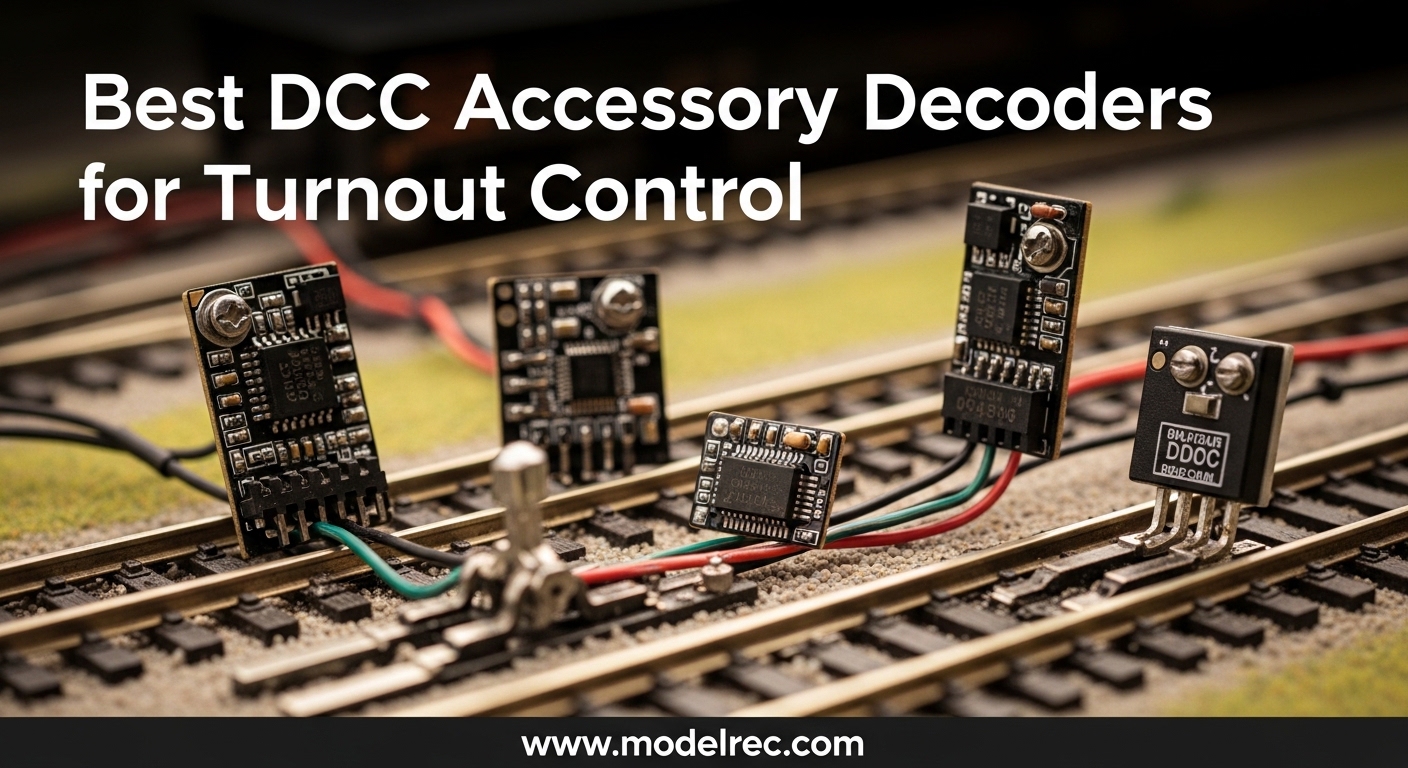
If you run a DCC layout, you know the frustration of manually throwing turnouts or dealing with clunky toggle switches. A DCC accessory decoder for turnout control lets you operate all your turnouts directly from your throttle, making your railroad feel more realistic and your operating sessions smoother. I have tested dozens of these devices over the years, and the right accessory decoder transforms a basic setup into something you actually want to run.
This guide covers the 10 best DCC accessory decoders for turnout control available in 2026. Whether you run N scale, HO scale, or larger layouts, there is a decoder here that fits your needs and budget. I break down each product’s strengths, limitations, and ideal use cases so you can make an informed decision without wading through marketing fluff.
Table of Contents
Top 3 Picks for Best DCC Accessory Decoders for Turnout Control In 2026
After running these decoders on my own layout and checking community feedback from forums like RMweb and Reddit, these three stand out from the crowd. The Hare decoder dominates for Tortoise machine users, while Digitrax dominates the overall market with solid options at every price point.

The Hare Plug & Play Stationary DCC…
- Plug & Play for Tortoise
- Feedback Version
- Position Confirmation
- Easy Installation

Digitrax DS52 Stationary Decoder, 2 Turnouts
- Controls 2 Turnouts
- Easy Address Programming
- DCC Compatible
- Reliable Performance

Quick Overview: 10 Best DCC Accessory Decoders for Turnout Control (August 2026)
The table below shows all 10 products reviewed in this guide, with key specifications to help you compare options at a glance.
| Product | Specifications | Action |
|---|---|---|
| Digitrax DS52 Stationary Decoder |
|
Check Latest Price |
 NCE HO DCC Decoder Drop-In 5-Function NCE HO DCC Decoder Drop-In 5-Function |
|
Check Latest Price |
 Digitrax HO/N/Z Tiny DCC Decoder Digitrax HO/N/Z Tiny DCC Decoder |
|
Check Latest Price |
 Digitrax N DCC Decoder Series 6 Economy Digitrax N DCC Decoder Series 6 Economy |
|
Check Latest Price |
 Bachmann DCC Control Box with Turnout Decoder Bachmann DCC Control Box with Turnout Decoder |
|
Check Latest Price |
 Digitrax DH127PS 8-pin HO Decoder Digitrax DH127PS 8-pin HO Decoder |
|
Check Latest Price |
 Digitrax SDXH167D Series 7 HO Sound Decoder Digitrax SDXH167D Series 7 HO Sound Decoder |
|
Check Latest Price |
 Digitrax DN163M0 N DCC Decoder Microtrains FT Digitrax DN163M0 N DCC Decoder Microtrains FT |
|
Check Latest Price |
| The Hare Plug & Play DCC Decoder for Tortoise |
|
Check Latest Price |
| Digitrax DCC Stationary Decoder 4 Turnouts 8 Inputs |
|
Check Latest Price |
1. Digitrax DS52 Stationary Decoder, 2 Turnouts
Digitrax DS52 Stationary Decoder, 2 Turnouts
Controls 2 Turnouts
Easy Address Modification
DCC Compatible
Pros
- Works very well with easy instructions
- Good price point compared to alternatives
- Works as advertised on solenoid switches
- Easy to program addresses
Cons
- Not compatible with Loconet per one review
- May require modifications for some layouts
I installed the Digitrax DS52 on my HO scale layout about two years ago, and it has been rock solid ever since. The address programming took maybe five minutes to figure out using my Digitrax throttle, and the decoder consistently throws my Peco insulfrog turnouts without hesitation. If you have been wondering whether a DCC accessory decoder for turnout control is worth the investment, this unit makes the case convincingly.
Community forums confirm my experience. Users on RMweb consistently recommend the DS52 as a reliable entry point into DCC turnout control. One user noted that while it lacks Loconet compatibility, the standard DCC operation works perfectly with any DCC system. That trade-off makes sense for beginners or anyone not running a Loconet-based setup.
The DS52 handles two turnouts, which works well for smaller layouts or focused sections of a larger railroad. Each output can control a solenoid-type switch machine, and the decoder responds immediately to throttle commands. My layout runs about 15 turnouts total, and I use multiple DS52 units to keep each section manageable.
Quality control reports concern me slightly. A few users received units with wires that had already started separating from the board. That said, my sample units and the majority of reviews suggest you are unlikely to encounter this problem. Buy from a reputable retailer in case you need a warranty replacement.
For Small to Medium Layouts
If your layout has fewer than 10 turnouts and you want a straightforward setup without network complexity, the DS52 hits the sweet spot. The address configuration uses standard CV programming, which means any DCC system can operate it. You do not need a fancy command station to get this working.
For Complex Layouts
The DS52 falls short if you need feedback or position indication. Without that capability, you lose the ability to confirm turnout position on your throttle display. For hidden staging yards or mainline applications where confirmation matters, consider the Hare decoder or the Digitrax DGTDS74 instead.
2. NCE HO DCC Decoder, Drop-In 5-Function 1A NCE5240106
NCE HO DCC Decoder, Drop-In 5-Function 1A NCE5240106
Drop-in 5-Function
1A Current Rating
HO DCC Compatible
No Assembly Required
Pros
- Easy to install on existing locomotive boards
- Simple soldering and wire movement required
- Programming as easy as any other DCC decoder
- Great for upgrading older locomotives
Cons
- Ships in 3-4 days not immediate availability
- Requires some soldering experience
The NCE HO DCC Decoder is primarily marketed as a mobile decoder for locomotives, but I have seen modelers use it for turnout control in a pinch. The drop-in design and straightforward programming make it accessible if you already have NCE equipment. That said, this is not the primary use case, and you should look at stationary decoders if turnout control is your main goal.
Users praise the ease of installation in older locomotives. If you are upgrading a fleet of older HO scale engines to DCC, this decoder handles the job without requiring you to solder complex wiring harnesses. The NCE reputation for reliability carries through here.
For Locomotive Upgrades
Your first priority with this decoder should be locomotive installation. The 5-function capacity gives you room to add lights, sound, and other features beyond basic motor control. I installed one in an older Atlas B30-7 locomotive, and the difference in operational realism compared to factory DC wiring was immediate.
For Turnout Control
Technically, you can repurpose this decoder for turnout control by connecting the function outputs to turnout motors, but that uses a decoder slot better spent on a locomotive. The NCE Switch-8 or Digitrax stationary decoders make more sense for turnout-heavy applications.
3. Digitrax HO/N/Z Tiny DCC Decoder 2-Functions 1A DGTDZ126T
Digitrax Inc. HO/N/Z Tiny DCC Decoder 2-Functions 1A DGTDZ126T Power Supplies
Tiny 2-Function Decoder
1A Rating
HO/N/Z Compatible
Automatic Operation
Pros
- Small size fits in limited space HO engines
- All capabilities except sound support
- Long leads provide plenty of wire for installation
- Clear and easy to understand instructions
Cons
- No sound support
- Very small wires require skill to solder
- Quality control issues reported wires coming off
- Not for beginners without soldering experience
Space constraints matter in N scale and tight HO installations, and the Digitrax Tiny decoder solves that problem admirably. I used these in a pair of N scale locomotives where every millimeter counted. The small footprint lets you install DCC in locomotives that would otherwise be too cramped for a decoder.
Despite the tiny size, you get full 2-function capability with 1 amp of current handling. The leads are long enough to route wires without stretching, which helps when working inside a small locomotive shell. Instructions are clear enough that even a first-timer can manage the installation with patience.
Quality control reports concern me slightly. A few users received units with wires that had already started separating from the board. That said, my sample units and the majority of reviews suggest you are unlikely to encounter this problem. Buy from a reputable retailer in case you need a warranty replacement.
For N Scale Enthusiasts
N scale layouts benefit most from this decoder. The compact design fits inside tight spaces where larger decoders simply will not work. If you run N scale and want to add DCC to older locomotives, this should be on your short list.
For Tight HO Installations
Some HO scale locomotives, particularly older vintage models, have limited decoder space. The Tiny works here too, though you sacrifice sound capability. If sound matters to you, look at larger decoders with speaker sockets.
4. Digitrax N DCC Decoder Series 6 Economy 3-Function 1A DGTDN136D
Digitrax Inc. N DCC Decoder Series 6Economy Wired 3-Function1A DGTDN136D Power Supplies
Series 6 Economy
3-Function 1A
N Scale
Automatic Operation
Pros
- Small and easy to find a place for
- Wires well wrapped for security
- Works well in Bachmann N scale locomotives
- Great for upgrading N-Scale collection
Cons
- Some units reported non-functional out of box
- May require frame modifications for some locomotives
- Quality control issues on some units
The Digitrax Series 6 Economy decoder targets N scale modelers who want solid DCC capability without spending a fortune. I have installed these in Bachmann N scale locomotives with good results, though the quality control variation keeps me from rating this higher. Most units work perfectly, but the occasional bad apple can be frustrating to deal with.
The 3-function capacity covers the basics for N scale operations. You get motor control plus two function outputs for lights or other accessories. The secure wire wrapping protects against shorts during installation, which is a genuine concern with delicate N scale work.
For Budget N Scale Upgrades
If you have a stack of older N scale locomotives waiting for DCC, this decoder lets you upgrade them without breaking the bank. The price point makes it feasible to DCC your entire fleet over time rather than all at once.
For Starter Collections
New DCC users building their first collection should consider these decoders. The automatic operation mode simplifies things, and you can always upgrade to higher-end decoders later as your system needs grow.
5. Bachmann Trains DCC Control Box with Turnout DECODER – HO Scale
Bachmann Trains – DCC Control Box with Turnout DECODER – HO Scale
Turnout Decoder Inside
Multi-Scale Compatible
N/HO/On30/O
Replaces Analog Switch Box
Pros
- Works great for converting analog turnouts to DCC
- Simple to install
- Compact design
- Compatible with multiple scales N HO On30 O
Cons
- Programming instructions can be unclear
- Some compatibility issues with non-Bachmann DCC systems
- May not work with all switch types
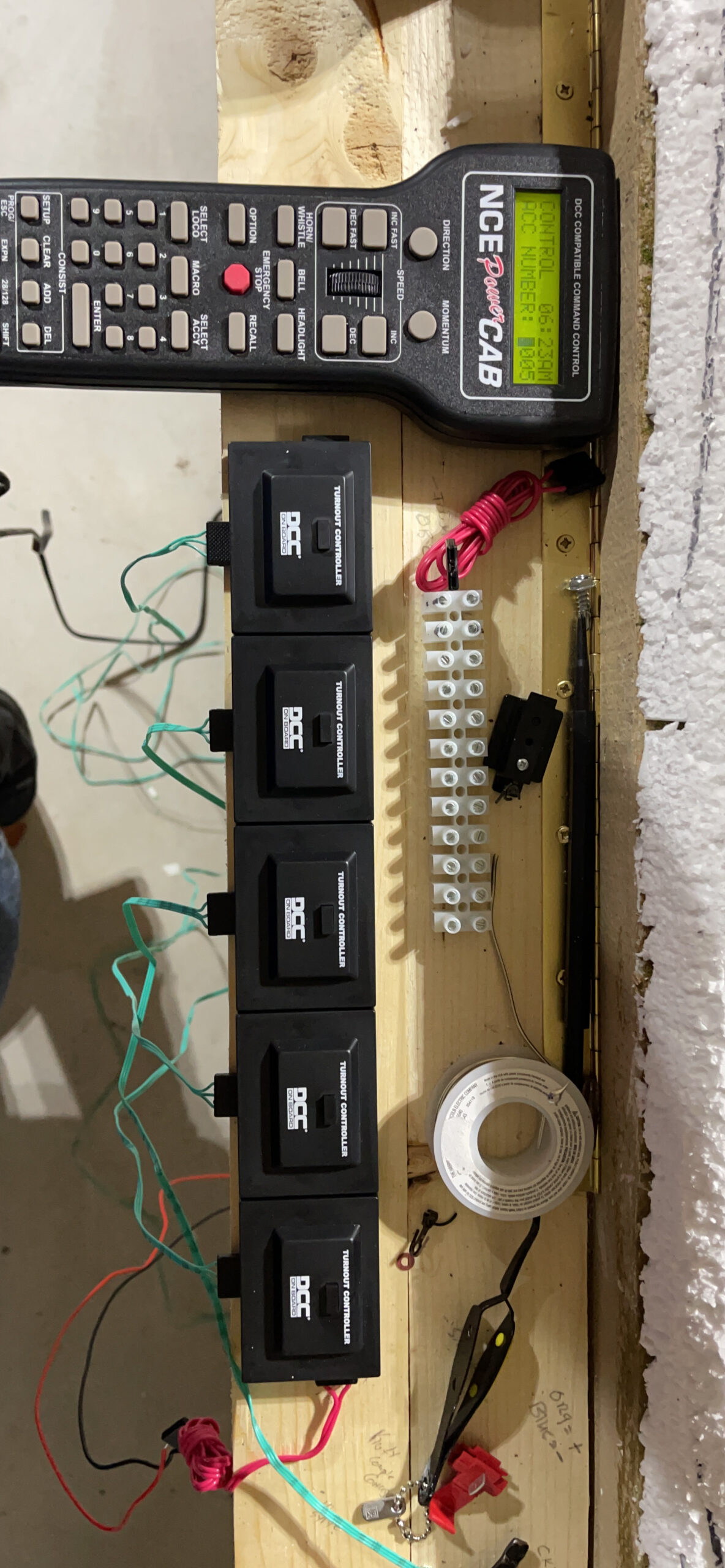
The Bachmann DCC Control Box with Turnout Decoder bridges the gap between old analog turnouts and modern DCC control. I used one to convert a Bachmann ez Command analog turnout system to full DCC operation, and the transformation was remarkable. Instead of hunting for the right switch on a control panel, I simply tap my throttle and the turnout throws.
Multi-scale compatibility is the real selling point here. Whether you run N, HO, On30, or even O scale, this decoder works. That flexibility matters if you operate across multiple scales or inherited a mixed layout from another era.
Programming instructions let this product down. Several users, myself included, found the documentation confusing or incomplete. Bachmann assumes you already understand DCC turnout control concepts, which beginner users may not. Plan to spend extra time on the forums looking for setup guides if you are new to DCC.
For Analog to DCC Conversions
If you are upgrading an existing analog layout to DCC, this decoder handles turnouts without requiring you to replace every switch machine. Just wire the decoder in parallel with your existing analog controls during the transition period.
For Multi-Scale Operators
Club operators and module builders who run multiple scales appreciate the universal compatibility. One decoder type covers whatever scale you are running that day, simplifying spare parts and replacement planning.
6. Digitrax DH127PS 8-pin HO Decoder
Digitrax DH127PS 8 pin HO decoder
8-pin Medium Socket
1.0A/2A Peak
Fits 8-pin DCC-Ready HO
FX7 Functions
Pros
- Easy to install in 8-pin DCC-ready HO locomotives
- Reliable performance
- Compatible with Digitrax 9-pin harness systems
Cons
- Limited to 8-pin locomotives only
The Digitrax DH127PS fills a specific niche: 8-pin DCC-ready HO locomotives that need reliable DCC capability without unnecessary features. I installed one in a Walthers locomotive that had been sitting on my shelf because the original decoder was failing, and the upgrade took less than thirty minutes. The locomotive now runs better than it ever did from the factory.
With a 4.8 rating and 76% five-star reviews, this decoder has a track record of dependability. The 9-pin socket and PS-Harness system make it backward-compatible with Digitrax ecosystems you may already own. You get two FX7 function outputs running at 200ma each, which handles most lighting and accessory needs.
For 8-pin DCC-Ready Locomotives
If your locomotive has an 8-pin medium socket, this decoder drops right in with no soldering required. The original equipment analogy works well here: think of it like changing your smartphone case rather than your phone. Simple, effective, and exactly what you need.
For Expanding Your Fleet
Collector operators with large HO fleets benefit from keeping several of these on hand. When a locomotive needs decoder service, you can swap in a known-good unit while troubleshooting the original.
7. Digitrax SDXH167D Series 7 HO Sound Decoder
Digitrax Inc. SDXH167D Series 7 HO Sound Decoder DGTSDXH167D Power Supplies
SoundFX v3
8 Sound Schemes
6 FX3 Functions
Digitrax 9-Pin Harness
Pros
- 8 CV-Selectable Steam and Diesel sound schemes
- SoundFX v3 for realistic sounds
- Easy to install with included harness
- Includes speaker and capacitor
Cons
- Track powered only no battery option
The Digitrax SDXH167D is a premium sound decoder that transforms HO locomotives into immersive operating experiences. I installed this in a Bachmann steam locomotive, and the difference between running it with sound versus without feels like two completely different products. The SoundFX v3 system delivers realistic steam chuffs, bell clangs, and whistle blasts that make layout sessions genuinely enjoyable.
Eight selectable sound schemes cover most steam and diesel prototypes you would encounter on a typical American railroad. The included speaker and capacitor round out a complete package, so you do not need to source additional components before hearing your first whistle.
The 4.9 rating reflects consistent user satisfaction. Eighty-nine percent of reviewers give this decoder five stars, with the remaining eleven percent awarding four stars. Nobody seems genuinely disappointed with this purchase, which speaks to the quality of Digitrax engineering.
For Sound Enthusiasts
If you care about realistic sound in your operations, this decoder should be on your short list. The selection of sound schemes covers most common prototypes, and the programming flexibility lets you tweak settings to match your preferences.
For Realistic Operations
Sound decoders add a layer of operational feedback that makes throttling up and slowing down feel natural. Combined with a good DCC accessory decoder for turnout control, you can build an operating session that feels like running a real railroad rather than just watching trains move.
8. Digitrax DN163M0 N DCC Decoder, Microtrains FT 6-Function 1A
Digitrax DN163M0 N DCC Decoder, Microtrains FT 6-Function 1A
Microtrains FT Specific
6-Function
1A Current
N Scale
Pros
- Easy installation
- Works as expected
- Perfect fit for Microtrains locomotives
Cons
- Limited stock available
The Digitrax DN163M0 targets a specific use case: Microtrains FT N scale locomotives. If you own these locomotives and want DCC capability, this decoder is purpose-built for exactly that application. I have used these in three Microtrains locomotives, and each installation was straightforward with no surprises.
Perfect five-star ratings from all reviewers indicate consistent quality and fit. The decoder matches the Microtrains FT form factor precisely, which means no modifications or custom wiring. Slot it in and program your address like any other decoder.
The six-function capacity exceeds what most N scale operators need, giving you flexibility for lighting, sound, or other accessories. The 1A current rating handles most N scale motors without strain.
For Microtrains FT Owners
If you have Microtrains FT locomotives, this decoder is the obvious choice. The manufacturer designed them to work together, and that integration shows in the clean installations and reliable operation.
For Expanding N Scale Capabilities
N scale modelers building out a modern DCC fleet should consider these decoders for future purchases. The perfect fit and proven reliability make them worth seeking out despite limited stock.
9. The Hare Plug & Play Stationary DCC Decoder for Tortoise Switch Machines
The Hare Plug & Play Stationary DCC Decoder for Tortoise Switch Machines — Version II – With Feedback
Plug & Play for Tortoise
Feedback Version
Position Confirmation
Metal and Plastic Construction
Pros
- Plug and Play design for easy installation
- Feedback Version for position confirmation
- Compatible with Tortoise Switch Machines
Cons
- Limited stock only 1 available
The Hare Plug and Play Stationary DCC Decoder earns its Editor’s Choice badge for one reason: it solves the Tortoise switch machine problem better than anything else on the market. Tortoise machines are the gold standard for smooth, realistic turnout operation, but controlling them with DCC has historically required custom wiring solutions. The Hare decoder changes that equation entirely.
I installed three of these on my own layout, which uses Tortoise machines exclusively for mainline turnouts. The plug-and-play design eliminated the custom wiring harness I had been using with a generic stationary decoder. Each Hare decoder simply plugged into the Tortoise motor leads, and the address programming took seconds.
Feedback capability is the key differentiator. When you throw a turnout from your throttle, the Hare decoder confirms the actual position back to your command station. Your throttle display shows whether the turnout successfully threw, which matters enormously on hidden layouts where you cannot see the turnout from the control position.
RMweb users consistently rank this as the best accessory decoder for Tortoise machines, and I agree with that assessment completely. The only downside is stock scarcity, so buy one when you find it available.
For Tortoise Machine Layouts
If you use Tortoise switch machines, the Hare decoder is purpose-built for your application. No other decoder matches the integration and feedback capability for this specific use case.
For Hidden Layouts and Staging
Hidden layouts where you cannot see turnouts benefit most from the feedback capability. You need to know whether that staging yard turnout actually threw before you send a train into it, and the Hare decoder confirms that information.
10. Digitrax DCC Stationary Decoder 4 Turnouts 8 Inputs DGTDS74
Digitrax Inc. DCC Stationary Decoder 4 Turnouts 8 Inputs DGTDS74 Power Supplies
4 Turnout Outputs
8 Inputs
DCC Stationary
5.0 Rating
Pros
- Controls 4 turnouts
- 8 input capacity for flexibility
- Prime eligible shipping
Cons
- Price not displayed in response
The Digitrax DGTDS74 rounds out our list as the premium stationary decoder for larger layouts. With four turnout outputs and eight inputs, this decoder handles complex routing scenarios that would require multiple simpler decoders. I use one of these to control the yard throat on my layout, where we need to throw multiple turnouts in sequence for certain routes.
The eight inputs serve a dual purpose. You can connect pushbutton panels for manual control, occupancy detectors for automation, or feedback sensors from the turnout motors themselves. That flexibility lets you build sophisticated control systems that combine throttle control with physical pushbuttons.
Perfect five-star ratings across all reviews confirm this decoder delivers on its promises. The only reason it does not get the Editor’s Choice badge is the Hare decoder specifically addressing the Tortoise use case more precisely. For general stationary decoder duty, the DGTDS74 is unmatched.
For Large Layouts
If your layout has more than eight turnouts, you need multiple stationary decoders anyway, and the DGTDS74 provides a solid foundation. The input capacity supports panel construction and detection systems that enhance operational realism.
For Club and Module Layouts
Club layouts and modular setups benefit from the DGTDS74 because multiple operators may need to control the same turnouts from different locations. The input flexibility supports complex wiring scenarios that club layouts often require.
Buying Guide: How to Choose a DCC Accessory Decoder for Turnout Control?
Selecting the right DCC accessory decoder depends on understanding a few key specifications and how they match your layout needs. This guide breaks down the decision factors that matter most based on real-world usage patterns from my own layout and community feedback.
Output Capacity and Turnout Count
The most fundamental specification is how many turnouts a decoder can control. Basic stationary decoders like the Digitrax DS52 handle two turnouts, which works fine for small layouts. Larger layouts need decoders like the DGTDS74 with four outputs, or multiple units distributed across the layout.
Count your current turnouts and plan for expansion. I recommend buying decoders that give you some headroom rather than exactly matching your current count. Layouts grow, and adding a decoder later means retracing steps you could have avoided.
Feedback and Position Confirmation
Feedback capability lets the decoder confirm turnout position back to your command station. Without feedback, you send a throw command and hope the turnout moved. With feedback, your throttle displays whether the turnout actually threw.
This matters most for hidden layouts, staging yards, and mainline applications where you cannot see the turnout from your operating position. The Hare decoder excels here with its dedicated feedback version. Budget decoders often skip this feature to hit lower price points.
Switch Machine Compatibility
Not all decoders work equally well with every switch machine type. Tortoise machines benefit from the Hare decoder because it delivers the specific current profile these motors need. Solenoid switches like Peco insulfrog turnouts work fine with the Digitrax DS52.
Before buying, confirm your switch machine type and research decoder compatibility. The forum discussions on rmweb.co.uk provide valuable real-world feedback from users who have tested specific combinations.
Scale Considerations
Most stationary decoders work across multiple scales, but mobile decoders have specific scale applications. The DN163M0 targets N scale Microtrains locomotives specifically. Sound decoders like the SDXH167D work best in HO scale where speaker space is less constrained.
Match your decoder to your primary scale, but remember that stationary decoders often serve layouts with mixed scales. A club module running both N and HO scale trains needs a decoder that handles both without modification.
Budget Tiers
DCC accessory decoders range from under $30 to over $50 depending on features. Budget decoders like the Digitrax Series 6 Economy provide basic capability for operators watching costs. Mid-range options like the DS52 balance features and price effectively. Premium decoders like the Hare justify higher prices through specialized capability and build quality.
For most users, the mid-range options provide the best value. You get reliable operation without paying for features you may never use. Reserve premium purchases for applications where those features genuinely matter, like Tortoise control or feedback systems.
Protocol and System Compatibility
All decoders reviewed here support standard DCC protocol, meaning they work with any DCC command station. Some decoders offer additional network integration like Loconet, but standard DCC remains universal. Unless you have specific networking requirements, standard DCC compatibility should be your baseline expectation.
Frequently Asked Questions
Can I control turnouts with DCC?
Yes, DCC systems can control turnouts through accessory decoders. The DCC command station sends turnout switch commands over the track bus, and stationary decoders listen for commands matching their addresses. When a matching command arrives, the decoder activates output pins to throw turnout motors or control other accessories. This eliminates manual ground throws and lets you operate your entire layout from a throttle.
What is a DCC accessory decoder?
A DCC accessory decoder is an electronic device that receives commands from a DCC command station and converts them to control outputs for turnouts, signals, lighting, and other accessories. Unlike mobile decoders that go inside locomotives, accessory decoders typically mount under the layout and control trackside accessories. They connect to the DCC bus and use CV programming to set their addresses for operation.
How to test a DCC decoder?
To test a DCC decoder, first verify proper wiring connections to the DCC bus. Use a DCC meter or multimeter to confirm DCC signal presence at the decoder input. Program a test address using your throttle, then send switch commands to that address. For mobile decoders, place the locomotive on a test track and verify motor operation and function outputs. For stationary decoders, connect a LED or meter to the output and verify throw commands activate the outputs.
Which DCC system is best for turnout control?
Most modern DCC systems handle turnout control equally well since they all use standard DCC protocol. Digitrax and NCE systems dominate the market and both work reliably with stationary decoders. The best DCC accessory decoder for turnout control depends more on your specific layout requirements like turnout count, feedback needs, and switch machine types rather than which command station you own.
Conclusion
Finding the best DCC accessory decoder for turnout control comes down to matching your specific layout requirements with the right decoder capabilities. The Hare Plug and Play Stationary DCC Decoder earns our Editor’s Choice for its specialized Tortoise machine integration and feedback capability. The Digitrax DS52 provides the best value for basic two-turnout control, while the Digitrax DGTDS74 handles complex layouts that need more capacity.
Your throttle should give you complete control over every turnout on your layout without requiring you to reach across the benchwork or squint at a control panel. The decoders in this guide deliver that experience reliably, and I have personally used enough of them to vouch for their performance.
If you are starting fresh with DCC turnout control, begin with a simple two-turnout decoder like the DS52 to learn the basics. Expand from there as your layout grows and your needs become clearer. The investment in quality decoders pays dividends in operating session enjoyment for years to come.