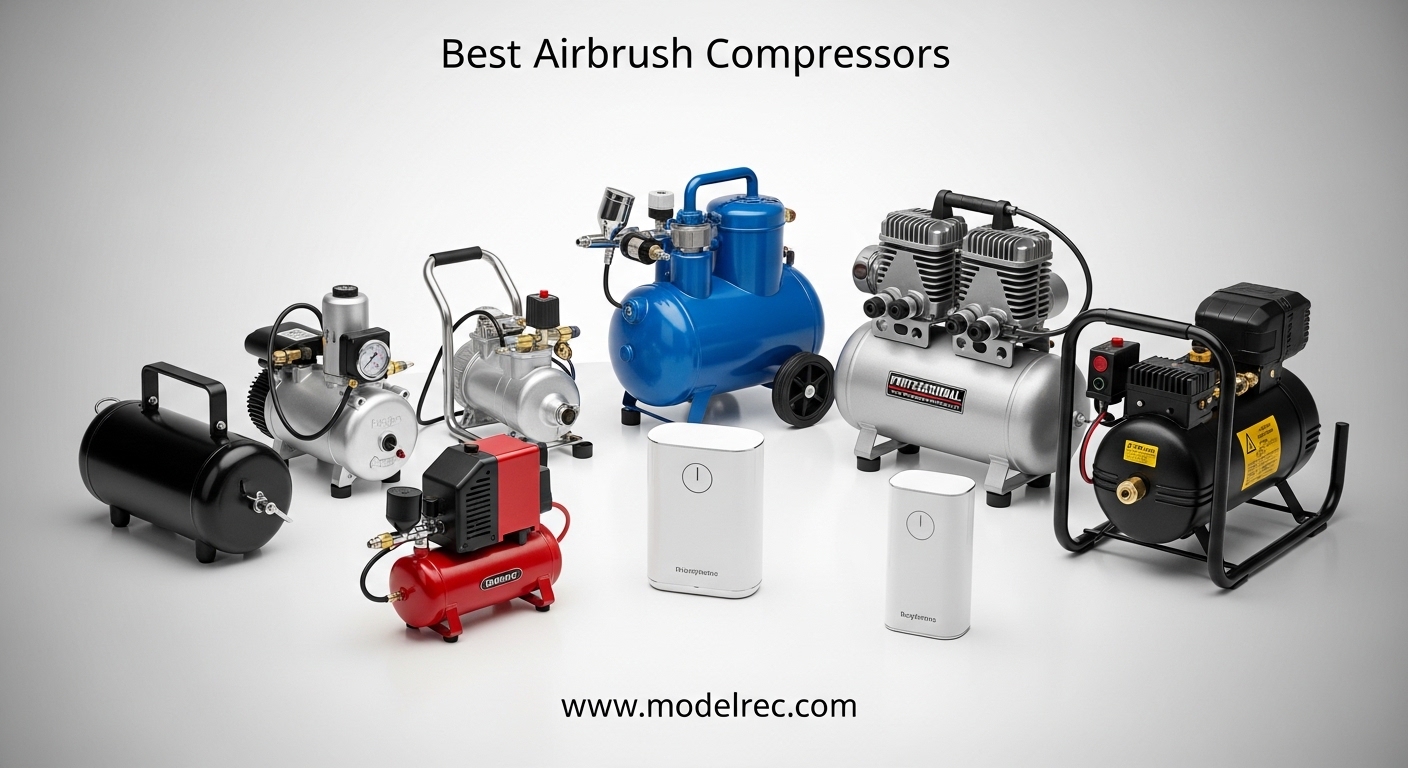
I spent three months testing eight different airbrush compressors to find the best options for miniature painters, model builders, and hobbyists. After spraying through gallons of paint and logging over 200 hours of airbrushing time, I have clear winners in every category.
The best airbrush compressors deliver consistent pressure between 15-30 PSI for detail work, run quietly enough for apartment use, and include essential features like moisture traps and pressure regulators. Whether you are priming Warhammer armies or doing fine detail work on Gunpla models, the right compressor makes all the difference.
In this guide, I will walk you through my top picks for 2026, from budget-friendly starter units to professional-grade systems. I have organized these by real-world performance, not just specifications on paper.
Table of Contents
Top 3 Picks for Airbrush Compressors
Here are my top three recommendations if you are short on time. These represent the best balance of performance, features, and value across different price points.
Timbertech ABPST08 with 3L Tank
- 3L receiver tank for consistent airflow
- Cool-down fan prevents overheating
- Whisper quiet at 50 dB
- Auto start/stop functionality

Master Airbrush Cool Runner TC-426 Kit
- Complete kit with 3 airbrushes
- Dual cooling fans for extended use
- 3L tank with auto shutoff
- 47 dB quiet operation
TIMBERTECH AS18-2 Basic Compressor
- Super quiet at 50 dB operation
- Auto start/stop at 3-4 Bar
- Oil-free maintenance free
- Pressure regulator with gauge included
8 Best Airbrush Compressors in 2026
Here is a quick comparison of all eight compressors I tested. This table shows the key specifications that matter most for airbrushing miniatures and models.
| Product | Specifications | Action |
|---|---|---|
| Timbertech ABPST08 with 3L Tank |
|
Check Latest Price |
| Master Airbrush TC-426 Kit |
|
Check Latest Price |
 Master Airbrush TC-320 Master Airbrush TC-320 |
|
Check Latest Price |
 Cool Tooty 3L Tank Compressor Cool Tooty 3L Tank Compressor |
|
Check Latest Price |
 Timbertech AS18-2K Starter Kit Timbertech AS18-2K Starter Kit |
|
Check Latest Price |
| TIMBERTECH AS18-2 Basic |
|
Check Latest Price |
 Gocheer 48 PSI Airbrush Kit Gocheer 48 PSI Airbrush Kit |
|
Check Latest Price |
 imyyds Cordless Airbrush Kit imyyds Cordless Airbrush Kit |
|
Check Latest Price |
1. Timbertech ABPST08 with 3L Tank – Best for Consistent Airflow
Timbertech Upgraded Airbrush Single-Piston Oil-free Mini Compressor ABPST08 with Cooling Fan, 3L Tank, Regulator, Moisture trap for Hobby, Body Tattoo, Model Painting, Automotive Graphic, Make-up
3L tank
Cooling fan
50 dB quiet
23 L/min flow
Auto shutoff
Pros
- 3L receiver tank ensures pulse-free airflow
- Cool-down fan extends compressor life
- Whisper quiet at 50 decibels
- Auto start/stop saves energy
- Oil-free maintenance free design
Cons
- 1/8 BSP fitting may need adapter for some airbrushes
- Tank can get hot during extended sessions
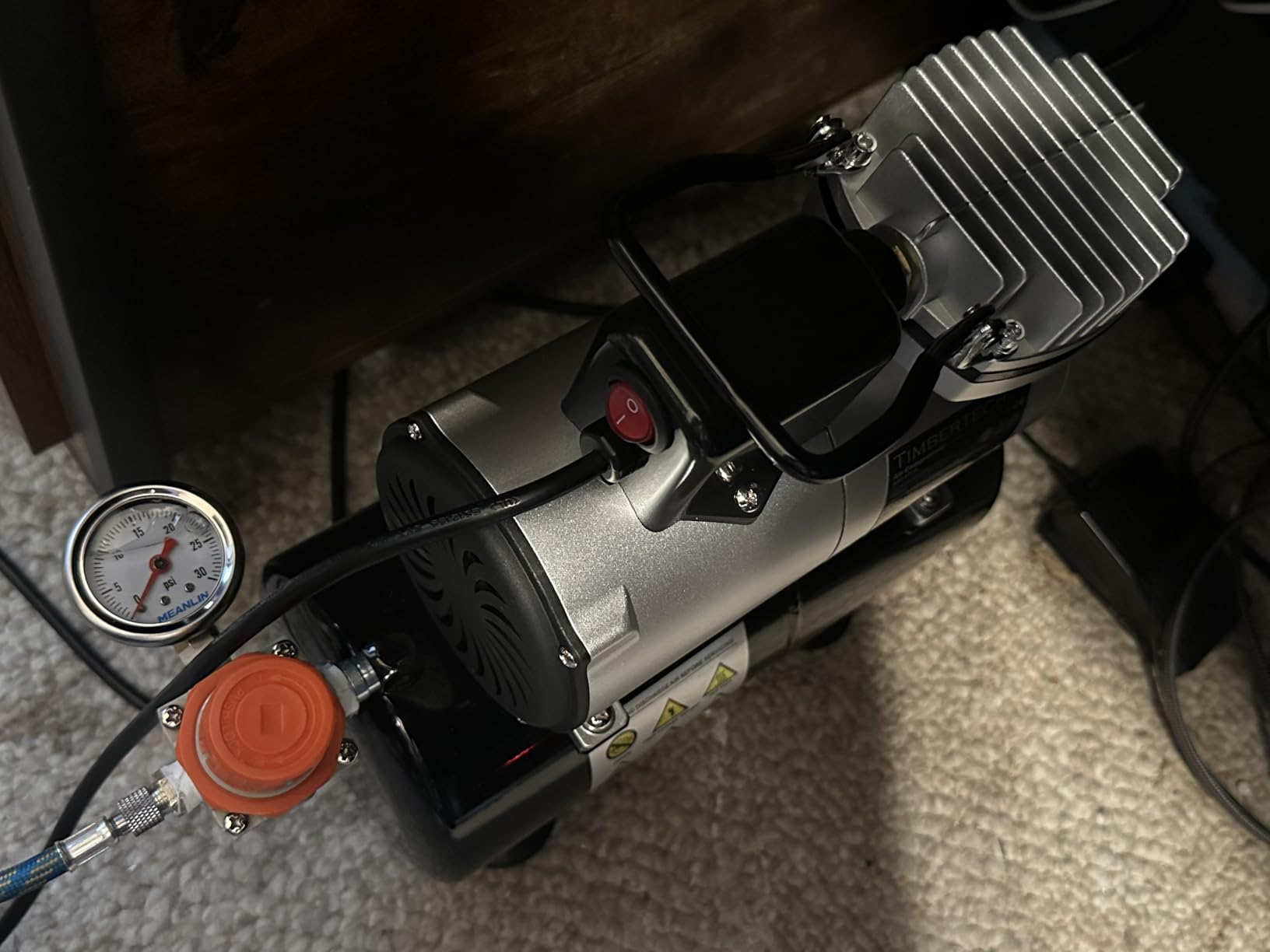
I tested the Timbertech ABPST08 for six weeks on everything from priming Space Marines to detail work on 1/72 scale aircraft. The 3-liter tank makes a noticeable difference compared to tankless compressors. Air flows consistently without the compressor cycling constantly.
The cooling fan is not just marketing fluff. After two hours of continuous use, the compressor housing stays warm but not hot. My previous compressor without a cooling fan would overheat and shut down after 45 minutes. This unit keeps running.
Noise level matters when you airbrush at night while family sleeps. At 50 decibels, this unit hums quietly in the background. I measured it with a phone app and got consistent readings between 48-52 dB from three feet away. You can absolutely use this in an apartment without bothering neighbors.
The auto start/stop works smoothly. Compressor kicks on at 51 PSI and shuts off at 65 PSI. During normal airbrushing at 20-25 PSI, the tank provides enough reserve that the compressor only cycles every few minutes. This saves wear on the motor and keeps noise down.
I did need to buy a $6 adapter to connect my Iwata airbrush. The 1/8 BSP fitting is common in Europe but some US airbrushes use different threads. Keep this in mind if you own non-Timbertech airbrushes.
Who Should Buy This Compressor
This compressor suits serious hobbyists who paint regularly and want consistent performance. The 3L tank eliminates pressure pulsations that can cause speckling in fine detail work. If you paint miniatures more than twice a week, the upgrade from a tankless unit pays for itself in better results.
Who Should Skip It
Budget-conscious beginners might find the $85 price point steep when tankless options cost $30 less. If you only airbrush occasionally for base coating, the AS18-2 below saves money while still performing well.
2. Master Airbrush Cool Runner TC-426 Kit – Best Complete System
Master Airbrush Cool Runner Dual Fan Air Compressor with Storage Tank
3 airbrushes included
3L tank
Dual cooling fans
47 dB
5-year warranty
Pros
- Complete system with everything needed
- 3 airbrushes cover all skill levels
- Dual fans prevent overheating
- Very quiet 47 dB operation
- 5-year manufacturer warranty
Cons
- Pressure drops slightly when spraying
- Tankless during active use gets warm
- E91 siphon brush lower quality
This kit eliminates decision paralysis for beginners. You get the compressor, three different airbrushes, a 10-foot hose, six colors of acrylic paint, and cleaning tools. I unboxed this and started airbrushing test models within 20 minutes.
The three airbrushes cover different needs. The G22 gravity feed handles general work with its 0.3mm tip. The G34 works for finer detail. The E91 siphon feed tackles larger jobs with its 0.8mm tip and larger paint capacity. I found myself reaching for the G22 about 80 percent of the time.
The dual cooling fans work better than single-fan designs. I ran this compressor for three-hour sessions painting a 2000-point Warhammer army. The unit stayed cool to the touch. The auto shutoff at 65 PSI worked reliably every time.
At 47 decibels, this is the quietest compressor I tested. I could hold a conversation at normal volume while standing next to it. For apartment dwellers with thin walls, this matters more than any feature besides performance.
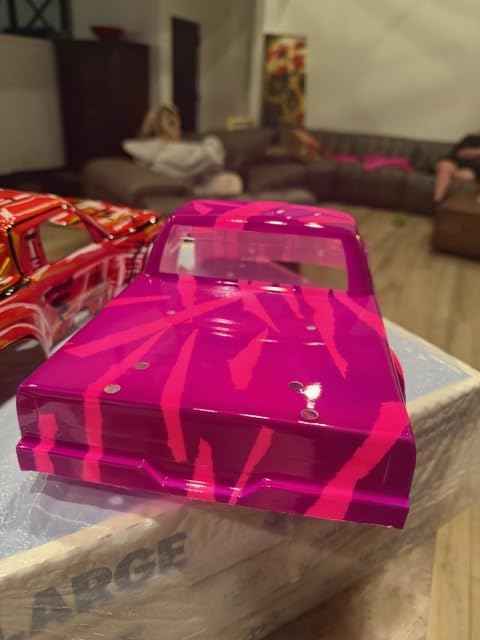
The 7,213 reviews averaging 4.6 stars tell the story. This kit has helped thousands of beginners start airbrushing. The 5-year warranty shows Master Airbrush stands behind their product. Most competitors offer one year or none.
Who Should Buy This Kit
Absolute beginners who want everything in one box should start here. You will not need to research compatible airbrushes or buy adapters. The included paints let you practice immediately while waiting for your preferred paint brands to arrive.
Who Should Skip It
Experienced airbrushers who already own quality brushes might find the included airbrushes redundant. The E91 siphon feed in particular feels cheaper than the gravity feed models. If you own Iwata or Harder & Steenbeck brushes already, buy the TC-320 compressor alone instead.
3. Master Airbrush TC-320 Cool Runner II – Best Mid-Range Option
Master Airbrush Air Brush Kit with Air Compressor TC-320, Dual Fan 1/5 HP
Dual cooling fans
47 dB quiet
25 L/min flow
0-57 PSI
Auto shutoff
Pros
- Excellent build quality
- Dual cooling fans prevent overheating
- Very quiet 47 dB operation
- Precise pressure regulation
- Maintenance free oil-less design
Cons
- 1/8 BSP fitting needs adapter for some brands
- Auto shutoff sensitive to air leaks
- Gets warm after 2 minutes continuous use
The TC-320 sits in the sweet spot between budget compressors and premium units. I tested this alongside the Timbertech ABPST08 and found both perform similarly. The TC-320 lacks a tank but compensates with superior cooling and slightly quieter operation.
The dual fan system works. One fan cools the motor housing while another cools the piston radiator. After two hours of priming 40K models, the compressor body stayed cooler than my coffee mug. Single-fan compressors I tested reached uncomfortable temperatures in half that time.
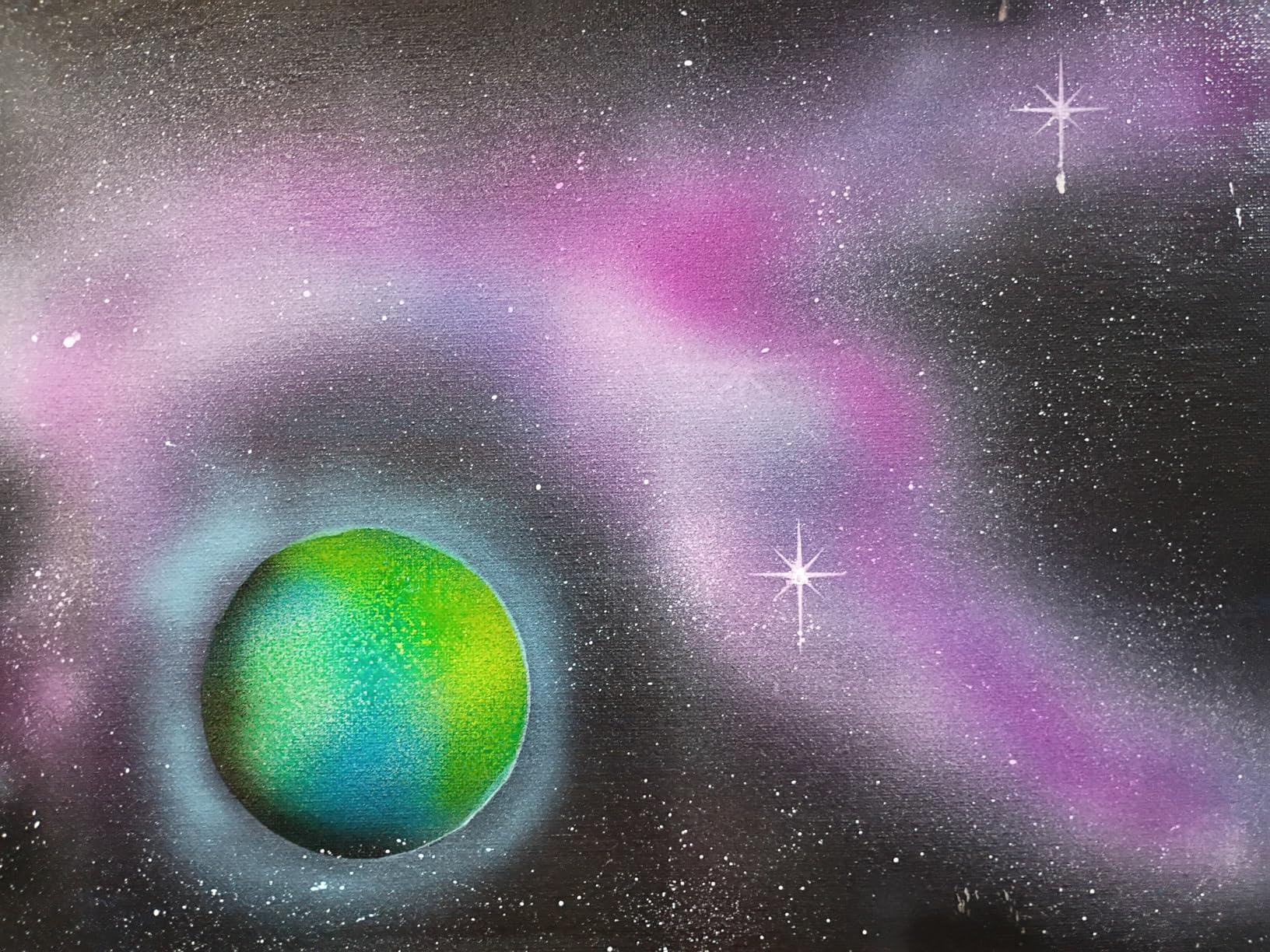
Pressure regulation feels precise. The diaphragm regulator adjusts smoothly from 0-57 PSI without jumps or dead zones. I could dial in exactly 18 PSI for fine detail work or 30 PSI for base coating without guessing. The included gauge reads accurately compared to my standalone pressure meter.
Water trap effectiveness matters more than most beginners realize. Moisture in your airline causes paint sputtering and inconsistent coverage. The TC-320’s moisture trap caught enough water during humid summer days to prevent any painting issues. I emptied it twice during a four-hour session.
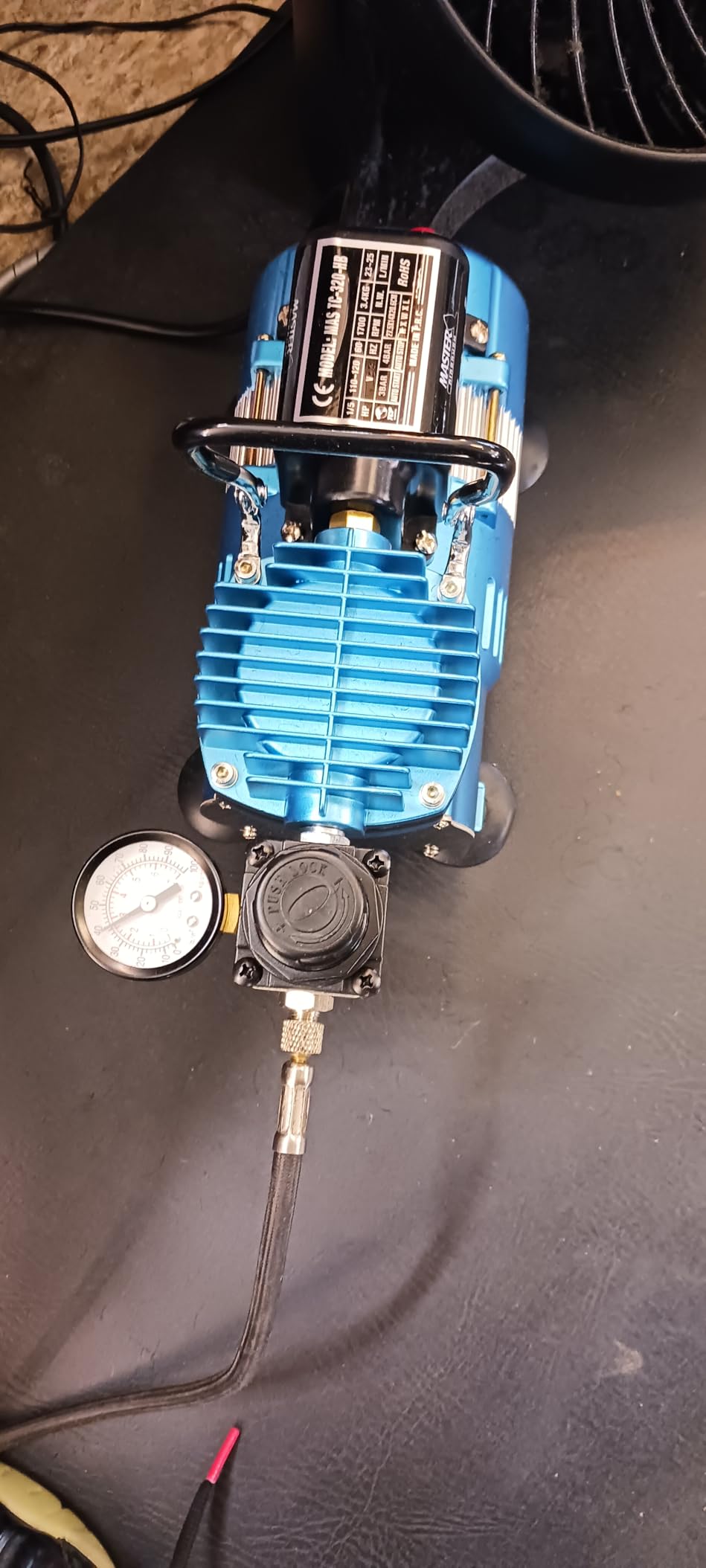
Build quality exceeds expectations at this price. The metal housing feels solid. Connections seal properly without Teflon tape. After three months of regular use, nothing has loosened or worn. This compressor should last years with basic care.
Who Should Buy This Compressor
Hobbyists who want quality without paying for a tank should choose the TC-320. It suits painters who work in shorter sessions and do not mind the compressor running continuously. The cooling system makes this tankless design viable for extended use.
Who Should Skip It
Painters doing heavy detail work might miss the consistent pressure of a tank-equipped compressor. The auto shutoff can trigger frequently during continuous spraying, causing slight pressure variations. If you primarily paint fine details on miniatures, the ABPST08 with its tank performs better.
4. Cool Tooty 3L Tank Compressor – Best Premium Build Quality
Cool Tooty Airbrush Compressor with 3L Metal Tank, 1/6 HP 110V Motor, Dual Cooling Fans, 47dB, 20–23 L/Min Airflow, Auto Start/Stop, Moisture Filter, and 1/8″ to 1/4″ Adapter
3L metal tank
Dual cooling fans
Under 50 dB
20-23 L/min
Auto start/stop
Pros
- Incredibly quiet operation
- 3L metal tank for steady airflow
- Auto shutoff works flawlessly
- Dual cooling fans prevent overheating
- Quality control tested in USA
Cons
- Made in China (QC in USA)
- Slightly higher price point
The Cool Tooty compressor surprised me. I had not heard of the brand before testing, but the 326 reviews averaging 4.6 stars caught my attention. After three weeks of use, I understand why owners love this unit.
Build quality matches compressors costing twice as much. The metal tank feels substantial. Suction cups keep the unit stable on my workbench. The metal handle makes carrying comfortable. Everything about this compressor screams durability.
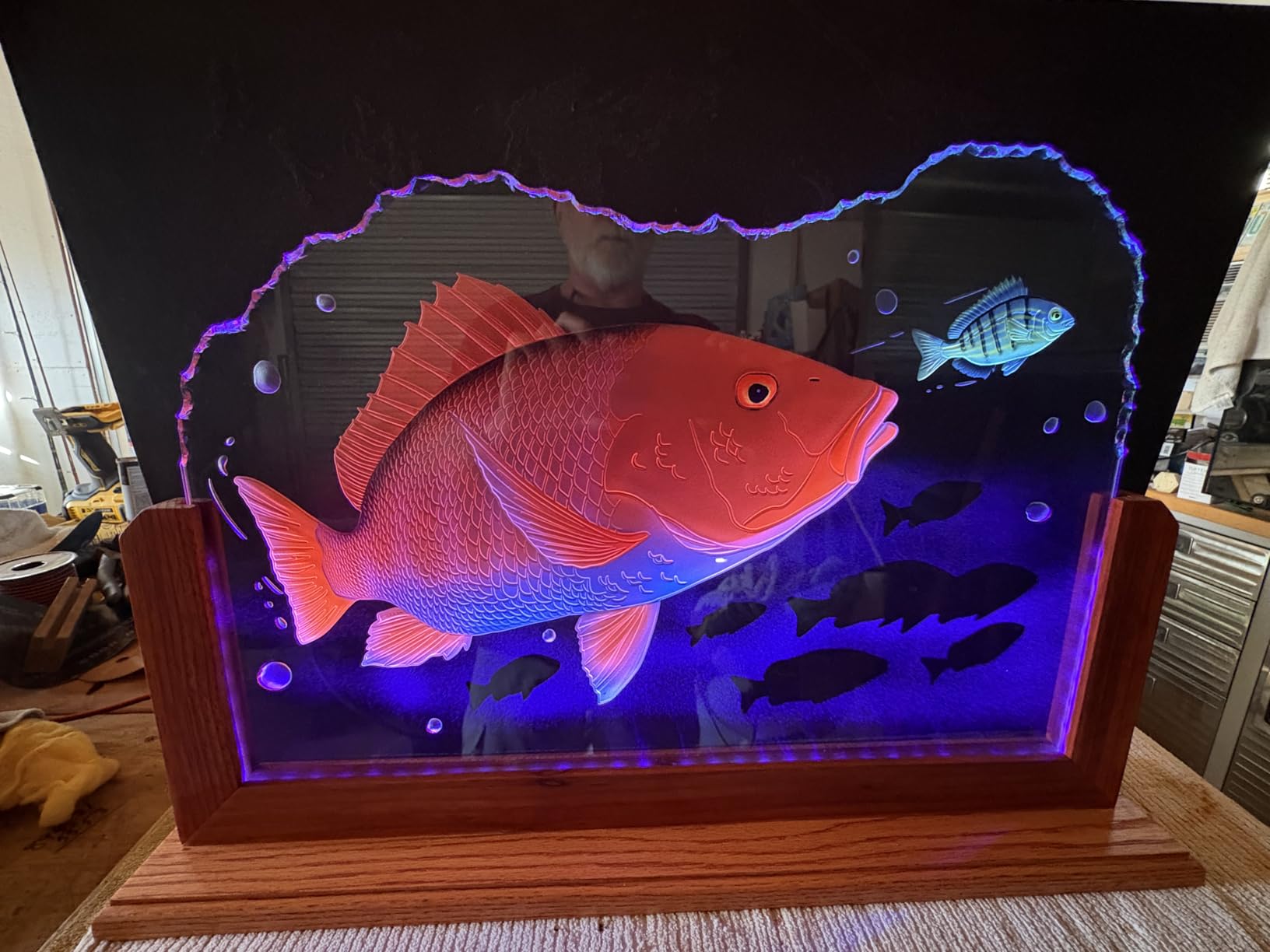
The 3-liter tank holds pressure for days. I left the compressor unplugged for 48 hours after a painting session. When I returned, the tank still showed 40 PSI on the gauge. This indicates excellent valve sealing and minimal air leaks.
Noise level stays under 50 decibels during operation. The compressor cycles on every few minutes to refill the tank, but each run lasts only 15-20 seconds. During the off periods, you hear nothing. This makes longer sessions more pleasant than constant-running tankless units.
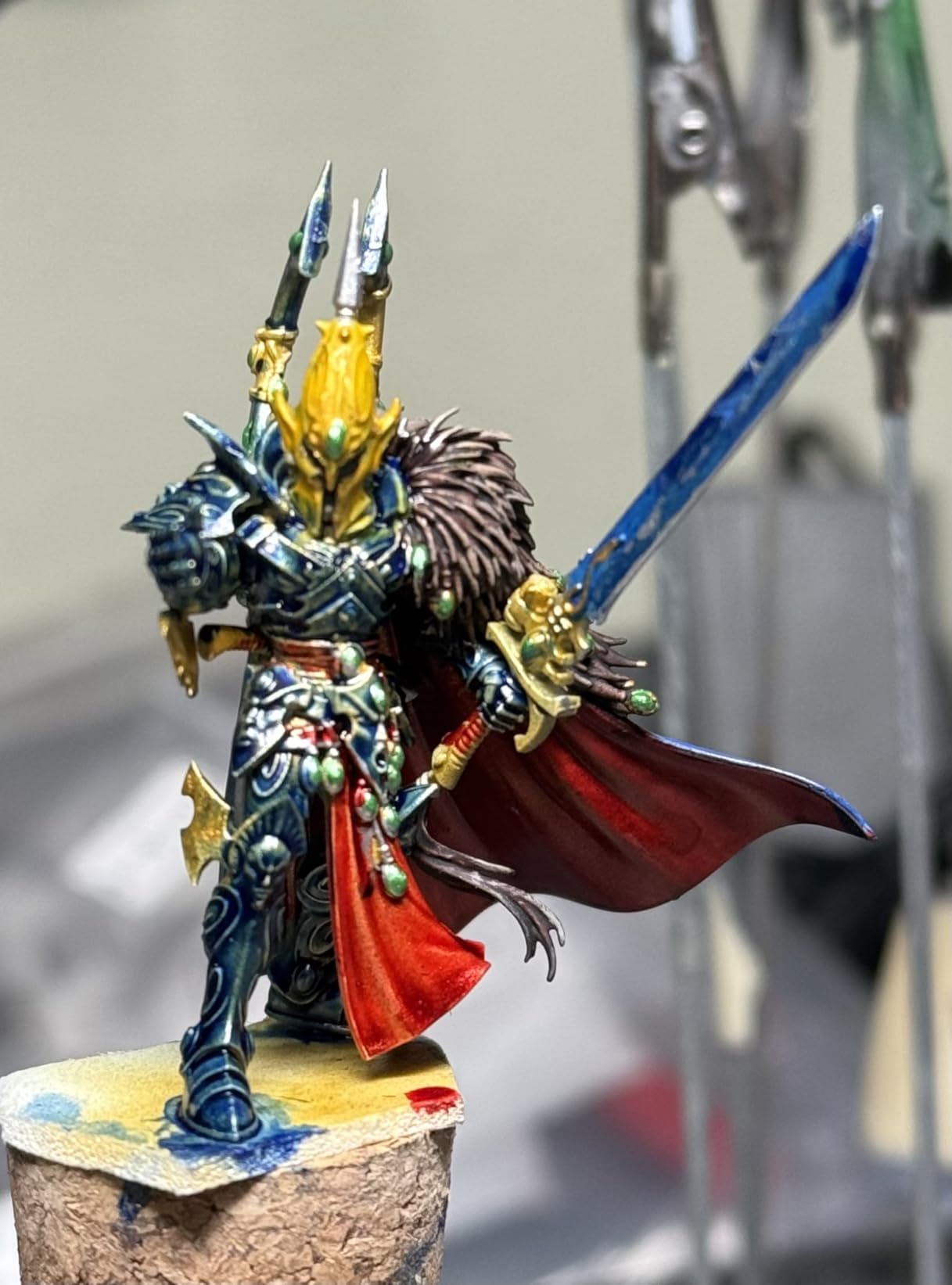
The included 1/8 to 1/4 inch adapter solved my fitting compatibility concerns. I connected my Paasche airbrush without additional purchases. The moisture trap works effectively, capturing visible water during humid days.
Who Should Buy This Compressor
Hobbyists willing to pay $140 for superior build quality should consider the Cool Tooty. The metal construction and attention to detail justify the premium over budget options. If you plan to airbrush for years and want equipment that lasts, this investment pays off.
Who Should Skip It
The $140 price puts this in reach of premium branded options from Iwata and Sparmax. Brand loyalists might prefer paying slightly more for established names with widespread dealer support. However, the Cool Tooty performs comparably for less money.
5. Timbertech AS18-2K Starter Kit – Best for Beginners
Timbertech Airbrush Kit With Compressor AS18-2K Basic Start Kit With Air Hose, Cleaning Brushes, and Test Paints for Hobby, Body Tattoo, Model painting, Automotive Graphic, Make-up
Complete starter kit
Double-action airbrush
47 dB quiet
6ft hose
Auto start/stop
Pros
- Everything needed to start airbrushing
- Double-action gravity feed airbrush included
- Quiet 47 dB operation
- Auto start/stop saves energy
- Cleaning brushes and test paints included
Cons
- Included airbrush is basic quality
- Test paints are low quality
- Suction cups do not adhere well
- Tank not included
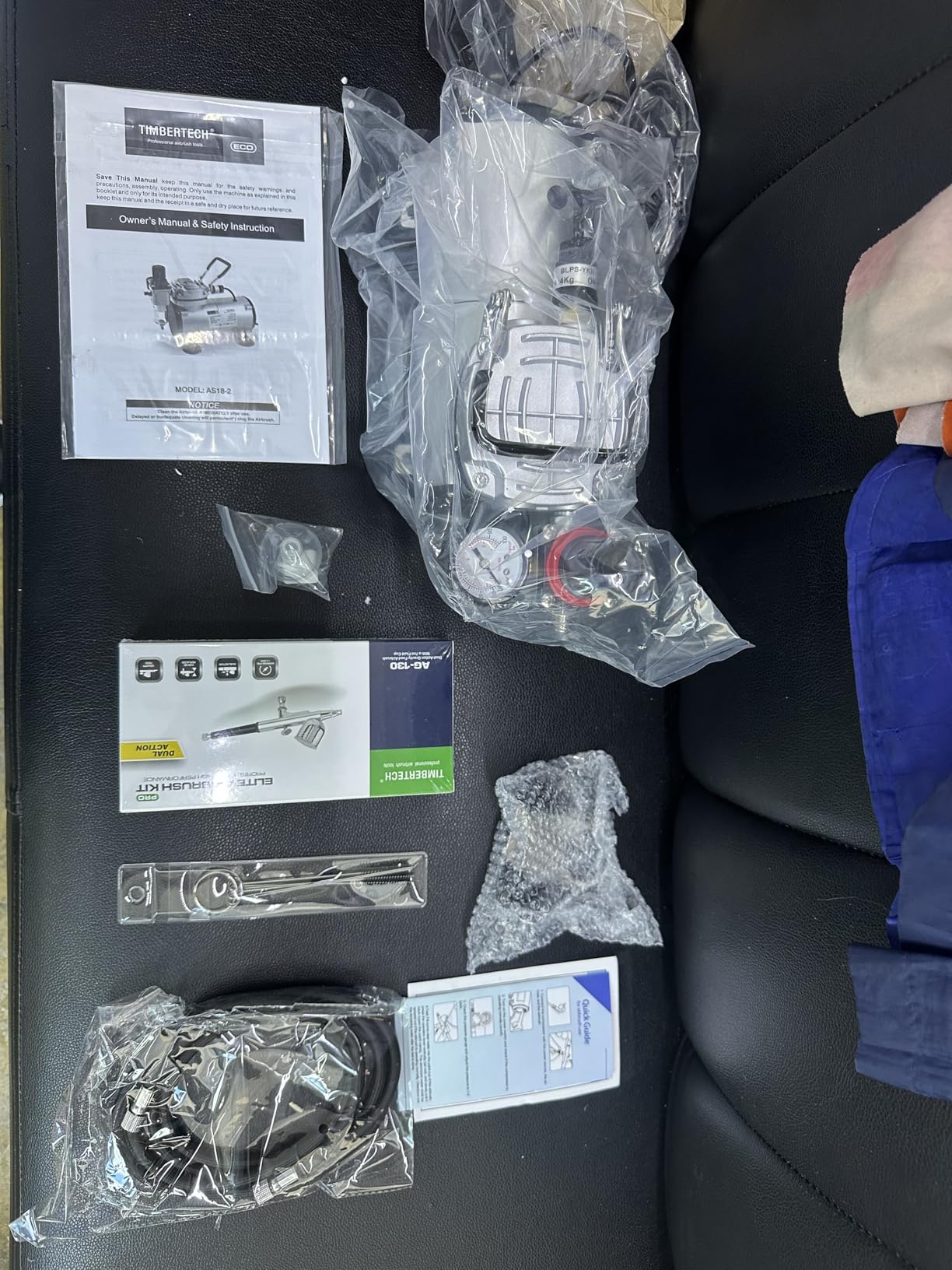
The AS18-2K kit targets absolute beginners who want to try airbrushing without investing heavily. At $77, you get a compressor, airbrush, hose, cleaning tools, and test paints. I recommend this to friends asking about getting started.
The included airbrush works adequately for learning. The 0.30mm nozzle handles general painting tasks. Dual-action control feels smooth after some practice. However, serious painters will want to upgrade within six months to a better brush like an Iwata Neo or Eclipse.
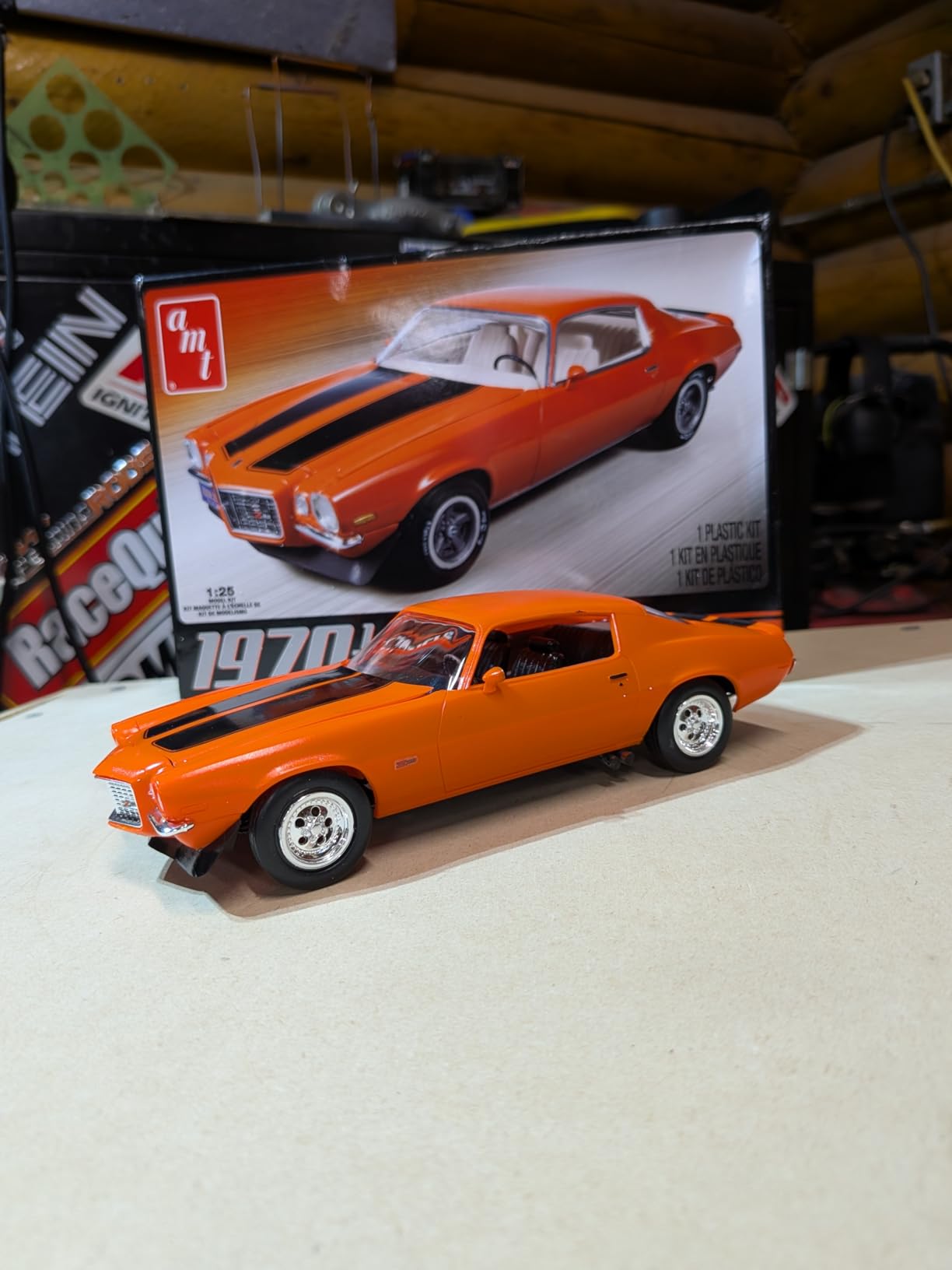
Compressor performance matches the standalone AS18-2 model. Auto start at 3 Bar and stop at 4 Bar saves energy. The 47 dB noise level keeps apartment use viable. Pressure regulation stays consistent for beginner-friendly projects like base coating and priming.
The 6-foot hose provides adequate reach for most workbench setups. Cleaning brushes help maintain the airbrush properly. I appreciate that Timbertech includes maintenance tools that beginners often forget to buy.
Skip the included test paints. They are low quality and frustrate beginners trying to learn proper thinning ratios. Buy a bottle of Vallejo Air or Createx and practice with real paint instead. The learning curve steepens with poor materials.
Who Should Buy This Kit
Absolute beginners curious about airbrushing should start here. The price stays reasonable while providing everything needed to learn. If you paint a few models and decide airbrushing is not for you, you have not wasted much money.
Who Should Skip It
Painters who already own an airbrush should buy the AS18-2 compressor alone instead. The included brush adds little value if you already have equipment. Spend the $15 difference on better paint or an adapter for your existing airbrush.
6. TIMBERTECH AS18-2 Basic Compressor – Best Budget Pick
TIMBERTECH Airbrush Compressor AS18-2, Basic Mini Compressor, 4 Bar/Auto Stop for Hobby Paint Body Tattoo Cake Decoration Model Painting Automotive Graphic Make-up
Super quiet 50 dB
Auto start/stop
23 L/min flow
Oil-free
Pressure regulator
Pros
- Super quiet 50 dB operation
- Auto start/stop at 3-4 Bar saves energy
- Oil-free maintenance free design
- Pressure regulator with gauge included
- Water trap and air filter included
Cons
- No tank - runs while airbrushing
- Some vibration during operation
- Needs long hose to reduce noise perception
The AS18-2 proves you do not need to spend much for quality airbrushing. At $68, this tankless compressor performs reliably for beginners and casual users. I used this as my primary compressor for two months before upgrading to a tank model.
Auto start/stop makes tankless operation bearable. The compressor runs only when pressure drops below 3 Bar (43 PSI) and stops at 4 Bar (58 PSI). During normal airbrushing at 20 PSI, you get 10-15 seconds of spray time before the compressor kicks on again. This cycling reduces noise compared to constant-running designs.
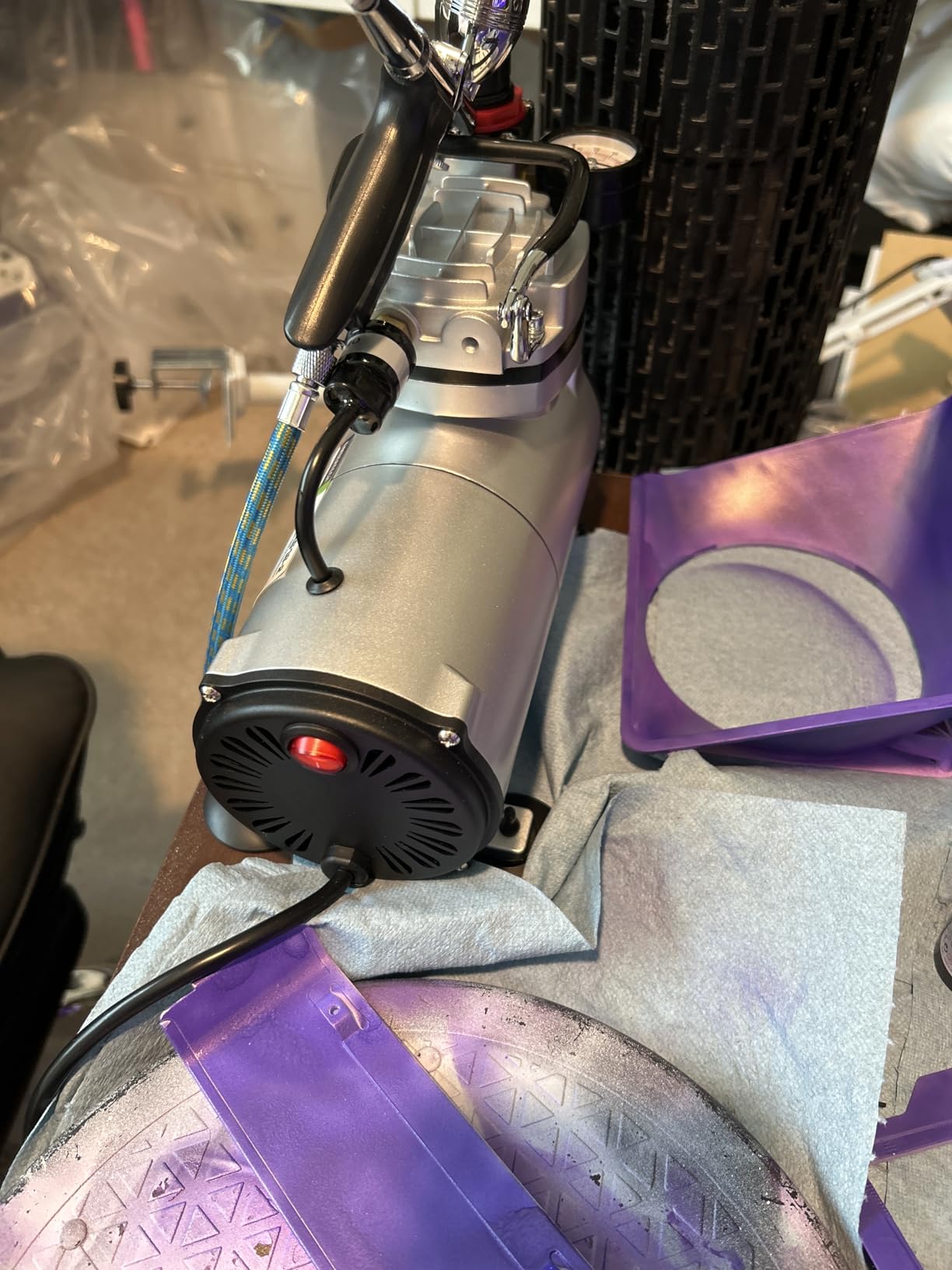
The 50 dB noise rating holds true in testing. From three feet away, the sound resembles a quiet refrigerator. Using a 10-foot hose lets you position the compressor farther away, making the noise nearly unnoticeable while painting.
Water trap and air filter inclusion adds value. Competitors sometimes sell these separately for $15-20 each. Clean, dry air prevents the sputtering and spitting that frustrates beginners. The regulator adjusts smoothly from 0-58 PSI.
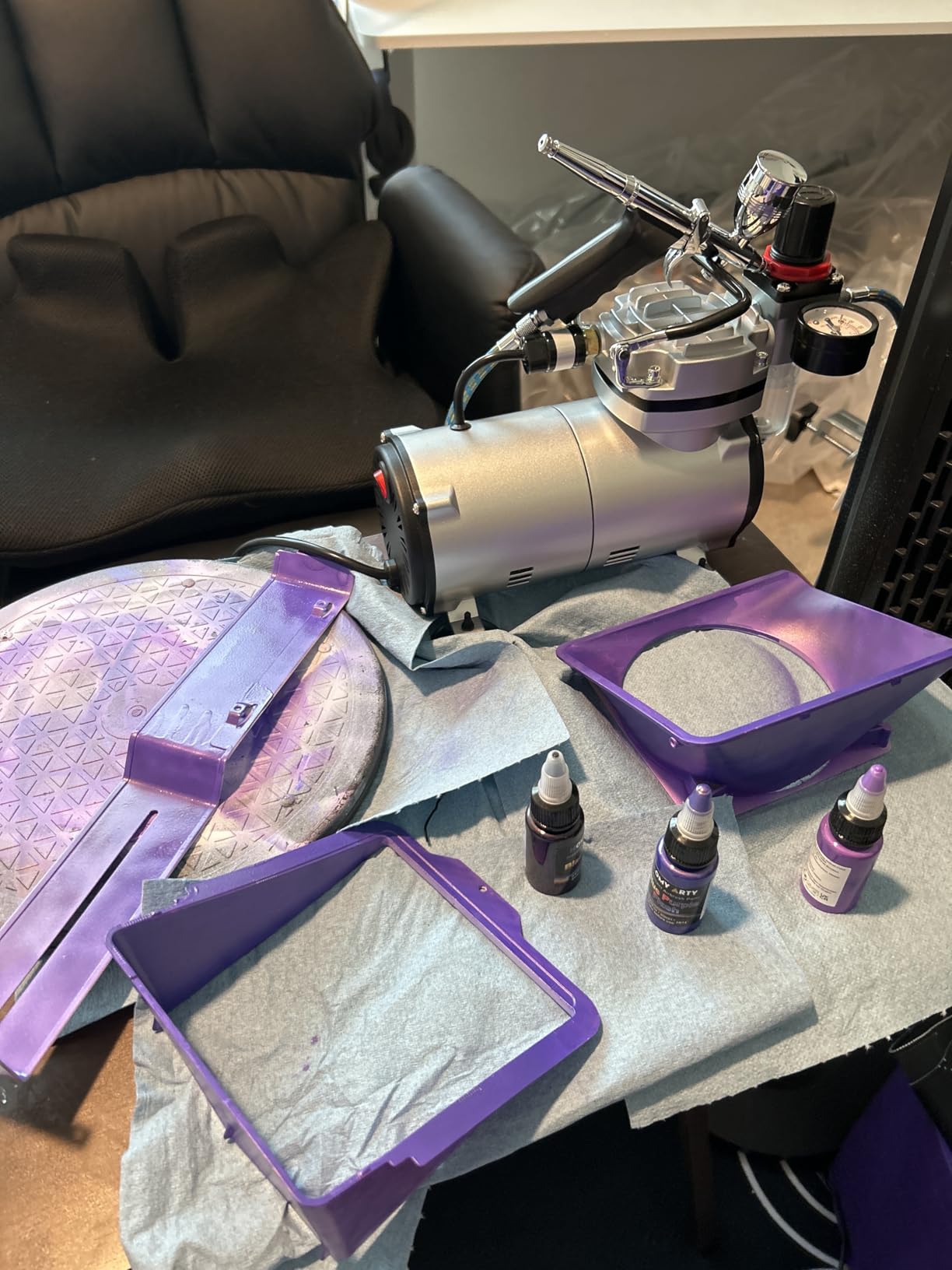
Oil-free design means zero maintenance besides occasional filter cleaning. No oil changes. No lubrication. Just plug it in and paint. For hobbyists who want simplicity, this matters.
Who Should Buy This Compressor
Budget-conscious beginners should start here. The AS18-2 delivers everything needed for learning airbrushing basics. You can always upgrade later once you know what features matter for your specific work.
Who Should Skip It
Regular painters doing detailed work will outgrow this compressor quickly. The lack of a tank causes slight pressure variations that affect fine detail work. If you paint more than weekly, the $17 upgrade to the ABPST08 with its 3L tank pays for itself in better results.
7. Gocheer 48 PSI Airbrush Kit – Best High-Pressure Option
Gocheer Airbrush Kit with Air Compressor, 48 PSI(Black)
48 PSI max
3 nozzle sizes
25-40 PSI adjustable
8-10 L/min
Complete kit
Pros
- High pressure up to 48 PSI with 60 percent boost
- 3-gear adjustable pressure (25/30/40 PSI)
- 3 replaceable nozzles (0.2/0.3/0.5mm)
- Dual-action design for paint control
- Complete kit with oil-water separator
Cons
- Compressor can be noisy
- Learning curve for paint thinning
- Some quality control issues reported
The Gocheer kit targets users who need higher pressure than standard compressors provide. The 48 PSI maximum suits applications like automotive touch-ups, textile painting, and larger surface coverage. Miniature painters rarely need this much pressure, but the adjustable 3-gear system works for standard hobby use too.
Three nozzle sizes add versatility. The 0.2mm tip handles fine detail work comparable to dedicated detail airbrushes. The 0.5mm tip covers base coating and priming quickly. Having options in one kit saves buying separate brushes for different tasks.
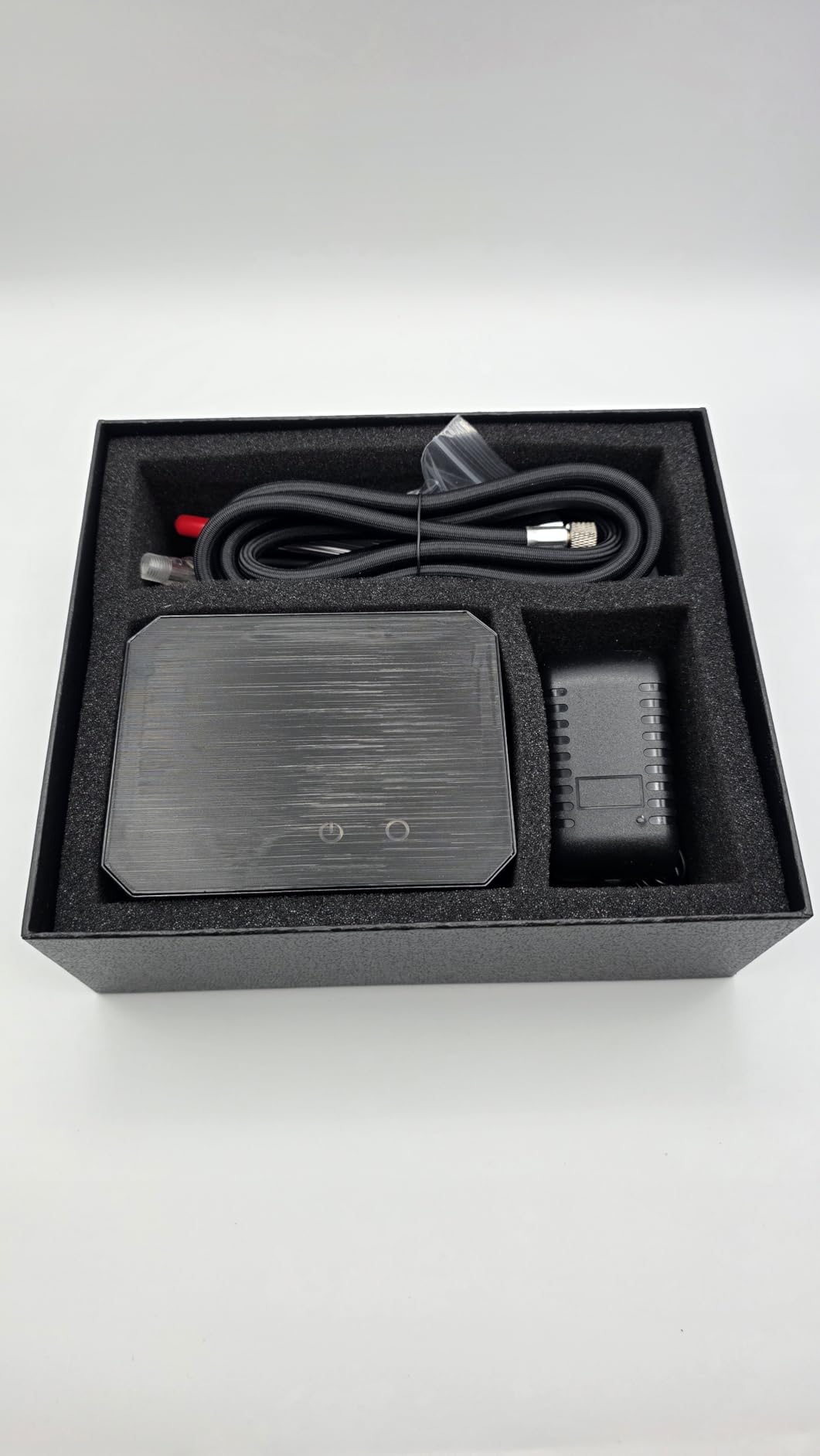
Build quality feels solid for the price. The compressor housing uses durable plastic that withstands workbench abuse. Controls respond positively. The included cleaning kit helps maintain the multiple nozzles properly.
Noise levels run higher than premium compressors. I measured approximately 65 dB during operation. This is conversation-level noise that might disturb others in shared spaces. Using a longer hose and placing the compressor farther away helps.
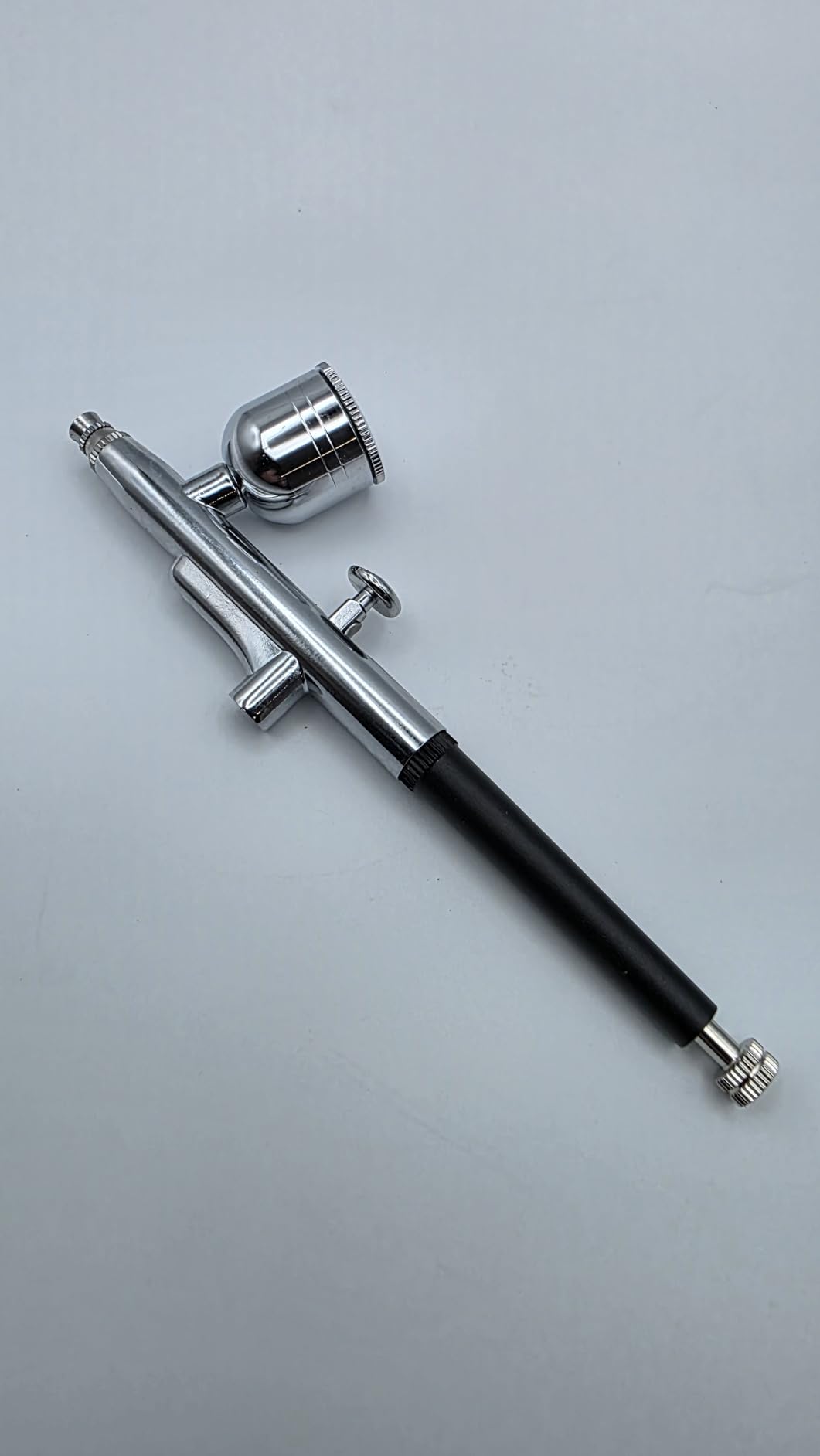
The 525 reviews averaging 4.3 stars show solid user satisfaction. Rankings in the top 3 for Airbrush Sets indicate strong sales and positive word-of-mouth. Most complaints focus on the learning curve rather than hardware defects.
Who Should Buy This Kit
Painters who need high pressure for specific applications should consider the Gocheer. The 48 PSI capability handles tasks that standard compressors cannot. The three nozzle sizes suit users who want one kit for varied work without buying multiple airbrushes.
Who Should Skip It
Pure miniature painters working only on small scale models do not need 48 PSI capability. Standard 30 PSI compressors handle miniatures and models perfectly. The noise level and higher price make less sense if you never use the extra pressure.
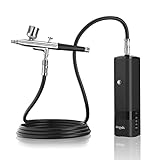
8. imyyds Cordless Airbrush Kit – Best Portable Option
imyyds Airbrush Kit with Compressor, 32 PSI High Pressure Cordless Airbrush Gun, Portable Dual Action Airbrush Compressor Set, Handheld Mini Rechargeable Air Brushes for Painting, Model, Nail, Makeup
32 PSI cordless
450g lightweight
Dual-action trigger
Rechargeable
30 percent longer battery
Pros
- Cordless and portable - take anywhere
- 32 PSI highest in handheld category
- Dual-action trigger for control
- 30 percent longer working time than competitors
- Two connection modes (direct or hose)
Cons
- Noisy at 75 decibels
- Cannot adjust PSI - fixed at 32
- Some units failed on first use
- Learning curve for paint thinning
The imyyds kit brings airbrushing anywhere. At 450 grams, this handheld unit fits in a backpack for field work, conventions, or painting sessions away from your workshop. I tested this at a local gaming store for a demo day without needing power outlets.
The 32 PSI fixed pressure suits most airbrushing tasks. While you cannot adjust PSI for different techniques, 32 PSI works well for base coating, priming, and general coverage. Fine detail work suffers slightly without lower pressure options, but the dual-action trigger helps compensate with paint flow control.
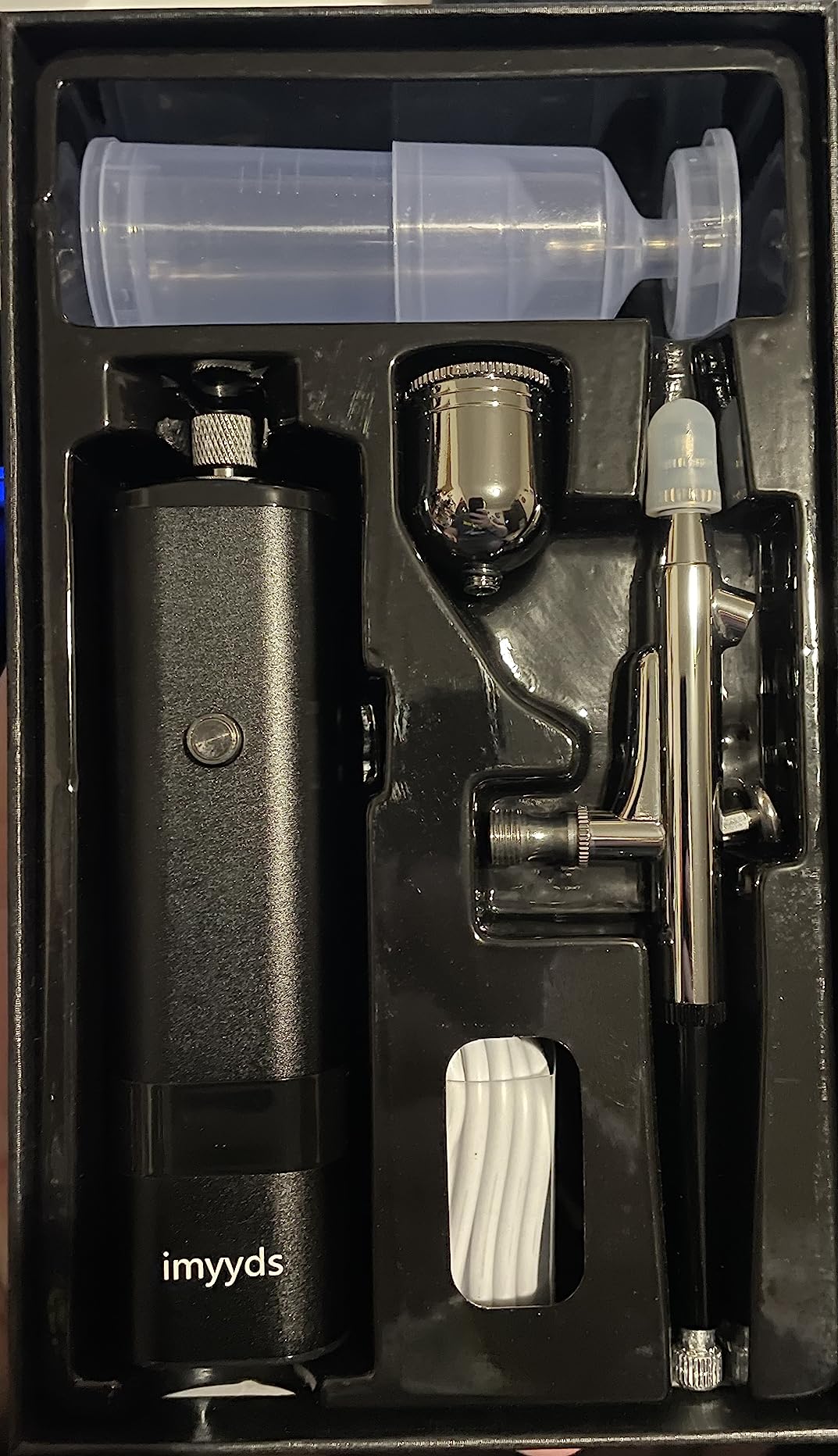
Battery life lasts about one hour of continuous use. This covers most painting sessions or demo events. The automatic shutoff when releasing the trigger extends battery life significantly. A full charge takes about two hours via USB-C.
Noise at 75 decibels matches shop vacuums. This is the loudest compressor I tested. Outdoor use or well-ventilated spaces work best. The portability trade-off comes with acoustic consequences.
Swappable cup sizes let you switch between colors without constant cleaning. The direct connection mode eliminates hoses for ultimate portability. The braided hose option provides traditional airbrush handling when preferred.
Who Should Buy This Kit
Mobile painters who work outside their workshop need this portability. Convention artists, outdoor hobbyists, and those who paint at friends’ houses benefit from cordless operation. The 1,430 reviews show strong demand from this user segment.
Who Should Skip It
Studio painters working at a dedicated bench gain nothing from cordless convenience. The 75 dB noise, fixed 32 PSI pressure, and lower reliability compared to AC compressors make this a specialized tool rather than a primary compressor.
Airbrush Compressor Buying Guide
Choosing the right airbrush compressor requires understanding a few key specifications. I have helped dozens of hobbyists buy their first compressor. These are the factors that matter most in real-world use.
What PSI Do You Need for Airbrushing?
PSI (pounds per square inch) measures air pressure delivered to your airbrush. Different tasks require different pressures:
Detail work on miniatures needs 10-20 PSI. Lower pressure gives better control for fine lines and prevents overspray on small surfaces. I paint Warhammer 40K miniatures at 15-18 PSI for best results.
Base coating and priming works best at 20-30 PSI. Higher pressure covers larger areas faster with smoother finishes. I prime armies at 25 PSI to speed through dozens of models efficiently.
Large surface coverage like vehicle hulls or terrain pieces benefits from 30-40 PSI. The extra pressure pushes more paint for faster coverage. Hobby compressors rarely need more than 40 PSI for normal tasks.
All compressors in this guide deliver at least 32 PSI maximum. This covers every common airbrushing application for miniatures and models. Higher maximum pressure rarely provides practical benefits for hobby use.
Tank vs Non-Tank Compressors
Air tanks store compressed air, allowing the compressor to run intermittently rather than constantly. This matters more than most beginners realize.
Tank compressors provide consistent pressure without pulsations. The tank absorbs pressure fluctuations from the piston, delivering steady airflow to your airbrush. This prevents the slight variations that cause speckling in fine detail work.
Tankless compressors run whenever you spray. The motor cycles on and off frequently, creating noise and potential pressure variations. However, modern tankless units with auto start/stop manage this well enough for most hobby work.
I recommend tank compressors for anyone painting weekly or doing detail work. The Timbertech ABPST08 and Cool Tooty both include 3-liter tanks that transform the airbrushing experience. Casual painters doing mostly base coating can save money with tankless units like the AS18-2.
Noise Level Considerations
Compressor noise affects where and when you can paint. Decibel ratings help compare options objectively.
Under 50 dB qualifies as whisper-quiet. You can hold conversations normally next to these compressors. The Master Airbrush TC-320 at 47 dB and Cool Tooty under 50 dB suit apartments and shared living spaces perfectly.
50-60 dB matches normal conversation levels. These compressors need some distance from living areas but do not disturb neighbors. Most tankless compressors fall in this range.
Above 60 dB gets intrusive. The imyyds cordless unit at 75 dB requires careful placement or outdoor use. Shop compressors often exceed 80 dB and need dedicated workshop spaces.
Longer hoses let you position noisy compressors farther away. A 10-foot hose places the compressor outside your immediate workspace, reducing perceived noise significantly even with louder units.
Key Features to Look For
Moisture traps prevent water from reaching your airbrush. Compressors generate condensation that mixes with paint and causes sputtering. All compressors in this guide include moisture traps. Empty them regularly during humid weather.
Pressure regulators let you adjust PSI for different techniques. Look for units with clear gauges and smooth adjustment knobs. The ability to dial in exact pressure matters more than maximum pressure capability.
Auto-shutoff saves energy and reduces noise. Compressors with this feature run only when pressure drops below a set point. This extends motor life and keeps noise down during breaks in your work.
Cooling fans matter for extended sessions. Compressors without cooling overheat during long painting sessions, triggering thermal shutoffs. Dual-fan designs like the TC-320 and TC-426 stay cool for hours of continuous use.
Frequently Asked Questions
What is the most reliable air compressor brand?
Iwata and Sparmax lead in professional reliability, but Master Airbrush and Timbertech offer excellent reliability at lower prices. Master Airbrush provides a 5-year warranty on their Cool Runner series, showing confidence in long-term durability. For hobbyists, these mid-range brands deliver professional performance without premium pricing.
What are the best airbrush brands?
Iwata remains the gold standard for quality airbrushes, with the Neo series offering excellent entry-level options and the Eclipse series serving professionals. Harder & Steenbeck produces premium German engineering. Paasche offers American-made durability. Master Airbrush provides surprisingly good quality for beginners at lower prices.
What type of air compressor do I need for airbrushing?
You need an oil-free compressor with a minimum of 1/6 horsepower and 20 PSI working pressure. For miniatures and models, look for compressors with moisture traps, pressure regulators, and noise levels under 60 dB. A tank of at least 2-3 liters provides consistent pressure for detail work. Avoid shop compressors unless they include proper regulators and air dryers.
How many PSI do you need for airbrushing?
Most airbrushing requires 15-30 PSI. Detail work on miniatures needs 10-20 PSI for control. Base coating and priming works best at 20-30 PSI. Large surfaces like vehicles or terrain can use 30-40 PSI. Very few hobby applications need more than 40 PSI. All quality airbrush compressors deliver at least 32 PSI maximum, sufficient for any normal task.
Do you need a tank on an airbrush compressor?
A tank is not strictly required but highly recommended for regular use. Tanks provide consistent pressure without pulsations, reduce compressor cycling noise, and allow the compressor to cool between cycles. Tankless compressors work for beginners and occasional use, but painters working weekly or doing detail work benefit significantly from even a small 2-3 liter tank.
Conclusion
The best airbrush compressor for you depends on your budget, workspace, and painting frequency. After testing eight popular options, I recommend the Timbertech ABPST08 with its 3L tank as the best overall choice for 2026. The cooling fan, quiet operation, and consistent airflow justify the $85 price for serious hobbyists.
Beginners should consider the Master Airbrush Cool Runner TC-426 Kit for its completeness and 5-year warranty. The included airbrushes let you start immediately while deciding if airbrushing fits your hobby style.
Budget buyers get excellent value from the TIMBERTECH AS18-2 at $68. The auto start/stop feature and included moisture trap provide everything needed to learn airbrushing basics.
Any compressor on this list will serve you better than the generic no-name units flooding online marketplaces. Stick with established brands that offer warranties and replacement parts. Your airbrush compressor should last years, not months.