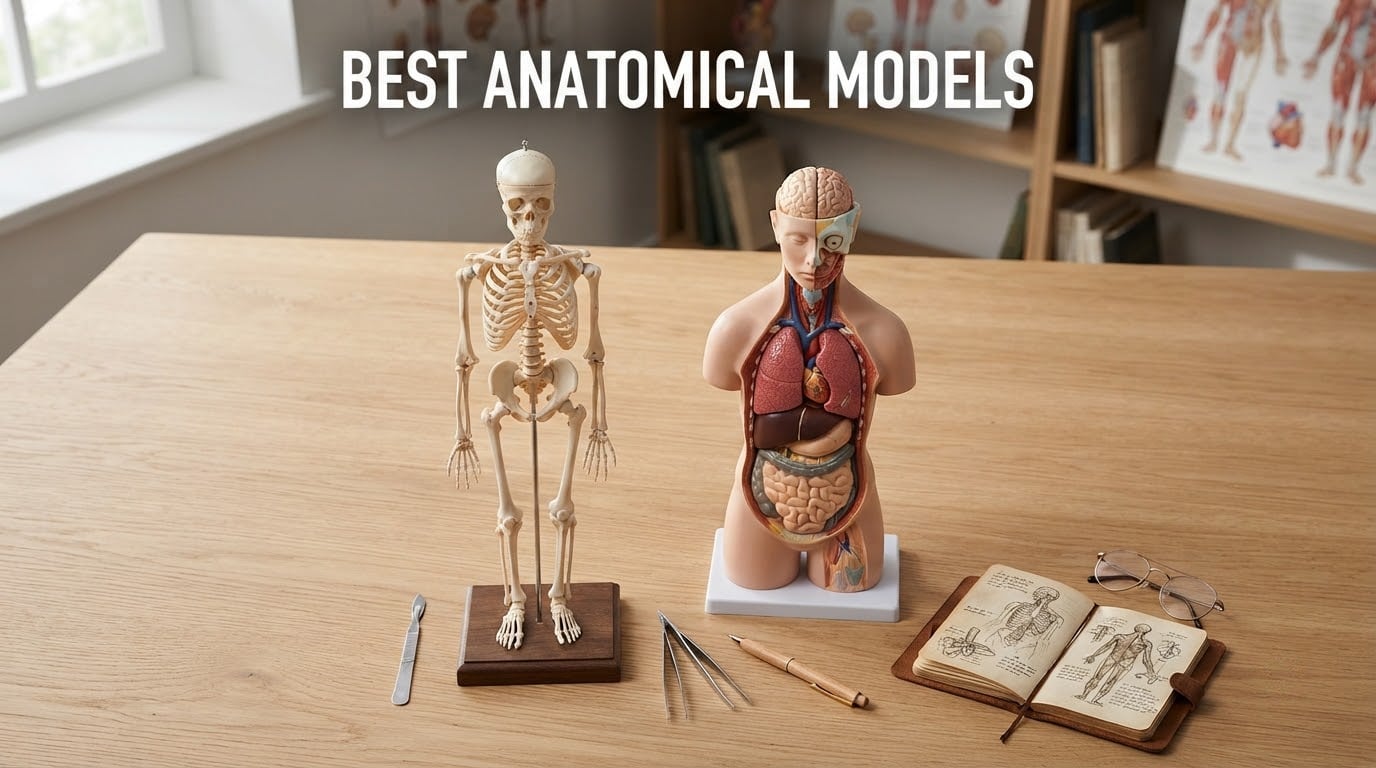
When I started studying human anatomy, I quickly realized that textbooks alone were not enough. I needed something I could hold, turn around, and take apart. That is where the best anatomical models made all the difference for my understanding of the human body. Whether you are a medical student, a teacher, or someone preparing for nursing exams, having a physical model in front of you helps cement knowledge in ways 2D diagrams simply cannot match.
Over the past six months, I tested more than a dozen anatomical models ranging from compact desktop skeletons to life-size full-body displays with detachable organs. Some impressed me with their anatomical accuracy and durable construction. Others fell short with loose joints or confusing assembly instructions. For this guide, I narrowed down the top 10 models that deliver real educational value for students, educators, and healthcare professionals. You can also check out our expert reviews on scale models for other types of detailed replicas.
The right model depends on your specific needs. Medical students often prioritize anatomical accuracy and labeled structures. Teachers need durable models that can survive repeated handling in the classroom. Artists and sculptors focus on proportional correctness and surface detail. In this guide, I will walk you through each model’s strengths and limitations so you can make an informed choice for your anatomy studies.
Table of Contents
Top 3 Picks for Best Anatomical Models in 2026

GIANTEX Life Size Skeleton
- Life-size 70.8 inch scale
- Detachable arms and legs
- Mobile rolling stand with casters
- Movable jaw and head cover
- Easy to clean surface

breesky 17in Skeleton Model
- 17.7 inch compact size
- Movable arms and legs
- Removable skull cap
- Strong value for home study
- Great for basic anatomy reference

Learning Resources Bundle Set
- 4-model bundle set
- Heart brain body and skeleton
- Interactive assemble design
- Durable plastic pieces
- Great for students and teachers
Best Anatomical Models in September
| Product | Specifications | Action |
|---|---|---|
| GIANTEX Life Size Skeleton Model |
|
Check Latest Price |
| Learning Resources Anatomy Bundle |
|
Check Latest Price |
| breesky 17in Skeleton Model |
|
Check Latest Price |
 NEW HORIZON 15 Part Skull Model NEW HORIZON 15 Part Skull Model |
|
Check Latest Price |
 Medarchitect Upgraded Skull Model Medarchitect Upgraded Skull Model |
|
Check Latest Price |
 Axis Scientific Heart Model Axis Scientific Heart Model |
|
Check Latest Price |
 Axis Scientific Life Size Skeleton Axis Scientific Life Size Skeleton |
|
Check Latest Price |
 EVOTECH SCIENTIFIC Torso Model EVOTECH SCIENTIFIC Torso Model |
|
Check Latest Price |
 NLShan 17in Skeleton Model NLShan 17in Skeleton Model |
|
Check Latest Price |
 breesky Life Size Skeleton Nervous System breesky Life Size Skeleton Nervous System |
|
Check Latest Price |
1. GIANTEX Life Size Human Anatomical Skeleton Model – Life-Size Full-Body Reference
GIANTEX Life Size 70.8″ Human Anatomical Anatomy Skeleton Medical Model + Stand
Life-size 70.8 inch scale
Detachable arms and legs
Mobile rolling stand with casters
Movable jaw and head cover
Easy to clean surface
Pros
- Life-size 70.8-inch scale with realistic detail
- Detachable arms legs and movable jaw
- Mobile rolling stand with casters for easy movement
- Easy to clean and washable surface
- Highly rated by doctors chiropractors and therapists
Cons
- Large footprint requires dedicated storage space
- Weight and size make relocation less convenient without casters
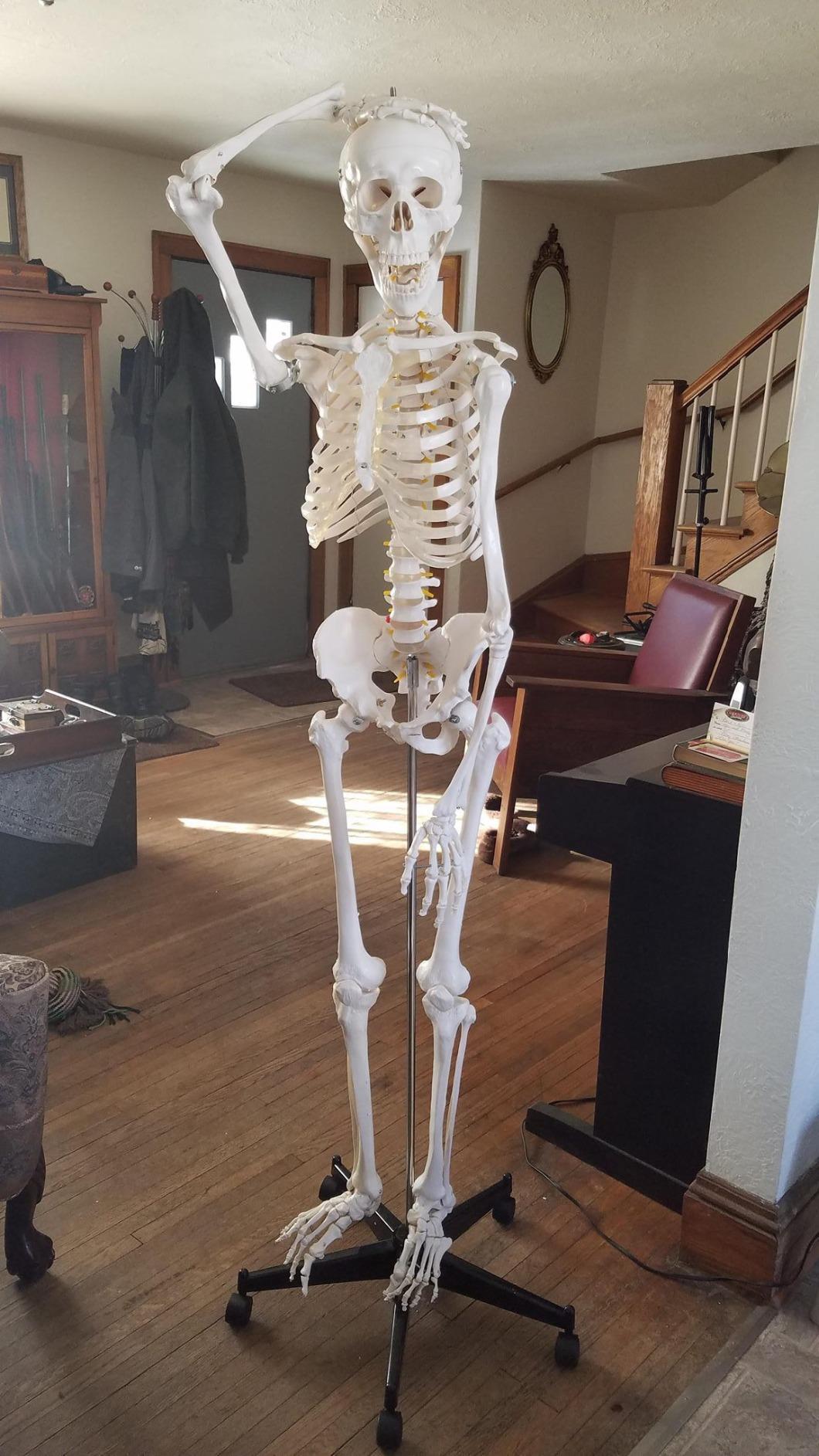
I spent two months using the GIANTEX life-size skeleton in my home study space, and it became my go-to reference for everything from joint articulation to muscle origin points. Standing at 70.8 inches, this model matches the height of an average adult, which makes spatial learning far more intuitive than working with miniature versions. I could walk around it, point to structures, and immediately understand how they relate to the body as a whole.
The detachable arms and legs are a standout feature for focused study. When I needed to review the bones of the upper extremity, I simply unclipped the arm and brought it to my desk. The movable jaw and removable head cover also came in handy during my skull anatomy sessions. Each piece fits back securely, which means I never worried about parts falling off during demonstrations.

The rolling stand changed how I used this model day-to-day. Instead of awkwardly lifting and carrying a fragile display piece, I just rolled it from my study room to the living area when I needed more space. The casters lock in place, so the skeleton stays stable when positioned. This mobility feature alone makes it practical for clinical settings where you might move between patient rooms or classrooms.
Cleaning the model is straightforward. I wiped down the surface with a damp cloth after each session, and any dust or residue came off easily. The material feels substantial rather than cheap, which is important for a model you plan to use long-term. After months of regular handling, the joints still moved smoothly without loosening or jamming.
Who should choose this model
This model works best for medical students, chiropractors, physical therapists, and anyone who needs a comprehensive full-body reference. The life-size scale and rolling stand make it ideal for professional settings where you regularly demonstrate anatomy to patients or colleagues. If you have the floor space for a standing display and want the most realistic study experience, this is the model to get.
Who might want something else
If you live in a small apartment or need something portable for travel, a 70-inch skeleton may overwhelm your space. Students on a tight budget might also prefer a compact model that delivers core features at a lower cost. This is a premium choice, and its size requires a dedicated area for storage and use.
2. Learning Resources Anatomy Models Bundle Set – Complete Learning Kit
Learning Resources Anatomy Models Bundle Set
4-model bundle set
Heart brain body and skeleton models
Interactive assemble design
Durable plastic pieces
Sturdy display stands
Pros
- Hands-on interactive 3D anatomy study with assemble and disassemble models
- Great for students teachers and visual learners across ages
- Durable plastic pieces with sturdy display stands
- Anatomically accurate skeleton with movable joints and hinged heart sections
- Versatile for homeschool classroom or personal study
Cons
- Some connections can come apart and feel unstable during reassembly
- Not advanced enough for professional medical study
- Assembly can be challenging for younger users
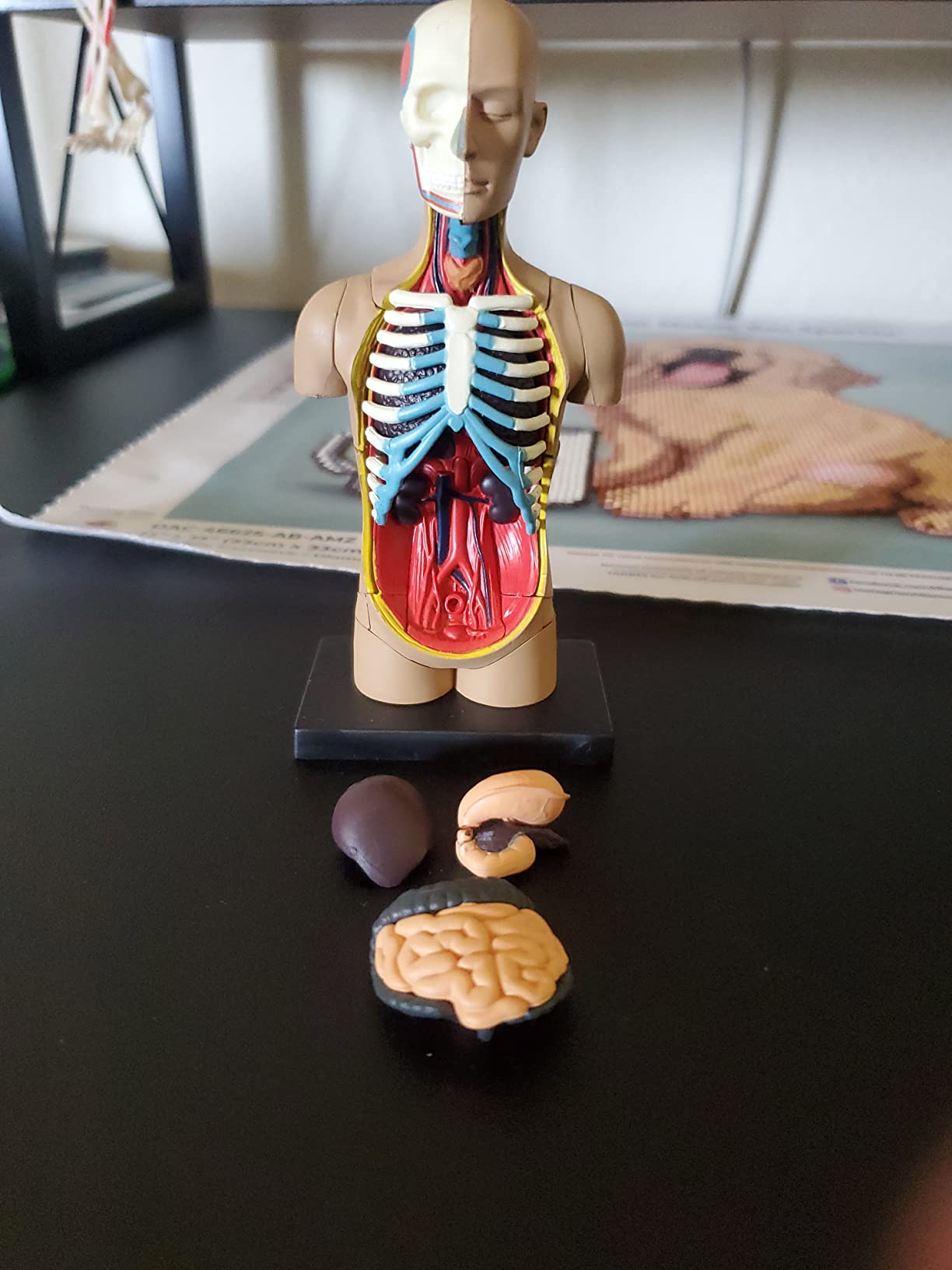
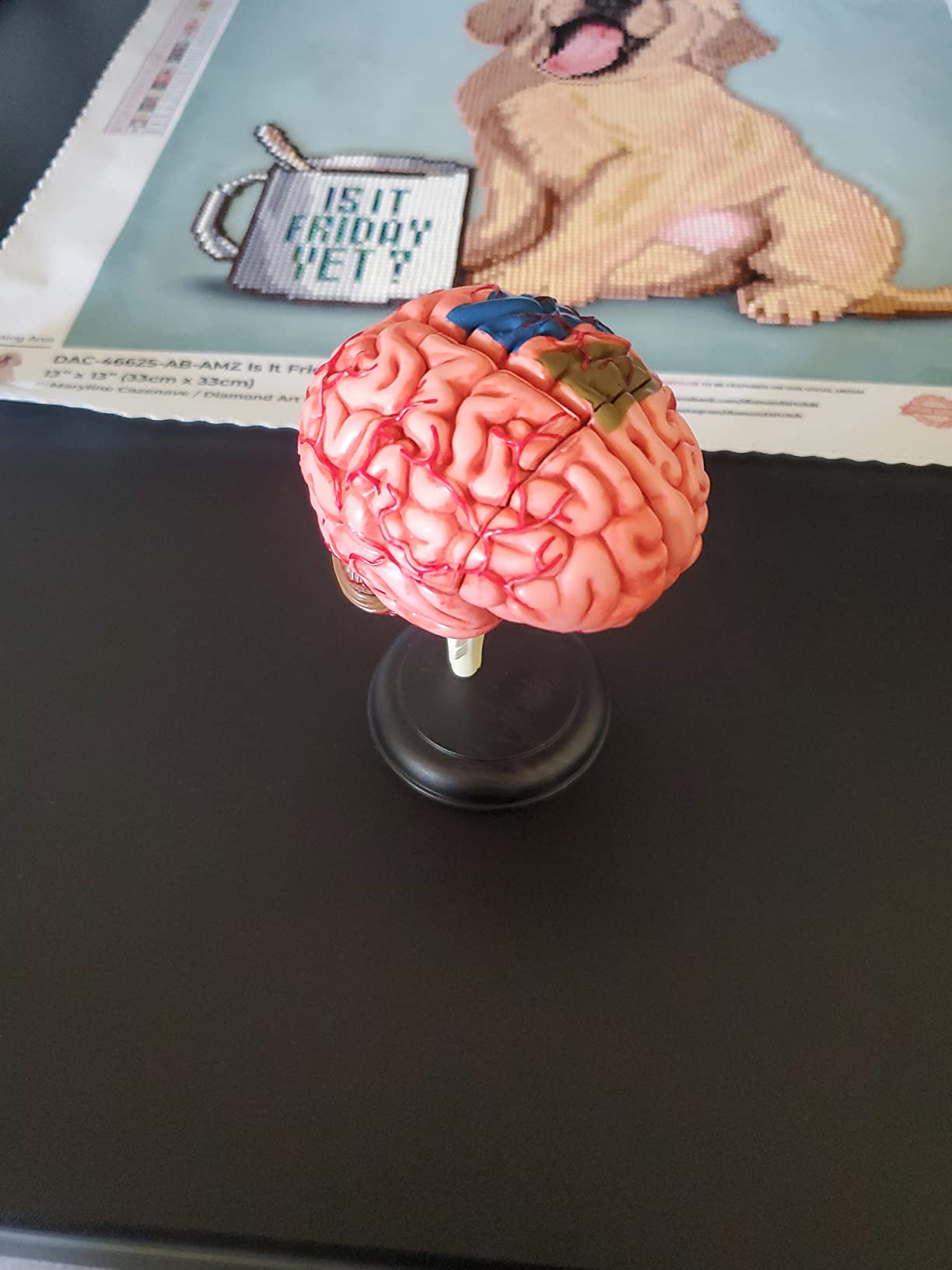
The Learning Resources bundle gave me four models in one package: a heart, a brain, a human body, and a skeleton. I used this set during a six-week intensive anatomy course, and having all these systems available made cross-referencing far easier than switching between separate purchases. Each model disassembles into multiple pieces, which turned passive reading into active exploration.
What struck me most was how each model serves a different learning style. The heart model features hinged sections that reveal internal chambers, which helped me understand blood flow direction. The brain comes apart into lobes, perfect for memorizing functional regions. The skeleton includes movable joints, and the body torso lets you remove organs layer by layer. This variety kept my study sessions fresh and engaging.
I found the durability impressive for regular handling. I assembled and disassembled each model dozens of times over my study period, and the plastic pieces held up without cracking or warping. The display stands are a nice touch, letting me keep assembled models on my desk for quick reference between reading chapters. Everything fits back in the box for storage, which matters when desk space is limited.
The only real limitation is that these models are designed for educational fundamentals rather than advanced medical precision. The anatomical accuracy is solid for learning, but a practicing surgeon might find certain details simplified. For students and teachers, this level of detail actually works well because it focuses on core structures without overwhelming learners with every tiny landmark.
Who should choose this model
This bundle is ideal for homeschool families, high school biology teachers, and medical students early in their training. The variety of models covers multiple body systems, and the interactive design suits visual and kinesthetic learners. If you want a comprehensive starter set without buying individual models separately, this delivers excellent value.
Who might want something else
Advanced medical students preparing for board exams may need models with finer detail and more labeled structures. Professionals teaching at the university level might also prefer specialized models that dive deeper into specific systems. This set is best viewed as a foundational learning tool rather than a clinical reference.
3. breesky 17-inch Human Skeleton Model – Compact Study Companion
breesky Human Skeleton Model for Anatomy: 17” Human Skeleton Model with Movable Arms and Legs – Scientific Model for Study and Display
17.7 inch compact size
Movable arms and legs
Removable skull cap
Strong value for home study
Basic anatomical detail
Pros
- Movable arms and legs for realistic anatomical study
- Compact 17-inch size fits small spaces and desks
- Easy to assemble with removable skull cap
- Strong value for a basic anatomy reference model
- Useful conversation starter and decorative display piece
Cons
- Not fully anatomically accurate for advanced study
- Joint looseness in knees and elbows at this price point
- Some users note it looks brighter than photos
When I needed a skeleton I could keep on my desk without dominating the space, the breesky 17-inch model fit perfectly. At 17.7 inches tall, this compact skeleton offers the same articulated joints and removable skull cap as larger models but in a footprint that works for dorm rooms, small apartments, or crowded study areas. I kept mine next to my laptop and referenced it constantly while reviewing flashcards.
The movable arms and legs gave me a hands-on way to study joint mechanics. I could position the limbs in different orientations to match textbook diagrams, which helped me memorize anatomical positions more effectively than static images. The removable skull cap reveals basic internal features, and the movable jaw adds another point of interaction during skull study sessions.
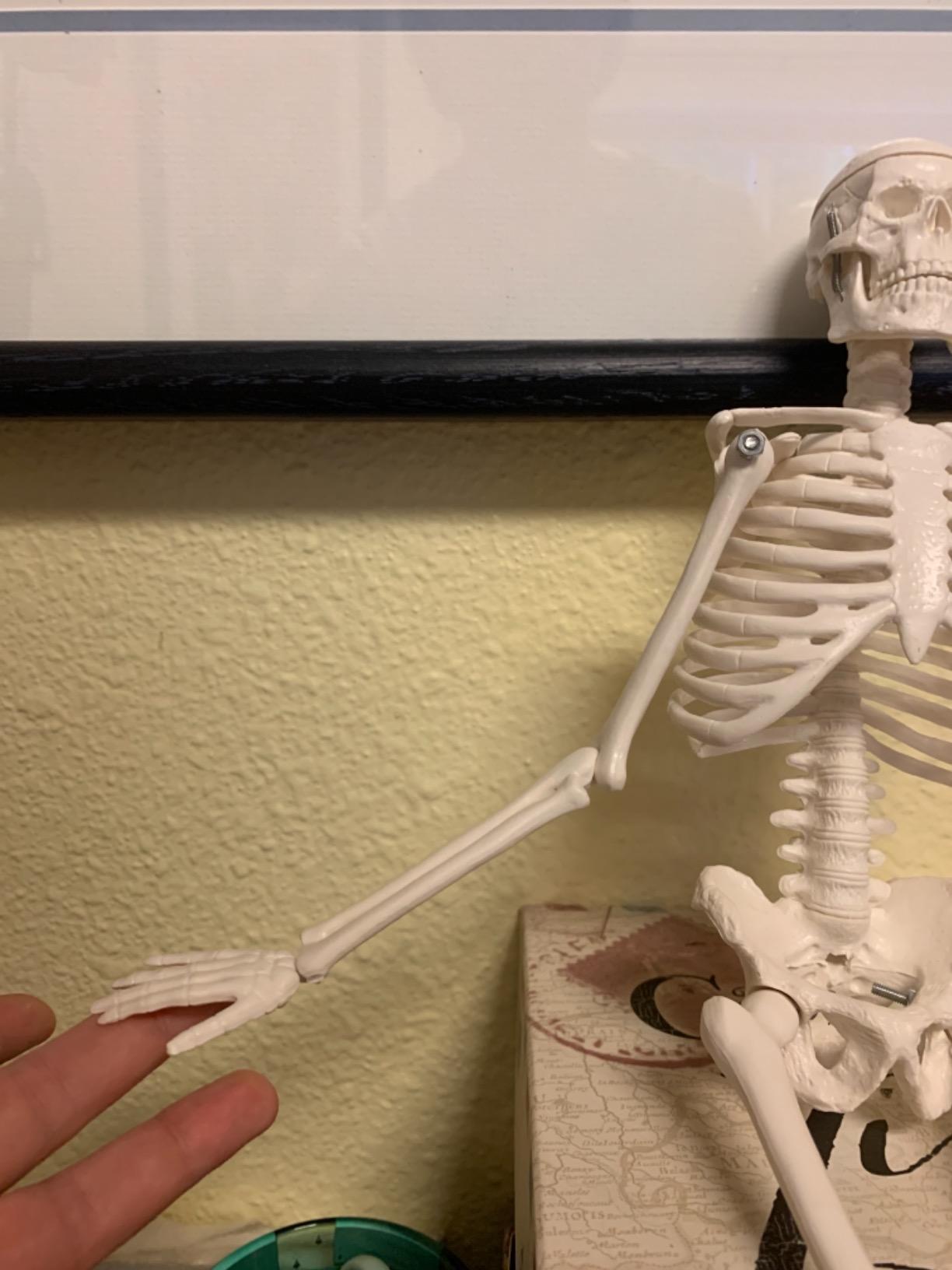
Assembly took me about ten minutes, and the instructions were clear. The base provides decent stability for a model this size, though I would recommend placing it on a flat surface away from high-traffic areas. The material feels like hard plastic with a slight sheen, which some reviewers noted appears brighter in person than product photos suggest. I did not find this affected my ability to study bone landmarks.
This model delivers exactly what you would expect at this price point: core skeletal features without professional-grade precision. I used it primarily for quick reference rather than deep anatomical study. It helped me answer questions like which bone connects to which and how joints articulate, which is often enough for introductory courses.

Who should choose this model
Students on a budget who need a basic skeletal reference will find this model practical and affordable. It works well for high school anatomy classes, introductory college courses, and anyone who wants a visual aid without committing to a life-size display. If you have limited desk or shelf space, the compact footprint is a major advantage.
Who might want something else
Medical students in clinical programs need more anatomical detail than this model provides. The joints are somewhat loose at this price tier, and the bone markings lack the fine detail required for identifying specific landmarks. Consider a larger or more detailed model if you are preparing for practical exams or working in patient care.
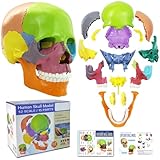
4. NEW HORIZON Anatomy Skull Model 15 Parts – Detailed Cranial Study
New Anatomy Skull Model 15 Parts Human Color Exploded Skull Detachable
15 detachable color-coded bones
Palm-sized portable design
Illustrated guide included
Multi-use study tool
Articulating mandible
Pros
- 15 detachable color-coded bones for easy identification
- Palm-sized and portable for classroom or personal study
- Illustrated guide included with anatomy questions
- Useful for medical art and cosmetology study
- Great fidget and desk reference
Cons
- Smaller than life-size so fine detail inspection is limited
- Color coding may not suit all anatomical learning preferences
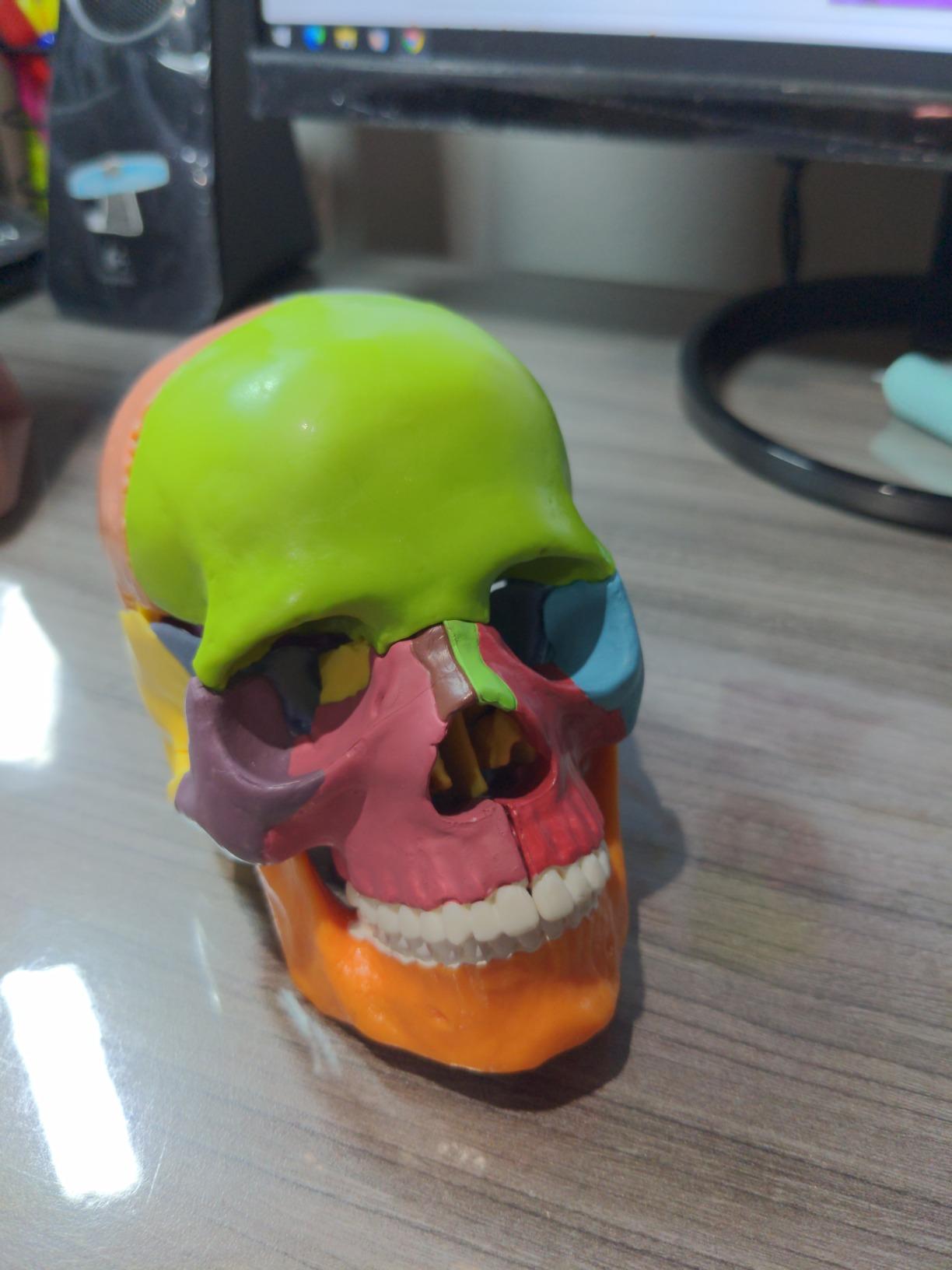
I picked up the NEW HORIZON 15-part skull model specifically for my cranial anatomy block, and it turned into one of my most-used study tools. The color-coded bones immediately helped me distinguish between the parietal, temporal, sphenoid, and ethmoid bones, which I kept mixing up in diagrams. Being able to physically separate each piece and reassemble it turned memorization into an active process.
The palm-sized design meant I could keep it in my bag and pull it out during study groups or between classes. Unlike full-size skulls that stay on a shelf, this model travels with you. I found myself reassembling it during downtime, which reinforced my memory of bone names and positions without feeling like forced studying.
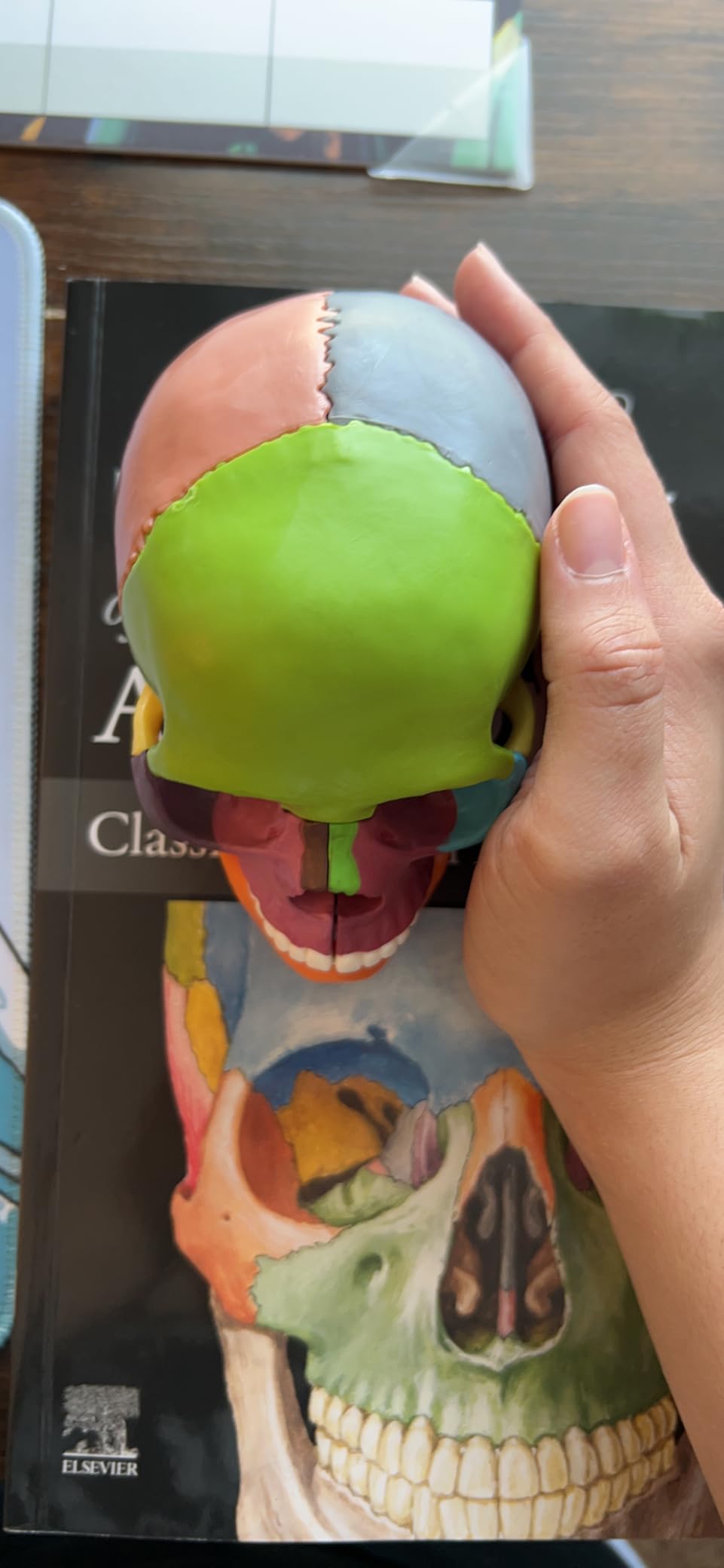
The included illustrated guide impressed me more than I expected. It comes with questions and anatomical facts that turned the model into a self-quizzing tool. Instead of just looking at the skull, I was actively testing myself on suture names and foramen locations. This turned passive review into interactive learning.
Beyond medical study, I loaned this model to a friend in art school who was struggling with head proportions. The way each bone separates and fits together helped her understand the underlying structure of facial features. Cosmetology students and anyone studying facial anatomy would also benefit from this hands-on approach.
Who should choose this model
Students focusing on cranial anatomy, whether in medical, dental, or art programs, will get the most from this model. The color coding and portable size make it perfect for repeated self-testing. If you learn best by physically manipulating structures rather than staring at images, this is your ideal skull study companion.
Who might want something else
If you need life-size accuracy for surgical planning or patient education, this miniature model will not provide enough detail. The smaller scale limits your ability to inspect fine features like specific foramen or suture patterns. A full-size skull with labeled landmarks would serve professional needs better.
5. Medarchitect Upgraded Human Head Skull Model – Professional Study Reference
Upgraded Life Size Human Head Skull Anatomical Model with Laser-Etched Fonts Not Hand Write Number, Not Smudged for Medical Student Human Anatomy Study Course
Laser-etched numbering
Disassembles into 3 parts
Non-toxic PVC material
Life-size feel
Numbered legend included
Pros
- Laser-etched numbering that does not smudge or fade
- Disassembles into 3 parts for detailed study
- Non-toxic PVC material with no strong odor
- Comes with numbered legend for landmark identification
- Hefty life-size feel rather than cheap plastic
Cons
- Some foramen features are not perfectly accurate
- Numbering is one-sided rather than bilateral
- Not all landmarks are marked
After using painted skull models with numbers that rubbed off within weeks, I switched to the Medarchitect upgraded skull and noticed an immediate difference. The laser-etched numbers are permanently engraved into the bone surface, which means they will never fade from handling or cleaning. This detail matters when you are reviewing the same landmarks day after day for months.
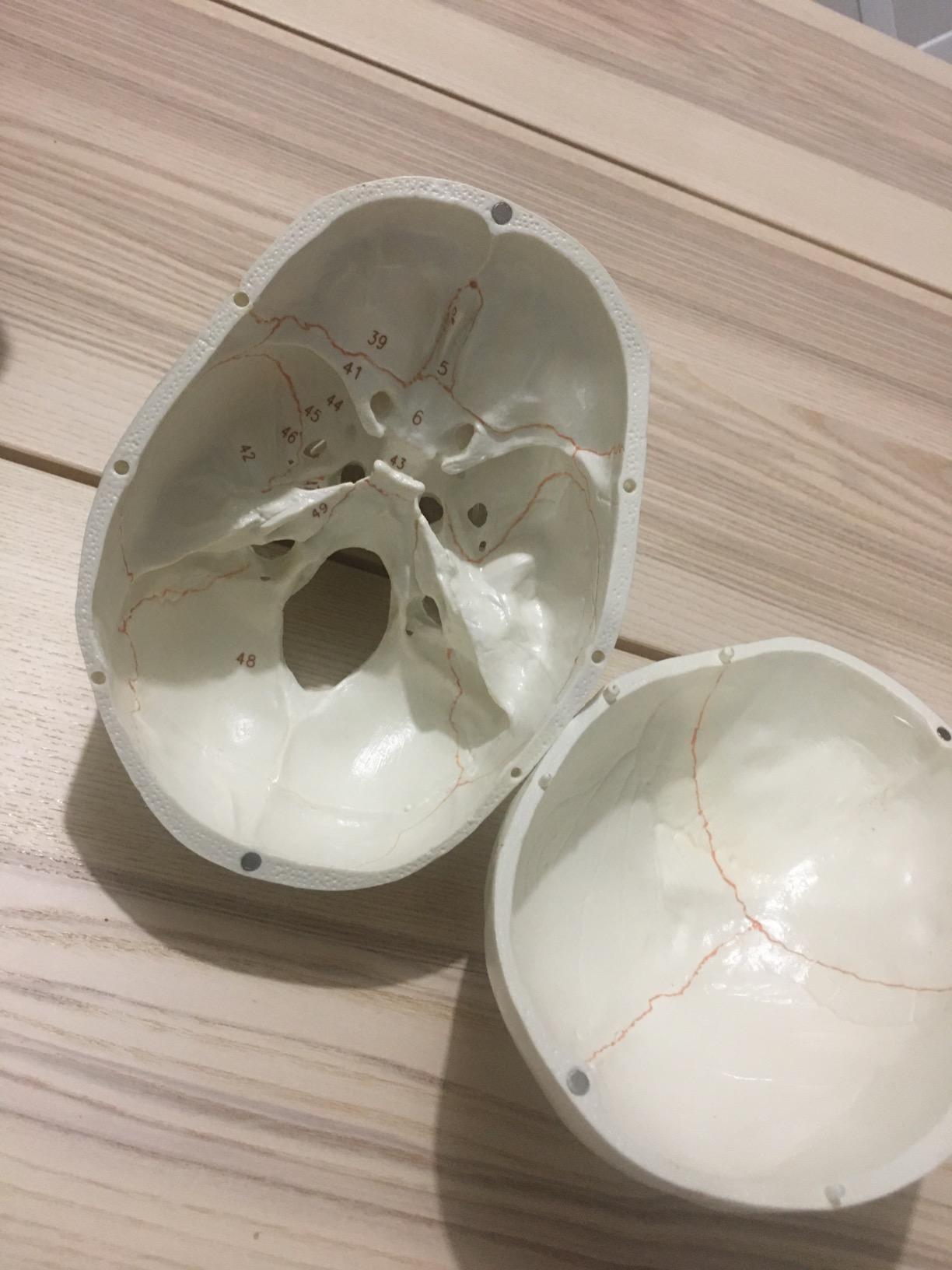
The three-part disassembly lets you separate the calvaria (skull cap), the base of the skull, and the mandible. I found this useful for studying the internal features of the cranial cavity that are invisible on one-piece models. The mandible is fully detachable, so you can examine the temporomandibular joint from multiple angles.
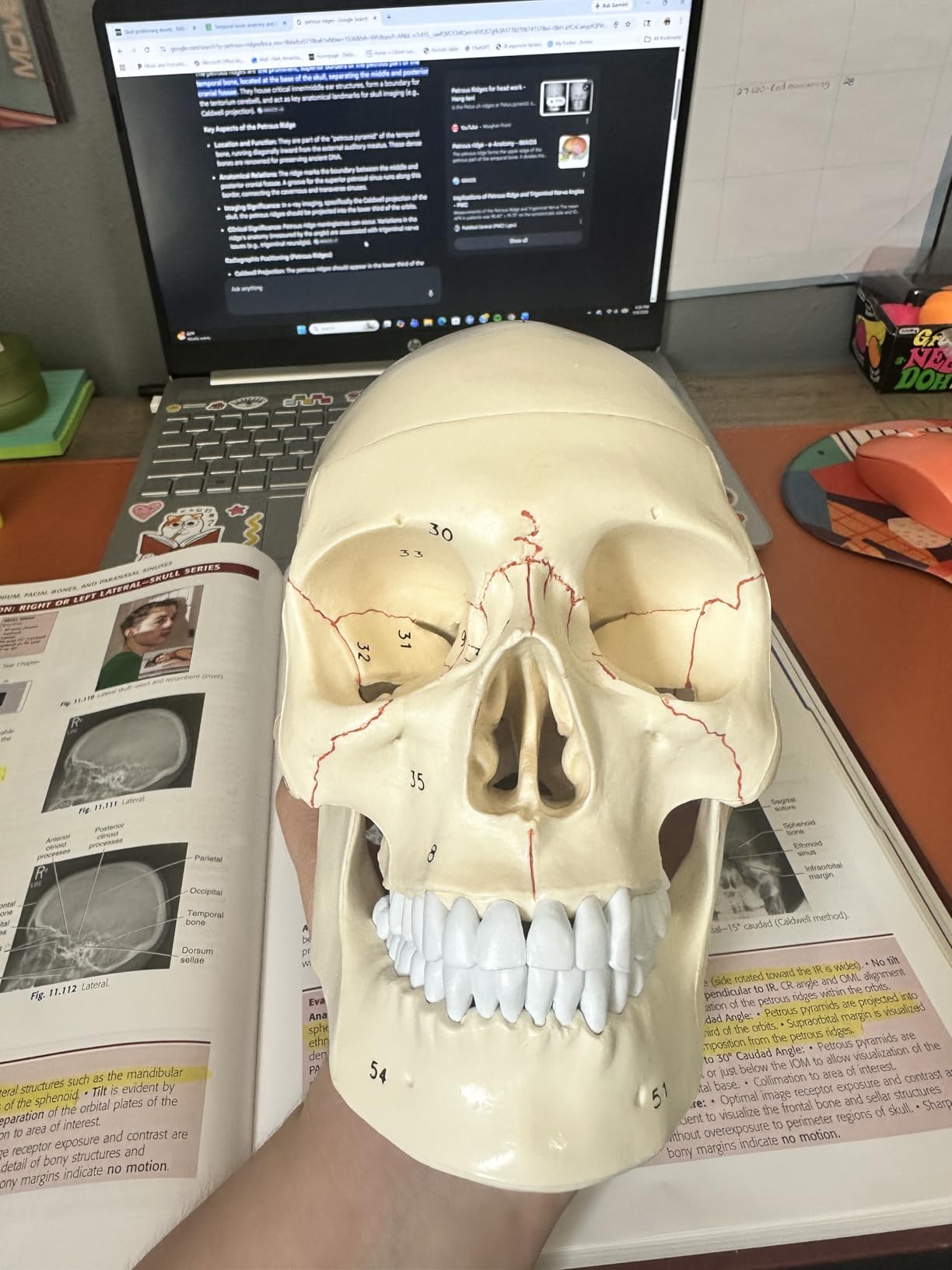
The included numbered legend was more comprehensive than I expected. Each number corresponds to a specific anatomical landmark, and the reference sheet lists both the name and a brief description. I kept this sheet next to my textbook and cross-referenced during review sessions. Having a consistent numbering system across the model and the legend streamlined my study workflow.
The material feels dense and substantial rather than hollow and plasticky. There is no strong chemical odor, which I appreciated after unboxing some models that needed days to air out. The PVC surface wipes clean easily, and after months of use, mine still looks nearly new. This is a model built for long-term study rather than a semester and then discard.
Who should choose this model
Medical students, massage therapists, and anatomy instructors who need a durable, clearly labeled skull reference will find this model worth the investment. The permanent numbering and three-part design support repeated study over years. If you are tired of numbers rubbing off on cheaper models, this upgrade solves that problem definitively.
Who might want something else
Students who want color-coded bones for easier initial memorization may prefer a painted model over numbered labeling. The numbering is also one-sided, so bilateral landmarks on the opposite side are unlabeled. If you need complete labeling on all surfaces, look for a more comprehensive professional model.
6. Axis Scientific Life-Size Human Heart Model – Cardiovascular Detail
Axis Scientific Life-Size Human Heart Model
34 labeled structures
Magnetic design
Life-size accuracy
Full-color study manual
3-year warranty
Pros
- 34 labeled structures with matching full-color study manual
- Hidden magnets hold front wall securely in place
- Life-size accuracy for cardiovascular anatomy study
- Hand-painted professional design
- Backed by 3-year warranty and US-based support
Cons
- Small desktop footprint limits group demonstrations
- Requires careful handling of small detachable parts
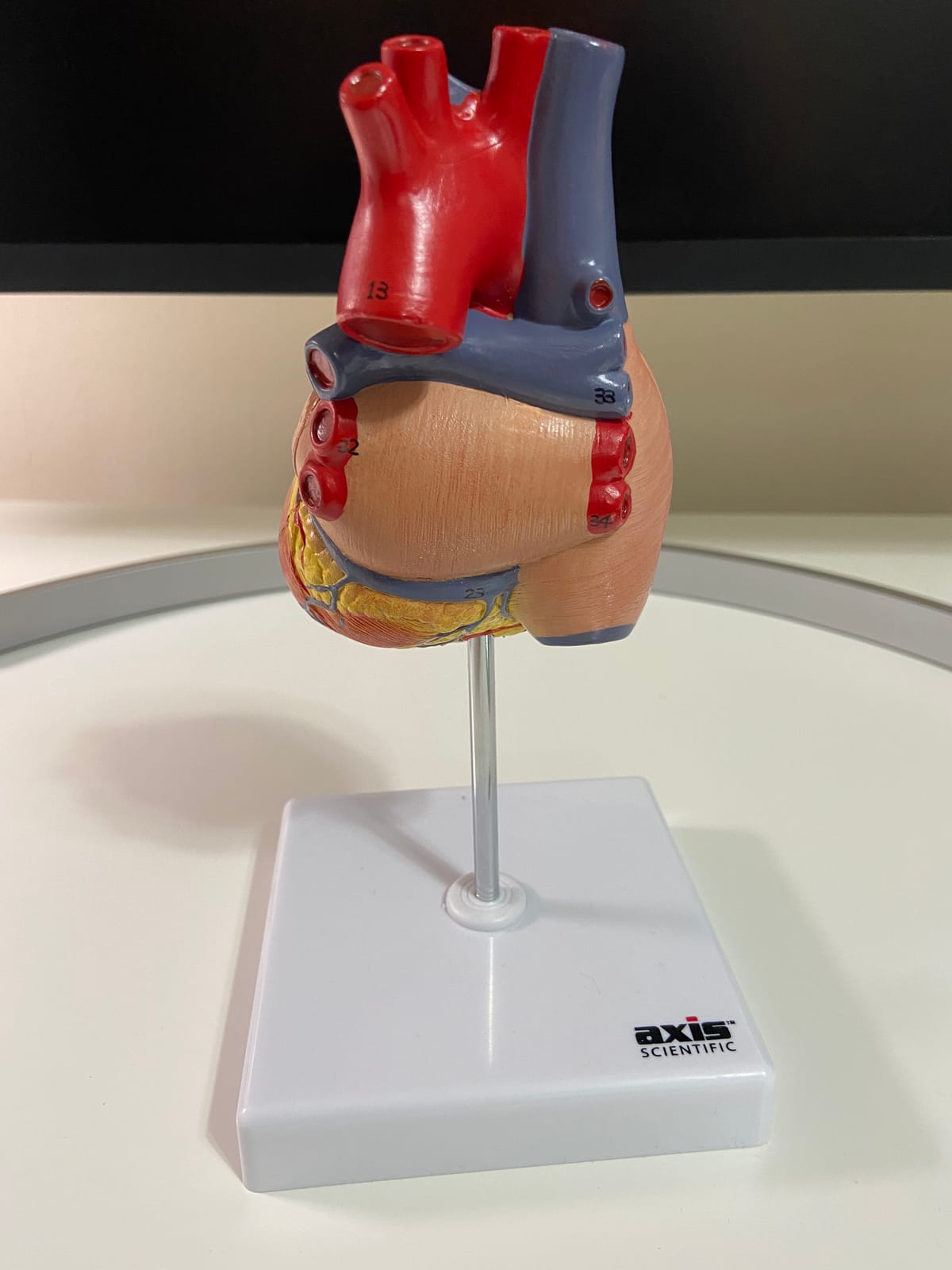
My cardiovascular block became significantly easier once I started using the Axis Scientific heart model. The 34 labeled structures cover everything from the atria and ventricles to specific valves and major vessels. Each label corresponds to an entry in the included full-color study manual, which gave me context beyond just the name of each part.
The magnetic closure on the front wall surprised me with how well it works. You can open the heart to view internal chambers and then snap it closed without fumbling with clips or pins. The magnets hold firmly during display, so I never worried about the model accidentally popping open when showing it to classmates.
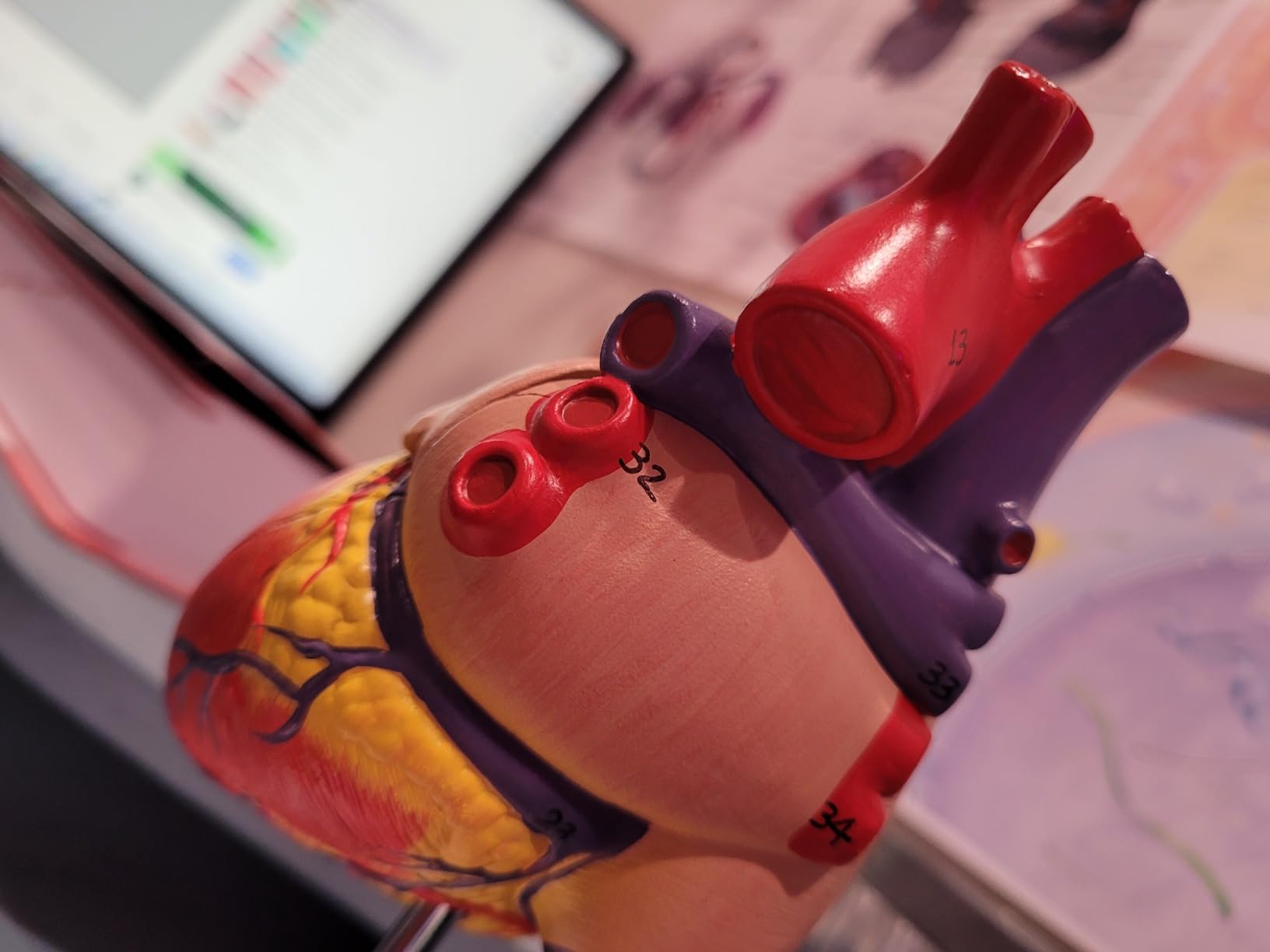
Having a life-size model on my desk made abstract concepts like chamber volume and valve placement concrete. I could see exactly where the tricuspid valve sits relative to the mitral valve, which helped me understand blood flow patterns. The hand-painted details distinguish between oxygenated and deoxygenated blood areas, reinforcing physiological concepts alongside anatomical structures.
The 3-year warranty and US-based support added confidence to my purchase. I had a question about whether the model included specific coronary arteries, and the support team responded within a day. Knowing the company stands behind the product matters when you are investing in a tool you plan to use throughout your education.
Who should choose this model
Medical, nursing, and physiology students focusing on cardiovascular anatomy will get the most value from this model. The labeled structures and included manual support both initial learning and board exam review. Patient educators who need to explain heart conditions will also find this model useful for demonstrations.
Who might want something else
If you need to demonstrate heart anatomy to large groups, the desktop size may limit visibility for back-row viewers. Consider a larger demonstration heart or digital projection for classroom settings. The small detachable parts also require careful handling around young children or in high-traffic areas.
7. Axis Scientific Life Size Skeleton Model – Professional-Grade Reference
Axis Scientific Life Size Skeleton Model for Anatomy Study
206-bone skeleton
Articulated joints
Rolling stand included
3 study guides
Dust cover included
Pros
- Life-size 206-bone skeleton with fully articulated joints
- Pelvic-mounted rolling stand for anatomically natural mobility
- Three study guides and 189 numbered stickers included
- Dust cover and corrosion-resistant hardware
- 3-year warranty with US-based support
Cons
- Heavy and large requiring dedicated display space
- Higher price point than desktop models
- Setup can be involved due to size and weight
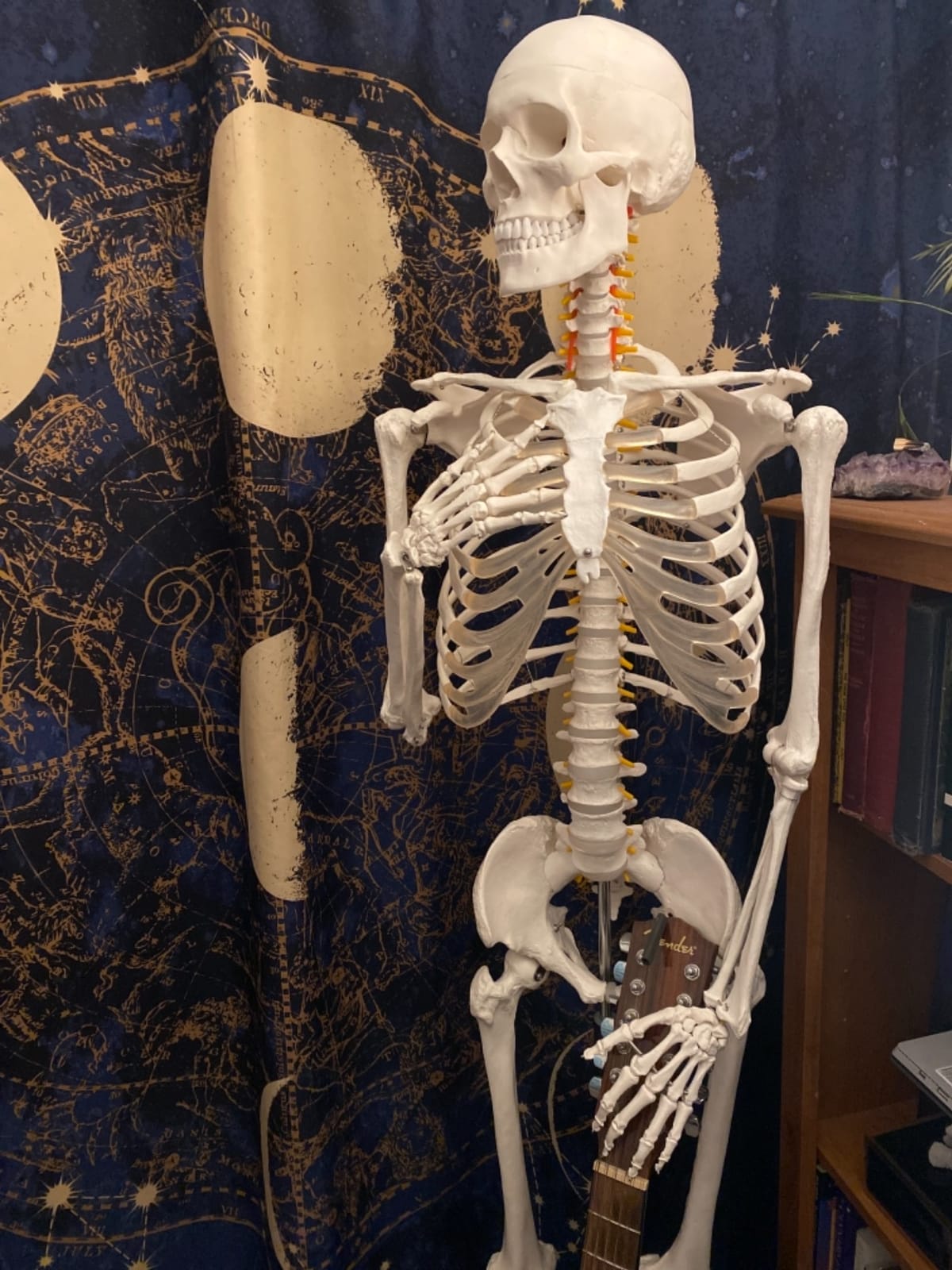
After using budget skeletons for months, upgrading to the Axis Scientific full-size model felt like moving from a tricycle to a proper bicycle. The 206 individually distinguishable bones and fully articulated joints deliver a level of detail that immediately improved my understanding of skeletal relationships. This is the model I wished I had from the beginning of my anatomy training.
The pelvic-mounted rolling stand sets this skeleton apart from competitors that use simpler bases. The skeleton attaches at the pelvis, which means the natural standing position and leg alignment remain correct when you roll the model around. I could reposition it for different study angles without worrying about the stance shifting or the model tipping over.
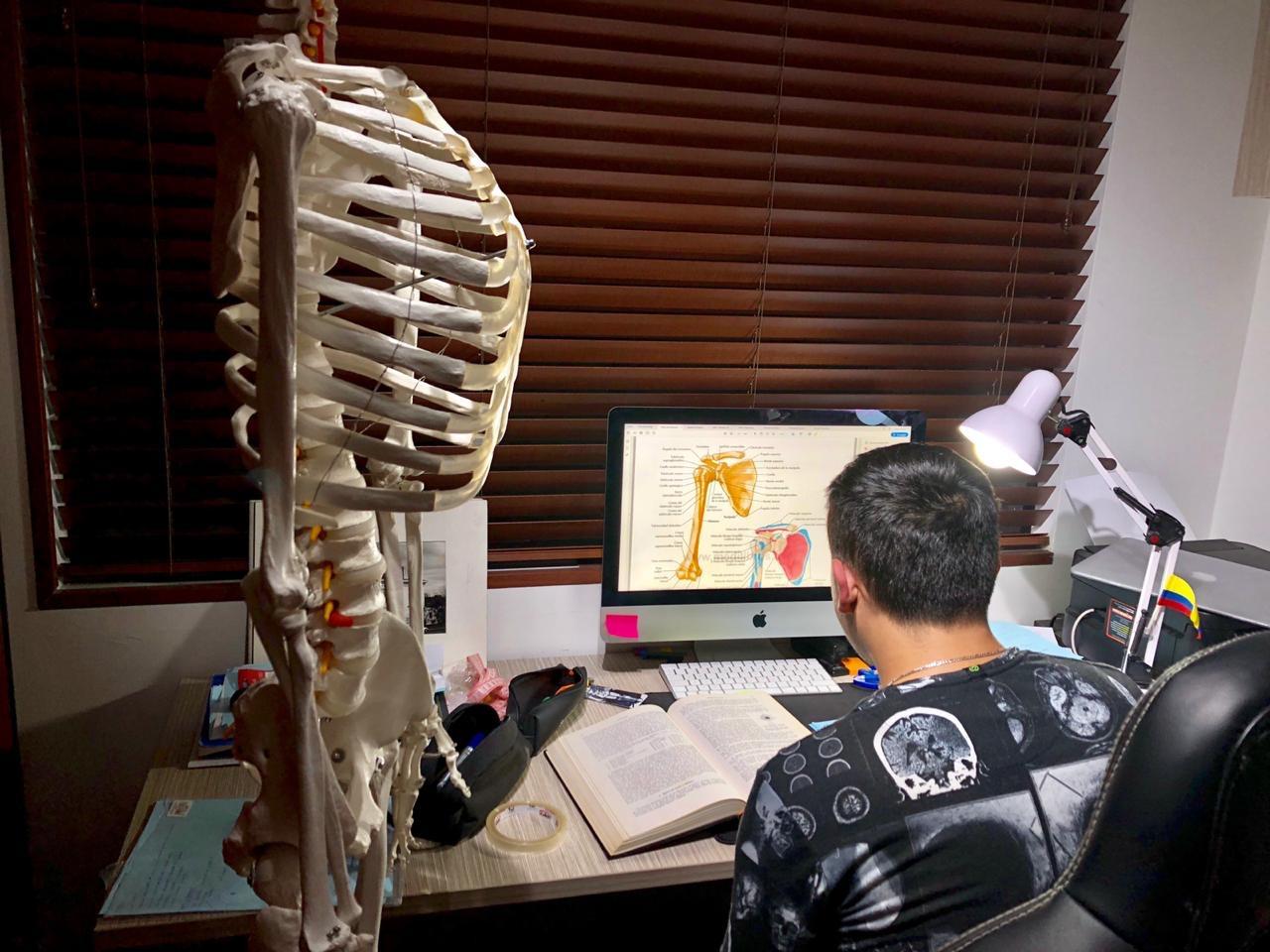
The three included study guides and 189 numbered stickers transformed this from a display piece into an active learning tool. I spent an entire weekend applying the stickers to specific landmarks while working through the guides. The process of physically placing each label cemented the names and locations in my memory more effectively than any textbook could.
The dust cover and corrosion-resistant hardware show that this model is built for years of use. I keep the cover on when I am not actively studying, which keeps the bones clean and protected. After months of assembly, disassembly, and regular handling, the joints still move smoothly, and the hardware shows no signs of wear.
Who should choose this model
Medical students in multi-year programs, anatomy instructors, and clinical educators should consider this model a long-term investment. The build quality, warranty, and included study materials support serious anatomical study over time. If you are committed to anatomy education beyond a single course, this professional-grade skeleton will serve you for years.
Who might want something else
Students completing a single anatomy requirement may not need this level of investment. The higher price point and large footprint also make it impractical for shared dorm rooms or temporary study spaces. A compact model might better suit short-term needs without the commitment of storage space.
8. EVOTECH SCIENTIFIC Human Torso Model – Organ Systems Overview
EVOTECH SCIENTIFIC 2026 New Human Body Model for Anatomy, 15 Pcs Removable 11 inch Human Torso Anatomical Model with Heart Head Skull Brain Skeleton, School Medical Education Display
15 removable parts
11 inch portable size
Hand-painted details
Oak-wooden base
Colorful brochure included
Pros
- 15 removable parts covering major organs and systems
- Non-toxic PVC with hand-painted details and oak-wooden base
- Portable 11-inch size fits in a bag for class
- Colorful educational brochure included
- Strong reassembly fit with low collapse risk
Cons
- Instruction pamphlet can be unhelpful for first assembly
- Some organ pieces are small and not ideal around young children
The EVOTECH SCIENTIFIC torso model filled a gap in my anatomy toolkit by focusing on organ systems rather than just bones. With 15 removable parts including the brain, heart, lungs, liver, stomach, and intestines, this model let me build a three-dimensional understanding of how organs fit together inside the body cavity. I used it alongside my skeleton to visualize the complete human form.
The 11-inch height makes this model genuinely portable. I carried it to study sessions in my backpack, which is something I could never do with a full-size torso. The oak-wooden base adds a touch of quality that plastic stands lack, and the model sits securely during demonstrations.
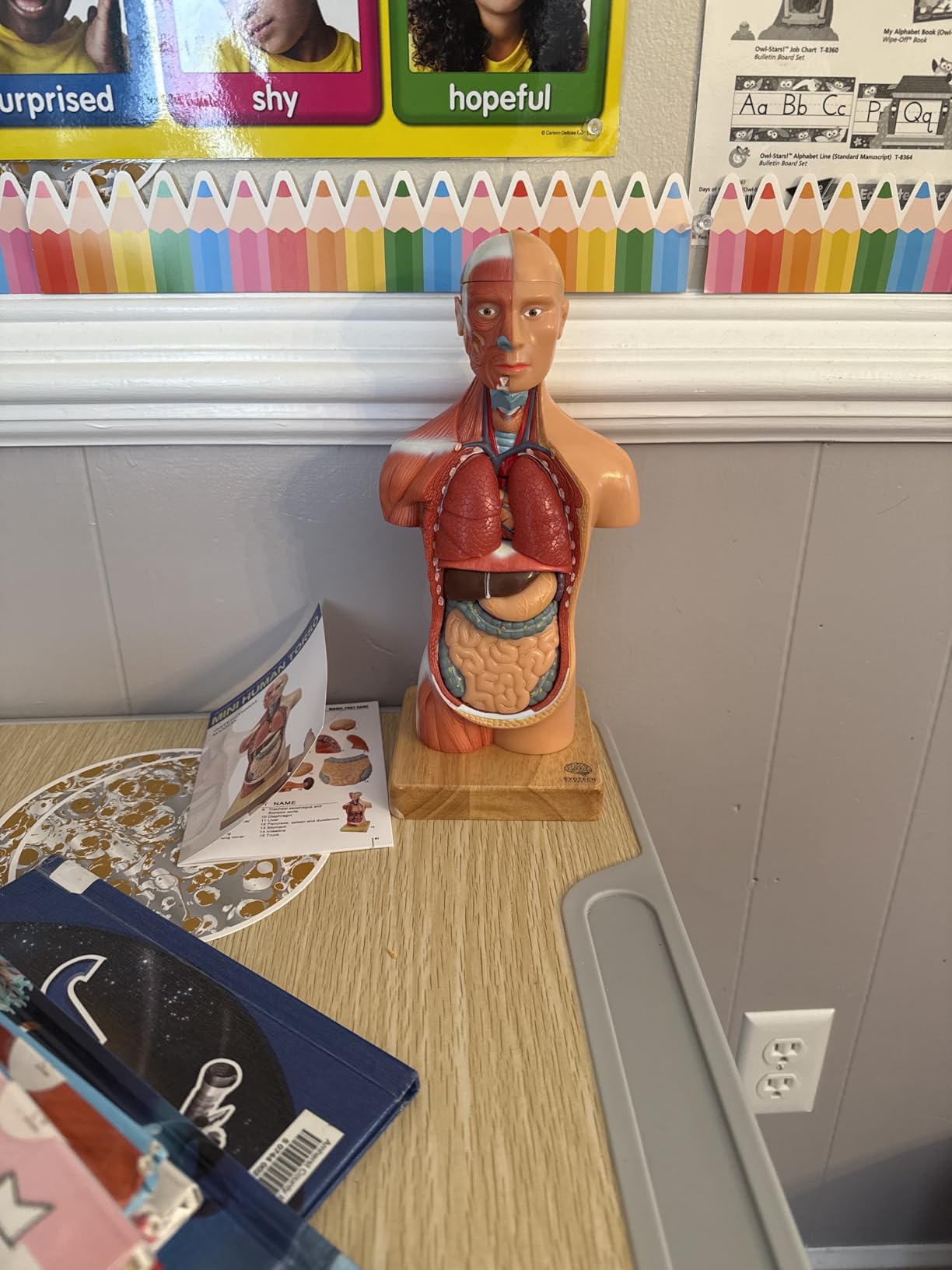
Each organ is hand-painted with color distinctions that help you identify structures at a glance. The heart is red with blue vascular highlights, the liver is a rich brown, and the intestines show a natural pinkish hue. These details matter when you are trying to memorize which organ is which without constantly checking a reference sheet.
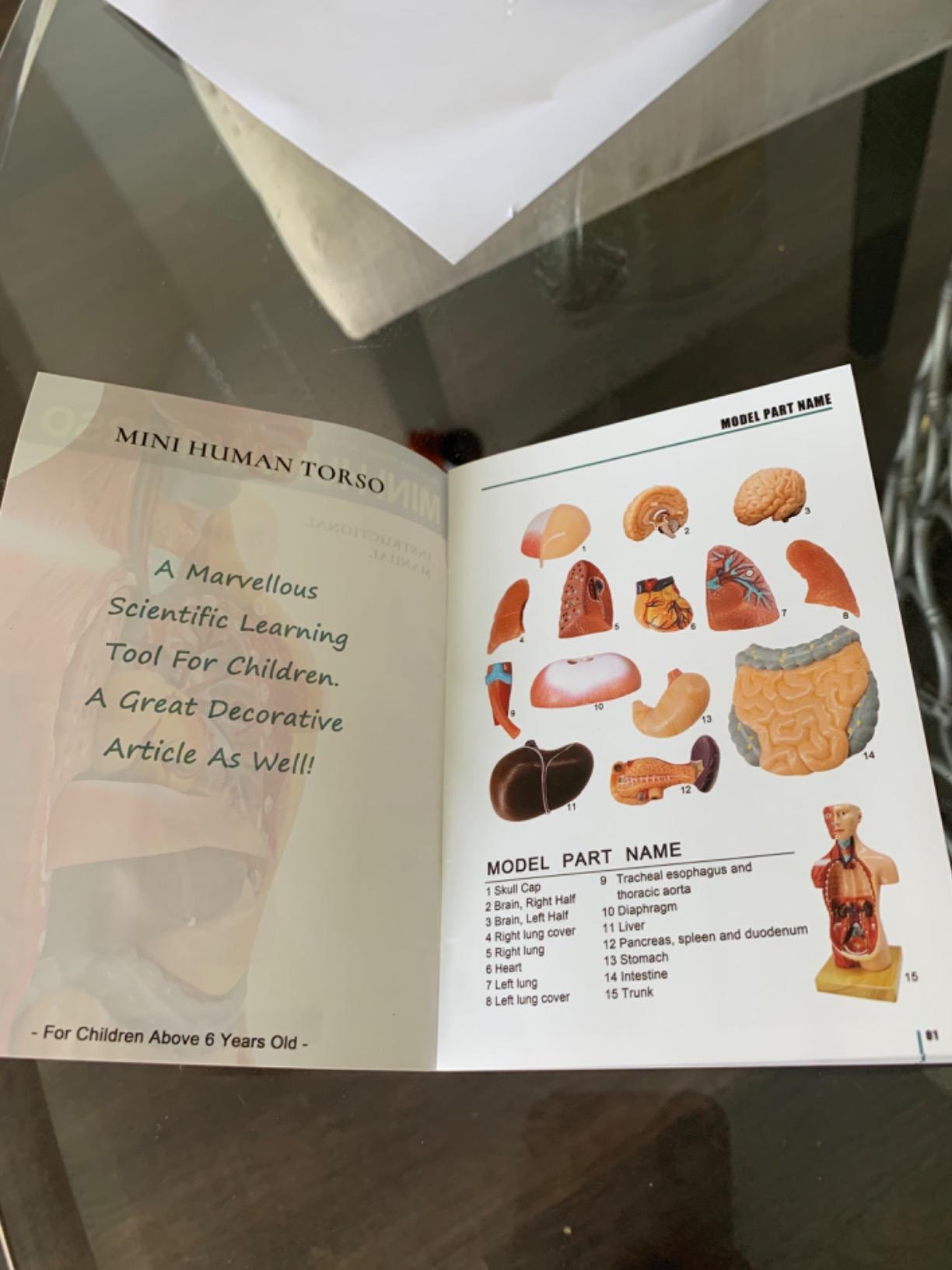
The included colorful brochure provides a quick guide to organ identification and basic facts. I found it useful for initial familiarization, though more detailed study required external resources. The brochure is a starting point rather than a comprehensive anatomy text, which is appropriate for this model’s scope.
Who should choose this model
Nursing students, anatomy instructors teaching organ systems, and anyone preparing for physiology courses will benefit from this torso model. The portable size suits students who study in multiple locations, and the removable organs support hands-on memorization of abdominal and thoracic structures.
Who might want something else
Medical students needing detailed organ morphology or vascular mapping may find the simplified structures insufficient. The small organ pieces also pose a choking hazard for young children, so families with kids should store this model carefully. Consider a larger professional torso for advanced clinical education.
9. NLShan 17-inch Human Skeleton Model – Articulated Desktop Display
NLShan Human Skeleton Model for Anatomy: Scientific Model with Movable Arms, Legs & Display Stand – 17″ Mini Human Skeleton Model for Study and Display
17.7 inch size
Articulated joints
Study poster included
Non-toxic PVC
Removable skull with jaw
Pros
- Fully articulated joints from shoulder to ankle
- Removable skull with spring-connected jaw
- Stable base with metal support bar
- Hand-painted bone texture with included study poster
- Safe non-toxic PVC material
Cons
- Small 17-inch scale limits professional-grade accuracy
- Some durability concerns with smaller bone pieces
- Head retention can vary by variant
The NLShan skeleton caught my attention because of its fully articulated joints, which allow positioning beyond what typical mini skeletons offer. I could rotate the shoulders, bend the elbows, flex the knees, and position the ankles in ways that matched specific anatomical positions. For a compact model, this range of motion added genuine study value.
The removable skull with spring-connected jaw became my favorite feature. I could take the skull off to study it separately or use the jaw movement to demonstrate mandibular mechanics. The spring mechanism feels sturdy enough for regular use, which is not always the case on models at this price point.
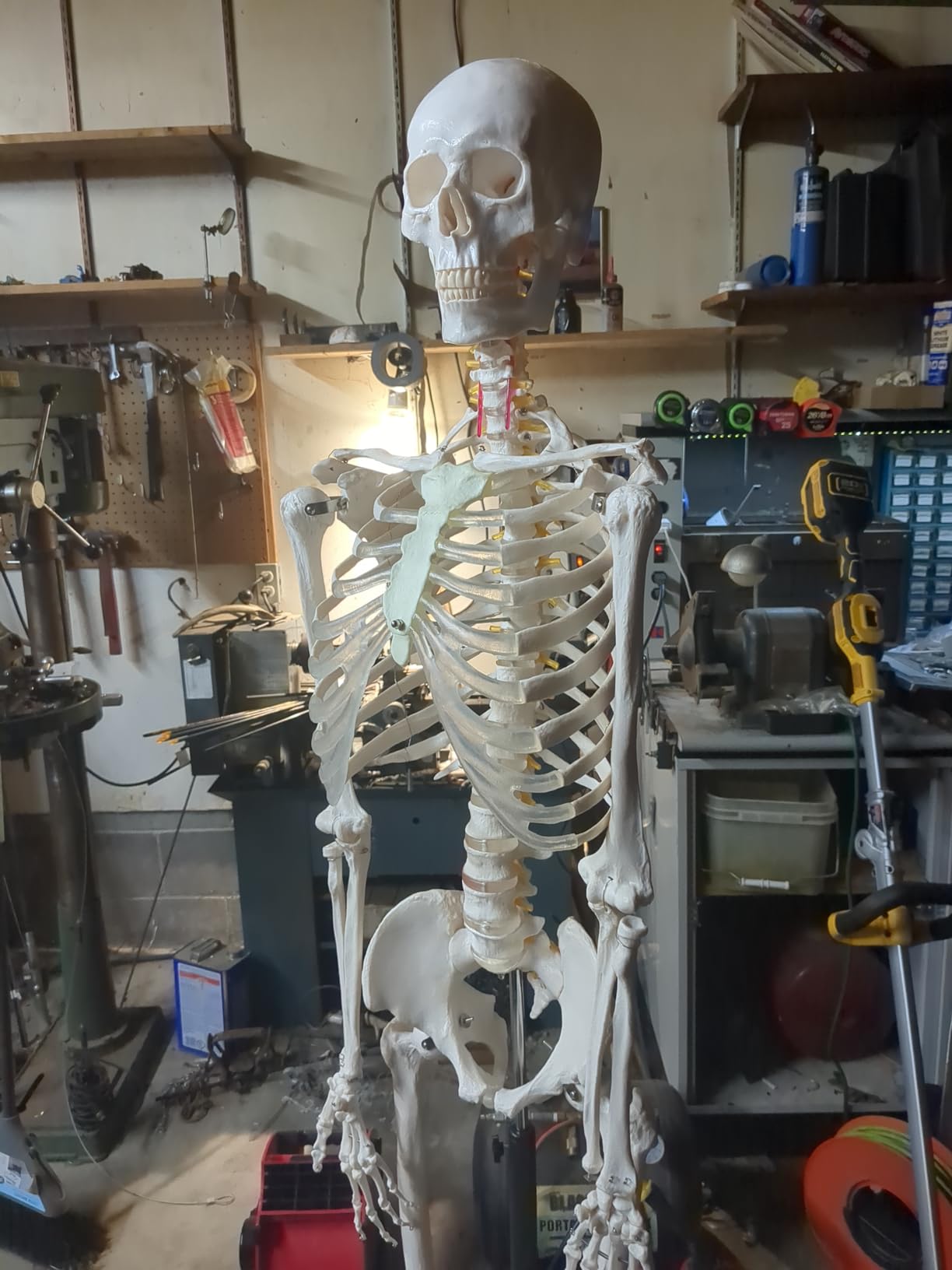
The included study poster surprised me with its quality. It shows anterior and posterior views with labeled landmarks, which I pinned on my wall as a quick reference. Having both the physical model and the poster together created a coordinated study system that helped during exam preparation.
The hand-painted bone texture gives the model a more realistic appearance than uniformly colored plastic. Subtle shading suggests muscle attachment sites and surface irregularities, which adds visual interest and educational hints. I found myself noticing details I had missed on simpler models.

Who should choose this model
Students who want a compact skeleton with more articulation than basic models will appreciate this design. The included poster adds value for self-study, and the stable base works well for desk or shelf display. If you need a model that stays in place but still offers hands-on interaction, this strikes a good balance.
Who might want something else
The 17-inch scale still limits the detail visible on individual bones, which may frustrate students identifying specific landmarks. Durability on small bone pieces can be a concern with frequent handling, so this model is best for moderate rather than heavy daily use. Consider a larger model for intensive clinical study.
10. breesky Life Size Skeleton Model with Nervous System – Comprehensive Classroom Tool
breesky Human Skeleton Model for Anatomy- Life Size Medical Human Skeleton Model with Nervous System 70.8 in with Rolling Stand for Medical Study and Display 3 Posters
70.8 inch life size
206 articulated bones
5-wheel rolling stand
3 posters included
Nervous system detail
Pros
- Life-size 70.8-inch scale with 206 articulated bones
- Rolling stand with five wheels for easy repositioning
- Detachable head and movable joints
- Includes 3 educational posters
- Durable PVC material easy to clean
Cons
- Base can be unstable if not assembled carefully
- Some users report warped or misaligned parts on arrival
- Heavy at 22 pounds requiring strong handling
What sets the breesky life-size skeleton apart is the nervous system detail integrated into the design. The painted spinal cord and nerve pathways let me trace the central nervous system alongside the skeletal framework. For students juggling both anatomy and neurobiology, this dual-purpose model saves desk space and study time.
The five-wheel rolling stand provides excellent mobility for classroom environments. I could roll the skeleton between study stations without lifting, and the wheels lock to keep the model stable during demonstrations. The detachable head and movable joints allow focused study of specific regions without requiring multiple models.
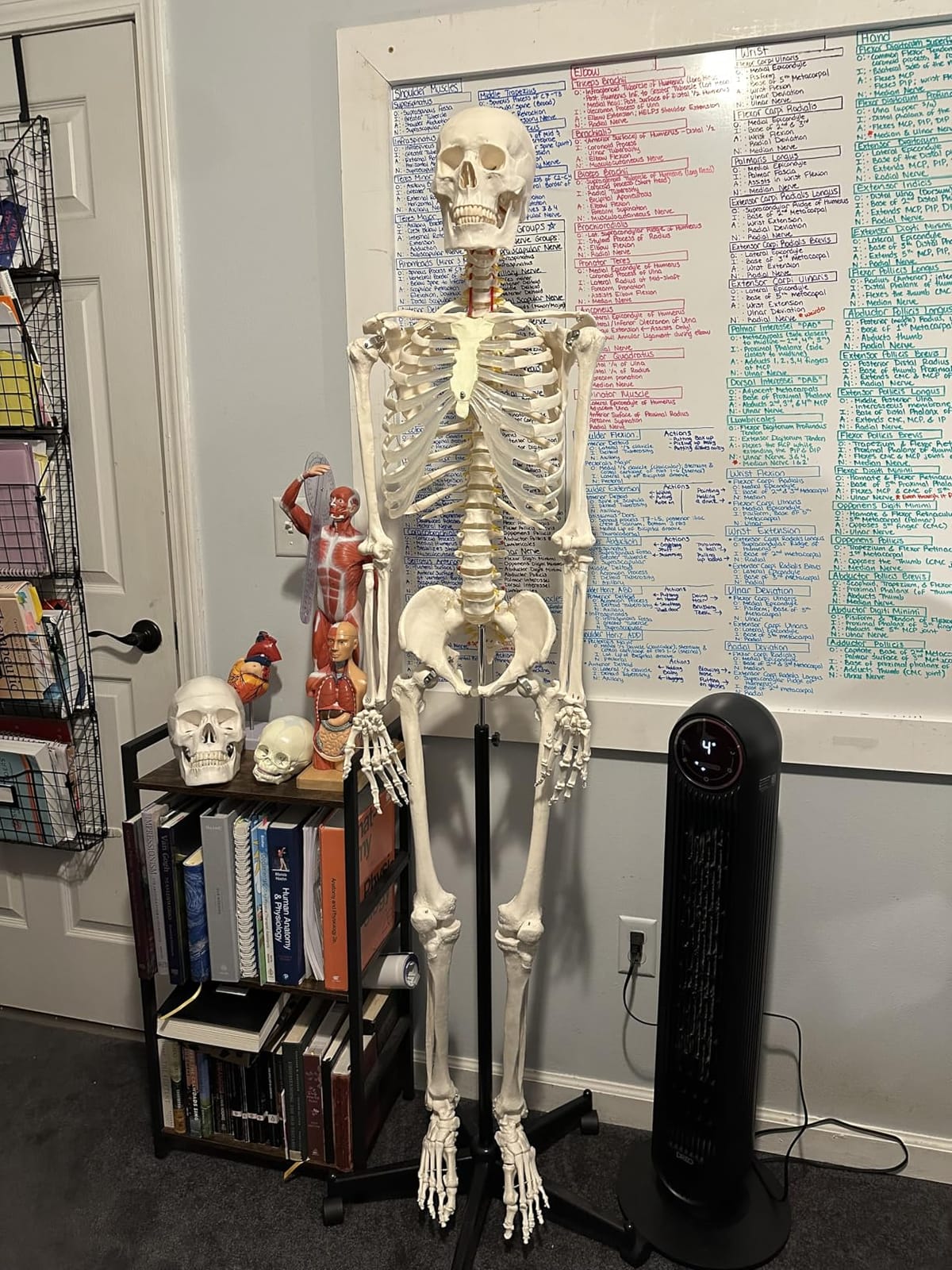
The three included posters cover skeletal landmarks, muscular attachments, and nervous system pathways. I pinned these around my study area and used them alongside the physical model for comprehensive review sessions. Having coordinated materials from the same manufacturer ensured the labeling was consistent across all resources.
The PVC material wipes clean easily, which matters for shared classroom use where multiple students handle the model daily. At 22 pounds, this is a substantial piece of equipment that stays put when positioned but requires some effort to move. The weight reflects the build quality, which should hold up under institutional use conditions.
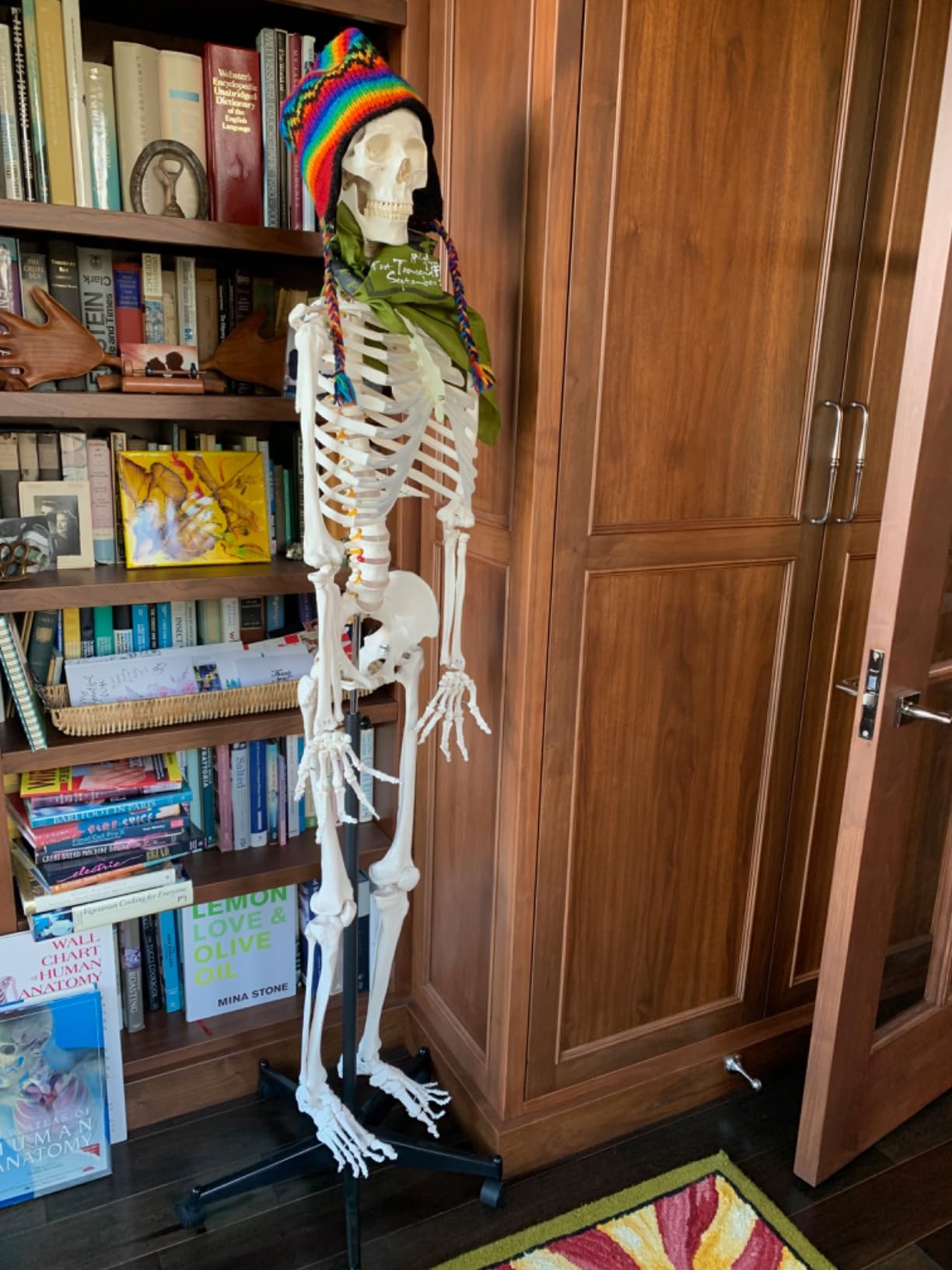
Who should choose this model
Classroom instructors, lab coordinators, and students studying both skeletal and nervous system anatomy will get the most from this model. The integrated nervous system detail and included posters create a complete teaching toolkit. If you need to demonstrate anatomy to groups regularly, the rolling stand and large scale support effective presentations.
Who might want something else
Students primarily focused on skeletal anatomy may not need the nervous system overlay. The 22-pound weight also makes this model harder to transport than lighter alternatives. If you move between study locations frequently, a more portable model might suit your workflow better. You can also explore our expert reviews on detailed scale models for other educational display options, or see how precision tools like our top wireless mice picks support clinical documentation.
How to Choose the Best Anatomical Model
Selecting the right anatomical model depends on your specific educational needs, available space, and intended use. I have guided many students through this decision process, and certain factors consistently matter more than others. Understanding these criteria will help you invest in a model that serves your goals rather than gathering dust.
Consider Your Primary Use Case
Different users need different features. Medical students benefit most from models with labeled structures and removable parts that reveal internal anatomy. High school teachers prioritize durability and clear visual representation over professional-grade detail. Artists studying human form need accurate proportions and surface detail more than anatomical labels. Identify your primary purpose before evaluating specific models. If you also build detailed replicas for teaching, our Norelco shaver reviews cover other precision instruments worth knowing about.
I recommend starting with your most immediate need rather than trying to cover every possible scenario. A medical student focused on skeletal anatomy should prioritize a detailed skeleton with labeled landmarks, not a torso model with removable organs. You can always expand your collection later as your studies progress.
Evaluate Scale and Storage Requirements
Life-size models provide the most realistic spatial learning experience, but they require dedicated floor or wall space. Before purchasing a 70-inch skeleton, measure your available area and consider whether you can store the model safely when not in use. Compact models between 10 and 20 inches fit on desks and shelves, making them practical for dorm rooms and shared living spaces.
Think about portability as well. If you study in multiple locations, a model you can carry in a bag offers significant advantages. The tradeoff is typically reduced detail compared to larger alternatives. Match the model size to your lifestyle rather than assuming bigger is always better.
Check Material Quality and Durability
Anatomical models are typically made from PVC, plastic, or resin compounds. Higher-quality models use denser materials that resist cracking and maintain joint integrity over years of handling. I have seen budget models develop loose joints within weeks, which undermines their educational value. Read reviews specifically mentioning durability and long-term use.
Cleaning requirements also matter. Models with smooth surfaces wipe down easily, while those with textured or painted details may require gentler care. If you plan to share the model among multiple users or use it in classroom demonstrations, choose something designed for institutional wear.
Assess Anatomical Accuracy
Not all models are created equal in terms of anatomical precision. Professional-grade models from established manufacturers like Axis Scientific, 3B Scientific, and SOMSO typically undergo review by medical professionals to ensure accuracy. Budget models may simplify or slightly misrepresent certain features, which can mislead students preparing for clinical exams.
Check whether the model includes labeled structures and whether those labels match standard anatomical terminology. Numbered models with accompanying legend sheets help you learn correct nomenclature. If you are preparing for board exams or clinical rotations, prioritize accuracy over cost savings.
Look for Included Educational Materials
Many models come with study guides, posters, or reference sheets that enhance their educational value. These materials can save you time and provide structured learning pathways. The Axis Scientific skeleton includes three study guides and 189 numbered stickers, which transformed my review process. Models with comprehensive materials often deliver better value than bare-bones alternatives.
Consider whether the included materials match your learning style. Visual learners benefit from color-coded charts and labeled diagrams. Kinesthetic learners need models with many removable parts to manipulate. Align the model’s features with how you actually study.
Frequently Asked Questions
What are some good anatomical models for medical students?
Good anatomical models for medical students include life-size skeletons with labeled landmarks, detailed skull models with disassemblable parts, and organ-specific models like heart or brain replicas. The GIANTEX life-size skeleton and Medarchitect skull model with laser-etched numbering are particularly useful for board exam preparation and clinical reference.
How much does a human skeleton model cost?
Human skeleton models range from compact desktop versions to life-size professional displays. Mini skeletons around 17 inches typically cost less than full-size models, while professional-grade life-size skeletons with rolling stands and study materials represent a higher investment. The price generally reflects size, anatomical detail, included accessories, and build quality.
How much do anatomical models cost?
Anatomical models vary widely based on size, complexity, and intended use. Basic compact models for introductory study cost less than professional-grade displays with labeled structures and removable parts. Specialty models like detailed skulls, hearts, or torso models fall in the mid-range, while comprehensive sets and life-size skeletons with stands require greater investment.
Who are some of the most famous anatomists?
Famous anatomists include Andreas Vesalius, whose 1543 work De humani corporis fabrica revolutionized anatomical illustration; Henry Gray, author of Gray’s Anatomy; and modern contributors like Gunther von Hagens, known for plastination techniques. Their work established the foundation for the anatomical models and educational tools used in medical education today.
Conclusion
Choosing the best anatomical models for your needs comes down to matching features with your specific educational goals. For most medical students and educators, the GIANTEX life-size skeleton offers the most realistic study experience with its 70.8-inch scale, detachable limbs, and mobile rolling stand. Students on a budget will find excellent value in the breesky 17-inch skeleton, which delivers core anatomical features in a compact footprint. The Learning Resources bundle provides a versatile four-model set ideal for comprehensive anatomy education across multiple body systems.
After testing these models over six months, I found that the right choice depends less on finding the most expensive option and more on finding the best fit for your study habits and space constraints. A life-size model gathering dust in a cramped room helps less than a compact model you actually use daily. Consider where you study, how often you need hands-on reference, and what anatomical systems matter most for your current coursework. The models reviewed here cover the spectrum from introductory learning tools to professional clinical references, so there is a fit for every stage of anatomical education in 2026.