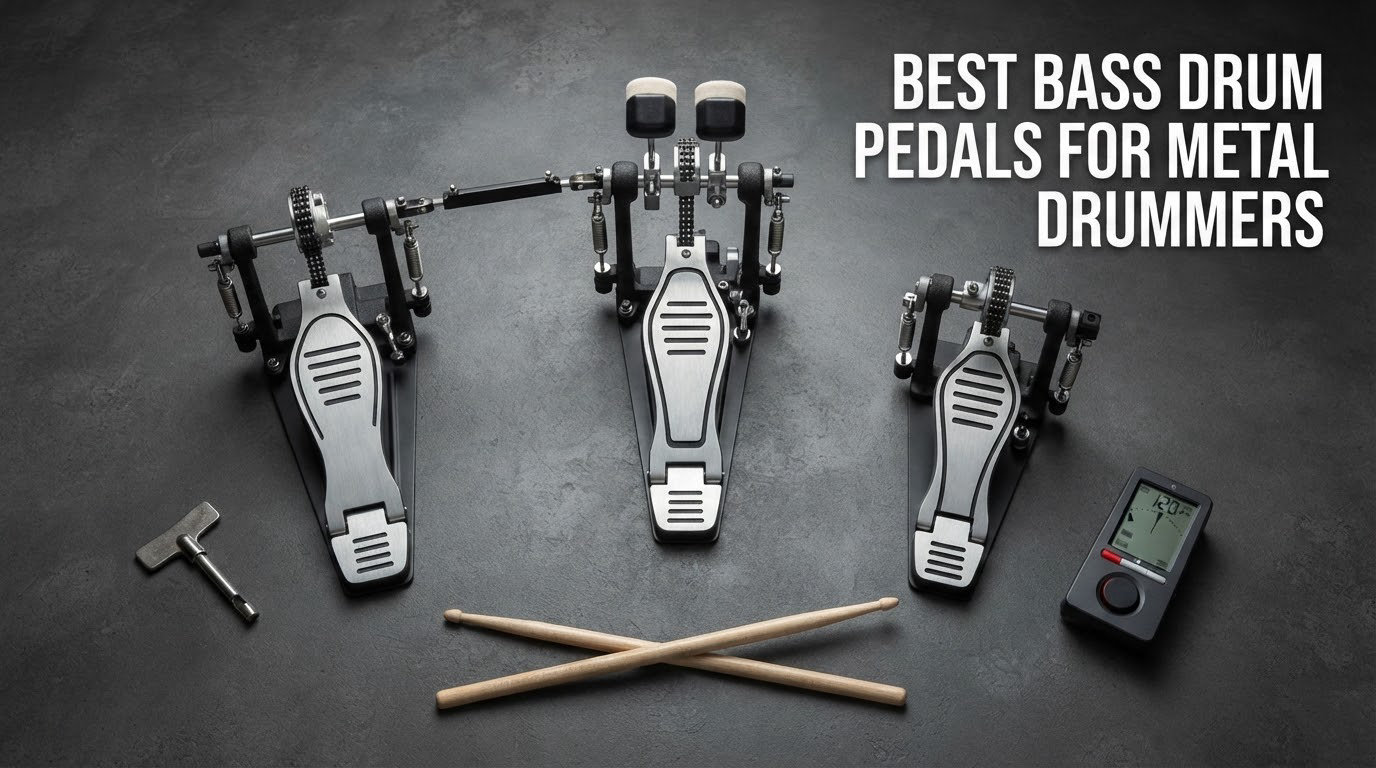
The best bass drum pedal for metal is the Tama HP200P Iron Cobra 200 for most players, because it is the rare pedal that is fast, serviceable and cheap enough to buy twice. For a full double-pedal rig, the Tama 310 Speed Cobra and the DW 9000 double pedal (DWCP9002) are the two that handle demanding sixteenth-note work at speed.
I have spent years swapping pedals between practice rooms, small club stages and rehearsal spaces, and the pattern is consistent: metal drummers are not really shopping for a pedal, they are shopping for a spare foot. Sixteenth-note double bass, blast beats and abrupt changes between heel-down and heel-up playing all punish a pedal that is slow to return, twitchy under load, or impossible to re-tune between a rehearsal and a show.
That is where most buying guides go wrong. They list whatever the manufacturer shipped, ignore whether the drive system suits fast playing, and quietly blur bass drum pedals with bass guitar effects pedals. This roundup covers only kick drum pedals, and only the specs that change how a pedal behaves when you are trying to play fast.
We compared nine pedals across single-chain, dual-chain and strap drive, weighed the footboard length, adjustment range and beater options, and weighed the owner feedback behind each one. Nothing here is sponsored, and every con listed came from the same owner reviews that produced the pros.
If you are still on a kit-included pedal, read the bass drum pedal basics guide first. If you already know you want a double, skip to the double bass pedal roundup and then come back for the setup notes at the end of this page.
Table of Contents
Top 3 Best Bass Drum Pedals for Metal in 2026
The three below cover the realistic range of metal kits, from a first serious upgrade to a full double-pedal rig.

Tama HP200P Iron Cobra 200
- Single-chain with radius wrapping
- Spring Tight tension
- Offset cam with two-way beater


The Iron Cobra 200 takes the top slot on the strength of the largest owner base in this group and a rating that has held at 4.7 for years, which tells you the design is not a gamble. The Speed Cobra is the faster double pedal here, and the DW 9000 double is the smoothest and the one most touring players end up owning.
Best Bass Drum Pedals for Metal in October
| Product | Specifications | Action |
|---|---|---|
| Tama HP200P Iron Cobra 200 |
|
Check Latest Price |
| Tama 310 Speed Cobra |
|
Check Latest Price |
 Tama HP30TW Standard Double Tama HP30TW Standard Double |
|
Check Latest Price |
| DW 9000 Double Bass Pedal |
|
Check Latest Price |
 DW 9000 Single Bass Pedal DW 9000 Single Bass Pedal |
|
Check Latest Price |
 DW 5000 Turbo Single DW 5000 Turbo Single |
|
Check Latest Price |
 Pearl P3000D Demon Drive Pearl P3000D Demon Drive |
|
Check Latest Price |
 Yamaha 7210 Single Foot Pedal Yamaha 7210 Single Foot Pedal |
|
Check Latest Price |
 Pacific 700 Series Double Pacific 700 Series Double |
|
Check Latest Price |
1. Tama HP200P Iron Cobra 200: the best overall kick pedal for metal
Tama HP200P Iron Cobra 200 Single Pedal
Single-chain radius wrapping
Spring Tight turnbuckle tension
Offset cam with DS30 beater
5.08 lb, 14 inch board
Pros
- Fast
- consistent action
- Radius wrapping cuts friction and noise
- Heavy-duty hoop clamp
- Standard interchangeable parts
- Compact board travels well
Cons
- Single pedal
- so a double rig needs a matched twin
- Less refined than premium dual-chain pedals
- Plenty of power for electronic kick towers
For years, the Iron Cobra family has been the default answer in metal drummer forums, and the 200 is the version that most people actually own. It is a single pedal, which matters when you read the rest of this list: metal drummers who play a double rig usually buy two of these rather than paying for a matched premium double, then tune them to each other. That is a real strategy, not a compromise, because every part on this pedal is standard and interchangeable.
The drive system is single-chain with a radius wrapping system, and that wrapping path is the reason it feels smoother than a basic chain pedal at the same price band. Owners repeatedly describe the action as fast and responsive, and the 4.7 rating across more than a thousand reviews is the most stable owner feedback in this roundup. For a r/MetalDrums thread asking which pedal to buy first, this is the name that comes up, and it comes up because it works rather than because it is fashionable.
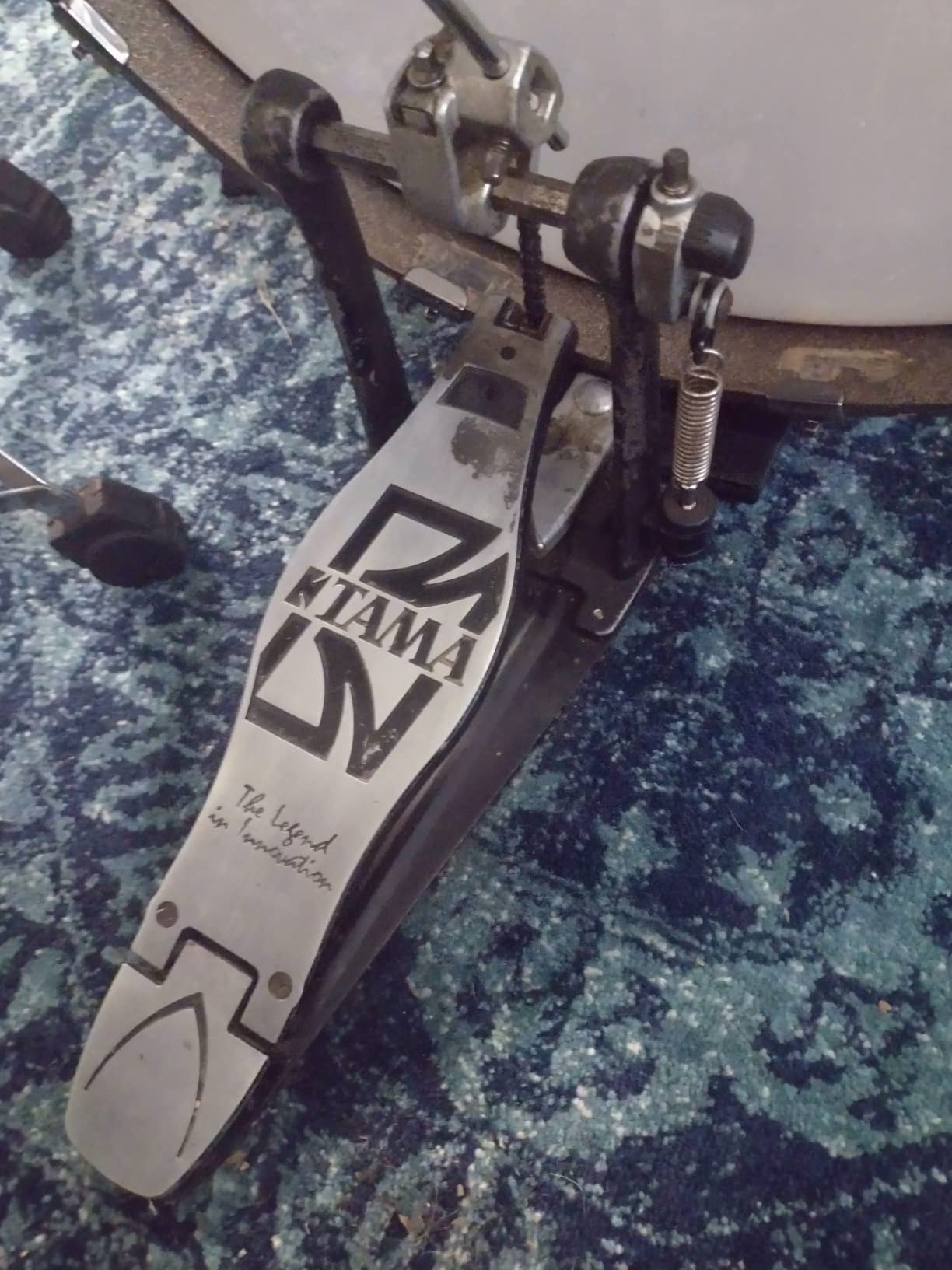
Spring tension uses a turnbuckle-style Spring Tight adjustment with a knurled tension lug, so you can change tension with fingers rather than a wrench between songs. The offset cam with a DS30 two-way beater gives you a felt cap molded into a plastic housing, and the whole assembly mounts with a heavy-duty clamp to the bass drum hoop. At 5.08 pounds and 14 inches long, the board is short enough to fit in a gig bag but long enough for a real stroke.
The one genuine weakness is refinement. Owners compare the Iron Cobra 200 to premium dual-chain and direct-drive models and find it slightly less polished, with a touch more noise and less of that premium buttery return. The other note worth respecting comes from electronic-kit players: this pedal has plenty of power, and that surplus can be a problem with lightweight kick towers. If you are running pads, check the trigger specs before you commit.
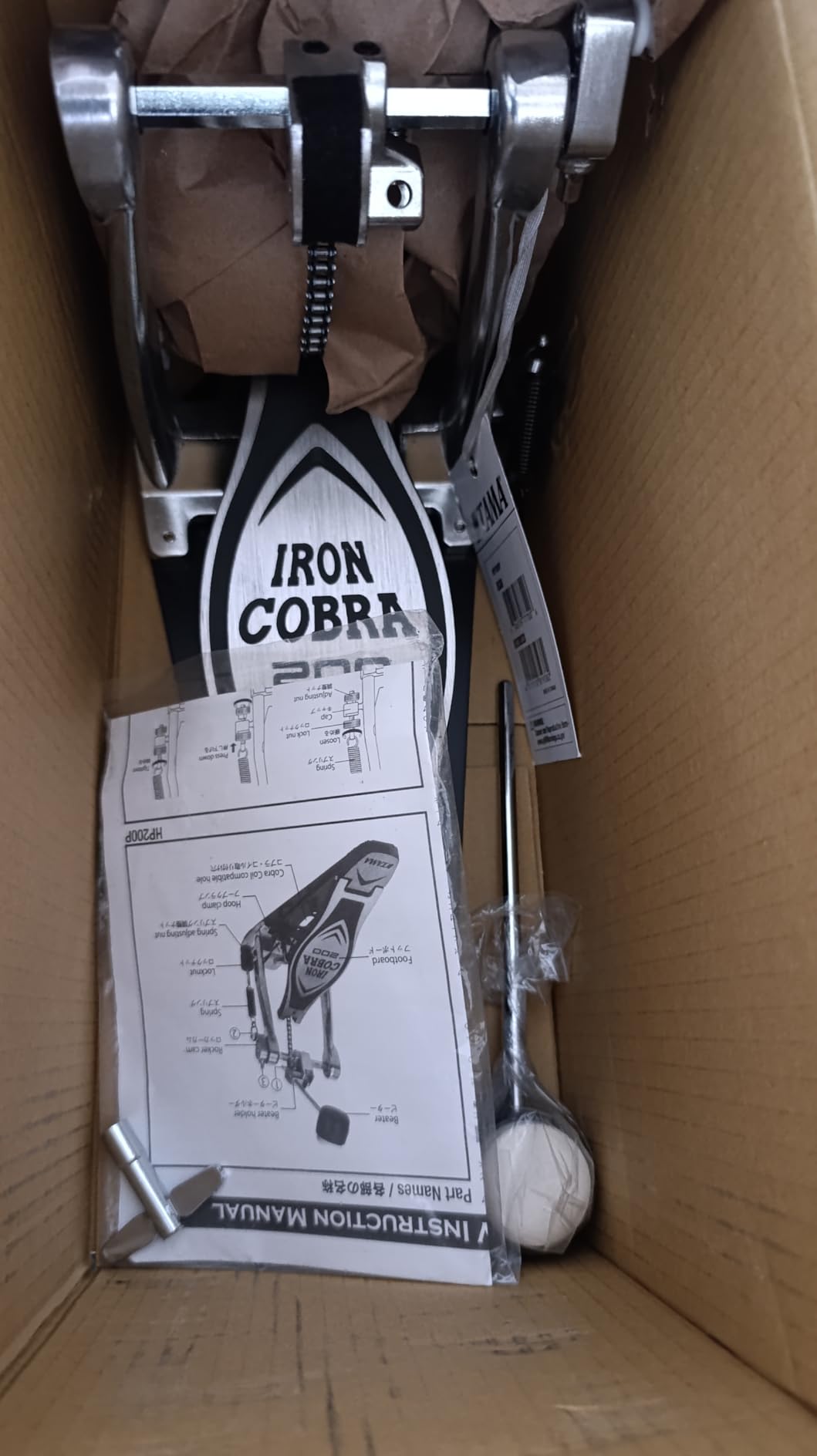
Why this pedal suits metal work
Metal drumming is mostly about consistency of return speed, and the radius wrapping system delivers the same stroke every time without the loosening behaviour that basic single-chain pedals develop. When you are hammering sixteenths at a high tempo, predictable beats and a stroke you can predict are worth more than raw power. The compact board also means your foot is not sliding off the end during blast beats, which is a common complaint on longer boards with smaller feet.
When to skip it
Skip it if you want a longboard for heel-up playing or if you plan to move to a direct-drive setup for extreme speed, because the Iron Cobra 200 will not get you there. It is also not the pedal to buy if you insist on owning exactly one matched double pedal, since the twin-pedal balance work is on you. A drummerworld poster described exactly this tradeoff when noting that longboard players prefer pedals that feel lighter, softer and faster, and that the two feet match. The Iron Cobra 200 gives you neither the longboard nor the matched feel, but it gives you reliability at a price that lets you own two.
2. Tama 310 Speed Cobra: the best double pedal for high-speed metal
Tama HP310LW Speed Cobra Bass Pedal – Double Pedal
Double-chain drive
Extended long footboard
LiteSprocket drive system
Recessed settings
Pros
- Exceptionally fast double-pedal action
- Long board suits large feet and heavy boots
- Heavy frame that does not shift
- Wide spring and beater angle range
- Quiet and smooth under speed
Cons
- Supplied beaters are soft and often swapped
- No beater pad for head protection
- Occasional loose main beater out of the box
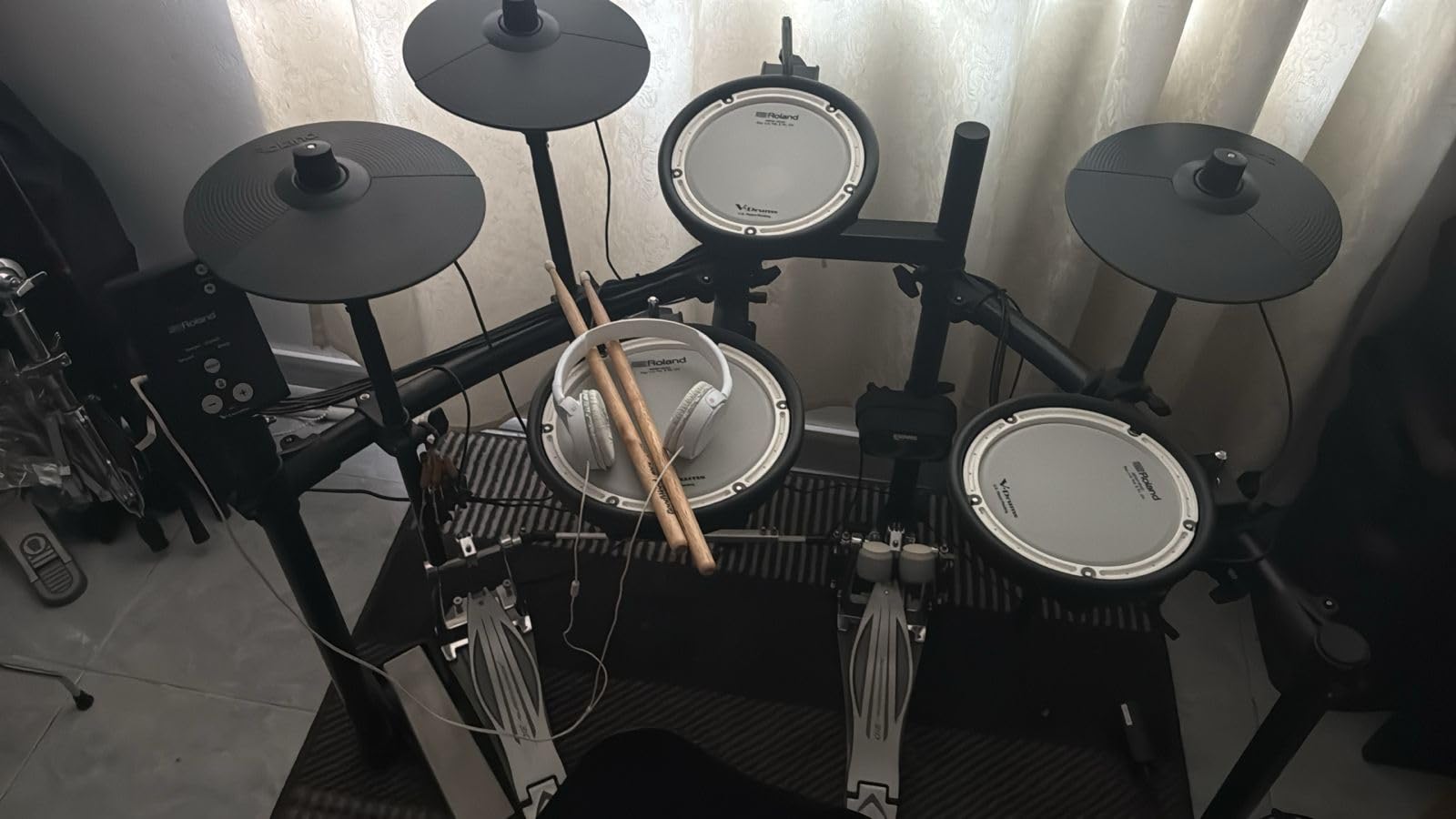
If you are looking for the best double pedal for metal and you want a twin-pedal setup rather than two singles, this is the one I would put on a kit first. The 310 Speed Cobra is a double-chain design with an extended long footboard, and that combination is why drummers reach for it when the tempo goes up. Double-chain drapes over the beater shaft rather than pulling from one side, so the stroke stays even as the beater speed increases, and the long board gives you somewhere to go at the bottom of the stroke when you play heel-toe.
Owners describe the action as exceptionally fast and responsive, and several note that the smoothness holds up against pedals costing considerably more. The LiteSprocket system and recessed adjustment settings are what make that possible: everything sits low and out of the way of a moving foot, which matters when you are playing fast sixteenths and cannot afford to think about where your foot is.
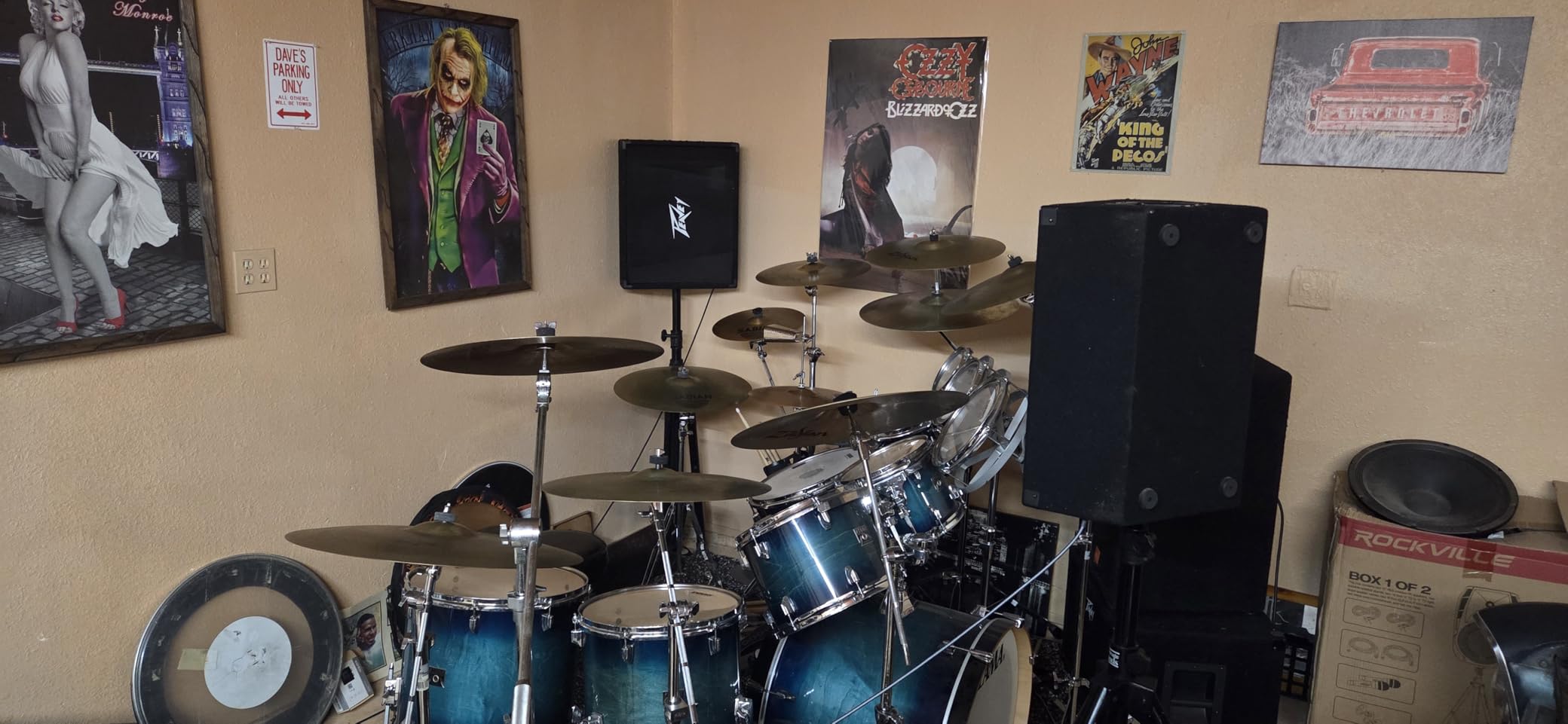
The extended footboard is the real differentiator here, and it is not a small thing. A drummerworld poster described the appeal of longboards for high-speed extreme metal in exactly these terms, and the same logic applies to the 310: the extra length lets you relax and reach rather than scrunch. If you wear boots or have larger feet, the long board is close to mandatory. The construction is heavy metal and it does not move underfoot, which matters on a hard rehearsal-room floor where a light pedal creeps forward mid-blast-beat.
The recurring owner recommendation is to change the beaters. The supplied beaters are described as soft, and most players fit Accu Strike or similar beaters for a harder attack. One quality-control report also described a main beater that arrived loose and needed a hex key, which is an easy fix but worth knowing. There is no beater pad included, so if you care about your bass drum head, add one.
Why this pedal suits metal work
The 310 is built for the pattern most metal drummers live in, which is sustained fast double bass with sudden bursts. Double-chain drive keeps the return speed consistent under load, the long board absorbs the reach, and the heavy frame refuses to slide when you push it. A drumforum thread asking for a strong pedal recommendation for metal work names the Iron Cobra and DW models in the same breath as this one, which is a fair signal about where it sits in the peer ranking.
When to skip it
Skip it if you have small feet and a compact playing style, because a long board can feel like a stretch rather than a benefit, and the extra length costs you floor space in a small rehearsal room. It is also heavier than a single pedal by definition, so if your current rig is already crowding the kick drum, a two-single setup may fit better. If you need an extremely light pedal for marathon double-bass playing, look at lighter enthusiast options instead.
3. Tama HP30TW Standard Double Pedal: the best value double pedal for a first metal kit
Tama Standard Double-bass Drum Pedal
Chain-drive double pedal
Two-way beaters
Solid iron frame and base
8.9 lb, 7.1 x 9.1 x 15.1 in
Pros
- Sturdy and stays put underfoot
- Easy to set up and tune
- Strong value against pricier brands
- Works as a first double pedal
- Good for electronic kits
Cons
- Instruction booklet is confusing for first-time owners
- Board can feel loose before fine adjustment
- Needs setup time on electronic kits
The HP30TW is the answer for a drummer who has decided they need a double pedal and does not want to spend premium money finding out whether they like it. It is a chain-drive double with a solid iron frame and base plate, two-way beaters included, and multi-point spring and beater adjustments. At 8.9 pounds it is heavy in the way you want a floor pedal to be heavy, and owners single out the fact that it does not shift on the floor.
The 4.5 rating across more than three hundred reviews reflects a pedal that does exactly what it says. Owners talk about a smooth playing feel that noticeably improves speed once tuned, and about how much they got for the money relative to higher-priced brands. It is also the pedal that gets recommended when a drummer asks what to start on, which is a fair description of its role.
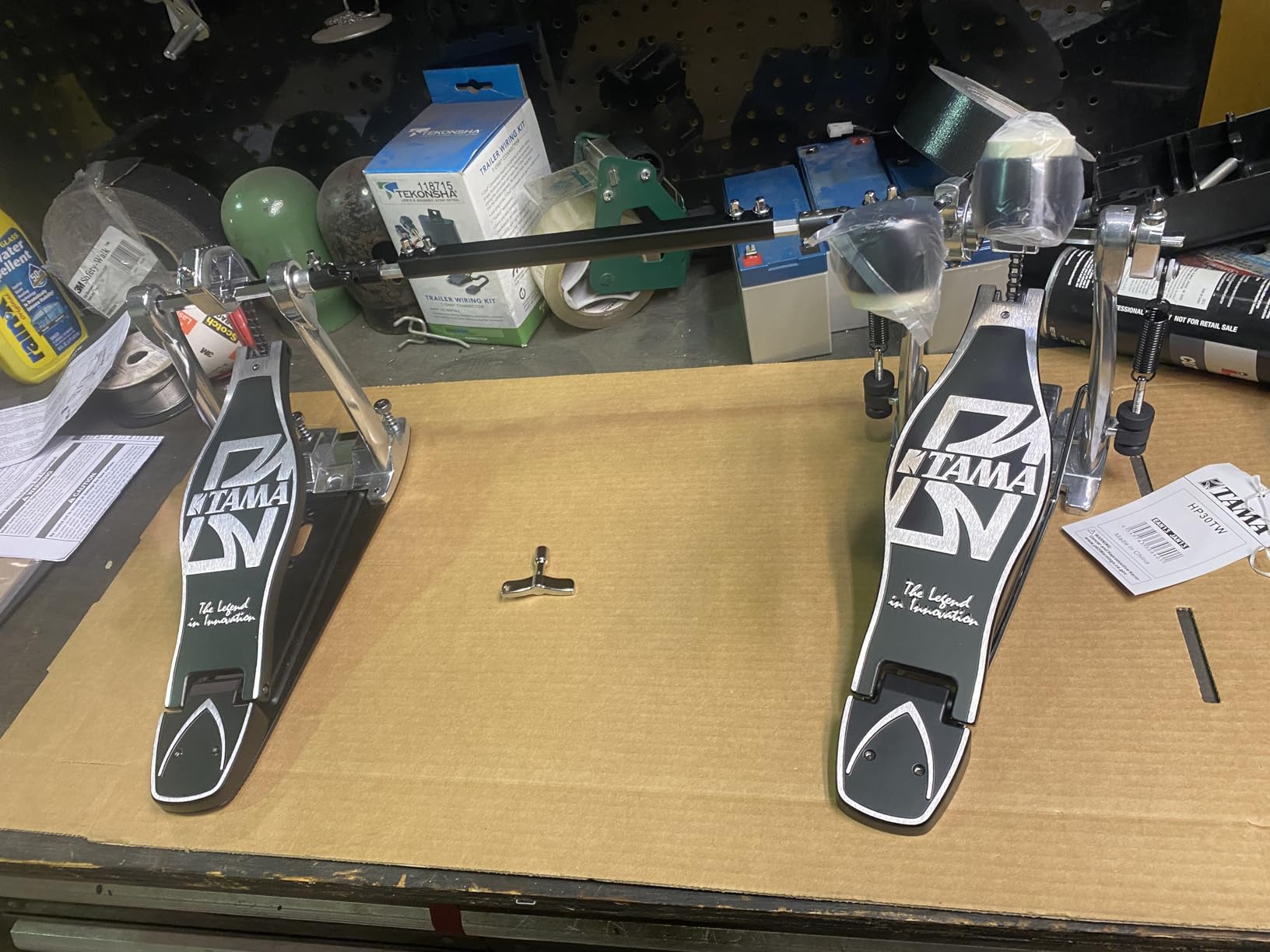
There are two friction points and both are about the first hour, not the first year. The instruction booklet is confusing for first-time double pedal owners, and the board can feel slightly loose until you make the fine adjustments. Neither is a dealbreaker, but if you are the kind of drummer who wants a pedal that plays right out of the box, this is not it. Drummers pairing it with an electronic kit should also expect some setup work before it responds optimally.
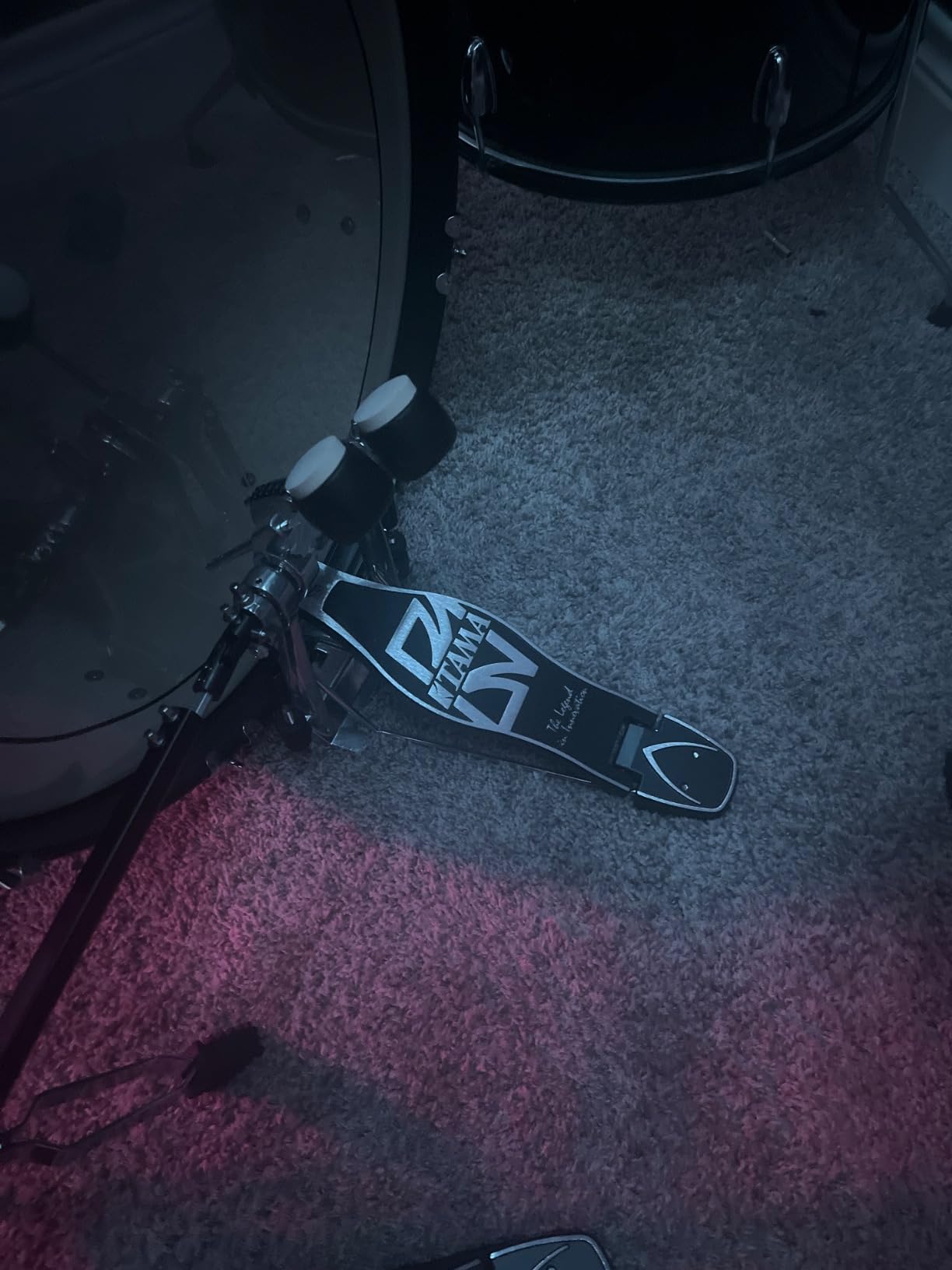
What you get instead is durability in the places that matter. Iron frame, solid base plate, two-way beaters that work across head types, and enough adjustment points to fine-tune spring tension and beater angle once you know what you are listening for. A r/drums thread on newer metal drummers named the Pearl 532 as a strong option in the lower bracket, and this pedal sits in the same practical territory with a similar approach: a heavy, honest, tunable double pedal.
Why this pedal suits metal work
A double pedal changes what a metal drummer can practise, and this is the cheapest credible way to find out whether you like the technique. The base plate stays planted on hard floors, the two-way beaters let you change the kick tone without changing pedals, and the multi-point adjustments mean you can get the return speed you need as your tempo goes up. Owners report a real improvement in speed and feel once it is set up properly, which is the whole point of the upgrade.
When to skip it
Skip it if you play at extreme speed and need a pedal that stays refined under maximum velocity, because a basic chain double will always feel heavier than a dual-chain or direct-drive design. It is also a poor match if you refuse to spend time on setup. If you already play a good single pedal and only need a slave unit, a matching single may serve you better than a full double built on a different frame.
4. DW 9000 Double Bass Pedal (DWCP9002): the premium double pedal that avoids the direct-drive learning curve
DW 9000 Double Bass Pedal w/Bag
EZ Infinite Adjustable Cam
Floating swivel spring
Delta II ball-bearing hinge
Nylon strap drive, case included
Pros
- Plays well with minimal setup
- Smoothest
- most consistent response here
- Very few design quirks
- Durable through being moved between shows
- Nylon carry case included
Cons
- Heavy and expensive for the category
- Base plate can warp if dropped
- Slave arm is the weak-link part owners upgrade
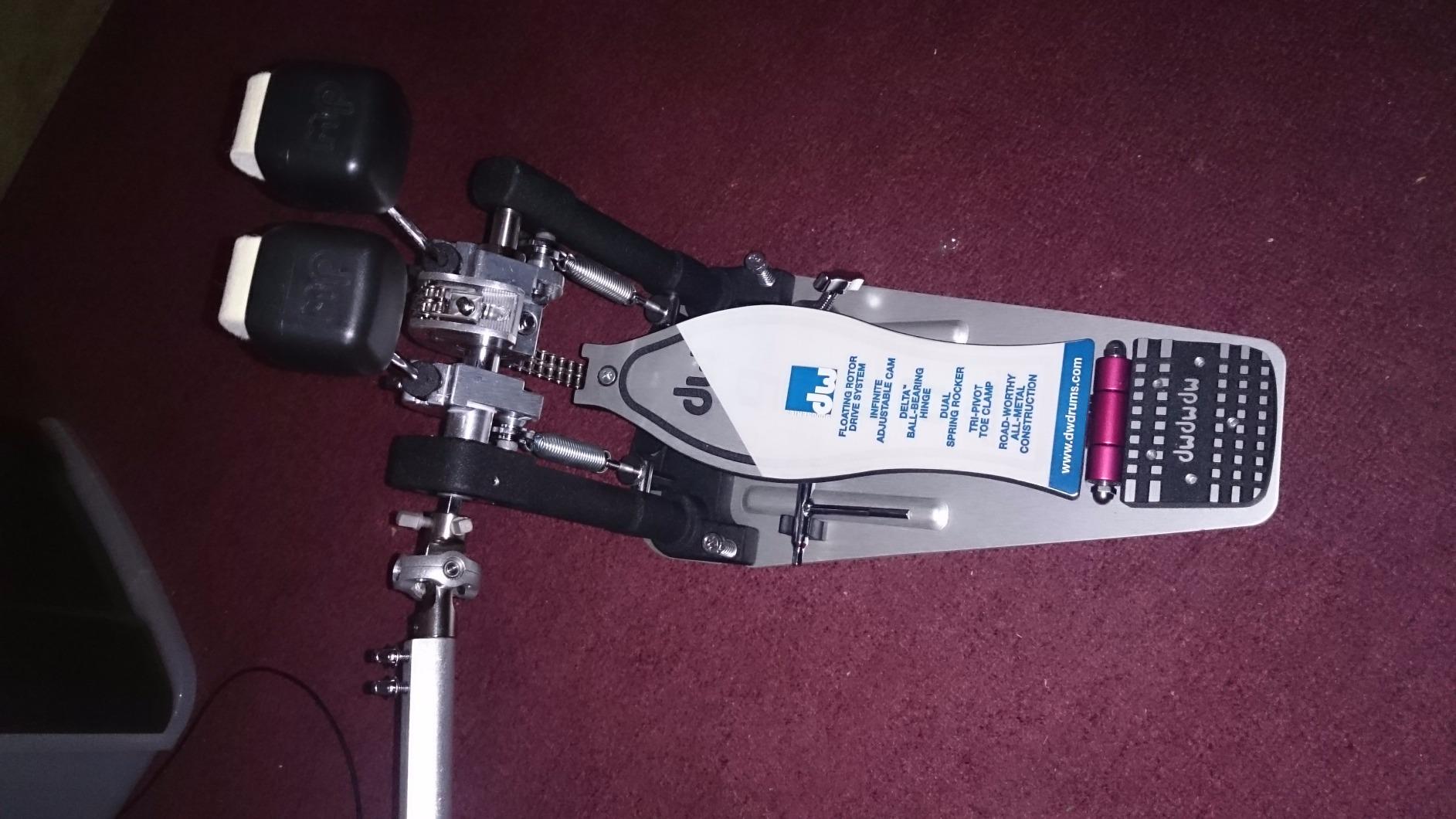
The DW 9000 double is the pedal owners describe as close to premium machined direct-drive feel without paying for a direct-drive pedal, and that is exactly why it keeps appearing in metal drummer discussions. The drive here is a nylon strap rather than a chain, which gives a quiet, controlled beater stroke, and the DWCP9002 ships with a nylon carry case. Owners with long pedal histories consistently place this at the top of the market for smoothness, response and build quality.
The hardware list explains why. The EZ Infinite Adjustable Cam gives a continuous range of power settings, the Floating Swivel Spring keeps tension consistent, and the Delta II ball-bearing hinge removes the grit you feel in cheaper hinges. The Tri-Pivot toe clamp grips the hoop firmly, and the non-skid rubber pad handles the floor side of the problem. Multiple threads that independently recommend DW models for a strong pedal point in the same direction.
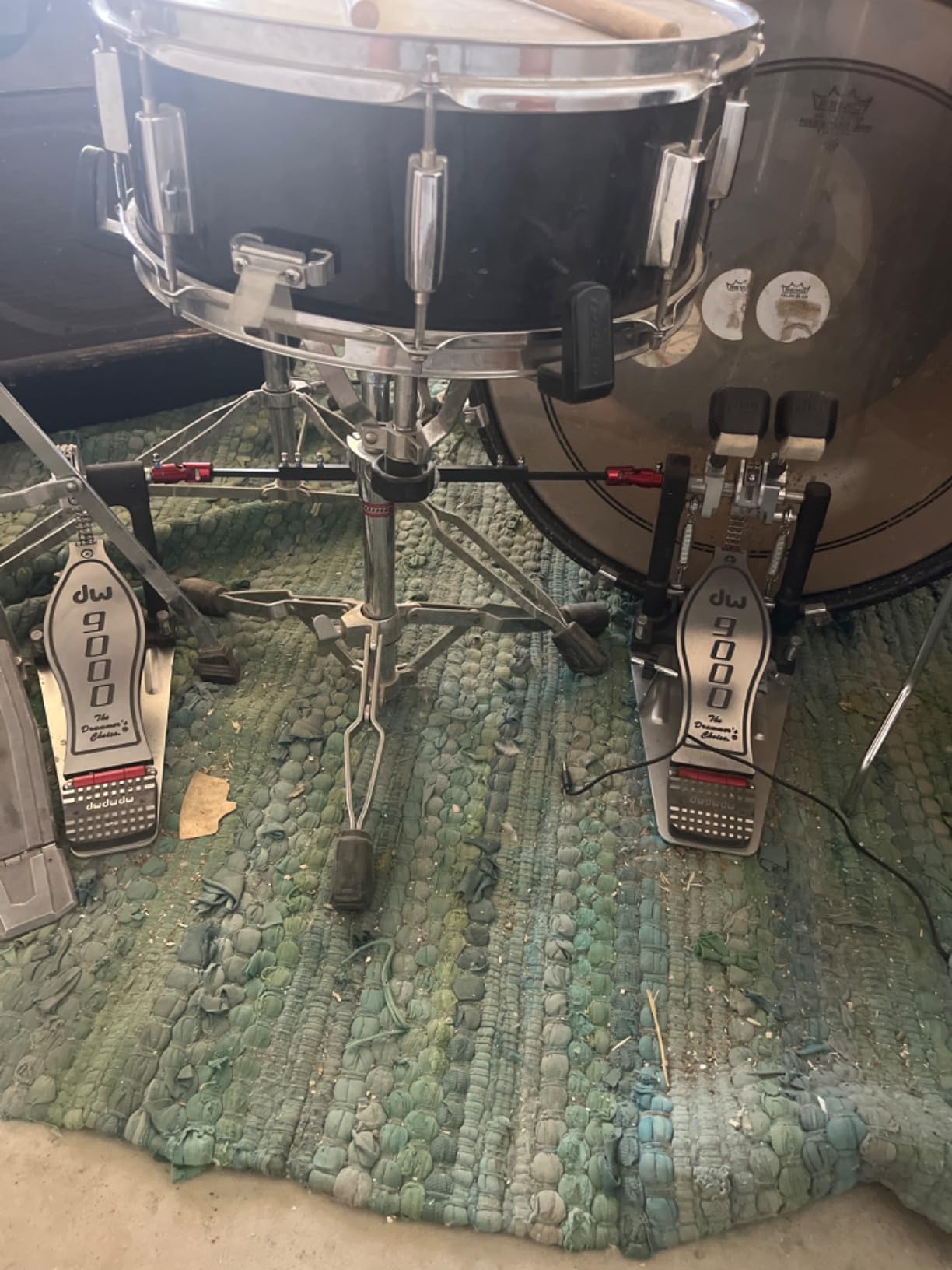
What stands out in the owner feedback is how little people complain. Very few annoying design quirks compared with other premium pedals, plays well out of the box with minimal setup, crisp and consistent from beat to beat. For a working drummer that matters more than any single spec, because a pedal you trust does not need thinking about during a fast passage. The build also survives being moved between shows, which is the touring test that a lot of gear fails.
The three cons are real. It is heavy and expensive relative to mid-range alternatives, at 2 kg before the case. The factory floor plate can warp if the pedal is dropped, lifting the heel plate off the floor, which is a genuine touring hazard in a van. And the slave arm is the weakest-link component that owners frequently upgrade, so budget for that if you play hard on the second pedal.
Why this pedal suits metal work
Metal playing rewards consistency more than raw power, and strap drive with an infinite cam gives you both without the stiffness that makes direct drive hard to control at first. The r/drums chain versus direct drive debate is instructive here: drummers describe direct drives as better at very fast tempos where chain slack hurts precision, but also note you are talking extreme speed. The DW 9000 sits in the useful middle, staying refined and predictable at high tempo without a learning curve.
When to skip it
Skip it if weight is a factor in your rig, since a 2 kg double pedal plus case is a lot of floor space and van weight. It is also the wrong choice if you want an extremely light pedal for long stretches of fast double bass. If your budget is fixed and you want the DW name without the premium tier, the 5000 Turbo below covers that ground.
5. DW 9000 Single Bass Pedal (DWCP9000): the highest-rated pedal in this roundup
DW 9000 Single Bass Pedal (DWCP9000)
EZ Infinite Adjustable Cam
Floating swivel spring
Delta II hinge, Tri-Pivot clamp
8.2 lb alloy steel, strap drive
Pros
- Butter-smooth
- highly responsive action
- Extremely customizable cam and spring setup
- Build that survives drops and stacks
- Quiet controlled strap-drive stroke
- Five-year cast-parts warranty
Cons
- Inboard spring crowds high-footboard riders
- Limited range with older Roland KD-7 triggers
- Heavy and costly for a single pedal
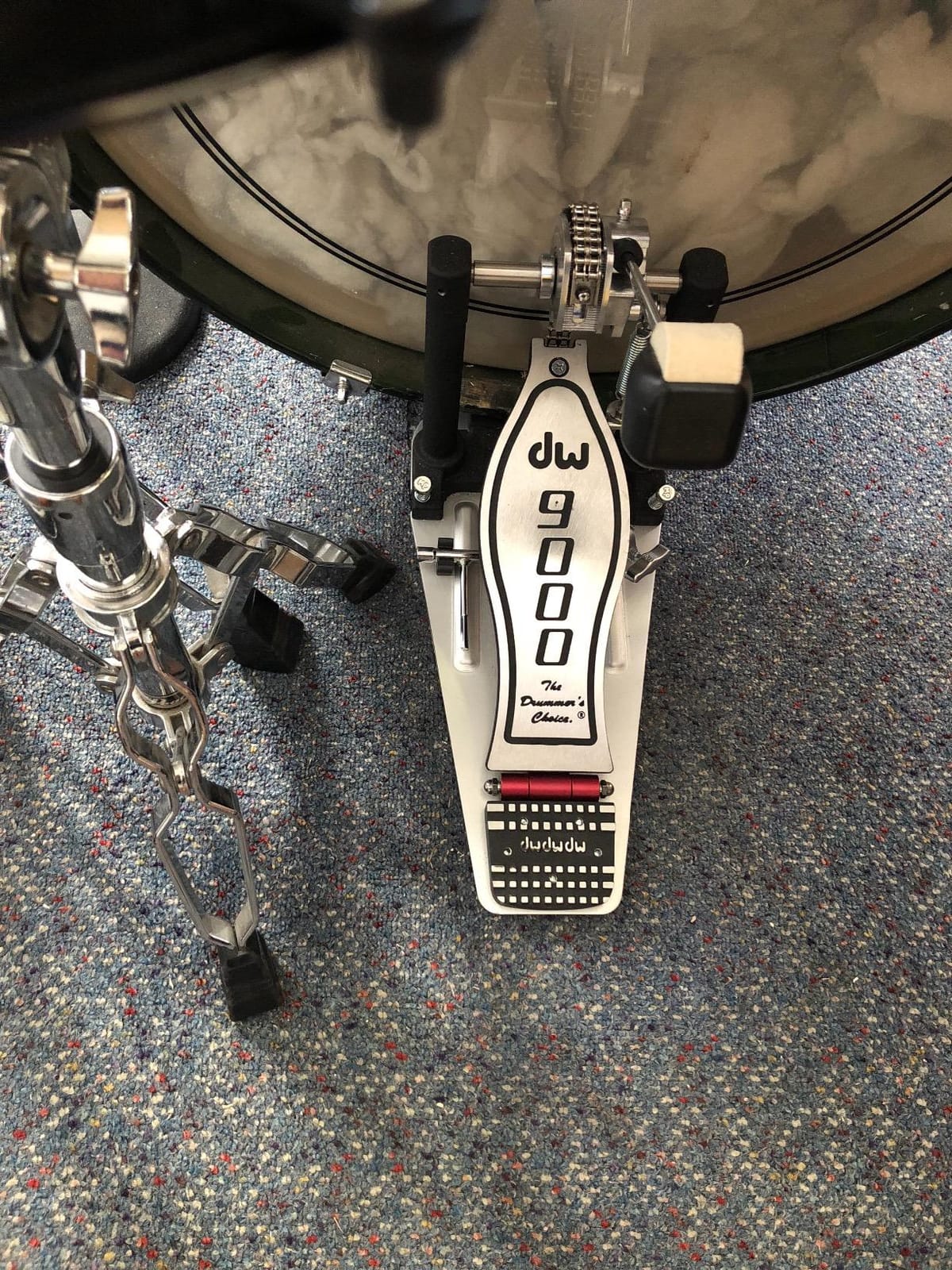
At 4.8 stars this is the highest-rated pedal in the group, and the single version of the DW 9000 is often the smarter buy for a metal drummer. Plenty of players run two singles rather than a double pedal, matched and tuned to each other, which gives them control over the spacing between feet. The DWCP9000 is the pedal you would put on the primary side of that pair, and it uses the same core hardware as the double: EZ Infinite Adjustable Cam, Floating Swivel Spring, Delta II ball-bearing hinge and Tri-Pivot toe clamp.
Owners describe the action as butter-smooth and highly responsive, with a level of customization in the cam and spring setup that lets you set the pedal up for your exact stroke. The nylon strap drive gives a quiet, controlled beater stroke, which is the reason so many of these pedals end up in tracking sessions. Multiple independent threads that recommend DW models for metal work name this series, and the owner feedback backs that up rather than contradicting it.
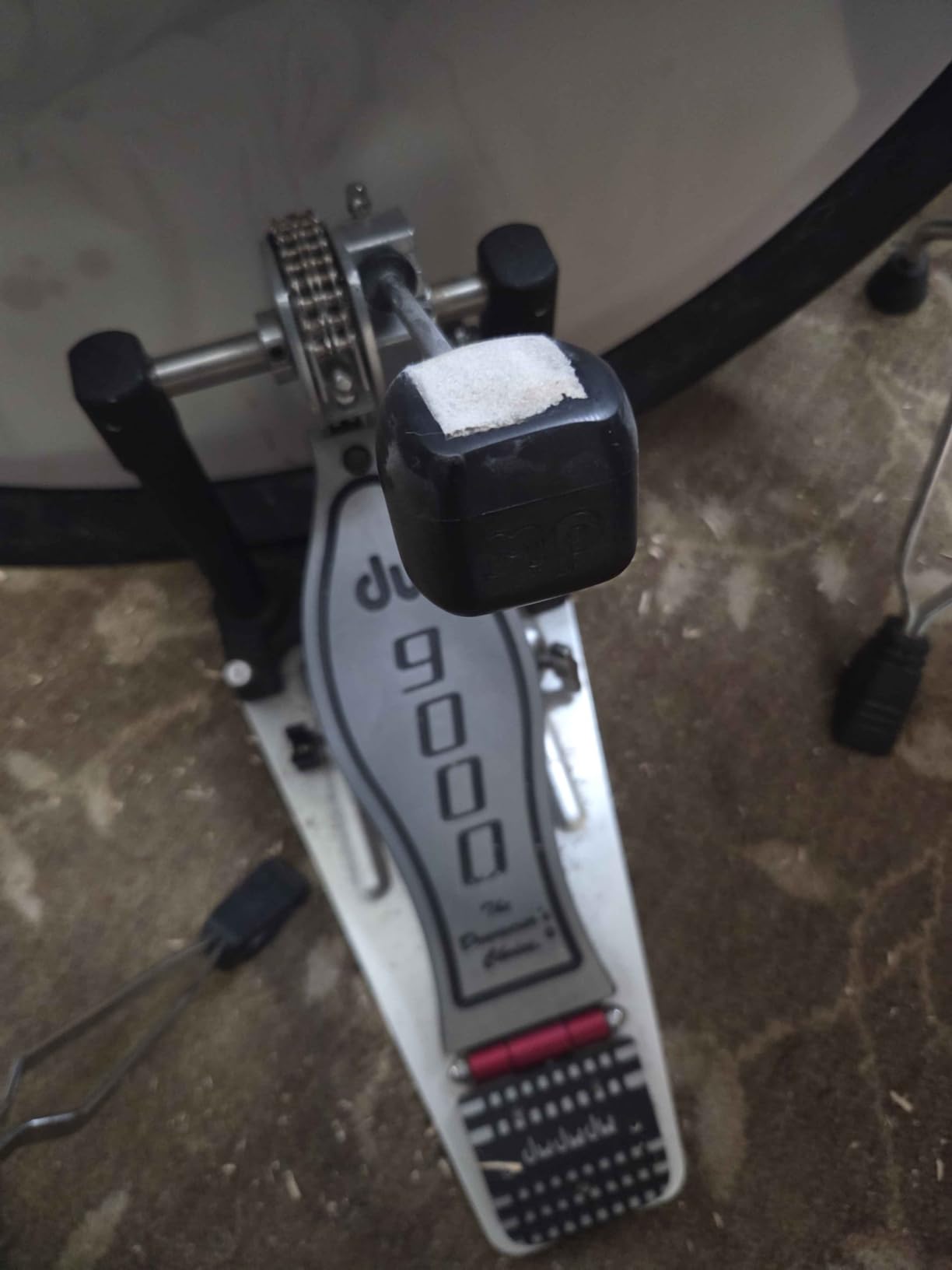
The durability story is the standout. Reports of a decade or more of trouble-free service with only the beater replaced are common, and the frame survives drops and heavy gear stacks. The warranty is five years on cast parts only, with moving parts such as the spring assembly, beater ball, radius rod, hex shaft and ball bearings excluded, so it is worth knowing which parts are covered before you need them. At 8.2 pounds in alloy steel, this is a pedal you notice when you lift it and then forget about.
The common caveat is spatial. The spring assembly sits inside the fork, which can feel cramped for players who ride high on the footboard, and that is a real problem for heel-up players and anyone with long-distance heel strokes. Adjustability range is also limited with older-style Roland KD-7 electronic triggers, so check your kit if that is what you play through.
Why this pedal suits metal work
It runs quietly, returns predictably, and takes a heavy beater strike without complaint, which is the profile you want when you are tracking fast double bass. The infinite cam means you can dial power up for a blast beat and pull it back for a fill without changing pedals. Owners also compare the balance and feel to DW titanium premium pedals, which is a strong statement about where this sits.
When to skip it
Skip it if you play heel-up with your foot riding high on the board, because the inboard spring will crowd you. It is also a heavy and expensive way to solve a single-pedal problem, so a drummers on a budget should look at the 5000 Turbo. If you want a lightweight pedal you can carry between gigs alone, this is not that.
6. DW 5000 Turbo Single Bass Pedal: the dependable mid-range DW step up
DW 5000 Turbo Single Bass Pedal
Dual-chain Turbo sprocket
Tri-Pivot toe clamp
Delta II ball-bearing hinge
Dual-bearing spring rocker, 2.8 kg
Pros
- Fast
- even power stroke from the Turbo sprocket
- Ball-bearing hinge gives a smooth solid feel
- Reliable mid-range upgrade
- Tri-Pivot clamp holds securely
- Five-year cast-parts warranty
Cons
- Moving parts only warrantied for six months
- Superseded for most players by the DW 9000 series
- Chain drive is louder than strap drive
The 5000 Turbo is DW’s mid-tier workhorse and the model that shows up most often in drummerworld threads listing the go-to double and single pedal families. It uses a dual-chain Turbo sprocket, which gives a fast and even power stroke, and it shares the Delta II ball-bearing hinge and Tri-Pivot toe clamp with the pedals above. That means the parts ecosystem is the same, so if you own one DW pedal you already know the feel of this one.
At 4.6 stars across nearly a hundred and fifty reviews, the feedback is steady rather than enthusiastic. Owners cite fast chain response, solid hardware and durability, and most of them frame it as the step up from a kit-included pedal before moving to the 9000 series. A drumforum thread on bass drum pedal choices named the DW 5000XF alongside the Iron Cobra and Yamaha FP9C as a strong shortlist entry, and that is the same audience this pedal serves.
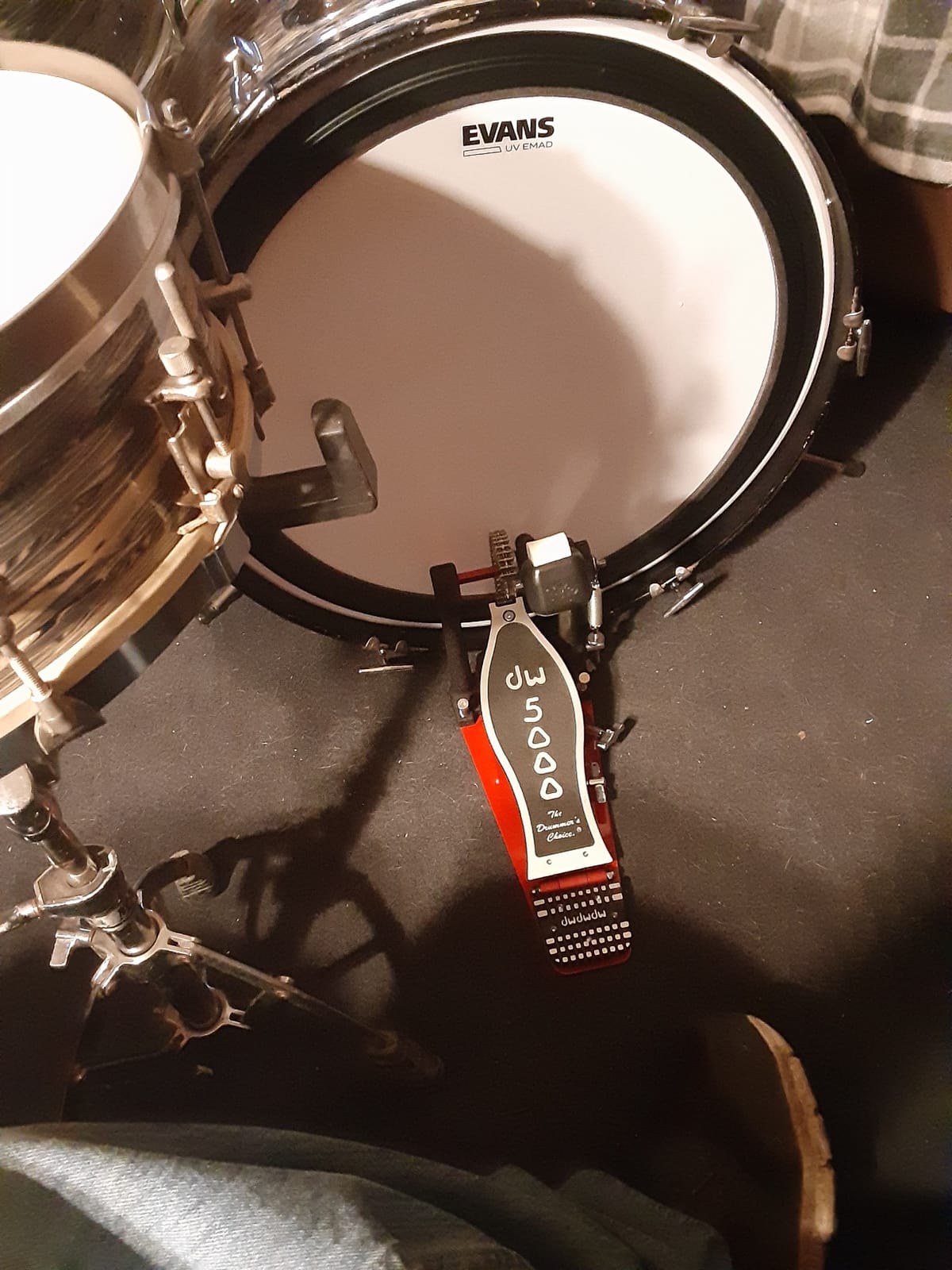
Two things to weigh. The warranty is five years for cast parts and only six months for moving parts, which is a notable gap if you play hard enough to chew through springs. And for most players this pedal has effectively been superseded by the smoother 9000 series, which is not a criticism so much as a sign that DW moved its best technology upward.
On the plus side, the dual-bearing spring rocker and the ball-bearing hinge give a smooth, solid feel that is well above what a kit-included pedal offers, and the Tri-Pivot toe clamp holds securely to the hoop. For a drummer moving from a broken factory pedal to something that feels properly machined, that jump is bigger than the spec sheet suggests. Chain drive is also louder than strap drive, which matters if you are recording.
Why this pedal suits metal work
Metal drumming puts a lot of force through a beater, and the dual-chain Turbo sprocket handles that without the vague, uneven feel of a single-chain design. If you play a lot of heel-toe patterns, the even power stroke means the two notes of each hit land with similar weight. It is also a familiar, widely serviced pedal, which matters when you need a replacement part between shows.
When to skip it
Skip it if you play fast enough to notice chain noise in a recording, because strap drive is quieter and the 9000 is the better buy. It is also the wrong choice for a drummer who wants maximum adjustability, since this generation has fewer settings than DW flagships. If you only play singles today but plan a double rig later, look at a matched pair of these rather than mixing families.
7. Pearl P3000D Eliminator Demon Drive: the longboard single for heel-up players
Pearl P3000D Eliminator Demon Drive Single Bass Drum Pedal
Duo-deck longboard
Ninja bearings
Click-lock spring tension
6.5 lb, 15.5 x 13 x 9 in, case included
Pros
- Smooth
- fast response from longboard and bearings
- Extensive beater stroke and spring adjustment
- Stable base that holds under heavy playing
- Carry case included
- Lifetime warranty
Cons
- Premium pricing for a single pedal
- Control Core beaters are frequently swapped
- Longboard is wasted on small-footed heel-down players
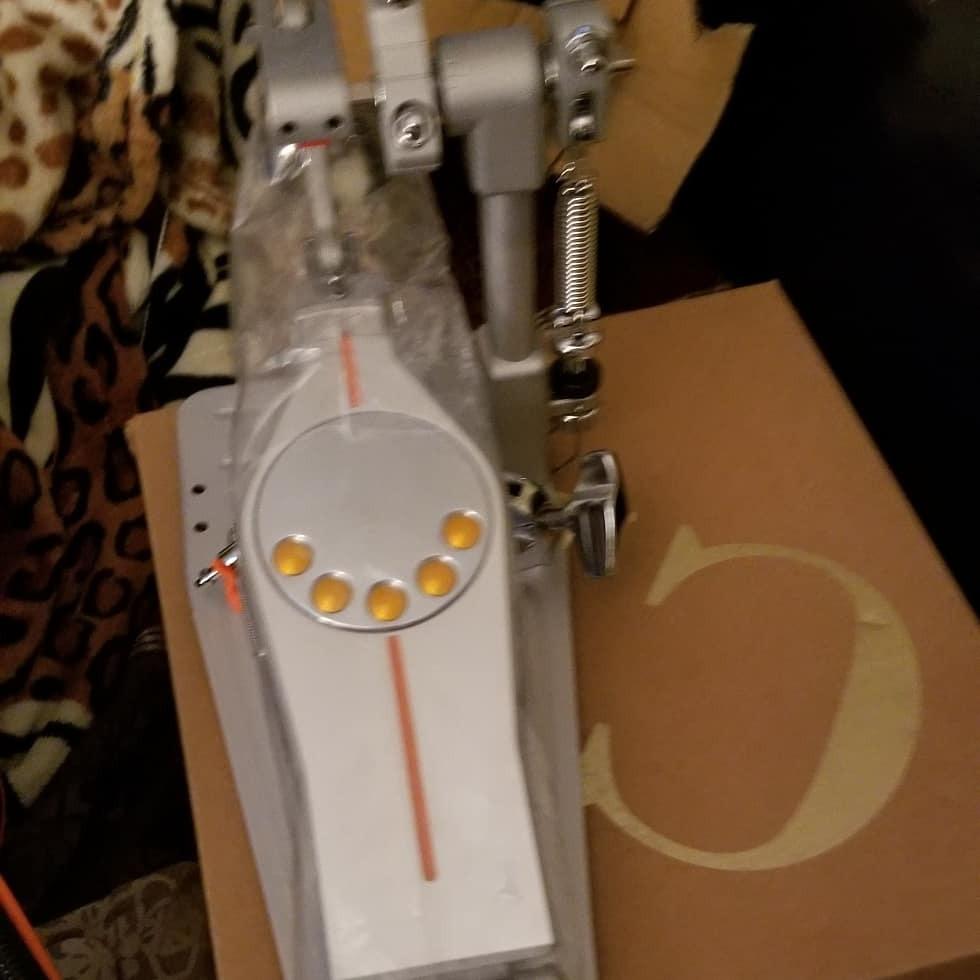
The P3000D is the longboard option in this group, and longboard is the single most argued topic in metal pedal discussion. The Duo-deck longboard gives you a genuinely longer platform than a standard single, and combined with Ninja bearings it delivers the smooth, fast response that fast double-bass players look for. If you play heel-up, or you have a long stroke that runs to the bottom of the board, the extra length is a functional advantage rather than a styling choice.
Adjustability is the other strength. Beater stroke adjustment and click-lock spring tension give a wide range, and owners consistently praise how much they can dial in. The base is solid and stays in position under heavy playing, which is a real consideration when you are leaning into fast sixteenths. The included carry case and Pearl lifetime warranty are genuine value at this level, and a 4.7 rating across 150 reviews reflects a pedal that holds up.
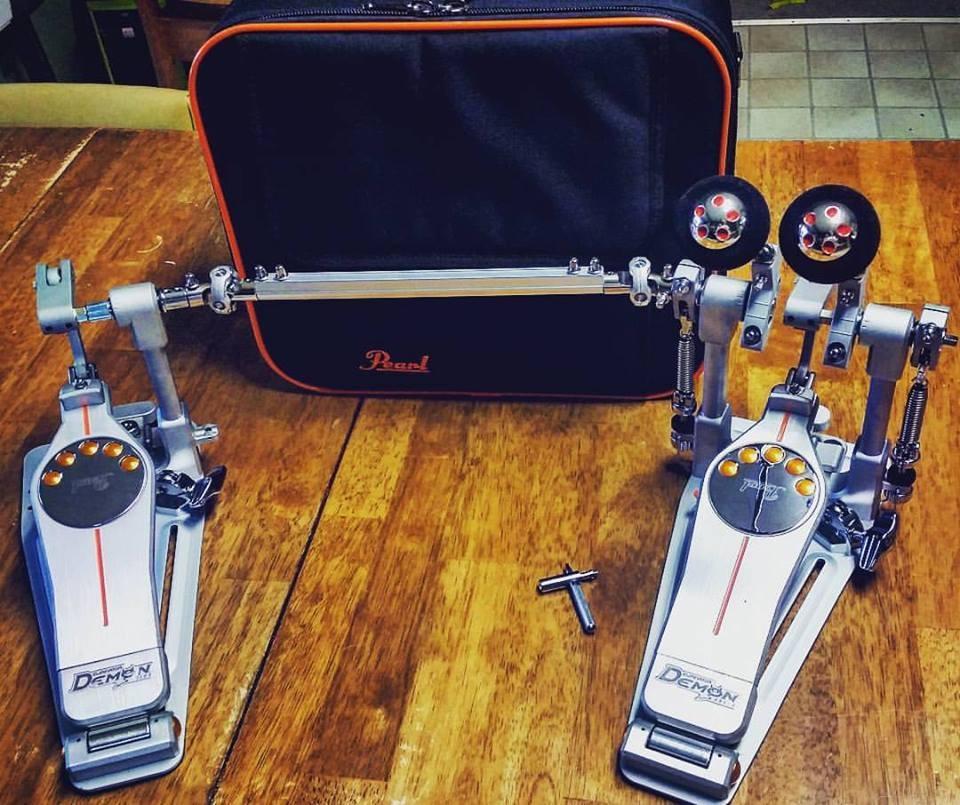
The beaters are the most common upgrade. Owners frequently swap the Control Core beaters for third-party beaters to change the attack, which is a sign the stock setup is serviceable rather than ideal for everyone. The beater itself is a stylistic choice: a harder plastic or wood beater gives a brighter, more defined attack, while felt gives a warmer, rounder hit that suits slower passages and cleaner recordings.
Premium pricing is the other consideration. This sits above several competitor packages that include a full double pedal for less, so if your goal is a matched double rig quickly, a different pick on this list may serve you better. The lifetime warranty also has conditions, so read the terms rather than treating it as unconditional.
Why this pedal suits metal work
The longboard gives you room to play lazy and still sound fast, which is a strange-sounding advantage until you try playing sixteenth notes on a short board with boots on. It also means you can commit to a fuller stroke without worrying about the beater losing contact with the head. Longboard advocates in metal communities consistently describe the feel as lighter and faster, and the Ninja bearings are the mechanical reason that holds up.
When to skip it
Skip it if you have small feet and a compact heel-down technique, because you will never use the extra length and you are paying for it in money and floor space. It is also a single pedal, so metal drummers running a double rig need two of these or a different strategy. If you want a quiet recorded kick, check what beater material you plan to fit first.
8. Yamaha 7210 Single Foot Pedal: the budget single that gets the job done
Yamaha 7210 Single Foot Pedal with Single Chain Drive
Single-chain drive
Reinforced horizontal frame brace
Aluminum alloy, 1.31 kg
Felt beater, 1-year warranty
Pros
- Smooth
- consistent single-chain response
- Reinforced brace gives a stable feel at tempo
- Light and easy to carry between gigs
- Warm felt tone that suits studio work
- Beater angle adjustment
Cons
- Basic adjustability versus premium models
- Felt wears faster than plastic on hard heads
- Single pedal only for a double rig
The Yamaha 7210 is the pedal to buy when you need a dependable second pedal, a backup for the van, or an upgrade from a pedal that rattles. The single-chain drive gives smooth, consistent response with balanced resistance, and the reinforced horizontal frame brace minimizes flex, which is where most budget pedals give you a wobbly, less confident feel at tempo. Owners consistently place it as a dependable mid-priced workhorse rather than a performance statement.
Lightness is the underrated advantage at 1.31 kg in an aluminum alloy body. It is easy to carry between gigs, easy to move out of the way of a second kick tower, and easy to swap when you want to change beaters for a different head. The felt beater gives a warm, balanced tone that works for both live and studio playing, and the beater angle adjustment lets you tune the response a little.
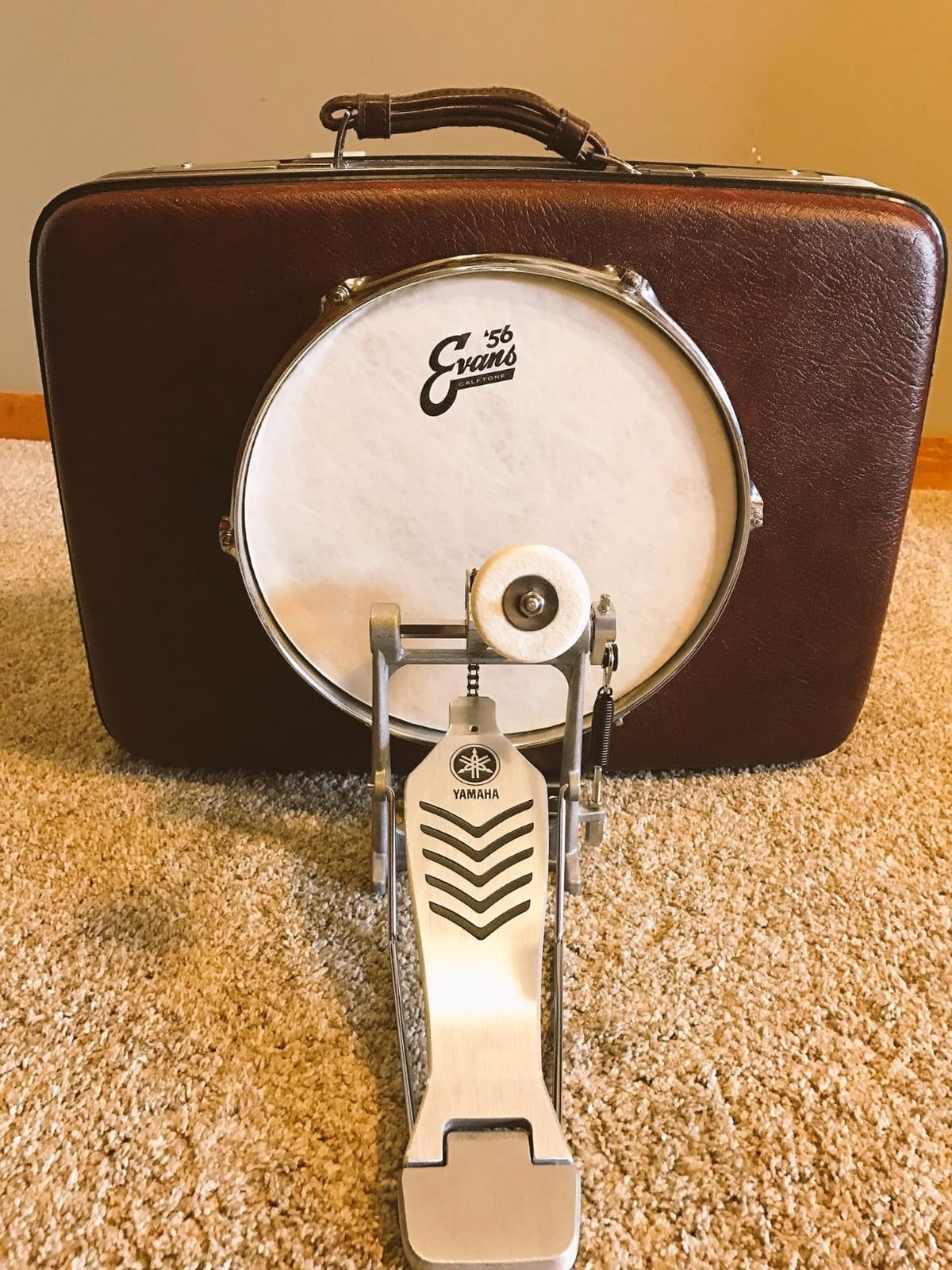
Beater material is where this pedal earns its keep or its limitation. Felt is warm but less durable and quieter than plastic or mesh heads under heavy playing, so if you are hitting a coated head hard for years, plan on replacing the beater. The adjustability is basic compared with premium models, which is the honest limitation: you get beater angle and not much more.
Warranty is one year through authorized retailers, the shortest here, and that is worth weighing against how long you expect the pedal to last. A drumforum thread that asked for strong pedal recommendations listed the Yamaha FP9C rather than this one, and that is a reasonable nudge toward a higher tier if you want a Flying Dragon-class feel. As a backup or a starting single, though, the 7210 does exactly what it promises.
Why this pedal suits metal work
Metal drumming punishes hardware that moves, and the reinforced horizontal frame brace is what keeps this one planted. Because it is light, you can use it as the slave side of a rig without unbalancing the weight on your primary side, and the warm felt tone suits the slower passages between blast beats. It is also the easiest pedal here to move around when you switch between an acoustic kick and an electronic kit.
When to skip it
Skip it if you want a longboard, heavy adjustability, or a beater that will survive years of hard playing without a swap. It is also not a double pedal, so building a full metal rig around it means buying two and accepting the basic feel. If your current pedal still works, the practical advice is to keep playing it until it breaks rather than replacing a functioning pedal.
9. Pacific Drums 700 Series Double Pedal (PDDP712): the heavy value double with the fewest adjustments
Pacific Drums and Percussion 700 Series Double (Single Chain) Bass Drum Pedal (PDDP712)
Single-chain drive
Concentric cam
Two-way beater
Alloy steel, 9.5 lb, 14 x 10 x 8 in
Pros
- Heavy base plate keeps the pedal planted
- Concentric cam gives an even power stroke
- Beater angle adjustment for basic tuning
- Solid alloy steel construction
- Two-way beater suits multiple head types
Cons
- Fewer adjustment points than premium doubles
- Single-chain feel is noisier and less smooth
- Most mixed owner feedback in this group
The 700 Series is the heaviest pedal in this roundup at 9.5 pounds, and that weight is the feature. The solid base plate and alloy steel construction keep it planted, which directly addresses the pedal creep that metal drummers complain about on hard rehearsal-room floors when they are pushing fast sixteenths. The concentric cam gives a usable, even power stroke, and beater angle adjustment covers basic tuning.
Owner feedback is the most mixed here, and that is worth being straight about. The 4.4 rating across 135 reviews comes with a 10 percent one-star share, higher than anything else on this list, and reviewers focus on limited adjustability and the single-chain feel. If you want a workhorse double that stays put and punches hard, it does that. If you want refinement, look elsewhere.
The two-way beater is a genuine advantage for metal players, since it works across multiple bass drum head types without a swap. The pedal is also cheap enough that you can treat it as a learn-on double pedal and move up later once you know what speed you actually play at. A drum rug under any pedal is still the cheapest fix for creep on a hard floor.
Why this pedal suits metal work
Blunt, heavy strokes are what this pedal does best. A heavy base and concentric cam mean your power is delivered without a lot of rebound noise between hits, which suits a drummer playing hard and loud rather than a drummer chasing maximum tempo. The 14 by 10 by 8 inch footprint also gives you a wide stance between the two feet, which some double pedal players prefer.
When to skip it
Skip it if you play fast, quiet, or with a light touch, because single-chain drive is less smooth and noisier than dual-chain or strap systems and you will hear it. It is also a poor choice for anyone who wants to fine-tune the pedal to their playing rather than tune it roughly once. If you are already comfortable, the DW 9000 double or the Speed Cobra are the steps up.
How to Choose a Bass Drum Pedal for Metal
These are the criteria that actually change how a pedal behaves at speed, in the order I would weigh them.
1. Drive system: chain, strap, or direct
Single-chain drive is simple, light on maintenance, and perfectly adequate below extreme tempo. Dual-chain wraps the chain around the beater shaft on both sides, so the stroke stays even as the beater speeds up. Strap drive is quieter and smoother still, and nylon strap is what the DW 9000 uses. Direct drive removes slack entirely, which is why a drummer in the r/drums chain-versus-direct debate said direct drives are better at very fast tempos where chain slack makes playing harder, while also noting you are talking extreme speed there. The practical reading for most metal drummers: chain is fine for groove and blast work, dual-chain or strap is better for sustained sixteenths.
2. Longboard versus shortboard
This is the debate nobody answers properly, so here it is. A longboard gives you more footboard to work with: more room for a full stroke, more room to relax, and more room for heel-up playing. A shortboard keeps you closer to the beater, gives better precision, takes up less floor space, and suits heel-down players with small feet. A drummerworld poster described why extreme metal players gravitate to longboards, saying they are lighter, softer and faster and that the second pedal feels the same as the first. The Pearl P3000D and the Tama 310 are the longboard options here. If you are not sure, a shortboard is the safer default and an easier pedal to sell on later.
3. Adjustment range you will actually use
Beater height, beater angle, spring tension and stroke adjustment are the four settings that change playing. A pedal with lots of adjustment is only useful if you know what to change, so count the adjustment points rather than assuming more is better. Memory locks and infinite cams are nice because they let you re-set a pedal to a known configuration between shows. This is the main reason the DW 9000 series gets recommended in forum threads: it is adjustable enough to fit a style and predictable enough to return to.
4. Beater material and head pairing
Felt gives a warm, round attack and wears faster. Hard plastic gives a brighter, more defined click and lasts longer. Wood sits between the two. A two-way beater lets you change the tone without changing pedals, which is why the HP30TW and the Pacific 700 Series ship with one. Metal tone lives or dies on this choice more than on the pedal brand, so match the beater to your head rather than assuming the supplied beater is right.
5. Stability on a hard floor
Pedal creep is a real and commonly reported problem. Weight, non-skid base pads, and a wide footprint all help, and a drum rug solves it more cheaply than a heavier pedal. If you rehearse in a room with hard flooring, treat stability as a buying criterion rather than an afterthought, because a pedal that slides mid-blast-beat is a pedal you stop trusting.
6. Double pedal or two kick drums
A double pedal gives you one head, one tuning, one amplifier, and a shared control system. Two kick drums give you two voices you can tune and mic separately, and separate pedals, which some drummers prefer for control. If you already own two kick drums, converting one to a slave pedal is cheaper than replacing it, and the DW 9000 and Iron Cobra singles on this list are designed to be paired that way. For most metal drummers starting out, a double pedal is the simpler path.
7. Setup and tuning for fast playing
Whatever you buy, set it up in this order: clamp the pedal to the hoop at the strike point you want, set beater height and angle, set spring tension so the pedal returns as fast as you can play without bouncing, then set the footboard angle so your leg is relaxed at rest. Re-check spring tension after travel, since pedals settle. Lube the hinge occasionally, keep spare springs and beaters in the case, and if you use a drum rug, test the pedal on it before you judge the feel.
Frequently Asked Questions
What is the best bass drum pedal for metal?
For most metal drummers the best overall kick pedal is the Tama HP200P Iron Cobra 200, a single-chain pedal with a radius wrapping system, quick spring tension adjustment and a 4.7 rating across more than a thousand owner reviews. If you need a matched double-pedal rig out of the box, the Tama 310 Speed Cobra is the faster option and the DW 9000 double is the smoothest.
What is the best double pedal for metal?
The Tama 310 Speed Cobra is the strongest double pedal for fast metal work, with a double-chain drive and an extended long footboard that suits larger feet and boot playing. The DW 9000 double pedal is the smoother, quieter and more refined alternative with a nylon strap drive and an included carry case, while the Tama HP30TW covers the value end of the market.
What is the best double kick drum pedal?
Double kick drum pedal is another name for a double bass drum pedal, and the same shortlist applies. Choose dual-chain or strap drive for sustained sixteenth notes, a longboard if you play heel-up or have large feet, and a shortboard if you want precision and a smaller footprint. The Speed Cobra, DW 9000 double and HP30TW cover those three needs.
What is the best pedal for metal music?
It depends on how fast and how hard you play. Chain drive is fine for groove, blast beats and moderate tempo, dual-chain or strap drive is better for sustained fast double bass, and direct drive only earns its place at extreme speed. Match the footboard to your technique and check that the pedal does not slide on your rehearsal floor before deciding.
Is direct drive better than chain drive for metal?
Direct drive removes chain slack, so it can be more precise at very fast tempos, but drummers on forums consistently describe the pedal as stiff and hard to control at first. Most metal playing happens below that extreme speed, which is why dual-chain and strap pedals like the Speed Cobra and DW 9000 remain the common answers for fast metal work.
Should I use a double pedal or two kick drums?
A double pedal gives you one head to tune, one amplifier and a shared control system, which is simpler for most drummers. Two kick drums give you two separately tuned and miked voices, and existing kick drums can be kept by adding a slave pedal. If you already own two kick drums, a matched pair of single pedals is often the cheaper upgrade.
Does using a double pedal make you a better drummer?
A double pedal makes a limited set of patterns possible, including fast sixteenth-note double bass and blast beats, but it does not improve your timing, feel or technique on its own. Treat it as a way to practise difficult foot patterns slowly before pushing tempo, and the answer to the technique question is still technique.
Do I need a longboard pedal for metal?
A longboard helps if you play heel-up, wear boots, or want a full stroke with room to relax, and the Tama 310 and Pearl P3000D are the longboard options in this roundup. If you play heel-down with small feet, a shortboard gives you better precision in a smaller footprint and the extra length is wasted floor space.
Final Verdict: The Best Bass Drum Pedals for Metal
After comparing all nine, the Tama HP200P Iron Cobra 200 remains the best bass drum pedal for metal drummers overall, because its owner base is the largest in the group and its rating has held steady, and because buying two matched singles costs less than one premium double. If your playing has outgrown it, move to the Tama 310 Speed Cobra for a fast double-chain longboard rig, or to the DW 9000 double pedal for the smoothest, quietest, most refined double under your foot.
Everything else here has a narrower job. The DW 9000 single is the highest-rated pedal we tested and the best studio choice, the DW 5000 Turbo is the reliable mid-range DW step up, the Pearl P3000D is the longboard single for heel-up players, the Yamaha 7210 is a light and dependable backup, and the Pacific 700 Series is a heavy value double for blunt strokes.
Before you buy anything, spend five minutes with the buying guide above and be honest about tempo, board length and floor type. A pedal tuned for your playing beats a more expensive pedal tuned for someone else’s, and that is the whole argument. For hi-hat and practice-room hardware while you decide, see our rudder pedal and headphone picks.