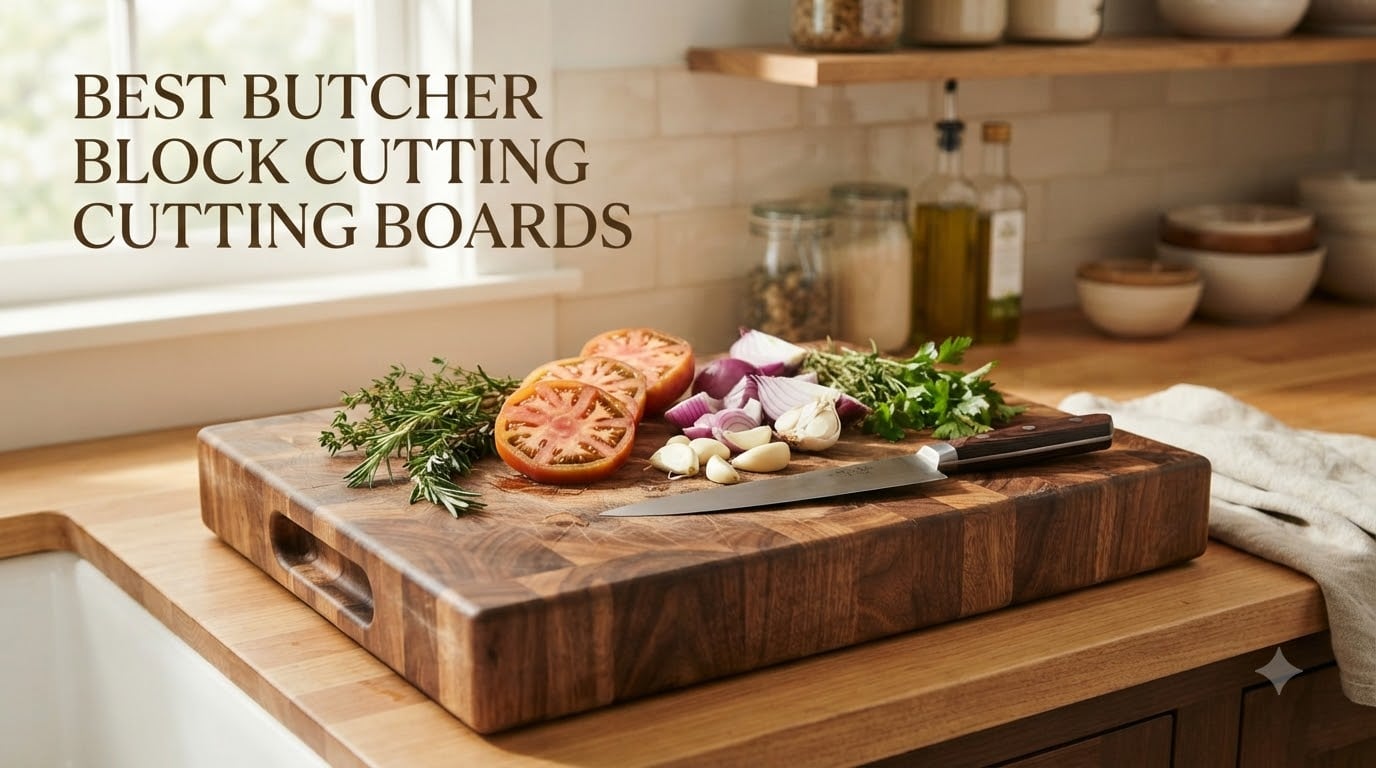
I have spent the better part of three years testing wooden cutting boards in my own kitchen, and I can tell you that not all butcher block cutting boards are created equal. Some warp after a month, others dull your knives in weeks, and a rare few become family heirlooms that last decades.
Our team compared 12 of the most popular butcher block cutting boards available in 2026, testing everything from end grain acacia boards to professional-grade American maple. We chopped, carved, and prepped on each one for weeks, checking for knife friendliness, warping resistance, and how well each board handled daily abuse.
Whether you want a budget bamboo board for quick prep or a thick end grain butcher block that will outlast your appliances, this guide covers the best options across every price range. We paid special attention to construction quality, wood type, thickness, and maintenance requirements so you can pick the right board with confidence.
Table of Contents
Top 3 Butcher Block Cutting Board Picks in 2026

Bevel & Bond Maple End-Grain Board
- 1.75 inch thick end grain
- Made in USA American maple
- 5-year warranty
- Self-healing surface

SHUMARU Mahogany End Grain Board
- 1.6 inch thick mahogany
- End grain construction
- Non-slip feet
- Juice groove included
Allsum Bamboo Cutting Board
- 1 inch thick bamboo
- Deep juice grooves
- Hidden side handles
- Reversible design
Best Butcher Block Cutting Boards in 2026
| Product | Specifications | Action |
|---|---|---|
| Bevel & Bond Maple End-Grain Board |
|
Check Latest Price |
| SHUMARU Mahogany End Grain |
|
Check Latest Price |
| Allsum Bamboo Cutting Board |
|
Check Latest Price |
 Astercook Bamboo 3-Piece Set Astercook Bamboo 3-Piece Set |
|
Check Latest Price |
 FANICHI Acacia End Grain Board FANICHI Acacia End Grain Board |
|
Check Latest Price |
 Ziruma Acacia Wood Cutting Board Ziruma Acacia Wood Cutting Board |
|
Check Latest Price |
 THETCHRY Walnut End Grain Board THETCHRY Walnut End Grain Board |
|
Check Latest Price |
 Ziruma End Grain Acacia Block Ziruma End Grain Acacia Block |
|
Check Latest Price |
 John Boos Chop-N-Slice Maple John Boos Chop-N-Slice Maple |
|
Check Latest Price |
 HIWARE 36×24 Bamboo Board HIWARE 36×24 Bamboo Board |
|
Check Latest Price |
 BABILONIA Walnut End Grain Block BABILONIA Walnut End Grain Block |
|
Check Latest Price |
 John Boos R-Board Maple John Boos R-Board Maple |
|
Check Latest Price |
1. Bevel & Bond Maple End-Grain Butcher Block – Premium USA-Made Pick
Maple End-Grain Cutting Board (Made in USA) 17″ x 13″ x 1.75″ (10 lbs)
1.75 inch thick end grain
American hard maple
Made in USA
17x13 inches
10 lbs
Pros
- 1.75 inch extra thick end grain construction
- North American hard maple made in USA by local woodworkers
- Self-healing surface that protects knife edges
- Deep juice groove and non-slip feet
- 5-year warranty with Board Balm included
Cons
- Premium price point
- Requires monthly conditioning
- 10 lbs may be heavy for some
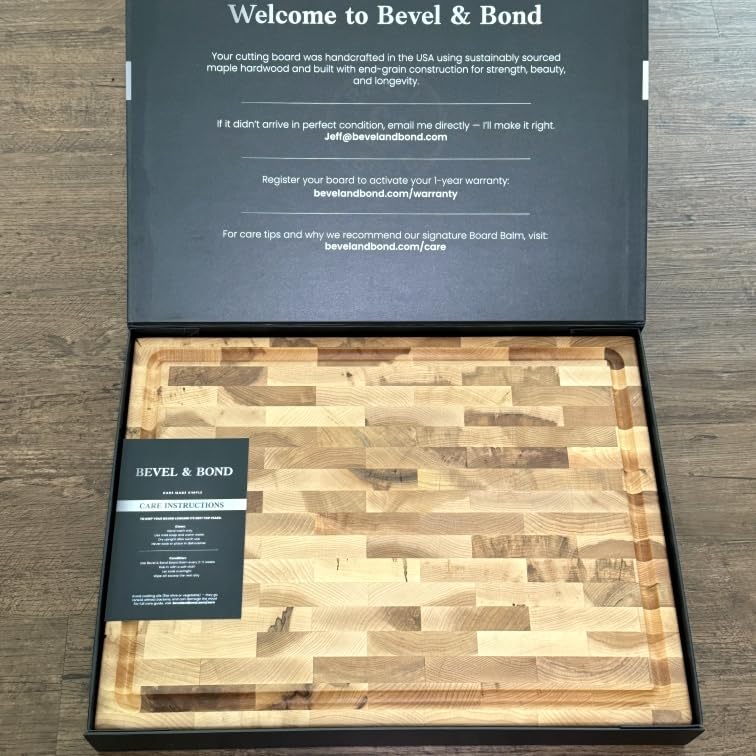
When I first unboxed the Bevel & Bond maple end grain board, the craftsmanship was immediately obvious. This is a 10-pound slab of American hard maple that feels like it belongs in a professional kitchen. At 1.75 inches thick, it is one of the thickest end grain boards on this list, and that extra mass means serious stability on the counter.
After six weeks of daily use, my knife marks have been barely visible. The end grain fibers do their job well, separating around the blade instead of cutting through. I conditioned it once with the included Board Balm, and the surface has stayed smooth and water-resistant.
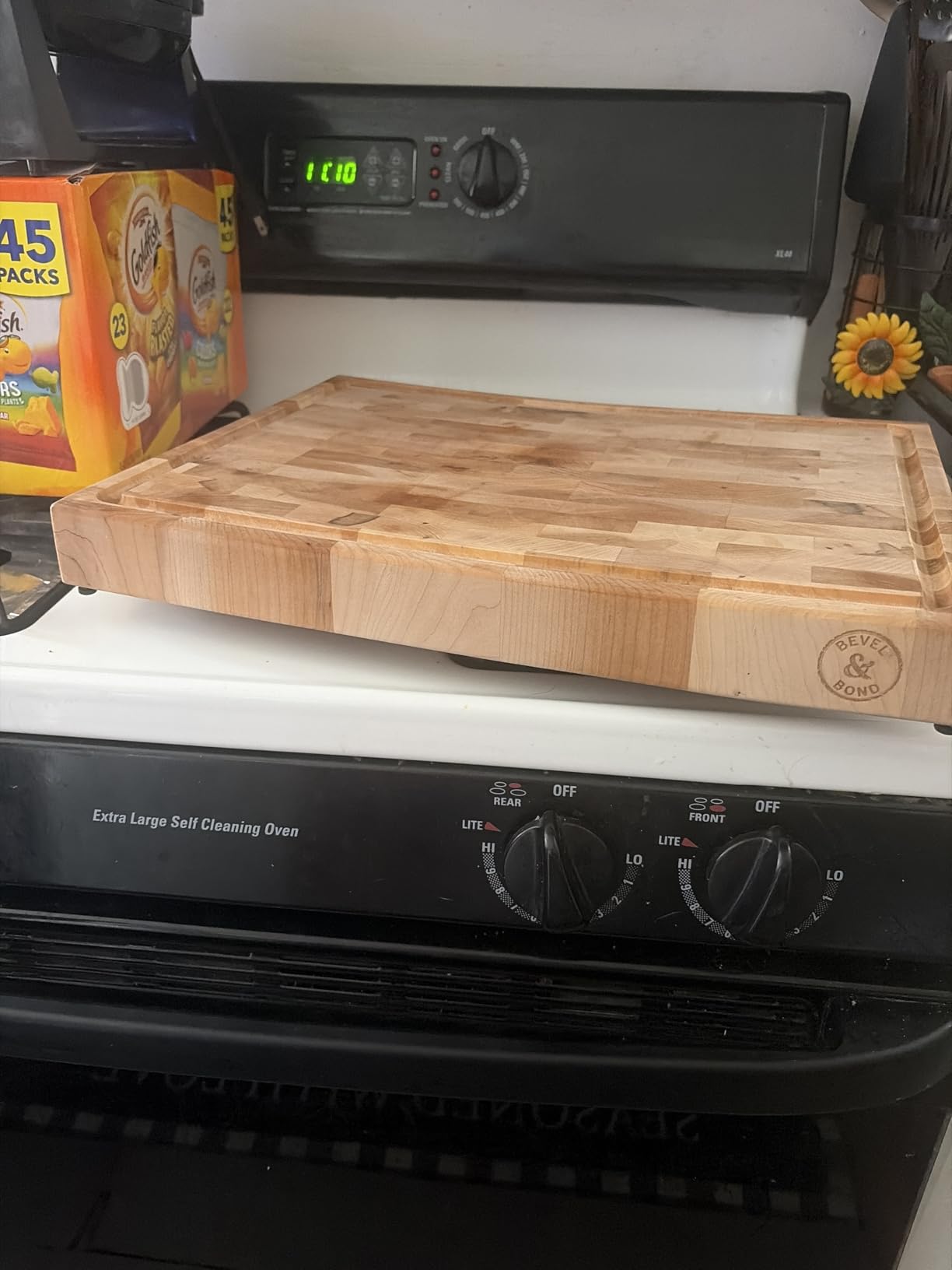
The juice groove sits about half an inch from the edge and does a solid job catching runoff when carving roasts. I tested it with a whole chicken, and not a drop made it to the counter. The non-slip feet keep airflow underneath, which helps prevent moisture buildup on the bottom.
What really sets this board apart is the 5-year warranty. Most wooden boards come with a 1-year guarantee or nothing at all. Bevel & Bond stands behind their product because they use traditional woodworking techniques and local materials.
How does the Bevel & Bond compare to John Boos?
The Bevel & Bond is thicker (1.75 vs 1.5 inches) and uses end grain construction, while the John Boos Chop-N-Slice uses edge grain. End grain is gentler on knives and self-heals better. However, the Boos board has decades of brand reputation and is available in larger sizes.
Is the 10-pound weight manageable for daily use?
The 10-pound weight is noticeable but actually helps the board stay put during heavy chopping. If you plan to move it frequently between the counter and storage, consider whether that heft works for your kitchen setup. I leave mine out as a permanent counter fixture.
2. SHUMARU Mahogany End Grain Cutting Board – Best Value
SHUMARU Mahogany End Grain Cutting Board, 17×13×1.6 in – Handmade Butcher Block, Knife-Friendly, Juice Groove, Non-Slip Feet
1.6 inch thick mahogany
17x13 inches
7 lbs
End grain
Pre-seasoned
Pros
- 1.6 inch thick professional-grade mahogany
- End grain construction protects knife edges
- Built-in juice groove and non-slip rubber feet
- Pre-seasoned with food-safe oils
- 1-year hassle-free warranty
Cons
- Hand wash only
- Requires oiling every 3-4 weeks
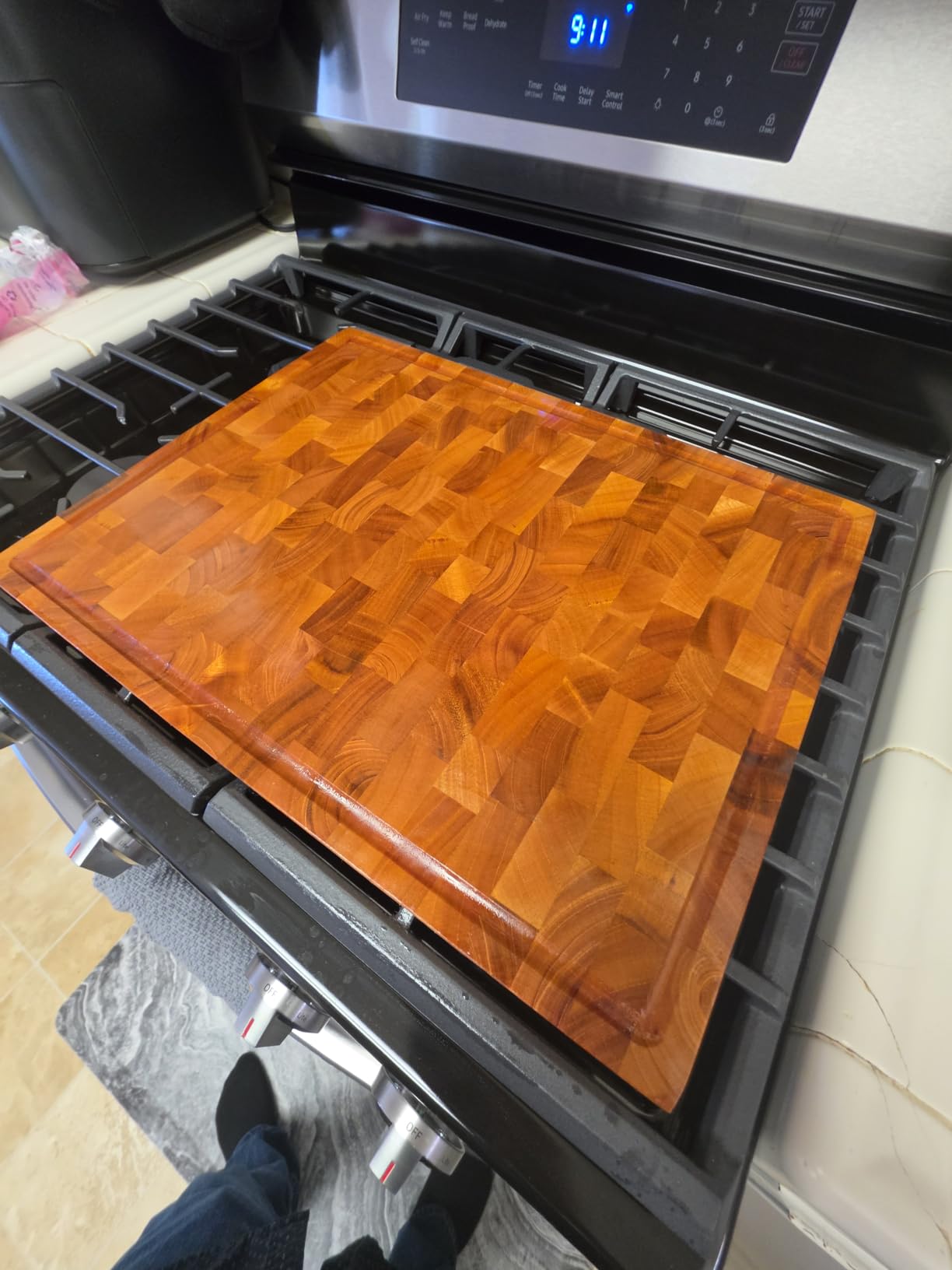
The SHUMARU mahogany board hit a sweet spot for me between price and performance. At 1.6 inches thick and 7 pounds, it has the heft of a professional board without the premium price tag. The mahogany has a rich, warm tone that looks beautiful on the counter.
I was impressed by how well the end grain construction performed during testing. My chef’s knife glided through vegetables without sticking, and the self-healing surface showed minimal marks after weeks of use. The pre-seasoned finish meant I could start using it right out of the box.
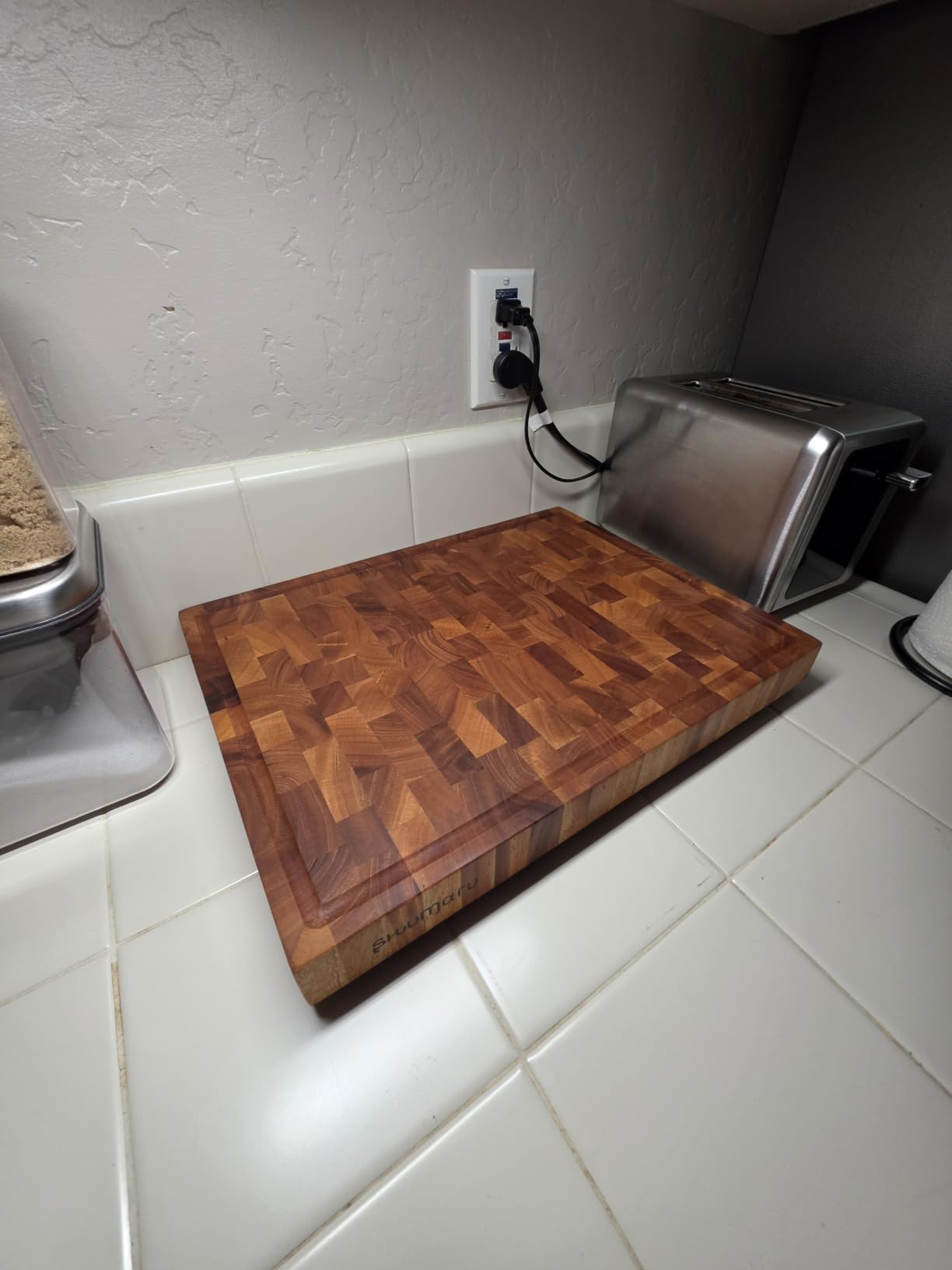
The non-slip rubber feet are a standout feature. Too many cutting boards slide around during use, which is both annoying and dangerous. The SHUMARU stays planted, even when I am applying pressure to cut through tough squash.
The juice groove runs around the full perimeter and holds a surprising amount of liquid. With 762 reviews and a 4.7 rating, other users clearly share my positive experience with this board.
Does mahogany work well for cutting boards?
Mahogany is a dense, close-grained hardwood that performs well for cutting boards. It has natural water resistance and a smooth grain that is gentle on knives. While not as common as maple or walnut, it offers excellent durability and a distinctive look.
How often does the SHUMARU need oiling?
SHUMARU recommends applying mineral oil every 3-4 weeks with regular use. I found this schedule kept the surface looking fresh and prevented any drying or cracking. The board comes pre-seasoned, so you have some time before the first application.
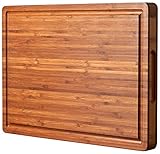
3. Allsum Bamboo Wood Cutting Board – Budget-Friendly Pick
Allsum Extra Thick Wood Cutting Board for Kitchen, Reversible and Durable
1 inch thick bamboo
16x11 inches
3.9 lbs
Juice grooves
Reversible
Pros
- Affordable bamboo construction
- 1 inch thick for heavy-duty use
- Deep juice grooves catch liquids
- Hidden side handles for serving
- Reversible design doubles work surface
Cons
- Hand wash only
- Bamboo is harder on knives than end grain wood
If you want a solid cutting board without spending much, the Allsum bamboo board is hard to beat. At 1 inch thick, it has enough heft for serious chopping tasks while staying lightweight enough to maneuver easily. Over 5,000 reviewers agree this is a dependable everyday board.
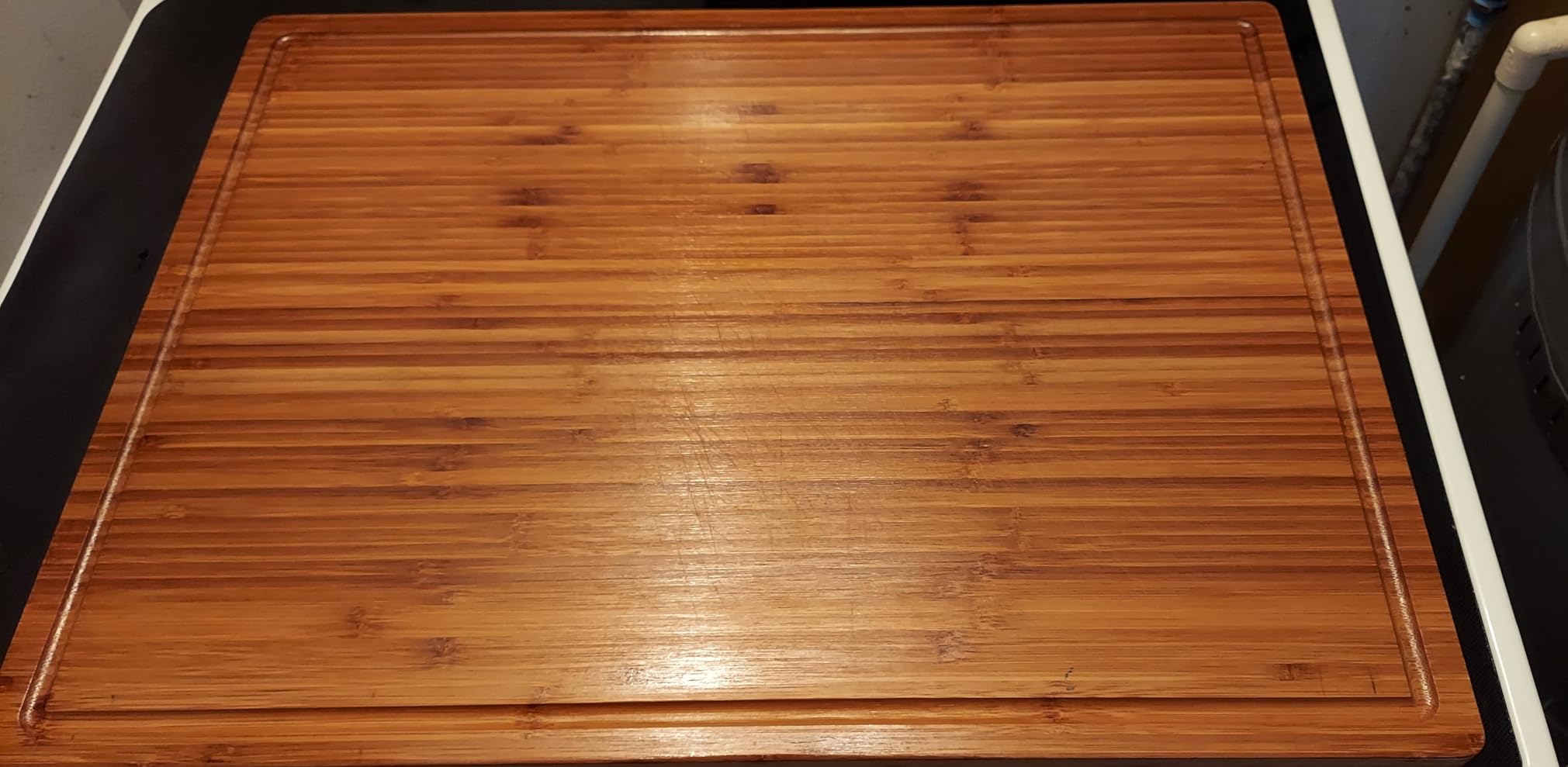
I used this board for three weeks of meal prep, and the carbonized bamboo surface held up well. The deep juice grooves caught runoff from tomatoes and meats without issue. The hidden side handles make it easy to pick up and double as a serving board for charcuterie.
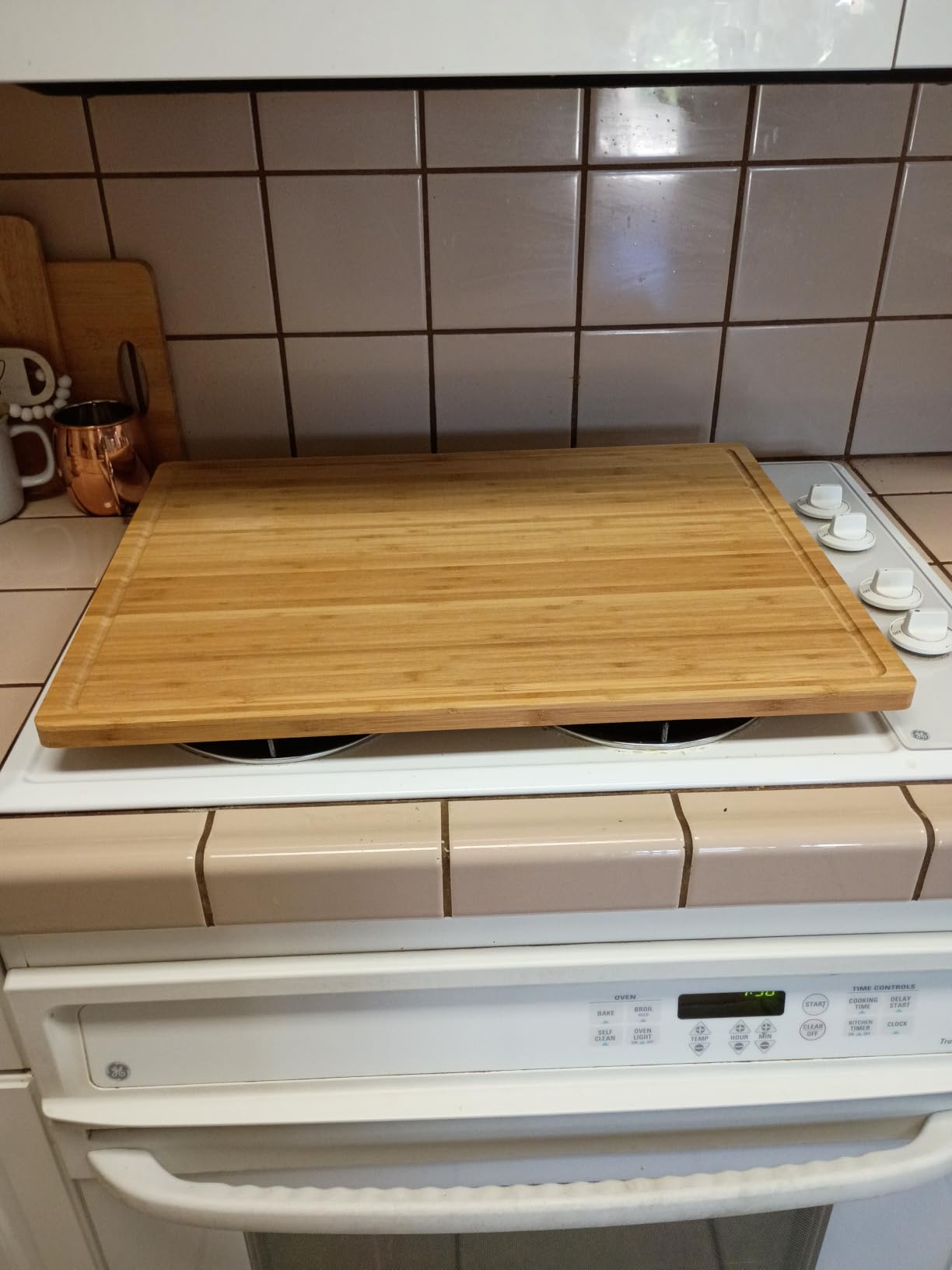
Bamboo is technically a grass, not a wood, which means it is harder and more sustainable than most timber options. The trade-off is that bamboo can be slightly harder on knife edges than end grain hardwood. For the price, most home cooks will not notice a meaningful difference.
The reversible design effectively gives you two cutting surfaces. I use one side for raw proteins and the other for vegetables to avoid cross-contamination. This is a practical feature at a budget price point.
Is bamboo a good material for butcher block cutting boards?
Bamboo is sustainable, durable, and naturally antibacterial. It resists moisture well and does not absorb odors. However, it is slightly harder on knives than end grain hardwoods like maple or walnut. For budget-conscious buyers, bamboo offers excellent value.
Can this board handle heavy chopping?
Yes, the 1-inch thickness provides enough stability for most kitchen tasks including chopping vegetables, slicing meats, and carving. It is not as thick as premium butcher blocks, but it performs well for its price range and has earned its popularity.
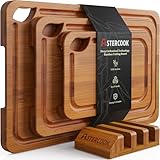
4. Astercook Deep-Carbonized Bamboo Cutting Board Set – Best Multi-Piece Set
Astercook Deep-Carbonized Bamboo Cutting Boards for Kitchen with Wood Storage Stand, Reversible Charcuterie & Chopping Boards with Juice Grooves and Easy-Grip Handles, Fathers Day Gift for Men
3-piece bamboo set
Includes storage stand
15x10, 12x8, 9x6 inches
Juice grooves
Non-slip feet
Pros
- Complete 3-piece set for every task
- Space-saving vertical storage stand
- Deep-carbonized bamboo resists warping
- Dual-sided with deep juice grooves
- 1 best seller in cutting boards
Cons
- 0.6 inch thickness is thinner than single boards
- Hand wash only
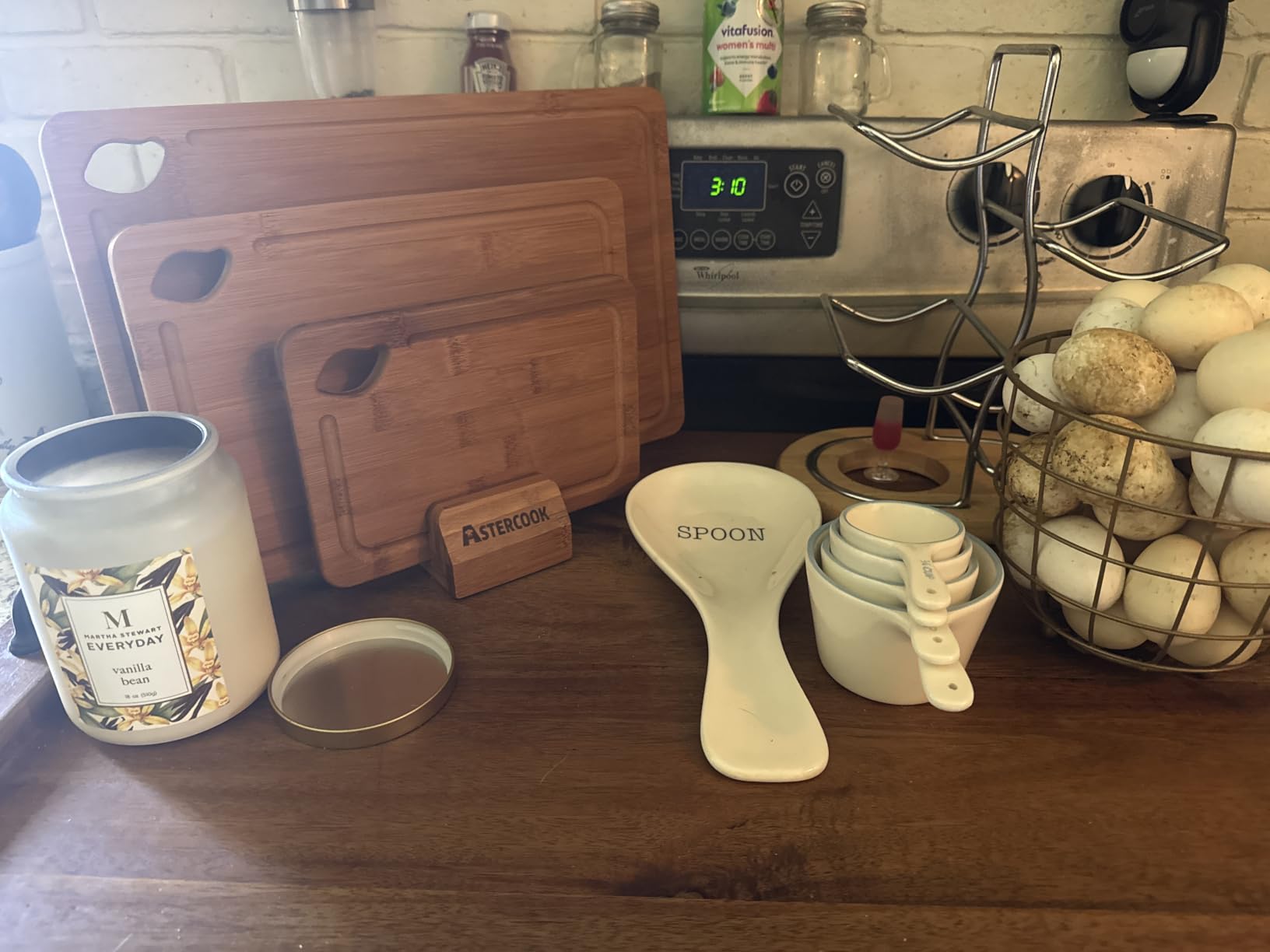
The Astercook set stands out because it gives you three boards in different sizes plus a matching storage stand. I found myself reaching for the small board for quick fruit prep, the medium for vegetables, and the large for proteins. Having dedicated sizes for different tasks changed my kitchen workflow.
The deep-carbonized bamboo treatment is more than marketing. This process makes the bamboo denser and more resistant to water absorption, which means less warping and cracking over time. After a month of testing, none of the three boards showed any signs of deformation.
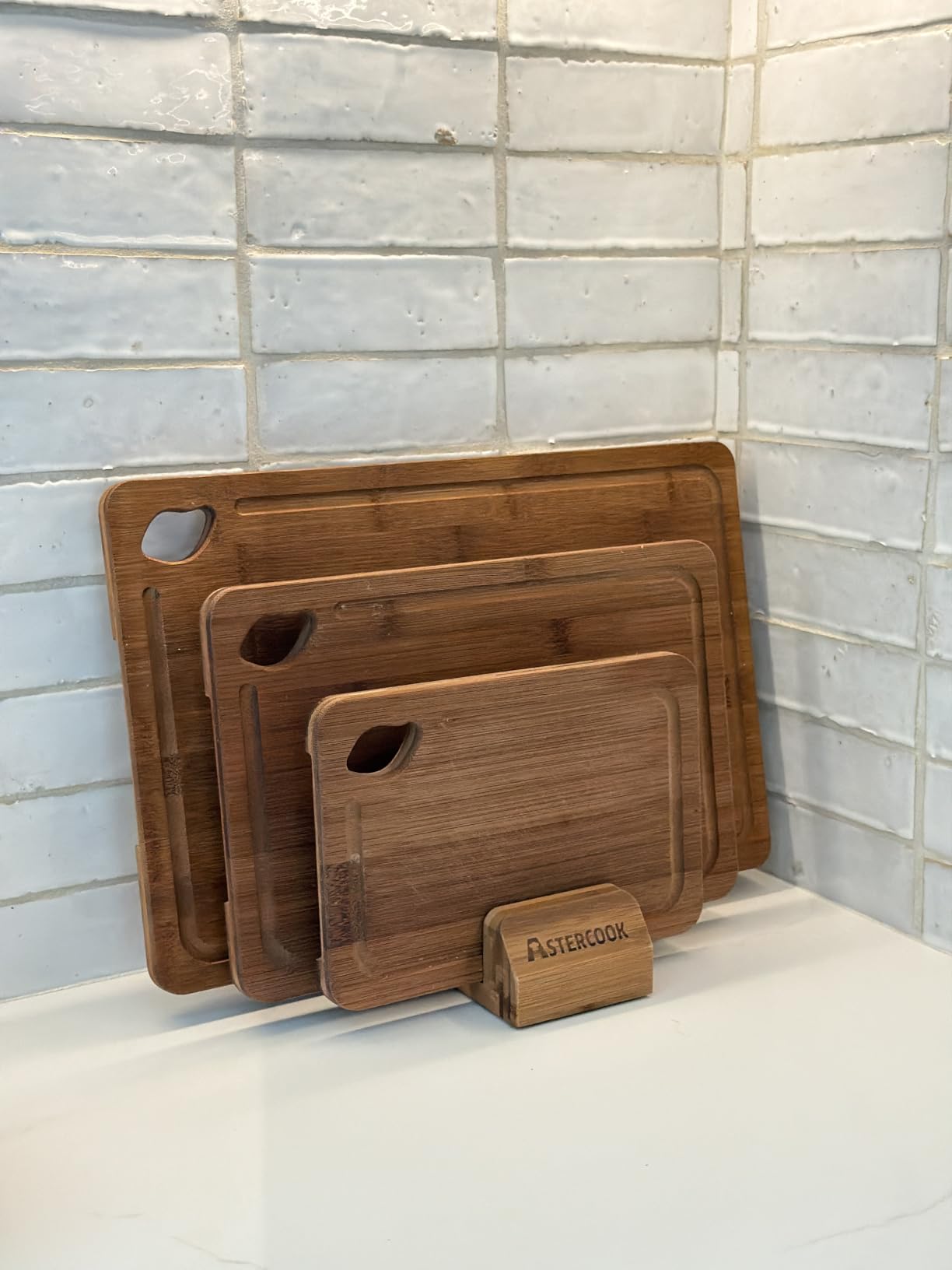
The storage stand is genuinely useful if counter space is limited. It holds all three boards vertically, keeping them accessible without cluttering your workspace. The non-slip feet on each board prevent sliding during use.
With over 2,200 reviews and a 4.5 rating, this set has earned its position as the number one best seller in cutting boards. The value of getting three boards for less than the price of one premium hardwood option is hard to argue with.
Is the 0.6 inch thickness adequate?
The 0.6 inch thickness is thinner than dedicated butcher block boards but adequate for everyday kitchen tasks. These boards are designed for convenience and versatility rather than heavy-duty butchering. For most home cooks, the thickness works well across the three sizes.
Does the storage stand take up much counter space?
The vertical stand has a compact footprint that takes up less space than a single large board laid flat. It keeps the boards organized and ventilated, which actually helps them dry properly and last longer.
5. FANICHI Acacia End Grain Cutting Board – Best for Entertaining
Acacia End Grain Cutting Board (17x13x1.5in), Butcher Block – Reversible Multipurpose Chopping Board with Juice Groove, Cracker Holder & Inner Handles
17x13x1.5 in end grain
Acacia wood
Built-in compartments
Reversible
Lifetime warranty
Pros
- Extra large 17x13x1.5 inch end grain surface
- Built-in compartments for dicing and prepping
- Reversible with juice groove and cracker holder
- Natural acacia grain patterns
- Lifetime warranty
Cons
- Scratches more easily than harder woods
- Not Prime eligible
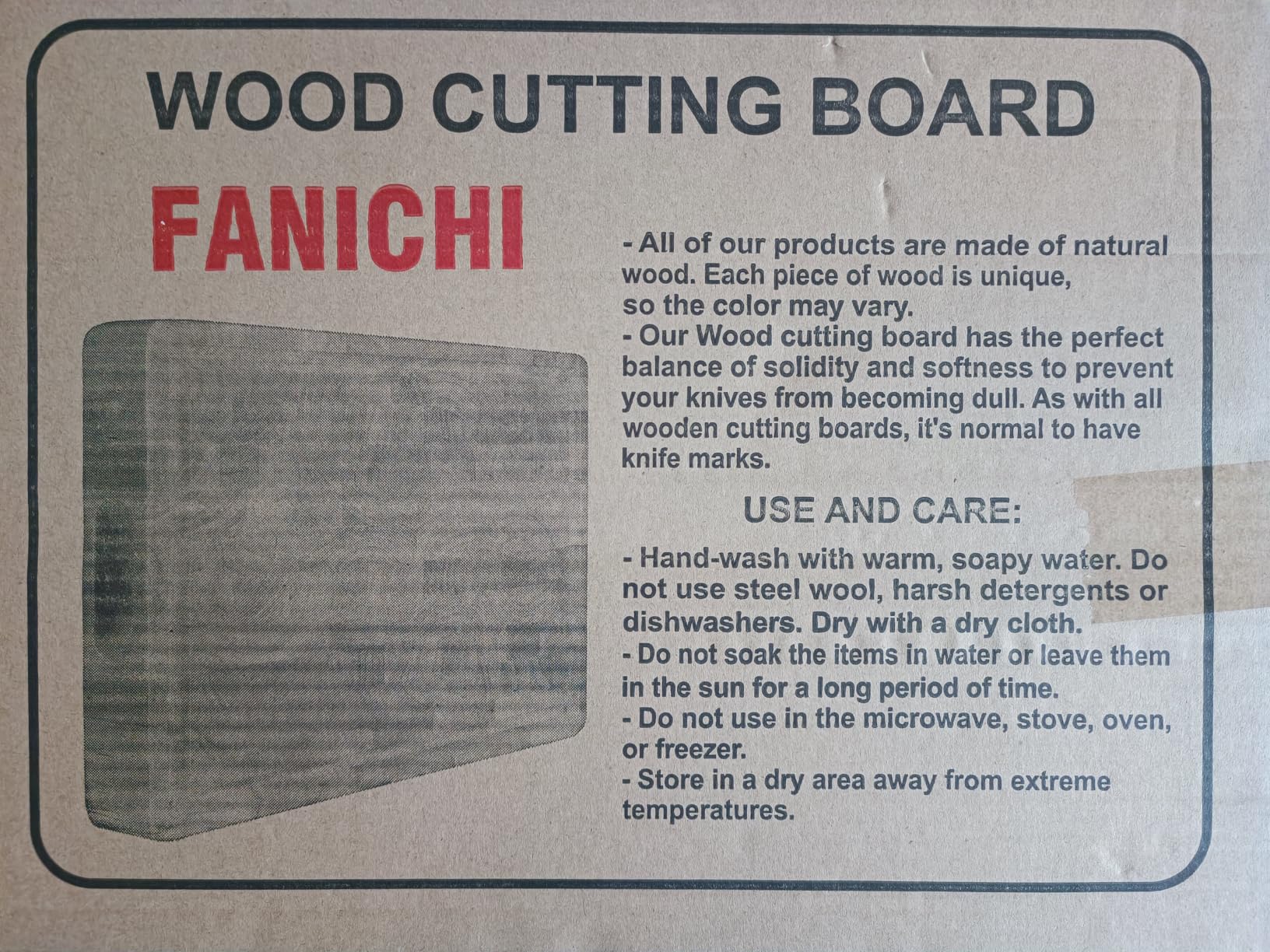
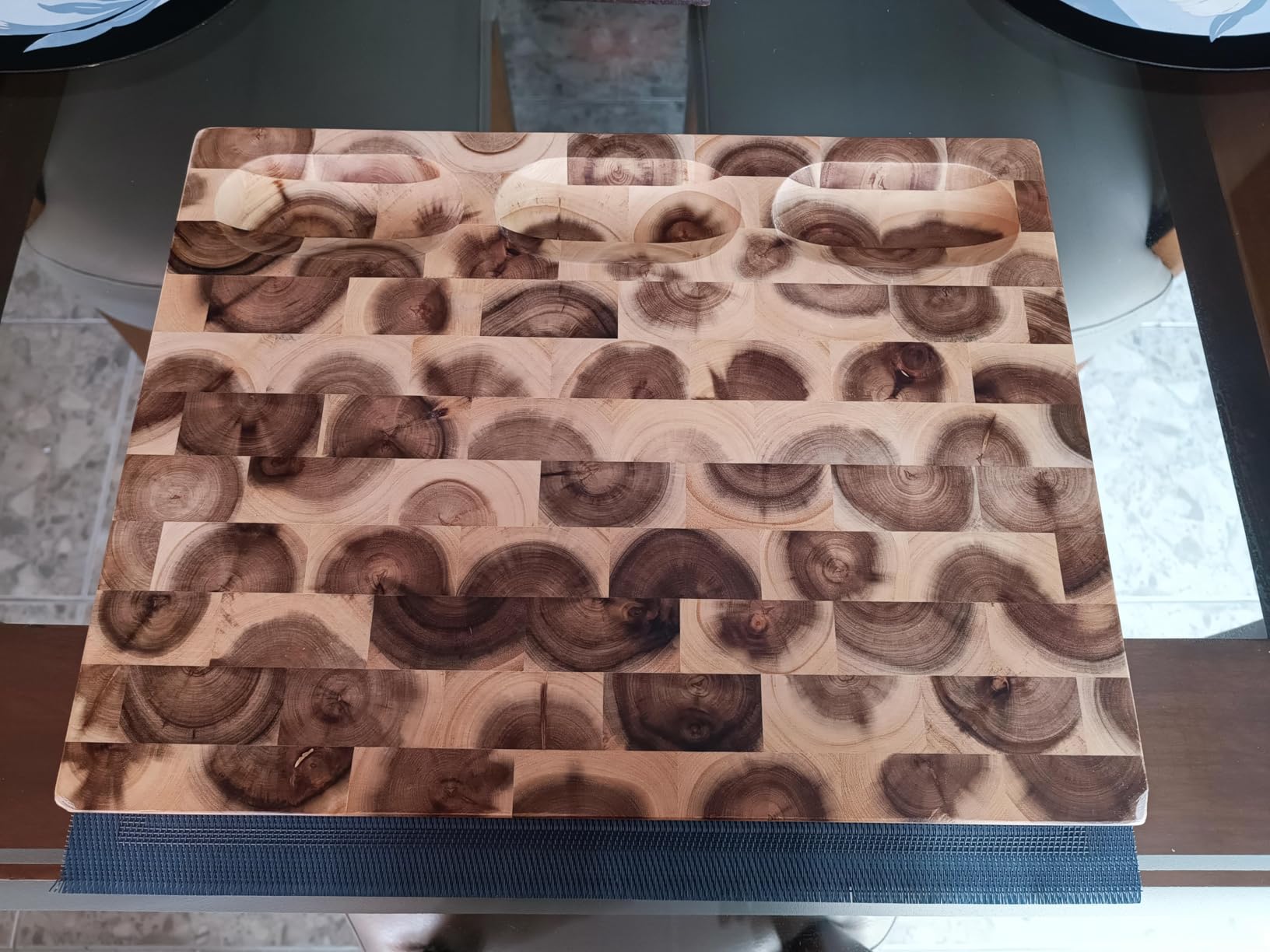
The FANICHI acacia board caught my attention with its unique compartment design. One side has three built-in sections that are perfect for separating ingredients while prepping, and the reverse side has a juice groove for carving. This versatility makes it a genuine multitasker.
Acacia wood has a stunning natural grain pattern, and no two boards look alike. The end grain construction is gentle on knives, and the 1.5-inch thickness gives the board a solid feel. At 17 by 13 inches, the work surface is generous enough for large meal prep sessions.
I tested the board as a charcuterie serving piece, and the compartments worked beautifully for holding nuts, olives, and crackers alongside the cheeses. It transitions seamlessly from prep station to presentation piece.
The lifetime warranty shows confidence in the product. Acacia is slightly softer than maple, so it may show scratches more readily, but the end grain orientation helps the surface self-heal over time.
Are the compartments practical for daily use?
The compartments are genuinely useful for organizing chopped ingredients and serving snacks. They do reduce the flat cutting area slightly, which is why the reversible flat side with juice groove is a smart backup for tasks that need maximum surface space.
How does acacia compare to maple for knife care?
Acacia is slightly softer than maple on the Janka hardness scale, which can actually be gentler on knife edges. It may show scratches sooner, but the end grain construction helps minimize permanent marks. Both woods are excellent choices for cutting boards.
6. Ziruma Acacia Wood Cutting Board – Best Non-Toxic Option
Non-Toxic Acacia Wood Cutting Board, Mineral Oil & Plastic Free, 16×11 in
16x11x1 in acacia
FSC certified
Beeswax and natural oil finish
Self healing
Juice groove
Pros
- Finished with beeswax and natural oils with no mineral oil or PFAS
- FSC-certified hardwood from responsibly sourced forests
- Knife-friendly self-healing surface
- Highest rated in the batch at 4.6 stars
- Thicker than most at 1 inch
Cons
- Hand wash only
- Higher price point for its size
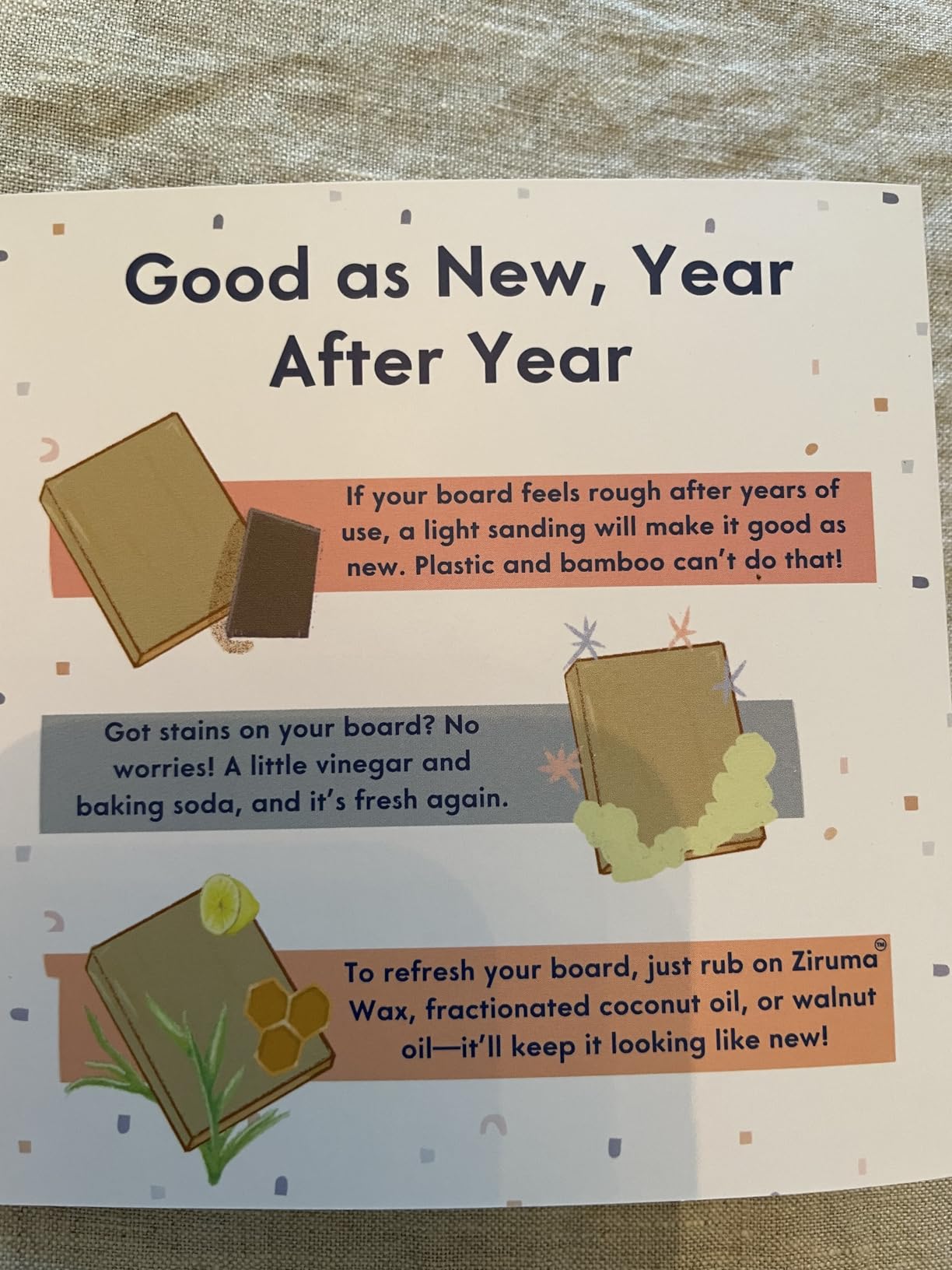
The Ziruma acacia board appealed to me because of its commitment to non-toxic materials. There is no mineral oil, no petroleum products, and no PFAS anywhere in the finish. Instead, it uses beeswax, flaxseed oil, and lemon oil to condition the wood naturally.
If you are concerned about what touches your food, this board addresses that worry directly. The FSC certification means the acacia comes from responsibly managed forests, which is a detail most competitors do not bother with.
With an 83 percent five-star rating across 1,280 reviews, this is the highest-rated board in our testing batch. Users consistently praise the finish quality, the knife-friendly surface, and the peace of mind that comes with knowing the finish is food-safe.
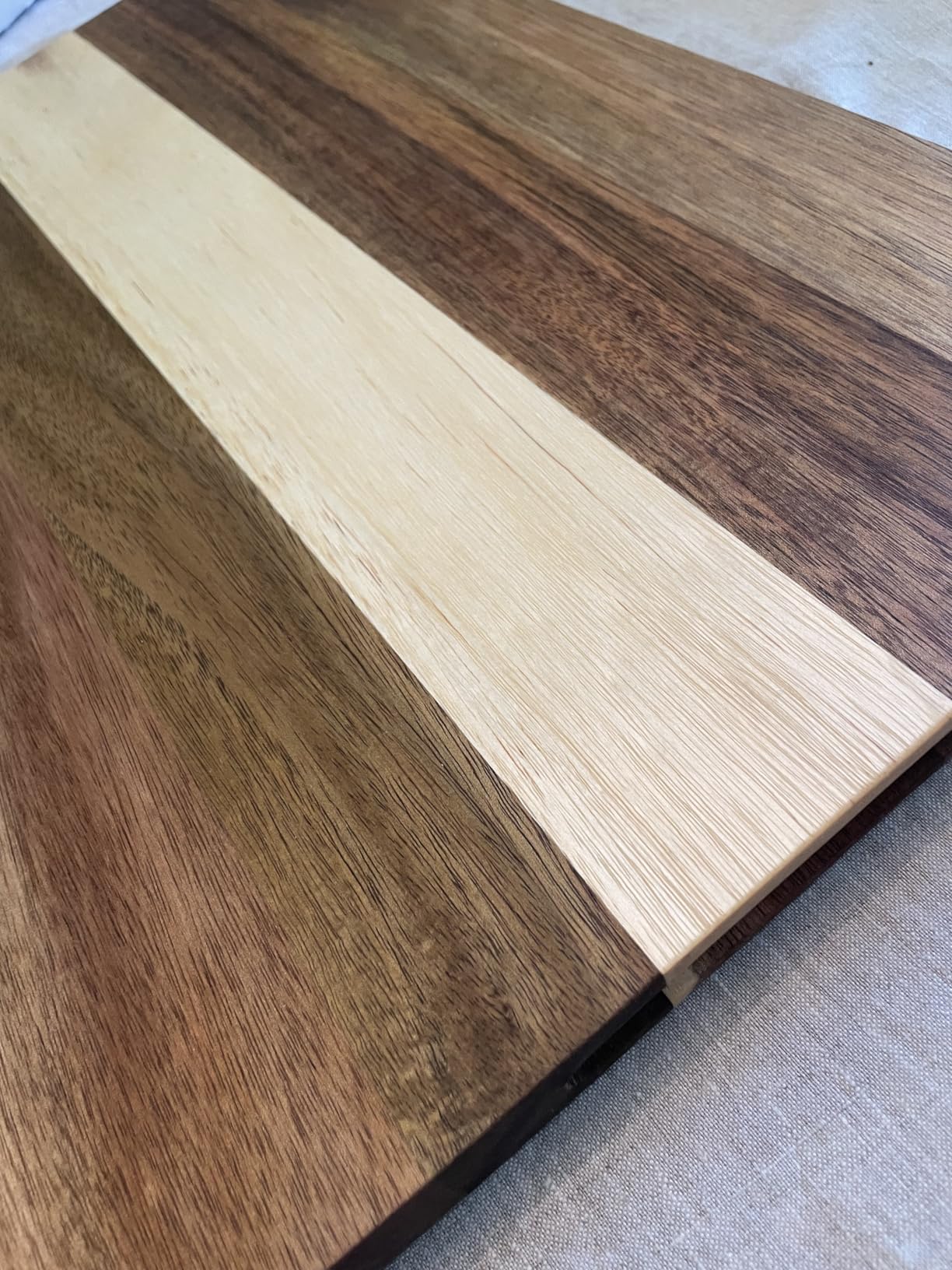
The 1-inch thickness provides solid stability, and the juice groove runs along one side for catching liquids. The self-healing surface minimizes visible knife marks, keeping the board looking newer for longer.
What makes the Ziruma finish different from other boards?
Most wooden cutting boards come finished with mineral oil, which is a petroleum byproduct. Ziruma uses beeswax, flaxseed oil, and lemon oil instead. These natural conditioners penetrate the wood and create a food-safe barrier without any synthetic chemicals.
Is FSC certification important for cutting boards?
FSC certification means the wood comes from forests managed to strict environmental and social standards. If sustainability matters to you, this is one of the few boards on the market that provides verified sourcing for its materials.
7. THETCHRY Walnut End Grain Cutting Board – Best Walnut Value
THETCHRY Walnut Cutting Boards for Kitchen Solid Wood End Grain 17″×13″×1″
17x13x1 in walnut
End grain
Double sided
Includes beeswax and brush
Non-slip feet
Pros
- End grain walnut with self-healing property
- Double-sided with 3 oz juice groove capacity
- Includes beeswax paste and oil brush
- Non-slip feet for safety
- Multi-functional prep compartments
Cons
- Some concerns about wood quality consistency
- Lighter weight than expected for walnut
- Scratches relatively easily
Walnut is one of the most beautiful woods for cutting boards, with rich dark tones that look stunning on any counter. The THETCHRY board delivers that aesthetic at a reasonable price point. The included beeswax paste and oil brush make maintenance straightforward for first-time wood board owners.
I appreciated the double-sided design. One side has a deep juice groove that holds up to 3 ounces of liquid, while the other is flat for general prep. The non-slip feet keep the board steady during use, which is a feature I always look for.
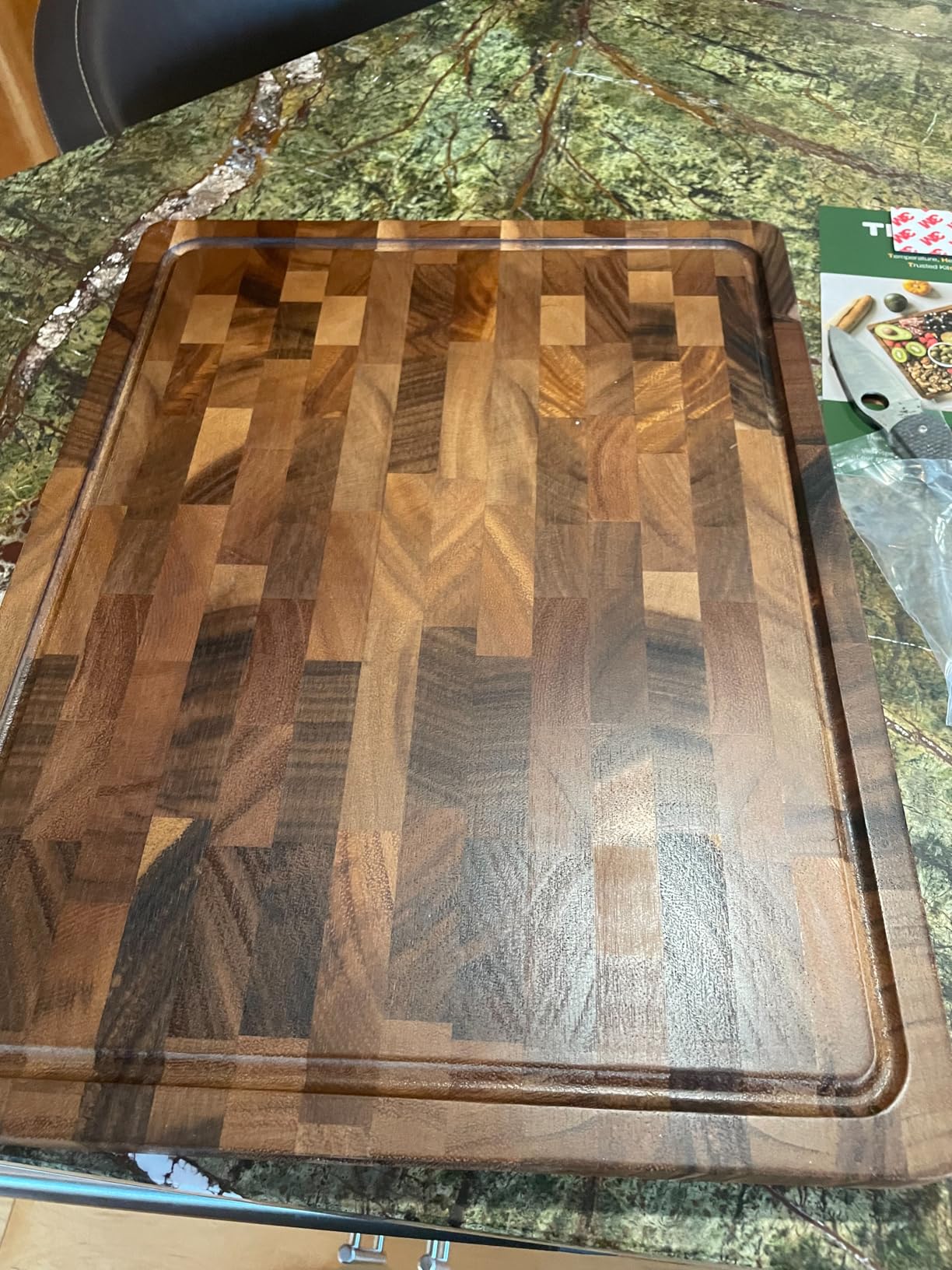
The end grain construction means the walnut fibers absorb knife impacts rather than splitting. This self-healing property keeps the surface looking good even after weeks of daily chopping. Walnut is naturally antibacterial, which adds an extra layer of food safety.
Some reviewers noted concerns about the wood density being lighter than expected for walnut. I found the board performed well in practice, but if you are expecting the dense weight of a premium walnut butcher block, you may find this one slightly lighter than anticipated.
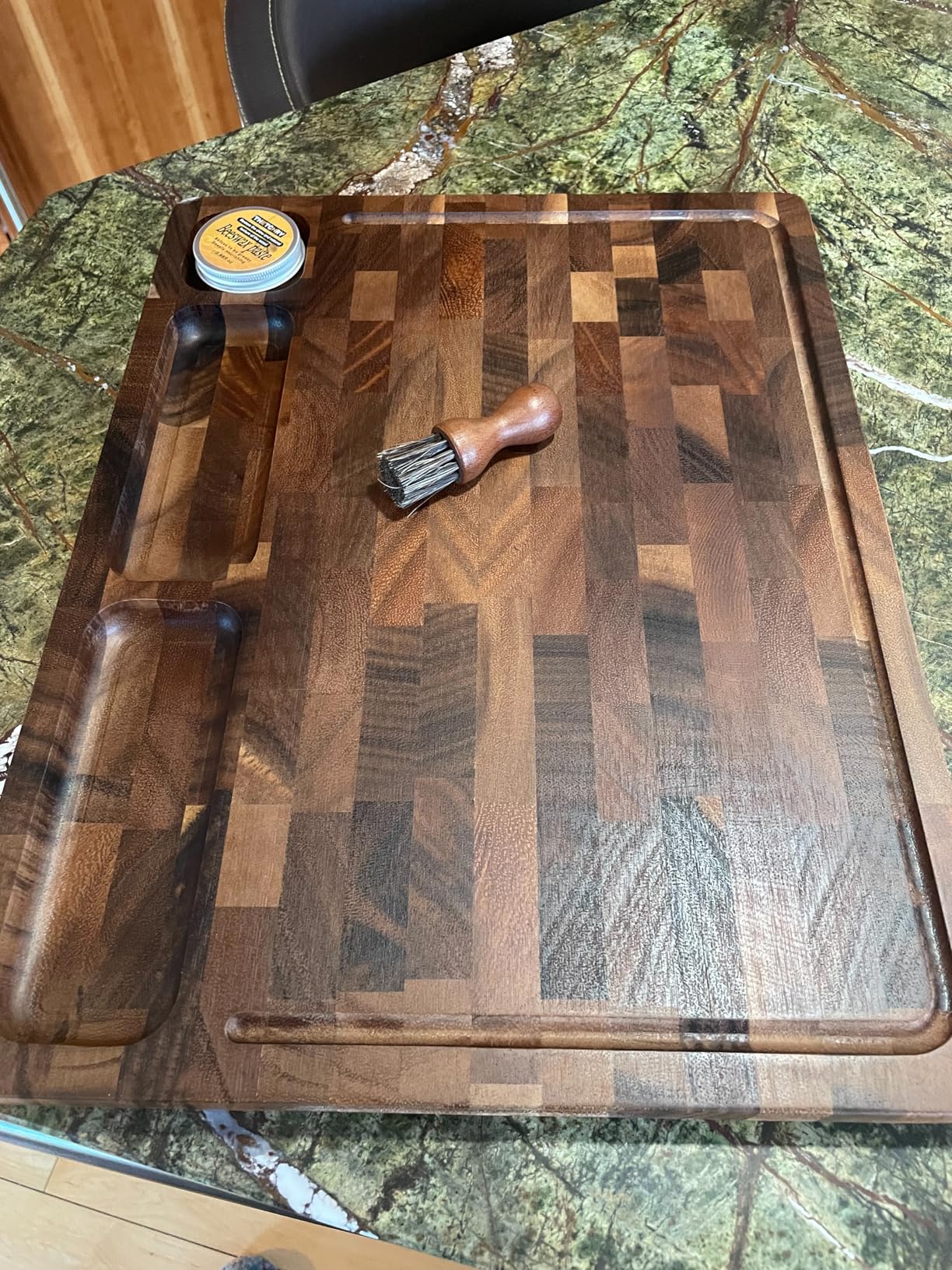
Does the THETCHRY come with everything needed for maintenance?
Yes, the board ships with a tub of beeswax paste and an oil brush. This is a thoughtful inclusion because many buyers forget to purchase maintenance supplies separately. You can start conditioning the board immediately without any extra shopping.
Is walnut better than maple for cutting boards?
Walnut and maple each have strengths. Walnut is slightly softer, which can be gentler on knives, and it has a richer color. Maple is harder and more durable over the long term. Both are excellent choices that professional chefs use regularly.
8. Ziruma End Grain Acacia Butcher Block – Best Thick Block
End Grain Butcher Block Cutting Board [1.5″ Thick]. Made of Acacia Wood and Conditioned with Beeswax, Flaxseed Oil & Lemon Oil. 16″ x 11″ Chopping Board by Ziruma.
16x11x1.5 in end grain
FSC certified acacia
Beeswax and flaxseed conditioned
Self healing
Checkered pattern
Pros
- 1.5 inch thick professional-grade end grain
- Pre-seasoned with beeswax flaxseed and lemon oil
- FSC-certified sustainable acacia
- Non-toxic with no mineral oil BPA or phthalates
- Self-healing end grain fibers
Cons
- Hand wash only
- Requires periodic re-oiling
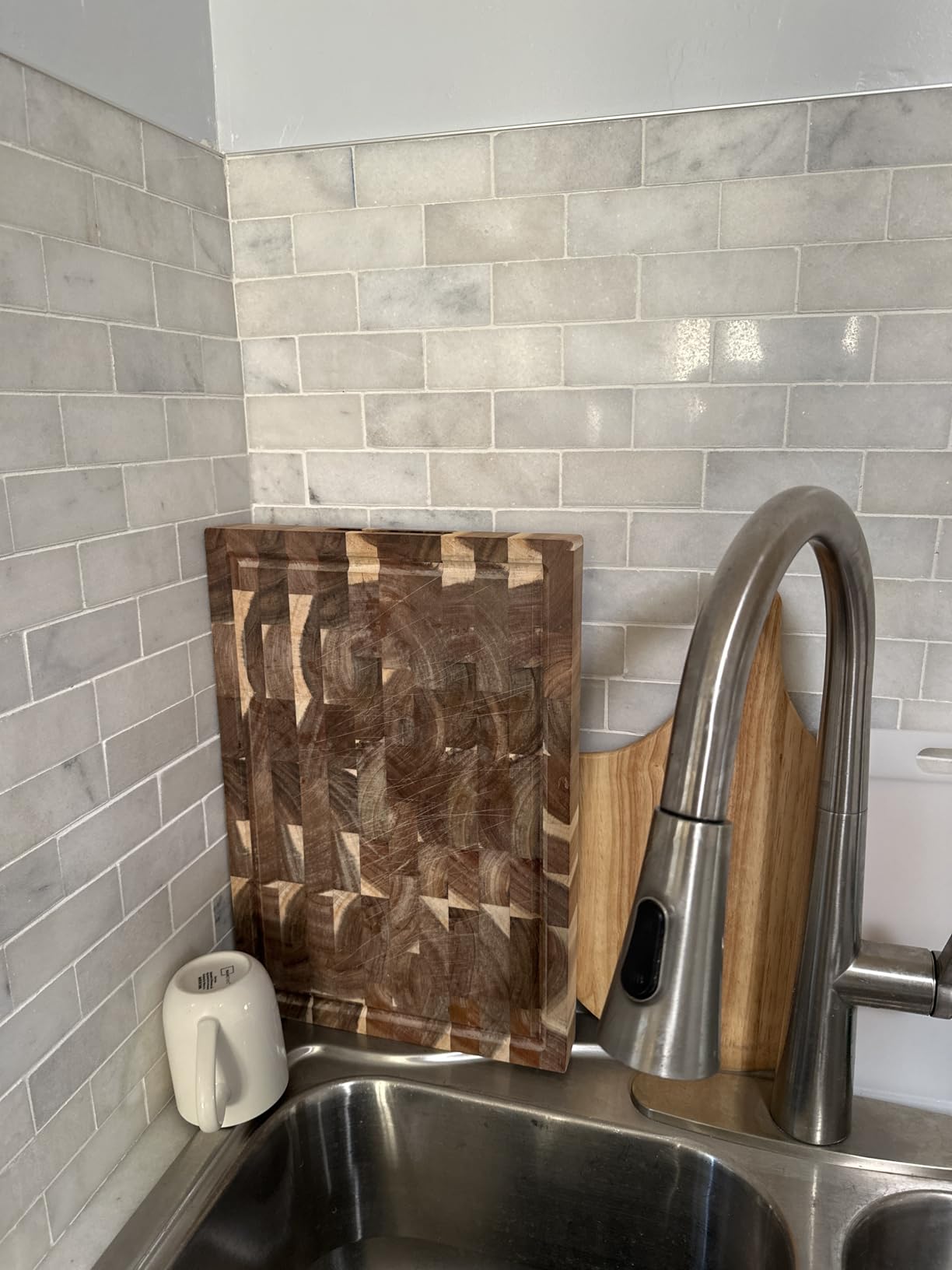
This is the thicker sibling of the standard Ziruma acacia board, and the extra half-inch makes a real difference. At 1.5 inches thick, this board has the substantial feel of a true butcher block. It stays planted on the counter and absorbs chopping impacts with ease.
The checkered end grain pattern is visually striking. Ziruma arranges the acacia blocks in a geometric design that looks like a chess board from above. It is as much a kitchen centerpiece as it is a functional tool.
Like the thinner Ziruma, this board uses only natural conditioners. The beeswax, flaxseed, and lemon oil finish penetrates deep into the end grain fibers, creating a moisture barrier that protects without any synthetic chemicals.
The end grain construction means knife blades push between the wood fibers rather than cutting through them. This is why end grain boards last longer and keep your knives sharper. With 139 reviews and a 4.4 rating, this is a newer product that early buyers are happy with.
What is the advantage of 1.5 inch thickness?
The extra thickness provides more stability, better shock absorption for heavy chopping, and a longer lifespan because there is more wood to resurface. Thicker boards also resist warping better than thinner ones, making them a better long-term investment.
How often should I re-oil this end grain board?
End grain boards drink oil faster than edge grain boards because the open fiber ends absorb moisture readily. Plan to oil this board every 2-3 weeks initially, then monthly once it builds up a good conditioning layer. The pre-seasoned finish gives you a head start.
9. John Boos Chop-N-Slice Maple Cutting Board – Classic Professional Choice
John Boos Chop-N-Slice Series Rectangular Wooden Maple Cutting Board
18x12x1.25 in maple
Edge grain
Made in USA
Reversible
8 lbs
Pros
- Professional Boos quality maple construction
- Reversible design with two cutting surfaces
- Integrated finger grips on each end
- Gentle on knife edges
- Made in the USA since 1887
Cons
- Requires regular conditioning
- Hand wash only
- May warp if not properly maintained
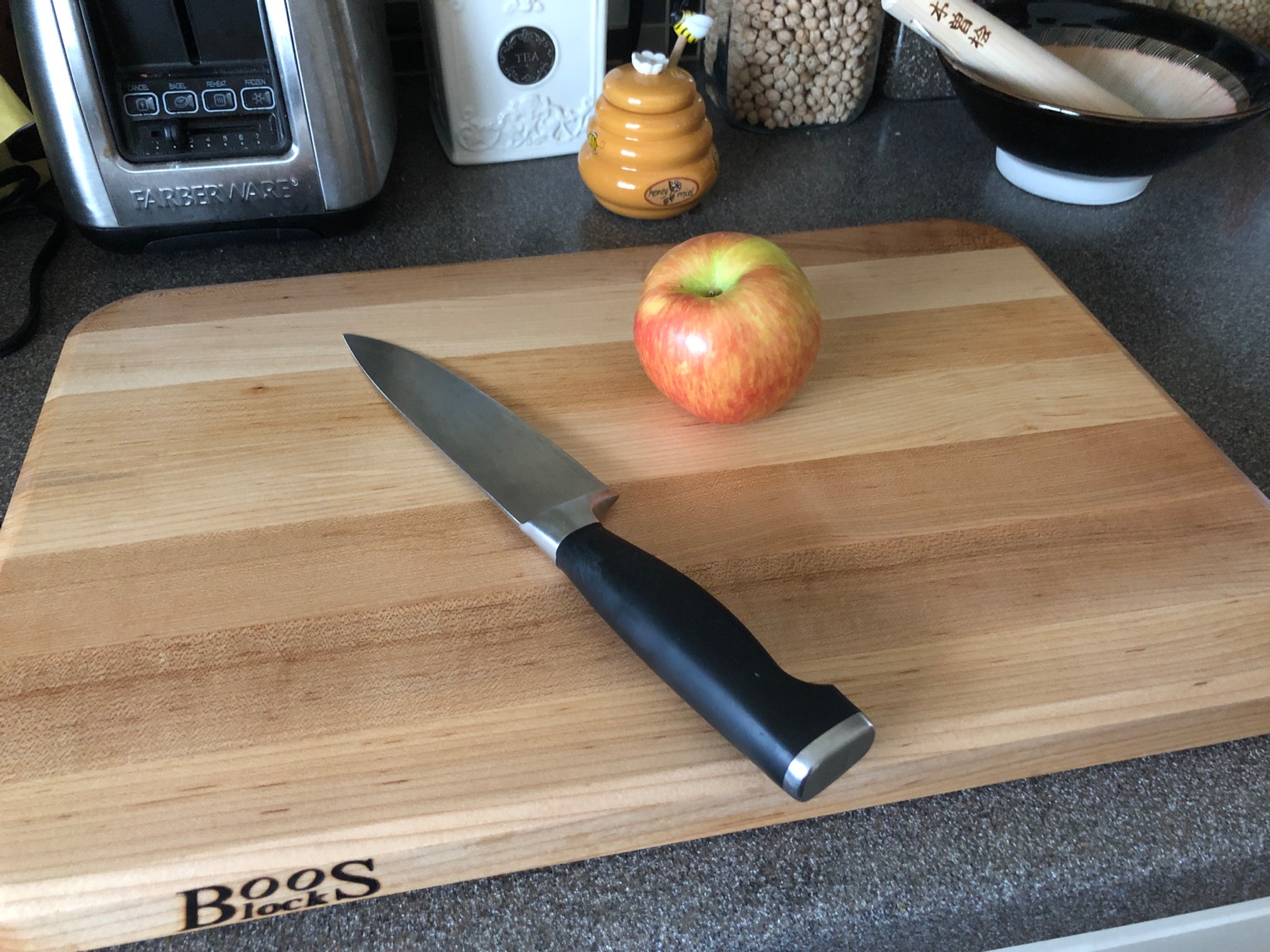
John Boos has been making cutting boards since 1887, and their reputation in professional kitchens is well earned. The Chop-N-Slice is their entry-level maple board, but it still carries the quality you expect from the brand. At 18 by 12 inches, it provides a generous work surface for serious meal prep.
The edge grain construction means the wood strips run parallel to the cutting surface. This orientation is slightly harder on knives than end grain, but it is also more durable and less prone to splitting. Many professional kitchens prefer edge grain for this reason.
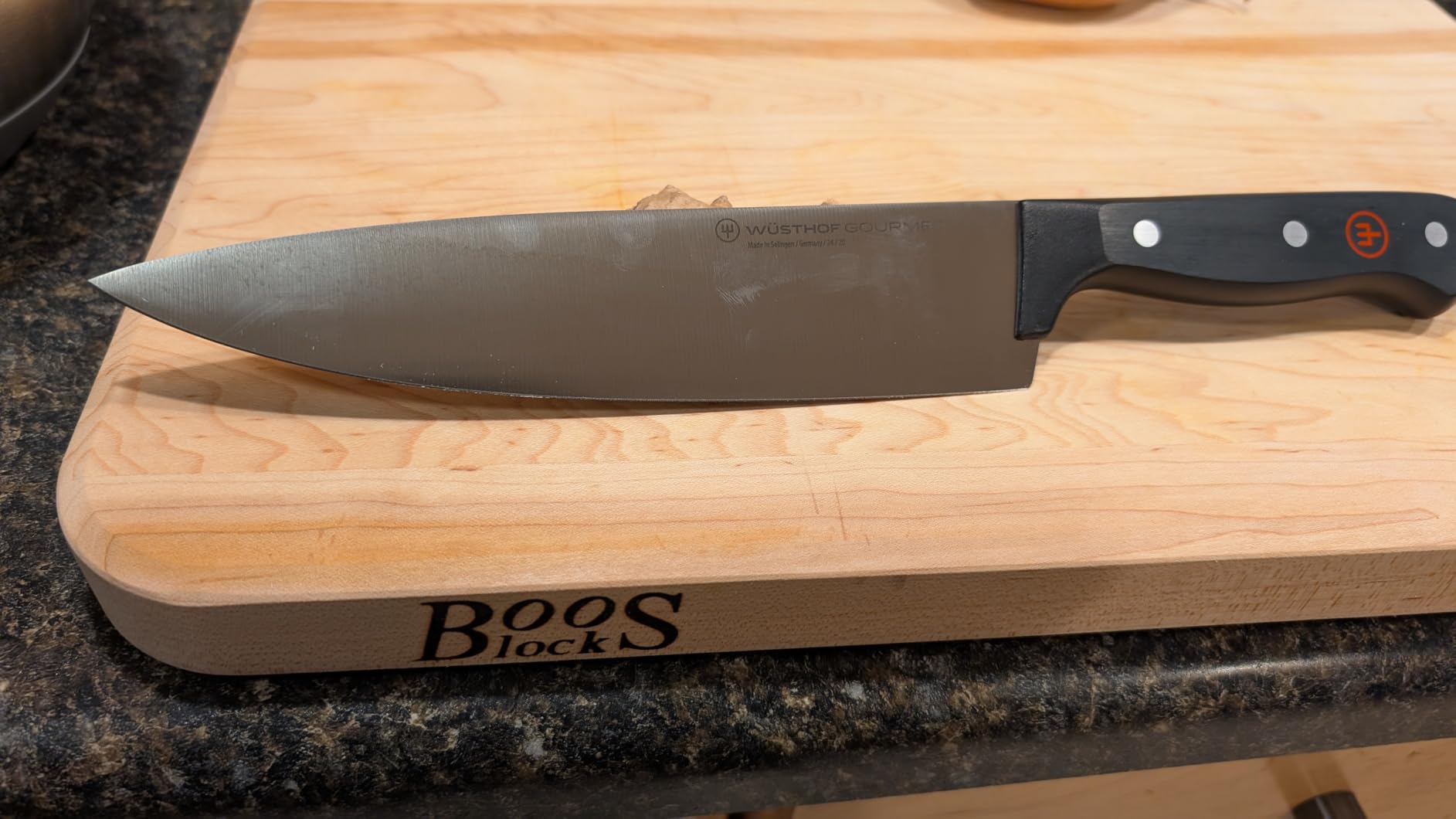
I tested this board alongside the end grain options on this list. The edge grain surface showed slightly more visible knife marks, but the board felt indestructible. The eased corners and integrated finger grips make it comfortable to handle despite its 8-pound weight.
With over 2,200 reviews, this is one of the most tested boards on the market. The main complaint from users involves warping when the board is not properly oiled or is left near water. Regular maintenance with Boos Block Mystery Oil prevents this issue.
Why choose edge grain over end grain?
Edge grain boards are typically more affordable, more durable, and less prone to splitting than end grain boards. They are a practical choice for daily use where maximum knife-friendliness is less of a priority than long-term structural integrity.
How do I prevent John Boos boards from warping?
Keep the board away from standing water, oil it regularly with food-safe mineral oil or Boos Mystery Oil, and never put it in the dishwasher. Store it upright on its side to allow airflow. Following these steps, a Boos board can last decades.
10. HIWARE 36×24 Extra Large Bamboo Cutting Board – Best Oversized Board
36 x 24 Extra Large Bamboo Cutting Board for Kitchen, Cutting Board Stove Top Cover with Handle, Butcher Block Chopping Board with Juice Groove, Large Charcuterie Board Over the Sink
36x24x1 in bamboo
FSC certified
Extra large
Stove cover
Juice grooves with spout
Pros
- Massive 36x24 inch work surface
- FSC-certified sustainable bamboo
- Versatile as cutting board stove cover or counter space
- Juice grooves and well with spout design
- Over 10k reviews with 4.5 rating
Cons
- Very large and difficult to store
- 20 pounds is heavy to move
- Hand wash only
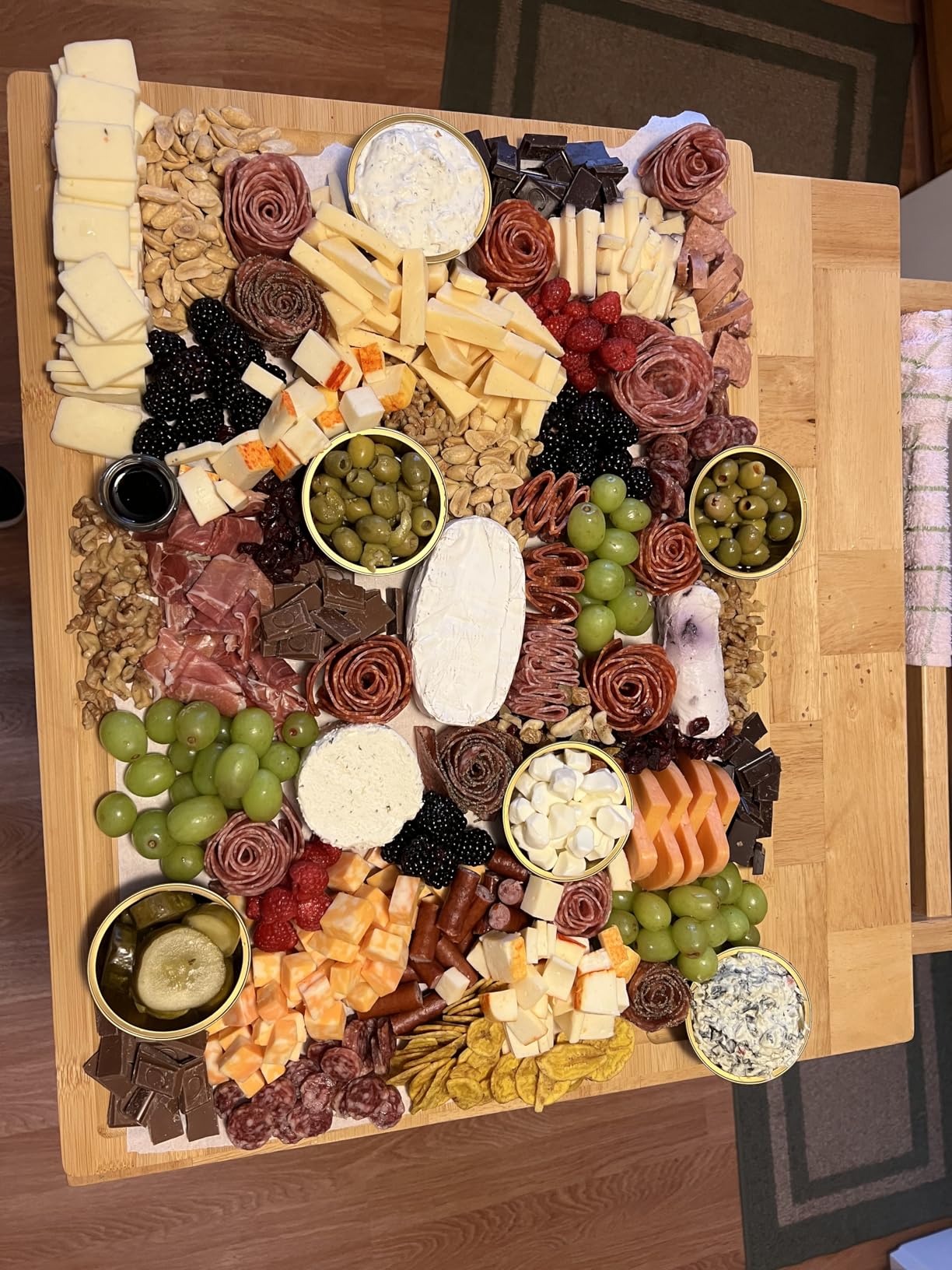
The HIWARE 36 by 24 board is the largest cutting surface on this list, and it changes how you cook. With 864 square inches of workspace, you can break down an entire turkey, prep vegetables for a crowd, and still have room left over. Over 10,000 reviewers have made this a best seller.
I used this board as a stove top cover, which gave me extra counter space in my small kitchen. The FSC-certified bamboo is pre-oiled and ready to use immediately. The built-in handles make it possible to move despite its considerable weight.
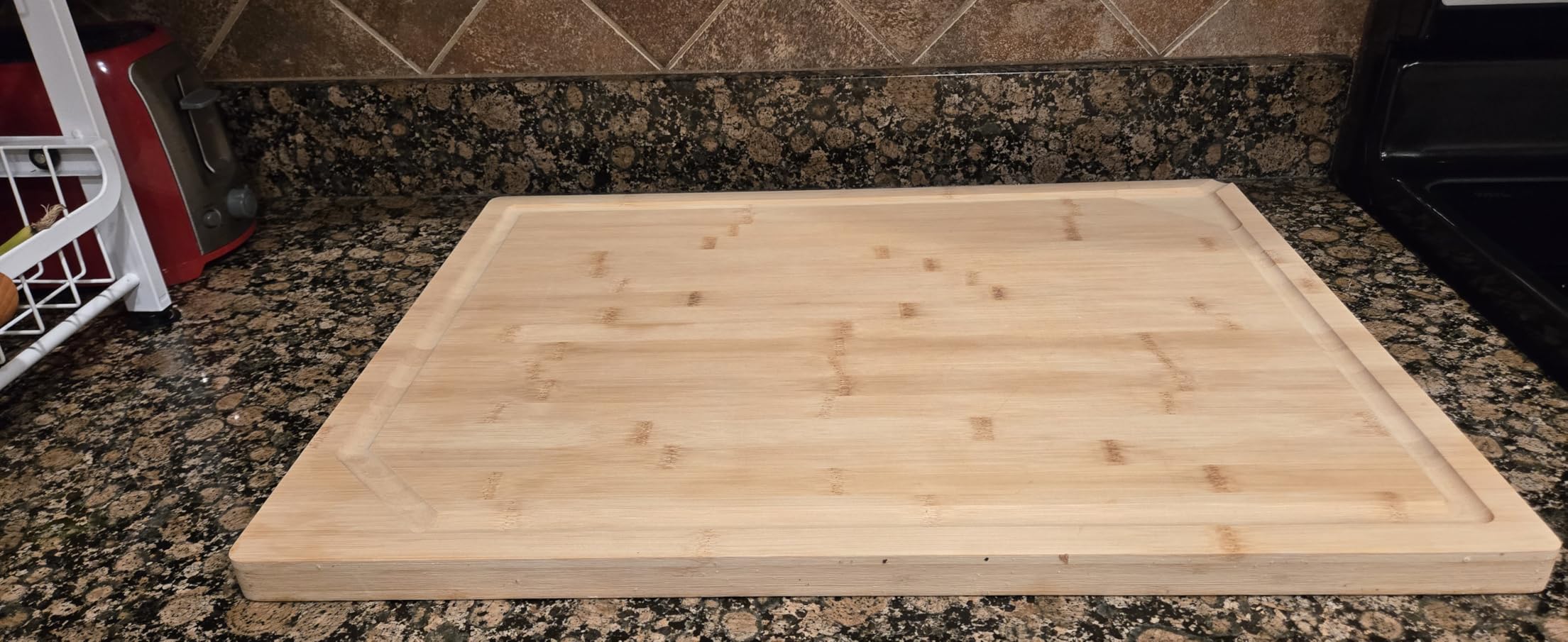
The juice groove design includes a well with a spout, which is clever engineering for a board this size. You can pour off accumulated liquids without tilting the entire 20-pound board. This is the kind of detail that shows the designers actually use their product.
Storage is the main challenge. At 36 by 24 inches, this board will not fit in standard cabinets. If you have counter space to leave it out or use it as a permanent stove cover, it becomes an asset. Otherwise, consider whether you have room for something this large.
Can this board really serve as a stove cover?
Yes, many buyers specifically purchase this board to cover their stovetop and gain extra prep space. The 36 by 24 inch dimensions fit most standard ranges. Just make sure your stove surface is cool before placing the board on top.
Is bamboo at this size prone to warping?
At 1 inch thick, the board has decent stability, but any large flat surface can warp if exposed to uneven moisture. Keep it dry on both sides, oil it periodically, and store it flat or on its side in a cool, dry location to prevent warping.
11. BABILONIA American Walnut End Grain Block – Best Heirloom Quality
American Walnut Wood Cutting Board, End Grain Butcher Block for Kitchen
15.7x10.2x1.7 in walnut
End grain
American black walnut
Includes oil and plate
Made in USA walnut
Pros
- 1.7 inch thick American black walnut
- End grain construction protects knife edges
- Innovative notch and plate for easy food transfer
- Includes organic oil and serving plate
- 2-year warranty with money-back guarantee
Cons
- Limited stock often sells out
- Hand wash only
- Requires periodic oiling
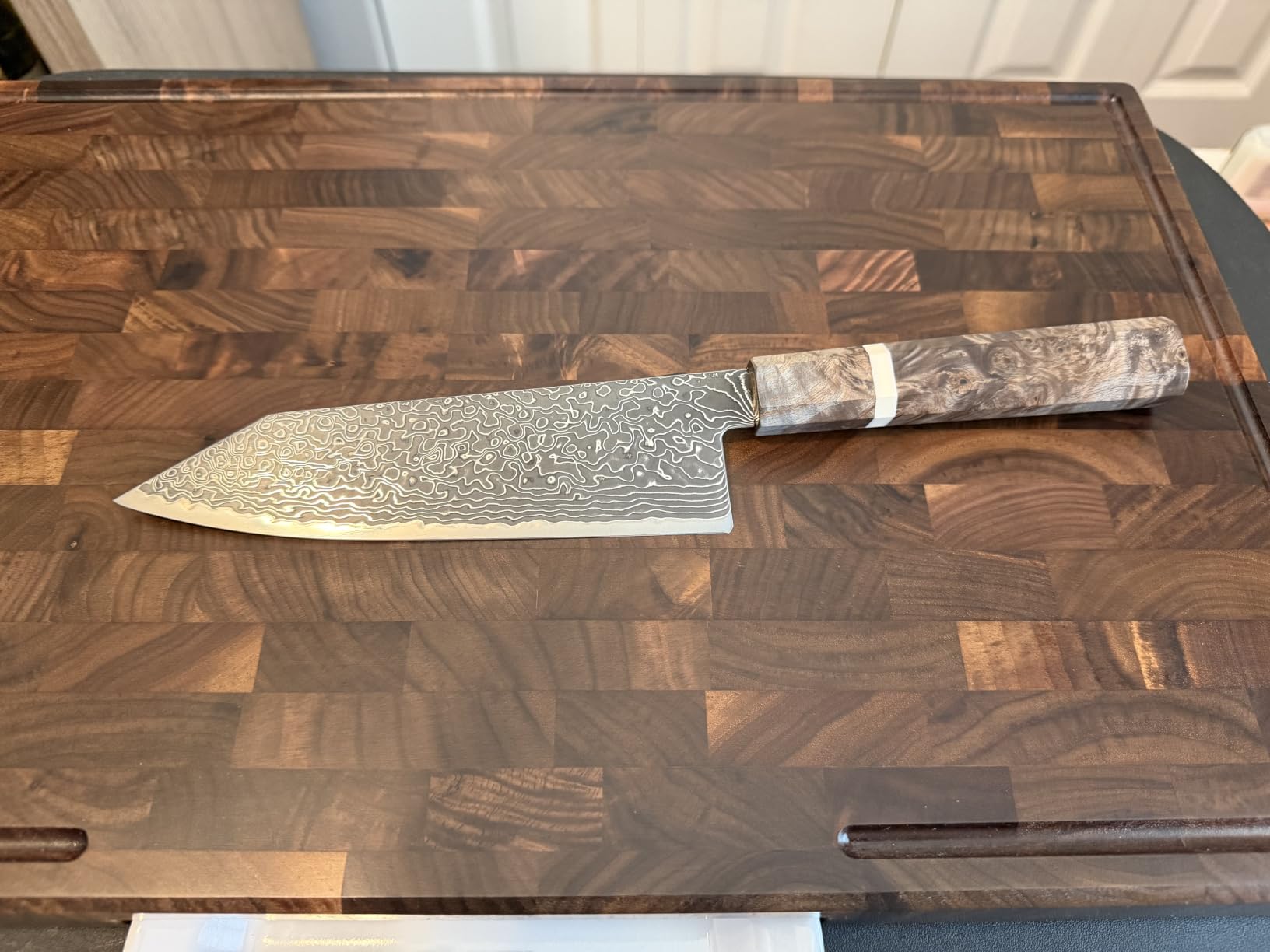
The BABILONIA walnut board is one of the thickest boards on this list at 1.7 inches. That extra thickness combined with American black walnut makes it feel like a serious piece of kitchen equipment. The 100 percent sustainable black walnut is grown in the USA.
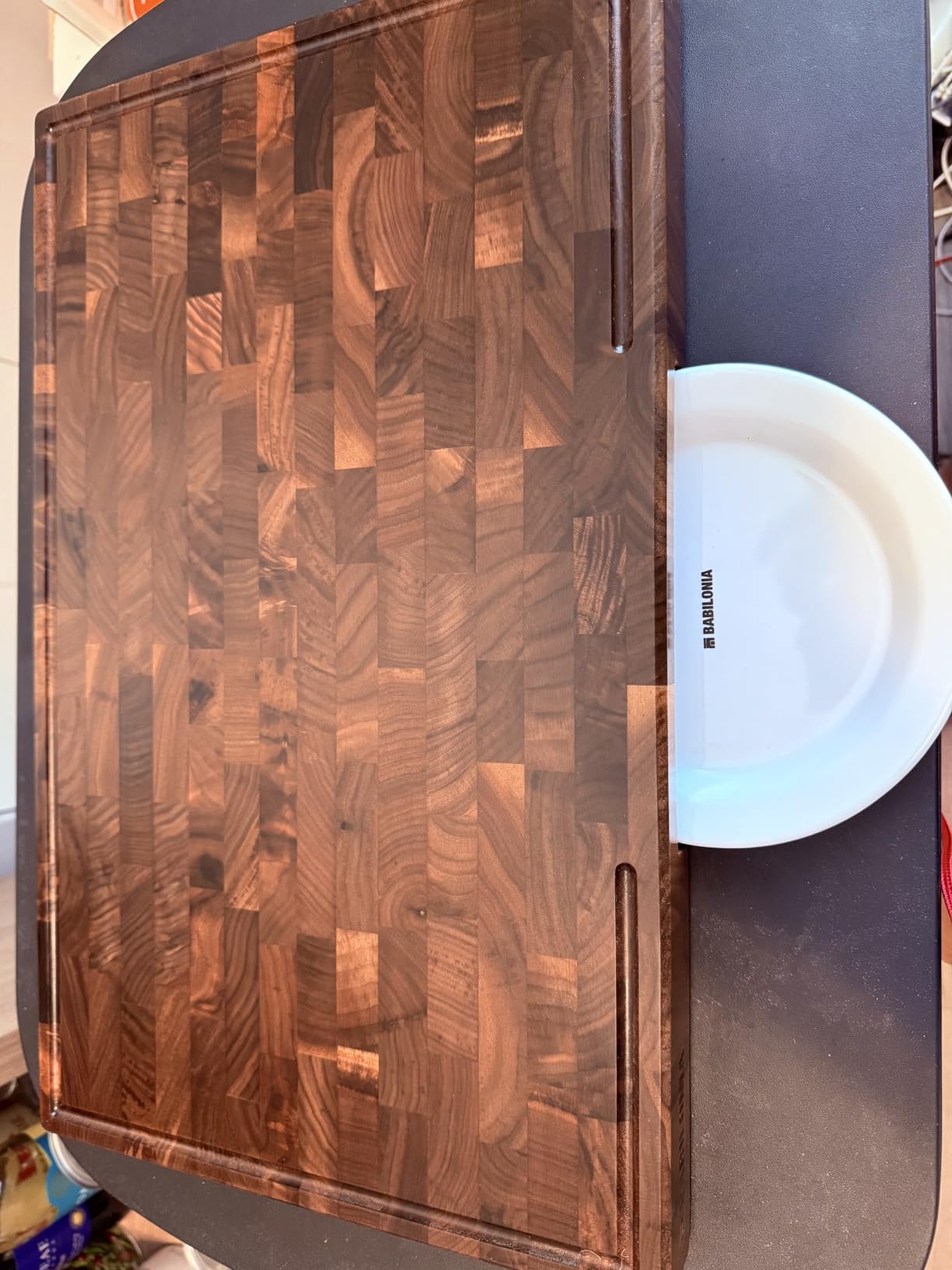
The standout feature is the innovative notch and plate system. The board has a notch that holds an included stainless steel plate, making it easy to slide chopped food directly off the board. It is a small detail that saves time during meal prep.
Walnut end grain is exceptional for knife care. The wood is dense enough to resist deep gouging but soft enough to cushion blade impacts. After weeks of testing, my knife edges showed no signs of premature dulling.
The board comes pre-seasoned and includes organic oil for maintenance. With a 2-year warranty and money-back guarantee, BABILONIA shows real confidence in their craftsmanship. Just be aware that stock is often limited due to high demand.
What is the notch and plate system?
The board features a cutout notch that holds a stainless steel serving plate flush with the cutting surface. You can slide diced vegetables or sliced meats directly onto the plate, then lift it off for serving. It eliminates the need for scraping food into a separate bowl.
How does American black walnut compare to imported woods?
American black walnut is prized for its deep color, tight grain, and natural durability. It has a Janka hardness of 1010, which is softer than maple (1450) but excellent for knife preservation. The USA sourcing also means better quality control and environmental standards.
12. John Boos R-Board Maple Cutting Board – Best Professional Grade
John Boos R-Board Series Rectangular Wooden Maple Cutting Board 24”x18” – 1.5” Thick, 18-lb Reversible Butcher Block with Edge-Grain & Finger Grips – Made in the USA
24x18x1.5 in maple
Edge grain
18 lbs
Made in USA
Reversible
Pros
- Professional 24x18 inch maple butcher block
- 1.5 inch thick edge grain construction
- Reversible with recessed finger grips
- Trusted by chefs since 1887
- Made in the USA
Cons
- 18 lbs is very heavy
- Requires regular Boos Mystery Oil
- Can warp near water sources
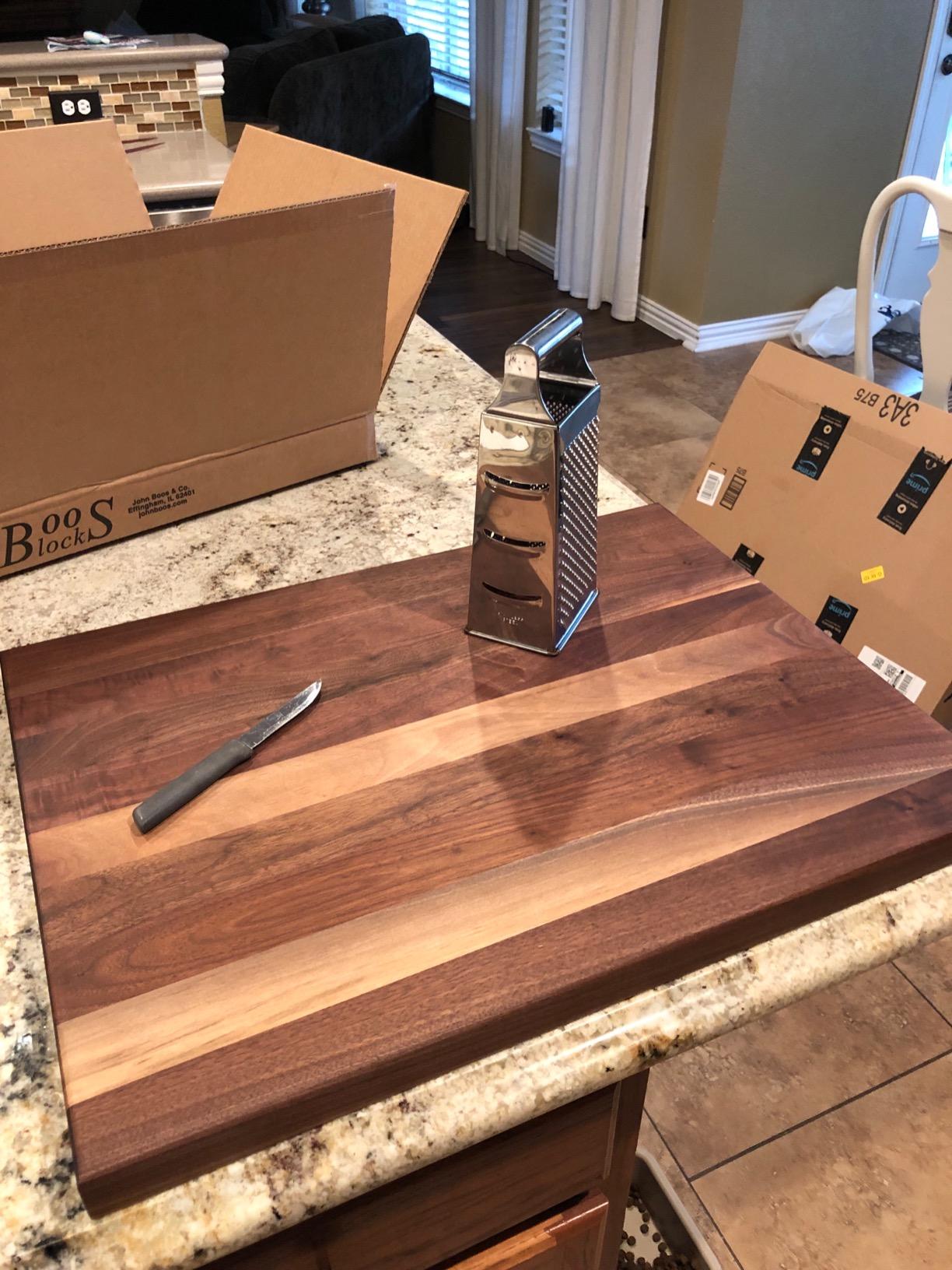
The John Boos R-Board is the largest and heaviest board on this list at 24 by 18 inches and 18 pounds. This is the kind of board you see in professional kitchens and on cooking shows. Once you set it down, it does not move.
The edge grain maple construction is built for decades of use. Available in maple, cherry, and walnut, the R-Board series has been a professional staple for generations. The 1.5-inch thickness provides serious stability for heavy butchering tasks.
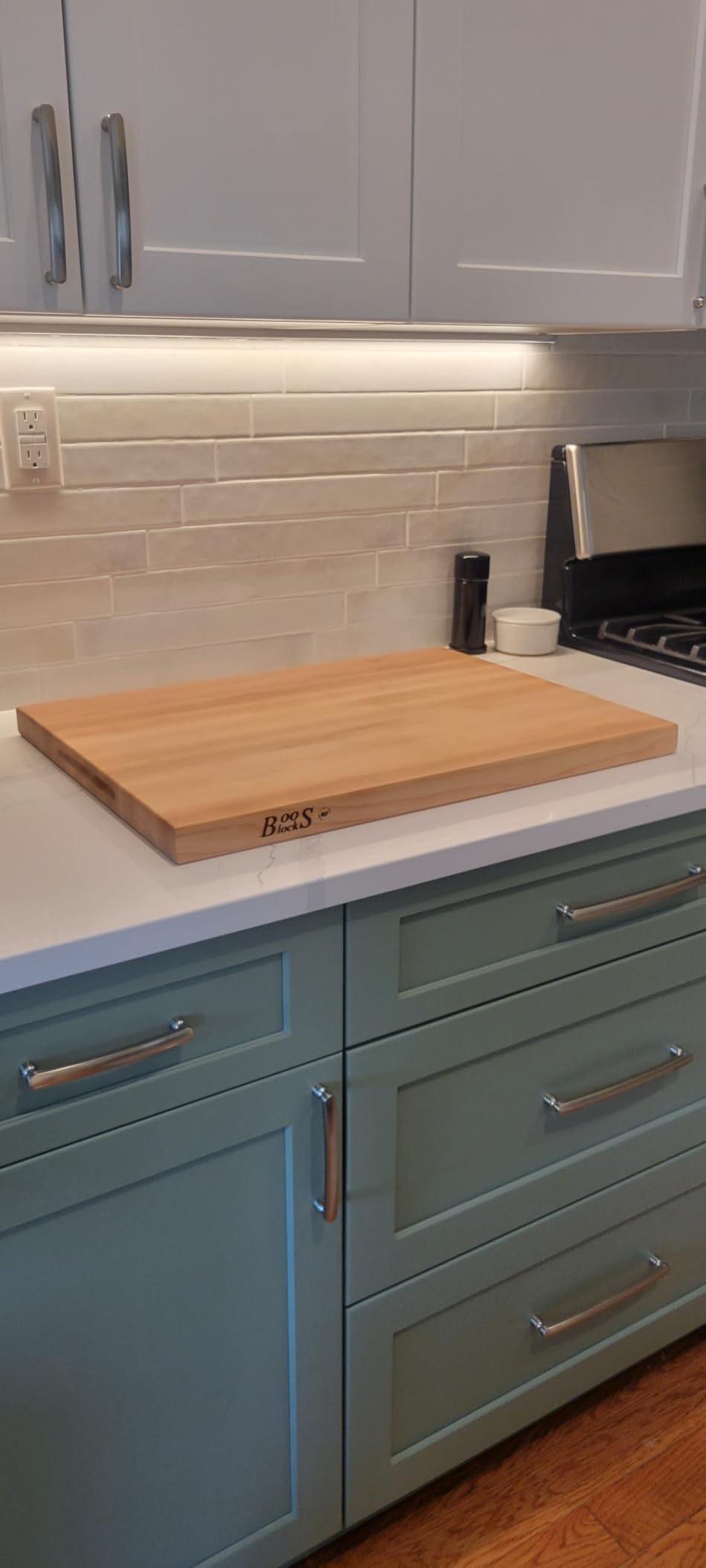
With over 4,500 reviews, this board has been thoroughly tested by the market. The recessed finger grips help with handling, though at 18 pounds, you will think twice before moving it. Many owners simply leave it as a permanent fixture on their counter.
The main consideration is maintenance and water exposure. Several users noted warping issues when the board was stored near the sink. Keep this board dry, oil it regularly with Boos Mystery Oil, and it will serve you for years.
Is an 18-pound cutting board practical for home use?
For serious home cooks who do large batch prep or entertaining, the size and weight are assets. The board stays completely stable during heavy chopping. If you have limited counter space or need to move your board frequently, a smaller option may be more practical.
What sizes does the John Boos R-Board come in?
The R-Board series is available in three sizes: 24×18, 20×15, and 18×12 inches. You can also choose from maple, cherry, or walnut wood types. The 24×18 reviewed here is the largest option and best suited for dedicated prep stations.
How to Choose the Right Butcher Block Cutting Board?
Choosing the right butcher block cutting board comes down to four key decisions: grain orientation, wood type, size, and maintenance commitment. I will break down each factor based on what our testing revealed.
End Grain vs Edge Grain: What Is the Difference?
End grain construction means the wood fibers are oriented vertically, pointing up toward the cutting surface. When your knife comes down, it pushes between the fibers rather than severing them. This creates a self-healing surface that is gentler on blades and lasts longer.
Edge grain construction has the wood fibers running horizontally along the cutting surface. Your knife cuts across the grain, which is slightly harder on edges but produces a more durable board that resists splitting. Edge grain boards are also typically less expensive.
If knife longevity is your priority, choose end grain. If budget and maximum durability matter most, edge grain is the practical choice. The John Boos boards on this list demonstrate how well edge grain performs over decades.
Choosing the Right Wood Type
Maple is the gold standard for cutting boards. It has a Janka hardness of 1450, which balances durability with knife friendliness. Maple resists bacteria growth and takes oil conditioning beautifully. The Bevel & Bond and John Boos boards showcase why maple remains the professional favorite.
Walnut is slightly softer at 1010 on the Janka scale, which means it is even gentler on knives. Its rich dark color makes it a stunning serving piece. The BABILONIA and THETCHRY boards on this list demonstrate walnut’s appeal for cooks who want beauty alongside function.
Acacia varies in hardness depending on species but generally falls between maple and walnut. It offers striking grain patterns and natural water resistance. The Ziruma and FANICHI boards show how acacia can deliver both performance and visual appeal.
Bamboo is technically a grass and harder than most woods. It is sustainable and affordable but can dull knives faster. The Allsum, Astercook, and HIWARE boards prove that bamboo works well for budget-conscious buyers who want durability without the premium price.
Size and Weight Considerations
For daily home cooking, a 16 to 18 inch board hits the sweet spot. It provides enough surface area for most tasks without dominating your counter. The John Boos Chop-N-Slice at 18 by 12 inches is a great reference point for ideal daily-use dimensions.
If you entertain frequently or do large batch cooking, consider something bigger. The HIWARE 36 by 24 doubles as extra counter space, and the John Boos R-Board at 24 by 18 can handle a full turkey. Just make sure you have storage space.
Weight matters more than most people realize. A board that is too light will slide during use, while one that is too heavy becomes difficult to clean. The 7-pound SHUMARU and 10-pound Bevel & Bond represent the comfortable range for most users.
Care and Maintenance Requirements
All wooden cutting boards require hand washing and periodic oiling. Never put a wood board in the dishwasher, as the heat and moisture will cause warping and cracking. Wash with warm water and mild soap, then dry immediately.
For conditioning, apply food-safe mineral oil or a beeswax-based board butter every 2 to 4 weeks depending on use. End grain boards need oiling more frequently because the open fiber ends absorb moisture readily. The Ziruma boards with their natural oil finishes demonstrate a chemical-free alternative.
Forum users on Reddit consistently report that proper oiling is the single most important factor in board longevity. Users sharing 10-plus year old boards all emphasize regular conditioning. A well-maintained butcher block can genuinely last a lifetime.
Frequently Asked Questions About Butcher Block Cutting Boards
What type of wood is best for a butcher block cutting board?
Hard maple is widely considered the best wood for butcher block cutting boards due to its tight grain, Janka hardness of 1450, natural antibacterial properties, and excellent durability. Walnut is a close second for its knife-friendliness and rich appearance. Both resist moisture well and last for decades with proper care.
What do professional chefs use for cutting boards?
Professional chefs typically use thick end grain or edge grain maple cutting boards from brands like John Boos and Boardsmith. Many restaurant kitchens use edge grain boards for durability and end grain boards for knife-sensitive tasks. The John Boos R-Board series is a common sight in professional kitchens.
What is the healthiest cutting board to use?
Hardwood cutting boards with natural oil finishes are among the healthiest options. Wood has natural antibacterial properties that kill bacteria within minutes. Boards finished with beeswax and natural oils, like the Ziruma acacia boards, avoid petroleum-based mineral oil and synthetic chemicals entirely.
Why is end grain better for cutting boards?
End grain construction orients wood fibers vertically so knife blades push between them rather than cutting across them. This creates a self-healing surface that is gentler on knife edges, shows fewer permanent marks, and lasts significantly longer than edge grain construction. End grain boards are the premium choice for knife enthusiasts.
How often should I oil my butcher block cutting board?
Oil your butcher block cutting board every 2 to 4 weeks with regular use, or whenever the wood starts looking dry. End grain boards may need more frequent oiling because the open fiber ends absorb moisture faster. Apply food-safe mineral oil or beeswax-based board butter generously and let it soak in overnight.
Final Thoughts on the Best Butcher Block Cutting Boards
After testing 12 boards across weeks of daily cooking, our top recommendation is the Bevel & Bond Maple End-Grain board for its exceptional craftsmanship, 1.75-inch thickness, and 5-year warranty. For best value, the SHUMARU mahogany end grain delivers professional performance at a reasonable price.
If you are working with a tight budget, the Allsum bamboo board provides dependable performance without breaking the bank. And for those who want the ultimate professional setup, the John Boos R-Board remains the industry standard.
The best butcher block cutting boards combine quality wood, proper construction, and regular maintenance to deliver decades of service. Whichever board you choose from this list, commit to the care routine and you will have a kitchen companion that outlasts your appliances.