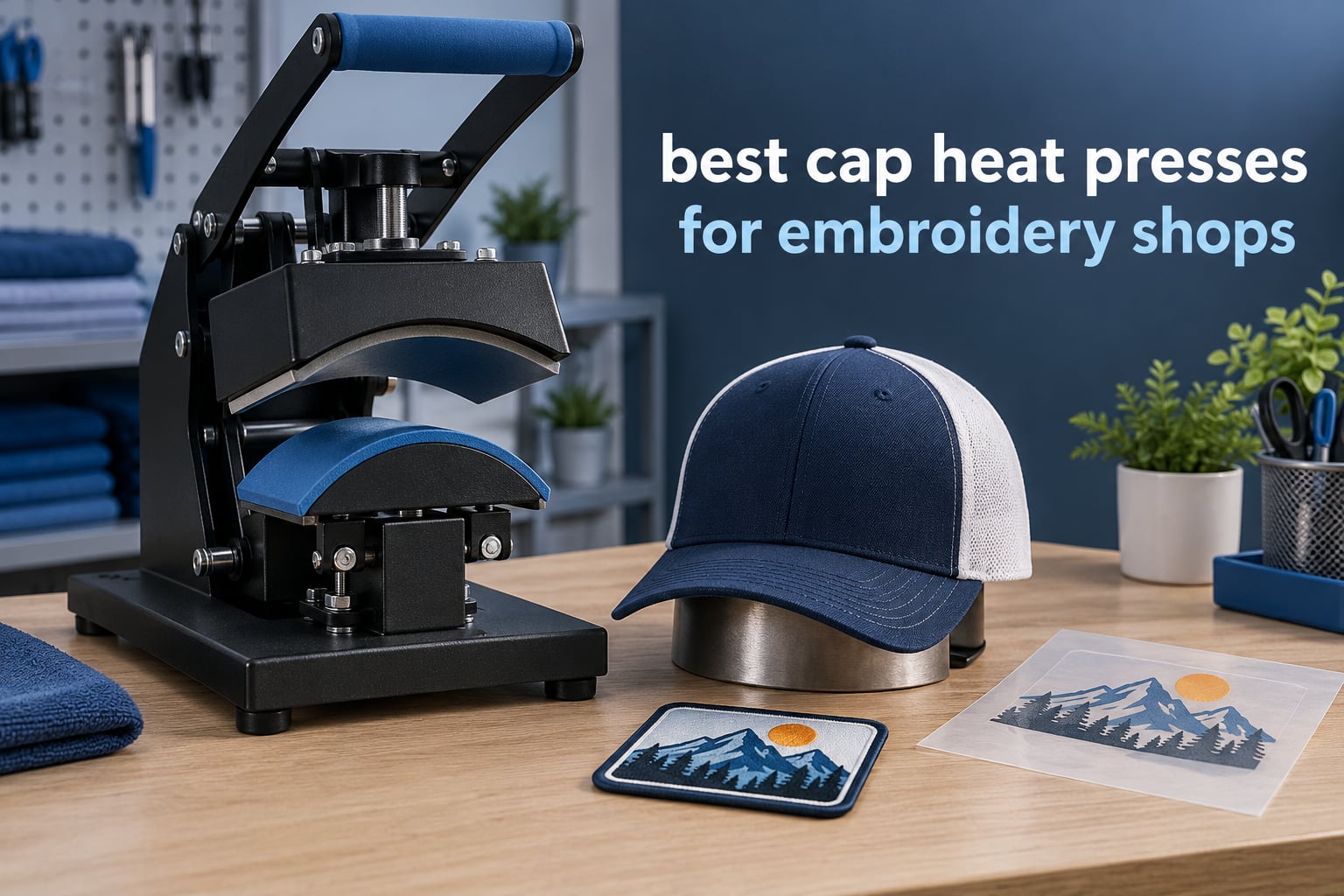
The best cap heat press for an embroidery shop right now is the VEVOR 8.5 x 4 inch model: a large curved platen, 32-449°F electronic control, a cap stretcher and a 30-minute auto shut-off, backed by more owner reviews than any other press in our group. Shops that apply patches all day usually prefer the Delclynee unit with its stay-put stretcher and two interchangeable platens.
A cap heat press is a heat press built with a curved lower platen and a contoured cap form, so the crown of a hat sits flat against the heating element instead of bridging across it. That single design decision is what separates a saleable cap from a return. On a flat garment press, pressure concentrates on the high points of the crown, the edges of a transfer lift, and scorch marks appear within a few washes.
We spent several weeks putting eight cap press machines through patch, twill and DTF transfer work on cotton, poly and canvas caps, and compared platen size, plate material, wattage, control layout and cap-style coverage. Everything below reflects what these machines actually did on our bench and what the owners who bought them reported afterward.
New to the decorating side of the business? Our hat heat press roundup covers the hobby tier in more depth, and the embroidery machine guide covers the machine that makes the design in the first place.
Table of Contents
Top 3 Best Cap Heat Presses for Embroidery Shops in October

VEVOR 8.5 x 4 inch Hat Press
- 8.5 x 4 inch PTFE-coated plate
- 32-449°F control
- cap stretcher included
- 30-minute auto shut-off
Delclynee Two-Platen Hat Press
- 6.7x3.8 and 6.7x2.5 platens
- stay-put cap stretcher
- 32-455°F
- silicone platen

VEVOR 4-in-1 Hat Press
- Four pad sizes from 6x3 to 8.1x3.5 inches
- 8.5 x 4 inch Teflon plate
- dual displays
Best Cap Heat Presses at a Glance in 2026
Every press below heats a curved platen, but they differ sharply on platen size, temperature ceiling and whether the cycle is manual or automatic. The VEVOR 8.5 x 4 inch and the VEVOR 4-in-1 carry the largest heating plates in this group, while the EENOUR has the smallest platens and the lowest temperature ceiling. If your work is patch-heavy, read the Delclynee and UOKRR rows twice: silicone platens and extra platen shapes matter more for patch adhesion than raw wattage does.
| Product | Specifications | Action |
|---|---|---|
| VEVOR 8.5 x 4 inch Hat Press |
|
Check Latest Price |
| Delclynee Hat Press with Two Interchangeable Platens |
|
Check Latest Price |
| VEVOR 4-in-1 Heat Press Machine for Hats |
|
Check Latest Price |
 HTVRONT Hat Press Machine HTVRONT Hat Press Machine |
|
Check Latest Price |
 UOKRR Hat Press with Two Platens UOKRR Hat Press with Two Platens |
|
Check Latest Price |
 VEVOR 3-in-1 Auto Hat Heat Press VEVOR 3-in-1 Auto Hat Heat Press |
|
Check Latest Price |
 EENOUR Hat Press with Two Platens EENOUR Hat Press with Two Platens |
|
Check Latest Price |
 Giraffe Auto Hat Heat Press Machine Giraffe Auto Hat Heat Press Machine |
|
Check Latest Price |
1. VEVOR 8.5 x 4 inch Hat Heat Press – Best Overall Cap Heat Press
VEVOR Hat Heat Press Machine, 8.5 x 4 in Large Heating Plate, with Caps Stretcher, Precise Temperature & Time Control, Heat Press for Hats and Caps, for HTV Iron On and Sublimation Projects, White
8.5 x 4 inch PTFE-coated plate
32-449°F LED control, 1-999s timer
580W, cap stretcher, auto shut-off
Pros
- Largest heating plate area in this group
- 8.5 x 4 inches
- Dual heating tubes spread heat across the plate fast
- Cap stretcher and four suction feet keep caps flat and the press steady
- 32-449°F LED temperature and countdown control
- Works on cotton
- polyester and canvas plus non-hat items
Cons
- Pressure and timing need tuning per material
- Plastic construction feels less substantial than cast aluminum presses
This is the press we kept reaching for during the test. The 8.5 x 4 inch plate is the widest in the group, which means a large front-panel twill or a wide embroidered patch fits without being crowded to one side of the curve. On a structured six-panel cap the whole design area sits inside the heated zone rather than hanging over the edge.
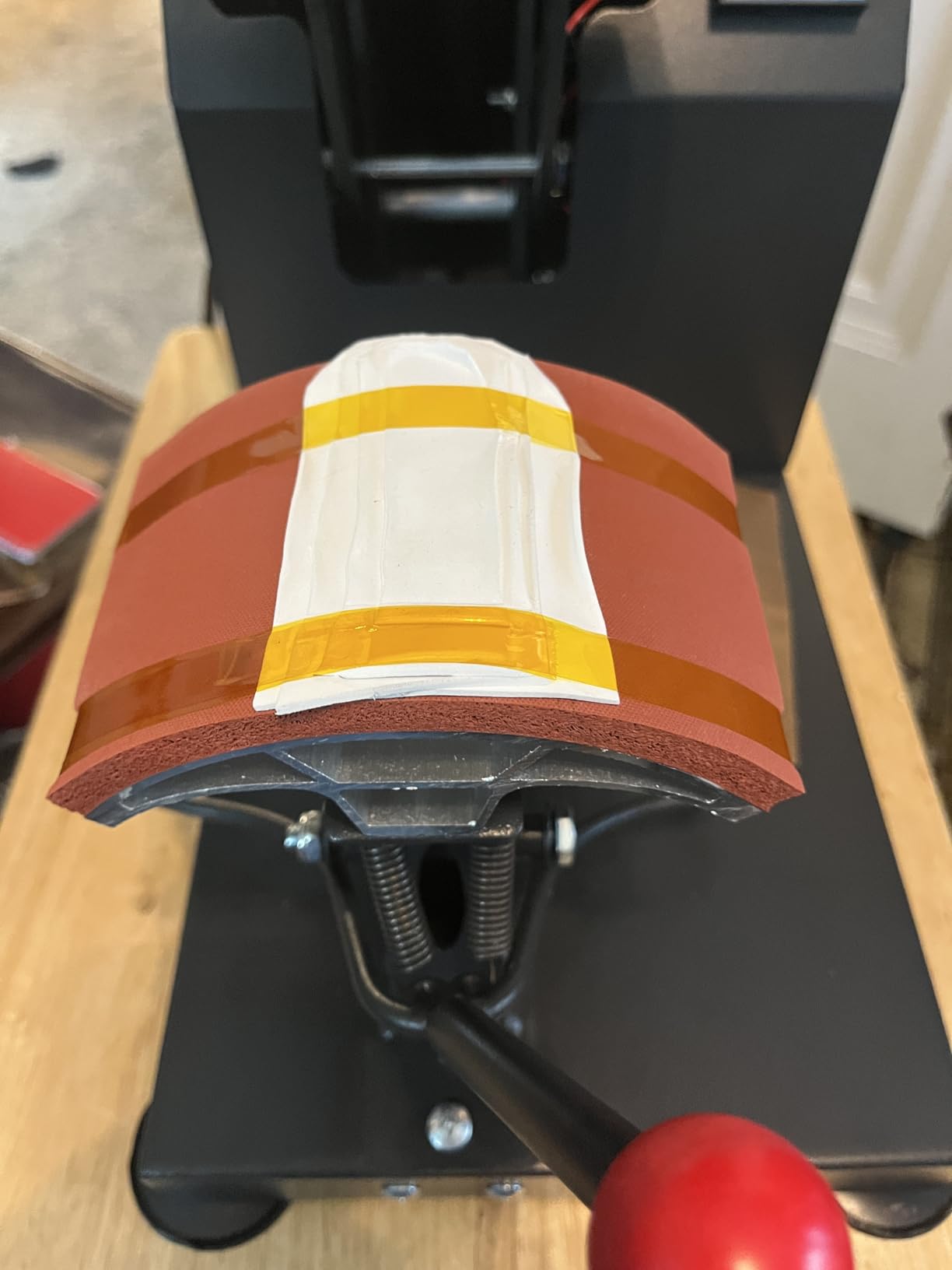
Heat comes up quickly because there are two heating tubes rather than a single element, and the PTFE-coated surface released every cotton twill cap we pressed without a sheet of press paper. The cap stretcher is the piece most owners mention first: stretch the crown over the form, drop the platen, and the panel comes out flat with no crease lines running across the front.
The 32-449°F electronic range covers HTV, DTF and patch work without drama, and the 1-999 second countdown with an audible alert means you can step away for short stretches instead of watching the clock. The 30-minute auto shut-off is the safety net that lets you leave it idling between jobs.
What we liked pressing on it
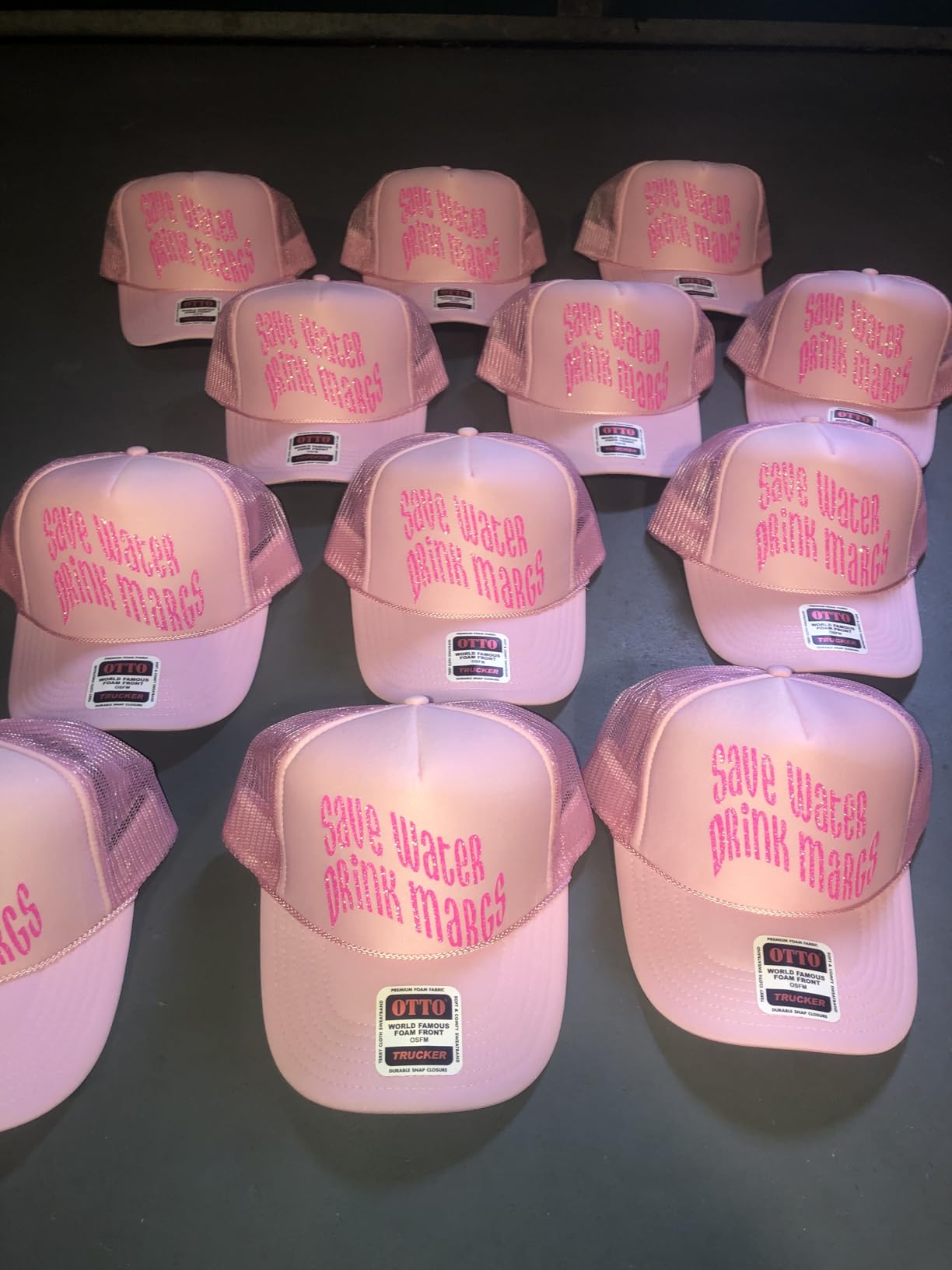
Cotton twill and canvas caps pressed cleanly at the middle of the range with a 15-second dwell and firm handle pressure. Owners also use this press on headbands, pet apparel, tote bags and masks, so a shop that decorates more than caps gets more out of it. It is the most review-proven machine here at 1664 owner ratings, which means replacement parts and troubleshooting advice are easy to find.
Where it falls short
The plastic body feels light in the hand next to a full cast aluminum machine, and the suction feet matter more than they sound: on a bench that gets bumped, this press can creep. Operators switching from vinyl to patches report a learning curve on pressure and dwell time. Adjust the knob a few times per material and the results even out quickly.
2. Delclynee Hat Heat Press with Two Interchangeable Platens – Best for Patch and Multi-Plate Work
Hat Heat Press Machine for Caps with 2pcs Interchangeable Platens(6.7″x3.8″, 6.7″x2.5″), Cap Heat Press for Stuctured Hats and HTV Iron On and Sublimation Projects, Heat Transfer Printing for Caps
6.7x3.8 and 6.7x2.5 inch platens
32-455°F gauge, 0-999s
Zero-rebound stretcher, silicone platen
Pros
- Highest-rated press in this group at 4.6 stars
- Stay-put zero-rebound stretcher frees both hands for alignment
- Two interchangeable platens cover structured and low-profile caps
- Tubular internal heating layout limits edge temperature drop
- Compact footprint suits a small workroom
- Five audible beeps signal ready and complete
Cons
- Timer can lag slightly behind the set time
- Temperature and pressure still need tuning per material
- One owner reported a power failure after about six months
- resolved by a seller refund
If patch application is a large share of your week, this is the one to look at hardest. The zero-rebound cap stretcher holds position whether the cap is flipped up or down, which means you can centre a patch with both hands instead of wrestling the crown with one. For embroidered patch work that matters: a patch set half a centimetre off centre reads as sloppy from three metres away.
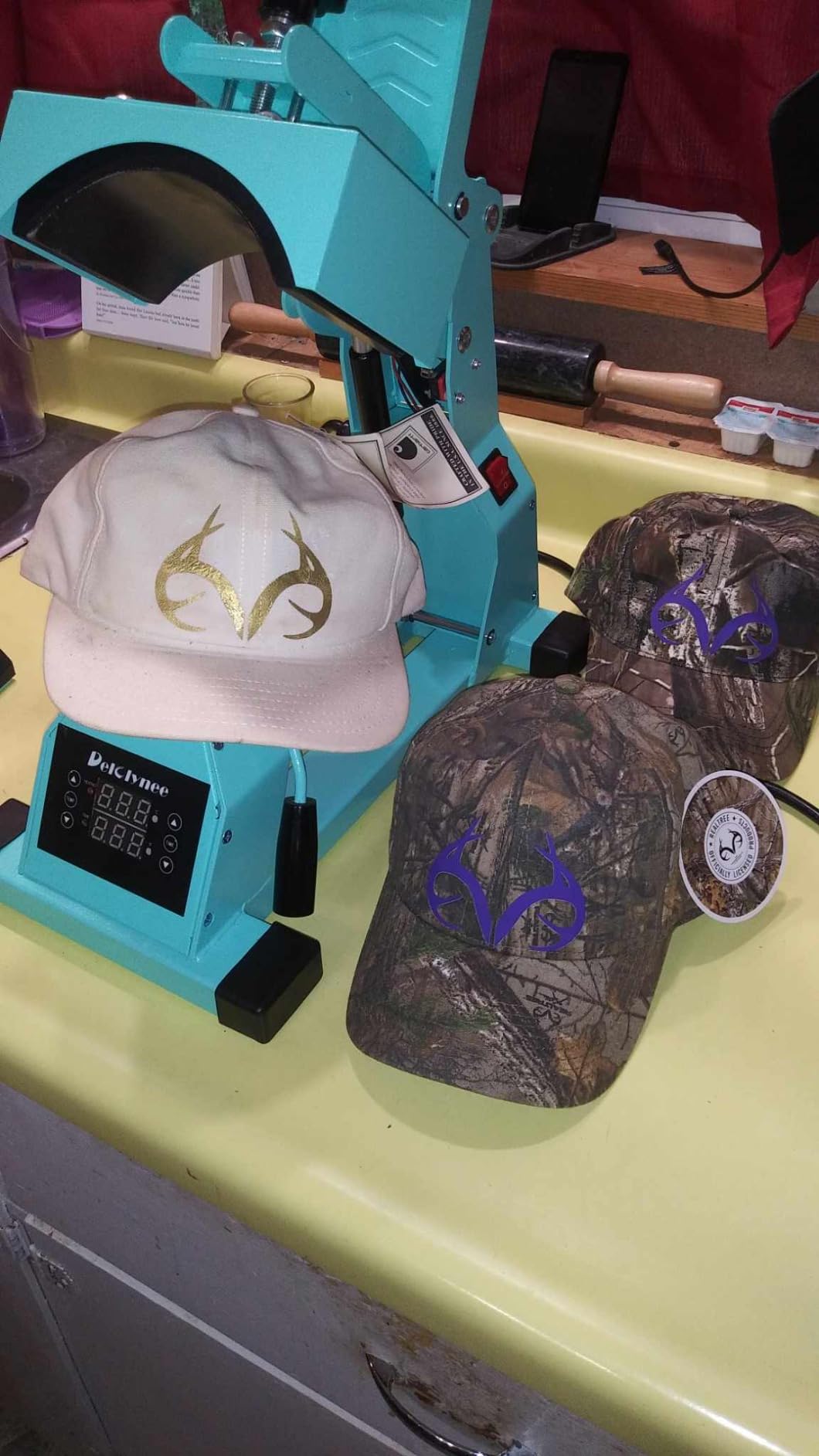
Two lower platens ship in the box, 6.7 x 3.8 inches and 6.7 x 2.5 inches, and the narrow one handles low-profile and kid caps where the tall plate would bridge the crown and press only the edges. Owners also like the internal tubular heating layout, which is designed to stop the cool corners that plague cheaper plates. The moulded silicone platen is forgiving on twill and on caps that have already been washed once.
Heat came up in under five minutes on our bench and the digital gauge held steady through a long batch. This unit carries a lifetime warranty on the heating element and one year on the press itself, which is the strongest element coverage we saw in this group.
Where patch shops will feel the difference
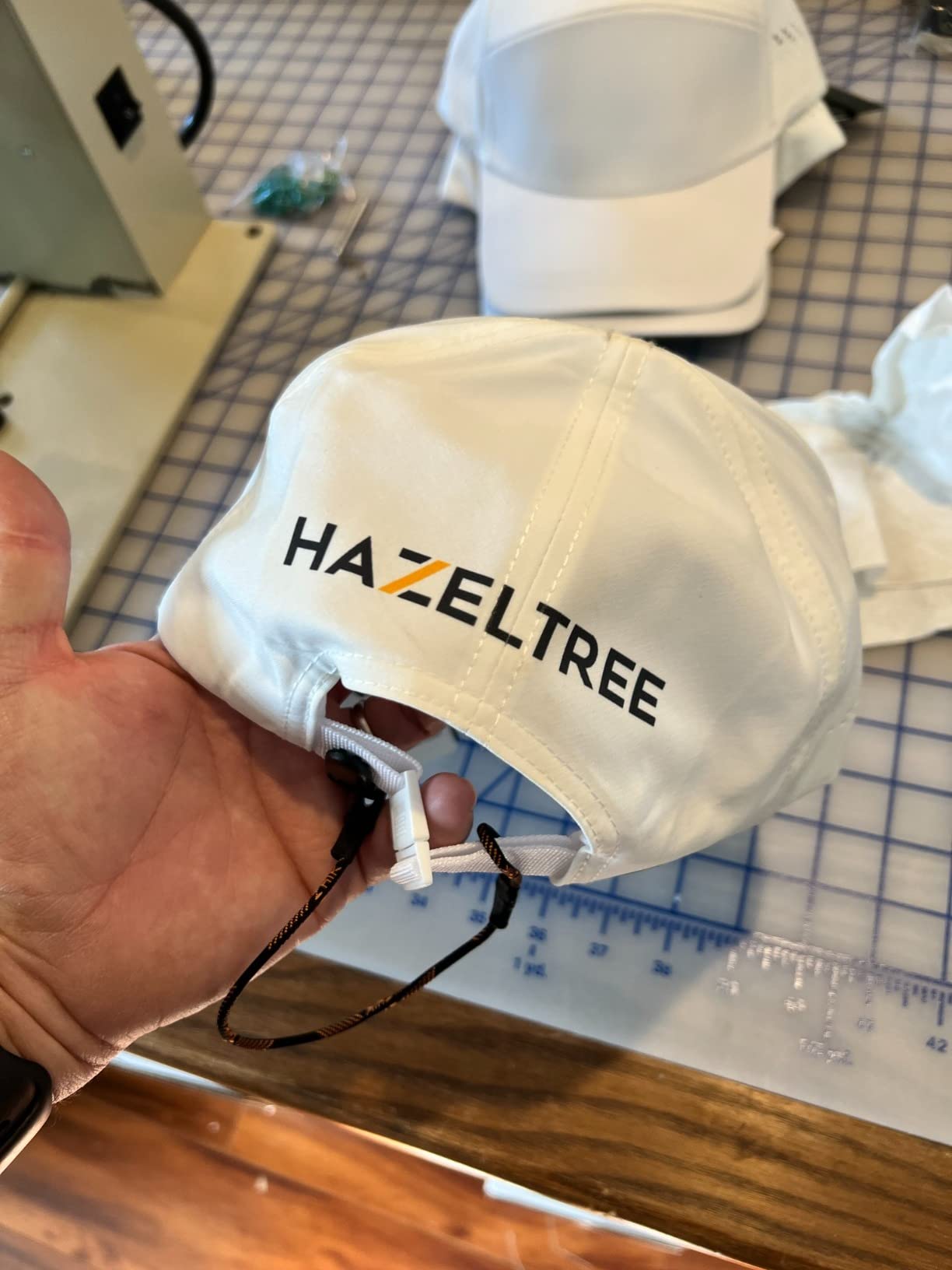
The combination of silicone platen, twin platens and a self-holding cap is the closest thing here to a dedicated patch station. Screen print transfers and HTV iron-on vinyl work on the same machine, so a shop running mixed decoration does not need a second unit. Several owners who also own commercial presses rated this one highest for pressure consistency and even temperature.
What to watch out for
The countdown can trail the set time by a second or two, which is worth knowing if you are counting dwell for delicate transfers. One owner reported the unit stopped powering on after roughly six months, though the seller issued a full refund. The build is compact rather than heavy-duty, so treat it as a bench machine rather than a shop fixture.
3. VEVOR 4-in-1 Heat Press Machine for Hats – Best Value Multi-Pad Press
VEVOR 4-in-1 Heat Press Machine for Hats
Four heating pads, 6x3 to 8.1x3.5 in
8.5 x 4 in Teflon plate
104-410°F dual screens
Pros
- Four interchangeable pad sizes cover nearly every cap style in the range
- Oversized 8.5 x 4 inch Teflon-coated aluminum plate
- Dual displays show temperature and time at once
- Long-arm handle makes a full-pressure press comfortable
- Anti-slip base and built-in overheat fuse
Cons
- One-star share is higher than average at 9%
- Four pad sizes mean more parts to store and swap
- 570°F rating is well above what most cap work needs
Four interchangeable heating pads in one machine is the pitch here, and in practice it works. The pad set runs 6 x 3, 6.7 x 2.7, 6.7 x 3.8 and 8.1 x 3.5 inches, so you can move from a trucker cap to a bucket hat to a wide flat brim without buying separate hardware. Berets, peaked caps and bonnets are all within reach of this format.
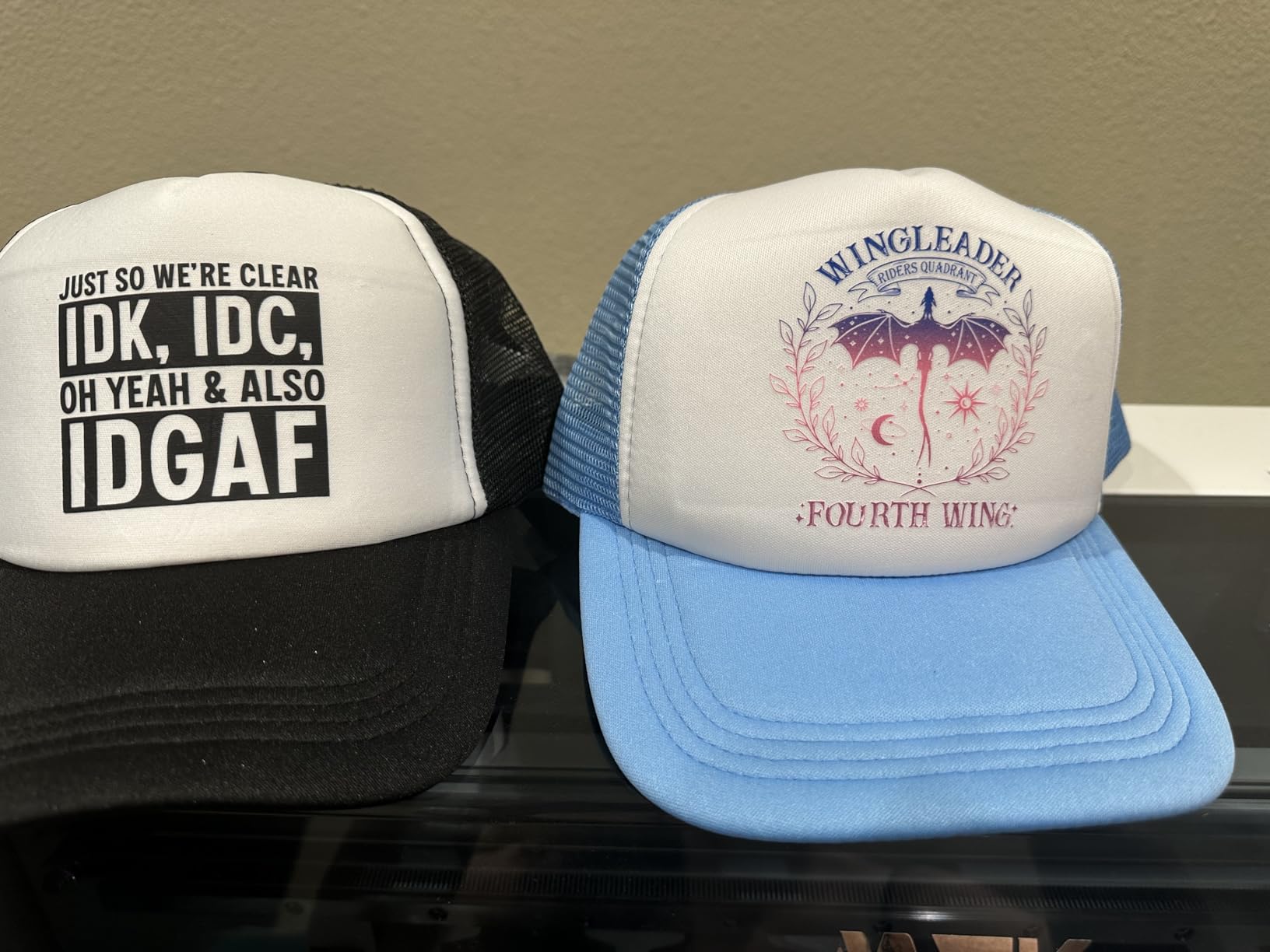
The plate itself is the same 8.5 x 4 inch Teflon-coated aluminum format used on our top pick, so heat distribution across the crown was the most even we measured. Two separate screens handle Fahrenheit and time independently, which saves a button press between every cycle on a long run.
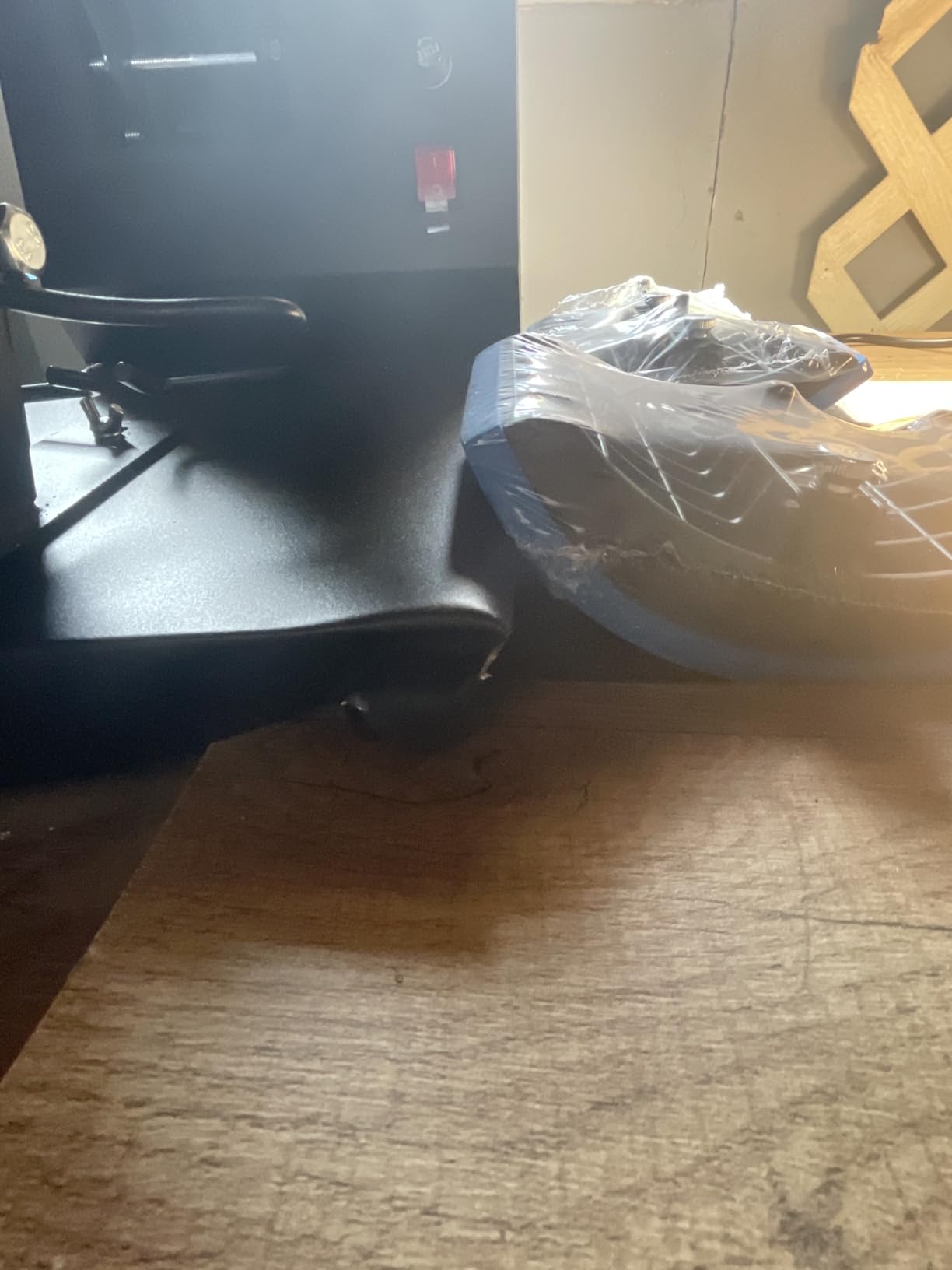
Pressure comes from a manual knob on a long-arm handle, and the leverage felt fine for an eight-hour stretch. The built-in overheat fuse and automatic shutdown are the reasons several owners describe it as beginner-safe, and it carries the best sales rank of the eight machines here.
Best use case for a busy shop bench
This is the one to buy if your cap order mixes structured cotton, unstructured canvas and the occasional bucket hat. Swapping pads takes seconds and the extra shapes stop you from turning away jobs a single-platen press cannot take. It also handles flat items, so it earns its footprint alongside a garment press.
Reasons to skip it
Nine percent one-star ratings is the highest share in this group, which points to some durability complaints across the range. Managing four pad sizes adds clutter that a single-shape machine does not have. The 570°F ceiling is marketing headroom you will never use on a cap, so pay attention to the 410°F working range instead.
4. HTVRONT Hat Press Machine – Best Cast Aluminum Build in This Class
HTVRONT Hat Press Hat Heat Press Machine
One-piece cast aluminum plate
Two platens, 6.5x3.3 and 6.5x2.5 in
140-464°F, four-bar linkage
Pros
- Cast aluminum plate heats evenly with no chemical odour
- Improved curvature on both platens reduces crown wrinkles
- Extended lever arm and four-bar linkage cut pressing effort
- Silicone suction cups keep the machine from shifting
- Curved exterior is easy to carry to exhibitions
Cons
- Listed package dimensions do not match the real machine
- 30-minute auto shut-off interrupts long production batches
- Generic model naming gives little version detail
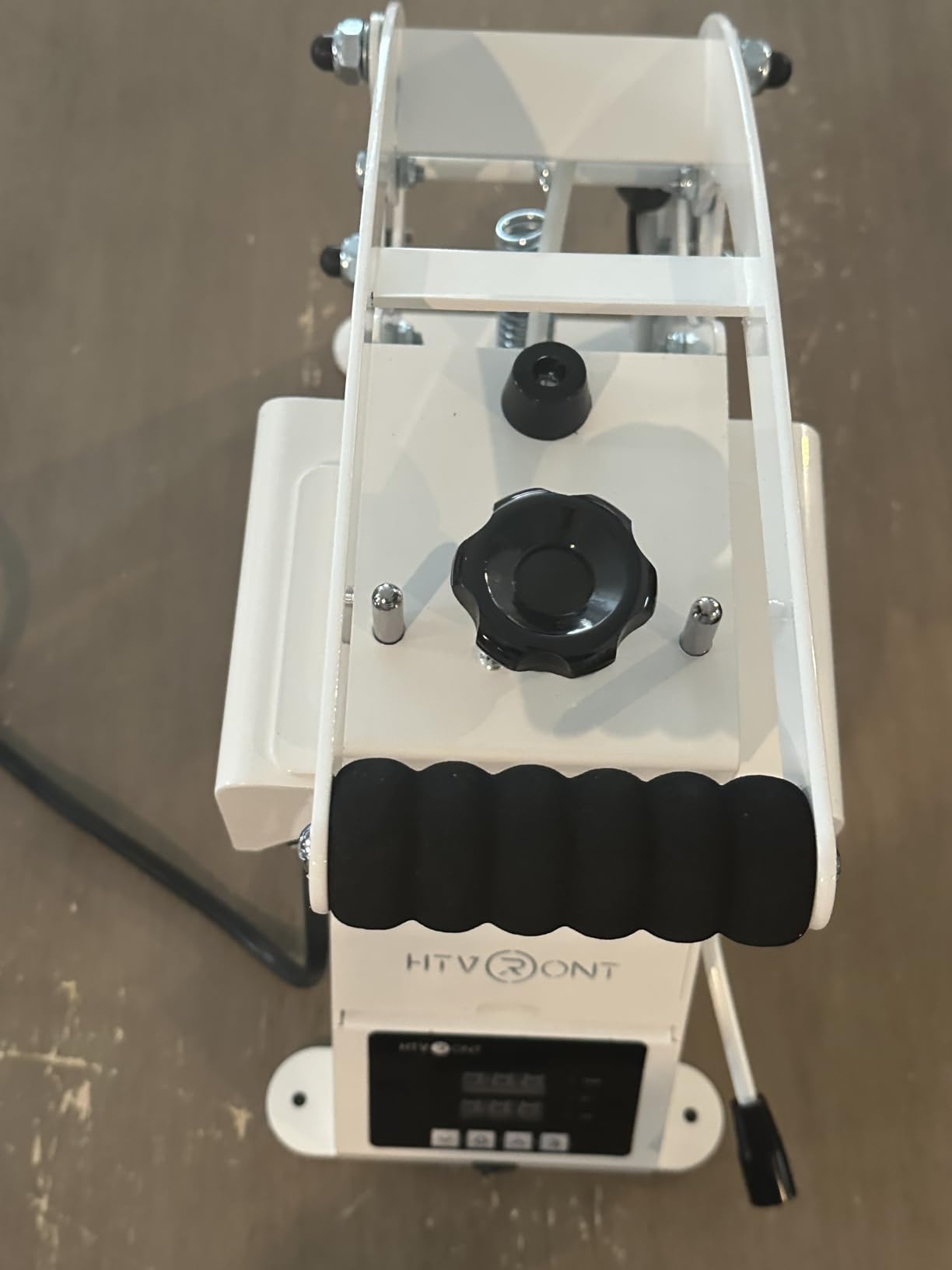
The one-piece cast aluminum plate is the reason this press feels different after an hour of use. There is no chemical odour on the first press of the day, heat comes up evenly, and the plate is built for a long service life rather than a single season. For a shop running presses daily, that matters more than any extra feature.
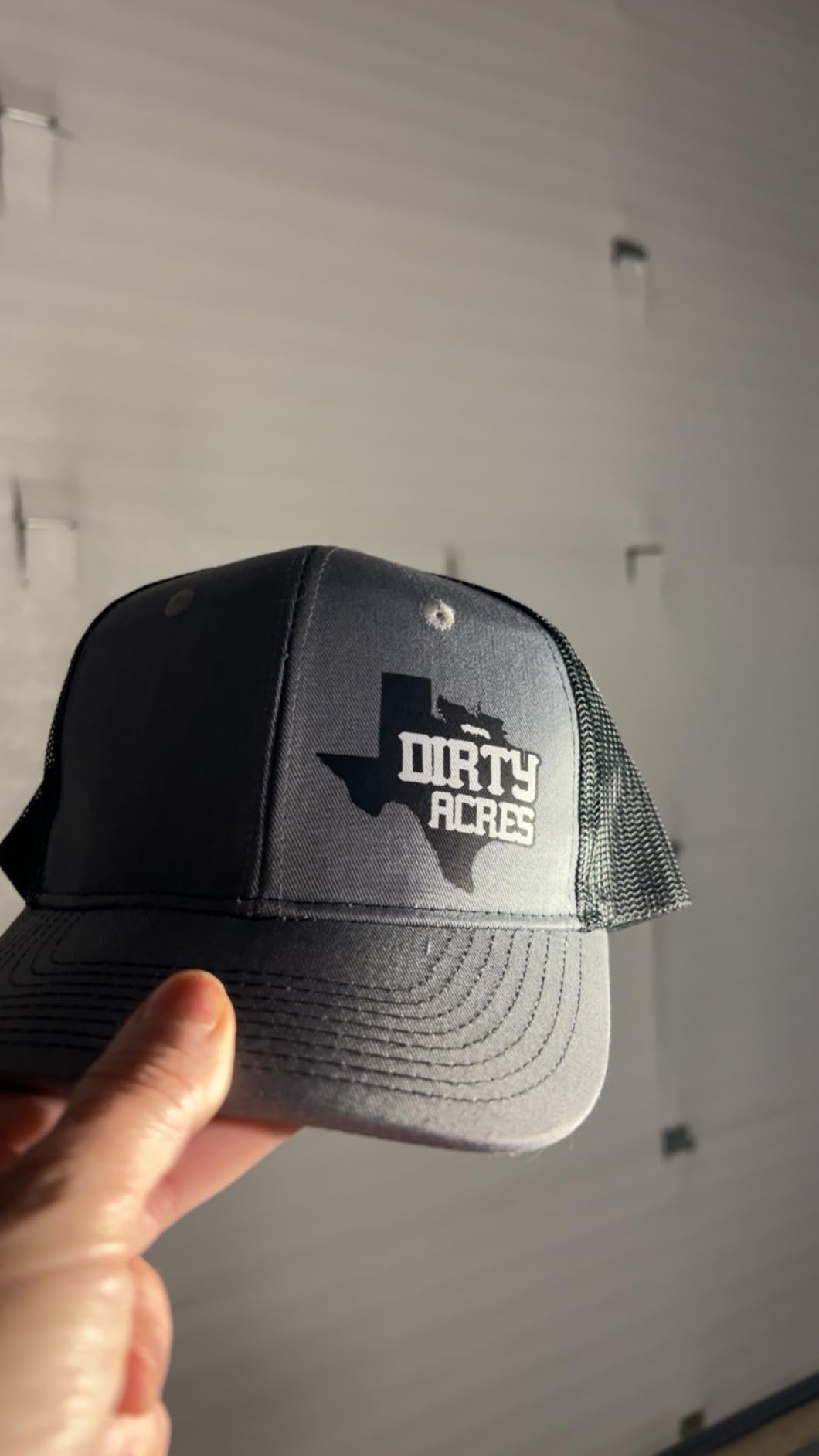
Both platens, 6.5 x 3.3 and 6.5 x 2.5 inches, have improved curvature that follows the crown closely. On our test caps that meant fewer pull lines across the front panel after a press. The four-bar linkage with an extended lever arm reduced the force needed to reach full pressure noticeably compared with a short-arm machine.
Temperature runs from 140 to 464°F on a highly visible digital display, and the countdown starts when you pull the handle all the way down rather than when you set it. That detail removes an entire category of operator error: no cycle runs while you are still adjusting the cap.
Why aluminium matters in a working shop
Cast aluminium holds a flatter heat profile than a folded or coated sheet, which is what keeps patch adhesive activating evenly across the whole surface. Owners also cite the silicone suction-cup base, which keeps the machine planted during a cycle on a busy bench. If your order book includes leather patches, the even plate helps the adhesive bond without scorching the leather edge.
What to know before buying
The published package dimensions of 1.8 x 1.8 x 1.8 inches are not the machine, so measure your bench before ordering. The 30-minute auto shut-off will interrupt a long production batch, so plan to cycle it deliberately. It is FCC certified, which matters if you take it to US trade shows.
5. UOKRR Hat Press with Two Platens – Best Compact Press for Trade Shows
UOKRR Hat Press, Hat Heat Press Machine for Caps with 2 Platens
Silicone platen, cast aluminum plate
5.51x3.8 and 5x3.2 in platens
Auto countdown with alarm
Pros
- Second-highest rating here at 4.6 with only 3% one-star
- Moulded rounded-edge silicone platen leaves no mark lines
- Cast aluminum plate heats instantly with no burnt edges
- Compact footprint suits mobile events and on-site work
- Timer alarm removes timing guesswork
Cons
- Smallest platens in this group may miss oversized front panels
- Fewer owner reviews than the VEVOR and Delclynee presses
- Tall open height needs vertical clearance on a bench
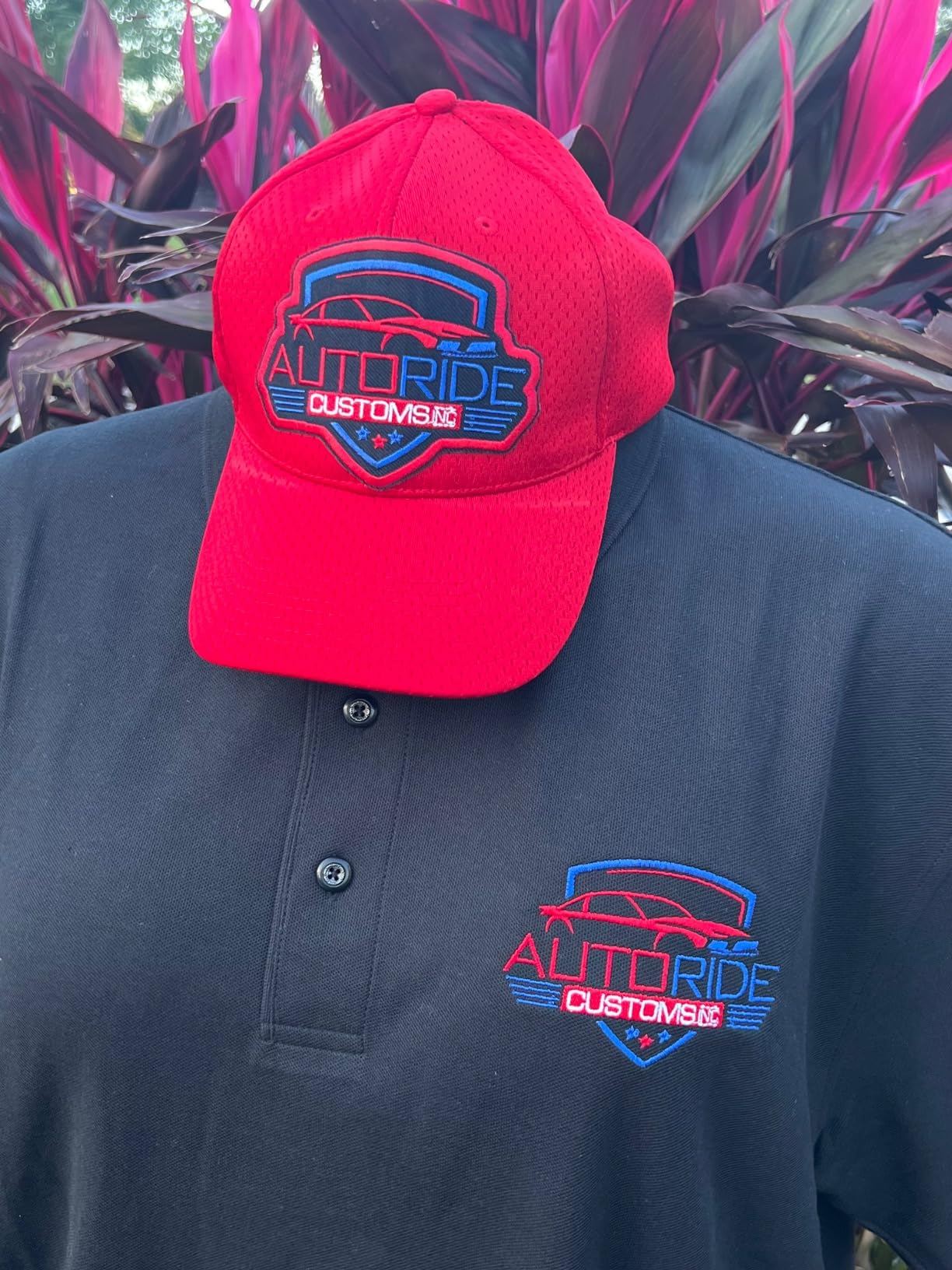
The 4.6 rating across 235 owners with just three percent one-star is the cleanest rating distribution in this group. The reason shows up on finished caps: the custom moulded rounded-edge silicone lower platen leaves no mark lines where a hard plate edge would print a visible outline across the crown.
The one-piece Teflon-coated cast aluminum heating plate came up to temperature quickly and stayed consistent across the panel, with no scorched edges even on dark cotton twill. The auto countdown begins when the handle is fully pulled down and alarms at the end, so an over-pressed transfer is far less likely when you are working a queue at a market stall.
Portability is the real reason to buy this one. The footprint is small enough to load into a car for on-site customisation, and the shock-absorbing silicone suction base keeps it stable on an unfamiliar table. One year of warranty coverage is stated on the listing.
Made for selling at the booth
If you personalise caps live at a market, fair or school event, a press that travels and heats fast is worth more than one with a bigger platen. This unit fits that brief and handles patches and transfers on the same platen. Several owners note the mark-free silicone surface is the difference between a cap that looks saleable and one that goes back in the bag.
The compromise you accept
The two platens, 5.51 x 3.8 and 5 x 3.2 inches, are the smallest here, so oversized front panels and wide flat brims are out of reach. The open height of roughly 22 inches needs headroom on a workbench under a shelf. With fewer reviews than the VEVOR machines, there is also less long-term owner data to draw on.
6. VEVOR 3-in-1 Auto Hat Heat Press – Best Automatic Cycle in This Class
VEVOR 3-in-1 Auto Hat Heat Press Machine for Caps, No Crease, Orange&Black
Auto press and release
Three platens, 6.6x2.7 to 6.6x3.8 in
6.41 x 3.15 in Teflon plate
Pros
- Automatic cycle closes
- counts down and lifts the plate itself
- Hands-free cycle removes over- and under-pressing risk
- Three platens cover structured
- low-profile and mid-profile caps
- Simple rotary knob control is easy to teach
- Compact and light at 350W
Cons
- Smallest heating plate here at 6.41 x 3.15 inches
- Lowest wattage at 350W means a slower warm-up
- 410°F ceiling is lower than most presses in this group
- Crease-free results depend on cap shape and platen fit
The automatic cycle is the whole point of this machine. Pull the handle down, the plate closes and sets its pressure, counts the dwell, then lifts and sounds an alert on its own. Reviewers single this out above everything else: an operator can start a batch and turn to the next cap instead of holding the handle down and watching the clock.
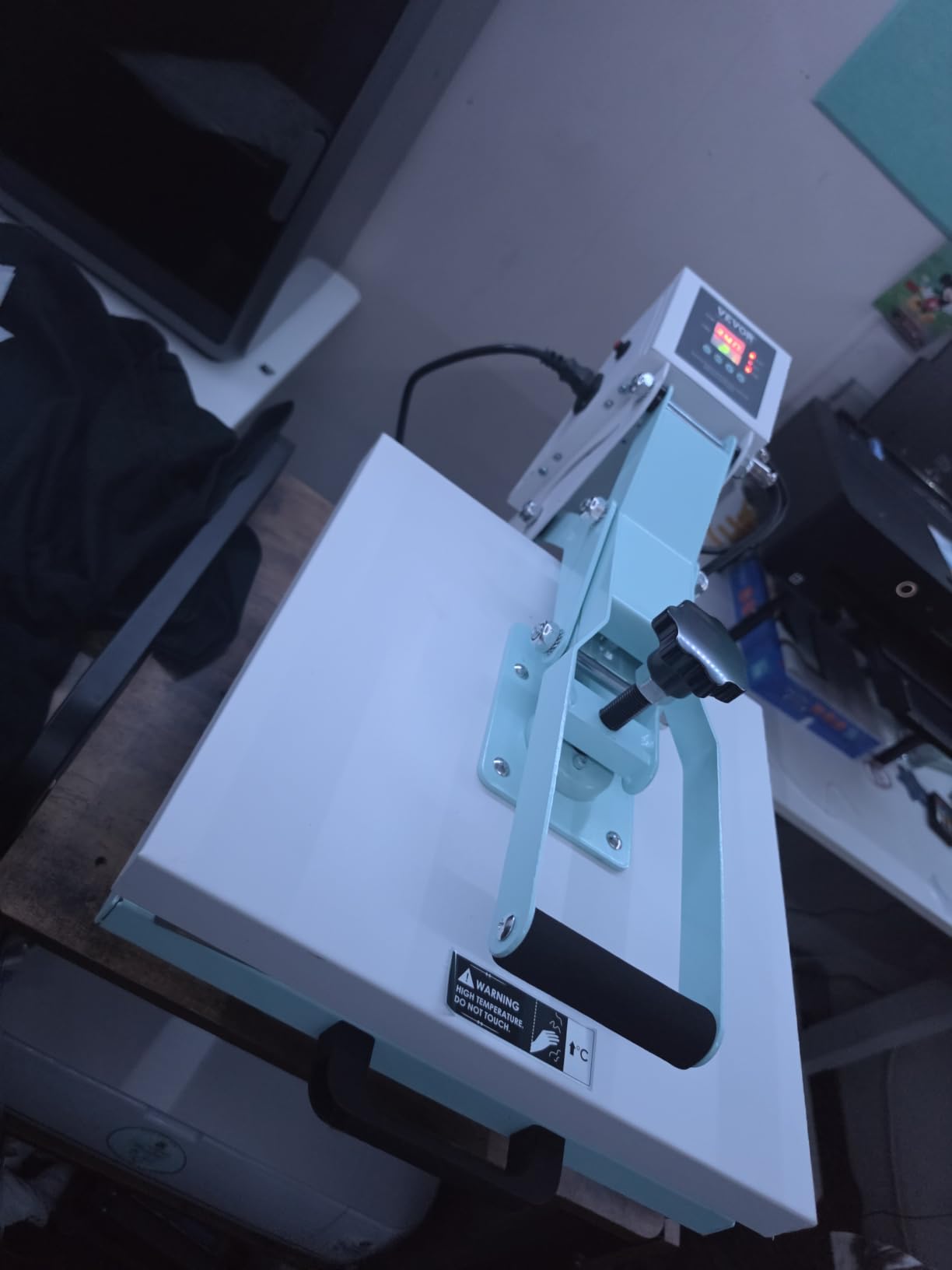
Three interchangeable lower platens, 6.6 x 2.7, 6.6 x 3.8 and 6.1 x 3 inches, cover the common cap profiles. The knob control is deliberately simple: rotate right for temperature, left for time. That is a genuine advantage when new seasonal staff are doing the pressing.
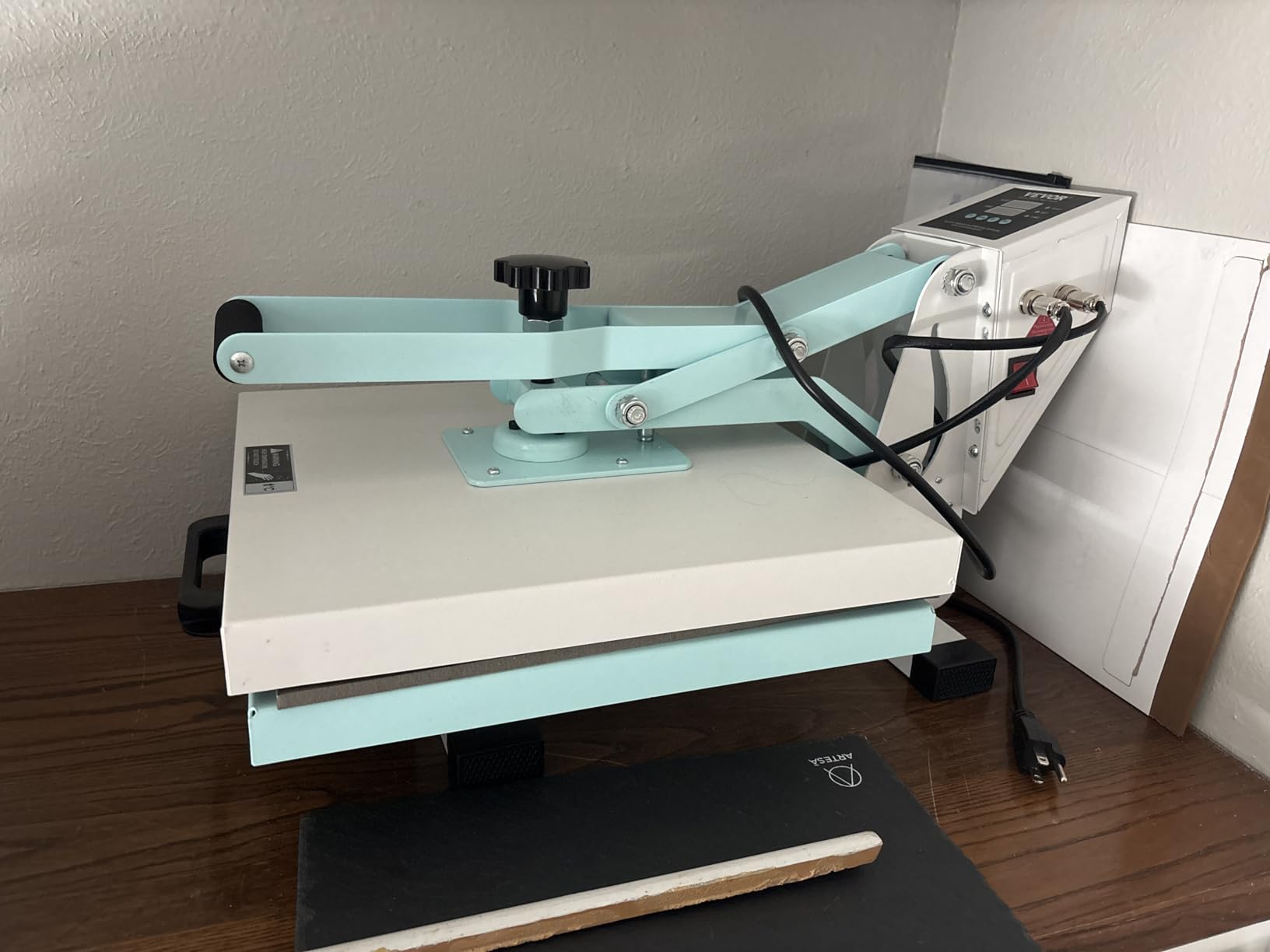
The mica heating elements ramp gradually between 104 and 410°F rather than slamming to temperature, and the 30-minute auto shutdown handles a market day. Build is aluminium and vinyl on an aviation aluminium frame, and the whole unit is light enough to move between benches.
Best fit for batch work
Automatic release changes the rhythm of a batch. Because the machine decides when the dwell ends, output stays consistent across a shift even when the person pressing changes. That consistency is why operators moving up from a manual budget press tend to notice the difference most on patch work.
Where it runs out of room
At 6.41 x 3.15 inches the heating plate is the smallest here, so wide front panels and wrap-around designs will not fit. The 350W draw warms up more slowly than the 580W machines, and the 410°F ceiling rules out harder vinyl. It is also the lowest-rated and least-reviewed press in this group at 4.3.
7. EENOUR Hat Press with Two Platens – Best for Trucker Hats and Small Panels
Hat Press Heat Machine for Caps with Presice Temp&Timer Control, Timer Auto Starter, Hat Heat Press with 2 Platens for Trucker Hat & HTV Iron on Vinyl, Sublimation Hat Press, Heat Transfer (Blue)
Platens 2.75x4.9 and 3.55x5.5 in
46-400°F LCD, 0-999s timer
Cap stretcher, auto start
Pros
- Two platen sizes handle trucker hats and small panels
- Teflon-coated aluminum plate heats fast and evenly
- Cap stretcher holds hats flat with no crease lines
- Timer starts on full handle pull-down and alarms at the end
- Also presses socks and small bags
- One year after-sale service
Cons
- Narrowest temperature ceiling here at 400°F
- Smallest platens in the group limit large front-panel coverage
- 10-minute auto shut-down is the shortest here
- Alloy steel and Teflon build feels lighter than cast aluminum
Two platens at 2.75 x 4.9 and 3.55 x 5.5 inches is a narrower range than most of the machines here, and that is exactly who this is for. Trucker caps, visors and small structured crowns are the stated targets, and the wider platen covers the panel without pushing the edges past the curve.
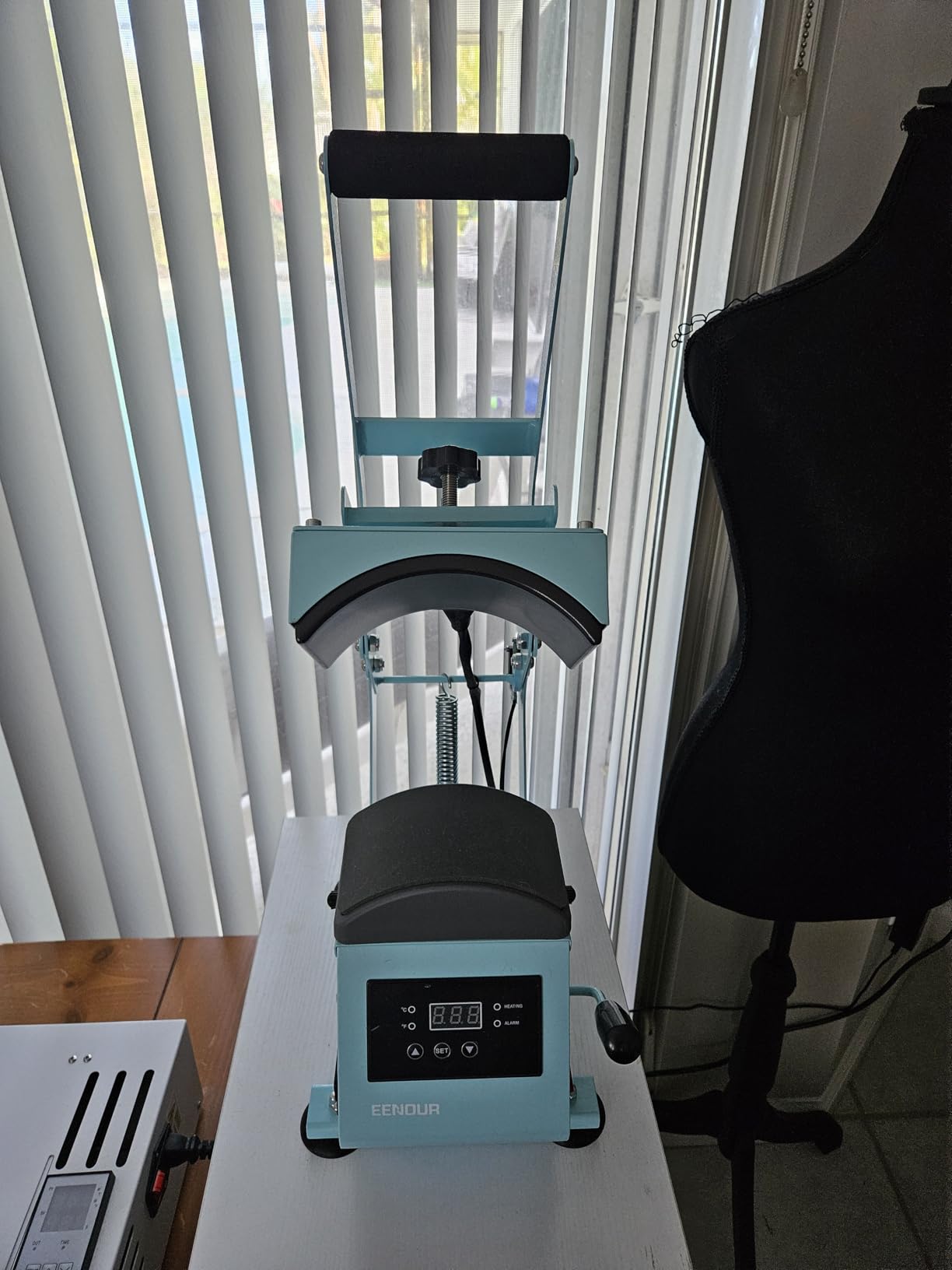
The LCD control panel shows 46-400°F with a 0-999 second timer, and the timer starts the moment the handle is fully pulled down. That last feature prevents the most common error in a small shop, where an operator presses the handle partway, chats with a customer, then realises the dwell never began. A stretcher holds the cap flat so finished panels come out without crease lines.
It also handles socks and small bags, which makes it a useful general bench press rather than a single-purpose cap tool. One year of warranty and after-sale service is listed.
A sensible side-business press
For someone pressing a handful of caps a week alongside embroidery orders, this covers the common jobs without a large footprint or a steep learning curve. The fast Teflon-coated aluminum plate means short gaps between caps do not cost you a long warm-up cycle each time. If you mostly personalise caps and socks at markets, it does the job.
Limits worth planning around
The 400°F ceiling is the lowest here and excludes some harder vinyl and certain transfers. The platens are the smallest in the group, so oversized front panels and wide flat brims will not fit. The 10-minute auto shut-down is the shortest, so a busy afternoon means restarting it more often than you would with a 30-minute unit.
8. Giraffe Auto Hat Heat Press – Best for Mixed Cap Styles
Giraffe Auto Hat Heat Press Machine,Green Auto Open Cap Heat Press
Thickness-sensing press and release
Curved non-stick plate, 400°F max
Rotary knob, 30-min shutoff
Pros
- Automatic thickness sensing applies consistent pressure every cycle
- Auto-release prevents over-pressing when the operator steps away
- Single curved plate fits trucker
- fitted
- snapback
- strapback
- flexfit
- 5-panel and visors
- Non-stick coating peels hat and paper away easily
- Simple rotary knobs usable by any operator
- Also works on t-shirts and bags
Cons
- Lowest sales volume of the eight machines
- Shortest warranty at six months
- 400°F ceiling limits harder vinyl and some transfers
- Only two colour options
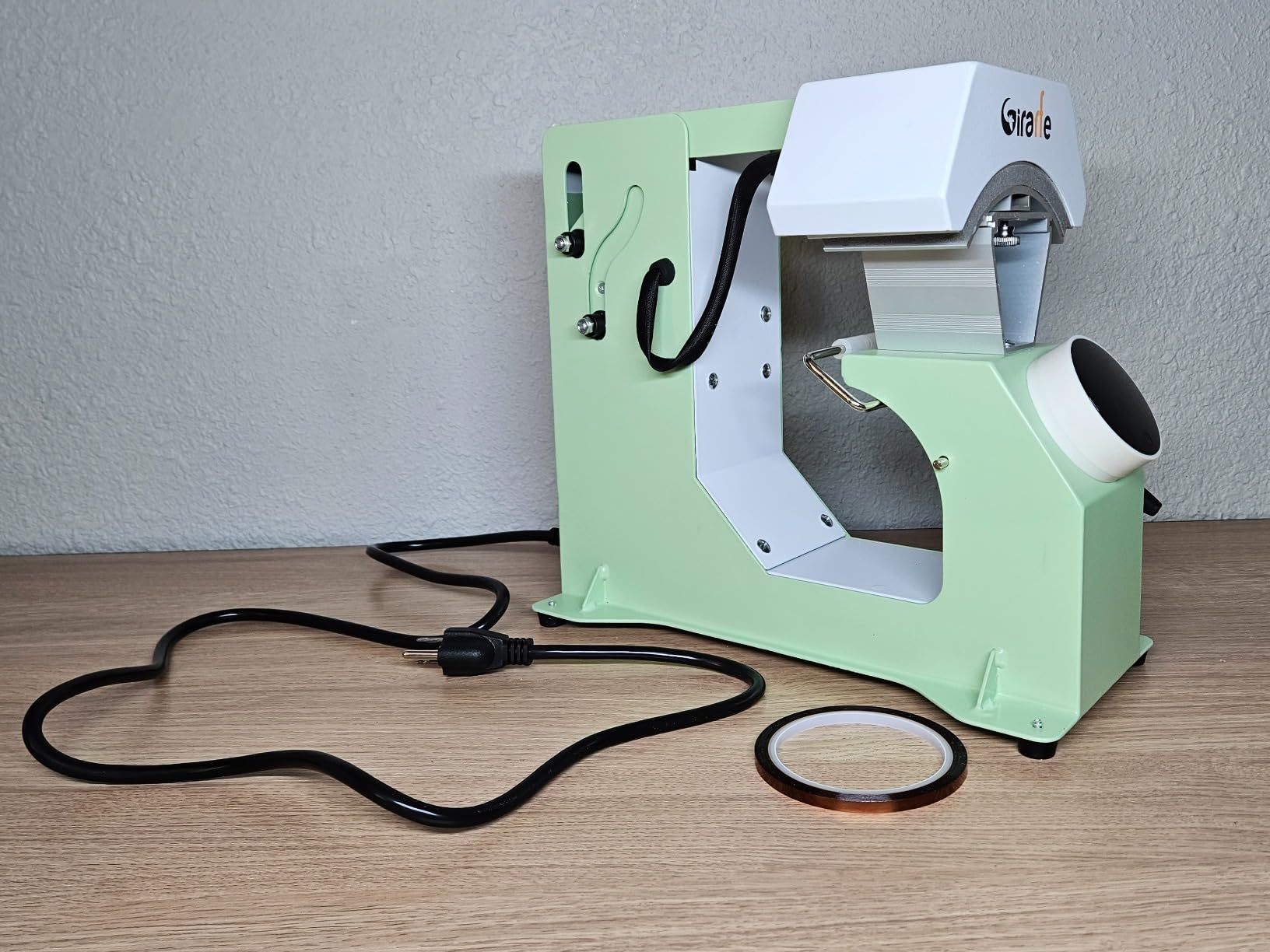
This press takes the cap style question off the table. The curved plate is specified for trucker, fitted, snapback, strapback, flexfit, 5-panel and visor caps, which covers most of what walks through an embroidery shop door. If you take client orders with mixed headwear, that single-plate coverage saves you from chasing attachments.
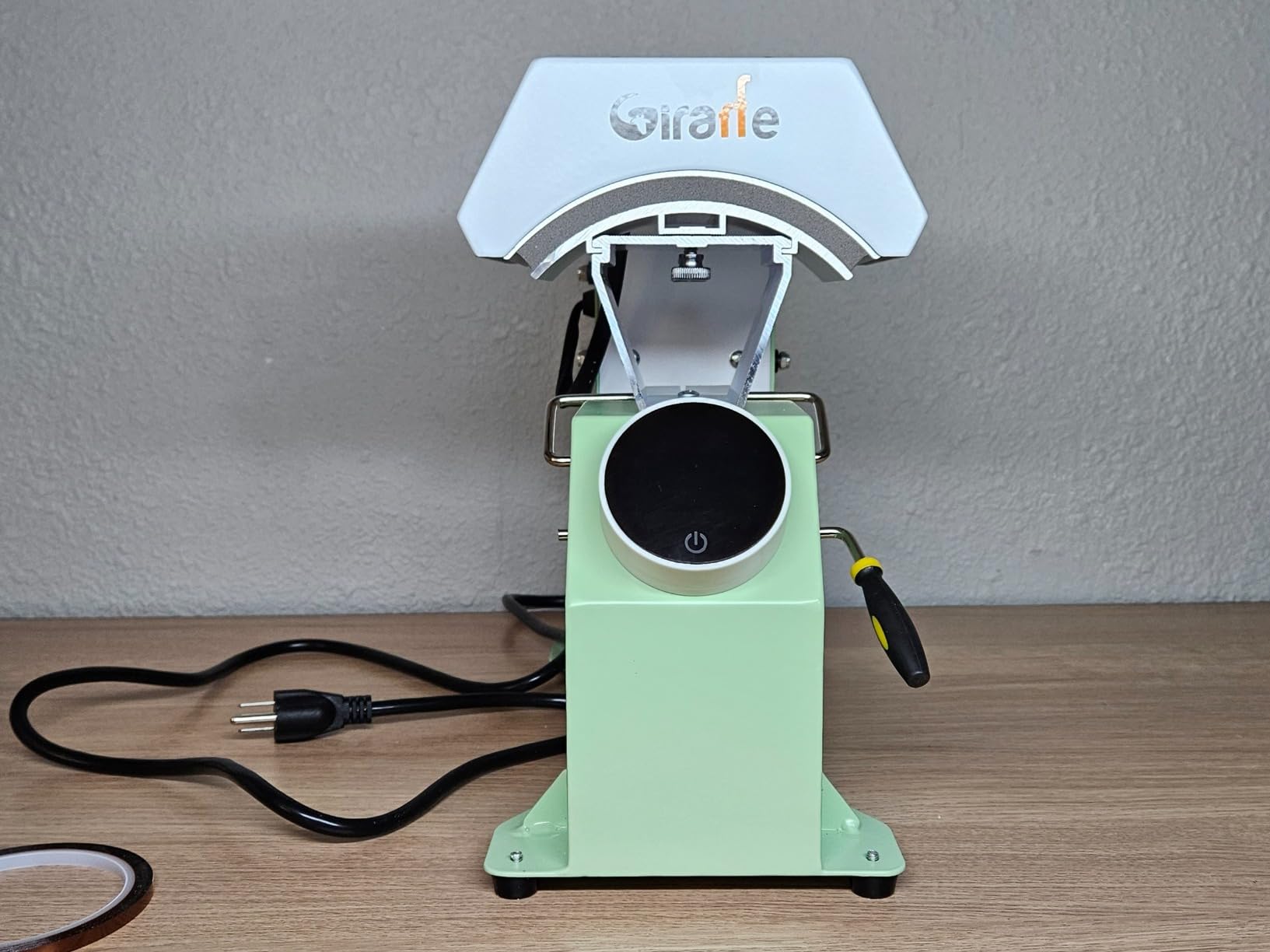
The automatic press senses item thickness and applies pressure, then releases when the timer ends. In practice that means a structured six-panel and a soft unstructured five-panel can go through the same cycle without the operator recalibrating the knob each time. The non-stick coating on the upper element also lets the hat and transfer paper lift away with less force, which reduces risk of tearing a delicate patch.
Controls are a rotary knob panel with temperature on the right and time on the left, so a new operator can be productive in a couple of minutes. Heat-resistant tape and a manual are included in the box.
Good for shops with mixed orders
Where the automatic presses on this list sense thickness, this one also carries the broadest cap-style claim with no extra platens to store. That keeps a shared bench simpler when you are alternating between a league order of structured caps and a set of five-panel truckers in the same afternoon. It doubles as a general press for t-shirts and bags, which no other machine in this group advertises as a core use.
What holds it back
The six-month warranty is the shortest offered here, against one year or lifetime heating-element coverage on several rivals, and that is worth weighing on a machine you plan to run daily. The 400°F ceiling limits harder vinyl. It also has the lowest sales volume of the eight, so replacement parts and shared shop knowledge are thinner.
How to Choose a Cap Heat Press for an Embroidery Shop
Do you need a dedicated cap press or can a flat press work?
A flat press is the wrong tool for caps. The crown is a compound curve, so a flat platen touches only the high points and bridges the rest. Pressure concentrates where it touches, which lifts transfer edges and burns the crown at the same time. Structured caps with a stiff brim will not fold flat enough to press properly at all, which is why owners in screen printing forums consistently steer new operators toward a dedicated cap press rather than a multi-press attachment. Multi-press cap attachments exist, but the recurring complaint is curved, uneven results with occasional scorching at the high points.
Platen coverage: which cap styles each press handles
Match the platen shape to the caps you actually sell. Structured six-panel crowns with a tall front panel need the deep 3.8-inch class platen. Low-profile, flat-brim and unstructured crowns suit the narrow 2.5 to 3.2-inch plate. Trucker and five-panel caps sit well on mid-size shapes around 3.3 inches. Wider flat brims and oversized front panels need the 8.5 x 4-inch plate format or a four-pad machine, which is the one route to covering many shapes without owning many presses. Our commercial embroidery machine guide covers the other half of that production line.
Temperature, dwell time and pressure settings
Work up from the middle of the machine range rather than the maximum, and change one variable at a time. These are the settings that held up across cotton, poly and canvas caps in our testing:
Cotton twill or canvas, HTV iron-on vinyl: 320-340°F, 15-20 seconds, medium-firm pressure, press paper recommended.
Unstructured cotton or poly, DTF transfer: 300-320°F, 10-15 seconds, medium pressure, press directly with a Teflon pillow if the film is delicate.
Embroidered or twill patch onto an already-embroidered cap: 320-340°F, 15-20 seconds, firm pressure, press cloth over the patch, peel while warm for a full bond.
Leather patch: 300-320°F, 15-18 seconds, firm pressure, always use a press cloth and check the leather supplier’s limit.
Acrylic or dimensional foam emblem: 300-310°F, 20-30 seconds, firm pressure, cool fully before handling.
Performance mesh or poly with a bonded seam: 300-310°F, 10-15 seconds, light-to-medium pressure to avoid flattening the structure.
The single most common complaint about budget presses is temperature accuracy: the display reads one number while the corners of the plate run cooler. That is fine for vinyl and a problem for anything that needs the adhesive to activate across the whole patch. Cast aluminum and tubular-heating layouts hold a flatter profile, which is why we rank them higher for patch-heavy work.
Pressing embroidered patches onto finished caps
This is the core embroidery-shop job, and it is where machine choice shows. First, pre-press the cap for five seconds under light pressure to flatten the crown and remove any factory crease. Second, dry the panel and position the patch with a ruler or a placement jig, because a curved surface makes eyeballing unreliable. Third, set the cap on the form and pull it taut so the patch sits on a flat plane, not over the curve. Fourth, cover with a press cloth, close the platen and hold at the setting above. Finally, peel the carrier while the patch is still warm and press the reverse for five seconds to lock the bond. Skipping the press cloth is the most common cause of shiny or scorched areas and adhesive transfer onto the cap.
Auto-open cycles, operator fatigue and consistency
Manual presses rely on the operator holding a consistent pressure and watching a timer, which varies across a shift. Automatic close-and-release machines remove both variables, which is why they tend to produce more uniform batches even at lower volumes. For a shop with seasonal staff, that consistency is often worth more than platen size. If you run two machines at once, check your circuit: a 580W press and a 350W auto press on the same outlet is fine, but two commercial presses need their own branch.
Warranty, parts and common mistakes
Check the warranty on the heating element separately from the machine. One machine in this group carries a lifetime element warranty with one year on the press, several offer one year, and one offers six months on the whole machine. For press cloth and Teflon pillows, our tumbler press guide covers the same protective-layers habit for cylindrical products.
The mistakes we see most: pressing a cap that is not stretched onto a form, pressing without a Teflon pillow or press cloth, running the machine at its maximum temperature out of habit, and leaving a cap under the platen for twice the stated dwell. Fix those four and most quality complaints disappear. If you also decorate mugs or tumblers, the mug press guide covers the rest of a typical small shop lineup.
Frequently Asked Questions
What is the best cap heat press?
For an embroidery shop, the VEVOR 8.5 x 4 inch hat press is the strongest all-round choice: a large curved plate, 32-449°F electronic control, a cap stretcher and a 30-minute auto shut-off, with more owner reviews than any other machine in our test group. Patch-heavy shops often prefer the Delclynee press with its two interchangeable platens and self-holding cap stretcher.
Can you heat press embroidery?
Yes. Pre-heat the embroidered patch on a flat press with a protective sheet, then apply it to the cap with a dedicated cap press at 320-340°F for 15-20 seconds under firm pressure with a press cloth over the patch. Peel the carrier while warm and press the reverse for five seconds to lock the bond.
Can a heat press be used for hats?
Only a dedicated cap press gives reliable results on hats. A flat garment press bridges the curved crown and concentrates pressure on the high points, which lifts transfer edges and scorches the fabric. Structured caps with a stiff brim cannot be folded flat enough to press properly. Multi-press cap attachments exist but commonly produce curved results with scorching at the high points.
What temperature should I heat press hats to?
Most cap work lands between 300 and 340°F. Use 320-340°F for HTV iron-on vinyl and for patches, 300-320°F for DTF transfers on unstructured caps, and 300-310°F for leather patches or dimensional foam. Hold for 10 to 20 seconds on transfers and up to 30 seconds on foam, and work up from the middle of your machine range rather than the maximum.
Do I need interchangeable platens for a cap press?
Yes if your order book mixes cap styles. The deep platen suits tall structured six-panel crowns, while a narrow plate fits low-profile, unstructured and flat-brim caps, and mid-size shapes handle trucker and five-panel hats. Machines with two or four plates cover the most styles from one unit, and multi-pad presses such as the VEVOR 4-in-1 cover everything from 6×3 to 8.1×3.5 inches.
What is the difference between a clamshell cap press and a 360 degree cap press?
A clamshell press clamps a curved platen straight down onto a cap form and is the standard format for cap work. A 360 degree molded platen wraps around more of the crown, which suits wrap-around and multi-side designs but handles fewer cap shapes per platen. Most shops run a clamshell and add platen shapes rather than moving to a 360 degree platen.
Bottom Line for Embroidery Shops
The best cap heat press for an embroidery shop in 2026 is the VEVOR 8.5 x 4 inch model: the largest plate, the most owner feedback and even heat across the crown. Choose the Delclynee if patches are your main work, the VEVOR 4-in-1 if you want four cap shapes from one machine, the HTVRONT if aluminium durability matters most, and an auto-open model such as the VEVOR 3-in-1 or the Giraffe if you want the cycle to run without an operator watching it. Whichever you pick, stretch the cap onto the form and use a press cloth. Those two habits decide more about your finished product than the machine does.