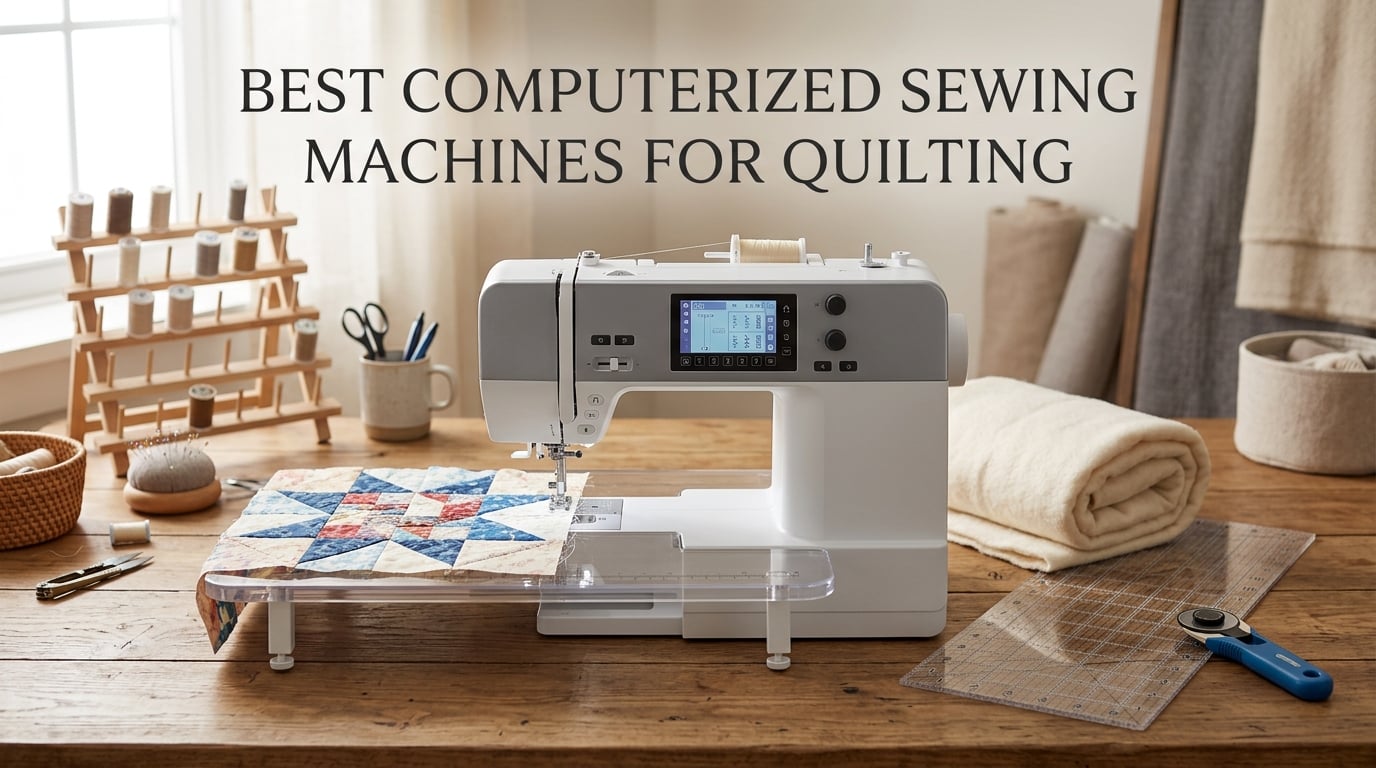
A computerized quilting machine is a domestic sewing machine with a digital brain: you pick a stitch on the screen and the machine sets length, width and tension for you, while a servo motor drives the needle at adjustable speeds, up to 1,100 stitches per minute on the fastest model in this group. What actually decides whether a machine quilts well is not the headline stitch count. It is throat space, the feed system and needle power.
The best computerized sewing machines for quilting in this roundup all share three things: a wide table or a large needle-to-arm space, a feed design that grips several layers of cotton and batting without walking sideways, and a frame heavy enough not to stall halfway through a quilt sandwich. Seven of them carry a 25-year limited warranty of some kind, the SINGER 6700C is the shortest of all at one year of manufacturer coverage, and the JUKI HZL-F600 and EverSewn Charlotte list no warranty term at all.
Ask a room of quilters what they actually use and the same families come up every time: the Singer Quantum Stylist line, Juki machines, the Brother XR9550, and Janome models chosen for their larger harp. That consensus is useful but vague, so we read the owner reviews behind each machine and separated the ones that handle bulky multi-layer work from the ones that stop at small blocks.
Scope note before we start: everything here is a household computerized machine you can buy new and set up at a kitchen table. If you quilt a king-size top on a frame every day, you are in long-arm territory and our guide to the best longarm quilting machines is a different read. For the wider buying basics, our buyer’s guide to the best quilting machines covers the ground floor.
Table of Contents
Top 3 Picks for Best Computerized Sewing Machines for Quilting in October
Brother HC1850
- 185 built-in stitches
- LCD display
- wide quilting table included
- 25-year warranty

SINGER Quantum Stylist 9960
- 600 built-in stitches
- walking foot and quarter inch foot
- extra-wide table and quilting bar
Brother CS7000X
- 70 built-in stitches
- extra-wide needle-to-arm space
- wide table and quilt guide
The Brother HC1850 is the one we would hand someone who wants to stop researching. The SINGER Quantum Stylist 9960 is the community default and the deepest accessory bundle of the group, and the Brother CS7000X gives beginners a wide needle-to-arm workspace and an included quilt guide at the entry tier.
All 10 Computerized Sewing Machines for Quilting Compared in 2026
| Product | Specifications | Action |
|---|---|---|
| Brother HC1850 |
|
Check Latest Price |
 Brother XR9550 Brother XR9550 |
|
Check Latest Price |
| Brother CS7000X |
|
Check Latest Price |
 Janome JW8100 Janome JW8100 |
|
Check Latest Price |
 Janome MOD-30 Janome MOD-30 |
|
Check Latest Price |
 Janome MC6650 Janome MC6650 |
|
Check Latest Price |
| SINGER Quantum Stylist 9960 |
|
Check Latest Price |
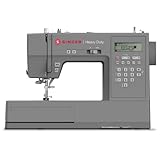 SINGER 6700C SINGER 6700C |
|
Check Latest Price |
 JUKI HZL-F600 JUKI HZL-F600 |
|
Check Latest Price |
 EverSewn Charlotte EverSewn Charlotte |
|
Check Latest Price |
Every machine below was judged on the same five things: how much room you have around the needle, how the feed dogs grip layered fabric, whether the frame keeps stitching evenly under load, what comes in the box for quilting specifically, and how large its owner base is. The last one matters more than buyers expect, because a machine with thousands of reviews has already absorbed the failure modes you are about to discover yourself.
1. Brother HC1850: The Most Complete All-Rounder for Quilting
Brother HC1850 Sewing and Quilting Machine, 185 Built-in Stitches, LCD Display, 8 Included Feet
185 built-in stitches
LCD screen
Wide table and 8 feet
25-year warranty
Pros
- 185 stitch library with 8 auto-size buttonhole styles
- Advanced automatic needle threader and jam-resistant drop-in bobbin
- Wide quilting table and 8 presser feet in the box
- 25-year limited warranty with lifetime technical support
Cons
- No automatic thread cutter
- Entry-level metal frame rather than a cast quilting frame
- Some functions need the manual or instructional media
The Brother HC1850 is the machine we would put at the top of this list for almost any quilter, because it is the rare entry-tier machine that arrives genuinely quilting-ready rather than merely computerized. The box holds 185 built-in stitches, 8 auto-size buttonhole styles, an advanced needle threader, a jam-resistant drop-in top bobbin, an LCD screen, a wide quilting table and 8 presser feet. Very little extra buying is needed before the first quilt block goes under the needle.
Owner reviews skew heavily five-star, and the reason is boring in the best way: people can start working. The threader and bobbin system do their job without practice, the table is wide enough to spread a block out flat, and the screen makes stitch selection obvious. A minority of reviews treat the machine as adequate rather than enthusiast-grade, mostly when they push heavy or industrial fabric.
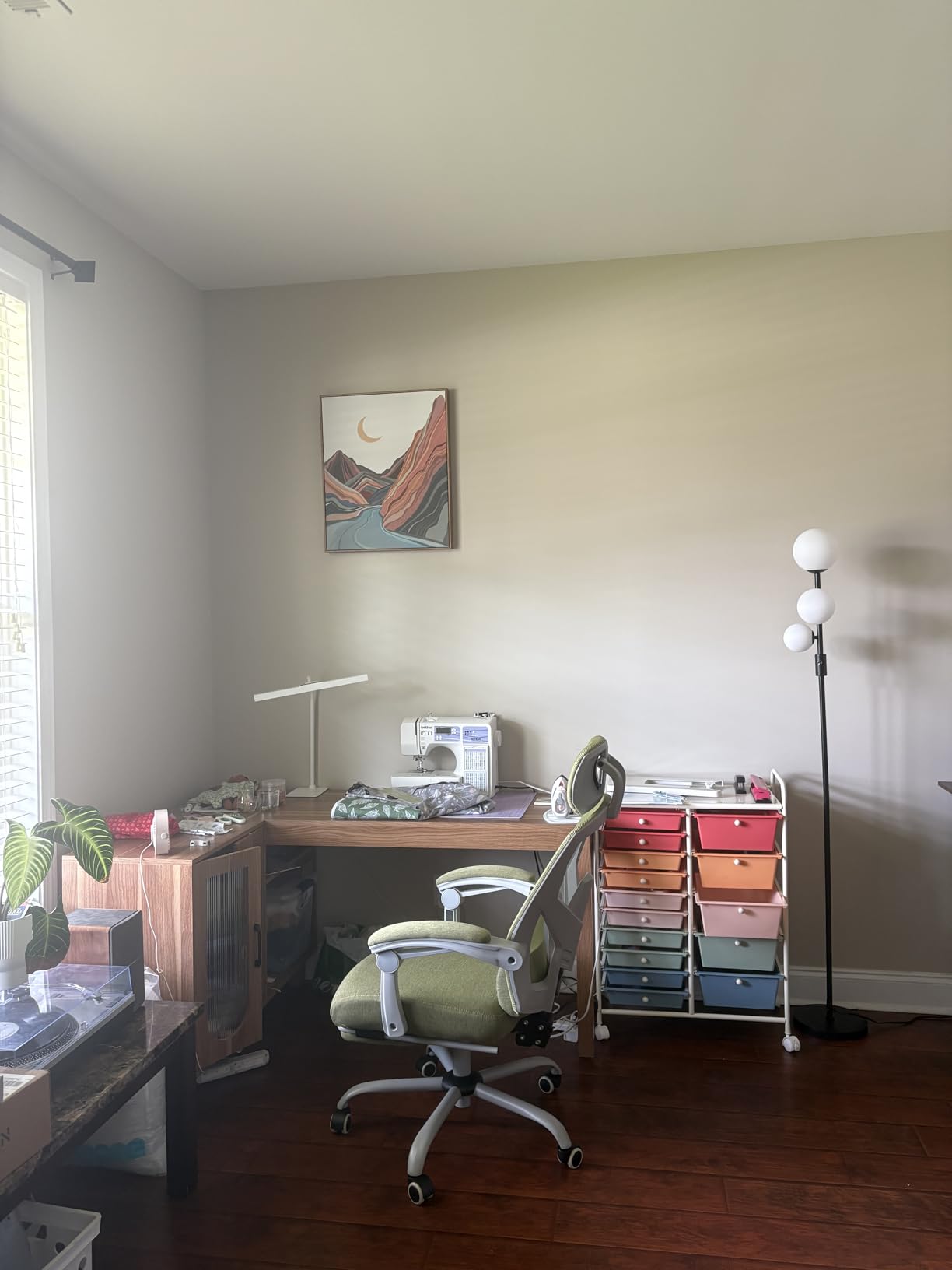
Technically it is a solid domestic machine rather than a semi-industrial one. The listed weight is 10.1 pounds with dimensions of 12 by 19 by 15 inches, the body is metal, and it is powered by a corded electric supply at 120 volts. What that means in practice is that it handles cotton, cotton blends and typical quilt sandwich work well, and that a canvas bag or four layers of denim is outside what it was built for.
The two convenience features it does not have are the automatic thread cutter and true electronic needle up/down positioning. You get a basic mechanical needle positioner instead. For most home quilters neither matters, since basting quilts and pivoting at corners is still manageable by hand at this level.
Who the Brother HC1850 suits
It suits a first-time quilter who wants to buy once and not think about it again, and it suits a garment sewer adding quilting to the mix. With 8 included feet and a wide table in the box, you can go from piecing to machine quilting without a shopping trip, and the 25-year limited warranty means the machine is not a five-year decision.
Who should skip it
Skip it if you quilt commercial-thickness materials every week, or if you want a machine that also does embroidery out of the box. It is also a portable machine at 10.1 pounds, so it moves between rooms easily but is not designed to stay planted under very heavy layers.
2. Brother XR9550: The Everything-You-Need Bundle
Brother XR9550 Computerized Sewing and Quilting Machine 165 Stitches
165 built-in stitches
Wide table and 8 feet
Protective hard case
25-year warranty
Pros
- Wide table and 8 quilting feet included
- Fast automatic needle threader and drop-in bobbin
- Styrofoam-fitted hard cover protects storage and transport
- Strong stitch selection for the bracket
Cons
- No automatic thread cutter
- Alphanumeric stitching limited to 55 characters
- Basic mechanical needle positioner
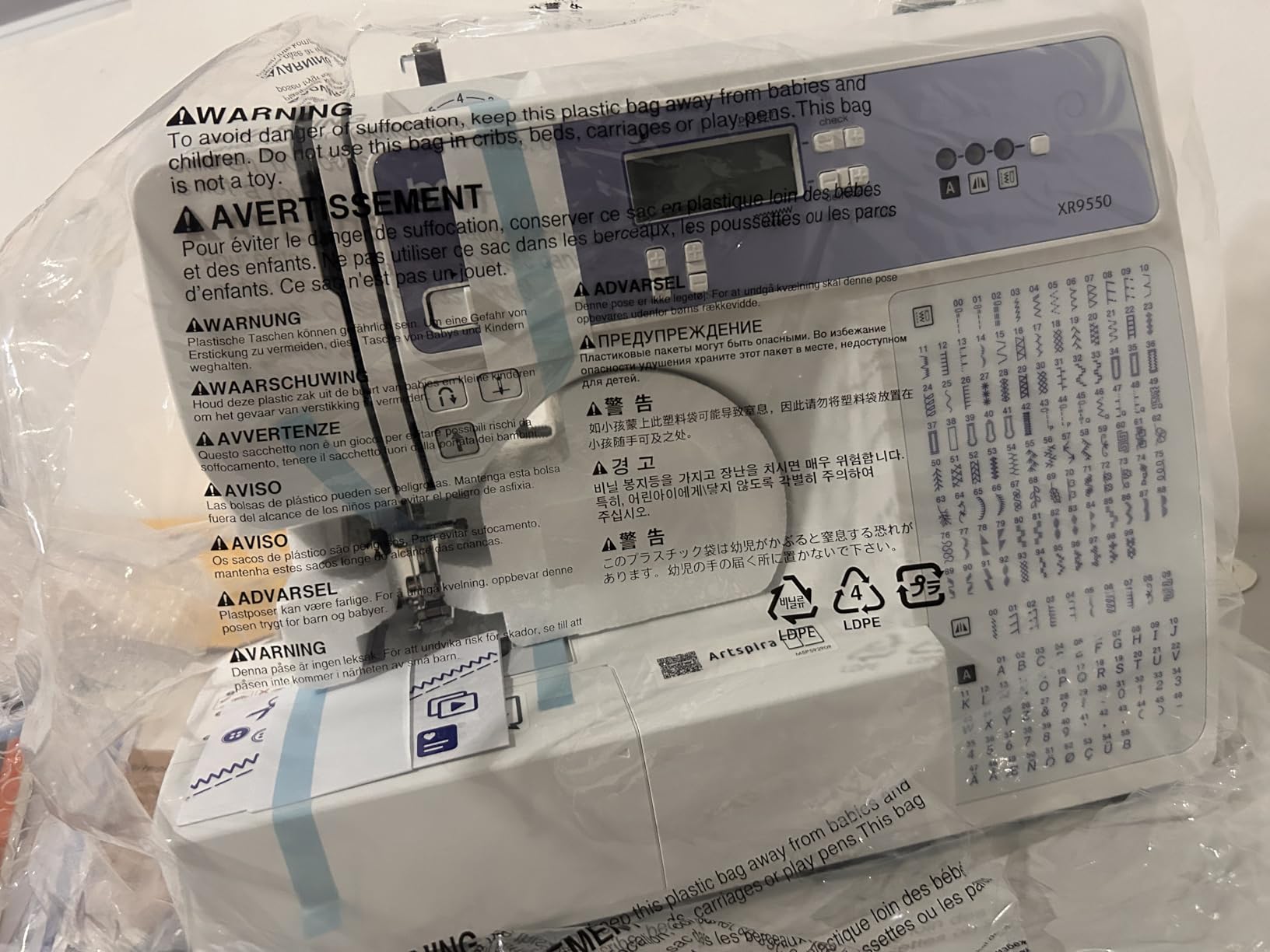
The Brother XR9550 is the machine most first-time quilters research first, and that is exactly why it appears in nearly every beginner thread we read. It arrives with 165 built-in stitches including 8 auto-size buttonhole styles plus 55 alphanumeric stitches, a wide table, 8 sewing and quilting feet, and a protective hard cover. The hard cover is a small detail that matters if the machine lives in a car trunk between classes.
Buyers treat it as the default all-in-one at the entry tier. Reviewers single out the wide table, the hard case and the stitch count, and the criticism is narrow: no automatic thread cutter, an aluminum frame rather than a full cast frame, and only one font of alphanumeric stitching.
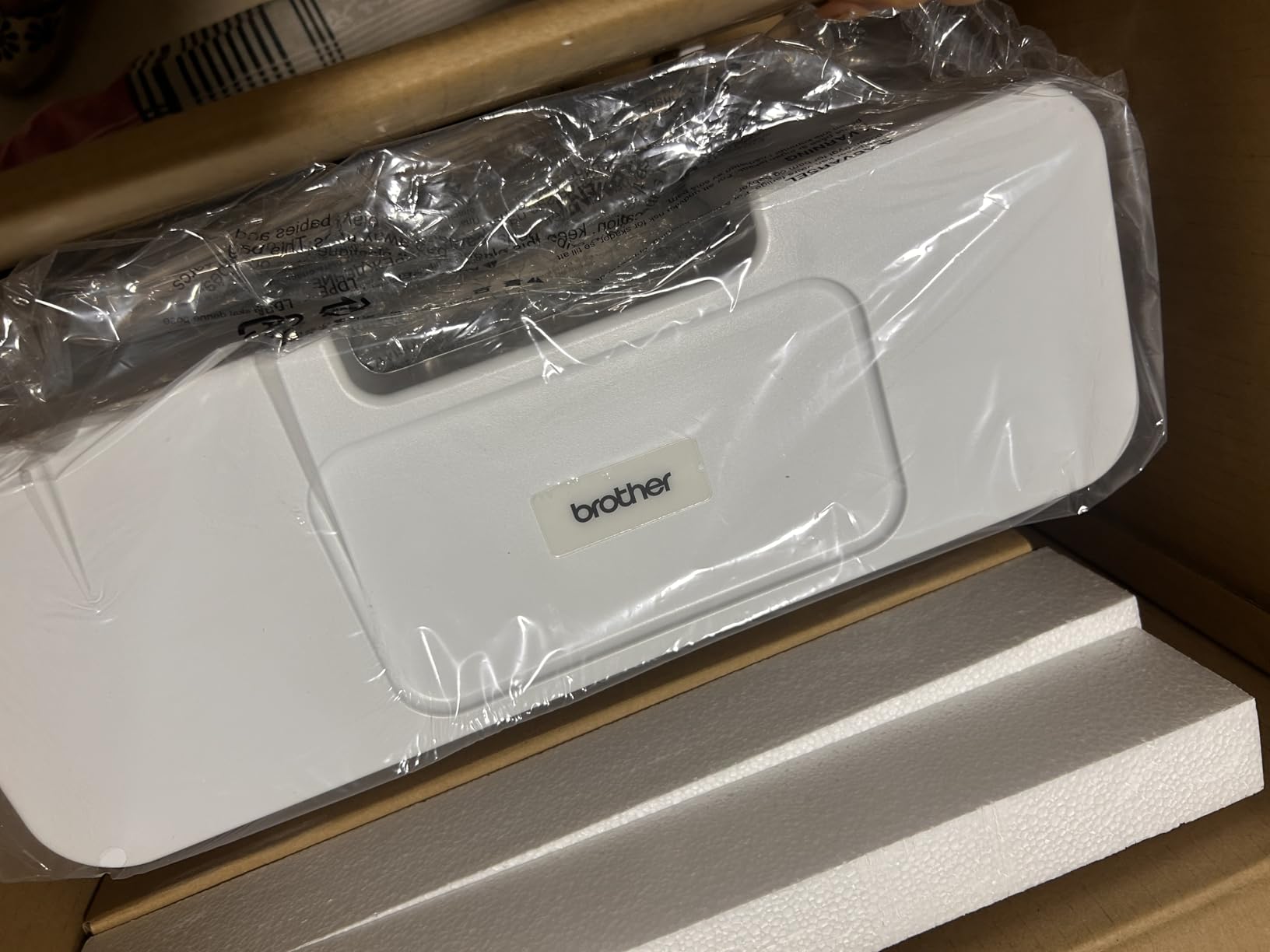
It runs on a corded electric supply at 120 volts, weighs 10.1 pounds and measures 13.5 by 20 by 17.9 inches including the case. The body is listed as metal and plastic. That footprint is larger than the HC1850 in the box, which is worth knowing if you plan to carry it to a group.
Brother backs it with a 25-year limited warranty plus free phone and technical support for the life of the machine, and the At Your Side support program covers setup questions that would otherwise send you to a repair shop. The machine also ranks near the top of the Sewing Machines category, which tells you how much real quilting traffic runs through it.
Who the Brother XR9550 suits
It suits a beginner who wants the widest possible set of included accessories, and anyone who quilts in classes or travels with a machine. Between the wide table, 8 feet and the fitted case, it is the most self-contained package here for a person who does not yet know which presser feet they will actually use.
Who should skip it
Skip it if you need deep throat space for bulky work, since the 165-stitch count is the main draw and workspace is not. Anyone who quilts thick canvas or denim as a primary activity will want more piercing power than a domestic aluminum frame provides.
3. Brother CS7000X: A Wide Workspace Built for Beginners
Brother CS7000X Sewing and Quilting Machine LCD Display
Extra-wide needle-to-arm space
Metal frame and fixed needle bar
Wide table, 10 feet, quilt guide
Pros
- Extra-wide needle-to-arm space with removable front compartment
- Fixed needle bar and metal frame for even stitch lines
- 10 presser feet plus quilt guide and wide table
- Quiet operation with no vibration at slower speeds
Cons
- No automatic thread cutter
- Smaller 70-stitch library than siblings
- Not built for industrial-thickness materials
The Brother CS7000X is the entry-tier machine built around workspace rather than stitch count. Its selling point is a large needle-to-arm distance for bulky quilt projects, a removable front compartment that turns the bed into a free arm for sleeves and tight spaces, and a metal frame with a fixed needle bar that reviewers credit for even topstitching lines.
Where the XR9550 leads with 165 stitches, the CS7000X leads with 70 stitches including utility, decorative, heirloom and quilting stitch functions, plus 7 one-step auto-size buttonholes. For quilting that is plenty, because the quilting stitches you actually use are a fraction of any large library.
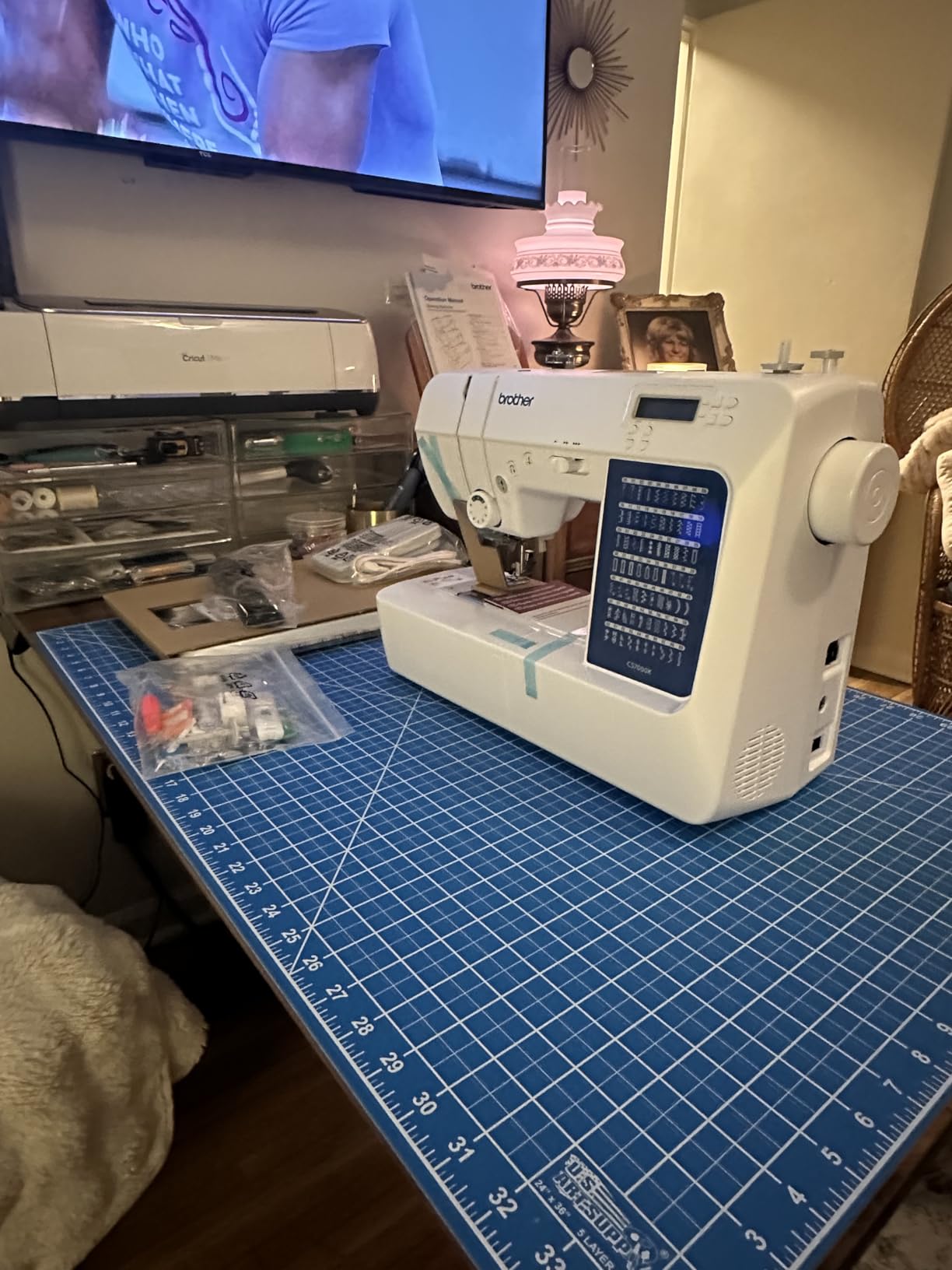
It weighs 14 pounds and measures 7 by 17 by 12 inches, which makes it heavier and deeper than its siblings. That extra mass is the fixed needle bar and the metal frame, and it shows up as smooth, vibration-free stitching at slower speeds, which is exactly what binding and hand-quilt-style free-motion work needs.
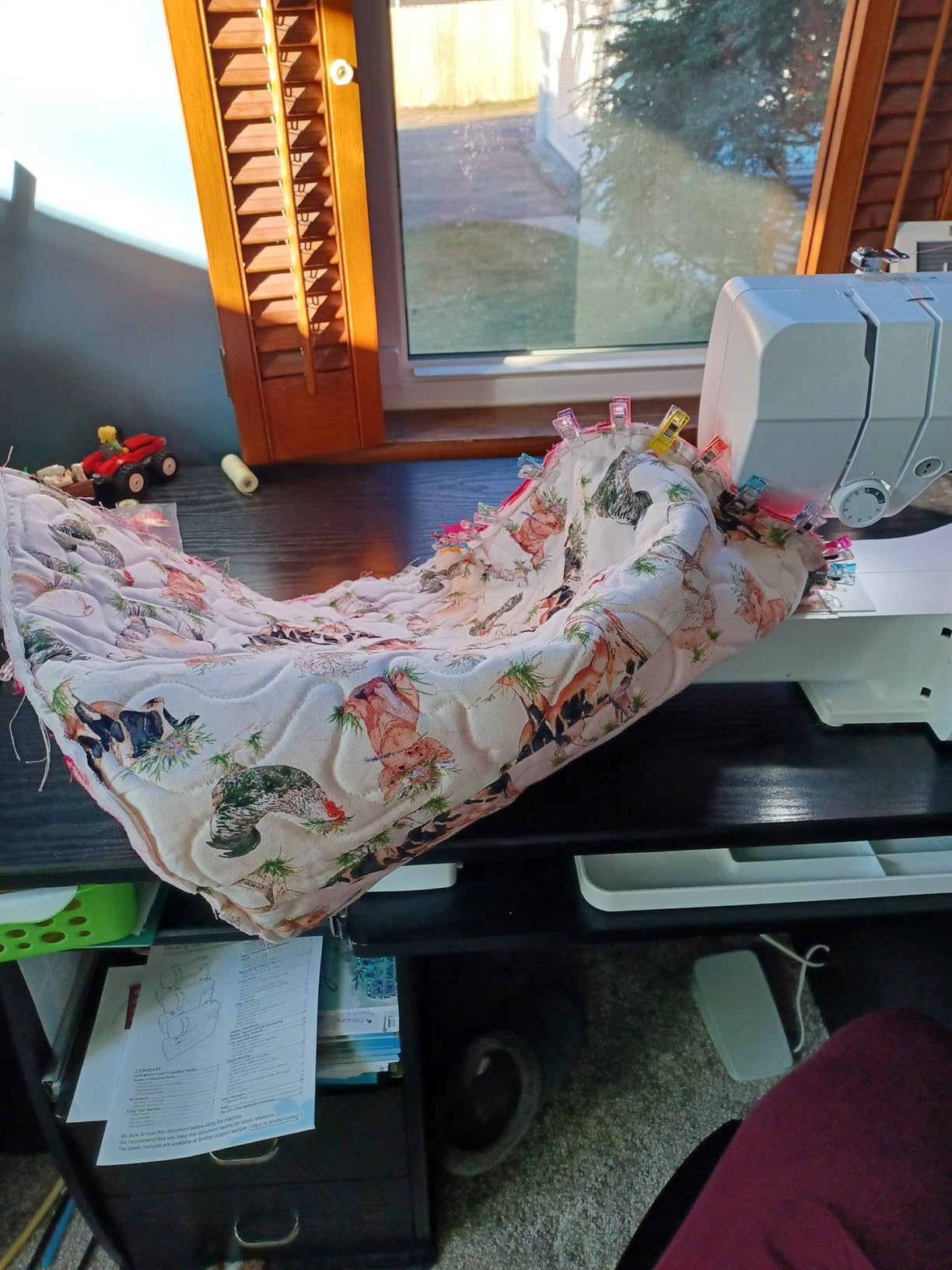
The box also holds a wide table, 10 sewing feet, a quilt guide, a protective hard case and a trilingual manual. The quilt guide earns its place on large work, where a consistent stitching line around a block is the whole point.
Who the Brother CS7000X suits
It suits a beginner assembling a first bed quilt, because the extra-wide arm and the included quilt guide make large work manageable. It also suits anyone who does straight-line quilting and binding and cares more about consistent stitch lines than about decorative stitch options.
Who should skip it
Skip it if you want monogramming, lettering or a large decorative library, since 70 stitches is the smallest Brother bundle here. Reviewers also note that the bobbin-threading instructions can confuse first-time users, and that very thin fabrics with long stitch settings can look slightly uneven. The fixed needle bar also means the needle stays put when you turn a corner, which is a deliberate trade against machines that let you reposition it.
4. Janome JW8100: The Most Complete Quilting Bundle
Janome JW8100 Fully-Featured Computerized Sewing Machine with 100 Stitches, 7 Buttonholes, Hard Cover, Extension Table and 22 Accessories
100 stitches
7-piece feed dogs
Even feed foot and quarter inch foot
Extension table
Pros
- Quilting-ready out of the box with extension table and both quilting feet
- Uses standard Class 15 bobbins rather than proprietary ones
- Exceptionally quiet speed control that does not surge
- Reputation for long-term durability with metal internal parts
Cons
- Not a deep-throat machine
- No automatic thread cutter
- Modest 100-stitch library next to SINGER and Brother flagships
The Janome JW8100 is the machine in this group that most explicitly says quilting on the box. It comes with an extra-wide extension table, an even feed foot, a quarter inch quilting foot, a hard cover and a pin cushion, 22 accessories in total, on top of 100 built-in stitches and 7 one-step buttonholes. Very few machines at this level include a walking foot among the standard box contents.
Owners describe a machine that sews rock-solid straight, handles multiple fabric layers easily, and stays quiet. The speed control slider does not surge on start-up, which matters more than it sounds when you are stitching a long binding at a controlled pace. Several reviewers mention keeping it for years and treating it as a dependable second machine.
The 7-piece feed dog system is doing quiet work here. More contact points means less fabric shift across batting layers, and Janome pairs it with the included even feed foot for the same reason. The free arm appears when you pull off the front drawer, which gives you the standard sleeve and collar access.
It weighs 12 pounds, measures 7 by 16 by 12 inches, and takes standard Class 15 bobbins rather than a proprietary bobbin system, so supplies are easy to find. The warranty is 25 years on mechanical parts, 2 years on electrical parts and 1 year on labor, which is a more honest breakdown than a flat 25-year claim.
Who the Janome JW8100 suits
It suits a quilter who wants standard bobbins and low supply friction over a decade of use, and anyone who hates buying feet separately. If both quilting feet and the extension table are already in the carton, the real cost of getting quilting-ready is close to nothing beyond the machine itself.
Who should skip it
Skip it if you quilt oversized pieces that need real depth beside the needle, since this is not a deep-throat machine and the throat is its known ceiling. A few decorative stitches, star patterns in particular, also do not render the way buyers expect.
5. Janome MOD-30: Drop Feed for Straight Quilting Seams
Janome MOD-30 Computerized Sewing Machine with 30 Built-In Stitches, 3 One-Step Buttonholes, Drop Feed and Accessories
30 built-in stitches
Front drop feed lever
7-piece feed dogs
Backlit LCD
Pros
- Drop feed lever switches to low-bunching feed for straight quilting seams
- 7-piece feed dog system handles layered cotton smoothly
- One-hand needle threader and backlit LCD are simple to learn
- Top-loading bobbin with a clear cover is easy to monitor
Cons
- Smallest stitch library here at 30 stitches and 3 buttonholes
- No wide extension table in the standard box
- No automatic thread cutter
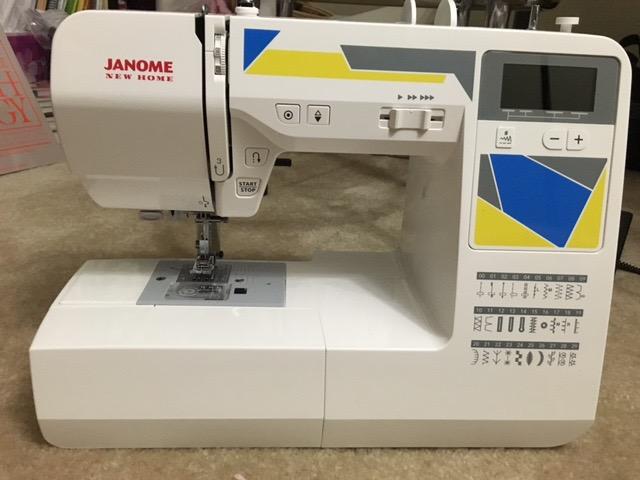
The Janome MOD-30 earns its place on one specific feature: a front drop feed lever. It is the only machine in this lineup where you can disengage the feed dogs with a lever rather than buying and fitting a separate drop feed plate or covering the dogs with a sole plate. Reviewers who buy it for quilting are buying that lever.
Everything else is deliberately simple. It has 30 built-in stitches including 3 one-step buttonholes, a one-hand needle threader, a top-loading bobbin with a clear cover, a backlit LCD with easy navigation keys, and start/stop, reverse, locking stitch and needle up/down controls. The convenience button row is more useful during quilting than it sounds, because you will pivot and stop constantly.
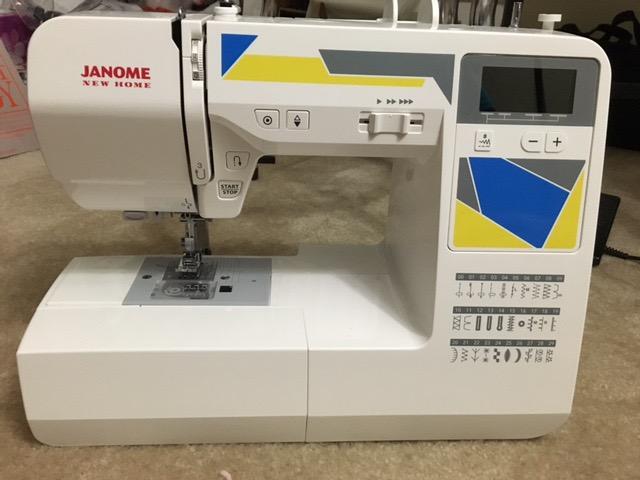
The 7-piece feed dog system is the same approach Janome uses on the larger JW8100, and it is what lets the machine handle layered quilting cotton without the bunching that makes a quilt top pucker. Pair the drop feed with a consistent presser foot pressure and you get the flat, low-bunching seam that straight-line quilting depends on.
It weighs 12.7 pounds, measures 7 by 16 by 12 inches, and carries a 25-year limited warranty. The honest drawback is the size of the stitch library: 30 stitches and 3 buttonholes is the smallest here, and there is no large extension table or wide quilting table in the standard box, so you are working on the machine bed.
Who the Janome MOD-30 suits
It suits a straight-line and traditional quilting quilter who wants a low-bunching feed without buying extra parts, and a beginner who will never touch the 30 stitches beyond quilting and utility basics. Reviewers consistently find it easy to thread, quiet and dependable.
Who should skip it
Skip it if you plan large quilt tops on a table, or if you want lettering, a large decorative library or an automatic thread cutter. It is a focused machine, and outside that focus there is little to justify it over a bundle that includes a table.
6. Janome MC6650: The Best Throat Space in the Group
Janome MC6650 Sewing and Quilting Machine
10 inch throat space
All-metal flatbed
Up to 1000 stitches per minute
Convertible free-motion feet
Pros
- Semi-industrial all-metal frame stitching up to 1000 stitches per minute
- 10 inch throat space for blocks
- layered fabric and bulky work
- Separate bobbin motor winds a bobbin while sewing continues
- Convertible free-motion feet plus multiple needle plates included
Cons
- Very heavy at 24.3 pounds and awkward to move
- Instruction booklet has unclear diagrams
- Automatic threader can split some synthetic threads
The Janome MC6650 is the machine in this roundup built for people who have already outgrown a domestic frame. It has a seamless all-metal 10 inch flatbed on an aluminum body frame, 10 inch throat space, and stitches up to 1,000 stitches per minute. That combination is the answer to the question quilters ask most, which is which machine has the bigger harp.
Owners are typically professional or very serious home sewists running long hours a week, and the recurring report is that it never misses a stitch. The separate bobbin motor is the feature they mention most, because you can wind a bobbin while the machine keeps sewing instead of stopping mid-quilt-line. That alone changes the rhythm of a long quilting session.
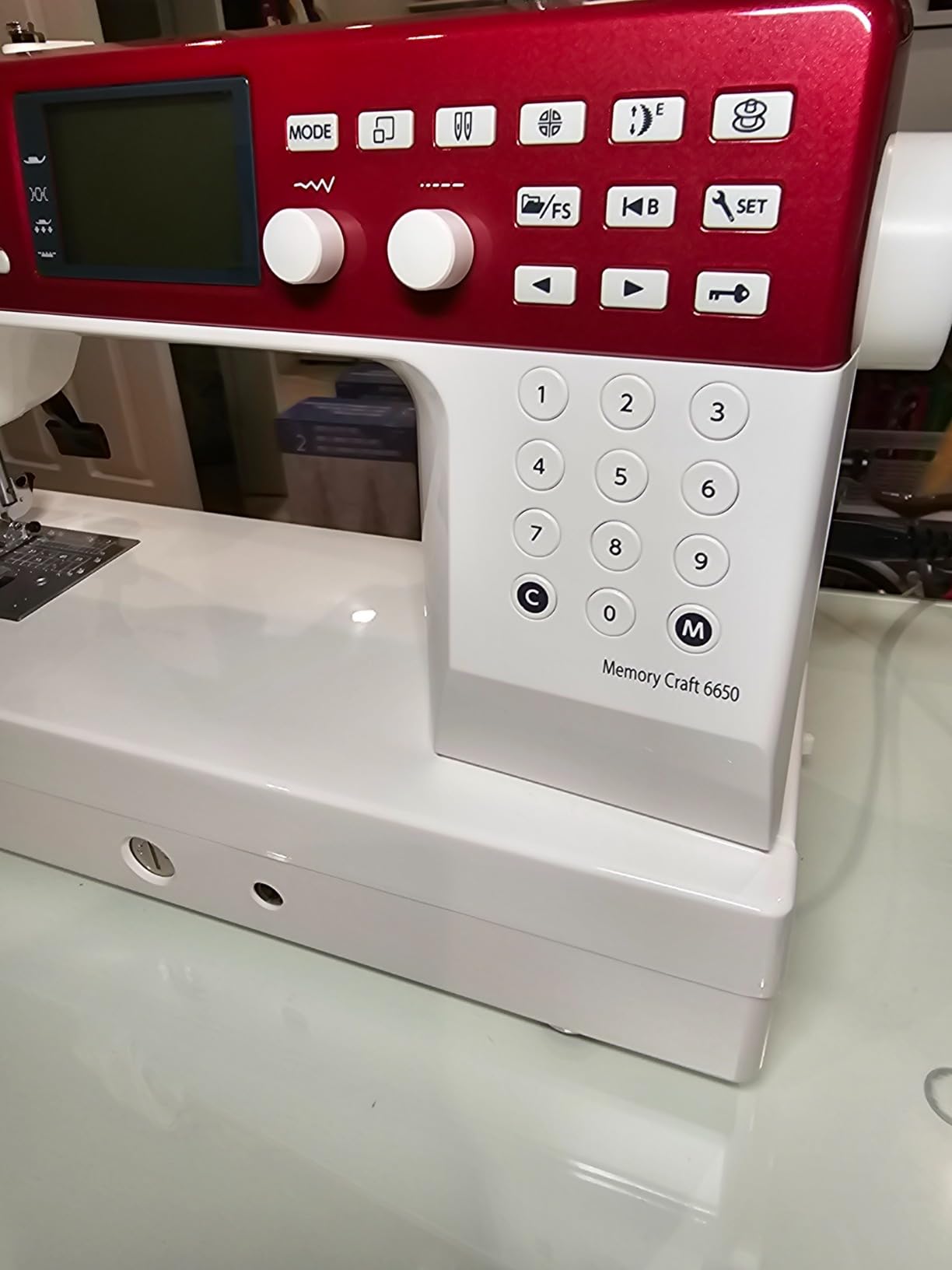
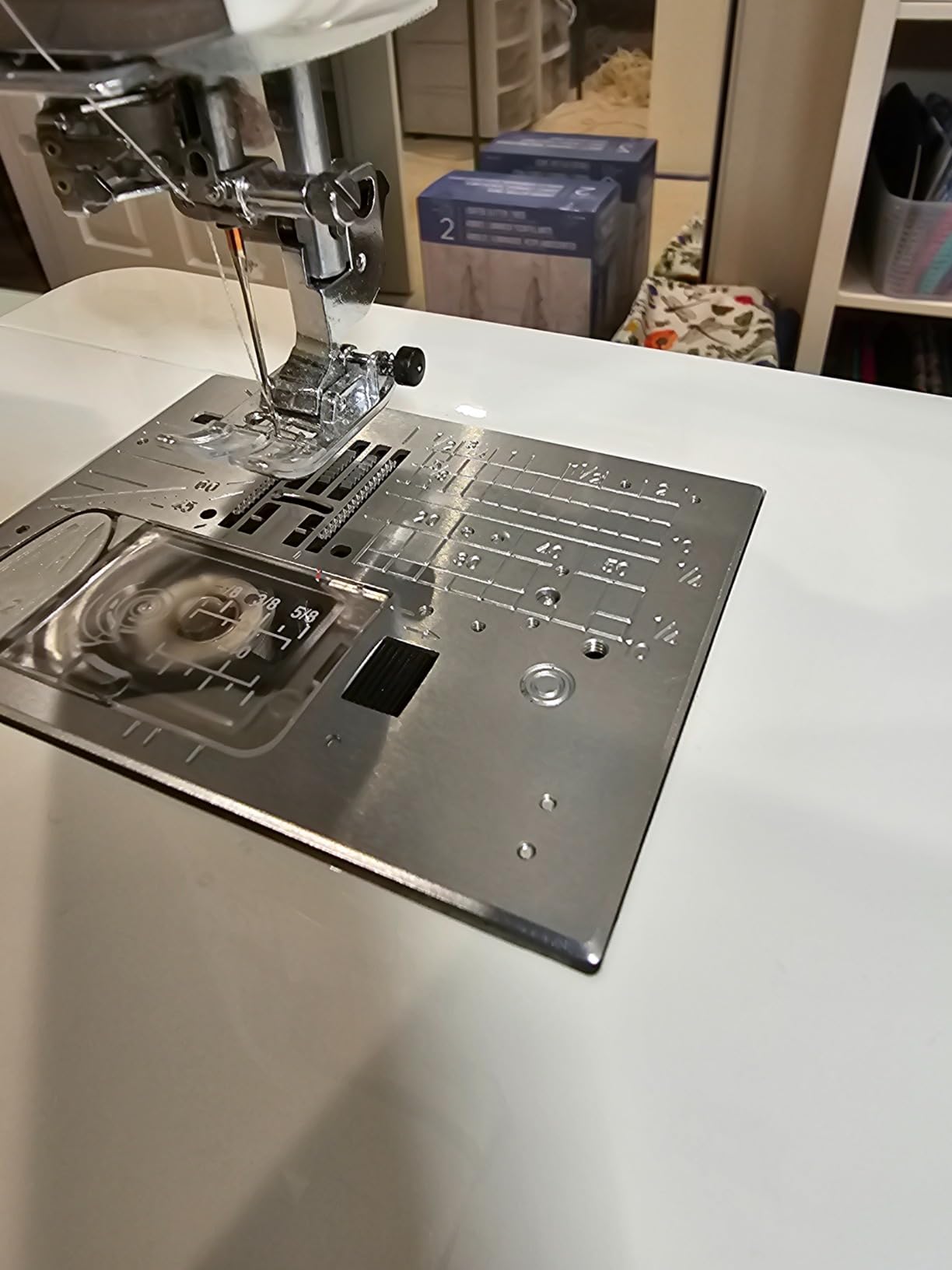
It also brings adjustable presser foot pressure, an extra-high presser foot lift, 7-piece feed dogs, memorized needle up/down positioning, programmable memory settings, stitch adjustment fine-tuning dials, 6 LEDs in 3 locations and knee presser foot lift compatibility. Twelve presser feet are included, including convertible free-motion quilting feet in closed toe, open toe and clearview versions.
The physical reality is that it weighs 24.3 pounds and measures 23.9 by 13.43 by 11.54 inches. That is a machine that lives in one room, and reviewers who sew 15 to 20 hours a week consider that a fair trade. Owners running a business would pair it with one of the best long arm quilting machines in our separate buying guide.
Who the Janome MC6650 suits
It suits a quilter moving from domestic work into bag making, heavy layered work, or production sewing, and anyone who quilts oversized pieces where throat space is the deciding factor. The free-motion feet and multiple needle plates mean you are not immediately shopping for accessories.
Who should skip it
Skip it if you need to carry the machine to classes or move it between rooms, and if you are still learning to sew on a domestic machine. The manual’s diagrams are also called out as confusing by new owners, so budget time for setup.
7. SINGER Quantum Stylist 9960: The Community Default
SINGER® Quantum Stylist 9960 Computerized Sewing & Quilting Machine
600 built-in stitches
13 presser feet with walking foot
Extra-wide table and quilting bar
Pros
- Largest stitch library here with 600 stitches and 1172 applications
- 13 presser feet including even feed walking foot and quarter inch foot
- Extra-wide extension table plus quilting bar for quilt-size work
- Speed control and start/stop button for hands-free quilting
Cons
- Busier control panel with more settings to learn
- Lighter build than cast-metal quilting machines
- No automatic thread cutter
The SINGER Quantum Stylist 9960 is the machine that shows up most often when quilters describe what they use, and with 9,000 reviews behind it, it is by far the most proven machine here. It carries 600 built-in stitches and 1,172 stitch applications including stretch and decorative work, with mirror imaging and stitch elongation for custom quilting.
The accessory bundle is what sells it. You get 13 presser feet including an even feed walking foot, a darning and embroidery foot and a quarter inch foot, an extra-wide extension table, a quilting bar, needles, Class 15 bobbins, tools and a hard dust cover. The walking foot being included is the single most useful item for a quilter.
For long quilt-basting runs the start/stop button and adjustable speed control matter more than they do on garment work, because they let you sew without a foot pedal and stop precisely at a corner. There are also 13 fully automatic one-step buttonhole styles including keyhole, built-in lettering fonts, a top drop-in bobbin with a transparent cover and an LED light.
The trade-offs are real. The control panel is busier and takes more learning than a simple keypad, stitch selection needs more menu navigation, and the build is lighter than cast-metal quilting machines, so very thick or industrial fabrics are not its strength. It weighs 7 kg and measures 8.2 by 17.2 by 12 inches. The warranty runs 25 years with 5 years on electronics and 1 year on labor.
Who the SINGER Quantum Stylist 9960 suits
It suits a quilter who quilts and sews garments in equal measure, and anyone who wants the widest accessory set without hunting for a walking foot and an extension table separately. With 9,000 reviews, it is also the safest first machine in the sense that every common problem is already documented somewhere you can read about it.
Who should skip it
Skip it if heavy canvas or denim is a regular material, or if you want a machine you can pick up and carry easily. The feature density is the price of the breadth, and a beginner who only wants quilting will not need half of it.
8. SINGER 6700C: The Most Piercing Power Here
SINGER® 6700C Heavy Duty Computerized Machine with Accessory Kit
Up to 1100 stitches per minute
Heavy-duty piercing power
10 presser feet with walking foot
LCD with speed control
Pros
- Motor punches through heavy quilting layers
- denim and leather at speed
- Even feed walking foot and open toe foot included for multi-layer work
- Ten presser feet and four Class 15 bobbins in the kit
- 7 one-step buttonhole styles
Cons
- No wide quilting extension table or large free arm
- Only a 1-year manufacturer warranty
- 411 stitch applications is fewer than the Quantum Stylist 9960
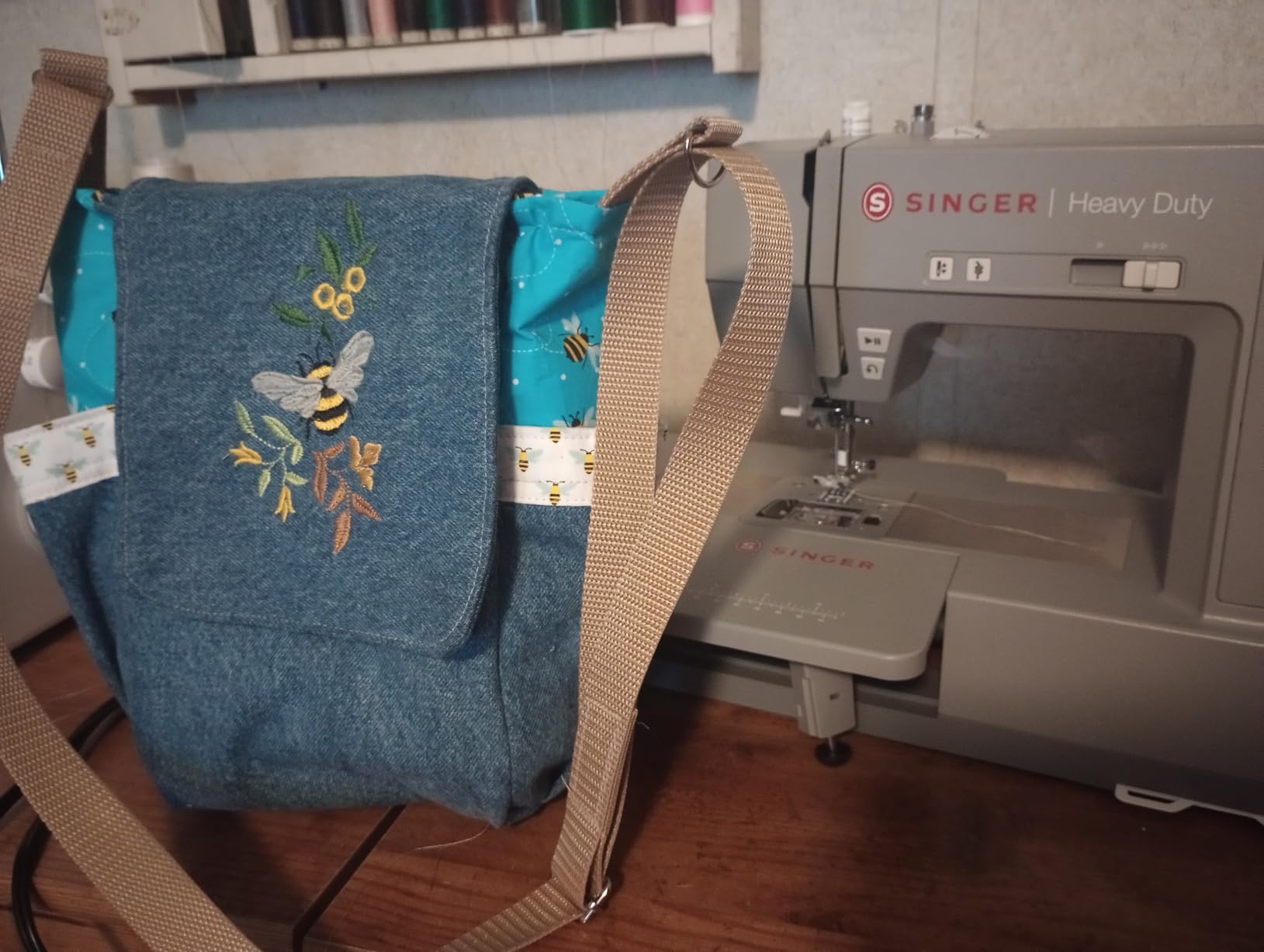
The SINGER 6700C is the pick for anyone whose quilting involves layers the domestic machines here are not built for. Owners who sew heavy quilt layers, denim and bags report consistent, even stitching at the machine’s top speed of up to 1,100 stitches per minute, and the enhanced piercing power is the reason the machine is chosen over a lighter domestic option.
It is a general heavy-duty computerized machine rather than a dedicated quilting machine, and that distinction shows up in the box. You get 411 stitch applications plus a lettering font, 7 styles of one-step buttonholes, an LCD screen with adjustable stitch length and width, built-in speed control, an LED light, and 10 presser feet including an even feed walking foot and an open toe foot.
The open toe foot and the walking foot are the two feet that matter for quilting here, and both are included rather than sold separately. The walking foot feeds the top layer of a quilt sandwich at the same rate as the feed dogs move the bottom layers, which is the direct answer to fabric shift on thick work.
It weighs 14.6 pounds and measures 7.5 by 17.5 by 11 inches, with a metal and stainless steel body on an AC power supply. The SINGER Free Creatate app gives you the manual, quick start, tutorials and accessory lists by model number, which is useful if you skip ahead into feet you have not used before.
Who the SINGER 6700C suits
It suits a quilter who sews denim, canvas, bags and heavy toppers alongside quilting, and anyone who would rather have raw power than a large workspace. The included foot kit means the cost of getting set up for multi-layer work is close to zero.
Who should skip it
Skip it if you quilt full-size tops that need a wide table, because there is no wide extension table and no large free arm here. The one-year manufacturer warranty is also the shortest in this lineup, which matters if you buy expecting to keep the machine for decades.
9. JUKI HZL-F600: The Best Free-Motion Machine Here
Juki HZL-F600 Computerized Sewing and Quilting Machine
255 built-in stitches
Exact quarter inch placement
Free-motion quilting foot
Independent bobbin winder
Pros
- Exact quarter inch needle placement for scant quarter inch piecing
- Independent bobbin winder motor winds while sewing continues
- Automatic thread cutter and a threader that works
- Two-LED lighting over the needle and the bed
Cons
- Heaviest machine here at 30 pounds
- Isolated quality control reports including a defective bobbin case
- Very expensive next to the stitch count it provides
The JUKI HZL-F600 is the machine we would put in front of someone whose quilting is free-motion heavy. The Juki name carries weight in quilting circles for a reason, and the specific reasons on this machine are exact quarter inch needle placement, a free-motion quilting foot that owners say actually makes free-motion work straightforward, and an independent bobbin winder motor.
The quarter inch placement is the quiet hero. On most machines the quarter inch seam is a presser foot offset away from a needle position, and a small error shows up as a wavy seam across a whole quilt block. This machine puts the needle at the quarter inch line, so piecing comes out consistent without compensating for every block.
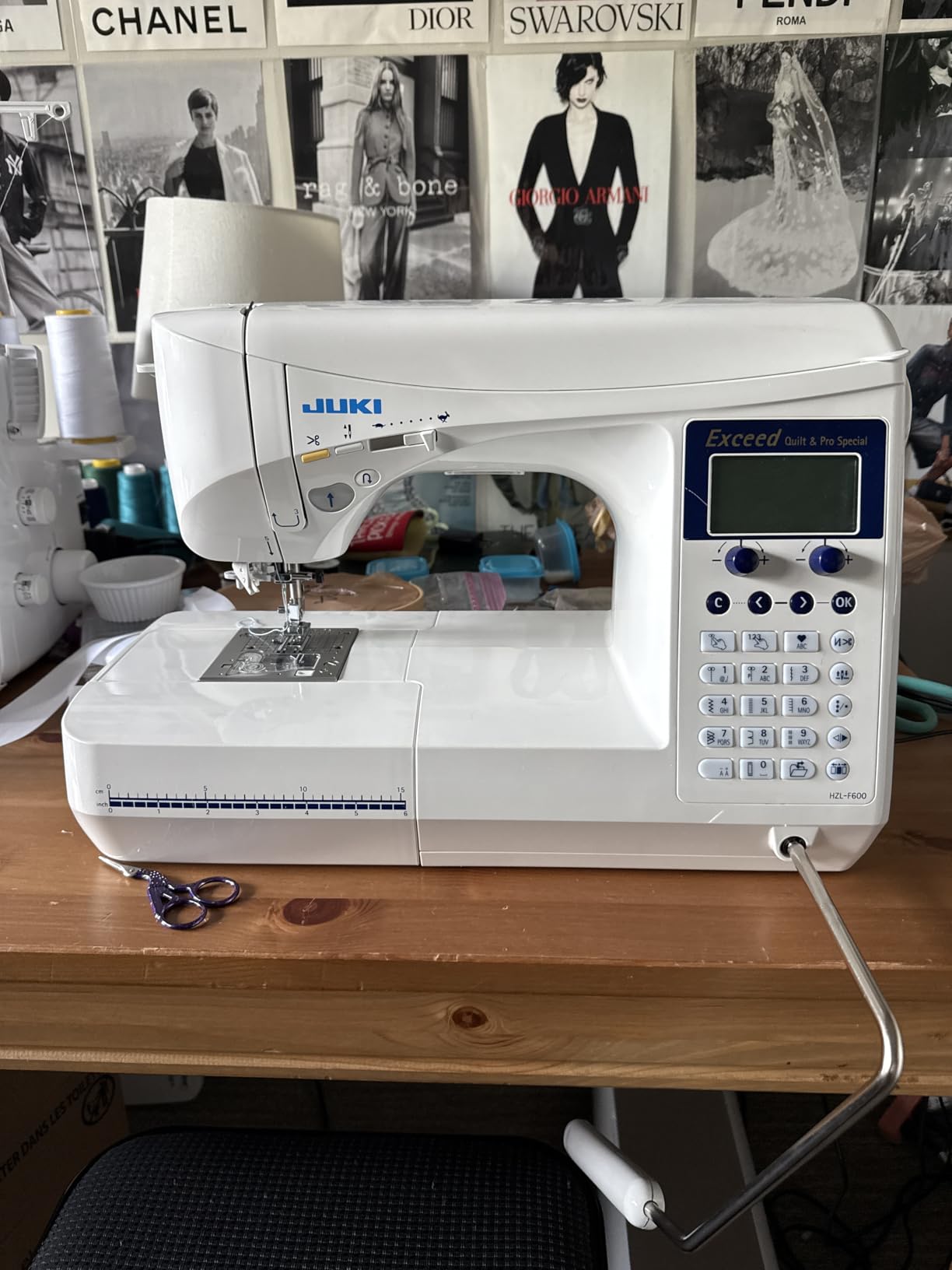
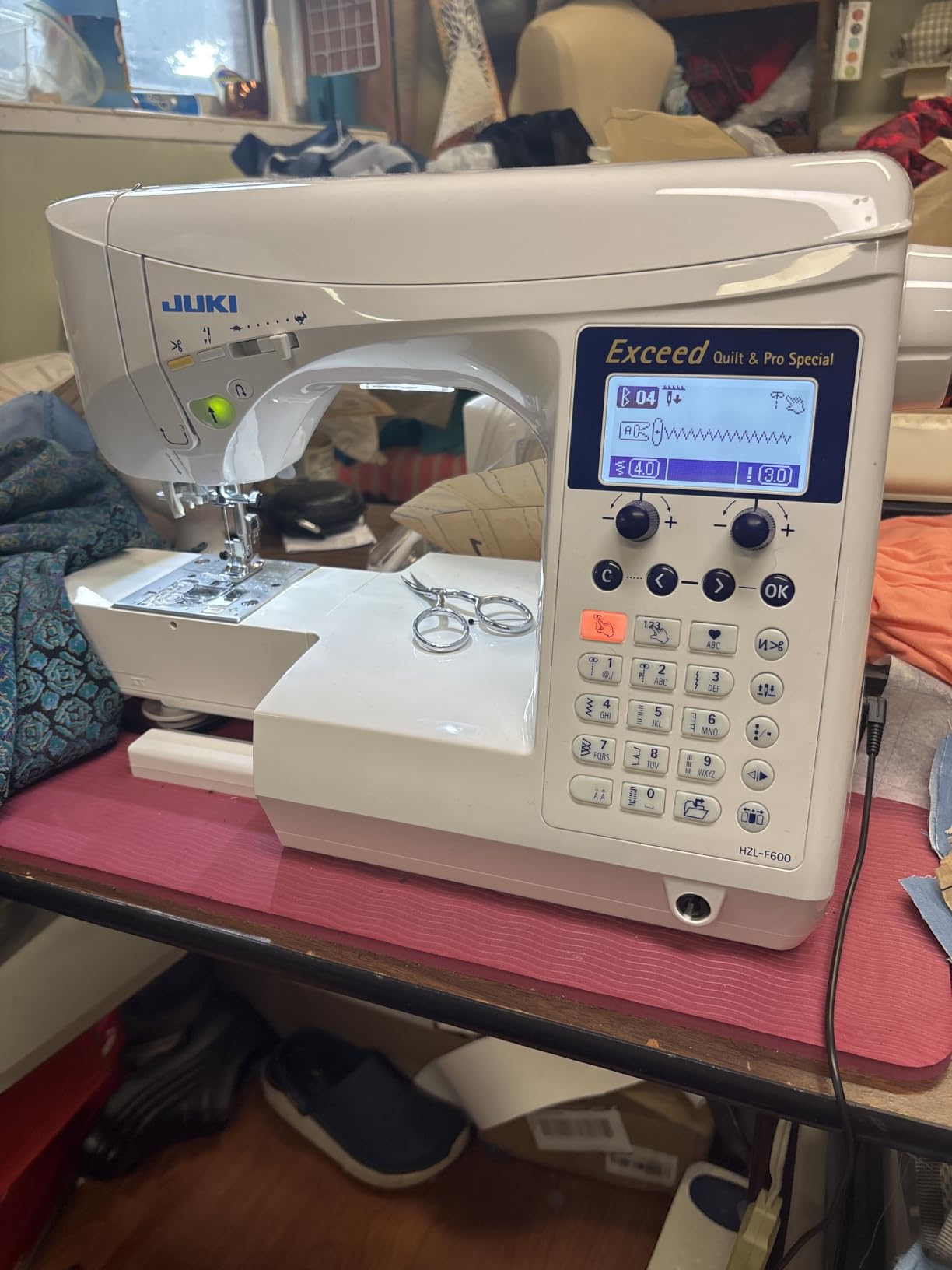
It offers 255 built-in stitches across basic, stretch, decorative, letters and buttonhole categories, selected from an LCD stitch selector screen with one-button selection. An automatic needle threader with a jam-resistant bobbin system, an automatic thread cutter, an accessory tray and a soft-sided dust cover round out the box.
Because it is built to industrial-derived standards, the feedback splits sharply. The negative reviews are isolated quality control reports, such as a defective bobbin case early in ownership or a threader that later failed, rather than systemic complaints about the machine’s quilting performance. At 30 pounds it is the heaviest machine here and it stays exactly where you put it.
Who the JUKI HZL-F600 suits
It suits a quilter whose accuracy matters more than portability, especially for foundation paper piecing, ruler work and long piecing runs. The extended table and knee lift included with it also mean the workspace is there for the first time you need it.
Who should skip it
Skip it if you carry a machine to classes, or if you want the most features for your money, since 255 stitches is not the largest library here. One reviewer also could not manage four layers of denim, so even with Juki construction, extremely heavy material is not guaranteed.
10. EverSewn Charlotte: The Smallest Machine, Built Around Quilting
EverSewn Charlotte: 80-Stitch Computerized Sewing Machine, Professional Quilting & Free Motion Features – Beginner to Expert
80-stitch capability
6.5 inch sewing space
Feed dog drop for quilting
Edge and quilting guide
Pros
- Feed dog drop plus edge and quilting guide make it unusually quilting-focused
- 6.5 inch sewing space works for small to medium quilt blocks
- Automatic needle threader and clear-cover drop-in bobbin simplify setup
- Fingertip speed control helps with precise free-motion work
Cons
- Lowest rating and smallest owner base in this lineup with an 11 percent one-star share
- 6.5 inch work area is much smaller than the 10 inch flatbeds
- No wide extension table and no automatic thread cutter
The EverSewn Charlotte is a compact machine with an unusual amount of quilting thinking built into a small body. It has 80-stitch capability with a 7mm maximum stitch width and an LED stitch panel, a 6.5 inch wide sewing space, a feed dog drop for both quilting and embroidery work, and an edge and quilting guide among its 7 standard presser feet.
That feed dog drop is the reason to look at it. A machine that can disengage its feed dogs for free-motion work, at a size that fits a small apartment quilting corner, is not a common combination. Fingertip speed control, stitch width and start/stop controls, an automatic needle threader and a drop-in bobbin with a clear cover plate complete the setup.
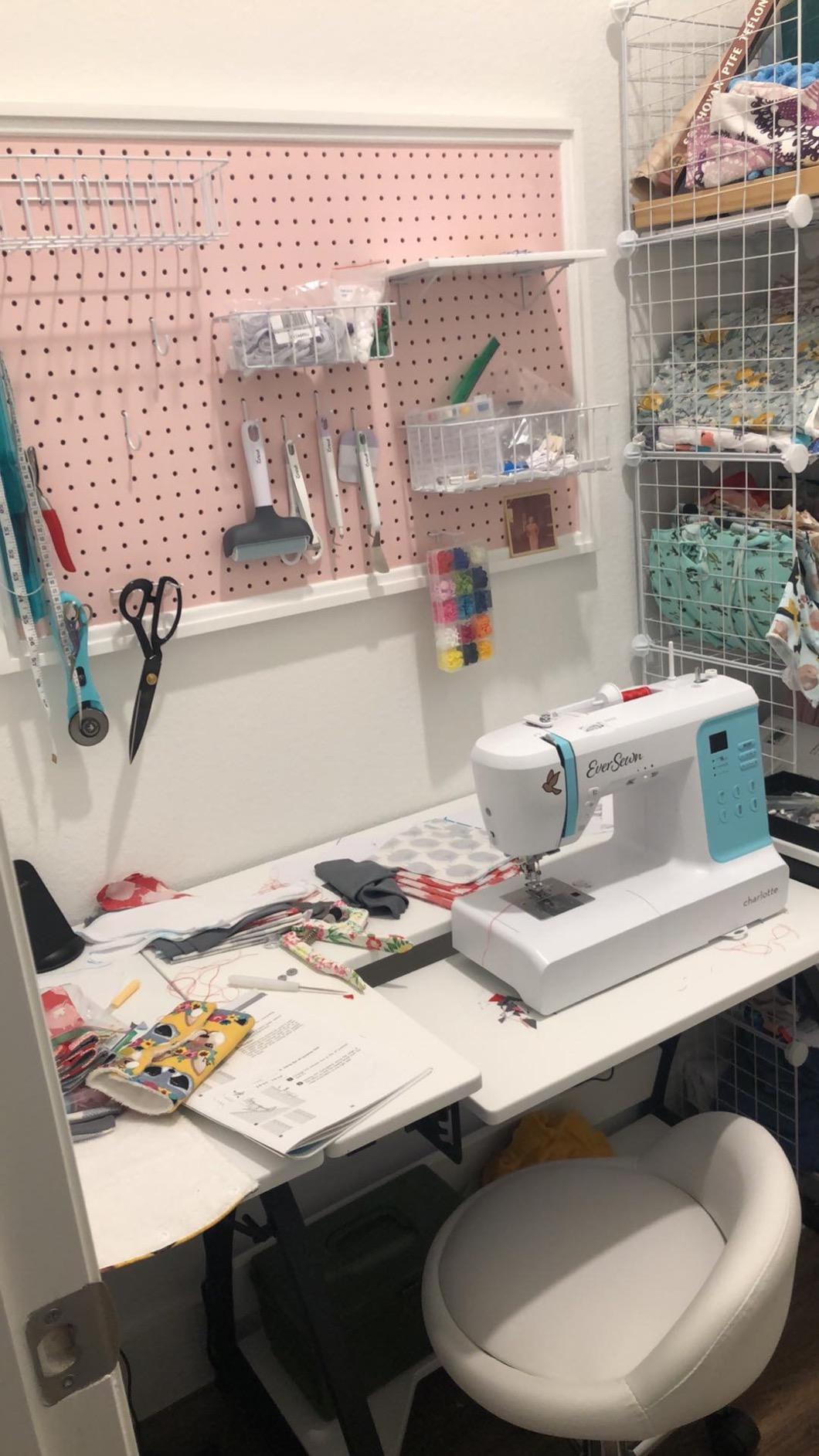
It weighs 16 pounds, has a metal body and runs on a standard US electrical outlet at 110 to 120 volts nominal. The design intent is clearly beginner to expert quilting and free-motion work on small and medium blocks, and the company positions it as a first machine rather than a full quilt machine.
Be honest about the trade here. The 4.2 average rating is the lowest in this roundup and the 105-review owner base is the smallest, with an 11 percent one-star share that suggests mixed results. The 6.5 inch work area is well short of the 10 inch throat offered by the Janome MC6650, and there is no wide extension table.
Who the EverSewn Charlotte suits
It suits a beginner working on small to medium blocks, a free-motion learner who wants feed dog control in a compact machine, and anyone working in limited space. The quilting guide and the feed dog drop are real quilting features, not marketing additions.
Who should skip it
Skip it if you plan full-size quilt tops, because the small work area is the hard limit. Given the thinner review base, we would also want to try it in person before committing, and pick up a free-motion foot and a wider table separately if you outgrow it.
How to Choose a Computerized Sewing Machine for Quilting
Seven specs decide how a computerized machine handles quilts. Everything else on the box, including the stitch count that leads every product listing, is secondary. Here is how each one actually affects your work.
Throat space: the one number to check first
Throat space is the vertical distance from the needle to the right-hand edge of the machine bed, and it is the measurement quilters check first. A 6.25 inch standard throat handles most blocks and small wall hangings. Once you quilt a large top in sections, or work with batting loft, 10 inches like the Janome MC6650 makes the difference between turning the quilt and fighting it.
Feed systems: why quilt layers shift
When a quilt sandwich moves under the needle, your quarter inch seam is wrong, and the usual cause is feed, not the needle. Three approaches appear in this group: 7-piece feed dogs on the Janome machines, an even feed walking foot on the SINGER 6700C and the Quantum Stylist 9960, and a front drop feed lever on the Janome MOD-30. More feed points and a walking foot both resist the pull of bulky layers.
Free-motion quilting capability
Free-motion quilting means lowering or disengaging the feed dogs so the needle does not advance the fabric and you move the quilt yourself. Look for a drop feed lever or drop feed plate, a darning or RTA foot, and speed control you can dial down. The Janome MOD-30 and the EverSewn Charlotte have the drop capability, the Quantum Stylist 9960 includes a darning foot, and the MC6650 and HZL-F600 include convertible free-motion feet.
Workspace: extension table and free arm
A wide extension table stops a large quilt top from sagging onto the floor and pulling the layers out of alignment. Six of the ten machines here include one, and the Janome MC6650 sidesteps the issue with a 10 inch flatbed that does the same job. The Janome MOD-30, the SINGER 6700C and the EverSewn Charlotte are the three that do not, which is the main reason to think twice about them for anything larger than a block.
Needle power, speed and frame weight
Quilting asks a machine to push through layers it would rather not. The SINGER 6700C runs up to 1,100 stitches per minute with heavy-duty piercing power, and the Janome MC6650 stitches up to 1,000 on an all-metal flatbed. Weight is the trade-off: the MC6650 at 24.3 pounds and the HZL-F600 at 30 pounds are machines that stay put, while 10 to 16 pound machines travel to class.
Computerized versus mechanical: the honest trade-off
Downsides of computerized machines are real and worth stating plainly. You depend on electronics that a mechanical machine does not have, an electronic fault can stop you entirely where a mechanical machine can often still be coaxed, servicing is usually more expensive, and the screen-based controls are a genuine learning curve. Against that, a computerized machine gives you consistent stitch length and tension settings, needle up/down, automatic threading, and speed control that makes long basting runs far more consistent. Experienced quilters still recommend vintage mechanical machines for heavy work, and our roundup of vintage Necchi machines is worth reading if you want to see what that older approach does well.
Why machines jam on quilt bulk, and how to prevent it
Jams on binding and batting are the most common complaint in the quilting conversations we read, and the causes are usually boring. Use a fresh needle for each project, since a blunt needle is the number one cause. Change to a larger needle when the stack gets thick, keep the presser foot pressure dial adjusted rather than forcing fabric, keep the bobbin area clear of thread tails and lint, and thread both needle and bobbin with the machine powered off. If a machine jams repeatedly on binding, fit a walking foot before you blame the machine.
When a long-arm or mid-arm machine is actually worth it
Long-arm and mid-arm machines sit in a different category from everything in this list, and we have compared them separately in our best long arm quilting machines guide. The rule of thumb is simple: a household computerized machine handles piecing, binding, small to medium tops and occasional free-motion work. A long-arm is worth the dedicated space when you quilt a full-size quilt top in one piece, do dense stippling or longarm quilting patterns, or are quilting for others as paid work. If you also sew garments, our picks for the best sewing machines for designers cover that side.
Frequently Asked Questions
What sewing machine do most quilters use?
Most quilters use a domestic computerized machine from a handful of families, and the same names come up repeatedly: the Singer Quantum Stylist line, Juki machines, the Brother XR9550 and HC1850, and Janome models chosen for their larger harp. Among the machines reviewed here, the SINGER Quantum Stylist 9960 has the largest owner base, and the Brother HC1850 is the most complete all-rounder. Experienced quilters who sew very heavy fabrics sometimes still choose vintage mechanical machines instead.
What are the downsides of using a computerized sewing machine?
The main downsides are electronics, cost and complexity. An electronic fault can stop a computerized machine entirely, whereas a mechanical machine can often still be adjusted by hand. Servicing is usually more expensive because parts are less standardized, and a screen-based control panel takes real time to learn. You also give up some raw power at the needle compared with a heavy mechanical or industrial machine, and stitch behaviour becomes dependent on a tension system you set less directly.
What is the best computerized long arm quilting machine?
Long-arm quilting machines are a different category from the household machines in this roundup, and the biggest names in that space are Juki, Grace Company and Handi Quilter. For home users who want something between a domestic machine and a full long-arm frame, a mid-arm machine with a large throat is the usual compromise. If you quilt a full-size top in one piece or are quilting for others as paid work, that is the point to move up rather than buying a bigger domestic machine.
What is the best computerized sewing machine to buy?
For most quilters the best computerized sewing machine to buy is the Brother HC1850, because it ships with 185 stitches, 8 presser feet, an automatic needle threader and a wide quilting table under a 25-year limited warranty. If you want the deepest accessory bundle and the most proven owner base, the SINGER Quantum Stylist 9960 includes a walking foot, a quarter inch foot, an extra-wide extension table and a quilting bar. If you quilt heavy fabrics, the SINGER 6700C has the most piercing power in this group.
How much throat space do I need for quilting?
For piecing blocks and small wall hangings, a standard throat of roughly 6.25 inches is enough. For quilting a large top in sections, working with batting loft, or sewing bags and bulky appliqué, you want closer to 10 inches, which is what the Janome MC6650 offers on its all-metal flatbed. As a practical rule, if the bulk of the project sits to the right of the needle and touches the machine arm, you need more throat space than you have.
Do I need a walking foot to quilt?
You do not need one for straight-line quilting with a walking foot, but you will notice the difference. A walking foot feeds the top layer of a quilt sandwich at the same rate as the feed dogs move the layers beneath it, which prevents shifting and bunching on multi-layer work. In this group the even feed walking foot is included with the SINGER Quantum Stylist 9960 and the SINGER 6700C, and an even feed foot plus a quarter inch foot are included with the Janome JW8100.
Why does my sewing machine jam on quilt batting and binding?
The usual causes are a blunt needle, a bobbin area full of lint and thread tails, incorrect presser foot pressure, and threading the machine while the power is on. Use a fresh needle for every project, move to a larger needle when the layer stack grows, and keep the bobbin case clean. If it still jams on binding specifically, fit a walking foot or an even feed foot so the layers are fed evenly, and check that the needle is long enough for the fabric and thread combination you are using.
Which Computerized Sewing Machine for Quilting Should You Buy?
If we had to pick one, it is the Brother HC1850. It carries the widest quilting bundle in the entry tier with a wide table, 8 presser feet, 185 stitches and an advanced needle threader, and it holds a 4.6 rating across more than 5,000 reviews under a 25-year limited warranty. That is the combination we would want a beginner to stop researching over.
Go elsewhere for a reason, not a whim. Pick the SINGER 6700C for heavy fabric piercing power, the Janome MC6650 for 10 inch throat space on an all-metal flatbed, the JUKI HZL-F600 for exact quarter inch placement and free-motion work, the Janome MOD-30 if drop feed on straight seams is the point, and the SINGER Quantum Stylist 9960 for the deepest accessory bundle and the largest owner base of any machine in this roundup.
This is the 2026 list to buy from, and every machine here was judged on workspace, feed, frame stability, what actually ships in the box, and how many owners have already lived with it. Check the current listing before you commit, then take a fresh needle and a walking foot to your first session.