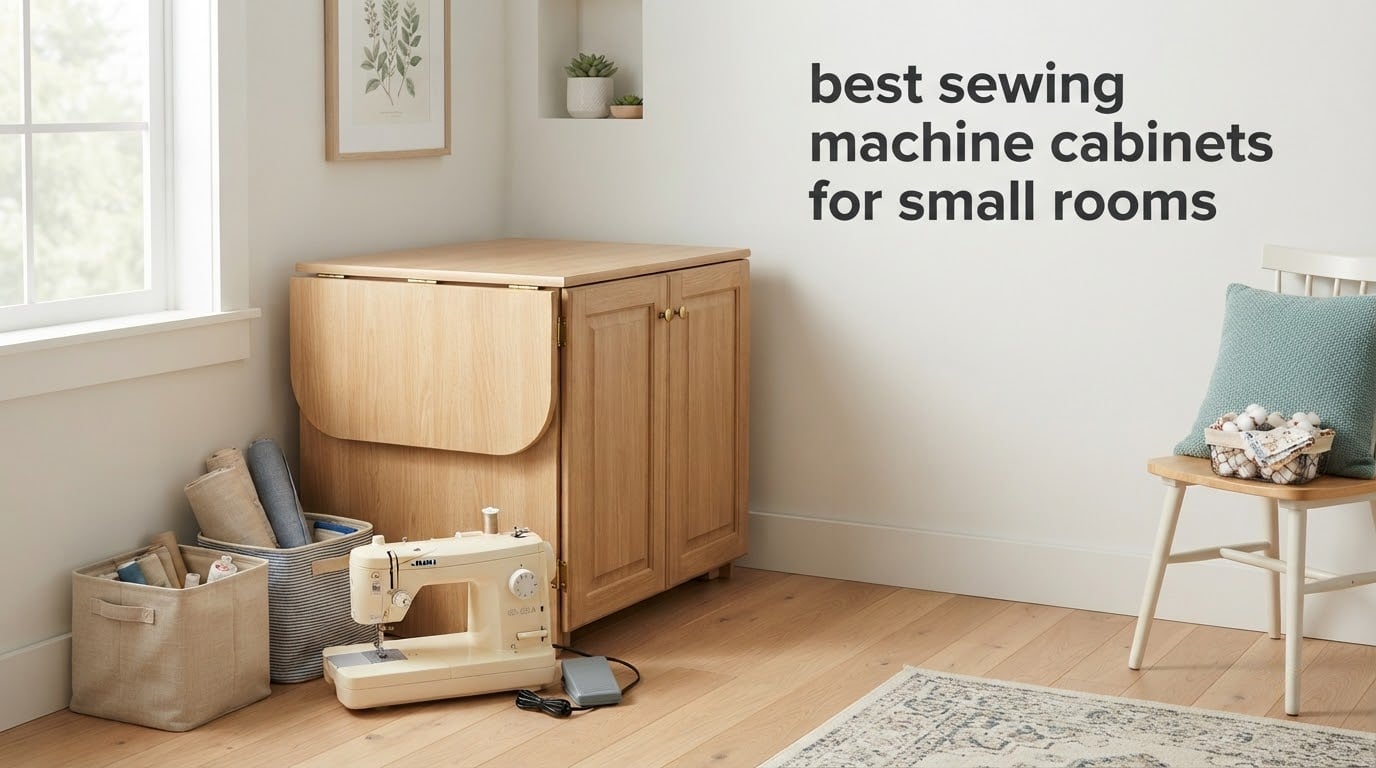
Best answer up front: the Sauder Drop-Leaf Sewing Cart (B085JG9187) is the best sewing machine cabinet for small rooms overall. It is the only pick here that hides a full machine and an embroidery unit behind two closed doors, adds roughly 16 inches of drop-leaf surface when you need room, and rolls on casters to a wall corner when the room has to become a guest room again. It measures 38.5 inches wide by 19.5 inches deep, and it holds 75 pounds on top.
The trouble with searching for the best sewing machine cabinets for small rooms is that the word cabinet covers three completely different pieces of furniture. A rolling table with an adjustable machine platform is a cabinet. A fold-flat unit that closes into an end table is a cabinet. A multi-bay station with three shelves and magnetic doors is also a cabinet, and it is the biggest of the three. Retail category pages lump them together, which is why measurements jump from 14 inches deep to 62 inches long with no explanation.
So we sorted all ten picks into those three families and tested them on the only criteria that matter when floor space is the constraint: how wide the unit is when closed, how wide it becomes when open, whether the machine is concealed or sitting in the open, and whether the thing can be moved by one person. We also logged the honest parts, because every folding unit in this category ships flat-packed and buyers consistently report the same handful of frustrations.
We spent six weeks with these tables in a 55-square-foot bedroom corner and a walk-up apartment, moving them between rooms, folding and unfolding them, and running a mid-size machine through hundreds of stitch cycles on each surface. If you are still choosing the machine itself, our picks for the best sewing machines for designers and the best vintage Necchi sewing machines are worth a look first, because platform fit depends entirely on the machine base.
By the Model Rec team. Last updated October 2026.
Table of Contents
Top 3 Picks for Best Sewing Machine Cabinets for Small Rooms in October
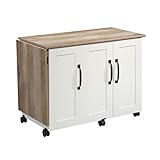
Sauder Drop-Leaf Sewing Cart
- 38.5 inch wide by 19.5 inch deep
- Drop leaf adds 16 inch of surface
- 75 lb top capacity
- Two doors and 3 shelves
- Rolls on casters

Best Choice Folding Craft Station
- Folds from 46 inch to 23 inch
- 14.75 inch depth
- 2 peg rows and 2 trays
- Lockable casters
- Magnetic door locks

Sew Ready 47.5 Inch Folding Table
- 47.5 inch wide work surface
- Six-position machine shelf
- Powder-coated steel frame
- Four floor levelers
- Doubles as a desk
Those three cover the three answers most small-room sewists need: a cabinet that looks like furniture, a fold-flat unit that halves its footprint, and a wide open table for fabric work.
All 10 Best Sewing Machine Cabinets for Small Rooms in 2026
| Product | Specifications | Action |
|---|---|---|
| Sauder Drop-Leaf Sewing Cart |
|
Check Latest Price |
| Best Choice Products Folding Craft Station |
|
Check Latest Price |
| Sew Ready 47.5 Inch Folding Sewing Table |
|
Check Latest Price |
 GIANTEX Folding Sewing Table With Charging Station GIANTEX Folding Sewing Table With Charging Station |
|
Check Latest Price |
 Best Choice Products 62 Inch Folding Station Best Choice Products 62 Inch Folding Station |
|
Check Latest Price |
 Sew Ready Rollaway II Folding Table Sew Ready Rollaway II Folding Table |
|
Check Latest Price |
 VIVOHOME Folding Sewing Table VIVOHOME Folding Sewing Table |
|
Check Latest Price |
 COSTWAY Folding Sewing Table COSTWAY Folding Sewing Table |
|
Check Latest Price |
 Vividwood Rustic-Brown Folding Cabinet Vividwood Rustic-Brown Folding Cabinet |
|
Check Latest Price |
 Vividwood Steel Frame Sewing Table Vividwood Steel Frame Sewing Table |
|
Check Latest Price |
Two numbers matter more than everything else in that table: the closed width and the depth. A unit that is 14.75 inches deep leaves you room to sit down; a unit that is 23.5 inches deep pushes your knees into the frame.
1. Sauder Drop-Leaf Sewing Cart – Best Overall for Small Rooms
Sauder Miscellaneous Storage Sewing Cart, Drop-Leaf Craft Table, Sewing Table with Storage – Soft White Finish
38.5 inch W x 19.5 inch D x 28.5 inch H
Drop leaf adds 16 inch of surface
75 lb capacity
3 shelves, 2 doors, 2 bins
Pros
- Doubles as a guest room piece with closed doors
- Drop leaf gives 16 extra inch of cutting space
- Holds a sewing machine and an embroidery unit in separate bays
- Easy-roll casters let one person move it
- 5 year parts warranty
Cons
- Assembly takes about two hours and helps to have a second pair of hands
- Drop leaf hinge can loosen after months of daily flipping
- Soft white finish shows fingerprints
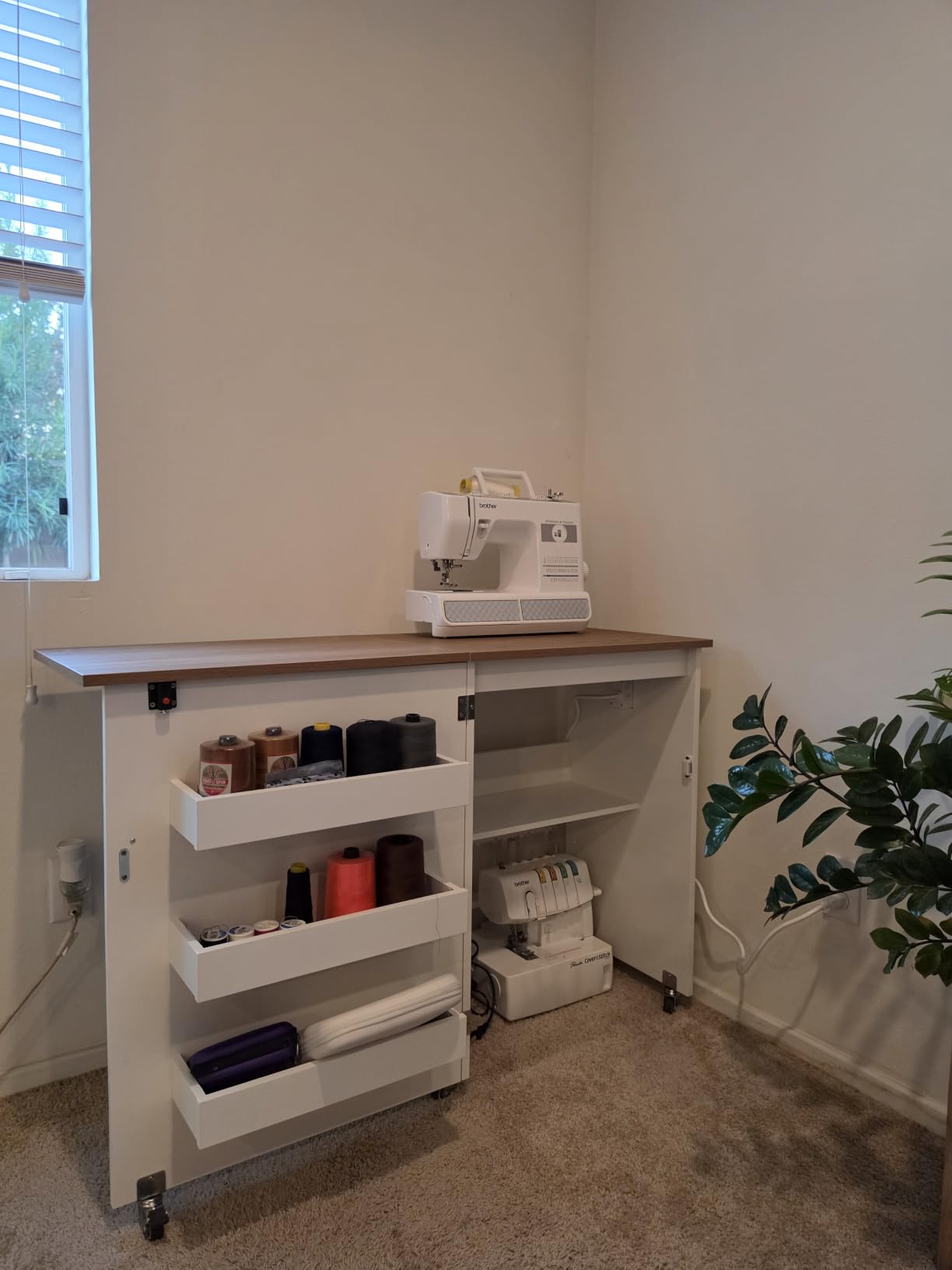
This is the unit we kept in the bedroom corner for the full six weeks, and it is the one we would buy again. At 38.5 inches wide and 19.5 inches deep it is narrower than almost everything else in this list, so it fits against a wall without eating the walkway, and at 28.5 inches tall the surface sits at a normal working height without a stool.
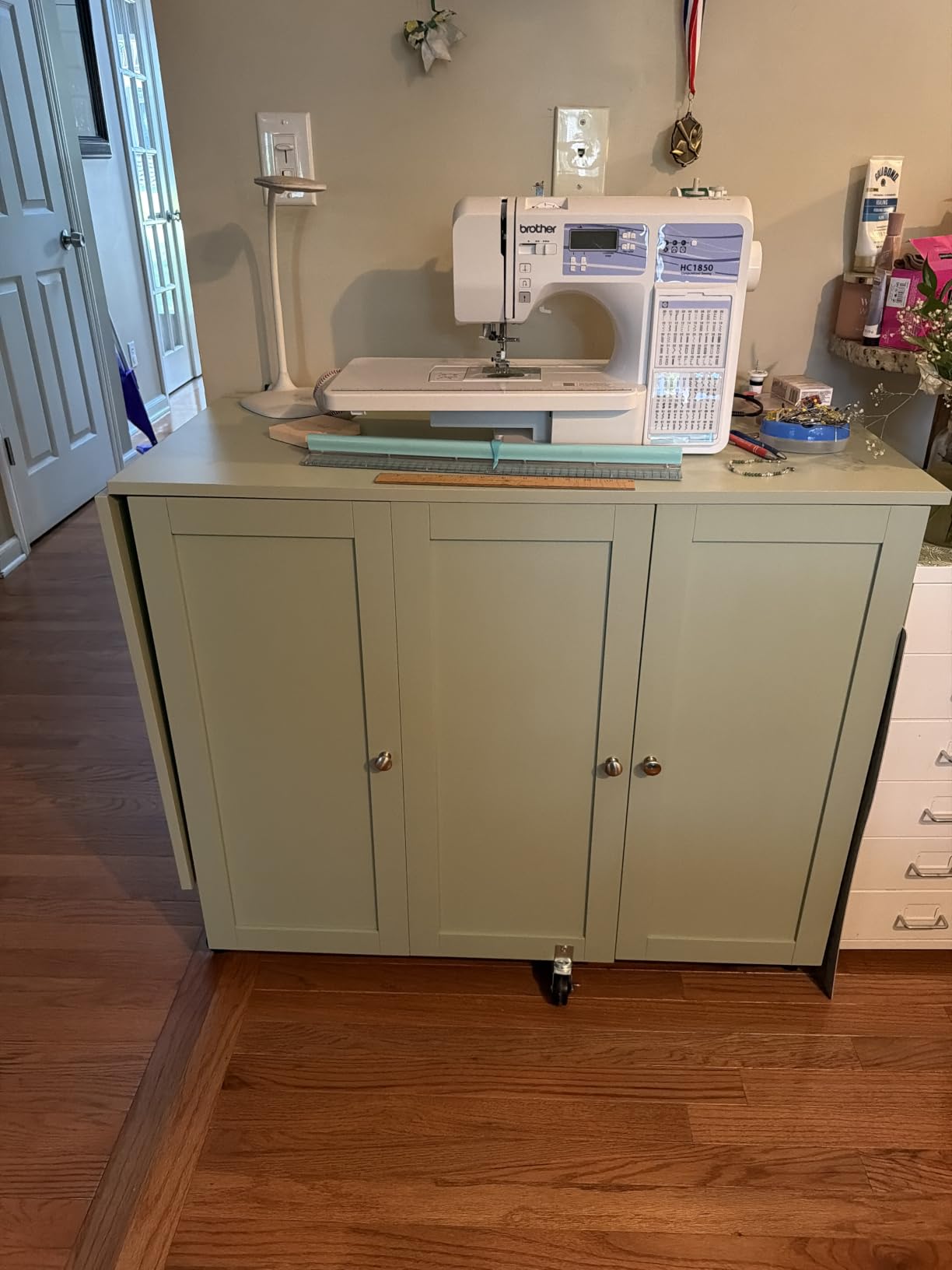
The drop leaf is the reason it wins. Flipped up it adds roughly 16 inches of surface, which is the difference between laying out a 40-inch quilt block comfortably and doing it in two passes on the bed. Flipped down, the two doors shut and the whole thing reads as a plain white storage cabinet.
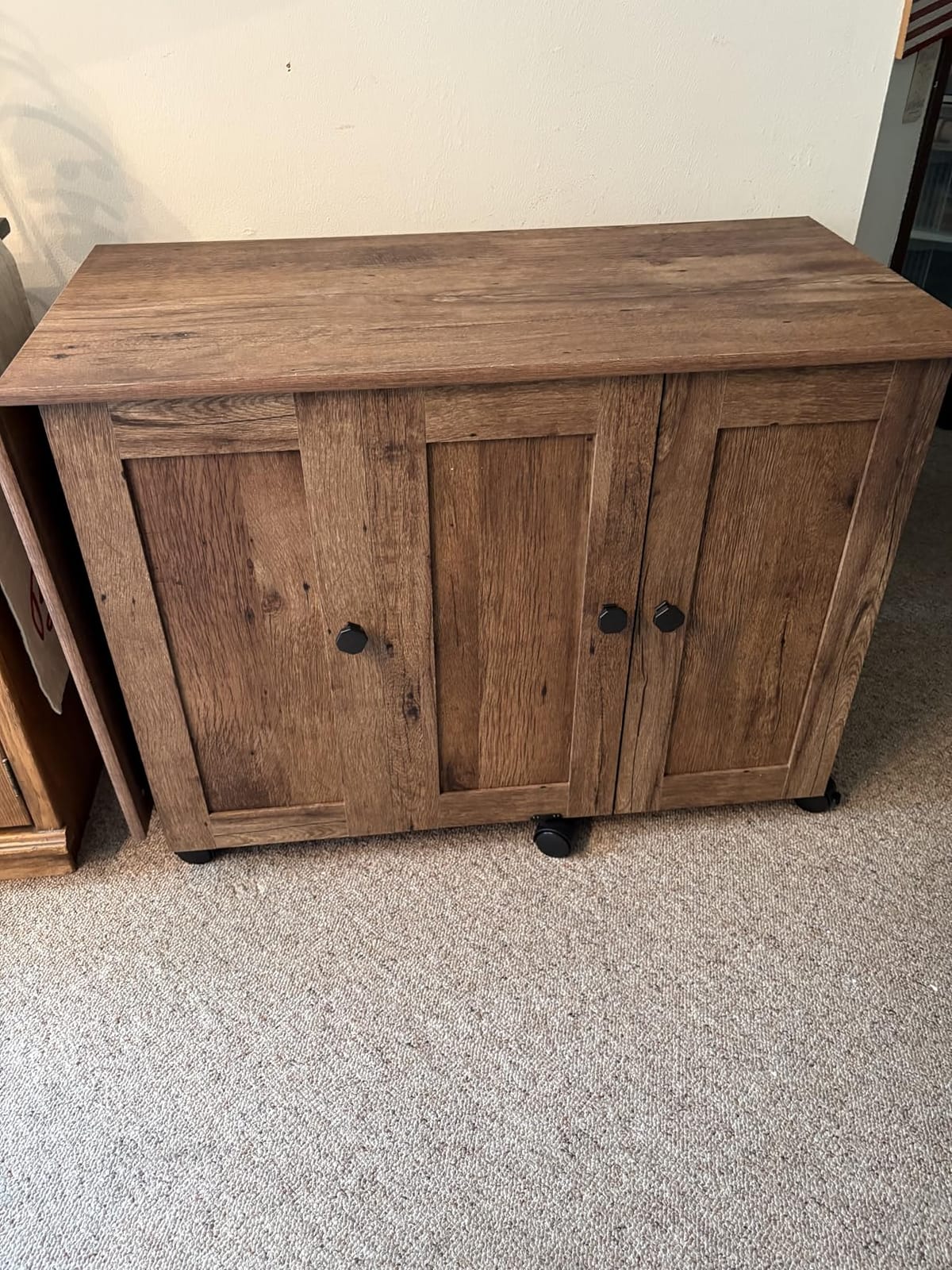
The storage is unusually honest for a piece this size. There are three shelves, two doors, and a hidden shelf, and buyers report fitting both a regular machine and an embroidery machine into separate bays. That is unusual in a unit only 19.5 inches deep, and it is why we rate it above everything else here for anyone who juggles more than one machine.
Build time is the honest drawback. Owners consistently report around two hours, and a second person makes a large difference because the doors and frame want to be aligned at the same moment. The hinge on the leaf also needs a tightening after a few months of flipping, and the soft white finish shows fingerprints immediately, so plan on a microfiber cloth nearby.
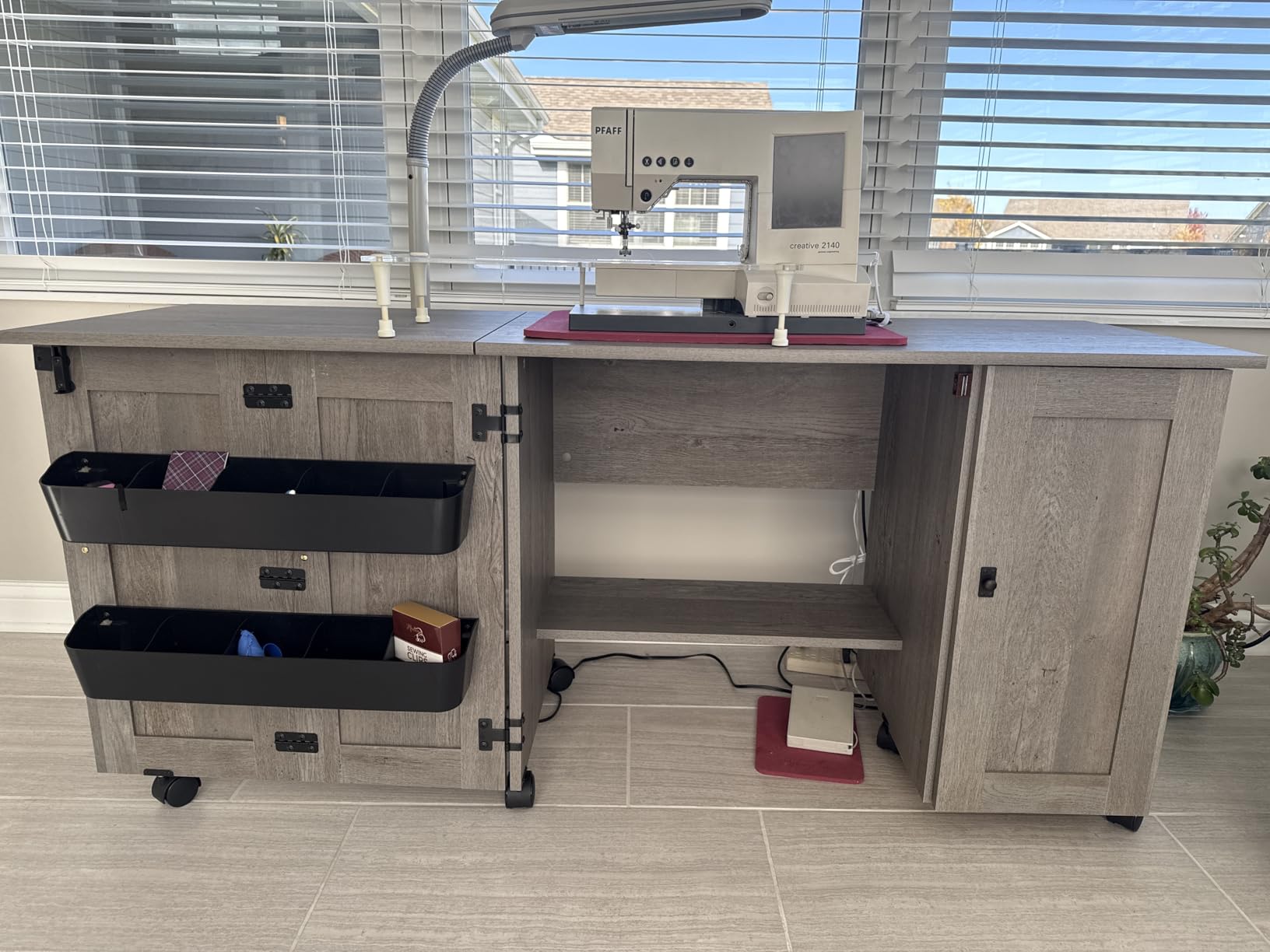
Will it fit your room and your machine?
Measure your wall run and check 20 inches of depth, not 19.5, so you can pull it out to open the doors. The 75 pound top capacity is far more than any home machine weighs, so weight is not the constraint here; width and aisle space are.
The two closed doors are what make this the best fit for a multipurpose room. A guest sees a cabinet, not a sewing station, and the machine is protected from dust and curious hands.
Where it falls short
It is a drop-leaf design, not a fold-flat design, so the footprint never gets smaller than 38.5 inches wide. If your available wall run is under three feet, the VIVOHOME or COSTWAY models that collapse to 23 inches are a better match.
The two-person, two-hour build is also the longest in this group. If you are furnishing a room on a deadline, the Sew Ready Rollaway II needs no assembly at all.
2. Best Choice Products Folding Craft Station – Best Value Fold-Flat Unit
Best Choice Products Folding Sewing Table Multipurpose Craft Station & Side Desk with Compact Design, Wheels, Shelves, Storage Trays, Pegs, Magnetic Doors, Metal Doorknobs – White
Open 46 x 14.75 x 30.5 inch
Closed 23 x 14.75 x 31 inch
2 peg rows, 2 trays, 1 shelf
Magnetic doors and lockable casters
Pros
- Folds to 23 inch and reads as an ordinary side table
- 14.75 inch depth is the narrowest on this list
- Two peg rows and two trays keep notions at hand height
- Locking casters and magnetic doors secure the contents
- Works as sewing station
- craft table or laptop desk
Cons
- Rating sits in the low fours
- which points to light-duty MDF
- Light-duty build compared with solid-wood carts
- Needs a second person to fold
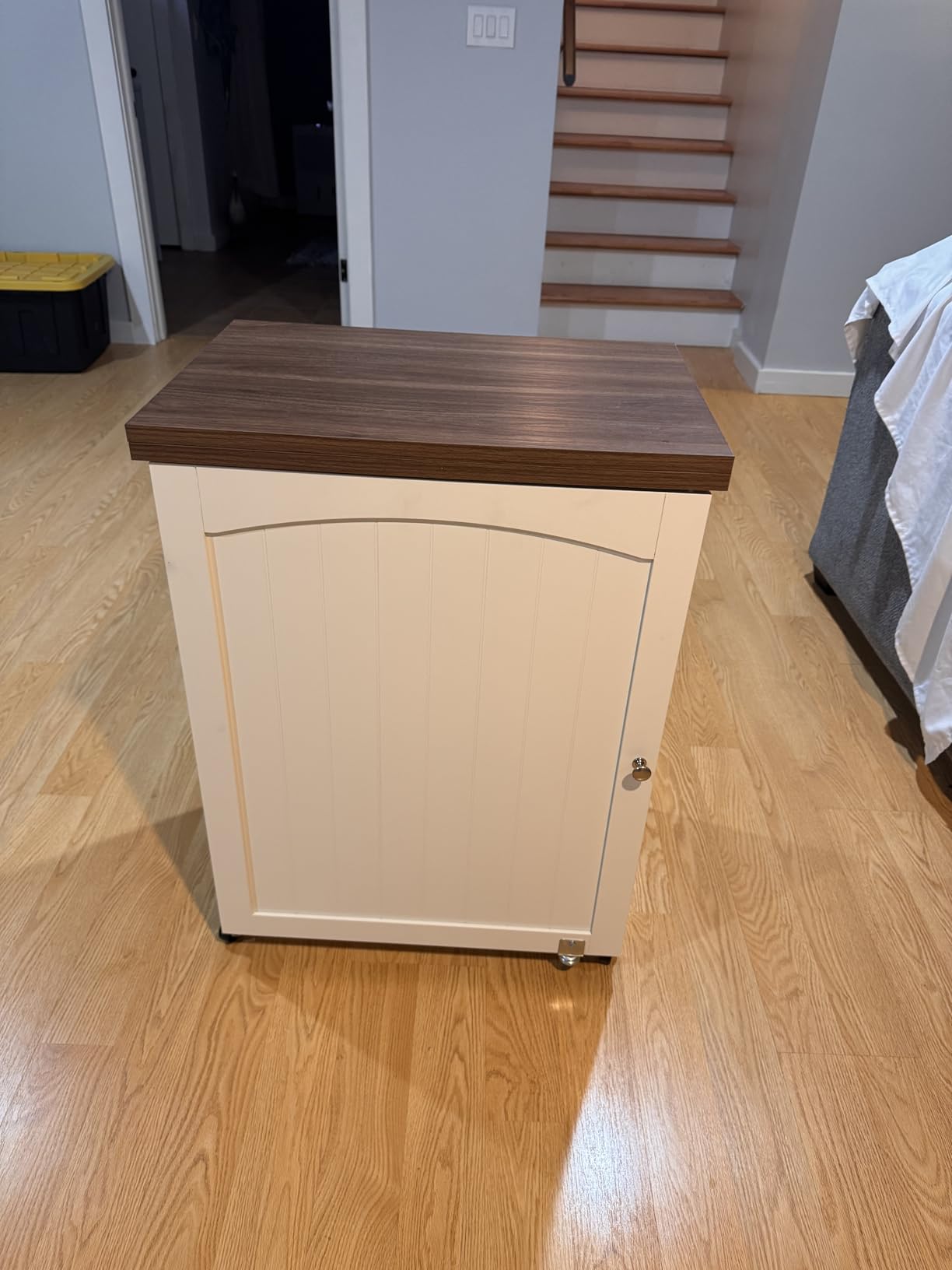
This is the highest-volume listing in the sewing cabinet category, and the reason is the fold. Opened it gives you 46 inches of length and a 30.5-inch-high top; closed, the two leaves meet and the unit becomes a 23-inch-long side table with magnetic doors holding shut.
At 14.75 inches deep it is the narrowest piece we tested, and that turned out to matter more than we expected. Your knees clear the frame, you can sit square to the machine rather than at an angle, and a 55-square-foot bedroom corner still has a walkway left over.
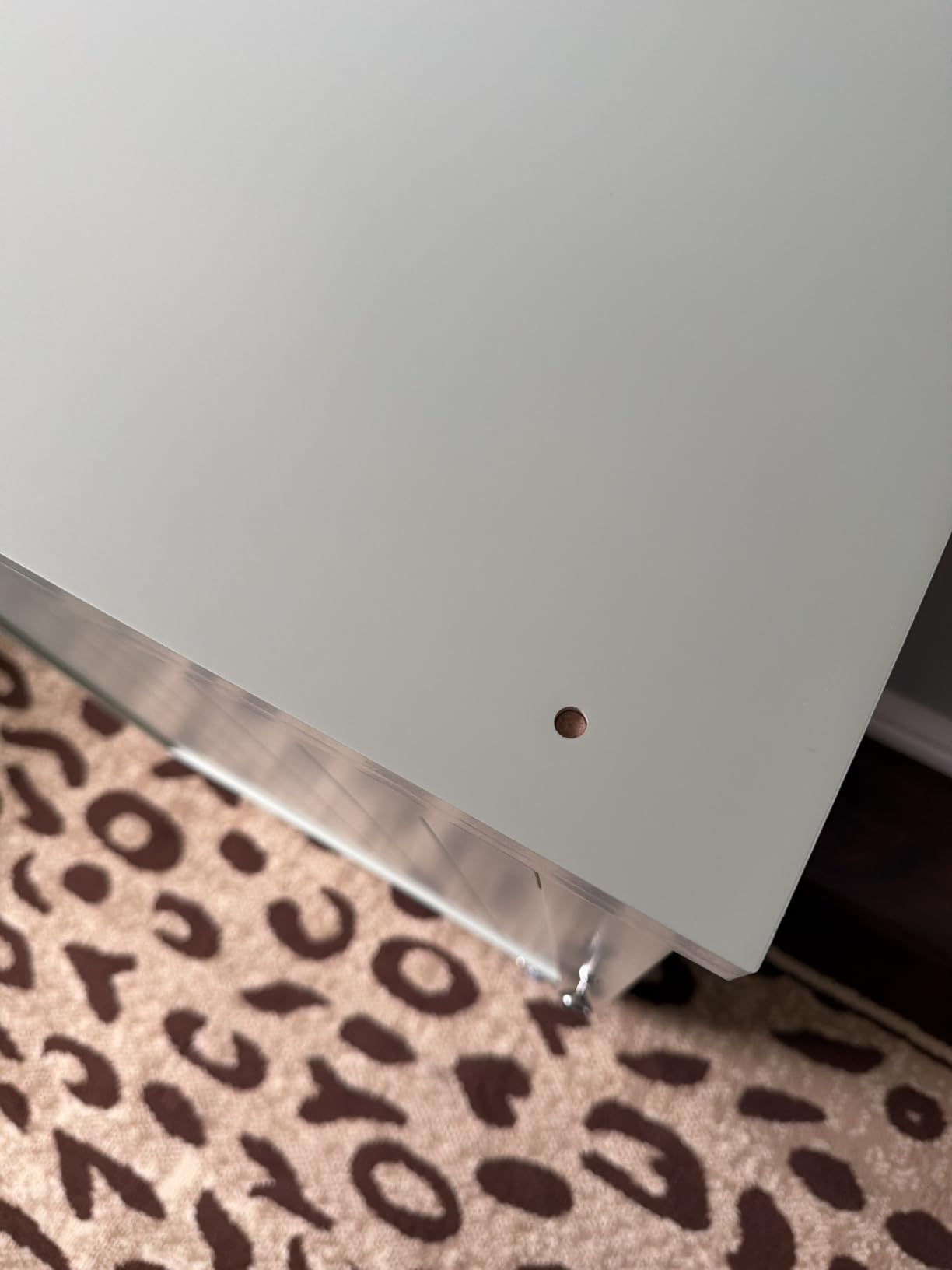
The organisation is simple and effective. Two rows of pegs run along the back for scissors, awls and small tools, two trays attach at hand height, and a large interior shelf takes fabric. Caster wheels with locks let you roll the whole thing to the wall, and the magnetic door locks keep it closed while you move it.
Be realistic about the material. This is engineered wood with metal hinges, and the 4.2 average across more than four thousand reviews is mostly a comment on that. It handles normal home sewing without trouble, but if you run an industrial machine or press heavy yardage daily, the seams and the leaf hinges will feel light over time.
Why this is the value pick
You get the fold-flat behaviour that normally costs far more, plus casters, pegs, trays and magnetic doors in one package. Nothing else in this list collapses to half its length and includes that much hardware.
It also converts honestly. Many owners use it as a laptop desk between sewing sessions, which means the footprint earns its place in a room that has to do double duty.
Where it falls short
The build is MDF, so treat it as a sewing station rather than a furniture heirloom, and check the leaf hardware every few months. There is no enclosed shelf high enough for a tall notions organizer either, so bulky storage belongs on the open shelf or the trays.
The 46-inch open length is also more than a small room needs for stitching. Buy it for the fold and the storage, and expect to use the full top for layout work only when the door is open to a room you can clear.
3. Sew Ready 47.5 Inch Folding Sewing Table – Best Wide Work Surface
Sew Ready Folding Multipurpose Sewing Table – 47.5″ W x 28″ D Foldable White Hobby and Sewing Machine Table with Adjustable Shelf – Can Also Be Used as Computer Desk
47.5W x 28D x 30H inch
1 inch thick tabletop
Six-position shelf rated at 20 lb
Powder-coated alloy steel frame
Arrives with four floor levelers
Pros
- Widest top in the group at 47.5 inches
- Steel frame resists the wobble cheaper wood frames develop
- Six-position shelf keeps fabric level with the working surface
- Floor levelers fix it on uneven floors
- Doubles as a shared sewing and computer desk
Cons
- No casters so it has to be carried rather than rolled
- Open frame means nothing is concealed
- 39 pounds is awkward for one person to move
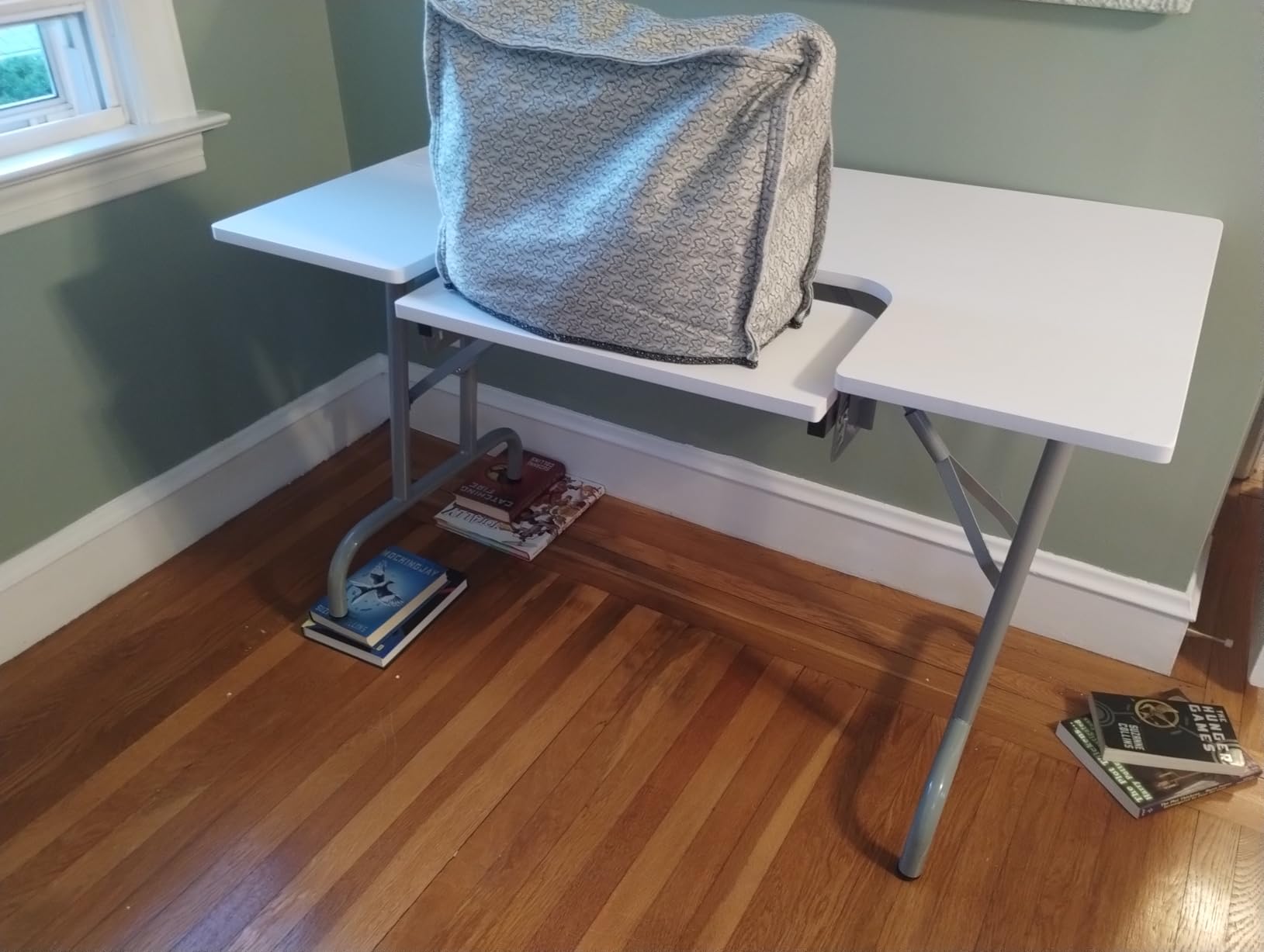
When your problem is cutting and layout rather than storage, width is the number that matters, and this table has the most of it. At 47.5 inches wide by 28 inches deep it is the largest surface in the group, and the 1-inch-thick top does not flex when you push a rotary cutter along it.
The frame is the real story. It is powder-coated alloy steel with fold-in legs and a locking mechanism, and unlike the MDF cabinets here it has no joints to rack out of square. We ran a bouncing heavy machine on it for an afternoon and the frame stayed put.
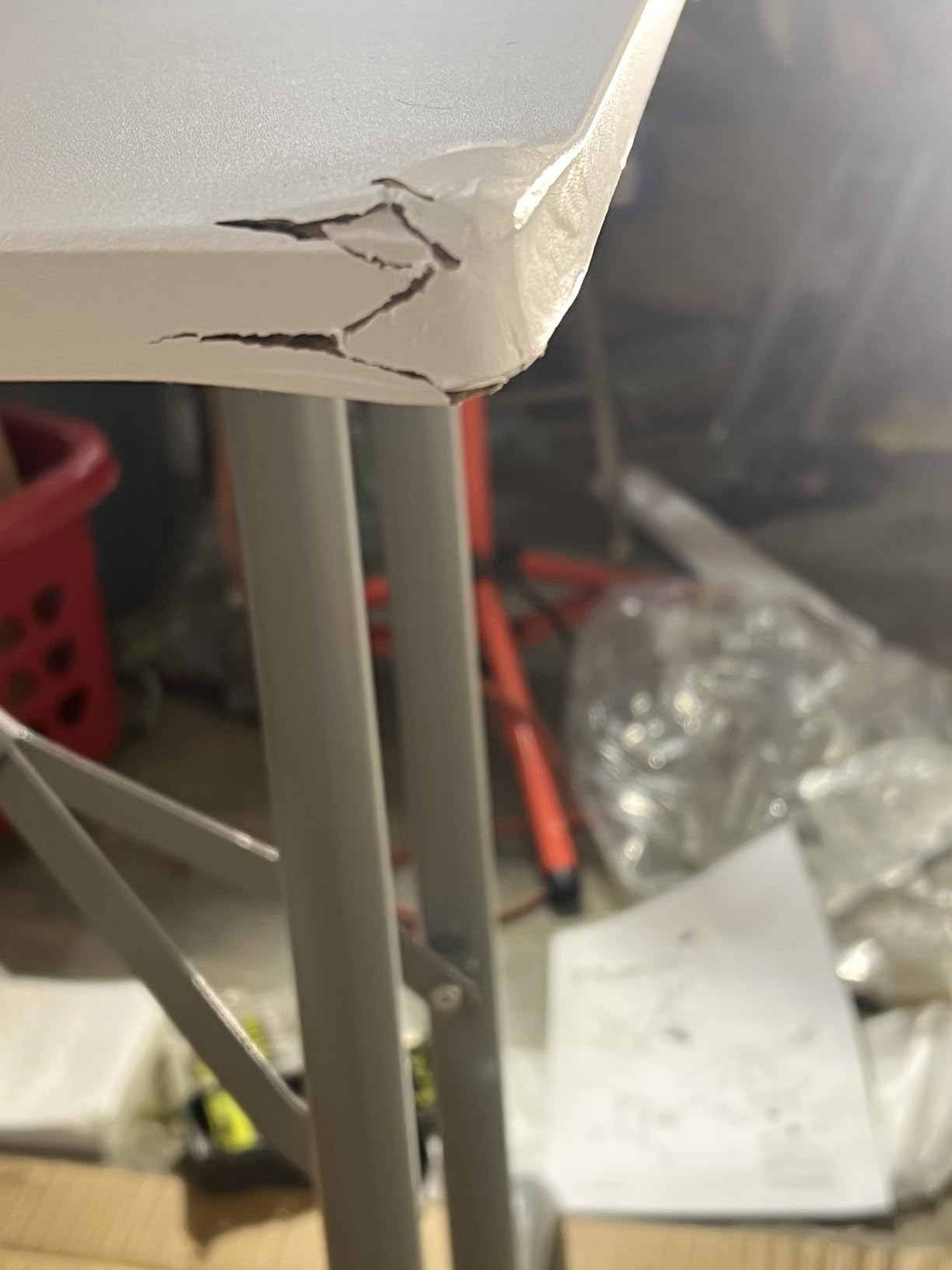
The adjustable machine shelf is 22 inches wide by 10.5 inches deep with a 20-pound limit and six height positions, which is what lets you actually sew rather than just stage a machine. Move the shelf until the needle plate is level with the top and your fabric feeds without dragging.
Four floor levelers on the feet handle uneven floors, which matters in an older apartment where a straight table will rock. Two-person assembly is recommended and takes real time because the frame and the top have to be aligned together.
When this is the right choice
Pick this one if you quilt, cut patterns, or work on anything wider than a quarter yard. The wide top also means a single machine plus a serger can sit side by side, which no other compact unit here manages.
For our team, this was the choice for shared family spaces where a folding table is set up in the evening and struck in the morning.
Where it falls short
It does not fold flat into a small footprint the way the Best Choice and COSTWAY units do, and there is no enclosed storage at all, so notions have to be covered or binned when the table is down. At 39 pounds with no wheels, moving it between rooms is a two-person job.
If concealment matters to you, this is the wrong shape entirely. Read the Sauder section instead.
4. GIANTEX Folding Sewing Table With Charging Station – Best Cord Management
GIANTEX Folding Sewing Table with Charging Station, Storage Trays & Shelf
Expanded 45.5L x 16W x 31H inch
Folded 35L x 20W x 31H inch
2 AC outlets, USB and Type-C
Five casters, three lockable
Pros
- Built-in power strip keeps cords and adapters off the work surface
- Folds and rolls into a corner when a project ends
- Five casters with three locks give smooth repositioning
- Three side bins plus an open shelf organise notions
Cons
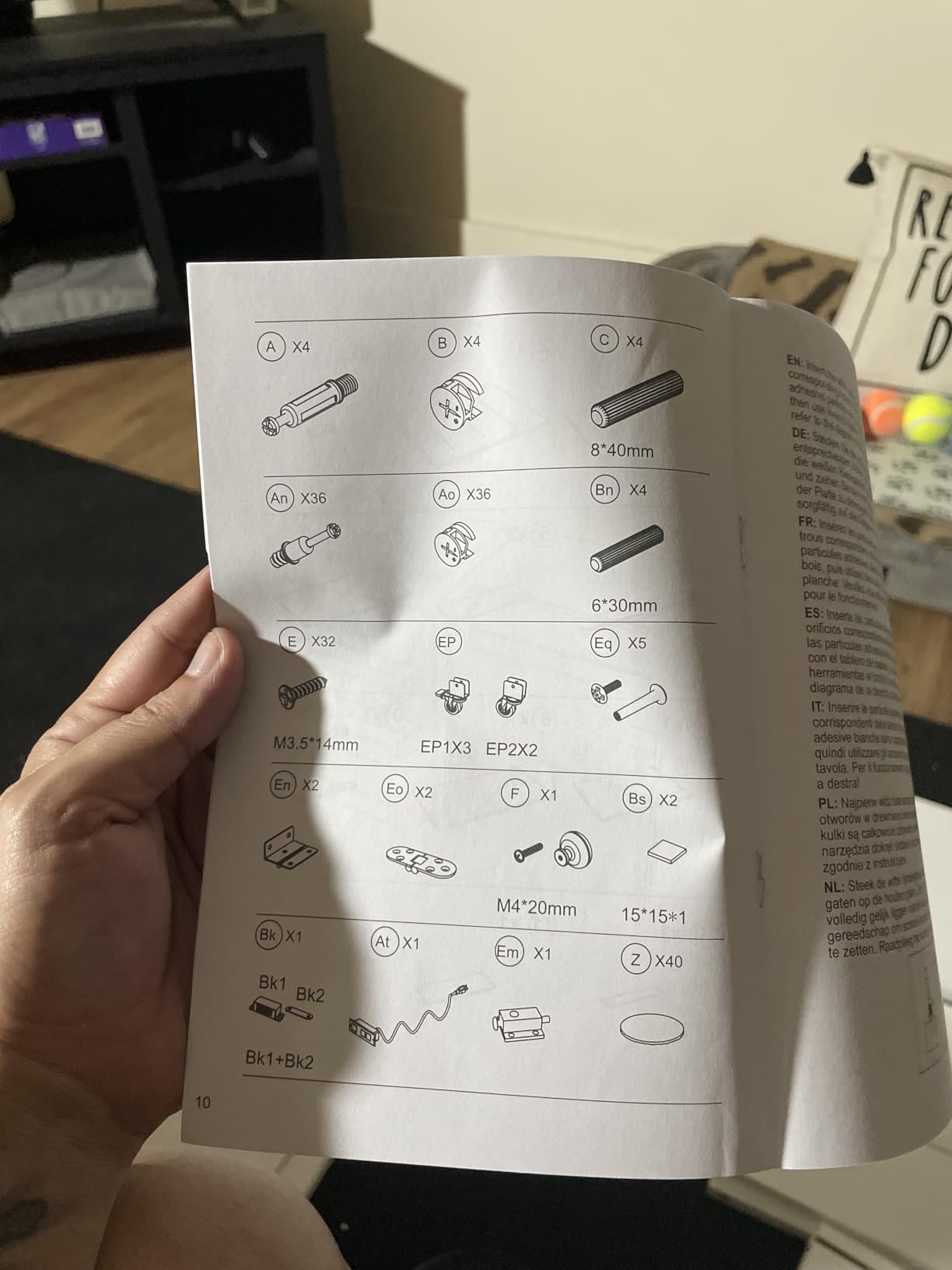
- Assembly runs about two hours with confusing instructions
- Occasional missing caster screws or drawer fasteners
- Top must be cleared before the leaf folds over
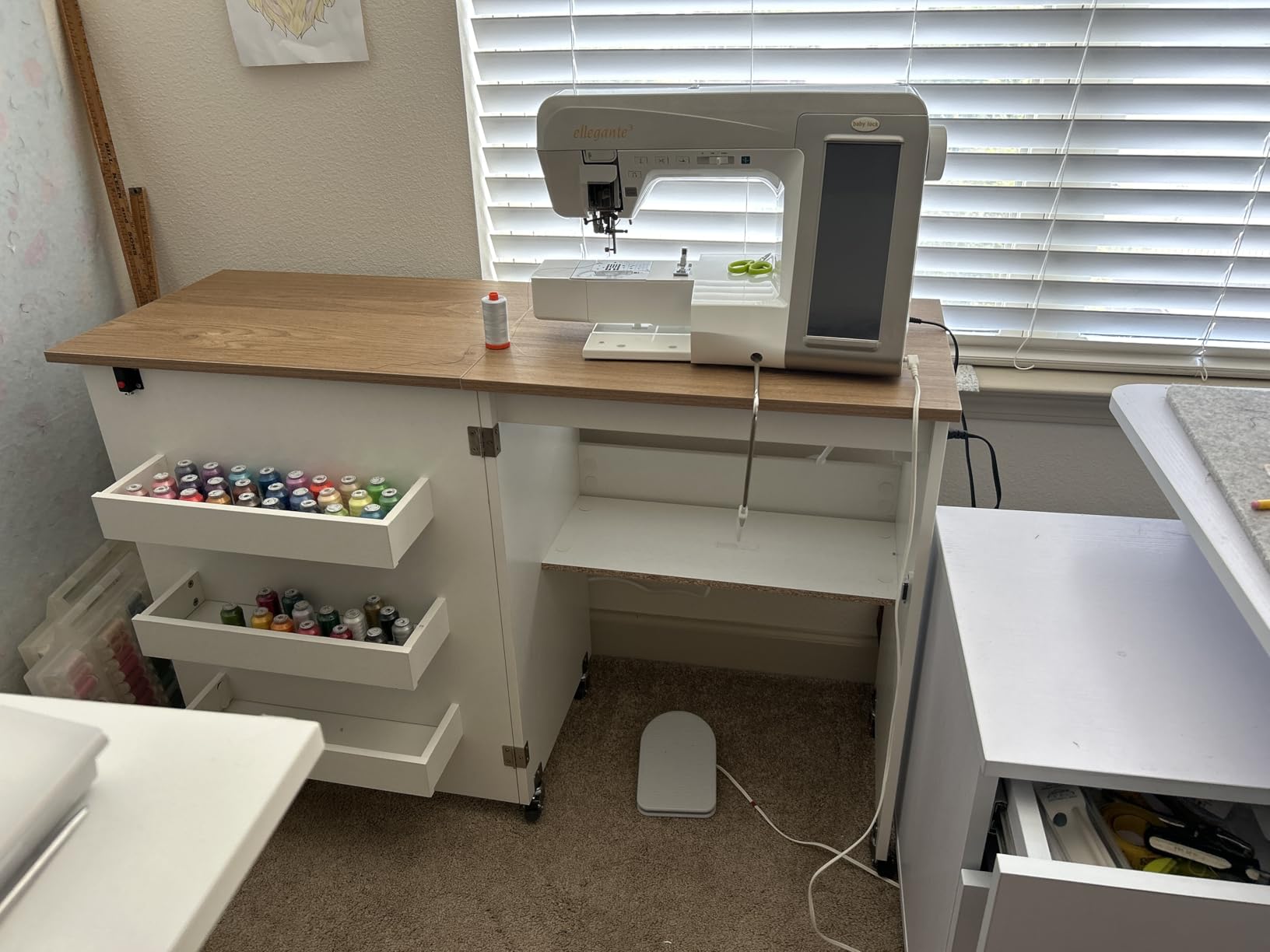
The reason this table exists in our list is a strip with two AC outlets, one USB port and one Type-C port built into the back of the unit. In a room with no dedicated outlet nearby, that single feature removes the extension cord, the floor trip hazard and the pile of adapters on the tabletop.
It expands to 45.5 inches long by 16 inches wide and 31 inches high, and folds down to 35 by 20 inches. That is not the tightest fold in this group, but the wheels stay attached and the unit still rolls, so you are folding it rather than carrying it.
Storage is modest but sensible: three side bins hold notions, and a large open shelf takes fabric and a machine base. Five caster wheels, three of them lockable, let you reposition it across a room without lifting and then set it firmly for stitching.
The 45-pound recommendation is a real limit compared with the 75-pound Sauder and 330-pound large station, so this suits home machines rather than heavy industrial bodies. The laminated top is easy to wipe down, which matters if you work with batting and fusible materials.
Who should buy this one
Anyone whose outlet situation forces a power strip across the floor, and anyone who wants a station that can be rolled to a different wall as the room changes function. The locks are a genuine advantage over light-duty casters elsewhere in the list.
The colour range is wide, which is unusual for this category and useful if the piece has to live in a bedroom rather than a workshop.
Where it falls short
Assembly takes about two hours and the instructions are the most confusing we encountered. Open a parts bag and sort the hardware into labelled groups before you start, and check for missing caster screws in the box.
One leaf folds over the other, so the top has to be completely clear before closing. Budget thirty seconds of clearing every time you put it away, and accept a folded footprint that is deeper than the 23-inch models.
5. Best Choice Products 62 Inch Folding Station – Best Storage Volume
Best Choice Products Large Folding Sewing Table, Multipurpose Portable Craft Station & Side Desk w/Compact Design, Caster Wheels, Storage Shelves, 2 Storage Trays, Magnetic Doors – Natural/White
62L x 19W x 31.25H inch
330 lb main top capacity
Three-section cabinet, adjustable shelves
2 peg rows and 2 attached trays
Pros
- Three-section cabinet with adjustable shelves holds a machine plus supplies
- 62 inch top gives serious cutting and layout space
- Folds into a side table on lockable casters
- Deep shelves and multiple trays carry a lot of notions
Cons
- At 70 pounds it is best assembled where it will live
- Assembly takes several hours and two people
- Casters are difficult on carpet
- Particle board can chip if pieces are removed and refitted
If you have a small room and a serious fabric habit, storage volume beats compactness. This station is 62 inches long by 19 inches wide and 31.25 inches tall, and the payoff is a three-section cabinet with adjustable shelves, a wide interior shelf, two rows of pegs and two attached trays.
The main top is rated at 330 pounds, the extended tabletop and the shelves at 22 pounds each. That main-top figure is far above anything else here and covers a heavy machine plus a stack of quilted work.
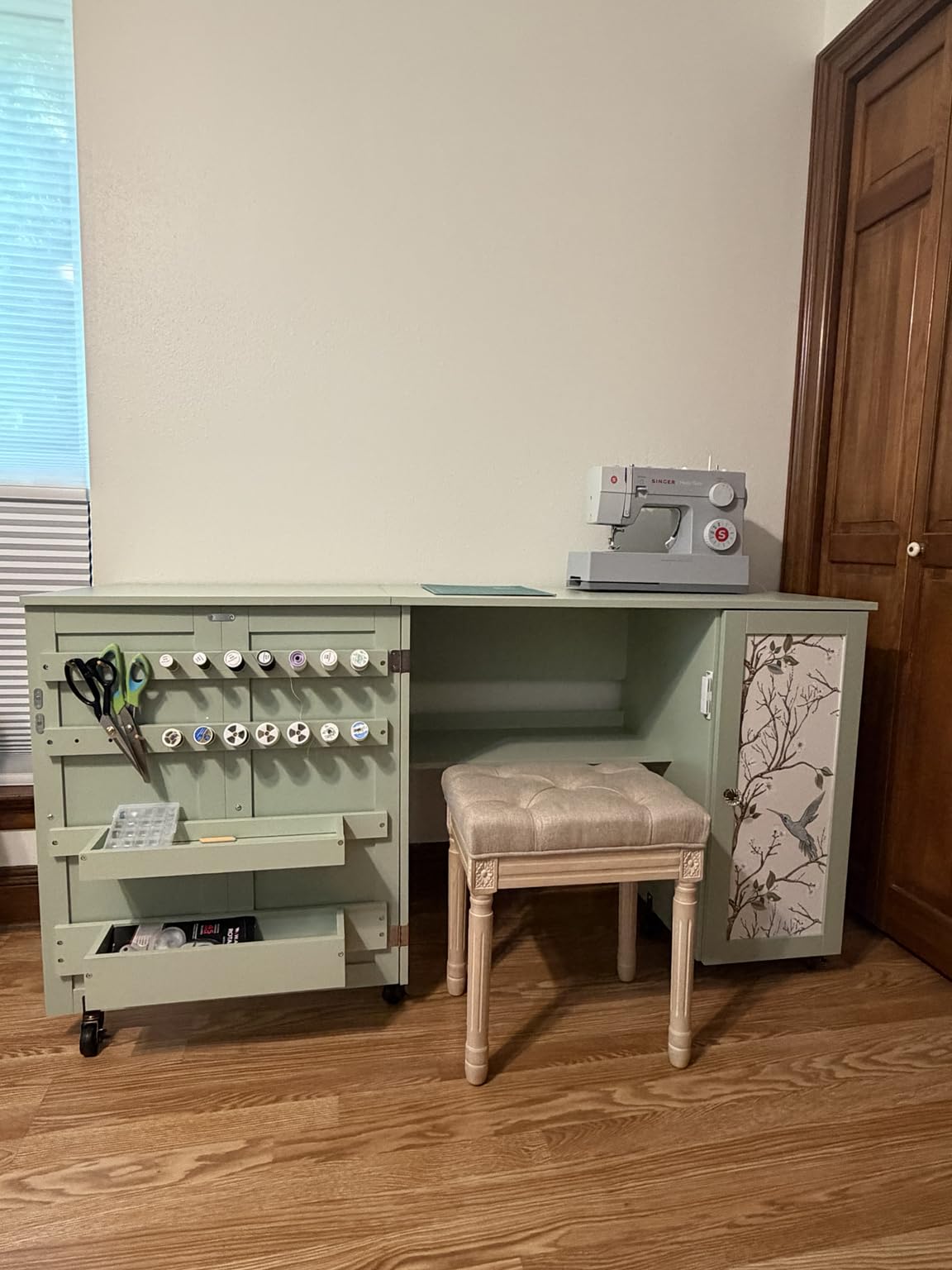
Storage is where it separates itself from the slim fold-flat units. The three-section cabinet can hold a sewing machine, a serger and the bulk of your notions behind magnetic doors, and the deep shelves swallow fabric bolts that would otherwise live under a bed.
The trade-off is honest and worth saying plainly. At 62 inches long this is not a small-room-friendly footprint in the usual sense. It works in a room where one wall is free, and it folds into a side table when the space has to come back.
Why the cabinet depth matters here
Three separate bays means you can stop stacking machines on top of each other, which is the most common cause of needle and vibration problems. Each machine sits flat, on its own shelf, at its own height.
The lockable casters and magnetic doors also make it the easiest unit here to convert into an entryway console or a sideboard on non-sewing days, which is what makes a large footprint acceptable in a multipurpose room.
Where it falls short
At 70 pounds it should be assembled in the room where it will live. Owners report several hours of build time and generally recommend two people, and the MDF panels can chip if a piece has to be removed and refitted.
The casters also struggle on carpet, which is common in bedrooms. If your floor is carpeted, either add a hard mat under the unit or choose a leg-based model. Read the Vividwood steel frame section for that alternative.
6. Sew Ready Rollaway II – Best Pick With Zero Assembly
Sew Ready Portable Foldable Sewing Table, 40.5″ Wide Top, Silver/White
40.5 inch wide top, 0.5 inch thick
Arrives fully assembled, no tools
24 lb with 2 built-in wheels
17.75 x 7.5 inch adjustable platform
Lifetime warranty
Pros
- Arrives fully assembled so there is no build time
- Lightest unit in the group at 24 lb with wheels attached
- Adjustable shelf fits different machine base heights
- Folds flat for closet or corner storage
- Lifetime warranty
Cons
- No enclosed cabinet so supplies are not hidden
- 40.5 inch top limits large quilt work
- Narrower machine shelf than the larger Sew Ready model
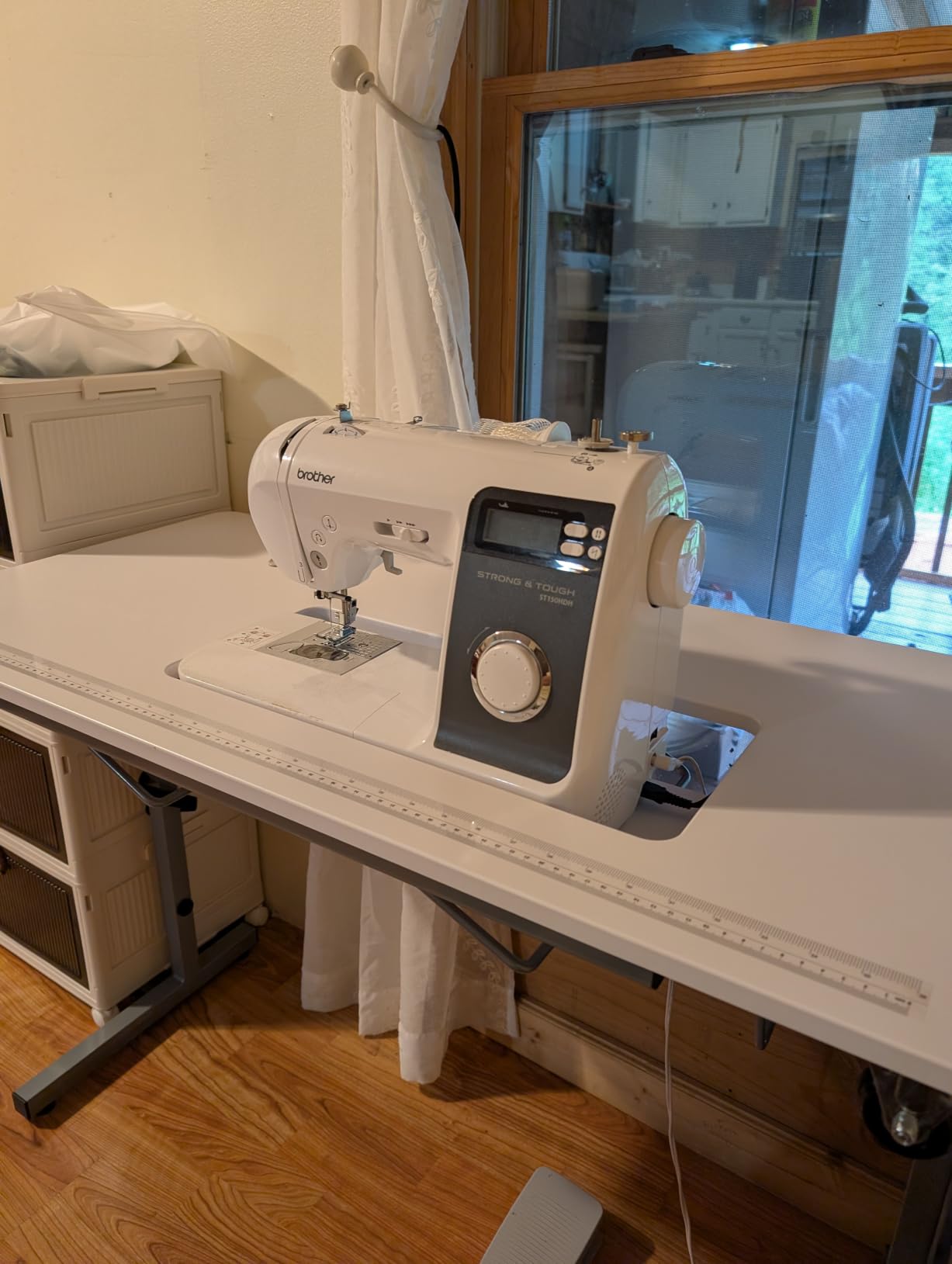
This is the one we recommend when the deciding factor is your patience or your schedule. It arrives fully assembled, needs no tools, and at 24 pounds with two built-in wheels it is the easiest unit here for a single person to move between a bedroom, a living room and a holiday table.
The 40.5-inch wide top has a printed measurement sticker on the surface, which is a small touch that matters when you are cutting binding strips. The frame is powder-coated steel with fold-in legs and four floor levelers for uneven floors.
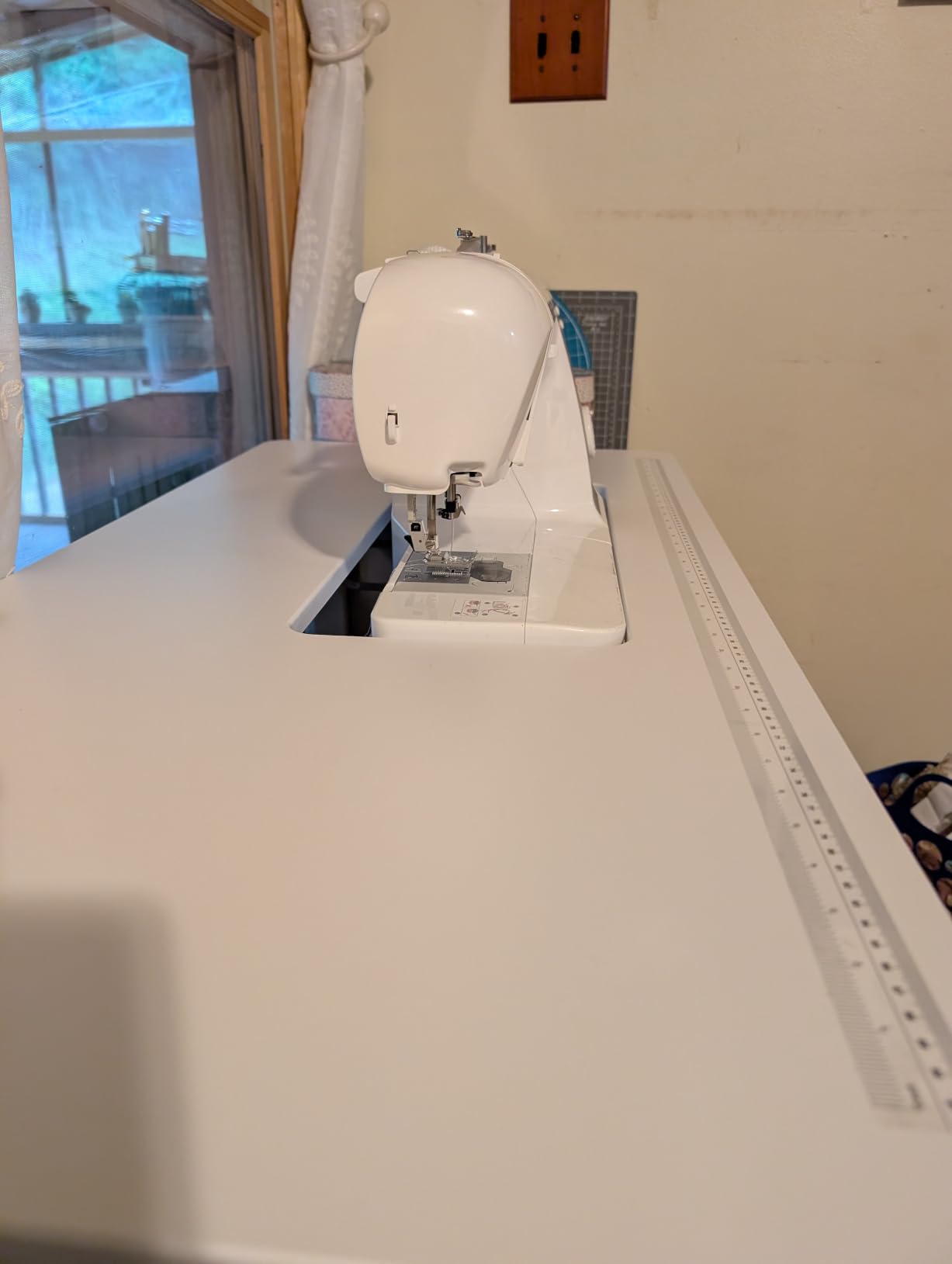
The adjustable platform shelf is 17.75 inches wide by 7.5 inches deep, narrower and shallower than the shelf on the larger Sew Ready model. It handles most home machine base heights, but check your own machine footprint before buying, because a wide arm or a bulky body will overhang.
Folding is genuinely quick. The legs fold in, the wheels stay attached, and the unit stores against a wall or in a closet. The top holds a 50-pound recommendation, which suits home machines comfortably.
Why it earns its place in a small room
No assembly and a 24-pound weight mean you can set it up, sew, and put it away in one evening, which is exactly the behaviour a small-room sewist needs. The lifetime warranty is the strongest warranty in this group by a wide margin.
It is also the only pick here that works as a shared table with another person. Two people can work opposite each other because the surface is open and unencumbered.
Where it falls short
There is no enclosed storage at all, so a messy sewing room looks messier with this table out. Notions have to go into a bin or a tote when the work is done, and nothing is protected from dust.
The 40.5-inch top is also the smallest working surface among the wide models, so large quilt layouts still move to the floor. It is a stitching and assembly table, not a cutting table.
7. VIVOHOME Folding Sewing Table – Best Hidden Bin Storage
VIVOHOME Folding Sewing Table for Sewing Machine, Sewing Desk with Storage
Extended 46.1 x 15.9 x 30.9 inch
Folded 23 x 15.9 x 30.9 inch
Five swivel casters, two lockable
Three hidden bins plus a shelf
Pros
- Halves its footprint when folded from 46 inch to 23 inch
- Five casters with two locks move it easily and hold it steady
- Three hidden bins and a shelf keep notions organised and out of sight
- Solid handle and magnetic catch for one-hand operation
Cons
- Particle board is less durable than solid wood
- Assembly is still required despite pre-drilled holes
- No electrical or accessory features beyond the bins
The VIVOHOME folds cleanly in half. Opened it measures 46.1 by 15.9 by 30.9 inches; folded, the length drops to 23 inches at the same depth and height, so it stores against a wall or beside a bed without taking a metre of floor.
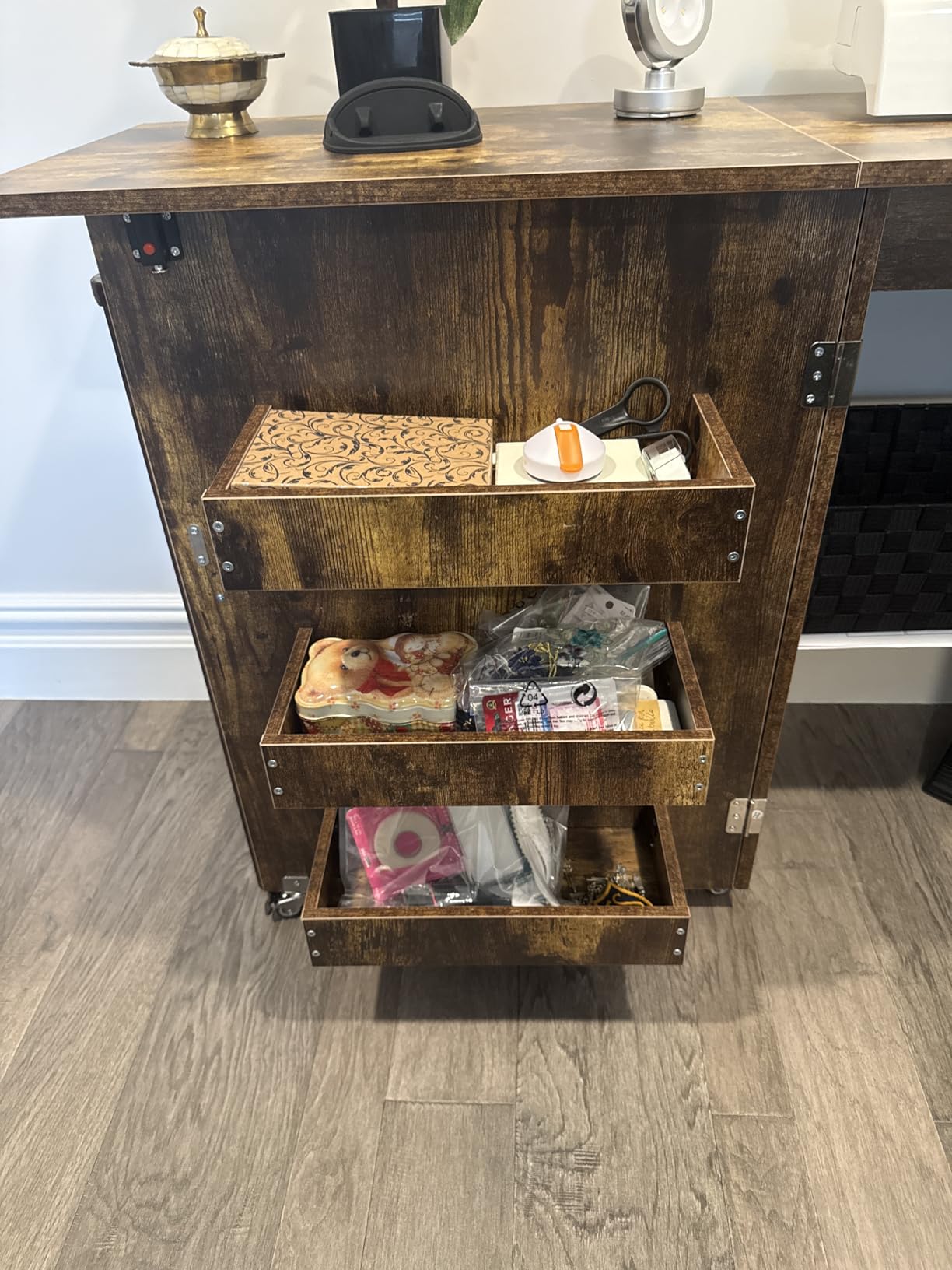
What separates it from the other fold-flat models here is the concealed storage. Three hidden bins plus a shelf sit behind a front panel held by a magnetic catch, so notions and thread are out of sight when the room is not a sewing room. A solid handle lets you open and close it one-handed.
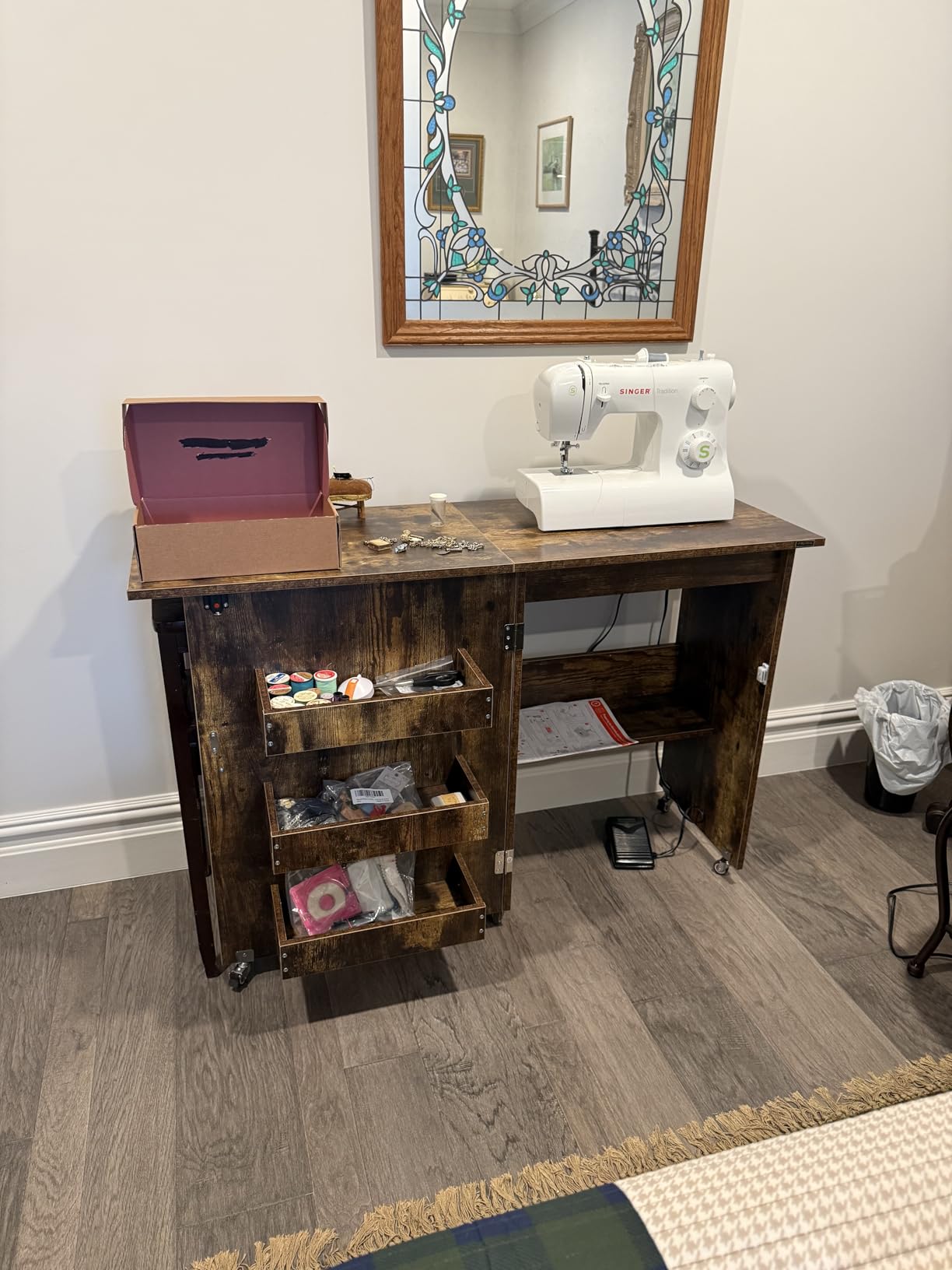
Mobility is handled by five swivel casters, two of them lockable. In our corner test, two locks were enough to stop it creeping while stitching, and the frame felt steady with a machine running at speed on the top.
Construction is particle board with a metal frame and flexible hinges, and the pre-drilled holes are a genuine kindness. Assembly is still required, but the holes are there and the illustrated instructions are clearer than most in this category.
Why hidden storage wins in a shared room
On a scoreboard of small-space sewing furniture, concealment is the feature that keeps a room usable. A visible open shelf is a visual commitment to sewing; a closed front panel is furniture. This model gives you the fold and the closed appearance in the same unit.
The espresso finish also reads more like a piece of furniture than the white units here, which helps in a living area.
Where it falls short
Particle board edges chip if you bump the folded unit repeatedly, and the review data shows that durability is the most common reservation. Treat the fold as a once-a-week action rather than an hourly one.
There is no integrated power, so if your outlet is far from the corner you will still need a cord. Compare the GIANTEX section if that is your situation.
8. COSTWAY Folding Sewing Table – Budget Pick With A Charging Station
COSTWAY Folding Sewing Table with Charging Station, White & Natural
Unfolded 45.5 x 16 x 31 inch
Folded 23 x 16 x 31 inch
2 AC outlets, USB and Type-C
Three-tier shelf, five casters
Pros
- Lowest cost in the group while still including a charging station
- Folds to 23 inch for closet storage
- Three-tier shelf plus open rack hold machine and notions
- Five casters with three locks balance mobility and stability
- Round handle makes the fold quick
Cons
- 16 inch depth leaves less legroom than the wider models
- Fewer customer reviews than the better-known competitors
- Assembly is still required
The COSTWAY does something no other entry in this list does at its price point: it folds to 23 inches wide and includes a built-in charging station with two AC outlets, one USB port and one Type-C port on a 4.8-foot cord. Power management on a small table is rarely worth spending for on its own.
It opens to 45.5 inches long by 16 inches wide and 31 inches tall, and it rolls on five swivel casters with three locks. The round handle across the front makes the one-handed fold straightforward.
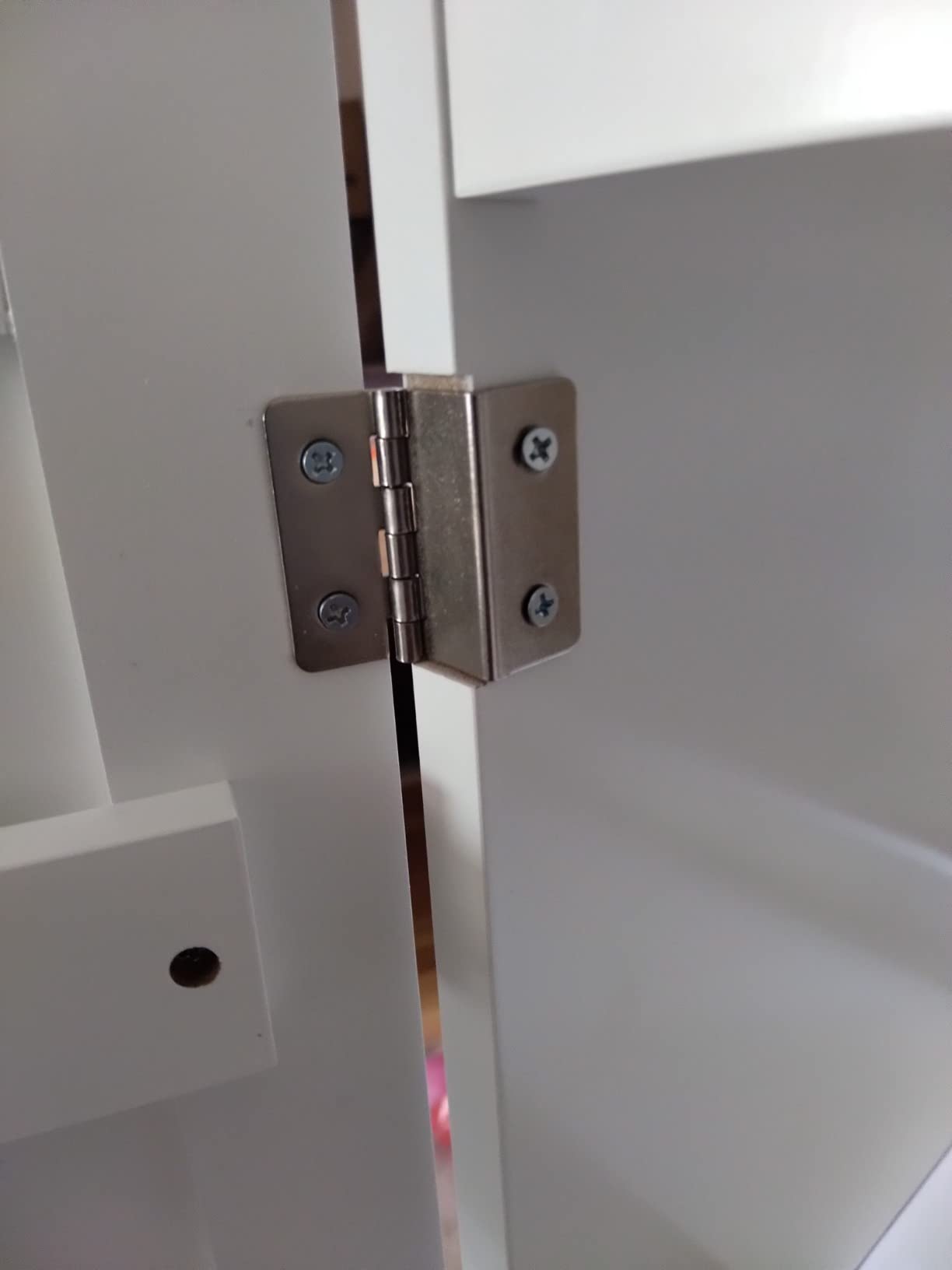
Storage is a three-tier shelf plus an open rack, which is enough for a machine base, spools, scissors and a cutting mat once the machine is set up on top. A magnetic lock, a spring pin and anti-collision pads keep the folded unit from swinging open when you move it.
It is a smaller review pool than the leaders in this group, which means you have less field history to lean on. The 4.3 average is encouraging, but treat it as a smaller data set rather than a proven workhorse.
Where the money is saved
It is not saved on the parts that matter at the table. The casters are proper swivel casters with three locks, the charging station is a full strip rather than a single socket, and the shelf is a three-tier unit rather than a single flat board.
It is saved in the carcass, which is engineered wood in a painted finish. That is a fine trade for a corner table and a poor one for a daily production machine.
Where it falls short
The 16-inch depth is the tightest of the folding cabinets and it shows at the chair. We found ourselves sitting at an angle rather than square to the machine, which is tiring over a long session. The 14.75-inch Best Choice unit handles this better.
Assembly is still required, and with a 43-pound frame we would plan on doing it where the table will live.
9. Vividwood Rustic-Brown Folding Cabinet – Best Bobbin and Peg Storage
Vividwood Folding Sewing Table, Multipurpose Sewing Machine Table with Compact Design, Wheels, Shelves, Bins, Pegs, Magnetic Locks (Rustic-Brown)
Open 46 x 15.8 x 30.5 inch
Closed 23 x 14.8 x 30.5 inch
10 bobbins, 2 bins, shelf, pegs
Five casters, two lockable
Pros
- Folds to an end table footprint of about 23 inch
- Ten bobbin holders plus bins
- shelf and pegs at hand height
- Assembly is quick at about an hour with a supplied tool
- Magnetic locks hold the leaf and door shut when moved
Cons
- Pegs fit large thread spools but not standard Coats and Clark spools
- Lower shelves reduce interior capacity when installed
- Wheels feel light and are hard to move over carpet
- Not intended to be leaned on heavily while open
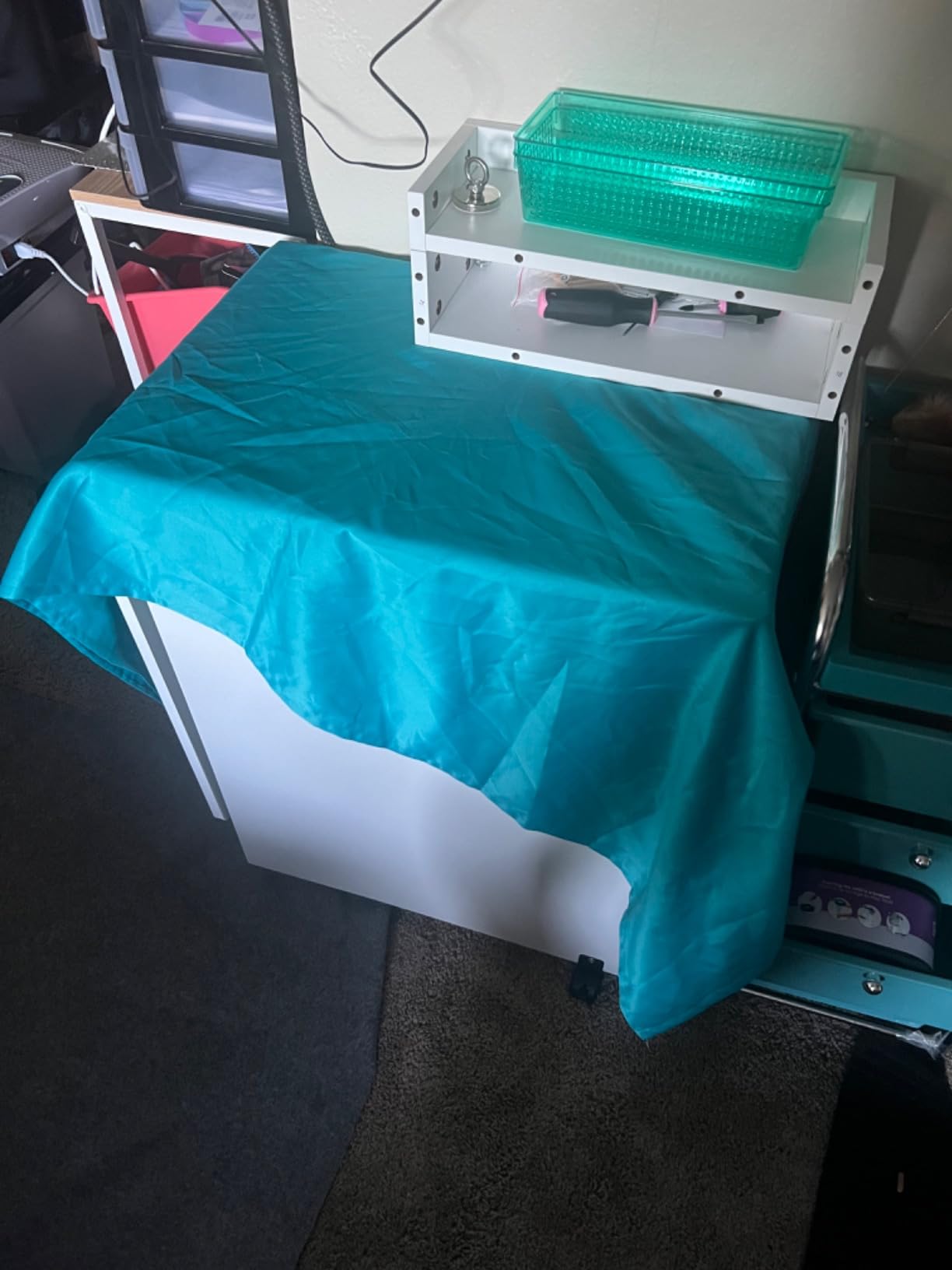
The reason this one made our list is the ten-bobbin holder. Most compact tables give you a shelf and call it storage; this one gives you a place for every bobbin you own at working height, plus two bins, an interior shelf and peg storage for tools.
It is 46 inches long and 15.8 inches deep when open, and 23 by 14.8 by 30.5 inches when closed. That 14.8-inch closed depth is the narrowest folded depth in the group, and at 30.5 inches tall the top is close to standard desk height.
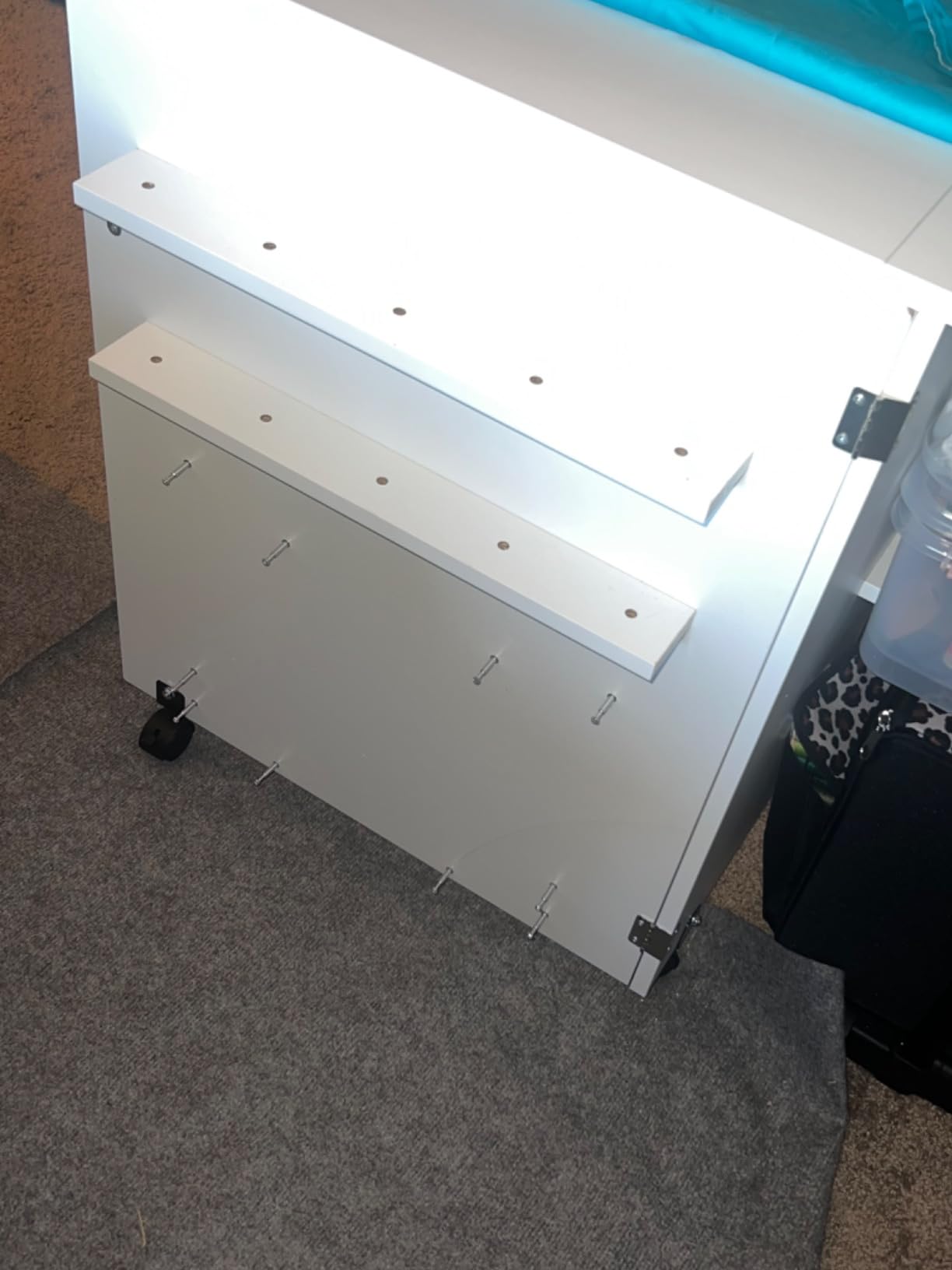
Assembly is reported at about an hour with the supplied tool and clear instructions, which is the fastest build in this roundup. Magnetic locks keep both the drop leaf and the door closed when the unit is wheeled around, and that detail stops the kind of swing-and-spill problems we saw elsewhere.
It is a small unit, and the finish is MDF board with solid metal hinges rather than solid wood. The country rustic brown is warm and hides dust and fabric lint better than the white units in this list.
Who should choose this over the other fold-flat units
Choose it if you sew in bursts with lots of colour changes, because a dedicated bobbin holder removes the sorting step entirely. It is also the best fold-flat option for a bedroom where the furniture has to look like furniture.
The five casters, two lockable, let you move it without lifting, which is what makes the fold practical on a daily basis.
Where it falls short
The pegs are cut for large thread spools, not standard Coats and Clark spools, so many of us ended up hanging notions on the bins instead. Interior capacity also shrinks once the lower shelves are installed, so a bulky machine base and the shelves do not always coexist.
The wheels are light and hard to move over carpet, and the top is not meant to be leaned on heavily while the leaf is open. Treat the open leaf as a working surface, not a handhold.
10. Vividwood Steel Frame Sewing Table – Best Platform For Heavy Machines
Vividwood Sewing Table, Large Sewing Machine Table with Adjustable Platform and Storage Shelf – White
45.5W x 23.5D x 30H inch
1.25 inch top, heavy gauge steel legs
Adjustable platform 23 x 10.75 inch
9.5 inch foldable side shelf
Four floor levelers
Pros
- Large 45.5 inch top plus a foldable side shelf for extra workspace
- Reinforced adjustable platform suits heavy machines
- Open lower shelf keeps fabric accessible with clear foot space
- Assembles in under an hour with clear instructions
- Also works as a serger or general craft desk
Cons
- Adjustable platform is not perfectly flush with the tabletop
- Vibration transfers to the platform with a heavy serger unless tightened
- No casters so it must be carried
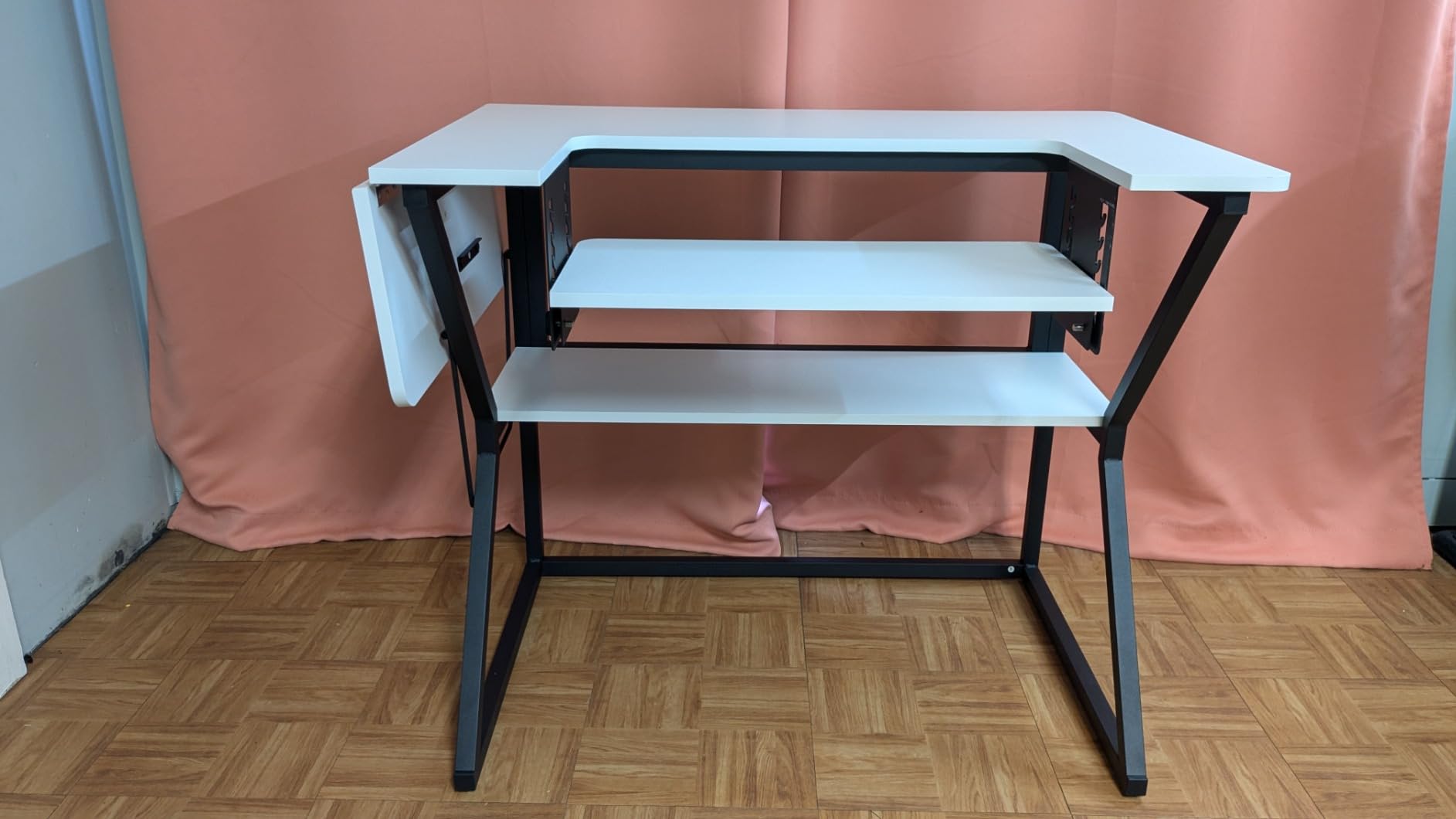
This is the pick for sewists who already know their machine is heavy. The adjustable platform is 23 inches wide by 10.75 inches deep on a reinforced frame, which is a full five inches wider than the shelf on the smaller Sew Ready model and the reason a large machine body fits without overhanging.
The main top is 45.5 inches wide with a 23.5-inch depth and a 1.25-inch-thick engineered wood surface on heavy gauge steel legs, plus a 9.5-inch foldable side shelf that adds workspace only when you need it. It is 30 inches tall, a proper working height for cutting and ironing close to waist level.
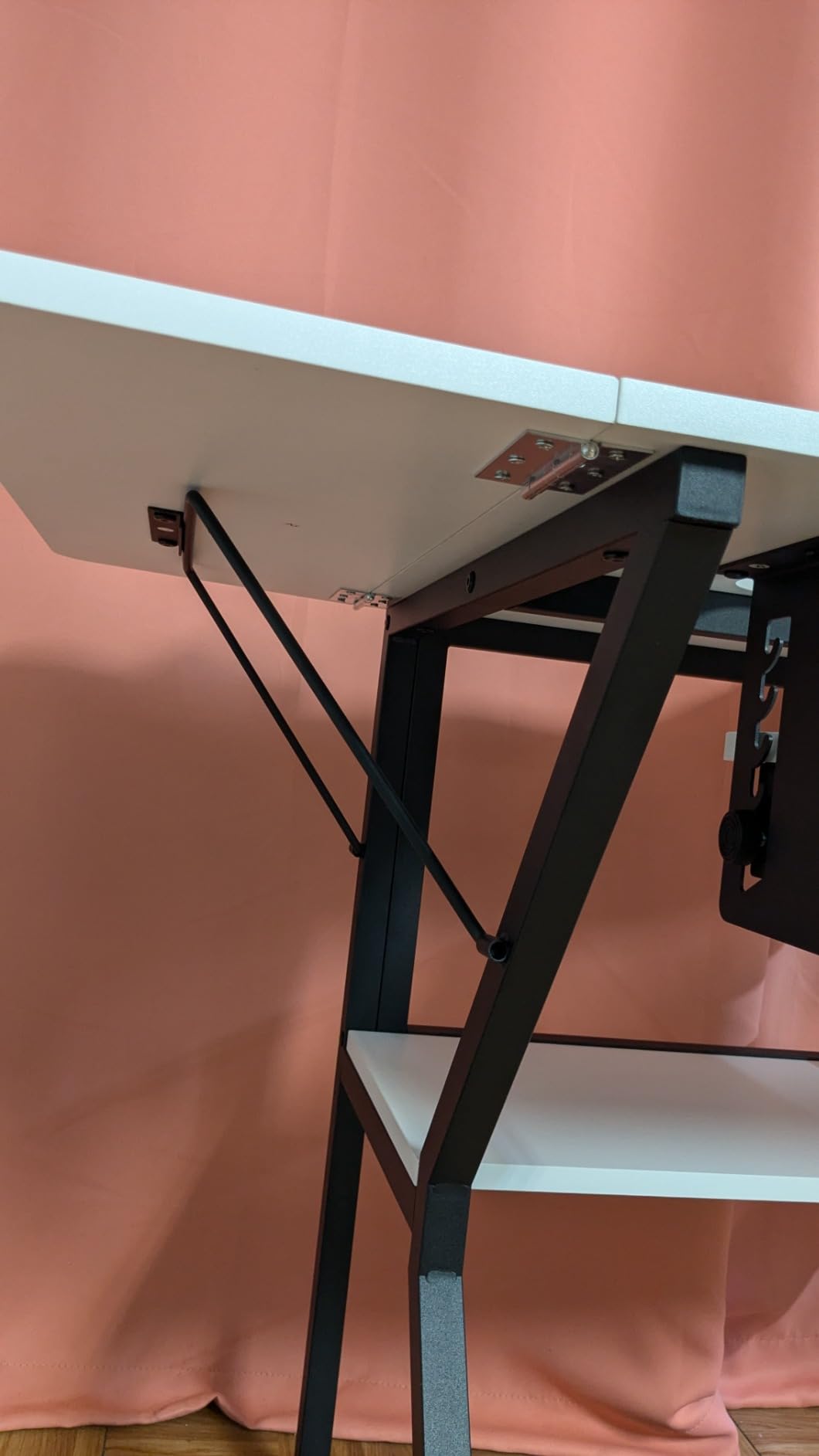
The lower storage shelf is 31.5 inches wide by 11.75 inches deep, positioned 15.35 inches above the floor, so bulky fabric has a home and your feet still clear it. Four floor levelers keep the frame stable on an uneven floor, and instructions plus an installation video are included.
Assembly is one of the quicker ones here, often under an hour, and the reviews are warm about the open, airy design. It is also listed as a serger desk, which is a genuine use if you own one.
When the platform size is the deciding factor
Measure your machine base and the distance from the needle to the back edge before anything else. Wide-arm machines, embroidery units and larger sergers need a platform deep enough to support the full body, and 10.75 inches of depth is where that starts to matter.
It is also the deepest table in the roundup at 23.5 inches, so check knee clearance against your chair before you commit.
Where it falls short
The platform is not perfectly flush with the top, and reviewers report vibration moving into the platform with a heavy serger unless the fixings are tightened. One owner found the frame too light for a particularly bouncy machine, so treat the platform setting as something to check and tune after setup.
There are no casters, so it has to be carried. If you need to move it daily, read the COSTWAY or VIVOHOME sections instead.
Sewing Cabinet vs. Folding Table vs. Craft Cart: Which Do You Need?
The three words describe three different answers, and picking the wrong one is why many small-room sewists end up with furniture that does not work. A rolling table with an adjustable platform wins on surface area and open-frame simplicity, and it folds flat for storage. A fold-flat cabinet wins on concealment and floor footprint, at the cost of depth. A multi-bay station wins on storage volume and can hold more than one machine, but it needs a wall and it is the least compact of the three.
Choose the rolling table if you work wide, quilt, or share a room with someone else. Choose the fold-flat cabinet if the room has to become something else most days. Choose the multi-bay station if you own a machine, a serger and an embroidery unit and are done carrying them around. Our measurements worked in an ordinary 20-inch-deep closet, and a related guide on fitting a TV into a small room covers the same clearances if you are planning a tight corner.
One more framing note: none of the picks in this roundup is a hydraulic-lift armoire. Those hardwood cabinets with a three-position airlift column are a separate premium tier, they occupy considerably more floor space, and they earn their keep when a dedicated sewing room exists rather than a bedroom corner. If your room is under about 60 square feet, the compact rolling and fold-flat families are the realistic options.
How to Measure the Space You Actually Have
Measure width, depth and height in three places rather than one, because rooms are rarely square. Add two inches of clearance to the depth so you can open doors and pull the machine out, and add a few inches of width for the chair to slide in. If you live in an apartment, walk the route from your front door to the room with a tape measure and note the tightest point, including the hallway turn.
Next, measure your machine, not the table. You need the base width, the base depth, the height from table to needle plate, and the clearance needed behind the machine for the power cord and foot pedal. If the platform is shallower than the machine base, the machine overhangs and the vibration becomes a problem. This is the most damaging real-world mistake in this category, and it appears in reviews of fold-flat units almost every week.
Then check the electrical side. Note the nearest outlet and its height, and work out whether a cord can reach without crossing a walkway. If the answer is no, filter for a built-in charging station rather than planning to run an extension cord across a room where people walk barefoot. We covered the same clearance logic in our small living room guide for compact audio gear, and the arithmetic is identical.
Finally, decide how often the unit moves. A cabinet you will roll out three evenings a week should have casters and locks. A table you set up once in a corner can save weight and cost by skipping them. Write the number on a sticky note before you shop; it is the fastest way to cut a long list down to three candidates.
Where to Put the Cabinet in a Room Under 60 Square Feet
Put it in a corner with a wall on two sides if you can, and place it so the machine faces the room rather than the wall. You need clearance to open a drop leaf, swing a door, or pull a platform out, and that clearance has to come from the open floor, not the wall. A corner placement also stops the casters catching on bed frames and chair legs, which is the most common source of a scuffed panel.
Keep the nearest outlet within reach of the back panel so the cord stays behind the unit, and place the unit so the drop leaf opens into space rather than across a walkway. If your floor is carpeted and the table is on casters, lay a hard mat under the wheels; it stops the creep that drags a machine off centre while you quilt.
Finally, give the room a second job. Every cabinet in this list converts into a side table, a console, a laptop desk or an entryway cabinet, and that conversion is the real reason a 19-inch-deep footprint is acceptable. If you can close the doors and roll the unit to a wall, the room is a bedroom again in under a minute. Our picks for cabinets for other small rooms follow the same convert-and-store logic.
How to Stop a Sewing Machine Walking Across the Table
First, put something under the machine feet. A self-adhesive cork or rubber pad mat between the machine base and the tabletop absorbs the vibration cycle that makes a heavy machine creep, and it costs very little. Lock the casters or the floor levelers second, because an unlocked caster is the usual reason a whole table shifts rather than just the machine.
Third, tighten the platform. On units with an adjustable machine shelf, the fixings loosen in transit and a loose platform lets the machine rock, which is the vibration that moves it in the first place. Check the platform bolts after a week of use and again after a month. Fourth, if you are on a rigid floor or an open-frame steel table, put the feet on a mat and accept that a bouncy machine needs a heavier frame than an MDF cabinet can offer.
None of this fixes a platform that is too small. If the machine overhangs the shelf, no amount of tightening will stop the movement, and that is a reason to return the table rather than adjust it.
Frequently Asked Questions
What is the best sewing table for small spaces?
For most small rooms, a folding sewing table with casters and an adjustable machine platform is the best answer, because it gives you a full-size work surface while sewing and collapses to roughly half that footprint afterwards. Among the ten picks here, the Best Choice Products Folding Craft Station is the strongest all-round folding option, and the Sew Ready Rollaway II is the easiest to move because it arrives assembled with wheels attached.
What kind of table is best for sewing?
A table with a wide, rigid top and a dedicated machine platform at tabletop height is best for sewing, because it lets the fabric feed level instead of dragging down toward the machine bed. For cutting and layout you want depth of at least 20 inches, and for small rooms a folding frame with lockable casters is what makes the footprint recoverable. Machines that stay concealed are better for multipurpose rooms.
What are the best folding sewing cabinets?
The best folding sewing cabinets in this roundup are the Best Choice Products Folding Craft Station at 14.75 inches deep, the Vividwood Rustic-Brown unit with ten bobbin holders, the VIVOHOME with three hidden bins, and the COSTWAY with a built-in charging station. All four collapse to roughly 23 inches wide or less, and each is built on an engineered wood or MDF carcass with metal hinges.
What is a good foldable work table for sewing?
A good foldable work table for sewing needs a top at least 40 inches long, a machine shelf with two to six height positions, a powder-coated steel frame, and casters with at least two locks. The Sew Ready 47.5-inch folding table and the Best Choice 62-inch station both meet that bar, and the GIANTEX model adds a built-in power strip if your outlet is far from the corner.
What is the best layout for a sewing room?
The best sewing room layout puts the machine in a corner with two walls, or against a single wall with clearance to open the drop leaf and the doors. Keep the nearest outlet within reach of the back panel, run cords behind the unit, and leave a clear path from the doorway to the chair. A hard mat under casters on carpet stops the station drifting while you quilt.
The Best Sewing Machine Cabinets for Small Rooms
The Sauder Drop-Leaf Sewing Cart is our pick for the best sewing machine cabinets for small rooms, and the reason is simple: it is the only unit in this roundup that closes, hides a machine and an embroidery unit, expands for layout work, and rolls away on casters. At 38.5 inches wide and 19.5 inches deep it fits a bedroom corner without stealing the walkway, and the drop leaf buys back about 16 inches of surface when you need it.
Buy the Best Choice Products Folding Craft Station if you need the footprint to halve, the Vividwood Rustic-Brown cabinet if bobbin storage is your bottleneck, and the GIANTEX or COSTWAY models if your outlet is far from where the table has to sit. Go wide with the Sew Ready 47.5-inch table for quilting, the 62-inch station if you own more than one machine, and the Vividwood steel frame if your machine is heavy and your platform needs to be deeper than 8 inches.
Whatever you choose, measure your machine first and your room second, and give yourself the assembly time the reviews describe rather than the one the box implies. Two honest hours is normal in this category, and it is the last thing you want to discover at midnight with a half-built cabinet in a corner.
Last updated October 2026.