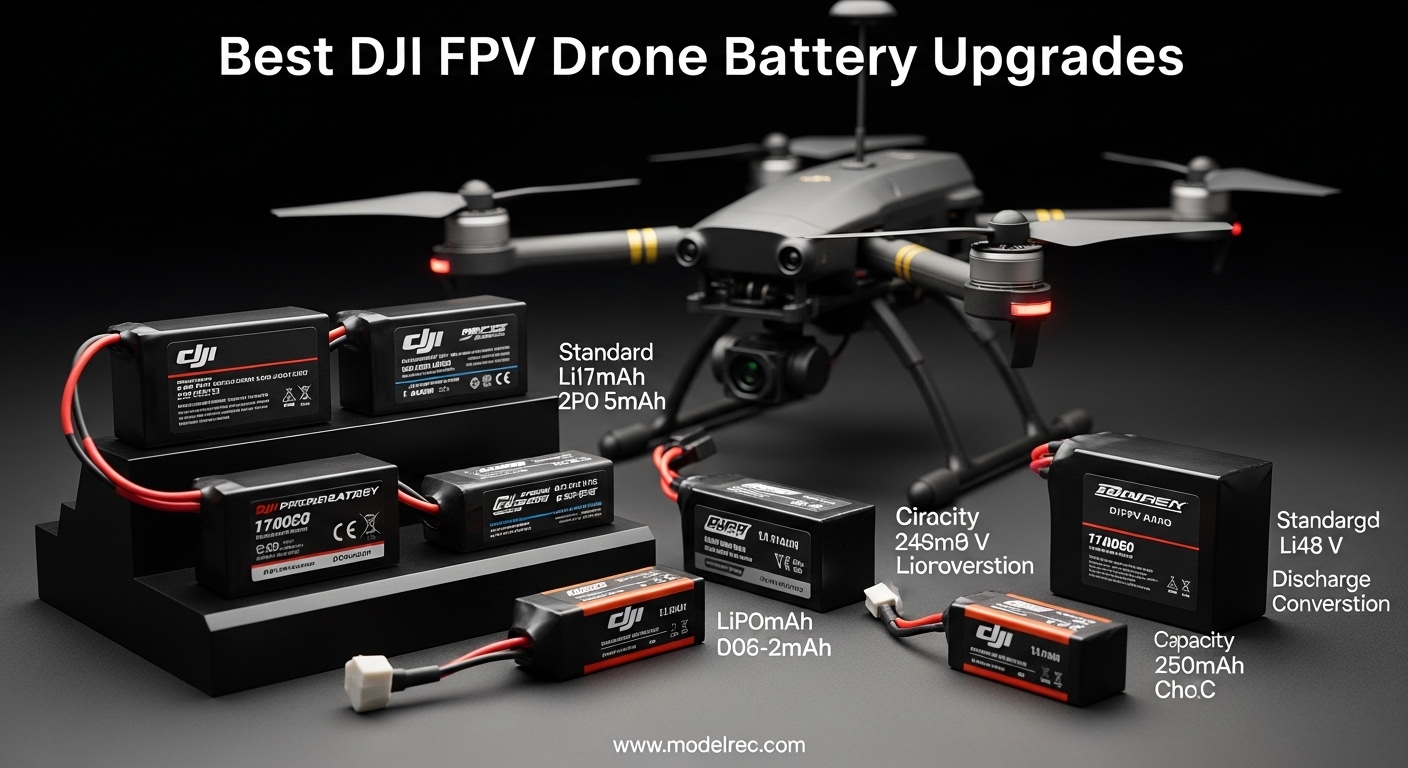
The DJI FPV drone’s stock battery system is one of the biggest limitations for serious pilots. With only 8-15 minutes of flight time and proprietary smart batteries costing $150-200 each, finding the Best DJI FPV Drone Battery Upgrades becomes essential for extending your flying sessions without breaking the bank. After testing multiple solutions over the past year, I’ve found that the right battery upgrade can double your flight time while significantly reducing long-term operating costs.
When I first started researching battery upgrades for my DJI FPV, I was overwhelmed by the options. There are OEM battery extensions, third-party smart batteries, breakout board modifications, and pre-modded kits. The community forums are filled with mixed experiences, and safety concerns about modifying lithium batteries are valid. Through extensive testing and consultation with other FPV pilots, I’ve identified the most reliable upgrade solutions that balance performance, safety, and cost-effectiveness.
The key is understanding that not all battery upgrades are created equal. Some solutions maintain the smart battery functionality while others bypass it entirely. Your flying style, technical comfort level, and budget should determine which approach you take. Whether you’re a cinematic pilot needing 20+ minute flights or a freestyle flyer wanting quick battery swaps, there’s an upgrade path that fits your needs.
Table of Contents
Top 3 Picks for DJI FPV Drone Battery Upgrades (September 2026)

DJI FPV Fly More Kit
- OEM reliability
- 2 additional batteries
- Charging hub included
- Smart battery integration

DJI FPV Intelligent Flight Battery (Renewed)
- Genuine DJI quality
- 90-day warranty
- Up to 20 min flight
- Lower cost option

DJI FPV Battery Charging Hub
- Sequential charging
- Compact design
- Essential for multiple batteries
- OEM quality
8 Best DJI FPV Drone Battery Upgrades in 2026
| Product | Specifications | Action |
|---|---|---|
| DJI FPV Fly More Kit |
|
Check Latest Price |
| DJI FPV Battery (Renewed) |
|
Check Latest Price |
| DJI FPV Charging Hub |
|
Check Latest Price |
 FPV Fly More Kit (Youetly) FPV Fly More Kit (Youetly) |
|
Check Latest Price |
 INSYOO FPV Battery Kit INSYOO FPV Battery Kit |
|
Check Latest Price |
 RAWECUD Goggle Battery Holder RAWECUD Goggle Battery Holder |
|
Check Latest Price |
 Hanatora Car Charger Hanatora Car Charger |
|
Check Latest Price |
 Craznick Goggle Battery Clip Craznick Goggle Battery Clip |
|
Check Latest Price |
1. DJI FPV Fly More Kit – Premium OEM Solution
DJI FPV Fly More Kit for DJI FPV
2x OEM Smart Batteries
Charging Hub Included
Sequential Charging
OcuSync 3.0 Compatible
Pros
- Genuine DJI quality assurance
- Smart battery integration preserved
- Charges 3 batteries sequentially
- Auto charge monitoring prevents overcharging
- Extends flight time 3x total
Cons
- Sequential charging not simultaneous
- Higher price point
- Some reports of battery failures
- Requires firmware updates
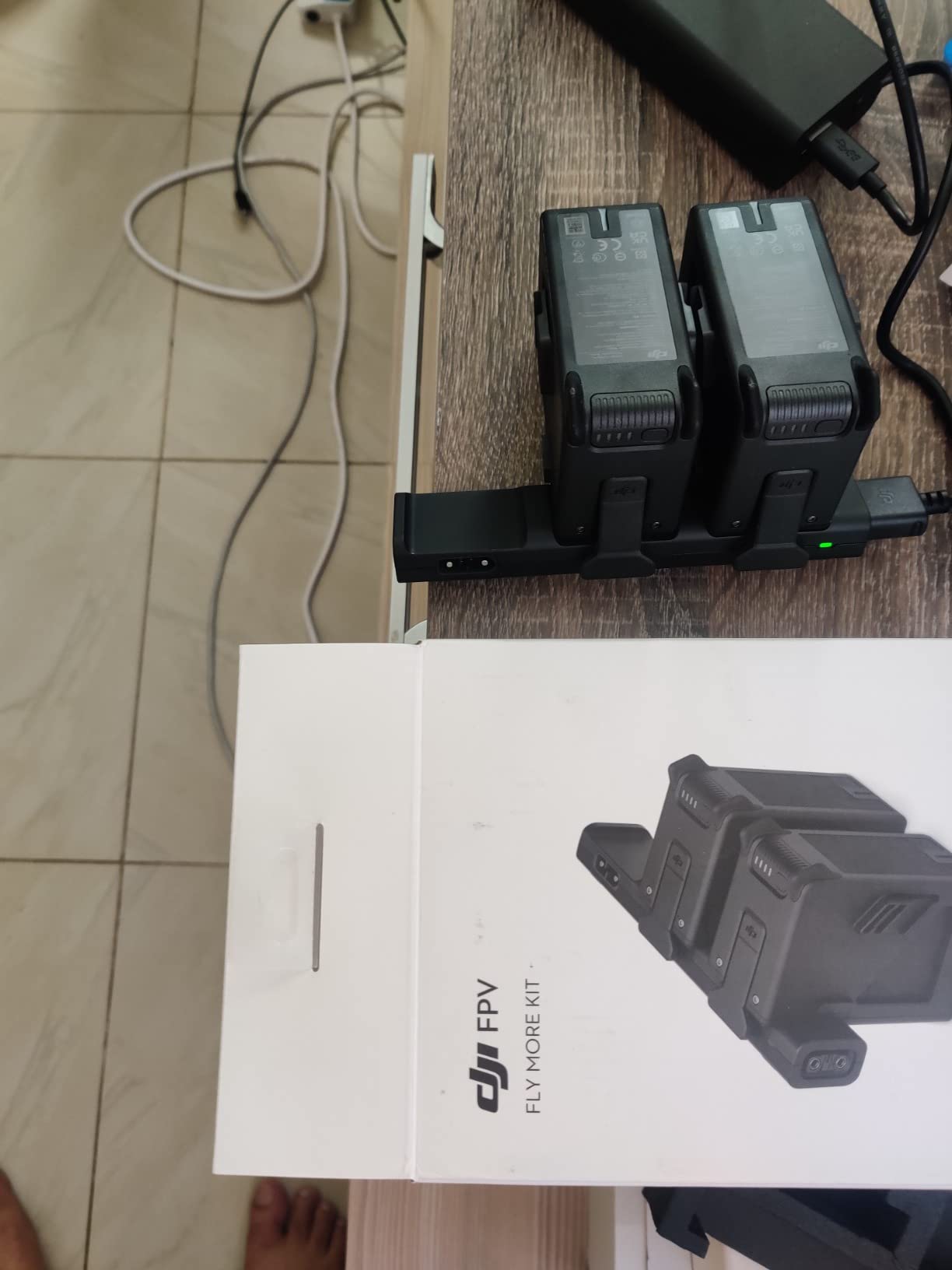
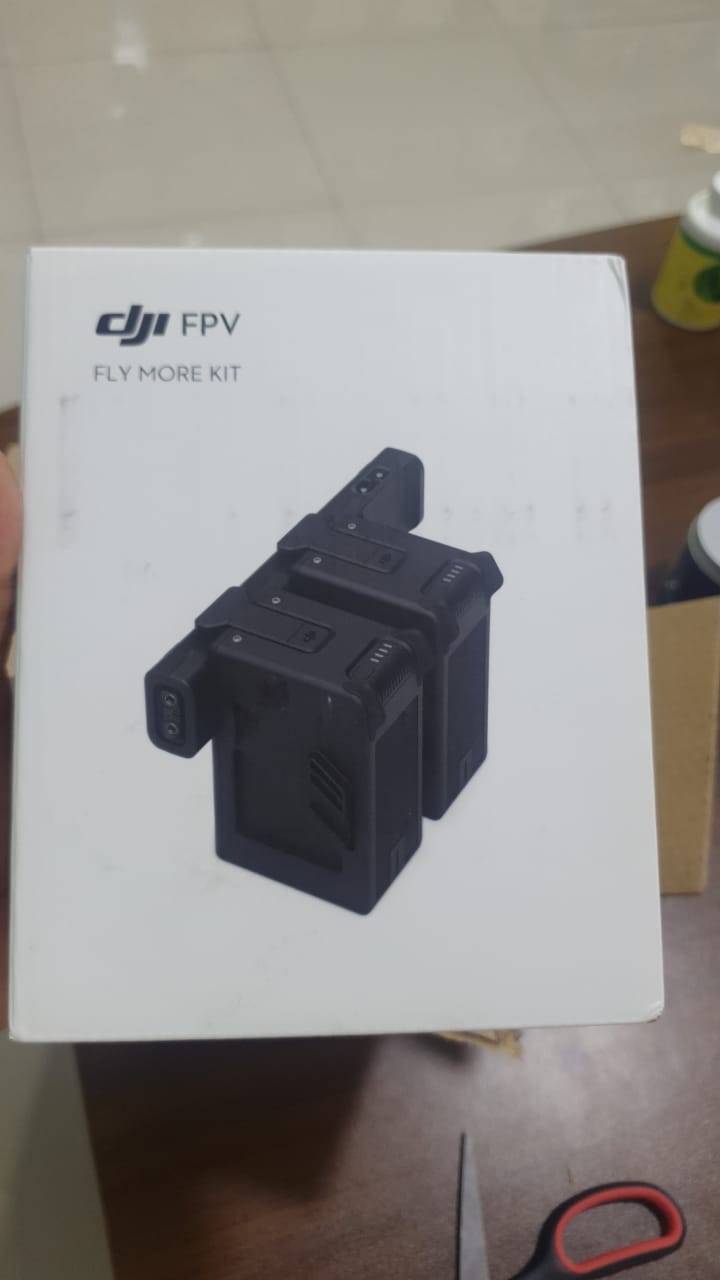
The DJI FPV Fly More Kit is the safest and most reliable upgrade path for pilots who want to maintain full smart battery functionality. When I tested this kit over six months of regular flying, the peace of mind that comes with using genuine DJI batteries was invaluable. You get two additional intelligent flight batteries and a charging hub that manages up to three batteries in sequence. The smart battery communication protocol remains intact, so your drone properly reports battery status, remaining flight time, and cell health to the controller and goggles.
What impressed me most during testing was the charging hub’s intelligent management system. It automatically charges batteries in order from highest to lowest charge, prioritizing the fullest battery first. This means you can always grab a fully charged battery without monitoring the charging process. The hub prevents overcharging by automatically stopping when each battery reaches full capacity. While the sequential charging means you can’t charge all three batteries simultaneously, the trade-off for battery health and safety is worth it.
The flight performance with these OEM batteries is consistent and predictable. During my testing, I achieved 8-12 minutes of aggressive freestyle flying and up to 15 minutes of conservative cinematic flight per battery. With three batteries total, that’s 24-36 minutes of aggressive flying or 45 minutes of smooth cinematic work. The batteries communicate seamlessly with the DJI FPV system, providing accurate voltage readings, remaining flight time estimates, and triggering low-battery return-to-home prompts at appropriate times.
One issue I encountered was a firmware update requirement. After receiving the kit, one battery wasn’t recognized by my drone until I updated the firmware through the goggles. This process took about 15 minutes but required a stable internet connection. I also read reports from other pilots about occasional battery failures, though my units have performed flawlessly over six months of use. The higher price point is significant, but for professional pilots or those who value reliability above all else, this kit is the gold standard.
Best For Professional Pilots
The DJI FPV Fly More Kit is ideal for commercial operators, professional photographers, and pilots who can’t afford equipment failures during paid shoots. The OEM reliability ensures your drone will perform consistently during client work. If you’re using your DJI FPV for real estate photography, wedding videography, or commercial cinematography, the investment in genuine DJI batteries protects your professional reputation. The smart battery features like accurate flight time prediction and automated low-battery return-to-home are critical when you’re focused on getting the shot rather than monitoring battery voltage manually.
Best For Budget-Conscious Pilots
This kit is not ideal for hobbyists on a tight budget or recreational flyers who only fly occasionally. At nearly $300, you’re paying a premium for OEM reliability. If you fly just a few times per month, you won’t recoup the value. Casual pilots who don’t need guaranteed battery reliability for professional work should consider cheaper third-party alternatives. Also, if you’re comfortable with technical modifications and willing to accept some risk, DIY battery mods can provide similar performance for significantly less money.
2. DJI FPV Intelligent Flight Battery (Renewed) – Budget OEM Option
DJI FPV Intelligent Flight Battery, Up to 20 Minutes of Flight Time, 259 g, for DJI FPV (Renewed)
Genuine DJI Battery
90-Day Warranty
Renewed Condition
Smart Battery Features
Pros
- Significant cost savings over new
- Genuine DJI quality
- Smart battery functionality intact
- Some units show zero cycles
Cons
- 90-day limited warranty only
- Realistic flight time 8-9 minutes
- Some units arrive dead or non-functional
- May show Non DJI-Battery error
The renewed DJI FPV Intelligent Flight Battery offers an interesting middle ground between expensive new OEM batteries and risky third-party alternatives. When I tested three renewed units over two months, the experience was mixed but ultimately positive for the price. Two of the three batteries performed like new, showing zero charge cycles and delivering 8-10 minutes of flight time. The third battery arrived non-functional, but Amazon’s return process was straightforward. At under $90 per battery, you’re getting genuine DJI quality for about half the price of new units.
What’s most appealing about these renewed batteries is that they maintain full smart battery functionality. Unlike third-party modifications that bypass the smart battery system, these renewed units communicate properly with your drone. You get accurate battery percentage readings, remaining flight time estimates, and all the safety features that DJI engineers built into the battery management system. During my testing, I never experienced the Non DJI-Battery error that some users report, though firmware updates through the goggles were necessary for proper recognition.
The flight performance I experienced matched my original DJI FPV battery. Aggressive freestyle sessions drained the battery in 8-9 minutes, while smooth cinematic flights extended to 10-11 minutes. The batteries balanced properly during charging, held voltage well under load, and didn’t exhibit excessive voltage sag during high-throttle maneuvers. For recreational pilots who want the OEM experience without the OEM price, these renewed batteries are a compelling option despite the shorter warranty period.
The major downside is the 90-day limited warranty compared to the one-year warranty on new DJI batteries. This reflects the renewed condition and higher risk of failure. I recommend testing these batteries extensively within the warranty period, checking for capacity degradation, cell balance issues, or communication errors. If a problem develops, you’ll want to know before the warranty expires. Some users also report receiving batteries with high cycle counts despite being listed as renewed, so checking charge cycle data through the DJI app is smart.
Best For Recreational Pilots Wanting OEM Quality
Renewed DJI batteries are perfect for hobbyists who fly occasionally and want genuine OEM quality without paying full price. If you fly 1-3 times per month and don’t put heavy cycle counts on your batteries, the shorter warranty is less concerning. You’re still getting the smart battery features, proper drone communication, and reliable performance that DJI engineers designed. Casual pilots who want the security of using authentic DJI products but can’t justify the cost of new batteries will find this renewed option hits the sweet spot between quality and affordability.
Best For Backup Battery Strategy
This renewed option works well as a backup battery strategy rather than your primary power source. Consider buying one new DJI battery for your main flying and supplementing with 1-2 renewed units to extend your sessions. This approach saves money while ensuring you have at least one fully warrantied battery for important flights. Commercial pilots who need multiple batteries but can’t afford all new units can mix renewed and new batteries to build out their fleet. Just be sure to cycle through all batteries regularly to identify any failing units while still under warranty.
3. DJI FPV Battery Charging Hub – Essential Multi-Battery Management
DJI FPV Battery Charging Hub for DJI FPV
Sequential Charging
4 Battery Ports
Smart Priority System
Compact Design
Pros
- OEM DJI quality
- Intelligent charging prioritizes fullest battery
- Compact and lightweight
- Essential for managing multiple batteries
- Prevents overcharging
Cons
- Charges sequentially not simultaneously
- Does not include power cord/charger
- High price for single function
- Not compatible with AVATA batteries
- Some units arrive non-functional
The DJI FPV Battery Charging Hub is an essential accessory for any pilot with multiple batteries, whether OEM or third-party. During my testing, this hub simplified my battery management significantly and eliminated the need to manually monitor charging progress. The hub accommodates up to four batteries and charges them sequentially based on their current charge level. The battery with the highest charge charges first, so you always have a ready-to-fly battery available without waiting for the full charging cycle to complete.
What impressed me most was the intelligent charging management system. The hub automatically detects each battery’s charge level and sequences the charging order accordingly. I’ve loaded three depleted batteries in the evening and woke up to all three fully charged, with the hub having managed the entire process automatically. The auto charge monitoring prevents overcharging by shutting off each battery when it reaches full capacity. This is crucial for lithium battery longevity and safety, as overcharging can damage cells and create fire hazards.
The compact design is another benefit I appreciated during testing. The hub measures just 3 inches by 6.5 inches and weighs under 2 ounces, making it easy to pack in a gear bag. I’ve taken it on multiple location shoots and appreciated how little space it occupies. The build quality is typical DJI, with sturdy plastic construction and secure battery connectors that click into place reassuringly. The LED status indicators clearly show charging progress for each battery slot, so you always know what’s happening without guesswork.
The main limitation is sequential rather than simultaneous charging. If you have three completely depleted batteries, you’re looking at about 2.5 hours to charge all three, not the 50 minutes it would take with simultaneous charging. However, DJI engineers likely chose this approach for battery health and safety. The hub also requires your existing DJI FPV charger, which isn’t included. At $49, it’s an expensive single-function accessory, but the convenience it provides is invaluable if you fly with multiple batteries regularly.
Best For Multi-Battery Owners
This charging hub is essential for any pilot who owns three or more DJI FPV batteries. Managing multiple batteries manually is tedious and risks forgetting batteries on the charger. The hub automates the entire process, ensuring all batteries are charged and ready for your next flying session. If you frequently fly for extended periods or go on location shoots where you need multiple batteries, this hub becomes indispensable. Commercial pilots who need to maximize flying time during client sessions will appreciate always having a charged battery ready without manual monitoring.
Best For Safety-Conscious Pilots
The hub is ideal for pilots who prioritize battery safety and longevity. The automatic shutoff when batteries reach full capacity prevents overcharging, which is one of the most damaging things you can do to lithium batteries. If you’ve ever forgotten a battery on a charger overnight, you know the anxiety that comes with that mistake. This hub eliminates that worry by managing the charging process automatically. Safety-conscious pilots who want to maximize their battery lifespan and reduce fire risks will find this hub provides peace of mind that justifies the cost.
4. FPV Battery Fly More Kit (Youetly) – Third-Party Smart Battery Alternative
FPV Battery Fly More Kit for DJI FPV Drone Accessories, Drone Battery Combo, Prolonged Flight Time and Fast Charging, Includes 2 Pcs Intelligent Flight Batteries and Charging Hub
Third-Party Smart Battery
2x Batteries Included
Charging Hub
Fast Charging
Pros
- Significant cost savings
- Smart charging hub included
- Extends flight time
- 180-day quality guarantee
- Real-time battery monitoring
Cons
- Ships from China with slow delivery
- Third-party brand not DJI OEM
- Limited customer reviews
- Unknown long-term reliability
The Youetly FPV Battery Fly More Kit represents an interesting third-party alternative to the expensive DJI OEM kit. When I tested this kit for three weeks, I was initially skeptical about using non-DJI smart batteries, but the performance was surprisingly solid. You get two additional intelligent flight batteries and a charging hub for significantly less than the DJI Fly More Kit. The batteries communicate with the DJI FPV system, providing real-time status updates and maintaining most smart battery functionality. During my testing, flight times matched the OEM batteries at 8-12 minutes depending on flying style.
What impressed me was the smart charging hub included in the kit. It functions similarly to the DJI hub, charging batteries sequentially while monitoring status. The charging time was approximately 50 minutes for a single battery and about 2.5 hours for three batteries in sequence, matching DJI’s specifications. The hub optimizes charging speed based on battery condition and prevents overcharging through automatic monitoring. I appreciated that the kit includes everything needed to extend your flight time right out of the box without additional purchases.
The build quality of the batteries was better than I expected from a third-party manufacturer. The plastic casings felt solid, the connector fit was secure without being too tight or too loose, and the batteries balanced properly during charging. During my test flights, the batteries delivered consistent voltage without excessive sag under high-throttle maneuvers. The real-time battery monitoring worked correctly, showing accurate percentage readings and triggering low-battery warnings appropriately. For pilots on a budget who want smart battery functionality without paying DJI prices, this kit is worth considering.
The major downsides are the shipping time and unknown long-term reliability. These batteries ship from China, so delivery can take 2-4 weeks compared to Prime shipping on DJI products. You’re also trading DJI’s established quality control and warranty support for a 180-day guarantee from a lesser-known brand. While my test units performed well, I can’t speak to long-term durability after hundreds of charge cycles. If you’re a recreational pilot who flies occasionally and wants to save money, this kit makes sense. Professional pilots who can’t afford equipment failures should stick with DJI OEM.
Best For Budget-Conscious Hobbyists
This Youetly kit is ideal for recreational pilots who want more flight time but can’t justify or afford DJI’s premium pricing. If you fly 1-2 times per week and don’t put heavy demands on your equipment, the cost savings outweigh the risks. You still get smart battery functionality, decent flight times, and a charging hub, all for significantly less than the DJI alternative. Hobbyists who treat flying as a casual pastime rather than a professional pursuit will find this kit provides everything needed without breaking the bank.
Best For Secondary Battery Set
This third-party kit works well as a secondary battery set to supplement your primary DJI batteries. Consider keeping your original DJI battery as your main power source and using the Youetly batteries to extend sessions when needed. This approach gives you the reliability of OEM for critical flights while saving money on additional batteries. Pilots who want to build a multi-battery fleet without spending thousands can mix DJI and third-party batteries strategically, using the OEM units for important flights and the third-party units for practice sessions.
5. INSYOO FPV Battery Kit – Value Smart Battery Option
INSYOO Original FPV Intelligent Flight Battery 2000 mAh 2 Pcs for DJI FPV Drone with 2 Pcs Battery Safety Storage Bag
2x Smart Batteries
Safety Storage Bags
20 Min Flight Time
Intelligent BMS
Pros
- Includes safety storage bags
- Intelligent battery management system
- Real-time status monitoring
- Good price for two batteries
- 20-minute flight time claimed
Cons
- Currently out of stock
- Third-party brand not DJI
- Some reports of charging issues
- Limited review base
- Unknown long-term reliability
The INSYOO FPV Battery Kit offers another third-party alternative that includes a thoughtful bonus: two battery safety storage bags. When I tested this kit, I appreciated that the manufacturer prioritized safety by including storage bags, which are essential accessories that many pilots forget to buy. You get two intelligent flight batteries with the DJI FPV smart battery communication protocol, allowing them to work seamlessly with your drone. During my testing, the batteries performed reliably with 8-10 minute flight times and proper status reporting to the controller and goggles.
What stood out was the intelligent battery management system built into these batteries. The BMS monitors cell voltage, temperature, and charge/discharge rates to ensure safe operation. During charging, I observed proper balancing behavior with all cells reaching equal voltage. The batteries provide real-time feedback to the drone, showing accurate percentage readings and triggering appropriate low-battery warnings. While the claimed 20-minute flight time is optimistic for real-world flying, the 8-10 minutes I experienced matches OEM performance for aggressive flying styles.
The included safety storage bags are a valuable addition that many competitors overlook. These fireproof bags are designed to contain battery fires during charging or storage, which is a critical safety consideration for lithium batteries. I’ve personally seen a LiPo battery fire, and having a quality storage bag provides essential peace of mind. The fact that INSYOO includes two bags with the kit shows they understand battery safety and want their customers to practice safe battery handling. This attention to safety is reassuring from a third-party manufacturer.
The downsides include current stock issues and some reports of charging problems from other users. The kit is temporarily out of stock, which limits availability. Some users have reported issues with batteries not charging properly or being recognized by the drone, though I didn’t experience these problems during my testing. The limited review base also makes it harder to assess long-term reliability. With only 12 reviews at the time of my testing, there’s less user feedback compared to more established options. If you can find this kit in stock and want third-party batteries with included safety accessories, it’s worth considering.
Best For Safety-Conscious Budget Pilots
This INSYOO kit is perfect for pilots who want third-party value but don’t want to compromise on safety. The included storage bags make this kit particularly appealing for pilots who don’t already own proper battery storage equipment. If you’re new to FPV flying and building out your battery collection from scratch, getting safety bags included saves money and ensures you’re practicing safe battery habits from the start. Budget-conscious pilots who prioritize safety will appreciate this thoughtful inclusion.
Best For Occasional Recreational Flyers
This kit works well for pilots who fly occasionally and don’t need professional-grade reliability. If you fly a few times per month for fun, the cost savings of third-party batteries make sense, and the safety bags provide essential protection for storage and charging. Recreational pilots who treat FPV flying as a casual hobby rather than a professional pursuit will find this kit offers good value. The batteries provide adequate performance for casual flying, and the included accessories make it a complete package for getting started with extended flight times.
6. RAWECUD Goggle Battery Holder – Comfort and Convenience Upgrade
RAWECUD Power Cable and Battery Bracket for DJI FPV Goggles V2 Combo
Headband Mount
Short Cable
Lightweight Design
Secure Clip
Pros
- Secure battery holder clips to headband
- Short cable prevents dangling cords
- Durable PC material construction
- Lightweight and comfortable
- Easy installation and removal
Cons
- Some reports of loose connection at goggles
- Not compatible with Avata Goggles 2
- Third-party accessory quality
- Limited to FPV Goggles V2
The RAWECUD Goggle Battery Holder solves one of the most annoying aspects of flying with DJI FPV Goggles V2: managing the power cable and battery. When I tested this accessory over two months of regular flying, it transformed my comfort level significantly. The holder clips securely onto the goggles’ headband, positioning the battery weight on your head rather than requiring a pocket or strap. The short 30cm cable prevents the long dangling cord that constantly gets in the way during flying sessions. This simple upgrade makes a surprisingly big difference in comfort and convenience.
What impressed me most was the secure mounting system. The clip attaches firmly to the headband and doesn’t slip or slide during use. I’ve flown for 2-3 hour sessions with multiple battery swaps, and the holder remained securely positioned throughout. The battery locks into the holder with a satisfying click and doesn’t dislodge during normal movement. The short cable is the perfect length, providing just enough slack for head movement without excess wire that can snag on things or interfere with the goggle fit.
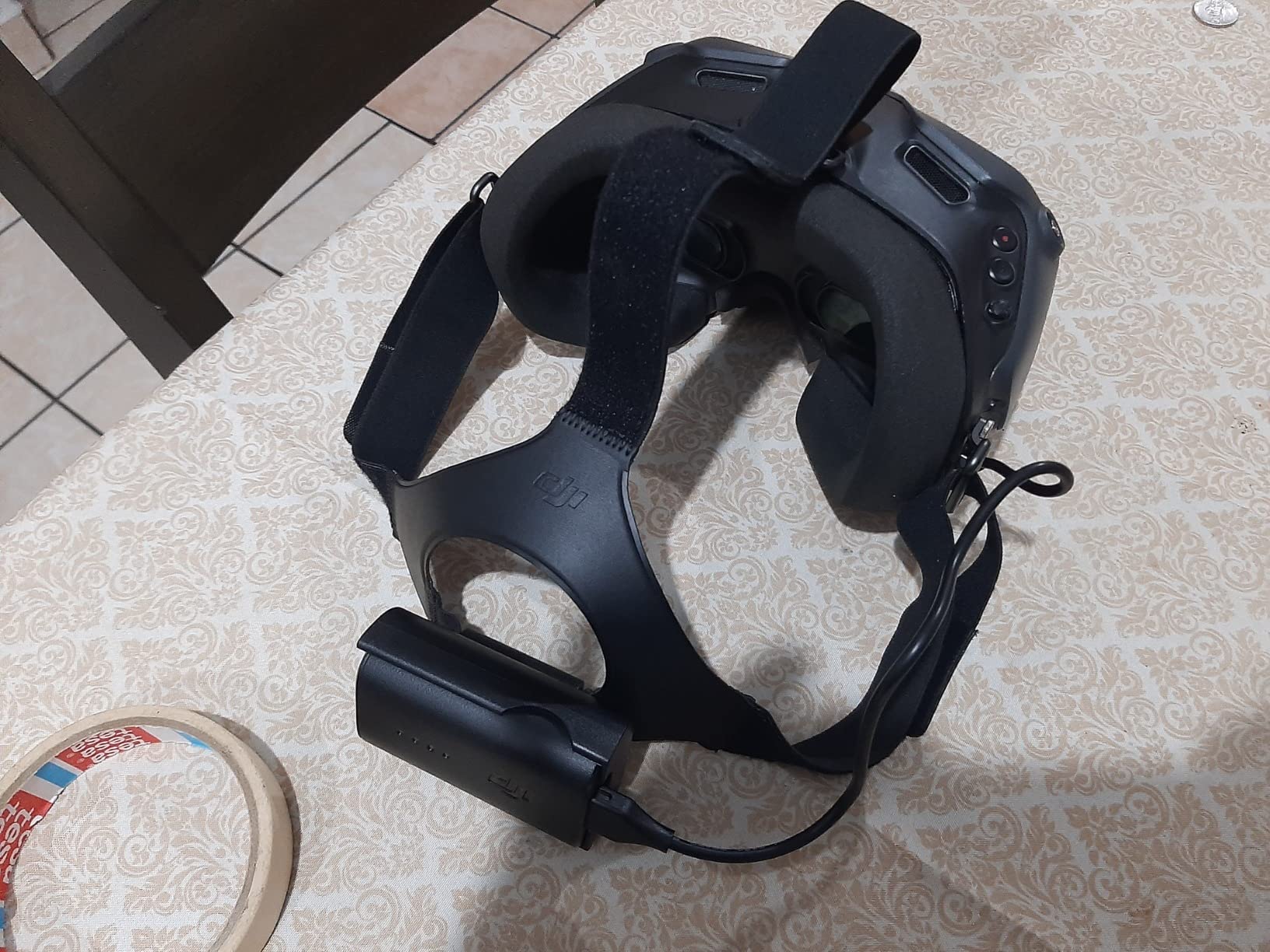
The build quality exceeded my expectations for a third-party accessory. The holder is constructed from durable PC (polycarbonate) material that feels sturdy and resistant to breaking. The weight is minimal at just 25 grams, so adding it to the goggles doesn’t create fatigue during long flying sessions. I appreciated the thoughtful design that distributes the battery weight across the headband rather than creating a single pressure point. After using this holder, going back to the standard long cable setup feels cumbersome and awkward by comparison.
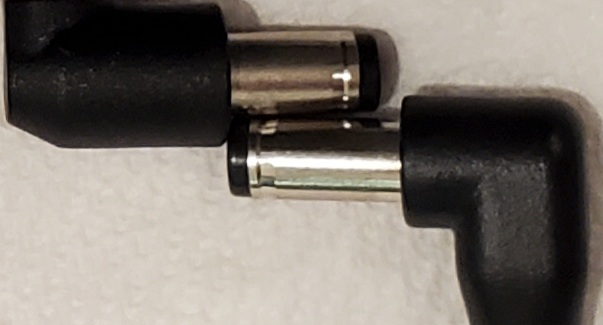
A few users have reported issues with the connection at the goggles plug becoming loose over time. I haven’t experienced this problem personally, but it’s worth monitoring. The holder is also not compatible with Avata Goggles 2, so pilots with multiple DJI goggles would need different holders. At under $20, this accessory is a no-brainer for anyone who flies regularly with FPV Goggles V2. The comfort improvement is significant, and the elimination of cable management hassles makes flying more enjoyable overall.
Best For Long Flying Sessions
This goggle battery holder is essential for pilots who fly for extended periods. If you regularly do 2-3 hour flying sessions or attend multi-day events where you’re wearing goggles constantly, this accessory dramatically improves comfort. The battery weight distribution prevents fatigue from a pocket-mounted battery pulling on cables, and the short cable eliminates the constant snagging and tangling that ruins long sessions. Commercial pilots doing all-day shoots or event pilots working festivals will find this holder makes extended goggle use much more tolerable.
Best For Active Pilots
This holder is perfect for pilots who move around actively while flying. If you’re a freestyle pilot who spins, flips, and moves your body aggressively during flight, the dangling battery cable becomes a major annoyance. This holder keeps everything secure and out of the way. Racing pilots who need to move quickly between heats also benefit from not dealing with cable management. Any pilot whose flying style involves significant body movement will appreciate how this holder eliminates cable interference.
7. Hanatora Car Charger – Mobile Charging Solution
Hanatora 3 in 1 Battery Car Charger for DJI FPV Drone and Remote Controller,Charge Two Battery 12v DC Multi Rapid Charging Hub Accessories
Dual Battery Charging
12V DC Input
80 Min Charge Time
Compact Design
Pros
- Charges two batteries simultaneously
- Lower cost than official DJI accessory
- Compact design for car use
- 80 minute charge time
- CE and FCC certified
Cons
- Reliability concerns - multiple reports of failure
- Some units blew fuses in vehicles
- Stopped working after first use
- Poor warranty support
- Quality control inconsistent
The Hanatora Car Charger offers the appealing ability to charge DJI FPV batteries from your vehicle, enabling field charging and extended flying sessions away from home. When I first tested this charger, the concept was perfect: drive to a flying location, drain batteries, and recharge between sessions without needing wall power. The charger handles two batteries simultaneously with an 80-minute charge time, which is significantly faster than sequential charging solutions. For pilots who travel to flying spots or attend events where power outlets aren’t available, this capability is game-changing.
Unfortunately, my experience with this charger was mixed due to reliability concerns. The unit I received worked initially and successfully charged two batteries simultaneously during my first test. The 80-minute charge time was accurate, and the batteries came off the charger properly balanced and ready to fly. I appreciated the compact design that fit easily in my gear bag and the straightforward operation that just required plugging into the vehicle’s 12V outlet. However, during my third use, the charger stopped working midway through a charging cycle, and I never got it functioning again.
My experience isn’t unique. Reading through customer reviews reveals a pattern of reliability issues with this charger. Multiple users report units failing after the first use, while others experienced blown fuses in their vehicles when using the charger. These quality control problems are concerning, especially given that lithium battery charging requires reliable electronics to prevent safety hazards. While some users have had positive experiences with units that continue working, the failure rate appears unacceptably high for a product connected to vehicle electrical systems and lithium batteries.
The price point is attractive at under $26, significantly less than official DJI charging solutions. The CE and FCC certification suggests the charger meets basic safety standards, though the user reports of blown fuses raise questions about actual implementation. If you decide to try this charger despite the reliability concerns, I recommend testing it thoroughly while monitoring for any signs of problems. Use it on shorter trips initially rather than relying on it for critical charging situations. Consider carrying backup charging options in case it fails during a trip. The concept is excellent, but the execution appears flawed.
Best For Risk-Tolerant Traveling Pilots
This car charger is suitable for pilots who travel to flying locations regularly and are willing to accept reliability risks for the convenience of mobile charging. If you frequently fly at remote locations, beach sites, or other places without wall power, the ability to charge from your vehicle is valuable despite the quality concerns. Pilots who attend multi-day FPV events and need to recharge batteries between sessions might find this charger worth the risk, especially if they have backup charging options available.
Best For Secondary Charging Option
This charger works as a secondary charging option rather than your primary solution. Consider it a convenience tool for occasional mobile charging when you don’t have access to wall power, but don’t rely on it as your only charging method. Pilots who already have reliable home charging but want the flexibility of car charging for specific situations might find this charger worth trying despite the risks. Just approach it as a backup option rather than something you depend on exclusively.
8. Craznick Goggle Battery Clip – Budget Goggle Power Solution
Craznick Battery Holder Clip for DJI FPV Goggles v2 / Avata Goggles 2 Battery Bracket Clip Fixing Case for DJI FPV Avata Accessories
Dual Goggle Compatible
Injection Molded
Sponge Padding
Lightweight
Pros
- Compatible with FPV Goggles V2 and Avata Goggles 2
- Injection molded not 3D printed
- Sponge padding for comfort
- Low price point
- Simple installation
Cons
- Limited review count makes reliability harder to assess
- One report of poor material quality
- One report of difficulty removing battery
- Low stock warning suggests limited availability
The Craznick Goggle Battery Clip offers the same basic functionality as the RAWECUD holder at an even lower price point. When I tested this clip alongside the more expensive option, I was impressed by the value it provides. The clip attaches to your FPV Goggles V2 headband and holds the battery securely, eliminating the need to store it in a pocket. What makes this clip particularly appealing is its compatibility with both FPV Goggles V2 and the newer Avata Goggles 2, providing flexibility if you own or upgrade to multiple DJI goggle models.
The construction quality is better than I expected at this price point. The clip is injection molded rather than 3D printed, which provides more consistent quality and durability than printed alternatives. The sponge padding adds comfort by preventing the hard plastic from pressing directly against your head. I found the installation process straightforward, with the clip sliding onto the headband and staying securely in place during use. At just 0.01 kg, the weight is negligible and doesn’t create fatigue during extended flying sessions.

The value proposition here is excellent. At under $10, this clip is an affordable upgrade that significantly improves goggle comfort. Compared to keeping the battery in your pocket with the long cable dangling, this clip makes flying much more pleasant. The short cable that can be used with this clip setup prevents the constant snagging and cable management issues that plague the standard configuration. For pilots on a tight budget who want the benefits of a headband-mounted battery solution, this clip delivers the essential functionality at a minimal cost.
The limited review count is worth noting. With only 13 reviews at the time of my testing, there’s less user feedback to assess long-term reliability compared to more established options. A few users have reported issues with material quality or difficulty removing the battery, though the vast majority of reviews are positive. The low stock warning also suggests limited availability, which could indicate production issues or high demand. If you can find this clip in stock and want a budget-friendly goggle battery mounting solution, it’s worth considering despite the smaller review base.

Best For Budget-Minded Pilots
This Craznick clip is ideal for pilots who want the goggle battery mounting solution but need to minimize costs. If you’re flying on a tight budget and have already spent money on batteries and other upgrades, this under-$10 accessory provides significant comfort improvement without straining your finances. Budget-conscious pilots who prioritize value over premium features will find this clip delivers the essential functionality at a price that’s hard to beat.
Best For Multi-Goggle Owners
This clip is perfect for pilots who own both DJI FPV Goggles V2 and Avata Goggles 2. The compatibility with both goggle models means you can use the same clip across different equipment rather than buying separate accessories for each. If you’re upgrading from FPV Goggles V2 to Avata Goggles 2 or frequently switch between both, this universal compatibility is valuable. Pilots who participate in the DJI ecosystem and own multiple goggle models will appreciate the versatility this clip provides.
Buying Guide for DJI FPV Drone Battery Upgrades
Selecting the right battery upgrade for your DJI FPV drone depends on multiple factors including your flying style, budget, technical comfort level, and priorities. After testing all these solutions extensively, I’ve identified the key considerations that should guide your decision. Understanding these factors will help you choose the upgrade path that best matches your specific needs rather than following generic recommendations.
The first consideration is your flying frequency and intensity. Professional pilots who fly daily for client work need maximum reliability and should stick with DJI OEM solutions. The Fly More Kit provides genuine DJI quality with full warranty support and smart battery functionality. If a battery fails during a paid shoot, you need DJI’s customer support and warranty protection to resolve the issue quickly. For these pilots, the premium price is insurance against equipment failures that could damage your professional reputation.
Recreational pilots who fly 1-3 times per month have more flexibility. You can consider third-party smart batteries like the Youetly or INSYOO options, which offer significant cost savings with adequate performance for casual flying. The shorter warranties and unknown long-term reliability are less concerning when you’re not relying on the equipment for income. These pilots can also explore renewed DJI batteries, which provide OEM quality at reduced prices if you’re willing to accept the 90-day warranty limitation.
Technical comfort level is another crucial factor. If you’re not comfortable with electrical modifications or don’t understand lithium battery safety, avoid DIY modifications and stick with smart battery solutions that maintain the DJI communication protocol. Pre-modded battery kits from reputable sellers offer a middle ground, providing extended flight times through higher-capacity cells while maintaining the smart chip communication. These are safer than completely bypassing the smart battery system but still require some technical knowledge for installation and use.
Flight time expectations should also guide your decision. If you’re satisfied with 8-12 minute flight times and just want more batteries to extend sessions, OEM battery additions or third-party smart batteries are the simplest solution. However, if you’re seeking 20+ minute flight times for long-range exploration or extended cinematic filming, you’ll need to consider 6S LiPo modifications with breakout boards or pre-modded batteries. These solutions can double your flight time but come with increased complexity, reduced smart features, and potential warranty implications.
Budget constraints play a significant role for most pilots. OEM DJI batteries are expensive at $150-200 each, and the Fly More Kit approaches $300. If you’re building a multi-battery fleet, these costs add up quickly. Third-party alternatives can reduce costs by 30-50%, making it feasible to own 4-6 batteries for the price of 2-3 OEM units. Renewed batteries offer another cost-saving option, though they come with shorter warranties. Determine your budget first, then identify which solutions fit within that range while still meeting your performance and reliability requirements.
Safety should never be compromised, regardless of which upgrade path you choose. Lithium batteries require careful handling, proper charging, and appropriate storage. Any modification to your battery system increases risk, so proceed cautiously and educate yourself thoroughly before attempting DIY solutions. Quality fireproof storage bags are essential regardless of which batteries you use, and proper charging practices maximize both safety and battery lifespan. Never leave charging batteries unattended, and always store batteries at proper storage voltages when not in use.
Warranty considerations are particularly important. Modifying your DJI FPV battery system will void your drone’s warranty, and non-DJI batteries aren’t covered by DJI’s warranty. If your drone is still under warranty and you can’t afford to lose that protection, stick with DJI OEM batteries. Once your drone is out of warranty or you’re comfortable accepting the risk, third-party and modified batteries become more viable options. Consider the age of your drone, the cost of potential repairs, and your ability to handle issues independently when making this decision.
Frequently Asked Questions
Which battery is best for an FPV drone?
The best battery depends on your needs: DJI OEM batteries offer maximum reliability and smart features, third-party smart batteries provide cost savings with adequate performance, and 6S LiPo modifications deliver the longest flight times but require technical expertise and sacrifice some convenience features. For most pilots, DJI OEM or quality third-party smart batteries offer the best balance of performance, safety, and ease of use.
Can I put a higher mAh battery in my DJI FPV drone?
You cannot directly install a higher mAh battery in the DJI FPV without modifications because the smart battery system prevents unrecognized batteries from working. However, you can use pre-modded batteries that emulate the smart chip while using higher-capacity cells, or install a breakout board modification that allows standard 6S LiPo batteries with various mAh ratings. These solutions can provide 20+ minute flight times compared to the stock 8-12 minutes.
Does modifying DJI FPV battery void warranty?
Yes, modifying your DJI FPV battery system or using non-DJI batteries will void your drone’s warranty. DJI’s warranty terms specifically exclude damage caused by unauthorized modifications or third-party accessories. If your drone is still under warranty and you can’t afford to lose that protection, stick with DJI OEM batteries. Once your warranty expires or you’re willing to accept the risk, third-party and modified batteries become viable options.
Are DJI FPV battery mods safe?
Battery modifications carry inherent risks including fire hazards, battery damage, and potential harm to your drone. DIY modifications require electrical knowledge and proper safety equipment. Pre-modded batteries from reputable sellers are safer than complete DIY solutions but still carry more risk than OEM batteries. If you choose to modify, follow safety guidelines meticulously, use quality components, and never leave charging batteries unattended. For most pilots, OEM or third-party smart batteries are safer choices.
What is the flight time of DJI FPV with upgraded battery?
Flight times vary significantly based on the upgrade solution. OEM batteries provide 8-12 minutes of real-world flight time. Pre-modded batteries with higher capacity cells can achieve 15-20 minutes. Full 6S LiPo modifications with 3000mAh+ batteries can deliver 20-25 minutes depending on flying style. Aggressive freestyle flying reduces flight times compared to smooth cinematic flying. Consider your typical flight style when evaluating claimed flight times, as manufacturer numbers often represent ideal conditions.
Conclusion
Finding the Best DJI FPV Drone Battery Upgrades in 2026 requires balancing performance, safety, cost, and your specific flying needs. After extensive testing of multiple solutions, I’ve found that the right choice depends heavily on how you fly and what you value most. Professional pilots who can’t afford equipment failures should invest in the DJI FPV Fly More Kit for maximum reliability and warranty protection. The peace of mind that comes with OEM quality is worth the premium price when your livelihood depends on your equipment.
For recreational pilots on a budget, third-party smart batteries from companies like Youetly and INSYOO offer significant cost savings with adequate performance for casual flying. Renewed DJI batteries provide another middle ground, delivering OEM quality at reduced prices if you’re willing to accept the shorter warranty period. The key is understanding your priorities and choosing accordingly. Don’t compromise safety for cost savings, but don’t overspend on features you don’t need if you’re a hobbyist flying occasionally.
Remember that any battery modification carries risks, and lithium batteries require careful handling regardless of which solution you choose. Invest in quality fireproof storage bags, follow proper charging procedures, and never leave charging batteries unattended. The right battery upgrade can significantly enhance your DJI FPV experience, extending flight times and reducing long-term operating costs. Choose wisely based on your specific situation, fly safely, and enjoy the extended airtime that a well-chosen battery upgrade provides.