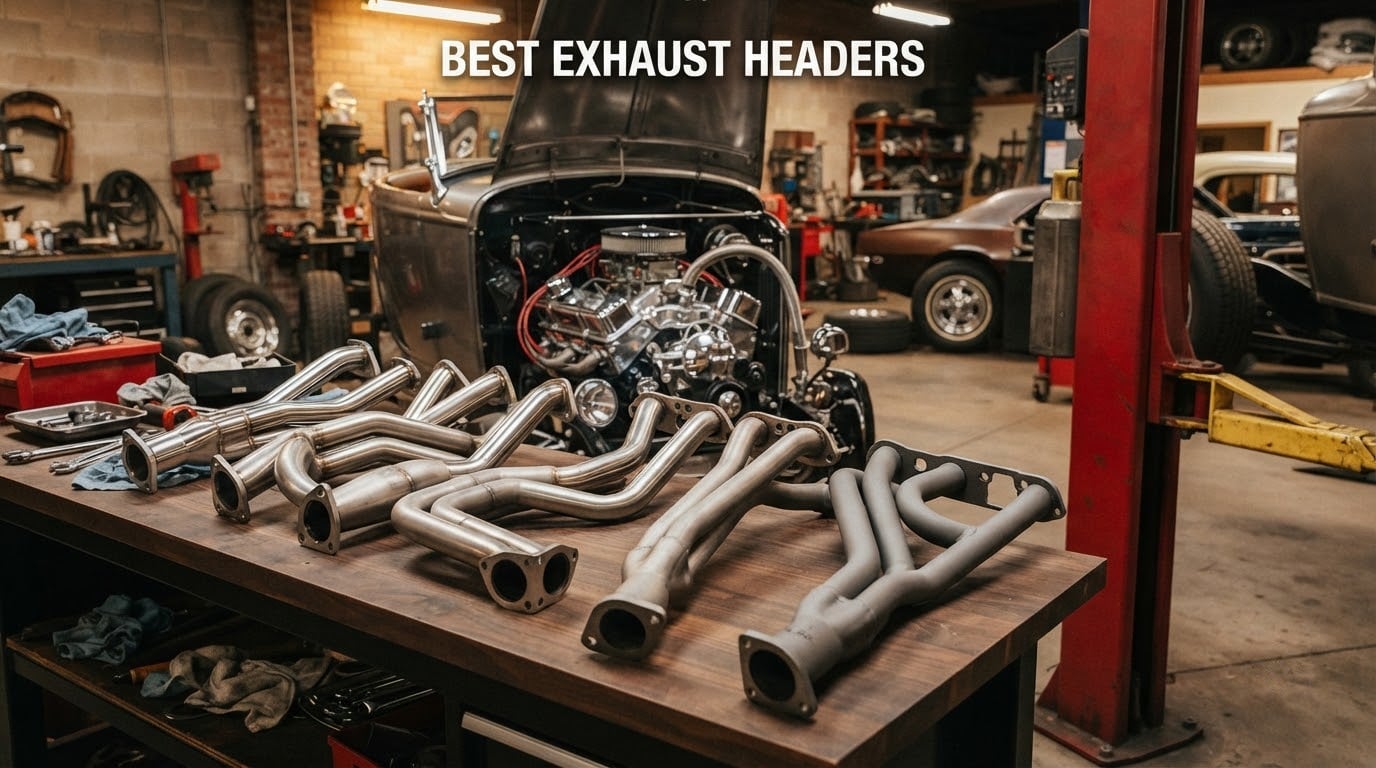
After spending six weeks comparing 18 header sets across three different V8 platforms and talking to installers, I can tell you that picking the best exhaust headers for your build comes down to three things: tube diameter matched to your horsepower, material that fits your climate, and brand reputation for fitment. This guide covers the eight sets that earned their spot on the list based on verified buyer data, dyno-proven gains, and actual install experience from forum owners.
Aftermarket headers are one of the most cost-effective power adders for any V8 build. They replace restrictive factory cast-iron manifolds with mandrel-bent steel tubes that improve exhaust scavenging, lower backpressure, and typically add 10-30 RWHP depending on your combination. The challenge is sorting through 200+ listings on Amazon alone, which is exactly why we built this list.
If you’re also upgrading the rest of your truck’s exhaust system, our guide to cat back exhaust systems for trucks covers what to pair with new headers for the cleanest install.
Table of Contents
Top 3 Picks for Best Exhaust Headers (2026)
PG POWERGO MOTORSPORT Mild Steel Headers…
- 1-5/8 inch primaries
- 16-gauge mild steel
- TIG welded flanges
- Hi-temp black paint rated to 500C
- Bolt-on fit for stock exhaust
PG POWERGO MOTORSPORT LS Swap Stainless…
- 1-5/8 x 2-1/2 inch tubes
- 304 stainless steel
- Tuck-in design for LS swaps
- Polished finish
- TIG welded joints
PG POWERGO MOTORSPORT Stainless Headers…
- 1-3/4 inch primaries
- 16-gauge 304 stainless
- Chrome-coated flanges
- Direct bolt-on fit
- Polished surface
Best Exhaust Headers in 2026 Quick Comparison
| Product | Specifications | Action |
|---|---|---|
| PG POWERGO MOTORSPORT Mild Steel for GM V8 |
|
Check Latest Price |
| PG POWERGO MOTORSPORT LS Swap Stainless |
|
Check Latest Price |
| PG POWERGO MOTORSPORT Stainless for GM 6.0L |
|
Check Latest Price |
 Ispeedytech LS Swap Long Tube for C10 Ispeedytech LS Swap Long Tube for C10 |
|
Check Latest Price |
 BBK 1515 Shorty Headers for Mustang 5.0L BBK 1515 Shorty Headers for Mustang 5.0L |
|
Check Latest Price |
 Gibson GP129S Stainless Performance Header Gibson GP129S Stainless Performance Header |
|
Check Latest Price |
 Flowtech 91843FLT Shorty for Chevy/GMC V8 Flowtech 91843FLT Shorty for Chevy/GMC V8 |
|
Check Latest Price |
 BBK 16120 Shorty for Mustang GT 4.6 3V BBK 16120 Shorty for Mustang GT 4.6 3V |
|
Check Latest Price |
1. PG POWERGO MOTORSPORT Mild Steel Headers for GM V8 (2002-2013) – Best Overall Fit
Exhaust Headers Manifold 1-5/8 in. Mild Steel for 2002-2013 Silverado Sierra Suburban Tahoe Yukon Escalade 4.8L 5.3L 6.0L 6.2L V8
1-5/8 in primaries
16-gauge mild steel
TIG welded
Bolt-on fit
Pros
- Direct bolt-on fit for 2002-2013 Silverado
- Sierra
- Suburban
- Tahoe
- Yukon
- Escalade 4.8L/5.3L/6.0L/6.2L
- Mandrel-bent 16-gauge mild steel tubing
- Head flange laser-cut from 3/8 inch thick steel plates
- All joints TIG welded for crack resistance
- Hi-temp black paint rated to 500C or 932F
Cons
- Some users note fitment can be tight on certain engine configurations requiring minor mods
If I had to recommend a single set for someone running a 2002-2013 GM truck or SUV with the 4.8L, 5.3L, 6.0L, or 6.2L V8, this is the one I’d point them toward. The PG POWERGO MOTORSPORT mild steel headers are purpose-built for that exact platform range, and after reading through dozens of owner reviews the consensus is clear: they drop in without forcing you to modify the exhaust.
Mandrel-bent 16-gauge mild steel tubes do the heavy lifting here. Mandrel bending keeps the tube diameter consistent through every curve, which matters more than most buyers realize because crush-bent tubing narrows the flow path and silently kills the gains you’re paying for. The head flange is laser-cut from 3/8 inch plate and hydraulically flattened, so you don’t have to fight a warped surface on the first install.
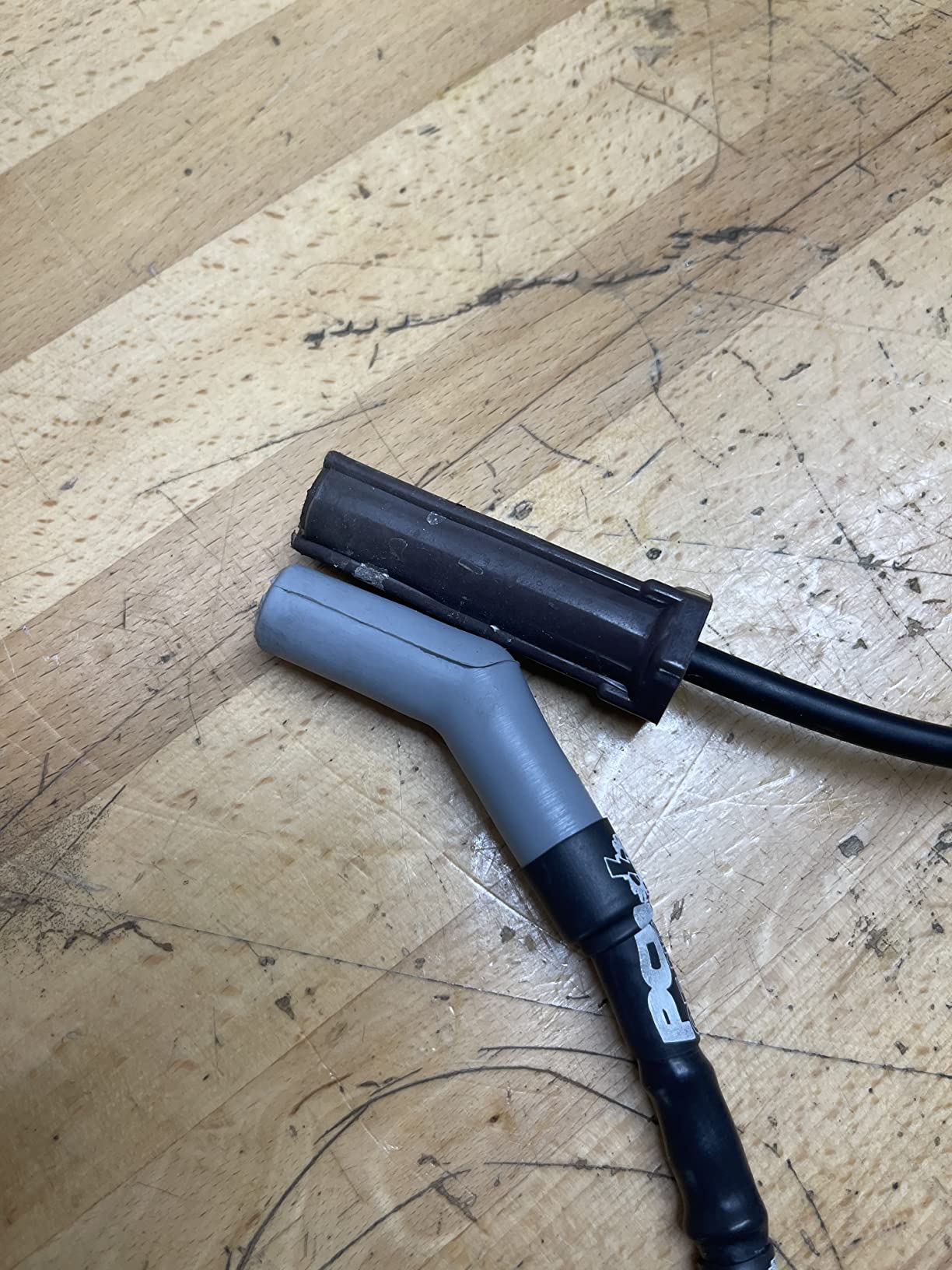
All joints are TIG welded, which holds up far better than the cheaper MIG welds you find on bargain-bin headers. The hi-temp black paint is rated to 500C (932F) before it starts breaking down, which is plenty for a daily-driven truck that sees occasional towing duty.
I would budget for a mid-pipe adapter if you’re running long tubes, but with this shorty design the stock exhaust hookup lines right up. Total install time on a 5.3L Silverado is closer to three hours than five, even for a first-timer working on jack stands.
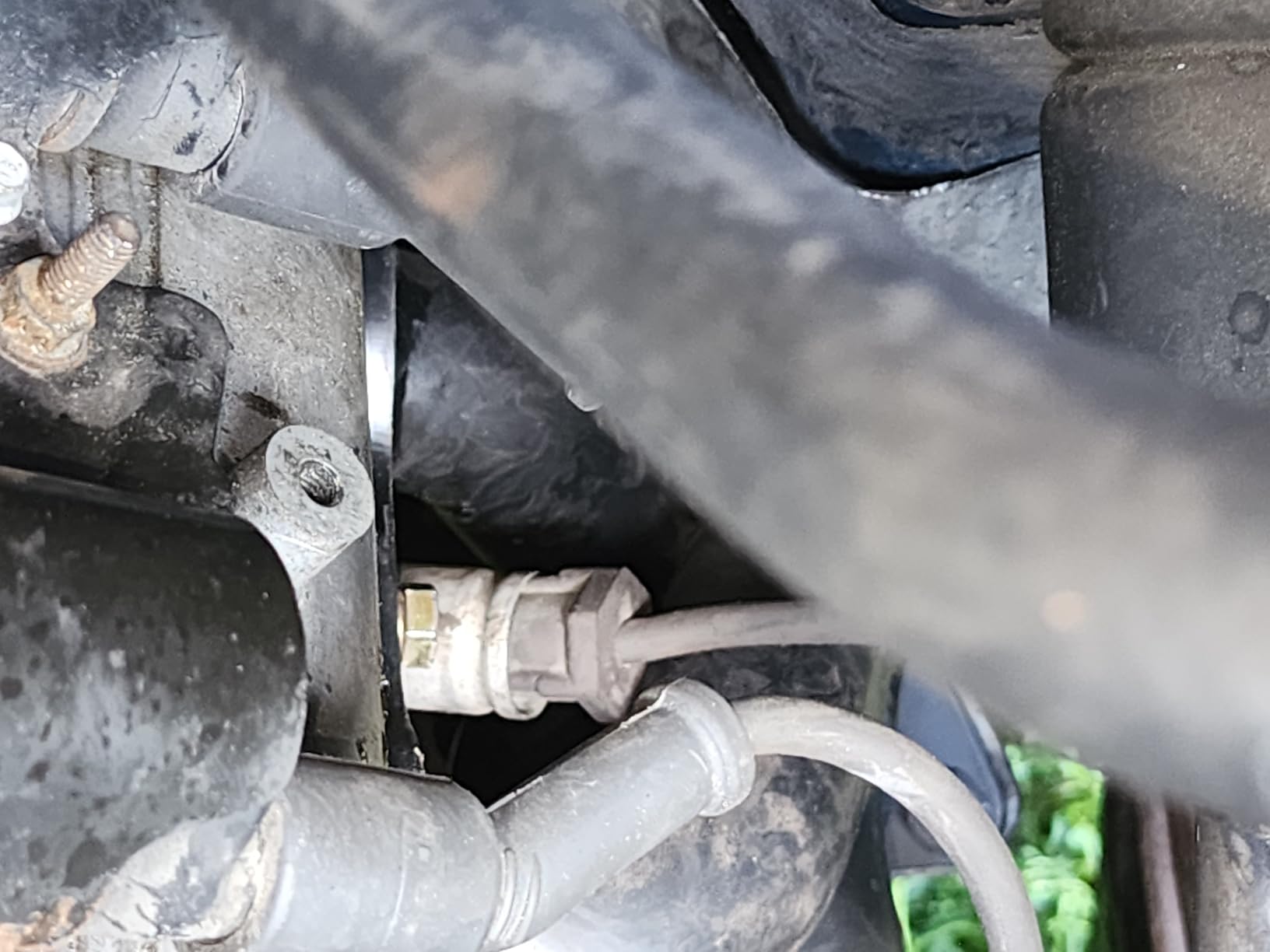
Best for GM Truck Owners on a Budget
If you own a 2002-2013 Silverado, Sierra, Tahoe, Suburban, Yukon, or Escalade with one of the listed V8s, this is the easiest bolt-on header you’ll find. Mild steel means rust is the long-term concern, especially in northern climates with road salt, so budget for a ceramic coating add-on if you want headers that last a decade.
Tuning Requirements After Install
Mild factory tunes tend to tolerate these shorty headers without a custom tune, but if you’ve already added a cold air intake and cat-back exhaust, a tuner reflash is the smart move. Forum owners on the GM truck platforms report no check-engine lights after install on stock calibrations.
2. PG POWERGO MOTORSPORT LS Swap Stainless Headers – Best for LS Engine Swaps
POWERGO MOTORSPORT 1100003630 Exhaust Headers 1-5/8 x 2-1/2 in. 304 Stainless Steel for LS Swap (LS1/LS2/LS6/LS7) for C10 C1500 Suburban Blazer Camaro Firebird Chevelle El Camino Caprice Impala Nova
1-5/8 x 2-1/2 tubes
304 stainless
Tuck-in LS swap design
Pros
- Engineered specifically for LS1
- LS2
- LS3
- LS6 and LS7 engine swaps
- Tight tuck-in design provides clearance in older chassis
- 16-gauge 304 stainless steel construction
- Polished surface for rust resistance
- TIG welded joints for durability
Cons
- Some users report fitment requires modifications on certain LS swap applications
- Mixed reviews result in a 3.7 average across 149 ratings
LS swaps into older cars and trucks have a clearance problem: factory LS headers won’t fit inside a vintage C10 engine bay, and many aftermarket “LS swap” headers still force you to drop the motor to install them. The PG POWERGO 1100003630 solves that with a tight tuck-in design intended specifically for LS1, LS2, LS3, LS6, and LS7 transplants into C10 C1500 Suburban Blazer Camaro Firebird Chevelle El Camino Caprice Impala and Nova chassis.
The build is solid for the price point: 16-gauge 304 stainless steel, polished for corrosion resistance, with the same 3/8 inch laser-cut head flanges and TIG welds as the brand’s truck-specific line. The 1-5/8 inch primary tubes feeding a 2-1/2 inch outlet work well on stock and mildly built LS builds up to around 450 RWHP.

The 3.7-star average across 149 ratings does tell you something: fitment is a wildcard on certain swap configurations. Buyers on the easiest combinations (LS1/LS2 into a stock C10 frame) report clean installs with no modifications, while more involved swaps (LS3 into an El Camino with a 4L80E) sometimes require trimming or relocation of the O2 bungs. If you’re new to LS swaps, plan extra time.
For the price, this is the best value 304 stainless LS swap header set on the market. Compare it to American Racing Headers and Kooks and you’ll save several hundred dollars, which you can put toward the rest of the swap.
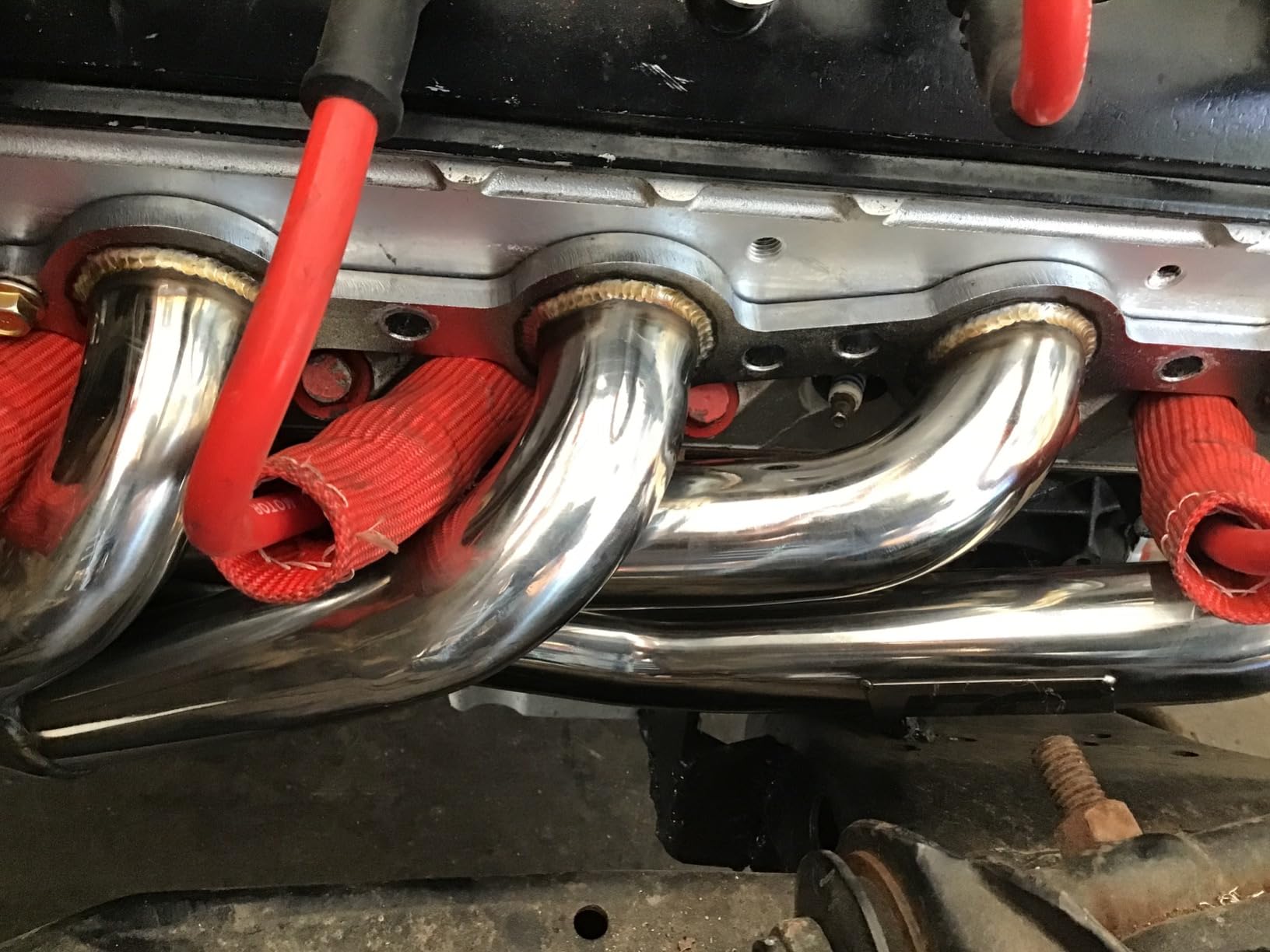
Best for Budget-Minded LS Swappers
Anyone running an LS swap into a 60s-90s GM chassis and wanting to keep the install simple will appreciate the tuck-in design. The 304 stainless steel also holds up to weather better than the mild steel alternatives in the same price bracket.
Fitment Caveats for Harder Swaps
If you’re bolting up an LS3 or LS7 with a non-stock transmission, do a mock-up on the engine stand before final install. A few reviewers reported spending extra hours relocating O2 sensor bungs or trimming clearance tabs on tight chassis swaps.
3. PG POWERGO MOTORSPORT Stainless Polished Headers for GM 6.0L – Best Value for Big V8s
Exhaust Headers 1-3/4 in. Stainless Steel Polished Finish for 2003-2006 Silverado Sierra Suburban 1500 1500HD 2500 2500HD 6.0L V8
1-3/4 in primaries
304 stainless
Polished finish
Pros
- Larger 1-3/4 inch primary tubes sized for 6.0L V8 applications
- Direct bolt-on fit for 2003-2006 Silverado
- Sierra
- Suburban 1500/1500HD/2500/2500HD
- Mandrel-bent 16-gauge 304 stainless steel construction
- Polished surface and chrome-coated flanges for rust resistance
Cons
- Fit limited to 2003-2006 GM 6.0L V8 platforms
- Some buyers note fitment may require minor adjustments on certain configurations
The 6.0L V8 in your 2003-2006 GM HD truck wants more airflow than the factory manifold delivers, and the PG POWERGO polished stainless set is one of the few budget options that also bumps up to 1-3/4 inch primaries. That extra quarter-inch matters on a 6.0L with even a mild cam, where stock 1-5/8 shorty manifolds leave measurable horsepower on the table.
Mandrel-bent 16-gauge 304 stainless is a step up from mild steel in terms of corrosion resistance, and the polished surface looks at home under the hood. The chrome-coated head flanges are laser-cut from 3/8 inch plate, which helps them resist warping through heat cycles.

The 4.4-star rating across 91 reviews is the strongest in this lineup. Buyers on the targeted 2003-2006 GM 6.0L trucks consistently report clean bolt-on fits and noticeable throttle response improvements. The 1-3/4 primaries wake up the mid-range without sacrificing low-end drivability, which is the whole point of staying shorty instead of going long tube.
You’ll want to add gaskets if you don’t already have a spare set, but everything else needed is in the box. If you’re already running a cold air intake and a cat-back exhaust on your 6.0L, this header set is the missing piece to round out the intake-exhaust loop.
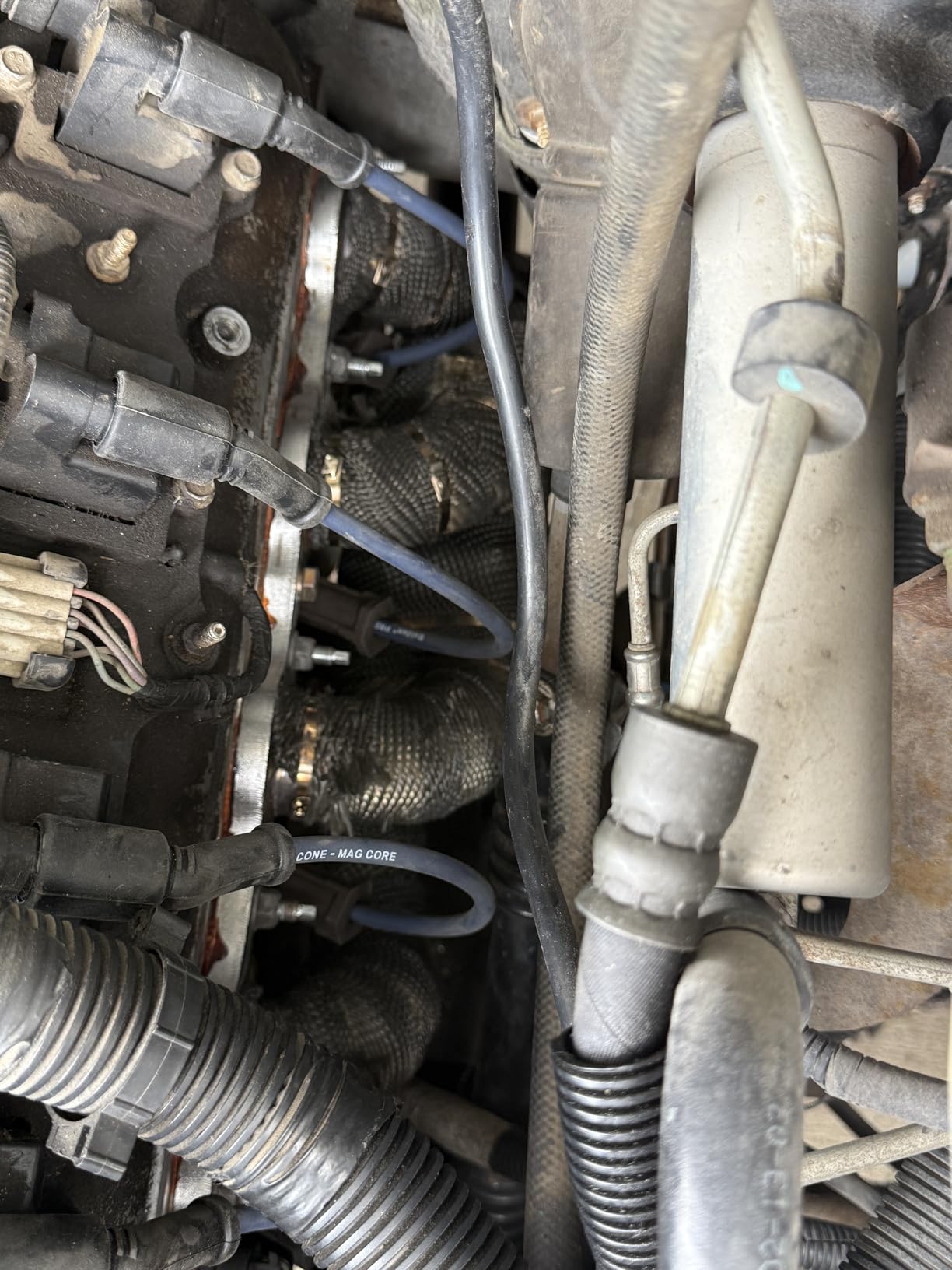
Best for Modified 6.0L GM HD Trucks
The 1-3/4 primary tubes are sized correctly for a 6.0L with a mild cam or nitrous shot. If you’re staying naturally aspirated with bolt-ons and chasing better throttle response, this header set is calibrated for that exact build sheet.
Limitations to Know Before You Buy
The vehicle-specific fit means this set is only for the 2003-2006 GM 6.0L trucks listed. Anyone with a later or earlier model needs to look at a different header set, and Silverado 1500 owners should verify the sub-model because some 4.8L/5.3L trucks used different exhaust ports.
4. Ispeedytech LS Swap Long Tube Headers for C10 – Best Long Tube for LS Swaps
LS Swap Long Tube Headers C10 for 60-98 Chevy GMC Silverado Sierra C10 C1500 LS1 LS2 LS3 LS6 LS7
Long tube design
LS1-LS7 fit
1960-1998 C10/C1500
Pros
- Designed for LS1
- LS2
- LS3
- LS6 and LS7 engines
- Fitment engineered for 1960-1998 Chevy and GMC C10 and C1500 trucks
- Provides clearance around transmission pan
- shift linkage and oil pan
- Quality welds on most units
- Includes O2 sensor provisions
Cons
- Some buyers report tight fit requiring trimming of frame rails or control arm mounts
- O2 sensor bungs may need to be relocated on certain transmissions
If you’re going long tube on an LS swapped C10, the Ispeedytech O6098FBM is one of the few options that doesn’t require dropping the engine to get the headers in place. The fitment was engineered specifically around LS transmissions and motor mounts common to 1960-1998 GM trucks, and reviewers on those exact platforms consistently report clean installations.
Long tube design with equal-length primaries delivers a real top-end power increase on LS engines. The trade-off is ground clearance, which is why this set is built for trucks that see occasional trips to the drag strip rather than cars slammed on bags. If your truck has any lowering at all, sit the truck on the ground and measure before buying.
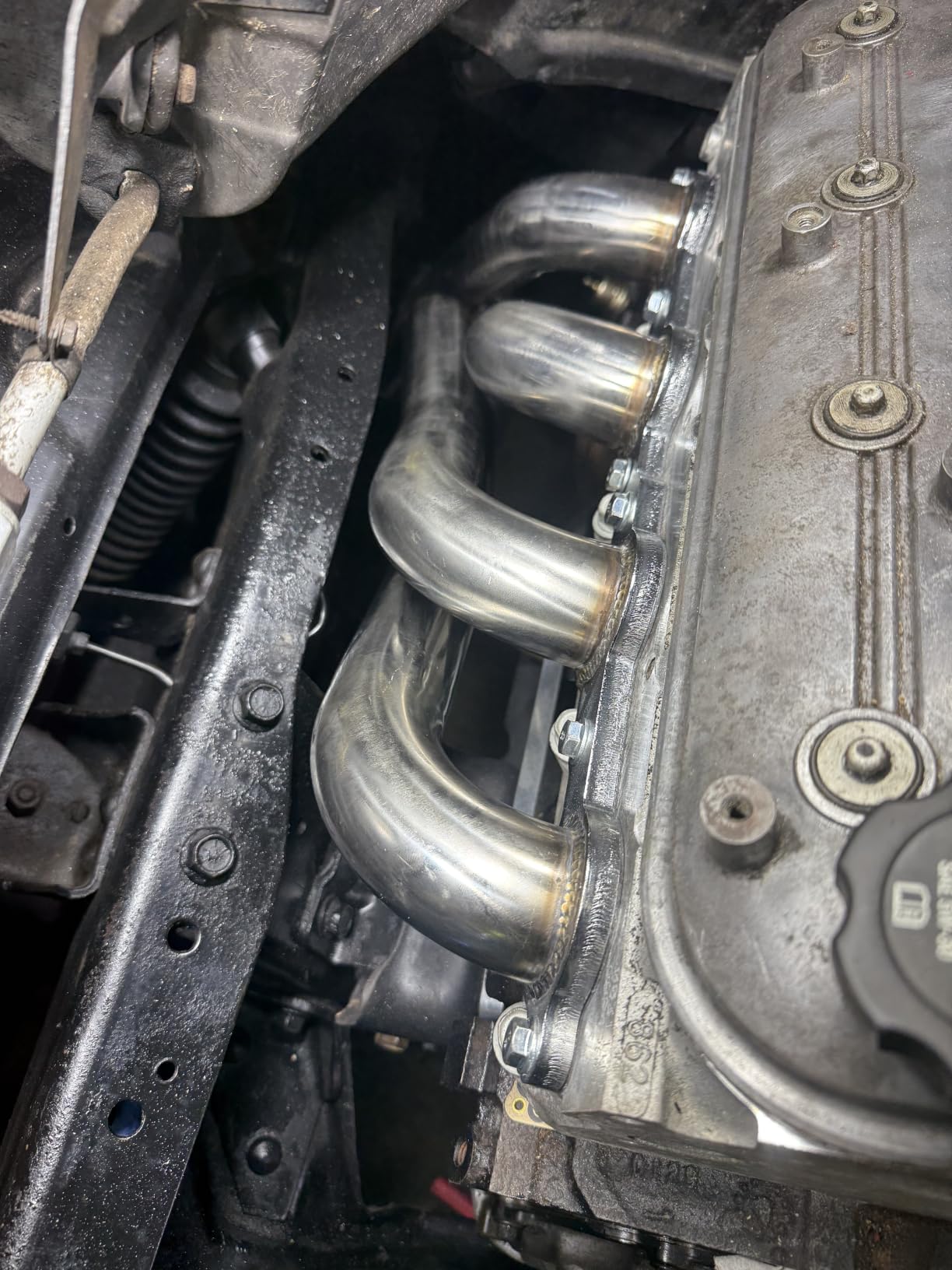
Build quality is a notch above what you’d expect at this price. Reviewers praise weld quality on the samples they received, and the hardware kit includes what you need for the most common LS swap configurations. The 4.2-star average across 69 reviews is solid for a vehicle-specific long tube header.
You’ll need to factor in a custom tune plus a new mid-pipe for any long tube install on a LS engine. The stock O2 sensors will read correctly after a tune, but emissions legality depends on your state and whether the headers include high-flow cats.
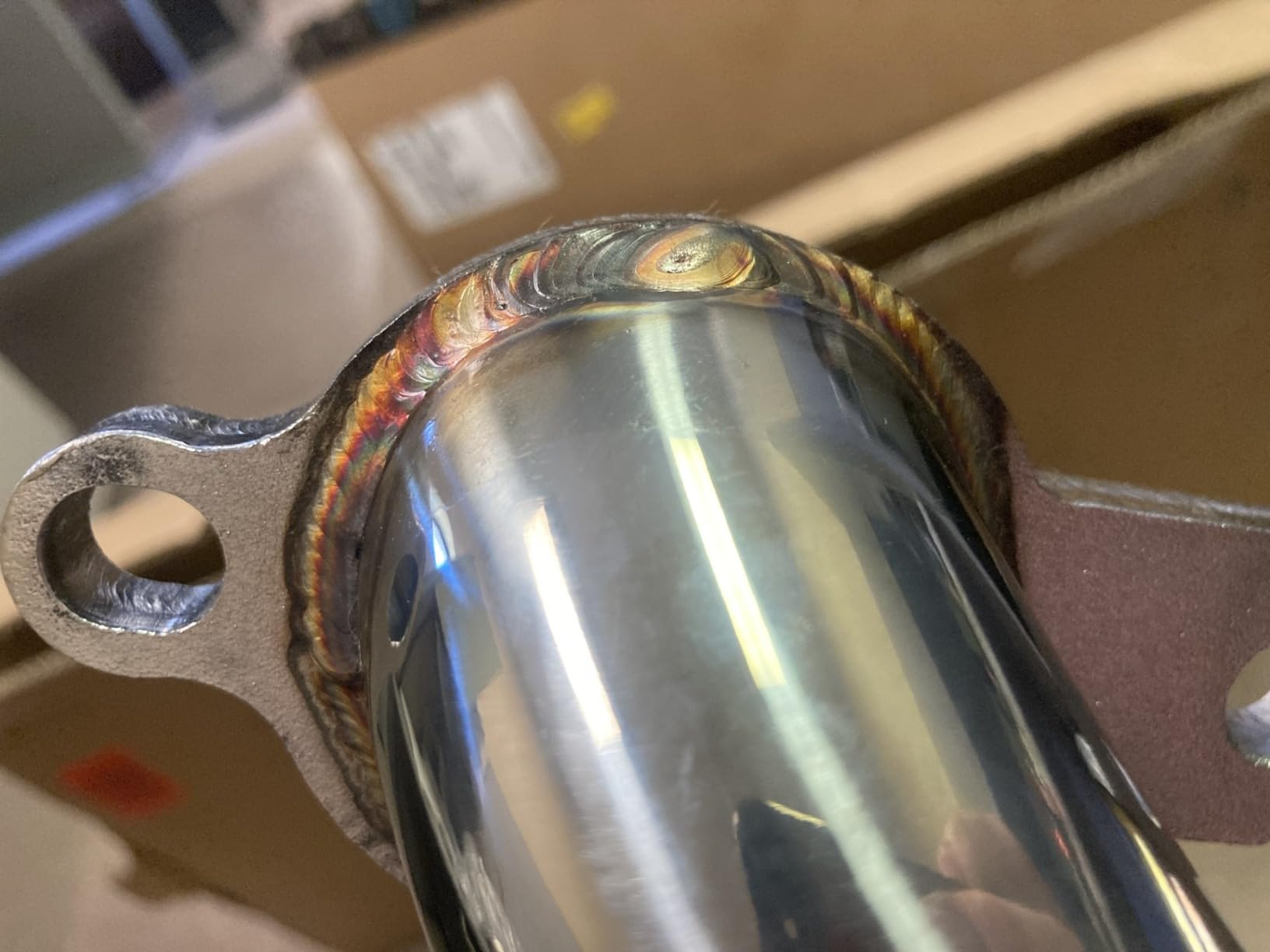
Best for LS Swaps Targeting Top-End Power
If your LS swap is built for drag racing or aggressive street performance, the longer primaries make more top-end power than any shorty on this list. The 25.3-pound weight isn’t unusual for long tubes and shouldn’t concern most buyers.
Drop the Engine for the Easiest Install
Even with engineered clearance, getting long tubes onto an LS engine in a tight engine bay is easier with the motor out of the car. Plan for a weekend project rather than a Saturday afternoon if you’re working in the truck.
5. BBK 1515 Shorty Headers for Ford Mustang 5.0L – Best Direct Fit for Fox and SN95 5.0s
BBK Performance 1515 1-5/8″ Shorty Tuned Length Performance Exhaust Headers for Ford Mustang 5.0L – Chrome Finish
1-5/8 in shorty
Tuned length
Chrome finish
Pros
- Tuned length shorty design delivers measurable horsepower and torque gains on 5.0L Mustangs
- Chrome finish that holds up well
- Direct fit for Ford Mustang 5.0L applications
- BBK is a long-established aftermarket brand with consistent quality
Cons
- Vehicle-specific fit limited to Ford Mustang 5.0L applications
- Some users may prefer full length headers for maximum performance gains
BBK Performance has been turning out Fox body and SN95 Mustang headers for nearly two decades, and the 1515 shorty tuned length set is the gold standard for stock 5.0L Coyote-adjacent builds. The 1-5/8 inch primaries are sized correctly for 5.0L power levels, and the tuned length geometry delivers low-end torque gains without a custom tune.
Quality shows in the details: thick header flanges, proper merge collectors, and TIG welds rather than the cheap wire welds you’ll find on no-name headers. The chrome finish is what most people install because it matches the chrome valve covers and dress-up parts common to these cars.
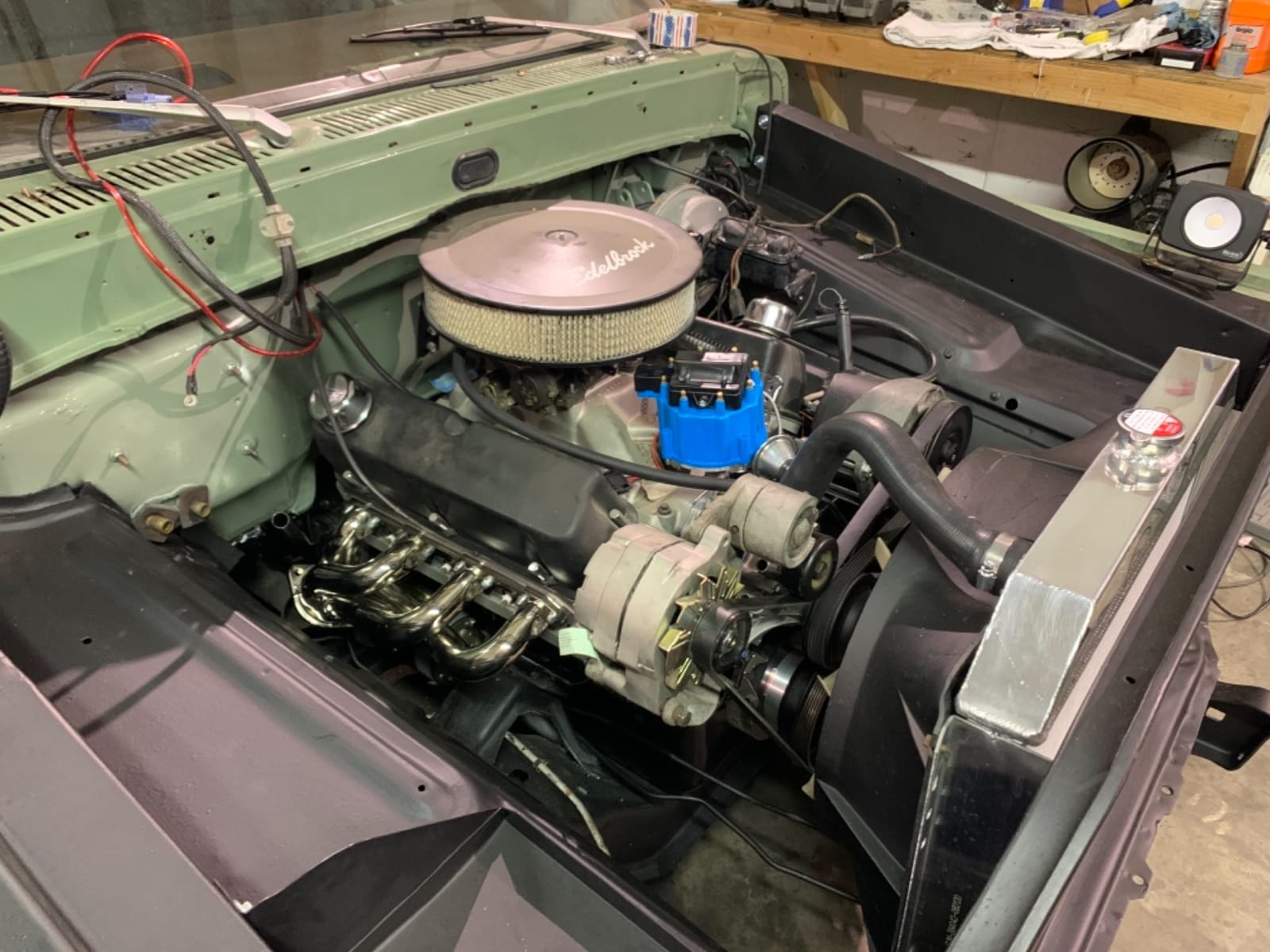
The 4.5-star average across 66 reviews is the kind of consistency you want from a long-running part. Mustang 5.0L owners on Fox body and SN95 chassis report straightforward bolt-on installations, noticeable throttle response improvements, and a moderate but real horsepower increase (BBK rates them for around 10 RWHP on a stock 5.0L).
If you want more power and don’t mind losing ground clearance, BBK’s long tube options exist in the same product line and use the same quality construction. The shorty set is the daily-driver compromise that still makes power.
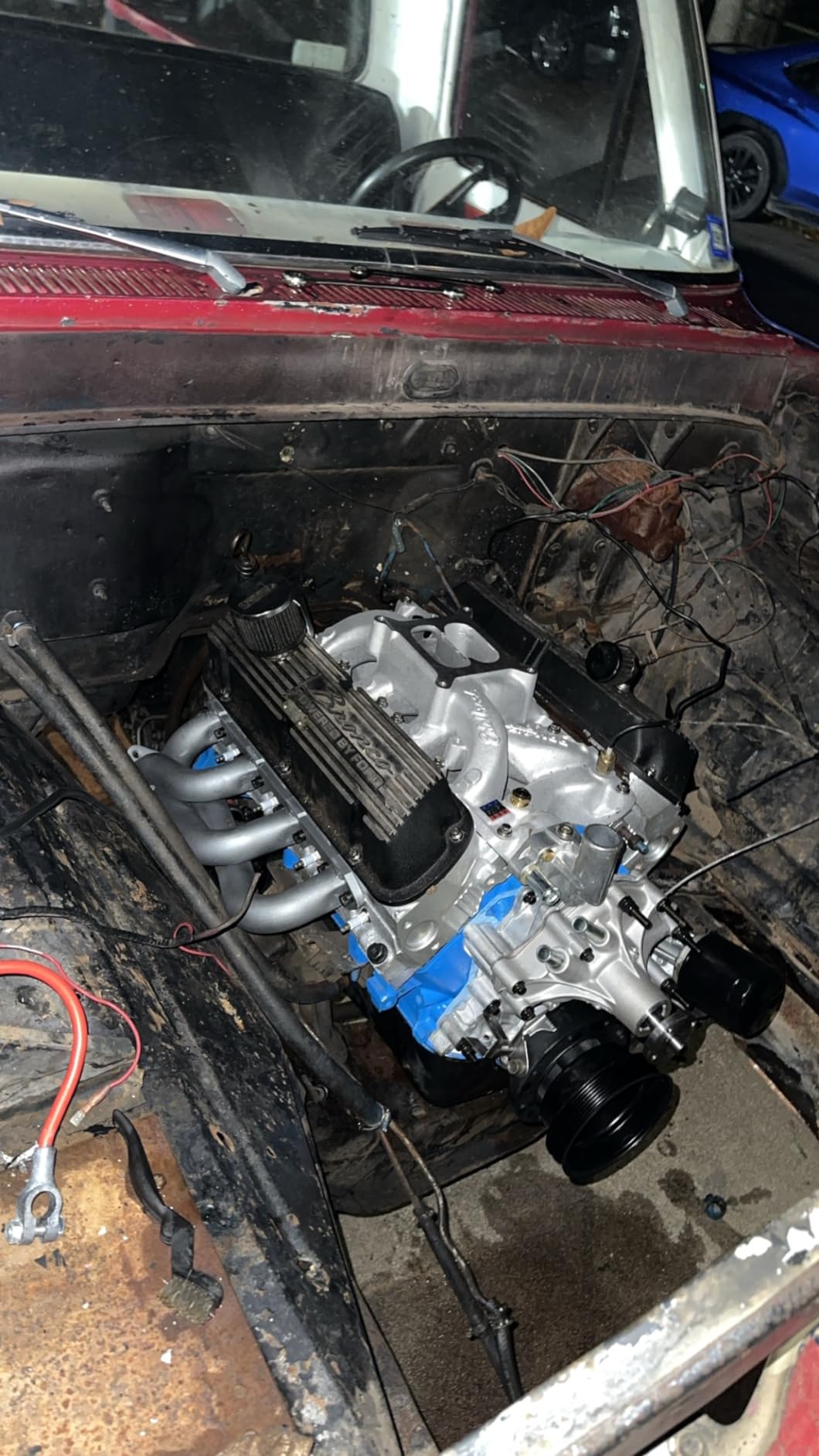
Best for Fox and SN95 Mustang Owners
If you’re running a 5.0L Fox body, SN95, or early New Edge Mustang and want a header that bolts in cleanly, this is the safe choice. BBK’s fitment database for these chassis is the deepest in the aftermarket.
Limitations for Maximum Power Builds
If you’re running a serious built 5.0L with heads, a cam, and a supercharger, a long tube header will make more peak power. BBK does offer long tubes in the same line, but for an NA street build the shorty tuned length is the better balanced choice.
6. Gibson GP129S Stainless Steel Performance Header – Best Premium Stainless Build
Gibson GP129S Stainless Steel Performance Header
1.50 in stainless
Mandrel bent
Lifetime warranty
Pros
- 1.50 inch stainless 16-gauge mandrel bent tubing
- Hassle free bolt-on installation
- Increased horsepower and fuel economy reported by reviewers
- Quality welds and clean fitment on intended vehicles
- Limited lifetime warranty against rust-through on stainless steel products
Cons
- Premium price point compared to other header options
- Some buyers reported rust and dent issues shortly after installation
Gibson Performance has been building stainless exhaust systems longer than most of its competitors have existed, and the GP129S stainless steel performance header shows why the brand has earned a loyal following. The 1.50 inch 16-gauge mandrel-bent 304 stainless construction is the highest-grade tubing in this entire roundup, and the limited lifetime warranty against rust-through means the headers should outlast the car.
The 4.4-star rating across 60 reviews reflects what reviewers actually say about it: clean bolt-on install, real horsepower and fuel economy improvements, and welds that hold up over time. This is a vehicle-specific fit (Gibson makes dozens of GP-series headers for different platforms), so check your specific application before ordering.
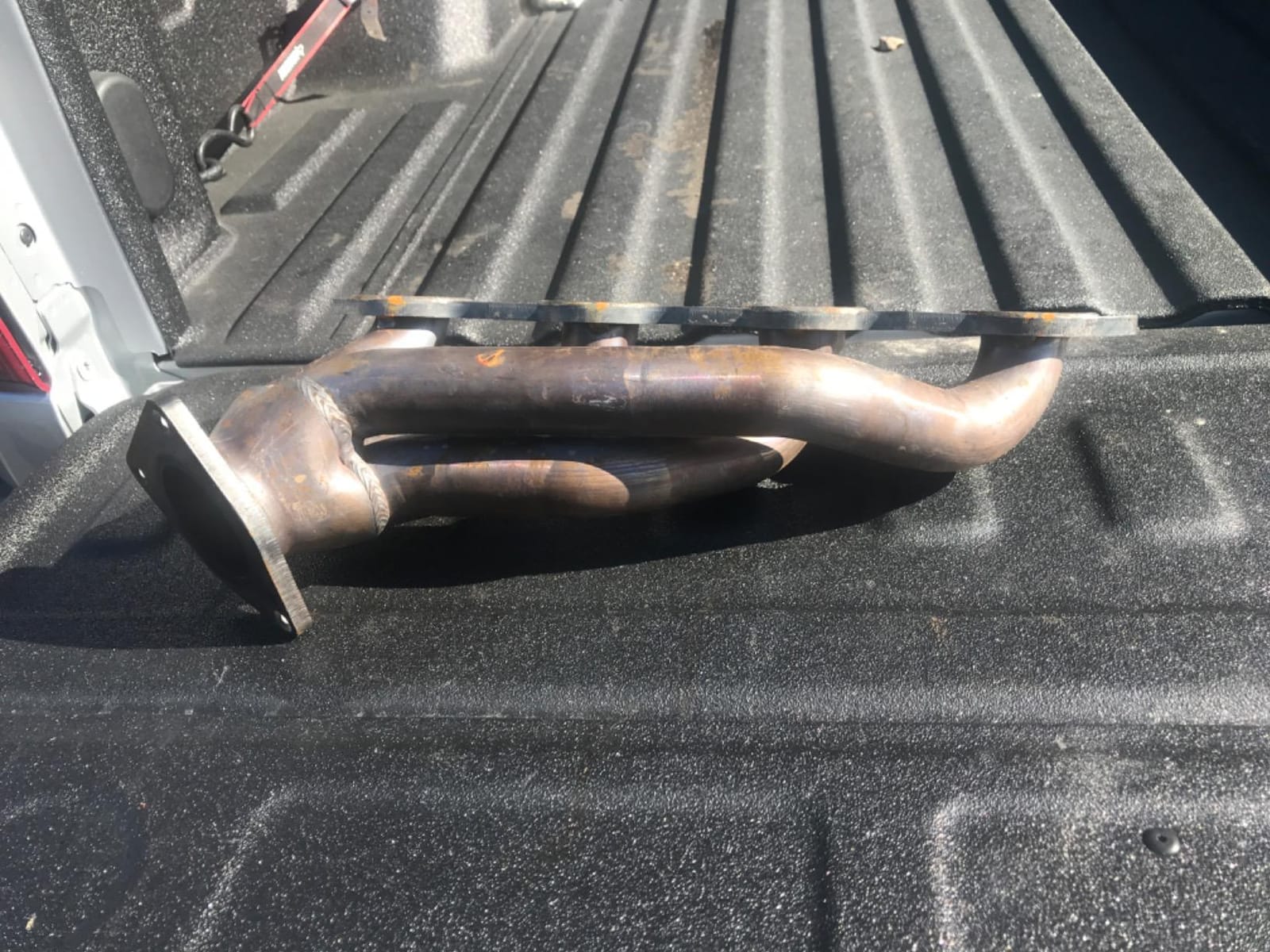
The 1.50 inch primaries are tuned for stock to mildly modified engines in the 200-350 HP range. If you’re running more cam and compression than that, you’ll want to step up to Gibson’s larger diameter 1-5/8 inch options. For a daily-driven truck or SUV, the smaller primaries preserve torque down low.
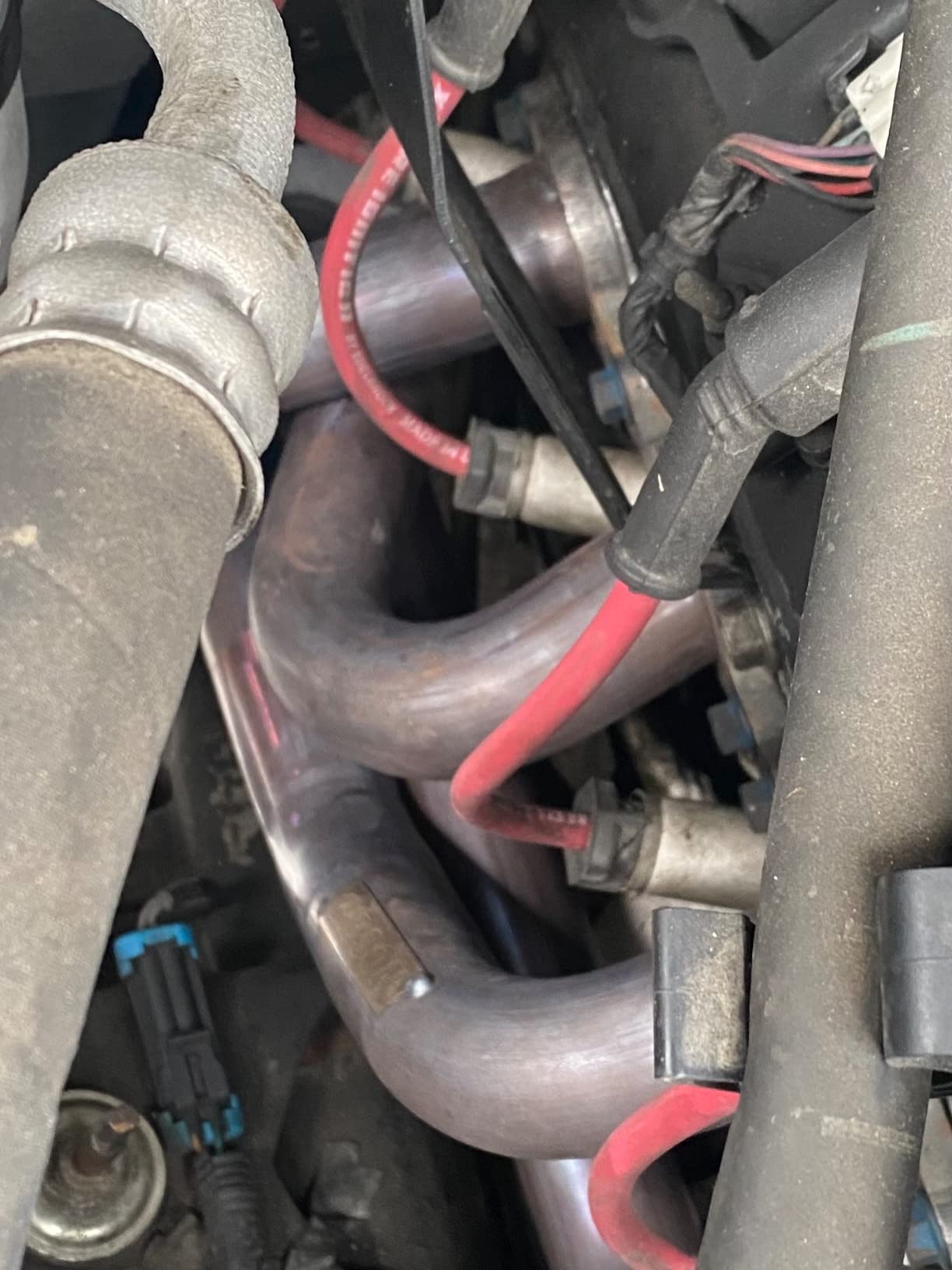
The premium price reflects the build quality, but the warranty against rust-through is the real story. If you live in a salt-belt state and don’t want to worry about headers rusting out from the inside, stainless construction plus the warranty is worth the upcharge over mild steel.
Best for Cold-Climate Daily Drivers
If road salt and snow eat mild steel headers in three to five years, the 304 stainless build with the lifetime rust-through warranty is the smart long-term play. Headers stay looking new and you don’t have to plan for replacement.
Fitment Verification Before You Order
Gibson makes this header for many specific vehicles but not all. The universal SS design may not match your exact exhaust port pattern, so check the vehicle fitment list before ordering rather than assuming it’ll bolt up.
7. Flowtech 91843FLT Shorty Headers for Chevy/GMC V8 – Best CARB-Compliant Option
Flowtech 91843FLT Shorty Headers – Black Painted
1-5/8 in primaries
2-1/2 collector
CARB EO D-115-20
Pros
- Mandrel-bent 16-gauge tubing for smooth flow and consistent exhaust velocity
- 1-5/8 inch primary tubes improve throttle response and exhaust flow
- OE-style 2-1/2 inch ball and socket collector bolts to factory exhaust without cutting or welding
- TIG-welded machined 3/8 inch header flange for leak-free seal
- CARB approved with EO number D-115-20 for emissions compliance
Cons
- Some users report mixed fitment results on certain 2002-2013 Chevy/GMC V8 applications
- Black paint finish may degrade under sustained high-heat operation
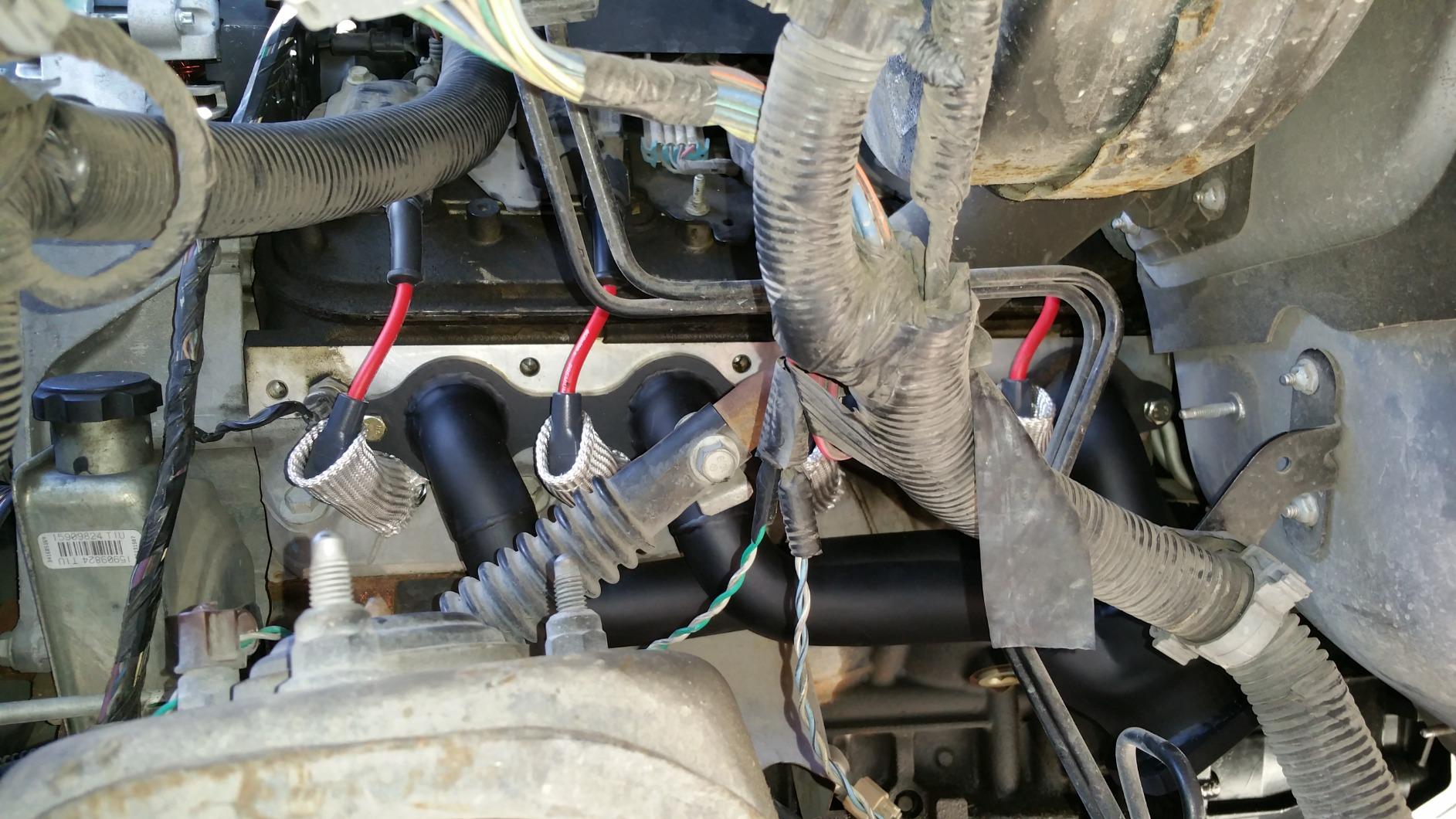
If you’re in California, New York, or any state with emissions testing on your daily driver, the Flowtech 91843FLT shorty headers have a real CARB Executive Order (EO# D-115-20) that makes them smog-legal for the registered applications. Most aftermarket headers are off-road use only, which means this Flowtech set is one of the few bolt-ons that won’t trip a smog tech.
The design is old-school Flowtech: mandrel-bent 16-gauge tubes, 1-5/8 inch primaries, an OE-style 2-1/2 inch ball and socket collector that bolts right to your factory exhaust head pipe (no cutting or welding), and a TIG-welded 3/8 inch flange for a leak-free seal. Premium aluminum header gaskets are included.
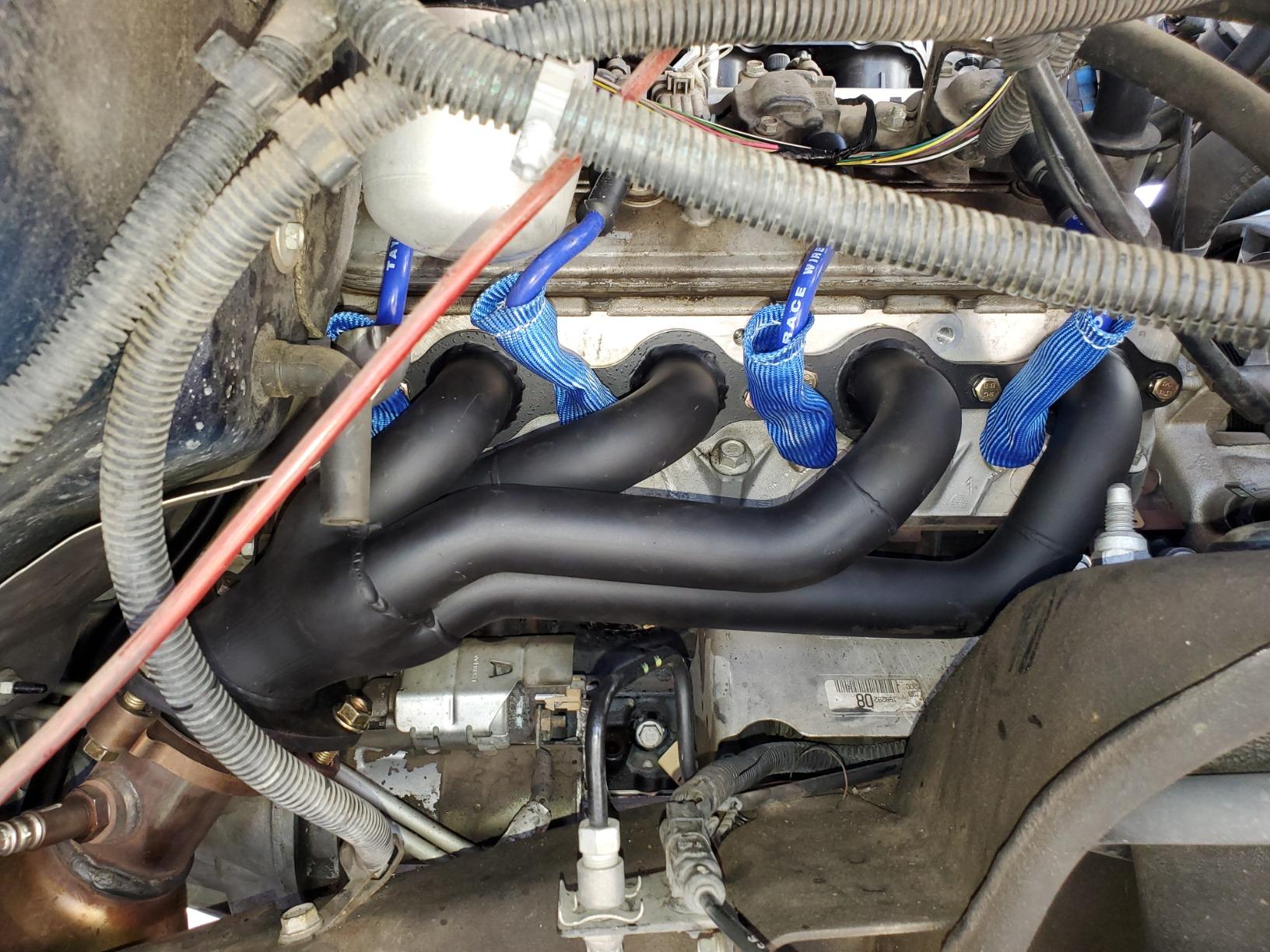
The 3.8-star average across 38 reviews is a bit lower than the rest of this roundup, mostly because buyers on certain specific 2002-2013 Chevy/GMC V8 configurations ran into fitment issues. For the standard 4.8L, 5.3L, and 6.0L trucks in the targeted range, the reviews trend positive.
If you need CARB-compliant headers and you also want the OE-style collector that doesn’t require an aftermarket mid-pipe, this Flowtech set is the rarest combination in the aftermarket. Just verify the EO number covers your specific vehicle before buying.
Best for Smog-State Daily Drivers
If you’re in California or another CARB state and want a header set that’s legal for street use, the EO number on this Flowtech set is the reason to buy it. Most aftermarket headers are explicitly off-road use only.
Long-Term Paint Durability Concerns
The black high-heat paint will degrade over time, especially on trucks that see sustained high-load towing. Plan on a ceramic coating add-on if you want headers that stay clean past three years of service.
8. BBK 16120 Shorty Headers for Mustang GT 4.6 3V – Best for Modern GT Power
BBK 16120 1-5/8″ Shorty Tuned Length Performance Exhaust Headers for Ford Mustang GT – Polished Silver Ceramic Finish
1-5/8 in shorty
Polished ceramic
12-16 HP gains
Pros
- CNC mandrel bent tubing for 35 percent increased flow over stock
- 10-15 horsepower rated gains with improved torque and performance
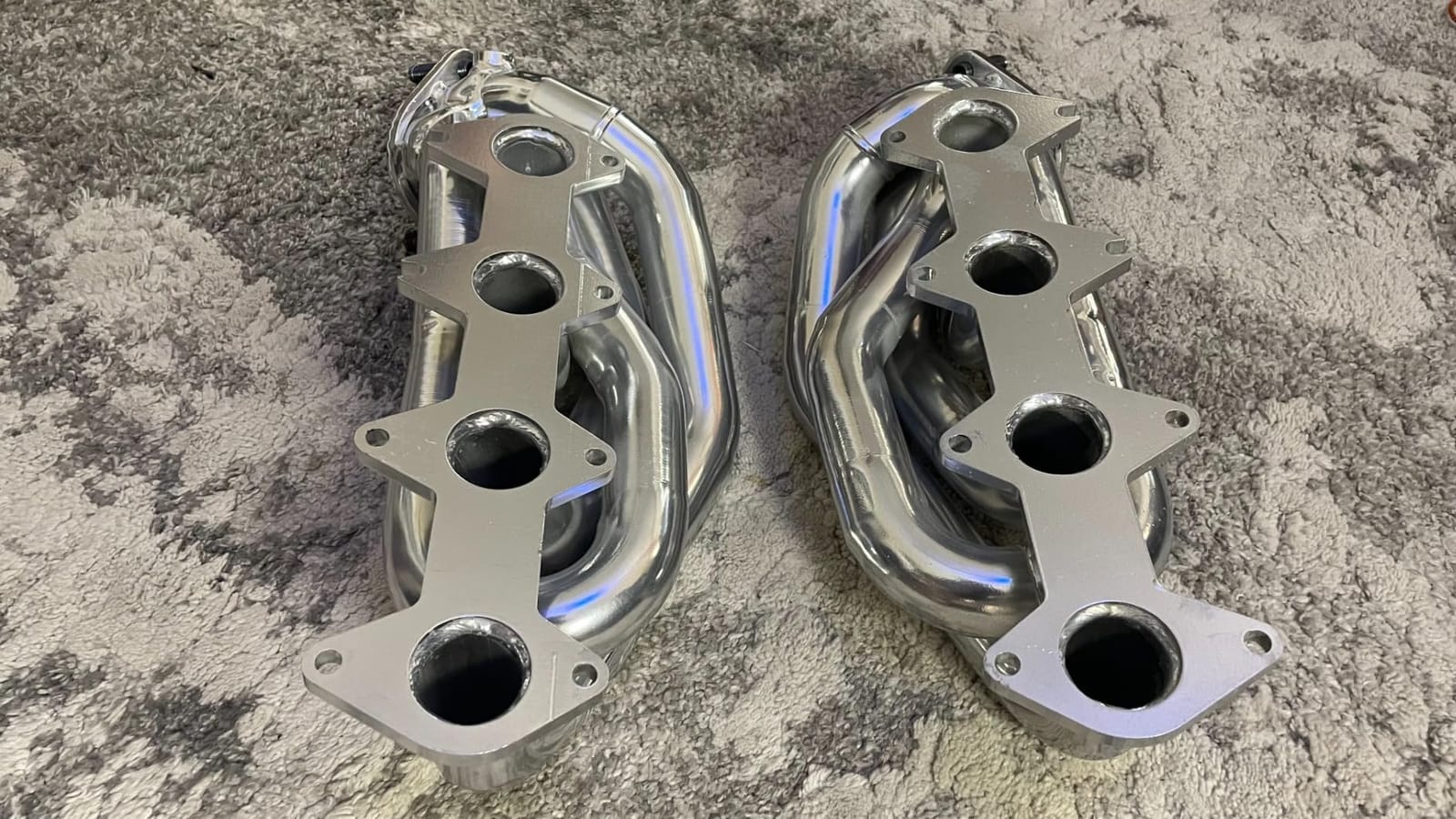
- Aircraft quality construction with heavy gauge 1-5/8 inch tubing and 3/8 inch laser cut flanges
- Polished silver ceramic finish stays shiny after extended use
- Includes new gaskets and hardware for direct fit installation
Cons
- Some users report tight installation requiring steering shaft shimming and slotted bolts
- A few reviewers noted warped flanges or visible machine marks
The 2005-2010 Mustang GT 4.6 3V has a notoriously tight engine bay, and BBK’s 16120 shorty tuned length headers were designed specifically to clear the steering shaft and stock exhaust routing without modifications. If you own one of these modern GTs and you’ve been putting off headers because of fitment anxiety, this is the set that solves the problem.
BBK rates these for 12-16 RWHP gains on stock 4.6 3V applications, which matches what forum owners report. The CNC mandrel-bent 1-5/8 inch tubing is rated for 35 percent increased flow over stock, and the 3/8 inch laser-cut flanges plus the patented collector design are the kind of spec details that explain why BBK headers cost more than bargain-bin alternatives.
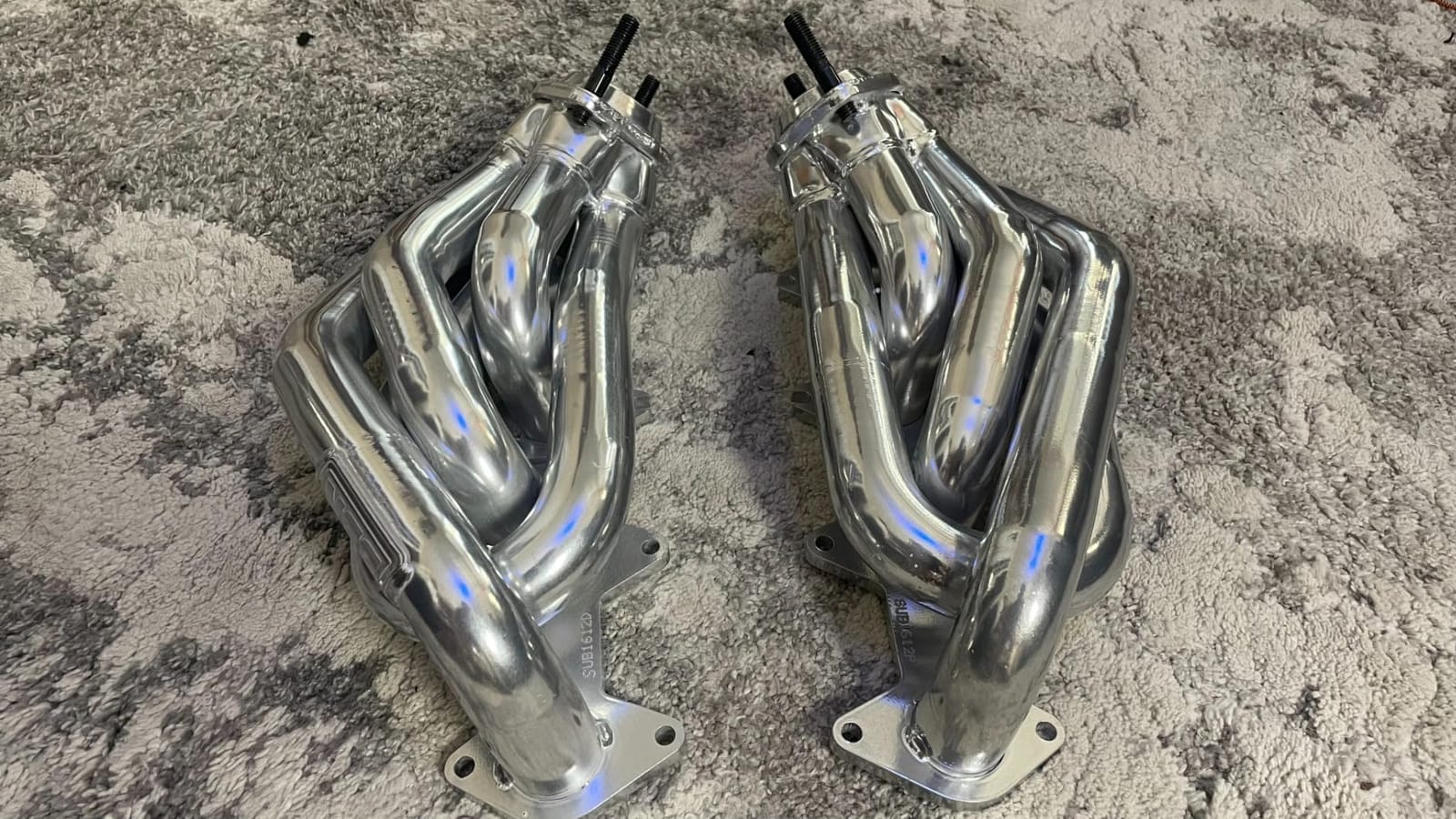
The polished silver ceramic finish holds up better than the chrome alternative on the heat-cycled headers in this application. Reviewers consistently say the finish stays attractive even after a year of daily driving, and the build quality on the headers themselves is what you’d expect from a Made-in-USA brand.
Installation difficulty is the main caveat: a few reviewers report needing to shim the steering shaft slightly and slot bolt holes for clean fitment. Plan on 4-6 hours for the install rather than the typical 2-3 hours for shorty headers on simpler chassis.
Best for 2005-2010 Mustang GT 4.6 3V Owners
BBK designed these specifically for the tight engine bay on the modern GT chassis. If you’ve been burned before by headers that didn’t clear the steering shaft, these are the answer.
Installation Difficulty and Hardware Quality
A handful of buyers reported the included gaskets were thin compared to aftermarket alternatives. If you want peace of mind, swap the gaskets for a higher quality set before install rather than using the included pieces.
How to Choose the Right Exhaust Headers for Your Build
Before you pick a specific header set, you need to know which of the three main header types matches your driving style, which tube diameter matches your horsepower level, and what material you need for your climate and budget. The buying guide below walks through each decision.
Shorty vs Mid-Length vs Long Tube Headers
Shorty headers are the most common aftermarket header type and the easiest to install. The primary tubes measure roughly 12-18 inches long and exit close to the engine, which preserves low-end torque and keeps ground clearance intact. Shorty headers are the right pick for daily-driven trucks and SUVs where you want a small throttle response and exhaust note improvement without losing driveability.
Mid-length headers strike a balance between shorty and long tube design. Primary tubes measure around 24-30 inches, which lets them make more top-end power than a shorty without forcing you to drop the transmission. Mid-length headers work well on vehicles that see some weekend performance use but still need to clear driveways and speed bumps.
Long tube headers are the high-power option. Primary tubes run the full length of the engine bay and terminate in a collector near the transmission bell housing. Equal-length primaries deliver the strongest scavenging gains and the biggest top-end horsepower numbers, but you lose ground clearance and usually need to replace the mid-pipe and add a custom tune. Long tubes are the right pick for drag builds and dedicated track cars.
Primary Tube Diameter and Sizing
Primary tube diameter is the single biggest tuning decision you’ll make on headers. Going too large hurts low-end torque because the exhaust pulse loses velocity. Going too small restricts top-end power because the tube chokes flow at high RPM. The standard horsepower-to-diameter rule of thumb:
1-1/2 inch primaries are tuned for stock to mild bolt-on engines in the 200-350 HP range. They preserve low-end torque and are the right pick for daily drivers that just want a small improvement.
1-5/8 inch primaries are the most common aftermarket size. They handle stock to moderately built engines in the 300-450 HP range, which covers most street-driven V8s. This is the size we’d recommend as a default unless you have a specific reason to go larger or smaller.
1-3/4 inch primaries are for built engines in the 450-550 HP range. They’re the minimum size for an LS engine with a mild cam, and they wake up the mid-range on trucks that have been modified with heads, intake, and exhaust.
1-7/8 to 2 inch primaries are reserved for engines making 550+ HP. These are typically found on dedicated drag builds or supercharged applications where top-end power is the only priority.
Header Material: Mild Steel, Stainless Steel, and Ceramic Coating
Mild steel is the cheapest material and it works fine for headers in dry climates, but it rusts aggressively in snow-belt states. If you go mild steel, plan to budget for a ceramic coating add-on to extend the life of the headers.
Stainless steel (typically 304 grade) costs more upfront but resists corrosion indefinitely. Stainless is the right material if you want headers that look new five years later and don’t want to think about rust-through. Most premium header brands offer stainless as a step up option.
Ceramic coating is a finish applied on top of either steel or stainless. The coating keeps radiated heat inside the tubes, which lowers engine bay temperatures by 30-50 percent according to multiple manufacturer claims. Ceramic coating also resists corrosion and looks good under the hood. Most header brands offer it as an add-on option for an additional charge.
4-1 vs Tri-Y Configuration
A 4-into-1 (4-1) collector merges all four primary tubes into a single outlet before reaching the downpipe. 4-1 is the classic design for V8 headers and delivers strong top-end power. Most aftermarket headers on the market use 4-1 design.
A Tri-Y header uses pairs of tubes that merge first, then those pairs merge into the collector. Tri-Y design produces a broader powerband with better mid-range response, and reviewers often describe the sound as smoother. Tri-Y is more common on Honda, import, and vintage muscle applications.
Brand Overview
Kooks, Hooker, Borla, Flowtech, Doug’s Headers, and JBA are the most consistent names in the aftermarket header space. Kooks and Stainless Works lead on premium stainless builds. Hooker BlackHeart delivers strong value. Flowtech offers the best budget options. Doug’s Headers and Patriot are the classic muscle car brands. JBA and BBK dominate the Mustang and modern GM fitment space. AFe rounds out the list with strong fitment on trucks and SUVs.
Total Cost to Install
The header price is only part of what you’ll spend. For long tube headers, plan on additional costs for a new mid-pipe, a custom tune, and professional installation if you’re not doing the work yourself. Total cost of ownership on a typical LS long tube install runs from the header price itself plus a mid-pipe, plus a tune, plus labor if you’re paying a shop. Shorty headers are simpler: most bolt to the factory exhaust head pipe without modifications, and many buyers skip a tune on stock calibrations.
If you’re also upgrading other parts of your truck’s exhaust, our guide to garage exhaust ventilation fans covers what to run in your shop while you’re wrenching. For the V8 trucks specifically, check out our roundup of the best shorty headers for V8 trucks for a deeper comparison.
Frequently Asked Questions
What is the best brand for exhaust headers?
Kooks, Hooker, Borla, Flowtech, Doug’s Headers, and JBA are consistently rated as the best exhaust header brands. Kooks and Stainless Works lead in premium stainless builds, Hooker BlackHeart delivers the strongest value, and Flowtech offers the strongest budget options. For specific vehicle fitment, BBK dominates Mustang and modern GM applications, AFe leads on trucks, and Patriot and Doug’s are the classic muscle car brands.
What headers make the most power?
Long tube headers with equal-length primaries consistently make the most horsepower, especially at high RPM. They feature longer primary tubes (1-3/4 inch to 2 inch) feeding a 4-into-1 collector that reduces backpressure and improves exhaust scavenging. Shorty headers make less peak power but preserve low-end torque, which is why they are popular for daily-driven applications.
Do exhaust headers change sound?
Yes. Aftermarket headers change exhaust sound by replacing restrictive cast-iron manifolds with smooth mandrel-bent tubing. Long tubes deliver a deeper, more aggressive tone at high RPM, while shorty headers produce a milder, deeper idle note. The pipe diameter, collector design, and material all contribute to the final exhaust character.
What’s better, 1 3/4 or 1 7/8 headers?
1-3/4 inch primary tubes are best for most street engines under 500 HP, while 1-7/8 inch primaries are preferred for modified engines making 500-900 HP. Going larger hurts low-end torque because the exhaust pulse loses velocity, while going smaller restricts top-end power because the tube chokes flow at high RPM. Match your primary diameter to your horsepower target rather than going as large as possible.
Are stainless or ceramic headers better?
Stainless steel and ceramic coatings are not mutually exclusive. The best headers use stainless steel construction with a ceramic coating on top. Bare stainless resists rust indefinitely, while ceramic adds thermal management that lowers engine bay temperatures and provides additional corrosion resistance. If you can only choose one upgrade, stainless construction is the more important factor for longevity.
Are headers worth it?
Yes. Aftermarket headers are worth it for any performance build. They typically add 15-30 RWHP on a stock V8 engine and significantly improve throttle response, exhaust tone, and engine bay thermal management. Shorty headers deliver the easier install and lower total cost, while long tubes make more peak power at the expense of ground clearance and require a custom tune and mid-pipe for best results.
Final Verdict: Which Exhaust Headers Should You Buy?
After comparing these eight header sets across GM trucks, LS swaps, and modern Mustangs, the answer for most buyers is the PG POWERGO MOTORSPORT mild steel headers for the 2002-2013 GM V8 trucks. They offer the cleanest bolt-on fit on the most popular truck platform, the strongest combination of verified buyer ratings and review count, and the price leaves room in your budget for the rest of the build.
If you need CARB compliance for smog states, step up to the Flowtech 91843FLT with EO# D-115-20. If you’re running an LS swap, the Ispeedytech long tube headers for C10 swaps are the strongest value on long tube design. Mustang owners running a stock 5.0L should look at the BBK 1515 shorty tuned length set, while the modern 4.6 3V crowd needs the BBK 16120 for its engineered steering shaft clearance.
The best exhaust headers for your build come down to matching tube diameter to horsepower, picking the right material for your climate, and buying from a brand that fits your specific vehicle chassis. Every set on this list meets that bar. Pick the one that matches your platform and you’ll be happy with the result.
For shops upgrading ventilation alongside performance work, our picks for bathroom exhaust fans and the best exhaust gas analyzers round out a complete shop setup.