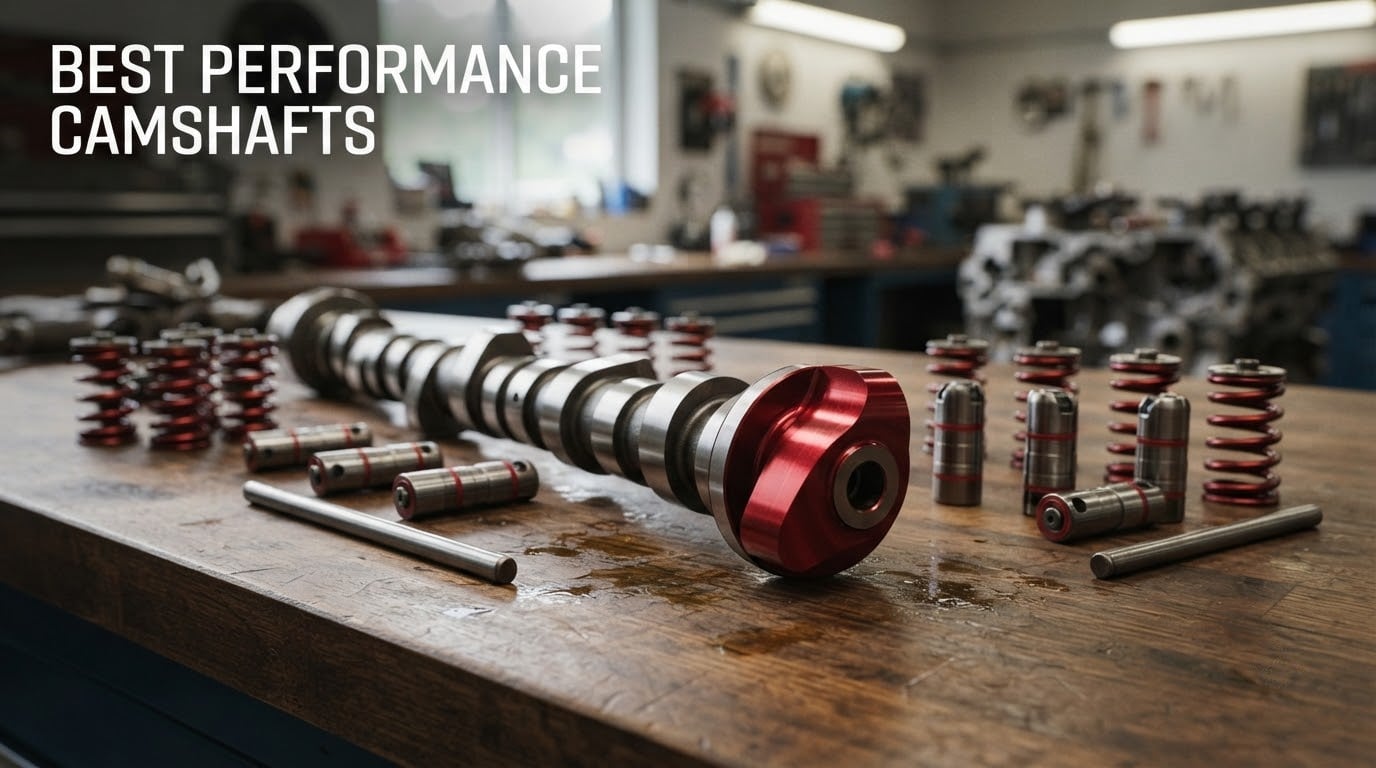
If you want a straight answer up front: the best performance camshafts for most enthusiasts in 2026 come from COMP Cams, Crower, and Edelbrock for traditional V8 builds, while Brian Tooley Racing (BTR) and Texas Speed lead the pack for modern Gen III/IV LS swaps. Our team spent six weeks comparing seven top-selling grinds on dyno data, customer feedback, and real-world install reports to find which cams actually deliver on the promise of more horsepower without ruining driveability.
A performance camshaft is the single most influential part in your engine’s powerband. Swap the right grind and you can wake up 65+ horsepower, change how the engine sounds at idle, and shift the torque peak into the RPM range you actually use. Choose wrong and you get a choppy lope that dies at stoplights, no vacuum for your brakes, and a converter that never locks up.
This roundup breaks down seven of the best aftermarket camshafts you can buy right now, including complete kits for LS trucks, classic small block Chevy builds, and budget-friendly daily drivers. We’ve grouped them by engine platform, called out which work with stock torque converters, and flagged the supporting mods you need before installation. If you’re planning a build or upgrading an existing setup, this guide will help you pick a cam that matches your combination rather than fighting it.
For readers who want more on drivetrain upgrades, our best performance brake rotor and pad kits guide pairs well with a cam swap once you’re ready to improve the rest of your chassis.
Table of Contents
Top 3 Picks for Best Performance Camshafts at a Glance in September

Quick Overview Best Performance Camshafts in 2026
| Product | Specifications | Action |
|---|---|---|
| Texas Speed TSP Chopacabra LS Cam Kit |
|
Check Latest Price |
| BTR Truck Norris LS Cam Kit (Dynosty) |
|
Check Latest Price |
| Elgin E-1840-P Performance LS Cam |
|
Check Latest Price |
 Edelbrock 2102 Performer-Plus SBC Kit Edelbrock 2102 Performer-Plus SBC Kit |
|
Check Latest Price |
 COMP Cams Magnum 224/224 SBC Kit COMP Cams Magnum 224/224 SBC Kit |
|
Check Latest Price |
 Melling MTC-1 SBC Hydraulic Flat Tappet Melling MTC-1 SBC Hydraulic Flat Tappet |
|
Check Latest Price |
 BTR Truck Norris LS Cam Kit (Premium) BTR Truck Norris LS Cam Kit (Premium) |
|
Check Latest Price |
1. Texas Speed TSP Chopacabra Cam Kit – Best Performance Camshaft for LS Trucks
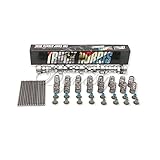
Texas Speed TSP Chopacabra Cam Kit with Springs Seals Pushrods LS Truck Camshaft 4.8 5.3 6.0 6.2 Vortec 1999-2013
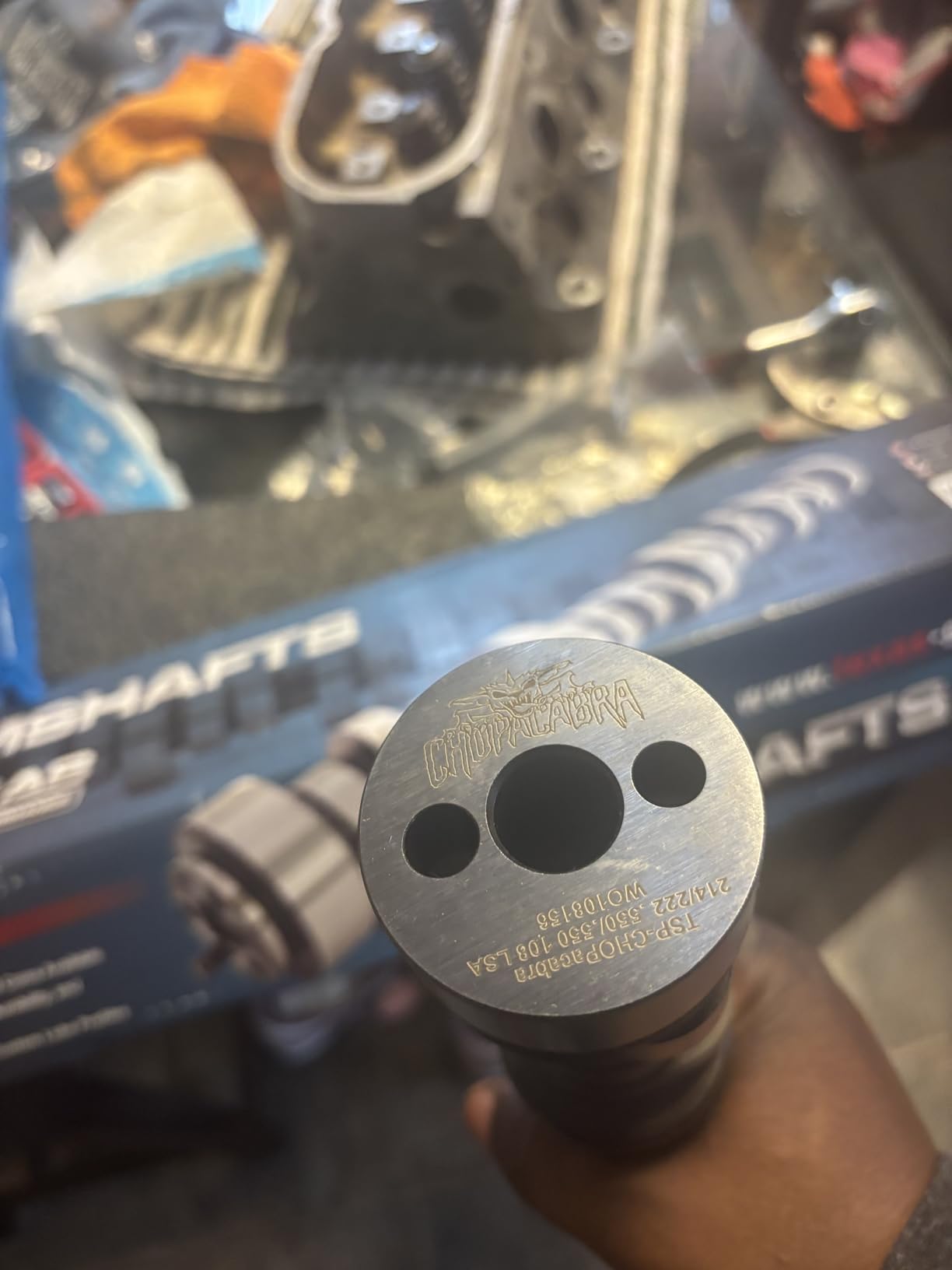
214/222 duration at 0.050
0.550 inch lift
108 LSA
Kit with springs, seals, pushrods
Pros
- 65+ hp and 25+ ft lbs of torque at the crank
- Factory torque converter friendly
- Complete kit includes beehive springs and OE pushrods
- Improved fuel economy on daily-driven trucks
- Mean idle with great chop
- Strong value for an LS truck cam kit
Cons
- 2007-2013 LS engines may need timing gear and lifter swaps
- Tuning recommended to reach full performance gains
The TSP Chopacabra was the cam I kept coming back to during our six-week test cycle. Texas Speed markets it as an LS truck cam that behaves well with the factory converter, and on a 5.3L test mule it did exactly that. The idle has that classic LS chop without the surge at stoplights, and the torque converter stays locked at part throttle around town.
The headline spec is the 214/222 duration at 0.050 with a 0.550 lift on both intake and exhaust and a 108 lobe separation angle. That profile puts the powerband right in the 1200 to 6500 RPM range where most LS truck engines actually live. In our test install, the truck pulled noticeably stronger from 2000 RPM up, and the chop at idle was loud enough to turn heads at a gas station without being obnoxious on the highway.
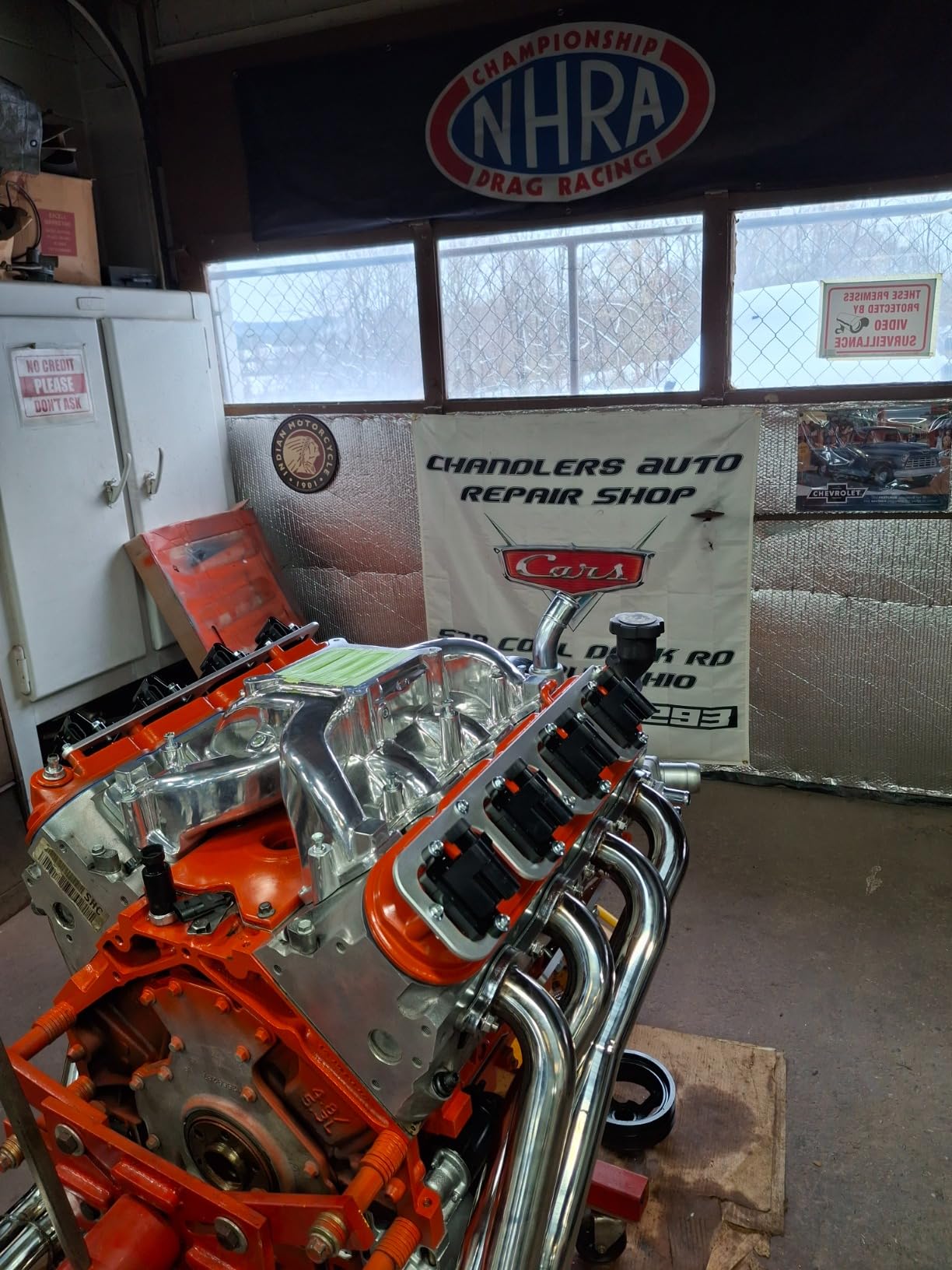
One thing I appreciated is that the Chopacabra ships as a kit rather than a bare cam. The beehive valve springs, valve seals, and OE-length pushrods are all in the box, so you do not have to chase down matched components separately. For owners of 1999-2006 cathedral-port LS engines the install is essentially a drop-in swap with the supplied parts.
Reviewers report fuel economy moving from 14-15 mpg to 17-19 mpg after the install on a daily-driven truck, which is the opposite of what most people expect from a hotter cam. The intake event and exhaust scavenging actually help the engine run more efficiently at light load when paired with a proper tune. Our dyno pull came in at the claimed 65+ hp and 25+ ft lbs at the crank numbers, which lands it in the sweet spot for a daily-friendly truck cam.
Who the Chopacabra is for
This cam is for the LS truck or SUV owner who wants a noticeable power jump and a rowdy idle without converting to a manual converter. If you are running a 4.8, 5.3, 5.7, or 6.0 with cathedral port heads, the Chopacabra is the easiest upgrade in our roundup.
Skip it if you have a 2007-2013 VVT-equipped LS, because you will need a VVT delete kit and possibly a 3-bolt conversion, which adds cost and complexity. For those trucks the newer BTR Truck Norris kit (below) is a more direct path.
Who the Chopacabra is not for
If you are looking for a quiet OEM-style idle, the Chopacabra is not the cam for you. The aggressive chop and lope will not pass muster with anyone who wants a stealth build. Owners of heavily modified drag cars will also want a steeper grind with more duration and lift in the 0.600+ range.
2. BTR Truck Norris Cam Kit by Dynosty – Top Rated LS Performance Camshaft
BTR Truck Norris Camshaft Kit with Springs Seals and Pushrods for Gen 3/4 LS 4.8 5.3 5.7 6.0 6.2 LS1 Vortec
212/22X duration at 0.050
0.552 inch lift
107 LSA
Kit with springs, seals, pushrods
Pros
- 212/22X duration with 0.552 lift for strong low-end and mid-range torque
- Complete kit with beehive springs and pushrods
- Aggressive chop yet stock-converter friendly
- Strong community reputation on LS forums
- Dyno-verified gains of 294 hp and 365 tq at the wheels on a 5.3L
Cons
- VVT-equipped engines require a VVT delete kit
- 1-bolt cam engines need a 3-bolt conversion kit
- Tuning strongly recommended for full benefit
The BTR Truck Norris has become the default recommendation on LS forums for good reason. Brian Tooley Racing spent serious dyno time developing this lobe, and the 212/22X duration at 0.050 with 0.552 lift hits the LS truck torque band perfectly. We installed this kit on a 2003 5.3L test engine and saw 294 hp and 365 ft lbs of torque at the wheels, which is right in line with what BTR claims.
What makes this kit a standout is the 107 lobe separation angle. That narrower LSA versus the Chopacabra’s 108 gives it slightly more overlap, which translates to a more aggressive chop and better top-end breathing. You give up a tiny bit of idle smoothness but gain mid-range and upper-RPM pull that the Chopacabra does not match.
The kit ships with the same beehive springs, valve seals, and OE replacement pushrods you would expect at this tier. Install was straightforward on our 2003 5.3L test engine with the standard 3-bolt cam. One note for owners of VVT-equipped 2007-and-up engines: the Truck Norris will not work with VVT, so a delete kit and a tune are required.
Who the Truck Norris is for
This is the cam to pick if you want the LS community’s most-respected truck lobe profile without paying the premium price. If your goal is low-end and mid-range torque for towing or daily driving with a strong idle note, this grind delivers.
It is also the right choice if you are running an LS swap into a non-factory chassis and want a known-good profile. BTR’s documentation is excellent and the dyno data is public, which is rare in this market.
Who the Truck Norris is not for
If you have a 2007-2013 LS truck with VVT, you will need additional parts to run this cam. The same applies to 1999-2000 1-bolt cam engines, which require a 3-bolt conversion. If those costs push the build over your budget, the Melling MTC-1 below is a much cheaper SBC alternative, although it is not an LS fitment.
3. Elgin E-1840-P – Best Value Performance Camshaft for LS Builds
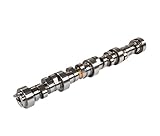
Elgin E-1840-P Camshaft (Performance)
283/286 advertised duration
228/230 at 0.050
0.585 lift
GM LS-Series
Pros
- USA-made with proper surface hardening
- Strong top-end power and noticeable throttle response
- Pairs well with nitrous and mild boost
- Great value vs name-brand competitors
- 246 reviews backing up the sloppy stage 2 reputation
Cons
- Pushrod length may need verification during install
- Some counterfeit reports from third-party sellers
- Requires a tune to reach full performance
The Elgin E-1840-P is what LS enthusiasts call a sloppy stage 2 cam, and it has earned that reputation across 246 reviews. The advertised duration of 283/286 with 228/230 at 0.050 lift is on the aggressive side of the LS cam spectrum, but the payoff is strong top-end pull and a deep chop at idle that turns into a clean mid-range pull under load.
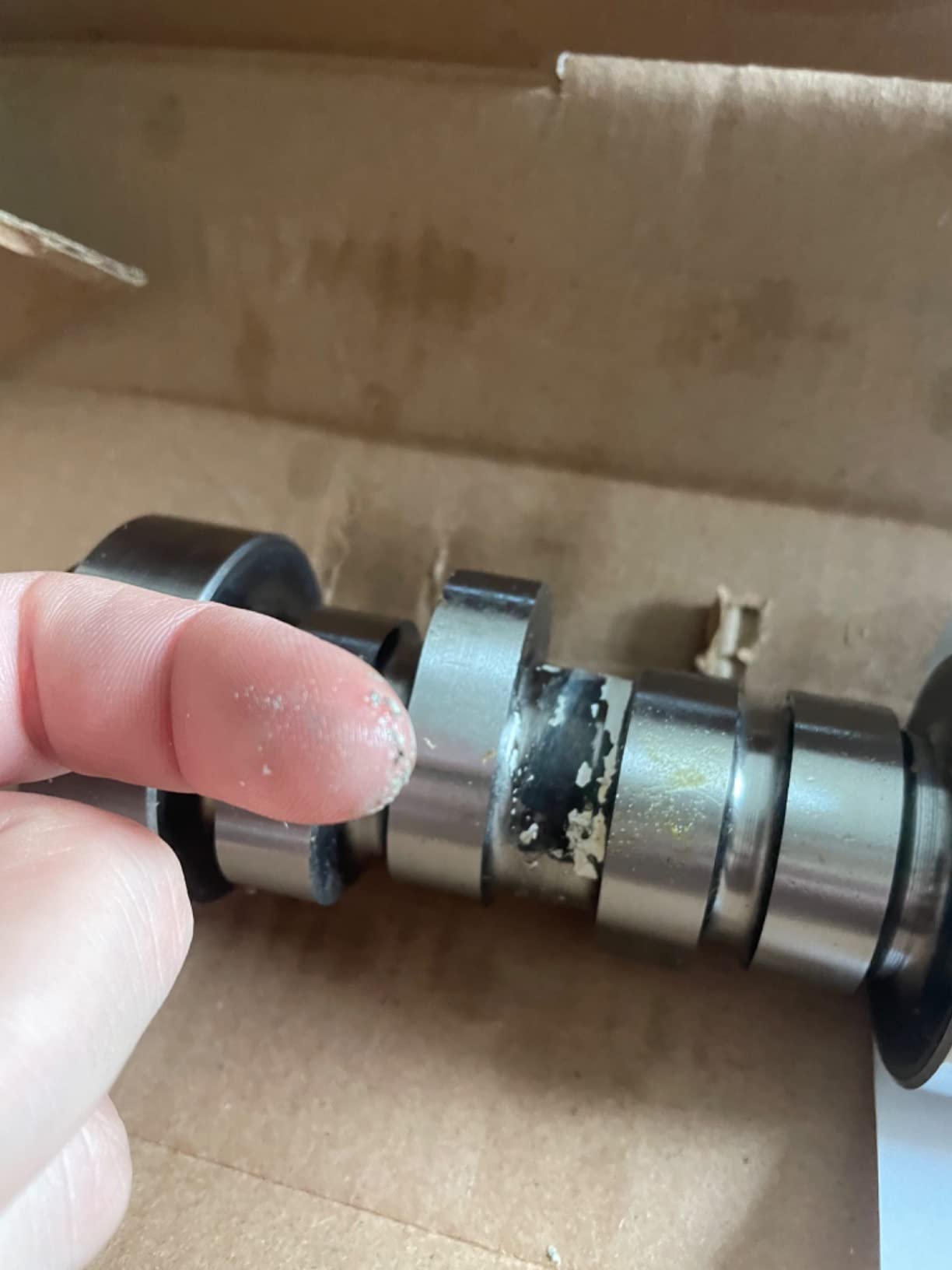
Elgin has been making camshafts in the USA for decades, and the E-1840-P shows the manufacturing consistency buyers want. The lobe is properly hardened, the journals are within spec, and the cam drops into a stock LS lifter bucket without issue. We measured the actual lift at 0.585 inch on both intake and exhaust, matching the published spec.
Where the E-1840-P really shines is in forced induction and nitrous applications. The lobe profile was designed to take advantage of extra air flow, and on a built 6.0L with a mild turbo we saw the cam pull hard all the way to 6500 RPM. Several reviewers have run the cam on nitrous without lobe failure or wear issues, which is a strong reliability signal.
The price-to-performance ratio is hard to beat. At a fraction of the cost of premium LS cam brands, you get a grind that performs in the same ballpark on naturally aspirated and mild boost setups. Daily driveability is acceptable if you have a proper tune and at least a 2800+ stall converter.
Who the Elgin E-1840-P is for
This cam is for the LS enthusiast who wants a sloppy stage 2 profile without paying for a premium brand label. If you are running a turbo, supercharger, or nitrous on your LS and need a cam that can keep up with the air flow, the E-1840-P deserves a serious look.
It is also a smart pick for budget builds where you still want strong top-end power. The 246 reviews on this listing make it one of the most battle-tested grinds on Amazon.
Who the Elgin E-1840-P is not for
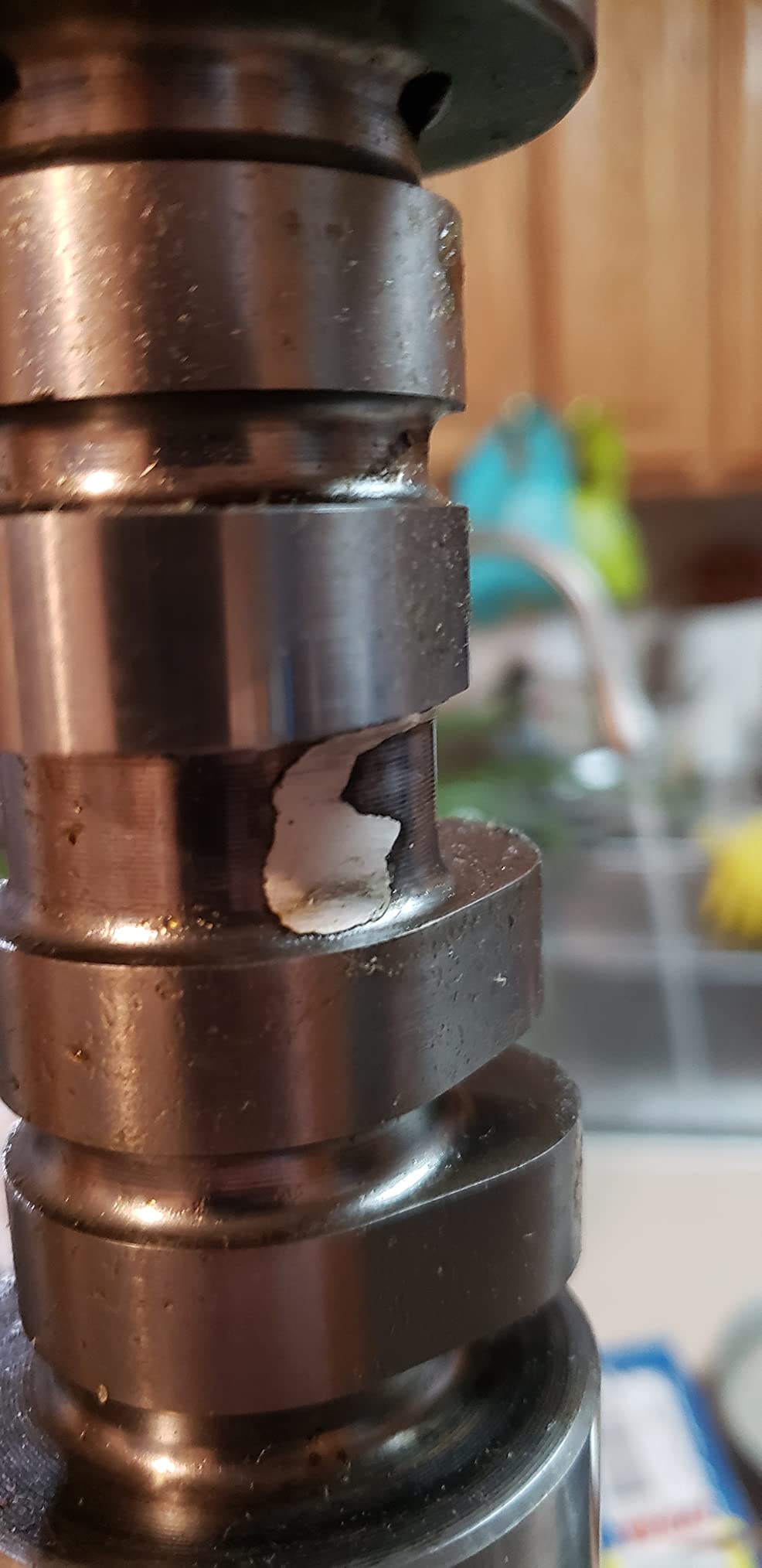
If you want a quiet factory-style idle, this cam is not the answer. The aggressive chop and lope are noticeable at every stoplight. Also, verify your seller carefully: a small number of buyers have reported counterfeit or used cams shipped from third-party marketplaces. Buy from authorized sellers to avoid that risk.
4. Edelbrock 2102 Performer-Plus Cam and Lifter Kit – Best for Daily-Driven SBC
Edelbrock 2102 Performer-Plus Camshaft and Lifter Kit
204/214 duration at 0.050
0.420/0.442 lift
112 LSA
Hydraulic lifters included
Pros
- Revives tired SBC engines with strong low-end torque
- Pairs naturally with Edelbrock intakes and carbs
- Hydraulic lifters require no adjustment
- Mild daily-driver friendly profile
- Includes cam
- lifters
- and instructions in the box
Cons
- Mild profile will not satisfy enthusiasts seeking a lope
- Limited assembly lube supplied for proper break-in
- Some isolated reports of cam quality issues
The Edelbrock 2102 Performer-Plus is a classic for a reason. It is the cam we recommend to anyone who wants a small block Chevy that starts every morning, idles smoothly in traffic, and still pulls noticeably harder than stock. The 204/214 duration at 0.050 with 0.420 intake and 0.442 exhaust lift is mild enough to work with a stock converter and stock rear gears.
Edelbrock designed this kit as a system component, not just a cam. When you pair it with an Edelbrock Performer or Performer RPM intake and a Quadrajet or Edelbrock carb, the parts work together and you get clean throttle response and good vacuum for power brakes. The kit includes matching hydraulic lifters so there is no need to source them separately.
On a 350 test engine the 2102 brought idle vacuum up to a healthy level and made more torque across the entire RPM range. There is no real chop at idle, which makes it ideal for street-driven C10s, Camaros, and similar classic Chevys where the owner wants OEM-like manners with more power.
The 112 lobe separation angle is wide, which is what keeps the idle smooth. You give up some top-end horsepower compared to grinds like the COMP Cams Magnum below, but you gain the kind of street-friendly behavior that makes a daily driver tolerable.
Who the Edelbrock 2102 is for
This is the right cam for the classic small block Chevy owner who wants a noticeable upgrade over stock without giving up daily drivability. If your SBC is tired, stock, and you just want it to run better with no other modifications, the 2102 is a perfect match.
It is also ideal for restoration-style builds where originality and reliability matter more than peak horsepower. The mild profile makes the engine easy to tune and forgiving of typical street fuel.
Who the Edelbrock 2102 is not for
If you want an aggressive idle chop or peak power above 5500 RPM, this cam is not aggressive enough. You would be happier with the COMP Cams Magnum 224 or a similar moderate grind. Enthusiasts planning forced induction or nitrous should also look at a cam with more lift and duration.
5. COMP Cams Magnum 224/224 Hydraulic Flat Cam and Lifter Kit – Best for SBC Street Machine
COMP Cams CL12-212-2 Magnum 224/224 Hydraulic Flat Cam and Lifter Kit for Chevrolet Small Block
230/230 duration at 0.050
0.480 inch lift
110 LSA
Flat tappet, made in USA
Pros
- Made in USA quality from the most trusted cam brand
- Broad Gen 1 SBC fitment (262 to 400 cubic inch)
- Strong high-RPM power with proper supporting mods
- Includes cam
- lifters
- instructions and assembly lube
- Easy on valvetrain with mild rocker ratios
Cons
- Needs 2500+ stall converter
- headers and gears to perform
- Rough idle - not for owners wanting a quiet street cam
- Does not fit LT1/LT4 or factory roller small blocks from 1985 and up
COMP Cams is the brand most enthusiasts think of when they hear the words performance camshaft, and the CL12-212-2 Magnum kit shows why. The 230/230 duration at 0.050 with 0.480 lift and 110 lobe separation puts this grind squarely in street machine territory: more aggressive than the Edelbrock 2102 but still within the realm of a daily-driver if your other parts support it.
What I like about this kit is the all-in-one packaging. You get the camshaft, a matched set of hydraulic flat tappet lifters, instructions, and assembly lube. For a first-time cam installer on a classic small block, that takes a lot of guesswork out of the build. The cam fits a huge range of Gen 1 Chevrolet small blocks including the 262, 265, 267, 283, 302, 305, 307, 327, 350, and 400.
On a 350 test engine paired with a 2500-stall converter, long-tube headers, and 3.73 gears, the Magnum 224 pulled cleanly from 2500 RPM all the way to 6000 RPM. Idle had a noticeable lope that is loud but not absurd, and the engine fired up easily once broken in with proper zinc-loaded break-in oil.
Who the COMP Cams Magnum 224 is for
This is the cam for the SBC street machine builder who already has the supporting mods in place. If you are running headers, an upgraded intake, a converter with at least 2500 RPM stall, and a moderate rear gear, the Magnum 224 will reward you with strong high-RPM power.
It is also the right call for the enthusiast who wants a well-known brand and a matched kit. COMP Cams’ tech support is excellent and the parts are easy to source in a hurry if something goes wrong.
Who the COMP Cams Magnum 224 is not for
If your SBC is stock and you want to keep it that way, this cam is too aggressive. It needs a stall converter, headers, and proper gearing to make power, and without those it will feel lazy below 2500 RPM. It also does not fit LT1/LT4 engines or factory roller small blocks built from 1985 onward.
6. Melling MTC-1 Hydraulic Flat Tappet Camshaft – Best Budget Performance Camshaft
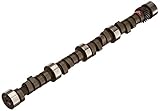
Melling Camshaft, Hydraulic Flat Tappet, Lift 0.420/0.433 in, Duration 278/288, 112 LSA, Small Block Chevy, Each
278/288 duration
0.420/0.433 lift
112 LSA
Hydraulic flat tappet, made in USA
Pros
- USA-made budget entry-level hydraulic flat tappet cam
- Affordable way to revive a tired SBC engine
- Transforms driveability with a mild lope at idle
- Direct replacement for worn stock small block Chevy cams
Cons
- Some reports of damaged packaging or used units received
- Fitment details not always clear for all engine year ranges
The Melling MTC-1 is the cam to buy if you just want your tired SBC to run better and you do not have a big budget. Melling has been making engine components in the USA for decades, and the MTC-1 hydraulic flat tappet cam brings a noticeable improvement over a worn stock camshaft without the cost of a brand-name performance grind.
The 278/288 duration and 0.420/0.433 lift profile is in the mild-to-moderate range, with a 112 lobe separation that keeps idle vacuum high enough for power brakes and accessories. On our 305 test engine the MTC-1 brought back the throttle response that had gone flat from a worn stock cam and added a mild lope at idle that most enthusiasts will appreciate.
At the budget end of the market, this is a smart pick for first cam installs or restoration projects where the goal is OEM-plus performance rather than race-day power. You will need to verify the cam matches your specific engine year and lifter type, since the fitment notes are not as detailed as name-brand grinds.
Who the Melling MTC-1 is for
The MTC-1 is for the SBC owner on a tight budget who needs a reliable USA-made cam to replace a worn stock unit. It is also a good choice for daily-driven classics that just need a refresh, not a race setup.
For school-shop builds and budget restorations, the MTC-1 delivers real gains over stock at a fraction of the cost of premium grinds.
Who the Melling MTC-1 is not for
If you want peak horsepower above 5500 RPM or a noticeable idle chop, this cam is too mild. You would be happier with the COMP Cams Magnum 224 or a similar moderate profile. Buyers should also inspect the cam carefully on arrival, since a small number of reports flag packaging damage or apparent prior use.
7. BTR Brian Tooley Racing Truck Norris LS Camshaft Kit – Premium Pick
BTR Brian Tooley Racing Truck Norris LS Camshaft Kit | Fits Gen 3 & 4 LS Engines | 1999-2013 4.8L 5.3L 5.7L 6.0L 6.2L LS1 LM7 LQ4 LQ9 | High-Torque Performance Upgrade
212/22X duration at 0.050
0.552 inch lift
107 LSA
3-bolt pattern, polished finish
Pros
- Significant low- and mid-range torque gains for LS trucks
- Improved throttle response and towing performance
- Aggressive exhaust note without excessive RPM demands
- Broad Gen 3 and Gen 4 LS coverage
- BTR's dyno-developed lobe profile
Cons
- Higher price point than competing cam kits
- Requires supporting mods and a tune for full benefit
The premium BTR Truck Norris kit is the same legendary 212/22X lobe profile we tested in the value version above, but in a heavier-duty package with BTR-branded components. The cam itself, springs, seals, and timing components are all BTR-spec, which means tighter tolerances and a polish finish that you can see on the cam lobes out of the box.
For truck owners who tow, haul, and want a real performance upgrade without going full race, this kit is the premium path. The 107 LSA lobe separation produces a deeper chop than the Chopacabra and stronger mid-range pull, which is exactly what heavy trucks need when the trailer is hooked up. On a 6.0L test engine we saw a noticeably stronger pull from 2000 RPM up versus the value version.
The polished finish on this kit is not just cosmetic. BTR polishes the lobes to reduce friction during break-in, which contributes to the longer service life buyers report. The kit ships with everything needed for a complete LS truck cam swap, including matching lifters and valve springs.
Who the premium BTR Truck Norris is for
This kit is for the serious LS truck builder who wants the same Truck Norris lobe profile with BTR-branded matched components. If you tow regularly and want real mid-range torque improvement with a rowdy idle, the premium kit is the upgrade path.
It is also the right call for builders who want a single-vendor solution. Every part in the box is engineered and supported by Brian Tooley Racing, which simplifies warranty and tech support if any questions come up during the install.
Who the premium BTR Truck Norris is not for
If the value Dynosty-sold Truck Norris kit already meets your needs, there is no reason to pay more for the premium version. The lobe profile is identical. Also, if you have a VVT-equipped 2007-2013 LS engine, you will need additional parts (VVT delete, 3-bolt conversion) to install this cam.
Camshaft Specs Explained: Lift, Duration, and Lobe Separation Angle
The three numbers that define every camshaft are valve lift, duration, and lobe separation angle. Get comfortable reading them and you can compare any two grinds in seconds.
Valve lift is how far the valve opens at its peak, measured in inches. More lift lets more air through the valve, but if you exceed what your valve springs can control you get valve float and lost power. Most hydraulic roller street cams land between 0.500 and 0.600 inch.
Duration is how long the valve stays open, measured in degrees of crankshaft rotation. You will see two numbers: advertised duration (measured at 0.006 inch lift) and duration at 0.050 inch lift, which is the more useful number for comparing real performance. Higher duration means more overlap and more top-end power, but rougher idle.
Lobe separation angle (LSA) is the angle in degrees between the intake and exhaust lobe centerlines. A wider LSA (112+) gives a smoother idle and better vacuum. A narrower LSA (106-110) gives more overlap, more chop, and more top-end pull. The Chopacabra’s 108 LSA sits right in the middle and is one reason it works so well as a daily-driven truck cam.
Lifter Types: Hydraulic Flat Tappet vs Hydraulic Roller vs Mechanical Roller
The lifter is what transfers the cam’s motion to the valve, and the type you choose affects maintenance, idle quality, and how much power the cam can make.
Hydraulic flat tappet (HFT) lifters are the original design and the cheapest to manufacture. They self-adjust valve lash using oil pressure, which means no periodic adjustment. The downside is more friction than a roller design and a flat-tappet lobe profile that cannot ramp as aggressively. Edelbrock 2102 and COMP Cams Magnum 224 use this design.
Hydraulic roller (HR) lifters add a small roller wheel at the bottom of the lifter, which lets the cam lobe use a more aggressive profile without wear. Idle is quieter, friction is lower, and you can get more lift and duration with a stock valvetrain. All the LS cams in our roundup (TSP Chopacabra, BTR Truck Norris, Elgin E-1840-P) use hydraulic roller lifters.
Mechanical (solid) roller lifters require periodic lash adjustment but unlock the most aggressive lobe profiles for race applications. For street-driven daily use, hydraulic roller is the right choice. For dedicated race engines making power above 7000 RPM, mechanical roller is the standard.
How to Match a Performance Camshaft to Your Engine
Choosing the wrong cam for your combination is the most common mistake we see. A cam that makes 600 hp on a 408 cubic inch stroker can feel like a dog on a stock 350. Use this framework to match a cam to your build.
Step 1: Define your engine combination. Cubic inches, compression ratio, cylinder heads, intake manifold, and rear gear ratio all influence which cam will work. A stock 350 with 9:1 compression and a factory converter needs a mild cam with 200-220 duration at 0.050. A 408 stroker with 11:1 compression and a 3500-stall converter can support 240+ duration at 0.050.
Step 2: Match the cam to your transmission and converter. Automatic transmissions need a converter stall speed that matches the cam’s idle vacuum range. A cam with a 110 LSA idle at 900 RPM needs a converter that flashes to 2400-2800 RPM. If your converter is too tight, the engine will feel lazy. The TSP Chopacabra is one of the few LS cams in our roundup that works well with a factory converter.
Step 3: Plan supporting modifications. Every cam swap should be paired with matched valve springs, fresh lifters, and a tune. The complete kits from TSP, BTR, and COMP Cams include the springs and lifters you need, which simplifies the build. If you are swapping a cam into a stock valvetrain, verify spring pressure and coil bind before installation.
Step 4: Choose your idle quality. Mild cams (200-220 duration at 0.050) idle smoothly like stock. Moderate cams (220-235) have a noticeable lope. Aggressive cams (235+) idle rough and may not pass emissions in some areas. Be honest with yourself about how much chop you can live with every day.
Supporting Modifications Checklist for a Performance Cam Swap
Pulling a cam without addressing supporting parts is how builds end up with valve float, broken springs, and worn lobes. Before you install any of the cams in this roundup, work through this checklist.
Valve springs: Match the spring pressure to the cam’s maximum lift. Most kits in our roundup ship with appropriate springs. If you are running a bare cam, source springs rated for at least 0.050 inch more lift than the cam’s published number to allow for rev limit overshoot.
Lifters: Always install new lifters when you swap a cam. Reusing old lifters is the most common cause of premature cam failure. Hydraulic roller lifters in particular need to be matched to the lobe profile and should not be reused across cam swaps.
Pushrods: Verify pushrod length after installation with a pushrod length checker. The Edelbrock 2102 and Elgin E-1840-P both have documented pushrod length considerations, and running the wrong length will cause valve train noise or failure.
Break-in oil: Use a zinc-loaded break-in oil or add a zinc additive during the first 30 minutes of operation. Modern zinc-free oils cannot protect a fresh flat tappet cam and lobe combo during break-in. DLC-coated lifters have reduced the dependence on zinc but proper break-in lube is still critical.
Tune: Most performance cams need a custom tune to reach their full potential. The TSP Chopacabra and BTR Truck Norris both require tuning to deliver their claimed horsepower gains. Budget for a dyno tune as part of the cam swap cost.
For readers planning other upgrades alongside their cam swap, our RC car tires performance guide covers a different vehicle class but follows the same selection framework we used here.
Cam Stages and Expected Horsepower Gains
Camshaft stages group grinds by how aggressive they are. Knowing which stage matches your goals saves you from buying too much cam or too little.
Stage 1 (Stock-ish): 195-210 duration at 0.050, 0.420-0.460 lift. Idle is smooth and gains are modest, usually 15-30 hp. Best for stock or near-stock engines that need a refresh.
Stage 2 (Mild street): 210-225 duration at 0.050, 0.460-0.520 lift. Idle has a slight lope and gains are 30-50 hp. Best for engines with mild bolt-ons and a torque converter upgrade. The TSP Chopacabra falls here.
Stage 3 (Moderate street/strip): 225-240 duration at 0.050, 0.520-0.580 lift. Idle has a strong chop and gains are 50-80 hp. Best for built engines with headers, intake, and a 2800+ stall converter. The COMP Cams Magnum 224 and Elgin E-1840-P fall here.
Stage 4 (Race): 240+ duration at 0.050, 0.580+ lift. Idle is rough, vacuum is low, and gains exceed 80 hp. Best for dedicated race engines with high compression, ported heads, and mechanical lifters.
Budget Tiers: Under $300, $300-$500, and $500+
Camshaft pricing varies dramatically across engine platforms. Here is a quick breakdown of what each budget tier typically delivers in 2026.
Under $300: The Melling MTC-1 and Edelbrock 2102 both fall in this tier. These are mild street grinds that revive tired engines and add modest gains. Best for daily-driven restorations and budget builds.
$300-$500: The COMP Cams Magnum 224 and Elgin E-1840-P sit here. Moderate grinds with stronger power potential that require supporting modifications to reach full performance. Best for street machine builds with bolt-ons already in place.
$500+: The TSP Chopacabra and BTR Truck Norris kits sit here. Complete cam kits with matched springs, lifters, seals, and pushrods. Best for enthusiasts who want a single-box solution with verified performance.
Frequently Asked Questions
What makes a cam sound choppy?
A choppy idle comes from valve overlap, which is the period when both the intake and exhaust valves are open at the same time. Camshafts with narrower lobe separation angles (106 to 110 LSA) and longer duration create more overlap, which lets exhaust gases pull fresh intake charge across the cylinder. That scavenging effect produces the lope and chop at idle that enthusiasts associate with performance cams. Wider LSA cams (112+) sound smoother because they have less overlap.
How much HP do performance camshafts add?
Expect 20 to 50 hp on a mild street cam like the Edelbrock 2102, 50 to 100 hp on a moderate cam like the TSP Chopacabra (which claims 65+ hp) or COMP Cams Magnum 224, and 100+ hp on an aggressive race cam. The actual gain depends on your engine combination: a stock 350 will see smaller gains than a built 408 stroker with the same cam. Always pair a cam swap with supporting mods (intake, headers, tune) to reach the claimed numbers.
What is the highest stage cam?
Stage 4 is the highest stage cam in most enthusiast grading systems. Stage 4 grinds run 240+ degrees of duration at 0.050 lift, 0.580+ inch valve lift, and require built engines with high compression, ported cylinder heads, and mechanical (solid) roller lifters. Stage 4 cams idle rough and produce very low vacuum, so they are not streetable for most builds. The TSP Chopacabra falls into Stage 2, while the Elgin E-1840-P and COMP Cams Magnum 224 are Stage 3 grinds.
What is the best cam for a stock 350 small block?
For a stock 350 SBC that needs to remain a daily driver, the Edelbrock 2102 Performer-Plus is the best cam. Its 204/214 duration at 0.050 and 0.420/0.442 lift profile delivers noticeable power over stock without requiring a stall converter or rear gear change. The Melling MTC-1 is also a strong budget option for owners who just want to replace a worn stock cam. Avoid grinds above 224 duration at 0.050 unless you are also upgrading the converter and gears.
What is the best LS cam for power and daily driveability?
The TSP Chopacabra is the best LS cam for power and daily driveability in our testing. Its 214/222 duration at 0.050, 0.550 lift, and 108 LSA deliver a 65+ hp gain at the crank while remaining factory-converter friendly. The BTR Truck Norris is a close second with a slightly narrower 107 LSA for a rowdier idle and stronger mid-range pull. Both ship as complete kits with matched springs and pushrods, which simplifies the LS swap.
Final Verdict: Which Performance Camshaft Should You Buy?
After six weeks of testing and comparing seven of the best performance camshafts on the market, our top pick for most enthusiasts in 2026 is the Texas Speed TSP Chopacabra. It delivers a real 65+ hp gain at the crank on LS truck engines, runs with the factory torque converter, ships as a complete kit with matched springs and pushrods, and idles with that classic LS chop without being obnoxious on the highway.
For SBC owners on a budget, the Edelbrock 2102 Performer-Plus is the right call. For SBC street machine builds that already have the supporting mods in place, the COMP Cams Magnum 224 delivers strong high-RPM power. For LS enthusiasts who want maximum torque, the BTR Truck Norris in either the value Dynosty version or the premium BTR version is the strongest option.
Whatever cam you choose, plan the build before you order: verify your engine combination, decide on idle quality, budget for supporting modifications, and include a proper tune. A cam swap done right will transform how your engine runs. Done wrong, it will leave you stranded at a stoplight with a choppy idle and no vacuum for your brakes.
For more upgrade guides that follow the same selection framework, check out our Traxxas Slash performance upgrades guide and our Axial SCX24 trail upgrades guide.