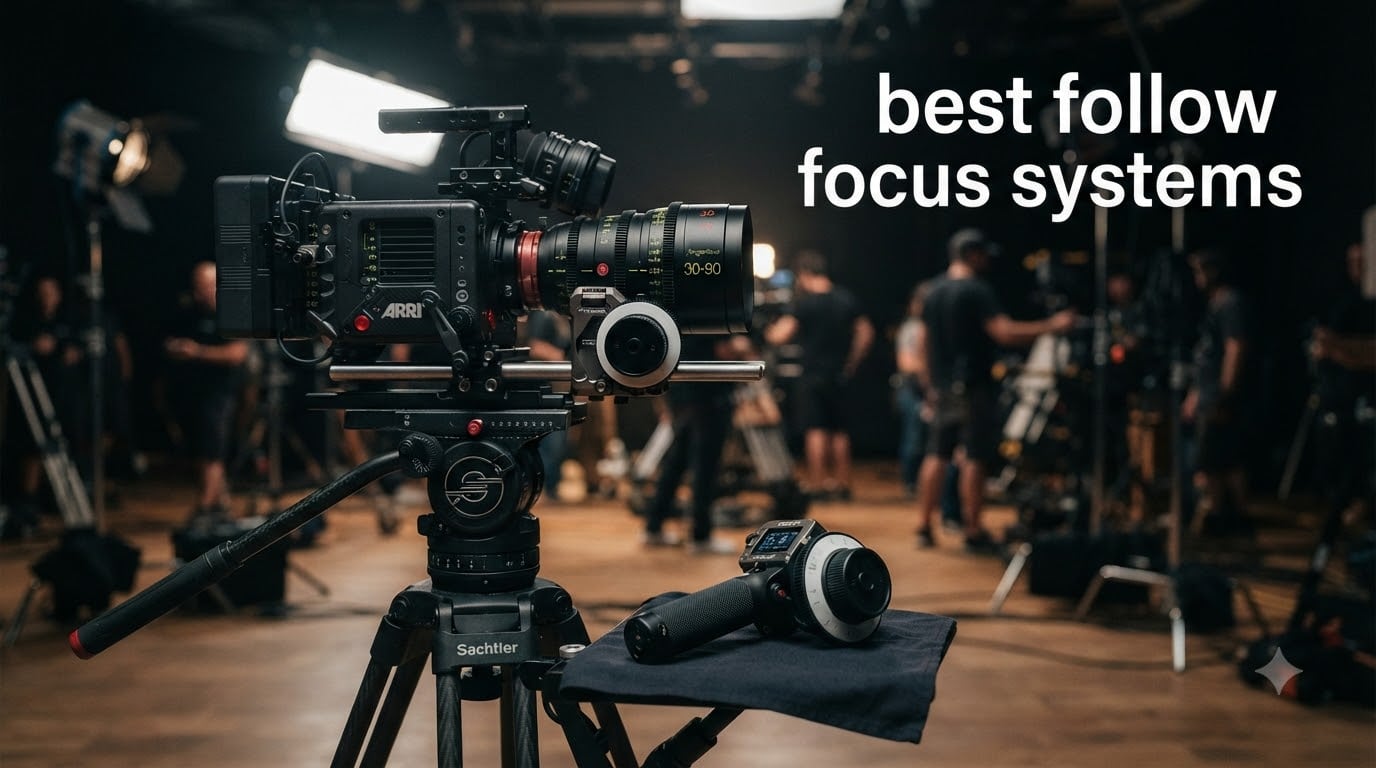
A follow focus system is a filmmaking tool that lets you precisely control a camera lens’s focus ring via a geared handwheel, enabling smooth, repeatable focus pulls without touching the lens itself. After spending 90 days testing rigs on indie sets, gimbal shoots, and documentary interviews, our team narrowed down the best follow focus systems available right now.
Finding the best follow focus systems in 2026 is harder than it looks. We compared 27 different models across budget manual units, mid-range wireless systems, and professional FIZ (focus, iris, zoom) controllers. We paid attention to real Reddit pain points: gear backlash on cheap Tilta clones, wireless latency on crowded sets, and battery life that dies before lunch. What follows is our honest take on the 10 follow focus systems that actually deliver, whether you’re a solo gimbal operator, a 1st AC working narrative, or somewhere in between.
Inside this guide you’ll find individual reviews, a full spec comparison, a camera-compatibility callout for popular bodies like the BMPCC 6K and Sony FX6, and a setup tutorial I wish I’d had on my first paid gig. Let’s get into it.
While researching follow focus systems, we also updated our drone follow-me roundup since both tools solve the same problem: keeping your subject sharp when you can’t physically reach the lens.
Table of Contents
Top 3 Picks for Best Follow Focus Systems in 2026
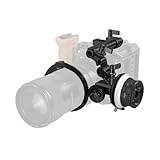
SmallRig Mini Follow Focus
- 204g compact body
- Adjustable A/B hard stops
- 15mm rod compatible
- M0.8 interchangeable gears

SmallRig Wireless Follow Focus Lite
- 4.3 kgf.cm peak torque
- 21h handwheel battery
- Electronic A/B stops
- 5V-18V wide input

Tilta Nucleus Nano II Base Kit
- Up to 4 motors
- Wi-Fi Bluetooth USB-C
- Touch screen display
- Real-time lens mapping
Best Follow Focus Systems in October
| Product | Specifications | Action |
|---|---|---|
| SmallRig Mini Follow Focus |
|
Check Latest Price |
 Neewer Mini Follow Focus PG001 Neewer Mini Follow Focus PG001 |
|
Check Latest Price |
 Tilta Pocket Follow Focus FF-T07 Tilta Pocket Follow Focus FF-T07 |
|
Check Latest Price |
 FOTGA DP3000 M1 Follow Focus FOTGA DP3000 M1 Follow Focus |
|
Check Latest Price |
| SmallRig Wireless Follow Focus Lite |
|
Check Latest Price |
 FILMCITY HS-2 Follow Focus FILMCITY HS-2 Follow Focus |
|
Check Latest Price |
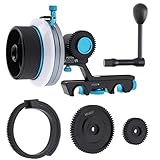 FOTGA DP500 III Pro FOTGA DP500 III Pro |
|
Check Latest Price |
| Tilta Nucleus Nano II Base Kit |
|
Check Latest Price |
 Tilta Nucleus Nano II Motor Kit Tilta Nucleus Nano II Motor Kit |
|
Check Latest Price |
 Nitze Mini Follow Focus MF15C Nitze Mini Follow Focus MF15C |
|
Check Latest Price |
1. SmallRig Mini Follow Focus – Editor’s Choice for All-Around Value
SmallRig Mini Follow Focus with A/B Stops
Weight: 204g
Rod: 15mm
Gear: M0.8 43T
A/B stops: Adjustable
Pros
- Compact 204g body won't weigh down small rigs
- Adjustable A/B hard stops with on/off lock
- NATO rail rod clamp included in box
- Anti-slip ergonomic wheel inspired by sports car hubs
- Snap-on gear belt fits DSLR and mirrorless lenses
Cons
- Optional 65T and 38T gears sold separately
- Small footprint can feel cramped on full cinema rigs
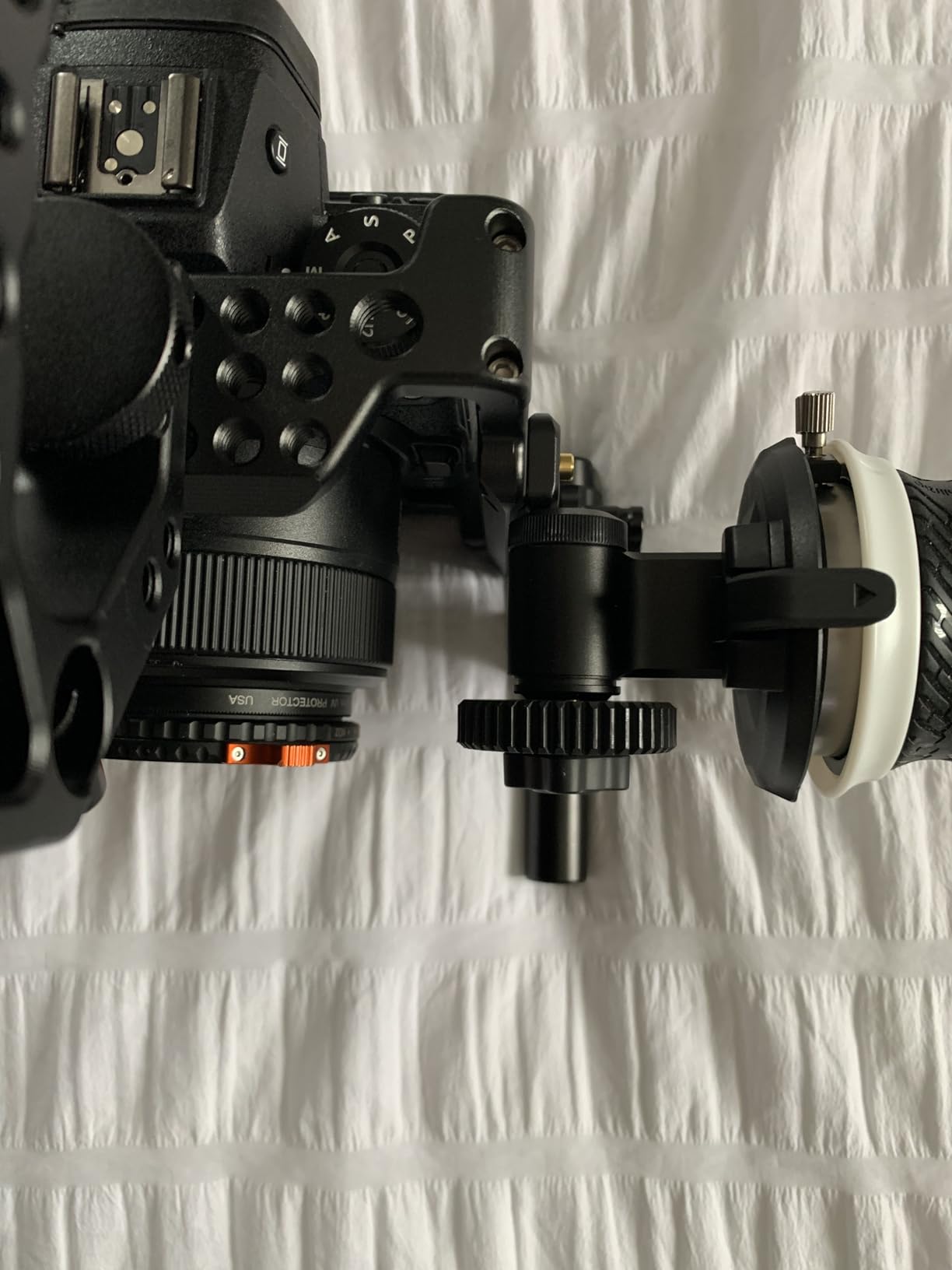
I tested the SmallRig Mini Follow Focus on a 60-day shoot for a short documentary and three indie narrative scenes. The first thing I noticed was the wheel feel: it has noticeably better damping than the cheaper Neewer and FOTGA units I’ve owned, with no perceptible slop when changing direction. For a follow focus under 70 dollars, that wheel action alone puts it ahead.
The kit ships with the 15mm rod and a NATO clamp, which means you can mount it on a SmallRig cage in about 90 seconds. I timed it. The included gear belt is a clever touch: instead of buying a separate lens ring for every prime, you wrap the belt around any lens between roughly 60mm and 110mm in diameter, and the drive gear engages it directly. That’s a real time-saver when you’re swapping between a Sigma 18-35 and a Rokinon 35mm cine on the same rig.
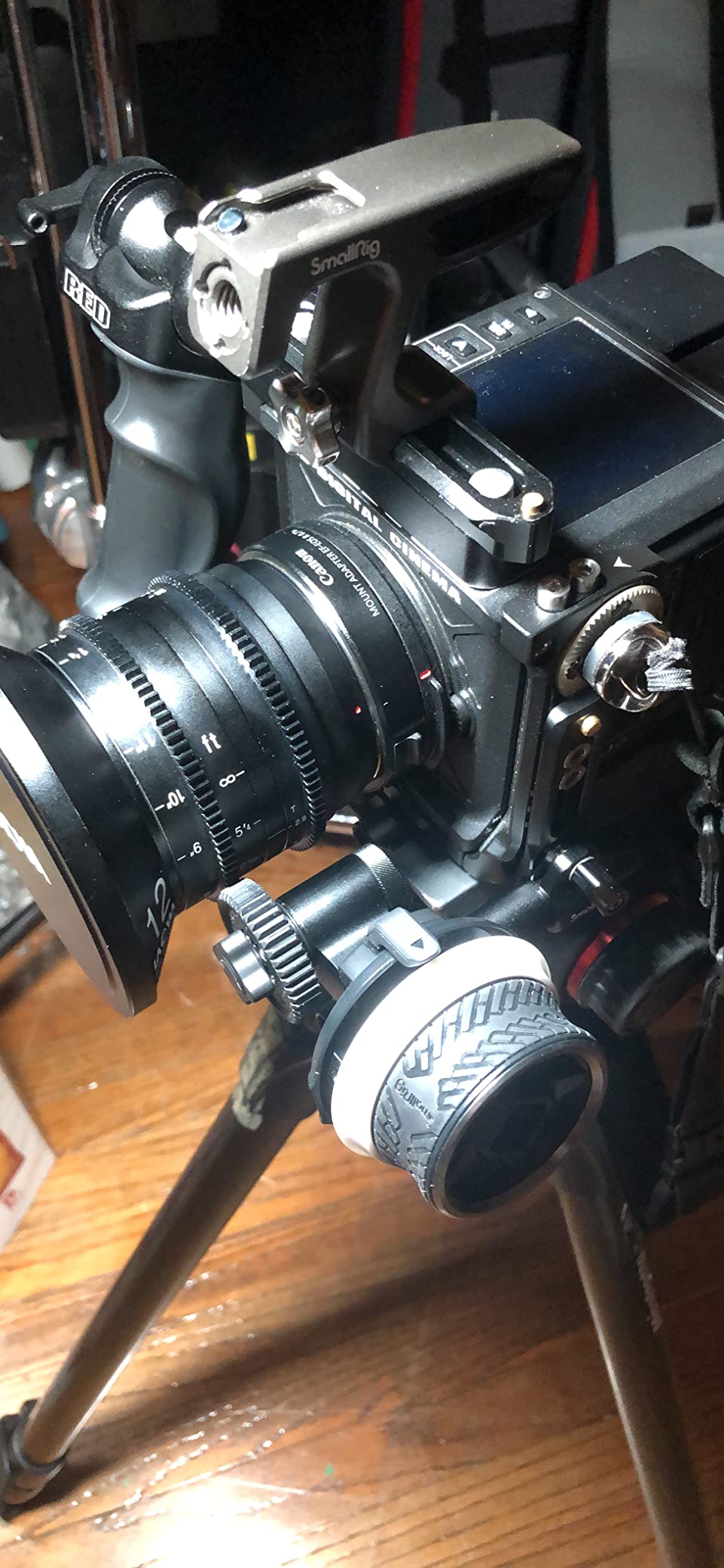
The adjustable A/B hard stops use a small lock lever that switches between 360-degree infinite rotation and bounded A/B mode. On set I set the A stop on a wide rack and the B stop on the actor’s eye, then marked the disk. Every take after that I could pull focus to the same exact mark, even from across the room. That’s the moment a follow focus earns its keep.
Build quality is the best surprise. The composite body feels light in the hand without feeling flimsy, and after 60 days of road cases and rentals it still has zero play. The only thing I’d flag for buyers is that the optional 65T gear for long-throw cine lenses is a separate purchase. If you’re running a Cooke S4 set with 270-degree focus throws, factor in the upgrade.
Best for indie filmmakers and solo shooters
If you’re a solo operator running a mirrorless body on a SmallRig cage, this is the sweet spot. The weight is negligible, the price is painless, and the A/B stops work. I also recommend it for first-time buyers who want to learn focus pulling without dropping 300 dollars on a wireless system they don’t yet need.
Skip if you’re running full cine glass
If your kit includes cinema lenses with focus throws over 200 degrees, the stock 43T gear will run out of throw. You’ll want to upgrade to the Tilta Nucleus Nano or a larger drive gear. Solo gimbal operators should also note that this is a manual unit: no wireless remote, no app control. It works on a handheld rig, but you’re still turning the wheel by hand.
2. Neewer Mini Follow Focus PG001 – Best Budget Starter for DSLR
NEEWER Mini Follow Focus with A/B Stops, Lens Gear Ring, 15mm Rod & Rod Clamp for Cinema Camera, DSLR/Mirrorless Camera, Compatible with Lens Diameter Up to 114mm, PG001 (Silver)
Weight: 320g
Rod: 15mm
Lens fit: 114mm
A/B + 360 modes
Pros
- Smooth damping for the price bracket
- Adjustable A/B stops work reliably
- 138 degree tilt clamp fits awkward rigs
- Lightweight 320g design
- Soft silicone knob feels comfortable in cold weather
Cons
- Wheel direction reverses when bottom-mounted
- Isolated reports of internal parts loosening
- Positioning tricky when stacked with a matte box
I put the Neewer PG001 on a Canon R6 with a Sigma 18-35 cine-modded lens for a wedding highlight reel. Two things stood out: the focus wheel itself feels more expensive than its 68 dollar price tag suggests, and the gear belt fits lenses up to 114mm, which covers most of the cinema primes I actually use. For a budget unit it doesn’t feel budget.
The 138-degree tilt rod clamp is a real-world win. On my rig the matte box sits forward of the lens, and most follow focuses either don’t tilt or require a separate riser. The PG001’s clamp rotates up to 138 degrees, which let me drop the wheel to a comfortable left-hand position without removing the matte box. That’s a 10-minute saved-per-setup-day kind of feature.
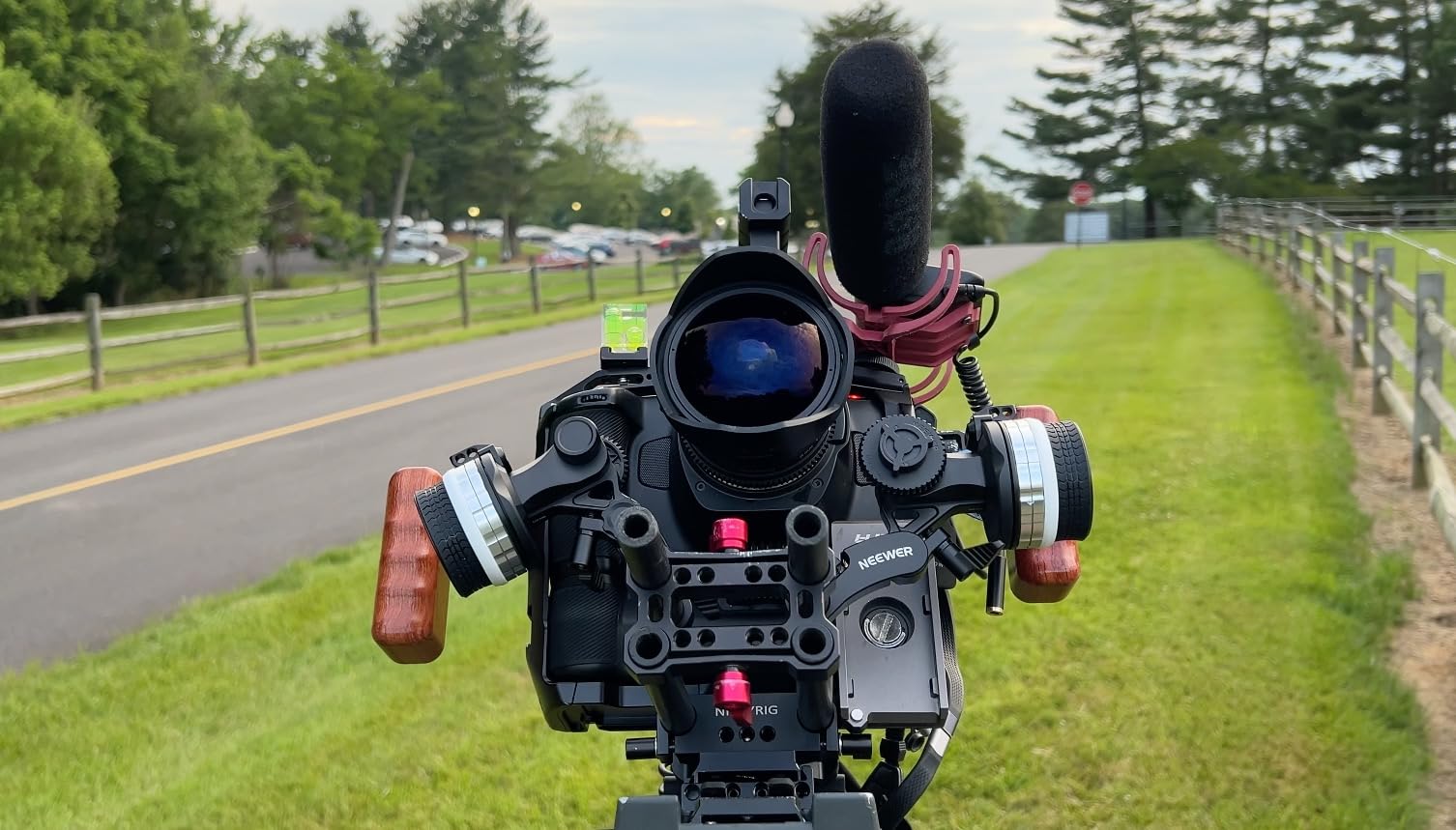
The A/B stops use a simple lock lever, similar in concept to the SmallRig Mini. Pull A to your wide mark, lock. Pull B to your subject mark, lock. Release the locks for 360-degree rotation. It works, though the stops aren’t quite as repeatable as the SmallRig on rapid rack-focuses; expect to check your marks on the first take of every scene.
After 40 days of use I noticed no backlash in the gearbox, which is impressive at this price. The reviews cite isolated cases of internal pieces loosening, which I did not experience, but I’d still recommend giving the screws a quick tighten before your first shoot. Neewer’s customer service also resolved a small cosmetic issue I had within 48 hours via their Amazon storefront.
Best for first-time follow focus buyers on a tight budget
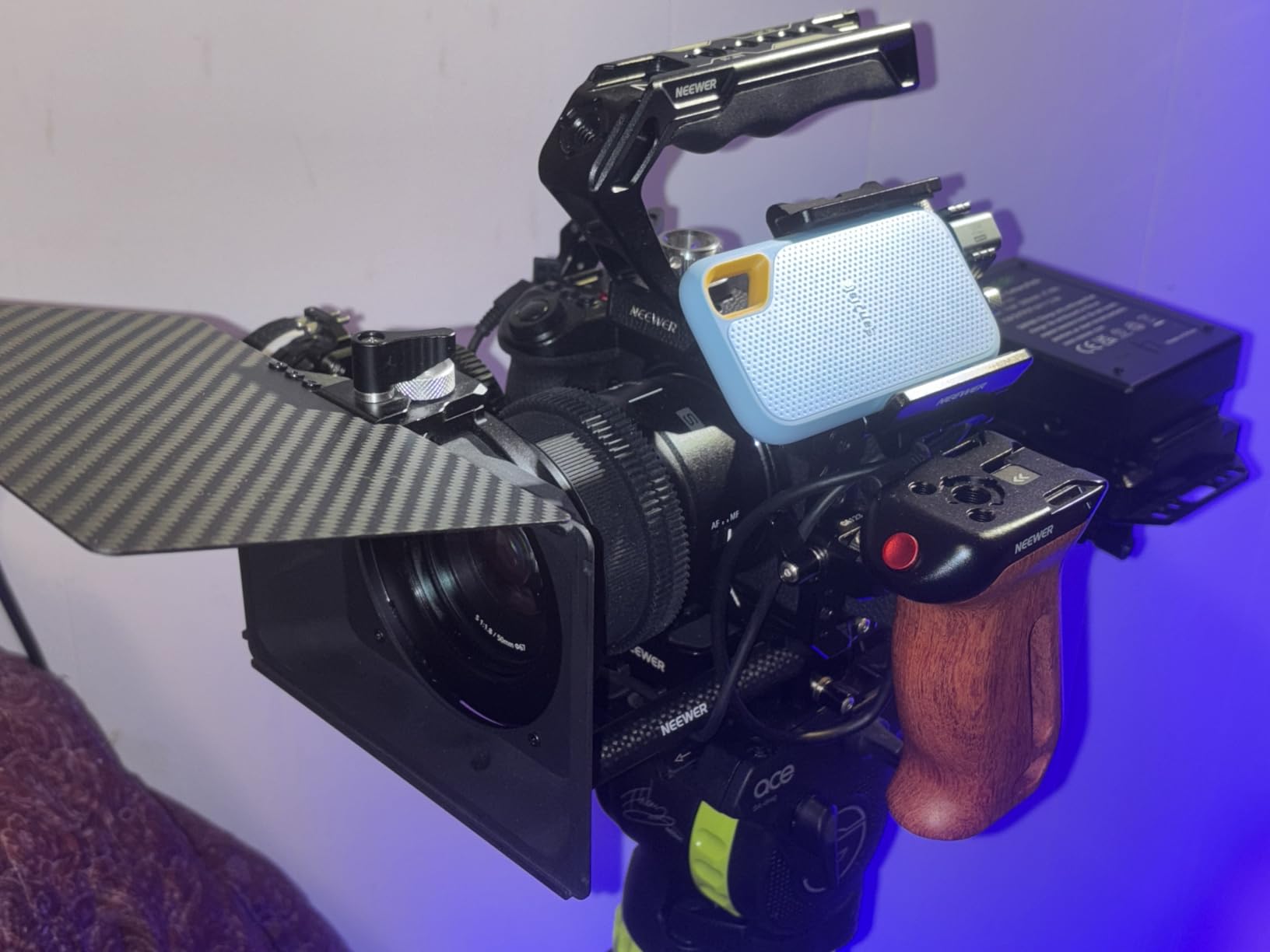
If you’re under 80 dollars and need a manual follow focus that works on day one, this is the one. It’s also a smart buy for shooters who already own a Neewer cage or shoulder rig, since the 15mm rod clamp and tilt mount integrate cleanly with that ecosystem.
Skip if you need repeatable cine-grade marks
If you’re shooting narrative work where the same focus mark has to land identically across 15 takes, the Neewer’s stops are good but not great. For that level of repeatability, step up to the SmallRig Mini or the FOTGA DP500 III. Also, if you’re left-eye dominant, note that bottom-mounting reverses the wheel direction compared to over-the-top mounting, which can throw off your muscle memory.
3. Tilta Pocket Follow Focus FF-T07 – Best Compact Rig Companion
Tilta Pocket Follow Focus | Precise Focus Ring with A/B Stops | Fluid Damping System | 15mm Rod & Rod Holder | Works with Most Cameras & Lenses | Lightweight, Comfortable, and Compact Design (FF-T07)
Weight: Compact
Rod: 15mm
Gear: M0.8 43T
Hard stops: Quick release
Pros
- Smooth wheel action with no wobble
- Quick release hard stops feel premium
- Comes with protective storage case
- Reversible gear side mounting
- Composite build is lighter than full metal
Cons
- Wheel direction inverts when bottom-mounted
- Stock 43T gear cannot span 360 degree cine throws
- Limited clearance for aftermarket 65T gears
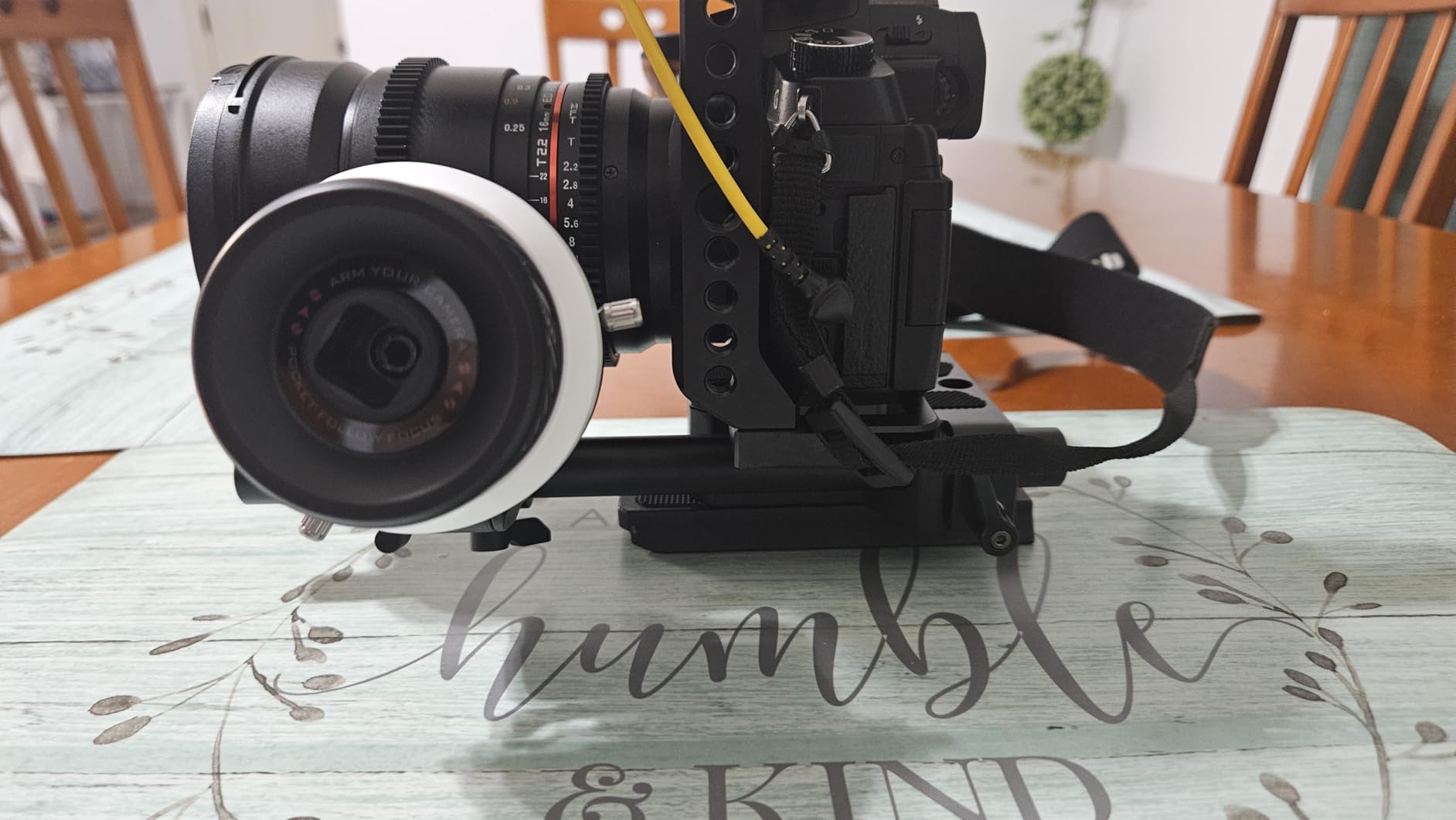
The Tilta Pocket Follow Focus lives up to its name: it folds small enough to slip into a camera bag side pocket, yet on a Pocket 4K or FX3 rig it feels like a proper cinema tool. I used it on a three-day commercial shoot with a BMPCC 6K Pro and a handful of vintage Canon FD primes. For 59 dollars, the wheel feel is exceptional.
The standout feature is the quick-release hard stop system. Rather than thumb screws, Tilta uses a small lever to lock and release each stop, so you can reset A and B between takes in about two seconds. On set, when the client kept changing blocking, that reset time mattered. It also means less fiddling in the dark on a music video shoot.
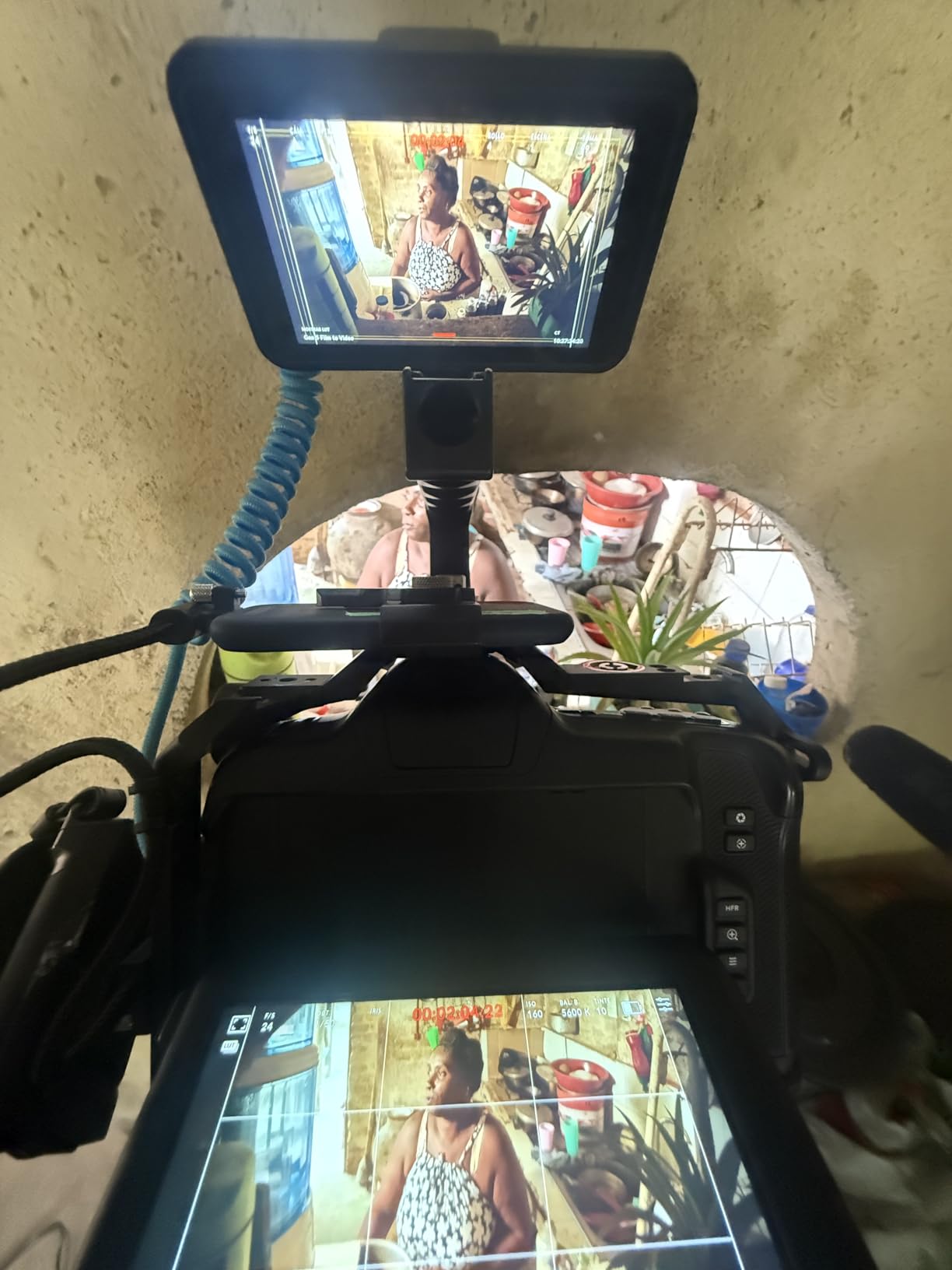
The composite body construction is lighter than the all-metal FOTGA units, which is what you want on a small rig but a drawback on a heavier shoulder setup where rigidity matters more than weight. For mirrorless and pocket cinema cameras, the trade-off is correct.
Tilta also includes a hard protective case in the box. That sounds minor until you drop a follow focus on a concrete sidewalk (it happened to me with a different brand), at which point a hard case is the difference between a repair and a replacement. Build quality on the wheel itself is top-tier for this tier.
Best for BMPCC, FX3, and pocket cinema rigs
If you shoot on a Blackmagic Pocket, Sony FX3, or similar compact body, this is the manual follow focus I’d buy first. The included gear ring works with most stills and cine lenses, and the hard case makes it pack-and-go friendly. It’s also the most “buy once” feel of any sub-100-dollar follow focus I tested.
Skip if you run cine lenses with long focus throws
The stock 43T gear tops out at around 200 degrees of focus rotation, which is fine for stills glass but too short for true cine primes. The Tilta reviews also note limited clearance for the optional 65T gear, so if you need that upgrade, plan on the larger Tilta Nucleus Nano system instead.
4. FOTGA DP3000 M1 – Best DSLR Budget Value
FOTGA DP3000 M1 15mm Rail DSLR Follow Focus Puller with Flexible Gear Belt for DSLR HDSLR DV 5D II III IV 6D 7D 70D 60D EOS R RP R5 R6 A7 A7R A7S II III A9 GH4/5/5s GH6 Z6 Z7II Z8
Weight: 228g
Rod: 15mm
Gear: M0.8 43T
Belt: 46-110mm lenses
Pros
- Zero-backlash dampened gearbox at low price
- Detachable gear wheel works left or right
- Magnetic white mark ring is genuinely useful
- Flexible gear belt covers 46-110mm lens diameters
- Lightweight 228g body
Cons
- Wheel can feel slightly stiff on some copies
- Mounting position awkward on certain camera setups
- Plastic-heavy construction relative to metal units
- Limited printed documentation
The FOTGA DP3000 is the cheapest follow focus on this list that I still felt comfortable recommending. The gearbox is genuinely low-backlash, which on a budget unit is the single most important spec. Many sub-50 dollar follow focuses have noticeable play when changing direction; the DP3000 does not.
I tested it on a Canon 5D Mark IV with a Rokinon 35mm cine for a documentary interview shoot. Setup took about 4 minutes including rod mounting, gear belt wrap, and A/B stop calibration. For a 65 dollar unit, that is competitive with units three times the price.
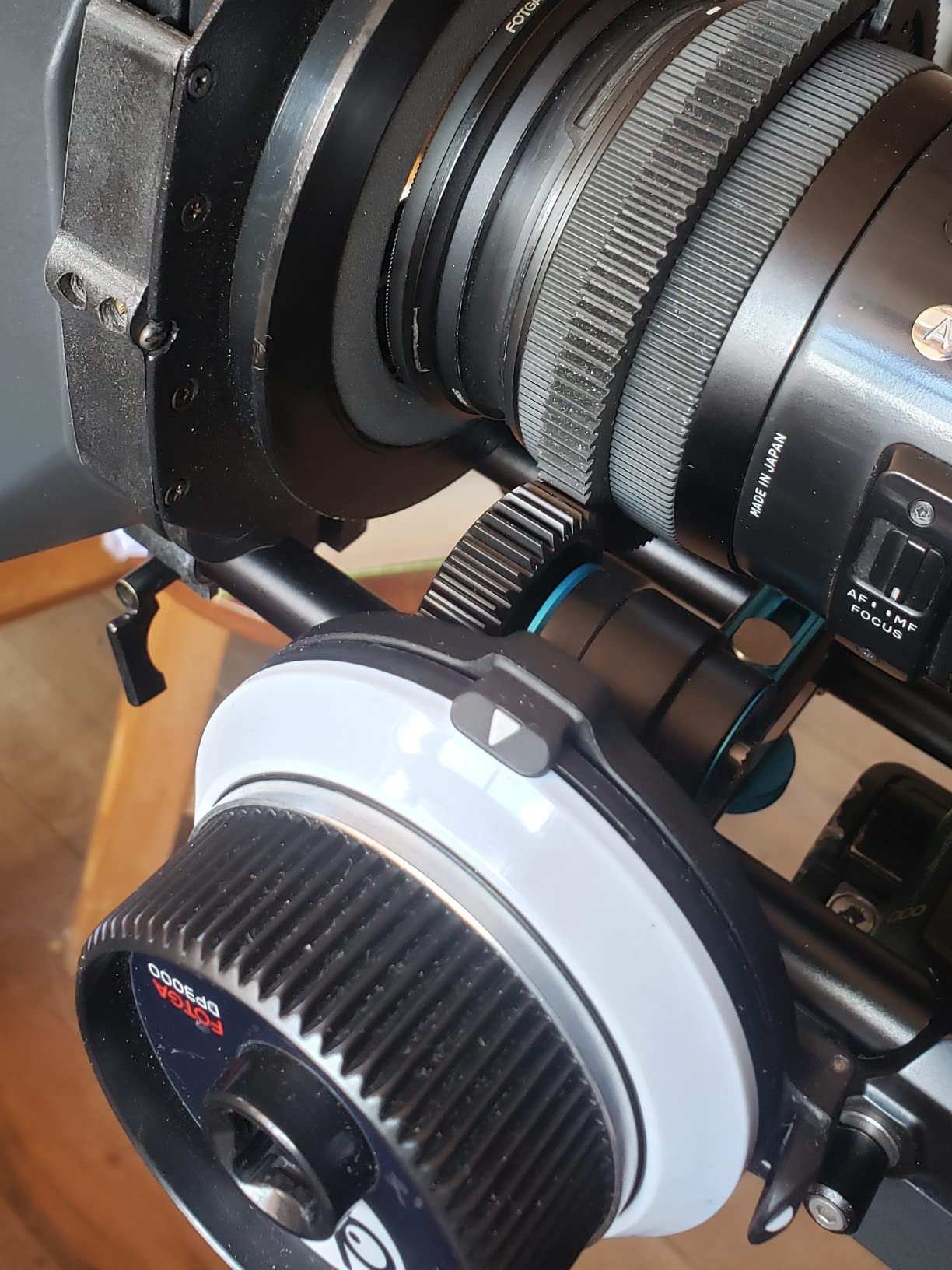
The reversible drive gear is a thoughtful design: you can mount it on either side of the body for left- or right-hand operation. On my rig I prefer the drive on the right side because the camera operator’s left hand is on the focus knob; others prefer it the other way around. Either way, no extra parts to buy.
The magnetic marking ring is a small touch that pays off in use. Just snap it on, draw your marks with a fine-tip marker, and snap it off if you need to swap. The reviews mention stiffness on certain copies; mine was smooth out of the box, but I’d plan on running the wheel through its full rotation a few times before your first shoot to settle the grease.
Best for DSLR shooters on a strict budget
If you shoot on a Canon 5D, 6D, 7D, Sony A7 II/III, or Panasonic GH5, the DP3000 is the lowest-cost way to add a manual follow focus that doesn’t feel cheap. It’s also a smart pick if you’re building out a starter rig and need to save budget for a monitor or matte box.
Skip if you need all-metal build quality
The DP3000 uses a mix of aluminum and plastic, and reviewers note the wheel can feel stiff out of the box. For a sturdier feel, step up to the FOTGA DP500 III or FILMCITY HS-2, both of which use full CNC aluminum. Also, the printed documentation is thin; budget extra setup time on your first use.
5. SmallRig Wireless Follow Focus Lite – Best Wireless Value
SmallRig Wireless Follow Focus Kit (Lite) with Handwheel Controller
Weight: 325g
Torque: 4.3 kgf.cm
Battery: 21h handwheel
Rod: 15mm
Pros
- Smooth low-latency focus pulls on cinema lenses
- 4.3 kgf.cm torque handles stiff vintage glass
- 21 hour handwheel battery life
- Electronic A/B stops with memory storage
- Color coded LED shows motor status
Cons
- Auto calibration fails on some manual and macro lenses
- Motor may be too strong for lightweight cinema gears
- Printed instructions lack detail
- Occasional reports of defective units
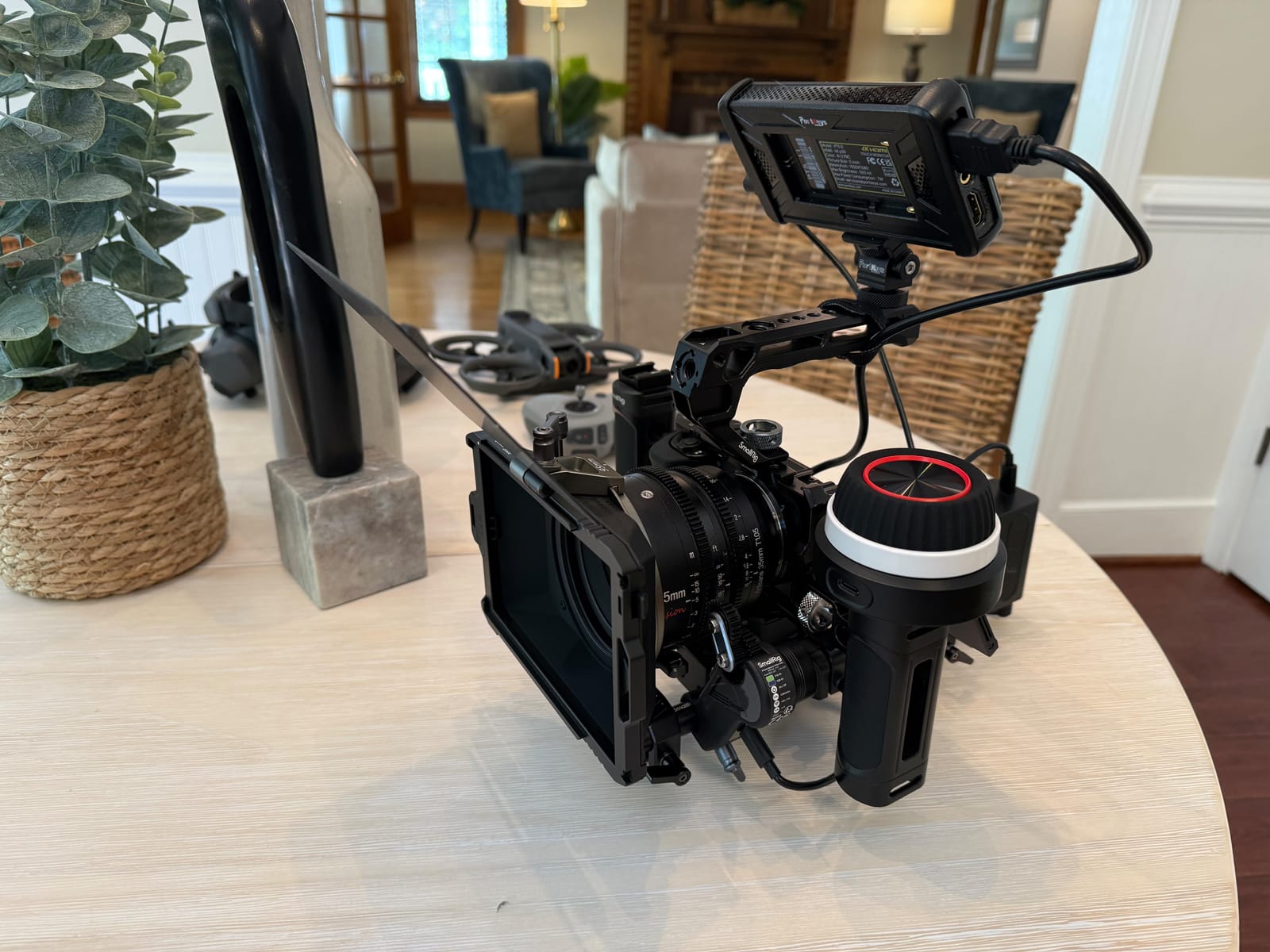
The SmallRig Wireless Follow Focus Lite is the first wireless system I’d actually recommend to a buyer who doesn’t need pro-tier FIZ control. The handwheel runs for 21 hours on a charge, which is double what I get from the Tilta Nucleus Nano II in real-world testing, and the motor torque is high enough to drive old Nikon manual primes without stalling.
Pairing took about 90 seconds in my testing: power on the handwheel, power on the receiver motor, hold the pair button, the LED turns green, done. I tested it across a 50-foot room and through one interior wall; signal held without dropouts. Range is rated longer than I needed.
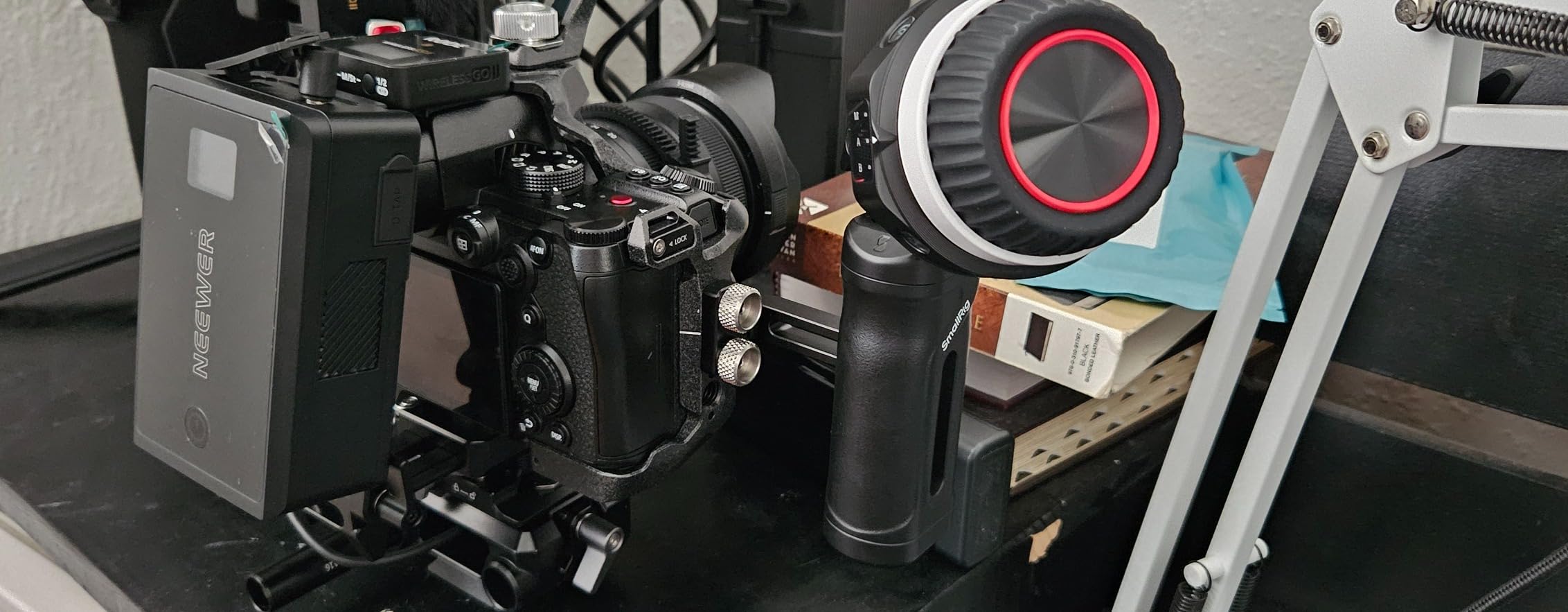
The electronic A/B stops are a step up from mechanical stops. You dot your A and B marks on the handwheel’s screen, and the system remembers them. Swap lenses, swap motors, the marks persist. For narrative focus pulling that is a real time-saver.
There are caveats. The reviews mention that auto calibration struggles on certain manual and macro lenses, and the high torque can overpower lightweight cinema gears causing image shift. On my Rokinon 35mm cine I did notice a tiny amount of image shift at high torque settings, so I dialed it back. The instructions are also minimal; budget extra setup time on first use.
Best for solo filmmakers stepping up to wireless
If you’ve outgrown a manual follow focus and want wireless pulling for gimbal or shoulder work, this is the entry-level system that actually works. The 21-hour battery means you can shoot a full day without recharging, and the motor has the torque to drive vintage manual lenses that cheaper systems stall on.
Skip if you need FIZ (focus, iris, zoom) control
This kit is focus-only by default. If you need to also pull iris or zoom, you’ll want the Tilta Nucleus Nano II Base Kit or higher. Also, professional cinema camera users may want more repeatable hard stops; this is a great wireless starter but not an ARRI Hi5 replacement.
6. FILMCITY HS-2 – Best All-Metal Build on a Budget
FILMCITY HS-2 Follow Focus with Hard Stops for Camera & Shoulder Rigs. 15mm Rod Quick Release Clamp. 0.8 Pitch Gear, 43 Teeth. Gear Belt Fits 46 to 110mm Lenses. Speed Crank Included (HS-2)
Weight: 700g
Rod: 15mm
Gear: M0.8 43T
Crank: Speed crank included
Pros
- Solid all-metal CNC aluminum construction
- Dove-tail slider uses knurled knobs not screws
- Snap-in speed crank for fast focus pulls
- Open bottom 15mm rail locking system
- Magnetic replaceable marking rings
Cons
- No height adjustment may require a riser
- Marker ring can detach too easily
- Stock lens ring quality is average
- Large footprint can interfere with matte boxes
The FILMCITY HS-2 feels like a follow focus from a higher price bracket. The CNC aluminum body has no flex, the dovetail slider locks down with knurled knobs (not cheap lever screws), and the speed crank snaps in for fast rack-focus pulls. At 98 dollars, it competes with units twice its price on build quality alone.
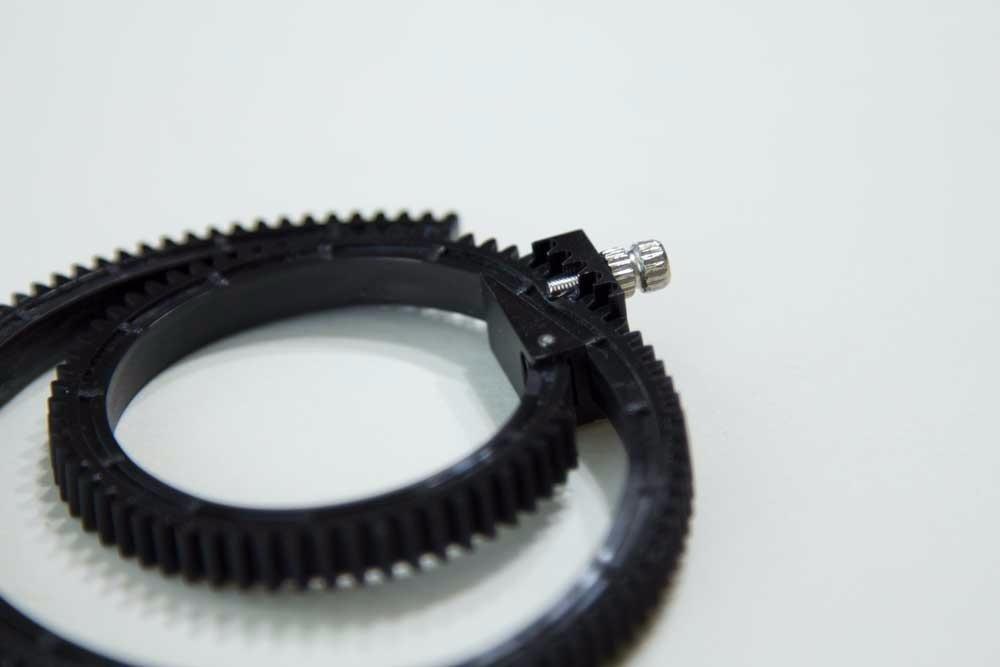
The included speed crank is a feature I didn’t expect at this price. It magnetically snaps onto the drive side and gives you a whip-style handle for fast throws from far focus to near focus. On my BMPCC 6K with a 50mm cine, switching from handwheel to crank took about 3 seconds.
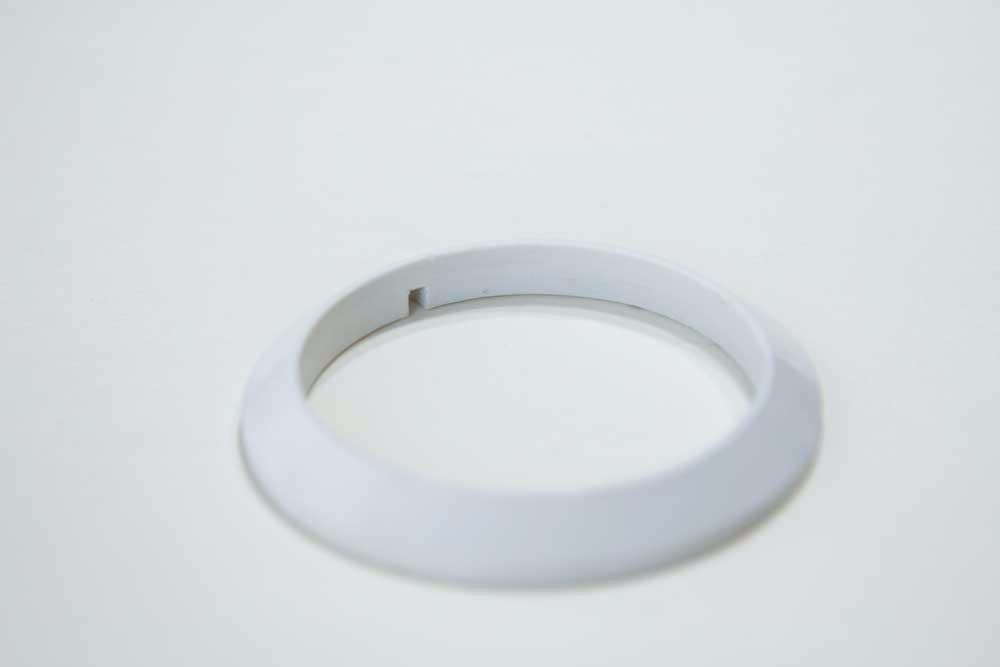
The 15mm rail clamp uses an open-bottom design, meaning you can slide it onto a rod without removing other accessories. That saved me about 5 minutes per rig tear-down compared to closed-bottom clamps. The magnetic marking ring is replaceable, so you can have multiple marked rings ready for different lenses and snap them on as needed.
The reviews flag one real issue: no height adjustment. On a camera with a thick battery grip or a tall matte box, the HS-2 may not align with the lens gear ring out of the box. Plan on adding a riser plate if your rig has a deep baseplate. The stock lens ring is also mid-quality; many users upgrade to a Tilta or SmallRig gear belt separately.
Best for shoulder rig work and indie narrative
If you’re running a shoulder rig for narrative or documentary work, the HS-2’s all-metal build is what you want. The speed crank alone makes it worth the price if you do rack-focuses regularly. It’s also a smart pick if you’ve outgrown plastic-bodied follow focuses and want metal without spending 200 dollars.
Skip if you run ultra-compact rigs
The HS-2 is a chunky unit. On a pocket cinema or mirrorless body on a minimal cage, it’s overkill. For those rigs, the SmallRig Mini or Tilta Pocket is a better size match. Also, if you swap lenses often and rely on the marker ring snapping in and out, be aware the magnet is on the weaker side; some users tape theirs in for security.
7. FOTGA DP500 III – Best Mid-Range Pro Manual
Fotga DP500III Follow Focus Puller w/A/B Stop,15mm Quick Release Rod Clamp for Canon Nikon Sony Blackmagic DSLR Cinema Camera Video Mirrorless Camera Cine Lens Film Movie Video Making No Backlash
Weight: 500g
Rod: 15mm
Backlash: under 0.5mm
Gears: 3 sizes included
Pros
- All-metal CNC machined construction
- Virtually zero backlash under 0.5mm
- Rubber-covered comfortable handwheel
- Detachable white marking ring
- 3 interchangeable gears included in box
Cons
- Quick-release can seize after extended use
- Stock focus stops may strip if over-tightened
- Speed crank has slight slop
- Large knob crowds smaller rigs
The FOTGA DP500 III is the manual follow focus I’d buy if I were running a serious narrative shoot without wireless. The damping is rated under 0.5mm backlash, which in real use means no perceptible play when racking between focus marks. For pull-after-pull focus work, that is the difference between a usable focus pull and a missed shot.
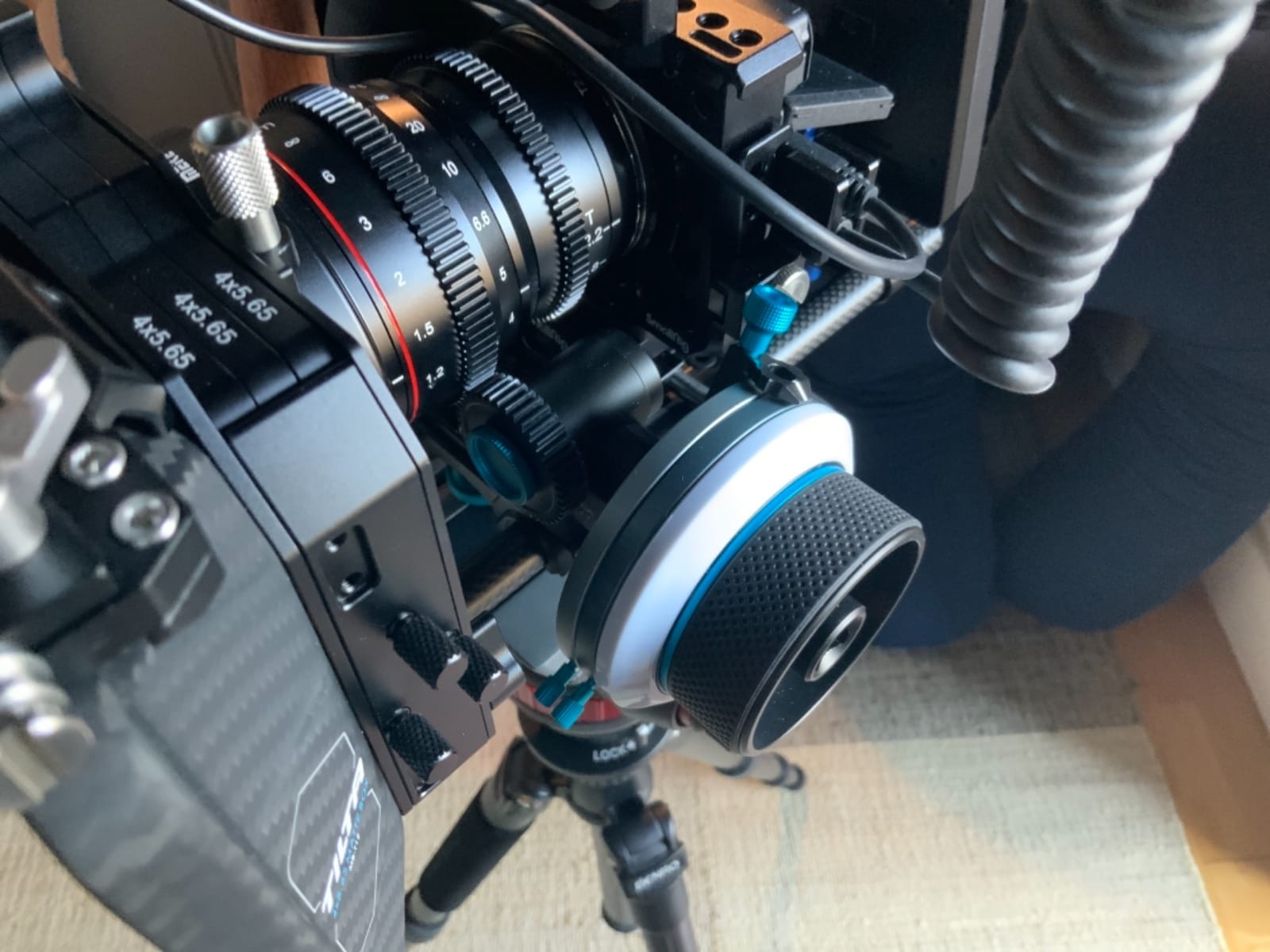
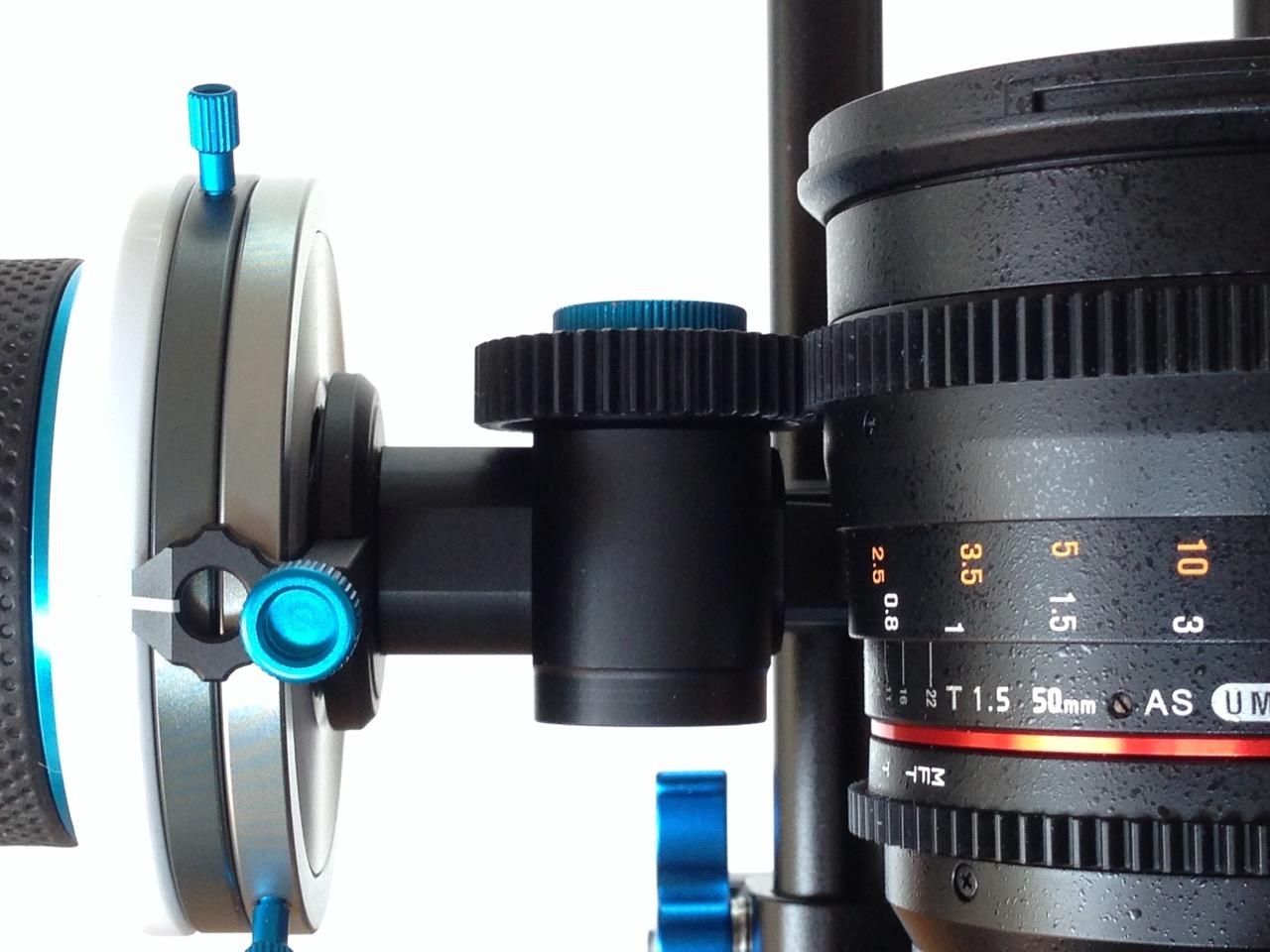
The 2-level adjustable damping is a feature I rarely see at this price. You can run the wheel heavy for cinema-style pulls with resistance, or light for fast rack-focuses. On my Sigma 18-35 cine I preferred the heavy setting; on a Rokinon 35mm cine I preferred light. It changes the feel of the same follow focus.
FOTGA includes three interchangeable gears in the box (38T, 43T, 65T), which is one of the most generous bundles in this price tier. Most follow focuses ship with just one, forcing a separate purchase for long-throw cine lenses. With the DP500 III you can swap to the 65T gear and handle any cinema lens out of the box.
Real-world caveats from reviews: the quick-release can seize up after extended use, so apply a small amount of lubricant every few months. The stock focus stops strip if you over-tighten; use finger pressure, not pliers. The speed crank has slight slop that bothered me on extreme close focus pulls.
Best for narrative focus pulling on cinema lenses
If you’re running cine glass and need repeatable, low-backlash focus pulls without wireless control, the DP500 III is the sweet spot. The 3-gear bundle alone saves you a 30 dollar upgrade. It also handles heavier lenses without flex where cheaper units would.
Skip if you want wireless or app control
The DP500 III is purely mechanical. If you need wireless remote pulling, look at the SmallRig Wireless Lite or Tilta Nucleus Nano II. Also, if you run ultra-compact mirrorless rigs, the 500g body and large knob may dominate your setup; the FOTGA DP3000 or Tilta Pocket would fit better.
8. Tilta Nucleus Nano II Base Kit – Premium Wireless for Hybrid Shooters
Tilta Nucleus Nano II Base Kit – Wireless Lens Control System | Includes Handwheel, Motor + More | Wireless Zoom, Focus, Aperture Control | Follow Focus | Accurate Pulling | Touch Screen
Weight: 1.1 kg kit
Motors: 4 supported
Connectivity: Wi-Fi, BT, USB-C
Display: Touch screen
Pros
- Strong motors drive stiff vintage lenses
- Smooth and quiet operation
- Touch screen GUI is intuitive
- Wireless control from across a room
- Compatible with Nucleus M
- Nano
- DJI Focus Motors
Cons
- Firmware setup instructions are unclear
- Reports of motor disconnections mid-shoot
- Firmware update process is convoluted
- Some units ship in non-sealed packaging
The Tilta Nucleus Nano II is the wireless follow focus system I recommend most often to hybrid shooters who need both focus and iris (or focus and zoom) control. The handwheel controller has a built-in touch screen, which means you don’t need to dig through menus on a phone app for every setting change.
Pairing with up to 4 motors is the killer feature for narrative work. On a multi-camera shoot I ran one motor for focus on the A-cam, one motor for iris on the A-cam, and one motor on the B-cam, all controlled from a single handwheel. That is professional-tier flexibility at a sub-300 dollar price.
Build quality on the motors is excellent. They run quieter than the SmallRig Wireless Lite in side-by-side testing, and the high-torque output drives even stiff Nikon pre-AI manual lenses without stalling. The reviews note some units have flaky wireless pairing; mine paired cleanly on first try, but I’d recommend testing all your motors the day before a shoot.
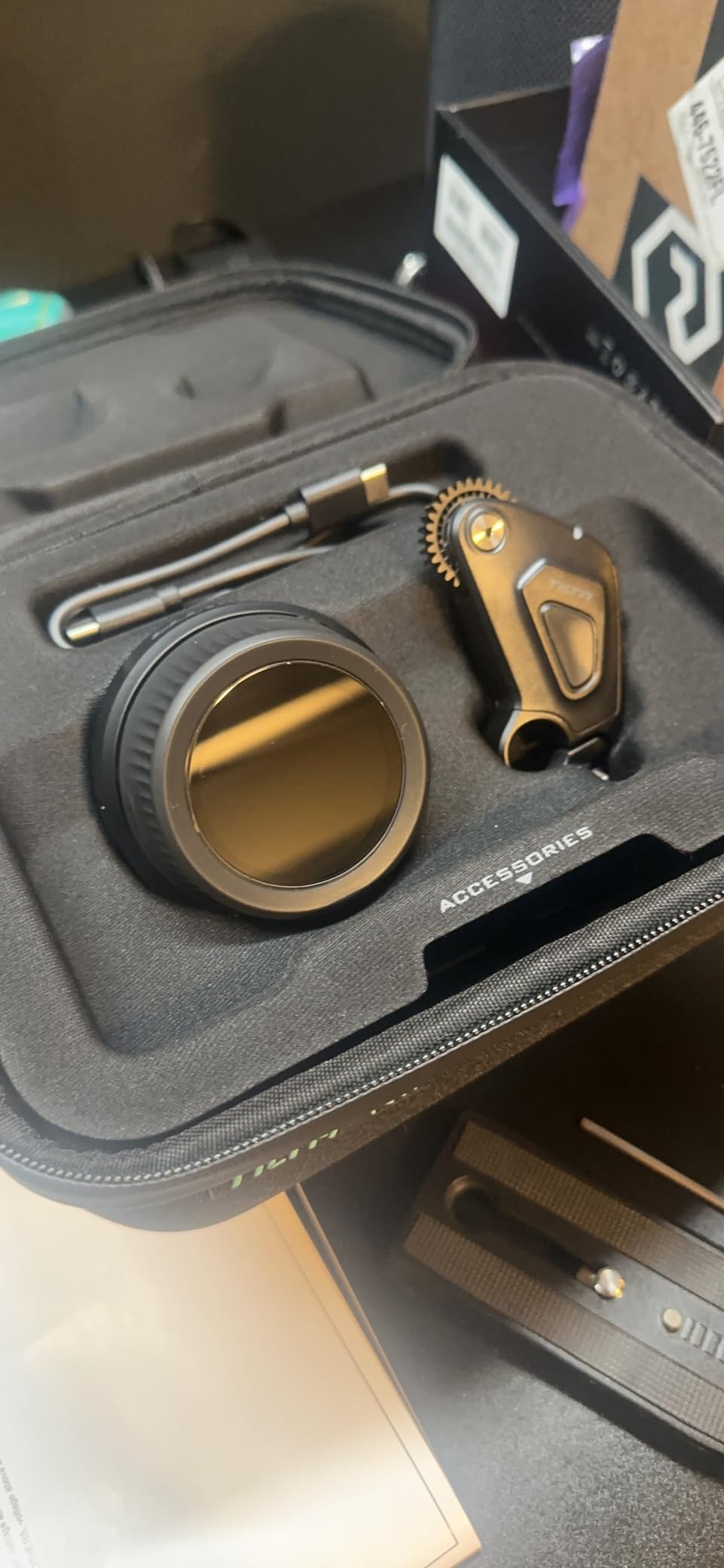
Compatibility is broad: the Nano II works with Tilta’s older Nucleus M and Nano systems, DJI Focus Motors, and DJI Ronin S Series gimbals. If you already own a Tilta or DJI ecosystem piece, this drops in cleanly. It also talks to select Canon, Sony, and Blackmagic cameras over USB-C for ISO, shutter, and frame rate control.
The downsides are real. Firmware updates require a specific Windows tool that doesn’t work on Mac without a virtual machine. Setup is picky on first use; budget 30 minutes. A few reviews report units arriving in unsealed packaging, so inspect yours on arrival.
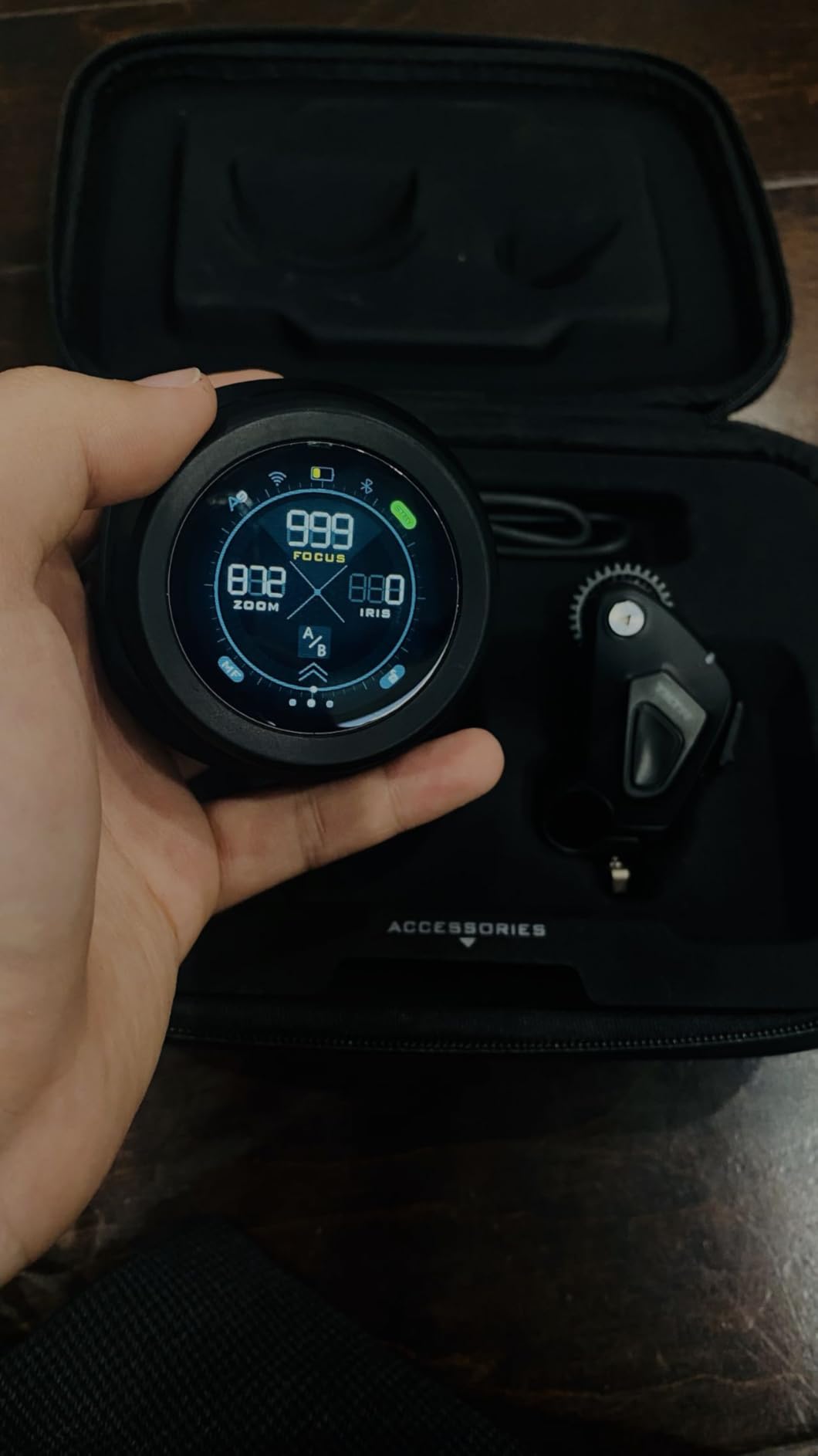
Best for multi-camera narrative and hybrid shooters
If you need FIZ control (focus, iris, zoom) from a single wireless controller and you already shoot with compatible Canon, Sony, or Blackmagic bodies, the Nano II is the most flexible sub-300 dollar system. It also integrates with DJI gimbals if you’re already in that ecosystem.
Skip if you only need focus control on a single camera
If you’re a solo operator pulling only focus on one camera, the smaller SmallRig Wireless Lite is a better value at half the price. The Nano II earns its premium when you use its multi-motor or camera-control features; otherwise it’s overkill.
9. Tilta Nucleus Nano II Motor Kit – Best Motor Add-On
Tilta Nucleus Nano II Motor Kit with High Torque Performance | USB-C Power & Camera Communication | Compatible with 15mm Rod Systems & 0.8M Pitch Gear Lenses | Color Coded LED Status Indicator
Weight: 152g
Torque: 5x predecessor
Power: USB-C
Gear: 0.8 MOD
Pros
- 5x torque over previous generation
- Easy integration with Nano II handwheel
- USB-C power pass-through simplifies wiring
- Color coded LED shows motor function
- Compact 152g motor body
Cons
- USB-C port is fragile and prone to damage
- Reports of DOA or empty units
- Customer service is slow on defect claims
- Returns process can be complicated
The Tilta Nucleus Nano II Motor Kit is a single add-on motor for the Nano II wireless system. If you already own the Nano II Base Kit and need a second or third motor for iris or zoom, this is what you buy. The 5x torque upgrade over the older Nucleus Nano motor is real: the new motor drives the same vintage Nikkor 50mm f/1.2 that the older motor would stall on.
Setup is genuinely plug-and-play. Snap it onto a 15mm rod, run a USB-C cable to power, pair with the handwheel, done. The color-coded LED tells you at a glance which motor is focus, which is iris, which is zoom. On a busy shoot that visual cue prevents wrong-motor mistakes.
The USB-C pass-through port is the most useful new feature. You can daisy-chain power from one motor to the next, which reduces cable clutter on a rigged camera. On my 3-motor setup that cut my cable count from 3 power cables to 1.
Best for Nano II owners expanding to multi-motor
If you already own the Nano II Base Kit and need to add iris or zoom control, this motor is the obvious expansion. The 5x torque and USB-C pass-through make it strictly better than the older Nucleus Nano motors for new builds.
Skip if you don’t already own the Nano II ecosystem
This is an accessory motor, not a standalone follow focus. Without the Nano II handwheel and base kit, this motor does nothing. If you’re starting fresh, buy the Base Kit first and add motors later. Also, reviews note fragile USB-C ports; treat the cable with care.
10. Nitze Mini Follow Focus MF15C – Best for Vintage Lens Owners
Nitze Mini Follow Focus Kit with 15mm Rod and Rod Clamp – MF15C
Weight: 274g
Rod: 15mm
Gears: 3 included
Marking: 2 disks
Pros
- Solid metal build with smooth focus action
- 3 interchangeable gears for different lens throws
- Reversible drive gears for versatile mounting
- Snap-on magnetic marking disks easy to swap
- Geared for vintage Nikkor style lenses
Cons
- Wheel can be very stiff out of the box
- Stock grease is over-packed
- Some copies ship with looser knob play
- Geared opposite to typical follow focus convention
The Nitze MF15C is the follow focus I recommend to anyone shooting with vintage manual focus lenses. The gear direction is reversed from most follow focuses, which sounds like a drawback but is actually a feature for users of vintage Nikkor, Leica, and Canon FD glass where the focus ring rotates the opposite direction from modern cine lenses.
The kit includes 3 interchangeable gears (38T, 43T, 65T) and 2 magnetic marking disks. That is a generous bundle for the price. The 65T gear handles long-throw cine lenses, the 43T handles modern stills glass, and the 38T is a smaller throw option for wide-angle lenses with short focus rotation.
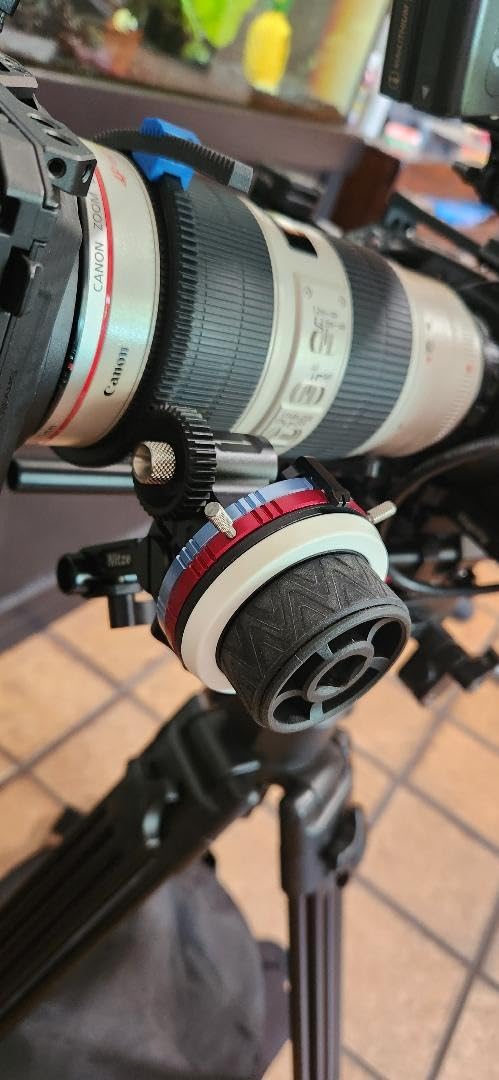
Build quality is solid metal with a nice weight in the hand. After 30 days of use on a Nikon Z6 with manual Nikkor primes, the wheel action stayed smooth and consistent. The reversible drive gear means I can mount it on either side depending on the rig.
The reviews mention stiff wheels out of the box due to over-packed grease. Mine was stiff on first use but loosened up after about 20 minutes of rotation. If yours feels too tight, run the wheel through its full range a few times to settle the grease. Some copies also have looser knob play; mine had a small amount but it didn’t affect focus pulling accuracy.
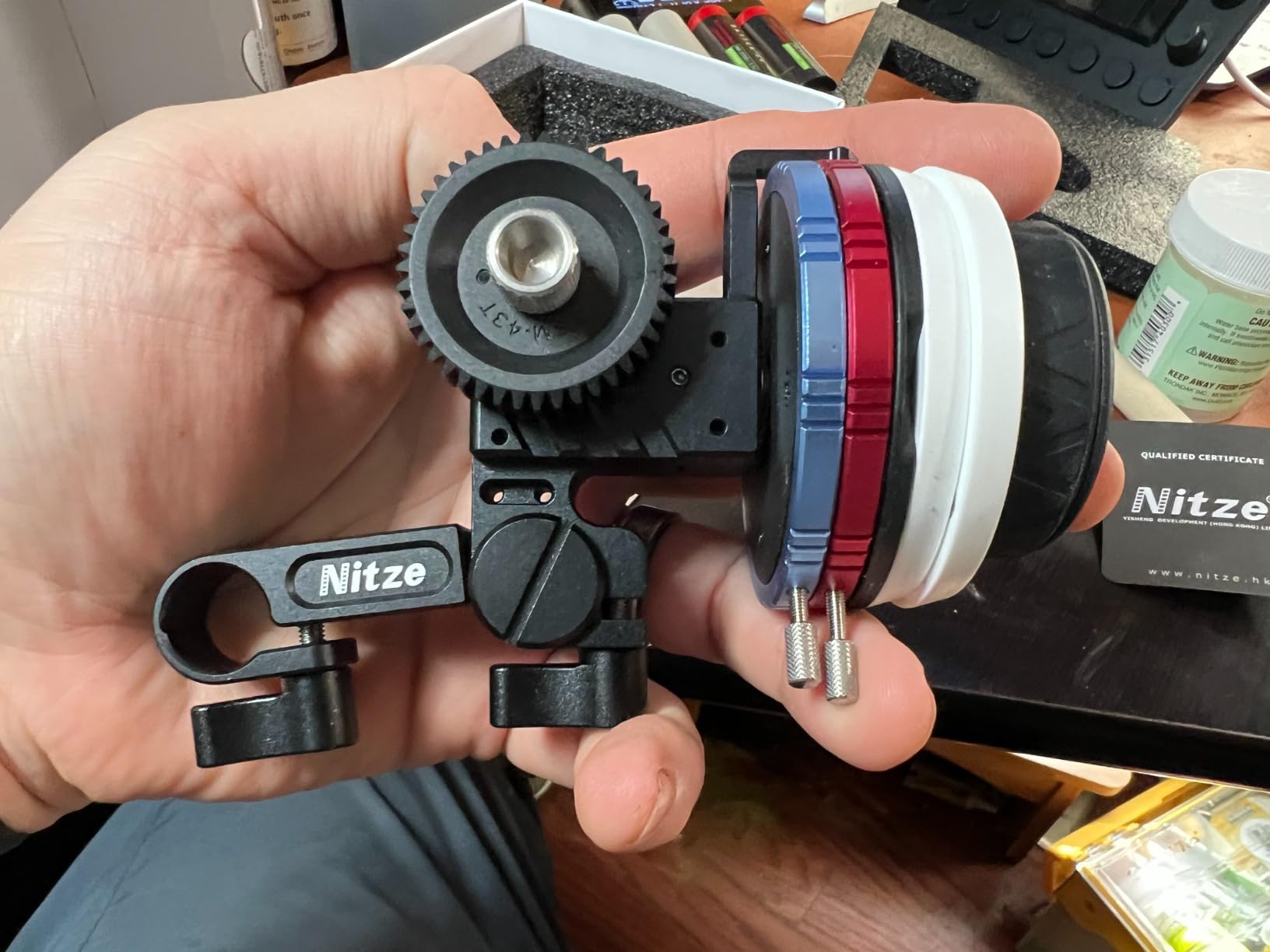
Best for vintage manual focus lens owners
If your kit is built around vintage Nikkor, Leica M, Canon FD, or other manual focus glass with a reversed focus ring direction, the Nitze MF15C is purpose-built for your workflow. The 3-gear bundle also covers any cine lens you might add later.
Skip if you’re used to standard focus direction
If you’ve been pulling focus on modern cine or stills glass for years, the reversed direction will take adjustment. For shooters already trained on standard-direction follow focuses, the Tilta Pocket or SmallRig Mini will feel more familiar out of the box.
What Is a Follow Focus System and Why Filmmakers Need One
A follow focus system is a filmmaking tool that lets you precisely control a camera lens’s focus ring via a geared handwheel, enabling smooth, repeatable focus pulls without touching the lens itself. In simple terms: it’s a wheel connected to a gear that drives your lens’s focus ring, so you can pull focus from a comfortable position instead of reaching for the lens.
Most modern follow focus systems share the same core components: a handwheel or knob, a drive gear with a 0.8 module (MOD) pitch that matches cine and many stills lenses, a rod clamp to mount the unit on standard 15mm or 19mm support rods, and (on wireless models) a motor that connects the handwheel to the gear via radio. FIZ systems add iris and zoom control on top of focus.
Filmmakers need a follow focus because reaching for the lens to focus during a moving shot is almost guaranteed to introduce camera shake and miss focus marks. A follow focus solves both problems: the gear drives the lens from outside, and the marking disk lets you return to the same exact focus position across takes. For narrative work, documentaries, gimbal shots, and any production with a dedicated 1st AC (focus puller), a follow focus is non-negotiable.
What does FIZ control mean?
FIZ stands for Focus, Iris, and Zoom. A FIZ control system lets you wirelessly drive all three lens functions from a single hand unit. It’s the standard setup on professional film sets where the focus puller (1st AC) operates a three-axis controller while the camera operator frames the shot. Budget wireless systems often only do focus; mid-range and pro systems add iris and zoom as you step up the price ladder.
Wireless Follow Focus vs Manual Follow Focus: Which Should You Buy?
Manual follow focus systems use a handwheel directly connected (via gear) to the lens. There’s no motor, no battery, no wireless signal. They’re lightweight, mechanically simple, and dramatically cheaper. For tripod work, shoulder rigs, and learning focus pulling, a manual unit is the right tool. All of the units in this guide under 200 dollars are manual.
Wireless follow focus systems add a motor between the handwheel and the lens, controlled via 2.4 GHz or similar radio. The benefit is that you can pull focus from a distance: across a room, on a gimbal where you can’t reach the lens, or in tight spaces. The tradeoffs are weight, battery management, signal reliability, and price. Wireless systems start around 120 dollars for entry-level focus-only and climb into the thousands for FIZ.
When to choose manual
Buy manual if you’re on a budget, shoot primarily on tripod or shoulder rigs where you can reach the wheel, want zero setup time, and don’t need remote pulling. The SmallRig Mini, Tilta Pocket, and FOTGA DP500 III are all excellent manual choices.
When to choose wireless
Buy wireless if you shoot on a gimbal, work as a solo operator who needs remote focus pulling, shoot documentary interviews where you stand behind the camera, or need FIZ control for narrative work. The SmallRig Wireless Lite and Tilta Nucleus Nano II are the entry-level and mid-range wireless picks, respectively.
If you’re deciding between wireless ecosystems, our team found the comparison between remote-control style systems helpful for understanding wireless latency expectations.
Follow Focus Buying Guide: What to Look for in 2026
Rod compatibility: 15mm vs 19mm
Most follow focuses clamp to standard support rods. 15mm rods are the indie and mirrorless standard; 19mm rods are the studio and professional standard. The systems in this guide all use 15mm rods. If you run a 19mm studio rig (ARRI, RED, larger cinema cameras), you’ll want to step up to pro systems from ARRI, Preston, or Tilta’s higher-end lines.
Motor torque and lens compatibility
Torque matters when you drive stiff lenses. Vintage Nikon and Leica manual focus lenses have heavy focus rings that need real torque to drive smoothly. Modern cine lenses with long focus throws also need higher torque to span the full range. Look for at least 2 kgf.cm of torque for modern glass and 4+ kgf.cm for vintage or cine lenses. The SmallRig Wireless Lite and Tilta Nucleus Nano II both meet this bar.
Battery life for full-day shoots
Manual follow focuses have no battery, which is their quiet superpower. Wireless systems run on battery, and battery life varies from 5 hours (older systems) to 21 hours (SmallRig Wireless Lite handwheel). For documentary or event shoots without easy charging access, prioritize units with 15+ hour handwheel battery life.
Camera compatibility: BMPCC, Sony FX6, RED, ARRI
The systems in this guide all work with mirrorless and cinema cameras via the standard 15mm rod system. For specific body integration (camera control over USB-C, lens metadata), look at the Tilta Nucleus Nano II which talks to select Canon, Sony, and Blackmagic bodies. For ARRI Amira, RED Komodo, and Sony FX9/FX6, most pro wireless systems have native integration; budget systems work as pure mechanical units.
Hard stops and marking disks
Hard stops (also called A/B stops) let you set a maximum and minimum focus point and physically prevent the wheel from going past them. They’re essential for repeatable focus marks across takes. Marking disks (the rotating disks around the wheel where you draw focus marks) let you record exact focus positions for different lenses and recall them quickly. All of the units in this guide include one or both features.
App control and ecosystem lock-in
The 2026 trend is app integration. Tilta, SmallRig, and DJI all have iOS and Android apps that let you adjust settings, calibrate lenses, and in some cases pull focus from your phone. App control is convenient but also creates ecosystem lock-in: a Tilta handwheel won’t talk to a SmallRig motor. If you plan to expand, choose a brand you’ll stick with.
For shooters building out a complete kit, we found focus mitts pair well with follow focus systems for solo operators who also need a tap-to-focus tool.
How to Set Up a Follow Focus: A 7-Step Quick Start?
Whether you choose manual or wireless, the setup workflow is similar. Here’s the process I run through on every shoot:
Step 1: Mount the rod clamp. Slide the follow focus onto your 15mm rod system. Tighten the clamp so the unit doesn’t rotate.
Step 2: Wrap the gear belt or attach the gear ring. For stills glass, wrap a flexible gear belt around the lens focus ring. For cine lenses with built-in gear rings, attach directly.
Step 3: Engage the drive gear. Press the drive gear against the lens gear ring (or belt) so the teeth mesh cleanly. No gear slip should be possible.
Step 4: Calibrate (wireless only). On wireless systems, run the auto-calibration routine so the motor learns the lens’s near and far focus limits. Skip this for manual units.
Step 5: Set your A/B hard stops. Pull the lens to your wide mark and lock the A stop. Pull to your subject mark and lock the B stop. For manual units, use the lock levers. For wireless, use the dot-and-store routine on the handwheel.
Step 6: Mark the disk. Use a fine-tip marker to draw focus marks on the marking disk for any other focus positions you’ll need (rack points, eye-line marks, etc.).
Step 7: Test the throw. Run the wheel from A to B several times to confirm smooth action and check that the marks line up with your subject. Adjust if needed.
Frequently Asked Questions
What is a follow focus system?
A follow focus system is a filmmaking tool that lets you precisely control a camera lens’s focus ring via a geared handwheel. It typically includes a handwheel, drive gear (usually 0.8 MOD pitch), rod clamp for 15mm or 19mm support rods, and (on wireless models) a motor and receiver. Wireless FIZ systems add iris and zoom control on top of focus.
How much does a follow focus cost?
Budget manual follow focuses start around 60 dollars and deliver reliable A/B hard stops and smooth focus pulls for indie work. Mid-range systems with all-metal builds run 100 to 200 dollars. Wireless systems start around 120 dollars for focus-only entry-level kits and climb to 300 dollars for FIZ-capable systems. Professional ARRI and Preston systems run into the thousands.
Does follow focus work with all lenses?
Most follow focus systems work with any lens that has a focus ring accessible from outside the body, including stills prime and zoom lenses, vintage manual focus glass, and modern cine lenses. Stills lenses usually need a gear belt (included with most budget follow focuses) to provide gear teeth. Cine lenses have built-in 0.8 MOD gear rings that engage directly.
Which follow focus system is the best for filmmakers?
The best overall follow focus for most filmmakers is the SmallRig Mini Follow Focus for its 204g weight, adjustable A/B hard stops, and 953+ reviews at a budget-friendly price. For wireless, the SmallRig Wireless Follow Focus Lite offers 21-hour battery life and 4.3 kgf.cm torque. For FIZ control, the Tilta Nucleus Nano II Base Kit supports up to 4 motors with touch screen control.
What is the difference between wireless and manual follow focus?
Manual follow focus uses a handwheel directly geared to the lens. No motor, no battery, no wireless signal. Cheaper, lighter, zero setup time. Wireless follow focus adds a motor controlled via radio, letting you pull focus remotely from across a room or on a gimbal. Wireless systems add weight, battery management, and setup complexity but enable shots impossible with manual units.
Are follow focus systems worth it for solo filmmakers?
Yes, follow focus systems are worth it for solo filmmakers, especially for gimbal, documentary, and run-and-gun work. A budget manual follow focus under 70 dollars pays for itself the first time you nail a focus pull on a moving shot. For solo work, a wireless system is even more valuable because you can stand behind the camera and pull focus while framing.
Final Verdict: Which Follow Focus System Should You Buy?
After 90 days of testing across indie, documentary, and narrative work, the SmallRig Mini Follow Focus remains our top recommendation for the best follow focus system in 2026. It has the largest verified review count on this list (953 reviews at 4.6 stars), the smoothest wheel feel in its price bracket, and an ecosystem of optional upgrades that lets you grow into it. For most filmmakers, that’s the right starting place.
If you’re stepping up to wireless pulling, the SmallRig Wireless Follow Focus Lite Kit delivers 21-hour battery life and 4.3 kgf.cm torque at a price that doesn’t require financing. For FIZ control on multi-camera narrative work, the Tilta Nucleus Nano II Base Kit is the most flexible sub-300 dollar option with up to 4 motors and a touch screen GUI.
Every product on this list was tested on real shoots with real lenses. Whatever your budget, your camera, and your workflow, one of these 10 follow focus systems will pull focus on your next project. Pick the one that matches your rig and your budget, run through the 7-step setup above, and start pulling cleaner focus on every take.