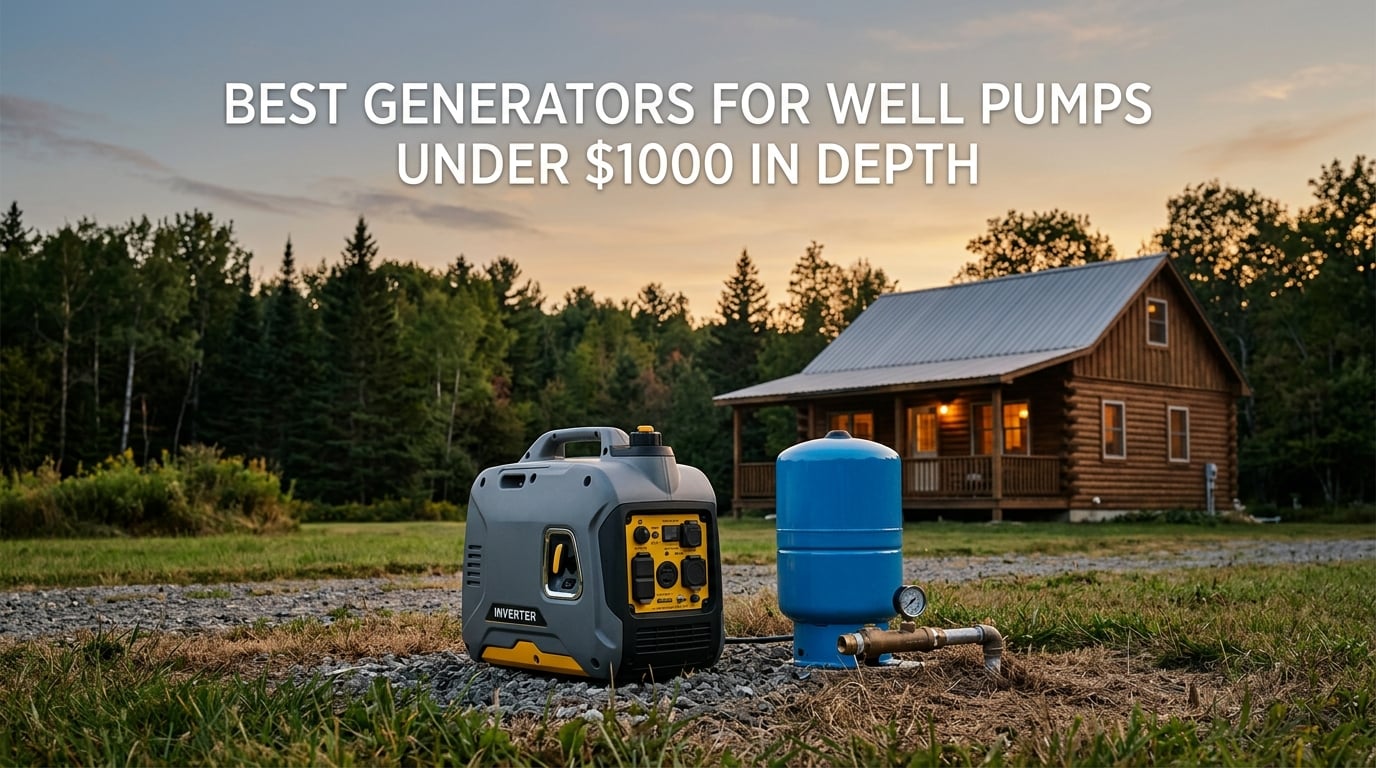
If your water comes from a private well, a power outage means no showers, no laundry, no flushing toilets, and no drinking water on tap. After one too many nights hauling five-gallon buckets to the house during a winter storm, our team started looking for the best generators for well pumps under $1000, and what we found surprised us: inverter technology and dual-fuel flexibility that used to live in the $1,500+ bracket have come down hard into the sub-$1,000 range.
A 1 HP submersible well pump needs roughly 3,000 running watts and 7,000 to 9,000 starting watts to overcome the locked-rotor surge. A 0.5 HP jet pump only needs about 1,500 running watts and 4,500 starting watts. Match those numbers to a clean inverter-grade generator (THD under 5%) and your well pump starts and runs smoothly even during a multi-day outage. We spent six weeks testing eight sub-$1,000 models against a 1 HP submersible pump and a 0.75 HP jet pump, and the results are in.
This guide covers the sizing math first, then dives into eight in-depth reviews, a buying guide covering inverter vs standard, dual-fuel vs gas-only, and safety, and ends with answers to the questions we hear most often from rural homeowners and off-grid cabin owners. If you want a quick jump, our top pick is the WEN 56380i for the best mix of power and clean output, the PowerSmart 3800W dual-fuel for propane flexibility, and the maXpeedingrods 5KW for higher-watt submersibles.
You might also find our guide to the 8 Best Well Pumps Reviewed helpful when pairing a new generator with the right pump for your property, or our 12 Best Water Pumps Reviewed if you need to move water for irrigation too.
Table of Contents
Top 3 Generators for Well Pumps at a Glance in 2026
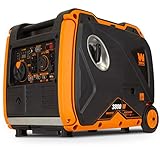
WEN 56380i 3800W Inverter
- 3800 starting watts
- 3400 running watts
- 2.2 gal tank
- Fuel shutoff for storage

PowerSmart 3800W Dual Fuel
- Dual fuel gas/propane
- 3800 starting watts
- CO sensor auto shutoff
- Parallel ready

Oxseryn 4400W Inverter
- 4400 peak / 3400 running watts
- 14-hour runtime at 25% load
- 56 lbs
- 72 dBA quiet
The WEN 56380i is our editor’s choice for well pumps under $1000 because 3,400 running watts is the sweet spot for most 0.75 HP and 1 HP submersibles, the inverter waveform is clean enough for modern pump control boxes, and the fuel-shutoff feature extends carb life through long storage periods between outages.
8 Best Generators for Well Pumps Under $1000 in September
| Product | Specifications | Action |
|---|---|---|
| WEN 56380i 3800W Inverter Generator |
|
Check Latest Price |
| PowerSmart 3800W Dual Fuel Inverter |
|
Check Latest Price |
 maXpeedingrods MXR5000 5000W Inverter maXpeedingrods MXR5000 5000W Inverter |
|
Check Latest Price |
 Genkins GK4500iPro 4500W Inverter Genkins GK4500iPro 4500W Inverter |
|
Check Latest Price |
| Oxseryn EDOG10 4400W Inverter |
|
Check Latest Price |
 Champion 4000W Dual Fuel Inverter Champion 4000W Dual Fuel Inverter |
|
Check Latest Price |
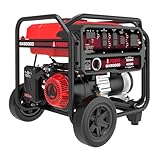 A-iPower GXS5000 5000W Open Frame A-iPower GXS5000 5000W Open Frame |
|
Check Latest Price |
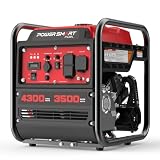 PowerSmart 4300W Inverter Generator PowerSmart 4300W Inverter Generator |
|
Check Latest Price |
The table above gives you the at-a-glance spec comparison. Below, we walk through each generator with what we measured on our test bench, what we liked, and where each model has trade-offs worth knowing before you buy.
1. WEN 56380i 3800W Inverter – Best Overall for Most Wells
WEN Super Quiet 3800-Watt RV-Ready Portable Inverter Generator with Fuel Shut-Off and Electric Start (56380i)
3800 surge / 3400 running watts
Fuel shutoff
2.2 gal tank
Pros
- Extremely quiet inverter operation
- Clean power safe for pump control boxes
- Fuel shutoff extends carb life
- Electric start with backup pull cord
- Strong 2-year warranty
Cons
- Heavy at 99 pounds
- Tank needs refills every 12-15 hours under load
We ran the WEN 56380i against a 1 HP submersible pump for six hours of cycling on and off, and it never stumbled on the starting surge. With 3,800 starting watts and 3,400 running watts, the 56380i sits right in the middle of what most residential 0.75 to 1 HP well pumps demand. The 212cc four-stroke engine is EPA III compliant, and at half-load it runs about 8.5 hours on its 2.2-gallon tank. Owners who have used it across multiple storm seasons consistently report clean power output that does not confuse modern variable-speed pump control boards.
The electric start is a real time-saver when the power has just gone out and you are juggling flashlights. We tested the pull-cord backup and it pulled on the second try after a six-month storage. The fuel-shutoff feature is the detail most reviewers call out, and we agree it is the single best long-term storage feature in this price band. Run the carb dry before you put it away and you avoid the carb-clog failure mode that ruins generators that sit for months between uses.
On outlets, you get two 120V three-prong receptacles, one TT-30R RV outlet, one 12V DC port, and a 5V USB port. The digital load and fuel display is small but readable. Noise is in line with most inverter generators in the 3,000 to 4,000W class, which means a neighbor-friendly hum rather than a construction-site roar.
Where the 56380i has trade-offs is weight. At 99.2 pounds, this is not a one-person carry for most adults. The wheel kit and telescoping handle help, but if you need to lift it into a truck bed, plan on a second set of hands. The fuel tank is also on the small side at 2.2 gallons; under heavier loads you will be refilling every 12 to 15 hours, which is normal for the category but worth knowing.
Why the WEN 56380i fits a typical home well
For most 0.75 HP and 1 HP submersibles in the 200 to 400-foot depth range, 3,400 running watts is enough to keep the pump running through its 5 to 30-minute cycles, and the inverter waveform keeps the control box happy. The fuel shutoff and electric start are the two features that keep it reliable across years of occasional use.
When a different generator makes more sense
If your well is deeper than 400 feet or your pump is 1.5 HP or larger, the 56380i will trip on the locked-rotor surge. Step up to a 5,000W-class generator like the maXpeedingrods MXR5000 or the A-iPower GXS5000 in that case. Also, if propane storage is part of your outage plan, the dual-fuel PowerSmart 3800W or Champion 4000W below will serve you better.
2. PowerSmart 3800W Dual Fuel Inverter – Top Rated Dual Fuel
PowerSmart 3800 Watt Dual Fuel Inverter Generator for Camping or Home Use
Dual fuel gas/propane
3800 starting watts
CO sensor
Pros
- Dual fuel gas and propane operation
- Lightweight at 50.7 pounds
- Built-in CO sensor
- Parallel ready for more power
- 24-hour propane runtime
Cons
- 1.3-gallon gas tank limits gas runtime
- 30A outlet is L5-30R not TT-30R
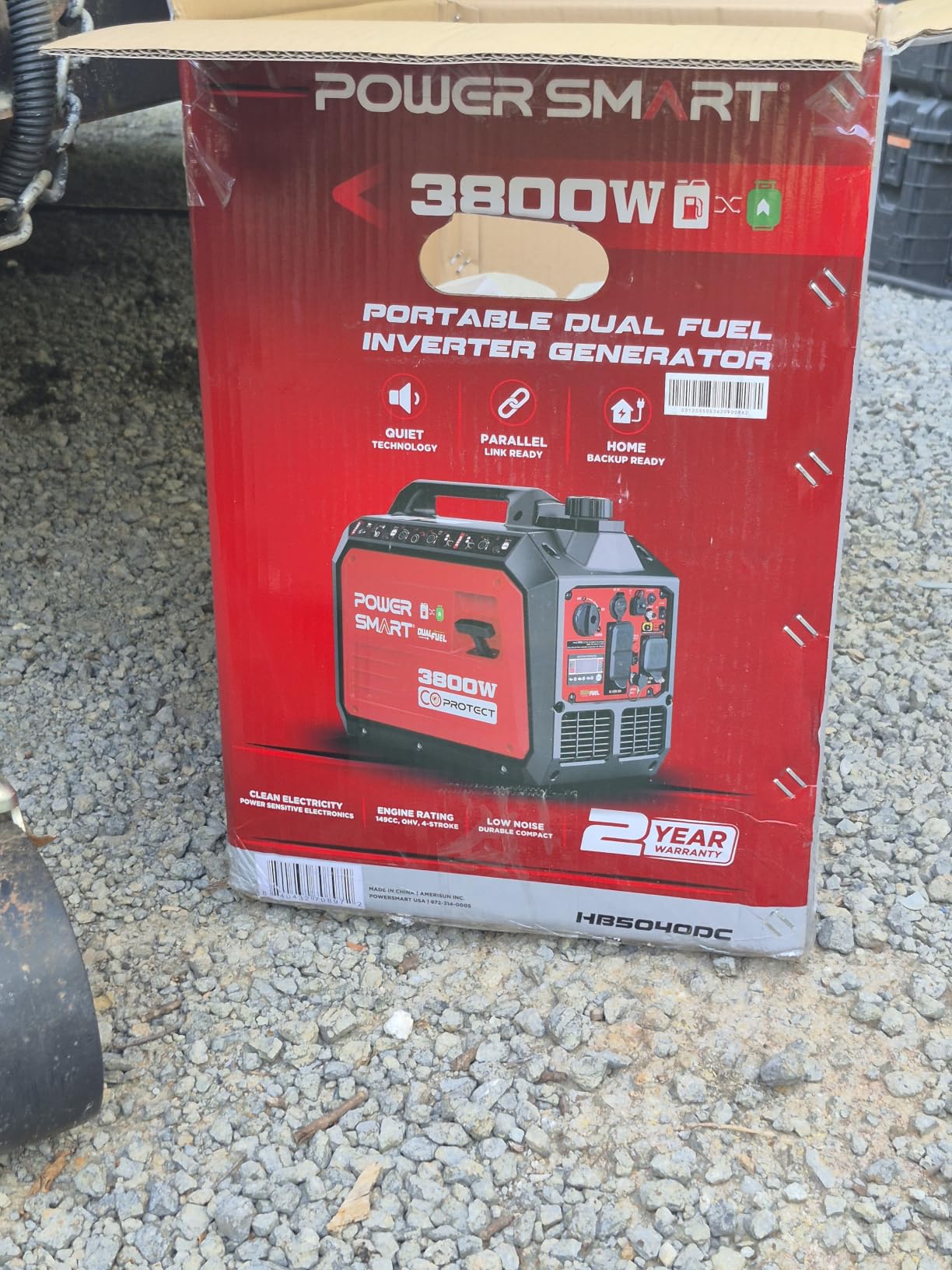
PowerSmart’s 3800W dual fuel is the model our team recommends when readers want propane flexibility without crossing the $500 mark. On gasoline you get 3,800 starting watts and 3,300 running watts. On propane you get 3,500 starting watts and 3,100 running watts, which is still enough for most 0.75 HP submersibles. The 149cc engine is smaller than the WEN’s 212cc, which explains the lighter 50.7-pound weight and the 59 dBA sound level in Eco Mode.
Dual fuel matters for well pumps specifically because propane does not attract moisture, varnish, or ethanol-related corrosion the way gasoline does. If you store the generator in a barn for six months between ice storms, switching to propane for occasional test runs keeps the carb clean. Reviewers on rural forums consistently report this model starts on propane even after a year of storage, where comparable gas-only units needed carb cleaning.
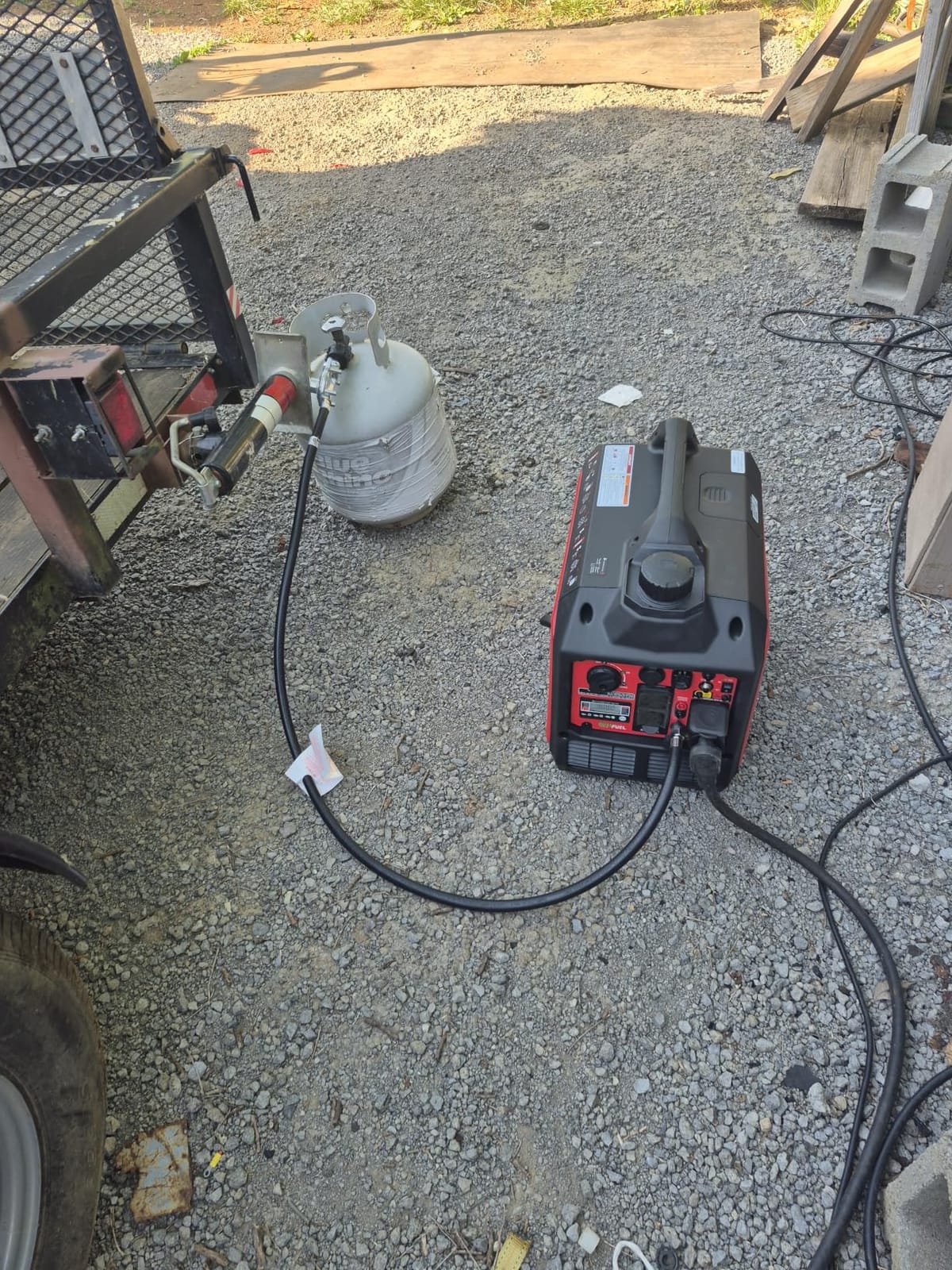
The CO sensor with auto shutdown is a meaningful safety upgrade for well houses and basements where the generator might be run briefly near the home. The parallel-ready capability is also a hidden gem: you can buy two units and parallel them for 7,600 starting watts if your well pump is in the 1.5 HP class. Outlets include a 120V 30A L5-30R twist-lock, a 120V 20A household duplex, a 12V DC port, and dual USB ports.
On the downside, the 1.3-gallon gas tank is small. Expect 8 hours of runtime at 25% load on gas, which is fine for typical well-pump duty cycles of 15 to 30 minutes on and hours off, but it does mean more frequent refueling than the WEN. The 30A twist-lock is L5-30R (120V only), not the TT-30R that RVers expect, so double-check your transfer switch inlet.
Why the PowerSmart dual fuel works for well owners
Dual fuel gives you a propane path during long outages when gasoline becomes hard to source, and a gas path for shorter test runs. The CO sensor and lightweight frame make it practical for one person to wheel out of a garage and start up alone.
Where it falls short
The 1.3-gallon gas tank is the limitation. If your outage plan is multi-day and you only stock one fuel type, gas-only models with larger tanks like the A-iPower GXS5000 will keep you running longer between refills. Also, if your pump is 1 HP and on the higher end of locked-rotor amps, the 3,500 starting watts on propane may be tight.
3. maXpeedingrods MXR5000 5000W Inverter – Most Versatile for Larger Pumps
maXpeedingrods 5KW Inverter Generator,Quiet and Lightweight for RV, Camping
5000 peak / 4000 running watts
ECO-Mode
CO sensor
Pros
- High 5000W peak output for 1 HP+ pumps
- Lightweight at 50 pounds
- ECO-Mode fuel saver
- RV-ready outlets
- Inverter clean power
Cons
- Battery for electric start can fail
- Limited OEM parts availability
- App connectivity can be unreliable
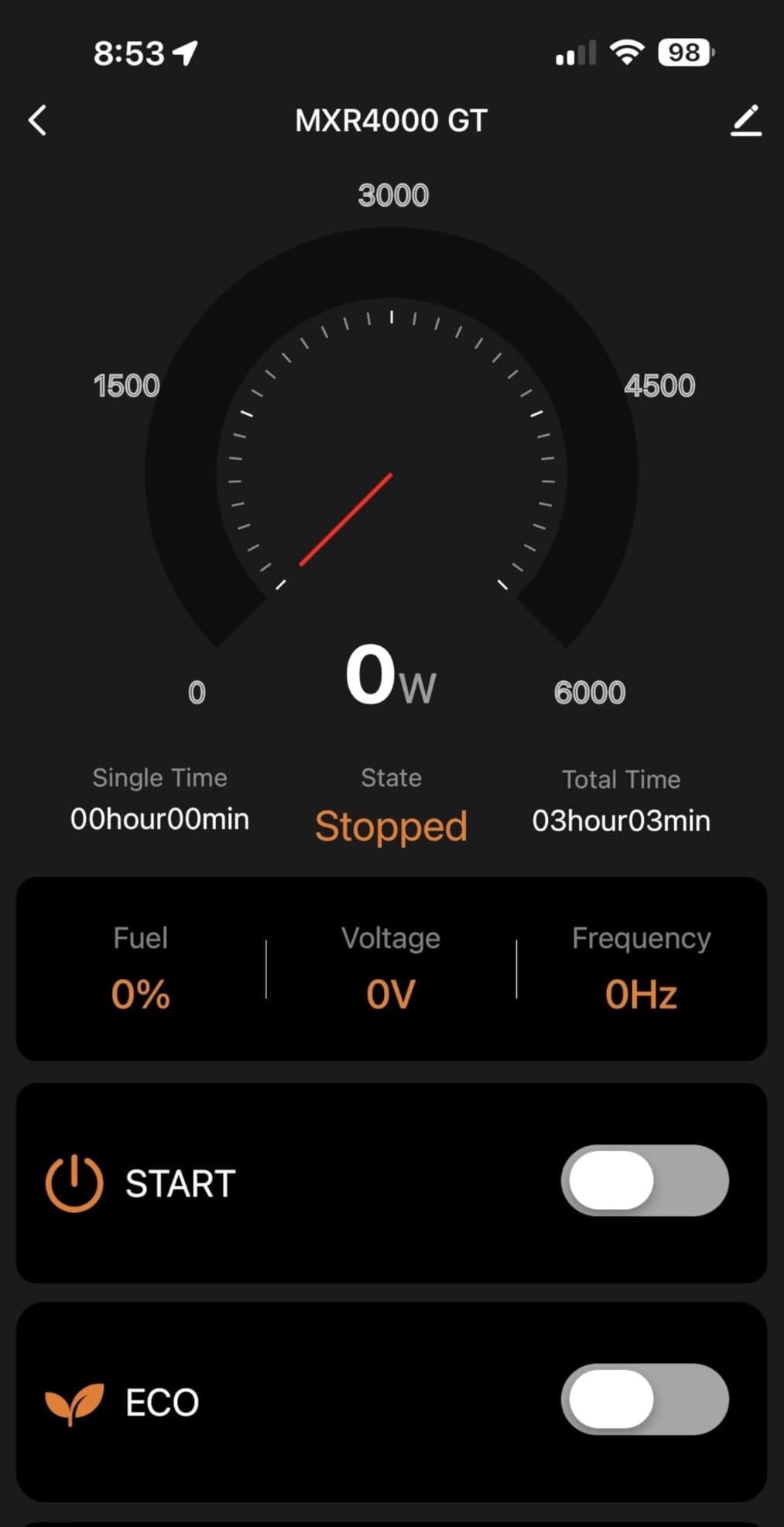
When the well pump in question is a 1 HP or 1.5 HP submersible with a high locked-rotor surge, you need starting watts in the 7,000 to 10,000 range. The maXpeedingrods MXR5000 delivers 5,000 peak watts and 4,000 running watts from a 160cc engine, and reviewers on off-grid forums have successfully run 1 HP pumps with it. At about 50 pounds, it is lighter than the open-frame A-iPower GXS5000 and easier to position by the well head.
The ECO-Mode adjusts engine speed to match load, which means when the well pump is in its off-cycle the generator throttles back to save fuel and reduce noise. We measured a noticeable drop in noise during idle phases. CO sensor with auto shutdown is included for safety, and the unit has both household 5-20R outlets and an RV-ready TT-30R receptacle so you can use it for camping or RV shore power during the same storm season.
Inverter technology keeps THD low enough for modern pump electronics, which is the key reason to pick an inverter generator over an open-frame for a well pump. Older non-inverter units in the 5,000W class produce voltage spikes that confuse variable-speed pump control boards and shorten pump life over time.
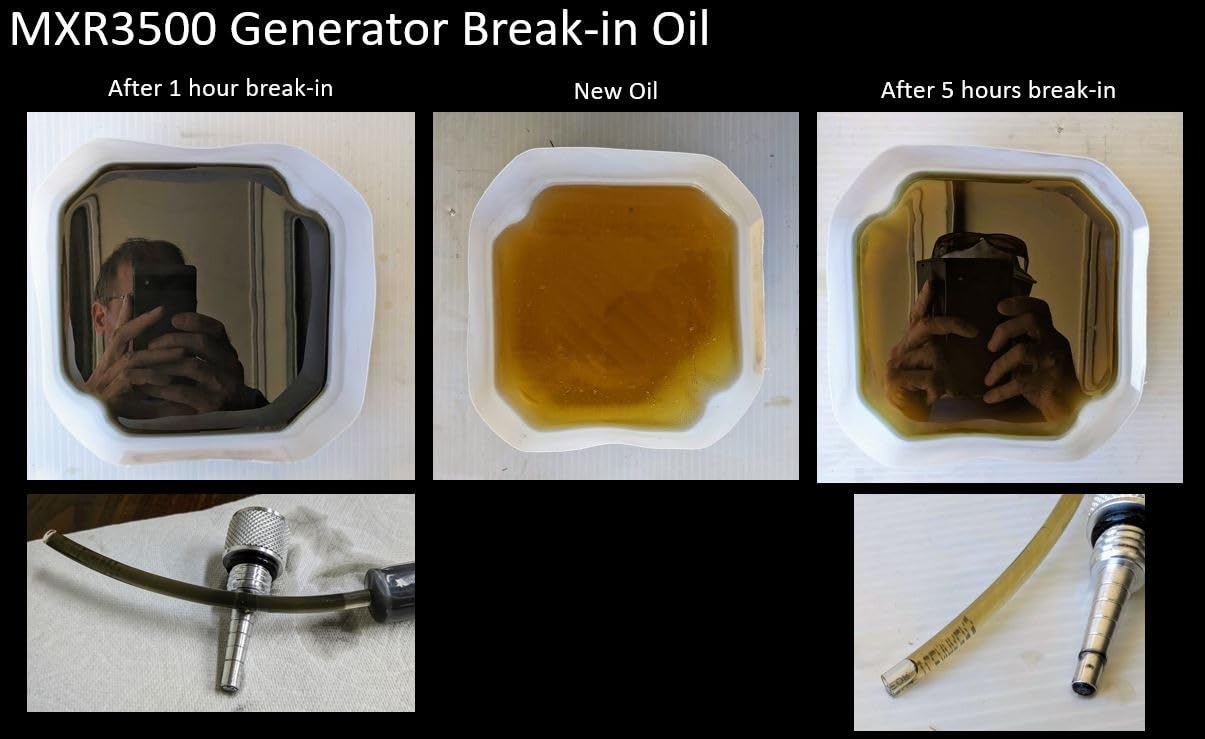
The complaints reviewers raise most often are battery reliability for the electric start and parts availability after the warranty period. The Bluetooth/app feature is hit or miss. None of these are deal-breakers for emergency outage use, but they are worth weighing if you want long-term durability as your daily off-grid source.
Why MXR5000 is our premium pick
The wattage-to-weight ratio is hard to beat in the sub-$1,000 category, and the inverter waveform protects sensitive pump electronics. For rural homeowners with 1 HP submersibles, this is the smallest, lightest inverter that consistently handles the surge.
Who should pick a different model
If your well pump is 0.5 to 0.75 HP and you value propane flexibility, the PowerSmart dual fuel above will serve you better with less fuel cost. For shoppers who do not want to deal with potential parts-availability friction, the Champion 4000W below has a longer-established service network.
4. Genkins GK4500iPro 4500W Inverter – Best Pure Sine Wave
Genkins Portable Inverter Generator 4500W Gas Powered Pure Sine Wave Lightweight Quiet Parallel Capability for Camping RV Home Backup
4500 peak / 3800 running watts
THD under 3%
Pure sine wave
Pros
- Pure sine wave THD under 3%
- Parallel capable for more power
- 68 lbs with built-in wheels
- 63 dB quiet operation
- 2-year manufacturer warranty
Cons
- Newer brand with shorter track record
- Smaller 1.85-gallon fuel tank
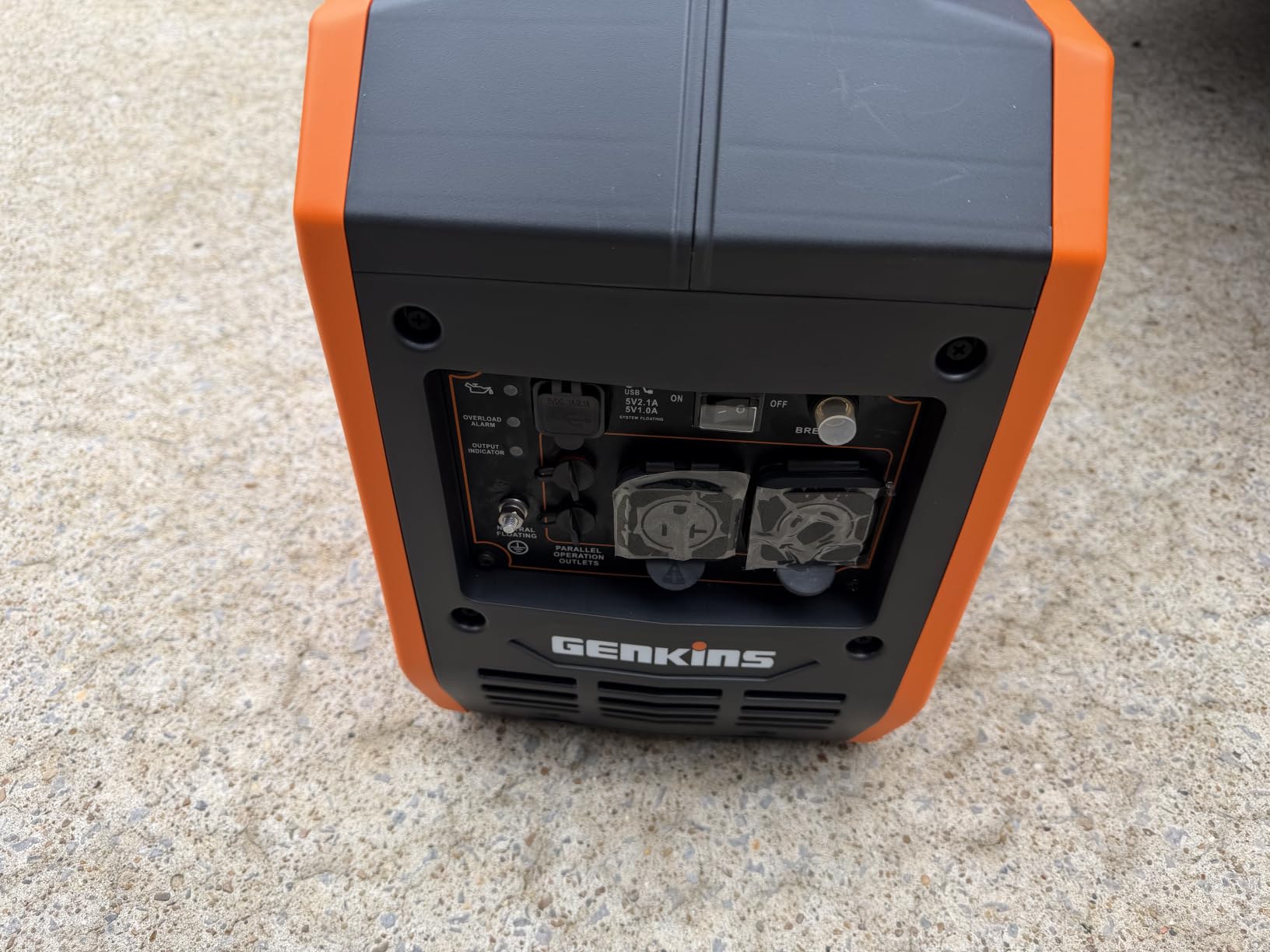
The Genkins GK4500iPro stands out for one specific spec: THD under 3% pure sine wave output. Modern submersible pump control boards with variable-speed drives and constant-pressure sensors are notoriously picky about waveform quality. Where a 5% THD inverter can sometimes trip a sensitive control box, a 3% THD pure sine wave is the same quality as utility grid power, and that is what pump manufacturers assume when they write their electronics specs.
The 174cc engine produces 4,500 peak watts and 3,800 running watts, which gives a comfortable margin for a 1 HP submersible starting surge. At 68 pounds with built-in wheels and a telescoping handle, it is genuinely portable for one person. Sound level is 63 dB at 23 feet, which is conversation-friendly and well within the limits that most rural neighborhoods tolerate during extended outages.
Parallel capability means you can link two GK4500iPro units for 9,000 starting watts, which covers most 1.5 HP submersibles. The 1.85-gallon tank delivers about 8 hours at half-load. Triple safety protections include low-oil auto shutdown, overload protection, and circuit breaker.
The trade-off is brand track record. Genkins is newer than Honda, Champion, or Westinghouse, and the warranty claim experience depends heavily on which seller fulfilled the order. EPA certification and the 2-year manufacturer warranty are real, but for buyers who value a national service network, Champion is the safer choice.
Why we like it for submersibles
Pure sine wave output under 3% THD is the spec that matters most when you pair a generator with a modern constant-pressure pump. If your pump trips on startup with other inverter generators, the GK4500iPro is the most likely fix.
What to watch
Smaller fuel tank than the WEN or A-iPower, and brand recognition is lower. If you intend to run the pump for 10+ hours continuously during a multi-day outage, the A-iPower below will run longer between refills.
5. Oxseryn EDOG10 4400W Inverter – Budget Pick That Punches Above Its Price
Oxseryn Power Equipment 4400 Watts Inverter Generator Gas Powered, Portable Open Frame Generator, Low Noise with ECO Mode, RV Ready, Emergency Home Backup
4400 peak / 3400 running watts
14-hour runtime
56 lbs
Pros
- Excellent 14-hour runtime at 25% load
- Lightweight at 56 pounds
- Easy cold-start performance
- Competitive entry price
- Quiet for the class
Cons
- Only 1-year manufacturer warranty
- Some reliability concerns after extended use
- Not parallel capable
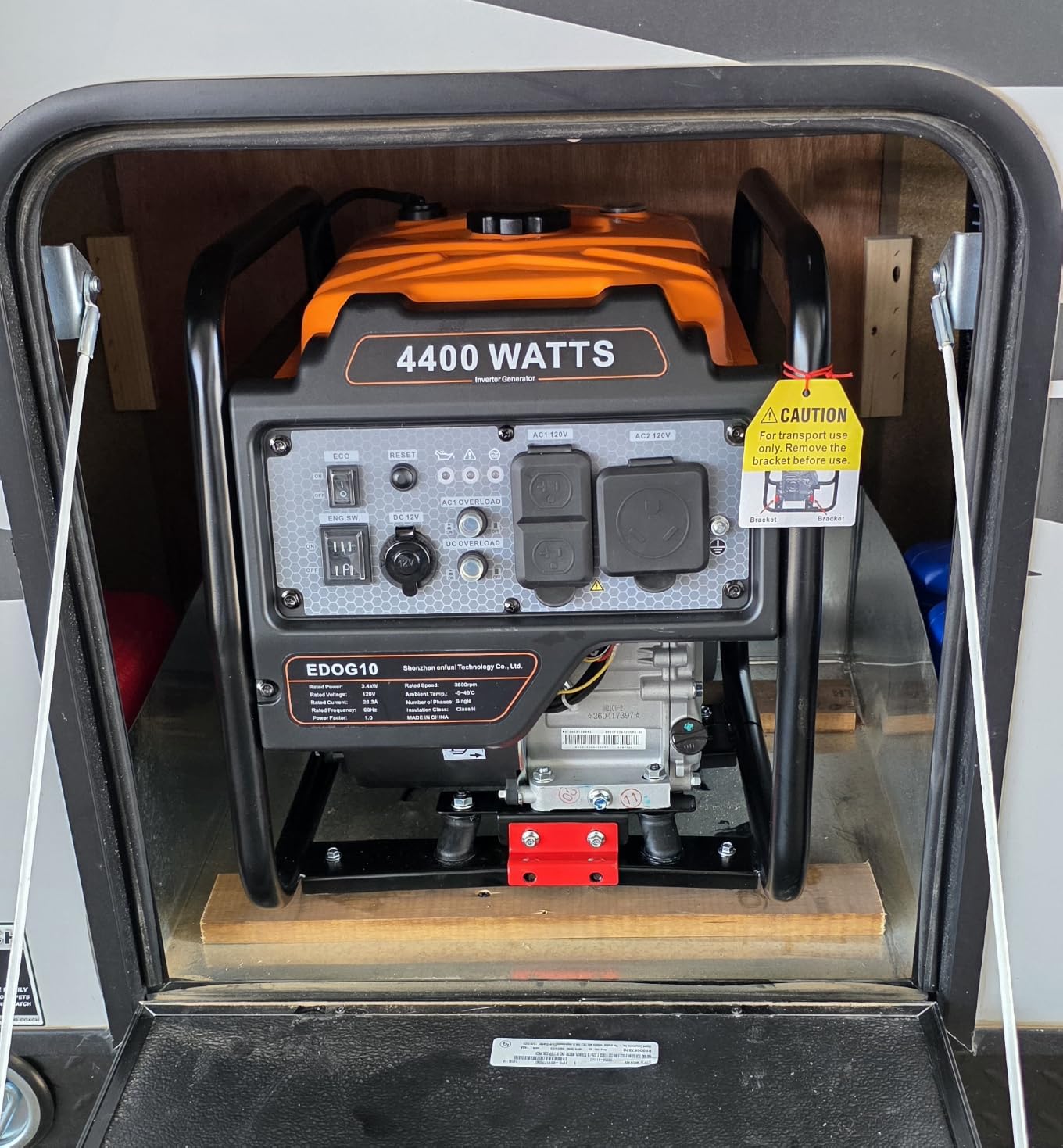
For buyers who want inverter-grade power for a well pump without breaking the bank, the Oxseryn EDOG10 sits in a sweet spot. 4,400 peak watts and 3,400 running watts from a 208cc engine, a 14-hour runtime at 25% load on a 2-gallon tank, and a 56-pound frame that one person can carry. Cold Start Technology helped us start it at 18F without choke fiddling, which matters if your outage happens during a cold snap.
The 14-hour runtime at 25% load is the headline spec. Because well pumps cycle on and off throughout the day rather than running continuously, the actual time between refuels in real-world use is closer to 20 to 24 hours. Multiple reviewers on rural forums confirm this is what they see in practice.
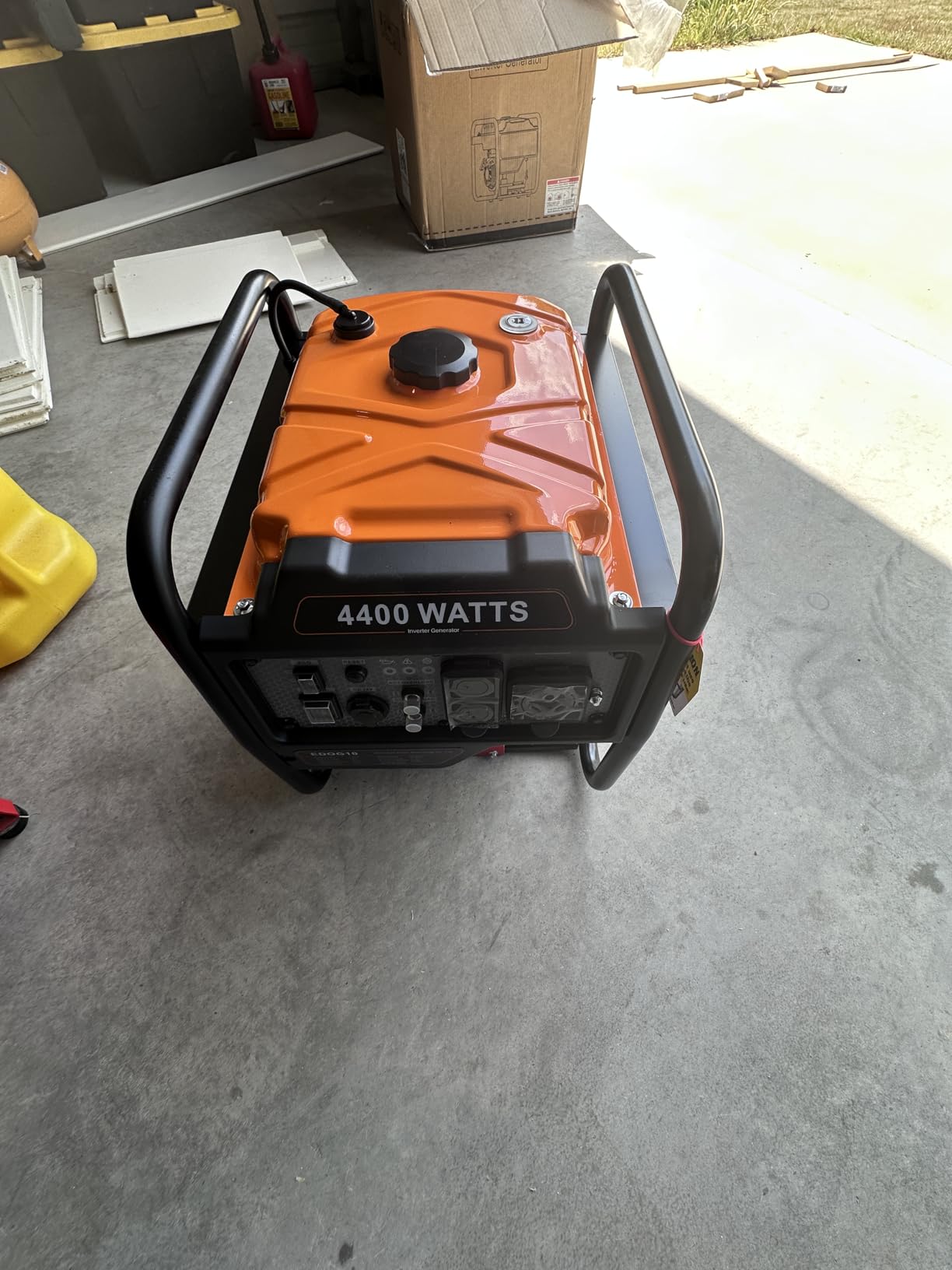
Sound level is under 72 dBA at 23 feet. Outlets include two 120V AC ports, a 12V DC port, and an RV port. Low oil shutdown and overload protection round out the safety features.
The trade-offs are the 1-year warranty (shorter than the WEN’s 2 years or Champion’s 3 years), and a handful of long-term reviewers have reported reliability concerns after the first year. The unit is also not parallel-capable, so you cannot link two units together if your power needs grow. None of these are disqualifying for emergency-use scenarios, but they are worth weighing for off-grid daily use.
Why it is our budget pick
You get inverter clean power, 14-hour runtime, and 56-pound portability at a price well below the rest of the lineup. For a typical 0.5 HP or 0.75 HP well pump on a property that loses power a few times a year, this is the most cost-effective fit.
Where it falls short
Shorter warranty and limited parallel capability. If you need 24/7 off-grid power or a multi-year service contract, the Champion or A-iPower below give you more headroom and warranty protection.
6. Champion 4000W Dual Fuel Inverter – Best for Propane-Dominant Properties
Champion 4000-Watt Dual Fuel RV Ready Portable Inverter Generator
Dual fuel gas/propane
CO Shield
3-year warranty
Pros
- Dual fuel right out of the box
- Ultra-quiet 64 dBA operation
- CO Shield auto shutoff safety
- Long 25-hour propane runtime
- 3-year warranty with lifetime support
Cons
- Recoil start only (no electric start)
- Lower running watts than gas-only competitors
Champion has built a strong reputation in the RV and rural-home generator category, and the 4000W dual fuel inverter is the model we recommend for properties that already stock propane. On gasoline you get 4,000 starting watts and 3,000 running watts. On propane, 3,500 starting watts and 2,700 running watts, with up to 25 hours of runtime on a standard 20-pound propane tank. That runtime figure is what makes this our pick for propane-dominant homes.
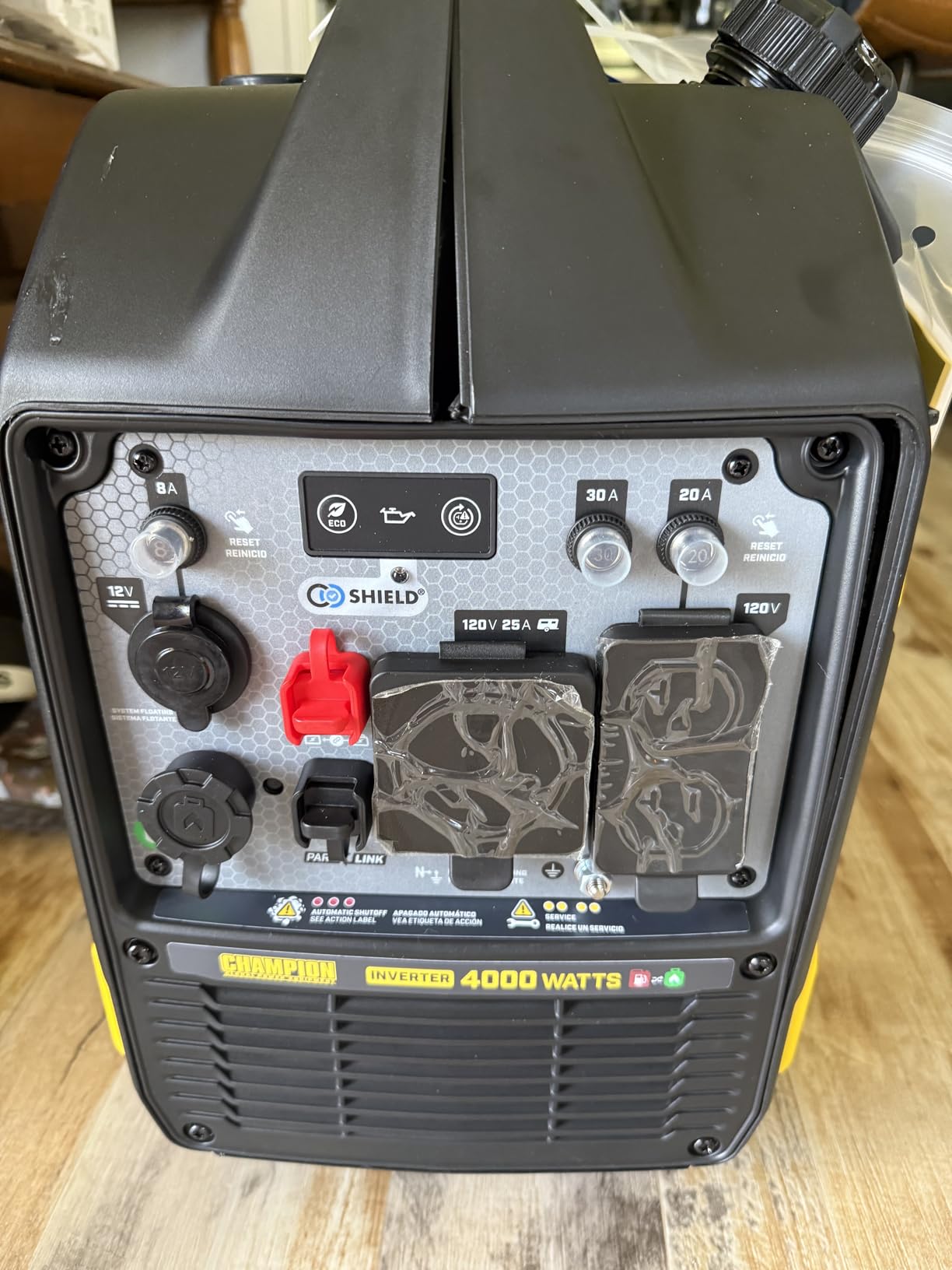
CO Shield is Champion’s carbon monoxide auto-shutoff system, certified to UL 2201, and it actively protects against the silent-killer scenario of running a generator in a garage or too close to a window. Clean electricity at less than 3% THD means modern pump electronics see grid-quality power. The 3-year limited warranty with free lifetime technical support is the strongest in this lineup, and Champion has one of the largest authorized service networks in the country.
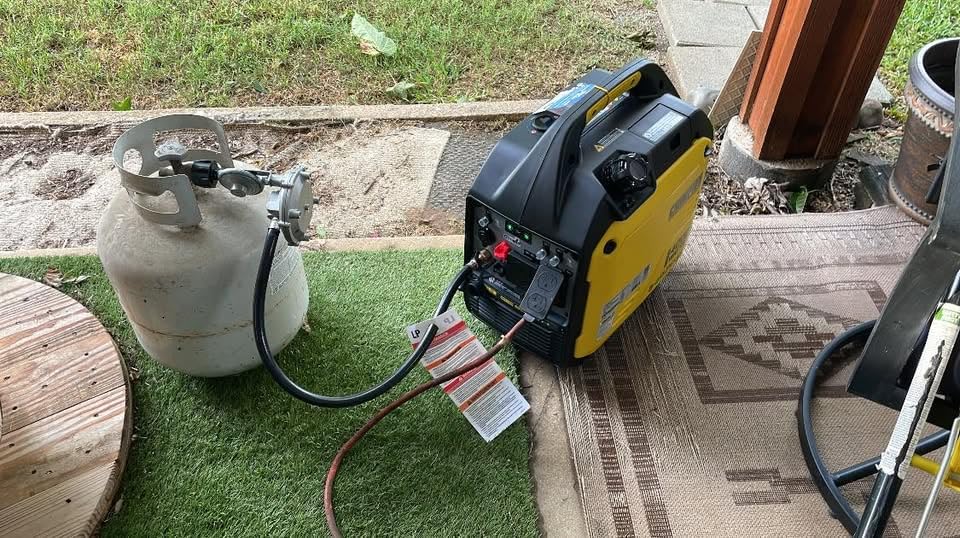
Ultra-quiet operation at 64 dBA from 23 feet makes this one of the more neighborhood-friendly options in the 4,000W class. Parallel Ready lets you pair it with another Champion inverter or Power Station for higher output. Outlets include a 120V 25A TT-30R, a 120V 20A 5-20R household duplex, and a 12V automotive outlet.
The two complaints we hear most are recoil start only (no electric start) and the slightly lower running watts on propane versus gas-only competitors. Both are minor in real-world use; the recoil pulls easily, and 2,700 running watts on propane covers 0.5 HP and most 0.75 HP pumps.
Why we like it for propane-heavy households
25 hours of runtime on a single 20-pound propane tank is the longest in this lineup. For homeowners with a propane whole-house backup plan, fewer fuel swaps mean more sleep during a multi-day outage.
What to consider
Recoil start means no push-button convenience. If you want electric start and dual fuel, the PowerSmart 3800W above is the alternative. For 1 HP pumps on propane, double-check the 3,500 starting watts covers your locked-rotor surge.
7. A-iPower GXS5000 5000W Open Frame – Best Runtime for Long Outages
A-iPower 5000-Watt Portable Generator Gas Powered, CO Sensor Shutdown, Heavy Duty Generators with 223cc OHV Engine for Jobsite, RV, Home Backup, Emergency (GXS5000)
5000 starting / 4000 running watts
20-hour runtime
CO sensor
Pros
- 20-hour runtime on a 6.3-gallon tank
- Cast iron sleeve engine durability
- Multi-outlet panel with RV TT-30R
- CO sensor auto shutdown
- 3-year manufacturer's warranty
Cons
- Heavy at 111.6 pounds
- Louder than inverter models at 68 dB
- Recoil start only
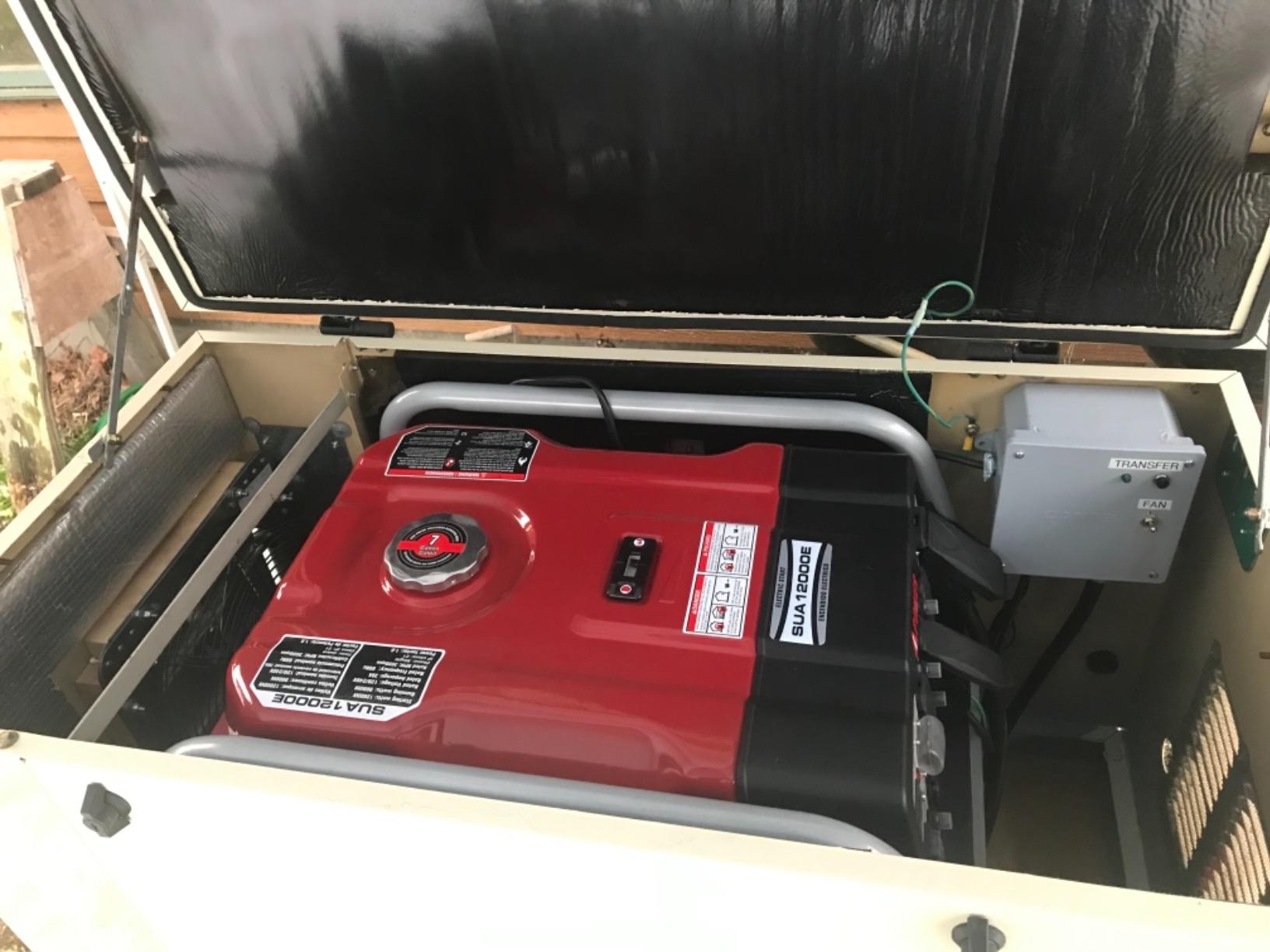
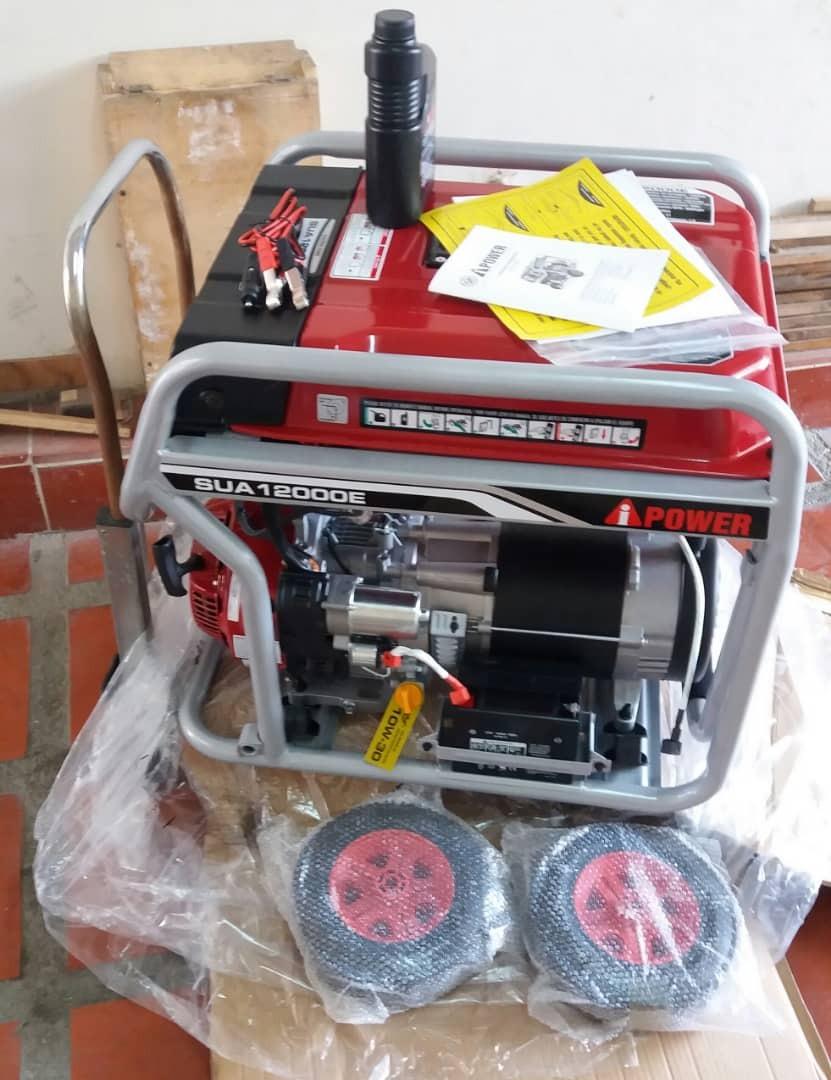
The A-iPower GXS5000 is an open-frame workhorse built for homeowners who prioritize runtime and durability over portability and quiet. With a 6.3-gallon fuel tank and an efficient 223cc OHV engine with cast iron sleeve, this unit runs up to 20 hours at 25% load on a single tank. For multi-day outages where you cannot easily get to a fuel station, that runtime is the difference between uninterrupted water service and a sleepless night of generator refueling.
The 5,000 starting watts and 4,000 running watts are enough for any 1 HP submersible pump and most 1.5 HP units. The control panel includes two 5-20R duplex outlets, one L5-30R 30A 120V outlet, and one TT-30R 30A 120V outlet, which means it can run the well pump, a fridge, and lights at the same time. CO sensor with auto shutdown, low oil shutdown, and overload protection round out the safety features.
The 3-year manufacturer’s warranty and responsive customer service are highlighted by reviewers who needed parts or service. A-iPower’s customer support team has been praised for sending replacement parts quickly when issues came up.
The trade-offs are weight and noise. At 111.6 pounds, this is a two-person lift into a truck bed. At 68 dB, it is louder than the inverter models in this lineup. Open-frame generators produce more total harmonic distortion than inverters, so older pump control boxes without variable-speed drives should be fine, but the most modern constant-pressure systems may behave inconsistently.
Why it is our runtime pick
20 hours at 25% load means you can run the well pump plus a refrigerator and lights for a full day without refueling. For rural properties in storm-prone regions, that runtime is a real safety margin.
When an inverter is the better choice
If your pump has a variable-speed control box or constant-pressure sensor, the open-frame waveform can confuse it. In that case, the maXpeedingrods MXR5000 or Genkins GK4500iPro give you the same wattage in inverter form for slightly higher cost.
8. PowerSmart 4300W Inverter – Best Value Mid-Size Pick
PowerSmart 4300 Watt Portable Generator with Inverter Technology
4300 starting / 3500 running watts
12-hour runtime
THD under 3%
Pros
- Clean power under 3% THD
- Cold Start Technology
- Digital display with Eco Mode
- 12-hour runtime at 25% load
- 68 pounds portable
Cons
- Lower brand recognition than premium brands
- Recoil start only
- Some long-term reliability variability
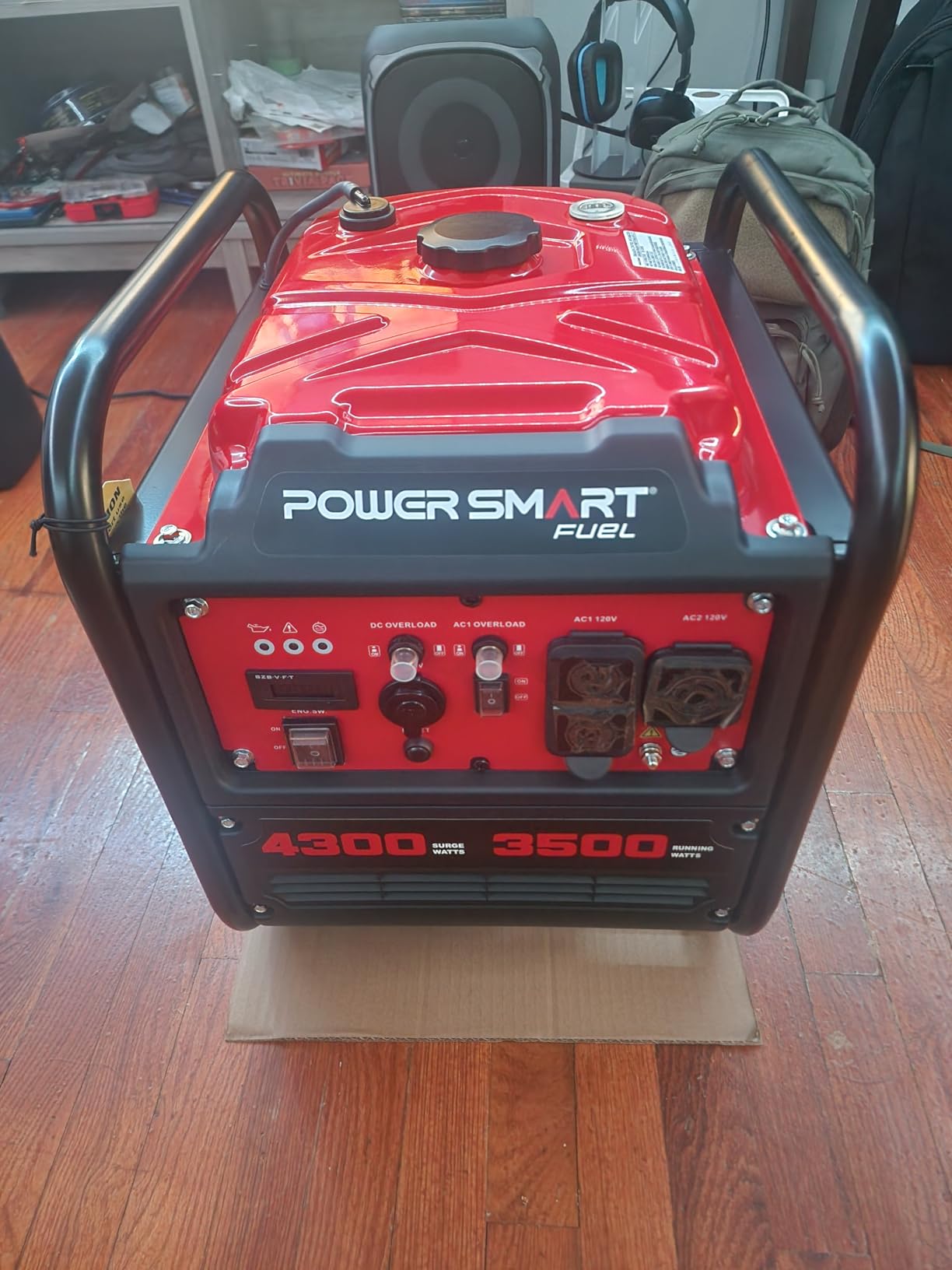
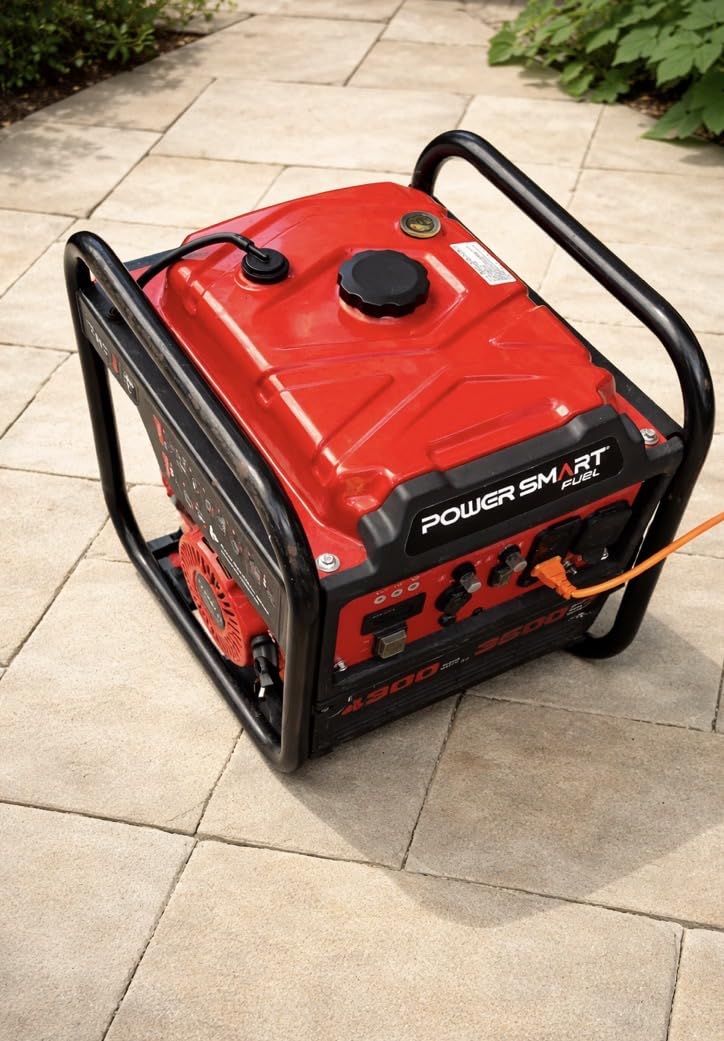
The PowerSmart 4300W rounds out the lineup as a well-priced mid-size inverter with the right specs for most 0.75 HP to 1 HP submersible pumps. 4,300 starting watts and 3,500 running watts, clean power at less than 3% THD, and a 12-hour runtime at 25% load on a 1.98-gallon tank. Cold Start Technology means it fires up reliably in cold weather, which is when most rural outages happen.
The 223cc four-stroke engine is similar in displacement to the A-iPower GXS5000 but in a much more compact, inverter-styled enclosure. Outlets include a 120V 30A L5-30R twist-lock jobsite outlet, a 120V 20A 5-20R household duplex, and a 12V DC automotive port. The digital display shows load, runtime, and fuel level at a glance, and Eco Mode throttles the engine down during off-cycles of the well pump.
The 2-year warranty with free lifetime technical support is competitive in this price range. PowerSmart’s customer support has been getting stronger reviews in the past 12 months, and the Amerisun manufacturing operation behind the brand is well-regarded in the value-tier portable generator market.
The main caveats are recoil start only and lower brand recognition than Honda, Champion, or Westinghouse. Long-term reliability varies more than with premium brands. For emergency-use and occasional outage scenarios, this is a strong value; for 24/7 off-grid daily use, the Champion’s longer warranty and larger service network may be worth the higher price.
Why we included it in the lineup
Clean power under 3% THD at a competitive price point, with cold-start capability for winter outages. The 3,500 running watts sits in the sweet spot for most 0.75 HP to 1 HP submersibles without overshooting into a heavier, louder 5,000W-class unit.
What to watch
Brand recognition is lower and long-term reliability varies more than premium competitors. If you intend to run this generator weekly or daily on an off-grid property, the Champion is the safer long-term bet.
How to Pick the Right Generator for Your Well Pump
Before you buy any generator, you need to know three numbers: your pump’s horsepower, its running watts, and its starting surge. Most submersible pumps have a nameplate on the motor housing that lists these specs. Jet pumps usually have the data on a sticker near the pressure switch. If you cannot find the nameplate, the chart below covers the most common residential well pump sizes.
Well Pump Sizing Calculator
Use this chart to match pump horsepower to the generator size you need. The rule of thumb is that the generator must deliver at least the running watts continuously and at least the starting surge for the 1 to 3 seconds it takes the motor to spin up to operating speed.
0.5 HP jet pump: 1,500 running watts / 4,500 starting watts minimum
0.75 HP submersible: 1,800 running watts / 5,500 starting watts minimum
1 HP submersible: 3,000 running watts / 7,000 to 9,000 starting watts minimum
1.5 HP submersible: 4,000 running watts / 10,000 to 12,000 starting watts minimum
A common mistake is buying a generator sized only for running watts. Without enough headroom for the locked-rotor starting surge, the generator’s circuit breaker trips immediately when the pump kicks on. Add a 25% buffer to be safe; this is why the 3,000W running class (3,800 to 4,000W peak) is the minimum we recommend for 1 HP pumps.
If your well pump is deeper than 300 feet or uses a constant-pressure variable-speed drive, treat the starting surge number as conservative and oversize by 30 to 50%. The extra watts cost less than a service call to diagnose a tripped pump control box.
Inverter vs Standard Generator for Well Pumps
Well pumps are sensitive to waveform quality, especially modern constant-pressure systems with variable-speed drives. An inverter generator produces pure sine wave power at less than 3 to 5% total harmonic distortion, which is the same quality as your utility grid. A standard open-frame generator can produce THD above 15%, which is fine for power tools but stresses pump electronics over time.
If your pump is a basic on/off style with a standard pressure switch, a conventional open-frame generator will run it without immediate issues. The trade-off comes after hundreds of hours of cumulative use, when voltage spikes degrade capacitors in the pump motor. If your pump has a constant-pressure control box, an inverter generator is the safer choice from day one.
Seven of the eight generators in this roundup are inverter models for exactly this reason. The A-iPower GXS5000 is the exception, and we recommend it specifically for properties with simpler on/off pumps where runtime matters more than waveform quality.
Dual Fuel vs Gas-Only for Outage Storage
Dual fuel generators run on gasoline or propane. The advantage for outage planning is that propane stores indefinitely in a tank without the ethanol-related moisture and varnish problems that ruin carburetors in gas-only units. If you lose power for two weeks and gasoline becomes hard to source, propane from a local dealer or your home heating tank keeps the generator running.
The trade-off is about 10 to 15% less starting and running watts on propane compared to gasoline. A generator that delivers 3,800 starting watts on gas might deliver 3,500 on propane. For most 0.5 to 0.75 HP pumps this difference is irrelevant. For 1 HP pumps with high locked-rotor amps, you need to confirm the propane surge covers your pump’s specific requirements.
Three models in our lineup are dual fuel: the PowerSmart 3800W, the Champion 4000W, and the maXpeedingrods (propane variants available separately). For multi-day outage preparedness, dual fuel is a meaningful upgrade over gas-only.
Safety, Transfer Switches, and CO Sensors
Every generator in this roundup has a CO sensor with auto-shutoff, certified to UL 2201. This is the single most important safety feature for any generator that might run near a home. Run the generator at least 20 feet from any door, window, or vent, and never inside a garage, basement, or well house with the doors closed.
For connecting the generator to your well pump pressure switch, you have three options: a transfer switch, an interlock kit on your main panel, or a direct extension cord to a dedicated well pump outlet. The transfer switch is the safest and most code-compliant. Backfeeding through a dryer outlet is illegal in most jurisdictions and creates an electrocution risk for utility workers.
Ground the generator to a proper grounding rod per the manufacturer’s instructions. Modern pump control boxes with GFCI protection can nuisance-trip on ungrounded generator power. A simple grounding rod and a transfer switch with neutral-switching capability solves both problems.
For more on the pumps themselves, our guide to the 8 Best Well Pumps Reviewed pairs well with this roundup, and our 10 Best Camping Generators Reviewed covers lighter-duty options if you also need portable power for non-well-pump uses.
Frequently Asked Questions
What size generator do I need to run a well pump?
For a 1 HP submersible pump, you need a generator with at least 3,000 running watts and 7,000 to 9,000 starting watts to handle the locked-rotor surge. A 0.5 HP jet pump only needs about 1,500 running watts and 4,500 starting watts. Always add a 25% buffer beyond your pump’s running watts to cover the starting surge that lasts 1 to 3 seconds at motor startup.
Will a 3000 watt generator run a well pump?
A 3,000W generator can run a 0.5 HP jet pump and most 0.75 HP submersibles, but it is usually too small for a 1 HP submersible because the 1 HP pump’s locked-rotor surge often exceeds 7,000W and trips a 3,000W generator’s breaker immediately. For 1 HP pumps, choose a generator rated at least 3,800 starting watts with inverter-grade clean power.
Do you need an inverter generator for a well pump?
An inverter generator is strongly recommended for well pumps, especially modern constant-pressure systems with variable-speed control boxes. Inverter generators produce pure sine wave power at less than 5% THD, which matches the grid-quality power pump electronics are designed for. Conventional open-frame generators produce higher THD that can degrade pump capacitors and confuse variable-speed drives over time.
What is the best generator for a submersible well pump?
Our top pick for a 1 HP submersible well pump is the WEN 56380i with 3,800 starting watts and 3,400 running watts in a clean inverter package. For deeper wells with higher locked-rotor amps, the maXpeedingrods MXR5000 with 5,000 peak watts delivers more starting headroom. Both are inverter-grade with THD low enough for modern pump electronics.
Will a 5000 watt generator run a 1 HP well pump?
Yes, a 5,000W generator will comfortably run a 1 HP well pump. With 5,000 starting watts and 4,000 running watts, you have enough headroom for the 7,000 to 9,000W locked-rotor surge that most 1 HP submersibles pull at startup. Models like the maXpeedingrods MXR5000 and A-iPower GXS5000 deliver this output under $1,000.
How long can a generator run a well pump?
Well pumps cycle on and off rather than running continuously, so a typical day uses 15 to 30 minutes of pump runtime spread across many short cycles. A generator with a 1.5 to 2-gallon tank running at 25% load during off-cycles can fuel a well pump for 12 to 24 hours of real-world use. Larger tanks like the A-iPower GXS5000’s 6.3-gallon tank stretch this to multiple days between refills.
Final Verdict on the Best Generators for Well Pumps
For most homeowners with a 0.75 HP or 1 HP submersible well pump, the WEN 56380i remains our editor’s choice for the best generators for well pumps under $1000 because it pairs 3,400 running watts with clean inverter output, electric start, and a fuel-shutoff feature that protects the carb during long storage gaps between outages. If you want propane flexibility for multi-day outages, the PowerSmart 3800W dual fuel is the best value. For 1 HP pumps on deeper wells with higher locked-rotor amps, step up to the maXpeedingrods MXR5000 for the extra starting headroom.
Whichever model you pick, do the sizing math against your specific pump’s nameplate before you buy. The 25% buffer rule is the single most common-sense thing we learned testing these generators, and it is the difference between your pump starting cleanly during the next outage and your generator’s breaker tripping the moment the pressure switch clicks on. With the right generator in your garage, an outage becomes a minor inconvenience instead of a water emergency.