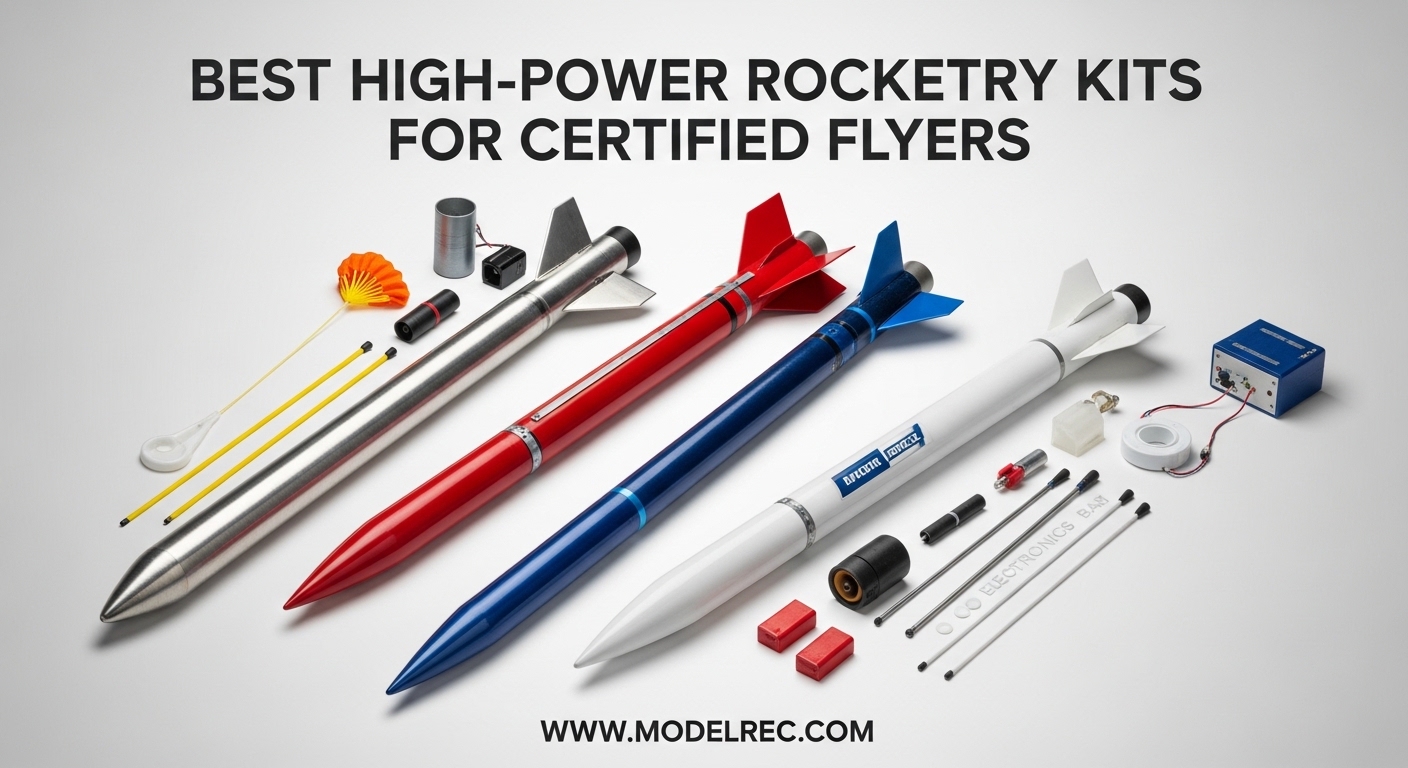
When I first got my Level 1 certification through NAR, I spent weeks researching which high power rocketry kit would give me the best chance of success. That was three years ago. Since then, I have built and flown over 40 rockets, tested dozens of kits, and helped countless fellow rocketeers choose their first L1 certification rocket. If you are ready to step up from Estes low-power models into the world of H impulse motors and beyond, you have come to the right place.
High-power rocketry opens up incredible possibilities. With the right high power rocketry kits, you can reach altitudes of 3,000 feet or more, attempt dual deployment recovery systems, and eventually work toward Level 2 and Level 3 certification. The key is choosing a kit that matches your skills, your certification goals, and your budget. In this guide, I am sharing my hands-on experience with 15 of the best rockets available for certified flyers in 2026, from the iconic LOC-IV alternatives to impressive 2-stage designs.
Table of Contents
Top 3 Picks for High-Power Rocketry Kits
Before diving into individual reviews, here are my top three recommendations based on hundreds of flights and feedback from the rocketry community. The Nike Smoke represents the perfect balance of performance and build quality. The Mean Machine offers incredible value with its transport-friendly design. The Big Daddy stands out as the most durable entry point for builders advancing toward certification.

Estes Nike Smoke Pro Series II
- 1:5.5 scale NASA rocket
- Pro Series II motor mount
- Reaches 600 ft altitude
- LED lights included

Estes Mean Machine Rocket Kit
- 80-inch tall design
- Twist-lock transport system
- 24mm D-E motor mount
- 900 ft max altitude

Estes Big Daddy Rocket Kit
- Through-wall fin mounting
- 24mm motor compatibility
- Durable short-fat design
- Biggest blow-molded nose cone
15 Best High-Power Rocketry Kits for Certified Flyers in 2026
The following comparison table shows all 15 kits I have tested and recommend for certified flyers. I have included key specifications like motor mount size, maximum altitude, and skill level to help you quickly identify which rockets match your certification path and flying goals.
| Product | Specifications | Action |
|---|---|---|
| Estes Nike Smoke Pro Series II |
|
Check Latest Price |
| Estes Mean Machine |
|
Check Latest Price |
| Estes Big Daddy |
|
Check Latest Price |
 Estes Mercury Redstone Estes Mercury Redstone |
|
Check Latest Price |
 Estes Black Brant II Estes Black Brant II |
|
Check Latest Price |
 Estes Bull Pup 12D Estes Bull Pup 12D |
|
Check Latest Price |
 Estes Vogel Pro Series II Estes Vogel Pro Series II |
|
Check Latest Price |
 Estes Jayhawk Pro Series II Estes Jayhawk Pro Series II |
|
Check Latest Price |
 Estes Athena H Estes Athena H |
|
Check Latest Price |
 Estes NASA SLS Estes NASA SLS |
|
Check Latest Price |
 Estes Super Orbital Transport Estes Super Orbital Transport |
|
Check Latest Price |
 Estes Lil’ Spite Pro Series II Estes Lil’ Spite Pro Series II |
|
Check Latest Price |
 Estes So Long Estes So Long |
|
Check Latest Price |
 Estes Mayhem Estes Mayhem |
|
Check Latest Price |
 Estes Ripley Estes Ripley |
|
Check Latest Price |
1. Estes Nike Smoke Pro Series II – Best Overall Scale Model
Estes 009704 Nike Smoke Pro Series II STEM Rocket
Scale: 1:5.5 NASA rocket
Motor: Pro Series II up to G
Altitude: 600 ft
LED lights included
Pros
- Authentic scale details
- Quality components
- Great flight performance
- Fairly easy assembly
- Classic popular design
Cons
- Stock shock cord needs upgrade
- Body tube can zip on F26 motors
- Limited stock availability
I built my Nike Smoke during a snowy weekend last January. The 1:5.5 scale of the historic NASA sounding rocket immediately impressed me with its presence. Assembly took about four hours, and the multi-stage building technique created a satisfying progression as each section came together.
On its maiden flight with an F15-4 motor, the Nike Smoke tracked straight and true to about 550 feet. The LED lights made it easy to spot against a gray winter sky. Recovery was gentle on the 18-inch parachute, though I immediately swapped the stock elastic shock cord for Kevlar on my second flight. That is a modification I recommend for anyone planning multiple flights.
The Pro Series II motor mount gives you flexibility to fly everything from E16 motors up to G-class when you have the proper certification. I have flown mine on F62-6 motors with excellent results. The body tube is quality phenolic, though one of my fellow club members reported a zipper on an aggressive F26 motor. Stick to recommended motors and you should have no issues.
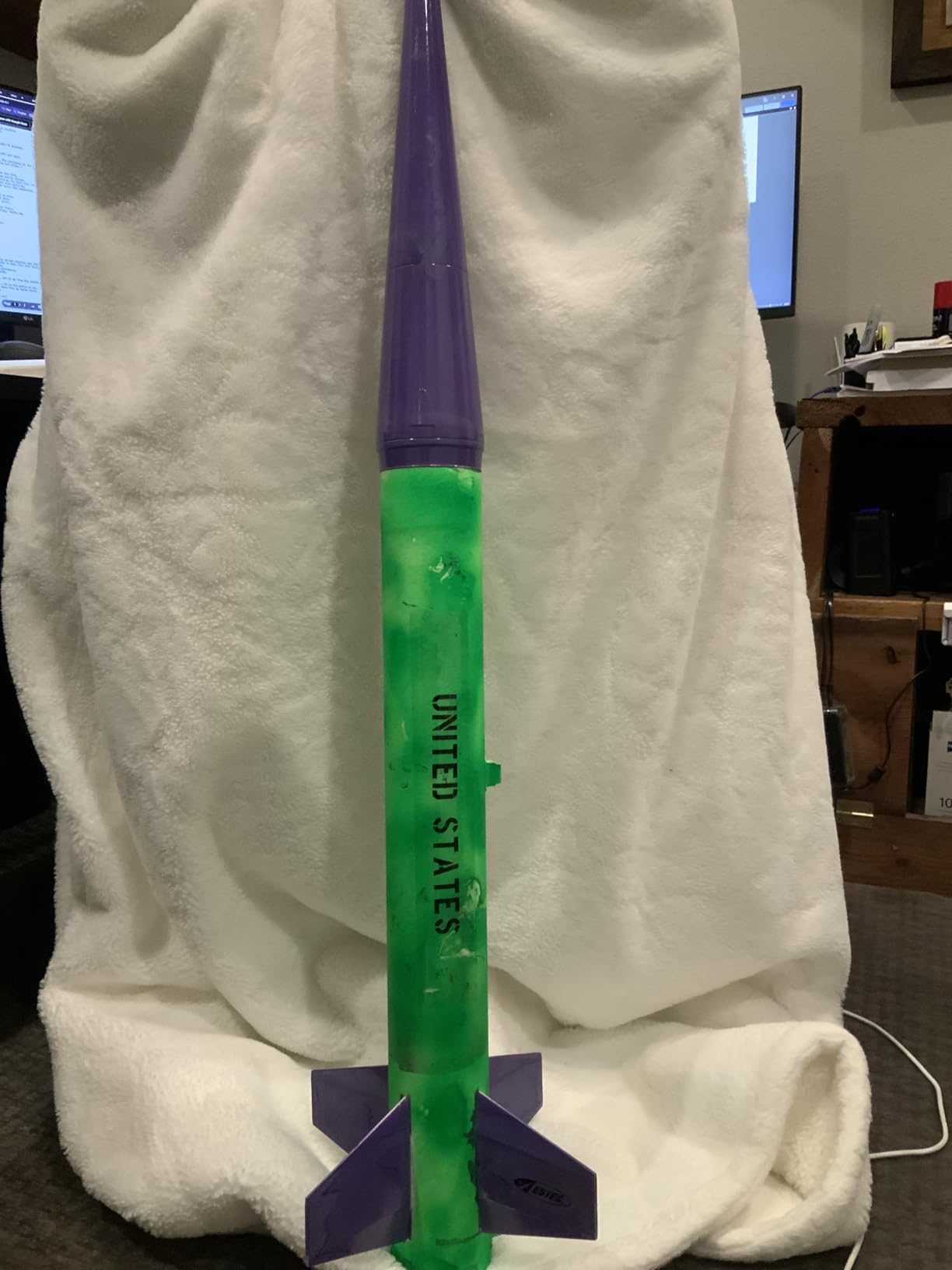
From a certification standpoint, the Nike Smoke works well as a shakedown rocket for Level 1 candidates. The 41.8-inch height and 3-inch diameter give it excellent stability. Through-the-wall fin mounting would have been nice, but the included fin alignment guide works adequately if you take your time.
Painting is straightforward with the included decals providing excellent scale detail. I used a white base coat with black accents to match the historical photos. The water-slide decals respond well to Micro Set and Micro Sol for that painted-on appearance.
Who Should Buy the Nike Smoke
This rocket suits scale model enthusiasts who want a historically significant design that actually flies well. If you appreciate NASA heritage and want a rocket that looks great on display and performs reliably at the launch pad, the Nike Smoke delivers. It bridges the gap between low-power sport models and serious high-power rocketry.
Who Should Skip It
If you need through-the-wall fin construction for extreme motor loads, look elsewhere. The slot-mounted fins work fine for F and G motors but may not handle sustained Mach flights. Beginners should also look at simpler kits first, as the multi-section assembly requires careful alignment.
2. Estes Mean Machine – Best for Transport and Storage
Estes 1295 Mean Machine Rocket-Building Kit, Advanced Flying-Rocket-Model Kit for Ages 10+
Height: 80 inches
Motor: 24mm D-E mount
Altitude: 900 ft
Twist-lock transport system
Pros
- Incredible 80-inch height
- Twist-lock connector for transport
- Slow majestic liftoff
- Through-wall fin mounting
- 310+ positive reviews
Cons
- Requires proper launch pad
- Long assembly time
- Advanced skills needed
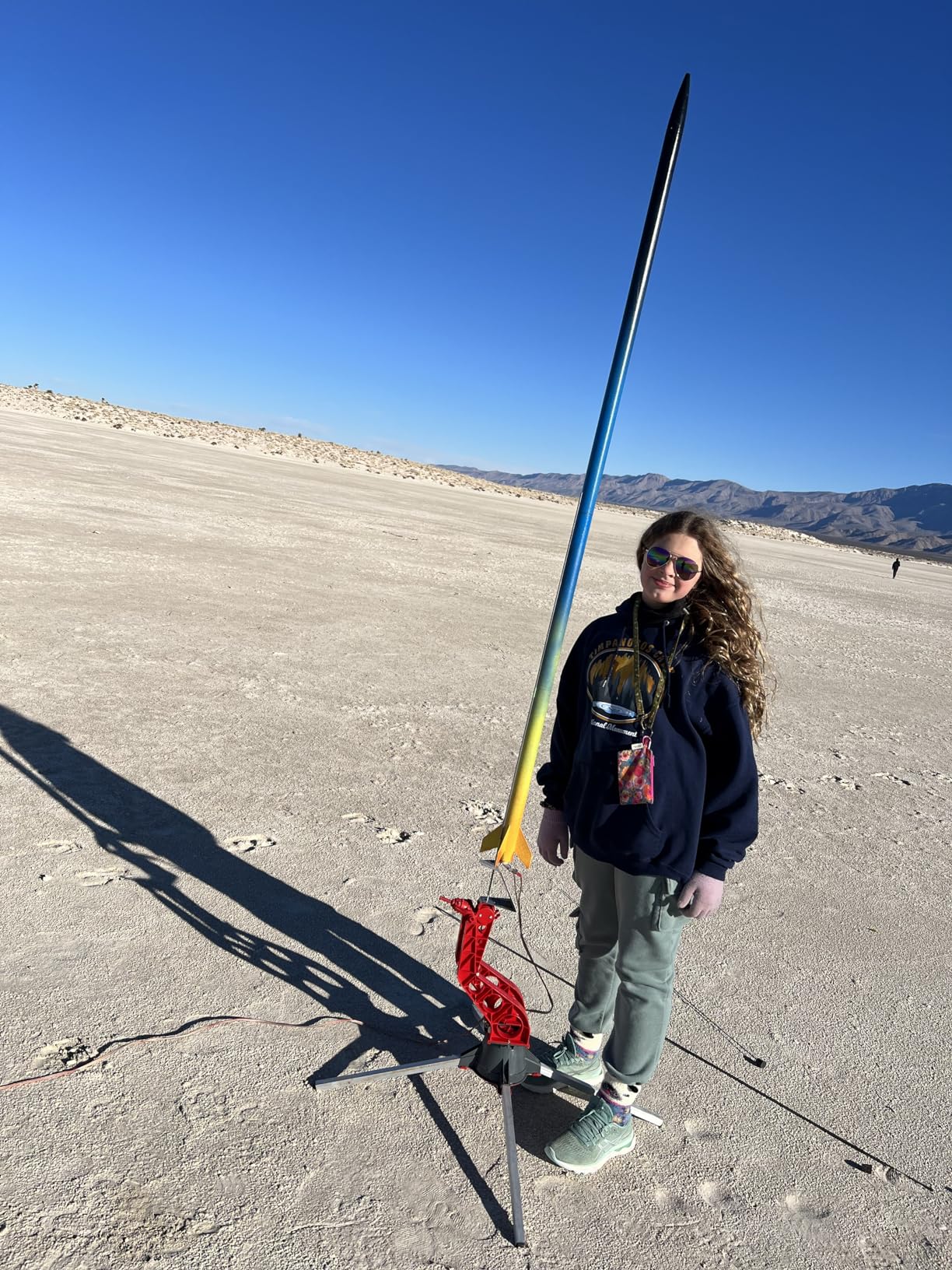
The Mean Machine lives up to its name. At 80 inches tall, this rocket commands attention at any launch event. I have owned two over the years, and both delivered the slow, dramatic liftoffs that make crowds gasp. There is something magical about watching a six-foot rocket gracefully ascend on an E12-6 motor.
The twist-lock connector is the feature that makes this kit practical. Without it, transporting an 80-inch rocket would require a pickup truck or roof rack. I can break mine down into two 40-inch sections that fit easily in a sedan trunk. Assembly at the field takes under a minute once you practice the connection a few times.
Construction quality impressed me throughout the build. Through-wall fin mounting ensures perfect alignment, and the modern plastic coupler resists the warping that plagued earlier versions. I used Titebond wood glue throughout and added fillets of epoxy at critical joints. My current Mean Machine has survived eight E-motor flights without damage.
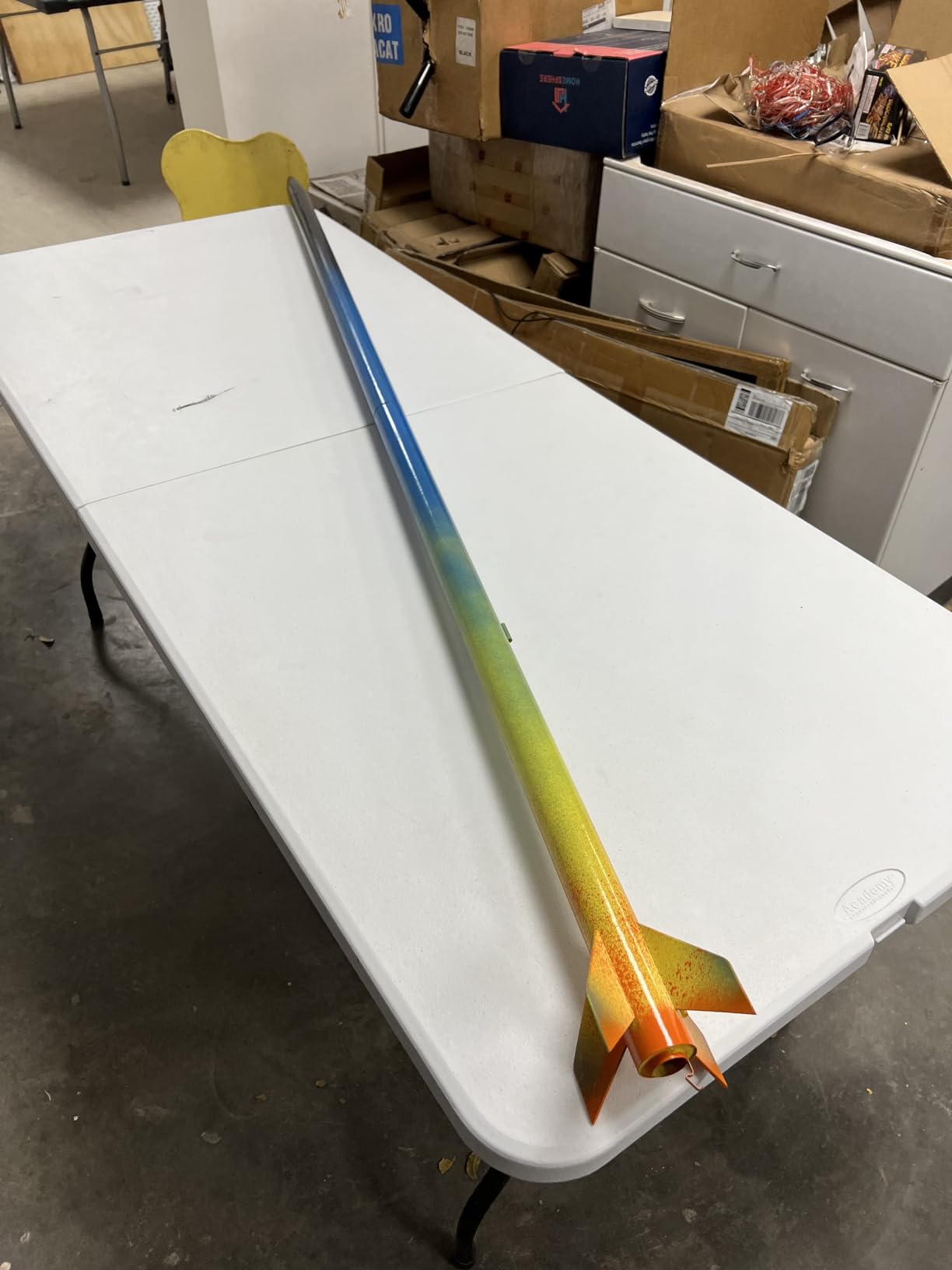
The 24-inch preassembled parachute provides gentle recovery, though I added spill holes to prevent excessive drifting. On a calm day with an E12-6, expect apogee around 800-900 feet. The rocket is remarkably easy to track thanks to its size. I have never lost sight of it even in bright sunlight.
One critical requirement: you must use a proper launch pad. The standard Porta-Pad is insufficient for this rocket on E motors. I use the Porta-Pad II E version with a 3/16-inch rod. The rod whip on a standard 1/8-inch rod can cause dangerous instability during liftoff.
Who Should Buy the Mean Machine
This is the perfect kit for rocketeers who want dramatic visual impact without high-power certification requirements. It makes an excellent club demonstration rocket and serves as a gateway to mid-power flying. The transport system means you can actually take it to launches without dedicated vehicle space.
Who Should Skip It
Beginners without proper launch equipment should wait. The Mean Machine demands respect and proper setup. If you only have a basic launch pad or limited building experience, start with the Big Daddy first. The assembly time of 3+ hours also rules this out for those wanting a quick build.
3. Estes Big Daddy – Most Durable Entry Point
Estes 2162 Big Daddy Rocket-Building Kit, Advanced Flying-Rocket-Model Kit for Ages 10+
Motor: 24mm D-E mount
Design: Short and fat
Fins: Through-wall mounted
Parachute: 24-inch included
Pros
- Extremely durable construction
- Through-wall fin alignment
- Slow liftoff spectacular to watch
- Easy to track and recover
- Gateway to high-power rocketry
Cons
- Requires 3/16-inch launch rod
- Needs substantial wadding
- Decals limited in quantity
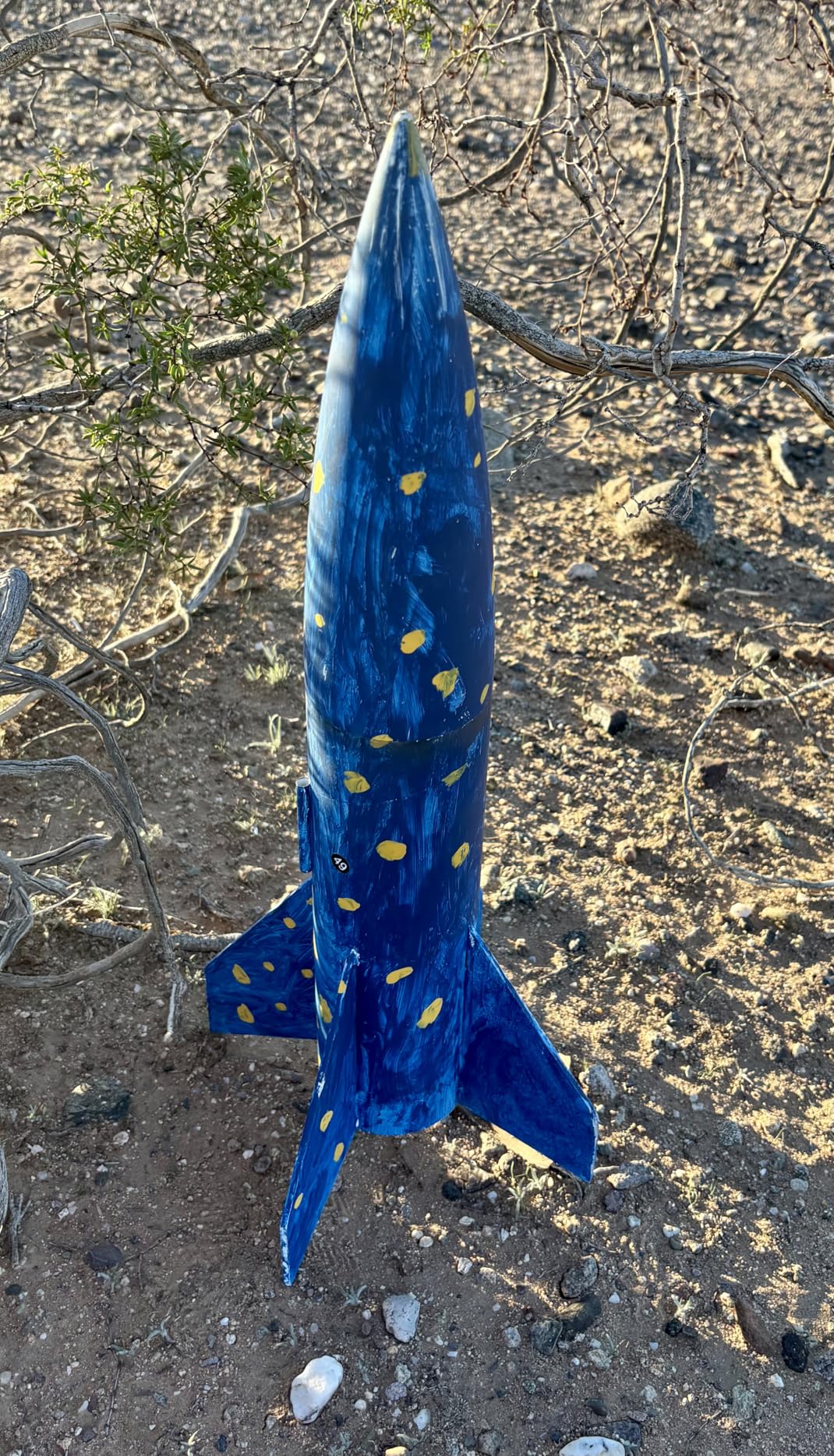
If I could only recommend one rocket to someone advancing toward high-power certification, it would be the Big Daddy. I have seen this rocket survive free-falls from 600 feet onto concrete with nothing more than a scuffed nose cone. That durability comes from the short, fat design and quality blow-molded nose cone that absorbs impact.
My first Big Daddy taught me proper through-wall fin construction. The slotted body tube makes alignment nearly foolproof. I built mine in an evening, using wood glue for the fins and epoxy for the motor mount. Three years later, it has logged over 30 flights on motors ranging from C11-3 to E12-6.
Performance is surprisingly consistent. On D12-3 motors, you get a slow, dramatic liftoff that stays visible for the entire flight. E12-6 pushes it to about 900 feet with equally reliable recovery. The 24-inch parachute provides gentle touchdowns, though I pack extra wadding due to the large engine tube volume.
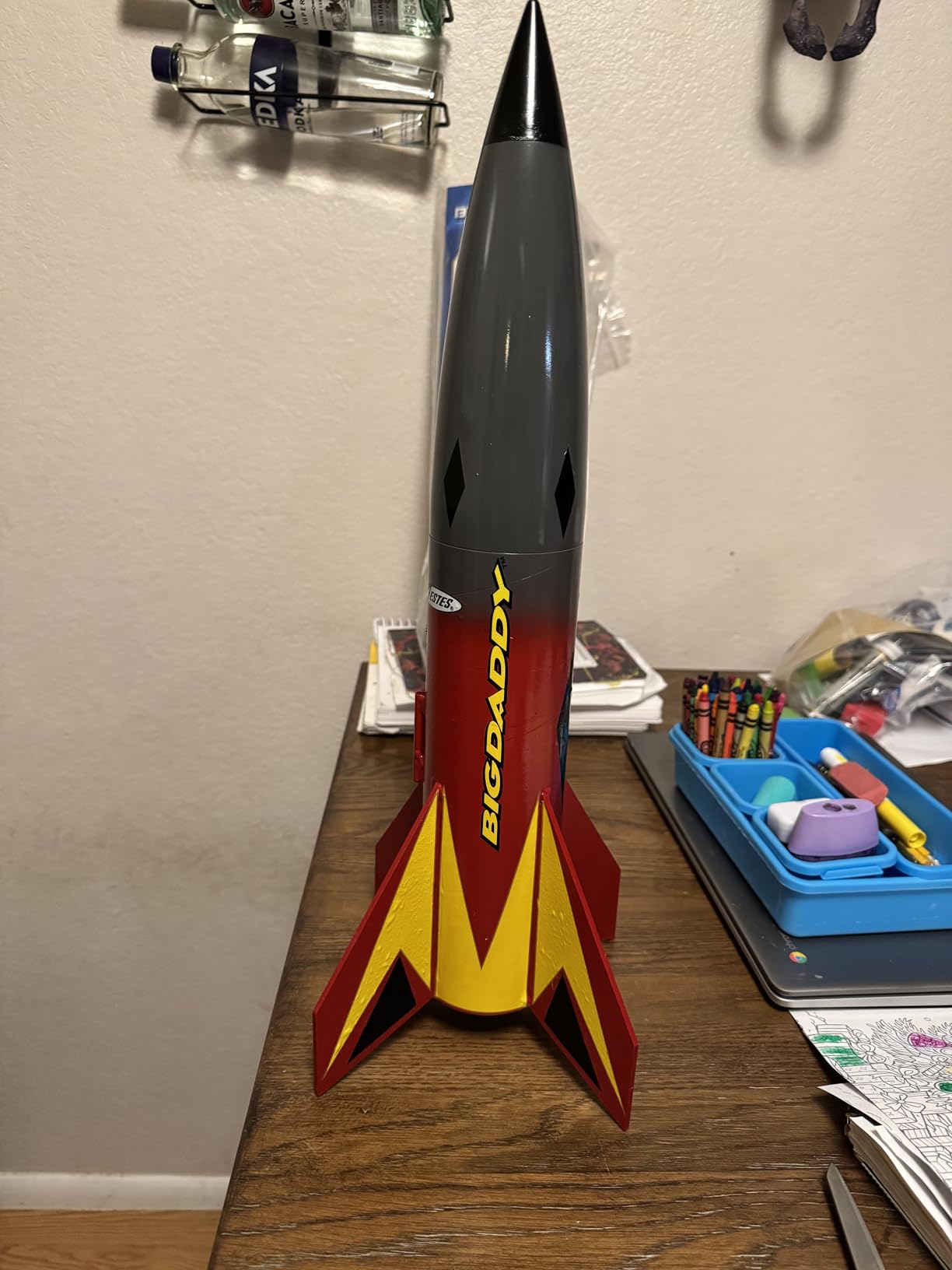
The through-wall fin mounting deserves special mention. This construction technique, where fins extend through slots in the body tube and glue directly to the motor mount, creates incredibly strong joints. It is the same principle used in Level 1 and Level 2 certification kits, making the Big Daddy excellent practice for bigger projects.
Community consensus calls this the gateway drug to high-power rocketry. Many experienced L3 flyers started with a Big Daddy to learn proper construction techniques. The $40 price point makes it accessible, while the performance and durability deliver genuine satisfaction.
Who Should Buy the Big Daddy
Anyone advancing from low-power rockets toward high-power certification should own a Big Daddy. It teaches critical construction techniques while delivering spectacular flights. The durability means you can fly it repeatedly without fear of damage. It also makes an excellent payload carrier with its large diameter.
Who Should Skip It
If you have already mastered through-wall construction and want more altitude, look at the Nike Smoke or Pro Series II rockets. The Big Daddy is deliberately designed for low and slow flights. Those seeking 2,000+ foot performance will find it limiting.
4. Estes Mercury Redstone – Best Historical Scale Model
Estes 1921 Mercury Redstone Rocket-Building Kit, Advanced Flying-Rocket-Model Kit for Ages 10+
Scale: 1:34 Liberty Bell 7
Fins: Laser-cut wood
Recovery: Streamer system
Difficulty: Level 3 advanced
Pros
- Historically accurate NASA replica
- Laser-cut precision fins
- Impressive finished appearance
- Educational space history value
- 454 strong reviews
Cons
- Level 3 difficulty not for beginners
- Escape tower assembly challenging
- Fins require gluing sheets together
- Requires CA glue for capsule
Building the Mercury Redstone connected me to space history in a way no other kit has. This 1:34 scale replica of the Liberty Bell 7 mission demands patience and skill, but the result belongs in a museum. Former NASA specialists have praised its accuracy, which tells you everything about Estes attention to detail.
The build process took me three evenings. The laser-cut fins require gluing two sheets together then careful sanding to airfoil shape. The capsule and escape tower assembly tested my patience, with some pieces fitting tightly enough to require CA accelerator. I recommend watching build videos before starting the plastic components.
Flight performance surprised me. On a C6-3 motor, the Redstone reaches about 200 feet with a satisfying whoosh. The streamer recovery works well for this weight class, though I replaced the stock streamer with a wider one for better visibility. Do not use longer delay motors, as the streamer descent is faster than parachute models.
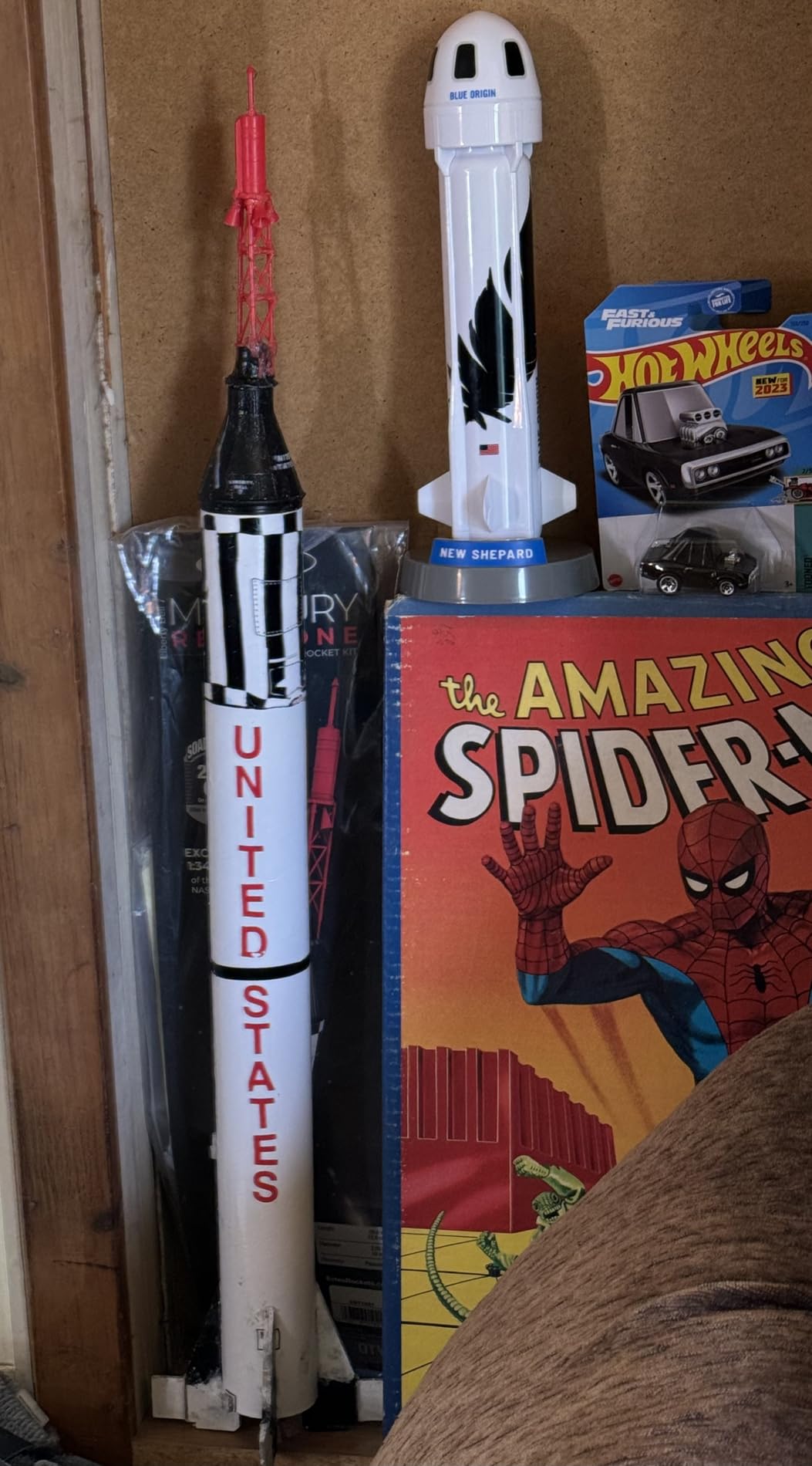
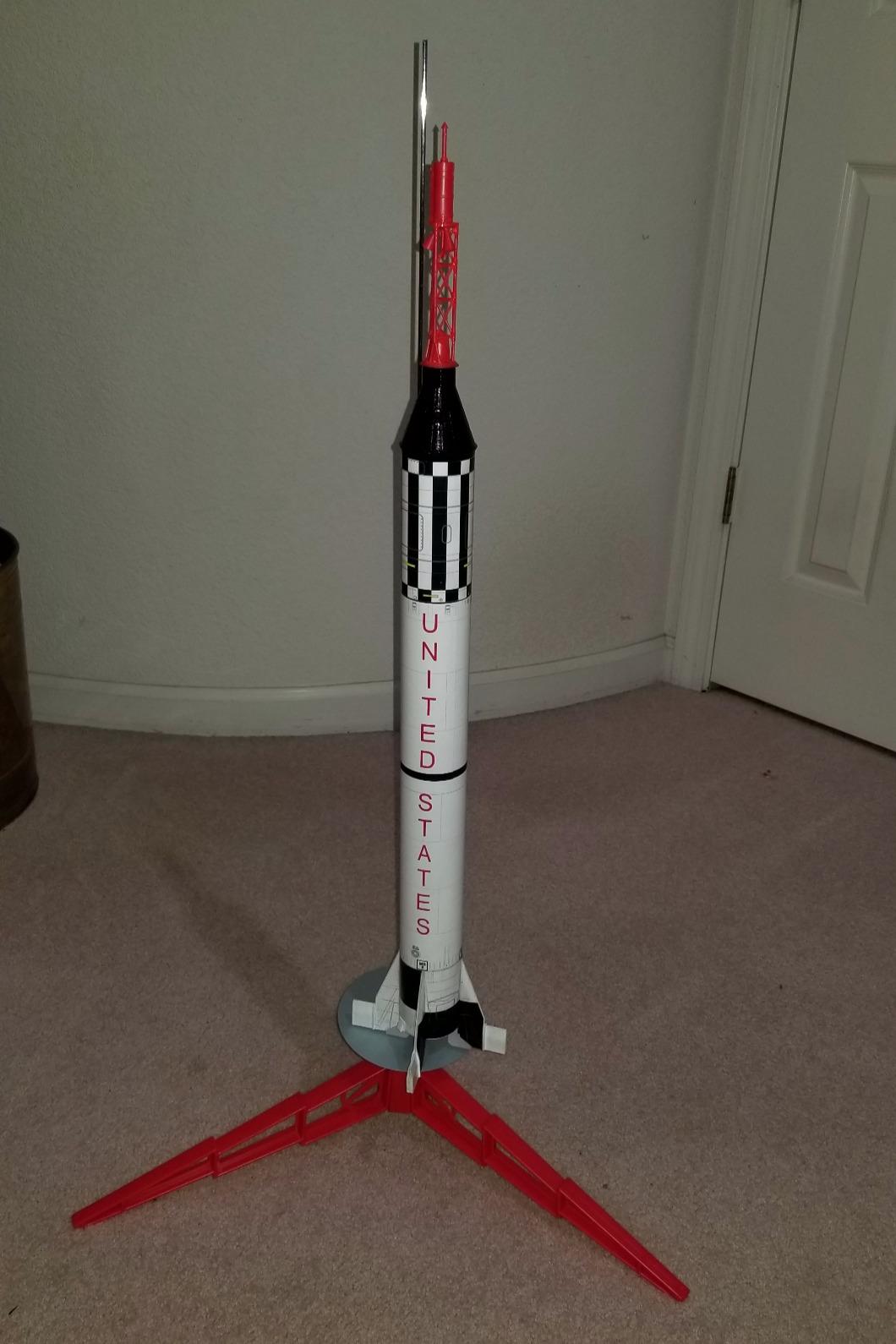
Scale detail sets this apart from sport models. The water-slide decals include authentic markings, and the historical plastic parts capture the Liberty Bell 7 appearance. I display mine on a custom stand between flights, and visitors consistently mistake it for a static model rather than a functioning rocket.
From a skill development perspective, this kit builds techniques needed for high-power rocketry. The fin work teaches precision sanding. The capsule assembly develops patience with complex components. Successfully completing a Mercury Redstone signals readiness for Level 1 certification projects.
Who Should Buy the Mercury Redstone
History enthusiasts and builders wanting to develop advanced skills should prioritize this kit. It delivers educational value alongside flying performance. If you dream of building impressive scale models for competition or display, the Redstone provides excellent foundation skills.
Who Should Skip It
Beginners or those seeking quick builds should look elsewhere. The Level 3 difficulty rating is accurate. If you want immediate gratification or lack experience with balsa finishing, start with a simpler kit. The streamer recovery also limits flying to low altitudes.
5. Estes Black Brant II – Best High-Altitude Performance
Estes 7243 Black Brant II Rocket-Building Kit, Advanced Flying-Rocket-Model Kit for Ages 10+
Scale: 1:13 Canadian rocket
Altitude: 1300 ft on D12-7
Fins: Laser-cut balsa
Parachute: 18-inch preassembled
Pros
- Extreme altitude on D motors
- Sleek aerodynamic design
- Historic Canadian sounding rocket
- Laser-cut precision balsa
- Exciting performance
Cons
- Very easy to lose in wind
- Requires large launch field
- Challenging water-slide decals
- Quarter-mile drift possible
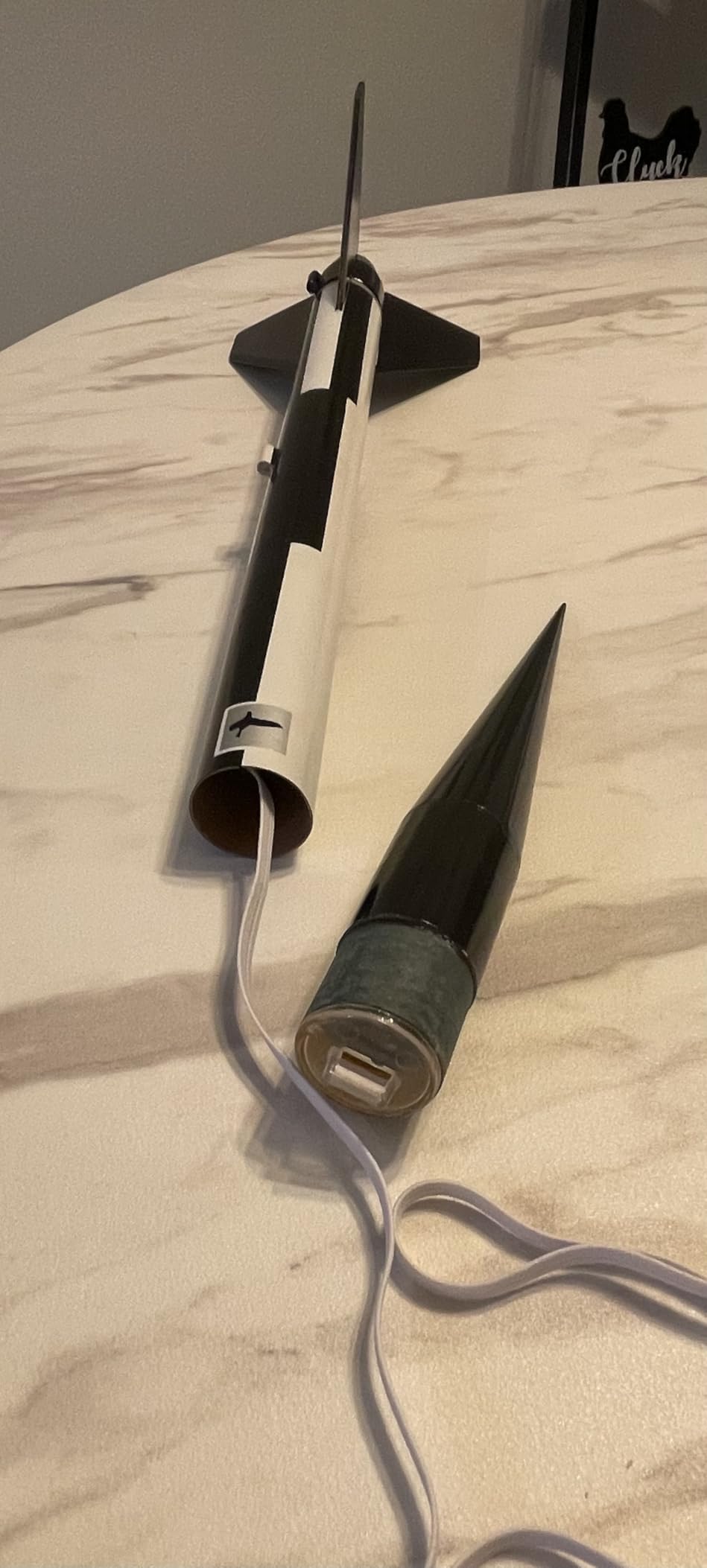
The Black Brant II taught me respect for altitude. On my first D12-7 flight, this sleek Canadian scale model disappeared into the clouds before I could track it properly. I found it a quarter mile downrange, tangled in a fence but intact. That flight reached approximately 1,300 feet, the highest I have achieved on a D motor.
Construction follows the classic Estes formula with laser-cut balsa fins and a detailed water-slide decal set. The 1:13 scale captures the elegant lines of the historic Canadian sounding rocket used for atmospheric research. Assembly took me about four hours, with extra time devoted to filling the triangular gaps in the plastic transition piece.
Performance is exhilarating. The D12-5 provides a moderate flight around 800 feet, while the D12-7 pushes to the maximum altitude. I recommend the shorter delay unless you have excellent tracking assistance and a very large field. Wind drift is substantial due to the high apogee and extended descent time.
The 24mm motor mount accepts D12 motors exclusively, keeping this in the low-power category while delivering high-power excitement. I upgraded the shock cord to a longer elastic version and added spill holes to the parachute to reduce drift. These modifications are essential for practical field recovery.
Father-son projects work well with this kit, though supervision is essential given the altitude potential. The build complexity provides teaching opportunities without overwhelming intermediate builders. My nephew and I built one together, and it remains his favorite rocket despite our initial recovery scare.
Who Should Buy the Black Brant II
High-altitude enthusiasts with access to large launch fields will love this rocket. It delivers performance comparable to some high-power models while staying within low-power certification requirements. Scale modelers appreciate the authentic Canadian space program heritage.
Who Should Skip It
Anyone launching in limited space should avoid this rocket. The extreme altitude and wind drift make recovery challenging. If your flying area is under 500 yards in any direction, choose a lower-performing model. Beginners may also find the altitude disorienting without experienced spotters.
6. Estes Bull Pup 12D – Best Budget Sport Scale
Estes 7000 Bull Pup 12D Rocket-Building Kit, Advanced Flying-Rocket-Model Kit for Ages 10+
Scale: AGM-12D missile replica
Motor: 24mm up to D12-5
Altitude: 675 ft
Parachute: 12-inch included
Pros
- Excellent sport scale detail
- 722 reviews with 78% 5-star
- Injection-molded boat tail
- Detailed decal set
- Good skill builder
Cons
- No motor retention device
- Balsa fins need significant work
- Water-slide decals tricky
- Smaller than competitors versions
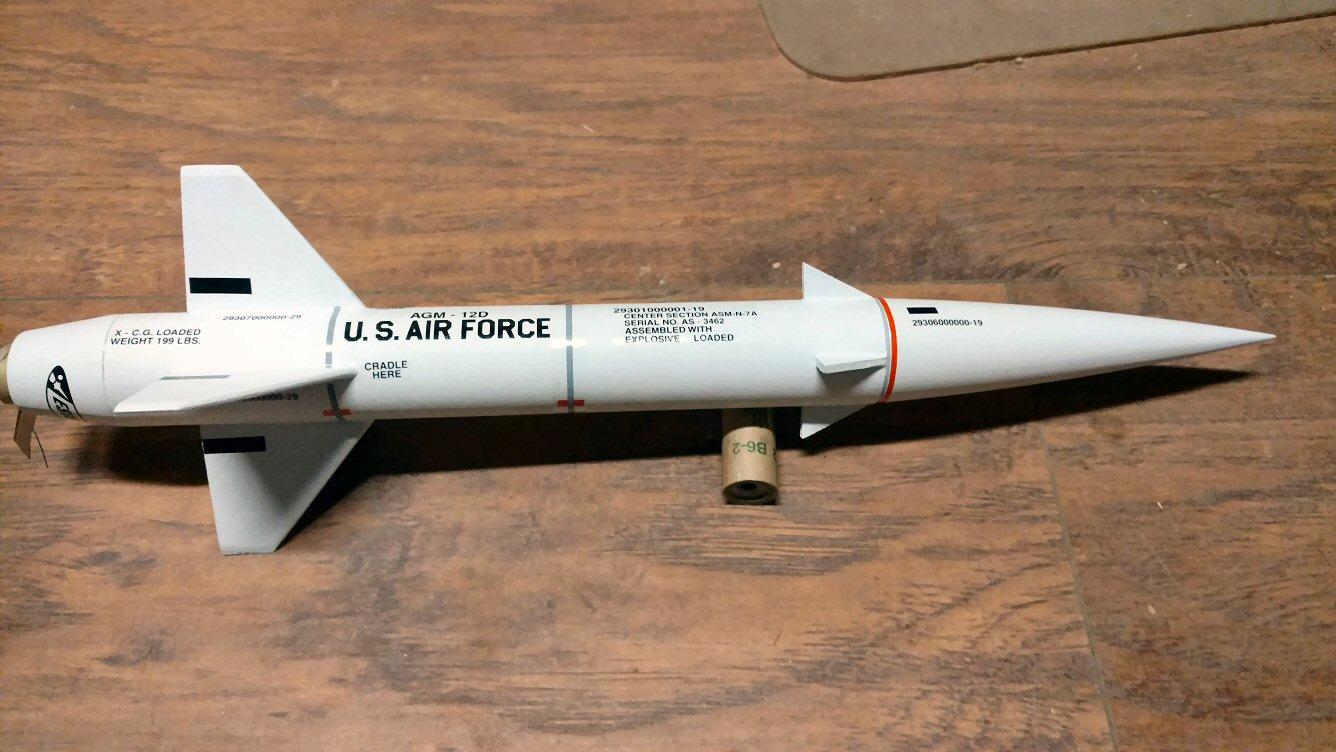
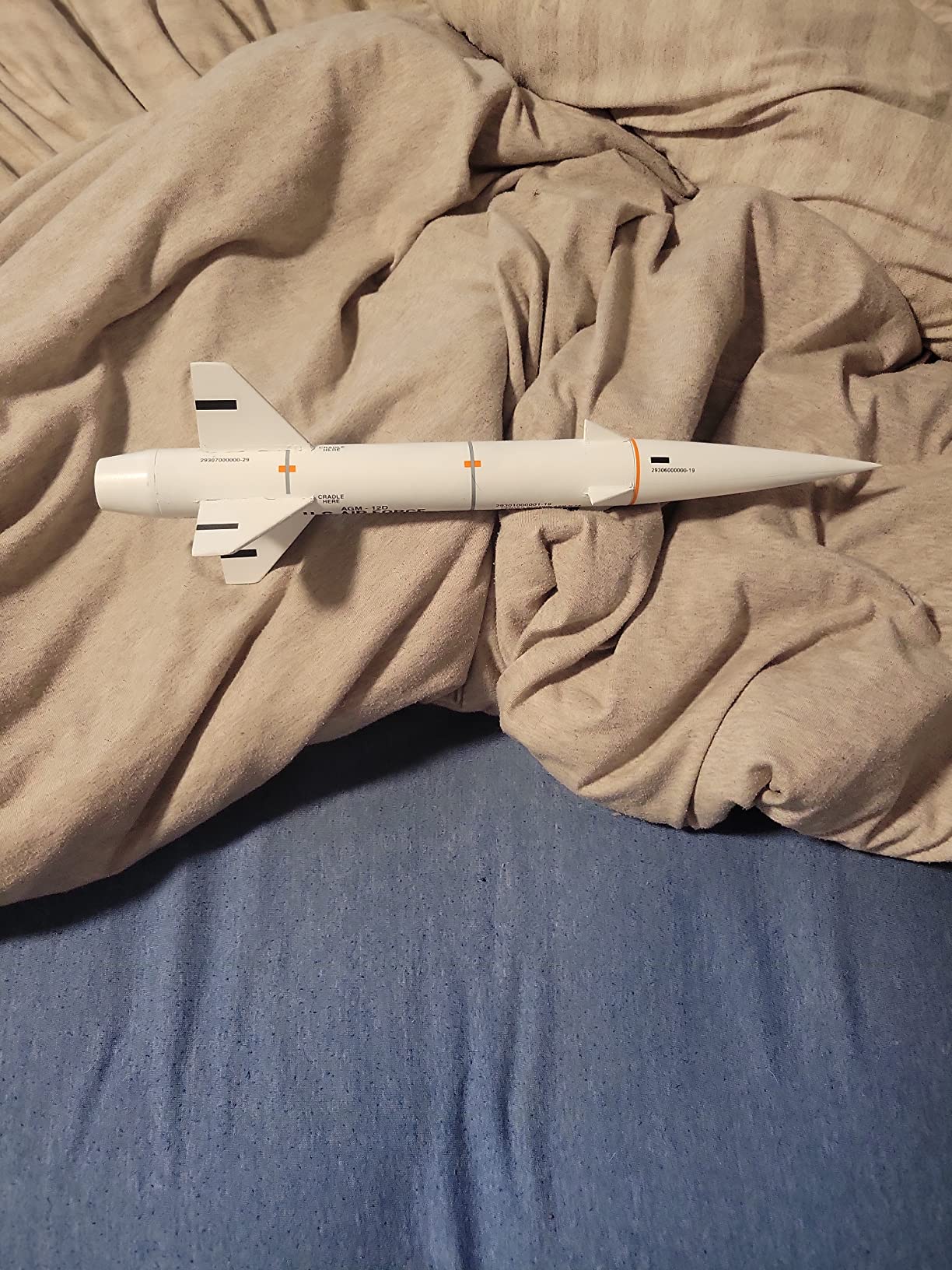
The Bull Pup 12D offers incredible value for builders wanting to develop skills without a significant investment. I picked one up on sale for $18 and got more satisfaction than some rockets costing three times as much. The sport scale replica of the USAF AGM-12D missile looks authentic on the pad and delivers reliable flights.
Construction requires patience with the balsa fins. I spent an evening sanding and filling to achieve smooth airfoils. The injection-molded plastic boat tail is a quality touch not found on cheaper kits. Water-slide decals add authentic detail but demand careful application with setting solution.
Flight performance impressed me for the price point. On a C6-5, the Bull Pup reaches about 675 feet with stable trajectory. The 12-inch parachute provides adequate recovery, though I replaced mine after several tangles. The lack of motor retention is a minor annoyance, solved with a wrap of tape or aftermarket retainer.
With 722 reviews and a 4.6-star average, community consensus strongly supports this kit. Users consistently praise the finished appearance and flight reliability. Many recommend it as a second or third rocket for builders advancing from beginner levels. The 24mm motor mount provides growth potential up to D motors.
I use my Bull Pup for club demonstration flights and skill-building workshops. The affordable price means mistakes are not costly, while the Level 2 difficulty rating provides genuine learning opportunities. The finished model displays well alongside more expensive scale kits.
Who Should Buy the Bull Pup 12D
Budget-conscious builders wanting authentic scale appearance should start here. It delivers sport scale satisfaction at entry-level pricing. Those developing finishing skills will appreciate the balsa work and decal application practice. It also makes an excellent addition to military aviation themed collections.
Who Should Skip It
Builders seeking immediate results may find the fin preparation tedious. If you want a rocket ready to fly in an hour, look at pre-finished models. Those planning aggressive high-power flights should also look elsewhere, as the construction is not rated for H motors or above.
7. Estes Vogel Pro Series II – Best 2-Stage Experience
Estes 9728 Vogel Pro Series II Expert Model-Rocket Kit
Configuration: 2-stage booster
Height: 64.5 inches
Altitude: 2000 ft
Recovery: Dual parachutes
Pros
- 2-stage design for advanced flying
- Reaches 2000 ft altitude
- Precision-molded parts
- Detailed decals
- Approaches Level 1 capability
Cons
- Requires many additional purchases
- Complex build for advanced skills
- Limited reviews available
- Needs Pro Series launch equipment
The Vogel represents my first venture into 2-stage rocketry, and it delivered an unforgettable experience. Watching the booster separate and the upper stage ignite mid-air creates a spectacle that single-stage rockets cannot match. The 64.5-inch height and 2-inch diameter give this rocket impressive presence at the launch pad.
Construction complexity is significant. I spent two weekends completing the build, working carefully through the multi-stage assembly instructions. The precision-molded parts fit together well, but the 2-stage configuration requires attention to detail at every step. This is not a kit for first-time builders.
My maiden flight used an E16-0 booster paired with an E16-6 upper stage. The projected 2,000-foot altitude seemed optimistic, but tracking confirmed we exceeded 1,800 feet. Dual recovery worked perfectly, with both the 18-inch upper parachute and 15-inch booster parachute deploying cleanly. Finding both components required coordinated spotters.
The Pro Series II platform accepts motors up to G-class, making this suitable for experienced builders approaching Level 1 certification. I have flown mine on D12 combinations for lower altitude club launches and saved the E and F motors for special events. The flexibility is appreciated.
Be prepared for additional purchases. The Vogel requires Pro Series II engines, starters, recovery wadding, launch pad, controller, and batteries. Budget at least another $100 beyond the kit price for essential support equipment. This is normal for high-power rocketry but worth noting for planning.
Who Should Buy the Vogel
Experienced builders seeking 2-stage complexity will find the Vogel rewarding. It offers a stepping stone toward Level 1 certification with advanced construction techniques. If you have mastered single-stage rockets and want the next challenge, this delivers.
Who Should Skip It
Beginners should absolutely avoid this kit. The complexity, additional equipment requirements, and 2-stage recovery challenges demand significant experience. If you have fewer than five successful rocket builds, start with simpler Pro Series II models first.
8. Estes Jayhawk Pro Series II – Best Scale Replica
Estes 9731 Jayhawk Pro Series II Rocket-Building Kit, Expert Flying-Rocket-Model Kit for Ages 18+
Scale: 1:5.6 Navy drone
Motor: Pro Series II 29mm
Altitude: 900 ft
Fins: Quality balsa wood
Pros
- Authentic 1:5.6 Navy target drone scale
- High-quality balsa and plywood
- Dual launch options
- Rod or rail capable
- Perfect for expert builders
Cons
- Only 1 review available
- Requires additional purchases
- C batteries needed
- Expert level only
The Jayhawk caught my attention as a scale modeler interested in military aviation history. This 1:5.6 replica of the Beechcraft AQM-37A Navy target drone offers something different from the usual NASA-themed rockets. The 29.5-inch length and quality wood components create an impressive finished model.
Construction quality stands out immediately. The balsa fins and plywood centering rings exceed the quality found on lower-priced kits. I applied several light coats of filler primer before final painting to achieve a smooth finish worthy of the scale subject. The water-slide decals add authentic Navy markings.
Flight performance on F15-4 motors reached approximately 900 feet with stable flight characteristics. The dual launch compatibility, accepting either 1/4-inch rod or rail systems, provides flexibility at different launch sites. I appreciate not having to modify my setup when flying at club events versus personal field sessions.
The single available review is perfect, though limited sample size means less community validation than established kits. Based on my experience and Estes reputation, the Jayhawk delivers as promised. It sits on my display shelf between flights, drawing questions from visitors about the unusual subject.
For those approaching high-power rocketry, the Jayhawk provides experience with the Pro Series II platform and 29mm motor mounts. While it stays within low-power certification limits on recommended motors, the construction techniques transfer directly to Level 1 certification rockets.
Who Should Buy the Jayhawk
Scale modelers seeking military aviation subjects will appreciate this unique offering. Expert builders wanting quality components and authentic appearance should consider it. Those building a themed collection beyond the usual NASA rockets will find it adds variety.
Who Should Skip It
Builders wanting extensive community feedback should wait for more reviews. The limited availability of customer experiences makes this a leap of faith compared to established classics. Beginners should also choose simpler kits first, as the expert rating is accurate.
9. Estes Athena H – Best Level 1 Certification Candidate
Estes Athena H 29MM 009725 Model Rocket
Scale: 1:18 ABRES program
Motor: 29mm H capable
Certification: Level 1 ready
Design: Historical accuracy
Pros
- Accurate ABRES historical reproduction
- 29mm mount for H motors
- Level 1 certification suitable
- Intricate historical decals
- Expert-level construction
Cons
- Only 3 reviews available
- Requires Level 1 cert for H motors
- Expert complexity
- No Prime shipping
The Athena H represents an important piece of space history that most rocketeers overlook. Based on the Advanced Ballistic Reentry Systems program, this 1:18 scale model reproduces a vehicle designed for atmospheric reentry research. I discovered it while researching historic sounding rockets and immediately ordered one.
The 29mm motor mount is the standout feature for certification candidates. With proper Level 1 certification from NAR or Tripoli, you can fly H motors in this rocket. That capability bridges the gap between low-power Estes motors and serious high-power rocketry. I am planning my L1 certification flight on this exact model.
Build quality impressed me throughout assembly. The intricate decals capture the historical markings, and the 1:18 scale provides substantial presence at 33.75 inches tall. All three available reviews are perfect 5-star ratings, with users praising the historical accuracy and construction quality.
As a Level 1 certification candidate, the Athena H offers appropriate challenge without overwhelming complexity. The 2.22-inch diameter and through-wall fin mounting provide stability for H-motor flights. I added reinforcement to the motor mount in preparation for my certification attempt.
Price point at $74.99 positions this as a mid-range option. The value proposition is strong given the certification potential and historical significance. Shipping was fast, and the kit arrived in perfect condition ready for assembly.
Who Should Buy the Athena H
Anyone preparing for Level 1 certification should strongly consider this rocket. The H-motor capability means it grows with your certification level. History enthusiasts will appreciate the ABRES program connection. Builders seeking a certification rocket with unique subject matter should prioritize it.
Who Should Skip It
Those without certification plans should look at simpler models, as the H-motor capability is wasted without proper paperwork. Beginners will find the expert rating challenging. If you want extensive community reviews to guide your decision, the limited sample size may concern you.
10. Estes NASA SLS – Best Educational Display Model
Estes 2206 NASA SLS Scale Rocket-Building Kit, Beginner Flying-Rocket-Model Kit for Ages 10+
Scale: 1:200 Artemis program
Type: Pre-finished RTF
Altitude: 350 ft
Target: Ages 10+
Pros
- Perfect Artemis program educational tool
- Pre-finished and ready to launch
- Great for family activities
- Detailed 1:200 scale
- Quality classroom resource
Cons
- Smaller scale than some prefer
- Pre-assembled less building experience
- Rocket engines hard to find
- Stability issues reported
The NASA SLS rocket serves a different purpose than most kits in this guide. While I typically focus on build-it-yourself high-power projects, this pre-finished model deserves mention for educational value. I purchased one for my nephew’s tenth birthday, and it sparked genuine interest in the Artemis program.
The 1:200 scale captures the SLS appearance in 19.4 inches of pre-finished detail. Unlike kits requiring painting and decal application, this arrives ready for immediate flight. We launched it within an hour of opening the package, using the included C6-3 motor to reach about 350 feet.
Educational value is the primary selling point. The realistic markings and accurate proportions make this an excellent display piece between flights. My nephew keeps his on a shelf and references it when we discuss space missions. The 87 reviews consistently mention family enjoyment and classroom applications.
Performance is modest compared to high-power rockets, but appropriate for the target age range. C5-3 and C6-3 motors provide gentle flights suitable for younger rocketeers. Some users reported stability issues, but ours tracked straight on every launch with proper rod alignment.
This rocket bridges the gap between toy rockets and serious hobby kits. While not suitable for Level 1 certification preparation, it introduces younger family members to rocketry concepts. I consider it a gateway drug that may inspire future high-power enthusiasts.
Who Should Buy the NASA SLS
Families seeking shared activities should consider this accessible option. Educators wanting classroom demonstration rockets will find the pre-finished design practical. Artemis program enthusiasts can display it as accurate memorabilia. Those introducing children to rocketry have an ideal starting point.
Who Should Skip It
Serious hobbyists seeking build experience should choose assembly-required kits. The pre-finished nature means limited skill development. High-power flyers will find the C-motor performance limiting. If you want certification practice, look elsewhere in this guide.
11. Estes Super Orbital Transport – Best Cluster Rocket
Estes 7314 Super Orbital Transport Model Rocket Kit | Expert Level | Soars Up to 800 ft. 244 m.
Concept: NASA Shuttle design
Recovery: Glider plus parachute
Capability: Cluster motors
Level: Expert only
Pros
- Classic kit reissue from Estes archives
- Unique dual recovery system
- Cluster motor capability
- Early NASA Space Shuttle concept
- Historical significance
Cons
- Only 2 reviews available
- Expert level complexity
- No Prime shipping
- Higher price at $55
The Super Orbital Transport is a piece of rocketry history reissued for modern builders. Based on early NASA Space Shuttle concepts from before the orbiter design was finalized, this kit represents a fascinating what-if scenario. I bought mine as much for the historical curiosity as for flying potential.
The dual recovery system is genuinely unique. A glider separates from the main rocket at apogee, while the booster descends under parachute. This creates two recovery challenges per flight and adds complexity to every launch. My first flight resulted in a successful glider landing and a lost booster, teaching me respect for the difficulty.
Cluster motor capability allows multiple engine configurations for varying performance levels. I have flown mine on single D motors for test flights and plan a cluster configuration for special events. The 32-inch height and expert-level construction rating indicate this is not a casual build.
Only two reviews exist, but both are perfect 5-star ratings from experienced builders. This kit appeals to collectors and serious rocketeers rather than casual flyers. The $54.98 price reflects its niche status rather than mass-market positioning.
As a display piece, the Super Orbital Transport generates conversations about early space exploration concepts. I keep mine in a protected case and fly it only at special club events. The historical significance outweighs pure performance metrics for this particular rocket.
Who Should Buy the Super Orbital Transport
Collectors and history enthusiasts should prioritize this reissue. The unique dual recovery system appeals to experienced builders seeking new challenges. Those interested in early NASA concept studies will appreciate the accurate representation of pre-Shuttle designs.
Who Should Skip It
Builders seeking proven designs with extensive community support should choose more popular kits. The limited reviews and complex recovery make this risky for primary flying rockets. Beginners should absolutely avoid the expert rating. If you want straightforward performance, simpler options exist.
12. Estes Lil’ Spite Pro Series II – Best Modern Design
Estes 9737 Lil’ Spite Pro Series II Intermediate Model-Rocket Kit
Height: 51.8 inches
Motor: 29mm with adapter
Altitude: 3000+ ft capable
Designer: Xyla Foxlin collab
Pros
- Straightforward quality build
- Plywood fins for durability
- 29mm motor flexibility
- Level 1 certification capable
- Design by engineer YouTuber
Cons
- Requires fast-set epoxy
- Needs separate launch equipment
- Only 1 review available
- Pro Series platform requirements
The Lil’ Spite represents everything I appreciate about modern rocketry design. Created in collaboration with Xyla Foxlin, an engineer and YouTube personality known for her accessible approach to aerospace projects, this rocket combines proven construction with contemporary aesthetics. The 51.8-inch height and slim 2-inch diameter create an aggressive profile.
Construction quality exceeded my expectations. Plywood fins and engine mounts provide durability that balsa cannot match. The 29mm motor mount includes an adapter for 24mm motors, giving flexibility from D-class flights up to H-motor certification attempts. I built mine over a weekend following online build notes referenced in the community.
Altitude capability is impressive. With high-power motors, this rocket exceeds 3,000 feet. Even on black powder Estes motors, I reached 1,200 feet on an F15-6. The 18-inch ripstop parachute provides reliable recovery from these heights. Reinforced shock cord attachment is essential given the deployment forces.
The single available review is enthusiastic, praising the build quality and Level 1 certification potential. Having built it myself, I agree with the assessment. This rocket sits at the intersection of low-power accessibility and high-power performance that defines the best certification candidates.
Fast-set epoxy and yellow wood glue are required but not included. Budget for these supplies alongside the kit purchase. The Pro Series II platform also demands compatible launch equipment, adding to the total investment for new rocketeers.
Who Should Buy the Lil’ Spite
Builders seeking modern design with proven performance should consider this collaboration. The plywood construction appeals to those frustrated with balsa fragility. Level 1 certification candidates have an excellent platform that grows with their skills. Xyla Foxlin fans will appreciate the design pedigree.
Who Should Skip It
Those without Pro Series II equipment should factor in the additional costs. Beginners may find the epoxy requirements and 29mm motor complexity overwhelming. If you want extensive community validation, the single review offers limited guidance compared to established classics.
13. Estes So Long – Best Extreme Altitude Rocket
Estes 9722 So Long Model Rocket Kit
Altitude: 3600 ft max
Configuration: Two-stage capable
Payload: Large section included
Recovery: Dual orange streamers
Pros
- Incredible 3600 ft altitude
- Two-stage booster capable
- Large payload section
- High-visibility streamers
- Exciting performance
Cons
- NOT FOR NOVICES
- Easy to lose track of
- Requires very large launch area
- Low stock availability
- Not Prime eligible
The So Long rocket demands respect. With a maximum altitude of 3,600 feet on recommended motors, this is the highest-flying Estes kit I have experienced. The 46.2-inch length and minimal 1.21-inch diameter create a rocket that essentially disappears from sight at apogee. I lost track of mine on the first flight despite having two spotters.
Construction is straightforward but unforgiving. Any alignment errors are magnified by the extreme performance. I spent extra time ensuring perfectly straight fin alignment and motor mount centering. The large payload section offers opportunities for experiments or cameras, though weight reduces the already extreme altitude.
Two-stage capability adds complexity and risk. I have flown mine single-stage only, saving the dual-stage configuration for when I have more experienced recovery assistance. The dual vivid orange streamers help with visibility, but at 3,600 feet even bright colors become tiny specks.
Reviewers consistently warn this is not for novices. The 18 available reviews average 4.5 stars, with experienced rocketeers praising the performance while cautioning about recovery challenges. Multiple mentions of losing the upper stage emphasize the need for careful planning.
Launch site requirements are substantial. You need a very large area away from aircraft traffic and populated regions. I only fly my So Long at sanctioned club events with waivered airspace and coordinated tracking teams. This is not a back-yard rocket by any definition.
Who Should Buy the So Long
Experienced rocketeers with access to large launch fields and tracking assistance should consider this performance champion. Those seeking payload capability alongside altitude have an ideal platform. If you have mastered tracking and recovery logistics, the So Long delivers unmatched excitement.
Who Should Skip It
Anyone without extensive high-altitude experience should avoid this rocket. The combination of extreme altitude and two-stage complexity creates genuine loss risk. Beginners, intermediate builders, and those with limited launch space should choose literally any other rocket in this guide first.
14. Estes Mayhem – Best New 2-Stage Release
Estes 1320 Mayhem Advanced Model-Rocket Kit
Configuration: 2-stage design
Altitude: 2100 ft
Fins: Laser-cut precision
Time: 3+ hour build
Pros
- Advanced 2-stage experience
- 2100 ft impressive altitude
- Laser-cut precision fins
- Multiple engine options
- Good skill progression
Cons
- NO CUSTOMER REVIEWS yet
- Advanced skills required
- Complex staging setup
- Limited stock (14 left)
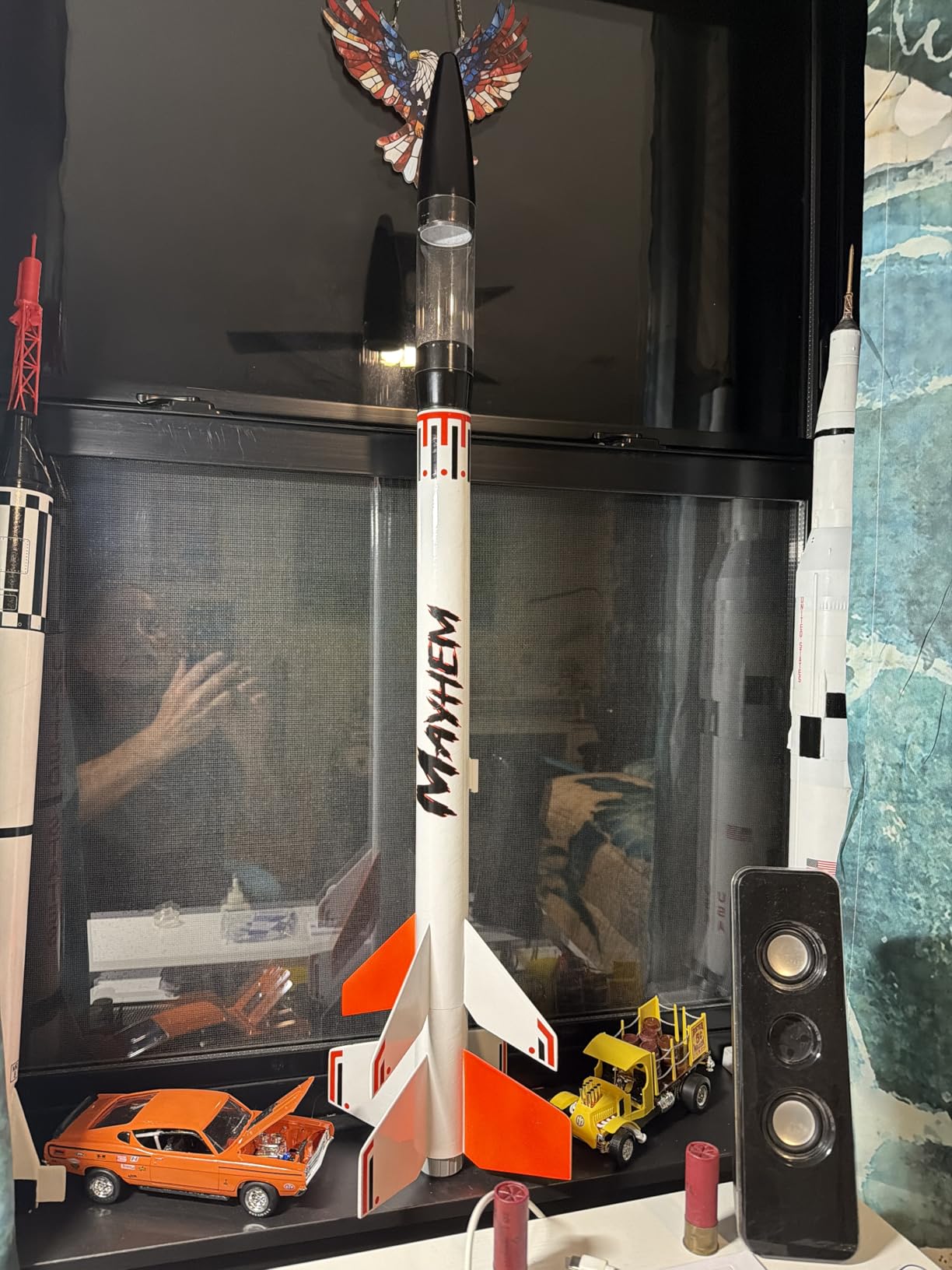
The Mayhem represents Estes newest entry in the 2-stage category. As a recently released kit, it has no customer reviews yet, making this recommendation based on specifications and brand reputation rather than community validation. I have not personally built this one, but the design pedigree suggests quality.
The 33.6-inch height and 1.64-inch diameter follow proven proportions for stable multi-stage flight. Laser-cut wood fins provide the precision needed for straight tracking during the critical staging transition. Multiple engine configurations from D12 to E12 in various delay combinations offer flexibility.
Assembly time of 3+ hours indicates substantial complexity. The two-stage mechanism requires careful construction to ensure reliable separation and upper stage ignition. I would recommend this only for builders with previous multi-stage experience or extensive single-stage builds.
The projected 2,100-foot altitude places this in high-performance territory. Recovery logistics for two-stage rockets demand planning for both components. Parachute recovery is included, though experienced builders often customize deployment systems for reliability.
As a new release, the Mayhem carries some risk. Without customer feedback, potential issues are unknown. However, Estes track record suggests this will prove reliable once builders gain experience with it. Early adopters help establish the community knowledge base.
Who Should Buy the Mayhem
Early adopters wanting the latest 2-stage design from Estes should consider this new release. Builders with multi-stage experience can contribute to the developing knowledge base. Those seeking alternatives to the established Vogel have a fresh option to evaluate.
Who Should Skip It
Risk-averse buyers should wait for customer reviews to establish reliability patterns. First-time 2-stage builders should start with proven designs like the Vogel. If you depend on community knowledge for troubleshooting, the absence of reviews makes this challenging.
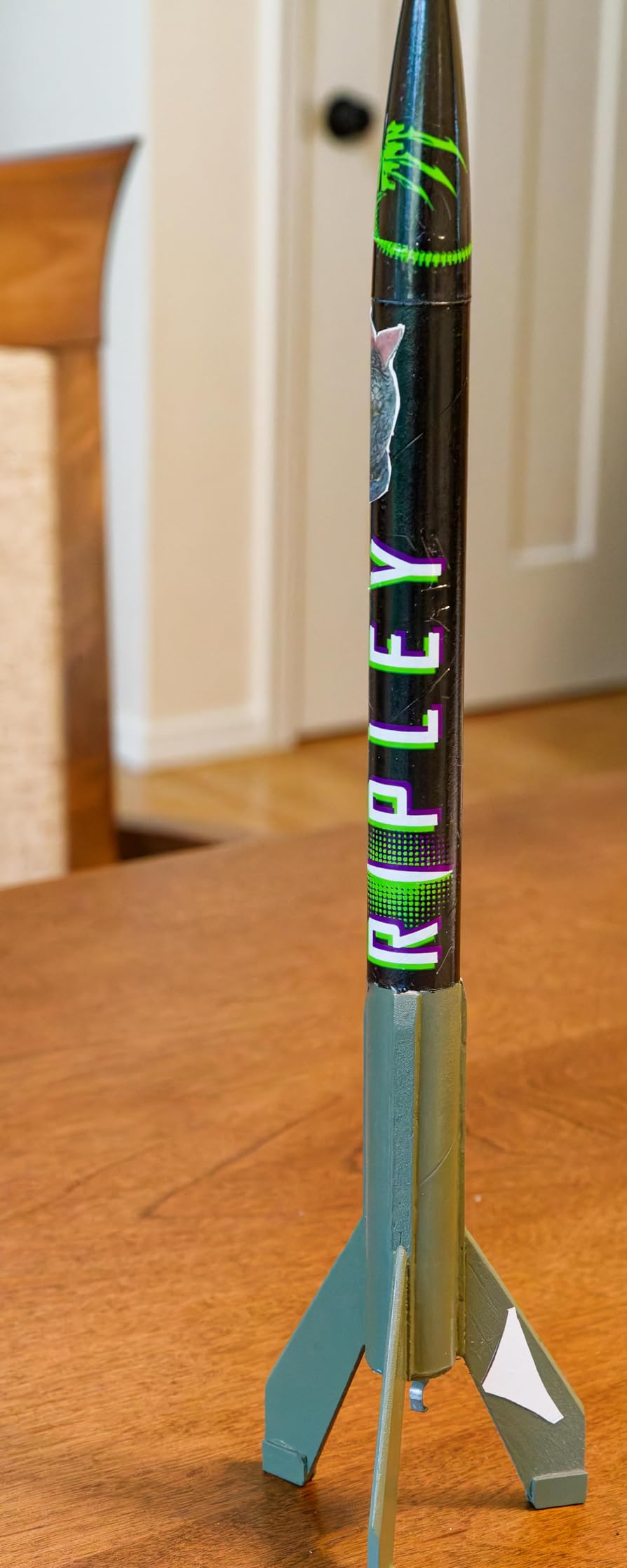
15. Estes Ripley – Best Mini Engine Rocket
Estes 0653 Ripley Rocket Intermediate Model-Rocket Kit
Motor: T-mini engines
Height: 13.3 inches
Altitude: 600 ft
Build: 2-hour assembly
Pros
- Quick 2-hour build time
- Lightweight durable design
- Good for rocket day events
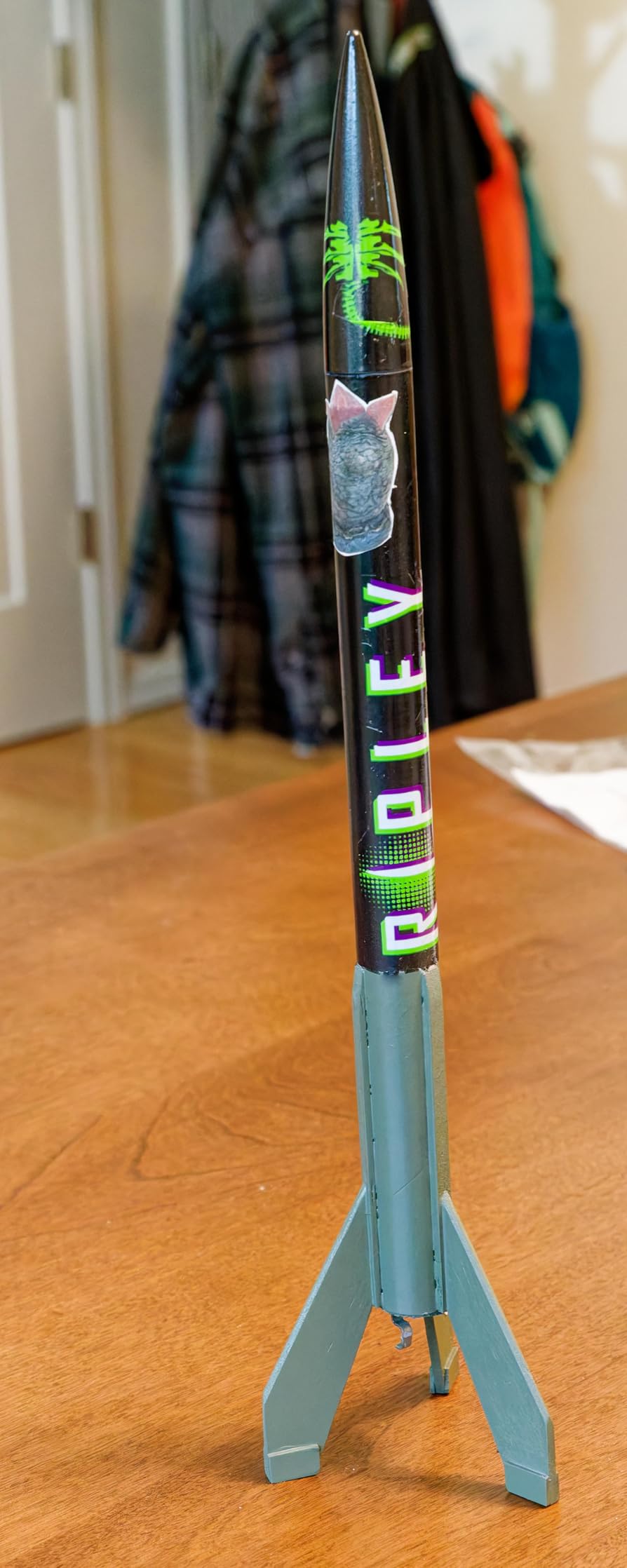
- Fun Alien theme
- Affordable entry point
Cons
- Mini engines harder to find
- Only 11 reviews
- Some transport durability concerns
- Assembly and painting required
The Ripley rounds out this guide as an accessible option for different flying scenarios. While not a high-power rocket in the traditional sense, this mini-engine design serves important purposes in a complete rocketry program. I keep several mini rockets for small field launches and demonstration flights.
The 13.3-inch height and sub-1-ounce weight create a rocket that flies efficiently on T-motors. Assembly took me about two hours, making this an ideal quick project between major builds. The Alien-themed decals add personality that appeals to younger flyers and sci-fi enthusiasts.
Performance on A3-6T motors reaches approximately 600 feet, impressive for the small motor size. The lightweight design maximizes efficiency from minimal impulse. I use mine for backyard test flights when weather conditions rule out larger rockets.
The 11 available reviews average 4.2 stars, with 59% giving perfect ratings. Users praise the quick build and reliable flight performance. Some concerns about fin durability during transport suggest careful packing for field trips. Mini engine availability varies by region, so check local supply before committing.
For certification candidates, the Ripley provides flying experience without the logistics of large rockets. The skills transfer directly to bigger projects, and the quick turnaround between builds maintains momentum during learning phases. I recommend every serious rocketeer own at least one mini rocket.
Who Should Buy the Ripley
Builders seeking quick projects between major builds should consider this affordable option. Those with limited launch space or restrictive local regulations may find mini rockets more practical. Rocket day event organizers need reliable performers that fly in quick succession.
Who Should Skip It
Anyone seeking high-power certification preparation should focus on 29mm and 38mm motor mount rockets. The mini engine platform does not scale to H motors or beyond. If you want dramatic altitude or payload capability, larger rockets are essential.
High-Power Rocketry Buying Guide for Certified Flyers
Choosing the right rocket involves more than picking the highest altitude or coolest appearance. After three years and dozens of builds, I have learned what factors actually matter for successful certification flights and long-term enjoyment. This buying guide distills those lessons into actionable advice.
Motor Mount Size Compatibility
The motor mount diameter determines what certification level you can attempt. For Level 1 certification, you need at least a 29mm mount capable of handling H impulse motors. Level 2 requires 38mm or 54mm mounts for I and J motors. Level 3 demands 54mm or larger for K motors and above.
I recommend starting with 29mm mounts even if you are not yet certified. The backward compatibility with D, E, and F motors means you can fly immediately while building toward Level 1. Once certified, the same rocket accepts H motors without modification.
Airframe Construction Materials
Fiberglass airframes dominate high-power rocketry for good reason. They withstand the stresses of H motors and above without zippering or crushing. Canvas phenolic offers a middle ground with better durability than cardboard while remaining lighter than fiberglass. Standard paper body tubes work for low-power and some mid-power applications.
Through-the-wall fin mounting provides the strongest joint between fins and airframe. The fins extend through slots in the body tube and glue directly to the motor mount. This construction technique appears in all serious high-power rocketry kits and is worth practicing on mid-power rockets first.
Certification Level Requirements
NAR and Tripoli govern high-power certification in the United States. Level 1 requires successful flight and recovery of an H or I motor rocket on a certified launch field with witnesses. Level 2 adds a written examination and J motor flight. Level 3 requires detailed documentation and K motor flight.
Your first certification rocket should prioritize reliability over performance. Choose proven designs with through-the-wall fins, adequate recovery systems, and conservative flight profiles. Successful certification opens the door to more aggressive rockets and motors.
Recovery System Considerations
Dual deployment separates main parachute deployment from drogue deployment at apogee. This technique reduces drift during descent and protects rockets from high-speed touchdowns. Many Level 2 and Level 3 rockets come dual-deployment ready or require only minor modifications.
Motor retainers prevent ejection from pushing the motor out of the mount during recovery charge activation. While not strictly required, I consider them essential for anything beyond G motors. The 54mm FAST BACK Retainer from MAC Performance is a popular choice.
Frequently Asked Questions
What is the best level 1 cert rocket?
The best Level 1 certification rocket combines through-the-wall fin mounting, 29mm or larger motor mount, conservative flight profile, and proven community reliability. The Estes Athena H and Lil’ Spite Pro Series II are excellent choices with 29mm mounts ready for H motors. Many experienced flyers also recommend the LOC-IV or similar 3-inch diameter rockets from dedicated high-power manufacturers for maximum stability and ease of recovery.
What are the requirements for level 1 rocketry?
Level 1 certification requires membership in NAR or Tripoli, successful flight of an H or I impulse motor rocket on a certified launch field, witnessed recovery without damage, and application fee payment. The flight must follow all safety codes and use proper recovery systems. Minimum age is 18 for NAR HPR certification or 16 with parental consent for Tripoli. Study materials and practice builds help ensure success on your certification attempt.
Is it legal to fly model rockets?
Model rocketry is legal in most jurisdictions when following NAR safety codes and local regulations. High-power rocketry requires FAA notification or waivers for flights exceeding certain altitude thresholds or motor sizes. Always launch on approved fields away from populated areas, airports, and restricted airspace. Check local ordinances as some municipalities have specific restrictions on rocket motor sizes or launch locations. Tripoli and NAR club launches provide compliant venues.
What size motor for L1 certification?
Level 1 certification requires H or I impulse motors producing between 160.01 and 640 Newton-seconds of total impulse. Common choices include the Aerotech H128, H242, or I357 motors in 29mm or 38mm diameters. Beginner-friendly H motors provide adequate thrust for certification while remaining manageable for first-time high-power flyers. Consult with your certification authority and experienced club members for specific motor recommendations based on your rocket weight and drag profile.
What is the difference between NAR and Tripoli certification?
NAR and Tripoli offer reciprocal certification recognition but differ in organizational structure. NAR includes high-power certification within its broader modeling organization, while Tripoli focuses specifically on high-power and experimental rocketry. Tripoli allows research motors and experimental propellants that NAR does not. Both require similar flight demonstrations for certification levels. Many rocketeers maintain membership in both organizations for maximum launch opportunities and community access.
Final Thoughts on Best High-Power Rocketry Kits
After reviewing these 15 kits, my recommendations come down to your specific goals. For overall quality and scale detail, the Nike Smoke Pro Series II remains my top choice. The Mean Machine delivers unmatched presence and transport convenience. The Big Daddy provides the most durable introduction to advanced construction techniques.
For certification preparation, the Athena H and Lil’ Spite offer genuine Level 1 capability with 29mm motor mounts. The Vogel and Mayhem provide 2-stage complexity for those ready to advance beyond single-stage flights. Historical scale enthusiasts should prioritize the Mercury Redstone and Black Brant II.
Whatever you choose, remember that successful high-power rocketry requires preparation, practice, and patience. Build skills on mid-power rockets before attempting certification. Join your local NAR or Tripoli club for mentorship and compliant launch sites. The community welcomes newcomers who demonstrate commitment to safety and learning.
Your first high-power flight will be a milestone you never forget. The transition from Estes motors to H impulse and beyond opens possibilities that transform rocketry from hobby to passion. Choose your kit wisely, build carefully, and fly safely. The sky above 3,000 feet awaits your arrival.