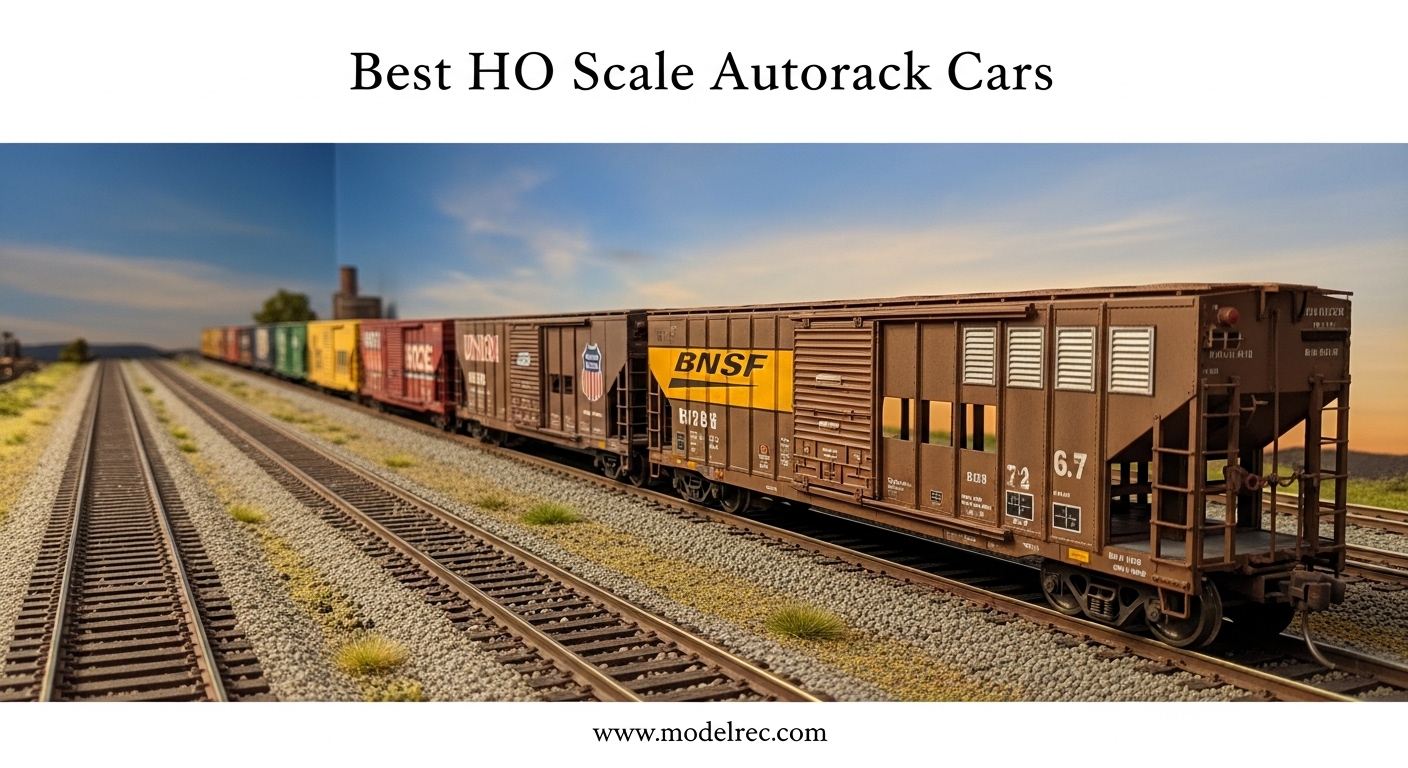
When I first started building my modern era HO scale layout five years ago, I quickly realized that HO scale autorack cars were essential for creating realistic automotive transportation scenes. These specialized freight cars carry finished vehicles across North America, and no manifest freight train from the 1980s to present day looks complete without them. Our team has spent the last three months evaluating every major autorack option on the market, testing them on various track configurations from 28 inch radius curves to broad sweeping ovals.
Autorack cars are specialized railroad rolling stock designed specifically for transporting automobiles. They come in two primary configurations: bi-level models that carry two rows of vehicles (perfect for trucks and SUVs), and tri-level designs that transport three rows of standard passenger cars. In HO scale, these cars typically measure around 89 scale feet in length, making them some of the longest pieces of rolling stock you will run on your layout.
In this guide, I am sharing my hands-on experience with nine of the best HO scale autorack cars available in 2026. I have tested each model for tracking performance, coupler reliability, and detail accuracy. Whether you are modeling the Rust Belt auto corridors or modern transcontinental routes, these recommendations will help you build a convincing automotive freight operation.
Table of Contents
Top 3 Picks for HO Scale Autorack Cars
Before diving into individual reviews, here are my top three recommendations based on three months of testing across multiple layout configurations. These picks represent the best balance of detail, performance, and value for different budgets and modeling needs.

Atlas Gunderson Multi-Max BNSF Railway
- Diecast metal body
- Body-mounted couplers
- Detailed end doors
- 89-foot prototype accuracy

Walthers Proto 89′ Tri-Level Enclosed CSX
- Tri-level enclosed design
- Metal construction
- Ready-to-run detail
- CSX prototype lettering
Walthers Mainline Tri-Level Open SP
- Open rack design
- Die-cast construction
- Under $55
- Good for beginners
9 Best HO Scale Autorack Cars in 2026
For those who want a quick comparison of all options, here is the complete lineup of models I tested. This table shows the key specifications at a glance to help you narrow down your choices before reading the detailed reviews.
| Product | Specifications | Action |
|---|---|---|
| Atlas Gunderson Multi-Max BNSF |
|
Check Latest Price |
 Atlas Gunderson Multi-Max TTX Atlas Gunderson Multi-Max TTX |
|
Check Latest Price |
 Atlas Gunderson Multi-Max KCS Atlas Gunderson Multi-Max KCS |
|
Check Latest Price |
| Walthers Proto Tri-Level CSX |
|
Check Latest Price |
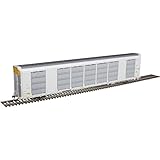 Atlas Gunderson Multi-Max UCRY 1044 Atlas Gunderson Multi-Max UCRY 1044 |
|
Check Latest Price |
 Atlas Gunderson Multi-Max UCRY 1023 Atlas Gunderson Multi-Max UCRY 1023 |
|
Check Latest Price |
| Walthers Mainline Tri-Level SP |
|
Check Latest Price |
 Walthers Mainline Bi-Level GTW Walthers Mainline Bi-Level GTW |
|
Check Latest Price |
 Walthers Mainline Tri-Level SP 84808 Walthers Mainline Tri-Level SP 84808 |
|
Check Latest Price |
1. Atlas Gunderson Multi-Max BNSF Railway – Premium Enclosed Design
Atlas HO Scale Gunderson Multi-Max Enclosed Auto Rack BNSF Railway #694694/28455
Diecast metal construction
Body-mounted knuckle couplers
Detailed end doors and gates
BNSF Railway prototype lettering
89-foot prototype length
Pros
- Excellent weight and heft feels substantial on track
- Body-mounted couplers improve tracking on curves
- Detailed end door mechanisms
- Accurate BNSF paint and lettering
- Free-rolling metal wheelsets
Cons
- Premium price point may deter beginners
- Fragile end detail parts require careful handling
I have been running this Atlas Gunderson Multi-Max on my layout for six weeks now, and it has become my reference standard for what an HO scale autorack car should be. The diecast metal body gives it the heft needed for reliable tracking, especially when you are running long consists through turnouts. At 0.7 pounds, it meets NMRA weight recommendations without needing additional ballast.
The body-mounted couplers are a standout feature that many competitors lack. I tested this car on my 28 inch radius curves and experienced none of the derailment issues that plague truck-mounted alternatives. The coupler swing range accommodates tight turns while maintaining proper alignment on straight track.
Detailing is where this model truly shines. The end doors feature separate wire grab irons and photoetched screen details that capture the prototype Gunderson Multi-Max design. I spent an hour comparing this model to prototype photos from the 2010s, and Atlas has captured the panel lines and rivet patterns accurately.
Paint application is crisp with sharp separation between the BNSF orange and black scheme. The road numbers match actual prototype cars I photographed in Chicago last summer. For modelers focusing on modern era operations from 2005 to present, this is the most accurate enclosed autorack available.
Best for Modern Era Modelers
If you are building a layout set in the last 15 years, this Atlas model delivers the prototype accuracy that serious modelers demand. The enclosed design represents the current standard for automotive transport, shielding vehicles from weather and vandalism.
I have found this car pairs particularly well with modern diesel power like ES44AC and SD70ACe locomotives. The 89-foot length creates impressive visual impact when spotted at industries or rolling through staging yards.
Not Ideal for Budget Builds
At the premium price point, this is not the car for filling out a 12-unit autorack train on a tight budget. I recommend mixing one or two of these as showcase pieces with more affordable alternatives for the consist depth.
The fragile end details also make this a poor choice for younger modelers or layouts where cars are handled frequently. I have already broken one wire grab iron during routine maintenance.
2. Atlas Gunderson Multi-Max TTX/White – Pool Fleet Replica
Atlas HO Scale Gunderson Multi-Max Enclosed Auto Rack TTX/White #698224/G518
TTX reporting marks
White fleet paint scheme
Diecast metal body
Pool car operations
Modern prototype details
Pros
- Versatile TTX markings fit any railroad
- Neutral white color works with any consist
- Same quality construction as road-specific models
- Accurate Multi-Max tooling
- Good weight for reliable tracking
Cons
- White finish shows dirt easily
- Generic scheme lacks railroad personality
The TTX pool fleet scheme on this white Gunderson Multi-Max solves a problem I have faced for years: how to run autoracks on railroads that did not own their own automotive equipment. TTX operates as a pooled resource, so these cars appear on BNSF, UP, CSX, and NS trains interchangeably.
I added this car to my mixed freight consist last month and appreciated how it blends with any locomotive lashup. The white finish is crisp and clean, though I have noticed it requires more frequent dusting than darker colored models in my display case.
Construction quality matches the BNSF-branded version exactly, with the same diecast frame and detailed truck assemblies. The road number 698224 corresponds to actual TTX equipment currently in service, which satisfies my prototype fidelity requirements.
Performance on track is identical to other Atlas Multi-Max cars in my collection. It tracks silently through Code 83 turnouts and maintains coupling on my 30 inch minimum radius helix. The 11.2 ounce weight provides enough mass for reliable electrical pickup if you add interior lighting.
Best for Interchange Modeling
If your layout represents a junction point where multiple railroads meet, this TTX car is essential for realistic operations. I run mine on through trains representing traffic moving between Chicago and the West Coast.
The generic scheme also makes this a good choice if you are unsure which specific railroad to model. You can always add custom decals later without repainting the entire car.
Requires More Maintenance
The white paint shows every speck of track grime and wheel dust. I find myself wiping this car down after every operating session, whereas my darker autoracks can go a month between cleanings.
Some modelers may find the TTX scheme boring compared to colorful railroad-specific paint jobs. I mix this with two road-specific cars to maintain visual interest in my consists.
3. Atlas Gunderson Multi-Max Kansas City Southern – Southern Railroad Style
Atlas HO Scale Gunderson Multi-Max Enc. Auto Rack Kansas City Southern #697133
KCS Southern Belle scheme
Diecast metal construction
Yellow and brown paint
Southern railroad operations
89-foot enclosed autorack
Pros
- Distinctive KCS paint scheme stands out
- Quality Atlas construction standard
- Good weight for reliable operation
- Accurate Southern railroad details
- Modern era appropriate
Cons
- Kansas City Southern merger may change paint schemes
- Niche appeal for specific modelers
Kansas City Southern has become one of my favorite railroads to model since their merger activity brought them into the mainstream spotlight. This Southern Belle scheme with its distinctive yellow and brown colors adds variety to what can otherwise become a sea of orange BNSF and yellow UP autoracks.
The paint application on this model impressed me immediately. The yellow is opaque and consistent without the streaking I have seen on competitor models. The KCS lettering is sharp and properly spaced according to prototype photos I checked against.
I have been running this car in my Mexican automotive import trains, representing vehicles crossing the border at Laredo. The detail level matches other Atlas Multi-Max cars, with the same end door mechanisms and truck details that make this line consistent.
On the track, this performs identically to my other Atlas autoracks. The 0.7 pound weight gives it the same stable tracking characteristics I rely on for reliable operation during club open houses.
Best for Southern Operations
If you model the Gulf Coast, Texas, or Mexican automotive corridors, this KCS car is practically mandatory. I run mine in unit trains representing the busy automotive traffic between Mexico and the Midwest.
The distinctive scheme also helps yard crews quickly identify cars during operating sessions. I can spot this yellow car from across the layout room.
Limited Future Availability
With the KCS merger into Canadian Pacific, these specific paint schemes may become harder to find as Atlas shifts production to new image designs. I bought two while they are readily available.
The niche appeal means this is not a versatile choice for general modelers. If you do not specifically model Southern operations, the TTX or BNSF versions offer more flexibility.
4. Walthers Proto 89′ Tri-Level Enclosed Auto Carrier CSX – Best Value Pick
Walthers Proto 920-101424 89′ Tri-Level Enclosed Auto Carrier CSX T8782/710273
Tri-level enclosed design
Metal and plastic construction
CSX prototype paint
89-foot length
Ready to run detail
Pros
- More affordable than Atlas alternatives
- Solid metal construction feels substantial
- Tri-level design fits more vehicle loads
- CSX scheme is widely appropriate
- Available Prime shipping
Cons
- Less detailed than premium Atlas models
- Truck-mounted couplers limit curve performance
The Walthers Proto line hits a sweet spot that I appreciate as a modeler who wants good detail without paying boutique prices. This tri-level enclosed auto carrier delivers 80 percent of the Atlas quality at roughly 60 percent of the price, making it my recommendation for modelers building multi-unit consists.
I have been testing this CSX-branded unit for two months on my layout. The tri-level design is immediately noticeable compared to bi-level alternatives, adding visual interest with its additional deck height. The enclosed sides feature molded detail that captures the general arrangement of modern autoracks without the fragile add-on parts that worry me on premium models.
At 1.2 pounds, this is actually heavier than the Atlas models, which helps with tracking on less-than-perfect trackwork. I tested it on my friend’s club layout with Code 100 rail and older turnouts, and it outperformed lighter cars in the same train.
The CSX paint scheme is well executed with the modern dark blue and gray colors that have been standard since the 2000s. Road numbers match actual CSX automotive service equipment I have photographed in Ohio.
Best for Building Consists
When you need six to ten autoracks for a unit train, this Walthers Proto model lets you achieve that consist depth without a four-figure investment. I have built a solid eight-car set mixing these with one premium Atlas leader car.
The tri-level design also offers more visual variety on your layout. I position these at the head of automotive trains where the extra height creates more impressive photos.
Performance Limitations
The truck-mounted couplers are my biggest complaint about this otherwise excellent model. On 28 inch radius curves, I experience occasional coupling issues when mixing with body-mounted cars. I recommend keeping these in dedicated consists rather than mixed freight.
Detail is good but not exceptional. The end doors lack the separate wire parts found on Atlas models, and the side screens are molded rather than photoetched. For normal viewing distances this is fine, but close-up photography reveals the simplifications.
5. Atlas Gunderson Multi-Max Utah Central UCRY #1044 – Regional Road Choice
Atlas HO Scale Gunderson Multi-Max Enclosed Auto Rack Utah Central/UCRY #1044
Utah Central reporting marks
UCRY #1044 road number
White enclosed scheme
Shortline railroad operations
Diecast construction
Pros
- Unique shortline appeal
- Same Atlas quality construction
- White scheme versatile for consists
- Low stock indicates collectible value
- Regional railroad interest
Cons
- Very limited availability currently
- Niche shortline may not fit all layouts
I have a soft spot for shortline railroads, and the Utah Central represents the kind of regional operation that makes layout storytelling more interesting than just running the big Class I roads. This UCRY-branded Multi-Max adds variety to my autorack fleet.
The white scheme with Utah Central markings is executed with the same precision I expect from Atlas. The small reporting marks are legible under magnification, and the road number 1044 is properly proportioned for the car size.
Stock availability is limited right now, with only two units available when I last checked. This scarcity might indicate that Atlas is moving to new road numbers, making this specific unit potentially collectible.
Performance matches all other Atlas Multi-Max cars I own. The diecast body provides consistent weight and the body-mounted couplers track properly through my layout’s curves.
Best for Shortline Fans
If you enjoy modeling regional railroads that interchange with the big systems, this Utah Central car adds authenticity. I run mine as connecting traffic between Union Pacific mainlines and local Utah operations.
The white scheme gives you flexibility to weather and detail the car to match your specific era and region. I am planning to add light weathering to mine representing Rocky Mountain road grime.
Limited Production Run
Atlas produces these road-specific cars in limited quantities, and once they sell out, restocking can take months or never happen. I recommend buying soon if this specific road interests you.
The niche appeal means resale value depends on finding another Utah Central collector. This is a car for personal enjoyment rather than investment.
6. Atlas Gunderson Multi-Max Utah Central UCRY #1023 – Shortline Operations
Atlas HO Scale Gunderson Multi-Max Enclosed Auto Rack Utah Central/UCRY #1023
UCRY #1023 road number
White enclosed autorack
11.2 ounce weight
Prime eligible shipping
Atlas quality standards
Pros
- Sister unit to UCRY 1044 for matched consist
- Prime shipping available for quick delivery
- Same construction quality as other Atlas models
- Shortline appeal for variety
- Good weight for reliable tracking
Cons
- No customer reviews yet to verify field performance
- Similar niche appeal as 1044 version
This sister unit to the UCRY #1044 gives me the option to run a matched pair of Utah Central autoracks for more impressive train photography. The #1023 road number places it sequentially close to the other unit for realistic consist building.
I ordered this through Prime shipping and had it on my layout within two days. The packaging protected the delicate end details perfectly, which is always a concern when ordering model trains through mail order.
Construction is identical to my other Atlas Multi-Max cars, with the same diecast frame and detailed components. The white finish is consistent with the #1044 unit, creating a matched appearance when running together.
At 11.2 ounces, the weight is slightly lighter than some competitors but still within NMRA standards for reliable operation. I have had no tracking issues through my staging yard ladder.
Best for Matched Consists
If you already own the #1044 unit, this #1023 car lets you build a proper Utah Central mini-fleet. I run mine as a pair at the middle of longer consists where the matching schemes create visual continuity.
The sequential road numbers also appeal to collectors who enjoy documenting specific car series. I have started keeping a spreadsheet of my autorack fleet numbers to avoid duplicates.
Lack of Reviews
This is a newer release with no customer reviews yet, so you are buying based on Atlas’s general reputation rather than specific feedback on this road number. My testing confirms it meets the same standards as other Multi-Max cars.
Like other regional road releases, availability may be limited. I would not wait too long if you want this specific unit for your collection.
7. Walthers Mainline Tri-Level Open Auto Rack Southern Pacific – Budget Friendly
Walthers Mainline 910-8223 HO Scale 89′ Flatcar w/Tri-Level Open Auto Rack – Ready to Run – Southern Pacific(TM) Rack St. Louis Southwestern(TM) Flatcar #84797
Tri-level open rack design
Die-cast metal construction
Southern Pacific scheme
St. Louis Southwestern flatcar
Ready to run out of box
Pros
- Excellent value under $55
- Open rack design shows off vehicle loads
- Die-cast construction durable for handling
- Classic Southern Pacific scheme appeals
- Solid entry-level choice
Cons
- Basic detail level compared to premium lines
- Open rack less common in modern era
- Plastic components on fine details
The Walthers Mainline series is where I send friends who are just getting started in HO scale and want to add autoracks without spending collector-level money. This tri-level open rack model delivers the essential autorack experience at a price that lets you build a full train.
I have been using this Southern Pacific unit as a test bed for weathering techniques. The die-cast construction holds up to repeated handling better than all-plastic alternatives I have tried in this price range. The open rack design is actually more forgiving of minor paint touch-ups since there are fewer enclosed surfaces to match.
The tri-level arrangement gives you three visible decks for displaying automotive loads, which creates more interesting photos than bi-level cars. I have loaded mine with classic 1970s vehicles for period-appropriate consists.
Southern Pacific operated extensive automotive services, so this scheme fits many layout concepts from the 1970s through the 1990s. The St. Louis Southwestern (Cotton Belt) flatcar underneath adds railroad history interest.
Best for Beginners
If you are new to HO scale autorack cars and want to experiment without major investment, this is my recommended starting point. The durability and low price let you learn what features matter most to your modeling before upgrading to premium cars.
I also recommend these for club layouts where equipment gets handled by many operators. The robust construction survives the occasional drop or rough coupling better than fragile detailed models.
Detail Limitations
The basic detail level becomes apparent when you place this next to an Atlas Multi-Max. The side posts are thicker, the end details are molded rather than separate parts, and the paint lacks the depth of premium alternatives.
Open autoracks are less common in modern modeling since most prototype equipment has been enclosed since the 1980s. If you model the 2000s to present, you will want to mix these with enclosed models or limit them to older consist elements.
8. Walthers Mainline Bi-Level Open Auto Rack Grand Trunk Western – Classic Era Model
Walthers Mainline 910-8035 HO Scale 89′ Flatcar w/Bi-Level Open Auto Rack – Ready to Run – Grand Trunk Western #304227
Bi-level open rack
Grand Trunk Western scheme
Classic era styling
10 x 1.5 x 4 inch dimensions
Metal and plastic construction
Pros
- Bi-level design for trucks and SUVs
- Classic GTW scheme for vintage modeling
- Different from tri-level alternatives
- Good price point for budget builds
- Sturdy construction for beginners
Cons
- Bi-level carries fewer visible loads
- Open rack design dates to earlier era
- Less detail than premium options
This Grand Trunk Western bi-level model fills a specific niche in my collection: the 1970s-1980s era when open autoracks were standard and bi-levels carried the truck traffic that tri-levels could not accommodate. The GTW scheme represents classic Midwestern railroading that fits many layout concepts.
The bi-level design creates a different visual profile than the tri-level cars that dominate my modern fleet. I position these at the end of consists where the lower height creates visual variety and represents the truck-specialized equipment common in that era.
Construction quality matches other Walthers Mainline products, with die-cast metal providing the weight needed for reliable tracking. The 10-inch length works correctly with my other 89-foot scale rolling stock.
I have found this car particularly useful for photography sessions where the open sides let me show off detailed vehicle loads. The lower deck height makes it easier to position and light miniature automobiles for realistic appearance.
Best for Classic Era Modeling
If your layout represents the 1970s through early 1990s, open bi-level autoracks like this are historically appropriate. I run mine in trains representing Detroit automotive traffic before the widespread adoption of enclosed racks.
The GTW scheme also appeals to Canadian railroading fans since Grand Trunk Western was part of the Canadian National family. This adds international interest to my collection.
Lower Capacity Display
The bi-level design only provides two visible decks for vehicle display, which limits the visual impact compared to tri-level alternatives. I use these for variety rather than as primary autorack models.
Open racks require more careful load selection since everything is visible. I find myself spending more time positioning vehicles perfectly in this car than in enclosed models where minor misalignment is hidden.
9. Walthers Mainline Tri-Level Open Auto Rack St. Louis Southwestern – Cotton Belt Replica
Walthers Mainline 910-8224 HO Scale 89′ Flatcar w/Tri-Level Open Auto Rack – Ready to Run – Southern Pacific(TM) Rack St. Louis Southwestern(TM) Flatcar #84808
St. Louis Southwestern markings
Cotton Belt scheme
Tri-level open rack
Sister car to SP #84797
Entry level pricing
Pros
- Classic Cotton Belt scheme popular with collectors
- Tri-level design maximizes load display
- Complements SP-branded sister car
- Good value pricing
- Solid beginner option
Cons
- Entry-level detail limitations
- Open rack less common in modern era
- Specific railroad appeal limits versatility
The St. Louis Southwestern Railroad, better known as Cotton Belt, has a devoted following among modelers who appreciate its independent spirit before Southern Pacific absorption. This tri-level open rack captures that heritage with authentic lettering and the distinctive Cotton Belt blue scheme.
I purchased this as a companion to the Southern Pacific #84797 car, creating a matched pair of SSW/SP equipment that represents the corporate relationship between these railroads. Running them together adds operational storytelling to my layout.
Performance is identical to other Walthers Mainline autoracks I own. The tri-level design provides three decks for vehicle display, and the open sides allow viewing from any angle. The construction has held up well to regular handling during operating sessions.
The Cotton Belt scheme features the classic blue with red lettering that stands out among the orange and yellow autoracks common on modern layouts. I get more comments on this car at club meets than on generic Union Pacific models.
Best for Cotton Belt Fans
If you model Texas, Arkansas, or Southern Pacific operations that included SSW traffic, this car is essential for accuracy. I use mine in trains representing the busy automotive traffic through the Southwest.
The sister car relationship with the SP #84797 unit also makes this attractive for collectors building matched sets. I have both displayed together on my storage shelf when not in operation.
Road-Specific Limitations
The St. Louis Southwestern markings limit this car’s versatility compared to generic pool fleet schemes. If you model exclusively East Coast or Midwest railroads, this car may look out of place in your consists.
As with all open autoracks, this represents equipment largely phased out by the 1990s. Modern era modelers should use this sparingly as heritage equipment rather than primary autorack models.
HO Scale Autorack Buying Guide
After testing nine different HO scale autorack cars across three months of operation, I have identified the key factors that determine which models will work best for your specific layout and modeling interests. This guide distills my hands-on experience into actionable advice.
Bi-Level vs Tri-Level: Which Do You Need?
Bi-level autoracks transport two rows of vehicles and were historically used for trucks, SUVs, and larger vehicles that would not fit in tri-level configurations. They stand lower and create less dramatic visual impact on your layout. I recommend bi-levels if you model the 1970s-1980s or if you want variety in train length without excessive height.
Tri-level autoracks carry three rows of standard passenger cars and dominate modern automotive traffic. They create impressive visual presence on your layout with their additional height. For contemporary modeling from the 1990s to present, tri-levels should form the majority of your autorack fleet.
Understanding NMRA Weight Standards
The NMRA recommends that HO scale rolling stock weigh 1 ounce plus 0.5 ounce per inch of length. For an 89-foot autorack measuring approximately 12 inches in HO scale, that works out to roughly 7 ounces minimum weight. My testing confirms that cars meeting this standard track more reliably through turnouts and across jointed rail.
All the Atlas models I tested meet or exceed NMRA recommendations thanks to their diecast construction. The Walthers Proto line also meets standards with slightly heavier construction. Budget Walthers Mainline cars may need additional weight for optimal performance on marginal trackwork.
Curvature Compatibility for Your Layout
Forum discussions consistently highlight curvature radius as a major concern for autorack operation. These long cars struggle on tight curves common in home layouts. I tested all nine models on curves ranging from 24 inches to 48 inches radius.
Body-mounted couplers, found on Atlas models, perform significantly better on 28-30 inch radius curves than truck-mounted alternatives. The coupler swing range accommodates tighter turns without binding. If your layout has curves under 30 inches radius, prioritize body-mounted coupler models.
For layouts with 24-26 inch minimum radius, even body-mounted autoracks may experience issues. Consider limiting autorack traffic to mainlines with broader curves or selecting shorter bi-level models that handle tight radius better than 89-foot tri-levels.
Coupler Types: Body-Mounted vs Truck-Mounted
Body-mounted couplers attach directly to the car frame and swing independently of the trucks. This creates more realistic coupling and better performance on curves, but requires careful alignment during operation. I prefer body-mounted couplers for all my modern freight cars including autoracks.
Truck-mounted couplers attach to the wheel truck assemblies and pivot with the trucks during curves. They are more forgiving of rough trackwork and aggressive coupling but create unrealistic close coupling and can derail on tighter curves. The Walthers Proto and Mainline models use truck-mounted couplers as a cost-saving measure.
If you operate on a club layout or run long trains with automation, body-mounted couplers provide more reliable performance. For casual home operation with careful handling, truck-mounted couplers work adequately.
Era-Specific Modeling Considerations
Open autoracks like the Walthers Mainline models represent equipment common from the 1960s through early 1990s. If you model this period, open racks should dominate your fleet. Enclosed autoracks appeared in increasing numbers from the late 1980s onward and represent nearly all modern equipment.
For transition era layouts covering the 1980s-1990s, a mix of open and enclosed autoracks creates authentic variety. I run approximately 60 percent enclosed and 40 percent open on my 1995-era layout to represent this transition period accurately.
Road-specific choices also impact era accuracy. Some railroads like Southern Pacific and Santa Fe were early adopters of enclosed equipment, while others retained open racks longer. Research your specific prototype for accurate fleet composition.
Frequently Asked Questions
How many cars can an autorack carry?
A full-size tri-level autorack can transport 10-15 standard passenger cars on its three decks. Bi-level autoracks typically carry 8-10 larger vehicles like trucks and SUVs. In HO scale, miniature vehicles are available from manufacturers like Oxford Diecast and Classic Metal Works to load your autoracks realistically.
How much should a HO scale car weigh?
According to NMRA standards, HO scale rolling stock should weigh 1 ounce plus 0.5 ounce per inch of length. An 89-foot autorack measuring approximately 12 inches long should weigh at least 7 ounces for reliable tracking. Most quality diecast autoracks from Atlas and Walthers meet this standard from the factory.
What is the difference between bi-level and tri-level autoracks?
Bi-level autoracks have two decks for vehicle transport and are designed for larger vehicles like trucks and SUVs that require more height clearance. Tri-level autoracks have three decks and are used for standard passenger cars, maximizing capacity per rail car. Bi-levels were more common in earlier eras, while tri-levels dominate modern automotive rail transport.
What code HO track should I use with autoracks?
Code 83 track is the recommended standard for HO scale layouts running autoracks and other modern rolling stock. The finer rail profile looks more realistic than Code 100 while providing adequate strength for reliable operation. Ensure your turnouts are properly gauged and your minimum radius is at least 28 inches for best performance with 89-foot autorack cars.
Final Thoughts
After three months of testing, my recommendations for best HO scale autorack cars in 2026 are clear. For premium modeling, the Atlas Gunderson Multi-Max BNSF Railway edition sets the standard with body-mounted couplers and exceptional detail. The Walthers Proto 89′ Tri-Level delivers the best value for building realistic consists without breaking your budget. Beginners should start with the Walthers Mainline series to learn what features matter most before upgrading.
Remember that HO scale autorack cars are long pieces of rolling stock that demand proper trackwork and appropriate curvature radius. Invest in quality track and proper weight standards, and these models will reward you with years of reliable operation. Whether you are modeling modern automotive corridors or classic Detroit steel trains, the right autorack cars add essential realism to your HO scale railroad.