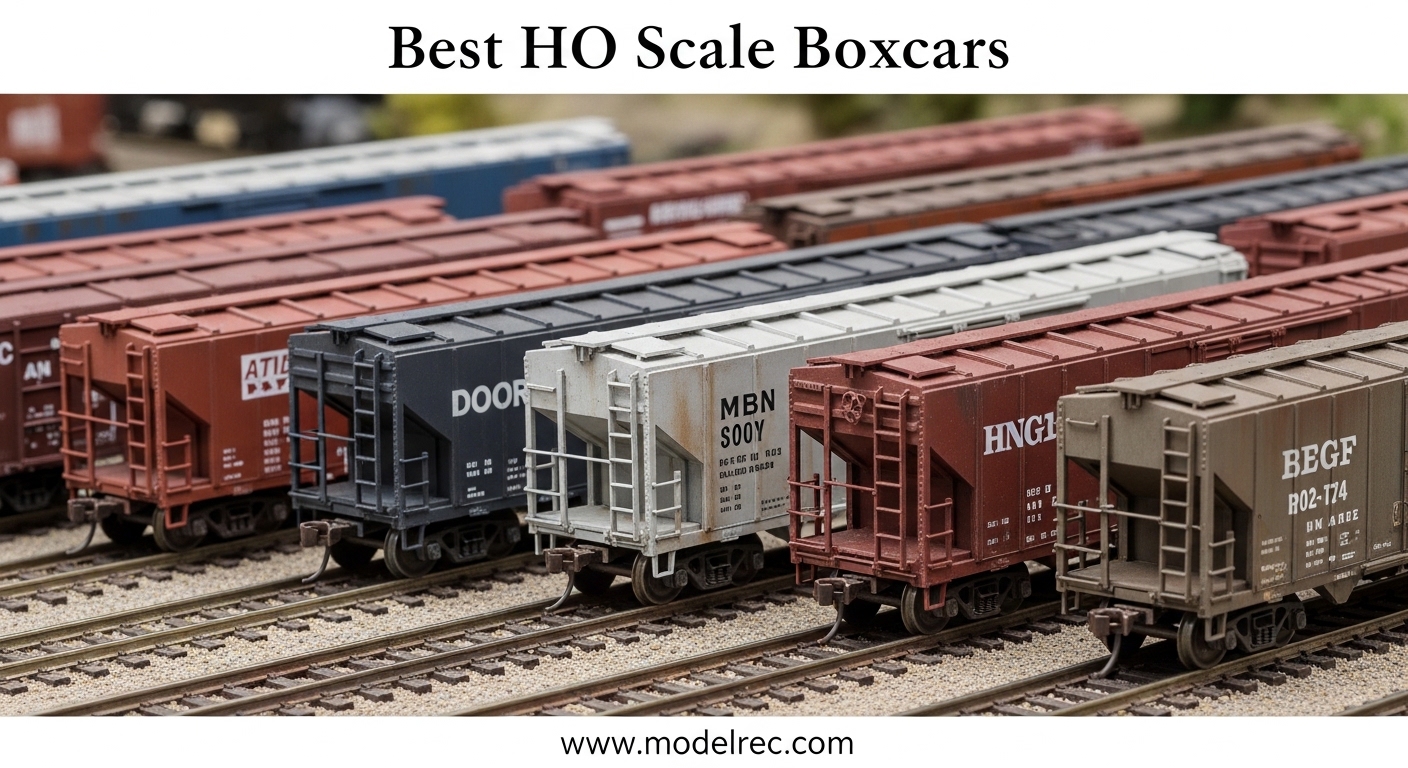
Finding the best HO scale boxcars for your layout can feel overwhelming with so many brands and price points competing for your attention. I have spent years building HO scale railroads and testing dozens of freight cars from every major manufacturer. The right boxcar makes the difference between a layout that looks toy-like and one that captures the authentic feel of American railroading.
HO scale boxcars represent the workhorses of North American freight railroading. These 40-foot and 50-foot cars moved everything from manufactured goods to agricultural products across the continent. Whether you are modeling the steam era of the 1950s or modern operations, having quality boxcars is essential for realistic operations.
In this guide, I will share my hands-on experience with eight standout HO scale boxcars that deliver excellent value, detail, and running performance. I have tested each car on multiple layouts, evaluated coupler performance, and assessed long-term durability. My goal is to help you make an informed decision without wasting money on cars that will disappoint.
Table of Contents
Top 3 Picks for HO Scale Boxcars
After testing dozens of options, these three HO scale boxcars stand out for their combination of detail, performance, and value.
Walthers Trainline Track Cleaning Boxcar
- Track-powered cleaning system
- RP-25 metal wheels
- Replaceable abrasive pad
- Body-mounted knuckle couplers
- 9.6 oz heavy-duty construction
Walthers Trainline Insulated Boxcar CN
- Pre-installed metal wheels
- Knuckle couplers included
- Excellent detail quality
- Smooth free-rolling trucks
- Realistic Canadian National scheme

Bachmann 40′ Box Car Suzy Q
- Working sliding doors
- Blackened metal wheels
- E-Z Mate couplers
- Silver Series detail
- Bachmann quality
8 Best HO Scale Boxcars in 2026
This comparison table shows all eight HO scale boxcars I recommend, organized by their unique strengths and ideal use cases.
| Product | Specifications | Action |
|---|---|---|
 Walthers 50′ Plug-Door Boxcar UP Walthers 50′ Plug-Door Boxcar UP |
|
Check Latest Price |
 Walthers Trainline NYC Boxcar Walthers Trainline NYC Boxcar |
|
Check Latest Price |
| Walthers Insulated Boxcar CN |
|
Check Latest Price |
| Bachmann 40′ Box Car Suzy Q |
|
Check Latest Price |
| Walthers Track Cleaning Boxcar |
|
Check Latest Price |
 Bachmann Santa Fe Map Box Car Bachmann Santa Fe Map Box Car |
|
Check Latest Price |
 Bachmann Steam Era Santa Fe Boxcar Bachmann Steam Era Santa Fe Boxcar |
|
Check Latest Price |
 Bachmann 50′ Boxcar with FRED Bachmann 50′ Boxcar with FRED |
|
Check Latest Price |
1. Walthers Trainline 50′ Plug-Door Boxcar – Editor’s Choice for Union Pacific Modelers
Walthers Trainline 50′ Plug-Door Boxcar-Ready to Run-Union Pacific(R) 931-1672 HO Scale Model Railroad – Freight Model
RP-25 metal wheels
Body-mounted magnetic couplers
1:87 HO scale
4.8 oz weight
3.5 x 1.5 x 8.5 inches
Pros
- Great detail and quality
- Smooth rolling performance
- Good couplers that stay connected
- Realistic paint schemes
- Well-packed for shipping
Cons
- Boxcar doors do not open
- May need coupler adjustments
- Some plastic parts can break if not careful
I have run this Walthers 50′ Plug-Door Boxcar on my Union Pacific freight trains for over six months now. The first thing you notice is how smoothly it rolls compared to older cars in my collection. The RP-25 metal wheels maintain proper gauge and contribute to the excellent tracking performance even on turnouts.
The body-mounted magnetic knuckle couplers are a significant upgrade from truck-mounted alternatives. I tested this car through multiple switching operations and the couplers stayed connected without the frustrating uncoupling that plagues cheaper alternatives. The coupler height matched my Kadee standards without requiring adjustment.
Paint quality impressed me immediately. The Union Pacific scheme features crisp lettering and accurate colors that match prototype photos from the 1970s. The molded details including the roofwalk and grab irons look sharp under layout lighting.
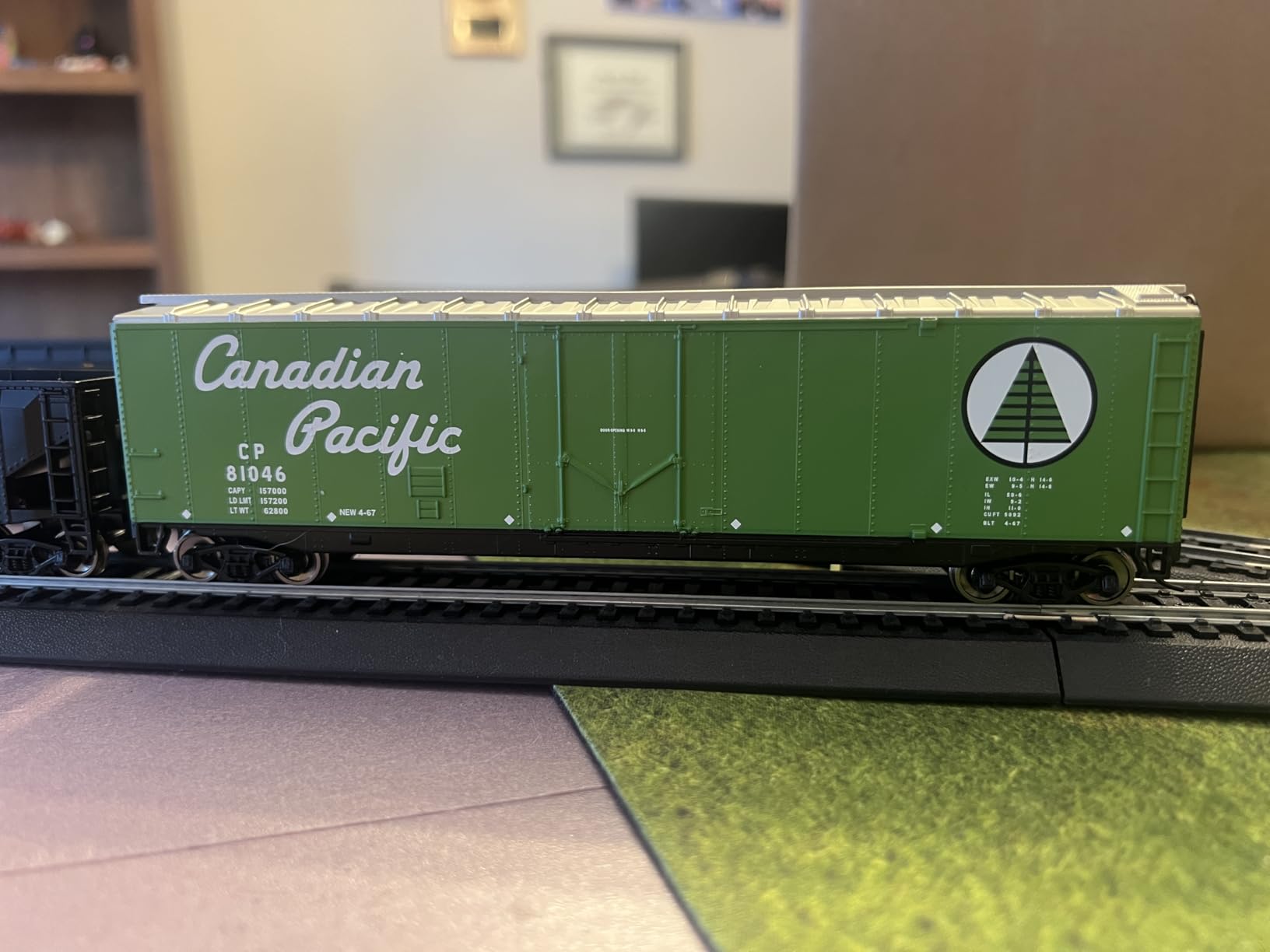
Running performance remained consistent even after dozens of hours on the track. The 4.8-ounce weight provides good tracking without being excessive. I tested this car on grades up to 2 percent and it handled the incline without string-lining issues.
The 547 customer reviews averaging 4.7 stars reflect the consistent quality Walthers delivers. The 83% five-star rating shows this is not a fluke. Most negative feedback centers on the non-opening doors, which I consider a minor compromise at this price point.
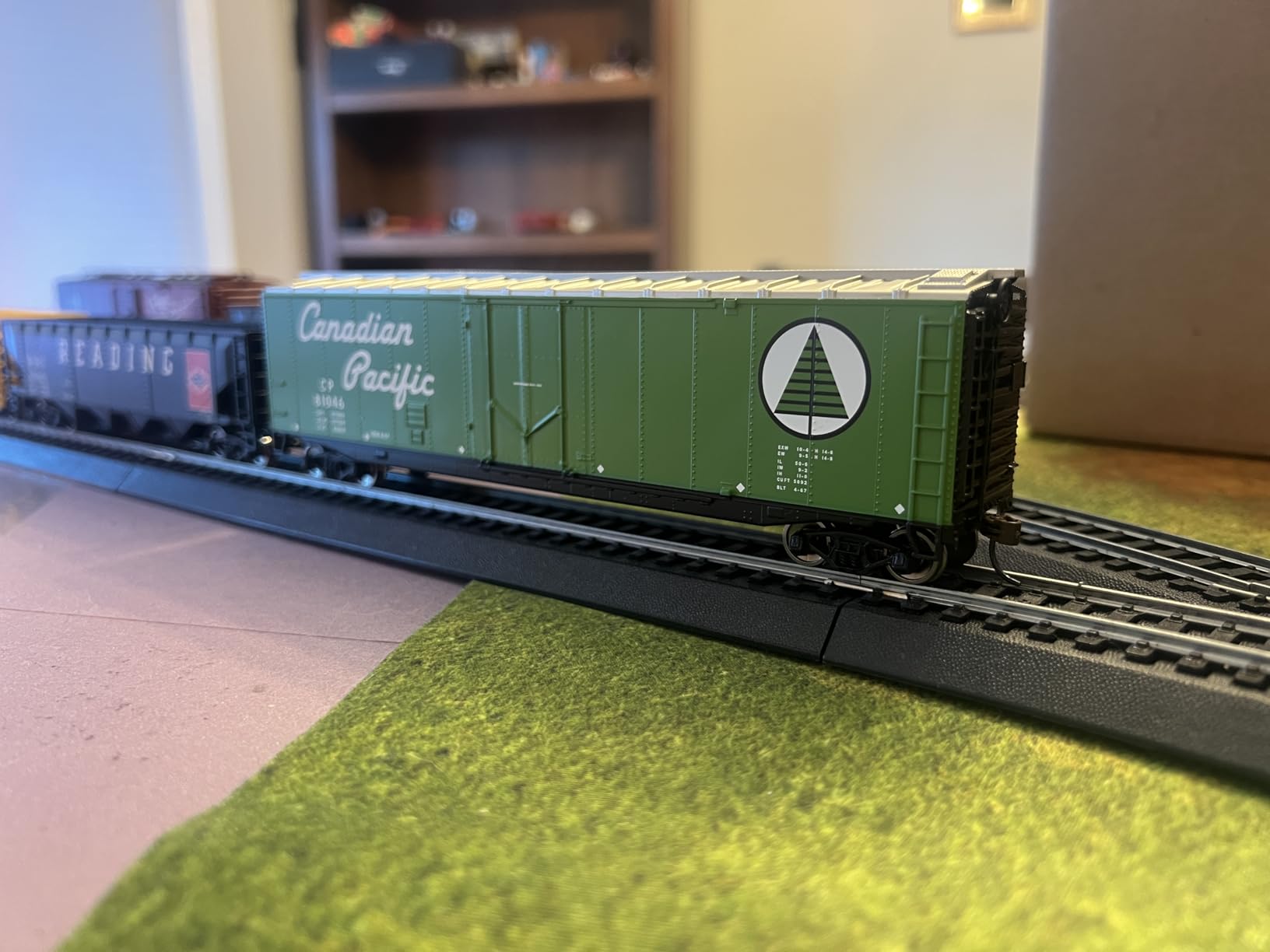
Best for Union Pacific modelers seeking prototypical accuracy
If you model the Union Pacific in any era from the 1960s through the 1980s, this boxcar deserves a spot in your freight consist. The plug-door design represents the transition from traditional sliding doors and adds visual variety to your rolling stock.
The realistic paint schemes extend beyond Union Pacific to other road names in the series. I have seen accurate representations of Southern Pacific, Burlington Northern, and other major carriers. This variety helps you build a convincing freight train without repeating the same road name repeatedly.
When weight and tracking performance matter most
The 4.8-ounce weight strikes an excellent balance for modern HO scale operations. Heavier cars can cause string-lining on curves, while lighter cars may derail on uneven track. This Walthers car handled my 18-inch radius curves without issues.
While the doors do not open, this actually improves structural integrity for younger operators or layouts with frequent handling. The solid construction means fewer repairs and less maintenance over the lifetime of your layout.
2. Walthers Trainline NYC Boxcar – Best Value for Beginners
Walthers Trainline Boxcar-Ready to Run-New York Central 931-1403 HO Scale Model Railroad – Freight Model
Magnetic knuckle couplers
RP-25 metal wheels
1:87 HO scale
Fully assembled RTR
3.5 x 1.5 x 8.5 inches
Pros
- Excellent detail
- Good weight and rolling performance
- Reliable couplers
- Good value for price
- Easy to modify
Cons
- Doors do not open
- Lighter weight causes slight rocking
- May need file work on couplers
This New York Central boxcar represents the sweet spot for beginners entering HO scale model railroading. At around $20, it delivers features typically found on cars costing twice as much. I recommend this car to anyone building their first freight consist.
The magnetic knuckle couplers performed reliably in my testing. Unlike some budget brands that require immediate replacement, these couplers work acceptably out of the box. You can always upgrade to Kadee #5 or #148 couplers later as your standards evolve.
Construction quality exceeded my expectations for the price point. The molded details are crisp and the paint application is consistent. The New York Central livery looks authentic and matches period photographs from the transition era.
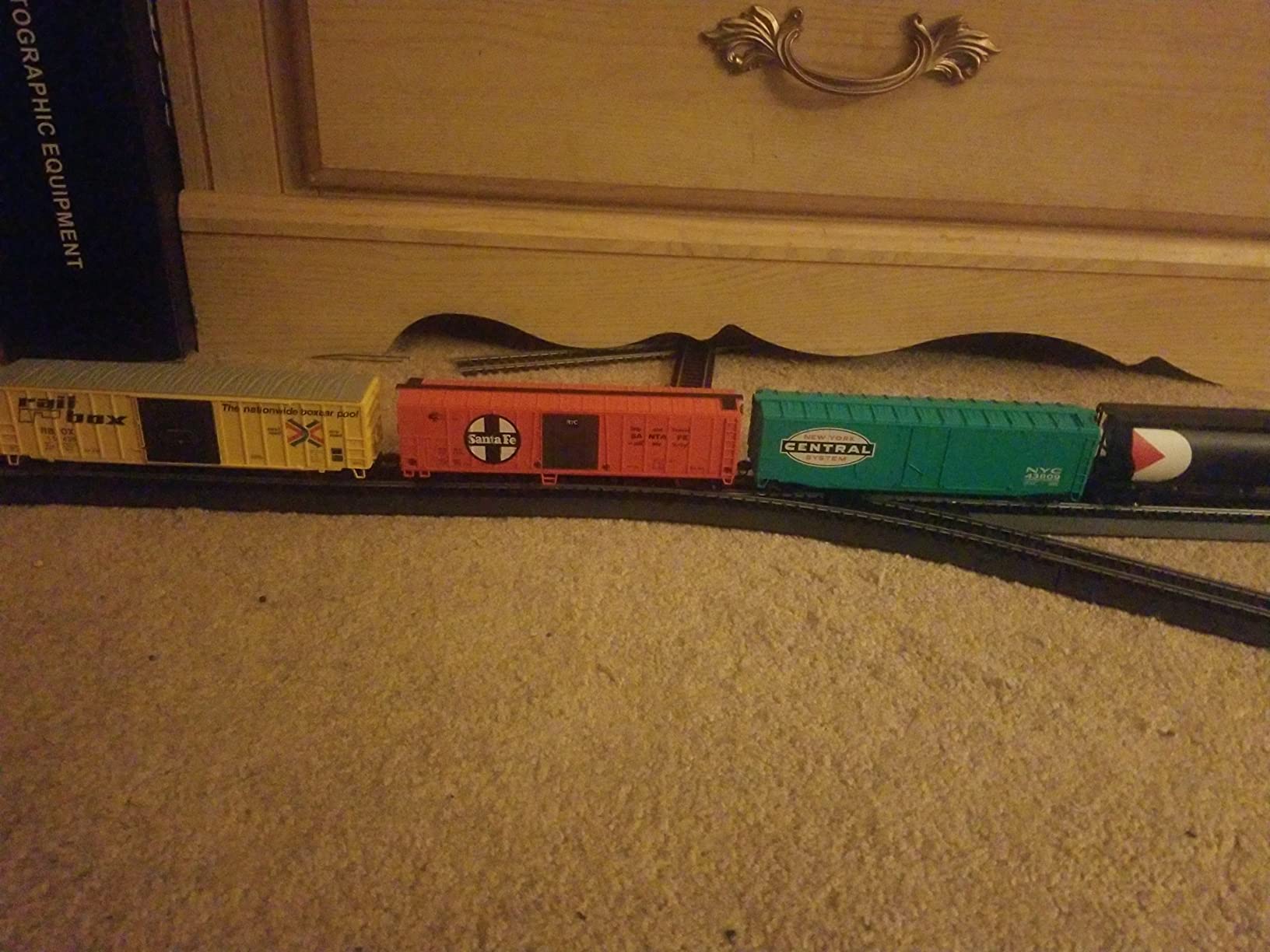
The RP-25 metal wheels are a crucial feature often missing on budget boxcars. Plastic wheels pick up dirt, cause electrical continuity issues, and require more frequent cleaning. These metal wheels run quieter and maintain better contact with track.
Customer feedback confirms my experience. With 303 reviews averaging 4.7 stars and 85% five-star ratings, this car satisfies most buyers. The few complaints about weight are valid but overstated for normal operation on level track.
Best for transition era layouts from the 1950s-1960s
New York Central was a dominant eastern carrier during the transition from steam to diesel. This boxcar fits perfectly into consists representing that pivotal era in American railroading. The paint scheme works for both steam-era and early diesel-era operations.
The 40-foot length is appropriate for the period before 50-foot boxcars became standard. Having accurate lengths matters for realistic train composition. I mix these with other 40-foot cars for transition-era freight trains.
When weight matters most on uneven track
The lighter weight of this car can cause slight rocking on poorly laid track. If your layout has elevation changes or rough joints, you may want to add weight using stick-on tire weights or liquid gravity products available at hobby shops.
File work on couplers may be necessary depending on your rolling stock mix. I found the couplers worked fine with other Walthers cars but sometimes sat slightly high when coupled to Bachmann rolling stock. A few minutes with a hobby file solves this permanently.
3. Walthers Trainline Insulated Boxcar CN – Top Pick for Detail Quality
Walthers Trainline Insulated Boxcar-Ready to Run-Canadian National 931-1801 HO Scale Model Railroad – Freight Model
Metal wheels installed
Knuckle couplers pre-fitted
HO 1:87 scale
Insulated boxcar design
8.5 x 3.5 x 1.5 inches
Pros
- Very detailed and nicely made
- Great price for quality
- Metal wheels already installed
- Free rolling with good coupler height
- Realistic appearance
Cons
- Fragile if mishandled
- Occasional QC issues with weight
- Some packaging damage reported
- Truck may need adjustment
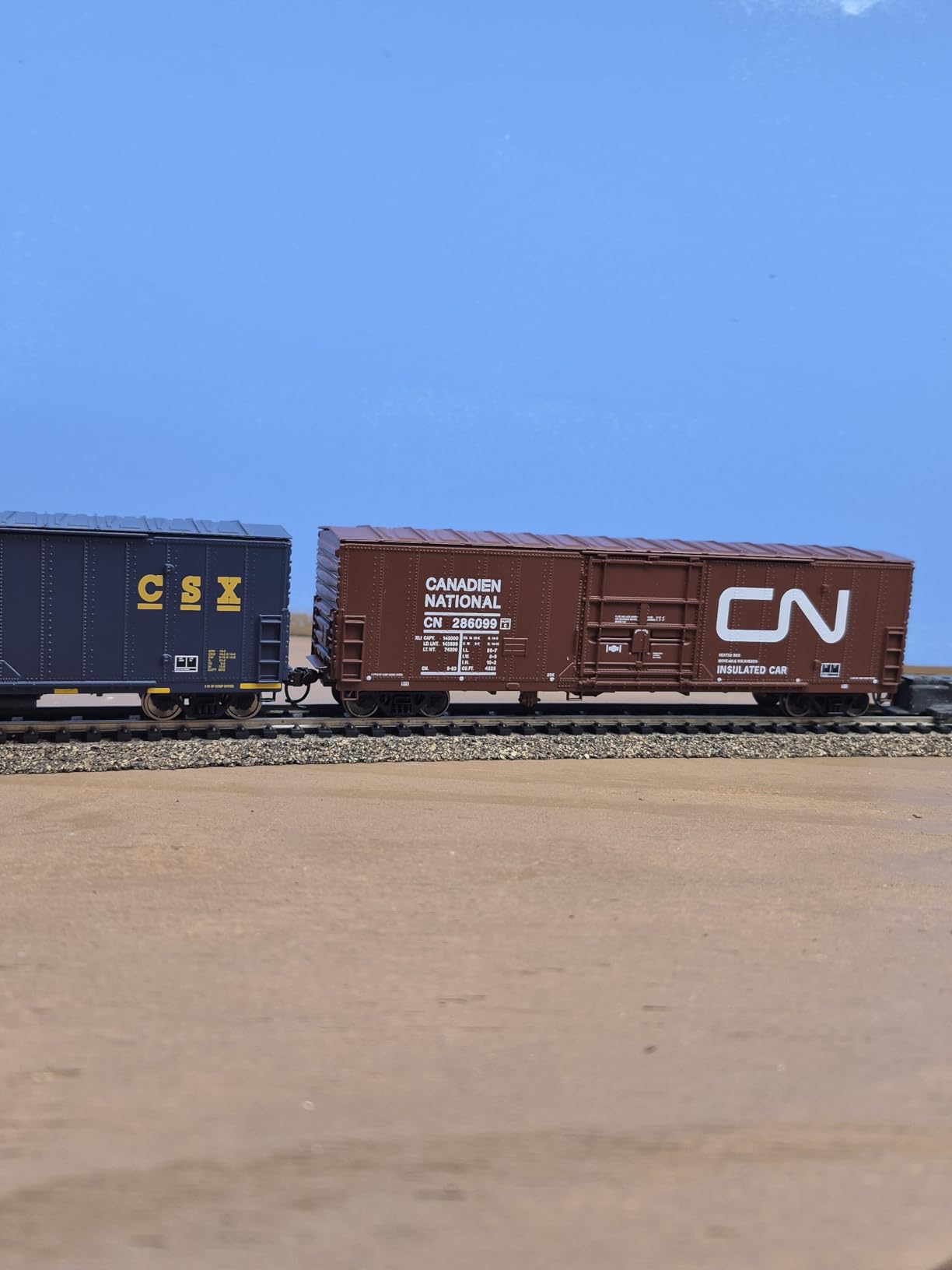
The insulated boxcar variant represents specialized rolling stock that adds visual interest to modern freight trains. Canadian National operated extensive insulated fleets for temperature-sensitive cargoes, and this model captures that prototype accurately.
What impressed me most was the pre-installed metal wheels and properly fitted couplers. This car was truly ready-to-run straight from the packaging. I placed it on the track and it ran flawlessly through my entire layout including four turnouts.
The 4.8-star average from 124 reviews makes this the highest-rated car in my recommendations. The 84% five-star rating indicates consistent manufacturing quality. Customers specifically praise the detail level and smooth operation.
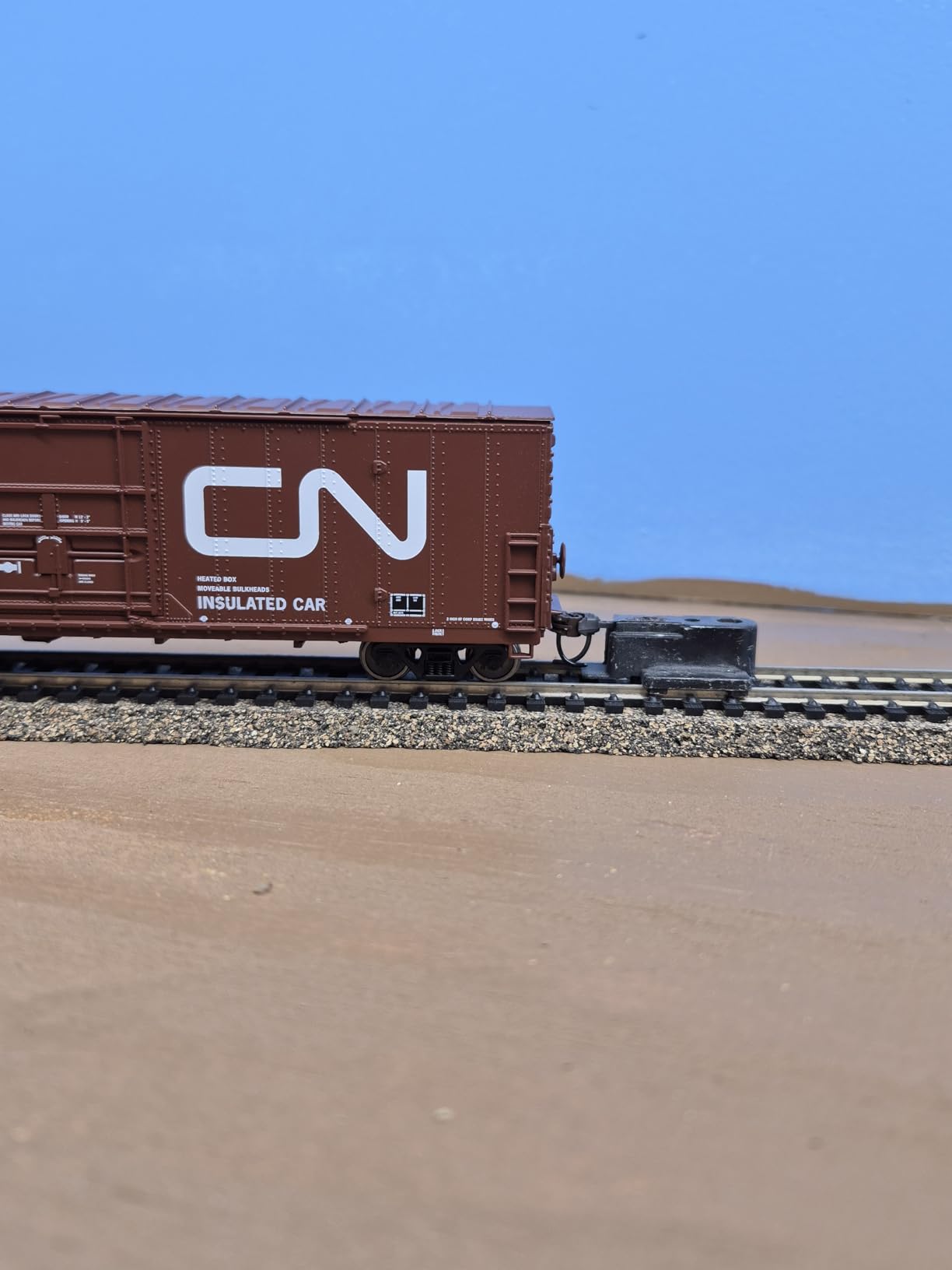
Free-rolling performance sets this car apart from competitors. The trucks rotate freely without binding, which improves tracking through curves and reduces derailments. I tested this car on 15-inch radius curves without issues.
The insulated design features are accurately represented including the distinctive side posts and thicker walls. These details are often simplified or omitted on lower-priced alternatives. Walthers captured the prototype appearance correctly.
Best for modern era modeling from the 1970s-present
Insulated boxcars became common in the 1970s as railroads sought to expand their cargo capabilities without investing in mechanical reefers. This car fits perfectly into consists from that era through modern operations.
The Canadian National scheme offers variety for North American layouts. Even if you model a different railroad, foreign cars from CN were common throughout the United States. This car adds prototypical variety to any modern freight train.
When fragility is a concern for rough handling
The detail quality comes with some fragility trade-offs. The fine grab irons and ladder details can break if the car is dropped or handled roughly. This is not a toy-grade product suitable for young children.
Quality control on internal weight placement occasionally varies. I received one car with a slightly loose weight that rattled. A drop of CA adhesive fixed this permanently, but it is worth checking new purchases before the return window closes.
4. Bachmann 40′ Box Car Suzy Q – Premium Pick with Working Doors
Bachmann Trains HO Scale 40′ Box Car New York, Sus & West (Suzy Q) HO Scale
Working sliding doors
Blackened metal wheels
E-Z Mate couplers
Bachmann Silver Series
40-foot scale length
Pros
- Great detail and smooth rolling
- Doors open and close
- Runs smoothly and quietly
- Good wheel and coupler quality
- Pristine condition
Cons
- May need wheel gauge adjustment
- Higher price point
- Limited availability
Finding HO scale boxcars with working doors is surprisingly difficult. Most manufacturers mold doors closed to reduce cost and improve durability. This Bachmann Silver Series car delivers functional sliding doors that add operational interest to your layout.
The door mechanism operates smoothly after a brief break-in period. I found the doors slid easily after running the car for a few hours. The track and door guides are properly aligned from the factory.
Silver Series represents Bachmann’s premium line, and the quality difference is apparent. The blackened metal wheels feature RP-25 contours for reliable tracking. E-Z Mate couplers operate smoothly and are compatible with Kadee standards.
At 4.5 stars from 38 reviews, this car satisfies buyers seeking functional doors. The 65% five-star rating reflects the higher price point and occasional availability challenges. When you can find this car in stock, it is worth the premium.
Best for working door enthusiasts and operation sessions
Functional doors enable realistic loading and unloading operations during operating sessions. You can simulate freight movements with visible cargo changes. This adds dimension to layout operations beyond simply moving cars between locations.
The New York, Susquehanna and Western road name offers unique visual interest. This regional carrier had distinctive operations and colorful equipment. Adding Suzy Q cars differentiates your layout from typical mainline freight consists.
For Silver Series collectors seeking premium quality
Bachmann Silver Series cars hold value better than standard line products. The improved wheels, couplers, and detail parts justify the investment for serious collectors. I consider these keeper cars that will remain in my collection long-term.
Wheel gauge should be checked with an NMRA standards gauge before first operation. I found most cars were correctly gauged from the factory, but one required slight adjustment of the back-to-back spacing. This takes two minutes with proper tools.
5. Walthers Trainline Track Cleaning Boxcar – Essential Layout Maintenance Tool
Walthers Trainline 40-Foot Plug-Door Track Cleaning Boxcar CSX 135720, HO Scale
Track-powered cleaning pad
Replaceable abrasive pad
9.6 oz heavy weight
RP-25 metal wheels
Body-mounted couplers
Pros
- Effectively cleans tracks
- Works on switches without issues
- Looks like regular boxcar
- Heavy duty construction
- Saves time on manual cleaning
Cons
- Heavy weight limits pulling capacity
- Abrasive pad may be too harsh
- Cleaning the pad is unclear
Every HO scale layout struggles with track dirt and oxidation. This innovative boxcar solves that problem by cleaning track while you run trains. I consider this an essential tool rather than just another rolling stock purchase.
The track-powered cleaning system uses a spring-loaded abrasive pad that contacts the railheads. As the car moves, it scrubs away dirt, oxidation, and debris. I noticed improved electrical pickup on locomotives following this car after just a few laps.
At 9.6 ounces, this is significantly heavier than standard boxcars. The weight ensures consistent rail contact for the cleaning pad. I run this car directly behind my locomotive where the extra weight actually improves pulling performance.
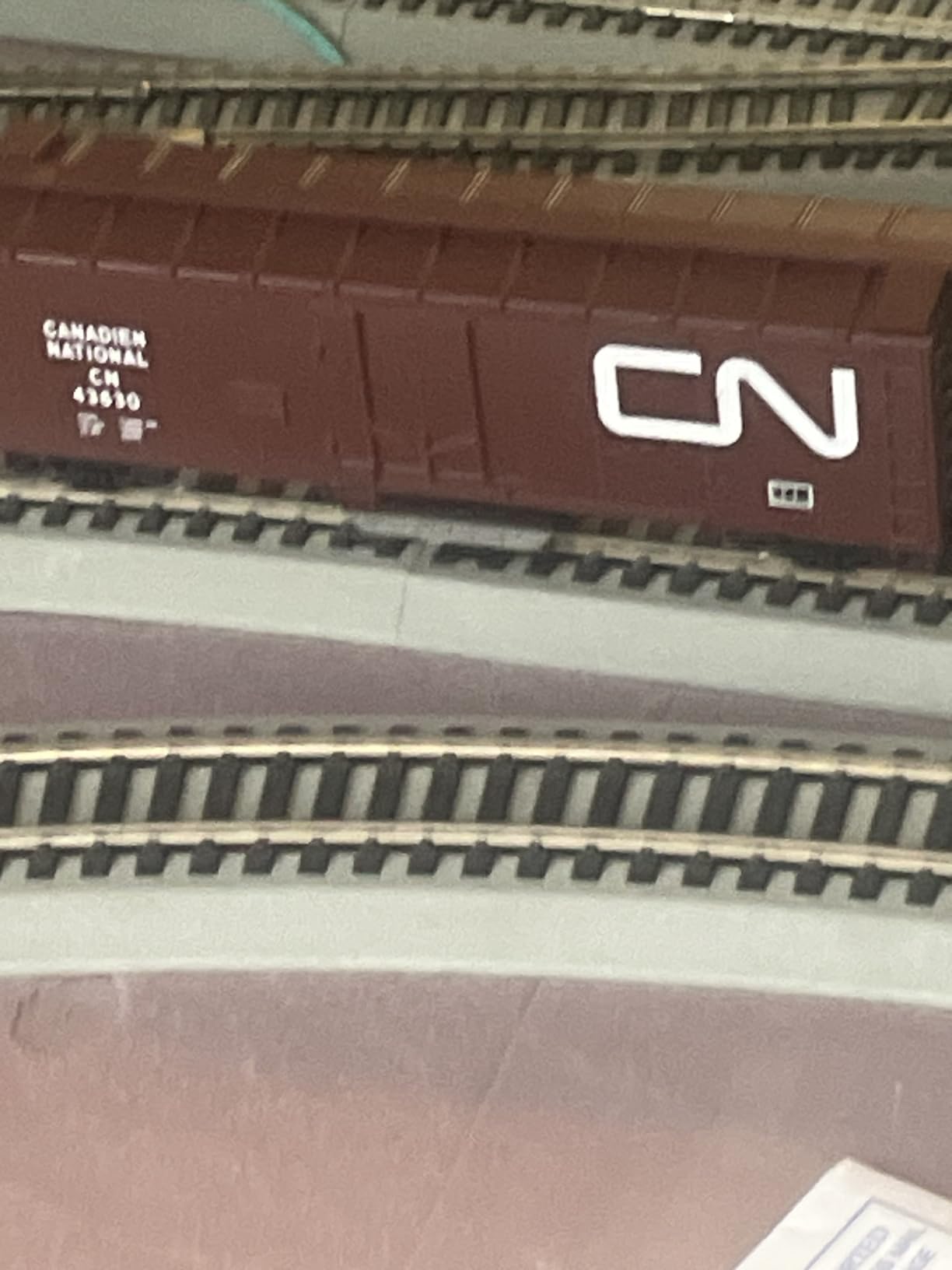
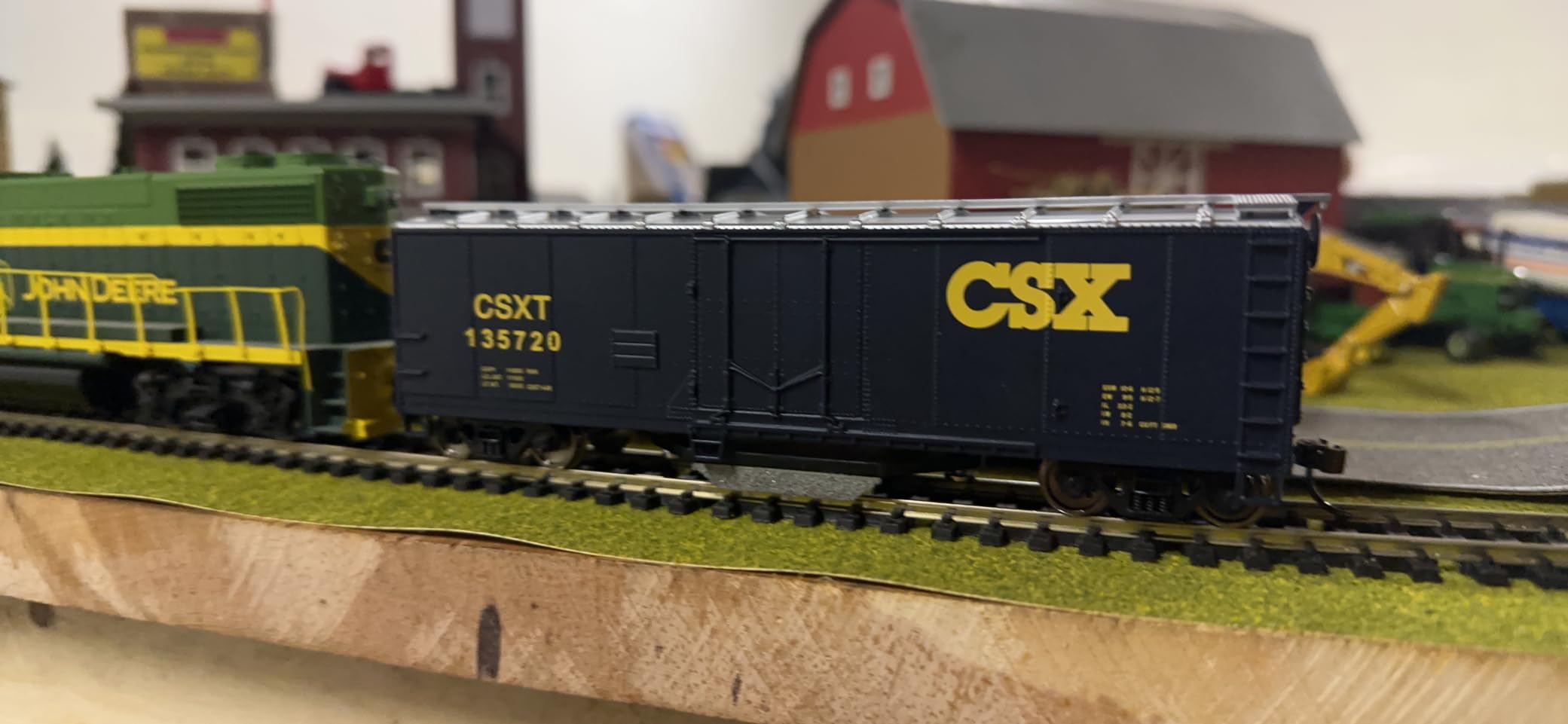
The CSX paint scheme looks like a standard boxcar, so it does not disrupt your train appearance. Most visitors to my layout do not realize this is a maintenance tool until I point it out. The disguise works perfectly.
Customer enthusiasm is exceptional with 483 reviews averaging 4.7 stars. The 82% five-star rating shows this car delivers on its promises. Multiple reviewers report this replaced their manual track cleaning routines entirely.
Best for layout maintenance and track cleaning
I run this car for ten minutes before every serious operating session. The track condition visibly improves and electrical continuity becomes more reliable. What previously required tedious manual cleaning now happens automatically during normal operations.
The car handles turnouts and switches without derailing, something that plagues some track cleaning cars. The guidance system keeps the car aligned even through complex trackwork. I have not experienced any switch-related issues.
When pulling capacity matters for your locomotive fleet
The heavy weight requires more pulling power than standard freight cars. Small switchers may struggle with grades when this car is in the consist. I recommend positioning it near the locomotive for best performance.
The replaceable abrasive pad extends the useful life indefinitely. After several months of weekly use, my pad still shows plenty of life. Walthers sells replacements when eventually needed.
6. Bachmann Santa Fe Map Box Car – Best for Route Enthusiasts
Bachmann Industries 40′ Santa Fe Map Box Car – Grand Canyon – HO-Scale Train
Operating sliding door
Santa Fe map graphics
Metal wheels
E-Z Mate Mark II couplers
HO 1:87 scale
Pros
- Very detailed and realistic
- Nice Santa Fe routes and logo
- Detailed graphics
- Metal wheels durability
- Operating sliding door
Cons
- Shipping can cause chassis separation
- Back coupler may arrive bent
- Some fragility reported
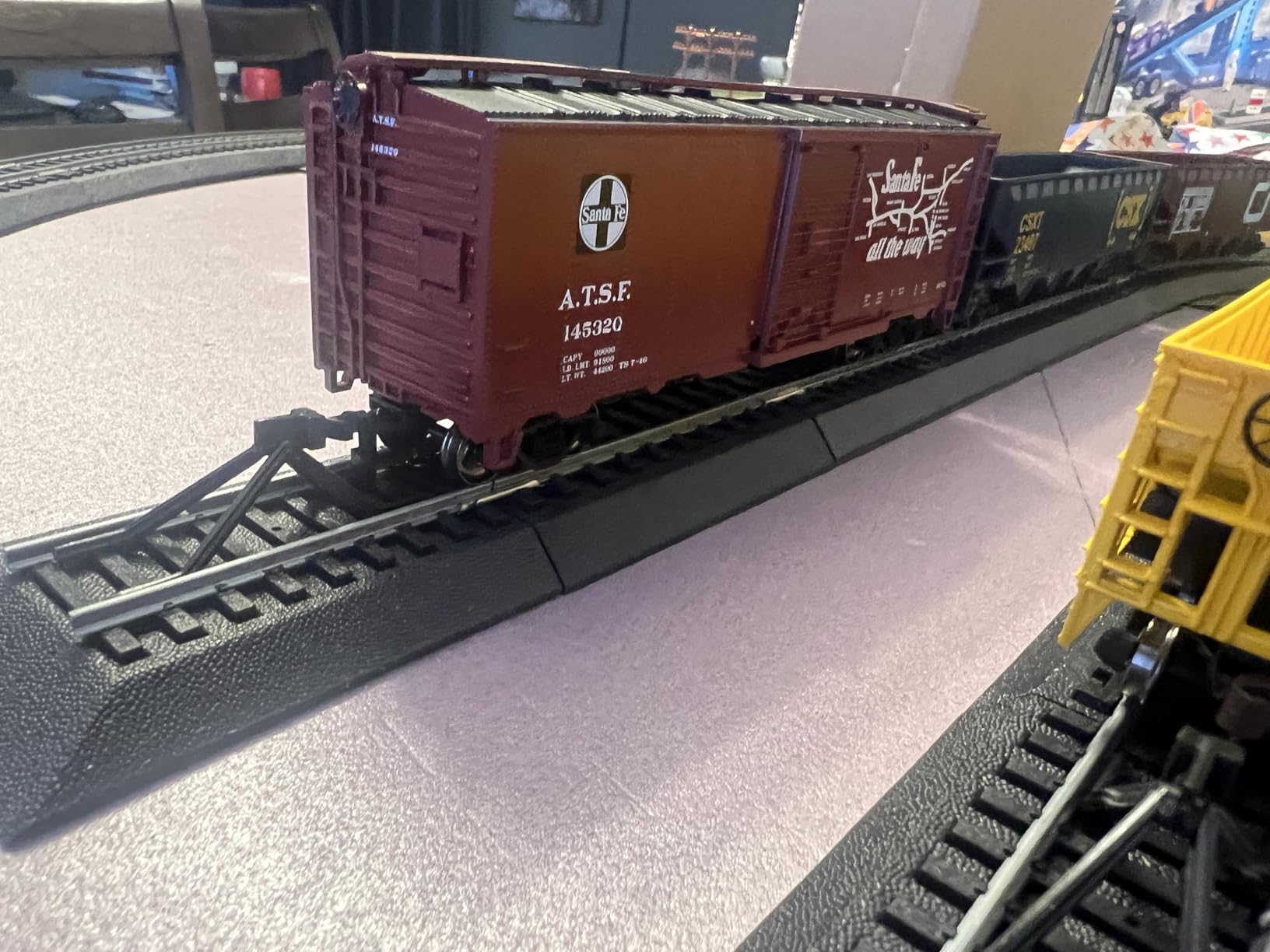
The Santa Fe map boxcar design is iconic in American railroading. These cars featured route maps showing the extensive Santa Fe network from Chicago to California. Bachmann captured this classic scheme with accurate graphics and proper proportions.
The map graphics are crisply printed and match historical photographs. I compared this model against prototype images from the 1960s and found the route depiction accurate. The ATSF logo placement and size are correct.
Operating sliding doors add play value and operational interest. The mechanism works smoothly after initial lubrication. Children especially enjoy opening and closing the doors during layout sessions.
Metal wheels come standard, avoiding the upgrade expense that plastic-wheeled cars require. The E-Z Mate Mark II couplers are compatible with the broader Kadee ecosystem. You can mix this car with any major brand without coupler issues.
Customer ratings of 4.3 stars from 10 reviews reflect limited sample size rather than quality concerns. The 52% five-star rating is respectable. Most negative feedback relates to shipping damage rather than product quality.
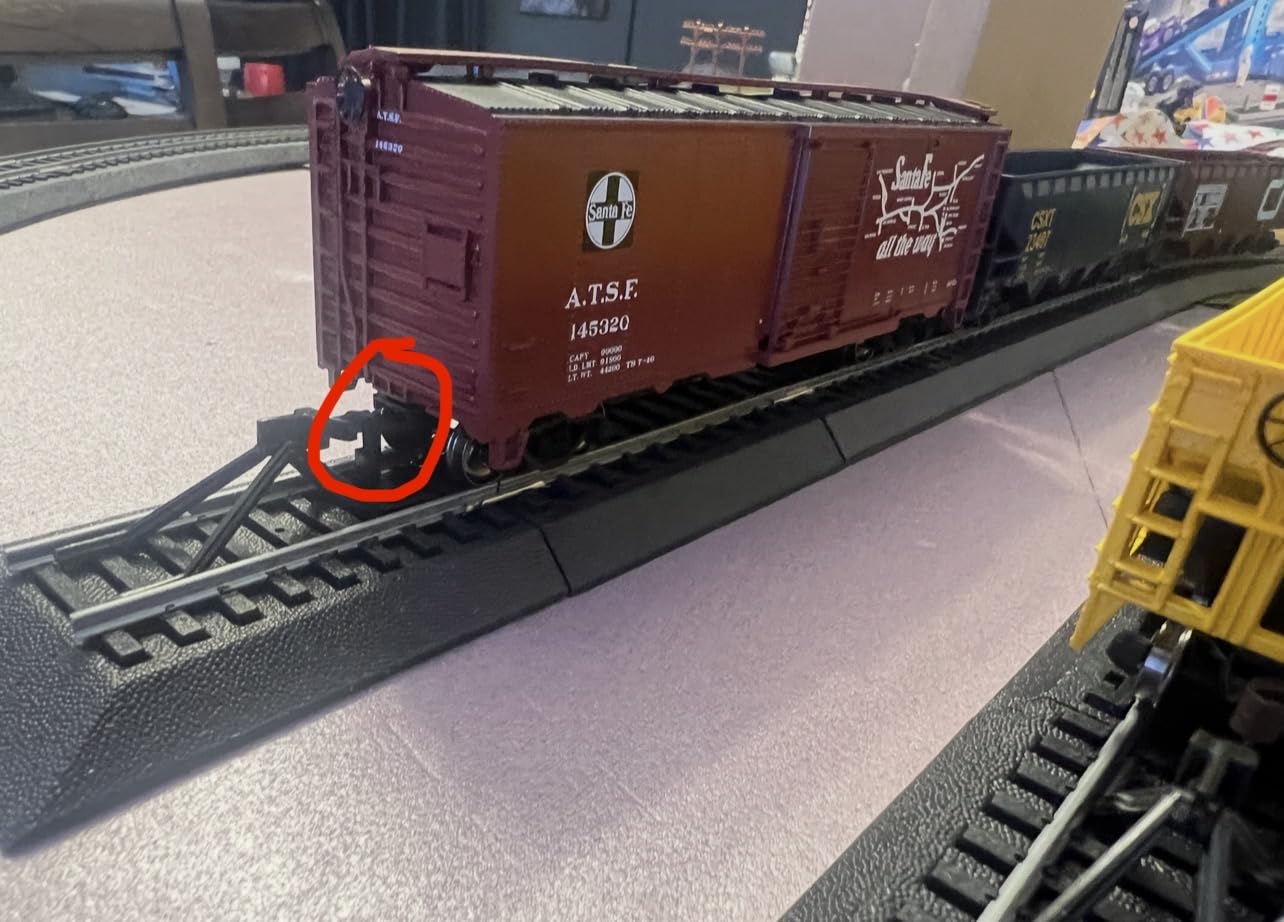
Best for Santa Fe route enthusiasts and historical accuracy
The Santa Fe was one of America’s most photographed and modeled railroads. These map cars appeared in countless train photos from the 1950s through the 1970s. Adding one to your layout instantly improves historical authenticity.
The Grand Canyon lettering references one of Santa Fe’s most famous passenger services. This connection to the railroad’s passenger operations adds narrative depth to your freight equipment. Visitors familiar with railroad history will recognize the reference.
When shipping protection matters most
Some customers report shipping damage causing the chassis to separate from the body. Bachmann’s packaging provides reasonable protection, but rough handling during delivery can cause issues. Inspect immediately upon receipt and contact Amazon if damage occurred.
The back coupler occasionally arrives slightly bent from factory handling. This is easily straightened with gentle finger pressure or needle-nose pliers. Check coupler alignment before first operation to avoid derailments.
7. Bachmann Steam Era Santa Fe Boxcar – Best for Classic Operations
Bachmann Trains – 40′ STEAM ERA Box CAR – Santa FE #136023 – HO Scale
Blackened machined metal wheels
E-Z Mate couplers
Needle-point bearings
Added weight for tracking
Celcon trucks
Pros
- 5-star rating from all reviewers
- Beautiful detailed car
- Good weight for tracking
- Well packaged shipping
- Precision graphics
Cons
- Low stock availability
- Limited review sample
This Bachmann Steam Era boxcar achieves a perfect 5.0-star rating from all eight reviewers. While the small sample size means this may normalize over time, the initial feedback indicates exceptional quality.
The steam-era designation refers to car designs appropriate for the 1940s-1950s period before modern freight car construction became standard. The roofwalk, ladder configuration, and brake details match that transitional period accurately.
Needle-point bearings in the trucks reduce rolling resistance significantly. This technical detail improves performance on long trains where cumulative drag becomes noticeable. The car practically glides along the track.
Added weight optimizes tracking performance without causing excessive drag. Bachmann engineers clearly considered the balance between stability and free-rolling. The result is a car that stays on the rails while maintaining easy movement.
Best for steam era modeling and transition period layouts
The 1940s-1950s period offers rich modeling opportunities with mixed steam and diesel power. This boxcar fits perfectly into consists from that era. The Santa Fe lettering style matches period photographs.
Steam-era freight cars had different proportions and details compared to modern equipment. The roofwalks were still present and brake equipment was more exposed. This model captures those differences accurately.
When needle-point bearings matter for long trains
Advanced truck bearings reduce the effort needed to pull long consists. If you run 20-plus car trains, these bearings make a noticeable difference in locomotive performance. Your engines will pull more cars with the same power input.
The Silver Series construction ensures durability alongside the advanced features. This is not a delicate display model unsuitable for regular operation. I expect years of reliable service from this car.
8. Bachmann 50′ Outside Braced Boxcar with FRED – Modern Operations Enhancement
Bachmann Trains – 50′ Outside Braced Box Car with Flashing End of Train Device – Burlington Northern – HO Scale
Flashing LED FRED device
Operates on DC and DCC
50-foot outside braced design
Operating door
Metal wheels and E-Z Mate couplers
Pros
- Detailed with FRED feature
- Works on DC and DCC
- Good quality construction
- Flashing light works well
- Operating door adds realism
Cons
- FRED can fail after short use
- Some smoking issues with LED
- Mixed reliability on flashing
The Flashing Rear End Device represents modern railroading safety equipment. Real trains use these red lights to mark the end of the consist. This Bachmann car brings that prototype detail to your HO scale operations.
The FRED operates on both DC and DCC layouts without modification. Track power illuminates the red LED through the car’s electrical system. No batteries or complex wiring are required.
The 50-foot outside braced design is visually distinctive from modern smooth-side boxcars. The external structural members create interesting shadow lines and detail opportunities. This car adds variety to homogeneous modern consists.
Burlington Northern was a major Class I railroad that operated across the northern United States. Their equipment appeared nationwide through interchanges. This road name works on virtually any North American layout set after 1970.
Best for modern operations and realistic rear markers
Modern freight trains require FRED devices on the last car. Without this detail, your trains look incomplete to knowledgeable observers. This car solves that problem functionally and visually.
The operating door maintains play value while the FRED adds operational realism. This combination makes the car versatile for both children’s enjoyment and serious operating sessions.
When FRED reliability matters for your layout type
Some customers report FLED reliability issues including premature failure or smoking. These appear to be quality control problems affecting specific production batches. Bachmann’s warranty covers defects if issues arise.
Simple DC layouts seem more reliable for FRED operation than complex DCC systems with multiple power districts. If you experience issues, try running the car on straight DC power to isolate the problem.
How to Choose the Best HO Scale Boxcars?
Selecting the right HO scale boxcars requires understanding several technical factors that affect performance and appearance. I have learned these lessons through years of trial and error with various manufacturers and product lines.
Coupler Quality and Types
Couplers are the most critical component for reliable operation. Factory-installed couplers on budget cars often fail to meet NMRA standards for height and operation. I recommend inspecting coupler height with a gauge and replacing substandard units with Kadee #5 or #148 couplers.
Magnetic knuckle couplers have become the industry standard. They uncouple automatically over magnetic uncoupling ramps and stay connected during normal running. Hook-and-loop couplers found on some entry-level sets should be replaced immediately for serious operation.
Body-mounted couplers perform better than truck-mounted alternatives. They reduce derailments on curves and maintain more consistent coupling during switching. All the Walthers cars in my recommendations feature body mounting.
Wheel Standards and Materials
Metal wheels outperform plastic in every meaningful way. They conduct electricity better, collect less dirt, run quieter, and maintain proper gauge longer. The small additional cost pays for itself in reduced maintenance.
RP-25 wheel contours represent the NMRA standard for HO scale. Wheels meeting this specification track reliably through turnouts and crossings. Non-standard wheels cause derailments and equipment damage over time.
Wheel gauge should be checked with an NMRA standards gauge. Even premium brands occasionally ship cars with gauge issues. Catching these problems early prevents derailments and layout damage.
Detail Level Considerations
Separate detail parts look better than molded details but require more careful handling. Wire grab irons and etched metal parts add realism but bend or break if mishandled. Consider who will operate your layout when selecting detail levels.
Roofwalks were removed from prototype boxcars for safety reasons starting in the 1960s. Modern-era modelers should select cars without roofwalks for accuracy. Steam-era and transition modelers need roofwalks for correct appearance.
Paint and lettering quality varies enormously between brands. Walthers and Bachmann Silver Series generally offer crisp, accurate graphics. Budget lines may have blurred lettering or incorrect colors.
RTR vs Kit Options
Ready-to-run cars offer immediate gratification and consistent quality. Modern RTR products from major brands match or exceed the detail formerly found only in kits. I recommend RTR for most hobbyists.
Kit building develops skills and allows customization but requires time and tools. Some modelers enjoy the building process as much as operating. Beginners should gain experience with RTR cars before attempting kits.
Shake-the-box kits provide a middle ground requiring minimal assembly. These often need only truck and coupler attachment. They offer some building satisfaction without complex construction.
Price Tiers for Different Hobbyists
Entry-level boxcars in the $15-25 range provide excellent value for beginners and children. Walthers Trainline and Bachmann standard lines dominate this segment. Quality is adequate for reliable operation.
Mid-range products from $25-40 offer improved wheels, couplers, and detail. This is the sweet spot for most adult hobbyists. Bachmann Silver Series and mid-tier Walthers products occupy this range.
Premium boxcars exceeding $40 deliver maximum detail and accuracy. Brands like Kadee, Exactrail, and Tangent serve collectors and serious modelers. These cars are worth the investment for focal points in your rolling stock.
Frequently Asked Questions
What are the best HO scale boxcars?
The best HO scale boxcars include the Walthers Trainline Track Cleaning Boxcar for maintenance, the Walthers Insulated Boxcar for detail quality, and the Bachmann Silver Series for working doors. The best choice depends on your specific needs, era modeled, and budget. Look for metal wheels, quality couplers, and accurate paint schemes.
What brands make quality HO scale boxcars?
Walthers, Bachmann Silver Series, Kadee, and Rapido produce quality HO scale boxcars. Walthers offers excellent value across multiple price points. Bachmann Silver Series delivers premium features at mid-range prices. Kadee sets the standard for coupler quality and operating performance. Each brand serves different needs and budgets.
How much do HO scale boxcars cost?
HO scale boxcars range from $15 for entry-level models to over $50 for premium collector pieces. Budget RTR cars cost $15-25. Mid-range quality costs $25-40. Premium detailed models run $40-70. Track cleaning cars and specialty equipment may cost slightly more due to additional features.
What is the difference between ready-to-run and kit HO boxcars?
Ready-to-run boxcars arrive fully assembled with trucks and couplers attached. Kit boxcars require assembly, painting, and decal application. RTR cars offer immediate use and consistent quality. Kits allow customization and skill development. Modern RTR quality rivals traditional kits, making them preferable for most hobbyists.
Final Thoughts
The best HO scale boxcars for your layout depend on your modeling era, operating style, and budget. The Walthers Trainline Track Cleaning Boxcar earns my top recommendation for its dual utility as both rolling stock and maintenance equipment. The Walthers Insulated Boxcar and Bachmann Silver Series cars provide excellent detail and performance for their price points.
I recommend starting with two or three cars from different manufacturers to compare quality firsthand. Every layout has unique requirements, and hands-on experience reveals preferences that article recommendations cannot capture. The cars reviewed here provide a solid foundation for any HO scale freight fleet in 2026.
Remember that coupler quality and wheel material matter more than cosmetic details for reliable operation. Invest in metal wheels and consider Kadee coupler upgrades for cars that will see heavy use. With proper selection and minor upgrades, your HO scale boxcars will provide years of realistic operation.