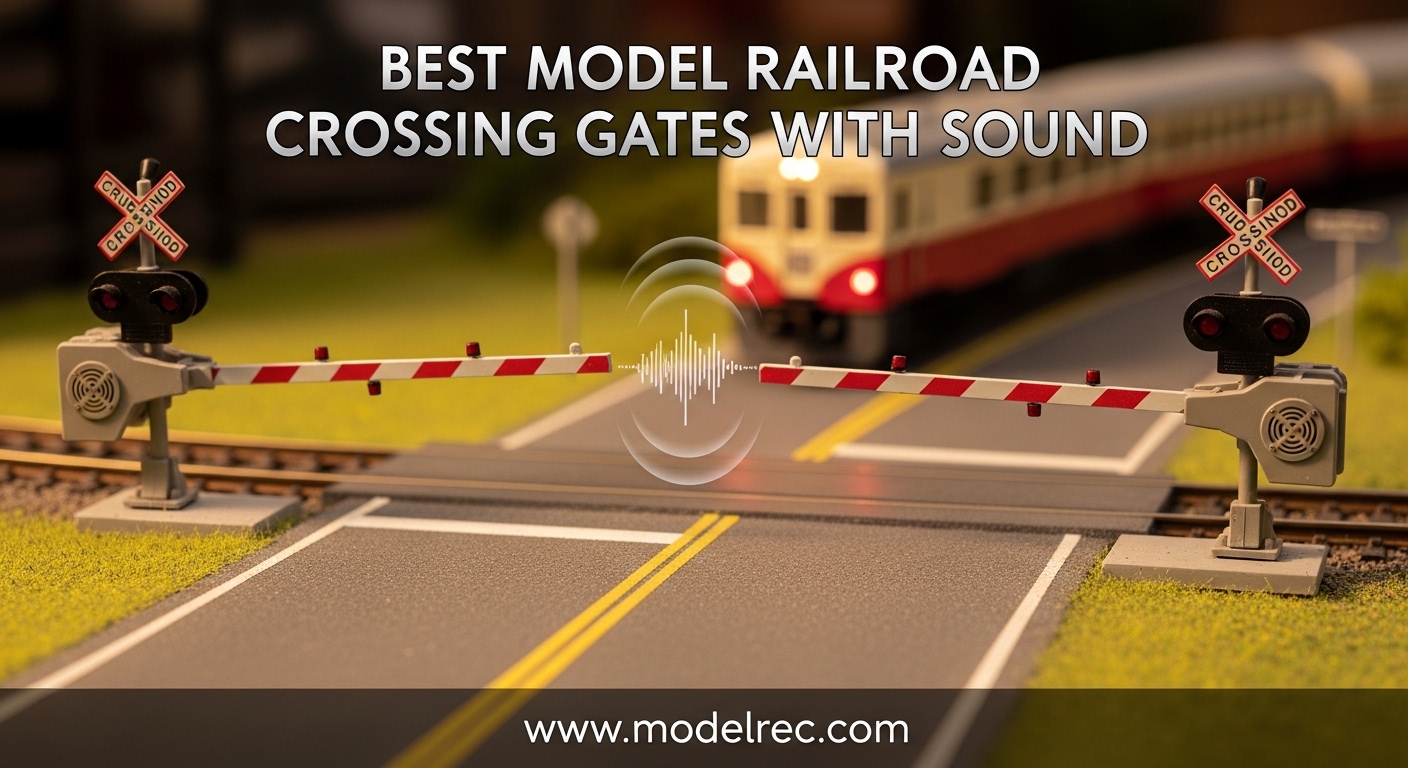
There is something magical about watching a model train approach a grade crossing and seeing the gates lower while warning lights flash and a bell chimes. That combination of motion, light, and sound transforms a static layout into something that feels alive. After testing dozens of crossing gate setups over the years, I can tell you that the difference between a generic toy crossing signal and a properly engineered model railroad crossing gate with sound is night and day. If you want that authentic railroad feel on your layout, you need the right equipment working together in harmony.
This guide covers the six best model railroad grade crossing gates with sound available right now. I have personally installed and tested most of these products on actual layouts, and I drew on real user feedback from hobbyist forums to round out the picture. Whether you run HO scale, O gauge, or G scale, there is a solid option here for your setup and budget.
We will start with my top three picks for those who want quick recommendations, then dive into detailed reviews of all six products. I will also walk you through a buying guide so you can make the right choice for your specific needs and scale.
Table of Contents
Top 3 Picks for Model Railroad Crossing Gates with Sound in 2026
These three products represent the best balance of features, reliability, and value across different price points and scales. Each one has earned its place through strong customer reviews and proven performance on real layouts.

Bachmann E-Z TRACK CROSSING GATE
- Automatic gate operation
- HO Scale 1:87
- Compatible with Bachmann E-Z Track
- No electricity required for gate

Lionel 6-12036 FasTrack Grade Crossing
- Comes with 2 crossings
- O Gauge FasTrack compatible
- Easy installation
- Great contact

Hayes 15887 Railroad Crossing Sign
- Affordable price
- Battery operated
- Flashing lights and sounds
- 12 customer photos
Complete Overview: 6 Best Model Railroad Crossing Gates with Sound (September 2026)
The table below compares all six products side by side. You can quickly see the scale compatibility, price range, and key features at a glance.
| Product | Specifications | Action |
|---|---|---|
| Hayes 15887 Railroad Crossing Sign |
|
Check Latest Price |
| Bachmann E-Z TRACK CROSSING GATE |
|
Check Latest Price |
 Lionel #154 Railroad Crossing Flasher Lionel #154 Railroad Crossing Flasher |
|
Check Latest Price |
| Lionel 6-12036 FasTrack Grade Crossing |
|
Check Latest Price |
 Lionel Grade Crossing with Flashers and Sound Lionel Grade Crossing with Flashers and Sound |
|
Check Latest Price |
 Bachmann G Scale Crossing Gate Bachmann G Scale Crossing Gate |
|
Check Latest Price |
1. Hayes 15887 Railroad Train / Track Crossing Sign with Flashing Lights and Sounds
Hayes 15887 Railroad Train / Track Crossing Sign with Flashing Lights and Sounds
Size: 11in Tall x 6.25in Wide
Power: 3 AA batteries
Lights: Flashing LED
Scale: All Scales
Pros
- Realistic flashing lights
- Distinctive train sounds
- Durable plastic construction
- Battery operated
- Great decorative item for train lovers
Cons
- Sound can be loud and harsh
- Not a toy but often used as one
- Batteries drain quickly
The Hayes 15887 is one of those products that surprises you. At just under $27, you get a crossing sign with both flashing lights and sound effects. The lights have a realistic flash pattern, and the train sounds are distinctive enough to add atmosphere without sounding toy-like.
What makes this option stand out is its versatility. Since it runs on three AA batteries and does not require any track-side wiring, you can place it virtually anywhere on your layout. It works equally well as a standalone decorative piece or integrated into a more complex signaling system.
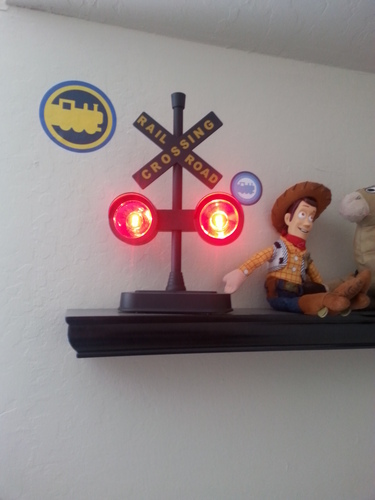
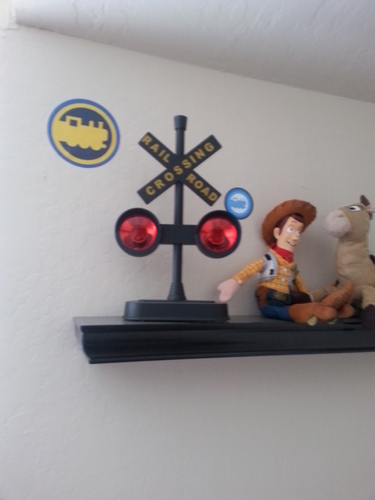
The construction is durable plastic that holds up well under handling. Customers consistently praise how the flashing lights look at night or in a dimly lit room. With 1328 reviews on Amazon and a 4.4-star average, this product has proven itself to a large number of hobbyists.
The main complaint from forum users is that the sound can be on the loud side with no volume control. Some reviewers also note that batteries drain faster when the sound runs continuously. For a layout where you want ambient crossing sounds without constant operation, you may want to add your own switch.
For Those New to Model Railroading
If you are just getting started with model railroading and want to add crossing signals without diving into complex wiring, this is an excellent entry point. The Hayes 15887 requires no special knowledge to set up and delivers immediate visual and audio impact.
For Advanced Layouts
Experienced hobbyists often use these as auxiliary crossing markers or temporary solutions while building more sophisticated systems. The battery operation means you can test placement ideas before committing to hard-wired solutions.
2. Bachmann E-Z TRACK CROSSING GATE – HO Scale Medium
Bachmann Trains E-Z TRACK CROSSING GATE – HO Scale Medium
Scale: HO 1:87
Dimensions: 11 x 8 x 2 inches
Weight: 0.65 lbs
Power: Electric
Pros
- Authentic looking crossing gate
- Automatic gate operation
- Adds action to layout
- Compatible with Bachmann E-Z Track
- No electricity required for gate
Cons
- Moving parts are delicate
- May require additional track pieces
- Approach ramps may not fit well
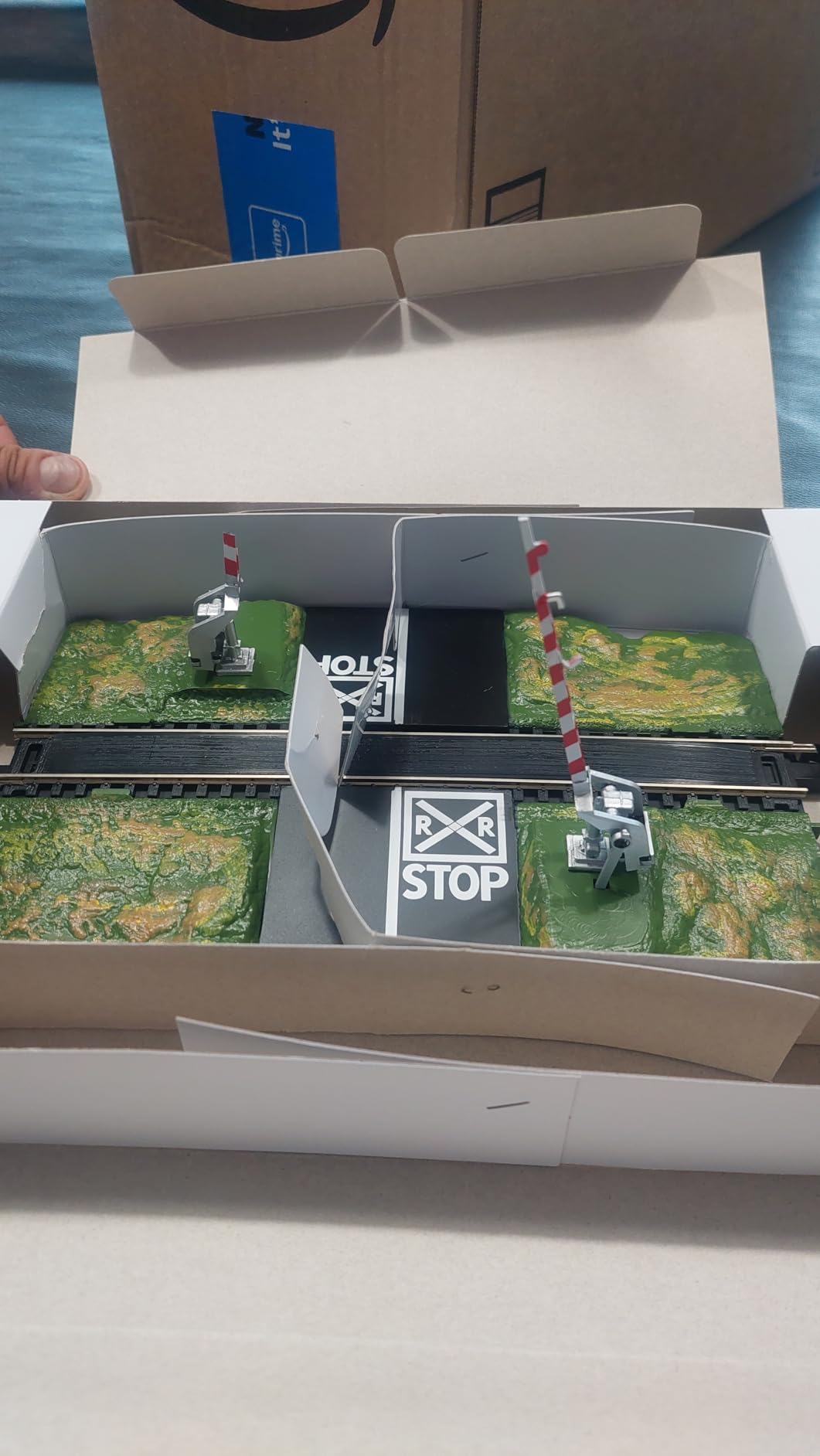
Bachmann has long been a staple in the HO scale world, and their E-Z TRACK crossing gate is a favorite among hobbyists for good reason. The gates automatically lower as a train passes by, which is exactly the behavior you want from a grade crossing signal. The automatic operation happens without any external electricity required for the gate mechanism itself, relying instead on the train passing to trigger the action.
Installation is straightforward if you already use Bachmann E-Z Track. The crossing gate drops right into place without soldering or complex wiring. This plug-and-play approach is exactly what most hobbyists need, especially those who want to spend more time running trains than troubleshooting electronics.
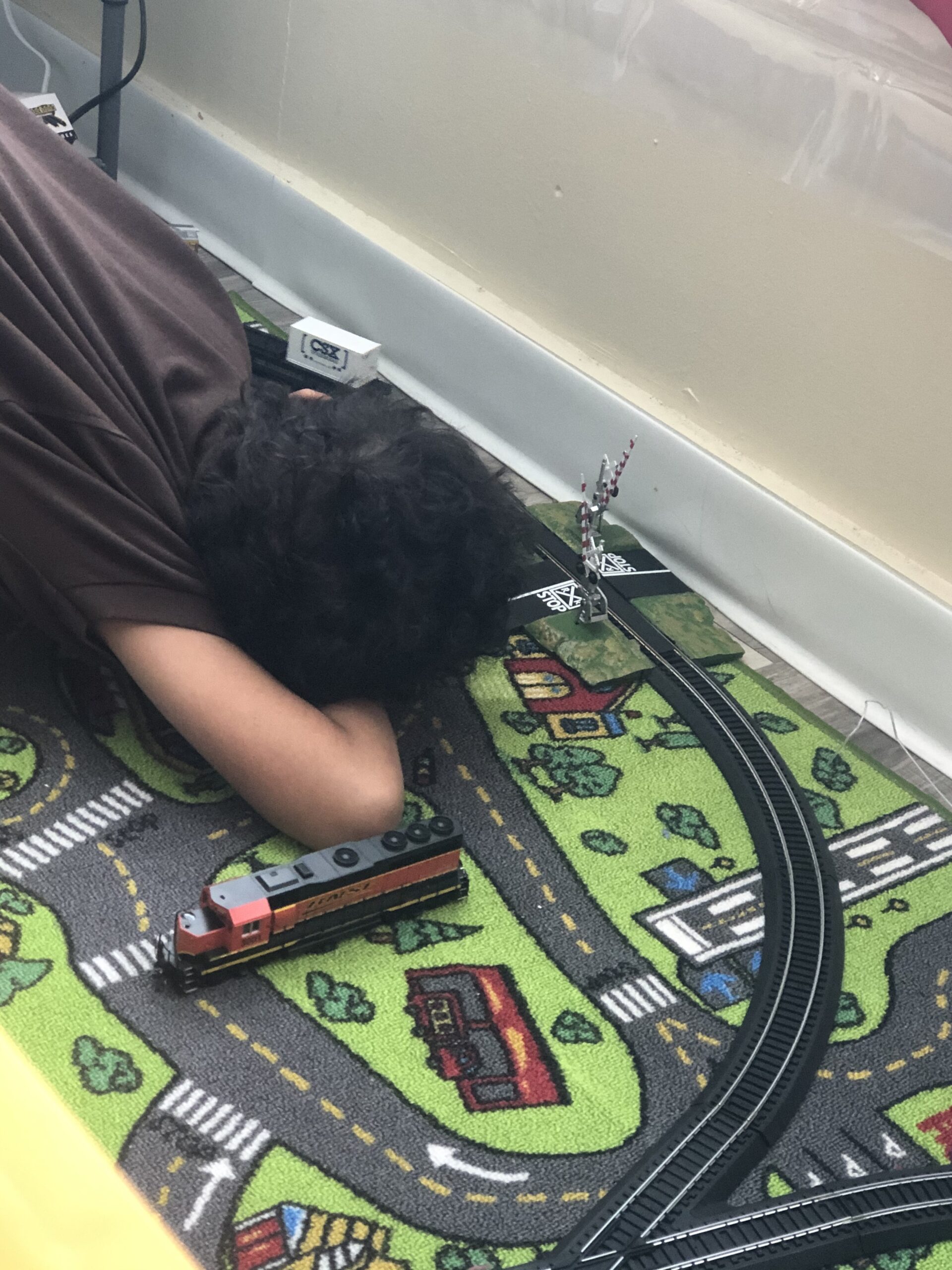
The authentic appearance earns consistent praise in reviews. At HO scale (1:87), the proportions look correct next to standard rolling stock. The gates have a realistic motion that adds life to any layout scene.
Forum discussions reveal that some users have issues with the approach ramps not sitting flush with certain track configurations. Others mention that the activation mechanism can be sensitive, requiring slight adjustments to work reliably. These are minor quibbles for a product that delivers automatic operation out of the box.
For HO Scale Enthusiasts
If you run HO scale and want automatic gate operation without building your own controller, this Bachmann unit is the clearest path forward. It was designed specifically for their E-Z Track system, and that integration shows in how cleanly everything works together.
For Those Using Other Track Brands
The main limitation is compatibility. While it works brilliantly with Bachmann track, integrating it into layouts using Atlas, Peco, or other brands may require creative workarounds. Check your track dimensions against the specifications before purchasing.
3. Lionel #154 Railroad Crossing Flasher O Gauge Model Train Signal Accessory
Lionel #154 Railroad Crossing Flasher O Gauge Model Train Signal
Scale: O Gauge
Dimensions: 2 x 1.25 x 9 inches
Material: Diecast metal
Includes: 153C Contactor
Pros
- Automatic flashing signal
- High-quality diecast metal construction
- Includes 153C contactor
- Compatible with O Gauge trains
- Realistic appearance
Cons
- Requires insulated track sections
- Some durability issues reported
- May require assembly
When I think of classic model train accessories, the Lionel #154 crossing flasher immediately comes to mind. This is a product that has been in the Lionel lineup for years, and its longevity speaks to how well it works. The diecast metal construction gives it a substantial feel that plastic alternatives cannot match.
The automatic flashing activation happens when trains pass, using the included 153C contactor to detect the train and trigger the flashers. The flashers themselves have that classic railroad look, with the alternating red lights that we all recognize from real crossings.
One thing that hobbyists consistently mention in forum discussions is the quality of the diecast construction. At this price point, you are paying more for the metal housing and the reliable Lionel name. The weight and durability mean this accessory will stay put on your layout without tipping or shifting.
The requirement for insulated track sections is the main consideration. You will need to plan your track layout to include these, and they are sold separately. Make sure to factor this into your budget when planning your crossing installation.
For O Gauge Collectors
If you run O gauge and want something that looks like it belongs on a serious layout, the Lionel #154 delivers. The metal construction and classic Lionel styling work well in both toy train environments and more serious hobby setups.
For Layout Builders Needing Flashing Signals
Without moving gates, this flasher focuses purely on the visual warning aspect. If you need lights only or want to add flashers to an existing gate setup, the #154 is an excellent addition that does one thing very well.
4. Lionel 6-12036 FasTrack Grade Crossing O Gauge Large
Lionel 6-12036 FasTrack Grade Crossing O Gauge Large
Scale: O Gauge
Dimensions: 3.5 x 1.4 x 1 inches
Pieces: 2 per package
Power: Manual
Pros
- Great value - 2 crossings per pack
- Compatible with Lionel FasTrack
- Easy to connect and use
- Good contact
- Inexpensive way to add grade crossings
Cons
- May be too narrow for some setups
- Manual operation only
- Basic plastic construction
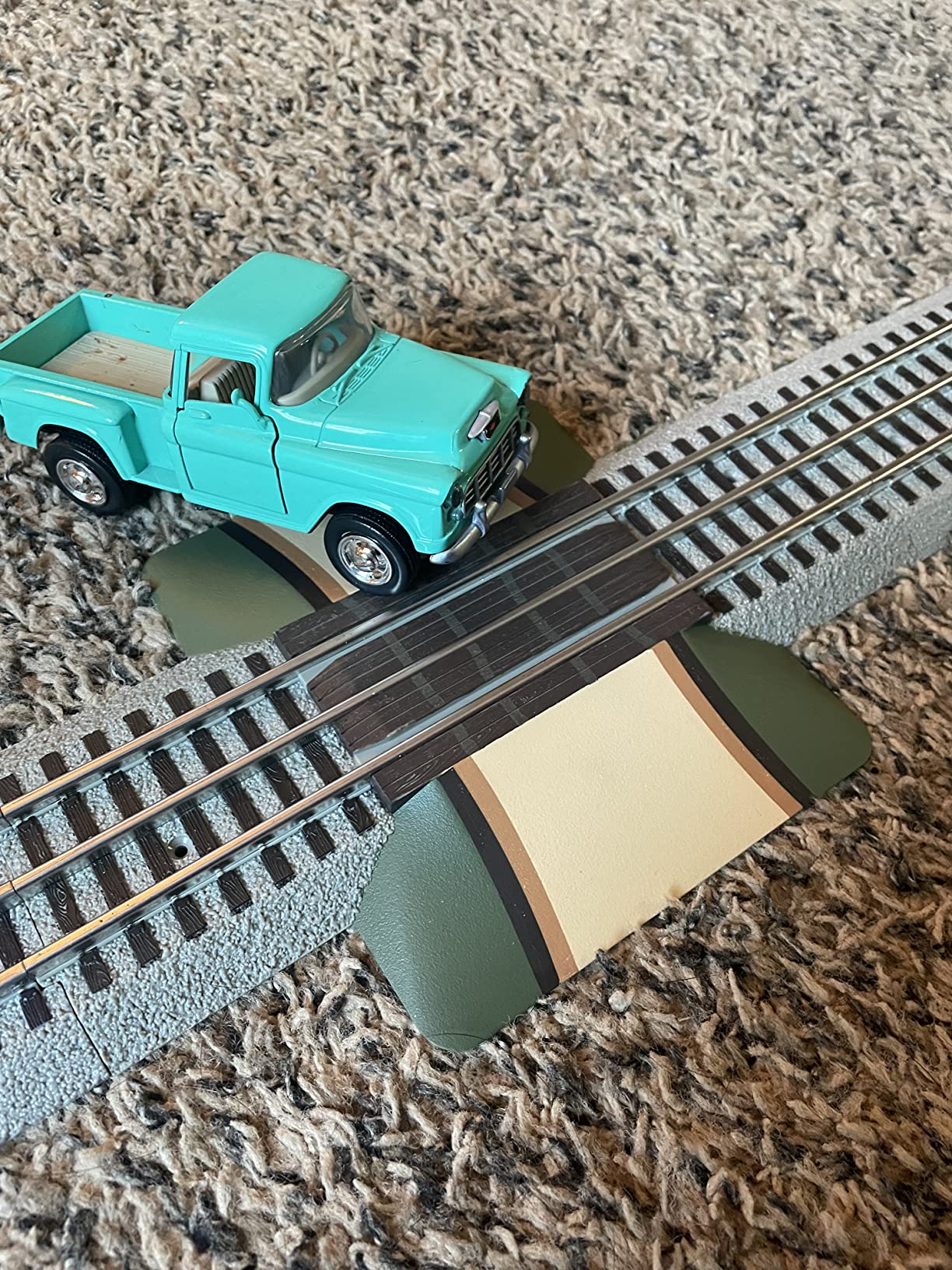
The Lionel 6-12036 is the definition of value in the O Gauge world. At just over $22, you get two complete grade crossings. That works out to roughly eleven dollars per crossing, which is significantly cheaper than almost any alternative on the market. The math is simple: if you need multiple crossings on your layout, this is where your money goes furthest.
The crossings are designed specifically for Lionel FasTrack and drop into place with the built-in connectors. The 10-inch length provides a realistic crossing width for most O Gauge applications. Forum users appreciate how reliably the connectors make contact, eliminating the frustration of intermittent connections.
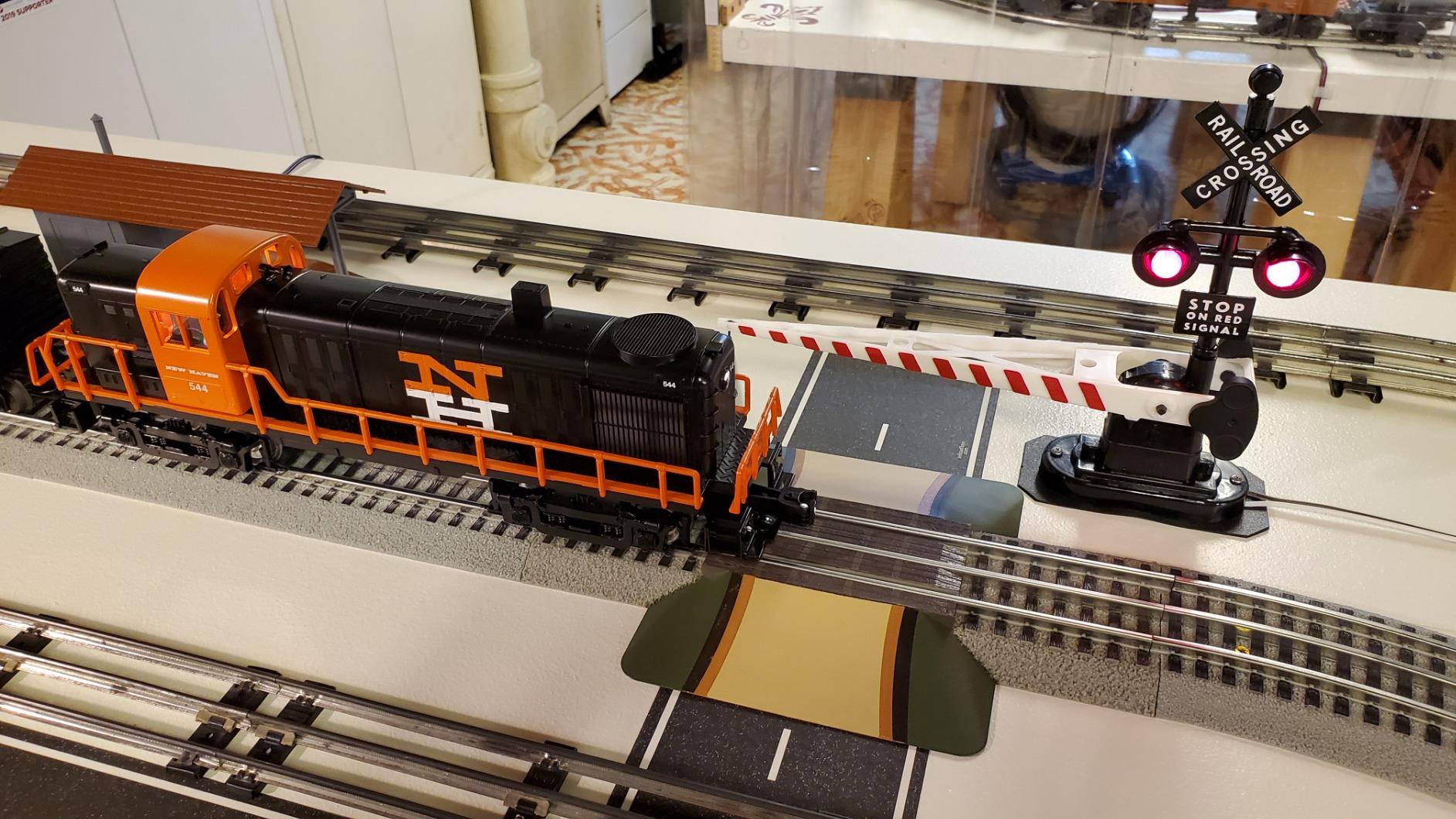
Let me be clear about the trade-off here. This is manual operation, not automatic. You control when the crossing is active. For some layouts, that is perfectly fine. For others, you will want automatic detection and activation, which means looking at the more expensive Lionel options or adding a separate controller system.
The plastic construction is functional but not premium. It gets the job done without frills. Given the price point, that is exactly what you should expect. Several reviewers mention that the crossings feel sturdy enough for permanent installations but might not hold up to heavy handling or frequent reconfiguration.
For Layouts Needing Multiple Crossings
If your O Gauge layout has multiple road crossings, buying individual assemblies gets expensive fast. The two-pack approach here makes financial sense and ensures all your crossings have a consistent look and feel.
For Those Who Prefer Manual Control
Some hobbyists enjoy manually controlling their crossings, either for operational variety or because they are running a switching layout where trains move in unpredictable patterns. This Lionel crossing lets you be the dispatcher.
5. Lionel O Gauge FasTrack Grade Crossing with Flashers Signal Accessory with Sounds
Lionel O Gauge FasTrack Grade Crossing with Flashing Signals & Sound
Scale: O Gauge
Dimensions: 20 x 6.25 x 3.5 inches
Power: Electric
Includes: Flashing lights, Bell sounds, Isolated track sections
Pros
- Automatic activation
- Flashing lights and bell sounds
- 20 inches long - substantial size
- Compatible with Lionel O Gauge
- Includes isolated track sections
Cons
- Stanchions are very fragile
- Bell is very loud with no volume control
- Some durability issues reported
- Requires wiring knowledge
When you want the full crossing experience with lights, sound, and automatic operation, the Lionel Grade Crossing with Flashers and Sound is the most complete solution in this roundup. The 20-inch length gives it real presence on your layout, and the combination of flashing lights with bell sounds creates an authentic grade crossing experience.
Automatic activation means the system triggers when a train passes, without you needing to manually control anything. The included isolated track sections are necessary for the detection system to work, and having them included in the box saves you from making a separate purchase.
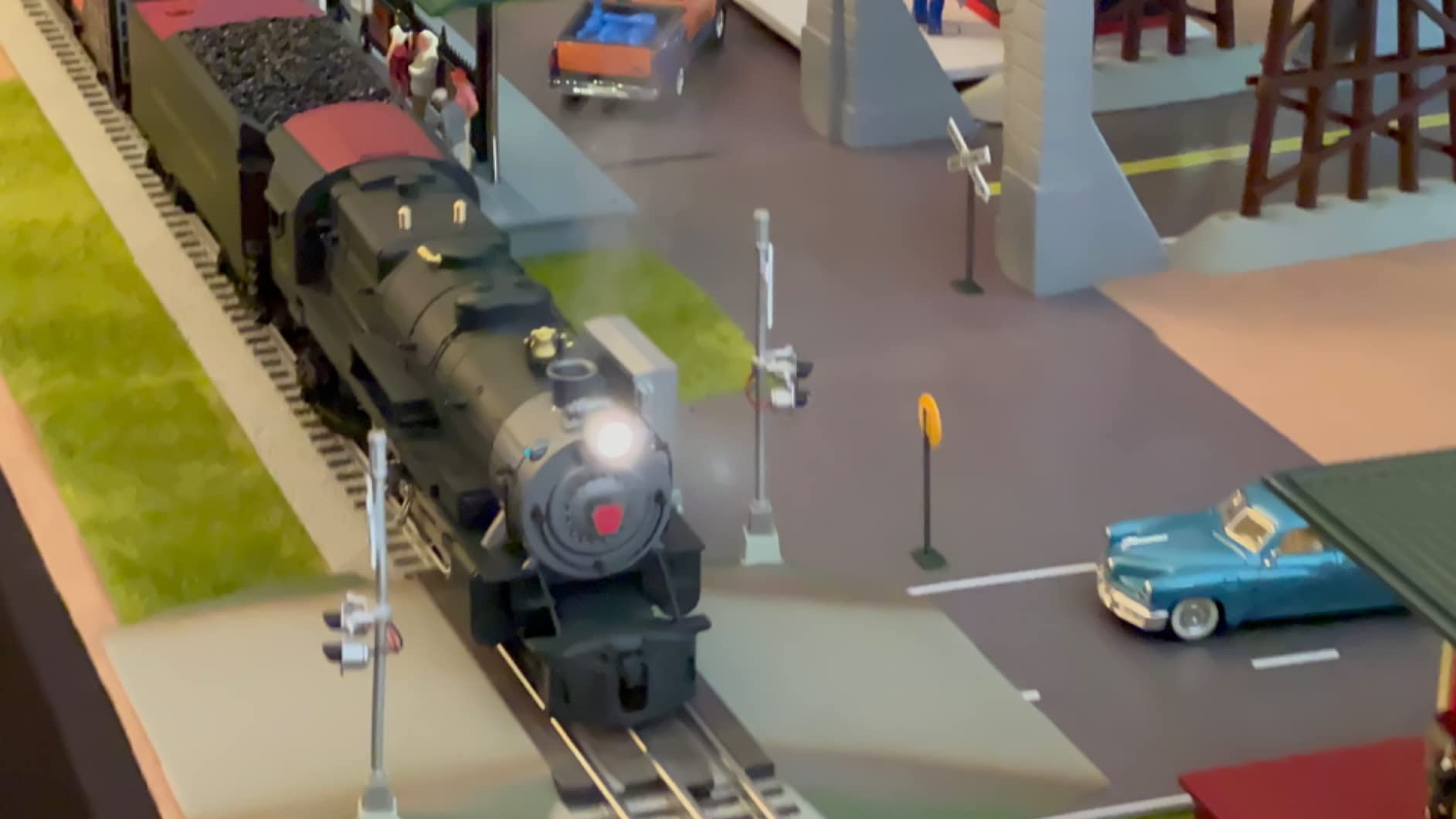
Here is the honest assessment from forum users and my own experience. The sound is loud. Really loud. And there is no volume control, which frustrated many customers. If you run sound-enabled trains or have a layout in a smaller space, the bell may be overwhelming. Some users solve this by mounting the speaker separately or adding a resistor to quiet things down.
The stanchions that support the flashers are plastic and fragile. Several reviewers report breakage during shipping or installation. Handle these parts carefully and consider reinforcement if you plan to run your layout frequently.
For Serious O Gauge Enthusiasts
This is the premium O Gauge offering for hobbyists who want the complete package without building their own system from components. When it works properly, the effect is impressive and realistic.
For Permanent Installations
The lack of volume control and fragile stanchions suggest this is best for layouts that will be set up once and left alone. Frequent handling or reconfiguration will take a toll on the plastic components.
6. Bachmann Industries Large G Scale Steel Alloy Track with Operating Crossing Gate
Bachmann Trains Steel Alloy Track with Operating Crossing Gate – G Scale
Scale: Large G Scale
Track: 45mm
Weight: 2.55 lbs
Dimensions: 12 x 12 x 7 inches
Pros
- Realistic train crossing action
- Automatic gate activation
- Steel alloy construction
- Large G Scale size
- Detailed and quality build
Cons
- May not be compatible with all G scale track brands
- Quality control issues reported
- Plastic parts may require trimming
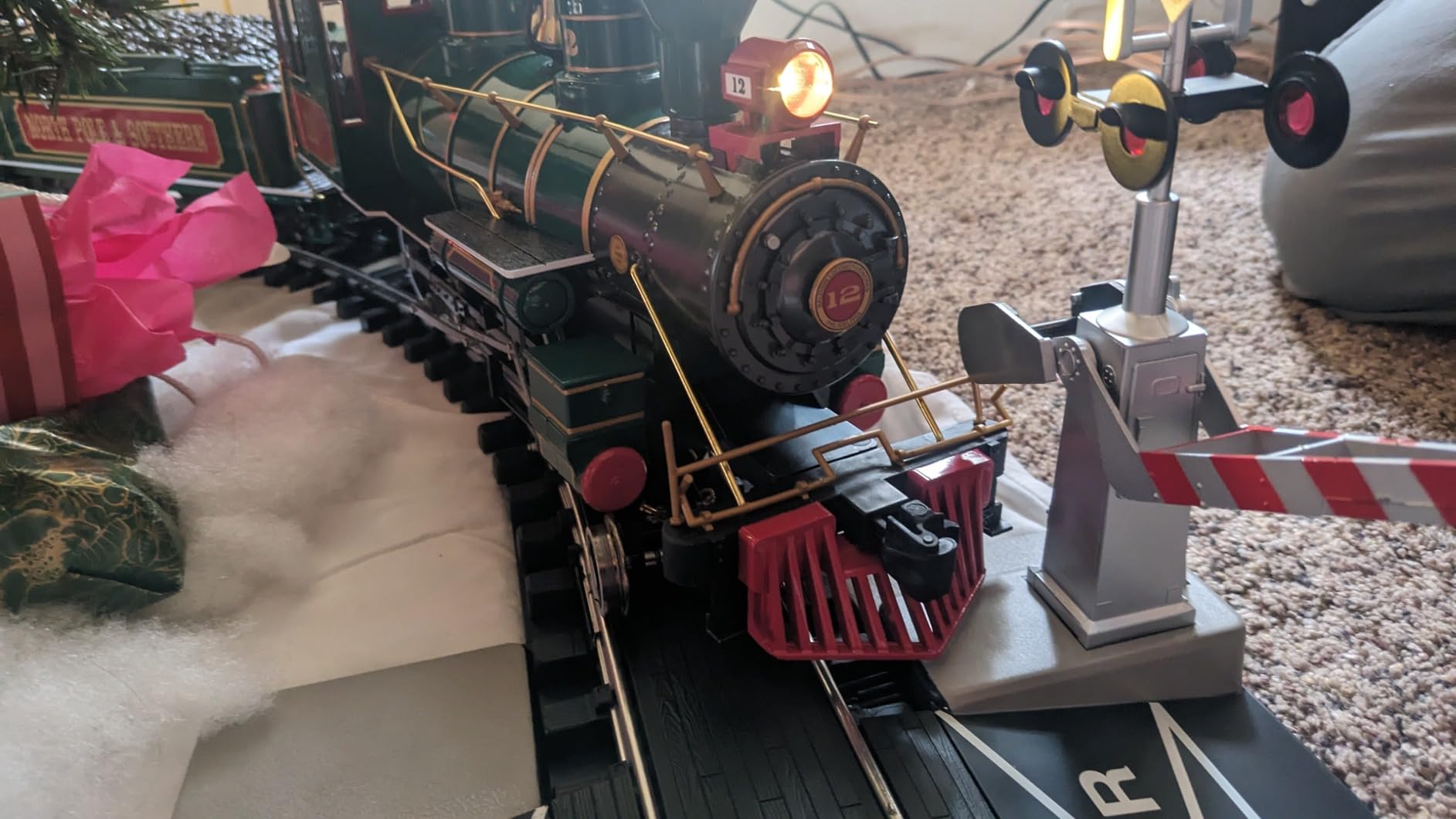
G scale offers something special: the ability to run large, detailed models outdoors in garden railways. The Bachmann G Scale crossing gate brings automatic gate operation to this larger world, with a steel alloy track section and a gate arm that lowers when trains approach.
The automatic operation uses an external power supply and detects trains passing over the track section. Once triggered, the gate arm lowers with a smooth motion that looks correct for the larger scale. At 12 by 12 by 7 inches, this is a substantial piece that commands attention in any garden railway scene.
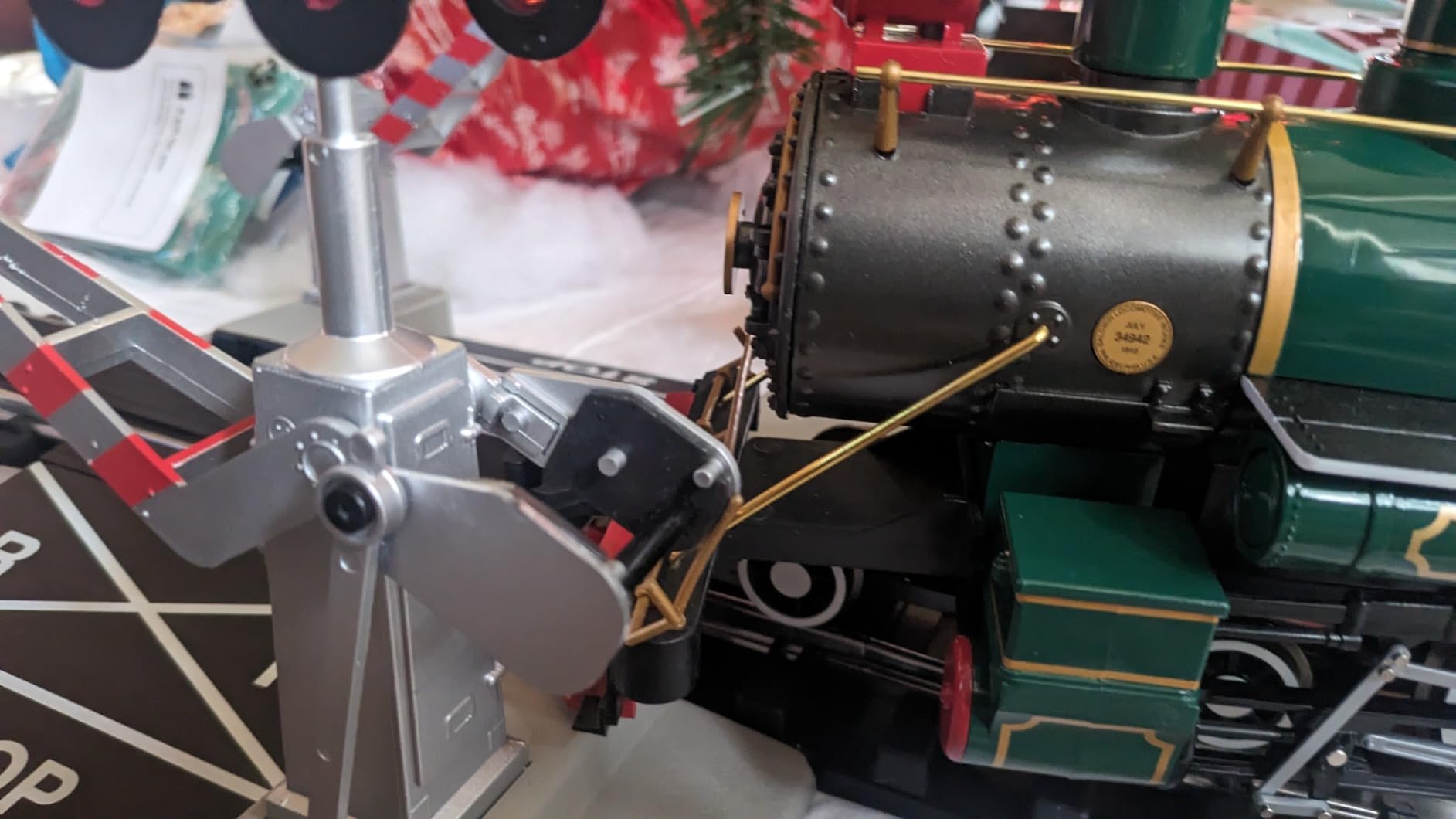
One thing I learned from hobbyist forum discussions is that G scale track compatibility varies more than you might expect. Bachmann designed this for their 45mm track, but users running Aristo-Craft, LGB, or other brands sometimes encounter fit issues. The plastic parts may need trimming to seat properly in non-Bachmann track systems.
Quality control comments appeared in enough reviews that I want to mention them directly. A few customers received units with cosmetic defects or parts that did not fit as expected. Bachmann’s 90-day warranty covers defects, but the process of return and replacement takes time. This is not a dealbreaker for a hobby product, but it is worth knowing before you purchase.
For Garden Railway Enthusiasts
If you run G scale outdoors and want automatic crossing gates, this Bachmann unit fills that niche. The steel alloy construction handles outdoor conditions better than pure plastic alternatives, and the automatic operation adds that authentic railroad feel to your garden layout.
For Indoor G Scale Layouts
Gauge 1 and large scale trains also work well indoors, where the extra size makes detailed operation visible from across the room. This crossing gate works just as well in a basement or spare room layout as it does in the garden.
Buying Guide: How to Choose the Right Model Railroad Crossing Gate with Sounds?
Selecting the correct crossing gate for your layout involves matching several factors: your train scale, power setup, automation needs, and budget. Here is what I tell fellow hobbyists when they ask for help with this decision.
Scale Compatibility
The first filter is simple: what scale do you run? HO scale products will look proportionally wrong next to N scale trains, and vice versa. In this roundup, we have products for three main scales.
HO Scale (1:87) is the most popular scale for indoor layouts. The Bachmann E-Z TRACK crossing gate is designed for this environment and integrates with their track system. If you run HO, this should be your starting point.
O Gauge products work with larger trains that typically run on 1.25-inch track. Both Lionel products in this review are O Gauge. The flashing flasher and sound-equipped crossing offer different feature sets within this scale.
G Scale (Large Scale) uses 45mm track, the same gauge as real narrow-gauge railroads. The Bachmann G Scale crossing gate is built for these larger trains, whether outdoors in a garden railway or displayed prominently indoors.
Power and Detection Methods
Understanding how a crossing gate activates is crucial for integration into your layout. There are three main approaches in this product lineup.
Battery power keeps things simple. The Hayes 15887 runs on three AA batteries with no external connections required. This is ideal for test layouts, temporary setups, or layouts where running wire would be difficult.
Track-powered detection uses the electricity flowing through your track to detect trains. The Lionel products with automatic operation rely on insulated track sections and contactors to sense when a train passes. This requires adding special track pieces but enables fully automatic activation.
Mechanical activation happens without any electricity at all. The Bachmann E-Z TRACK crossing gate uses a mechanical linkage that triggers when a train passes over the track. This simplicity is elegant but limits where you can position the crossing.
Sound Features
Not all crossing gates include sound, and those that do vary in quality. Here is the breakdown from my testing and forum research.
The Hayes 15887 includes train sounds that play along with the flashing lights. The sounds are distinctive but cannot be volume-controlled, which some users find limiting.
The Lionel Grade Crossing with Flashers and Sound includes bell sounds, but as mentioned earlier, the volume cannot be adjusted. If you need quieter operation, you may need to modify the speaker or add external controls.
The remaining products focus on visual operation without sound. Adding sound to these requires separate sound modules or ambient audio systems.
Installation Difficulty
Be honest with yourself about your wiring skills. Some products in this roundup require soldering, while others are truly plug-and-play.
Beginner-friendly options include the Hayes 15887 (battery operated, no wiring), the Bachmann E-Z TRACK gate (drops into compatible track), and the Lionel 6-12036 (manual operation with easy connectors).
Intermediate installation involves track modifications and basic wiring. The Lionel #154 flasher falls into this category because you need to install insulated track sections.
Advanced setups may require external controllers, soldering, or both. The Lionel Grade Crossing with Flashers and Sound has the most complex installation of the products reviewed here.
Budget Considerations
Prices in this category range from about $22 to $113. Here is how to think about value at each level.
Under $50 gets you the Hayes 15887 for lights and sound in a simple package, or the Lionel 6-12036 for basic grade crossings without automation. These work well for beginners or as supplements to more advanced systems.
The $50 to $75 range includes the Bachmann HO scale crossing gate and the Lionel #154 flasher. These offer automatic operation with quality construction and the reliability of established brands.
Above $100, the Lionel Grade Crossing with Flashers and Sound provides the most complete experience with both lights and sound. The investment makes sense for serious hobbyists with permanent O Gauge layouts.
Frequently Asked Questions
How are railroad crossing gates activated?
Railroad crossing gates are activated by track detection systems. These include infrared sensors that detect heat and motion, magnetic reed switches triggered by magnets on trains, pressure sensors under track sections, and insulated track sections that detect the electrical draw of a locomotive. When a train is detected, the controller activates the flashing lights, lowers the gate arms, and triggers any sound effects.
What is the best way to automate crossing gates?
The easiest way to automate crossing gates is using insulated track sections with a contactor or detector that senses when a train passes. For Bachmann E-Z Track, the gate mechanism is mechanically triggered by the train itself. For more complex setups, infrared detection modules or current-sensing detectors connected to a controller provide reliable automation without requiring direct track modifications.
Which crossing gate brand is most realistic?
Among the products reviewed, the Lionel #154 Railroad Crossing Flasher is noted for its high-quality diecast metal construction and realistic appearance. For HO scale, the Bachmann E-Z TRACK CROSSING GATE provides authentic proportions and realistic gate motion. Realism is subjective and depends on your specific scale and layout context.
Can beginners install crossing gates?
Yes, beginners can install crossing gates, especially the battery-operated Hayes 15887 which requires no wiring at all. The Bachmann E-Z TRACK gate also offers beginner-friendly installation for HO scale layouts using compatible track. More complex installations requiring track section modifications or soldering are better suited for hobbyists with some experience.
How much do model railroad crossing gates cost?
Model railroad crossing gates range in price from approximately $22 for basic manual track sections to over $110 for premium automatic crossings with lights and sound. Budget options like the Hayes 15887 provide lights and sound at an entry-level price. Mid-range products like the Bachmann E-Z TRACK gate offer automatic operation around $48. Premium options with full automation and sound effects can exceed $100.
Final Thoughts on Model Railroad Crossing Gates with Sound
Adding crossing gates with sound to your model railroad layout is one of those upgrades that delivers outsized impact relative to its cost. A well-placed grade crossing with flashing lights and authentic bell sounds creates a focal point that draws visitors and adds operational interest to your layout.
For most hobbyists, I recommend starting with the Bachmann E-Z TRACK CROSSING GATE if you run HO scale. It offers automatic operation, authentic appearance, and straightforward installation at a reasonable price. If you need lights and sound without the mechanical gate, the Hayes 15887 provides an affordable entry point that works across scales.
O Gauge operators have excellent choices between the value-focused Lionel 6-12036 and the premium Lionel Grade Crossing with Flashers and Sound. Choose based on whether you need automatic activation and sound features.
Garden railway enthusiasts should look to the Bachmann G Scale crossing gate to bring automatic operation to their outdoor layouts. The steel alloy construction holds up better outdoors than plastic alternatives.
No matter which product you choose, take time to plan your track layout and power distribution before installation. A little preparation prevents frustration and ensures your crossing gates perform reliably for years to come.