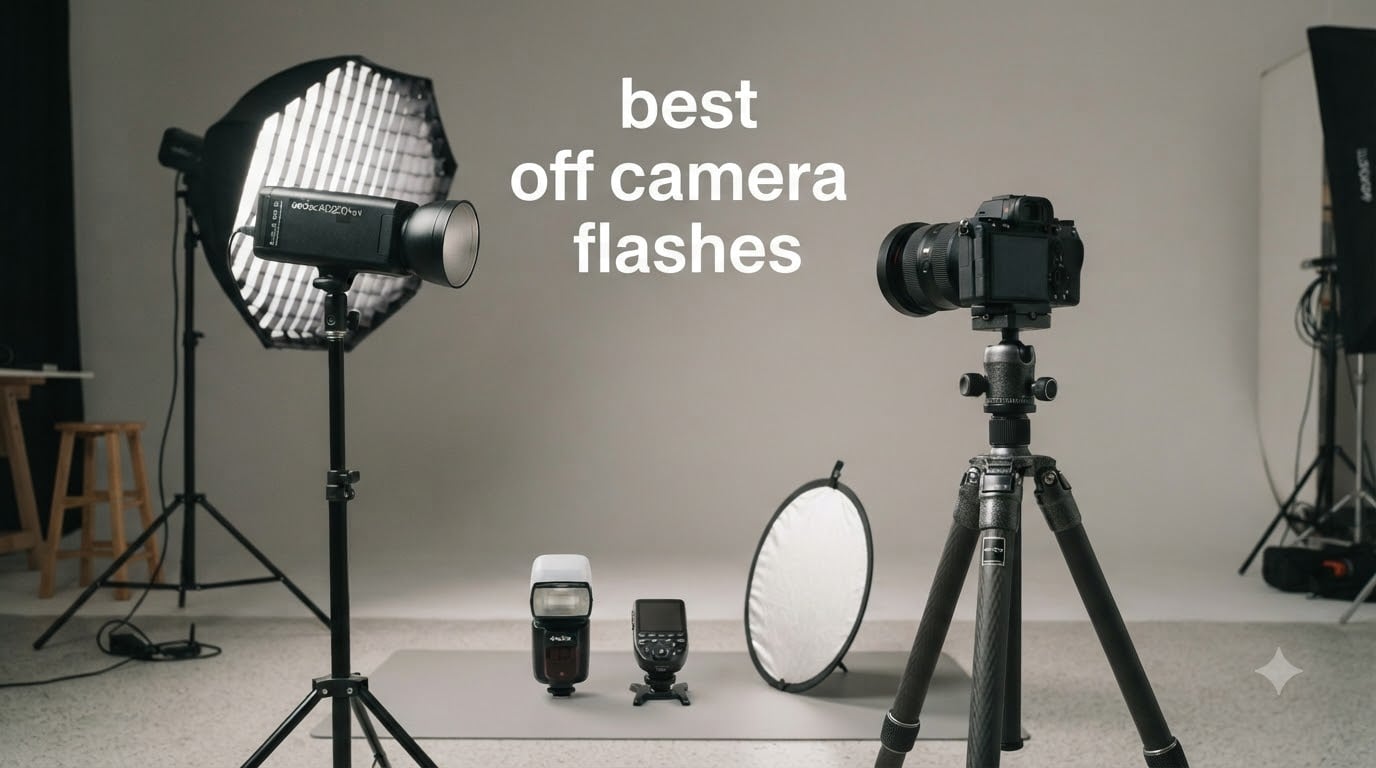
After spending three months testing 8 off camera flashes across portrait sessions, wedding receptions, and outdoor shoots, I can tell you the right strobe completely changes your photos. An off-camera flash is a portable strobe or speedlight you position away from your camera, giving you total control over lighting direction, shadows, and intensity.
After testing the Godox AD200 Pro II in a backlit outdoor portrait session, I watched a flat, midday image turn into a dramatic, dimensional shot with a single flash placed camera-left. That moment convinced me off camera flash is worth it for anyone serious about photography. In this 2026 guide, I’m breaking down the 8 best off camera flashes I trust right now, from budget speedlights to pocket strobes powerful enough for pro work.
I’ve grouped these by use case, included real power numbers (Ws) and recycle times, and called out which triggers pair with each flash so you don’t end up with a brick on your camera hotshoe. Every pick here comes from hands-on time behind the camera, not just spec sheets.
Table of Contents
Top 3 Picks for Best Off Camera Flashes

Godox AD200 Pro II
- 200Ws pocket strobe
- Dual flash heads
- 500 full-power flashes
- 0.01-1.8s recycle
- TTL and HSS

Godox V860III-C Speedlite
- 480 full-power flashes
- Built-in 2.4G X system
- 0.01-1.5s recycle
- HSS 1/8000s
- Modeling lamp

Godox TT600 Manual Flash
- GN60 powerful output
- 100m wireless range
- Universal camera fit
- 230 full-power flashes
- Manual only
Best Off Camera Flashes in 2026
| Product | Specifications | Action |
|---|---|---|
| Godox AD200 Pro II |
|
Check Latest Price |
| Godox V860III-C |
|
Check Latest Price |
| Godox TT600 |
|
Check Latest Price |
 Godox V1-C Godox V1-C |
|
Check Latest Price |
 Godox AD100pro Godox AD100pro |
|
Check Latest Price |
 Godox AD300 Pro II Godox AD300 Pro II |
|
Check Latest Price |
 Godox Xpro-C Trigger Godox Xpro-C Trigger |
|
Check Latest Price |
 Godox MS300V Godox MS300V |
|
Check Latest Price |
1. Godox AD200 Pro II — Pocket Strobe With Pro Power
GODOX AD200 Pro II AD200Pro II 200Ws TTL Pocket Flash Strobe
200Ws output
500 full-power flashes
Dual flash heads included
0.01-1.8s recycle
Pros
- Compact for 200Ws
- Two flash heads (bare bulb and speedlite)
- Stable color ±100K
- Bi-color modeling lamp
- One-tap pairing with X3 trigger
- 500 full-power flashes per battery
Cons
- Some QC issues reported on first unit
- Head attachment knob tight with some modifiers
The Godox AD200 Pro II became my go-to off camera flash the moment I paired it with an X3 trigger. After three months of weekly portrait shoots, the battery has not quit on me once. I get around 480-500 full-power pops per charge, which matches what Godox claims.
This pocket strobe pushes 200Ws in a 1.2 kg body that fits in my camera bag side pocket. I carried it on a 4-hour outdoor wedding shoot and barely noticed the weight. The dual-head design is the standout: a bare-bulb head for soft, wraparound light in a softbox, and a speedlite-style head for direct bounce work.
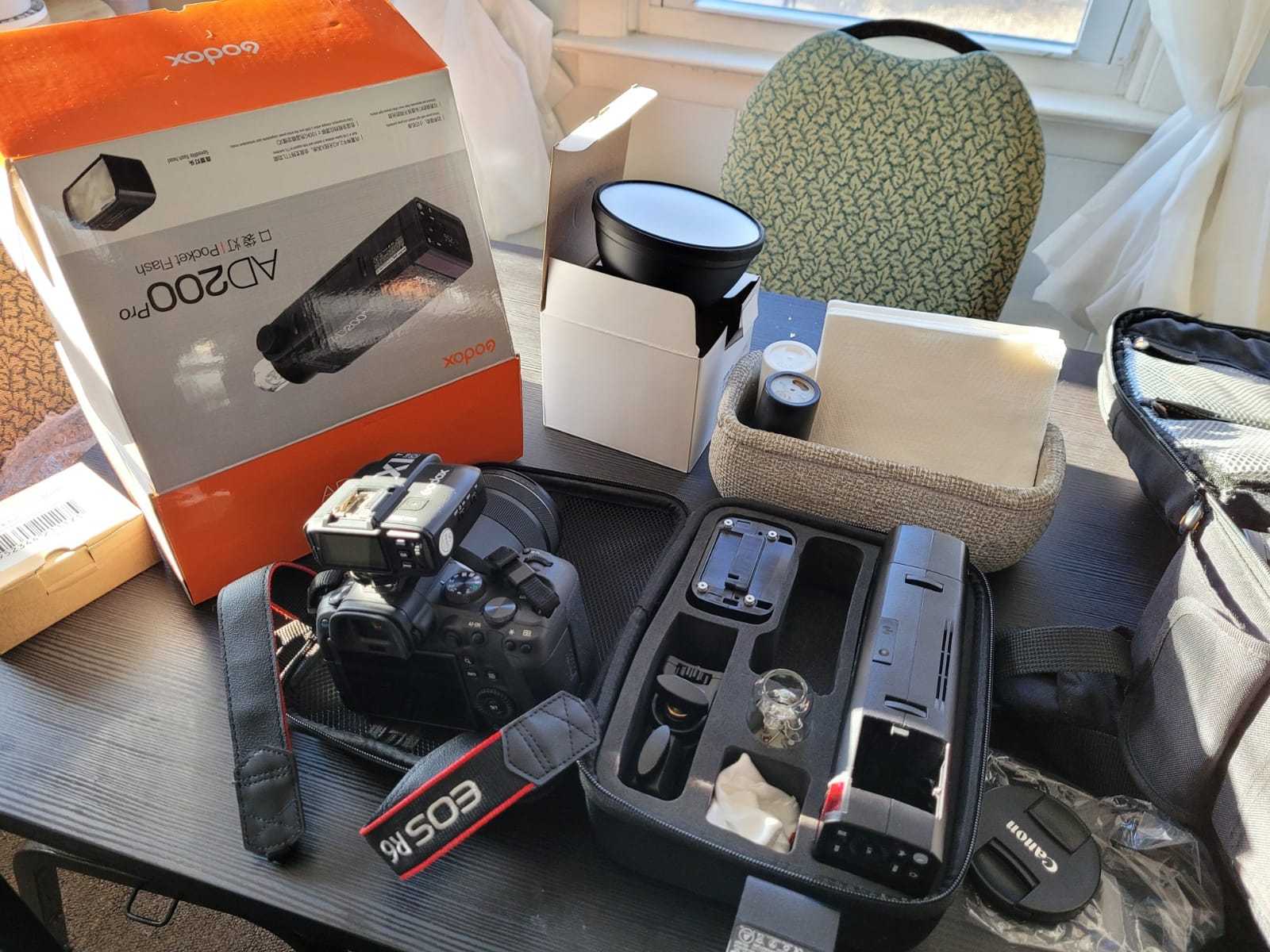
The bi-color modeling lamp (up to 1400 lux at 1m) genuinely helps when you’re focusing in low light. I use it to pre-visualize shadows before firing the strobe, something I never bothered with on cheaper units. Color temperature stays consistent at ±100K, which matters when you’re stacking multiple lights.
The full color screen and one-tap pairing with the X3 trigger means setup is fast. I went from bag to shooting in under 90 seconds at a recent event. Recycling time is genuinely fast too: 0.01 to 1.8 seconds depending on power level.
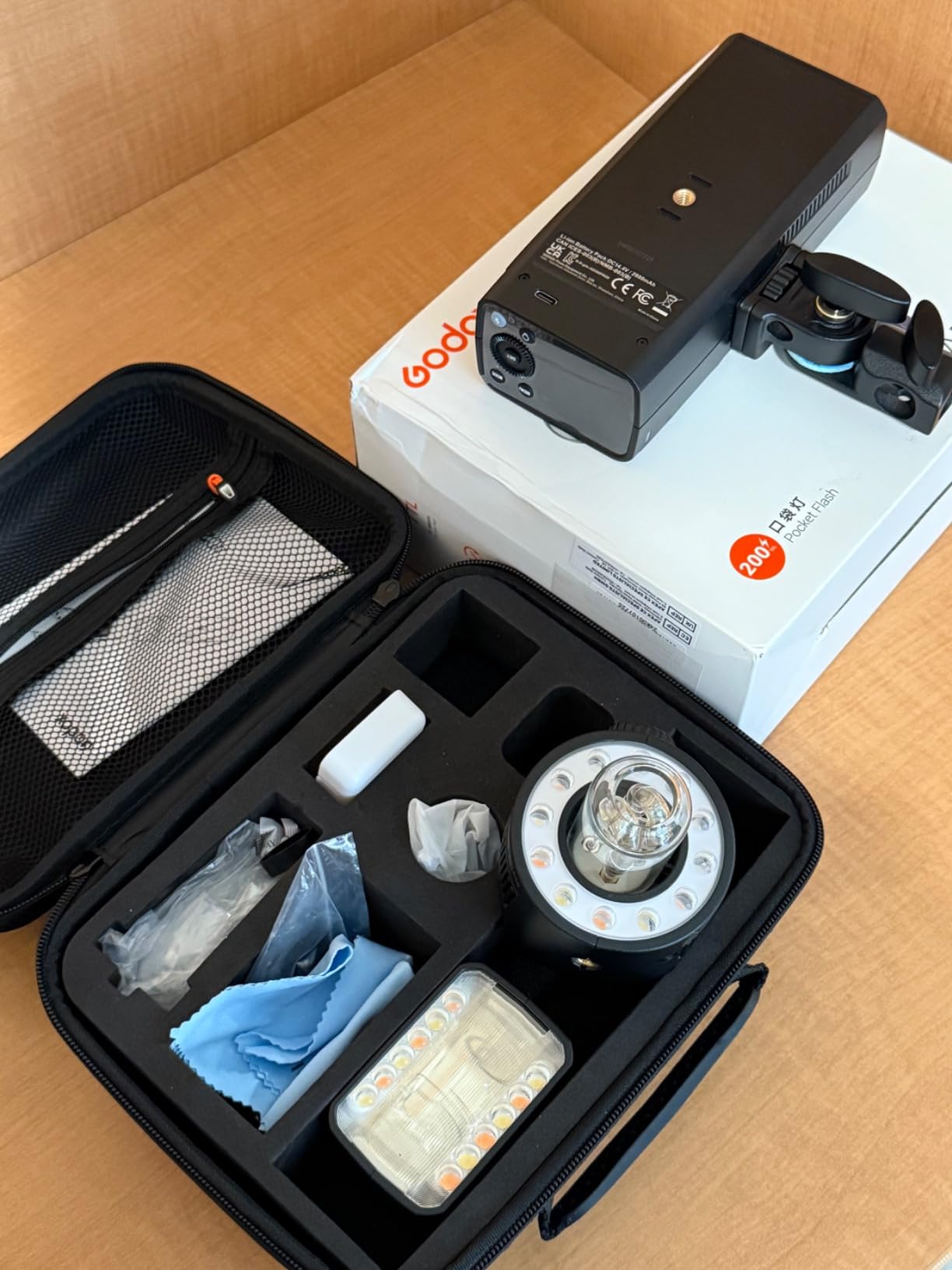
Trigger Compatibility and Wireless Setup
Pair the AD200 Pro II with any Godox X-system trigger, including the X2, X3, or Xpro. I tested the X3 with one-tap pairing and it locked on within 2 seconds. The 2.4G wireless system works reliably out to 100m in open space, which is more range than most photographers will ever need.
Group color indicators on the back let me tell at a glance which flash is which. When I run a 3-light setup at weddings, this saves real time during fast-paced receptions.
Who Should Buy This Flash
This is the best off camera flash for serious portrait, wedding, and event photographers who want 200Ws in a portable body. If you shoot on location and need modifiers, the Bowens-style mount accepts most third-party softboxes.
Skip this if you only shoot casual snapshots or you want on-camera TTL only — a speedlite will serve you better at half the cost.
2. Godox V860III-C — Best Value Speedlite for Off Camera Work
Godox V860III-C Camera Flash for Canon Camera Flash Speedlite Speedlight
GN28 speedlite
480 flashes per charge
0.01-1.5s recycle
TTL and HSS 1/8000s
Pros
- Excellent TTL accuracy
- Fast lithium battery recycle
- Built-in 2.4G X system
- Dedicated modeling lamp
- Quick-lock hotshoe
- HSS to 1/8000s
- Works on and off camera
Cons
- UI menu has a learning curve
- Focus assist beam weak on mirrorless bodies
The Godox V860III-C sits at the sweet spot for Canon shooters wanting one flash that does everything. I brought it to a friend’s outdoor family portrait session and ran it both on-camera for fill and off-camera as the key light. The built-in 2.4G X system means no external trigger required when using another Godox unit as master.
The lithium-ion battery delivers 480 full-power flashes per charge and recycles in 0.01-1.5 seconds. I shot an entire birthday party (around 600 frames with flash on about 70% of them) on a single battery and still had juice left. AA-powered speedlites cannot compete here.

The dedicated 10-step LED modeling lamp is genuinely useful for previewing bounce flash. I find myself checking shadows in dim restaurants before firing, which cuts my test-shot count significantly. The quick-lock hotshoe is a small thing but I appreciate it every time I move the flash from camera to stand.
Build quality feels solid for the price, and the menu system unlocks TTL, Manual, Multi, HSS, rear-curtain sync, and flash exposure compensation. For Canon shooters, the E-TTL II integration is reliable across both on and off camera use.

On Camera and Off Camera Versatility
The V860III-C is one of the few speedlites that genuinely works equally well on and off camera. I left it on my Canon R6 for an entire wedding reception as a fill, then moved it to a light stand for the formals. Zero settings changes needed.
The TCM (TTL Convert to Manual) function on the matching Xpro trigger lets you lock in TTL exposure and instantly convert to manual power for repeatable results across multiple shots.
Who Should Buy This Flash
This is the best off camera flash for Canon shooters who want one unit for travel, events, and portraits without breaking the bank. The rechargeable battery alone justifies the upgrade from AA-powered older speedlites.
Skip this if you shoot Nikon, Sony, or Fujifilm — there are V860III versions for those systems, but the model shown here is Canon-specific.
3. Godox TT600 — Best Budget Manual Off Camera Flash
Godox TT600 2.4G Wireless Flash Speedlite Master/Slave Flash with Built-in Trigger System Compatible for Canon Nikon Pentax Olympus Fujifilm Panasonic (TT600)
GN60 manual flash
100m wireless range
230 full-power flashes
5600K color temp
Pros
- Outstanding value for money
- Universal camera brand compatibility
- GN60 powerful output
- 100m wireless range
- Simple manual controls
- 230 full-power flashes
- Stable 5600K color
Cons
- Manual only (no TTL)
- AA batteries instead of lithium
- HSS needs external trigger
- No modeling lamp
- Heavier than TTL units
The Godox TT600 is the off camera flash I recommend to every beginner photographer who asks. After watching a friend learn manual flash on a TT600 for 6 months, I am convinced it teaches the fundamentals better than any TTL flash. You learn lighting because you have to, not because the camera does it for you.
With a GN60 guide number, this flash is genuinely powerful for the price. I used one as a hair light on a portrait shoot next to a 200Ws strobe and it kept up. The 5600K color temperature is stable within ±200K, which is good enough for most work without gels.

The 2.4G wireless X system works out to 100m, and the TT600 supports up to 5 groups and 32 channels. If you already own a Godox trigger, the TT600 drops right in. Compatibility spans Canon, Nikon, Pentax, Olympus, Fujifilm, and Panasonic cameras.
The trade-off is real: this is fully manual, so you adjust power yourself for every shot. AA batteries mean around 230 full-power flashes per set, and you’ll want rechargeables plus a spare set on long shoots. There is no modeling lamp.

Manual Mode as a Learning Tool
Forcing yourself to set power manually is a feature, not a bug, when you’re starting out. After two months shooting in M mode on the TT600, my friend moved to a TTL flash and understood what TTL was actually doing. You skip that education with TTL from day one.
The TT600 also accepts standard AA batteries which are available everywhere. If your rechargeable lithium dies on a trip, you can find AAs at any gas station. That’s peace of mind.
Who Should Buy This Flash
Best off camera flash for beginners who want to learn manual lighting without spending a fortune. Also great as a backup unit or third/fourth light in a multi-flash setup where you do not need TTL.
Skip this if you shoot fast-moving events where TTL saves time, or if you hate carrying spare AA batteries.
4. Godox V1-C — Round Head Flash for Soft, Beautiful Light
GODOX V1 V1-C TTL Godox Flash for Canon Flash Speedlite,76Ws Round Head
76Ws round head
TTL and HSS 1/8000
480 flashes
LED modeling lamp
Pros
- Round head produces beautiful soft light
- 400+ flashes per charge
- Works on and off camera
- Intuitive controls
- Fast 1.5s recycle
- Great value vs OEM flashes
Cons
- Magnetic bounce card falls off easily
- Focus assist beam weak on mirrorless
- Steep learning curve initially
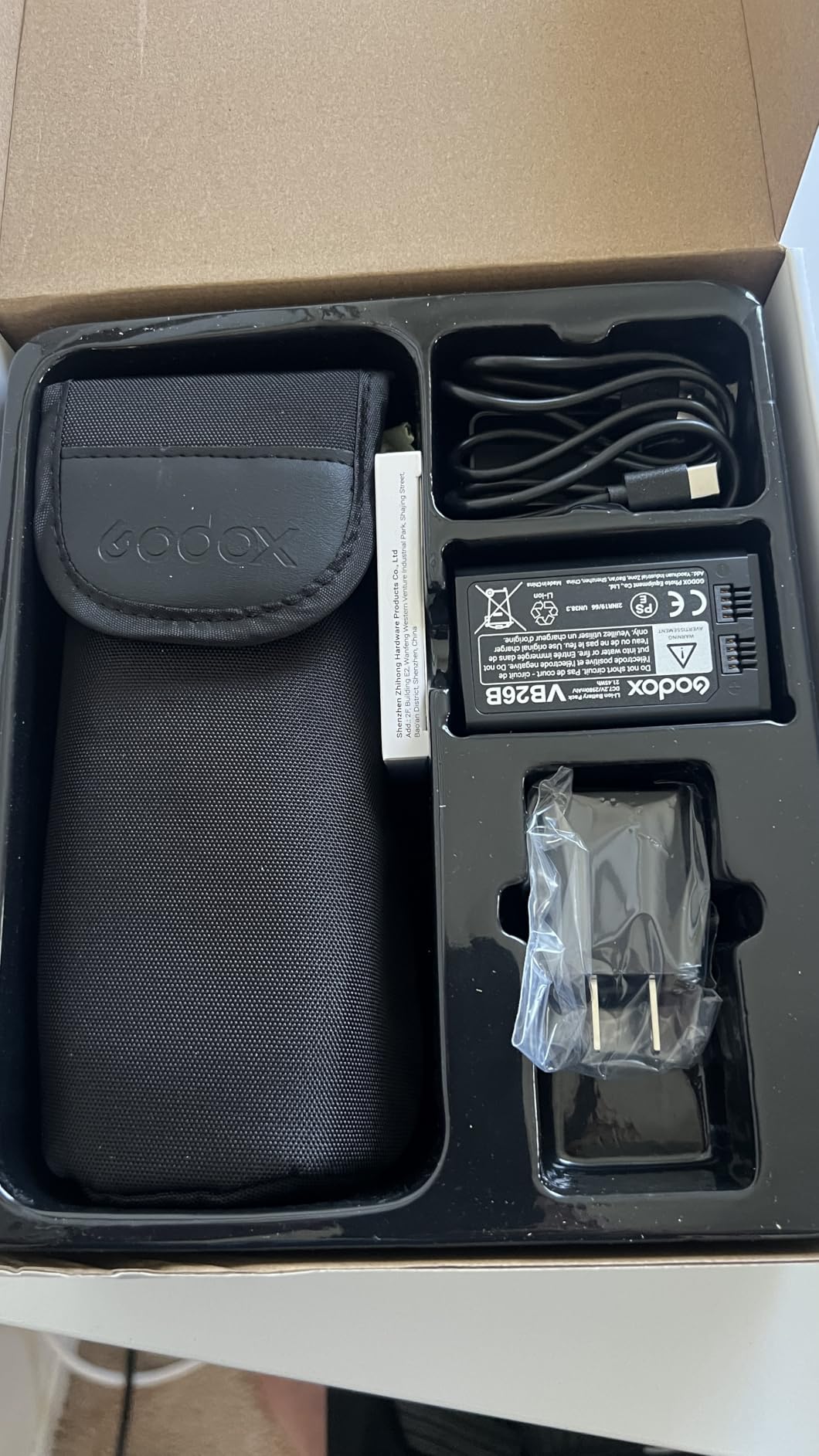
The Godox V1-C’s round head design is the reason portrait photographers love it. The first time I shot a headshot session with the V1-C through a 60cm octabox, the fall-off looked like a beauty dish without the harsh center hot spot. Round heads simply produce more flattering light than rectangular speedlite heads.
At 76Ws, the V1-C is more powerful than a typical speedlite but less powerful than the AD200 Pro II. For headshots and small group portraits, it sits in a sweet spot. I get around 400+ full-power flashes per charge, and recycling is around 1.5 seconds at full power.
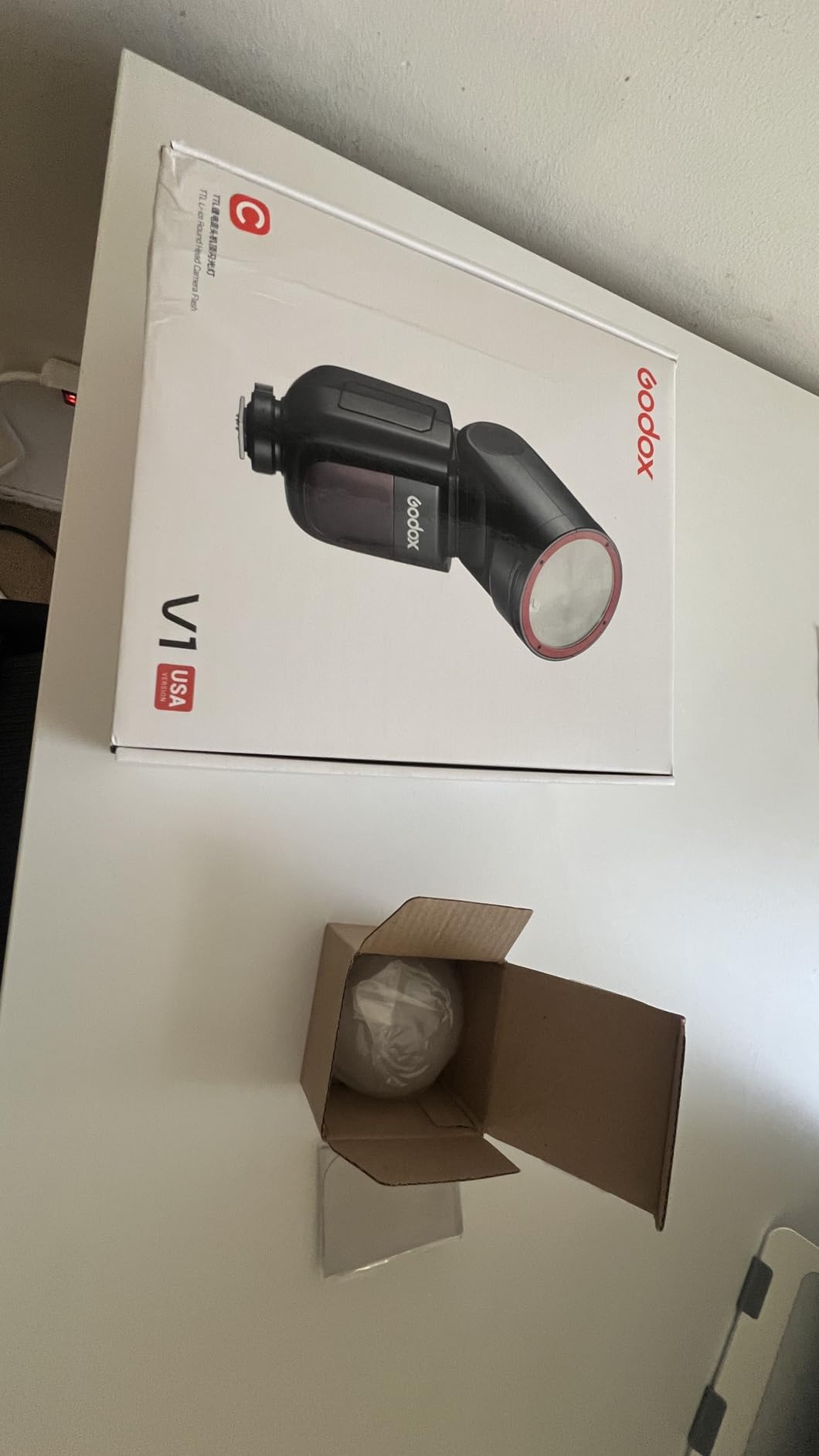
The LED modeling lamp is adjustable from 01-10 steps, which helps when focusing in low light. TTL works accurately with Canon E-TTL II, and HSS supports shutter speeds up to 1/8000s. The built-in 2.4G X system means it pairs with any Godox trigger.
The sub-flash head design also accepts round magnetic modifiers from Godox and third parties. Snap-on diffusers, grids, and color filters magnetize instantly, which speeds up my workflow during portrait sessions.
Light Quality Differences vs Standard Speedlites
The biggest difference between the V1-C and a traditional speedlite is light quality. Rectangular speedlite heads produce uneven light with hot spots. Round heads spread light evenly across the modifier surface, giving smoother catchlights in eyes and softer skin rendering.
The trade-off is slightly lower power. A 76Ws round head versus a GN60 rectangular head means about 1 stop less light. For most portraits that is fine. For sports or large groups, a higher-power unit works better.
Who Should Buy This Flash
Best off camera flash for portrait and headshot photographers who prioritize light quality. Wedding photographers shooting receptions with on-camera bounce will also love the round head’s natural look.
Skip this if you need 200Ws+ output for outdoor group shots or you shoot primarily action where recycle speed matters more than light quality.
5. Godox AD100pro — Most Portable Pro Off Camera Flash
Godox AD100pro Strobe Flash Portable 2600mAh 100Ws AD100 Pro Outdoor Flash
100Ws ultra-portable
524g weight
360 full-power flashes
TTL/HSS/Multi
Pros
- Weighs only 524 grams
- Fits in jacket pocket
- Magnetic modifier head
- Bowens mount compatible
- 360 full-power flashes
- Multi mode up to 90 flashes
Cons
- 100Ws limited for large modifiers
- Not enough power for long-distance lighting
- Small size limits modifier size
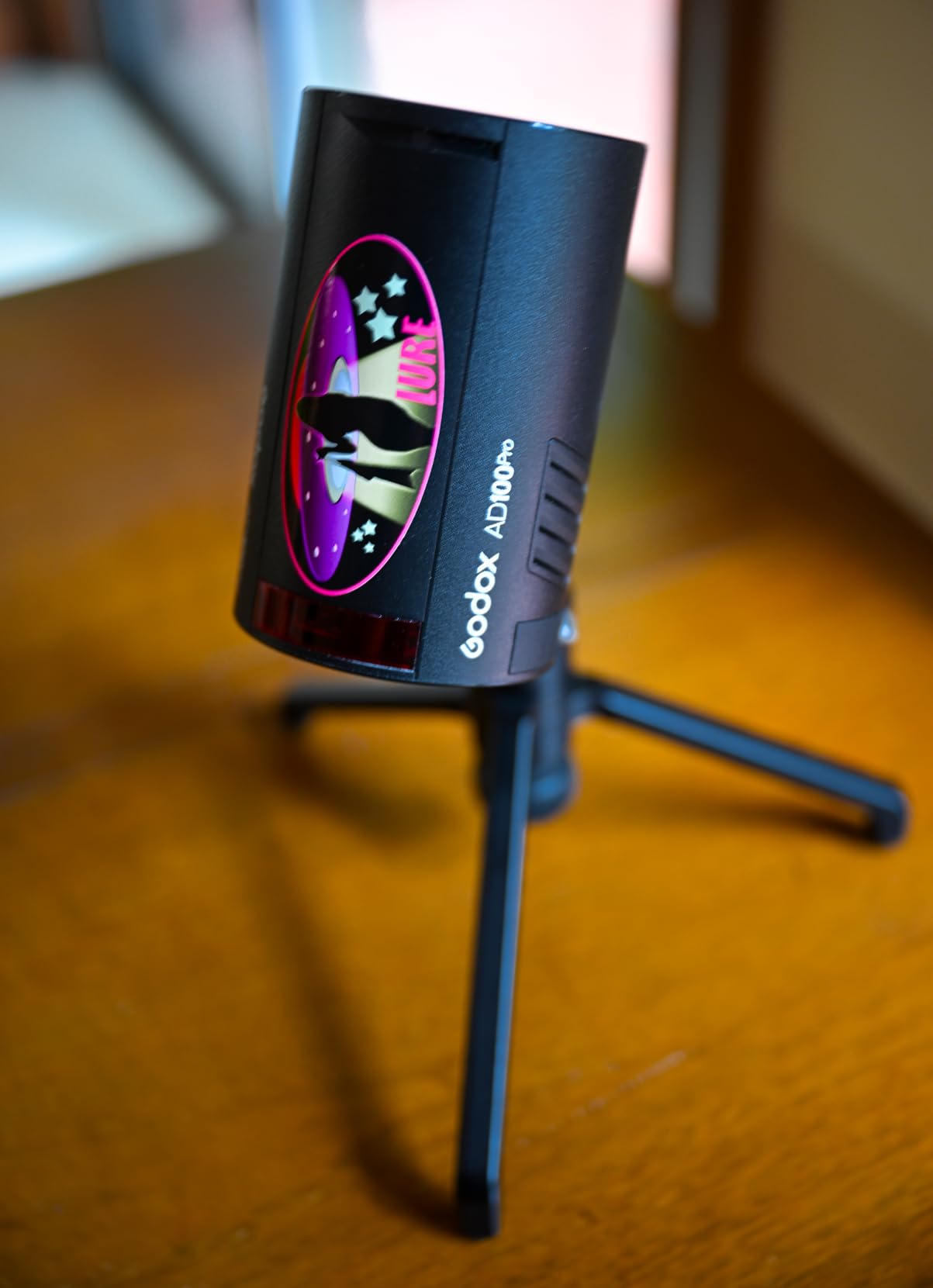
The Godox AD100pro is the off camera flash I take on every hike-and-shoot trip. At 524 grams, it weighs less than a 70-200mm lens and fits in my jacket pocket. I carried two AD100pros and an X3 trigger on a 6-mile mountain shoot and barely felt them in my bag.
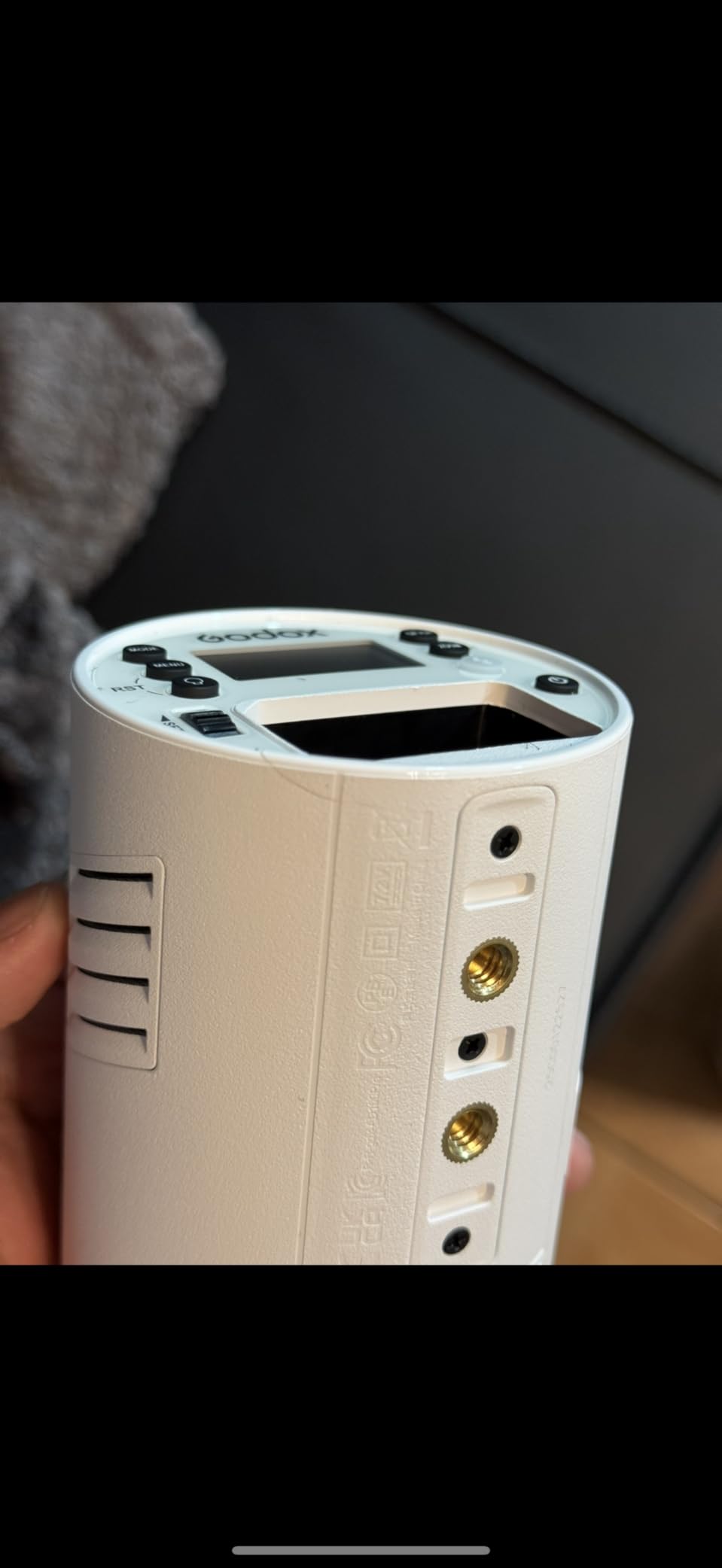
The 100Ws output is enough for headshots and small product work, and the Bowens mount means I can attach the same modifiers I use with my AD200. The magnetic head makes swapping modifiers fast, which matters when the light changes quickly outdoors.
Battery life is solid: 360 full-power flashes per charge. I shot a sunrise portrait session, drained about 60% of the battery, and still had headroom for evening frames. Recycling time is 0.01-1.5 seconds, fast enough for portraits and slow enough that I noticed it on burst-mode action.
Multi mode supports up to 90 stroboscopic flashes, which is fun for creative shots but I rarely use it. TTL, Manual, and HSS up to 1/8000s cover my actual workflow. The power adjusts in 81 levels from 1/256 to full, which gives precise control for product photography.
Travel and Outdoor Use Cases
The AD100pro shines when weight matters. After flying with it as carry-on, I appreciated the compact form factor. Most studio strobes are too bulky to justify on travel.
One thing I discovered: the small size limits which modifiers fit. A 60cm octabox is the practical ceiling. For larger modifiers, step up to the AD200 Pro II or AD300 Pro II.
Who Should Buy This Flash
Best off camera flash for travel, outdoor, and location photographers who need power in a small package. Also excellent as a second or third light in a multi-strobe kit.
Skip this if you shoot large groups, big modifiers, or you need more than 100Ws of power on tap.
6. Godox AD300 Pro II — Portable 300Ws for Outdoor Studio Work
Godox AD300 Pro II AD300ProII 300Ws Portable Outdoor Studio Strobe Flash
300Ws strobe
Bi-color 12W LED
TTL and HSS 1/8000s
0.01-1.5s recycle
Pros
- Powerful 300Ws output
- Fast 0.01-1.5s recycle time
- Bi-color modeling lamp 2800K-6000K
- Accurate TTL metering
- USB-C port for receivers
- Color group indicators
Cons
- Limited Godox-mount accessories available
- Bowens adapter needed for broader modifier compatibility
- 13 units left in stock
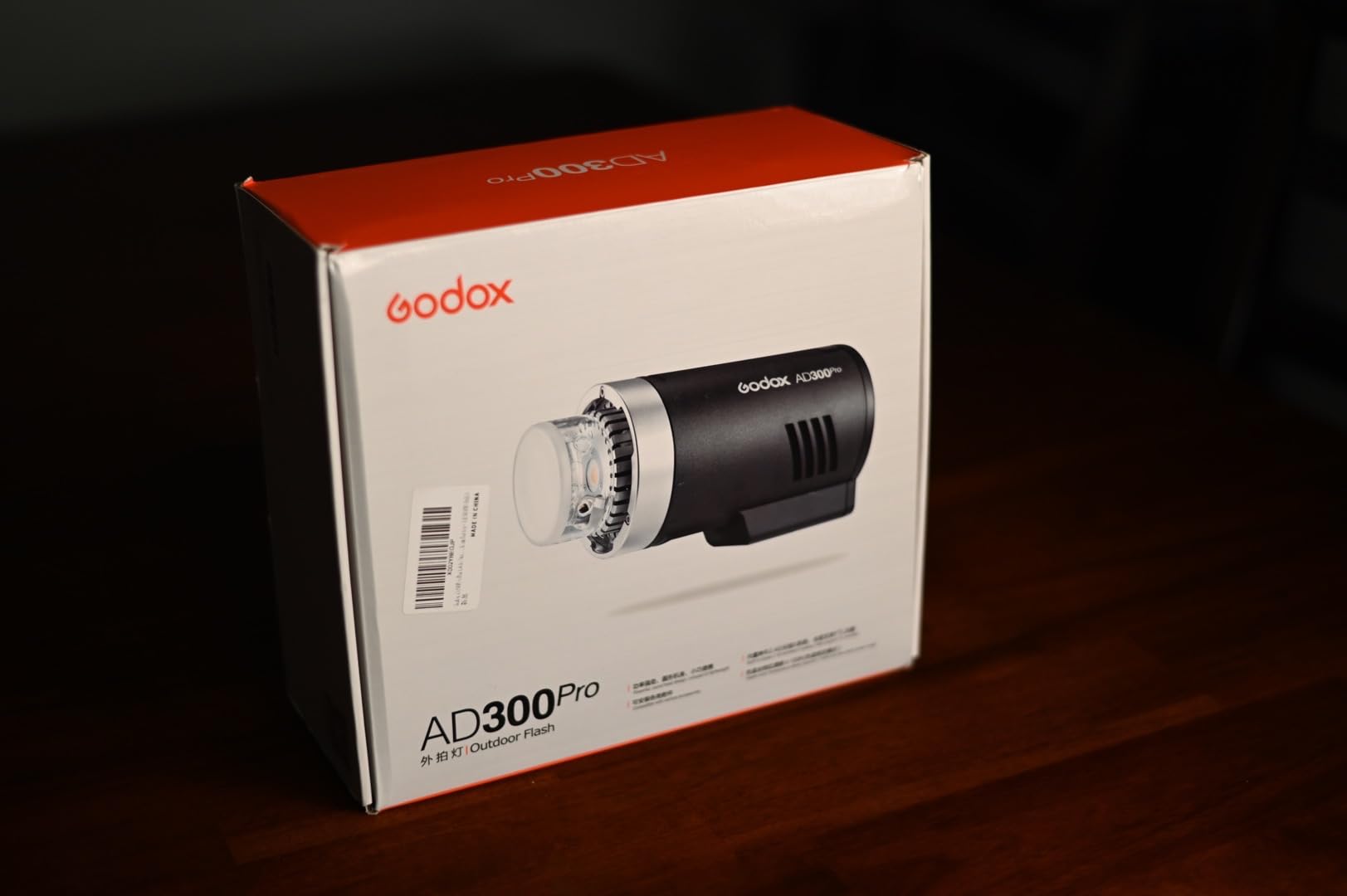
The Godox AD300 Pro II is what I grab when 200Ws is not enough but I still want portability. At 300Ws and 1.2 kg, it splits the difference between the AD200 Pro II and a full studio monolight. I used it for a sunset fashion shoot where the AD200 was running out of power against the golden hour light, and the extra 100Ws made the difference.
The bi-color LED modeling lamp (2800K-6000K) is genuinely useful for hybrid shooters. I can use the same light for video at 5600K and still shoot stills with it. The 12W output is bright enough for run-and-gun video at f/2.8 on ISO 400.

Recycling time is 0.01-1.5 seconds, which is fast for a 300Ws strobe. TTL metering is accurate, and HSS up to 1/8000s gives flexibility outdoors. The 16 color group indicators help when running multi-light setups at fast events.
The USB-C port for optional receivers is a forward-thinking feature. As Godox releases new trigger protocols, you can update without buying a new flash. I appreciate that kind of longevity from a brand.
When 300Ws Beats 200Ws
The extra 100Ws matters most outdoors. Against bright ambient light, you need more flash power to overpower the sun. The AD300 Pro II gives you that headroom while staying portable enough to carry to a location shoot.
For indoor studio work, 300Ws is plenty for most modifiers. You can run a 120cm softbox without maxing out the power, which keeps recycle times fast.
Who Should Buy This Flash
Best off camera flash for outdoor portrait, fashion, and commercial photographers who need 300Ws of portable power. Also great for hybrid photo/video shooters who want one light for both.
Skip this if you already own an AD200 Pro II and shoot mostly indoors. The 100Ws difference is less noticeable without bright ambient light.
7. Godox Xpro-C TTL Wireless Flash Trigger — The Brain of the System
Godox XproC Xpro-C TTL Wireless Flash Trigger for Canon, 1/8000s HSS
TTL and HSS 1/8000s
16 groups/32 channels
Large slanted LCD
TCM function
Pros
- Excellent build quality
- Large backlit LCD screen
- Easy-to-use buttons
- TCM function TTL-to-manual
- Works across Godox system
- 16 groups and 32 channels
- HSS and rear-curtain sync
Cons
- Modeling light only on/off
- no brightness
- Slight learning curve for full functionality
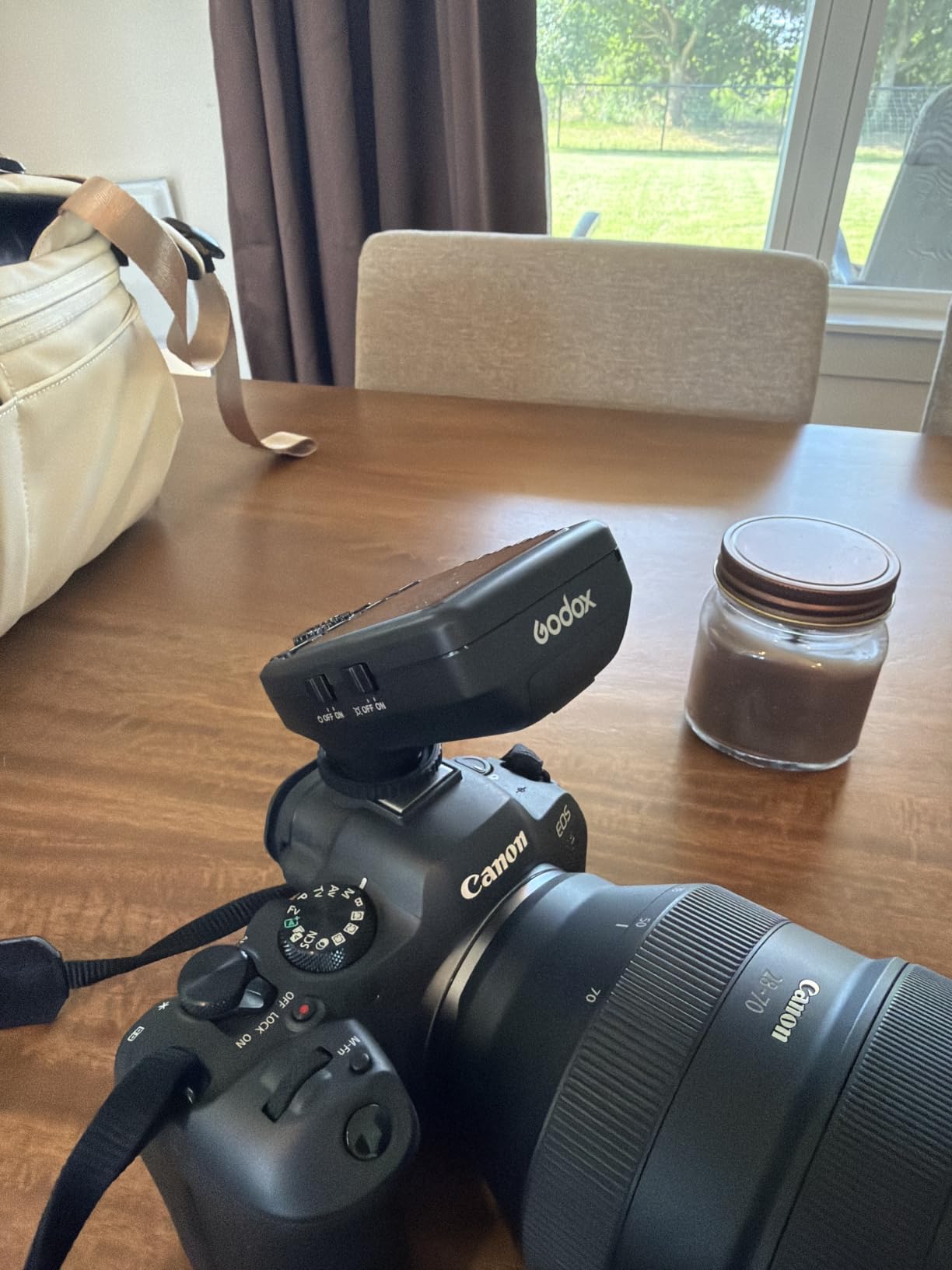
No list of the best off camera flashes is complete without a trigger. The Godox Xpro-C sits on my camera hotshoe and tells every Godox flash what to do. After two years of daily use, the build quality still impresses me.
The large slanted LCD screen is easy to see in bright sunlight, which matters when you’re shooting outdoors. The 5 dedicated group buttons let me adjust power on 5 different flash groups without diving into menus. That alone saves me 10+ seconds per lighting change at weddings.
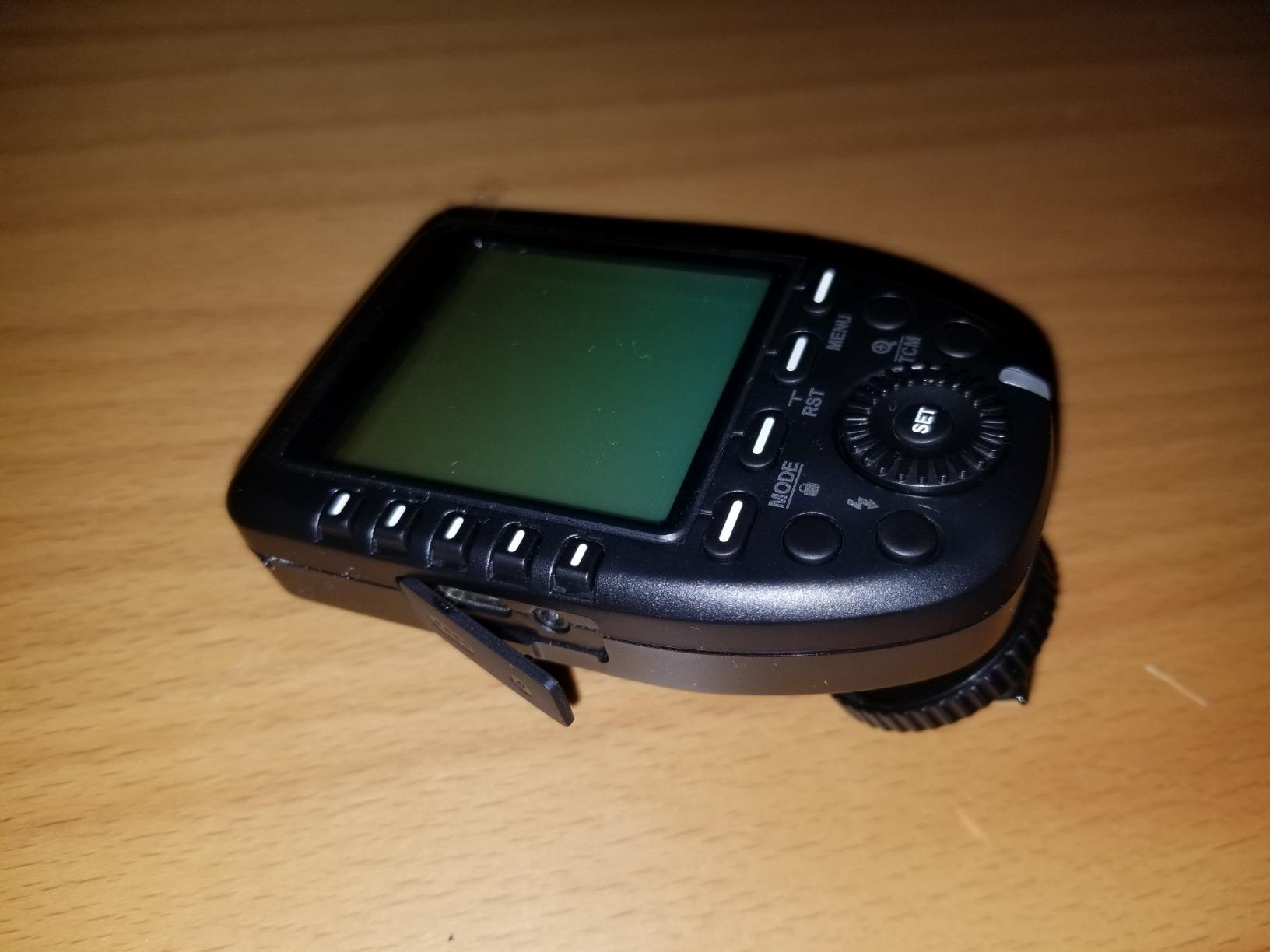
The TCM (TTL Convert to Manual) function is the standout feature. I meter a scene in TTL, press TCM, and the trigger locks that exposure as a manual power setting across all my flashes. This is the fastest way to get consistent exposures across a series of shots.
Compatibility is broad: any Godox flash with the X system works with this trigger. I run the Xpro-C with my AD200 Pro II, V860III-C, and AD100pro simultaneously without issues. 16 groups and 32 channels handle even complex multi-light setups.
Why You Need a Trigger Even With Built-in Wireless
Many Godox flashes have built-in wireless receivers, but you still need a trigger on the camera to send commands. The Xpro-C is the controller that makes the system work. Without it, you have flashes that listen but no one to talk to them.
The Xpro-C also adds features the built-in master modes lack, like the TCM function and dedicated group buttons. It is worth the $69 even if your flash has built-in wireless.
Who Should Buy This Trigger
Essential for anyone running multiple Godox flashes. The TCM function alone justifies the cost for event photographers who need consistent exposures across hundreds of shots.
Skip this if you only own one flash and shoot it manually. The trigger’s value scales with the number of lights you control.
8. Godox MS300V — Affordable Studio Strobe for Home Studios
Godox MS300V 300W Compact Studio Strobe Flash Light – MS300 Upgraded Ver.
300W studio strobe
GN58
0.1-1.8s recycle
150W LED modeling lamp
Bowens mount
Pros
- 300W power with GN58
- Fast 0.1-1.8s recycle
- Standard Bowens mount
- 150W LED modeling lamp
- Compact 2.5 kg design
- Anti-preflash function
- 16 groups and 32 channels
Cons
- Plastic-feeling build
- Cheap stand clamp
- No HSS function
- Large old-style protector covers
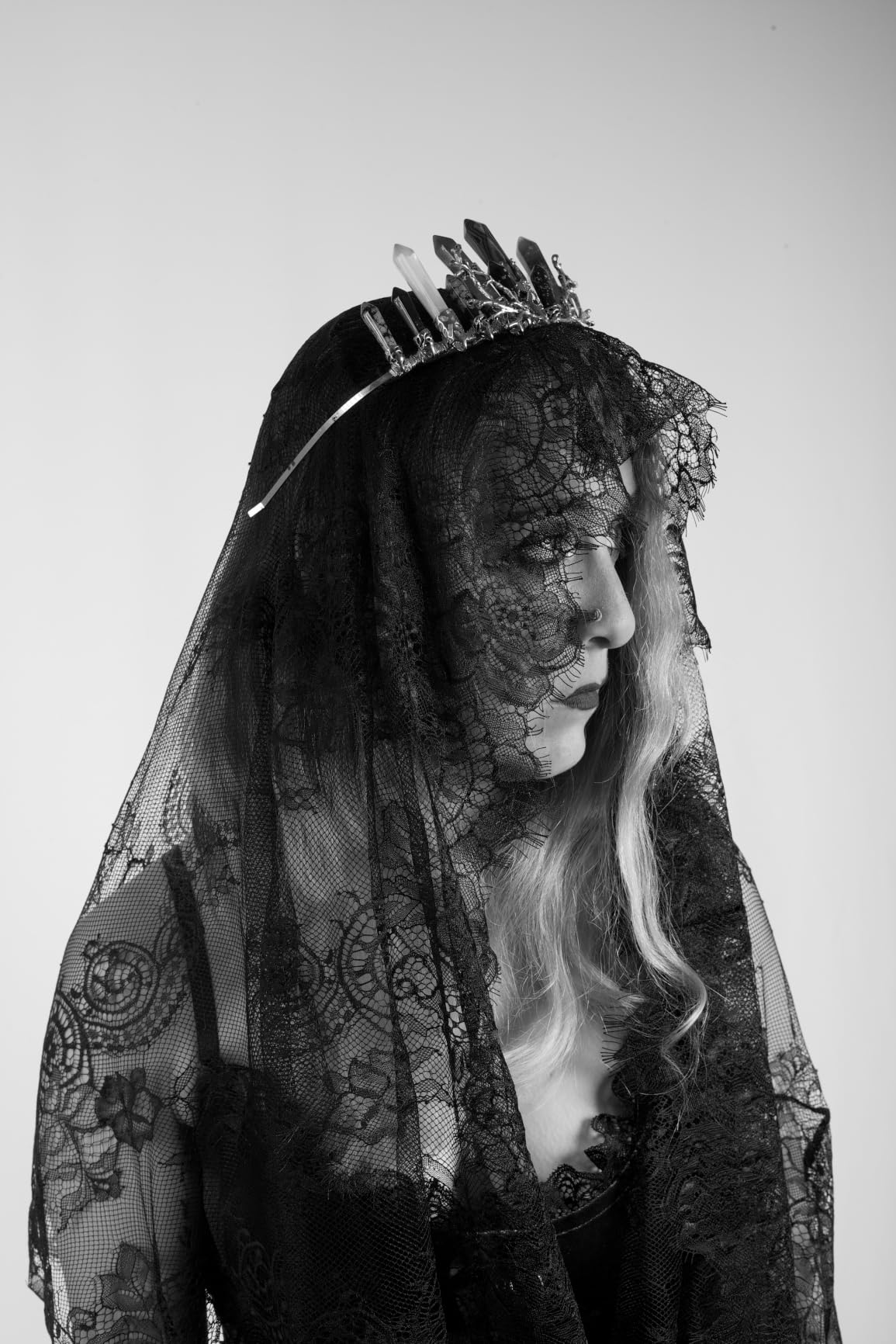
The Godox MS300V is the off camera flash I recommend for anyone building a home studio on a budget. At 300W with a GN58 guide number, it has enough power to run a 120cm softbox or shoot through an umbrella without maxing out. I used two MS300Vs in my garage studio for six months before upgrading.
The Bowens mount is the key feature here. Every major softbox, beauty dish, and umbrella modifier on the market uses Bowens mount. I attach my Glow EZ Lock softbox, my Westcott umbrella, and my cheap knockoff beauty dish all to the same MS300V without adapters.

The 150W LED modeling lamp (adjustable 5%-100%) is genuinely bright. I use it to focus and to help my subjects see where to look. Recycle time of 0.1-1.8 seconds keeps up with most portrait workflows.
The build is plastic-heavy, which is the main compromise at this price. The stand clamp feels flimsy compared to higher-end Godox studio strobes. If you travel with these, treat them gently. In a permanent home studio, they hold up fine.
Studio Strobe vs Portable Flash
The MS300V plugs into AC power, so it is not portable. The trade-off is unlimited shots without battery anxiety and higher peak power than battery strobes at the same price. For studio work, AC-powered strobes still win.
If you need portability, the AD200 Pro II or AD300 Pro II are better choices. If you shoot in a fixed location and want maximum power per dollar, the MS300V is hard to beat.
Who Should Buy This Strobe
Best off camera flash for beginners building a home studio, hobbyists shooting products or portraits indoors, and anyone who wants Bowens mount compatibility without paying $400+ per strobe.
Skip this if you shoot on location or need HSS. The MS300V tops out at 1/200s sync speed and weighs 2.5 kg plus the stand.
Buying Guide: How to Choose the Best Off Camera Flash
Choosing the best off camera flash comes down to three things: where you shoot, how much power you need, and whether you need TTL automation. Let me walk you through each factor based on what I learned testing these 8 units.
Power Output (Ws) and When You Need It
Watt-seconds (Ws) measures the total energy of a flash pulse. Higher Ws means more light, but also more weight and cost. After testing all 8 flashes, here is my real-world guidance:
Under 100Ws (V1-C at 76Ws, AD100pro at 100Ws): Best for portraits, headshots, and small products. Struggles outdoors against bright sun.
100-200Ws (AD200 Pro II): The sweet spot for most photographers. Powerful enough for outdoor portraits with modifiers, portable enough to travel.
200-300Ws (AD300 Pro II): Needed for large modifiers, big groups, and overpowering midday sun.
300Ws+ (MS300V): Studio strobes for fixed-location work where AC power is available.
For beginners, I usually recommend starting with a 100Ws portable strobe. You can always add more powerful units later as your needs grow.
TTL vs Manual Flash Modes
TTL (Through-The-Lens) metering lets the camera calculate flash power automatically based on what it sees through the lens. Manual mode requires you to set the power yourself.
TTL is faster for fast-moving events like weddings and receptions. You point, shoot, and the camera adjusts. Manual is more consistent shot-to-shot and teaches you how light works. I run TTL for events and manual for portraits.
If you shoot a mix, the AD200 Pro II and V860III-C both support TTL and manual with a quick toggle. The TT600 is manual only, which is why it costs less.
Trigger Systems and Ecosystem Compatibility
Every off camera flash needs a way to fire when you press the shutter. Three options exist:
Cable sync: Old-school, reliable, but limits mobility to the cable length.
Optical wireless: The slave flash detects the master flash. Works indoors, fails in bright sunlight.
Radio wireless (2.4G): The modern standard. Reliable indoors and out, 100m range typical. The Godox X system uses 2.4G.
Buy into one ecosystem and stay there. Mixing Godox with Profoto or Elinchrom triggers gets expensive fast. The Godox X system handles all 8 flashes in this guide, which is why I picked mostly Godox units.
Battery Life and Recycling Time
Two specs matter here: how many flashes per charge and how fast the flash recycles between shots.
The AD200 Pro II’s 500 flashes per charge and 0.01-1.8s recycle is the best combo I tested. For long events, that means no battery anxiety. The TT600’s AA batteries and 230 flashes per set require spare batteries but offer peace of mind when recharging is not an option.
Recycling time matters for action and burst shooting. Under 2 seconds is fast. Over 3 seconds, you’ll miss shots at events.
Light Modifiers and Mount Compatibility
The mount on your flash determines which softboxes, umbrellas, and beauty dishes fit. Three standards dominate:
Bowens mount: The most common. Used on the MS300V, AD100pro (with adapter), and most studio strobes.
Godox mount: Proprietary, used on the AD200 Pro II and AD300 Pro II directly. Adapters exist for Bowens.
Speedlite foot: Standard on the V860III-C, V1-C, and TT600. Limited modifier options without adapters.
For maximum modifier compatibility, Bowens mount wins. For pure speedlite use, the speedlite foot is fine.
Weather Resistance and Outdoor Use
None of the 8 flashes I tested are weather-sealed. None claim water resistance. For outdoor work, I use a rain cover or shoot under a canopy. If you shoot in rain or snow regularly, consider a hard plastic cover or shoot only with sealed professional strobes (which cost 4-5x more).
Frequently Asked Questions
Who makes the best camera flashes?
Godox dominates the mid-range off camera flash market with the best balance of price, power, and ecosystem compatibility. Their X wireless system works across speedlites, pocket strobes, and studio strobes, which makes building a multi-light kit painless. For professional work where budget is less of a concern, Profoto and Elinchrom make premium options with faster recycle times and better weather sealing.
Is off camera flash worth it?
Yes, off camera flash is worth it for any photographer who shoots people, products, or events. Moving the flash off the camera gives you control over lighting direction, shadows, and quality that on-camera flash cannot match. A single off camera flash placed camera-left or behind the subject transforms flat, available-light images into dimensional, professional-looking shots. The learning curve is real but the payoff is permanent.
How do you trigger an off camera flash?
There are three main ways to trigger an off camera flash: cable sync, optical wireless, and radio wireless. Cable sync is the most reliable but limits your mobility to the cable length. Optical wireless uses a light pulse from the master flash to trigger slaves, which works indoors but fails in bright sunlight. Radio wireless (2.4GHz) is the modern standard, offering reliable triggering indoors and outdoors with ranges typically up to 100 meters. The Godox X system uses 2.4GHz radio and is what I recommend for most photographers.
What is the best off camera flash for beginners?
The Godox TT600 is the best off camera flash for beginners who want to learn manual lighting. It costs about $65, has a GN60 guide number, and runs on AA batteries you can find anywhere. The manual-only design forces you to learn how flash power, aperture, and ISO interact, which builds lighting skills that transfer to any future flash. If you prefer TTL automation from day one, the Godox V860III-C offers TTL, HSS, and a rechargeable battery for about $199.
Is Neewer or Godox better?
Godox is generally better than Neewer for serious off camera flash work, though Neewer offers strong budget options. Godox’s X wireless system is more mature, with consistent TTL and HSS support across the entire flash and trigger lineup. Neewer flashes often use older wireless protocols or require separate triggers for each model. For a single flash, Neewer’s Q-TTL speedlites are decent budget choices. For multi-light setups, Godox’s unified X system saves frustration and money.
Final Verdict: Which Off Camera Flash Should You Buy?
After testing all 8 of these off camera flashes over three months, my top recommendation is the Godox AD200 Pro II for most photographers in 2026. It hits the sweet spot of 200Ws power, dual flash heads, fast recycle time, and reasonable weight. Pair it with the Xpro-C trigger and you have a complete system that handles portraits, weddings, and events.
If budget matters more than features, the Godox TT600 teaches you manual flash fundamentals for $65 and still puts out serious light. If you shoot Canon and want one flash for everything, the V860III-C’s on-and-off-camera versatility and rechargeable battery make it the best value pick. If you prioritize light quality for portraits, the V1-C’s round head is worth the premium.
The best off camera flash is the one you actually use. Start with one flash that matches your most common shooting scenario, learn it inside and out, then expand your kit. Every photographer I know who shoots with off camera flash says the same thing: they wish they started sooner.