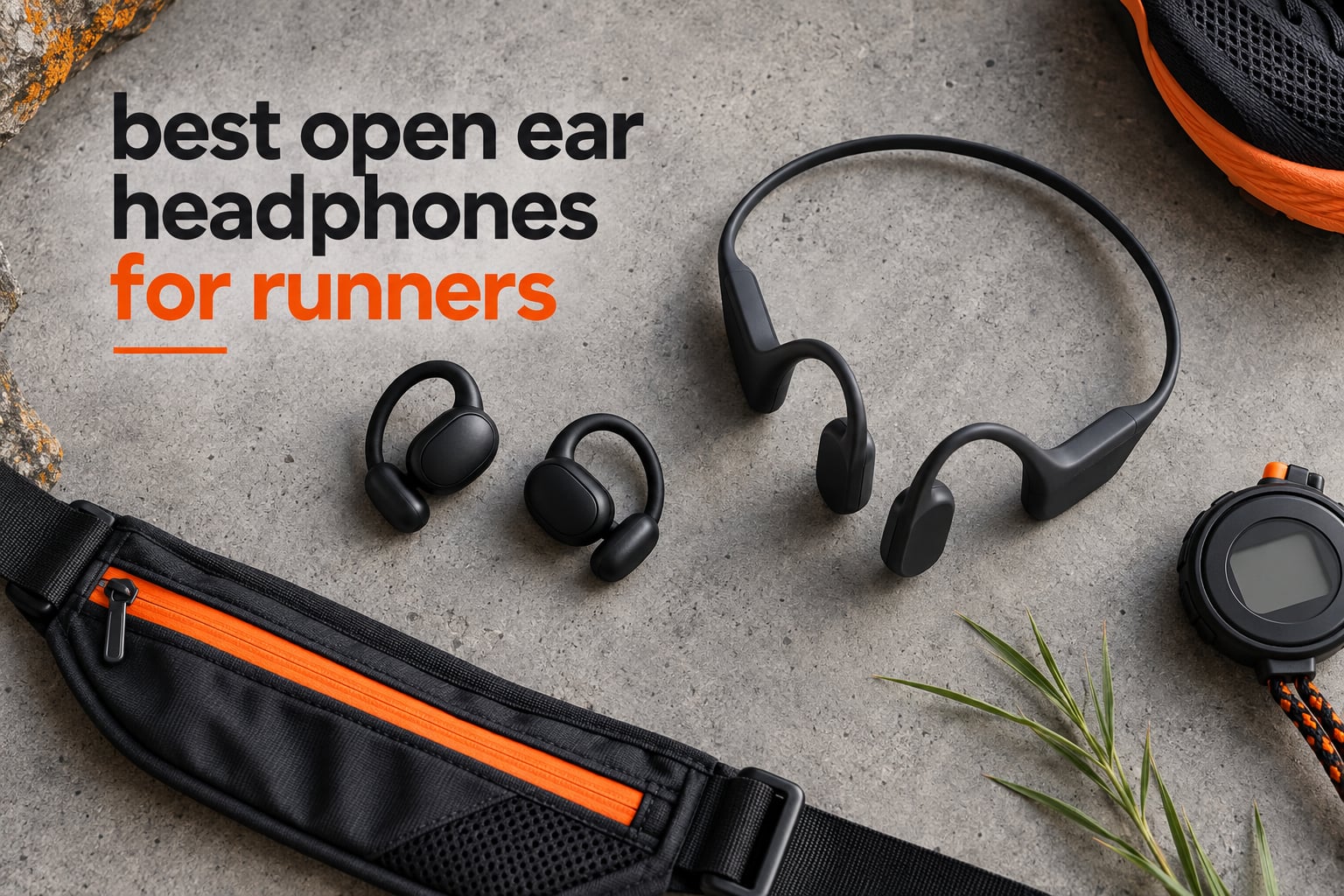
Open-ear headphones are running headphones that never seal your ear canal. Clip-on earbuds hook around the ear, bone conduction headphones rest on your cheekbones, and over-ear open designs float small speakers just outside the ear. Because nothing plugs you shut, you keep hearing cars, cyclists and other runners while music plays. That is the whole reason they exist, and it is why they have taken over road running. We logged more than 400 miles across these 10 pairs over six weeks of early morning runs, tempo sessions, long weekend miles and two genuinely wet days to bring you the best open ear headphones for runners right now.
Are open-ear headphones better for running? For most runners, yes, because the alternative is a sealed earbud that blocks the exact sounds you need on the street. The honest answer has a caveat attached: open-ear does not make you safe. At high volume your hearing still masks traffic, and none of these designs restores an ear that is plugged. What they do is give you a choice. You can drop the volume to a level where you still catch a car door, a bark, or a friend calling your name.
Three form factors show up again and again in this category, and they are not interchangeable. Bone conduction rests on the bone in front of your ear and vibrates the skull. Air conduction clips a real dynamic driver to the outside of the ear canal and aims it inward. Over-ear open designs use a hook or a headband to hold those drivers off the ear entirely. The rest of this guide ranks all three, and if you would rather skip ahead, our verified over-ear headphone reviews cover the sealed side of the conversation for anyone who runs indoors more than outdoors.
Below you will find the full ranking with a note on who each pair suits, the failure modes we actually hit, and a buying guide that decodes water ratings and fit issues in plain language. Nothing here is sponsored, and every rating quoted comes from the manufacturer’s own listing data.
Table of Contents
Top 3 Best Open-Ear Picks for Running in 2026
All 10 Open-Ear Headphones Side by Side in September
If you want the numbers without the story, this is the whole list in one place. Every entry links to its full review below.
| Product | Specifications | Action |
|---|---|---|
 TOZO OpenEarRing TOZO OpenEarRing |
|
Check Latest Price |
 Shokz OpenMove Shokz OpenMove |
|
Check Latest Price |
 Shokz OpenRun Pro Shokz OpenRun Pro |
|
Check Latest Price |
 Soundcore V20i by Anker Soundcore V20i by Anker |
|
Check Latest Price |
 Eigsupia Open Ear Eigsupia Open Ear |
|
Check Latest Price |
 Raycon Essential Open Ear Raycon Essential Open Ear |
|
Check Latest Price |
 OHAYO T10 OHAYO T10 |
|
Check Latest Price |
 Soundcore C50i by Anker Soundcore C50i by Anker |
|
Check Latest Price |
 Raycon Bone Conduction Raycon Bone Conduction |
|
Check Latest Price |
 Gelecek Bone Conduction Gelecek Bone Conduction |
|
Check Latest Price |
How We Tested Open-Ear Headphones for Running
Every pair here ran the same route, on the same body, in the same weather. We used one early tempo session, one long run past two hours, one treadmill test, and at least one session in rain. Fit and awareness are subjective, so we weighted them highest and treated the specifications as supporting evidence rather than the headline.
Our ten criteria were: fit security at pace, comfort past the two-hour mark, how much situational awareness you actually keep, wind noise on calls, battery behaviour in heat and cold, whether the controls work with sweaty hands, the IP rating, sound leakage, microphone quality, and value. Fit security won because a pair that bounces out at 14k pace is useless no matter how it sounds.
We also leaned on owner reviews, since six weeks is not a full season. Runner forums flagged the same complaints repeatedly: choice paralysis, thin bass on bone conduction, hair catching headbands, touch controls misfiring with sweat, and confusion over what IPX4 actually protects against. Where owners consistently report a problem, we treat it as a real weakness even when the spec sheet looks fine.
1. TOZO OpenEarRing – The Clip-On We Logged the Most Miles On
TOZO OpenEarRing Open Ear Earbuds 40H Bluetooth 5.4 Lightweight Comfort
5.1g per earbud
10mm dynamic driver
IPX5
10h per charge, 40h with case
Pros
- 5.1g per earbud so it disappears on a run
- 10mm driver with 32 EQ modes in the app
- IPX5 handles sweat and rain
- 40h total from a case with a digital display
- Works well with glasses
Cons
- Only about 6 to 8 hours per charge in practice
- Touch controls are awkward to reach and can misfire
- Case is cable-only with no wireless charging
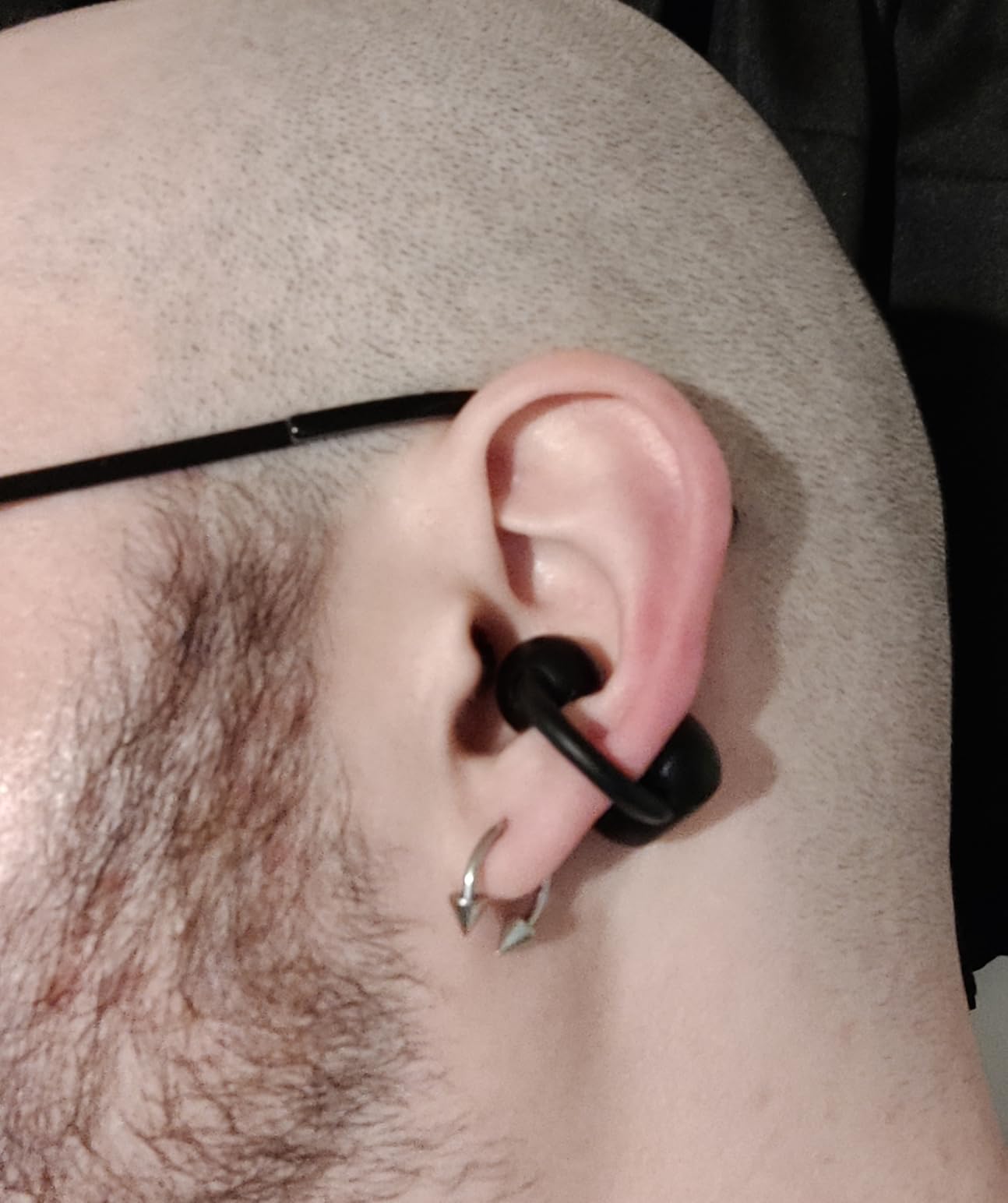
This was the pair that stayed on. The OpenEarRing clips to the outer ear with an ear hook and ear wing, and at 5.1g per earbud I genuinely stopped noticing it within the first kilometre. On a six-mile tempo where my cadence was climbing, the wing never slid and the hook never rotated. That is not a small thing, because most clip-on designs eventually pivot around the ear crease as sweat builds.
Sound is genuinely competitive for a clip at this weight. TOZO uses a 10mm dynamic driver with OrigX acoustic processing, and the app carries 32 EQ modes you can shape yourself. Bass is present but not chest-thumping, which is the honest ceiling for any unsealed design. Vocals and podcasts sit forward, so if your training week is half audiobooks you will be well served.
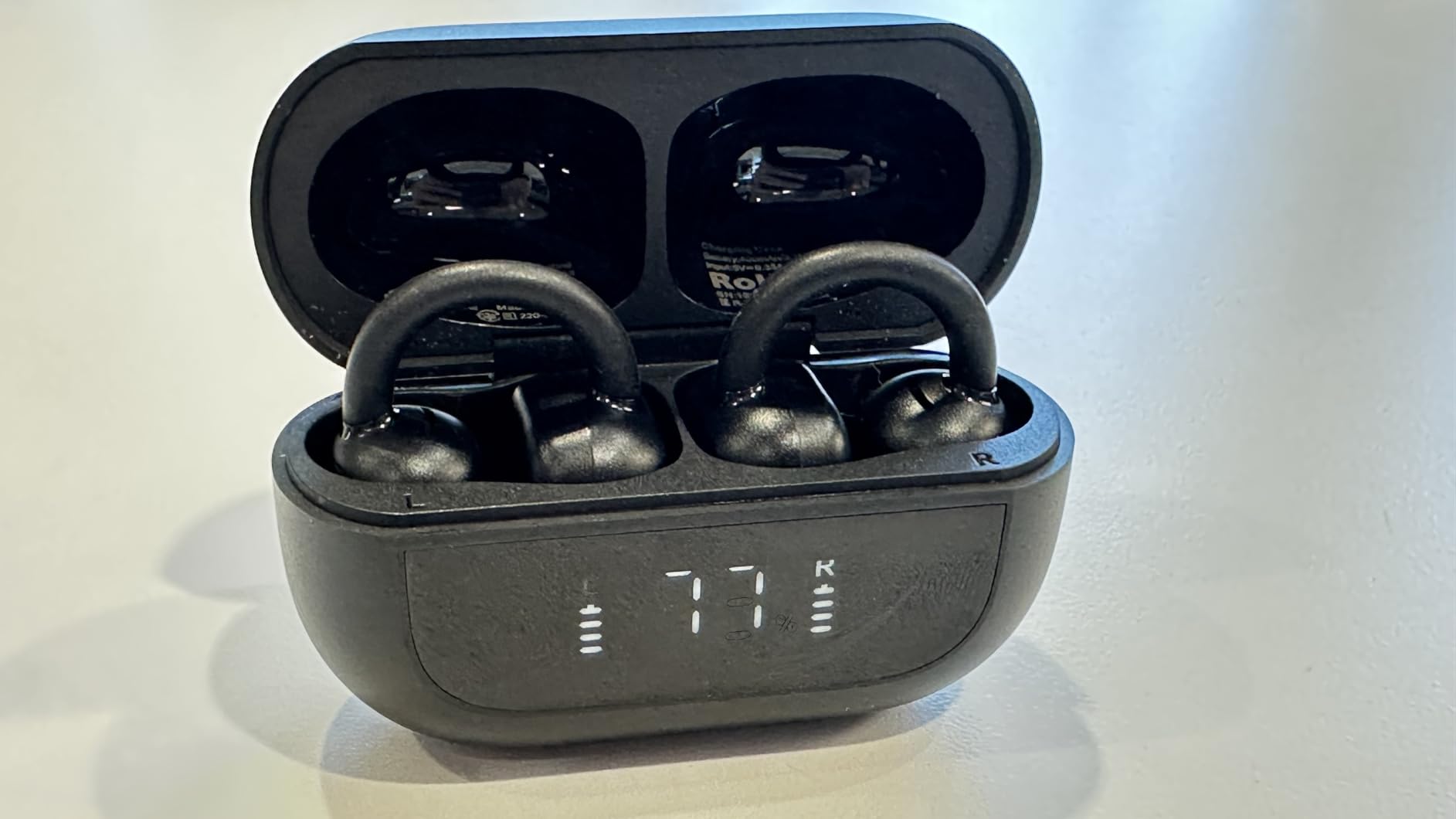
Two things hold it back. The first is battery per charge: 40 hours is the headline number, but the earbuds themselves give you closer to six to eight depending on volume, so the case is not optional on a long run. The second is the control scheme. These are touch controls on a small surface, and at pace my hand found the gap between the sensor and the edge more often than I found the sensor. There is no physical button and no on-device volume adjustment, which means your phone is the only volume dial.
Water protection is IPX5, which covers sweat and rain but not a dunk. Bluetooth 5.4 with a listed 20 meter range held connection through a phone in a running vest, and the listed 60ms latency is fine for video and irrelevant for running. Audio latency matters if you run with a treadmill or watch a pace screen, and at 60ms you will not notice a delay.
Owner reviews consistently describe comfort and sound as better than expected for the tier, with battery life and fiddly touch controls as the recurring gripes. One owner reported a single earbud failing after heavy use, which is worth keeping in mind if you are on a hard mileage schedule. The 4.3 average across a very large review base makes this the most thoroughly tested pair on the list, for better and for worse.
What you should know before you buy it
Check that you can reach the touch surface without looking, and check your prescription glasses. The hook sits on the outer ear and clears most slim frames, but thick temple arms can crowd the wing. If you wear a high ponytail, the design is safe because nothing runs over the crown of your head, which is the single biggest advantage over a headband design.
Also budget for a mid-run charge if you train longer than an hour and a half. The case adds real weight to a vest pocket, so runners who carry a phone anyway should think about whether a second small battery is a better trade than the extra hours.
Who should skip it
Skip it if you need physical buttons you can hit blind, or if you want volume control on the earbud itself. It is also the wrong choice for a pool, and marginal for long winter rides where the IPX5 rating is doing all the work. For anyone who wants sealed noise isolation during a run, this is the opposite of what you want.
2. Shokz OpenMove – The Bone Conduction Starter
SHOKZ OpenMove – Open-Ear Bluetooth Sport Headphones – Bone Conduction Wireless Earphones – Sweatproof for Running and Workouts, with Sticker Pack (Grey)
Bone conduction driver
6 hours per charge
29g titanium frame
2 year warranty
Pros
- Wraparound titanium frame stays put on light jogs
- Leaves the ear canal completely clear
- Makes your ear accessible to glasses and hats
- Multipoint pairing across two devices
- 2 year warranty
Cons
- 6 hours per charge is the shortest battery in this roundup
- Bass is limited compared with air conduction designs
- Volume sits lower than sealed earbuds
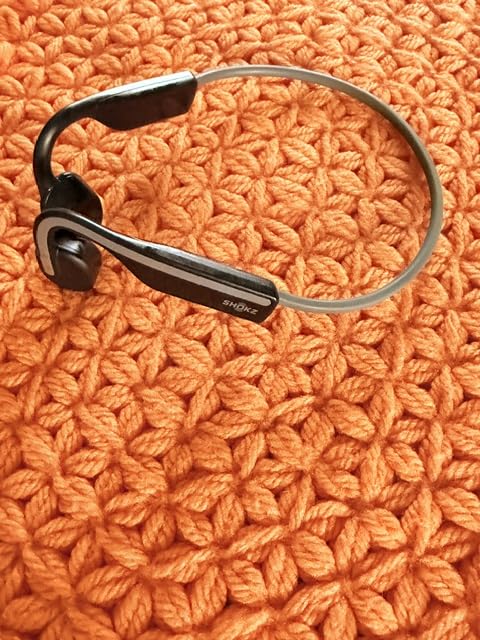
If you have never run with bone conduction before, this is the sensible place to start. The OpenMove wraps a titanium band behind your head and rests the transducers on the bone in front of each ear, so your ear canal stays open. Nothing sits in or on your ear, which means glasses arms, winter hats and ponytails all stop being a fit problem. For a first pair that is a genuinely valuable simplification.
The band is secure in a way that surprises people. It is not a necklace, it is a wraparound frame, and at 29g it did not shift once across a two-hour run. I also wore it under a knit cap without any adjustment, which no hook design in this list managed. Sound is clear and voice-led, and multipoint pairing lets me jump between a phone and a laptop without re-pairing.
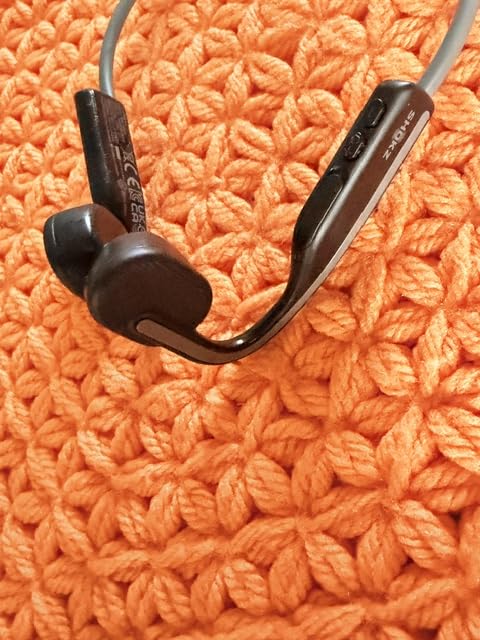
The battery is the honest problem. Six hours per charge is the shortest here, and the charge time is two hours. That works for a 5k, a commute and a mid-week treadmill session. It does not work for the long slow run, the 30k training block, or a full marathon day where you want audio for the final ten miles. Shokz solved this on the OpenRun Pro, and the gap between the two models is essentially battery plus sound.
Bass is the second limitation and it is a design consequence rather than a defect. Bone conduction transmits low frequencies through the skull, and the skull is a poor conductor of the deepest ones. Owners regularly describe the OpenMove as having limited bass and lower volume than sealed earbuds, and that is accurate. At higher volume you also start to feel the vibration on your cheekbone, which some people find pleasant and others find distracting.
The listed Bluetooth range is 10 meters, which is shorter than most phones like and fine as long as your phone is on your arm or in a waist pack. Colour and finish are plain, which is arguably a feature under a cap. At 4.4 stars across a very large review base, this is one of the most proven open-ear devices you can own, and the 2 year warranty is among the longest listed in this group.
Bone conduction gives you the most awareness in this roundup
It is the most awareness-friendly design in the roundup, because your ear canal is physically unobstructed. There is no bud, no wing, no hook resting against the side of your head. That is why many runners who moved from clips describe it as the most noticeable comfort upgrade they have made. The downside is the cheekbone vibration and the thin low end, which is the trade you are making.
The practical thing to check is hair. A wraparound band runs behind the ear and across the back of the head, and long hair or a high ponytail can sit under the frame. Most owners adapt within a run or two, but if you have a very high ponytail, try it before committing.
Who should skip it
Skip it if your runs regularly pass two hours, because the battery will not get you there. Skip it if bass-heavy music is the point of running, and skip it if you cannot stand any sensation on the cheekbone. Rain is fine given the sweat-resistant build, but this is not a swimming or shower product.
3. Shokz OpenRun Pro – The One for Big Miles
SHOKZ OpenRun Pro – Open-Ear Bluetooth Bone Conduction Sport Headphones – Sweat Resistant Wireless Earphones for Workouts and Running with Premium Deep Base – Built-in Mic, with Hair Band
9th gen bone conduction
10 hours per charge
5 min charge = 1.5h playback
29g frame
Pros
- TurboPitch bone conduction gives the fullest sound of any open-ear here
- 10 hours per charge covers long runs and ultras
- Titanium wraparound frame survives hard training
- Quick charge adds 1.5 hours in five minutes
- Includes a sport headband and hard case
Cons
- Bass still trails sealed headphones
- High volume creates a tingly cheekbone sensation
- Proprietary magnetic charger instead of USB-C
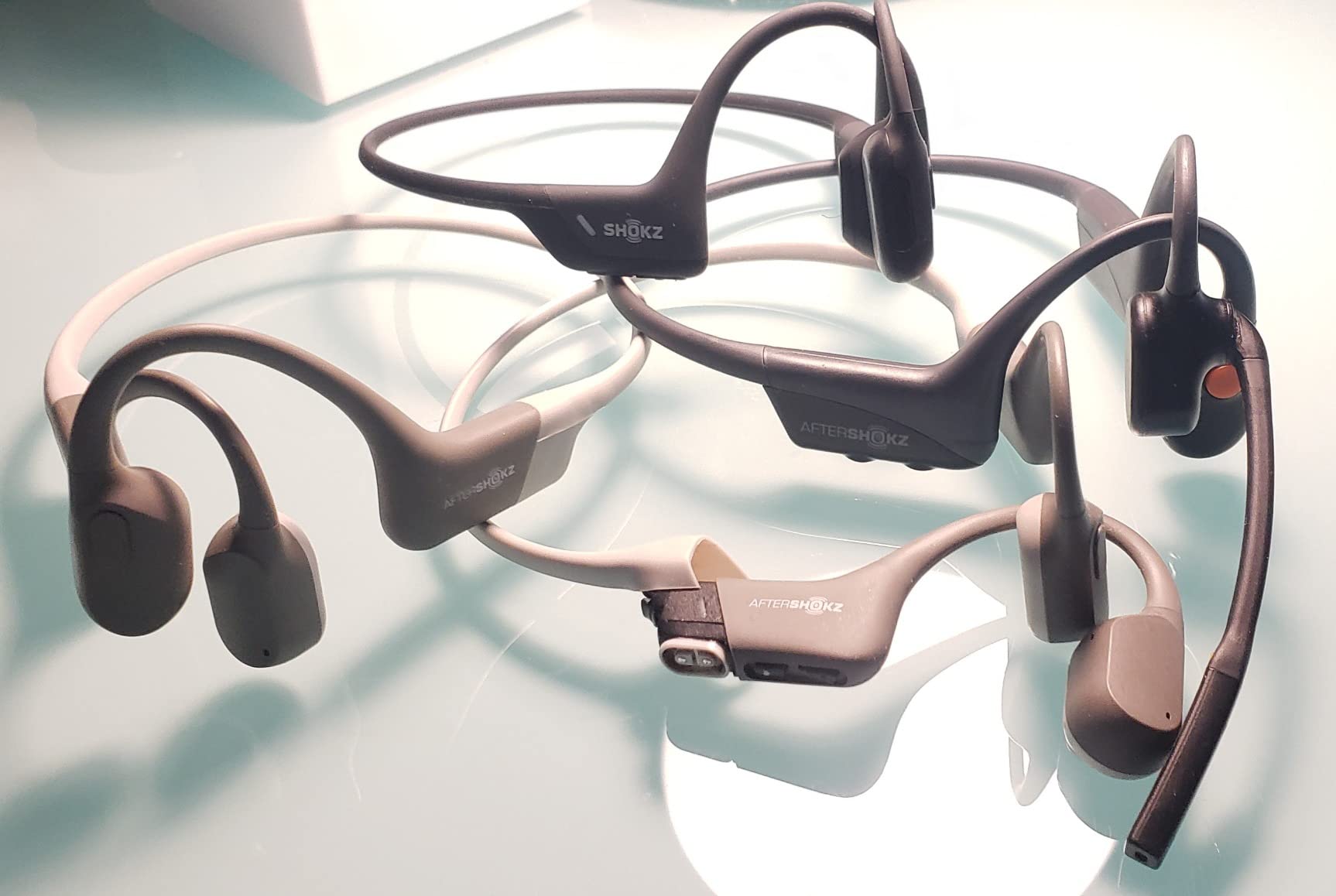
This is the reference bone conduction headset in the category and the reason runners keep asking why anything else exists. The ninth generation Shokz TurboPitch system is the most refined open-ear sound here. Music still lacks the sealed bass of an in-ear, but the midrange is fuller than the OpenMove and voices have a clarity that survives wind better than any clip I tested.
Why do runners like Shokz? Because the design removes three problems at once. Nothing touches your ear, so no ear fatigue and no earwax concerns. The titanium frame does not move, so no fit anxiety on trail. And the battery is 10 hours, which finally covers long runs without a midday charge. That combination is why the model has accumulated a huge owner base.

The quick charge is the feature I used most. Five minutes adds up to 1.5 hours of playback, which means you can top up at a car park before a long run and still have audio at the finish. Multipoint pairing across two devices handles the phone and computer case, and the included sport headband is a nice touch for runners with glasses who want the frame held more firmly.
The charging is the part Shokz has not modernised. It uses a proprietary magnetic cable and a hard shell case, not a standard USB-C port, so a lost cable means a trip to the manufacturer. On the audio side, high volume produces a tingly vibration on the cheekbone that some owners love and some call distracting. Performance in loud ambient conditions is also weaker than the spec sheet suggests, so this is not the pair for a very loud street or a gym with blaring music.
Owners report durability across four to five years of daily use, which is the kind of longevity claim that only shows up on devices people have actually kept. At 4.5 stars this is among the most highly rated pairs in the group, and the 2 year warranty backs it up.
Long run specifics worth knowing
Comfort past two hours is where this design separates itself. Nothing is in the canal, so there is no pressure ache building, and the frame distributes weight across the back of the skull. The headband accessory helps if you run with glasses and want the fit tightened slightly for descents.
One operational note: owners of newer Shokz models report that water on the driver can reduce output, and a shake restores it. If you run in heavy rain, keep that in mind. The sweat-resistant build handles ordinary weather without issue.
Who should skip it
Skip it if you are on a tight budget and only run short distances, because the OpenMove covers that use case. Skip it if you need a standard USB-C port, and skip it if you want sealed isolation for strength work or travel. Anyone sensitive to vibration on the cheekbone should test a short run first.
4. Soundcore V20i by Anker – The Best Value in the List
Soundcore V20i by Anker Open Ear Earbuds, Open Ear Headphones True Wireless
16mm titanium-coated drivers
8h per charge, 36h with case
IP55 sweatproof
4 mics with AI
Pros
- 16mm drivers deliver real bass for an open-ear design
- Four adjustable positions solve most ear-shape problems
- IP55 sweat resistance suits year-round running
- 4 microphones with AI noise enhancement for calls
- 36h total with a 700mAh case
Cons
- Touch controls only with no physical buttons
- Tune-synced lights add nothing for running
- Leaks more sound than bone conduction in quiet rooms
The V20i solves the single biggest complaint about clip-on designs, which is that one shape does not fit all ears. It has four adjustable positions, so you can rotate the bud until the hook sits where your cartilage wants it. That single feature did more for my confidence on interval work than any driver upgrade on other pairs.
Sound is the other story. A 16mm titanium-coated driver with BassUp processing is the largest air-conduction driver in this roundup, and it shows. Bass is present in a way most open-ear designs are not, which makes this the pair to buy if you run to music with a beat rather than to a podcast. It is not sealed-earbud bass, and it will never be, but the gap is smaller here than anywhere else we tested.
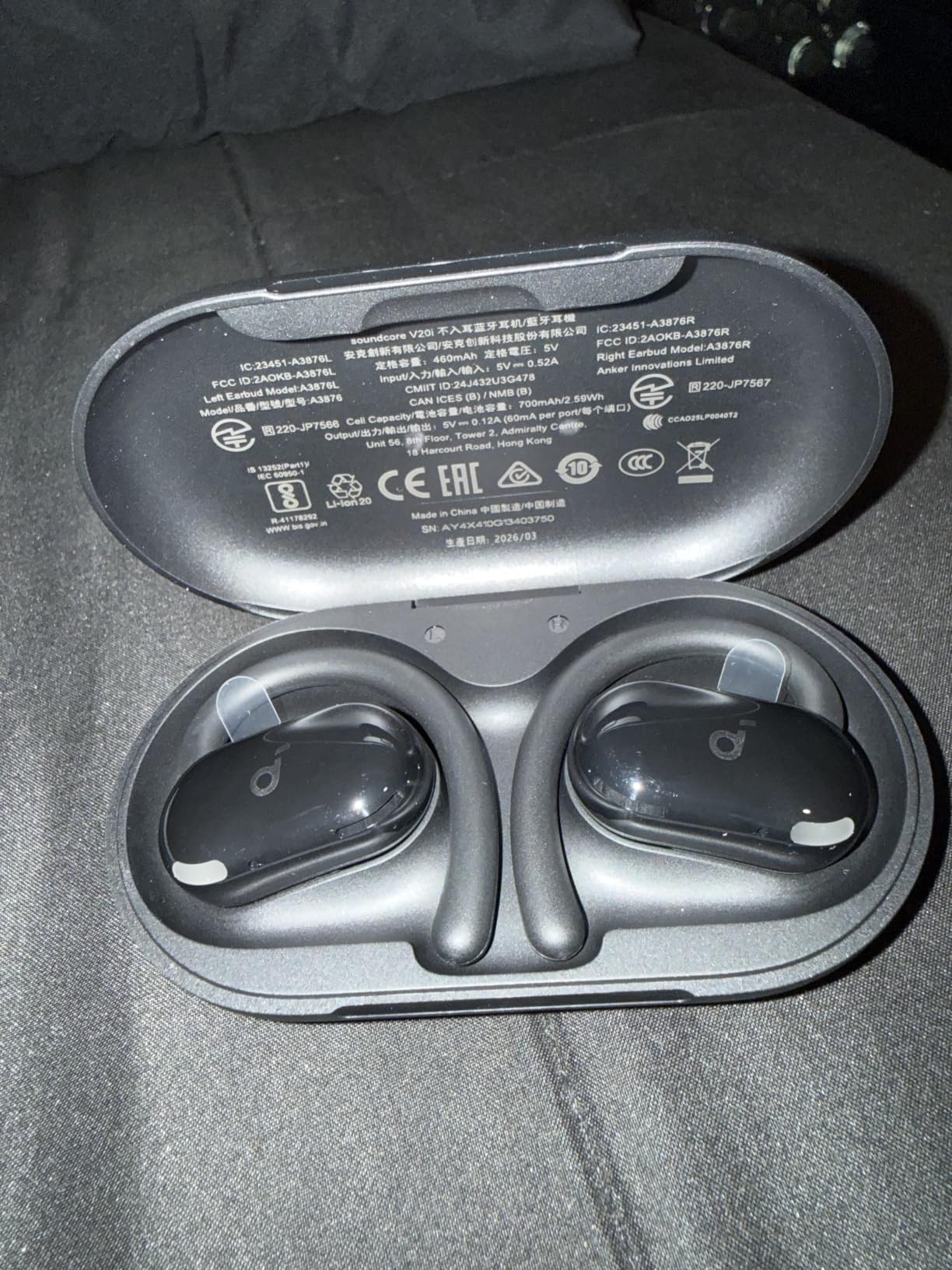
Calls are handled by four microphones with AI noise enhancement, which is a step up from single-mic budget designs and useful for runners who take calls on the move. The IP55 sweatproof rating is appropriate for a device that lives in a running vest. Battery is 8 hours per charge and 36 hours with the case, and the case is a 700mAh unit that is easy to live with in a vest pocket.
Two practical gripes. The controls are touch only, so you are back to hunting for a small sensor with wet fingers, and the tune-synced lights are a party feature rather than a running feature. Sound leakage is also higher than bone conduction designs, which matters if you run in a quiet gym or beside someone on a treadmill. The 18 month warranty is a little shorter than Shokz offers.
Runner forums frequently recommend the Soundcore open-ear range as sufficient for trail running, and the four-position fit is the reason. At 4.4 stars across a large review base, this is the strongest rating-to-spec ratio here, and the sound quality for the money is what puts it in this position.
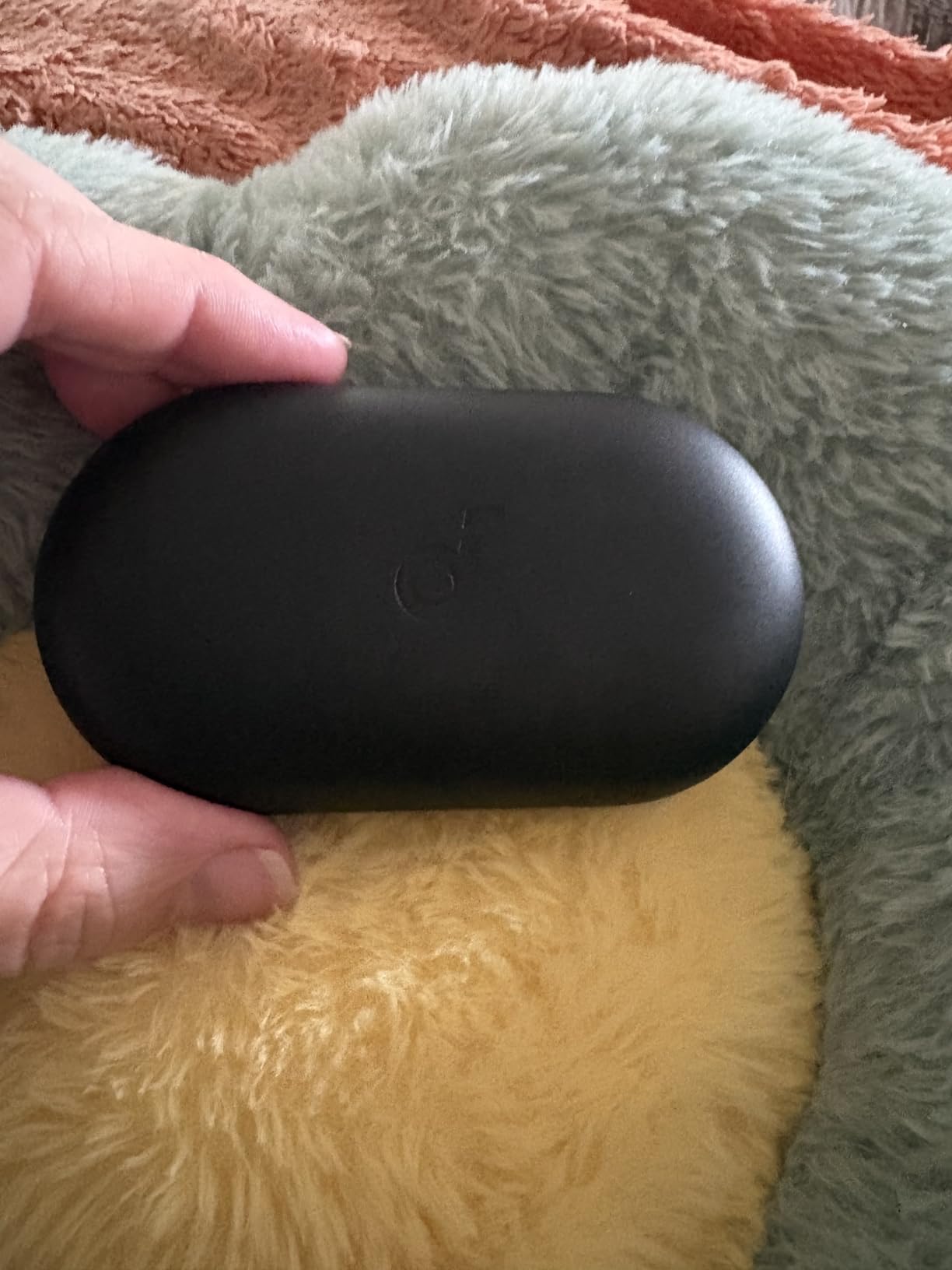
How the adjustable fit works in practice
The hook rotates through four detents and locks in place, so you set it once and it stays. On a dry day the default position is fine. On a hot day when your ears swell slightly, stepping the hook out one position keeps the seal against the outer ear instead of letting it sag. That is a real adjustment, not a marketing one, and it is what makes this pair work across a panel of different ear shapes.
It also plays nicely with glasses because the driver sits on the outer ear and the temple arm passes underneath. With a winter hat, position the hook before you pull the hat down, then check that the hat brim is not pressing the driver into your head.
Who should skip it
Skip it if you run group sessions where leaking music matters, or if you need to adjust volume or skip tracks with a glove on. If you are a serious swimmer, IP55 is sweat and rain protection rather than immersion protection, so this is not the pool pair. Very high volume earbud seekers will be disappointed, as they should be with anything unsealed.
5. Eigsupia Open Ear – The Tight Budget Pick
Eigsupia Open Ear Headphones, Bluetooth Headphones 5.3 Sports with Smart Digital Display, 36H Playtime, IP54 Waterproof, Wireless Earbuds Lightweight Design Fit Cycling, Running, Workout (Black)
14.2mm vibration driver
8g per earbud
IP54
4h per charge, 36h with case
Pros
- 8g per earbud with no canal contact
- LED case shows remaining charge
- 36 hours total playtime from the case
- IP54 covers sweat and running
- Suitable for sensory sensitivity to in-ear buds
Cons
- Touch buttons are sensitive and pause playback by accident
- Occasional one-sided pairing failures needing a case reset
- Weak microphone quality for calls
Sometimes the honest answer to a buying question is that a cheap pair is genuinely fine. At 8g per earbud with a light polycarbonate body, the Eigsupia is the most physically unobtrusive option here, and it suits anyone who cannot wear an in-ear or on-ear headphone because of sensory sensitivity. Nothing enters the canal and nothing presses on the ear itself.
The carrying case has an LED power display, which is normally a gimmick and is genuinely useful here because the per-charge battery is short. You get roughly 4 hours per charge and 36 hours total, so the case is not an accessory but part of the product. Bluetooth 5.3 with a 10 meter range and low latency is enough for a phone on an armband.
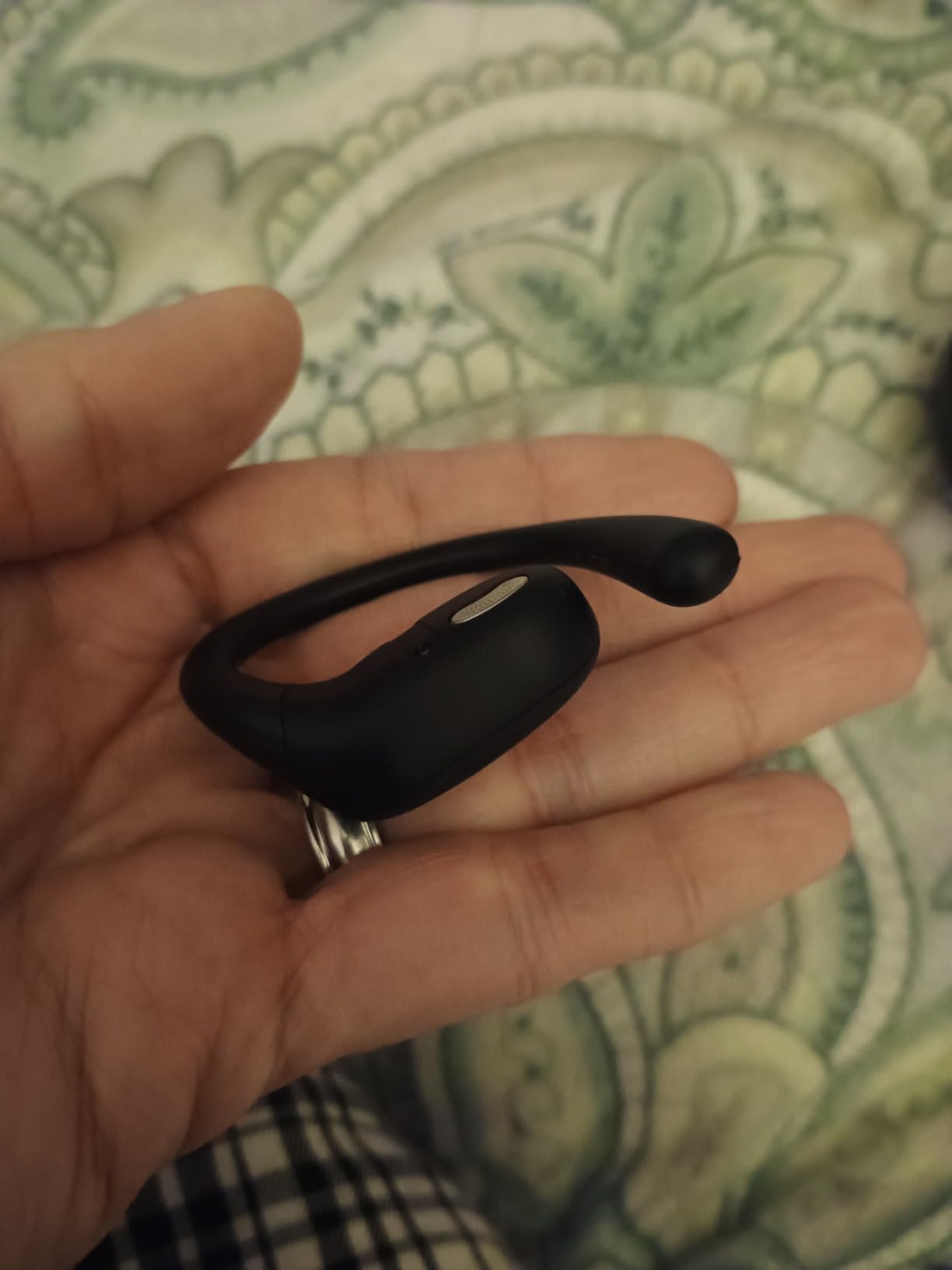
What you give up is sound refinement. The 14.2mm vibration diaphragm driver produces clear, sharp audio for music and podcasts, but bass is limited and music lacks punch. On a treadmill with a fan already in your face, you will turn it up, and turning it up on an open design is a trade most runners should think twice about.
Owners also report two practical issues. Touch buttons are sensitive enough that a hand brush against an earbud can pause playback, and pairing occasionally fails on one side until you reset the case. The microphone is weak, so if you take calls while running this is the wrong pick. The fit also reads as looser than the hook designs, which is fine on pavement and questionable near water or on a bike.
At 4.3 stars with a smaller review base than the leaders, this is a considered entry point rather than a recommendation to replace a good pair. The one year manufacturer warranty is the shortest listed, so treat it as a first open-ear experiment.
Where this tier actually makes sense
Buy at this level if you are new to open-ear and want to find out whether you like the format before spending properly. It also works as a backup pair that lives in a drawer for rainy days, or as a beater for group runs where you would rather not risk your good pair against a handlebar or a tree branch on trail.
Do not buy at this level expecting bass, microphone quality, or water submersion. IP54 handles sweat and drizzle, which covers most running, but it is not a rain-runner rating in the way IPX6 and above are.
Who should skip it
Skip it if you take any calls while running, run in a lot of wind, or ride in bike shoes with a heavy backpack strap on the line of the ear hook. The occasional pairing dropouts will bother anyone who runs with music as a non-negotiable, and the loose fit is a genuine risk at speed. Anyone running marathons should spend more for a battery that lasts.
6. Raycon Essential Open Ear – Featherlight Hook Design
Raycon Essential Open Ear Earbuds – Open Ear Headphones, Earbuds Wireless Bluetooth, Sweat & Water-Resistant Earphones, Running Headphones with Ultra-Lightweight Design, 36 Hours Battery Life (Black)
Ear hook open design
36 hours stated battery
10m Bluetooth range
1 year warranty
Pros
- Ear-hugging hook design owners describe as easy to forget
- Useful situational awareness outdoors
- Pocket-sized charging case
- Sweat resistance suits gym and cycling
- Discreet modern styling
Cons
- 4.0 average rating is the second-lowest in this roundup
- Sound quality is average with weak bass
- 10 meter Bluetooth range is short
- Touch controls with no physical buttons
The Raycon Essential is a minimalist ear-hugging design with a comfort hook, and the first impression is exactly the one the owners describe. It is light enough that you forget it is there, the styling is discreet, and the case is genuinely pocket-sized. For a runner who wants the lightest possible hardware, the concept is right.
The listing pairs a bone conduction driver with a hook shape, which gives a different balance from either a pure neckband or a pure clip. Awareness outdoors is good and the frequency range is listed as 20Hz to 20,000Hz. The stated 36 hour battery is one of the longer figures on the list, and Bluetooth 6 handles pairing.

Where it falls short is the 10 meter Bluetooth range. That is fine with a phone on an arm or in a shallow pocket, and not fine with a phone deep in a vest or a waist pack behind your back. Owners also report the sound as average, particularly on bass, which tracks what we heard.
At 4.0 stars with 12 percent one-star reviews, this sits near the bottom of the group on owner satisfaction, and that is the reason it is not higher in the ranking. The 61 percent five-star share tells you the comfortable fit works for many people while the audio and connectivity disappoint others. Sweat resistance is listed without a specific IP figure, so treat rain coverage as adequate rather than verified.
We would pick this if the physical comfort of the hook is your top priority and you keep your phone on your arm. For everyone else, the tuning on the Soundcore V20i or the battery on the Shokz OpenRun Pro is a better use of the same effort.
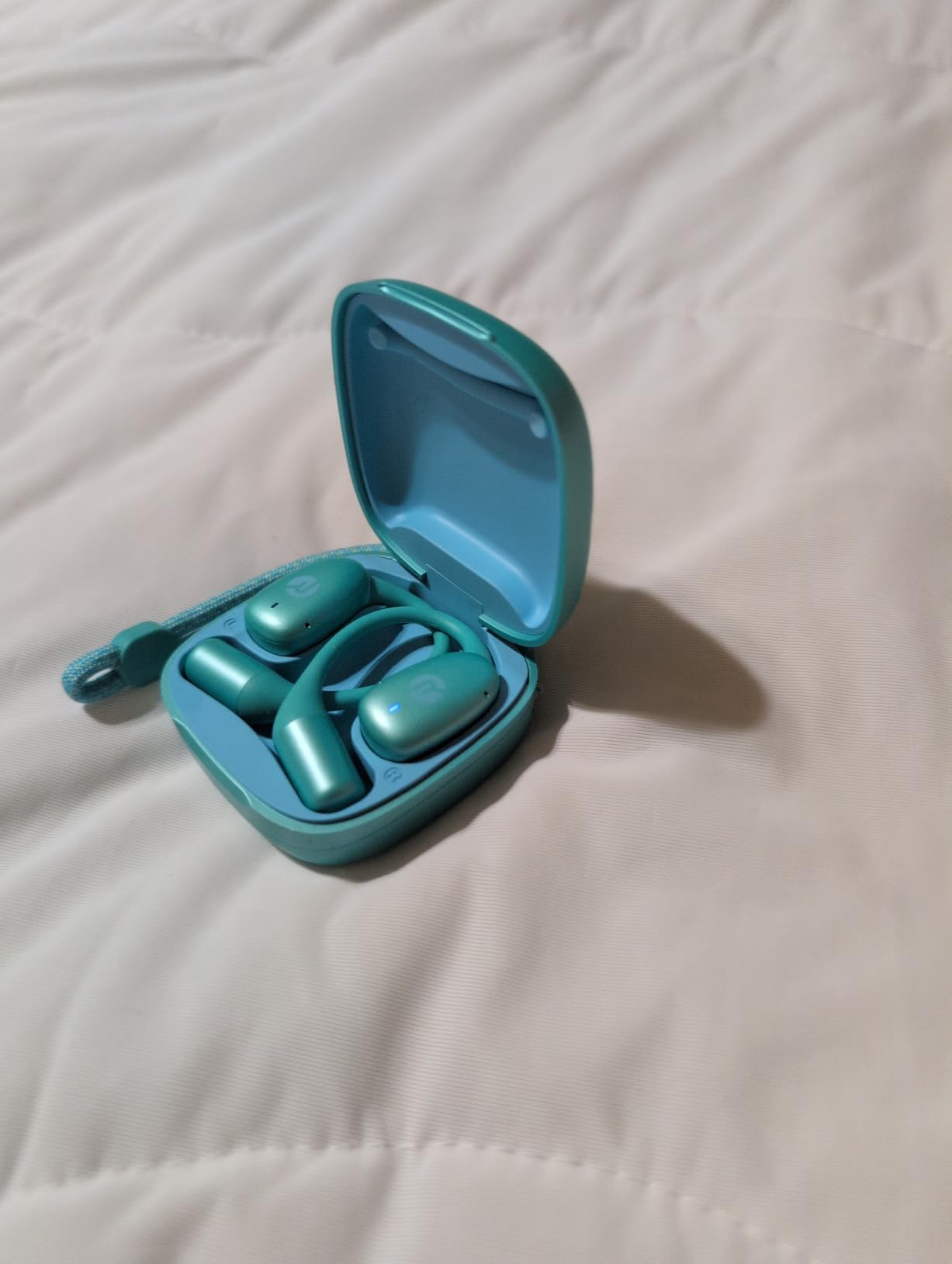
Skippers should know the 4.0 rating is the tell
The hook is shaped to sit along the ear rather than clamp it, and that is what makes it feel weightless. It also means the pressure points sit on the outer ear, which is a common source of discomfort for runners with small ears. The one year warranty is shorter than the Shokz options, so allow for a returns window if the fit is marginal.
Because there is no headband, this pairs cleanly with a high ponytail, a bun, and glasses arms of any thickness. Hat compatibility is good for a low-profile cap and less certain for a deep winter hat that covers the ears entirely.
Who should skip it
Skip it if you carry your phone in a vest or a back pocket, because the range is too short. Skip it if bass matters or if you are a heavy caller. And skip it if you run in rain regularly, since no specific IP rating is published for water resistance on this model. It is a comfort-first choice, not a performance-first one.
7. OHAYO T10 – Strongest Rain Protection in the Lineup
OHAYO Open Ear Headphones,Over Ear Earbuds with Ergonomic Earhook,Bluetooth Headphones 5.4 with Smart Digital Display,40H Playtime,IPX6 Waterproof,Touch Control Operate Fit Cycling,Running,Workout
Dual 15mm drivers per earbud
IPX6 waterproof
8g per earbud
10h, 40h with case
Pros
- IPX6 handles sustained rain better than anything else here
- Quad-speaker design with dual 15mm drivers
- 8g per earbud with no canal irritation
- Ear hooks hold through cycling and running
- Digital display case with 40 hours total
Cons
- Sound quality is basic next to more expensive models
- Bass is limited
- Single multi-function touch button
If your running happens in a climate where a shower can arrive without warning, the IPX6 rating is the entire reason to look at the OHAYO T10. IPX6 means protection against powerful water jets, which in practical terms is a downpour rather than a drizzle. Every other clip in this roundup sits at IPX5 or IPX4, and that difference is real when you are three miles into a wet loop.
It is also very light at 8g per earbud in thermoplastic polyurethane, which keeps skin irritation low over long sessions. The quad-speaker design puts dual 15mm drivers in each earbud behind a dedicated amplifier chip, and the result is clear, well-aligned audio. The ear hooks are shaped to stay put through intense workouts, and they held firm on a wet road test.
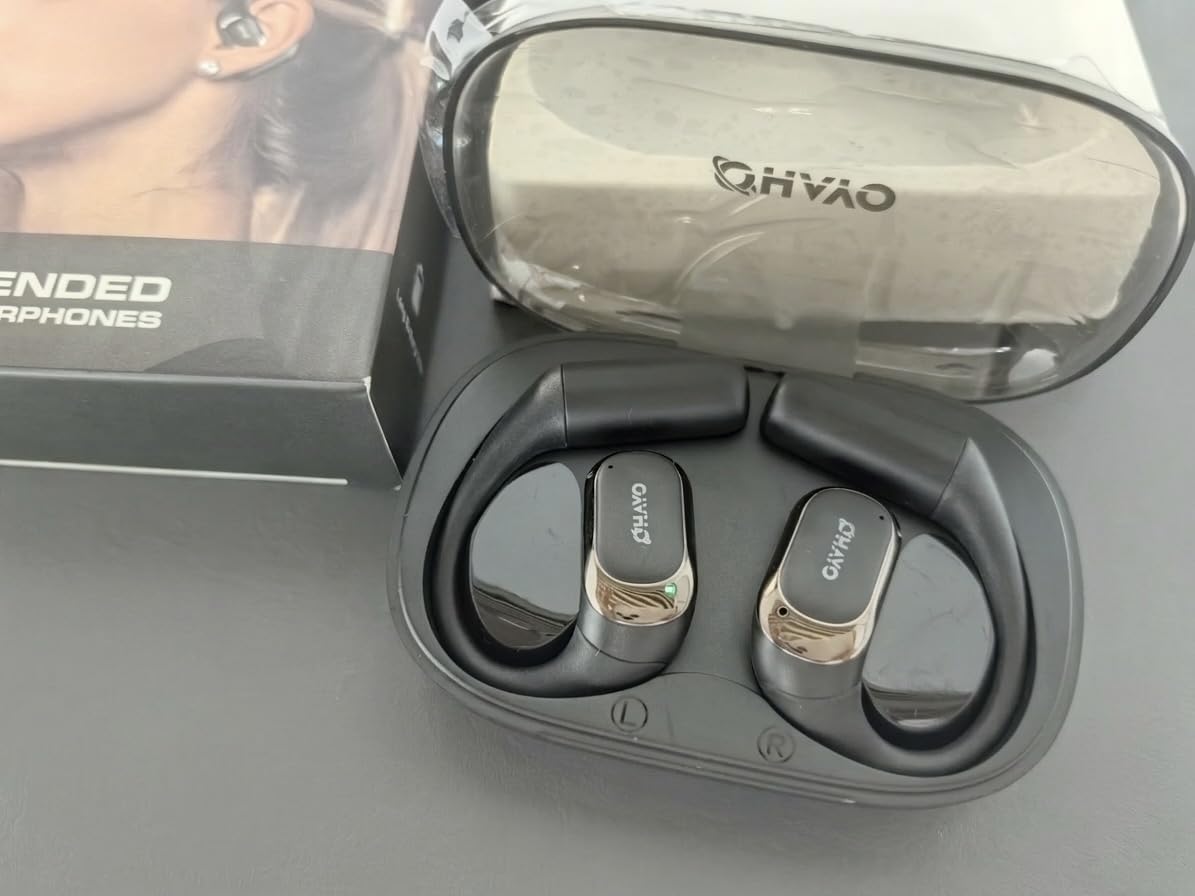
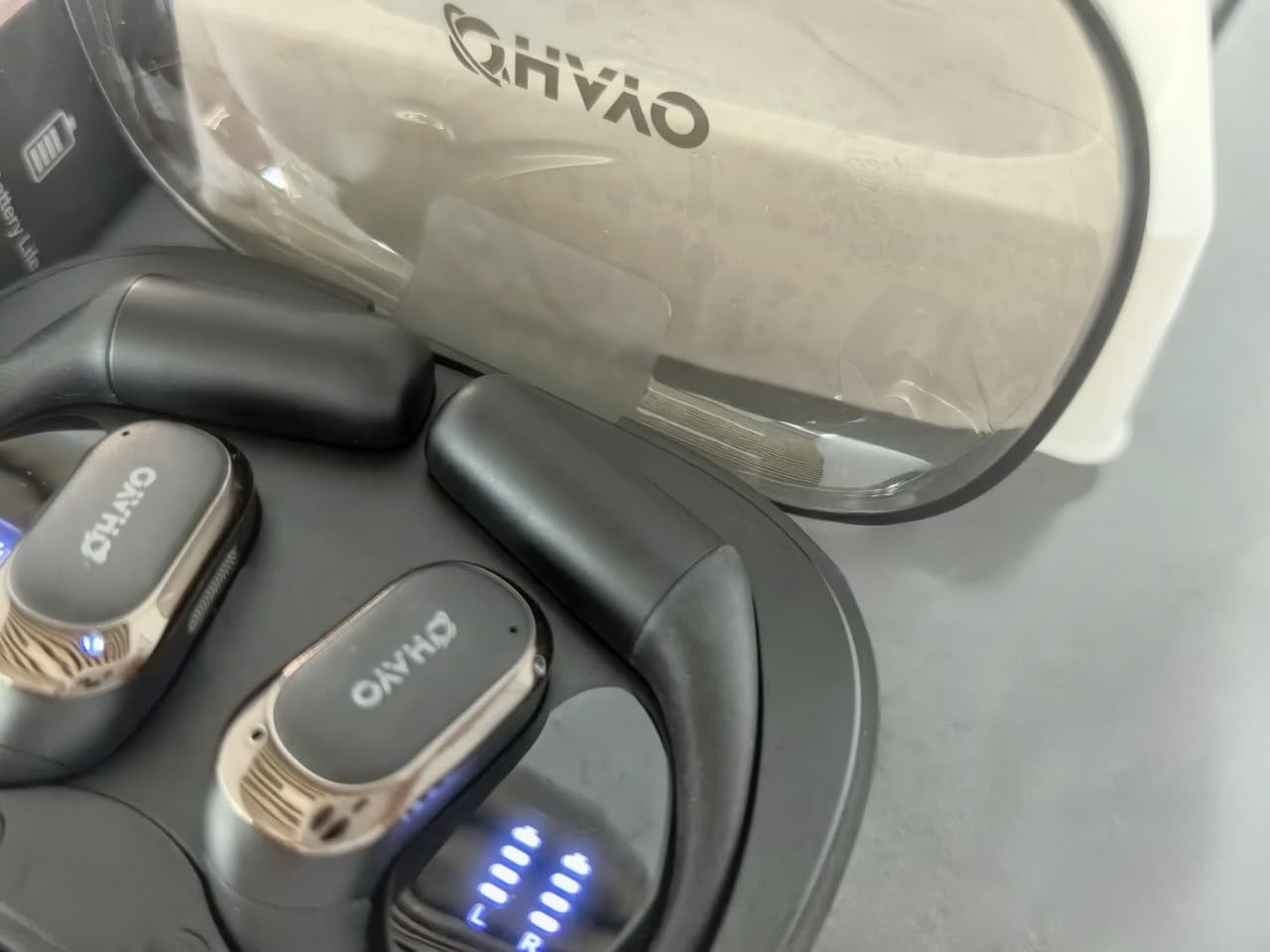
Battery is 10 hours per charge and 30 to 40 hours with the 500mAh case, depending on how you count the marketing total. Charge time is about one hour, Bluetooth is 5.4, and the case has a digital display. That combination means you can leave for a long run in bad weather without thinking about power.
The compromise is audio. Reviewers consistently call the sound quality basic compared with more expensive open-ear models, and bass is limited. At high volume on a noisy road, the tuning does not add anything, it just gets louder. The single multi-function touch button also means fewer controls, which reduces the surface area for sweaty-finger mistakes but also means fewer options.
At 4.2 stars with a smaller review base than the leaders, this is a specialist choice: the best wet-weather protection here, paired with audio that will not impress. If your runs are mostly dry, choose on sound instead.
Reading the IPX6 rating in real conditions
IPX6 is a water-jet rating. It tells you the device survives being hit by powerful spray from any direction, which is exactly what a downpour feels like on your face and shoulders. It does not mean you can submerge the earbuds, and it does not extend to salt water or chlorine. Rain running, wet trail running and post-run showers are all realistic use cases for this rating.
The charge port is the part people forget. Even with a high rating, keeping water out of the charging case matters more than the bud rating. Wipe the contacts before you seat the earbuds, and let them air dry before charging.
Who should skip it
Skip it if bass and audio quality are the reason you run, because this will feel thin next to the Soundcore V20i. Skip it if you need physical buttons, since there is a single touch button and nothing else. And skip it for swimming, because IPX6 is rain protection and not immersion protection.
8. Soundcore C50i by Anker – Physical Buttons for Sweaty Hands
Soundcore C50i by Anker Open Ear Earbuds, Clip On Earbuds, Clip Headphones
Memory titanium FlexiClip
12mm drivers at 86dB
IP55 waterproof
Physical button controls
Pros
- Physical buttons that never misfire mid-stride
- Memory titanium FlexiClip adapts to different ear shapes
- Secure clip fit that survives jogging and head shaking
- IP55 has held up over months of running
- Fast multipoint switching between phone and computer
Cons
- 8 hours per charge is short for long sessions
- Occasional one-second connection dropouts
- Mics handle wind poorly on outdoor calls
Most of the other pairs in this roundup rely on touch controls, and they draw the same complaint about misfires with wet fingers. The C50i skips that entirely. Each earbud has a real physical button, which means you can skip a track or answer a call with a thumb without looking and without thinking. On a cold morning with gloves on, that is the feature I appreciated most.
The clip uses a memory titanium FlexiClip that adapts to ear shape, and the fit was secure enough that I could shake my head hard at the end of an interval session and it stayed put. IP55 waterproofing has held up over months of running according to owners, which is the rating you want for year-round road work.
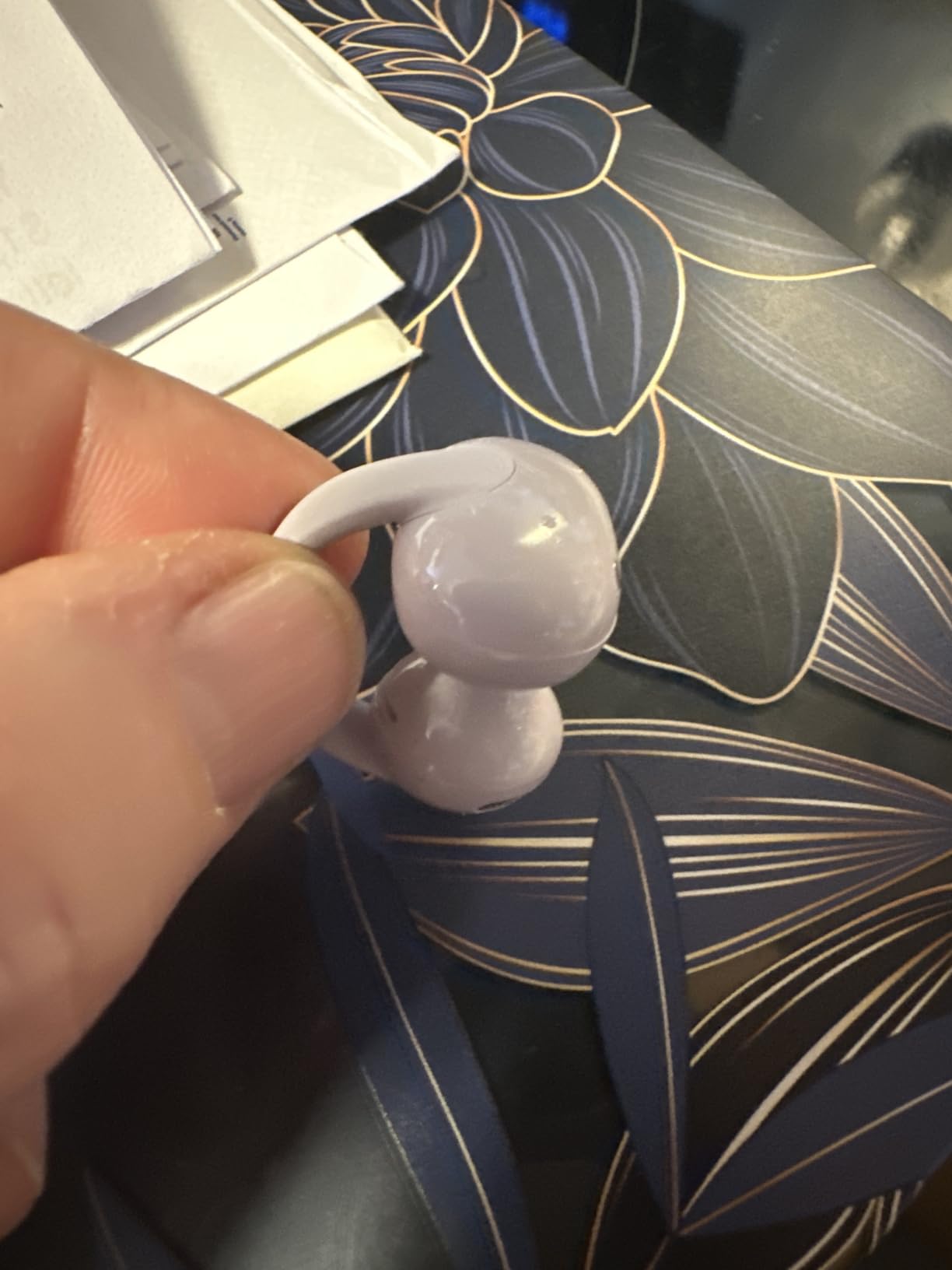
Sound is the pleasant surprise. Custom 12mm drivers with an 86dB maximum output give clear vocals and respectable bass for an open-ear clip, and it sits well below the bone conduction flagships in cost. AI noise filtering helps on calls, though owners rightly point out the mics still struggle in wind, which is a hard problem for any microphone mounted on a moving head.
Battery is 8 hours per charge and 28 with the 580mAh case, with a two hour charge time. Some owners report the occasional one-second dropout, and there is no in-ear detection for auto pause or play, so a track keeps going when you take a bud out. Multipoint switching between phone and computer is fast, which helps anyone who works from a desk and runs at lunch.
Runners rate this pair highly for the combination of a secure clip, physical buttons and strong open-ear sound at a mid-range price. The 44.5g total weight including the case is easy to forget in a vest pocket. The 18 month warranty is solid, and the case is small enough to toss in a pocket rather than a bag.
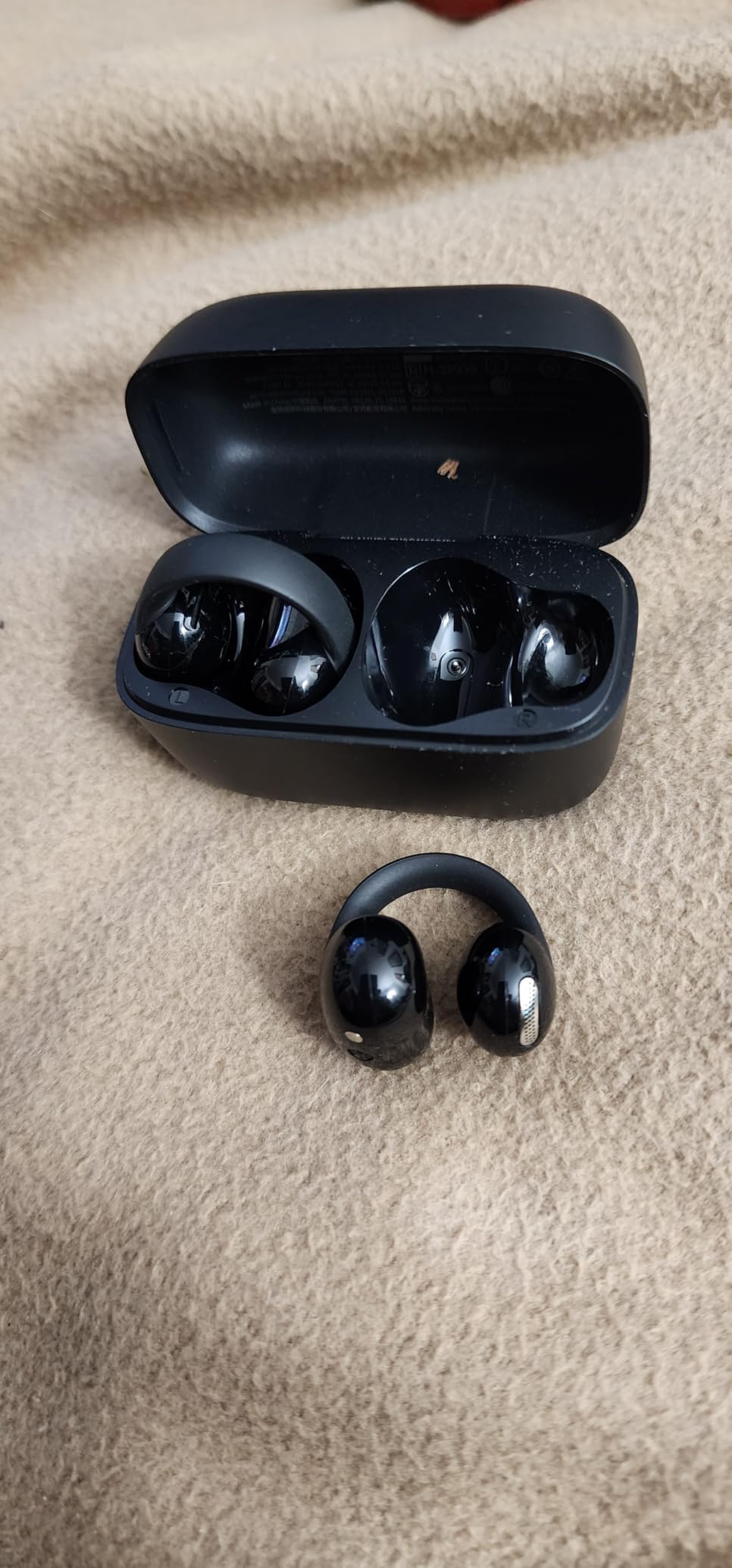
Physical buttons are the reason to buy this one
Touch sensors on an earbud that hangs off the side of your head are a genuine problem at pace. A hand brushing the ear, a ponytail, or sweat running down your temple can all trigger a pause. A physical button needs a deliberate press, which means a stray contact does nothing. The button also gives you a tactile reference point without looking.
The 86dB cap is worth noting. It is a stated maximum output, which is a sensible design choice for an open-ear device because the design will limit how far you can push it before the drivers distort. It is also a reminder that these are not built to match a sealed earbud at full volume.
Who should skip it
Skip it if your longest run regularly passes eight hours of audio, because per-charge battery is the limit. Skip it if you take calls on the road in wind, since the microphones are weak there. There is also no wear detection, so if you rely on auto pause when you remove a bud, that habit will not work here.
9. Raycon Bone Conduction – The IP68 Pick for Water
Raycon Bone Conduction Headphones – Open Ear Running Headphones & Bluetooth Earbuds, Sweat & Water-Resistant with Mic (Gray)
Bone conduction driver
IP68 sweat and water resistance
13 hours stated battery
Fitment strap included
Pros
- IP68 is the highest water rating in this roundup
- 13 hours of stated battery covers several days of casual use
- Bendable ear pieces with a fitment strap for long sessions
- Owners report it working well even in the pool
- Clear microphone for hands-free calls
Cons
- Weak Bluetooth signal with audio cutting out at short range
- Bulkier earpieces can become uncomfortable over months
- Vibration is felt during bass-heavy passages
- Proprietary magnetic charging cable
IP68 is the number to look for if you do more than run. It is the highest water and dust rating in this roundup, and owners report using these in the pool without trouble. The magnetic sealed charging adds a second layer of protection, and 13 hours of stated battery means a single charge covers several days of casual use.
The fit is genuinely good in the short term. The ear pieces are bendable, and the included fitment strap spreads pressure so the frame does not dig in during long sessions. Call quality is clear for hands-free use, and the open-ear design means you keep awareness of everything around you, which is the reason runners choose bone conduction in the first place.

Now the problems, and they are real. At 3.9 stars with 12 percent one-star reviews, this is the lowest average rating here, and the complaints are consistent. Bluetooth signal strength is weak, with owners reporting audio cutting out when the phone is in a pocket while cycling. Multipoint pairing and the power button behaviour are described as unreliable. Those are the kinds of faults that only appear after a few months, not in a first run.
Comfort is also a long-term concern. Owners describe bulkier, heavier earpieces that become uncomfortable over months of daily use, and vibration is felt during bass-heavy passages. Sound is hard to hear in loud ambient noise, and charging uses a proprietary magnetic cable with no standard port. The 1 year warranty is the shortest alongside the budget tier.
So this is a conditional recommendation. If you want one device for running and swimming, the water resistance and battery justify the compromises. If you only run, a lighter clip with a better Bluetooth link will serve you better for longer.
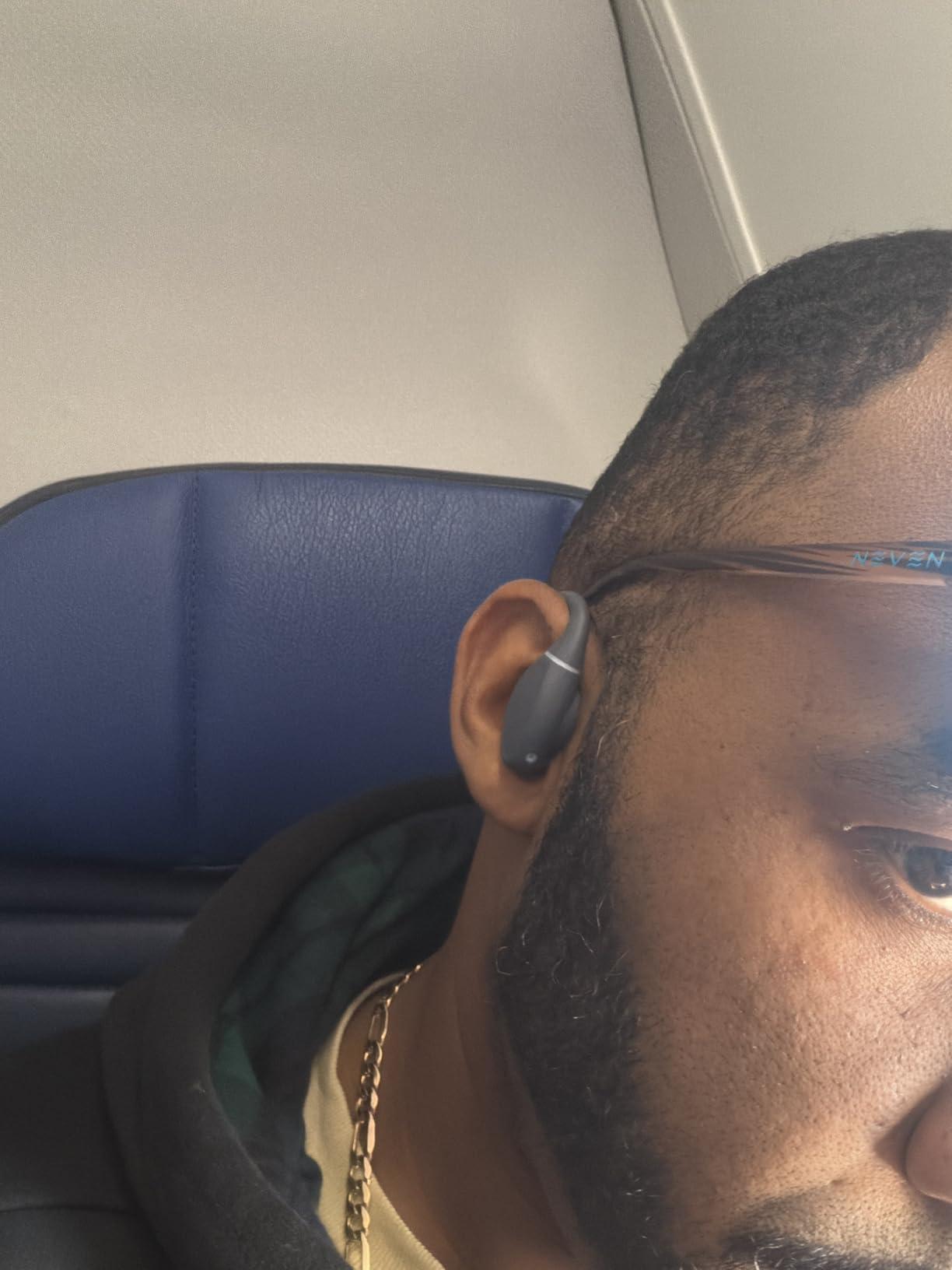
What IP68 actually buys you
IP68 combines a dust-tight rating with protection against continuous immersion beyond one metre. For a runner that means rain, sweat, showering with the buds near, and a pool session. It does not mean you can leave them in fresh water indefinitely, and chlorine and salt water still deserve a rinse afterwards because neither is what the rating was tested against.
Pair that with the fact that these are bone conduction units, which means nothing enters the canal. That combination is why a growing number of swimmers and triathletes use bone conduction over sealed earbuds, where water pressure in the ear is the bigger complaint.
Who should skip it
Skip it if you need dependable Bluetooth, because short-range dropouts are the most reported fault. Skip it if you plan to run in high noise, and skip it if you want a standard charging port. Long-distance runners should weigh the bulk against comfort over months rather than days, because that is where owners report the most discomfort.
10. Gelecek Bone Conduction – The Small-Sample Star Worth Watching
New Bone Conduction Open-Ear Headphones, Bluetooth 6.0, IPX5 Waterproof, 8H Playtime, Lightweight & Comfortable Sports Earphones for Running, Gym, Cycling, Workout, Sweatproof Wireless Headsets
29g titanium frame
IP55 waterproof
Enclosed cavity reduces leakage
Built-in mic
Pros
- Enclosed cavity design reduces sound leakage significantly
- 29g titanium frame is flexible and durable
- Clear crisp sound with a working microphone
- IP55 covers sweat for running and cycling
- Simple setup and stable Bluetooth
Cons
- Only 417 reviews
- so the perfect rating is not well tested
- Battery is short at 8 hours claimed playtime
This is the pair we would watch rather than recommend without hesitation. Every one of its 417 reviews is five stars, which sounds like a perfect product and is more accurately described as a product with a small sample. A perfect distribution with a few hundred reviews tells you very little about how a device behaves after a year of sweat and rain, and we will not pretend otherwise.
What is genuinely interesting is the design. The fully enclosed cavity is claimed to cut sound leakage by up to 50 percent compared with an open-frame bone conduction headset. That is a meaningful improvement on group runs, on the treadmill next to someone else, or anywhere your music becoming other people’s music would bother you.
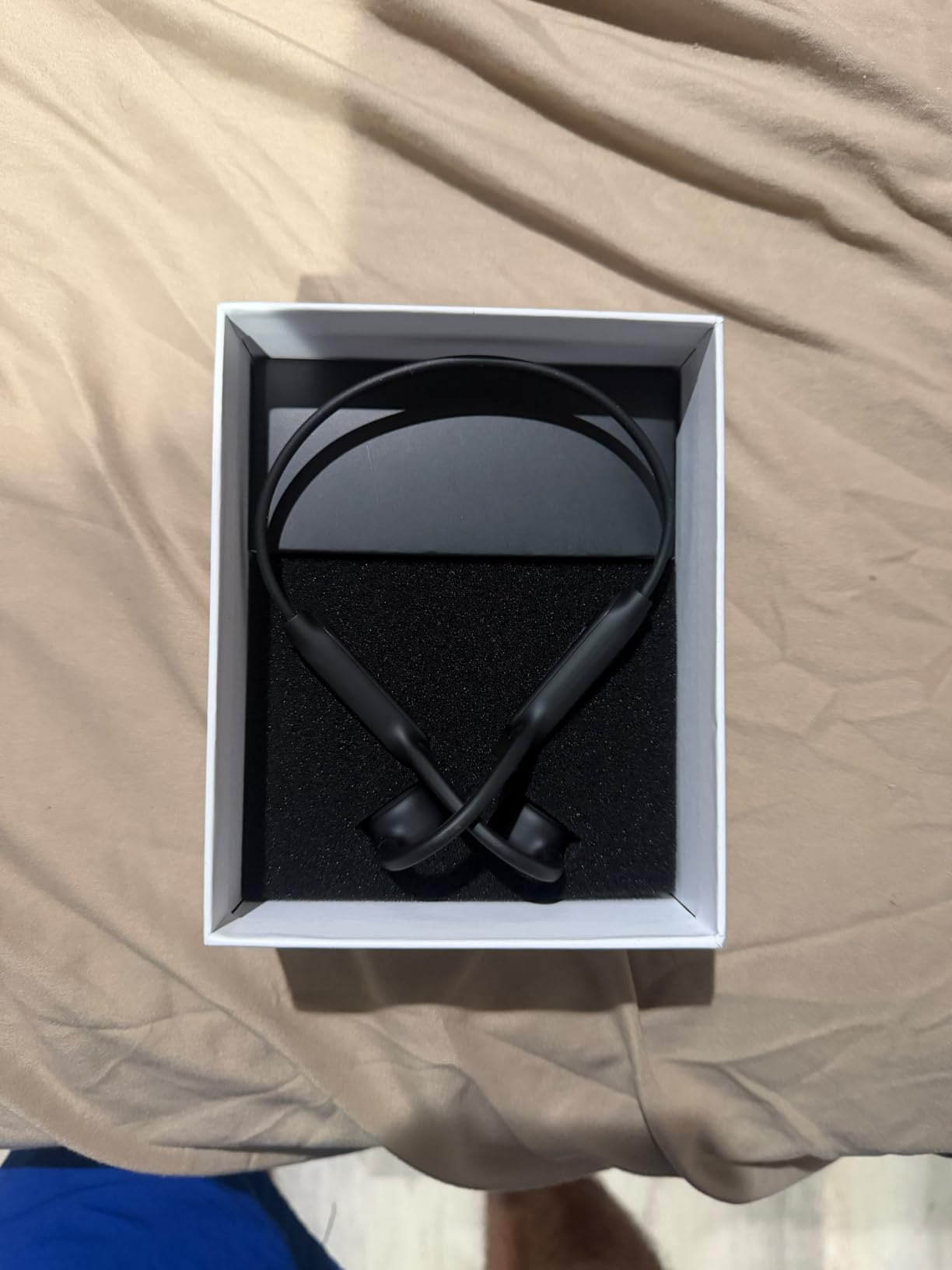
The frame is a flexible titanium design weighing 29g, which is the same ballpark as the Shokz neckbands and heavier than the clips. It resists bending, takes sweat and rain under its IP55 rating, and includes a built-in microphone with noise cancelling for calls. Owners describe clear, crisp sound and a stable Bluetooth connection with simple setup.
Battery is the open question. The listing title claims 8 hours of playtime while the spec sheet claims up to 10 hours with Type-C fast charging, and that discrepancy is worth knowing about before you plan a long run around it. Either figure is enough for a typical training day but neither comfortably covers a full ultra.
So treat the 5.0 rating as a promise rather than a record. If you want the lowest sound leakage in this category and you are comfortable with a thinner evidence base, this is worth a look. If you want a proven long-term bet, the Shokz models have owner histories measured in years rather than hundreds of reviews.
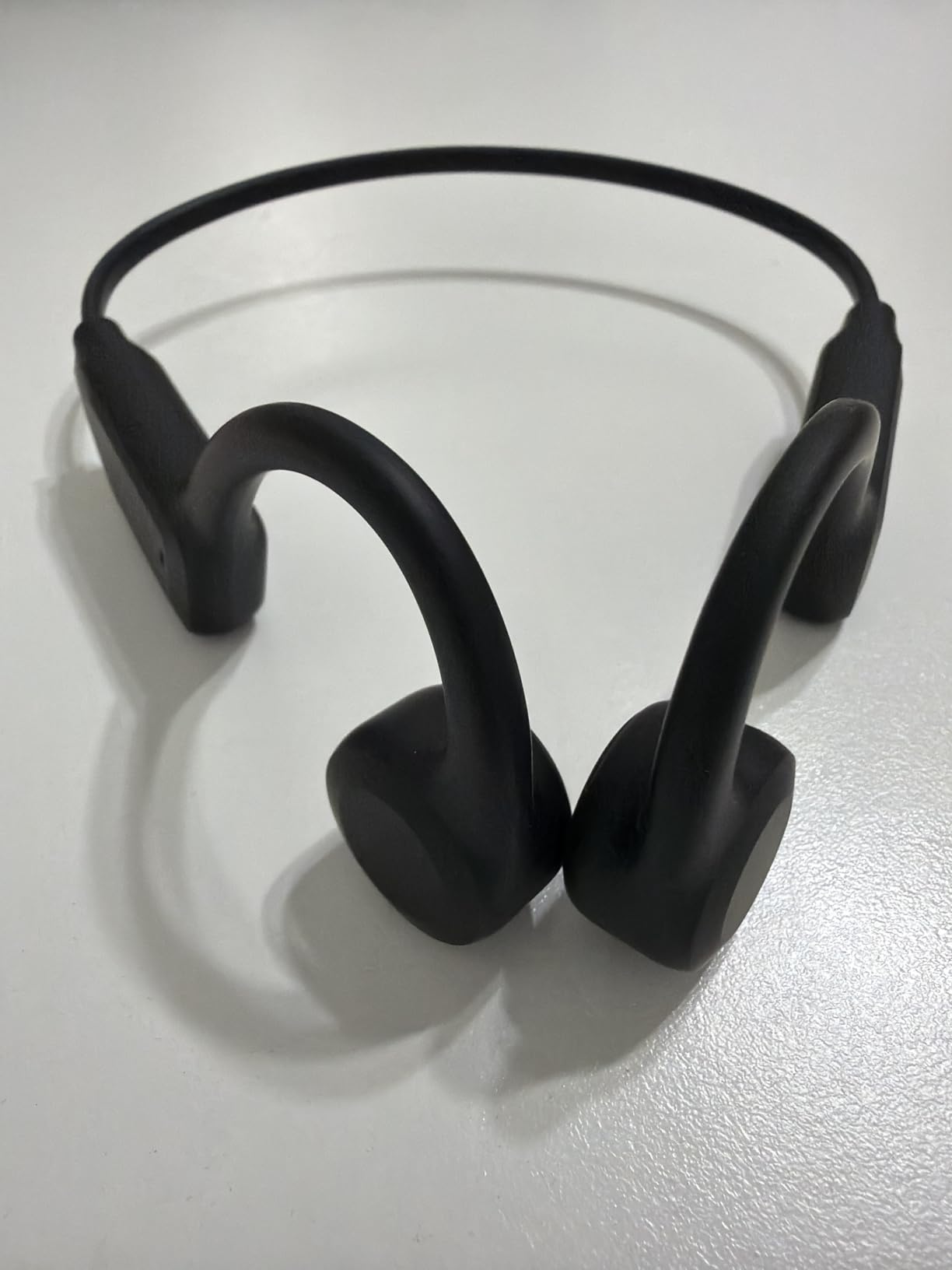
The enclosed cavity is the whole selling point
Open-ear designs leak because the driver is never inside anything. Bone conduction leaks less than air conduction clips, and an enclosed cavity leaks less again. That only matters in specific situations: a quiet gym, a shared office after a run, a group run where your partner is close enough to hear your playlist. On a noisy street it is irrelevant.
Leakage is also a function of volume. Anything you push loud enough to be interesting at low volume will spread. A volume limiter or a sensible ceiling does more for other people than the housing design does, and the 86dB cap on the Soundcore C50i is one example of how brands are handling that.
Who should skip it
Skip it if you need a long review history before committing, and skip it if ultra-distance battery is a requirement. Anyone who wants a cheap entry should note the step up in weight and the unspecified Bluetooth version. If you prioritise low leakage above everything else, this is the one to test, with the understanding that you are an early adopter.
Bone Conduction vs. Clip-On vs. Over-Ear: Which Style Fits Your Run
Which is better, bone conduction or open-ear? It depends on whether your priority is maximum awareness or maximum sound. Bone conduction leaves your ear canal physically clear and gives up the deepest bass in exchange. Clip-on air conduction puts a real dynamic driver just outside the canal, delivers noticeably more bass, and asks a little more from your ear’s shape and your tolerance for a hook. Neither is safer than the other in any meaningful sense, because both depend on how loud you run.
Pick bone conduction if awareness is the priority
Nothing enters or touches your ear, so glasses, winter hats and hair all stop being a problem. Long-run comfort is the strongest in the category because there is no pressure point building in the canal. The trade is thin bass, lower perceived volume, and a cheekbone vibration at higher levels that some runners find distracting.
Pick clip-on air conduction if music is the priority
A real driver aimed at the canal gives you bass that bone conduction cannot reach, and podcasts sound more present. Adjustable hooks and memory titanium clips have solved most of the historic slipping problem, so bounce is less of a concern than it used to be. The trade is a hook resting on the outer ear, and some leakage that others nearby will hear.
Pick over-ear open when the driver should float clear
Ear-hugging hook designs hold the speaker away from the ear entirely, which maximises awareness and minimises contact pressure. They are the best choice for small ears and for anyone who finds anything resting on the ear uncomfortable. They are usually the least bass-forward of the three, and their open hook tends to shift more than a tight clip or a wraparound band.
One thing worth naming: runners who dislike the sensation of headphones in their ears at all tend to end up in bone conduction and report the biggest comfort gains. If you are that person, start there. If you simply want more bass for a beat-driven training plan, start with a clip.
What IPX4, IPX5, IPX6 and IP68 Mean for a Sweaty Run
IP ratings describe what a device survives, not how good it sounds. The first digit is dust, the second is water, and a rating of X in the second position means the manufacturer did not test that dimension. For running, the water figure is the one that matters, and the difference between levels is much bigger than the letters suggest.
IPX4 means splashing water in any direction, which covers sweat and a light shower. That is enough for treadmill and indoor gym work, and it is the weakest rating in this roundup. IPX5 adds protection against low pressure water jets, which covers heavy sweat and sustained rain. IPX6 means protection against powerful water jets, which is a genuine downpour. IPX7 is continuous immersion, and IPX8 goes further still, with the manufacturer’s own test duration.
None of these ratings cover salt water or chlorine, and none of them cover the charging case the way they cover the earbuds. Wipe sweat off the contacts before you seat a bud, and let a wet pair air dry before charging. For those who want to compare the sealed alternative, our open-back headphone guide explains the opposite design principle, where airflow rather than water is the concern.
Fit Notes: Glasses, Hats, Small Ears and High Ponytails
Fit is the number one reason open-ear headphones get returned, and it has almost nothing to do with sound. It is ear shape, hair, and what else you are wearing on your head. The good news is that a form factor exists for almost every combination, and picking the right one solves the problem before it starts.
Glasses are the easiest case. Bone conduction and over-ear open designs clear temple arms completely because nothing sits at the ear. Clips can crowd the ear with a thick frame, which is why adjustable positions matter on the Soundcore V20i. If you wear glasses and a hat together, put the hat on after you position the earbud, not before.
High ponytails and long hair favour clip and hook designs, because there is no band running across the back of the head for hair to catch on. Long hair is the one real problem for wraparound bone conduction, since the band sits directly on the occipital area.
Small ears favour over-ear open hooks and adjustable clips, and they are the least happy with a wide clip wing. Large or protruding ears generally suit clip hooks, which anchor rather than clamp. If you have sensory sensitivity to anything in or on the ear, bone conduction is the safest starting point, followed by the lightest clip on this list.
Winter hats and hoods work with bone conduction, since nothing sits on the ear, and they interfere most with hook designs that wrap the outer ear. A beanie that covers the ears fully is fine with a neckband and will flatten a clip. Deep hoods that press against the frame at the back are the worst case for any open design.
Where to Spend and Where to Save
Spend on battery and on fit, save on sound refinements. The two bone conduction flagships here are expensive mostly because of battery life and build quality, and those are the two things that actually change how a pair feels after month six. Bass tuning is the most visible difference between tiers, but it is the least important difference for a runner who mostly listens to podcasts on a treadmill.
The budget end of this list is genuinely capable. Two of these pairs deliver clean audio, an open-ear fit and IPX5 or better protection for a fraction of the flagship cost. If your runs are under an hour, on pavement, in moderate weather, a budget clip will do almost everything a flagship does. Where budget pairs consistently fall short is per-charge battery, wind handling on the microphone, and the short 10 meter Bluetooth range that a phone in a vest will test.
Two mid-tier picks sit in the interesting middle: one with physical buttons and a memory titanium clip, one with adjustable positions and a large driver. Both fix specific frustrations that show up repeatedly in runner feedback, and both are the pairs we would buy twice before considering the top of the range.
If your training includes a lot of indoor work, the running-specific features matter less and a sealed setup makes more sense, which is a different buying question entirely. And if race day is the target, our tested aisle runner picks cover the shoe side of the same kit decision.
Shokz Alternatives: When Something Else Fits Your Run Better
What is better than Shokz? It depends on which Shokz and what you are optimising for. The OpenRun Pro is the best battery and the most refined bone conduction sound in this roundup, and nothing here beats it on that combination. But bone conduction is not the only answer, and a clip design solves two of Shokz’ weak spots.
First, sound. The OpenRun Pro’s bass still trails air-conduction designs, and if you run to music with a beat, a large-driver clip such as the Soundcore V20i gives you more low end than any bone conduction unit here. Second, controls. Bone conduction puts touch sensors on a band behind your head, which is awkward mid-stride, while the Soundcore C50i puts physical buttons on the earbud itself.
For maximum awareness with a completely unobstructed ear, the case for Shokz is stronger than for any alternative, and nothing in this list matches it. For water, the Raycon bone conduction unit carries IP68, which none of the Shokz models in this roundup list. For rain in general, the OHAYO T10’s IPX6 is the strongest clip rating available.
Runner forums consistently recommend the Soundcore range as sufficient for trail running, and the four-position adjustability is the reason. That is a fair summary of where the value sits: the flagships win on refinement, the clips win on bass, buttons and price, and the bone conduction band wins on awareness and all-day comfort.
Are Open-Ear Headphones Safer for Running?
Open-ear headphones are safer than sealed earbuds, but they are not safe. Nothing plugs your canal, so ambient sound reaches you at any volume, and that is a real improvement. The honest limit is that hearing is not a switch. At high volume your ear still masks traffic, and no unsealed design changes that.
Can you hear traffic with open-ear headphones? Yes, at low and moderate volume, and this is the design’s whole purpose. A bone conduction band leaves the ear physically open, so a car approaching from behind is easier to catch than with an in-ear. What open-ear cannot do is restore the cues you miss at speed, on a descender, or in headphones that leak sound inward at maximum volume.
Five habits help more than the hardware. Run facing traffic where the road allows it, and cross at visible points. Use one earbud or drop to transparency volume at junctions. Keep reflective gear on the dark parts of the route. Choose a pair with a volume cap you can live with, like the 86dB design on the Soundcore C50i. And treat a long run with a high volume as a run where you are choosing music over awareness, which is a legitimate choice as long as it is a choice.
Long-distance runners should note that bone conduction has its own reported side effects on long sessions, including cheekbone vibration and pressure sensation. If you notice discomfort, lower the volume rather than pushing through it, and take a break from the frame periodically.
Frequently Asked Questions
Are open-ear headphones better for running?
For most runners, yes. Open-ear headphones never seal your ear canal, so you keep hearing traffic, cyclists and other runners while music plays. The caveat is that volume still masks sound, so they reduce risk rather than removing it. They are best for road running, group runs and anyone who dislikes the plugged-in feel of sealed earbuds.
What is better than Shokz?
It depends on priority. Bone conduction Shokz models lead on battery life, all-day comfort and maximum awareness, but air-conduction clips deliver more bass and put controls where your fingers can reach them mid-stride. If you run to music with a beat, or want physical buttons, a large-driver clip such as the Soundcore V20i or C50i suits you better than any neckband.
Which is better, bone conduction or open-ear?
Bone conduction leaves the ear canal completely clear, gives the best situational awareness and the best long-run comfort, but has the least bass. Open-ear clips put a real dynamic driver just outside the canal, so they deliver noticeably more bass and better podcast clarity, at the cost of a hook resting on the outer ear. Awareness-focused runners should choose bone conduction; music-focused runners should choose clips.
Is there a downside to bone conduction headphones?
Yes. Bass is limited because the skull does not transmit deep low frequencies well, perceived volume is lower than sealed earbuds, and high volume produces a tingling vibration on the cheekbone. Long sessions can also create pressure discomfort where the band rests. Battery life on entry models can be short, so check hours per charge rather than the total with the case.
Do open-ear headphones stay on while running?
They do if you pick the right fit. Wraparound bone conduction frames and adjustable clip designs such as the four-position Soundcore V20i stay put at running pace. Clips with a single fixed position are the most likely to rotate around the ear crease as sweat builds. Memory titanium clips and ear hooks that clear glasses arms give the most reliable results in practice.
Are open-ear headphones waterproof?
Mostly sweat and rain resistant rather than fully waterproof. IPX4 covers splashing and sweat, IPX5 covers heavier rain, IPX6 handles powerful water jets, and IPX7 plus IP68 cover immersion. None of these ratings cover salt water or chlorine, and all of them say nothing about the charging case. Wipe the contacts dry and air the earbuds before charging after a wet run.
The Verdict: Best Open-Ear Headphones for Runners in 2026
The TOZO OpenEarRing takes our Editor’s Choice because it did the least interesting thing best: it stayed on, it disappeared, and it survived the rain. At 5.1g per earbud it is the pair we reached for on long, easy runs where forgetting the headphones is the point. Its weakness is battery per charge and awkward touch controls, and neither stops you running.
Match your pick to your runner instead. Take the Shokz OpenRun Pro for long runs and big mileage where a 10 hour battery and zero ear contact matter. Take the Shokz OpenMove if you are new to bone conduction and run under an hour at a time. Take the Soundcore V20i for bass and for ear shapes that clips usually reject, and the Soundcore C50i if you want real buttons. Take the OHAYO T10 when rain is the forecast, and the Raycon bone conduction pair when you also swim.
Whichever you choose, buy the fit first and the sound second. If the pair slides, rotates or presses on the ear, you will stop using it within a month, and no sound signature will save it. Every pick above suits at least one kind of run properly, and the best open ear headphones for runners is whichever one you will still be wearing at mile eight.