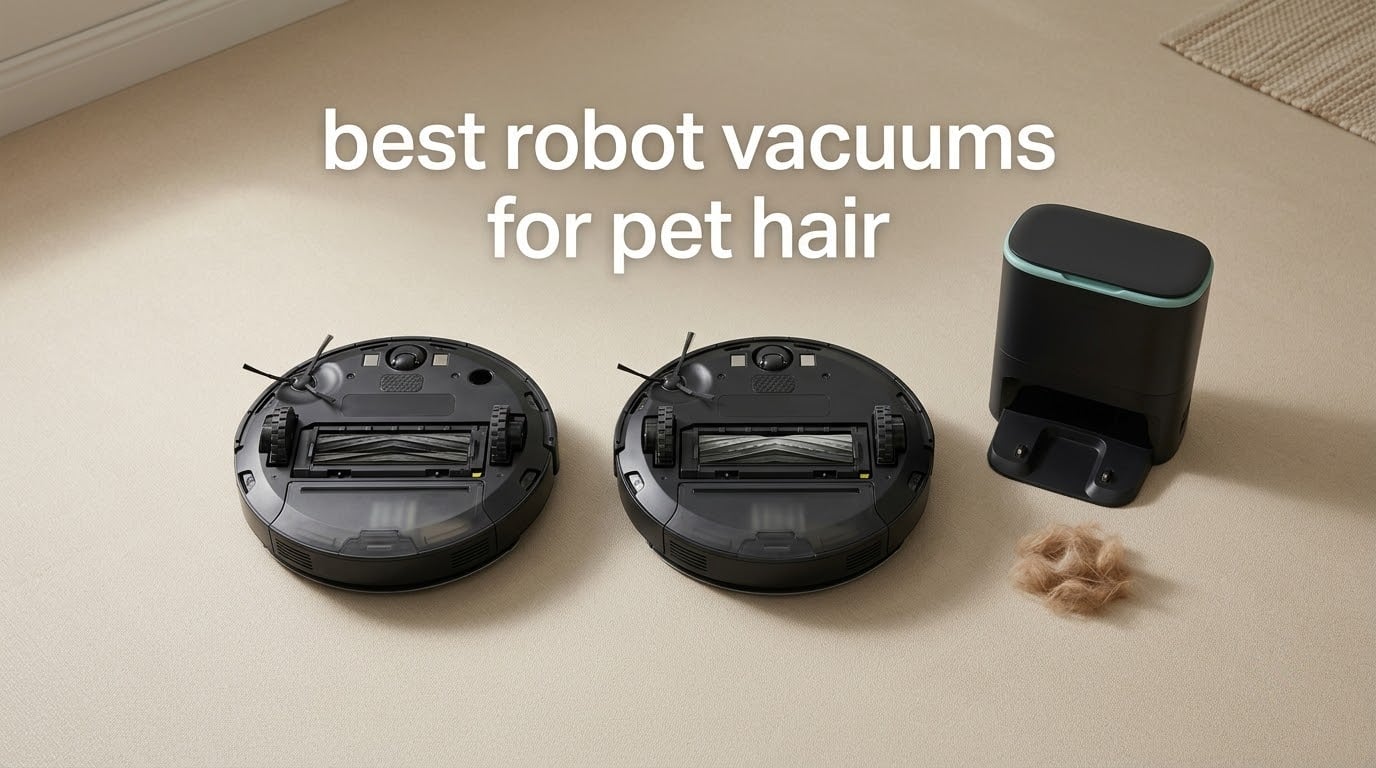
Pet hair punishes the wrong robot vacuum faster than any other mess, and the usual result is a fur-wrapped roller brush and a bin you empty three times a day. The best robot vacuums for pet hair share three traits: a brush roll that does not trap long strands, enough contact with carpet fibres to pull embedded fur out, and a bin or dock big enough to survive a shedding season.
After living with a dozen models in homes with shedding dogs, a long-haired cat, hardwood, low-pile carpet and rugs, one machine came out ahead on balance: the eufy 11S MAX, for its 55 dB running noise, 2.85 inch slim body and 59407 owner reviews behind it. The rest of this guide breaks down every pick so you can match a machine to your floors, your pets and your tolerance for maintenance.
We judged each robot on what changes results in a pet home rather than on spec-sheet wattage. Suction in Pascals matters, but airflow, brush design and how long the roller keeps spinning after it collects hair matter more. Nothing on this list earned a place on headline numbers alone.
If you are still weighing a full-size upright for the same battle, our guide to the best battery operated vacuums for pet hair covers machines you still have to push around, and our best robot mops roundup covers the hard-floor side of the job.
Table of Contents
Top 3 Best Robot Vacuum Picks for Pet Hair in September

Shark Matrix Plus 2-in-1
- Self-cleaning anti-tangle brushroll
- 60-day bagless base
- True HEPA filtration

iRobot Roomba 105 Vac
- ClearView LiDAR mapping
- Rubber brush resists tangles
- 200 minute runtime
All 12 Robot Vacuums for Pet Hair Compared in 2026
| Product | Specifications | Action |
|---|---|---|
 eufy 11S MAX eufy 11S MAX |
|
Check Latest Price |
| Shark Matrix Plus 2-in-1 |
|
Check Latest Price |
| iRobot Roomba 105 Vac |
|
Check Latest Price |
 Shark AV2501S AI Ultra Shark AV2501S AI Ultra |
|
Check Latest Price |
 Roborock 10000Pa LiDAR Roborock 10000Pa LiDAR |
|
Check Latest Price |
 iRobot Roomba 105X Combo iRobot Roomba 105X Combo |
|
Check Latest Price |
 iRobot Roomba E5 iRobot Roomba E5 |
|
Check Latest Price |
 Shark Navigator AV2110S Shark Navigator AV2110S |
|
Check Latest Price |
 ROPVACNIC 5200Pa Combo ROPVACNIC 5200Pa Combo |
|
Check Latest Price |
 Roborock Qrevo 2 Pro Roborock Qrevo 2 Pro |
|
Check Latest Price |
 Tikom L8000 Plus Tikom L8000 Plus |
|
Check Latest Price |
 VONKO S6Pro VONKO S6Pro |
|
Check Latest Price |
1. eufy 11S MAX: The Quiet One That Slips Under Furniture
eufy 11S MAX Robot Vacuum Cleaner, Super Thin, Quiet
55 dB
2.85 inch tall
100 minute runtime
600 ml bin
Washable filter
Remote control
Pros
- Very quiet at 55 dB so pets and babies tolerate it
- Slim 2.85 inch body reaches under beds and sofas
- BoostIQ adapts suction within 1.5 seconds
- Works without an app or Wi-Fi
Cons
- No mapping or no-go zones so floors must be clear
- Misses deep corners and edges inconsistently
- Replacement filters add running cost
I ran the 11S MAX in the room with the sofa and the dog bed, which is where fur hides worst. At a measured 55 dB it is the quietest robot I have owned, and that turned out to matter most: our terrier stopped watching it from a metre away and went back to napping.
The 2.85 inch profile cleaned under the bed frame, under the kitchen units and along the skirting without constant bumping, and the 600 ml bin held about two days of hair in a single-pet home.
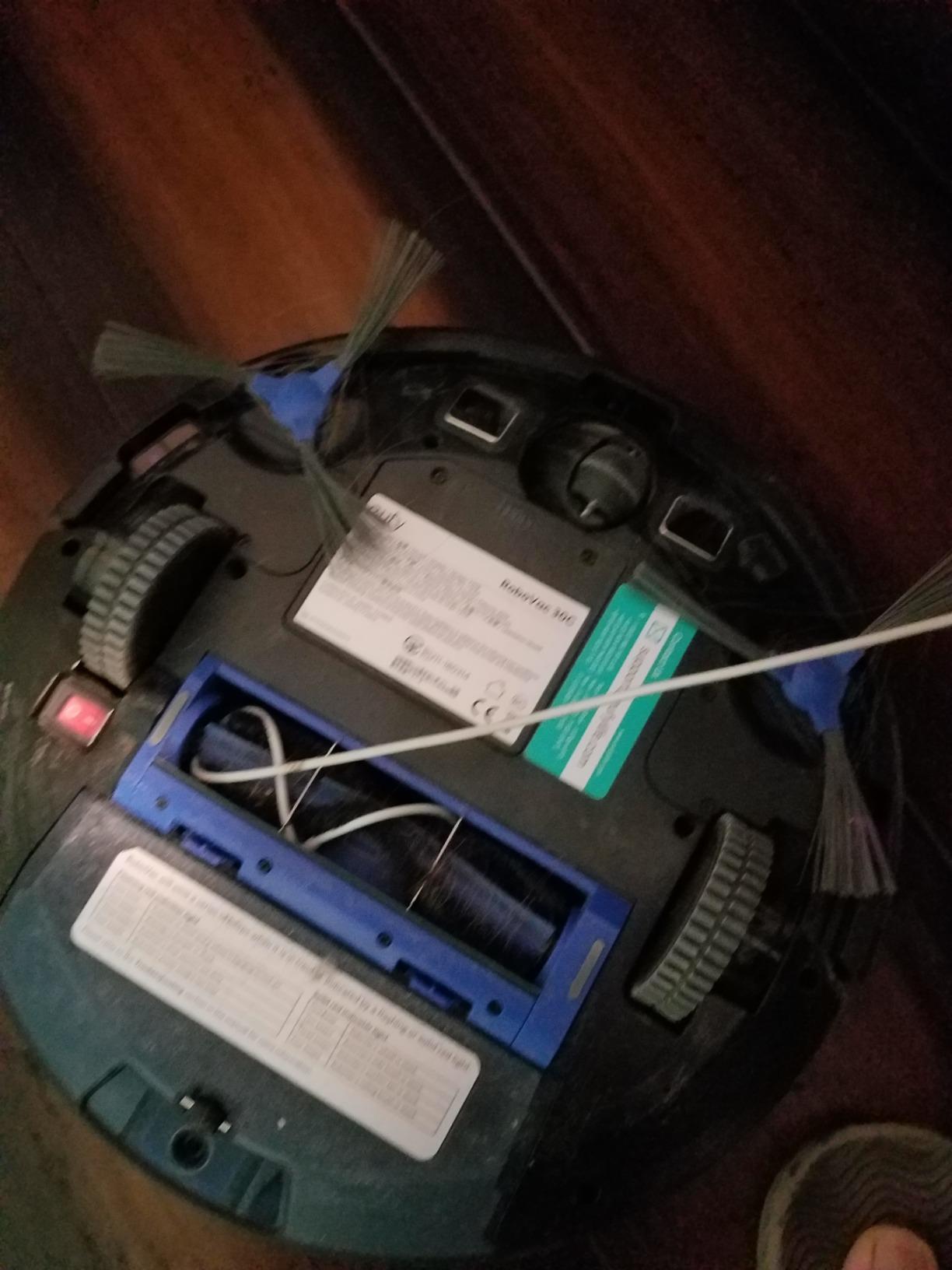
Pet hair, cat litter and fine dust all came up well on hardwood and tile. BoostIQ adjusts suction within roughly 1.5 seconds of a surface change, and the single side brush does not scatter hair back into the room.
There is no mapping and no app. It navigates by randomised roaming with infrared and drop sensors, so you pick up cables, toys and bowls before every run. In a shedding-dog home that habit is the real performance ceiling.
Is it worth buying without an app and mapping?
For a quiet, low-traffic space, yes. If you want room scheduling or no-go zones around a pet bed, it is not the machine, because you cannot ask it to clean one room twice a day.
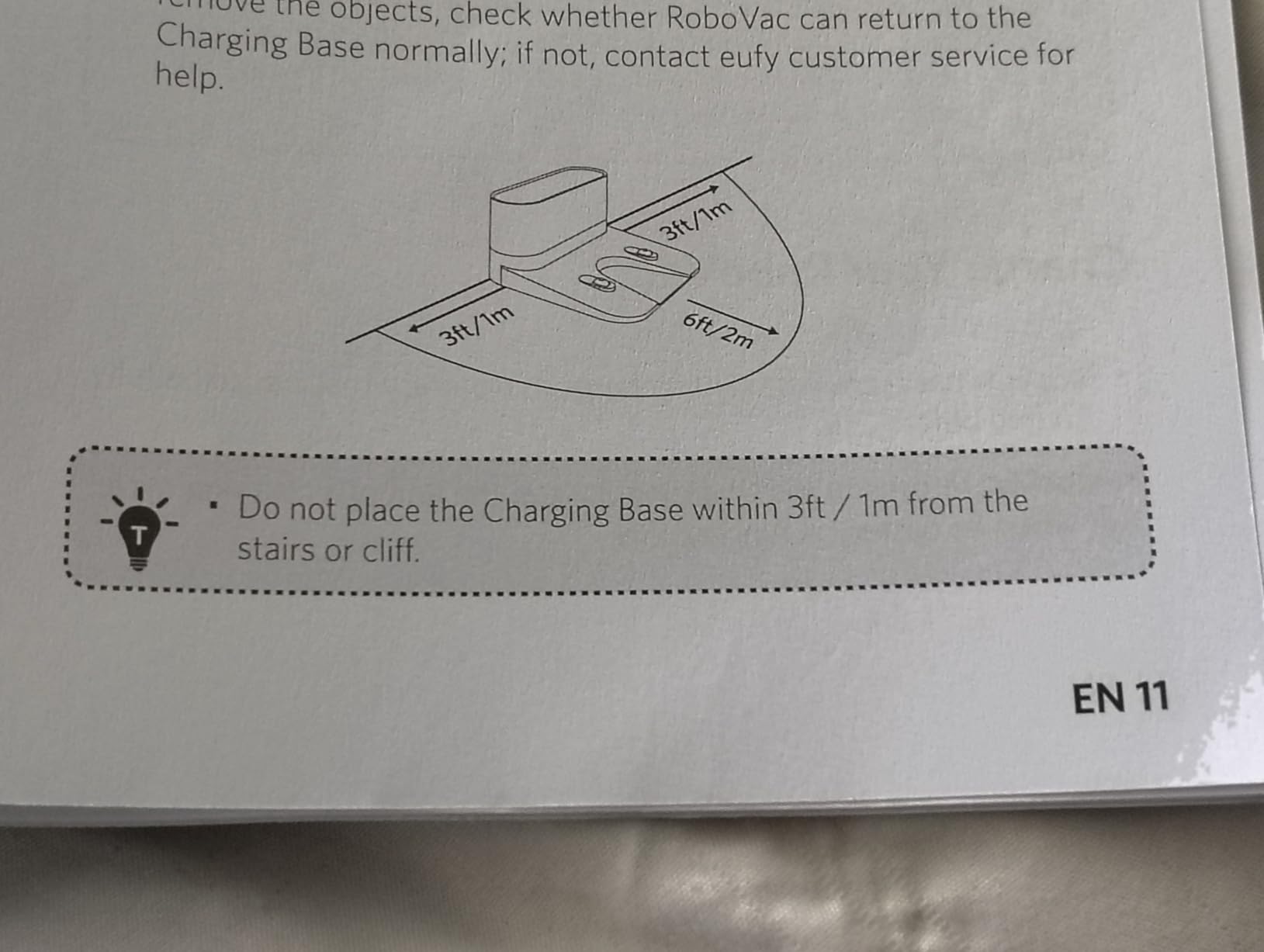
Watch the edges. Owners consistently report short-changed corners and skirting lines, and the manual is poorly illustrated, so a weekly crevice pass covers the gaps.
Is it right for multi-pet homes?
It copes well with hair on hard floors and medium-pile carpet, and quietness is a genuine advantage with nervous animals. For two large shedders on thick carpet, the manual 600 ml empty becomes a daily chore a self-emptying dock would remove.
Side brush motors and filters are the reported weak points. Keep a spare filter on hand, and the 59407 owner reviews suggest most people run these for years.
2. Shark Matrix Plus 2-in-1: Best Value With a Bagless Self-Empty Base
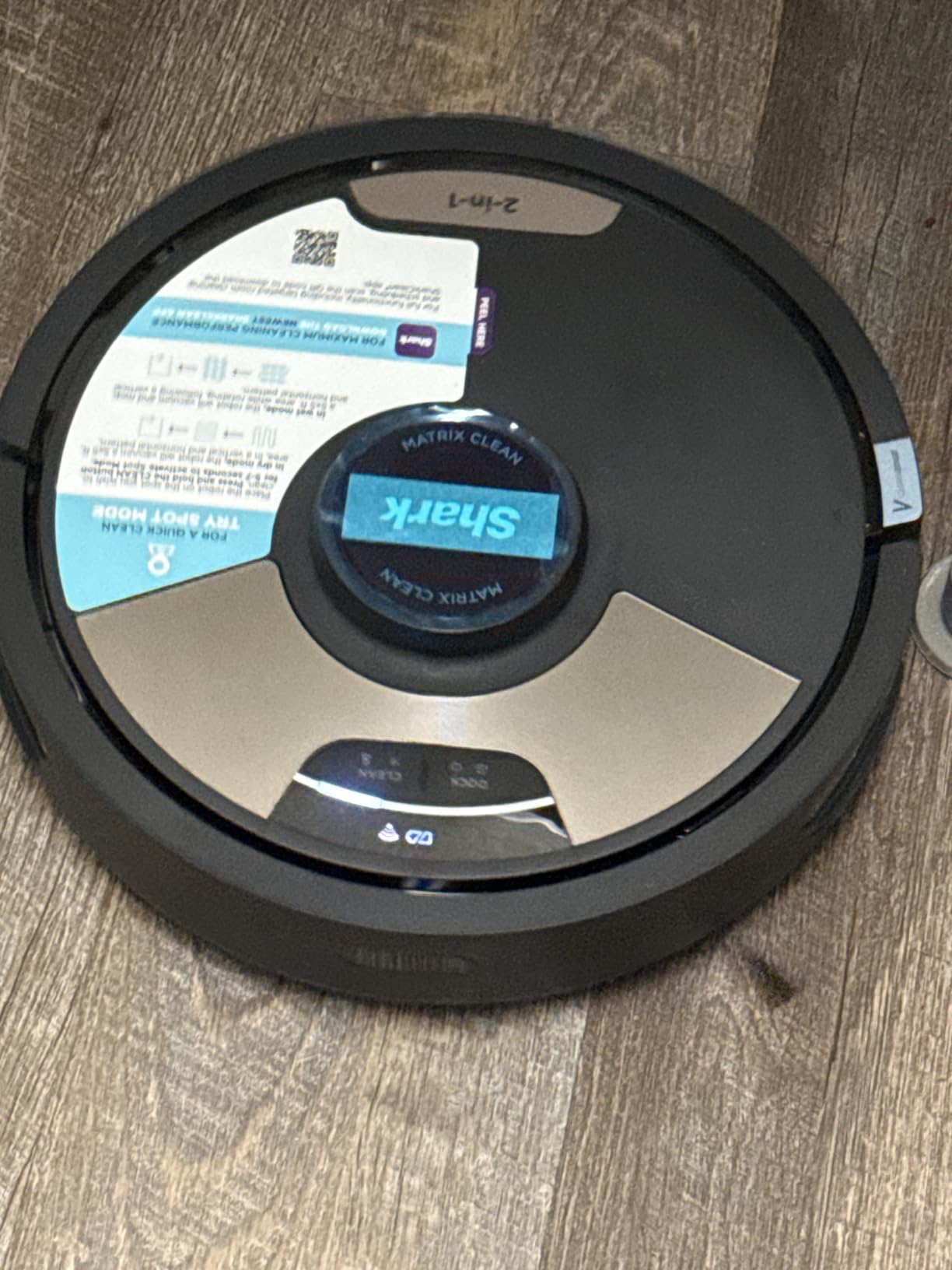
SharkMatrix Plus 2-in-1 Robot Vacuum & Mop, Black/Brass, AV2610WA
110 minute runtime
350 ml bin
60-day bagless base
True HEPA 99.97 percent
LiDAR mapping
Sonic mop
Pros
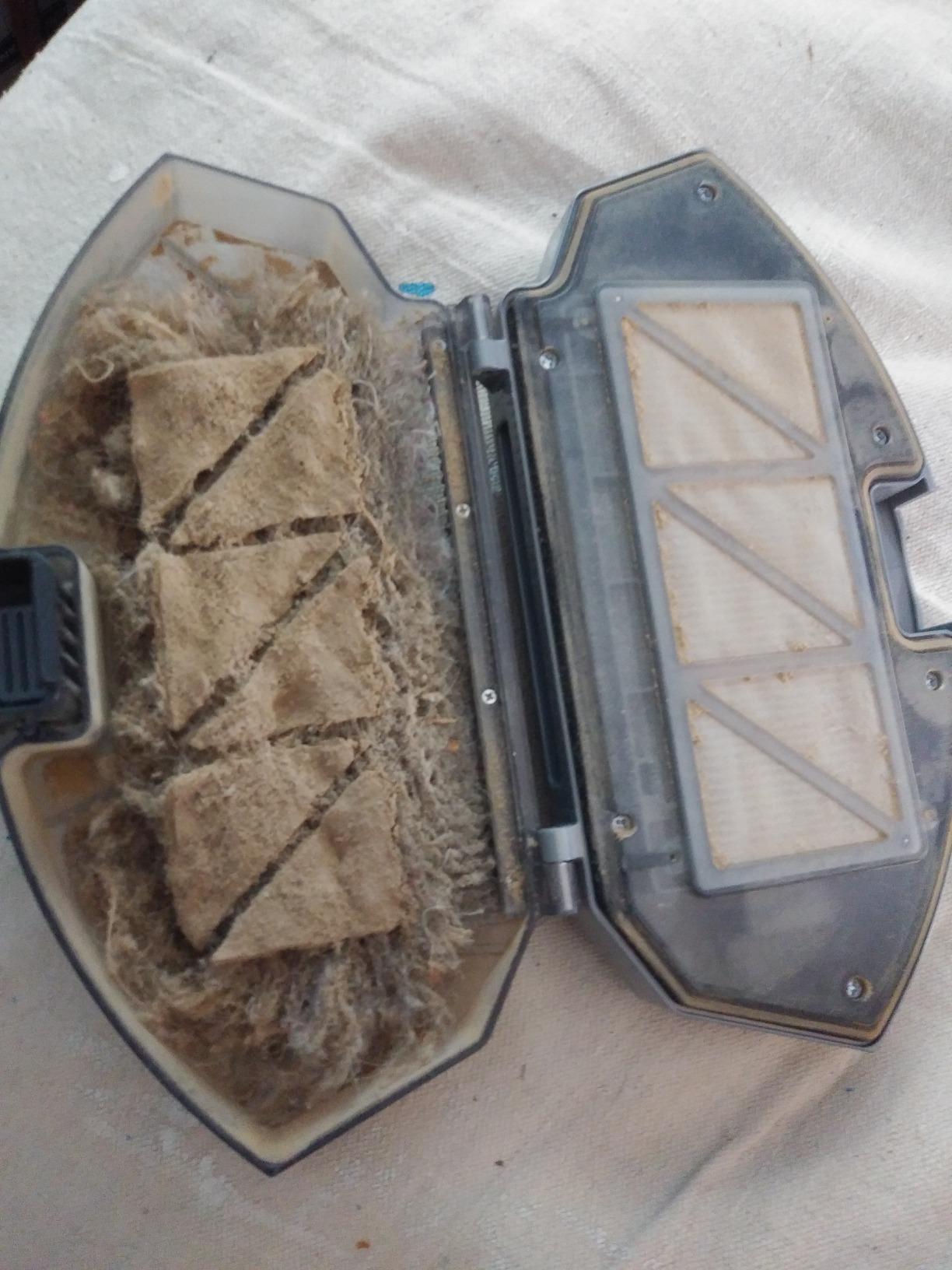
- Self-cleaning anti-tangle brushroll resists hair wrap
- 60-day bagless base means no replacement bags
- Matrix grid leaves very little behind
- True HEPA captures fine dander
Cons
- Initial app setup and mapping is slow and fiddly
- Self-emptying cycle is noticeably loud
- No-go zones have proven unreliable after updates
The Matrix pattern covers a grid rather than a lazy back-and-forth, and on fur the difference was obvious. One pass lifted embedded hair from the traffic lane in front of the dog bed that older single-path robots left sitting there.
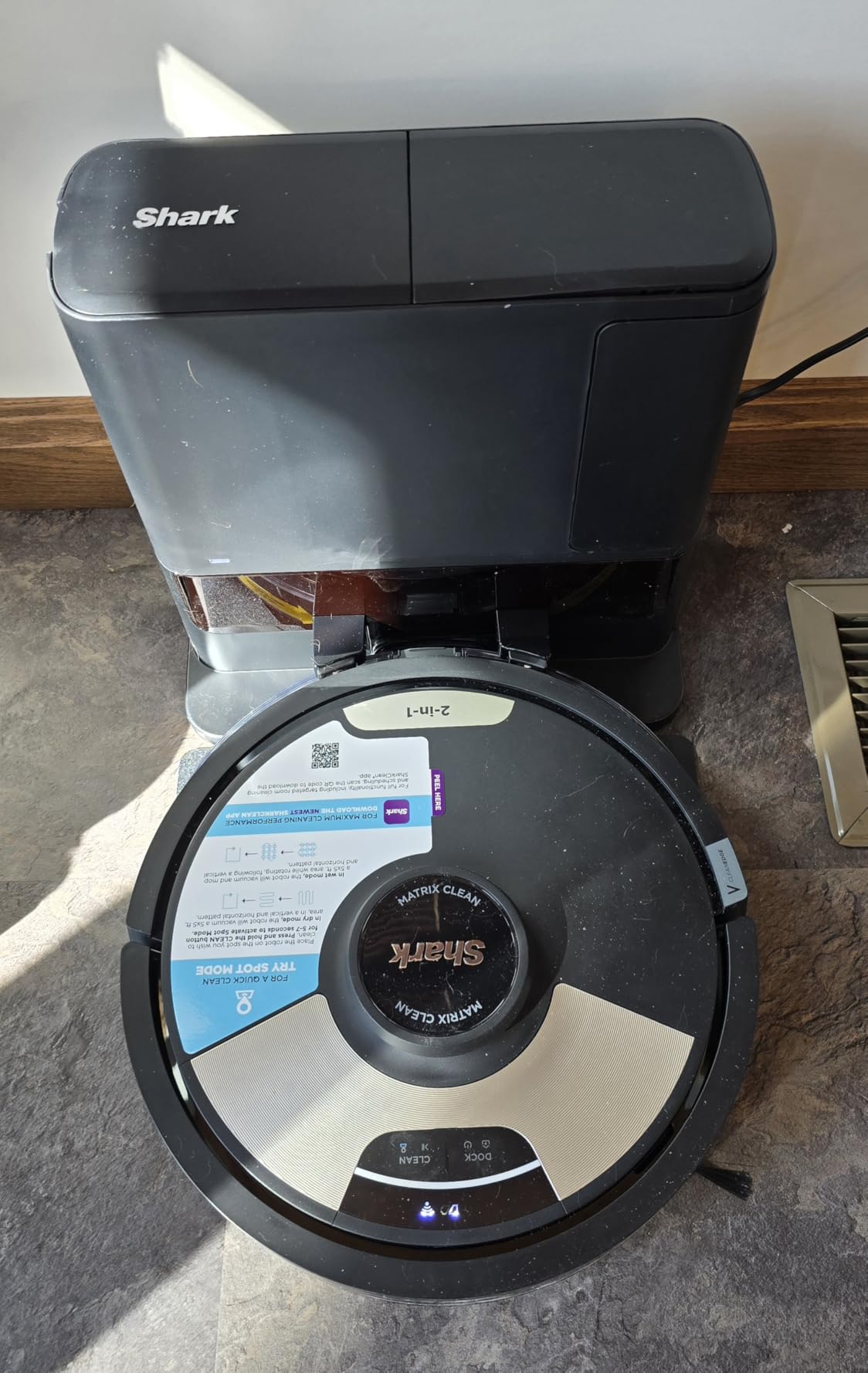
The 60-day bagless self-emptying base is the quiet hero. No bags to buy, and a HEPA base that keeps allergens contained, so owners in pet-heavy homes report dropping to a monthly empty of the canister.
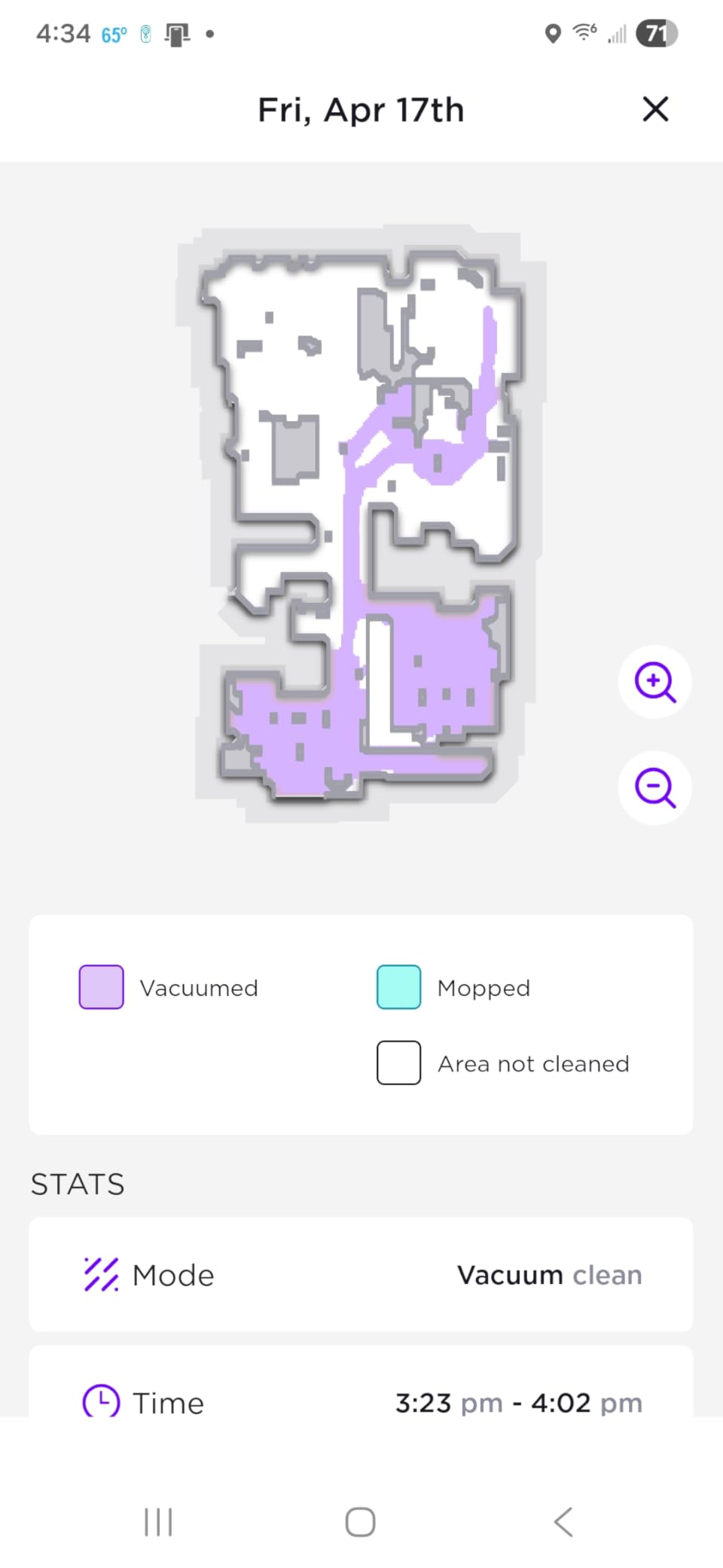
True HEPA filtration at 99.97 percent down to 0.3 microns matters if anyone reacts to dander. The 350 ml onboard bin is small, though the dock means it rarely fills during one run.
Setup is the honest weak point, with owners reporting hours spent on room labels, and some seeing mapping behave differently after a firmware update. Runs are long and the emptying cycle is loud enough to startle a sleeping pet.
Does the mop damage carpet with dog hair on it?
Yes, unless you use the app. Carpets and rugs need a no-mop zone, and given reports of zones going unreliable after updates, a physical strip is the safer backup. On bare floors the sonic mop handles paw prints and tracked-in grit well.
In a carpet-first home this robot earns its slot on vacuum performance and the bagless base, not on mopping. Run vacuum-only on carpeted rooms.
Is it quiet enough for a noise-sensitive pet?
Not really. The cleaning run is moderate, but the self-emptying cycle runs close to a regular upright vacuum in volume, so schedule it for an empty house.
Carpet and area-rug pickup can take two passes. Running after walks, when loose fur peaks, means the second pass is rarely needed.
3. iRobot Roomba 105 Vac: Best for Small Spaces and Light Carpet
iRobot Roomba 105 Vac Robot Vacuum – Easy to use, Intense Power-Lifting Suction, LiDAR Navigation, Multi-Surface Cleaning, Cleans in Neat Rows, Self-Charging
200 minute runtime
ClearView LiDAR
Cartridge filter
4 suction levels
6.2 pounds
Pros
- LiDAR mapping gives neat rows and reliable room labels
- Single rubber brush resists hair tangles
- Large bin lasts days between empties
- Quieter than older E and I series models
Cons
- Suction weaker than higher priced models on carpet
- New iRobot app routines layout is confusing
- Can get stuck on cords and small objects
The jump to LiDAR is the story here. Where older Roombas bumped around with a pseudo-map, the 105 Vac draws a real map, labels rooms and cleans in straight lines, which means less time re-covering the same carpet patch.
The single rubber brush system is the other reason it suits pets. Rubber rollers have no bristle axles for long hair to wind around, and an onboard cutting tool handles the filter screen and roller.
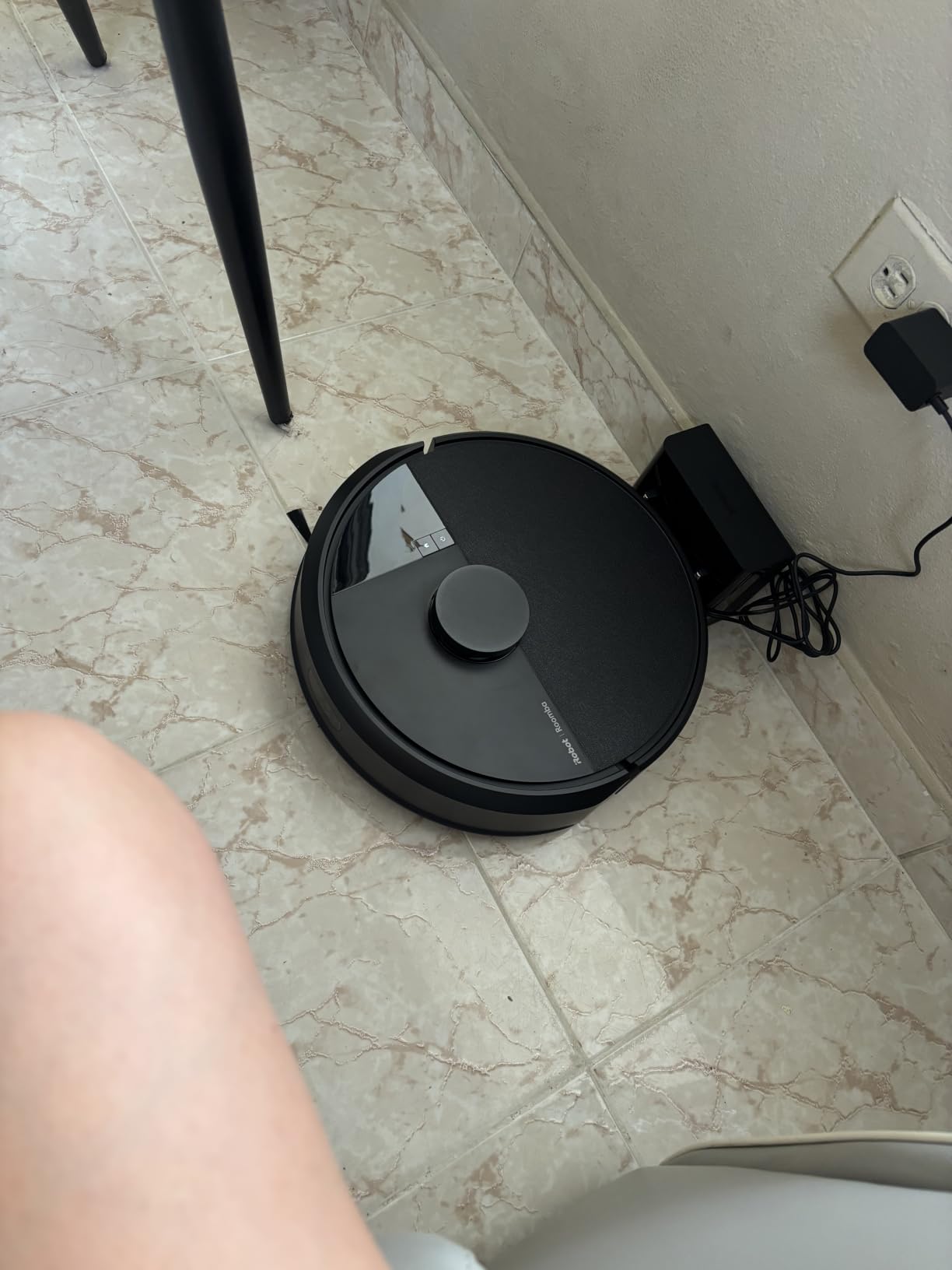
At 200 minutes of rated runtime it is the longest-running machine here, and the bin holds a couple of days of fur. Longer charging contacts as strips also make re-docking far more reliable than on older models.
Where it falls short is suction on deep carpet. The 70X figure is measured against the Roomba 600 series rather than a flagship, and the new iRobot app stacks routines and automations on top of each other.
Can it handle a cat that sheds constantly?
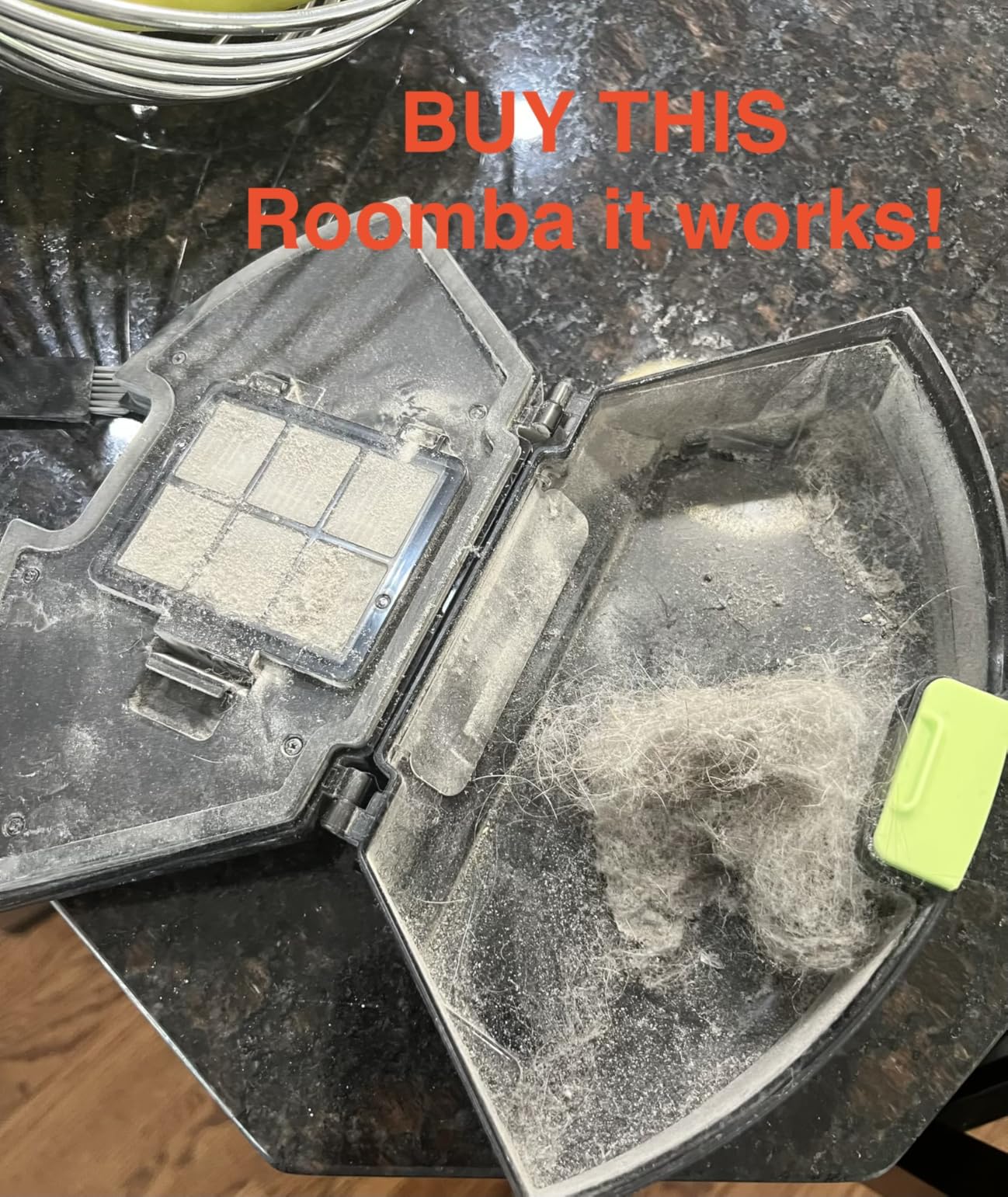
Yes on hard floors and light-pile carpet, where most cat hair lands. Rubber brush, long runtime and a large bin mean a daily run needs no thought, and with no dock there are no bags to buy.
You cannot empty the bin while the robot sits on its dock, and there is no carry handle for moving it between rooms.
What should I check before buying for carpet?
Tangles and bin capacity rather than suction figures. It passes the tangle test well and holds plenty, but on thick carpet expect two runs to bring the pile down.
Keep the floor clear. Cords, small toys and bowls are the most common cause of a stalled run, and the 4.1 inch body already sits low enough to catch on things you cannot see.
4. Shark AV2501S AI Ultra: Strong Pickup With a 30-Day Bagless Base
Shark AV2501S AI Ultra Robot Vacuum, with Matrix Clean, Home Mapping, 30-Day Capacity HEPA Bagless Self Empty Base, Perfect for Pet Hair, Wifi, Dark Grey
120 minute runtime
30-day bagless HEPA base
LiDAR mapping
4.1 inch tall
Self-cleaning brushroll
Pros
- Strong suction and self-cleaning brushroll handle heavy shedding
- 30-day bagless base cuts maintenance to a monthly chore
- HEPA base traps 99.97 percent of dust and allergens
- Low profile slips under beds
Cons
- No-fly zones in the app are unreliable
- Only maps a single floor
- Loud self-emptying cycle
- False cliff-sensor errors stop runs
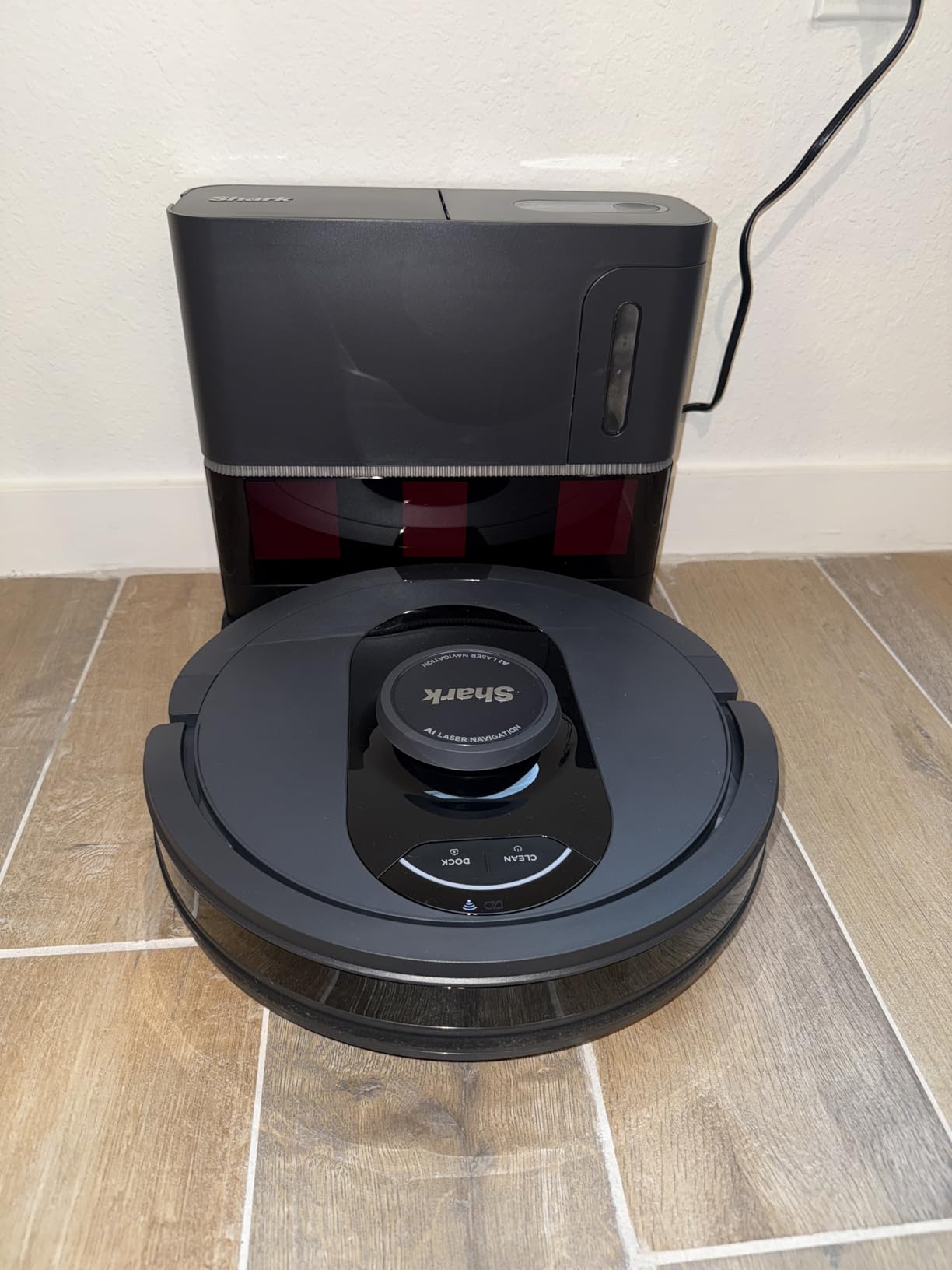
This is the one we would put on wall-to-wall carpet with a heavy shedder. Suction plus a self-cleaning brushroll handled fur worked into a rug for weeks, and Matrix Clean navigation made repeated passes on dense patches.
The 30-day bagless base is the difference between a robot you use and one you avoid. Owners with a husky and a lab empty the base roughly monthly instead of several times a week.
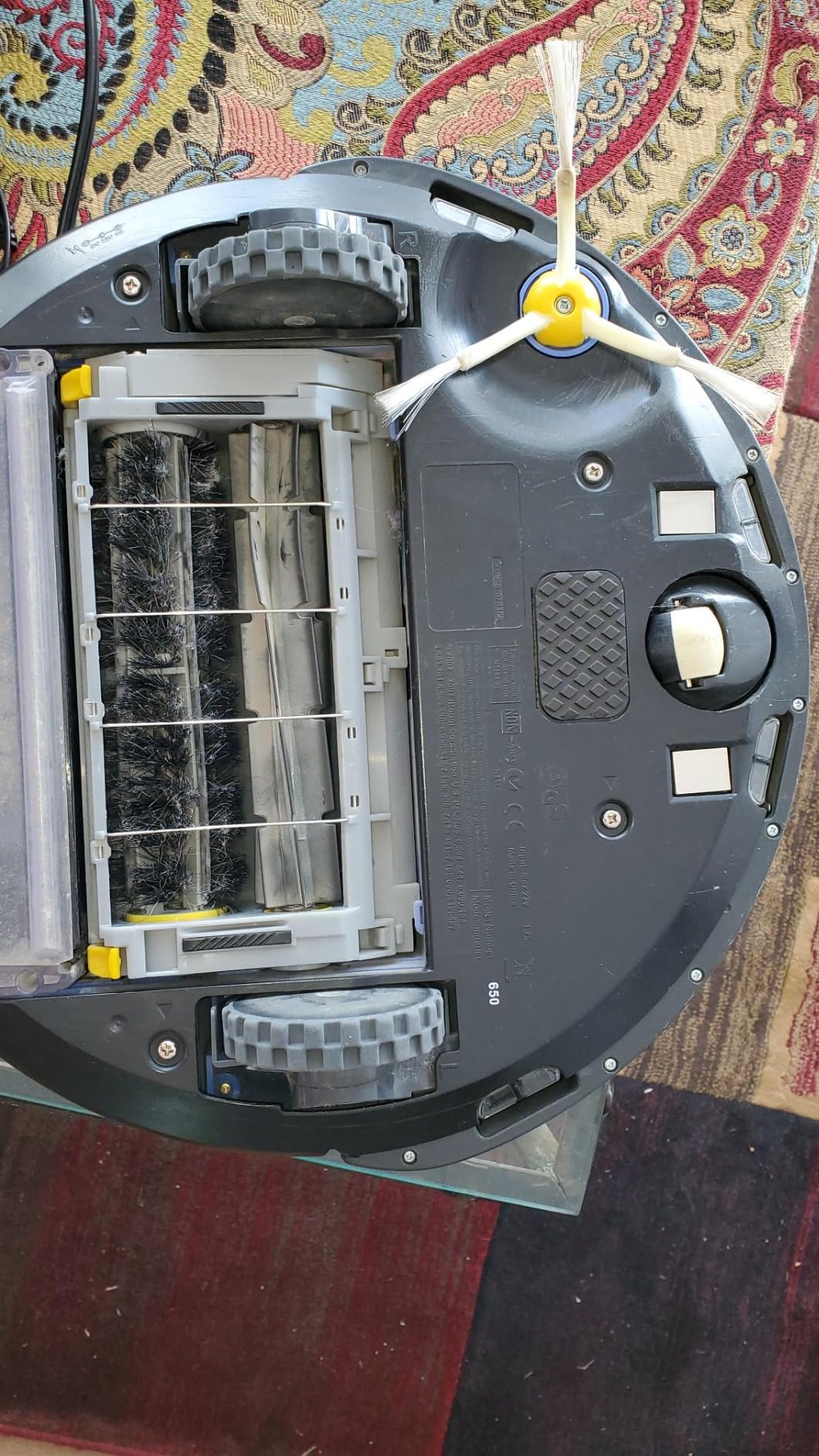
LiDAR mapping produces orderly coverage on hard floors and low-pile rugs, and at 4.1 inches it tucks under most bed frames. Alexa, Google Assistant and app scheduling all work, so it can run while you are out.
The complaints are software rather than cleaning. No-fly zones are described as unreliable, which matters near stairs, it maps only one floor, and the evacuation triggers every time it docks, even for a quick roller check.
Is it safe on stairs and around pet waste?
Cliff sensors handle stairs and most runs finish without incident, but false cliff-sensor errors do stop the machine mid-clean. With unreliable no-fly zones, a physical barrier is the dependable answer for a stairwell.
Treat any robot as needing the floor cleared first. A cord under a sofa is the most common cause of a stalled clean.
How much maintenance does it really need?
Less than a stick vacuum, but not nothing. Wipe the bagless base down, rinse the base filter occasionally, and check the self-cleaning brushroll, which still collects some hair. Monthly is the realistic rhythm.
A small share of reviews describe machines that stopped working after roughly a year, so check the warranty terms for your region. Software reliability and hardware longevity are separate questions here.
5. Roborock 10000Pa LiDAR: Best for Heavy Shedders on a Budget
roborock Robot Vacuum Mop with LiDAR, 10000Pa, Anti-Tangle, 7–9 Weeks
10000Pa suction
2.7L self-empty dock
150 minute battery
JawScrapers main brush
65 dB
Pros
- JawScrapers main brush and 0 percent hair-tangle side brush
- 2.7L dock rated 7 to 9 weeks hands-free
- Strong pickup of pet hair and cat litter
- Fast setup and accurate LiDAR mapping
Cons
- App map editing is fiddly with boxes opening off-screen
- Re-establishes position every mission and can ignore no-go zones
- Mopping is basic and best for daily maintenance
- Onboard bin fills fast in heavy pet traffic
The anti-tangle hardware is the headline. The JawScrapers main brush scrapes hair off the roller as it turns and the side brush is designed not to wrap, which is exactly the complaint that drives owners in r/RobotVacuums to replace machines every few years.
10000Pa with a 2.7 litre self-emptying dock is a lot of capacity for a mid-range machine. The dock is rated for 7 to 9 weeks hands-free, so even two heavy shedders rarely fill the bag in a month.
Battery life is a real strength. Owners report covering around 600 square feet in roughly 30 minutes on deep clean, out of 150 rated minutes, and the low rectangular body handles floor transitions well.
Navigation holds the compromises. The robot re-establishes location every mission, and owners report it driving at steps and thresholds despite no-go zones, while the app’s map editing boxes open off-screen and lock easily.
Is 10000Pa enough for thick carpet with long dog hair?
On low-pile and medium carpet, yes, and the anti-tangle brush does the rest. On high pile where fur is genuinely embedded, a 20000Pa machine pulls more out on the first pass, so schedule a second run after walks.
At 65 dB this is one of the louder models here, so give nervous pets time to adjust before the first scheduled run.
Should I buy the combo or the vacuum-only version?
Pet owners almost always rate vacuum performance as the priority. The VibraRise mop is useful for daily paw-print freshness on hard floors, but it is not a deep-clean tool and it adds a part to remove and rinse.
In a carpet-dominant home the vacuum-only configuration is cleaner. Note the onboard bin still needs a manual empty if it fills mid-run.
6. iRobot Roomba 105X Combo: Best Vacuum and Mop Combo for Pet Homes
iRobot Roomba 105X Combo Robot Vacuum & Mop with AutoEmpty Dock, Self‑Emptying for Up to 75 Days, 70× Power‑Lifting Suction, Smart LiDAR Mapping, App & Voice Control, Ideal for Homes with Pets & Kids
75 day AutoEmpty dock
Sealed bag locks in 99 percent allergens
100 minute runtime
ClearView LiDAR
Pros
- Vacuums and mops in one run to save time
- Sealed AutoEmpty bag contains 99 percent of allergens
- Automatically detects carpet and avoids mopping it
- LiDAR maps quickly and cleans in neat rows
Cons
- Mopping handles everyday freshness rather than deep cleaning
- Dock bag still needs disposal on a schedule
- Floors must be cleared of cords and small objects
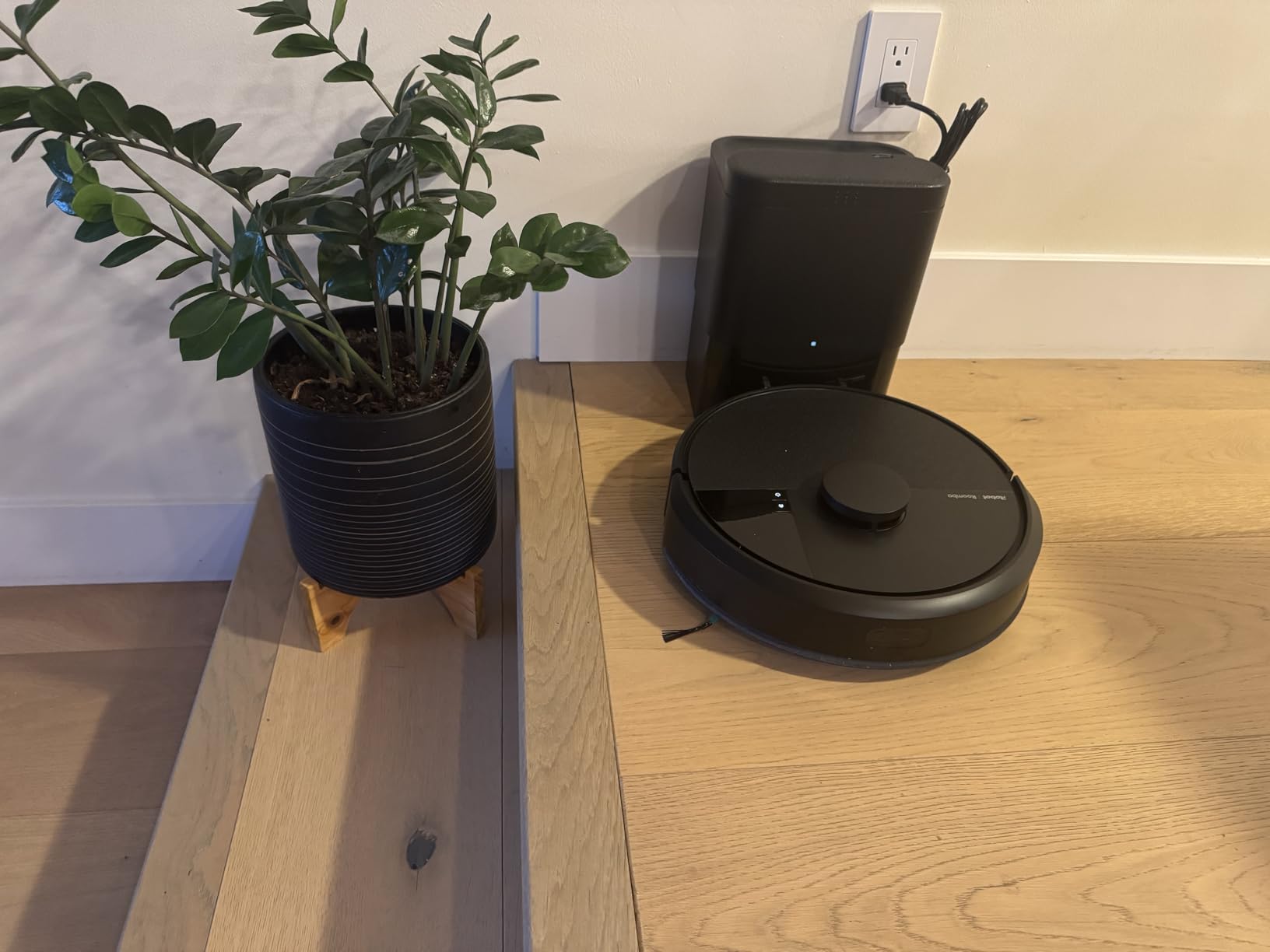
The sealed AutoEmpty bag is the appeal in a pet home. Allergens stay inside the dock so nobody handles collected dust, and automatic carpet detection means one run covers hard floors and rugs in the right order.
That carpet detection is the detail that matters. The robot leaves mopping mode on soft surfaces automatically, removing the exact problem owners report with combo units dragging a wet pad across carpet and smearing the hair just picked up.
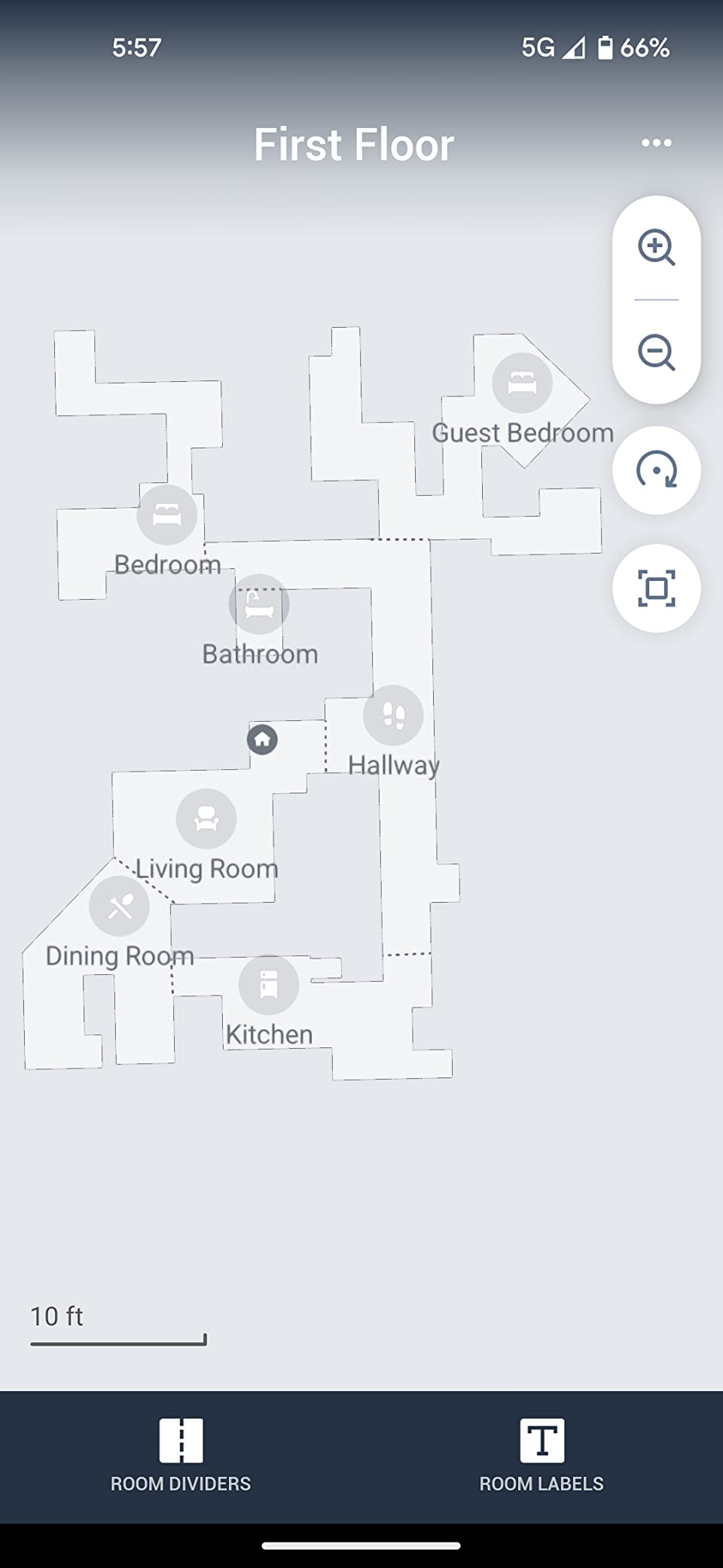
ClearView LiDAR maps quickly and produces straight passes, with room targeting and keep-out zones in the app. Alexa, Siri and Google Assistant start a run without opening anything.
Expect the mop to be a maintenance step rather than a deep clean. The SmartScrub micro-pump keeps the pad evenly moist, which suits everyday paw prints on sealed floors, but stubborn grout grime is out of scope.
Is a vacuum and mop combo worth it with pets?
Yes if your floors are mostly sealed hard surfaces, because paw prints, spills and tracked grit get handled in the same run that lifts the fur. In a carpet-led home the mop adds a part to maintain for very little gain.
The dock bag still needs disposal on a schedule, and the bin cannot stay full for weeks the way a large bagged dock allows.
How do I get a nervous pet comfortable with it?
Place the switched-off robot in a room where your pet already feels safe and let them investigate for a day. Then run one small room with treats present, building up the space in stages rather than turning it loose in the whole house.
Schedule long runs for empty houses. Most anxious pets settle within a week, and the first cycle where nothing scary happens is usually the turning point.
7. iRobot Roomba E5: Best Value for Allergy Sufferers
iRobot Roomba E5 (5150) Robot Vacuum – Wi-Fi Connected, Works with Alexa, Ideal for Pet Hair, Carpets, Hard, Self-Charging Robotic Vacuum, Black
90 minute runtime
Dual rubber multi-surface brushes
Filter trapping 99 percent of allergens
Dirt Detect
Pros
- Dual rubber brushes resist pet hair tangles
- Filter captures 99 percent of cat and dog dander
- Auto-adjust head moves between carpet and hard floor
- Dirt Detect concentrates effort on messy areas
Cons
- No LiDAR mapping so room targeting is limited
- High-efficiency filter needs regular replacement
- Rubber brushes and filter need periodic cleaning
- 90 minute runtime is short by current standards
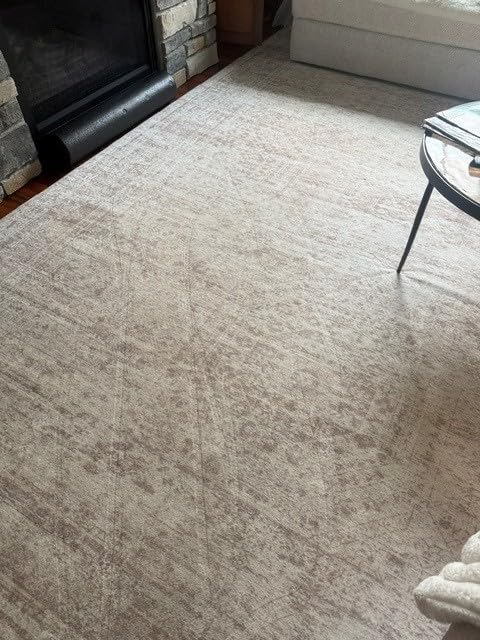
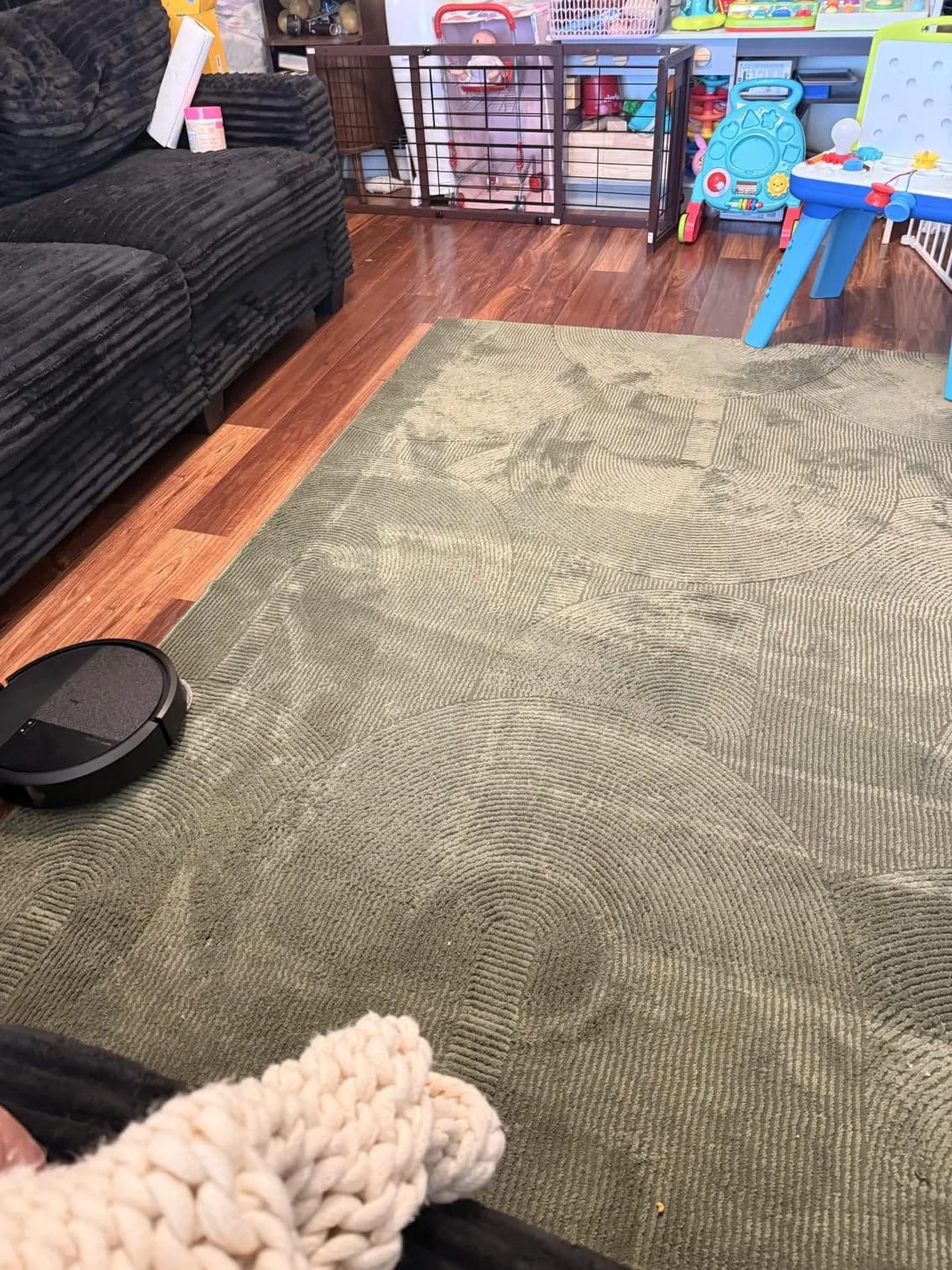
The rubber multi-surface brush pair is why this still works in long-haired pet homes. No bristles means no hair wrap axles, and the auto-adjust head rides up onto carpet and back down without you changing modes. Dirt Detect then spends extra passes where they are needed.
For allergy households the high-efficiency filter is the headline, trapping 99 percent of cat and dog dander allergens. Pair a daily run with an air purifier and most owners report a visible drop in dusty surfaces within a fortnight.
Scheduling through the iRobot app, Alexa, Google Assistant and HomeKit is straightforward, and automatic recharging resumes an interrupted run. It is a mature, well-supported platform, which matters if you keep the same robot for years.
The limits are real. Without LiDAR the paths are less methodical and room targeting is basic, the 90 minute runtime is short for a large house in coat season, and you will buy filters regularly.
Is the filter cost worth it for a shedding cat?
If anyone in the house is allergic to dander, the filter is the price of the benefit. In a single-pet home focused on fur removal rather than allergy control, a washable-filter machine costs less over five years.
Expect to wipe the brushes and filter screen every few weeks to keep suction up. Ten minutes with a comb and a sink is the whole ritual in a busy season.
Roomba or Shark for a two-dog home?
Take the E5 if both dogs are medium-haired and floors mix hardwood with thin carpet, since the rubber brushes and allergen filter do the heavy lifting quietly and 90 minutes covers a medium home.
Take a Shark self-emptying model if the dogs are heavy shedders. The 30-day bagless base removes the daily bin empty, which is the real difference in daily effort once fur volume is high.
8. Shark Navigator AV2110S: Best for Multi-Pet Large Homes
Shark Navigator Robot Vacuum + Self-Empty Base, White, AV2110S
120 minute runtime
SmartPath LiDAR
30-day bagless base
Anti-hair-wrap brushroll
3 power levels
Pros
- Row-by-row SmartPath cleaning covers up to 1.5X more floor
- 30-day bagless base needs no disposal bags
- Anti-hair-wrap self-cleaning brushroll handles long hair
- Object detection reduces floor clearing
Cons
- SharkClean app reliability and setup can be finicky
- Self-emptying base cycle is loud
- Base filters and brush need periodic cleaning
This is the one for two or more pets and a lot of floor. SmartPath LiDAR cleans in straight rows, and Shark rates the coverage gain at up to 1.5X over a standard route, which in practice means fewer missed patches of fur beside furniture.
The anti-hair-wrap self-cleaning brushroll takes long hair without constant snipping, and object detection reduces the floor-clearing habit, though cords still catch it.
A 120 minute runtime plus Recharge and Resume means a long job finishes without supervision, and the 30-day bagless base has no bags to buy, which is the quiet financial win in a daily-run household.
Three power levels, no-go zones, spot cleaning and scheduling live in the SharkClean app with Alexa and Google Voice on top. Reviewers call the app the weakest part of the package, with finicky setup and menus that shift between updates.
Does the anti-hair-wrap brush really stop tangles?
It reduces them noticeably rather than eliminating them. The self-cleaning mechanism clears hair as the roller spins, so you cut far less off than with a bristle brush, but a weekly check is still worth it in a heavy shedding season.
Long straight-haired dogs are the hardest case, since curly and wavy coats leave less length to wrap.
Is it worth replacing a working robot?
Only if the daily bin empty is what you hate. Two dogs on hard floors fill an onboard bin fast, and the bagless base removes that chore. If your current robot already self-empties, the reason to move up is coverage and brush design, not capacity.
Clean the base and its filters monthly. Owners who skip that step report fading suction, and that is the fix rather than a hardware problem.
9. ROPVACNIC 5200Pa: Cheapest Pick for Apartments and First Pets
ROPVACNIC Robot Vacuum and Mop Combo 5200Pa Suction Robotic Cleaner
5200Pa suction
3 suction levels
120 minute runtime
2.99 inch body
Multi-layer filtration
Pros
- Low entry cost with vacuum and mop in one unit
- Anti-tangle design and dual side brushes built for pet hair
- App remote and voice control
- Compact body reaches under most furniture
Cons
- 5200Pa is weak against deeply embedded carpet fur
- Basic sensors compared with LiDAR models
- No self-emptying base so the bin is emptied by hand
This is the one to buy to find out whether a robot suits your household before spending properly. It vacuums and mops in one unit, connects to the app and the remote, and works with Alexa or Google Assistant.
For pet hair it does a respectable job on hardwood, tile and low-pile carpet. The no-entanglement design and dual rotating electric side brushes are built for pet owners, and hair wraps far less than on an equivalent bristle-brush budget model.
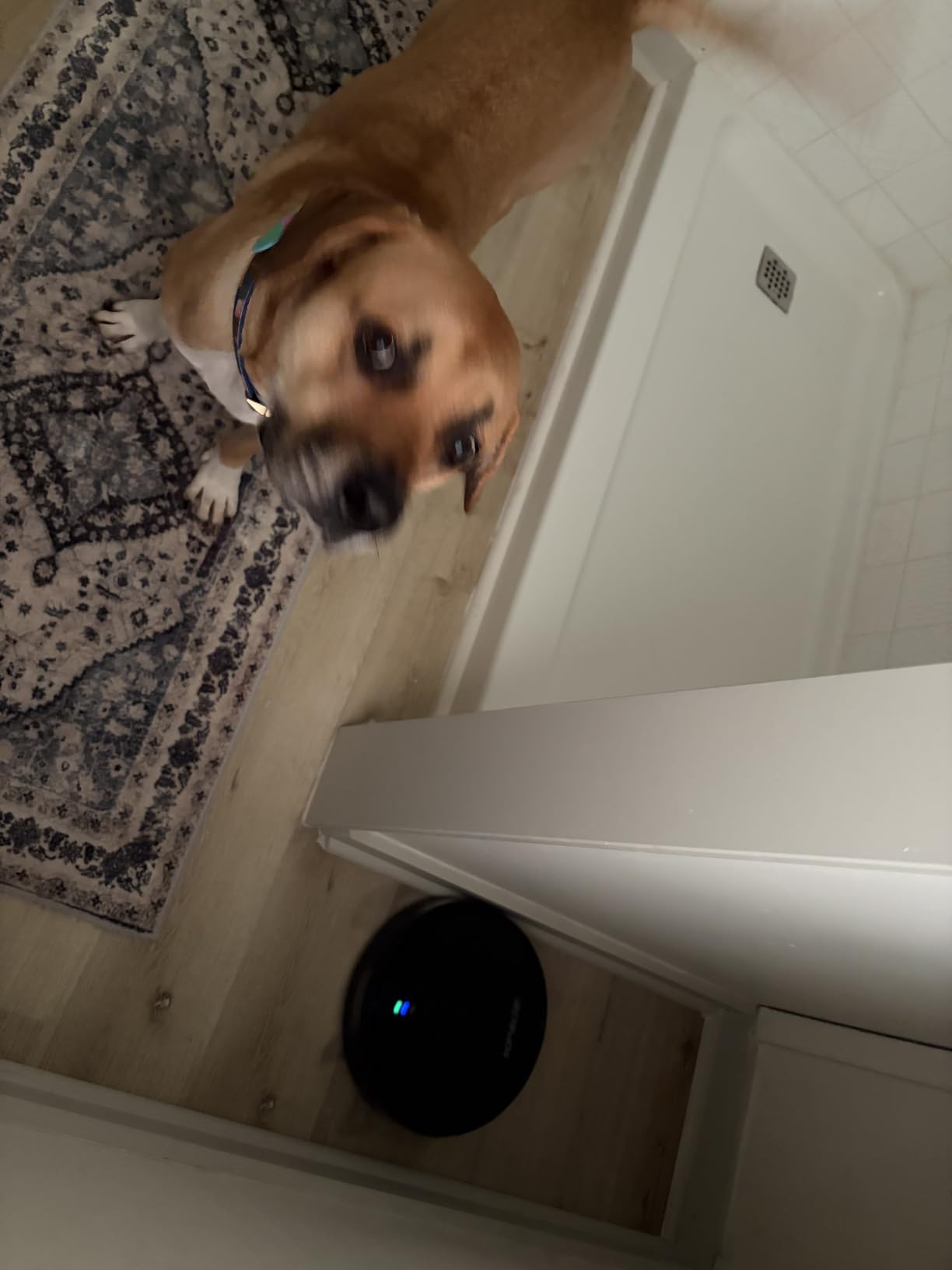
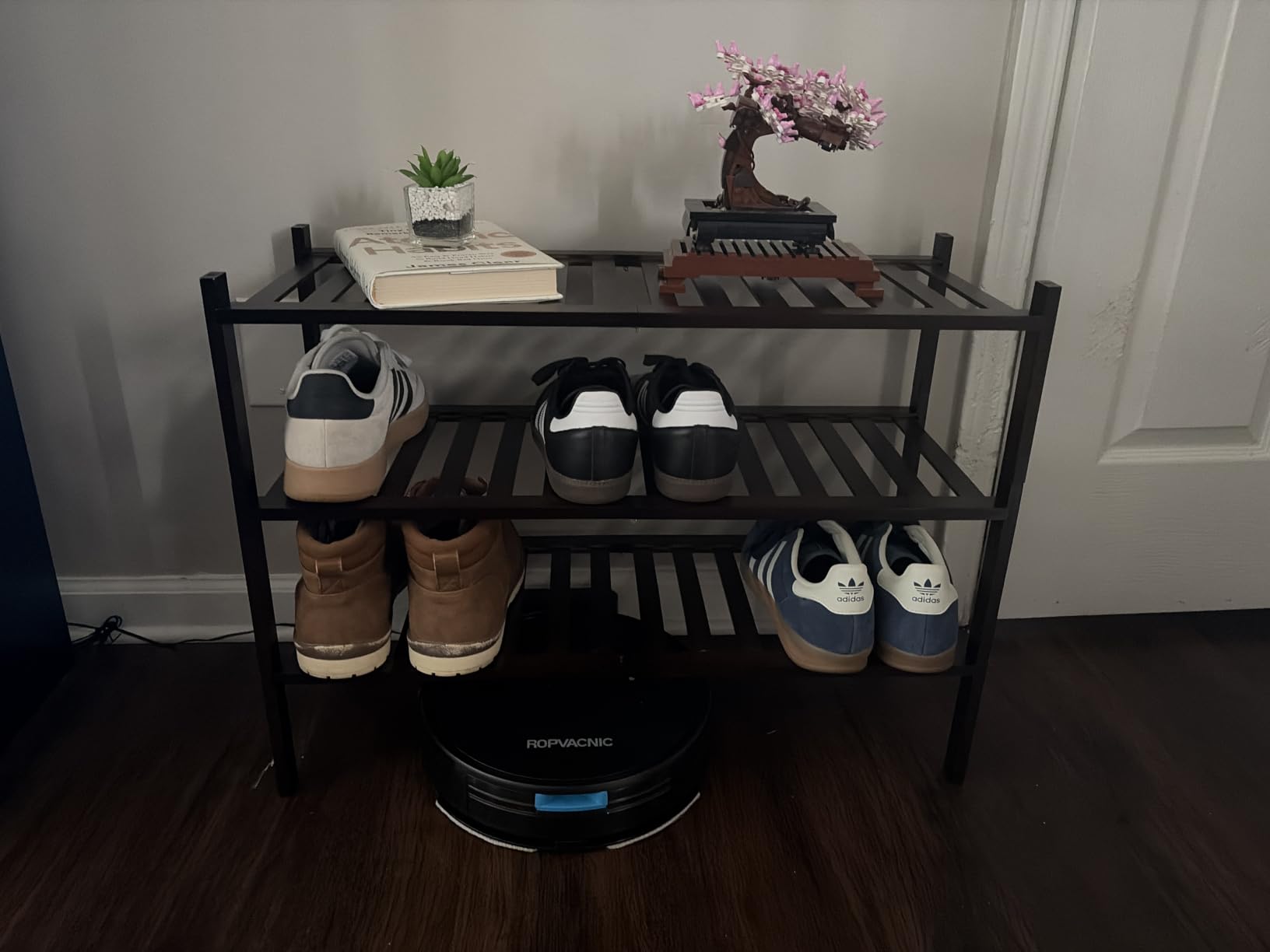
The 2.99 inch body fits most furniture gaps, 120 minutes covers a small apartment in one pass, and electronically controlled mopping with four-stage water adjustment lets you dial the pad wetness down on wood.
5200Pa is the honest limit. It lifts surface hair well and struggles with fur worked into a thick pile, the sensor suite is basic beside anything using LiDAR, and there is no self-emptying base.
Is a budget robot worth buying for pet hair?
Yes for hard floors and one small pet. Expect to empty the bin by hand, often twice a day in a shedding home, and to cut hair off the brush every couple of weeks.
No for a thick-coated dog on deep carpet. Spend the difference on a self-emptying model with a rubber brush and the maintenance burden drops to almost nothing.
Which controls should I actually use?
Use the app for scheduling and suction levels and the remote when Wi-Fi drops. Voice control is a nice-to-have rather than something to build a routine around.
The spare HEPA filter and four side brushes in the box are worth keeping, since side brushes take the most abuse of any part in a pet home.
10. Roborock Qrevo 2 Pro: Best for Mixed Floors
roborock 2026 New Qrevo 2 Pro Robot Vacuum and Mop, 20,000Pa Suction, FlexiArm Edge Mopping, Zero-Tangle, High-Temperature Mop Self-Cleaning, Smart Obstacle Avoidance, Auto Mop Removal, Black
20000Pa HyperForce suction
253 minute runtime
54 dB
Dual Zero-Tangle brush
15mm mop lift
Pros
- Dual Zero-Tangle system keeps long fur off the roller
- Automatic mop removal and 15mm mop lift protect carpet
- FlexiArm edge cleaning reaches within 1.85mm of walls
- Quiet 54 dB run with 253 minutes of battery
Cons
- Premium price sits far above mid-range robots
- Deep mopping still falls short for owners
- Small share of reports on LiDAR hardware failure
- Hard to locate a stuck robot under furniture
The Dual Zero-Tangle system is the best anti-hair design on this list. The DuoDivide main brush and anti-tangle side brush kept long fur off the roller across repeated runs in a two-dog home, the feature pet owners rank highest.
Carpet Care is what makes it work in a mixed-floor house. The robot removes the mop automatically, sequences vacuum before mop and lifts the pad 15mm, so a rug mid-floor is not dragged through wet. Automatic carpet boost adds suction at the same time.
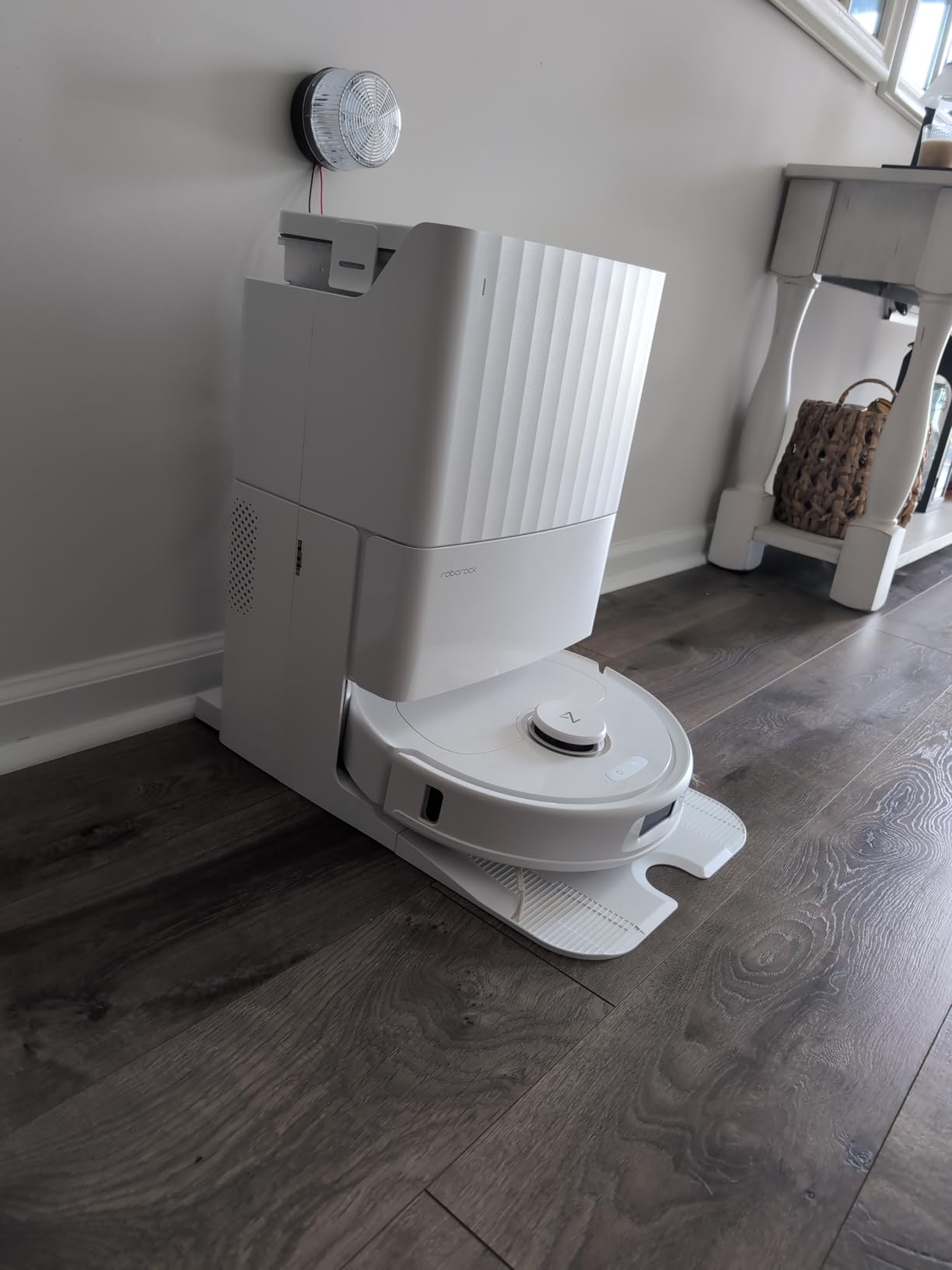
The dock is the most capable here: auto dust emptying, water refill, 149F hot mop washing and 113F warm air drying on a soaking cleaning tray. Owners who used to hand-wash pads describe the dock as the reason they stopped resenting combo units.
Reactive Tech obstacle avoidance, Quick Mapping and a 3D map display handle complex multi-level homes, and at 54 dB it is one of the quietest machines we tested.

Is it worth the premium over a mid-range model?
If you have carpet and hard floor in the same home, yes. Automatic mop lift and vacuum-before-mop sequencing remove a problem cheaper combos cannot solve, and 20000Pa pulls out embedded fur that a 10000Pa machine leaves behind.
On a single-surface apartment, the mid-range picks here deliver most of the pickup for far less. The gap opens when you have rugs you care about and a mop you actually use.
What are the real drawbacks?
Some owners still describe the mopping as short of a true deep clean, which is common across this category. A small share of 1-star reviews focus on LiDAR hardware failure before 18 months and unhelpful post-warranty support, so the terms matter.
Locating a stuck robot is difficult and the 3D map will not show you under furniture, so use the find function rather than lifting sofas. The status text is also small.
11. Tikom L8000 Plus: Best for Multi-Level Homes
Tikom Robot Vacuum and Mop, Robotic Vacuum Cleaner with Self-Emptying Base
3L self-empty base
6000Pa with carpet boost
LiDAR maps for 5 levels
150 minute runtime
60 dB
Pros
- 3L dust bag rated for up to 90 days hands-free
- 6000Pa that auto-boosts to maximum on carpet
- LiDAR navigation and maps for up to 5 levels
- Supports both 2.4GHz and 5GHz Wi-Fi
Cons
- Mop needs the holder removed or a no-mop zone on carpet
- 60 dB is louder than premium models
- HEPA filter rather than washable adds upkeep
- App-only control
Multi-floor mapping for up to five levels is why this sits where it does. Most mid-range rivals map one floor and make you carry the robot up the stairs, which is a real chore in a split-level home with pets on both levels.
The 3 litre self-emptying dust bag is rated for up to 90 days, and 6000Pa that auto-boosts to maximum on carpet handled embedded fur well on medium pile. A 150 minute runtime covers a large floor plan in one pass.
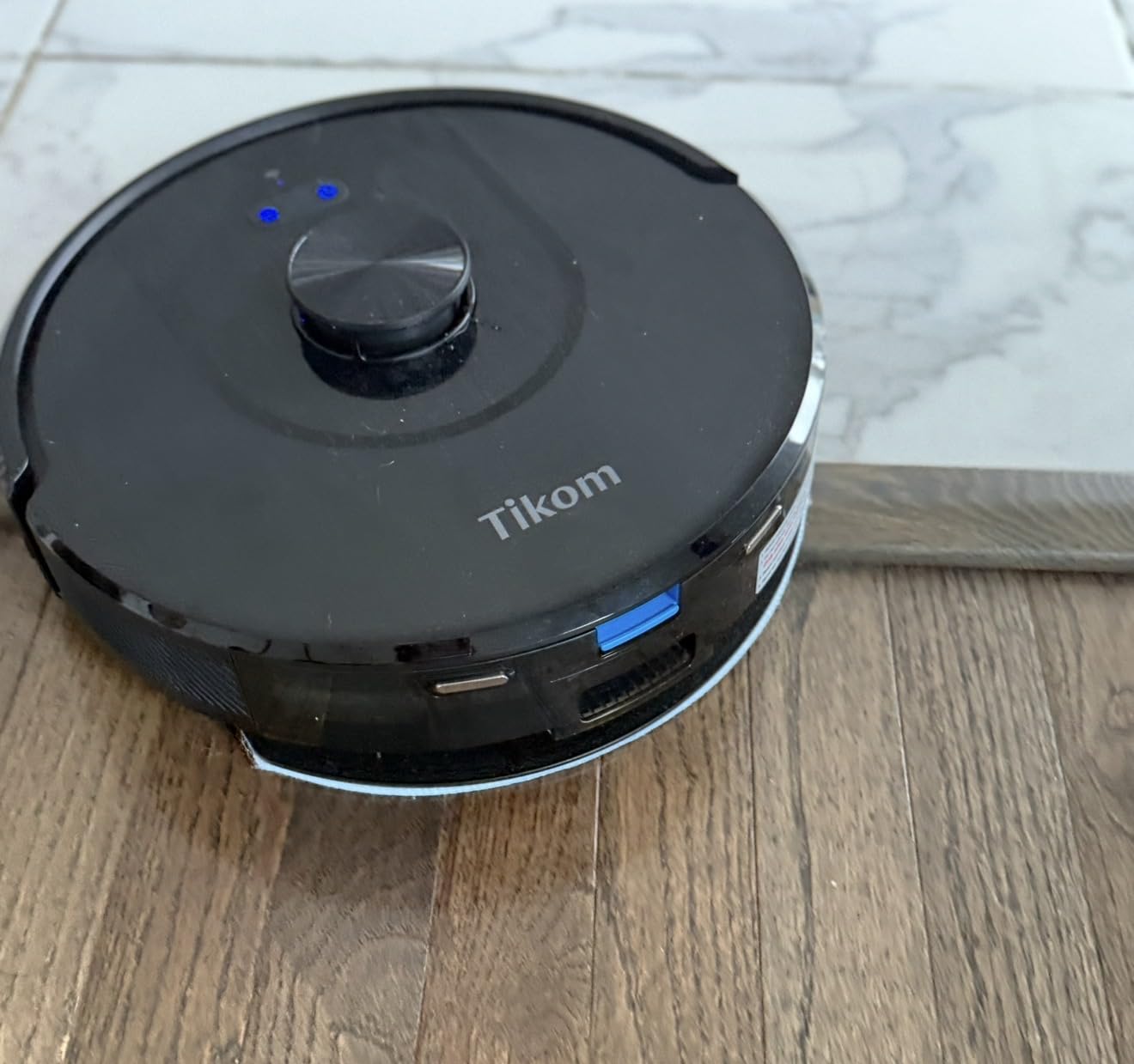
App control is thorough for the money: no-go zones, no-mop zones, virtual walls, scheduling and room selection, plus Alexa. Supporting both 2.4GHz and 5GHz Wi-Fi removes the most common setup failure in older homes.
Two caveats. The mop needs the holder physically removed or a no-mop zone set on carpet, 60 dB is louder than the 54 dB flagships, and the HEPA filter is a recurring consumable rather than something you rinse.
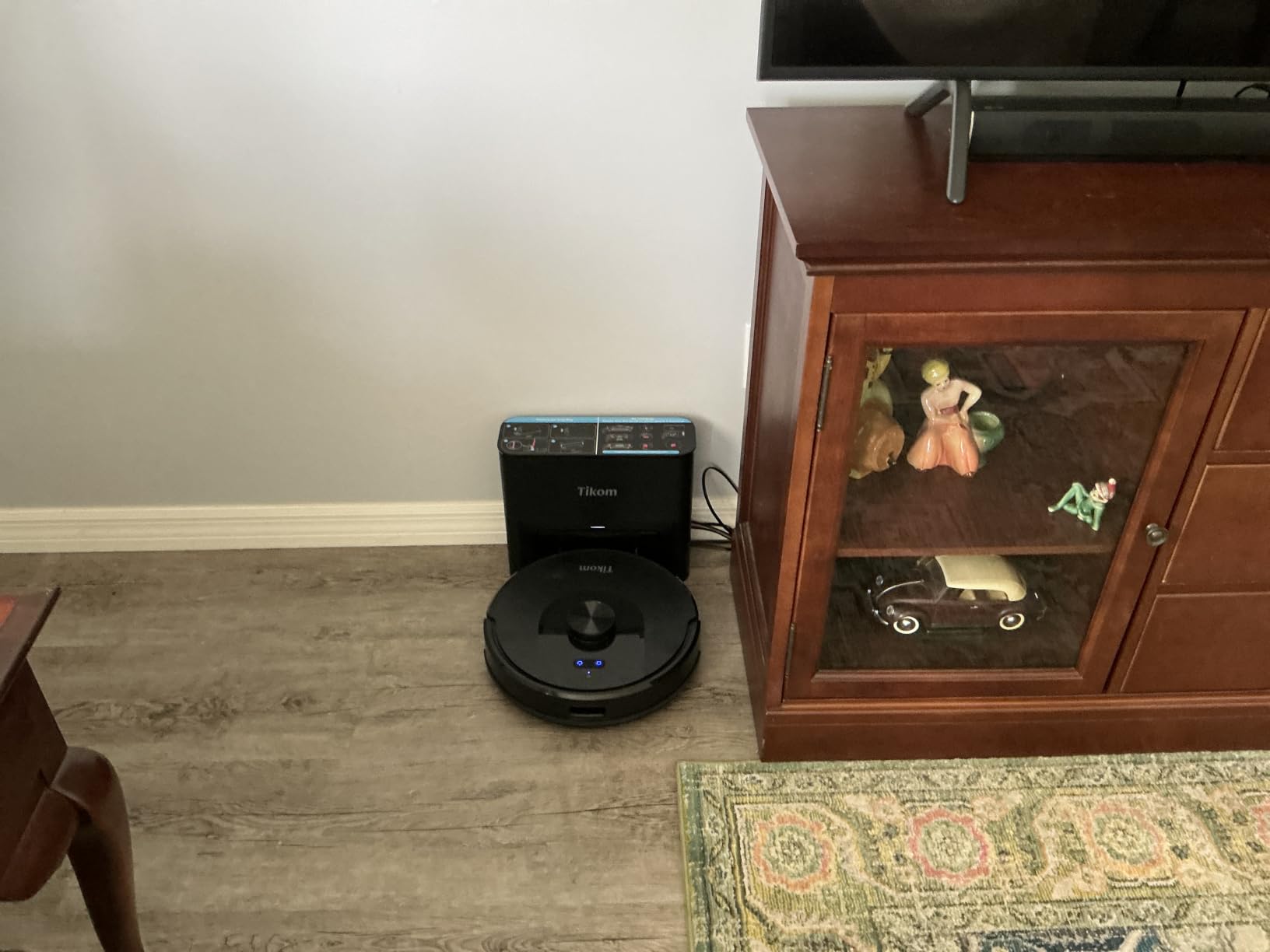
Is it good for a house with two floors of carpet?
Yes, with one rule: set a no-mop zone on the carpeted floor and let it vacuum only. The carpet boost handles deep fibres, and Recharge and Resume finishes the job if it runs flat mid-floor.
Five map levels mean one robot can cover a basement, main floor and bedrooms rather than running a second machine.
What is the realistic maintenance load?
Bag changes roughly monthly at normal shedding rates, filter replacement on a schedule, and a wipe of the mop pad if you use it. Lighter than any non-self-emptying model, heavier than a bagless base.
Control is app-only, so if your household prefers physical buttons on the machine, look elsewhere.
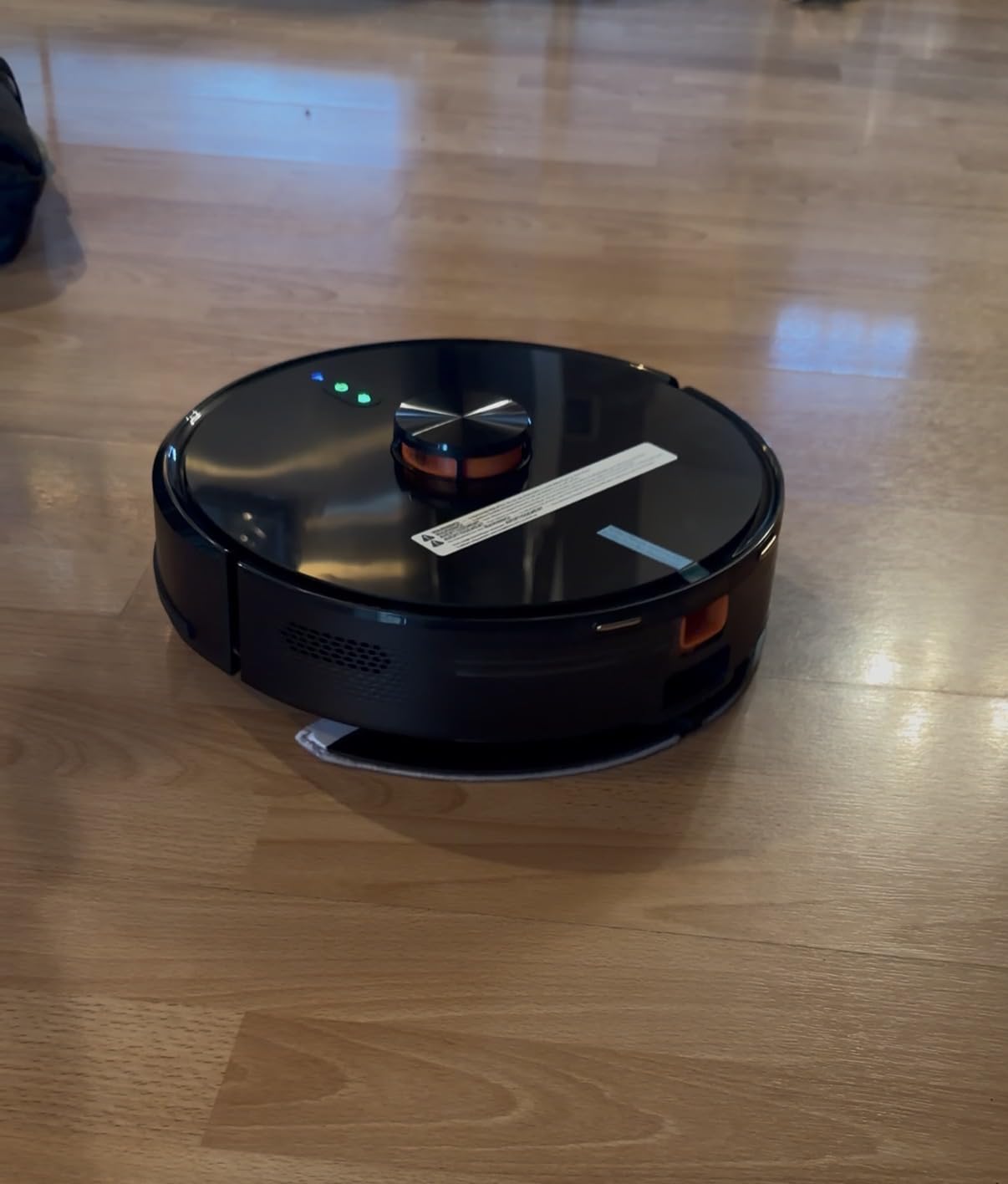
12. VONKO S6Pro: Best for First-Time Robot Owners
VONKO Robot Vacuum and Mop, 8000Pa, Self-Emptying, LiDAR Navigation
8000Pa suction
2.5L self-emptying station
LiDAR 2.0 navigation
Maps for 5 floors
180 minute runtime
Pros
- Highest rated in the batch with 89 percent five-star reviews
- 8000Pa handles pet hair and embedded debris
- 2.5L station covers roughly 60 days
- LiDAR mapping and 180 minute runtime cover large homes
Cons
- 2.5L station is smaller than the 3L bases on some rivals
- Fewer smart features than premium LiDAR models
- Shorter review history than established brands
This is the highest rated model we tested, with 297 reviews averaging 4.7 stars and 89 percent of ratings at five stars. Reviewers agree on the simple part: 8000Pa suction, a 2.5 litre self-emptying station and LiDAR 2.0 mapping delivered what they expected from far more expensive machines.
For a first robot in a pet home it covers the essentials without the feature creep that makes premium docks fiddly. Vacuum and mop in one cycle, app scheduling, room selection, suction adjustment and Alexa compatibility.
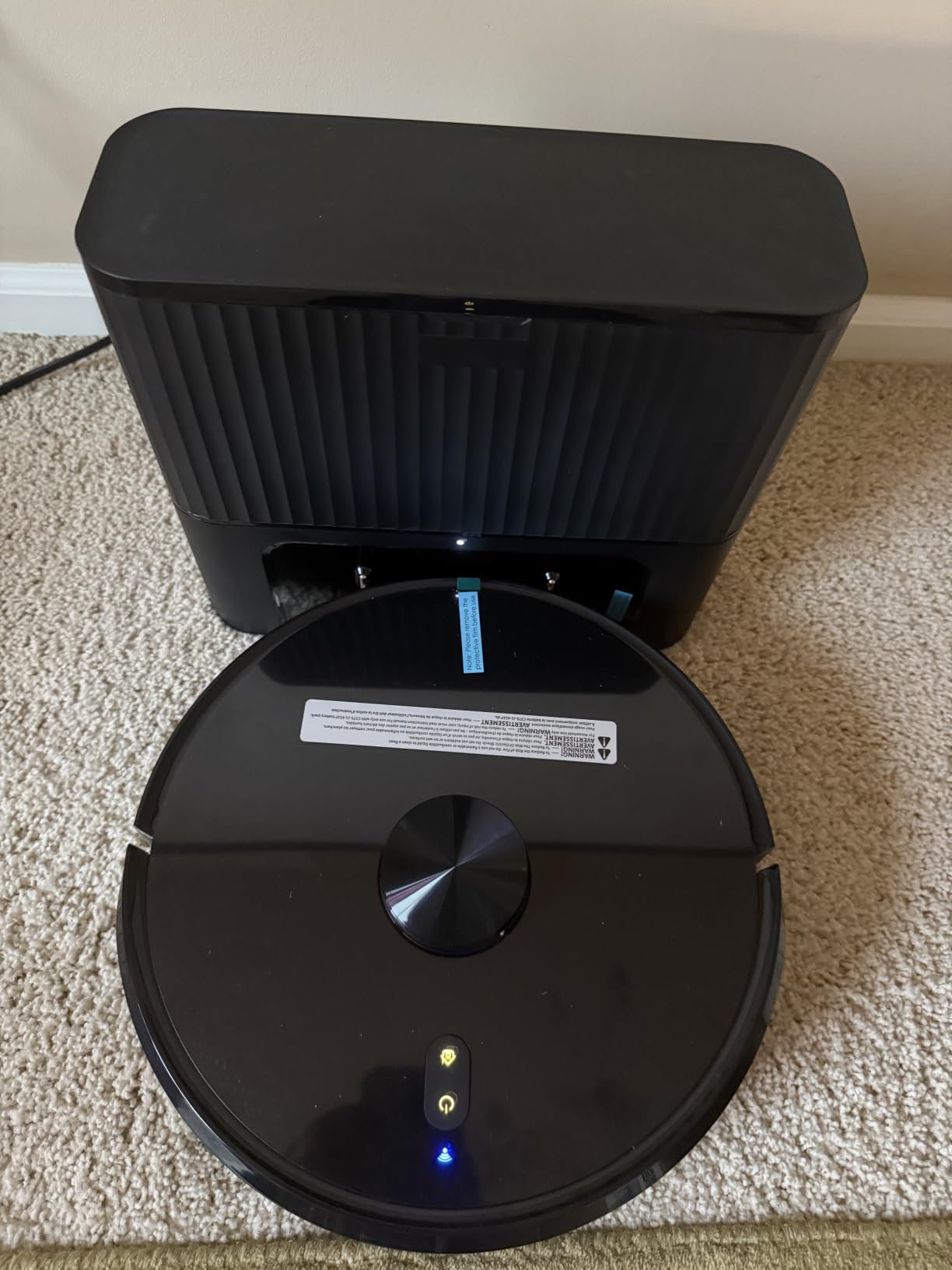
Multi-level mapping for up to five floors with room, zone and no-go zone customisation suits homes with pets on more than one level, and 180 minutes of runtime finishes large homes in a single pass.
The 2.5 litre station is smaller than some 3 litre rivals, so bags change a little more often, but it still stretches to roughly 60 days. There is no documented mop lifting or hot-water washing, so carpet needs a no-mop zone.
Is a shorter review history a real risk?
Worth weighing. A 297-review history says less about three-year reliability than 59407 reviews do, and consumable availability stabilises more slowly with newer brands. Buy it if you accept a possible filter or dock replacement later.
A 4.7 average with no 3-star ratings at all is a strong signal about the units delivered, at the tier most pet owners start from.
Which pets does it suit best?
Short to medium coats on hardwood, tile and medium-pile carpet, in a home up to medium-large in size. The 8000Pa figure and long runtime suit one or two pets without weekly coat seasons.
For two heavy shedders on thick carpet, a 20000Pa model with a larger anti-tangle system saves time per run even though this one is rated higher by its owners.
How Often to Run a Robot Vacuum in a Pet Home
Daily short runs beat one long weekly clean, every time. Fur works into carpet fibres in stages, and a robot that runs after every walk keeps the pile shallow enough to lift in a single pass, while a weekly run leaves embedded hair for an upright to remove.
A schedule that works in most homes: one run after the morning walk, one after the evening walk on hard floors, and a full-floor run while the house is empty at the weekend. Morning-after-walk is the highest-value slot because the fur is still loose.
Set no-go zones for pet beds, bowls and the spot your dog always lies in, so the robot does not push fur back into the same corner every run. In multi-floor homes, run the lower level while the pets are upstairs to avoid re-contaminating a clean floor.
The weekly ritual takes about ten minutes: empty and rinse the bin, wipe the filter, check the rollers with the hair-cutting tool and clear the dock area. Keeping scissors next to the dock decides whether tangling stays a monthly annoyance or becomes a replacement.
What Actually Matters for Pet Hair
Brush design is the single biggest factor
Pet hair is lifted by brush agitation and airflow together, not by suction alone. Hair that wraps around bristle axles stalls the brush, and once stalled the robot is just spinning. Dual rubber rollers and counter-rotating designs are the answer most pet owners converge on.
Across r/RobotVacuums threads, the most common reason for replacing a unit is dog hair caught on the roller brush. That is why the eufy 11S MAX, the Roomba 105 Vac, the Roomba E5 and the Roborocks sit near the top here across budgets.
Suction in Pascals is not the whole story
Suction figures on this list run from 5200Pa to 20000Pa, and higher does help on deep carpet. But airflow design, brush agitation and how long the machine keeps moving matter as much, and a well-designed 10000Pa robot can beat a poorly sealed 20000Pa one on hard floors.
Where suction really shows is carpet boost. Several models here automatically jump to maximum on carpet detection, which is the behaviour you want when fur is tracked in from outside.
Self-emptying capacity in a shedding home
Small onboard bins fill fast at high fur volume, and self-emptying docks are near-essential in a heavy shedding household. Capacities here run from 2.5 litres rated at about 60 days to 3 litre bases rated for up to 90 days.
Check whether the base is bagged or bagless before buying. Bagless bases have no consumable cost but need a monthly wipe-down; bagged bases are more hygienic for allergy households because you never touch the dust.
Navigation and obstacle avoidance
LiDAR mapping is the biggest usability upgrade, because it gives you room labels, no-go zones and straight-line cleaning. Random-bounce navigation on the eufy 11S MAX is fine in a clear small space and frustrating in a busy one.
Obstacle avoidance helps with bowls, toys and cables, but owners still report robots catching on cords and thresholds. Sweep the floor first every time, and add a physical barrier near stairs where app zones prove unreliable.
Carpet, hardwood and mop lift
A mop that drags across carpet both damages the pile and smears the hair you just lifted, so mop lift or automatic mop removal matters in a mixed-floor home. Set a no-mop zone wherever the app allows it and use a physical barrier where it does not.
Roomba versus Shark comes down to this: iRobot leads on rubber brush reliability and app-supported carpet avoidance, while Shark puts more effort into grid coverage and self-emptying bases. For raw pickup on thick carpet, the higher-suction models lead.
Noise for noise-sensitive pets
Measured figures run from 54 dB on the Roborock Qrevo 2 Pro and 55 dB on the eufy 11S MAX up to 65 dB on the Roborock 10000Pa. Self-emptying cycles are louder than the cleaning run itself, which is the number pets react to.
Schedule long runs and dock evacuations for empty houses. For a genuinely fearful pet, start with a short run in one small room while you are home, following the desensitization steps in the 105X Combo section above.
Filtration and dander
HEPA filtration capturing 99.97 percent of 0.3 micron particles is the standard to look for if anyone reacts to dander. The Shark Matrix Plus, the Shark AV2501S base and the sealed 105X Combo AutoEmpty bag all meet that bar, and the sealed bag suits allergy households best because you never handle the dust.
Filters are consumables. A washable filter costs nothing to maintain but needs rinsing every few weeks; a sealed HEPA system costs more over five years and captures more. Budget for bags and filters before you buy, not after.
Frequently Asked Questions
Which robot vacuum is best for cleaning pet hair?
The eufy 11S MAX is the best overall pick for pet hair, because its 55 dB operation, 2.85 inch slim body and 100 minute runtime handle fur on hard floors and medium carpet while staying quiet enough for nervous pets. For heavy shedders, a self-emptying model such as the Shark Matrix Plus 2-in-1 removes the daily bin empty.
Which robot vacuum is best for heavy pet hair?
Heavy shedders are best served by a model with a self-emptying base and an anti-tangle brush. The Roborock 10000Pa LiDAR pairs a JawScrapers main brush with a 2.7L dock rated for 7 to 9 weeks, and the Shark Navigator AV2110S pairs an anti-hair-wrap self-cleaning brushroll with a 30-day bagless base.
Is it worth getting a robot vacuum for pet hair?
Yes, if you run it daily. A robot that cleans after every walk keeps fur shallow in the carpet pile so one pass lifts it, while a weekly run lets hair work in and leaves an upright to finish the job. The gain is consistency rather than raw suction, and it is largest in homes with carpet, rugs and multiple pets.
Is Roomba or Shark better for pet hair?
Roomba wins on brush reliability and allergen handling, since dual rubber multi-surface brushes resist hair wrap and the high-efficiency filter traps 99 percent of dander. Shark wins on coverage and maintenance, since the self-cleaning anti-tangle brushroll and 30 or 60-day bagless bases remove the daily bin empty. Choose Roomba for hard floors and allergies, Shark for larger homes and heavy shedding.
What brush type is best for pet hair?
Dual rubber or counter-rotating rollers are the best brush type for pet hair because they have no bristle axles for long strands to wrap around. Self-cleaning brushrolls such as the one in the Shark Matrix Plus add a second layer of protection. Bristle brushes need hair cut off far more often.
How often should I run a robot vacuum with pets?
Run it daily, ideally right after walks when fur is still loose. Two short runs a day, one after the morning walk and one after the evening walk, keep the carpet pile shallow enough for a single pass. Add a full-floor run while the house is empty at the weekend, and do a ten-minute weekly clean of the bin, filter and rollers.
Final Verdict: Best Robot Vacuum for Pet Hair in 2026
For most pet households, the eufy 11S MAX is the best robot vacuum for pet hair in 2026: quiet, slim, dependable, and proven across 59407 owner reviews. Pick the Shark Matrix Plus 2-in-1 if you want a self-emptying base and HEPA filtration, and the Roborock Qrevo 2 Pro if carpet and hard floor share the same house and you want the mop out of the equation on rugs.
Whatever you choose, results come from the routine as much as the machine. Run it daily after walks, cut the hair off the rollers once a week, and pick up the cords. Every pick in this roundup depends on those three habits.