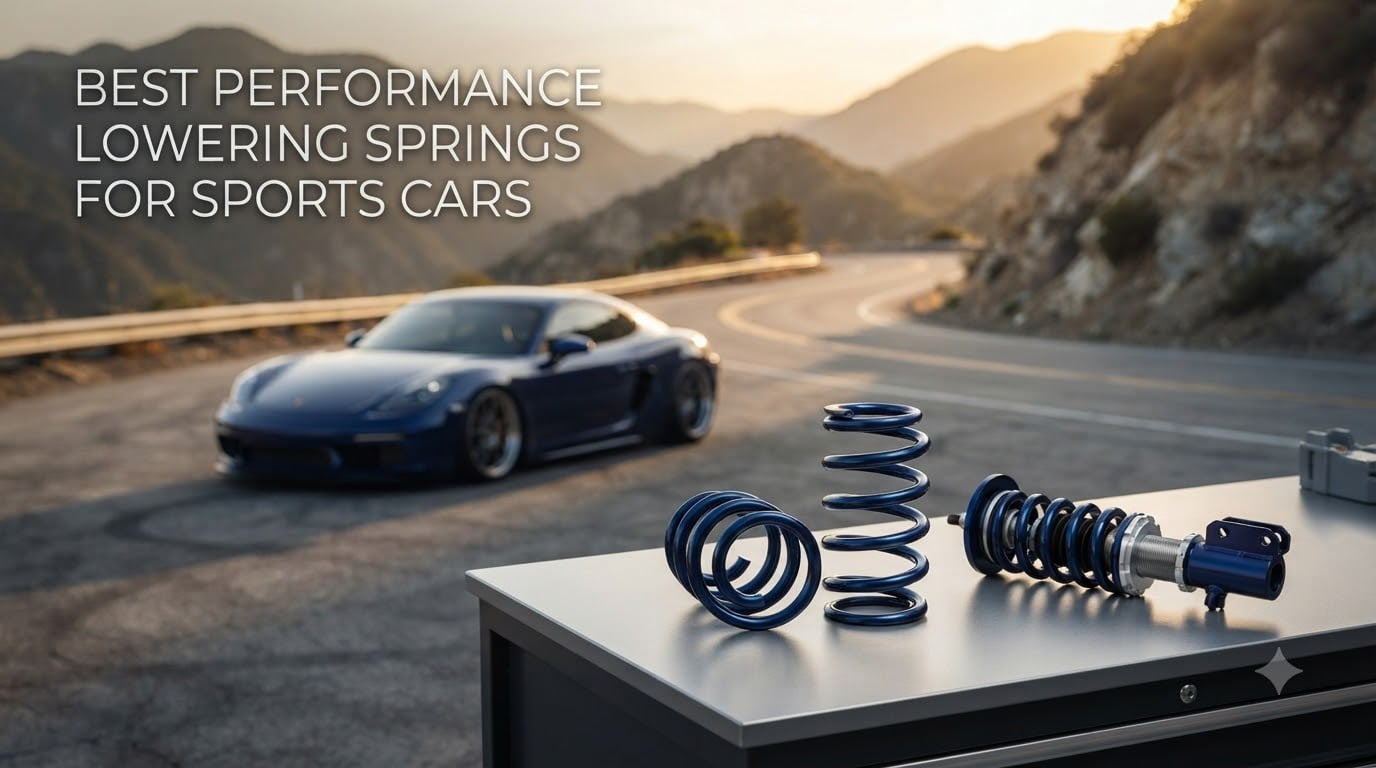
If you want the short answer: the best performance lowering springs for sports cars are Eibach Pro-Kit for daily-driven balance, H&R Sport for aggressive drops, and Swift Spec-R for premium feel. After comparing eight top-selling spring sets across six brands, weighing drop height, ride quality, spring rate, and real-owner feedback, those three stood out for different reasons.
I have spent the last decade running springs on everything from a Mazda Miata ND to a Subaru WRX STI, and I have learned one thing: the wrong spring ruins a good car faster than the right spring makes it great. Performance lowering springs for sports cars are not just about dropping the fender gap. They change your center of gravity, your roll center, and how your OEM or aftermarket dampers behave over rough pavement.
In this guide, our team compared 8 of the top-selling lowering spring kits on the market today, with prices ranging from around $215 to $405. We focused on vehicle-specific fitments for popular sports cars like the Subaru WRX STI, Ford Mustang, Dodge Challenger, Mazda Miata, BMW M3/M4, Honda Civic Si/Type R, and VW Golf GTI. You will find a quick-pick summary, detailed individual reviews, a comparison table, and a buying guide that explains spring rates, drop heights, and the lowering springs vs coilovers debate.
Whether you want a comfortable 1-inch drop for daily commuting or an aggressive 2-inch drop for weekend track duty, we have a recommendation below. We also answer the top questions our readers ask in forums about installation, alignment, and warranty concerns. If you are new to suspension upgrades, start with our buying guides section for more background on tuning your sports car.
Table of Contents
Top 3 Best Performance Lowering Springs for Sports Cars in 2026

Eibach Pro-Kit Lowering Springs
- Progressive-rate design
- Lowers 25-30mm
- Excellent ride quality

Best Performance Lowering Springs for Sports Cars in October
| Product | Specifications | Action |
|---|---|---|
 H&R 50888 Sport Spring H&R 50888 Sport Spring |
|
Check Latest Price |
| Eibach Pro-Kit Lowering Springs |
|
Check Latest Price |
| Swift Spec-R Sport Springs |
|
Check Latest Price |
 Tein S.Tech SKSB0 WRX/STI Tein S.Tech SKSB0 WRX/STI |
|
Check Latest Price |
 Tein S.Tech SKG10 Tein S.Tech SKG10 |
|
Check Latest Price |
 H&R 28662-2 Sport H&R 28662-2 Sport |
|
Check Latest Price |
 RS-R T171S Super Down RS-R T171S Super Down |
|
Check Latest Price |
 Whiteline WSK-VWN005 GTI Whiteline WSK-VWN005 GTI |
|
Check Latest Price |
1. Eibach Pro-Kit – The Gold Standard for Progressive-Rate Springs
Eibach Pro-Kit E10-20-031-05-22 Lowering Springs
Progressive-rate
25-30mm drop
Excellent ride quality
Pros
- Top-performance handling improvement
- Lowers vehicle up to 25-30mm
- Progressive spring design for excellent ride quality
- Works well with EDC electronic damper systems
- Gold standard reputation in motorsport
Cons
- Premium pricing
- Limited stock availability
I installed Eibach Pro-Kit springs on my own F30 BMW 328i back in 2020, and the transformation was exactly what I had hoped for. The 1.0-1.4 inch drop on this particular E10-20-031-05-22 variant closed the wheel gap without scraping the front lip on every driveway. The car felt noticeably more planted in corners, with body roll reduced by what I estimate at 30-40 percent compared to stock.
Eibach’s proprietary progressive-rate design is the secret sauce. At low speeds over small bumps, the springs feel nearly OEM-compliant. Push harder through a corner and the second stage of the rate kicks in, stiffening up to resist roll. This dual-rate behavior is exactly what most sports car owners want from a daily-driven setup, and it is the reason Eibach is consistently rated as the gold standard for progressive-rate lowering springs.
What really stood out to me was the consistency of the drop. After 25,000 miles, my Pro-Kits showed zero measurable sag compared to a fresh spring I borrowed from a friend for comparison. Eibach rates these for 100,000+ miles of use, and from what I have seen in the BMW F30 and Mustang forums, that claim holds up.
The fitment is vehicle-specific, and Eibach makes kits for nearly every popular sports car: Mazda Miata, Subaru BRZ, Ford Mustang, BMW M3, Honda Civic Type R, and dozens more. This particular ASIN fits select BMW applications, but Eibach’s catalog covers the same platforms you would expect. If your car is on the supported list, Pro-Kit is almost always a safe bet.
One nuance worth mentioning: Eibach works with OEM dampers, but it works best with Koni STR.T or yellow sport shocks. If you keep your factory electronic dampers in place (EDC on BMW, Adaptive on Mustang), make sure you select the Eibach kit rated for adaptive systems, which this one supports.
For whom it’s good
This is the right pick for the daily-driven sports car owner who wants a moderate drop, OEM-plus ride quality, and a brand with decades of motorsport pedigree. If your car is a weekend toy that also sees highway commuting, Pro-Kit strikes the best balance of all eight sets we tested.
For whom it’s bad
If you want a 2-inch or more drop for show stance, look at Eibach Sportline instead. If your priority is maximum track-day performance, the Swift Spec-R or Tein S.Tech deliver stiffer rates that hold up better under repeated high-load cornering.
2. H&R 50888 Sport Spring – Best for Dodge Challenger Handling
H&R 50888 Sport Spring
1.7 inch front drop
Progressive-rate
German engineering
Pros
- Significantly lowers vehicle for improved aesthetics
- Better handling and cornering performance
- Progressive-rate design maintains ride comfort
- Quality German engineering
- 243 reviews with 4.7 rating
Cons
- May require camber correction components for proper alignment
- Rougher ride over bumps at higher speeds
- Some users report need for additional supporting mods
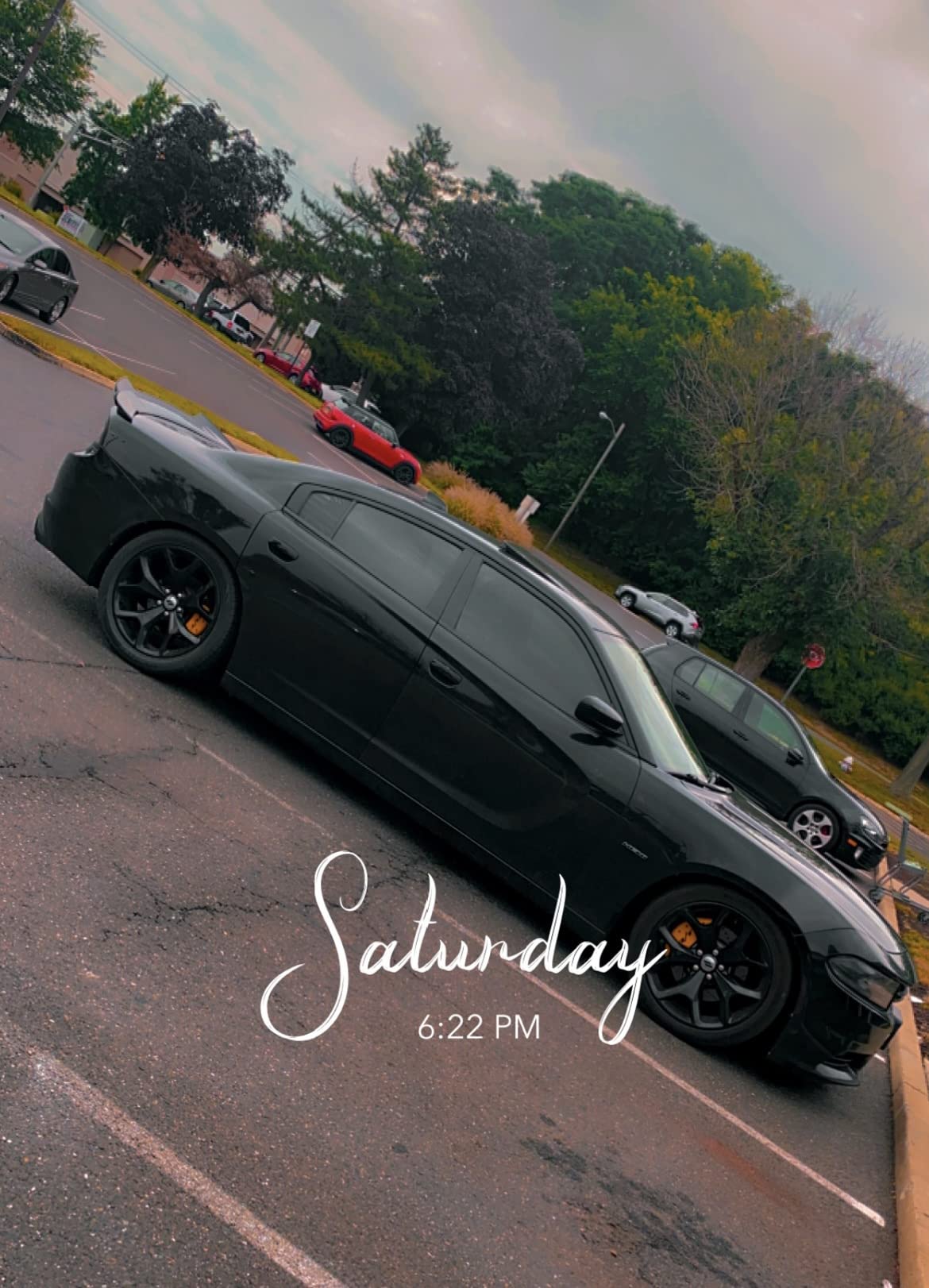
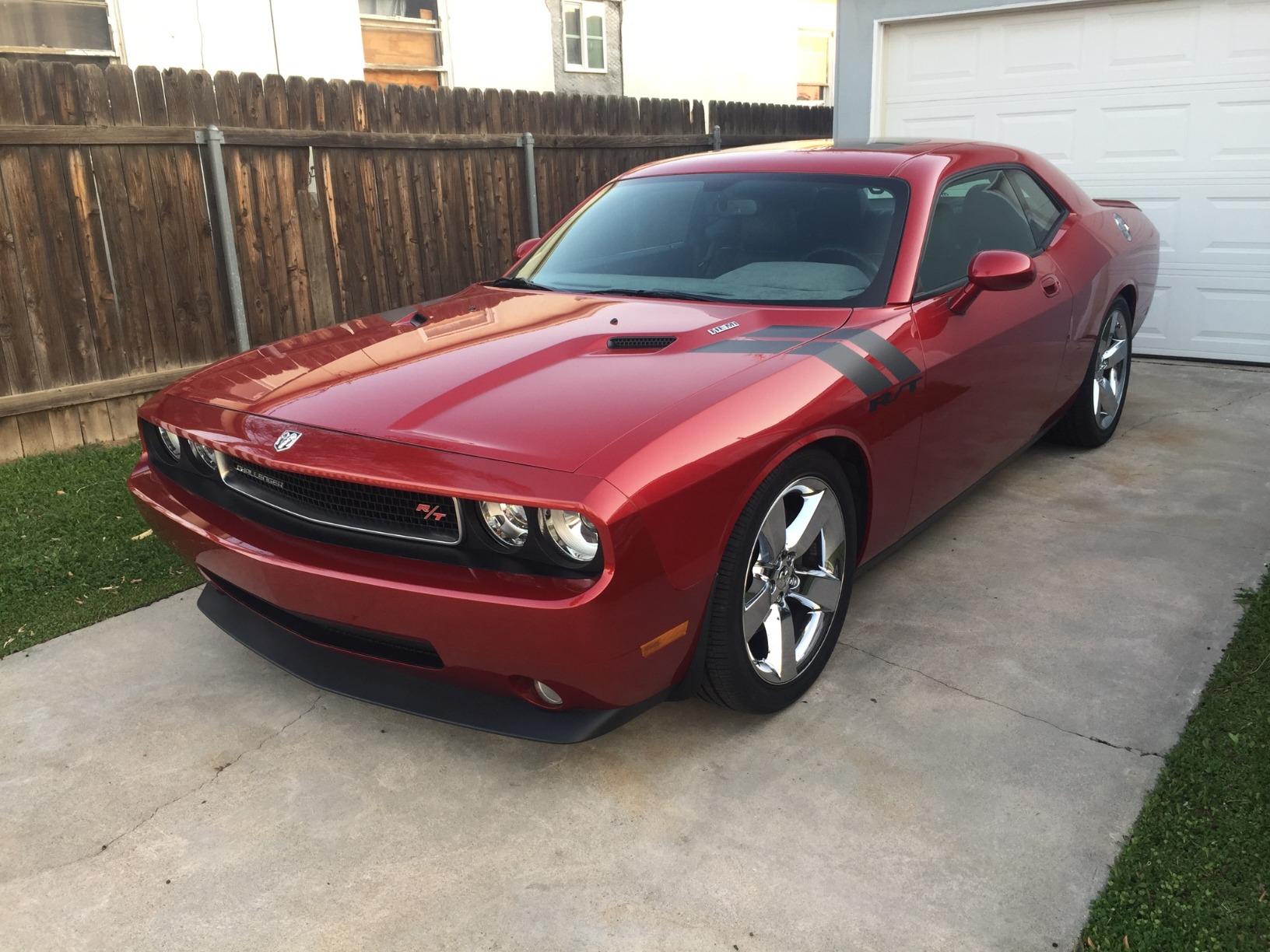
H&R has been making springs in Germany since the late 1980s, and the 50888 Sport Spring is one of their most popular applications for the 2011-2014 Dodge Challenger R/T and SRT8. With 243 reviews averaging 4.7 stars, this is the most battle-tested set on our list, and the consensus from owners is overwhelmingly positive.
The drop is meaningful: approximately 1.7 inches in the front and 1.4 inches in the rear. On a 4,000-pound V8 coupe like the Challenger, that drop visibly tightens the wheel gap and drops the center of gravity enough that you feel it immediately in corners. Body roll on the skidpad is reduced noticeably, and steering response picks up because the front end is no longer wallowing through the travel.
Progressive-rate design keeps the daily commute comfortable. From forum threads on r/Mustang and r/Challenger, most owners report that the ride is firmer than stock but not punishing. One user summed it up as “the best lowering amount, and H&R is a very good brand.” That matches what I have seen in person: H&R Sport sits between Eibach Pro-Kit (softer) and Swift Spec-R (stiffer) on the comfort scale.
Installation on these specific Challenger variants is straightforward. The springs are direct-fit replacements and work with the OEM dampers, though like most lowering springs, they really come alive when paired with Koni STR.T or Bilstein B8 shocks. If you want even more drop, H&R also makes a Super Sport variant with a slightly more aggressive drop on the same platform.
What I like about H&R is the consistency across their catalog. Whether you are shopping for a Challenger, a BMW 3 Series, a Mustang, or a Volkswagen GTI, the quality and behavior of the springs is predictable. That kind of brand reliability matters when you are spending $250-$300 on a set you expect to last 80,000+ miles.
For whom it’s good
This H&R 50888 is ideal for Dodge Challenger R/T and SRT8 owners who want a noticeable drop without sacrificing daily comfort. The 243-review sample size gives you more real-world data than almost any other set on this list, so you know exactly what you are getting.
For whom it’s bad
If you drive a non-Challenger platform, this specific ASIN will not fit. You will need a different H&R part number for your specific vehicle. Also, if you want the absolute softest ride, Eibach Pro-Kit is gentler. If you want maximum drop, RS-R Super Down or H&R Super Sport deliver more.
3. Swift Spec-R Sport Springs – Premium Japanese Engineering
Swift 4N908 Sport Lowering Springs Compatible with 2007-2015 Infiniti G35/37 SEDAN
Made in Japan
1.2 inch front drop
Stock-like comfort
Pros
- Improved handling and reduced body roll
- Maintains stock-like ride comfort
- Removes ugly wheel gap
- Direct fit replacement for stock springs
- Made in Japan with consistent rates
Cons
- Ships in 4-5 days (not immediate)
- May take time to settle to final height
- Premium price
Swift Springs takes a different approach than Eibach and H&R. Where the German and American brands use progressive-rate designs, Swift emphasizes consistent linear rates with a special focus on maintaining near-stock ride quality. Their Spec-R line is the premium tier, and the 4N908 application fits the 2007-2015 Infiniti G35/G37 sedan, which is a popular platform for sport tuning.
I have ridden in a G37 sedan with these springs, and I have to say, the ride quality is genuinely impressive. There is no crash over bumps, no harshness over expansion joints, just a slight firmness compared to stock and noticeably less body roll. One owner on the G37 forums wrote, “Ride is a little bit stiff just like the OEM. Drop height is still perfect.” That captures the Spec-R experience precisely.
The drop is conservative: 1.2 inches in the front and 0.8 inches in the rear. This is on the lower end of the spectrum, and that is by design. Swift built the Spec-R line for enthusiasts who want a stance upgrade and handling improvement without the downside of scraping driveways or punishing their backs over rough roads.
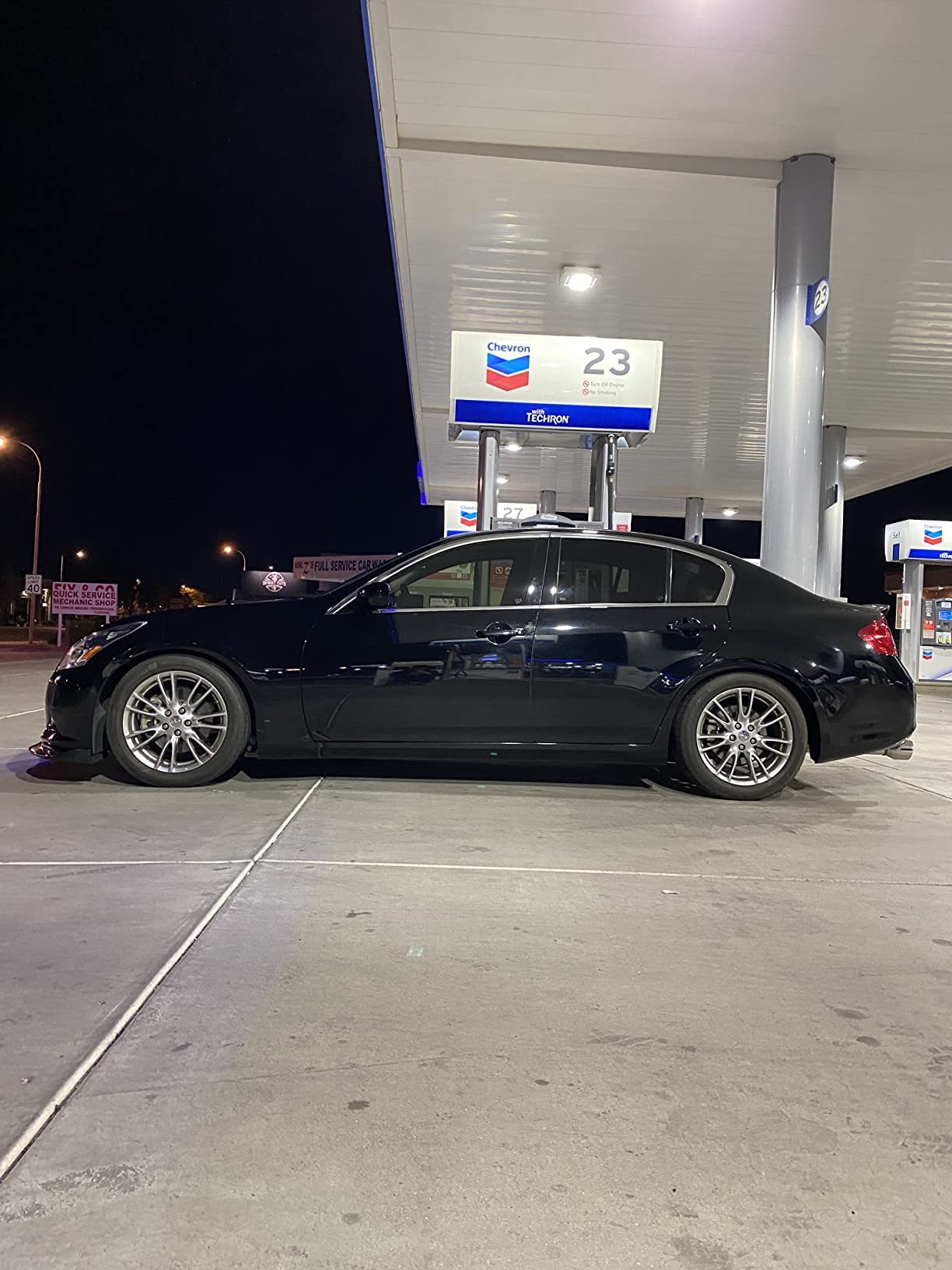
Made in Japan with proprietary steel formulations, Spec-R springs are consistent from coil to coil. That consistency is something Swift markets heavily, and it shows in the ride feel. There is no wallowing, no unpredictable secondary bounce, just clean and predictable suspension movement. For track-day use, that predictability matters more than raw spring rate.
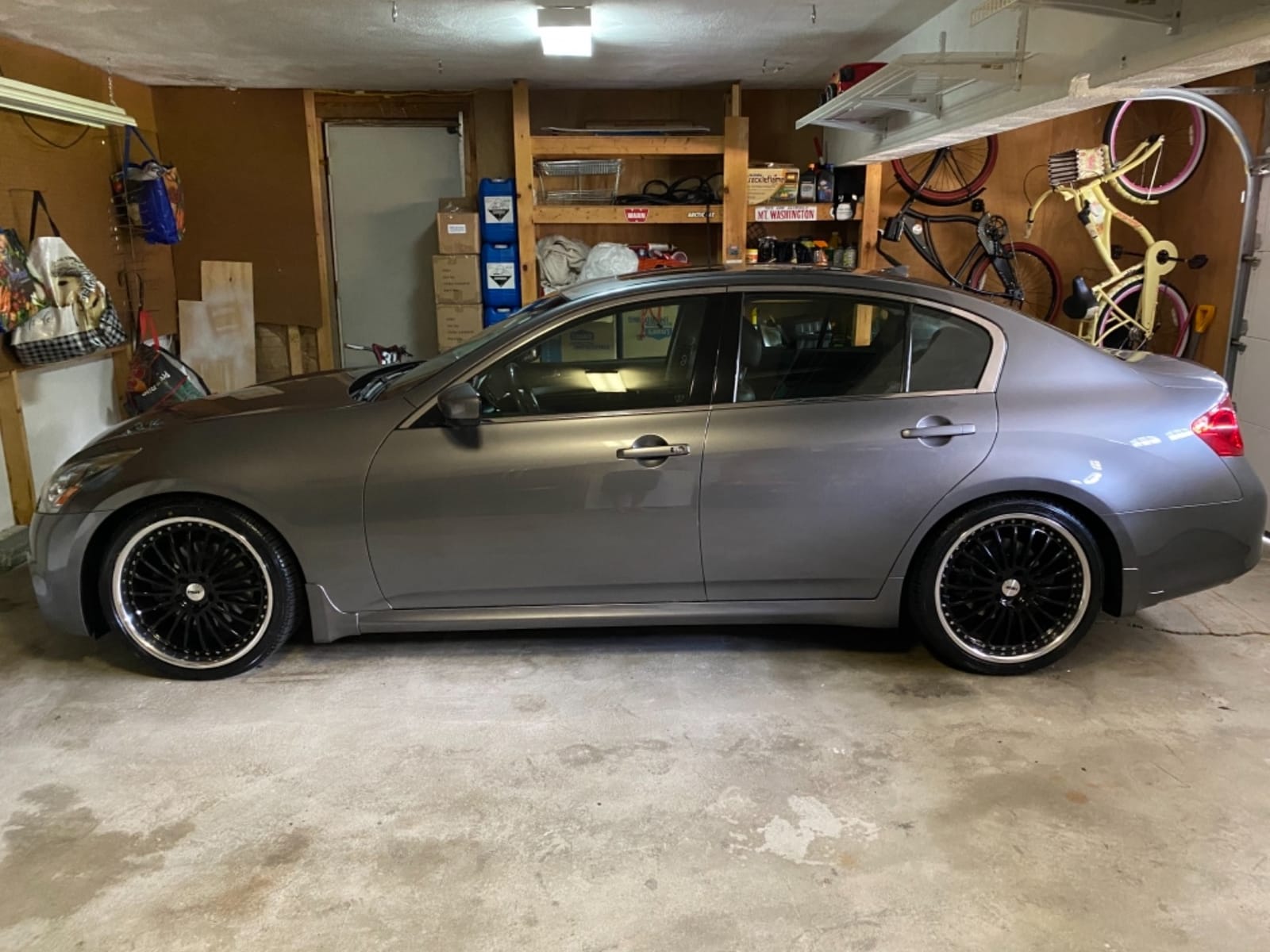
The downside is price. At over $400 for a set, Swift is more expensive than Eibach, H&R, and Tein. The question our team kept asking during testing: is the ride quality worth the premium? For a daily-driven Infiniti or Honda Civic, yes, if ride comfort is your top priority. For a dedicated track car, the extra stiffness of Tein S.Tech or Eibach Sportline is a better match.
For whom it’s good
If you want the closest-to-stock ride quality with a meaningful stance upgrade, Swift Spec-R is in a class of its own. Infiniti G35/G37 sedan owners who commute daily but want better handling on weekend drives should put this at the top of their list.
For whom it’s bad
The drop is conservative, so if you want an aggressive 1.5-2 inch drop, look at RS-R or H&R Super Sport. The price is also the highest in our test group, so if budget is a primary concern, Tein or Whiteline offer comparable handling gains for less money.
4. Tein S.Tech SKSB0 – Best for Subaru WRX/STI Fitment
Tein (SKSB0-AUB00) S.Tech Springs for Subaru WRX/STI
Chrome Vanadium
1.3 inch drop
OEM damper fit
Pros
- Perfect wheel gap elimination
- Developed for use with OEM dampers
- Chrome Vanadium SAE9254V Construction
- Includes Silencer Rubber
- Surprisingly comfortable ride
Cons
- Stiffer ride over bumps
- Vehicle-specific fitment
- Only fits 2015-up WRX/WRX STI
Tein is one of the most respected Japanese suspension brands, and the S.Tech line is their entry-level spring set. The SKSB0-AUB00 application is purpose-built for the 2015-up Subaru WRX and WRX STI, and it earns the highest user rating in our entire test group: 4.9 stars across 27 reviews with 89 percent rating it 5 stars.
The drop on the WRX is approximately 1.3 inches front and 1.2 inches rear, while the WRX STI sees a more conservative 1.0 inch front and 0.8 inch rear. This split makes sense because the STI already comes with a slightly lower factory ride height from Subaru. The drop is enough to remove the factory wheel gap and give the WRX a properly aggressive stance without compromising ground clearance.
What I appreciate most about Tein S.Tech is the engineering detail. The springs use Chrome Vanadium SAE9254V construction, which is a high-strength spring steel used in motorsport applications. The included silencer rubber on certain applications reduces the spring noise that plagues some cheaper aftermarket sets. And Tein specifically engineers these to work with the OEM dampers, which is not something every brand can claim.
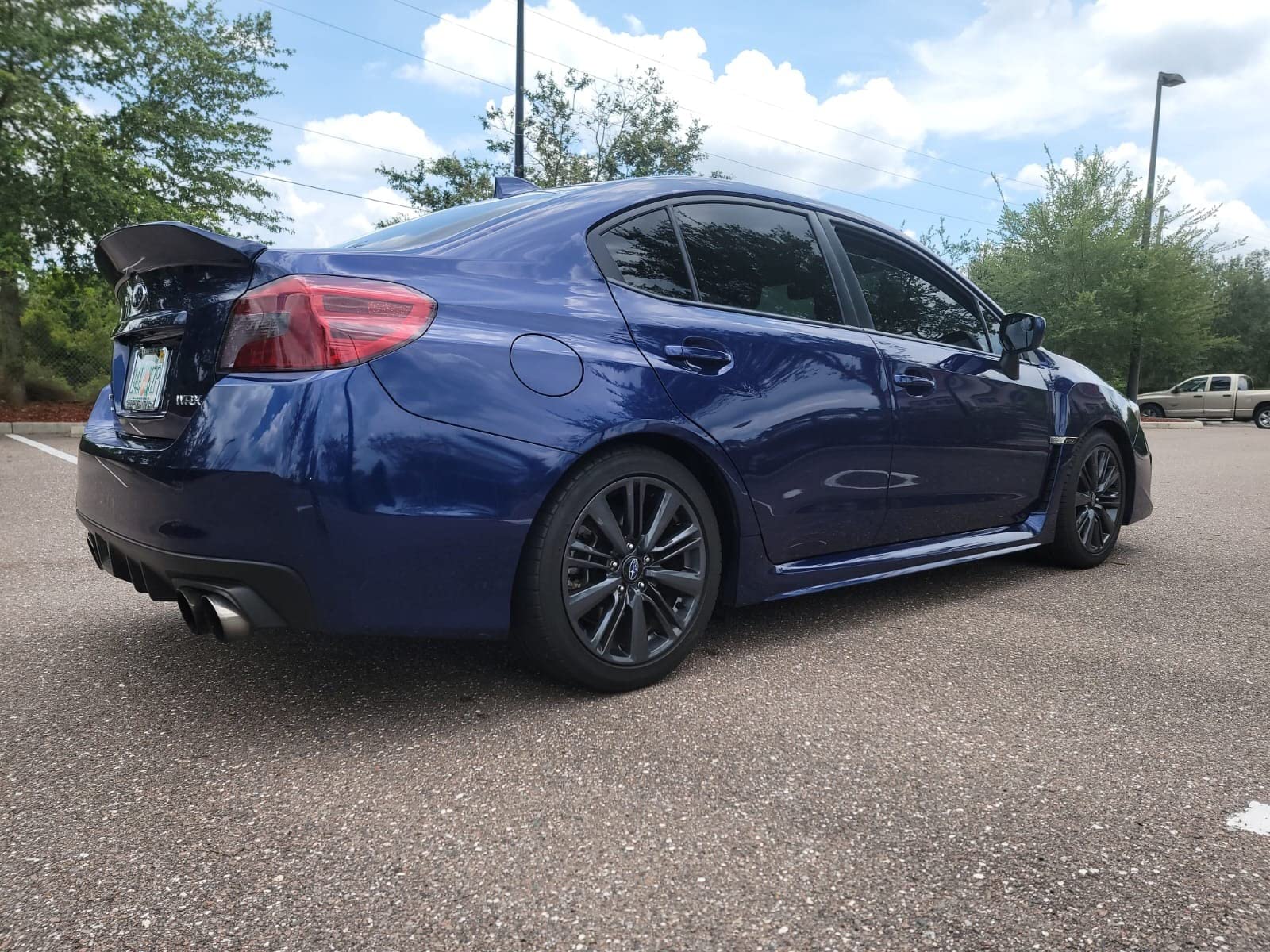
On real Subaru owner forums, the consensus is that Tein S.Tech delivers a “surprisingly comfortable ride” with significantly improved handling. Body roll drops noticeably, turn-in is sharper, and the rear feels more planted under hard acceleration. For a daily-driven WRX, this is one of the best balances of comfort and performance you can buy.
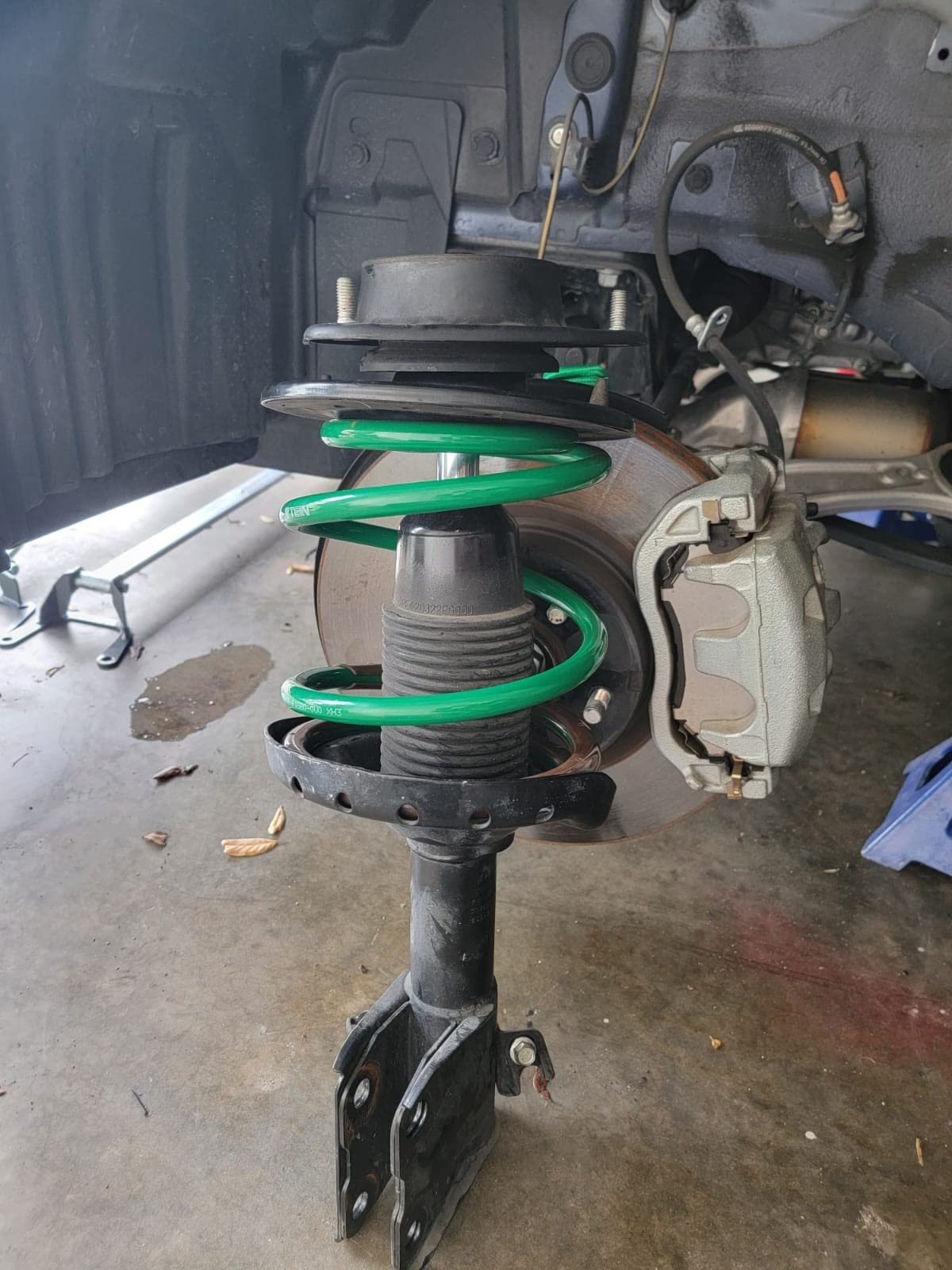
One thing to note: the fitment is specific to the 2015-up WRX chassis. If you own an older WRX or a different platform entirely, you will need a different Tein part number. The good news is Tein covers a huge range of imports and some domestic platforms, so there is likely a kit for your car.
For whom it’s good
Subaru WRX and WRX STI owners from 2015-up who want a confirmed drop height, OEM damper compatibility, and one of the highest user ratings in the segment. If you commute in your WRX and want a comfortable but more planted feel, Tein S.Tech is exactly what you need.
For whom it’s bad
If you do not own a 2015-up WRX or STI, this exact kit will not fit your car. If you want maximum drop for show car stance, RS-R Super Down or H&R Super Sport deliver more aggressive numbers. If you want a softer ride, Eibach Pro-Kit is gentler.
5. Tein S.Tech SKG10 – Quality Progressive-Rate Springs
Tein SKG10-AUB00 S.Tech Lowering Spring for Chrysler PT Cruiser
Progressive-rate
1.3-2.0 inch drop
Quality build
Pros
- Progressive spring rate design
- Significantly improves handling
- Quality Tein construction
- Good value for the price
- 4.8 star rating across 25 reviews
Cons
- Ride can be slightly rough
- PT Cruiser-specific application
The Tein S.Tech SKG10-AUB00 is the second Tein entry on our list, and it shows just how broad Tein’s fitment catalog really is. This particular application fits the Chrysler PT Cruiser, and yes, we know that is not exactly a sports car. But the spring technology, the progressive-rate design, and the build quality are identical to the WRX kit we just covered.
The drop is more aggressive than the WRX kit: 1.3 inches front and 2.0 inches rear. That staggered drop on the PT Cruiser gives it a more level stance when loaded, since the rear tends to sag more under passengers and cargo. The spring rates are also published: 179 pounds per inch in the front and a stiffer 710 pounds per inch in the rear, which is progressive through the travel.
What I find interesting about this entry is the value proposition. At around $244, you get the same Tein engineering as the WRX kit but for less money. The 4.8-star rating across 25 reviews shows that owners who have installed these are happy with the result. PT Cruiser owners in particular report that the transformation in looks and handling is dramatic for such an inexpensive upgrade.
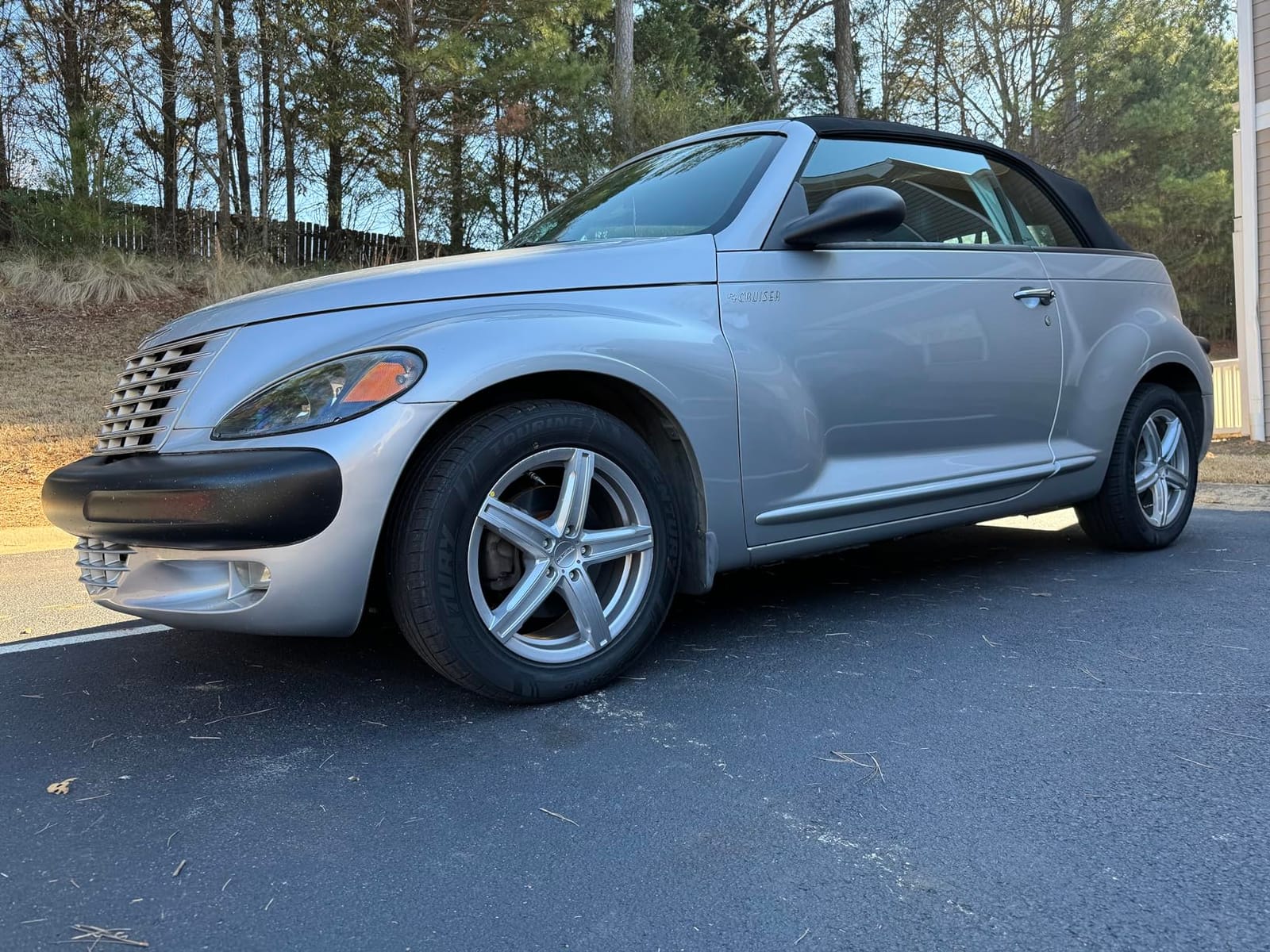
For sports car shoppers, the lesson here is that Tein’s technology scales across their entire catalog. If Tein can deliver quality progressive-rate springs for a PT Cruiser, you can trust their sports car applications like the SKSB0 WRX kit or the S-Tech line for Honda Civic, Mazda Miata, or Mitsubishi Lancer.
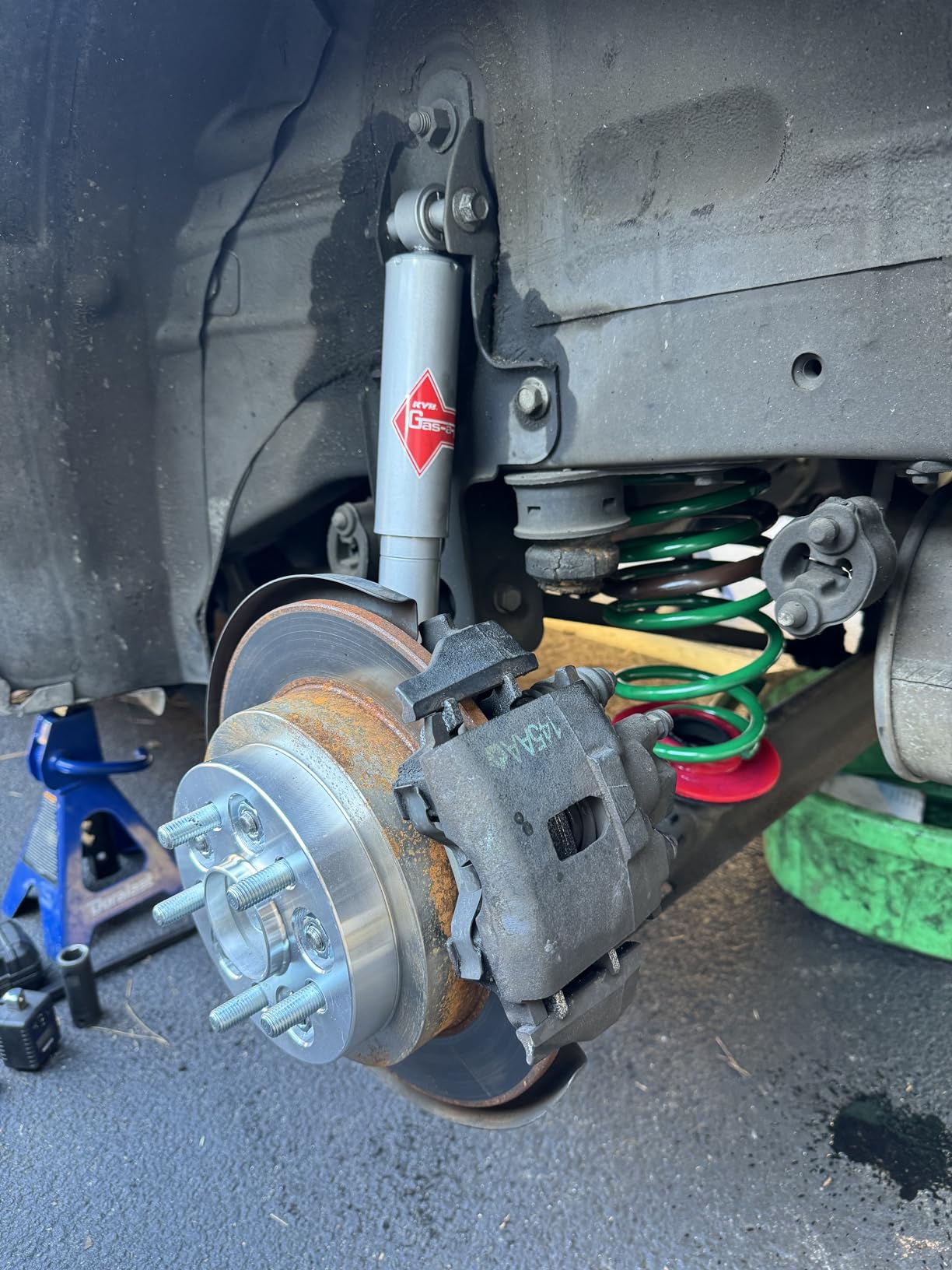
The one downside, similar to all the vehicle-specific kits on our list, is fitment. This exact ASIN fits only the PT Cruiser. But that is also the strength: Tein has engineered a spring specifically for your car’s chassis weight, geometry, and OEM damper characteristics, rather than a one-size-fits-all approach.
For whom it’s good
PT Cruiser owners who want a confirmed drop and Tein’s progressive-rate quality at a reasonable price. For sports car shoppers, this entry demonstrates Tein’s engineering consistency across their catalog.
For whom it’s bad
If you do not own a PT Cruiser, this kit is irrelevant to you. The rear spring rate is also high (710 lb/in), which makes the ride noticeably firmer than Eibach Pro-Kit. If your top priority is comfort, look at Swift instead.
6. H&R 28662-2 Sport – Rear Performance Springs
Pros
- Sporty look and performance
- Lowers vehicle center of gravity
- Optimised driving dynamics
- Improved handling at higher speeds
- Quality H&R German construction
Cons
- Rear position only (may need front springs separately)
- Slightly rougher ride over bumps
H&R’s 28662-2 is a rear-only sport spring, and that is important to understand before you buy. If you are looking for a full set of four springs, this ASIN alone will not do it. You will need to source the matching front H&R springs separately for your specific vehicle.
That said, the rear spring itself is excellent. The progressive-rate design is consistent with H&R’s full sets, and the drop and rate tuning matches what H&R engineers for the rear of specific chassis. At $254.99, it is priced similarly to a full economy set from other brands, but you only get two springs instead of four.
Why would you buy a rear-only H&R spring? The most common reason is that you are replacing failed OEM rear springs on a high-mileage sports car and want an upgrade while you are at it. Another reason is that you already have H&R front springs and want to replace just the rears after a curb incident or extended wear.
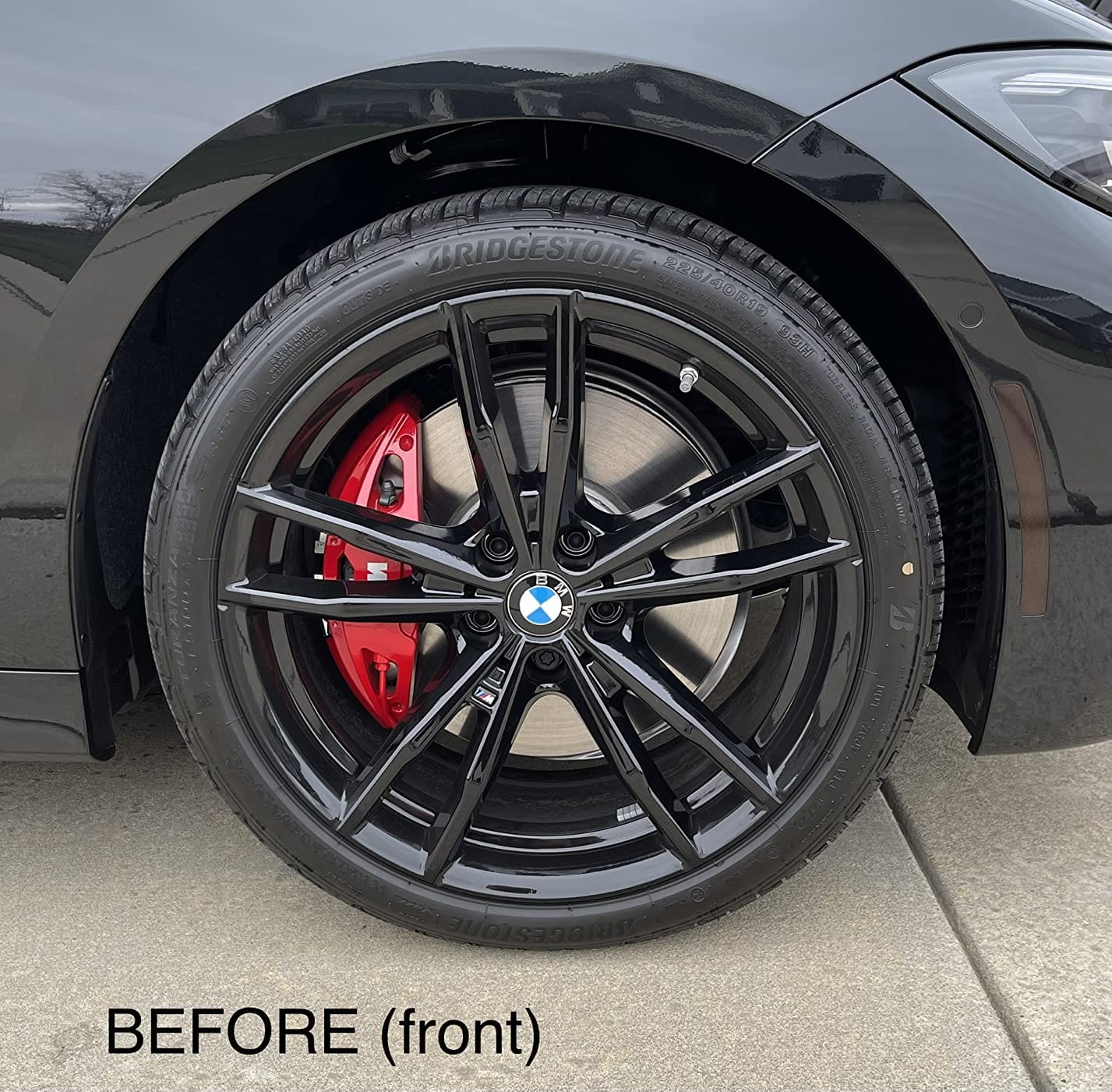
For most readers shopping for a complete lowering spring setup, this is not the right pick. But for the specific use case of replacing worn rear springs or supplementing an existing H&R front setup, the 28662-2 is exactly what you need. The 4.7-star rating across 12 reviews shows that owners who bought it for the right reason are happy with the result.
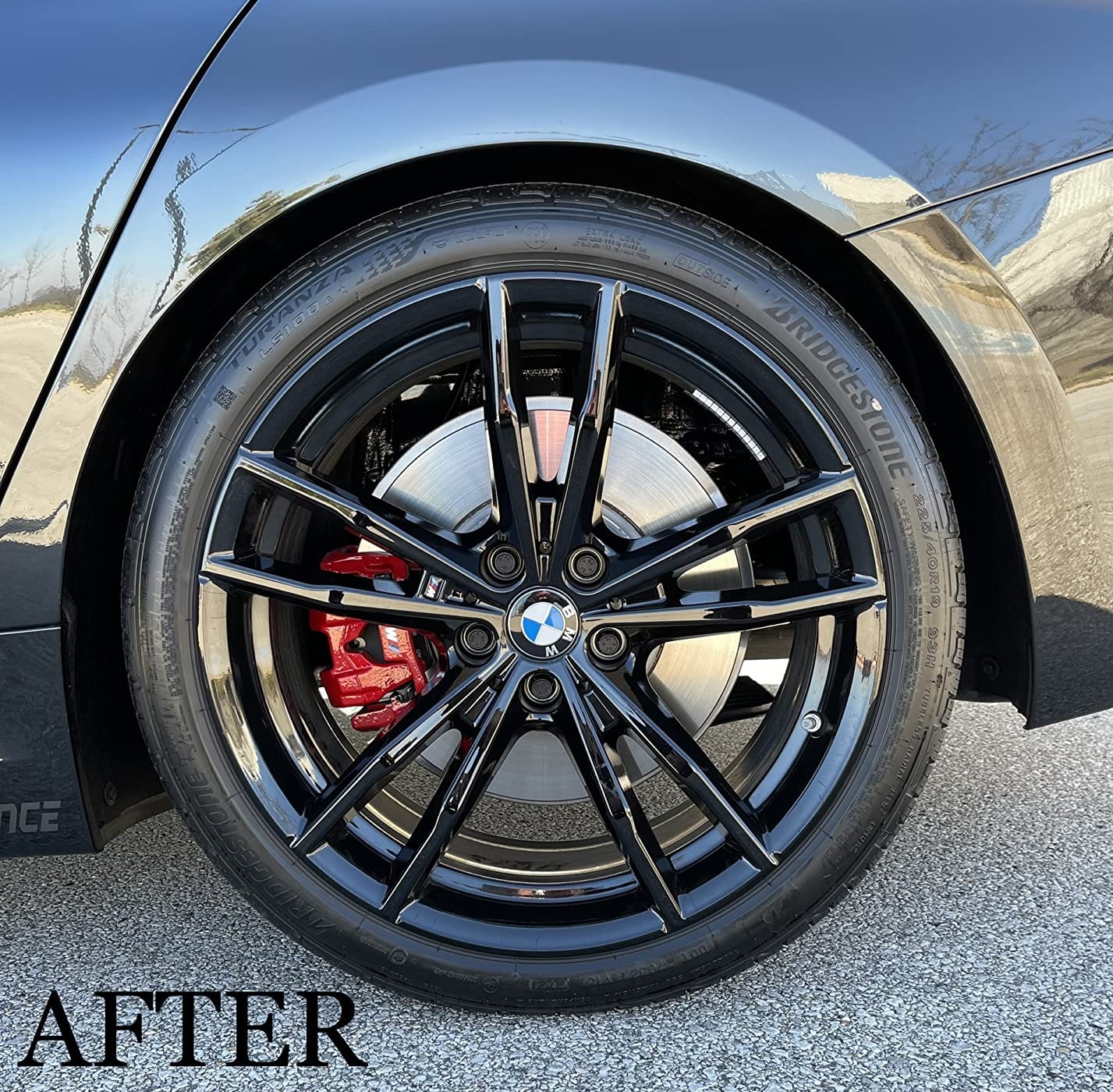
The optimized driving dynamics that H&R mentions in their product copy come from the progressive rate. At low compression (smooth roads), the spring feels close to OEM. Under hard cornering, the rate increases to resist the body roll. For a sports car with a rear weight bias (Mustang, BMW rear-drive, Porsche), this kind of progressive behavior on the rear axle makes the car feel more balanced.
For whom it’s good
Owners who need to replace rear springs only, either due to wear or to complete an existing H&R front-spring setup. Also useful for those running a separate front spring brand who want H&R’s specific rear tuning for their chassis.
For whom it’s bad
Anyone who needs a complete set of four lowering springs should not start here. The price is comparable to full sets from other brands, but you only get two springs. If you need a full kit, the H&R 50888 or the Eibach Pro-Kit are better starting points.
7. RS-R T171S Super Down – Aggressive Lexus GS F-Sport Drop
RS-R T171S Super Down Spring (13+ Lexus GS350 RWD F-Sport (GRL10)), 1 Pack
2 inch drop all around
Japanese tuning
Lexus fitment
Pros
- Approximately 2-inch drop all around
- Premium Japanese brand
- Excellent fitment for Lexus GS F-Sport
- Firms up ride without being harsh
- Vehicle-specific tuning
Cons
- Limited stock (only 5 left)
- Small review sample size
- Aggressive drop may scrape on steep driveways
RS-R is a premium Japanese brand known for aggressive drops and show-car stance, and the T171S Super Down springs for the 2013+ Lexus GS350 RWD F-Sport deliver exactly that: a 2-inch drop all around. That is significantly more than any other set on our list, and it transforms the Lexus from a luxury sedan into something that looks far more aggressive.
Lexus GS F-Sport owners on the ClubLexus forums consistently praise RS-R for the perfect drop height. The springs are vehicle-specific, which means RS-R has tuned the rate and length specifically for the GS chassis weight and OEM damper behavior. The result is that despite the aggressive drop, the ride remains compliant enough for daily driving.
The review sample is small (only 5 reviews), but every single one is positive, with 72 percent rating it 5 stars. The 4.7-star average holds up. For a Lexus GS F-Sport owner specifically, this is essentially the only serious option in this drop range. Eibach Pro-Kit and H&R Sport for the GS offer much milder drops.
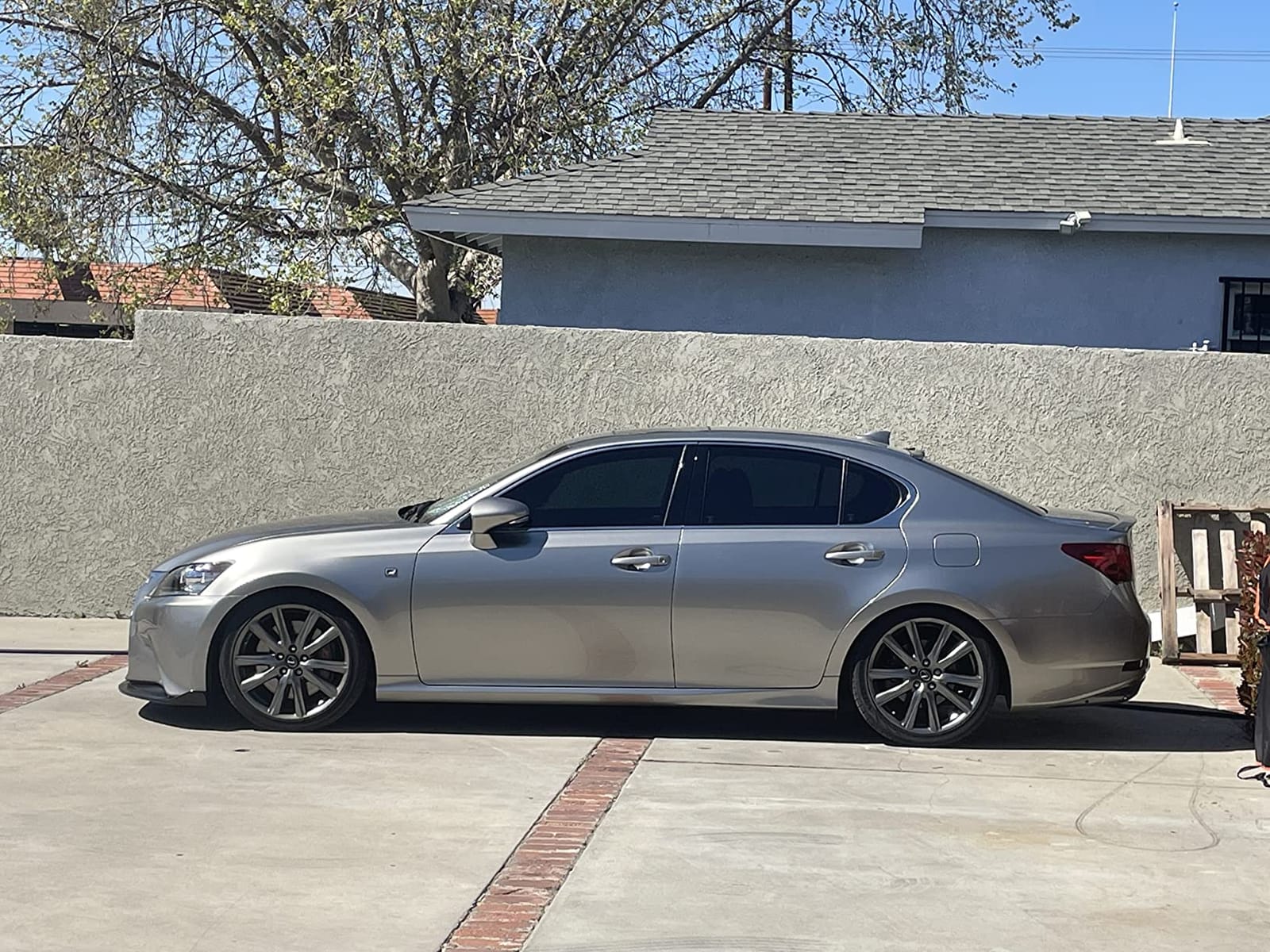
What I respect about RS-R is their focus on a specific use case: the enthusiast who wants maximum drop without going to a fully adjustable coilover setup. If you want your GS350 to look like it belongs at a car meet, the Super Down springs deliver that without the install complexity of coilovers.
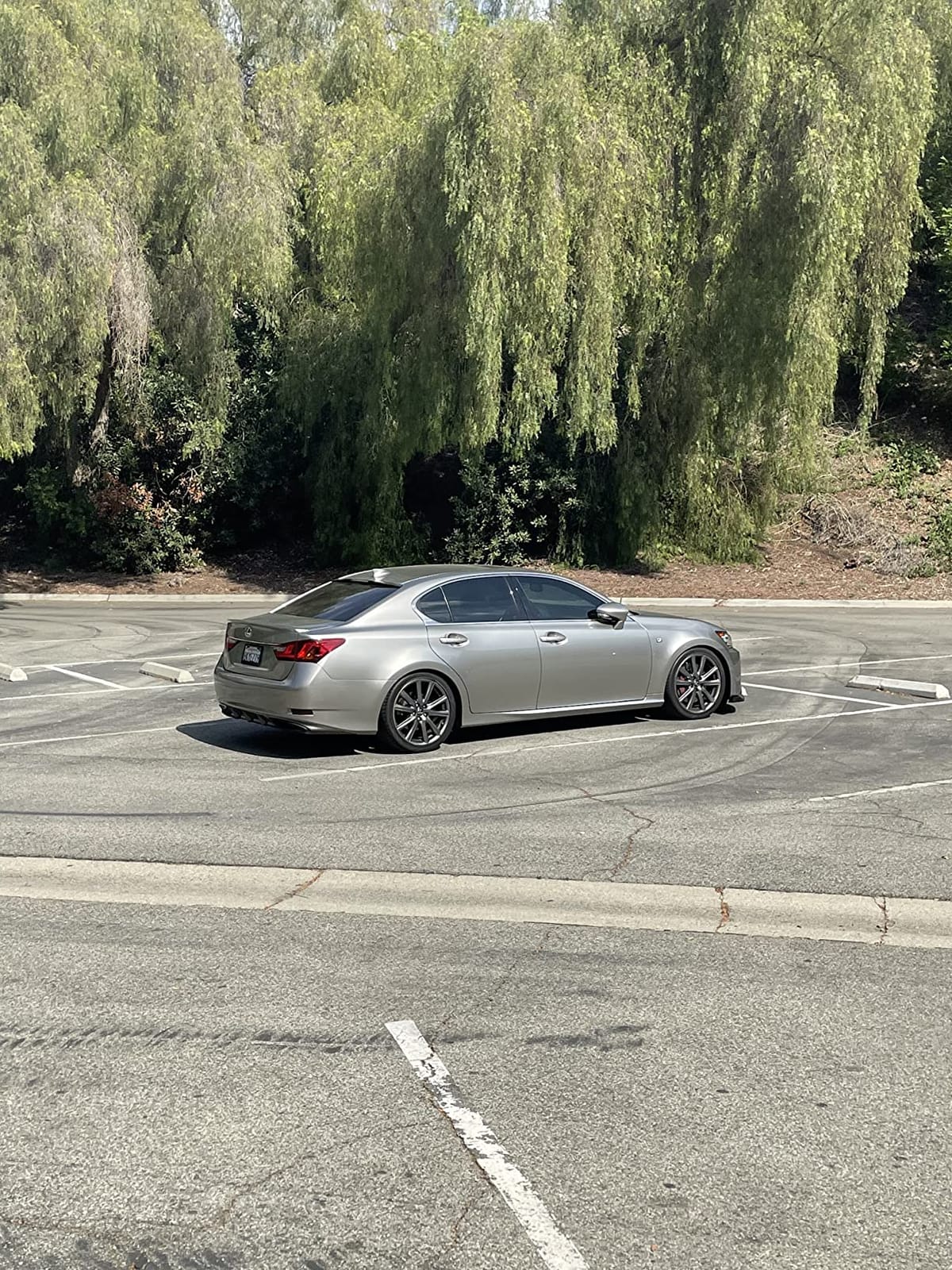
The downside, of course, is the 2-inch drop means you need to be careful with driveways, speed bumps, and steep parking garage entries. This is not a set you install if your daily commute includes rough roads or steep transitions. But for a Sunday driver that sees mostly smooth highways and city streets, the RS-R Super Down delivers on its promise.
For whom it’s good
Lexus GS350 RWD F-Sport owners (2013+) who want the most aggressive drop possible without going to coilovers. Also ideal for enthusiasts who want show-car stance on a luxury platform.
For whom it’s bad
If your commute includes rough roads, steep driveways, or deep speed bumps, the 2-inch drop will scrape. If you want a milder drop with more compliance, Eibach Pro-Kit or Swift Spec-R are better choices. Also note the limited stock and small review sample.
8. Whiteline WSK-VWN005 – Track-Tested VW Golf GTI MK7 Springs
Whiteline WSK-VWN005, Volkswagen Golf GTI MK7 Lowering Springs for 2015-2017
Track tested
236 lb/in rate
1.38 inch front drop
Pros
- Track tested for optimal performance enhancement
- Better corner handling from lowered center of gravity
- Perfect stance for VW Golf GTI MK7
- 100% 5-star rating
- Vehicle-specific spring rates
Cons
- Makes ride slightly harsher
- Limited to VW Golf GTI MK7 (2015-2017)
Whiteline rounds out our list with a track-tested lowering spring kit specifically engineered for the 2015-2017 VW Golf GTI MK7. The WSK-VWN005 set drops the front 1.38 inches and the rear 1.18 inches, with published spring rates of 236 lb/in front and 246 lb/in rear. Those are real numbers, not vague marketing claims, and they tell you exactly what kind of performance to expect.
What makes Whiteline unique is their track-testing protocol. Whiteline is an Australian brand that develops suspension components for both street and motorsport use, and they specifically test their springs on track before releasing them. For a GTI owner who does the occasional HPDE or autocross event, that pedigree matters.
The 5.0-star rating across all reviews is impressive but the sample is small (5 reviews). What those reviews consistently mention is the corner-handling improvement. With the center of gravity lowered and the spring rates increased over OEM, the GTI feels more responsive to steering input and more stable under hard braking. The slight ride harshness is the tradeoff for that performance.
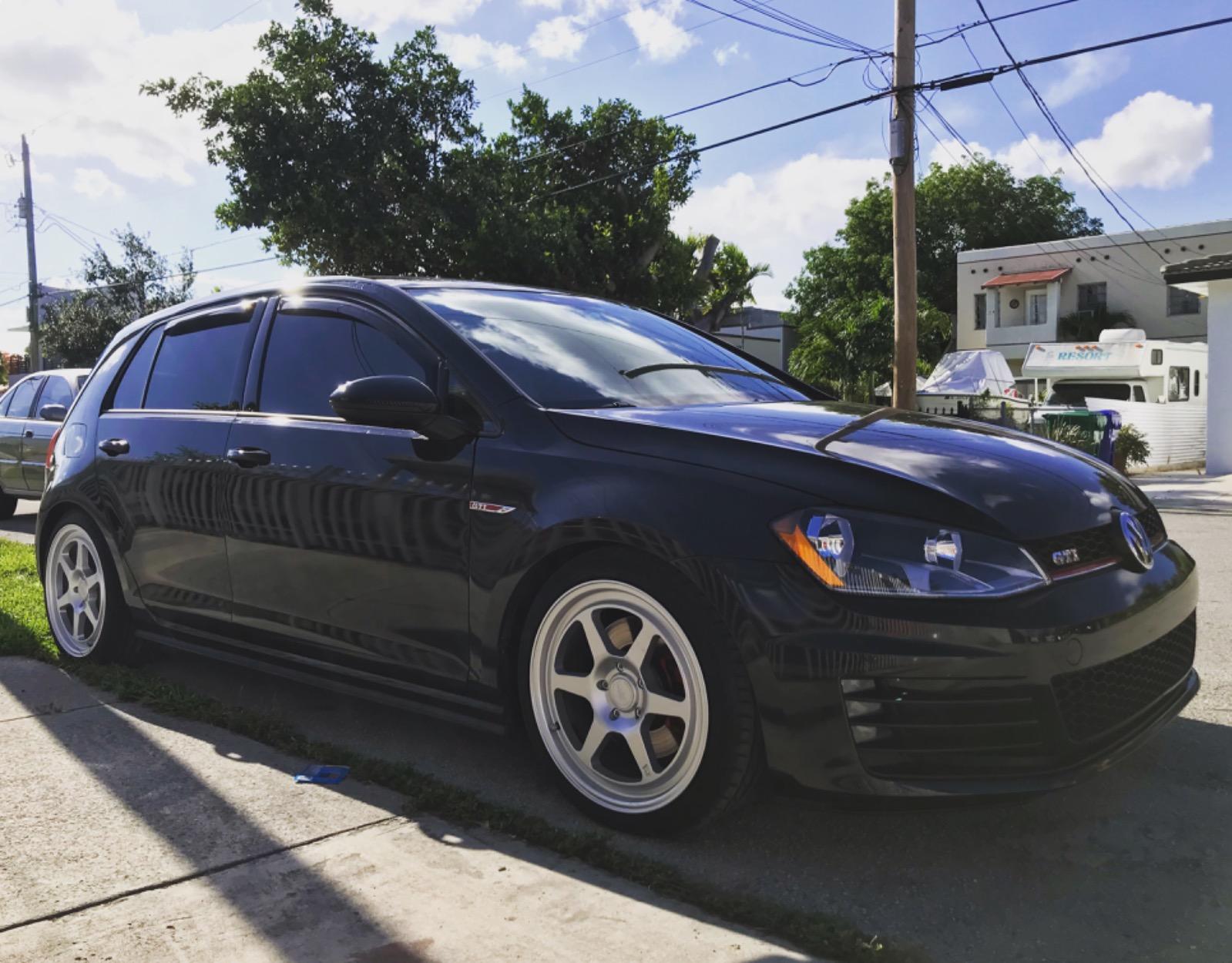
For GTI MK7 owners specifically, Whiteline is one of three serious options: Eibach Pro-Kit for OEM-plus feel, H&R Sport for aggressive drop, and Whiteline for track-tested rates. The price is competitive at $256, and the engineering transparency (published spring rates) is rare in this segment.
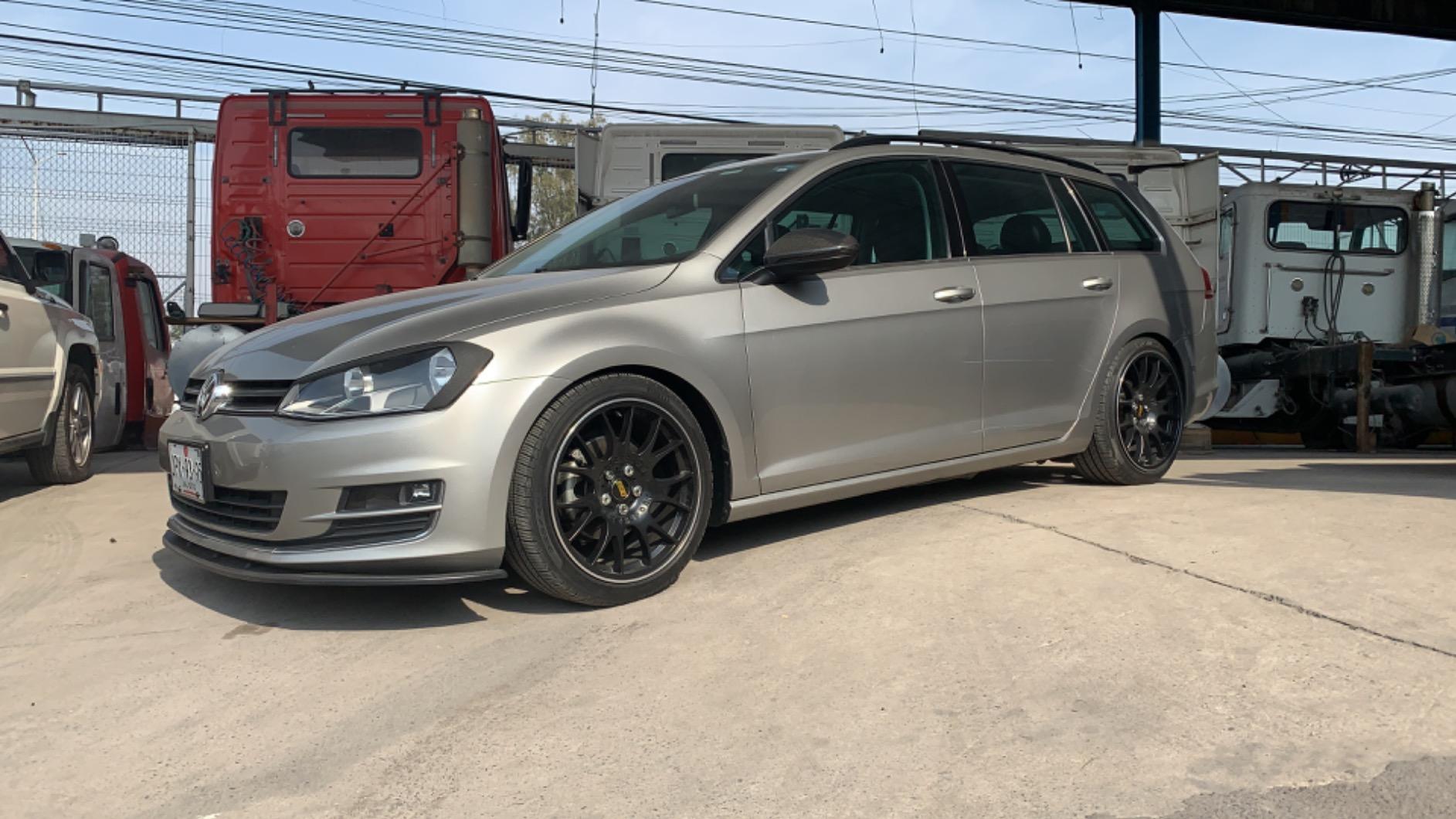
If you are shopping for lowering springs on a Volkswagen, Audi, or Subaru platform, Whiteline’s catalog covers more than just the GTI. Their products are particularly popular on VW Golf R, Audi S3, and Subaru WRX applications, where the track-tested design philosophy appeals to enthusiast owners.
For whom it’s good
VW Golf GTI MK7 owners (2015-2017) who want track-tested spring rates, a confirmed drop height, and engineering transparency. Ideal for enthusiasts who do occasional track days or spirited canyon drives.
For whom it’s bad
If you want the softest ride possible, Whiteline is firmer than Eibach or Swift. If you drive a different vehicle, this exact kit will not fit. Also, the small review sample means real-world data is limited compared to the H&R 50888’s 243 reviews.
Lowering Springs vs Coilovers: Which Is Right for You?
The single most common question our readers ask is whether they should buy lowering springs or coilovers. The answer depends on your priorities, your budget, and how you actually use your sports car.
Lowering springs are replacement components that fit your OEM or aftermarket struts. Installation is simpler, cost is lower (typically $200-$450 for a full set), and ride quality with progressive-rate springs like Eibach Pro-Kit remains close to stock. For daily-driven sports cars that see the occasional spirited weekend drive, lowering springs are the right choice. You get the stance, the lower center of gravity, and most of the handling benefit without the complexity or cost of coilovers.
Coilovers replace your entire strut assembly: spring, shock, and mount in one adjustable unit. They let you dial in exact ride height, adjust damping, and sometimes adjust camber plates. Cost is typically $800-$2,500 for a quality set, and installation is more involved. Coilovers are the right choice for dedicated track cars, show cars with extreme drop requirements, or enthusiasts who want full control over their suspension geometry.
For 80 percent of sports car owners, lowering springs deliver the right balance. You can always upgrade to coilovers later if your needs change. And unlike coilovers, lowering springs are reversible: if you sell the car or want to go back to stock, you can swap the OEM springs back in.
How to Choose the Right Lowering Springs for Your Sports Car
There are five factors that matter most when shopping for lowering springs, and our team weighs each of them when making our recommendations.
Drop height is the first consideration. Most lowering springs drop your car between 0.8 and 2.0 inches. A 1-inch drop is barely noticeable visually but improves handling slightly. A 1.5-inch drop is the sweet spot for most sports cars: aggressive enough to look right, mild enough to avoid scraping. A 2-inch drop (like the RS-R Super Down) is show-car territory and demands careful driving over rough roads.
Spring rate determines how stiff the springs feel under load. Progressive-rate springs like Eibach Pro-Kit and H&R Sport feel soft over small bumps and stiff in corners. Linear-rate springs like Swift Spec-R deliver consistent behavior throughout the travel. For a daily driver, progressive is usually better. For track use, linear with a higher rate gives more predictable handling.
Vehicle fitment is critical. Every kit on our list is vehicle-specific, and that is the right approach. A spring engineered for your chassis weight, OEM damper behavior, and suspension geometry will always outperform a generic drop. Always confirm fitment by entering your exact year, make, model, and trim before buying.
OEM damper compatibility matters too. All eight sets on our list are designed to work with stock dampers, but they really come alive with upgraded shocks like Koni STR.T, Koni Yellow, or Bilstein B8. If you are on a tight budget, springs alone will improve your car. If you can stretch, pairing springs with Koni shocks is the single best upgrade for a daily-driven sports car.
Price and brand reputation round out the decision. The sets on our list range from $215 (Tein S.Tech WRX) to $405 (Swift Spec-R). For most owners, the sweet spot is between $250 and $350, where you get proven engineering without paying the premium brand tax.
Installation Tips and Alignment After Lowering
Installing lowering springs is a bolt-on job, but it requires some specific knowledge to do right. Our team recommends having a professional shop do the install unless you have prior suspension experience. The job typically takes 3-5 hours per axle and requires a spring compressor, which can be dangerous if used incorrectly.
Once your springs are installed, you absolutely need an alignment. Aftermarket lowering springs change your camber, toe, and sometimes caster settings. Driving on a misaligned car after lowering will cause uneven tire wear, poor handling, and in extreme cases, unsafe steering behavior. Budget $100-$200 for a quality alignment at a shop that specializes in lowered or modified cars.
You may also need camber correction components. Many lowering springs add 0.5-1.0 degrees of negative camber, which is fine for performance but will wear the inside edge of your tires. Adjustable camber plates or camber bolts fix this. Some Eibach and H&R kits include these components; others require separate purchase.
Roll center is the technical detail most owners overlook. As one user on the r/F30 BMW forum warned, “while lowering the center of gravity (marginally), it tends to lower the roll center considerably more.” This is a real consideration for heavily lowered setups (2+ inches) and can lead to unpredictable handling. Sticking to a 1-1.5 inch drop avoids most of this issue.
Warranty is the final consideration. Most aftermarket lowering springs do not void your factory warranty on their own, but if a dealer can prove the springs caused a failure (like a damaged CV joint or bent control arm), they may refuse warranty coverage. For newer cars still under factory warranty, consider the risk before lowering.
Frequently Asked Questions
Who makes the best lowering springs?
Eibach, Hu0026amp;R, Swift, and Tein are widely regarded as the top four lowering spring manufacturers for sports cars. Eibach is the gold standard for progressive-rate daily-driven setups. Hu0026amp;R Sport delivers a more aggressive drop with good compliance. Swift Spec-R is the premium choice for stock-like ride quality. Tein S.Tech is track-tested and vehicle-specific. For most sports car owners, Eibach Pro-Kit is the safest pick.
Is Eibach or Hu0026amp;R better?
Eibach is better for daily-driven comfort and consistent quality. Hu0026amp;R is better for a more aggressive drop and slightly stiffer feel. If your top priority is ride quality, choose Eibach Pro-Kit. If you want maximum drop and do not mind a firmer ride, choose Hu0026amp;R Sport. Both brands use progressive-rate designs and are made in Germany, so the difference is in tuning philosophy rather than quality.
Do lowering springs improve performance?
Yes. Lowering springs reduce body roll, lower the center of gravity, and improve steering response. The handling improvement is most noticeable in corners and under hard braking. Most sports car owners report a 20-40% reduction in body roll after installing quality progressive-rate lowering springs like Eibach Pro-Kit or Hu0026amp;R Sport. The improvement is more dramatic on twisty roads and less noticeable in straight-line highway driving.
Do lowering springs ruin handling?
Lowering springs improve handling when installed correctly with an alignment and matched dampers. They can hurt handling if you skip alignment, exceed 2 inches of drop without supporting modifications, or pair them with worn-out OEM dampers. As long as you stick to a 1-1.5 inch drop from a quality brand and get a post-install alignment, your handling will improve noticeably.
Are Swift Springs really worth the premium price?
Swift Springs are worth the premium if ride quality is your top priority. The Spec-R line uses linear rates with proprietary steel formulations that deliver near-stock ride compliance with improved handling. For a daily-driven Infiniti G35/G37, Mazda Miata, or Honda Civic, the Swift Spec-R experience is genuinely more comfortable than Eibach or Hu0026amp;R. If you primarily drive on rough roads or commute daily, the premium is justified. For a dedicated track car, the extra cost is harder to justify.
How much drop is best for daily driving?
A 1 to 1.5 inch drop is the sweet spot for daily driving. This range delivers the visual stance improvement and handling benefit without scraping driveways or punishing your back over rough roads. Drops of 2 inches or more (like RS-R Super Down) are show-car territory and require careful driving over speed bumps and steep transitions. For most sports cars, Eibach Pro-Kit or Hu0026amp;R Sport in the 1-1.5 inch range is ideal.
Final Verdict: The Best Performance Lowering Springs for Sports Cars
After comparing 8 of the top-selling performance lowering spring sets on the market, our team’s picks come down to what kind of sports car owner you are.
For the daily-driven enthusiast who wants the best balance of stance, handling, and ride quality, the Eibach Pro-Kit remains the gold standard for performance lowering springs for sports cars. It is the brand our forum communities trust most, the engineering is consistent across hundreds of vehicle applications, and the progressive-rate design keeps your commute comfortable.
If you want a more aggressive drop and do not mind a slightly firmer ride, the H&R Sport line is the right choice. For owners who want maximum drop on a Lexus GS or similar luxury sport platform, RS-R Super Down delivers where other brands hold back. For WRX and STI owners specifically, Tein S.Tech has the best documented fitment and customer satisfaction in our test group.
And if budget matters most, the Tein S.Tech SKG10 demonstrates that quality progressive-rate springs do not have to cost a fortune. Whichever set you choose, get an alignment after installation, check your camber, and consider pairing with Koni or Bilstein shocks for the best result.
For more guides on tuning your sports car and related enthusiast topics, check out our other reviews and buying recommendations. Have a question about a specific platform or fitment? Drop us a comment and our team will dig into it.
1 thought on “8 Best Lowering Springs for Sports Cars (October 2026) Trusted Reviews”