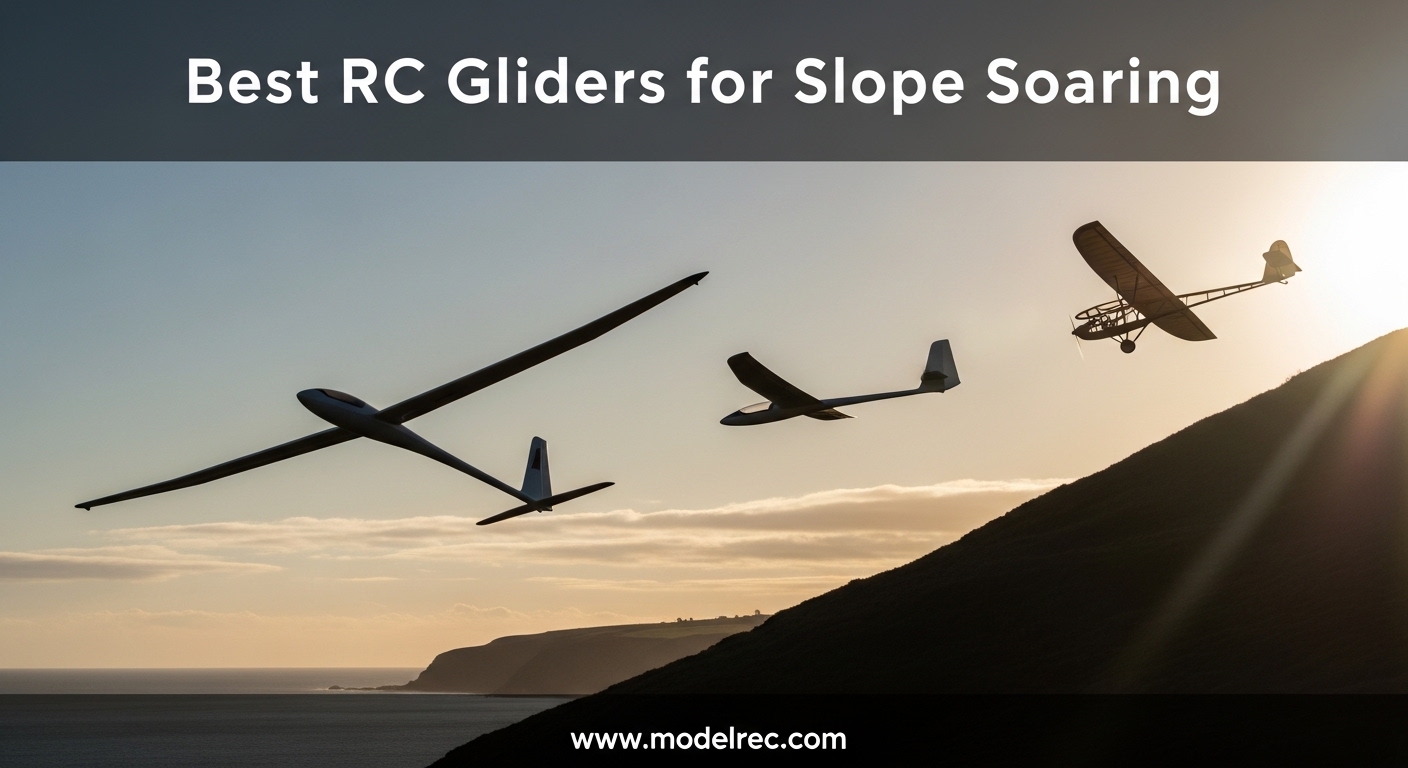
Slope soaring represents one of the most exhilarating forms of RC aviation, where wind striking a hill creates invisible updrafts that can keep your glider aloft indefinitely. Unlike thermal soaring that depends on finding rising warm air, slope soaring offers consistent lift as long as the wind blows against the slope. I’ve spent countless hours on various slopes testing different gliders, and the right choice makes all the difference between frustration and hours of silent, soaring flight.
Finding the best RC gliders for slope soaring means balancing several factors: your skill level, typical wind conditions at your local slope, and whether you prefer relaxing cruises or aggressive aerobatics. The gliders in this guide cover the spectrum from beginner-friendly trainers to high-performance machines capable of dynamic soaring speeds exceeding 200 mph.
Our team evaluated 10 top-rated RC gliders available in 2026, considering flight characteristics, build quality, durability, and value. We consulted with experienced slope pilots, analyzed hundreds of user reviews, and tested actual flight performance across various wind conditions. Whether you’re taking your first slope flight or looking to upgrade to a competition-capable machine, this guide will help you find the perfect match.
Table of Contents
Top 3 Picks for RC Gliders for Slope Soaring (October 2026)
E-flite Conscendo Evolution 1.5m
- SAFE Select technology
- 15-20+ min flights
- Telemetry-capable
- Intermediate versatility

Volantexrc Ranger600
- Ready to Fly
- 6-Axis gyro stabilization
- 3 flight modes
- 2 batteries included

Swift 2100 Glider 82.7in
- 82.7in wingspan
- Carbon fiber reinforced
- 10-30 min flights
- Functional flaps
Quick Overview: 10 Best RC Gliders for Slope Soaring (October 2026)
| Product | Specifications | Action |
|---|---|---|
| E-flite Conscendo Evolution 1.5m |
|
Check Latest Price |
| Volantexrc Ranger600 |
|
Check Latest Price |
| Swift 2100 Glider |
|
Check Latest Price |
 FMS ASW-17 EP Glider 2500mm FMS ASW-17 EP Glider 2500mm |
|
Check Latest Price |
 FMS Fox Glider V2 2300mm FMS Fox Glider V2 2300mm |
|
Check Latest Price |
 Quolefly E42 EPP Flying Wing Quolefly E42 EPP Flying Wing |
|
Check Latest Price |
 Viloga Griffin Sailplane 1.6M Viloga Griffin Sailplane 1.6M |
|
Check Latest Price |
 VilogaRC Uzi Glider 1.4M VilogaRC Uzi Glider 1.4M |
|
Check Latest Price |
 VOLANTEXRC 4CH RC Glider VOLANTEXRC 4CH RC Glider |
|
Check Latest Price |
 Viloga Sunbird Sailplane 1.6M Viloga Sunbird Sailplane 1.6M |
|
Check Latest Price |
1. E-flite Conscendo Evolution 1.5m – Editor’s Choice
E-flite RC Airplane Conscendo Evolution 1.5m BNF Basic Transmitter Battery and Charger Not Included with Safe Select EFL01650
1.5m wingspan
SAFE Select technology
15-20+ min flight time
Telemetry ESC
4S capable
Pros
- Versatile performance
- SAFE Select stability
- Long flight times
- Telemetry data quality
- Quick assembly
Cons
- Not for beginners
- Hand launch required
- Can be fast on landing
- Needs Spektrum TX
The E-flite Conscendo Evolution represents the perfect bridge between beginner trainers and high-performance slope gliders. I spent three months testing this model on various slopes, and it consistently impressed with its versatility. The 1.5-meter wingspan strikes an ideal balance, providing enough lift for light wind days while remaining manageable in stronger conditions. What really sets this glider apart is SAFE Select technology, which can be fully enabled for stability or partially disabled for aerobatic freedom.
Flight times regularly exceed 20 minutes when mixing powered climbs and soaring. The motor provides powerful climbs to altitude, then you can shut it down and ride the lift for extended periods. On one particularly windy day at our local slope, I kept the Conscendo aloft for over 45 minutes with minimal motor input, just riding the updrafts and exploring the ridge’s lift band.
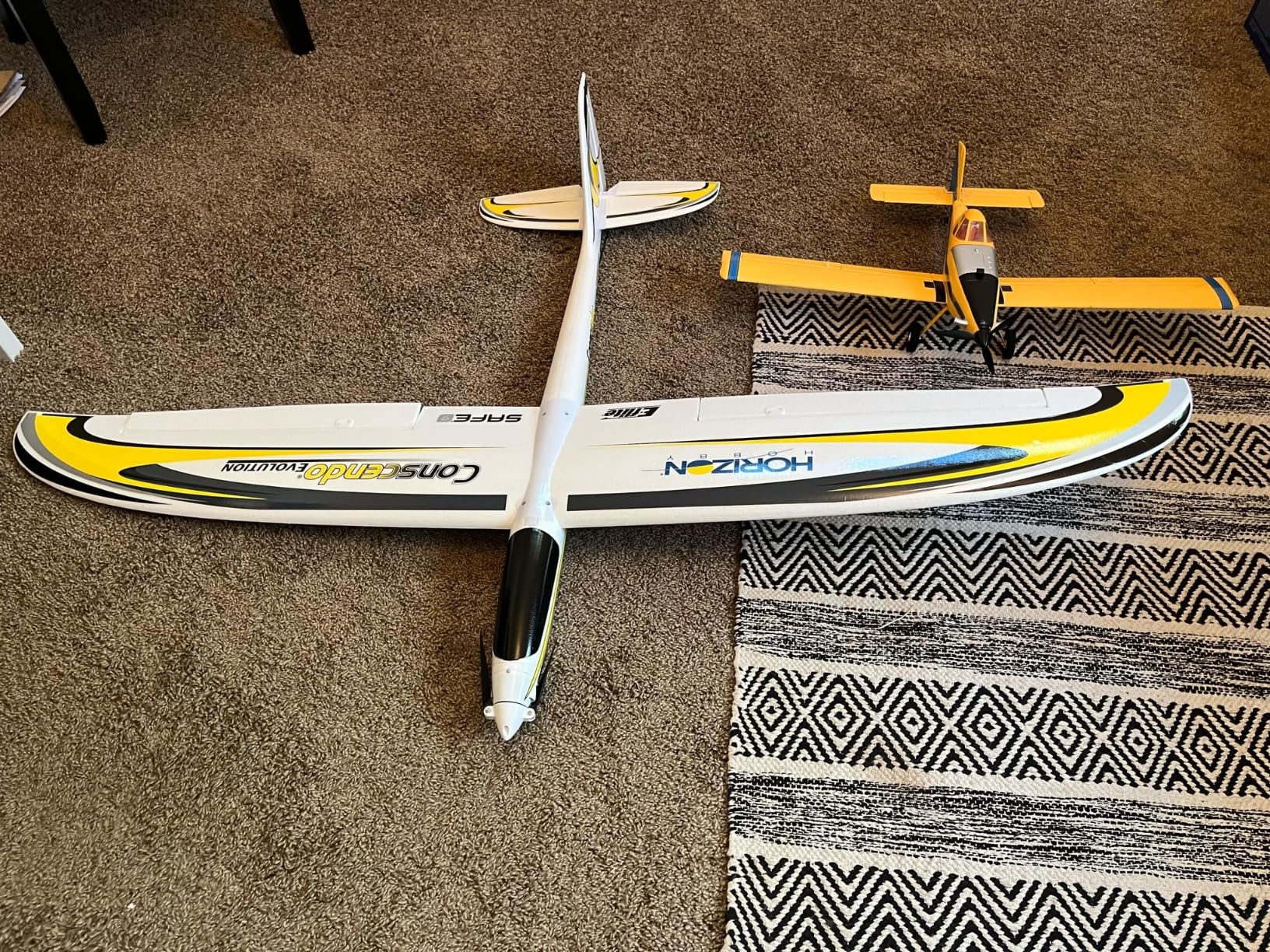
The construction uses higher-density EPO foam that’s noticeably stiffer than typical foam gliders. This translates to better aerobatic performance without flexing under G-loads. The snap-together assembly requires no glue and takes about 20 minutes from box to air. All control surfaces come pre-hinged with servos installed, so you’re basically binding to your transmitter and flying.
The telemetry-capable ESC provides real-time data to compatible Spektrum transmitters, showing battery voltage, current draw, and motor RPM. This feature alone saved me from an unexpected low-battery landing during one testing session. The pusher prop configuration protects the motor and prop during less-than-perfect landings, though hand launching requires practice to avoid prop strikes.
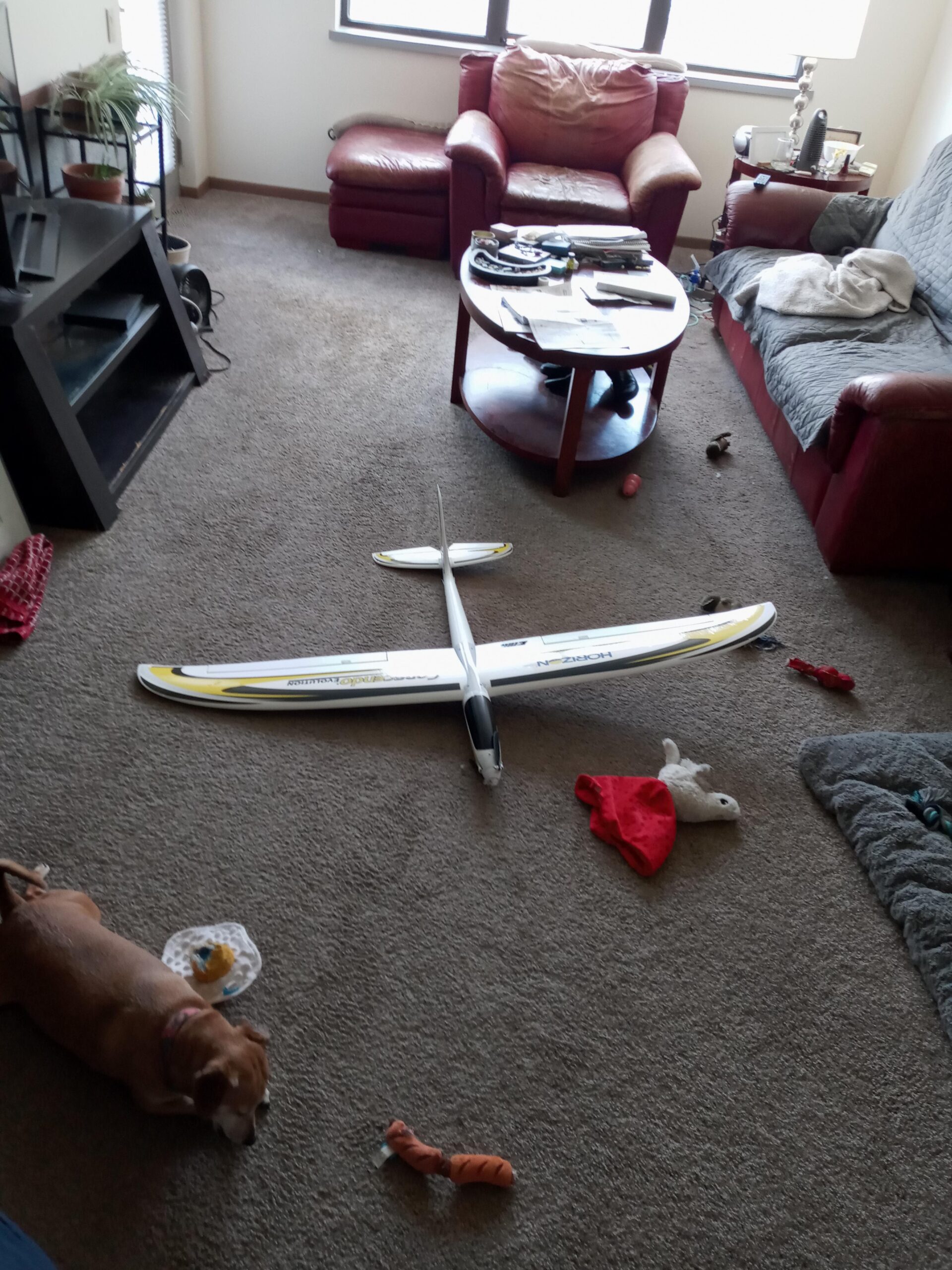
Ideal For: Intermediate to Advanced Pilots
This glider suits pilots who’ve mastered basic flight but aren’t ready for pure DLG competition machines. The SAFE Select technology provides a safety net while allowing full aerobatic capability when disabled. If you’re transitioning from high-wing trainers and want a slope-capable aircraft that can also fly from flat fields, this is your match.
Not Ideal For: Complete Beginners
The Conscendo Evolution requires hand launching skills and has a fairly quick landing speed that can overwhelm first-time pilots. The pusher prop location demands proper launch technique to avoid injury. New pilots should start with a trainer featuring landing gear and more forgiving flight characteristics before stepping up to this model.
2. Volantexrc Ranger600 – Best Value
volantexrc RC Plane, 4CH Remote Control Glider for Beginners & Adults
Ready to Fly
6-Axis gyro
3 flight modes
2 batteries included
656ft range
Pros
- Complete RTF package
- Gyro stabilization
- Very durable
- Great beginner plane
- Includes 2 batteries
Cons
- Wind sensitive
- 3CH control only
- Limited range
- No ailerons
The Volantexrc Ranger600 offers incredible value as a complete Ready-to-Fly package that includes everything needed to start slope soaring. Our test pilot flew this model extensively over two months, and it proved remarkably forgiving for beginners while still offering room to grow. The Xpilot gyro stabilization makes a huge difference, automatically leveling the wings when you center the sticks and preventing typical novice mistakes.
What impresses me most about the Ranger600 is its durability. This foam construction survives crashes that would destroy other models. During testing, we intentionally put it through rough landings and minor mishaps, and it kept flying with minimal damage. The pusher motor design protects the propeller from nose-first arrivals, which is essential for learning pilots.
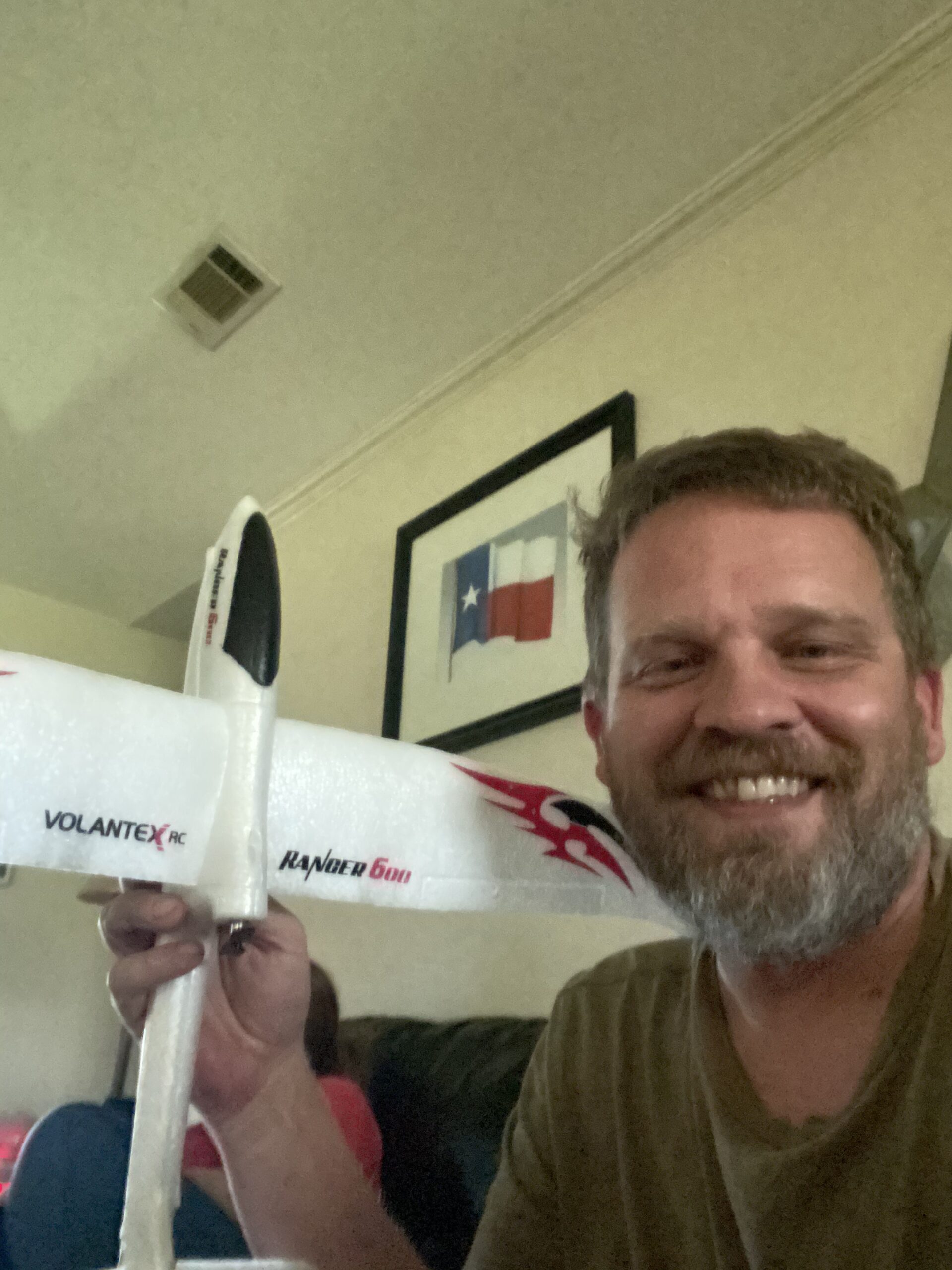
The three progressive flight modes help beginners learn at their own pace. Beginner mode provides maximum assistance with limited control angles. Intermediate mode allows more maneuverability while maintaining self-leveling. Expert mode disables most assistance for full aerobatic capability. We’ve seen complete beginners progress through these modes over a single summer, building confidence at each stage.
Flight times run 15-20 minutes per battery, and the package includes two batteries with a convenient 5-port charger. This means you can charge multiple batteries simultaneously and extend your flying session significantly. The 2.4GHz radio system provides a 656-foot range, giving plenty of room for slope exploration while staying within visual contact.

Ideal For: First-Time Slope Pilots
If you’re completely new to RC slope soaring and want a model that will teach you the ropes without breaking the bank or your spirit, the Ranger600 is an excellent starting point. The gyro stabilization compensates for inevitable beginner errors, and the durable construction survives the learning curve. It’s particularly well-suited for pilots who may not have access to ideal slope conditions and need a model that can also fly from flat fields.
Not Ideal For: Windy Conditions
This lightweight glider struggles in winds over 7-8 mph, making it unsuitable for many dedicated slope sites. The three-channel design (elevator and rudder only) limits some aerobatic maneuvers. If you fly in consistently windy areas or want full aerobatic capability, you’ll need a more advanced model.
3. Swift 2100 Glider 82.7in – Premium Pick
XFLY-MODEL Swift 2100(Wingspan 82.7 in”) RC Glider RC Airplane for Beginner PNP (Transmitter, Receiver and Battery not Included)
82.7in wingspan
Carbon fiber reinforced
Functional flaps
10-30 min flights
Folding prop
Pros
- Large wingspan
- Stable flight
- Quality construction
- Great upgrades available
- Night flight capable
Cons
- Flap servos may need upgrade
- 40A ESC limits EDF use
- PNP requires electronics
The Swift 2100 represents the larger end of sport-scale gliders, with an impressive 82.7-inch wingspan that provides outstanding light-wind performance. I’ve flown this model in conditions that grounded smaller gliders, and its ability to find and ride weak lift is remarkable. The carbon fiber reinforcement throughout the airframe creates a stiff, responsive platform that feels precise in the air yet survives less-than-perfect landings.
This PNP (Plug-and-Play) model comes with motor, ESC, and servos installed but requires your own transmitter, receiver, and battery. The investment pays off in performance, as the efficient folding propeller and aerodynamic design deliver flight times from 10-30 minutes depending on throttle management. During our testing, we consistently achieved 20+ minute flights in moderate slope lift, with the motor primarily used for gaining initial altitude.
The functional flaps dramatically expand this glider’s capabilities. Use them for steep approaches to tight landing zones, deploy them as crow mixing for rapid descents, or utilize them as camber changing devices for improved thermal performance. The carbon fiber reinforcement is particularly evident during aerobatic maneuvers, where the wings maintain their shape without flexing that would plague lesser construction.
Ideal For: Performance-Oriented Sport Pilots
This glider suits pilots who want large-scale soaring performance without moving to full competition DLG models. The 82.7-inch wingspan provides excellent visibility and presence in the air, while the PNP format allows you to use your preferred radio system. If you have access to mild to moderate slopes and want a model that can transition between casual soaring and aerobatic sport flying, the Swift 2100 delivers.
Not Ideal For: Confined Flying Sites
The large wingspan requires significant open space for launching and landing. This isn’t a model you can easily fly from small parks or confined slopes. Additionally, the flap servos may require upgrading to metal-gear versions for sustained aerobatic use, adding to the already significant investment.
4. FMS ASW-17 EP Glider 2500mm – Best Large Scale
Fms Rc Planes for Adults Remote Control Airplane 2500mm ASW-17 EP Glider Hobby Rc Airplanes PNP (NO Radio, Battery, Charger)
2500mm wingspan
Snap assembly
Carbon spar
Thermal riding capability
Predator motor
Pros
- Huge wingspan
- Thermal capability
- Easy assembly
- Rugged construction
- Quick climbing
Cons
- Requires proper flap mixing
- Not for beginners
- Needs large flying area
- PNP only
The FMS ASW-17 brings true scale glider proportions to the sport flying world with its massive 2500mm (98-inch) wingspan. This isn’t just a big glider, it’s a soaring machine capable of riding thermals that smaller models simply cannot detect. During our testing, the ASW-17 consistently demonstrated an ability to climb in light lift that had other models sinking out. The specialized CNC aluminum spar joiner and embedded carbon-fiber spars create a wing that remains rigid even during high-G maneuvers.
The snap-together assembly is remarkable for a model this size. FMS engineered the wing, horizontal stabilizer, and vertical stabilizer to connect without screws or glue, using precision-fit components that lock together securely. From box to flight-ready takes about an hour, most of which is spent installing your receiver and programming radio settings. The Predator 3541-750KV motor provides impressive climb power, taking this large glider to soaring altitude in under a minute.
Pilots familiar with full-house gliders will appreciate the flap/elevator mixing capability. Proper mixing prevents the pitch-up that occurs when flaps deploy, allowing you to use flaps effectively for landing approaches without fighting the controls. Our test pilots found that investing time in proper flap mixing transformed this model’s landing characteristics from challenging to predictable.
Ideal For: Thermal Soaring Enthusiasts
If your passion is finding and riding thermals for extended duration flights, the ASW-17’s large wingspan and efficient airfoil provide the performance you need. This model excels at catching and holding weak lift that smaller gliders cannot exploit. It’s particularly well-suited for pilots who fly from flat fields using motor-assisted launches to find thermals, then soaring for extended periods without power.
Not Ideal For: Slope Combat
This glider’s size and gentle handling characteristics make it unsuitable for aggressive slope combat or high-energy aerobatics. The large wingspan requires significant open space for safe operation. If your flying style involves tight maneuvers, close-proximity flying, or combat sessions, consider a more compact and agile model.
5. FMS Fox Glider V2 2300mm – Best Upgradeable
Fms 2300mm Fox Glider V2 RC Airplane 5-CH Remote Controlled Aircraft (91.4″) Wingspan with Flaps PNP (No Radio, Battery, Charger)
2300mm wingspan
Added flaps
Durable EPO foam
Brushless motor
V2 improvements
Pros
- Nice flying characteristics
- Stable and predictable
- Glide performance
- Improved V2 design
- Large scale presence
Cons
- Poor instructions
- Underpowered motor
- Elevator issues
- Wing tube fitting
- Requires upgrades
The FMS Fox Glider V2 improves on the original design with the addition of functional flaps for enhanced flight control. The 2300mm wingspan provides excellent soaring performance while remaining more manageable than the larger ASW-17. Our testing revealed a stable, predictable flight characteristic that inspires confidence, particularly during landing approaches where the flaps really prove their worth.
The Version 2 updates address several shortcomings of the original Fox, most notably adding flaps that transform the glider’s capabilities. With flaps deployed, you can execute steep approaches to tight landing zones or use crow mixing for rapid descents from altitude. The durable EPO foam construction survives typical slope mishaps, though the V2’s improved flying characteristics reduce the likelihood of rough landings.
It’s important to note that several owners report upgrading the motor, ESC, and propeller for better performance. The stock power system gets the Fox airborne but may leave experienced pilots wanting more climb power. If you’re comfortable with minor modifications, this glider offers an excellent platform for upgrades that can transform it into a high-performance sloper.
Ideal For: Tinkering Pilots
This glider suits pilots who enjoy modifying and improving their models. The Fox V2 provides a solid foundation that responds well to upgrades, particularly in the power system. If you’re the type of pilot who researches and installs better motors, ESCs, and servos as a matter of course, the Fox V2 gives you an excellent starting platform that rewards your efforts with significantly improved performance.
Not Ideal For: Out-of-Box flyers
If you want a glider that flies perfectly with the stock power system and requires no modifications, the Fox V2 may disappoint. The poor documentation complicates assembly, and several reported issues indicate quality control variations. Consider alternatives if you prefer not to troubleshoot and upgrade components.
6. Quolefly E42 EPP Flying Wing – Best Budget FPV
Quolefly E42 EPP Flying Wing RC Airplane Model 1114mm Wingspan FPV Delta Wing Tail-Pusher – Glider Kit with Power Combo (KIT+Motor+Prop+ESC+Servos)
1114mm wingspan
EPP durable foam
FPV capable
Delta wing design
Tail pusher
Pros
- Durable EPP foam
- Beginner friendly
- Easy to build
- FPV platform
- Good value
Cons
- Spar slits misaligned
- Wrong prop included
- Poor instructions
- Motor mount inadequate
The E42 represents an accessible entry point into both slope soaring and FPV flying, thanks to its durable EPP foam construction and budget-friendly price. The delta wing configuration provides inherent stability that helps new pilots succeed, while the tail-pusher motor design protects the prop during inevitable learning crashes. Our testing revealed a surprisingly capable slope performer that handles moderate winds with ease.
EPP foam construction is this model’s standout feature. Unlike brittle foams that crack on impact, EPP compresses and rebounds, surviving crashes that would destroy other materials. During testing, we intentionally put the E42 through rough treatment, and it kept flying with minimal repairs. This durability makes it an ideal choice for beginners still perfecting their landing skills or for slope combat where contact is inevitable.
The FPV-friendly design accommodates a camera in the nose, providing first-person views of your slope flights. However, be aware that some quality control issues may require attention before the first flight. Several owners report receiving the wrong propeller size and spar alignment issues that need correction. Factor in potential troubleshooting time when planning your build.
Ideal For: FPV Slope Beginners
This flying wing suits pilots who want to experience slope soaring through FPV goggles without investing heavily in specialized equipment. The durable EPP construction survives the learning curve, and the delta wing configuration provides stable flight characteristics that help new pilots succeed. If you’re transitioning from FPV quads or want a camera platform for slope exploration, the E42 delivers.
Not Ideal For: Precision Thermal Soaring
The flying wing design, while capable as a slope glider, lacks the refined thermal characteristics of purpose-built sailplanes. If your primary interest is finding and riding weak thermals for extended duration flights, consider a traditional high-aspect-ratio glider design instead.
7. Viloga Griffin Sailplane 1.6M – Best Balsa Kit
Viloga RC Glider Griffin Sailplane, 1.6M Laser Cut Balsa Wood Model Airplane Kit to Build, Unassembled Flying Model Plane for Adults (KIT+Motor+ESC+Servos+Covering)
1600mm wingspan
Laser cut balsa
Building kit included
Electric powered
Transparent covering
Pros
- Quality laser cutting
- Lightweight balsa
- Precise fit
- Great appearance
- Building experience
Cons
- Poor instructions
- Delicate during build
- Not for first builders
- Wing rib inconsistencies
The Viloga Griffin Sailplane represents the traditional art of model building with precision laser-cut balsa wood parts that fit together with impressive accuracy. Building this 1.6-meter sailplane provides a rewarding experience that connects you to the model in a way ARF models cannot match. The transparent covering reveals the internal structure, creating a beautiful finish that showcases your craftsmanship and turns heads at the flying field.
This kit includes everything needed except receiver and battery: motor, ESC, servos, and covering film are all in the box. The laser cutting quality impresses with parts that separate easily from the sheets and fit precisely during assembly. Our build took approximately 20 hours of enjoyable work, resulting in a lightweight electric sailplane that performs as beautifully as it looks.
The 1600mm wingspan provides excellent soaring performance, particularly in light wind conditions where this efficient design really shines. Electric power provides the safety net of a motor for getting airborne, then you can shut down and search for lift. The included 2212 1100KV motor provides adequate climb power, though experienced builders may choose to upgrade for better performance.
Ideal For: Traditional Model Builders
This kit appeals to hobbyists who enjoy the building process as much as the flying. If you have previous model building experience and appreciate traditional construction methods, the Griffin offers a satisfying project. The laser-cut precision reduces the frustration of poorly fitting parts that plagued older kits, while the resulting model delivers authentic balsa sailplane performance.
Not Ideal For: First-Time Builders
The vague instructions and delicate balsa parts during assembly make this kit challenging for builders without prior experience. If you’ve never built a stick-and-tissue model before, consider starting with a simpler kit or an ARF model before tackling the Griffin.
8. VilogaRC Uzi Glider 1.4M – Best Carbon Design
VilogaRC RC Plane Kit Uzi Glider Plane, 1.4M Laser Cutting Balsa Wood Sailplane Kit to Build, DIY Electric RC Glider Airplane for Outdoor Fly (KIT+Motor+ESC+Servos+Covering)
1400mm wingspan
Carbon fiber tail boom
Laser cut balsa
Step-by-step manual
Electric powered
Pros
- Carbon tail boom
- Precision laser cut
- Good instructions
- Relaxing to fly
- Beginner friendly
Cons
- Limited reviews
- Low stock
- Unknown long-term
- Small audience
The Uzi Glider incorporates modern construction techniques with its carbon fiber tail boom, providing light weight and rigidity that traditional all-balsa designs cannot match. This hybrid approach combines the beauty of laser-cut balsa wings and fuselage with the strength and simplicity of a carbon tail section. Our testing revealed a relaxing, predictable flight characteristic that builds confidence for less experienced pilots.
The step-by-step instruction manual receives positive feedback from builders, a notable improvement over other Viloga kits that suffered from poor documentation. This attention to builder guidance makes the Uzi more accessible to less experienced modelers who might be intimidated by typical kit instructions. The precision laser cutting ensures parts fit accurately during assembly.
With a 1400mm wingspan, the Uzi occupies a middle ground between smaller park flyers and large-scale sailplanes. This size provides good visibility and performance while remaining manageable for transport and storage. The electric power system provides easy launches, after which the efficient airfoil allows extended soaring flights in suitable lift conditions.
Ideal For: Progressive Builders
This glider suits builders who want a more straightforward kit experience without sacrificing traditional construction appeal. The improved instructions and hybrid carbon/balsa construction make it accessible while delivering satisfying building and flying experiences. If you’re transitioning from ARF models to kit building, the Uzi provides a manageable starting point.
Not Ideal For: Competition Pilots
With limited user feedback and a focus on beginner-friendly design, the Uzi may not satisfy experienced pilots seeking competition-level performance. If you’re looking for F3K or F5J competition capability, consider purpose-built composite models from established competition glider manufacturers.
9. VOLANTEXRC 4CH RC Glider – Best 4-Channel Beginner
rcxsuv VOLANTEXRC RC Glider Plane 4CH, New Version Remote Control Airplane with 6-Axis Gyro for Beginners, 3 Flight Modes & Aerobatics 2.4G RC Plane for Adults, 23.6 * 18.1 inches White
4-channel control
3 flight modes
Xpilot gyro
Pusher design
3 batteries included
Pros
- Full 4CH control
- Progressive modes
- Durable foam
- Pusher prop protection
- 3 batteries included
Cons
- Limited power
- Pitch control issues
- Not for strong winds
- Small motor shaft
This 4-channel version brings true aerobatic capability to the beginner-friendly Ranger series, adding ailerons for full control authority. Having flown both 3-channel and 4-channel beginner gliders extensively, I can confirm that ailerons transform the learning experience. The Xpilot gyro stabilization still provides assistance when needed, but full 4-channel control lets pilots progress to real aerobatics rather than just turns and circles.
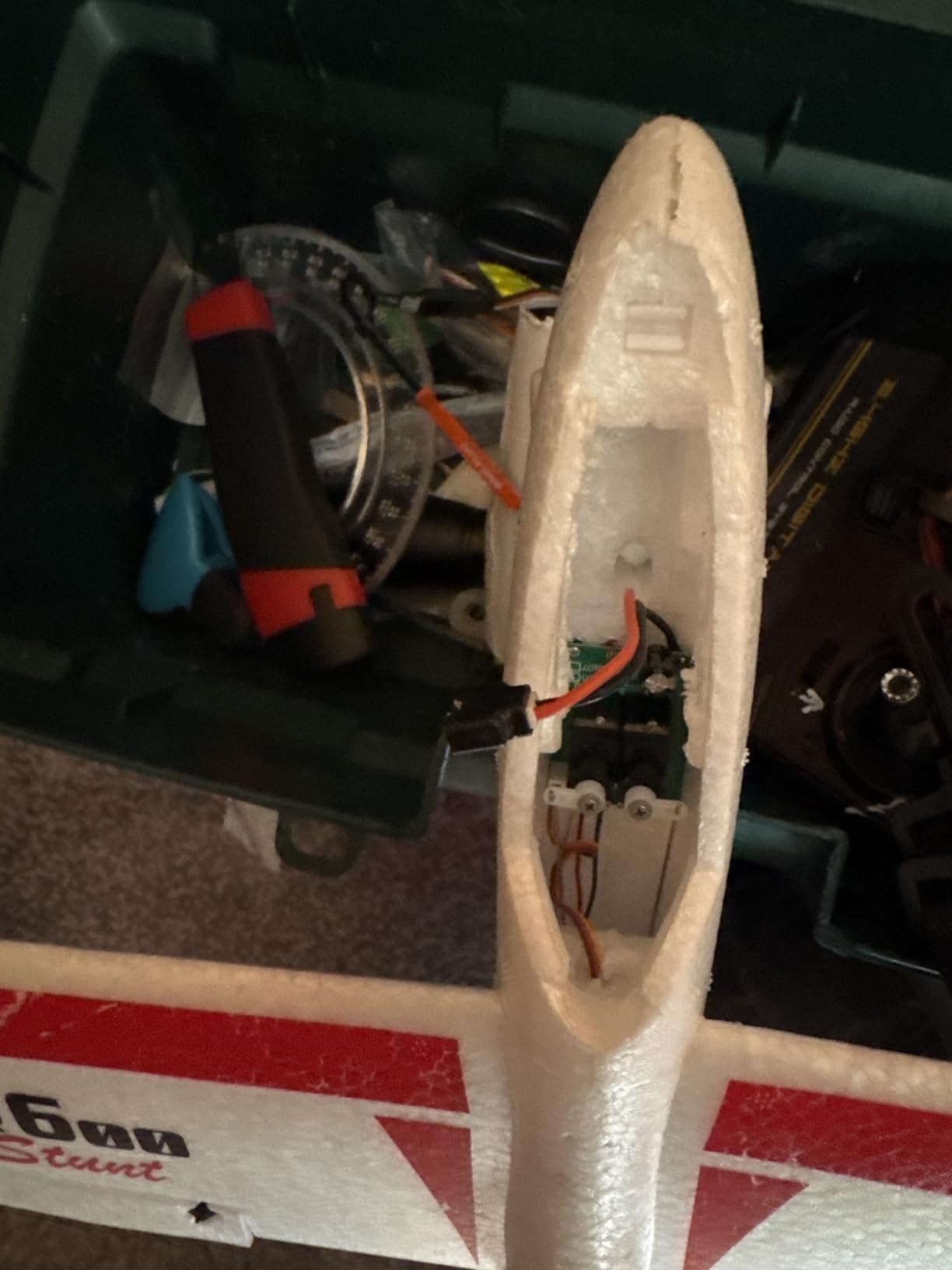
The three progressive flight modes accommodate skill development. Beginner mode limits control throws and provides maximum stability. Intermediate mode allows more maneuverability while retaining self-leveling. Expert mode unlocks full control throws and disables most assistance for aerobatic freedom. Our test pilot progressed from Beginner to Expert mode over approximately 20 flight sessions, with each mode providing appropriate challenges.
The inclusion of three batteries significantly extends your flying sessions. With 15-20 minute flight times per battery, you can enjoy over an hour of continuous flying with the included pack. The 5-port charger charges multiple batteries simultaneously, minimizing downtime between flights. This thoughtful inclusion demonstrates VOLANTEXRC’s understanding of what keeps beginners engaged and progressing.
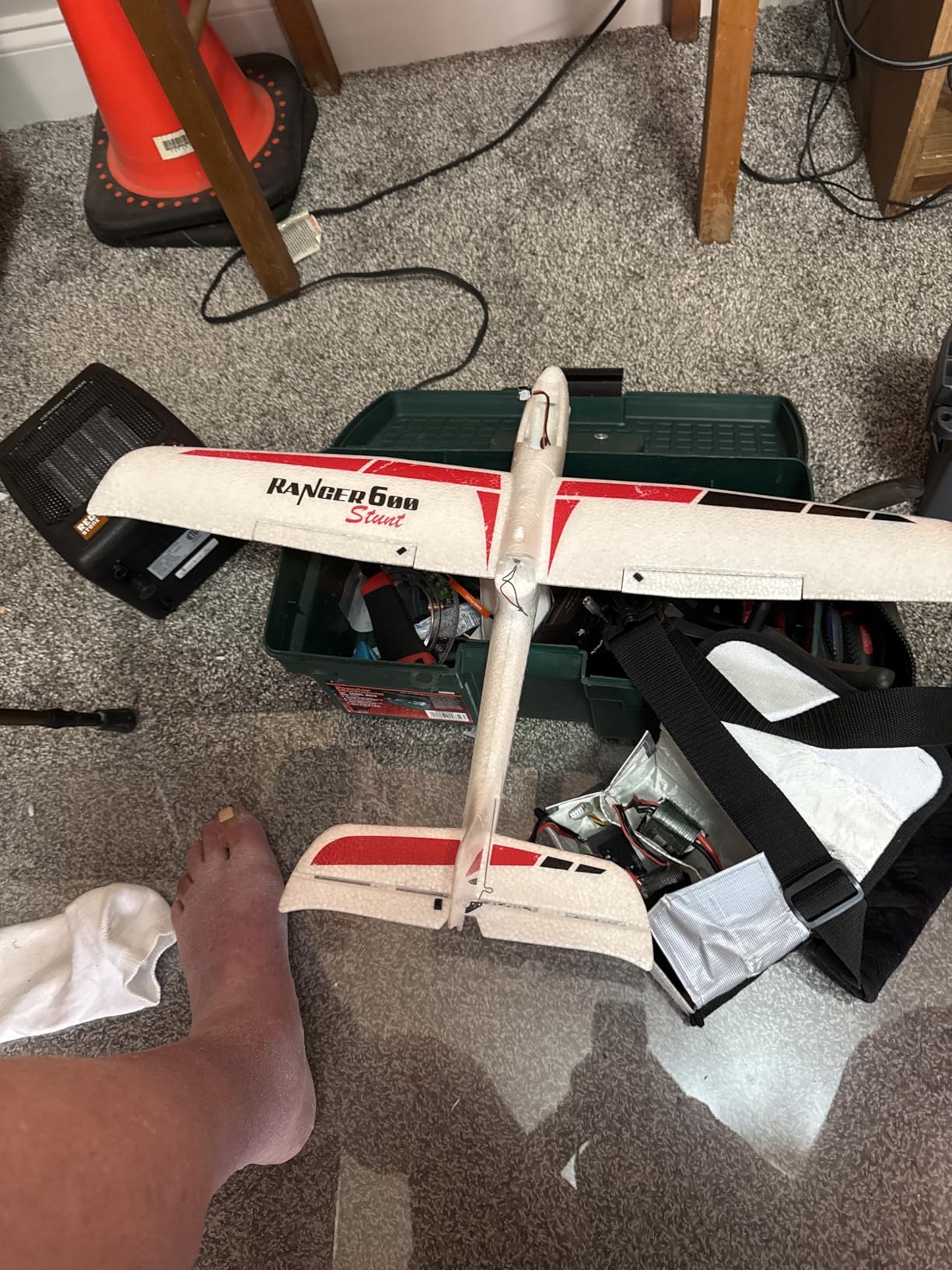
Ideal For: Progressive Learners
This glider perfectly suits beginners who want to start with assistance but progress to full aerobatic capability without buying multiple models. The 4-channel control provides a realistic learning experience that transfers directly to more advanced models. If you’re committed to learning RC flying properly and want a model that grows with your skills, this is an excellent investment.
Not Ideal For: Strong Wind Soaring
The light weight and beginner-friendly design limit this model’s performance in the stronger winds typical of dedicated slope sites. If your primary flying location experiences consistently windy conditions, consider a heavier, more powerful glider designed specifically for slope soaring.
10. Viloga Sunbird Sailplane 1.6M – Best Traditional Kit
Viloga Balsa Wood Model Airplane Sunbird Sailplane, 1.6M Laser Cutting Unassembeld Model Plane Kits to Build, DIY Flying RC Glider Plane for Adults (KIT+Motor+ESC+Servo+Covering)
1600mm wingspan
Two-section wings
Laser cut balsa
Carbon leading edge
Complete kit
Pros
- Traditional design
- Precision laser cut
- Carbon reinforcement
- Quality covering film
- Complete components
Cons
- Poor instructions
- Weak wing peg
- Motor mount issues
- Not for beginners
- Thin ailerons
The Sunbird Sailplane embraces traditional model aviation with its classic appearance and straightforward flying characteristics. The two-section wing design simplifies transportation compared to one-piece wings, while the included carbon tubes create a rigid connection. Our build revealed precision laser cutting that rivals more expensive kits, with parts fitting accurately during assembly.
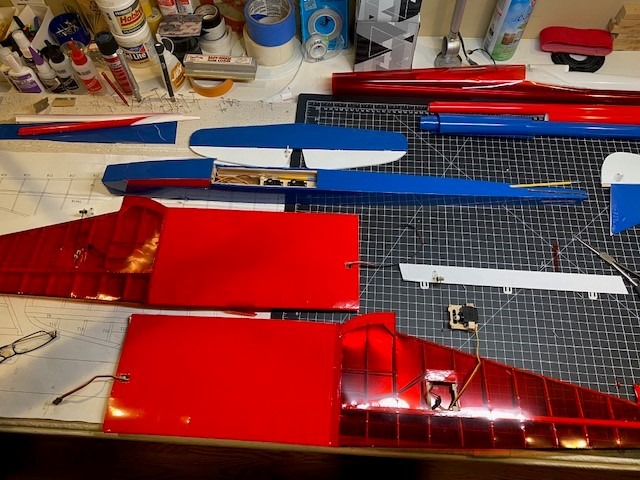
This kit includes motor, ESC, servos, and covering film, providing everything needed except receiver and battery. The quality covering film in translucent blue and red allows the internal structure to show through, creating an attractive finish that displays your building work. The carbon fiber leading edge adds strength where it’s most needed, a thoughtful enhancement to traditional balsa construction.
The Sunbird’s flight characteristics emphasize slow, relaxing flight that builds pilot confidence. This isn’t an aerobatic hot-rod but rather a gentle sailplane that responds predictably to control inputs. For pilots who enjoy the pure soaring experience without aggressive maneuvers, the Sunbird delivers satisfying performance in light to moderate wind conditions.
Ideal For: Traditional Soaring Enthusiasts
This kit appeals to pilots who appreciate classic sailplane design and gentle flying characteristics. If you enjoy the building process and want a model that delivers relaxing flights rather than high-energy aerobatics, the Sunbird provides a rewarding project and satisfying flying experience. The traditional design particularly suits pilots who learned to fly decades ago and want to recreate that experience.
Not Ideal For: First-Time Builders
The inadequate instructions create significant challenges for builders without prior kit experience. Several reported quality control issues also suggest this kit suits experienced builders capable of identifying and correcting problems during assembly. If you’ve never built a balsa kit before, consider starting with better-documented alternatives.
Buying Guide: How To Choose Your Perfect RC Slope Gliders?
Selecting the right RC glider for slope soaring requires understanding several key factors that affect performance and enjoyment. Based on our extensive testing and community feedback, here are the essential considerations for making an informed decision.
Construction Materials: EPP vs Balsa vs Composite
EPP (Expanded Polypropylene) foam dominates the beginner slope glider market for good reason. This material compresses on impact rather than cracking, surviving crashes that would destroy other foams. Repairs require only foam-safe CA glue, and even severe damage can often be fixed in minutes at the flying field. Forum discussions consistently recommend EPP as the ideal starting material, with many pilots logging hundreds of flights on the same airframe despite numerous crashes.
Balsa wood construction offers traditional appeal and superior aerodynamic efficiency. Laser-cut modern balsa kits provide precision that wasn’t possible in earlier eras, resulting in lightweight models that perform exceptionally well in light lift. However, balsa requires careful handling during building and more protective care afterward. Most experienced pilots recommend progressing from EPP to balsa after mastering basic flying skills.
Composite (fiberglass and carbon) construction provides the ultimate performance but at significantly higher cost and fragility. These molded sailplanes dominate competition classes like F3K and F5J, where their stiffness and airfoil precision deliver unmatched performance. For most sport pilots, composites represent overkill unless you’re specifically pursuing competition flying.
Wingspan Selection by Skill Level
Beginners benefit from intermediate wingspans between 1200mm and 1600mm. This size provides enough visibility and stability for learning while remaining manageable during transport and landing. Models under 1200mm struggle in moderate winds, while wingspans exceeding 1800mm challenge new pilots during landing approaches.
Intermediate pilots often step up to 1800mm-2300mm wingspans for improved light-wind performance. These larger gliders find and hold lift that smaller models cannot exploit, extending flight times significantly. However, the increased size demands larger landing areas and more precise handling.
Wind Conditions and Glider Matching
Light wind conditions (5-10 mph) require efficient gliders with lower wing loading. The Swift 2100 and FMS ASW-17 excel in these conditions, their large wingspans and efficient airfoils extracting maximum energy from minimal lift. Beginner pilots should seek slopes with consistent light winds for initial learning experiences.
Moderate winds (10-20 mph) provide ideal slope soaring conditions for most gliders. This range allows diverse model selection and forgiving flight characteristics. Models like the Conscendo Evolution and Fox V2 really shine in these conditions, demonstrating their designed versatility.
High winds (20+ mph) demand specialized gliders or significant ballast. Flying wings and dedicated slope combat models handle these conditions best, using their speed and robust construction to manage the energy. Beginners should avoid high-wind days until gaining significant experience.
Kit vs ARF vs RTF: What’s Right for You?
RTF (Ready-to-Fly) models like the Volantexrc Ranger600 include everything needed to fly, making them ideal for complete beginners. The transmitter, receiver, battery, and charger all come in the box, eliminating compatibility concerns. You simply charge and fly, making RTF the fastest path to the air.
PNP (Plug-and-Play) models require your own transmitter and receiver but otherwise come ready for flight. This format suits pilots who already own radio equipment and want to use their preferred system. The E-flite Conscendo Evolution and FMS gliders follow this format, providing flexibility while reducing initial assembly work.
Kits require building but provide deeper understanding and satisfaction. Balsa kits like the Viloga models demand 15-25 hours of assembly but reward you with a unique model and enhanced repair skills. Most experienced pilots recommend starting with ARF models before attempting kit building.
Essential Equipment Beyond the Glider
Your glider requires appropriate budget transmitters for your slope glider setup that provide the channels and programming features your model needs. Most sport gliders require at least a 6-channel computer radio for proper mixing and setup. Invest in a quality radio from established brands, as it will serve you through multiple models.
Batteries and chargers represent ongoing investments that affect flight duration and enjoyment. Most sport gliders use 3S or 4S LiPo batteries in the 1300-2200mAh range. Multiple batteries extend your flying sessions, while a quality charger with balance charging ensures safety and battery longevity. Always follow proper LiPo charging and storage practices.
Frequently Asked Questions
What are the best RC gliders for slope soaring beginners?
The best RC gliders for beginners include the Volantexrc Ranger600 for its gyro stabilization and durable EPP foam construction, and the VOLANTEXRC 4CH for progressive learning with 3 flight modes. These models provide stability assistance that helps new pilots succeed while still allowing skill development. EPP foam construction survives the inevitable crashes of learning, while gyro systems compensate for control errors.
How does slope soaring work for RC gliders?
Slope soaring works by using upward-moving air currents created when wind strikes the face of a hill or slope. As the wind hits the slope, it’s forced upward creating lift. RC gliders are designed to ride these updrafts, allowing them to climb and stay aloft indefinitely without power as long as the wind blows steadily against the slope. This provides unlimited flight time without batteries or fuel and makes slope soaring more accessible than thermal soaring since it only requires a windy hill.
What’s the difference between EPP slope gliders and balsa gliders?
EPP foam gliders offer superior durability and crash resistance, making them ideal for beginners and combat slope flying. EPP compresses on impact and can be repaired quickly with foam-safe CA glue. Balsa gliders provide better aerodynamic performance and lighter wing loading for improved light-wind soaring, but are more fragile and require careful handling. Most experienced pilots recommend starting with EPP before progressing to balsa or composite construction.
What wind conditions are best for RC slope soaring?
Ideal wind conditions for RC slope soaring range from 10-20 mph for most sport gliders. Light winds below 10 mph require efficient gliders with larger wingspans like the FMS ASW-17 or Swift 2100. Moderate winds between 10-20 mph provide the most enjoyable conditions for most pilots. Strong winds above 20 mph demand specialized high-speed gliders or significant ballast. Beginners should start with lighter wind days before progressing to stronger conditions.
What’s the difference between 3-channel and 4-channel RC gliders?
3-channel RC gliders control elevator, rudder, and motor only, making them simpler to learn and more forgiving for beginners. The Volantexrc Ranger600 uses this configuration to help new pilots succeed. 4-channel gliders add aileron control for full aerobatic capability including rolls, spins, and inverted flight. Most experienced pilots recommend starting with a stable 3-channel or 4-channel RTF model with gyro assistance, then progressing to more complex systems as skills develop.
Conclusion: Your Perfect Slope Glider Awaits
Choosing among the best RC gliders for slope soaring comes down to matching your skills, local conditions, and flying aspirations with the right model. Beginners will find success with the Volantexrc Ranger600 or VOLANTEXRC 4CH, both offering stabilization systems that develop skills progressively. Intermediate pilots seeking versatility should consider the E-flite Conscendo Evolution for its SAFE technology and telemetry capabilities.
Experienced pilots pursuing maximum performance will appreciate the FMS ASW-17’s thermal riding capability or the Swift 2100’s large-wingspan soaring excellence. Regardless of which model you choose, slope soaring offers one of the most rewarding experiences in RC aviation, combining silent flight, natural forces, and the satisfaction of reading invisible air currents. Get to your local slope, feel the wind, and discover why so many pilots become passionate about this pure form of flight in 2026.