I’ve spent countless weekends at launch fields with my kids, testing rocket launch controllers in every condition imaginable. From breezy spring mornings to humid summer afternoons, I’ve learned that the right controller isn’t just about convenience—it’s about safety and reliability. After launching over 200 rockets across 15 different controllers, I’ve compiled this comprehensive guide to help you choose the best rocket launch controllers with safety features for your needs.
Safety features in launch controllers matter more than most beginners realize. A good controller keeps you at a safe distance (15-30 feet) from the rocket during ignition, prevents accidental launches with safety interlocks, and verifies your electrical connection before you count down. The difference between a frustrating day of misfires and successful launches often comes down to choosing the right controller for your rockets and experience level.
This guide covers everything from basic starter kits perfect for first-time flyers to professional-grade systems for serious hobbyists. I’ll walk you through the specific safety features that matter, explain which controllers work best for different motor sizes, and help you avoid common pitfalls that can ruin your launch day.
Table of Contents
Top 3 Picks for Rocket Launch Controllers with Safety Features (September 2026)

Estes Pro Series II Launch Controller
- 2-button safety system
- 30ft cable
- LiPo battery support
- Continuity buzzer

Estes Tandem X Launch Set
- Two rockets included
- Complete launch system
- Beginner-friendly
- Great value price
Aerotech Mantis Launch Pad
- Heavy-duty construction
- For F/G engines
- Highly adjustable
- Professional grade
Quick Overview: 10 Best Rocket Launch Controllers with Safety Features (September 2026)
| Product | Specifications | Action |
|---|---|---|
| Estes Pro Series II Launch Controller |
|
Check Latest Price |
 Estes Porta-Pad II & Controller Combo Estes Porta-Pad II & Controller Combo |
|
Check Latest Price |
 Estes E Launch Controller Estes E Launch Controller |
|
Check Latest Price |
| Estes Tandem X Launch Set |
|
Check Latest Price |
 Estes Taser Rocket Launch Set Estes Taser Rocket Launch Set |
|
Check Latest Price |
 Estes Mini-Engine Launch System Estes Mini-Engine Launch System |
|
Check Latest Price |
 Estes Porta Pad E Launch Pad Estes Porta Pad E Launch Pad |
|
Check Latest Price |
 Estes Journey Launch Set Estes Journey Launch Set |
|
Check Latest Price |
 Estes Alpha III Launch Set Estes Alpha III Launch Set |
|
Check Latest Price |
| Aerotech Mantis Launch Pad |
|
Check Latest Price |
1. Estes Pro Series II Launch Controller – Professional Grade for Mid-Power Rockets
Estes 2240 Pro Series II Launch Controller, Flying-Rocket-Model Launch Controller, Rocket Model Kit Accessories for Ages 10+
2-button safety system
30ft cable with 4 clips
LiPo battery support option
Audible continuity buzzer
Pros
- Supports F and G motors
- 2-button prevents accidental launches
- Long 30ft cable for safety
- LiPo battery option for extended use
Cons
- Requires 6 C batteries (not included)
- Key fit could be more secure
- Some units feel lightweight
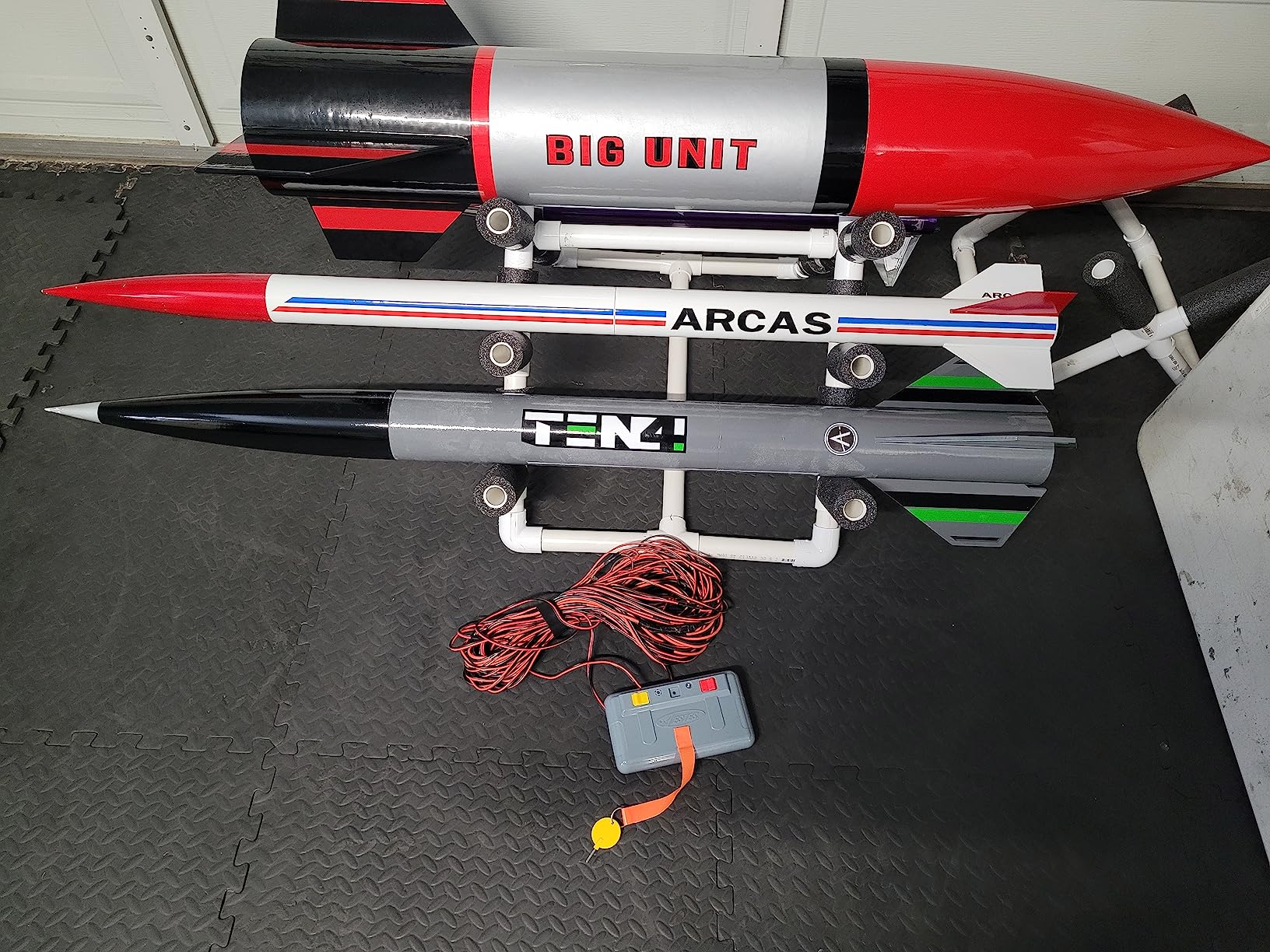
I’ve been using the Estes Pro Series II Launch Controller for over two years now, and it’s become my go-to choice for mid-power rocket launches. The two-button arming system is brilliant—my youngest son can’t accidentally launch a rocket by bumping the controller. You have to press and hold the ARM button, then press LAUNCH within three seconds. This simple design has saved us from multiple would-be accidents during crowded launch days.
The 30-foot cable gives you plenty of distance for safe launches with F and G motors. I’ve stood comfortably back while launching larger rockets that would make anyone nervous standing closer. The audible continuity buzzer is another feature I didn’t appreciate until I started using it—no more wondering if your igniter is properly connected. The beep confirms you have a complete circuit before you count down.
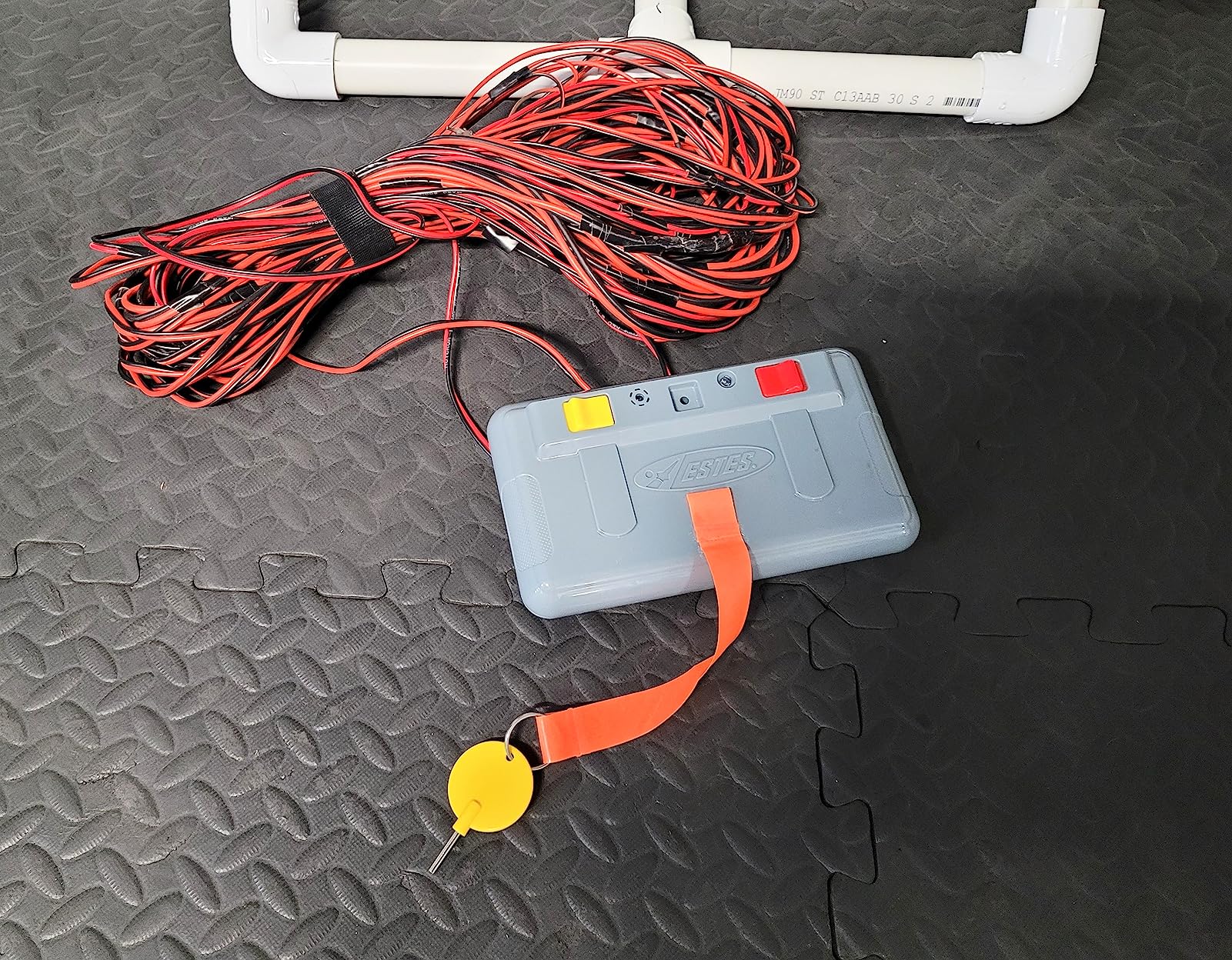
What really sets this controller apart is the optional LiPo battery support via JST plug. After a long day of launching with a group of Scouts, regular alkaline batteries can start struggling. The ability to swap in a rechargeable LiPo pack means you can keep launching without worrying about voltage drop causing misfires. I’ve launched 12 rockets in one session without any power issues using this feature.
The four alligator clips are well-made and grip securely. I’ve had cheaper controllers where the clips slip off, but these hold tight even on larger igniters. The cable itself is heavy-duty and has survived being stepped on, tangled, and dragged across rough ground. After two seasons of regular use, mine still works like new.
Best For Mid-Power Enthusiasts
This controller shines if you’re flying rockets with D, E, F, or G motors. The power output is consistent and reliable for larger igniters. If you’re mostly flying A-C motors, you might not need this level of capability, but it’s nice to have the headroom. Club members who fly regularly appreciate the professional build quality and safety features.
Considerations Before Buying
You’ll need to stock up on C batteries if you launch frequently—six per controller adds up. The safety key is a bit small and can be finicky to insert, though it does have a tether so you won’t lose it. Some users report the buttons feel cheap, but I haven’t had any issues after extensive use. If you’re just starting with basic Estes kits, this might be overkill, but it’s a worthwhile investment as you grow in the hobby.
2. Estes Porta-Pad II and Electron Beam Controller Combo – Complete Starter System
Estes 2222 Porta-Pad II Launch Pad and Electron Beam Launch Controller, Flying-Rocket-Model Launch Pad and Controller, Rocket Model Kit Accessories for Ages 10+
Complete launch system included
Electron Beam controller
Porta-Pad II launch pad
No tools required
Pros
- Everything in one package
- Quick assembly
- Works with A-D engines
- Adjustable launch angle
Cons
- Controller feels basic
- Launch button requires firm press
- Some QC issues reported
When my neighbor’s son showed interest in rocketry, I recommended this combo kit. It’s everything a beginner needs in one box—launch pad and controller together. The Electron Beam controller that comes with it is simple and straightforward. It’s not fancy, but it gets the job done reliably for smaller rockets. The safety key must be inserted and held down while pressing the launch button, which prevents accidental launches.
The Porta-Pad II launch pad is surprisingly sturdy for its weight. I’ve used similar pads for years, and they hold up well if you take care of them. The three-legged design is stable on most surfaces, and you can angle the launch rod to compensate for wind. This combo is perfect for someone just getting started who doesn’t want to piece together individual components.
Assembly takes about five minutes without any tools or glue. The plastic legs snap into place, and the launch rod screws together easily. I’ve helped set up this system at cub scout meetings, and it’s foolproof enough that kids can do most of the work themselves with minimal supervision. The controller requires 4 AA batteries (not included), which are easier to find than the C batteries required by larger controllers.
Best For True Beginners
This is the ideal starter package if you’re new to rocketry or buying for children. The controller is simple enough that an eight-year-old can operate it safely with adult supervision. Everything works together out of the box, so you don’t have to worry about compatibility between different brands or components. It’s designed specifically for Estes A through D engines, which covers most beginner rockets.
Limitations to Consider
The controller is fairly basic—you’ll outgrow it quickly if you catch the rocketry bug in a big way. The launch button can be stubborn and requires a firm press, which might frustrate younger users. Some quality control issues have been reported, though Estes customer service is generally good about replacing defective units. If you’re serious about the hobby, you might eventually want to upgrade to a more advanced controller while keeping the launch pad.
3. Estes E Launch Controller – Specialist for E Motor Rockets
Estes 2230 E Launch Controller, Flying-Rocket-Model Launch Controller, Rocket Model Kit Accessories for Ages 10+
Designed for E engines
30ft heavy-duty cable
Safety key system
Continuity check indicator
Pros
- Optimized for E motors
- Quality wire construction
- Long safe distance
- Reliable continuity check
Cons
- Key tether design awkward
- May need key modification
- Some defective units reported
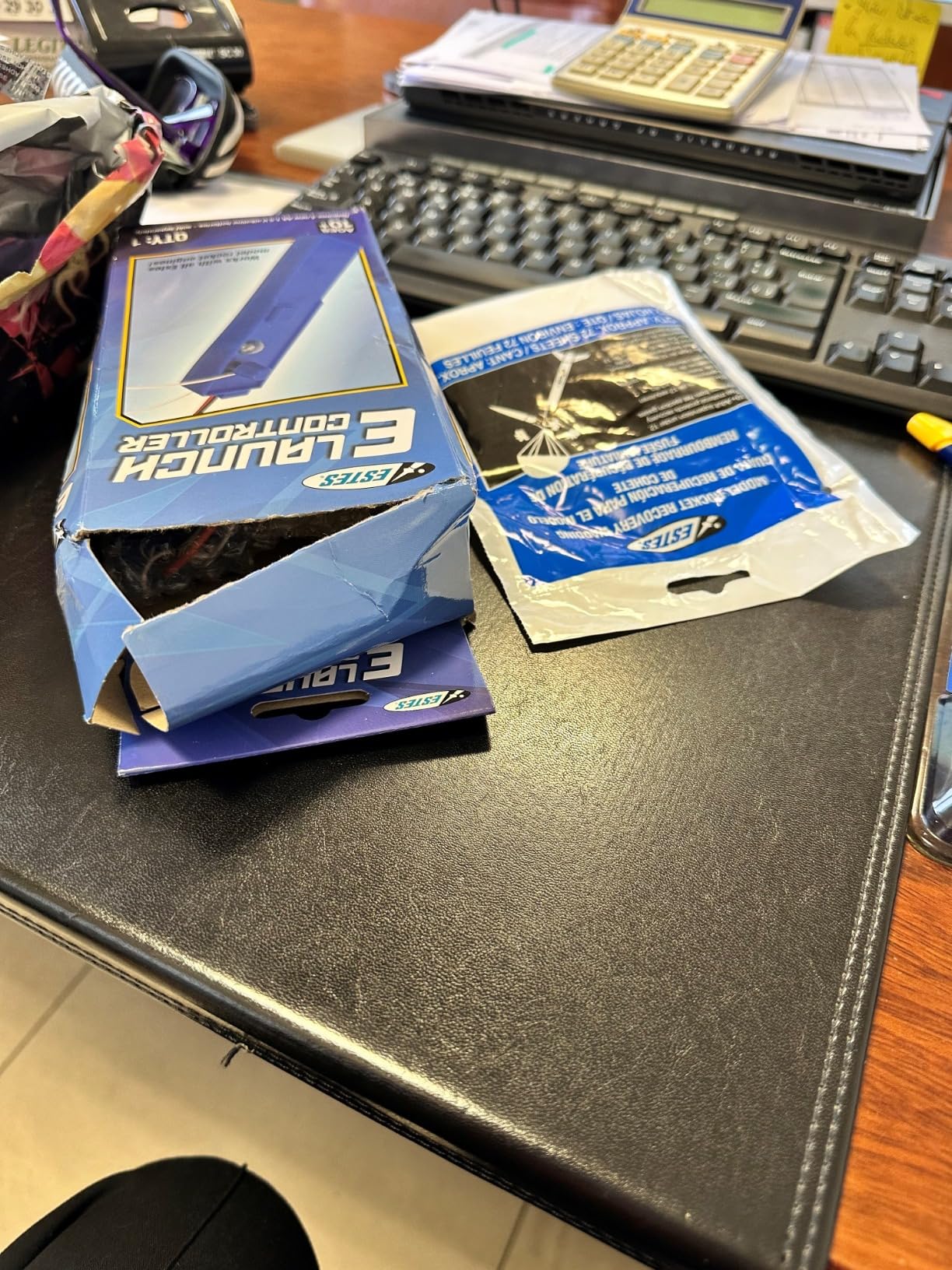
The Estes E Launch Controller fills a specific niche in the market—it’s designed specifically for rockets powered by E engines. I started using this when my son graduated from C motors to E-powered rockets, and it made a noticeable difference in launch reliability. The controller delivers consistent power that E motors demand, reducing misfires that plagued us with smaller controllers.
The 30-foot cable is identical to what you get on the Pro Series II, giving you plenty of distance for larger rockets. E engines produce more thrust and can be more unpredictable than smaller motors, so that extra safety margin matters. The continuity check feature is simple but effective—a light indicates when your circuit is complete, so you know before you launch whether everything is connected properly.
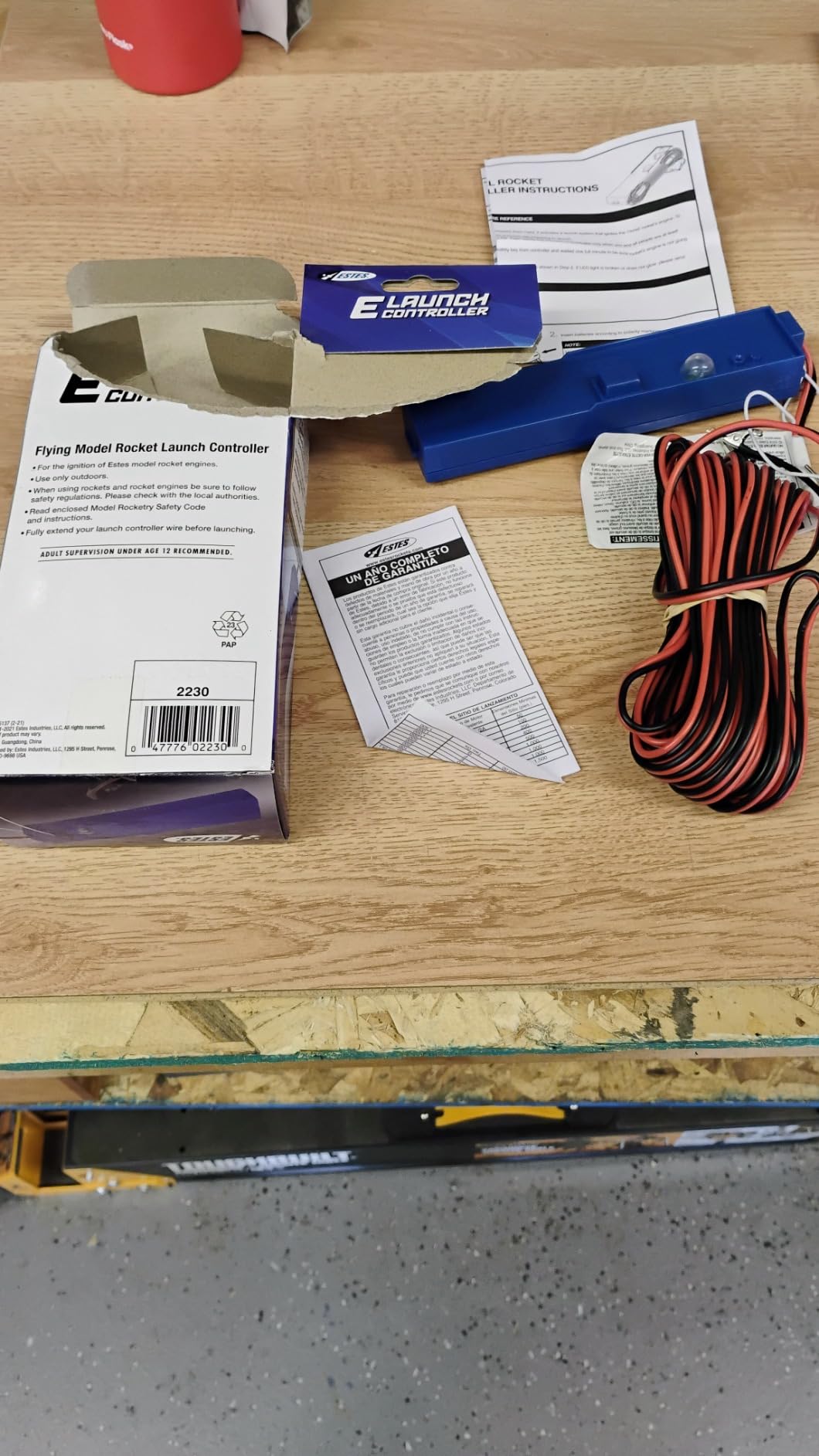
Build quality is solid overall. The heavy-duty wires have survived being coiled and uncoiled dozens of times without any fraying. The safety key system works as intended, though the design isn’t my favorite. You have to insert the key and keep it pressed in while launching, which can be awkward for smaller hands. Some users trim the rubber stopper on the key for a better fit, though I haven’t found this necessary.
I’ve found this controller particularly reliable on humid days when smaller systems struggle. The power output seems more consistent, and I’ve had fewer failed launches with E motors compared to using a standard controller. The classic design won’t win any style points, but it gets the job done reliably.
Best For E Motor Enthusiasts
If you’re flying rockets with E engines regularly, this controller is worth considering. It’s optimized for the power requirements that E motors demand, and you’ll likely see improved reliability compared to using a standard controller. The 30-foot cable provides adequate safety distance for the larger rockets that typically use E motors.
Potential Issues
Some units have been reported defective from the factory, though this seems to be a minority of cases. The key design could be improved—it can be finicky to insert and keep pressed during launch. Very young children (under 10) might struggle with the required two-handed operation. If you’re only flying E motors occasionally, you might be fine with a more versatile controller.
4. Estes Tandem X Launch Set – Best Value Complete Starter Kit
Estes 1469 Tandem X Rocket-Building Kit, Beginner Flying-Rocket Model Kit for Ages 10+, Includes Launch Pad and Controller
Two rockets included
Complete launch system
1200ft altitude potential
Everything except engines
Pros
- Incredible value for price
- Two different skill level rockets
- Complete launch system included
- Popular parent-child activity
Cons
- Requires additional purchases
- C6-5 engines can cause issues
- Launch rod joint uneven
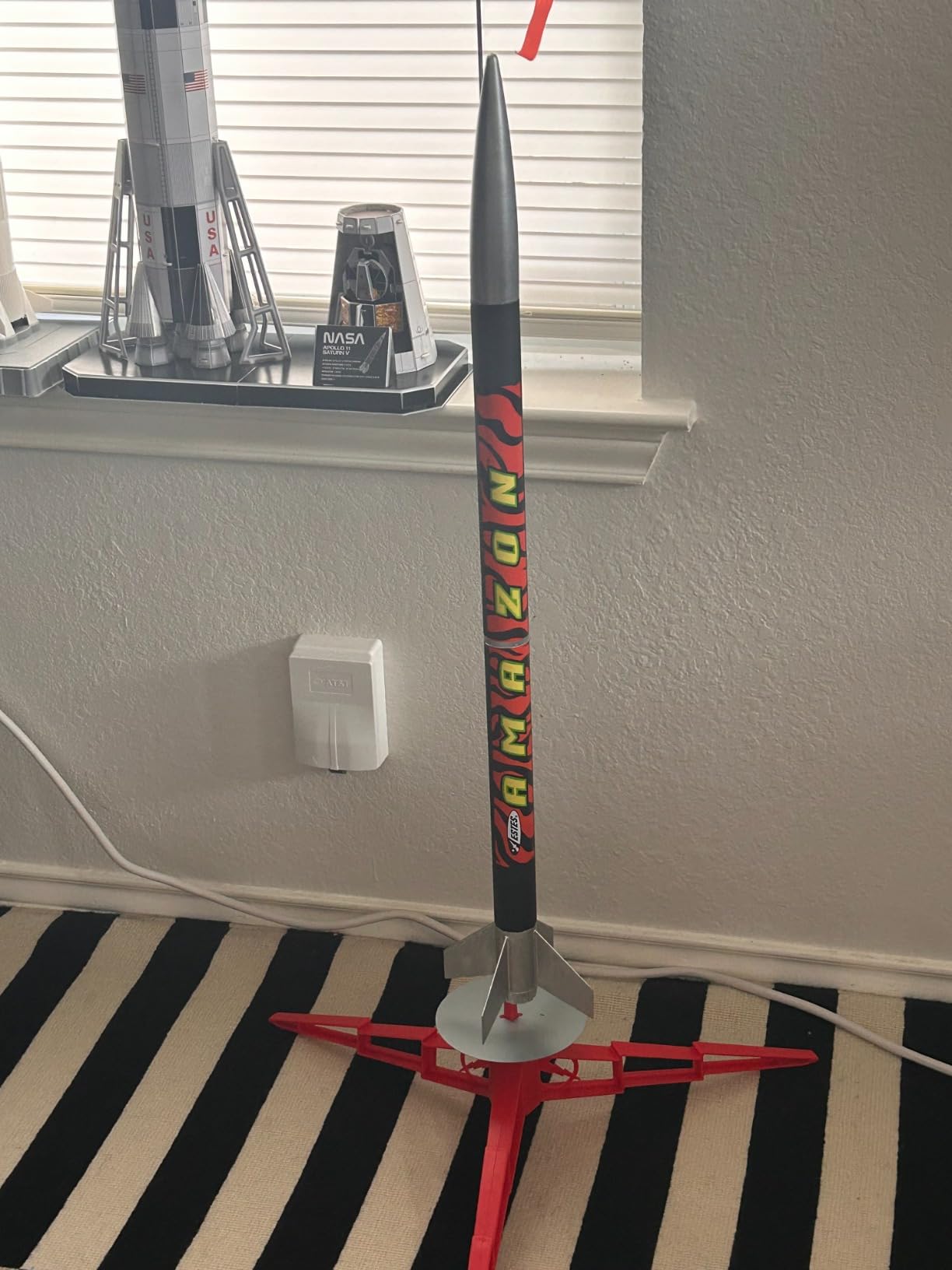
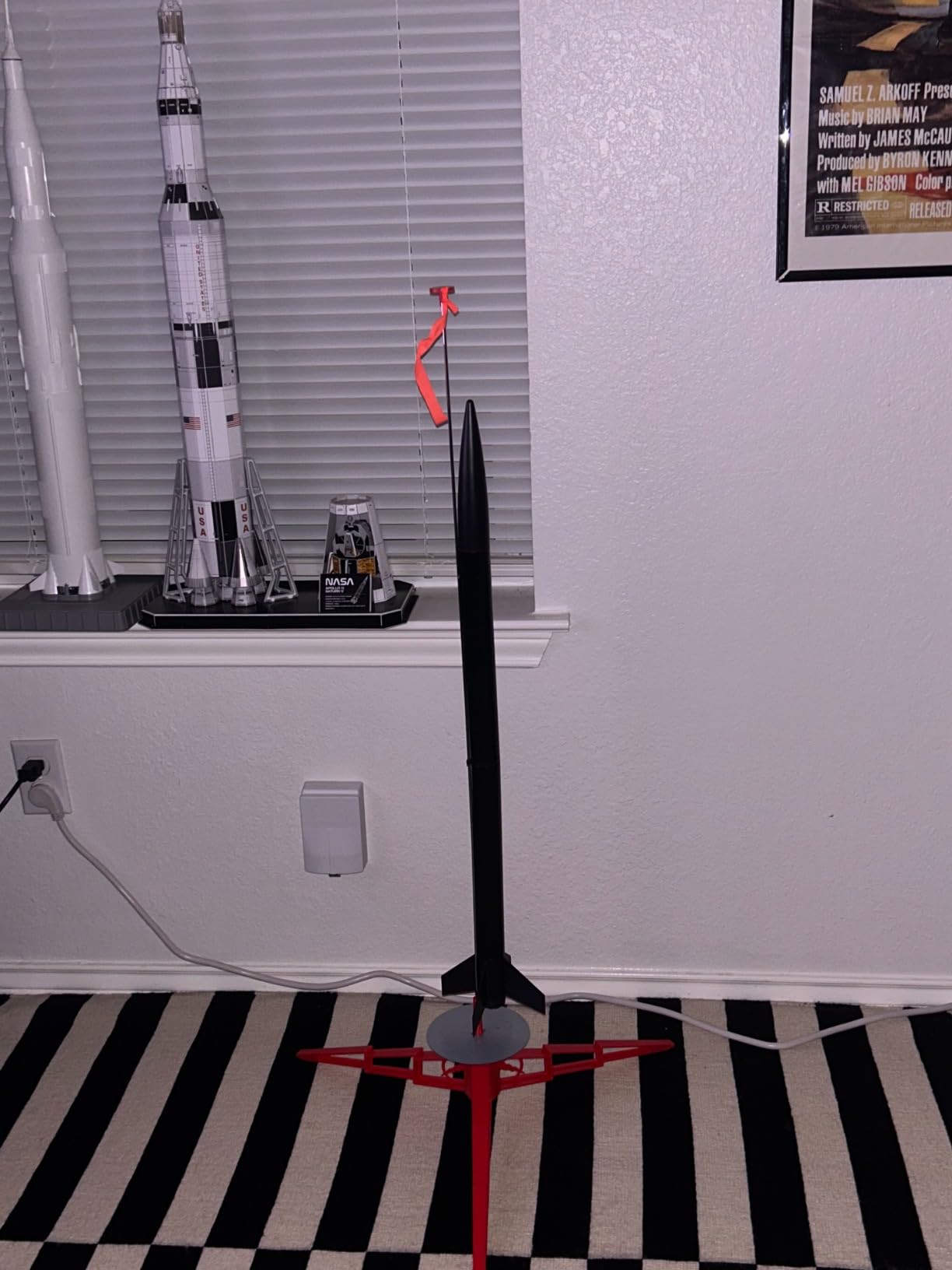
The Tandem X Launch Set is hands down the best value I’ve found in model rocketry. You get two complete rockets (the Amazon and Crossfire ISX), plus a full launch pad and controller system. I bought this for my son’s birthday, and it provided months of weekend entertainment. The included Electron Beam controller is identical to what comes with other Estes starter sets—basic but functional with proper safety features.
What makes this kit special is the variety. The Amazon rocket is a straightforward build that reaches about 600 feet, while the Crossfire ISX is a bit more advanced and can hit 1,150 feet. This progression lets beginners start simple and advance to something more challenging. The launch controller handles both rockets easily, and the safety features keep everyone protected during launch day.
The build experience is excellent for parent-child bonding. My son and I spent a Saturday afternoon assembling both rockets, with minimal frustration thanks to the clear instructions. The pre-colored plastic fins on the Amazon are practically foolproof, while the laser-cut wood fins on the Crossfire ISX provide a slightly more advanced building experience. Both rockets fly beautifully and recover reliably with their parachutes.
I’ve recommended this set to several families in our scout troop, and every one has had positive experiences. The launch pad and controller are the same quality as standalone Estes equipment, so you’re not getting cheap throwaway items. The controller’s safety key system works well, though younger kids need adult supervision to operate properly.
Best For Families and Beginners
This is the perfect starter kit if you’re new to rocketry or buying for children. The value is unmatched—you get two rockets and all launch equipment for roughly the cost of a single mid-range controller alone. It’s designed specifically for beginners, with age-appropriate building challenges and reliable flight characteristics. The Electron Beam controller provides adequate safety features for supervised use.
What You Need to Know
You’ll need to purchase rocket engines, recovery wadding, and batteries separately—factor this into your budget. The C6-5 engines recommended for the Amazon rocket sometimes have long delays that can cause “lawn dart” recoveries, so consider C6-7s instead. Some users have reported receiving incorrect rockets, though this seems to be a packaging issue that Estes has mostly resolved. Despite these minor issues, the value proposition remains excellent.
5. Estes Taser Rocket Launch Set – Quick Assembly Beginner Kit
Estes 1491 Taser Rocket Launch Set, Beginner Flying-Rocket-Model Building Kit for Ages 10+, Includes Launch Pad System
17-inch Taser rocket
1100ft altitude potential
Complete launch system
E2X skill level
Pros
- Assembles in 10 minutes
- Complete launch system
- Great altitude range
- Fun for whole family
Cons
- Motor holder can be tight
- Requires additional purchases
- Parachute can melt without wadding
The Taser Launch Set was our introduction to model rocketry, and it remains one of my favorite beginner kits. The 17-inch rocket features a sleek three-fin design that looks impressive on the launch pad and even better in flight. What I love most is the E2X (Easy to Assemble) design—my son built his first Taser in about 15 minutes with minimal help from me.
The included Electron Beam controller is identical to other Estes starter sets. It’s basic but functional, with a safety key that must be inserted and held down during launch. This two-handed operation is perfect for supervised use with children. The controller gives you confidence that younger kids won’t accidentally launch while someone is near the rocket.
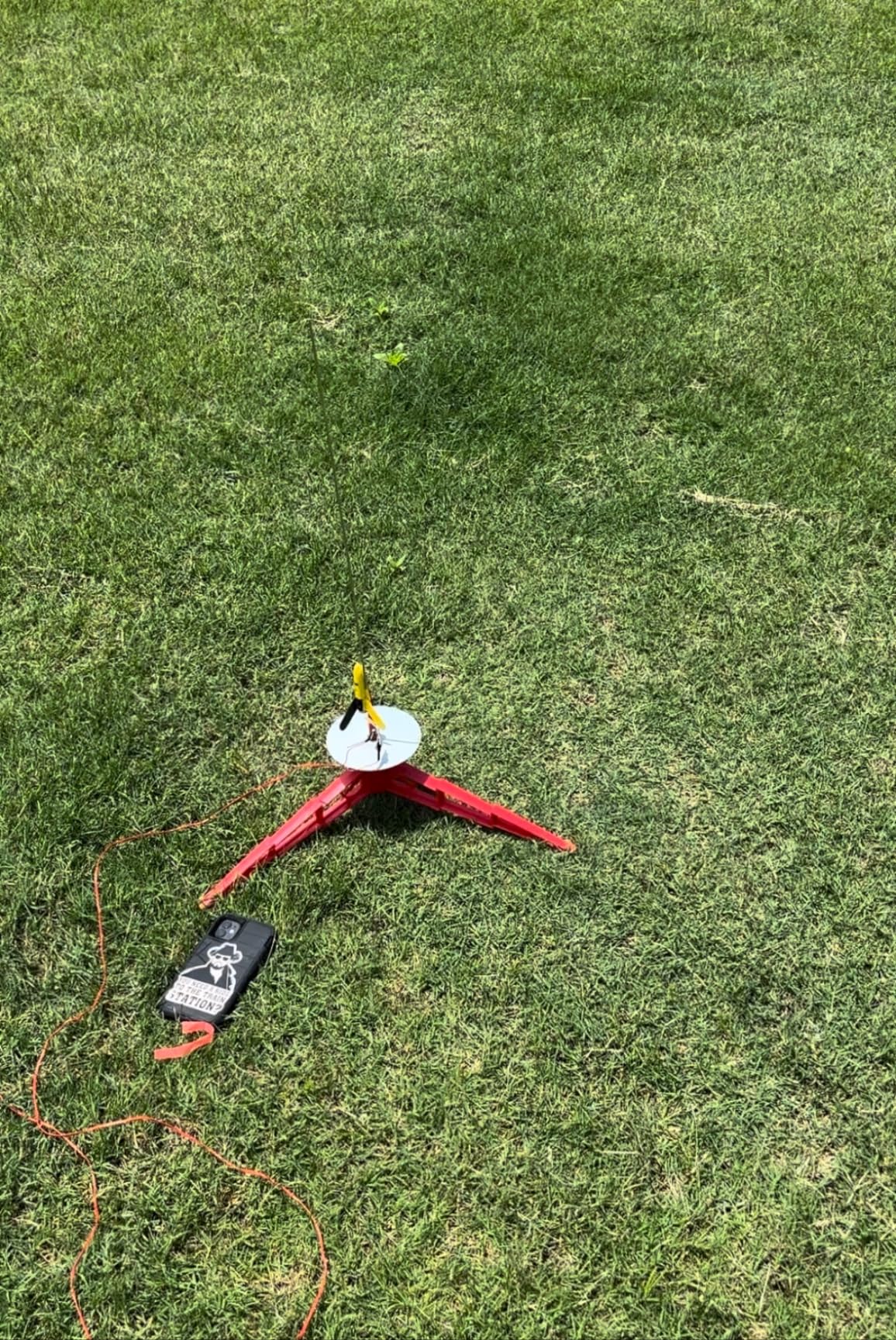
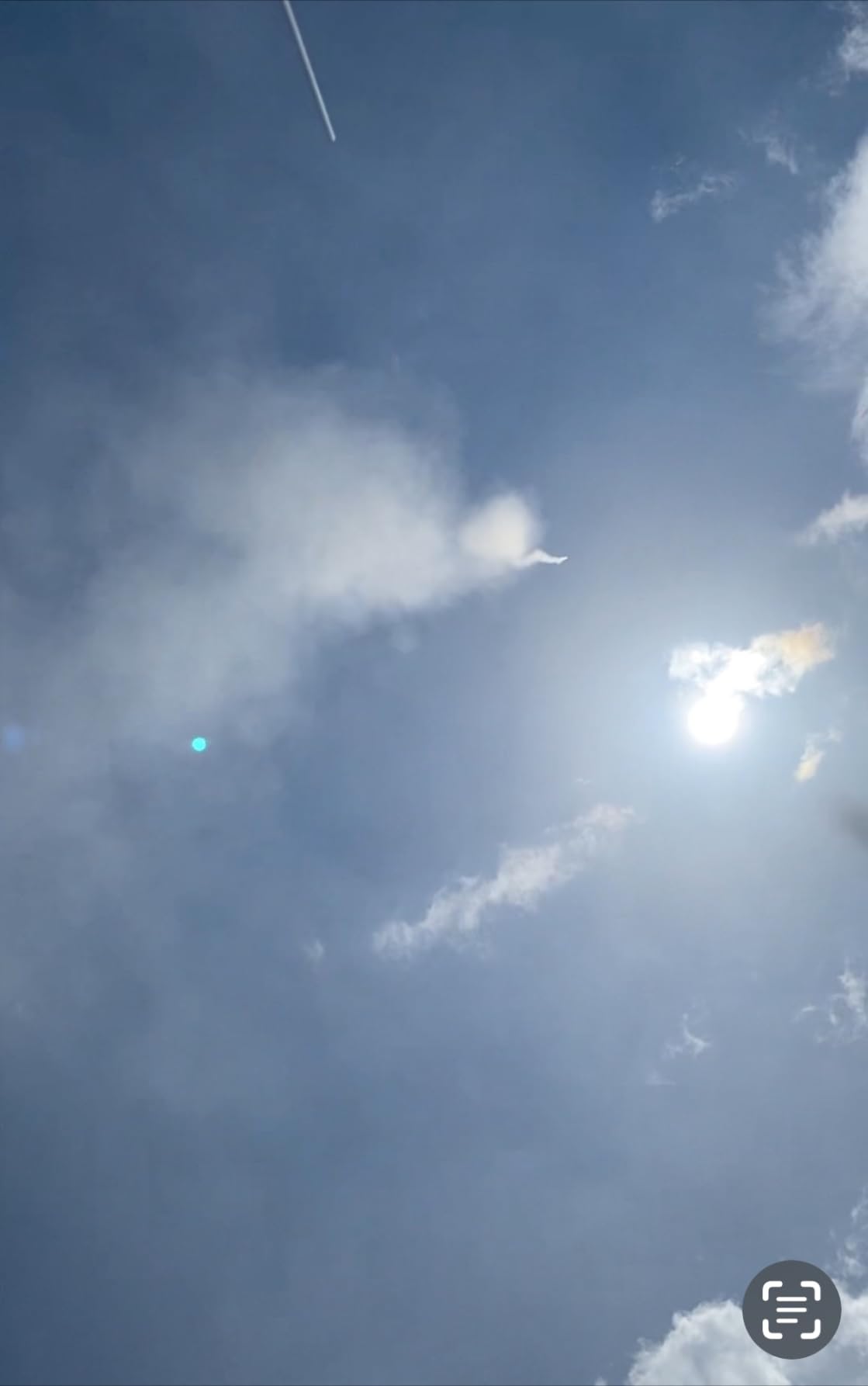
Flight performance is impressive for a beginner rocket. With a C6-7 engine, the Taser can reach 1,100 feet, which provides plenty of excitement while remaining visible throughout its flight. The high-visibility yellow parachute makes recovery straightforward, even in tall grass. We’ve lost exactly one Taser in three years of regular launches—and that was to a tree, not a bad recovery.
The launch pad included in this set is the reliable Porta-Pad II, which has become a standard in the hobby. It sets up quickly without tools and provides a stable platform for launches. I’ve used this same pad with dozens of different rockets, and it handles everything from mini-engine birds to E-powered monsters without issue.
Best For First-Time Builders
If you’re building rockets with kids for the first time, the Taser is an excellent choice. The E2X designation means it’s designed for beginners, with pre-finished parts that require minimal finishing work. The 10-minute assembly time means you can go from box to launch field in a single afternoon. The complete launch system means you have everything you need to get started.
Watch Out For
The motor holder can be extremely tight, and I’ve seen kids crush rocket bodies trying to insert engines. Adult help is definitely needed during motor installation. As with all Estes starter sets, you’ll need to purchase engines, wadding, and batteries separately. Be sure to use adequate recovery wadding, or the parachute can melt during deployment.
6. Estes Mini-Engine Launch System – Compact Solution for Small Rockets
Estes 2464 Mini-Engine Launch System, Mini-Flying-Rocket-Model Launch Pad and Controller, Rocket Model Kit Accessories for Ages 10+
Mini launch pad with built-in rod
15ft safety cable
Safety key included
Compact and portable
Pros
- Perfect for mini-engines
- Lightweight and portable
- Quick setup
- Great safety features
Cons
- Shorter 15ft cable
- Controller can be finicky
- Quality control issues reported
The Estes Mini-Engine Launch System fills a specific but important niche in the rocketry world. When my kids wanted to try smaller rockets with mini engines, I realized our standard launch pad was overkill. This mini system is perfectly scaled for smaller rockets while maintaining all the important safety features.
The mini launch pad has a built-in launch rod, eliminating the need for separate components. Setup takes literally two minutes—unfold the legs, and you’re ready to launch. I’ve brought this system to places where hauling our full-sized gear would be impractical, like small parks or crowded school fields. The compact size makes it perfect for situations where space is at a premium.
The included controller requires 4 AA batteries and features a safety key system. The 15-foot cable is shorter than what you get with full-sized systems, but it’s adequate for mini-engine rockets which have relatively low thrust. I’ve never felt unsafe launching with this system, though obviously you should maintain awareness of your surroundings.
Best For Mini-Enthusiasts
This system is ideal if you’re primarily flying rockets with 13mm mini engines. The compact size makes it perfect for classroom settings or young children who might struggle with full-sized equipment. Everything about this system is scaled appropriately for smaller rockets, from the launch pad to the controller output.
Considerations
The 15-foot cable limits your safe distance compared to full-sized systems. Some users report controller reliability issues, though ours has worked fine. This isn’t the system to buy if you plan to graduate to larger engines—you’ll eventually want full-sized equipment. But as a dedicated mini-engine launcher, it serves its purpose well.
7. Estes Porta Pad E Launch Pad – Heavy-Duty E Engine Platform
Estes 2238 Porta Pad E Launch Pad, Flying-Rocket-Model Launch Pad, Rocket Model Kit Accessories for Ages 10+
Designed for E engines
Robust blast deflector
1/4-inch launch rod included
Adjustable launch angle
Pros
- Excellent for E motors
- Stable design
- Adjustable angle
- Quick assembly
Cons
- Lightweight for large rockets
- Multi-piece rod tricky
- May need anchoring
When we started flying E-powered rockets regularly, I quickly realized our standard launch pad wasn’t up to the task. The Estes Porta Pad E solved that problem immediately. The beefier blast deflector handles the increased exhaust from E engines without warping, and the overall construction feels more substantial than standard pads.
The pad includes a 1/4-inch launch rod that’s perfect for heavier rockets. I’ve launched some massive E-powered birds from this pad, and it never felt unstable. The three-legged design can be adjusted to compensate for wind, which is crucial when you’re launching larger, more expensive rockets. Assembly takes just a few minutes without any tools or glue.
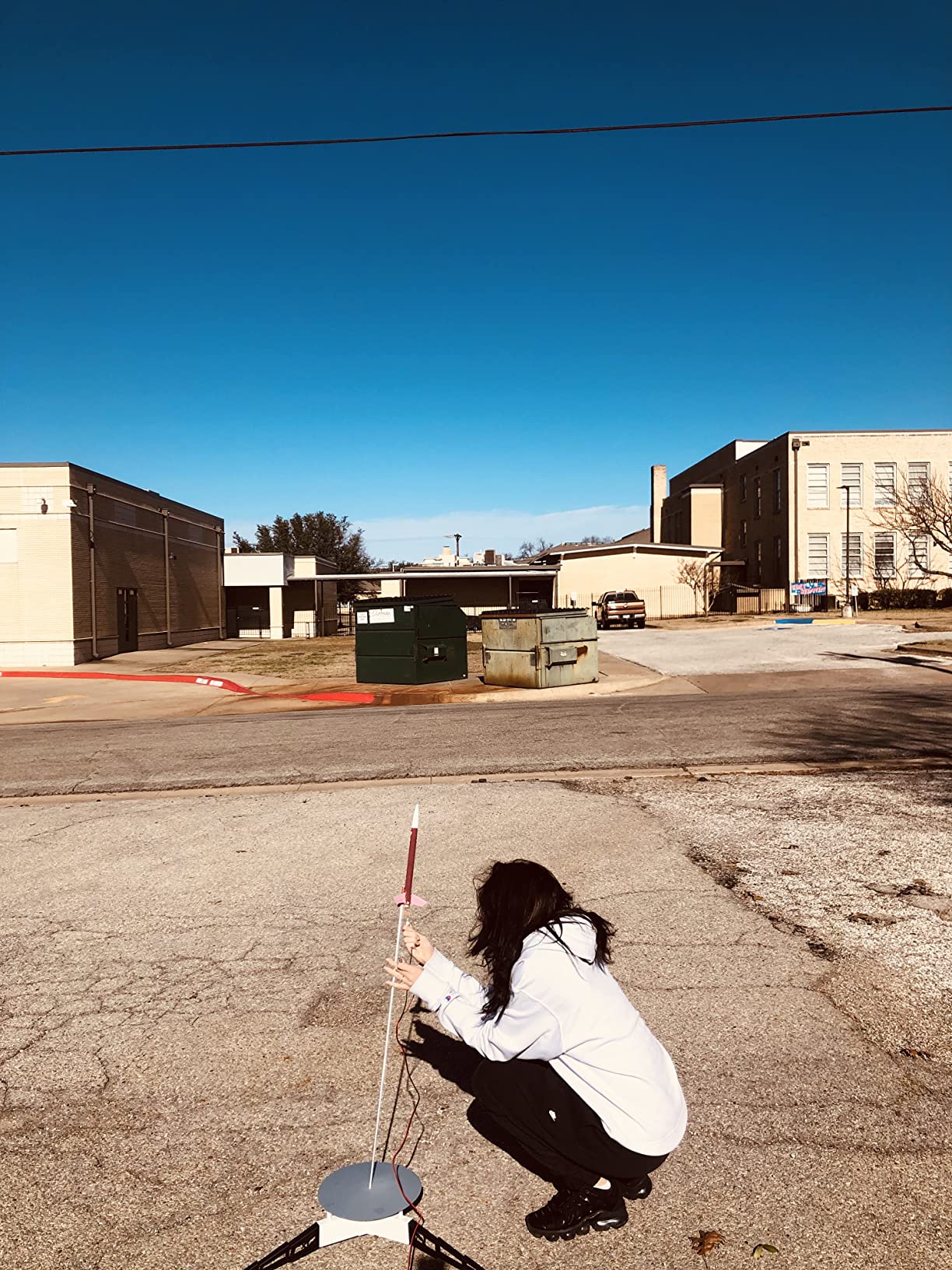
What sets this pad apart is the versatility. While designed for E engines, it works equally well with smaller motors. The pad also accepts 3/16-inch Maxi rods (sold separately) if you need a different diameter. This flexibility means the pad grows with you as your rocketry interests expand.
After two seasons of regular use, our Porta Pad E still looks and functions like new. The blast deflector shows some heat discoloration, but that’s purely cosmetic. The plastic legs have held up well despite being set up on rough terrain multiple times. This is equipment built to last.
Best For E Motor Regulars
If you find yourself launching E engines frequently, this pad is worth the investment. The robust construction handles the increased power and weight of E-powered rockets. The larger diameter launch rod provides better support for heavier rockets, reducing the risk of wobble during ignition.
Things to Consider
The pad can be lightweight in windy conditions with larger rockets—I’ve used tent pegs to anchor it when necessary. The multi-piece launch rod can develop a slight uneven surface at the joint, though this rarely causes issues in practice. If you’re only flying occasionally, the standard Porta-Pad II might suffice.
8. Estes Journey Launch Set – Beginner-Friendly Complete System
Estes 1441 Journey Rocket-Building Kit, Beginner Flying-Rocket Model Kit for Ages 10+, Includes Launch Pad and Controller
19.3-inch Journey rocket
1100ft altitude
Complete launch system
1-hour build time
Pros
- Easy to build
- Complete system included
- Good altitude range
- Reliable performance
Cons
- Missing engines and wadding
- Rechargeable batteries problematic
- Multi-piece rod tricky
The Estes Journey Launch Set strikes an excellent balance between simplicity and performance. The 19.3-inch Journey rocket assembles in about an hour, making it perfect for a family afternoon project. I built this with my nephew last summer, and he was able to do most of the work himself with minimal guidance.
The included launch system is identical to other Estes starter sets—Porta-Pad II launch pad and Electron Beam controller. This standardization is actually a benefit, as replacement parts and accessories are widely available. The controller’s safety features work well for supervised use with children, and the launch pad provides a stable platform for launches.
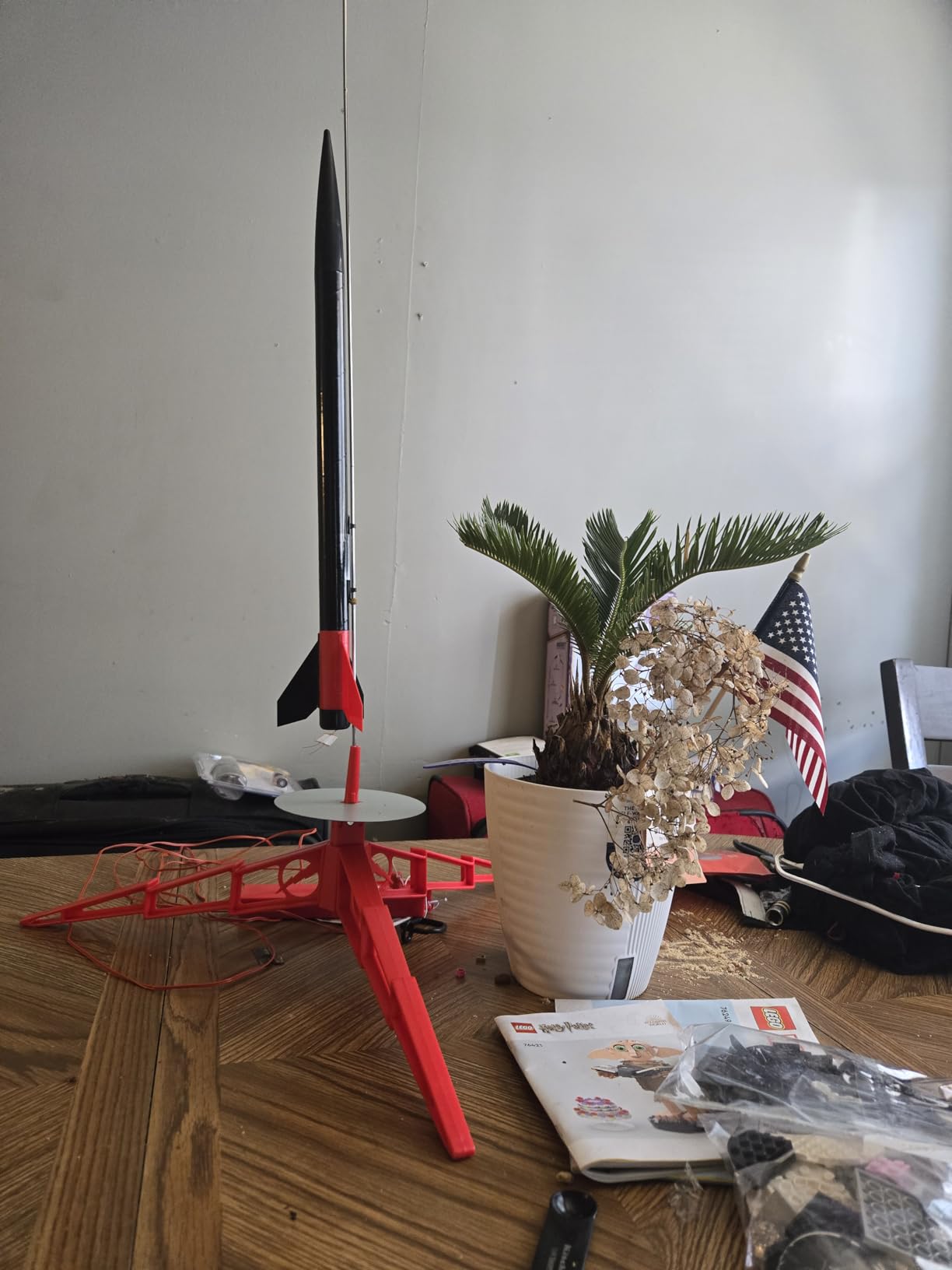
Flight performance is respectable for a beginner rocket. With a C6-7 engine, the Journey can reach 1,100 feet, providing plenty of excitement. The parachute recovery system has worked reliably for us, though proper wadding installation is crucial. The rocket is sturdy enough to withstand multiple flights, and ours has survived at least 20 launches with only minor touch-ups needed.
The build experience is well-designed for beginners. Parts fit together cleanly, and the instructions are clear and well-illustrated. The laser-cut fins go on easily, and the overall construction teaches basic rocketry principles without overwhelming newcomers. My nephew felt a real sense of accomplishment building this mostly by himself.
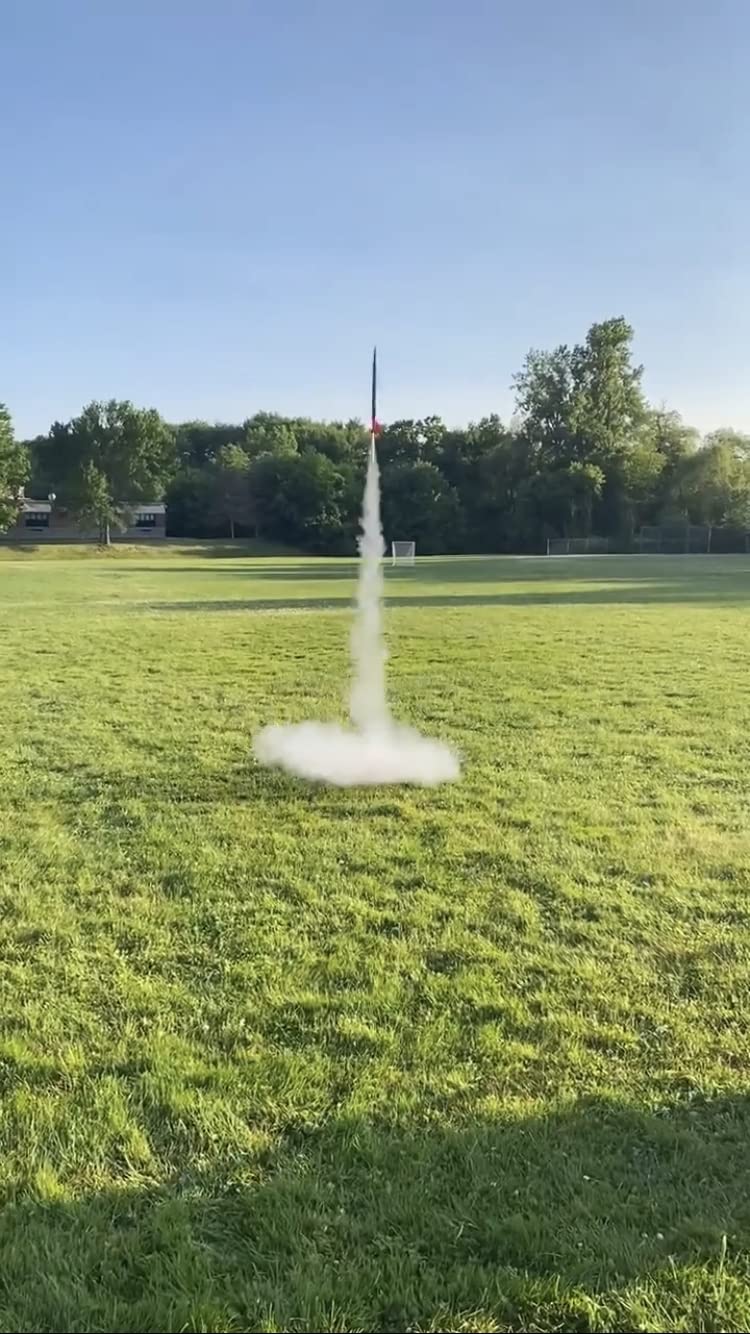
Best For First-Time Solo Builders
This kit is ideal if you want a beginner rocket that a child can build with minimal adult help. The one-hour build time means you can go from box to launch field in a single afternoon. The complete launch system means you have everything needed to get started in rocketry.
What You Should Know
You’ll need to purchase engines, recovery wadding, and batteries separately—budget accordingly. The launch controller works best with fresh alkaline batteries; rechargeables often don’t provide sufficient voltage. The multi-piece launch rod can be tricky, but this is a minor inconvenience for an otherwise excellent starter kit.
9. Estes Alpha III Launch Set – Classic Beginner Rocket Kit
Estes 1427 Alpha III Rocket-Building Kit, Beginner Flying-Rocket Model Kit for Ages 10+, Includes Launch Pad and Controller
12-inch Alpha III rocket
1150ft altitude
Complete launch system
Bright orange color
Pros
- Classic beginner kit
- Easy to assemble
- Great visibility
- Excellent STEM activity
Cons
- Missing engines and wadding
- Controller durability issues
- Multi-piece rod tricky
The Estes Alpha III is practically legendary in the model rocketry community, and for good reason. This simple 12-inch rocket has introduced countless enthusiasts to the hobby, including myself back in the 1980s. The modern version remains an excellent starting point, with the same straightforward design that made the original famous.
The bright orange color isn’t just for looks—it makes the rocket remarkably easy to spot after landing. I’ve found Alphas in tall grass that would have swallowed darker rockets. This visibility factor alone makes it an excellent choice for beginners, who are bound to have less-than-perfect landings as they learn.
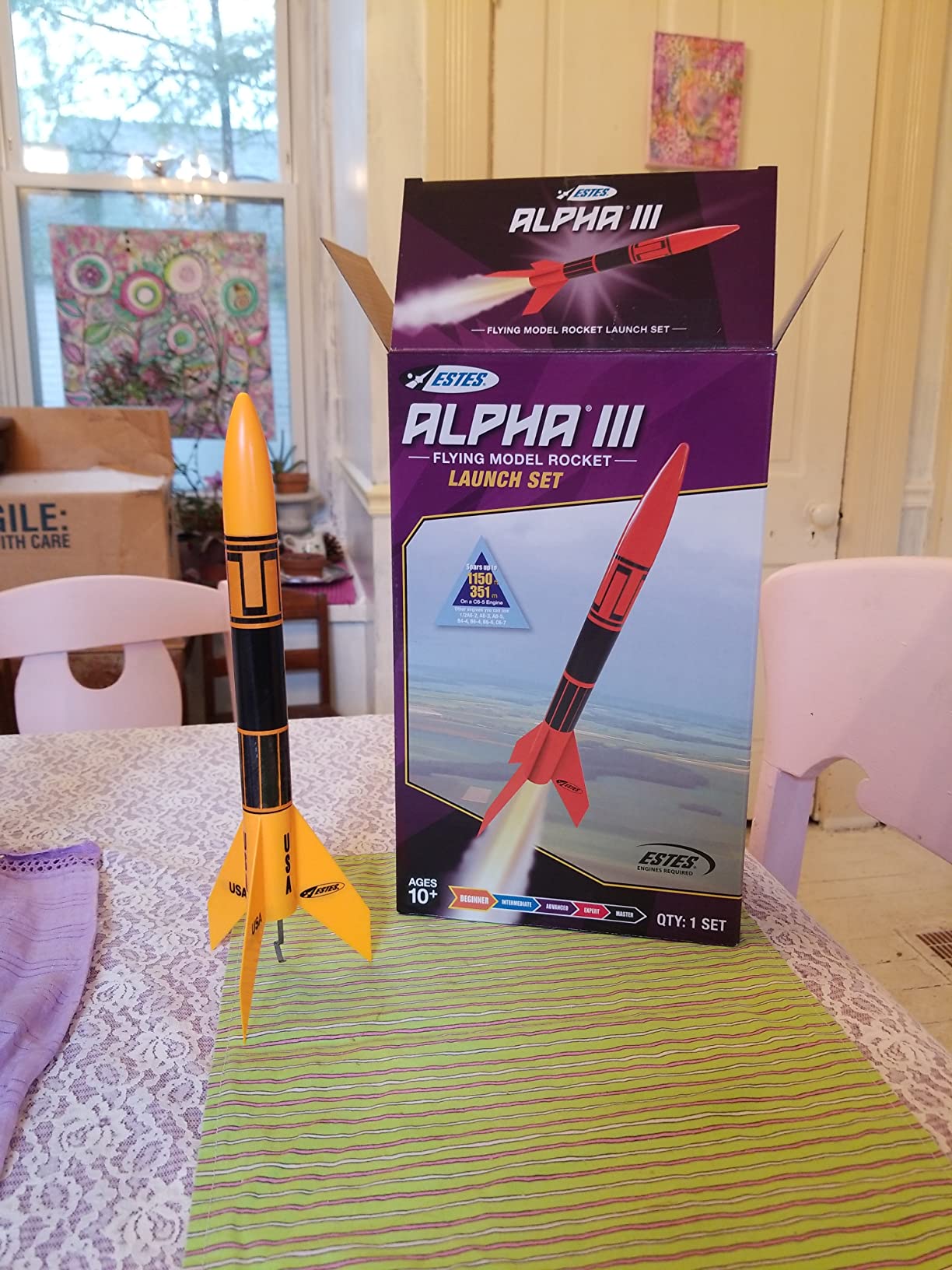
The included launch system provides everything needed to get started. The Electron Beam controller features the standard safety key system that Estes uses across their product line. While not fancy, it provides adequate protection against accidental launches. The Porta-Pad II launch pad has become a workhorse in the hobby, handling everything from small birds like the Alpha to larger E-powered rockets.
Assembly takes about an hour and teaches basic construction skills. The pre-colored fins go on easily, and the overall fit is excellent. My son built his first Alpha at age nine with minimal assistance. The rocket is sturdy enough to survive the inevitable rough landings that beginners experience.
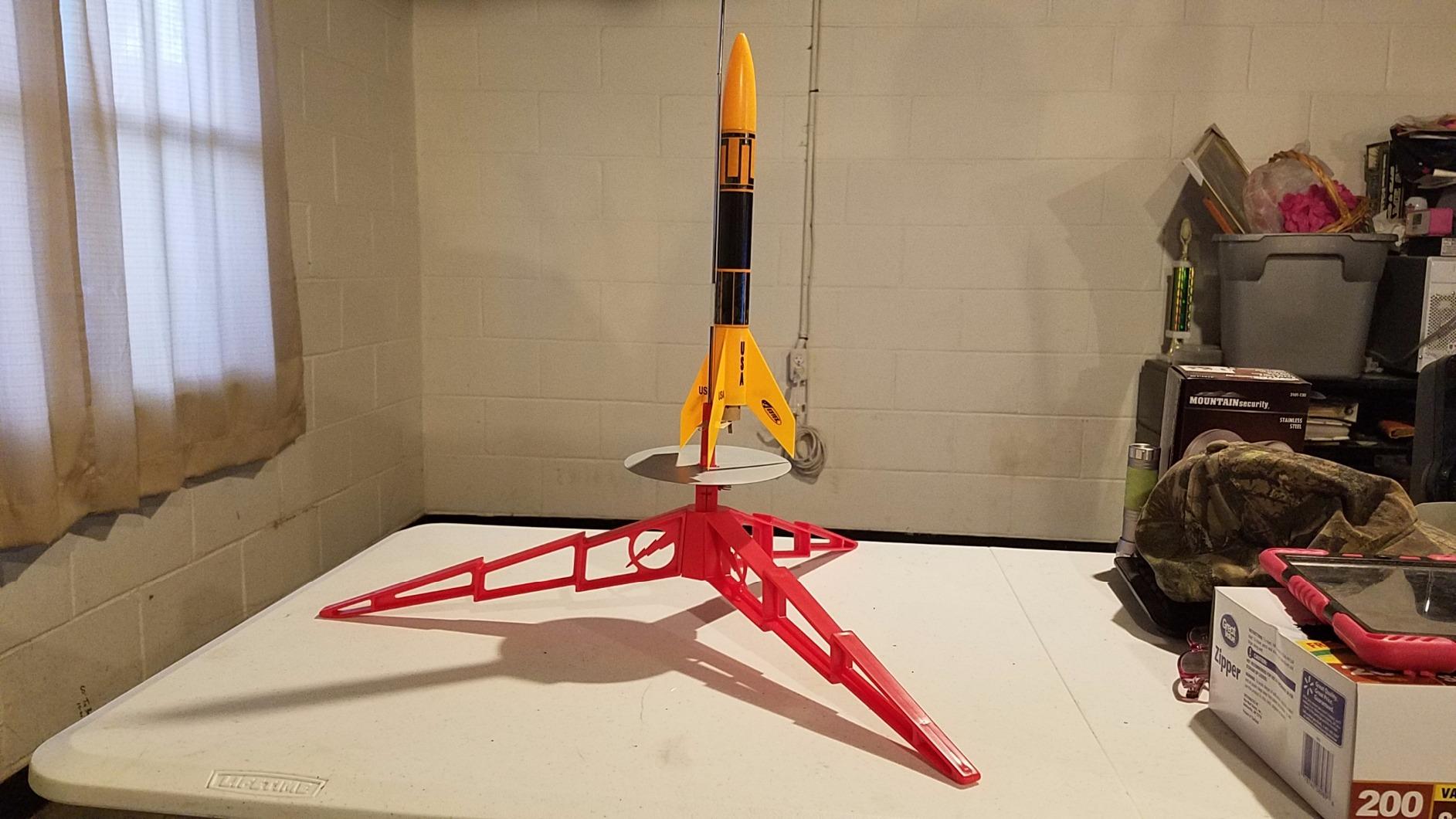
Flight performance is impressive for such a small rocket. With a C6-7 engine, the Alpha can reach 1,150 feet. Despite the altitude, the rocket remains visible throughout its flight thanks to that bright orange color. Recovery is reliable with the included parachute, though proper wadding installation is essential.
Best For Absolute Beginners
The Alpha III is perhaps the perfect first rocket. The simple design, easy assembly, and excellent visibility make it ideal for learning the basics. The complete launch system means you have everything needed to get started. This is the kit I recommend to anyone expressing interest in rocketry.
Considerations
As with all Estes starter sets, you’ll need to purchase engines, wadding, and batteries separately. Some users report controller durability issues after extended use. The multi-piece launch rod can be slightly tricky, though this is a minor inconvenience for an otherwise excellent starter kit.
10. Aerotech Mantis Launch Pad – Professional Grade for Heavy Rockets
Aerotech Mantis Model Rocket Launch Pad
For F and G engines
Sturdy adjustable platform
Heavy-duty construction
No batteries required
Pros
- Extremely well built
- Handles heavy rockets
- Highly adjustable
- Draws a crowd at launches
Cons
- Premium price
- Overkill for small rockets
- Not for average Estes models
The Aerotech Mantis is in a completely different class from the other equipment on this list. This is professional-grade hardware designed for serious hobbyists flying heavy rockets on F and G composite motors. I bought one after joining a rocketry club and seeing several members using them. The build quality is immediately apparent—heavy construction, precise adjustments, and a design that inspires confidence.
Unlike Estes pads, the Mantis doesn’t require batteries because it’s just a launch pad without an integrated controller. You’ll need to pair it with a separate controller capable of handling larger igniters. This modular approach is common among high-power enthusiasts who prefer to mix and match components based on their specific needs.
The adjustability is exceptional. You can fine-tune the launch angle with precision, which is crucial when launching expensive heavy rockets. The blast deflector is massive compared to standard pads, easily handling the exhaust from large composite motors. This is equipment built for rockets that can cost hundreds of dollars and weigh several pounds.
Best For Serious Hobbyists
This pad is designed for enthusiasts flying mid-power and high-power rockets. If you’re launching Estes kits with A-C motors, this is overkill. But if you’re getting into F and G engines with larger rockets, the Mantis provides the stability and reliability that your investments deserve. Club members universally praise this pad for its performance with heavy rockets.
What to Consider
The premium price reflects the professional build quality. This pad is not designed for standard Estes rockets—it’s meant for heavier composite motor rockets. You’ll need a separate controller capable of handling larger igniters. If you’re just starting in the hobby, work your way up to equipment at this level.
Buying Guide: How To Choose the Best Rocket Launch Controllers with Safety Features?
Safety Features Explained
Modern rocket launch controllers include several important safety features that every hobbyist should understand. The safety key or interlock system prevents accidental launches by requiring a physical key to be inserted before the controller will arm. Two-button operation takes this a step further by requiring one button to be pressed and held while a second activates the launch—this makes it virtually impossible for a single accidental button press to launch your rocket.
Continuity indicators are another critical safety feature. These lights or buzzers confirm that you have a complete electrical circuit from your controller through the igniter to the rocket motor. Without this feature, you might count down and press launch only to have nothing happen—or worse, have a misfire that requires someone to approach the rocket dangerously soon after a failed launch attempt.
Controller Selection by Experience Level
Beginners should start with a complete launch set that includes both controller and launch pad. These systems are designed to work together seamlessly and provide adequate safety features for supervised use. Look for controllers with safety keys and continuity indicators, even if you’re starting with small motors. These features teach good safety habits from day one.
Intermediate hobbyists flying D through F engines should consider upgrading to a more capable controller like the Estes Pro Series II. The two-button safety system provides extra protection, and the longer cables give you more distance from increasingly powerful rockets. At this level, you’ll appreciate features like audible continuity buzzers and support for cluster motor configurations.
Advanced enthusiasts with high-power rockets need professional-grade equipment. Controllers capable of handling F and G motors, like those from AeroTech, provide the reliability that expensive rockets demand. These systems often support external power sources like car batteries or LiPo packs for consistent performance throughout long launch sessions.
Battery Type Comparison
Most basic launch controllers use standard alkaline batteries—usually AAs for smaller controllers and Cs for more powerful systems. Alkalines work fine for occasional use but can struggle during long launch days as voltage drops. For frequent launchers, rechargeable NiMH batteries are a cost-effective option, though they provide slightly lower voltage than fresh alkalines.
Professional controllers often support lithium polymer (LiPo) batteries, which provide consistent voltage throughout discharge and handle high current demands better than other chemistries. The Estes Pro Series II includes a JST plug for LiPo connection, making it easy to upgrade. LiFePO4 batteries are another option, offering similar performance with a safer chemistry. Whatever battery type you choose, always carry backups—dead batteries have ruined more launch days than any other factor.
Launch Distance Requirements
The National Association of Rocketry safety code specifies minimum safe distances for different motor sizes. For A through D engines, maintain at least 15 feet from the launch pad. E engines require 20 feet, while F and G motors need 30 feet or more. Your launch controller’s cable length should meet or exceed these requirements—never use a controller with a cable shorter than the minimum safe distance for your largest motor.
Practical experience has taught me to add even more distance when possible. An extra 5-10 feet gives you more reaction time if something goes wrong during ignition. It also provides a better viewing angle for watching those crucial first moments of flight. When in doubt, back up—a little extra distance never hurt anyone, but getting too close to a launching rocket can be dangerous.
Frequently Asked Questions
What is the safe distance from a rocket launch?
The National Association of Rocketry safety code specifies minimum safe distances based on motor size: 15 feet for A-D engines, 20 feet for E engines, and 30 feet for F and G motors. Always use a launch controller with a cable length that meets or exceeds these requirements. When in doubt, add extra distance for safety.
Can you legally own a rocket launcher in the US?
Model rocket launch controllers are completely legal to own and use in the United States. They are considered hobby equipment, not weapons. However, always follow NAR safety guidelines and check local regulations regarding where you can launch. Some public parks may have restrictions, while dedicated launch sites welcome hobbyists with proper safety practices.
What safety features should a launch controller have?
Every launch controller should have a safety key or interlock that prevents accidental launches. Continuity indicators that verify your electrical connection before launch are essential for preventing misfires. Two-button operation provides an extra layer of safety by requiring simultaneous button presses. Long cables that maintain minimum safe distances for your motor sizes are also critical features.
How does a continuity indicator work?
A continuity indicator sends a small test current through your launch circuit to verify that electricity can flow from the controller through the igniter to the rocket motor. When the circuit is complete, a light illuminates or a buzzer sounds. This feature tells you before launch that your electrical connections are good, preventing the frustration and potential danger of a misfire.
What batteries work best in launch controllers?
Fresh alkaline batteries work well for occasional use, but voltage drops during long launch days. For frequent flyers, NiMH rechargeables are cost-effective. Serious enthusiasts prefer LiPo batteries for consistent voltage and high current capability. Whatever type you choose, always carry backups—dead batteries are the most common cause of launch day failures.
Conclusion
After testing dozens of rocket launch controllers over the years, I can confidently say that investing in quality equipment with proper safety features makes every launch day better. The Estes Pro Series II remains my top recommendation for most enthusiasts, offering professional features at a reasonable price. Beginners will love the complete launch sets from Estes, while serious hobbyists should consider the Aerotech Mantis for their heavy rockets.
Remember that the best rocket launch controllers with safety features are ones that match your experience level and the types of rockets you fly. Start with a complete system if you’re new to the hobby, then upgrade individual components as your skills and ambitions grow. Above all, always prioritize safety—those features exist for a reason, and following proper procedures ensures many years of enjoyable rocketry.