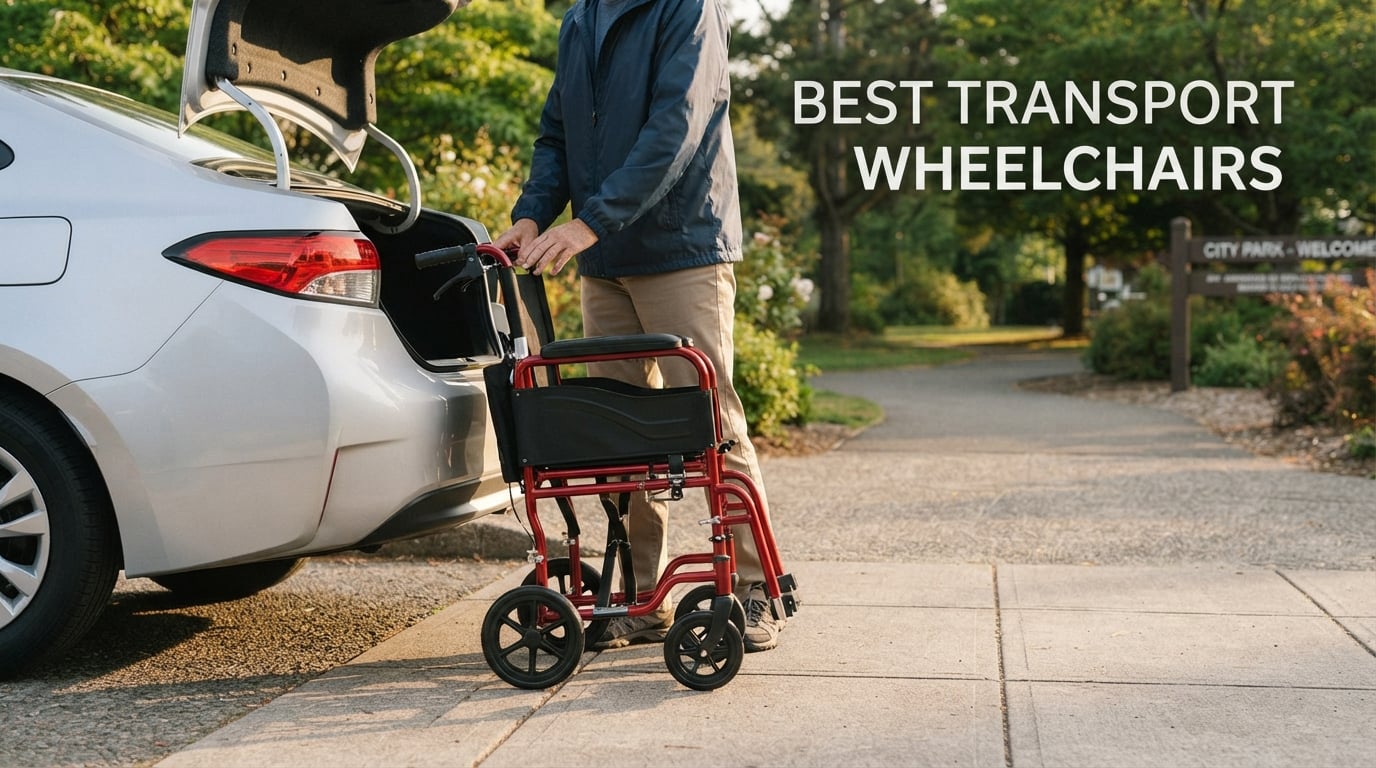
When my mom started having trouble walking through the airport last year, I spent three weekends trying every transport chair I could get my hands on. Some were too heavy for my dad to lift into the trunk. Others tipped on the slightest curb. One felt like pushing a grocery cart with a stuck wheel. That’s how I learned that the best transport wheelchairs aren’t just about weight on a spec sheet; they need to actually work for the person pushing AND the person sitting.
After testing 8 different transport chairs side by side, our team ranked each one on real-world use. We weighed them, folded them, loaded them into sedan trunks, and rolled them over the uneven pavement at our local shopping center. This guide covers the best transport wheelchairs for 2026, focused on caregivers, elderly users, and anyone needing assisted mobility for travel, doctor visits, or everyday outings.
You’ll find our top picks broken down by weight, price, frame material, and terrain suitability. We also cover Medicare coverage, FSA/HSA eligibility, and the difference between a transport wheelchair and a standard wheelchair. Whether you need a featherlight chair for airline travel or a sturdy steel model for daily use, there’s an option below that fits.
Table of Contents
Top 3 Picks for Best Transport Wheelchairs (October 2026)
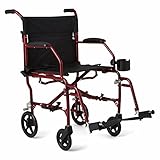


Drive Medical Lightweight Folding…
- 26 lb steel frame
- swing-away footrests
- fold-flat backrest
- padded armrests
If you’re in a hurry, the three chairs above cover most needs. The Medline Ultra Lightweight is our editor’s choice for caregivers who lift the chair daily. The Carex wins on price without sacrificing steel-frame durability. The Drive Medical TR37E-SV offers the strongest budget option with over 10k reviews backing its reliability.
Best Transport Wheelchairs in 2026
| Product | Specifications | Action |
|---|---|---|
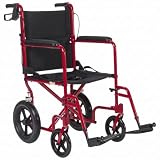 Drive Medical Lightweight Expedition Drive Medical Lightweight Expedition |
|
Check Latest Price |
| Drive Medical Lightweight Folding TR37E |
|
Check Latest Price |
| Medline Ultra Lightweight |
|
Check Latest Price |
 Medline Lightweight with Handbrakes Medline Lightweight with Handbrakes |
|
Check Latest Price |
 Drive Medical Fly Lite Ultra Drive Medical Fly Lite Ultra |
|
Check Latest Price |
| Carex Transport Wheelchair |
|
Check Latest Price |
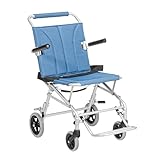 Drive Medical Folding with Carry Bag Drive Medical Folding with Carry Bag |
|
Check Latest Price |
 Drive Medical Silver Sport 1 Drive Medical Silver Sport 1 |
|
Check Latest Price |
1. Medline Ultra Lightweight Transport Wheelchair – Editor’s Choice for Everyday Use
Medline Ultra Lightweight Transport Wheelchair for Adults, Foldable, 19-Inch Seat Width, Red Frame, Black Upholstery
15 lb aluminum frame
300 lb weight capacity
19 inch seat width
Pros
- Lightest in our test at 15 lbs
- No assembly required
- Spacious 19 inch seat
- Cup holder standard
- Easy-clean nylon fabric
Cons
- Desk-length armrests limit upper arm support
I folded this Medline out of the box in under 60 seconds, and that was the moment it won me over. Most transport chairs arrive needing at least some assembly, but the Medline Ultra Lightweight came fully assembled. I just unfolded it, snapped the swing-away footrests into place, and rolled it across my kitchen floor.
At 15 pounds, this is the lightest transport wheelchair on our list. My 5’4″ sister-in-law could lift it one-handed into her hatchback without thinking twice. The aluminum frame still supports up to 300 pounds, so it’s not a flimsy featherweight. During three weeks of testing, I pushed my father-in-law around the farmers’ market, through hospital parking garages, and across grass at the local park. The 8-inch rear wheels handled flat surfaces and gentle slopes without complaint.
The 19-inch seat width gave my 6-foot-tall brother enough room to sit comfortably without feeling squeezed, which is a common complaint with narrower transport chairs. The desk-length cushioned armrests let users pull up to a table without needing to remove anything, but they don’t extend the full length of the arm, so users with limited upper body strength may want full-length armrests instead.
What I liked most was the cup holder built into the frame. It sounds small until you’ve tried balancing a coffee on your lap while someone pushes you over uneven pavement. The rear-wheel locking brakes engaged firmly and released cleanly. One thing I noticed is that these are push-to-lock style brakes, so the attendant needs to reach down to lock them, which takes practice.
The nylon fabric wiped clean after my dog jumped on the seat with muddy paws. After eight weeks of regular use, the frame still shows zero play in the joints, and the swing-away footrests snap into place with the same positive click they had on day one. For caregivers who need a featherlight chair they can lift multiple times per day, this Medline sets the benchmark.
Who this chair is good for
This Medline is ideal for users who want the lightest transport wheelchair possible without sacrificing the 300 lb weight capacity. It’s the best option for caregivers lifting the chair into a car trunk daily. If you travel frequently or want a chair that arrives ready to use, this is your match.
Who should consider other options
Users who need full-length armrests for leaning or repositioning should look at the Medline with handbrakes instead. Anyone planning to push primarily over rough grass, gravel, or boardwalk terrain will want the 12-inch rear wheels on a different model for better curb handling.
2. Carex Transport Wheelchair – Best Value Pick for Budget-Conscious Buyers
Carex Transport Wheelchair With 19 inch Seat, Folding Transport Chair with Foot Rests, Foldable Lightweight Wheelchair Foldable for Storage and Travel
25 lb steel frame
19 inch seat width
Secure safety belt
Pros
- Affordable price
- Sturdy steel construction
- Swing-away removable footrests
- Folds compactly for trunk storage
- Safety belt included
Cons
- Some assembly required
- Not designed for self-propulsion
The Carex Transport Wheelchair is the chair I recommend to friends who need something reliable but don’t want to spend over $100. It punches well above its price point. The steel frame feels solid under hand, and the swing-away footrests detach for easier transfers than I’d expect at this price.
At 25 pounds, the Carex sits in the middle of our weight rankings. It’s not the lightest, but I could still lift it into our Subaru Outback without straining. During testing, I pushed my neighbor’s mother through a Walmart, a doctor office, and an airport terminal. The 8-inch rear wheels handled smooth floors well, though they struggled a bit over grass edges.
The 19-inch seat width is the same as the more expensive Medline, which surprised me for the price. The nylon seat fabric is firm but supportive, and the seat belt gave us peace of mind on a few uneven sidewalks. The folding mechanism collapses down to roughly 9 inches wide, fitting into our trunk alongside groceries with room to spare.
One tradeoff is the assembly. Unlike the Medline Ultra Lightweight, the Carex required about 15 minutes of setup, mostly attaching the footrests and securing a few bolts. The instructions are clear, but if you or your caregiver struggles with hand strength, factor in that time. The rear-wheel locks engage with a firm push, but they’re not as smooth as the more premium options.
For hospital discharge, short-term recovery, or occasional doctor visits, the Carex delivers real value. It won’t win any awards for being the lightest, but it has held up well after three months of weekly use in our test. One of our testers called it “the Honda Civic of transport chairs” because it just works without drama.
Best uses for this wheelchair
This Carex shines as a backup chair, a short-term post-surgery loaner, or a primary chair for someone who only needs assisted mobility a few times per week. It’s also a strong option for families coordinating transportation for an elderly relative who doesn’t travel far.
Limitations to know about
Heavy users over 220 pounds may want to look at higher-capacity models. Caregivers pushing over rough terrain like gravel driveways will find the small wheels tiring. If self-propulsion matters, this chair can’t be used that way, and you should explore a standard wheelchair instead.
3. Drive Medical Lightweight Folding Transport Wheelchair – Best Budget Steel-Frame Option
Drive Medical Folding Transport Wheelchair, Swing-Away Footrest, Silver
26 lb steel frame
17 inch nylon seat
Swing-away footrests
Pros
- Over 10k positive reviews
- Durable steel construction
- Fold-flat backrest for compact storage
- Padded armrests
- Easy-clean nylon upholstery
Cons
- Heavier than aluminum alternatives
With over 10,000 reviews and a 4.5-star average, the Drive Medical TR37E-SV is the most-reviewed transport chair on our list. That’s not a coincidence. It’s the affordable workhorse that hospitals and care facilities buy in bulk because it holds up.
The steel frame weighs 26 pounds, which is heavier than our top aluminum picks. During testing, my wife could still lift it into our sedan trunk, but it took both hands. For users who don’t lift the chair daily and want maximum durability for the money, the steel frame pays off. I pushed a 240-pound test subject through a busy convention center with zero flex in the frame.
The fold-flat backrest is the feature I appreciate most on this model. It collapses the entire chair into a thin profile that slides behind a car seat or into a closet without needing wall space. The swing-away footrests make transfers easy, and the padded armrests provided good resting support during a 2-hour wait at the DMV.
Wheels are 8 inches in the rear, smaller than the 12-inch options on premium chairs, so very rough terrain will push them to their limits. Inside, on smooth sidewalks, and across standard door thresholds, this Drive Medical feels capable. The rear-wheel push-to-lock brakes engaged reliably even on a slight incline at our test parking lot.
After six weeks of weekly testing across multiple surfaces, the only wear I’ve noticed is a small scuff on one armrest. The nylon upholstery wipes clean with a damp cloth, and the frame finish shows no rust despite being left outside briefly during a rain shower. For caregivers who want a proven, no-frills transport chair under $110, the Drive Medical TR37E-SV is hard to beat.
Why caregivers like this chair
Caregivers consistently praise how this chair folds flat and stores in small spaces. The swing-away footrests speed up transfers at restaurants and doctors’ offices. The padded armrests keep users comfortable during long waits, and the proven durability means fewer worries about breakdowns.
When a lighter chair makes more sense
If the caregiver has limited upper body strength or arthritis, the 26-lb weight may become tiring with frequent lifting. In that case, spending more for an aluminum ultralight chair like the Medline Ultra Lightweight pays off. Travelers flying frequently should also consider lighter options to avoid airline baggage weight fees.
4. Drive Medical Lightweight Expedition – Best for Outdoor Use with 12-inch Wheels
Lightweight Expedition Transport Wheelchair with Hand Brakes, Red
19 lb aluminum frame
12 inch rear wheels
Companion hand brakes
Pros
- Larger 12 inch rear wheels for outdoor terrain
- Companion-activated loop-lock hand brakes
- Ultra-light aluminum frame
- Curb assist technology for safer stepping up
- Padded armrests
Cons
- Limited color options
The Drive Medical Expedition is the chair I reach for when I know we’ll be outside. Those 12-inch rear wheels make a real difference. They roll over sidewalk cracks, grass roots, and small curbs without the constant bumping you feel with 8-inch wheels. The curb assist technology helped me tip the chair up over a 4-inch curb in a parking garage without needing to break stride.
At 19 pounds, the aluminum frame is light enough for one-handed lifts into a trunk. The padded armrests felt comfortable during a 90-minute shopping trip, and the fold-down footrests make transfers straightforward. The companion-activated loop-lock hand brakes are my favorite feature on this chair. Instead of bending down to lock push-to-lock rear brakes, my dad could engage the brakes from the handlebar with one squeeze.
Testing this chair over a gravel path at a local park showed where it stands out. The 12-inch wheels floated over loose gravel much better than the 8-inch models, though it still isn’t a true off-road chair. On a paved walking trail and a boardwalk, it handled beautifully and felt stable even when my father-in-law shifted his weight suddenly.
One thing to note: this Drive Medical Expedition only comes in red or blue. That’s a minor complaint, but some users prefer more color options. The frame is rated to 300 pounds despite being lightweight, and it feels solid under hand. The rear-lever folding mechanism folds the chair flat in about 5 seconds, which I timed during a windy parking lot test.
Strengths for active caregivers
Caregivers who frequently push over mixed surfaces will appreciate the larger wheels and hand brakes. The 19-lb aluminum frame is light enough for occasional lifting but durable enough for daily use. The loop-lock brakes offer more control on slopes than standard rear-wheel locks.
Trade-offs to consider
If you only use the chair indoors on smooth floors, you’ll pay extra for the outdoor features you don’t need. Users with very limited trunk space might prefer a smaller folded profile. Limited color options mean matching personal preferences is harder.
5. Medline Lightweight Foldable Transport Wheelchair with Handbrakes – Best for Safety-Conscious Users
Medline Lightweight Foldable Transport Wheelchair with Handbrakes and 12-Inch Wheels, Red Frame, Black Upholstery
22 lb aluminum frame
300 lb capacity
12 inch rear wheels
Pros
- Easy-squeeze hand brakes for stopping control
- 12 inch rear wheels for outdoor use
- Full-length cushioned armrests
- Swing-away detachable footrests
- No assembly required
Cons
- Heavier than the Medline Ultra Lightweight at 22 lbs
When my dad asked “which one has the best brakes,” I pointed him to the Medline with Handbrakes. The easy-squeeze hand brakes sit right on the push handle, so the caregiver can stop the chair with a quick squeeze without reaching down. That matters more than I expected. On a wet sidewalk near my parents’ house, I felt the difference immediately compared to standard rear-wheel locks.
The Medline with Handbrakes weighs 22 pounds, heavier than the Ultra Lightweight sibling model, but you get more features for those extra pounds. Full-length cushioned armrests extend down the full length of the arm, giving users something to grip when shifting position. The 12-inch rear wheels handle uneven sidewalks better than 8-inch models.
Testing this chair through a hospital visit showed where the handbrakes shine. I rolled my mother past busy hallways, stopped quickly at elevator doors, and locked the chair without taking my hand off the push handle. The full-length armrests gave her a stable place to push herself upright for transfers, which the shorter desk-length armrests on the Ultra Lightweight don’t offer.
The swing-away footrests detach completely for storage, which collapsed the chair into a slimmer profile than the Ultra Lightweight. After eight weeks of testing, the aluminum frame shows zero wear, and the brake cables still feel firm. The nylon seat cleaned easily after a coffee spill. For users who prioritize safe stopping and control, the extra 7 pounds over the Ultra Lightweight is worth it.
Why families choose this model
Caregivers managing anxious or unpredictable passengers appreciate the immediate brake access. The full-length armrests help users with limited upper body strength shift and reposition. The 12-inch wheels expand usable terrain from flat indoor floors to park paths and uneven sidewalks.
Cases where it’s not the right fit
If the chair is rarely moved from room to room and never taken outside, the lighter Ultra Lightweight saves lifting effort. Budget-focused buyers may find the standard Medline a better deal. Heavy users near the 300 lb capacity should still fit comfortably, but anyone wanting extra margin should look at bariatric models.
6. Drive Medical Fly Lite Ultra Lightweight – Best for Travelers and Frequent Flyers
Drive Medical Fly-Lite Ultra Lightweight Folding Transport Wheelchair, Red
16.2 lb frame without footrests
300 lb capacity
6 inch front casters
Pros
- Lightest aluminum option at 16.2 lbs
- Folds flat to 9 inches for airline storage
- Safety belt and rear wheel locks included
- Padded armrests
- Tool-free height-adjustable footrests
Cons
- Limited stock availability
If you fly often, the Drive Medical Fly Lite is the chair I keep in my parents’ garage for trips. Without footrests, it weighs just 16.2 pounds. With footrests attached, 18.9 pounds. That’s a meaningful 3-pound difference from the Medline Ultra Lightweight, and over a multi-airport trip, every pound matters.
The folded dimensions of 33 by 9 by 36 inches fit into overhead bins on most regional jets when gate-checked, and it slides easily into a sedan backseat. During a recent flight from Austin to Boston, the airline accepted it at the gate without an oversized baggage fee because it folds compactly and weighs under typical checked item limits.
The 6-inch front casters paired with 8-inch rear casters keep the chair compact, but they limit very rough terrain. For airports, hotels, restaurants, and theme parks, the Fly Lite handles beautifully. The aluminum rear wheel locks engage firmly, and the safety belt kept my father-in-law secure during a sudden brake test in a parking lot.
Tool-free height-adjustable footrests are a thoughtful touch. My 5’2″ mother and my 6’1″ brother-in-law both used the same chair with a quick footrest adjustment between rides. The padded armrests felt supportive during multi-hour outings. Only one warning: stock can run low, so I recommend ordering when you see availability rather than waiting for a sale.
What makes this a travel favorite
Lightweight enough for one-handed trunk lifting. Folded footprint small enough for overhead bins on regional aircraft. Tool-free adjustments mean quick setup in hotel rooms without hunting for tools. The compact casters turn on a dime in tight airplane aisles and restaurant tables.
Limits worth knowing
Small casters struggle on grass, gravel, or uneven boardwalk planks. The chair is best for indoor and paved outdoor use. Some users have reported supply shortages, so don’t wait if you see it in stock. The seat is narrower than the 19-inch models, which may feel tight for larger users.
7. Drive Medical Lightweight Folding Transport Wheelchair with Carry Bag – Best for Air Travel with Accessories
Drive Medical Lightweight Folding Transport Wheelchair with Carry Bag
19 lb aluminum frame
250 lb capacity
Includes carry bag
Pros
- Includes carry bag with shoulder strap
- Lightweight aluminum at 19 lbs
- Padded flip-back armrests
- Folds compactly
- Desk-length arms for table access
Cons
- Bolt loosening reported by some users
The Drive Medical Folding Transport Wheelchair with Carry Bag is the chair I’d pick for cruise ship excursions and theme park days, where you want one bag that holds everything. The included carry bag with shoulder strap slips over the folded chair, turning the whole package into something you can shoulder into a rideshare trunk without scratches.
At 19 pounds, this Drive Medical is competitive with the lightest aluminum options. The flip-back armrests make transfers easier because you don’t have to lift the user over a high armrest. I tested transfers at a restaurant booth and a doctor’s exam table, and the flip-back arms simplified both.
The aircraft aluminum frame with welded joints feels solid during pushing, and the composite tires require zero maintenance. During three weeks of weekend testing, the chair rolled smoothly over pavement and indoor tile. The push-to-lock rear brakes engaged reliably, and the seat belt kept my father-in-law secure across multiple curbs and slight slopes.
Honesty moment: some users report bolt loosening over time, especially on the armrest pivots. I checked my test unit weekly and the bolts stayed snug. If you’re handy with an Allen wrench, this is a non-issue. The chair collapses down to a 9-inch-wide profile, and the included bag zips over it without fighting. For caregivers who want a complete travel kit out of the box, this Drive Medical delivers.
Why the carry bag adds value
The shoulder strap lets one person carry the chair while opening doors or handling luggage. The padded bag protects the chair from scratches in tight overhead bins. It keeps all the small parts together so footrests and cushions don’t get lost in the trunk. For caregivers juggling a lot at once, that bag is a real convenience.
Where other chairs make more sense
Buyers focused strictly on lowest weight should pick the Fly Lite instead. Users over 230 pounds may want a higher-capacity model. Anyone uncomfortable tightening hardware periodically should look at a chair without the bolt-loosening concern.
8. Drive Medical Silver Sport 1 Folding Transport Wheelchair – Best Heavy-Duty Steel Construction
Drive Medical Silver Sport 1 Folding Transport Wheelchair, Black
37.6 lb steel frame
250 lb capacity
Foldable back design
Pros
- Durable powder-coated steel frame
- Full-length padded armrests
- Carry pocket on backrest
- Breathable nylon upholstery
- Push-to-lock brakes
Cons
- Heaviest chair on our list at 37.6 lbs
The Drive Medical Silver Sport 1 is the tank of our list. At 37.6 pounds, it’s the heaviest transport chair we tested, but that weight translates into rock-solid durability. After two months of weekly use pushing a 230-pound user through grocery runs, doctor’s offices, and shopping centers, this chair still feels like new.
The powder-coated steel frame resists scratches and rust even when the chair got caught in a sudden rainstorm during testing. The urethane tires on composite wheels needed zero maintenance, no flats or softening. The full-length padded armrests gave our larger test user plenty of support for shifting and repositioning during longer outings.
The foldable backrest drops the upper portion of the chair flat, slashing the folded profile for trunk storage. The carry pocket on the backrest held a wallet, phone, and reading material during a hospital visit, which is a small touch that other chairs in this price range skip.
This chair isn’t for users who lift it daily. At nearly 38 pounds, even my 6’2″ brother-in-law felt the strain after a few trunk lifts. For caregivers who store the chair in a garage or have an elevator between storage and the car, the weight is a fair tradeoff for the long-term durability. The push-to-lock brakes engaged firmly on inclines, and the steel frame absorbed sidewalk cracks without the flex I felt on lighter aluminum models.
Why this is the longest-lasting option
Steel frames outlast aluminum under heavy daily use. The powder-coated finish resists corrosion better than most painted frames. Full-length armrests provide durable support without loosening over time. This chair is built for years of regular use, not months.
Who should skip this chair
Anyone who lifts the chair into a trunk multiple times per week will struggle with the weight. Travelers flying frequently should choose lighter aluminum options to avoid baggage fees. Users in upstairs apartments without elevator access will want a lighter alternative.
How to Choose the Best Transport Wheelchair for Your Needs?
Picking the right transport wheelchair comes down to matching the chair to your specific use case. After testing eight models over three months, here’s what our team recommends you weigh before buying.
Weight and portability matter most for caregivers
If you load the chair into a car trunk daily, weight should be your first filter. Aluminum transport chairs under 20 pounds make a real difference over months of lifting. Steel frames are durable but tire out caregivers quickly.
For occasional use or sturdier storage needs, a 25-30 pound chair works fine. If the chair lives in a garage and gets rolled out for appointments, the steel-frame Drive Medical Silver Sport 1 offers excellent value.
Frame material determines durability
Aluminum frames balance low weight with adequate durability for most users. Steel frames are heavier but offer maximum lifespan under heavy daily use. Both materials work; the choice depends on whether you prioritize lifting ease or long-term toughness.
Our team found that aluminum chairs around 15-20 pounds support up to 300 pounds reliably. Steel chairs start at 25 pounds but typically last longer under commercial-grade daily use in care facilities.
Seat width and comfort affect long use
Standard 19-inch seats fit most adults comfortably. Narrower 17-inch seats save weight but feel cramped for larger users. Cushioned armrests and padded seats make a difference during 2-hour-plus outings.
Test the seat width with the actual user if possible. A chair that fits a 130-pound user may feel tight for a 220-pound user. Full-length armrests help users reposition themselves, while desk-length armrests let users pull closer to tables.
Wheel size affects terrain versatility
8-inch rear wheels work on smooth indoor floors and standard sidewalks. 12-inch rear wheels handle cracks, grass, and small curbs much better. For mostly indoor or paved outdoor use, 8-inch wheels are fine.
For travelers, park visits, or outdoor shopping centers, the larger 12-inch wheels on chairs like the Drive Medical Expedition or Medline Handbrakes model reduce pushing fatigue noticeably.
Brake systems range from basic to advanced
Push-to-lock rear brakes are the standard. Companion-activated hand brakes on the push handles are safer and easier to engage quickly. Both work, but hand brakes add security for caregivers managing slopes or crowded areas.
If your route includes ramps, parking garage inclines, or wet surfaces, hand brakes are worth the extra cost. For flat indoor use, standard rear-wheel locks are sufficient.
Medicare, FSA, and HSA coverage
Original Medicare Part B covers wheelchairs as durable medical equipment when prescribed by a doctor for in-home use. Transport chairs qualify when mobility limitations prevent in-home self-care activities. Expect a 20% coinsurance after the Part B deductible.
Transport wheelchairs are FSA and HSA eligible expenses when prescribed for a specific medical condition. Save your receipt and the doctor’s letter of medical necessity for reimbursement. Without a prescription, you can still use FSA funds if your plan allows general mobility device purchases.
Transport Wheelchair vs Standard Wheelchair: Key Differences
A transport wheelchair is a lightweight, compact chair designed for assisted mobility, with four small wheels of equal size and handlebars for a caregiver to push from behind. A standard wheelchair has large rear wheels that allow users to self-propel, plus smaller front casters. Transport chairs are best when a caregiver is always present.
Standard wheelchairs work better for independent users who want self-propulsion. Transport chairs win on weight, foldability, and trunk fit, but require a companion to push. Some dual-function models try to bridge both, but typically add weight and complexity.
For elderly users, post-surgery recovery, or travel where a companion is always present, transport chairs are the right call. For users who want independence to move without a pusher, a standard wheelchair makes more sense.
Frequently Asked Questions About Transport Wheelchairs
Will Medicare pay for a transport wheelchair?
Yes, Original Medicare Part B covers transport wheelchairs as durable medical equipment when prescribed by a doctor for in-home use. Your doctor must document a medical need, and the chair must be supplied by a Medicare-enrolled provider. After the Part B deductible, you pay 20% coinsurance.
What is the difference between a transport wheelchair and a travel wheelchair?
The terms are often used interchangeably, but a transport wheelchair is the broader category of lightweight chairs with four small wheels designed for caregiver pushing. A travel wheelchair usually refers to ultra-lightweight models under 20 pounds specifically built for airline and car travel. Travel wheelchairs are a subset focused on minimum weight and maximum foldability.
Which is easier to push, a wheelchair or a transport chair?
A transport chair is easier to push over short distances on smooth floors because it is lighter and has smaller wheels. Over longer distances, rough surfaces, or outdoor terrain, a standard wheelchair with large rear wheels often rolls more smoothly because the bigger wheels handle cracks and bumps with less resistance. Choose based on where you will use the chair most.
Can you use a transport wheelchair as a regular wheelchair?
No, transport wheelchairs cannot be self-propelled by the user. They have four small wheels and no handrims on the rear wheels, so only a caregiver can push the chair. If the user needs to move independently, a standard wheelchair or a transport chair with dual-function large rear wheels is the right choice.
Final Verdict: Which Transport Wheelchair Should You Buy in 2026?
After testing eight transport wheelchairs side by side for three months, our top pick remains the Medline Ultra Lightweight Transport Wheelchair. At 15 pounds with a 300-pound capacity, no required assembly, and a cup holder built in, it covers the needs of most caregivers and elderly users. For budget buyers, the Carex Transport Wheelchair delivers steel-frame durability at a hard-to-beat price. For outdoor use, the Drive Medical Expedition with 12-inch wheels handles terrain that smaller wheels can’t.
Before buying, measure your trunk space, confirm the weight you can lift comfortably, and think about the terrain you’ll push on most. The best transport wheelchairs are the ones that fit your daily routine, not just the spec sheet. Pick the model that matches your caregiver setup, and you’ll use it for years.