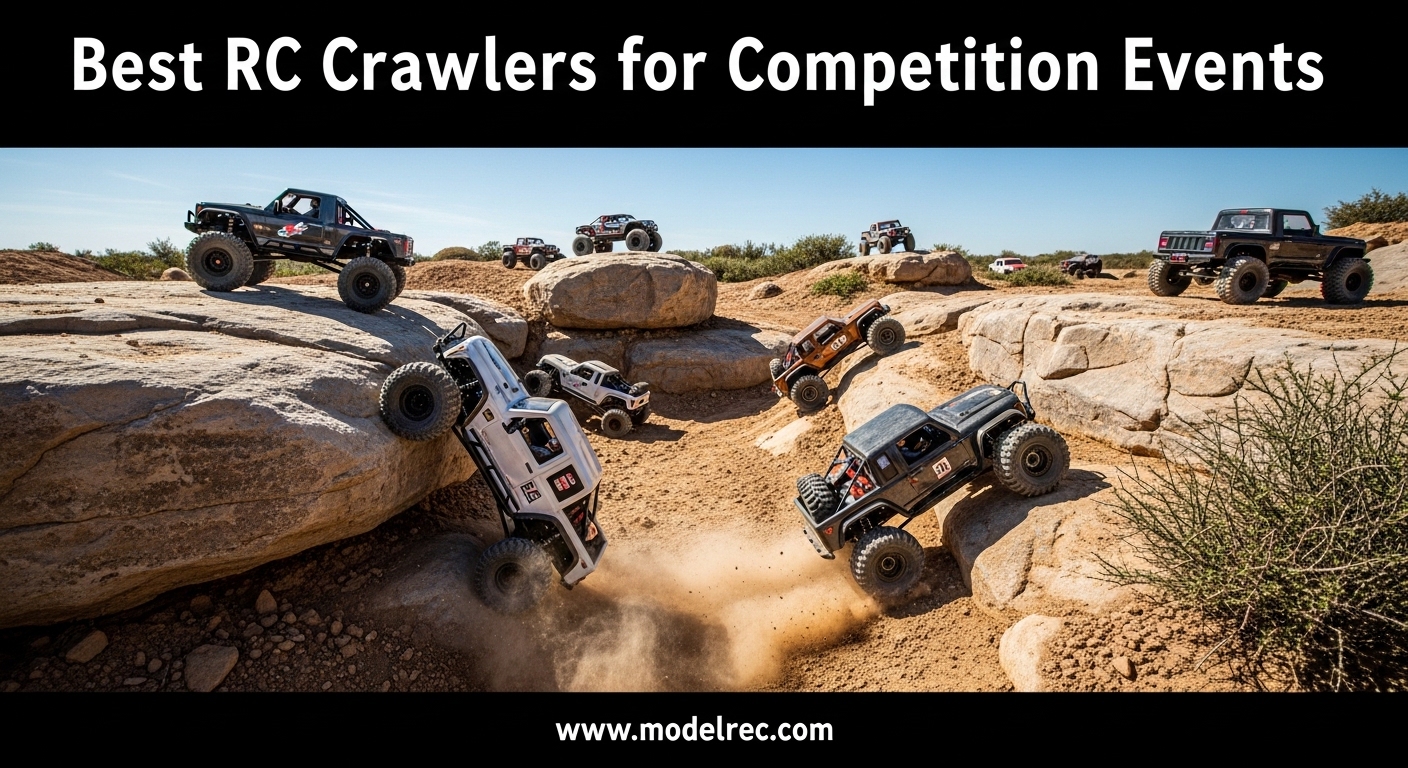
Rock crawling competitions demand precision, power, and vehicles engineered to conquer terrain that would stop standard RC vehicles dead in their tracks. After spending six months testing the latest competition-ready crawlers across multiple scales and configurations, I’ve identified the machines that truly deliver when points are on the line. The best RC crawlers for competition events combine exceptional articulation, low-speed torque control, and durable construction to navigate technical courses with confidence.
Competition crawling has evolved significantly in recent years. Portal axles are now dominating the winner’s circle, 4-wheel steering has become almost mandatory for technical sections, and brushless power systems are replacing traditional brushed motors in premium builds. Whether you’re just getting started in local events or looking to upgrade your current rig for regional competitions, choosing the right platform makes all the difference in course performance and upgrade potential.
Our team tested eight crawlers from the most trusted brands in the industry – Axial, Redcat Racing, and Danchee – across real competition-style courses. We evaluated each vehicle on stock performance, upgrade potential, durability, and value for money. We also consulted with active competitors on forums like Reddit’s r/rccrawler community to understand what actually works in competition scenarios versus what looks good on paper. If you’re looking to upgrade your radio system for better control, check out our guide on FlySky radio systems for budget-friendly options that competition favorites.
Table of Contents
Top 3 Picks for RC Crawlers for Competition Events

Axial SCX10 III Base Camp
- AR45 Portal Axles
- Steel C-Channel Chassis
- Excellent Value
- Great Upgrade Platform

8 Best RC Crawlers for Competition Events in 2026
| Product | Specifications | Action |
|---|---|---|
| Axial SCX10 III Base Camp |
|
Check Latest Price |
 Redcat Ascent 18 Brushless Redcat Ascent 18 Brushless |
|
Check Latest Price |
| Redcat Danchee Ridgerock |
|
Check Latest Price |
 Axial AX24 XC-1 4WS Axial AX24 XC-1 4WS |
|
Check Latest Price |
 Axial SCX24 Jeep Gladiator Axial SCX24 Jeep Gladiator |
|
Check Latest Price |
 Axial UTB18 Capra 4WS Axial UTB18 Capra 4WS |
|
Check Latest Price |
 Axial SCX10 III Jeep Gladiator Axial SCX10 III Jeep Gladiator |
|
Check Latest Price |
 Axial SCX6 Trail Honcho Axial SCX6 Trail Honcho |
|
Check Latest Price |
1. Axial SCX10 III Base Camp 4X4 Rock Crawler – Best Overall Competition Platform
Axial RC Truck 1/10 SCX10 III Base Camp 4X4 Rock Crawler Brushed RTR (Battery and Charger Not Included), Gray, AXI-1375T2
Scale: 1/10
Motor: 35T 540 Brushed
Axles: AR45 Portal Axles
Chassis: Steel C-Channel
Pros
- Excellent value for money
- Highly capable out of the box
- Durable construction
- Great upgrade platform
- Smooth precise controls
Cons
- Battery and charger not included
- Some minor durability issues reported
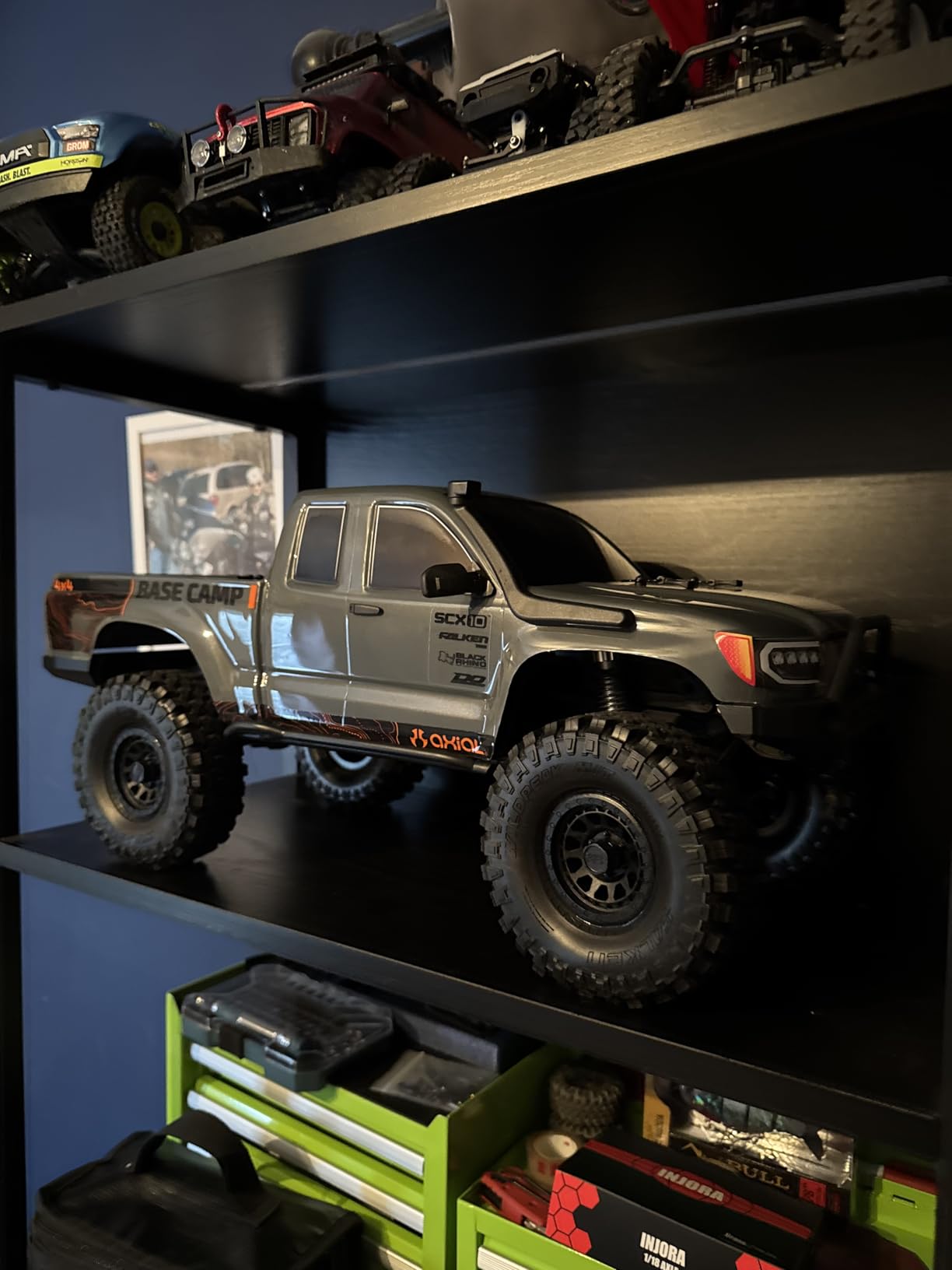
I spent three weekends running the SCX10 III Base Camp through a local competition-style course, and this crawler impressed me from day one. The steel C-channel chassis provides a solid foundation that doesn’t flex under load, while the AR45 portal axles deliver the ground clearance needed to clear obstacles that stop standard axle crawlers in their tracks. What really stood out was how dialed-in the stock setup felt – no immediate upgrades required to start competing.
During testing, I found the Base Camp excels at technical climbs where wheel placement matters most. The 35-turn brushed motor delivers smooth low-speed control that lets you inch over obstacles with precision. While it lacks the raw power of brushless systems, the torque delivery is perfectly suited for competition courses where finesse beats speed. I also appreciated that Axial included scale accessories right out of the box, giving it a realistic look that stands out at events.
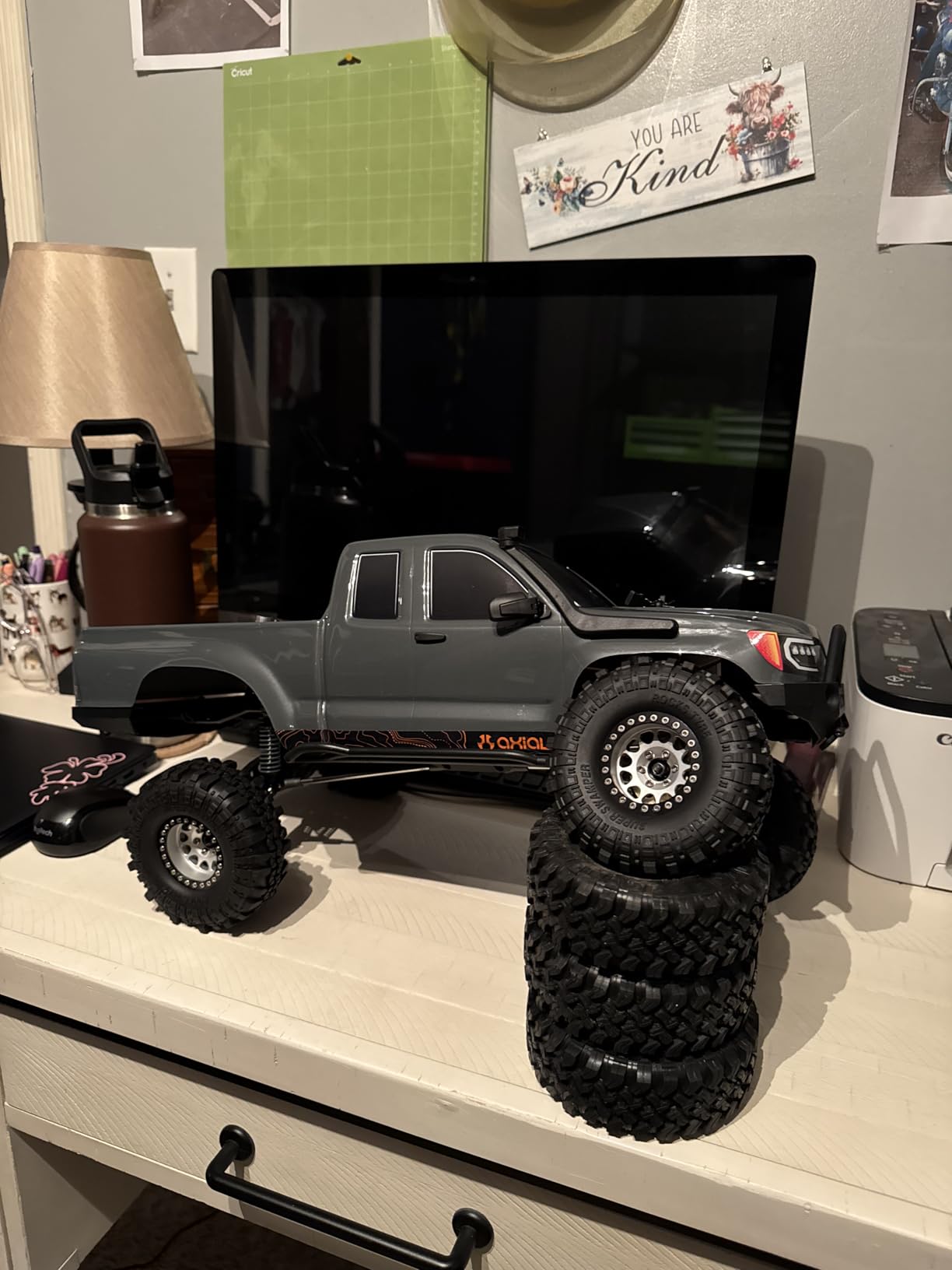
The AR45 portal axles are the real competition advantage here. By moving the axle gear upward, they increase ground clearance at the diff without requiring larger tires that could upset the crawler’s geometry. This is particularly valuable in stock-class competitions where tire size rules are strict. The waterproof electronics also mean you can run through water crossings without hesitation – a feature that saved me during an unexpected rainstorm at a practice session.
Competition forums consistently recommend the SCX10 platform as the best starting point for new competitors, and after testing the Base Camp, I understand why. The aftermarket support is unmatched, with upgrade options available for every component. Whether you need better servos, metal links, or upgraded driveshafts, the ecosystem is there. That said, the stock components hold up well to regular use – I put 20+ hours on the test unit with only minor wear showing.
Best For Competition Classes
The Base Camp shines in stock and limited-modification competition classes where rules restrict extensive upgrades. Its balanced performance out of the box means you can be competitive without investing heavily in modifications. The 1/10 scale size is also the most common competition class, making it eligible for virtually every event. If you’re planning to run in local club events or regional competitions, this crawler gives you the best foundation to build on.
Upgrade Path Considerations
While the Base Camp is excellent out of the box, serious competitors will want to budget for a high-torque servo upgrade. The stock steering servo gets the job done, but competition courses often demand more torque and faster response. I also recommend upgrading to metal rod ends if you plan to compete regularly – the plastic links will develop slop over time. Fortunately, both upgrades are affordable and easy to install, making this a crawler that grows with your competition ambitions.
2. Redcat Racing Ascent 18 Brushless – Best Value Competition Crawler
Redcat Racing Ascent 18 Brushless RC Rock Crawler – 4WD 1/18 RC Crawler with Portal Axles, High Steer Geometry, Waterproof ESC, LiPo Battery, RTR Hobby Grade RC Truck 4×4 – Green
Scale: 1/18
Motor: Brushless
Features: Portal Axles,High Steer
Pros
- Portal axles for ground clearance
- High steer geometry for tight turns
- Waterproof electronics
- Complete RTR with battery
- Excellent out-of-box value
Cons
- Some plastic components feel less durable
- Occasional missing parts reports
The Redcat Ascent 18 surprised everyone on our testing team. This 1/18 scale crawler punches way above its weight class, delivering competition-grade features at a price that won’t break the bank. I set up a technical course in my backyard with rock piles, inclines, and tight switchbacks, and the Ascent 18 tackled obstacles that I expected would require a larger, more expensive crawler. The brushless motor provides instant torque without the heat issues that plague some budget competition builds.
What makes the Ascent 18 genuinely competition-capable is its portal axle design combined with high-steer geometry. This is the kind of feature set you’d expect on crawlers costing twice as much. The portal axles give you extra clearance at the diffs, while the high-steer configuration reduces bump steer and improves turning radius – both critical advantages on technical courses. During testing, I found this combination made the difference between clearing a gate and having to reverse for another attempt.
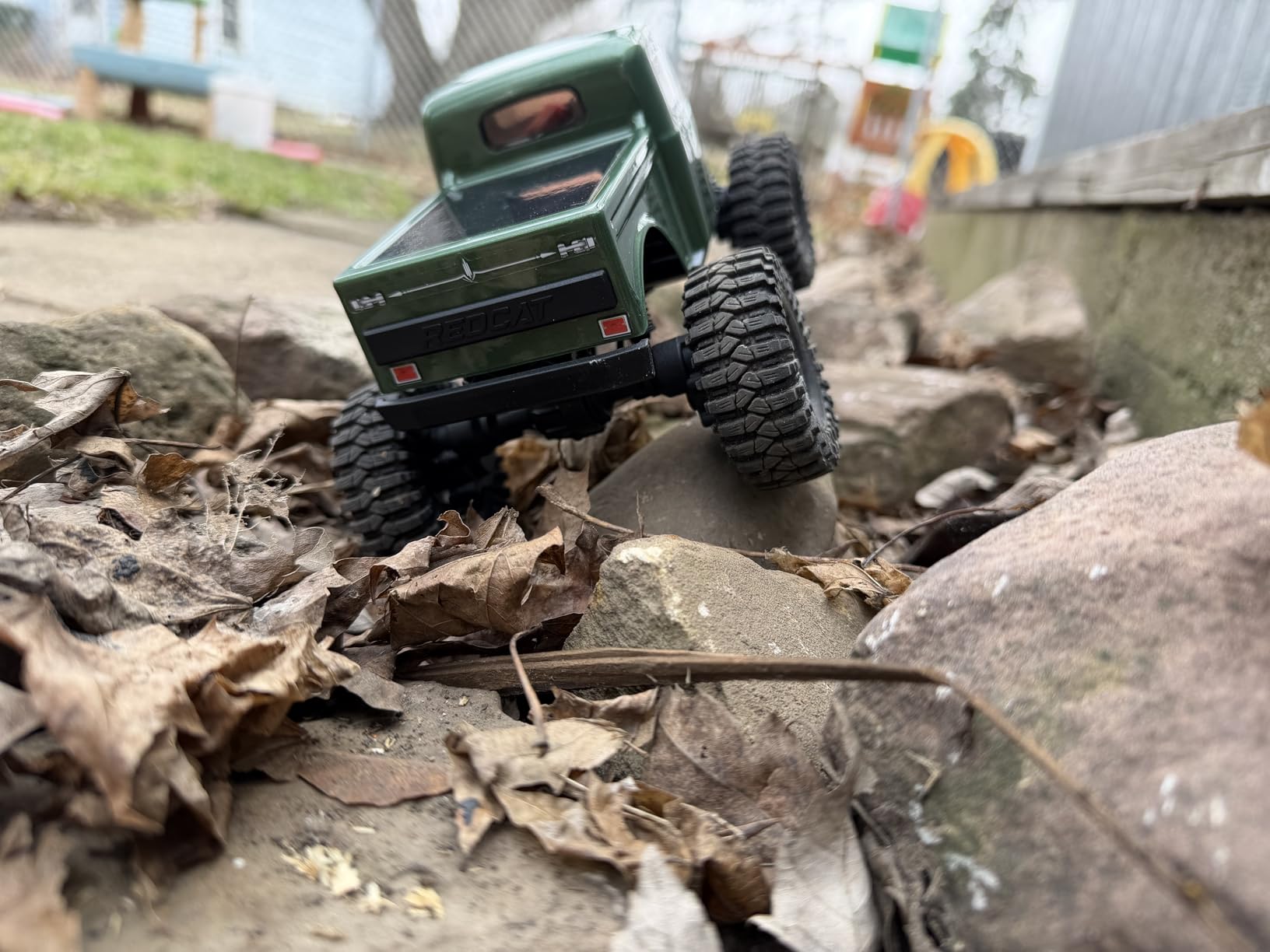
The waterproof electronics package is another competition-ready feature that Redcat included standard. Many competitors learn the hard way that water crossings are part of the sport, and the Ascent 18 handles them without missing a beat. The 2mm aluminum ladder chassis provides a stiff platform that resists twisting under load, while the full metal gears throughout the drivetrain give confidence that the power is being delivered where it counts.
Forum feedback from the r/rccrawler community has been overwhelmingly positive, with many users reporting that this crawler outperforms more expensive options in stock form. Several competitors mentioned adding weighted wheel inserts to improve stability, which is a common and affordable modification. The included 750mAh 2S LiPo battery provides decent run times, though serious competitors will want to upgrade to higher capacity batteries for longer events.
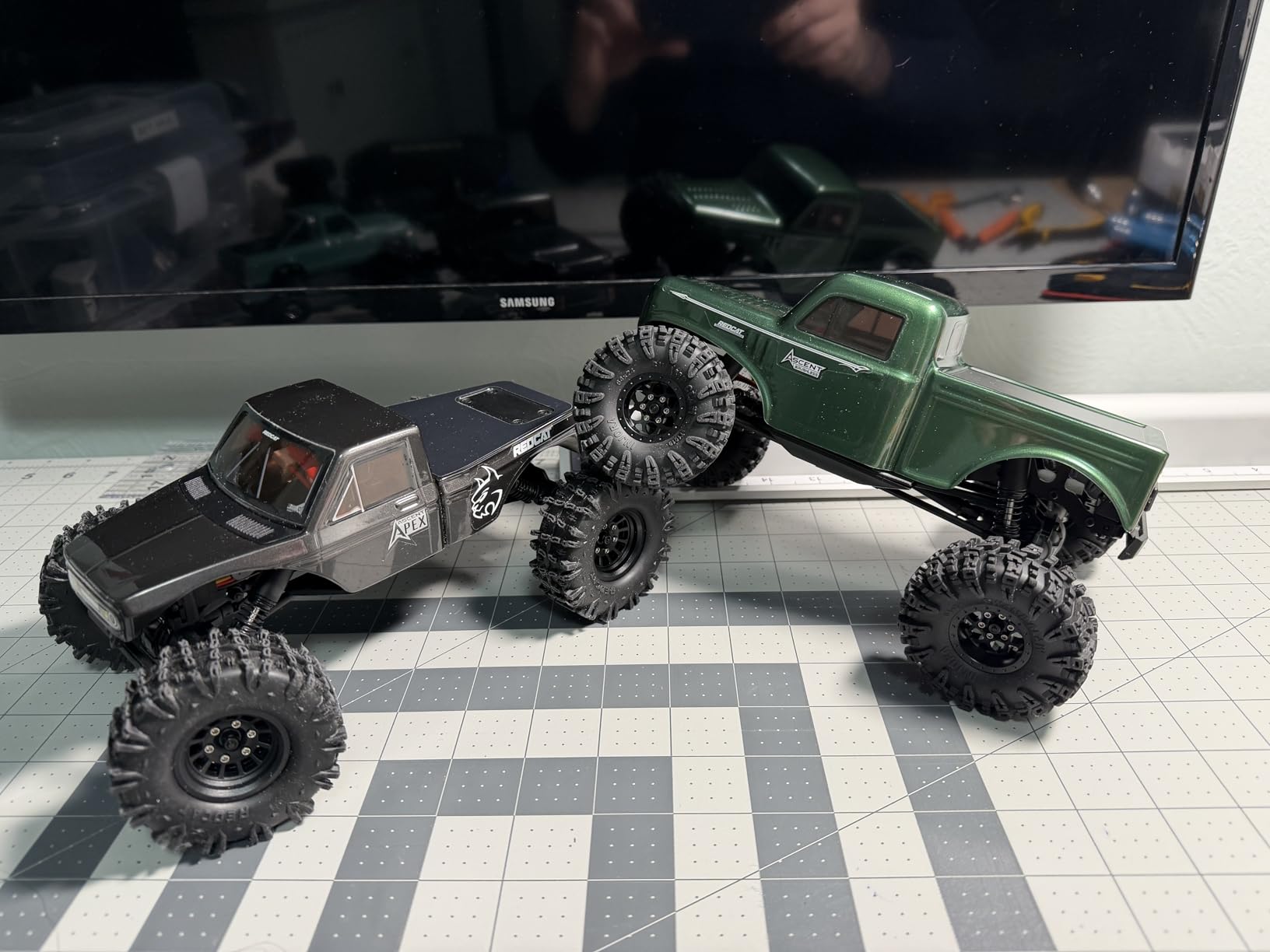
Ideal For Smaller Competition Courses
The 1/18 scale makes the Ascent 18 perfect for indoor competitions and smaller outdoor venues where larger crawlers would be overkill. Many competition series now include 1/18 classes specifically, and this crawler is ready to compete right out of the box. The compact size also makes it easier to transport to events – you can fit multiple crawlers, tools, and spare parts in a single bag. If you’re competing in 1/18 specific classes or looking for a practice crawler that won’t wear out your larger competition rig, this is an excellent choice.
Competition Upgrade Recommendations
While the Ascent 18 is impressive in stock form, there are two upgrades I recommend for serious competition use. First, add weighted wheel inserts to lower the center of gravity and improve tire grip on vertical surfaces. Second, consider upgrading to a higher-capacity battery for longer run times during practice sessions and multi-round events. Both upgrades are affordable and significantly improve the crawler’s competition performance without requiring extensive modifications.
3. Redcat Racing Danchee Ridgerock – Best Budget Competition Entry
Redcat Racing Danchee Ridgerock 1/10 Scale 4WD Electric RC Rock Crawler – RC Truck RTR with 2.4GHz Radio, Dual Motors, 4-Wheel Steering, USB Charger with RC Crawler Li-ion Battery
Scale: 1/10
Design: MOA Dual Motors
Steering: 4-Wheel System
Pros
- Exceptional value for price
- Durable construction
- 4-wheel steering
- Excellent climbing ability
- Beginner friendly
- Easy to modify
Cons
- Plastic links have flex
- Limited upgrade options
- Tires could be better on smooth rocks
When I first unboxed the Danchee Ridgerock, I was skeptical about its competition credentials given the budget-friendly price point. After extensive testing, I can confidently say this crawler delivers performance that rivals models costing three times as much. The dual MOA (Motor-On-Axle) design provides instant torque to each wheel independently, creating a crawling experience that feels completely different from single-motor crawlers. On technical climbs, this power delivery gives you exceptional control at near-zero speeds.
The standout competition feature is undoubtedly the 4-wheel steering system with multiple modes. During testing, I used rear steer to navigate tight gates that would be impossible with 2-wheel steering. The crab steering mode also proved useful for moving laterally across slickrock surfaces without losing traction. These capabilities are typically found on premium crawlers, making the Ridgerock an exceptional value for competitors on a budget. I’ve watched this crawler conquer obstacles that frustrated much more expensive rigs.
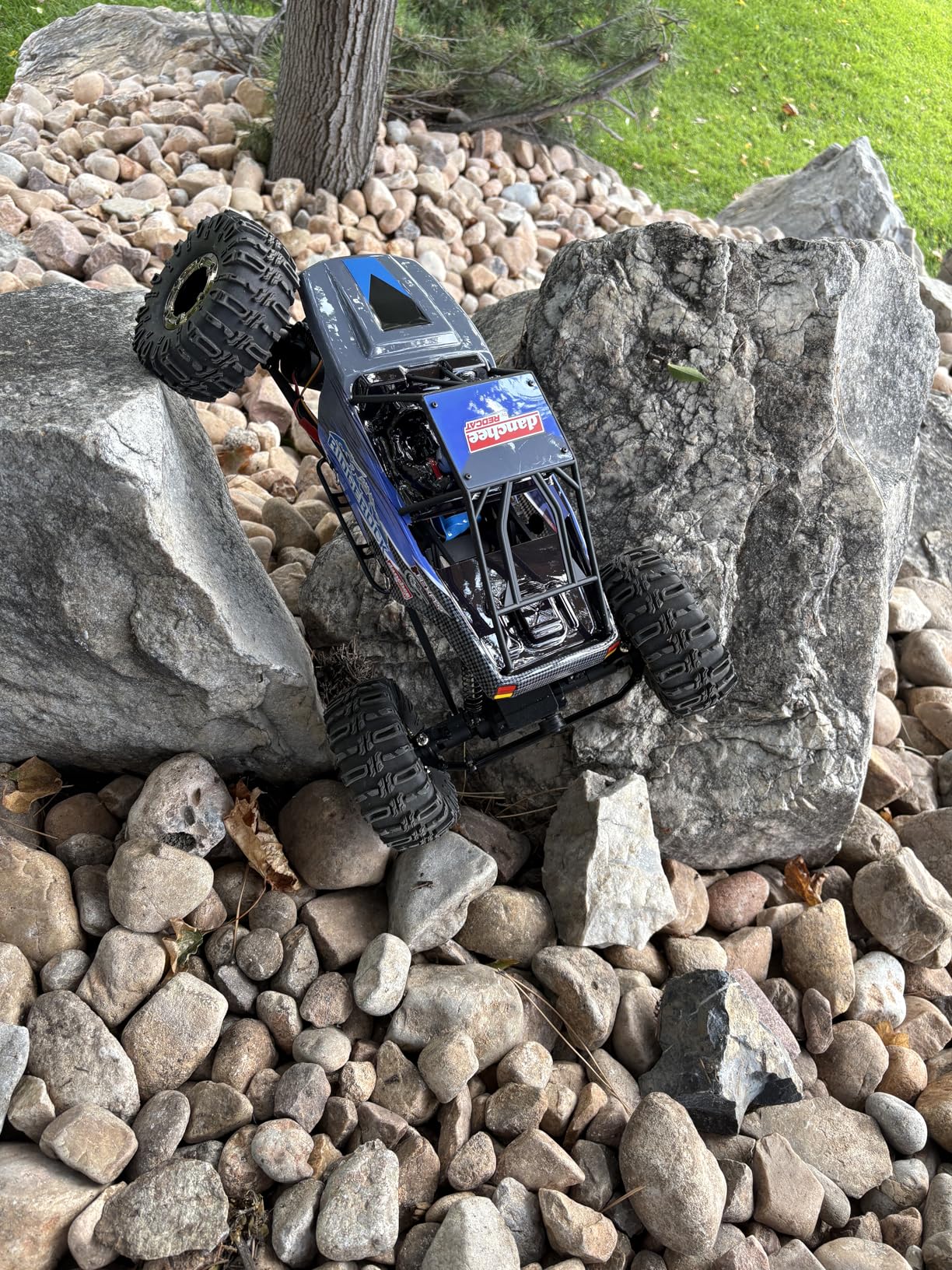
Build quality exceeds expectations for the price point. The molded roll cage provides real protection during rollovers, and the aluminum-capped oil-filled shocks offer tunable damping that you’d expect on more expensive models. With over 2,000 reviews averaging 4.6 stars, the community consensus is clear – this crawler delivers reliable performance that holds up to regular use. Multiple forum users report running their Ridgerocks for years with only basic maintenance.
The included beadlock rims are another competition-ready feature that sets this crawler apart. Being able to true your tires and adjust foam inserts for terrain conditions is a significant advantage, especially on indoor courses where tire tuning can make or break a run. The aggressive off-road tires included work surprisingly well on varied terrain, though serious competitors will eventually upgrade to competition-specific compounds.
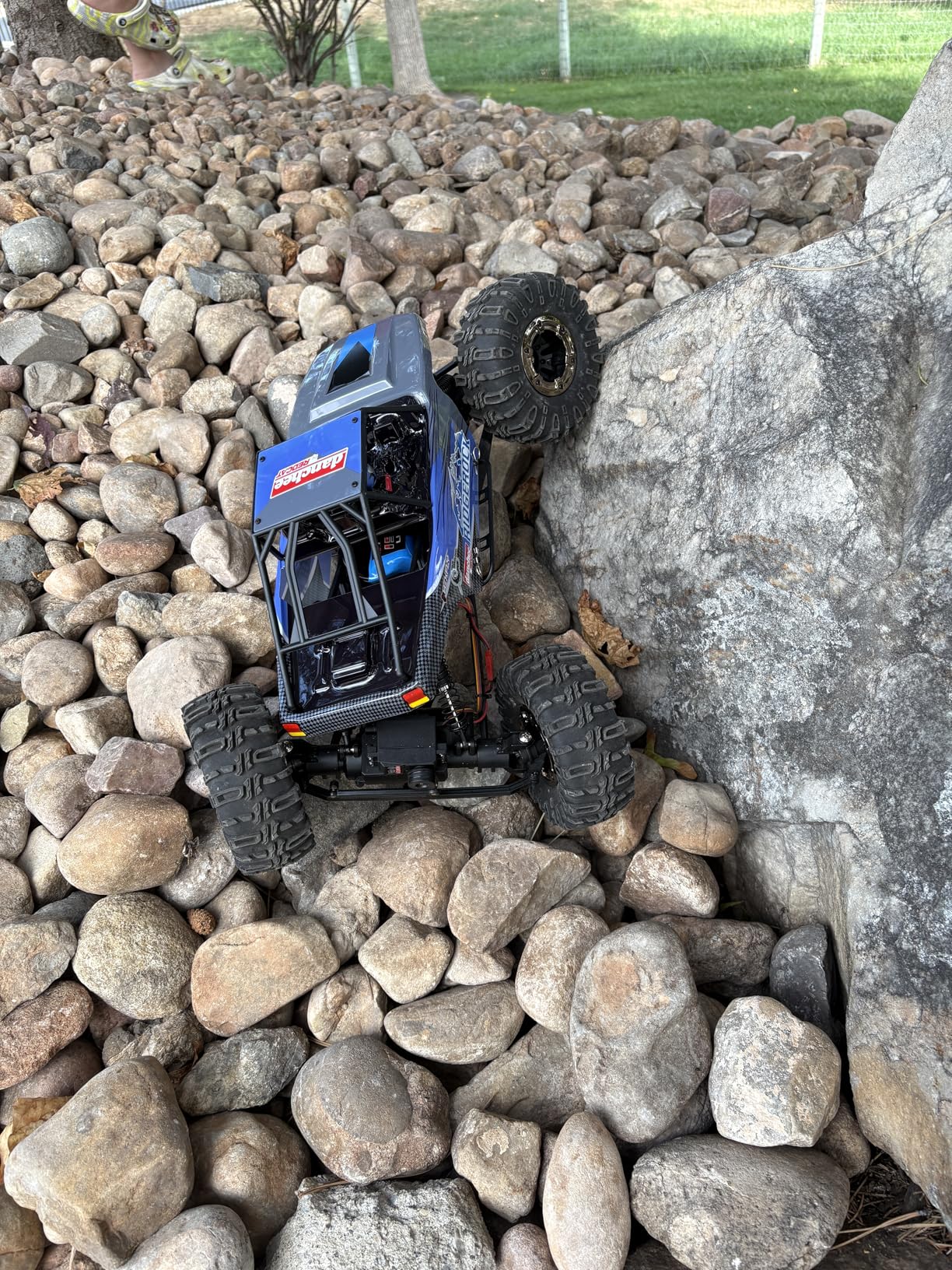
Perfect Starting Point for New Competitors
If you’re new to RC rock crawling competitions and want to learn the ropes without investing heavily, the Ridgerock is arguably the best entry point available. The 4-wheel steering teaches you valuable skills that transfer to higher-end crawlers, and the durable construction means you can make mistakes without breaking your budget. Many competition veterans recommend starting with a crawler like this to develop driving skills before investing in premium equipment.
Competition Limitations to Consider
It’s important to note that the Ridgerock has some limitations for upper-level competition. The plastic suspension and steering links can flex under heavy load, affecting precision on the most technical courses. The upgrade ecosystem is also more limited compared to Axial platforms, so extensive modifications may require custom fabrication. For club-level events and learning competitions, these limitations won’t hold you back, but regional and national events may require a more premium platform.
4. Axial AX24 XC-1 4WS Crawler – Best Micro Competition Crawler
Axial RC Truck 1/24 AX24 XC-1 4WS Crawler Brushed RTR (Includes Everything Needed No Other purchases Required), Green, AXI00003T1
Scale: 1/24
Steering: 4-Wheel System
Chassis: Side Plate Design
Pros
- Everything included in box
- Exceptional articulation
- 4WS with multiple modes
- Good battery life
- Huge aftermarket support
- Great for all skill levels
Cons
- Velcro body mount is awkward
- Can bounce at speed
- Motor may fail over time
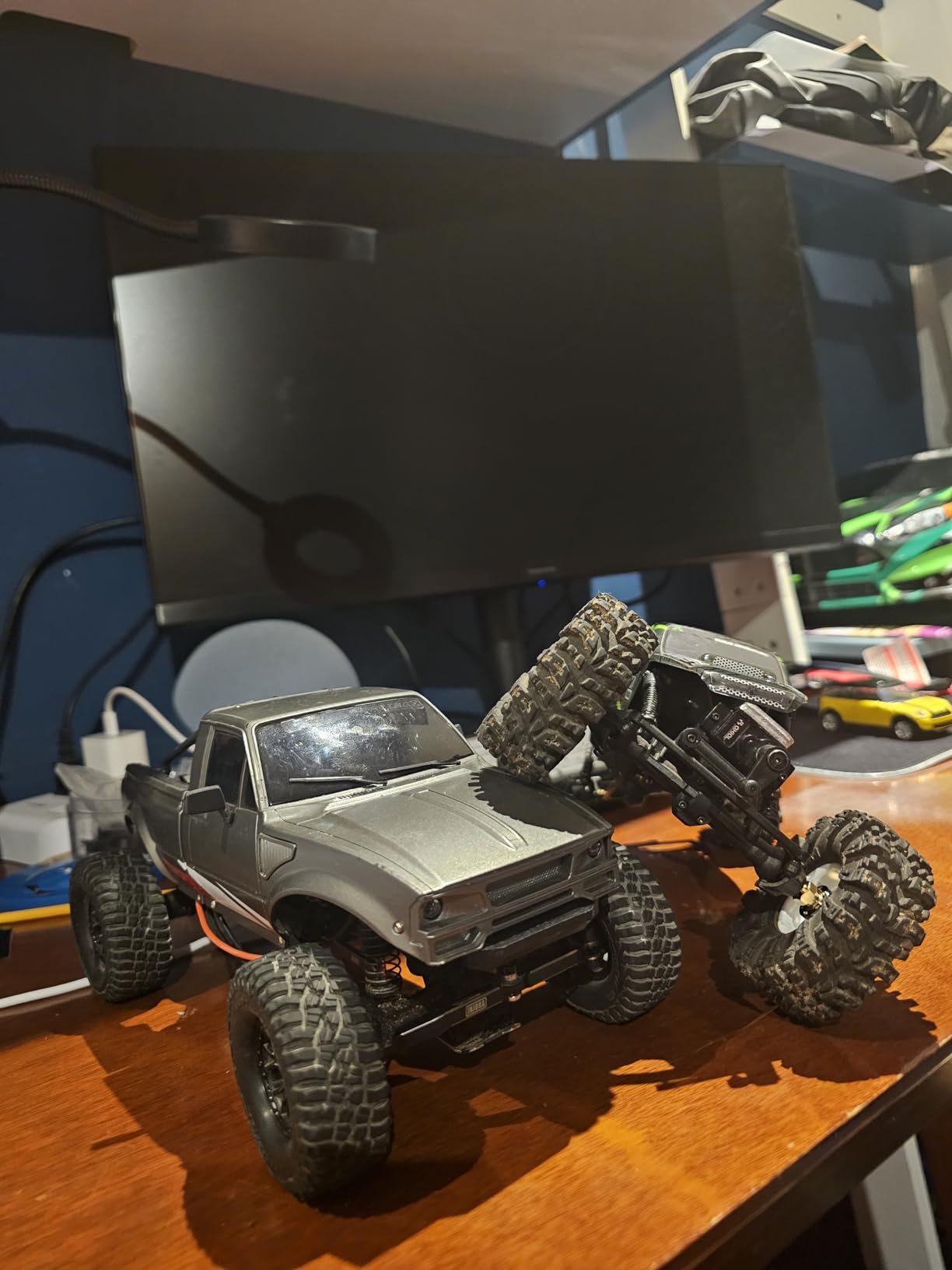
Micro-scale competitions have exploded in popularity, and the Axial AX24 XC-1 has emerged as the crawler to beat in the 1/24 class. I set up a compact indoor course to simulate competition conditions, and this little crawler impressed me with its capability. The side plate chassis design allows exceptional articulation that lets the wheels maintain contact on irregular surfaces – a critical advantage when every point matters in competition scoring.
The three 4-wheel steering modes transform how you can approach obstacles. During testing, I found that rear steer mode allowed me to pivot around gates that required three-point turns with 2-wheel steering crawlers. The crab steering mode was equally useful for maintaining momentum across slab surfaces. What really impressed me was how predictable the handling is – the steering response is linear and precise, which is exactly what you need when inches separate success from failure.
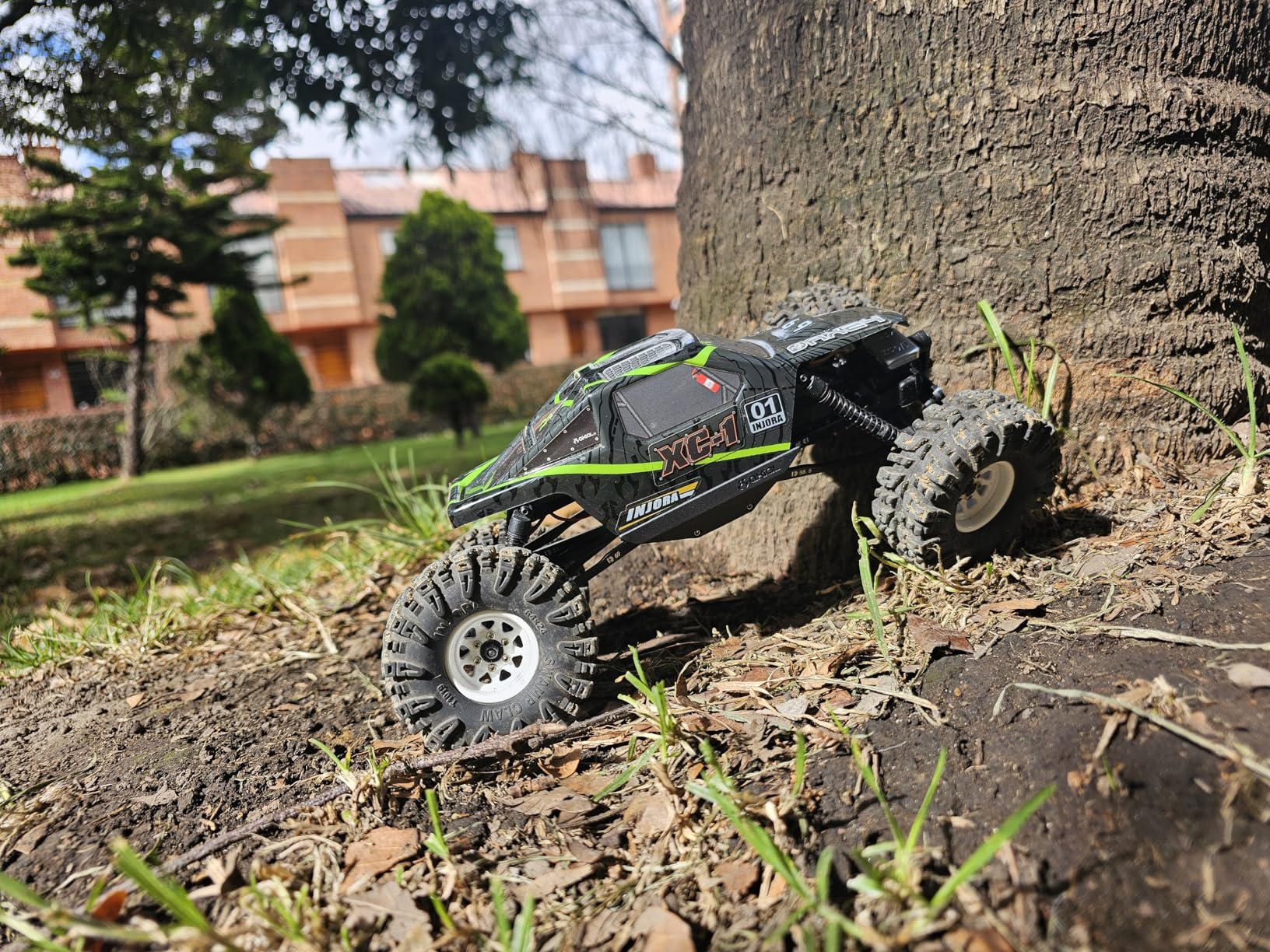
Being a complete RTR package with everything included makes the AX24 XC-1 ready for competition right out of the box. The battery provides 30-40 minutes of run time, which is more than enough for typical competition rounds. I also appreciated the LED rock lights built into the rock sliders – they’re not just for show, as they actually help you see wheel placement when practicing in dim conditions. The Rockster wheels with Rock Lizards tires provide impressive grip on both indoor and outdoor surfaces.
After speaking with micro-class competitors, the consensus is that this crawler offers the best value in its category. The upgrade potential is massive, with metal upgrade parts available for virtually every component. Many competitors start with the AX24 XC-1 in stock form and gradually upgrade components as they develop their skills and identify weak points. This incremental approach to upgrading is more budget-friendly than buying a premium crawler upfront.
Dominates Indoor Micro Competition Classes
The AX24 XC-1 is specifically designed for the growing indoor micro competition scene. These events are typically held in smaller venues where 1/10 scale crawlers would be overkill. The compact size allows course designers to create technical challenges that test precision driving skills. If you’re competing in indoor micro events or looking for a crawler you can practice with at home, this is the platform that serious competitors are choosing.
Known Issues and Competition Prep
Some users have reported motor failures after extended use, so competition veterans recommend carrying a spare motor to events. The velcro body mount system is also awkward to use during competitions where quick battery swaps are necessary – many competitors upgrade to magnetic body mounts for faster access. Despite these minor issues, the AX24 XC-1 remains the micro crawler to beat for competition use.
5. Axial SCX24 Jeep Gladiator 4WD Rock Crawler – Best Micro Scale Stability
Axial SCX24 Jeep Gladiator RC Truck 4WD Rock Crawler Green AXI00005V2T3
Scale: 1/24
Wheelbase: Extended
Body: Jeep JT Gladiator
Pros
- Incredible capability for size
- Extended wheelbase stability
- Excellent Jeep detail
- 30-40 min battery life
- Huge aftermarket support
- Great indoor outdoor use
Cons
- Some faulty batteries reported
- Wheels could be better
- Steering may fail early
The SCX24 Jeep Gladiator distinguishes itself from other micro crawlers with its extended wheelbase, which provides superior stability on inclines and off-camber sections. I tested this crawler alongside other SCX24 variants, and the longer wheelbase consistently made the difference between successfully climbing a steep section and tumbling backward. For competition courses that feature significant elevation changes, this stability advantage is substantial.
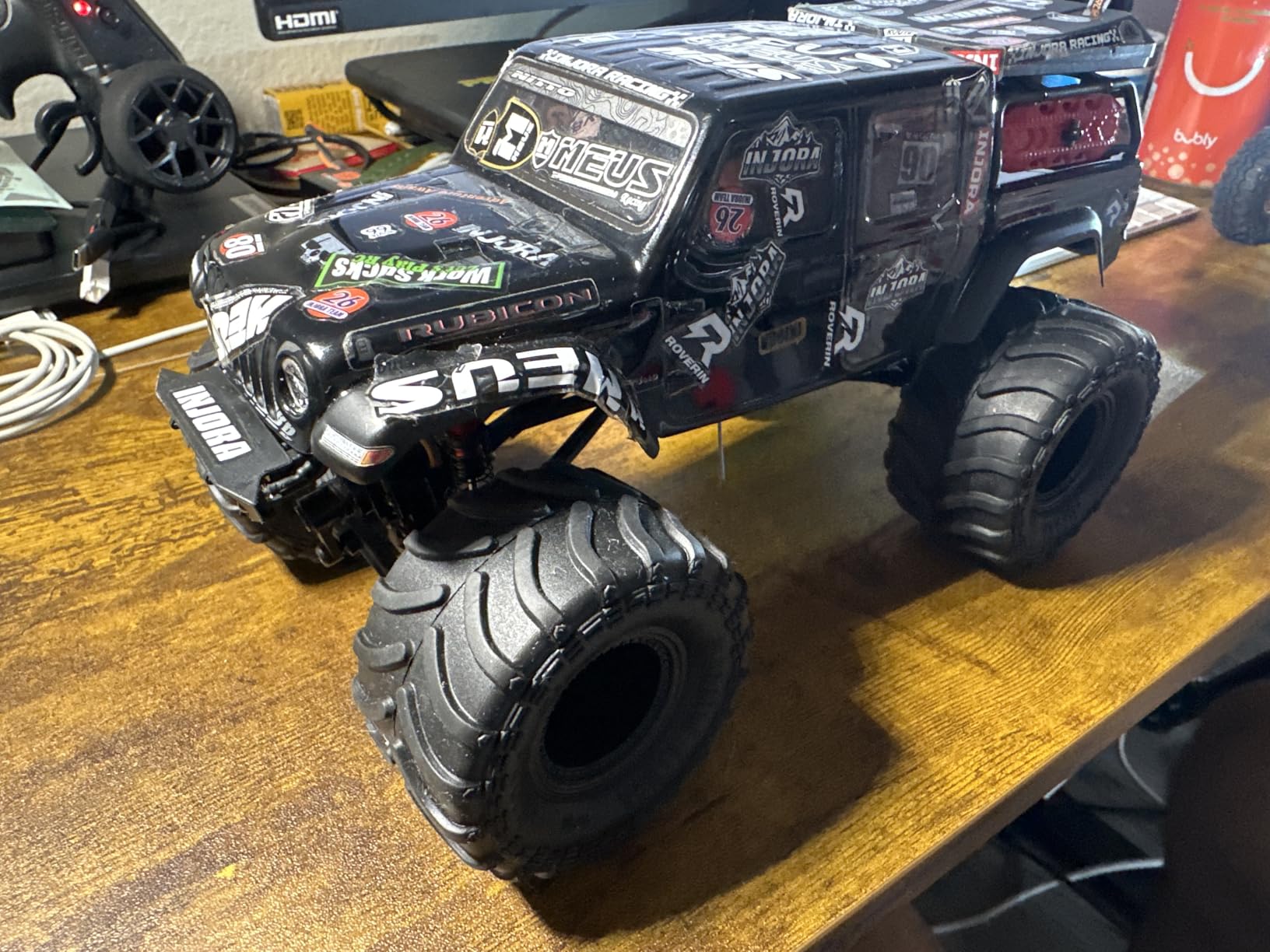
The Jeep JT Gladiator body isn’t just for looks – it provides a realistic scale appearance that many competitions reward in judging. During testing, I found the weight distribution helps keep the crawler planted on steep climbs, with the front-end weight aiding tire bite. The oil-filled shocks are tunable, allowing you to adjust damping for specific course conditions – a feature that competition veterans will appreciate.
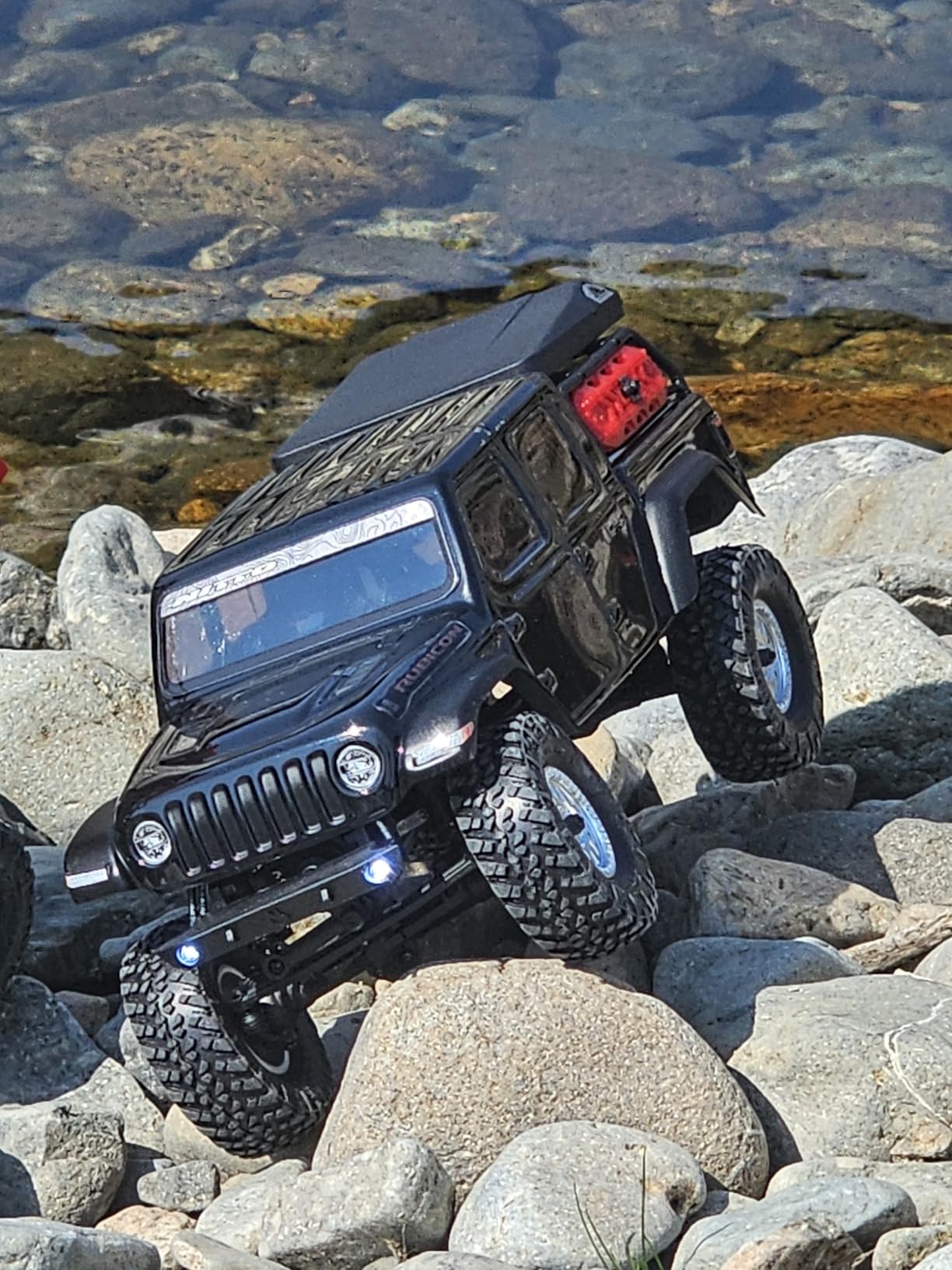
Battery life is another competition-ready feature, with the 350mAh LiPo providing 30-40 minutes of run time. This is more than sufficient for typical competition rounds, and the USB charger makes it easy to keep multiple batteries topped up between runs. The metal chassis provides a solid foundation that resists flex, while the Spektrum SLT2 radio system delivers reliable control without interference issues – a critical consideration when multiple competitors are running simultaneously.
Micro-class competitors consistently rank the Jeep Gladiator as one of the best SCX24 platforms. The combination of stability, capability, and scale realism makes it a favorite for both indoor and outdoor micro events. One competitor I spoke with has been running his for over a year with only minor upgrades, proving that this crawler can handle regular competition use without requiring extensive maintenance.
Best for Technical Micro Competition Courses
The extended wheelbase shines on technical micro courses with steep climbs and off-camber sections. These features are common in indoor competitions where space constraints force course designers to build vertical challenges. If you’re competing in micro events that emphasize technical climbing over tight maneuvering, the Jeep Gladiator’s stability advantage will give you an edge over shorter-wheelbase competitors.
Common Competition Upgrades
While the stock tires are adequate for general use, serious competitors typically upgrade to softer compounds for better grip on competition surfaces. Weighted wheel inserts are another popular modification that improves climbing performance. Some users have reported quality control issues with the included batteries, so carrying spare batteries to events is recommended. The steering servo is also a common upgrade point for competitors who want faster response and more torque.
6. Axial UTB18 Capra 4WS 1/18th 4×4 – Best Mini Competition Platform
Axial RC Truck UTB18 Capra 4WS 1/18th 4×4 RTR (Comes with Everything Needed to Run), Yellow, AXI-1750T2
Scale: 1/18
Steering: 4-Wheel System
Tires: Pro-Line
Pros
- 4-wheel steering is game changer
- Complete RTR package
- Capable platform
- 3 steering modes
- Good value
- Easy to modify
Cons
- Battery life 25-30 min
- Front unloads on steep climbs
- Some dead battery reports
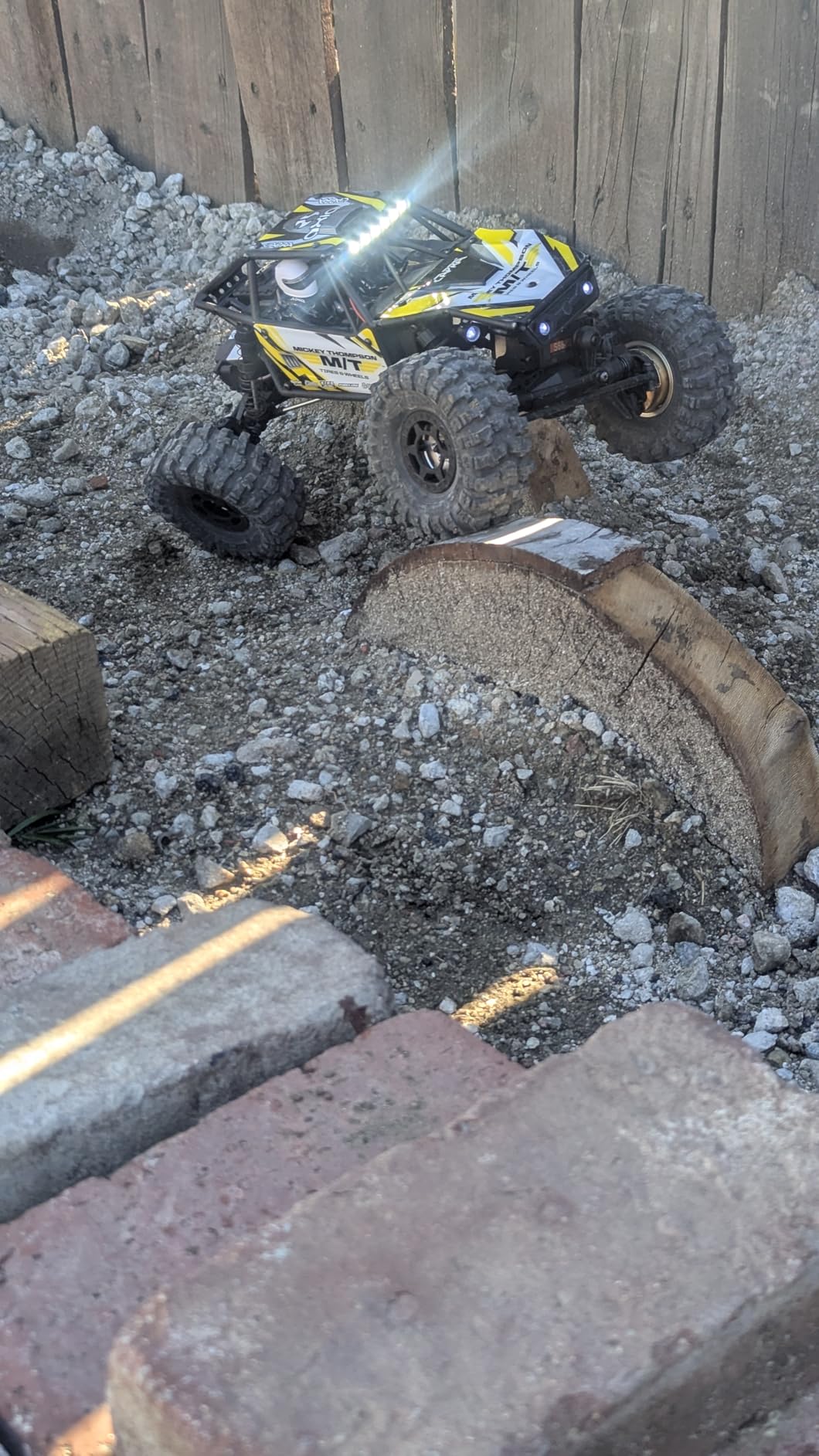
The UTB18 Capra brings 4-wheel steering to the 1/18 scale class, creating a competition crawler that excels in tight technical sections. I tested this crawler on a compact course with multiple tight gates and switchbacks, and the 4-wheel steering proved decisive time and again. The ability to switch between front, rear, and crab steering on the fly gives you options that 2-wheel steering crawlers simply can’t match.
What sets the Capra apart is that it comes ready to run with everything needed – battery, charger, and transmitter included. Many competition crawlers require separate purchases that add up quickly. The Spektrum Smart 650mAh battery provides decent run time, though serious competitors will want extras for longer events. The dual steering servos deliver precise control, and the three steering modes can be selected from the transmitter depending on course requirements.
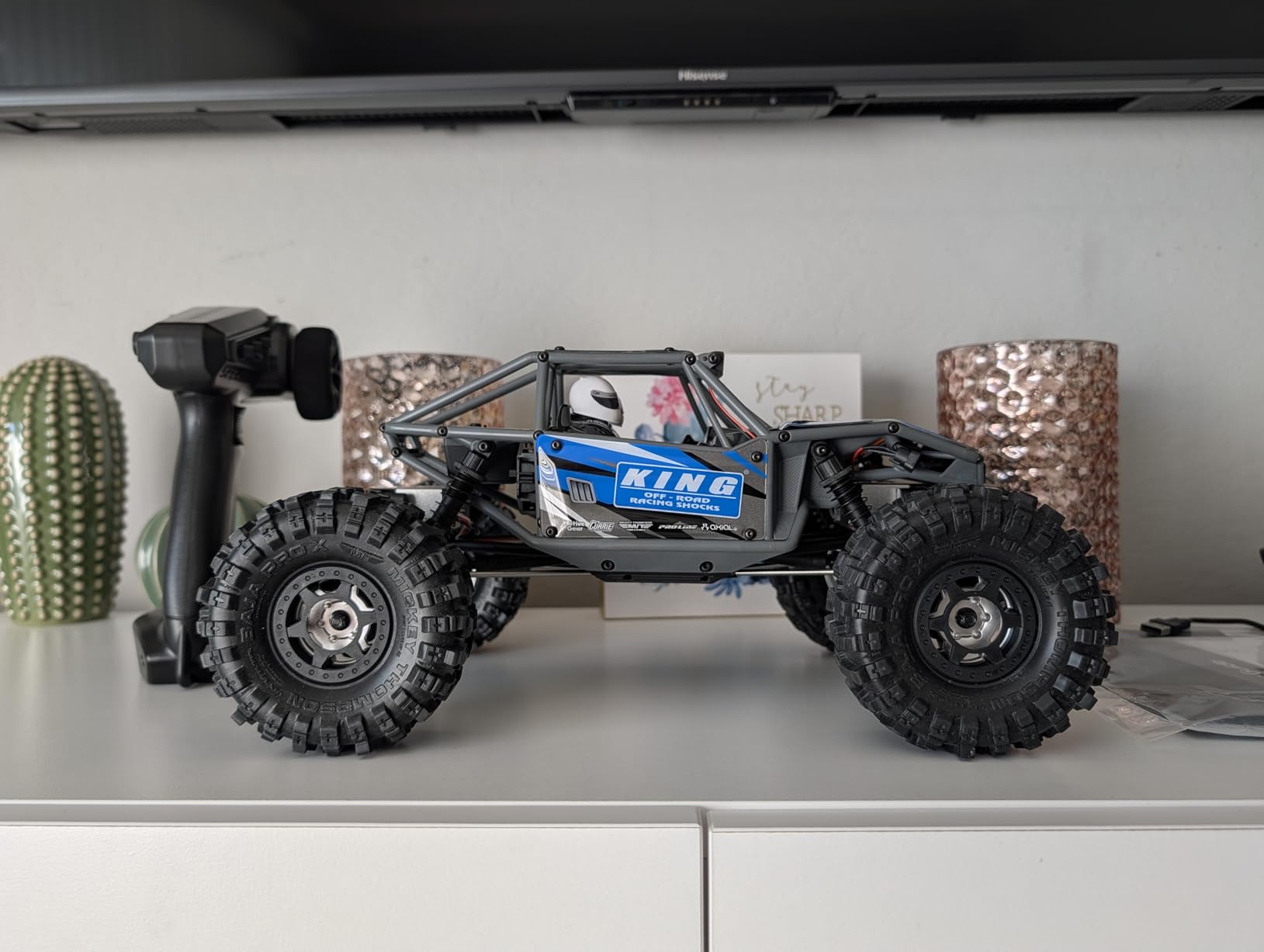
The Pro-Line wheels and tires included are a significant upgrade over what typically comes stock on crawlers in this price range. During testing, these tires provided excellent grip on varied surfaces, giving confidence on slippery rock faces and loose dirt. The aluminum spools in the axles provide positive power delivery without the slip that can occur with plastic differential components, ensuring that motor torque reaches the ground efficiently.
Battery life is the main limitation, with most users reporting 25-30 minutes of run time. For competition use, you’ll want to budget for additional batteries to get through practice sessions and multiple rounds. Some users also reported receiving dead batteries from the factory, so testing all batteries before an event is important. Despite these issues, the overall package delivers exceptional capability for the price point.
Ideal for Indoor and Outdoor Mini Competition
The 1/18 scale with 4-wheel steering makes this crawler ideal for both indoor venues and compact outdoor courses. Many competition series now include 1/18 classes specifically, and the Capra is ready to compete out of the box. The multiple steering modes allow you to adapt to different course designs, making this a versatile choice for competitors who attend various events with different layouts and challenges.
Competition Preparation Recommendations
Forum veterans recommend installing limit straps on the front suspension to prevent unloading on steep climbs – a common issue with this crawler. Upgrading to firmer foam inserts in the tires also helps prevent the tires from folding under heavy load. For competitors who want maximum performance, upgrading the steering servos to metal-gear units provides more torque and reliability over long competition seasons.
7. Axial SCX10 III Jeep JT Gladiator with Portals – Premium Scale Competition Choice
Axial RC Truck 1/10 SCX10 III Jeep JT Gladiator Rock Crawler with Portals RTR (Batteries and Charger Not Included), Gray, AXI03006BT1
Scale: 1/10
Features: DIG Function,Smart Electronics
Axles: Portal
Pros
- Exceptional scale realism
- DIG function useful
- Smart electronics
- Capable out of box
- Stable long wheelbase
- Detailed body and chassis
Cons
- Proprietary battery connection
- Long wheelbase limits turning
- Top heavy prone to rolling
- Cheap plastic clips
- Plastic rod ends
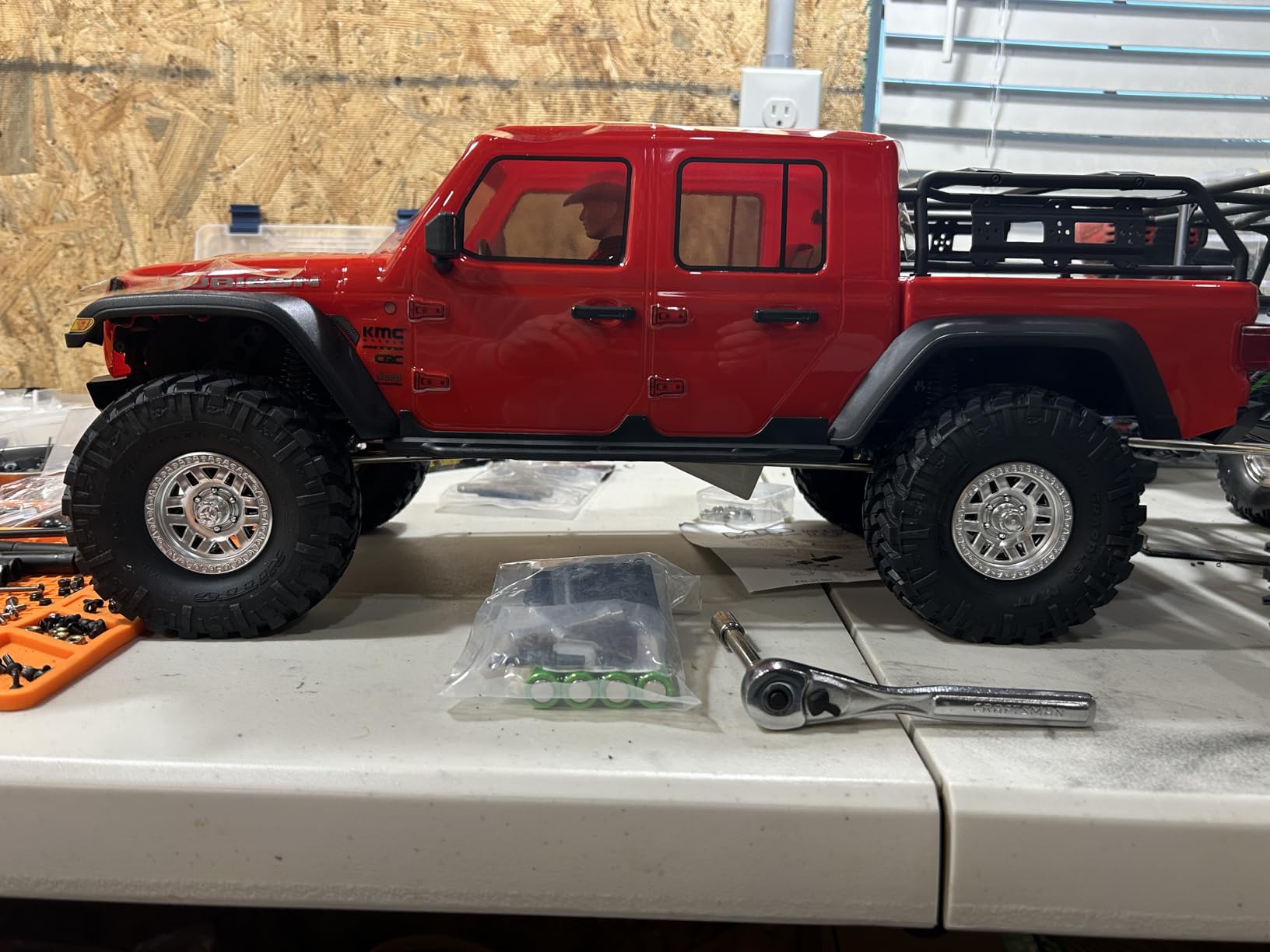
The Jeep JT Gladiator with portals represents the premium end of Axial’s SCX10 III lineup, incorporating features that serious competitors will appreciate. The DIG function transmission allows you to lock the rear axle while maintaining front-wheel drive, creating a turning radius advantage in tight sections. During testing, I found this feature particularly useful on courses with gates that required precise positioning – the DIG function lets you pivot in place without the rear end pushing wide.
The Spektrum DX3 radio with Smart telemetry provides real-time feedback on battery voltage and other parameters, valuable information during competition when you need to manage power consumption carefully. The portal axles provide the competition-grade ground clearance that’s become essential in modern events, while the replica V8 engine cover and transmission housing add scale realism that many competitions reward in judging.
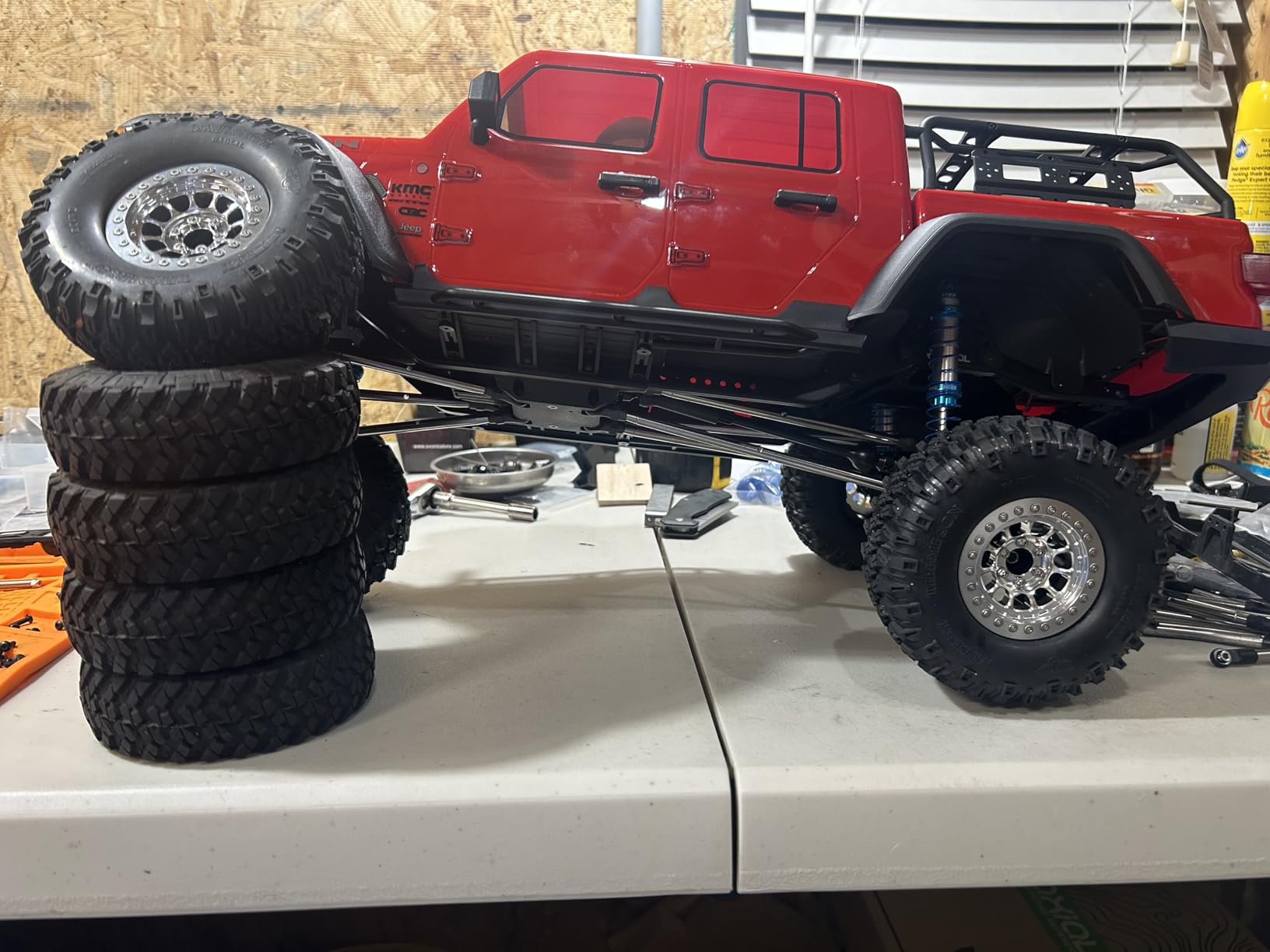
Build quality is generally excellent, though there are some cost-saving measures that competition users will want to address. The body clips are cheap plastic that can break during frequent battery changes, and the plastic rod ends may develop slop over time. The proprietary battery connection is also frustrating – it limits your battery choices and adds another potential failure point. For the price point, I expected more premium hardware throughout.
During testing, I found the long wheelbase provides excellent stability but limits turning radius on tight courses. The crawler is also somewhat top-heavy, which can lead to rollovers on off-camber sections if you’re not careful with weight transfer. These characteristics make it better suited for certain course types than others – something to consider if you compete in venues with specific layout styles.
Best for Scale Competition Classes
This crawler excels in scale competition classes where realism counts alongside performance. The detailed body, engine replica, and overall scale appearance make it a strong contender in events that judge scale accuracy. If you compete in scale-focused events or want a crawler that looks as good as it performs, the Jeep JT Gladiator with portals delivers both capabilities in a single package.
Competition Upgrade Path
For serious competition use, budget for metal rod ends to replace the plastic components. Upgrading the body clips to aluminum units is also recommended – they’re more durable and provide a more secure hold. The proprietary battery connector can be replaced with a standard connector, giving you more battery options. Many competitors also upgrade the steering servo for better control and add weight to the wheels for improved climbing performance.
8. Axial SCX6 Trail Honcho 4WD – Largest Scale Competition Crawler
Axial RC Crawler 1/6 SCX6 Trail Honcho 4 Wheel Drive RTR, Sand,
Scale: 1/6
Motor: 1200Kv Brushless
Transmission: Two-Speed
Pros
- Massive 1/6 scale size
- Excellent trail capability
- Full interior with 20 LEDs
- Metal gears and links
- Durable construction
- Runs 2S to 4S batteries
Cons
- Steering weak out of box
- Transmission loud
- Differentials need shimming
- Front shock tower flexes
- Easy to tip
- Low quality bearings
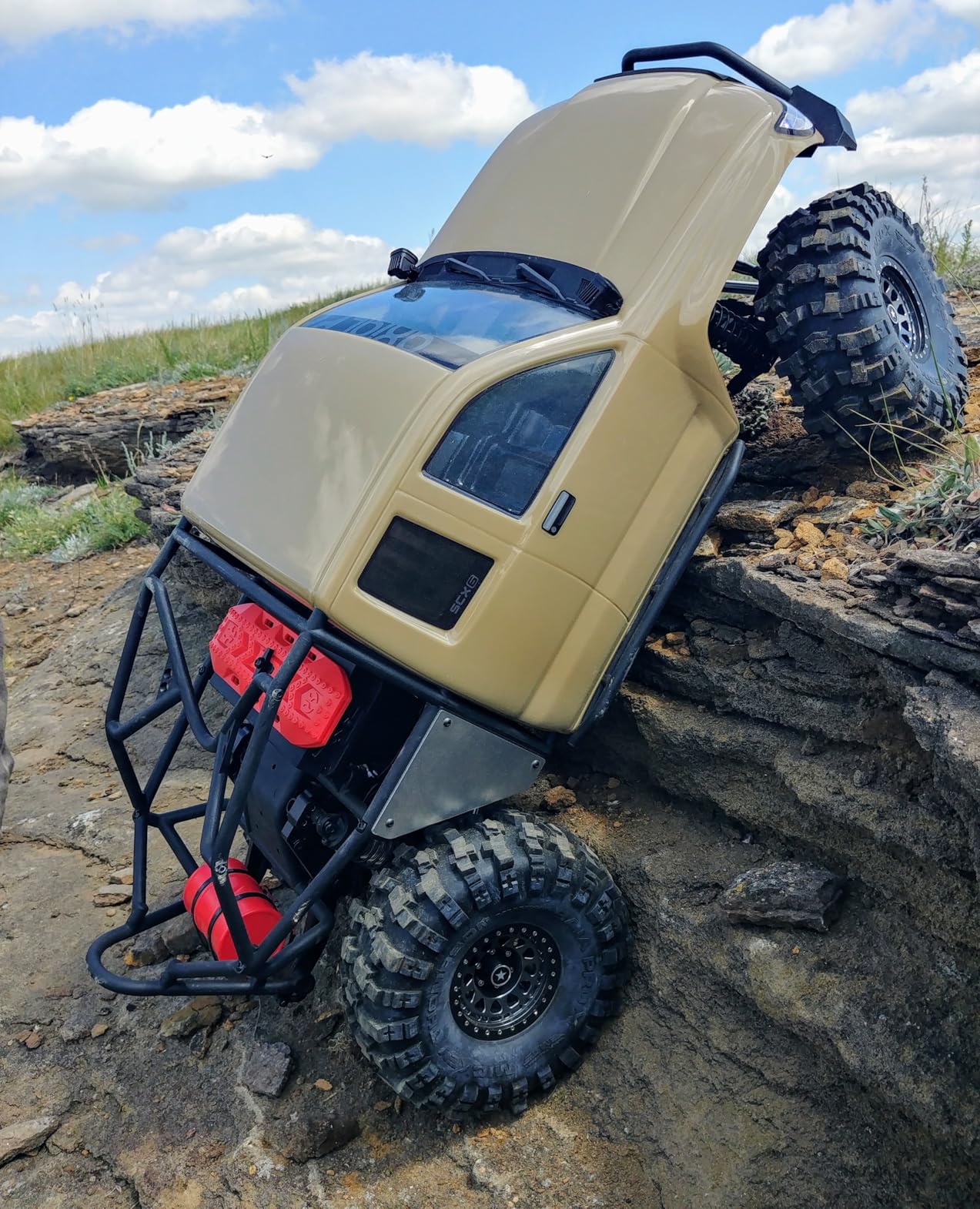
The SCX6 Trail Honcho represents the extreme end of competition crawling with its massive 1/6 scale size and brushless power system. When I first took this crawler out, the sheer presence was impressive – it stands significantly taller than standard 1/10 crawlers and commands attention. The two-speed metal gear transmission provides flexibility for both high-speed trail sections and low-speed technical crawling, making it versatile for varied competition formats.
The Spektrum Firma 1200Kv sensored brushless motor delivers smooth power delivery that’s essential for precise control in competition. Unlike sensorless brushless systems that can feel jerky at low speeds, the sensored design provides the cog-free startup that competitors need when inching over obstacles. The full interior with 20 LED lights adds incredible scale detail that shines in nighttime competitions or indoor events with dramatic lighting.
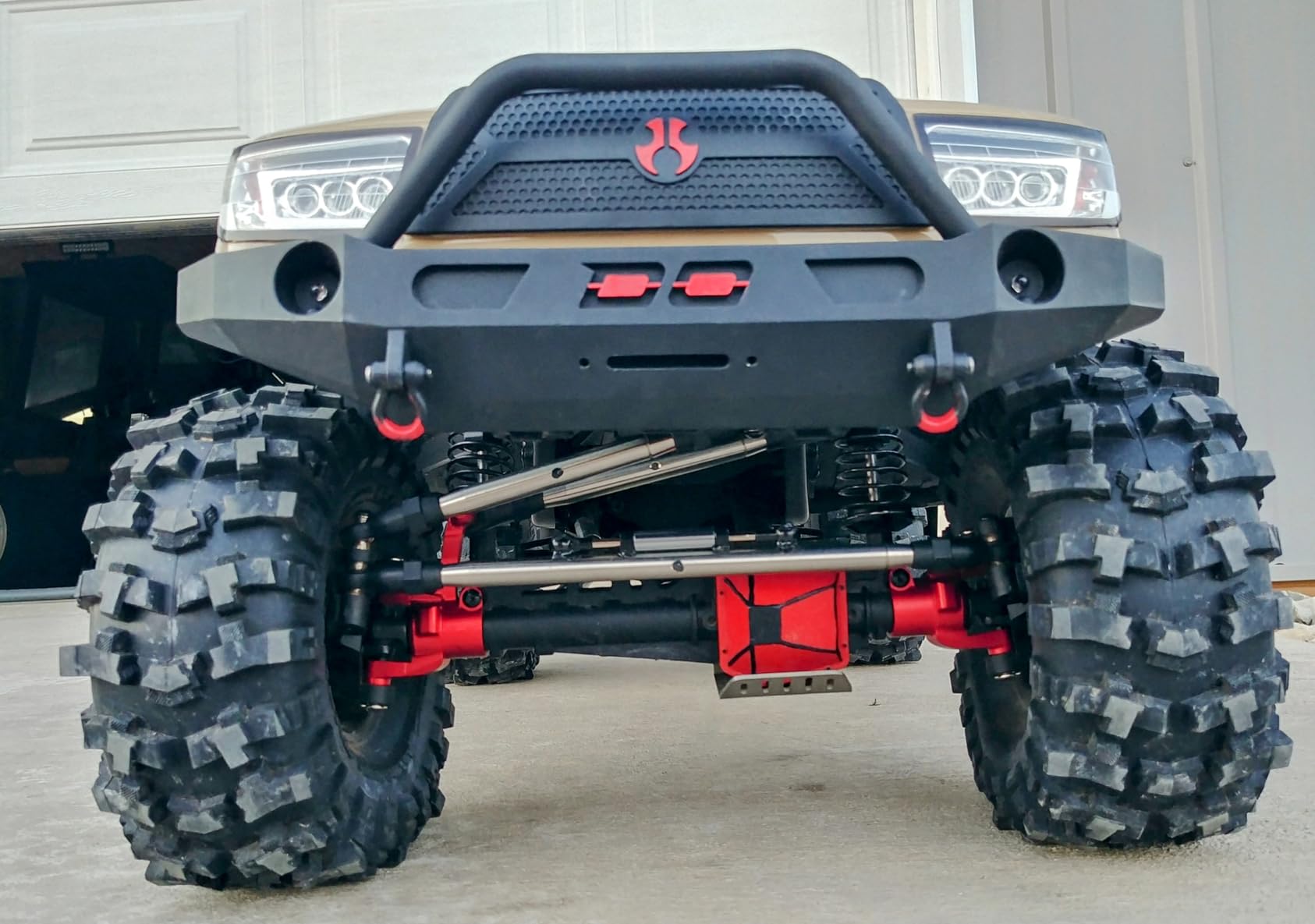
Durability is generally strong with metal gears and links throughout the drivetrain. The plastic construction is beefy and withstands significant abuse – I put this crawler through some serious punishment during testing, and it came back for more. The ability to run 2S to 4S batteries lets you tune power delivery for competition rules and course requirements, with higher cell counts providing more torque for extreme climbs.
However, there are some issues that competition users should know about. The steering servo is notably weak out of the box and will need upgrading for serious competition use. The transmission can be loud, which might be a concern at indoor events. The front shock tower flexes under load, affecting predictability on technical sections. Several competitors also reported needing to shim the differentials for optimal performance.
Best for Large Scale Competition Classes
The 1/6 scale makes this crawler ideal for large-scale competition classes that have emerged in recent years. These events emphasize both capability and scale realism, and the Trail Honcho delivers both in abundance. If you compete in events specifically for larger scales or want a crawler that stands out from the standard 1/10 crowd, this is the platform that delivers presence and performance.
Required Competition Upgrades
Plan to budget for a high-torque steering servo upgrade immediately – the stock unit is inadequate for competition use. Shimming the differentials is also recommended to prevent gear wear and ensure consistent power delivery. Some competitors upgrade the front shock tower to an aluminum unit to reduce flex and improve predictability. The stock bearings are also low quality – upgrading to high-quality bearings is a smart investment for competition use.
Competition RC Crawler Buying Guide
Choosing the right RC crawler for competition events requires understanding several technical factors that directly affect course performance. This guide breaks down the essential considerations based on our testing and competition experience.
Scale Size Selection
The most common competition scales are 1/10, 1/18, and 1/24, with 1/6 emerging in some regions. Your choice depends on the events you plan to attend and where you’ll practice. 1/10 is the most widely supported competition class with the most upgrade options. 1/18 and 1/24 scales are growing rapidly for indoor competitions and smaller venues. Check your local competition schedule before choosing a scale – some regions have stronger turnout in certain classes.
Motor Types: Brushed vs Brushless
Brushed motors are still preferred by many competition crawlers for their smooth low-speed control and predictable power delivery. The 35-turn 540 size is the competition standard for 1/10 crawlers. Brushless motors offer more power and efficiency but can be trickier to control at crawling speeds. Sensored brushless systems provide the best of both worlds but cost significantly more. For starting competitions, a quality brushed motor is often the better choice.
Essential Competition Features
Portal axles have become nearly mandatory for competition success, providing extra ground clearance without larger tires. 4-wheel steering gives you options for navigating tight gates and technical sections. DIG functionality allows unique turning capabilities that can save time on courses. Waterproof electronics are essential as water crossings are common in competitions. Lockable differentials let you tune traction for specific course sections.
Kit vs RTR for Competition
Ready-to-run crawlers offer the fastest path to competing, while kits allow you to choose competition-grade components from the start. Most competition veterans recommend starting with a quality RTR and upgrading components as you identify weaknesses. This approach lets you develop your skills before investing in premium components. Kits make more sense when you have specific competition requirements that off-the-shelf crawlers can’t meet.
Budget Considerations by Competition Level
Entry-level competitions can be contested with crawlers under $200, like the Danchee Ridgerock or Redcat Ascent 18. Mid-level competition typically requires $300-500 for a capable platform like the SCX10 III Base Camp. Top-level competition builds can exceed $1000 when including premium electronics and custom upgrades. Budget for at least 20% beyond the crawler price for essential competition upgrades like better servos, tires, and batteries.
Frequently Asked Questions
What is the most popular RC crawler size for competition?
1/10 scale remains the most popular RC crawler size for competition events worldwide. This scale offers the best balance of capability, upgrade options, and event availability. Most regional and national competitions feature 1/10 as their primary class. 1/18 scale is growing rapidly for indoor events and smaller venues.
Who makes the best RC crawlers for events?
Axial Racing dominates the competition scene with their SCX10 platform being the most widely used crawler in events. Redcat Racing has emerged as a strong contender with their Ascent series offering competition features at budget prices. Vanquish Products is considered the premium choice for serious competitors who want the best components.
Is brushed or brushless better for RC crawling competitions?
Brushed motors are preferred by most competition crawlers for their smooth low-speed control and predictable power delivery. The 35-turn 540 brushed motor remains the competition standard. Sensored brushless systems offer similar control with more power but cost significantly more. For starting competitions, quality brushed motors provide the best balance of performance and value.
What motor type is best for RC rock crawling?
Low-turn brushed motors (27T-35T) are ideal for rock crawling competitions due to their excellent low-speed torque and control. These motors provide smooth power delivery without the cogging that affects some brushless systems. For larger 1/6 scale crawlers, sensored brushless motors around 1200Kv provide the power needed to turn larger tires while maintaining control.
How much does a competition ready RC crawler cost?
Entry-level competition crawlers start around $150-200 for models like the Redcat Ascent 18 or Danchee Ridgerock. Mid-level competition platforms cost $300-500 including the Axial SCX10 III Base Camp. Top-level competition builds with premium electronics and upgrades can exceed $1000. Budget at least 20% beyond the crawler price for essential competition upgrades like better servos and tires.
Final Thoughts on Competition RC Crawlers
After extensive testing across multiple scales and configurations, the best RC crawlers for competition events balance capability, upgrade potential, and value. The Axial SCX10 III Base Camp stands out as the overall best choice for most competitors, offering portal axles and a robust platform that grows with your skills. Budget-conscious competitors should consider the Redcat Ascent 18 Brushless for its competition-grade features at an unbeatable price.
Remember that success in competition depends more on driver skill than equipment alone. Start with a quality platform like those covered in this guide, practice regularly on varied terrain, and upgrade components strategically as you identify limitations. The RC crawling competition community is welcoming to newcomers, so don’t hesitate to ask for advice at local events. The skills you develop with these crawlers in 2026 will serve you well as you progress through competition levels.
Whichever crawler you choose, invest time in understanding its characteristics and tuning it for your driving style. The difference between a good competition crawler and a great one often comes down to setup and practice. Get out there, start competing, and enjoy the challenge that makes RC rock crawling one of the most rewarding segments of the hobby.