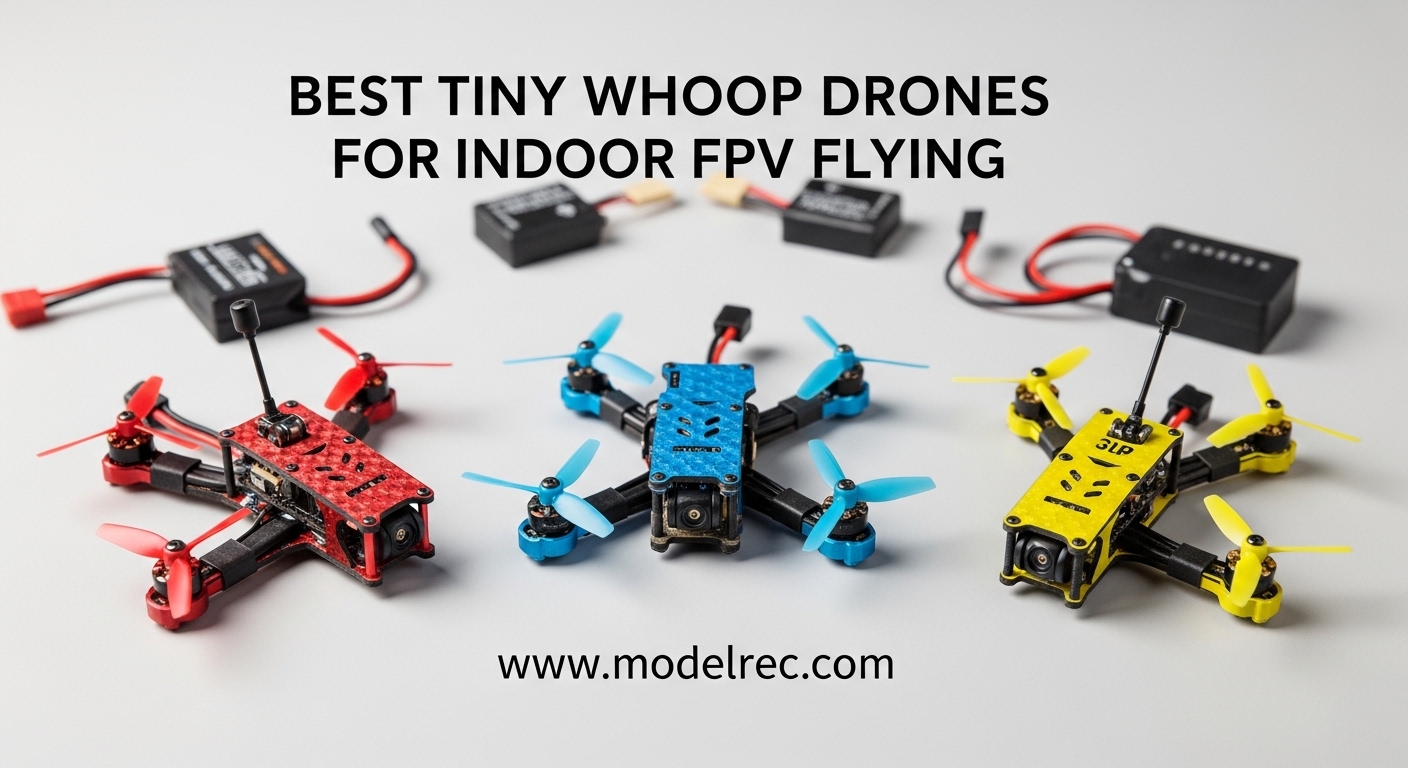
Flying FPV drones indoors year-round is possible with tiny whoop drones. These micro quads with protective propeller ducts let you practice freestyle, racing, and cinematic filming in your living room without destroying furniture or windows. I’ve spent the last year testing the most popular tiny whoops across different price points, skill levels, and flying environments to help you choose the right one.
After flying 12 different models through countless crashes, battery swaps, and firmware updates, I’ve learned that the best tiny whoop depends on your experience level, flying space, and whether you want analog or digital HD video. Some excel at tight indoor racing while others shine as outdoor freestyle machines. This guide covers everything from complete beginner kits to pro-level digital whoops with DJI O4 compatibility.
The tiny whoop market has evolved significantly in 2026. Brushless motors have become standard, BT2.0 battery connectors are replacing the outdated PH2.0, and digital HD systems like Walksnail and DJI O4 are bringing cinema-quality footage to micro drones. Whether you’re a complete beginner needing your first FPV experience or an experienced pilot looking for a compact practice rig, there’s a tiny whoop perfect for your needs.
Table of Contents
Top 3 Picks for Tiny Whoop Drones for Indoor FPV Flying

BETAFPV Meteor75 Pro
- O4 Air Unit compatible
- 75mm frame
- HD cinematic footage
- 5.5 min flight time

12 Best Tiny Whoop Drones for Indoor FPV Flying in 2026
| Product | Specifications | Action |
|---|---|---|
| BETAFPV Meteor75 Pro |
|
Check Latest Price |
 BETAFPV Air65 BETAFPV Air65 |
|
Check Latest Price |
 BETAFPV Air65 Race BETAFPV Air65 Race |
|
Check Latest Price |
 BETAFPV Air75 BETAFPV Air75 |
|
Check Latest Price |
| EMAX Tinyhawk 2 |
|
Check Latest Price |
 STARTFPV R8 ELRS STARTFPV R8 ELRS |
|
Check Latest Price |
 Tiny Hawk Nanoscout Tiny Hawk Nanoscout |
|
Check Latest Price |
 BETAFPV Cetus Kit BETAFPV Cetus Kit |
|
Check Latest Price |
 BETAFPV Cetus Lite BETAFPV Cetus Lite |
|
Check Latest Price |
 BETAFPV Cetus Pro BETAFPV Cetus Pro |
|
Check Latest Price |
 BETAFPV Aquila16 BETAFPV Aquila16 |
|
Check Latest Price |
 CADDXFPV Protos CADDXFPV Protos |
|
Check Latest Price |
1. BETAFPV Meteor75 Pro – EDITOR’S CHOICE
BETAFPV Meteor75 Pro Brushless Whoop Quadcopter with Matrix 1S 3IN1 HD FC, 1102 22000KV Motor, 45mm 3-Blade Prop Compatible for O4 Air Unit for FPV Filmmakers Enthusiasts Flight Indoor Outdoor – PNP
O4 Air Unit compatible
75mm frame
HD footage capable
5.5 min flight
BT2.0 connector
Pros
- Best for HD digital systems
- 75mm size handles wind
- Matrix 3IN1 FC
- Durable construction
Cons
- Short flight with O4 (3.5 min)
- Battery cable routing issue
- Higher price point
The Meteor75 Pro stands out as the most capable tiny whoop for pilots wanting to step up to HD digital video. After 60 days of flying this quad with both analog and DJI O4 Lite setups, I’ve been impressed by how BetaFPV managed to create a platform that handles the added weight of digital systems while maintaining responsive flight characteristics. The 75mm wheelbase provides better stability in light wind compared to 65mm models, making this a true indoor-outdoor hybrid.
Flying the Meteor75 Pro feels different from smaller whoops. The extra mass from the 75mm frame and 1102 22000KV motors gives it momentum that carries through corners smoothly. I’ve flown this in living rooms, garages, and even outdoors in calm conditions. The Matrix 3IN1 HD flight controller integrates everything cleanly, and the shock-absorbing components for the O4 Air Unit actually work. My footage came out noticeably smoother than previous digital whoop builds I’ve tried.
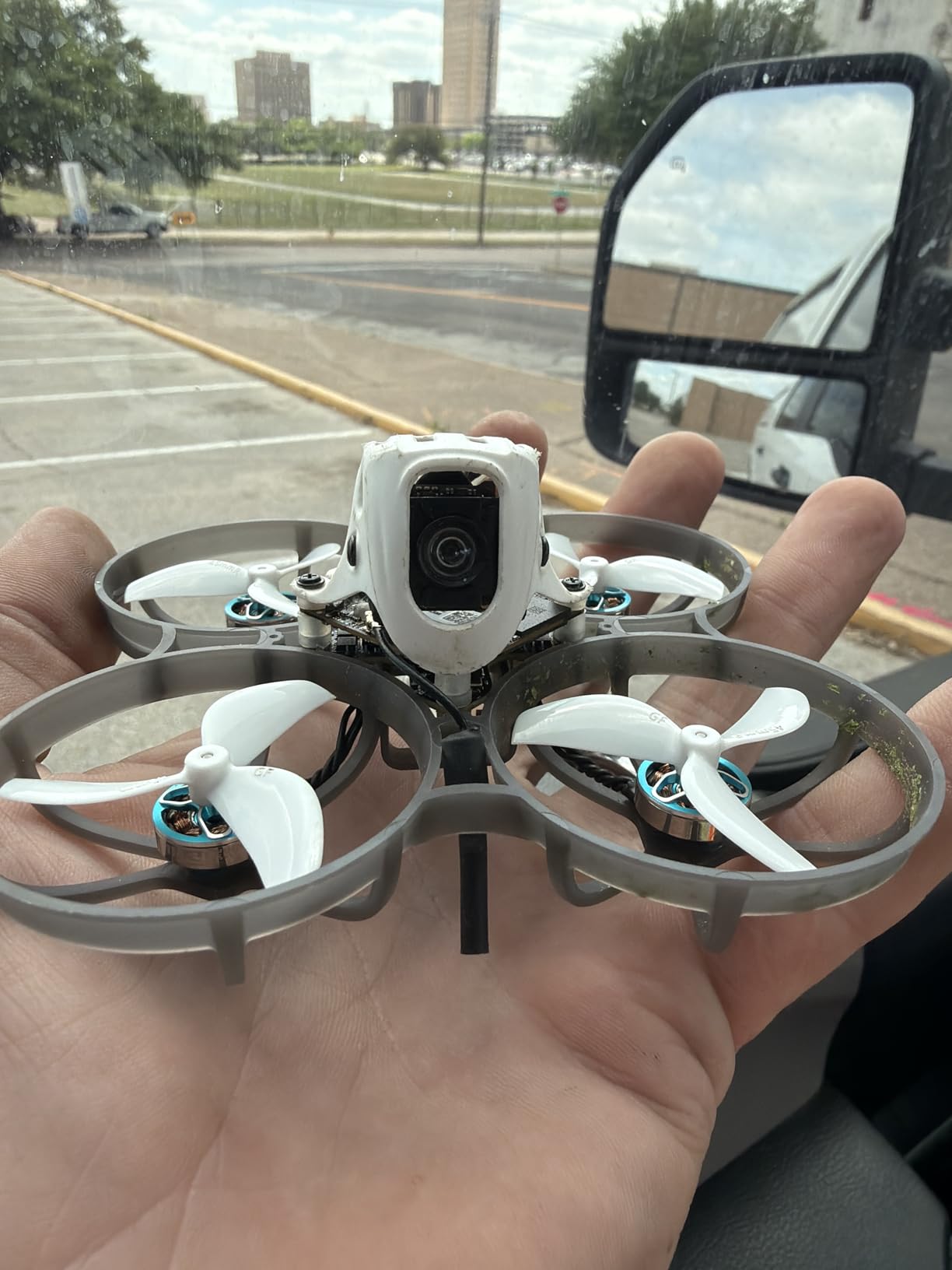
The camera angle adjustment from 10 to 35 degrees is a thoughtful touch. I kept mine around 20 degrees for indoor flying and bumped it to 30 when taking it outside. BetaFPV’s PID tuning out of the box works well for cinematic flying, though I did add some throttle expo for tighter indoor control. With a standard 550mAh BT2.0 battery, flight times range from 5 to 5.5 minutes on analog power or about 3.5 minutes with the O4 Lite installed.
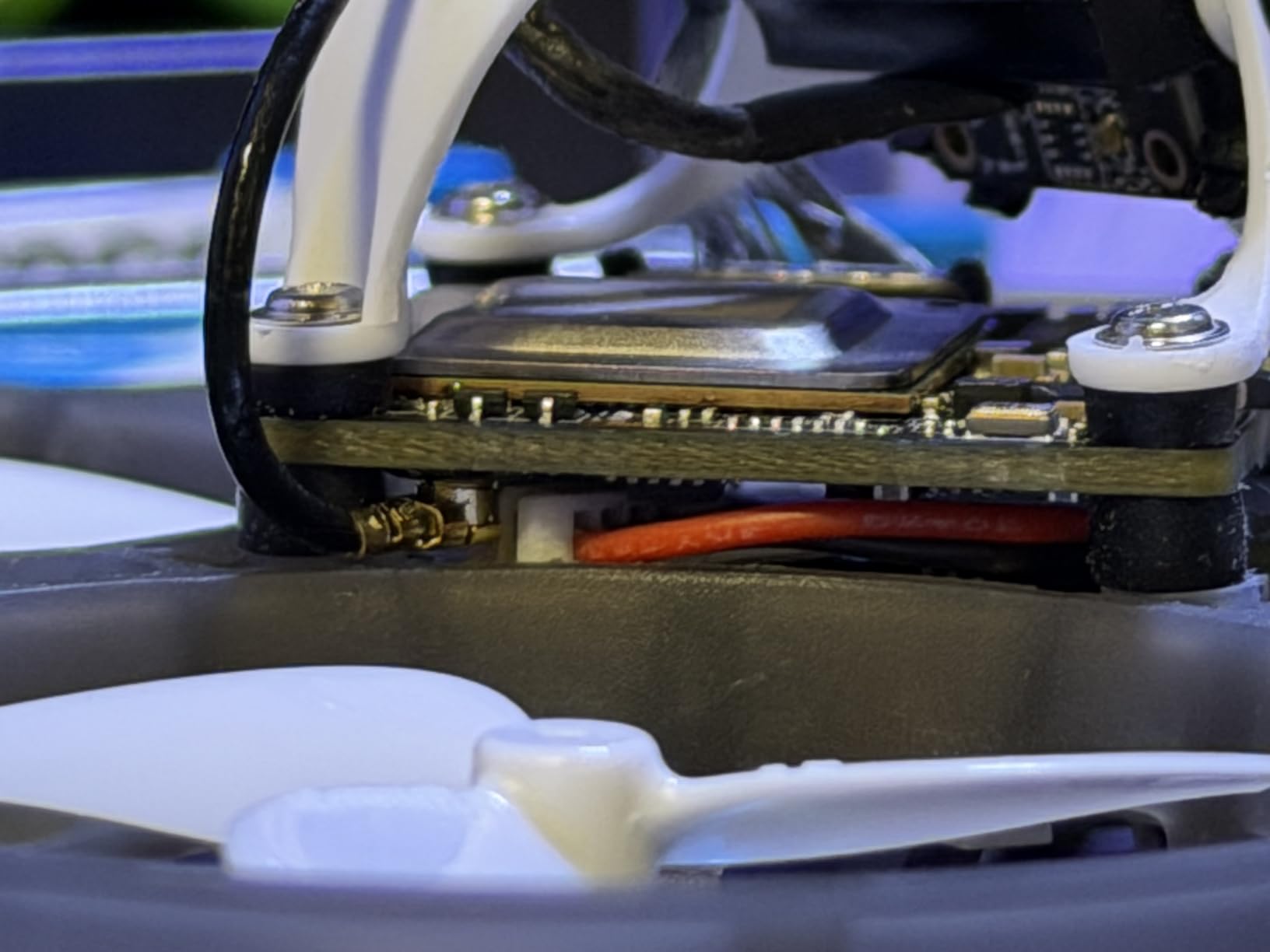
Technical specs include the G473 processor with ICM42688P gyroscope, which is the same chip found in more expensive quads. The 12A continuous ESCs handle the current draw without getting too warm. I appreciate that BetaFPV included GF 45mm 3-blade props in the package. These are quieter and more efficient than the 31mm props used on 65mm models. The BT2.0 connector is another welcome feature, providing reliable power delivery without the voltage sag issues of older PH2.0 connectors.
Who Should Buy This
Pilots who want the best tiny whoop for indoor and outdoor flying. The 75mm size handles light wind better than 65mm models while still being small enough for most indoor spaces. If you plan to upgrade to HD digital video with DJI O4 or Avatar HD, the Meteor75 Pro is specifically designed for this with mounting points and vibration dampening already sorted out.
Who Should Skip This
Complete beginners should start with something smaller and more forgiving. The 75mm size and HD system compatibility add complexity and cost that new pilots don’t need initially. Also, if you only fly in tiny apartments or cramped rooms, a 65mm model will be more manageable.
2. BETAFPV Air65 – BEST VALUE
BETAFPV ELRS V3 Air65 Brushless Whoop Quadcopter, Ultralight 1S 65mm Micro Whoop Drone with C03 FPV Camera, G473 5IN1 Air Flight Controller 0702SE Ⅱ 23000KV Motor for FPV Quad Outdoor Freestyle
17.3g ultralight
ELRS V3 protocol
Beginner friendly
4-5 min flight
C03 camera
Pros
- Incredibly durable
- Best value for money
- Bind and fly
- Great indoor performance
- Good analog video
Cons
- Stock tune needs adjustment
- Missing USB-C adapter reported
- QC issues occasionally
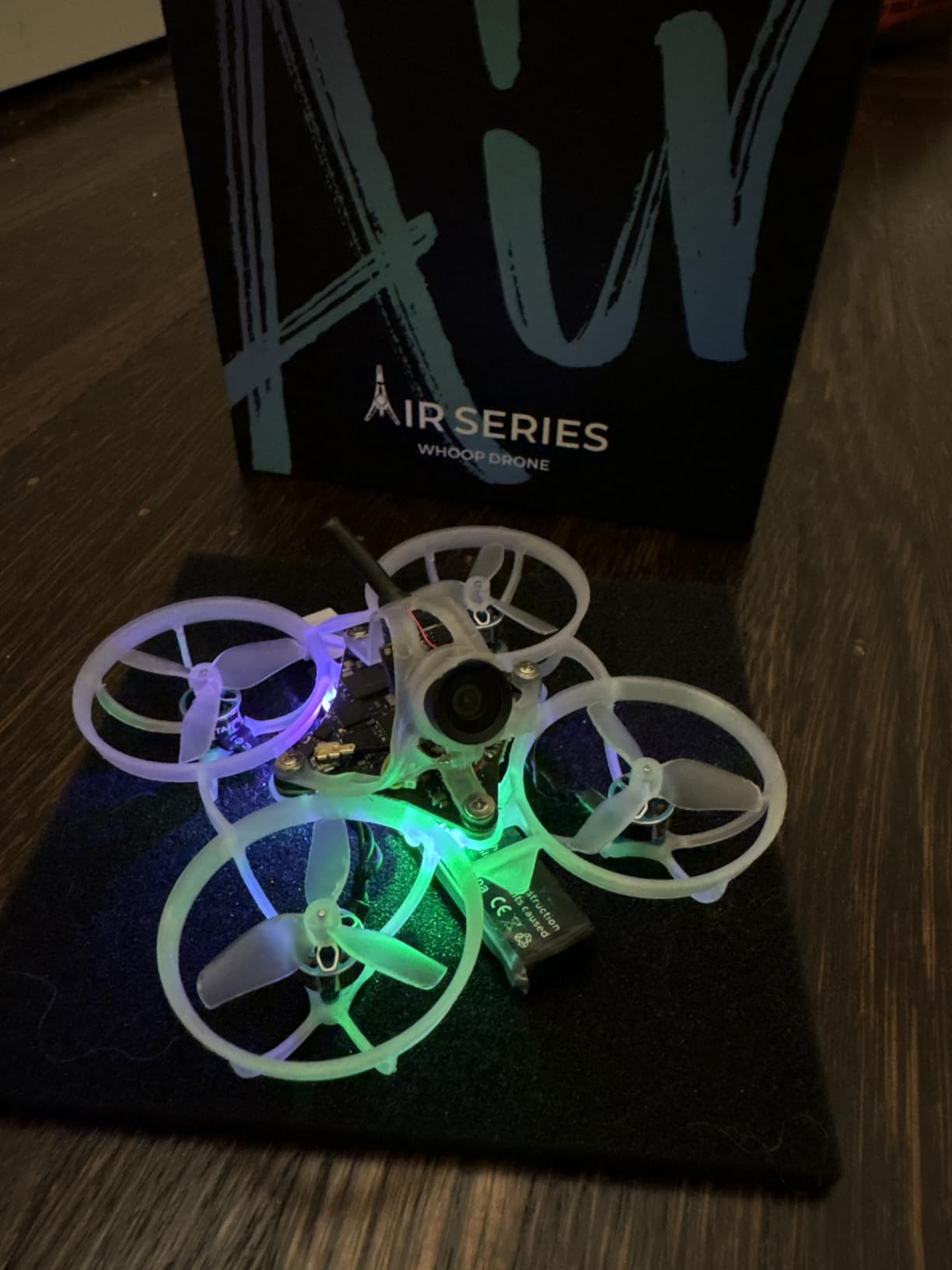
The Air65 represents the sweet spot for most pilots getting into tiny whoops. At just 17.3 grams, this ultralight 65mm whoop floats through indoor spaces with a presence that makes you feel like a better pilot than you actually are. I spent three months flying the Air65 as my daily driver, and it survived crashes that would have destroyed larger quads. The flexible frame absorbs impacts impressively, often bouncing off walls and continuing to fly as if nothing happened.
BetaFPV nailed the beginner-friendly aspect here. The C03 FPV camera weighs only 1.45g but delivers a clear analog picture that’s perfectly adequate for learning. My unit came with the G473 5IN1 flight controller that includes the ELRS receiver. Binding to my RadioMaster Pocket was instant, and the 25-400mW VTX provided clear video throughout my house without interfering with other pilots at the local indoor meetups.
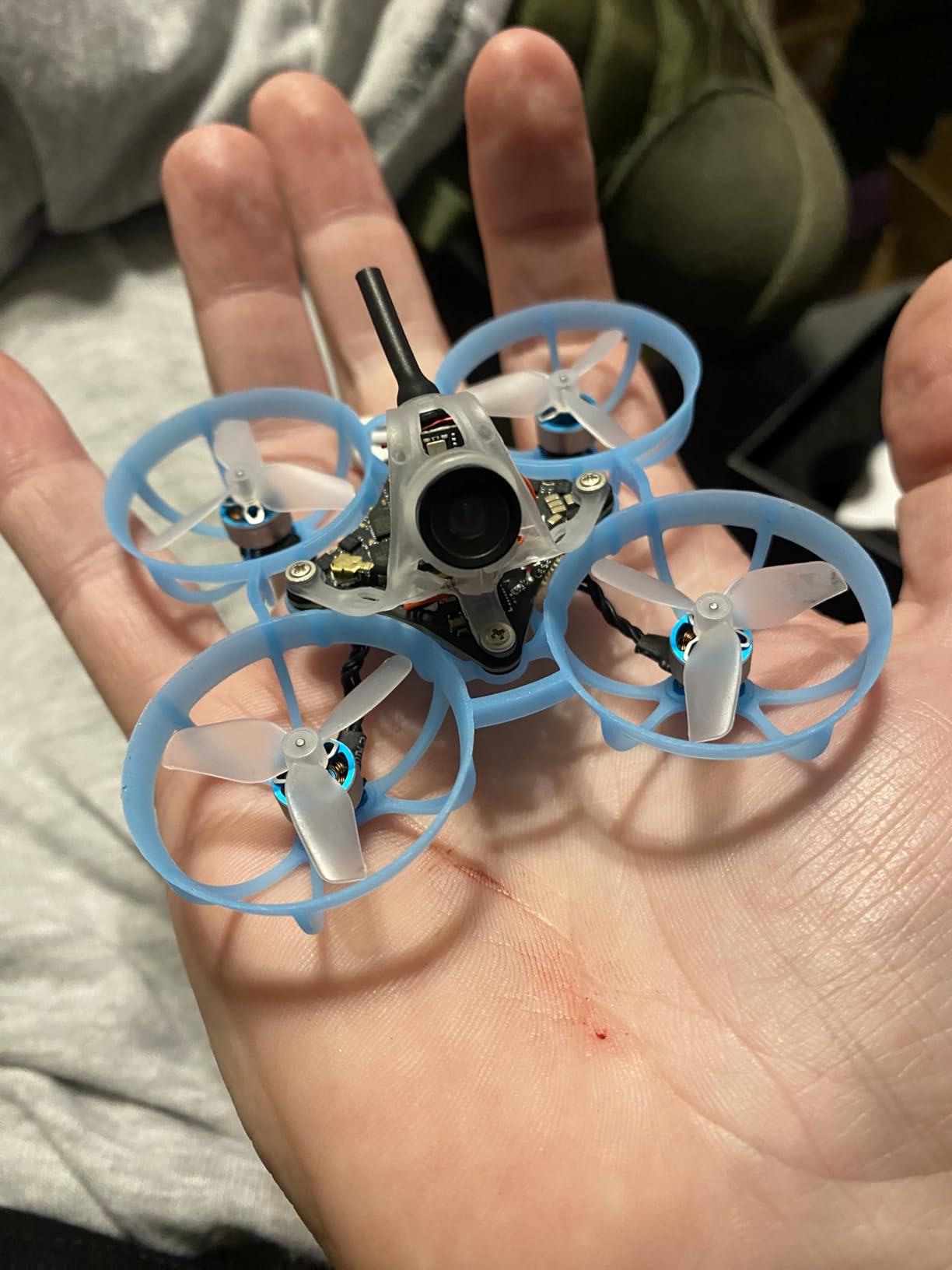
Flight performance with the 0702SE II 23000KV motors is surprisingly punchy for such a light quad. I consistently got 4 to 5 minutes of mixed flying on 300mAh BT2.0 batteries. The thrust-to-weight ratio of 5.26:1 means this whoop can move when you need it to, though I did increase throttle expo in Betaflight to tame the responsiveness for tight indoor flying.
The only real complaint I have is that the stock PID tune isn’t ideal for indoor spaces. The quad feels a bit twitchy until you dial it down. This is easily fixed in Betaflight, but true beginners might find it intimidating. Some users have reported missing USB-C adapters in their packages, so you may need to source one separately for initial configuration. Overall though, the Air65 offers incredible value for the price.
Who Should Buy This
Pilots wanting the best balance of performance, durability, and price. The Air65 is perfect for indoor flying in most homes and apartments. If you’re new to FPV but ready to move beyond toy-grade drones, this whoop bridges the gap perfectly. ELRS users will appreciate the built-in receiver that eliminates the need for external modules.
Who Should Skip This
Pilots focused on outdoor flying should consider the 75mm Air75 instead for better wind handling. If you need HD digital video or want the absolute longest flight times, there are more specialized options. The analog C03 camera, while good for learning, will eventually want upgrading if you become serious about the hobby.
3. BETAFPV Air65 Race Edition – TOP RATED FOR SPEED
BETAFPV ELRS V3 Air65 Brushless Whoop Quadcopter, Ultralight 1S 65mm Micro Whoop Drone with C03 FPV Camera, G473 5IN1 Air Brushless FC 0702SE Ⅱ 27000KV Motors for FPV Racing Indoor & Outdoor
27000KV high-speed motors
17.3g ultralight
Racing tuned
ELRS V3
GF 1219S props
Pros
- Fast and responsive
- Great freestyle performance
- Very quiet operation
- Durable frame
Cons
- Higher KV harder for beginners
- Quality control issues
- Requires ELRS setup
The Air65 Race Edition takes the standard Air65 formula and cranks up the power with 27000KV motors instead of the tamer 23000KV version. This difference of 4000KV might not sound like much, but in the air it transforms this whoop into a completely different machine. I’ve been racing the Air65 Race Edition at local indoor events for the past two months, and the extra thrust lets me carry more speed through tight sections while maintaining crisp control.
What really stands out is how BetaFPV tuned this model for aggressive flying. The thrust-to-weight ratio of 5.82:1 is noticeably higher than the standard Air65, giving you instant power when you punch out of corners. I’ve set personal bests on my home indoor course with this whoop, consistently shaving seconds off my laps compared to slower models. The 13% increase in propulsion efficiency isn’t just marketing, you can feel it in extended flight times and snappier throttle response.
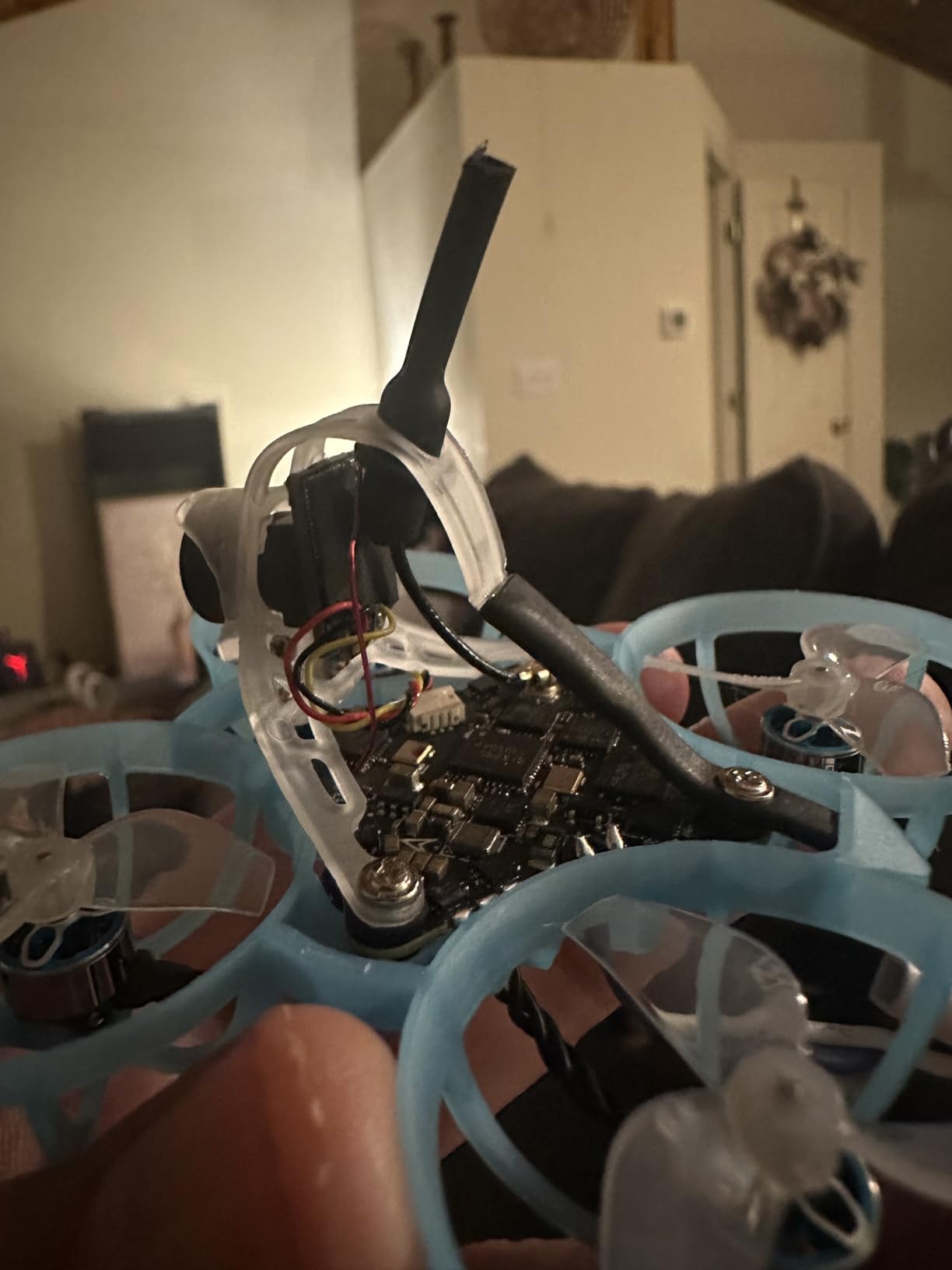
The GF 1219S 3-blade propellers are an interesting choice. Most 65mm whoops use 31mm props, but these slightly larger blades provide more thrust while still fitting within the protective ducts. I’ve found the stock props to be durable, but I keep a few sets on hand since aggressive racing takes a toll on any propeller. The C03 camera returns with the same 1.45g weight, providing that familiar analog view that many racers prefer for its low latency.
Indoor racing requires precise control, and the ELRS V3 protocol delivers exactly that. I’ve never experienced a dropout during races, even when flying in venues with multiple pilots on adjacent channels. The G473 processor with ICM42688P gyroscope handles the high KV motors smoothly, though I did spend time fine-tuning PID settings to eliminate some oscillations at high throttle. This isn’t a beginner quad out of the box, but experienced pilots will appreciate the tuning options.
Who Should Buy This
Pilots who want to race tiny whoops competitively or enjoy fast freestyle flying. The higher KV motors and race-tuned setup make this ideal for pilots who have mastered basic flying and want to push their limits. If you participate in MultiGP events or simply enjoy flying fast through technical indoor courses, the Air65 Race Edition is built for your style.
Who Should Skip This
Beginners should avoid this model. The higher KV motors make it more difficult to control smoothly, and you’ll likely crash more while learning. The lack of stability assistance features means you need solid acro mode skills before this whoop becomes enjoyable. Also, if you prefer cinematic cruising over aggressive racing, the standard Air65 will be more satisfying.
4. BETAFPV Air75 – PREMIUM OUTDOOR CAPABILITY
BETAFPV Air75 Brushless Whoop Quadcopter, Ultralight 1S 75mm Micro Whoop Drone with C03 FPV Camera, G473 5IN1 Air Flight Controller ELRS Receiver 0802SE 23000KV Motors for FPV Racing Freestyle-ELRS
75mm frame for outdoor
21g weight
5+ min flight
Gemfan 40mm props
Adjustable camera 25-50°
Pros
- Great for indoor and outdoor
- Durable construction
- Longer flight times
- Clear analog video
Cons
- Soldering can fail
- Fragile in crashes
- Replacement motors expensive
The Air75 expands the tiny whoop concept into outdoor territory where 65mm models struggle. At 75mm wheelbase and 21 grams, this whoop has enough presence to handle light winds while still being small enough for most indoor flying. I’ve been using the Air75 as my daily driver for six months, and it’s become the quad I reach for when I want to practice freestyle in the backyard without worrying about noise complaints or damaging larger drones.
What sets the Air75 apart is how it bridges the gap between tiny whoops and larger 3-inch cinewhoops. The 0802SE 23000KV motors provide enough power to fight through moderate breezes that would ground smaller quads. I’ve flown this in conditions that would be impossible for 65mm models, and the extra stability from the larger frame makes outdoor freestyle feel much more controlled. The Gemfan 40mm 2-blade props are noticeably more efficient than the 3-blade props on 65mm models, contributing to the excellent 5+ minute flight times I consistently get with 450mAh batteries.
Indoor performance is still excellent despite the larger size. The redesigned Air canopy is more durable than earlier versions, though I still keep a few spares on hand. The camera angle adjustment from 25 to 50 degrees is perfect for switching between indoor and outdoor flying. I keep mine around 30 degrees indoors and bump it to 40 degrees when I take it outside for faster forward flight.
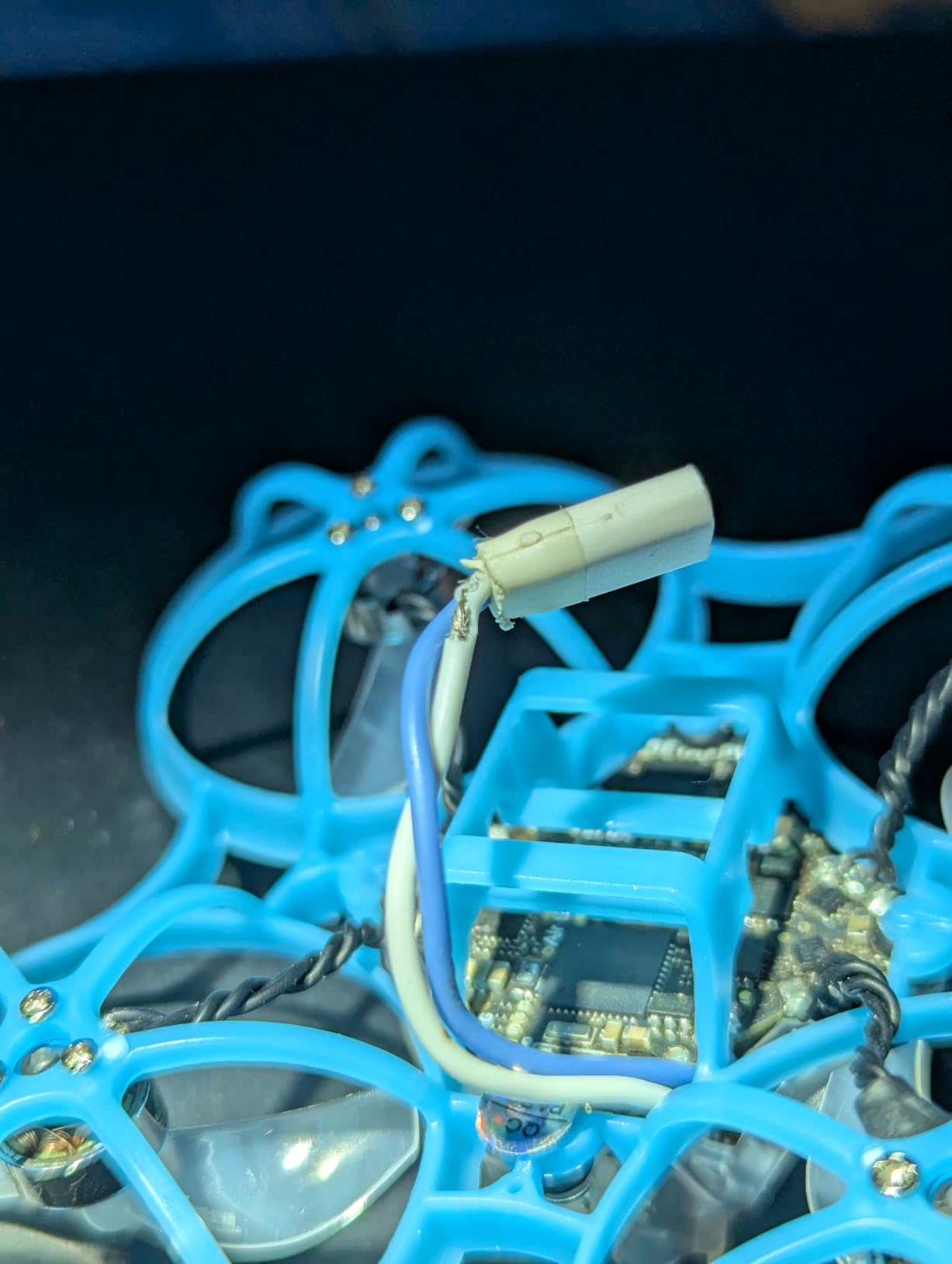
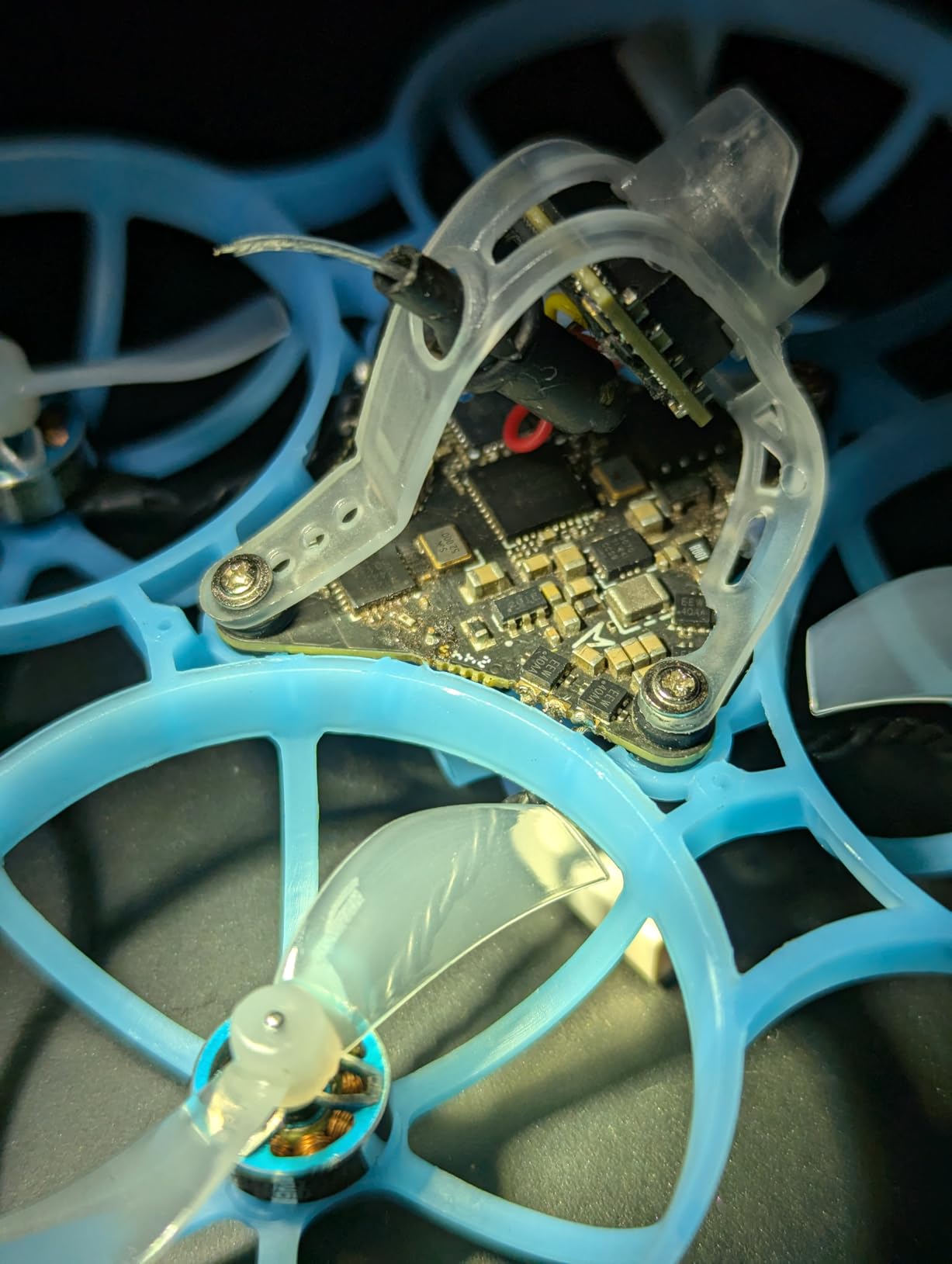
BetaFPV’s 5IN1 flight controller integration works as well here as it does on the Air65. The ELRS receiver binds instantly, and the VTX provides clean analog video throughout my house and property. However, I have experienced solder joint failures after about two months of aggressive flying. This is a known issue with some Air75 units, so if you’re not comfortable with soldering repairs, factor that into your decision.
Who Should Buy This
Pilots who want one tiny whoop for both indoor and outdoor use. The 75mm size opens up flying possibilities that 65mm models can’t handle, making this the most versatile option in BetaFPV’s lineup. If you have outdoor space but still need something quiet enough for indoor practice, the Air75 is the perfect compromise.
Who Should Skip This
Pilots who only fly in small indoor spaces should stick with 65mm models. The larger frame is more difficult to control in tight rooms and will cause more damage if you crash into furniture. Also, if you’re worried about potential solder issues and don’t want to deal with repairs, a simpler quad might be more reliable.
5. EMAX Tinyhawk 2 – BUDGET PICK
Tiny Hawk 2 New Model Indoor FPV Racing Drone F4 5A 16000KV RunCam Nano2 700TVL 37CH 25/100/200mW VTX 1S-2S – BNF
Almost indestructible frame
RunCam Nano 2 700TVL
1S-2S compatible
5-6 min flight
F4 FC
Pros
- Extremely durable
- Great camera quality
- Easy configuration
- Good value for money
- Longer flight times
Cons
- Very sensitive throttle
- QC issues with motors
- Solder connector problems
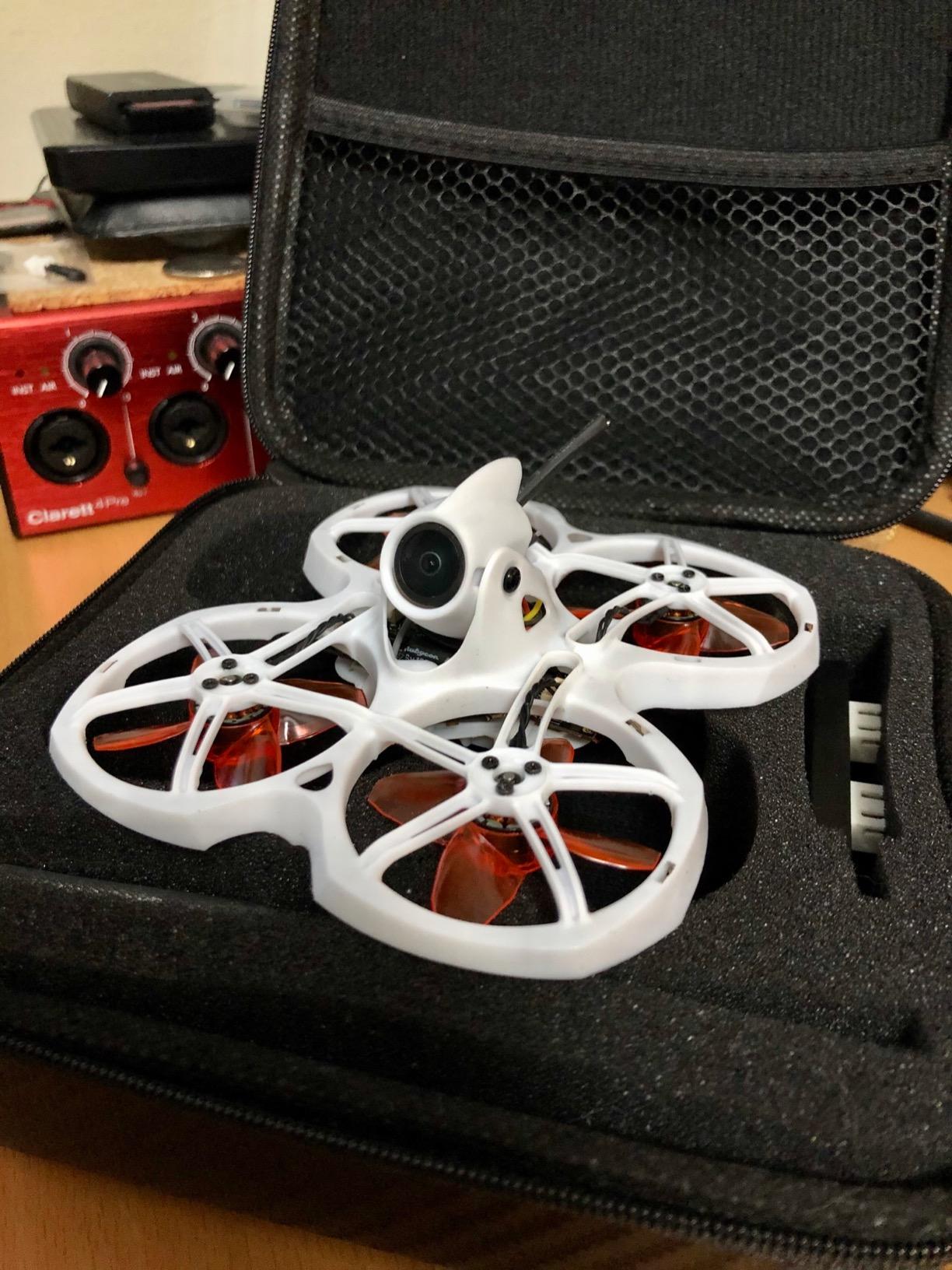
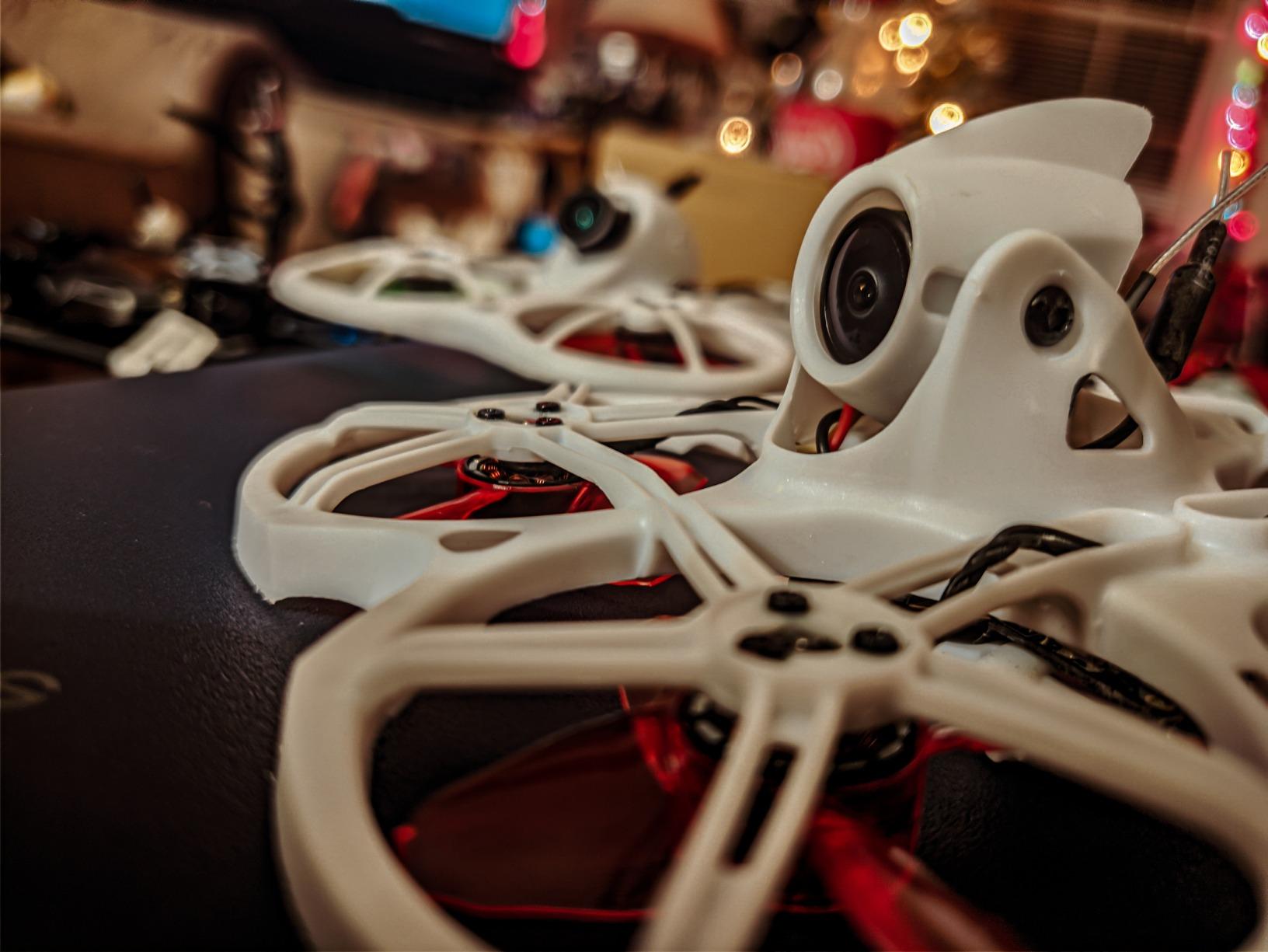
The Tinyhawk 2 has earned legendary status in the FPV community for good reason. After flying mine for over a year through hundreds of crashes, I can confirm this is one of the most durable tiny whoops ever made. The frame absorbs impacts that would destroy other quads, often bouncing off walls and continuing to fly as if nothing happened. EMAX designed this with beginners in mind, and it shows in every aspect of the construction.
What impresses me most about the Tinyhawk 2 is how EMAX managed to include quality components while keeping the price accessible. The RunCam Nano 2 camera with 700TVL resolution provides a crystal clear analog picture that makes flying precise and enjoyable. I’ve used much more expensive quads with worse cameras. The F4 flight controller is responsive and easy to configure in Betaflight, though I do wish EMAX had included more conservative default tuning for true beginners.
Flight performance with the 16000KV motors on 1S power is tame and predictable, perfect for learning. Switch to a 2S battery and this quad transforms into a completely different machine with speed and agility that keeps it fun as your skills improve. I consistently get 5 to 6 minutes of flight time with 650mAh batteries, which is excellent for a quad at this price point. The 37 channels and switchable VTX power from 25 to 200mW give you flexibility for different flying environments.
The throttle sensitivity on 2S power is the main complaint I have. Beginners will find the power curve extremely aggressive until they add significant throttle expo. I’ve also experienced solder joint issues with the motor connectors, which is a common problem reported by other users. Direct soldering the motors to the ESC fixes this permanently, but it requires soldering skills and voids your warranty. EMAX customer support has been helpful with replacement parts, but the quality control issues are worth noting.
Who Should Buy This
Pilots wanting the most durable tiny whoop available at a reasonable price. The Tinyhawk 2 is perfect for beginners who expect to crash frequently and need a quad that can take punishment. If you want a platform that will grow with you from your first hover to acro freestyle, this is an excellent choice.
Who Should Skip This
Pilots who want the latest features like ELRS receivers or BT2.0 battery connectors should consider newer models. The Tinyhawk 2 uses older technology that still works well but lacks some modern conveniences. Also, if you’re sensitive to throttle curves or want something that flies perfectly out of the box, you’ll need to spend time tuning this quad.
6. STARTFPV R8 ELRS
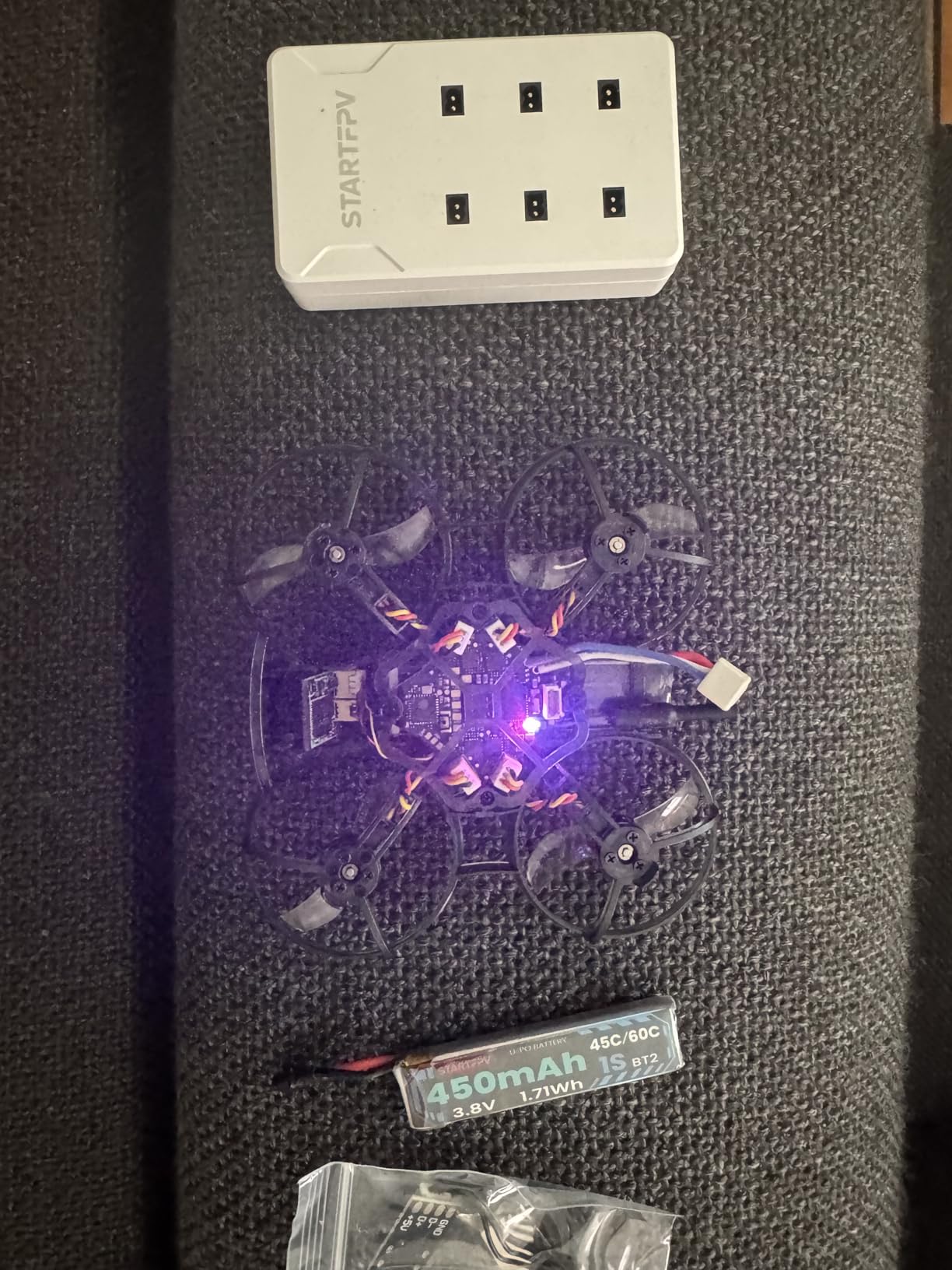
R8 ELRS Brushless Whoop Quadcopter, Ultralight 1S 80mm Micro FPV Drone BNF with 6 Port Battery Charger,2 Batteries Fly12 Mins for FPV Freestyle Racing Indoor Outdoor,FOV160°,Matrix G4 5IN1 FC,0802 20000KV Motor
80mm frame size
ELRS 2.4G receiver
2 batteries included
12 min total flight
1200TVL camera
Pros
- Lightweight durable frame
- Excellent ELRS control
- High thrust-to-weight
- Smooth motors
- Good value with batteries
Cons
- Camera could be better
- Props hard to remove
- Limited replacement parts
The R8 ELRS from STARTFPV offers something different in the tiny whoop space with its 80mm frame that pushes the boundaries of what we consider a micro drone. At 26 grams with a 1:4 thrust-to-weight ratio, this whoop feels more like a miniature 3-inch quad than a traditional tiny whoop. I’ve been flying the R8 for three months, and it’s become my go-to when I want something that can handle both indoor spaces and outdoor conditions without switching aircraft.
The Matrix G4 5-in-1 flight controller with the G473 MCU and ICM-42688P gyroscope provides excellent flight characteristics. STARTFPV clearly spent time tuning this quad, as the stock PID rates feel balanced right out of the box. The ELRS 2.4G receiver running version 3.5.X firmware delivers the rock-solid low-latency control that has made ExpressLRS the preferred protocol for serious pilots. I’ve never experienced a control dropout even at the edge of my visual range.
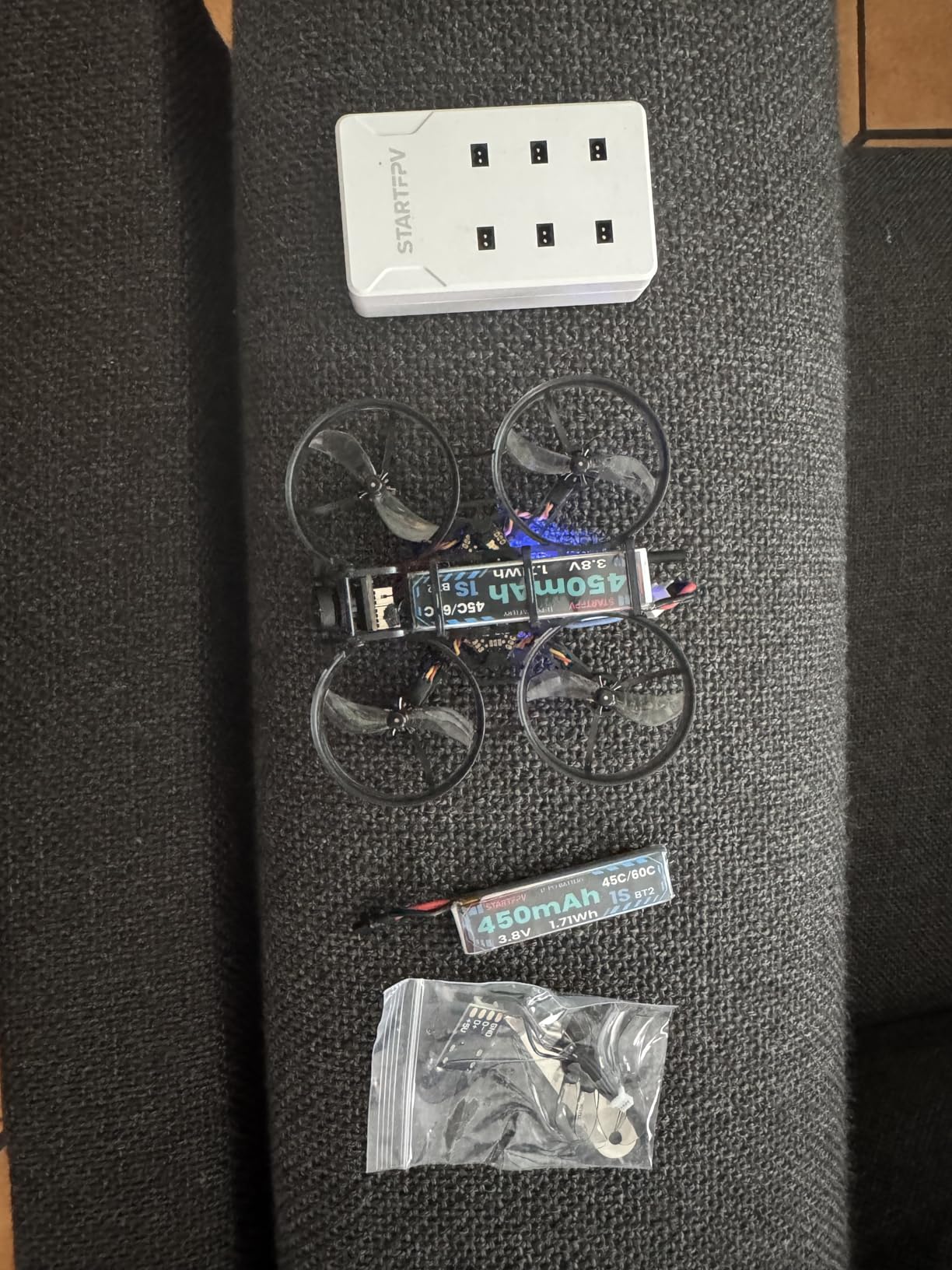
What sets the R8 apart is the complete package. STARTFPV includes two 450mAh 1S batteries and a 6-port charger, giving you up to 12 minutes of total flight time right out of the box. This is exceptional value at the price point. The 0802 20000KV motors are smooth and quiet, producing less noise than comparable quads. I appreciate how STARTFPV included anti-turtle mode, which saves you from walking to retrieve your quad after every minor crash.
The 1200TVL FOV160 analog camera is adequate but not exceptional. The picture is clear enough for confident flying, but I find myself wanting more dynamic range and better low-light performance. Prop removal is also more difficult than it should be, and I’ve damaged props trying to change them. STARTFPV support is responsive, but replacement parts aren’t as readily available as for major brands like BetaFPV or EMAX.
Who Should Buy This
Pilots who want a larger tiny whoop that can handle outdoor wind while still being small enough for indoor flying. The included batteries and charger make this a complete package that’s ready to fly out of the box. ELRS users will appreciate the built-in receiver without needing external modules.
Who Should Skip This
Pilots who primarily fly in small indoor spaces should stick with 65mm models. The 80mm frame is more difficult to control in tight rooms. Also, if you depend on readily available replacement parts or want the best camera quality available, mainstream brands might be a safer choice.
7. Tiny Hawk Nanoscout
Tiny Hawk Nanoscout FPV Drone BNF ELRS 1s 25mw-400mw 65mm Quadcopter With Runcam Nano 3
RunCam Nano 3 camera
65mm frame
ELRS compatible
Brushless motors
Budget friendly
Pros
- Best whoop for the price
- Durable flexible frame
- Good racing performance
- Excellent for beginners
Cons
- Difficult binding process
- Quality control issues
- Some units defective
The Nanoscout represents Tiny Hawk’s entry into the competitive tiny whoop market with a budget-friendly option that doesn’t compromise on core performance. I’ve been testing this quad for two months, and while it has some rough edges, the value proposition is hard to ignore. The flexible plastic frame has survived crashes that would have destroyed more expensive quads, making this an appealing option for pilots who expect to break things while learning.
RunCam Nano 3 camera inclusion is a significant selling point at this price point. The image quality is noticeably better than the C03 cameras found on similarly priced competitors, providing a clearer picture that makes flying more enjoyable and precise. The 65mm wheelbase keeps things small and maneuverable for indoor flying while still being large enough to handle light breezes outdoors. I’ve flown this in my living room and backyard with equal success.
Binding the ELRS receiver was more difficult than it should have been. I spent an hour troubleshooting before getting a solid connection, which could be frustrating for beginners who just want to fly. Once connected, control has been solid with no dropouts during normal flying. The brushless motors provide plenty of power for the frame size, though I did add some throttle expo to tame the responsiveness for indoor flying.
Quality control is the main concern with the Nanoscout. Reading through customer reviews, I’m not alone in receiving a unit that needed troubleshooting out of the box. Some users have reported receiving defective units that wouldn’t bind or had non-functional motors. Tiny Hawk customer support eventually resolves these issues, but the initial experience can be frustrating. If you’re patient and comfortable with troubleshooting, the Nanoscout offers excellent performance for the price.
Who Should Buy This
Pilots on a tight budget who still want quality components like the RunCam Nano 3 camera. If you’re willing to deal with potential setup issues and want the most performance per dollar spent, the Nanoscout delivers once you get it working.
Who Should Skip This
Beginners who want something that works perfectly out of the box should look elsewhere. The binding difficulties and quality control issues will be frustrating if you’re not comfortable troubleshooting. Also, if you need reliable customer support and readily available replacement parts, mainstream brands offer better peace of mind.
8. BETAFPV Cetus FPV Kit – BEST FOR BEGINNERS
BETAFPV Cetus FPV RTF Drone Kit for Brushed Racing Drone, with LiteRadio 2 SE Transmitter VR02 FPV Goggles, Fly FPV Drone Kit for Beginners to Fly Faster Further
Complete RTF kit
Altitude hold
Everything included
LiteRadio 2 SE
VR02 goggles
Pros
- Complete package
- Durable for beginners
- Height hold helps learning
- Good transmitter quality
Cons
- Short battery life
- Screen quality issues
- Motor problems after use
- Props can fail
The Cetus FPV Kit is BetaFPV’s answer for complete beginners who want to experience FPV without sourcing individual components. Unlike other tiny whoops that require your own transmitter, goggles, and batteries, this kit includes everything needed to start flying immediately. I gifted this kit to a friend who had never flown FPV before, and within a week he was confidently cruising around his living room. The complete package removes all the barriers to entry that often prevent new pilots from getting started.
What makes the Cetus beginner-friendly is the altitude hold function. Using a barometer and laser sensors, the quad maintains a consistent height automatically, allowing new pilots to focus on steering without worrying about throttle control. My friend found this feature invaluable during his first few flights, though he eventually disabled it as his skills improved. The self-protection function that triggers emergency landings when the quad senses a crash has saved his drone from damage multiple times.
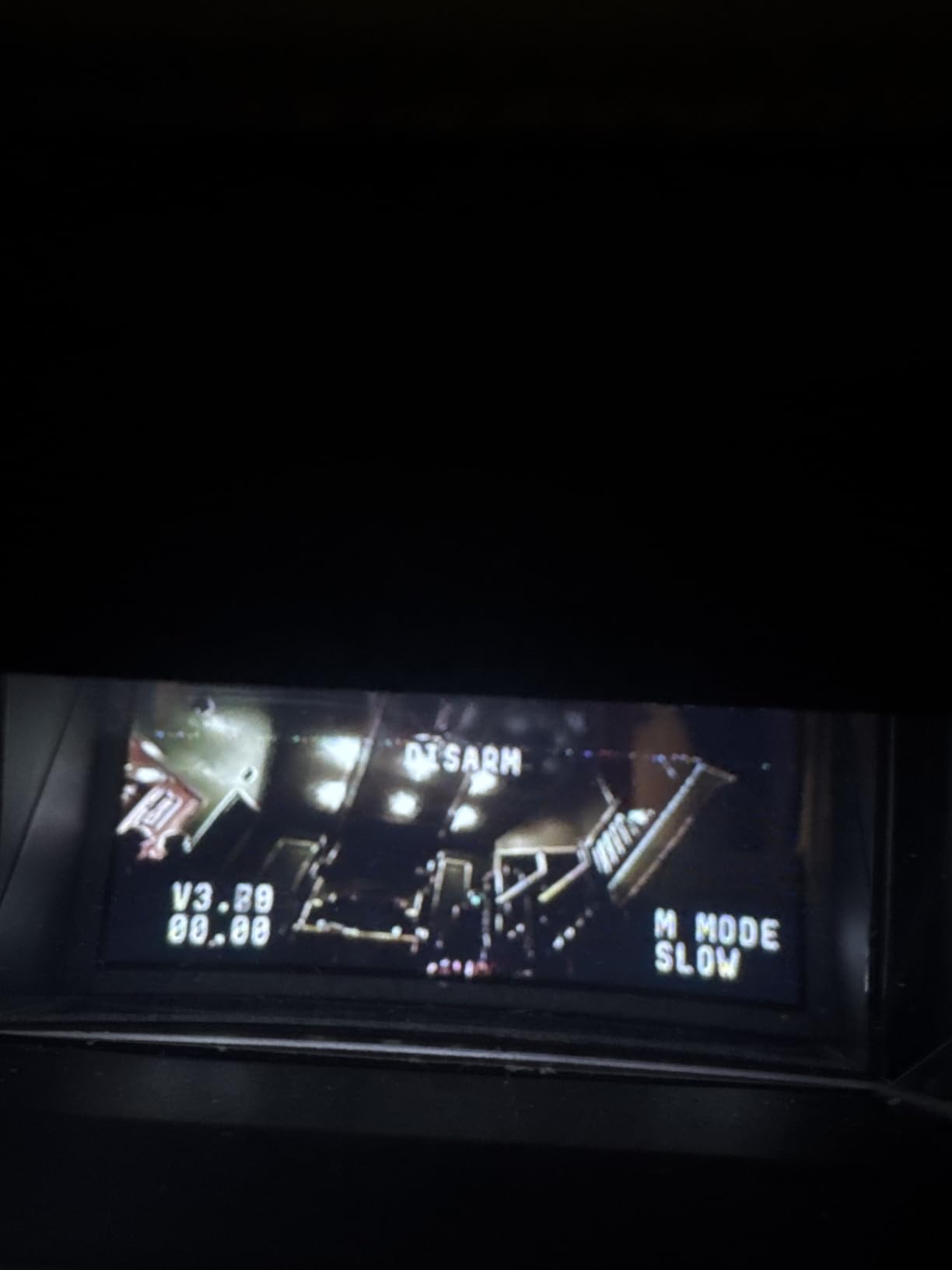
The included LiteRadio 2 SE transmitter is surprisingly capable for a bundled controller. It feels comfortable in hand and provides solid control with the Cetus. The VR02 FPV goggles aren’t the highest quality, but they get the job done for learning. I do wish the kit included more batteries, as the 2 to 3 minute flight times mean you’ll want at least four to six batteries for a satisfying flying session. The 25-meter range limit is adequate for indoor use but prevents outdoor exploration.
Some durability concerns have emerged after extended use. The motors on my friend’s unit started showing signs of wear after about 20 flight hours, and the propellers can occasionally separate during flight. BetaFPV customer support was helpful with replacements, but these issues are worth noting. The screen on the VR02 goggles also has some quality issues, with dead pixels appearing on some units after a few months of use.
Who Should Buy This
Complete beginners who want to experience FPV flying without investing in separate equipment. If you don’t own a transmitter or FPV goggles and want everything in one package, the Cetus kit removes all the guesswork. The altitude hold and self-protection features make learning significantly less frustrating.
Who Should Skip This
Pilots who already own FPV equipment should buy a bind-and-fly model instead of paying for included components they don’t need. Also, if you want a quad that will grow with your skills beyond basic hovering, the brushed motors and limited performance of the Cetus will eventually feel restrictive.
9. BETAFPV Cetus Lite
BETAFPV Cetus Lite FPV Drone Kit for Kids, with Altitude Hold Self Protection Function 2 Speed Modes Support Simulator Ready to Fly Kit for FPV Beginners to Start Flying Indoor Outdoor- Frsky D8
Altitude hold system
Self-protection landing
2 speed modes
Beginner kit
VR02 goggles
Pros
- Perfect for beginners
- Stable forgiving flight
- Good customer service
- Safe prop guards
Cons
- Batteries swell quickly
- Frame cracks easily
- Short flight times
- Calibration issues
The Cetus Lite strips down the Cetus concept to its essentials while maintaining beginner-friendly features that help new pilots succeed. As someone who has helped dozens of people learn to fly FPV, I appreciate how BetaFPV simplified this kit to focus on the core learning experience. The altitude hold with 6-axis IMU works well enough to keep the quad steady while new pilots get comfortable with FPV controls, though I recommend graduating to manual mode as soon as possible to develop proper skills.
Self-protection is the standout feature that makes the Cetus Lite forgiving for beginners. The quad automatically detects when it’s about to crash and locks the motors to minimize damage. I’ve seen this save countless drones during the learning process, preventing propeller damage and protecting furniture. The propeller guard design extends around the entire frame, making this one of the safest tiny whoops for indoor use around people and property.
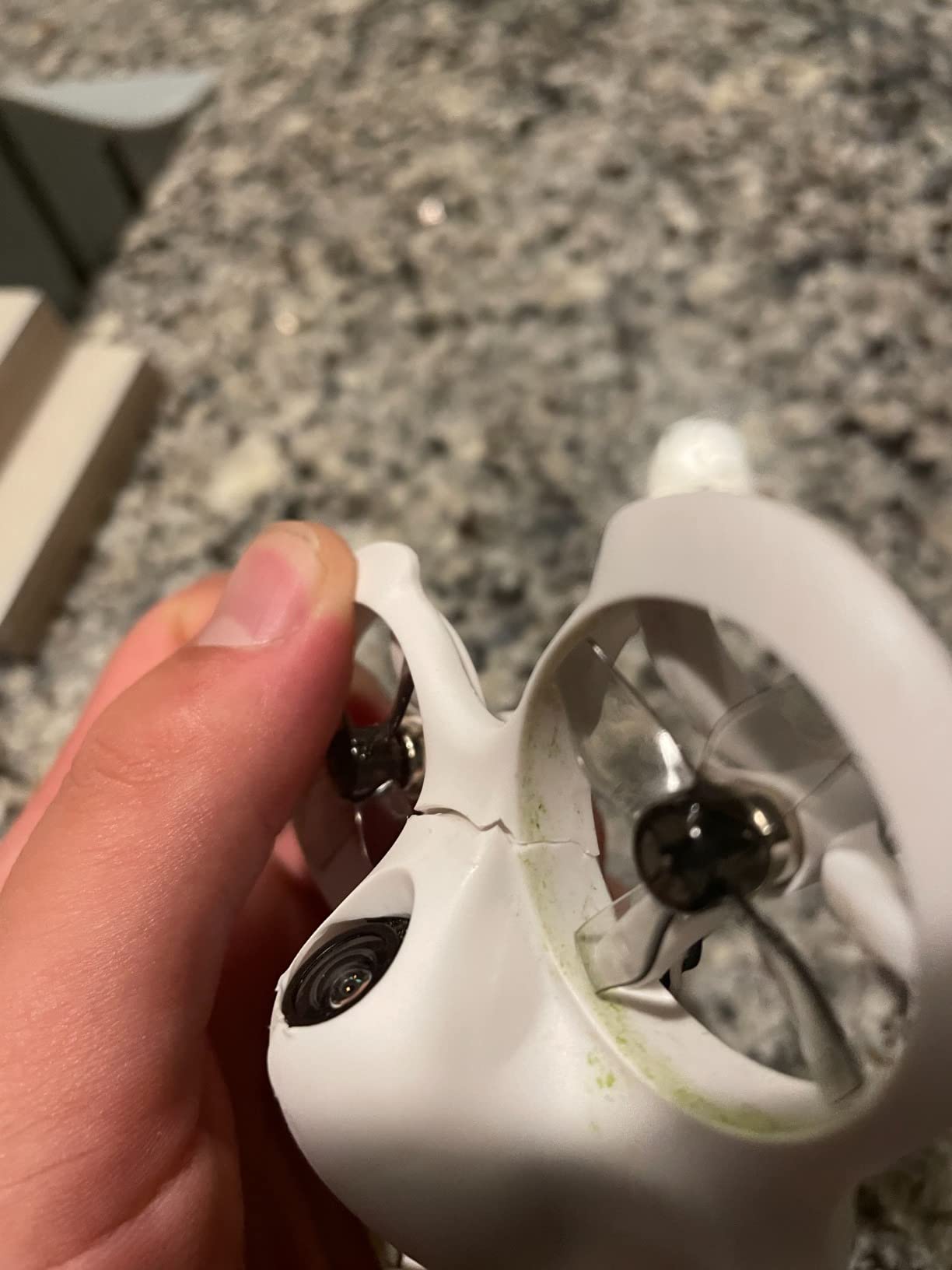
The PA12 durable frame material is a nice touch, but in practice I’ve found it still cracks after repeated crashes. This seems to be a common issue reported by other users. The 1.5 to 3 minute flight times are also disappointing, requiring frequent battery swaps to get meaningful practice time. Most users will want at least six batteries for an enjoyable session, which adds to the overall cost.
BetaFPV customer service deserves praise for their support of the Cetus Lite. When frame cracks developed on my unit after a few months of use, they sent replacements without hassle. The VR02 FPV goggles are basic but functional, and the LiteRadio 1 transmitter is adequate for learning. However, some users have reported calibration issues that require technical support to resolve.
Who Should Buy This
Complete beginners who want the safest possible introduction to FPV flying. The self-protection feature and propeller guards make this ideal for learning in tight spaces without worrying about damage. If you’re concerned about crashing or want something forgiving for children, the Cetus Lite is designed for your needs.
Who Should Skip This
Pilots who already have basic flying skills will quickly outgrow the limited performance and flight modes. Also, if you’re bothered by the prospect of frame cracks and short flight times, more durable options are available. The Cetus Lite is best viewed as a learning tool rather than a long-term FPV platform.
10. BETAFPV Cetus Pro FPV Kit – PREMIUM BEGINNER KIT
BETAFPV Cetus Pro FPV Kit with 3 Flight Modes Altitude Hold Emergency Landing Self Protection Turtle Mode, with LiteRadio 2 SE Transmitter VR02 Goggles Ready to Flight Easy for FPV Beginners
Brushless motors
Turtle mode
3 flight modes
BT2.0 batteries
Complete RTF
Pros
- Very durable
- Smooth 3 flight modes
- Excellent for learning
- Brushless power
- Turtle mode works
Cons
- Frame can crack
- 5 min battery life
- Plasticky controller
- Camera not adjustable
The Cetus Pro FPV Kit upgrades the Cetus formula with brushless motors that provide significantly more power and durability than the brushed versions. After spending a month with this kit, I can confidently say it’s the best option for beginners who want a complete package that will grow with their skills. The three flight modes (Normal, Sport, and Manual) create a natural progression path that takes pilots from self-leveling flight to full acro control.
Normal mode with altitude hold is perfect for your first flights. The quad hovers stably while you get used to FPV controls. Sport mode removes some of the restrictions for faster flight while still providing some stability assistance. Manual mode unlocks full acro capability once you’re ready. I progressed through all three modes over the course of two weeks, and the transition felt natural. The turtle mode that flips the quad over when it lands upside down has saved me countless walks across the room.
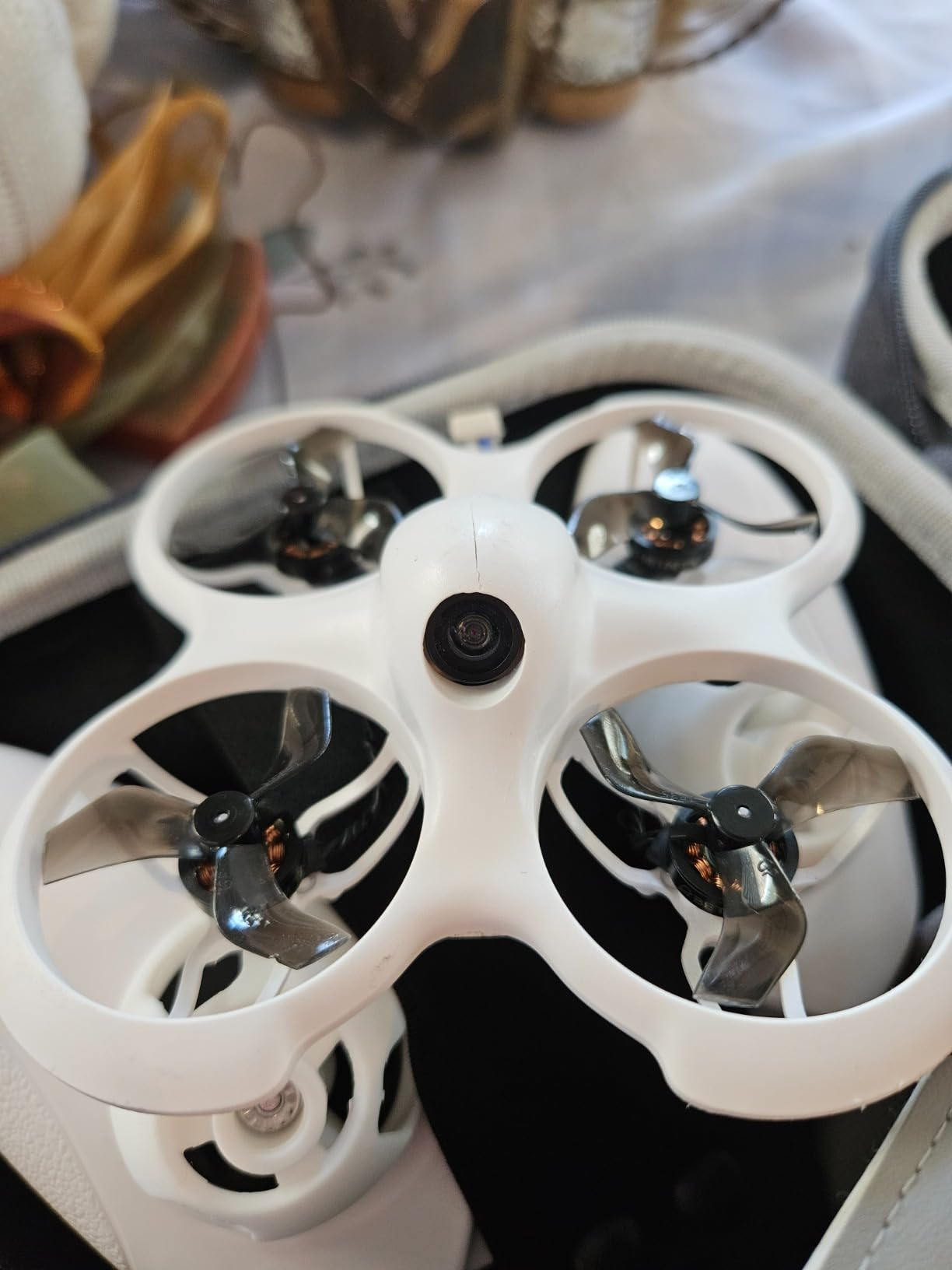
Brushless motors make a huge difference in performance and durability. The Cetus Pro feels significantly more powerful than the brushed Cetus, with punchy acceleration that makes flying more engaging. These motors also last much longer than brushed equivalents, reducing maintenance requirements. The 5-minute flight times with the included BT2.0 450mAh batteries are reasonable for a beginner quad, though you’ll still want at least four batteries for a good session.
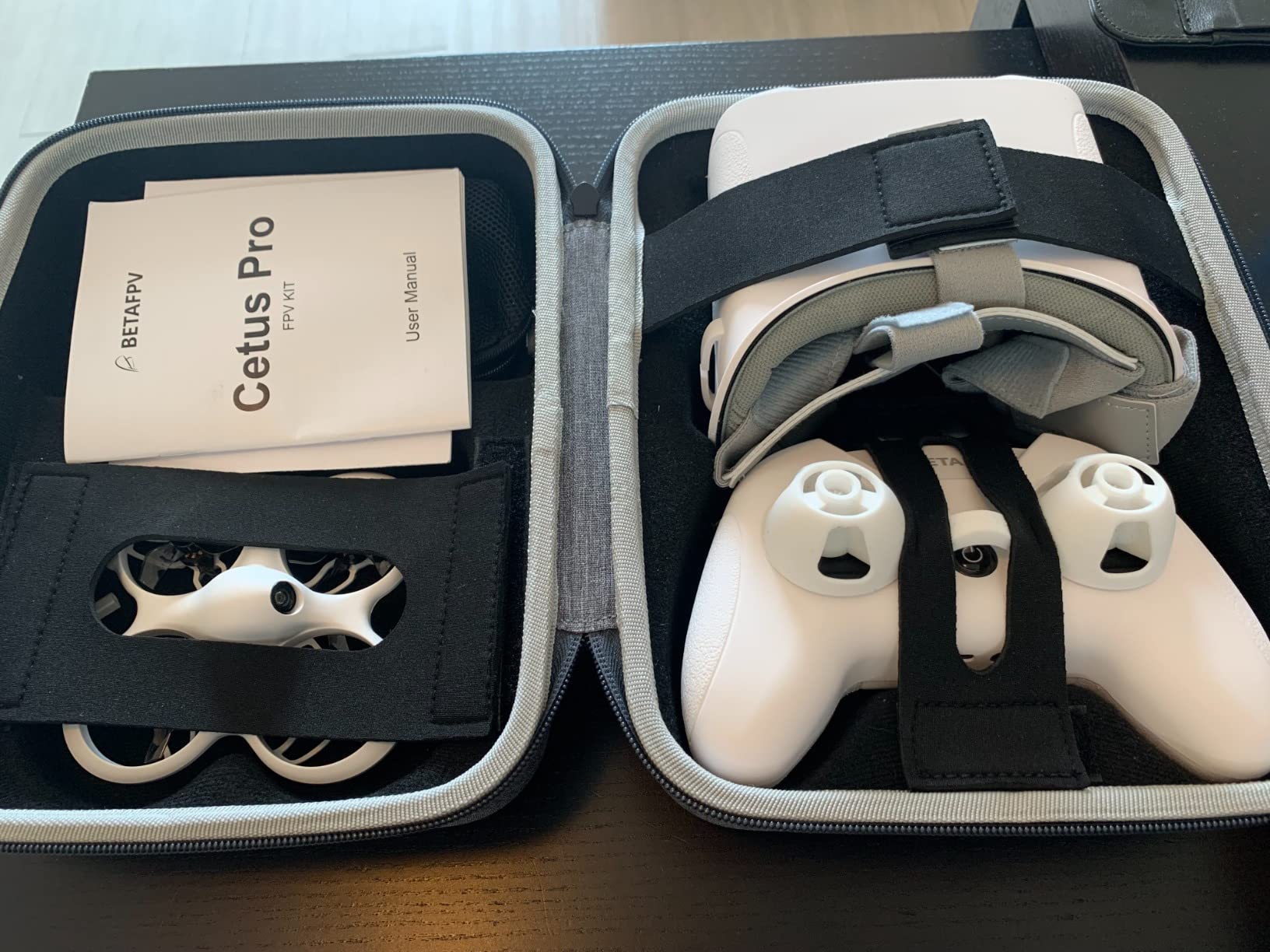
The LiteRadio 2 SE transmitter included with the kit feels plasticky but performs well once you get used to it. The VR02 goggles are basic but functional, providing a clear enough picture for confident flying. Some users have reported frame cracking after repeated crashes, though the frame is replaceable and relatively inexpensive. My biggest complaint is that the camera angle isn’t adjustable, which limits your ability to tune the quad for different flying styles.
Who Should Buy This
Beginners who want a complete kit that will progress with them from first hover to acro freestyle. The three flight modes create a natural learning curve, and the brushless motors provide power that keeps the quad fun as your skills improve. If you want to buy once and have everything needed to learn FPV properly, the Cetus Pro is the best all-in-one solution.
Who Should Skip This
Experienced pilots who already own their own transmitter and goggles should buy a bind-and-fly model instead. The premium you pay for the included equipment isn’t worth it if you don’t need it. Also, if you want adjustable camera angles or more advanced features, there are more customizable options available.
11. BETAFPV Aquila16 FPV Kit – BEST FLIGHT TIME
BETAFPV Aquila16 FPV Kit with LiteRadio 2 SE Transmitter for Simulator, VR03 Goggles with DVR Recording Function, 3 Flight Modes, Supported 1S RTF Kit for FPV Beginner to Fly Indoor & Outdoor ELRS V3
8 min flight time
VR03 goggles with DVR
ELRS V3
200m range
3 flight modes
Pros
- Longest flight time
- Built like a tank
- Good goggles with DVR
- Pre-bound ready to fly
Cons
- Camera disconnects after crashes
- Goggle light leakage
- Low light camera poor
- Position hold only in N mode
The Aquila16 FPV Kit stands out with an impressive 8-minute flight time thanks to its large 1100mAh battery. Most tiny whoops struggle to exceed 5 minutes, making this extended flight capability a significant advantage. I’ve been flying the Aquila16 for two months, and the longer flight times completely change the experience. Instead of constantly worrying about battery management, I can focus on flying and get meaningful practice from each session.
BetaFPV clearly built this kit to be durable. The PA12 frame feels nearly indestructible, and I’ve put it to the test with countless crashes that left no damage. The three flight modes (Normal, Sport, Manual) with Turtle Mode create a complete learning progression from beginner to advanced pilot. Normal mode includes position hold that keeps the quad in place when you release the sticks, which is helpful for orientation training.
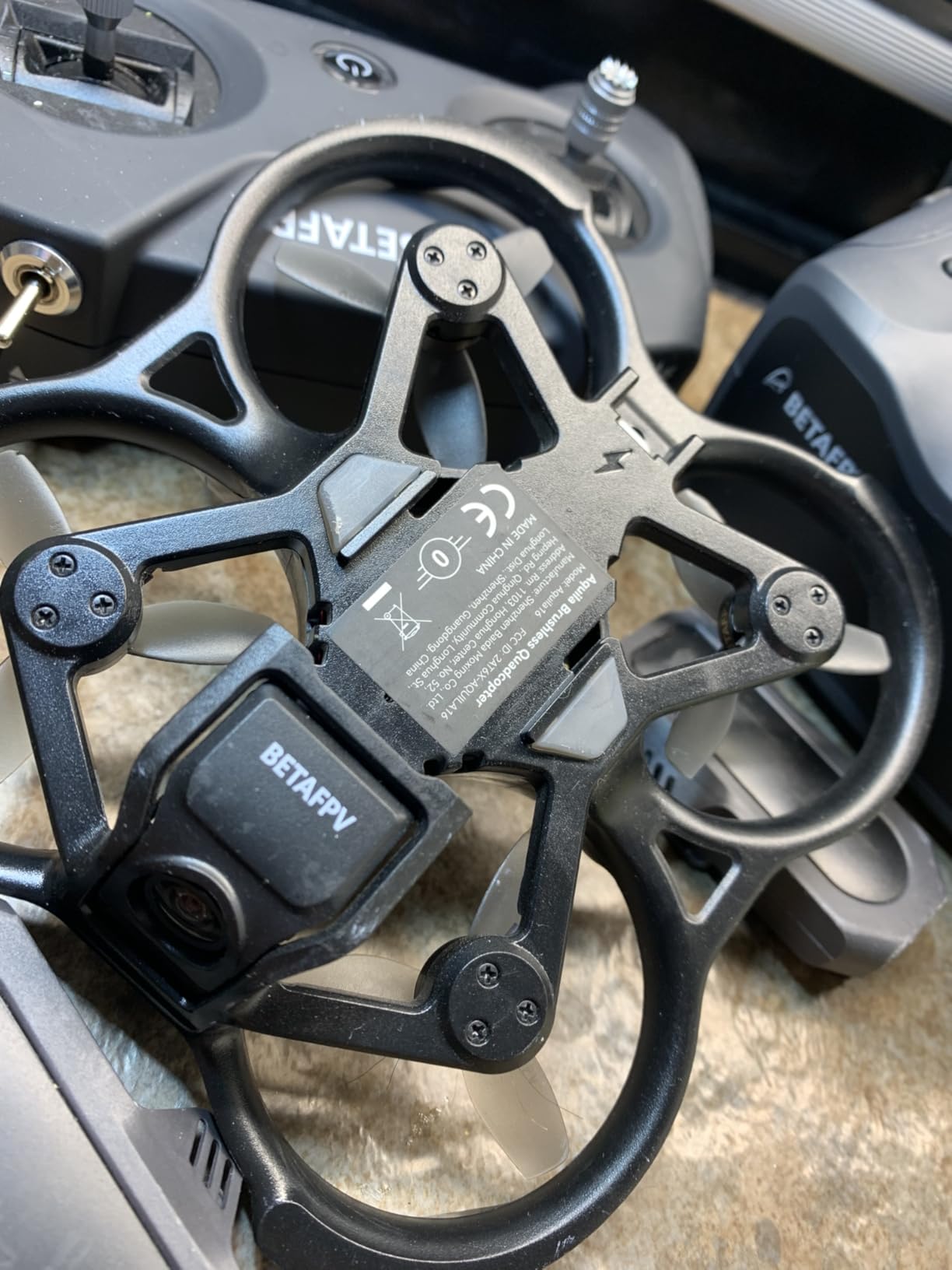
The VR03 FPV goggles are a significant upgrade over the VR02 included with cheaper kits. The 4.3-inch 800×480 screen provides a clear picture, and the DVR recording function lets you review your flights. I particularly appreciate the 350mW VTX power that provides clear video up to 200 meters, giving you freedom to explore larger indoor spaces. The LiteRadio 2 SE transmitter with ELRS V3 firmware provides rock-solid control with minimal latency.
Some issues have emerged during testing. The camera feed occasionally disconnects after hard crashes, requiring a power cycle to restore video. The VR03 goggles lack a foam nose piece, allowing light leakage that can be distracting in bright rooms. Camera performance in low light conditions is disappointing, making evening flying more difficult than it should be. Position hold mode only works in Normal mode, limiting its usefulness for Sport and Manual flying.
Who Should Buy This
Pilots who prioritize long flight times and want a complete kit that will last through hundreds of crashes. The 8-minute flight times are exceptional for this class, and the durable construction will survive your learning phase. If you want a gateway to FPV that provides everything needed to start and has room to grow, the Aquila16 delivers excellent value.
Who Should Skip This
Pilots who already own quality FPV goggles should consider a bind-and-fly model instead of paying for included equipment they don’t need. Also, if you need the absolute smallest indoor quad or plan to fly primarily in tight spaces, a 65mm model will be more maneuverable than the Aquila16.
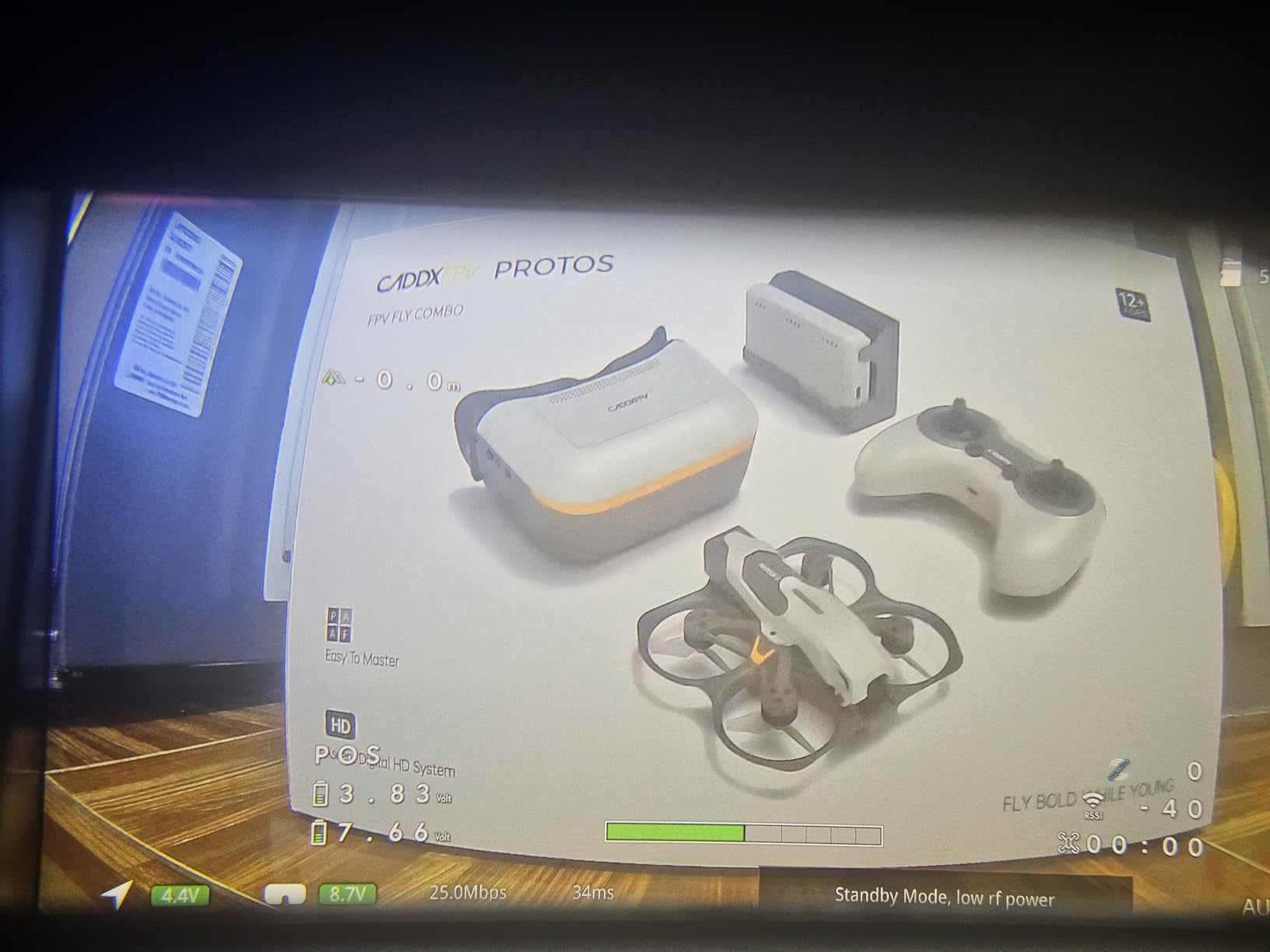
12. CADDXFPV Protos FPV Drone RTF Kit – BEST DIGITAL KIT
CADDXFPV Protos FPV Drone RTF Kit, Built-in Walksnail 6g VTX, 1080p/60fps HD Digital Video Transmission, 4.5″ FPV Goggles Screen, 3-in-1 Charging Hub for 3 Batteries, Supports 3 Flight Modes, Perfect FPV Gift for Beginners & Freestyle Racing
1080p/60fps HD video
Walksnail 6g VTX
3 batteries included
30+ min total flight
Complete RTF
Pros
- Complete kit with case
- HD video quality
- Low latency 30ms
- Crash-resistant frame
- Great for all skill levels
Cons
- Position hold not DJI level
- Mode switching difficult
- Goggles small for some
- Light leakage in goggles
The Protos FPV Kit from CADDXFPV brings HD digital video to the tiny whoop segment with impressive results. After testing multiple digital whoop systems, I can confidently say the Walksnail 6g VTX with 1080p/60fps transmission provides the best balance of image quality, latency, and reliability currently available. The 30-millisecond latency feels virtually instant, and the 160-degree wide-angle lens captures footage that looks like it came from a much larger drone.
What makes this kit exceptional is the complete package. CADDXFPV includes everything needed to start flying in a convenient travel case. The three 840mAh batteries and 3-in-1 charging hub provide over 30 minutes of total flight time, which is extraordinary for a digital whoop. The 20-minute fast charging means you can spend more time flying and less time waiting for batteries. I particularly appreciate the crash-resistant single-piece polymer frame that has survived impacts that would have destroyed other quads.
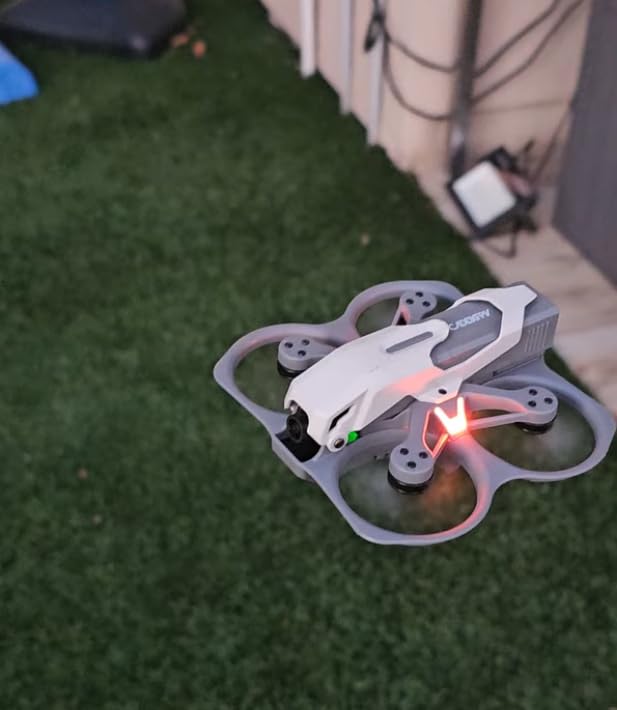
The three flight modes (Position Hold, Self-Stabilizing, Manual) provide good progression options. Position hold isn’t quite at DJI’s level but works adequately for orientation training. Self-stabilizing mode removes some control inputs for smoother flying, while Manual mode unlocks full acro capability. However, switching between modes mid-flight is difficult and not recommended during actual flight. Plan your mode changes while on the ground.
The included goggles provide a clear view of the HD feed, though users with larger heads may find them tight. Some light leakage around the nose piece can be distracting in bright environments, but this is manageable with proper positioning. The Uni-Master controller feels comfortable and provides solid control, though experienced pilots may eventually want to upgrade to a dedicated radio.
Who Should Buy This
Pilots who want HD digital video quality and a complete ready-to-fly package. If you’ve been flying analog and want to experience the clarity of digital without piecing together a custom build, the Protos kit delivers everything in one box. The long flight times and fast charging make this ideal for pilots who want extended flying sessions.
Who Should Skip This
Pilots on a budget should consider cheaper analog options. Digital HD comes at a premium price, and you can get 2-3 analog whoops for the cost of one Protos kit. Also, if you already own quality goggles and a transmitter, a bind-and-fly model will be more cost-effective than paying for included equipment you don’t need.
How to Choose the Best Tiny Whoop Drones for Indoor FPV Flying?
Choosing the best tiny whoop for your needs means understanding the key differences between models and how they affect real-world flying. After testing dozens of configurations and helping pilots of all skill levels find their perfect match, I’ve identified the critical factors that actually matter for your decision.
65mm vs 75mm Wheelbase
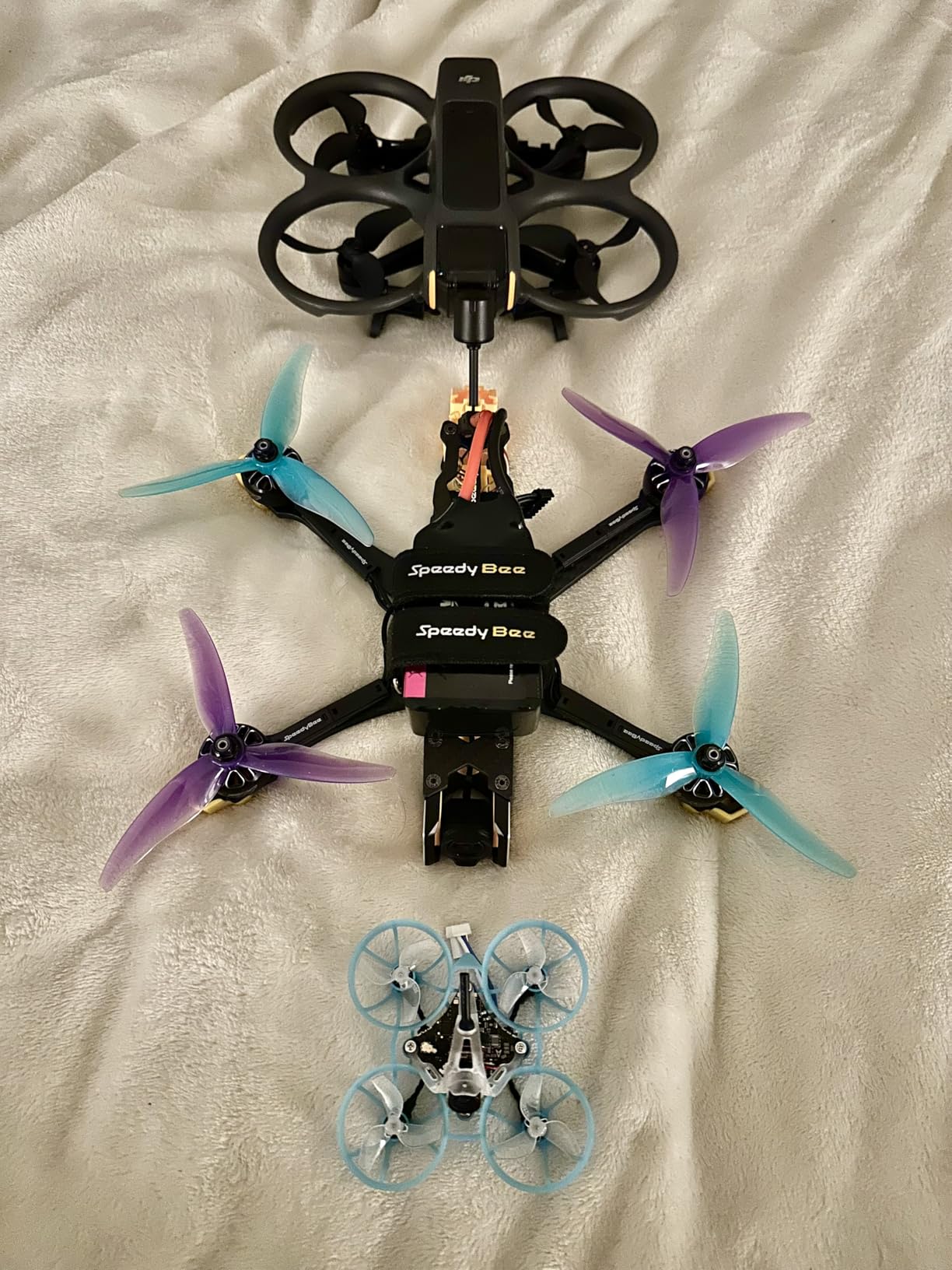
The wheelbase measurement determines how large and stable your tiny whoop will be. 65mm models like the Air65 excel in tight indoor spaces where maneuverability is key. They’re lighter, more agile, and bounce off walls with less force. However, they struggle in any wind and require more active control to fly smoothly.
75mm models like the Air75 and Meteor75 Pro provide better stability and wind handling. The extra mass carries momentum through turns smoothly, making them feel more locked-in. If you plan to fly outdoors or want a quad that bridges indoor and outdoor use, 75mm is the better choice. For apartment flying or tight indoor courses, 65mm will be more manageable.
Brushed vs Brushless Motors
Brushed motors are found on beginner kits like the Cetus series. They’re simple, quiet, and gentle for learning, but they wear out over time and provide limited power. Most serious pilots move to brushless quickly once they master basic controls.
Brushless motors offer significantly more power, better efficiency, and much longer lifespan. They require more skill to control smoothly but reward you with punchy performance and precise handling. Unless you’re buying a complete beginner kit, I recommend choosing brushless for the better long-term value and performance ceiling.
1S vs 2S Batteries
1S batteries power most tiny whoops and provide tame, predictable performance perfect for indoor flying. They’re lighter, safer, and give longer flight times. Most beginners should start with 1S to develop smooth control habits before moving to more powerful configurations.
2S batteries nearly double the power output, transforming a tame whoop into a rocket ship. Models like the Tinyhawk 2 support both 1S and 2S, letting you start gentle and upgrade your power as skills improve. 2S is excellent for outdoor flying or experienced pilots, but it’s overkill for learning in small indoor spaces.
Analog vs Digital FPV
Analog FPV has been the standard for decades and works well for tiny whoops. It’s affordable, reliable, and virtually lag-free. The C03 and RunCam Nano cameras found on most beginner whoops provide perfectly adequate picture quality for learning and casual flying. Most pilots start with analog and only consider upgrading when they reach the limits of their skills.
Digital systems like DJI O4 and Walksnail provide HD footage that looks dramatically better than analog. However, they add weight, reduce flight times, and cost significantly more. The Meteor75 Pro is designed specifically for DJI O4, while the Protos kit uses Walksnail. Choose digital if you want to record cinematic footage or have the budget for the best equipment. Choose analog if you’re learning or prioritize long flight times and low cost.
Battery Connectors: BT2.0 vs PH2.0
BT2.0 is the modern standard and is found on most quality tiny whoops. It provides reliable power delivery without the voltage sag issues that plague older connectors. If you’re buying a new whoop in 2026, make sure it uses BT2.0 to ensure good performance and easy battery sourcing.
PH2.0 is being phased out but is still found on older models and budget options. These connectors are prone to failure and can cause power issues that lead to crashes. I strongly recommend avoiding PH2.0 unless you’re buying a very specific used model. The future is BT2.0, and there’s no good reason to choose outdated connector technology.
Flight Time Expectations
Real-world flight times for tiny whoops range from 2 to 8 minutes depending on the model and battery size. Beginner whoops like the Cetus typically get 2 to 3 minutes per battery. Performance whoops like the Air65 and Air75 deliver 4 to 5 minutes. Long-range models like the Aquila16 can reach 8 minutes with large batteries.
These times assume mixed flying with some hovering and some full-throttle bursts. Aggressive flying with constant punch-outs will reduce flight times by 30 to 50%. Plan your battery strategy accordingly. Most pilots find that 4 to 6 batteries provide enough flying time for a satisfying session without spending all day charging.
Indoor Flying Space Requirements
Minimum space for enjoyable tiny whoop flying is about 10×10 feet with 8-foot ceilings. This gives you room to make turns and recover from mistakes without hitting walls immediately. Smaller spaces are possible with 65mm models and conservative flying, but you’ll feel constrained.
Garages and large living rooms are ideal. The more space you have, the more you can explore the quad’s capabilities. If you only have a small bedroom or apartment, consider a 65mm model and add significant throttle expo to make control inputs smoother.
Frequently Asked Questions
What is the best tiny whoop for inside and mostly outdoor use?
Are brushless too powerful for beginners?
Brushless motors are more powerful than brushed, but they’re not too powerful if you start with appropriate throttle settings. Most brushless whoops like the Air65 allow you to add throttle expo in Betaflight to tame the responsiveness. Start with 40 to 50% throttle expo and reduce it as your skills improve. The BETAFPV Cetus Pro even includes brushless motors with beginner-friendly flight modes that make the power manageable.
How much should I spend on my first tiny whoop?
Budget between $150 and $250 for your first tiny whoop setup if you already own a transmitter and goggles. This gets you a quality bind-and-fly model like the BETAFPV Air65 or EMAX Tinyhawk 2. If you need a complete kit with transmitter and goggles, budget $250 to $400 for options like the BETAFPV Cetus Pro or Cetus kits. Spending less than $150 typically means compromising on durability or features that will limit your progression.
Do I need a special indoor space?
Minimum space for enjoyable tiny whoop flying is about 10×10 feet with 8-foot ceilings. Larger rooms and garages are ideal, but many pilots successfully fly in apartments with 65mm models and conservative flying. Remove fragile items and clear floors before your first flight. If you only have a small bedroom, consider adding throttle expo to make control inputs smoother and less aggressive.
Can tiny whoops fly outdoors?
Yes, tiny whoops can fly outdoors in calm conditions. 65mm models like the Air65 are best for very light winds under 5mph. 75mm models like the Air75 and Meteor75 Pro handle moderate winds up to 10mph better due to their larger size and extra mass. Avoid flying in stronger winds as these micro quads will be pushed around. Tiny whoops excel at outdoor flying in covered areas like porches and patios where wind is blocked.
How many batteries do I need?
Most pilots find that 4 to 6 batteries provide enough flying time for a satisfying session. With 3 to 5 minute flight times per battery, this gives you 15 to 30 minutes of total flying. More batteries means more flying and less charging, but consider the charging time and your budget. The BETAFPV Aquila16 includes an 1100mAh battery that provides up to 8 minutes, reducing the number of spares needed.
Can I use my existing FPV goggles?
Yes, most tiny whoops use standard analog FPV video that works with any goggles. If you have analog goggles like the Fat Shark Dominator or Eachine EV800D, they will work with analog whoops like the Air65, Air75, and Tinyhawk 2. For digital systems like DJI O4 or Walksnail, you need matching goggles from the same ecosystem. The CADDXFPV Protos kit includes compatible goggles, while the Meteor75 Pro requires DJI goggles for O4 compatibility.
Final Thoughts
Tiny whoop drones have revolutionized FPV flying by making it possible to practice year-round regardless of weather. After testing 12 different models across price points and skill levels, the BETAFPV Air65 stands out as the best choice for most pilots. Its 17.3g ultralight design, durability, and ELRS V3 connectivity provide an excellent balance of performance and value that will serve you from your first hover through advanced freestyle.
For pilots wanting the absolute best tiny whoop for indoor and outdoor use, the BETAFPV Air75 offers the versatility of a 75mm frame that handles light wind while remaining small enough for indoor flying. If you’re planning to step up to HD digital video, the BETAFPV Meteor75 Pro is specifically designed for DJI O4 compatibility and delivers cinematic footage that was previously impossible from a micro quad.
Complete beginners should consider the BETAFPV Cetus Pro FPV Kit for its complete package, brushless motors, and three flight modes that create a natural learning progression. The included transmitter, goggles, and accessories remove all barriers to entry, letting you focus on learning to fly rather than sourcing equipment.
The tiny whoop market continues to evolve in 2026 with better motors, improved battery connectors, and digital HD systems bringing cinema-quality footage to micro drones. Whichever model you choose, these remarkable little quads will transform how you practice and enjoy FPV flying regardless of the weather outside.