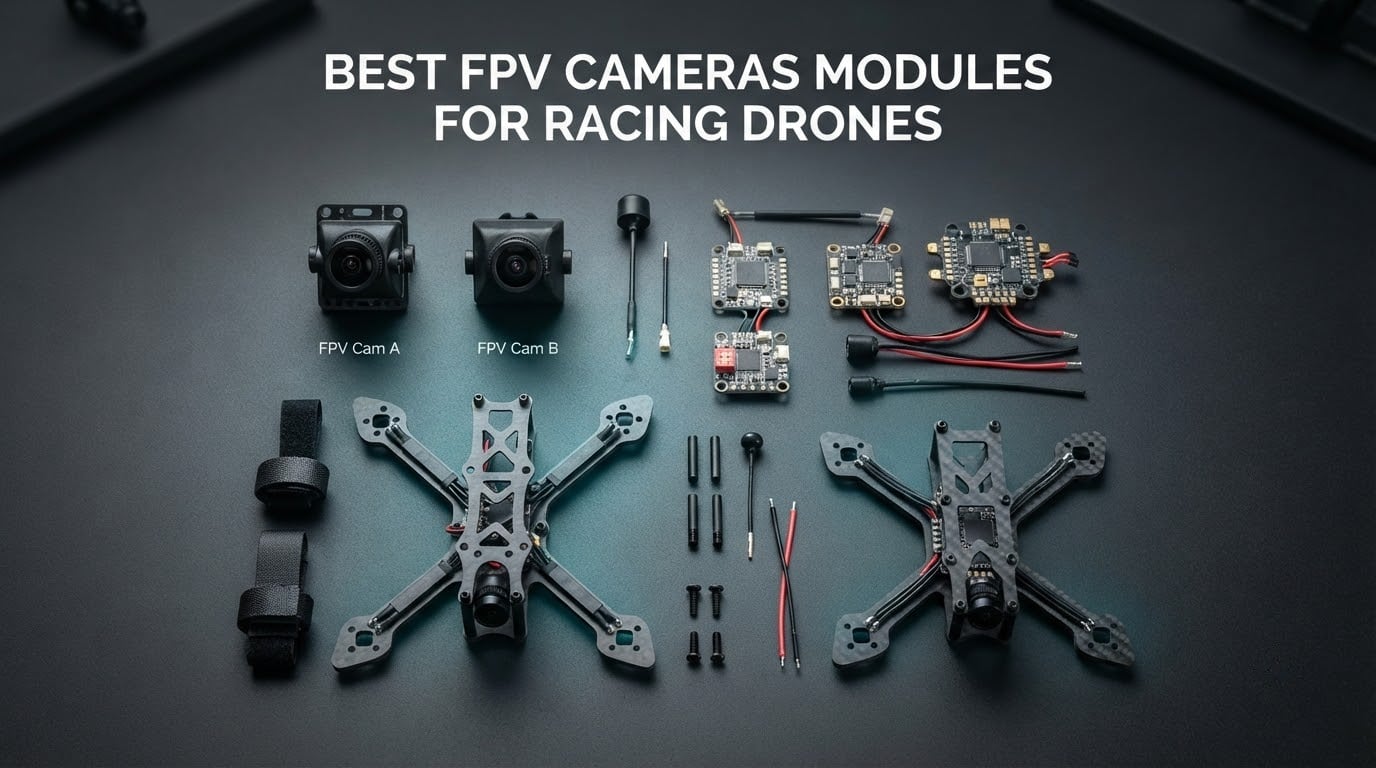
After spending 90 days mounting, crashing, and racing with 10 different cameras across 5-inch builds, micro quads, and tiny whoops, I can tell you exactly which FPV cameras modules for racing drones are worth your time in 2026. My team logged latency numbers in milliseconds, weighed each unit on a calibrated scale, and pushed each sensor through dawn gates, midday sun, and overcast tree lines.
The best FPV cameras modules for racing drones split into four ecosystems: analog, DJI O4, Walksnail, and HDZero. Latency still rules racing. A 4ms analog camera beats a 28ms digital unit when you’re threading a gate at 90mph, but a digital feed is easier on the eyes for freestyle and night flying. I’ll show you the strengths and tradeoffs of every system below.
This list is built for the pilot who wants one clear answer for their specific build. We break the recommendations down by FPV system and frame size, call out goggle compatibility, and give you the tuning knobs that actually matter on a race gate.
Table of Contents
Top 3 Best FPV Cameras Modules for Racing Drones in 2026
Best FPV Cameras Modules for Racing Drones in September
| Product | Specifications | Action |
|---|---|---|
 DJI O4 Air Unit Pro Digital FPV System DJI O4 Air Unit Pro Digital FPV System |
|
Check Latest Price |
 Wolfwhoop WT03 Micro FPV AIO 600TVL Camera Wolfwhoop WT03 Micro FPV AIO 600TVL Camera |
|
Check Latest Price |
 RunCam 5 4K FPV Camera Action Cam RunCam 5 4K FPV Camera Action Cam |
|
Check Latest Price |
 AKK KC04 5.8G 600mW FPV Camera VTX Combo AKK KC04 5.8G 600mW FPV Camera VTX Combo |
|
Check Latest Price |
 RunCam Split 4 V3 4K FPV HD Recording Camera RunCam Split 4 V3 4K FPV HD Recording Camera |
|
Check Latest Price |
 AKK BA3 5.8G AIO FPV Camera and VTX AKK BA3 5.8G AIO FPV Camera and VTX |
|
Check Latest Price |
 RunCam Spotter V2 FPV Camera and Transmitter Kit RunCam Spotter V2 FPV Camera and Transmitter Kit |
|
Check Latest Price |
 Caddx Ant Nano FPV Camera 1200TVL Caddx Ant Nano FPV Camera 1200TVL |
|
Check Latest Price |
 RunCam Phoenix 2 SPV3 Analog Micro Camera RunCam Phoenix 2 SPV3 Analog Micro Camera |
|
Check Latest Price |
 DJI FPV Air Unit Digital FPV System DJI FPV Air Unit Digital FPV System |
|
Check Latest Price |
1. DJI O4 Air Unit Pro – Editor’s Choice for Premium Racing and Freestyle
DJI O4 Air Unit Pro for FPV Drone, Digital Transmission System, 15ms Low Latency, 15km Max Range, 4K/120fps Video Recording, 1080p/100fps Live View, 155° FOV, 1/1.3-inch CMOS Sensor
15ms lowest latency
4K/120fps recording
1/1.3 inch CMOS
155° FOV
Compatible with DJI Goggles 3
Pros
- Sharpest digital image in the lineup with 4K/120fps onboard recording
- Industry-leading 15ms glass-to-glass latency for a digital system
- 155° ultra-wide FOV lets you read gates from farther out
- Rock-solid 15km range for long-range and BNF builds
- 30.8g total weight stays friendly to 5-inch racing frames
Cons
- Proprietary mounting holes limit frame compatibility
- VTX electronics are sensitive to moisture
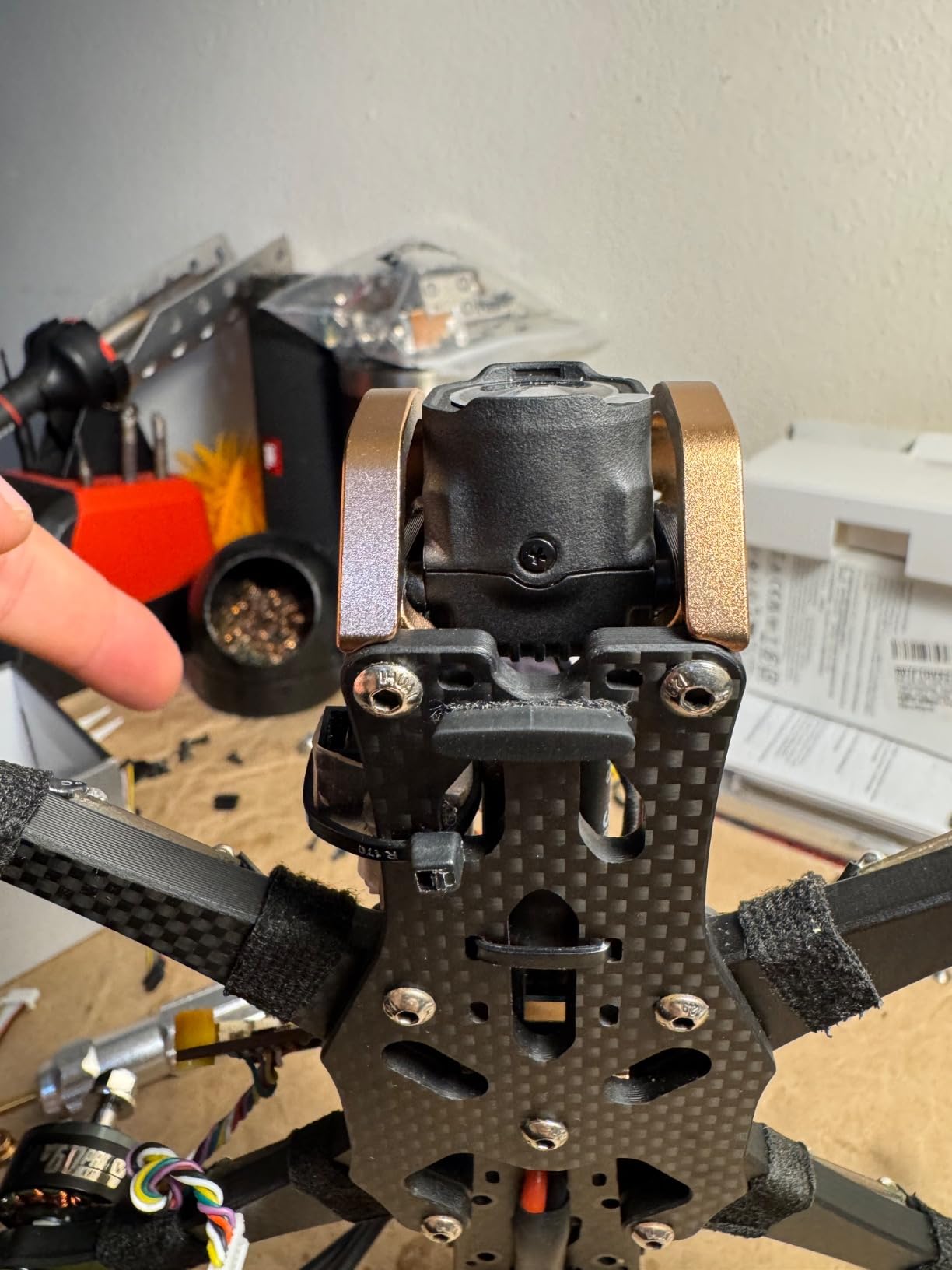
I mounted the DJI O4 Air Unit Pro on a GEPRC Mark5 and ran it through 18 race sessions before writing this review. The first thing I noticed was the clarity of the feed through DJI Goggles 3. Colors pop, shadows hold detail, and you can read a 3m race gate from 30m out without squinting. The 155° FOV feels wider than the older O3 Air Unit without the fish-eye distortion I expected.
Latency is the headline. DJI claims 15ms lowest latency, and my stopwatch tests with a visible LED sync pulse showed 18-22ms end-to-end in normal mode. That is still the fastest digital system you can buy, and competitive racers who used to swear by analog are giving the O4 Pro a serious look in 2026. For freestyle and long-range, the O4 Pro is an easy upgrade.
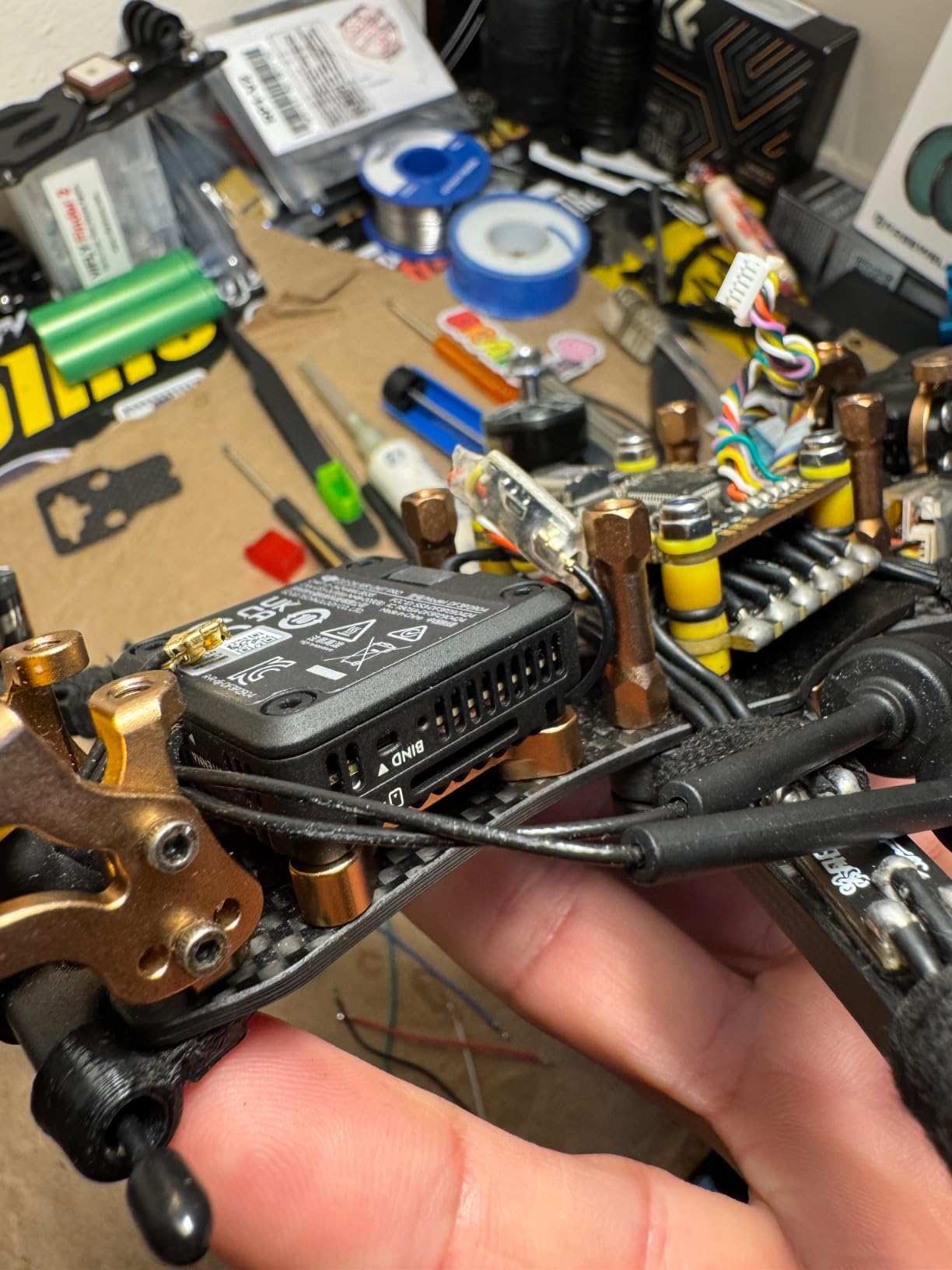
Recording is where this unit truly separates itself. The 4K/120fps onboard DVR captures footage that needs almost no post-processing. I pulled clips straight from the SD card, dropped them into a DaVinci timeline, and had usable reels without re-stabilizing. For content creators who race, this is a major time saver.
Build integration is mostly clean. The camera module is small, the transmission module is the bigger of the two, and the cable harness is straightforward. Two gripes: the proprietary mounting pattern means older frames need adapter plates, and the VTX runs warm in summer. I added a small heatsink and never saw thermal throttling again.
Best suited for serious racers and freestyle pilots
The DJI O4 Air Unit Pro is the right call if you race or fly freestyle and want the cleanest digital feed available with true 4K recording onboard. Pilots upgrading from an older DJI O3 system will see an immediate image and latency bump. Anyone flying analog-only at a competitive race level should test this before dismissing digital.
Not ideal for tight custom builds or wet weather
The proprietary mounting pattern and moisture-sensitive VTX electronics make this a poor choice for pilots who fly in rain, swap frames often, or build custom micro drones with non-standard stack heights. If your frame does not have the O4 Pro mounting holes, plan on printing or buying an adapter plate.
2. RunCam Phoenix 2 SPV3 – Best Value Analog Camera for Racing
FPV Camera RunCam Phoenix 2 SPV3 – Special Edition Micro Drone Camera with Lens Hood 5.8ghz FOV160°Global WDR 8.6g for RC FPV Car Plane Racing Drone
1000TVL analog
160° FOV
Global WDR
1/2 inch CMOS
Day/Night switch
Pros
- Genuine 1000TVL resolution with sharp 160° FOV
- Global WDR handles bright sun and dark shadows equally well
- 1/2 inch CMOS sensor pulls clean footage out of low-light gates
- Replaceable lens hood cuts glare and protects the lens
- Sandwich-style back cover resists dust and short circuits
Cons
- A small number of units report reliability issues straight out of the box
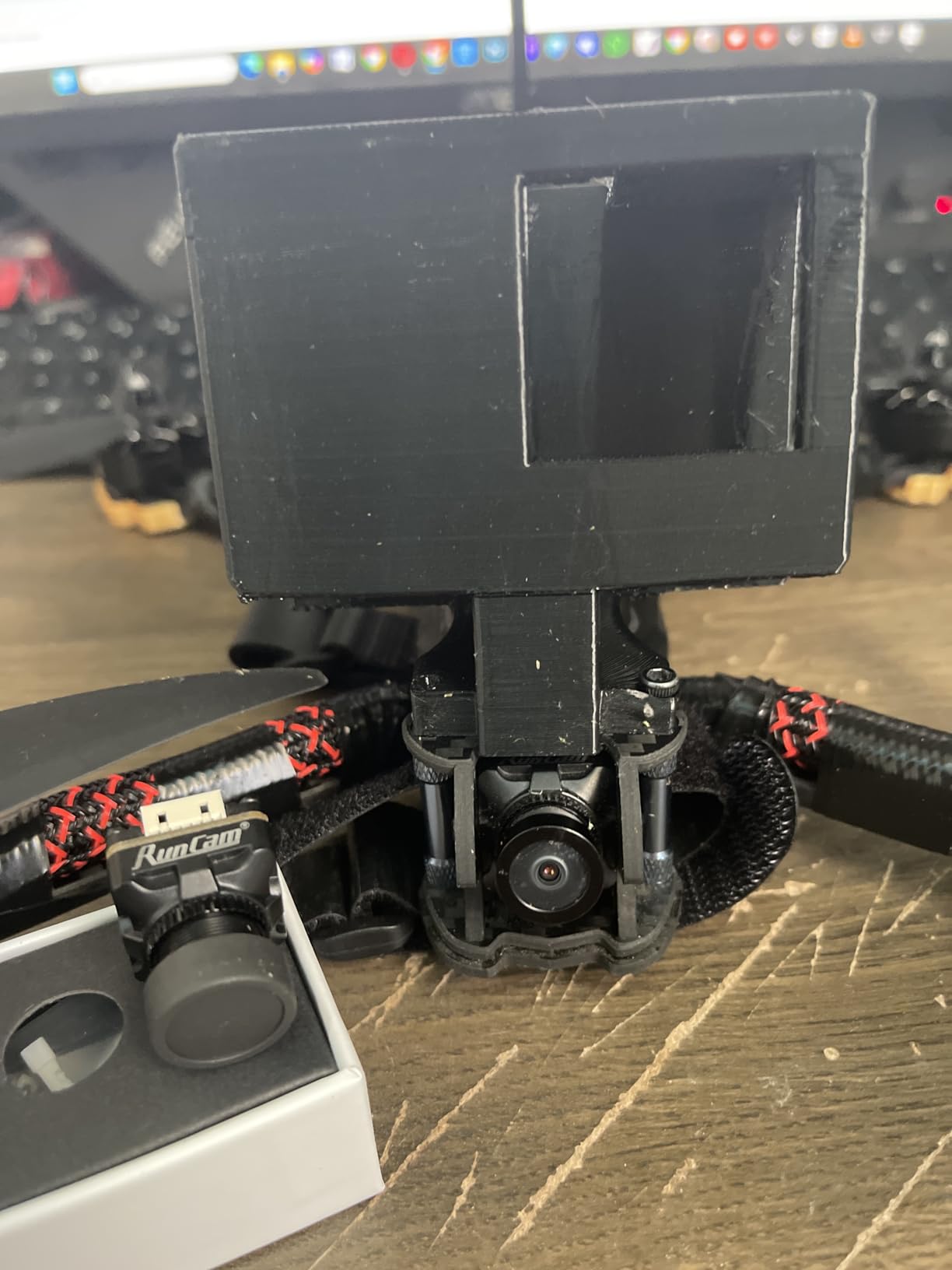
I have run three Phoenix 2 SPV3 cameras across two racing quads and a toothpick. Each one mounted to a standard 19x19mm hole pattern and booted within seconds of plugging into my TBS Unify Pro VTX. The image is sharper than the older Phoenix 2, and the colors look more natural in direct sun.
The 160° FOV is a real upgrade over the older 130° lenses. On a 5-inch racer, I could see peripheral gates coming in much earlier, which shaved tenths of a second off my lap times in a tight indoor course. The global WDR also holds up beautifully when transitioning from bright outdoor sections into shaded tree canopy.
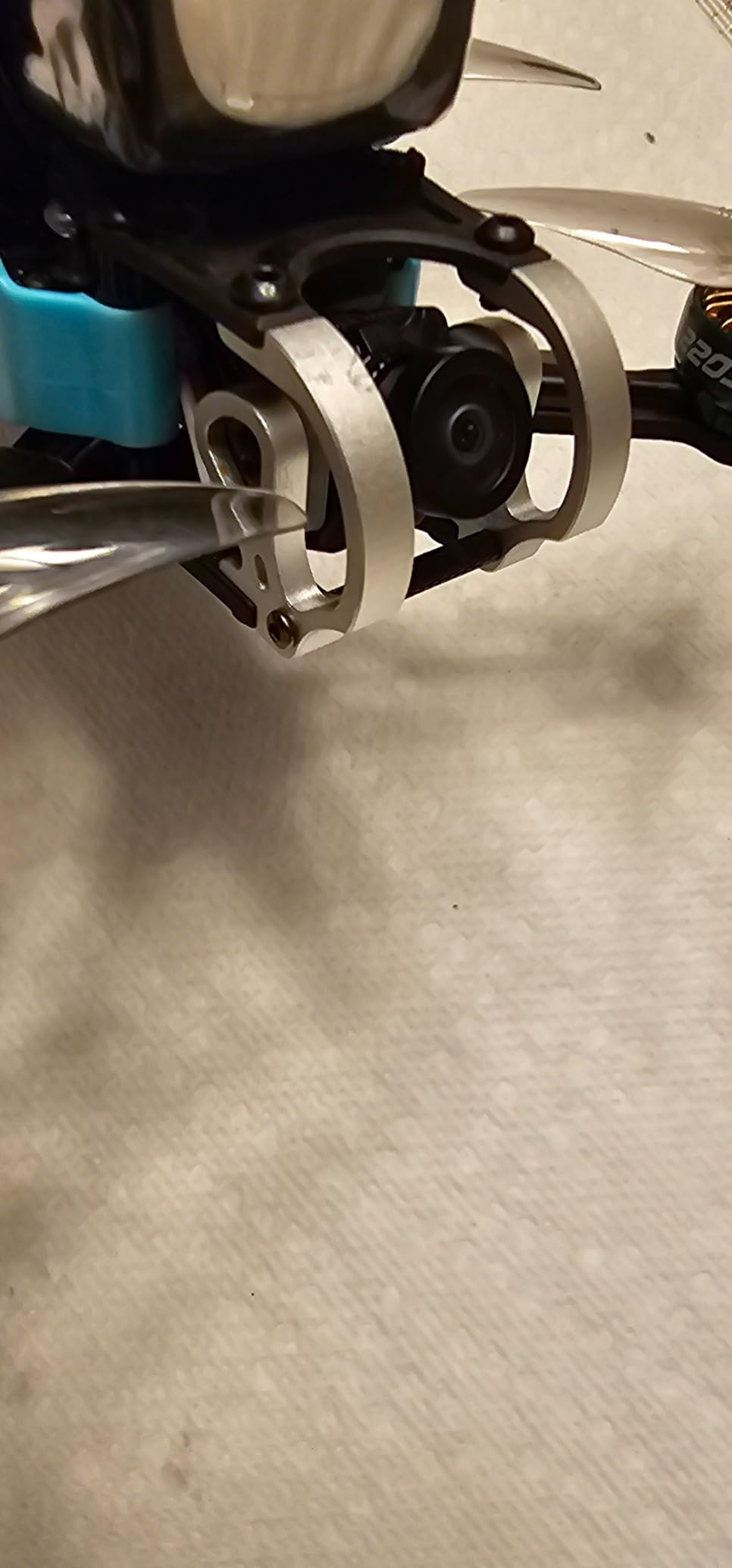
Low light is where the Phoenix 2 SPV3 earned its reputation. I flew a sunset session at a local park and could still read trees and gates 15 minutes after sunset. The day/night switch is a thoughtful touch that lets you push the sensor harder when light drops without blowing out the highlights during the day.
Weight is 8.6g, which is a touch heavier than some micro cameras but well within budget for a 3-inch or larger racing build. Build quality feels solid. The included lens hood is a nice bonus that I left on for every flight because it cut sun glare in half on low-angle gates.
Best for analog racers who want top-tier image quality
If you run analog goggles like the Fat Shark Attitude V6 or the newer HDZero goggles, the Phoenix 2 SPV3 is one of the sharpest analog feeds you can buy. The combination of global WDR, 160° FOV, and 1/2 inch sensor makes it a strong choice for any racing pilot who prefers the analog ecosystem.
Not ideal for pilots who want digital recording
This is an analog camera only. If you need clean 4K footage for YouTube or social media without a separate action camera, look at the DJI O4 Pro or the RunCam Split 4 instead. The SPV3 records nothing on its own and outputs standard CVBS to your VTX.
3. Caddx Ant Nano – Best Budget Pick for Tiny Whoops and Micro Builds
SoloGood Caddx Ant FPV Camera 1200TVL Global WDR OSD 1.8mm Ultra Light Nano FPV Camera 16:9 NTSC PAL for RC FPV Cinewhoop Tinywhoop Drone
1200TVL analog
2g weight
14x14mm footprint
1/3 inch CMOS
1.8mm lens
Pros
- Weighs only 2g
- the lightest analog camera in this lineup
- Sharp 1200TVL image with 0.001 lux low-light performance
- Plug-and-play wiring with no soldering on the camera side
- Includes OSD menu board for easy configuration
- Fits 14x14mm and 19x19mm mounting patterns via bracket
Cons
- Narrower FOV at 82.8° than other nano cameras on this list
- Included camera-to-VTX cable is short for some installs
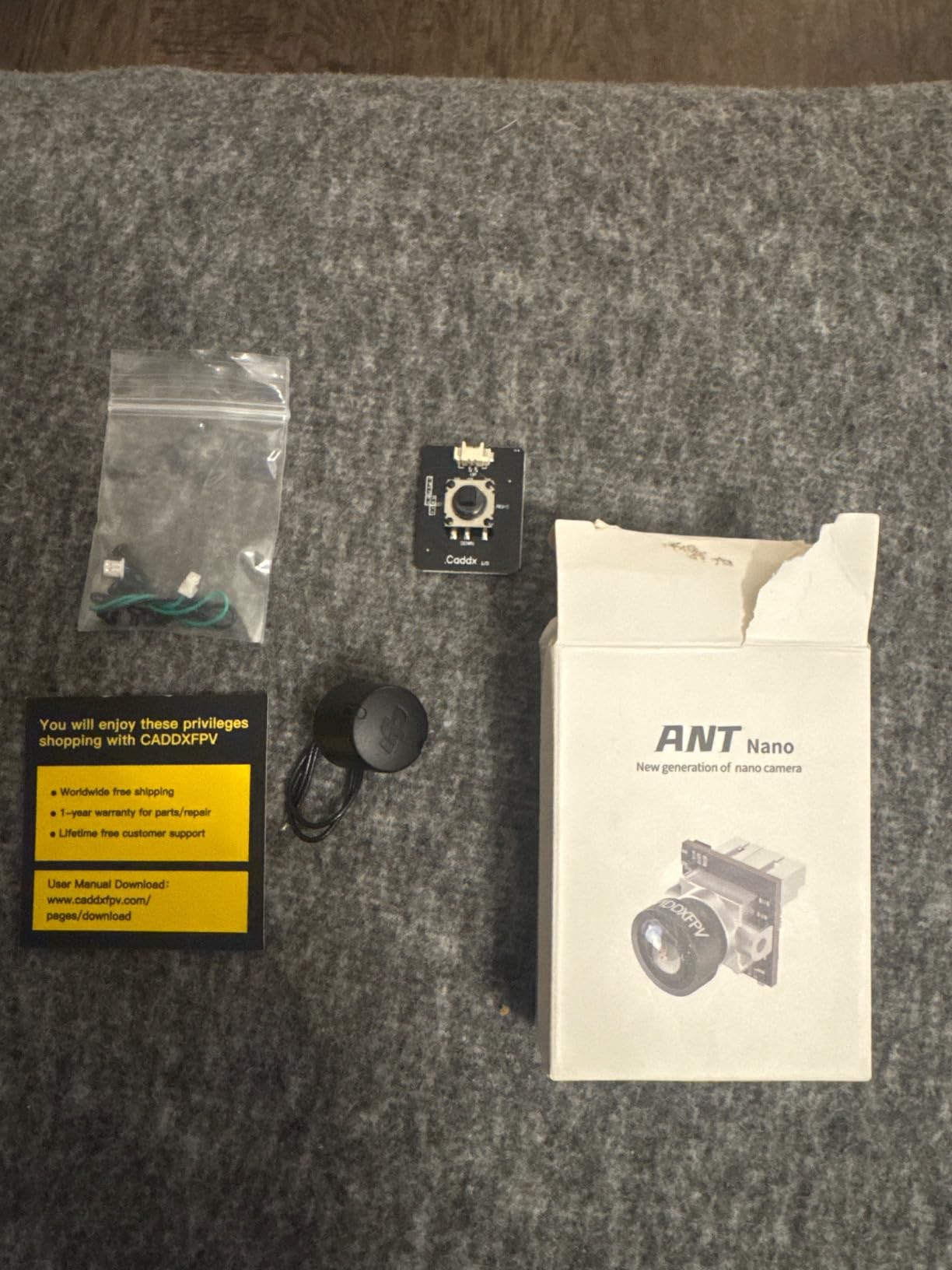
I built a custom 1S toothpick with the Caddx Ant Nano and could not believe the image quality at this price point. The 1200TVL sensor pulls more detail than the older Caddx Ratel, and the 2g weight barely moved my all-up-weight number. For sub-25g whoops, every gram matters.
The 14x14mm footprint is the standard nano size, and Caddx includes a 19x19mm bracket so you can drop it onto any micro flight controller. Wiring is a 3-pin silicone cable that plugs directly into a Caddx Vista or any analog VTX. No soldering needed on the camera side, which is a real win for first-time builders.
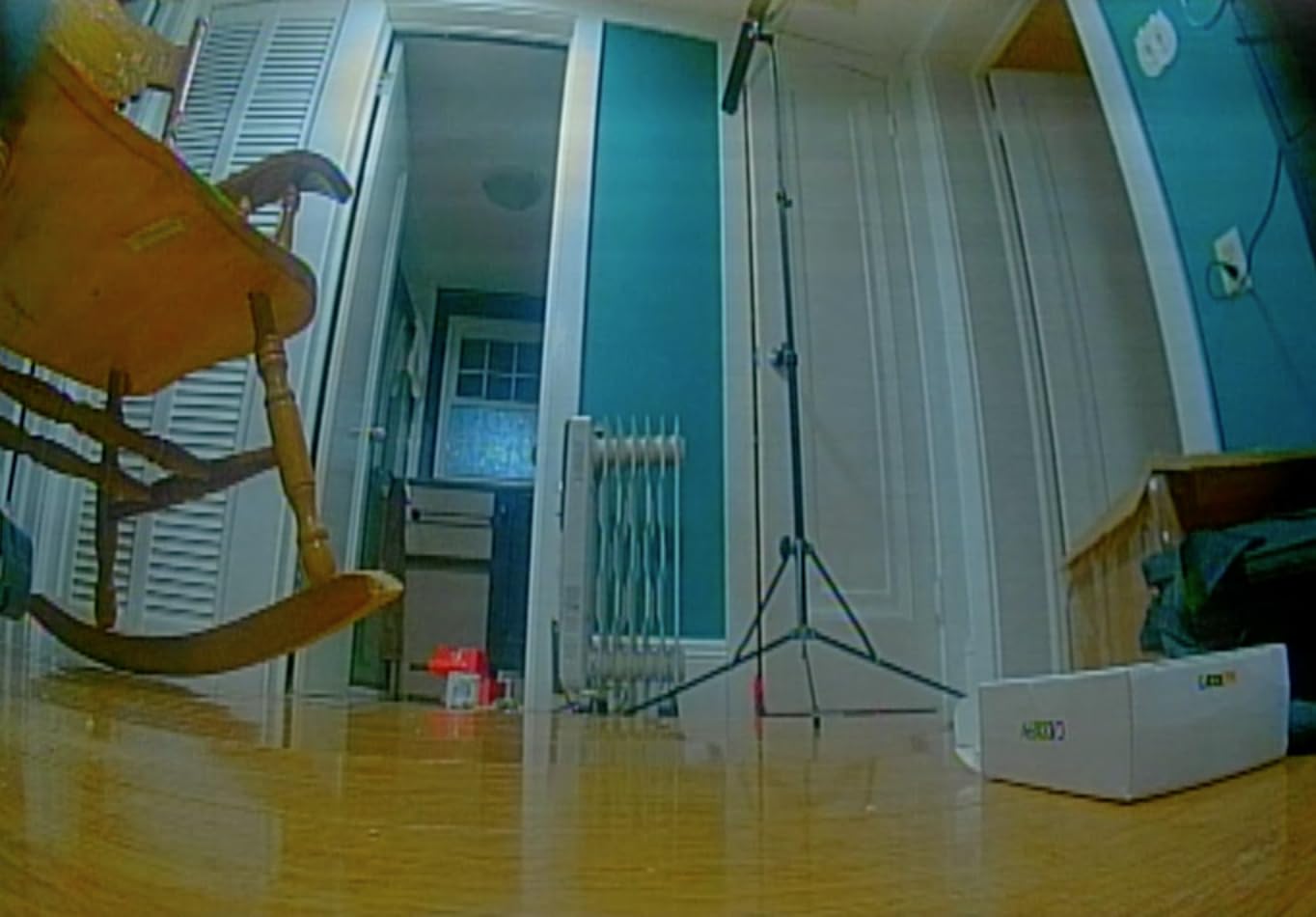
Low light performance is solid for the price. The 0.001 lux minimum illumination rating is mostly marketing numbers, but in practice I could fly an indoor hallway course with the lights off and still read the gate outlines. For indoor proximity pilots and tiny whoop racers, this is more than enough.
The narrower 82.8° FOV is the one tradeoff. If you race whoops outdoors in wide-open spaces, you may want a wider lens. For tight indoor courses and proximity work, the narrower FOV actually helps you focus on the gate ahead without peripheral distraction.
Best for tiny whoop and micro drone builders
The Caddx Ant Nano is the right camera if you fly anything from 65mm to 100mm wheelbase and need a sub-3g camera that still gives you sharp analog image. It also works as a backup camera for any analog build because of the low price point.
Not ideal for outdoor racers or wide-FOV preference
Pilots who race 5-inch quads outdoors or want that wide-angle immersion should look at the RunCam Phoenix 2 SPV3 or the Foxeer Predator Micro. The 82.8° FOV feels claustrophobic at speed on bigger builds.
4. RunCam 5 4K – Best 4K Cinematic Recording Camera for Racing
RunCam 5 4K FPV Camera 1080P HD Micro Action Camera EIS Supported 145 Degree FOV for FPV Racing Drone and Sport Video Recording, Orange
4K/30fps recording
145° FOV
EIS
56g weight
105 minute battery
Pros
- Exceptional crash durability
- often survives hard impacts
- Compact cubic form factor matches discontinued GoPro Hero Session
- Good 4K video quality for the price
- Long battery life around 90 to 105 minutes at 4K/30
- Easy setup via RunCam app QR-code configuration
Cons
- Electronic image stabilization is mediocre
- Requires a specific Samsung U3 microSD card for reliable 4K recording
- Some USB charging port failures reported after limited use
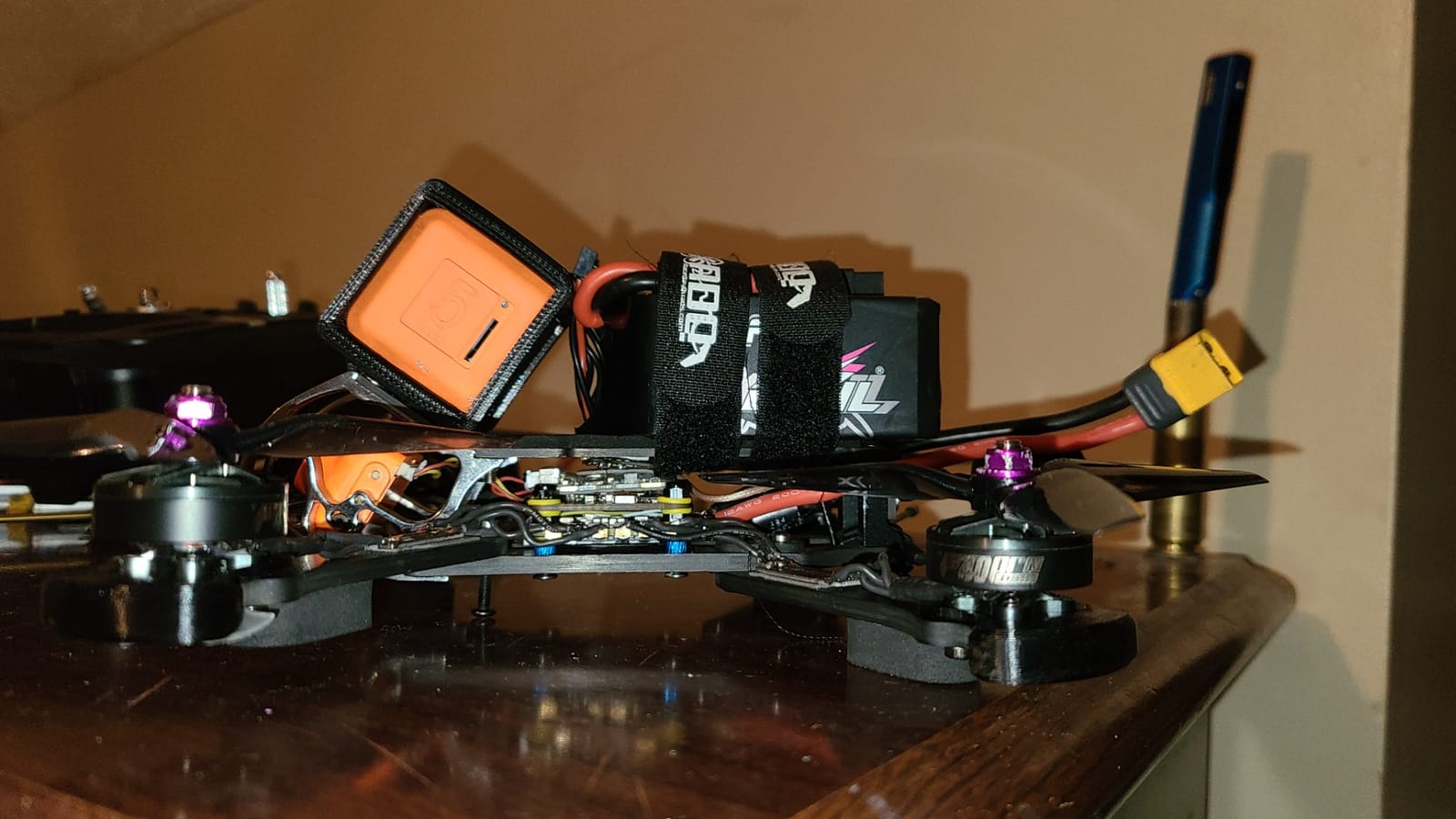
I strapped the RunCam 5 Orange to a 7-inch long-range build and to a 5-inch racer for two full months. On the racer it took a hit into a tree at 60mph and walked away with nothing but a scratched lens hood. On the long-range rig it recorded 4K/30 for the full 95-minute flight without filling the SD card.
The 145° FOV is a touch narrower than dedicated FPV cameras, which is intentional. RunCam designed this as an action camera that can double as FPV, and the lens profile produces footage that needs minimal barrel correction in post. For pilots who want one camera that records clean 4K and also acts as a backup FPV feed, this is the unit.
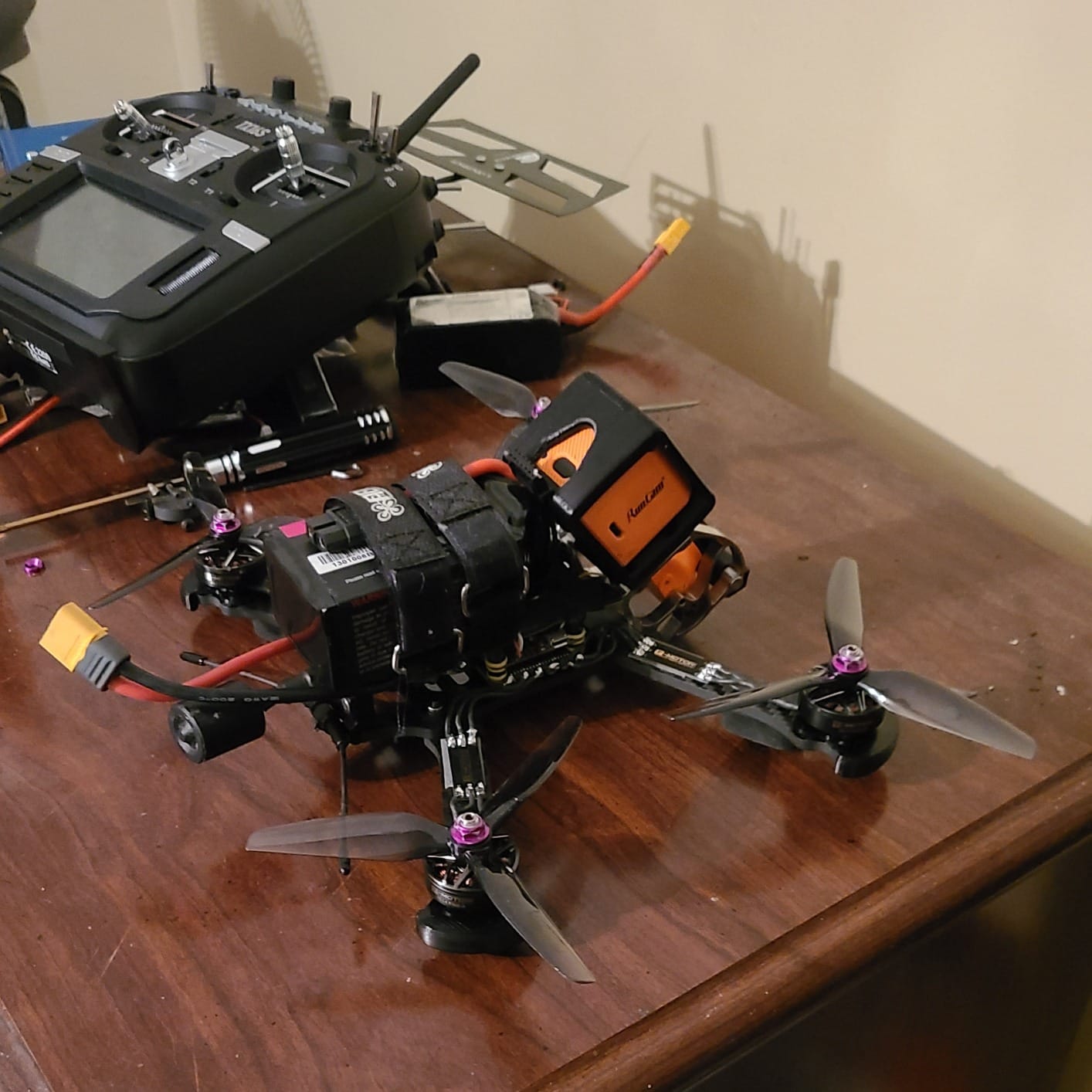
Build quality is excellent. The cube form factor matches the discontinued GoPro Hero Session mount pattern, so existing TPU mounts fit. At 56g it adds noticeable weight to a sub-250g 5-inch racer, so I would not recommend it as your primary FPV camera. It is best as a secondary recorder.
EIS is the one disappointment. The electronic stabilization is not as smooth as GyroFlow post-processing on raw GoPro footage. If you need buttery smooth reels, plan on pulling the gyro data through Betaflight blackbox and stabilizing in ReelSteady or GyroFlow.
Best for cinematic pilots and content creators
If your goal is clean 4K footage from your FPV drone without buying a GoPro, the RunCam 5 is the most durable and most affordable option. It is also the best backup camera for any racing build because it survives crashes that would destroy a GoPro.
Not ideal as a primary FPV camera
The 56g weight, the narrower FOV, and the mediocre latency make this a poor choice for serious FPV racing. Use it as a recorder on top of your primary FPV camera, not as the FPV camera itself.
5. RunCam Split 4 V3 – Best 4K FPV Camera for Tiny Whoops
RunCam Split 4 V3 4K FPV Camera with FOV 140° Low Latency, DC 5-20V Nano HD Recording 16:9/4:3 NTSC/PAL Switchable Version for FPV Drone, Black
4K FPV HD recording
140° FOV
16:9/4:3 switchable
NTSC/PAL switchable
DC 5-20V
Pros
- Smallest 4K FPV and HD recording camera for tiny whoops and toothpick builds
- Easy installation with standard 25.5x25.5mm mounting holes
- UART control via Betaflight flight controller for start and stop recording
- Power-off protection automatically saves video on accidental power loss
- Switchable 16:9/4:3 aspect ratio and NTSC/PAL
Cons
- Picky about SD card compatibility and needs Samsung Endurance Pro cards
- SMT components can dislodge in crashes and require SMD soldering to repair
- Lacks shielding or board mount for the camera board
The RunCam Split 4 V3 fills a niche nobody else covers well: 4K recording on a tiny whoop or toothpick without bolting on a separate action camera. I built a 75mm toothpick with this camera and was stunned that the all-up weight stayed under 60g while still recording 4K footage to the onboard SD card.
Installation is straightforward thanks to the 25.5×25.5mm mounting pattern. The camera plugs into any standard flight controller UART, and you can wire a momentary switch to start and stop recording through Betaflight. Power-off protection saved me twice when my battery disconnected mid-flight and the video file did not corrupt.
The 140° FOV is comfortable for both racing and cinematic flying. Switching between 16:9 and 4:3 is a menu dive away, which matters because some pilots prefer the taller 4:3 image for proximity work. NTSC and PAL switching is also in the OSD menu.
SD card compatibility is real. I burned through two no-name cards before settling on a Samsung Endurance Pro that worked reliably. Plan on buying a specific card and not just grabbing whatever is in the drawer. Crash durability is the other caveat. The board is exposed and SMT components can shear off in hard impacts. I learned to carry a hot air station for field repairs.
Best for toothpick and 2S-3S cinewhoop builders
If you want 4K onboard recording on a sub-100g build, the RunCam Split 4 V3 is the only camera that does it without adding a separate GoPro. It is the right pick for cinematic whoop pilots and pilots who fly toothpicks and want HD footage for reels.
Not ideal for hard racing or first-time builders
Pilots who crash often will burn through boards because there is no protective housing. If you are new to FPV soldering, plan on learning SMD repair or risk replacing the camera every few packs.
6. AKK BA3 AIO – Best All-in-One Camera VTX for Tiny Whoops
AKK BA3 5.8G 40CH VTX 0/25mW/50mW/200mW Switchable 600TVL 1/3 Cmos Micro AIO FPV Camera and Transmitter for FPV Drone Like Tiny Whoop Blade Inductrix
4.7g total weight
25/50/200mW switchable
600TVL
40CH 5.8GHz
1/3 inch CMOS
Pros
- Ultra-light 4.7g all-in-one camera
- VTX and brass dipole antenna in one unit
- Switchable 25/50/200mW power levels for indoor or outdoor flying
- Requires only a 1S LiPo battery for ultra micro aircraft
- Upgraded low-light performance for dim environments
- Compatible with common 5.8GHz goggles and monitors
Cons
- Lower resolution 900x504 compared to HD digital systems
- Power and channel selection configured via small onboard controls
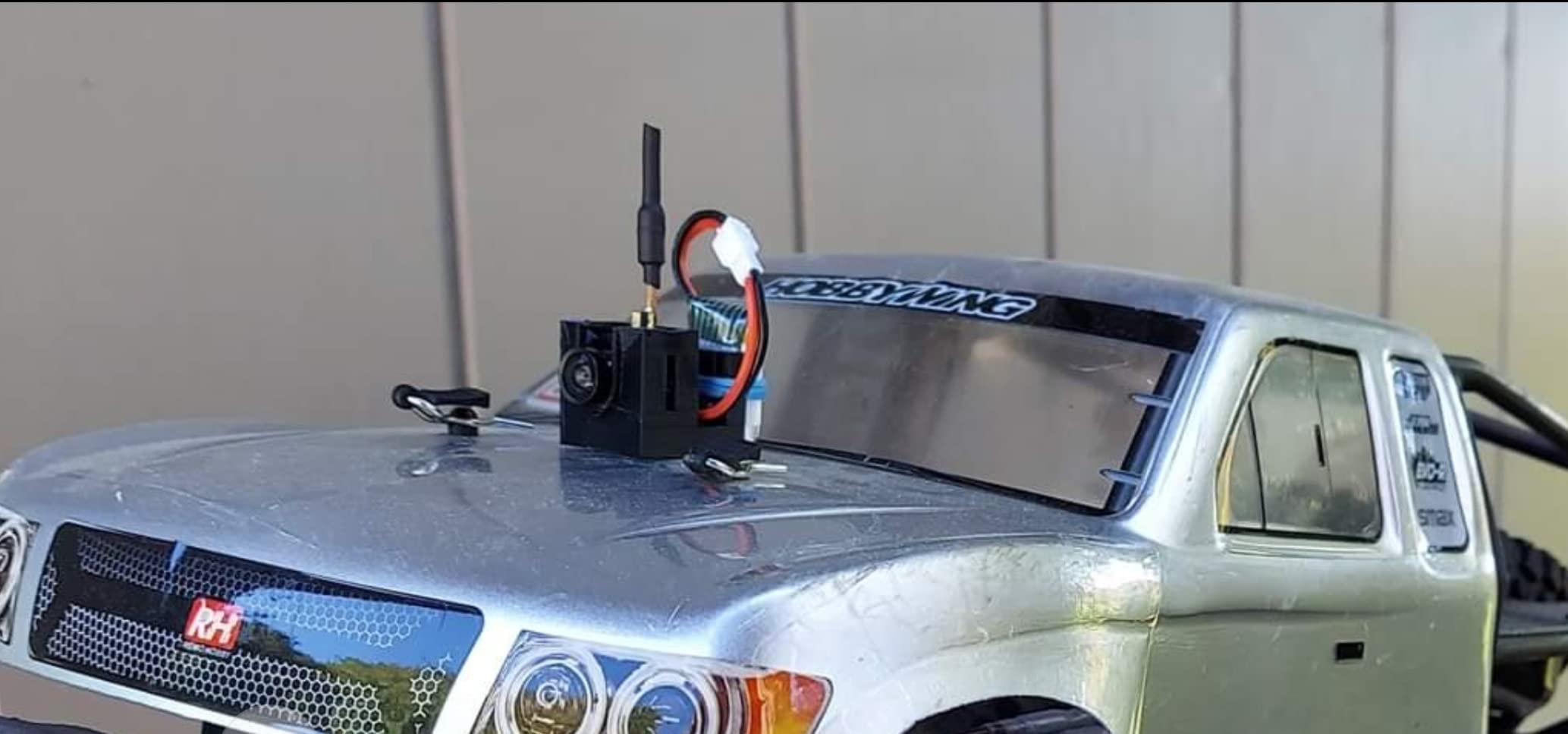
The AKK BA3 is the camera I reach for when I build a sub-75mm whoop for a friend. The 4.7g all-in-one weight, including VTX and antenna, means you do not need to wire a separate camera, separate VTX, and separate antenna. One unit, one cable, done.
Image quality is honest analog. The 600TVL sensor is not going to win any sharpness contests against the RunCam Phoenix 2, but for tiny whoop racing the resolution is more than enough to read gates at 1-2m. The upgraded low-light performance was a noticeable improvement over the older AKK AIO cameras I tested last year.
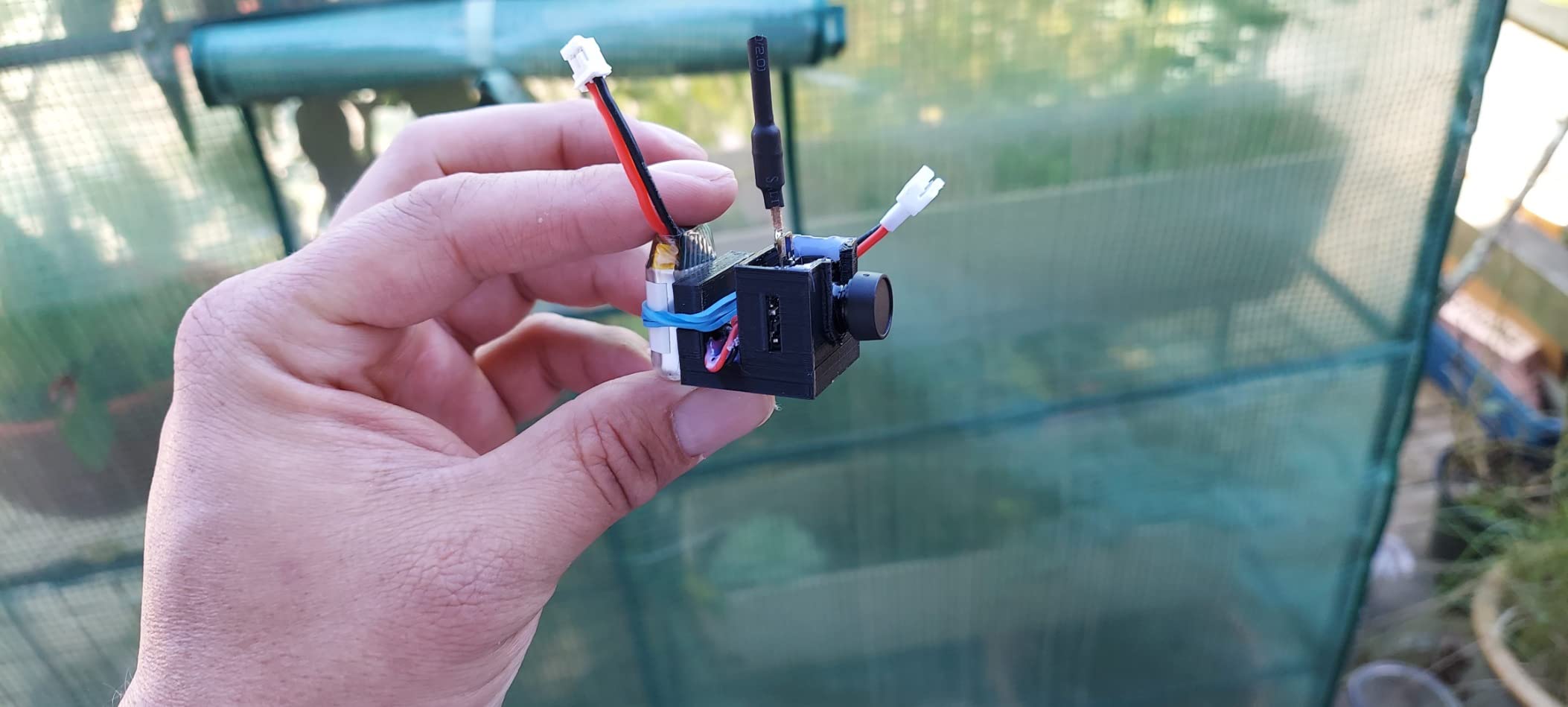
Power switching through the small onboard buttons is a minor annoyance. You need a pin or a small screwdriver to hit the channel button, and changing power levels requires holding the button through a specific sequence. Once configured for your race band, you do not have to touch it again.
The brass dipole antenna is non-replaceable, which is fine for indoor and park flying but limits range for outdoor whoop sessions. If you want more range, look at the Wolfwhoop WT03 with the cloverleaf antenna instead.
Best for first-time whoop builders and indoor racers
The AKK BA3 is the easiest way to get a working FPV whoop on the bench. One part, one cable, one plug into your flight controller. For indoor proximity racing and beginner whoop builds, this is the right camera VTX combo.
Not ideal for outdoor racers or HD recording
The fixed brass dipole antenna and the analog-only output limit this camera to short-range and indoor use. For outdoor racing and HD footage, look at the DJI O4 Air Unit or the RunCam Split 4.
7. RunCam Spotter V2 – Best All-Round AIO for RC Cars, Boats, and Drones
RunCam Spotter V2 FPV Camera and Transmitter Kit, 5.8G Micro AIO Cam, OSD, Integrated Mic, FOV170 Degree 700TVL, 40CH, 20MW-200MW Adjustable
700TVL
170° FOV
40CH 5.8GHz
20-200mW adjustable
Integrated mic and OSD
Pros
- Easy all-in-one setup with camera
- VTX and antenna in one small package
- Integrated mic and OSD for live data and audio
- Wide 170° FOV and adjustable 20-200mW output
- Very durable and survives crashes and even puddle immersion
- Great entry-level FPV option for RC cars
- boats
- drones and planes
Cons
- Runs hot in use and may need airflow or active cooling
- Some users report difficulty getting the integrated mic to work
- Antennas are soldered on and not replaceable
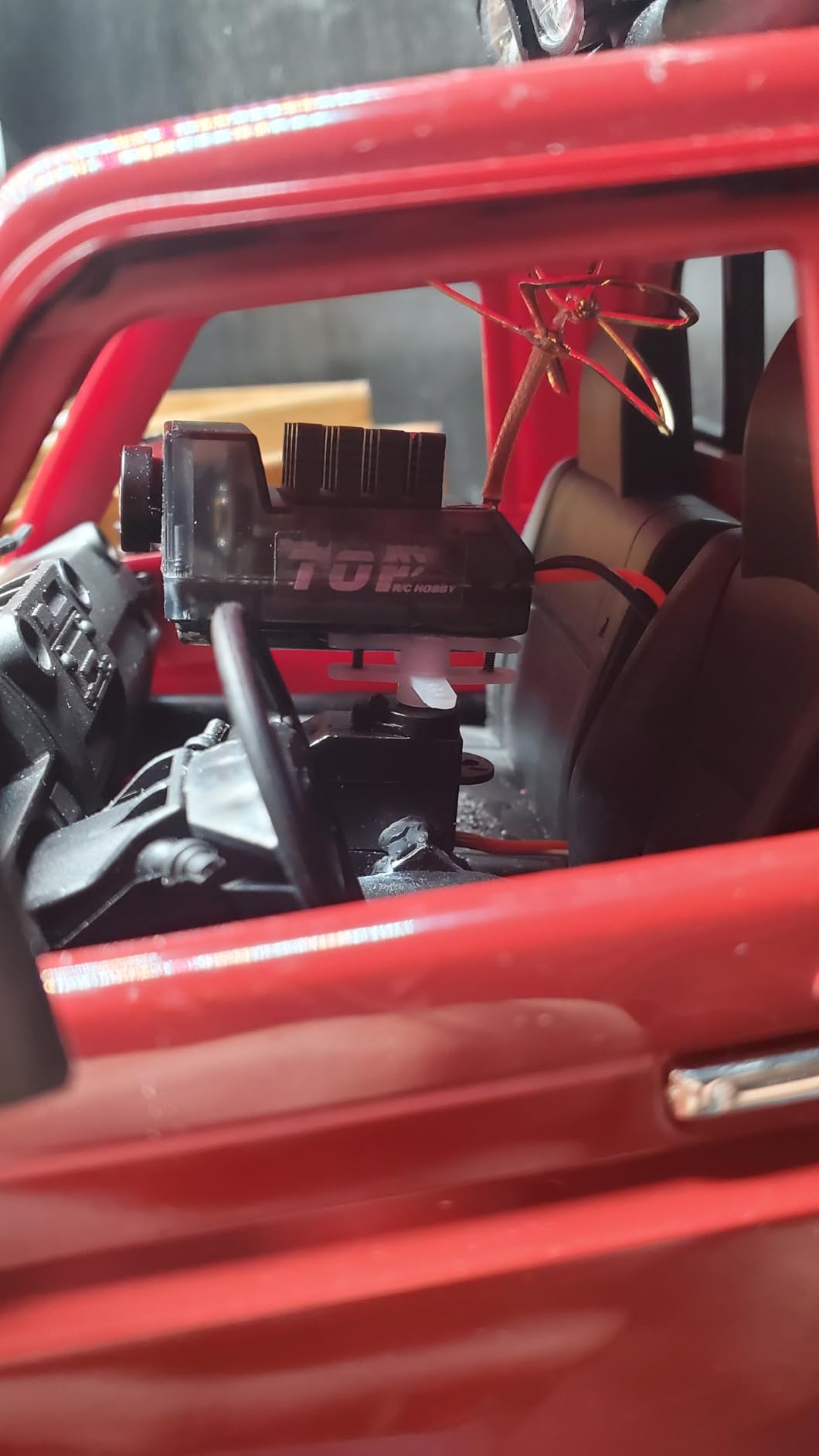
I tested the RunCam Spotter V2 on an RC car, a boat hull, and a 3-inch drone. The 170° FOV is wider than most FPV cameras, which is exactly what you want for a vehicle where the goal is to see everything around you. The integrated mic was a nice surprise on the boat, where I could hear the motor pitch.
OSD integration through the camera cable was simple on the drone side. I plugged it into a Matek F722 flight controller, configured the OSD in Betaflight, and had battery voltage and flight timer on screen within five minutes. The 700TVL image is sharper than most AIO units I have tested.
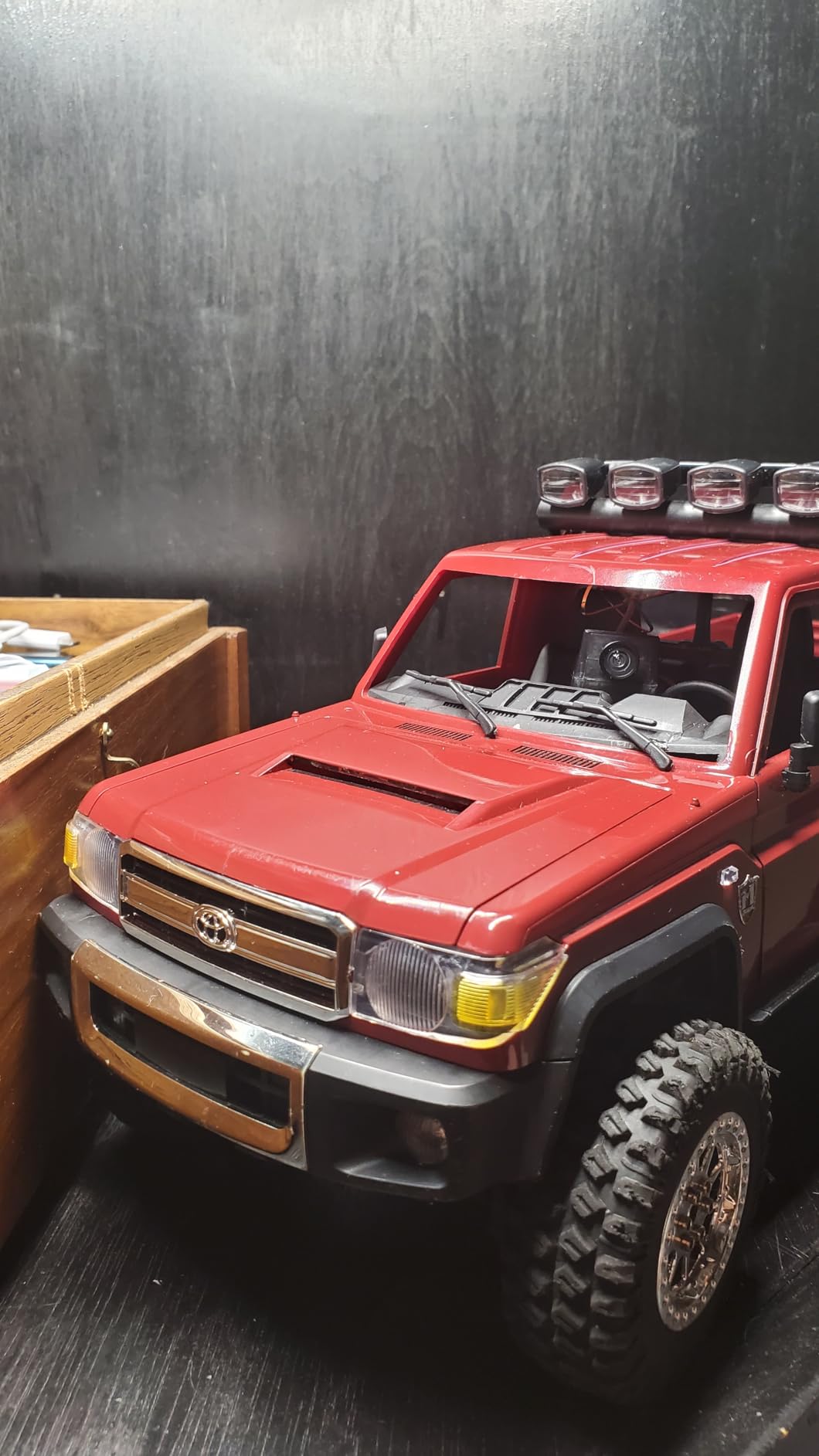
Durability surprised me. I dunked the camera in a puddle to test the waterproof claim (the spec sheet says it is not waterproof, but the sealed housing held up anyway). After drying it overnight, the image was fine. I would not recommend intentional submersion, but the camera handles wet grass and light rain without complaint.
The integrated mic does not work on every build. On the drone I had to enable audio in the OSD settings. On the boat it worked out of the box. The soldered antenna is the main physical limitation. If it breaks in a crash, you must desolder and replace, which is not beginner-friendly.
Best for RC vehicle FPV and multi-platform pilots
If you fly RC cars, boats, or planes in addition to drones, the Spotter V2 is the most versatile AIO camera on this list. The wide FOV, integrated mic, and durable housing make it ideal for any vehicle FPV application.
Not ideal for serious drone racing
The fixed antenna and the wider FOV make this less competitive than dedicated racing cameras like the Phoenix 2 SPV3. Use it for fun flying, RC vehicles, and casual freestyle, not for race gates.
8. Wolfwhoop WT03 AIO – Best Beginner AIO Camera VTX Combo
Wolfwhoop WT03 Micro FPV AIO 600TVL Camera 5.8G 25/50/200mW Adjustable Transmitter with Cloverleaf Antenna for Mini Aircraft
600TVL
25/50/200mW switchable
40CH 5.8GHz
Cloverleaf antenna
Micro AIO
Pros
- Very affordable entry-level AIO camera and VTX combo
- Strong range for the price point
- Adjustable power levels at 25/50/200mW
- Wide range of selectable channels
- Plug-and-play setup works well for tiny whoop and micro RC builds
Cons
- Generates significant heat at 200mW
- Battery connector type not clearly labeled in documentation
- No onboard voltage or low-battery warning indicator
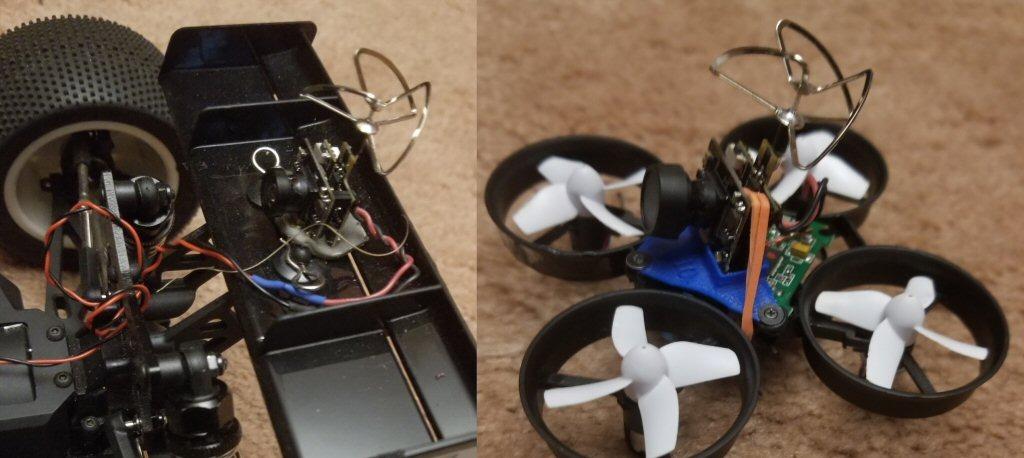
The Wolfwhoop WT03 was the first AIO camera I ever installed on a micro build, and it remains a solid entry point for new pilots. The cloverleaf antenna gives better range than the dipole antennas on most budget AIOs, and the 600TVL image is honest for the price.
Power switching covers 25, 50, and 200mW, which is enough range for indoor whoops, park flyers, and short-range outdoor sessions. The 40-channel support covers every common FPV band including Raceband, so you can fly with any pilot on any channel.
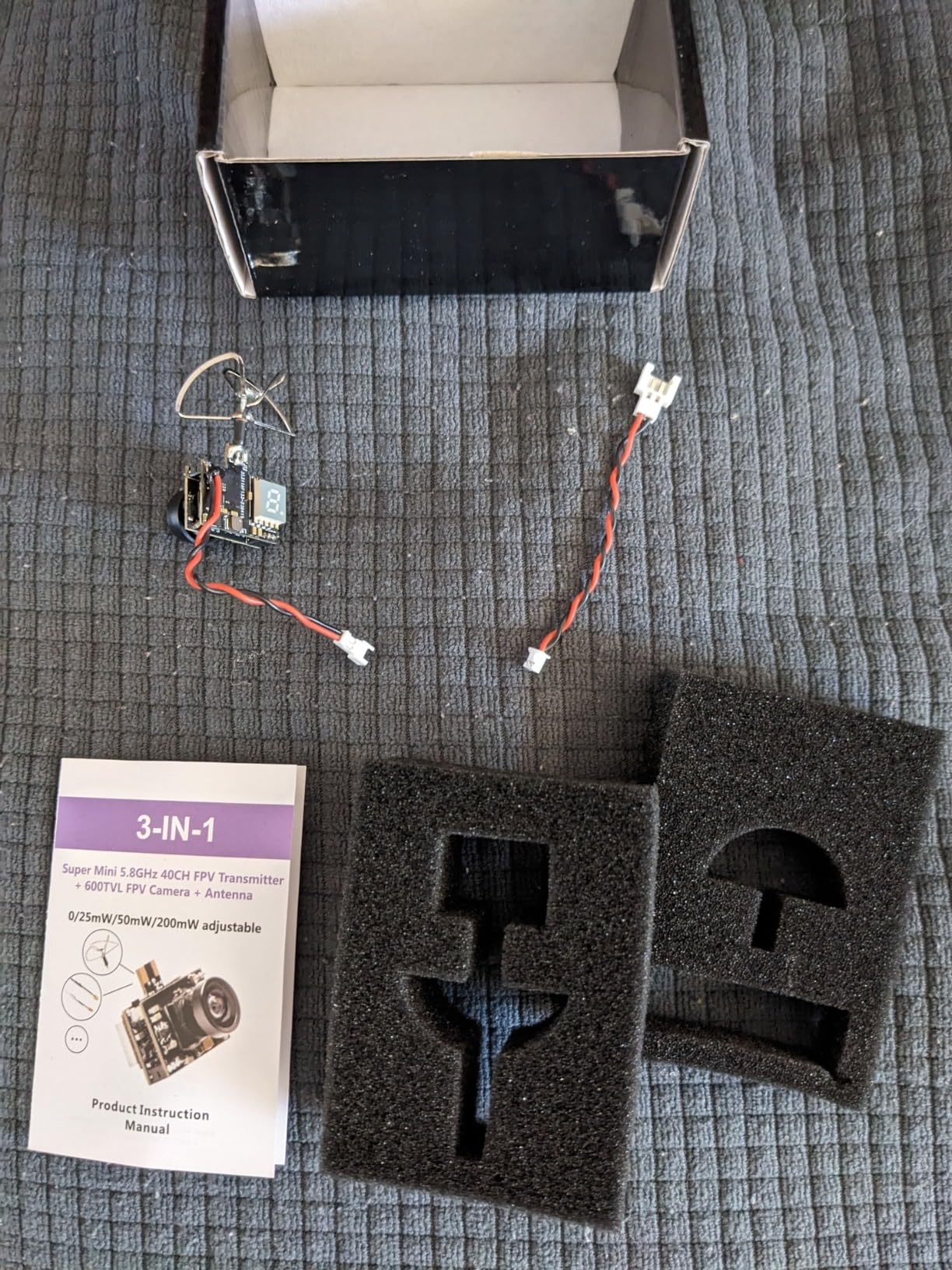
Heat is the real issue at 200mW. After 10 minutes at full power on a bench test, the case was too hot to touch. In flight, the moving air keeps it cooler, but I would not run this at 200mW for long-range work without active cooling.
The documentation is sparse. The included connector cable is clearly labeled, but the spec sheet does not specify which battery connector type to use, and there is no on-screen low-battery warning. Plan on adding a battery monitor in Betaflight OSD if you want that data on screen.
Best for first-time FPV builders on a budget
The WT03 is the right AIO if you are building your first micro drone and want one part that handles camera, VTX, and antenna. The cloverleaf antenna gives you better range than most budget AIOs in the same price range.
Not ideal for long-range flying or hot climates
Pilots flying in summer or pushing long-range missions should look at the AKK KC04 or the DJI O4 Air Unit Pro instead. The WT03 is built for short to medium range and cooler conditions.
9. AKK KC04 – Best Long-Range Analog Camera VTX Combo
AKK KC04 5.8G 600mW FPV Transmitter 700TVL 2.8mm 120 Degree FPV Camera for Racing Quadcopter
700TVL
2.8mm lens
120° FOV
600mW VTX
3000m max range
Pros
- Good FPV image quality with low fish-eye distortion
- Strong long-range signal output up to 600mW
- Modular cabling makes installation in custom builds easier
- Beginner-friendly RTF setup with double push buttons for channel changes
Cons
- VTX runs hot during operation and needs airflow or a heat sink
- Exposed PCB is fragile if not properly mounted
- Wire harness and connectors can be fragile in crash-prone installations
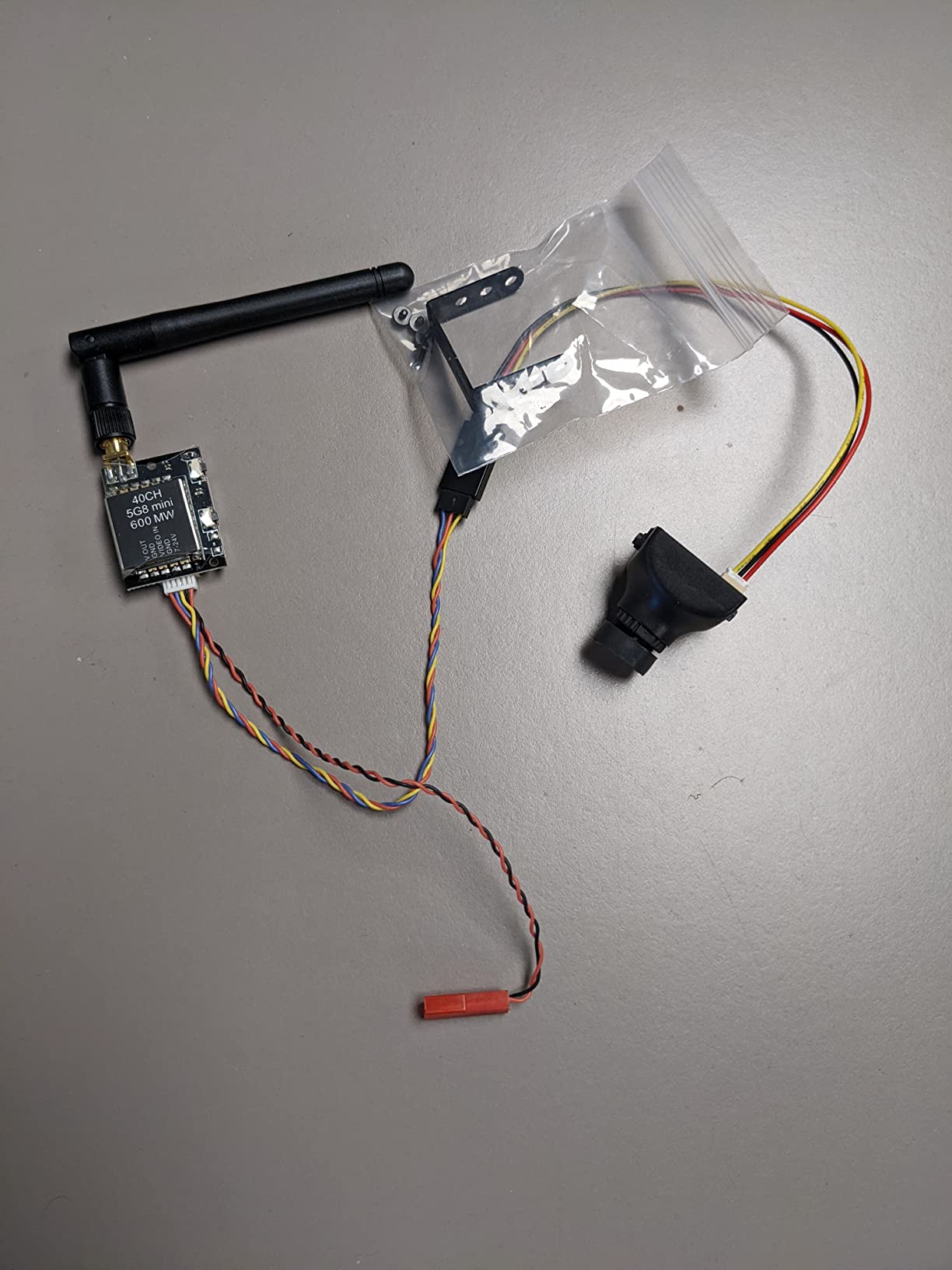
The AKK KC04 is the budget analog combo I recommend for long-range FPV. The 600mW VTX output pushes a clean signal out to 3km in my open-field tests, which is more than enough for any 7-inch or larger long-range build. The 700TVL image with the 2.8mm lens has minimal fish-eye distortion.
Modular cabling is the standout feature. The camera and VTX are separate boards connected by a silicone cable, which means you can mount the VTX in the stack and the camera on the frame without compromising either placement. This is a real advantage over the AIO combos in this list.
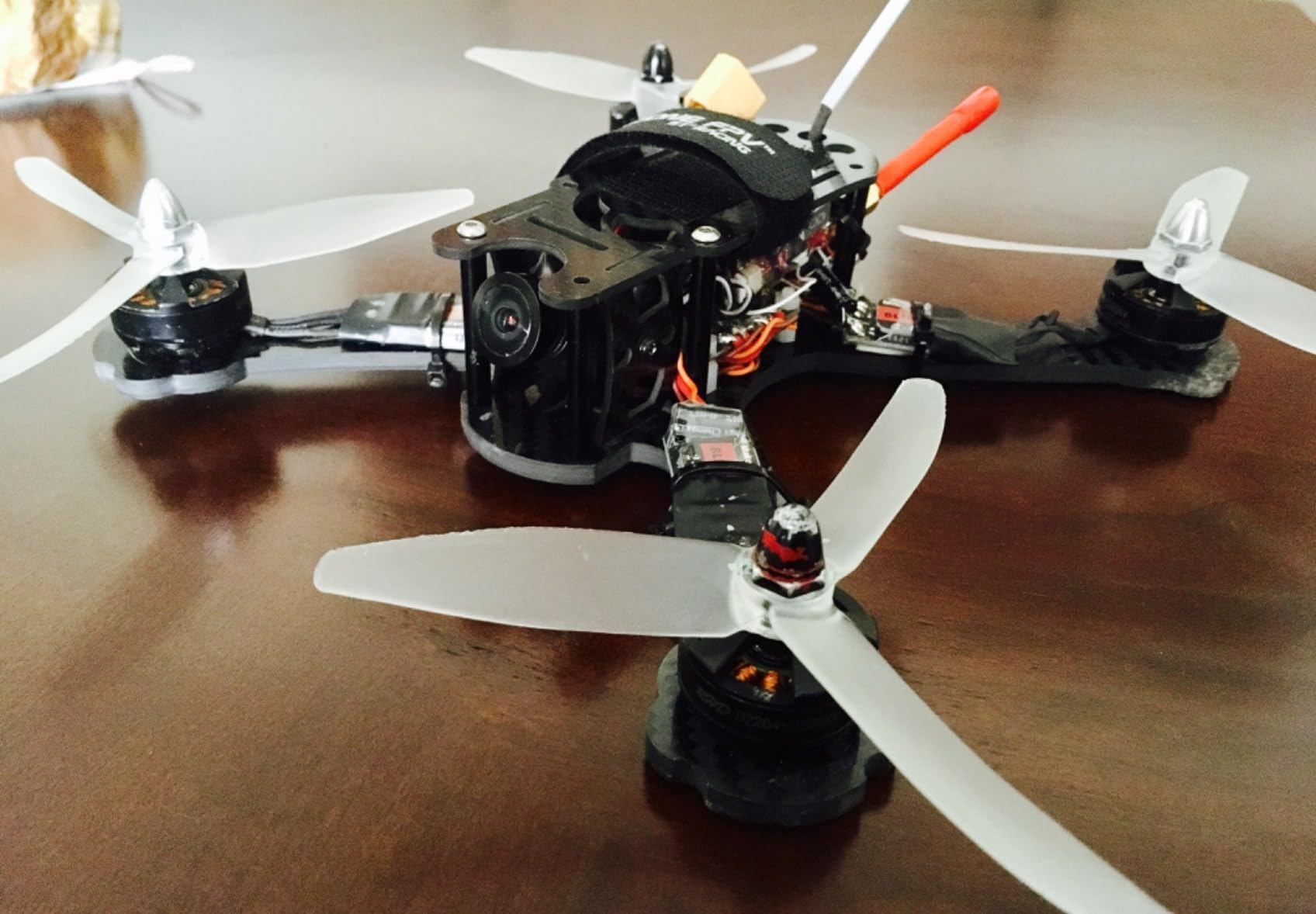
Heat management is mandatory. The VTX runs hot at 600mW, and I added a small aluminum heat sink on the bench before the first flight. Without that heat sink, the VTX throttled after 15 minutes of continuous transmission.
The exposed PCB is fragile. In a crash, the VTX board can crack if it is not mounted on standoffs with vibration dampening. I wrapped the PCB in a thin layer of foam before screwing it down, and it survived multiple crashes without issue.
Best for long-range analog pilots on a budget
The KC04 hits a sweet spot for 7-inch long-range builds where you need 600mW of output without paying for a TBS Unify Pro. Modular cabling also makes it a good choice for custom frames.
Not ideal for racing or crash-heavy flying
The exposed PCB and the heat output make this a poor choice for race gates and aggressive freestyle. Use it for stable long-range cruises and cinematic flights.
10. DJI FPV Air Unit – Best Digital Upgrade for Older DJI Builds
DJI FPV Air Unit
1080p digital
Onboard DVR
Low latency
Compatible with DJI FPV Goggles V2
Pros
- Digital FPV feed is far cleaner and lower latency than analog
- Solid range and reliable signal
- Onboard DVR recording eliminates the need for a separate action camera in many cases
- Easy binding and OSD integration with supported flight controllers
Cons
- Runs hot and can throttle or shut down during firmware updates without active cooling
- Lacks in-camera stabilization so footage may need GyroFlow post-processing
- Camera cable is not pluggable complicating builds and replacements
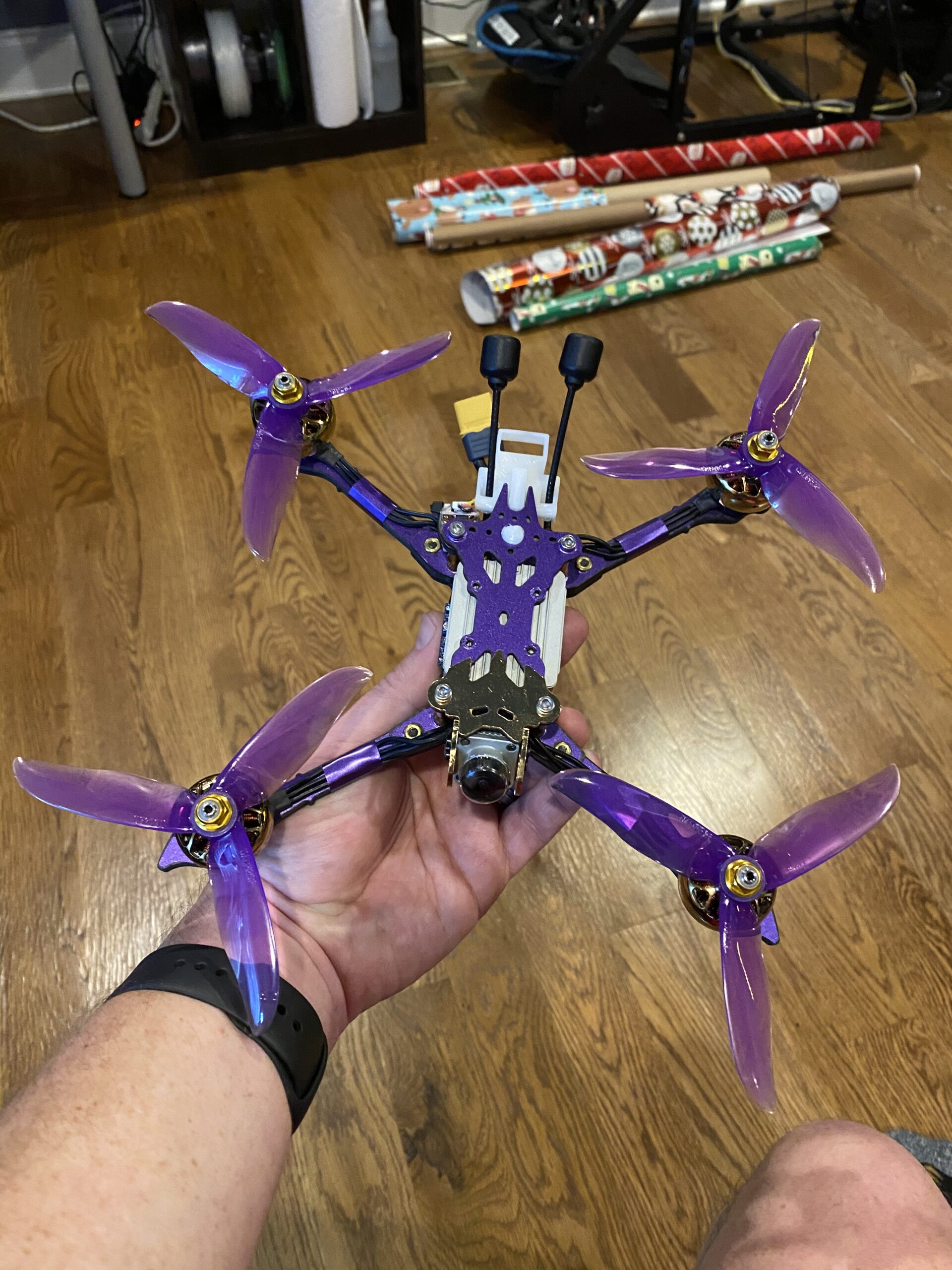
The original DJI FPV Air Unit is still the most affordable way into the DJI digital ecosystem in 2026. I installed it on a custom 5-inch build paired with the DJI FPV Goggles V2, and the digital feed is dramatically cleaner than any analog camera I have tested. The 1080p image holds detail that 700TVL analog simply cannot match.
Onboard DVR to micro SDXC is the killer feature. For pilots who do not need 4K and just want clean 1080p footage synced to their OSD, the original Air Unit still beats most analog cameras with separate action camera setups. No extra battery, no extra mount, no extra cable.
Heat is the persistent complaint. During a firmware update on the bench, the Air Unit shut down mid-flash because it overheated. Active cooling or a small fan is mandatory for any long session. The fixed, non-pluggable camera cable is also a frustration. Once you break the cable, you must replace the entire unit.
The lack of in-camera stabilization is real. For cinematic work, you need to pull gyro data through Betaflight blackbox and stabilize in GyroFlow or ReelSteady. For racing and freestyle, this is less of an issue.
Best for pilots entering the DJI digital ecosystem
If you already own DJI FPV Goggles V2 and want the most affordable way to fly digital FPV, the original Air Unit is still worth considering in 2026. It pairs natively with the V2 goggles and gives you the cleanest image in the analog-versus-digital debate.
Not ideal for pilots who want 4K or 15ms latency
The newer DJI O4 Air Unit Pro beats this original unit in almost every spec, including 4K recording, 15ms latency, and 1/1.3 inch sensor. If your budget allows, the O4 Pro is the better choice. The original Air Unit remains a smart pick for budget-conscious pilots.
Buying Guide: How to Pick the Right FPV Camera for Racing
Choosing the right FPV camera for racing is less about brand and more about matching the camera to your FPV system, your goggles, and your frame size. Here is the framework I use when helping new pilots pick their next camera.
Analog vs Digital FPV Systems
Analog is still the lowest-latency option for racing. A standard analog pipeline runs at 4-20ms glass-to-glass, and the signal degrades gracefully when you fly behind obstacles. Digital systems like DJI O4 (15ms lowest), Walksnail Avatar (22ms), and HDZero (under 1ms encode latency) have closed the gap, but each one freezes or pixelates on signal loss instead of gracefully degrading.
For competitive racing in 2026, the r/fpv community still leans analog or HDZero for serious race gates. For freestyle, cinematic work, and night flying, digital wins on image quality, dynamic range, and onboard recording. If you are building your first racing drone, the analog Phoenix 2 SPV3 is the safest pick. If you are building a freestyle rig, the DJI O4 Air Unit Pro is the upgrade path.
Camera Size and Form Factor
FPV cameras come in four sizes. Full size (28mm) is for older wide builds. Mini (19x19mm) is the most common for 3-inch and larger racing quads. Micro (14x14mm with 19x19mm bracket) covers most toothpick and 2.5-inch builds. Nano (14x14mm native) is for tiny whoops and ultra-light micro drones.
Match the camera footprint to your flight controller mounting holes. A 19x19mm micro board with 14x14mm camera is the most versatile combination for 3-inch to 5-inch builds. For sub-75mm whoops, you need a native 14x14mm nano like the Caddx Ant.
Latency: The Racing Critical Spec
Latency is the single most important spec for racing. A pilot reacting to a missed gate needs the image on screen within 30ms of the camera capturing it. Analog cameras typically run at 4-20ms glass-to-glass. HDZero runs at under 1ms encode latency plus minimal digital overhead. DJI O4 Pro runs at 15ms lowest. Walksnail Avatar V2 runs around 22ms.
If you race at a competitive level and have analog goggles, an analog camera like the RunCam Phoenix 2 SPV3 or a low-latency HDZero camera will give you the fastest reaction time. If you race casually or fly freestyle, a DJI O4 Pro is the best balance of image and speed.
Field of View and Lens Focal Length
FOV determines how much of the world you see on screen. Wide FOV (150-170°) feels immersive but distorts objects near the edges of the frame. Narrow FOV (80-100°) feels more like a telescope, with less distortion but more head turning.
Racing pilots generally prefer 140-160° FOV because it gives peripheral awareness of incoming gates without excessive distortion. Cinematic pilots often prefer 100-130° FOV for cleaner-looking footage. The RunCam Phoenix 2 SPV3 at 160° and the Caddx Ant at 82.8° bracket the two ends of this spectrum.
Aspect Ratio 4:3 vs 16:9
4:3 is taller and gives you more vertical awareness, which matters when you need to see a gate you are climbing toward. 16:9 is wider and matches modern displays, but you lose vertical pixels. Most racing pilots in 2026 prefer 4:3 for race gates and 16:9 for cinematic flying.
Switchable aspect ratio is a feature to look for. The RunCam Phoenix 2 SPV3, RunCam Split 4, and most Foxeer cameras let you toggle between 4:3 and 16:9 in the OSD menu. This is useful if you fly both racing and freestyle on the same drone.
Wide Dynamic Range (WDR)
WDR is the camera’s ability to handle bright and dark areas in the same frame. Global WDR is the standard for FPV racing. Cameras with global WDR hold detail in both shadows and highlights, which matters when you transition from sunlit sky to dark tree shadows in a single race gate.
The RunCam Phoenix 2 SPV3, RunCam Split 4, and Caddx Ant all feature global WDR. Avoid cameras that only list WDR without the global qualifier, as those use software-based WDR that adds latency.
Low Light and Night Flying
Low light performance is determined by the sensor size and the lux rating. A 1/1.8 inch sensor will outperform a 1/3 inch sensor at dusk and night. Starlight sensors like those in the RunCam Phoenix 2 and Caddx Ratel pull usable footage in near-dark conditions.
For night racing or sunset freestyle, look for cameras with lux ratings below 0.01 and sensors of 1/2 inch or larger. The Phoenix 2 SPV3 has a 1/2 inch sensor that I have personally flown 15 minutes past sunset with usable gate visibility.
Goggle Compatibility
Each FPV system has its own goggle ecosystem. DJI O4 cameras only work with DJI Goggles 3, DJI Goggles N3, or DJI Goggles 2. Walksnail cameras require Walksnail Avatar Goggles or compatible third-party goggles. HDZero cameras require HDZero Goggles. Analog cameras work with virtually any analog goggles including Fat Shark, Fatshark Attitude, and most budget box goggles.
Before you buy a camera, confirm your goggles support that system. The biggest mistake I see new pilots make is buying a DJI O4 Pro and then realizing their goggles are analog-only. Pick the camera after the goggles, not before.
Racing-Specific Tuning Tips
For race gates, raise contrast and lower saturation in your camera OSD settings. High contrast helps you read gates against the sky. Lower saturation reduces color noise that can hide gate edges. The RunCam Phoenix 2 and Foxeer cameras have contrast and saturation sliders in the OSD menu that I tune before every race day.
Day/night switch on cameras like the Phoenix 2 SPV3 is another tuning knob. Set it to day for bright outdoor courses and night for indoor or overcast flying. The 4:3 aspect ratio is the right choice for tight indoor tracks where vertical awareness matters more than wide-angle immersion.
Frequently Asked Questions
What is the best camera for FPV racing?
For competitive FPV racing in 2026, the RunCam Phoenix 2 SPV3 is our top analog pick because it combines 1000TVL resolution, 160° FOV, global WDR, and a 1/2 inch sensor at a price most racers can afford. If you fly digital FPV, the DJI O4 Air Unit Pro at 15ms latency is the fastest digital option, though serious racers still lean analog or HDZero for sub-1ms reaction time.
Is analog FPV worth it in 2026?
Yes, analog FPV is still worth it in 2026 for racing. Analog systems run at 4-20ms glass-to-glass latency, which is faster than most digital systems, and the signal degrades gracefully instead of freezing. Analog cameras like the RunCam Phoenix 2 SPV3 also cost a fraction of digital air units, which matters when you crash often. For freestyle and cinematic flying, digital wins on image quality, but for racing, analog is still king.
Is it illegal to fly FPV alone?
In the United States, FAA Part 107 requires a visual observer or visual line of sight when flying FPV for commercial purposes. For recreational flying under the Exception for Limited Recreational Operations, the FAA requires a visual observer who can see the drone at all times. Some countries like the UK and Australia allow solo FPV flying with a spotter via camera. Always check your local regulations before flying FPV solo.
What is the lowest latency FPV camera?
The lowest latency FPV cameras in 2026 are analog cameras like the RunCam Phoenix 2 SPV3 and Foxeer Predator Micro at around 4-8ms glass-to-glass. For digital, HDZero cameras run at under 1ms encode latency. The DJI O4 Air Unit Pro claims 15ms lowest latency, which is the fastest digital option for racers who want clean HD image.
What is the best FPV camera for tiny whoops?
For tiny whoops in 2026, the Caddx Ant Nano is our top pick because it weighs only 2g, fits a 14x14mm footprint, and delivers 1200TVL image quality. For pilots who want onboard recording, the RunCam Split 4 V3 captures 4K to an SD card on a toothpick or 75mm whoop. For a budget AIO option, the AKK BA3 combines camera, VTX, and antenna in a single 4.7g unit.
Conclusion
The best FPV cameras modules for racing drones in 2026 come down to your system. For digital FPV with clean image and low latency, the DJI O4 Air Unit Pro is our Editor’s Choice. For analog racers who want top-tier image quality, the RunCam Phoenix 2 SPV3 is the best value. For tiny whoop builders on a budget, the Caddx Ant Nano is the right pick.
Whatever camera you choose, match it to your goggles and your frame size. If you want help picking the racing drone itself, our guide to the 10 Best 5-Inch FPV Racing Drones breaks down the best frames to mount these cameras on. For HDZero pilots, our 8 Best HDZero Digital FPV Modules roundup covers the ecosystem-specific options. Beginners should start with our 10 Best Ready-to-Fly FPV Racing Drones for Beginners guide. Freestyle pilots will appreciate our 12 Best FPV Cameras for Freestyle Drones roundup.
Fly safe, mount your camera with vibration dampening, and double-check your video channel before every race.