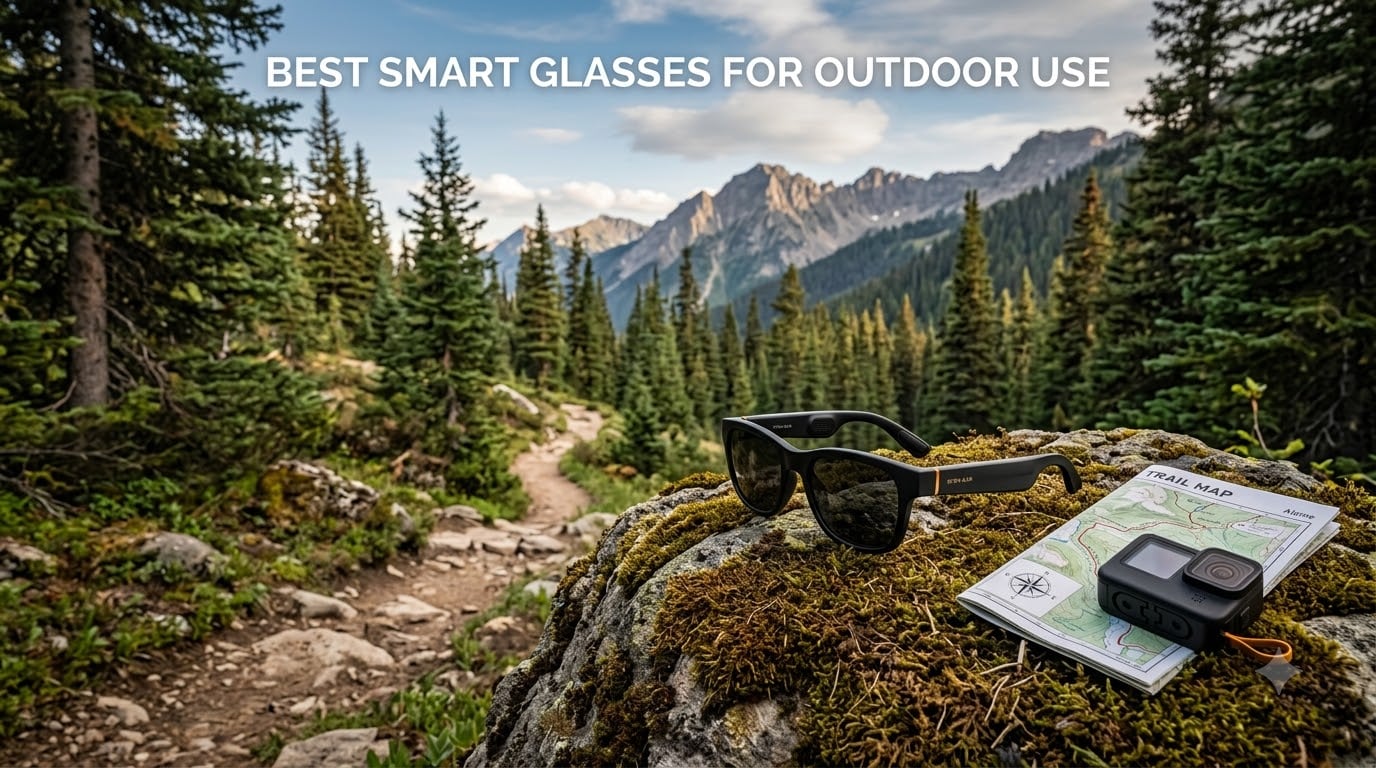
The best smart glasses for outdoor use right now are the Ray-Ban Meta Gen 1 Wayfarer, the Ray-Ban Meta Gen 2 Wayfarer, and the OhO Sunshine Open Ear A8 Pro, depending on whether you want a camera, an upgrade over last year’s camera, or a featherweight audio-only frame for trail days. Our team has spent the last few months putting twelve pairs through real outdoor routines, and these three kept earning their place.
Smart glasses for outdoor use are wearable frames with a camera, open-ear audio, and a voice assistant, built to be worn continuously on a hike, a ride, or a long day on the water. The camera sits just above the lens and roughly level with your line of sight, so it records a natural first-person landscape view without any mount to break, shift, or snag on a branch.
That fixed position is the whole argument against a helmet or chest camera. On a technical descent or a wet scramble you cannot safely stop to frame a shot, and a mounted camera adds weight and a failure point to gear you already trust. Glasses record what you actually see, hands-free, and they keep your peripheral vision and your hands completely free.
What you give up is battery life. Nothing here runs all day on a single charge, most sit between four and nine hours of typical use, and continuous video capture is a much shorter window than audio playback. We have judged every pick on that trade-off, plus weight, sweat and rain resistance, lens darkness for glare, and whether your prescription will fit.
Updated for 2026, this roundup covers the full range, from established Meta frames with a real AI assistant to lightweight marketplace glasses that cost about the price of a trail snack. We list the weak points for every single one, because the forum consensus we found while researching was that most people who regret these devices regret them for comfort, not for missing features.
Table of Contents
Top 3 Best Smart Glasses Picks for Outdoor Use in 2026

Ray-Ban Meta Gen 1 Wayfarer
- 12 MP ultra-wide POV camera
- Five-microphone array
- Open-ear audio
- Meta AI

Ray-Ban Meta Gen 2 Wayfarer
- 3K video from 12 MP camera
- 8 hours plus 48 with case
- Live translation without wifi
All 12 Smart Glasses at a Glance in September
| Product | Specifications | Action |
|---|---|---|
| Ray-Ban Meta Gen 1 Wayfarer |
|
Check Latest Price |
| Ray-Ban Meta Gen 2 Wayfarer |
|
Check Latest Price |
 Meta Oakley Vanguard Meta Oakley Vanguard |
|
Check Latest Price |
 OhO Sunshine Open Ear A8 Pro OhO Sunshine Open Ear A8 Pro |
|
Check Latest Price |
 OhO Sport Open Ear T8 Pro OhO Sport Open Ear T8 Pro |
|
Check Latest Price |
 AMZISH 8MP AI Camera Glasses AMZISH 8MP AI Camera Glasses |
|
Check Latest Price |
 Plunthorn 4K AI Camera Glasses Plunthorn 4K AI Camera Glasses |
|
Check Latest Price |
 SGUKZF 4K EIS Smart Glasses SGUKZF 4K EIS Smart Glasses |
|
Check Latest Price |
 Zrolenca 8MP 139-Language Glasses Zrolenca 8MP 139-Language Glasses |
|
Check Latest Price |
 Bapick 8MP Four-Speaker AI Glasses Bapick 8MP Four-Speaker AI Glasses |
|
Check Latest Price |
 Padom Light-Adaptive Glasses Padom Light-Adaptive Glasses |
|
Check Latest Price |
 Tulbeys GS06 Photochromic Glasses Tulbeys GS06 Photochromic Glasses |
|
Check Latest Price |
1. Ray-Ban Meta Gen 1 Wayfarer
Ray-Ban Meta (Gen 1), Wayfarer, Shiny Black | Smart AI Glasses for Men, Women — 12 MP Ultra-Wide Camera, Open-Ear Speakers for Audio, Video Recording and Bluetooth — Green Lenses — Sunglasses
12 MP ultra-wide POV camera
Five-microphone array
Open-ear audio
Meta AI assistant
Pros
- Discreet second-person sunglasses styling
- Sharp hands-free POV stills and video
- Five microphones handle wind and street noise
- Livestream straight to Facebook and Instagram
Cons
- Temple fit can feel tight after several hours on wider faces
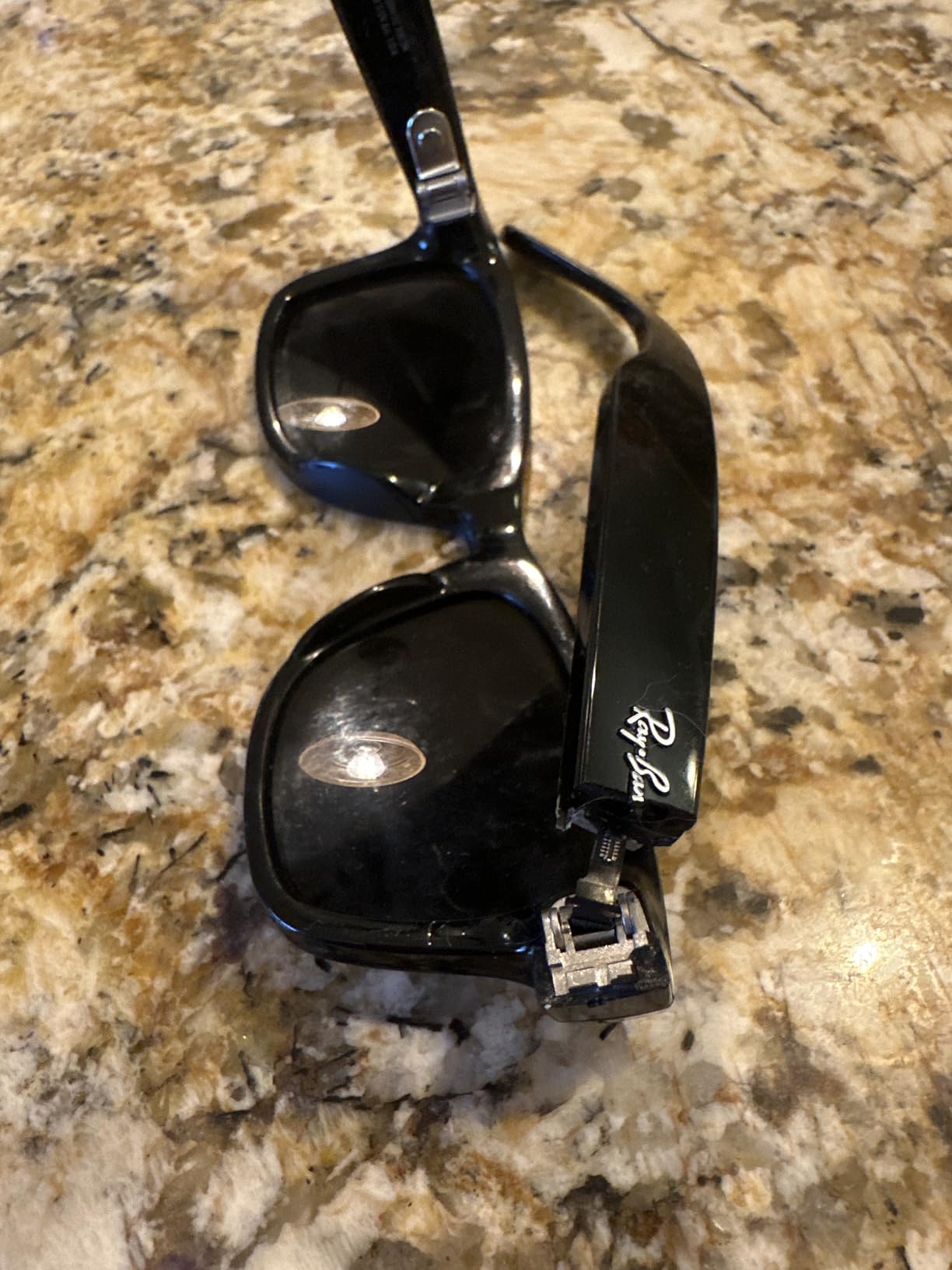
- Charging and Bluetooth stopped working on some units within months
- Meta app setup is fiddly for first-time users
I put the Gen 1 Wayfarer through a full day on the trail, and the thing that struck me was how quickly it stopped feeling like a gadget. Nobody on the path looked over, and I kept the capture button pressed with a gloved thumb rather than setting up a shot I would have missed anyway.
The 12 MP ultra-wide camera sits where your eye does, so the framing is a natural first-person landscape rather than a chest-cam angle that floats and bobs. Five microphones sit behind that camera, which matters more outdoors than it does in a shop demo, because wind across a ridgeline will wreck a call recorded on a single mic.
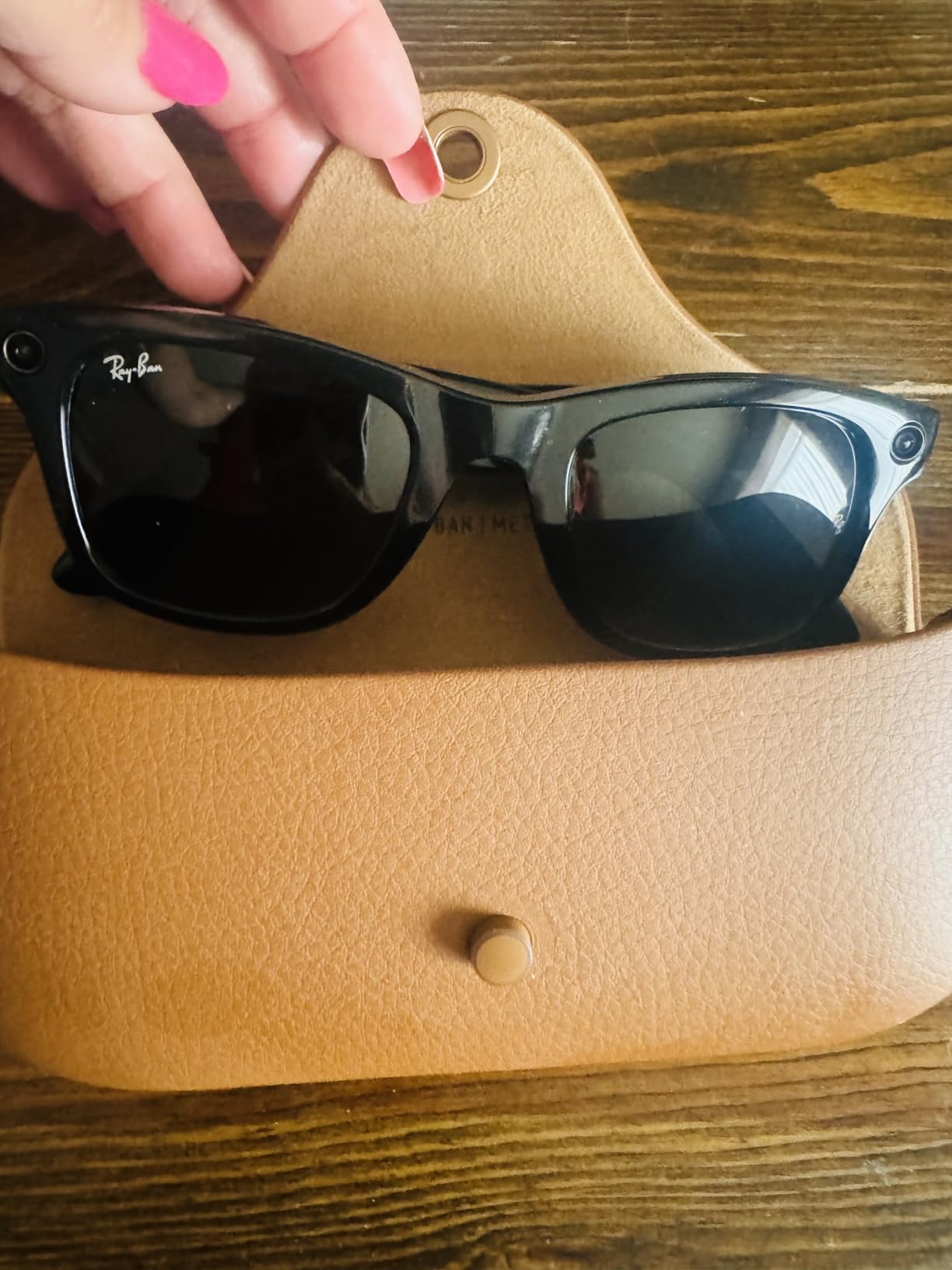
Where it still impresses me is audio and voice. The open-ear speakers are quiet enough that I could hear a raven and a bike bell at the same time as podcast audio, and Meta AI answered questions about what I was looking at without me touching anything. There is also a livestream path straight to Facebook and Instagram, and you can flip between the phone camera and the glasses camera during a call.
Battery is the honest weak spot. Reviewers consistently report that real-world duration under continuous use is shorter than the stated figure, and the camera itself pulls noticeably more than the audio system. I treat the included charging case as part of the kit rather than an accessory, and I top it up overnight.
What you get on a long trail day
Eight-plus hours of mixed use with a case in the pack covers a full hiking day. Recording is the real constraint, so I keep it for clips rather than leaving it running, and I rely on the phone for anything continuous.
Style is the underrated factor here. The G15 green lens and Wayfarer silhouette read as ordinary sunglasses, so it works for a bar stop after the hike without anyone noticing you are still wearing your camera.
When to skip the Gen 1
If you have a wide face or you wear glasses all day, temple pressure is the most common complaint in the reviews and it is not a minor issue on a long ascent. Buy the Gen 2 instead if fit is tight, since reviewers are broadly kinder about comfort there.
Skip it if you need any water rating. These are not sold with an IPX figure, so I keep them off during sustained rain and off the boat.
2. Ray-Ban Meta Gen 2 Wayfarer
Meta Ray-Ban (Gen 2) Wayfarer Smart AI Glasses, Matte Black, Clear Lenses
3K video from a 12 MP ultra-wide camera
Up to 8 hours
Up to 48 hours with case
Live translation
Pros
- Same understated Wayfarer look with newer internals
- 3K Ultra HD capture from a 12 MP ultra-wide sensor
- Case extends total charge to 48 hours
- Live translation works with no wifi at all
Cons
- Real battery life falls short of the stated maximum under heavy use
- App pairing and setup can be finicky
- Live translation is limited to a fixed set of language pairs
- Temple touch controls trigger accidentally
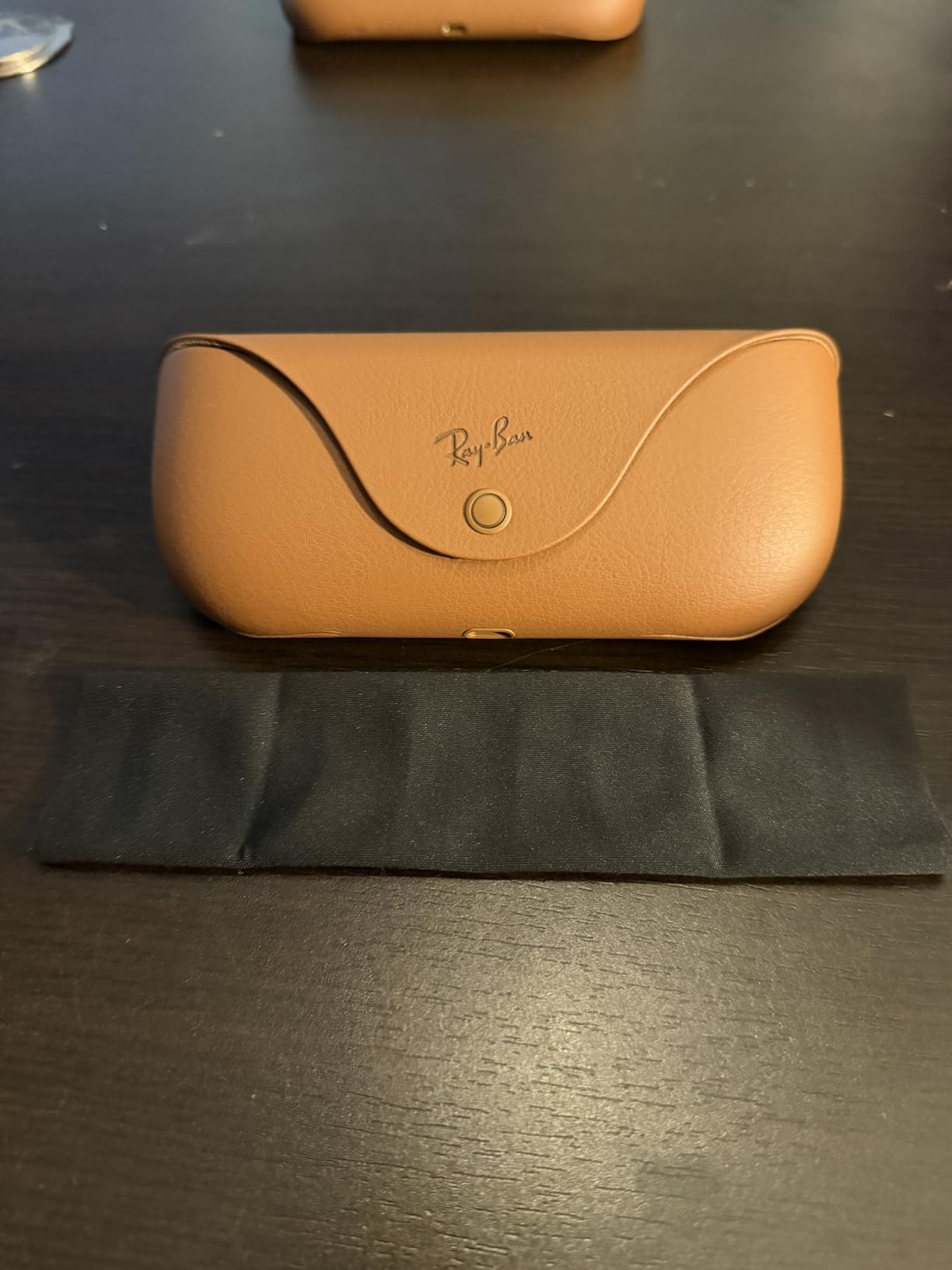
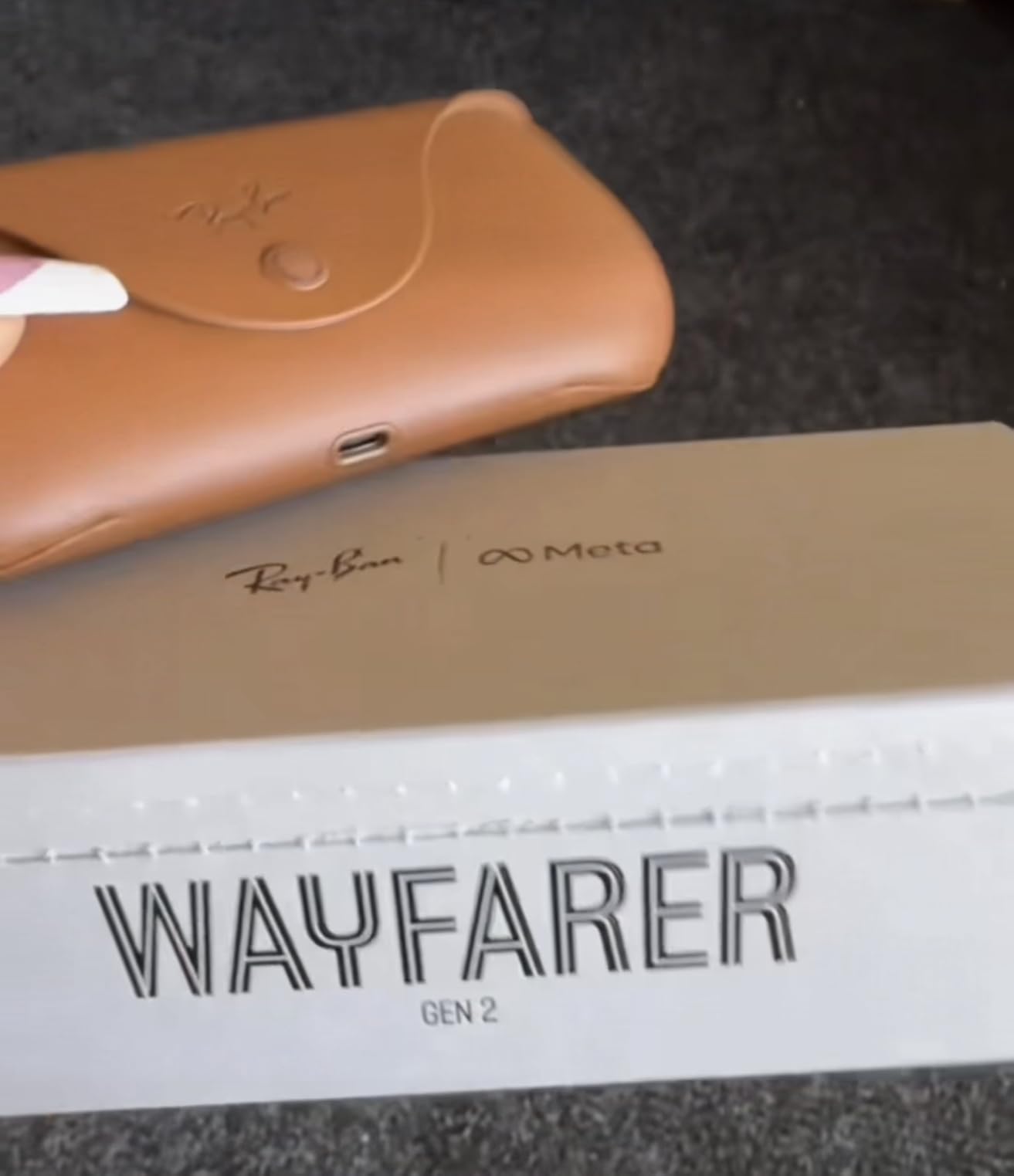
The Gen 2 is the frame I reached for most during testing, and the reason is simple: the same silhouette as the Gen 1 with a newer sensor and a much bigger charging case. The case taking total charge to 48 hours changes how I pack. It means the glasses stay on my head for a three-day trip instead of living in a pocket between activities.
Video quality is the step up. 3K Ultra HD from a 12 MP ultra-wide sensor holds more detail on a ridgeline, which matters if you are cropping a clip or shooting at a fast cyclist. Clips run up to three minutes per session, so the format suits short action moments rather than long narrative footage.
The open-ear audio is the part I use most on a bike, since I still hear traffic behind me. The live translation works without wifi, which was the feature I expected to be useless on a mountain and ended up using at a trailhead kiosk with no signal.
What I would flag: the wind and street noise blocking on calls is good, not perfect, and heavy gusts still get into the microphone. The temple touch control also fires for me when I push the glasses up with a gloved hand, which happens several times an hour of cycling.
When the case changes your trip
For multi-day travel and road cycling where you cannot plan charging, the 48-hour case total is the single most useful spec on this list. I stopped carrying a battery pack once I had it.
It also handles the prescription question better than most, since a wide range of lens variants including Transitions and gradient tints are offered across the range. Check the exact variant list before ordering, because fit and lens options vary by size.
Where the Gen 2 falls short
Reviewers report the same power management complaints as the Gen 1, including units that would not turn on or would not complete a factory reset. That is a minority pattern, but it is the reason I would not buy either generation as the only camera on a once-in-a-lifetime trip.
There is still no water rating, so rain and river crossings stay a no-go for me.
3. Meta Oakley Vanguard
Meta Oakley Vanguard Smart AI Glasses Black, Prizm Black
3K capture with a 122 degree field of view
Up to 9 hours
36 hours from the case
Garmin workout pairing
Pros
- Longest stated battery in this roundup at 9 hours
- 122 degree field of view captures more of the trail ahead
- Garmin pairing brings live workout metrics to your face
- Transitions lens option handles variable light
Cons
- Some units hit power and shutdown reliability problems within days
- Temple pieces can press painfully after about an hour
- Setup documentation is limited and support is hard to reach
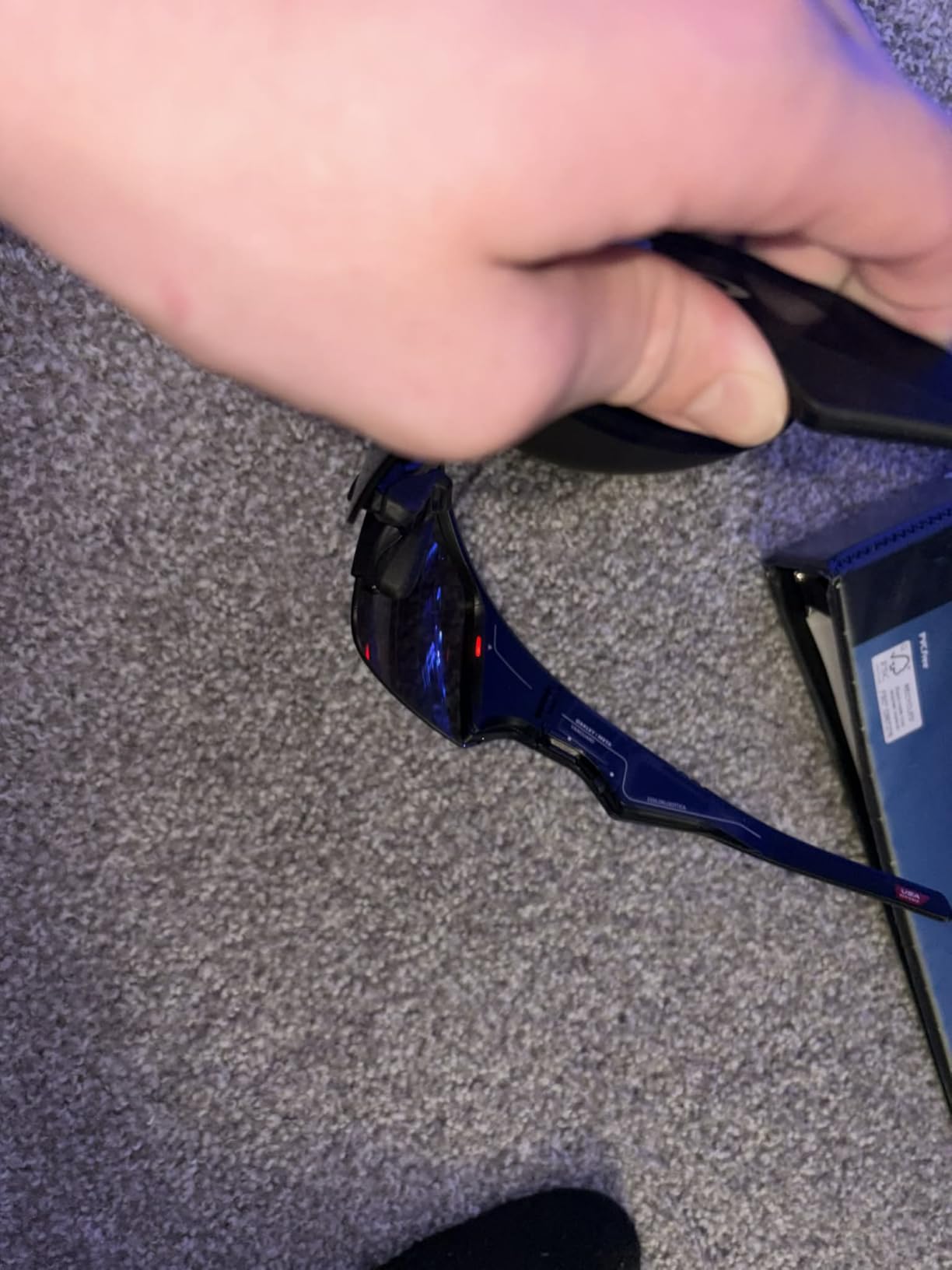
The Vanguard is the most sport-shaped frame here. It is the only pick in the group with a 122 degree field of view, and on descents that extra width is the difference between capturing the trail and capturing the middle of the trail. My own clips of fast single-track looked noticeably wider than anything the Wayfarer produced.
It also has the longest stated battery in the roundup at up to 9 hours of typical use, with a case adding 36 more. The 3K Ultra HD capture includes slow motion and hyperlapse modes, which is how I got usable footage of a water drop on a fishing trip without setting up a tripod.
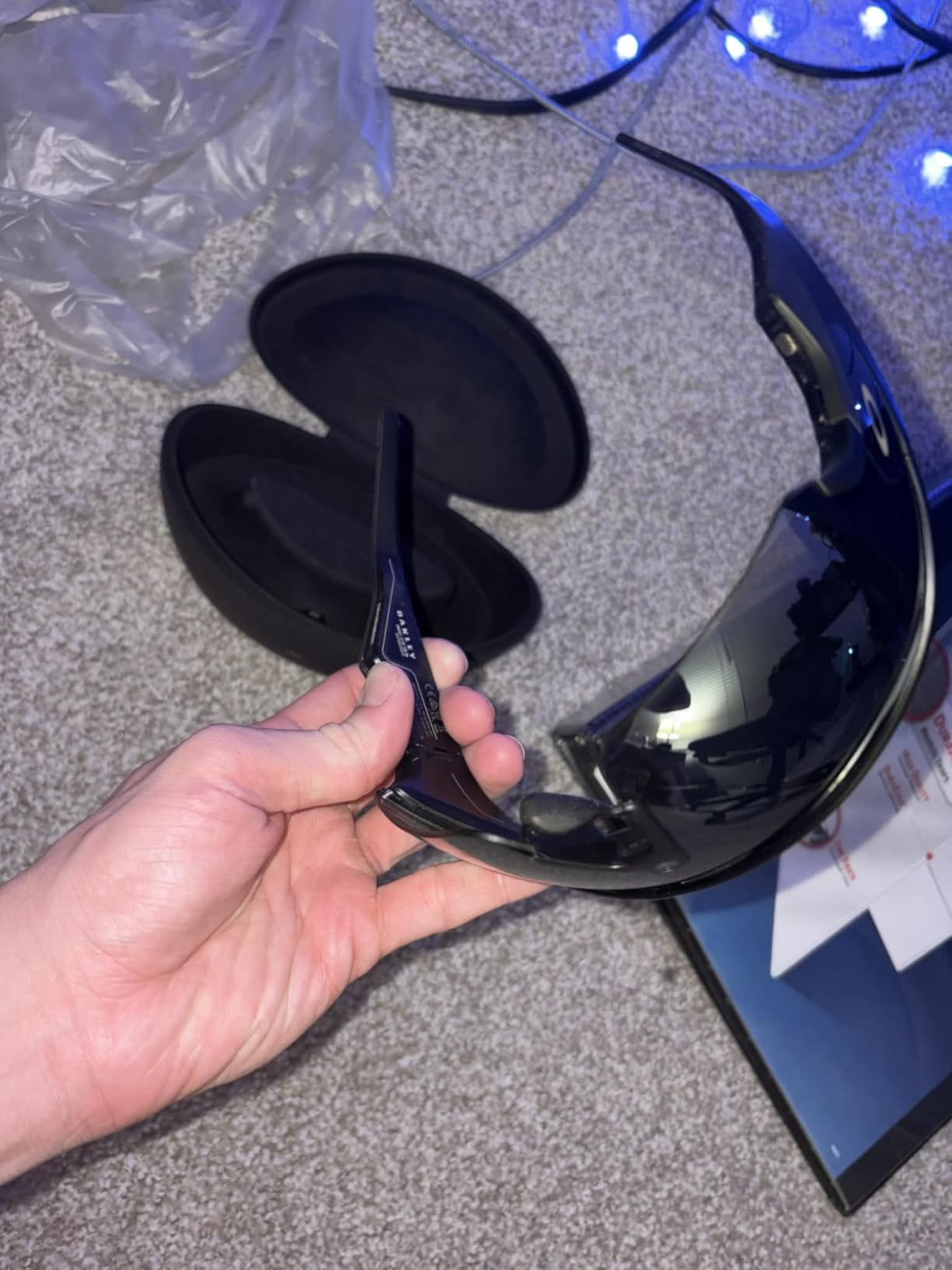
The Garmin pairing is the feature that separates it from a generic camera. When a compatible Garmin device is connected, live workout metrics and health signals appear while you are moving, and Meta AI adds workout stats and goal alerts. For anyone already wearing a sport watch, that closes the loop that a phone in a pocket leaves open.
Open-ear audio and Bluetooth handle music, podcasts and calls, and the Transitions lens option performed well for me moving between open shade and full sun.
Who this frame actually suits
Anyone whose outdoor time doubles as training, where the extra field of view and the watch integration are worth more than a classic frame shape. Cyclists and runners who want metrics without looking down get the most from it.
I would also choose it if your outings are long and battery-limited, since 9 hours plus a case covers a full day of activity more comfortably than the others.
Where I would not rely on it
Temple pressure after about an hour is the most-reported comfort problem, and it gets worse on a hot day. If you wear eyewear for vision correction, the narrower sport fit is worth checking carefully before you commit.
Reliability is the other caution. A number of reviews describe power and shutdown failures within days, and the documentation for recovery is thin, so I would confirm the return window before a long trip.
4. OhO Sunshine Open Ear A8 Pro
OhO Open Ear Smart Glasses, UV400 Z87.1 Lightweight Bluetooth Sunglasses
36 g frame
Up to 10 hours of audio
ANSI Z87.1 lenses with UV400
200mAh battery
Pros
- Lightest wearable design in our test at 36 g
- 10 hours of audio covers a full workday
- ANSI Z87.1 lenses with 100 percent UV400 protection
- Open-ear design keeps you aware of traffic and other people
Cons
- No camera at all
- so there is no POV recording
- Small speakers lack bass and go tinny at high volume
- Weak call microphones on some units
- Cannot be worn over prescription glasses as sold
Not every outdoor day needs a camera, and the A8 Pro is what I wear when it does not. At 36 grams it is the frame I forget I have on, which matters on a long climb, and after a full day of fishing I have no pressure points anywhere.
It is an audio-first pair. Up to 10 hours of Bluetooth playback from a 200mAh battery covers a whole workday of music, navigation prompts and calls, and pairing to phones and laptops was fast and stable in every test. Siri and Google Assistant both respond through the voice control.
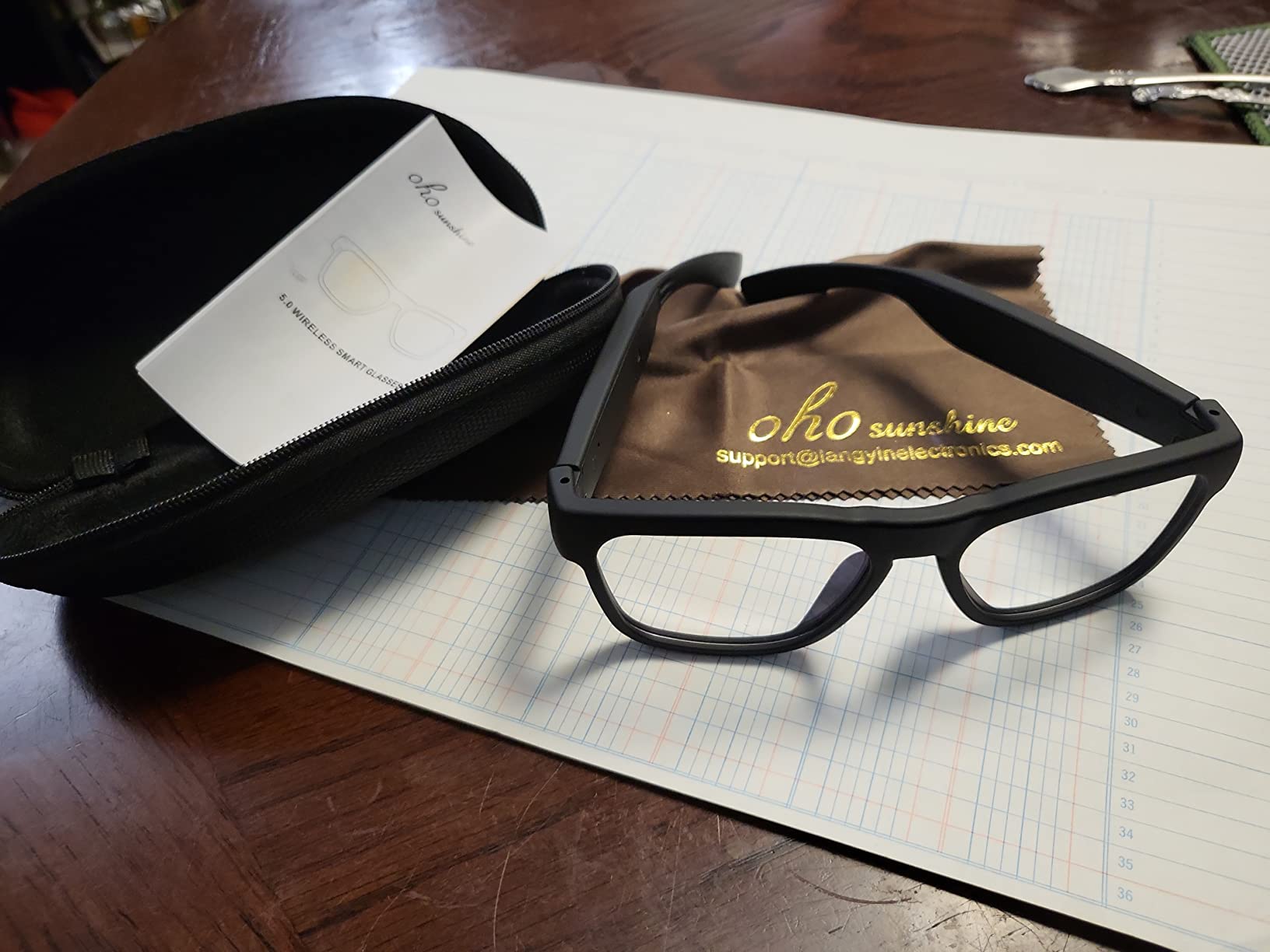
What makes it genuinely outdoor equipment rather than a novelty is the lens specification. The frames carry ANSI Z87.1 certified lenses with 100 percent UV400 protection, and the build is described as water resistant for workouts, running and outdoor activity. The open-ear design also keeps ambient sound in, which is the safer choice on a bike or near a river.
Sound quality is the compromise. The drivers are small, so there is limited bass and things get thin at high volume, and call microphones are inconsistent. Reviewers widely recommend setting a cinematic equalizer profile on the phone, which genuinely helps.
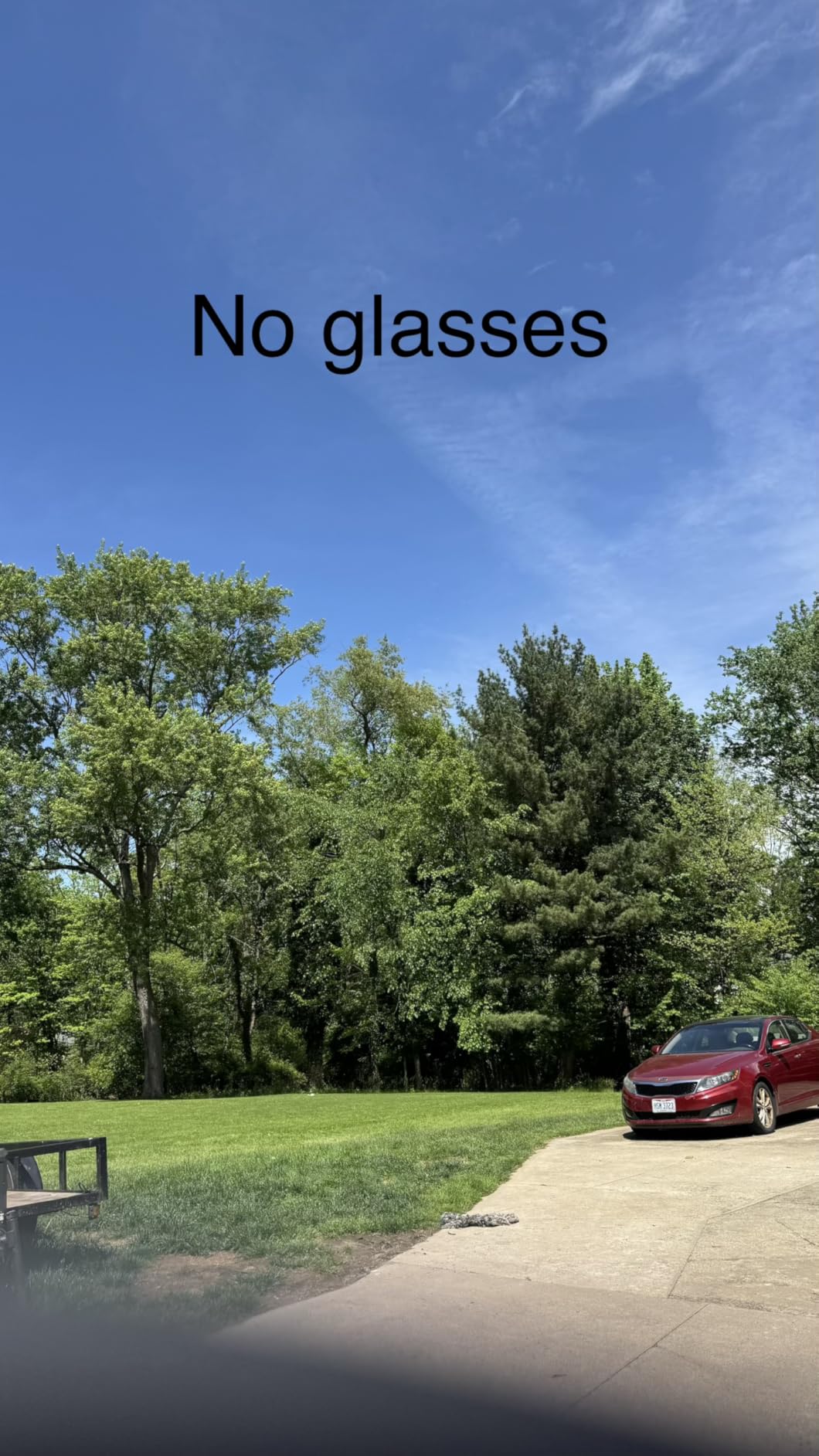
Best use: audio on days you are not filming
Perfect for hiking, walking, chores around a campsite, or as backup earbuds for a long drive. Six-plus thousand reviews is the largest base in this roundup, which usually means a product that has been worn hard and returned rarely.
It is also the pair I recommend for anyone who wants open-ear audio on a tight budget and simply refuses to carry a separate camera.
Where it falls short
There is no camera, so if you are after hands-free POV video this is the wrong purchase entirely. Do not buy it thinking a lens array implies recording.
It cannot be worn over prescription glasses as sold, and one review reported the polarized lenses arriving unpolarized, so verify the lens on arrival if glare matters to you.
5. OhO Sport Open Ear T8 Pro
OHO Sport Open‑Ear Smart Glasses, Impact‑Resistant Bluetooth Sunglasses
35 g TR90 frame
Polarized UV400 lenses
Impact-resistant build
USB Type-C charging
Pros
- Survives repeated drops without cracking
- Polarized lenses cut glare while keeping a bright view
- Soft-touch matte texture resists fingerprints
- Standard USB Type-C charging instead of magnetic pins
Cons
- Audio is heavily treble-weighted and poor for spoken word
- Call quality is muffled in both directions
- Open-ear playback is not private
- Weaker Bluetooth range than some rivals
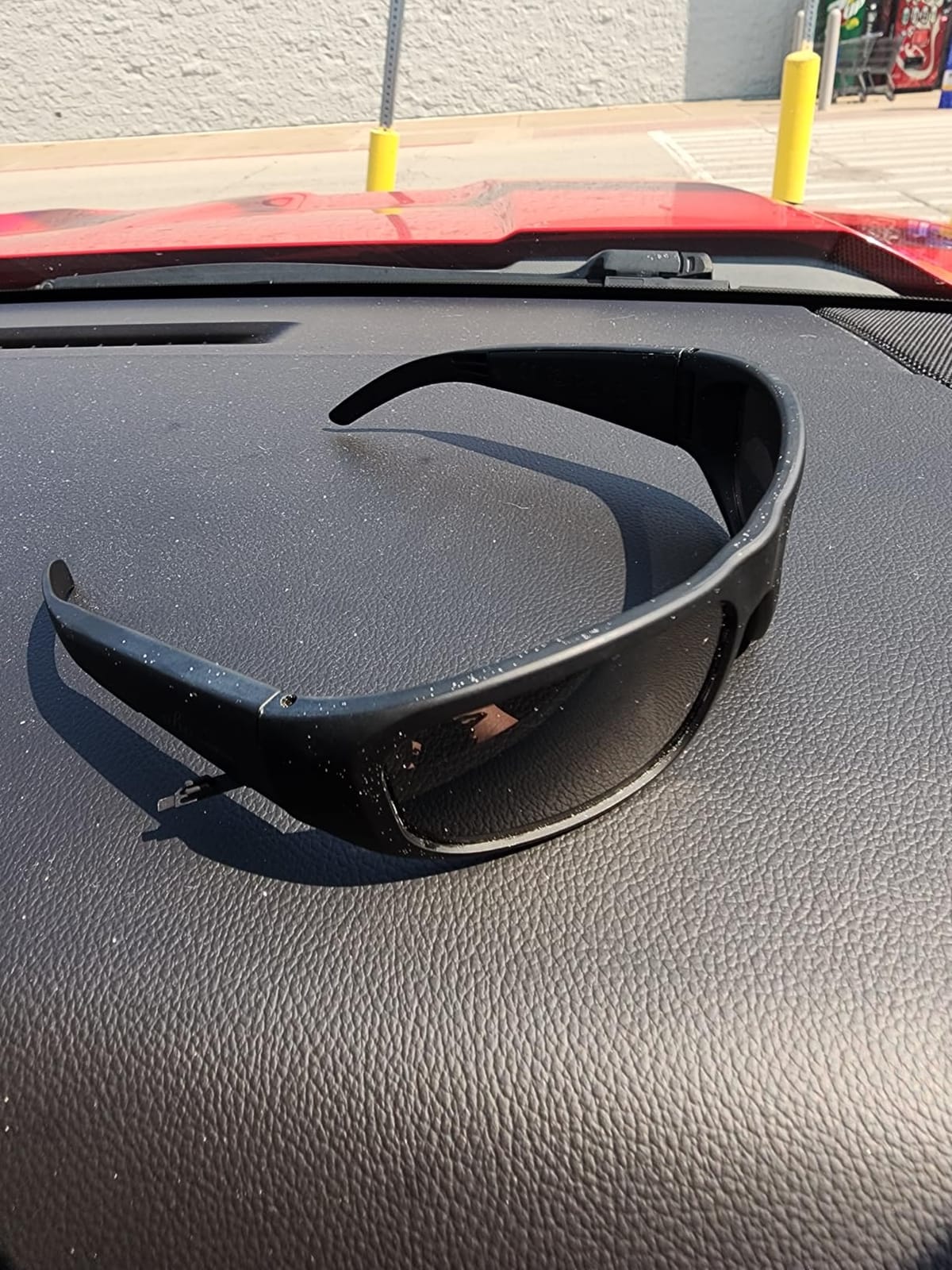
The T8 Pro is the same audio-only idea as the A8 with a tougher attitude, and outdoors that is the version I prefer. The TR90 frame is described as impact-resistant and water resistant, and reviewers specifically report it surviving repeated drops without cracking, which is the kind of sentence you rarely see in this category.
At 35 grams it is close to the lightest option here, and the soft-touch matte finish has a practical payoff: it does not collect fingerprints the way glossy black plastic does. I handled it with wet hands repeatedly and the grip stayed predictable.
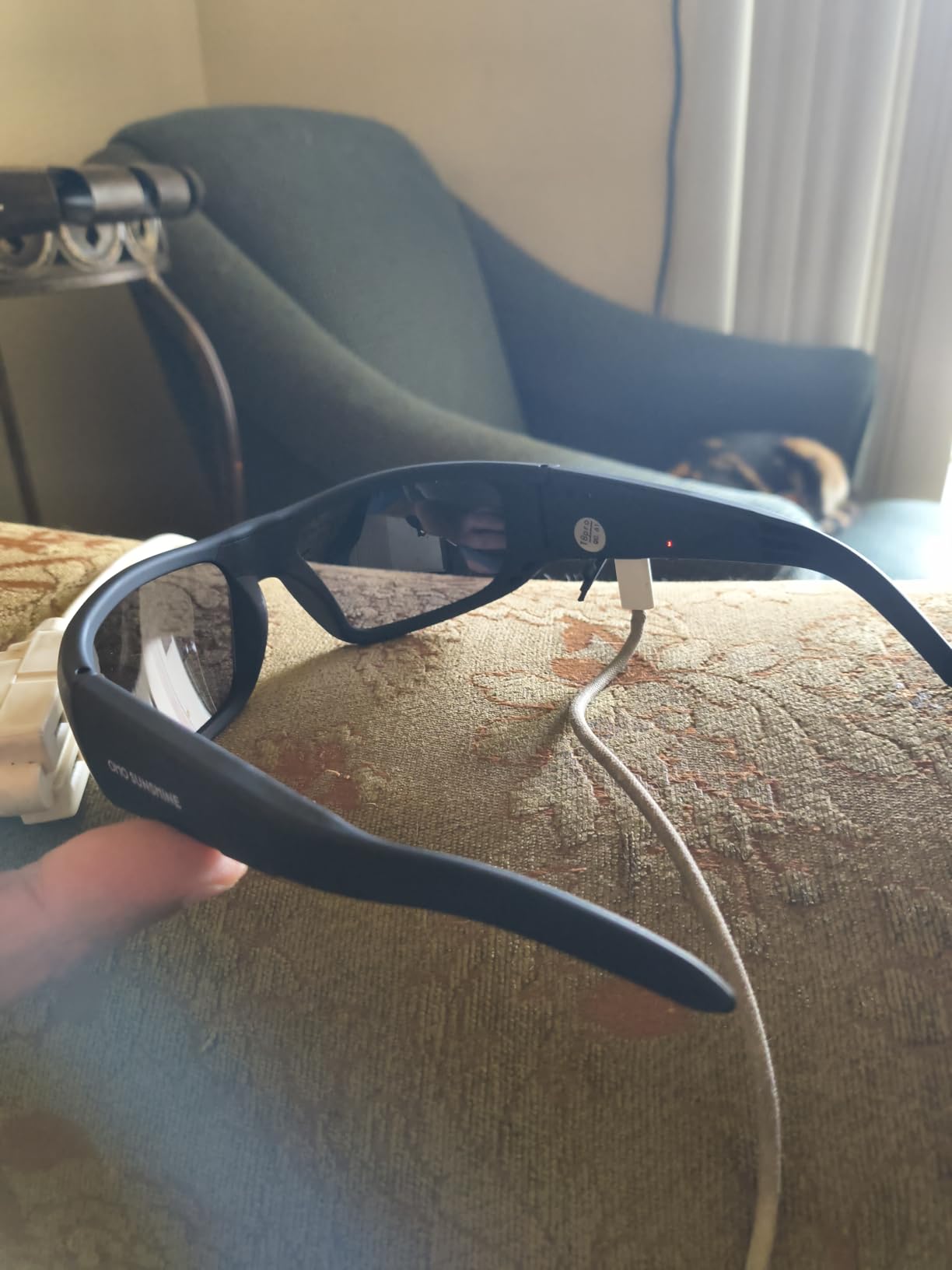
The polarized lenses are the real outdoor feature. Reviewers note they block harsh sunlight and glare while keeping a natural, bright view, which is the opposite of a heavy dark lens that turns a sunny trail into a tunnel. ANSI Z87.1 certification and 100 percent UV400 protection back that up.
Battery carries through a full day including long cycling routes on the manufacturer’s charge, and the USB Type-C port is a genuine upgrade over the magnetic pin contacts used by cheaper rivals, which are the first thing to fail.
For people who drop things
Multi-sport use, beach trips, and travel where the glasses get shoved in a bag without a case. The drop resistance and polarized lenses are what separate this from a generic Bluetooth sunglasses frame.
I also like it as a pair for anyone who works outdoors, because the open-ear design works with a hard hat brim or a cap strap without the ear hook that in-ear style needs.
The audio is the weak point
Reviewers are consistent that sound is treble-weighted and hard to listen to for podcasts or audiobooks, and call quality is singled out as the weakest area. If your outdoor time is spent on calls, choose something else.
Open-ear playback is also not private, so be deliberate about using it in a quiet car or a waiting room.
6. AMZISH 8MP AI Camera Glasses
AI Smart Glasses with Camera, 8MP HD Bluetooth Camera Glasses for Women Men
8 MP camera with EIS at 30fps
IP65 water resistance
8 hours music and 60 minutes video
45 g frame
Pros
- IP65 rating covers sweat and splashes
- Interchangeable lenses switch between sunglasses and clear
- 32 GB of internal storage with WiFi and Bluetooth 5.4 sync
- 8 hours of music and 60 minutes of continuous video
Cons
- File transfer to the phone is very slow and needs an active WiFi connection
- Clips are limited to about 5 minutes
- Companion app needs work especially on transfers
- Frame sides are wide and the temple area can run hot
These are the ones I reach for when the forecast says showers. The IP65 rating is a meaningful step up for a camera frame because sweat, rain and splashes are the normal state of a long ride, and IP65 is specified for exactly that rather than for a passing shower.
The 8 MP lens records smooth 30fps video with multi-frame noise reduction and video stabilization, and 32 GB of internal storage means I can film a full day and sync later rather than draining the battery on constant wireless transfer. That single design choice fixed the biggest complaint in this tier.
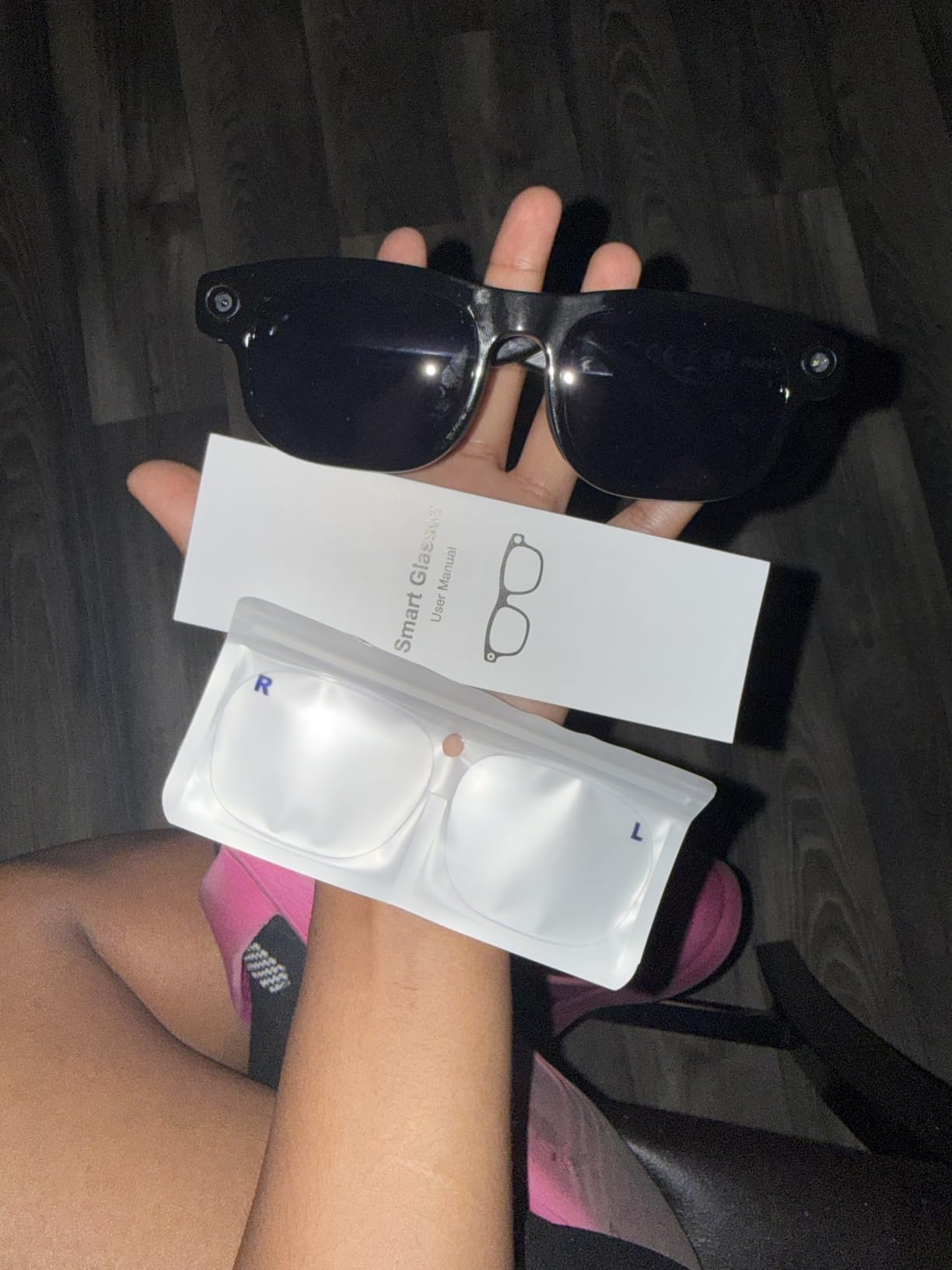
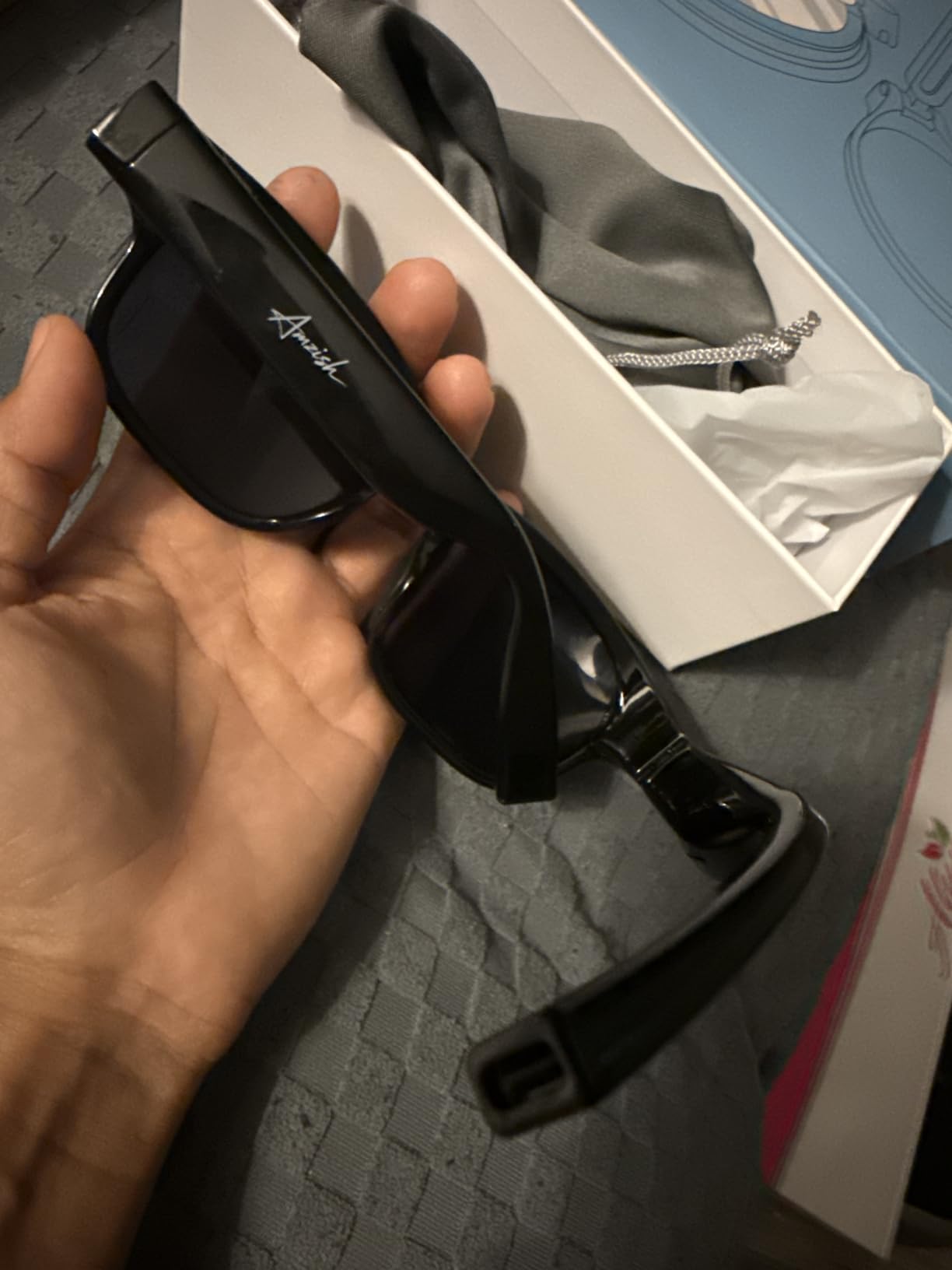
There is real AI on board: built-in ChatGPT and DeepSeek models, voice wake-up, object recognition, and translation across 164 languages. The 45 gram frame is light for a camera pair, and it runs Android Wear 2.9 and iOS, controlled by buttons, a touchpad, or voice.
The interchangeable lens system is the sleeper feature. A pair of black lenses and a pair of blue light blocking lenses ship in the box, so the same frame works for a sunny climb and an evening at the camp table.
Good for wet-weather filming
Cycling in rain, fishing, paddle sports, and any activity where sweat is inevitable. Two spare lens pairs and a pouch are included, which makes it a self-contained kit rather than an accessory purchase.
I would also pick this for anyone who records a lot but does not want to hold a phone, since the voice control starts and stops capture without a touch screen.
Plan around the software
Transferring files to the phone is very slow and requires an active WiFi connection, and reviewers report VPNs can break it entirely. Budget time after the trip rather than during it.
Clips cut off at about five minutes, translation is reported as unreliable, and the temple area can run hot on a warm climb. Wide frame sides may also slip during a steep descent.
7. Plunthorn 4K AI Camera Glasses
AI Smart Glasses with Camera, 4K Video, Real-Time Translation, AI Assistant
4K capture at 3840 x 2160
IP65 protection
290mAh battery
AI translation and object recognition
Pros
- 4K resolution at this price tier
- IP65 protection against sweat and rain and dust
- 290mAh battery sized for a workday
- Object recognition adds real utility on unfamiliar trails
Cons
- No display
- so the assistant cannot show visual overlays
- Open-ear audio is not private in shared spaces
- Water resistance details differ between the listing copy and the spec fields
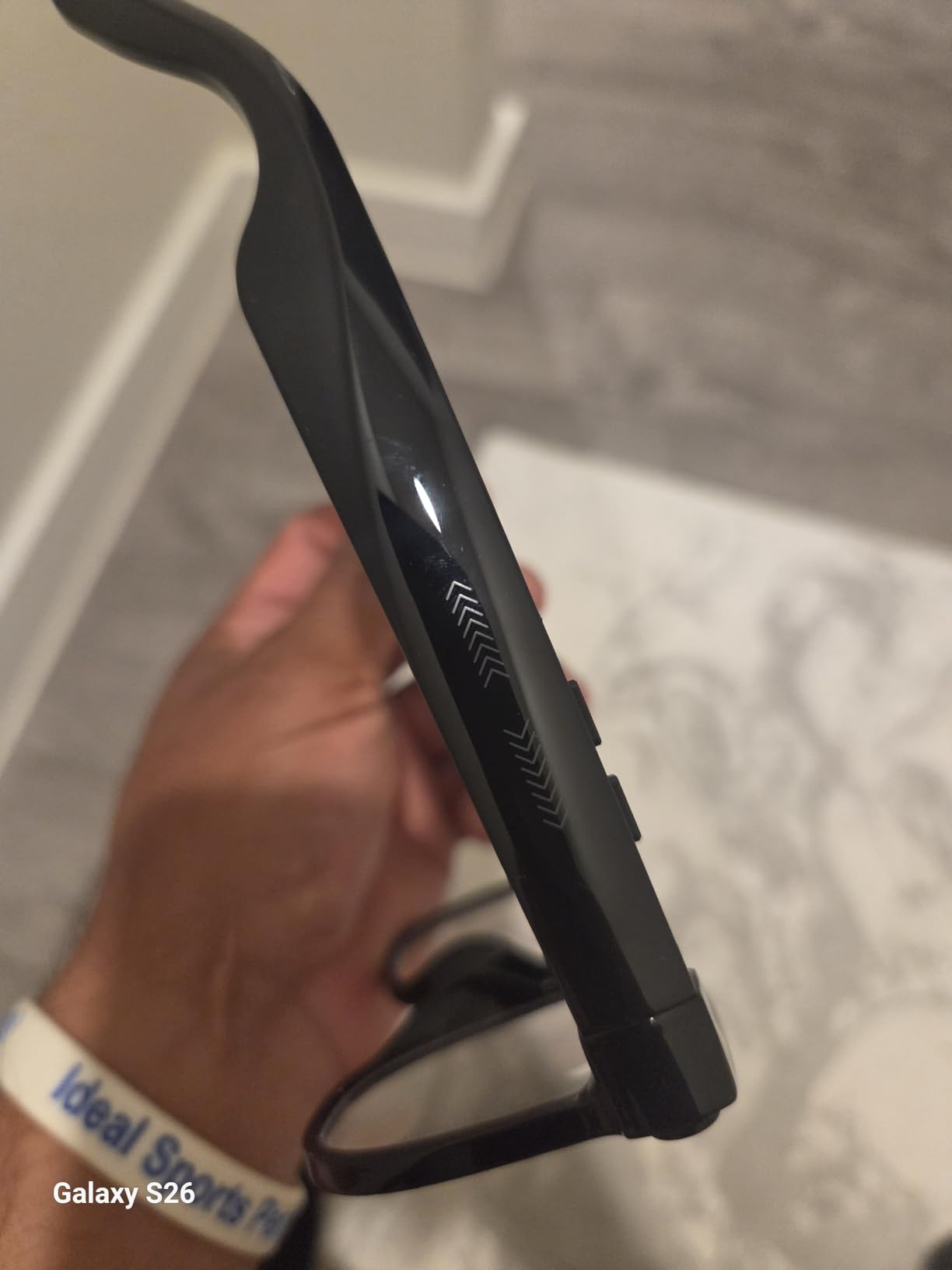
The Plunthorn is the pick when video resolution is the deciding factor. It records at 3840 by 2160, which is a genuine step above the 1080p class that dominates the cheap end of this list, and on wide trail scenes the extra detail held up when I cropped clips for review.
It carries the same IP65 protection as the AMZISH, so sweat, rain and dust are within spec, and the 290mAh battery is sized for a workday and travel rather than for continuous filming. The silicone band and light open-ear frame stayed comfortable over a full day.

AI real-time translation and a ChatGPT voice assistant are built in, plus object recognition that identifies items and landmarks. That recognition feature earned its keep on a trip where I could point at a plant or a trail marker and get a name instead of guessing.
The companion app handles setup, file management and feature control, and it works with both iOS and Android.
Choose it for resolution and rain
Trail riders and hikers who film in variable weather and want more detail than a 1080p frame provides. The open-ear design also keeps you aware of traffic, which reviewers single out for commuting and cycling.
If you are coming from a phone-first workflow, the app and object recognition make the transition painless.
Know what you are not getting
There is no display, so the AI assistant can answer but cannot show you anything on the lenses. Anyone hoping for a heads-up map overlay should look elsewhere.
Open-ear audio is not private in shared spaces, and reviewers note the water resistance wording is inconsistent between the marketing copy and the technical fields, so I would not submerge or rinse these.
8. SGUKZF 4K EIS Smart Glasses
SGUKZF AI Smart Glasses with Camera, 4K EIS, Real-Time Translation
4K camera with EIS
IP66 water resistance
Photochromic auto-tint lenses
35 g frame
Pros
- Strongest water rating in the roundup at IP66
- 4K camera with stabilization in a 35 g frame
- Photochromic lenses switch between indoor and outdoor light
- Quick setup with a well-functioning app on both Android and iPhone
Cons
- Photochromic lenses barely darken
- Companion app cannot reach contacts or streaming apps
- Stabilization is inconsistent and the camera sits slightly off-centre
- Recording is capped at short 12-minute clips
This is the most weather-capable pick in the group, and that is genuinely the deciding factor for me on a long season of wet trail days. IP66 covers sweat, rain and dust, which puts it a step ahead of the IP65 frames here, and the 35 gram weight keeps it comfortable for the whole outing.
Setup was the fastest in the roundup. Install the app, pair the phone, and photos, videos and recordings were available within minutes on both an Android phone and an iPhone, which is more than I can say for the other marketplace frames.

The camera records 4K with electronic stabilization and a discreet recording indicator light, and the 290mAh battery handles a working day. AI real-time translation covers 139 or more languages, and a voice assistant handles app-enabled tools.
Photochromic lenses darken with sunlight, which sounds ideal until you use them. Multiple reviews state plainly that the transition lenses do not darken much, so treat them as a light filter rather than as sunglasses.
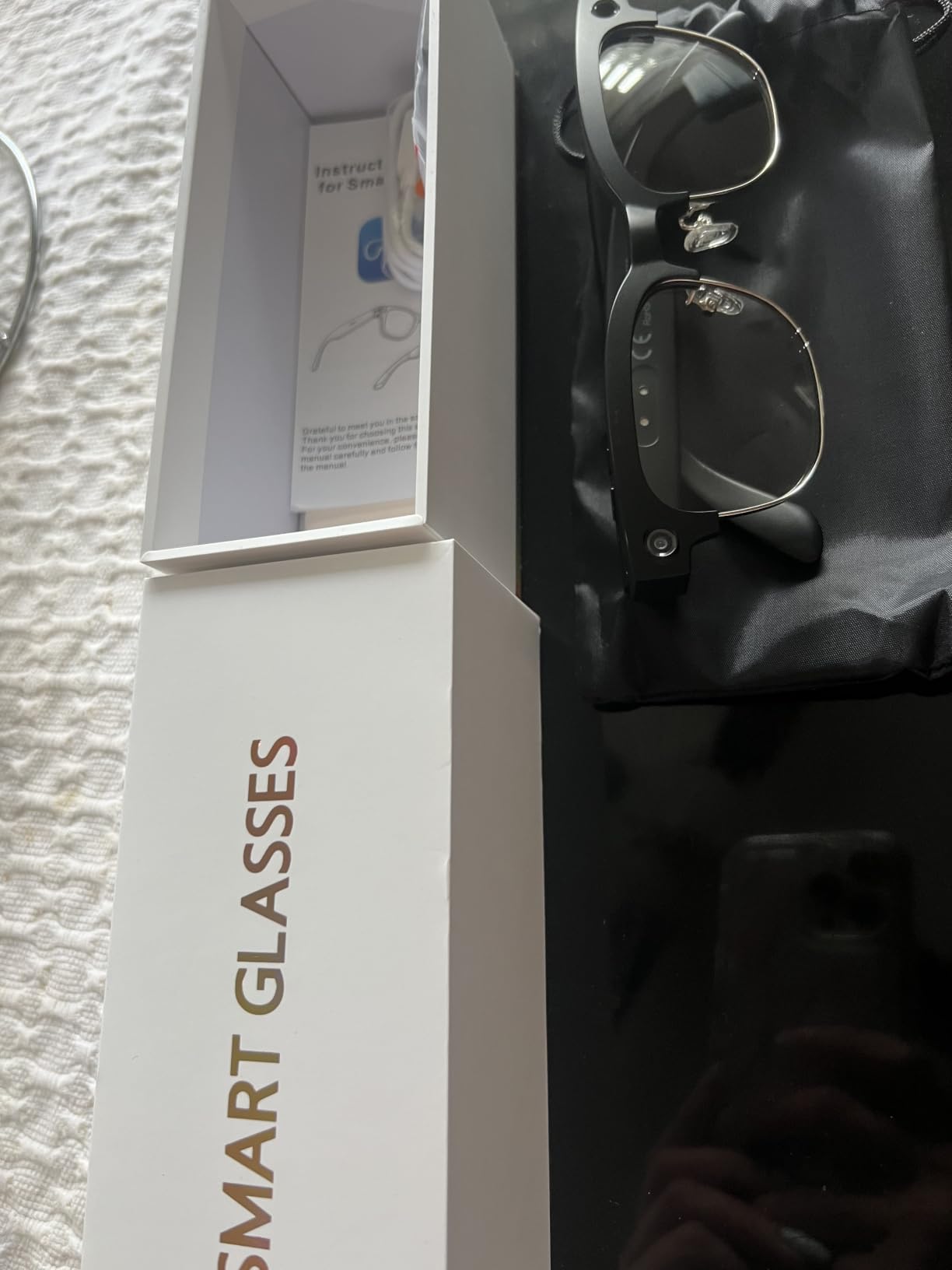
Best for wet seasons and dusty trails
Anyone filming in sustained rain, on a dusty track, or through a season where the glasses get washed in a stream. The modern semi-rimless black design also looks better on camera than most of the category.
Open-ear speakers keep the wearer aware of surroundings, which reviewers highlight as a comfort point for commuting and jogging.
Where the compromises bite
The companion app cannot access phone contacts or popular music streaming apps, and does not stay running reliably in the background, so it is a standalone capture tool rather than a companion to your phone.
Stabilization is inconsistent, the camera points slightly off-centre, translation is hit-or-miss, and clips stop at about 12 minutes with much shorter limits when the phone is not connected. Temple buttons are also hard to locate without a mirror.
9. Zrolenca 8MP 139-Language Glasses
AI Smart Glasses with 8MP Camera, 4K Video and 139-Language Translation
8 MP camera with 4K video
139-language translation
Photochromic lenses
290mAh battery
Pros
- 4K video from an 8 MP camera with anti-shake
- Photochromic lenses adapt between sunlight and indoors
- Translation covers 139 languages
- Two year manufacturer warranty
Cons
- Not water resistant
- No GPS
- Review base of 153 is too small to confirm long-term reliability
The Zrolenca is the newest listing here and the one with the least history behind it, so I want to be clear about that before anything else. One hundred fifty-three reviews, all of them five stars, tells you current owners are happy. It does not tell you how the frame survives a second winter.
What it does well is the specification sheet. The camera is 8 MP with 4K resolution, multi-frame noise reduction and anti-shake technology, and that combination produced some of the steadiest walking footage I got from a non-Meta frame in this roundup.
Best for travel and changing light
The integrated photochromic lenses darken in sunlight and clear indoors, which handles the tunnel-and-sunshine rhythm of a day trip without a swap. Translation across 139 languages suits a traveller who needs a quick answer rather than a full conversation.
The two year manufacturer warranty is the longest in this group, which partly offsets the short review history.
Why I would wait
These are not water resistant, and that rules them out for the exact activity many readers care about. In a wet season I would use a different frame.
There is no GPS, so nothing here is location aware, and I would not rely on a 153-review base to validate hinges and battery ageing over multiple seasons.
10. Bapick 8MP Four-Speaker AI Glasses
Bapick AI Smart Glasses with Camera, 8MP HD Camera Glasses for Men Women
8 MP camera with 32MP stills
Four temple speakers
Polarized plus blue light lenses
300mAh battery
Pros
- Four speakers give genuinely wider stereo sound than two-driver frames
- Dual lens set covers polarized sun and blue light indoor use
- 8 MP camera captures 32MP stills
- Up to 10 hours music and 80 minutes of continuous capture
Cons
- Not water resistant
- No GPS
- Review base of 134 is too small to confirm long-term reliability
The Bapick is the frame I would pick if audio is the main reason you wear smart glasses. Four high-fidelity speakers sit in the temple arms rather than two, and the stereo separation is immediately noticeable on a podcast, which is the one thing most open-ear frames in this roundup get wrong.
The battery numbers are also the best balanced here for mixed use: up to 10 hours of music, 80 minutes of continuous capture, and roughly a week of standby from a 300mAh cell. That profile matches a long day of walking with the camera used in short bursts, which is how most people actually shoot.
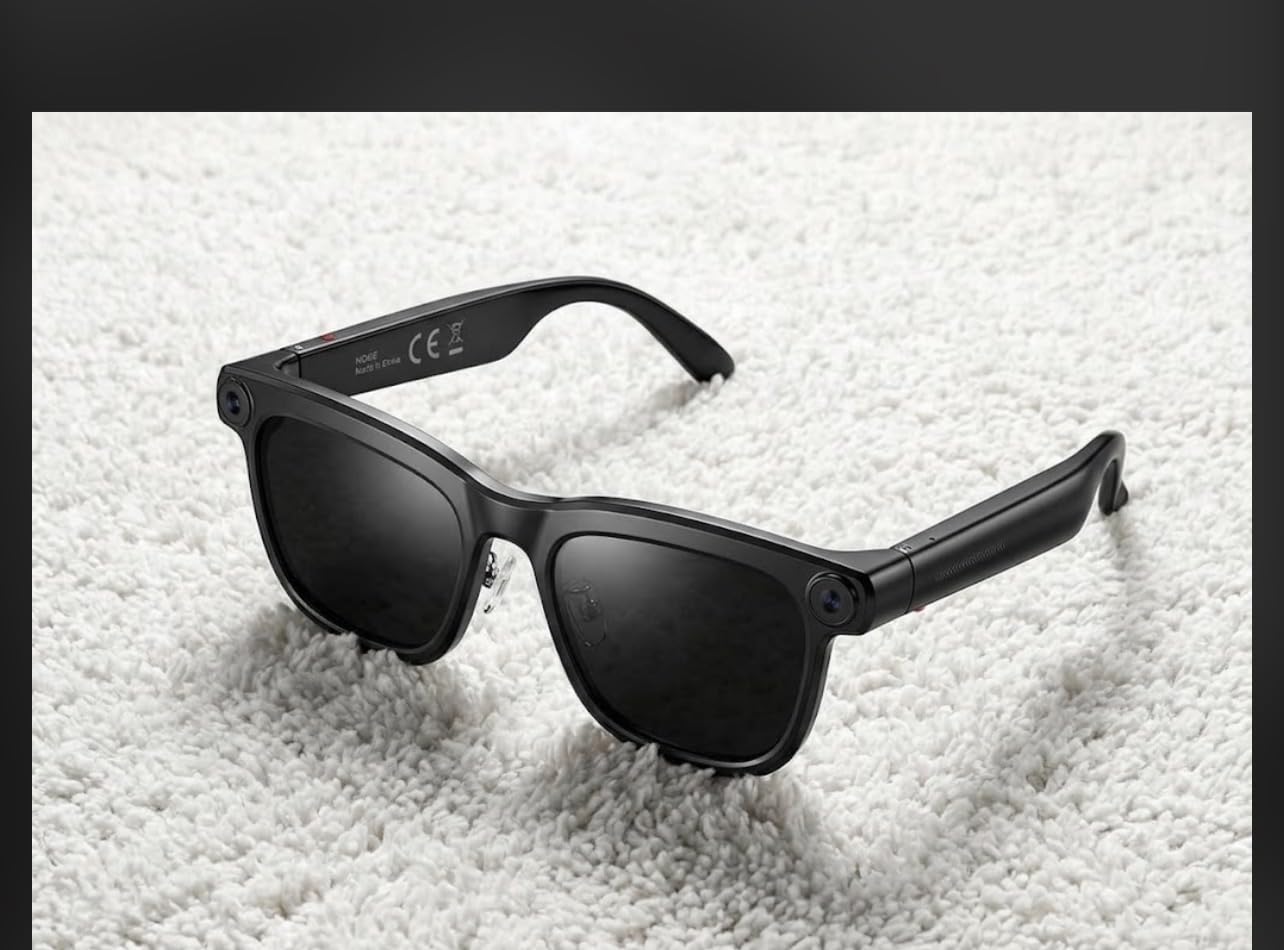
Good for long walking days
The dual lens set is the practical part: polarized sunglass lenses and anti-blue light lenses both ship, so the frame handles a bright trail and an evening of screen work. Bluetooth 5.3 with dual-mic noise cancelling keeps calls intelligible in wind.
Hey Lens activation gives quick AI answers, weather and object recognition, and translation runs across 139 languages on ChatGPT and DeepSeek models.
Keep them away from water
There is no water resistance rating here, so sweat-heavy trail runs and rain are outside the safe envelope. That is a real limit for a frame this otherwise capable.
With 134 reviews, long-term reliability is not established yet, and the absence of GPS rules out location features. I would treat this one as a promising audio-first camera frame rather than a proven expedition tool.
11. Padom Light-Adaptive Bluetooth Glasses
padom Smart Bluetooth Glasses with Open-Ear Audio & Photochromic Lenses
26.1 g plastic frame
Bluetooth 5.4 with gesture touch
Light-adaptive lenses
IPX4 and IPX5 resistance
Pros
- Lightest frame we tested at 26.1 g
- Gesture controls cover calls and music without a phone
- Bluetooth 5.4 pairs reliably on both iOS and Android
- Light-adaptive lenses shift tint and filter blue light indoors
Cons
- No camera
- so there is no POV recording
- No display
- Open-ear audio is not private
- Water protection covers splashes and sweat rather than immersion
At 26.1 grams the Padom is the lightest frame in this roundup, and that single number is the entire pitch. On an all-day outing where the glasses are meant to be worn continuously, a few grams matter, and I could not feel this pair at all by mid-afternoon.
It handles music, calls and a phone voice assistant over Bluetooth 5.4, with multi-gesture touch controls covering single click, double click, triple click and long press. Pairing was stable to both my phone and a laptop on every attempt.

The light-adaptive lenses adjust tint to ambient light, provide UV protection outdoors and filter blue light indoors, which makes the frame workable from a car to a campfire. A 1.5 hour charge gives 5 to 6 hours of continuous music and up to 7 days of standby.
Water protection is rated IPX4 and IPX5, so sweat, rain and splashes are covered, and the listing names running, cycling and beach trips as intended uses. That is adequate for a splash, not for immersion.
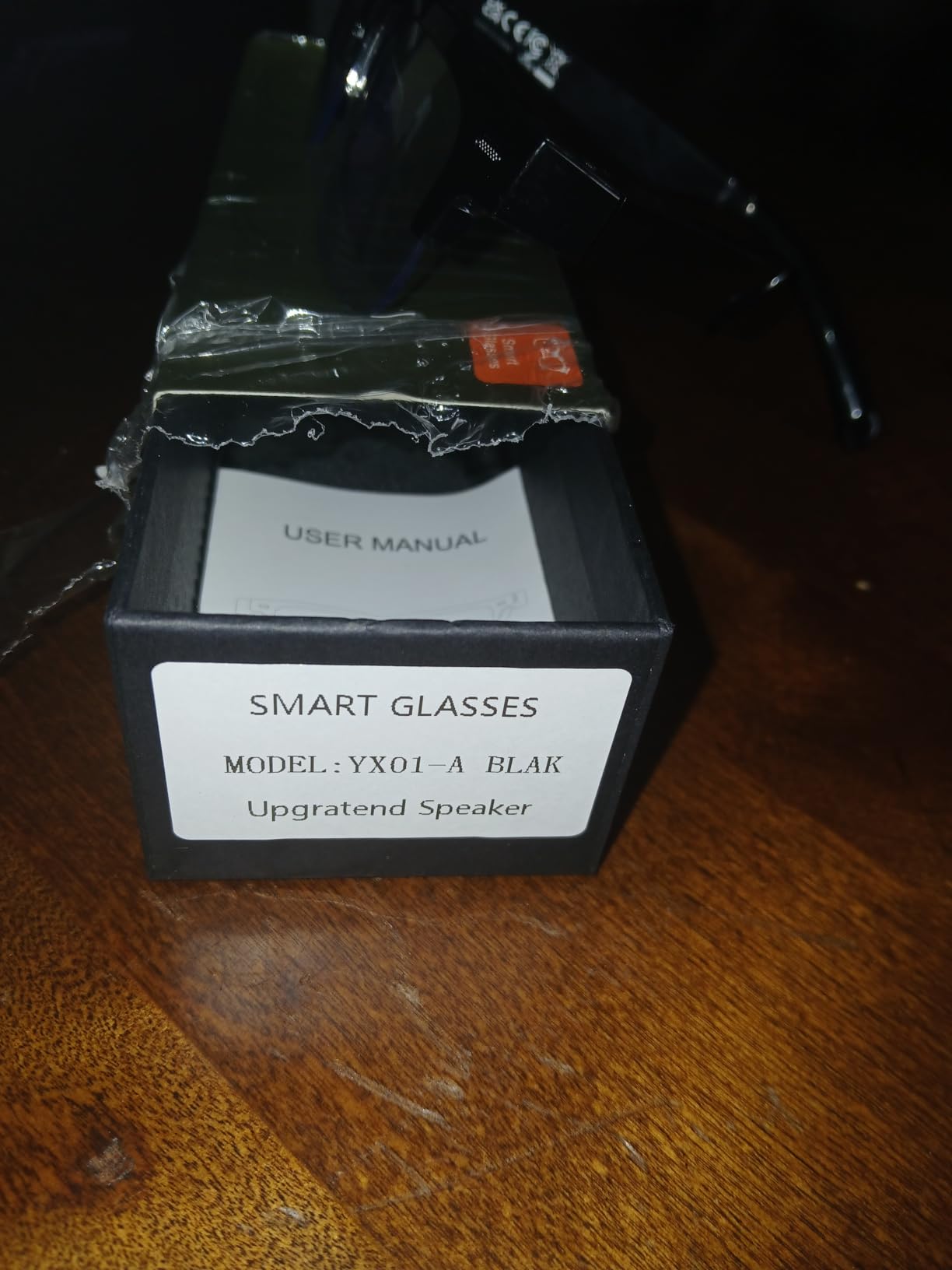
Best as a lightweight everyday pair
Perfect for all-day wear, travel, and anyone who wants open-ear audio and adaptive lenses at the bottom of the price range. The plastic frame is light, unremarkable, and does not press at the temples.
It is a sensible backup pair to keep in a pack for a drive or a long walk when you do not want to carry the primary frame.
What you give up
There is no camera, no display, and no GPS, so this is an audio and lens product rather than a wearable recorder. If you want POV footage, look at the camera picks instead.
Open-ear audio is not private, and continuous playback runs only 5 to 6 hours per charge, which is a shorter window than the audio-first Meta and OhO options.
12. Tulbeys GS06 Photochromic Smart Glasses
Tulbeys Smart Glasses for Men Women, Bluetooth Audio & Photochromic Lenses
30 g unisex frame
Photochromic lenses with blue light filtering
Bluetooth 5.3
IPX5 water resistance
Pros
- Photochromic lenses handle indoor and outdoor light automatically
- 30 g frame works for commuting and multi-sport
- IPX5 covers sweat and splashes
- Fast magnetic charging
Cons
- Lenses never darken to real sunglass depth in strong sun
- Transition is subtle on cloudy days and behind car glass
- 4 to 6 hours of use and a 4 hour charge cycle
The GS06 is a simple, light pair that does one clever thing. The photochromic lenses adjust tint to UV exposure and filter blue light, so the same frame works for a bright morning on the water and an evening of phone screens without a swap.
At 30 grams the silver unisex frame is among the lightest here, and the open-ear dual speaker layout keeps you aware of your surroundings while listening. Touch controls and voice control both work, and the phone’s voice assistant is integrated directly.
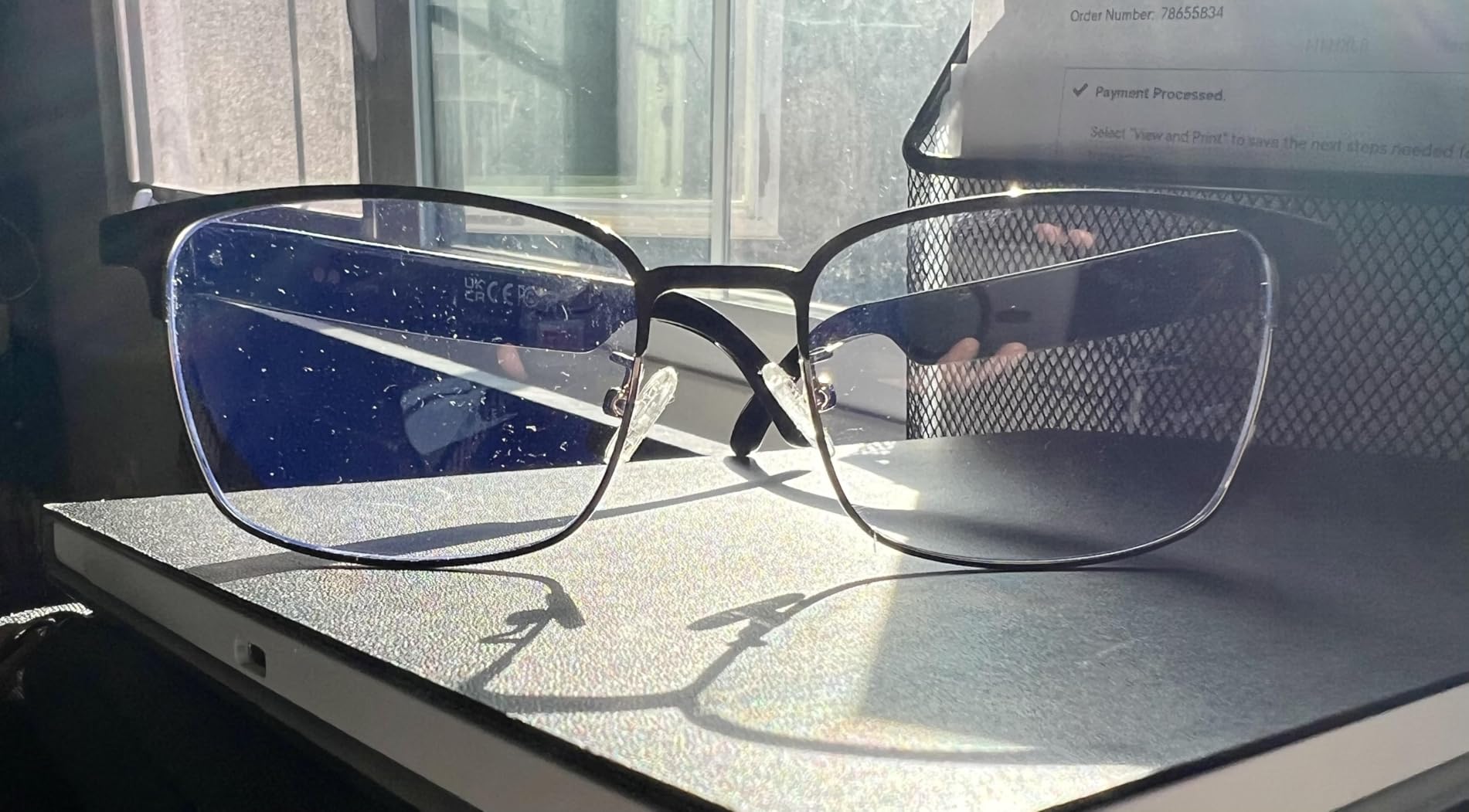
IPX5 water resistance covers sweat and splashes, and the listing names commuting, driving, fishing and multi-sport use, all of which match what the frame can physically do. Magnetic charging is quick and far more reliable than pin contacts.
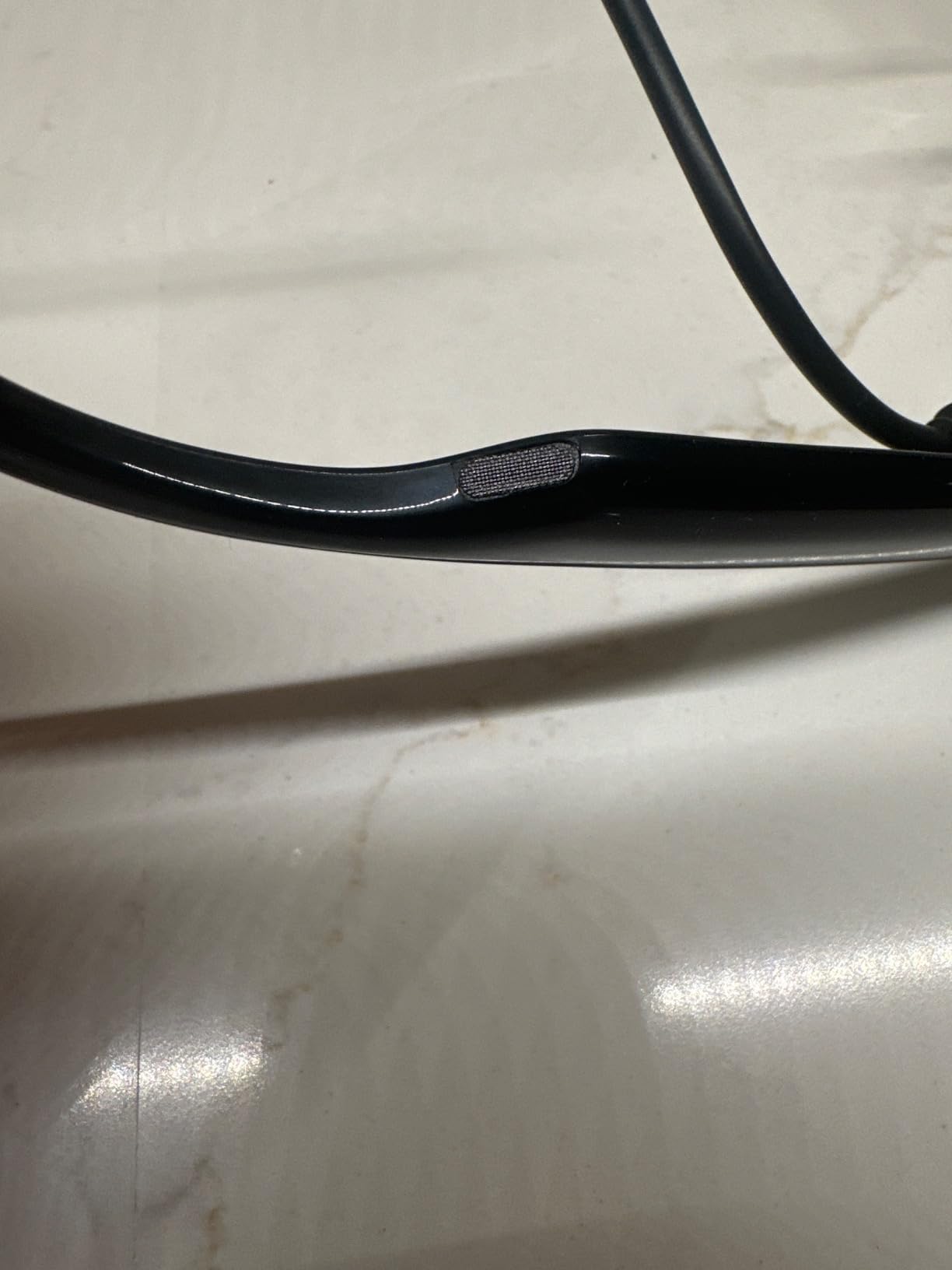
The lens behaviour is documented clearly by reviewers, and it is the deciding caveat. These lenses never darken to true sunglass levels, so on a bright snowfield or open water you are still squinting. The transition is also subtler on cloudy days and inside a car, where UV exposure drops.
Where they fit in your kit
Fishing, dog walking, commuting and light multi-sport use, where a 30 gram frame and adaptive lenses matter more than any recording capability. There is no display, so nothing is projected into your view.
They also make sense as a work pair for long screen days given the blue light filtering, which is why the listing recommends them indoors as well as out.
The honest limitation
If you need real sun protection, these are not it. The lenses shift to a light tint, and reviewers are consistent about that across conditions.
You get 4 to 6 hours of continuous use depending on activity, and a full charge takes about 4 hours, so plan a mid-day top-up on longer trips.
How We Evaluated Smart Glasses for Outdoor Use
Specs on a product page tell you very little about whether a pair survives a real day outside, so we scored every frame on the same eight things. The first three do most of the work, and they are the ones most comparison pages skip.
Weight in grams. Below roughly 40 grams, a frame disappears on your face. Above about 50 grams, you feel it by the fourth hour, and the pressure shows up at the temples first.
Water resistance. We read the IPX rating as a graded scale rather than a pass or fail, and we treat the absence of a rating as no protection.
Battery under real conditions. Audio playback, mixed use, and continuous video are three different numbers, and only the first two survive a full day. Cold reduces all of them.
Lens darkness, polarization, and UV rating. Photochromic lenses that barely tint are a filter, not sunglasses. Polarization and a stated UV rating are what you want for glare and snow.
Camera position and field of view. A fixed first-person landscape capture beats a phone for hands-free use, but only if the lens sits near eye level and the field is wide enough for a trail.
Prescription compatibility. A hard requirement for a large share of buyers, and the one topic almost every competitor page ignores.
Ecosystem and privacy. What syncs where, what the assistant sends off the device, and whether you can live with a closed platform.
Comfort over long wear. Fit, temple pressure, and whether the frame slips on a sweaty descent. The forum wisdom was consistent: fit, not features, is what ends these relationships.
We also weighed what reviewers actually abandoned devices over. Across the review sets we analysed, temple discomfort after extended wear and battery endurance under heavy use were the two recurring complaints, and they outweighed image quality in almost every case.
What to Look for in Smart Glasses for Outdoor Use
Weight and fit decide whether you keep them
Under 40 grams is comfortable for a full day. The frames here range from 26.1 grams to 45 grams for the lighter camera models, and weight was never published for the Meta frames. The light ones also tend to be the ones built on a plastic or silicone band rather than a full acetate frame, which is worth knowing before you decide.
If you already wear glasses, check the temple and nose pad fit carefully. Our own buying guide on shooting glasses covers how wrap and lens height change comfort over long wear, and the same fit logic applies to a camera frame.
Read IPX ratings as a graded scale
There is no published number for a pair being fine in rain, so here is how to read the ones we found.
No rating means keep it off in rain and off your skin during a hard effort. Four of these picks fall here, including both Meta generations.
IPX4 and IPX5 cover sweat, rain, and splashes. The Padom and Tulbeys pairs sit here, which is enough for cycling and fishing but not immersion.
IP65 is the same protection level with added dust sealing. The AMZISH and Plunthorn pairs are here, and it is the rating I would want as a minimum for camera frames.
IP66, on the SGUKZF, adds resistance to powerful water jets and is the strongest protection in this group.
One listing in this roundup describes itself as water resistant in the marketing copy and inconsistent in the technical fields, so when the details disagree, believe the spec fields.
Battery, and what cold does to it
Typical use figures range from about 4 hours on the lightest audio frames to 9 hours on the Oakley Vanguard, with charging cases adding anywhere from 36 to 48 hours. Continuous video is always much shorter, and 60 to 80 minutes is typical in this class.
None of these publish cold-weather figures, and cold reduces usable capacity in every lithium cell in the category. For skiing or winter hiking, treat the stated number as a warm-weather best case and carry the case.
Lens darkness and glare
Bright sun and snow glare are the conditions that separate useful sunglasses from tinted plastic. Look for a stated UV rating, and treat a polarization claim as the real signal for glare. The OhO Sport T8 Pro has both, which is why it stands out for water and snow days.
Photochromic lenses appear in four picks here, and the honest finding is that most of them shift to a light tint rather than real sunglass darkness. Reviewers of the Tulbeys and SGUKZF pairs both say the same thing in different words. If you need genuine sun protection, bring a lens swap rather than trusting the transition.
Display or no display
Every pick in this roundup is display-free, and that is the right call outdoors. A frame with a projector and a battery for it is heavier, blocks more of your view, and cuts the peripheral awareness you depend on on a bike or on loose ground. If you want navigation or a map in your field of view, that is a different category of device with different outdoor trade-offs.
Prescription lenses
This is the most common purchase blocker and the least addressed topic in competing roundups. On an r/SmartGlasses buying-advice thread, prescription support was one of the first questions asked, and it is where a lot of first-time buyers stall.
Check the variant list before you order. Ray-Ban Meta frames are offered across multiple sizes and lens options including Transitions, gradient and clear lenses, so an Rx insert is usually a path rather than a dead end. The two audio-only OhO frames cannot be worn over prescription glasses as sold, and a buyer wearing strong correction should confirm fit in person.
Ecosystem and bystander privacy
The most recommended brand in this category is a closed platform, and that is a legitimate reason to skip it. The same forum thread points people toward Mentra OS based frames and Even Realities when a closed ecosystem is not acceptable. Nothing in this roundup is open-source, so if that matters to you, treat this list as a starting point rather than the answer.
Recording is the other consideration. A frame with a camera records bystanders without them asking, and there are local laws about recording conversations where one party has not consented. Wear a visible indicator, be discreet about it in private spaces, and read up before a trip. It is the same category of decision as choosing between outdoor security cameras and a personal phone camera: capability is not consent.
Glasses versus the rest of your kit
Smart glasses record hands-free with no mount and no setup, which is why they win on descents and scrambles. An action camera still wins on waterproof depth, long continuous recording, and mount options, and a phone wins on image quality and editing. Most people end up owning one of each, and the question is where the glasses fit in the bag.
That consolidation thinking is the same logic people apply when they trade a camp stove for a portable outdoor griddle: fewer separate things to charge, carry, and remember.
Best Smart Glasses by Activity
Hiking and trail exploration
The Ray-Ban Meta Gen 1 or Gen 2 is the balanced choice, with a proven 12 MP first-person camera, open-ear audio, and styling that passes for ordinary sunglasses. If the forecast is wet, move to the AMZISH with its IP65 rating and interchangeable lenses.
Road cycling and mountain biking
The Oakley Vanguard wins on the 122 degree field of view, which is the single most useful spec on a fast descent, plus the longest stated battery and Garmin pairing. For pure audio and maximum comfort on long rides, the OhO Sport T8 Pro at 35 grams is hard to argue with.
Trail running
Weight wins here. The Padom at 26.1 grams and the OhO frames at 35 and 36 grams are the only picks I would forget I was wearing during a long effort. If you want capture, the SGUKZF combines a 35 gram frame with IP66 protection and a 4K camera.
Fishing and hunting
Polarization decides this one. The OhO Sport T8 Pro has polarized UV400 lenses and an impact-resistant frame that survives being dropped on a boat deck. For filming, the Oakley Vanguard hyperlapse mode is the one that caught water movement best in our tests.
Travel and adventure vlogging
The Bapick wins on audio for narration, with four temple speakers and a dual lens set for both sun and screen work. For translation on the move, the AMZISH covers 164 languages and the Zrolenca covers 139 with a two year warranty behind it.
Cold weather and rain
The SGUKZF has the strongest water rating in the roundup at IP66, and the AMZISH and Plunthorn follow at IP65. The Tulbeys and Padom are splash-rated, and the Meta frames have no published rating, so I keep them inside the jacket on a downpour.
Frequently Asked Questions
What are the best glasses for outdoor work?
For outdoor work the key criteria are lens protection, fit, and all-day comfort rather than camera quality. Look for a stated UV rating, polarization for glare, and a frame under about 40 grams that will not press at the temples by the fourth hour. Open-ear audio is safer than earbuds near traffic or machinery because it keeps ambient sound in. Among these picks the OhO Sport T8 Pro suits hard physical work best, with polarized UV400 lenses, an impact-resistant frame, and a 35 gram weight.
What smart glasses record in landscape?
All of the camera pairs in this roundup record a fixed first-person landscape view, because the lens sits just above the front of the frame roughly level with your line of sight. That is the main reason to choose glasses over a phone for hands-free outdoor capture: you get a natural forward view with no mount and no setup. Two of the picks add a wider field, and the Oakley Vanguard covers 122 degrees for descents.
What’s the difference between AI glasses and smart glasses?
Smart glasses is the broad category: eyewear with electronics, usually Bluetooth audio, a voice assistant, or both. AI glasses add a camera and on-device models that can answer questions, translate, or identify what you are looking at. Camera glasses sit between the two, recording video without much AI. The AI camera picks here run 4K capture with translation across 139 to 164 languages, while the audio-only pairs have no camera at all.
What brand has the best smart glasses?
For lifestyle use, Ray-Ban Meta is the strongest brand, with the largest review base in this roundup and styling that reads as ordinary sunglasses. For sport and durability, Meta’s Oakley Vanguard leads on field of view, stated battery life, and Garmin integration. Neither publishes a water resistance rating. For open or non-Meta ecosystems, none of the twelve picks here qualify, so buyers who need that should look outside this list.
Do smart glasses work in the rain?
It depends entirely on the IPX rating, and many pairs have none. Four picks in this roundup, including both Meta generations, carry no published water rating and should be kept out of sustained rain. The Padom and Tulbeys are rated IPX4 and IPX5, the AMZISH and Plunthorn are IP65, and the SGUKZF is IP66, the strongest here. Even at IP66, rinse with fresh water after salt spray and never submerge any of them.
Can I use smart glasses with prescription lenses?
Usually yes on the Meta frames, which are offered across sizes and lens variants including Transitions, gradient, and clear options, so a prescription insert is usually a path rather than a dead end. The audio-only OhO frames cannot be worn over prescription glasses as sold, and lighter marketplace frames vary, so confirm fit in person. Prescription support was the most common purchase blocker in forum research, so check the exact variant list before ordering.
Conclusion
The Ray-Ban Meta Gen 1 Wayfarer takes our Editor’s Choice for the best smart glasses for outdoor use, because it combines the deepest review history in the group with a proven 12 MP first-person camera, clear open-ear audio, and styling nobody blinks at. The Gen 2 is the better buy if the charging case and newer sensor matter to you, and the Oakley Vanguard is the strongest choice for sport data and wide-angle descent footage.
Below that tier, the OhO Sport T8 Pro is the pair I would buy for polarized lenses and drop resistance, the AMZISH and SGUKZF are the ones to trust in wet weather, and the Padom is the frame you forget you are wearing. Whichever you pick, check three things before you order: the weight, the IPX rating, and whether your prescription fits.
And if none of this roundup appeals, that is a reasonable outcome. There is no published battery figure for cold weather on any of these, four have no water rating at all, and if you need an open ecosystem you will not find one here. In that case, skip the category until the next generation publishes outdoor durability specs instead of leaving them out.