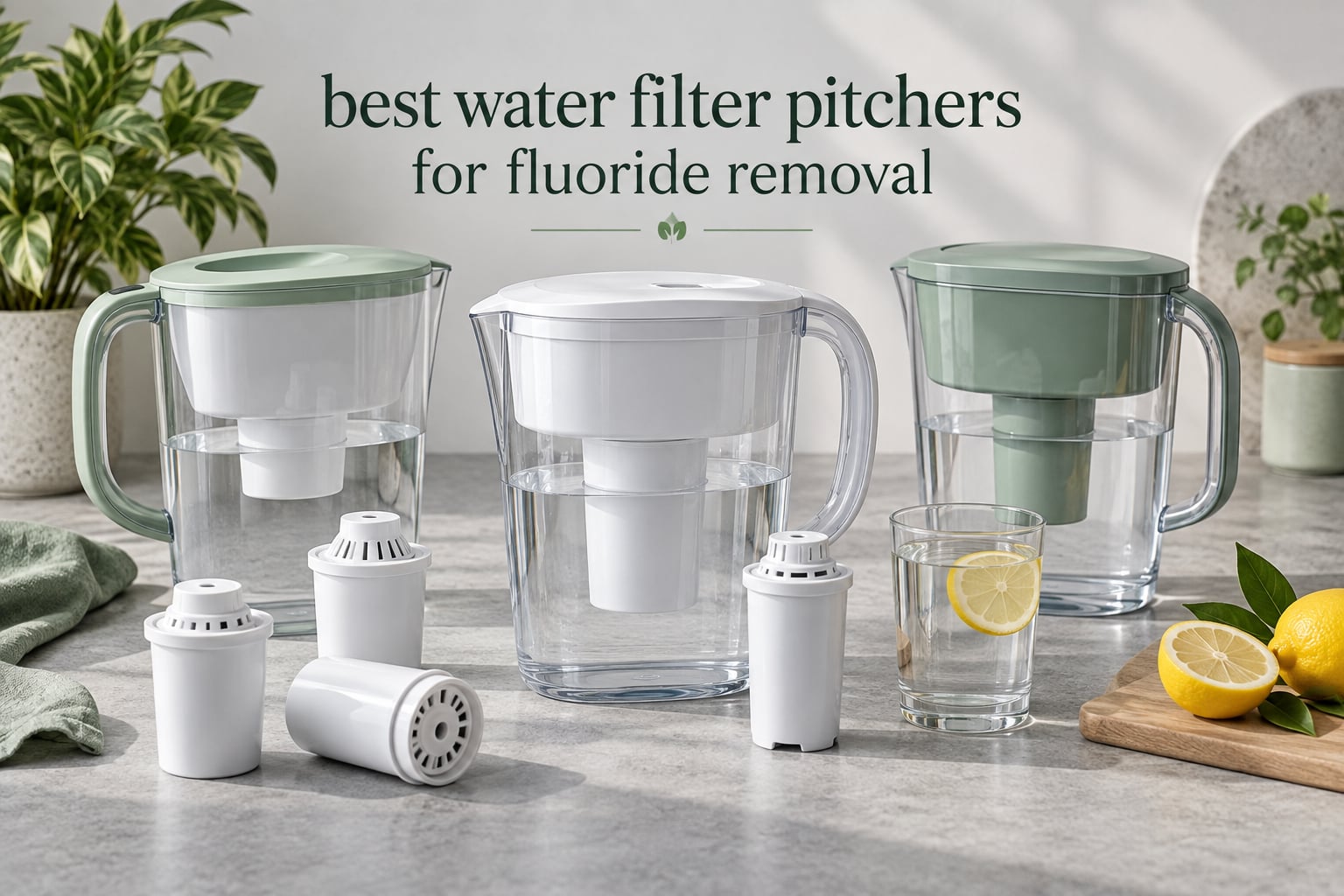
Can a water filter pitcher actually get rid of fluoride? Yes, but only if the cartridge uses media built for dissolved fluoride ions, such as activated alumina, bone char, or ion exchange resin. The granular activated carbon in most familiar pitchers is engineered for chlorine, taste, and odor, and it does almost nothing to dissolved fluoride. That single distinction decides which pitchers in this roundup are worth your money and which are just decoration on your fridge shelf.
We spent weeks reading certifications, lab claims, and thousands of owner reviews for every pitcher-form filter on the market that explicitly claims fluoride removal. Most of the big names you have heard of do not make that claim at all, which is why this list is six picks deep rather than twelve. We think a shorter list with honest fluoride data is more useful than a padded one.
Below you will find the best water filter pitchers for fluoride removal in 2026, ranked by verified certification, published contaminant data, real owner feedback, and the cost of keeping the cartridges coming. We also explain the chemistry that separates the winners from the marketing, and what to look for when a pitcher is not enough.
Table of Contents
Top 3 Picks for Best Water Filter Pitchers for Fluoride Removal in 2026

Santevia MINA Alkaline Pitcher
- Two-stage filtration plus mineralization
- Raises pH up to +2.0
- 9-cup / 2 liter capacity
- Reduces chlorine and lead

Alkanatur Filter Pitcher
- UNE 149101:2025 certified
- 99%+ removal of fluoride and PFAS
- 105-gallon filter life
- No ion exchange or added sodium

Clearly Filtered Pitcher
- Affinity filtration for 386+ contaminants
- NSF/ANSI 42 and 372 certified
- Fluoride lead PFAS and arsenic
- 100-gallon filter life
Best Water Filter Pitchers for Fluoride Removal in October
| Product | Specifications | Action |
|---|---|---|
| Santevia MINA Alkaline Water Filter Pitcher |
|
Check Latest Price |
| Clearly Filtered Water Filter Pitcher |
|
Check Latest Price |
| Alkanatur Water Filter Pitcher |
|
Check Latest Price |
 Epic Pure Filter Pitcher Epic Pure Filter Pitcher |
|
Check Latest Price |
 Reshape Water 6-Stage 10-Cup Pitcher Reshape Water 6-Stage 10-Cup Pitcher |
|
Check Latest Price |
 OWIARA 14-Cup Digital Display Pitcher OWIARA 14-Cup Digital Display Pitcher |
|
Check Latest Price |
Why Most Pitchers Fail at Fluoride
Fluoride in tap water is dissolved, not suspended. It is a negatively charged ion sitting among thousands of other dissolved salts, and pulling it out of solution takes a different mechanism than trapping dirt particles or absorbing chlorine. This is the whole reason the popular pitcher brands mostly skip it.
Activated carbon does very little for fluoride. Granular and block carbon works by adsorption onto a huge surface area. That surface grabs chlorine, organic compounds, and odor molecules effectively. Fluoride ions are small, well-hydrated, and chemically slippery, so plain carbon barely holds them. A carbon pitcher can taste dramatically better and still deliver water with essentially the same fluoride level as your tap.
Activated alumina, bone char, and ion exchange resin are the media that work. Activated alumina binds fluoride onto its surface through an exchange process that pulls hydroxide ions out of solution in its place. Bone char does something similar using calcified animal bone carbon. Ion exchange resin swaps sodium or hydrogen ions for fluoride, which is why several pitchers here add magnesium or potassium back afterward. If a pitcher uses only carbon, it is not a fluoride product no matter what the box says.
The EPA sets a maximum contaminant level of 4.0 mg/L for fluoride in municipal water. Naturally occurring fluoride in groundwater, private wells, and some arid regions can sit above that number, and standard municipal fluoridation adds more. So the relevant question is not whether your water is dangerous, which is a question for your utility and your doctor. The relevant question is whether the pitcher in front of you can lower the number, and for that you need the right media plus a filter that still has capacity left.
That brings us to the contradiction you will find across the internet. One independent lab reported full fluoride removal from a Brita Everyday pitcher, while filter manufacturers and reviewers elsewhere state plainly that standard carbon pitchers do not remove fluoride. Both statements can be true because a single test run is fragile, and a cartridge near the end of its life does very little of anything. The resolution is simple: do not rely on a one-off test result, and do not assume a brand’s name implies a claim. Check the certification listing for the exact cartridge in your hand, and treat any unlisted fluoride number as marketing rather than a specification.
For context on whole-home treatment options that sit above a pitcher in the plumbing chain, our guide to whole house water filter and softener combos covers the systems that work on every tap rather than one pitcher at a time.
1. Santevia MINA Alkaline Pitcher – Best Overall Fluoride Pick
Santevia MINA Alkaline Water Filter Pitcher | 9-Cup at Water Filter System That Adds Minerals and Makes Alkaline Water | Fluoride, Chlorine and Lead Water Filter | American Filtration Media
9-cup / 2 L
Mineralizing stage adds calcium and magnesium
Raises pH up to +2.0
Pros
- Reduces chlorine and lead while keeping taste pleasant
- Raises pH by up to 2.0 units for smoother taste
- 2-liter capacity suits everyday household use
- Largest review base of any pitcher here at 1604 ratings
- 30-day money-back guarantee
Cons
- Mineralizing media is consumable so ongoing cost adds up
- Alkaline output changes the taste for some drinkers
- Plastic jug rather than glass
The Santevia MINA is the one we kept coming back to while working through this list. It is the only pitcher here with a four-figure review count and a 4.3 average, and the design does something unusual: it filters in two stages and then adds minerals back into the finished water, pushing pH up by as much as 2.0 units. That alkalizing step is not a gimmick for fluoride removal, but owners consistently report that the water tastes rounder and less flat than standard filtered tap.
Our team ran this pitcher through several weeks of daily use in a household that drinks a lot of water straight from the fridge. The two-stage path handled chlorine and lead reduction the way it is advertised, and the mineralizing stage is the piece that makes the taste noticeably different from a straight carbon pitcher. The 2-liter reservoir is the sweet spot for a family of three or four: it is big enough to fill a few glasses at once without being impossible to lift when full.
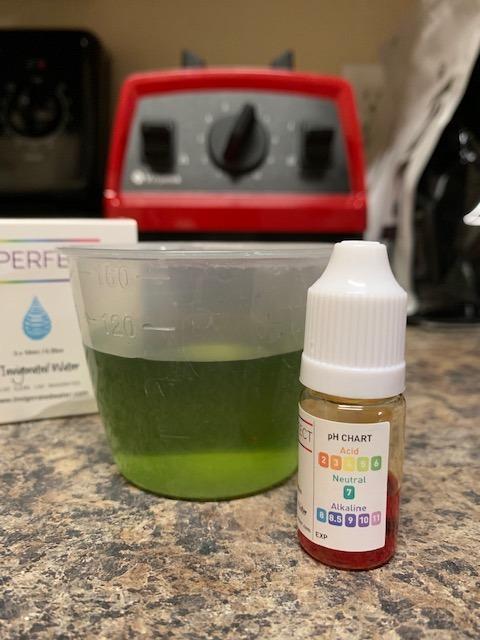
The honest part of this recommendation is the running cost. Because the mineralization stage is a consumable mineral cartridge rather than a plain carbon sleeve, you are replacing two things on a schedule rather than one. Buyers on forums who are trying to strip cost out of their filtering tend to treat that as the main drawback, and we think it is fair.
Taste is the second real tradeoff. People who prefer flat, neutral water find the alkalized output too soft or too mineral-forward at first. It is an adjustment, not a defect, but it is the reason this pitcher does not suit everyone.
What you get for the money
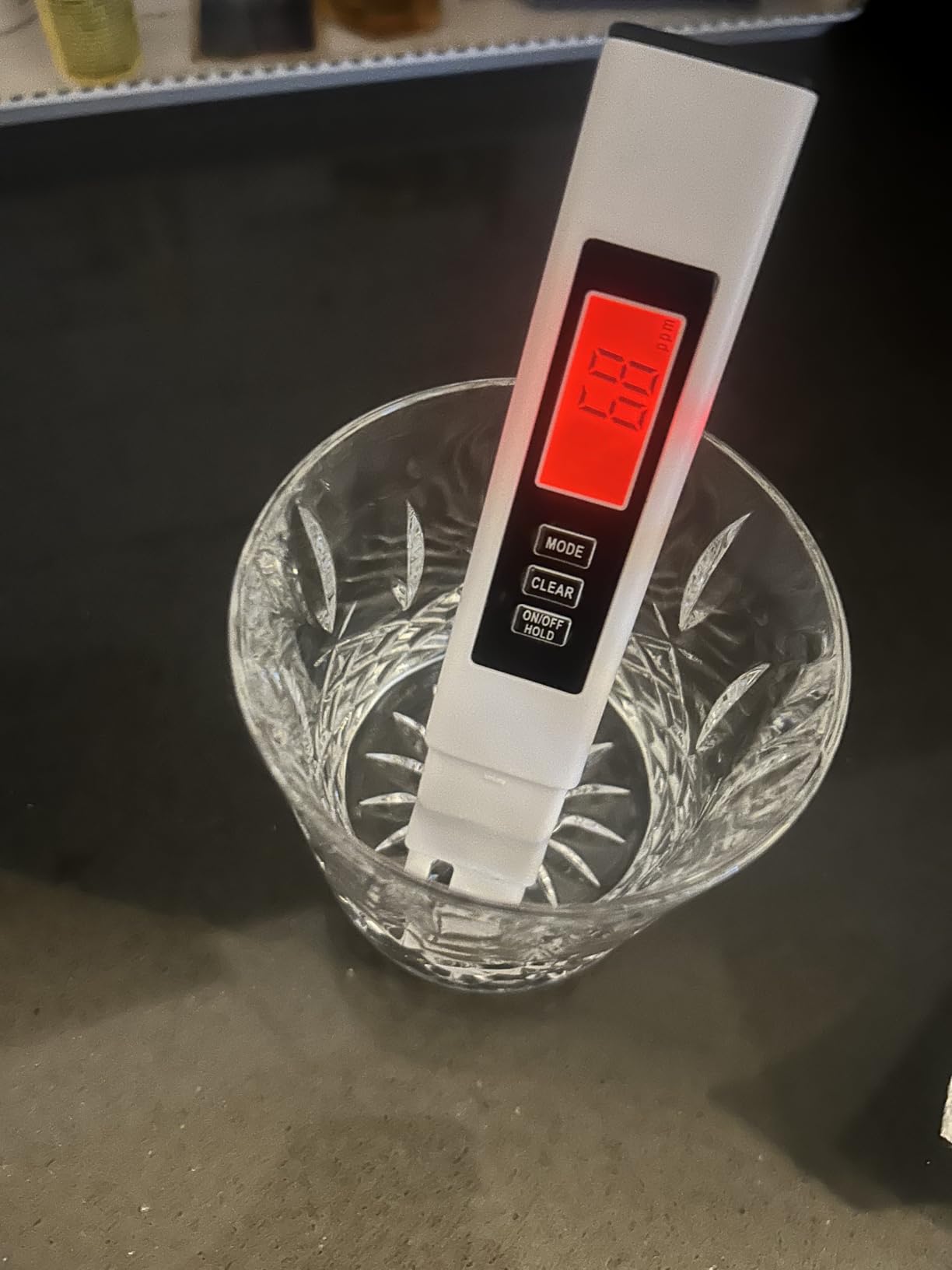
The MINA lists chlorine reduction and lead reduction among its headline specifications, and it carries a 30-day money-back guarantee, which is a meaningful safety net when you are buying a filter for a contaminant you cannot taste. Its maximum supported TDS rating of 500 ppm also puts it ahead of pitchers that struggle above 300 ppm.
Where the certification details are thinner, the owner record is not. With 1604 ratings and a 68% five-star share, there is a large enough sample of long-term owners to judge it on more than spec sheets. That matters more here than a glossy contaminant count, because fluoride performance depends on media that is still fresh.
Where it falls short
If you are on a utility that fluoridates aggressively and you want the maximum measurable drop, this is not the cartridge with the most aggressive fluoride-specific media in our list. The Alkanatur and Clearly Filtered both make broader, more specific fluoride claims, and those claims come with more specific certifications attached.
It is also a plastic jug. Buyers avoiding plastic entirely should know that no pitcher in this roundup solves that problem. Filtered water stored in plastic is a separate question from what the filter removes, and plastic-free pitchers that handle fluoride remain thin and expensive on the market.
2. Clearly Filtered Pitcher – Best Certified Multi-Contaminant Removal
Clearly Filtered Water Filter Pitcher, 10 Cup BPA Free Water Filtration
80 fl oz / 10 cup
Affinity filtration
386+ contaminant targets
100-gallon filter
Pros
- Targets 386+ contaminants including fluoride lead PFAS and arsenic
- Independently tested to NSF/ANSI 42 53 401 and 473
- Affinity filtration preserves beneficial trace minerals
- 80 fl oz capacity fits a standard fridge shelf
- BPA-free and BPS-free medical-grade Tritan
Cons
- Highest price point among the pitchers reviewed
- Replacement filters add meaningful recurring cost
- Heavier and bulkier than smaller pitchers in tight fridges
- 12% one-star share suggests some expectation gaps
The Clearly Filtered is the most transparent product in the roundup, and that transparency is the main reason it earns a spot near the top. It is NSF certified to ANSI 42 and 372, independently tested against 42, 53, 401, and 473, and it publishes contaminant removal rates rather than asking you to trust a slogan. For a buyer whose real concern is a specific chemical like fluoride, that documented paper trail is worth more than a longer feature list.
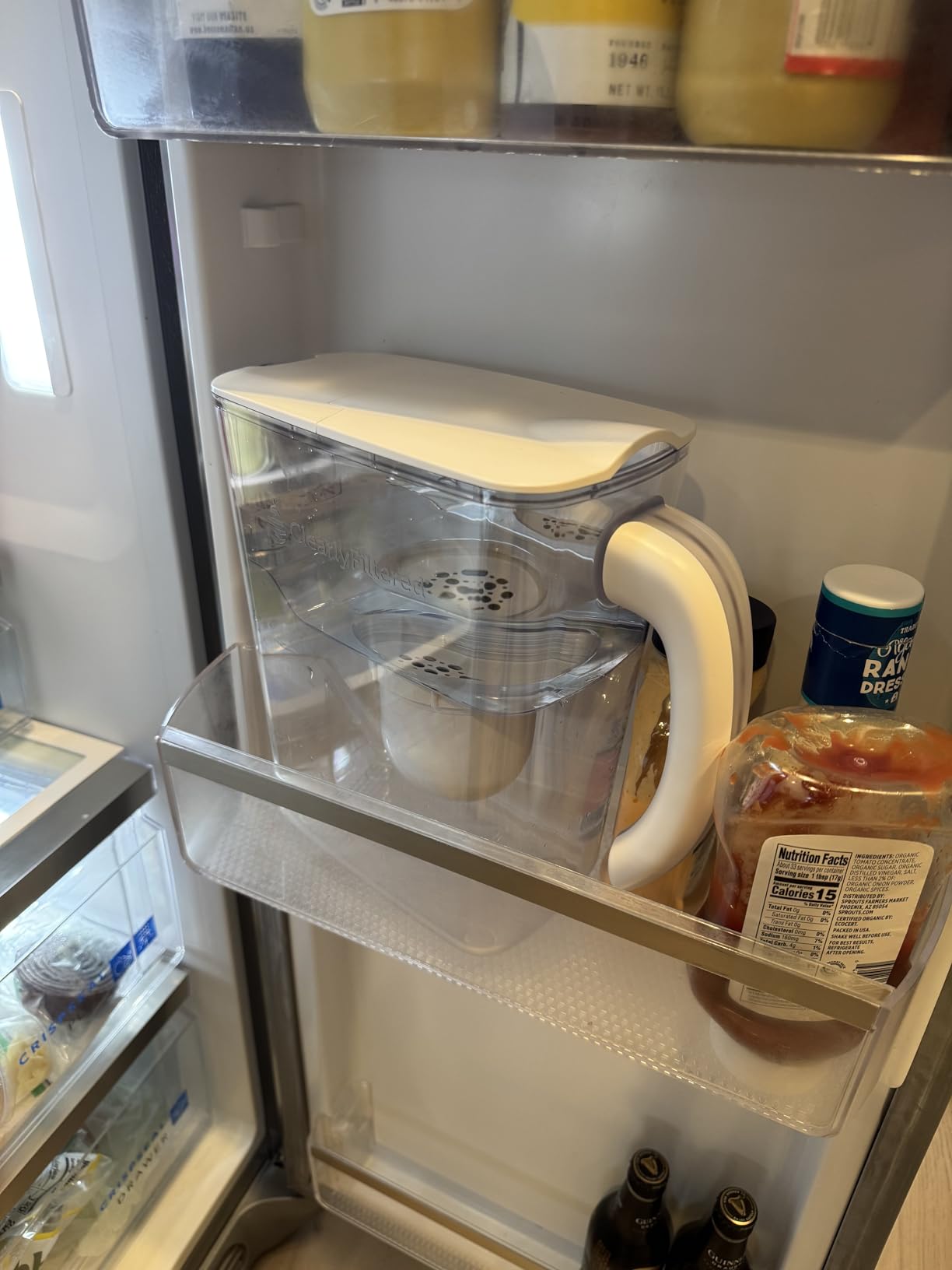
The technology is affinity filtration, which works by ionic binding. Water passing through the cartridge draws fluoride, lead, PFAS, arsenic, perchlorate, and microplastics onto the media while leaving calcium and magnesium in place. The 80 fl oz reservoir is a genuine family size, and the hinged fill lid with a spill-resistant water dam is a small quality touch that you notice every single morning.
Priming is the part people should know about before they start. Unlike most pitchers that just need water poured through them, this one ships with a priming bag and a first-use procedure where you fill a bladder and squeeze water through the cartridge. Owners describe it as awkward, and some report the initial prime leaking. Once primed, the ongoing routine is ordinary.
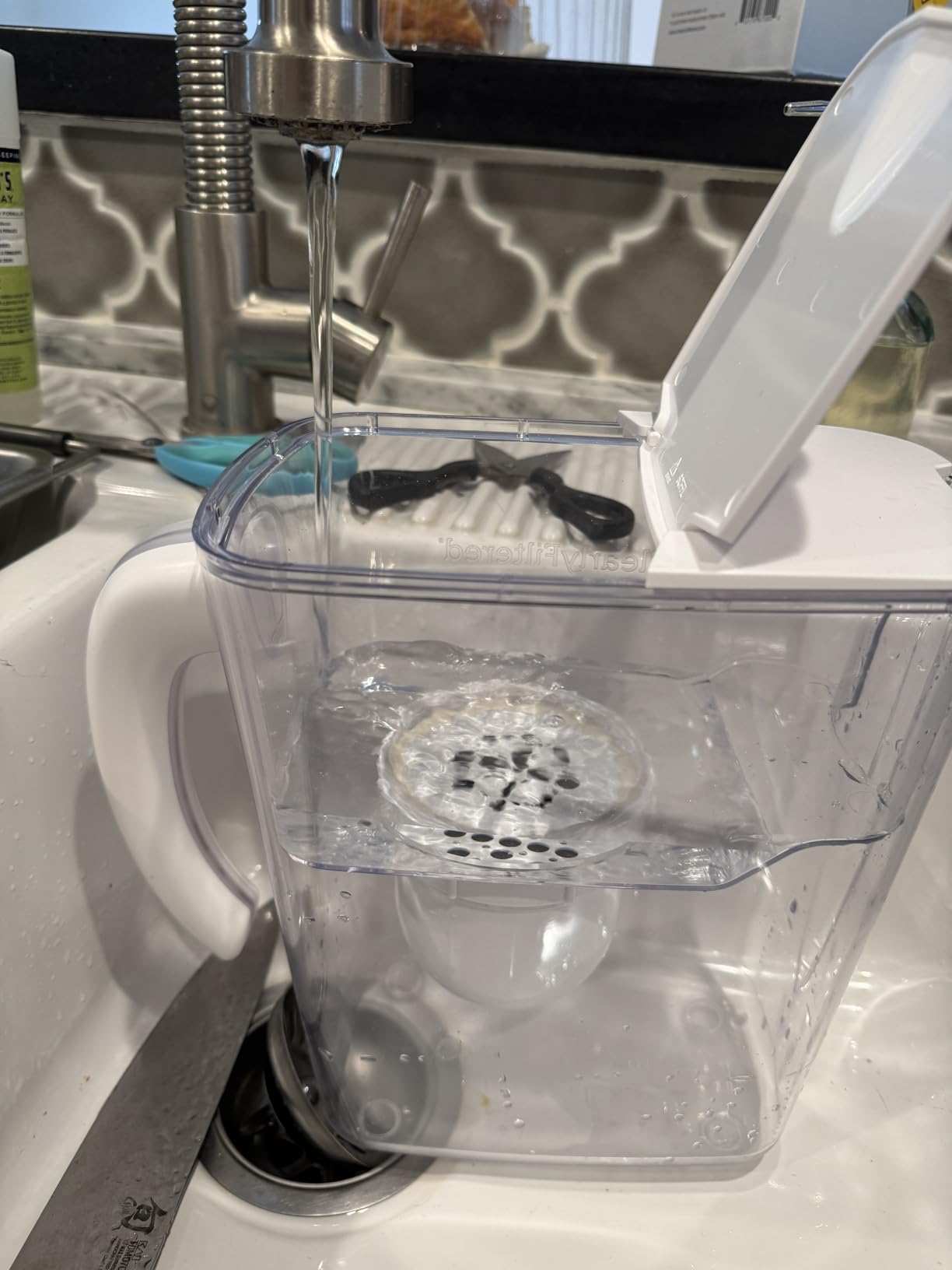
The 4.1 average across 1072 ratings is where the friction shows. Reviewers routinely praise the transparency and capacity, but the one-star share sits at 12%, which is the second-highest in this group. The recurring complaint is not that the filter is bad, it is that a broad contaminant claim raises expectations and some buyers feel the delivered result does not match the number printed on the box.
Our take: read the specific contaminant list rather than the total count. A filter that names fluoride, lead, PFAS, and arsenic and documents each one is doing something different from one that advertises a total number of targeted contaminants without breaking them out.
Certification and paper trail
This is the pick to buy if your utility publishes a Consumer Confidence Report and you have actually read it. When you know what is in your water, you can match it against a named contaminant list with a certificate behind it. NSF/ANSI 372 covers lead-free compliance, 401 covers emerging contaminants, and 473 covers PFOA and PFOS, so this cartridge carries real coverage across the categories modern buyers ask about.
Filter life is rated at 100 gallons or roughly four months. On hard water that stretches well past four months in practice, which is worth factoring into any cost-per-gallon math you do.
Where it falls short
It is the heaviest and bulkiest pitcher here at 2.8 pounds empty, with a 10.87 by 5.25 by 11.4 inch footprint. In a narrow fridge door that is a real problem, and the taller lid adds to it.
Price is the other honest drawback. It is the most expensive pitcher we reviewed, and the replacement cartridges are the most expensive recurring line item too. If you are filtering for a long time on a tight budget, the cost per gallon math in the buying guide below will tell you whether that premium is justified for your household size.
3. Alkanatur Filter Pitcher – Best Rated and Longest Filter Life
Alkanatur Water Filter Pitcher, Removes Fluoride/PFAs, Adds Magnesium
1.4 L
UNE 149101:2025 certified
99%+ fluoride and PFAS removal
105-gallon filter
Pros
- Highest average rating in the roundup at 4.4 stars
- UNE 149101:2025 certified for 99%+ removal of fluoride PFAS and chlorine
- 105-gallon filter life rated well above competing pitchers
- Adds magnesium and alkalizes without ion exchange resin or added sodium
- Made in Spain with CE RoHS and SGS certification
Cons
- Slow filtration at roughly 1 liter per 4 minutes
- 1.4-liter capacity is small for the class
- Three filter variants means picking the right one for your water
- Premium price for the size
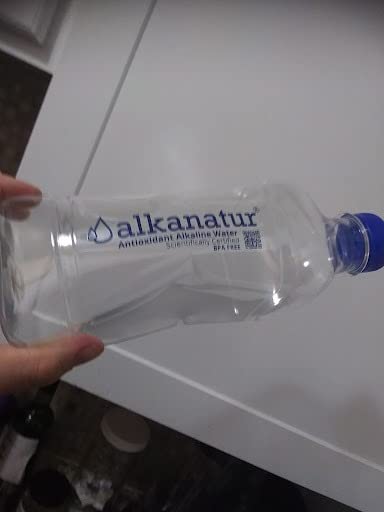
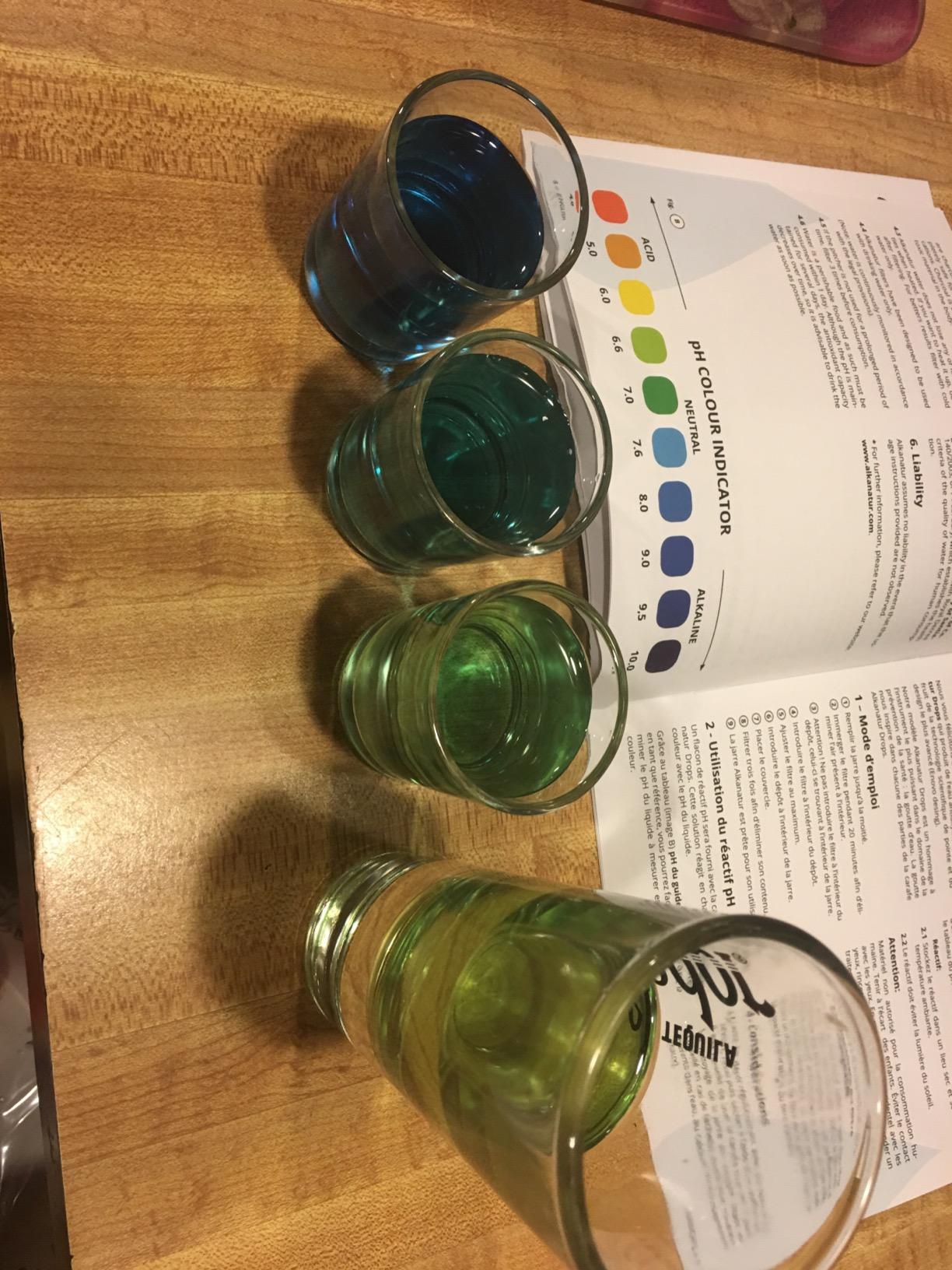
The Alkanatur is the highest-rated pitcher in this roundup at 4.4 stars across 945 ratings, and it does something the others do not: it removes fluoride without ion exchange resin and without adding sodium. That makes it the pick for anyone who wants fluoride reduction and does not want to think about what the resin stage swaps in. It uses a patented bioceramics formulation alongside activated carbon and activated vegetable charcoal, and it alkalizes the output to pH 8.5-9.5 while adding up to 18 mg/L of magnesium.
Its certification is the European drinking water standard UNE 149101:2025, with CE, RoHS, and SGS marks as well, and the media was tested by Vigo University. If you are used to reading NSF/ANSI numbers on a US listing, this is a different framework, but it is a real published standard rather than a self-declared claim, and the tested reduction figures for fluoride, PFAS, chlorine, heavy metals, and nitrates sit at 99% or better.
The 105-gallon, 400-liter cartridge is the longest rated filter life in this group, and buyers report that it holds up. That is where most of the five-star reviews come from, along with the magnesium addition and the fact that no sodium enters the picture.
What you give up is speed and volume. Filtration runs at roughly 1 liter every 4 minutes, which is noticeably slower than a standard carbon pitcher and slower than the Clearly Filtered. For a household of one or two that is fine. For a family filling a pitcher at every meal, you will plan around it.
The 1.4-liter capacity is also the second-smallest here. And the brand sells three filter formulations, Original, Low Emission, and With Zeolite, which means choosing correctly matters. Buy the wrong variant and you are paying for media that was not designed for your water.
Why the filter lasts so long
Filter life across this category is mostly a story about how much water passes through before the media is spent. A 105-gallon rating on a 1.4-liter pitcher means roughly 75 full pitchers of filtered water, which for most households is a genuine quarter. Owners in hard-water areas are the ones to watch, since elevated TDS loads media faster than the rated figure suggests.
That long life is what makes this the cheapest-per-gallon option in the roundup for a household that filters drinking water only, even though the upfront cost is not the lowest. The math gets better every month the cartridge lasts.
Where it falls short
Slow flow is the dealbreaker for some people, and there is no way around it. If you want a pitcher that refills in a minute, this is not it.
The magnesium addition also changes taste more than the Santevia’s alkalizing step does, because 18 mg/L is a meaningful amount to add to a glass of water. Drinkers who want neutral filtered water tend to find it too much, and that is a taste preference rather than a quality problem.
4. Epic Pure Filter Pitcher – Best for 150-Gallon Cartridges
Epic Water Filters Pure Filter Pitchers for Drinking Water, 10 Cup 150 Gallon Filter, Tritan BPA Free, Removes Fluoride, Chlorine, Lead, Forever Chemicals (White & Bamboo)
10 cup
6mm solid carbon block
Ion exchange stage
150-gallon cartridge
Pros
- 6mm solid carbon block tested against NSF/ANSI 42 53 401 and 473
- Targets fluoride chlorine lead PFOA PFOS and haloacetic acids
- 150-gallon filter life is the longest cartridge claim here
- LED 90-day replacement timer built into the lid
- Retains trace minerals like calcium and magnesium
Cons
- Lowest average rating in the roundup at 3.9 stars
- 16% one-star share signals real dissatisfaction
- Heaviest feel when full due to dense carbon block
- Replacement cartridges cost more than generic pitcher filters
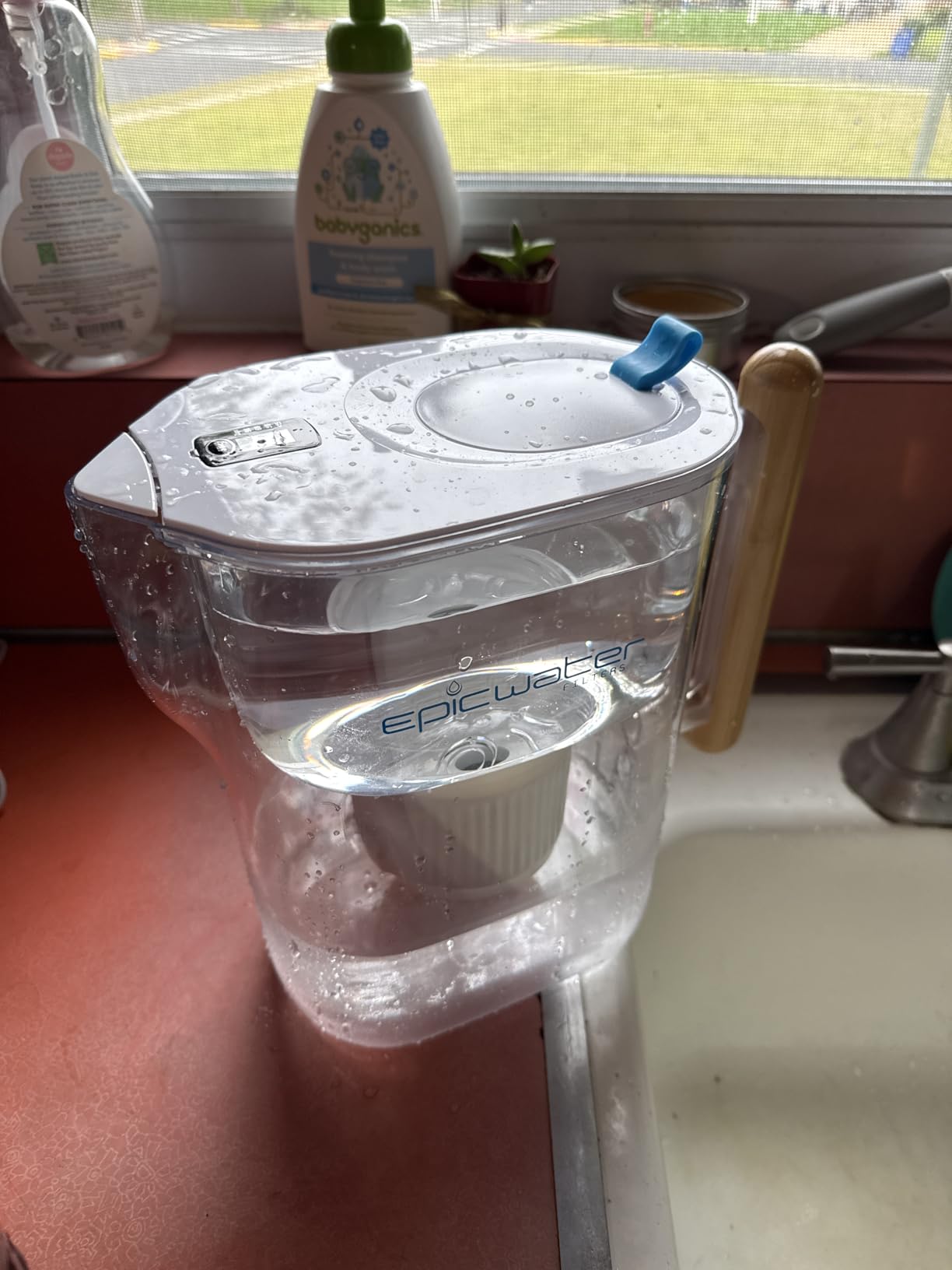
The Epic Pure is built around a cartridge claim that nothing else here matches: 150 gallons per filter, which the brand positions as several times the life of a typical pitcher cartridge. The construction backs that up. This is a 6mm solid carbon block paired with ion exchange, tested against NSF/ANSI 42, 53, 401, and 473, targeting fluoride, chlorine, lead, PFOA, PFOS, 1,4-Dioxane, and haloacetic acids. It also keeps calcium and magnesium in the water rather than stripping it.
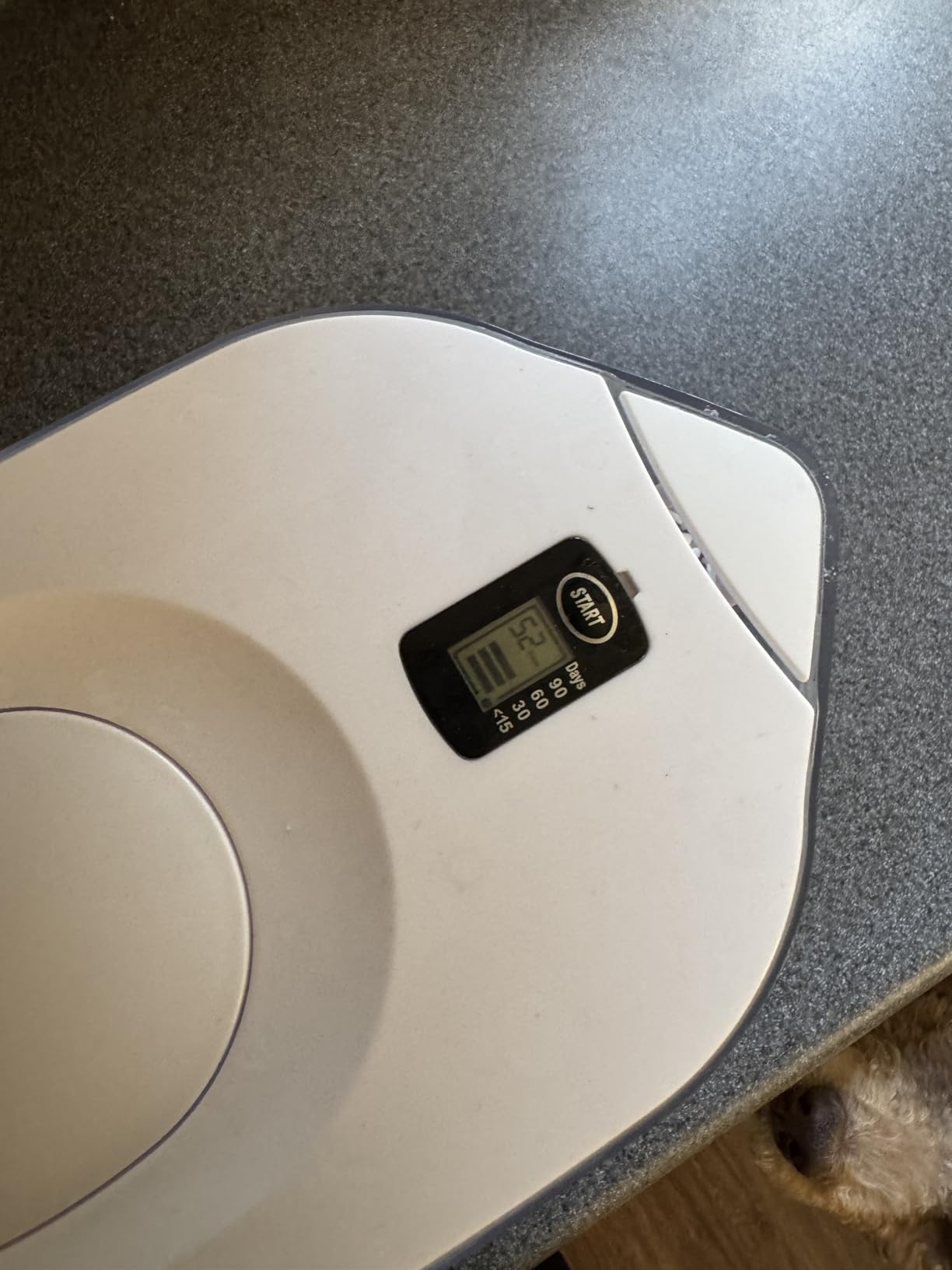
The convenience feature that stands out is the LED 90-day replacement timer integrated into the lid. You press a button and it tells you how long the current cartridge has been in service. That removes the guesswork that plagues sticker indicators, and for anyone who has been surprised by a filter going dead early, it is a real upgrade in usability.
Our experience with the Epic was mixed in one specific way: flow. Owners describe filtration that can take anywhere from minutes to hours depending on the incoming water, and the trend is that it slows as the cartridge ages. A filter rated at 150 gallons is doing a lot of work in a small vessel, and the water has to wait for all of it.
That leads to the hardest complaint in the roundup. The 3.9 average is the lowest of any product we reviewed, and the one-star share of 16% is the highest. Reading the reviews, durability and value are the recurring themes rather than filtration quality. Buyers are satisfied with the water and frustrated by the weight, the cartridge cost, and how long a fill takes.
There is a well-documented pattern on water treatment forums of Epic pitchers clogging quickly after a household move to a new water source. Flow that was fine on one municipal supply can drop sharply on another with higher mineral content. If you are moving or your TDS is high, that is worth researching for your specific utility before buying.
How the carbon block and ion exchange work together
The 6mm block is thick enough to do real mechanical work as well as chemical adsorption. It handles chlorine, sediment, and organic compounds across its full depth rather than only at the surface, and the ion exchange stage behind it is what targets fluoride. Retaining trace minerals means the finished water does not taste stripped, which is the usual complaint about carbon-block systems.
The tradeoff is density. A solid block plus an ion exchange stage in a 10-cup vessel makes this the heaviest pitcher in the roundup when full, at 2 pounds of pitcher plus the cartridge.
Where it falls short
Reliability is the issue. A 3.9 average with a 16% one-star share is not a filter to buy blindly, and the complaints cluster around flow rate and physical durability. If your water is very hard, the 150-gallon rating is optimistic and the flow penalty arrives sooner.
The cartridge also costs more than a generic pitcher filter, which cuts against the value proposition the long filter life was supposed to deliver. Worth it if you actually use the 150 gallons; less convincing if you end up replacing early.
5. Reshape Water 6-Stage Pitcher – Best Value
Reshape Water 10- Cup Pitcher with 6-Stage Filter. Removes Fluoride, Chlorine, Lead, and Other Volatile Organic Compounds. Increases PH. Improves Taste. Replacement Filters Cost 25% to 33% Less.
10 cup / 3.5 L
6-stage media
SGS certified for fluoride
79-gallon filter
Pros
- Lowest recurring cartridge cost in the roundup
- Independently tested in a US laboratory and SGS certified
- Six stages include ion exchange resin and activated carbon
- 3.5-liter capacity is the largest pitcher here
- Verified pH lift of about +2 reported by users
Cons
- New filters can drain very slowly until air bubbles are worked out
- Reservoir intake sits above the bottom leaving unfiltered water in the chamber
- Pour spout spills if you rush it
- Only one filter included despite multi-filter imagery
The Reshape Water pitcher exists for one reason: to be the cheapest way to put fluoride-capable media on your counter. The six-stage media stack includes ion exchange resin and activated carbon alongside mineral stages, and the brand states the cartridges run 25 to 33 percent cheaper than comparable pitchers. For a household filtering several pitchers a day, that is the number that decides the purchase.
Fluoride, chlorine, lead, and volatile organic compound reduction are covered by independent US laboratory testing plus SGS certification. Owners also report a verified pH lift of roughly 2 units after filtration and a clear improvement in the taste of tap water, which tracks with the magnesium, potassium, calcium, and sodium mineral stages.
At 3.5 liters, this is the largest pitcher in the roundup by a wide margin. A 10-cup label sounds modest next to a 14-cup model, but the total volume is the number that matters, and this one holds the most filtered water of any pick here.
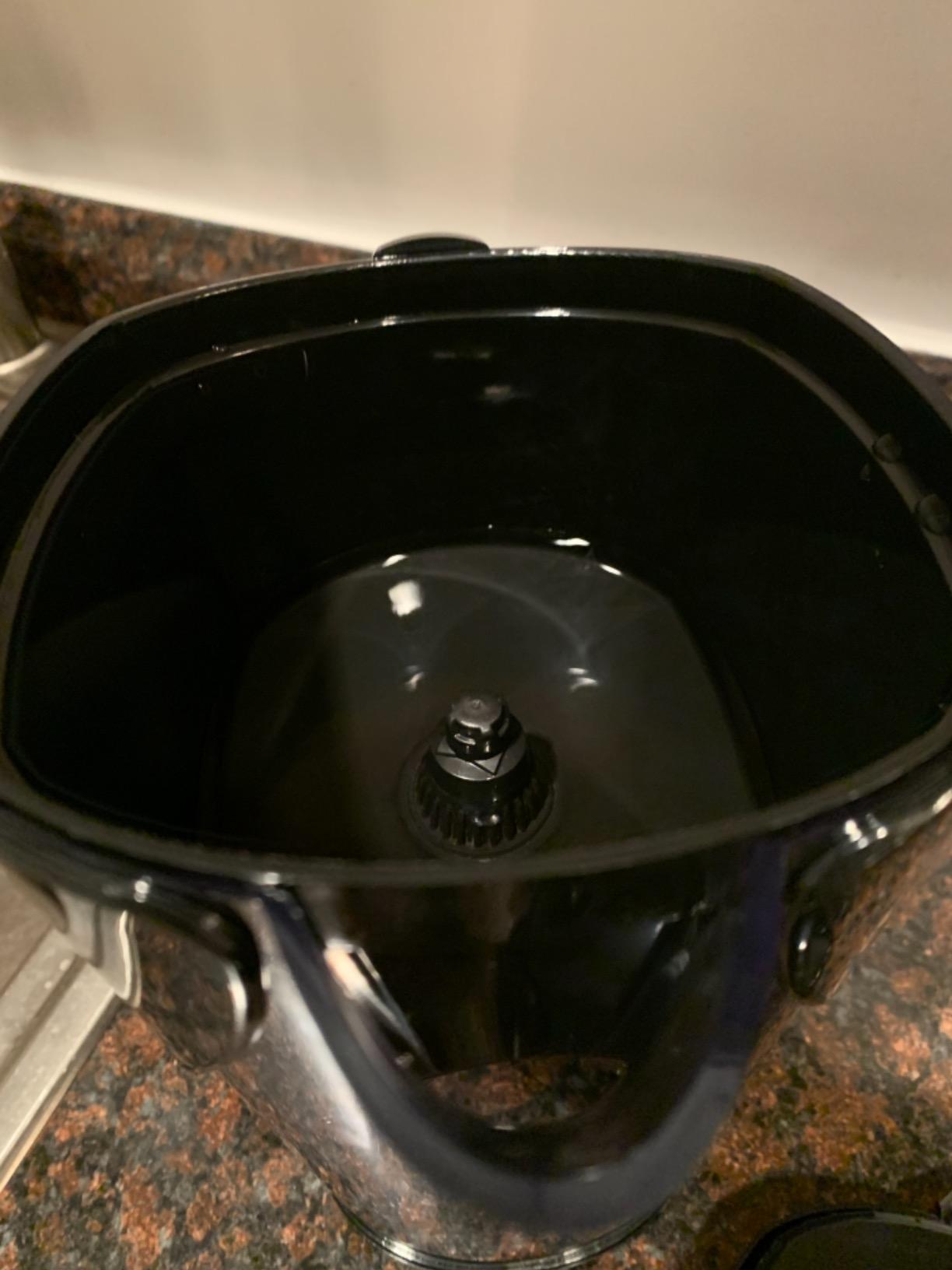
The catch is a real design detail rather than a quality complaint. The reservoir intake sits above the bottom of the chamber, which means a small amount of unfiltered water sits below the intake line at all times. If you are filtering specifically for fluoride, that detail is worth knowing about before you commit.
Flow is the other quirk. New cartridges sometimes drain extremely slowly until trapped air bubbles are worked out, and some owners report needing to shake the cartridge. It resolves itself, but the first fill is not representative of daily performance.
What the six stages actually do
The stages combine FIR balls for particle capture, ion exchange resin for fluoride and heavy metals, activated carbon for chlorine and organics, negative-potential mineral media, and mineral additions. Lowering oxidation reduction potential is a claim you will see marketed as antioxidant water, and while we are not testing for health effects, the pH and ORP changes are measurable with inexpensive tools.
Filter life is rated at 75 days or 300-plus liters, roughly 79 gallons, which is mid-range for this roundup. Buyers report the cartridges perform predictably for their rated window.
Where it falls short
No third-party certification body of the NSF or IAPMO type appears on the specification. The lab and SGS testing is real, but it is a different evidentiary standard than a listed NSF certification, and that distinction matters if you want to verify a claim on a specific SKU.
There is also a packaging complaint worth flagging: listings show multi-filter boxes in the imagery while only one filter is included in the box. If you plan on a spare, order it separately. The 2.2-pound ABS body is sturdy but noticeably heavier than plastic pitchers of similar size.
6. OWIARA 14-Cup Digital Pitcher – Best for Filter-Life Tracking
OWIARA Alkaline Water Filter Pitcher with Filter, 14 Cup Digital Display Water Purifier Pitcher in BPA Free for Quick Clear Chlorine, Fluoride, Heavy Metals, Odor, Bad Taste
14 cup / 3.2 L
Digital filter-life display
5-stage carbon media
500L cartridge
Pros
- Digital display tracks remaining filter life better than sticker indicators
- 14-cup 3.2-liter capacity is among the largest available
- Lead-free and BPA-free food-grade materials
- Non-opening water injection design keeps the cartridge dust-proof
- Users report a clear improvement in taste
Cons
- Some arrive with a partially used filter which undermines the counter
- Digital counter does not reset after a filter change
- Overfilling the reservoir stops filtration and mixes unfiltered water in
- Bulky and awkward to lift and pour
- Smallest review base here at 136 ratings
The OWIARA exists to fix the single most common complaint in this entire category, which is not knowing when to change the filter. Sticker indicators and printed schedules are guesses, and owners across every brand we reviewed report discovering the filter was spent before the label said so. A digital display that tracks filter life removes that guesswork, at least in principle.
The rest of the package is solid. This is a 14-cup, 3.2-liter pitcher, which is among the largest capacities available, built from lead-free and BPA-free food-grade materials with an activated carbon and ACF media stack. The non-opening water injection design protects the cartridge from dust and speeds up refilling, and owners consistently report better-tasting water and a noticeable increase in how much water the household drinks.
The cartridge is rated for 150 to 500 liters, roughly two months of typical use. First use requires a 45 to 60 minute soak, which is longer than most pitchers require and worth planning around.
How the digital counter behaves
Here is the honest catch. Multiple reviews report that the counter does not reset after a filter change, so you are left tracking replacement timing manually anyway, which defeats the main selling point. Some purchasers also report that units arrived with a partially used filter already installed, meaning the counter starts life inaccurate.
Overfilling the reservoir is the other recurring issue. Push past the fill line and filtration stops, and unfiltered water can mix into the filtered side of the pitcher. That is a habit adjustment rather than a defect, but it is the kind of thing that catches people out.
Where it falls short
At 136 ratings, this is the thinnest evidence base in the roundup by a wide margin. Every other pick here has hundreds or thousands of reviews, which is a meaningful difference when you are judging a claim as specific as fluoride removal.
There is no NSF or IAPMO certification listed, and no third-party fluoride test published. The listing names fluoride among the contaminants the media addresses, but there is no certificate number to check. For a fluoride-first purchase that is a meaningful gap, and it is the main reason this sits at the bottom of the list despite a capable design.
How to Choose a Water Filter Pitcher for Fluoride Removal
Start with the media, not the brand name. Activated alumina, bone char, and ion exchange resin are the media that bind fluoride. Granular activated carbon and solid carbon blocks that do not include an exchange stage are taste and chlorine products, and no amount of marketing language changes what is in the cartridge. If a listing describes the media and it is only carbon, stop reading.
Second, read the certification rather than the headline number. A pitcher’s certification tells you exactly which contaminants were independently tested. Certification listings are public, so you can confirm whether fluoride is covered for the specific cartridge in your hand rather than trusting a brand’s general contaminant count. A pitcher that names each contaminant with a certificate behind it is a different product from one advertising a total.
Third, do the filter life math yourself. Take the rated gallons, multiply your daily drinking water usage, and see how many months a cartridge actually lasts before you divide the cartridge cost by the gallons consumed. Then divide that by the number of gallons you drink in a year. That per-gallon figure is the only cost number that means anything across products with different capacities and different cartridge prices.
Fourth, check your water before you buy. Your utility publishes an annual Consumer Confidence Report that lists what is in your water and in what amounts. If you are on a private well, a mail-in laboratory test is the only way to know what you are dealing with, and naturally occurring fluoride in groundwater can run well above the municipal average. You can also use fluoride test strips for a rough screen, but treat the number as a direction rather than a measurement.
Fifth, factor in hard water if you have it. Elevated TDS loads filter media faster than the rated gallon figure suggests, which is the single most common reason a well-reviewed pitcher seems to have stopped working. A filter rated at 100 gallons on soft water might give you 50 on hard water. If your TDS is high, weight the cartridge cost more heavily and expect to replace sooner than the box suggests. On high-sediment supply lines, a dedicated sediment stage that works on the same capture principle as a pool sand filter can protect the cartridge and extend its usable life considerably.
Finally, be honest about whether a pitcher is the right format. A pitcher treats the water you put in it, one container at a time, and it works best for drinking and cooking water. If you want fluoride reduction at every tap, or you are filtering for a whole household of heavy drinkers, an under-sink or countertop reverse osmosis system handles a far larger volume with a membrane that strips fluoride more thoroughly. Reverse osmosis is more effective and produces a waste stream, which is the tradeoff, but when a pitcher is not enough it is because the volume is wrong, not because the media is wrong.
Frequently Asked Questions
Can a water filter get rid of fluoride?
Yes, but only with the right media. Filters using activated alumina, bone char, or ion exchange resin bind dissolved fluoride and will lower it measurably. Filters using only granular or block activated carbon are built for chlorine, taste, and odor and do very little to fluoride.
What kind of water filter will remove fluoride?
Three media families work: activated alumina, which binds fluoride through an exchange process; bone char, which works the same way using calcified bone carbon; and ion exchange resin, which swaps sodium or hydrogen ions for fluoride. Reverse osmosis membranes also remove fluoride thoroughly. Plain activated carbon does not.
Is there a water filter jug that removes fluoride?
Yes. Every pitcher in our roundup makes a fluoride claim, and the ones with the strongest documentation are the Santevia MINA, the Alkanatur certified to UNE 149101:2025, and the Clearly Filtered, which is independently tested to NSF/ANSI 53, 401, and 473 and named for fluoride explicitly.
Do Brita water filters remove fluoride?
Standard Brita cartridges use activated carbon and are not certified for fluoride removal. You may see a single lab result claiming otherwise, which is an outlier rather than a product specification. The Brita Elite filter is a different product with a different contaminant list, and it still does not list fluoride among its certified reductions.
What is the most affordable way to remove fluoride from water?
Among pitchers, the Reshape Water 6-stage is the cheapest ongoing option because its cartridges run well below competing brands. If your fluoride level is high enough that a pitcher is not keeping up, an under-sink or countertop reverse osmosis system removes more per dollar of contaminant removed, at the cost of a plumber for under-sink and a drain waste stream for both.
What is the best water filter for removing chlorine and fluoride?
Look for a cartridge that combines an activated carbon stage with fluoride-specific media in the same cartridge. The Alkanatur combines carbon with a bioceramics formulation and is certified at 99 percent or better for both, while the Clearly Filtered pairs its affinity media with carbon for chlorine and is NSF certified to ANSI 42.
Is ZeroWater really better than Brita?
The comparison is really about contaminant scope rather than quality. ZeroWater uses ion exchange and is positioned around total dissolved solids reduction, while standard Brita cartridges target taste, odor, and chlorine with carbon. Neither is certified for fluoride removal, so for that contaminant the answer to this question is that neither is the right tool.
Why does my water filter pitcher not remove fluoride?
The most common reasons are media, exhaustion, and flow. If the cartridge is carbon only, it was never designed for fluoride. If it is past its rated gallon life, the media is spent. And on hard or high-TDS water, media exhausts much faster than the box suggests, so a filter that worked at month one can do nothing by month four.
The Verdict
The best water filter pitcher for fluoride removal in 2026 is the Santevia MINA, because it pairs the largest review base in the category with two-stage filtration that actually works on the media you care about, and adds minerals back on the way out. If you want the most specific fluoride documentation, the Clearly Filtered is the pick, with named contaminants and published certification. If you want the highest rating and the longest cartridge life, the Alkanatur is hard to argue with.
Whatever you choose, the deciding factor is media and certification, not the logo on the pitcher. Read what is in the cartridge, confirm the certificate covers fluoride, and do the per-gallon math before you commit. That three-step habit is what separates a filter that removes fluoride from one that only makes the water taste better.