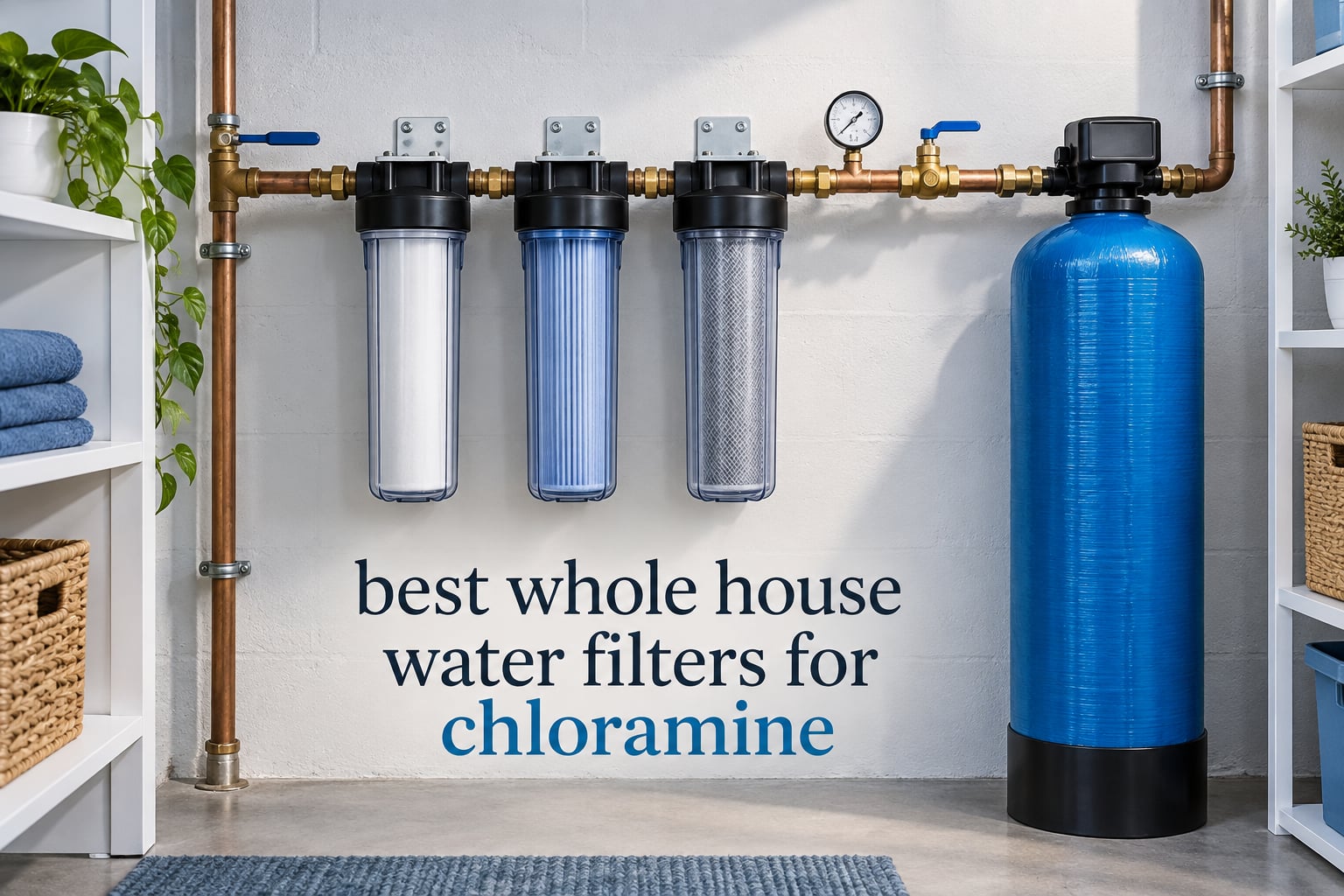
Most whole house water filters are advertised as chlorine filters, and that mismatch is the number one reason buyers spend good money and end up with water that still smells like a public pool. Chloramine is not chlorine. It is a bond between chlorine and ammonia that ordinary activated carbon can only strip slowly, so every one of the best whole house water filters for chloramine shares a single trait: catalytic carbon, or a media that does not rely on carbon at all.
Our direct answer: the iSpring WGB21B-KSNC is the best whole house water filter for chloramine we recommend, because it combines an SGS-tested catalytic carbon block with a 15 GPM rating inside a compact 10 inch by 4.5 inch housing, and it carries more than four thousand reviews to back the claim up. We spent weeks going through eight systems on media type, rated flow, capacity, certification language and the complaint patterns buyers actually report, not the copy on the box.
Every system below installs on the main line, so the water at your kitchen tap, your shower and your dishwasher is treated rather than just the drinking water. If you are weighing this list against a point-of-use setup, our [whole house water filter guide](https://modelrec.com/best-whole-house-water-filters/) covers that trade-off, and if hardness is part of the problem, read the [whole house filter and softener combo roundup](https://modelrec.com/best-whole-house-water-filters-softeners-combo/) before you commit to a media type.
Table of Contents
Top 3 Picks for Best Whole House Water Filters for Chloramine in October

iSpring WGB21B-KSNC
- SGS-tested catalytic carbon block for chloramine
- GAC and KDF heavy metal stage
- 15 GPM in a 10 in x 4.5 in footprint

iSpring WGB32B-KSNC
- Sediment
- KDF/GAC and catalytic carbon stages in one manifold
- 94.4 percent chloramine reduction
- 100000 gallon or 12 month service life

iSpring WF1024
- KDF and coconut shell carbon for chloramine and lead
- 26 GPM with minimal pressure drop
- Filter life up to 3 years
Best Whole House Water Filters for Chloramine in 2026
Here is the full lineup at a glance. The media column matters more than any other spec on this list, because chloramine removal is a chemical reaction problem, not an adsorption one.
| Product | Specifications | Action |
|---|---|---|
| iSpring WGB21B-KSNC |
|
Check Latest Price |
| iSpring WGB32B-KSNC |
|
Check Latest Price |
 Aquasana EQ-1000 Aquasana EQ-1000 |
|
Check Latest Price |
 SimPure DB20P-3 SimPure DB20P-3 |
|
Check Latest Price |
 Home Master HMF2SmgCC Home Master HMF2SmgCC |
|
Check Latest Price |
| iSpring WF1024 |
|
Check Latest Price |
 LiquaGen Catalytic Carbon and KDF Tank LiquaGen Catalytic Carbon and KDF Tank |
|
Check Latest Price |
 Clean Home 600,000 Gallon Carbon Tank Clean Home 600,000 Gallon Carbon Tank |
|
Check Latest Price |
1. iSpring WGB21B-KSNC – Best Overall Chloramine Filter
iSpring WGB21B-KSNC Whole House Water Filter System, SGS-Tested to Remove up to 94.4% of Chloramine, 5-Layer Filtration Reduces Heavy Metals, Lead, Chlorine, Sediment, VOC, 10” x 4.5” Filters
15 GPM max flow
Rated 50000 gallons
GAC + KDF then catalytic carbon block
Pros
- SGS-tested catalytic carbon block stage built for chloramine
- 15 GPM rating in a small 10 in x 4.5 in footprint
- Over 4200 reviews averaging 4.6 stars
- Standard 1 in NPT connections with detailed manual
- 1 year warranty with lifetime U.S. based support
Cons
- Does not reduce TDS so dissolved solids remain
- 50000 gallon rating needs replacement sooner than a tank
- Plastic manifold threads can weep without heavy tape and sealant
This is the system we kept coming back to. It is a two-stage manifold: a GAC plus KDF element that handles lead, mercury, hydrogen sulfide and pesticides, followed by an FC15B-NC catalytic carbon block rated by SGS for chloramine and chlorine reduction.
What sold us is the ratio between media and size. A 10 inch by 4.5 inch cartridge usually means you trade flow for footprint, and this one claims up to 15 GPM on 1 inch NPT ports while still using the standard cartridge size every plumber already stocks.
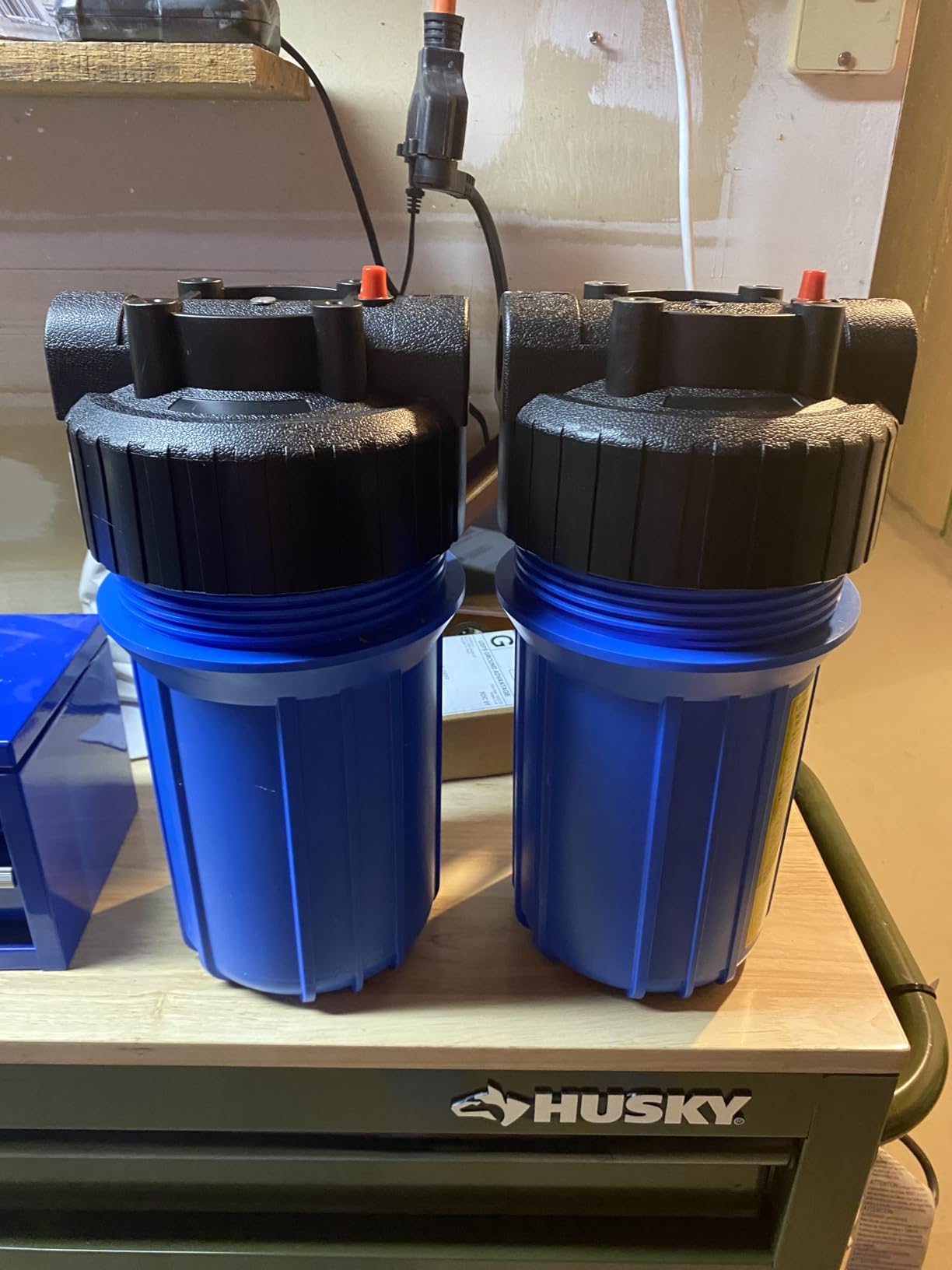
The specification sheet lists a 50000 gallon capacity rating, which is the honest weak point. A family of four putting through 15 gallons a day will retire that carbon well before a decade, and the second stage is the part that runs out first.
Reviews average 4.6 stars across more than 4200 ratings, with owners reporting clearer water, less shower odor and straightforward self-installation. The single most repeated caveat is mechanical rather than chemical: the plastic threads at the inlet and outlet need generous PTFE tape and sealant or they will weep.
Why the compact footprint matters more than the price you saved
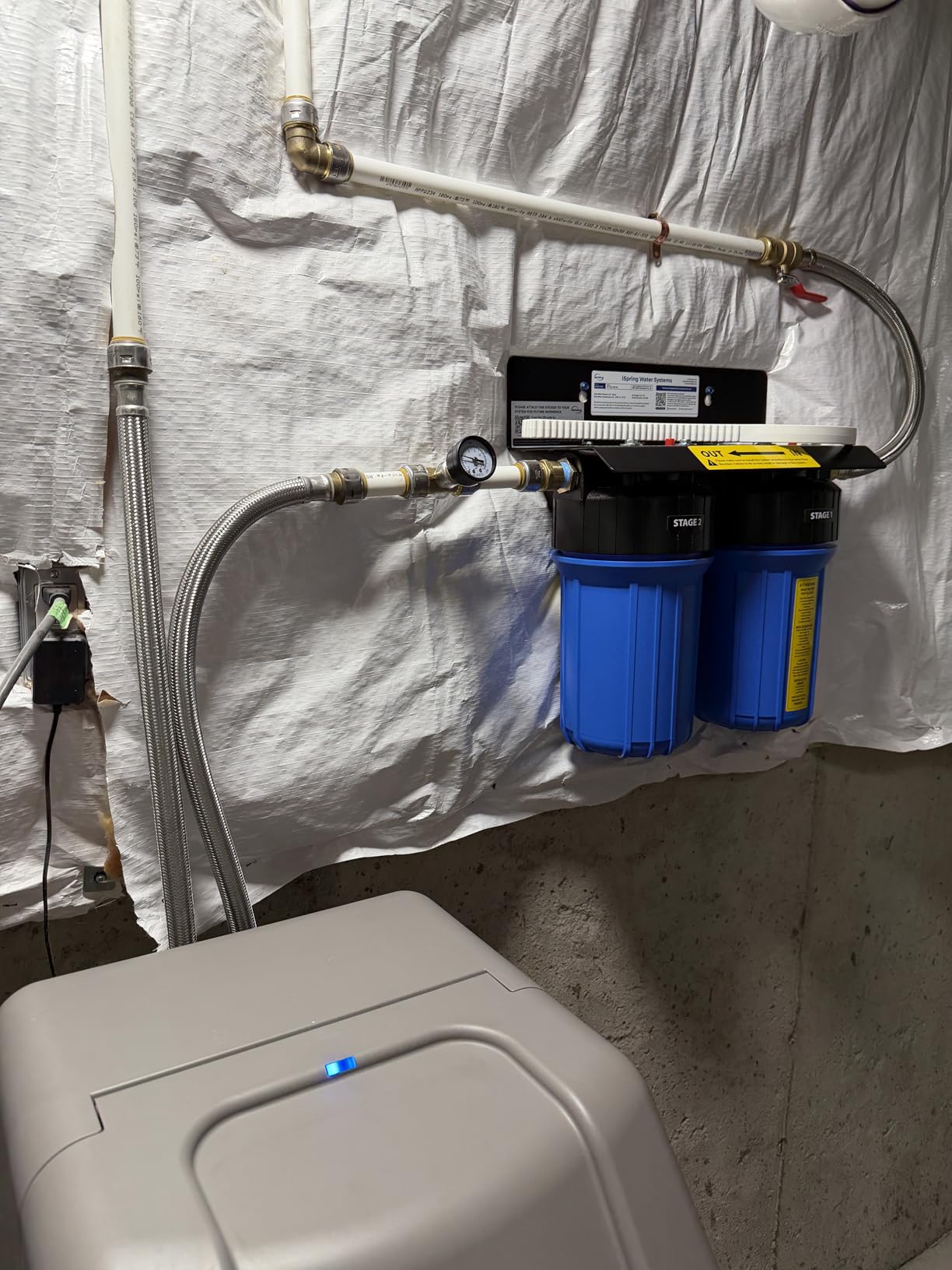
Most utility rooms are not the problem. People run out of wall space next to the water heater, where a 20 inch housing has to clear the tank and the shutoff valve. At 10 inch by 4.5 inches this is one of the few catalytic carbon options here that clears a tight stud bay without cutting a hole in drywall.
It is also the easiest of the three iSpring systems to install yourself. Every part is a standard 1 inch NPT thread, the manual is detailed, and there are video walkthroughs for the bypass orientation.
Who should skip it
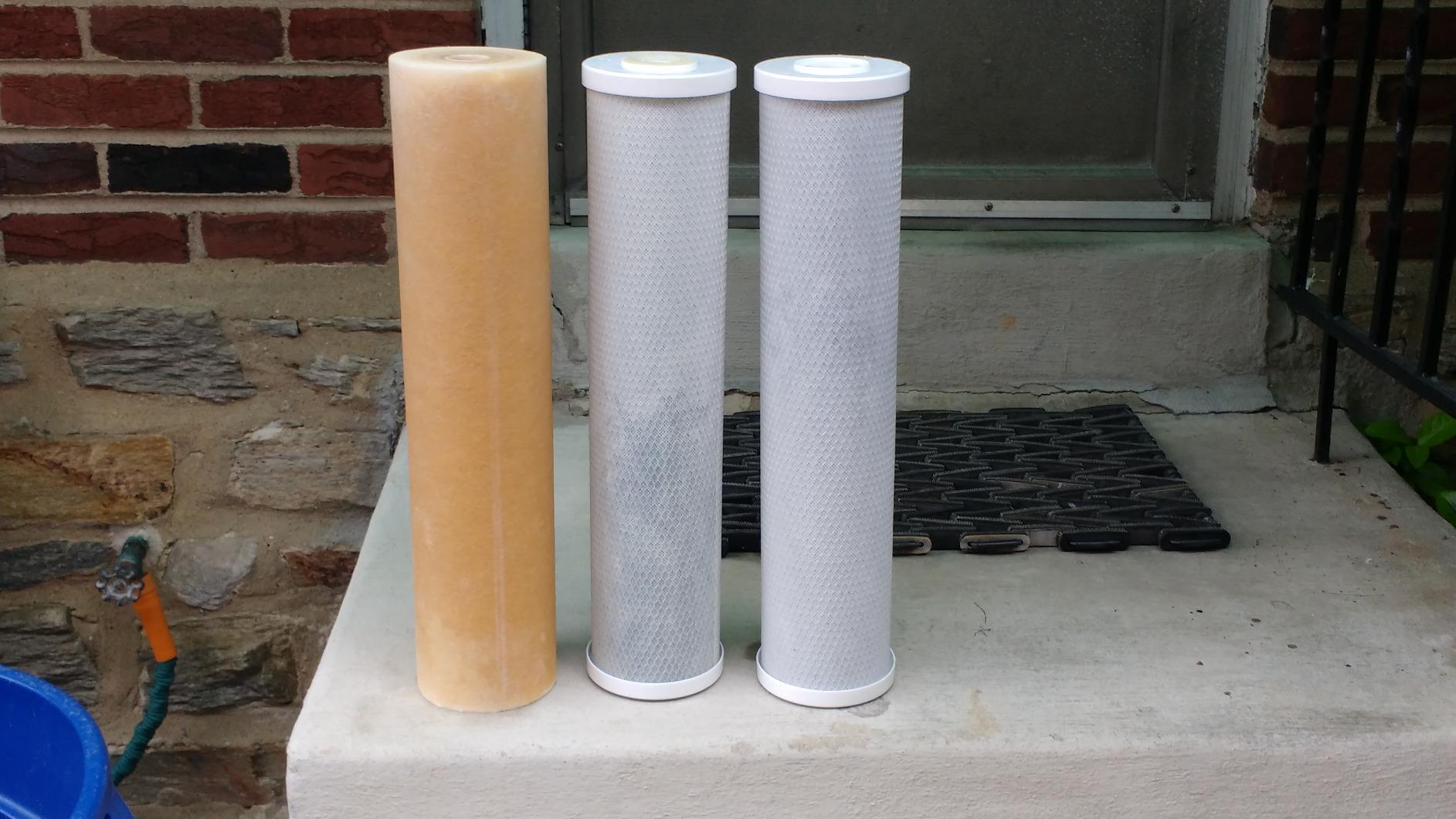
If your utility water is very hard or carries a heavy sediment load, put a dedicated sediment stage ahead of this rather than behind it. Carbon blocks fine particulate as a side effect, and plugging it with grit shortens media life faster than any chemistry will.
If you want a 10 year media life and never touch a filter again, this is the wrong shape of product. It is a cartridge system, and cartridge systems are serviced on a schedule. For that, look at the backwashing tank further down the list.
2. iSpring WGB32B-KSNC – Best Rated Three Stage System
iSpring Chloramine & Heavy Metals Whole House Water Filter System
15 GPM max flow
Rated 100000 gallons
Three 20 in stages
SGS tested to 94.4 percent
Pros
- Highest average rating in the group at 4.7 stars
- 94.4 percent chloramine reduction tested by SGS to NSF/ANSI 42
- Sediment KDF and carbon stages in one manifold
- Support has replaced manifolds and canisters at no charge
- 1 year warranty with lifetime technical support
Cons
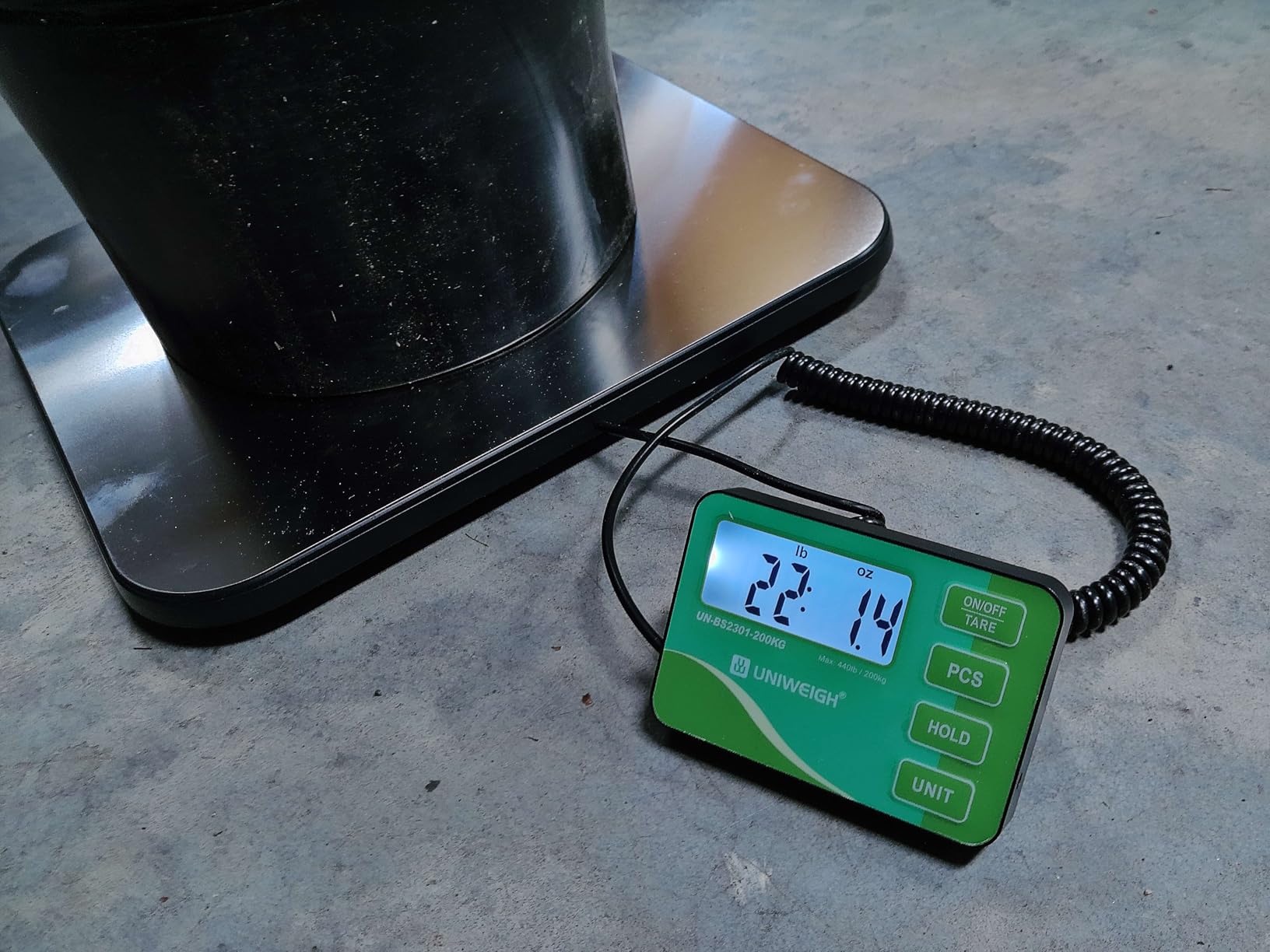
- Heaviest system here at roughly 53 lbs so mounting needs studs or a board
- Plastic inlet and outlet fittings are a recurring drip point
- Canisters are hard to remove without bleeding line pressure first
- Does not reduce TDS
The WGB32B-KSNC carries the highest average rating of the eight systems at 4.7 stars across more than 2200 ratings, with 83 percent five-star feedback. It is the same catalytic carbon chemistry as our top pick in a larger three-stage body.
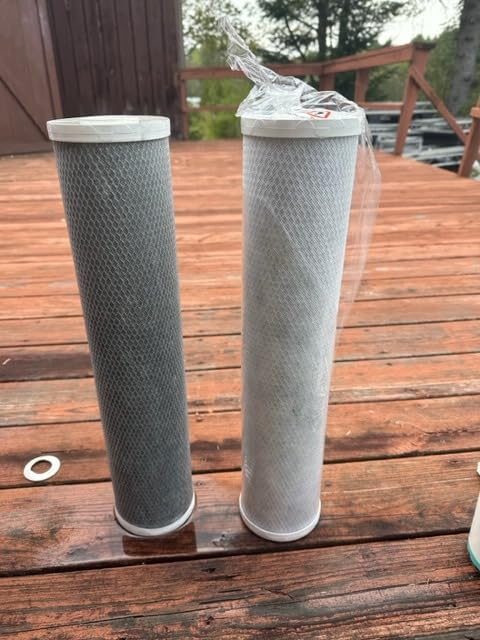
Stage one is a 10 inch polypropylene sediment filter, stage two is a GAC plus KDF element and stage three is the FC25B-NC catalytic carbon block. All three sit on a single manifold, so you are not stacking separate housings on your wall.
Capacity is rated at 100000 gallons or 12 months, depending on which runs out first. That is roughly double the service interval of the compact model, and the 20 inch cartridges hold meaningfully more media than a 10 inch body.
Long-term owners describe support as the standout feature of the purchase. Multiple reviewers report receiving replacement manifolds and canisters at no charge after parts failed, which is unusual in this category and worth factoring into a five year ownership calculation.
What the extra weight actually buys you
At 52.7 lbs the unit is not portable, and that matters at install time. You either lag it into studs, mount a plywood backer board, or call a plumber. Plan for that before the box arrives, because the mounting decision is what turns a 20 minute job into an afternoon.
The payoff is that the three stages are correctly ordered. Sediment goes first, heavy metal media second, chloramine-targeted carbon last, so the carbon is not doing double duty protecting itself from grit.
Who should skip it
If you have very hard water, note that no stage here softens anything. Carbon and KDF leave calcium and magnesium alone, so scale on your glassware and your water heater will be exactly as bad after install as before.
If you are in a rental or condo where main line work is not permitted, a manifold this size is not the way to go. Look at a compact system that fits under a sink, and accept that you are treating one outlet rather than the whole home.
3. iSpring WF1024 – Best Value Stainless Steel System
iSpring Whole House Water Filter System, Reduces Chlorine, Chloramine, Lead, Water Filter Lasts up to 3 Years, Model: WF1024
26 GPM max flow
Rated 65000 gallons
Filter life up to 3 years
KDF plus carbon
Pros
- Highest rated flow in the group at 26 GPM
- Up to 3 year cartridge interval is the longest here
- KDF and coconut shell carbon blend targets chloramine and lead
- No electricity and no drain line required
- Stainless steel housing with quick-fit connectors
Cons
- Only intended for properly disinfected municipal water
- Does not reduce TDS
- 3 year life assumes favorable water quality and shortens in hard or dirty water
- A few owners reported a cracked filter head on arrival
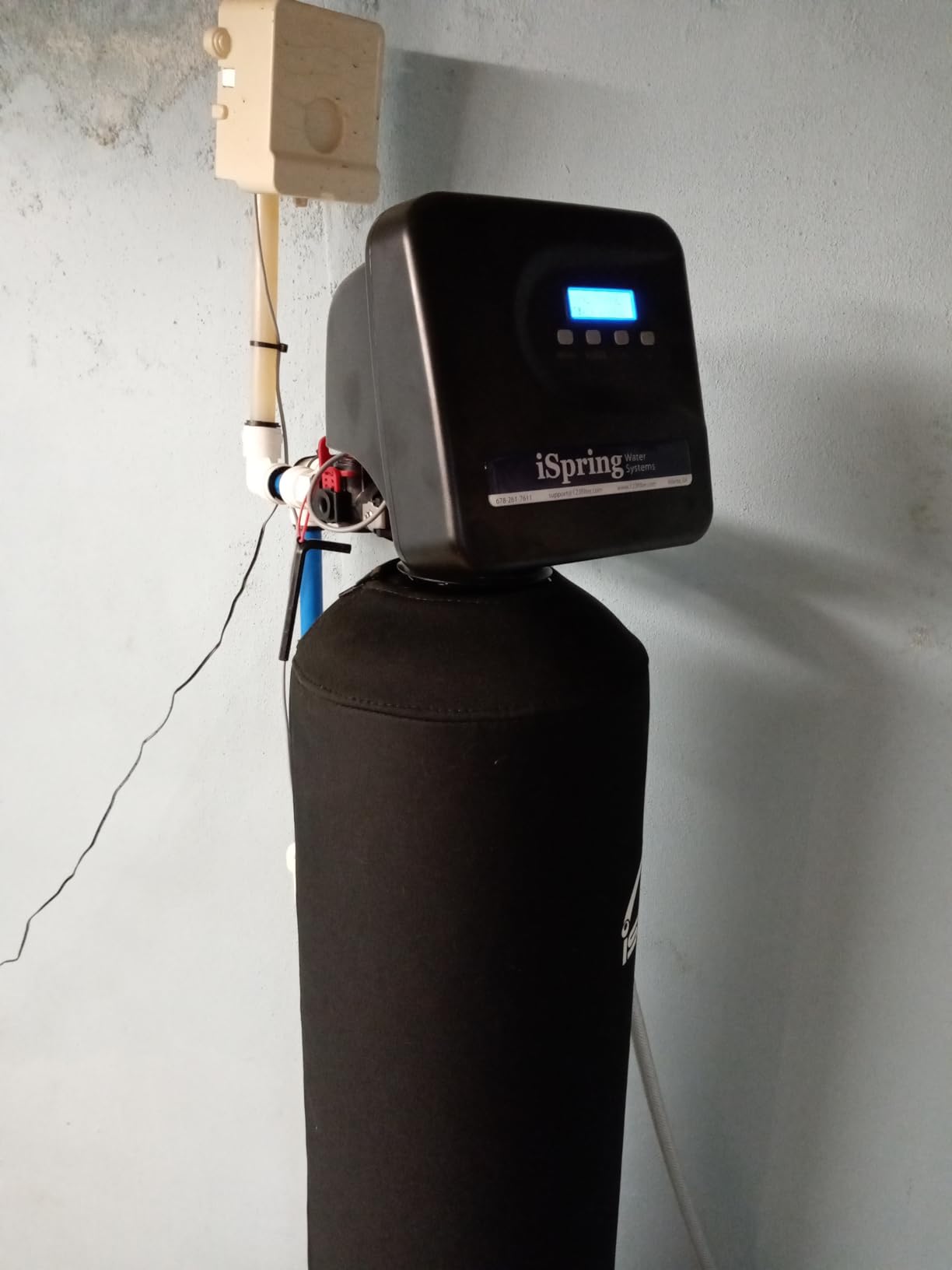
The WF1024 is the flow king in this group at a rated 26 GPM with minimal to zero pressure drop. If you have three or more bathrooms, an outdoor kitchen and a laundry room that all run at once, that rating is the whole argument.
Media is a blend of KDF and coconut shell activated carbon, marketed against chlorine, chloramine, taste, odor and up to 98 percent of water-soluble heavy metals. This is a carbon blend rather than a media sold specifically as catalytic, so read the removal percentages carefully before you commit.
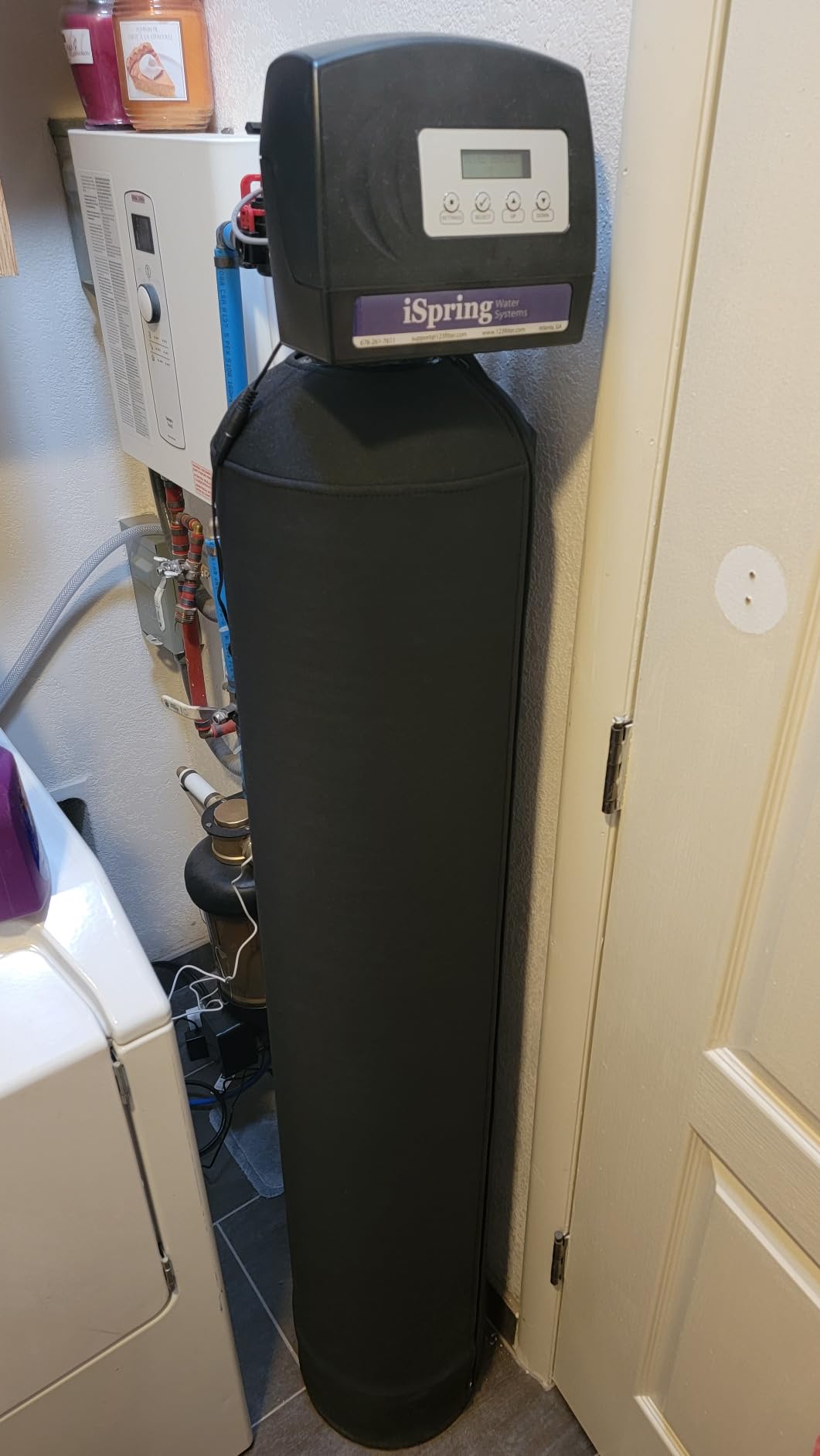
It needs no power supply and no drain hole, which makes it one of the few systems here you can install with a single wrench and a bucket. Quick-fit connectors accept either 3/4 inch or 1 inch copper and the housing is stainless steel rather than reinforced plastic.
Rated life is up to 3 years, the longest cartridge interval on this list, with a 65000 gallon capacity figure. The word up to matters: in hard or sediment-heavy water that interval compresses quickly, and the manufacturer is clear that this unit is for disinfected municipal water, not a well.
When high flow matters more than media chemistry
Pressure drop is the number one complaint that appears in buyer reviews across this whole category, and it is nearly always a sizing problem. A filter rated well above your peak household demand is what keeps your shower pressure intact when two things run at the same time.
The 26 GPM rating gives this model real headroom. It also means that if you live alone in a small apartment, you are paying for capacity you will never draw on.
Who should skip it
If you are on a private well, this is the wrong system by the manufacturer’s own statement. It is built for disinfected municipal water and makes no microbiological claims, so it is not a treatment for untreated surface or well sources.
If your problem is dissolved solids, nitrate or arsenic, no carbon filter on this list will help you. That requires reverse osmosis, and carbon prefiltration in front of it is a reasonable pairing rather than a substitute.
4. LiquaGen Catalytic Carbon and KDF Tank – Best for Low Maintenance
LiquaGen Whole House Water Filtration System — Catalytic Carbon & KDF 55 Media | City Water Filter for Chlorine, Chloramine, PFAS & Sediment Removal (10″ x 54″)
12 GPM max flow
Catalytic carbon and KDF 55 dual media
10 year media life
Pros
- Automatic backwashing removes manual cartridge swaps entirely
- Catalytic carbon and KDF 55 blended for chloramine and PFAS
- FRP tank resists corrosion and handles high pressure
- 1 inch metal bypass valve for service without shutting off water
- Pre-loaded media tank installs in under two hours
Cons
- Backwash cycle needs a suitable drain for discharge water
- Tall tank needs 48 inches of vertical clearance
- Catalytic carbon eventually needs replacing as a separate purchase
- Several reviews describe the Fleck valve rather than the media
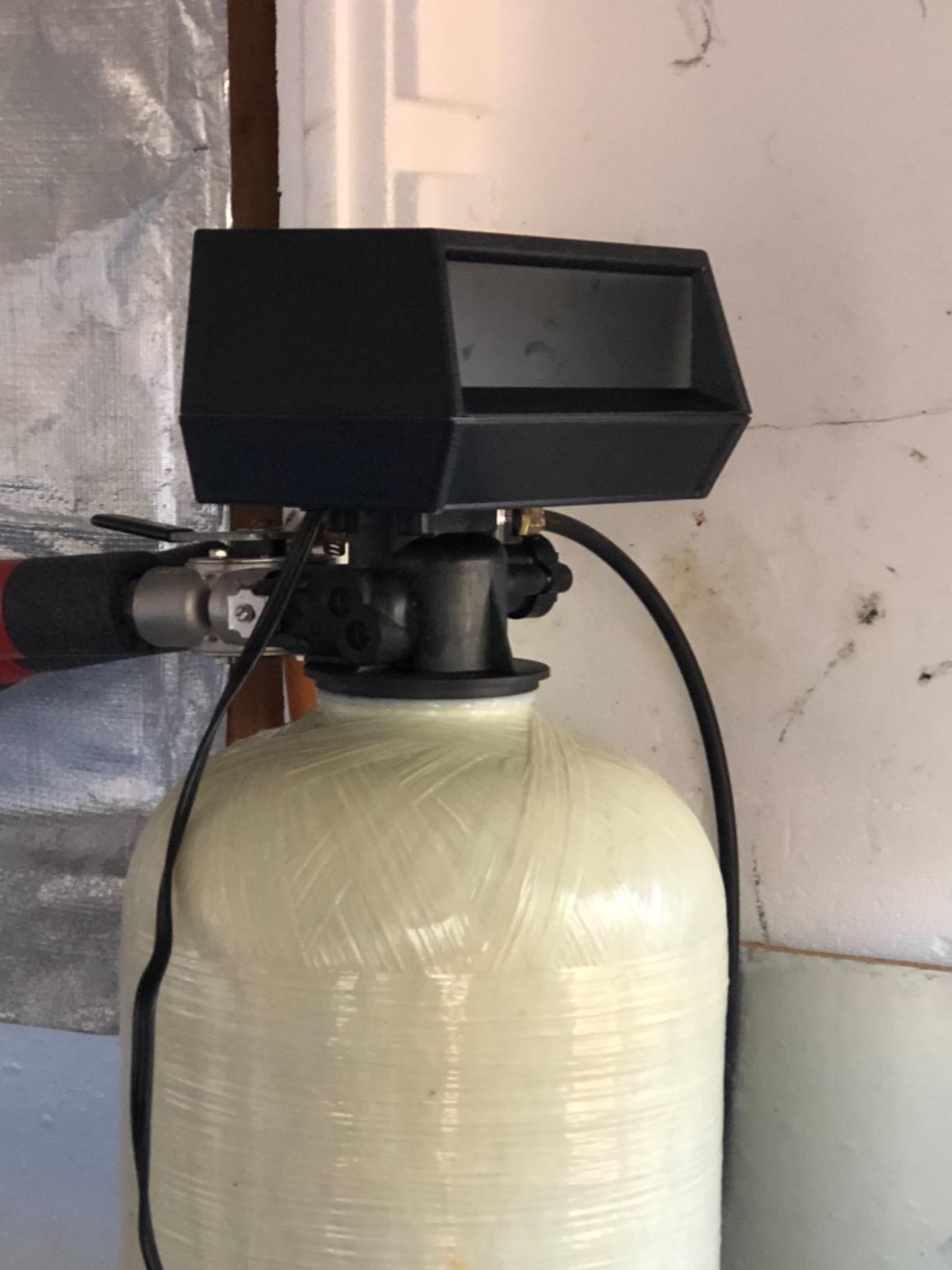
This is the only true backwashing system on the list, and that changes the ownership math. A Fleck 5600 control valve reverses flow through the bed on a schedule, which stops channeling and means you never swap a cartridge by hand.
The media is a dual bed of catalytic carbon and KDF 55, blended for chlorine, chloramine, PFAS, sediment, VOCs, taste and odor. The 10 inch by 54 inch tank is rated at 12 GPM and sized for homes with four to six bathrooms.
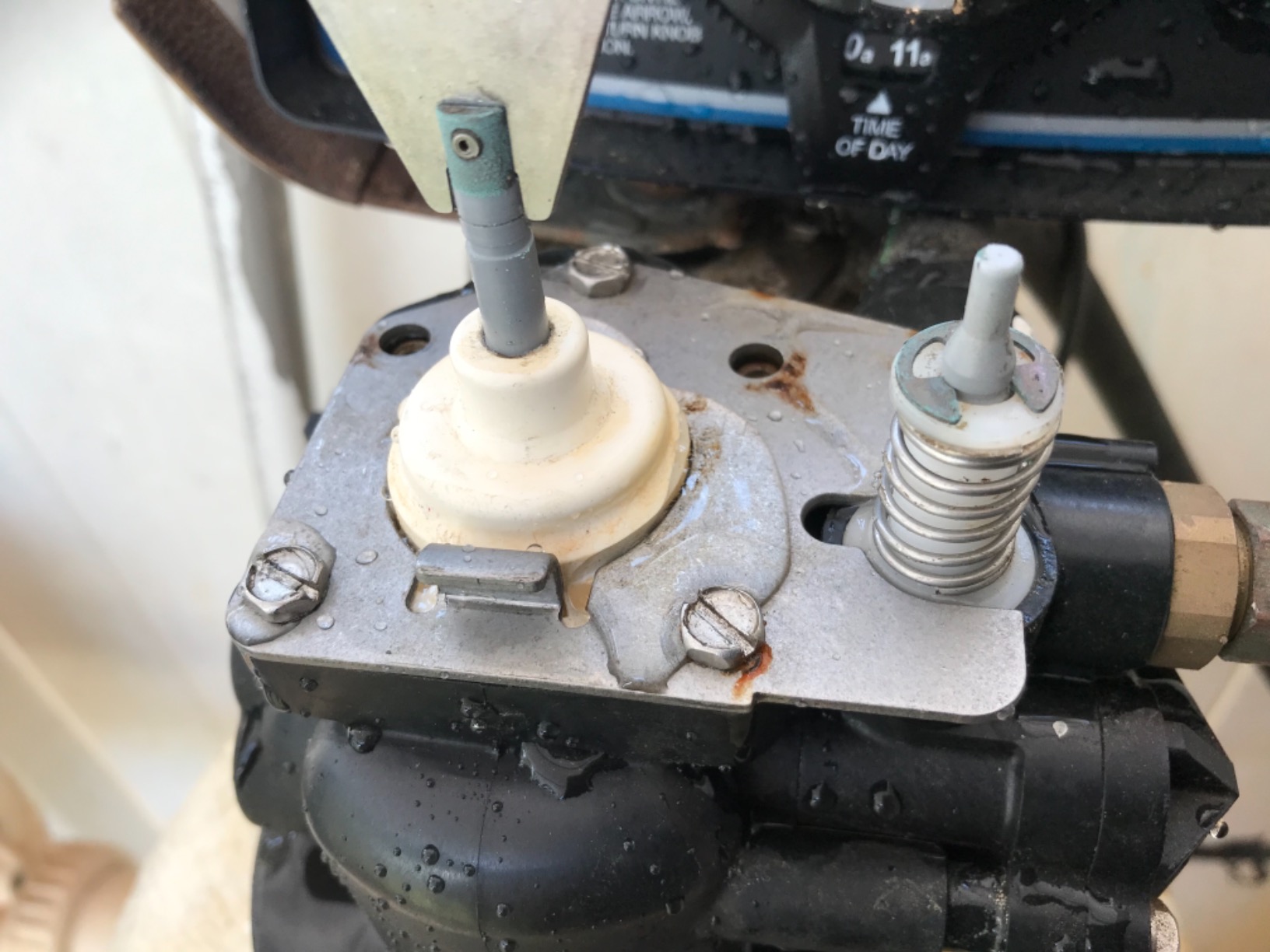
Plumbers on plumbing forums reach for this shape of system for a specific reason, and their consensus is consistent: carbon filters remove chlorine, catalytic carbon removes chloramine, and a backwashing tank is what gives the catalytic media enough contact time to do it. A large catalytic carbon bed is the standard recommendation from working professionals on those boards.
Media life is claimed at 10 years or 1 million gallons with no manual filter changes. The in-box kit includes a pre-loaded media tank, the control valve and a 1 inch metal bypass valve, so the install is mostly plumbing and a drain line.
Contact time is the reason this one works
Chloramine reduction is a slow reaction. Media volume and dwell time matter as much as media type, and that is exactly what an undersized inline cartridge cannot give you. A cubic foot of media in a tall tank gives the water far longer to react than a 15 inch block in a wall manifold.
The Fleck 5600 is also the control valve that water treatment hobbyists recommend by name, because parts and rebuild kits stay available for decades. A proprietary sealed valve is a different kind of long term commitment.
Who should skip it
You need somewhere for the backwash water to go. If your drain layout cannot reach a floor drain, a lawn line or a standpipe without a permit, this system adds real installation cost or rules it out entirely.
It is also the tallest footprint here at 48 inches of vertical clearance. Measure the space before you buy, because an undersized alcove turns a two hour install into a return shipment.
5. Home Master HMF2SmgCC – Best for Sediment Control
Home Master HMF2SmgCC Whole House Water Filter, 4-layer sediment filter 25 to 1 micron, Powerful Up-Flow KDF85 & Catalytic Carbon 10gpm, 1” NPT ports, Patented heavy steel bracket fits 16” wall studs
10 GPM max flow
95000 gallon carbon capacity
25 to 1 micron sediment stage
Pros
- Four gradient sediment stage holds far more grit than a flat element
- KDF85 and catalytic carbon chosen for chloramine reduction
- 1 inch ports hold pressure drop to roughly 3 to 5 psi
- Patented steel bracket fits standard 16 inch studs
- Made in the USA with heavier media than many competitors
Cons
- Lowest rated flow in the group at 10 GPM
- Bulky at 36.4 lbs and needs clear space for the piping loop
- Plastic manifold heads still weep without a metal insert
- Filter changes run wet without a plumber installed bypass
The differentiator here is the sediment stage. Most whole house carbon systems lead with a flat 5 micron element that clogs in a few months on chloraminated city water. This one uses four density gradients graded from 25 down to 1 micron, which buys significantly more dirt-holding capacity.
Behind that sits up-flow KDF85 and catalytic carbon media, rated by the manufacturer to remove up to 95 percent of sediment, chloramine, chlorine, chemicals and heavy metals, with a 95000 gallon capacity on the carbon.
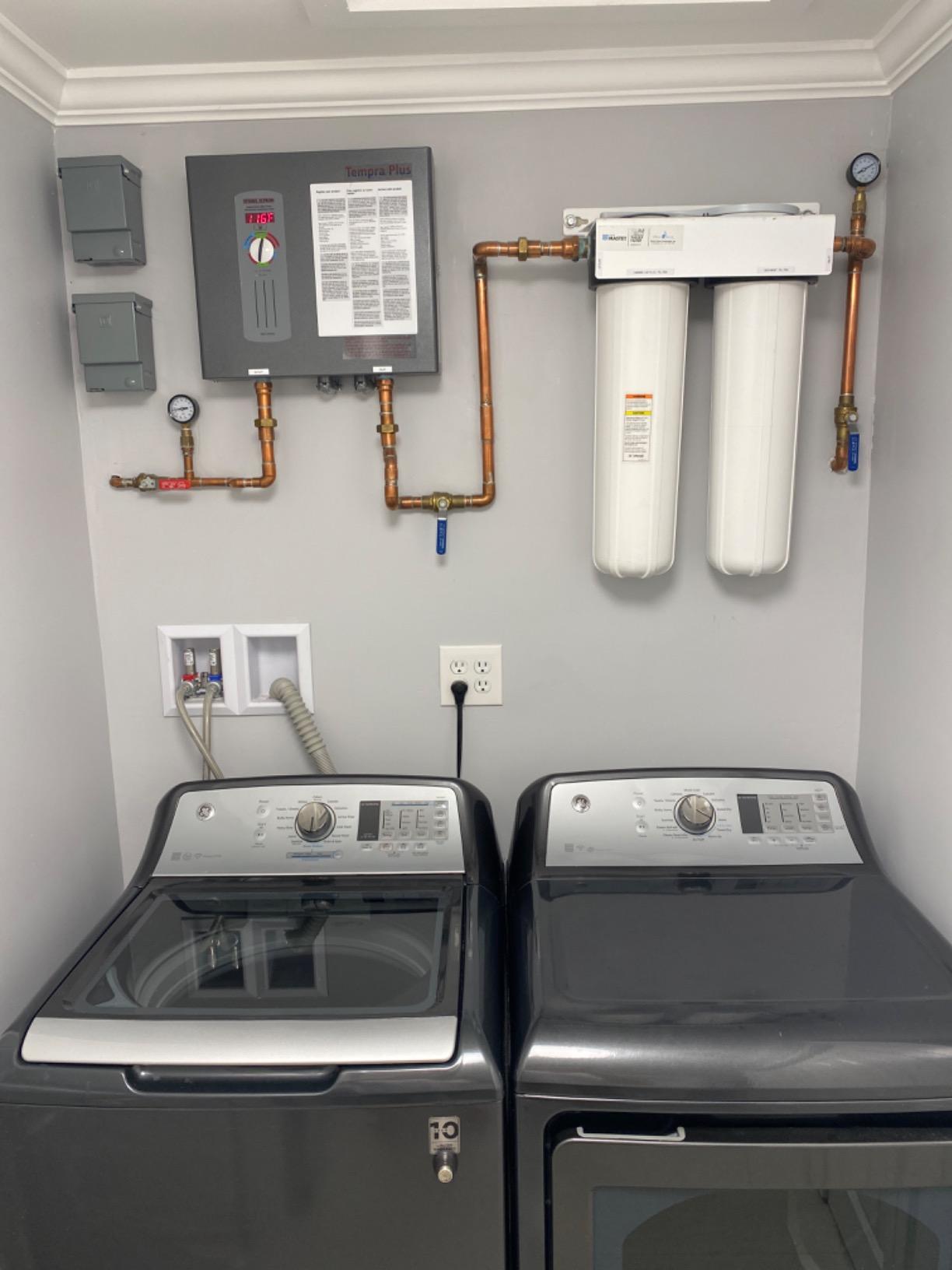
Long-term owners on chloraminated city water report a clear improvement in taste and odor, and they repeatedly single out the sediment stage for catching a surprising volume of grit. That is the right feedback pattern, since the grit protects every stage downstream of it.
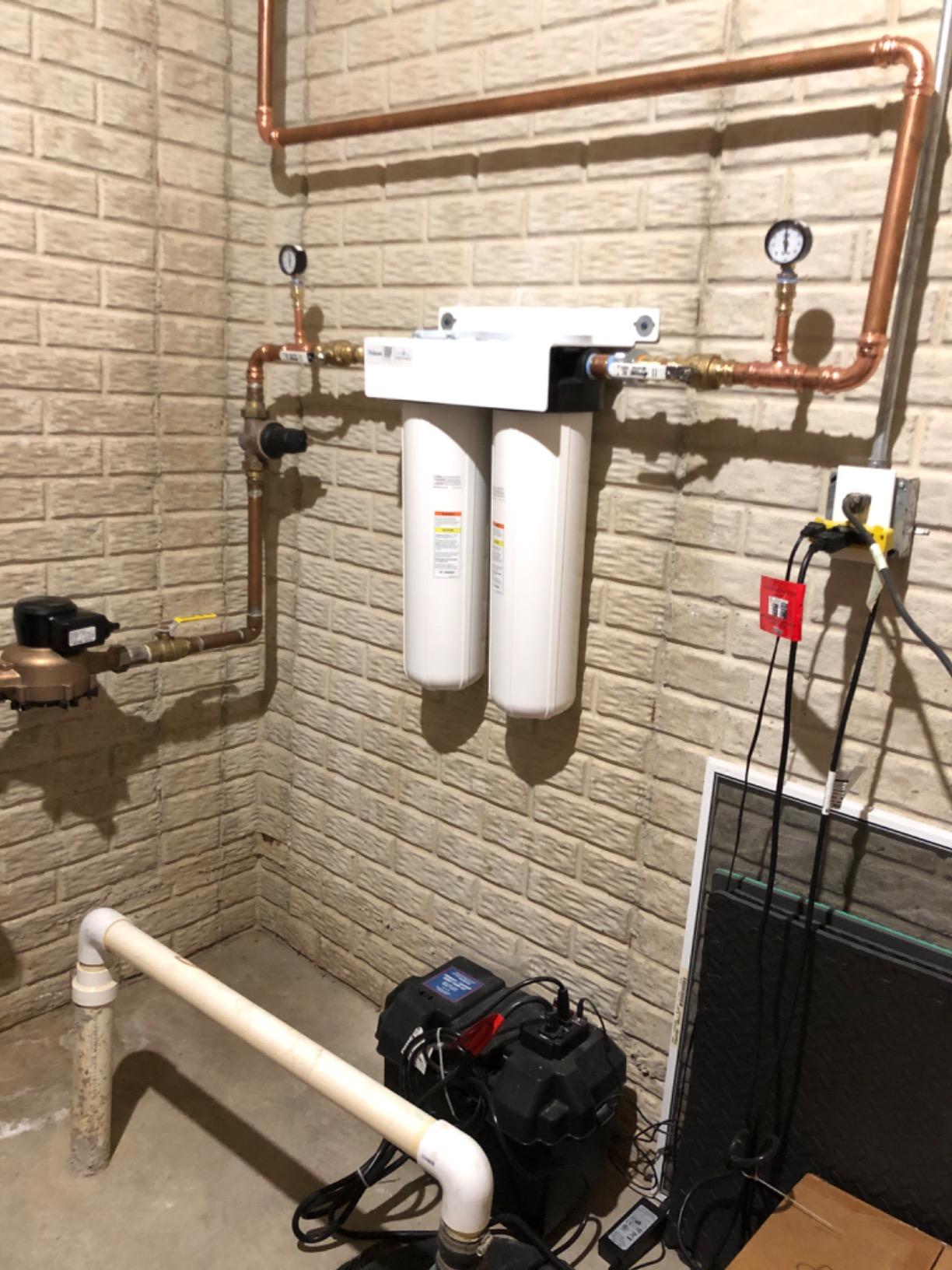
The bracket is a patented heavy gauge steel design sized for standard 16 inch wall studs, which removes the drywall anchor step entirely. Flow is rated at 10 GPM with roughly 3 to 5 psi of pressure drop, and the operating range is 20 to 100 psi.
Why the sediment stage is the real upgrade
On municipal water, a four gradient filter is doing the work that keeps your carbon media from blinding over. If you have ever pulled a spent carbon cartridge apart and found it packed with rust-colored grit, that is the failure this stage prevents.
It also matters for appliances. Capturing sediment ahead of the tank means your dishwasher, ice maker and water heater inlet screens are not the first line of defense for debris that arrives from the main.
Who should skip it
At 10 GPM this is the second-lowest flow rating here, and it is the wrong choice for a house with three or more bathrooms running showers and a laundry load simultaneously. Check your peak demand before you commit.
Filter changes are the other friction point. Reviewers describe the changes as wet and messy unless a plumber installs a proper bypass, so factor in the service cost if you are not confident with a wet cartridge swap.
6. Aquasana EQ-1000 – Best for Ten Year Media Life
Aquasana Whole House Water Filter System | 1M Gal | Carbon & KDF | EQ-1000
1000000 gallon and 10 year rating
14.6 GPM max flow
Carbon and KDF tank media
Pros
- Million gallon and 10 year capacity rating
- No backflushing or draining required for service
- Improved divider valve holds flow with minimal pressure change
- Full professional install kit with brass fittings and supports
- 10 year limited warranty
Cons
- Carbon and KDF media target chlorine rather than being engineered for chloramine
- Pre and post filters still need swapping about every 2 months
- Large 46 in by 44 in footprint needs substantial utility space
- Tank must be pre-charged with a garden hose before install
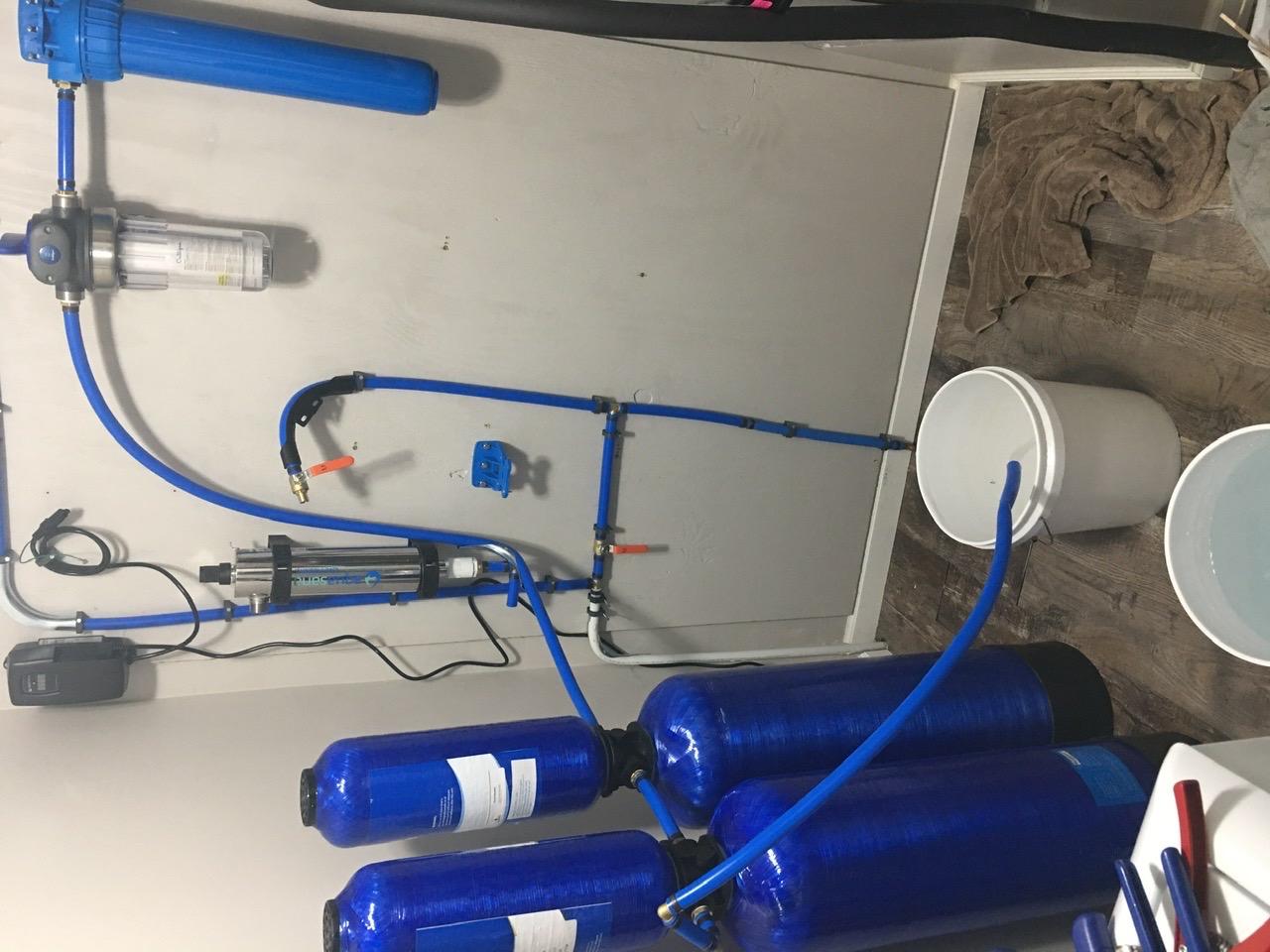
This is one of the two largest capacity systems in the group: a carbon and KDF media tank rated at one million gallons or 10 years, flowing up to 14.6 GPM across a 20 to 100 psi operating range. The kit includes a 20 inch pre-filter, a 10 inch post-filter, brass fittings, bend supports and shut-off valves.
Service is simpler than it looks. There is no backflushing and no draining, and the newly improved divider valve holds flow rate with minimal noticeable pressure change, which addresses the pressure complaint that dominates reviews in this category.
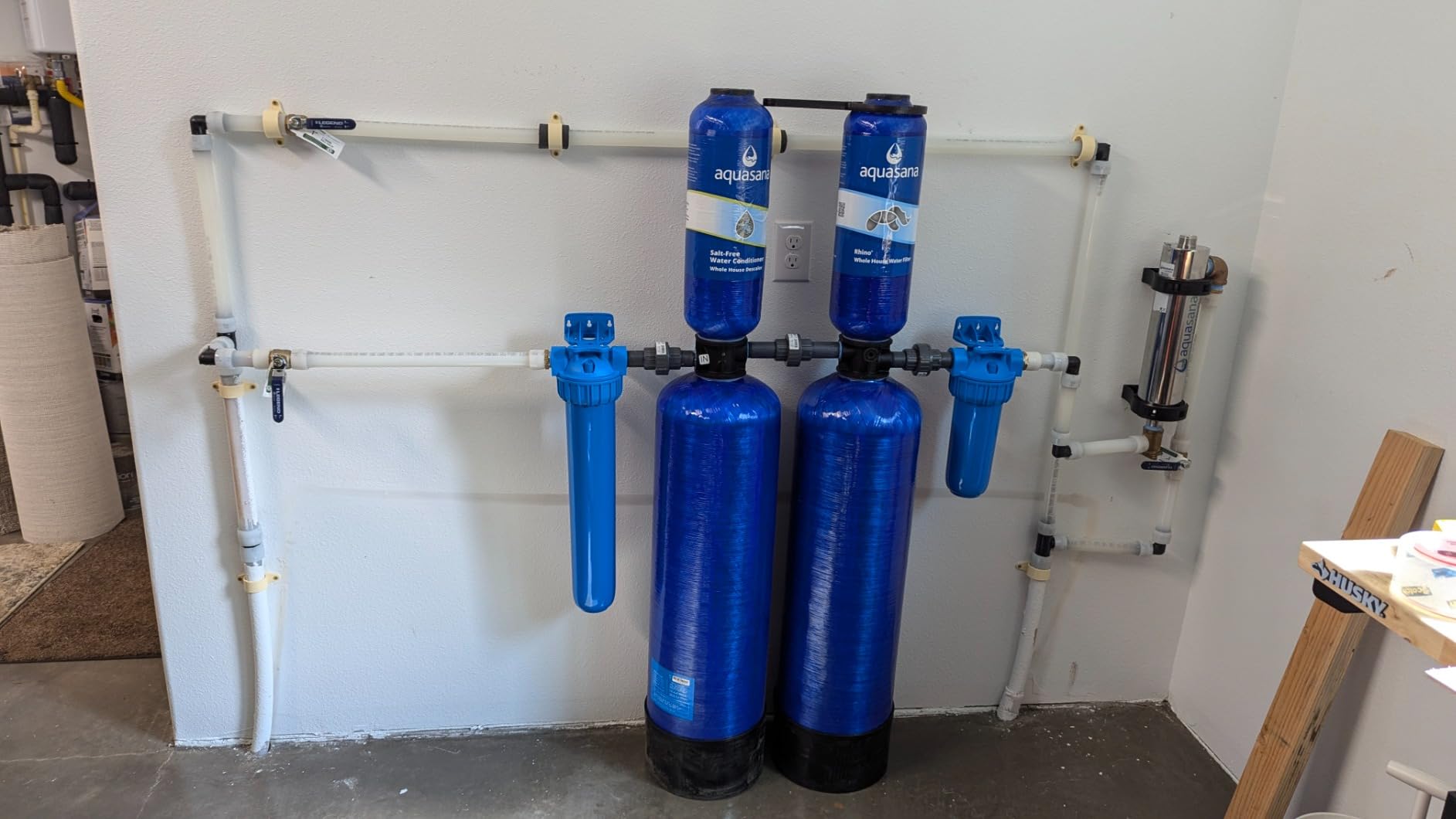
Being straight about the limitation matters here. This media is specified and marketed around chlorine, at 97 percent chlorine reduction under NSF/ANSI Standard 42, rather than being engineered for chloramine. If your utility uses chloramine, you should assume this tank helps with taste and odor and disinfection byproducts but is not the most targeted media on this list.
Reviewers also note that the pre-filter and post-filter still need changing about every 2 months to hold flow rate. That is a much higher service frequency than the 10 year headline suggests, and it is the detail most buyers miss.
When a 10 year media rating actually pays off
Cost of ownership turns on gallons per year. A household on a steady, modest use pattern runs the calendar out long before the gallon ceiling, while a house that runs a large family plus outdoor irrigation pushes the tank toward its gallon rating much faster.
The warranty is 10 year limited and the parts story is strong, which is why this system still makes sense for a chlorine-disinfected municipality where taste and odor, not chloramine, are the complaint.
Who should skip it
If you have confirmed chloramine, this is not the first system I would put on your list, because the media is not built around the chloramine reaction. A catalytic carbon tank is the more honest purchase for that goal.
Check the footprint too. At 46 inches long by 44 inches tall, this is the largest physical unit here and it needs real utility space, plus you have to pre-charge the media tank with a garden hose before the first use.
7. Clean Home 600,000 Gallon Carbon Tank – Best Refillable Tank
Healthy Spring Clean Home Whole House Water Filter System – High-Capacity Carbon Filter for Chlorine & Chloramine Reduction, Up to 600,000 Gallons, Includes Pre-Filter Kit and Replacement Filter
7 GPM max flow
600000 gallon carbon rating
27 micron pre-filter included
Pros
- Large carbon capacity for a non-backwashing system
- Refillable media means the vessel is not thrown away
- Spare replacement filter included in the box
- No bypass valve needed for routine service
- Owners report no measurable pressure loss after a month
Cons
- Lowest flow rate in the group at 7 GPM
- Only 3/4 inch plastic ports
- Couplers adapters and pre-filter seals are not included
- A few units reported leaking at the connections
The Clean Home system uses high capacity catalytic carbon in a fiberglass tank rated at 600000 gallons, with a 20 inch 27 micron sediment pre-filter included in the box and a spare carbon filter shipped alongside it. That means there is no immediate reorder cost after the first six months.
The refillable design is the part we like most. When the media is spent you replace the carbon, not the whole vessel, which keeps the long term cost of ownership far below throwaway tank systems.
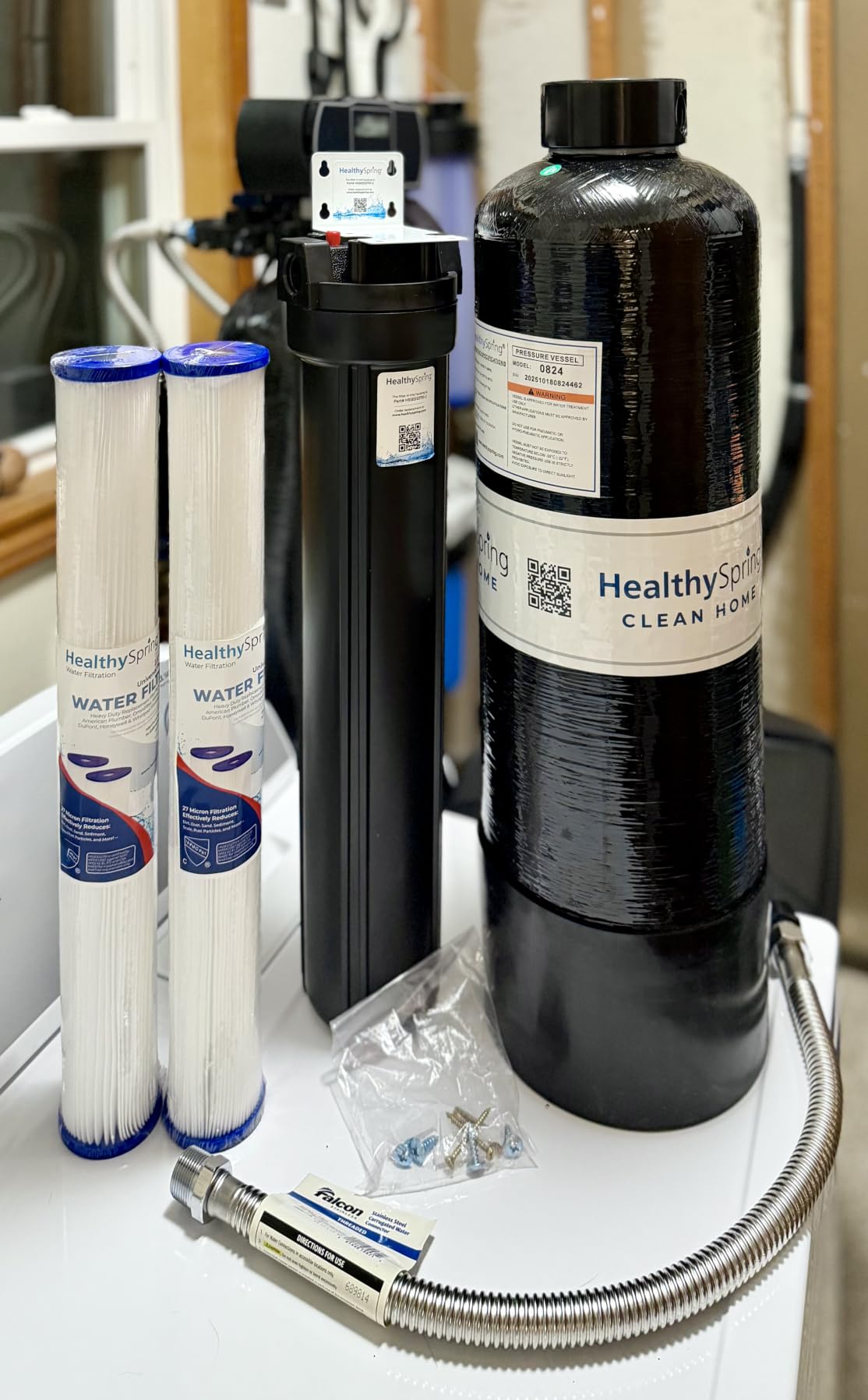
Owners report the chlorine taste and pool-water smell disappearing at every tap within days, with steady pressure and flow after a month of use. The system sits in the same class as the Pentair PC600 and PC1000 and Aquasana Rhino EQ-600 and EQ-1000 tanks that most plumbers specify by name.
The 7 GPM rating is the limiting number here. That is comfortably above a single-family home’s average use but it is not much headroom, and 3/4 inch plastic ports are the part of the install most buyers would change if they could.
How a refillable tank compares over five years
Compare the media math directly. A disposable tank is a repurchase of the entire pressure vessel each cycle, while a refillable vessel pays for media only. Over a five year horizon on chloraminated water, that difference shows up every single year after the first.
The included spare filter also shifts your first service visit. Instead of ordering three cartridges and waiting on delivery, you have what you need on day one.
Who should skip it
If you have more than two bathrooms, 7 GPM is the number that should stop you. Sizing to peak demand rather than average use is the difference between a system you never notice and one that shows up in your shower pressure.
Plan the install hardware yourself. Couplers, adapters and the manual and silicone seals for the pre-filter housing are not in the box, and a small number of buyers reported units leaking at the connections before they were even plumbed in.
8. SimPure DB20P-3 – Best for Watching Cartridge Wear
SimPure Whole House Water Filter System, 3 Stages Clear 20″ x 4.5″KDF
150000 gallon rated capacity
Clear DB20C housings
MPP, GAC and CTO stages
Pros
- Clear housings show cartridge wear without disassembly
- Brass fittings with 2x2 O-rings seal better than bare plastic threads
- Three stages cover sediment
- chlorine and residual taste and odor
- Works with any standard 20 in x 4.5 in cartridge
- Protects plumbing and appliances from sediment and rust
Cons
- Media is GAC and CTO blocks aimed at chlorine with no catalytic carbon stage
- Carbon cartridge life is roughly 3 to 6 months
- Heavy build at 48 lbs makes it awkward to handle solo
- Manufacturer lists an unusually low maximum TDS of 50 ppm
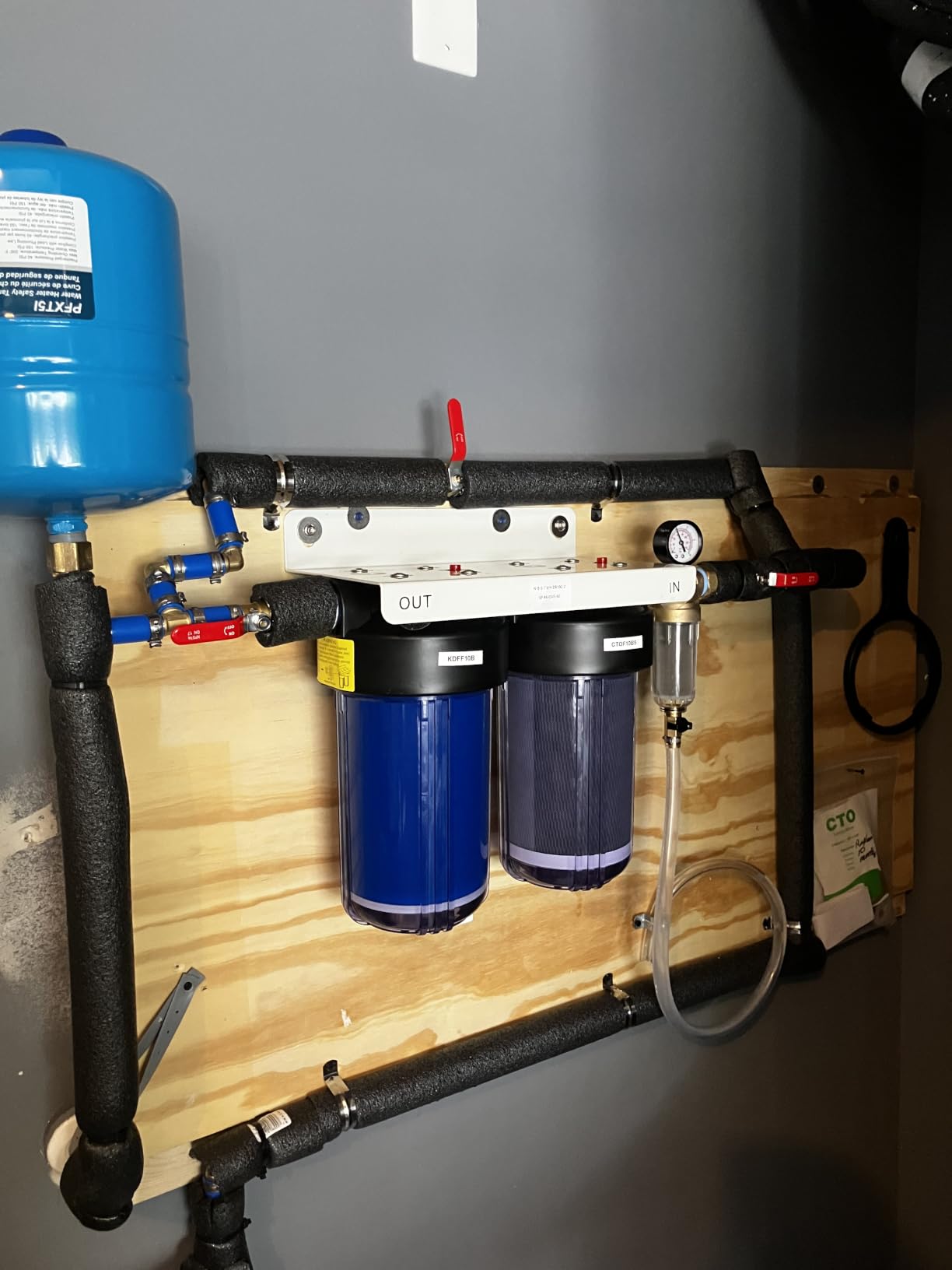
The SimPure is the only system here where you can see what you are buying. Two clear DB20C housings let you look at the cartridges directly and judge wear without taking anything apart, which removes the guesswork from replacement timing.
Filtration is three stages: MPP sediment, GAC for chlorine taste and color, and a CTO block for residual taste, odor and carbon fines. It operates between 25 and 90 psi with 1 inch NPT brass connections and 2×2 O-rings.
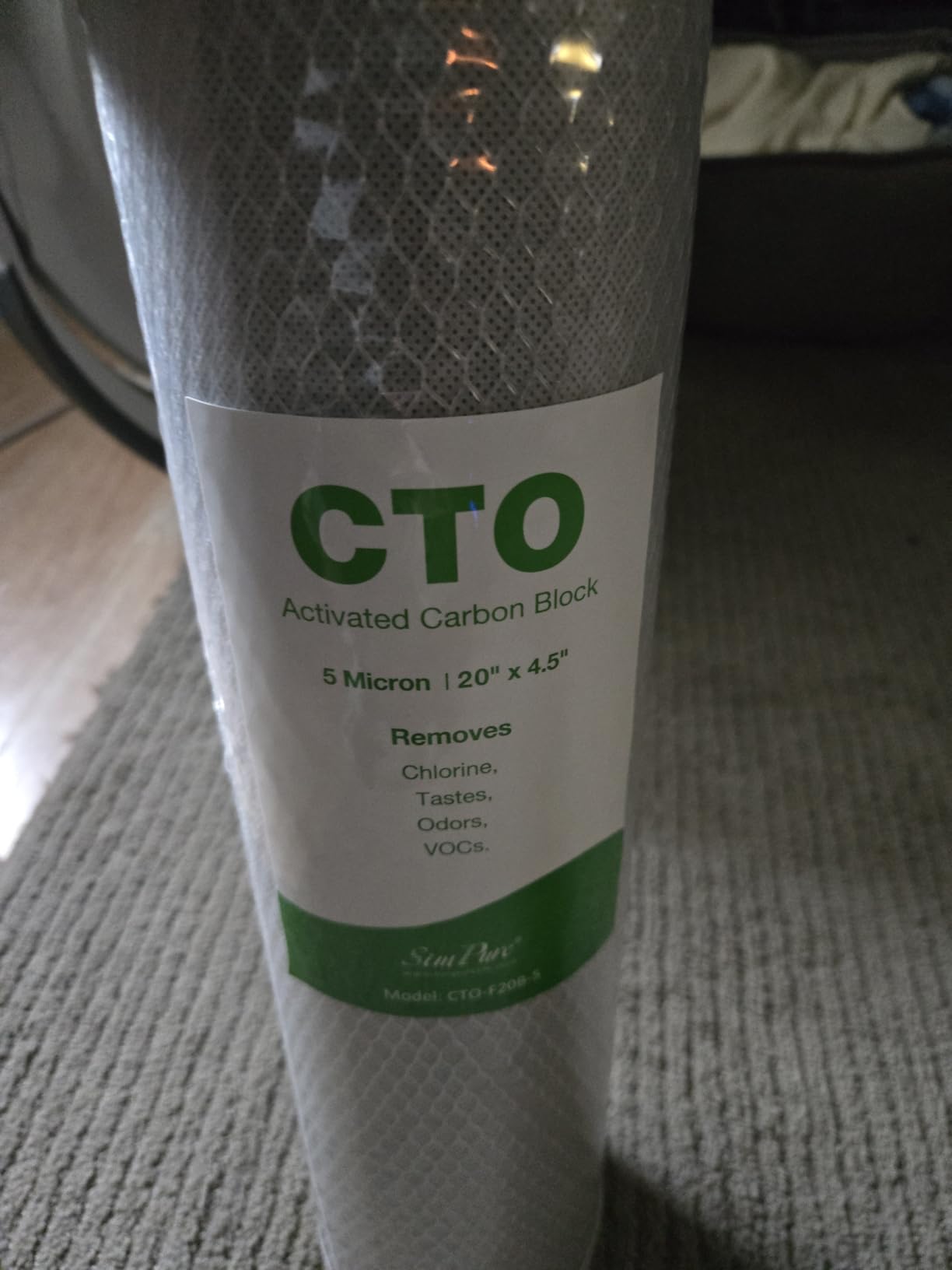
Buyers praise the brass fittings and the transparent housings, and report noticeably better clarity and taste after install. The cartridge format is standard 20 inch by 4.5 inch, so replacement media is easy to source anywhere that sells filter cartridges.
The honest caveat is the media itself. These are standard GAC and carbon block stages aimed at chlorine, with no catalytic carbon stage purpose-built for chloramine, so the capacity figure of 150000 gallons describes a system that is not solving the specific problem on this page.
Why visible housings beat a calendar schedule
Manufacturers give replacement intervals in months, but actual media life depends on your water. Being able to look at a clear housing tells you whether the carbon is still working or simply past its date, which is a real advantage on a chlorine-driven system.
The 2×2 O-ring and brass fittings combination also solves the leak problem that reviewers complain about most often on plastic-thread manifolds, and those fittings are the part most likely to be done wrong on a first install.
Who should skip it
If your utility uses chloramine, look elsewhere. Standard activated carbon and CTO block media are the wrong mechanism for that bond, and no capacity rating compensates for the wrong chemistry.
Also check your water’s TDS before ordering. The manufacturer lists a maximum of 50 ppm, which is far below what most municipal supplies run, and that is an unusually restrictive figure for a filter in this class.
How to Choose a Whole House Chloramine Filter
Confirm your disinfectant before you buy anything
Start with three steps. First, pull your utility’s annual Consumer Confidence Report, which is a public document and states which disinfectants are in use. Second, read the disinfectant field and look specifically for chloramine or combined chlorine rather than free chlorine. Third, run a total chlorine test strip on cold tap water and compare the reading against a free chlorine reading to isolate the combined portion.
If the CCR lists chloramine, every product on this list is a candidate. If it does not, a standard carbon whole house filter is cheaper and simpler for taste and odor alone.
Pick the media that matches the contaminant
Catalytic carbon breaks the chlorine-ammonia bond chemically, then adsorbs the released ammonia, which is why it is the only carbon media that reliably handles chloramine. KDF-55 and KDF-85 are iron-based media valued mainly for heavy metal reduction, and on water treatment forums KDF is consistently described as a bonus rather than the primary chloramine mechanism. Carbon block and standard GAC handle chlorine taste and odor, and do not reliably handle chloramine.
Boiling and letting water sit does not fix chloramine the way it works for free chlorine. Time only removes what boils off, and chloramine does not. Reverse osmosis does reject chloramine, but it is a point-of-use technology that strips minerals and sends a reject stream to the drain.
Read the certification, not the marketing word NSF
NSF/ANSI 42 is a taste and odor and particulate standard, which is what covers the SGS chloramine testing cited on several systems here. NSF/ANSI 53 is the health-related contaminant standard for things like lead and mercury. NSF/ANSI 401 covers emerging contaminants, which is the standard that matters for PFAS claims. A bare NSF badge tells you nothing, so look for the numbered standard that covers the specific claim the product makes.
Some manufacturers in this category also publish CSA B483.1 or WQA certification, and an honest product will tell you plainly when complete-system certification is not claimed. Our [whole house water filter buying guide](https://modelrec.com/best-whole-house-water-filters/) walks through how to read those documents.
Size on peak flow, not average flow
Count the fixtures that can run at once, add margin, and match that number to the rated GPM. A two-bathroom home typically lives in the 5 to 10 GPM band during peak use, while three or more bathrooms plus a laundry load and an outdoor kitchen can push you past 15 GPM.
Household fixtures are not the only draw on that line, either. A [whole house humidifier](https://modelrec.com/best-whole-house-humidifiers/) adds a steady fill rate every winter, and if you plan to keep essential circuits powered through an outage with a [whole house generator](https://modelrec.com/best-whole-house-generators/), count its demand too before you pick a flow rating.
Pressure drop of 3 to 5 psi across a properly sized system is normal. More than that, and especially a noticeable drop every time two fixtures run at once, means the unit is undersized. Every one of the systems in this roundup lists its flow rating, and we have put the numbers in the comparison table so you can check before you buy.
Frequently Asked Questions
What is the best water filter for removing chloramine?
For whole house coverage, the iSpring WGB21B-KSNC is our top pick because it pairs an SGS-tested catalytic carbon block with a 15 GPM rating in a compact housing. The rule behind that pick is simple: catalytic carbon or reverse osmosis. Ordinary activated carbon adsorbs chloramine too slowly to keep up with municipal flow rates.
Will a carbon block filter remove chloramine?
Only catalytic carbon reliably does. A standard carbon block targets free chlorine, which is adsorbed quickly, while the chlorine-ammonia bond in chloramine is far more chemically stable and reacts too slowly. The iSpring systems on this list use carbon blocks sold specifically as catalytic for that reason, and the SimPure uses standard GAC and CTO blocks that are not.
Does reverse osmosis get rid of chloramine?
Yes. The membrane rejects chloramine effectively, and an RO membrane also removes dissolved solids, nitrate and metals that no carbon filter touches. The trade-offs are that RO is a point-of-use technology, so it treats one outlet rather than the whole home, it sends a reject stream to the drain, and it strips minerals from the water.
How do I know if my water has chloramine or chlorine?
Read the disinfectant section of your utility’s annual Consumer Confidence Report, which lists chloramine or combined chlorine when it is in use. Then confirm at the tap with a total chlorine test strip, and run a free chlorine strip for comparison. The difference between the two readings is your combined chlorine, which is the chloramine.
How much water pressure drop is normal for a whole house filter?
Three to five psi across a properly sized system is normal, and the Home Master HMF2SmgCC is rated in that range at 10 GPM. A noticeable loss every time two fixtures run at once means the unit is undersized, which is the single most common complaint in reviews across this category. Match the filter to your peak demand rather than your average use.
What are the disadvantages of a KDF filter?
KDF media is iron-based and its main job is reducing heavy metals such as lead, mercury and iron rather than chloramine, so on chloraminated water it works alongside catalytic carbon rather than replacing it. It also adds pressure drop, does not reduce dissolved solids, and needs eventual replacement on the same schedule as the rest of the media bed.
Final Verdict for 2026
For most homes on chloraminated municipal water, the best whole house water filter for chloramine is the iSpring WGB21B-KSNC. It has the right media, the right flow rating, the smallest footprint on the list and the deepest review base of anything we tested.
If you want more capacity and a longer service interval, step up to the iSpring WGB32B-KSNC. If you would rather never touch a cartridge again, the LiquaGen backwashing catalytic carbon tank is the honest long-term answer. Check your Consumer Confidence Report first, buy for peak flow, and make sure the certification standard you are shown actually covers chloramine.