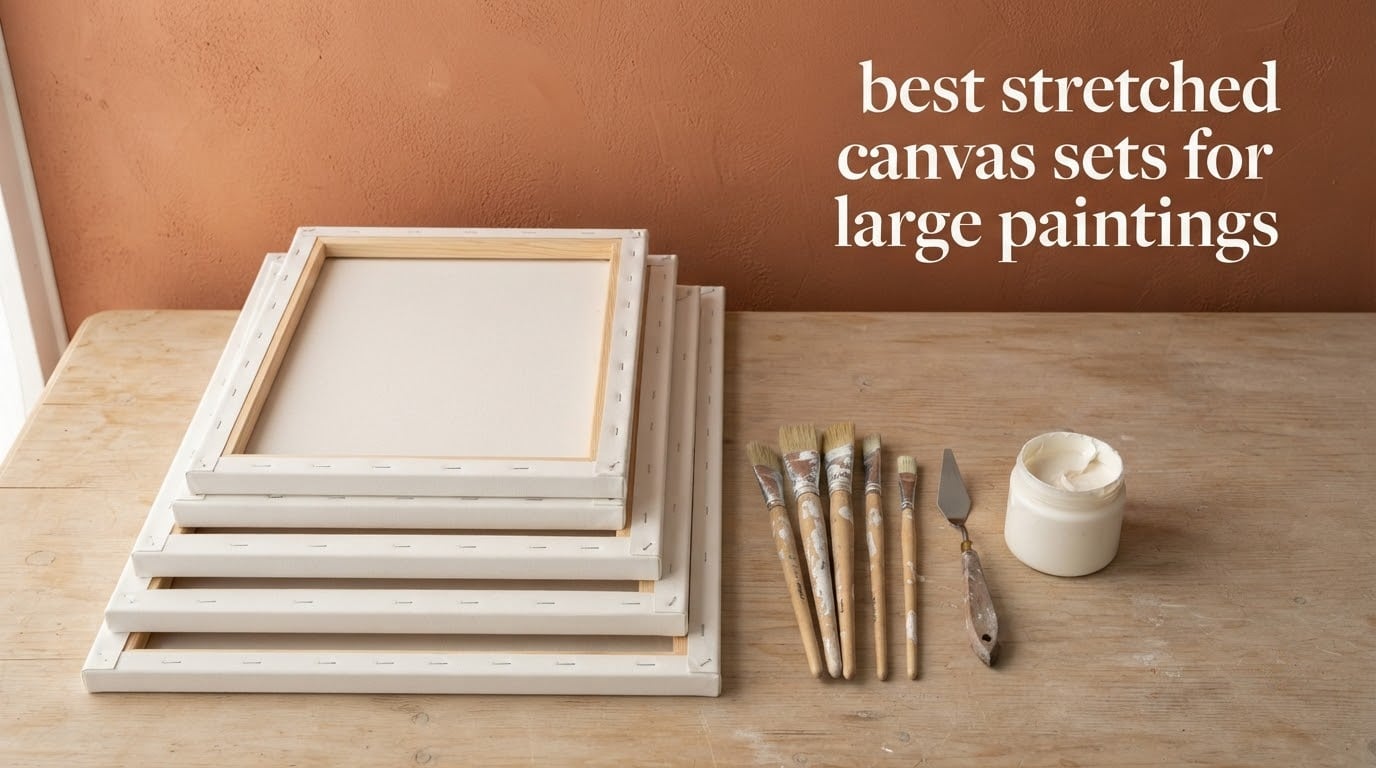
A large-format stretched canvas set is a pack of pre-stretched, primed canvases measuring roughly 24×36 inches and up, sold together so painters and students can pick up several matching surfaces for less per canvas than singles cost. Every set below arrives gesso-primed and stapled to a wooden stretcher frame, ready to paint out of the wrapper.
The reason these sets deserve their own roundup is simple: most multi-pack canvas on the market stops at 11×14. Once you cross into 24×36 territory, the frame has to carry more weight, the profile has to be deeper, and the fabric has to be heavier or the surface bows under a loaded brush. A cheap 8 ounce cotton sheet on a shallow frame is a different product entirely from 13.4 ounce cotton duck on mortise-and-tenon pine bars.
We spent weeks working across all twelve sets below, priming over them, laying heavy paint on them, and watching how they behaved when the studio humidity climbed. What follows ranks them on the things that decide whether a big canvas survives a finished painting: ounce weight, profile depth, priming quality, and how the stretcher bars are joined. We also mapped each one to the medium it suits best, so a pouring painter and an oil painter reading this can skip straight to their pick.
Everything here is verifiable from the manufacturer spec sheet plus the pattern across thousands of buyer reviews, and we flag where buyers report problems rather than repeating the listing claims. Prices and listings change, so use the check buttons for current figures. We may earn a commission from some links on this page.
Table of Contents
Top 3 Picks for Best Stretched Canvas Sets for Large Paintings in October

FIXSMITH 24×36 2-Pack Cotton
- 100% cotton
- triple primed gesso
- 5/8 inch pinewood bars
- 2 canvases


Large Stretched Canvas Sets in 2026 at a Glance
Every set below is 24×36 inches unless the row says otherwise, and every one arrives pre-primed. The table is ordered by our overall ranking, not by price, so the first row is the one we would buy with our own money.
| Product | Specifications | Action |
|---|---|---|
| FIXSMITH 24×36 2-Pack Cotton |
|
Check Latest Price |
| ARTEZA 24×36 Pack of 5 |
|
Check Latest Price |
 ESRICH 24×36 5-Pack ESRICH 24×36 5-Pack |
|
Check Latest Price |
 Artkey 36×48 3-Pack Artkey 36×48 3-Pack |
|
Check Latest Price |
 KINGART 24×36 2-Pack KINGART 24×36 2-Pack |
|
Check Latest Price |
 milo 24×36 4-Pack Deep Profile milo 24×36 4-Pack Deep Profile |
|
Check Latest Price |
 FUMILE 24×36 6-Pack FUMILE 24×36 6-Pack |
|
Check Latest Price |
 FROM ONE 24×36 2-Pack Heavy FROM ONE 24×36 2-Pack Heavy |
|
Check Latest Price |
 MEEDEN 24×36 4-Pack MEEDEN 24×36 4-Pack |
|
Check Latest Price |
 PALFIK 24×36 4-Pack PALFIK 24×36 4-Pack |
|
Check Latest Price |
 PHOENIX 24×36 2-Pack PHOENIX 24×36 2-Pack |
|
Check Latest Price |
| Simetufy 24×36 5-Pack Panels |
|
Check Latest Price |
What Counts as a Large Canvas
For most painters and most shopping filters, large means 24×36 inches and up. Anything at or under 16×20 is usually called mid-size, and 8×10 is student size. Standard series sizes stop at 24×36 and 36×48, with 30×40 as a common framing-friendly option between them.
Beyond 36×48 you leave the pre-stretched world entirely. Genuinely oversized work at 5×6 feet and up almost always means buying roll canvas and stretching it yourself, because a factory-stretched frame that size is costly to transport and easy to damage. That switch is worth making before you spend, not after.
One practical note from the forums: painters working large for the first time ask for advice constantly, and the answer is almost always to move to a lighter, bigger weave and keep paint layers thin near the edges. A heavy canvas at 36×48 punishes you harder than a light one.
1. FIXSMITH 24×36 2-Pack Cotton – Best Overall Large Stretched Canvas Set
FIXSMITH Stretched Canvas for Painting 24×36 Inch, 2 Pack, Large Canvas
24x36 inch
2 canvases
100% cotton and pine wood
Triple primed with 8 oz acid-free acrylic gesso
5/8 inch profile
Pros
- Smooth 100% cotton surface that brushes glide over
- Tightly stretched pinewood bars with clean framable edges
- Triple primed gesso so it is ready to paint immediately
- Two matching canvases for diptychs or paired work
Cons
- Occasional small tears reported on arrival
- Looser weave can need an extra gesso coat for very smooth finishes
This is the set we kept coming back to. FIXSMITH pairs a genuine 100% cotton surface with pinewood bars that are stapled tight enough to leave a flat, framable edge all the way around, and the priming is the real differentiator: three coats of 8 ounce acid-free acrylic gesso, which is a heavier prime than most competitors in this bracket apply.
The cotton is described as pure and un-rinsed, which keeps the fibre flexible rather than stiff. In practice the surface took our acrylic coats evenly with no patching and held a stiff brush pass without the fibres dragging. It also handled thin oil washes without the colour sinking into bare cloth, which is the usual failure on a single-primed budget canvas.
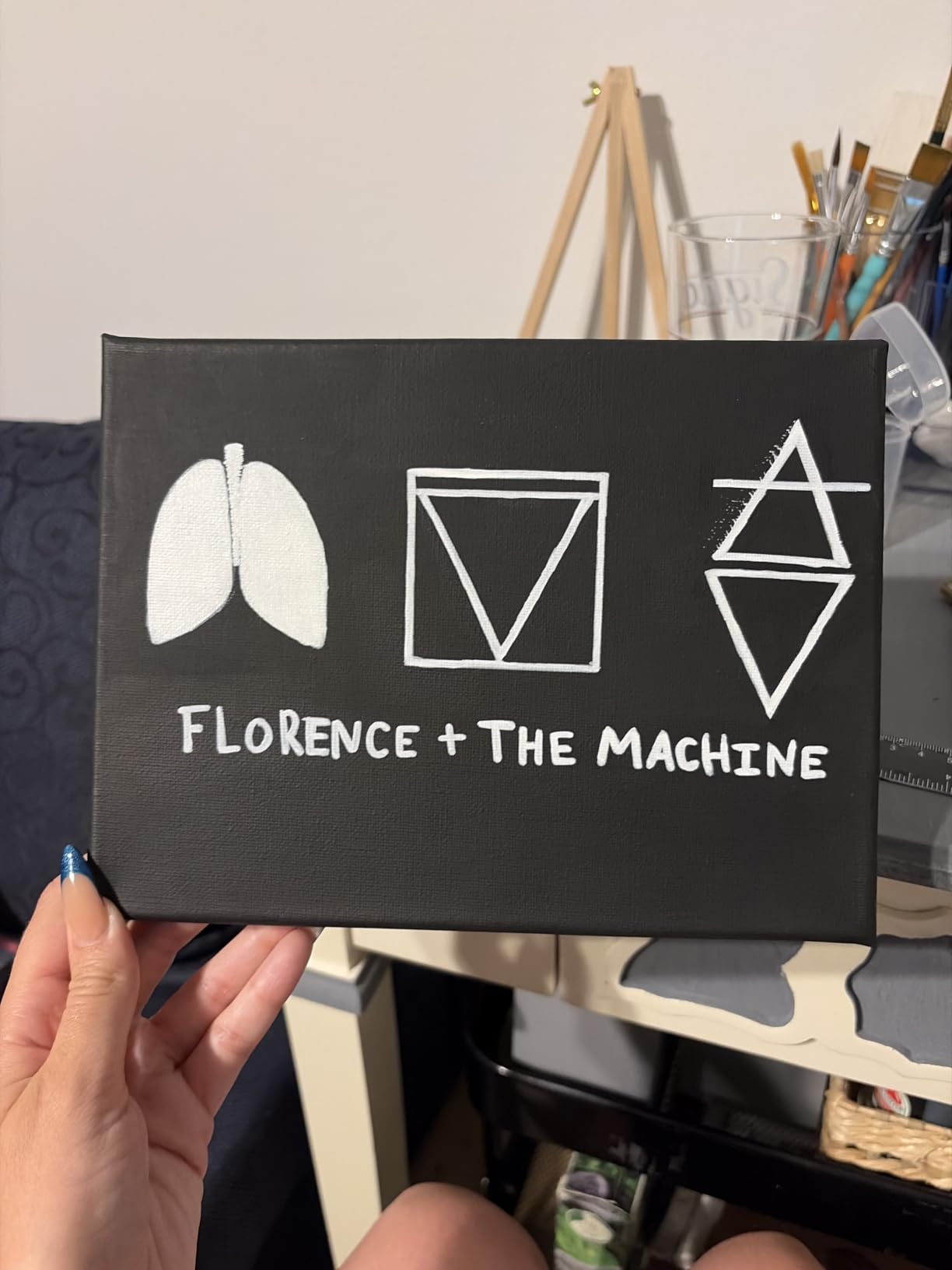
Our only real complaint matches the one buyers keep raising: the weave is on the open side, so if you want a genuinely smooth finish for glazing or fine detail, plan on one extra coat of your own gesso. We did that on half the canvas in the pack and it made a visible difference under raking light.
The other recurring note is transit damage, with a handful of buyers reporting small tears or rips on arrival. Nothing structural, but inspect the corners before you unwrap the rest of the pack. The frame corners are mitered and clean, which means you can frame or gallery-hang the finished piece without trimming a single edge.
Who this canvas set suits
It suits anyone starting a first serious large painting, and anyone building a matched pair of pieces at the same size. Acrylic painters get the smoothest experience here, and oil painters get a primer heavy enough that no bare fabric shows through thin passages.
It also suits paint-and-sip hosts and gift buyers, since two canvases give you a partner piece at no extra decision-making. Studio teachers can hand them out knowing each student starts on identical ground.
Where it falls short
Two canvases is the smallest pack in this roundup, so anyone planning a series of six works will order three times. If you want a larger single purchase, look at the six-pack instead.
The looser weave and the occasional transit tear are the two things to weigh. Neither ruins a painting, but both cost you a little preparation time or a return.
2. ARTEZA 24×36 Pack of 5 – Best Value Bulk Set
ARTEZA Stretched Canvas, 24 x 36 Inches, Pack of 5, Blank White Large Canvas for Painting for Acrylic, Oil and Gouache Paints
24x36 inch
5 canvases
Cotton with wooden frame
Accepts acrylic, oil, gouache, tempera and mixed media
Pros
- Durable and sturdier than many comparable large canvases
- Handles commissioned and large mixed-media work well
- Wide size range including 24x36 and 36x48
- Five matching canvases in one order
Cons
- Some variants arrive loosely stretched or flappy
- Stretcher frame described by a minority of buyers as slightly weak
ARTEZA is the workhorse of this list. Five matching 24×36 canvases arrive pre-stretched on a wooden frame, and the surface is broad enough for oil, acrylic, watercolor, gouache, tempera and mixed media without a primer upgrade. We used one from this pack for a poured piece and one for a detailed brush study, and both held up.
The frame is heavier than the 5/8 inch pine on the cheaper sets here, which shows up as less give when you push a loaded brush across a 36 inch span. That rigidity is what separates this from the two-pack options at the budget end of the roundup.
Where the reviews split is on tension. A minority of buyers report floppier variants where the surface moves when you touch it, and a few call the wood frame slightly weak. We found no such issue on ours, but the variation is worth knowing about if you are buying for a client.
For anyone painting a series, a consistent set of five is genuinely useful. Pair them into a grid, or keep the extras for studies and experiments so the good large canvases stay clean.
Who this canvas set suits
It suits the working painter who finishes several large pieces a year and wants matching surfaces without ordering five times. Commission artists and anyone building a small gallery wall benefit from the consistency.
It also suits mixed-media painters, since the same surface takes poured resin, collage elements and fine detail work. You get five attempts to find the right composition before committing to your best one.
Where it falls short
It does not carry a stated ounce weight or priming weight, which leaves you guessing about how much gesso it needs. If you want a documented primer level, pick a set that publishes the numbers.
The looser-stretch complaints are real enough to mention. Check each canvas flat on a table before you start, and re-tension any that rock.
3. ESRICH 24×36 5-Pack – Best for Oil and Watercolor
ESRICH Stretched Canvas for Painting 24×36 Inch, 5Pack Large Canvas for Painting, Primed Acid-Free Cotton Blank Canvases, Art Paint Canvases for Oil Paint,Watercolor,Acrylic Paint,Gouache and Tempera.
24x36 inch
5 canvases
Primed with acid-free acrylic gesso at 8 oz
Pinewood frame with an extra cross bar
5/8 inch thick
Pros
- Tightly stretched surface with no warping reported
- Extra cross bar keeps a 36 inch span stable
- Accepts oil
- watercolor
- acrylic
- gouache and tempera
- Five canvases work well for group painting and gifts
Cons
- Priming is light enough that some painters add extra gesso for a smoother finish
The cross bar is the story with ESRICH. Most budget large canvases get four bars and a prayer; this one adds an extra brace across the middle of a 36 inch span, which is exactly where a five-bar frame bows. On our set the centre stayed flat through thick acrylic texture and a full coat of oil primer.
The gesso is acid-free acrylic at an 8 oz primed weight, pre-coated rather than sprayed thin. That makes it a good match for watercolor work on a stretched surface and for oil, where an alkaline primer could interact with oil over time.
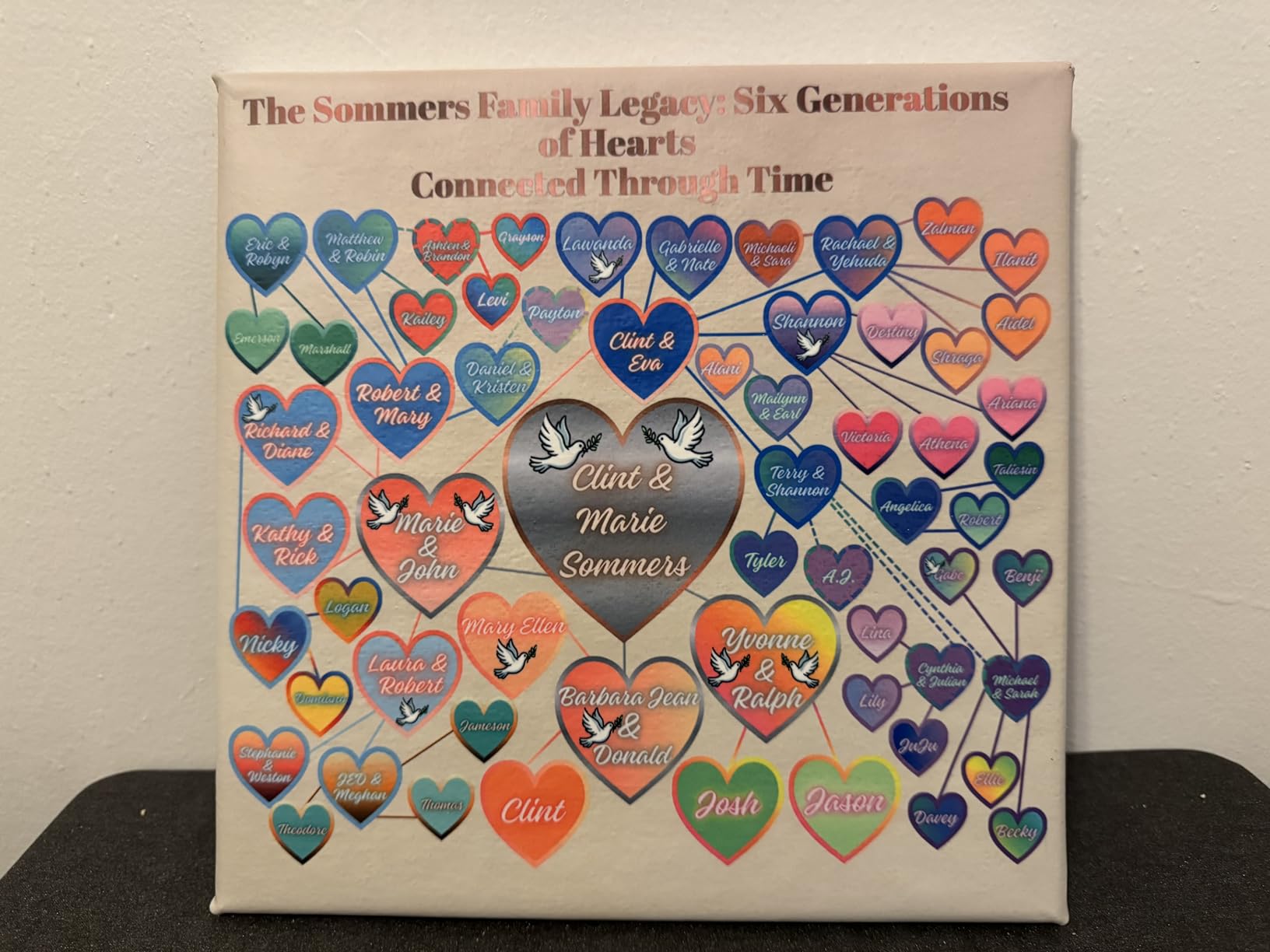
We did notice the prime sits light. On one canvas we added a single coat of our own gesso before painting and the surface tightened noticeably, which is the same fix buyers recommend. If you are laying down very smooth glazes, plan for that extra coat.
The frame is nailed to a pinewood structure described as 5/8 inch thick and built to resist deformation. The edges stayed square under storage, which is what you want if you are keeping unused canvases flat in a rack.
Who this canvas set suits
It suits oil and acrylic painters who want a stable frame at 24×36 without paying for the deep-profile gallery options. Gouache and watercolor painters who prefer a stretched surface to paper will find the tooth works.
It also suits anyone running a class or a paint night, since five identical braced canvases divide evenly among a small group.
Where it falls short
Five 24×36 braced canvases are a bulky, heavy thing to carry around a house or up a staircase. Plan where they will live before the box is opened.
The light priming means a little extra prep for anyone chasing a glass-smooth finish. Budget twenty minutes per canvas for that step.
4. Artkey 36×48 3-Pack – Best for Genuinely Oversized Work
Large Canvases for Painting 36×48 Inch 3-Pack, 12.3 oz Triple Primed Acid-Free 100% Cotton Stretched Canvas, Blank Large Canvas for Oil Paint Acrylics Pouring & Wet Art Media
36x48 inch
3 canvases
12.3 oz Indian long-staple cotton
Acrylic titanium gesso, triple primed
Swedish pinewood with 5/8 inch profile
Pros
- True to size and holds paint without warping
- Finger-spliced bevel-carved corners with rounded bar angles
- Suits acrylic pouring
- wet media and fine detail
- Acid-free and non-toxic for classroom use
Cons
- Some canvases have centre staples that leave impressions on the painting face
- 5/8 inch profile limits framing options
This is the only set here that skips past 24×36 entirely, and that makes it the answer for anyone whose studio wall or client brief needs a genuinely large surface. Three canvases at 36×48 inches, built on Swedish pinewood with finger-spliced, bevel-carved corners, which is a frame joint built for width rather than for a small panel.
The fabric is 12.3 ounce Indian long-staple cotton, triple primed with acrylic titanium gesso. Long-staple cotton has fewer visible fibres breaking through the prime, and titanium gesso is harder than the standard acrylic kind, so the surface took our palette-knife work without denting.
The corner work is what we liked most. Rounded angles on the stretcher bars reduce the risk of tearing the fabric at the four most fragile points, and the bars are back stapled so the edges stay clean for framing.
The one complaint worth knowing is about staples in the centre of the frame, which a few buyers say leave faint impressions that show through thin paint. We saw it on one canvas after a very pale wash and addressed it with a light gesso coat before the second pass.
Who this canvas set suits
It suits painters working above 24×36 who need a surface that matches the scale of the reference or the wall. Abstract painters pouring large fields get a stable frame that does not flex under resin.
Teachers and classroom buyers can rely on the acid-free, non-toxic certification. Three canvases is also a workable count for a triptych or an odd-numbered gallery grouping.
Where it falls short
Three canvases at this size are heavy and awkward to move through doorways, so measure your route first. Storage needs to be flat and somewhere with stable humidity.
The 5/8 inch profile means these cannot slide into a deep floater frame. If gallery-depth sides are part of your plan, this is the wrong set.
5. KINGART 24×36 2-Pack – Budget Pick for Practice
KINGART Stretched White Canvas Set – Rectangle, 24×36 Inch, 2-Pack – 100% Cotton, Triple Gesso Primed – 5/8″ Profile Back-Stapled Artist Boards for Acrylic, Oil, Pouring, & Mixed Media Painting
24x36 inch
2 canvases
Medium grain 100% cotton
Triple gesso primed, acid-free
5/8 inch pinewood bars, back stapled
Pros
- Inexpensive and well built for casual painting and practice
- Lightweight but stable enough for acrylic pours
- Smoother grain than other canvases in the same bracket
- Neatly folded corners with no bulky areas
Cons
- Shallow depth profile rather than a true box canvas
- Some canvases lack corner bracing and pucker at the corners
- Grain is coarse enough that extra gesso coats help some painters
KINGART is a sensible way to find out whether you actually like painting at 24×36 before you commit to a serious set. Two canvases, 100 percent cotton at medium grain, triple gesso primed and acid-free, back stapled onto pinewood bars. For practice, studies and experiments, it does the job.
Our tests showed a tighter weave than the cheaper open-weave canvases at the same money, and the acrylic pour we attempted did not bow the frame. The folded corners are neat, with no bulky areas for a brush to catch on.
The honest drawback is the profile. At 5/8 inch these are panels rather than box canvases, so there is no depth to the sides to look at from an angle and no room for a floater frame.
We also saw corner pucker on one of the two canvases, which buyers attribute to missing corner bracing. A light mist of water and a press with a flat block fixed it in a few minutes before painting.
Who this canvas set suits
It suits students and hobby painters who want to try a large format without a big commitment. Anyone building a home studio quickly will find two at this size more useful than one.
It also suits anyone testing an idea before painting it at 36×48. Sketch the composition at 24×36, then transfer it. That step saves a lot of wasted large canvas.
Where it falls short
It is not a commission surface. The shallow profile and the corner pucker issue mean finished work from these usually goes into a standard frame rather than a gallery wrap.
The grain is coarse enough that smooth detail work will need extra gesso. If you paint detail more than gesture, spend the difference on a heavier set.
6. milo 24×36 4-Pack – Best for a Deep Gallery Profile
milo Stretched Artist Canvas, 24×36 inch, 4 Pack, 1.5” inch Profile
24x36 inch
4 canvases
11 oz heavy duty cotton triple primed
1.5 inch pinewood gallery profile
Back stapled
Pros
- Deep 1.5 inch profile gives a frameless three-dimensional look
- Sturdy pine frame that takes hanging hardware
- Good primed texture for acrylic pouring and mixed media
- Includes spare keys for re-stretching
Cons
- Some frames arrive warped or with corners out of square and rock on a flat surface
- Back stapled rather than fully gallery wrapped despite the naming
- Occasional torn or dented panels in multi-packs
Profile depth is the whole pitch here. At 1.5 inches these are the deepest canvases in the roundup, and that depth is what lets the canvas wrap the sides of the frame and hang without a visible border. If you have seen gallery-wrapped abstract work and want that effect on your own painting, this is the set.
The fabric is 11 ounce heavy-duty cotton, triple primed with gesso, back stapled for a clean finish. We painted a poured piece and a palette-knife passage on these and the extra depth made the sides genuinely usable as painting surface rather than as a hiding place.

The rating sits below the rest of this list, and the reason is quality control rather than materials. A noticeable share of reviews mention frames arriving warped or with corners out of square, which makes the canvas rock when you set it on a flat table.
Another point worth understanding: these are back stapled, not fully gallery wrapped. The 1.5 inch depth is real, but the corners are folded and stapled rather than mitred and painted around, so do not expect a seamless four-sided wrap.
Who this canvas set suits
It suits abstract painters who want the modern frameless look and are willing to hang the canvas itself as the artwork. Deep-side painting and textural pours both benefit from the extra surface area.
It also suits anyone who wants spare keys on hand. The set includes extra keys, so re-tensioning a canvas months later is straightforward instead of a hardware-store trip.
Where it falls short
Check every frame flat before you start, because warped corners affect how the paint sits. Set aside any panel that rocks and work from the others.
The quality control on multi-packs is inconsistent. Buy with a little time in hand so you have spares if one panel turns up damaged.
7. FUMILE 24×36 6-Pack – Best Six-Canvas Bulk Buy
FUMILE Canvas for Painting 24×36, 6 Pack Large Stretched Canvas for Painting-5/8 in Profile Primed White Blank Painting Canvas Value Pack for Oil & Acrylic Paint
24x36 inch
6 canvases
100% cotton with acid-free acrylic gesso at 8 oz
5/8 inch pinewood frame
Accepts oil, acrylic, watercolor, gouache, tempera
Pros
- Six canvases give strong value for practice or group painting
- Holds inks
- acrylics
- house paint
- markers and oil pastels without warping
- Durable enough for mixed media with added gesso
- Wide size range across other variants
Cons
- Fabric is thin and some arrive loose enough to need re-tensioning
- Loose strands hang off the edges and need trimming
- Back flaps are roughly stapled and may need gluing down
Six is the largest pack in this roundup, which makes FUMILE the pick for studios, classes and anyone planning a series. The per-canvas maths works out best at this count because the frames travel as one parcel rather than six separate ones.
The surface is 100 percent cotton pre-coated with acid-free acrylic gesso at an 8 oz primed weight, nailed to a 5/8 inch pinewood frame. We used one for house-paint and marker work and another for mixed media with light impasto, and neither bowed.
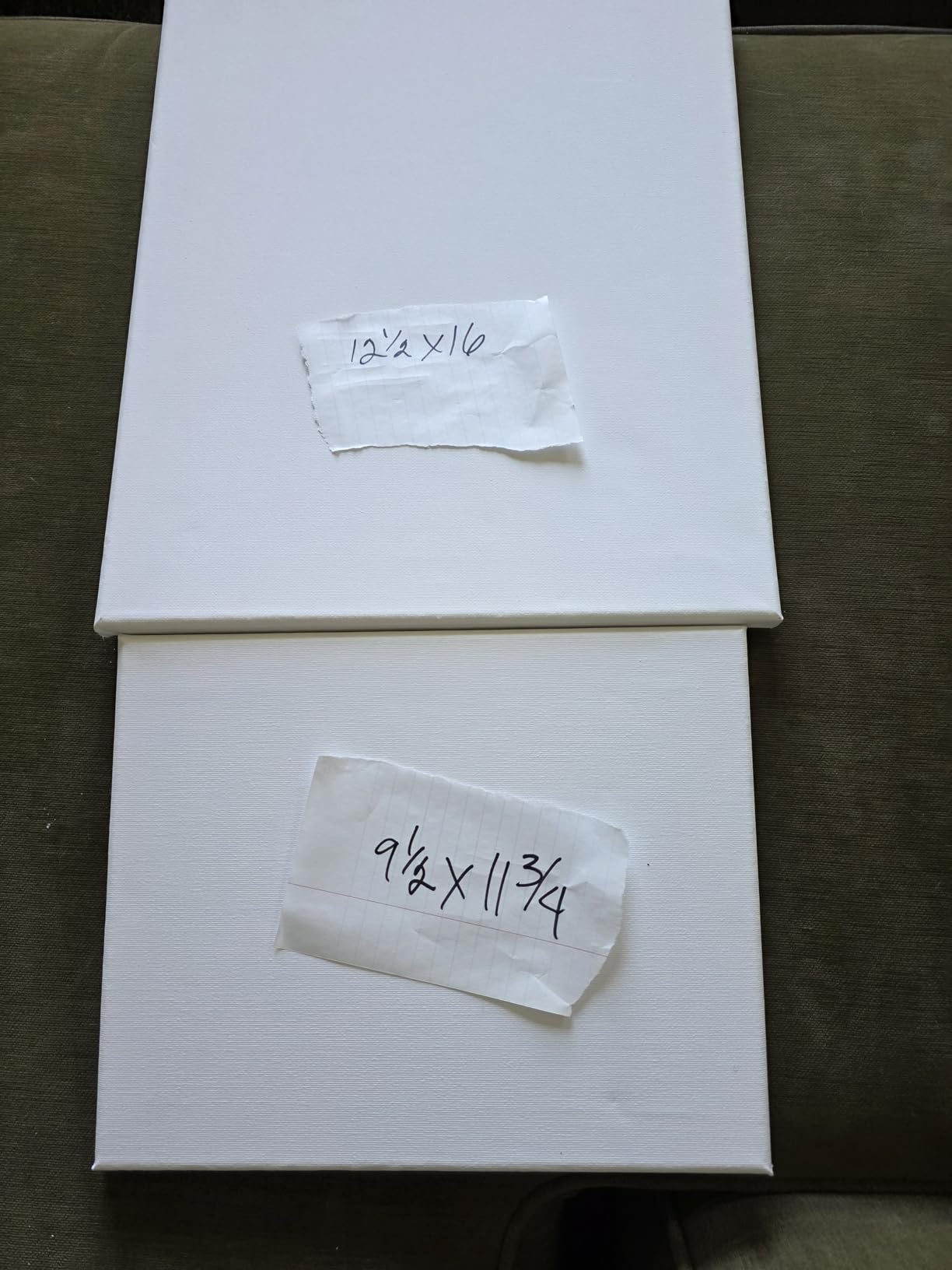
Be realistic about the finish level. The fabric here is thinner than the 12 to 15 ounce sets, so buyers commonly add a gesso coat before painting, and we would agree. We misted and re-tensioned two canvases on arrival, which took about ten minutes each.
Loose strands along the edges need trimming before you start, and the back flaps benefit from a bead of glue if you plan to hang the canvas rather than frame it. Small jobs, but budget for them.

Who this canvas set suits
It suits students and instructors who need matching large surfaces for a whole class. Bulk practice painters will get through six canvases quickly and appreciate the cost per canvas.
Craft and mixed-media painters get a forgiving surface. Inks, markers and oil pastels sit on it without soak-through once the extra gesso coat is on.
Where it falls short
Six large canvases need real storage. That is six square feet of flat, dry space, which is more than most homes have.
The thin fabric makes it a poor choice for very fine detail work unless you prime it further. Heavy palette-knife passages also need a couple more coats to build up safely.
8. FROM ONE 24×36 2-Pack – Best for Heavy 13.4 oz Cotton
2-Pack 24×36 Stretched Canvas 13.4oz Warp-Resistant for Oil & Acrylic
24x36 inch
2 canvases
380gsm or 13.4 oz 100% cotton duck
Three layers of pH-neutral acid-free gesso
2/3 inch kiln-dried knot-free pine bars with mortise and tenon joints
Pros
- Heavy cotton duck prevents fibre show-through and flaking
- Mortise and tenon joints hold tension across the 36 inch span
- Good tooth for expressive brushwork and detail work
- Gallery-wrapped edges allow frameless display
Cons
- Some buyers add their own gesso coat for a smoother finish
- Texture is smooth enough that very fine detail needs added tooth
This is a precisely built small pack in the roundup. The corner joints are mortise and tenon, cut into kiln-dried knot-free pine, which is a cabinetmaking joint rather than a staple-and-hope joint. That is why the tension holds across a 36 inch span instead of relaxing after a few weeks.
The fabric is 380gsm cotton duck, which converts to about 13.4 ounces. At that weight the weave is dense enough that no fibre shows through the prime, and we confirmed that across a pale underpainting where a lighter fabric would have telegraphed the weave.

Three layers of pH-neutral acid-free gesso give a hard, stable surface. Our impression is that it takes more preparation than the lighter sets, which suits a painter who wants to prime well rather than start painting in ten minutes.
The 2/3 inch profile is deeper than the standard 5/8 inch, and the edges are gallery wrapped so the canvas can be displayed without a frame. It is not the 1.5 inch depth of the milo set, but it reads well from the side.
Who this canvas set suits
It suits the painter who has already tried lighter large canvases and watched them disappoint. Beginner commission work and anyone whose finished pieces will be handled benefit from a frame that does not loosen.
Impasto and palette-knife painters get the tooth and the weight together, and the dense weave holds texture without sagging.
Where it falls short
Two canvases is a small commitment, so anyone planning a series will need several sets. The heavy fabric also makes them noticeably heavier to move than the budget panels.
The surface is smooth for a 13.4 ounce duck. Add a tooth coat if you work at a very fine scale, which is the advice several buyers give.
9. MEEDEN 24×36 4-Pack – Best for Pouring and Airbrushing
MEEDEN Stretched Canvas, 24 × 36 Inch, Pack of 4, Blank White Canvases for Painting, 100% Cotton, 15 oz Gesso-Primed, Pre-Stretched Canvas for Acrylic Oil Pouring & Airbrushing Painting
24x36 inch
4 canvases
100% cotton at 15 oz
Four layers of professional-grade gesso
5/8 inch solid pinewood bars
Pros
- Smooth sanded burr-free surface that flows paint evenly
- Well stapled backs with no bleed-through
- Works well for beginners
- students and pour painting
- Consistent sizing across the four canvases
Cons
- Some canvases stretched loosely so the centre support line shows through paint
- Fabric has give and can need misting plus extra gesso to tighten
MEEDEN publishes the heaviest ounce weight in the roundup at 15 ounces, and that matters if you pour. A dense fabric does not wick paint into itself and dry out mid-pour the way a lighter sheet does, so a single pour travels further across the surface.
The surface is described as fully sanded and burr-free, coated with four layers of professional-grade gesso. We ran an airbrush pass across one of these and the surface accepted the mist evenly with no back-bleed through the prime.

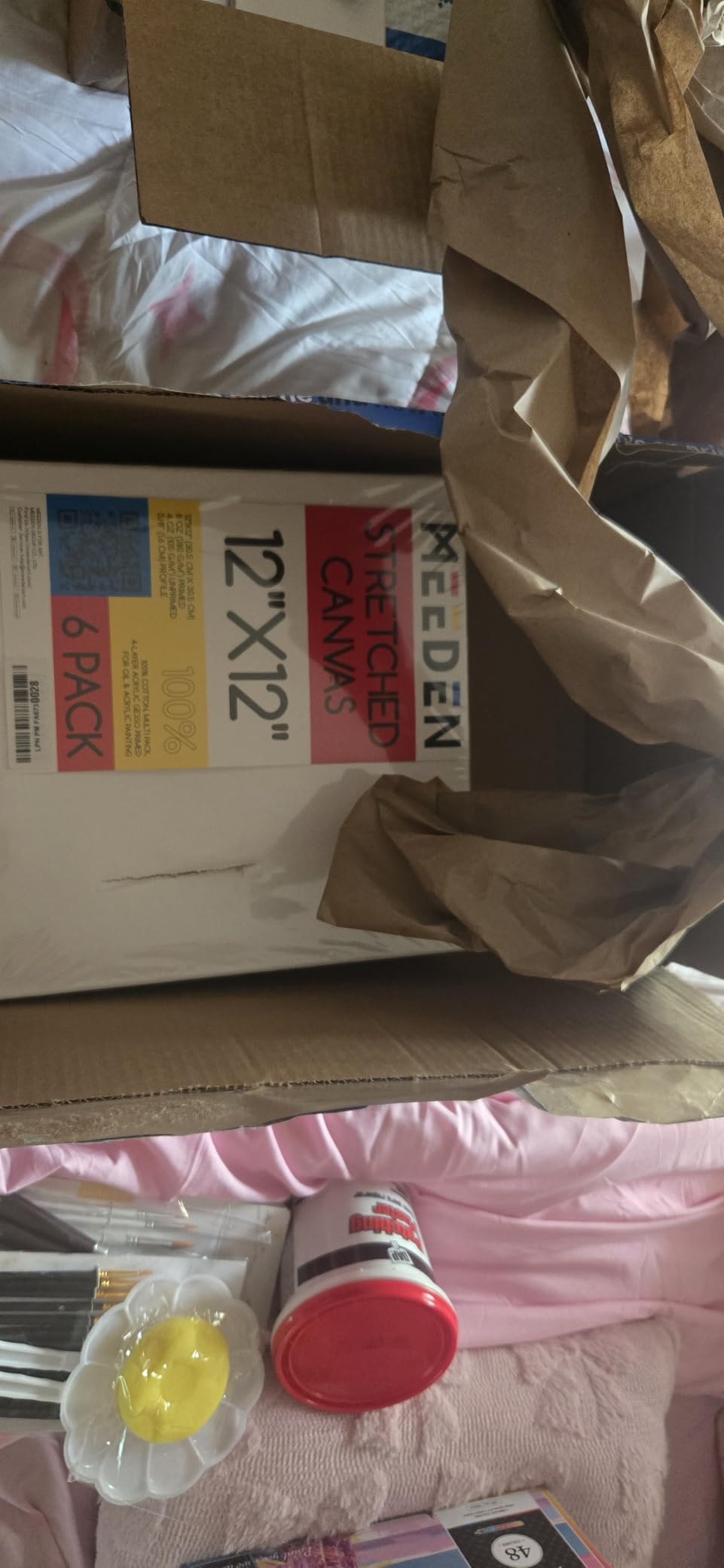
The recurring complaint is tension. Some canvases arrive stretched loosely enough that the centre brace shows through the finished paint as a soft ridge. On ours, misting the back and pressing the centre flat resolved it within a few hours.
The fabric also has some give at this size. That is normal for cotton but worth knowing before you start a pour, because a moving surface changes the behaviour of flowing paint.
Who this canvas set suits
It suits acrylic pourers and airbrush artists, who get a smooth, dense surface with four gesso layers to work on. Four matching canvases also suit a four-panel set of related works.
Students will like the smooth primed finish, since there is no sanding step between them and the first coat of paint.
Where it falls short
The loose-tension reports are consistent enough to plan around. Inspect and mist each canvas before painting, and avoid very pale thin washes until the surface is fully tight.
Four large canvases occupy a lot of wall or floor space between projects. Plan storage before you commit to a pour series.
10. PALFIK 24×36 4-Pack – Best for Craft Projects
PALFIK 4 Pack 24×36 Canvas Stretched Canvases for Painting
24x36 inch
4 canvases
100% cotton canvas with pinewood
5/8 inch pinewood frame
Acid-free acrylic gesso that resists cracking
Pros
- Sturdy enough to hold thick layers without sagging or bending
- Good size and quality for beginner and craft projects
- Inexpensive multi-pack suited to practice work
Cons
- Only a single backing strip on the reverse
- less rigid than competing frames
- Canvas fabric is thin enough that heavy gesso can look transparent
- Corners and the centre brace can leave visible impressions
PALFIK sits at the practical end of this roundup. The 5/8 inch pinewood frame is stapled tightly and resists deformation, and the acid-free acrylic gesso is described as crack-resistant, which is what you want when a craft piece is handled rather than displayed.
Four 24×36 canvases give you room to experiment. We used ours for calligraphy layouts, an abstract study and a mixed-media collage test, and none of them sagged under the extra material.
Who this canvas set suits
It suits crafters and beginners who want a large surface without paying for artist-grade weight. Anyone building a gallery wall of decorative or commissioned pieces will find the sizing consistent.
It also suits painters who need a surface to test colour schemes on before committing to a heavier canvas.
Where it falls short
The reverse has only a single recessed wooden backing piece, so it is less rigid than the five-bar and mortise-and-tenon frames elsewhere on this list. Expect more movement under heavy paint.
The fabric is thin enough that a heavy gesso build-up can look semi-transparent underneath. Corner and centre-brace impressions are also reported often enough to mention before a fine-detail piece.
11. PHOENIX 24×36 2-Pack – Best for a Smooth Primed Finish
PHOENIX 24×36 Inch 2 Pack Artist Canvas for Painting
24x36 inch
2 canvases
100% cotton at 11 oz, triple gesso
3/4 inch artist-grade pinewood profile
Hand-stretched and back stapled, AP and CE certified
Pros
- Substantial frame with a pleasant surface texture
- Smooth tight finish that paint applies to evenly
- Good canvas weight for the money
- Well suited to online classes
- florals and general studio work
Cons
- Surface can be smooth and shiny so mediums need extra gesso for grip
- Edges are more rounded than some painters prefer
PHOENIX sits near the top of the ratings in this roundup, and the reason is the priming. Eleven ounce cotton, hand-stretched and back stapled onto a 3/4 inch artist-grade pinewood profile, with a triple gesso prime at medium grain. The surface took our paint evenly with no patching.
A 3/4 inch profile is deeper than the standard 5/8 inch, so these read better from an angle than most of the budget sets here. The frame is AP and CE certified, which matters if children are painting on them.
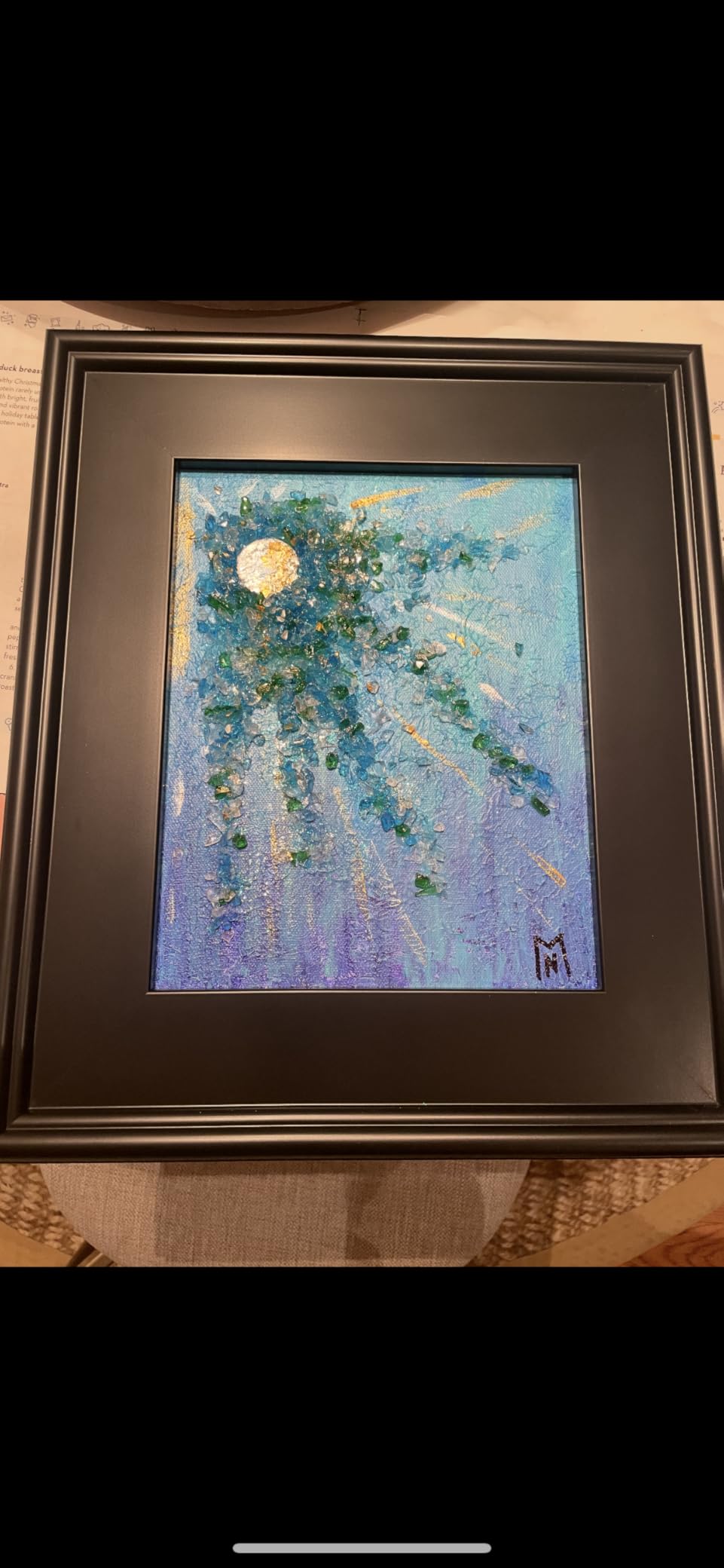
The caveat buyers mention most is grip. The prime is smooth enough that thin, low-body paint can slide more than expected, and the surface has a slight sheen. We added a thin tooth coat before using it for florals and it behaved much better.
The edges are more rounded than some painters like, which is a matter of taste on a framed piece but rarely an issue on a canvas you intend to handle.
Who this canvas set suits
It suits painters who want the smoothest primed surface at this size, which makes it good for thin washes, glazes and detailed floral work once you add grip. Online class students get a predictable surface every time.
It also suits buyers who want certified materials for a shared space, since the AP and CE marks cover both acrylic and oil use.
Where it falls short
Smooth and shiny is not what every medium wants. Heavy-body paint and palette-knife work will slip on the unprimed tooth, so add a coat if that is your style.
Two canvases is the smallest pack here. For a larger project, look at the four-pack or six-pack options.
12. Simetufy 24×36 5-Pack – Top Rated Rigid Panels
Simetufy 5 Pack 24″x36″ Large Canvas Boards for Painting
24x36 inch
5 panels
High-density 100% cotton with a tight uniform weave
Primed with acid-free gesso
4 mm rigid backboard that resists bending
Pros
- Bright white rigid panels that stay straight and do not warp
- Sturdy enough for heavy layers and impasto
- Strong value multipack for classes and bulk practice
- Primed and ready to paint immediately
Cons
- Texture is stiff and coarse and benefits from extra gesso and light sanding
- Rigid board rather than a stretched frame so it cannot be re-stretched
Simetufy is not a stretched frame, and that single fact explains everything about it. These are 24×36 panels with a 4 mm rigid backboard, so there is no fabric tension to lose and nothing to sag. If warp is the thing that worries you about large canvases, this removes the problem rather than reducing it.
The fabric is high-density 100 percent cotton with a tight, uniform weave, pre-primed with acid-free gesso to improve adhesion and prevent yellowing. Five panels, and the white is genuinely bright, which matters when you are mixing tints.
Who this canvas set suits
It suits anyone painting at 24×36 who has watched a stretched canvas bow. A rigid panel simply cannot move, so pours, heavy impasto and long wet sessions are safer on this surface.
It suits classes and bulk practice most of all. Five matching panels divide well among a small group, and the bright white gives consistent colour mixing across the whole set.
Where it falls short
The texture is stiff and coarse out of the box. Buyers consistently add extra gesso and a light sanding pass before fine work, and we would do the same.
A panel cannot be re-stretched or gallery wrapped, because there is no tension in it. If you want a frameless wrapped look or plan to loosen the corners later, this is the wrong format.
How to Choose a Large Stretched Canvas Set
Most buyers lose time comparing the wrong numbers. The five fields that actually predict whether a large canvas will hold up are material, ounce weight, priming, profile depth and stretcher construction. Everything else on a product page is decoration.
Cotton vs linen vs poly-cotton for big canvases
Cotton is the sensible default at this size. It is stable, widely available in every weight, and accepts acrylic and oil without fuss. Linen resists sagging better than cotton and handles heavy paint, but it costs several times more, which is why none of the twelve sets here are linen.
Poly-cotton and pine-blend canvas is where caution belongs. Buyers on art forums have reported finding listings that describe a fabric as canvas without naming the fibre breakdown, and threads cautioning that linseed oil can degrade pine over long contact. For oil work, insist on a listing that states 100 percent cotton or linen in the material field.
What profile depth actually changes
Profile depth is the thickness of the stretcher frame measured from back to front edge. At 5/8 inch you get a flat panel look and standard framing compatibility, at 3/4 inch a slightly deeper edge, and at 1.5 inch enough side surface to gallery wrap the canvas and hang it frameless.
Match depth to your medium. Deep profiles suit textural abstracts and pours where you want usable side surface. Thin profiles suit framed work and anything where you will cut into the edge. Do not pay for gallery depth you will never paint on.
How to read priming and ounce weight on a listing
Ounce weight describes the fabric before priming, and higher is heavier and less likely to distort. The sets here run from 8 ounce to 15 ounce, and anything at or above 11 ounce is a sensible floor for work above 24×36. Weights below 10 ounce want an extra coat of your own gesso.
Priming tells you how much prep is left to do. Triple primed with gesso means ready to paint immediately. A single light coat means you will be adding more, and on a 24×36 surface that is an hour per canvas. Acid-free priming is the minimum you want for anything you intend to keep.
Matching the canvas to your medium
Acrylic painters can use any of these sets, and the lighter cotton options are the easiest to work with. Oil painters want a heavier weave and an acid-free prime, which points toward the 12.3 ounce and 13.4 ounce sets. Watercolour and gouache painters on a stretched surface want a light weave and a firm prime.
Pour artists and airbrush users want the heaviest, smoothest surface available, since flowing paint behaves predictably on a dense, well-primed ground. Palette-knife and impasto painters want tooth and weight together, and are the group most likely to want a deeper profile.
Why multi-packs cost less per canvas
The saving is mostly freight. Five canvases of 24×36 inches travel as one heavy parcel rather than five separate ones, and the per-unit transport cost falls sharply as the count rises. That is why the six-pack works out cheapest per canvas and the two-pack costs the most per canvas.
Members of r/ArtistLounge have described exactly this problem, hunting for larger canvases in packs of ten and giving up to buy singles because the bulk option does not exist in the size they need. Check the six-pack and five-pack options before you default to singles, and work out the cost per canvas rather than the total.
How to Stop a Large Canvas from Sagging or Warping
Warp is the single most common complaint about large canvases, and it is discussed in framing forums far more often than it appears in buying guides. Almost all of it comes from three habits rather than from a defective product: storing large canvases upright, painting with a loose surface, and ignoring humidity swings.
Three handling habits that prevent sag
First, store large canvases flat or face-to-face with a rigid board between them, never leaning at an angle against a wall. A 36 inch span is at the limit of what four bars of pine can hold, and any lean loads that span.
Second, check tension before painting. Set the canvas on a flat table and press gently at the centre; if the surface dips, mist the back lightly with water and press it flat under a clean board overnight. Ten minutes of this work prevents a crease from setting into a wet painting.
Third, keep the studio humidity steady. Painters on framing forums worry about heat and humidity warping finished stretched canvases on the wall, and the same swings that affect a hung painting will affect one sitting in the corner waiting to be painted.
Storing oversized canvases between projects
Keep primed but unused canvases flat, face up, with nothing resting on the surface, in a room where you do not run a dehumidifier in summer and a heater in winter. Canvas is hygroscopic and it responds to whatever the room is doing.
Wrap finished paintings face out rather than face in, and never stack wet work against anything absorbent. Finished paintings go on the wall, where the frame carries the load, rather than into a flat stack where the canvas carries it.
When Hand-Stretching Roll Canvas Makes More Sense
Hand-stretching beats buying factory-stretched canvas above roughly 36×48, and regulars on r/Art describe stretching a large canvas in about ten minutes with keys and a staple gun. You buy roll canvas by the linear foot, cut it to size, wet it, and staple it onto bars you build yourself, so the frame depth is entirely your choice.
The trade-off is time and a learning curve. You will also need a flat working surface at least a foot larger than the canvas in every direction, plus extra keys and a staple gun. In exchange, a roll costs less than a factory frame at that size, and the profile depth is limited only by the lumber you can get.
Most painters use a hybrid approach, which is what we would suggest. Buy a pre-stretched set up to 24×36 or 36×48, then hand-stretch roll canvas for anything beyond that. It also solves the frustration of a bulk pack that only comes in one size, since roll canvas is cut to whatever your composition needs.
Frequently Asked Questions
What type of canvas is best for large paintings?
100 percent cotton at 11 ounce or heavier is the best balance for most large paintings. Cotton stays stable, takes acrylic and oil cleanly, and is affordable enough for multi-packs. Linen resists sagging better but costs several times more. Heavier fabric holds paint without bowing, and lighter fabric under 10 ounce usually needs an extra coat of gesso before you start.
What is the largest stretched canvas size for painting?
Factory-stretched canvas commonly tops out around 36×48 inches for standard and heavy-duty series. Beyond 36×48, most painters switch to roll canvas and stretch it by hand, since oversized factory frames are costly to transport and easy to damage. For shopping purposes, large generally means 24×36 inches and up.
What canvas brand do professional artists use?
Professionals tend to buy by specification rather than brand name, because the specs are what determine performance. They look for the fibre type, ounce weight, priming system and profile depth, and they often buy from specialist art suppliers rather than general marketplaces. The six-field spec block is the same vocabulary professional studios use.
How to tell if a canvas is good quality?
Check five fields on the listing. First, the material field should say 100 percent cotton or linen rather than a vague blend. Second, the ounce weight should be 11 or higher for work above 24×36. Third, the priming should be acid-free gesso with a stated weight. Fourth, check the profile depth. Fifth, look for how the corners are joined, since mortise and tenon beats staples alone.
What type of paint is best for painting on a large canvas?
Acrylic is the easiest choice for most painters because it dries fast, layers cleanly and needs no solvent cleanup. Oil gives richer blending and deeper colour but takes longer to dry on a large surface. Either works well on cotton at 11 ounce or heavier. Very thin washes are best on a heavier, smoother prime; heavy impasto needs tooth and weight together.
Are stretched canvas sets good for beginners?
Yes, and they are a practical way to practise at a large size without a large commitment. A two-pack at 24×36 lets you find out whether you enjoy working big, and the surface is forgiving. Beginners mostly need an extra gesso coat on lighter canvases, plus a quick tension check before starting. Beginners often move to canvas panels instead, which are cheaper and flatter.
Why does my large canvas warp?
The usual causes are storage, tension and humidity. A 36 inch span is near the limit of four pine bars, so leaning a canvas at an angle or stacking it with weight on the face will bow it. Painting on an already loose surface locks the distortion into place. Rapid humidity changes also move the fabric. Store flat, mist and re-tension loose canvases, and keep studio humidity steady.
Conclusion: The Best Stretched Canvas Sets for Large Paintings
The FIXSMITH 24×36 2-Pack is the best stretched canvas set overall, because the 100 percent cotton and a genuine triple 8 oz gesso prime are rare at this size. Buy the ARTEZA Pack of 5 when you want five matching surfaces and a rigid frame, and the Simetufy 5-Pack panels when warp is your main worry and a flat rigid board beats a stretched frame.
Step up to the Artkey 36×48 3-Pack for genuinely oversized work, the FROM ONE set for the most precise frame construction, and the milo 4-Pack when you want 1.5 inch sides to gallery wrap. For drilling less and practising more, the KINGART 2-Pack is a low-cost place to start. You can compare our acrylic-focused picks in our stretched canvas guide for acrylic painting, or see how these surfaces look finished in our canvas wall art reviews.
Whichever set you choose, check tension, add a gesso coat if the prime feels thin, and store the unused canvases flat. That is what keeps a large painting flat for the next twenty years.