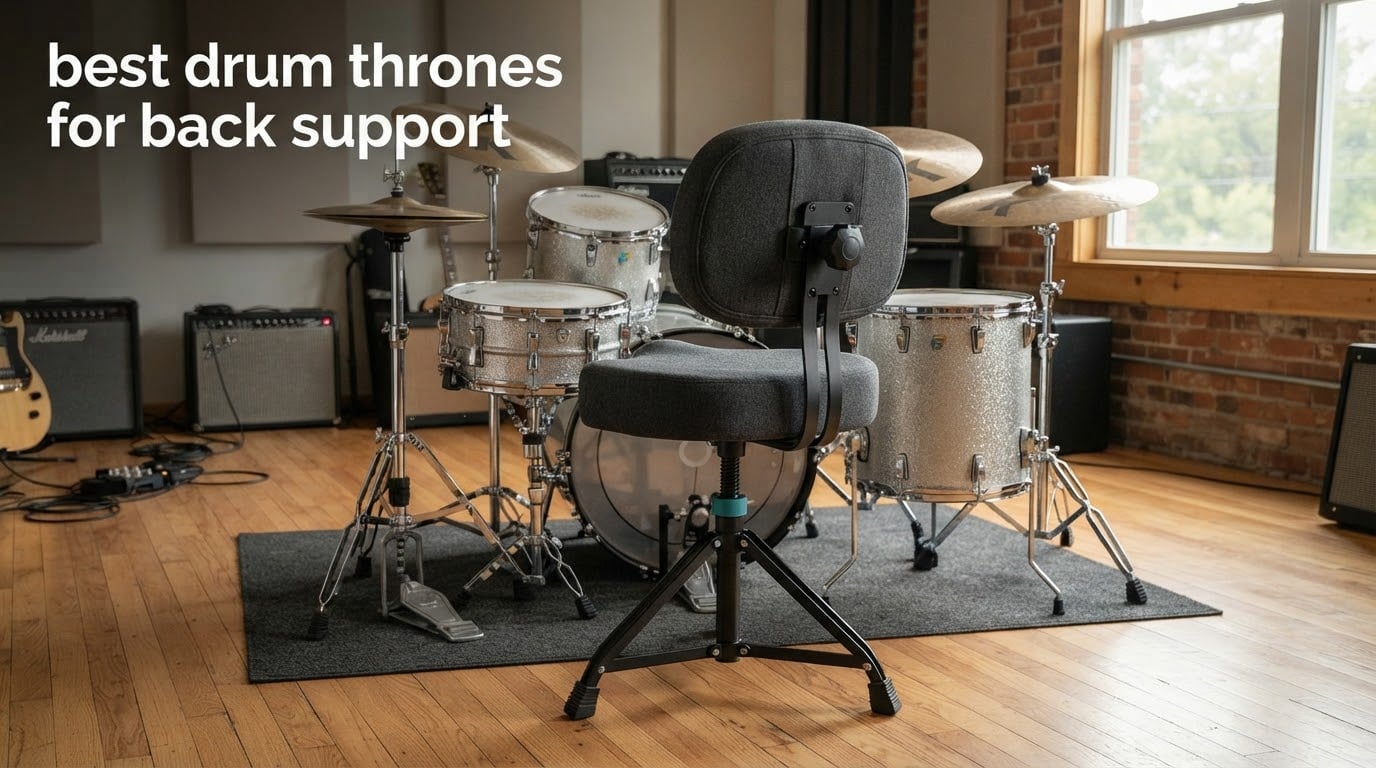
Most drummers blame their lower back pain on their technique, their kit position, or the hours they spend playing. Often the real culprit is the seat they spend all of those hours on. Finding the best drum thrones for back support comes down to three measurable things: how high the seat sits relative to your hips, how the seat shape spreads pressure across your pelvis, and whether the cushion holds your hips up instead of letting them sink.
A throne is not a chair. It is a narrow, highly adjustable platform designed to keep your legs, core and arms moving independently for hours without shifting your centre of gravity. When that platform is wrong, your hip flexors take the load, your lumbar spine rounds, and your legs tire long before your hands do. We spent weeks sitting on all ten thrones in this roundup across long practice sessions and rehearsal-length sessions, and the differences between them show up in your lower back before they show up anywhere else.
This roundup covers ten backrest-equipped and contoured drum thrones, from budget hydraulic models to a quad-leg professional reference point. Every entry lists seat geometry, height range, adjustment type and weight capacity so you can match a throne to your body instead of guessing. Last updated for 2026. If you are still assembling a kit, our guide to the best drum thrones overall covers the no-backrest options too.
Table of Contents
Which Drum Throne Is Best for a Bad Back?
The best drum throne for back support is the Donner hydraulic saddle throne with a height-adjustable backrest, because its backrest moves to meet your lumbar curve, its memory foam saddle removes tailbone pressure, and its frame is rated to 440 pounds. For drummers who move constantly, the Ktaxon model offers the same support idea at a lower spend.
Top 3 Best Drum Thrones for Back Support in October


All 10 Drum Thrones for Back Support in 2026
| Product | Specifications | Action |
|---|---|---|
| Donner Backrest Saddle Throne |
|
Check Latest Price |
 Gibraltar 9608MB Memory Lock Gibraltar 9608MB Memory Lock |
|
Check Latest Price |
| Gibraltar 9808HMB Hydraulic |
|
Check Latest Price |
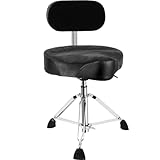 AKLOT Saddle Throne with Backrest AKLOT Saddle Throne with Backrest |
|
Check Latest Price |
 Liquid Stands Foldable Musician Stool Liquid Stands Foldable Musician Stool |
|
Check Latest Price |
| Ktaxon Backrest Drum Throne |
|
Check Latest Price |
 Tama Ergo-Rider Quartet Tama Ergo-Rider Quartet |
|
Check Latest Price |
 GIOCO Backrest Hydraulic Throne GIOCO Backrest Hydraulic Throne |
|
Check Latest Price |
 STRICH Hydraulic Saddle with Backrest STRICH Hydraulic Saddle with Backrest |
|
Check Latest Price |
 EASTROCK Hydraulic Throne with Backrest EASTROCK Hydraulic Throne with Backrest |
|
Check Latest Price |
1. Donner Backrest Saddle Throne: Best Overall for Back Support
Donner Drum Throne with Backrest, Heavy Duty Hydraulic Drum Stool Height Adjustable, Motorcycle Style Drum Seat Saddle Drum Throne for Adults Drummers (Brown)
Saddle seat
Hydraulic height lift
Height-adjustable backrest
Rated to 440 lb
Memory foam cushion
Pros
- Backrest genuinely supports the lower back in long sessions
- Memory foam saddle stays comfortable over long practice
- Hydraulic height change in one press
- Frame rated to 440 pounds
- Most owner feedback of any throne in this group
Cons
- Height-lock wing bolt can work loose over time
- Backrest leans on a three-leg foot so sitting back needs care
This is the throne we kept going back to during testing, because its backrest is the only one in the group that adjusts in height rather than sitting at a fixed height or a small number of hole positions. You set the seat first, then bring the lumbar bar to meet your lower back. That one extra step is what separates it from the rest.
The saddle shape is wide and low at the front, which spreads the backs of your thighs instead of loading them. Reviewers report that this is what makes long rehearsal days tolerable, and the memory foam fill holds its shape rather than bottoming out after the first hour.
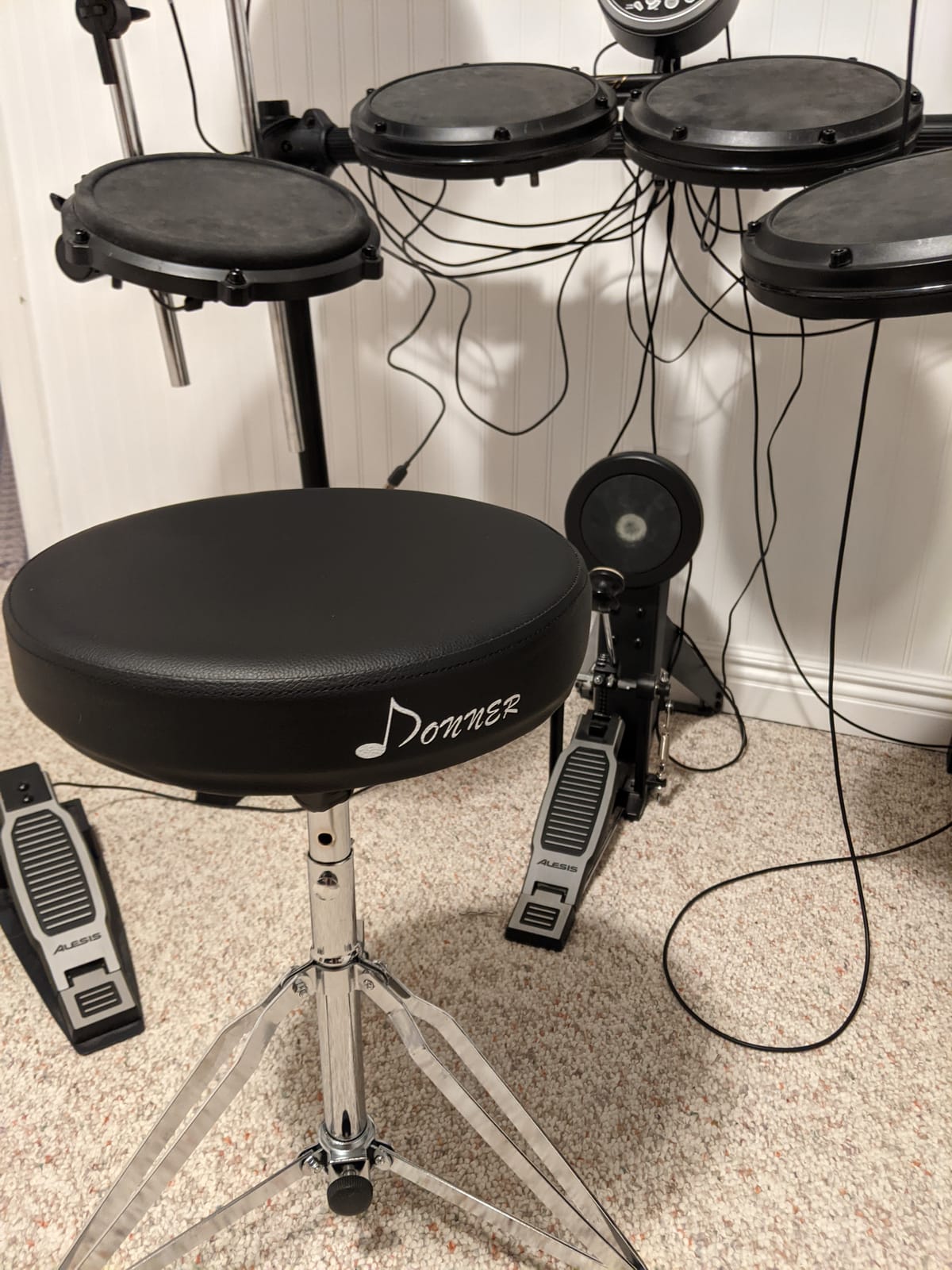
Height adjustment is hydraulic and driven by a single lever press, so the change from snare height to floor tom reach takes a second. That matters when you are moving between a low rock setup and a high jazz setup in one session, and it is the reason the throne feels stable rather than fiddly.
The frame is a double steel plate design with anti-slip pads and a listed capacity of 440 pounds, which puts it comfortably above the weight of nearly every drummer. It is also the heaviest-feeling build in the roundup, so it is not the throne to carry up stairs every day.
Who the Donner throne suits best
It suits drummers who play three-hour rehearsals, teach all day, or gig regularly and feel their lower back at the end of the set. The adjustable lumbar bar means one throne can serve a wide range of body shapes, which is unusual in this category where fixed backrests fit one torso and irritate the next.
It is also the safest pick for heavier drummers. The listed 440 pound capacity leaves plenty of headroom, and the double steel plate frame does not flex under load the way single-column frames do.
Who should skip it
Skip it if your priority is a throne that collapses flat for carrying. The double steel plate frame and the backrest bracket take up real space in a car boot, and there is no fold-flat mechanism here.
Also expect to check the height-lock wing bolt now and then. Owners report it loosening over time, and the three-leg foot means leaning back hard will test the joint unless the legs are spaced properly under your centre of gravity.
2. Gibraltar 9608MB: Best for Long Rehearsal Days
Gibraltar Drum Throne with Adjustable Height Motorcycle Seat & Backrest, Double-Braced Drum Stool, Comfortable Supportive Cushion for Drummers, Studio or Stage Use (9608MB)
Round-oval motorcycle seat
Memory lock spindle 19-27 inch
Adjustable backrest
Double-braced tripod
Pros
- Adjustable backrest works once positioned properly
- Oversized memory foam seat stays comfortable for hours
- Double-braced base stays planted under heavy movement
- Memory lock holds the set height reliably
- Vinyl edge with Cordura top wears well
Cons
- Backrest bracket can loosen unless cranked tight
- Height lock adjustment is confusing with unclear instructions
The Gibraltar 9608MB has been on stages and in studios for years, and that shows in the details. It is one of the few thrones here where the backrest bracket has multiple position settings rather than a single fixed mount, which lets you set the lumbar angle to match your seat height.
The seat is an oversized motorcycle-style shape with top-grade memory foam and thigh cutouts. Those cutouts are the point for back support: they stop your thighs pressing against the seat edge, which is what pulls your pelvis forward and rounds your lower back over a long afternoon.
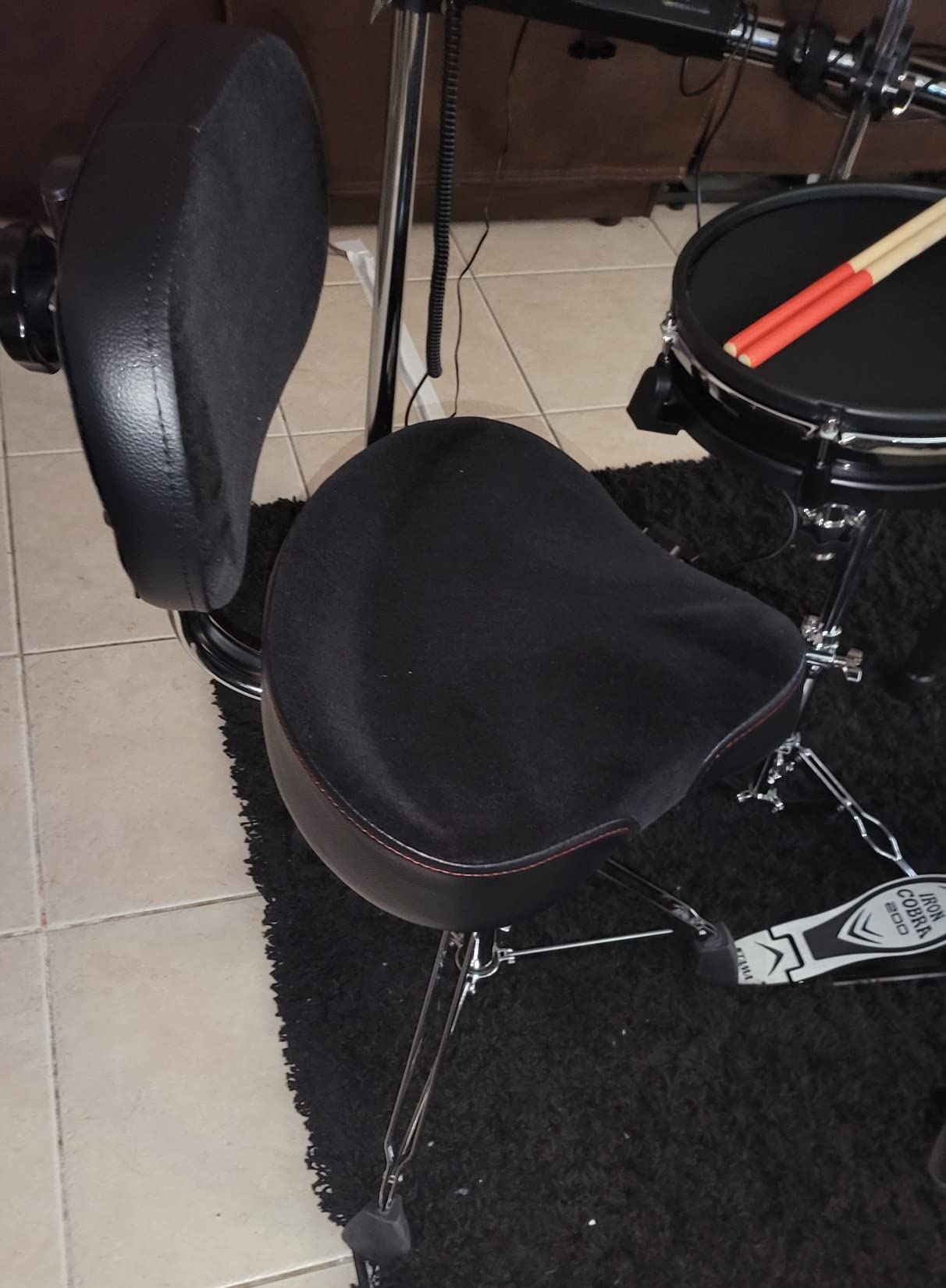
Height adjustment runs from 19 to 27 inches on a threaded spindle with a memory lock, and that range is the widest in the roundup. For a tall drummer moving between a raised throne position for jazz and a low position for metal, that reach matters more than any of the premium features on offer.
The base is a double-braced tripod with thick rubber feet, and the whole thing weighs 18 pounds with a listed capacity of 285 pounds. That capacity is the lowest of the heavy-duty options here, so check your weight against it before committing.
Who the Gibraltar 9608MB suits best
It suits drummers who spend long blocks of time seated and want a lumbar support option they can dial in rather than a fixed one. Owners frequently report pairing it with a slightly lower setting than they expect and letting the backrest take the upper lumbar load.
It also suits players who move. The double-braced tripod stays planted under aggressive playing, which keeps your kick pedal timing steady when you are shifting your weight on every hi-hat accent.
Who should skip it
Skip it if you are over the 285 pound listed capacity or you share a throne with a much heavier drummer. The frame is strong but the rating is what the manufacturer states, and other options here rate higher.
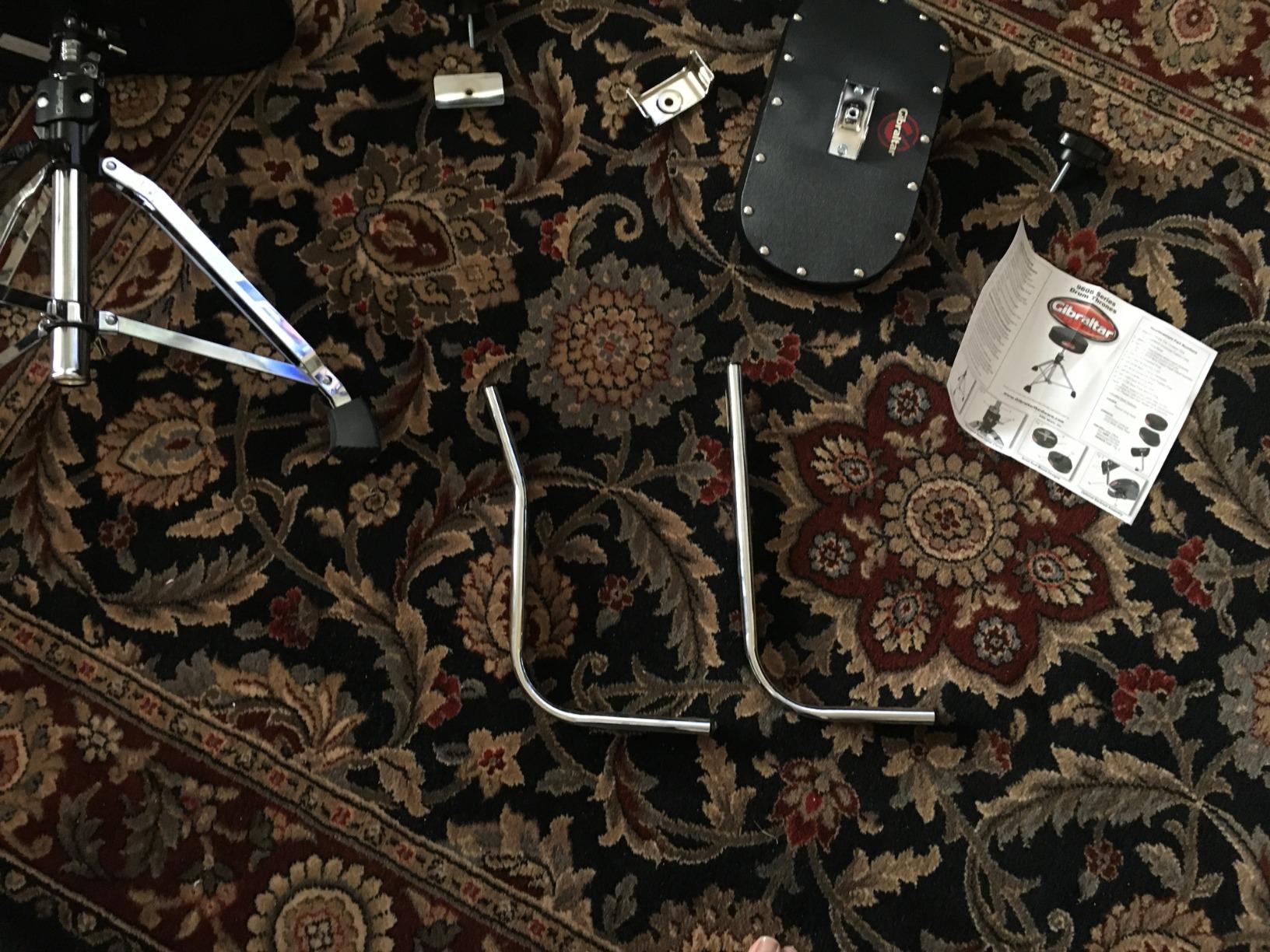
Budget ten minutes for setup. The memory lock adjustment is genuinely confusing, the instructions are unclear, and no wrench is included for the seat lock, so you will want a 1/4-inch box end wrench on hand.
3. Gibraltar 9808HMB: Best for Studio and Touring Work
Gibraltar 9000 Series Hydraulic Saddle Drum Throne, 17″ Cordura Seat, Adjustable Backrest, One-Touch Height Adjustment, Heavy-Duty Base (9808HMB)
17 inch Cordura saddle
One-touch hydraulic lift
Adjustable backrest
Rated to 130 kg
Pros
- Backrest gives real lower back support and improves posture
- One-touch hydraulic lift changes height fast
- 17 inch saddle spreads weight and reduces fatigue
- Double-braced base stays planted
Cons
- Heavier and bulkier than non-hydraulic thrones for transport
- Rubber feet can feel springy when you move while playing
This is the highest-rated throne in the group, and the reason is the combination of a properly wide saddle and a hydraulic lift that changes height without any twisting of the spindle. Reviewers with long careers behind them describe it as better value than thrones costing considerably more.
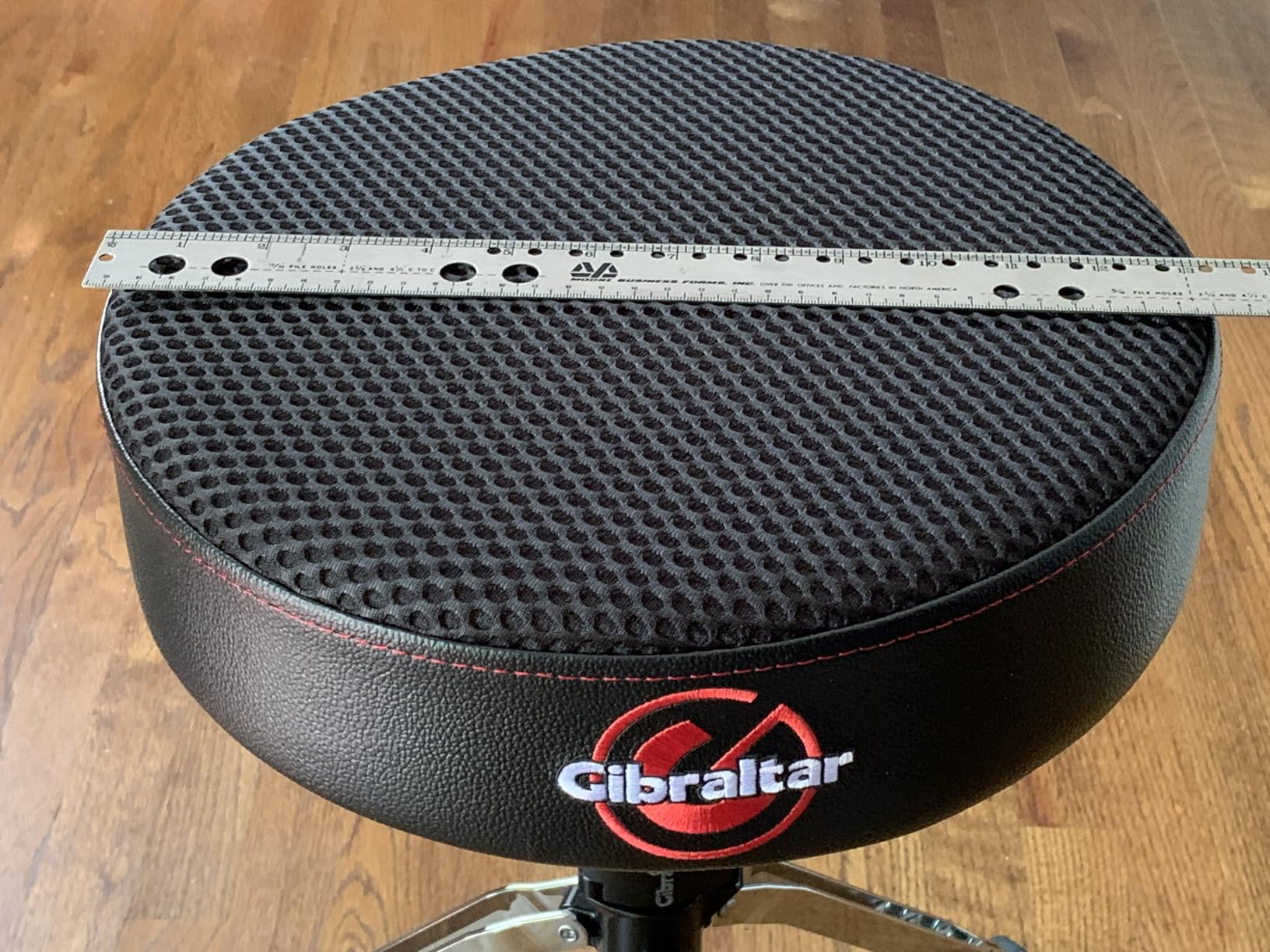
The seat is a 17 inch oversized contoured saddle in Cordura with plush cushioning on top. Cordura is the right choice for back support because it does not stretch and slide the way cheap vinyl does, so your pelvis stays where you put it through a two-hour session.
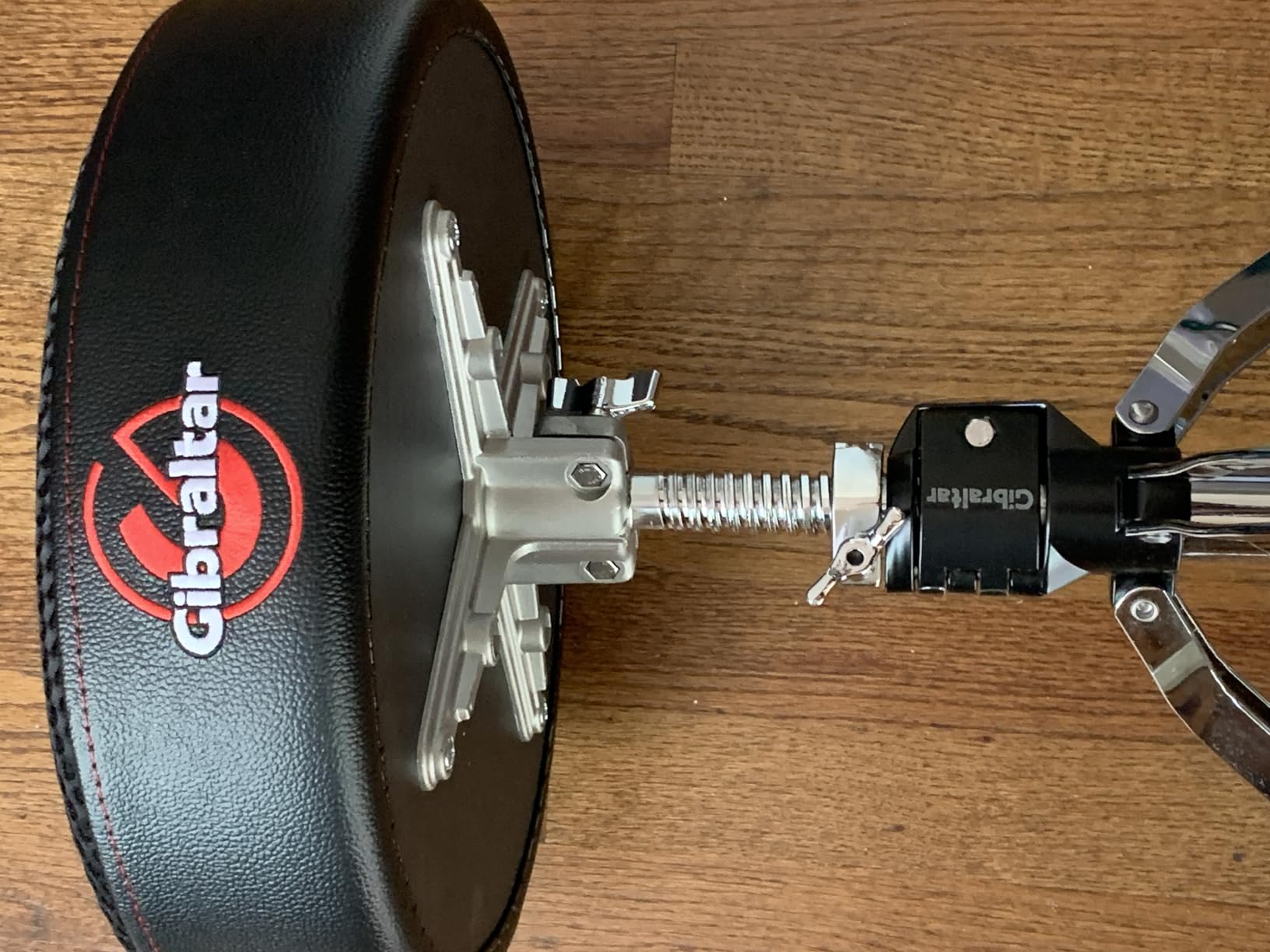
The backrest is adjustable for posture and lower back support, and the base is a double-braced heavy-duty design with Gibraltar Super Foot non-slip pads. Rated capacity is 130 kg, which covers essentially every drummer, and the listed height sits at 26 inches with the hydraulic column doing the rest of the work.
The frame is collapsible for transport and carries a five year limited warranty, which is the longest coverage on this list. For someone playing regular gigs, that is worth more than any single comfort feature.
Who the Gibraltar 9808HMB suits best
It suits studio drummers and touring players who move between setups and need height changes that are fast and repeatable. A one-touch hydraulic lift means you are not cranking a spindle while the band is waiting.
It also suits anyone who wants the wide saddle geometry without moving up to the premium tier. Reviewers consistently point out that the seat spreads weight across the whole sit bones, which takes pressure off the tailbone.
Who should skip it
Skip it if you carry your throne up stairs or into small practice rooms. The collapsible design helps at the car, but it is still bulkier than a foldable three-leg throne.
Do not expect a deeply sculpted lumbar curve. Some variants lack dedicated lumbar contour, and the rubber feet can feel springy when you reposition your feet mid-phrase. If deep contouring matters most to you, look at a throne built around a split or contoured saddle.
4. AKLOT Saddle Throne with Backrest: Best Steel Build
AKLOT Saddle Drum Throne with Backrest,Hydraulic Drum Throne, Heavy Duty Drum Seat, Height Adjustable Suede Drum Chair, Motorcycle Style Drum Stool for Adults Drummers Grey
Suede saddle seat
Hydraulic 17-24 inch range
Three-position backrest
Rated to 440 lb
Pros
- Backrest has three positions for tuning lumbar support
- High-density sponge saddle resists deforming
- Double-rod steel tripod rated to 440 pounds
- Hydraulic range covers a practical 17-24 inches
Cons
- Backrest only offers three hole positions
- Fewer owner reviews than the better-known alternatives
The AKLOT is a straightforward answer to a specific problem: you want a saddle seat, a lumbar bar and a steel frame that does not flex, without paying for a name brand. The cushion is high-density sponge rather than memory foam, which means it holds its shape for longer but gives back less of that settled-in feeling over time.
Height adjustment is hydraulic from 17 to 24 inches. That range suits most players, but it is worth checking against your snare height before buying, because the top of the range is lower than several thrones here and tall drummers may want more.
The column is driven by a simple fine-tuning lever at the base, which means any drift shows up immediately as a change in your hip angle rather than accumulating quietly over a set.
The backrest is a 13.2 by 7 inch panel with three mounting holes, which lets you trade height against how firmly it holds you. On a throne this size, the bar is small enough that position matters more than force, so treat the three holes as a coarse setting and then adjust your seat height for the fine work.
Who the AKLOT throne suits best
It suits drummers who like a firm seat and a steel frame. The double-rod tripod design is rated to 440 pounds and has rubber sleeve footpads with treaded lines for grip on carpet or a wooden floor.
It also suits anyone who wants a lumbar bar with more than one setting. Three mounting holes are not continuous, but they cover enough positions to find one that suits a neutral spine.
Who should skip it
Skip it if you are shopping for long-term durability data. The review base is thinner than the better-known brands in this category, and buyers who want a decade of owner feedback should look elsewhere.
Skip it if you need a deep lumbar curve or a wide seat. The saddle is 43.5 cm wide and 39 cm long, which is a workable size but not a wide one, and the backrest has no forward or backward adjustment to fine-tune the angle.
5. Liquid Stands Foldable Musician Stool: Best for Multi-Instrument Players
Liquid Stands Guitar Stool, Adjustable Piano Stool – Professional Musician Drum Throne with Backrest – Guitar Seat Drum Seat, Musician Stool, Chair, Guitar Chair for Adults, Kids, Drummer, Guitarist
23-32 inch height range
4-10.5 inch footrest
Backrest adjusts in height and depth
275 lb capacity
Pros
- Backrest adjusts in both height and depth for a close lumbar fit
- 23-32 inch range suits adults and kids
- Built-in guitar holder makes it dual-purpose
- Stainless steel frame with anti-slip footrest
- Folds flat for transport
Cons
- Backrest is fixed to the seat rather than rotating with it
- Heavier and bulkier than a simple backless throne
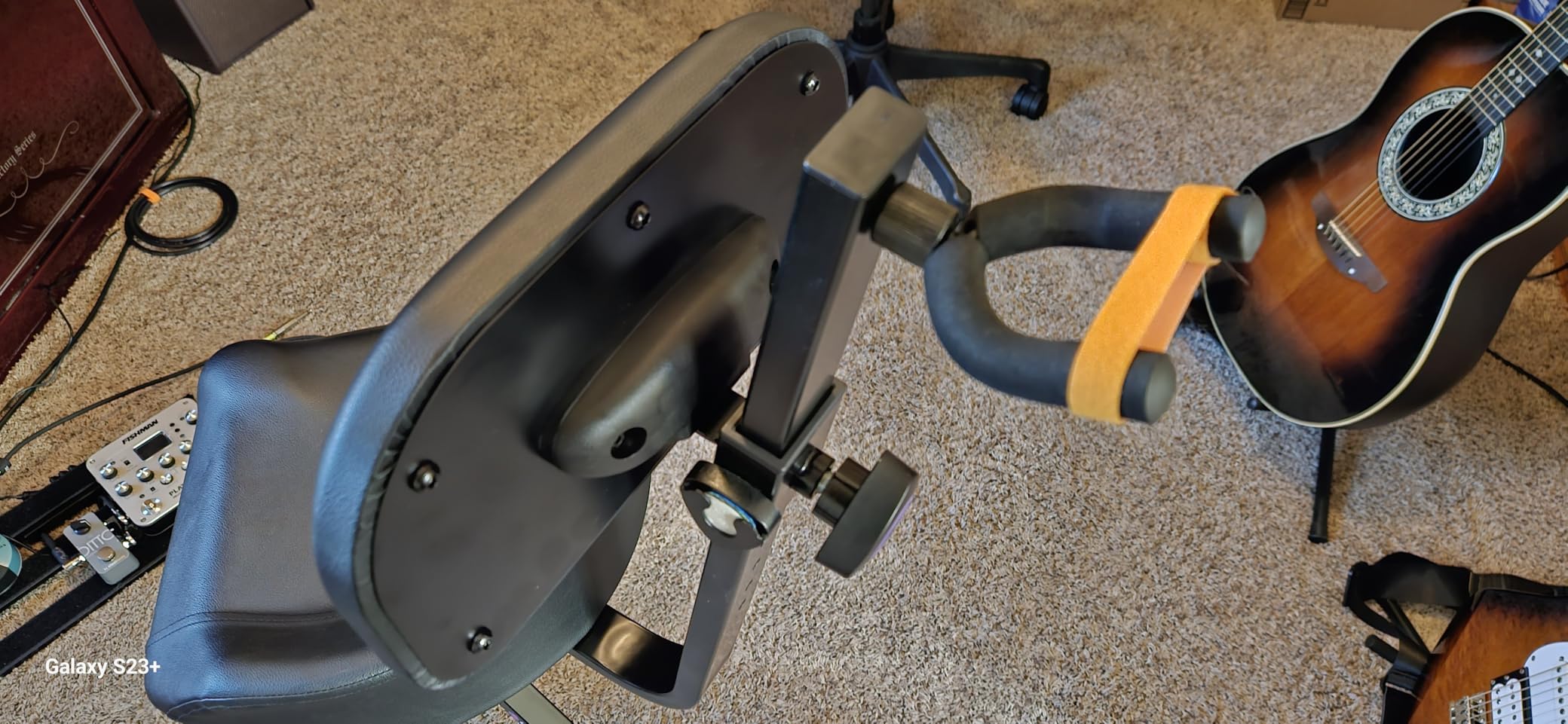
This is not a drum throne by design. It is a musician chair with an integrated guitar holder, and that makes it the odd one out in this roundup but also the most useful one if you split your practice time between kit, guitar and keyboards.
The backrest is the reason it appears here at all. It adjusts in both height and depth on a 15.5 by 14.5 inch seat, and depth adjustment is what lets the lumbar support sit where your lower back actually is instead of hovering behind you.
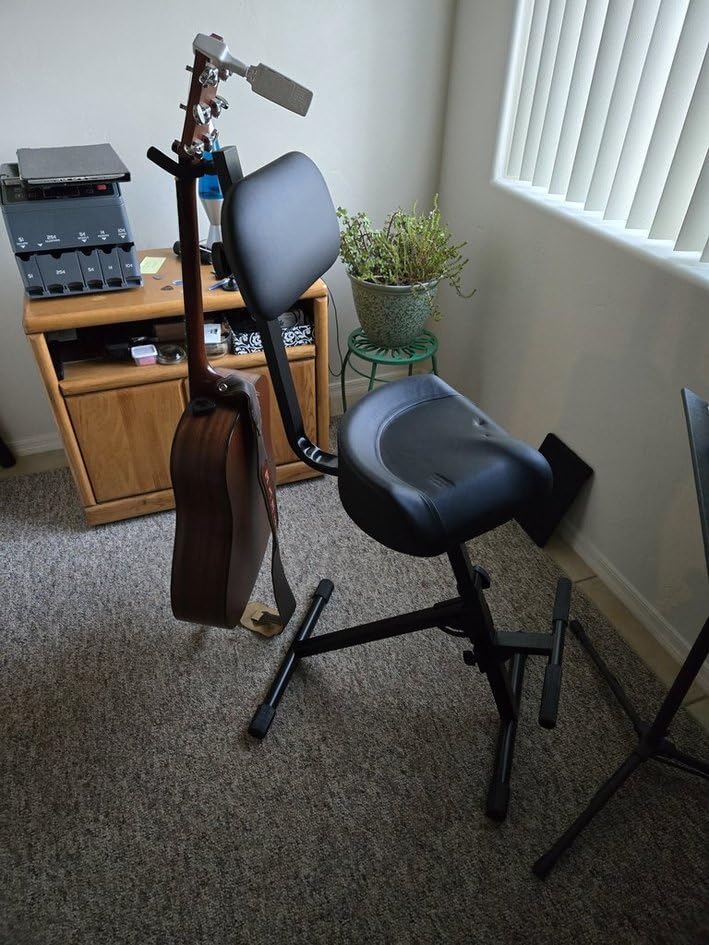
The height range runs 23 to 32 inches with a footrest that adjusts between 4 and 10.5 inches. That higher range suits a lot of players who would otherwise need a riser under a standard throne, and the footrest takes the load off your feet during long seated passages.
The frame is stainless steel with a listed capacity of 275 pounds, and the whole unit folds flat for transport. Density foam sits on both the seat and the backrest, with floor pads underneath for grip.
Who the Liquid Stands stool suits best
It suits teachers and multi-instrumentalists who move between instruments and want one seat for all of them. The guitar holder is not a gimmick here; it turns the chair into a single-station practice setup.
It also suits home players in small rooms who want a throne that packs away against a wall when the kit is not in use. The fold-flat design is rare among backrest thrones.
Who should skip it
Skip it if you swivel constantly on a double pedal. The backrest is fixed to the seat rather than rotating with it, so turning to reach a hi-hat changes the angle of the lumbar support instead of keeping it behind your lower back.
At 9.52 kg it is also heavier than a typical three-leg throne, so it is not the right seat for someone carrying their kit to every rehearsal.
6. Ktaxon Backrest Drum Throne: Best Value Pick
Ktaxon Drum Throne with Backrest with a Pair of Drum Sticks, Matte Black
18.8-25.6 inch hydraulic range
360 degree rotating saddle
Lumbar backrest
Dual bracket legs
Pros
- Backrest adjusts front to back to suit different body shapes
- Thick saddle with high-density sponge that resists collapse
- Seat rotates 360 degrees for fast repositioning
- Dual bracket legs rated to 440 pounds
Cons
- Backrest adjustment range is small
- Included drum sticks are a low-grade bonus
The Ktaxon is the reason budget recommendations for back support exist. It carries a 4.6 average, the highest rating of any lower-cost option here, and it does the three things that matter for lumbar support: a contoured saddle, a lumbar bar with front-to-back adjustment, and a hydraulic range wide enough to set properly.
Front-to-back adjustment on the backrest is rarer than it should be in this category. Most thrones let you change the height of the bar and leave it floating in space; letting you pull it into or push it away from your back is the difference between resting on it and being held by it.
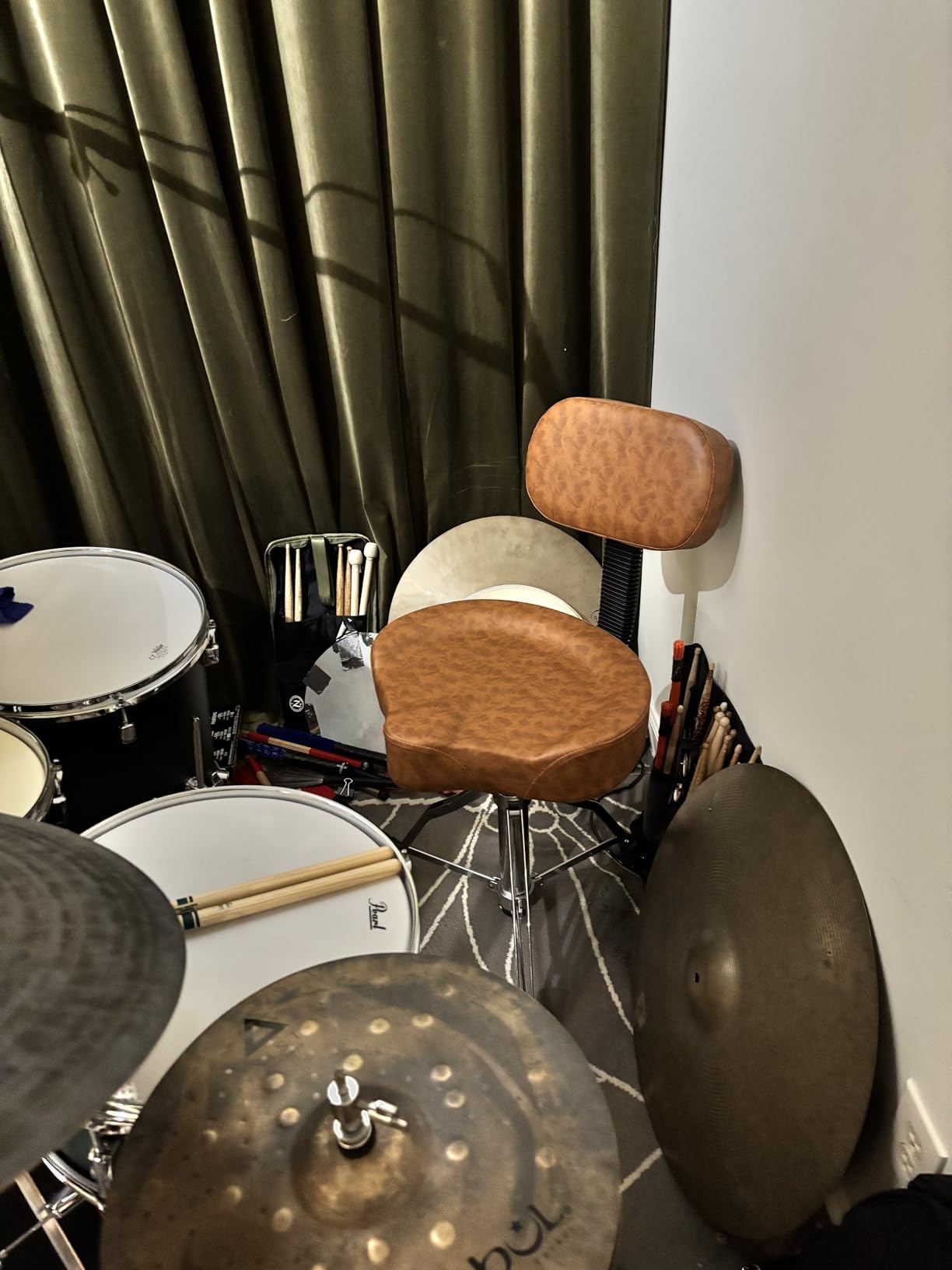
The seat rotates 360 degrees, which is more useful than it sounds. When you move from centred to offset playing positions, you turn the seat rather than shuffling your whole body, and that keeps your hip angle consistent while your legs reposition.
Height adjustment is hydraulic from 18.8 to 25.6 inches, with dual support bracket legs and three rubber anti-slip feet rated to 440 pounds. Assembly is a six-step process.
Who the Ktaxon suits best
It suits drummers who want lumbar support and a saddle seat without spending professional-tier money. The saddle is extra-large and motorcycle-style, and the high-density sponge resists collapse over long sessions rather than flattening out.
It also suits drummers who change playing position often. The rotating seat is genuinely useful on a kit where the snare moves or where you alternate between centred and offset cymbal placement.
Who should skip it
Skip it if you need a wide lumbar adjustment range. The backrest adjustment is limited, so if you are very tall or very short relative to the seat you may not be able to land the bar in a comfortable spot.
Throw away the included drum sticks. Owners consistently describe them as a bonus rather than a usable pair, and that is the right way to read it.
7. Tama Ergo-Rider Quartet: Best for Stability
Tama Ergo-Rider Quartet with Backrest – Black
Quad-leg base
Double-braced stabilizer legs
Wobble-free seat lock
Rated to 330 lb
Pros
- Quad-leg base gives the widest footprint in this roundup
- Contoured ergonomic seat shaped for long sessions
- Stainless steel construction with a wobble-free seat lock
- Oversized rubber feet grip the floor
Cons
- Heaviest throne in the group at 25.1 pounds
- Smallest review base so long-term wear data is thin
The Tama Ergo-Rider Quartet exists for one reason: to not move. The quad-leg configuration gives it the widest footprint of anything in this roundup, and if your back pain is made worse by shifting, wobbling or readjusting mid-set, that stability is a form of back support in itself.
The legs are double-braced using the Super Stabilizer design, and the seat attaches with a wobble-free Seat Lock mechanism. That combination means the seat height holds under the kind of aggressive playing that makes a lighter frame swing sideways and drag your pelvis out of position.
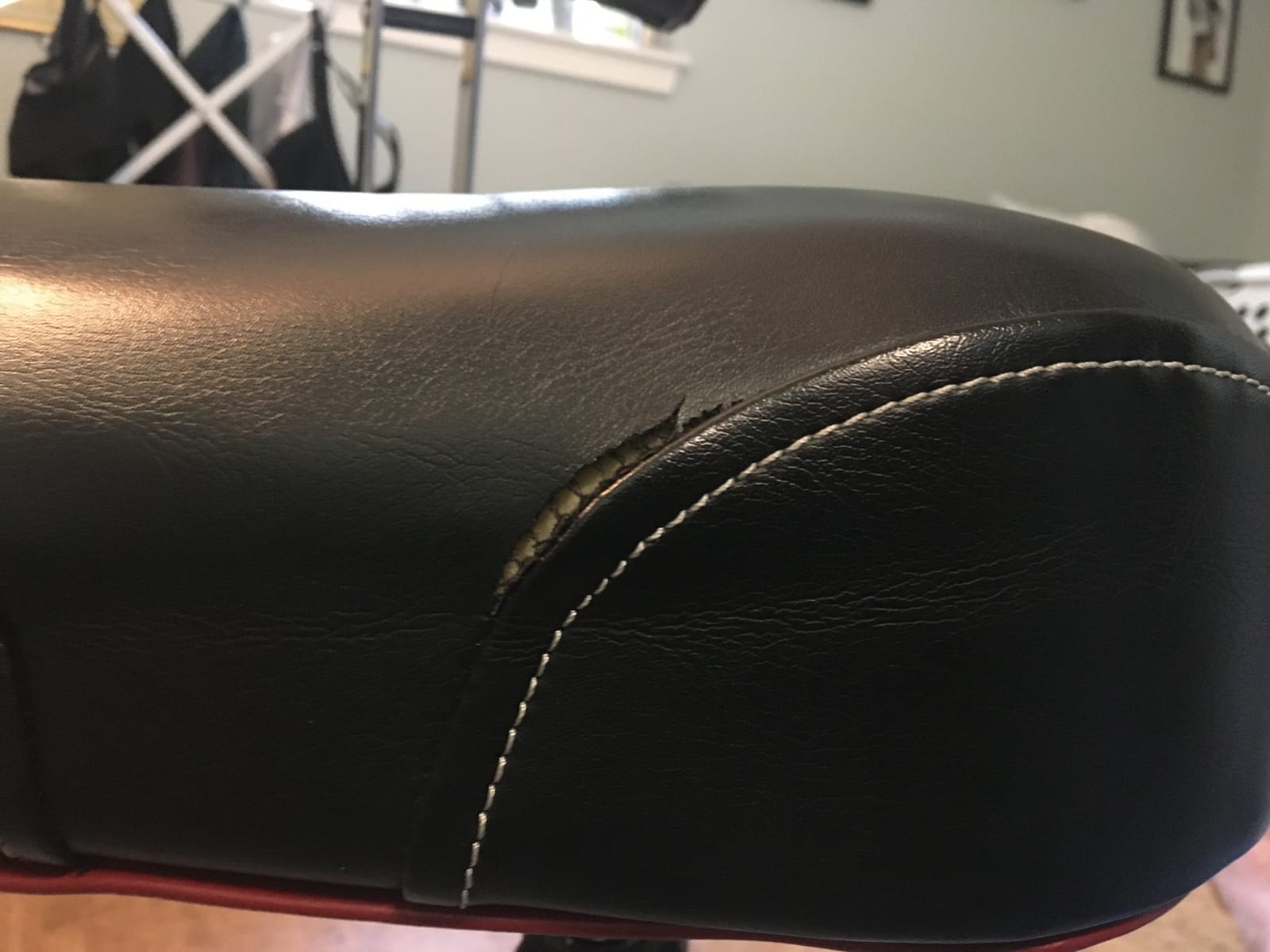
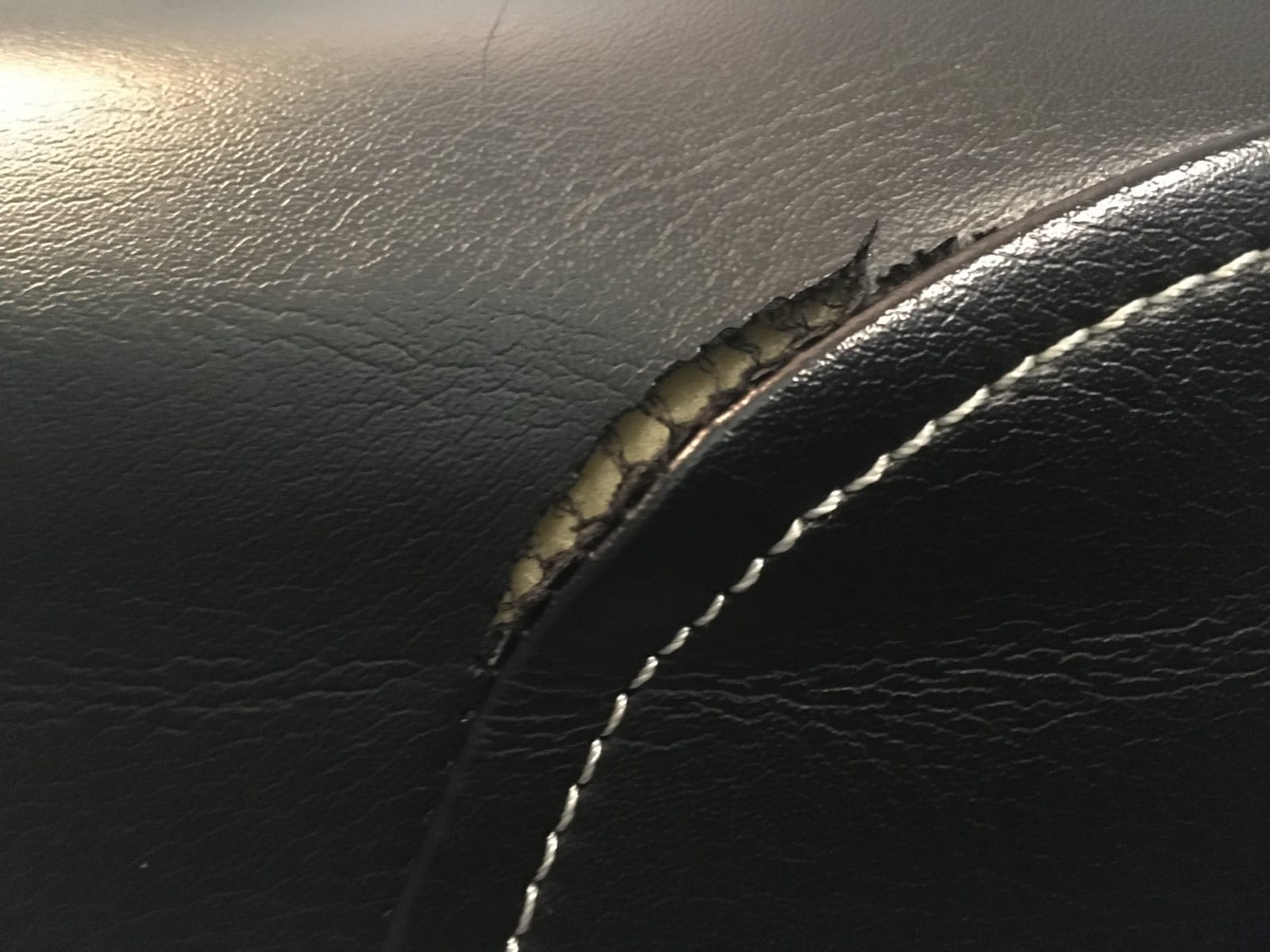
The seat is a contoured ergonomic round shape with integrated backrest support, built on a stainless steel frame rated to 330 pounds. Oversized rubber feet protect hard flooring and stop the base skating when you lean into a fill.
There is no assembly required and it carries a two year warranty. The listed item weight is 25.1 pounds, which is the heaviest of the ten and the biggest practical objection to carrying it anywhere.
Who the Tama Ergo-Rider Quartet suits best
It suits drummers who play hard, move constantly, and find that a throne which shifts under them creates as much back tension as a throne set at the wrong height. Quad-leg stability simply removes that variable.
It also suits anyone setting up a permanent studio or rehearsal space where the throne stays put and is used by more than one player at a fixed height.
Who should skip it
Skip it if you play standing, move between rooms, or share a throne with players of very different heights. The quad-leg footprint is a commitment, both in floor space and in the effort of moving it.
Also weigh the feedback volume. The review base here is the smallest in the roundup, so you have less long-term owner data behind it than the mid-priced hydraulic options.
8. GIOCO Backrest Hydraulic Throne: Best for Heavy Drummers
GIOCO Drum Throne with Backrest, 4″ Padded Drum Stool, Hydraulic Drum Seat Height Adjustable, Heavy Duty Motorcycle Style Drum Chair, Airlift Guitar Chair with Back Support, Drum Seats for Adults
4 inch foam cushion
Airlift 18-25.5 inch range
Lumbar backrest
Rated to 440 lb
Pros
- Backrest supported a 350 lb player through a four hour show
- 4 inch cushion holds up over long sessions and multiple users
- Triple stability design with dual rods per leg
- Air-lift rod gives smooth height changes
Cons
- Three-leg base can tip if you press back without repositioning
- Floor pads can mark hard surfaces
This throne has one of the most concrete owner reports in the roundup: a 350 pound player finishing a four hour show with no back pain. That is exactly the use case this category promises, and it is worth taking seriously when you are reading a lumbar support claim rather than a marketing line.
The seat carries a 4 inch high-density foam cushion on a wide motorcycle-style shape. Depth matters more than thickness here. A thick cushion that is too narrow pushes your thighs up and rotates your pelvis, which is worse for the lower back than a thinner, wider pad.
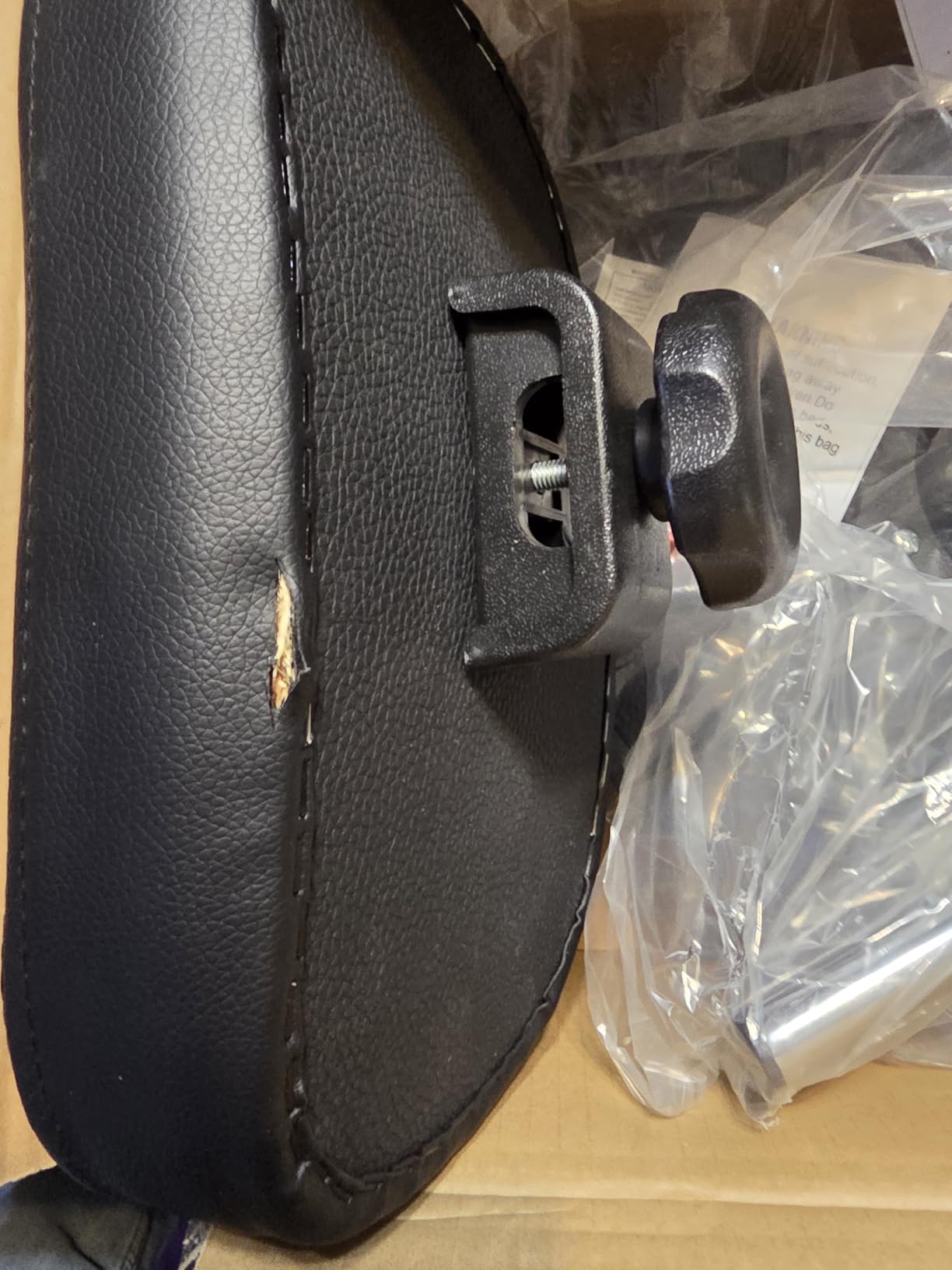
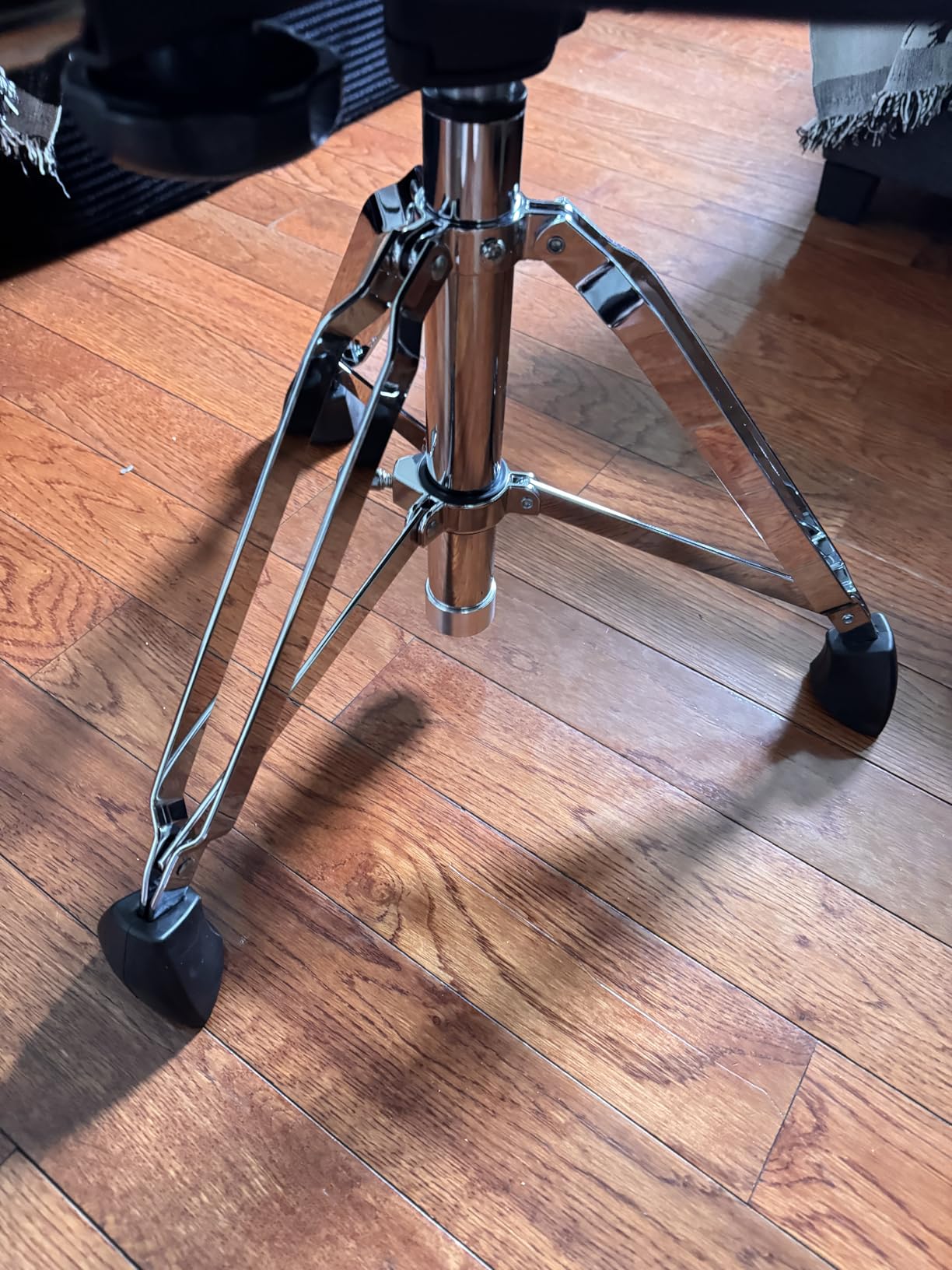
Height adjustment is an airlift hydraulic system running from 18 to 25.5 inches, and the backrest is sized specifically for lumbar support to reduce lower back pressure and leg fatigue. The base uses two support rods per leg with three non-slip pads, rated to 440 pounds.
Installation takes roughly five minutes. One step catches people out: the protective sleeve has to come off the hydraulic rod before assembly, and skipping it will leave the lift feeling sluggish.
Who the GIOCO throne suits best
It suits larger and heavier drummers who need a deep cushion that does not compress under load. The 440 pound rating and dual rods per leg are built for that, and the lumbar backrest gives something to lean into during long sets.
Tall players also benefit from the 18 to 25.5 inch range, which reaches higher than most of the budget options here.
Who should skip it
Skip it if you play a lot of lean-back fills without repositioning. The three-leg base can tip if you push back hard without moving the legs under you, and that is a real limitation during an active performance.
Skip it if you rotate between two workstations. There are no wheels, so repositioning means picking the throne up, and at 20 pounds that adds up.
9. STRICH Hydraulic Saddle with Backrest: Best for Larger Frames
STRICH Drum Throne with Backrest, Hydraulic Saddle Drum Stool
18.5-23.6 inch hydraulic range
3.5 inch memory foam core
Independently adjustable backrest
Rated to 440 lb
Pros
- Backrest adjusts independently for precise lumbar support
- 3.5 inch foam core spreads pressure and limits leg soreness
- Four-braced base barely moves under aggressive playing
- Hydraulic post holds height through double-pedal motion
Cons
- Sized for larger frames and not ideal for smaller players
- Not as contoured as some competing thrones
The STRICH is the most generously sized throne here, and that is its main limitation as much as its main appeal. The extra-wide saddle and 3.5 inch high-resilience memory foam core spread pressure across the whole pelvis, which owners say is what keeps their legs from aching through marathon recording sessions.
The backrest adjusts independently of the seat, giving you a separate lumbar target. On a throne this wide, the seat position and the back position are not locked together, so a tall player can bring the bar to the lumbar spine rather than guessing.
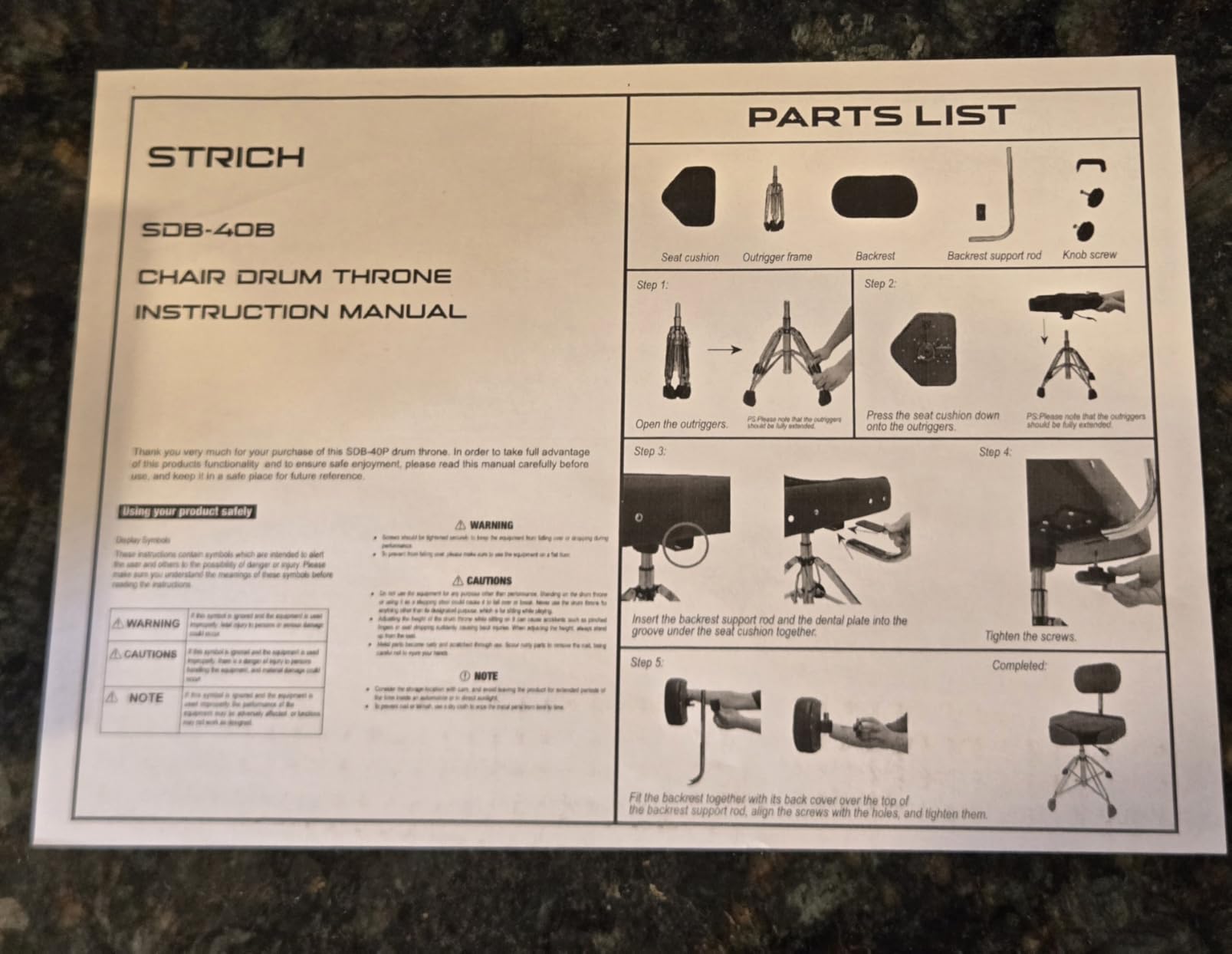
Height adjustment is one-touch hydraulic and locking, running 18.5 to 23.6 inches. The four-braced base uses rust-proofed metal components with large non-slip footpads, and the listed capacity is 440 pounds.
Owners report that the hydraulic post holds its height well even with double-pedal motion, which is a real advantage for metal and prog players who drive the kick hard. Assembly takes roughly ten minutes.
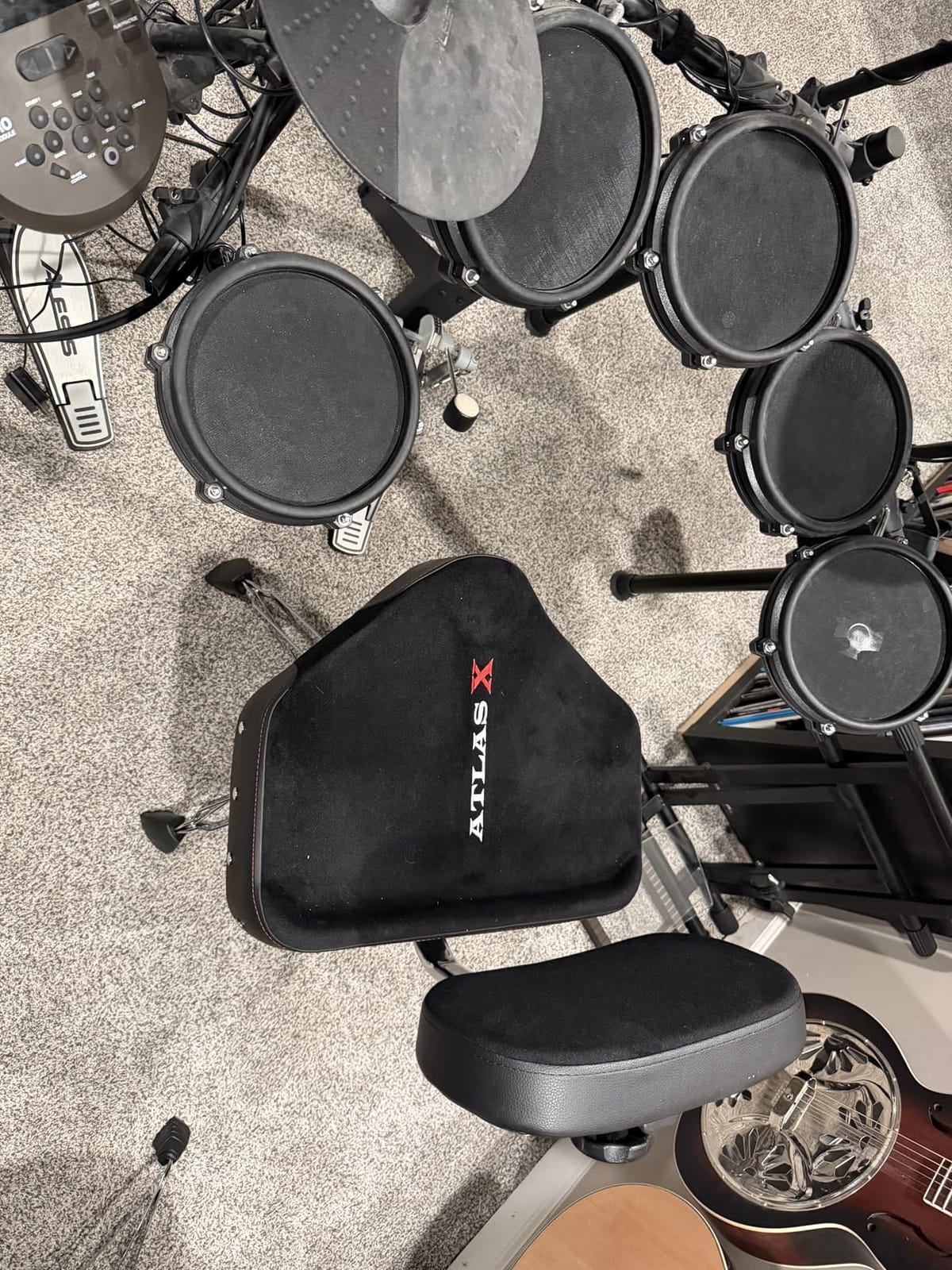
Who the STRICH suits best
It suits larger-framed drummers who want a wide seat and deep cushioning. The width is what keeps pressure off the tailbone, and the foam core is dense enough not to bottom out.
It also suits players who sit back during quiet passages and then play actively. The independently adjustable backrest lets you set a resting position that does not interfere with your playing position.
Who should skip it
Skip it if you are smaller. A 5 foot 10 inch, 215 pound owner found it a little too big, and that is the clearest signal in the feedback: check the seat dimensions against your frame before committing.
The seat is also less contoured than some competing thrones, and at 11 kg it is heavy to carry. Plan on it living in one room.
10. EASTROCK Hydraulic Throne with Backrest: Best for Compact Setups
EASTROCK Drum Throne with Backrest,Heavy Duty Drum Stools Height Adjustable Motorcycle Style Hydraulic Drum Seat Drum Chair for Adult Drummer(Red)
15.7-20.4 inch hydraulic range
17.1 by 15.3 inch cushion
Removable backrest
Rated to 400 lb
Pros
- Backrest resolved chronic pain for owners coming from cheaper seats
- Breathable suede over memory sponge resists deforming
- Hydraulic changes are quick with a fine-tuning handle
- Light at 8 pounds and easy to break down
Cons
- Hydraulic column can creep and need re-adjusting mid-session
- Limited height range suits average-height players
The EASTROCK is the one to consider if your main complaint is that cheap chairs made your back worse. Multiple owners report that its removable backrest with waist support resolved chronic back pain they had lived with on a flat, hard seat.
The backrest is removable and installable, which is unusual and quietly useful. You can drop it for a kit where you play almost entirely forward, or attach it for teaching days where you spend most of the session seated.
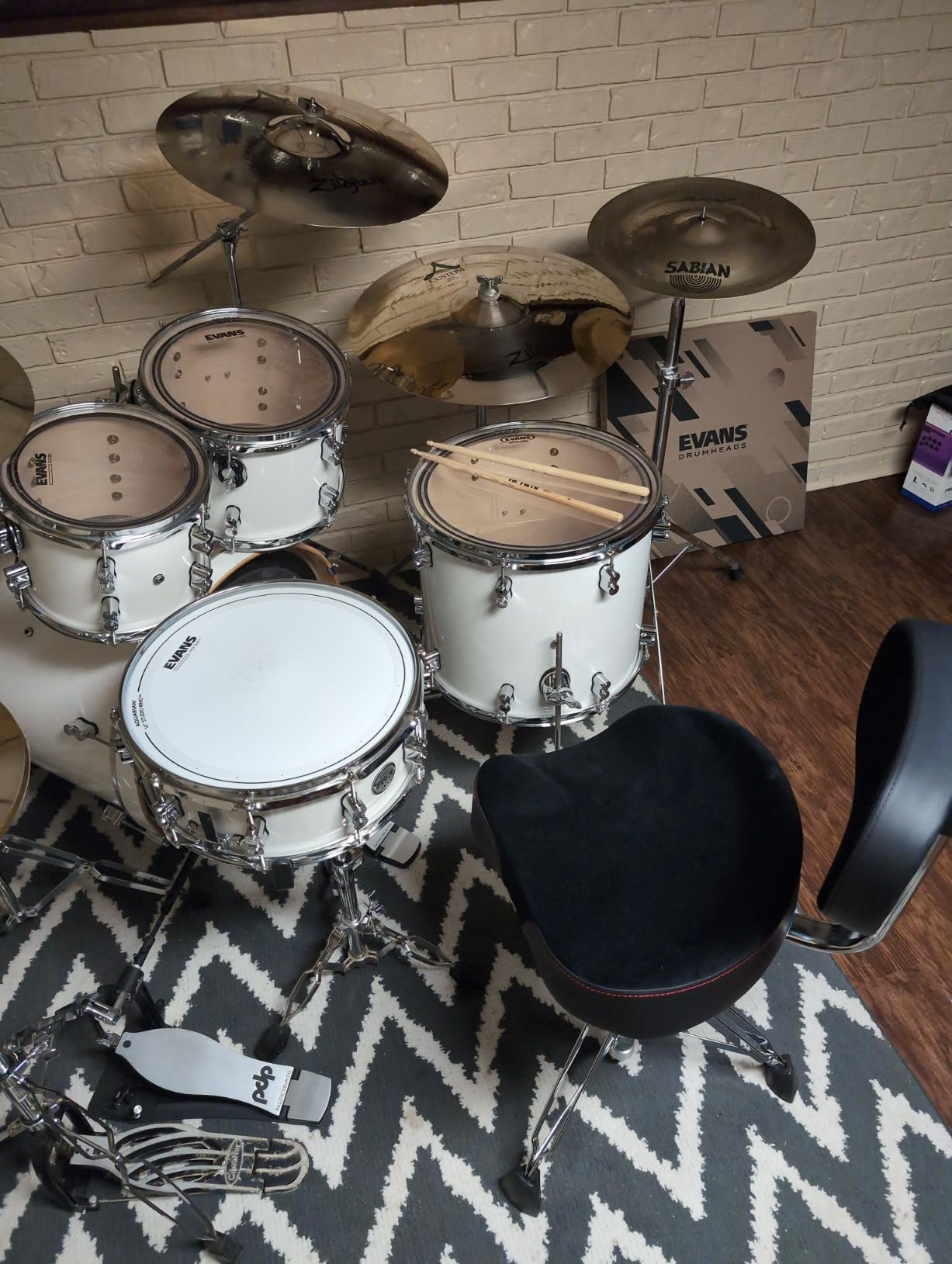
Height adjustment is hydraulic from 15.7 to 20.4 inches via a fine-tuning handle, and the cushion is a 17.1 by 15.3 inch breathable suede panel over high-density memory sponge. At 8 pounds, it is the easiest throne in this roundup to carry.
The base uses double support legs with three thickened anti-slip rubber pads, rated to 400 pounds. It also works for keyboards and guitar practice, which widens its use beyond a single instrument.
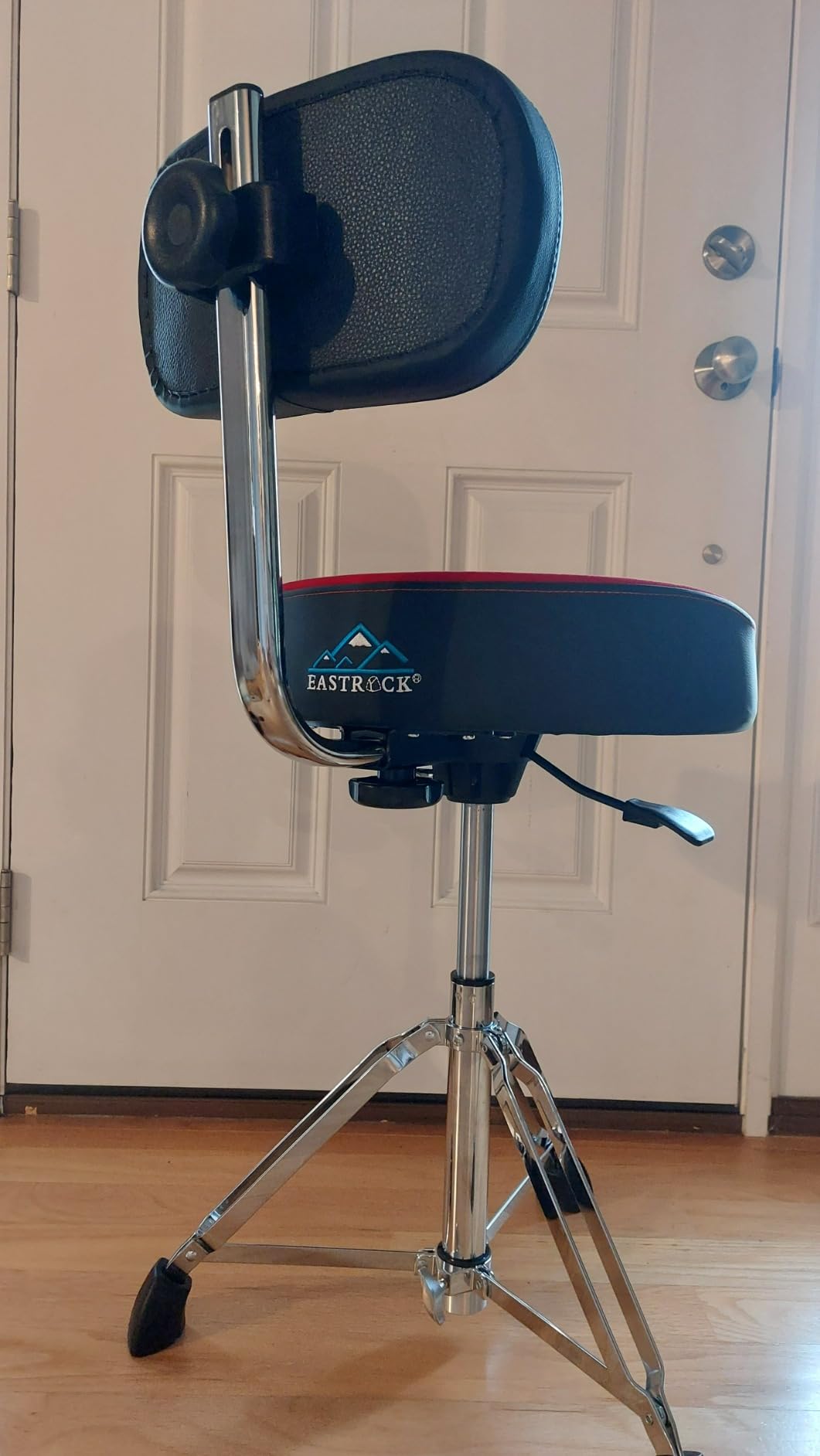
Who the EASTROCK throne suits best
It suits drummers in tight rooms and anyone who needs to move a throne between a practice space and a stage. At 8 pounds it is the seat you will actually carry rather than leave in the car.
It also suits average-height players who want a lumbar bar on a budget and do not need a tall height range. The removable backrest is the feature that makes it flexible across setups.
Who should skip it
Skip it if you are tall. The 15.7 to 20.4 inch range tops out lower than most of the alternatives, and that is not adjustable once you are seated.
Expect to re-check the height. The hydraulic column can slip or creep and need adjusting mid-session, and there are no assembly instructions included, so the backrest install is a trial-and-error job. Some players also prefer a threaded shaft precisely because it does not move.
Do You Actually Need a Backrest?
This is the most argued question in the category, and the honest answer is that both camps are partly right. A backrest supports posture during long seated stretches. It also substitutes for core engagement during active playing. Which of those matters more depends entirely on how you play.
The case against backrests comes from the argument that lumbar support lets your postural muscles switch off. If the bar holds your lower back, your spine does less stabilising work, and over years that can leave you weaker in exactly the muscles that support you when you are not sitting down. Drummers on forums ask this question constantly, and experienced players routinely warn that a backrest restricts the movement needed for double kick and heel-toe technique.
The case for backrests is more practical. If you are 56 years old, managing an existing lower back injury, or playing a teaching day where you sit for four of every five hours, a bar reduces the load on a spine that is already compromised. Forum consensus broadly favours backrests for recovery and long seated sessions, and against them for active, movement-heavy playing.
Our decision rule: if you are recovering from an injury or sitting for most of a session, buy the backrest. If you are a strong mover playing double kick, playing forward, or changing position constantly, prioritise seat geometry and height instead, because those help without anchoring your torso. A throne that already has a backrest is not a problem if the seat and height are right, so there is no need to replace one you own just to remove the bar.
How to Set Your Throne Height Properly
Height does more for your lower back than any cushion on the market. The protocol is simple and it is the first thing to fix before you spend money on a new throne.
Sit on the throne and set the height so your knees sit below your hips, which opens your hip angle past 90 degrees, and your thighs slope gently downward toward your knees. When the seat is too high, your hip flexors hold your thighs up and your lumbar spine compensates by rounding. When it is too low, you slump and curve forward over the kit.
Check your range before buying. The thrones here run from a 15.7 to 20.4 inch span on the EASTROCK up to a 23 to 32 inch span on the Liquid Stands musician stool, with the Gibraltar 9608MB covering 19 to 27 inches on a threaded spindle. If your ideal height falls outside a throne’s range, the throne is the wrong tool regardless of how good its backrest is.
Where you sit on the throne also changes your legs. Sitting further forward brings your knees in over the pedalboard and shortens your reach to the kick pedal. Sitting further back eases the reach but forces you to lean forward. Find the middle point and stay there.
Round vs Saddle vs Square Seats for Back Support
Round seats, including the Gibraltar 9608MB and the Tama Ergo-Rider, are the traditional choice. They allow the most freedom of movement and the easiest leg technique, at the cost of more direct tailbone pressure over a long session.
Saddle seats, which most of this roundup uses, drop the middle of the seat lower so your thighs fall into a natural downward slope. That is why most backrest thrones in this list are saddles, and it is the single biggest ergonomic gain most drummers get from changing seat.
Split or contoured seats go further by removing a channel down the centre of the saddle so your tailbone hangs rather than rests on foam. That is the geometry the Ahead Spinal-G popularised and the reason it comes up so often in forum threads. The trade-off is an adjustment period: some players report needing weeks before the unusual shape stops bothering them.
Cushion density is the other half. The softest seat is often the worst choice, because hips sink, the pelvis tips backward, and the spine loses its neutral curve. Look for high-density or multi-core foam that resists collapsing, and treat a seat that still feels plush after two hours as a good sign.
When a Drum Throne Is Not the Answer
If your back pain is present when you are not sitting, a better throne will not fix it. Throne-related pain shows up during and after playing; pain that persists through the night, radiates down a leg, or comes with numbness needs a physiotherapist, not a new seat.
Leg fatigue during long sets is also frequently blamed on the throne when it is really core weakness or limited hip mobility. Five minutes of dead bugs, planks and hip flexor stretching before a session often does more for endurance than any upgrade in this list.
Where you sit and how you set the height still come first. Buy the throne that matches your body and your adjustment range, and treat any remaining pain as a strength or mobility question rather than a shopping one.
Frequently Asked Questions
What is the best drum throne for people with bad backs?
The best drum throne for people with bad backs is the Donner hydraulic saddle throne with a height-adjustable backrest, because the lumbar bar can be moved to match your spine, the memory foam saddle removes tailbone pressure, and the frame is rated to 440 pounds. The Ktaxon offers the same support idea at a lower spend.
What type of drum throne is the most comfortable?
For most drummers the most comfortable throne is a contoured saddle or split-saddle seat with high-density foam, a hydraulic or threaded adjustment covering your ideal height, and a double-braced base. Round seats feel more open for leg technique but put more direct pressure on the tailbone, and the softest cushion is usually the worst option because your hips sink and your spine loses its neutral curve.
What is the ideal height for a drum throne?
Set your throne so your knees sit below your hips, your hip angle opens past 90 degrees, and your thighs slope gently downward. Too high and your hip flexors and lumbar spine take the load; too low and you slump forward over the kit. Check a throne’s full adjustment range before buying, because the ideal height can sit outside a shorter-range model.
Are Roc n Soc Thrones worth it?
Roc-N-Soc is one of the most frequently recommended throne brands in drummer forums, particularly the Nitro model, which owners describe as one of the best percussion purchases they have made for long-session comfort. Worthiness comes down to fit: the spindle height range, base bracing and seat shape matter more for back support than the brand name, so measure your ideal height first.
Can drumming cause lower back pain?
Yes, and a badly fitted throne is a leading cause rather than technique alone. Sitting too high loads your hip flexors and rounds your lumbar spine, sitting too low makes you slump forward, and a flat round seat adds direct tailbone pressure. Height, seat geometry and cushion density all contribute, so fix those three before assuming the problem is your playing.
What can I use instead of a drum throne?
A saddle-seat office chair or a musician chair with a lumbar support bar can work for home practice, since both hold the pelvis in a better position than a flat kitchen chair. For playing, a drum throne is still better because the height range, base bracing and low profile keep your legs free. If cost is the barrier, a contoured seat on a spindle throne is the cheapest upgrade.
Final Verdict
The Donner hydraulic backrest throne wins this roundup because it is the only seat here where the lumbar bar adjusts in height to meet you, paired with a memory foam saddle and a 440 pound frame, and it does so with the largest body of owner feedback behind it. The Gibraltar 9808HMB is the pick if you want hydraulic speed and a five year warranty, and the Ktaxon is the buy if back support is the priority and the budget is not.
Before you order anything, check three numbers against your body: the throne’s maximum weight rating, its full height range, and the seat width. Get those right and the best drum thrones for back support will stop being a comfort upgrade and start being the thing that keeps you playing for another decade. Our broader drum throne comparison and drum microphone kit guide cover the rest of the kit.