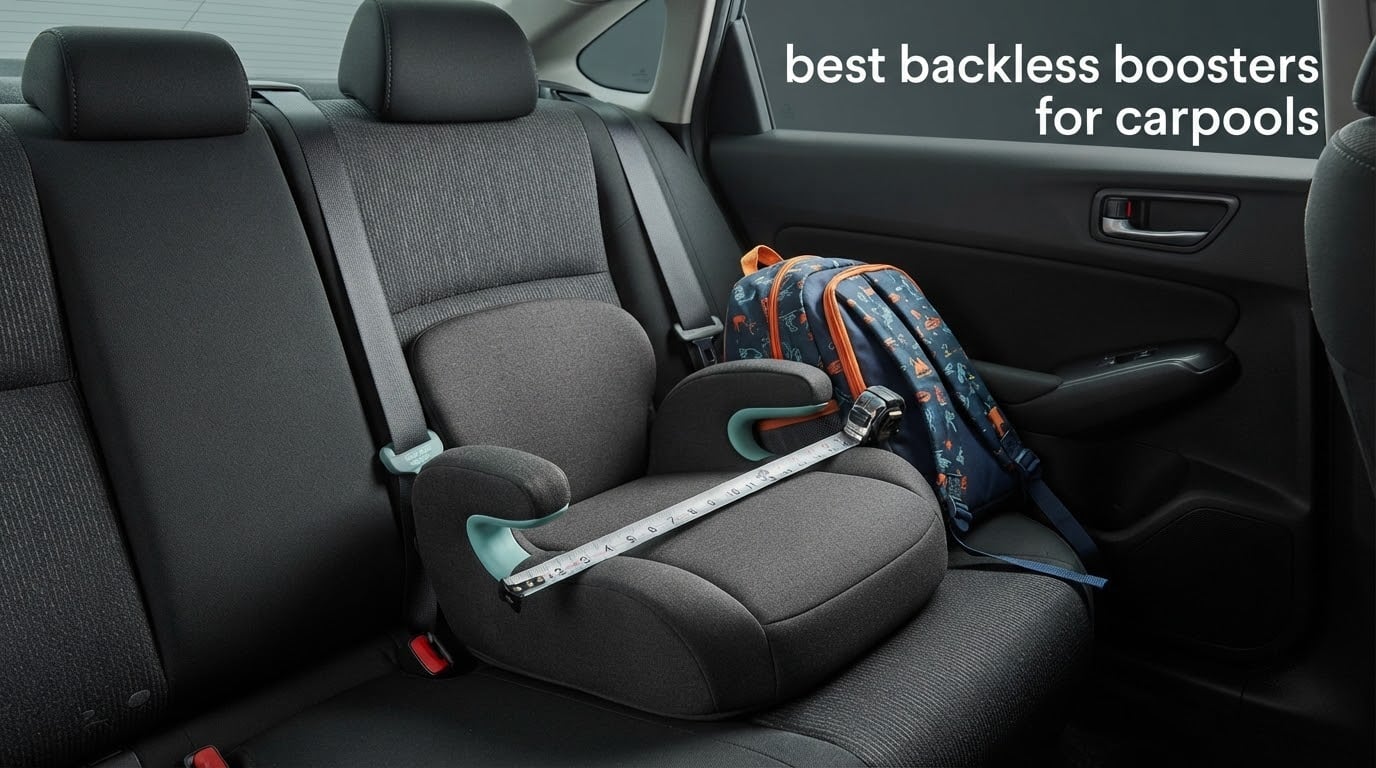
Carpooling has a booster problem that no amount of gear solves on its own. Monday your child rides in a minivan with a low bench and a three-point belt. Wednesday they are in a friend’s sedan with a shallow seat and a stiff retractor. Friday they are in a grandmother’s crossover where the buckle sticks out of a deep crease in the foam. One seat cannot be tuned for all three.
That is why searching for the best backless boosters for carpools is not really a product question. It is a logistics question wearing a product question’s clothes. You are choosing between a seat that lives permanently in one car and a seat you carry between cars, and those two jobs reward completely different designs.
We compared ten backless boosters that a carpool family could actually buy, weighing the things that decide whether a ride goes smoothly: seat width, weight and height ceilings, whether LATCH anchors the seat or the belt alone holds it, how the belt guides behave in a stranger’s car, and how much of a pain the seat is to move at 7:40 in the morning.
The short version for 2026: the Cosco Topside is the one we keep reaching for, the Graco TurboBooster 2.0 is the one with the strongest crash-testing story behind it, and the Diono Connect3 R pack of two is the answer if three children share a back bench. Everything else fills a narrower gap.
If you are still deciding between booster categories rather than specific models, our guides to the best booster seats overall and the best booster car seats by type lay out the backless, high-back and combination layouts side by side before we get into these ten.
Table of Contents
Top 3 Picks for Best Backless Boosters for Carpools in 2026

Cosco Topside Backless Booster
- 40-100 lbs and 43.4-57 inches
- Lightweight and easy to move between cars
- Extra-plush padding
- Seat-friendly base

Graco TurboBooster 2.0
- 40-100 lbs up to 57 inches
- ProtectPlus multi-angle crash testing
- Height-adjustable armrests
- Vehicle seat belt install
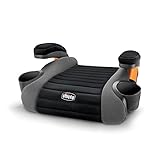
Chicco GoFit Backless
- 40-110 lbs and 44-57 inches
- ErgoBoost contoured double foam padding
- Two dishwasher-safe cup holders
- Built-in carry handle
Those three cover the three ways carpooling actually breaks down. The Cosco wins when the seat has to move with your child. The Graco wins when you want the most documented crash program behind a plain belt install. The Chicco wins when the ride is long and the seating is contoured rather than flat.
All 10 Backless Boosters at a Glance in October
| Product | Specifications | Action |
|---|---|---|
| Cosco Topside Backless Booster |
|
Check Latest Price |
| Graco TurboBooster 2.0 Backless |
|
Check Latest Price |
| Chicco GoFit Backless |
|
Check Latest Price |
 Chicco GoFit Plus Backless with LATCH Chicco GoFit Plus Backless with LATCH |
|
Check Latest Price |
 mifold Comfort Grab-and-go mifold Comfort Grab-and-go |
|
Check Latest Price |
 Diono Solana 2 XL Diono Solana 2 XL |
|
Check Latest Price |
 Diono Connect3 R Pack of 2 Diono Connect3 R Pack of 2 |
|
Check Latest Price |
 PEG Viaggio Shuttle PEG Viaggio Shuttle |
|
Check Latest Price |
 Diono Solana No Latch Diono Solana No Latch |
|
Check Latest Price |
 Evenflo GoTime No Back Booster Evenflo GoTime No Back Booster |
|
Check Latest Price |
1. Cosco Topside Backless Booster – The One That Travels Well
Cosco Topside Backless Booster Car Seat, Lightweight Booster Seats for Cars 40-100 lbs, Backless Booster Seat for Car, Rainbow
40-100 lbs and 43.4-57 inches
Vehicle seat belt install
Lightweight compact frame
Extra-plush padding
Pros
- Easy to move between vehicles for carpooling
- Extra-plush padding for ride comfort
- Very large verified review base
- Seat-friendly design helps protect the vehicle seat
Cons
- Hand-wash-only fabric cover
- Fixed low back gives no head or back support
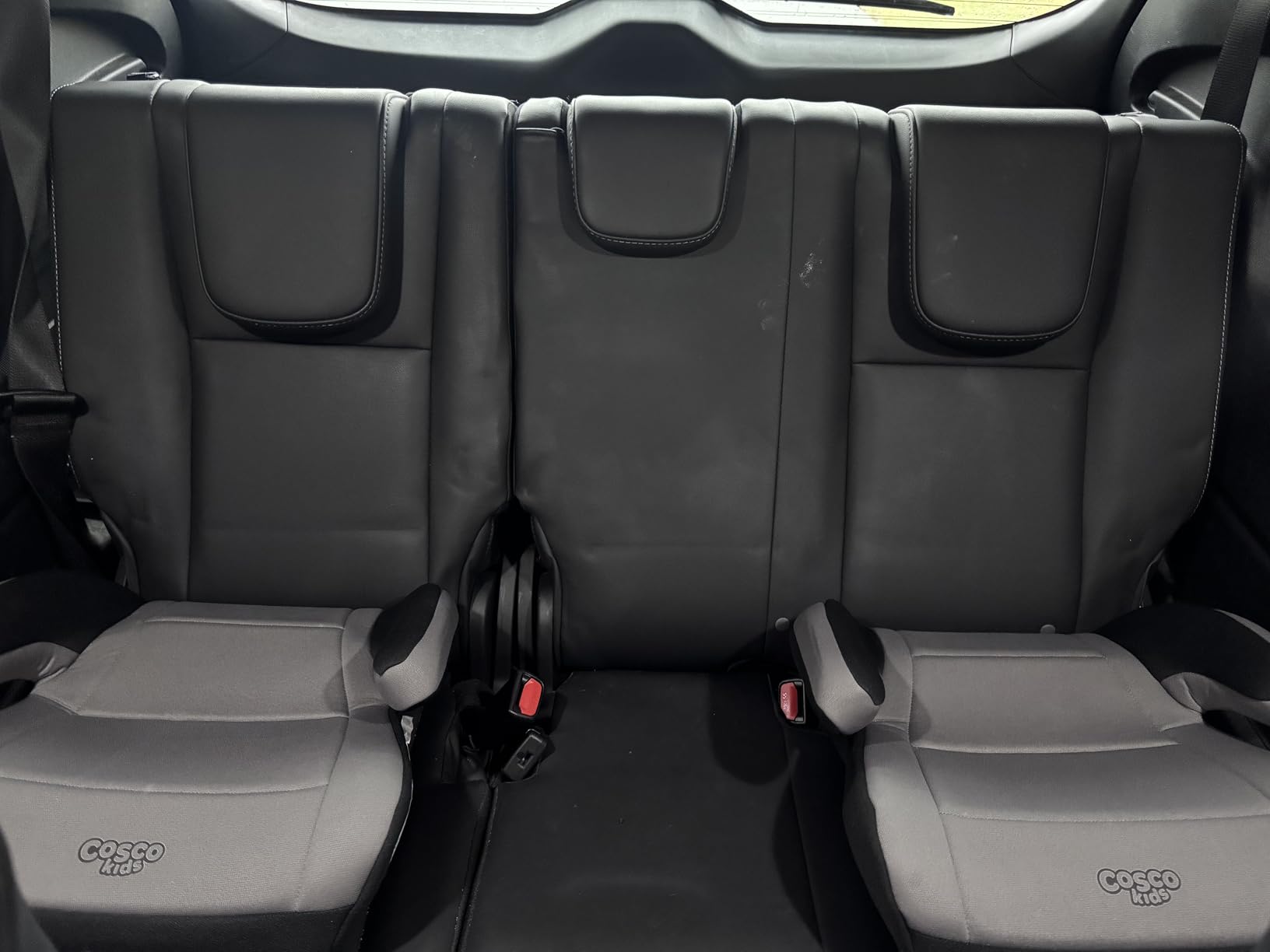
The Cosco Topside is the seat we ended up leaving in the second car rather than carrying around. It is the simplest possible answer to the carpool problem: a low padded platform that raises your child enough for the adult belt to sit correctly, with nothing that makes you think twice before grabbing it.
Its stated range is 40 to 100 pounds and 43.4 to 57 inches, which covers the booster years for most children in one or two passes rather than one. Installation is the vehicle seat belt, nothing else. There is no LATCH, no connector, no hardware to lose in the diaper bag.
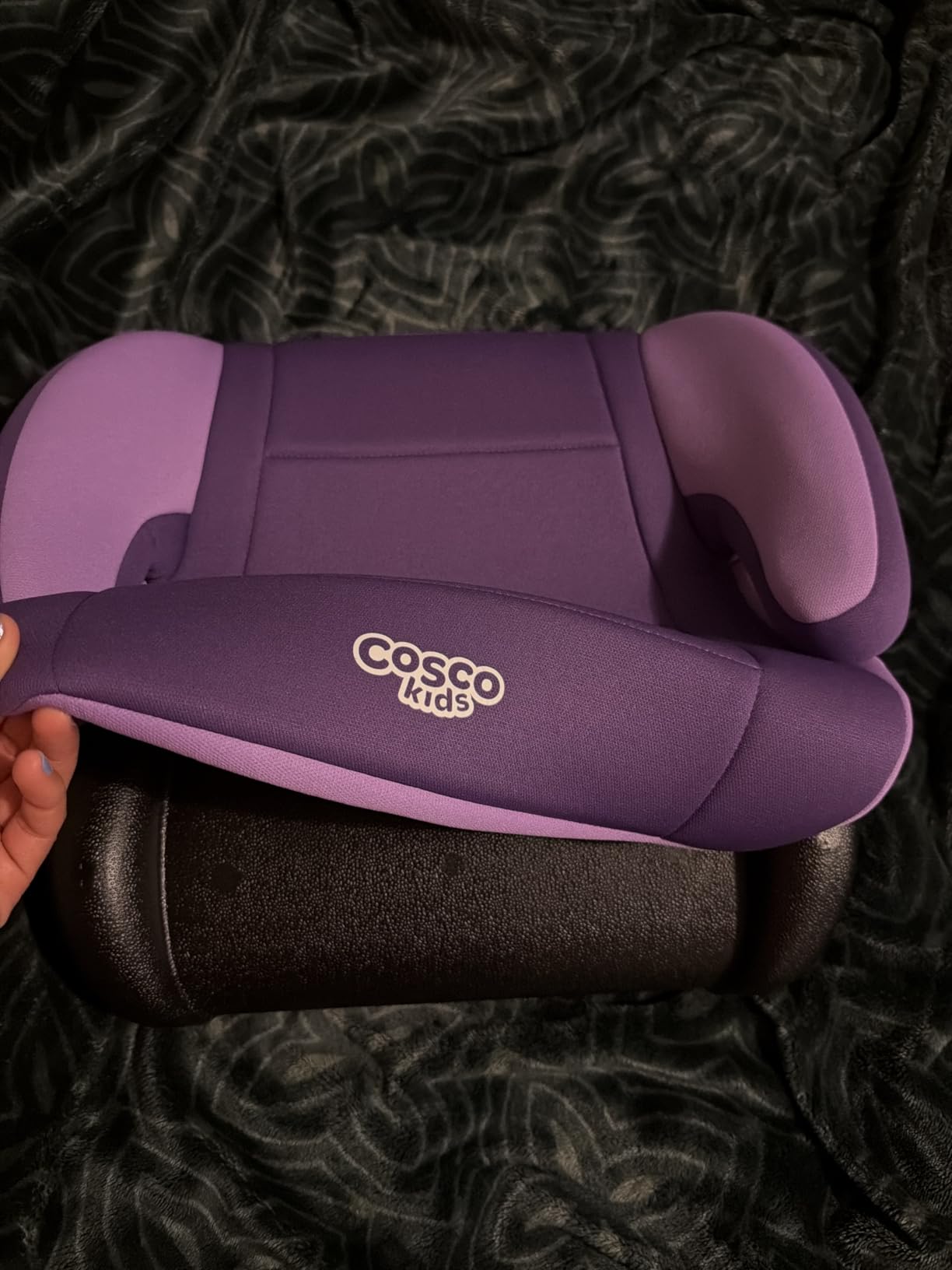
Where it earns its place in a carpool rotation is handling. Parents on car-seat safety forums repeatedly describe the same failure mode: bulky boosters never make it out of the trunk, so the second car simply has no booster and the ride goes improvised. The Topside is light and compact enough that this does not happen.
Comfort is the other draw. The extra-plush padding gets called out constantly, and on a 25-minute school run with a child who will not sit still, that matters more than any spec line. Reviewers also like that the base is designed to help keep the vehicle seat underneath unmarked, which is a polite thing to offer another family’s car.
Why we made it the top pick for carpools
It is the seat you can hand to another parent without a fifteen-minute conversation. No LATCH to clip, no width negotiation, no matching hardware between vehicles. Belt in, child sits, belt buckles.
Its 100-pound ceiling is lower than the Diono and PEG options here, and the 57-inch height cap is the same. If your child is already tall for their age, check those numbers before anything else.
Where it falls short
The cover is hand-wash only. In a carpool context that matters more than it would in a single family, because the seat lives in someone else’s car and picks up whatever that car picks up.
The fixed low back gives no support at all. If your child falls asleep on a long commute, they will slump forward until the shoulder belt clip does something about it, and you will be adjusting them at every red light.
2. Graco TurboBooster 2.0 Backless – The One With the Crash Data Behind It
Graco TurboBooster 2.0 Backless Booster Car Seat, Trisha, Travel Booster Seat for Children Ages 4-10, Weight 40-100 Pounds and Height up to 57 Inches
Ages 4-10, 40-100 lbs
Up to 57 inches tall
Vehicle seat belt install
Height-adjustable armrests
Pros
- ProtectPlus multi-angle crash test program
- Top-rated by leading consumer publications
- Height-adjustable armrests
- Large verified review base
Cons
- Backless design offers little support for sleeping children
The TurboBooster 2.0 is the pick for families who want the most documented safety case they can point at. Graco runs it through its ProtectPlus Engineered program, which covers frontal, rear and rollover impacts, plus additional testing based on the New Car Assessment Program and testing in extreme interior temperatures.
Child-passenger-safety technicians on Reddit and the car-seat.org boards tend to say the same thing: fit and correct use beat brand and price. A budget seat installed right is as protective as a premium one installed wrong. Graco is interesting because it is the only seat here with a named multi-angle test program in its published materials.
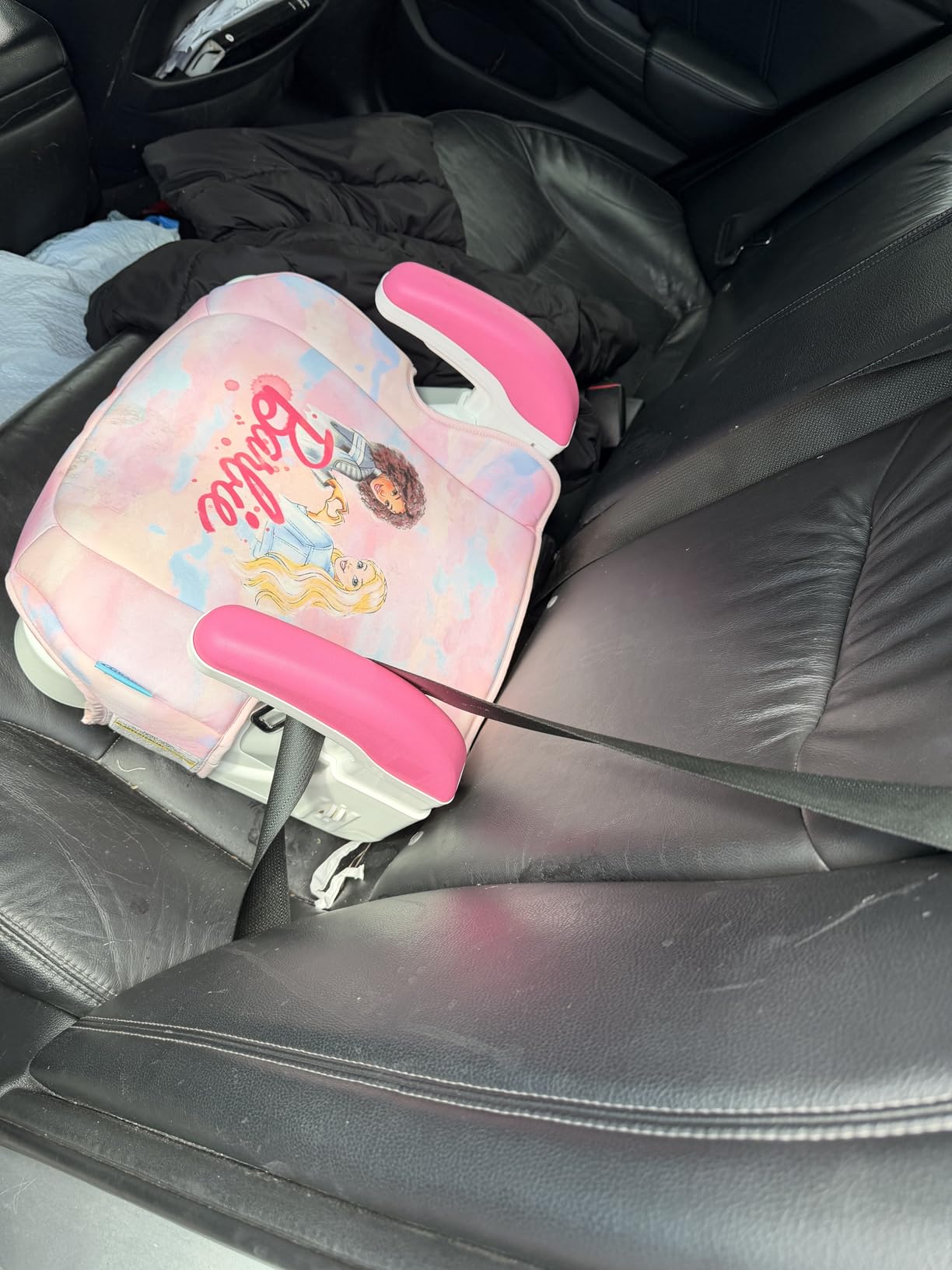
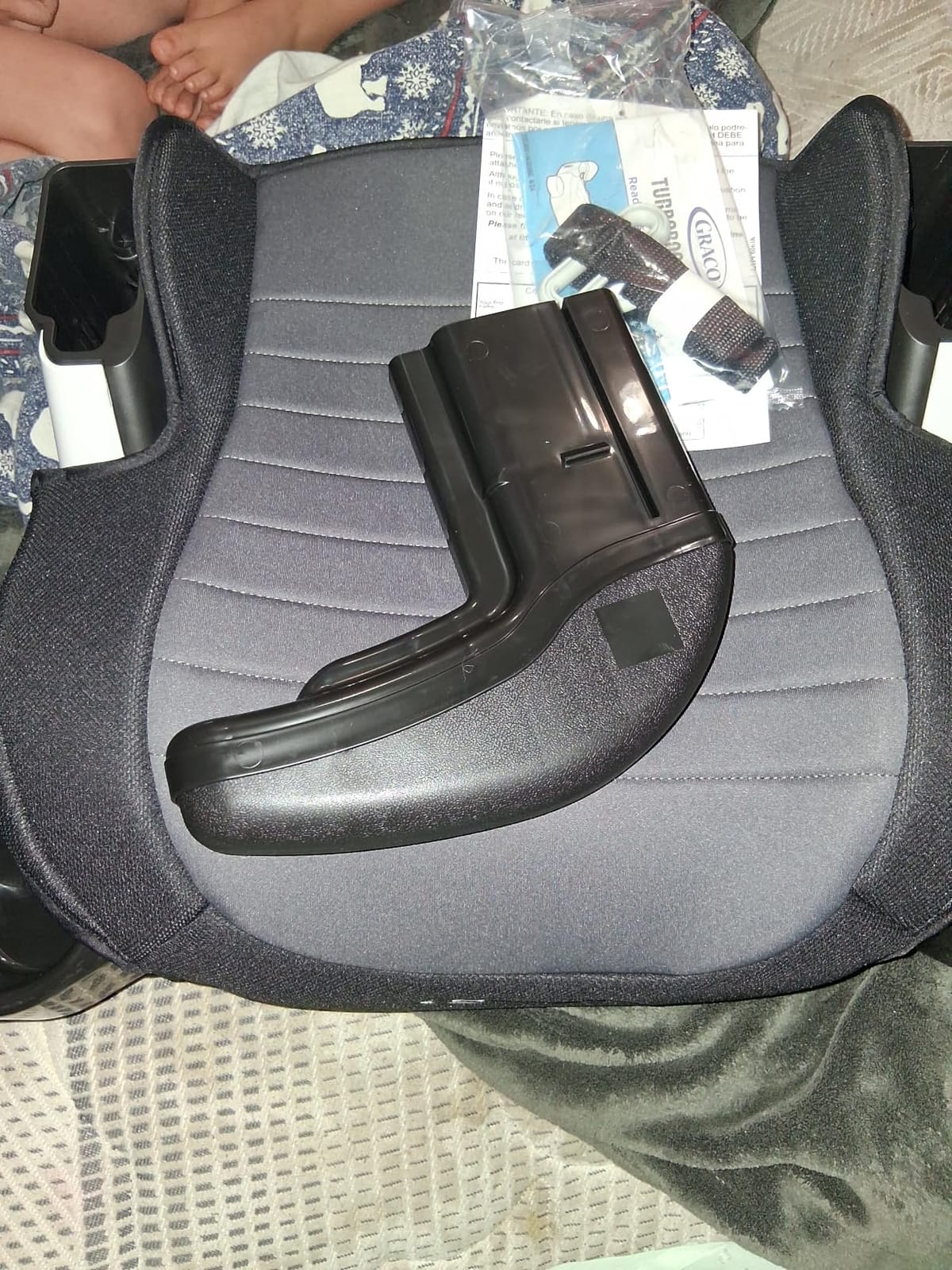
The range is 40 to 100 pounds and up to 57 inches, for ages roughly 4 through 10. Installation is the vehicle seat belt. The armrests are height-adjustable, which matters in a carpool because the same seat moves between vehicles with different cushion heights and you want the belt path to stay consistent.
Style options include licensed character designs, which sounds trivial until you are asking a six-year-old to get into the same booster every morning for a year.
Why we made it the top-rated pick
The crash-testing story is specific, not vague. ProtectPlus covers the three impact types a booster actually experiences, and the additional program testing goes further.
At 4.8 stars across more than 12,000 reviews, it also has the deepest well-reviewed comfort story of the group, which reduces the chance you are relying on a handful of reviews for a seat that handles your child every day.
Where it falls short
Like most backless boosters, it has no head or back support. For a short carpool hop that is fine. For a forty-minute highway commute with a sleepy child, it is the first thing you will wish you had not skipped.
The 100-pound ceiling is the most common reason a family outgrows a TurboBooster before they think they have, so check your child’s current height against the 57-inch cap before buying.
3. Chicco GoFit Backless – The Most Comfortable of the Group
Chicco GoFit Backless Booster Car Seat, Vehicle Seat Belt Install
Ages 4 and up, 40-110 lbs
44-57 inches
Vehicle seat belt, no LATCH
ErgoBoost double foam
Pros
- Contoured ErgoBoost seat with double foam padding
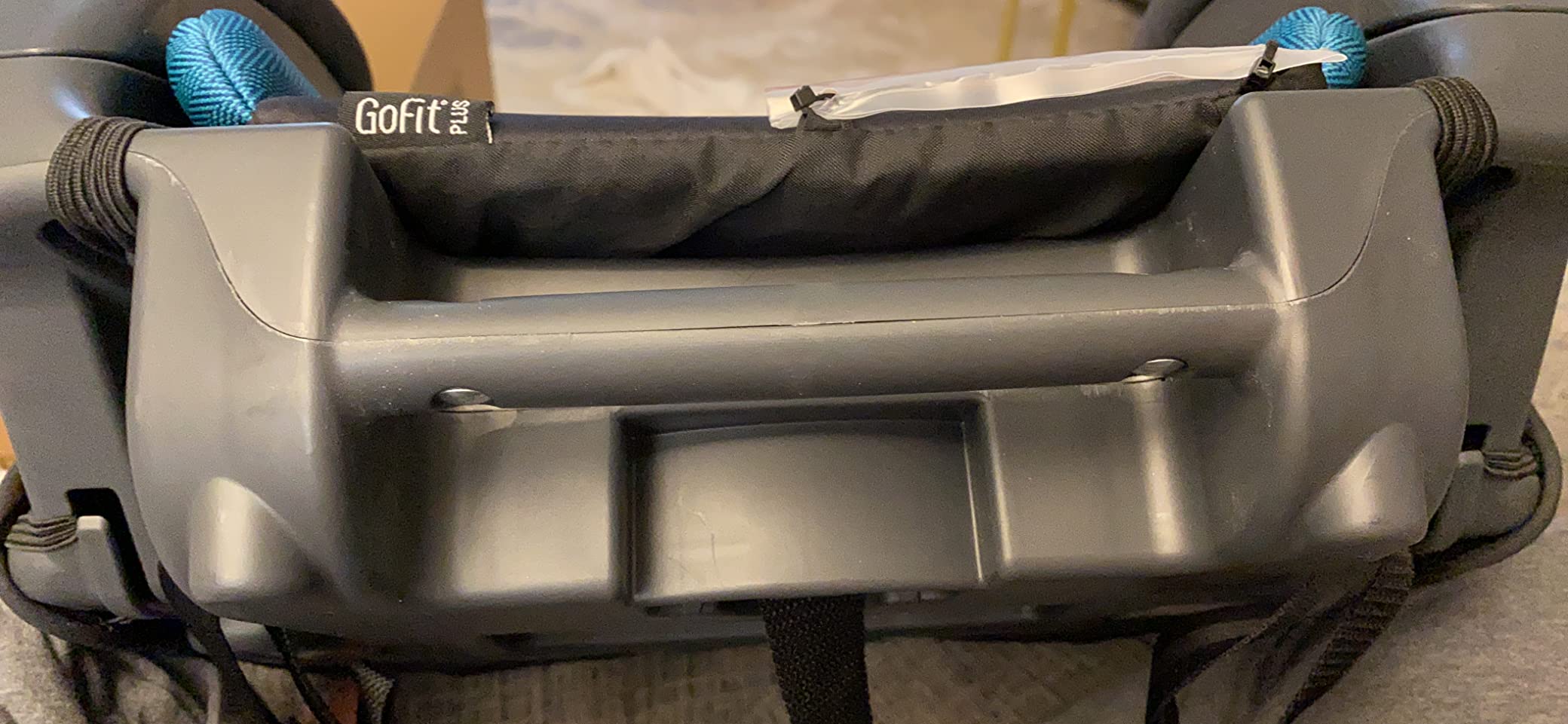
- Built-in carry handle for vehicle-to-vehicle moves
- Two fold-away dishwasher-safe cup holders
- Machine-washable seat pad
Cons
- This model has no LATCH attachment
- No back support for sleeping riders
Most backless boosters are flat slabs with a fabric top. The GoFit is contoured, with double foam padding shaped into a seat rather than a platform, and owners consistently single that out as the difference on longer commutes.
It is rated for children at least four years old, 40 to 110 pounds, and 44 to 57 inches. That 110-pound ceiling gives it more growth room than the Cosco or Graco, and 110 pounds is a genuinely long runway for a booster-stage child.
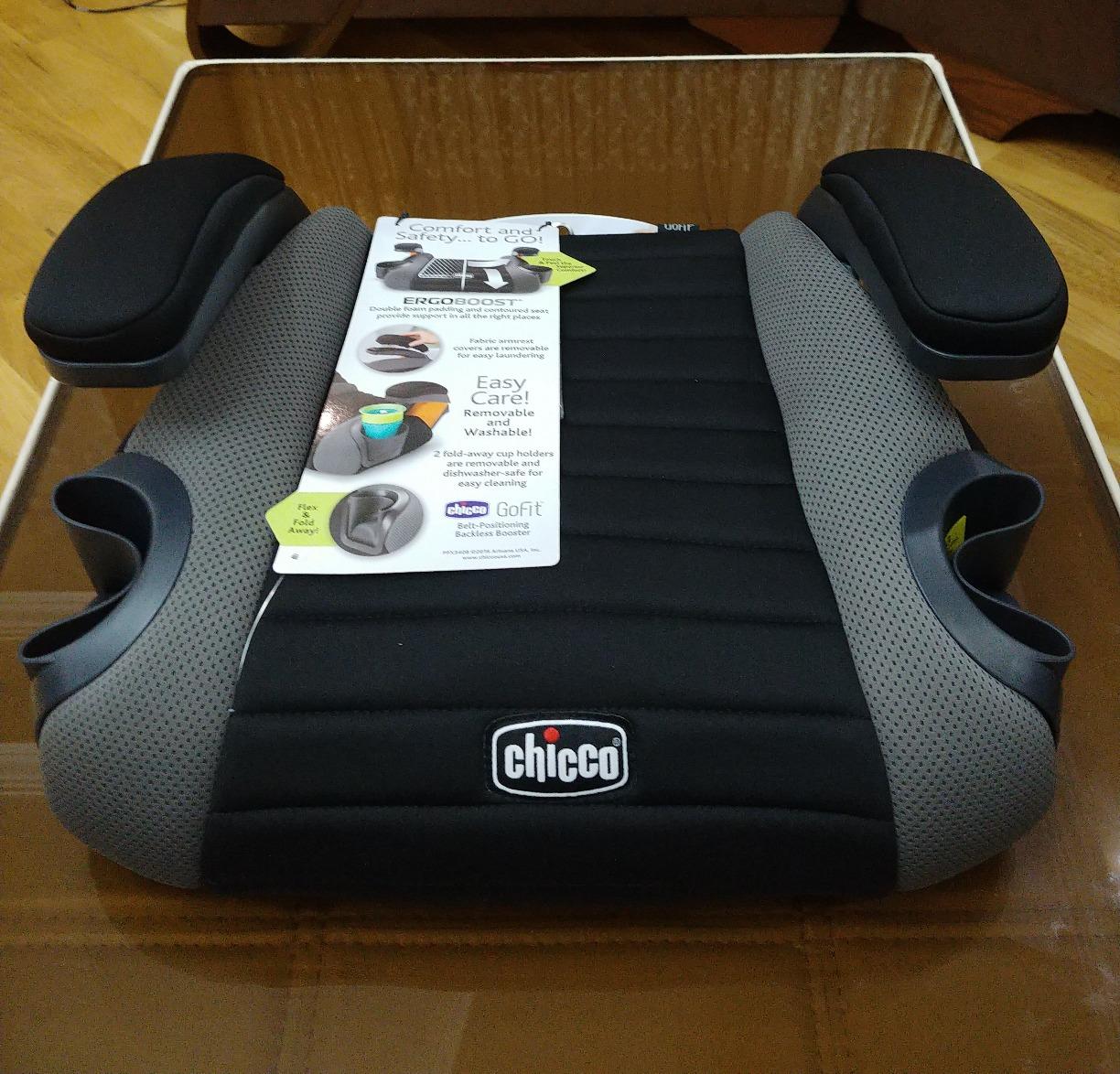
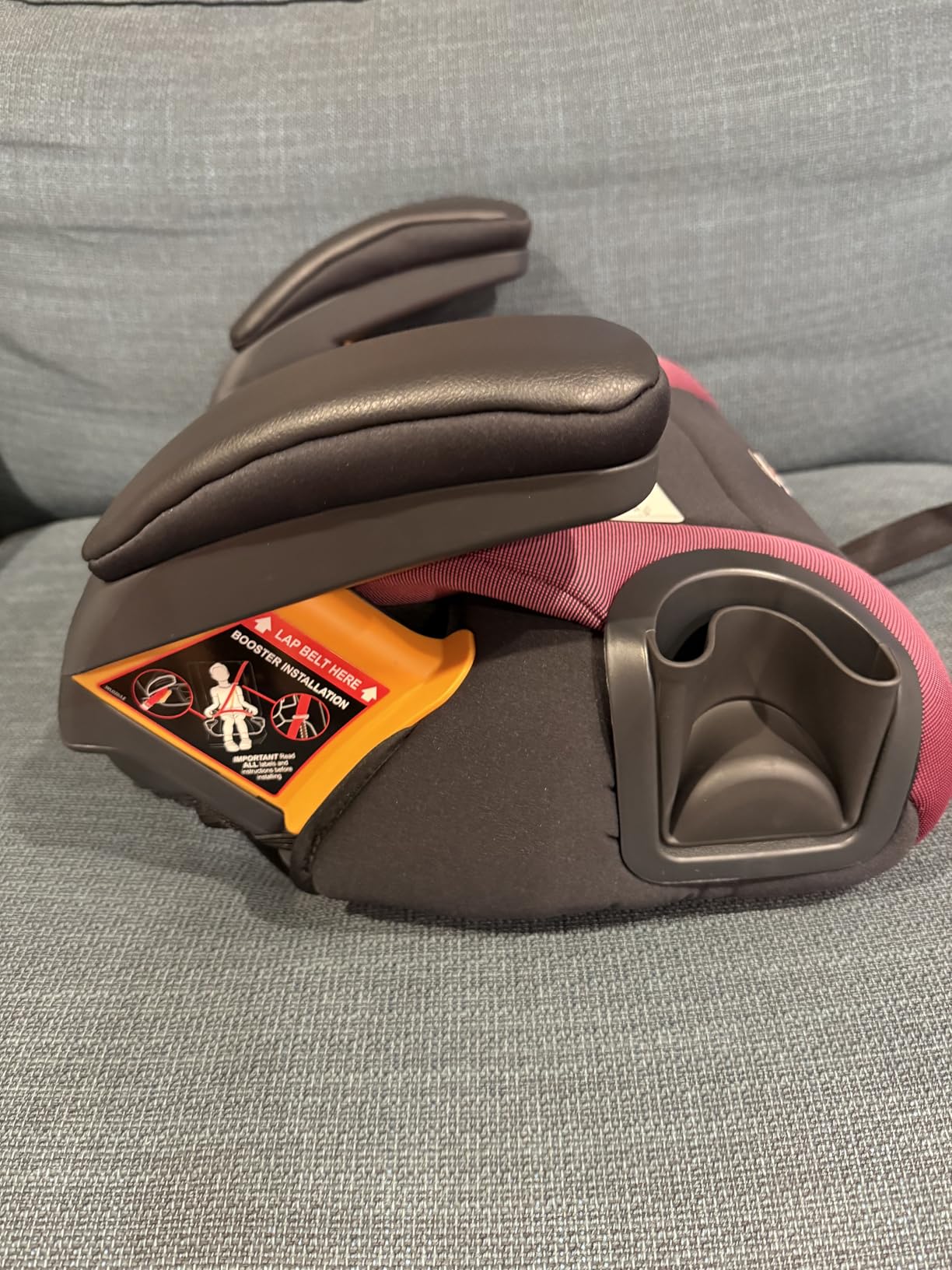
The integrated lap belt guides and shoulder belt clip are the practical part. You do not have to fish the shoulder belt around a child’s neck and then wonder whether it is routed correctly; the guides hold a consistent path every time, which is exactly what you want when a different adult is doing the install in a different driveway.
Cleaning is handled unusually well for this category. The seat pad is machine-washable, the armrest covers pop out, the foam insert can be hand-rinsed and hung, and both cup holders fold away and go in the dishwasher.
Why we made it the comfort pick
Contoured seating with real foam depth is the single biggest comfort difference among backless boosters, and the GoFit has the most of it.
Two dishwasher-safe fold-away cup holders also solve a real carpool problem. A child who has a cup holder does not hold a juice box upright in their lap for the entire ride, and it does not end up on the floor of someone else’s car.
Where it falls short
This GoFit model has no LATCH. The seat belt alone holds it, which is legitimate, but in a stranger’s car with a shallow cushion it can slide a little more than an anchored model.
The contoured shape is wider than a flat booster, so if three children need to sit across a back bench, this is not the seat to plan around.
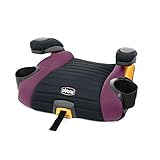
4. Chicco GoFit Plus Backless – The One-Handed Transfer Pick
Chicco GoFit Plus Backless Booster Seat, with Quick-Release Latch
Ages 4 and up, 40-110 lbs
44-57 inches
Belt install with LATCH stabilization
Quick-release pull handle
Pros
- One-hand quick-release LATCH for grab-and-go transfers
- owners call it the best step-up from a high-back booster
- Single highest average rating in this group
Cons
- Shoulder belt guide is fiddly at first
- No back support when kids fall asleep
The GoFit Plus takes the GoFit platform and adds LATCH with a one-hand quick-release pull handle, and that handle is the reason it exists. It is designed for the specific moment when you are hauling a booster, a bag and a squirming child toward someone else’s open door.
Same core specs as the GoFit: at least four years old, 40 to 110 pounds, 44 to 57 inches. It rates 4.9 with 4,928 reviews, the highest average in this group.
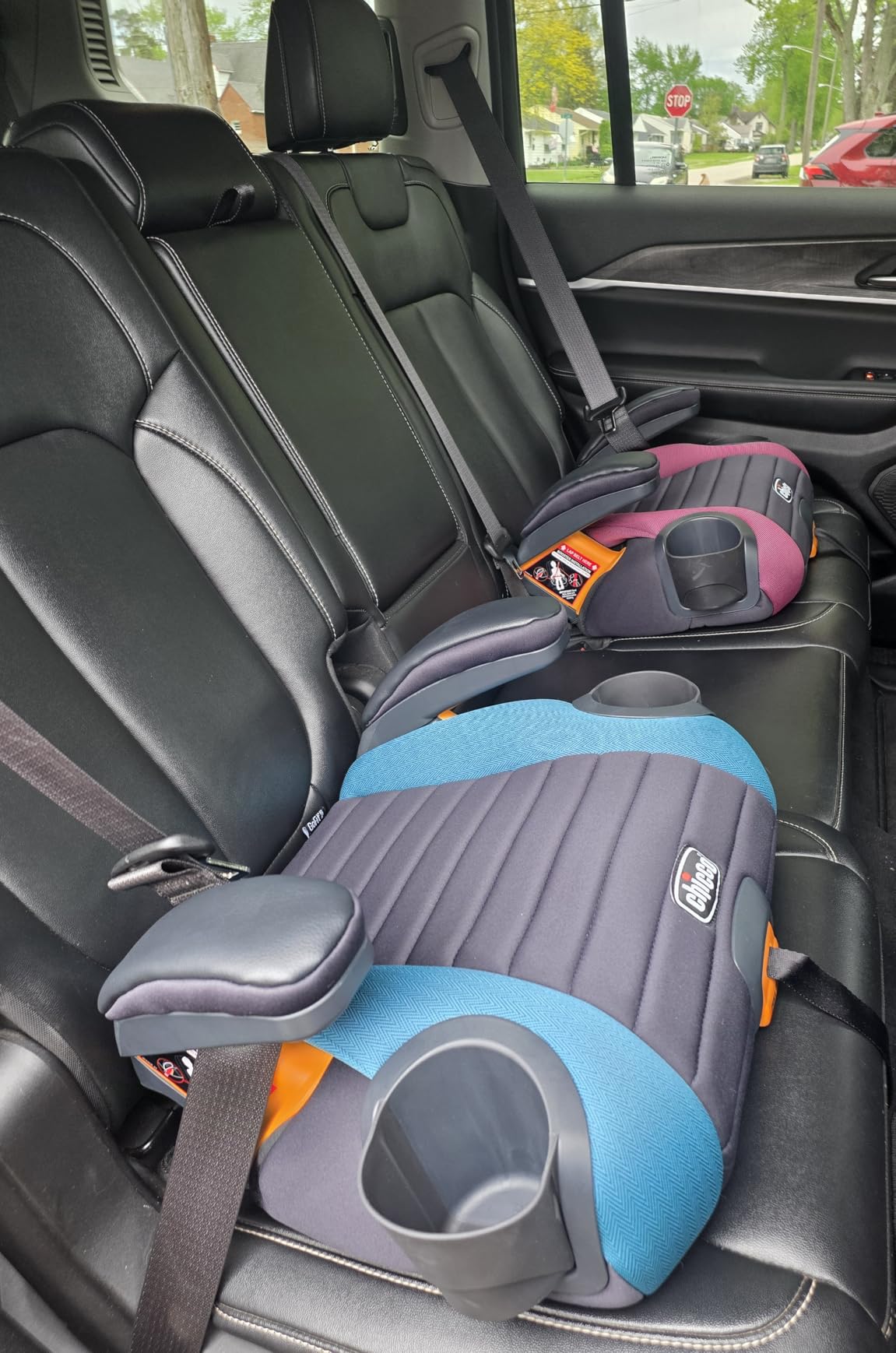
What LATCH actually does here is stabilization. The booster is held to the vehicle seat while the child climbs in and out, and the vehicle seat belt is still what restrains the child in a crash. That distinction matters, because a common misunderstanding in carpool groups is that LATCH replaces belt fit. It does not.
Parents on child-passenger-safety forums describe exactly this preference, choosing an anchored booster so the seat is already positioned and locked before the kid gets in rather than adjusting a loose seat every time.
Why we picked it for one-handed transfers
The quick-release pull handle means one hand unclips the seat. In a carpool lot, that is the difference between a two-minute transfer and a five-minute one.
Owners also report that the cup holders are large enough for a 30oz insulated tumbler, which is a small thing until you watch a child try to balance one during a stop-and-go merge.
Where it falls short
The shoulder belt guide takes some getting used to. Several owners describe repositioning it behind the shoulder a few times before it clicks where they expect it.
There is still no back support, so a sleeping child slumps forward. And it costs more than the belt-only version of the same seat, which is worth weighing against how many vehicles your carpool actually visits.
5. mifold Comfort Grab-and-go – The One That Lives in the Backpack
New Mifold Comfort Grab-and-go Car Backless Booster Seat-Compact and Portable for Every Day, Carpooling, Travel, Charcoal Grey
Ages 4 and up, 40-100 lbs
43.5-59 inches
Any car with a 3-point belt
Fits in a backpack or glove box
Pros
- Packs into a regular backpack or glove box
- Anti-slip pads keep it from sliding
- 59 inch height ceiling suits taller kids
- No installation hardware needed
Cons
- Lowest average rating in this group
- Narrow seat will not fit three across
- Thin cushion on long commutes
The mifold is the extreme version of the one-booster-you-carry strategy. It fits in a regular backpack or a glove box, which means it lives with you rather than in any particular car.
That is the right answer if your carpools involve rideshares, rental cars, or relatives whose vehicles you use once a year. It is also the reason some families buy two cheap rigid boosters instead and leave one stashed in each vehicle.
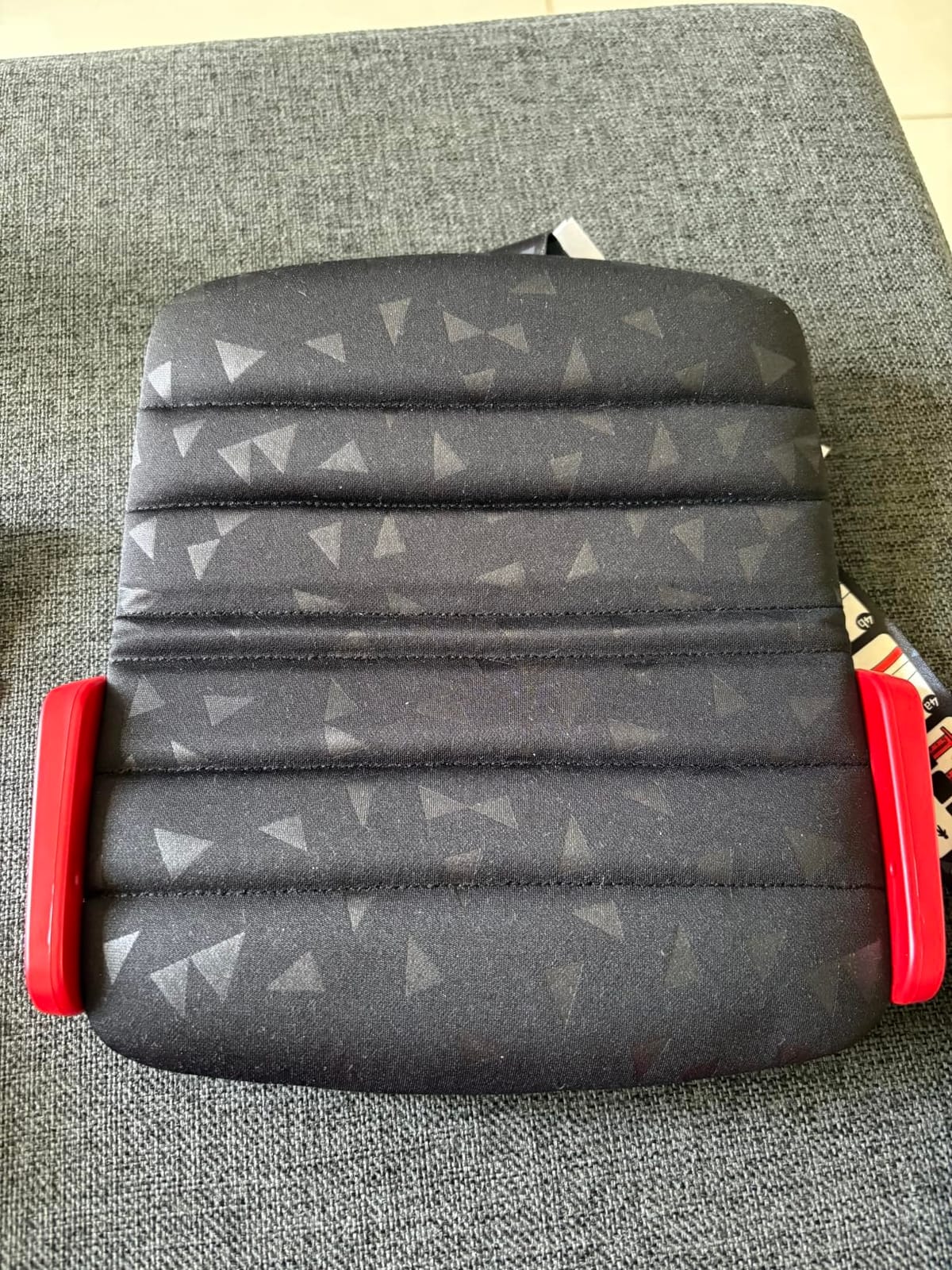
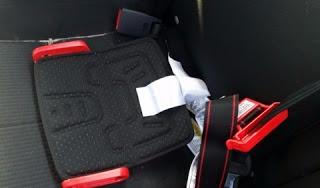
The range is 40 to 100 pounds and 43.5 to 59 inches, and the taller ceiling of 59 inches is genuinely useful for kids who are long for their age. Installation needs nothing more than a standard three-point belt. The shoulder belt guide is easy to use and the pull-down adult belt adjustment does part of the lifting for you.
Anti-slip pads underneath keep the booster from migrating across a slick seat, which is a real issue in vehicles you do not control.
Why we picked it for travel and rideshare
Nothing else in this list disappears into a bag. When the car in front of you is unfamiliar and you may not be back for a month, the smallest possible seat wins.
It also needs zero installation hardware, so there is no connector to leave behind in someone else’s vehicle and no risk of a half-installed seat on the return trip.
Where it falls short
It has the lowest average rating of the rigid boosters here, at 4.2, with about 8 percent one-star reviews. That is a real reliability signal, not a rounding error.
The seat is narrow and will not fit three across. The cushioning is thinner than the Chiccos, so long daily commutes are not what it was designed for.
6. Diono Solana 2 XL – The One Built for Bigger Kids
Diono Solana 2 XL 2022, Dual Latch Connectors, Lightweight Backless Belt-Positioning Car, 8 Years 1 Booster Seat, Black
40-120 lbs and up to 63 inches
Dual steel LATCH connectors
XL seat over 17 inches wide
About 3.1 lbs
Pros
- XL seat fits larger kids
- Anchors with dual steel LATCH connectors
- Machine-washable removable covers
Cons
- XL width rules out three-across fit
- Factory padding can feel thin for larger kids
If your child squeezes out of narrow boosters before they reach the weight limit, the Solana 2 XL is the answer. The seat is XL, over 17 inches across, and it is specifically shaped to give bigger hips and thighs room.
The range runs 40 to 120 pounds and up to 63 inches, and the 63 inch height ceiling means one purchase can cover the whole booster stage for a large child.
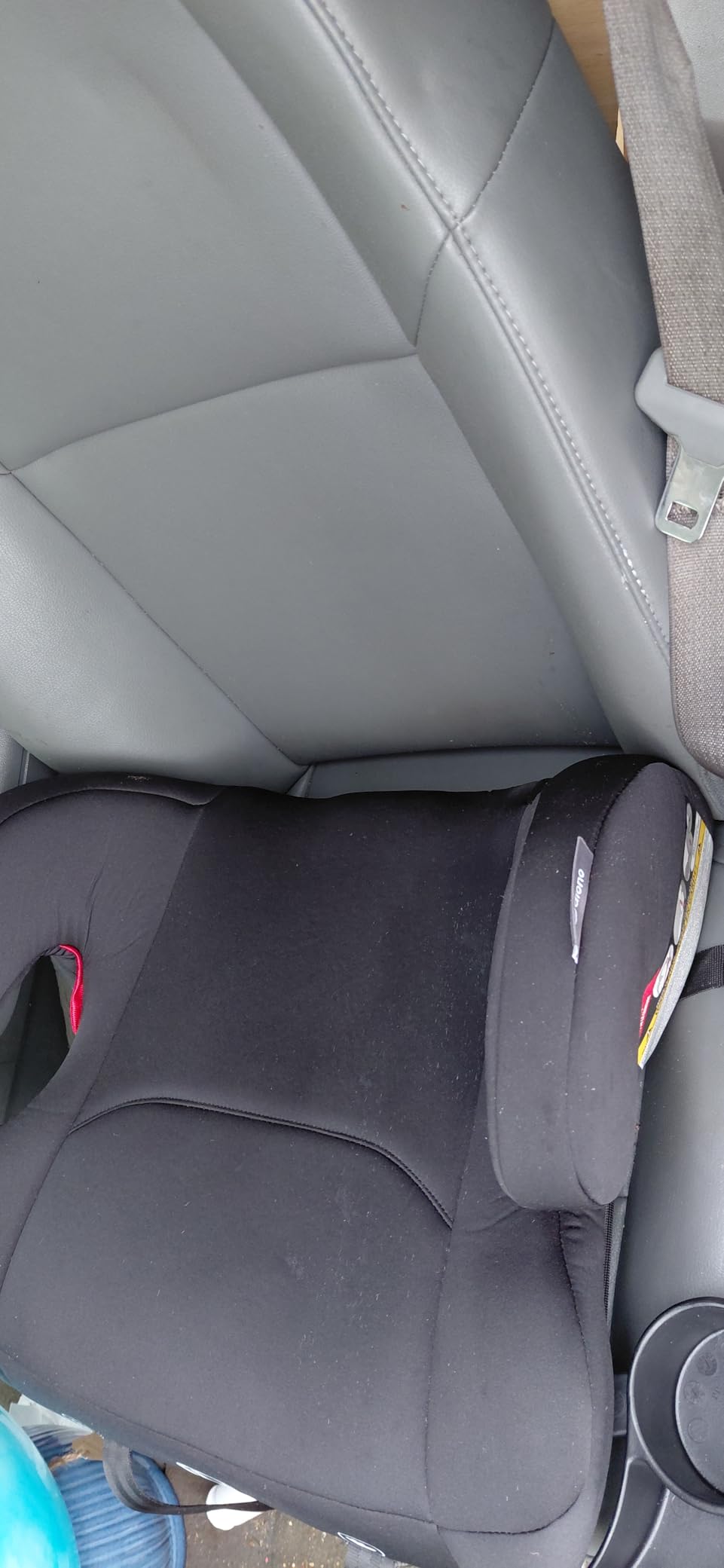
Installation uses the vehicle belt plus dual automotive steel LATCH connectors on two adjustable straps with quick release. Owners point out that the anchors stop the booster sliding around or launching forward during hard braking, which is a specific complaint about cheaper belt-only seats.
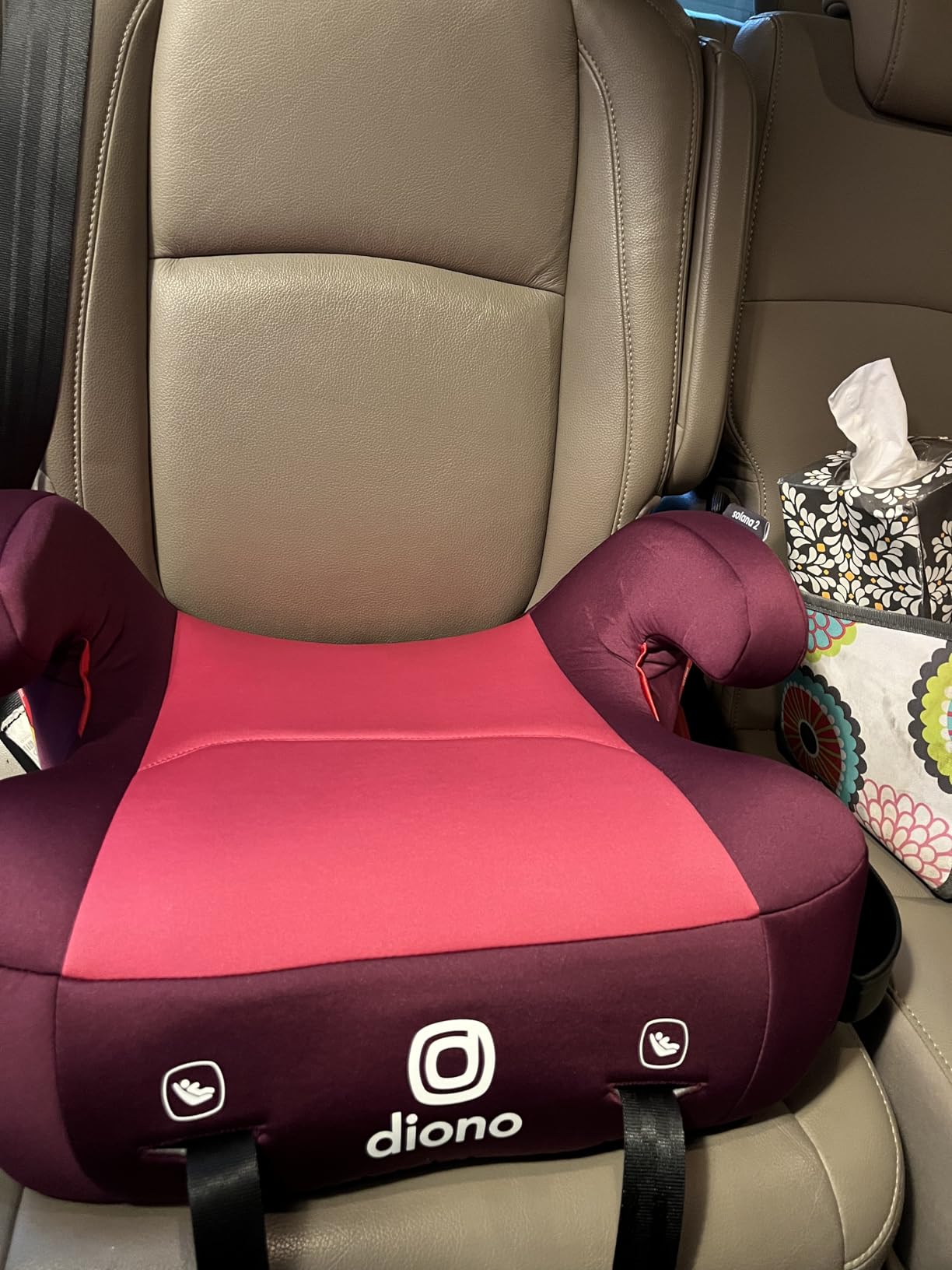
At roughly 3.1 pounds it is still light enough to move between vehicles despite the wide seat. The two built-in retractable 2-in-1 cup holders and snack tray fold away when you do not want them.
Why we picked it for bigger kids
The width and the 120-pound ceiling address the most common reason families abandon a booster early: the child outgrows the hips before the weight limit.
Contoured soft fabrics with layered foam, a shoulder belt positioner, and easy buckle access so the child can self-buckle matter more in a carpool where the adult may be busy with another kid.
Where it falls short
The XL width means this seat cannot go three across, and in small hatchbacks it can block access to the seat belt buckle.
Some owners add their own foam because the factory padding reads thin for larger older children. That is an easy fix, but it means the out-of-box experience is not as plush as the Chiccos.
7. Diono Connect3 R Pack of 2 – The One That Fits Three Across
Diono Connect3 R Backless Booster Pack of 2, Slim Fit 3-Across in Many Mid-Sized Sedans and SUVs, for Children from 40-120 lbs., Lightweight with Cupholder, Blue Surge
Pack of 2 for two-child carpools
Under 17 inches wide
40-120 lb range
Vehicle seat belt install
Pros
- Engineered for three-across fit in mid-size vehicles
- Two seats in the pack for two kids
- Removable cup holders nest between seats
- Built-in carry handle
Cons
- Much smaller review base than competitors
- Three-across fit limited to mid-sized sedans and SUVs
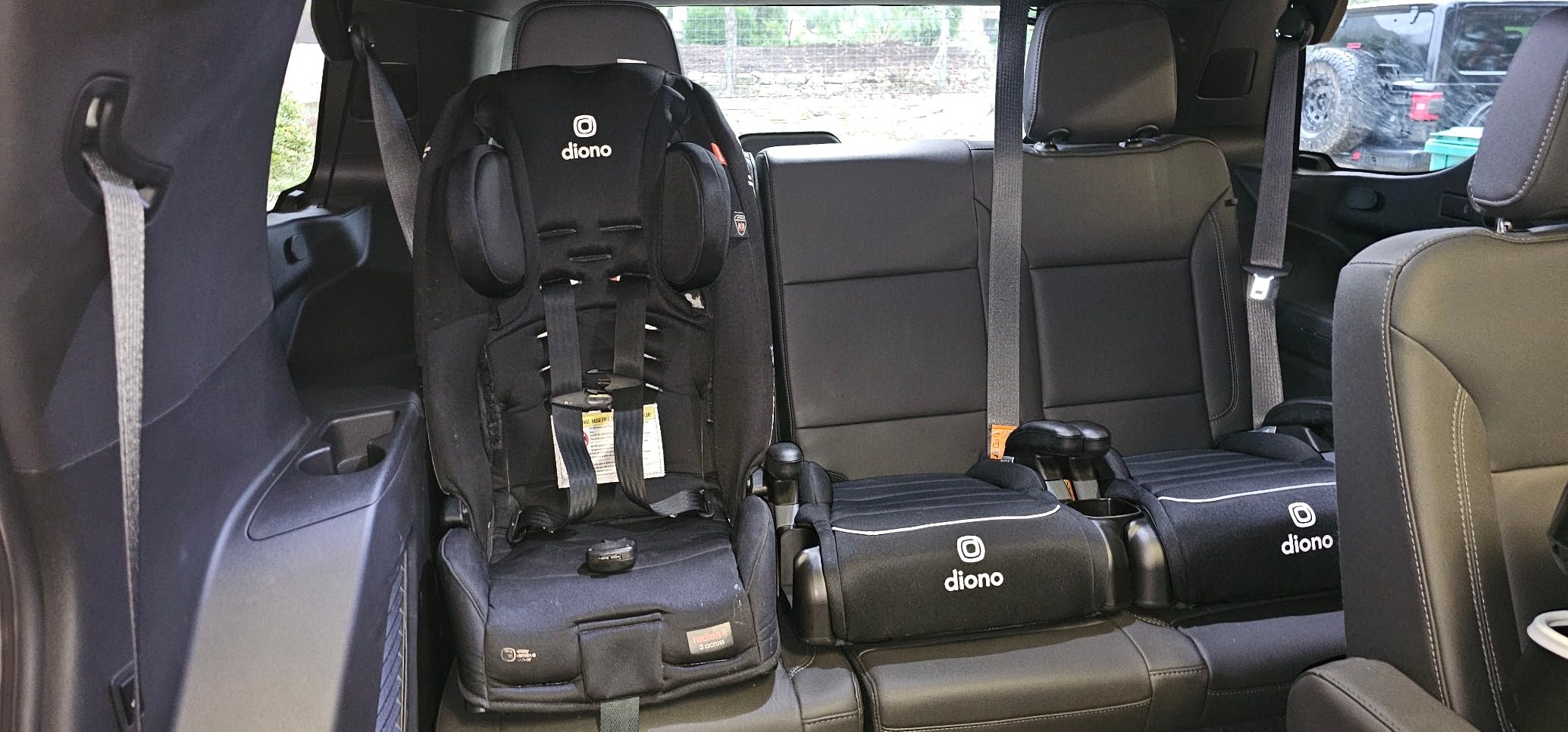
This is the only seat in our group designed from the start around the three-across problem, and it comes as a pack of two. If two of your children need boosters and both ride in the same vehicle, the math works in your favour immediately.
It is under 17 inches wide with a 2TexFoam seat base, rated for 40 to 120 pounds, and installs with the vehicle seat belt. A shoulder belt positioning clip is included.
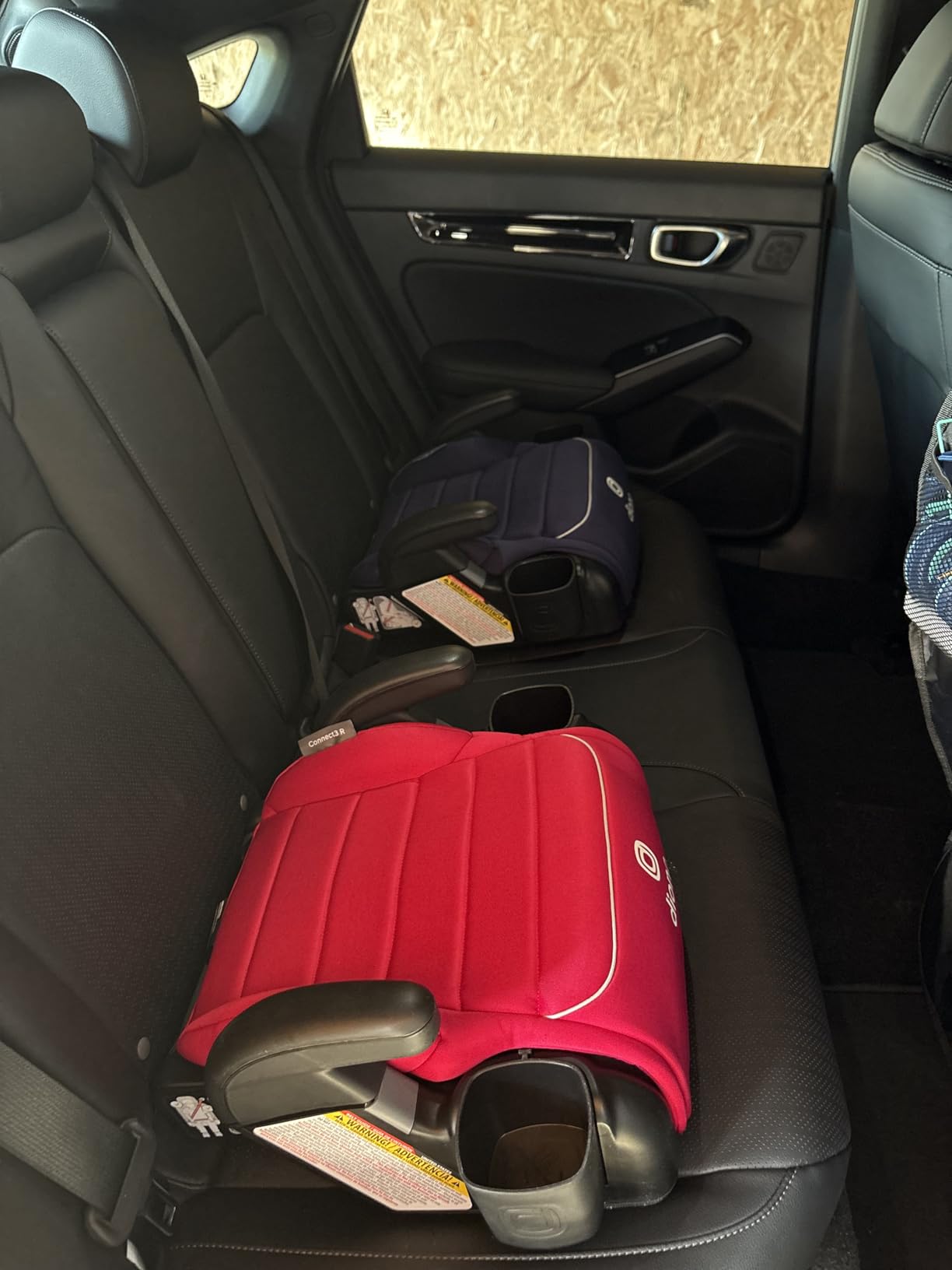
The clever detail is the cup holders. They are removable and nest between adjacent Connect3 seats, which means they do not add to the width of your three-across row. When no one needs a drink they store underneath the seat.
The seat contour wraps around EasyPath lap belt guides that keep the belt low on the hips, and EasyReach shaping keeps the buckle accessible so a child can clip in themselves rather than waiting for an adult who is already late.
Why we picked it for three-across
Three across the back of a normal sedan is the single hardest carpool problem, and almost every booster on the market makes it harder. This one is built the other way around.
The pack of two is also the correct shape for a family that commutes daily, because it means each vehicle can have its own permanently installed set instead of moving seats around every morning.
Where it falls short
With 304 reviews, this is a newer listing and the long-term durability picture is thin compared with the Cosco and Graco, which have tens of thousands of reviews behind them.
The three-across claim applies to many mid-sized sedans and SUVs, not every back row. Compact cars and some minivans will still fight you.
8. PEG Viaggio Shuttle – The One That Cannot Slide
PEG Viaggio Shuttle – Backless Booster Car Seat – Astral (Beige)
Up to 120 lbs and 63 inches
Integrated retractable rigid LATCH
Blind Lock release guard
Made in Italy
Pros
- Rigid LATCH anchors the seat so it cannot slide
- Retracts into the shell for latch-free vehicles
- Narrow profile clears deep buckle assemblies
- Highest ceiling at 120 lbs and 63 inches
Cons
- Premium price for the category
- Thinner padding than some rivals
- Swiveling cup holder spills
The Viaggio Shuttle takes the anchoring idea further than any other seat here. Instead of a fabric LATCH strap, it has an integrated rigid LATCH that slides into the booster shell and locks into the vehicle anchor points, plus a Blind Lock System that guards against unintended release.
Rigid anchors do not have the webbing stretch that makes strap-based LATCH seats settle after installation. The booster stays exactly where you put it, which is the complaint owners of belt-only and strap-LATCH seats raise most often.
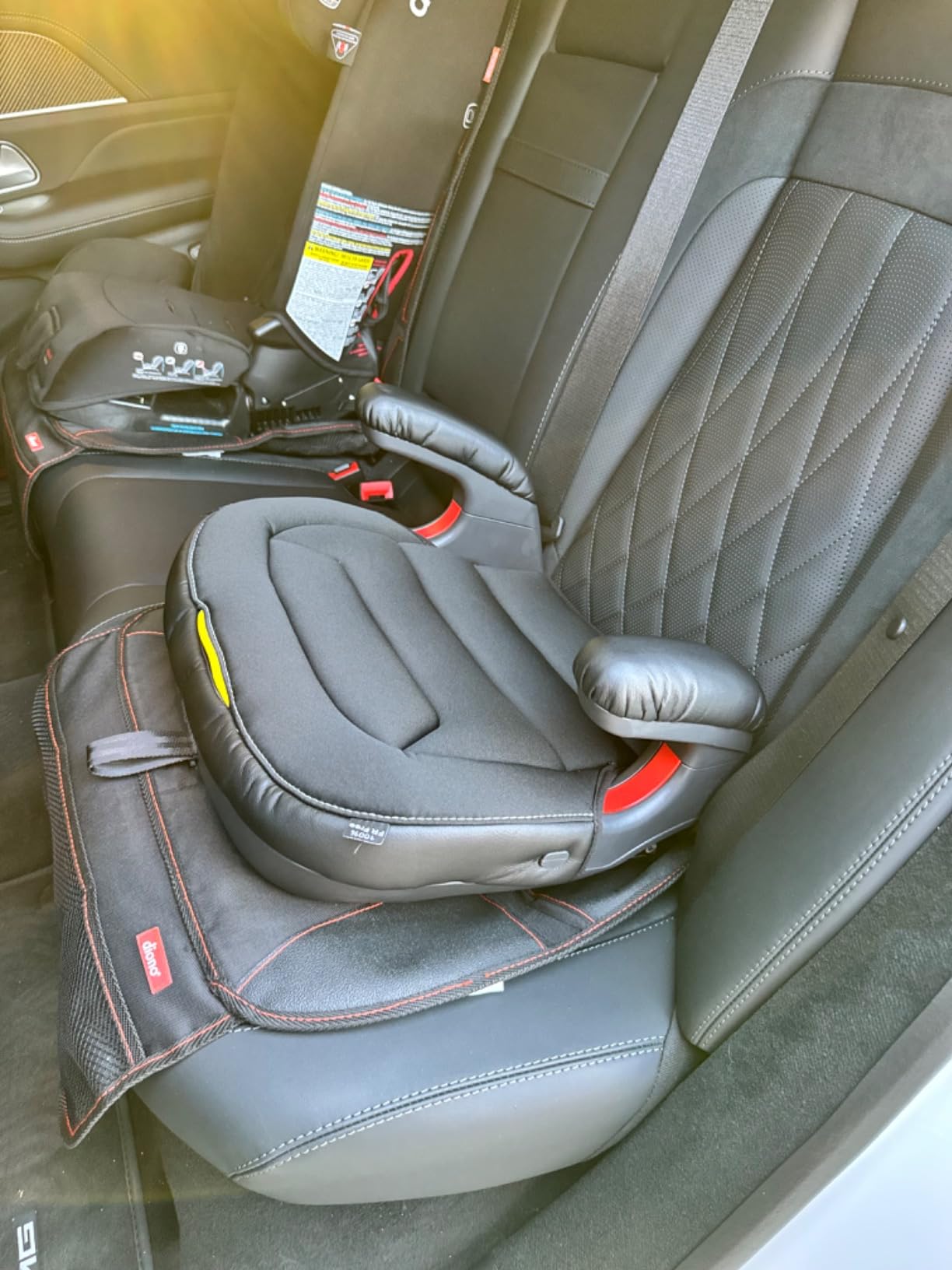
The range runs up to 120 pounds and 63 inches, and it is made in Italy with what owners describe as a noticeably solid build feel. When you buy a seat for the second vehicle and leave it there for years, build quality is not a trivial consideration.
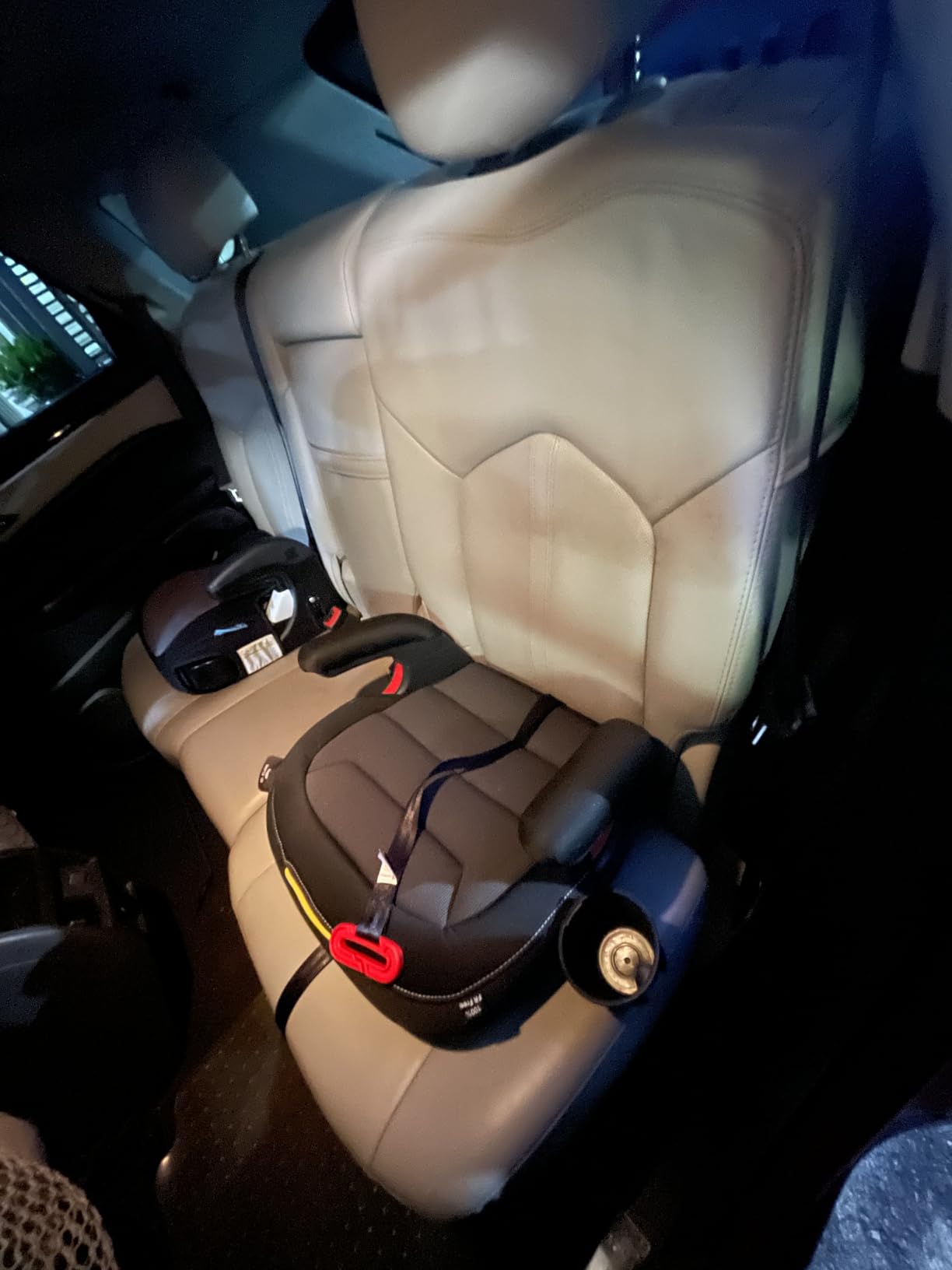
Two practical carpool details stand out. The narrow profile clears deeply set seat buckle assemblies better than most competitors, which is exactly the problem in an older family car. And the rigid latch retracts fully into the shell, so the same seat works in a vehicle with no LATCH anchors at all.
Why we picked it for rigid anchoring
Rigid LATCH removes the whole category of complaints about a booster creeping forward under hard braking. If your carpool includes long highway commutes, that is worth a lot.
The retractable latch also makes this the rare premium seat that works in every vehicle in your rotation, including rental cars and older cars without anchors.
Where it falls short
The seat sits at the top of the price range for this group, and the thin padding is a real downgrade for long daily drives. Owners add a towel or a pad.
The swiveling cup holder is not fully stable and spills drinks, and the rigid latch anchor takes a few attempts to adjust before you get the hang of it.
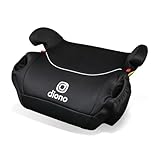
9. Diono Solana No Latch – The Budget Pick With Real Growth Range
Diono Solana, No Latch, Single Backless Booster Car Seat, Lightweight, Machine Washable Covers, Cup Holders, Black
40-120 lb range
Single belt-only install
Machine-washable removable cover
Two elastic cup holders
Pros
- Keeps the 40-120 lb range of pricier models
- Light enough to stash in a trunk
- Two built-in elastic cup holders
- Machine-washable removable cover
Cons
- No LATCH
- so the seat can shift more
- Less padding than the XL Solana 2
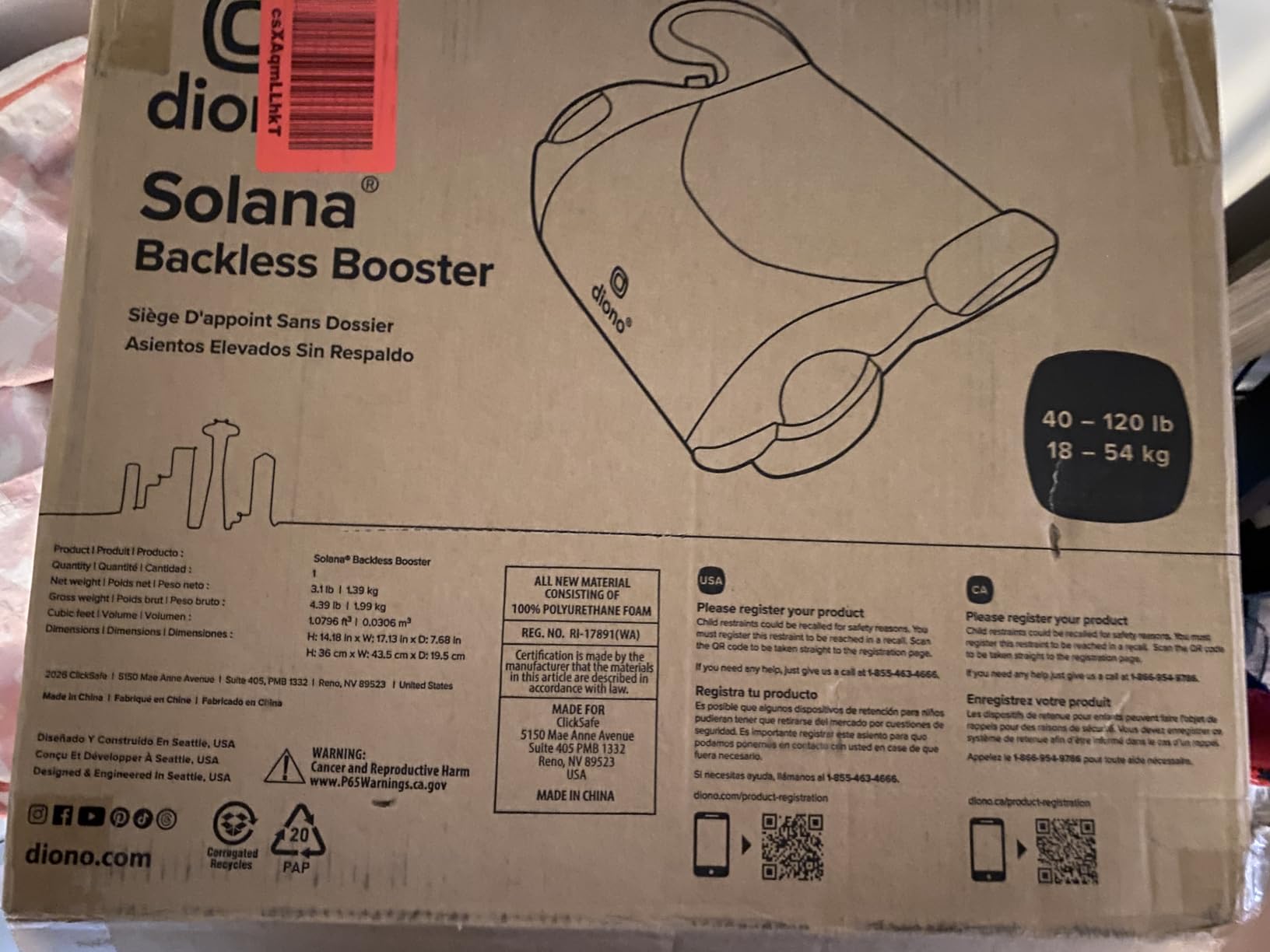
The plain Solana keeps the thing that makes the Diono line distinctive, which is the 40 to 120 pound range, and drops the LATCH hardware. That combination is unusual and it is why this is our value pick.
For a carpool family on a budget, matching a 120-pound ceiling at a low cost is worth more than paying more for anchors you may not need if your child sits still and buckles properly.
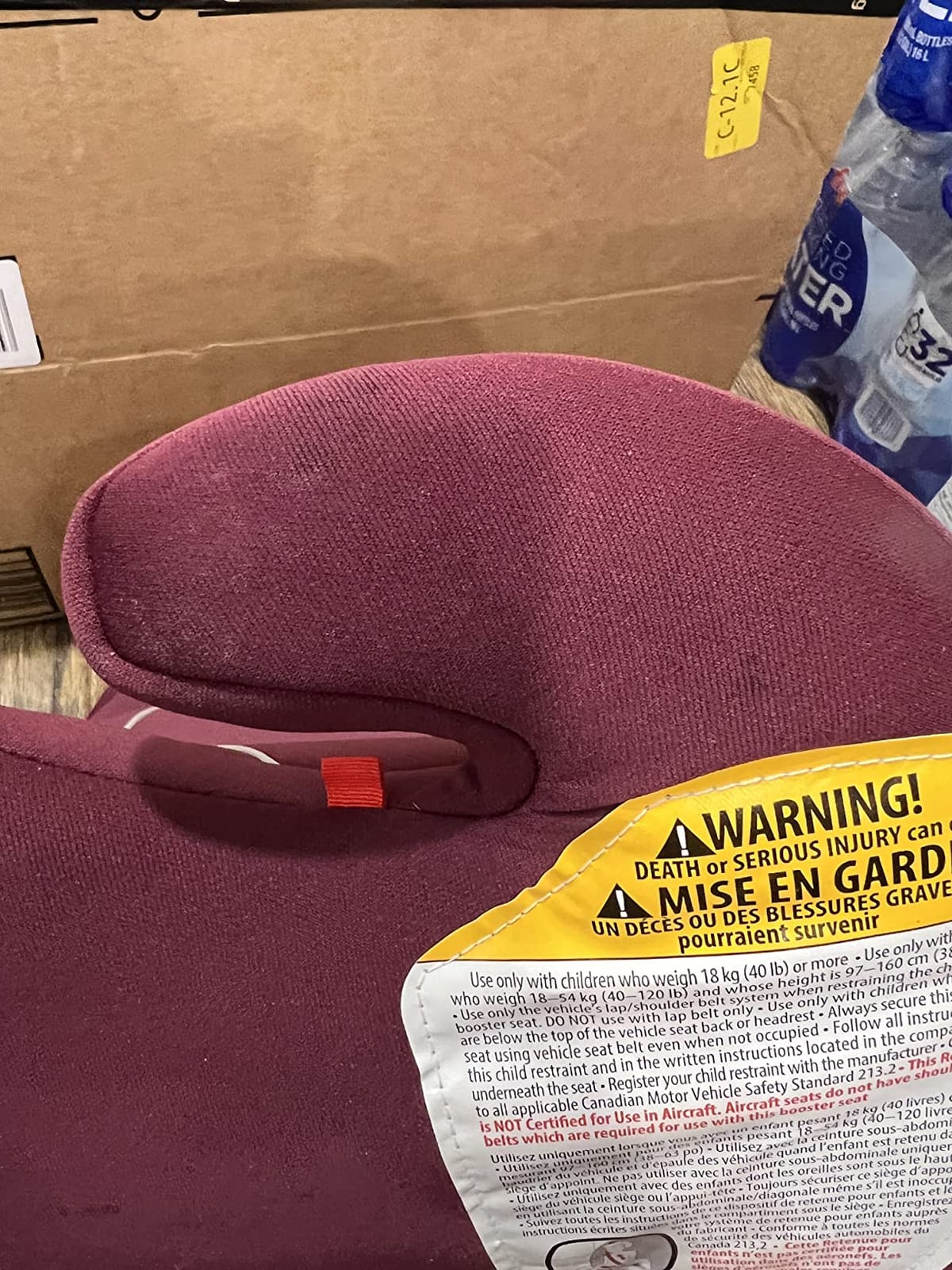
It has two built-in elastic cup holders, contoured soft fabrics with layered foam padding, a shoulder belt positioner and easy buckle access for self-buckling. The cover removes and goes in the washing machine, which is a genuine advantage in a shared car.
The listed design intent is trunk storage between uses. At this weight, moving it between your car, a second vehicle and a grandparent’s house takes seconds.
Why we picked it as best value
A 120-pound, 8-years-one-booster range is not typical at this level.
Machine-washable covers and self-buckling access both matter more when the seat lives in a carpool rotation rather than in your own driveway.
Where it falls short
No LATCH means the booster is held by the seat belt alone and can shift more than anchored models, particularly on a sloped bench.
Padding is thinner than the Solana 2 XL, and the elastic cup holders hold less than a rigid ring cup holder.
10. Evenflo GoTime No Back Booster – The Simple Two-Cup-Holder Budget Seat
Evenflo GoTime No Back Booster Car Seat (Static Black)
No-back belt-positioning design
Included shoulder belt clip
2 built-in cup holders
Removable wipe-clean pad
Pros
- Low cost for a belt-positioning no-back booster
- Two integrated cup holders for drinks and snacks
- Contoured padding for longer rides
- Removable pad wipes down easily
Cons
- Smallest review base in this group
- 6 percent one-star reviews
- No LATCH and no carry handle
The GoTime is the simplest seat on this list and the newest. It does the minimum job well: it lifts your child, it positions the shoulder belt with an included clip, and it holds two cups.
Two integrated cup holders on a budget no-back booster is a rare combination. Most seats at this level give you one elastic loop or none, and a carpool run with a loose water bottle in the footwell is a bad afternoon.
The padding is contoured rather than flat, which reviewers credit for longer commutes. The seat pad is removable and wipes down, so a spill in someone else’s car is a thirty-second problem instead of a laundry problem.
Installation is the vehicle seat belt with the included shoulder belt clip doing the routing work. There is no LATCH and no carry handle, so this is a seat you leave in one car rather than one you carry between cars.
Why we picked it as the budget seat
It covers the two things a daily carpool genuinely needs, which is correct belt fit and somewhere to put a drink, and it is the entry point in this group.
The removable wipe-clean pad is more practical than a hand-wash-only cover when the seat spends its life in shared vehicles.
Where it falls short
With 115 reviews it has the smallest base in this group, so there is very little long-term feedback on how it holds up after a few years of daily use.
Six percent one-star reviews point to some quality or fit complaints, and the 4.4 average is the lowest of the rigid boosters here. If your child is large, check the seat’s fit carefully before relying on it.
How We Evaluated These Boosters
We looked at published specifications for each seat: weight and height ranges, installation method, width, LATCH hardware, cup holders, cleaning and cover care. Where manufacturer measurements were unavailable we did not substitute guesses.
Then we weighted the carpool use case heavily, which means seat weight, how the seat is moved between vehicles, whether it needs hardware in someone else’s car, and how wide it is relative to a normal back bench.
We also read a large volume of owner reviews, looking specifically for recurring complaints rather than isolated comments. The bad-weather, dark-parking-lot, kid-fell-asleep and belt-routing complaints are what separate these seats from each other in practice.
One note on research and safety: fit and correct use matter more than brand or price. A correctly installed budget booster protects a child better than a premium seat used incorrectly, and nothing in this guide replaces the fit check you do with your own child in your own car.
Carpool Buying Guide: Width, Belts, and Storage
How to measure your back seat for three boosters
Measure the flat usable width of the rear bench at the level of the seat cushion, from the inside edge of one door to the other, and note where the buckles sit because they eat width. Then add the width of each booster you plan to use and compare the total to the measurement.
Most backless boosters on the market are wide. Two standard rigid seats rarely sit comfortably three-across in a compact sedan, and three rarely fit at all. The Diono Connect3 R is the one here engineered for it at under 17 inches per seat.
A quick alternative check: put the boosters in place, buckled, and look at the seat belt path for each child before you commit to a set. Geometry on paper does not always survive a real bench.
One booster per car, or one booster you carry
This is the decision that actually defines carpooling. Parents who carpool regularly generally recommend buying one booster per vehicle and adjusting each one correctly, rather than moving seats around every morning. A booster that has to be uninstalled and reinstalled gets installed badly, or not at all.
If your rotation involves vehicles you use rarely, a rideshare, or a rental, the mifold approach makes sense: one compact seat that travels with you. If your rotation involves two or three cars you drive yourself, per-vehicle boosters win on both safety and sanity.
LATCH versus seat-belt-only on a backless booster
A backless booster works by positioning the adult belt. On belt-only models the vehicle belt holds the seat in place and restrains the child, which is fully compliant when the belt fits correctly.
LATCH on a backless booster adds stability while the child gets in and out, so the seat does not need re-adjusting every trip. It does not replace belt fit, and it does not mean the belt becomes optional. Many parents assume it does, which is one of the most common misconceptions in carpool parent groups.
Note that some vehicles have no LATCH anchors at all, and some boosters with LATCH need a top tether strap that backless boosters often do not have. The PEG Viaggio Shuttle solves this cleanly because its rigid latch retracts into the shell.
Backless versus high-back for daily carpools
Backless boosters suit children who sit relatively still and stay belted for the whole ride. They are lighter, cheaper and narrower, which makes them easier to move and better for three-across fits.
High-back boosters add a shell, head support and usually a harness for smaller children. In carpool vehicles that may lack adjustable headrests, or where a young rider falls asleep on a highway commute, the head support is a genuine safety benefit rather than a comfort luxury.
If your child is under about eight, or your commute is longer than 30 minutes, a high-back with a harness is worth considering. Everything in this guide assumes a child who can sit properly belted from shoulder to mid-thigh.
How to share one booster safely between families
First, check the seat. Confirm the model has not been recalled, confirm the manufacture date is not ancient, and confirm the cover and foam are intact with no cracks or compressed padding.
Then check the fit with your own child before they buckle in. Belt low across the upper thighs, shoulder belt through the mid-shoulder and chest, never across the neck or the arm. If the belt geometry does not work in that vehicle, the seat is wrong for that car no matter how good it is.
Label the seat with your family’s name and a phone number, keep a machine-washable cover on it, and hand it back the same way you received it. A wipe-down between families takes a minute and prevents most friction.
Cleaning and everyday care
In a carpool rotation, cleaning matters more than in a single-family car because the seat spends its life in vehicles you do not maintain. Machine-washable seat pads and dishwasher-safe cup holders are the features that save the most time here.
Hand-wash-only covers are a real drawback in this context. If you choose one, keep a spare cover or a removable pad so you are not scrubbing fabric at 8pm on a school night.
Beyond that, check the booster’s history rather than its fabric. Replace any seat involved in a crash, and check the manufacture date label periodically, since booster shells and foam age even when unused.
Frequently Asked Questions
What booster seats will fit 3 across?
Only purpose-built narrow boosters reliably fit three across a rear bench. Most standard backless boosters are too wide for that, and compact sedans are harder than SUVs. Among the seats we tested, the Diono Connect3 R is under 17 inches wide and is designed for three-across in many mid-sized sedans and SUVs. The widest options here, including the Diono Solana 2 XL, cannot go three across at all.
Are backless booster seats safe for regular carpool use?
Yes, provided the child can sit properly belted for the entire ride and the belt fits correctly every time. Backless boosters are belt-positioning devices certified under FMVSS 213B, and they are safe for daily use as well as short trips. They are not appropriate for children who cannot stay buckled, who are too small for the belt to fit, or who need head support in a vehicle without adjustable headrests.
Do backless boosters need LATCH?
No. A backless booster can be held in place by the vehicle seat belt alone, and that is a compliant installation when the belt fits low on the hips and across the mid-shoulder. LATCH is optional and adds stability so the seat does not shift while your child climbs in and out. It does not replace belt fit and it does not make the seat belt optional. Some vehicles have no anchors, so a belt-only seat is often the simpler choice.
What is the most comfortable backless booster?
Among the ten seats we compared, the Chicco GoFit and GoFit Plus are the most comfortable because they use a contoured ErgoBoost seat with double foam padding rather than a flat slab. Both rate highly and include two fold-away dishwasher-safe cup holders. For the thinnest cushioning in the group, the mifold Comfort Grab-and-go has the least padding.
Should I keep a booster in my second car or carry one between cars?
For a regular two or three-vehicle carpool rotation, keep one booster in each car and adjust each one correctly. Moving seats every morning is when installation gets rushed or skipped. If your rides involve occasional rental cars, rideshares, or vehicles you rarely drive, a single compact booster that packs into a backpack or glove box is more practical than stashing several seats.
When should my child switch from a harness seat to a backless booster?
Most children are ready at about 40 pounds and 43 inches, when they outgrow the forward-facing harness. Signs of readiness include sitting properly for the whole ride, buckling up without help, and understanding why the belt must stay on. Choose a high-back harness booster instead if your child is younger than about eight or falls asleep on longer commutes, since a backless booster offers no head support.
Bottom Line for Carpool Families
The best backless boosters for carpools are not the most expensive or the most feature-dense. They are the ones that get used, used correctly, in every car your child actually rides in.
Buy the Cosco Topside if the seat has to move with your child. Add the Graco TurboBooster 2.0 if you want the most explicit crash-testing program behind a plain belt install. Get the Diono Connect3 R pack of two if three children share a back bench. For a seat with real growth range and a washable cover, the Diono Solana No Latch carries children from 40 to 120 pounds.
Before you order, measure the back seat, check the child’s current height against the seat’s ceiling, and do a belt-fit check in one unfamiliar vehicle. That fifteen minutes of homework prevents every problem on this list.