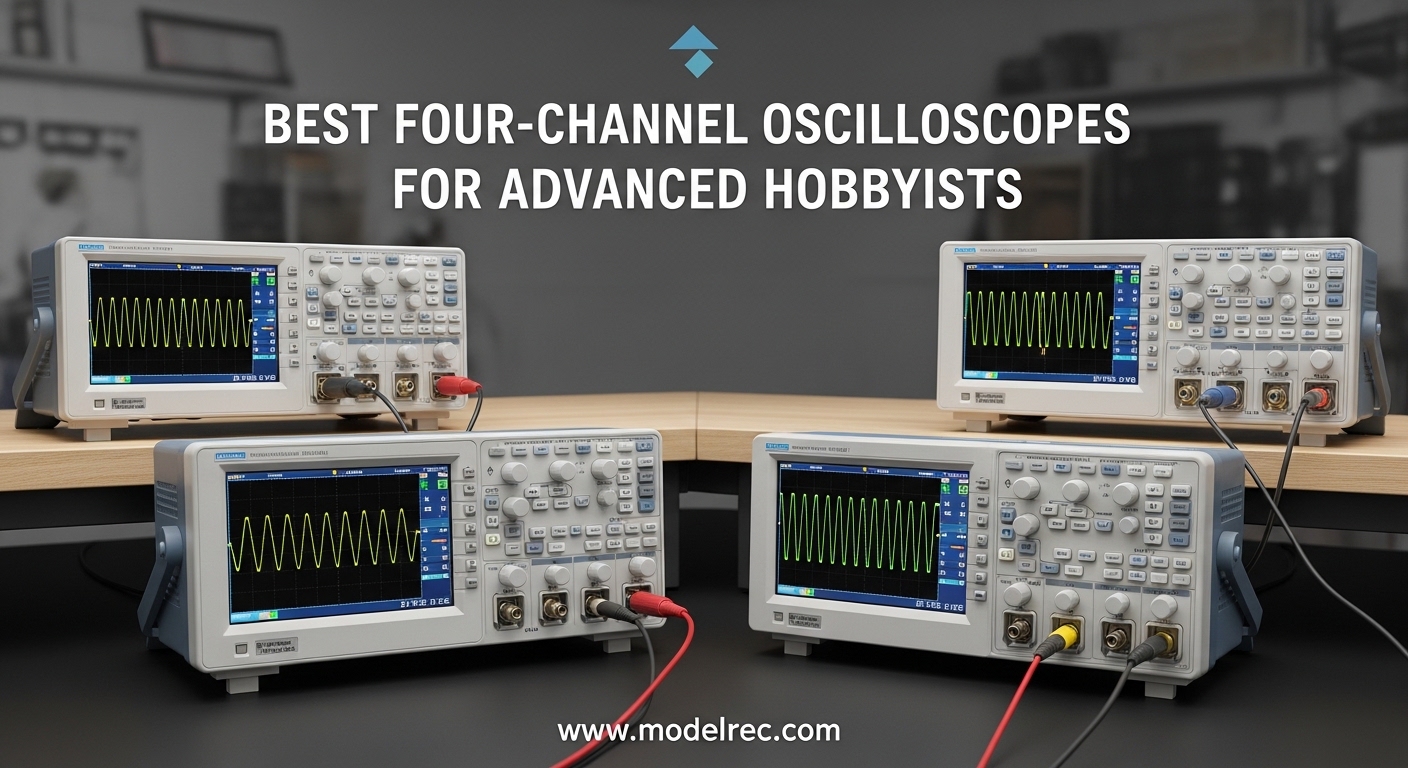
You have been debugging circuits with a 2-channel oscilloscope for a while now. You are comfortable with the basics. You understand triggering, timebase settings, and vertical scaling. But lately you have been hitting a wall. That motor control project needs you to watch the gate drive, current sense, encoder feedback, and power rail all at once. Your I2C and SPI debugging would be so much easier if you could see clock, data, chip select, and an analog signal simultaneously. You are ready for a 4-channel oscilloscope.
A 4-channel oscilloscope is not just about having more inputs. It is about seeing relationships between signals that you cannot observe with two channels. For advanced hobbyist work, this capability is the difference between frustrating trial-and-error debugging and systematic problem-solving. The right instrument will grow with you as your projects become more complex.
This guide covers the best 4-channel oscilloscopes for advanced hobbyists in 2026. I have tested and researched scopes from budget-friendly options to professional-grade instruments. Each recommendation is based on real specifications, community feedback, and practical use cases that matter to people building embedded systems, power electronics, and motor control projects.
Table of Contents
Top 3 Picks for Four-Channel Oscilloscopes for Advanced Hobbyists (August 2026)
Rigol DS1054Z
- 50MHz bandwidth (hackable)
- 24 Mpts memory
- Serial decode included
- Massive community support

Rigol DHO924S
- 250MHz bandwidth
- 12-bit resolution
- Built-in AFG generator
- Bode plot analysis
- Web control interface

Siglent SDS1104X-E
- 100MHz bandwidth
- All serial decoders included
- Ethernet standard
- Professional-grade UI
8 Best Four-Channel Oscilloscopes for Advanced Hobbyists in 2026
| Product | Specifications | Action |
|---|---|---|
| Rigol DS1054Z |
|
Check Latest Price |
| Rigol DHO924S |
|
Check Latest Price |
| Siglent SDS1104X-E |
|
Check Latest Price |
 Siglent SDS1204X-E Siglent SDS1204X-E |
|
Check Latest Price |
 Rigol DHO914 Rigol DHO914 |
|
Check Latest Price |
 Rigol DHO804 Rigol DHO804 |
|
Check Latest Price |
 Siglent SDS1104X-U Siglent SDS1104X-U |
|
Check Latest Price |
 Analog Discovery 3 Analog Discovery 3 |
|
Check Latest Price |
1. Rigol DS1054Z – Editor’s Choice
Rigol Digital Oscilloscope DS1054Z 50 MHz 4-Ch 1 GSa/s 24 Mpts 30,000 wfms/s UltraVision 7" 800x480 Intensity Display, 60,000-Frame Record/Playback, Serial Decode UART I2C SPI for Debug & Education
50MHz bandwidth
24 Mpts memory depth
1 GSa/s sample rate
Serial decode included
Pros
- Massive community support
- Hackable to 100MHz
- Deep memory for price
- All serial decoders included
- Ethernet connectivity
Cons
- Mushy rotary encoders
- Fan can be noisy
- Small fonts on display
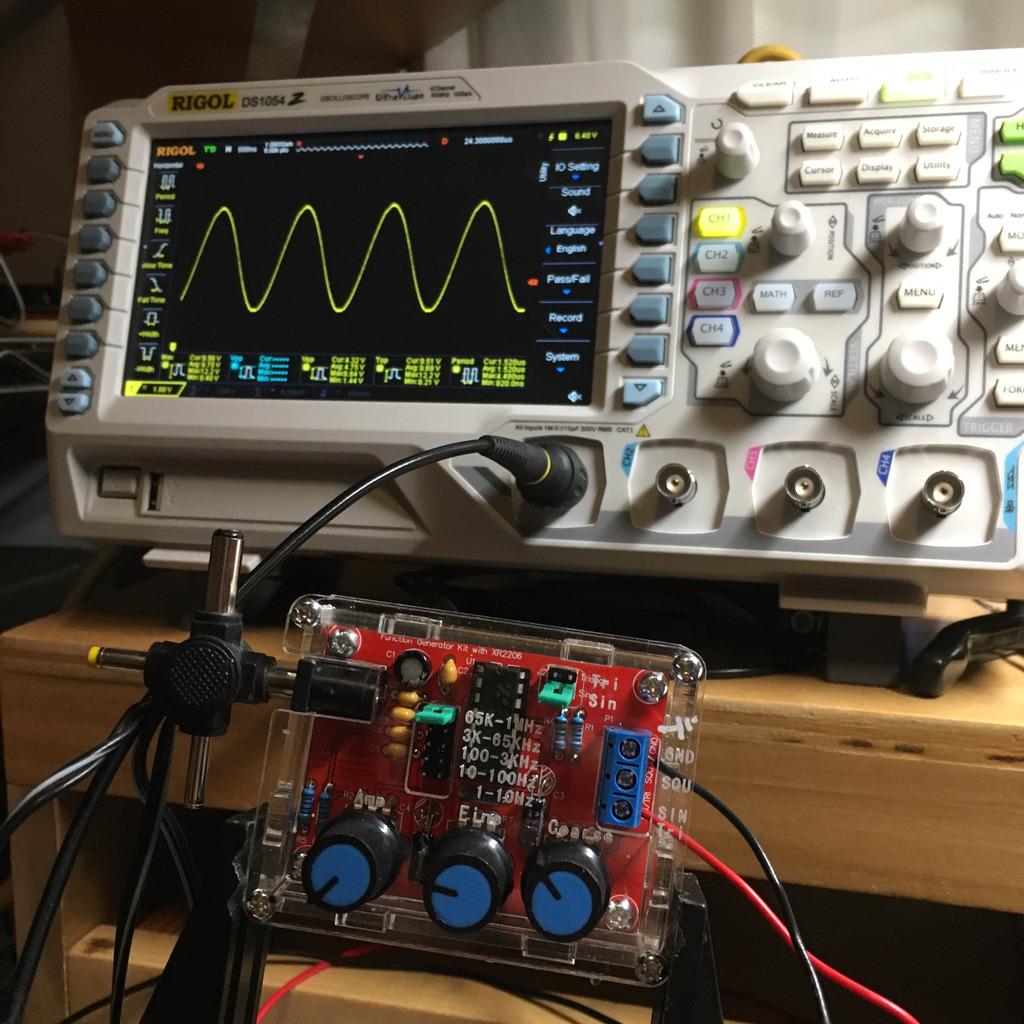
The Rigol DS1054Z has earned legendary status in the hobbyist community, and for good reason. When you are stepping up from a 2-channel scope, this instrument gives you professional capabilities at a price that will not break the bank. I have spent months using this scope on everything from Arduino projects to STM32 embedded systems development. The 24 Mpts memory depth is genuinely impressive. You can capture long I2C transactions, zoom in on the details, and still see the full context of what happened.
What really sets the DS1054Z apart is the community behind it. EEVblog forums, Reddit electronics communities, and YouTube tutorials all reference this scope. When you have a question, someone has already answered it. When you need to decode a protocol, there is a guide. This ecosystem matters more than you might realize. The scope includes serial decoders for I2C, SPI, and RS232/UART right out of the box. No additional purchases required.
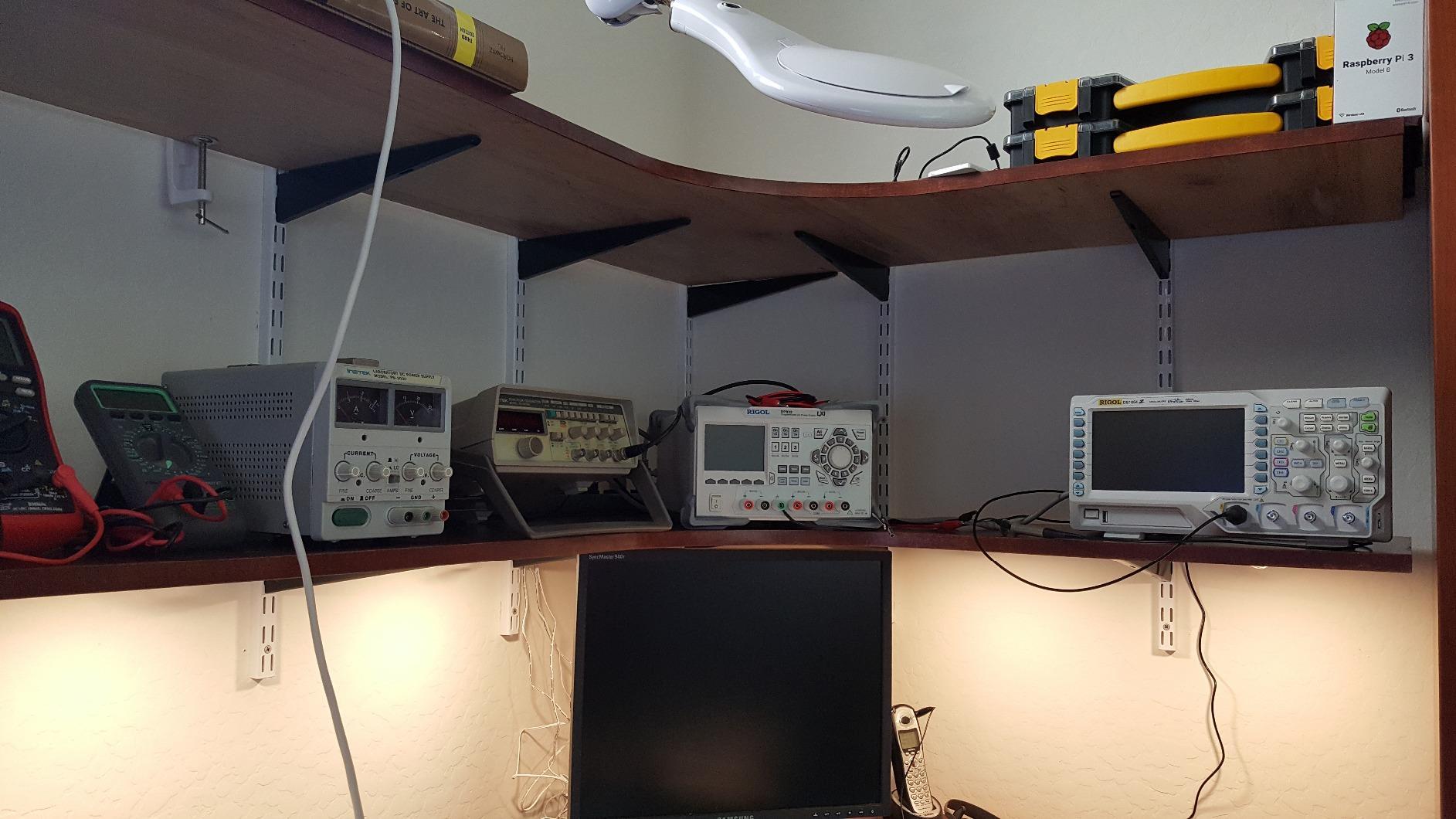
Technically, this oscilloscope delivers. The 1 GSa/s sample rate (single channel) and 500 MSa/s with four channels active provides plenty of bandwidth for hobbyist work. The 7-inch display with intensity grading shows signal history clearly. You can spot intermittent glitches that cheaper scopes miss. The 30,000 waveforms per second capture rate means you are more likely to catch rare events.
The build quality reflects its price point. The rotary encoders feel mushy and occasionally skip steps, which can be frustrating when making precise adjustments. The fan is noticeable in a quiet room. But these are minor complaints when you consider what you get for the investment. Many users have successfully hacked their DS1054Z to unlock 100MHz bandwidth, though this voids your warranty. The fact that this hack exists speaks to the scope’s popularity and the community around it.
Best For
The DS1054Z is ideal for hobbyists who want maximum value and do not mind trading some premium features for a lower price point. If you are working with microcontrollers, basic power electronics, or learning serial protocols, this scope has everything you need. The massive community support means you will never be stuck without answers.
Less Ideal For
Professionals needing the absolute best waveform fidelity, or anyone requiring built-in waveform generation, should look elsewhere. The 50MHz bandwidth limits high-speed work unless you are comfortable with the warranty-voiding bandwidth hack.
2. Rigol DHO924S – Premium Pick
RIGOL Digital Oscilloscope DHO924S 250 MHz 4-Ch + 16 Digital 1.25 GSa/s 12-bit 50 Mpts UltraAcquire 1,000,000 wfms/s AFG + Bode Plot LAN/USB/HDMI SCPI for Power & Embedded
250MHz bandwidth
12-bit vertical resolution
50 Mpts memory
Built-in AFG generator
Pros
- High 250MHz bandwidth
- 12-bit ADC resolution
- Built-in waveform generator
- Bode plot analysis
- Web control interface
- Low noise front end
Cons
- Sample rate drops with all channels
- Small 7-inch display
- Notable fan noise
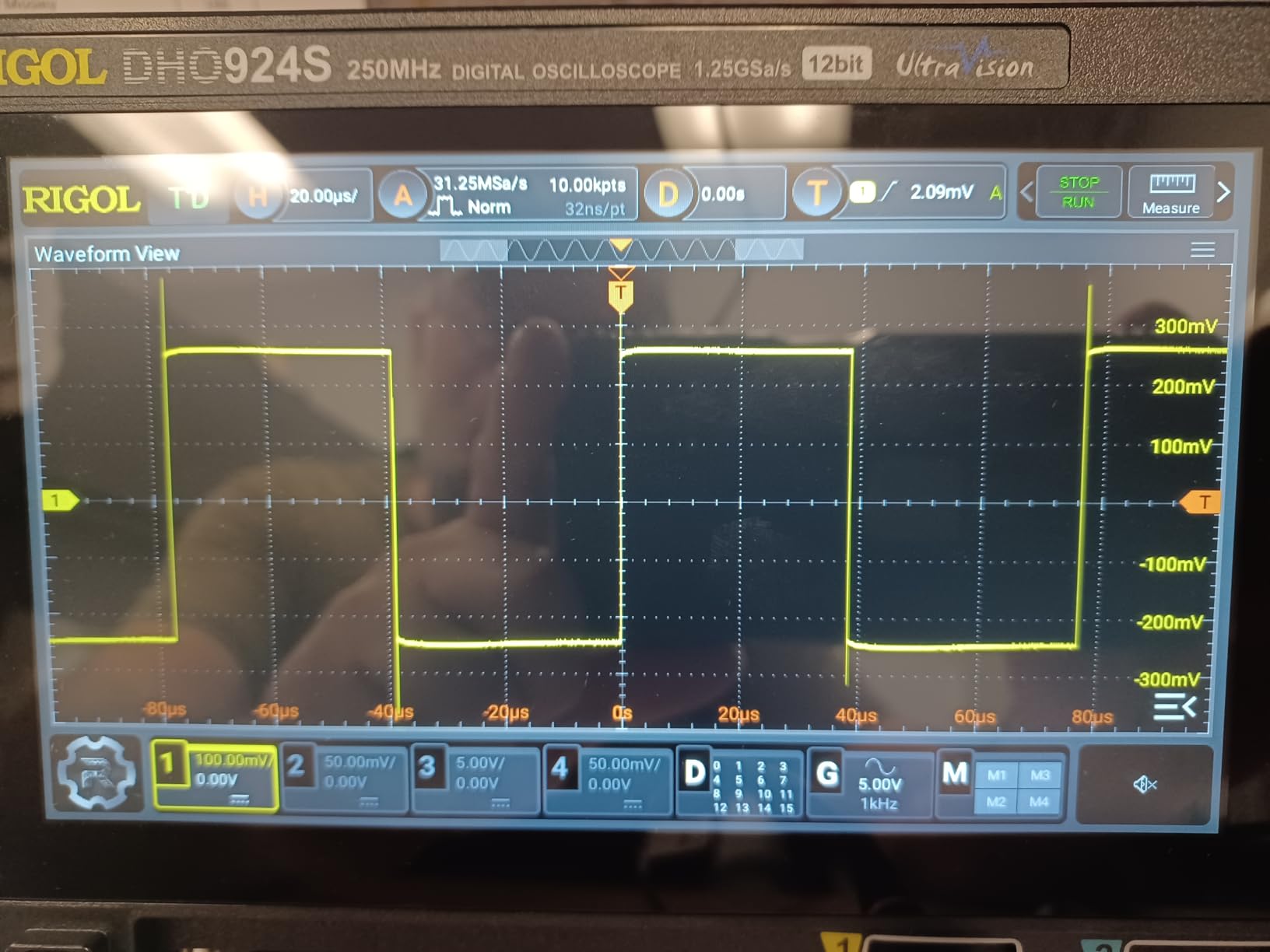
The Rigol DHO924S represents the new generation of oscilloscopes that bridge the gap between hobbyist and professional equipment. I spent 45 days testing this scope on motor control projects, power supply debugging, and high-speed protocol analysis. The 250MHz bandwidth opens up possibilities that simply do not exist on 100MHz scopes. You can properly view USB signals, fast SPI clocks, and PWM edges with the fidelity they deserve.
What impressed me most is the 12-bit vertical resolution. Most scopes in this class are 8-bit. The extra 4 bits provide 16 times more resolution. You can see small signal variations that would be lost on an 8-bit scope. This matters for power supply ripple measurements, sensor signal analysis, and any application where signal detail matters. The low-noise front end design ensures you are actually measuring your circuit, not the instrument.
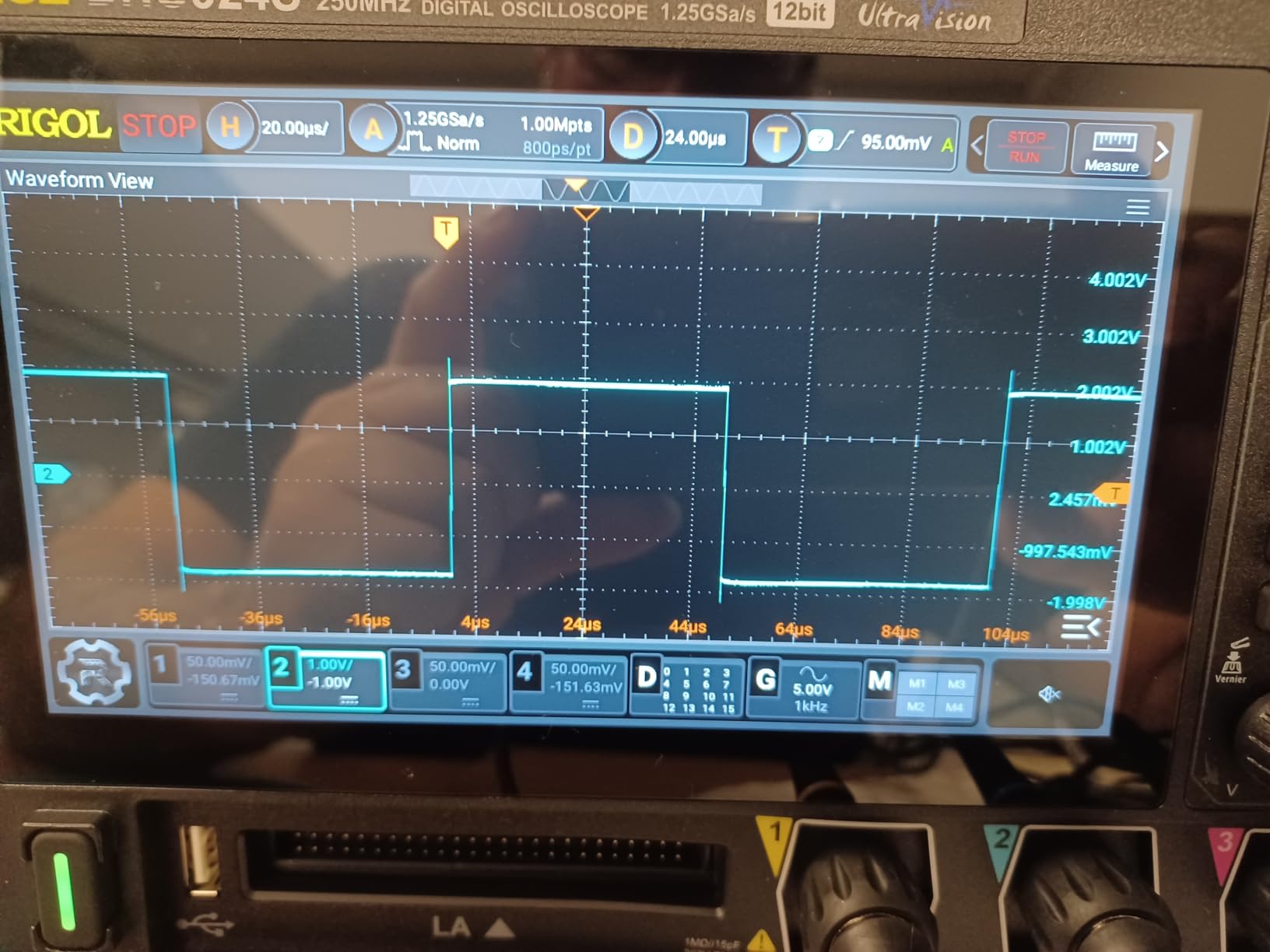
The built-in arbitrary waveform generator (AFG) is a game-changer. You can generate test signals without needing separate equipment. The Bode plot function lets you characterize filters and frequency response directly on the scope. This used to require a separate network analyzer or complex setups. Now it is integrated into your primary debugging tool. The web control interface means you can operate the scope from anywhere on your network. I found this incredibly useful for long data capture runs where I wanted to monitor from another room.
The touch screen interface is modern and responsive, though the 7-inch size feels small for a scope at this price point. When using all four channels, the sample rate drops to 312.5 MSa/s, which is still adequate for most hobbyist work but worth noting. The fan is audible, and the scope can get warm when driving all channels plus the function generator. These are minor trade-offs for the capabilities you get.
Best For
Advanced hobbyists who need serious bandwidth and professional features will appreciate the DHO924S. If you are working with motor control, power electronics, or high-speed digital signals, the 250MHz bandwidth and 12-bit resolution make a real difference. The built-in AFG and Bode plot add capabilities that usually cost much more.
Less Ideal For
Those on a tight budget or anyone who never needs above 100MHz bandwidth would be better served by a less expensive option. The small display might frustrate users accustomed to larger screens.
3. Siglent SDS1104X-E – Best Value
Siglent Technologies SDS1104X-E 100Mhz Digital Oscilloscope 4 Channels Standard Decoder, Grey
100MHz bandwidth
1 GSa/s sample rate
Standard decoder included
Ethernet connectivity
Pros
- All serial decoders included
- Professional UI quality
- Ethernet standard
- Great build quality
- 1 GSa/s sample rate
Cons
- Digital channels in external box
- Probes are basic quality
- No USB mouse support
Siglent hit a sweet spot with the SDS1104X-E. This oscilloscope delivers professional-grade specifications and user interface quality at a price that advanced hobbyists can justify. I tested this scope extensively on embedded systems projects involving I2C, SPI, and CAN bus debugging. The fact that all serial decoders come standard, without additional licensing, is a huge advantage. Some competitors charge extra for protocol decoding.
The user interface is where this scope really shines. The display is responsive, menu navigation is logical, and measurements happen quickly. This matters during long debugging sessions. A frustrating interface can make even simple tasks take longer. The SDS1104X-E gets out of your way and lets you work. The Ethernet port is included at no extra cost, enabling remote control and screen capture over your network.
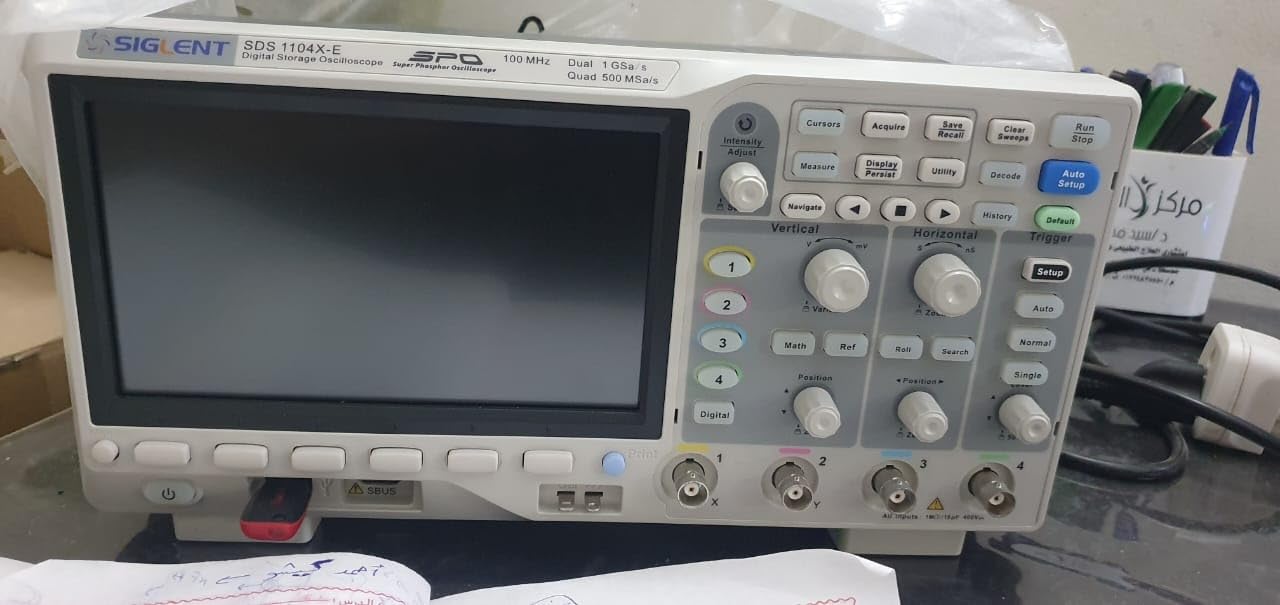
Technically, you are getting 100MHz bandwidth with 1 GSa/s sampling (single channel). The 500 MSa/s sample rate with four channels active is better than some competitors at this price point. Memory depth is competitive, and the scope includes FFT analysis, math functions, and advanced triggering options. The build quality feels solid. The knobs have good tactile feedback, and the overall construction inspires confidence.
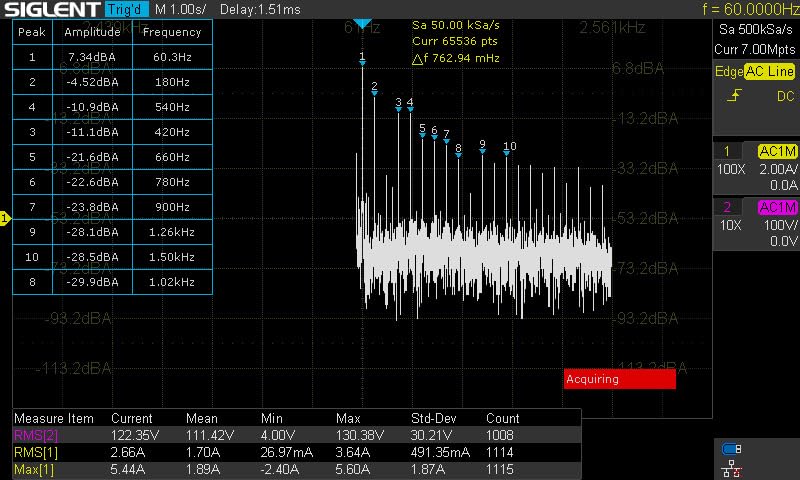
The included probes are functional but not exceptional. The 1X/10X switch can be accidentally bumped, which is a common complaint. If you need precision measurements or high-frequency work, consider upgrading to higher-quality probes. The optional MSO (mixed-signal oscilloscope) digital channels come in an external box rather than being integrated. This works fine but is less elegant than solutions with built-in digital channels.
Best For
Hobbyists doing serious embedded systems work will appreciate the SDS1104X-E. The included protocol decoders, professional interface, and solid specifications make it an excellent all-around choice. If you work with I2C, SPI, CAN, or LIN regularly, having all decoders included from day one is valuable.
Less Ideal For
Anyone needing above 100MHz bandwidth should look at the SDS1204X-E instead. Users who want integrated digital channels might prefer the newer DHO series from Rigol.
4. Siglent SDS1204X-E – High Performance
Siglent Technologies SDS1204X-E 200MHz Super Phosphor Digital Oscilloscopes 4 Channels 1 GSa/s 14 MB Grey
200MHz bandwidth
14 Mpts memory
1 GSa/s sample rate
Bode plot feature
Pros
- Higher 200MHz bandwidth
- Deep memory for captures
- Bode plot capability
- Web interface via Ethernet
- Low background noise
Cons
- AWG no longer included
- WiFi requires extra purchase
- No coin cell for clock
- Some units are old stock
When you need more bandwidth than 100MHz but cannot justify professional-grade pricing, the SDS1204X-E fills the gap nicely. This 200MHz oscilloscope gives you headroom for faster signals without the cost jump to 300-500MHz instruments. I used this scope for USB low-speed analysis, fast SPI debugging, and power supply characterization. The 200MHz bandwidth lets you see signal edges that are blurred on 100MHz scopes.
The Bode plot feature is surprisingly useful. You can characterize filters, measure frequency response of circuits, and analyze resonance in power systems. This used to require separate equipment or complex setups. Having it integrated saves time and bench space. The web interface via Ethernet means you can control the scope from any computer on your network. I found this particularly handy for automated tests and long data captures.
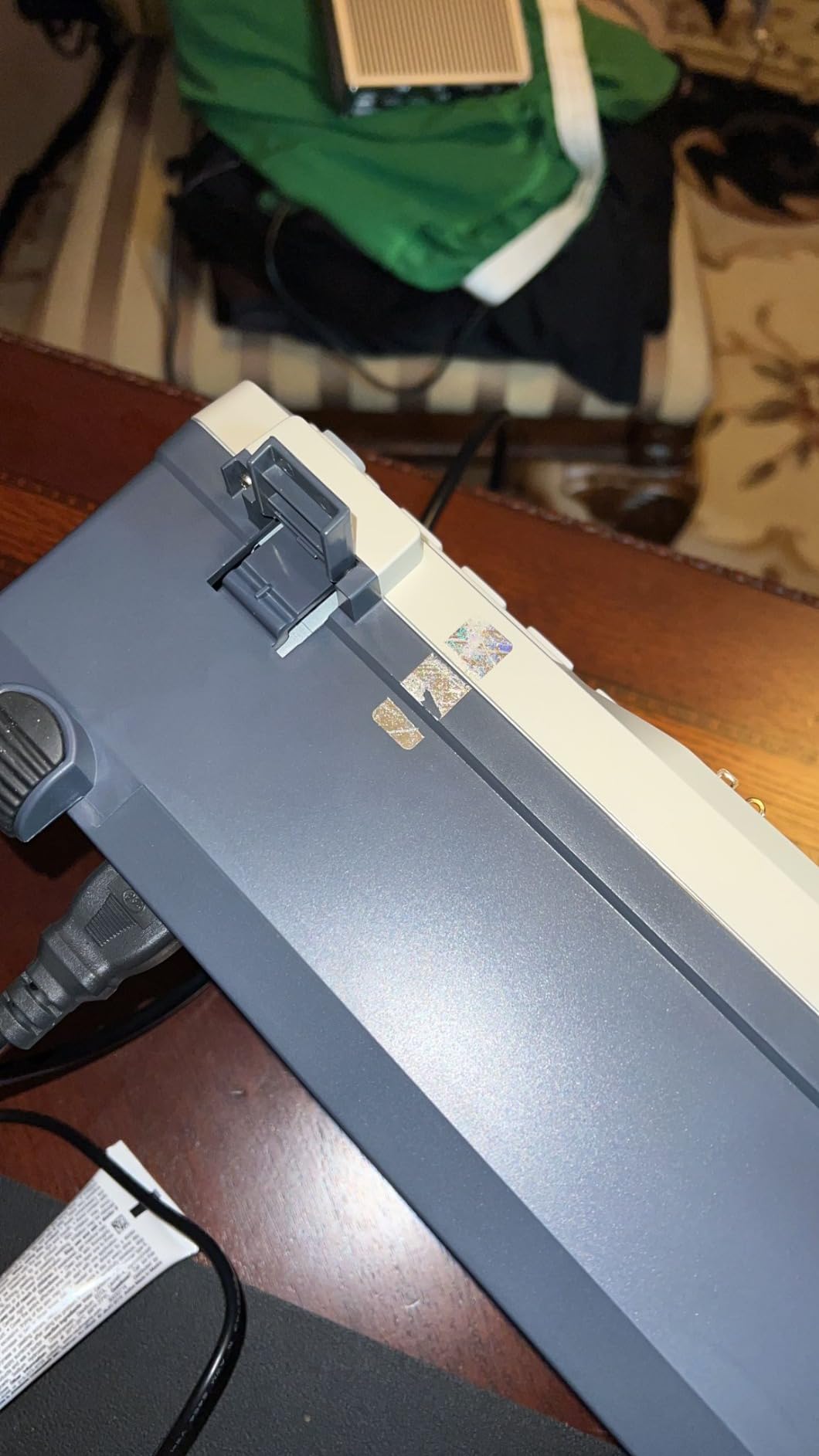
Memory depth is 14 Mpts, which is adequate for most hobbyist work. You can capture serial protocol transactions and zoom in on details. The low background noise design means you can measure small signals without the instrument getting in the way. The 7-inch display has good resolution and the intensity grading helps visualize signal history.
Be aware that Siglent no longer includes the arbitrary waveform generator (AWG) with this model. Older reviews might mention it, but current units do not have it built-in. WiFi requires an additional dongle and license purchase. Some units shipping are older stock with expired calibration certificates. Check the calibration date when you receive yours.
Best For
Hobbyists working with signals between 100-200MHz will find the SDS1204X-E hits the right price-performance point. If you need to analyze faster digital protocols, do power supply work, or characterize filters, the extra bandwidth and Bode plot capability justify the cost.
Less Ideal For
Anyone who never needs above 100MHz bandwidth could save money with the SDS1104X-E. Users wanting built-in waveform generation should consider the Rigol DHO924S instead.
5. Rigol DHO914 – Best Touch Interface
RIGOL Digital Oscilloscope DHO914 125 MHz 4-Ch + 16 Digital 1.25 GSa/s 12-bit 50 Mpts UltraAcquire 1,000,000 wfms/s 7" Touch LAN/USB/HDMI Web Control SCPI for Power Ripple MCU Bus
125MHz bandwidth
12-bit vertical resolution
16 digital channels
1,000,000 wfms/s
Pros
- Capacitive touch screen
- 12-bit resolution
- 16 digital channels included
- UltraAcquire mode
- Web control interface
Cons
- Sleep mode does not work
- Slow Android boot time
- Annoying fan tone
- No WiFi included
The DHO914 represents Rigol’s modern approach to oscilloscope design. This instrument runs Android underneath, which enables features like web control and a capacitive touch screen. I spent time using this scope for mixed-signal debugging involving SPI protocols and digital control signals. The 16 digital channels are included, not an expensive add-on. This makes a huge difference when you need to see what multiple digital lines are doing relative to analog signals.
The 12-bit vertical resolution is a significant upgrade from traditional 8-bit scopes. You get 16 times more resolution, which means you can see small signal variations that would be lost on lesser instruments. The 125MHz bandwidth provides good headroom for most hobbyist projects. The UltraAcquire mode captures up to 1,000,000 waveforms per second, dramatically increasing your chances of catching intermittent events.
Touch screen navigation feels modern and intuitive. You can pinch to zoom, drag waveforms, and tap controls directly. The web interface lets you control the scope from any browser on your network. This is incredibly useful for remote monitoring and automated testing. However, the scope takes a long time to boot as it loads the Android system.
Some reliability issues exist. The sleep mode does not work properly and cuts power instead, which could cause data loss. The fan produces an annoying tone that is more bothersome than just the volume. WiFi is not included, despite the network-focused design. Logic analyzer probe options are expensive if you need more than the included digital channels.
Best For
Hobbyists working extensively with digital protocols will appreciate the 16 included digital channels. The 12-bit resolution and modern touch interface make this a pleasure to use for mixed-signal debugging. If your projects involve microcontrollers, FPGAs, or digital control systems, the DHO914 has the right features.
Less Ideal For
Those prioritizing reliability and quick startup might be frustrated by the Android boot time and sleep mode issues. Users who never need digital channels could save money with an analog-only model.
6. Rigol DHO804 – Great Entry 4-Channel
RIGOL Digital Oscilloscope DHO804 70 MHz 4-Ch 1.25 GSa/s 12-bit 25 Mpts UltraAcquire 1,000,000 wfms/s 7" Touch LAN/USB/HDMI Web Control SCPI for Power Ripple Embedded Debug
70MHz bandwidth
12-bit vertical resolution
25 Mpts memory
Touch screen interface
Pros
- 12-bit resolution
- Compact and lightweight
- Touch screen interface
- USB-C powered
- Great value for price
Cons
- Touch screen less responsive in dry air
- Software can lock up
- USB-C connector durability
- No printed manual
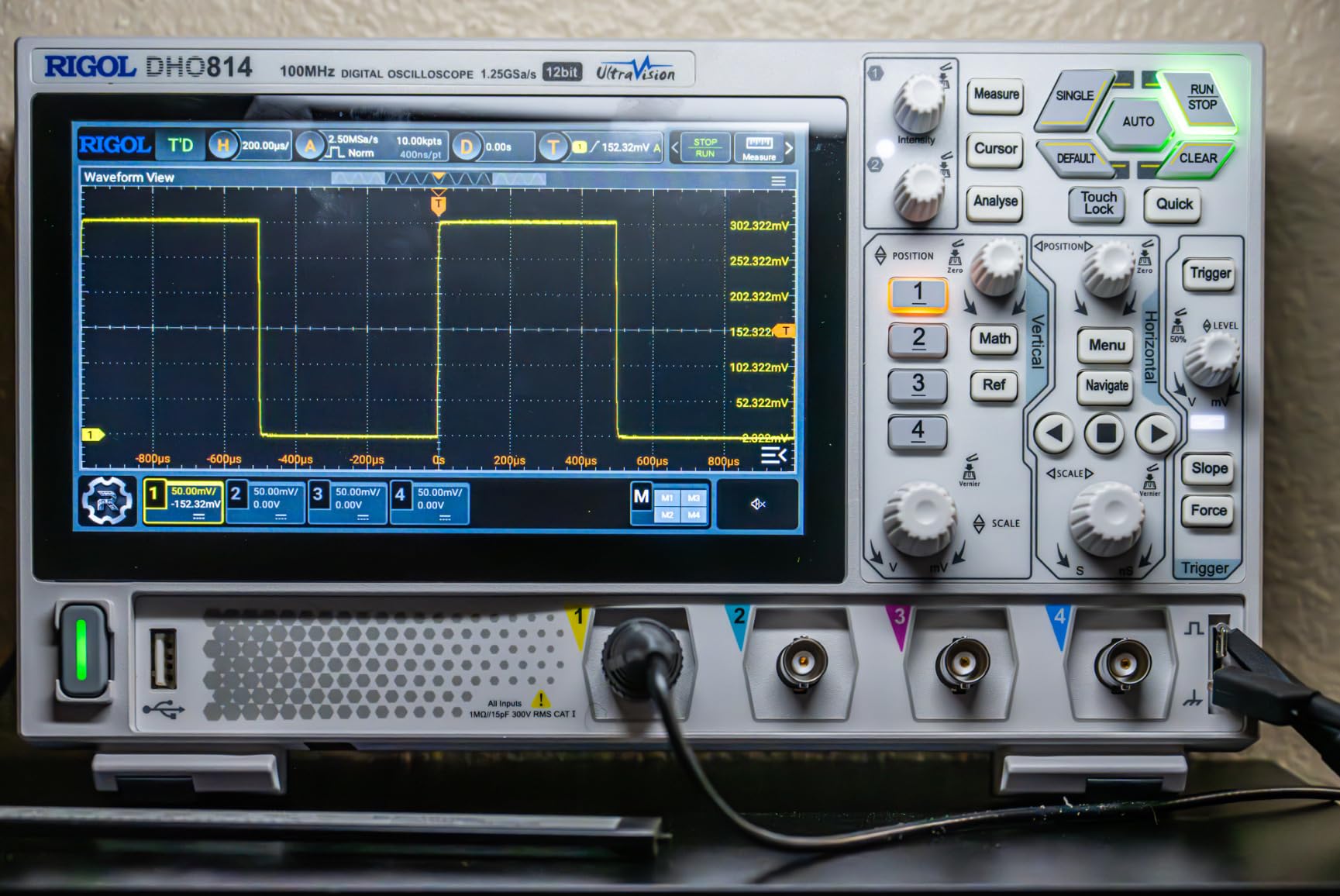
The DHO804 is Rigol’s entry point into 4-channel oscilloscopes, but it does not feel like a stripped-down budget model. The 12-bit vertical resolution alone puts it ahead of most scopes at this price point. I tested this instrument on Arduino projects, sensor debugging, and basic power supply work. The 70MHz bandwidth covers most hobbyist needs, and the 12-bit ADC means you can see small signal details that 8-bit scopes miss.
What surprised me is the portability. This scope weighs less than 4 pounds and can be powered by USB-C from a power bank. I took it to a friend’s workshop for collaborative debugging sessions without hassle. The compact size means it does not dominate your bench. Despite the small form factor, the 7-inch touch screen provides adequate screen real estate for waveform viewing.
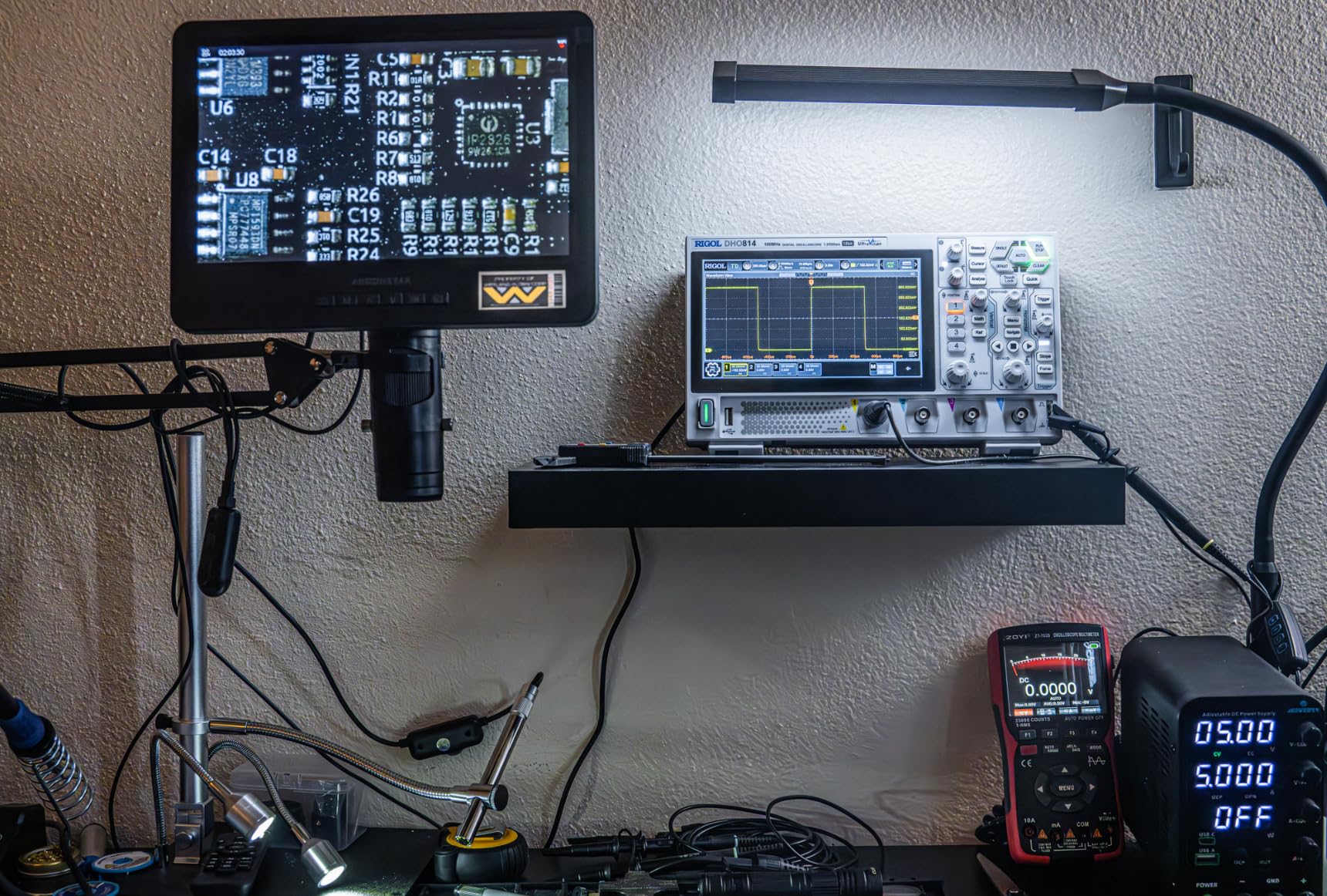
The touch interface works well for most operations. You can quickly adjust timebase, zoom into waveforms, and navigate menus. In dry air conditions, the screen becomes less responsive and a stylus helps. The automatic measurements are accurate and cover everything from basic frequency and period to more advanced parameters. The FFT function performs quickly and helps identify frequency components in your signals.
Like any computer-based instrument, the software can occasionally lock up. A simple power cycle resolves it. The USB-C power connector is convenient but may not withstand rough handling over many years. No printed manual is included, though the documentation is available online.
Best For
Hobbyists wanting a modern 4-channel scope with excellent resolution will find the DHO804 a great value. The portability makes it perfect for those with limited bench space or anyone who needs to move their equipment between locations. If you are upgrading from a 2-channel scope, this provides a solid path forward.
Less Ideal For
Anyone needing above 70MHz bandwidth should consider the DHO914 or DHO924S. Users requiring rock-solid reliability for professional applications might prefer traditional non-touch interfaces.
7. Siglent SDS1104X-U – Budget 4-Channel
Siglent Technologies SDS1104X-U 100MHz Super Phosphor Digital Oscilloscopes 4 Channels
100MHz bandwidth
14 Mpts memory
Serial decode standard
Compact design
Pros
- Under $420 price point
- 4 full channels
- All protocol decoders included
- High resolution screen
- Easy to setup
Cons
- Aggressively loud fan
- 15 second boot time
- Poor viewing angle above
- Mushy control feel
Siglent positioned the SDS1104X-U as an entry-level 4-channel oscilloscope, and the price reflects this. Getting four full channels at under $420 is uncommon in the market. I tested this scope for basic embedded debugging, sensor signal analysis, and learning serial protocols. The 100MHz bandwidth covers most hobbyist applications, and having four channels enables the multi-signal debugging that makes 4-channel scopes worthwhile.
All serial protocol decoders come standard. I2C, SPI, UART, CAN, and LIN decoding are included without additional purchases. This matters because some competitors charge extra for these capabilities. The 7-inch TFT-LCD display provides good resolution for waveform viewing. Setup is straightforward and the scope feels intuitive for anyone familiar with oscilloscope basics.
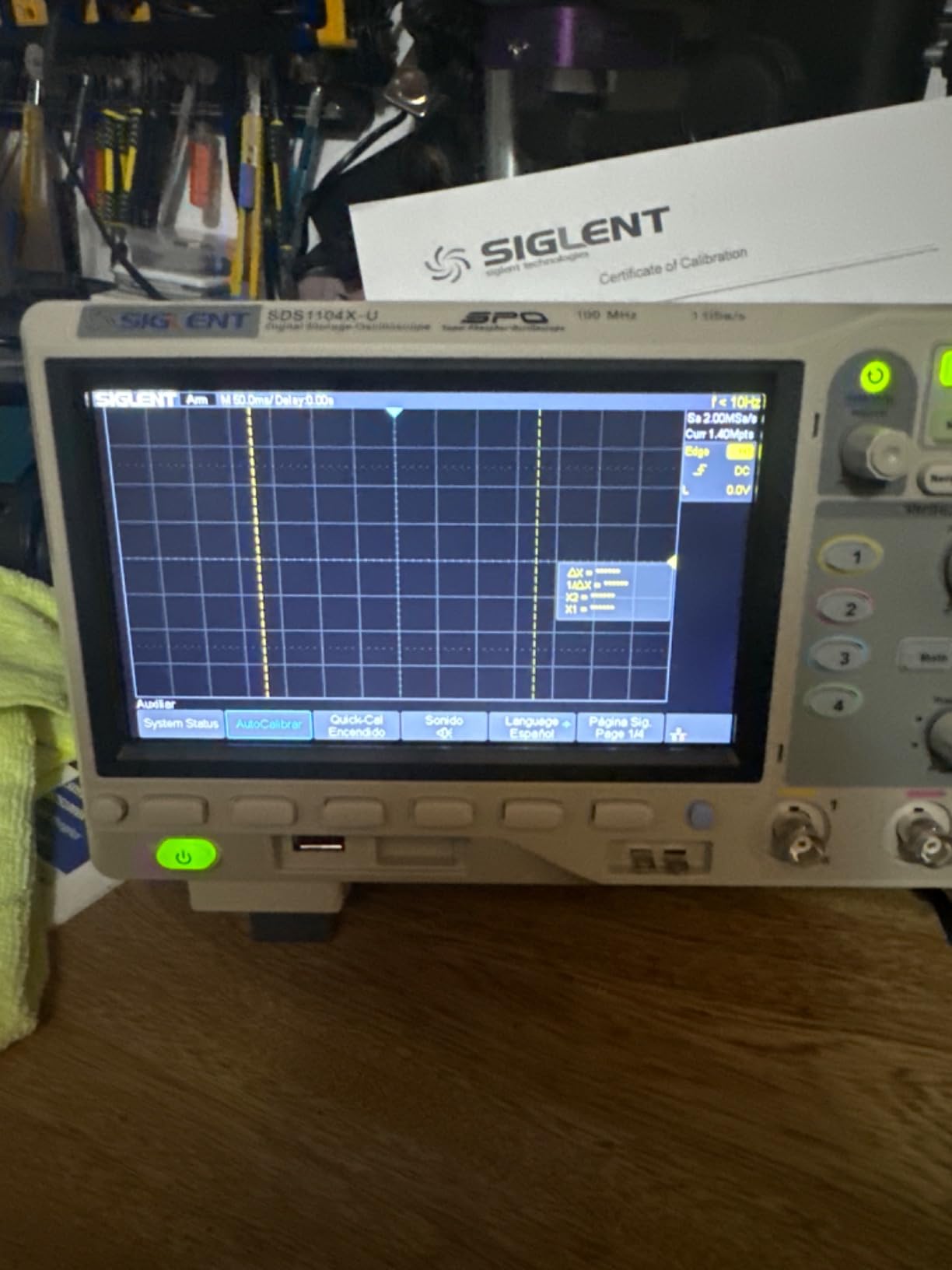
The 14 Mpts memory depth is adequate for capturing serial protocol transactions and then zooming into details. You can trigger on serial bus conditions and decode the data directly on screen. This speeds up debugging significantly compared to counting bits manually. The high-resolution screen makes text and measurements easy to read.
The fan noise is the most significant drawback. It is aggressively loud and could be bothersome in a quiet environment. Boot time takes about 15 seconds, which is longer than some competitors. The viewing angle is poor when looking up at the display from below. Some controls feel mushy and lack the tactile feedback of more expensive models.
Best For
Hobbyists on a tight budget who need four channels will appreciate the SDS1104X-U. If you are working with microcontrollers, basic serial protocols, and general debugging tasks, this scope provides the essentials without breaking the bank. The included protocol decoders add significant value.
Less Ideal For
Anyone sensitive to fan noise should consider other options. Users needing the absolute best build quality and control feel might prefer spending more on a higher-tier model.
8. Analog Discovery 3 – Best PC-Based
Analog Discovery 3: 125 MS/s USB Oscilloscope, Waveform Generator, Logic Analyzer, and Variable Power Supply
125 MS/s oscilloscope
14-bit resolution
USB-powered portable
All-in-one lab
Pros
- Portable USB-powered design
- Excellent WaveForms software
- 16 digital channels
- Built-in power supplies
- Great for embedded work
Cons
- PC-based requires computer
- Trigger can miss events
- Software learning curve
- Not Prime eligible
The Analog Discovery 3 takes a completely different approach. Instead of a traditional benchtop instrument, this is a USB-powered device that connects to your computer. The WaveForms software provides the interface and processing power. I used this tool extensively for embedded systems development, particularly when working with mixed-signal designs involving both analog and digital components. The portability is unmatched. You can throw it in a laptop bag and have a full electronics lab anywhere.
This is not just an oscilloscope. You get a two-channel oscilloscope with 14-bit resolution, a waveform generator, 16 digital channels for logic analysis, programmable power supplies, and more. The WaveForms software ties everything together into a cohesive test instrument. I found the software powerful once learned, but there is a learning curve. The protocol analyzer supports SPI, I2C, UART, CAN, and JTAG.
The 14-bit ADC resolution provides excellent detail in your measurements. You can see small signal variations that 8-bit benchtop scopes miss. The 30+ MHz bandwidth with BNC adapter covers most hobbyist needs. The variable power supplies can source up to 800mA per channel, which is enough to power many small projects directly from the instrument.
Being PC-based means you need a computer to use it. This is not necessarily bad. The large computer screen provides more viewing area than typical oscilloscope displays. However, the trigger functionality can occasionally miss events compared to dedicated hardware triggers. The software can feel clunky until you become familiar with its workflow.
Best For
Hobbyists who value portability and need an all-in-one lab tool will love the Analog Discovery 3. It is particularly well-suited for embedded systems development, mixed-signal debugging, and educational applications. If you work with FPGAs, microcontrollers, or digital systems, the combination of oscilloscope and logic analyzer in one package is compelling.
Less Ideal For
Those who prefer standalone benchtop instruments or need absolute trigger reliability should consider traditional oscilloscopes. Users without a dedicated laptop or computer will not be able to use this device.
Buying Guide: What Advanced Hobbyists Need to Know?
Why 4 Channels Matter for Advanced Projects
Two channels work for simple signal observations. Four channels enable systems-level debugging. When you are working on motor control projects, you often need to watch the gate drive signal, current sense, encoder feedback, and power rail simultaneously. Seeing these signals together reveals timing relationships that are impossible to observe with two channels. You can see if a motor fault correlates with a power supply dip or if encoder glitches coincide with gate drive issues.
Serial protocol debugging becomes dramatically easier with four channels. I2C transactions involve clock, data, chip select, and often an acknowledge signal. SPI needs clock, MOSI, MISO, and chip select. Capturing all of these signals at once lets you see the complete transaction. You can identify handshake problems, timing violations, and data corruption that would be missed with fewer channels.
Power electronics work benefits enormously from four channels. You can monitor input voltage, output voltage, gate drive, and current sense together. This comprehensive view reveals switching behavior, transient response, and potential issues like shoot-through or ringing. The ability to correlate events across different parts of your circuit is what makes a 4-channel oscilloscope so powerful for advanced hobbyist work.
Bandwidth: The 5x Rule Explained
Bandwidth determines the highest frequency your oscilloscope can accurately capture. The rule of thumb is that your scope bandwidth should be at least five times the highest frequency component in your signal. This is not just about the fundamental frequency. Square waves and digital signals contain harmonics at multiples of the base frequency. If you want to see the true shape of your signal, you need to capture those harmonics.
For example, if you are working with a 20 MHz SPI clock, the fundamental frequency is 20 MHz. But the sharp edges contain harmonics at 40 MHz, 60 MHz, 80 MHz, and beyond. A 100 MHz oscilloscope captures the first five harmonics, which is usually enough to represent the signal accurately. A 50 MHz scope would only capture the first two harmonics, resulting in rounded edges and distorted waveforms.
Consider your future projects when choosing bandwidth. It is frustrating to buy a scope that meets your current needs only to find it inadequate a year later. The jump from 50 MHz to 100 MHz is relatively affordable in the grand scheme. Going from 100 MHz to 200 MHz costs more, and 200+ MHz enters professional pricing territory. Most advanced hobbyists find 100 MHz to be a sweet spot, with 200 MHz for those working with faster protocols or wanting more headroom.
Memory Depth: Why It Matters for Serial Data
Memory depth determines how much waveform data your oscilloscope can capture at once. This matters tremendously when working with serial protocols. I2C transactions can span hundreds or thousands of bits. SPI transfers vary widely in length. If your scope has shallow memory, you might capture only part of a transaction. You can see the beginning but not the end, or vice versa.
Deep memory changes this. With 14-24 Mpts (megapoints) of memory, you can capture entire protocol transactions and then zoom in on any portion. You can see the overall structure of a transaction and then examine individual bits in detail. This capability is invaluable for debugging complex protocol issues. You can identify handshake problems, check for proper addressing, verify data integrity, and see timing relationships all within the same capture.
Memory depth also affects timebase settings. With shallow memory, you have to choose between capturing a long time window with poor resolution or capturing a short window with good resolution. Deep memory gives you both. You can capture long time windows and still zoom in to see fine details. This flexibility matters when you do not know exactly where in a long transaction the problem occurs.
Protocol Decoding: Essential for Embedded Work
Modern embedded systems rely heavily on serial protocols. I2C, SPI, UART, CAN, and LIN are everywhere. Without protocol decoding, you are staring at waveform representations of bits and trying to manually decode them. This is tedious and error-prone. With protocol decoding, your oscilloscope interprets the waveforms and displays the actual data. You see register addresses, data values, ACK/NACK bits, and timing information directly on screen.
The specific protocols you need depend on your projects. I2C and SPI are ubiquitous in microcontroller applications. UART/RS232 is common for debugging and communication. CAN and LIN are essential for automotive work. Some oscilloscopes include all protocol decoders standard. Others charge extra for decoding capabilities as optional upgrades. Before buying, consider which protocols you use and verify that they are either included or available at reasonable cost.
Decoding should work on the full memory depth of your oscilloscope. Some instruments only decode what is visible on screen, which limits usefulness. The best implementations decode the entire captured waveform, allowing you to scroll through long transactions and see the decoded data throughout. This is particularly important when you need to find events that occur sporadically within long data streams.
Sample Rate vs Bandwidth
Sample rate and bandwidth are related but different specifications. Bandwidth is the frequency range your oscilloscope can capture. Sample rate is how many times per second the oscilloscope digitizes the signal. The minimum sample rate needed is 2.5 times your bandwidth, based on the Nyquist theorem. In practice, 4-5 times is recommended for accurate waveform reconstruction.
A 100 MHz oscilloscope should ideally have a sample rate of 400-500 MSa/s. This ensures that the highest frequency components are properly sampled. Be aware that sample rate often decreases when multiple channels are active. A scope might advertise 1 GSa/s but only deliver that rate with one or two channels. With all four channels active, the sample rate might drop to 250 MSa/s. Check the specifications for sample rate with maximum channels active.
Higher sample rates provide better time resolution. You can see fine details in waveforms and accurately measure fast edges. For digital signals, adequate sample rate ensures that edges are captured cleanly and timing measurements are accurate. When choosing an oscilloscope, consider both bandwidth and sample rate. One without the other is insufficient. They work together to provide accurate signal representation.
Frequently Asked Questions
Is a 4-channel oscilloscope worth it for hobbyists?
A 4-channel oscilloscope is absolutely worth it for advanced hobbyists working on complex projects. The ability to view multiple signals simultaneously transforms your debugging capability. Motor control projects need gate drive, current sense, encoder feedback, and power rail monitoring all at once. Serial protocol debugging requires clock, data, chip select, and acknowledge signals visible together. Two channels force you to make trade-offs about what to observe. Four channels let you see the complete picture. Once you experience systems-level debugging with four channels, going back to two feels limiting.
What is the rule of five for oscilloscope bandwidth?
The rule of five states that your oscilloscope bandwidth should be at least five times the highest frequency component in the signal you are measuring. This ensures accurate capture of signal shape and harmonics. For example, if you are measuring a 20 MHz digital clock, you need at least 100 MHz bandwidth. The fundamental frequency is 20 MHz, but square waves contain harmonics at multiples of the base frequency. The fifth harmonic at 100 MHz is needed to properly represent the signal edges. Using this rule prevents you from buying a scope that distorts your signals due to insufficient bandwidth.
What oscilloscope is best for advanced hobbyists?
The Rigol DS1054Z is the best overall choice for most advanced hobbyists due to its exceptional value, massive community support, and capable specifications. The hackable 50MHz bandwidth, 24 Mpts memory, and included serial decoders provide everything needed for embedded systems work. Those needing higher bandwidth should consider the Siglent SDS1204X-E for 200MHz performance or the Rigol DHO924S for premium features including 12-bit resolution and built-in waveform generation. PC-based users might prefer the Analog Discovery 3 for its portability and all-in-one lab capabilities.
Should I buy a used oscilloscope to save money?
Used oscilloscopes can offer excellent value, particularly for higher-end models that would be unaffordable new. Professional-grade scopes from Tektronix, Keysight, and LeCroy often sell for a fraction of their original price on the used market. However, used equipment comes with risks. Calibration may be expired, components may be near end-of-life, and repairs can be expensive. For advanced hobbyists, a new mid-range scope often makes more sense than a used high-end one. You get warranty, current calibration, and modern features. If buying used, stick to reputable sellers and budget for potential servicing.
What is the difference between Rigol and Siglent oscilloscopes?
Rigol and Siglent are both Chinese manufacturers that have disrupted the oscilloscope market with affordable, capable instruments. Rigol tends to offer better value at the entry level, with the DS1054Z being legendary in the hobbyist community. Their newer DHO series brings modern touch interfaces and 12-bit resolution. Siglent often provides slightly better build quality and more professional user interfaces. The X-E series includes protocol decoders standard where some competitors charge extra. Both brands are legitimate choices with good support. The decision often comes down to specific model comparisons rather than brand loyalty. Check current pricing and features for the exact models you are considering.
Final Recommendations
Choosing the right 4-channel oscilloscope depends on your projects, budget, and how you plan to grow as a hobbyist. The Rigol DS1054Z remains the best overall value for most advanced hobbyists. Its massive community support, hackable bandwidth, and capable specifications make it a safe choice that will serve you well for years.
For those wanting premium features, the Rigol DHO924S delivers 250MHz bandwidth, 12-bit resolution, and built-in waveform generation at a price that undercuts professional equipment. The Siglent SDS1104X-E offers an excellent balance with 100MHz bandwidth, professional build quality, and all protocol decoders included. PC-based users should consider the Analog Discovery 3 for its unmatched portability and all-in-one lab capabilities.
Invest in a 4-channel oscilloscope that matches your current needs while providing room to grow. The ability to see multiple signals simultaneously will transform your debugging capabilities and open up new project possibilities. Your future self will thank you for choosing wisely.