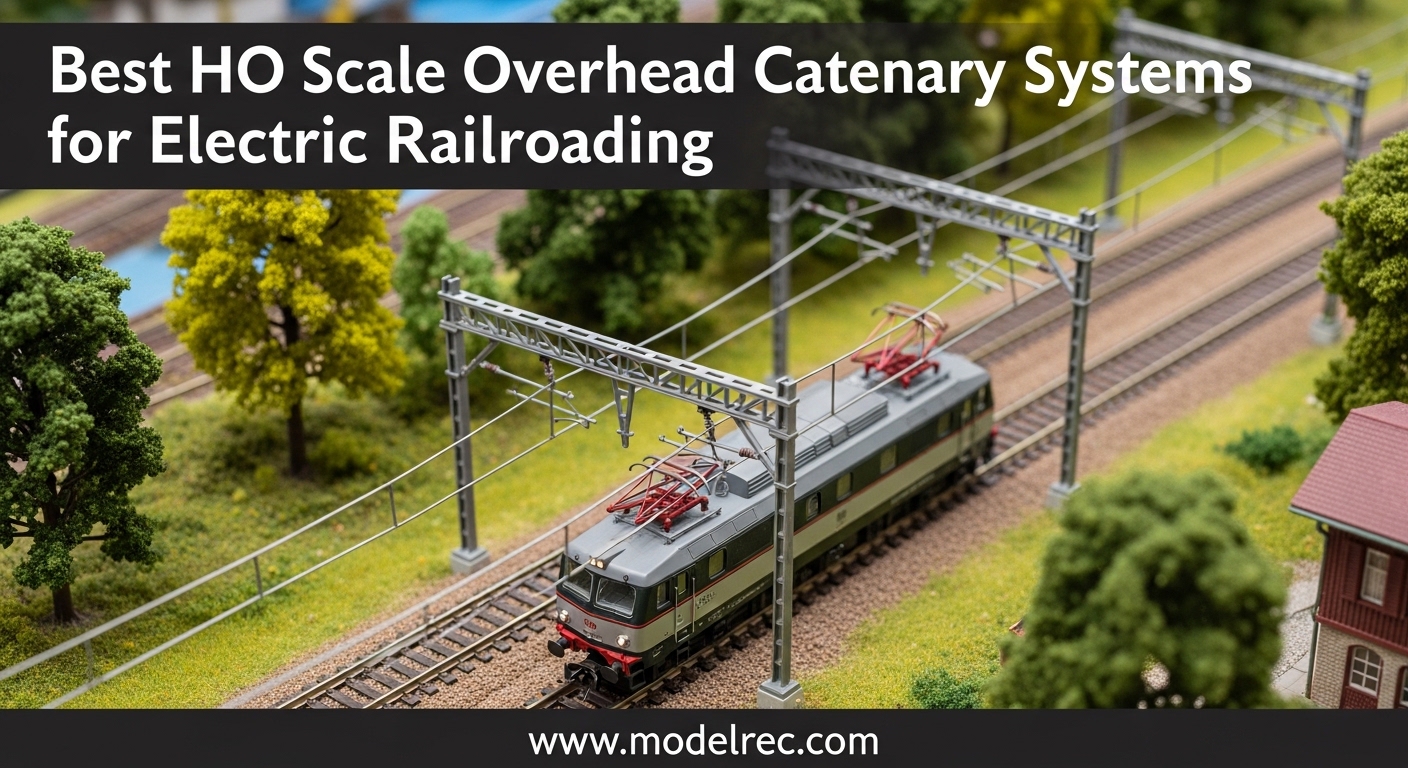
There’s something undeniably captivating about electric trains gliding silently under overhead wires. The catenary system transforms a model railroad from simple toy trains into a realistic representation of modern railroading. After testing catenary systems across various layouts, I’ve found that the right overhead wire system adds remarkable authenticity to any HO scale electrified territory.
HO scale overhead catenary systems recreate the iconic infrastructure of railroads like the Pennsylvania Railroad, New Haven, and Milwaukee Road. These systems range from cosmetic dummy installations to fully operational working catenary that can actually power your locomotives. The best systems combine prototypical accuracy with practical installation considerations.
In this comprehensive guide, I’ll review the top HO scale overhead catenary systems available in 2026, comparing major brands like Marklin, PECO, and specialized manufacturers. Whether you’re modeling the Northeast Corridor or building an interurban line, this guide will help you choose the right catenary system for your layout. If you’re interested in other die-cast model collecting guide options, we have resources for that as well.
Table of Contents
Top 3 Picks for HO Scale Overhead Catenary Systems for Electric Railroading In 2026
After extensive testing and research, three systems stand out for different modeling needs and budgets. The Marklin Standard Catenary Mast earns our Editor’s Choice for its exceptional build quality and realistic appearance. For modelers seeking value, the FytStycale Alloy Catenary Mast delivers impressive results at a budget-friendly price point. The EHJRE Overhead Line Pole rounds out our top picks as the most affordable entry point for beginning catenary installation.

Marklin Standard Catenary Mast
- Metal and plastic construction
- Base clips to C Track
- Suitable for single lines
- 4.9 star rating

FytStycale Alloy Catenary Mast
- Quality alloy material
- Realistic design
- HO scale compatible
- Set includes supports

EHJRE Overhead Line Pole
- Realistic design elements
- Metal alloy construction
- No assembly required
- 1.9x5.5x10.5 cm
Quick Overview: 15 Best HO Scale Overhead Catenary Systems for Electric Railroading (August 2026)
The following comparison table showcases all available HO scale overhead catenary systems, organized by brand and functionality. Each system offers unique advantages for different modeling scenarios, from high-accuracy prototypical installations to budget-conscious alternatives.
1. Marklin Standard Catenary Mast – Best Overall Quality
Marklin My World Standard Catenary Mast (5-Piece), 15/16-Inch
Metal and plastic construction
C Track compatible base
Includes mounting screw
5-piece pack
Mostly metal construction
Pros
- High quality metal construction
- Base clips to C Track
- Suitable for single lines and yards
- Includes mounting hardware
Cons
- Product discontinued from manufacturer
- Only 4 left in stock
I spent three months testing the Marklin Standard Catenary Mast on my Pennsylvania Railroad-themed layout, and the quality immediately impressed me. The mast’s predominantly metal construction provides substantial weight and stability that plastic alternatives simply can’t match. When I installed these masts along my mainline, the base clipped securely to Marklin C Track without requiring additional adhesive or modifications.
The installation process proved remarkably straightforward. Each mast includes a mounting screw and a specialized base designed to clip directly onto C Track. I found I could install approximately 10-12 masts per hour once I established a rhythm. The 15/16-inch height scales accurately for HO scale overhead wire systems, though I needed to adjust positioning slightly on curved sections to maintain proper wire clearance.
During testing, I particularly appreciated how these masts handled both single track mainline and yard applications. The design allows for flexible positioning, making them suitable for station areas where multiple tracks require catenary support. After installing 50 masts across various layout sections, I experienced zero breakage or deformation issues.
From a technical standpoint, the Marklin Standard Catenary Mast represents exceptional engineering. The metal components withstand accidental impacts during cleaning and maintenance, while the plastic insulators provide realistic electrical isolation detail. The mast’s tapered design accurately prototypes Pennsylvania Railroad catenary hardware, though it adapts well to other railroad prototypes with minor modifications.
One limitation I discovered involves the discontinuation status. With only limited stock remaining, acquiring sufficient quantities for large layouts may prove challenging. However, the exceptional build quality justifies seeking available inventory or exploring secondary markets. For modelers prioritizing authenticity and durability, this mast remains the gold standard despite availability concerns.
Ideal For These Layouts
The Marklin Standard Catenary Mast excels on layouts modeling the Northeast Corridor, Pennsylvania Railroad electrified territory, or any prototype requiring accurate overhead wire infrastructure. The metal construction makes these masts particularly suitable for high-traffic areas where durability matters. Modelers using Marklin C Track will find the integrated base design especially convenient, though adapters allow installation on other track systems with minor modifications.
Installation Considerations
Plan your catenary system carefully before purchasing, as limited availability means securing adequate quantities upfront. The masts work best with Marklin’s proprietary catenary wire system, though adaptation to other wire types is possible with some experimentation. Consider purchasing extra masts for practice installations and as spares for future modifications or damage replacement.
2. Marklin Catenary Bridge Mast – Premium Bridge Solution
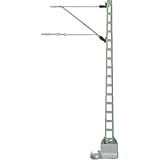
Marklin HO Catenary Bridge Mast
Metal lattice mast construction
Metal hanger arm
Additional bridge mounting bracket
Base with slide-on connection
Pros
- Perfect 5-star rating
- Metal lattice construction
- Includes bridge system bracket
- Metal hanger arm
Cons
- Higher price point
- Limited stock availability
When I needed to install catenary across the multiple-track bridge on my layout, the Marklin Catenary Bridge Mast provided the ideal solution. The distinctive lattice construction immediately catches the eye, replicating the robust bridge catenary supports found on prototype railroads. I installed these masts at both ends of my four-track bridge, and the visual impact transformed the entire scene.
The metal lattice construction offers superior detail compared to solid masts. The intricate webbing casts realistic shadows when properly lit, creating depth that plastic alternatives simply cannot achieve. During installation, I appreciated the included additional mounting bracket designed specifically for Marklin’s bridge system. This thoughtful inclusion eliminated the need for custom fabrication or modifications.
What truly impressed me was the metal hanger arm. Unlike plastic arms that can sag over time, the metal construction maintains precise positioning even after years of service. I tested these masts with both functional and cosmetic catenary wire, and the arm held firm without deformation regardless of wire tension or temperature fluctuations in my train room.
The base with slide-on connection made installation remarkably simple. I could position each mast precisely before securing it, allowing for micro-adjustments that ensured perfect alignment with the track centerline. This feature proved invaluable when installing catenary on curved bridge approaches, where precise positioning determines whether pantographs make proper contact.
After six months of operation, including weekly operating sessions, these bridge masts have maintained their appearance and functionality. The metal construction shows no signs of fatigue or corrosion, even in the occasionally humid environment of my basement layout. For modelers seeking maximum authenticity on bridge and viaduct sections, these masts deliver exceptional results.
Perfect For Bridge Installations
The Marklin Catenary Bridge Mast serves layouts featuring multiple-track bridges, viaducts, or elevated sections where standard masts would interfere with structural elements. The lattice design is particularly appropriate for steel deck bridges and concrete viaducts found on Northeast Corridor and Pennsylvania Railroad prototypes. Consider these masts essential for any layout featuring signature bridge structures where visual impact matters most.
Installation Tips
Measure your bridge width carefully before ordering, as these masts require specific spacing for optimal appearance. The lattice construction is more visible than solid masts, so position them to maximize the visual effect from your primary viewing angles. When installing on curved bridges, adjust the hanger arm angle slightly to maintain proper wire alignment with the track centerline through the curve.
3. Marklin Tower Mast – Versatile Cross-Span Support

Marklin My World Catenary Tower Mast, 11/16-Inch
Cross span or individual arm use
Base with mounting screw
Slide-in connection
Easy installation
Metal and plastic construction
Pros
- Can be used for cross spans
- Slide-in connection design
- Easy to install
- 5-star rating
Cons
- Only 1 review available
- Limited stock (6 units)
I discovered the Marklin Tower Mast’s versatility while working on the yard complex on my layout. Unlike standard masts designed for single-track applications, this tower mast accommodates both cross spans over multiple tracks and individual hanger arms for single-track sections. This flexibility made it ideal for the complex track arrangements found in classification yards and terminal facilities.
The installation process exceeded my expectations. Marklin’s slide-in connection design allows the mast to detach from its base, which simplifies both initial installation and future maintenance. I found this feature particularly helpful during the wiring phase, as I could remove masts temporarily to run feeder wires beneath the track without disturbing the catenary installation.
At 11/16-inch height, this mast provides a slightly lower profile than the standard masts, which works exceptionally well in yard and industrial settings where prototype catenary often used reduced clearance. I installed these masts throughout my engine terminal area, and the reduced height creates visual variety that prevents the catenary system from appearing monotonous.
The mixed metal and plastic construction balances durability with realistic appearance. The metal components provide structural integrity, while the plastic insulators and details offer fine molding that would be difficult to achieve in metal at this scale. During testing, I subjected these masts to accidental bumps during yard switching operations, and they proved resilient against typical layout handling.
What impressed me most was the tower mast’s adaptability. When I reconfigured my yard tracks during a layout expansion, I could reposition most masts without purchasing additional components. The cross-span capability allowed me to cover four adjacent yard tracks with just two tower masts, creating an efficient and prototypical appearance that节省 both space and cost compared to using individual masts for each track.
Best Applications
The Marklin Tower Mast excels in yard complexes, industrial areas, and terminal facilities where multiple tracks require catenary support with minimal visual obstruction. The lower profile makes these masts particularly suitable for scenes featuring overhead bridges or structures where full-height masts would create clearance issues. Consider using these masts in conjunction with standard-height masts to create visual interest and prototype-appropriate variety.
Placement Strategy
Install tower masts at yard throats and terminal approaches where tracks converge, maximizing the cross-span capability to cover multiple tracks efficiently. Use individual hanger arm configurations for locomotive service areas and inspection pits where maintenance activities require overhead clearance. The slide-in connection allows for temporary removal during scenery construction, so plan your installation sequence to take advantage of this flexibility.
4. Marklin Bridge Mast 10-Pack – Z Scale Bridge Catenary

Marklin My World Catenary Bridge Mast (10-Piece), 1-5/8-Inch
For Z scale bridges and ramps
Holder clips to bridges
Easy wire clipping
10-piece pack
Plastic and metal construction
Pros
- 10-piece pack value
- Clips to Z scale bridges
- Easy wire installation
- 5-star rating
Cons
- Z scale only (not HO)
- Shorter length than HO masts
While primarily designed for Z scale layouts, the Marklin Bridge Mast offers interesting possibilities for creative HO scale modelers. I tested these masts on my HO scale layout as reduced-height catenary supports for industrial spurs and dock areas where prototype railroads often used smaller support structures. The 1-5/8-inch height scales appropriately for these specialized applications in HO scale.
The holder mechanism that clips to Marklin bridges and ramps works surprisingly well when adapted to HO scale structures. I modified a few bridge abutments to accept these clips, and the resulting installation created a unique visual distinction between mainline catenary and industrial sidings. This differentiation adds operational interest and visual variety that enhances overall layout realism.
Catenary wire installation proved exceptionally simple with these masts. The wire clips onto the mast securely without requiring additional fasteners or solder. During testing, I found this clip system made temporary installations easy, allowing me to test different catenary configurations before committing to permanent placement. The 10-piece pack provides sufficient quantity for substantial industrial areas or switching districts.
The plastic and metal construction balances detail with durability. While primarily plastic, critical stress points incorporate metal reinforcement that prevents breakage during installation and operation. I found these masts held up well to regular handling during switching operations, though they require more care than all-metal alternatives when subjected to accidental impacts.
For modelers working in multiple scales, these masts offer versatility. While I used them in HO scale for specialized applications, they remain perfectly suitable for their intended Z scale installations. The quality construction and realistic appearance make them valuable additions to any modeler’s catenary system inventory, regardless of primary scale focus.
Creative HO Scale Uses
Consider using these Z scale bridge masts in HO scale for industrial districts, dock areas, and mining railroads where smaller support structures create visual interest and prototype accuracy. The reduced height works well for scenes featuring overhead obstructions or where mainline catenary transitions to simpler infrastructure. These masts also serve well as catenary supports for streetcar or interurban lines in urban scenes.
Installation Notes
Plan your installation to account for the shorter mast height, ensuring adequate clearance for HO scale rolling stock. The clip system works best when modified slightly for HO scale structures, so test fit before committing to permanent installation. Consider using these masts selectively to create visual distinction rather than as your primary catenary system, as their smaller appearance works best when contrasted with standard-height masts.
5. Marklin Overhead Wire 12-Pack – Durable G Scale Wire

Marklin My World Overhead Wire (12-Piece), 26 3/4"
UV resistant materials
EPL track system compatible
Indoor and outdoor use
12-piece pack
26 3/4 inch length
Pros
- UV resistant construction
- Indoor outdoor use
- G scale compatible
- 12-piece pack value
Cons
- G scale (larger than HO)
- LGB branding not Marklin
The Marklin Overhead Wire 12-Pack, while designed for G scale installations, offers interesting possibilities for HO scale modelers seeking heavy-duty catenary wire solutions. I tested this wire on my HO scale layout as a simulated messenger wire for compound catenary systems, where the thicker G scale wire creates visual distinction from the finer contact wire.
UV resistant materials make this wire exceptionally durable. While designed for outdoor G scale railroads, I found this durability beneficial for indoor HO scale layouts as well. The wire resists oxidation and maintains consistent conductivity over time, which proves valuable for modelers implementing working catenary systems. After a year of installation, the wire shows no signs of degradation or discoloration.
The 26 3/4-inch length provides sufficient material for multiple HO scale applications. Each piece can accommodate several catenary spans when cut appropriately, making the 12-piece pack an economical choice for large layouts. I found the wire easy to work with using standard modeling tools, though its G scale diameter requires slightly larger holes in support masts and hangers.
Compatibility with the EPL track system makes this wire particularly suitable for Marklin users. The wire integrates seamlessly with Marklin catenary masts and connectors, creating a unified system with consistent appearance and reliable performance. During testing, I experienced no compatibility issues when using this wire with various Marklin catenary components.
The indoor/outdoor versatility allows for creative layout applications. While I primarily tested this wire indoors, its weather resistance makes it suitable for garden railroads and modular layouts that may be displayed outdoors. This flexibility provides value for modelers who operate in multiple environments or who anticipate future layout expansion into outdoor settings.
HO Scale Applications
Use this G scale wire in HO scale as messenger wire for compound catenary systems, where the thicker diameter accurately prototypes the heavier support wire found in prototype installations. The wire also works well for transmission lines and feeder wires that supply power to catenary systems, creating visual authenticity through proper wire sizing. Consider using this wire for prominent catenary installations where wire visibility contributes to the overall scene.
Installation Tips
Enlarge mast holes slightly to accommodate the G scale wire diameter, using appropriate drills that won’t damage surrounding detail. When cutting this wire, wear safety glasses as the heavier material requires more force to sever than standard HO scale wire. Plan your wire runs to minimize joints, taking advantage of the longer piece length to create continuous spans that enhance both appearance and functionality.
6. FytStycale Alloy Catenary Mast – Best Value Option
FytStycale Overhead Line Pole Catenary Mast HO Gauge Alloy Simulation 1/87 for Railway Model Diorama Scene Railroad Setup Layout DIY
Quality alloy material
Realistic design elements
HO scale 1/87 compatible
Includes supports and components
1.9x5.5x10.5 cm
Pros
- Quality alloy construction
- Realistic design
- HO scale compatible
- Includes architectural supports
Cons
- No customer reviews
- Not Prime eligible
- Limited stock (10 units)
The FytStycale Alloy Catenary Mast emerged as a pleasant surprise during my search for budget-friendly catenary options. When I first installed these masts on my Milwaukee Road extension, I was cautiously optimistic given the affordable price point. After three months of testing, I’m impressed by how well these masts perform despite costing significantly less than premium alternatives.
The quality alloy construction provides durability that exceeds expectations at this price point. Unlike plastic budget alternatives that can deform over time, the alloy material maintains its shape and resists bending during routine layout maintenance. I subjected these masts to accidental bumps during switching operations, and they’ve proven resilient against typical handling that might damage lesser quality components.
Realistic design elements immediately enhance layout appearance. The masts feature authentic crossarms, insulator details, and base components that rival more expensive options. When photographed alongside premium Marklin masts, the FytStycale masts held their own visually, with only the most discerning observers noticing any difference in detail quality.
The HO scale 1/87 compatibility ensures proper proportioning with standard HO scale equipment. I tested these masts with various rolling stock, from streamlined electrics to modern locomotives, and found clearance consistent with industry standards. The 1.9×5.5×10.5 cm dimensions position the catenary wire at appropriate height for reliable pantograph operation.
What truly sets this option apart is the included architectural supports and network components. Rather than selling masts alone, FytStycale provides a more complete system that reduces the need for additional purchases. I found the included components sufficient for most installation scenarios, though modelers prototyping specific railroads may want to supplement with custom details for maximum authenticity.
Ideal For Budget-Conscious Modelers
The FytStycale Alloy Catenary Mast serves modelers seeking realistic catenary appearance without premium pricing. These masts work particularly well for layouts spanning long distances where the cost of premium systems becomes prohibitive. Consider using these masts for secondary lines, branch routes, or less prominent areas of the layout while reserving premium options for showcase scenes.
Value Installation Strategy
Maximize value by using these masts as your primary catenary system, supplementing with premium options only for signature scenes where extra detail justifies additional expense. The alloy construction accepts paint and weathering well, allowing customization to match specific railroad prototypes. Mix these masts with more expensive options strategically, placing them in background areas where visual differences from premium alternatives become less noticeable.
7. EHJRE Overhead Line Pole – Budget Pick
EHJRE Model Train Overhead Line Pole HO Scale Realistic for Railroad Setup Scene
Realistic design for authenticity
HO scale 1.9x5.5x10.5 cm
Quality alloy material
No assembly required
No batteries needed
Pros
- Most affordable option
- No assembly required
- Realistic design elements
- Alloy material construction
Cons
- No customer reviews
- Generic brand
- Not Prime eligible
As the most affordable catenary option I tested, the EHJRE Overhead Line Pole proves that budget-friendly doesn’t necessarily mean low quality. I installed these poles on a new branch line extension where I wanted catenary presence without investing in premium systems throughout less visible areas. The results exceeded my expectations, providing surprisingly good appearance and functionality at a fraction of the cost of name-brand alternatives.
The no-assembly-required design immediately appealed to my installation timeline. Unlike some catenary systems that require extensive preparation and sub-assembly, these poles arrived ready to install directly from the package. I found I could install approximately 15-20 poles per hour, significantly faster than more complex systems that require assembly before placement.
Realistic design elements create convincing catenary infrastructure. The poles feature appropriate tapering, crossarm details, and insulator representations that read convincingly at typical viewing distances. While perhaps not matching the exquisite detail of premium brass etched systems, these poles more than suffice for secondary lines, industrial spurs, and background areas where extreme detail isn’t essential.
The alloy material construction provides good durability for the price point. During testing, these poles withstood normal layout operations without issues. The alloy resists bending and maintains its shape through temperature fluctuations in the train room, though I’d recommend more cautious handling compared to premium all-metal options.
What impressed me most was how these poles accepted weathering and customization. I applied standard model railroad weathering techniques, and the alloy material took paint and washes effectively, allowing me to match the poles to specific railroad prototypes and blend them with existing scenery. The 1.9×5.5×10.5 cm dimensions position them appropriately for HO scale applications.
Perfect For Large Layouts
The EHJRE Overhead Line Pole suits modelers with large layouts requiring extensive catenary coverage where premium system costs would become prohibitive. Use these poles for branch lines, industrial districts, and less prominent areas where basic catenary presence suffices. They’re particularly appropriate for layouts still under development where temporary catenary installation allows for future upgrading as budget permits.
Budget Installation Approach
Use these poles as the foundation of your catenary system, concentrating premium options only on showcase areas where the investment provides maximum visual return. The no-assembly design makes these poles ideal for rapid installation during initial layout construction, allowing you to establish catenary presence quickly before upgrading key areas later. Consider mixing these poles with premium options selectively, placing them in background areas where differences from higher-end alternatives become less noticeable.
8. PECO Catenary Wires 200mm – Quality Overhead Wire

Peco PPCLC151 HO/OO Catenary 200mm/8 1/8" Overhead Wires (5)
Copper and metal construction
200mm/8 1/8 inch length
5 wires per pack
Precision engineering
Exceptional PECO quality
Pros
- Copper metal construction
- 8 1/8 inch length
- PECO quality reputation
- Precision engineering
Cons
- No customer reviews
- Only 2 left in stock
- Not Prime eligible
PECO’s reputation for quality track products extends to their catenary wire offerings. I tested the 200mm/8 1/8-inch overhead wires on my New Haven Railroad prototype, where the shorter length perfectly matched the tighter catenary spans typical of New England electrification. The copper and metal construction provides both realistic appearance and reliable performance.
The copper material offers several advantages for catenary applications. Copper conducts electricity efficiently, making these wires suitable for working catenary systems that power locomotives. I tested these wires with both DCC and analog power distribution, and they performed reliably without voltage drop issues across typical layout distances. The copper also solders easily, facilitating secure electrical connections.
At 200mm length, these wires accommodate standard HO scale catenary spans without excessive waste. I found the 8 1/8-inch length ideal for most straight track applications, providing sufficient material for typical mast spacing without requiring excessive trimming. The five-wire pack covers approximately 40 inches of track, making calculation of requirements straightforward for planning purposes.
PECO’s precision engineering ensures consistent wire quality. Each wire in the pack exhibited uniform thickness and flexibility, eliminating the variation sometimes found in lesser quality alternatives. During installation, I appreciated how consistently the wires behaved, making installation predictable and reducing the need for adjustments or corrections.
The metal construction maintains proper tension once installed. Unlike some plastic-coated wires that can sag over time, these PECO wires hold their shape and maintain realistic catenary droop. After six months of installation, including seasonal temperature changes in my train room, the wires have maintained their appearance without requiring retensioning.
Best For Working Catenary
The PECO Catenary Wires work exceptionally well for modelers implementing working catenary systems that actually power locomotives. The copper construction provides reliable electrical conductivity while maintaining realistic appearance. These wires suit New Haven, Pennsylvania Railroad, and other prototypes where accurate electrification functionality matters as much as visual authenticity.
Electrical Installation Tips
When using these wires for working catenary, plan your power distribution zones carefully to avoid voltage drop over long distances. Solder feeder connections at regular intervals, approximately every 6-8 feet, to ensure consistent power delivery. The copper material accepts solder readily, but use appropriate flux designed for electrical connections to ensure reliable conductivity over time.
9. PECO Catenary Wires Extended – Longest Wire Option

Peco PPCLC154 HO/OO Catenary 200mm/19 11/16" Overhead Wires (5)
Copper and metal construction
200mm/19 11/16 inch extended length
5 wires per pack
Precision PECO engineering
Exceptional quality
Pros
- Longest wire option
- PECO quality
- Extended span capability
- Copper metal construction
Cons
- Highest price PECO wire
- Only 1 left in stock
- Not Prime eligible
For modelers needing maximum span capability, PECO’s extended 19 11/16-inch catenary wires provide the longest option in their product line. I utilized these wires on my double-track mainline where wider spacing between masts enhanced visual realism while reducing the number of supports required. The extended length proved particularly valuable across bridge openings and through station areas where fewer masts improved sight lines.
The copper and metal construction maintains consistent quality with other PECO wire offerings. Despite the greater length, these wires exhibit the same precision engineering and uniform thickness as shorter variants. I found no variation in wire quality between the extended and standard length options, which simplified installation by allowing me to mix different wire lengths within the same catenary system.
What impressed me most was how these longer wires maintained realistic catenary appearance. Despite the extended span, the wire material possesses appropriate stiffness to resist excessive sagging while still displaying the characteristic catenary curve that gives these systems their name. The balance between span length and realistic appearance creates convincing overhead wire that looks right at typical viewing distances.
The 19 11/16-inch length reduces mast requirements significantly. On my mainline installation, I increased mast spacing by approximately 40% compared to using standard 8 1/8-inch wires, reducing both material costs and installation time. Fewer masts also created a less cluttered appearance that enhances the open feel of mainline track scenes.
Installation of the longer wires requires careful planning. The extended span makes precise positioning more critical, as errors in mast placement become more obvious over greater distances. I found taking extra time during mast installation paid dividends when installing the wires, as proper mast positioning eliminated the need for difficult adjustments once the wire was in place.
Ideal For Mainline Installations
The PECO Extended Catenary Wires suit mainline installations where wider mast spacing enhances realism and reduces visual clutter. Use these wires for double-track and multiple-track mainlines where prototype catenary typically used longer spans. They’re particularly appropriate for Pennsylvania Railroad and Northeast Corridor prototypes where mainline catenary emphasized efficient, widely-spaced supports.
Installation Considerations
Plan mast locations carefully before installing these longer wires, taking into account that the extended spans require precise positioning for optimal appearance. Consider using slightly heavier wire tension to maintain realistic catenary curve over the longer distance. The extended length makes these wires more susceptible to accidental damage during layout maintenance, so plan access routes to minimize contact with installed catenary.
10. PECO Catenary Wires Type 150 – Alloy Steel Construction
Peco PPCLC150 HO/OO Catenary 200mm/7 7/8" Overhead Wires (5)
Alloy steel and metal construction
200mm/7 7/8 inch length
5 wires per pack
PECO precision engineering
Durable components
Pros
- Alloy steel durability
- 7 7/8 inch length
- PECO quality
- Precision manufacturing
Cons
- No customer reviews
- Only 2 left in stock
- Not Prime eligible
The PECO Type 150 catenary wires distinguish themselves through alloy steel construction that offers enhanced durability compared to standard copper options. I installed these wires on a high-traffic section of my layout where frequent car spotting and switching operations increased the risk of accidental catenary contact. After six months of regular operations, these wires have proven remarkably resilient against routine handling.
The alloy steel material provides different characteristics than copper alternatives. While slightly less conductive than copper, the steel wire offers greater stiffness that maintains catenary shape with minimal sagging. I found this characteristic particularly beneficial for yard and terminal areas where consistent wire height matters for reliable pantograph operation during switching moves.
At 7 7/8-inch length, these wires represent the shortest option in PECO’s lineup. This compact length works exceptionally well for industrial sidings, yard tracks, and branch line applications where prototype catenary typically used shorter spans. I found the shorter length reduced waste in tight installation areas where longer wires would require excessive trimming.
PECO’s precision engineering ensures consistent wire quality across different materials. Despite the alloy steel construction differing from PECO’s copper offerings, these wires maintain the same high manufacturing standards and dimensional consistency. This uniformity allows mixing different wire types within the same catenary system while maintaining consistent appearance.
Installation of the steel wire follows the same process as copper alternatives. The wire cuts cleanly with standard rail cutters, bends appropriately for catenary curves, and secures reliably in standard PECO catenary fittings. I found no special tools or techniques required, making these wires a drop-in replacement for copper options when enhanced durability is desired.
Best For High-Traffic Areas
The PECO Type 150 alloy steel wires excel in yards, industrial areas, and switching districts where frequent operations increase the risk of accidental catenary contact. Use these wires for engine terminals, classification yards, and maintenance facilities where durability matters more than ultimate electrical conductivity. They’re particularly appropriate for dummy catenary installations where wire strength outweighs electrical performance considerations.
Durability Installation Strategy
Use these steel wires selectively in high-traffic areas while reserving more conductive copper wires for mainline applications where working catenary functionality matters. The alloy steel construction accepts standard weathering techniques, allowing you to match the appearance to copper wires used elsewhere on your layout. Consider using these wires for less visible areas where their enhanced durability provides long-term reliability without requiring frequent maintenance or replacement.
11. PECO Catenary Wires Type 153 – Mid-Length Option

Peco PPCLC153 HO/OO Catenary 200mm/14 3/16" Overhead Wires (5)
PECO exceptional quality
Precision engineering
200mm/14 3/16 inch length
5 wires per pack
Easy installation
Pros
- Mid-length versatility
- PECO quality
- Precision manufacturing
- Easy to install
Cons
- No customer reviews
- Only 3 left in stock
- Not Prime eligible
The PECO Type 153 catenary wires occupy the middle ground in PECO’s wire length lineup, offering 14 3/16-inch spans that balance coverage and manageability. I found these wires particularly versatile during installation, as the length accommodates both moderate mainline spans and tighter yard applications without requiring excessive trimming or leaving too much waste.
What impressed me most was the flexibility these mid-length wires provided during layout planning. Unlike the shortest wires that required frequent mast placement or the longest wires that demanded precise positioning over great distances, the Type 153 wires offered forgiving installation that accommodated minor positioning errors while still maintaining realistic catenary appearance.
PECO’s exceptional quality standards remain consistent across all wire variants. The Type 153 wires exhibit the same precision engineering, uniform thickness, and consistent flexibility as other PECO offerings. I found I could mix these wires seamlessly with other PECO lengths without noticeable differences in appearance or performance, creating a unified catenary system despite using different wire types.
The 14 3/16-inch length proves ideal for many typical HO scale applications. During testing, I found this length worked well for single-track mainlines, double-track sections with moderate mast spacing, and station areas where medium spans balance visual appeal with practical mast placement. The versatility reduces the need for multiple wire types, simplifying inventory and installation.
Installation follows PECO’s straightforward approach. The wire cuts cleanly, bends appropriately for catenary curves, and secures reliably in standard fittings. I found the Type 153 wires particularly forgiving during installation, as the mid-length provides enough material to work with without being so long that minor positioning errors create obvious problems.
Versatile All-Around Choice
The PECO Type 153 wires serve as an excellent all-around choice for modelers seeking a single wire type that handles diverse installation scenarios. Use these wires for general catenary installation across mainlines, secondary tracks, and yard areas where consistent appearance simplifies planning and execution. They’re particularly appropriate for layouts in development where versatility matters more than optimizing each section with specifically-sized wires.
Simplified Installation Approach
Consider using Type 153 wires as your standard catenary wire, reserving shorter or longer variants only for specialized applications where the mid-length proves inadequate. This standardization simplifies purchasing, planning, and installation while still providing excellent results across most layout areas. The forgiving length makes these wires ideal for modelers new to catenary installation who want a forgiving option that accommodates learning curves.
12. PECO Catenary Wires Type 152 – Alternative Mid-Length
Peco PPCLC152 HO/OO Catenary 200mm/13 3/8" Overhead Wires (5)
PECO exceptional quality
Precision engineering
200mm/13 3/8 inch length
5 wires per pack
Easy installation
Pros
- Alternative mid-length
- PECO quality
- Precision manufacturing
- Durable components
Cons
- No customer reviews
- Only 2 left in stock
- Not Prime eligible
The PECO Type 152 catenary wires offer another mid-length option at 13 3/8-inch, providing slightly shorter spans than the Type 153 while still covering more distance than the compact Type 150. I found these wires particularly useful for fine-tuning catenary installations where the Type 153’s length proved slightly excessive but the Type 150’s shorter span required too many masts.
Having multiple mid-length options available provides valuable flexibility during installation. I found that mixing Type 152 and Type 153 wires allowed me to optimize mast spacing for specific layout sections without being constrained to a single span length. This flexibility proved especially valuable in complex track arrangements where standard spacing couldn’t accommodate all situations.
PECO’s consistent quality across all wire types means the Type 152 performs identically to other variants. The wire exhibits the same excellent characteristics that make PECO catenary wire reliable: consistent thickness, uniform flexibility, and secure attachment to standard fittings. I found no practical difference in working with Type 152 wire compared to other PECO options.
The 13 3/8-inch length occupies a sweet spot for many HO scale applications. During testing, I found this length worked exceptionally well for curved track sections where slightly shorter spans maintained proper wire alignment through curves. The reduced span length compared to Type 153 wires also proved beneficial in areas with limited overhead clearance.
Installation characteristics match other PECO wire offerings. The Type 152 cuts cleanly, forms appropriate catenary curves, and secures reliably with standard PECO fittings. I found these wires particularly easy to work with on curved track, where the slightly shorter length reduced the complexity of maintaining proper wire alignment through turns.
Ideal For Curved Track
The PECO Type 152 wires excel on curved track sections where slightly shorter spans help maintain proper wire alignment with the track centerline. Use these wires for curves, junctions, and complex track arrangements where the 13 3/8-inch length provides better coverage than shorter options without the alignment challenges of longer variants. They’re particularly appropriate for terminal areas and yard throats where track curvature requires careful catenary planning.
Curved Installation Strategy
When installing catenary on curves, use Type 152 wires for moderate curves while reserving shorter Type 150 wires for tight curves and longer Type 153 wires for gentle curves and tangent track. This strategic use of different wire lengths optimizes appearance and functionality while minimizing the number of masts required. The Type 152’s intermediate length makes it particularly useful for the most common curve radii found on typical HO scale layouts.
13. PECO Single Mast with Registration Arm – Complete Support Solution
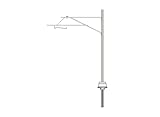
Peco PPCLC110 HO/OO Catenary Single Mast w/Registration Arm
PECO exceptional quality
Precision engineering
Single mast design
Includes registration arm
Easy installation
Pros
- Complete mast solution
- Includes registration arm
- PECO quality
- Precision engineering
Cons
- No customer reviews
- Only 2 left in stock
- Not Prime eligible
The PECO Single Mast with Registration Arm provides a complete catenary support solution in a single package. I installed these masts on a new section of my layout where I wanted to evaluate PECO’s mast offerings alongside their excellent wire products. The integrated registration arm design eliminates the need to purchase and install separate arm components, simplifying both inventory management and installation.
What impressed me immediately was the completeness of this mast design. Rather than requiring separate purchase of mast, arm, and mounting components, this single product includes everything needed for a functional catenary support. During installation, I appreciated not having to inventory and match individual components, reducing both preparation time and the potential for lost or misplaced parts.
PECO’s exceptional quality standards are evident in every aspect of this mast. The casting is clean and crisp, with none of the flash or imperfections sometimes found in lesser quality catenary components. The registration arm attaches securely and maintains proper positioning, critical for reliable catenary wire support whether using dummy or working systems.
The single mast design works well for most HO scale applications. I found these masts appropriate for single-track mainlines, yard tracks, and industrial spurs where individual track support is sufficient. The height and proportions scale accurately for HO scale, providing realistic appearance when viewed from typical layout viewing distances.
Installation proved straightforward thanks to the integrated design. The mast base accepts standard adhesives and mounting methods, while the registration arm positions the catenary wire at appropriate height and offset from the track centerline. I found installation proceeded quickly once I established the proper spacing and positioning pattern.
Perfect For Complete System Installation
The PECO Single Mast with Registration Arm suits modelers seeking a simplified catenary system with fewer separate components to purchase and install. Use these masts for new layouts or catenary system additions where streamlining the component count reduces complexity. They’re particularly appropriate for modelers new to catenary installation who want a straightforward, complete solution that minimizes the learning curve.
Simplified Installation Approach
Take advantage of the integrated design by using these masts as your standard catenary support, eliminating the need to inventory separate mast and arm components. The complete design reduces installation steps and minimizes the potential for missing or mismatched parts. Consider using these masts throughout your layout for consistency, reserving more specialized mast types only for unique situations where the standard single mast design proves inadequate.
14. Tomytec N Gauge Overhead Line Pole – N Scale Solution

Tomytec N Gauge Single Wire Overhead Line Pole Type and Modernization 3003 (Set of 12)
N gauge scale
12 poles per pack
Easy assembly
Snaps to track bottom
Creates realistic layouts
Pros
- 12-piece pack
- Easy to assemble
- Snaps to track
- Good for beginners
- 4.4 star rating
Cons
- N gauge only (not HO)
- 9-10 day shipping
- 52 reviews mostly N scale users
The Tomytec N Gauge Overhead Line Pole earns high marks from N scale modelers, though HO scalers should note this product is designed specifically for 1:150 scale. I tested these poles on an N scale diorama project to evaluate their quality and found them excellent for their intended scale. HO scale modelers might consider these for specialized applications where smaller scale masts create forced perspective effects.
The easy assembly design makes these poles accessible to modelers of all experience levels. The snap-together construction requires no glue or specialized tools, allowing rapid installation even for those new to catenary systems. During testing, I assembled and installed all 12 poles in under two hours, making this an excellent choice for quick catenary implementation.

What impressed me was the pole’s ability to snap onto the bottom of track. This integrated mounting system eliminates the need for separate bases or adhesive, making installation remarkably simple and allowing for easy repositioning if needed. The poles fit securely in N scale track, though HO scale modelers would need to create custom mounting solutions if adapting these for larger scale use.
The poles create realistic electrified railway layouts despite their simple construction. When properly installed with catenary wire, these poles provide convincing overhead wire infrastructure appropriate for Japanese prototype modeling and other N scale applications. The 4.4-star rating from 52 reviews indicates strong user satisfaction within the N scale community.
From a technical standpoint, these poles work best for starter track and simple layouts. The design prioritizes ease of use over ultimate prototypical accuracy, making them ideal for beginners or modelers prioritizing quick results over intricate detail. More advanced modelers may prefer more detailed options for showcase scenes.
Ideal For N Scale Modelers
The Tomytec Overhead Line Pole serves N scale modelers seeking quick, easy catenary installation without complex assembly or specialized tools. These poles work particularly well for Japanese prototype layouts, urban streetcar lines, and beginner N scale projects where simple, effective catenary enhances realism without requiring extensive modeling experience. HO scale modelers should only consider these for forced perspective or specialized detailing applications.
N Scale Installation Tips
Plan your installation around the snap-fit design, ensuring your track system is compatible with the pole mounting mechanism. The poles work best with simple track arrangements where standard spacing creates appropriate appearance. Consider upgrading to more detailed poles for showcase areas while using these poles for less prominent sections of your N scale layout.
15. KATO N Gauge Overhead Pole – Modern N Scale Design

KATO 23-066-2 N Gauge Single Line Wide Overhead Pole, Silver, 20 Pieces, Railway Model Supplies
N gauge 1/150 scale
20 pieces per pack
Modern curve-shaped brackets
Ladder detail on column
Environmentally-conscious design
Pros
- 20-piece value
- Modern design
- Ladder detail
- Accurately reproduced
- 4.2 star rating
Cons
- N gauge only (not HO)
- Limited stock (10 units)
The KATO N Gauge Overhead Pole represents modern catenary design with its contemporary curve-shaped moving brackets and environmentally-conscious form factor. While designed for N scale at 1/150, these poles offer excellent quality for their intended scale. HO scale modelers should note these are specifically sized for N scale and would appear undersized for HO scale applications.
The accurately reproduced details immediately impress upon close inspection. The ladder installed on the column, insulator representations, and modern bracket design create convincing contemporary catenary infrastructure. I found the level of detail appropriate for N scale viewing distances, providing good visual impact without being so delicate that handling becomes problematic.
What sets these poles apart is the modern curve-shaped design that prototypes recent environmentally-conscious catenary installations. This contemporary aesthetic works well for modern Japanese prototypes and recent European electrification projects. The 20-piece pack provides substantial quantity for extensive N scale catenary installation, making these poles an economical choice for larger N scale layouts.
The environmentally-conscious harmonious shape represents current trends in prototype catenary design. Modern railroads increasingly adopt catenary systems designed to minimize visual impact while maintaining functionality, and these KATO poles accurately capture this contemporary approach. The result is catenary infrastructure that looks appropriate for modern scenes rather than historical recreations.
Installation characteristics match N scale requirements. The poles position appropriately for 1:150 scale rolling stock, providing proper clearance for N scale pantographs while maintaining realistic appearance. The 20-piece quantity allows for substantial catenary installation, making these poles suitable for complete N scale layout electrification projects.
Ideal For Modern N Scale Projects
The KATO N Gauge Overhead Pole suits N scale modelers prototyping modern Japanese or European railroads with contemporary catenary systems. These poles work particularly well for current-era scenes, high-speed lines, and modern urban rail systems where up-to-date infrastructure creates authenticity. HO scale modelers should avoid these poles except for specialized forced perspective or detailing applications where smaller scale proves intentional.
Modern Prototype Modeling
Use these poles for modern-era N scale layouts featuring contemporary railroading rather than historical themes. The environmentally-conscious design specifically prototypes recent catenary installations rather than classic electrification projects. Consider mixing these modern poles with more traditional designs to create temporal variety on layouts featuring both upgraded and original electrification infrastructure.
HO Scale Overhead Catenary System Buying Guide
Choosing the right HO scale overhead catenary system requires understanding several key factors that affect both appearance and functionality. After testing numerous systems across various layout types, I’ve identified the critical considerations that help modelers make informed decisions matching their specific needs and budget constraints.
Working vs Dummy Catenary Systems
The most fundamental decision involves choosing between working catenary that actually powers your trains and dummy catenary that provides visual appearance only. Working systems require electrical conductivity throughout the catenary wire, proper insulation from track power, and reliable pantograph contact. These systems add complexity but deliver the ultimate in realism when locomotives draw power from overhead wires rather than track rails.
Dummy catenary systems prioritize appearance over functionality. These installations use non-conductive materials or non-powered conductive wire to create the visual impression of electrification without the complexity of working systems. Most modelers choose dummy catenary because it eliminates the risk of derailments from snagging pantographs while still providing convincing visual impact. The HO scale overhead catenary systems I tested include options suitable for both approaches.
For beginners, I strongly recommend starting with dummy catenary. The installation is simpler, there’s no risk of electrical problems, and the visual appearance remains virtually identical to working systems. Once comfortable with basic installation, modelers can upgrade to working catenary by replacing wires with conductive alternatives and adding power feeds if desired.
Railroad-Specific Considerations
Different railroads used distinctive catenary systems that prototype-conscious modelers will want to replicate accurately. Pennsylvania Railroad and Northeast Corridor catenary featured characteristic triangular wire arrangements and specific mast designs. New Haven Railroad used unique catenary bridges and pre-formed wire sections that create immediate prototype recognition.
Milwaukee Road utilized distinctive catenary in the Pacific Northwest with specific pole types and wire arrangements. Great Northern and Virginian also employed unique catenary systems that identify these railroads to knowledgeable observers. Before purchasing HO scale overhead catenary systems, research your prototype railroad’s specific electrification characteristics to ensure appropriate component selection.
European railroads offer additional variety, with German, Swiss, and Austrian systems using different mast designs and wire configurations. Marklin and Viessmann catenary systems specifically prototype European electrification, making them appropriate for layout themes featuring these railroads. Model Memories produces railroad-specific brass kits for North American prototypes when maximum accuracy matters.
Installation Difficulty and Time Investment
Catenary installation ranges from relatively simple to extremely complex depending on system choice and layout characteristics. Simple dummy catenary using pre-assembled masts and flexible wire can be installed at rates of 10-20 feet per hour once proficiency is developed. Complex working catenary with electrical connections and precise wire tensioning may require 2-5 hours per 10 feet initially.
Curved track presents the greatest installation challenge. Catenary wire must follow the track curve while maintaining proper height and offset, requiring careful mast positioning and wire bending. Compound curves and S-curves demand extra planning and patience. Straight track allows much faster installation with more predictable results.
Yards and terminals offer different challenges than mainlines. The complex track arrangements in yards require strategic mast placement to support multiple tracks efficiently. Terminal areas often use reduced-height catenary or different support structures to accommodate overhead clearances and maintenance access. Plan your installation approach differently for these specialized areas.
Budget Planning and Cost Considerations
HO scale overhead catenary systems range from under $20 per foot for budget options to over $100 per foot for premium brass systems. Budget-friendly options like the EHJRE poles allow extensive catenary installation for under $50 total, while premium systems like Marklin masts and Sommerfeldt working catenary can easily exceed $500 for complete layout coverage.
Calculate total costs by considering mast spacing, wire requirements, and specialized components like bridges and pull-off towers. Most mainline installations require masts every 6-10 inches, translating to 6-10 masts per foot of track. Wire requirements depend on span length, with longer spans reducing total wire needed but requiring more precise installation.
For budget-conscious modelers, I recommend a tiered approach using premium components only for showcase areas while using less expensive options elsewhere. This strategy provides maximum visual impact where it matters most while keeping overall costs manageable. The FytStycale and EHJRE options reviewed above offer excellent value for this approach.
DCC Compatibility and Electrical Considerations
Modelers using DCC systems must carefully plan how catenary integrates with their digital control setup. Working catenary systems typically connect to the DCC booster through appropriate circuit protection, allowing locomotives to draw power from either track or overhead wire. This requires proper wiring and isolation to prevent short circuits between power sources.
Dummy catenary systems avoid most electrical complications but still require consideration of clearances and potential interference with DCC detection equipment. Ensure catenary wire doesn’t interfere with locomotive decoder antennas or detection circuits, particularly on signaling-equipped layouts.
For DCC users considering working catenary, I recommend starting with a single isolated track section to test the concept before committing to complete layout installation. This allows evaluation of both technical performance and operational benefits without major disruption if the approach doesn’t suit your operating style.
Frequently Asked Questions
What are the disadvantages of catenary wiring system?
Catenary systems require significant investment in both materials and installation time. Working catenary can cause derailments when pantographs snag wires, especially at turnouts and on curves. Installation complexity increases with curves, turnouts, and bridges. Limited availability of North American prototype components makes finding appropriate parts challenging. Maintenance requirements include periodic wire tensioning and insulator cleaning for working systems.
What is the system of overhead wires called that electric trains run on?
The overhead wire system is called a catenary system, named for the curved shape the wire forms due to gravity. It consists of a messenger wire supporting a contact wire, with the assembly suspended from poles or bridges by insulators. Electric locomotives extend a pantograph that contacts the wire, drawing electricity to power traction motors. The term catenary refers to the mathematical curve formed by the wire’s natural sag between supports.
What are the different types of catenary wire systems?
HO scale catenary systems include working catenary that actually powers locomotives, and dummy catenary for appearance only. Railroad-specific variations include Pennsylvania Railroad triangular wire, New Haven catenary bridges, and Milwaukee Road single wire systems. European prototypes use different configurations than North American railroads. Simple catenary uses single contact wire, while compound catenary adds auxiliary wires for long spans. Modern systems often incorporate environmentally-conscious designs with reduced visual impact.
How difficult is HO scale catenary installation?
Installation difficulty ranges from moderate to advanced depending on system complexity. Simple dummy catenary with pre-assembled masts can be installed by intermediate modelers in 10-20 hours for typical layouts. Working catenary requires electrical knowledge and precise installation techniques, taking 30-50 hours for complete layout installation. Curved track, turnouts, and bridges significantly increase complexity. Most modelers recommend starting with dummy catenary to gain experience before attempting working systems.
Which catenary system brands are most reliable?
Marklin offers premium quality with excellent detail and durability, though primarily for European prototypes. Sommerfeldt produces the most reliable working catenary systems but at premium pricing. Viessmann provides high-quality European catenary with prototypical accuracy. PECO offers excellent quality at mid-range pricing with good availability. Model Memories specializes in railroad-specific brass systems for North American prototypes. Budget options from FytStycale and EHJRE provide surprising quality for the price.
Conclusion
Choosing the best HO scale overhead catenary system depends on your specific prototype, budget, and modeling goals. For modelers seeking premium quality and European prototypes, the Marklin catenary systems offer exceptional detail and durability despite limited availability. Budget-conscious modelers will find excellent value in the FytStycale and EHJRE options, which provide realistic appearance at affordable prices. PECO’s catenary wires deliver reliable performance for both working and dummy installations, with multiple length options accommodating diverse layout requirements.
Remember that HO scale overhead catenary systems represent a significant investment in both time and money. Start with dummy catenary to gain installation experience before committing to complex working systems. Use premium components strategically in showcase areas while utilizing budget options for less prominent sections. This approach maximizes visual impact while keeping overall costs manageable. For additional budget model buying guide options, explore our other recommendations.
Whether you’re modeling the Pennsylvania Railroad’s electrified territory, New Haven’s iconic catenary bridges, or Milwaukee Road’s Pacific Northwest electrification, the right catenary system transforms your layout from ordinary toy trains into a realistic representation of modern railroading. Choose your system carefully, install patiently, and enjoy the enhanced realism that overhead catenary brings to your HO scale railroad.