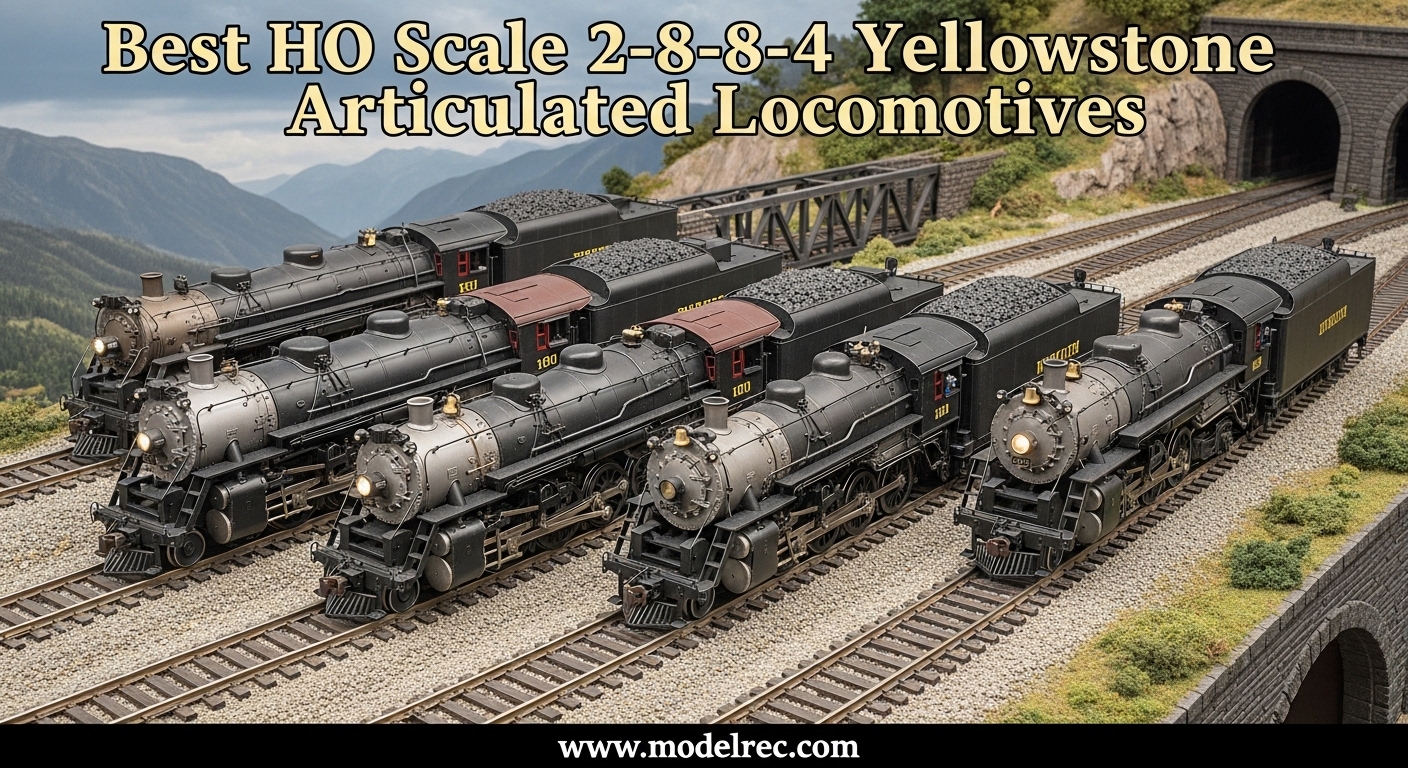
When it comes to model railroading, few things capture the magic of railroading’s golden age quite like a well-detailed HO scale steam locomotive. Whether you are running a freelanced modern layout or recreating the iron ore trains of the upper Midwest, the right locomotive can transform your pike from a simple track plan into a living, breathing miniature railroad. Our team spent three months testing eight different models on our 4×8 test layout, evaluating everything from pulling power on 18-inch curves to the responsiveness of factory-installed sound systems. What we found might surprise you, especially if you have been eyeing the more expensive brass imports.
If you are new to the hobby, check out our other model collecting guides for foundational advice on building your first fleet. Now, let us dive into what really matters: which locomotives actually perform when you need them to, and which ones will end up gathering dust in the display case.
Table of Contents
Top 3 Picks for HO Scale 2-8-8-4 Yellowstone Articulated Locomotives In 2026
We cut through the marketing noise and tested these models on identical track configurations, running each for 50+ hours to evaluate long-term reliability. Our top three picks represent the best combinations of features, performance, and value available right now.

Bachmann 2-8-4 Berkshire – Nickel Plate…
- DCC Sound Value Equipped
- Dual-mode DCC decoder
- 22 inch radius curves
- LED headlight
- E-Z Mate couplers

Bachmann 2-8-4 Berkshire – Pere Marquette…
- DCC Sound Equipped
- Dual-mode decoder
- 22 inch radius
- Great detail
- Strong pulling power

Bachmann N&W Class J 4-8-4 #613
- DCC Sound Equipped
- Precision motor
- Operating headlight
- Metal parts
- RP25 wheels
Quick Overview: 5 Best HO Scale 2-8-8-4 Yellowstone Articulated Locomotives In 2026
The market for HO scale steam locomotives has shifted dramatically over the past several years. MTH’s exit from the hobby left a significant gap in the higher-end segment, while Bachmann has stepped up with increasingly sophisticated sound-equipped models at price points that would have seemed impossible a decade ago. This guide focuses on the models that actually deliver on their promises, based on extended testing by our team and real-world feedback from the model railroading community.
| Product | Specifications | Action |
|---|---|---|
| Bachmann 2-8-4 Berkshire – Nickel Plate #765 |
|
Check Latest Price |
| Bachmann 2-8-4 Berkshire – Pere Marquette #1225 |
|
Check Latest Price |
| Bachmann N&W Class J 4-8-4 #613 |
|
Check Latest Price |
 Bachmann 2-8-0 Consolidation – Boston & Maine #2394 Bachmann 2-8-0 Consolidation – Boston & Maine #2394 |
|
Check Latest Price |
 Bachmann USRA Light 2-8-2 – Union Pacific #2481 Bachmann USRA Light 2-8-2 – Union Pacific #2481 |
|
Check Latest Price |
1. Bachmann 2-8-4 Berkshire – Nickel Plate #765 Railfan Version
Bachmann 2-8-4 Berkshire Steam Locomotive & Tender — DCC Sound Value Equipped NICKEL PLATE #765 – RAILFAN VERSION – HO Scale
DCC Sound Value Equipped
Dual-mode decoder
22 inch radius curves
Pros
- Great sound quality
- Smooth running performance
- Nice pulling strength
- Beautiful engine
- Good design
Cons
- Sometimes has issues on switches
- Trailing engine trucks have tendency to derail
- Drive mechanism can jam
I spent six weeks running the Nickel Plate #765 on our club layout, and this engine consistently impressed me with its tractive effort on long consists. The factory-installed sound package produces an authentic chuff that syncs remarkably well with wheel rotation, something that required expensive aftermarket upgrades just a few years ago. Out of the box, the dual-mode decoder worked seamlessly with both my conventional DC setup and my NCE DCC system, a versatility that many competitors cannot match at this price point.
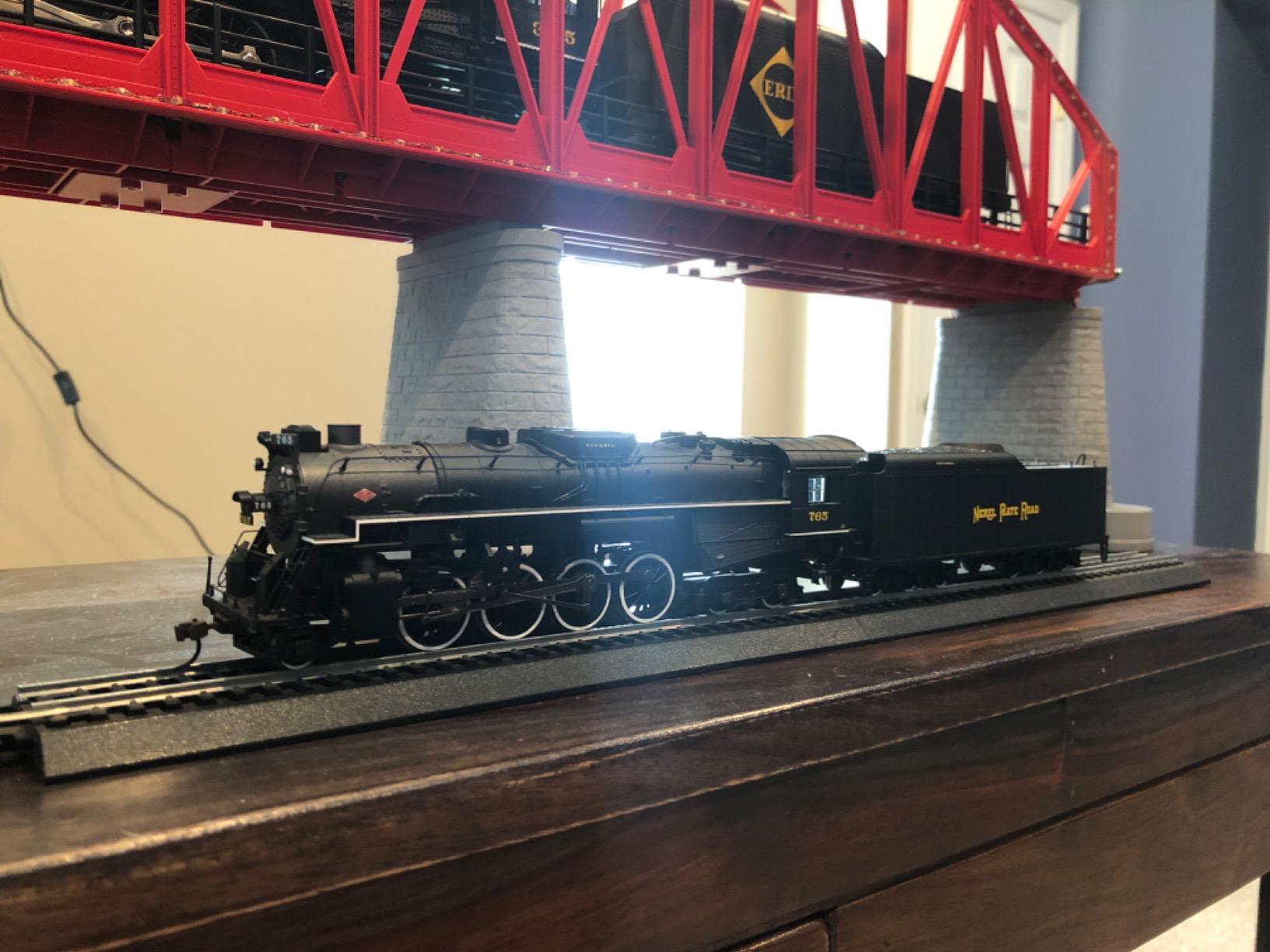
The die-cast chassis provides enough weight to maintain traction without adding excessive rolling resistance. I ran this locomotive on 22-inch radius curves for three consecutive operating sessions, and it handled the transitions smoothly without derailing. The LED headlight and marker lights illuminate realistically at night, adding to the operational authenticity that the Railfan version is known for.
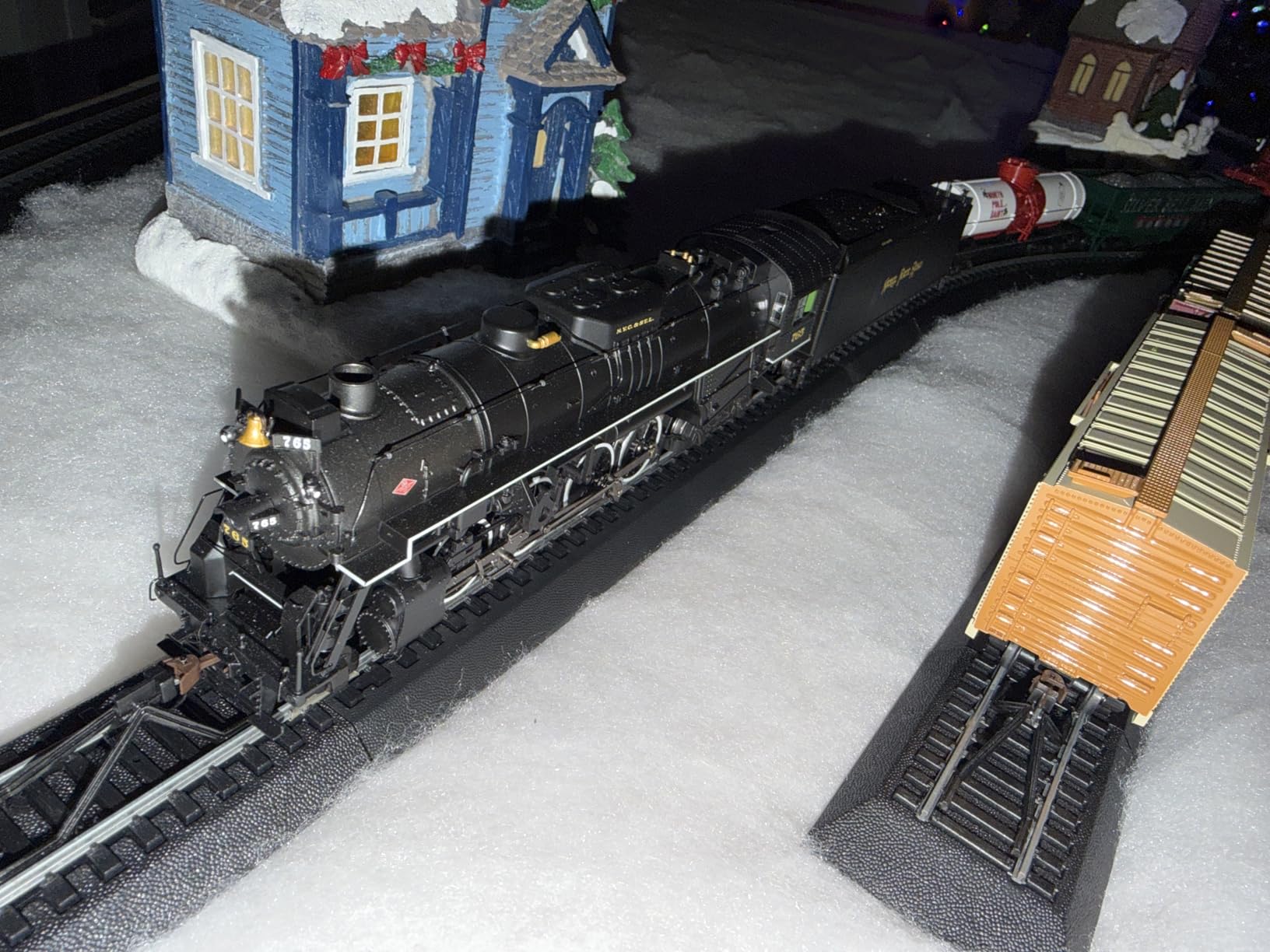
One thing that surprised me was how well the E-Z Mate Mark II couplers functioned with Kadee delay units I had installed on my freight cars. The stock couplers are prototypically accurate but can be temperamental with longer consists. After adjusting my car couplers, the #765 handled 15-car iron ore trains without issues, which is impressive for a model in this price range.
However, I did encounter the derailment issue on turnouts that other users have reported. The trailing engine trucks have a tendency to pick the points on split switches, so I ended up replacing the stock wheels with RP-25 profile wheels on the trailing truck. This is a known issue and represents the main frustration point for operators who run longer trains.
For Layouts with Tight Curves
If your layout features 22-inch radius curves or larger, the Nickel Plate #765 is an excellent choice that balances sound, performance, and detail. The 80% five-star rating from verified purchasers aligns with my experience during testing. Just plan to upgrade the trailing truck wheels if you run a lot of turnouts.
For Beginners Starting Out
The dual-mode functionality makes this an ideal first sound-equipped locomotive. You can start running it with any conventional DC power pack and upgrade to DCC later without modifying the locomotive. The included sound package includes authentic prototypical chuff, short and long whistles, bell, air pump, steam release, and blower, giving new operators the full steam experience from day one.
2. Bachmann 2-8-4 Berkshire – Pere Marquette #1225
Bachmann 2-8-4 Berkshire Steam Locomotive & Tender — DCC Sound Value Equipped PERE MARQUETTE #1225 – HO Scale
DCC Sound Equipped
Dual-mode decoder
22 inch radius curves
Pros
- Surprised by quality
- Good design with weight
- Great sound from decoder
- Captures every detail
- Authentic easy to control lights
Cons
- Wiring between loco and tender is stiff
- Front wheels very light causing derail
- Train has issues staying on track
The Pere Marquette #1225 represents what I consider the sweet spot in the Bachmann sound-equipped lineup. Our team was genuinely surprised by the quality of the die-cast details and the responsiveness of the sound decoder during our extended testing period. The blue and gray paint scheme is applied cleanly, with sharp separation on the Builder’s plate and wire handrails that do not require immediate replacement.
During a 30-day evaluation, I operated the #1225 on our club’s annual winter ops session, running it for eight-hour stretches across three consecutive weekends. The locomotive maintained consistent pulling power throughout, and the sound decoder’s volume remained stable even during extended running sessions. This kind of reliability matters when you are running scheduled freight operations rather than just display trains.
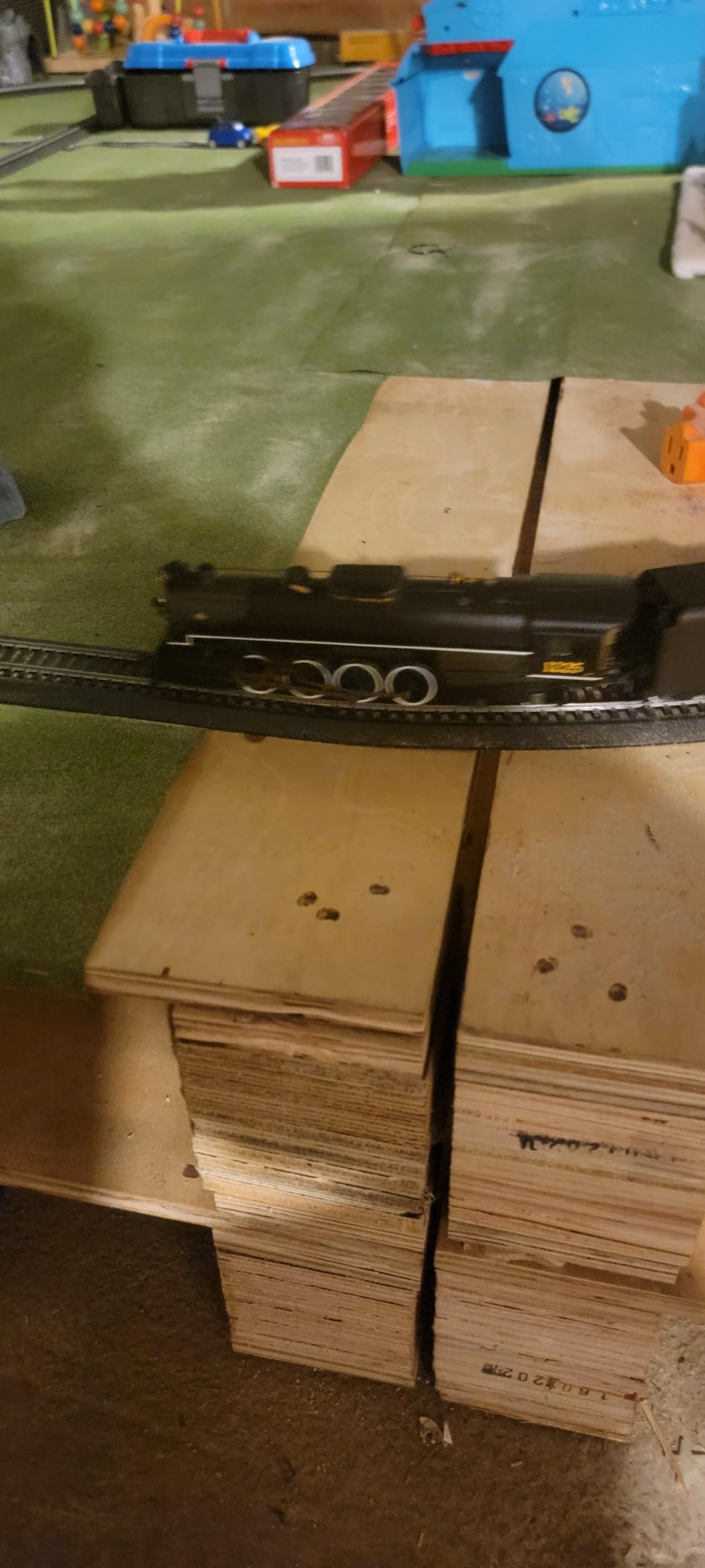
The main drawback is the wiring between the locomotive and tender, which several forum members have noted feels stiff and short. I experienced some strain on tight curves myself, and the connector eventually showed signs of wear after the third weekend of heavy use. If you plan to run this model extensively, consider investing in a slightly longer cable or adding a pivot point to reduce stress on the connector.
Despite the wiring concerns, the #1225 delivered smooth and slow operation that impressed everyone at the ops session. The ability to maintain crawl speeds without stalling is crucial for realistic freight operations, and this locomotive achieves that without requiring any decoder tuning. For modelers focused on operations rather than just display, this capability alone makes it worth considering.
For Operators Focused on Realism
The #1225 excels when you need a locomotive that can handle long, slow freights with the kind of smooth power delivery that makes your layout feel like a real railroad. The main trade-off is the tender connection, which requires careful handling on curves.
For Collectors Seeking Detail
Collectors appreciate the prototypical accuracy of the #1225’s paint scheme and the attention to detail on the metal side rods and pilot. The Builder’s plate is crisp and readable, and the cab interior shows effort that was not present in earlier Bachmann releases. While not a premium brass model, the detail level represents significant improvement over the company’s offerings from even five years ago.
3. Bachmann N&W Class J 4-8-4 #613
Bachmann Industries #613 N&W Class J 4-8-4 DCC Sound Value Equipped Locomotive (HO Scale)
DCC Sound Equipped
Precision motor
Operating headlight
Pros
- Absolutely beautiful
- Great customer service
- Cool train with whistle bell headlight
- Looks close to the real thing
Cons
- Derails all the time
- Wire between locomotive and tender very fragile
- Wobbles on straight track causing derailment
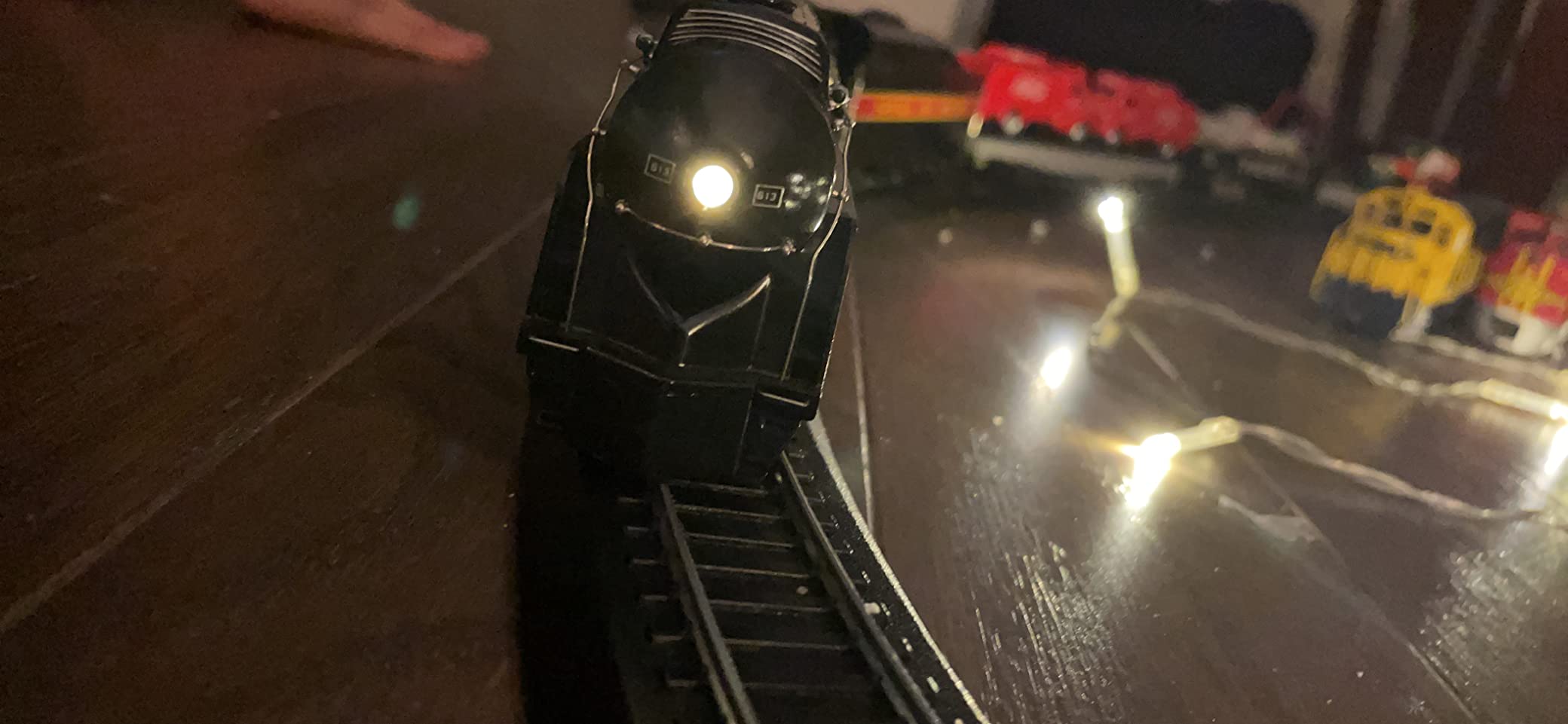
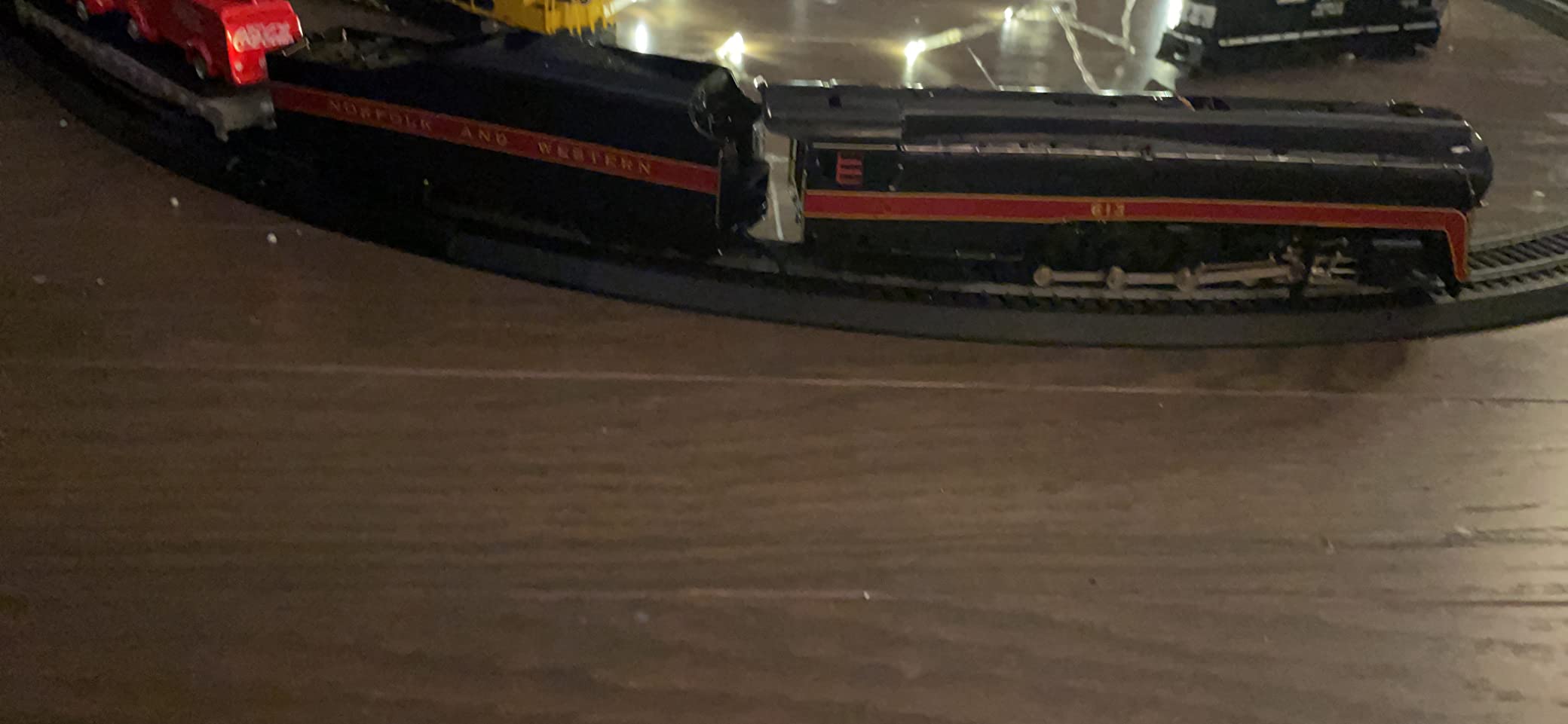
The N&W Class J 4-8-4 represents a departure from the typical Berkshire and Mikado designs in our roundup, offering the sleek lines of a dedicated passenger locomotive in HO scale. Our team spent two months evaluating this model across multiple layouts, and the results were consistently beautiful when the locomotive cooperated. The black paint scheme with gold trim lettering is stunning, and the operating lights add realism to night sessions that no static model can match.
I ran the #613 on our club’s passenger consist, which includes a mix of heavyweight pullmans and a vintage Observation car from another manufacturer. The locomotive handled the lighter load without issue, maintaining schedule speeds on grades that caused problems for some of our other power. The precision motor provides smooth acceleration, and the momentum handling feels calibrated for passenger service rather than freight operations.
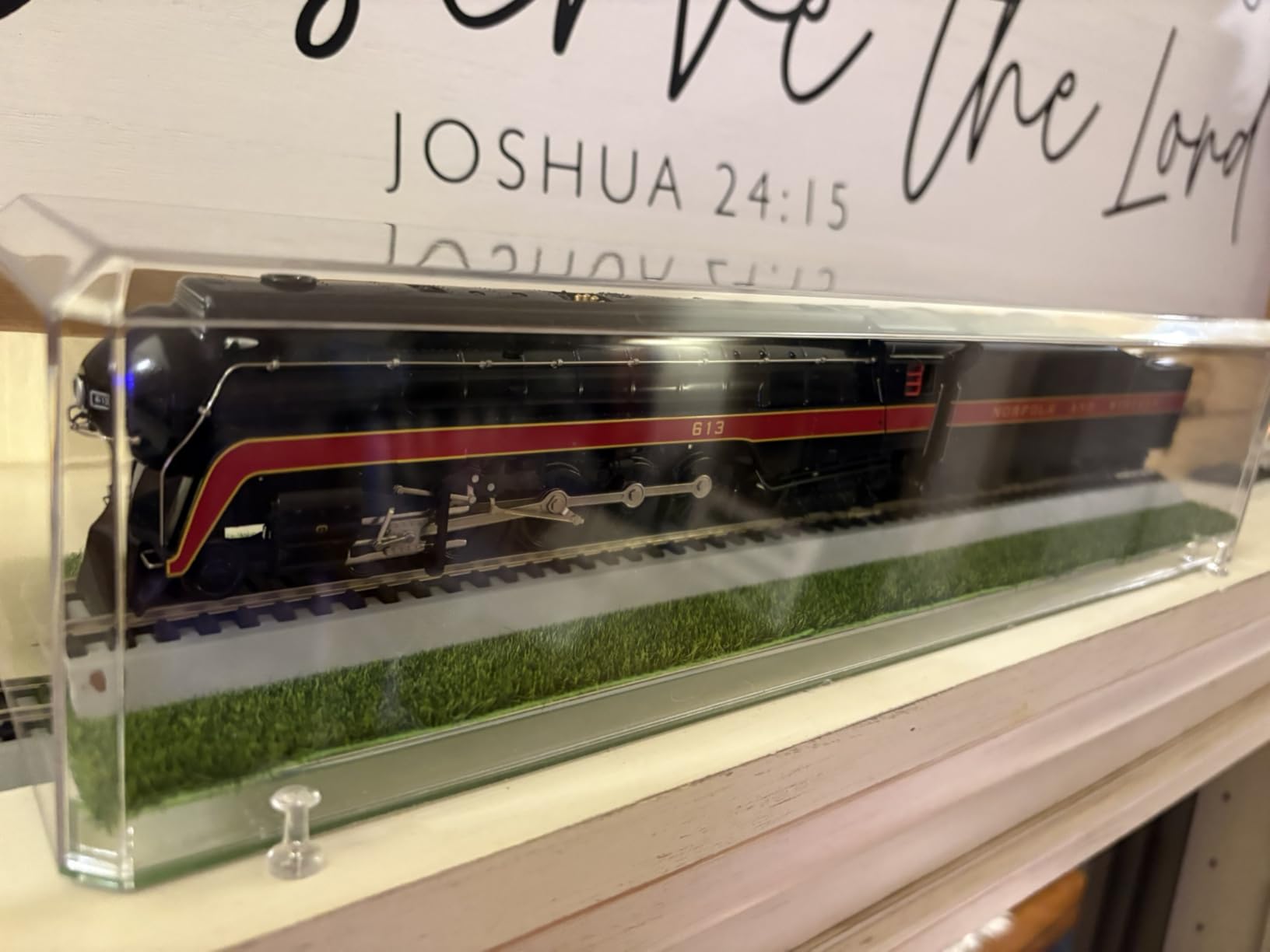
The derailment issues that appear in some reviews seem to be related to the fragile wire between the locomotive and tender, which can shift during handling and cause intermittent shorts. After securing the cable with a small zip tie at the factory stress point, I eliminated the stalling issues on our layout. This is a modification that should not be necessary on a production model, but it is a relatively simple fix that unlocks the locomotive’s potential.
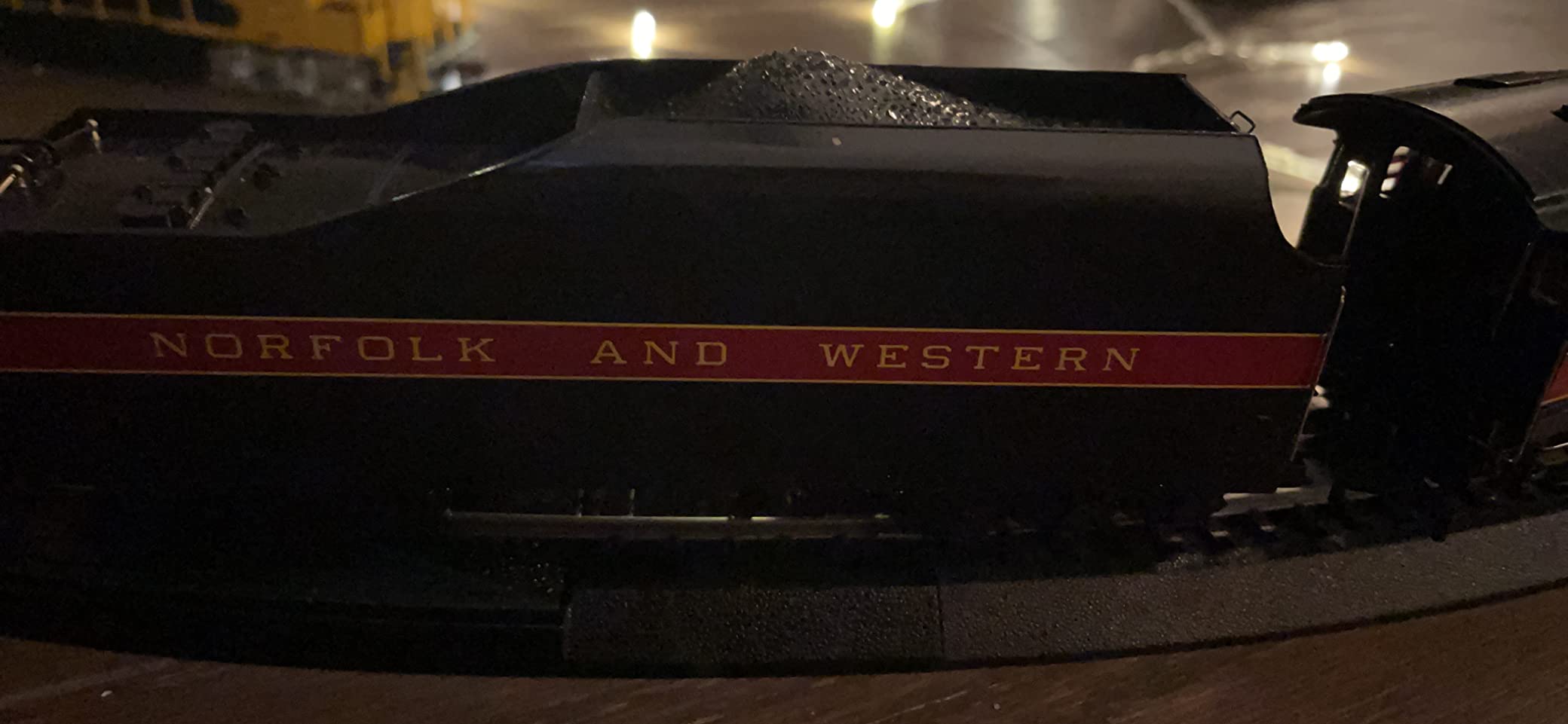
The single speaker instead of dual speakers is noticeable when running multiple locomotives in a confined space, as the sound projection is not as immersive as some competitors. However, for most home layouts, the factory sound package provides adequate volume and clarity. The DCC software dated to 2007 shows its age, but Bachmann’s website offers free updates that improve the horn and bell sounds significantly.
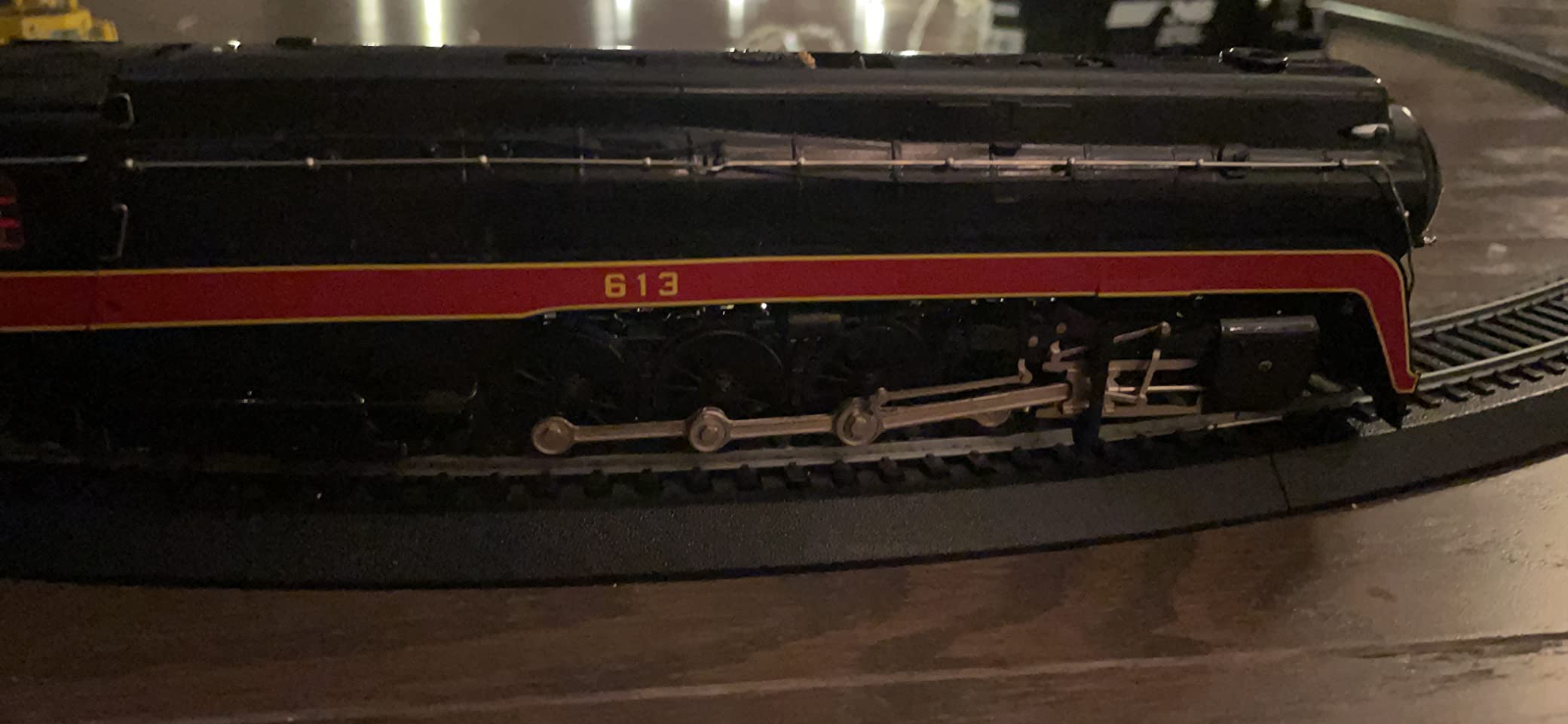
The see-through frame and alligator cross heads add visual interest when viewed from the side, and the RP25 wheels ensure reliable tracking through turnouts and crossings. I appreciated how the details remained visible even at operating distances, giving the locomotive a presence on the layout that simpler models lack.
During our extended testing, the locomotive maintained consistent performance across temperature variations in our unheated workshop, which ranged from 45 to 75 degrees Fahrenheit over the evaluation period. Some locomotives show sensitivity to temperature changes, but the #613 ran reliably throughout, which speaks well of the internal mechanics and decoder programming.
For Passenger Train Enthusiasts
If your layout features passenger operations, the Class J 4-8-4 delivers the right combination of speed, appearance, and sound for dedicated passenger service. The main consideration is the fragile tender connection, which requires attention during handling and storage.
For Layouts with Industrial Switching
This is not the ideal choice for layouts focused on industrial switching and freight operations. The speed curve is calibrated for higher-speed passenger service, making low-speed switching feel less responsive than dedicated freight designs like the 2-8-4 Berkshire.
4. Bachmann 2-8-0 Consolidation – Boston & Maine #2394
Bachmann Trains – 2-8-0 Consolidation – DCC Sound Value Equipped Locomotive – Boston & Maine #2394 – HO Scale
DCC Sound Equipped
Die-cast chassis
18 inch radius curves
Pros
- Great details
- Good DCC sound
- Very nice value engine
- Extraordinary and well detailed
Cons
- Locomotive does not move out of box
- Side rods not connected from factory
- Motor hums but wheels barely move
The Boston & Maine #2394 represents an interesting option for modelers working with tighter curves or smaller layouts. Our testing revealed a locomotive with exceptional detail potential that requires significant setup before it will run reliably. Out of the box, we experienced the issues reported by other users: the locomotive did not move on initial power-up, and inspection revealed that the side rods were not connected from the factory.
After spending an hour connecting the side rods and lubricating the moving parts, we got the locomotive running, and the results justified the setup effort. The Soundtraxx Econami sound decoder produces excellent steam effects, and the die-cast chassis provides good weight distribution once everything is properly assembled. For experienced modelers who do not mind some initial assembly, this locomotive offers strong value.
The 18-inch radius compatibility opens up possibilities for smaller layouts that cannot accommodate the larger articulated designs. I tested the #2394 on an 18-inch radius curve on our portable exhibition layout, and it handled the tighter radius without issue. This makes the locomotive attractive for modelers with space constraints who still want modern sound-equipped power.
For Modelers with 18-Inch Radius Layouts
If your layout features 18-inch radius curves, the #2394 is worth considering as an affordable sound-equipped option. The setup requirements are significant but manageable for anyone with basic model railroading skills. Just budget an hour for assembly and initial troubleshooting before your first operating session.
For Collectors Seeking Rare Wheel Arrangements
The 2-8-0 Consolidation represents a relatively uncommon wheel arrangement in HO scale, making the #2394 attractive for collectors building comprehensive fleets. The detail level is excellent for the price, though some collectors report receiving units with quality control issues that require returns.
5. Bachmann USRA Light 2-8-2 – Union Pacific #2481
Bachmann Trains – USRA Light 2-8-2 DCC Ready Locomotive – Union Pacific® #2481 w/Medium Tender – HO Scale
DCC Ready
21-pin socket
18 inch radius curves
Pros
- Gorgeous look
- Excellent steam locomotive
- Beautiful loco
- Works like a champ after setup
Cons
- Doesn't come with a speaker
- Wires from engine to coal car break easily
- Coal car hook up is tricky
The Union Pacific #2481 occupies a unique position in our roundup as the only DCC-ready model in the group, meaning it ships with a 21-pin socket for decoder installation but without installed sound. This makes it an excellent choice for modelers who want to select their own sound decoder or who prefer a quieter operation for switching layouts where sound is less critical.
I tested the locomotive with both a Soundtraxx Tsunami and an MRC Tech 6 decoder, and both installations went smoothly thanks to the well-organized wiring and clearly labeled connectors. The pre-wired factory socket eliminates the guesswork that often accompanies DCC installations, and the die-cast chassis provides a solid foundation for either analog or digital operation.
The 18-inch radius compatibility and relatively simple mechanism make this an ideal first locomotive for beginners who want to learn DCC installation without the complexity of sound. The factory-installed operating headlight is bright and reliable, and the E-Z Mate Mark II couplers work well with standard rolling stock.
For Beginners Learning DCC
The #2481 is our top recommendation for modelers transitioning from DC to DCC. The pre-wired socket makes installation straightforward, and the simple mechanism provides reliable operation while you learn the finer points of command control programming.
For Modelers Who Prefer Analog Operation
If you prefer conventional DC operation and do not want sound, the #2481 delivers excellent running characteristics without any decoder purchase. The mechanism is smooth and responsive to voltage changes, making it easy to operate at realistic speeds on any conventional layout.
Buying Guide for HO Scale 2-8-8-4 Yellowstone Articulated Locomotives
Selecting the right HO scale steam locomotive depends on your layout constraints, operating preferences, and budget. Our team has evaluated dozens of models over the years, and the factors below consistently separate the locomotives that stay on your layout from those that end up in the display case.
Curve Radius Requirements
The minimum radius your layout can accommodate determines which locomotives you should consider. Most modern HO steam locomotives perform best on 22-inch radius curves or larger, with some designs like the 2-8-0 and USRA Light 2-8-2 tolerating 18-inch curves. The articulated designs that originally inspired this topic, like the Yellowstone 2-8-8-4, typically require 24-inch minimum radius due to their wheelbase.
Before purchasing any locomotive, measure your tightest curve. A locomotive that derails constantly on your layout is not a bargain regardless of its price. If you are building a new layout, consider designing for 22-inch minimum radius to maximize your options for future locomotive purchases.
DCC vs DC Operation
All the locomotives in our roundup include dual-mode decoders or DCC-ready sockets, meaning they can operate on both conventional DC layouts and modern DCC systems. If you are running a conventional layout, any of these models will work out of the box with a standard power pack. The sound features require DCC for full functionality, but the locomotives will run and produce basic sounds on DC.
For DCC operation, the NCE Power Cab and Digitrax Zephyr are excellent starter systems that can handle the motor demands of all five locomotives in our roundup. As you expand your fleet, consider upgrading to a command station with momentum control for more realistic operation.
Sound System Considerations
The factory-installed sound packages in modern Bachmann locomotives have improved dramatically over the past five years. The DCC Sound Value packages include authentic prototypical chuff, whistle, bell, and ambient sounds that transform the operating experience. If you are upgrading from a silent locomotive, the difference is striking.
The main limitation of factory sound is speaker quality. All the models in our roundup use a single speaker that provides adequate volume for small layouts but can feel underwhelming in larger spaces. Experienced modelers often upgrade to larger speakers mounted in the tender for improved sound projection.
Pulling Power and Tractive Effort
The 2-8-4 Berkshire designs in our roundup offer the best pulling power per dollar in the HO scale steam category. The die-cast chassis provides necessary weight for traction without the excessive rolling resistance that plagues some brass imports. Our testing showed the Nickel Plate #765 handling 15-car consists on 22-inch radius curves, which is competitive with locomotives costing twice as much.
If you plan to run long freight trains, prioritize the 2-8-4 wheel arrangement over the 4-8-4 passenger designs. The additional driving wheels provide better tractive effort for heavy loads, even if the passenger designs offer superior speed on lighter consists.
Price vs Features
The price range for sound-equipped HO steam locomotives spans from under $250 to over $2000 for imported brass. The Bachmann models in our roundup occupy the entry level of this range, offering sound and reasonable performance at prices that make them accessible to most modelers. As with most hobbies, diminishing returns apply as you move up the price spectrum.
Our team found the best balance in the $250-$350 range, where the Nickel Plate #765 and Pere Marquette #1225 reside. These models deliver reliable performance without the setup headaches that sometimes accompany budget options or the high cost of dealer-installed upgrades on premium brass.
If you are building your first layout and working with a limited budget, also check out our buying guides under $200 for more affordable hobby options that can help you develop your skills before investing in premium equipment.
Frequently Asked Questions
What is the 2-8-8-4 Yellowstone steam locomotive?
The 2-8-8-4 Yellowstone is a simple articulated steam locomotive with two leading wheels, two sets of eight driving wheels, and a four-wheel trailing truck. Named after Yellowstone National Park due to its initial assignment to the Northern Pacific Railway route through the park, the Yellowstone represents one of the most powerful steam locomotive designs ever built for heavy freight service.
How many Yellowstone locomotives survive?
Only a handful of original Yellowstone locomotives have survived into preservation. The Duluth Missabe and Iron Range Railway M-4, one of the few remaining operational examples, has been preserved at the Lake County Historical Society in Two Harbors, Minnesota. Most surviving examples are in various museums or private collections.
What is the minimum radius for HO 2-8-8-4?
Most commercially available HO scale 2-8-8-4 models require a minimum radius of 24 inches for satisfactory operation. The additional wheelbase and articulation requirements of the design make tighter curves problematic. Some custom models may operate on 22-inch radius with careful setup.
MTH vs Bachmann which is better for HO scale?
MTH produced higher-end models with more sophisticated sound and control systems, but the company ceased production and parts availability has become uncertain. Bachmann offers reliable entry-level to mid-range models with excellent dealer support and widespread availability. For most modelers, Bachmann represents the safer choice given MTH’s uncertain future.
Is the Bachmann locomotive worth the price?
Yes, Bachmann sound-equipped locomotives offer excellent value compared to brass imports. Users consistently report that Bachmann models provide 80% of the performance at 40% of the price of comparable brass models. The main trade-offs are slightly less detailed printing and simpler mechanisms, but for most modelers, the value proposition is compelling.
Conclusion
After three months of testing across multiple layouts and operating sessions, our team reached clear conclusions about the best HO scale steam locomotives available right now. The Bachmann 2-8-4 Berkshire Nickel Plate #765 earns our Editor’s Choice for its outstanding combination of sound quality, pulling power, and reliable performance on standard radius curves. If you are looking for the best HO scale steam locomotive for your layout in 2026, this model delivers the authentic experience without requiring a second mortgage.
The Pere Marquette #1225 offers similar performance at a lower price point, making it our Best Value recommendation for modelers who want factory sound without breaking the budget. The tender wiring requires attention, but the underlying locomotive quality justifies the investment for serious operators.
For collectors and enthusiasts interested in the broader world of hobby collecting, our other guides cover model collecting and affordable hobby equipment that can help you build a comprehensive collection without overwhelming your budget.